Paul's 2023 talk focuses on the critical concept of managing expectations and preparing oneself for the journey of being a startup founder. He addresses the fact that the narrative around startup life has been excessively romanticised to the point where the emotional and financial stakes are often overlooked.
In the past, Paul explains, the idea was more transparent – you'd quit your stable job, and survive on minimal resources like eating ramen for years, all while constructing your startup from your parents' garage.
However, in the current startup ecosystem, with mechanisms like pre-seed funding and various support structures like incubators and accelerators, the sacrifices aren't always immediately evident. This talk provides a nuanced and realistic view of what becoming a startup founder truly entails.
1 / 23 Use ← → to navigate
Auto-generated transcript - may contain errors.
Tap a timestamp to jump the video.
Thank you. I love the high five tip. That's nothing worse than missing a high five. Look terrible. Hi, everyone. So, yeah, my name is Paul Murphy. As mentioned, I'm a partner at Lightspeed. I'm all I think I'm rare in that you don't typically let investors talk at these things.
So I snuck in through the the founder creds, which I will use today, and, you kinda talk about my experiences. I I did sort of just check it was okay, and it sounds like it's fine given it's a it's sort of a a smaller room and the group is manageable.
If people have questions, you know, we should just just sort of raise your hand and and throw them up throughout. I am curious. How many of you in the room are founders? More than I expected. Okay. And then how many work with founders?
Good. That's most everyone. Most people end up interacting with founders in some way. So, what I wanna do is talk about some of my experiences. As mentioned, I've started a bunch of companies. I wanna talk about the ones that worked. There's lots and lots of companies that did not work.
I actually was a founder when I was at university. Company, you know, it was we started it in nineteen ninety nine, so right before the the dot com bust. We made it through the bust, and then we busted right after that. I was traumatized, and I went to Microsoft to recover for seven years.
And I learned a lot there. I was only supposed to be there two years, and I stayed seven. I then eventually went back out, onto the founder journey for, just under a decade or so. Started about twelve companies. As I said, most of them failed.
A few of them, did okay. And I wanna talk about some of the lessons that I I I took away from that. I'm gonna try to talk openly. I do have a few notes. So if you see me peeking over here, I just wanna make sure I don't forget things, but I think most of it's in my head.
I'll try to talk openly so I can sort of share the things that I felt, you know, I was going through as a founder for those of you that either are going through it or going to go through it. Or if you're working with the founder, my hope is that you'll have a little bit of empathy and knowing what that founder is going through.
It's a it's a tough job as many of many of you know. So let's start. What I wanna do is is go through three companies. We'll start with the first one which is called Giphy. Hopefully well, statistically, you've all used it. You may not know you've used it.
It's embedded in a lot of other products like Instagram, and, you know, many other sorta social apps these days. But I'll tell you, just the origin story of the company. So, I was at this group called Betaworks at the time in New York City.
We are we were probably, this is a decade ago, the most active seed investor in the New York tech ecosystem. New York tech was not a big thing back then. It was just up and coming. And we also built some companies. So we kind of brought people into the fold, and we helped them start new businesses.
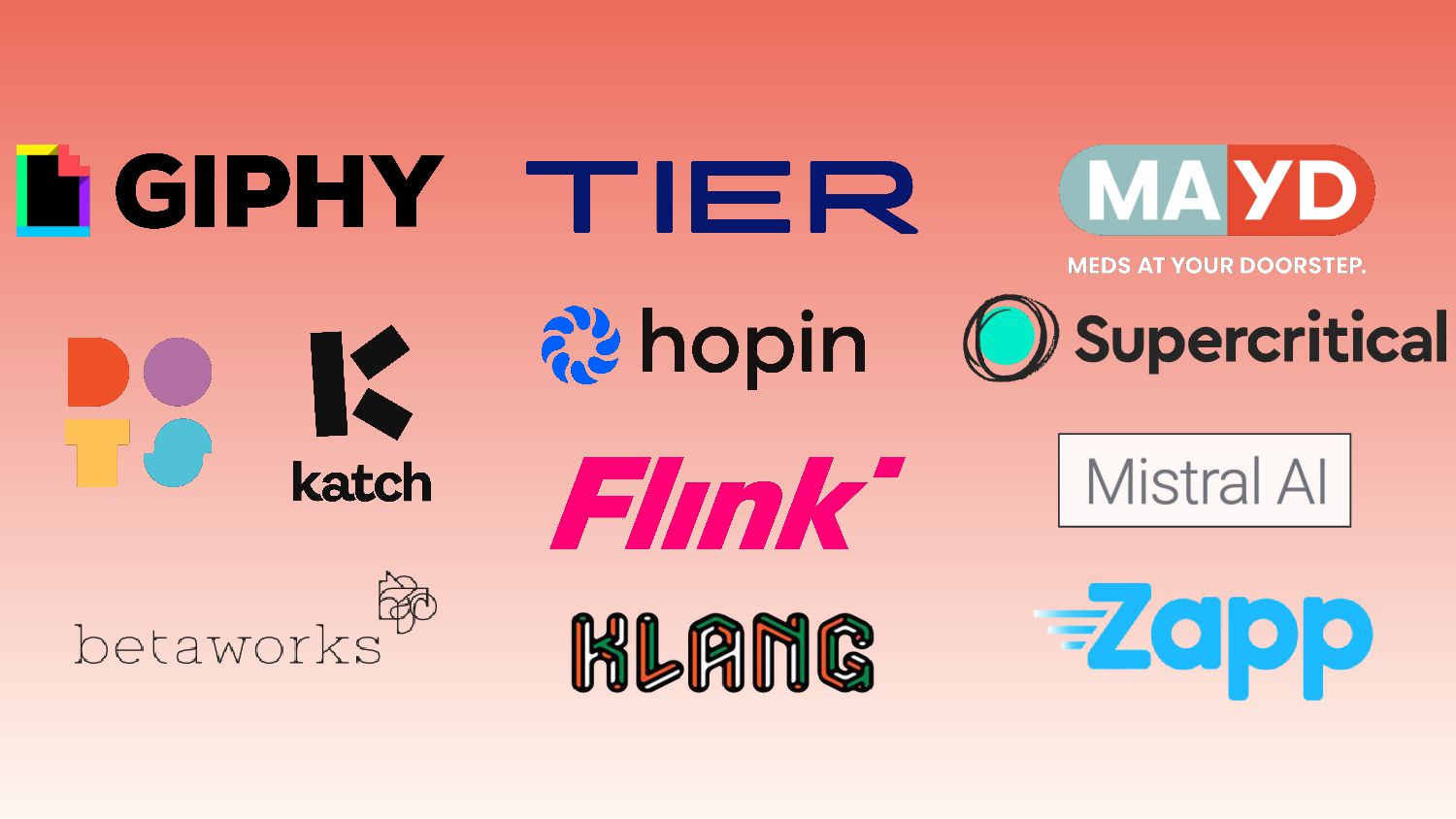
So, you know, early investors in companies like Kickstarter and Tumblr and built companies like Bitly, the URL shortener, Giphy, and other companies that I'll talk about today. I was working with this guy, Alex Chung, on something totally unrelated to Giphy. And as, you know, typically happens, Alex and his friend Jace were doing something else on the side.
They had built this product called Giphy which they thought was a funny experiment because they thought it was so difficult to find GIFs on the Internet. Let's just make it a little bit easier. So they built this thing and we were all there.
It was kind of late afternoon on a Friday. And they said, alright. We're ready to push this out there, and let's just see what happens. So I called someone at this website called Mashable, which was at the time, you know, really kinda good for getting traffic to your consumer product or consumer websites.
They wrote a little thing about it. And then within an hour, we have thirty thousand people on this website, and it was not built for that. So it stopped working very quickly. The reason sort of it became a company is later that night, we sat in the room and said, okay.
What do we do here? And I proposed that, you know, why don't we pull people off a few different products at Betaworks? Let's get you some funding, and let's get this thing back up and running, and then we'll start a company. So we agreed to do that over a few drinks on a Friday night, incorporated.
You know, we cofounded the company. And then by Monday morning, it was up and running. We had a team. We had funding. It was something that was really it was probably the most interesting moment that I had as a founder, and something I think Betaworks was actually very uniquely, able to to sort of help us with.
Once we kind of got things going, what I thought was interesting is that the assumption that I had having never built a company that was this successful before, you know, it was kind of obviously already taken off. We found product market fit almost by accident because I just assumed that things were gonna get easier.
And, actually, that was not the case. So the I think first thing that that I I observed was we got lots of people hitting this website. You know, I mentioned thirty thousand. It became millions very quickly. I mean, all the way up through to the to the end of the journey when we right right before we sold the company, there was five hundred million people every day using this product.
And I had just assumed that if you had that many people using a product that there's sort of lots of options for you. You can get infinite capital. You can, generate revenue through selling advertising, you know, acquisition offers left and right. And, actually, that wasn't true at all.
Our costs were astronomical. Gifts, for those that know, are not the most efficient file format. So we were you know, lots of people were accessing these, gifts, some of them through APIs, and we just kept serving, you know, all this data and our costs just kept going up.
So we went out and we said we have to raise more money, but it we couldn't raise our series a. We we went to, I don't know, a couple dozen VCs, and we just were not successful. So Betaworks did something which they're not really set up to do is they actually funded the company.
They they funded the series a off of their own balance sheet, which was something, you know, that they had never done before. And it turned out to be a brilliant move financially because, you know, they got rewarded for that in the end. But it got us over that hump, and it was something that I think we know was was instrumental.
And we were a bit lucky that we had that support. After that, the rounds became a little bit easier. So we, you know, figured out how to optimize our cost a little bit. The traffic still continued to growing continued growing. We became, you know, a top one hundred website on the Internet.
And then all of a sudden, we had lots of VCs competing, to to lead our series b. And that's actually where Lightspeed came to the picture. So the firm I'm at now, co led our series b with General Catalyst, and actually led multiple rounds after that.
And I would say by the end of the journey, we ended up with just under a dozen kind of blue chip investors in the company. However, the thing that I sort of observed as we kept growing this is the gap between a company that serves hundreds of millions of consumers every day with the product and a consumer product which is actually sustainable is big, and it's not as easy as it might seem.
I always obsessed about product and thought if we can just get a product that people will use, everything else will sort of figure itself out. But, again, wasn't the case. And so the kind of the next key lesson that I that I sort of wrote down, and I I really try to, you know, remember this whenever I'm either investing in a consumer or or building one is that despite what people say, you actually do really need, a business model and real revenue.
And it's, you know, it's no. It's it's it's it's laughable if you look at companies. I mean, you know, what do we who do we idolize in the consumer space? It's companies like, I don't know, WhatsApp or Facebook or Instagram or even early days of Google.
You know, none of these companies had any revenue to speak of, certainly not enough or Amazon even to cover the cost until many years later. And so we always assume just kick that can down the road. But those are truly the exception of the exceptions.
Most great consumer businesses have a real revenue stream and they think about their business model. And so it's it's something that I just, you know, take away. You don't have to solve it, but you have to think about it. Eventually, that reality will hit.
It might be one, two, three, ten years down the line. The second thing or the the additional thing I sort of discovered as we were building and and and kind of following the GIPHY journey is that, you know, it's not always easy to think through the the kind of final stages of a consumer business.
We, you know, we had reached this sort of large scale, and we were thinking, you know, what what do we do next? Our choices were twofold. We either again, we had no real revenue to speak of, so we either built out, a very large sales organization and figured out how to sell the traffic that we were generating.
Not entirely easy because a lot of people that were using our products were their own media properties. They would embed, you know, our our our gifts within their properties. So if we all of a sudden just started, you know, inserting our own ads into that stream, you can imagine there might be some objections.
But, you know, there there are there's precedence to do that. So it's something that we did we did think about. We would have had to raise more money and we would have been on a much much longer journey. And, I think the the bit that I felt was challenging for us is, you know, we had built this incredible team.
We had found this immediate or sort of near term, you know, consumer success, but we were we were impatient. And I think, this led me into sort of the third lesson that I I'd say was a key lesson with the Giphy journey, which is that, the, you know, best startups are bought and not sold.
And, you know, we actually got to a point where we said, you know what? We don't think we're the right group to build out a hundred, two hundred, three hundred person ad sales organization. There's other companies that are that have already done that.
You know, we looked at the Instagram playbook, and I think Instagram is obviously an amazing business right now. But there in my view, there's no way Instagram would have been the company it is today without Facebook. And it's not just the consumer audience that Facebook helped it grab, but it's actually how they discovered to for all the, you know, whatever the people critiques people might have of Facebook and Instagram.
I think Facebook helped turn Instagram into a really phenomenal business. So for us, we I I would say we we lack that that kind of long term patience to think about the next five, ten years raising another couple hundred million dollars to do it.
So I would say, you know, if you are in the fortunate situation where you're thinking, okay, what are our options? I would say, you know, patience is your friend. If you wanna sell your business, you're not gonna be able to fully optimize the situation.
And, you know, the reality is there was only two companies that it made sense to buy us, and one of them couldn't afford us. And so some people looked at this and said, you know, we ended up selling the company for, it was about four hundred million dollars plus, a kind of retention package for for the team.
And a lot of people looked at that and said, you know, for a gift website, that's crazy. Too much money. And, actually, from our perspective, we thought, god, Facebook got such a deal because look at the traffic that we're driving and and the data that they can get from that.
But the reality is if we wanted to fully realize that, we would have had to have been more patient than we were. Now for those that know, in the UK, the competition authority actually ended up, blocking the deal. So we thought it was a good deal for Facebook.
Turned out to be a very bad deal for Facebook because, once they did the acquisition, they actually weren't allowed to integrate the company at all. So the Giphy team had to sit on their on their hands basically for multiple years. And, eventually, it was ruled laughably, anti competitive.
So they had to divest the asset, on you know, for pennies of the dollar. So, again, for those of us inside the company, we're sort of thinking, I don't know how this is competitive. It's a gift search engine, but, it you know, know, that was what it was.
So, thankfully, that, you know, the team has sort of transitioned over to the new owner. Investors, sort of founders are are all out and everything's kinda fine, but definitely learned a lot of lessons there. So that was, I would say the more positive story.
And you can see, I think, there's a lot of, challenges along the way. I by the way, I'm only talking about the companies that I was part of. I'll talk about sort of some more abstract lessons that I've learned as an investor. I didn't wanna showcase any of my portfolio companies.
I thought it'd be better to to show my own, mistakes. This the second company that I'll talk about is, a game studio called DOTS. And this is, another one that that I cofounded. It was built Initial, MVP was built by my, cofounder, Patrick, inspired by a Japanese artist.
And he, you know, came up with the concept, and then we worked together, to sort of bring it to market over a pretty short period of time. It's about three months in the end. We launched our MVP. It also skyrocketed, and I'm not, you know, again, I'm not two for two.
I'm like, this is two out of many, many, that have have failed, but, we got about a million people using the app within the first week, with no marketing. So this was in twenty, twenty thirteen, so about a decade ago. But, again, unfortunately, I hadn't yet learned the Giphy lesson, so we didn't have a business model.
There was a trend here. So, again, if you didn't get the lesson the first time, just think about how you might make money. In our case, this was the difference between what was an okay outcome and something that could have been on the order of, in my view, you know, supercell or king dot com type type outcome.
And I'll I'll I'll tell you why. And that you know, obviously, the scenario of hitting sort of catching lightning in a bottle, like, that that is unlike unlikely for any of us building consumer products, but, but it it obviously does happen when it when it happens and if it happens.
You just wanna be prepared to sort of take advantage of that. And so you don't have to build out a robust business plan, but sort of think about it and think about what you might do if that happens. In our case, what we ended up doing is it took us about fourteen months because the first game we released, literally, it was impossible to make money from.
We just we tried and we thought, you know, can we just charge here? Can we do a tip jar? Can we do all these things? And we just we just did not we designed it to be such a free product that it was it was obvious when we tried to make money from it.
So we said we have to just leave that be, and we're gonna build a new product. It took us fourteen months to do that. We had to, you know, build up a a small team to to create the product, and then that one was designed to make money.
And what we did was we took the mechanic of the first game, and then we layered in all the best practices from the industry. So games like Candy Crush, you know, how they had levels and pinch points, all the things that are pretty well documented even then were pretty well documented.
Somehow, when we launched this game, it was actually even more popular than the first one, and it took off. It was one of the most downloaded apps of the year, and it was the most downloaded app of the month that we launched. It was that was in twenty fourteen.
And we were like, awesome. Like, we've got the formula down. We can just keep doing this all day long. And that one was sort of, often making money. But before I get to the sort of next lesson, I'll just sort of share this quote which so I'm sure many of you have seen.
Bless you. Which is that success is a lousy teacher. It seduces smart people into thinking that they can't lose. And in our case, you know, from a game perspective, our team had built two games that both reached number one in, like, over a hundred countries around the world.
And we thought if we just take a this game mechanic and we put a nice design on it, the third and fourth and fifth one are gonna do the same thing. So we'll just keep releasing these in serial, and they're all gonna be top performing games.
So what did we do? We, took the incredible team that built Two Dots. We took them off Two Dots, and we had them build a new product. We put new people onto two dots and said, just go, like, manage that because that already worked.
We're gonna go build this other thing. And we spent another year considerably more r and d dollars, and we brought a third product to market, and it completely flopped. And it looks great. You know, on paper, it should have been better than than the first two, but it it just didn't work.
And so what did we end up doing? We ended up eventually at some really good advice from one of my, advisors. He said he actually invested as an angel. He said, I didn't invest in Dots, the company. I invested in Two Dots. I think you've got something there.
Why are you ignoring it? And so, we actually pivoted the company around, put everyone back on two dots, and then we started, you know, slowly but surely building up two dots into becoming a really meaningful revenue driver, like, a hundred million a year in revenue.
And, ultimately, that's the that's the business that that was acquired. So my lesson from that experience is not to take any level of success for granted. We did what we could. I think we we did most of the right things with the first product in terms of realizing we had something special.
But with the second one, it was clear that this had the capability to generate significant revenue, and yet we totally took our eye off the ball. We started looking for something that could be bigger and better. And, the amount of time that we lost was the difference between us being, you know, what could have been a really massive company and something that was, I would say, more pedestrian in terms of its its outcome.
So, yeah, I guess that would be the the the main takeaway there, which is, you know, just sign of life as a product, especially when you're launching, is really rare. And when you find it, def definitely don't take it granted. So the and by the way, if any questions, feel free to jump in.
Otherwise, I'll just keep going. The third one I wanna talk about is actually kind of interesting. This is a company that's that's still going. So when I, when I became an investor, I joined a firm called North Zone, and they were an investor in my game studio.
I was a partner with them for just over four years. Really incredible group of investors. Lightspeed was investor in in Giphy, and and they eventually went set up in Europe. So they asked me to come over and and help do that. So I, you know, took a while, but I eventually decided to join Lightspeed.
I had a moment where it's just over six months where I wasn't allowed to work because of my non noncompete. So the day after, I was already aching to not be building stuff anyway. So I I called two people that I was very close with that I thought were really talented.
I said, we have six months. Can we build a company in six months? And so we got started building this thing called Catch. And, we have been talking about this for years, and the simple premise of it is we personally hate meetings. I think many people don't like meetings, but we like meeting people.
It's just what we don't like is waking up, looking at our calendar, and you're seeing a wall of meetings back to back from eight until six o'clock. You sort of think, when am I gonna have time to actually get anything done? So we, we set out starting to build this, trying to decouple meetings from a calendar.
We in six months' time, we built out the team. We we raised some initial seed funding, and we started building the product. I think we did a very good job of pouring, you know, the lessons that I talked about already, but also many other lessons that I've learned over the years and my cofounders learned into this, product and company, but we haven't figured it out yet.
So this company is still going. I'm still involved. I spend most of my time as investor, but my cofounders are are very much running this. So there's a couple of things I think that are interesting that I'm observing now as a, I would say, a current founder.
The first one and, you know, this has been, I think, discussed at length, on the Internet, but I just wanna wanna break it down a little bit, which is creating this clearly defined hypothesis to test. Our hypothesis was that people don't like meetings and that they would go through extraordinary lengths to kind of, you know, reduce the amount of means that they have in the calendar.
And so we built about five different versions of that first product to test that hypothesis. In the end, it didn't work. You know, we feel very confident that we built a really good product. And if you use the product, I think it saves you time, saves you money, and if you if you're in a consulting, business.
But it doesn't work. It doesn't work. People don't want to install another app. And people, as much as they like to complain about meetings in their calendar, they don't wanna adjust their workflow. So I think what we liked about this was that it was a very binary conclusion.
It it did not work, but the premise of what we're trying to build is still valid in our in our view. So what I think the team has done a really good job of doing is not kind of obsessing over the vision and saying, you know, we're gonna build this thing.
Doesn't matter. We just haven't figured out yet. I've seen companies that I've invested in. They've been so passionate about the company, the product that they wanna build even if all signs are pointing towards this thing not working, they just keep going at it, from different, you know, slightly different directions.
And I do think that that that's a mistake. It's you know, your time is so incredibly precious as a founder and, you know, trying to you know, the worst thing you could do is is push something that clearly people are saying that they don't wanna use.
And then worse than that would be, well, we just don't have enough people in the product. Let's let's do a little bit of marketing and get some people on the product. The of all of the things that I've tried building over the years, the difference between things that work and things that might work or don't work is so stark.
I'm sure many of you have seen this. Is it there's no question. When it works, you know. So if it's if you're on the fence, it didn't work. You know? Try something else. Take a different turn. So we're coming at this now from a a different perspective.
And, you know, I actually think, you know, we could be onto something, but, like I said, we're not gonna be religious about it if it doesn't work. You know, you we'll use that runway and and see if we can sort of figure it out.
The, the next thing is, you know, talking a little bit about the team, and I think that there's been some, as companies have been sort of glamorized, founders have been startups have been glamorized. I think there's been a lot of focus built around or discussed around, team and experience of team.
And in the experiences that I've had, you know, the companies that I've seen really take off and become, you know, multibillion dollar businesses, have phenomenal outcomes. Experience is good. That's more important for perhaps, you know, the scale up organization than it is for the founding organization.
The most important thing is commitment, and I would take that any day of the week over experience. And so I think what what I'm seeing and what I I love seeing with not only with cash, but with a few of the really early stage companies that I invest in is, you know, you can find those members.
And for those of you that are part of a founding team but maybe are not founders, you know, folks that are just like, look. I know that that didn't work, but I'm not gonna get, you know, upset about the fact that we have to throw the product away and try something different.
I'm not gonna go out there and start looking for jobs because, you know, the first, second, and third versions of this thing didn't quite nail it in the market. That's what this is all about, and that's what being on, you know, either a founder or being on the founder journey, you know, as a small team is.
And and, yeah, I think you can see those people. We, you know, we lost half the team, once we sort of realized that that first direction didn't work. The people we have left are so good, so focused, so efficient. So I think as you're building out team or if you're part of team, I think this is just something that I I would I would always say, you know, just focus on commitment.
Get the missionaries. Ditch the mercenaries for now. You can pick them up when you're when you're scaling. And they you know, I'm not sort of being disparaging. I think those people play a really vital role in organizations, but you don't want them as part of that kind of founding team.
Alright. So I'm gonna keep going. Now there's a few things, a few lessons I wanted to sort of pull out in the companies. I I've invested in probably twenty companies now over the last five years, and I've been involved in many more that my partners have invested in.
So in addition to just kinda my own founder experiences, I thought I'd just pull out some of the lesser known challenges that I that that I've observed. I think the, first one, which is unfortunately just not very well known even though it's so incredibly common, is founder breakups.
And I would say, I can't think of many companies that have gone through the full journey where there hasn't been at least one founder that's had to leave the business. And let me get back to the get the example. So when we started the company, I was CEO.
Alex and Jace were my cofounders. They were doing other functions. About a month and a half in, I was no longer CEO. It was Jace. And then about two months later, Jace was no longer the CEO. It was Alex. Jace had stepped aside as an adviser.
I stepped aside as an adviser and started building another company, and Alex was kinda left holding the bag. Like, he was just like, okay. I guess I'm gonna run this thing. Now that was really painful because we didn't design for that eventuality. And so he's like, look.
I'm doing all the work now. What are you guys doing? And he was right. So we had to figure it out, and it was really complicated. It took time away from the business. It happens. I would say I I actually can't think of a scenario where it hasn't happened.
So, the good news is there's a lot you can do to prepare for this. So if you just sort of sit down as founders for those that are either about to start a company or maybe for your next one, because it's probably too late if you already have, is just sort of think about that prenup and what it might look like.
You know, if one of you leaves the business, think, okay. What does the business need? The biggest challenge people face is if, let's say, cofounder and CTO leaves and you have to hire, a CTO to replace them, that c CTO is not gonna be free.
They're gonna need cash and equity. Where is that gonna come from? It doesn't make sense to dilute the investors and the founders that have stayed and certainly not the employees. It should come from the departing founders. So I think you can just sort of build some of that into the framework of the company, and, I I wish it was, you know, more common than not.
I have to educate even today quite a few founders that that we invest in on the importance of that. And our our our sort of situation was a productive one. Many of them are not and and can get pretty nasty. Second lesson is, there's this thing called a founder associate, which I wish this was around when I was or maybe it was around.
I just didn't know about it. But it's such a brilliant role, and I think it describes, a really interesting characteristic of someone that can help an, you know, a small founding team. Does anyone have a founder associate on their team? No. Okay. So, oh, a couple of you do. Alright. Cool.
So, I mean, the way that I think about it and you, you know, you may sort of everyone probably thinks about it a little bit differently is you get someone that is perhaps a couple years out of school, really eager to learn, wants to probably follow in your footsteps at some point, you know, couple years or or longer.
And they're willing to basically do anything. Work, you know, twenty four seven like you are as a founder so that they can absorb everything that you're going through to make themselves smarter. If you get the right profile, the amount of work that this person can take off your plate is enormous, and I've really seen founders scale.
There's a one founder, of the scooter company, Tier Mobility. He, Lawrence hired someone in this in this role. It's actually a brilliant story because and this is the perfect character, to hire for this role. But he emailed Lawrence. Lawrence didn't respond. He was in California. This guy was in California.
Lawrence is in Berlin. Emailed him again. He kept honing him. Eventually sent him a note and said, I'm coming to Berlin tomorrow. I'll be outside. He came to Berlin. Lawrence is like, obviously, I have to meet this guy. He met him. He was really smart, incredibly determined, brought him on, and the guy just took on so much work.
And he was really you know, he did really well for for everyone, and now he's off doing his own thing. So, I'd highly recommend getting a founder associate. There's there's jobs out job scripts out there. If you need help, I'm also happy to help.
The next one is is, you know, pretty serious point, talking about the the pressure of a founder. I mean, I can still I still have the feeling in my stomach when I go back and I think about some of the challenges that we went through.
There was one moment in particular in my game studio. We did a deal with a celebrity. For whatever reason, it just thing we were making just didn't work, and we told them. And their lawyers didn't take it well even though it had nothing to do with any of us.
It just didn't work. It happens a lot in gaming. And they, you know, threatened to try try to come after all the IP in the company even though they had no claim to it. And it was just me. I mean, my cofounder is running the product and tech team and I was stuck with this thing, and I couldn't sleep.
It was really difficult to to manage. And so what I ended up doing in that moment was hiring an executive coach. And I would say she was more of a therapist, if I'm honest, but she just sort of helped me work through some of those challenges that I was going through.
Unfortunately, I've also seen founders, you know, go to full extremes and and actually take their own life. I mean, it's a very serious thing. So I don't think there's enough discussion about founder mental health. And what I've started doing is just taking random phone calls from founders.
You know, I just put my number out there on Twitter and we'll take calls and, you know, there's a lot of people struggling with this. So I'm sure some of you in the room are struggling with this, and I think the only thing I can say is find someone to talk to, and, you know, just don't keep it in.
And it's shocking how many people keep it in, and they feel like it's almost, they're gonna be ashamed if they talk about it. But every founder is going through it, and the more successful your company is, probably the more stressful and the more anxiety you're feeling.
So all the more reason to talk to someone. I think I'm quickly running out of time. So I'll just get to the the the last point and then a few closing comments. As when I became an investor, I my eyes were completely opened into how people used me.
And I realized that I had used my investors entirely the wrong way as a founder. And I looked to my investors as a group to manage. I didn't want them to be disappointed. I wanted to make sure that they knew what was going on.
They weren't questioning me, do really well is they say, alright. You've now committed to invest in my company. That is a binary decision. You're on the team. So when when you're on the team, you're gonna get to work. And so they put me to work.
You know, I get phone calls on nights and weekends. If they need me to help with sales or recruiting, you know, like I said, they put me to work. So I think, I, you know, I try to tell the founders that I invest in, that this is how they should use me.
For those of you that that raise capital, use your investors. There are bad investors out there. I had a couple of them as well, and they may not wanna work with you or work for you. So this is the kind of thing that you can reference before you take their capital on board.
Okay. Last few quick things, then I'll I'll get off. So, you know, running a company, we've talked about it. Starting a company is hard. Running a company is even harder. Running a successful company is even harder than that. And so I think just keep that in mind.
There's a reason that founders, you know, successful ones have such big outcomes is the odds are still heavily stacked against them. And so the very few that kinda come, get through that journey, do end up having big outcomes. There's, I I I think the stats are kind of interesting.
So we we meet with hundreds of companies a year. I mean, as a firm, we meet with thousands of companies a year. I personally meet with hundreds of companies a year, and maybe make two or three investments. So it's a pretty big funnel.
But out out of the the venture backed companies, there's this one in ten will kind of, succeed, which is, I think broadly speaking, if you get venture capital that's that's roughly true. But it's less than a tenth of a percent of those that kinda go through that journey end up becoming a unicorn.
And of the unicorns, twenty percent of them fail before they see any outcome. So I'm not saying this to discourage you. I'm just saying it it is hard. The odds are stats against you. You're trying to do the impossible. So, you know, just sort of, again, keep that in mind.
It's it's ten times harder than becoming a professional football player. So it's, you know, it's it's a difficult work. But that's all by design. And I think that, you know, people that are in this room that are building companies, you know, you should be going up against the odds.
So, yeah, hopefully, we can if if if we can't partner at some point now, with me as an investor, hopefully, I get to to see what you're working on and and you can reach out and I'll try to be helpful in other ways.
But thanks for listening. Hopefully, it was useful. If any questions, I think we have a couple minutes. We need to get, Anjana mic'd up so, you can get that sorted if you just wanna pop in there. And if anybody does have a question, we've got time for one.
And then, Paul's roundtable will be at two forty five. Two forty five. Perfect. Yeah. So, yep. You had your hand up. Sure. What's the thing as what's the thing as a founder that you were surprised about when you turned to the dark side?
Good. That's a good question to end on. The thing that I was surprised about when I moved over to investing is, as an investor, it's it's actually pretty obvious pretty quickly if a company has, you know I would say the re main reason that VCs don't invest in a company is because they don't see the upside.
It's not because they're worried about your company going to zero. They're we're okay with that risk. And I wish I understood that as a founder is up upside orientation as opposed to downside protection. Awesome. Great. Thank you so much for call. So great to have you here.