In today’s world of technology and the ease at which we can interact digitally, children have different opportunities to learn and play than previous generations. It’s more important than ever before for toy companies to leverage these opportunities to ensure kids fulfil their potential as creative problem solvers and lifelong learners.
Discover how LEGO designers are engaging kids in new experiences by safe-guarding the core creative principles of the original brick and using technology in a fun, playful, and relevant way.
1 / 20 Use ← → to navigate
Auto-generated transcript - may contain errors.
Tap a timestamp to jump the video.
Good afternoon. As she introduced, I'm Melissa, and I head up an innovation design team at LEGO. And while I don't literally sit and build with bricks all day, a couple of my team members do. I have an this isn't the first time that I've had that kid envying job.
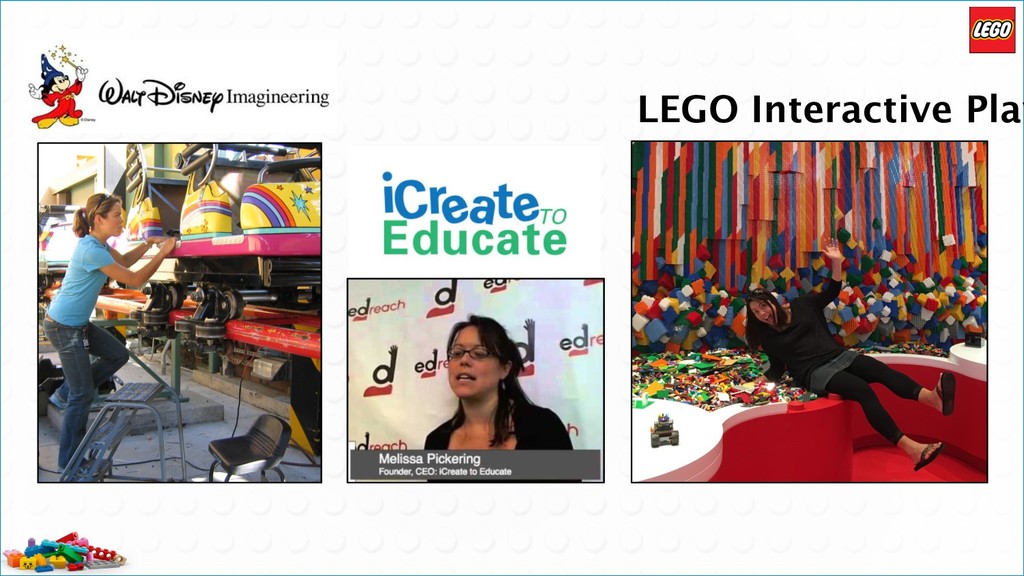
I started my career out as a mechanical engineer designing roller coasters at Disney Imagineering. And then, in between the toys and the coasters, I started my own startup called iCreate2Educate with a mission of engaging more kids in STEM, and then sold that before coming to LEGO.
And while I'm no longer an entrepreneur or an imagineer, what I do at LEGO today actually blends the two. In the last five years, I've built up a team of designers that look at how we can bring technology in to re engage kids into physical play.
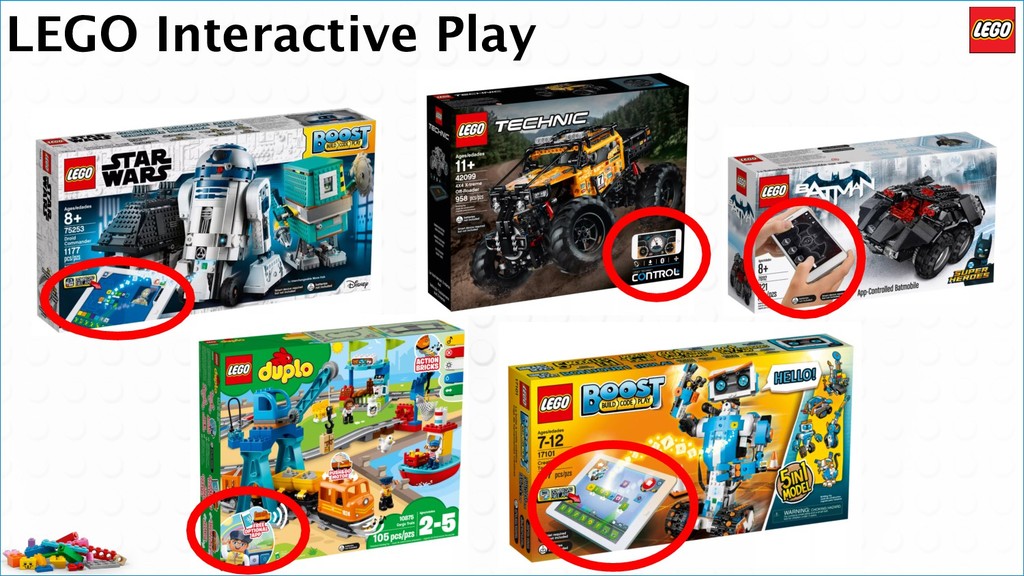
And that's what we call interactive play. What is it? Well, quite tangibly, we've actually launched some experiences in the last couple of years that we define as interactive play. You can see on the screen here, we have experiences for kids in the two plus range in the Duplo line, like this connected train, all the way up to eleven plus and above in the Technic line with that RC off road vehicle.
And you can see that the digital interaction is indicated by the device on the box and that really allows for more immersive and extensive play. So, what I'll talk to you today is the design process that we've gone through in these experiences and how we've had to embrace the tech centric world provide new products but then still stay grounded in the core Lego play.
And the intent of sharing this journey is to actually inspire you through your own digital transformation and how you can evolve and innovate while staying true to your foundation of the product or service. But before we dive into that, we're gonna do a little activity.
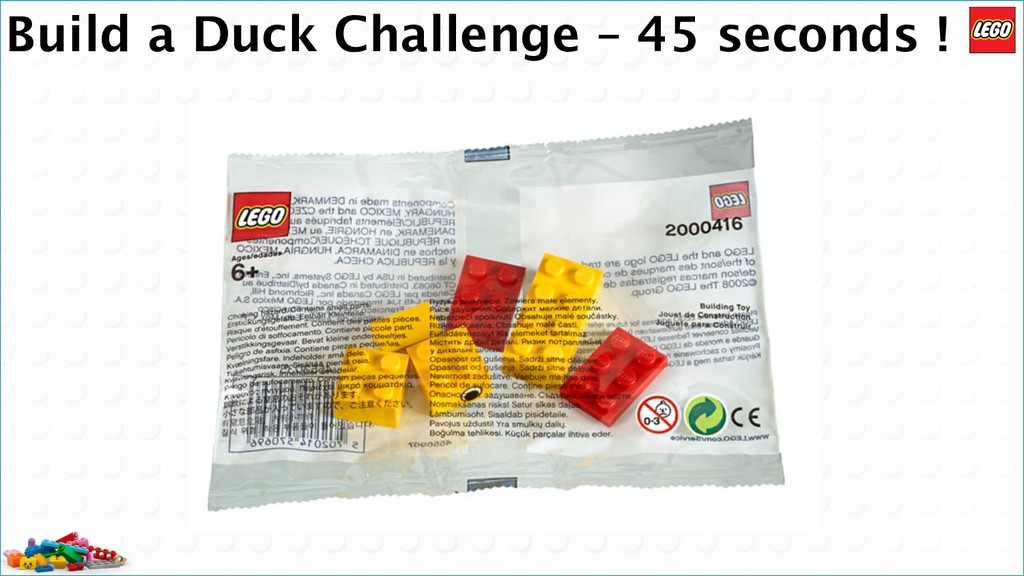
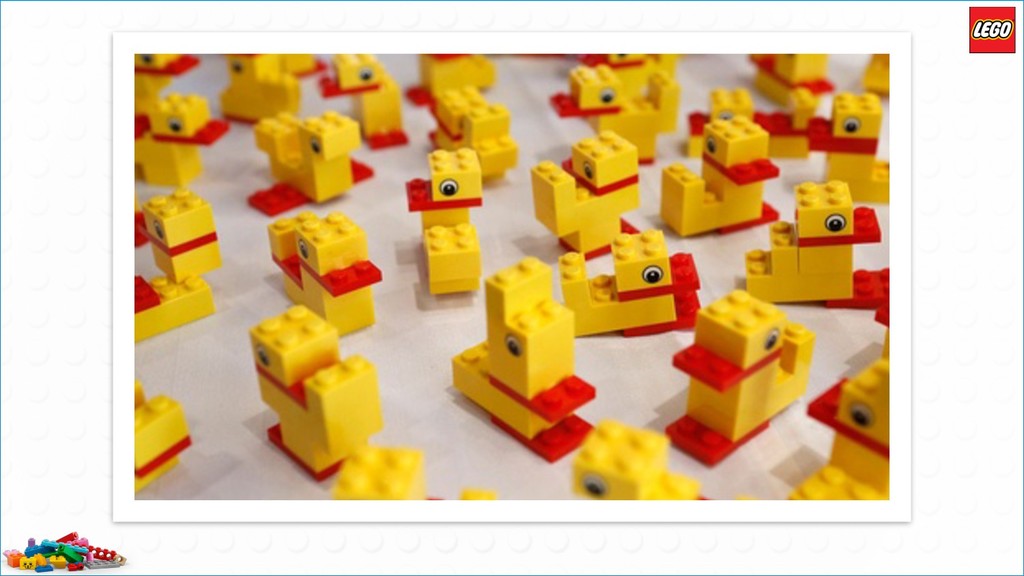
There should be a bag on every seat. If you don't have a bag, there's some up here in the left hand corner. We're going to do what we call a Lego duck challenge. It's a time challenge. There are no instructions, but you'll have forty five seconds to open the bag and build the duck as fast as you can.
You may have to run to get the duck if you don't have one on the seat. So, I'll start the clock. Ready, go. Alright, ten more seconds. Alright. Time's up. Alright. Take a look at your creation. Maybe hold them up. Take a look at the ducks around you.
What do you notice? There's a lot of ducks in the room. Yeah? But the cool thing is that not all ducks look the same. And so now, I'd like you to reflect a bit on how you felt during this challenge, maybe at the beginning to now.
Maybe at the beginning, there's a little bit of hesitation, some scrambling. And now, maybe, even even if it's small, you might have a little warm feeling inside. That feeling we call it Lego pride of creation. And that's what we instill in kids to give them the creative confidence they need to be the innovators of our future.
Now, this activity may seem pretty simple, which it is, but it's actually been carefully designed in a way to provide just enough guidance without exact instructions to allow us to create our own unique solutions and still reaching the goal. And this is what LEGO System in Play is all about.
It's about building the creative confidence for our kids, and that's the core of the product. And as we innovate, we have to remember to stay true to that foundation even though we're in a more digital world. So, now, I'm going to speak to the principles of play, and then I'll share a story about a couple of products that we went on in the design process of innovating while staying true to these principles of play.
Earlier, you were asked how many play with LIGO now? How many played with LIGO as a kid? It seemed like a lot of folks played with LIGO as a kid. Yep. Just have a think back to what was that like? You remember a particular product that was super cool or maybe special elements?
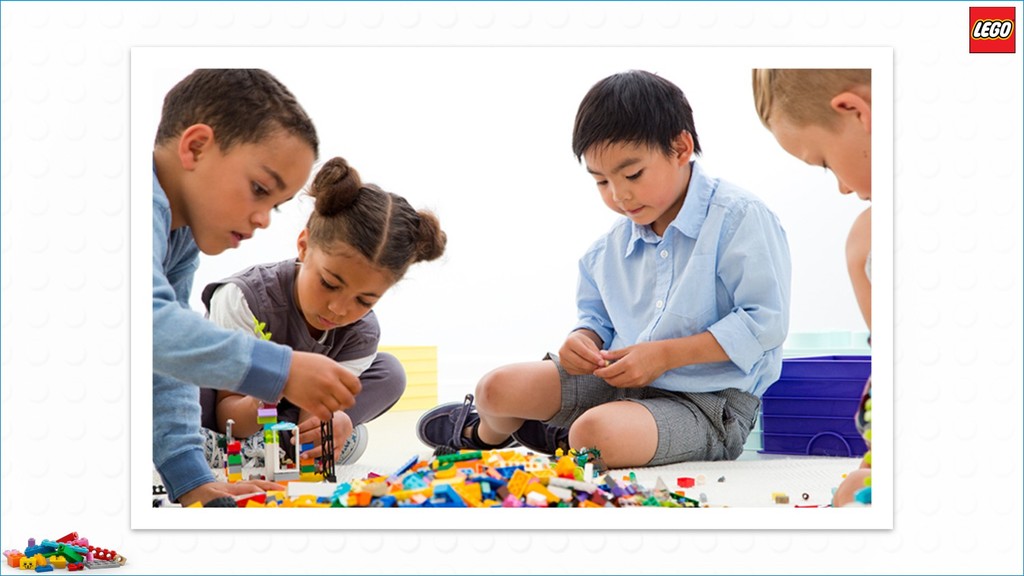
A lot of people come up to me and say, oh, that yellow castle, that was amazing. Or those windows and doors, when we got those, that was awesome. For me, when I think back to when I was little and played, I played with my little brother and we would do what we called God Play, where we get every LEGO piece imaginable, any toy, and pull together an entire imaginary world.
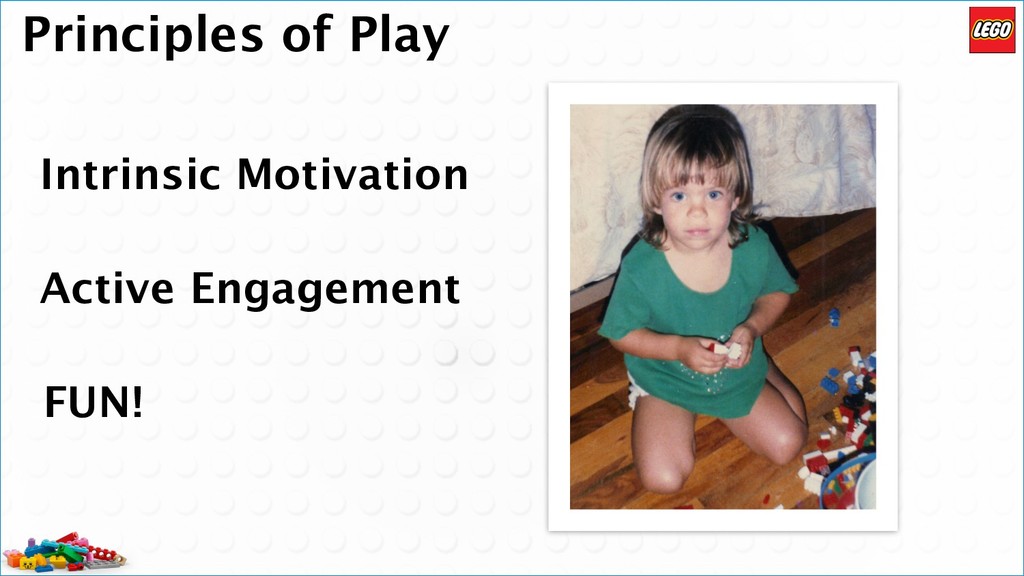
And we'd spend hours building up this world that we would then play out a story in. And when we would do this, we were actually engaged in the three kind of principles of play. First, we were intrinsically motivated. No one was telling us, we didn't have any external forces going on.
We were truly motivated at building up this world and spending time doing it. Second, we were actively engaged. We were not passively consuming content. We were thinking about where this road would go, where to put the school next to hospital and constantly figuring out how to build up this world.
And lastly, this should go without saying, of course, were having fun. If we weren't, we would move on to do something else. But the eighties were different times and we, you know, we didn't have consumer internet, we didn't have mobile devices and even though it wasn't that long ago, pace was just a little bit slower.
So, we had time to engage in this type of play. Today, kids live in a very different world. It's a world that research shows that kids are very limited with their time. There's a study that fifty percent of the parents said that their kids spend less than an hour of time outside every day.
It's actually less than the highest security prison inmates. And this is from ten thousand respondents across ten different countries. And play doesn't need to be outside, it's just traditionally the way kids have played historically. But today, there's really no time and they're over scheduled in these activities like football and piano and ballet.
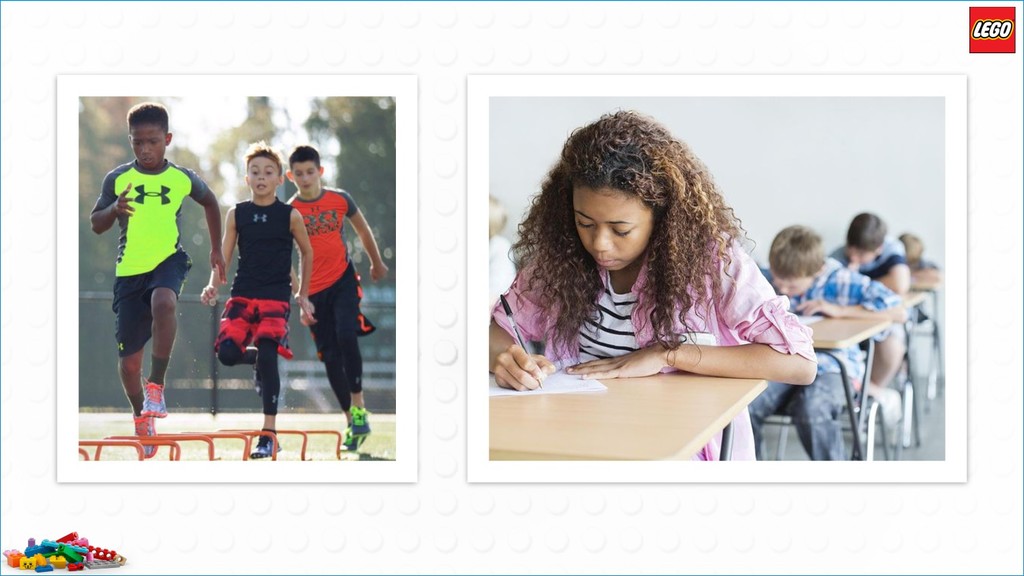
And these activities mean their free time is broken up into chunks, fragmented chunks, and that makes it very, very hard to actually dive into the play that we've just described here where you can truly be intrinsically motivated and actively engaged. But what is conducive to filling up these fragmented chunks of time is a digital world.
It can be games like Fortnite, social platforms like TikTok, content streaming like YouTube. And typically, these digital only experiences, not all of them, but most of them, use gamification techniques to give those rushes of dopamine to fuel more passive engagement. And so kids are extrinsically motivated to get that next like, to watch the next video, to win the next boss fight.
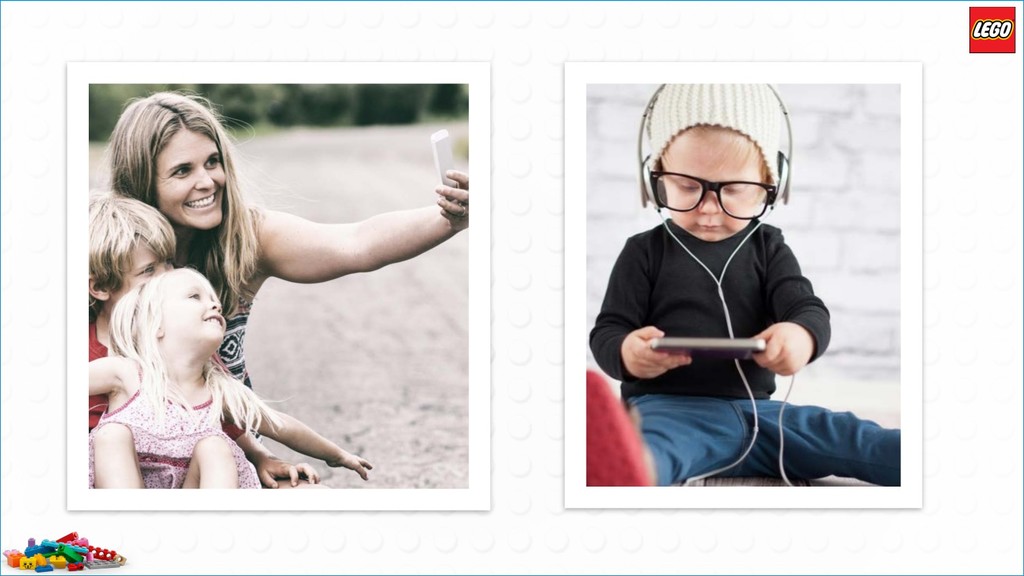
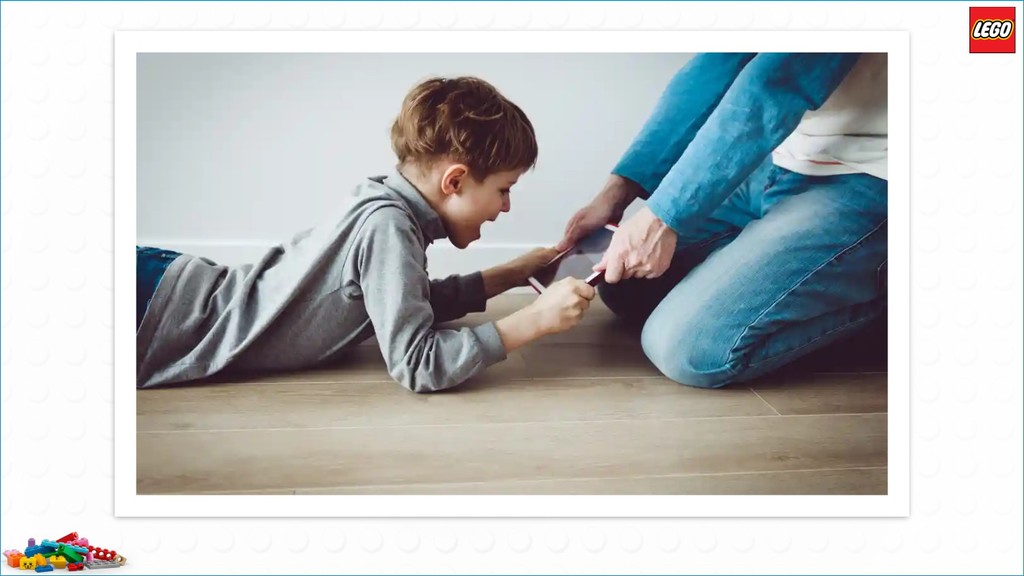
And so, the kids we see in our research is that their free time is actually spent doing this in a state of passive engagement. Compounding the situation, we as adults are role models and think about how much you use your phone. It's our main communication device, it can be our camera, it's our watch.
It's it is what it is. It's not a bad thing. It's just a way of life now. However, it just makes it difficult for kids to then differentiate how best to spend their free time. So this is where toy companies like LEGO, we have a responsibility to be able to design products that can provide an opportunity for play that truly allows kids to be intrinsically motivated and actively engaged.
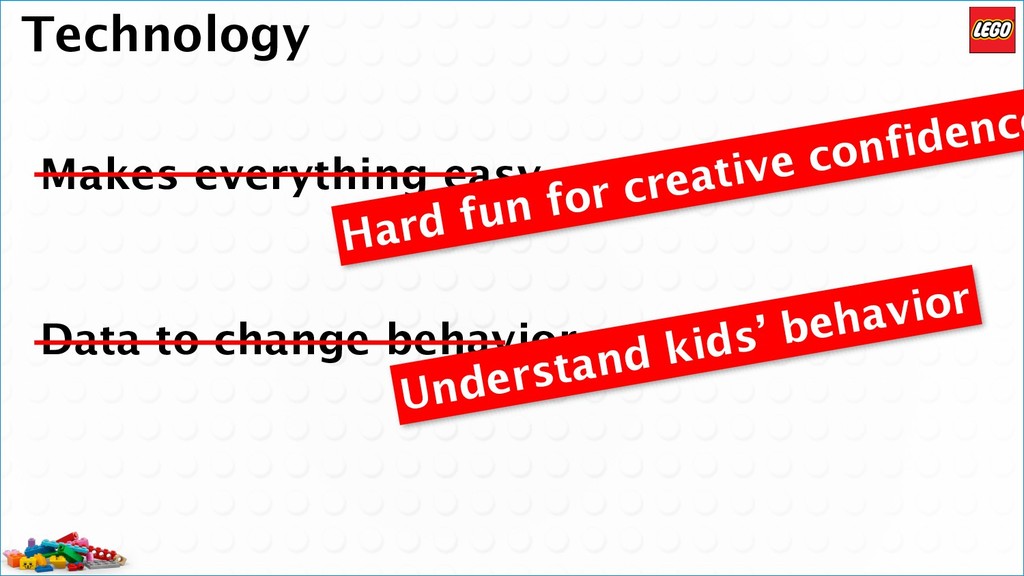
But this is hard to do when we look at how to bring in the digital world and there's a couple of reasons for this. There's a couple of features. One, with technology is that it tends to make everything easy. It makes life a little bit more convenient.
So, when we look to bring digital into our physical play, we have a clash because as you just experienced with the LEGO Duck, maybe on a small scale, LEGO building is really about what we call hard fun. And that's to build the creative confidence in our kids.
So, there's a contrast there. Secondly, this is a hot topic recently and it is the exploitation of data to change behavior. In Lego, however, we look at data to really understand kids' behavior so we can change our product. So what I'll share with you is a story about a couple of products where we've had to marry these contrasting worlds in our design process.
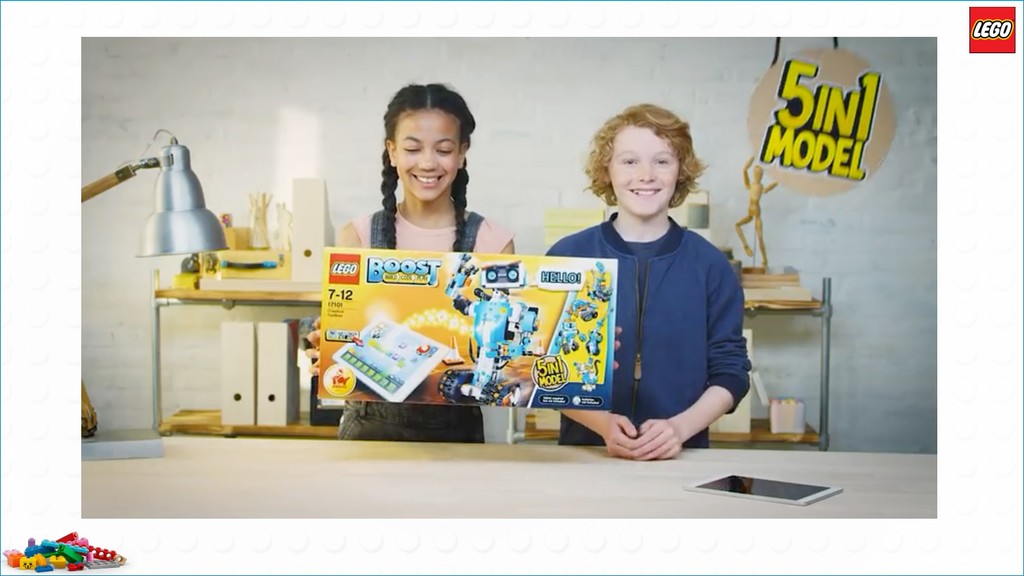
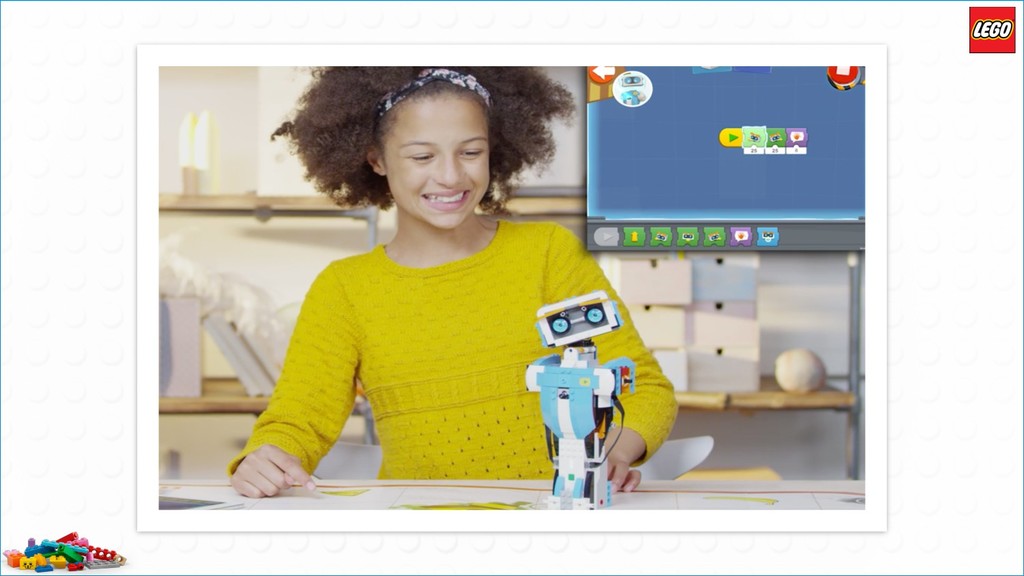
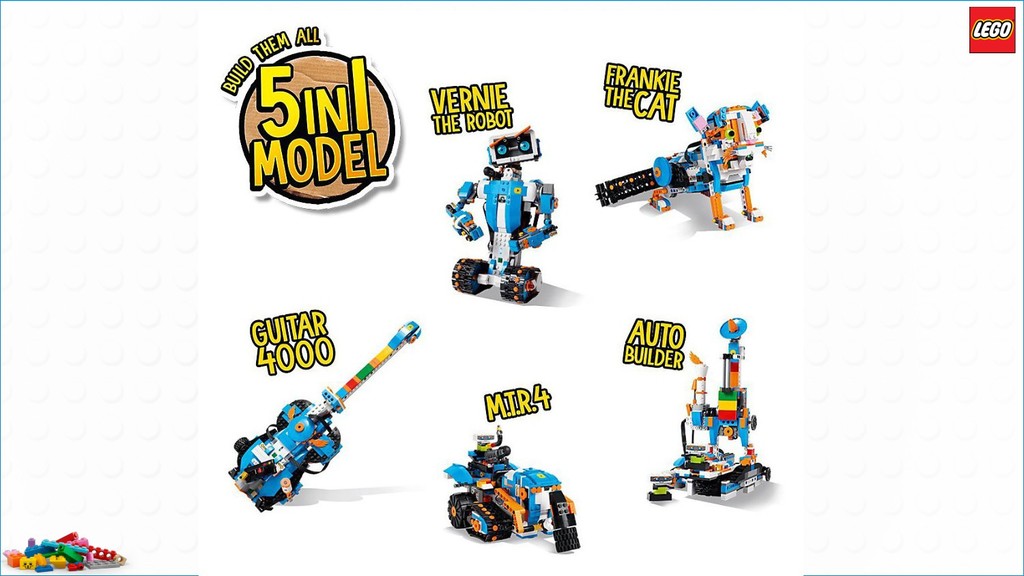
The first product is called Boost and then we launched it two years ago and it offers a what we call build, code, play experience. It gives kids an option to choose one of five models to build ranging from a guitar to a cat to a robot and then they play with them by coding them.
For example, kids can code a cat to play hiddermonica as one would do. They can code the robot to play hockey. And as they're doing this, they're continuing to do what we call playful learning. There's a video I can share that really explains this play really quickly.
So our main design challenge in this product was how do we motivate kids to build and code? Robots are complex, building one out of plastic bricks takes a long time. In this case, each of these models takes two or three hours to build and code.
So, what is it that we can use to motivate them through that process also knowing they are so squeezed on time? The first thing we did was we looked to leverage what digital can offer us. So we implemented some simple game mechanics. Through major building and coding milestones, we put in these digital rewards and points.
And then we took that prototype to test and we found that the kids, once they were in this award mode, they got completely they forgot about the physical world altogether. They were completely ingrained in the app and all they wanted was to get the next point, the next reward, the next badge.
And so, that was not good enough because now they were in that intrinsic motivation state. So we went back to the drawing board and then we saw that we actually had all the ingredients there to create an experience that could provide more intrinsic motivation.
These kids were building a robot and bringing it to life, so why not go all in and actually emotionally connect with them? We could have the robot ask the kid to continue building himself. We So we implemented the features so as the robot came to life and so he didn't have his arms and he would say, hey, I can give you a high five but you need to build my arms or let's play hockey, you need to build my tracks.
And when we took that to test, we saw that one, the element of surprise, LEGO is now talking to me, asking to build itself. And then two, the emotional connection and three, that curiosity was all that we needed to do to really instill that intrinsic motivation to keep building and coding.
One of my favorite quotes from the kids that we did, we did in home tests after launch to see how this product was actually doing, and this kid was explaining to me, he was trying to get the robot to pick up something in his room and he tried and tried and tried and couldn't get to work.
And then once he finally did, he said, in his words, this is a nine year old kid, he got a little bit happy inside. And for me, that is truly showing that hard fun comes through in building the creative confidence for these kids.
The next story builds on the emotional connection with this Boost product. So as I mentioned, this is a five in one experience, meaning that in a product's lifetime we expected that the kids would spend several hours building and coding with one model, then willingly deconstruct and spend several hours building and coding with another model.
And we created this to provide more value for money. However, as you know with our insights that time is a challenge, we shouldn't be surprised by the data that were getting back. But we did learn one thing and that actually helped us improve a product that we were working on later.
When we looked at the aggregated numbers, we saw that eighty percent of the kids were only building one model and that model was either Frankie the cat or Vernie the robot. And then, when we asked why, it wasn't because of time, that wasn't the barrier.
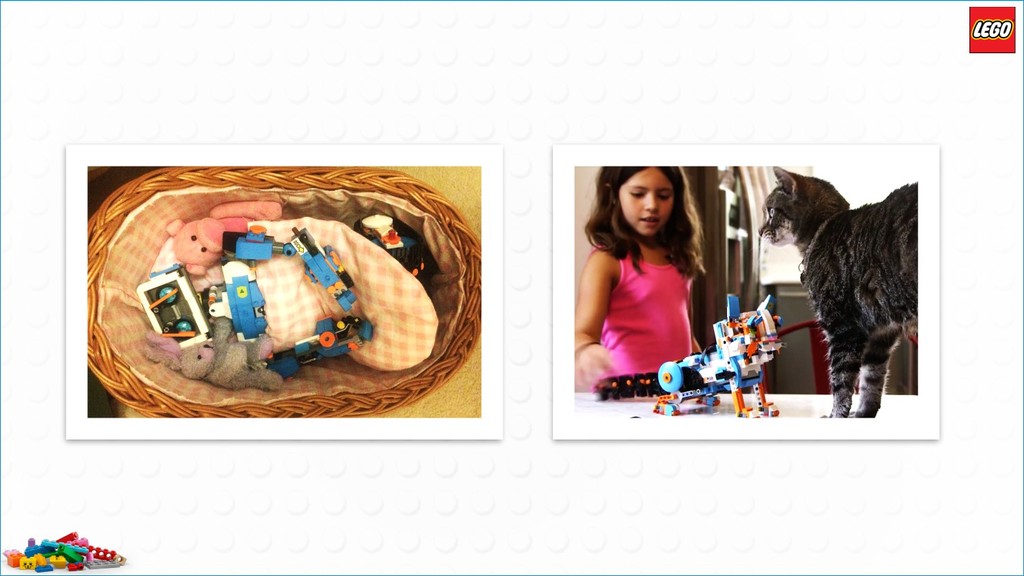
It was because that these guys were so emotionally attached to or the kids were so emotionally attached to them that they had become part of the family. That emotional engagement that we created early on to get them through the initial building and coding process had become so strong that we have anecdotes where Vernie was riding in the back of the car wearing a seat belt to football practice or tucked away in bed like you see here every night.
Frankie the cat obviously became best friends with the house cat and dog. So these guys were just another part of the family and there was no way any kid was going to rip those eyes to build another model. We also learned, which was not good, that this was frustrating for parents.
Because here, they had spent a lot of money on a product that was five and one, and their kids were refusing to get kind of the full value from that product. And for us, that's we absolutely do not want that feeling for our parents.
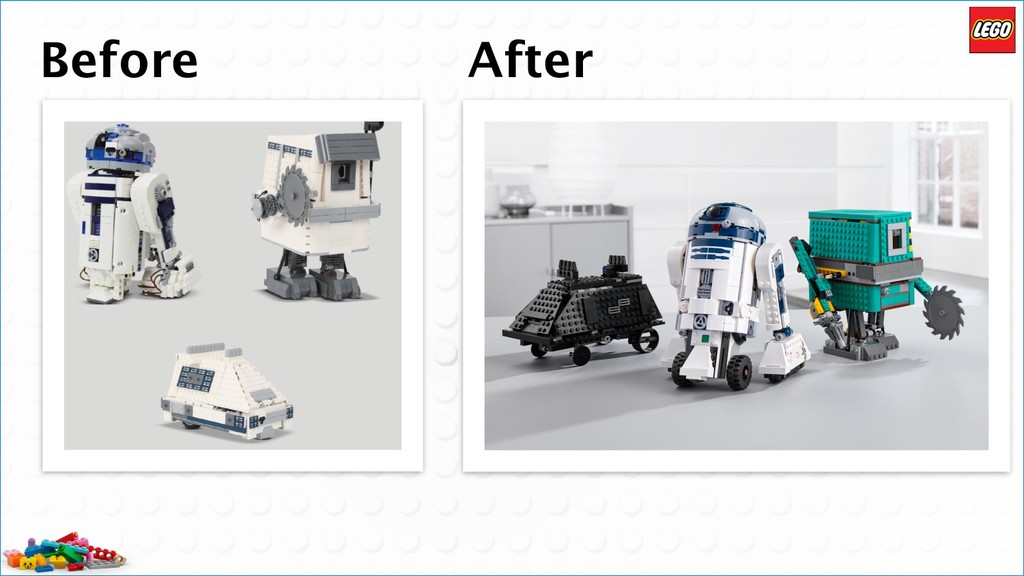
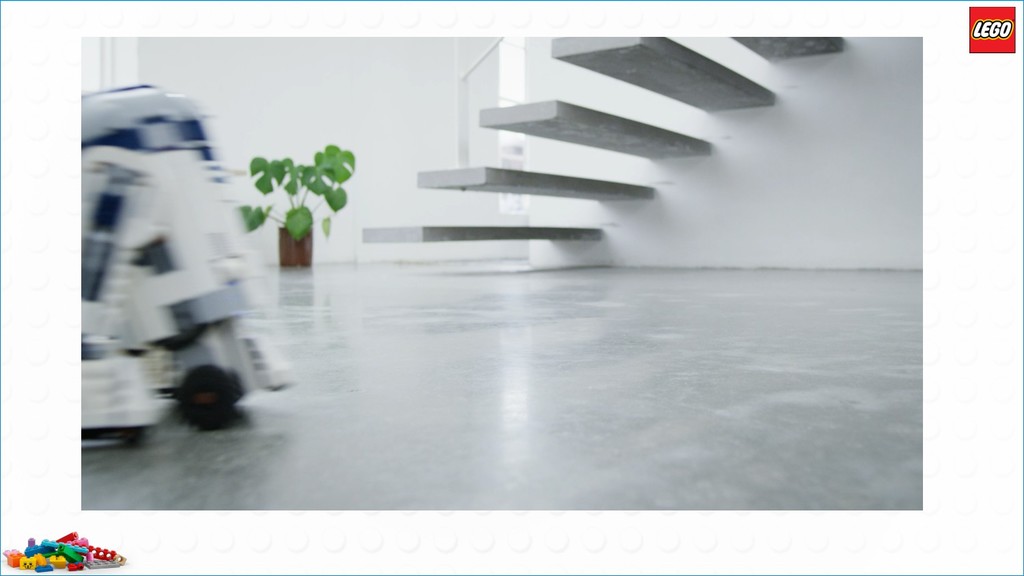
So we got this data during the development of another experience. We were taking that build code play loop into the Star Wars universe. Instead of a five in one, was a three in one so we had R2D2, a gong droid and a mouse droid that kids could then take on missions to beat the empire.
However, when we got this data, we halted development and course corrected and we my team did a couple of design sprints and found that for the same cost, we could actually create the product in a way that kids could build all three of the characters at once and never have to take any of them apart and just switch out the motorized components among them, depending on which mission they needed to take them on.
And then we were also able to still use that emotional connection and give each of the droids a bit of personality. So the mouse droid, you know, he was good for the sneaking missions and the gunk droid was good at destructing things and r two d two, of course, he's always the clever one.
And you can take a look at what that play turned out to be in this video here. So we just actually launched this product this summer, and so we're now collecting data to understand if our intention of the experience to have that intrinsic motivation is actually working.
And I'm sure we'll learn something because we always do that can then help us inform for the next product. My team is working on products that will be launched next year in interactive play as well as concepting those for twenty twenty one. And our ambition is that we can use technology in a system in play just like we do with the physical brick.
And so, we can scaffold those experiences that truly does give kids the creative confidence and really building on that foundation that you experienced earlier with the LEGO duck. Bringing this back to how it can be relevant for you, I'd like to leave with a couple of reflections.
First, you know, we are all on a journey to catch up or stay ahead in a very fast paced and tech governed world. And so it's easy to jump on the bandwagon and completely rethink your service or product. I would just ask that, is there a way to do it without veering too far from your foundational core?
You know, for LEGO, we could just make a copy of Minecraft, to be honest. But, we want to use technology in a way that reinforces that hard, fun and physical play. Secondly, there's a lot of there can be a lot of negativity around technology and data.
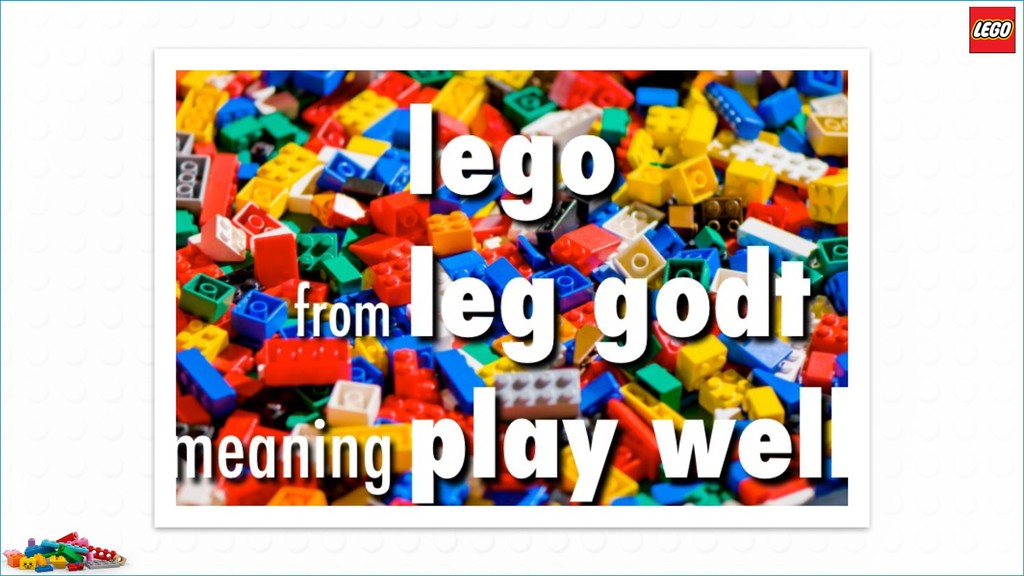
And it's not naive to think that we can actually use data in a positive way. We need to understand kids' behavior to actually provide a value adding play. And then one last reflection is remember to leave space and time for our kids to play, and not just any free time, but time to play well.
That's actually the origin of Lego from the Danish words, leggo, meaning play well. Thank you.