As leaders, we naturally tend to focus on making the teams we support successful. As long as we are running a healthy and high-performing team, we might think we are doing a good job. But is the success of our team relevant when other parts of our organisation might not be as healthy, and therefore the overall business fails to deliver results? Are we holding ourselves to the same standards we expect from our teams? Who is there to support you when the going gets tough?
In this talk, I’ll discuss the benefits and qualities of a cohesive and high-performing leadership team and will share practical tips I’ve used at three different organisations as a member of senior leadership teams and with my groups so that you can confidently introduce this approach at your company and build a healthier and results-driven organisation.
1 / 53 Use ← → to navigate
Auto-generated transcript - may contain errors.
Tap a timestamp to jump the video.
Hello, everybody. My name, Ascian Josenes Maria Gutierrez, and I am the head of engineering at Intercom's latest office in London. I'm also responsible co site lead of the site, which is all R and D focused at the moment and growing very fast. Turing Fest is one of my absolutely favorite conferences and is in my own, my home turf, so I still live here.
I commute to London. So, I'm absolutely delighted to be back. I recently changed job, as John said, so I joined Intercom less than a year ago. And that was a great opportunity for me to really reflect on what I value as an organization leader and what I wanted to focus on to make sure that my onboarding at Intercom was successful.
So, for those of you that are not familiar with Intercom, we are one of the fastest growing SaaS businesses, and our mission is making Internet business personal. So, we want to move from a world where it's difficult to understand how to best communicate with a company to a more personal and very much context aware way of talking to your customers through our messenger.
So, Intercom's brand promise is that we can help you grow faster as a business by enabling better relationships with your customers or your prospects. And this is a message that really, really resonates with me, because faster growth within a business through better internal relationships is actually a very good way to describe what it takes to do something that I care very, very deeply about, and that is building healthy organizations.
So, for the past seven, eight years that I've been holding senior leadership positions at different companies, I have been very, very much interested in learning more about ways to really address leadership cohesion issues to enable organizations to be more healthy and ultimately deliver better results.
And that is what I want to talk to you all about today. So, I have been a software engineer for the past twenty years. I've worked at different type of companies, public and private. I've worked at really big companies and very small companies.
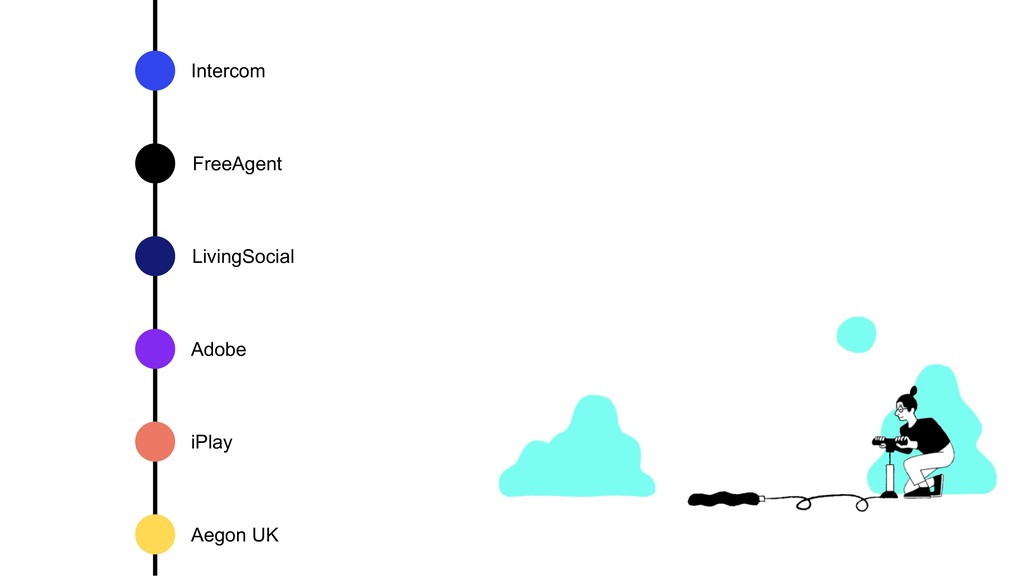
I've worked at collocated companies. I've worked at distributed, very distributed companies, some of them very successful, some of them not so successful, so you name it. But for the past seven years, I've held senior leadership positions at very, very fast growing companies. So, at Living Social, I grew from managing one single team to being responsible for half of the engineering organization, with almost one hundred engineers distributed around the world.
At FreeAgent, one of Edinburgh's most interesting and successful tech stories, as Jan was mentioning, I was VP of Engineering and part of the exec team for about three years. And during that time, we went through an IPO and also a big acquisition by the Royal Bank of Scotland.
And now, at Intercom, I am part of the R and D leadership team, and I am responsible for one of our five offices. So, looking back at my time at Living Social, I went through the same pains most people go through as they move from a technical leadership position or any kind of individual contributor position to a management position.
My whole focus at that point was to really making sure that my team was being successful, and they were set up for success. I seemed to be doing a good job. The team was enjoying the work. We were getting the results. My manager appreciated the momentum and the rigor that we were building in the team.
And as we kept on growing the organization very quickly, I took on another team and then another team, and before I knew, I became director of engineering. Even though I had very good relationships with leadership, with my peers, with people in my team, I really wasn't focusing on solving problems that other teams were having.
I was very much focusing on making my teams and my slice of the organisation as successful as possible. I wasn't also not asking for help very much, I was just trying to figure everything out myself and say, Hey, you need to show that you deserve this job, so you better get your things done, and not necessarily rely on other people to be able to push through the problems that I was facing.
And looking back, I was actually doing all those things when I was an individual contributor, when I was an engineer, and I needed to make progress. I was really relying on other people, but when I went into this management position, I was very focused on just making sure that people thought I knew what I was doing.
And the reality is that we were all working very hard, you know, myself, my peers, we were in a very, very fast growing environment. Living social, I think, went from a few hundred people to five thousand people globally in a very, very short period of time.
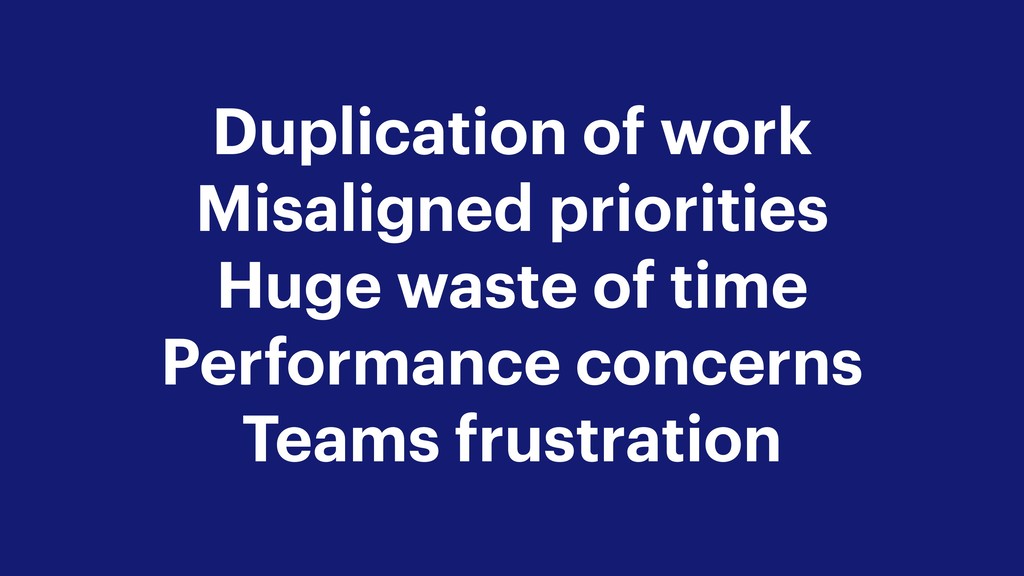
And we were just trying to figure out what to do, and it wasn't very long before we started to see some big issues with conflicting priorities between different teams, duplication of work, multiple teams were solving the same problems at the same time, and that really started to create a lot of friction across the different teams.
And we had similar problems with other parts of the organization. So, that wasn't even just within the engineering organization. For example, sales were making commitments before we even, in engineering, knew that that was a thing and then find out that actually that's not something we can really deliver.
Our support were getting very annoyed with us because there was issues with our products that we weren't responding fast enough, and it was creating a lot of load for them. We didn't have a good way to prioritize and have those conversations. Or marketing, for example, they were trying to acquire more customers and they were running this launching these big campaigns to millions of our customers.
And suddenly, without letting us know that that was going to happen, and suddenly all our systems will kind of collapse and the site will be down because we couldn't cope with that level of traffic. So, not a great situation. Does that sound familiar to any of you? Yeah.
The reality is that it wasn't necessarily anyone's person's fault. Everybody was just trying to do their job at the best of their abilities. Everybody had some goals and some targets, and we were trying to figure out what to do until, wait for it, the incident.
There's always one. Right? There's always that moment that makes you realize this has to stop. You can't continue going in that path. And you really need to commit to real change, and you need to do it yesterday. So, for us, was a production issue that puts us down for forty eight hours and brought us kind of to the front all the problems that we were really facing, especially the lack of alignment between developers and operations and other parts of the business.
And believe me, putting the business in really serious risk is not the wake up call that any of you want for your business before you start addressing some of the issues that we're going to talk about today. There's way less painful ways of going about this, and hopefully a few of the tips that I'll give you will help.
The good news in this story is that we had a fantastic team that kind of came through for us and were able to kind of recover the systems even though at one point we thought that was going to be impossible to do. We hadn't messed things up that much, at least we had hired a very capable group of people to see this through.
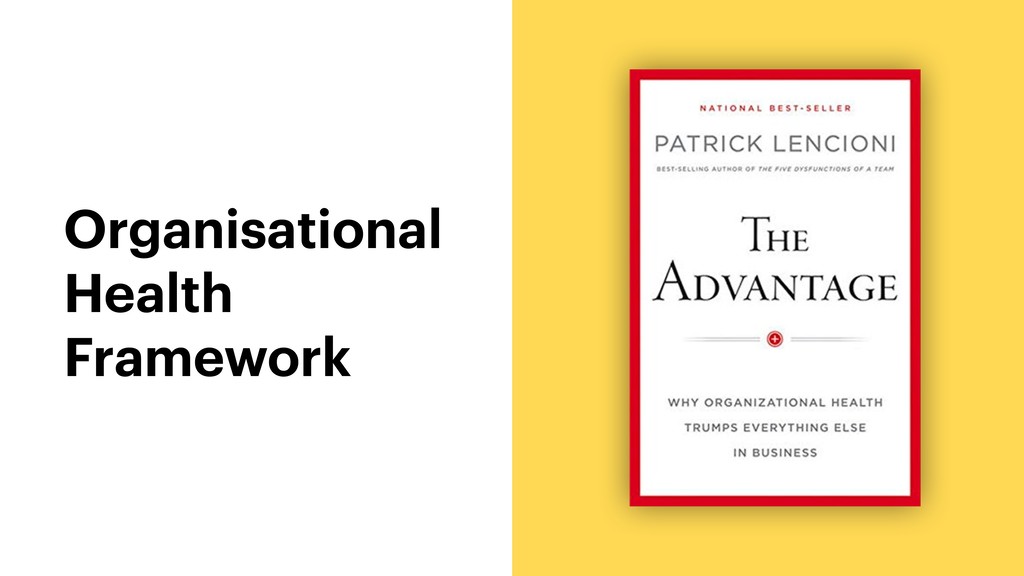
We were just letting them down as leaders. We were not doing the best thing for the organization to be able to operate successfully, even though we had the talent for that. So, that time, my then manager, our VP of engineering, had attended a leadership conference where Patrick Lencioni was speaking about one of his books, The Advantage. Any Patrick Lencioni readers? Okay.
I'm going to talk a lot about him. But this book, The Advantage, introduces a framework for leadership teams to build healthier organisations and deliver better results. It's a very practical implementation of some of the ideas he talks about in previous books, like The Five Dysfunctions of a Team or Death by Meeting.
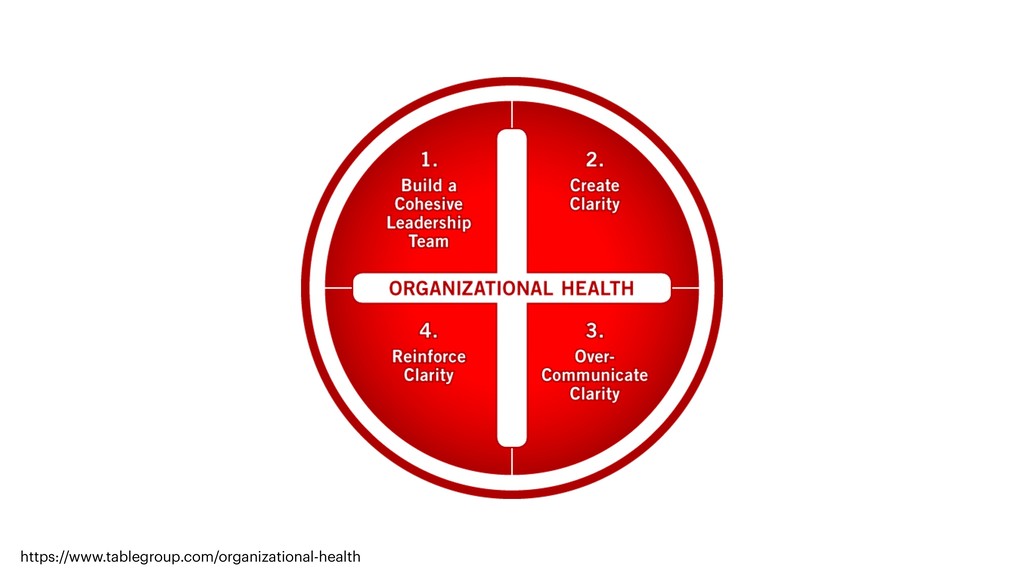
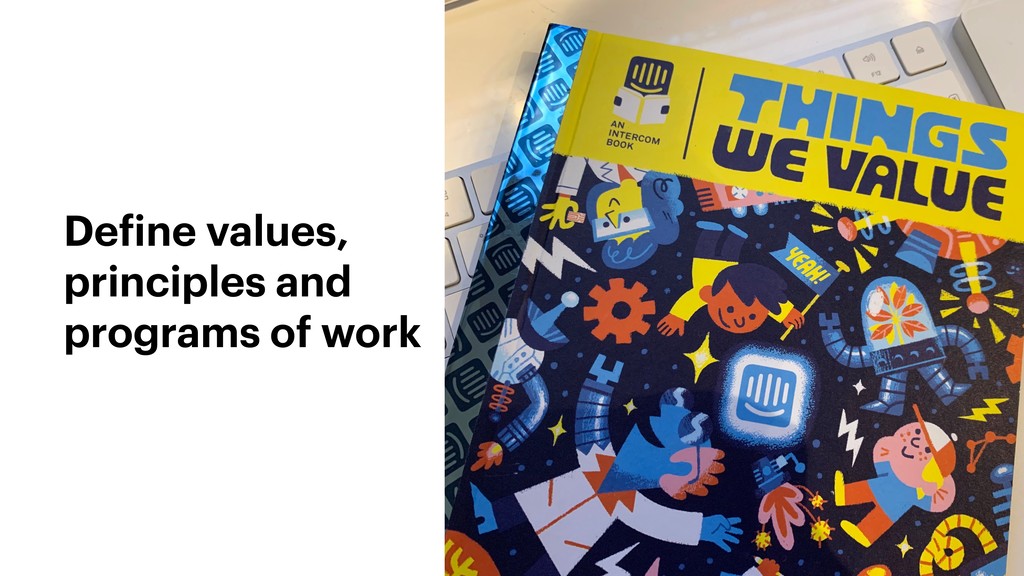
And according to Lencioni so let me read this organizational health is about making a company function effectively by building a cohesive leadership team, establishing real clarity amongst those leaders, and then communicating that clarity to everyone within the organization, and putting in place just enough structure to reinforce that clarity going forward.
So, we didn't have anything better than this model. So, that's a summary of what I just read. And we got together and decided, Okay, we need to fix this. We went for a three day off-site and decided to go through the whole framework, as is described in the book, and see how we could start fixing and addressing some of the issues that we had as a leadership group.
It wasn't easy, but little by little, we started to be a lot more intentional about what we worked on, what we were focusing our efforts on, and more importantly, how we worked together and supported each other to achieve those goals. There is no happy ending to this story for the business.
I don't know if any of you are familiar with Living Social. This was just one department getting their act together, but Living Social went through some difficult times and eventually got acquired by our main competitor. But this was a pretty transformational experience for myself and my peers at the time.
And what I learned back then has completely changed how I see my job today and has really influenced how I've approached things ever since. And I want to believe that it has made me pretty effective in other jobs that I've had since back that time.
So, I could talk about each of those four areas that I was mentioning about from the model, But today, I really want to focus on one of them that I believe is probably the easier to implement, but also the most impactful. And because without a cohesive leadership team, I believe it's pretty difficult to make substantial progress in any of the other parts of creating clarity for the organization.
So, how do we build a cohesive leadership team? Well, you do it through fostering better relationships between peer groups. So, we go back to our intercoms brand promise, but we look at it internally instead of with customers. So, in tech companies, a lot of you know this, we've optimized a lot over the years around how teams should operate and collaborate.
But we don't put the same level of rigor when it comes to building high performance leadership teams. We don't really talk about leaders belonging to a team, do we? Not normally. And when we talk about leadership teams, I refer to either an exec team, but also a function group, or managers that report to a director, etcetera.
It doesn't have to be just at the top of the company. And I have implemented this model successfully at all different levels of the org chart. So, Lencioni says that most leaders serve in two teams that are both important, the team that they lead and the team that they are a member of.
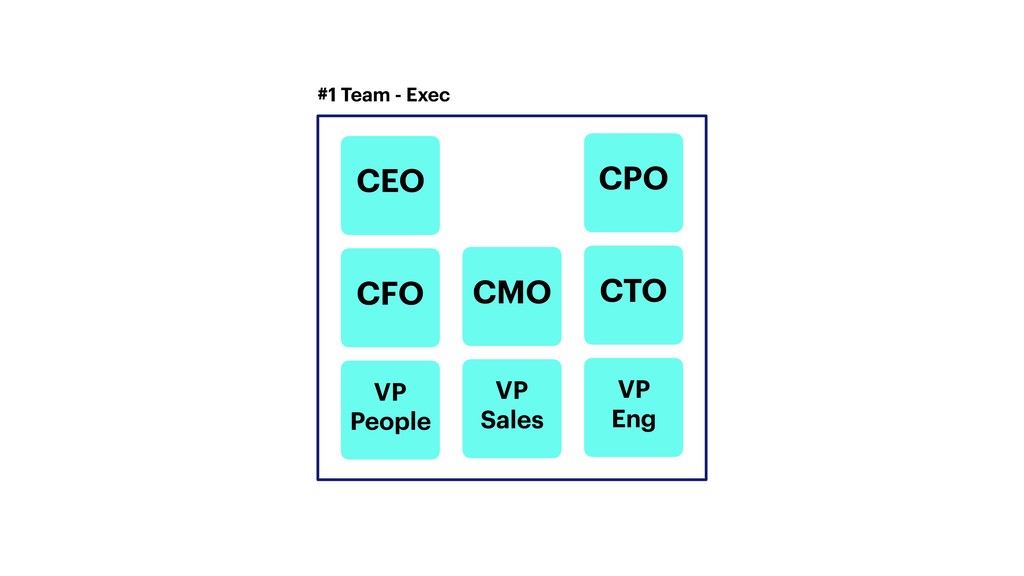
So they need to prioritize the leadership team they are a member of, what he calls team number one first for the good of the organization. So how does that look like? So as a VP of engineering, when I was a free agent, my team, number one, is the exec team, not the heads of the department that I support.
That is the team that I support. But my team and where my focus should be and priorities should be with the exec team. So, your peers are people that operate in a very similar context to you with the same scope of ownership and responsibilities.
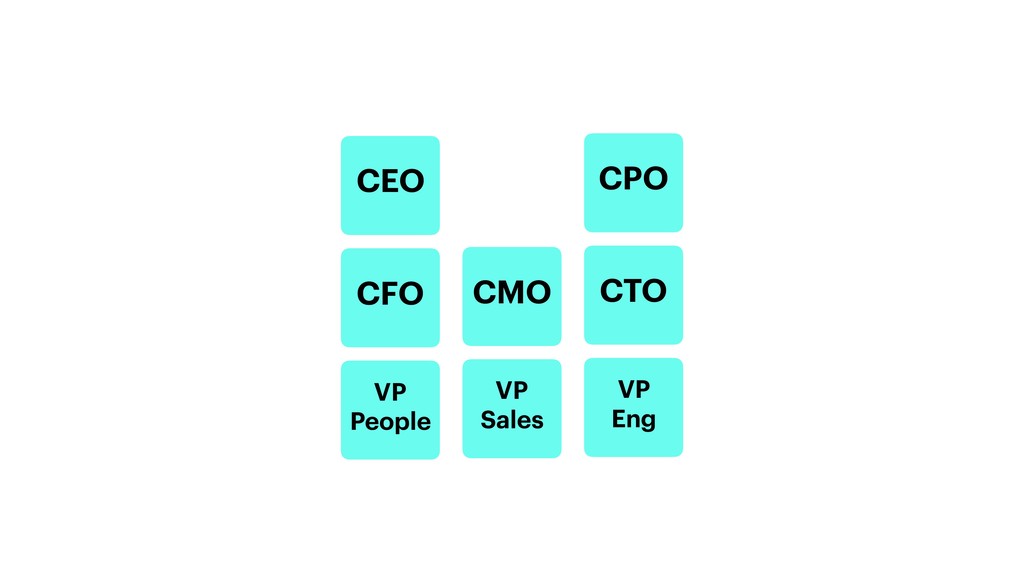
So, ideally, that group has less than ten people so that you can form meaningful connections. And this is for a potential exec team with representative of functions and areas of ownership around the business. And this is their main team, and each of them will support a team in their own organization.
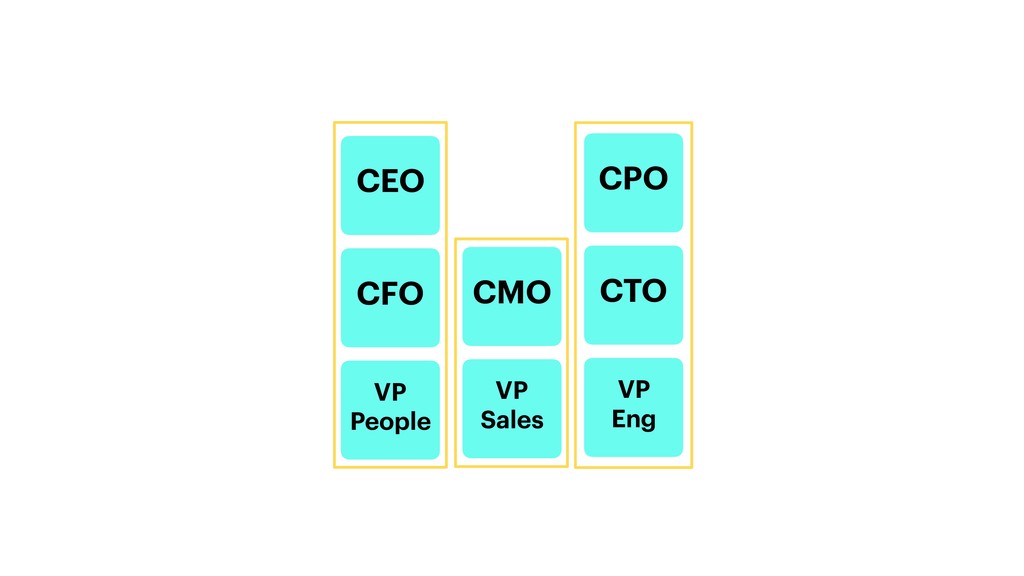
And within each of those teams, you might have even tighter partnerships, so smaller groups of people that normally collaborate very closely together. So when I was a free agent, for example, our CPO, Rowan, Oly, our CTO, and myself as VP of Engineering used to work very, very closely together all the time.
But you still want to encourage the relationship, for example, between the VP of Engineering and the VP of Sales. When those relationships are in place, it's a lot less likely that you end up in a situation like the one that I was talking at the beginning where sales commit to delivering some work that is not possible for us to deliver.
If they are working together, they will make sure that they form a plan that is appropriate and sustainable for both parts of the organisation. And it's also very likely that if the VP of Sales is having maybe a little bit of trouble reorganising their function, and that's a strength of the VP of Engineering or of the CPO, they can help do that.
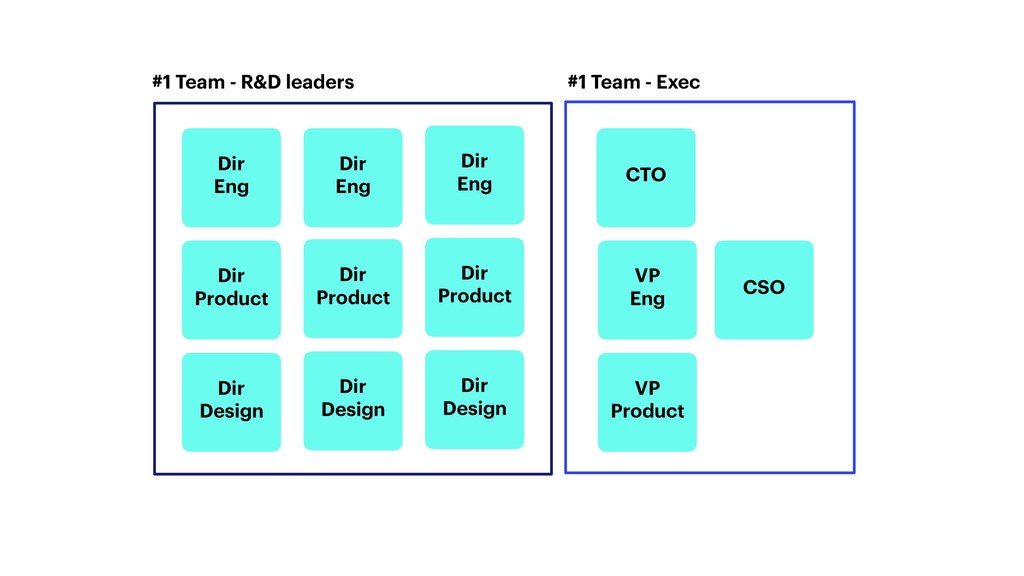
You know, you don't have to be really good at all the things, like Chris was saying before. And as I said, this was is applicable to other levels. It's not just at the exec level. And in this case, at Intercom, my peers here are the directors of engineering, product, and design.
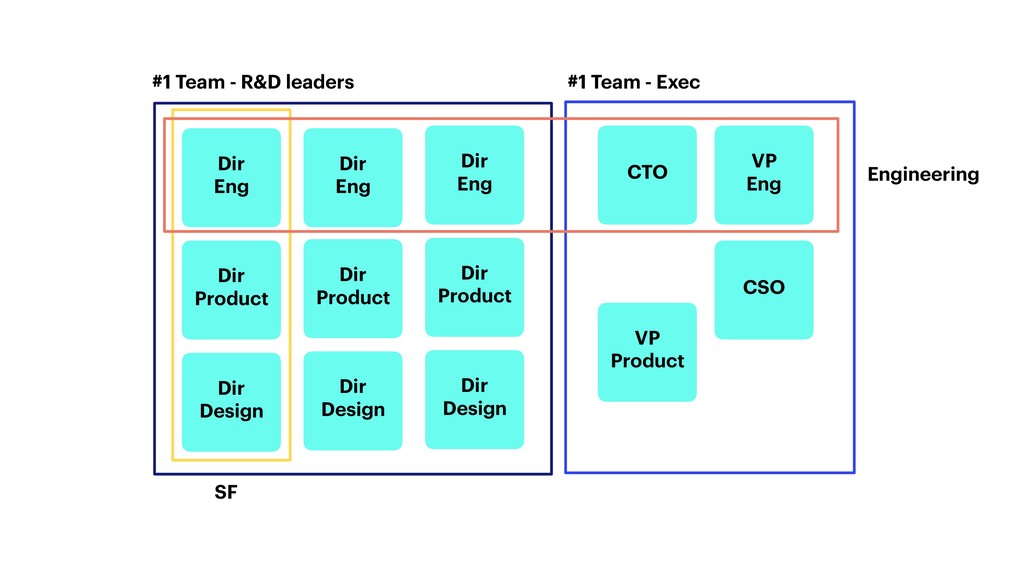
We call that R and D. And we are supported by some of the execs. So, the CTO, VP of Engineering, and VP of Product are part of the exec team, but they support us. And like before, for practical reasons, there might be closer partnerships, especially when the members of the group is quite large.
So, you have I work very closely with the engineering leaders, but also I work very closely with the cross functional site leaders. So, I work all the time with the head of product for London. And myself, we have a very close partnership. So, that's good on paper.
But what gets on the way of us to truly operating as a team? So, sometimes it's simply visibility. We are normally responsible for large areas of the organization, and the majority of our time is really distraction to try to get your nose into what the CFO is doing, for example.
You might be curious and interested and really be quite keen on learning about what's going on from a financial point of view, but you might not really have the time to spend on that. There's always something more important for each of us to do, right?
And to me, having that mindset is a reflection of not really understanding the value that you get out of understanding how other parts of the business are operating and working together. And in some of the companies that I've worked at in a very distributed environment, you know, distance makes things even a little bit more difficult because you are not bumping even into them, you know, for a coffee.
So, it's very easy, kind of out of sight, out of mind. Leadership teams change. One of the problems that we all experience in our company, sometimes people come and people go. I'm an example of that. Those are normally people with very impactful responsibilities.
So, how do you onboard a new leader, a new exec, a new director into an organization? And doing that without a very cohesive team supporting them is going to be pretty, pretty tough to get them up to speed and aligned with the way the company operates and, more importantly, with the values of the business.
And those leaders will tend to default to being supported by their reports, or worse, they will come and try to do their own thing, what's happening in other places without really understanding what's happening, you know, how this company what are the unique things about how this company operates.
And that will create even further disconnect and misalignment between parts of the organization. And actually, the success rate or new execs, directors, etcetera, coming to an organisation is not very great. They don't tend to be very successful. Another common problem that I see is that leadership positions tend to have very fussy expectations.
How many people are here in quite senior leadership positions in your company? Yeah. That's normally the last career ladder that gets written, if at all doesn't. Are you very clear about what is expected of you as a CMO, CEO, VP of engineering? We just know what to do, or so do people think.
There's also not many people around with time to support your growth. The CEO is probably more than likely busy talking to investors and trying to run the place. It's not really kind of having that time to spend with you to develop your the skills that you need to develop.
An external coach can help, but they don't really have the visibility into all the day to day challenges and enough context about the business and the place that you are operating to really provide feedback and see the impact of your actions in the work.
But those are areas that probably one of your peers might excel at and that you could really learn from. Or the other way around. You could be helping other people in areas that maybe they are struggling a little bit more. So as we've discussed, I think there's a huge commercial impact into not investing into those groups, but also a personal growth because we might not be able to grow at the speed that the business needs, especially in a fast growing environment.
One thing that happens is that a lot of times the business outpaces the development of the individuals in that leadership team. And you end up in a situation where you really need to kind of up level and bring somebody from the outside because you haven't been able to develop those people internally.
So, how do we fix this? How do we increase visibility and make time for more collaboration? I'm glad you asked. We start by understanding your team and each individual in the group. And this, I find it quite the fun part. For some people, this is a horrific thing to do.
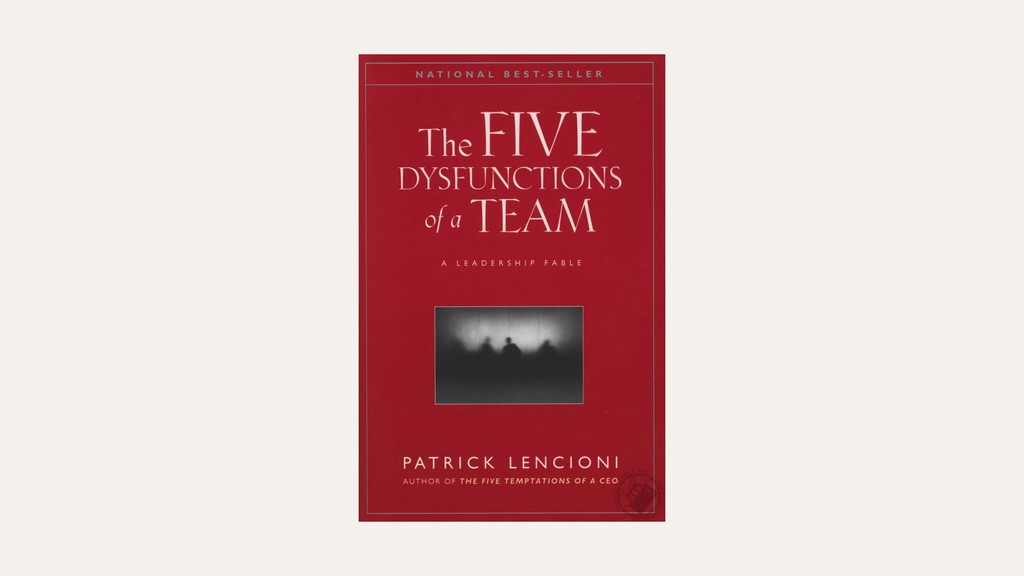
But I like people, so I like to know what makes people tick. It's easier to start talking about the group than focusing on individuals. So I would recommend that you read The Advantage of the Five Dysfunctions of a Team. Anybody familiar with this book? Great.
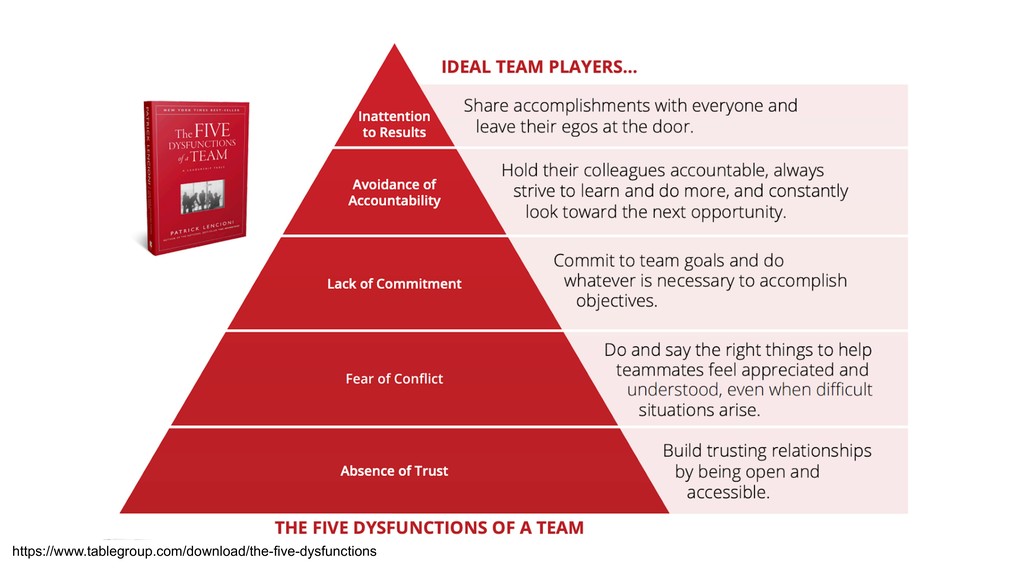
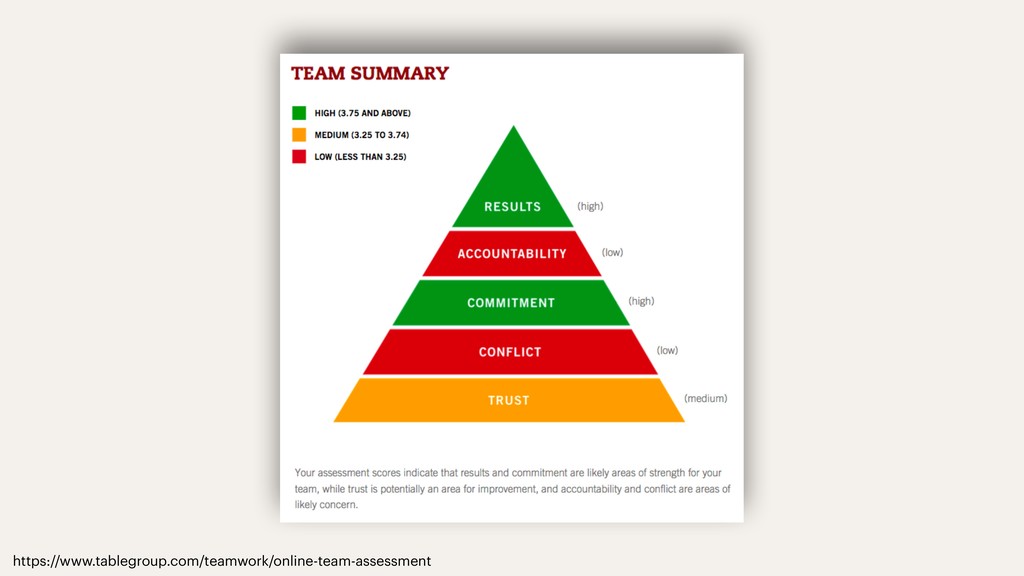
To really understand and start troubleshooting the dysfunctions within your team, the things that you're the problems that your team is facing. You might have seen this model if you've read the book before to assess problems within a team. So, according to Lencioni, this is another of Lencioni's books, well functioning teams trust each other, and they are open and accessible to each other, and because they trust each other, are open to challenge each other in a healthy way and assuming best intentions.
And they commit to clear goals, and they hold each other accountable for delivering on those commitments. And ultimately, they celebrate and support group achievements instead of driving their own agenda. And you can even take an assessment that will highlight the areas that you need to focus on in your group and then what progress you make over time.
And I keep on recommending these books, and I should have partnership with kind of the table group, Patrick Lencion is good because I think I will be a very wealthy woman now with all the times I have recommended these books. But you will be very, very surprised what interesting things come up from those discussions.
And a lot of things that everyone thinks, you know, your typical elephant in the room that everybody's tiptoeing around and that nobody talks about. And it's only when you start giving them a framework to have those conversations that those things come to the front, and you can then really start troubleshooting them.
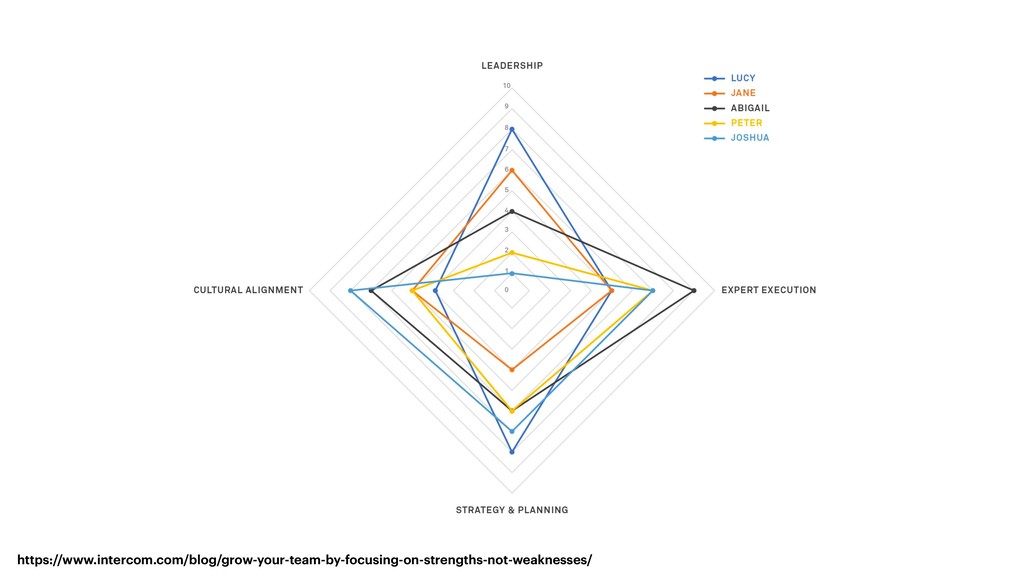
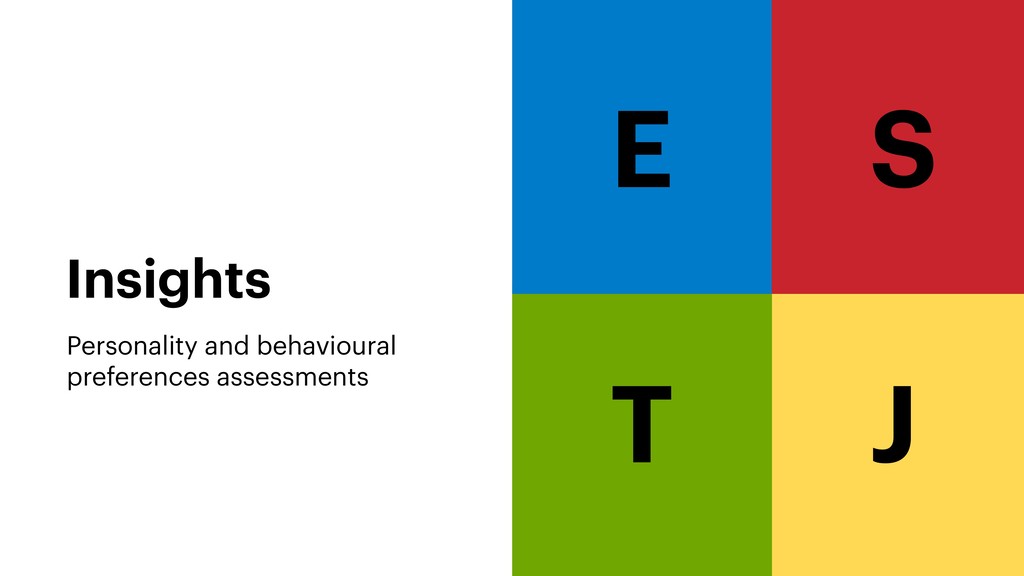
The next thing is also suggested in the Advantage, and that I highly recommend, is taking a personality test and discuss the results with your peers. You might be familiar with different frameworks for this, so there's Insights, which is Colors, Myers Briggs, there's Gallops, StrengthsFinder I've done them all I don't have a preference.
You might not believe or fully relate to those personality assessments, but I found that invaluable when it comes to providing a common language to describe common behaviours and work style preferences between colleagues. And it's a much less awkward way of talking about what our friends call squishy things like feelings.
It's not something that you normally speak about with your colleagues, but now you have the words and the framework to talk about those things very openly. And it's important that you share with them the things that you really value and the things that really trigger you.
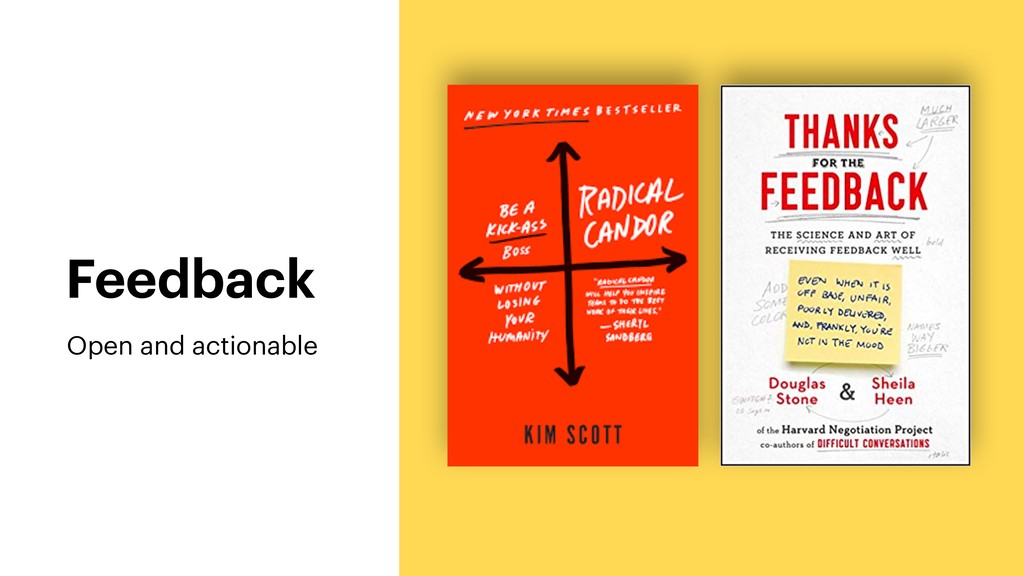
And once you've broken the ice with team assessment and work style preferences, then I recommend you that you start providing more actionable and clear feedback about the things that are working within the group and not. And you can do in an off-site, for example, around the table and point kind of what are the things that each of the individuals in the group is doing that really is helping the team and what are the things that each of them are doing that you think is undermining the productivity and effectiveness of that team.
And just make sure you then commit, that each of you commits, to moving forward and addressing one of those things that gets talked about. And now that you know everybody very well, I think it's important to collaborate and support each other. And I think it's very important we could go into a lot more detail here, and that's maybe reflected in the other three models.
But before you start making accountable each other for how you work, you really need to focus on agreeing, making a contract of how you want to operate, what are the values of the business, what are the things, the principles of how you do things?
And what are the things that you are committing to doing together? So, anyone that knows me as well, I'm all about setting goals. Goals, I believe, give you a very clear purpose and they are my weapon of choice. So, it makes you think about what you need to achieve and it helps you make commitments instead of doing what I call calendar driven leadership.
And that's something that I proactively do with my peer in London, the head of product. We set very clear goals for the year, for every six weeks, and every week, then we revise them and make sure that we're making progress towards that. Another little tip that I think has been very useful for me is that you get used to start working with each other as peers.
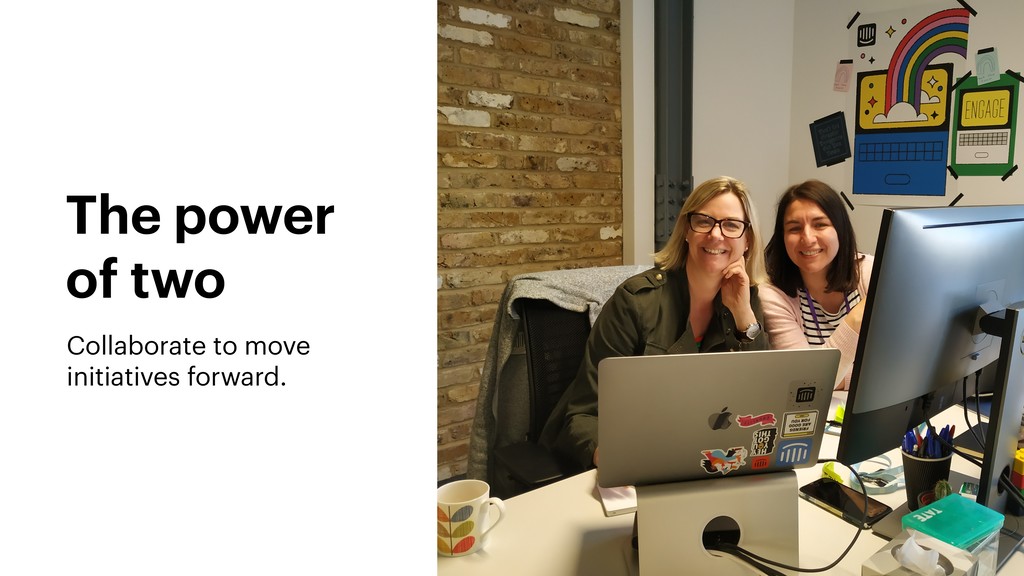
And this is we do that with engineers. We understand the value of peer programming or doing PRs. You should be doing this as a leader as well. So, a lot of the initiatives that I take on and work that I take on, I work on with Jane in product or with one of my peers in engineering.
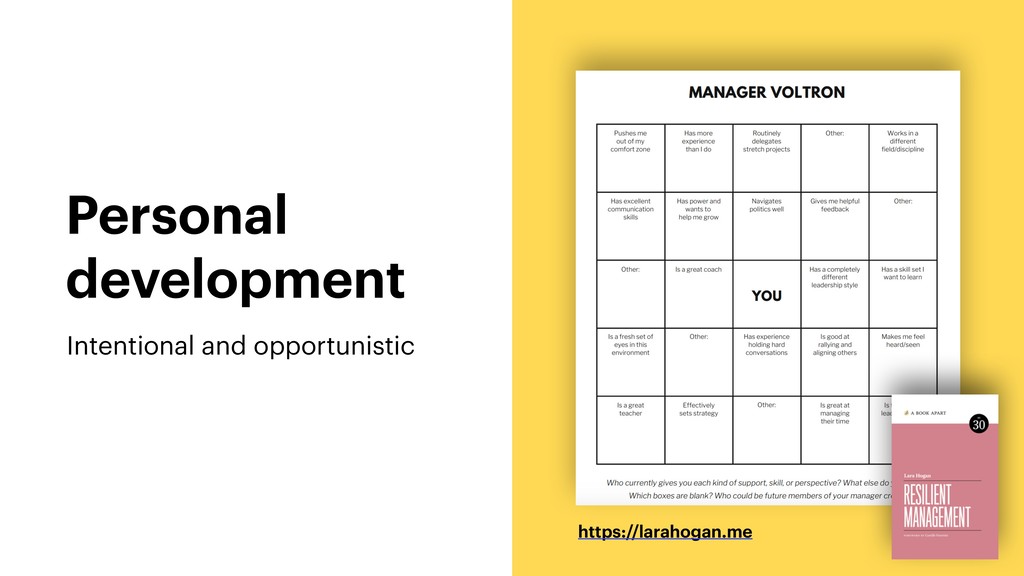
For example, building the manager career ladders. And you get to know that person better, but you also get to learn from them, and the output that you produce is normally way better. A final tip when it comes to personal development, I always ask folks in my team to think about people they admire or skills that they want to learn from somebody, and to then be more intentional about how they go about having that experience.
And this is a very good way, Lara Hogan, in her book Resilient Management, she has what she calls the Manager Voltron that gives you some prompts to kind of try to come up with who are those people, and then you can go and more intentionally start learning from them.
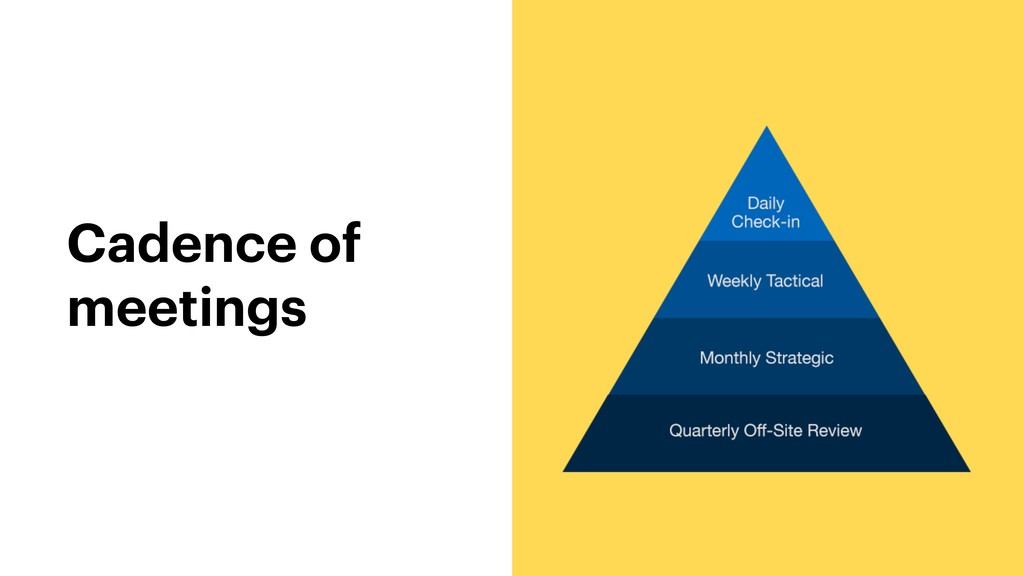
But none of this works if you don't make time for each other. Like any teams, finding the right rhythm and checking in with them constantly will really help you to make those things a reality. And I often use this schedule similar to this model.
So, we do daily check ins, like stand ups for teams, and we give quick updates of what's top of mind for each of us and our priority. Weekly meetings to discuss more tactical issues that need decisions, and we do then deep dives a few times monthly on more strategic topics.
We also take time every quarter to really think more strategically and agree what the priorities for the business are. And before I finish, I want to just quickly reflect on some of my observations about leading an organisation, and it's something that has been brought up before.
Chris mentioned this a little bit. I genuinely love what I do, but at times, our jobs really, really suck. And we have high degree of responsibility, and with that comes high pressure and stress. And if you are taking things seriously enough, you are going to get caught by all that anxiety and stress.
And we are responsible for very impactful business decisions, but also personal ones that affect seriously other humans. And when we need to get involved, the low hanging fruit problems are gone. Like, the things that bubble up to us are things that are normally a little bit more tricky and controversial and require very difficult decisions.
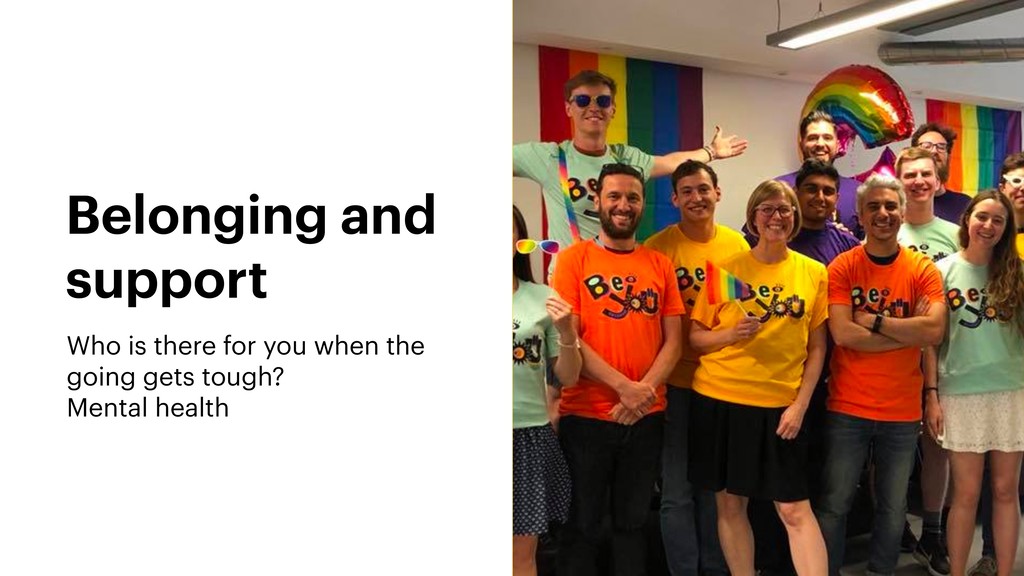
And a lot of times we operate in very confidential environments, so we cannot openly talk about some of the things that we're dealing with other people, you know, and share our struggles. There's some research around kind of the high level of senior leadership leaders suffering mental health conditions because of work, and also this group of people are finding it even more difficult to talk about it because of reputation, but also they don't get that much support.
So, that doesn't look really good. So, imagine the difference that some one on one time with people in your peer group can do to really help you all move forward. So, don't neglect spending time with each other. And you start feeling more as a unit, start to present a united force, and this is when your brand as a team starts to come forward, and everybody realizes that you are actually a team.
You need to start presenting yourself as a team. And you need to present decisions together. You need to communicate on behalf of each other. You need to cover from each other when that person is out of the office, for example, and make sure that everybody knows you are indeed a team and that you support each other.
I am a big believer of leading by example. And if people don't see what good looks like, how are they going to be able to apply it? And if you don't see they don't see you investing in those relationships, why should they invest on those same things?
I also believe that the shortest path towards eroding loyalty and engagement of a team is through lack of trust and respect on the leaders, there should be no room for hypocrisy or double standards in a business. And so, I will recommend you that you always think, oops, about showing them hold on, what's happening?
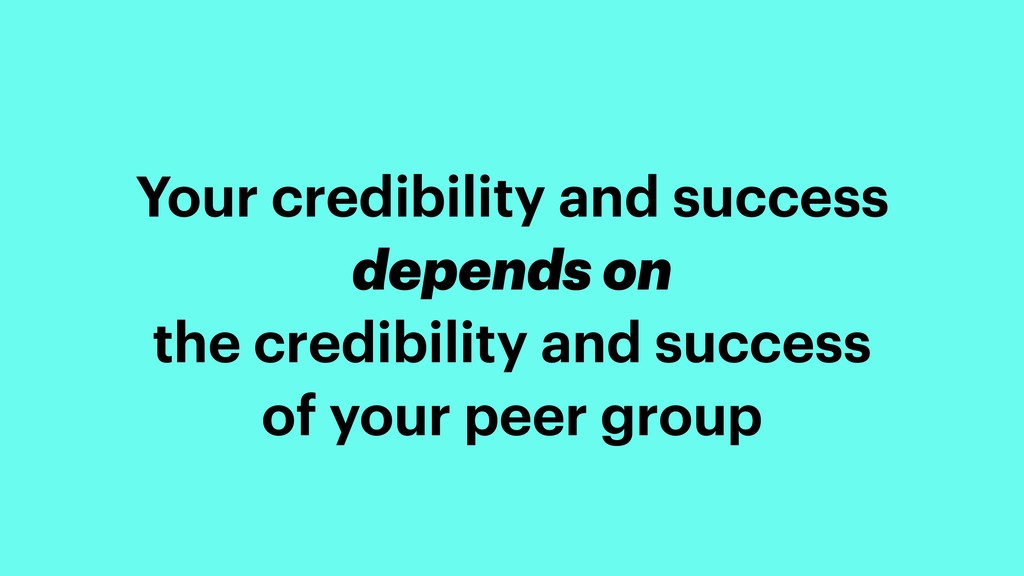
Oh, here we are. Show them, not just tell them. It's very important that you do, you know, you live what you preach. I strongly believe that our credibility and ultimately success really depends on the credibility and the success of our peers. So, you are in need together and go and make it work.