
For many of us, a big part of our job is essentially to fix or improve things. We seek out marginal, incremental gains to make our platforms, brands and performance 'good enough', or at least, 'less bad than our competitors'. What happens when all of this is no longer necessary? When everybody's website, app or software is perfect? Few of our brands are equipped to compete - or even to survive - in this new world. We need a radically different way of thinking, and for many, it may already be too late.
← All talks 





























Grow Growth Turing Fest 2019
What Happens When Everyone's Website is Fixed?
Auto-generated transcript - may contain errors. Tap a timestamp to jump the video.
How dare you laugh? Very rude. Super secret stuff indeed. What happens when everybody's website is fixed? Imagine a world where brands don't compete on how many developers they have or how big their marketing budget is, or how clever their platform is. Imagine a leveling a leveling a level playing field where brands compete on the quality of fit of their product or their service for me here right now.
Which brands would survive? Which ones would fail? How would we tip those odds as marketers, as brand owners, as investors, as entrepreneurs, as users? This might not be as far fetched a utopia or perhaps dystopia as it might seem. I wanna explore some of the questions that are being raised right now as the technology behind large chunks of the web fundamentally changes.
The world is changing. Technology is evolving faster than ever. It's a trope to talk about this, but analog and digital realities are mixing and merging, and social media permeates and connects everything that we do. All of our platforms are evolving faster than we can keep up, faster than we can manage as brands or marketers.
Everything is blurring into one mixed reality. What's not changing is our businesses. You see, the way in which we part audiences with their time or their money or their preferences hasn't fundamentally changed, not even in the digital evolution, but not at all. We just took our analog offline models and plonked them on the Internet.
We like our websites are like brick and mortar stores. We try and convince people to come to our our stores and into our platforms, then we tell them our marketing messaging and try and convince them that we're a good fit, then we unleash our sales teams to try and convert them.
That's essentially all of our websites are doing. Now we've picked up some shiny new toys and tricks as technologies emerged, but transposing how we run offline retail onto the web has got us this fight won't get us to what's coming next. And I think the businesses need to change radically if they're gonna survive what's happening in the coming years.
You see, consumers live in an information scarce world. This sounds insane to say. Everybody has access to all of humanity's collective knowledge at the click of a finger, but time and motivation are finite. Consumers don't have access to all of the information. Part of the reason why this attract, converse attract, convince, and convince, and converse model works is because consumers aren't omniscient.
They don't have access to all the information. They don't have the time or inclination to minutely research every aspect of every product or service in the market that they're considering. And often they can't. They don't have access to the information. If I'm buying a car or a packet of crisps, I don't know what proportion of that cost goes towards the manufacturing, their marketing, their employees' salaries, or their shareholders' pockets.
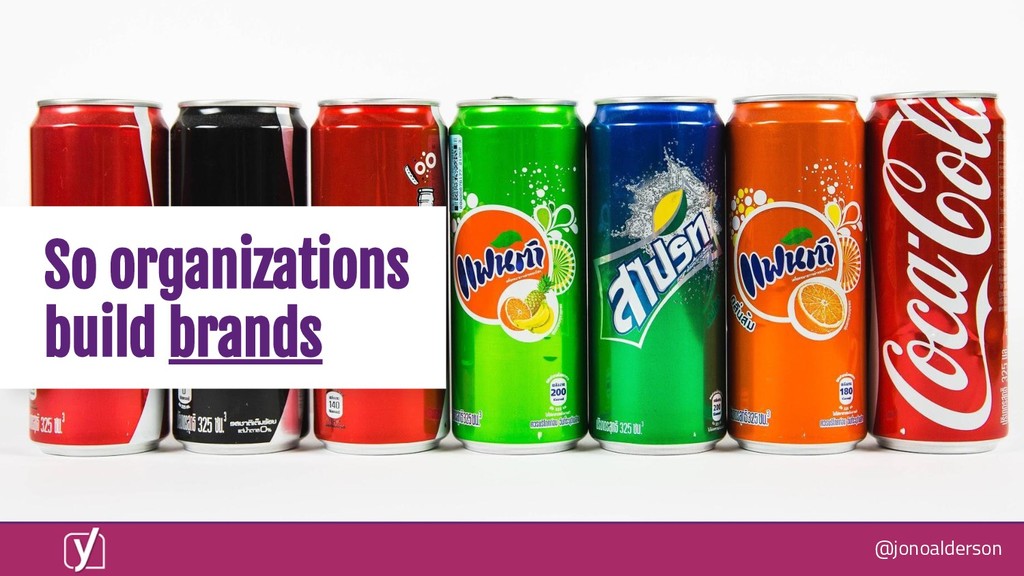
We don't have access to that information. So organizations spend a huge amount of time investing in building brands. A brand is the sum total of the experience that your audiences have with your product, your service, and your platform. We want our audiences to believe in and trust our brands, our value propositions, messaging rather than those of our competitors.
Brands are a proxy for trust. In an information scarce world, we rely on brands to stop us from going astray. As consumers, we all want to make rational informed purchase decisions, but we don't have the access to the information, so we fall back to trust.
The stories that brands tell and how well they resonate determines how trustworthy we perceive them to be, how how well they can convince us that their particular trade off of finite information and pricing and quality is the right fit for us. So they compete to have the most compelling content, to have the most links, to have the best reviews, to have the best considered products.
All of these are proxies for trust. Imagine for a moment what would happen if you had full transparency, if you could see through the marketing spiel and storytelling and brands and have a completely informed, complete understanding of every aspect of the product, its quality, its reputation, its cost, all the trade offs that go into that.
Would you shop differently? Would you make different decisions? Would you choose different brands? I want to talk about how Google's race towards omniscience is breaking my slide. It's changing the web. Their ambition to become the first Star Trek computer where they just solve people's problems is changing marketing, is changing digital strategies, changing consumer behavior deeply and fundamentally.
You see, they're getting better at understanding the trade offs and details behind the scene, the cost, the quality, the convenience, the reputation, and other factors which influence purchase decisions. They don't need to trust that a brand has a good product or a good reputation or that their particular trade off is a good one.
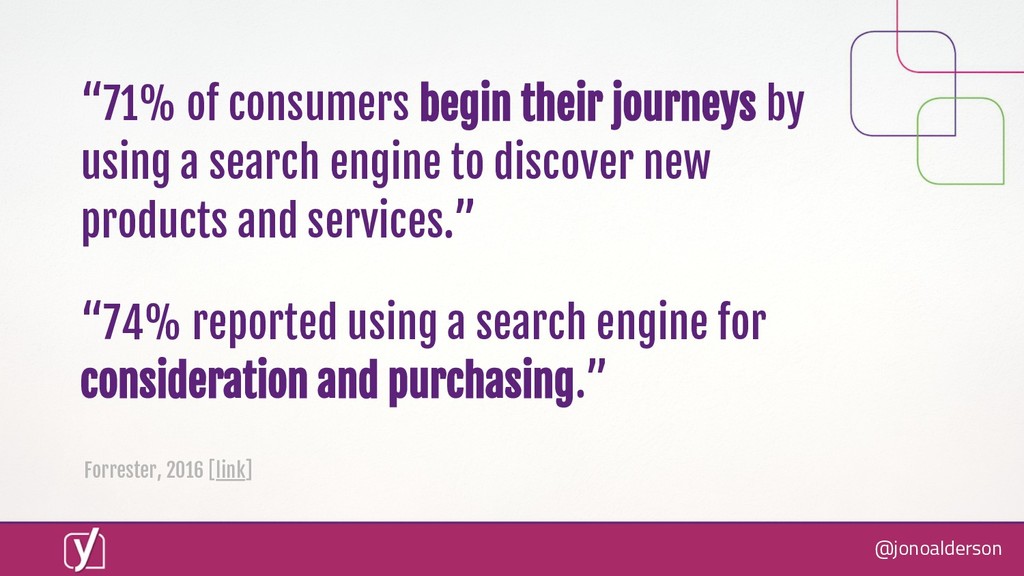
They don't suffer from information scarcity. They have access to all of the information. And increasingly, they're using that information to determine what a good fit looks like for me here now in every search. Why is this relevant? Because search is how we spend.
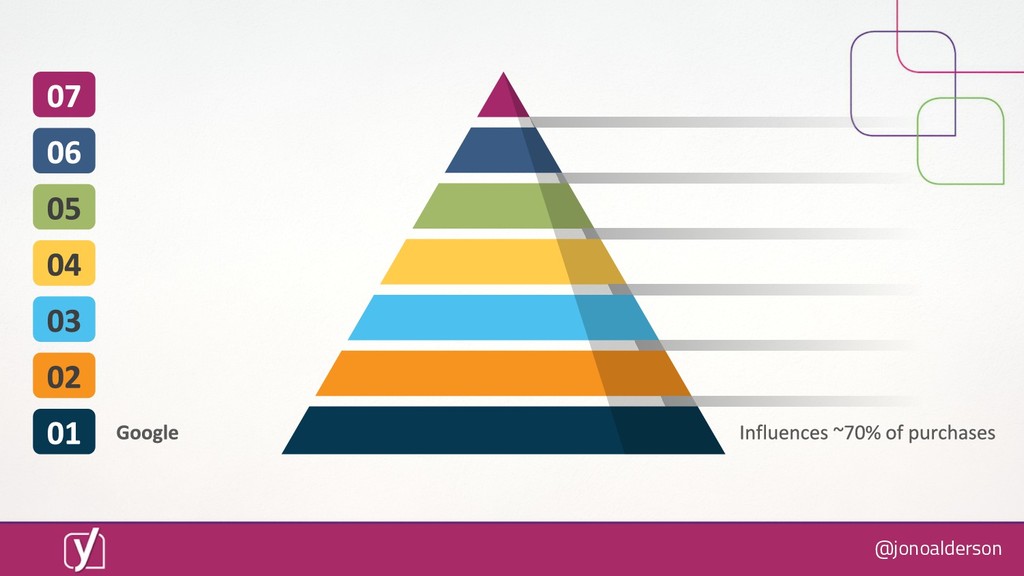
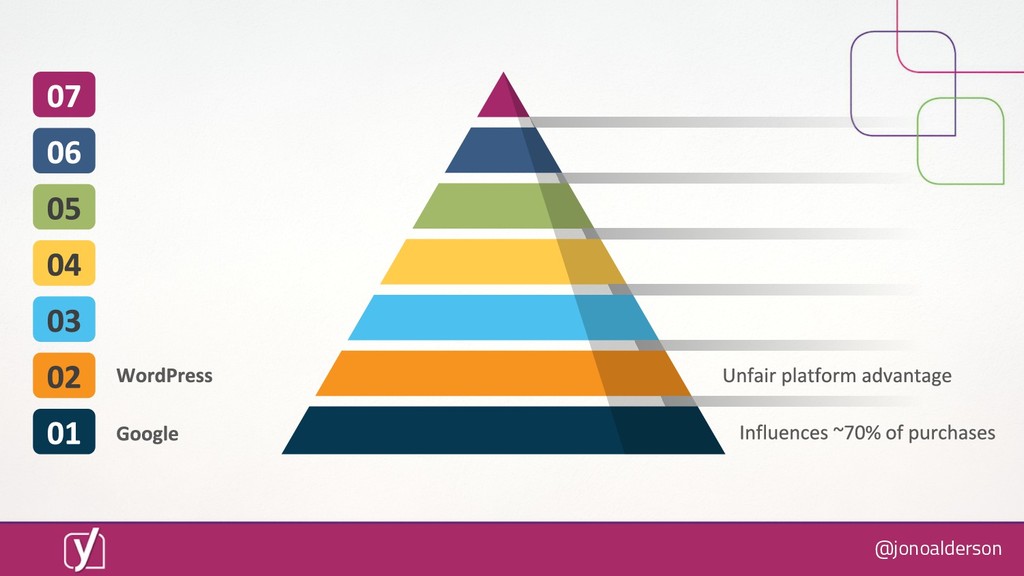
Seventy percent of all consumer purchase processes involve search. When we are going to buy something, whether we know it or not, whether it's conscious, whether it's deliberate, whether it's decided, whether it happens a year from now, seventy percent of all of those processes involve search.
A user researches, and the content they see determines what happens next. So when they search, you want them to see your ads, your messaging, organic, paid, or otherwise. And you want to tell them your story to get them to come to your platform so that you can pitch them your value.
You want to convince them that they can trust you. But what the search engines and Google in particular are getting very, very, very good at is understanding the underlying quality of fit. Not just reading the text on a page, not just counting the links to a website, but trying to assess the actual underlying quality of the thing.
They're assessing user interactions, web performance, product reviews, brand reputations, real world factors about how good a fit the thing is to determine who and when they show it to. And as their understanding of entities and language increases and they can continue to improve, they can make sure that they only ever give me results which are a good fit for me.
And when a brand isn't a good fit, when they don't meet the right balance of cost, quality, proximity, etcetera, etcetera for me, they don't get shown. That's scary because it means the consumer never sees the messaging. They never visit the website. They never install the app.
They never see the brand. Consider that all of your marketing is designed to tell stories that amplify your strengths or cover over your weaknesses. Those stories only influence humans. As systems get better for understanding the underlying quality of the thing and the fit, your storytelling and your marketing won't protect you.
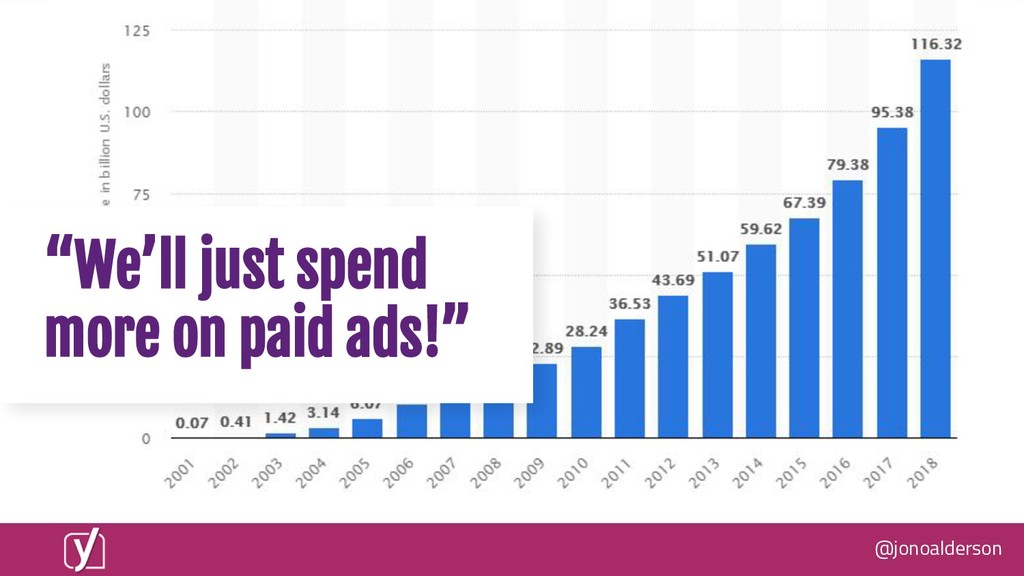
All the money you're investing will become increasingly ineffective as systems get better at seeing through your stories. And, of course, many companies faced with this kind of challenge will just turn to their ads budget and spend more money. They'll take budgets from organic channels, which they perceive aren't working because you know what?
**** got hard. And that's fine. Then you can get the users to your website. You can regain control of the narrative. You can tell your version of the story and try and gain that trust. However, every other brand who is struggling, who doesn't have a good fit, who doesn't have a perfect project, who has reputational challenges will be playing the same game.
It will become exponentially more expensive to compete in these markets. Until recently, this revolution only really bothered the SEOs who were trying to combat it to keep their clicks to their websites. Chasing tactics to rank higher in the search engines in order to get people to click through so they could tell their version of the story.
But now even with the best SEO in the world, many of these searches will never see or reach your website. You see, we're seeing a shift where Google ceases to be a gateway to content, to other websites, to list of links, and instead becoming the platform.
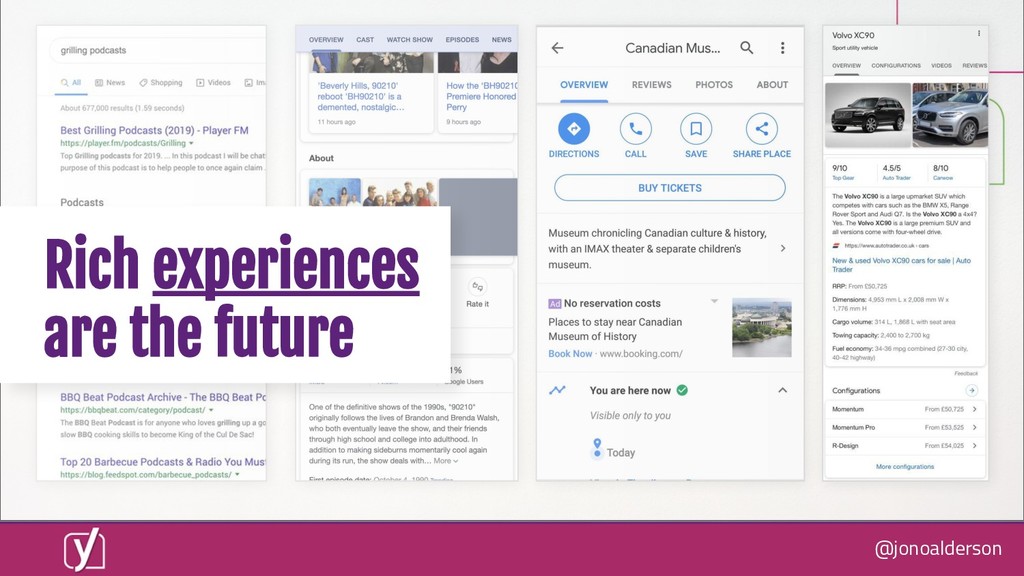
It's not just where you search. It's where you consume. It's where you act, and it's where you get answers. It's where you start and complete your journeys. Increasingly, I can do the thing I'm trying to do in the search results. I can buy a movie ticket, listen to a podcast, watch a movie, read a news article, book a table, buy a car, buy a product.
And on the surface, these just look like shiny new interfaces. It's a design thing from Google. However, these rich experiences are increasingly replacing conventional search results. That means we don't get a list of links to choose from. We get cards, answers, solutions. I can undergo complex processes in the search results, like evaluating all the attributes of a new car without ever visiting the website of its manufacturer.
Remember, the intent here is to show the best results for a user at any given point in time, given their understanding of the whole web and of me. And that best result is rarely a list of text links that I have to choose from.
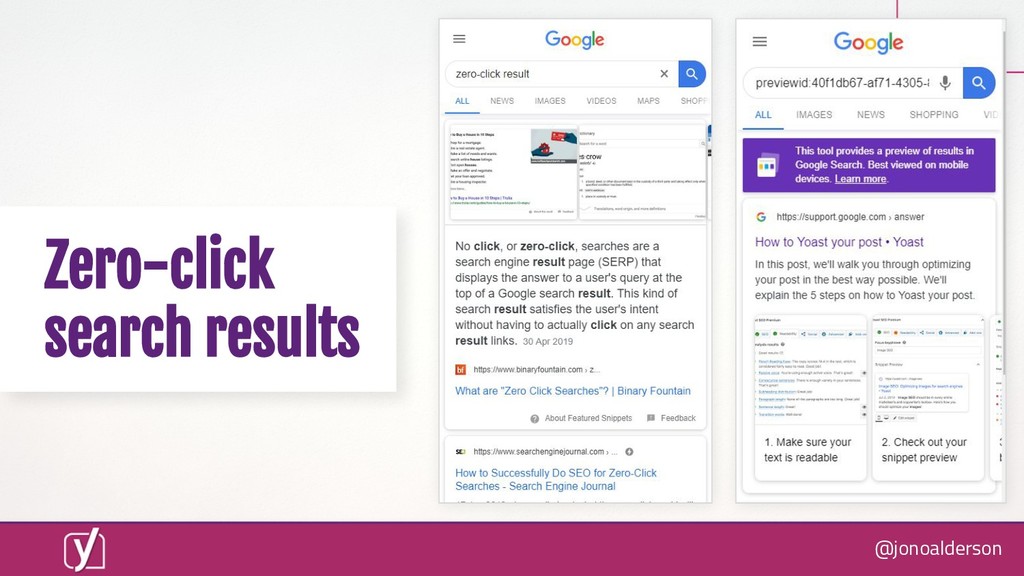
Google's conventional search results are a temporary dysfunction. They want something better. The key to all these new formats and the really scary thing that's changed is these don't deliver clicks. Like the one on the right where Google have presented a dedicated how to format with a guide in situ.
I can follow those steps, and users don't need to click on the website. They can get everything they need and complete their journey within the search results. And this is great for consumers. It's excellent. It's frictionless. It's easy. And this is happening to everything from recipes to jobs to buying cars to everything we do online.
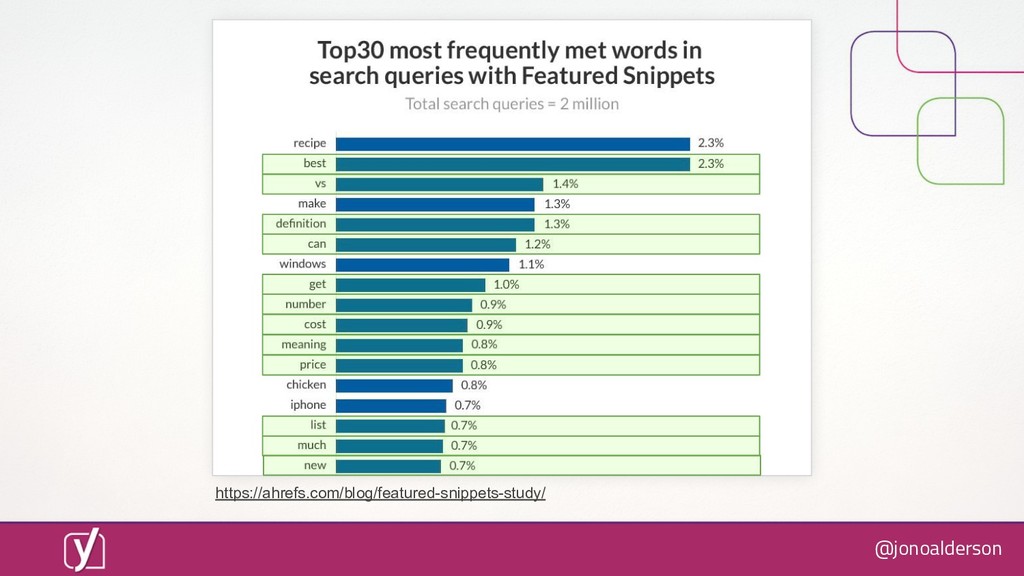
And when you look at where these kinds of featured products and featured experience cards turn up, they're for people who are starting to explore problem spaces. This is a study from an SEO tool called Ahrefs. They're kind of searches where people are starting journeys that may not they may not even know that they're gonna end in a purchase.
They use words like best versus can list. People are comparing and exploring. Relatively few of these people are at the point where they're searching for transactional commercial things and going to buy. They're starting to think about how they might solve their problems. Now, doesn't matter if you're not into SEO or if you only advertise in paid channels or online or on TV, because customers are researching in your problem spaces, and their entire product journeys are contained within and undoubtedly influenced by Google.
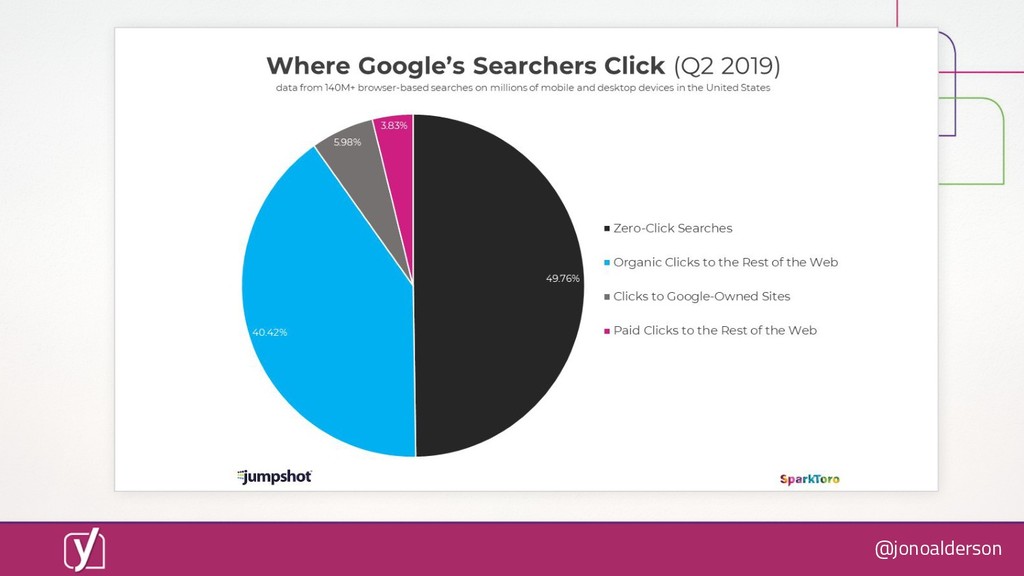
Half of all searches no longer result in a click. Thank you, Ran Fishkin and Spark Toro for the data. Their journeys are being completed in this ecosystem. They didn't need to click. Their problems were solved. Incidentally, that's up from forty seven percent last year, forty four percent the year before.
This is an increasing trend. Their needs have been met in the search results. Seventy percent of all purchase decisions involve search. Fifty percent of all searches don't lead to a click. Why are we building websites? Why are we bidding on traffic? Why are we trying to get people to click on our results?
That's not where stuff is happening. They never turn up to your store because they never see your brand. They never visit your website because they don't need to. They never read your white paper and sign up for your exciting b to b newsletter because their questions were answered in the search results.
We need to stop thinking of Google as a search engine and start thinking about how we can provide and help Google to discover the solutions that we offer for their users. That's a fundamental shift in thinking. If you're a data driven marketing marketer or purport to and you're still trying to get people to click and come to your website, you're doing it wrong.
Oh. And if users found what they needed in the search results without having to visit your website and read your content, maybe your content wasn't that special. Maybe you're not that trustworthy. Maybe there's a deeper problem. You see, increasingly, Google is seeing other websites as friction, other environments and platforms as friction, your content as friction.
Because your website is slow. It's full of bugs. It's got pop ups. It requires cognitive load to learn to navigate and to click around. They don't want their users to experience that friction. If Google's users experience friction, Google's users go use Bing or something else that might exist.
Google believe that they can provide a better experience in situ. To them, the very concept of marketing is friction. It's a dysfunction born from information scarcity. You only need marketing if you need to build trust. Google don't need trust. They understand. They understand your brand, your pricing, your reputation, your products, your quality of fit.
It's not a huge leap to consider that Google's organic strategy was never designed to send visitors to websites. It's dysfunction. So here's Google at the bottom of your new marketing stack. This is how we need to think about it. This is where your content is consumed.
It's where it's discovered. And you can choose to play here or not, but remember, seventy percent of your people in your problem space will see your competitors' content in this environment. This is where your fit determines if you're discovered and if people consider and recognize your brand.
It's where Google provides a perfect content and solution experience in situ. Okay. Not quite yet. Rich cards are becoming more prolific. They're replacing the search results. This is where they want to get to. However, they have a problem. They're a long way down the road, but they've hit a barrier.
They can crawl and process and consume and store the whole web. They can understand all of these things. But really, they need to be able to truly understand the content, not just to store it. But lots of content on the web is hard to process and understand.
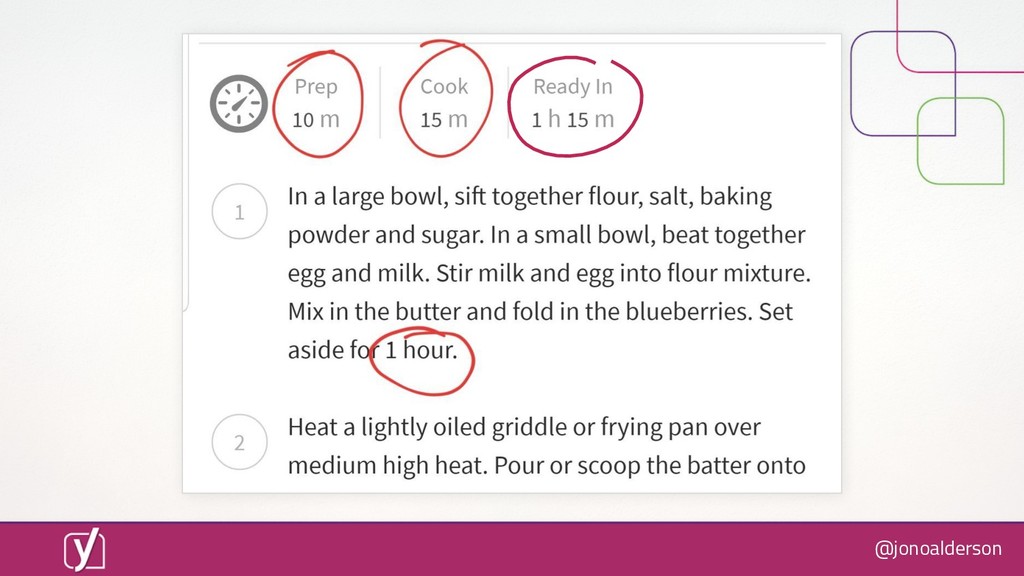
It's not structured. It's muddied up in things like paragraphs and images and web pages. It's rare for publishers to manage and create their content with a degree of precision, or to put it in nice tidy database formats. Consider this example. This is a recipe on a food site somewhere on the web, and there are obviously many, many millions and billions of these.
How long does this recipe take to cook? It's very ambiguous. It's confusing. The information's conflicting. That means it's hard for Google to use this kind of content to provide rich experiences directly in the search results. The content isn't good enough. It's not structured enough.
And this isn't a machine learning problem they can fix by throwing more firepower at it. It's a precision problem inherent to the fundamental nature of the web. And there are many examples of this where Google can extract the context and maybe understand the general gist, but to deliver the revolution that they want to solve problems in situ, they need more precision.
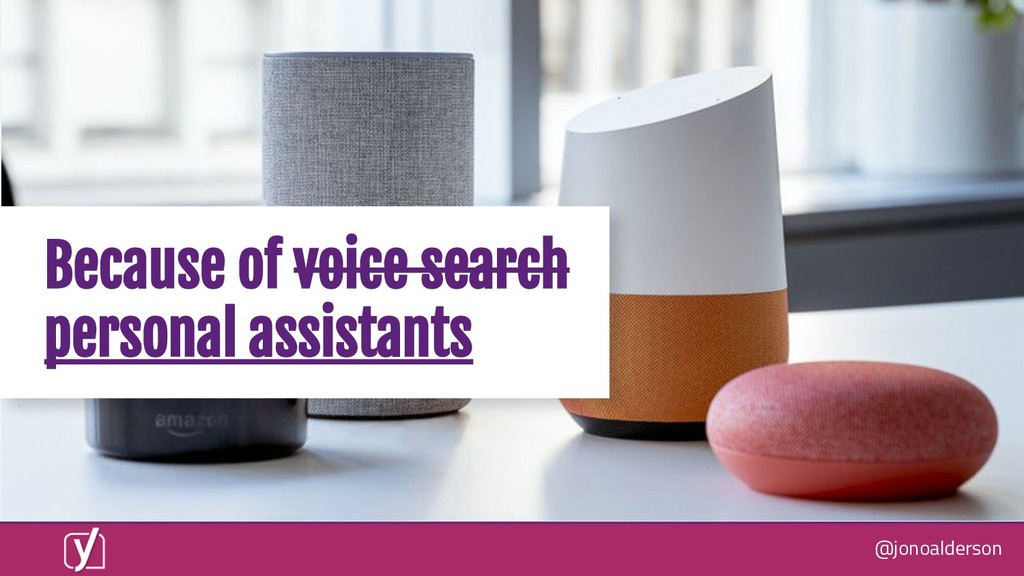
That's why structured data is the next war. Google are obsessed. It's one of their biggest focuses in search right now. They're investing huge amounts of technology, education, and resources. There's a reason for that. It's because they see potential billions of dollars of future revenue in coming years from voice search and personal assistance, where they're competing heavily in an arms race with Amazon, who have a much bigger developer ecosystem than them.
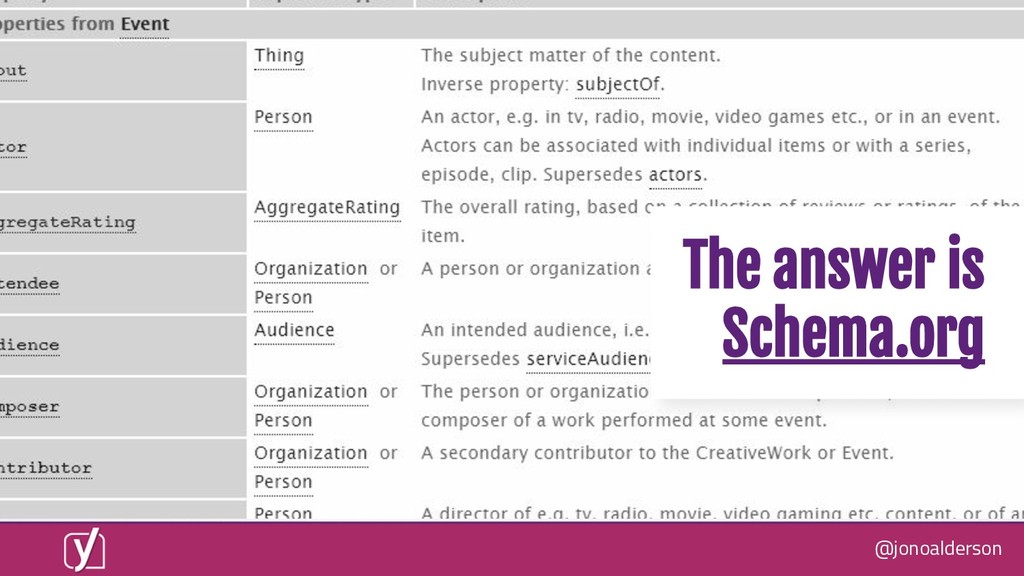
Google's approach relies on reading the content of the web, and the content isn't very good. And they know this. They know there are problems with their current approach, which is why in twenty eleven, they launched Schema dot org in partnership with a few other big players.
Consider a product. It has a color, a set of reviews. Each of those reviews has an author and email address. If you can code that information and that content in such a way that Google can understand it, they can extract it and use it directly in the search results.
They are pushing huge amounts of focus on schema to try and get webmasters and site owners to code their content in such a way that they can extract it and use it. So if you want to influence the seventy percent of people who search and make decisions, and the fifty percent of them who never leave search, you need to ensure that your content and your structured information is in a format which Google can extract and consume.
And that raises huge questions about attribution, about permission, about brand, about traffic and clicks, and all the KPIs that your salaries are tied to, which is slightly awkward. But traffic is the wrong KPI. Clicks are the wrong KPI. Any tactics which try and get you to take Google's users away from Google will lead to a dead end.
Critically, Google is no longer a search engine which delivers your users to your websites. It is a portal which solves the problems of its users on its website. Our obsession with getting clicks and visits and ownership of the narrative is rooted in yesterday's thinking.
Now your platform needs to feed their platform, or you won't be discovered. This is just the beginning, the first baby steps of both Google and brands into what comes next. And there isn't really a road map for where any of this goes, but there's some interesting other pieces happening along the way.
You see, broad successful adoption of this level of schema and structured markup and extracting data requires standardization. To grow their reach, Google need robust structured markup across the whole web, and in particular, across the breadth so they can analyze discrepancies and information and look at all sorts of factors and analyze and discern what's right and what's true.
It's not enough for a few big websites to get their recipes right. They need millions of recipes to be right. Google knows that's a challenge. They've really struggled with this kind of education and burn proposition in the past, which is why they're doing something about it.
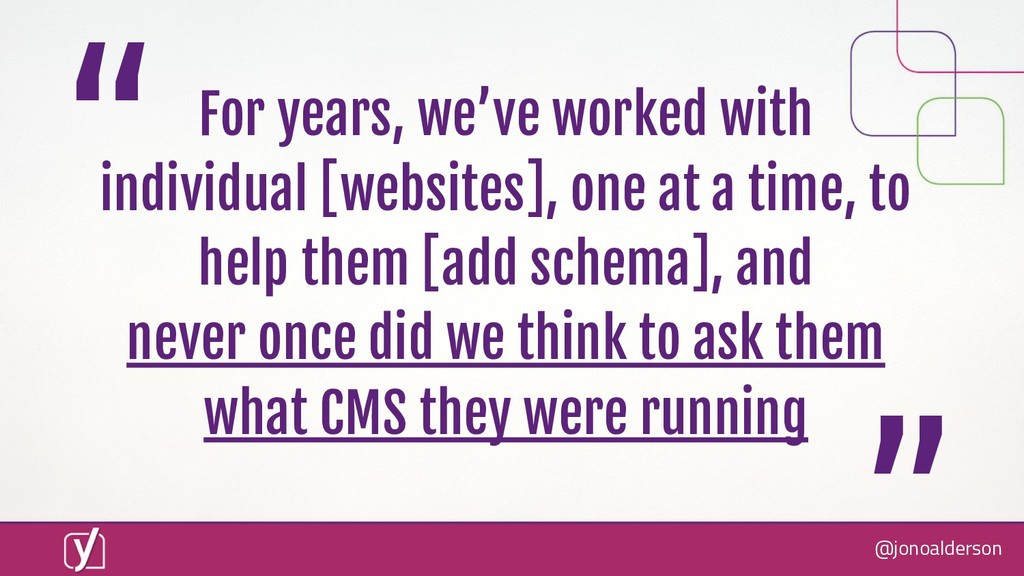
Last summer, I overheard this quote from a senior Google representative at a WordPress conference, and she said, for years, they've worked with individual sites one at a time to help them add structured data, and never once did they ask them what CMS they were running.
They've realized that they can fix the web if they stop engaging with one brand at a time, one website at a time, and work on the underlying technologies that power all of the websites and fundamentally shape the web to fit their needs. This is the point where you should start to be concerned, maybe.
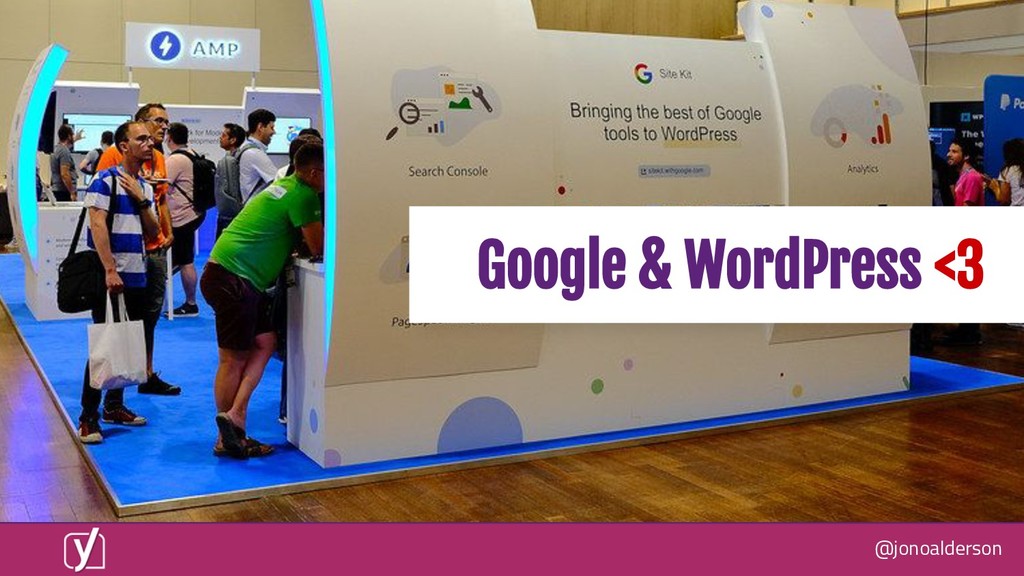
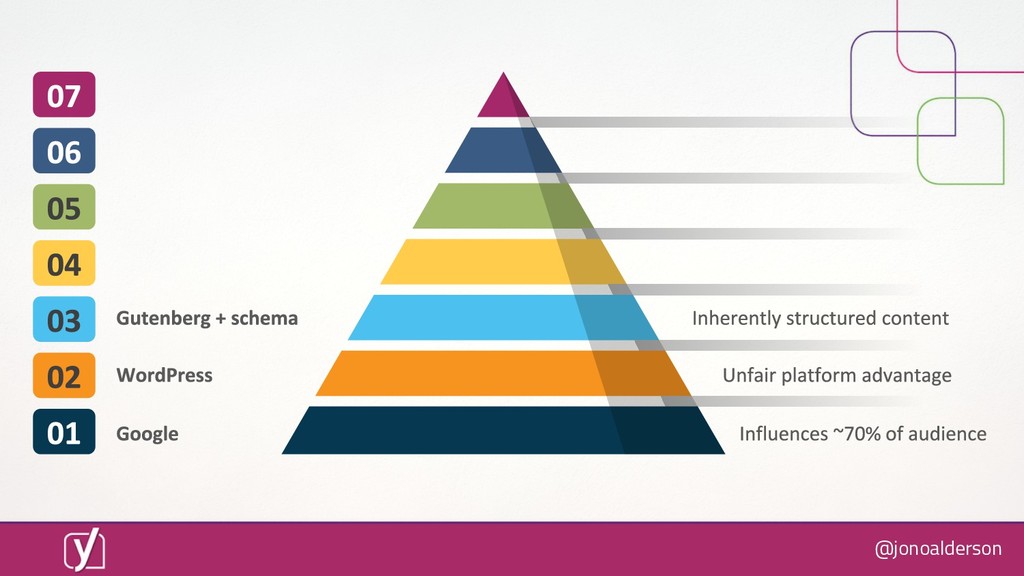
It's also why Google are now deeply invested in the WordPress community. WordPress incidentally powering well over thirty four percent of the web, which is up from thirty three last year and will continue to grow exponentially. They're also hiring the world's best PHP and web developers, and they're rolling out shiny new toys to WordPress teams, new features and new toys that won't hit the general market for at least a year or two to come.
The Google are betting the farm on WordPress becoming the vehicle which allows them spearhead their new vision of what the web is into the real world. They'll get to other platforms later, but this is where they start. Now many of you will be familiar with these two gentlemen.
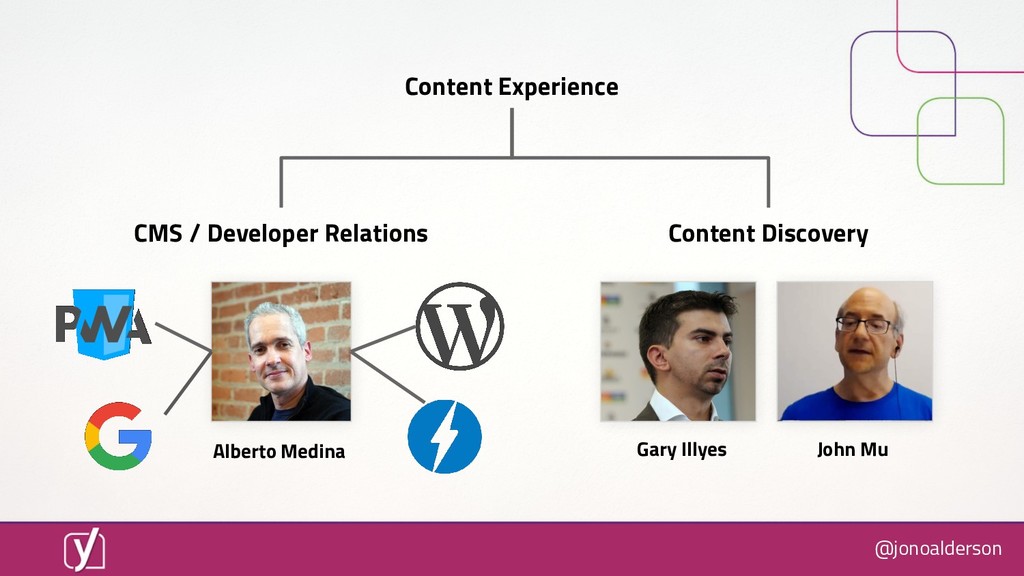
This is Gary Isles and John Mu, who are Google's public face on Twitter, lots of kind of q and a and back and forth, who I bet none of you in the room have ever met or heard of is Alberto Modena, who I talk to on a weekly basis about the future of the web.
Alberto is the head of the developer relationships team, and the question they ask is how do we empower success? How do we democratize success on the web? How do we create a level playing field for an open web that every small business can win in?
Because as the web gets more complicated and technology becomes more challenging and everything becomes more abstract and sophisticated, it's hard for small businesses to compete against people with big budgets and lots of developers. And if it's hard for small businesses to compete, they go to Wix, or they only market on Facebook, or they sell direct through Amazon, and the web becomes worse.
It becomes worse for users, because everything's in walled gardens. It becomes worse for Google, because their index is smaller, and they can't serve the right results. It becomes worse for those brands because they're tied and yada yada yada. These guys' mission is to save the open web.
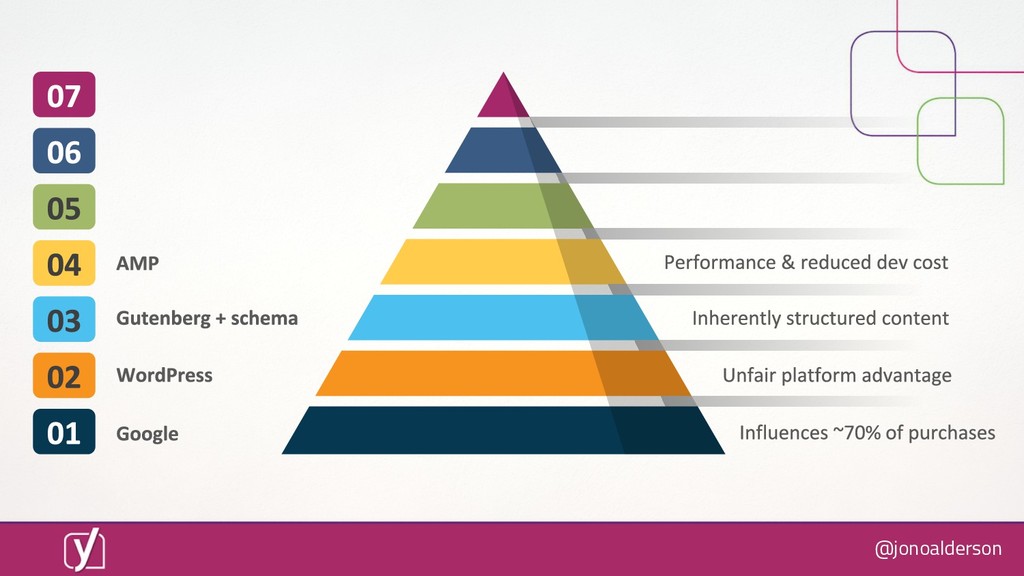
Interesting. So they're spending huge amounts of resources in on improving WordPress and deploying core features and rolling out shiny new toys before the rest of the market. So right out the box, you immediately on this stack gain a significant unfair advantage against your competitors.
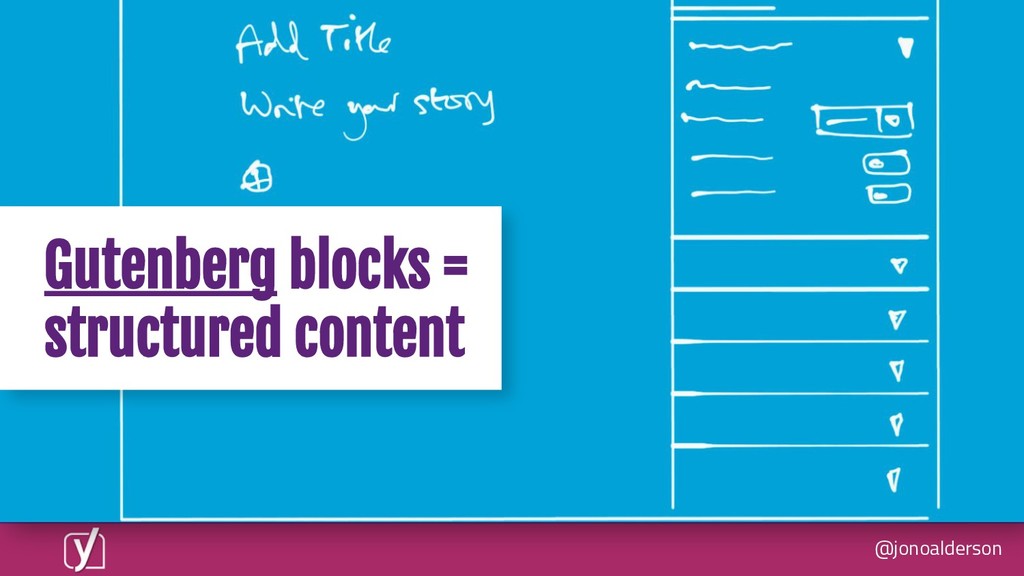
You gain a year of development speed ahead of your competitors, which is quite exciting. There's some interesting timing around this, and it coincides with some other stuff that's happening in the web. Earlier this year, WordPress launched its new editing suite called Gutenberg, and the concept is that rather than writing a page of content, you should author a set of blocks.
A recipe is no longer a list of words. It's a block that contains a list, which is blocks of things, which are blocks of images and blocks of times. Blocks are inherently structured. Now, when anyone in WordPress writes a recipe, it's inherently structured.
It outputs schema and structured data, and Google can consume it much more easily. They've just solved for structured data on the web. It's not a hard not a hard stretch to guess which company employs many of the most prolific and consistent contributors to Gutenberg's open source code.
Google are throwing teams of people at standardizing the web. Now all of your content is inherently structured and shows up directly in Google search results, which can solve your users' problems in situ and builds brand recall and preference. This gets slightly more insidious as we progress.
Problem is even with all these shiny toys, there are still challenges. The web is slow. The web is inefficient. The web is full of errors. People don't build good shiny websites because business processes don't really allow for that. It's exponentially more expensive to build a fast website than it is to build an okay one.
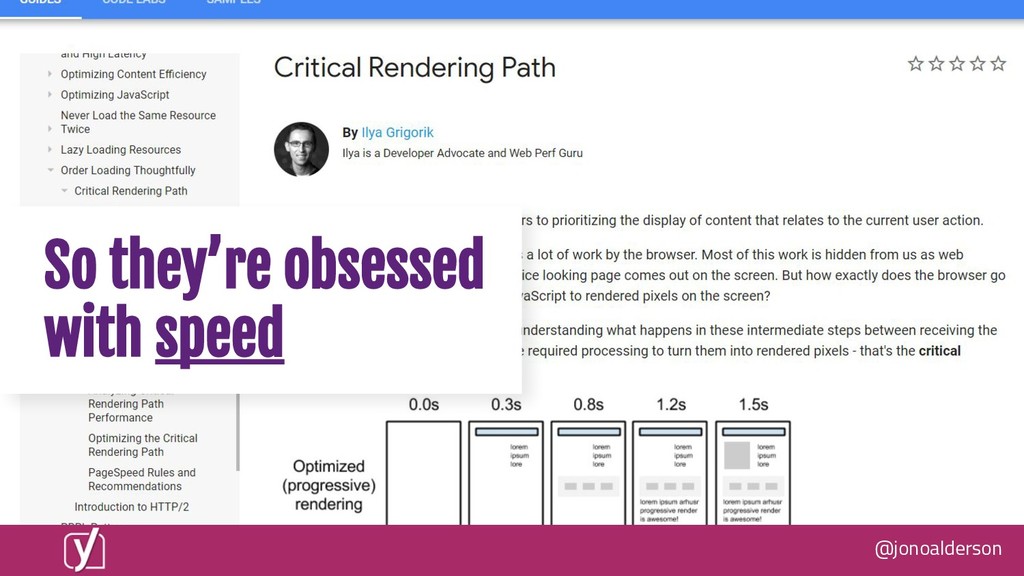
There's a skills gap. There's an education gap. There are all sorts of problems on the web with bloated JavaScript and big images and poor CSS, even despite there being best practices to avoid this. And it is getting worse. JavaScript like frameworks and websites and app like interfaces make things much harder to process, much more expensive for Google technically and conceptually, which is why they are obsessed with speed.
For speed for Google, speed is synonymous with efficiency, because better built websites that are faster are cheaper and easier to pass. And, of course, speed is a critical component of user experience. And many users in developing economies and where there is poor network connections, when they search and they have a slow experience, we'll abandon Google and go back to the platforms they already use.
It's critical for Google's growth that the web become faster. Google writes the book literally on what best practice for speed and fast websites on the web looks like. This chap up here, Ilya Grigwick, follow him on Twitter. He's literally writing the book on web standards for what speed looks like.
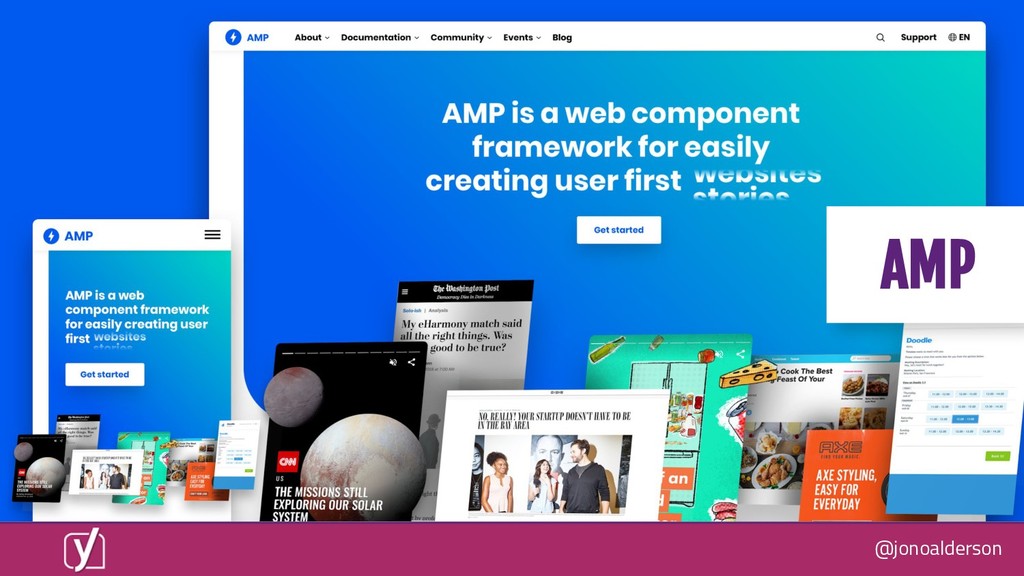
He's also deeply involved with committing core WordPress updates. This is a one man army to define what quality website look qualities in websites looks like on the web, and he is spearheading it in WordPress. Google are also the leading player behind AMP. It's a framework that they launched a few years ago, the principle that was rather than building a mobile site in conventional HTML and JavaScript and CSS, you would use AMP code.
And it's lightning fast by design out the box. You can't build something slow with AMP. It won't let you. It comes with some constraints about what you can and can't do when it comes to custom code and layout and functionality. You build a perfect website, but you build it to Google's guidelines.
Now, it's also super modular. You want an image carousel, there's a module for that. You want a cookie notice, there's a module. A sign up form, there's a module. Full e commerce, there are modules. It's all plug and play. And all of these modules, all these cherry pickable bits exist as Gutenberg blocks and WordPress plugins.
So now you don't need a team of developers to build and maintain your website and to ensure that it's fast and to adhere to all the latest standards, you just cherry pick bits out of the box. That's a huge competitive advantage. Interestingly, your website also gets better over time.
It automatically adopts new features. If Google wants to roll out a new standard for, say, how images work on the web, they roll it out as part of AMP, and all the websites on AMP, which is now thirty four percent of the freaking web, adopt it automatically to their new standards.
This is happening right now. I've been working with Ilio on a spec for a native lazy loading in Chrome that's getting pushed through AMP into WordPress automatically across the whole web. That's either an incredible or a terrifying amount of power depending on how you look at it.
And this makes everything much cheaper and easier for Google to pass and process because they host cached versions of it incidentally, and they own all the code and all the content on your site. So now you have a radically reduced future dev cost.
It costs you nothing to build and maintain and iterate on your website. It's made from plug and play modules, and you can get rid of all your expensive developers. But of course, naive, there are other parts of this ecosystem. You have CRMs and ESPs and apps.
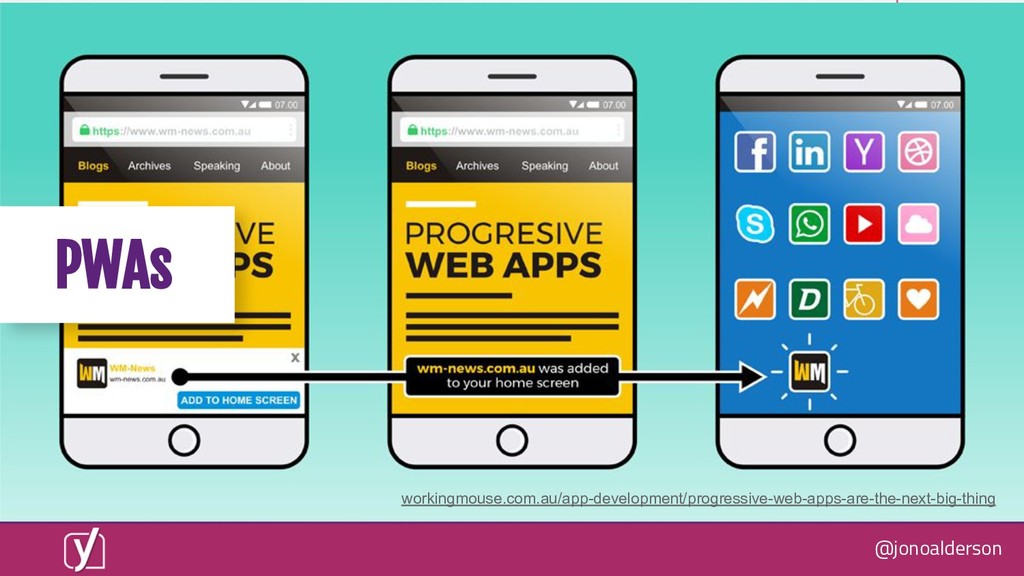
Let's expand the scope of this ambition just a little bit. We can't talk about AMP without talking about progressive web apps, or PWAs, a term coined by Google relatively recently. PWAs are a web technology which allow your website to evolve into an app.
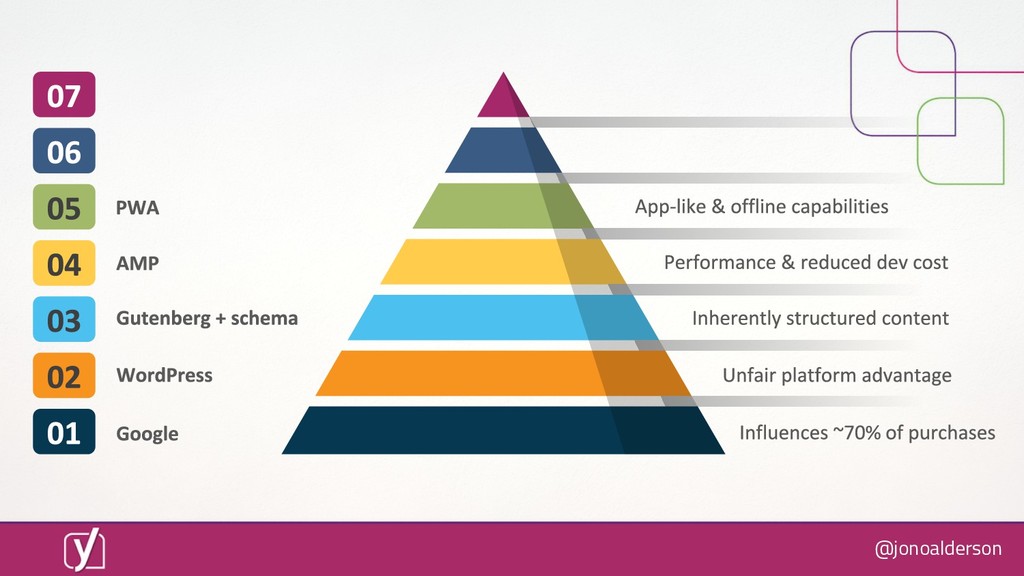
To get app like capabilities to be installed on a phone. You can see roughly how that works in the picture. You get prompted, it now lives on your phone. It gains access to content and context and APIs. It kills the app versus website paradigm.
Google are trying to kill the idea of app stores. Because if their ambition is to take all the content in the world and to be able to surface that intelligently in the search results to solve problems, the app ecosystem is an enormous black hole.
PWAs remove the need for that separation, and they turn your website into an app. Incidentally, of course, Google is also leading the way on development for PWAs in WordPress. There is a plug in that they run that ties seamlessly into the AMP plug in that handles all of this automatically.
It takes about ten minutes to set all of this up and to spearhead against spearhead, leapfrog all of your competitors. So now your site is already an app. It's full of APIs. It's a gateway into all of your users' content and context. It can easily integrate into or any other part of your system.
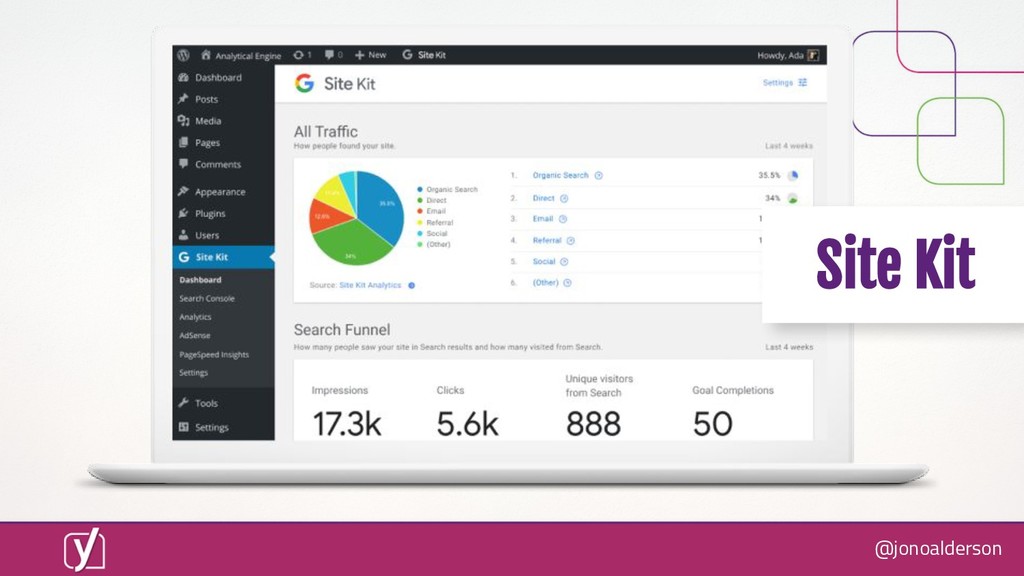
It's interoperable. Really, it's just a system where your content and your messaging lives. One of the things we are missing is a way to quantify all of this and measure it and manage it, which is why, incidentally, Google currently have a developer beta for a new product called Site Kit, which is an analytics suite which, yes, lives in your WordPress installation.
This is Google Analytics, Google Ads, Google AdSense, and a whole bunch of other Google properties, Search Console, all integrated into one thing in situ. Why that's interesting is because it gains a whole bunch of context that conventional analytics system, which sits outside, doesn't have.
This absolutely makes finding insight and opportunities radically easier than a conventional setup. It lowers the barrier to finding ways to improve your performance. All of these systems build on top of each other and deliver exponentially expanding capabilities. And yes, you can do all of this without WordPress.
You can do it without the AMP plugin. You could roll your own schema solution, but you will lack the flywheel effect of tying it all together. And there's more to come. This isn't about a few new shiny Google endorsed tools. It's about the complete standardization of the web and the eradication of differentiation on platform.
Things have changed. If you're building your own technology stacks, that's probably a bad investment. If you think of WordPress as a toy for amateurs and not suitable for b to b or enterprise, you should probably reconsider. If you're any of your competitors are embracing this new stack, they now have an insurmountable unfair advantage on multiple fronts.
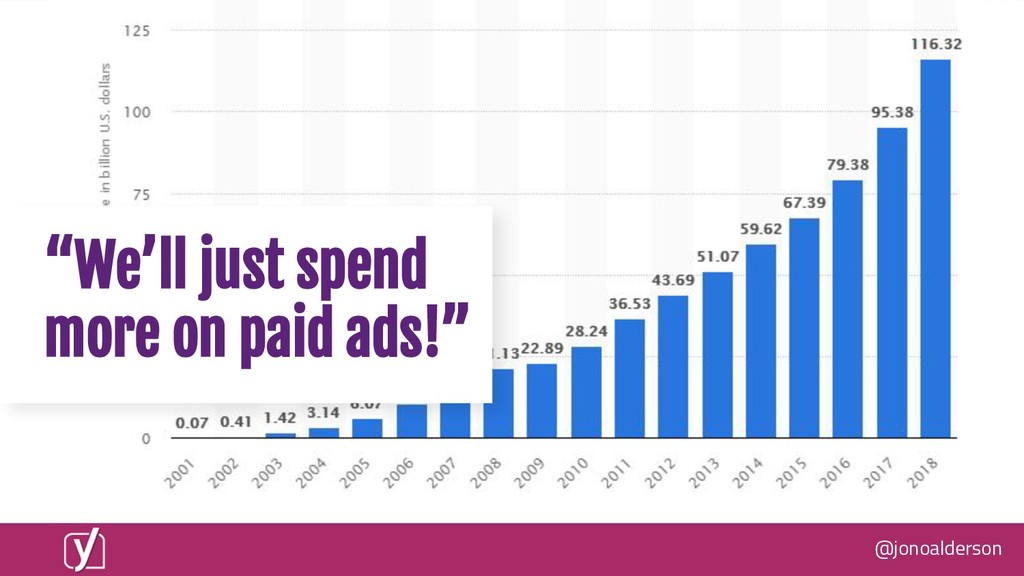
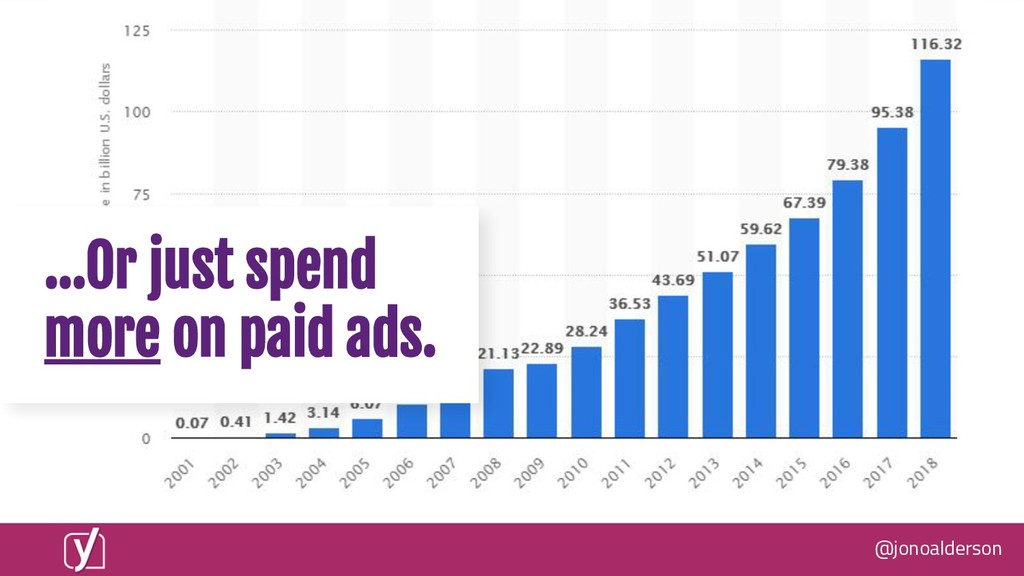
If your job involves fixing or maintaining or improving or coding or firefighting or bug fixing or improving your company websites, its apps, its adverts, its content, You should start thinking about your future. Or you can just spend more money on paid ads. Many people do this.
They want to adopt these new googly platforms, so they'll spend more money on Google Ads, except some of your competitors will come and play, and their content will be discovered in the search results, and their brand will be consumed, and their solutions will be the ones on offer, which means there will be fewer people in the market to advertise to, which means it will be more expensive to reach them, your cost per click will increase, and your cost per conversion will increase, and you will lose that fight.
You could try and adopt, we'll just sell on Amazon, except it's a race to the bottom. You could just go to Facebook, except reach is already a nightmare, everyone else who's losing will already be there. You could have a TikTok strategy, except it'll take your developers a year to roll it out, and TikTok might not be around.
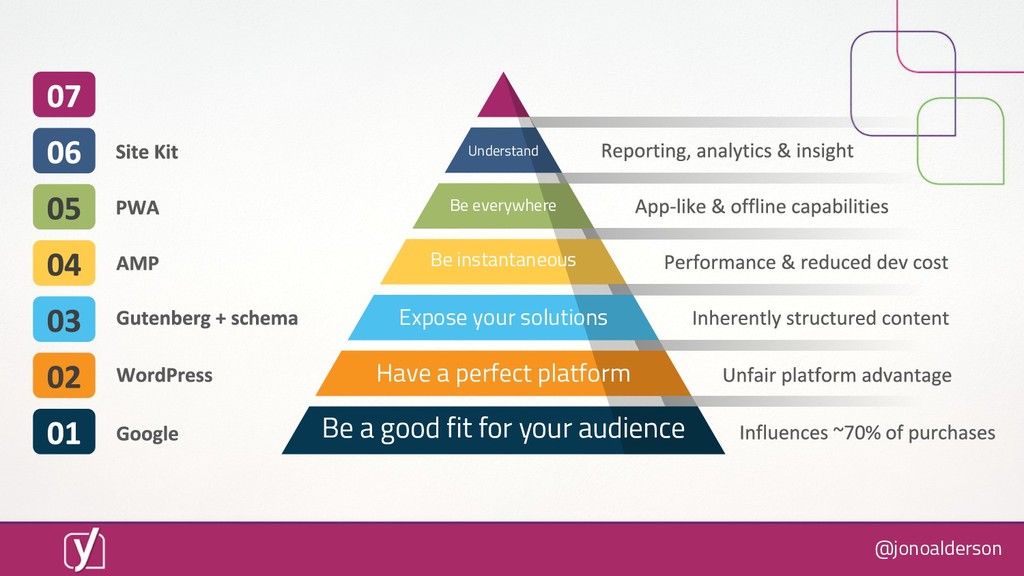
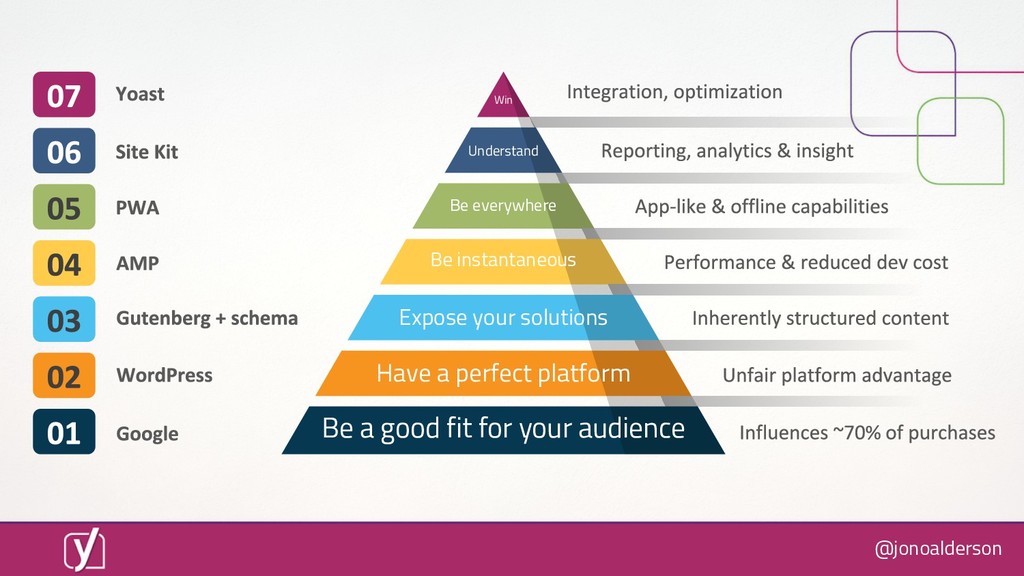
Meanwhile, all your competitors on this stack are shooting ahead. So let's zoom out. You need to be a good fit genuinely for your audience. That doesn't mean to have a good marketing story, but actually be a good fit for this person right here, right now.
You need to have a perfect platform, and that needs to remain perfect and continually improve. You need to expose your solutions in a structure and a format that Google can understand. You need to be instantaneous regardless of context or location or connectivity or what network you're on.
You need to be everywhere. You need to be format agnostic. It doesn't matter whether my content's being exposed on Google, on a TV, or on a microwave. You need to be capable and interoperable. And you need to understand all of this to make business cases and to make good investments and choices and to improve it.
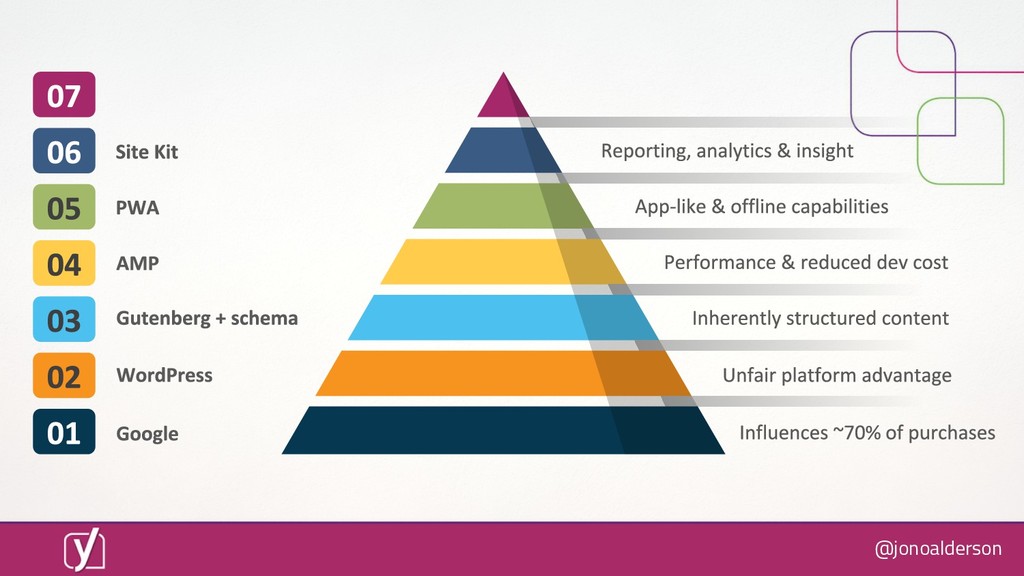
One of the things I've glossed over is that being a good fit is not easy, and having content that tells the right story in the right way is quite hard. However, I glossed over it because it's already solved. Conveniently, at the top of that little pyramid is a brand called Yoast, who you may have heard of, who do a great job of tying all of this together.
It's not quite a pitch. In truth, our software is we're working with Google to tie all of these bits together. We're increasingly the glue that connects your AMP to your Gutenberg, and your schema to your site kit, and so on. With all of this in place, you leave your competitors in the dust.
Particularly, you can focus more on trust and fit. You free up a huge amount of resources. The many thousands of millions of dollars that we all spend collectively on fixing bugs, firefighting, and setting up 301s, wondering why our landing page is broken down and the CSS doesn't look right.
All of that goes away. You can repurpose all of that on improving the quality of your product or training your support teams and becoming a better fit. It does beg the question, is Google evil? This could be construed to be an evil master plan.
If we had more time, we would talk to Alberto, who has some really strong opinions on this. One of the really interesting things I take away from talking with him is he says, don't think about Google as a company. Think about it as a bunch of teams working on different products, and some of those are in different areas.
These guys are working on making the web a better place. It does raise some really interesting questions that I don't think I have in here anymore around commercial models and monetization, and the incentive for publishers to create content when it's not clear how they're going to get visitors to come to their website and click it and make revenue.
You only recognize a revolution in hindsight, and there are no answers as to where this is going. There is no playbook. There are just teams of people working on bits of the web and an emergent strategy. Interesting stuff. So what do we do about all of this?
Well, you need to think about what the hell you do when you no longer control the narrative. When you have no opportunity to tell your side of the story, when visitors won't come to your website. You can't defend your reputation or your pricing or your quality because they never see the content.
If you're relying on engineering consumer perspectives or inflating your positive attributes or covering over nasty secrets, what happens when that stops working? What do you do about that? I think we all have to try and compete on true fit. If you asked an impartial perfect API that had full understanding of all of your options and products and said, is this a good fit for this consumer?
If it doesn't say yes, you've got a problem. I think this is the future of marketing. Think this needs to be our new North Star. When everyone's website is fixed, marketing's job is to better inform brand and product fit, which means you can't be unopinionated.
You can't be everything to anyone. You can't cope with just having bad reviews and paper over the cracks. You have to have the perfect fit for each consumer in each moment, and that is incredibly hard. You have a few things we can do before we wrap up because I'm already over time.
You can try to bypass Google. You can become so synonymous with the product space and a product solution space that people bypass Google entirely. Skyscanner were trying to do this in Edinburgh. When you think of flights, you don't go to Google flights. You go straight to the brand, but it's hard to dislodge the incumbent, and it's hard to break in.
You can build a solution strategy. Stop thinking about content strategies with keywords and articles and pages, and start thinking about creating a library of the problems that you can solve uniquely and better than your competitors, and make that your content strategy. You can explore business models which don't rely on getting many millions of clicks from search engines to your website.
That's challenging, and it will require pain and change, but there's nothing written down and set in stone that says that we need to get a million visits and try and convert two percent of them. We've built our business models iteratively accidentally on yesterday's web.
You can definitely anticipate needing to change and pivot. I have lots more information, but I've run out of time. What you can definitely do is look to the future. And the more you start to explore these new technologies and platforms and the way they interact, this isn't tomorrow's world.
It's not twenty twenty. It's not twenty twenty five. This is happening now. There are already sites and brands running on this stack in this way, and they are already winning. Their lead is becoming exponentially further ahead. You need to start investigating and looking at how this applies to you.
You can definitely bet on either WordPress or Google, other platforms will come soon. This is the future of all tech on the web. This is Google's current mission, to flatline and platform, make everything platform agnostic, coming to a platform near you soon. If I had more time, I would talk to you about how many ways you could join us and get involved.
All of this is open source. If it's contentious, if it's difficult, if it's going to break businesses in the web, you can have an opinion. If you're a publisher who has no idea how you're going to generate revenue because nobody will visit your website, you can wade in.
There's lots of people moaning on Twitter, but this is all open source. You can contribute code, you can get involved in discussions. We need translators, designers, entrepreneurs, developers, SEOs. Tweet me, go to make. Wordpress dot org, Google, get involved in AMP. All of these platforms and technologies and tools have conversations which are lacking the voices of people like you.
Or you can just go back and spend more money on paid ads, and good luck because that's going to get very expensive. Because as the rest of us start to ask, what's next? After everyone's website is fixed, things are going to change rather radically.
Good luck everyone. Oh, that's warm.