
What is your true product? Drawing from more than 10 years running two SaaS companies on two continents, we will explore the often overlooked elements of what it takes to build a killer SaaS product.
← All talks 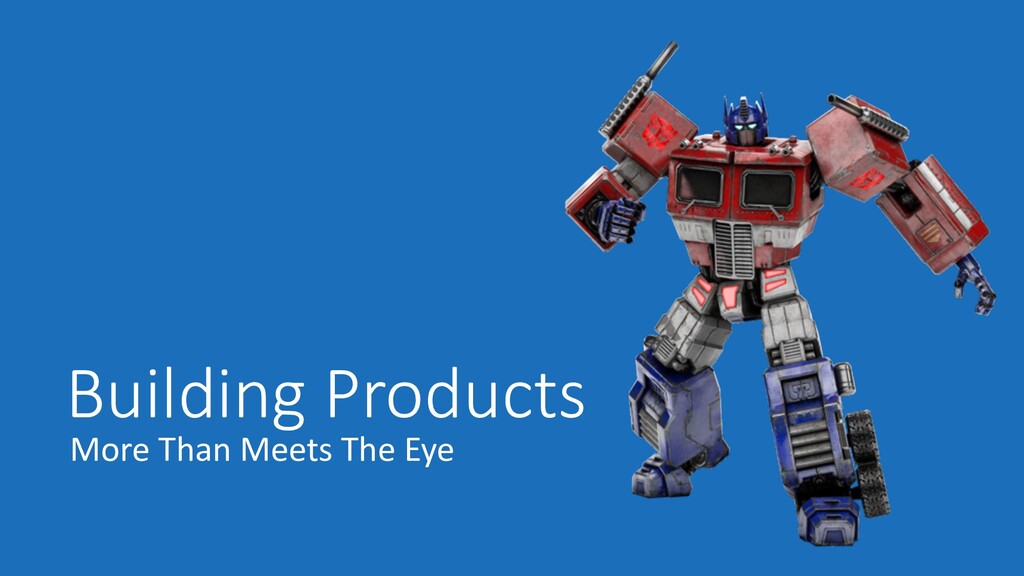


Build Product Turing Fest 2016
Building Products: More Than Meets the Eye
Auto-generated transcript - may contain errors. Tap a timestamp to jump the video.
Couple of months ago, was asked to speak here at Turing, and they said after a few weeks, I said, yeah. And they said, what would you like your intro song to be? And I said, there's this Hate Breed song that I really like.
And they said, well, you have to sponsor the conference in order to be able to choose your song. And and then I told them the name of the song. They said, no. You can't have that. So I entered in silence today as a protest against our conference overlords.
I'm really excited to be able to be here and tell you a whole bunch of stories about how I screwed things up really badly. Let's see here. Back. These are the top ten greatest products that have ever been made. Okay? And I look at this list and I, you know, actually see a lot of things that I like.
I love the iPhone. I have a PlayStation. I actually drove a Corolla. It's the best price performance vehicle you can possibly have. Right? And actually, this is kind of a sad list because I'm pretty generic, it seems. All these things I really like.
And one day, I will use Lipitor for sure. And this is what we normally think about when we think about products. Right? Things that we can touch and hold and and so on. And I wanna talk briefly about one of my favorite things in the world before we dive into more products.
And that is North Carolina State basketball. Okay? It's a bit like Celtic and Rangers a bit. Although, for those of you who not from Scotland, it's kind of like a knife fight we have every year or so here, and there's some football as well.
But basketball in North Carolina is religion. Okay? And this is my team, North Carolina State. A lot of people be like, oh, yeah. North Carolina. No. That's not. That's the opposite team. They're the the evil team, the bad they're the Smurfs. Right? The light blue team. We are North Carolina State.
We're the wolf pack. Alright? And we have not been good at all during my entire life almost. Okay? Except for nineteen eighty three. And you guys may have heard of a term called March Madness that gets used a lot. And actually, Domino's Pizza even runs a March Madness special here in the UK.
And this is a term that was coined in nineteen eighty three by my team, the North Carolina State Wolfpack, where they were a good team, an average team. They had some good players, But there's a tournament every year at the end of the year, at the end of the season in March, and all these teams come together and they play a single elimination tournament.
And my team was not very good. But what they had was they had a coach who had a dream of winning the national championship, and he talked about this all the time with his team. And they had a team that had become very cohesive after one of their star players had broken his foot earlier in the season.
And when by the time he came back, everybody had kinda gelled together, and they really knew how to play. And they'd been in a lot of close games, and they'd lost a lot of close games over the season. And so they got into this tournament, and they won their first game in in overtime by one point.
And at the end of this, they had a press conference and they said, wow, coach, you defied everybody's expectations. How do you feel? This is great. He said, we're gonna win this tournament. Right? And everybody started laughing at him in this press conference.
And so what happened is they kept winning, and they were winning by, like, one point here, two points there, tip in here, whatever. I know this is boring because none of us like basketball in this country, but it's very exciting for me when I was two or three years old.
And, anyway, they get down to the final game, and they're like, well, the cardiac pack, right, is their time has finally run out. It's over for them. And the reason was they were up against the Houston team that had been nicknamed Phi Slamajama.
Alright? Because they had two future NBA hall of famers, all stars on this team, Clyde Drexler and Akeem Olajuwon, which sometimes people in the UK have even heard of. Right? They're that famous. Alright? And these guys would just dunk all the time, and the game started.
And coach Valvano said, I believe in my team. Right? I have this dream of winning a national championship. What happened is as the clock was winding down, the teams had ended up being tied. And there's this desperation heave of the ball, and nobody knows if it's going in.
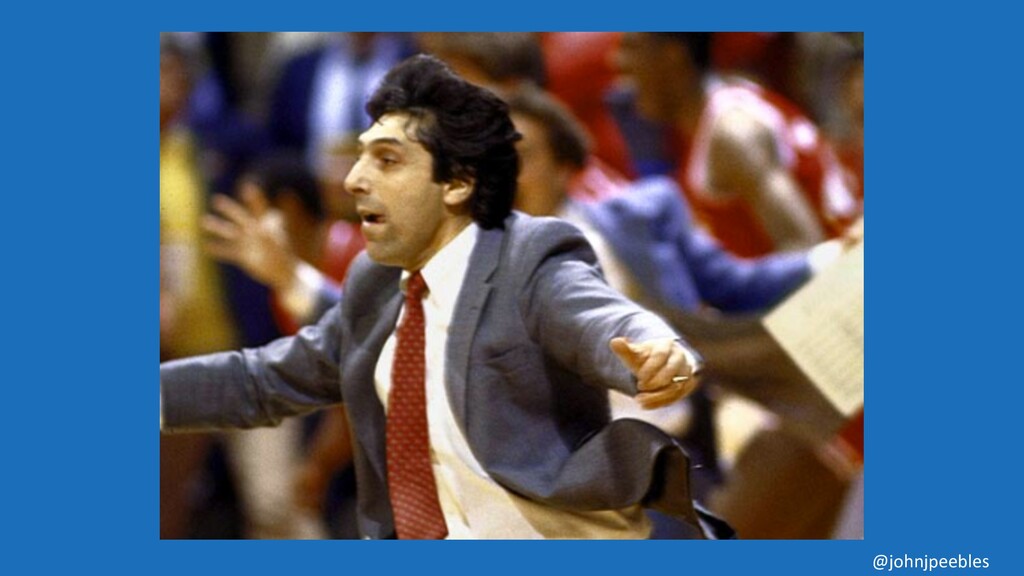
It looks like it's going out, and a guy catches it and dunks it for NC State. They win the game right at the last second. And what happened was coach Valvano is pictured here. This is a very famous scene where he was so surprised and such a shock or everything that he's everything that he's running madly around the court trying to find somebody to hug.
Okay? And he can't find anyone. And he's just running around. Right? And this thing has become burned into the psyche of American college sports. Right? March Madness, this is what coined the term March Madness. It's this idea that a small team that's not very good can beat this indomitable foe.
And from, you know, every year, I get to see with my team not being in the tournament because they're not good enough, the replays of when we were good enough, and it's somewhat demoralizing. Alright. But I wanna give everybody some context very briefly before we launch in.
Okay? First of all, I'm just a guy talking. Alright? I'm not perfect. We're not perfect. We've got team members sitting in the audience today, and they're gonna be like, yeah. They're definitely not perfect. And we're gonna be talking about some mistakes that we've made.
But it's also important to know the other context, which is we're a software as a service company. We have a training management software product. Right? We're business to business, meaning we sell to other businesses. And this is somewhat rare, but, you know, take this these stories and so on with a grain of salt because you may or may not be like us.
But the overarching theme, the message that I want you to take away with, I believe, applies to all businesses. Alright? So I wanna talk about two things over the last twelve to eighteen months that we've gone through. Alright? We had a problem. We actually had a problem, and then we had another problem that we didn't know about when the first problem we were trying to solve.
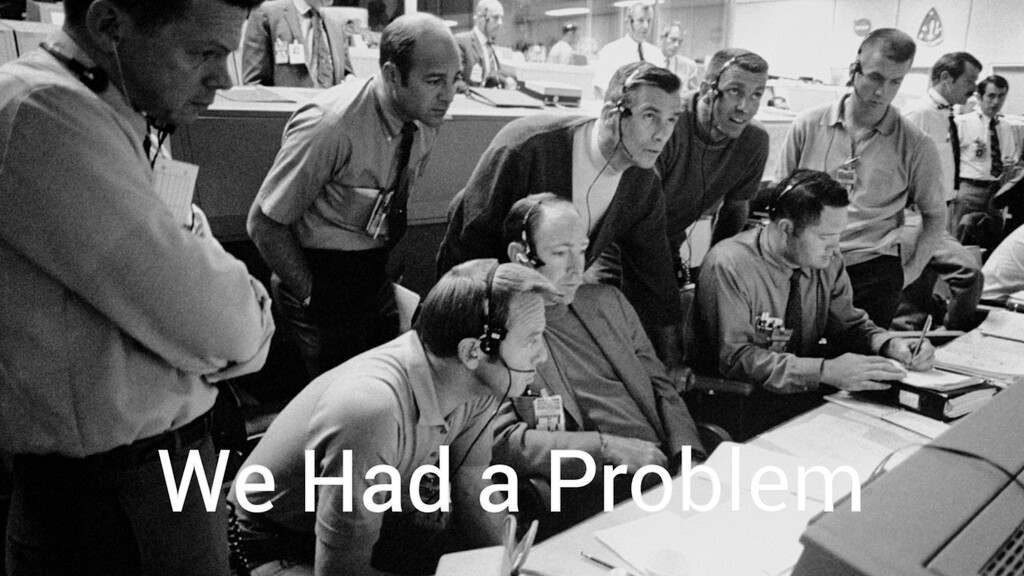
Okay? And this is a Apollo thirteen picture. It's actually pretty famous. It's one of the largest, most successful teams in history. Alright? We're nothing like them, but we had a problem that was very important to us. And that is it's actually a combination of problems that started to really gain steam in middle of twenty fifteen.
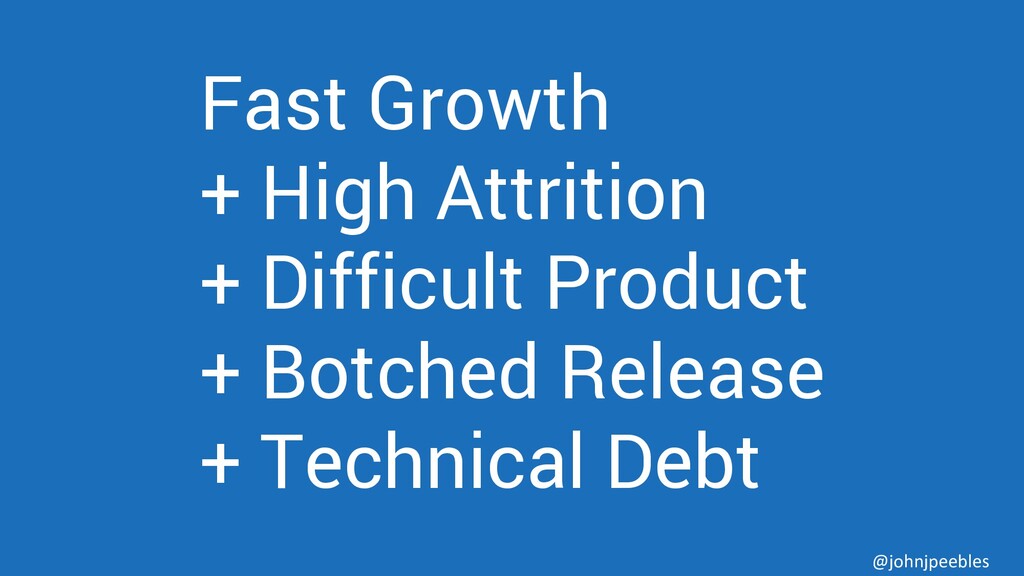
And that is we got under very fast growth. It was a bit unexpected in some ways. We had high customer attrition. Okay? We had a product where people were signing up, they were using it, and then they were leaving. We had a difficult product. Okay?
Our tool, our product was actually built in house within a training company that couldn't find what they needed in the market. Alright? That's a really good story if you're on the hunt for an MVP. Right? We never went through the soul searching thing of, oh, are people gonna pay money for a product?
We always knew that it was useful from day one. But that meant that like many internal tools, we had a lot of technical debt. Okay? And we had always struggled with this. We knew it was there. We'd set aside time, and we wanted to go after this and really, really improve the core of our product because that's what we felt was driving this attrition.
Okay? And then we had a botched release almost a year ago. It was a little over a year ago, where we thought we had gotten everything solved. We were really excited. We sent out emails that said, it's here, right, to our customer base.
And everybody is super excited. We started using it, and actually, it wasn't working very well. And there's a whole bunch of good reasons for that. You know, Rand mentioned earlier, I got a background as a software developer, and I'm I'm really fortunate to have that on one side because I understand how these things can happen.
But also, it can cause some blind spots that we'll talk about in in a little bit. Alright? So we had this problem, and this was really the biggest problem. If you're a if you're a SaaS company member or an investor right now, you're like, oh, man.
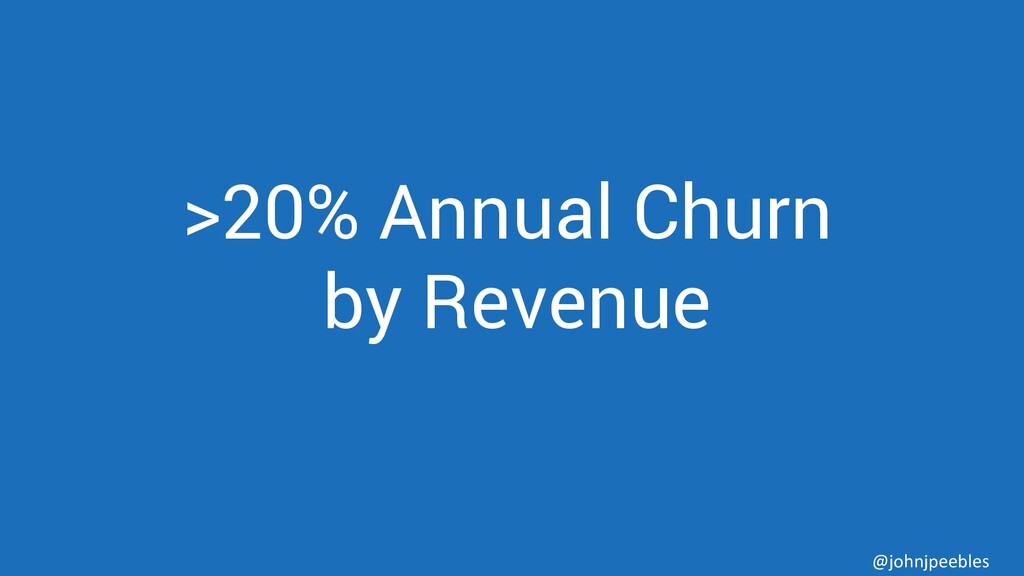
Right? Like, that is bad churn. I've had this debate actually sometimes with other founders, and they're like, no. Twenty percent is great. And I'm like, yeah. Are you a b to b SaaS company? No. We're b to c. And I'm like, look. It's different. Okay?
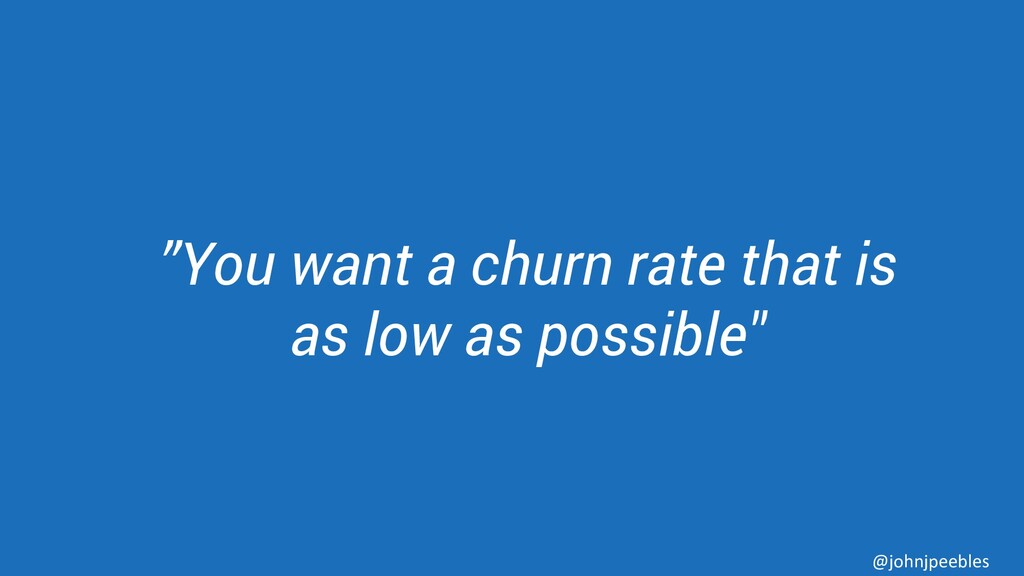
B to b churn is not supposed to be this high. Okay? Twenty percent annual churn by revenue, and it was a big problem. And I'm not the only one who thinks this. Alright? This is a quote, unattributed, of course. I'll put the attribution on when we release the slides.
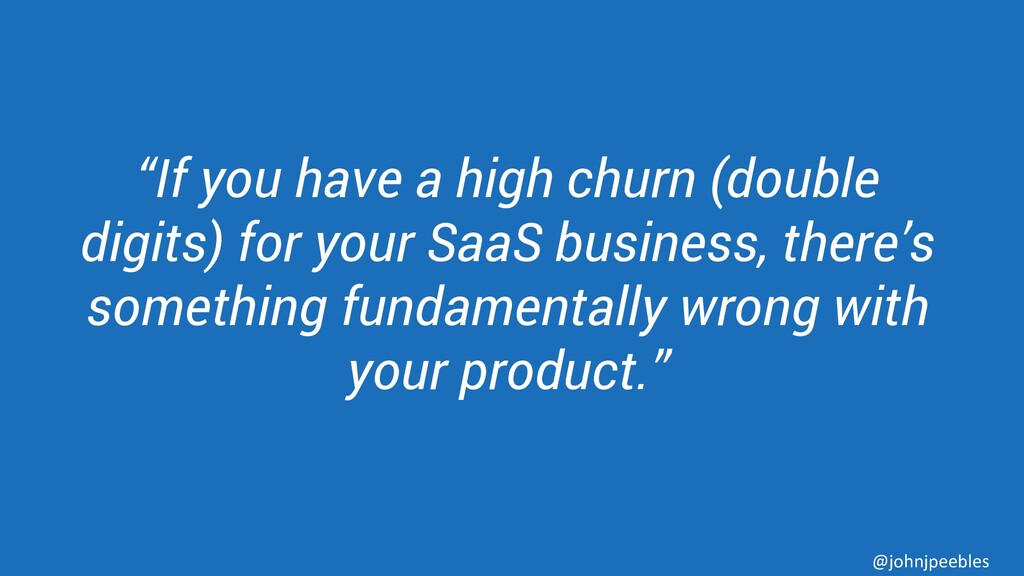
But, you know, you want a churn rate that's as low as possible. Okay? That's pretty obvious. Here's another quote that really hit home. Alright? You want a churn rate. You've got one that's in twenty double digits, you're in bad trouble. It means your product is fundamentally bad.
And just as a bit of personal development for myself, that previous couple of slides when I said we had a difficult product, I actually had to go through this thing where we had a board member pull me aside one time. He said, you know, John, I've just got a little bit of personal development work for you.
I said, great. What is it? He said, you can't go around saying that your product is ****. Okay? And and like and he's right. He's right. He's right. Okay? And and it wasn't that our product was ****. Right? Our customers were being successful with it and so on, and they were they were doing great things.
But we just knew that we were struggling, and the metrics were bearing the story out. Okay? And so in the fall, we knew that we had to do something about this churn. And so we went to our investors, and we said, alright. We need some money.
We need to bring more experience onto the team. They're super supportive. Right? And we started this project. And that actually set up what for me was probably one of those difficult periods in my career, which is the first quarter of this year. Okay?
And I wanna like, sometimes we go to these conferences and people are like, oh, yeah. It's always difficult, but you're just kinda saying that because it's like a humble brag. Well, I'm not humble because I'm American, and I love to brag. And I'm telling you that this was like the worst part ever in my career.
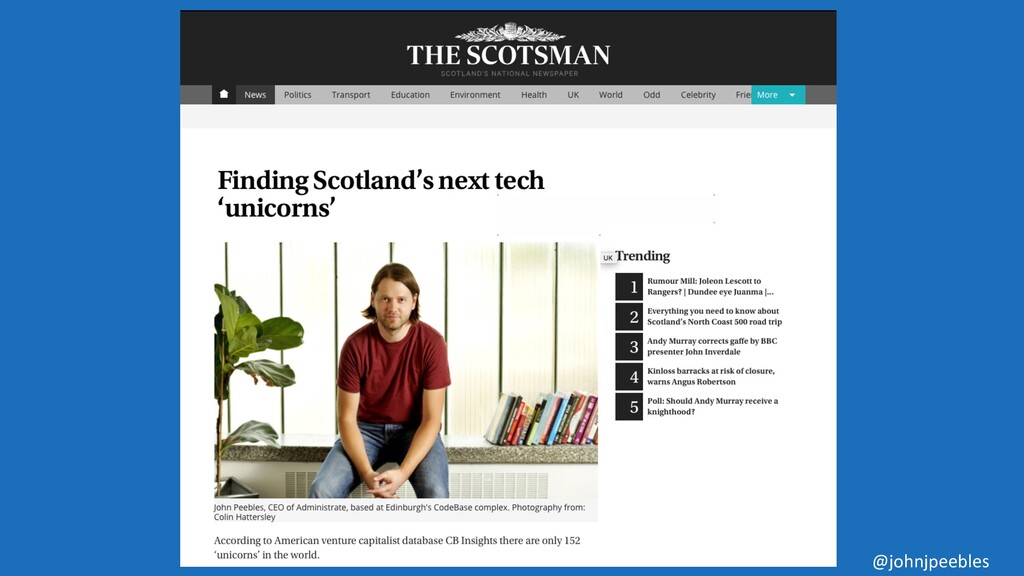
Alright? And at the same time, this is sample of some of the articles that were appearing in the press. Alright? And, you know, I don't say this just because that's a much thinner picture of me, by the way. But I say this to illustrate this thing that we all kind of know, but we really need to understand and internalize.
And that is this is really hard. Alright? This is really, really hard. And it is really difficult to be going through these challenges that you know you're frustrated, your team's frustrated, your customers are frustrated. You're letting people down, you're scared, you're worried, you don't have anybody to talk to.
This is what you signed up for, and it's hard. Okay? And I think, you know, there's gonna be people in this audience that are struggling with this, and we're struggling with this, and we don't have it all figured out, and it's very difficult.
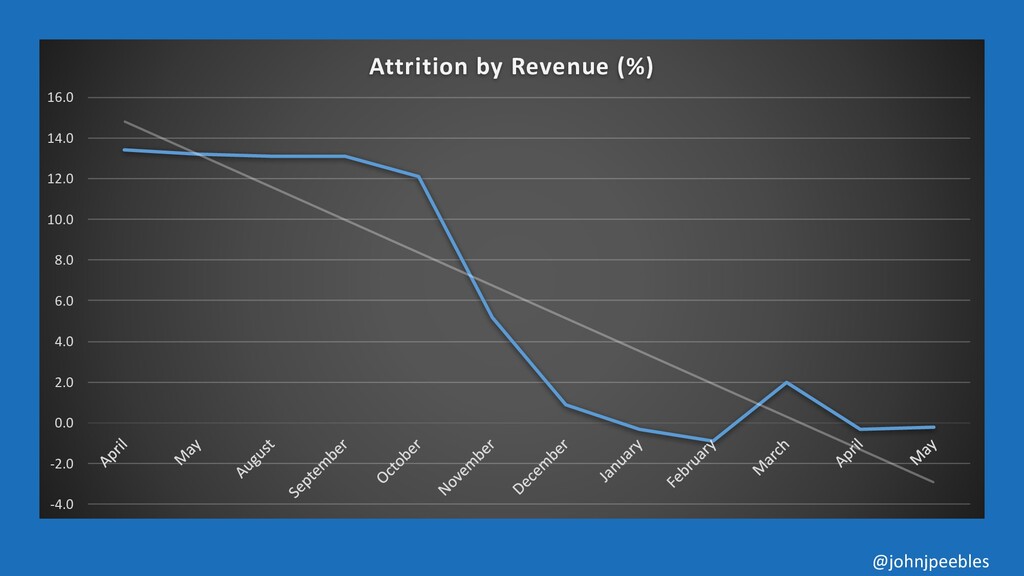
Alright? But I wanted to show you this graph, which is actually charting our churn over by month, by revenue. Starting in the fall of twenty fifteen, something happened. Right? That's a pretty huge step change on our churn. Less is more, lower is better, and you can see our churn starts to plummet.
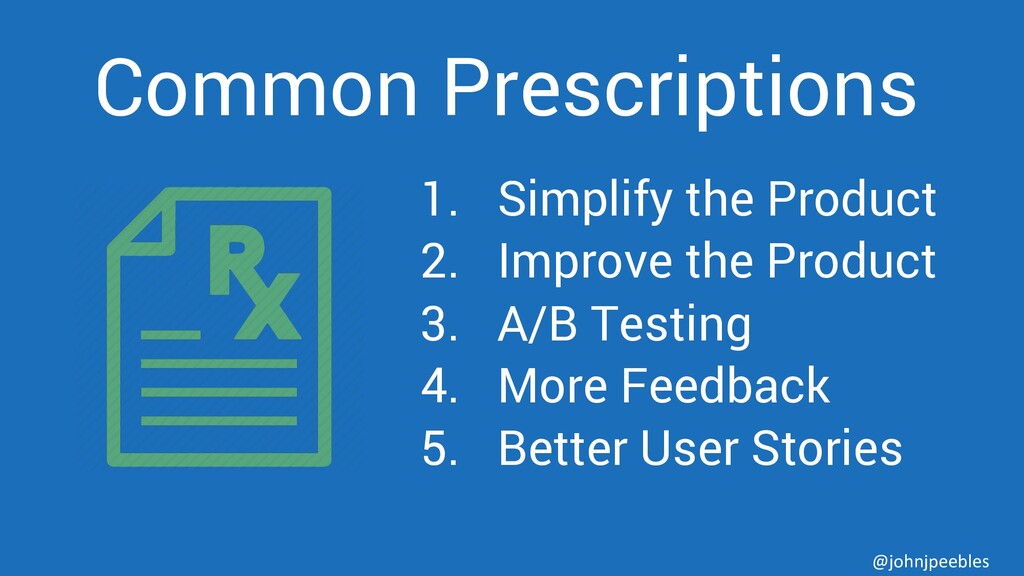
Right? Now, here's some common prescriptions that you'll hear at conferences like this, talking to product people. We've all heard them. Right? You should simplify your product. You should focus on something. Right? That's great. That's great advice. We should all do that. Okay? You should improve your product. Right?
Every dollar that you spend or every pound that you spend on your product is gonna pay off big time. Yes. Agreed. You should a b test. Correct. You should get more feedback from your users. You should do you there's a million things that could go on and on and on.
Right? And I was at this agile speaking to this agile conference last year, and somebody came up and said, well, we're doing a modified kanban with some like, some sort of tendencies. And and I was like, I I don't even understand what that means. Right?
But you should do all of that. Okay? And we should come to conferences and learn about that. But we actually didn't do much of that. We didn't move much of that at all. And I wanna tell you basically the secret for building the world's best products.
Okay? And it's the same it's a very similar secret to how you build the world's best teams. How you build a team that can defeat Hakim Elijuan and Clyde Drexler. Alright? And but first, I wanna tell you a quick story. I love comic books. Okay?
And I got this app, and it's the Marvel Comics app. Does anybody subscribe to this app at all? There's always one. Yes. Thank you. You've just identified yourself. I'm a subscriber, and you get every Marvel comic that's ever been made or something. Right?
And it's a great app, and it's got the iPhone version and the iPad version. So if you've got a really big iPad that you bought just for reading comics like I did, then you're all sorted. And even if you travel a lot, right, you can mark ten comics and download them onto your iPad before you get on the plane.
And it's brilliant. Right? And I love this product. It's the best product. I've given people gift gift subscriptions to this product. Right? And some of them didn't really appreciate that. My, you know, my sister's like, what did you do? I don't, you know, know.
And if I were to be called by Marvel and say, how do you like this app? I'd say it's great. It's one of the best. I love it. It's one of my favorite apps. You know? And they say, great. And they'd hang up the phone. Right?
And the problem is is that I'm gonna be canceling my subscription soon. Why? Right. Why? I love everything about this. We'll be canceling my subscription soon. And the answer is because I don't have any time to read any comics anymore. And this oh, there's only one guy that said that.
We know who you where you are. And this is the secret to great products and great teams. Alright? And that is you need to make sure that you're making your customers successful. Okay? If we had a magic wand that was named administrate that we could wave around you here and make everybody in this room successful, we would do that.
We wouldn't do software. I hate software. I was a computer a software developer, but these days, I just hate software. Like, I'm tired of it. I I like it. But, you know, it we wouldn't necessarily do the software. Right? And so this set off a bit of introspection for us as a company and an organization that we've been going through.
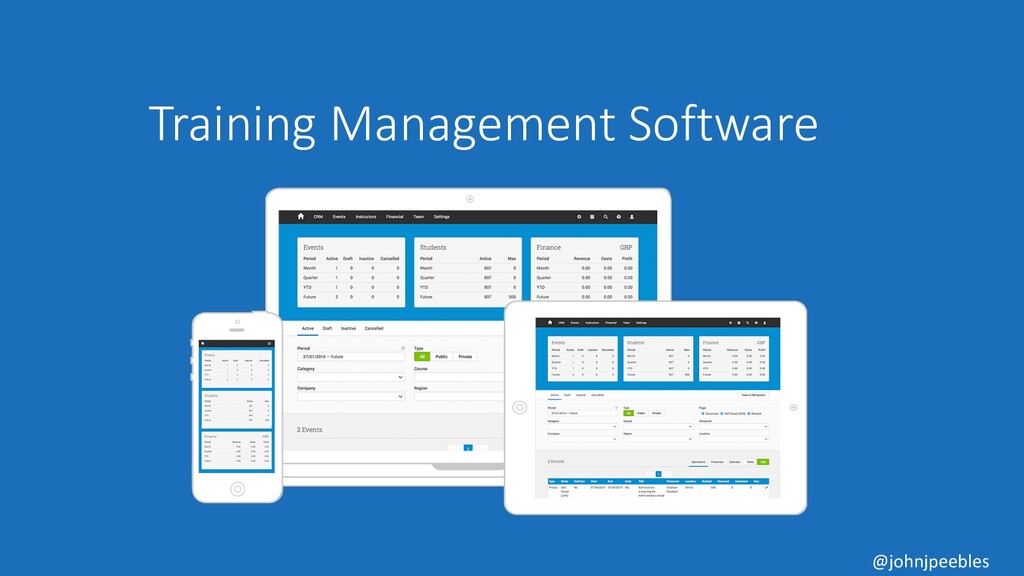
And that is what is our product? Right? Well, it's pretty pretty simple. Right? It's training management software. And there's some the obligatory three device screenshot. Right? That's actually a screenshot of our botched release, which is now slowly coming into shape. But yeah. That that was our product. Right?
But actually, our product is making our customers successful. But actually, our product is making our team successful. Okay? Because we just heard about, and I totally agree with this, the more engaged employees are, the more and it's actually the more they learn at their role, the more successful they'll become and the more they stick around.
And actually, was thinking, you know, we wanna make our investors successful too. Right? This is really core to what we're doing as a company. If those three groups are successful, then we're successful. Therefore, if you refactor this, that's a nerd term that means, you know, kinda no.
We don't know what it means. But really, it was I wanna make people successful. We wanna make people successful. And so actually one more slide. Our product is people. Okay? At the end of the day, this is what we're about. Right? And this brings me to a dream that I have. Okay?
Like Brian mentioned, this is my four startups. Some of them were successful. Some were not so successful. And it's a funny thing. Right? Like, were listening to this guy talk a couple of months ago about skiing across Antarctica to the middle of Antarctica and then skiing back.
And he talked about how difficult this was, and he planned it for years and years and years. And he gets back, and he sees the finish line up there, and there's all this media there, and he crosses it after this, I don't know, multi week long thing.
And that he's planned his entire life for and trained and trained and trained, and he crosses the finish line. He says, and you know what? Nothing happened. Like, happened. And I didn't know what I was gonna do next. And so I've been through that a little bit, nothing quite like that.
But I've been through that where you have this company and you have some success, and then you move on, and the company is still there, and nothing really happens. And what do you wanna do? What do you wanna do in life? What is it that you wanna be about? So I have this dream.
Right? This is my dream. And that is we want and this is our shared dream in administrate. We wanna build the ultimate human organization. Alright? And we like to make fun of this picture behind that because there's some people that look like they're having not a great time at all in this picture.
But this is our dream because we believe that building the ultimate human organization means having those groups of people, our stakeholders become successful. Alright? This is our product. This is the reason we exist. Okay? And the question is, how? How do you do that?
That's a very lofty dream. It can feel a bit like a ****** saying it a lot of times. We were opening up this office in the Middle East a couple weeks ago, and we got this great guy we worked with for a number of years.
We're sitting down him and a colleague of mine, and he said, you know, you're the dreamer. We're the guys that make the dream come true. Right? And I thought that was quite funny. And it's true, actually. It's really true. But we have this dream. Okay?
Build this ultimate human organization. What we didn't change through this process, remember that attrition coming down? We didn't change our software very much. We actually had to really pare back and get back to basics on how we were building the product. We actually didn't have the option to change very much because change in our software meant we had to hire new people in.
We had to get more experience in. That takes a long time. You know, sometimes six months to scale up a team. We didn't have a lot of tools in the toolbox or so we thought. Right? And so what we did change was we actually started focusing as much as we could on this ultimate human organization concept.
Right? And so one of the things that we did was very scary. We moved to a four day work week. Alright? At my previous company, I was a workaholic. I'm still a workaholic. I love to work and I work too much and I work too hard.
And I went through this period at my previous company, seven or eight year period. And it's like I don't even remember what happened, literally. Like, it's kind of just dark fuzzy period of my life. Alright. We were I was working all the time.
And I came out of that, and it's like, you know, the only thing that was left that I missed were the people, but I saw that I'd kind of been pushing people too hard. I've been burning people out. And we were having the same tendencies in the ministry.
And as we talked about this, you know, what do we want to be to to be known for? What is what is it that would make the ultimate human organization? This thought occurred that, you know what? We could just work four days a week.
Work really hard for eight hours a day, and then have a three day weekend every weekend, and pay people a five day wage. Okay? And this is like a really stupid idea. Okay? And it's even more stupid when you're an invested company and, you know, you've got investors that you're accountable to.
And so I stupidly asked my board, what do you think about this? And they're like, that sounds great. And then we said, alright. Okay. We just talked to our investors. What do you guys think about this? They said, that sounds great. And so we did it.
And the funny thing was is that nothing actually happened. And it just so happens that every study ever that has ever been done in human productivity basically says that the less hours that you work, the more your productivity goes up. And so we feel, we believe that our productivity has stayed the same.
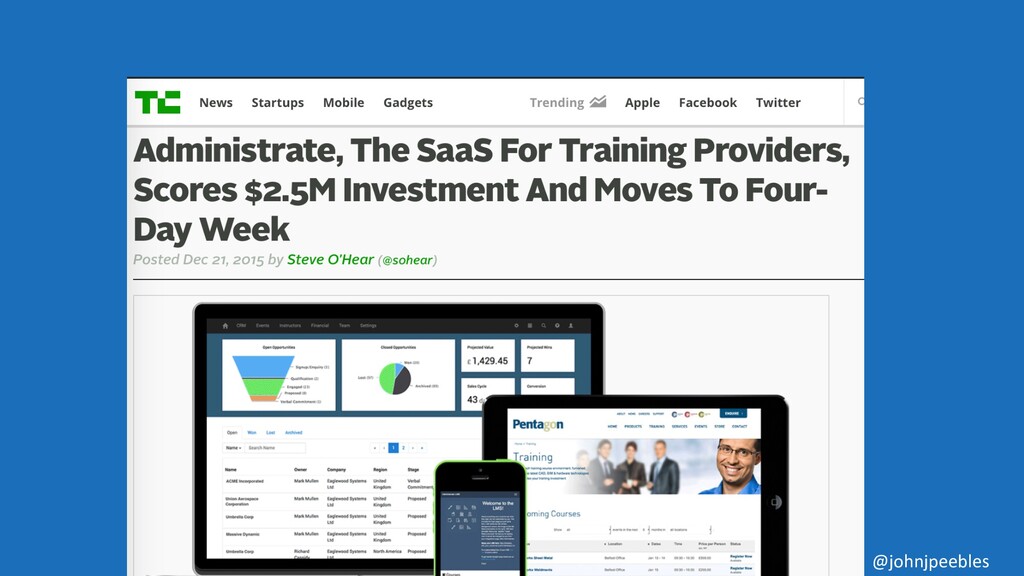
And that gets a lot of coverage, you know, that got us in the front page of TechCrunch, and that was kinda cool. But actually, we challenge people at administrate, you know, what are you doing with your fifth day? Some people have gone and taken classes.
Some people are better parents. Some people go out with their spouse for breakfast on Friday. We want people to be investing that time and taking advantage of that time. There's no more real excuses. Right? And, you know, it's like an inoculation against these bad habits that I would sometimes fall into.
And we really worked on improving our communication. Okay? We try we doubled down on communication with our customers. We did a bad job of this. We're still not perfect at this. Okay? We're not perfect on any of this. But we spent a lot of time making sure that we would send notifications out to customers.
We did a lot of internal communication. Because as we grew from about twelve or thirteen employees at the beginning of twenty fifteen to about forty five by the end of the year, that becomes a much more conversation and communication becomes much more difficult in that size of an organization.
Alright? And we had to get people in, and we had to focus on this. And we weren't perfect. There's this thing where I was speaking at a conference in March, and right about before I was about to go on stage and talk about how great we are and our dream to build the ultimate human organization, I get this email from the number two guy in the company, our chief commercial officer, Patrick.
And he was like he's like, nobody knows what we're doing, what we're trying to do. It's all in your brain. You haven't shared it. You've done a terrible job. And it was just wasn't a great email to get, but he was right. Okay? And we had to say, alright. Yeah.
This is we need to do a better job communicating with our team, and we talk about this a lot more. Alright? We invested, you know, in ways that seem a little bit absurd sometimes to people. We we realize as your organization grows, there's almost always somebody in the organization that's struggling.
Sometimes it's me. Sometimes it's somebody else. We had some horrific things happen to people in our in our team, to people they knew, to family members they had throughout the year. And we thought, why don't we get somebody in that people can talk to?
And so we brought in a therapist, a counselor. And it's free and it's anonymous, and you can choose to go if you like. The senior team is all required to go. That may or may not be legal, I'm told. But, you know, and it and it does help.
Okay? And so we're just trying to get creative around these things. We had a lot of new people. We had a lot of cultures that we were trying to integrate. At one point, we had twelve or thirteen different nationalities. I think we've got, like, twenty five different spoken languages.
We got, you know, Americans smashing up against Eastern Europeans, smashing up against Asians, all this stuff. And it's all this big cultural mess, which means we gotta communicate a lot more, and we gotta embrace that. Alright? And we had to breed some trust and build trust and transparency.
When you got a new team, they don't trust each other. It's just normal. We're all people. And you throw in people that come from all these different backgrounds, and it just gets sometimes a little overwhelming. So we brought in a company that could do personality profiles.
And people were like, so you're gonna psychoanalyze me? And then we're all sure it, and then we're all talk about it. This is how I get fired. Right? This is how I get fired. And we're like, no. We just want to understand how we work.
Alright? We just really want to understand. And something that we had to do was we had to listen. Okay? And as we were all set to hit the gas, January, we'd we'd raised this money. Our attrition had come down. We hadn't done a whole lot.
We were ready to start building our product again. Some of the experienced people that we brought in said, you know what, guys? We need a lot more people, which in a start up means we need a lot more money. Alright? And that's not a message that you wanna hear, particularly after you've just raised some money.
Okay? And we had a choice. We could say, nope. We think you're wrong. We're not gonna listen to you or we're gonna continue the way we've always done it. Or we can take a step back, listen, and try to learn from what we've done.
And so we did and that was really hard. And we went to our investors and we said, guys, we got it wrong. We need more money. Okay? And I was really, really discouraged about this. And I was discouraged because, you know, we could see that the leading indicators were all really positive.
You know, I'm super pumped about what the company's doing. We got a massive market. We've got such a great team now that is all starting to work together. And you kinda stand, you're like, well, my job as a CEO are kinda make sure we have the right people and make sure we have enough money and that we don't run out of money.
And that's like two thirds of my job that I didn't really do very well. Okay? And it was hard. And we stood in front of our investors. We said we need more money. And at the end, I was like, wow. You know, at least I didn't throw up on them all over myself.
Maybe metaphorically, but I, you know, I didn't do that. And one of our one of the investors came up to me and he said, you know what? You can't always be perfect. And then he just turned around and walked off. And that was really encouraging. Alright?
And I want everybody to take that message to heart. You can't always be perfect. Alright? But you can do these things. And again, we're not perfect at this. We're trying though, and we're focused on that that ultimate goal. Alright? And so what we did is we invested, and we invested a lot.
And the thing that I really love right now is I'm not a great manager of people. Okay? And I'm not a great early stage startup person. And I kinda like building the environment and then dropping people in it and then be like, okay, go.
Okay. Go. Now faster. Faster. Right? And and that's what I like to do. It seems really actually bad. I'm gonna have to talk about that one therapy next time. But we got two guys, right, that are running the majority of the people in our company.
Patrick is running all of our commercial side, sales, marketing, and so on. And then Andrew's running a lot of our tech. And the thing I love about those guys is when we're solving a problem, we've still got challenges all over the place. But when we're solving a problem, it's always people first.
Okay? Oh, that person has this tendency, so I'm gonna coach them in this way. Or I I know that I need to listen to this, or I know I need to get them motivated to do that. These guys are only focused on people, really.
They're very well they're very skilled on other things, but they just know people and they know how to manage people. And that's so important for us. Okay? So after doing all this stuff and not building a ton of software, we're like the software team was working really hard.
Okay? And we didn't support them well enough last year. This is not at all a commentary on this quality of engineers we got. I love our engineering team. And I love being a great engineering organization. That's something we aspire to be. Okay? I'm a software developer.
I just love it just because just for geek sake. Right? I just want to have great software. And they're working on it really hard as part of the investment we're doing right now. Hiring a ton of people in, making sure they got everything they need, that environment, and all that.
But we didn't have that. It was a six to nine month horizon until we could get that. Okay? So what happened? Well, today, about six months after problem two and about, you know, nine to twelve nine to ten months after problem one, we've had huge revenue growth.
Okay? And I was walking back from the touring festival last year, and I was kinda talking to a guy named Morten Prindle, who's the CTO of Zendesk. He spoke last year. And I was like, wow. You know, you know, what have you learned?
What's one of the biggest things you learned? And he's kinda like, man, this is annoying. Wish this guy wouldn't talk to me so much. You know, I'm just pumping him while while and I was graciously showing him the way to the venue that he needed to get to.
Right? And he said, you know, we kinda feel like Zendesk was one of the earliest SaaS companies, if not the earliest big success. And he said, we kinda feel like we proved beyond a shadow of a doubt to the entire world, the first law of SaaS pricing.
Okay? And that is, you can't ever raise your prices on your existing customer base. Right? And he said, we did that and all hell broke loose, and we had to roll it back, and we looked like idiots. And now, in the SaaS industry has ever done that ever again and nobody ever will.
Okay? And so I said, oh, that's great. Great. Love that guy. He's a great talk. And then we decided we would raise our prices on our incumbents. Okay? And we did that. And it, you know, it wasn't people aren't always delighted, you know, with to get a price increase email.
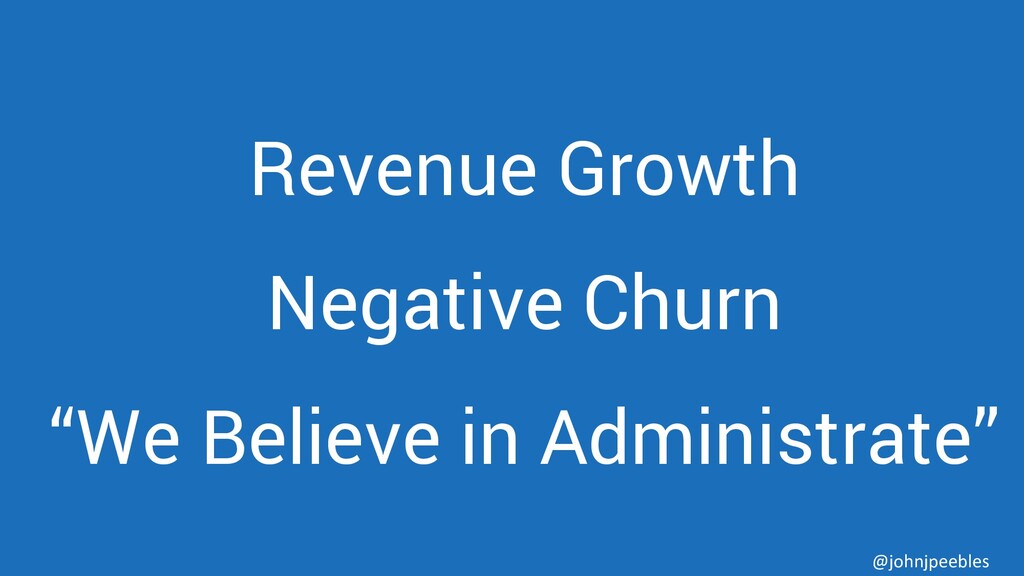
And some people left, but the majority of our customers stayed. Okay? And so we experienced huge revenue growth. Alright? And because customers were staying and because we were doing these improvements on account management and implementation and customer service and all these squishy things that are basically people, which was the big strategy that we'd undertook over the last nine months, we started to go into this thing that is really sweet called negative churn.
Alright? And that means that your existing customer base is growing without any sales. Okay? It is the best thing you can have as a SaaS company. Alright? And I used to have these phone calls with investors and they would come to me and they'd say, you know, oh, what are your metrics?
And I'd start rattling through there. Oh, growth rate, you know, greater than seventy percent year on year. That's great. You get kinda go through all that, you know, ARR, great. Right? And they get the churn, they're like, oh, we'll we'll call you back if you're even alive in a year.
Okay? And so now customers are starting to these investors are calling. You you have to take these calls even if you're not looking for investment, just part of your job. And now, they would go through the phone call and they'd like, is there anything else?
But, yeah. You need to ask me one more question. They'd like, what? I'm like, you haven't asked me about my churn. And I was really excited about this. And this is a huge thing for us as a company because it means that our people, you know, before we thought you could buy the product, swipe the card, you're in, that's all we need to do, a bit like Rand was saying.
And we changed all that. Now you have to go through an implementation process, we have account management, and so on. And what happened was these customers, even though they were really upset with us, they knew we were working hard, They had been impacted by our people, and they said, we believe in administrate.
Right? We had a customer who's already to leave, and they said, we just can't. We believe in administrate. Believe that your team is gonna fix it. Right? I believe in us. Right? I believe in this team. And it's such a cool thing to be able to say that.
And I believe in our mission. And I had another story about Valentino Rossi, which we won't talk about right now because we're out of time. But I want you to remember today, please, that your product is your people. Alright? It's all about people.
We say this all the time, and everybody always says this. But this is a case study that we've lived through, one of the most difficult problems I've ever had to deal with in life and the most difficult in career, and it's looking pretty good.
And we're still one of the fastest growing companies in Scotland, tech companies, and it's because of our people. And so your product is your people. So thank you very much. My name's John Peebles. Send me an email.