When building out a revenue organisation there will be countless decisions to make. Fortunately, it’s not rocket science and if you can get the fundamental pillars right the other pieces fall into place. Get the pillars wrong and no amount of good will or work can set it right.
This talk walks through those fundamental pillars (the 4Ps), revealing how to set up your revenue organisation for growth and scale, taking lessons wrested from 10 years in sales. It examines the tethered relationship between product and sales, how and where to get and keep your people, which processes matter and how to think about pipeline.
If you’re a startup wanting to be a scale-up or generally interested in the machinery of a solid revenue organisation then pop along.
1 / 44 Use ← → to navigate
Auto-generated transcript - may contain errors.
Tap a timestamp to jump the video.
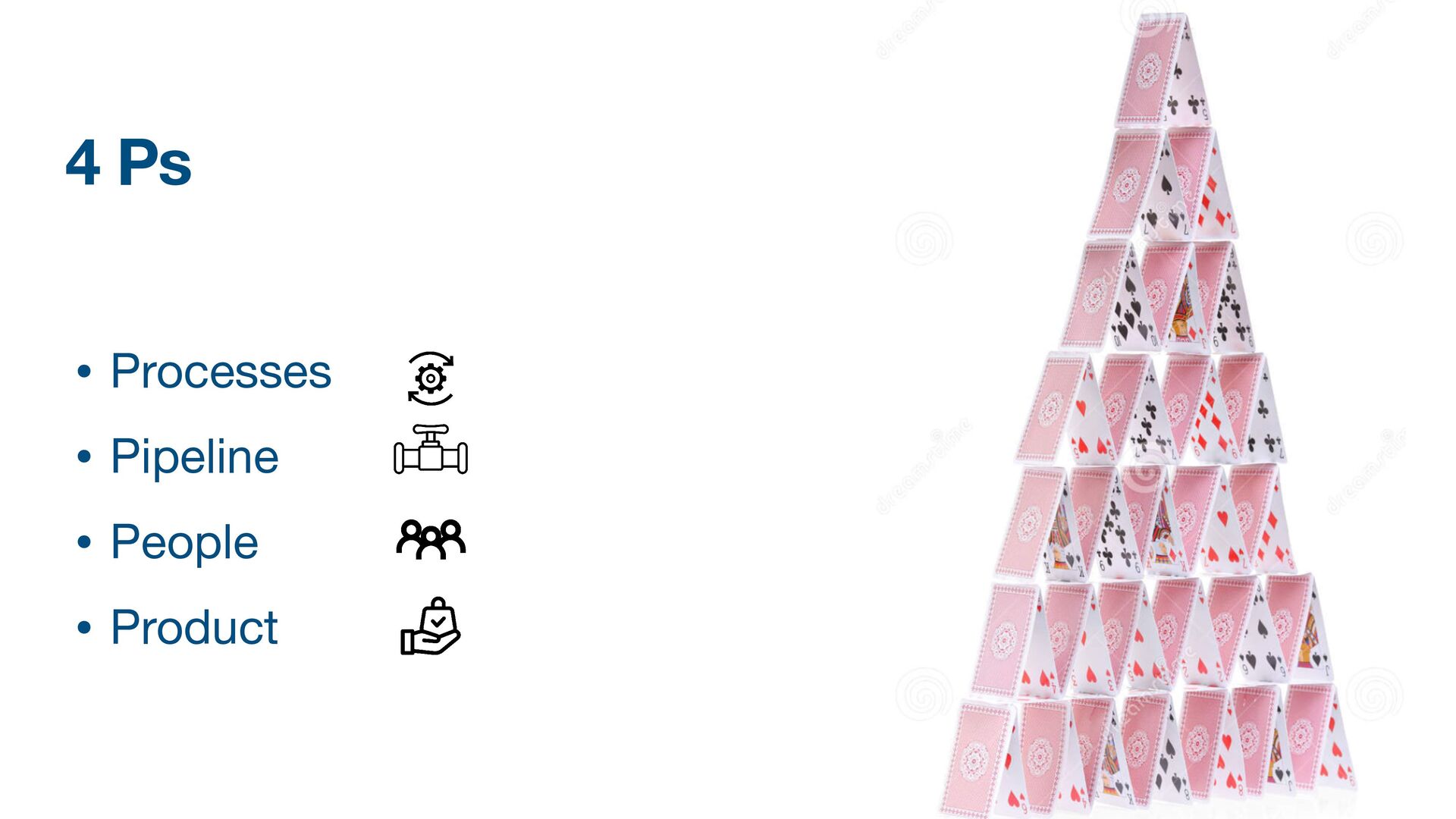
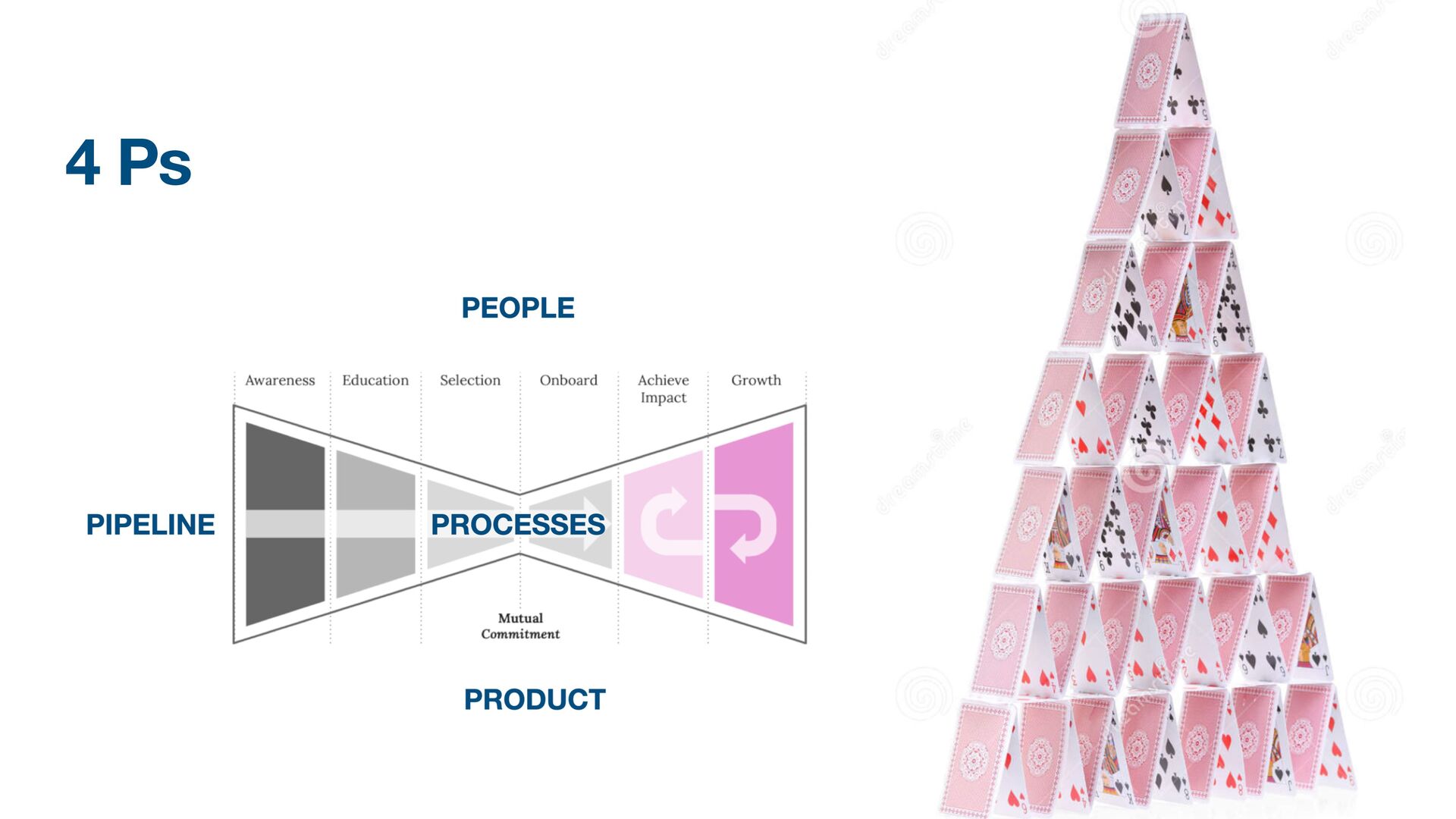
Building and scaling your revenue organization is like this. It's like building a house of cards. If you get the foundations wrong, no amount of goodwill will see it rise. If you get the foundations right, the sky is the limit. And I want to talk to you about some of those pillars and foundations that underpin and enable a revenue organization to scale in your company, whether startup or scale up.
And I've got these four, which I've come to believe are the most important elements imported into this revenue machine. So hopefully, I'll leave you with a model on how to view a revenue organization and some tips, tangible tips in each of these elements along the way.
My name is Oona Leon, perfectly pronounced by Megan. Thank you. It's a of a mouthful. I'm Irish. I live in London. I describe myself as a sales specialist, a little dorky, but not many kids grow up and say, I want to be a sales specialist.
But I've been doing B2B SaaS sales for ten years, whereas we call it forty quarters, each one more precious than the last. And I think it's not rocket science sales. There's a few elements that matter and a lot of decisions you can make, but if you get the core ones correct, it will work.
At base, it's just kind of mathematics. So I want to share what I've learned along the way. So I started out actually even before Web Summit, mean we all do sales, right. Every one of you is a salesperson, whether you're a founder or you need to get stuff done in your company.
In college, I got myself through college through alumni calling. So in the evening time, I would settle in and call you. You may have gotten this from your alma mater. You're at home, you pour yourself a glass of wine, the phone rings and someone's asking you for money to donate to your college.
Did that throughout college and learned a lot about cold calling, which was fun. I worked for Web Summit. My job was to convince speakers to come up from across the world to speak in Web Summit. This was in twenty twelve. Web Summit was like smaller than this room.
Now it's obviously a global conference. And through Web Summit, I met the founder of Dropbox, Drew Heist, and he came to Ireland. They were setting up their European operations. And this was in a world of file storage and thumb drives. Does anyone still use Dropbox?
Okay, so very small. Yes, was a different world back then. And really went along the sales journey with them for six years in BDR, in account executive role, in sales, in SMB, in mid market, in enterprise, in management. So really it was an undergrad in how to do tech sales and we scaled to 20x in headcount across EMEA.
After that and for the last three years, I've been with Clio as a sales director. Clio is a financial product of the future, smart generation cards basically automates expenses. No one likes expenses. The amount of time you should spend on that is zero.
That's what we do. And in that time, since I've joined in three years, we've 9x'd our headcount. So when I joined, it's about one hundred. Now we're nine hundred hurdling towards one thousand. And my job there is working with our wonderful VP of Sales and making sure our teams are set up for success.
We have the right processes. We hit our number. We're hitting consistent one hundred percent year on year growth. And we got a valuation of about four billion four point five billion dollars a few months ago and we're on track to keep doubling that in the next few years.
So that's what I've done. And that's why the four Ps, I guess. And I think they're important if you abstract a little step back of what is a successful revenue organization, what is a sales function. A sales function is an engine which takes you put in a pound, spits out a pound fifty, it spits out two pound, whatever that is.
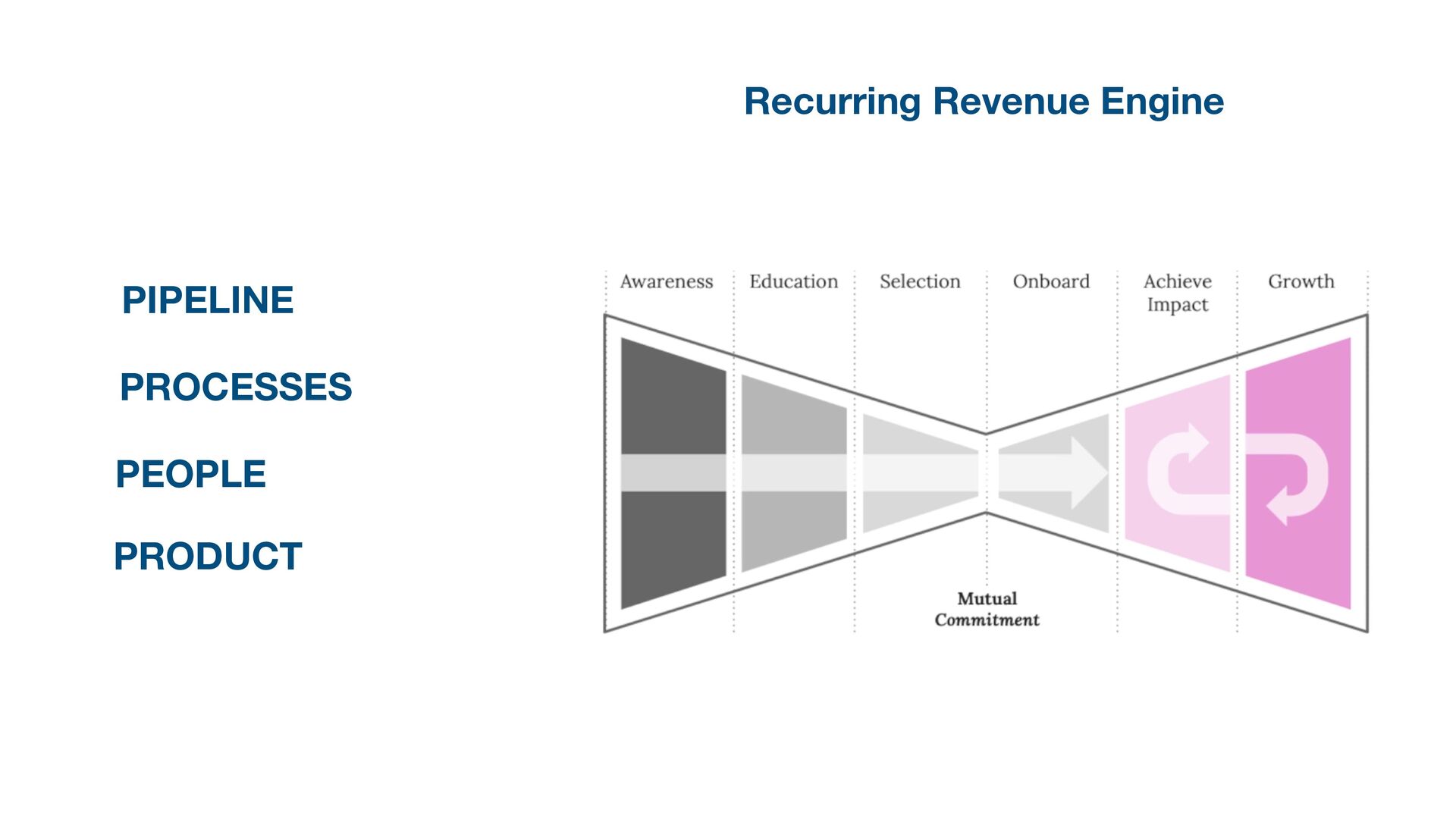
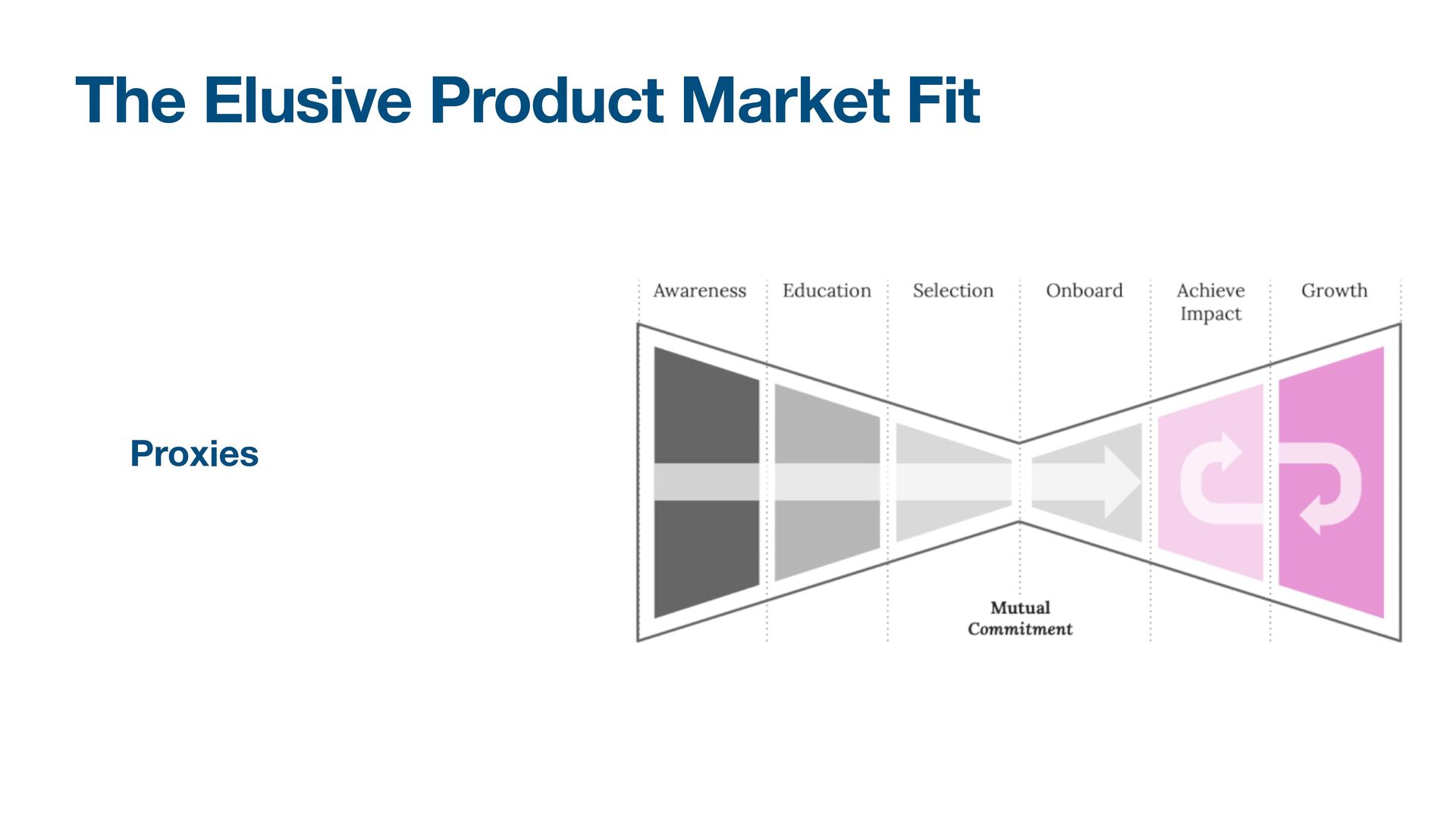
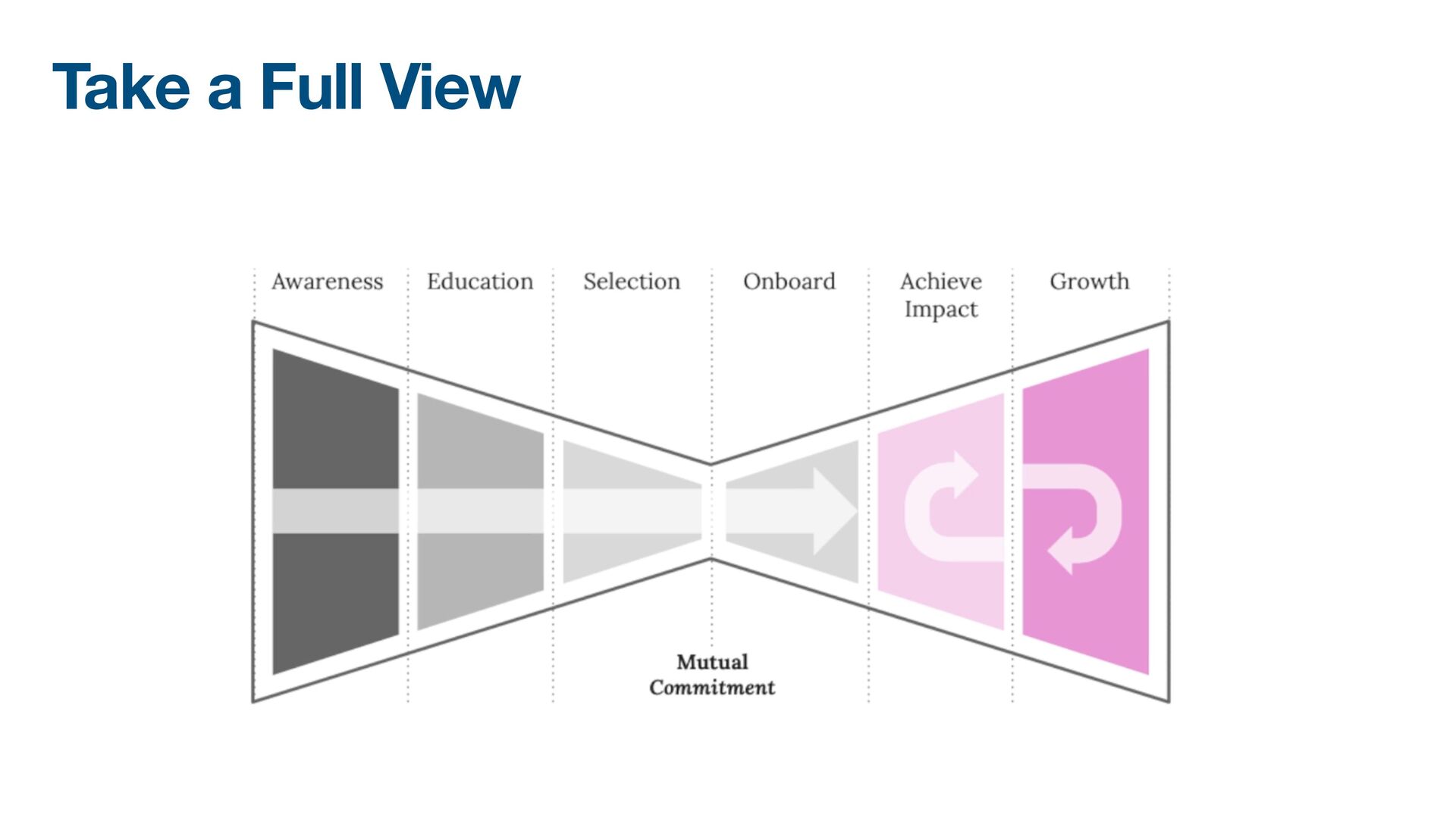
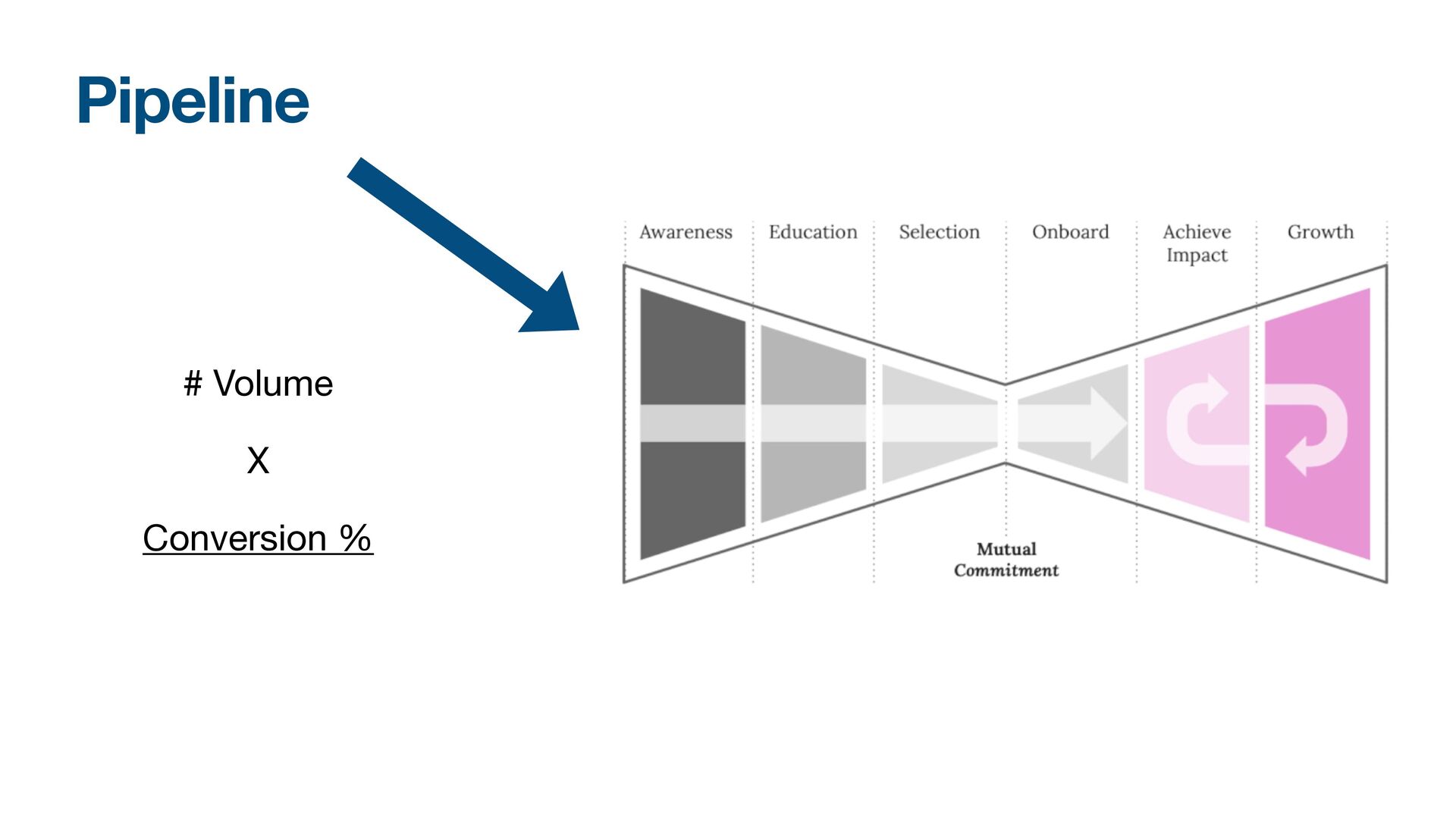
And I borrowed this model as Blueprint from a consultancy called Winning by Design. And they've taken the traditional funnel, which you're all probably used to, you whiteboarded how many leads we have, how many deals we have, what are we going to close. And they've put it on its side to get a holistic view across the revenue processes from your sort of leads, early stage, bottom of the funnel to closing, to then onboarding and growing and renewing your customers.
And I think this is the modern way to view sort of a revenue engine. And if you think about then the pillars of what's involved in here, and there's some beautiful animations going on here. It's my first time at Keynote, so Ken Burns, eat your heart out.
You've got product at the bottom here underscoring everything that happens in this revenue engine, obviously. You've got the people at every stage of the funnel and how to manage them, how to incentivize them, what sort of compensation plans they're on, the processes by which your pipeline or your revenue everything goes through and then obviously where the deals and leads come from in the marketplace, the pipeline.
So that's why I've chosen those four as really sort of the skeleton of this recurring revenue engine. So let's jump into it. First one is product. And you might be thinking, Owen, this is a sales talk. Why are you talking about products? Good question, but I think you have to go one step back.
As a salesperson, you don't create demand in the marketplace. You do not create pain in your customers day to day. You do not create use cases. You do not create demand. And this might be controversial, it might be obvious, but it's really a foundational pillar in understanding a revenue organization.
And I think a lot of founders or early stage startups, they might have, okay, our target is ten billion dollars So we need to hire like a VP of sales and the salespeople and they're going to have five hundred ks each. Okay, that's twenty salespeople.
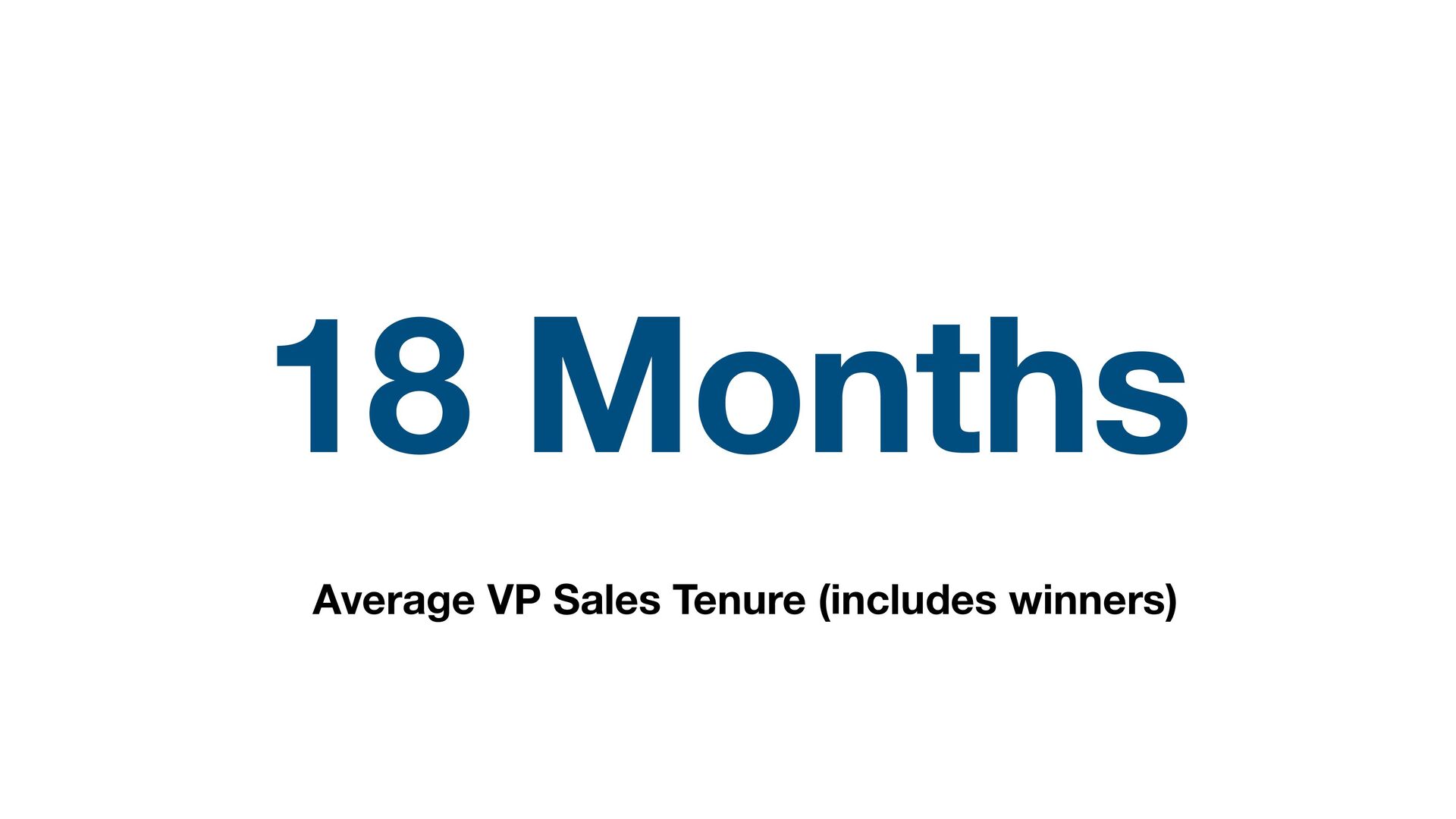
Rush, let them create the demand. But that's the first mistake, and a lot of founders make it. An interesting stat here is this is the average tenure of a VP of sales, including the winners. Eighteen months, it's not great job security considering it takes you probably like three months minimum to ramp in and you're getting the job done, you're trying to have impact and then suddenly you're out.
And one of the biggest reasons is exactly the misconception that sales creates demand and they don't go back one step and say, do we have the product market fit to support a go to market infrastructure? And that's the first thing anyone should do.
And then do we have a product team aligned to fulfill the features and what we need to hit those goals? Because if you're the one managing that number you don't hit, you're the one with the guillotine coming down. And it's terrible for you as an organization.
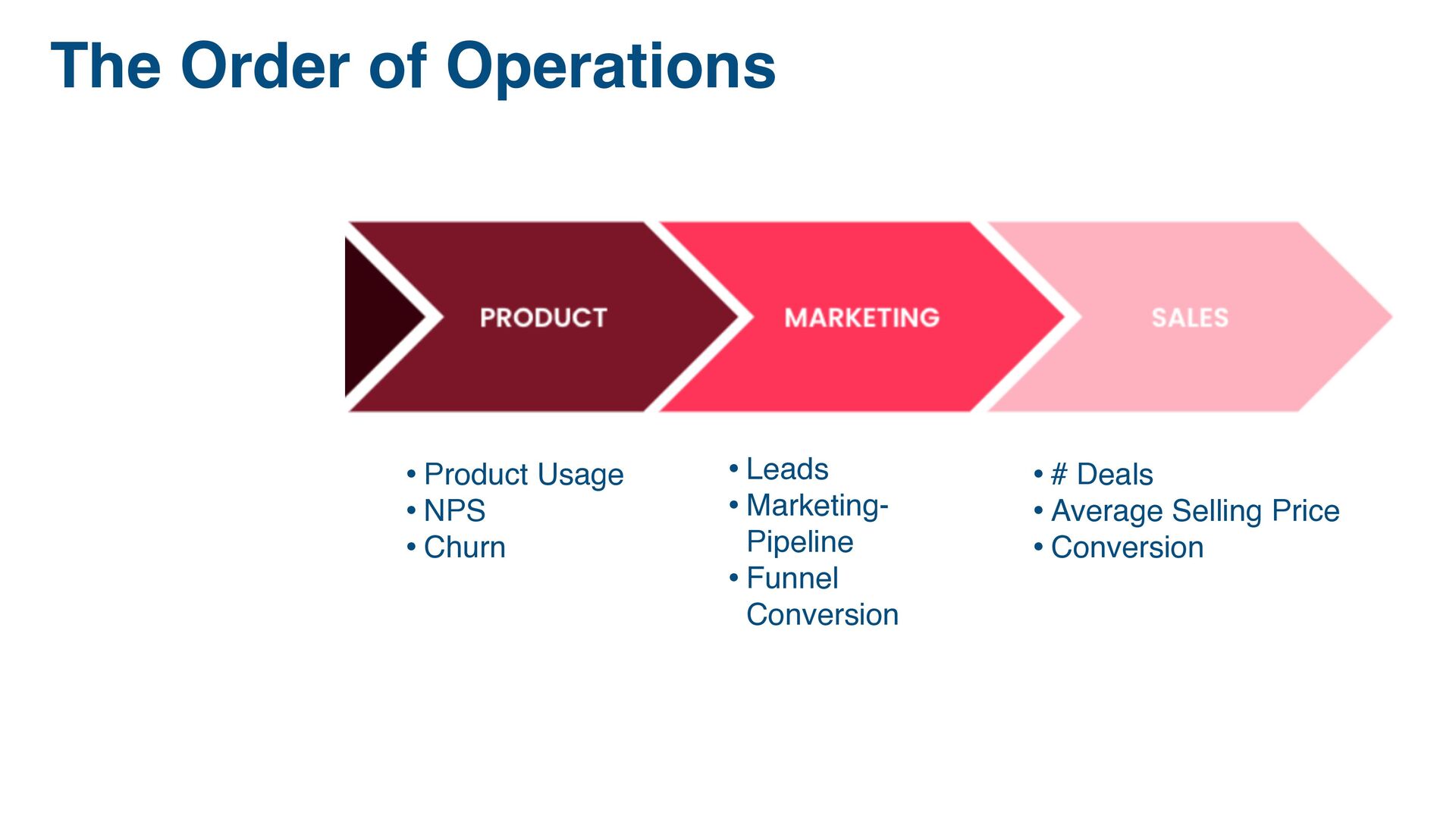
You've dropped a salary that starts with a three or a four on a VP of Sales and you've lost a huge amount of opportunity cost on the deals you could have won had you focused on the right things. So there is an order of operations here about how to think on how you layer a successful revenue organization.
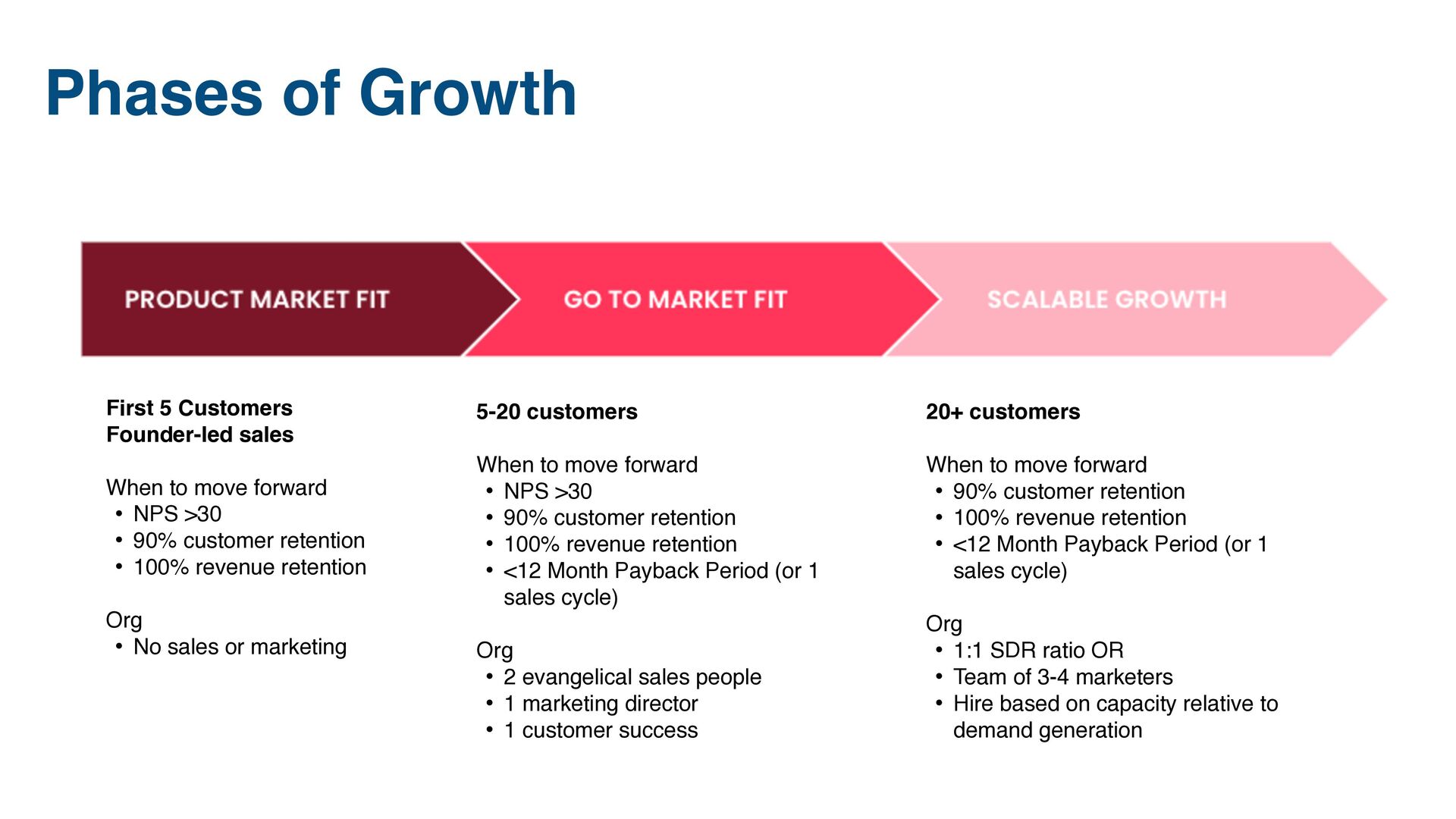
And you might ask yourself, where do I where is my company in this position? Do we have product market fit where the founder is out there winning some deals, count of logos is our primary metric? It's way too early to understand what our renewal rate is or our churn, but we're winning some deals.
So with that in place, you move on to the go to market fit. And this is then a spectrum of predictability really. You're looking to see if you can produce replica results in a system. And that's the next stage here, and you layer on marketing to amplify the product market fit.
And then finally, when you see that with some of these metrics, that's the beautiful curves on. That's when you can start putting some gas into the engine. And I spoke to Michael yesterday. He presented here a little earlier on about his company, which the office space.
And they're definitely in this space here. They own like a couple of million revenue, and I was telling them like, you guys just need to pour some gas onto that engine because you can't brute force sales. If you try and layer on here without going through these, as I say, it's disastrous.
The best salesperson in the world without pipeline will not hit the target. The most mediocre salesperson in the world with pipeline will. So make sure you get this order of operations. How do I know product market fit if you're super early stage? Well, the unit measurement is recurring impact to your customer base.
If you have that, that is predictable, scalable growth. If you're kind of cheating a little bit, you're relying on the charisma of a founder, friends, family to buy the product, maybe not so scalable. But if you can see impact, recurring impact, even better if you intersect with your customers' KPIs, what they care about, you're on to a winner.
You can also use proxies, product engagement in Dropbox if someone had if they were a member of two shared folders and send a couple of links, they were hooked for years. Netflix, I think it was the early stage, you watched nineteen hours of content, they had you for years.
So you can look at some product usage proxies to see if you have product market fit. So you want recurring impact. It's not only at the very start of your journey do you need to consider product market It's going to be a consistent foundation throughout every scale.
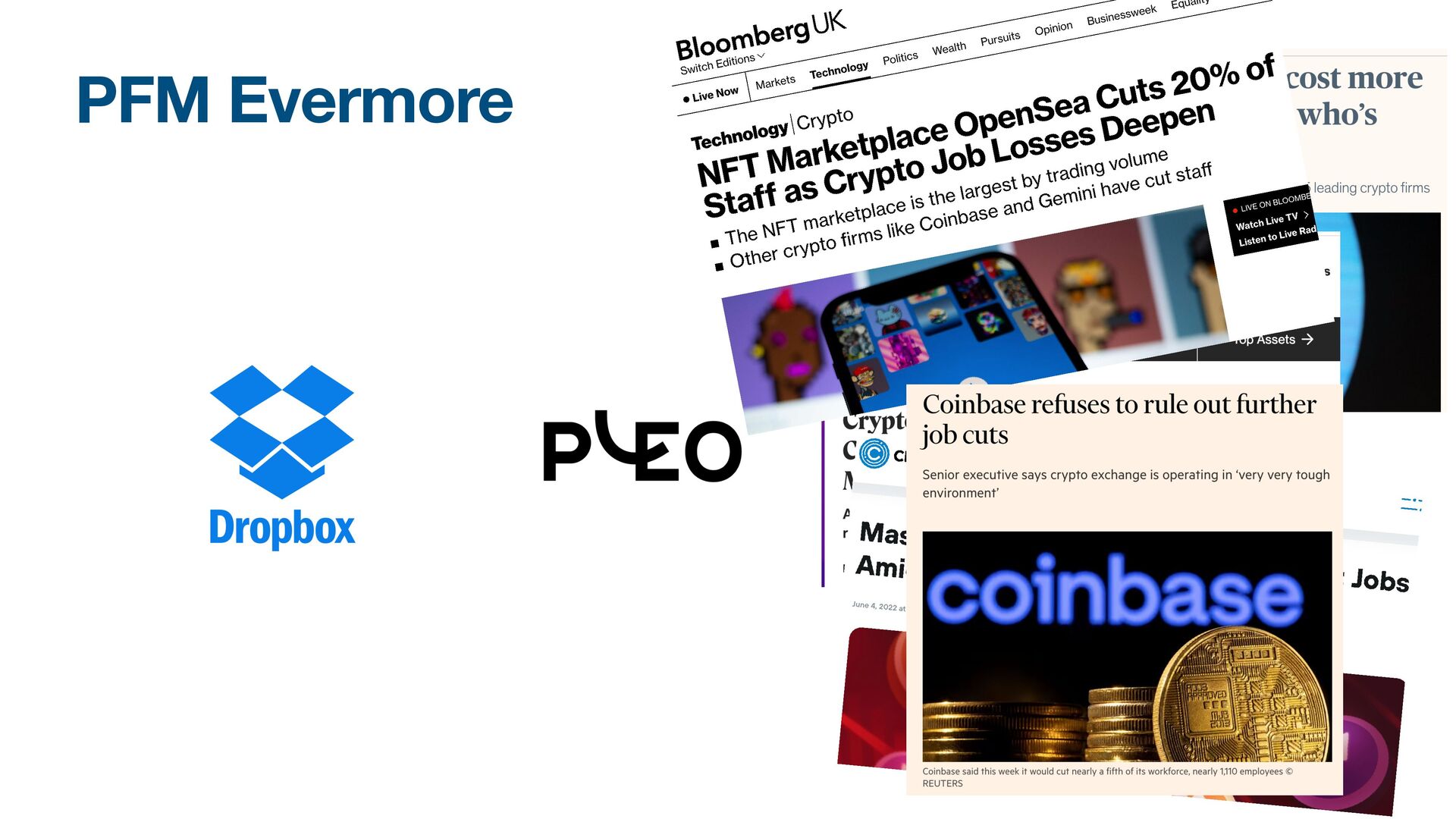
And I'll share a quick story on this. So my former company, they made a mistake. They became untethered from product market fit. So in the early days, massive growth, product led growth, everyone was on Dropbox, huge B2C business, huge SMB, B2B business. And they were like, okay, we're onto something here.
And then they went empire building. And they spent enormous sums of money opening offices across the world, hiring an enterprise sales reps, which are one hundred and fifty thousand dollars and it bombed. The product was not enterprise ready. They had mistaken product market fit.
What was happening was there's a few enterprise companies buying the product, not for recurring impact, but just to swallow up the consumer Dropbox accounts in their corporate network and then turn them off. And that initial success led them to make this millions and millions and years of mistake instead by just misconstruing that.
And so and had they not done that, had they seen the product market fit gap, they could have fixed that and put their energy all that energy onto research and improvement and maybe they would have made a lot more different progress. It's why I joined Clio. It's in a new category.
The product market fit, it's just as a salesperson, stupendous. So I see just years and years of aggressive growth because the product market fit is there. I think in an organization, there's two things that will stop you growing. It's product market fit, it's go to market infrastructure, and it swings from left to right.
It's one of those. So quite fortunate with Pleo. There's an industry that massively untethered from product market fit. Let me go back here. You'll probably guess what it is. Crypto, I mean, they just scaled massively based on very superficial usage stats. Anyone that really looked deeply and honestly at the product engagement and how it interacts with users, it was not recurring impact, was bets.
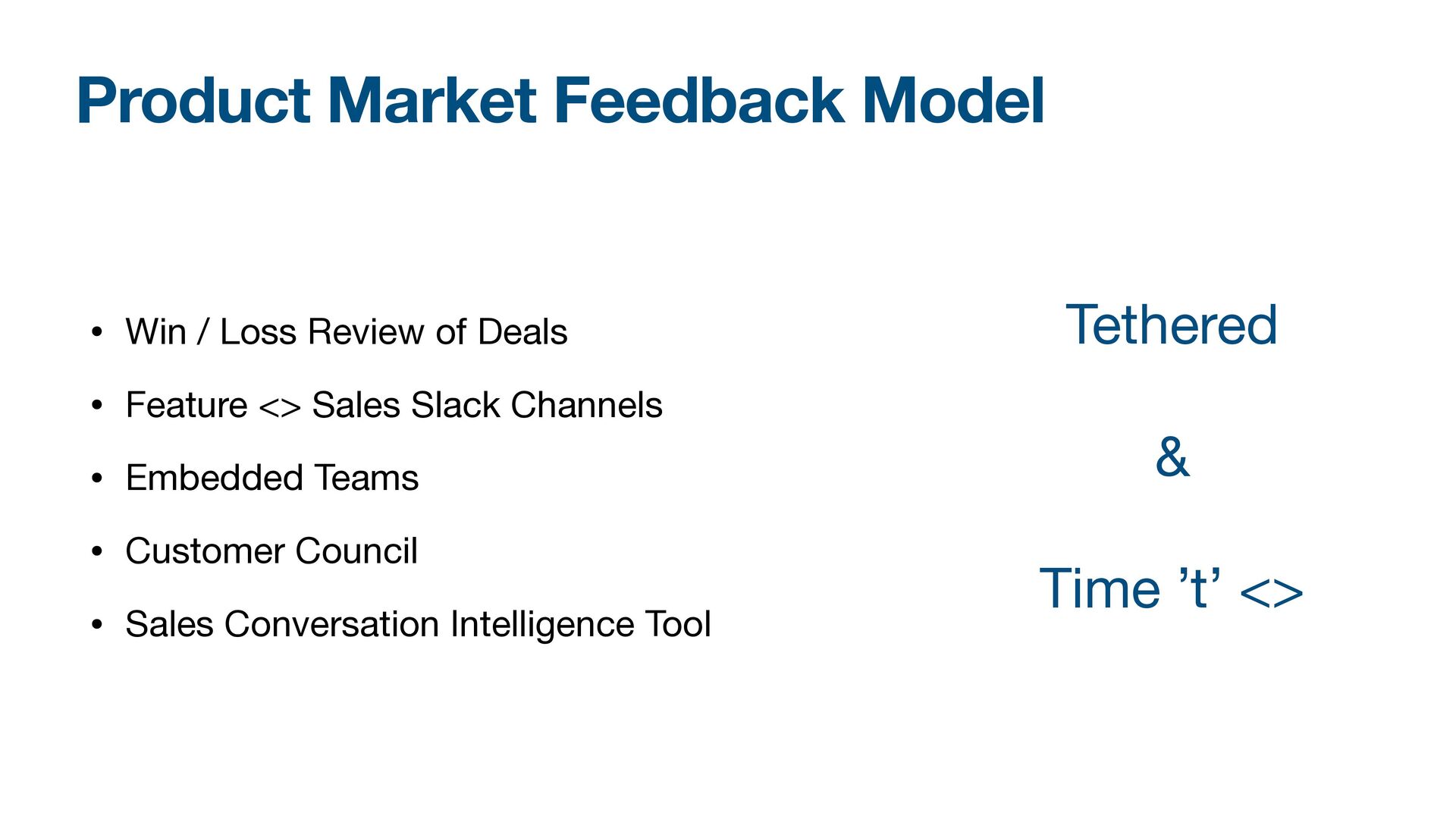
And this is the result that happens when you become untethered. Some tips on how to maintain product market feedback. You got to do regular win loss reviews. If you're the founder, you should be on these monthly. Have a Slack channel between product and sales for every single feature.
Sales are out on the market talking to the economic buyers of your product every single hour of every single day. It's an enormous constellation of data. And if you leverage that more than your competitor, you're going to win in the long term. We completely reorganized our structure in Clio, not around functions, but around problems.
For example, one problem is how do we serve the admin of our product. And so we have this domain called admin and we have our sales managers in that. We have product marketing in that. We have the engineering team. And conversely, those engineers come to the sales meetings about that problem space.
So cross pollinating, moving away from the legacy centralized thing more towards domains is a good idea. Having your own customer cancel, customers have a lot of feedback. They're very willing to share it. And this is a really easy one, a sales conversation tool.
I'll talk about that in a second. So you want to remain tethered and the time T between getting that feedback, putting it into your sprints and shipping it, I think that's like the existential metric of a startup. On the sales conversation tool, this is something you can do tomorrow.
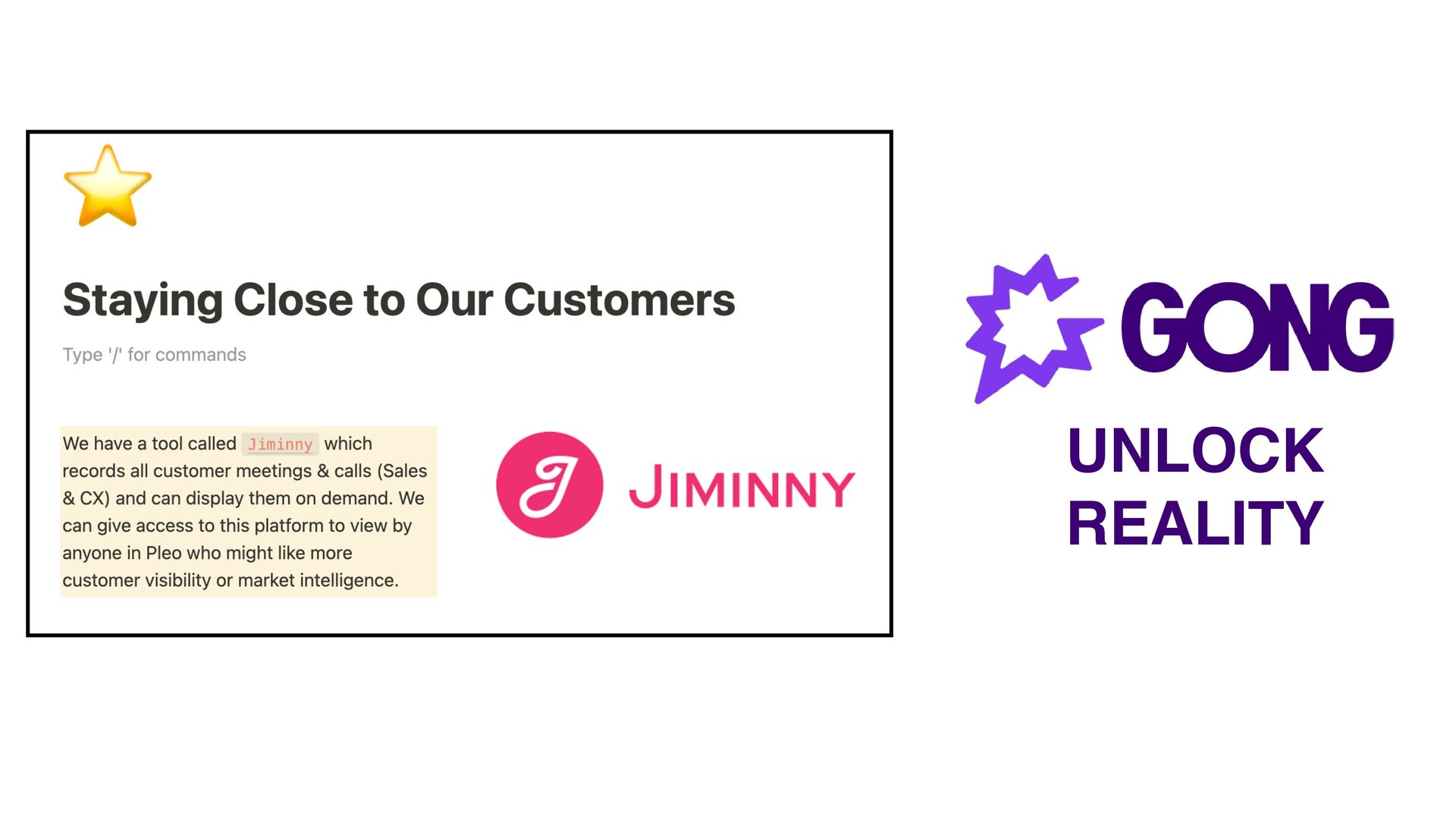
There's two tools here. We use Jiminy. It's pretty cheap. And it records every client demo interaction we have, new business, existing business, whatever. And it is a treasure trove. It's basically on demand Spotify of what the market is saying. Our product team is in there.
Our CEO is in there. Our newbies who join the sales team look at the best of what's in there. And we call this initiative staying close to our customers. Gong is a famous example. There's others. I included Gong because I love the tagline, unlock reality.
That's the reality of what the market is saying. If you want to get as close to that as you can, that's the true north. So to finish this point, there's an order of operations. You can hire all the salespeople you want, but unless you have product which creates demand, marketing which amplifies that, salespeople will die on the vine.
So make sure you do this in the right order. It's disastrous if you don't. If you do, you're very ready to move on to the next layer of the House of Cards, which is people. So I want to talk about how to source, select and keep.
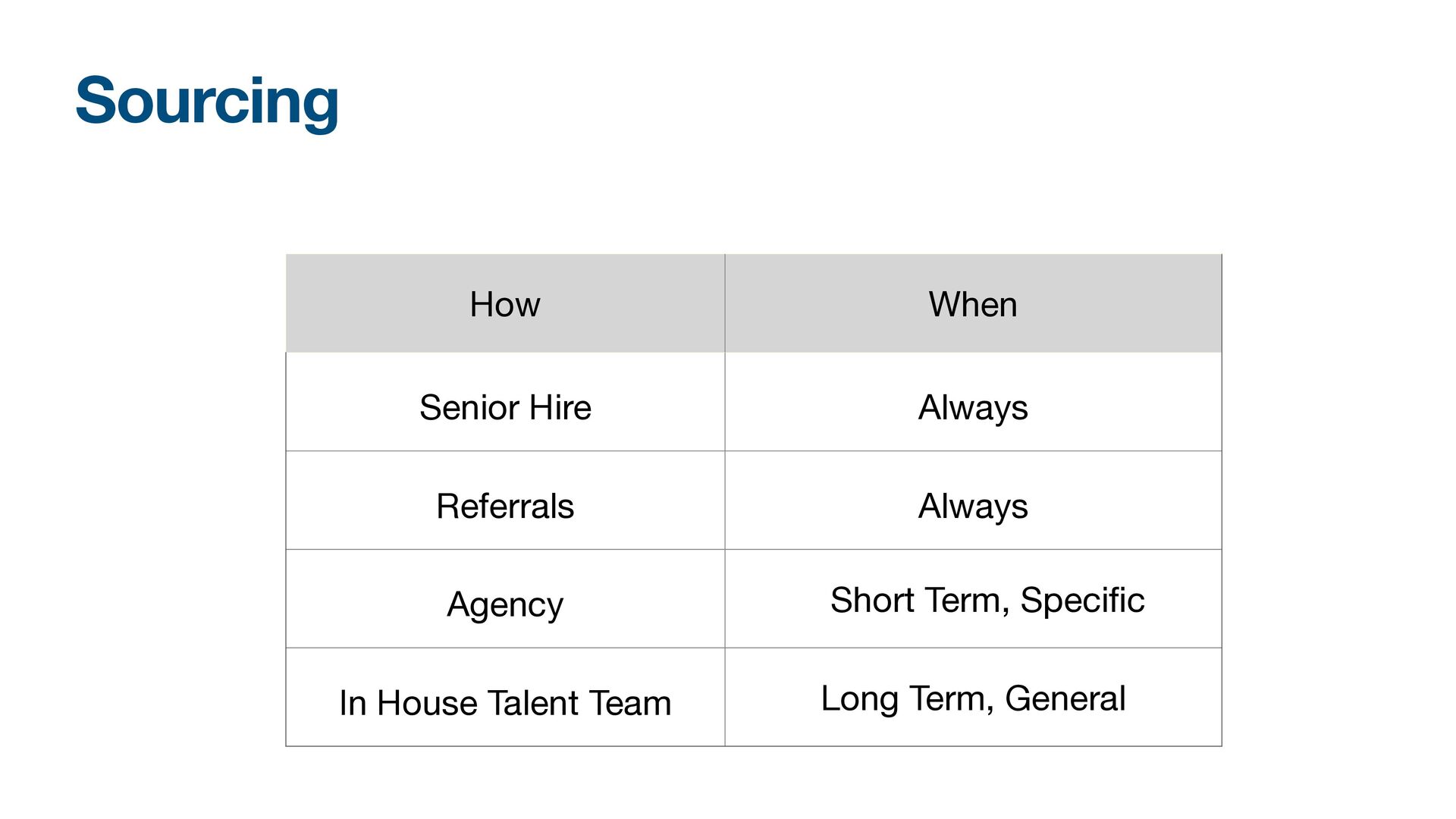
So here's a fun little table. Sourcing, if you hire a senior salesperson, if they don't bring in salespeople in the first month, that's a red signal. That's a red flag. When you're dating someone, that's a massive red flag. They should be bringing in people immediately.
The time to hire is going to cost you a lot of money. So I would have that expectation immediately from your head of sales or your VP, they need to bring in loads of people. Generally, as a company, if you don't offer monetary referrals, it's an own goal.
Like if you think about the cost of acquisition of people and maybe you go talent agency, they have various models up to twenty percent. It can cost you an arm and a leg. But fastest way, just offer your employees and make it good, make it two thousand pounds or something.
When you chart this out, it pays for itself exponentially. If you're not doing this, it's an own goal. Then you can do agency, which is great for short term, get people in or if there's markets that are difficult, Berlin is a shark tank to get salespeople in, it's good for that.
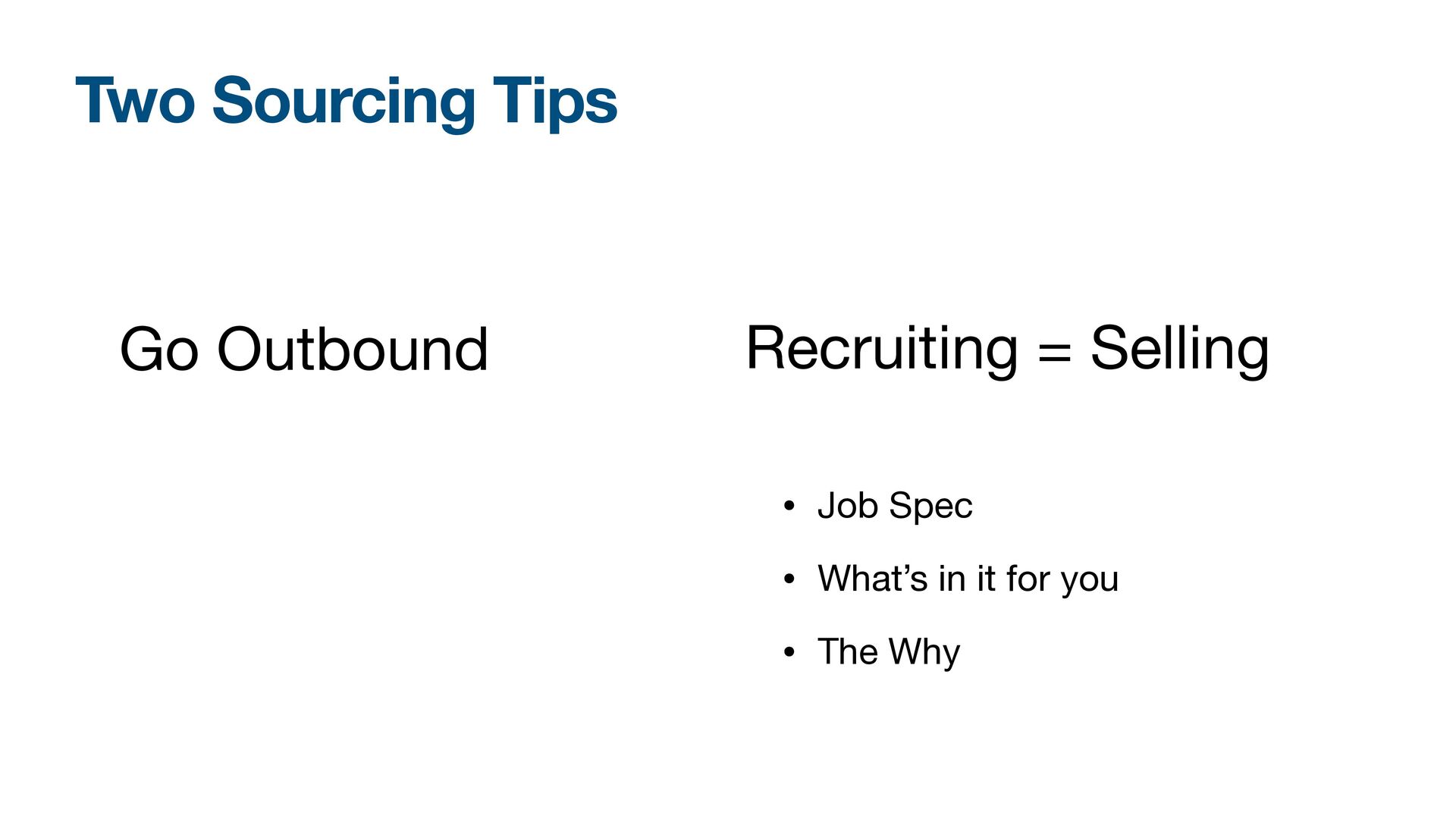
And then obviously you want in house talent team in the longer run. So those are sort of four avenues to source from. Two tips. For sales, you got to go outbound. If you think about it, a successful salesperson earning money is not looking up job specs online.
Who is looking up job specs online? The salesperson who is not hitting their target. If you're purely reliant on inbound, you're not going to get the creme de la creme. Maybe what's the inverse of creme de la creme? I'm not sure, but you may get this.
You have to go outbound. Secondly, recruiting is selling. In your job spec, we made this mistake. If we started listing out what does a business development rep did, it's like you've to prospect this many accounts, you've got to make sure you bring in these deals.
You've got to I was like, this isn't very exciting. And what's in it for them? So then we changed it around to like, what can Pleo are? This is like, join one of Europe's hottest startups. Go on a journey, become a sales professional.
We will invest in you. So I think every job spec has to be a sales pitch almost to get the best out there. Put in what is it that you do best. Do you offer the best pension contributions in the market? Do you have corporate cuisine that's well, do you like, what is it that you do that's very good?
And then you can even go a further step and give them the why. What are you building? Why will this be the key job for them in their career? A friend of mine got one of these. They probably went too far, but they promised them generational wealth if they join their startup.
Maybe take it one step back, but you can have fun and see it. You don't want a plain job spec basically. Female sales candidates are hard to come by. In the world of B2B, only a third of self professionals are females and we ran into this challenge and it's really crucial.
You obviously want a gender diversity or this comes with a bro club in sales. Our best avenue for getting them was this website site called OTTR. I mean, did a few things. We rewrote our job specs to be less like, let's crush it and try and get the to make sure everyone applies.
But this, if you want to get female sales rep, the fastest way is sign up to OTTR. There's also another resource here to recruit talent. This is an international network called Pavilion, formerly Revenue Collective. And I wish I had discovered this earlier in my career.
Like every single company, a SaaS company or non SaaS tech company out there seems to have their executives in this network. They do local events and I don't think they actually have an Edinburgh chapter, so there's an opportunity here, but they have local groups in London and Manchester, all across the world and a lot of virtual resources as well, training, trainings, mentoring and a massive pool to hire from.
There's like a Slack channel that's going like a post an hour with two thousand really great high quality professionals posting every day. And so if you want to increase your velocity to hire and you're not in Pavilion, get on board, would say. I wouldn't even post my referral link here because I just think it's objectively good.
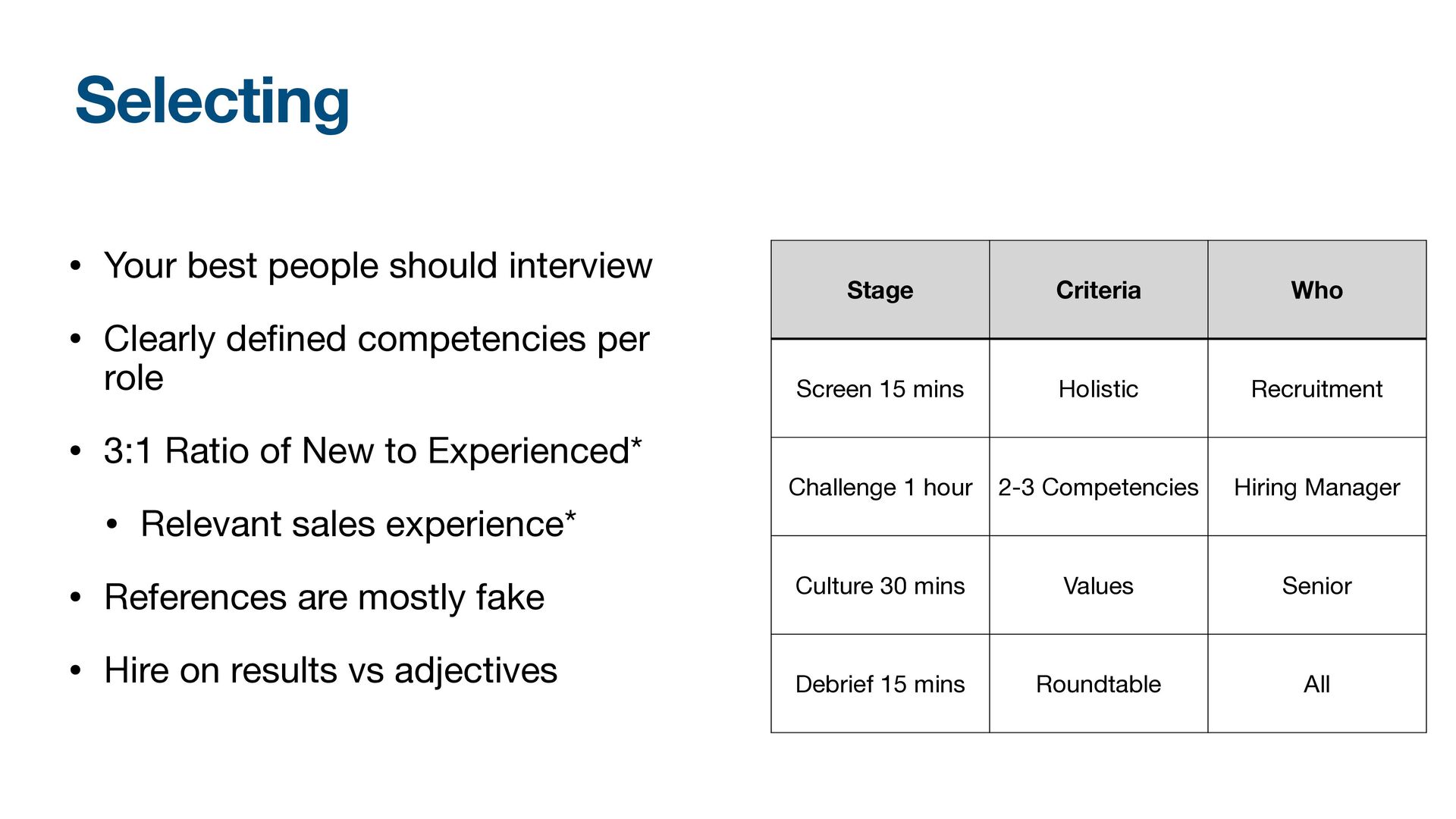
Okay, then you found your salespeople. What's a good process to go and qualify them and triage them in? Very quickly, I just threw on the right hand side like a pretty standard process here. The most important I think is including a challenge where you put the salesperson in a real life scenario and that can be pitching your product, getting them to cold call, whatever it is, your use case is, get them to do it and then see if they'll take feedback.
The rest on the right is fairly obvious. On the left, as ever, your best people should interview people. It's an asymmetric decision who you hire, that one decision determines the ten thousand decisions they make. And so you should only have your best people as the gatekeepers there.
You need to write out precisely what the competence are for your role and relevant to your culture and what that job is and make sure you test specifically for that. If it's a BDO or you want tenacity, if you're a startup you want someone who is okay with chaos, self starter, entrepreneurial.
Generally in sales someone who's okay with rejection, so interesting. I don't know how you would drill for that, but that's what you want. You also want to do a ratio of new to experienced. If you hire in ten millennials or whatever and there isn't people there who come at the experience, it's really it's going to create a massive operational lag.
You've got to train them how to use your CRM, basically everything. They're way too green. So you need to balance it out with the experience. And I've put a little asterisk there with relevant sales experience. A massive mistake that companies make is sort of saying they're a sales rep and not having a breakdown of what that means.
If you hire someone from Google who sold AdWords or from LinkedIn, who sold LinkedIn Sales Now who have a monopoly on the market and it's a different sales motion, they're going to drown in a startup. They're used to this motion. So you want to think about it in a few dimensions, have they done SMB, mid market or enterprise, and have they done inbound or outbound.
That's it. And they're very different skill sets and they're very different behavioral and attitudes, and it's not one size fits all. References are mostly fake, hot take. But do you know what I mean? Who has given on their own CV a reference that you're not one hundred percent sure that person will say only the nicest things?
Has anyone rolled that dice and put like it doesn't happen. And so I think as a hiring manager, you've got to respond to that and you can do a few things. You can unless they immediately, without hesitation, say, absolutely hire this person. Just any sort of hesitation like massive red flag, or two, ignore those references and just reach out to people in the company that they work for kind of stealth mode.
The rest is fake news. Finally, you want to hire on results, not adjectives. And again, this might sound obvious, but there's an old quote, If you can be good at anything, be good at lying, because if you're good at lying, you're good at everything.
And I think this was originally an investment banker who said this, but salespeople are very good at saying things. And you need to work out, is this person, whether it's your VP or head of sales or an account executive, are they good or are they good at saying they're good?
And they're very different. And unless you can go deep on that and challenge and push them down a rabbit hole and ask about previous results, like historical results are the best predictor of future success, And you should just be suspicious, basically. I feel like I'm hurting my industry here, but it's bit of tongue in cheek.
Interestingly, fun fact, forty percent of U. S. Congress people are lawyers, People who've been trained in the art of rhetoric and argumentation are themselves the elected politicians. It's the same principle at play here, I believe. So you got to hire the right people, you got to select the right people, and you got to keep the right people because well, I'll talk about that in a second.
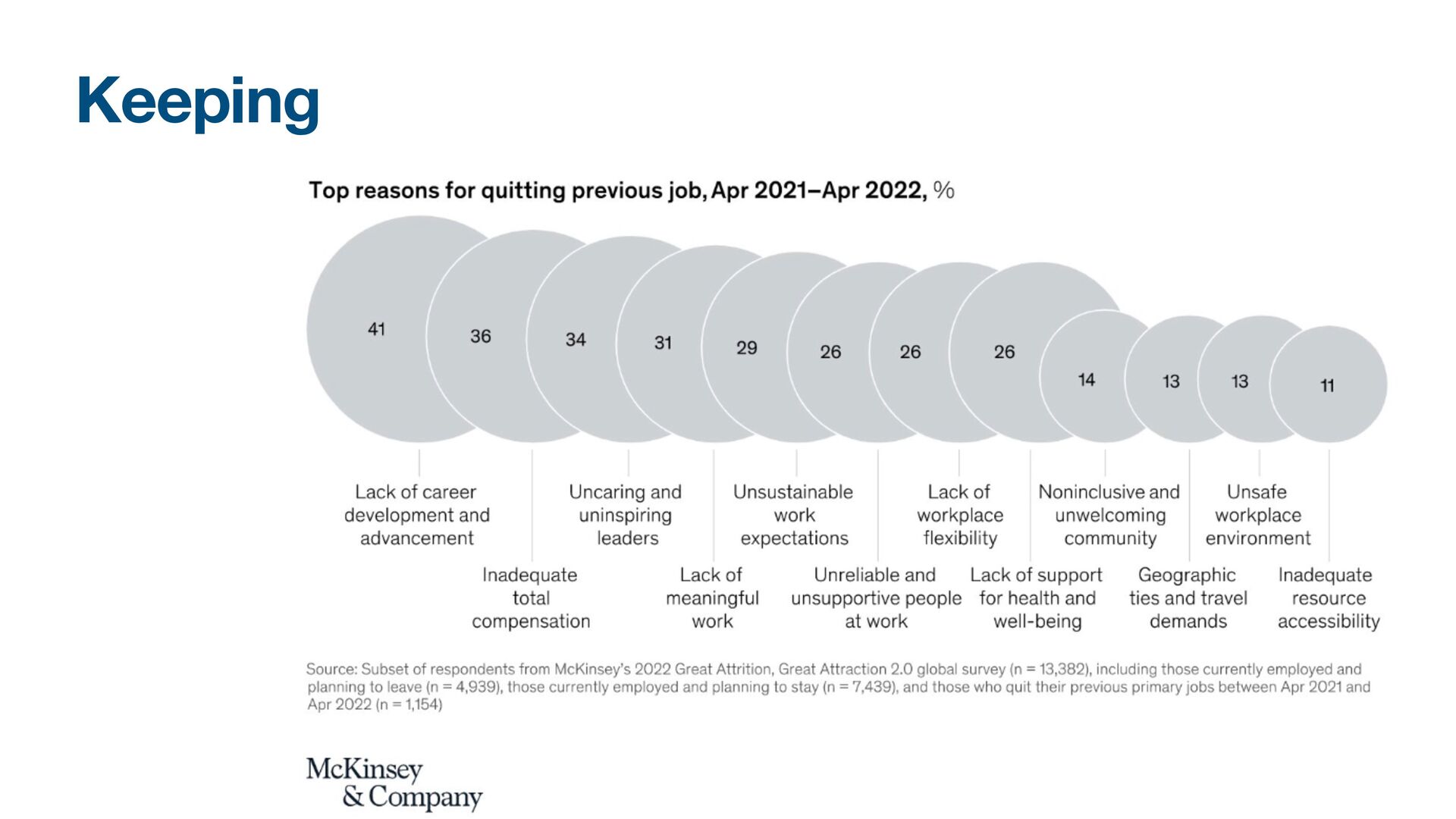
But here's a very recent study from McKinsey, which is a little sad, but we can all relate, I'm sure, to some of these. And I think they're very easily solved and they're exactly applicable to salespeople. So to be honest, I've made up this graph on the right here out of gut feeling.
I won't lie to you, I couldn't find one in time, but I'm pretty sure it's true. A rep in their first year, you've got to learn everything, the competitive marketplace, the product, the internal tools. It's a universe of information and they're really non productive.
They're actually the opposite of productive because they take your time away for the first three months. And then they'll hit they start hitting their ramp targets. But then the magic happens over the next kind of couple of years. And really it's an adversarial relationship in the marketplace.
You're trying to beat the other salesperson from the competition. And if you have someone who's, say, been around two point five years, they are fluent in the economic buyers care about. They know all of the questions. They know the competition. They are so confident in their conversations that the buyers can see that.
And they just outpace and out win newbie, the four months person ramping in your major competitor. So if you can keep them on this journey, it is truly a strategic advantage over anyone else in your space. And how do you do that? Here's three of the things that came to mind.
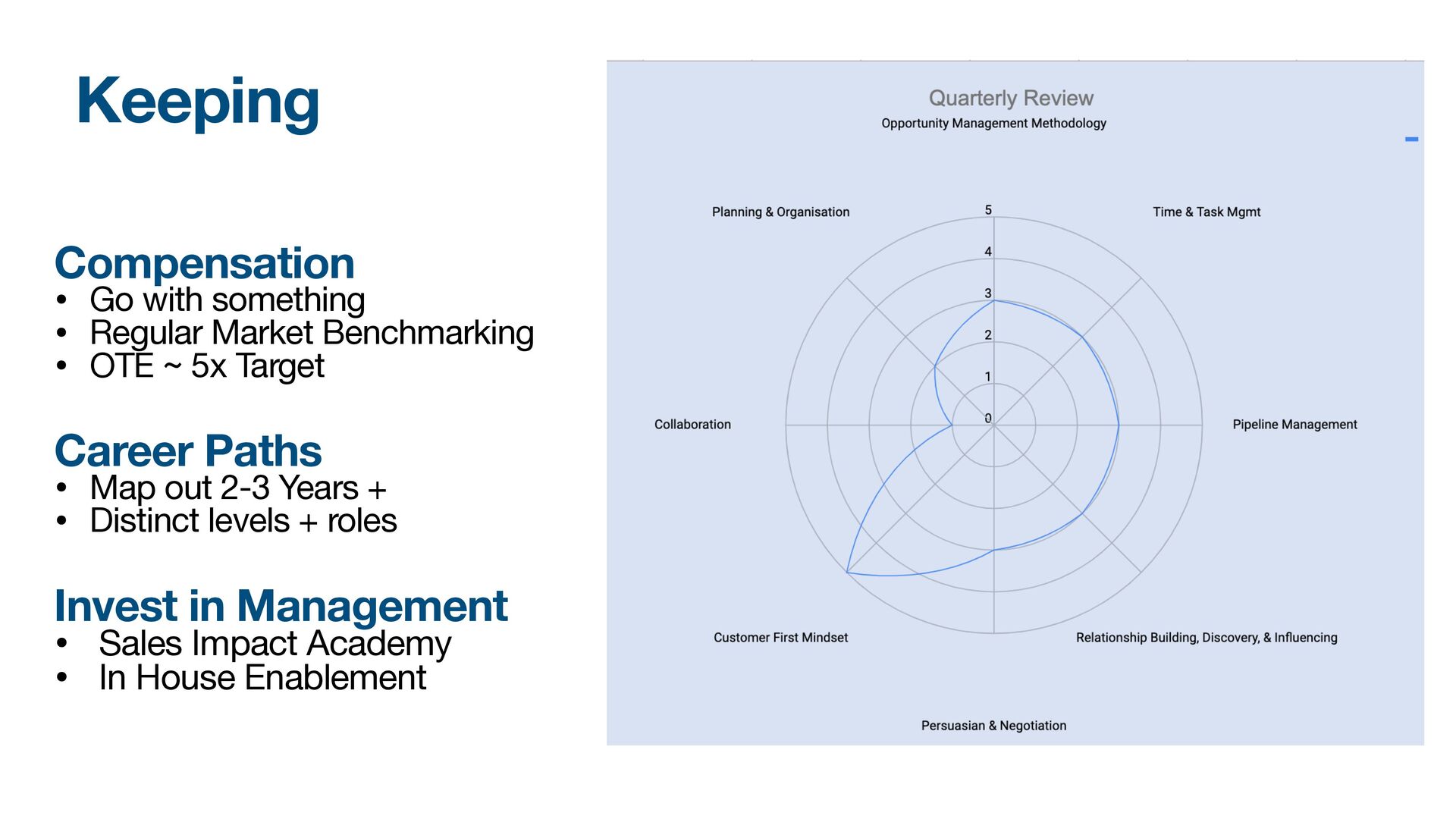
Compensation, you got to do regular market benchmarking. The typical ratio is 5x what the target is. You want to be landing around that. And if you're not sure what compensation is, go with something you'll get feedback immediately marketplace of whether too low or whether it's good.
Secondly, you want to map out career paths for at least two to three years for people. Sales can be repetitive. It can be tough. It's a lot of no's by default. So people will burn out unless you have defined distinct levels and roles for them to grow into, it won't happen.
So this needs to be in place. And finally, you got to invest in your frontline management. They're the reason the salespeople stay and they're the ones who coach. A very simple way to do this is to outsource that. The Sales Impact Academy is a great online course catalog and you can put them through world class training for a very small fee.
I think that's a super easy thing to do and then eventually move towards in house enablement. So that's how you would go about keeping your stars. And here's a little like example if you can then arm them with their own sort of progression charts.
And here's just a generic one of what the competencies are, which you've laid out for every role. And then you get them to rate themselves and then you rate them, and it's funny to see the gap, and then that's what they work on for the next whatever number of months.
So there's always something to work towards. That brings us to processes, which underscore our lovely engine here. And I think my biggest takeaway here is that someone needs to own the full view. What happens in startups is you've got your different you've got marketing and sales and other organizations.
And over the years, they form their own processes which go this way and go that way. The definitions are not shared like what you think an SQL is or what I think an MQL is. And it's been this design by committee thing which really does not scale.
And you're going to have to keep coming back to the crime scene and what is this handover process and how do we make sure we get the leads. And it's truly, it's a waste of time. And so the way to avoid that is if some person has a full view of the entire revenue operations, they can see everything.
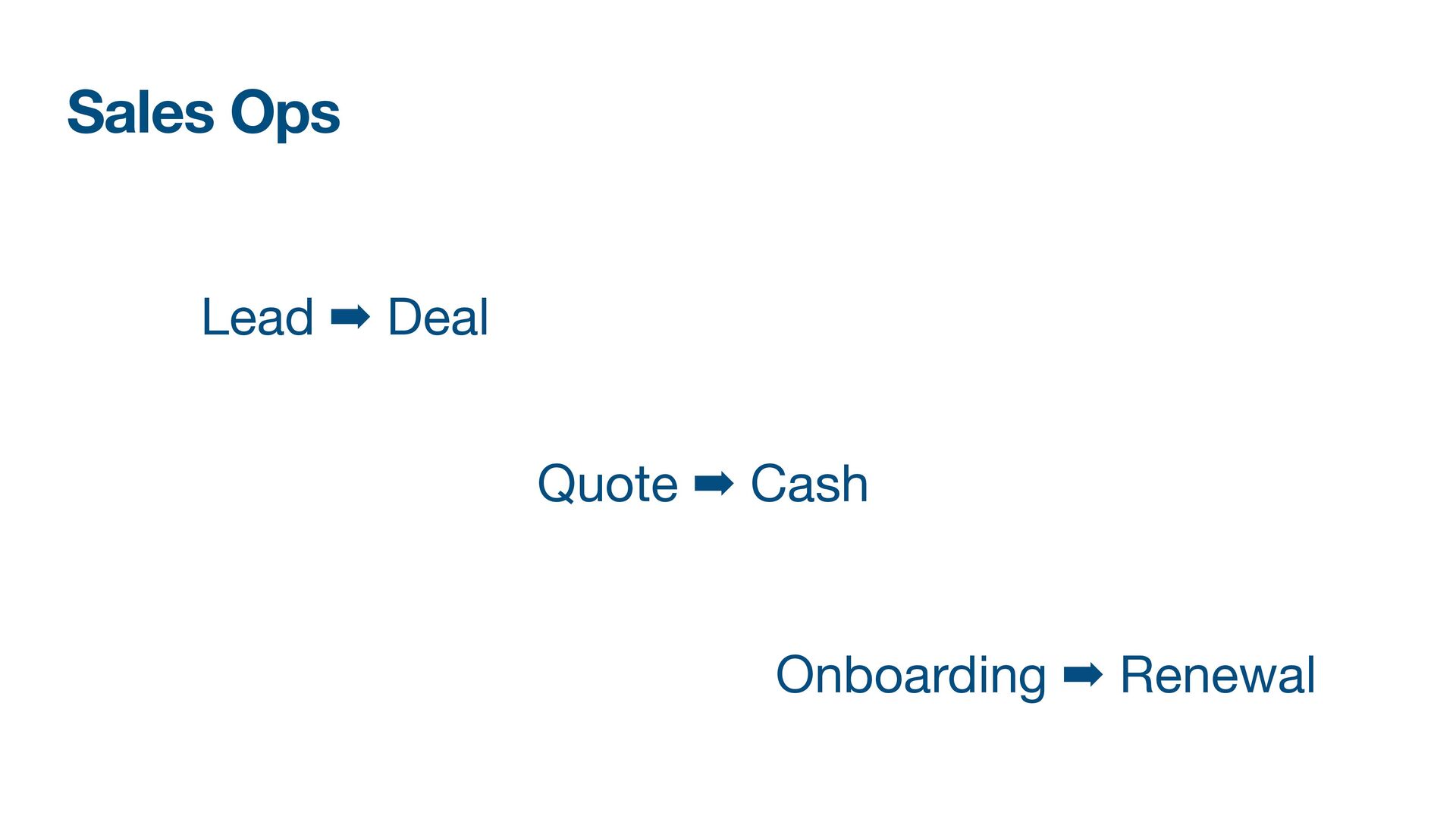
It's not designed by committee, It's designed from the bottom up. So I think this is super important, own the full commercial journey. The major processes in sales, I'm getting into the weeds here a little bit, so forgive me. But the major three you need to make sure are smooth as silk is the lead to deal, quote to cash, onboarding renewal.
So how the leads come in and get into your funnel, how you get them to pay you and money in the bank and recognize that revenue, and then how they onboard and they renew. And what happens is there's sort of an anesthesia of familiarity as time goes on, where you know your company the best and you forget that someone coming to it with fresh eyes doesn't really know what those terms mean or doesn't really get it and you don't build that into the processes.
I mean, if you've been in a company for a while, you probably haven't gone through the onboarding journey of what a customer has to do. You just assume that's great. And this is a very good refresher exercise to do to really map out each of these on a whiteboard.
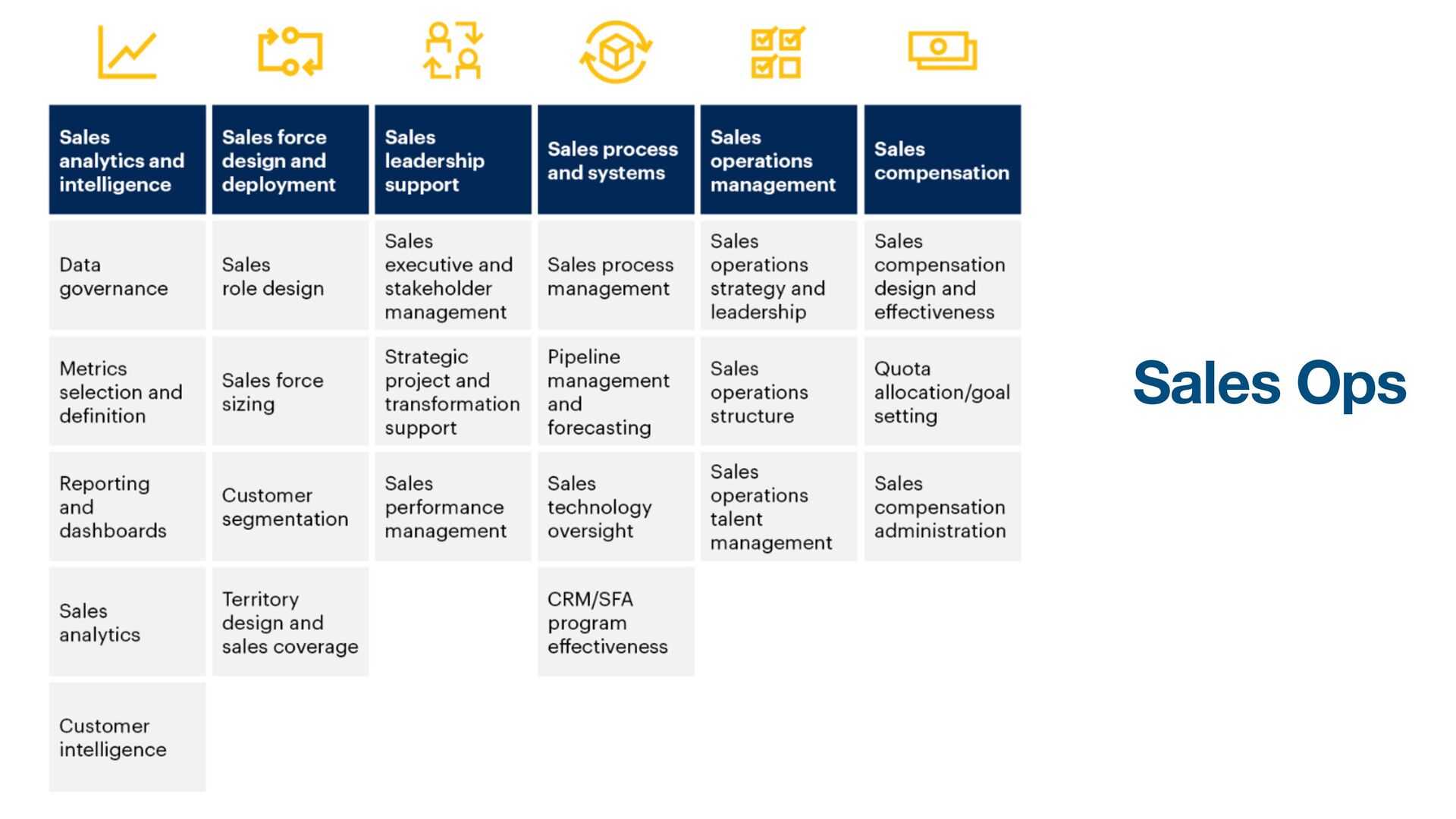
What are the steps from the customer or prospect's point of view and what's the time, what's the conversion and how do I streamline that to be as fast as possible. And then eventually your sales op will grow up and do all of these beautiful things for you, the major three that you want are on the previous page.
Finally, a couple of points on processes. You want to make sure your sales motion matches how your customers actually buy. You don't want to be layering in enterprise or SMB when it's a different type of sales motion. And the everlasting advice, keep it simple.
Complexity is the mind killer. Edge cases consume your time. Sometimes you can be brought into like how do we manage legacy partner deals who want to move on to monthly, who are owned by an account, and it's just death. And so when you're starting out, don't offer everything on a menu.
You can buy multi year, you can do the monthly, you can have all these four different plans. Just start off on a streamlined simple processes, otherwise you're going go down a rabbit hole of complexity. Okay, finally, pipeline. And I'm going to talk a little bit about the channels and defining your ideal customer profile and all those beautiful things.
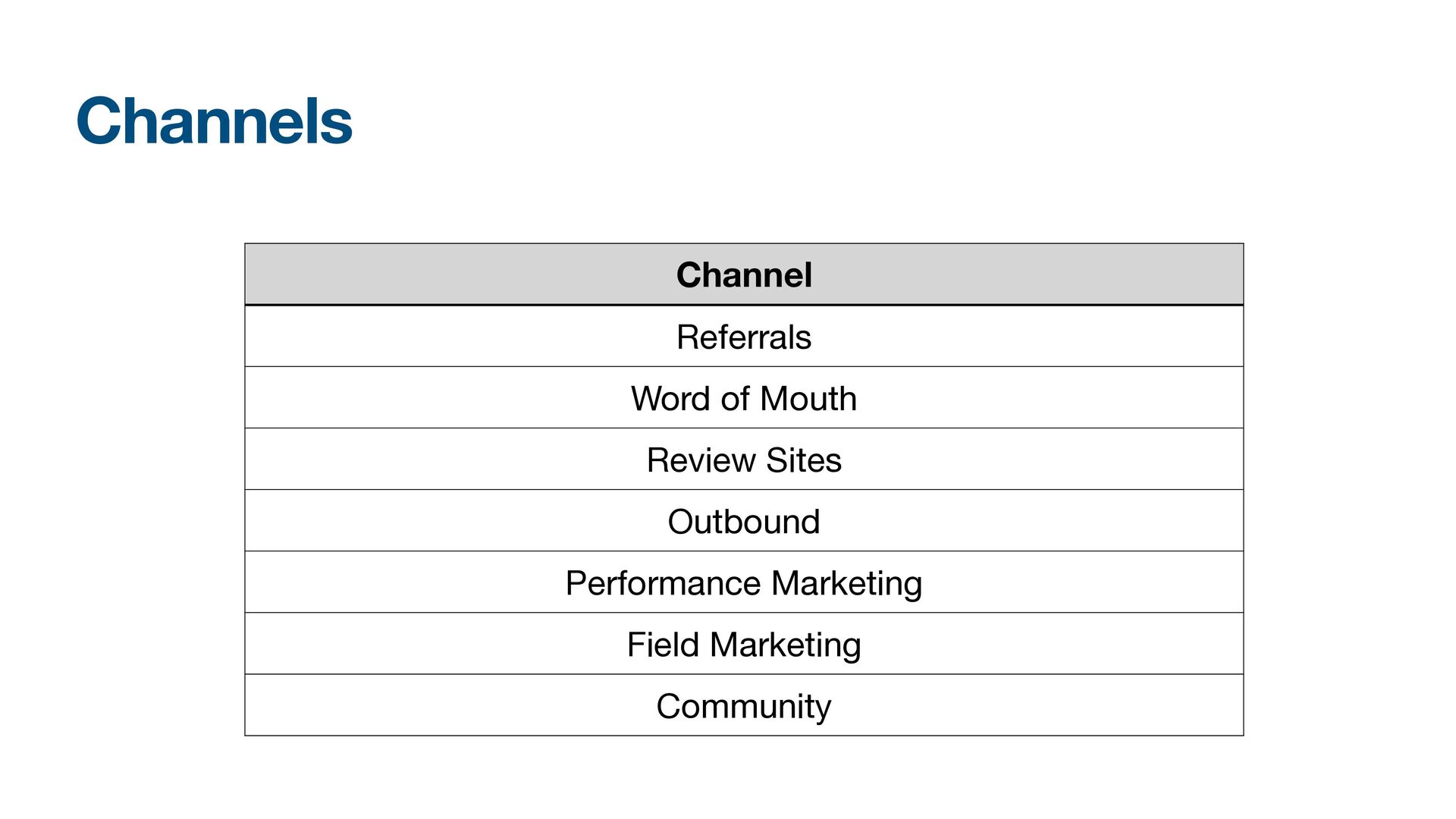
So here's some channels I just threw down very quickly before this. And I think the first one is, again, it's amazing how many companies don't offer referral programs. And you give some sort of incentive for someone to tell their peer you should use the product.
The typical cost of acquisition on a marketing channel could be anything from three hundred euros to three thousand euros per deal or almost per a qualified lead, and yet companies don't offer fifty pounds Amazon vouchers for their existing customer base. Referrals are the fastest and cheapest and easiest form of pipeline channel that you can get.
If you're not doing it, you should. Word-of-mouth is an obvious one. Review websites, this is worth putting a bit of time into. Again, you can gamify, like Amazon did this stupendously. I found myself reviewing a vacuum cleaner because they offered me like free refills if I put up a five star and sure enough I did it.
You can gamify that and then you can purchase the intent or the lead data behind that review website. So g2 dot com is obviously a major one. All of your prospects, I guarantee you, are on that comparing you looking. You can buy that data and add that to your lead gen source.
That's pretty nice. Outbound is a universe in itself, but it allows you to choose the market segment you go after. And typically these are the large deals. So I mean that's a whole hour conversation in itself, but that's a massive channel. Performance marketing is huge, obviously depending on the type of business you have, but it's been hugely successful for Pleo's growth.
I talked to an external product performance marketer and they said if you're not putting money into Mark Zuckerberg's algorithm, you may as well take that money and put it on a bonfire. Like it is the most refined marketing pipeline source for most SaaS companies.
Then you've got field marketing and building a community. Those are some of the channels. But I want to zoom into a little bit about like choosing the right pipeline to go after because your money in the bank really is just a volume sorry, it's a function of how much pipeline, leads and deals you get by the conversion that you convert.
And you could ramp up the volume as much as you want, but the easiest thing to hack here is the conversion. And you do that by choosing the right pipeline, the right type of the market to go after. And I think this is where a lot of people can go wrong.
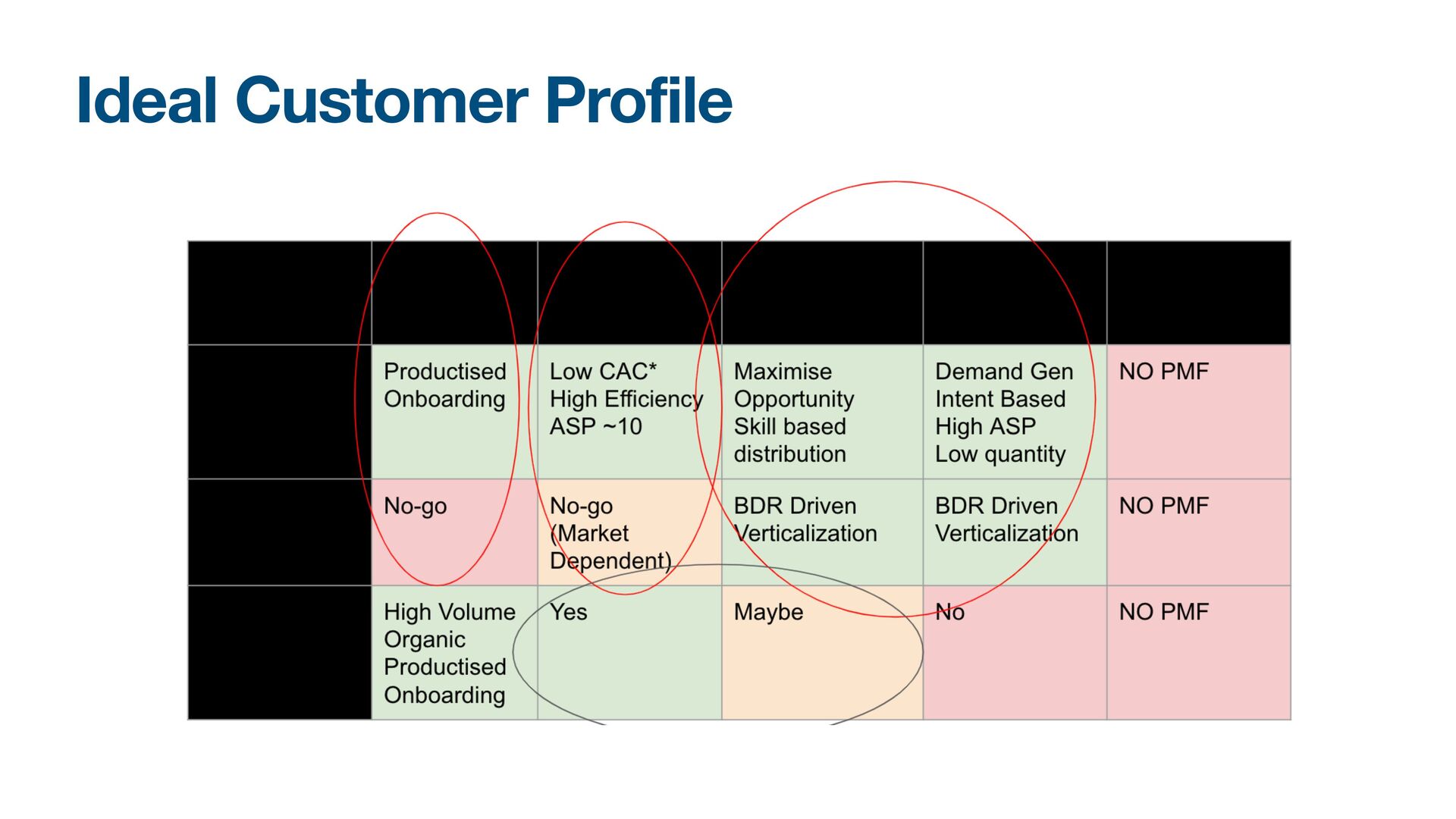
So how do you know where to go after? You really need to clearly identify who your ideal customer profile is. This can be, we did this a couple of years ago in Pleo, where I've just blacked out the super confidential segmentation that we had at the time into different segments.
Say it's employee size or vertical or channel like inbound, outbound. And where are we winning? Where do we not want to go? And when you specialize and focus your conversion, you get all the benefits of all the great conversion. If you spray and pray and go out across all the market, mean, you get emails from these companies.
You're like, what on earth are they emailing me for? Like, that's a waste of their time is a waste of your time. So identifying your ideal customer profile is so key to know who you should go after. Later, you can mature it. You can do this workshop in thirty minutes.
You can really mature it then into be a lot more specific. You can analyze your review website data. You can look do customer surveys, do customer interviews, do interviews with your sales team and really build a full picture of who is buying and what are the triggers and how do they buy and where do they go.
And all of this then forms the basis of where you have your focus, because if you don't know where you're going, you will not end up there ultimately. I think that was Yogi Beard. So it is also helpful internally to create a shared vocabulary when if your product team and marketing team and sales team have this undefined idea of what your customer is, again, you're not leveraging focus or amplifying it.
So you need a shared understanding of who it is, what segments we're going after and who very specifically do we care about, and then you can all get behind that. And all of your content that comes after that, your sales pitches, your website, copy the content you produce, all of that is a result of you having invested and understanding who in the market you're going after.
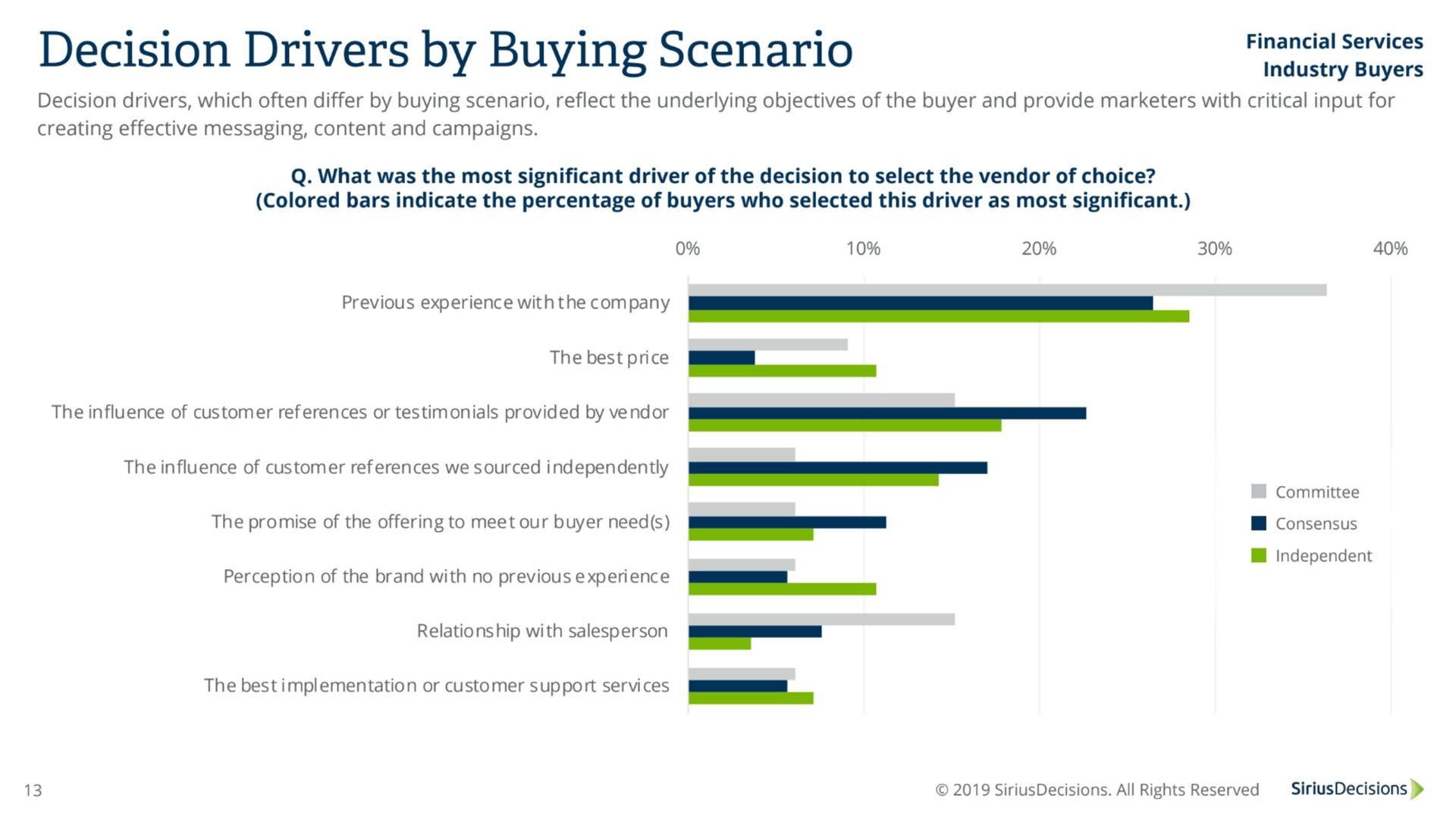
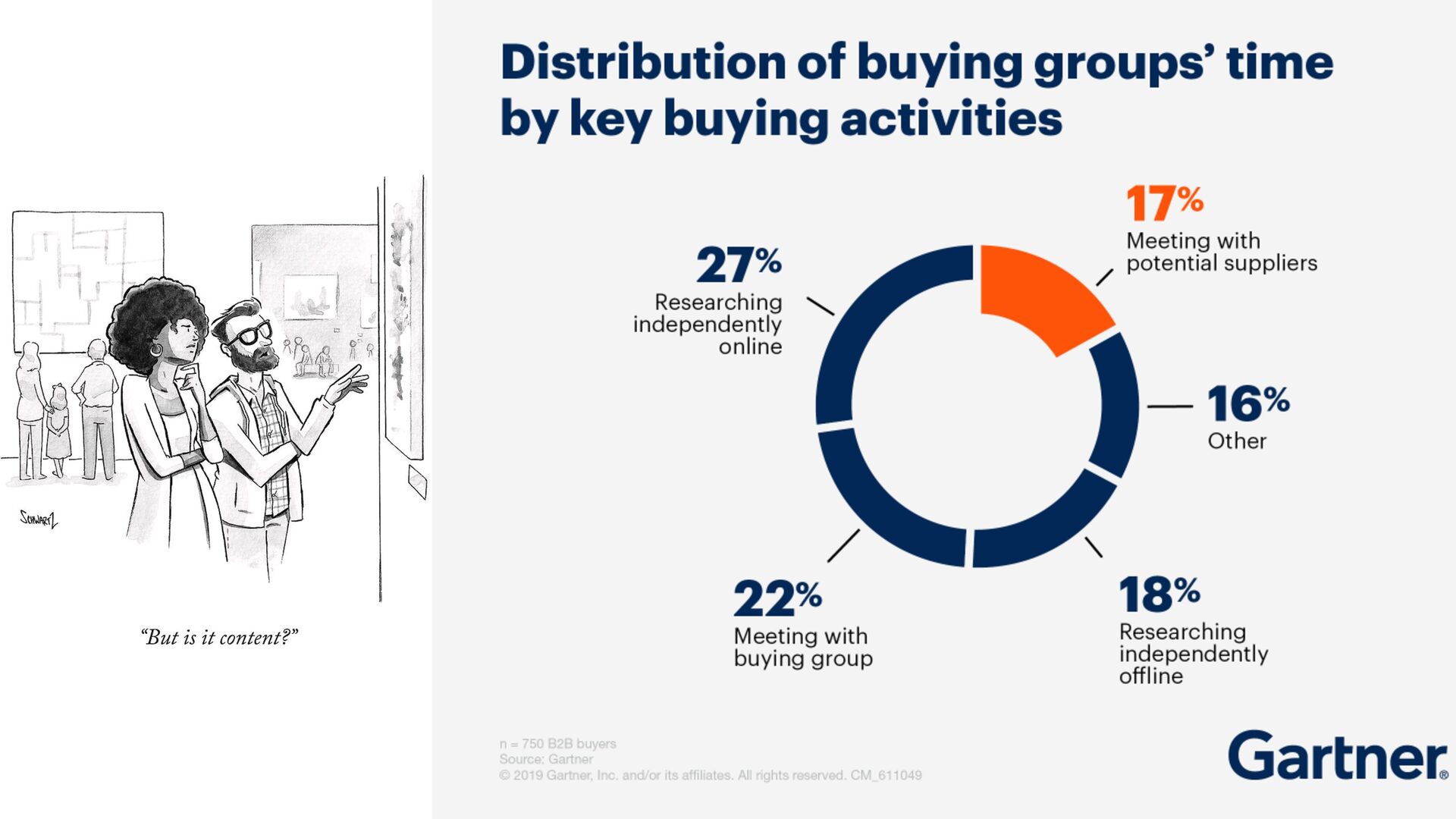
And that equals high conversion and that equals money in the bank. So you got to get the first half nailed down. Here is a Gartner chart, which is, yeah, once you do that and once you understand who your ideal customer profile is, maybe it's Nike or maybe it's sole trader, consistently the most persuasive thing for prospects is the influence of customer references or testimonials.
So once you have your ideal profile defined, you got to capture that in stories, you got to put that on your website, you got to litter that in every interaction with a customer because that is just consistently the most persuasive and besides the first one which you can't really replicate I guess, that's just the most, the easiest persuasion lever to pull on.
So find your ICP, convert it to stories, amplify that out. Are there any Americans in the audience? Okay. This lovely word here, I'm being cheating a little bit, niche, niche. Yeah, the riches are in the niches. I read this a long time ago, predictable revenue, and it says the same point.
You got to follow the conversion. If you don't follow the conversion, it's way too broad, you'll never win. We know this obviously. Facebook started out in college dormitories. Airbnb started out I think with very specific use case as well. So you got to do this and you got to capture and exploit a use case.
The best Dropbox did internationally was out in Japan and they were just crushing their number. There's my gendered language, crushing their quota. Were really killing it. And we asked the VP of APAC how they're doing it. And he said simple, we just focus on the use case and the industry that we win in.
They get one customer, they immediately to all of their competitors and they just soak up that whole supply chain. So the riches are in the niches. Finally or not finally, there's another piece of asymmetrical hacks you can do for pipeline. I love this little New Yorker, I feel like it speaks to my cohort of millennials.
But content market is extremely important. And the way buyers are buying is changing. Information is prolific and out there. And really the amount of time they spend interacting with you, your company, a minority. Seventeen percent actually meeting with your sales organizations. And you can imagine if they're looking at a few vendors, that's probably then six percent, if they're looking at three.
So the few so I think it's staggering. There's a few conclusions from this, but one is you know, they're out there online, and if you're not producing content to win them at those early stages, you're going to lose. You really have to invest in content marketing.
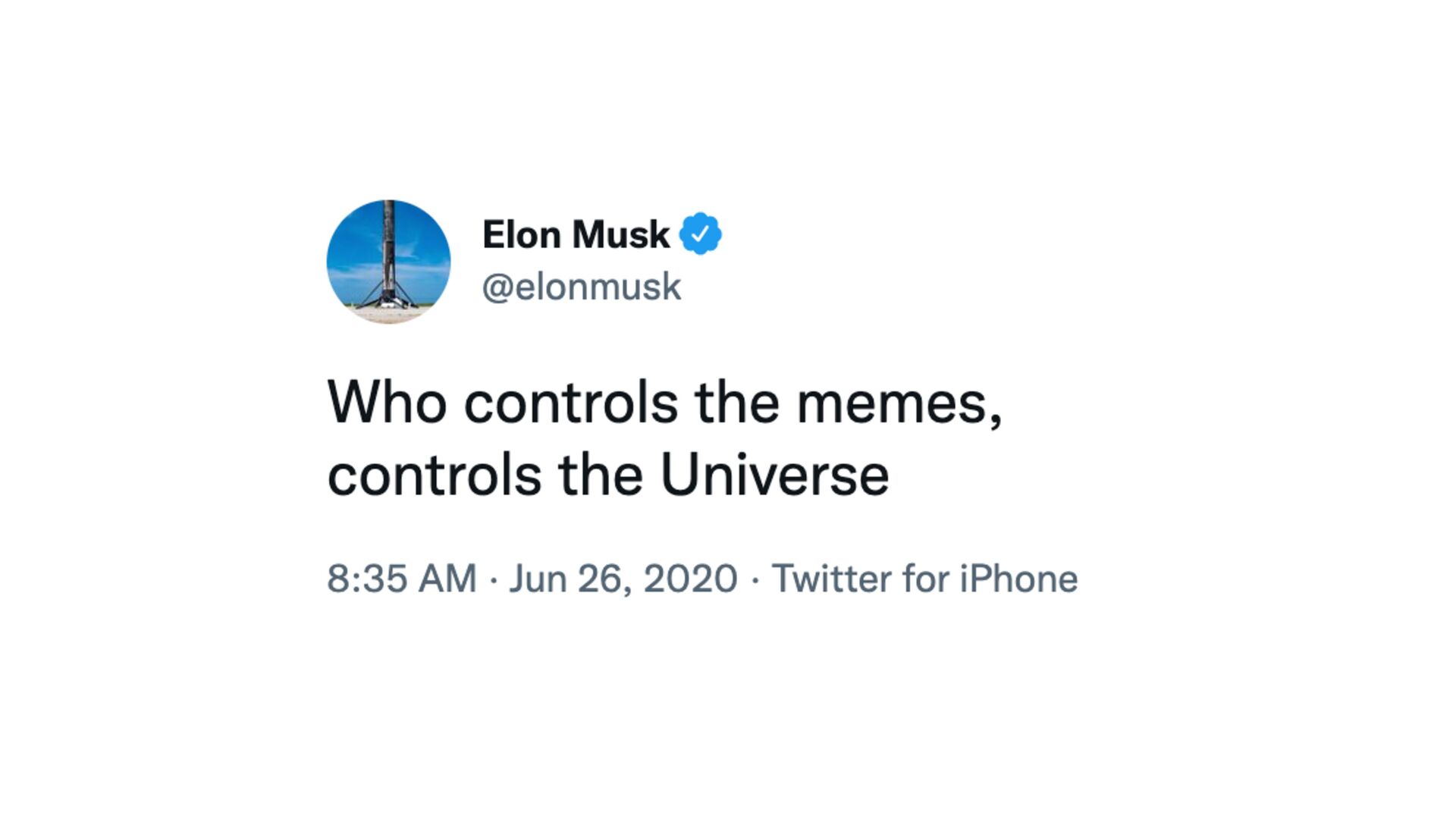
I think, you know, Elon Musk said it best, who controls the memes? Memes controls the universe. The people who control the content online, thought leaders who lead with insights, they are going to hoover up all that buyer attention before they ever get in touch with you.
If you are not doing it, you should really do it. Hubspot and Gong, our masters in this. For us, we did this blog post in twenty eighteen. That got seventy percent of our online traffic for the year, that one blog post. This year, it's the same.
We did an analysis of our SEO. This is what our prospects are googling. We've put some time and energy into a crafted blog post. It's by far more than any other content, it's driving traffic and winning us deals. So you got to be less is more, I think.
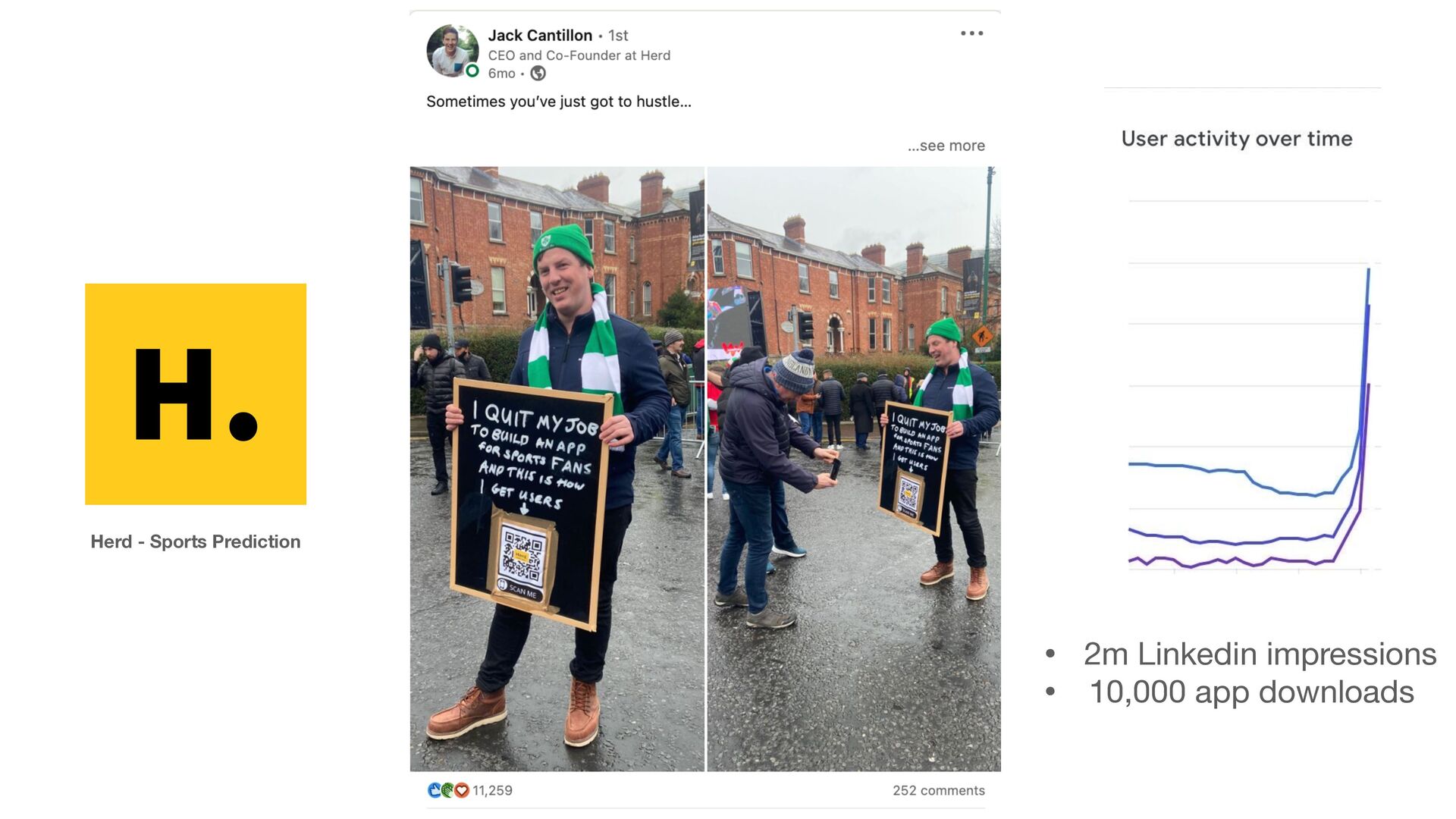
To get above the power pitch, you got to produce great quality. Here's a personal, it's a friend of mine, he's a customer of Fleo. He's got a sports app. They have no resources, a few of them. And he went out, so they can't afford like an out of home or Facebook algorithm.
He went out with a chalkboard and a QR code and got people to try and download his app. He got a lot of engagements online. All of that is free and the results speak for themselves. Two million LinkedIn impressions, which I don't know how much that would cost you and ten thousand app downloads in a day.
This is the type of easy well, it's not okay, it's not easy to be viral, but if you put out time and effort into producing content and good quality content, these are some of the asymmetrical results that can happen. And that's really, I think, the conclusion that asymmetry is possible.
Success doesn't come to the people who do the most, it comes to the people who do the right things. And I think scaling your revenue organization, it's not easy, but it's not rocket science. If you go about the task as it's an inventory list where everything seems urgent, everything seems important, it feels like everything feels equal, but that's not.
And that's a mistake. If you focus on the pillars and get these right, the sky is the limit. So thanks for your time. If you want to chat, book me in.