
Marketing as you know it died 10 years ago, and ‘growth hacking’ often just means ‘we failed to deliver results’. Drawing on his experiences leading the marketing team for one of Europe’s top fintech companies, Edgar will offer practical insight into marketing in a product company, applying Agile principles to your marketing, scaling up to hyper-growth, managing relationships with the c-suite - and more!
← All talks 








Grow Growth Turing Fest 2018
Growth: From Cult Leaders to Chief Executives
Auto-generated transcript - may contain errors. Tap a timestamp to jump the video.
Thank you, welcome. Welcome to Turing. Great time of the year to be in, there's a lot of stuff happening. Welcoming Linux one. I'm not sure if that's a good thing or a bad thing. Is Linux one better than Linux two? It's the first time for me at Turing Fest.
But you can help me out here, because you can rate my performance through the app. I'm basically your Uber driver, and if you open the app and you want to rate, then you'll be very disappointed because you have to sign up, and you're all a bit lazy, it's early, and it's like, oh, forget about it.
And that's exactly what I'm going to talk about to you today, and that's decision making, and how we are, as lazy people, want to make shortcuts into our decision making. And it's very important when you think about marketing as a growth driver. Because for me, marketing is all about growth.
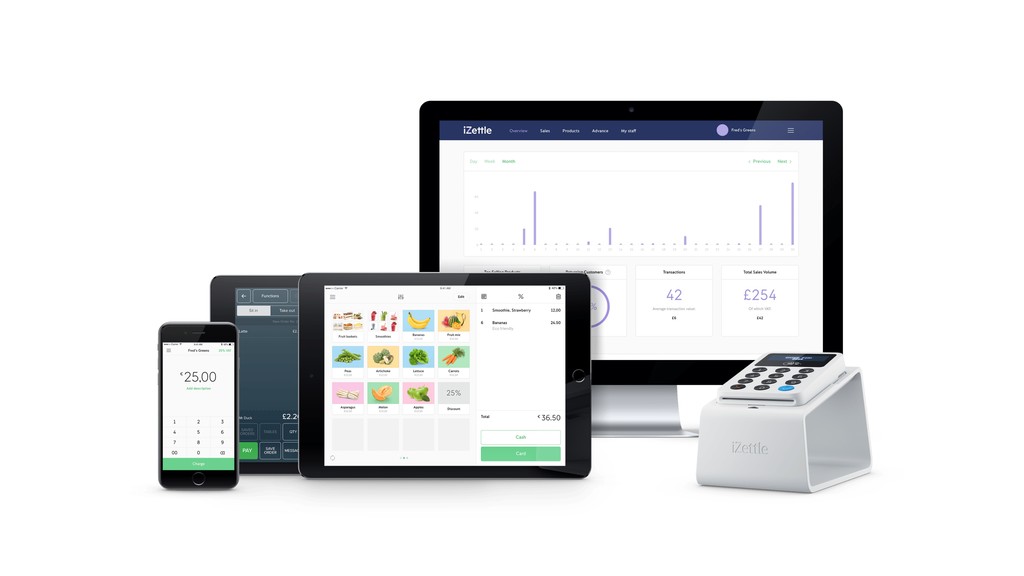
My name is Avkar, I work for iSettle. The only thing you need to know is my first name, my surname is so difficult that I'll just skip it overall. My business card actually says only my first name. And I work for iSettle, this is our current portfolio that we have in market.
And we started about eight, nine years ago with only the reader. So to get this in market, it took us a while. And a great product is the basis for good marketing. So if you think about it, naming a company with a really **** product that is doing amazing marketing.
Maybe Coca Cola is the only one left that is doing this. But it comes down to having a great product in market. Now we're at the point, after eight, nine years, ten years almost, that we need to think about how do we even further grow.
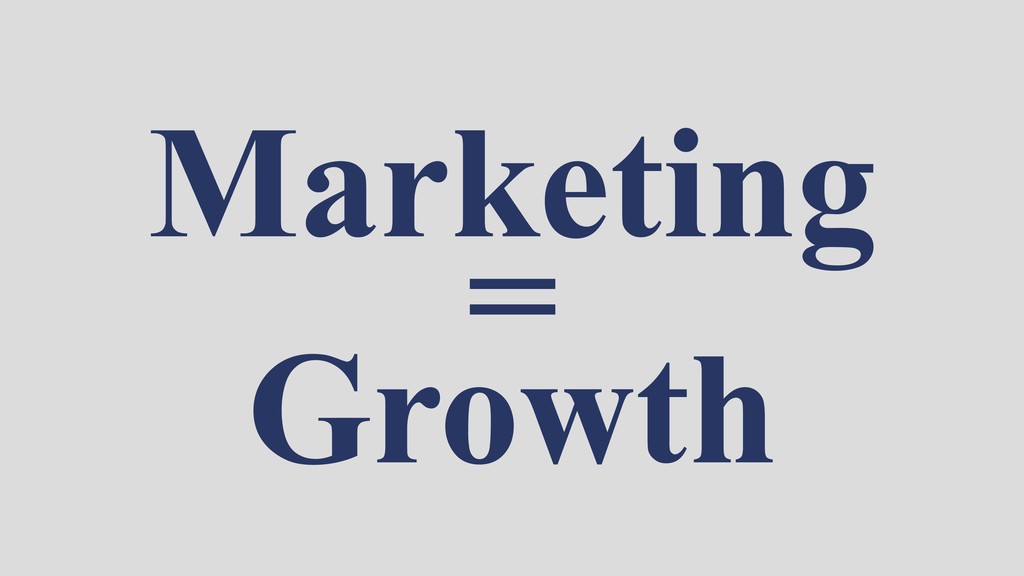
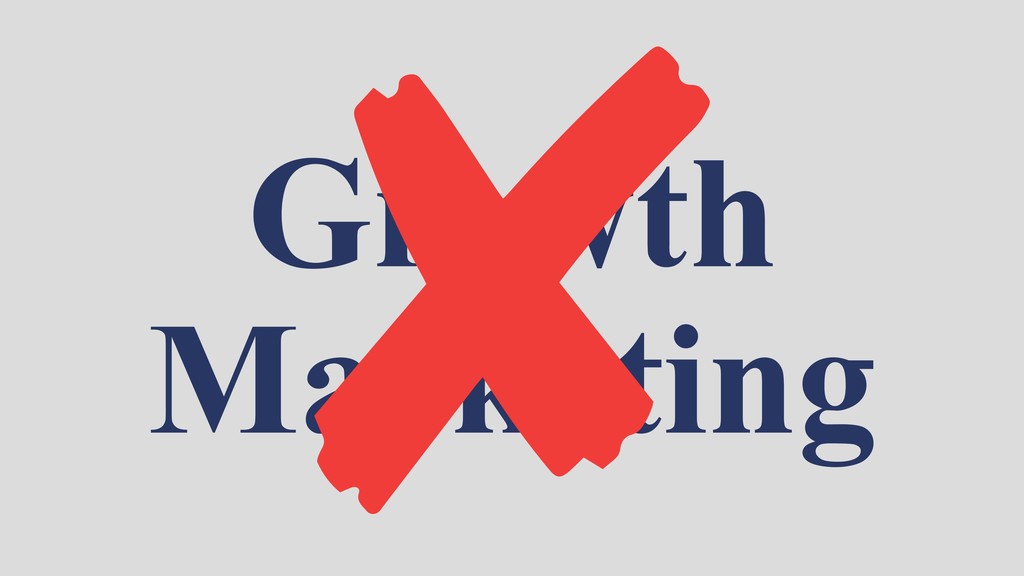
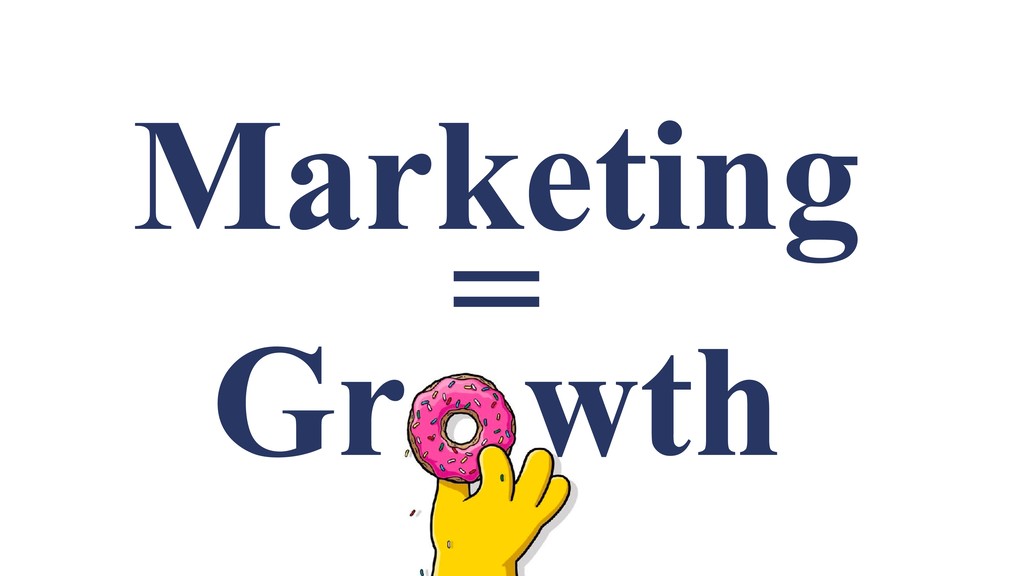
And for me, it all comes down to find the balance between product development and investment in marketing. Marketing is growth, equals growth. It is the same thing. So I get confused when I hear people talk about growth marketing. A lot of startups use this, I see this come up in LinkedIn profiles, I'm a growth marketer.
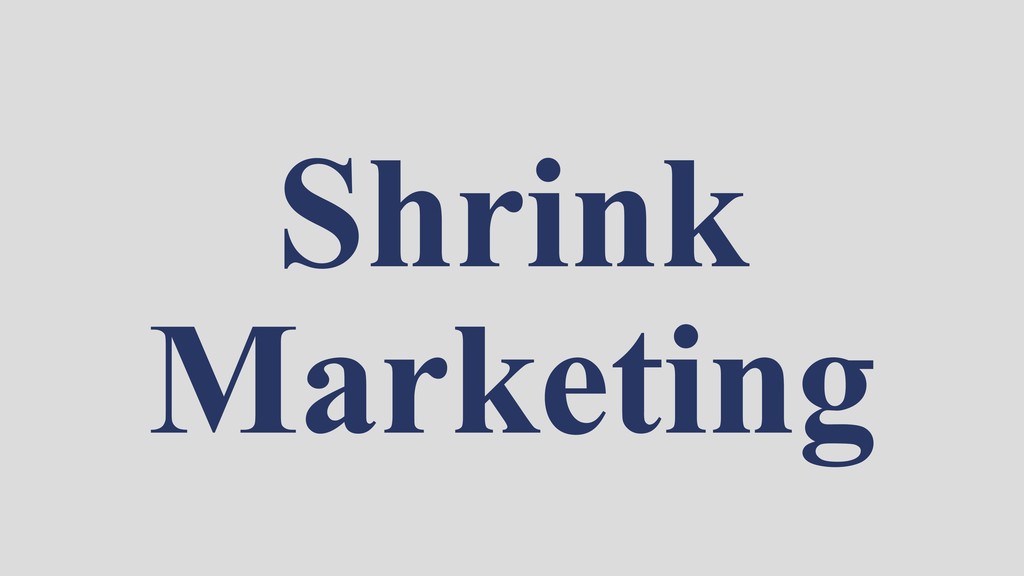
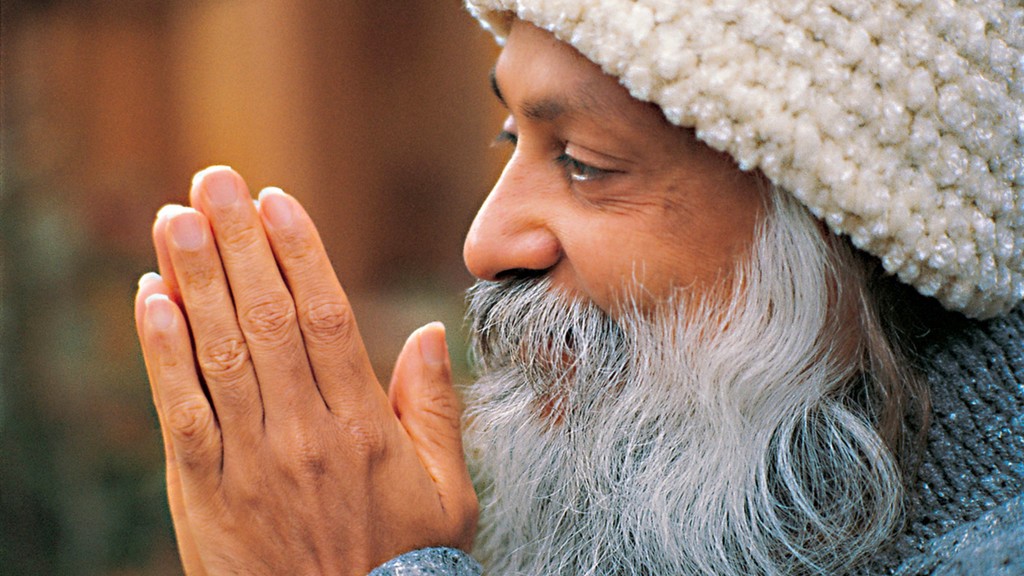
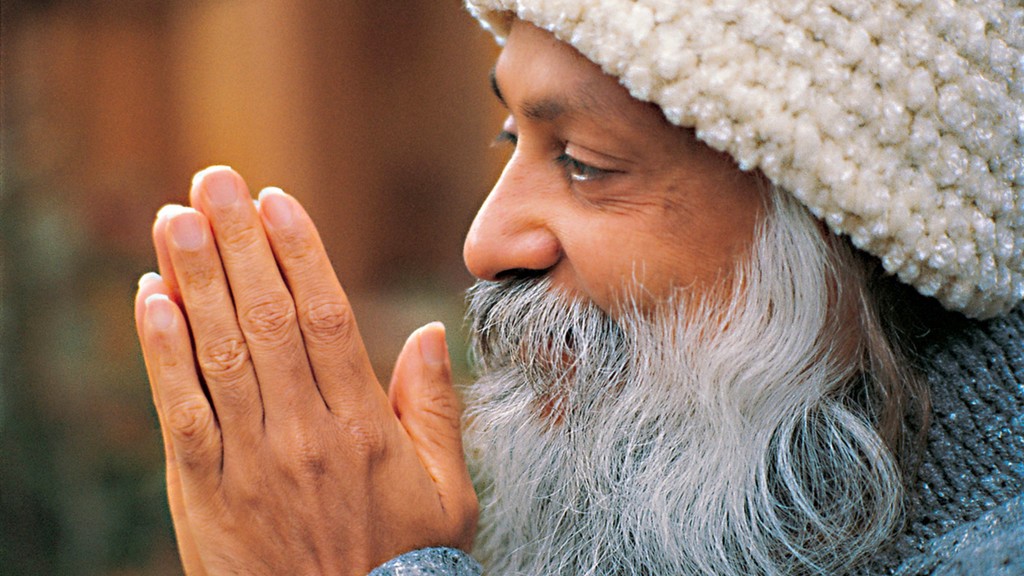
I think it's nonsense, because what is the alternative? Shrink marketing? Decrease marketing? Why do we do marketing? We don't do that to sell less. If you're a growth marketer, you're basically leading a cult, like Osho. And if you don't know Osho, watch a documentary on Netflix called Wild Wild Country.
It's about his following, and he had about fifty thousand followers in Oregon at one point in the eighties. Amazing. But, he doesn't belong in the boardroom. And why do I think that Osho is a good example for growth marketing. Because it all comes down to making sure that you can explain what we stand for.
If you believe that marketing is about something else than growth, then you will have very difficult conversations in the boardroom. Because it's not about that one button or that one color, it's about driving growth. Your CFO, your CEO will ask, how is this going to deliver results?
And if you don't have that notion, that understanding of marketing, then you have only the soft side of it. And it's the combination of both the number side and the creative side. But growth marketing, think paints the wrong picture. I have some other examples of also O Show marketing principles.
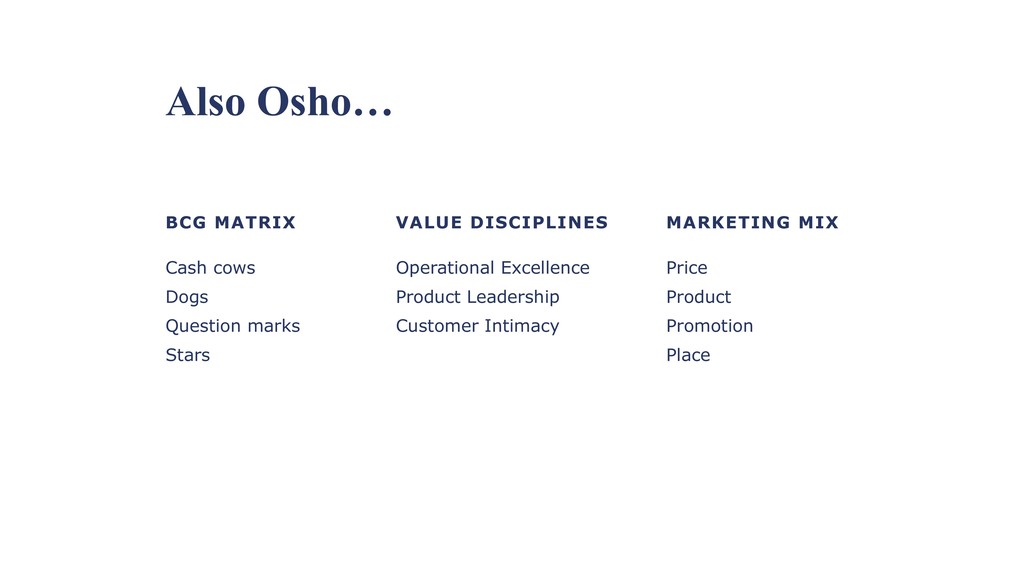
I think the BCG matrix is also O Show. Worked in a time where we thought about, do products work? A cash cow or a question mark. It doesn't work anymore. Same with the value disciplines. Remember that Tracy and Wiesma talked about operational excellence versus product leadership or customer intimacy.
And you had to make a choice between one of those three to excel. Really? I don't think that any company would survive if they don't deliver on all of them. All of them are relevant. So that theory can go into the bin. Another one is the marketing mix.
The four p's, remember that? We probably all had this in our university books and marketing books. Price, product, promotion, place. It's nonsense. It doesn't make any sense. They don't hold true anymore in a fast moving world where a lot of us work in.
What we need to be careful about is that the Oshos of the world, with fluffy terms and just theories that don't make sense, they're not proven, they're just buzzwords, that they take over marketing discussions. What I do take though, from my friend Oyusho, is one thing, and that he's very good in creating desire.
He had many people coming to this weird town in Oregon to join this cult Because they wanted to be part of something. Making people be part of something is, for me, one of the principles, core principles of marketing. How do you make sure that people want to be buying your product, be part of a community?
There are two parts for me that I want to talk to you about today. One is, how do we influence decision making? There's one person that we all know, we all know him, that can help you and your organization make better decisions and influence decision making.
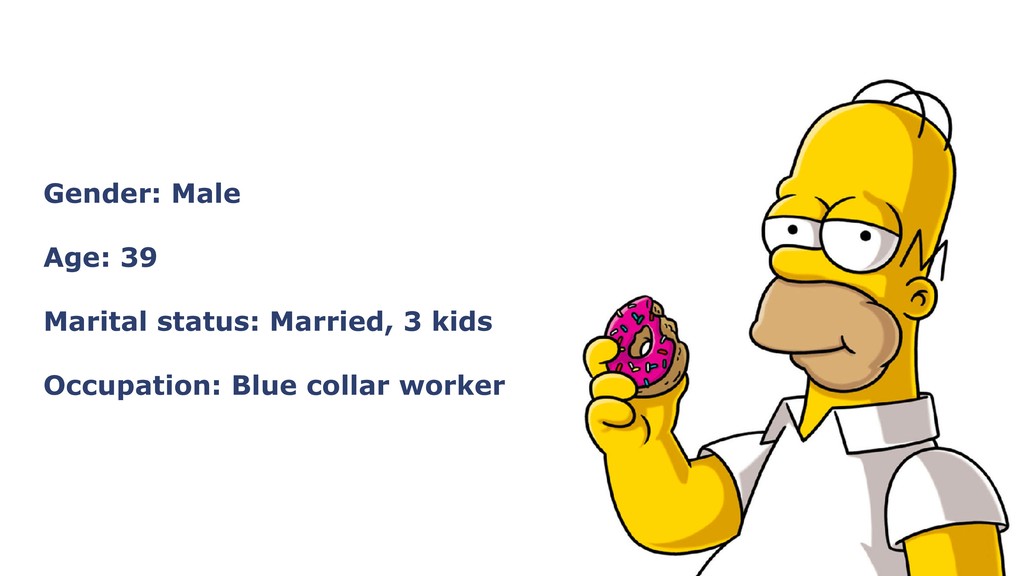
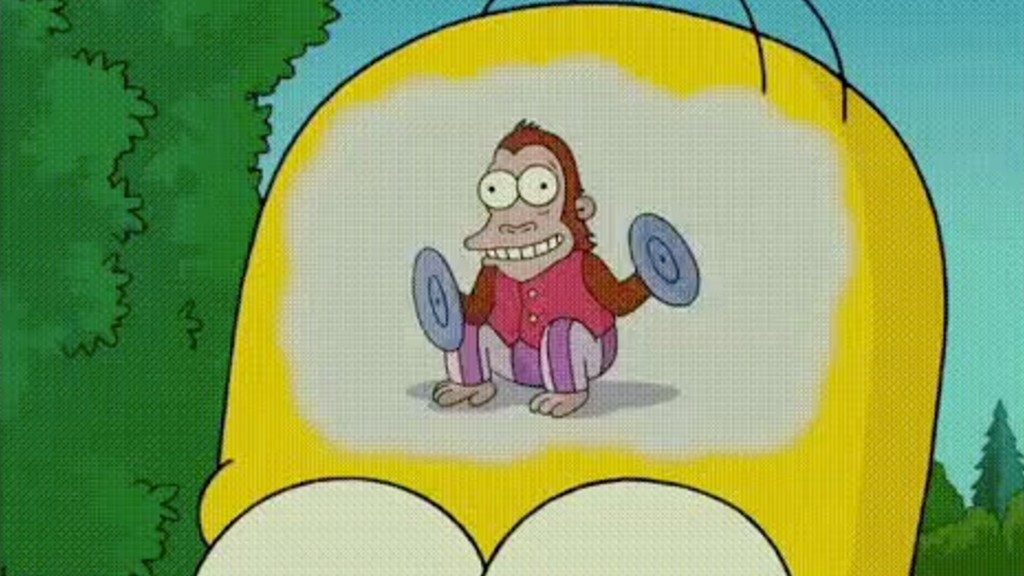
If you understand this person, it's very easy to judge marketing materials. He's a male. He's thirty nine years old. He's married. Three kids. And he works in a factory. This is how we make decisions. Homer Simpson exemplifies how we make decisions every single day.
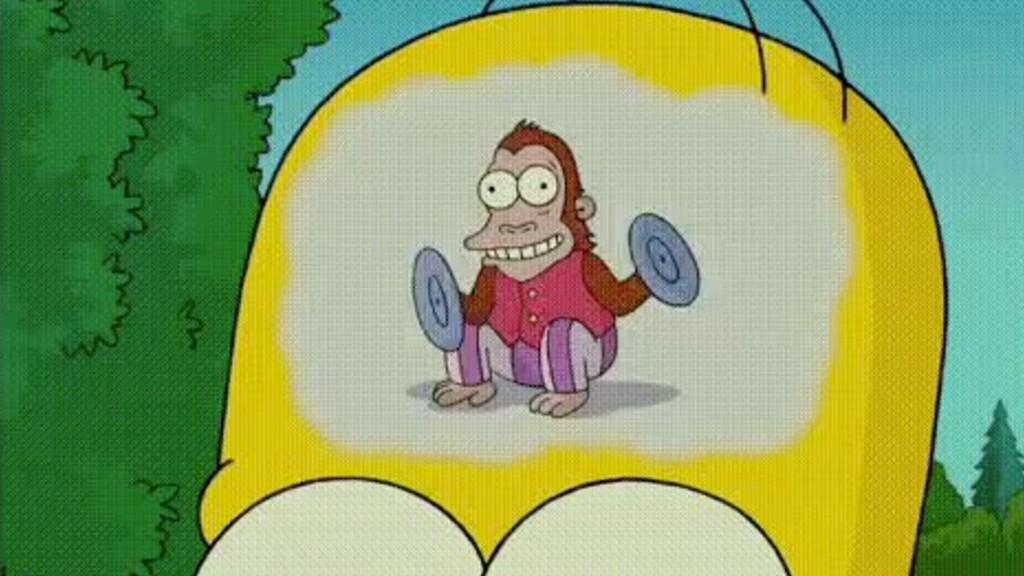
This is our brain. Think about it. You woke up this morning. What am I going to wear? What am going to have for breakfast? How do I get here? All these decisions. We are super lazy. We are super lazy. And it feels so good to be lazy.
In bed, don't make an effort to get dressed, just eat in bed. And you know why? Because making decisions is very, very difficult and takes a lot of energy. Shortcuts. We love to take shortcuts in all of our decision making. Only, I would say, five percent of decisions actually require you to think about what are we going to do.
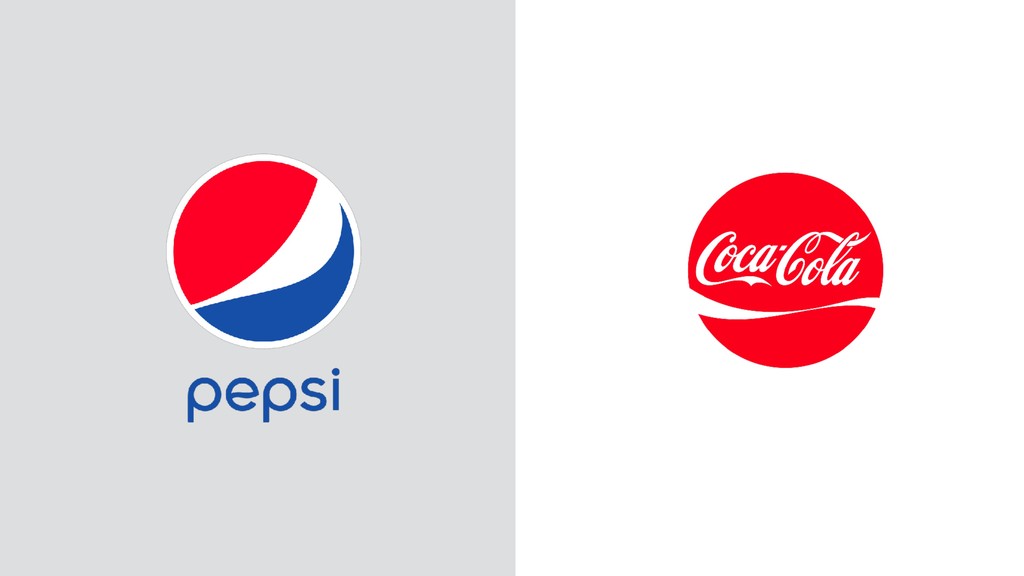
The rest of the decision, ninety five percent of decision making is just, I'm not even going to think about this. And brands, a lot of good brands, notice. I mentioned Coca Cola. This is a glass of Coke. How good is this? Think about the competitor of Coca Cola, Pepsi, versus Coca Cola.
Their logos look the same, their product is the same, even the little white swirl in the logo looks pretty much the same. But for a very long time, they made a huge difference in how they would position themselves to create a shortcut in your brain what those two brands are about.
Pepsi has been talking about taste for a very long time. It's all about the taste. You can find something about their taste, but they talk about taste all the time. Versus Coca Cola, where they always talk about happiness. You see happy people dancing, smiling, get togethers, and so on.
That marketing principle, they've been applying that for years and years and years, and that created a shortcut in your brain. I'll get another example from the automotive industry, where Volvo and BMW did the same thing in your brain. They created the shortcut. If you think about Volvo, you think about safety.
They invented the seat belt, and since that moment, they've always been talking about safe cars, safe for your family. Where BMW positions themselves as the driver's car, the ultimate driving machine. Even if you get into the BMW, the console, the dashboard is all around the driver.
That sets this principle in your head of, if I want to have a safe car for my family, Volvo is probably the better option. If I want to have a fast car that I want to enjoy driving, then BMW is probably a better option.
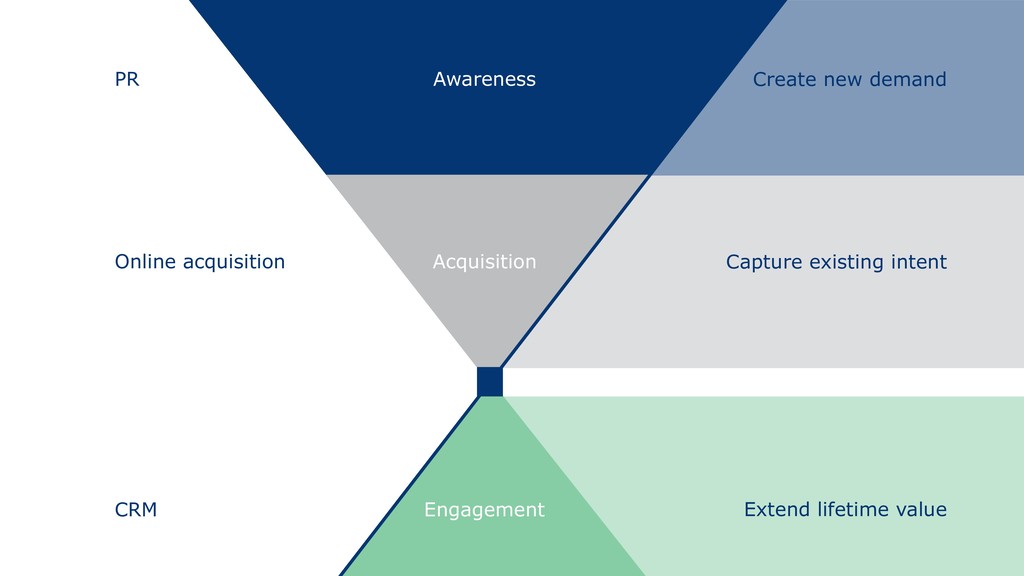
Those shortcuts take such an important role in marketing, that I think you should apply them in your funnel. That's how you make growth relevant. If you look at the funnel, this is a very basic funnel. My colleagues who are here, they get bored and tired of this chart, but it's basically the three stages: awareness, acquisition, and then engagement.
Making sure that people find out about you, create new demand, demand generation, the first bit. Then the second bit is to capture that intent that is already in the market. And then the third component is how do you make sure that you keep the users or the customers that you have.
When you are a new company, starting, this funnel is probably based around a lot of PR. You don't have money to do big campaigns. So how do I use shortcuts in my PR activities that will set us up for bigger campaigns? If you look at the acquisition, it's all about the online phase probably.
If you have a little bit of money, you start to acquire users online, or new customers online. How do I influence decision making online? Ask yourself that question. What kind of shortcuts can I create in the brain to make people click on your banner, then another banner?
And no one clicks on banners anymore, we all know that. And then, when it comes to engagement, at some point, you will start to think, ****, I've got this pile of customers or users, I need to talk to them. How am I going to do that? What do I want to say?
What is the next product that I want to talk about? How did I talk to them before? What is this shortcut that I created? And how do I apply that then in my CRM communication? There are a couple of tips and tricks that I want to give you to make sure that you do the right things in all of those three stages.
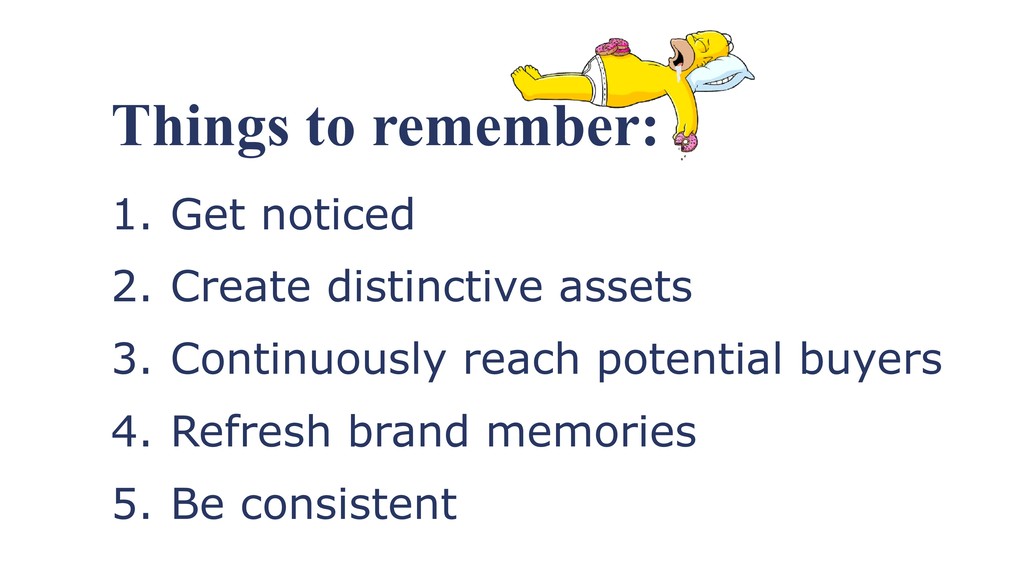
We see Homer here again. The first one, it's pretty much an open door, but make sure that you get noticed. Do marketing. Make sure that if you don't have a big budget, do PR activities. Make sure that you're out there. No one wakes up and thinks about your brand.
No one does. No one cares, really. They have to think about their kids, their wife, their husband, how to get to work. They don't think about your brand, they don't wake up. So you have to make sure that you get noticed. First principle.
The second one, create distinctive assets. Not different, distinctive. They have to stand out in all phases. Think about how many emails you get every single day. How do you make sure that people open your email? Maybe you want to send text messages. Make sure that they're distinctive.
The third part of creating those shortcuts is making sure that you reach potential buyers. Always think about who else to talk to. And this is a controversial one, because there's this debate going on that it's better to focus on a niche audience. But if you really want to grow, and you're in early days of growth, you have to make sure that you reach, and it's an important word, reach, not frequency, reach potential buyers.
Who might be in the market at some point for this product. Make sure they see it. Don't care if they see it twice or three times, because after they see it three times, it will probably be a **** message that you sent. So reach potential buyers.
Reach more important than frequency. Refresh brand memories. Same as Coca Cola. Talk about happiness all the time. There are different ways to do it. There are different ways to rep that. Different ways to visualize that. But refresh those brand memories all the time.
They might be different for different segments. They might be different for different markets. But make sure that you refresh those memories. And be consistent. That's an easy one. Influence decision making is all about mental availability. Do we think about the product or the service that you sell at the right time?
Do people in their purchase decision making journey think about you at the right time? Do others talk about you at the right time? Mental availability, the first component. Because remember this, people don't have time to think about you all the time. If they're ready to buy, they already made the decision.
That's what your ambition should be. Then, we have a second challenge. Say that we've created this mental availability. What is next? Well, the second part is all about make sure that you can buy it. Because if you think about it, and you want to buy it, it's very frustrating if you can't find that corner shop where you want to buy your Coca Cola.
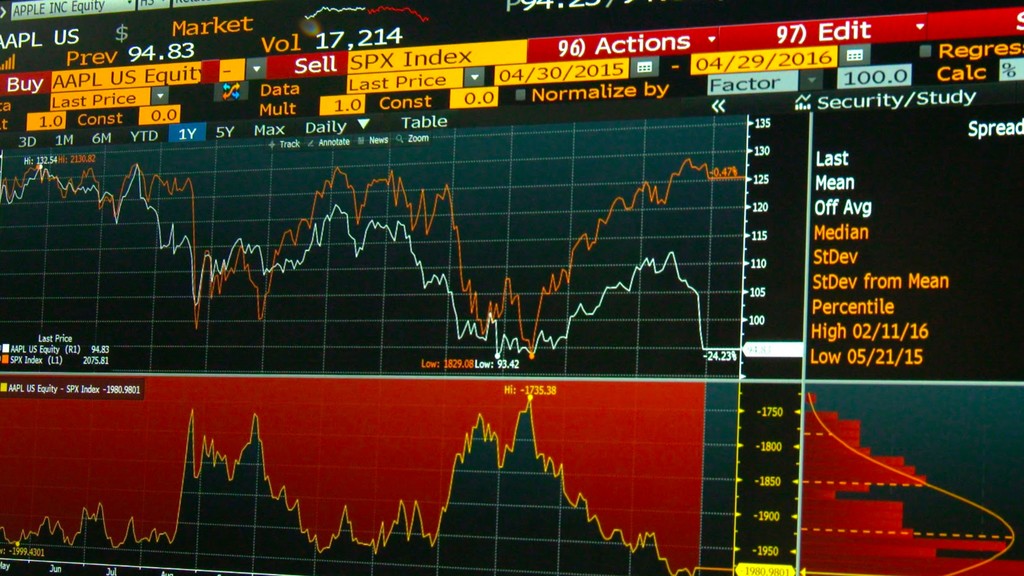
It's very frustrating. So make sure you can buy it. And that is all about physical availability. Now don't be confused, physical availability is both online and offline. Where Homer Simpson summarized the mental availability, I think this summarizes the physical availability. It's all about numbers.
It's really understanding where people buy, how people buy it, who sells it for you. Cause you don't want to have this as your shop. There's too much, there's too much going on here. I saw a sign there that says, man cave, enter at your own risk.
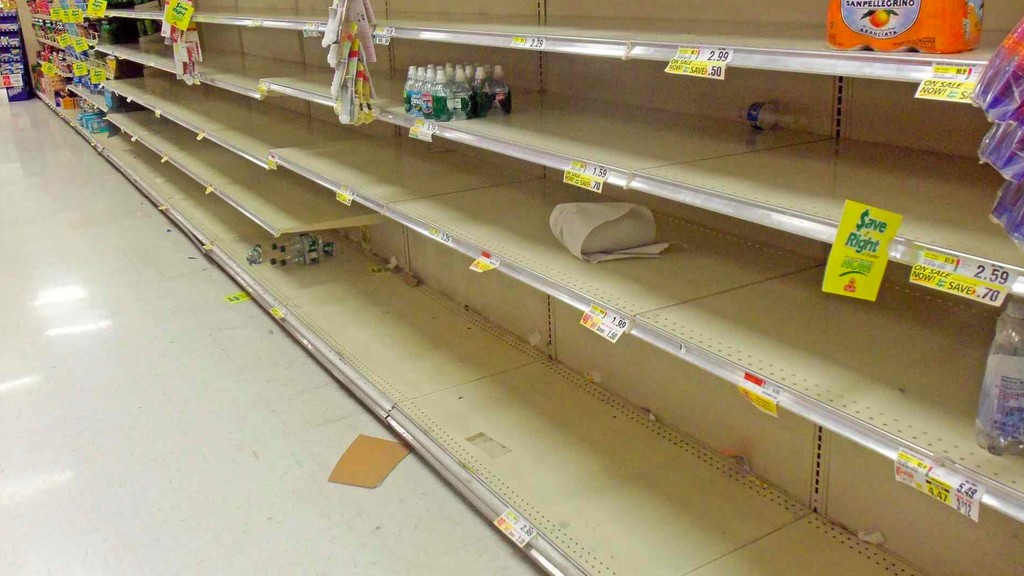
I'm not sure who's going to buy that. But this is, you don't want to be this as your shop. But you also don't want to have this as your shop, online or offline. Sold out, can't get it anymore. Then it will go somewhere else.
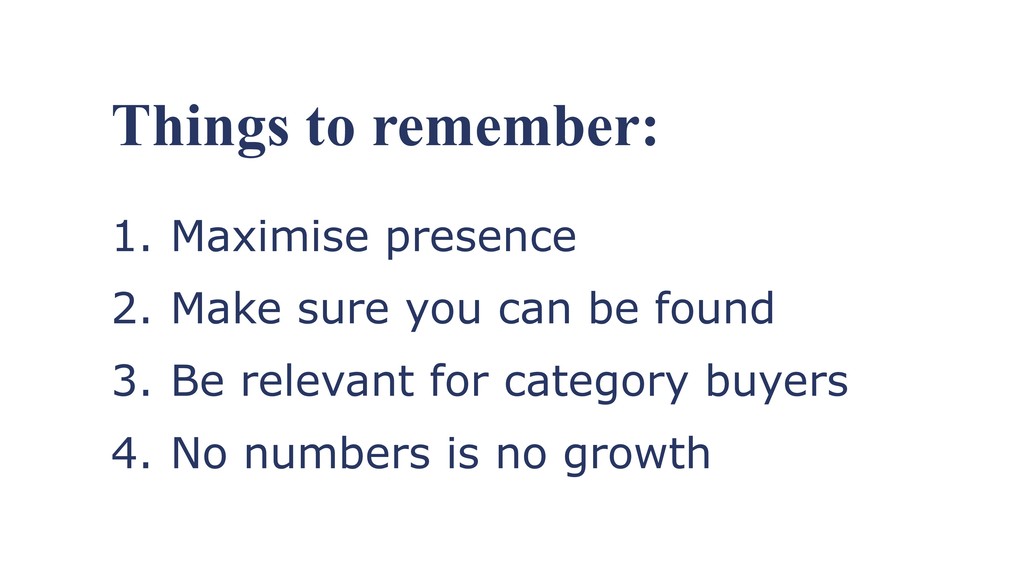
It's finding that balance and numbers, analytics, they will help you to determine what your shop looks like. This or this. Some key things to remember here is to maximize your presence in the decision making journey. That means that you have to find partners, that you have to find affiliates, resellers.
Don't think that you're the only one on the planet Earth that can sell your product. There are others that can help you. Maximize your presence. People need to see and hear about your product. When we look at ICESat-ele, more than half of our existing users joined us because they heard from other users that this was a good product to use.
Maximize your presence. Make sure you can be found online and offline. Online it's very difficult to be found. If you need to use Amazon to sell your product, don't be shy, do that. If you need resellers to sell your product, do it. Yes, there is obviously the margin question, but make sure that people can find you.
Homer probably only goes to Google to find you. Think about that. Third one is, be relevant for category buyers. And what that means is that in the category there are probably more products that people think about. How do I create the connection between, for us, a card reader and point of sale software?
How do I create a connection between Coca Cola and other grocery that you need to buy? How do I make sure that in the category I stand out and I'm there? And then the fourth, the last point in this area is no numbers is no growth.
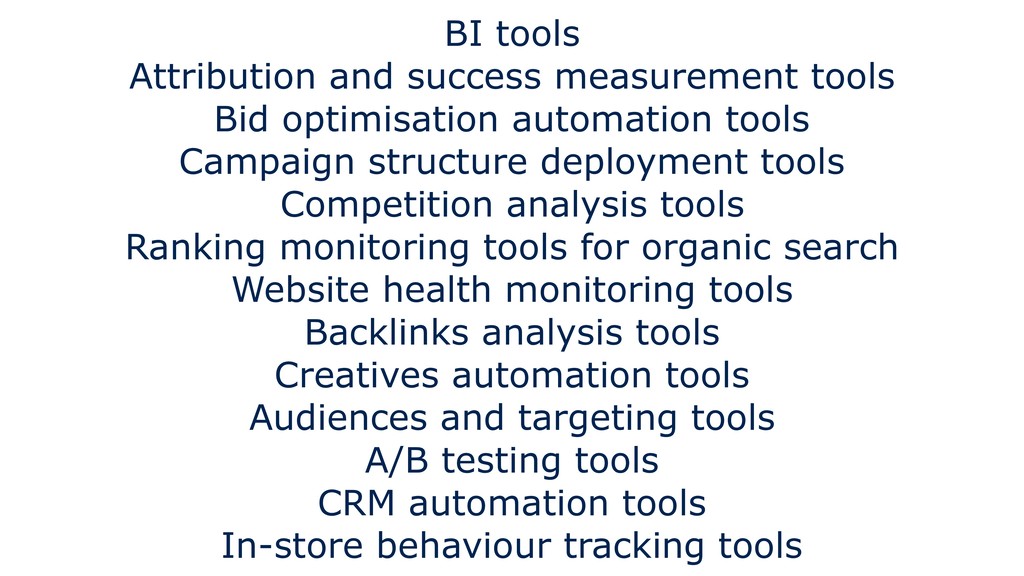
Don't think that you will grow your business if you don't have this in place. And this seems overwhelming, and maybe it is. But you need to have this in place to actually grow. If you don't have your teams understanding the Google three sixty suite, if you have your team not understanding how to do AB tests on the site on a continuous basis, you won't grow.
Forget about it. But don't worry, because I haven't come across a company that ever achieved one hundred percent physical availability. It's impossible. But you can strive for it. And these are the ingredients that you really need to consider. Especially when you're thinking about how do I go from a start up to a scale up?
How do I accelerate growth? Make sure that your team understands this. Do I understand everything? No, but we make sure that the different teams are enabled with the different tools and mechanics to make this work. Especially when you sell both online and offline.
How do we make that work together? How do you sync those insights? So for me, marketing is growth. There is no alternative. It's all about having the right conversations in the boardroom with your CFO, CEO, the product officer. They all have the same ambition.
Let's get our product out there. Marketing and sales are growth drivers. There's no other way to see it. So question yourself, if you're a growth marketeer, do you want to be a growth marketeer? Or, do you send a rock signal to the rest of your peers and people in your company?
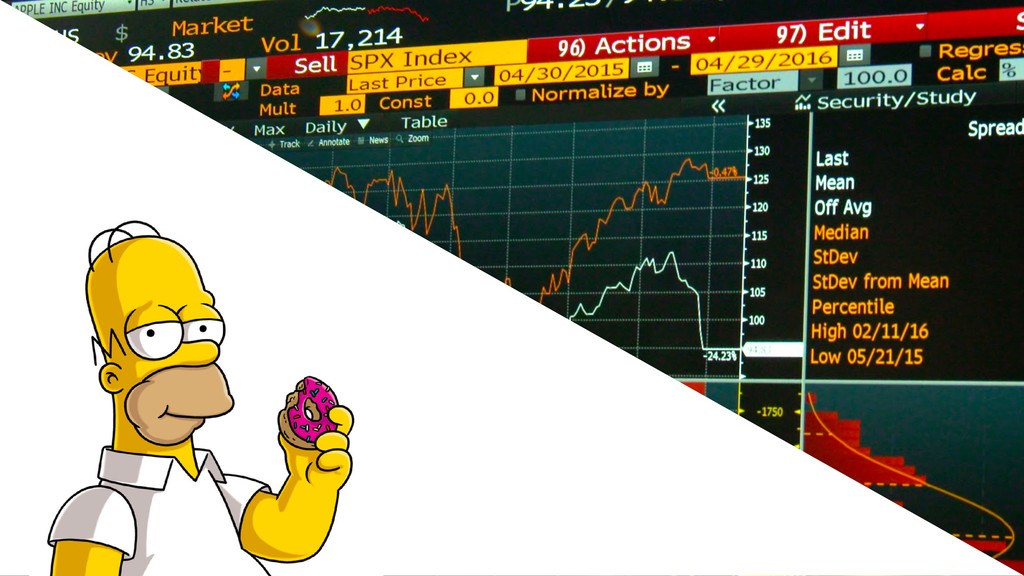
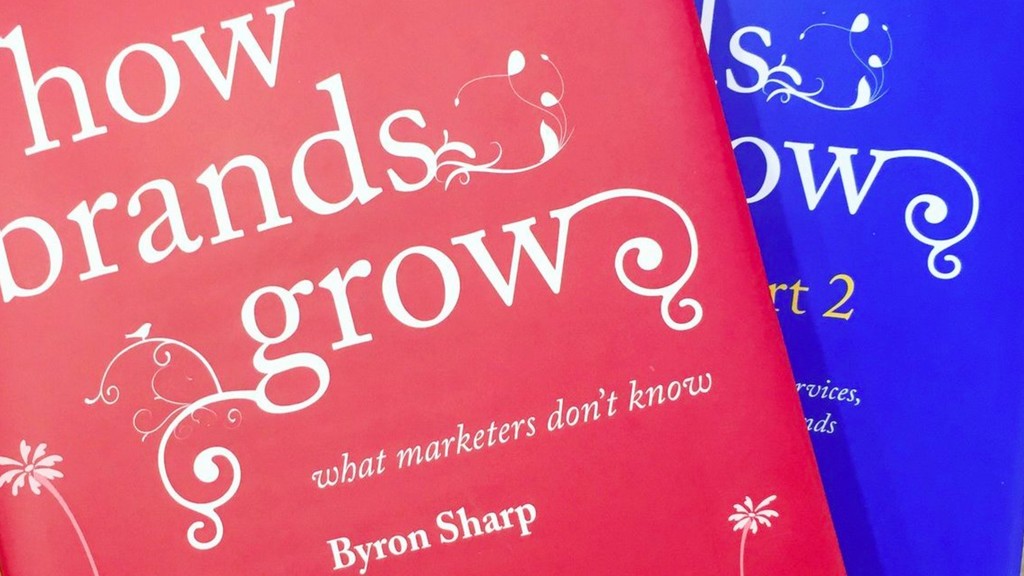
It's about the combination of Homer Simpson and a lot of numbers. Byron Sharpen, a professor from Adelaide, he wrote two books about this. Marketing science. If you want to know more about the principles of marketing science, and how old models don't apply in the new world anymore, read his books.
Very interesting, I recommend them. Now how do we make sure that we can apply this in the world? I've got one more thing that I think is essential for marketing teams, sales teams, basically all commercial teams that really want to grow. Get yourself an agile coach.
And I know there are lot of product and tech people walking around here, ask them about their experience with agile coaches. It literally saved my life of having an agile coach within a marketing organization. Because a marketing team or a sales team is just a delivery team.
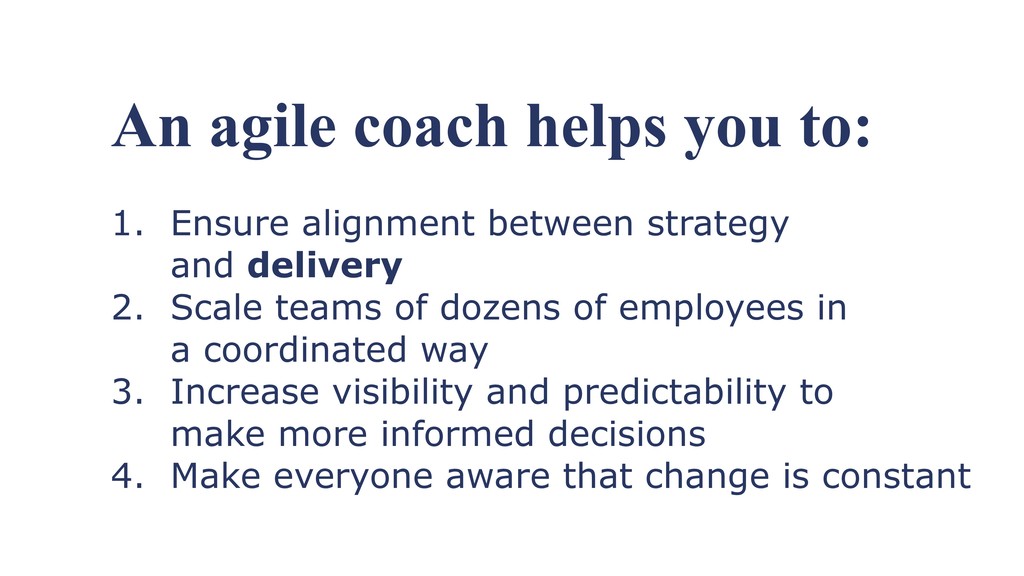
They do the same things as a product team or a tech team. It helps you to ensure alignment between strategy and delivery. It makes you help to scale dozens of people in a coordinated way. Don't think that functional leaders, your online media specialist or your CRM specialist that lead a team, have the time, or the knowledge, on how to get rid of dependencies.
How to create better ways of working. They don't. Because they're bombarded with all kinds of emails and meeting invites, and things they need to work on. An agile coach can really make sure that you can scale teams, align them on delivering on your strategy.
It's about predictability. Someone then asked, when will this happen? What will be the result? How does it play out in the bigger picture? And an agile coach makes everyone aware that change is constant. If you think you have your team in place, think twice.
If your team members complain about changes all the time, think twice, because that is just reality. If you settle for a setup that works now, you'll probably run into troubles tomorrow, because the world around us is changing, the demands of our customers, our users are changing.
You need to make sure that you are hopefully one step ahead, but at least can catch up with the changes around you. So change is constant. An agile coach isn't stuck into daily decision making around do we go left, we go right. He or she can really help you to create this overview of what's going on.
If you don't have one, get one. It will save you a lot of time, your teams will perform better, and the growth will come. That was pretty much it for me. For me, it's all about growth. Think about Homer Simpson, when you think about growth.
Think about the charts with the numbers, you think about growth. Make sure you combine those two. People make shortcuts. You'll make shortcuts today, for sure. Think about the app that you will open to rate me. Don't make that shortcut to be too lazy to sign up for that app.
But this is it. Thank you very much. I'll be around. You know my first name, don't bother about my surname. Ask me any questions around here. Not now, because I think that's strictly forbidden this year. But thank you very much.