After 15 years designing technology products in Silicon Valley, I noticed that something essential has been missing. In our race to make the world more logical and programmable - including our social connections - we've reduced the rich tapestry of human experience beyond recognition. And given the crisis of unintended consequences that we're now forced to cope with thanks to the swift rise of social media mixing with legacy human attitudes and behaviors, I've come to believe that if we don't address it now, the artificial intelligences of the future will be far worse for us than today's primitive social products have proven to be.
I therefore propose that we set ourselves upon creating the technology of better humans - that is, of investing in and creating better versions of ourselves. Since it will be us - or our children - who will build the next generation Alexas and Siris, the only way to bring about the future that we deserve and desire is to start now. The good news is, some of us have already started and joining in may be easier than you think.
1 / 120 Use ← → to navigate
Auto-generated transcript - may contain errors.
Tap a timestamp to jump the video.
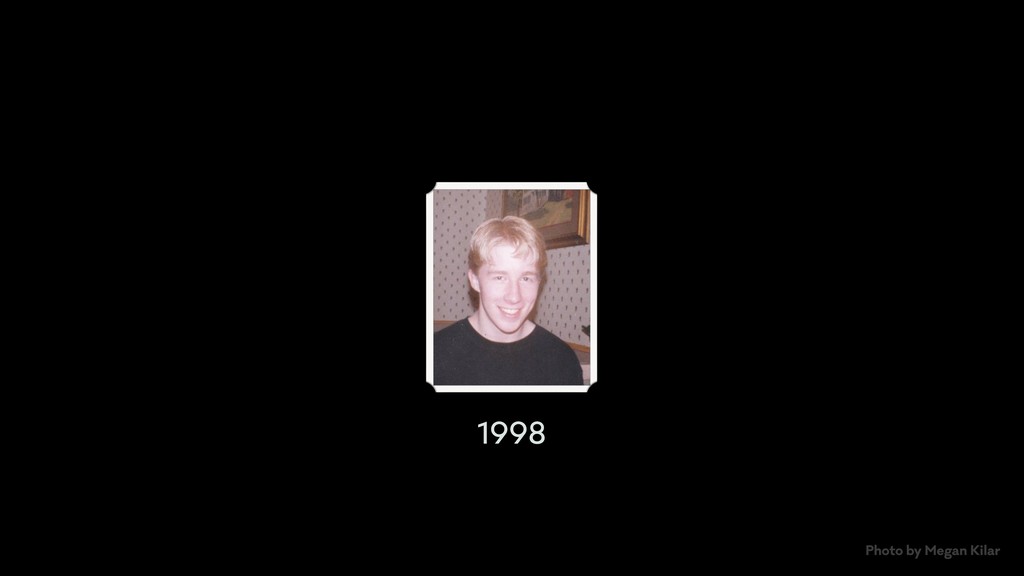
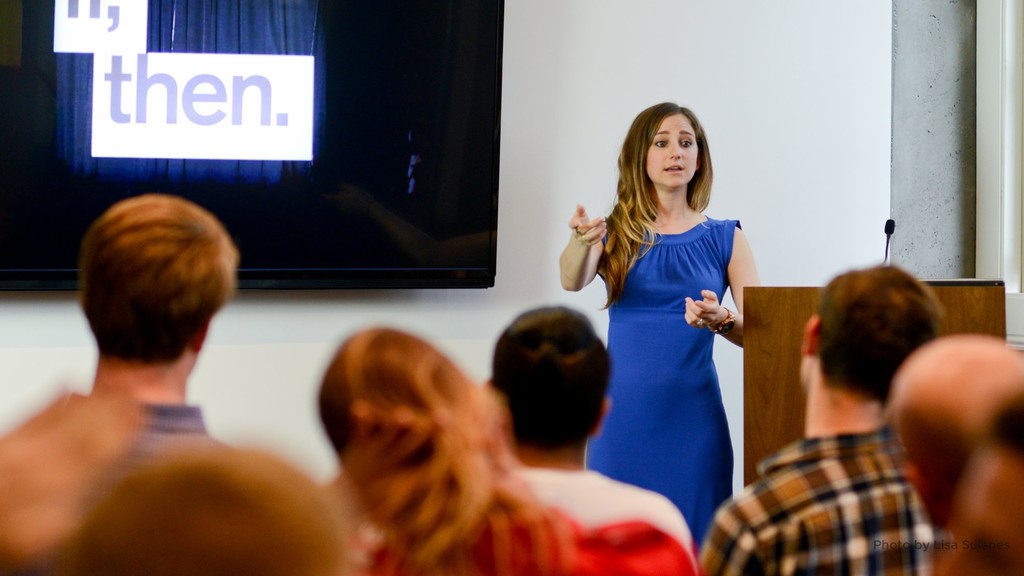
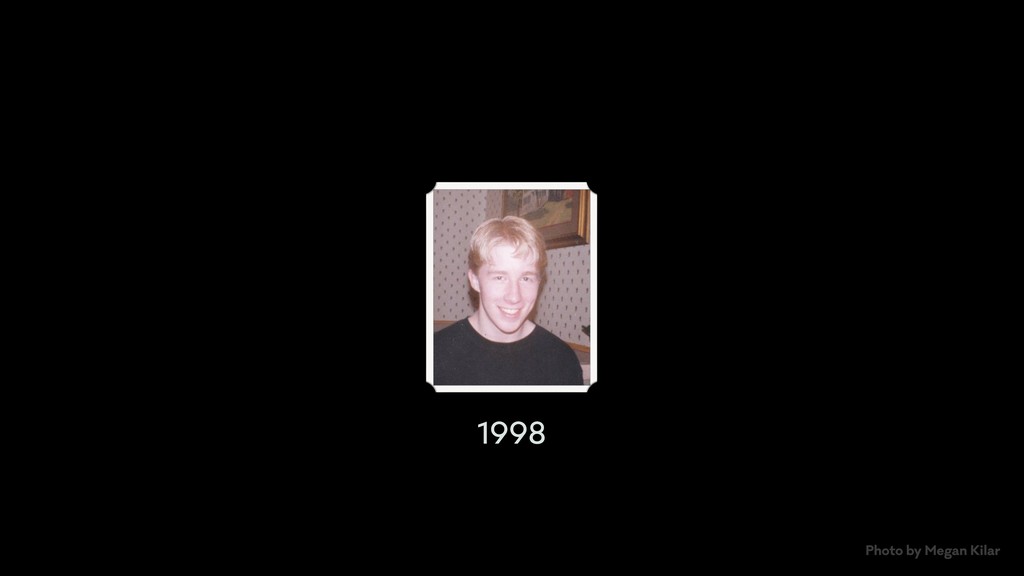
Good morning, everybody. Thank you very much for being here bright and early. This is my first time in Edinburgh, and I'm very excited to finally be here and present to you guys today. You know, back in time, I personally knew that social technology was gonna be a really big deal all the way back in nineteen ninety eight, possibly before some of you were born, hopefully not, but maybe, when I was in high school.
Although I knew that social technology was gonna be a really big deal, not everyone had come to the same conclusion yet. And I discovered this when I was kicked out of high school for building a website for the Gay Straight Alliance, which was a club that I came to find out was forbidden.
All I had wanted to do was connect people through this new technology that I discovered called the web, and instead, I got the boot. Turned out that my high school back then wasn't exactly the best place to become an entrepreneur in social technology.
Now fast forward from that experience to San Francisco in two thousand four. So I'd gone to college. I flew out to the West Coast and started to find other like minded people who were excited about the same things that I was interested in.
These are people who love to design products, people who saw the future, who thought of technology as being something that was beneficial to humanity. Some of my friends would go on to build apps that would become household names, from WordPress to Flickr to Twitter, Instagram, and Slack.
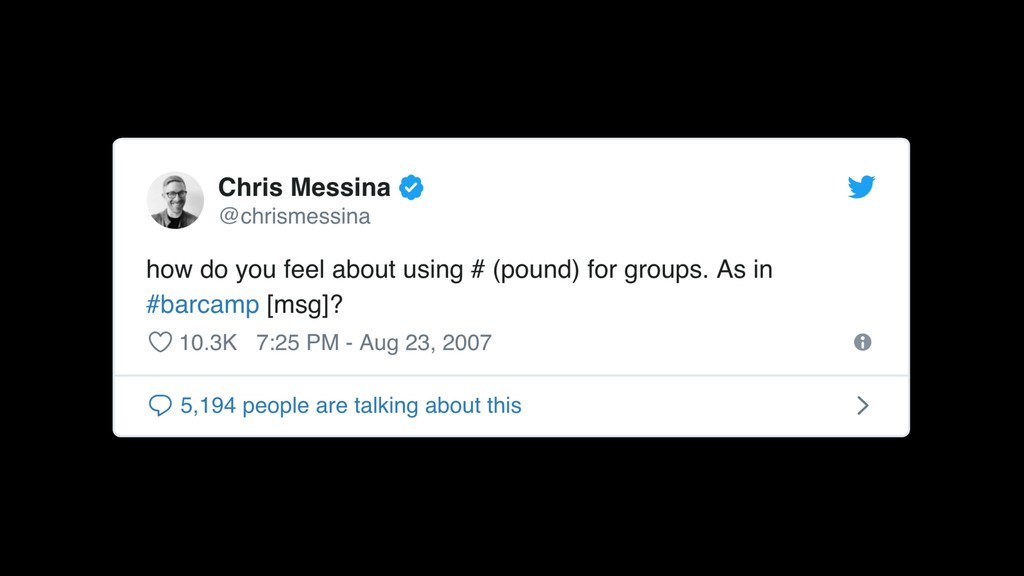
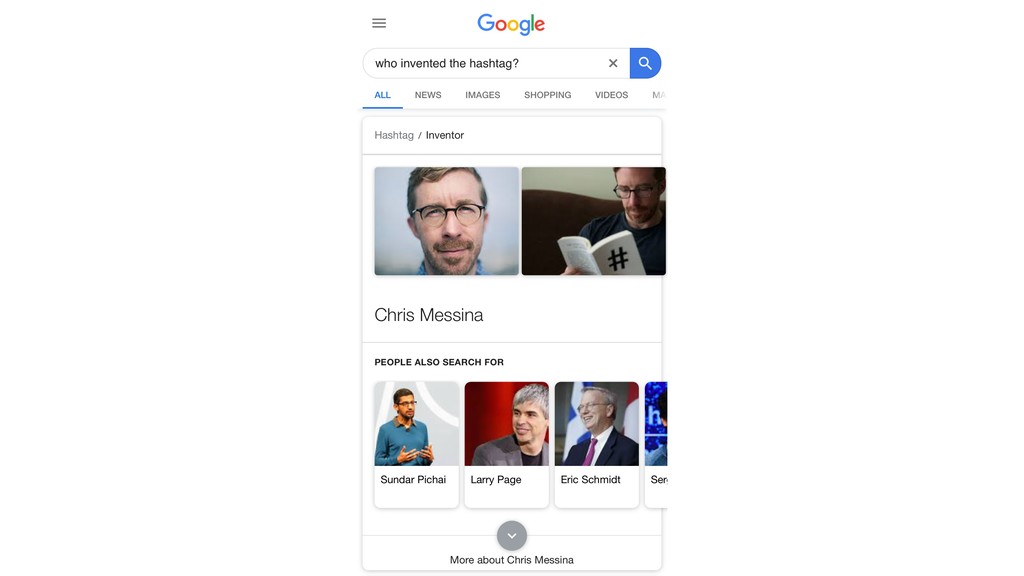
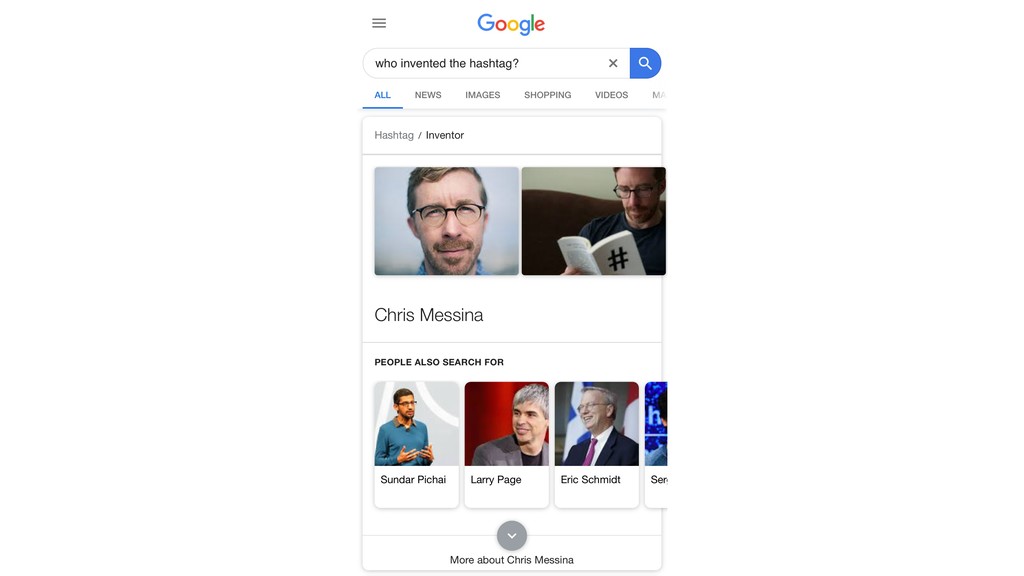
My best known contribution to the era that became known as Web two point o, of course, is the humble hashtag. This is an idea that I wrote up twelve years ago, actually, on August twenty third, and then presented to the cofounders of Twitter in their offices in South Park.
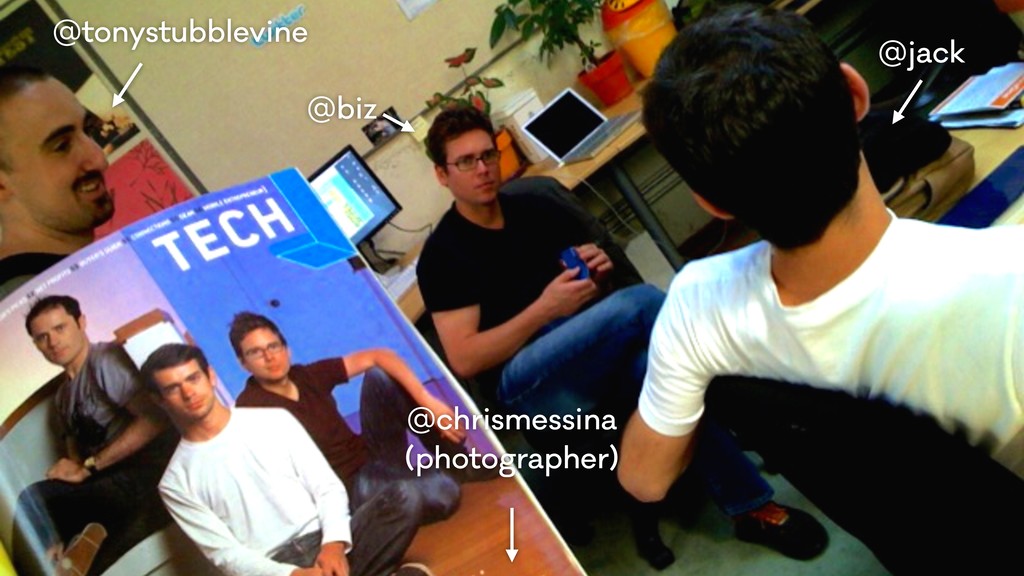
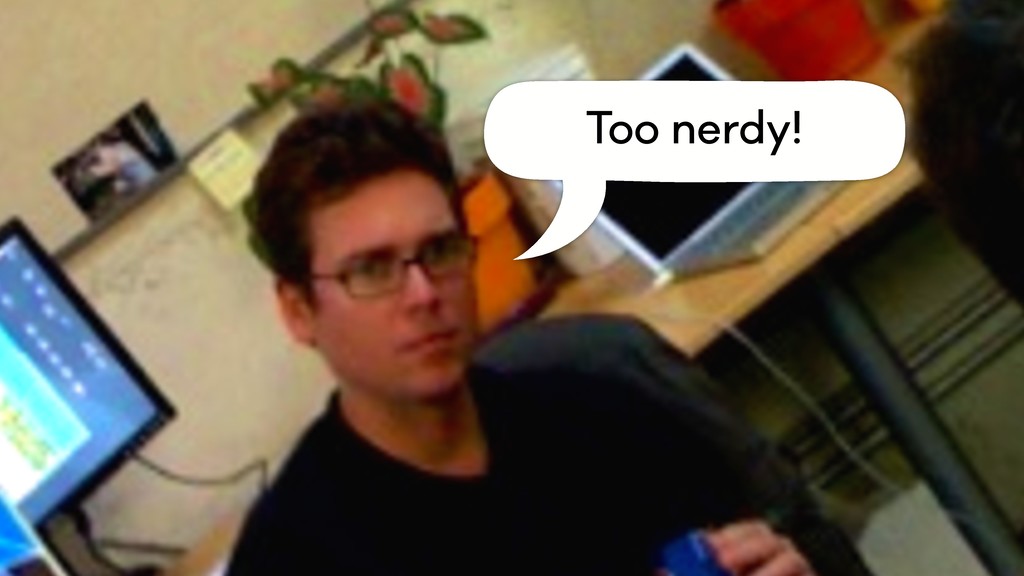
This is me. Imagine me taking this photo, holding up a Wired, talking to Jack Dorsey, Biz, and Tony. And of course, the reaction that I got because I was just a user that had to, like, walk into their headquarters. Right? They're like, security. We're security.
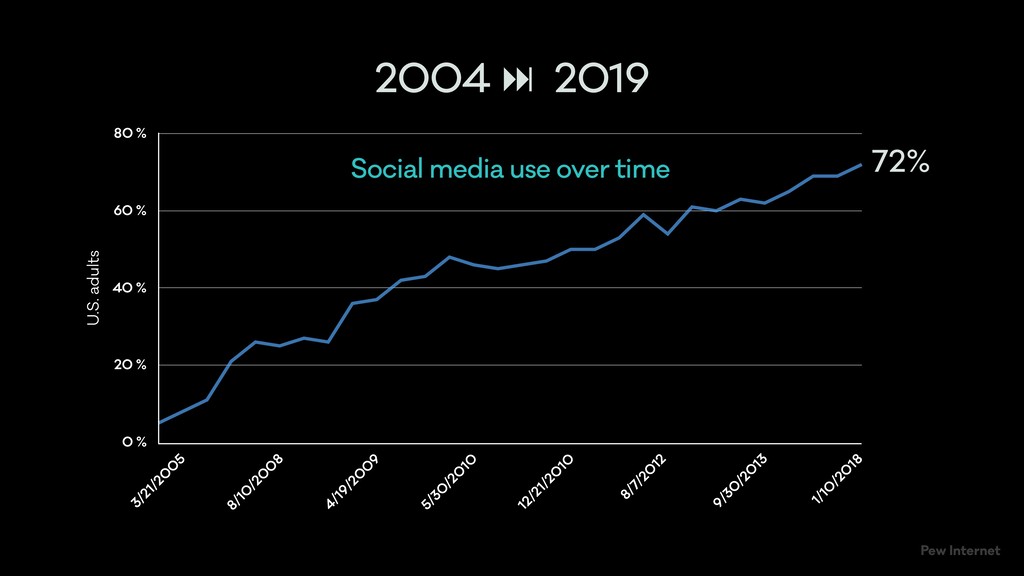
Was that this idea was something that would never actually work. It was just simply too nerdy. But what's interesting that's happened since then, if you fast forward from the start of my experience in Silicon Valley to now, of course, social media has become ubiquitous.
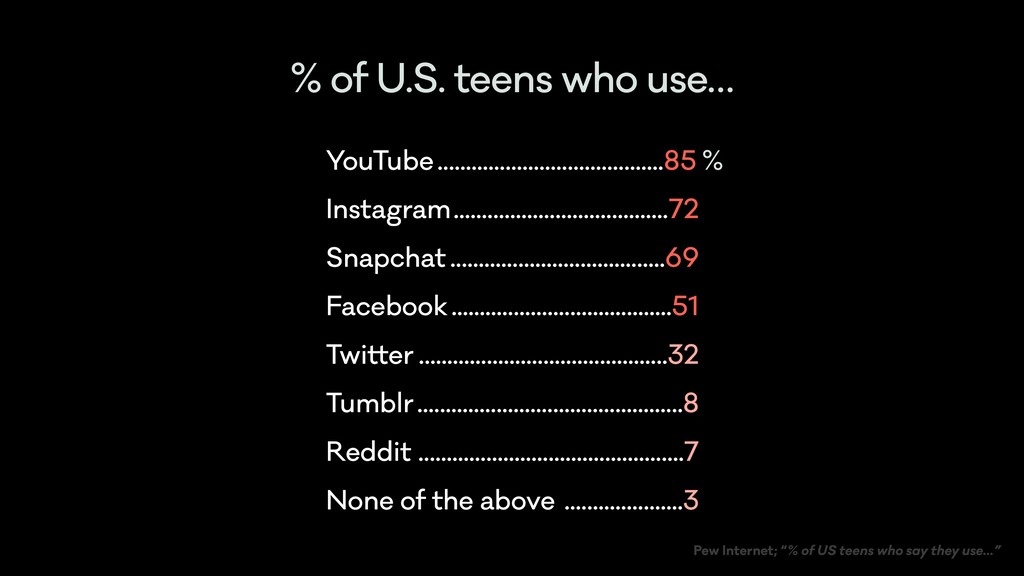
At least in the United States, seventy two percent of Americans, of adults, use social media. And this has, of course, risen to almost levels of television. And even more importantly is that the number of teenagers using social media is also incredibly significant. And there's only, I looked, maybe one or two of these up here that don't support hashtags.
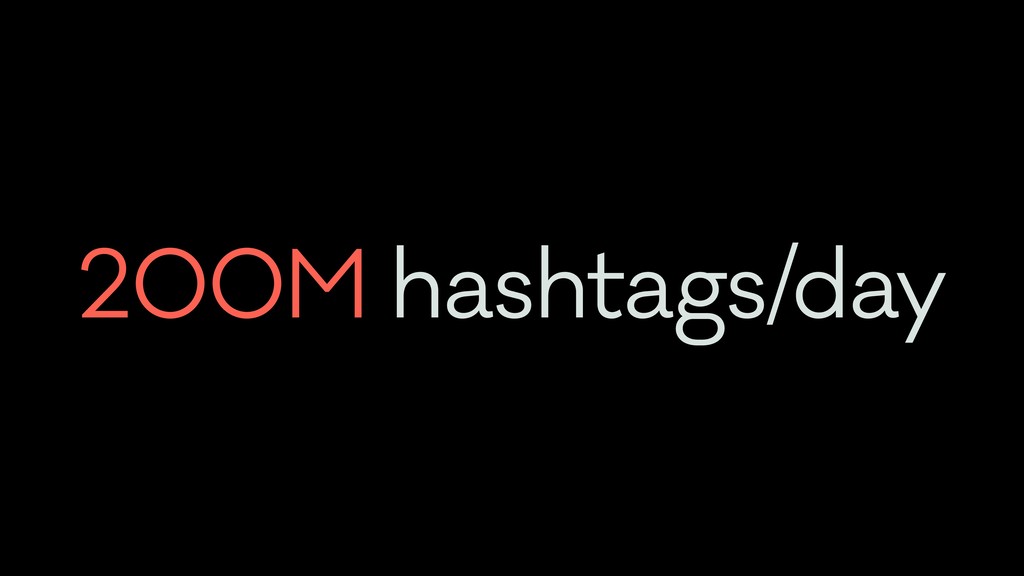
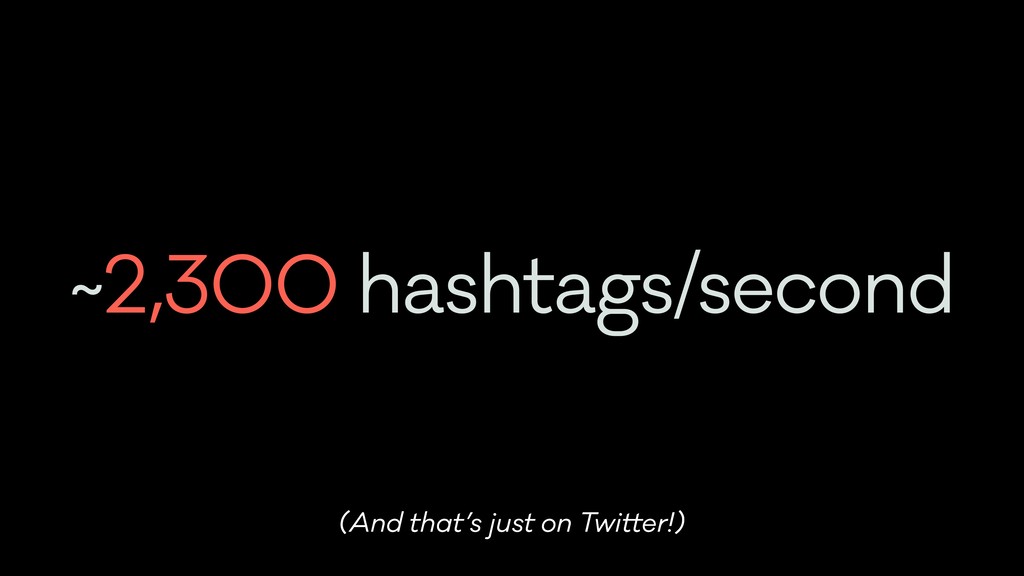
So hashtags are being used by the up and coming generation. It's everywhere. And what does this look like today? Well, the most recent stat that I found is that there are two hundred million hashtags that are used every day, which is the equivalent of roughly twenty three hundred hashtags used every second.
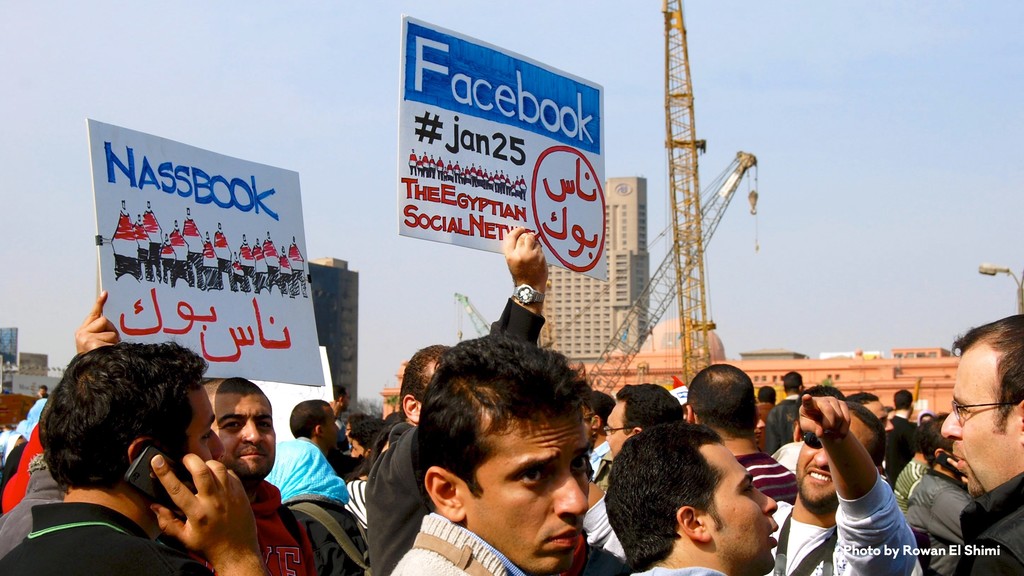
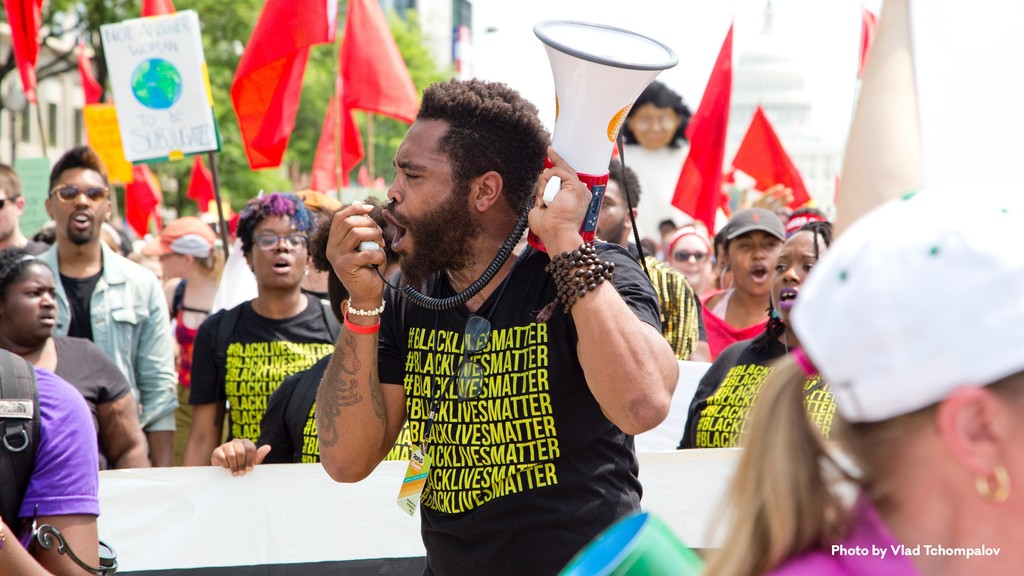
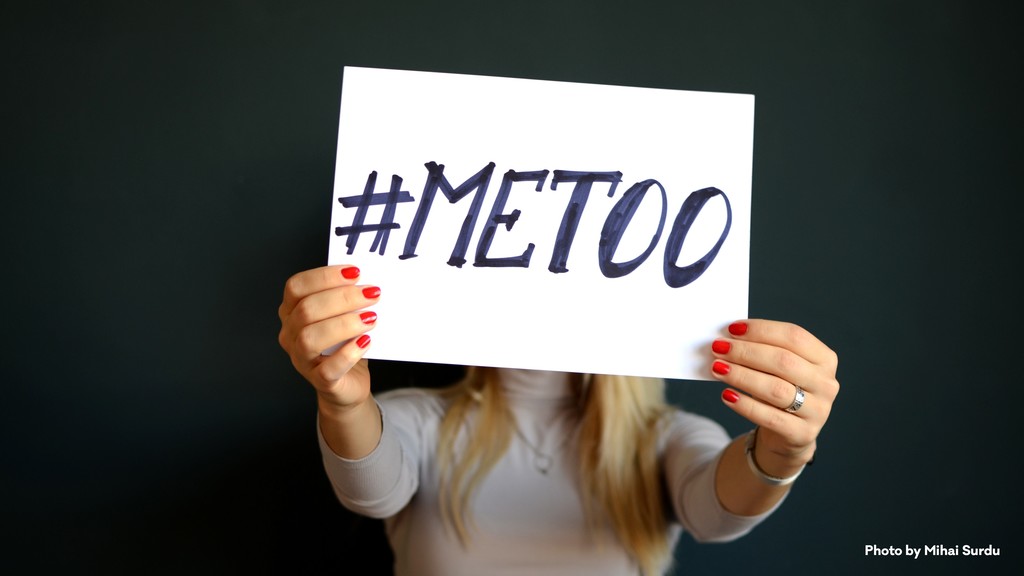
And that's only on Twitter. That doesn't count Instagram or YouTube or any of the other platforms that are out there. And the result of this behavior change has caused different times different types of uprisings, from the Arab Spring to Black Lives Matter and to the Me Too movement.
And of course, it isn't that the hashtag caused these things to happen, but it provided a vehicle and a means for people to bring conversations together. The products that we started building in two thousand four are now used by billions of people all over the world, and I was there at the beginning.
But I also can't be here in the present and look back without some concern about the impacts that those technologies have had on us. Now, some of these problems arise from the ways in which we have translated complex human behaviors and interactions into their digital equivalents.
For example, the like button. Now, it's easy to imagine designing a button that you press to express that you like something. Right? It's pretty straightforward. But when you place that Like button in a commercial context, the meaning becomes a little less clear. When I like this page, am I trying to tell my friends that this is something that represents me?
Am I simply expressing affinity? Am I trying to subscribe to updates? What is it that you were really trying to get across? This type of confusion abounds in social apps because of the way that we've had to compress these complex interactions. And even though we've added more and more expressiveness to our social products with things like stickers and emoji and GIFs, it can still be really challenging to convey exactly what we're meaning to someone on the other side.
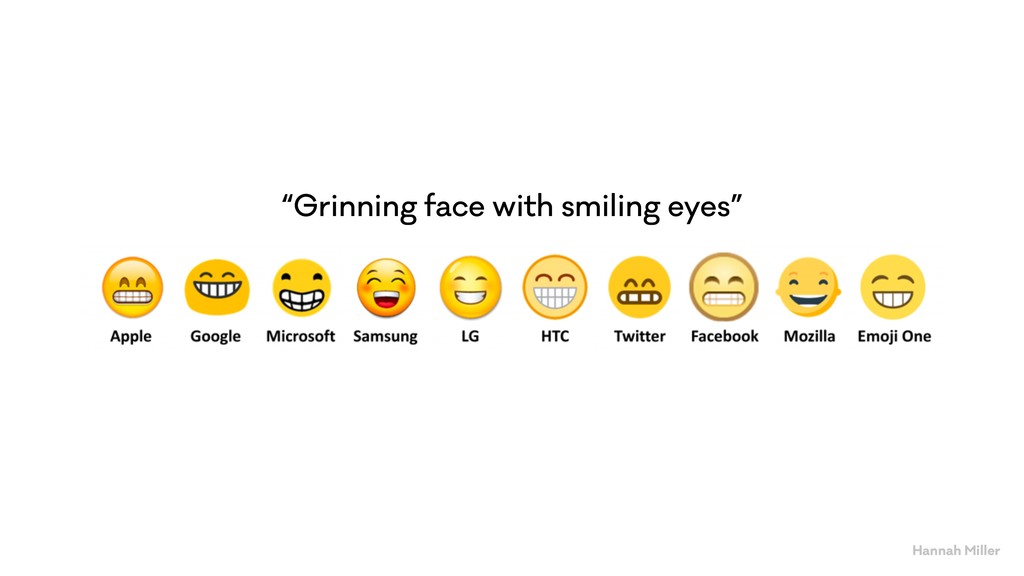
For example, just consider all the different ways that this emoji is expressed across different phone manufacturers' devices. And it's not like we're not trying. In fact, we're really trying to communicate and to express ourselves. This is why social media is so gratifying and so interesting.
But oftentimes, things are lost in translation. And what might have meant as an offhand joke or comment can come off as mean or not thinking or be misinterpreted and can quickly escalate. And if you compound that over time, over the last fifteen years, in our race to connect everyone together, we are now all having to cope with a barrage of messages, notifications, and updates, which on the one hand has made communication more accessible, but it's also cheapens that communication through digital media.
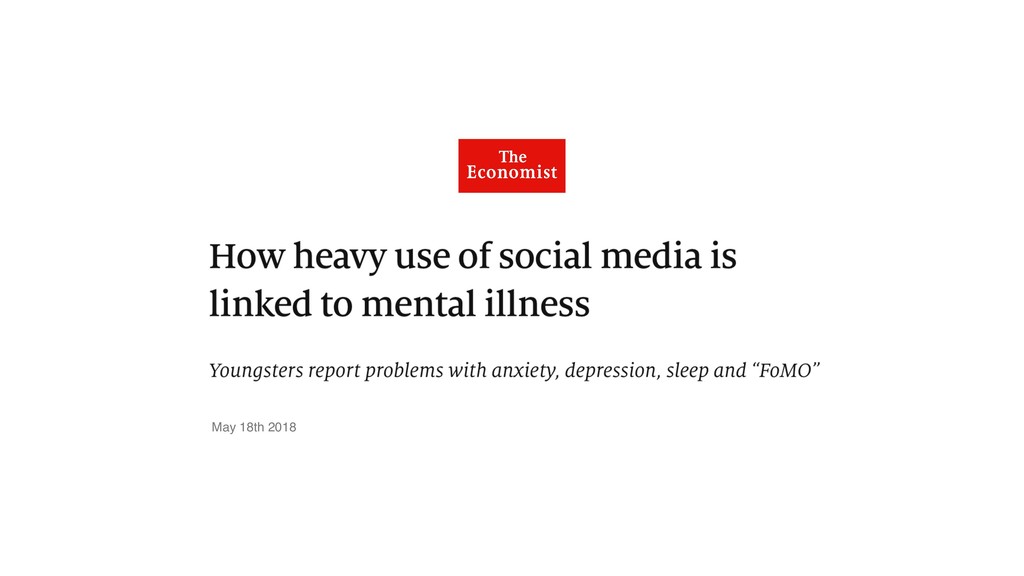
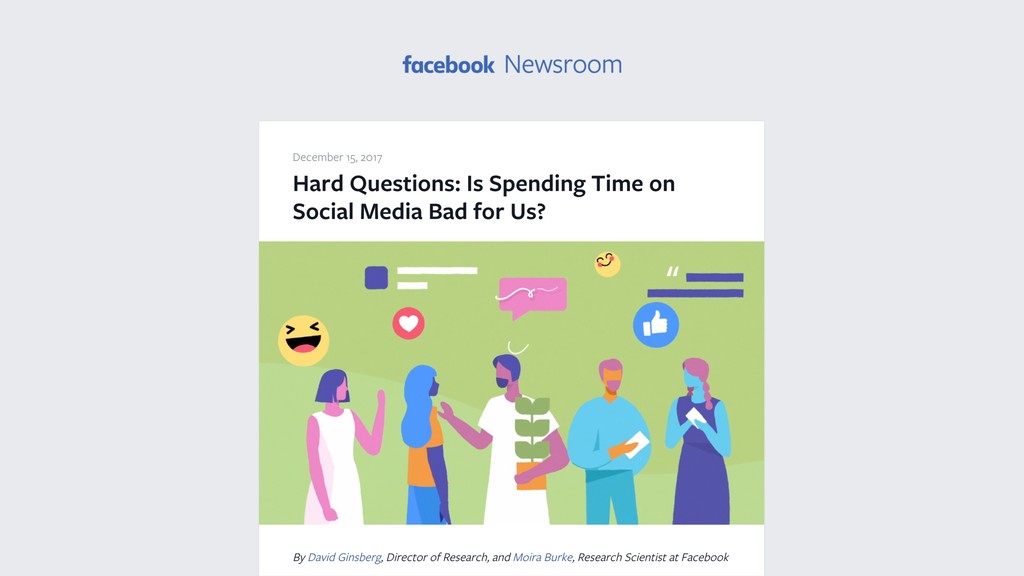
And we're really only just starting to come to grasps with the depths of these problems, that too much social media is bad for us and can have a negative impact on our emotions, our physical health, and our interpersonal relationships. Of course, connection was absolutely a worthy goal, but it turns out connection alone is insufficient.
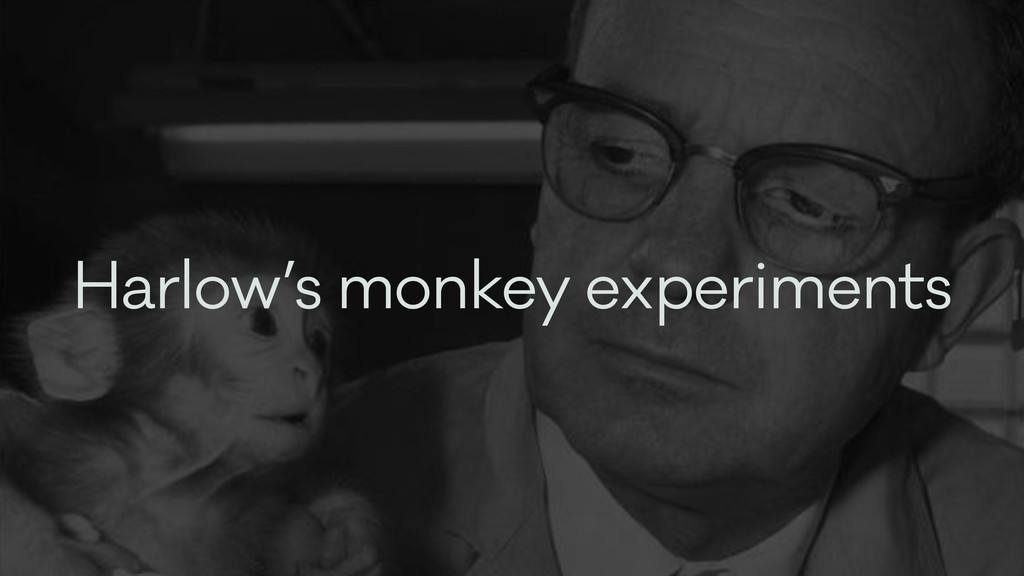
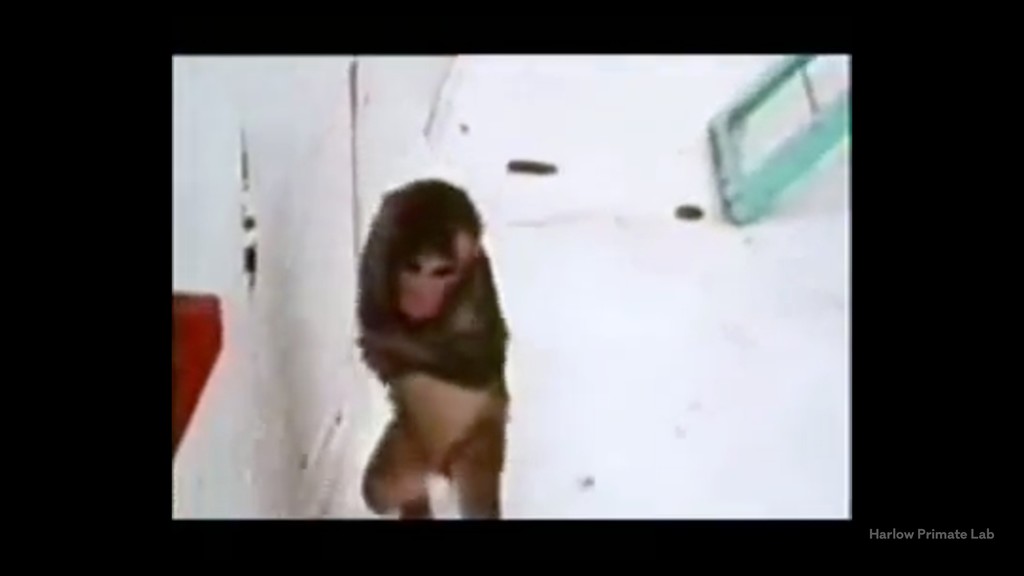
What we actually need is technology that supports both comfort and security. And we learned this I'm sorry, and security. And we learned this all the way back in the fifties when Harry Harlow did a bunch of experiments on some baby Rhesus monkeys. What he found was that without comfort and security, primates become emotionally stunted and develop antisocial and often abusive behaviors.
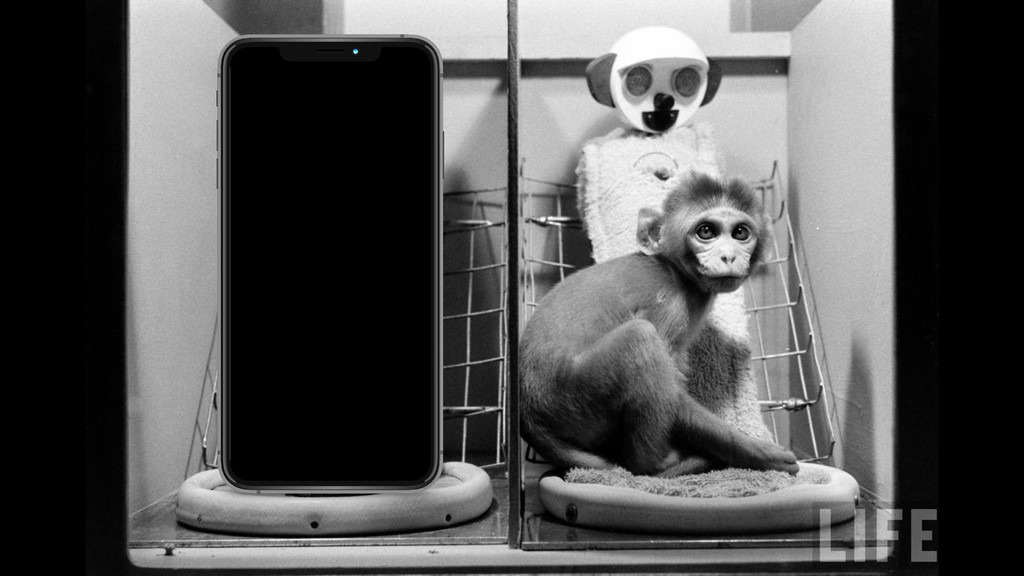
With his experiments, he was able to demonstrate that even though, in this case, a wire mother fed the baby monkeys, that these baby monkeys would still end up spending thirteen to fifteen hours a day cuddled up with a cloth covered wire mother. So even though this baby's necessities were provided by one, it chose to spend time in the comfort and security of the other.
And in a lot of ways, we are those baby Rhesus monkeys. All that we've done, though, is that we've substituted that wire mother monkey with our phones. We spend far too much time with those phones developing antisocial behaviors like bullying, aggression, and oftentimes depression.
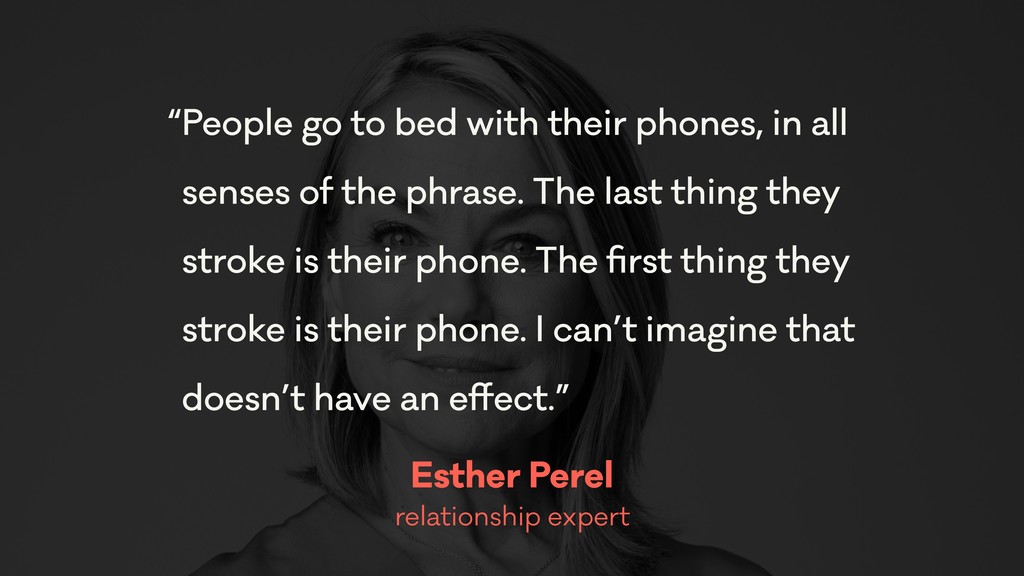
And I think Esther Perel has a right when she pointed out that people go to bed with their phones in all senses of the word. The last thing they stroke is their phone. The first thing they stroke is their phone. I can't imagine that that doesn't have an effect.
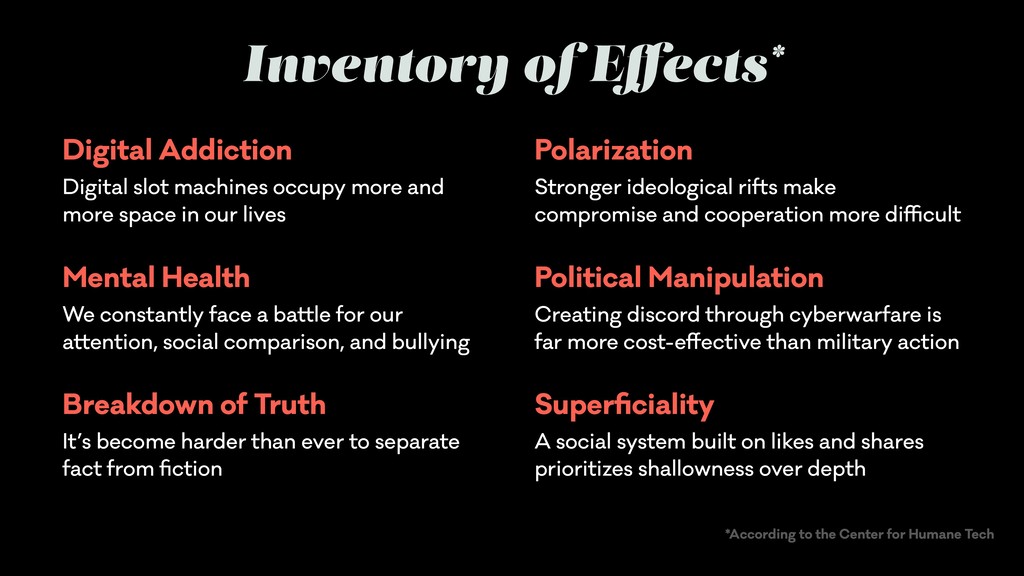
And indeed, it does have an effect. Many effects, in fact. Now my friends over, at the Center for Humane Tech, Aza Raskin and Tristan Harris, have enumerated some of these effects. And they start with digital addiction, mental health issues, breakdown of truth or the ability to to to know what is truth and what is not, polarization, political manipulation, and superficiality.
So this is just sort of a not a brunch, a taste, a sample, a sampler of some of the effects that our technology is having on us. And it's framed the fabric of society. And yet the goal, again, remember, back in the beginning was to bring people together.
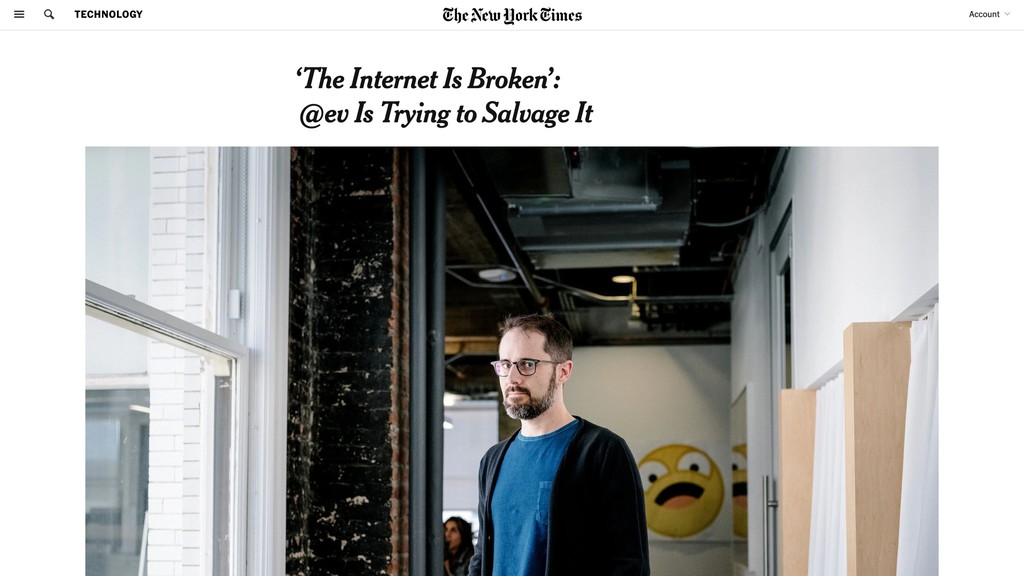
Now, what's been interesting is that people who were there at the beginning are starting to come to the realization of the negative outcomes that their products have produced. Know, Ev Williams has been trying to make some changes over at Medium for a little while.
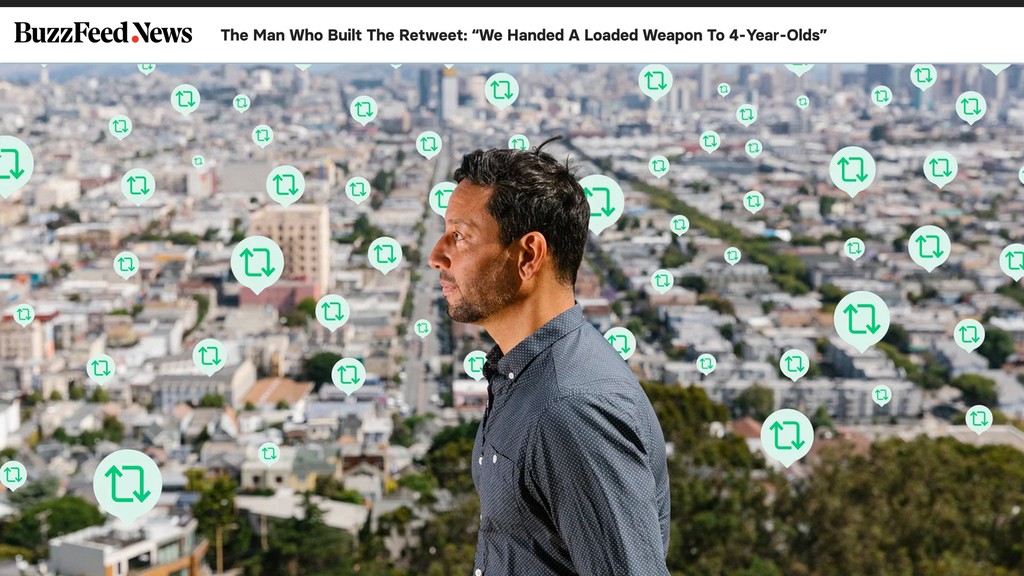
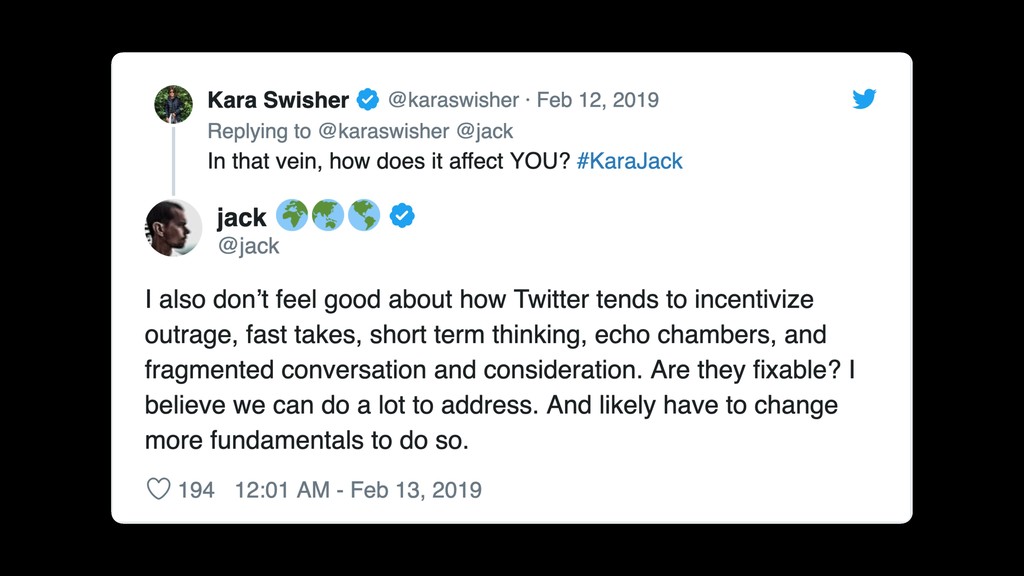
Chris Weatherall, the guy that implemented the retweet button on Twitter, basically has likened it to giving, a four year old a loaded handgun. So he has some some, guilt about that. Jack Dorsey, of course, the CEO of Twitter, has been on a worldwide tour, meditating and talking about all the problems that Twitter is having, you know, incentivizing a lot of the the the wrong things to basically drive more attention to the platform, and to get people to get in these these disputes.
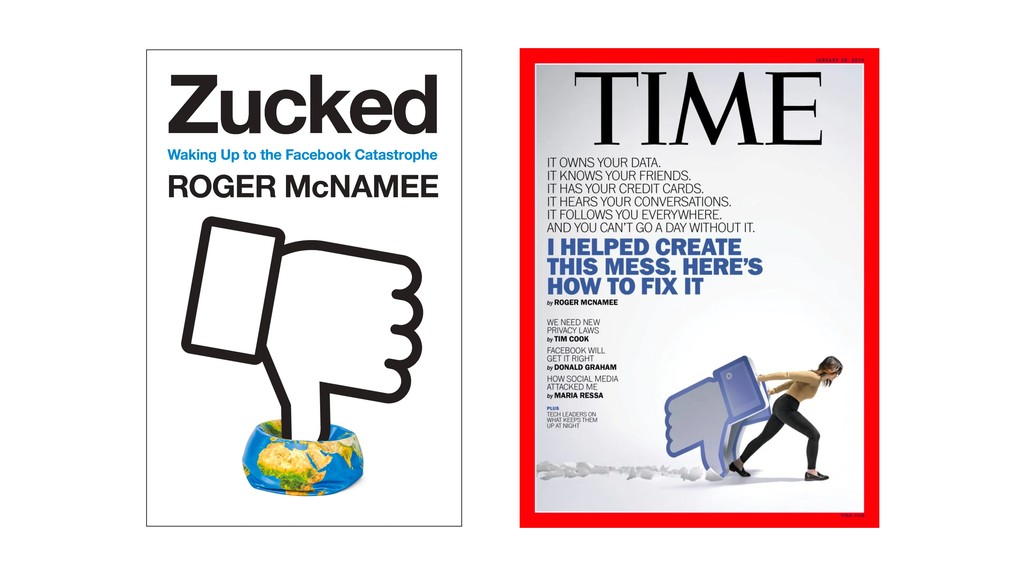
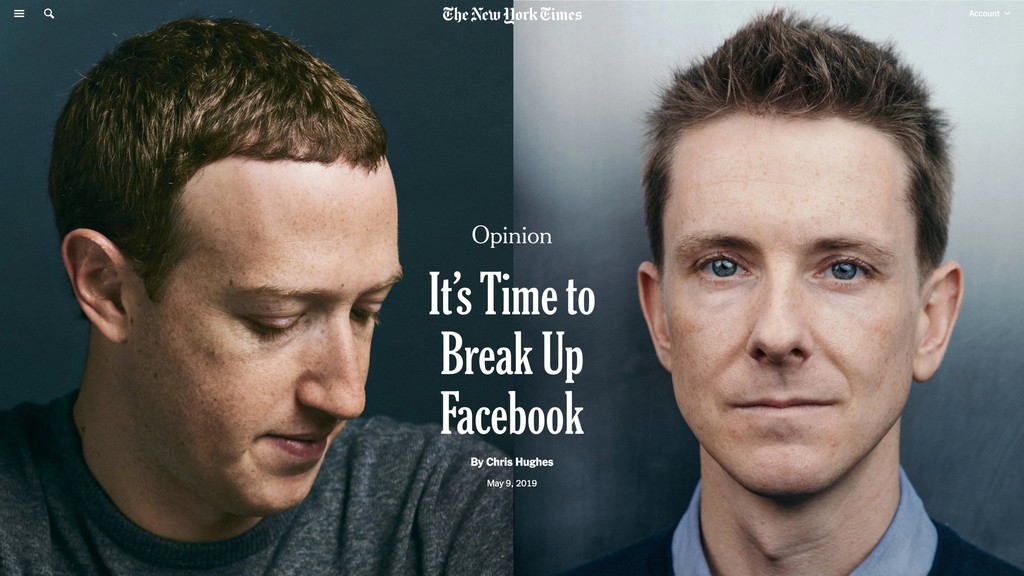
Roger McNamey, one of Mark Zuckerberg's earliest investors and mentors, has written a book talking about how bad Facebook is for society. And of course, one of Zuckerberg's roommates and cofounders, Chris Hughes, wrote an op ed in The New York Times calling for the breakup of Facebook.
So you have all these people who are also there at the beginning who are talking about fixing the system or changing things. And so it is easy, of course, to to to assume and to believe, I think rightly so, that we've got some problems.
But what I'm not sure about are the solutions that are being produced so far. Of the solutions, what I see in the mix of what's being proposed are things like fixing the products. Now, this makes sense. We're seeing some incremental things happening here.
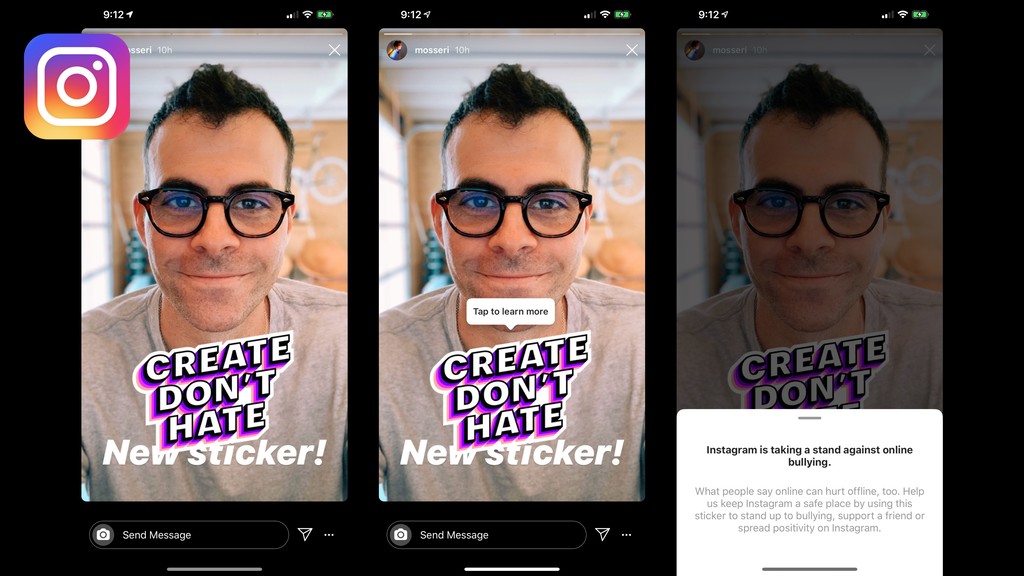
For example, Instagram has been, I would say, in front doing a lot more proactive things to take on bullying and harassment. So I don't know if this makes a big difference, but recently they launched a sticker, Create Don't Hate which I guess is a rallying cry for people to use the platform for more effective things.
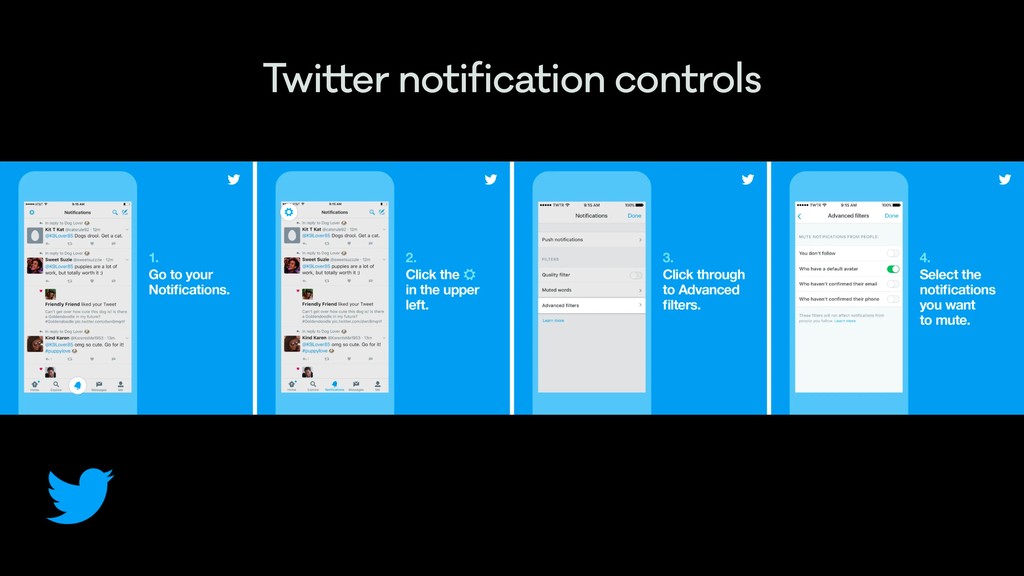
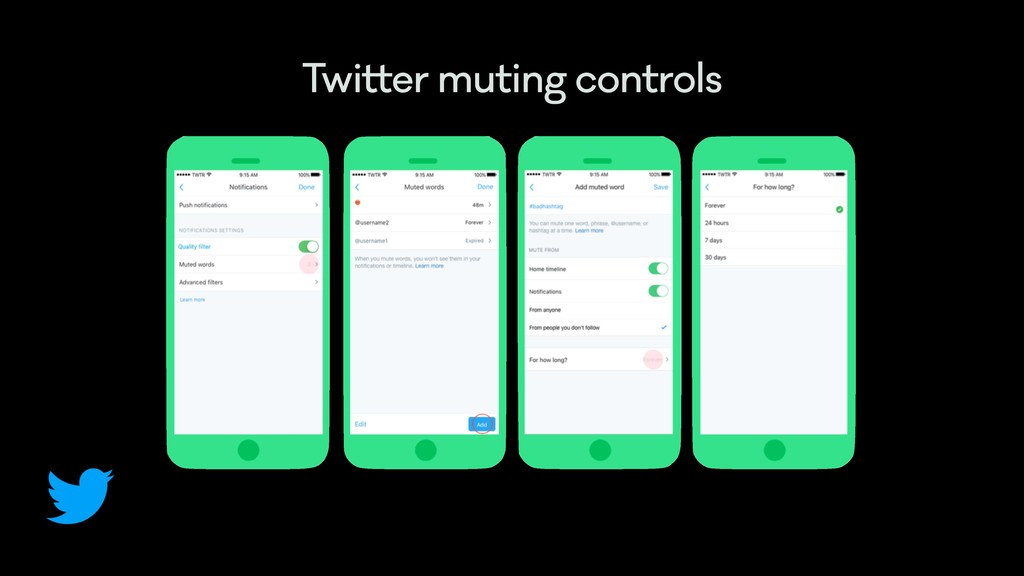
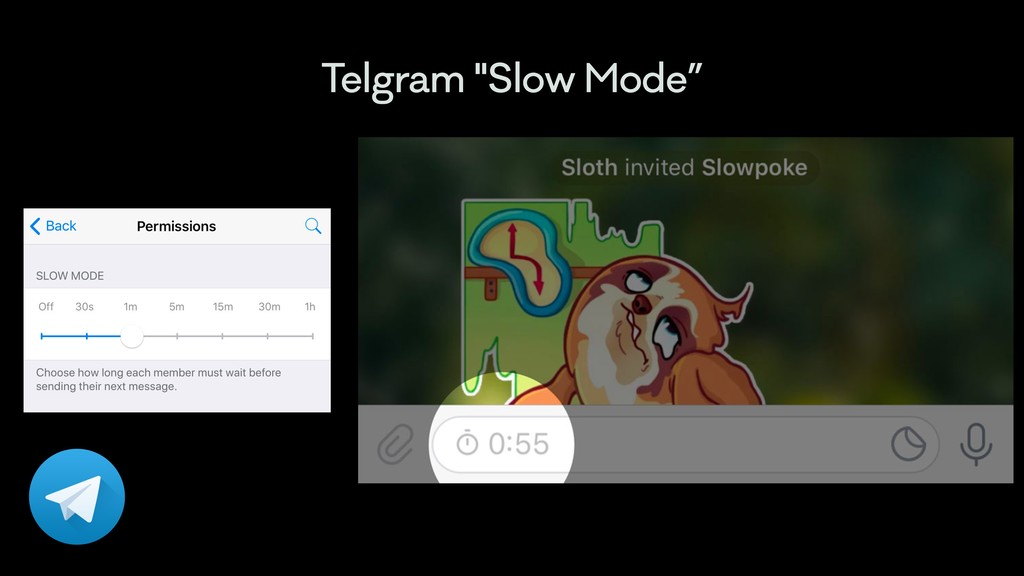
Twitter has added in more notification controls, so you have more finite controls over things. You can mute more content, take them out of your experience if you don't like them. Oops. Telegram has interestingly introduced something called slow mode, so it can actually reduce the number of posts that are happening in any group.
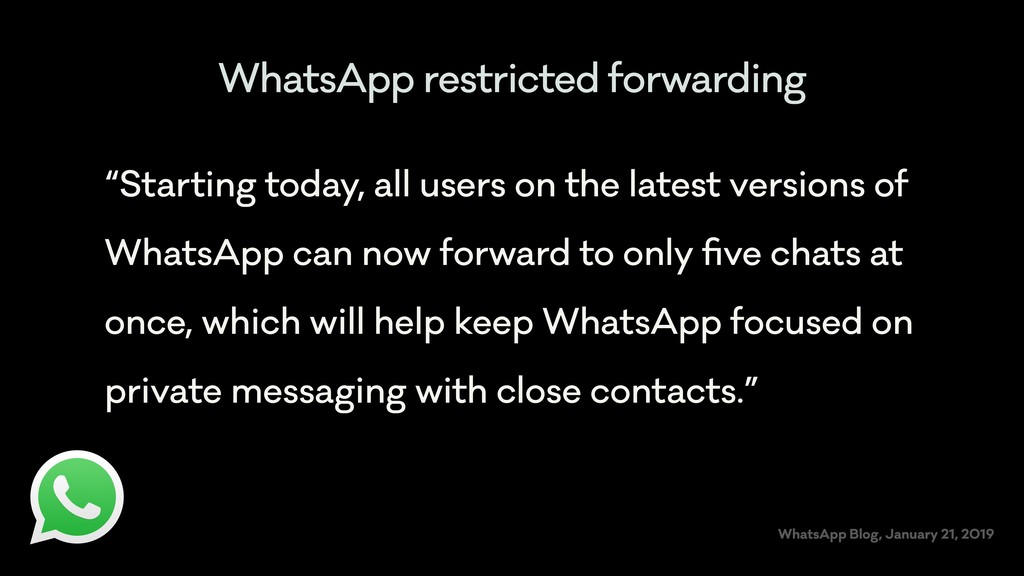
There's no spell correct here. And WhatsApp has also restricted forwarding, specifically in places like India, to prevent the spread of false information. And so what they've done is they've essentially reduced the number of times you can forward information to five hops because information was spreading that was not true that was leading to things like genocide.
So imagine you're a social product designer, and your product leads to genocide. That might make you feel bad about what you've done. Maybe a little bit. Right? Okay. So that's one set of solutions. Let's just fix the existing products. Another might be to build new products.
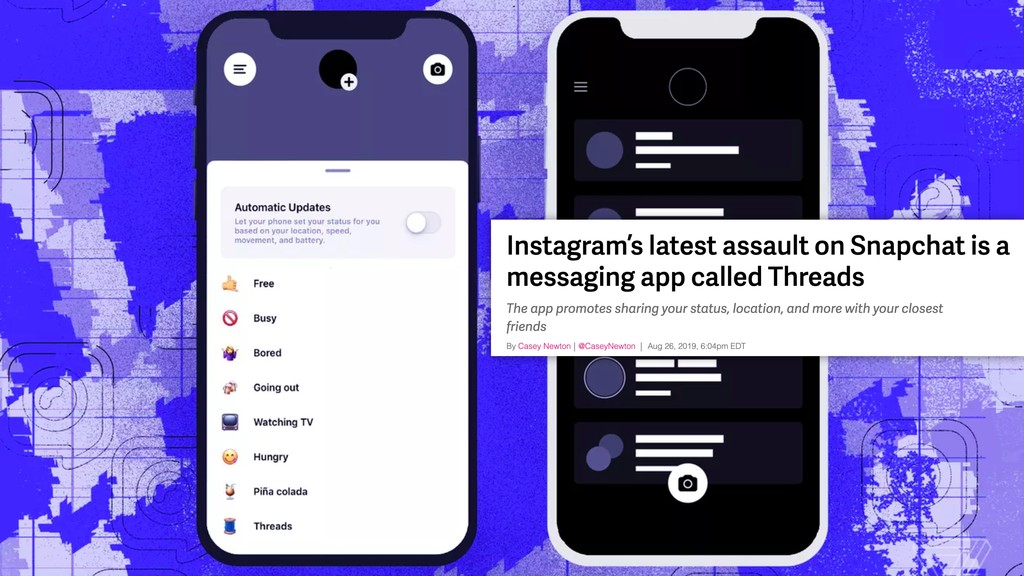
And I've seen fewer of these that are compelling or interesting so far, but one that recently caught my attention was what Instagram might be doing with a new app, of course, to take on Snapchat called Threads. But again, I don't know if this is fundamentally going to change the game.
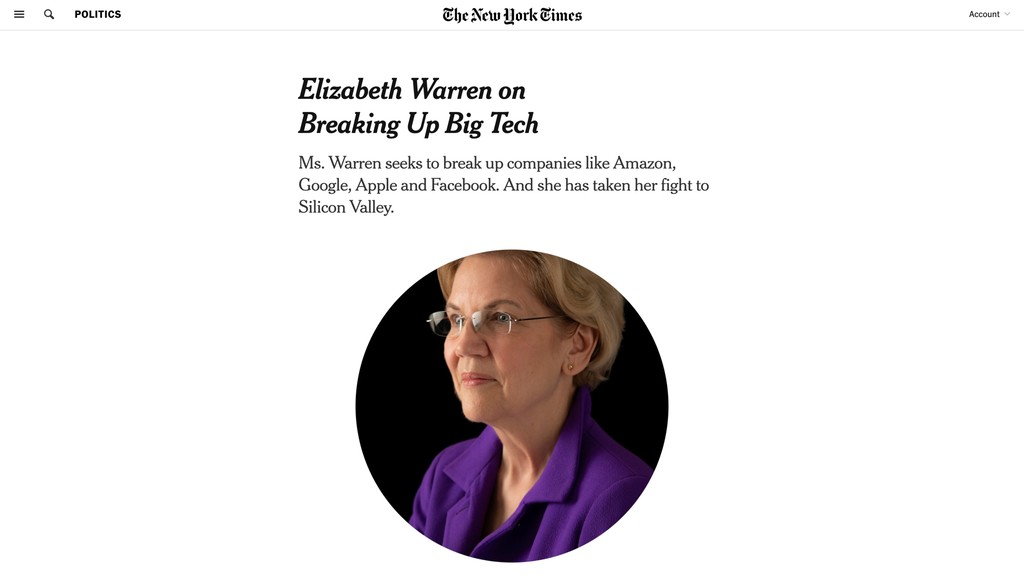
And then on the other end of the spectrum, you can fix the products, build new products, you can regulate the companies. So now get the legal system involved. Now I have my concerns about this, given the way in which government tends to move from a speed perspective.
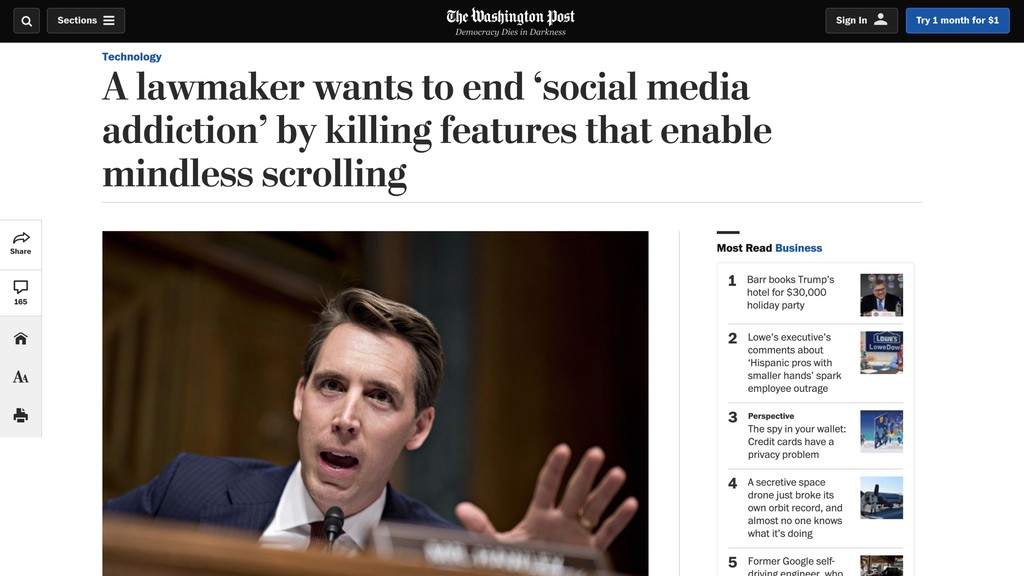
But there are people, for example, who are running for the US presidential race or running in that race that are calling for breaking up big tech. There are lawmakers, for example, Josh Howley, who has introduced what's called the Social Media Addiction Reduction Technology Act.
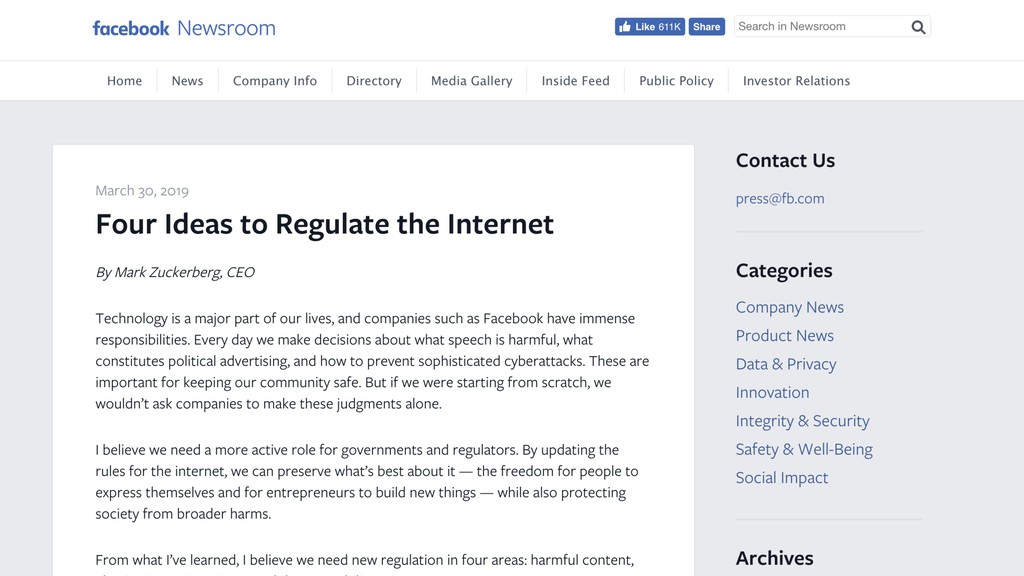
Of course, it has the acronym SMART. Ironically, it's not a very SMART bill because, for example, he calls for outlawing things like infinite scroll, autoplay, or streaks, which may not actually address the real issue. And even Facebook itself is talking about ways in which it could be regulated in a way that might be more effective.
Now, I don't want to, you know, crap all over these. I think these are good starts. They're starting to, again, address the fact that there are problems and there are challenges here. But my concern is whether or not these things are going to be sufficient.
Because what I don't think we need are incremental solutions, things that just sort of move the ball forward but don't actually address the underlying issues. Know, regulations might change the way that some of these these companies work, but ultimately, the impact that these technologies are having on us is an environmental challenge, like we're dealing with the environmental catastrophe that's going on in the world right now.
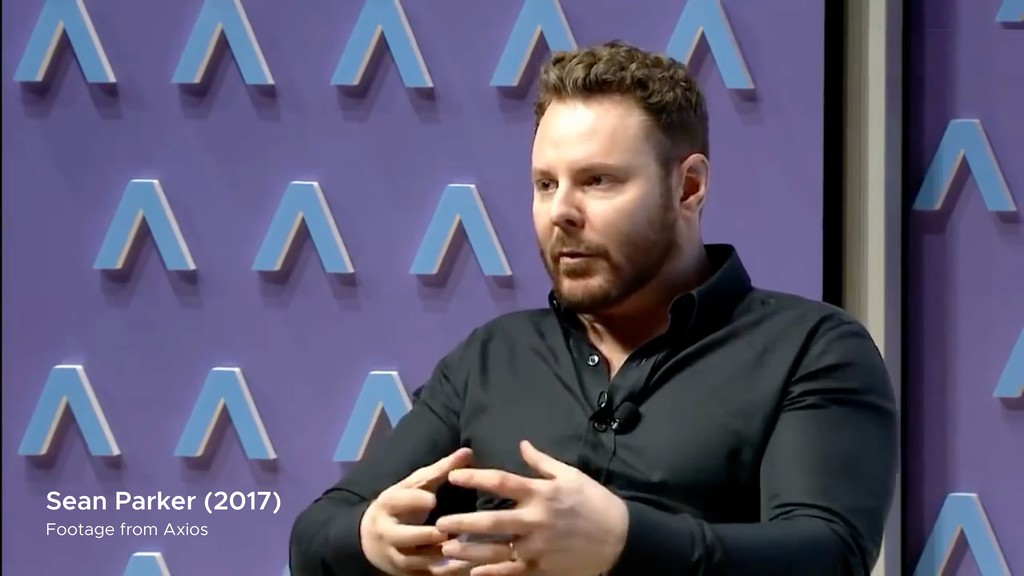
So these are good places to start the conversation, but it's my sense that we really must go deeper, because this is what we're up against. Gonna play this clip for you. It's gonna give you a sense for where I think the real source of this problem lies.
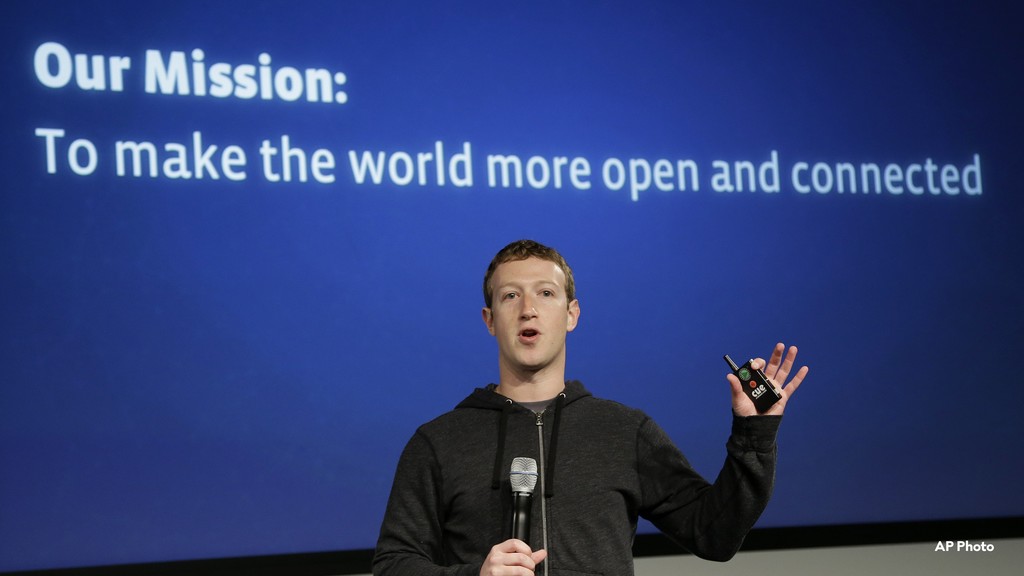
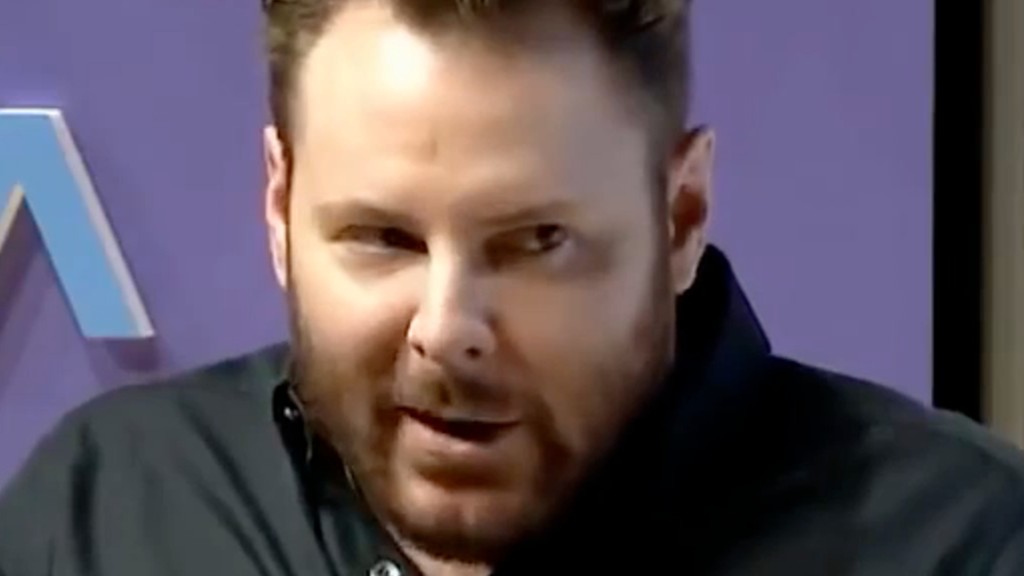
This is Sean Parker. He was the first president of Facebook, and he has some interesting comments. You know, if the if the thought process that went into building these applications, Facebook being the first of them to really understand it, that thought process was all about how do we consume as much of your time and conscious attention as possible.
And that means that we need to sort of give you a little dopamine hit every once in a while, because someone liked or commented on a photo or a post or whatever. And that's gonna get you to contribute more content, and that's gonna get you, you know, more likes and comments.
It's a it's a valid, it's a social validation feedback loop that that it's like a, I mean it's exactly the kind of thing that a hacker like myself would come up with because you're exploiting a vulnerability in in human psychology. And I just I I think that we, you know, we the inventors, creators, know, and it's it's me, it's Mark, it's the, you know, Kevin Sistram at Instagram, it's all of these people, understood this consciously, and we did it anyway.
We did it anyway. There's just, like, a moment where you're like, oh my god. Like, the depravity and sort of, like, the the moral bankruptcy in this individual goes so deep. How could any of those solutions that I've just gone through actually address this kind of problem?
And I think the other thing that's important is to think about the urgency of this problem. It's nice to sort of imagine that you could write regulations, and they'd be perfect day one, and it would take two weeks to get them done, and you could launch and iterate.
But that's certainly not going be the case. And we all know that getting products to be adopted and used are also incredibly difficult is also an incredibly difficult, problem. So we really don't have time to make incremental, nonsystemic changes. The goal really isn't just to fix social media or big tech.
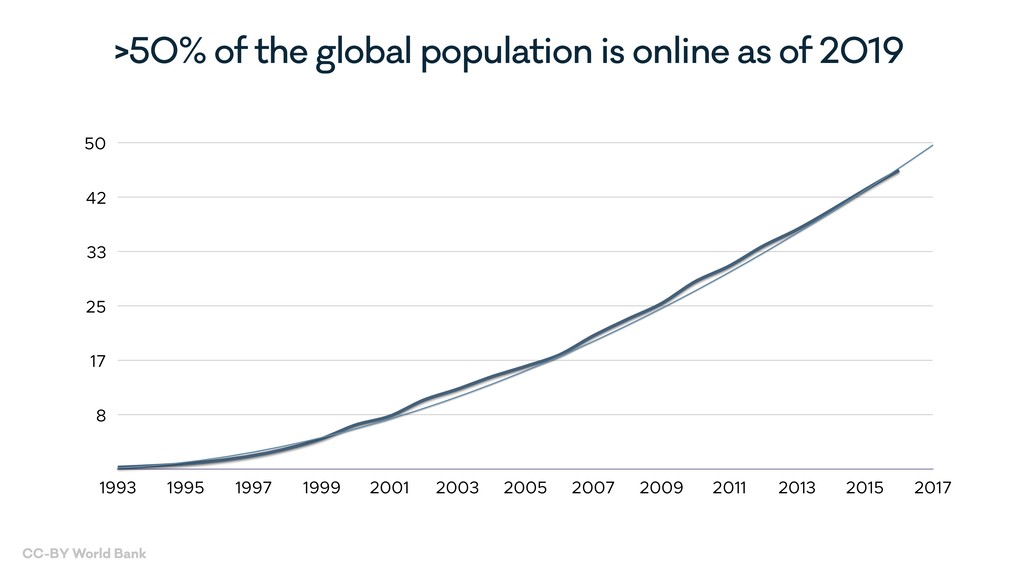
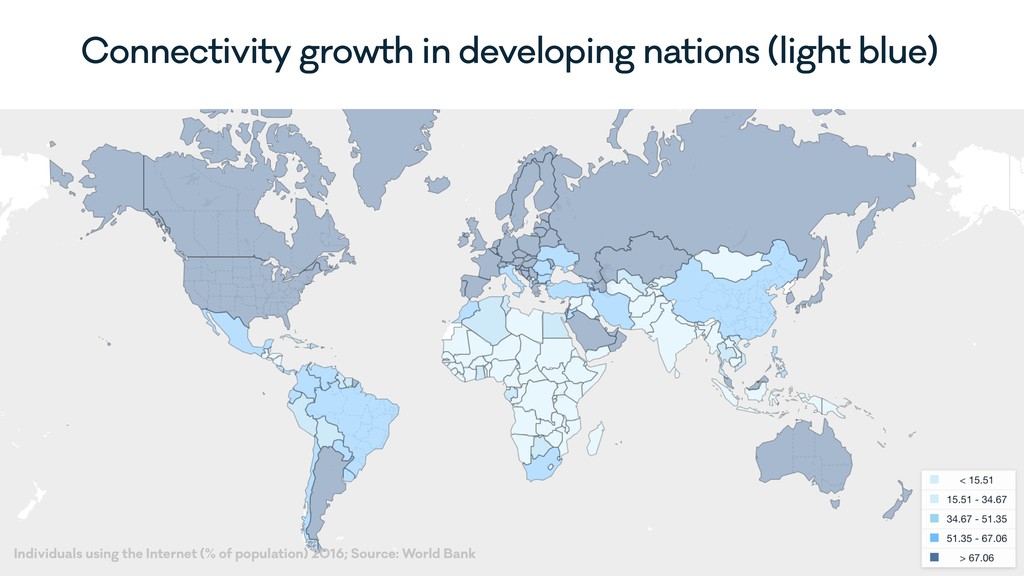
I think the solution really is to fix us. And again, here's why. As of twenty nineteen, fifty percent of the global population is connected to the Internet. It took us thirty years to get here. The UN predicts or projects that it's only gonna take another ten to connect the last fifty percent.
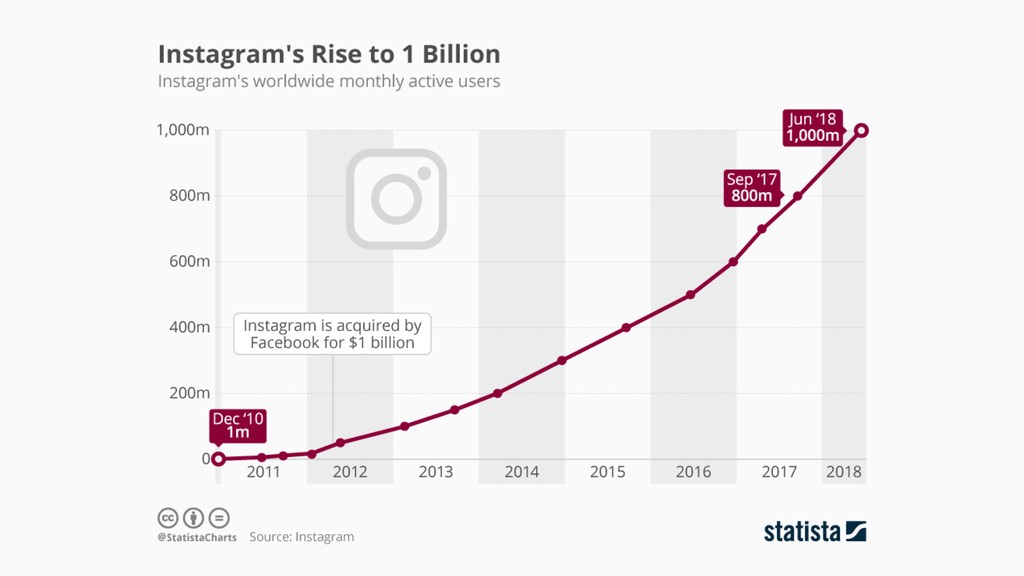
Right? It's a really short amount of time considering how much of an impact technology has had on us. And if you think about this, ten years ago or just barely ten years ago, Instagram didn't exist either. Now it has over a billion users.
Now imagine how many other Instagrams or things like Instagram will be created between now and twenty thirty. Right? And consider the impact that those new Instagrams are going to have on human societies, especially in the developing world, where most of the new connectivity is going to come from.
Right? These are folks who haven't had the Internet yet. They are not inoculated against all the ******** that we have to deal with on a daily basis. They are a greenfield. And so if you have someone like Sean Parker Developing the products for that part of the world, especially with AI and machine learning, you really have to worry about the fate of humanity if you weren't worried already.
Right? Because I don't want to be living fifteen years in the future, having gone through an extraordinarily complex change in our relationship with technology, and to think back fifteen years before to twenty nineteen and wish that we'd made a bunch of different choices.
Okay. So how do we do this? Well, as a founder myself, I know that building a company is one way to make a change. But to scale this change, I believe we actually have to change the found the the the culture that surrounds founders, like people in this room.
Since I was there fifteen years ago, and I was there helping to make some of these decisions. And personally, I made a different set of choices than a lot of my friends did who built businesses and companies. I chose to give away a lot of the things that I thought the world needed in social technology.
I have a sense for how the culture that we were in affected the outcomes that we're living with today. And I can also see, thanks to the adoption of the hashtag, what kinds of downstream consequences there are to the little minute decisions that you make in the products that you create.
So my job today really is to just to bring awareness to you, to help share parts of my story and the things that I've learned. In the fifteen years that I've been working on social technology. And the reason is because I think founders, creators, entrepreneurs, we are like artists.
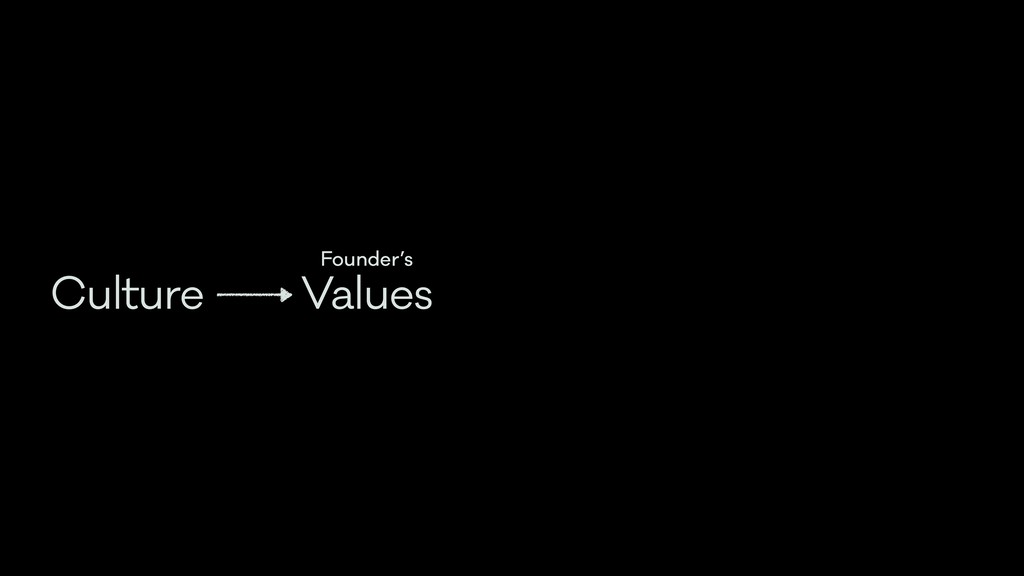
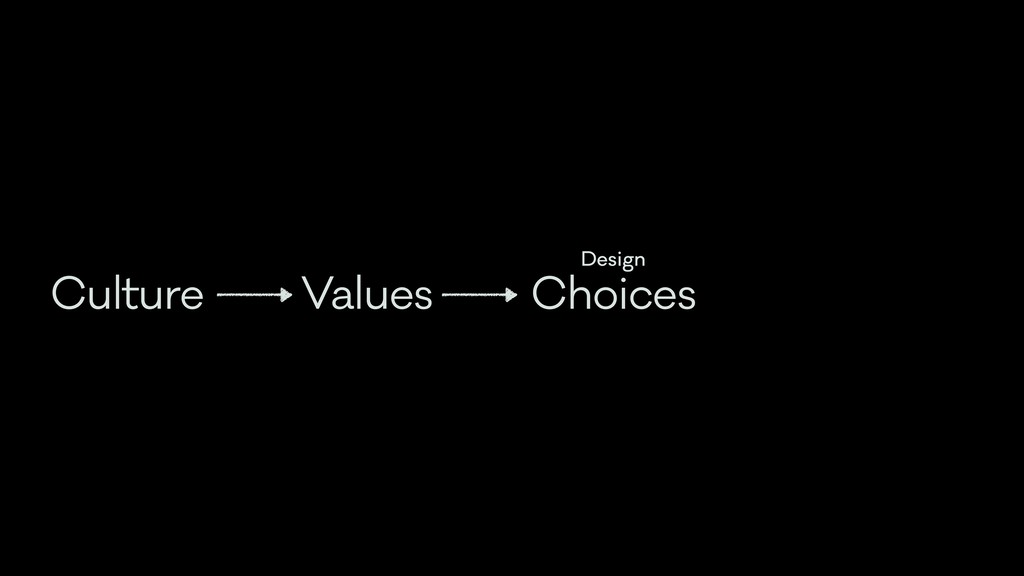
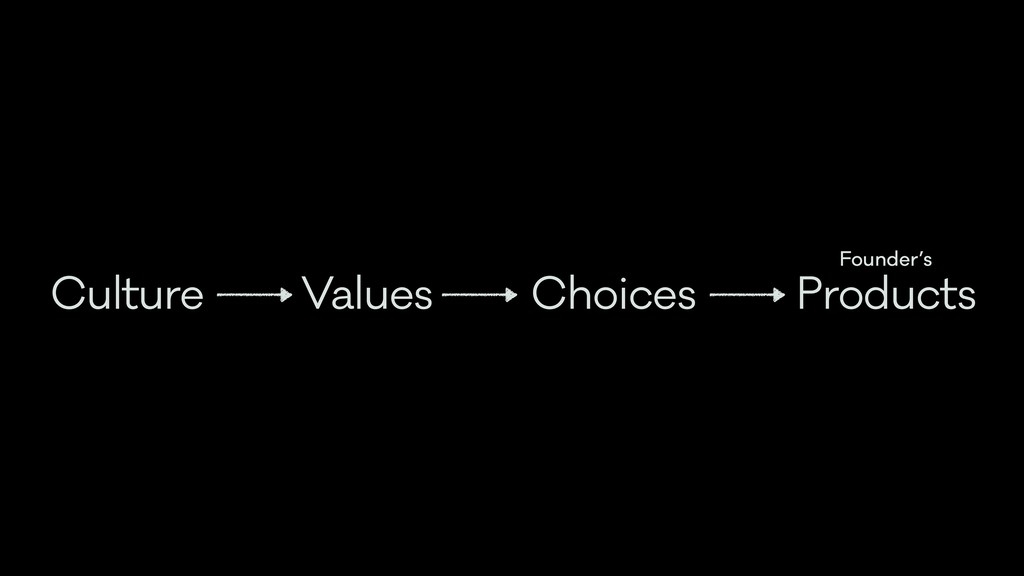
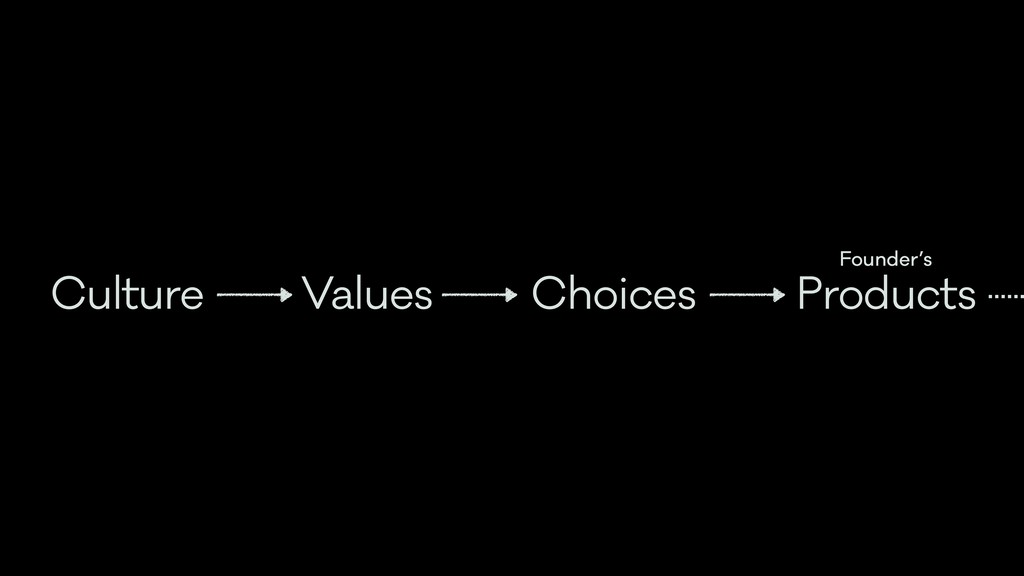
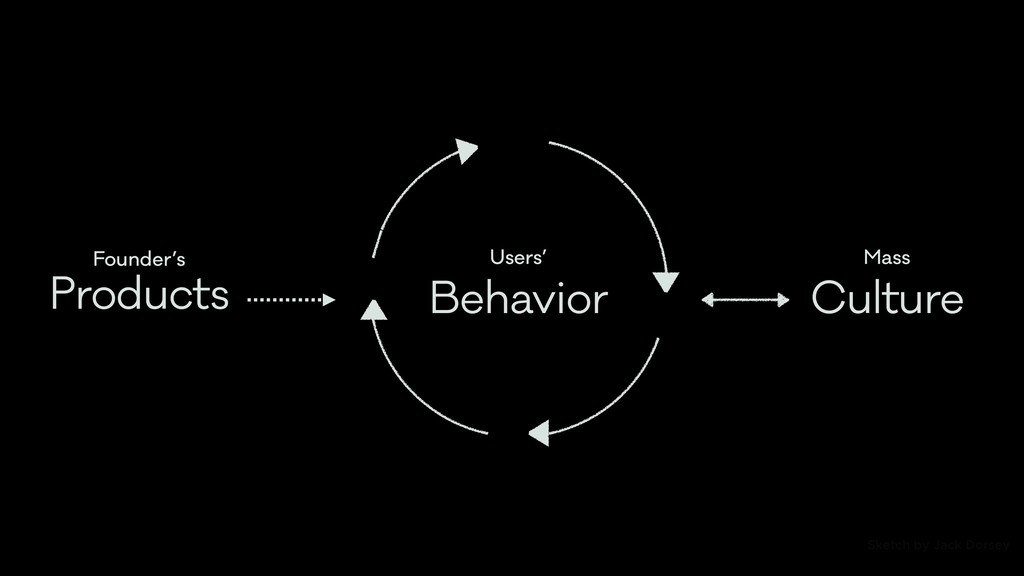
We like to see ourselves reflected in our work and the things that we produce. I certainly feel that way about the hashtag. So this is effectively how I've learned this plays out. Right? You take the founder's culture, and the founder's culture often informs the values, the principles, and decisions that they they will make.
Those values then inform their product design choices. Should the Like button do this, or should the Like button do that? Should we disclose to the person how we're manipulating them, or should we not? Should we put up a wall of text, or should we not?
Should we make the logo bigger? Yes. And these cumulative design choices ultimately define the founder's products, the products that actually make it out into the world. And these products, over time, affect users' behavior in this feedback loop, which then changes and affects mass culture.
So if I think about my friends in two thousand four and five and what we were doing on IRC and in Wikis and using social the early days of social technology, and then imagine that our culture was going to affect and change mass culture in fifteen years' time, that would have been insane.
Geek and nerd culture wasn't something that was a popular thing back then, literally. And yet now, we live in a world where everyone has a computer, and everyone is able to interact through these devices. And so the reality is that founders' products propagate their culture of origin.
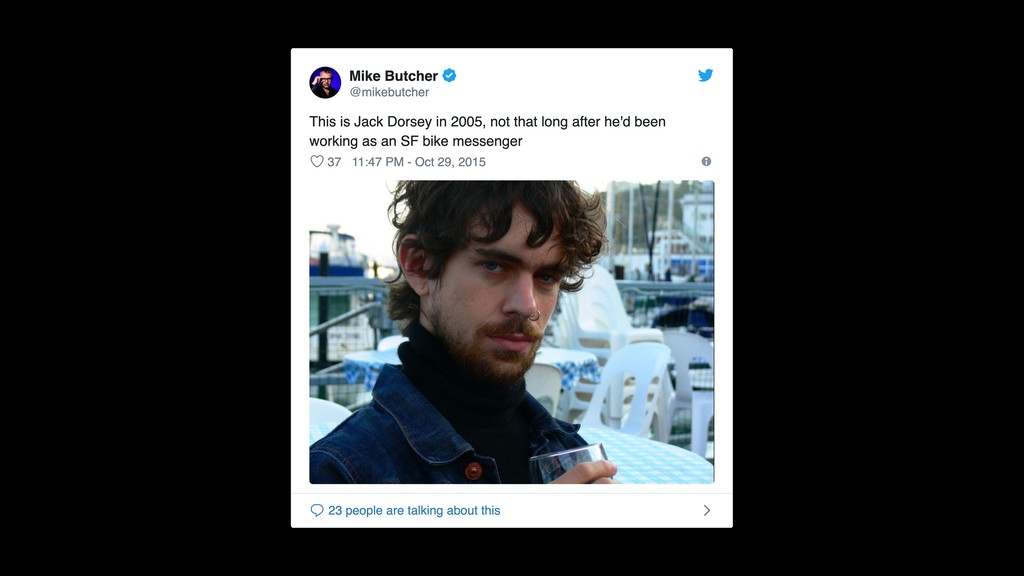
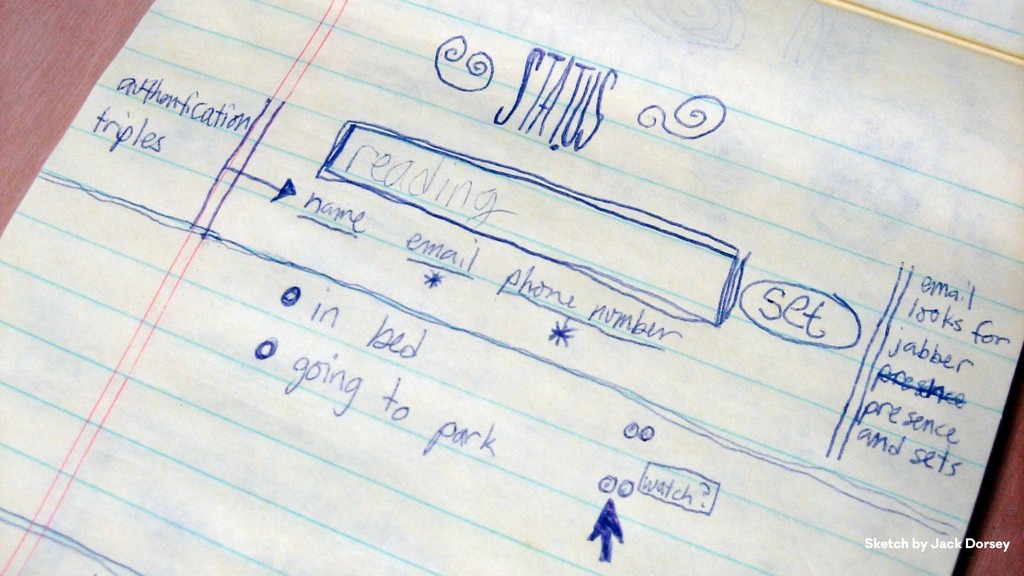
And to make this a little more tangible, let's talk about Jack Dorsey. The idea for Twitter this is this is Jack back in when was this? Think this was a long time ago, actually, back when he was in his pirate days. Jack Dorsey started his his life as a as a bike messenger.
So he'd get gigs via SMS, via a pager, actually, and find other gigs that way and share gigs like that. But also, he was a free speech activist, and a lot of the early Twitter employees were also free speech activists. And they saw SMS as this new channel for broadcasting their status, for broadcasting updates to their friends.
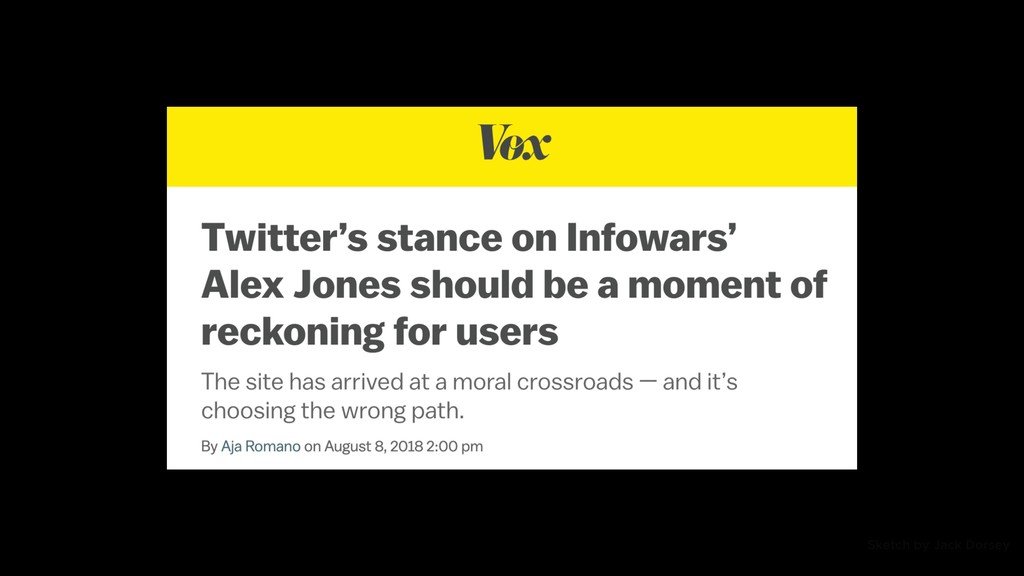
And so what Jack was able to do was to harness this new channel to create a new media platform. And from the very beginning, Twitter adopted a very liberal policy when it came to what content could and couldn't be on the system, which partially explains why Twitter was one of the last platforms to remove someone like Alex Jones, who's a controversial conspiracy theorist.
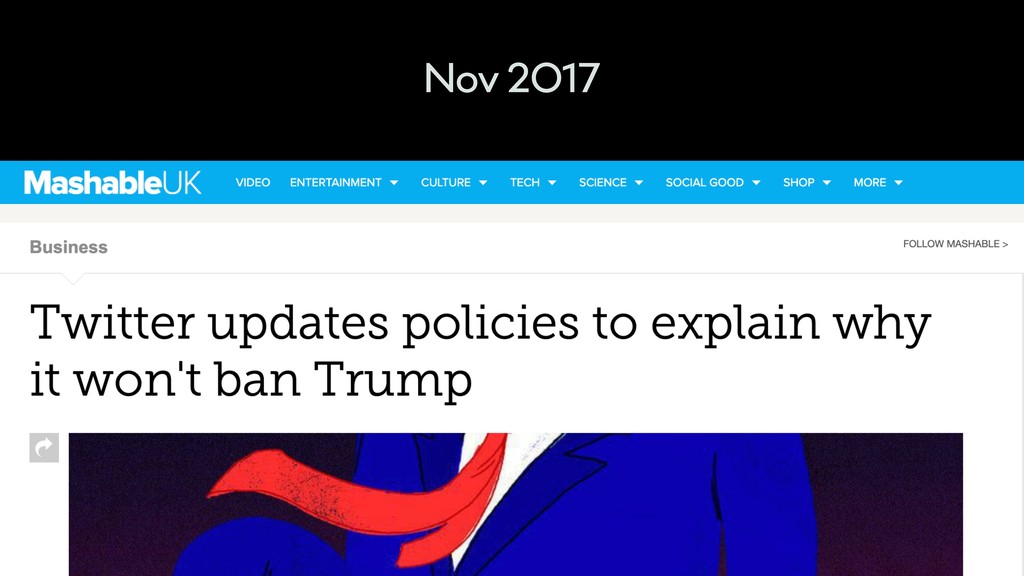
All the other big tech companies, YouTube and Facebook and so on, had deplatformed him. But Twitter was like, no. No. No. We believe in free speech. This is important. This also explains why back in twenty seventeen, Twitter was like, even though Trump is breaking all of our rules, well, his tweets are newsworthy, and so he gets to stay on the site.
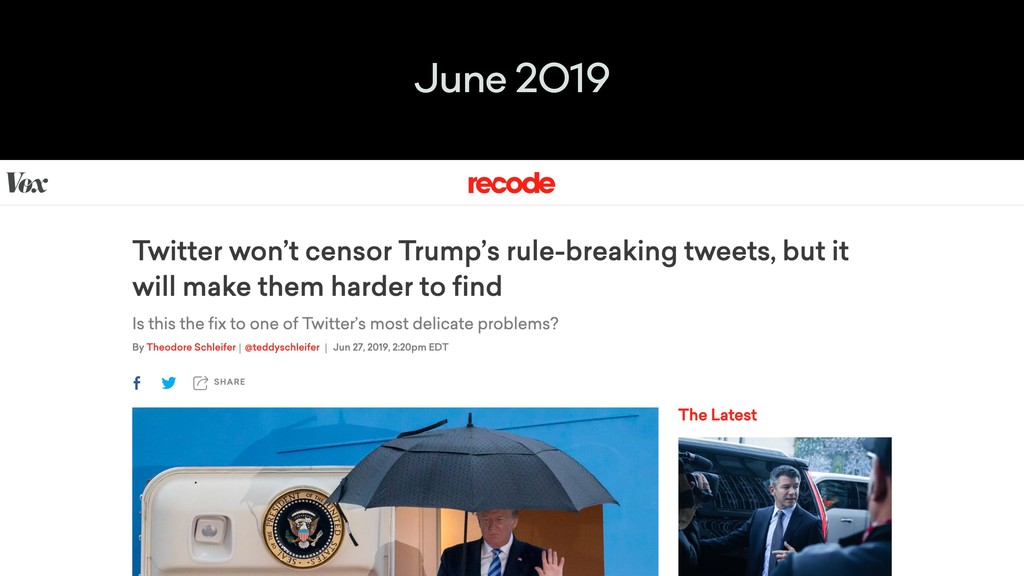
And only recently, this year, did they update those rules to say, well, we're not going kick him off the platform because sometimes he says things that are important, but we'll just make his stuff hard to find if he breaks the rules. And so you can see how Jack's culture affected the user's behavior, which then affected mass culture and the experiences that we all have.
I, for one, think in tweets. I now look at scenes or photos, and I think about taking photos vertically for Instagram stories. This stuff literally changes the way that we shape and conceive of the world. And again, this also is not new. John Culkin, who was a friend and contemporary of media theorist Marshall McLuhan, observed back in nineteen sixty seven that we shape our tools, and thereafter, our tools shape us.
No wonder that we've become more anxious, more distracted, less able to have deep, calm dialogues, thanks to the chirpy design of a lot of the social products that we use today. And, again, I don't blame the technology of Twitter itself. Technology is largely an amplifier, but the it's the culture that produced Jack or produced me and my friends and some of you too that I think has a lot to do with this.
Now McLuhan himself told us that the medium is the massage or the message, And the message of you can look it up. It's the cover of the book. The message of social technology is that you can't understand social technology separately from the culture that produced it.
So if we change the culture of founders, I believe that we can change the nature of social technology products. So far, the message of social technology has been that it's zero sum. But again, that's a direct result of the culture that built it.
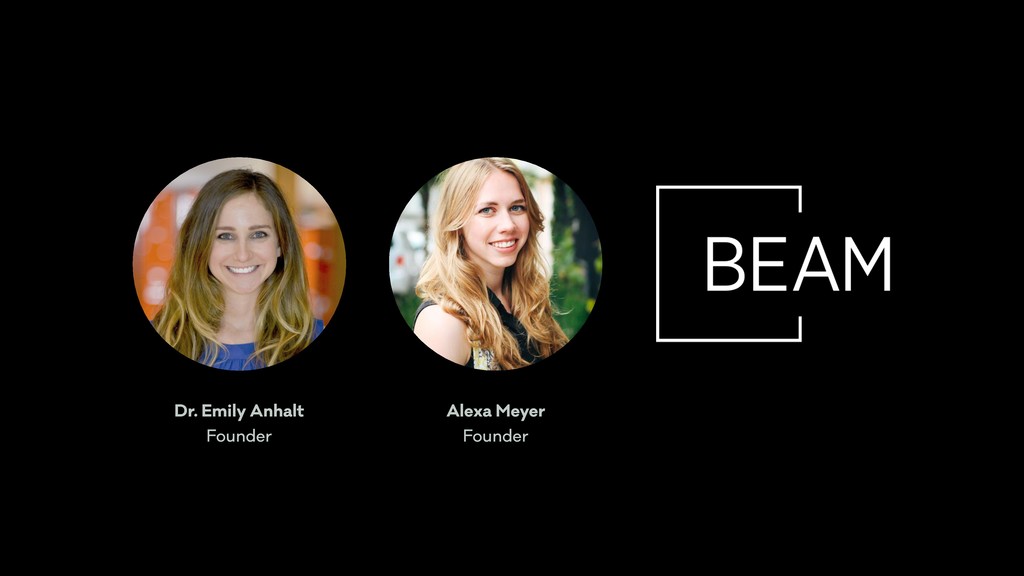
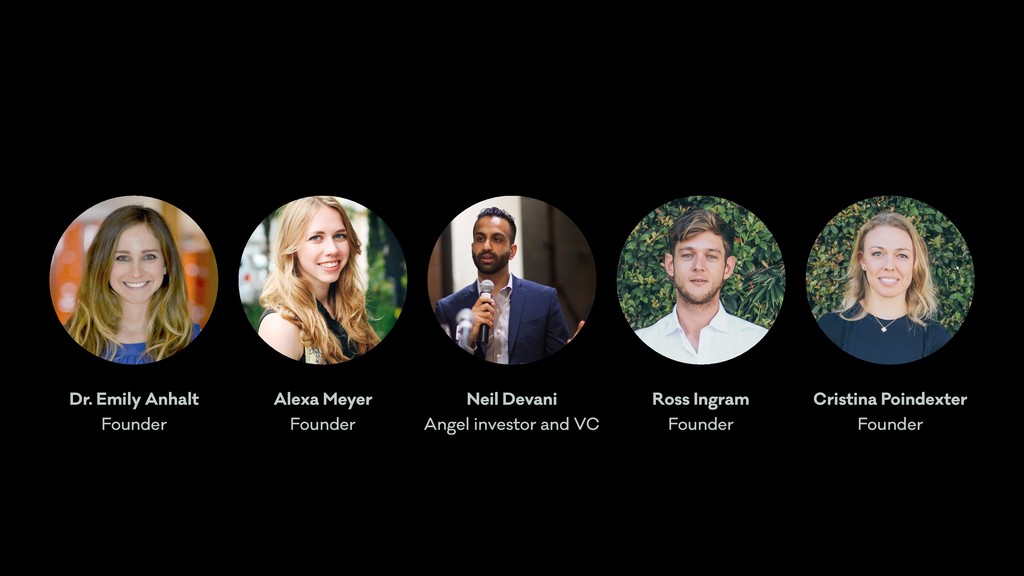
So we have to make a change. And the good news is some people have already started down this path, in fact, including people in this room. So I'd like to introduce you to Emily and Alexa. You will be able to hear from Emily later today.
These two are building a new company called Beam it's just barely launched yet. I think the logo is still drying who are working to build essentially a gym for mental fitness. They care deeply about the emotion the overall emotional wellness of founders, the mental fitness of founders, and they're creating a context to bring people together to share their experiences and learn from each other.
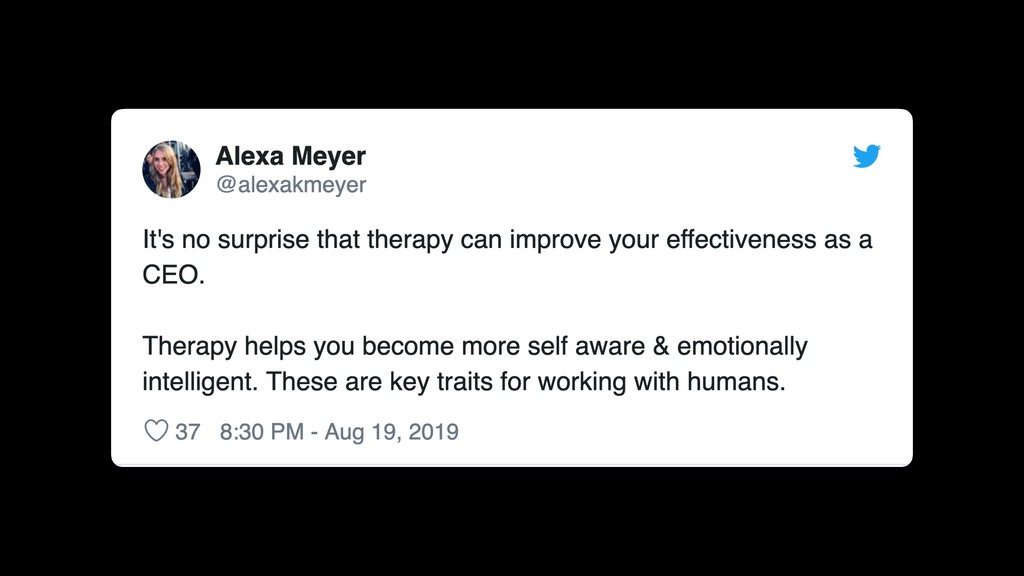
Beam is specifically building an in person community where you can find therapists, take a workshop, learn about leadership skills, and find others who are also committed to working on themselves, who are working on themselves and the technology of themselves. And they're specifically focusing on founders because therapy and mental wellness can improve the effectiveness of CEOs, specifically by helping them to become more self aware and emotionally intelligent, which are specifically skills that are necessary for working with other human beings.
They themselves are dog fooders of their own products. They are both in individual therapy, and they are, get this, in co founder therapy. I don't know if any of you guys are in relationships and if you've ever had a relationship coach or therapist, but imagine that for your cofounder.
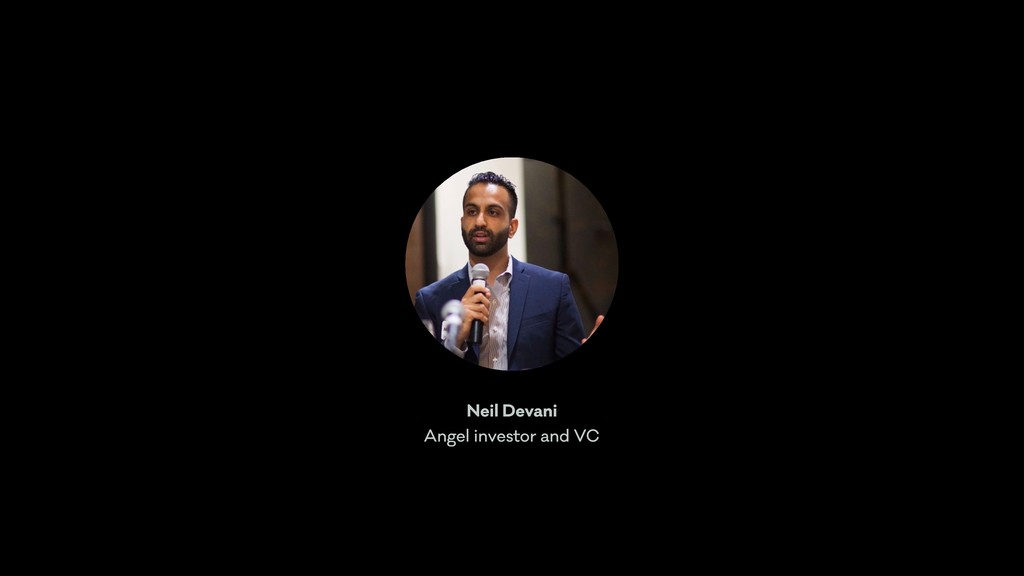
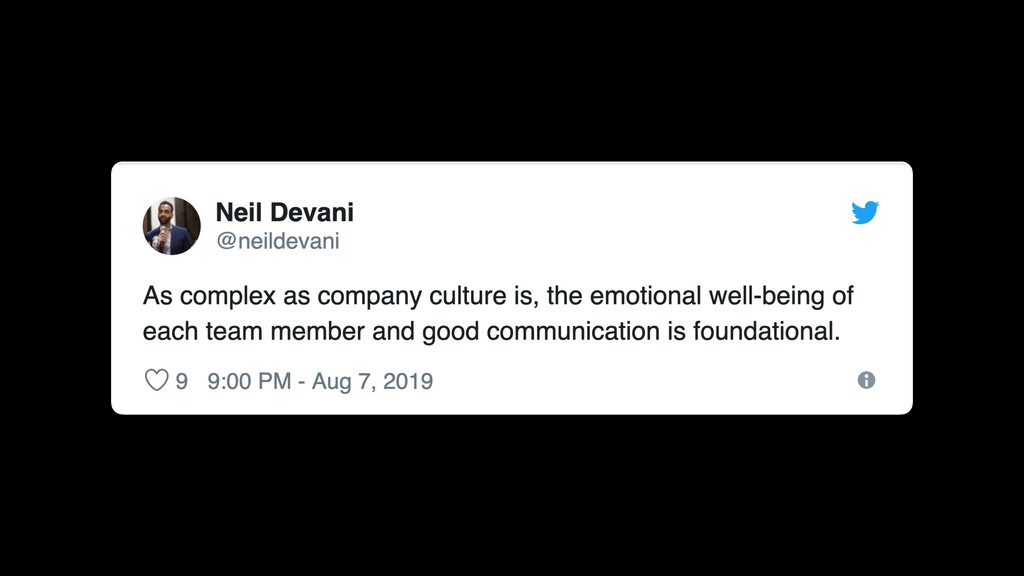
That's the kind of thing that they're working on. And I think that's incredibly important to start to make this change that I'm talking about. One of their investors is Neil Devaney. He understands what they're doing, and he's willing to put his time and money into supporting these things, into supporting the mental fitness and overall emotional wellness of the founders that he invests in.
And one of the reasons that I want to work with him, and think this is an important message for VCs and investors in the room, is because Emily and Alexa want to work with an investor that understands that and understands what is happening.
And they want to get involved in investing in the whole wellness of humans as opposed to just getting more users on a platform. Neil knows that the startup game is a marathon, not a sprint. And one of the main reasons that investments fail is oftentimes founder burnout.
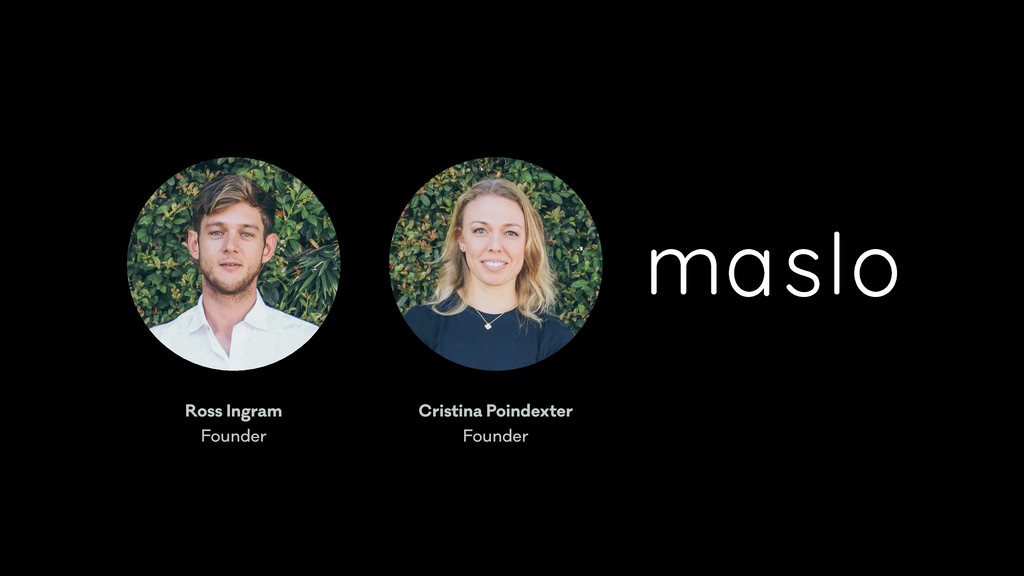
Neil wants to change the culture of founders to promote lasting emotional resilience. And that's incredibly important, again, because the startup game is something that lasts for seven to ten years in most cases. And on the product side, these are some friends of mine out of LA working on a new product called Maslow.
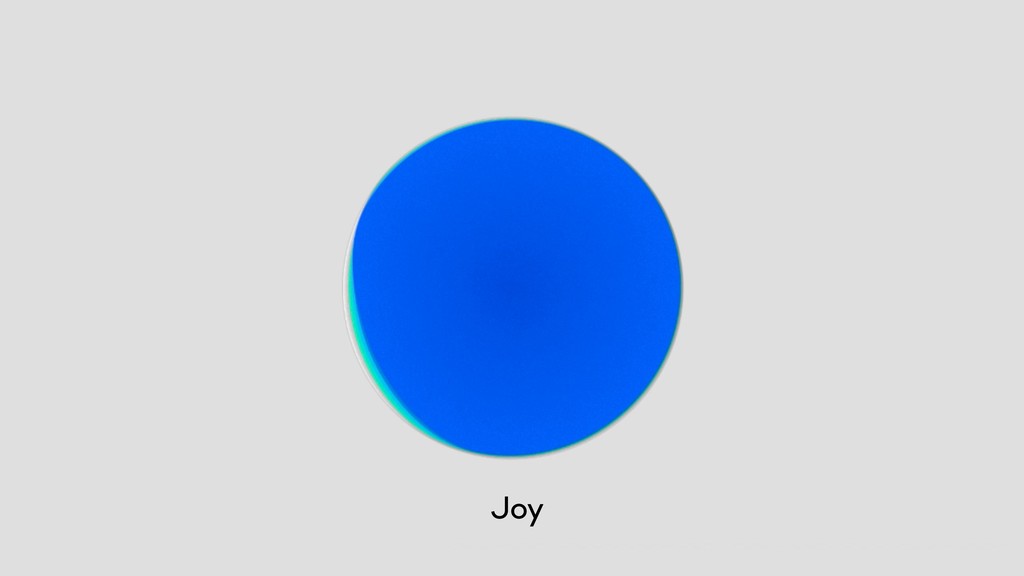
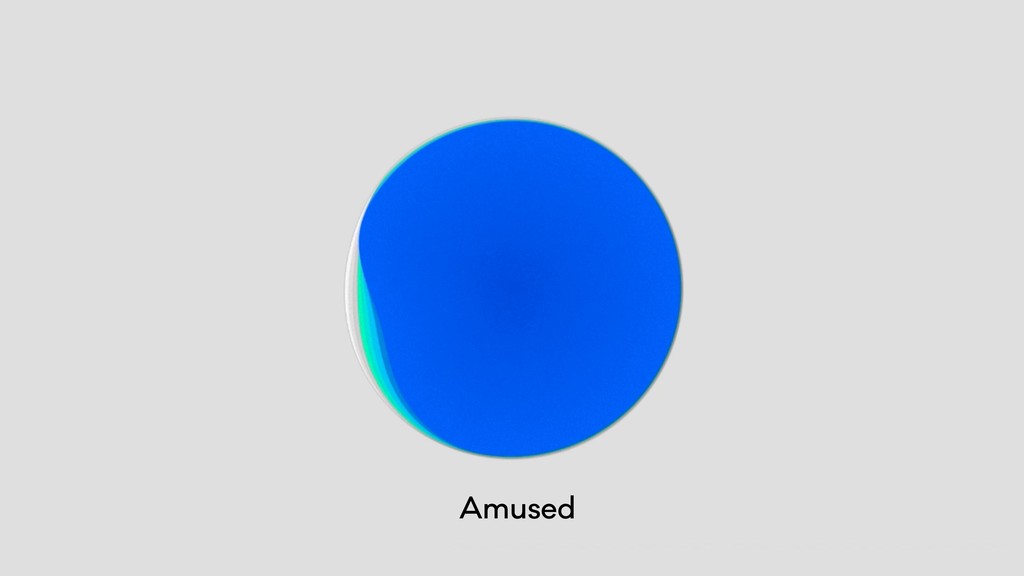
What they're doing is they're building an AI companion that inspires prosocial behaviors in humans by expressing empathy through nonverbal cues. This is a way of humanizing our social technology. I'm going show you what Maslow looks like. So this is Maslow. It's an emotive orb that mirrors the emotional states of humans by reading facial expressions, voice modulation, and things like that.
Here, you can see Maslow expressing joy. This is when Maslow's amused, and this is when Maslow was surprised. All of this is emotional technology that can be added to voice assistants or different products to enhance the human to machine relationships. So on the one hand, we have to get better in our relationship with ourselves, but also with our relationship with our technology.
These folks are part of a new breed of what I think of as emotionally intelligent entrepreneurs. And we're thinking about those future Instagrams that I was talking about that are going to come in the next ten years, the founders of those next Instagrams need to be aligned with these folks in terms of their culture and their values.
And I believe we can get this right if we start now. Now you remember when I was talking about getting kicked out of high school back in nineteen ninety eight? Well, I'm here today to share with you this lesson that took me fifteen years to figure out.
You know, I started my journey in technology probably twenty years ago now, which makes me sort of old, but seasoned, I I suppose. If I could go back and have a conversation with myself, my younger self then, I would, of course, encourage myself to get into computers and design, psychology, social technology, all those things.
Like, yes, this is the future. These are the things that are interesting. But I'd also encourage myself to start investing in the technology of myself, my ability to know myself, to be curious about myself, to learn to be open and vulnerable, to be able to express my emotions using language and words as opposed to outbursts.
And these are the types of things that Emily and Alexa are teaching. What I'm saying today, I think, should be specifically relevant to young people who might despair about the future, who look at social media and think, oh my god. Like, what is this world that you're bringing us into?
And I especially think that for those of you who use hashtags every day and never thought about the fact there was someone who was no different than you, that one day came up with an idea that was designed to bring people together, to connect people, to allow them to use technology to communicate with one another, could be here standing in front of you.
Now, I started my journey quite a while ago. Many of you are just getting started now. Many of you are growing up in social media, which is why you're also in the best position to change it. So if you don't like the way that social media makes you feel or the way that you see people treating each other online, I honestly think you can change it by changing yourself, by developing the technology of yourself.
Once you've done that, once you've done the work, once you've invested in that, then you can go build the next Instagram, the next Twitter, the next Snapchat, or hopefully something way better with a new culture and a new set of values that gets us back on track to building the technology of better humans.