
It is estimated that AI will drive 95% of all customer interactions by 2025. So it’s no surprise that over the last 12 months, AI has been one of the most discussed topics around the world. Tools like DALL-E, Jasper and Midjourney have dominated these conversations and it seems with the introduction of OpenAI's ChatGPT, there is no avoiding artificial intelligence. Companies are feverishly searching for meaningful use-cases, however with so many options and opportunities where do you even start? How do you leverage AI to drive growth for your business as well as for time savings and on top of that, which tools are best suited for your business? In this talk, Bastian will guide you through the various AI solutions you should be considering, the strategies to drive business growth, and supply plenty of practical examples along the way.
The Rise of AI: Strategies and Tips to Drive Growth








Auto-generated transcript - may contain errors. Tap a timestamp to jump the video.
Alright. Beautiful. Two quick warnings before we get into this. First of all, I'm German, so apologies for the very bad accent that you just have to deal with that in the next thirty minutes. Gonna try my best. Second, there's a ton of things in this deck, and I might have slightly different take on some of the AI things. So don't take a hundred fifty photos.
I'm gonna share the slides. It's much easier than going going crazy. I have a background in search. So for me, I guess, most of AI or tooling that's currently available is really to kind of drive growth and efficiency. So I'm gonna focus on that today, just try to make it as actionable as we can.
Right? Before we go there, I thought we're gonna do a bit of a real quick warm up, kind of this icebreaker situation. You know? It's gonna be embarrassing, which is only for me, so it should be fine. No. Kidding aside, I asked my kind of design team to put, you know, a side by side, slight comparison of two images.
One is AI, like AI generated, and one is a stock photo. I'm just gonna challenge each and every one of you to kind of figure out if you can see or pinpoint which of the images is actually done by an AI, which is, apparently a photo that has been taken at some point in time.
So we're just gonna do it a real quick show of hands to kind of see if you manage. So flowers first. Who thinks that the left one, so a, is done by an AI? Okay. Who thinks b? That's kinda half half, I figure.
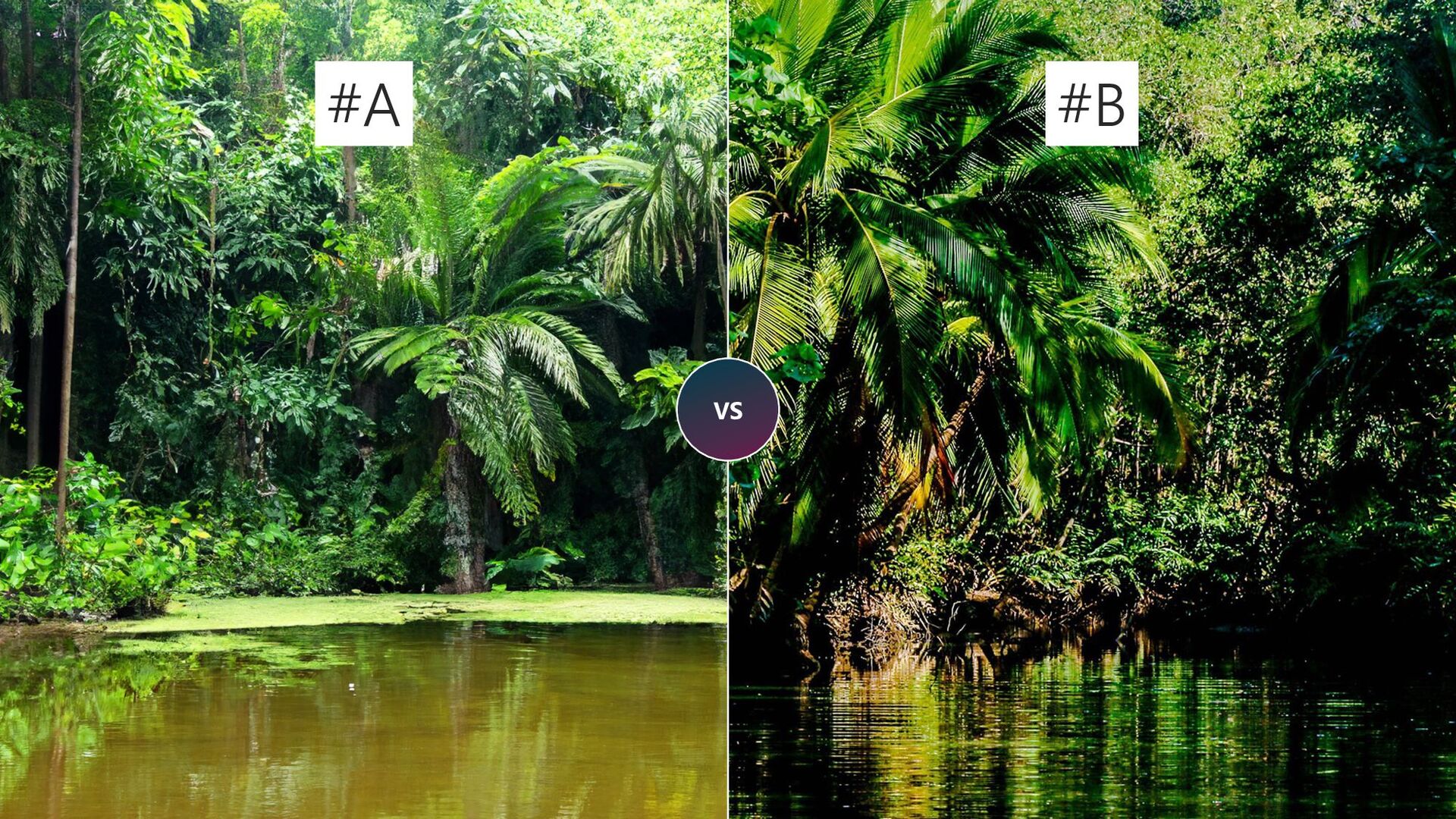
So, it's actually b in this case. So there you go. One more. We're gonna do and try the jungle. Show of hands for a. That's less hands. B? You're all wrong. It's a. Sorry. Okay. We're gonna give it one more spin. We have, you know, sun sunset or sundown or either way.
Show of hands for a? Show of hands for b? B is less, but it's b. So and that is the point. Right? It is incredibly hard right now already. Even with a train line I give you, it is, you know, it's on the big screen, but even on on on a laptop screen with a high res it's extremely hard to figure out, you know, is it is it kind of actually from an AI or is it is it human made?
And I think if you have been playing with and we're gonna go through a whole bunch of tools and things and and stuff and there's always like source links on the on the on the bottom left later on if you wanna, you know, play with it.
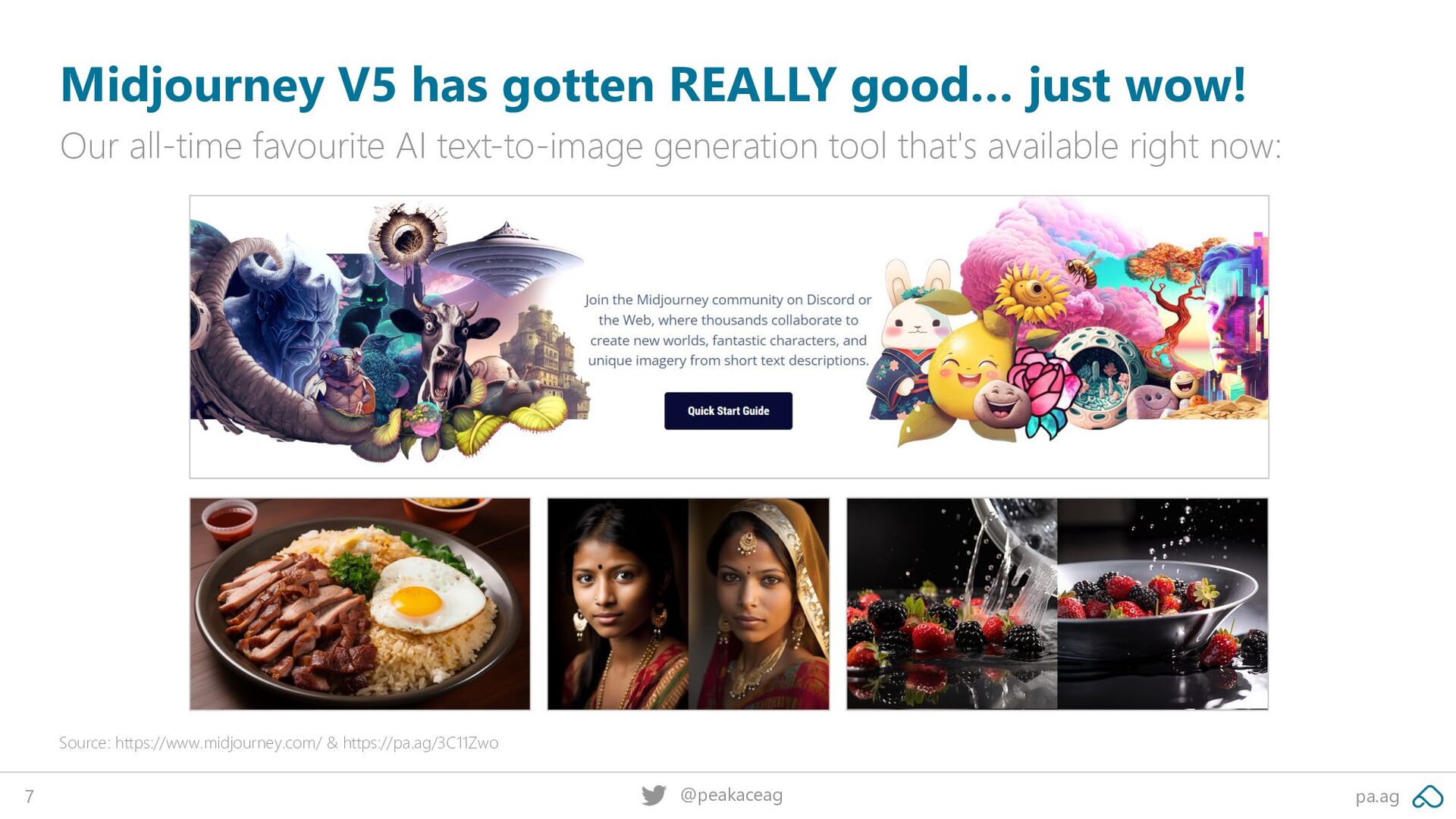
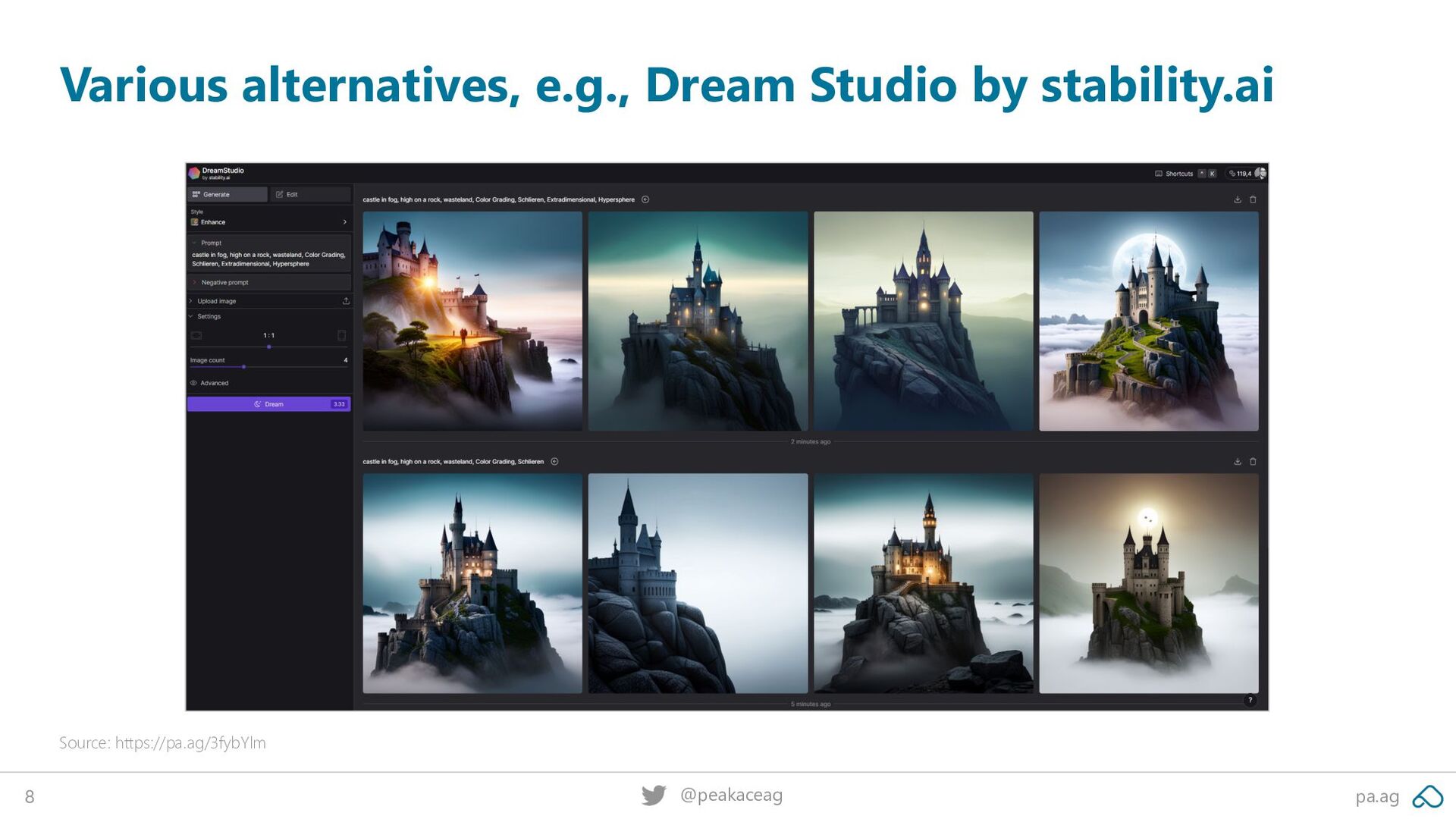
Again, I promise I share the slides. But basically, if you have been, you know, using anything like, you know, mid journey or, you know, even things like DreamStudio, which is done by stability AI, There's there's really, really exciting stuff that you can do with it.
And it all comes down to prompting or building prompts. If you're now wondering what the hell he's talking about so essentially, prompting is basically how we as humans can talk to an AI interface, at least right now. I mean, there's it's thrown in and done by text.
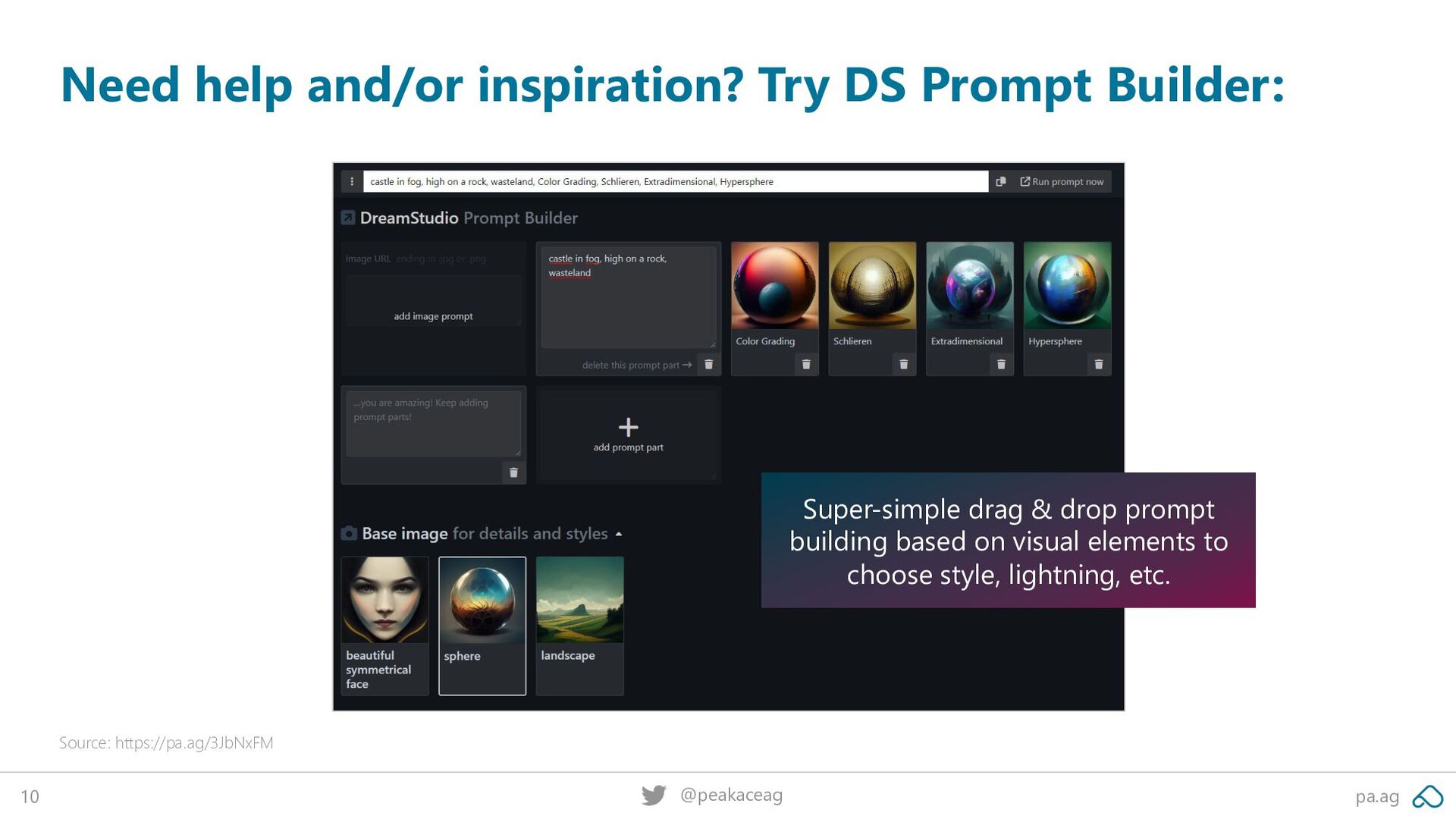
I guess that's gonna change over time. But the the kind of the art and the craft is to define input, proper input. And we're gonna talk about that in a second. But if you're kinda new to this or you haven't done it yet, one thing that I really like is called DS prompt builder.
So the idea is basically you have a visual approach to prompting. So what that means is you can basically pick from an imagery on the kind of bottom. You can pick a style or any type of, you know, form, kind of reflecting how the output is supposed to look like and then just basically drag and drop and it builds the written prompt for you.
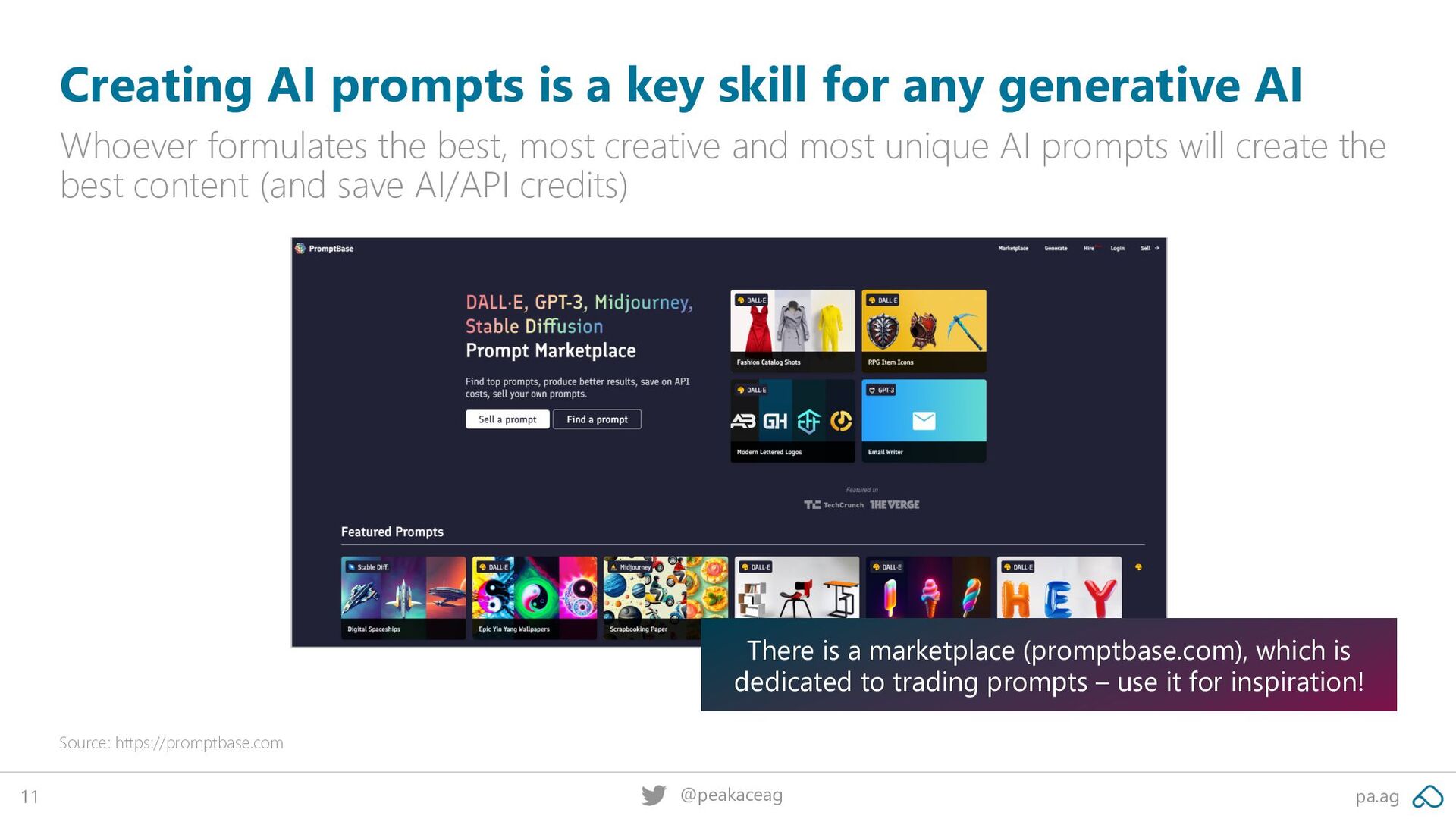
So it kind of takes away a bit of the, you know, nitty gritty details of how to craft a proper input to any type of generative AI and then produces something that most likely looks kind of similar to what you were expecting. Or if you wanna speed things up, and you're just lazy or let's say efficient, there's, it's a platform called prompt based if you haven't seen it yet.
The idea is it's a marketplace so you can browse, the inventory. Like, it can be images. It can be any other type of output. Once you like it, you can buy, like, for, you know, tiny cent or euros, you can buy the prompt that actually has generated that output.
So it just helps you to speed things up or basically kind of can help to educate your teams, really. I think that's what it's all about right now. It's like, if you, you know, we have been using Google and and other search engines for like twenty plus years.
Prompting is not like typing in one or two single words into a generative AI. That that that's very very different. You probably won't get any decent results. So this is why I think this is a such an important topic to understand how to build and craft prompt.
And also they don't have some ideas how you could potentially do that for, you know, Chegg GPT and others just to kind of really get to something that's somewhat usable. Right? But before we go there, you know, some more real world use cases on on images.
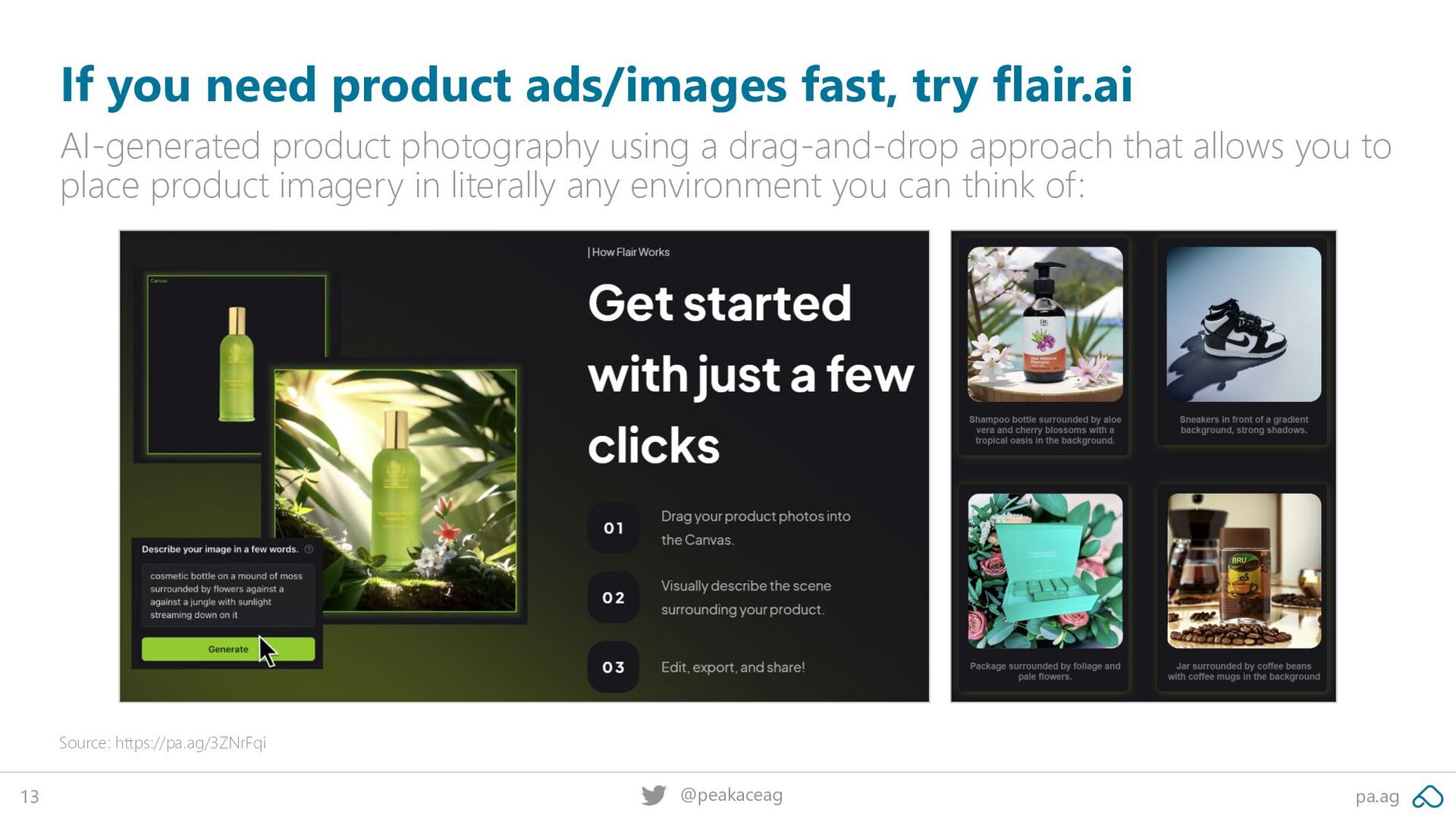
I promise a ton of things to kind of just walk away with. If you're using any type of product imagery, Flare AI is something that I really like. So we have a client that basically does, their large supermarket chain and they take their products every week into, like, a different, kind of environment.
So, like, let's say they have a shampoo and that they're supposed to kind of stand on an island, these types of things. Normally, that would have cost, like, a whole bunch of money because they would have kind of, you know, set this all up.
They need to do, like, the big photo shoot. They need the equipment, etcetera. A couple of thousand euros. This is done literally in five minutes now. So quite cool approach, to kind of to kind of go on that front. Or so I was challenging my designers.
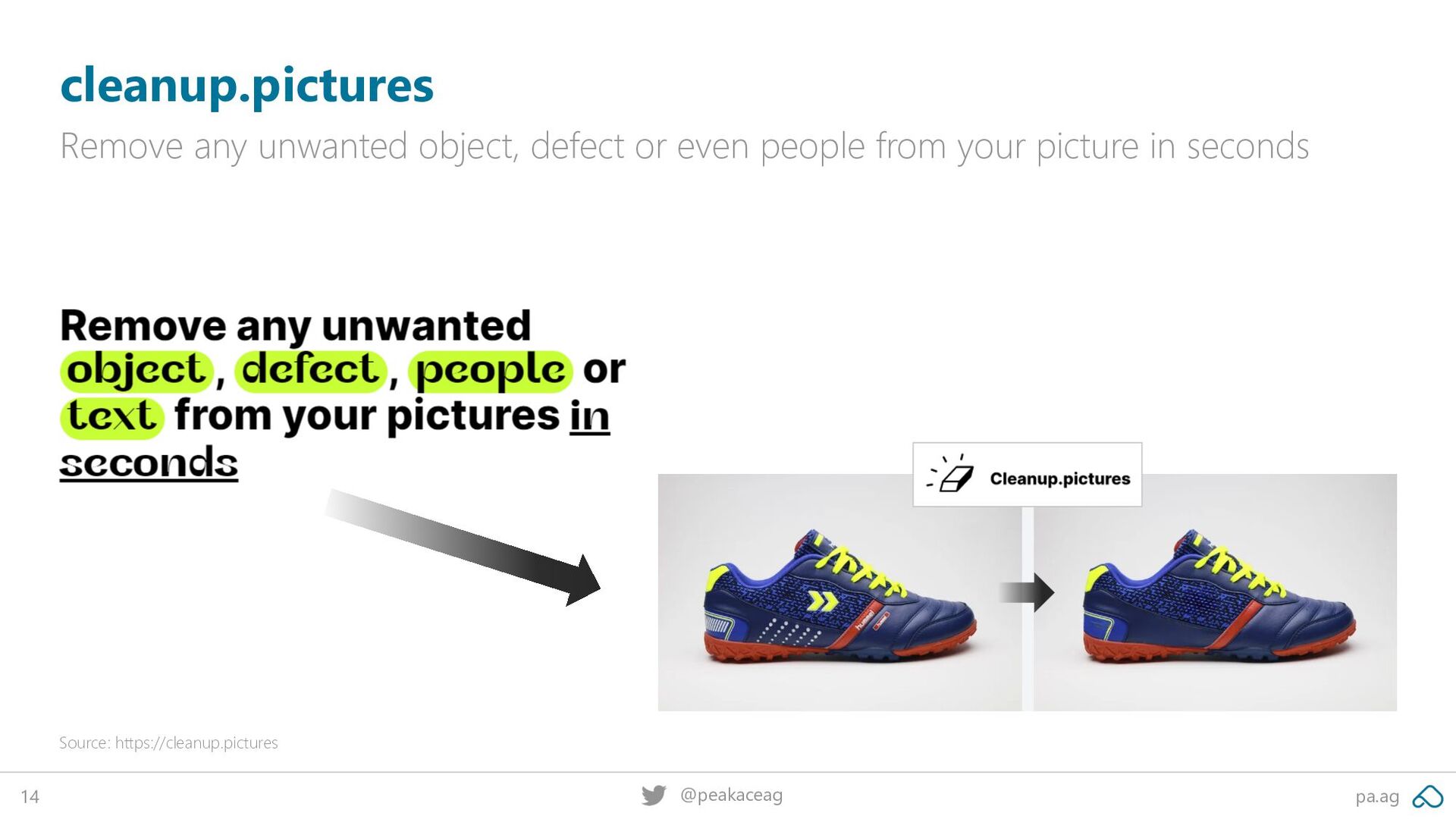
I look, you know, what do I need you guys for if there's things like this? And I guess the answer is obviously you can't replace creativity right now. But a lot of the annoying tasks like, you know, fixing images, removing objects from images and these types of things can be done with a click of a button and that's what Cleanup Picture does really well. Or what I really like is this.
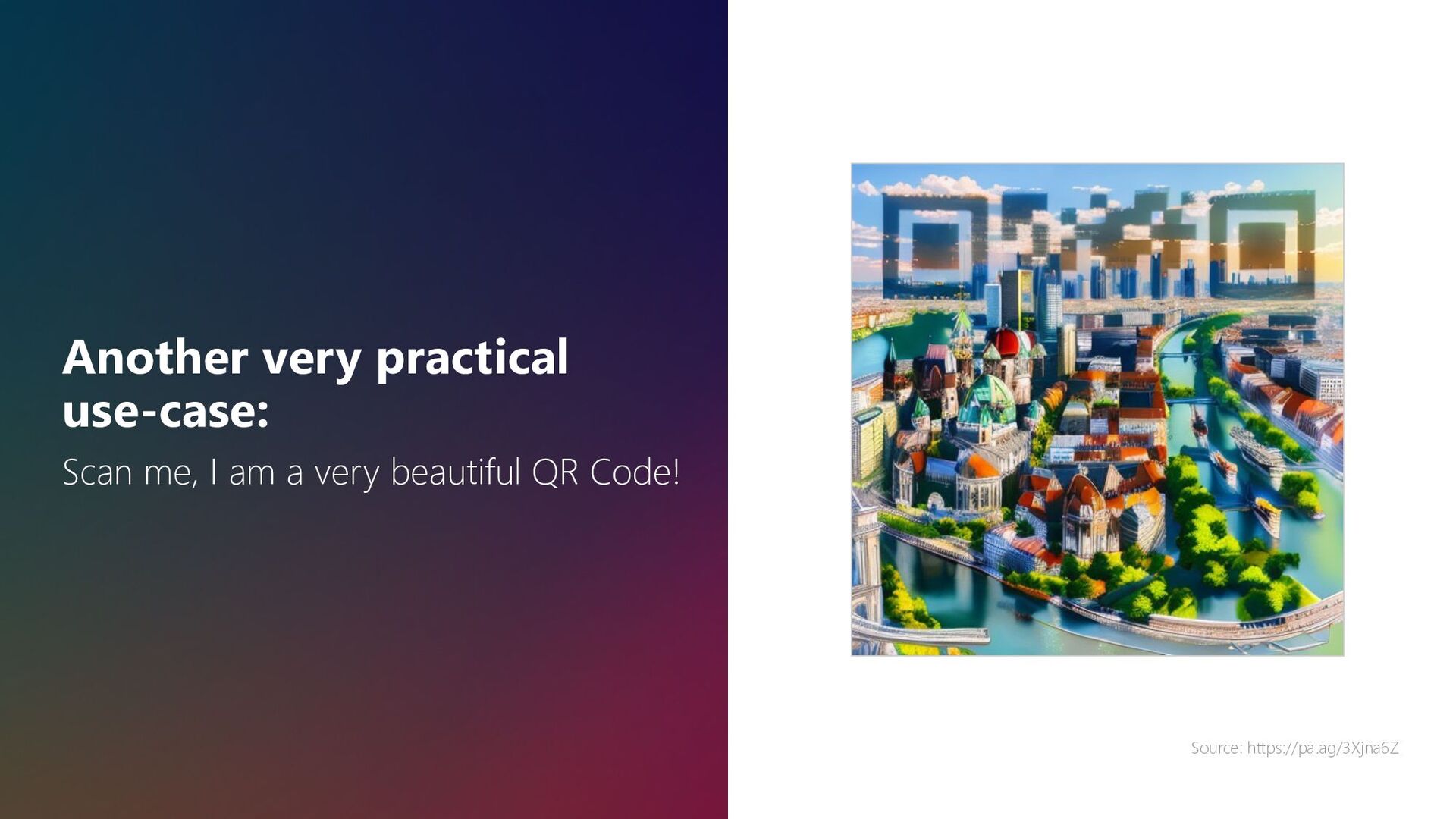
So this is finally finally beautifully looking QR codes. Go figure. Right? Not the old ugly ones, but finally decent ones. And kind of the the the imagery part that you see in the middle, it actually works. You can scan it, hopefully, at least.
Otherwise, I'm gonna kill someone. Hopefully it does work. But the the really cool thing is, like, the middle section is basically generated out of a stable diffusion model, and therefore, you can brand them, which is really cool. So I think we're gonna be seeing a whole bunch of more on that front.
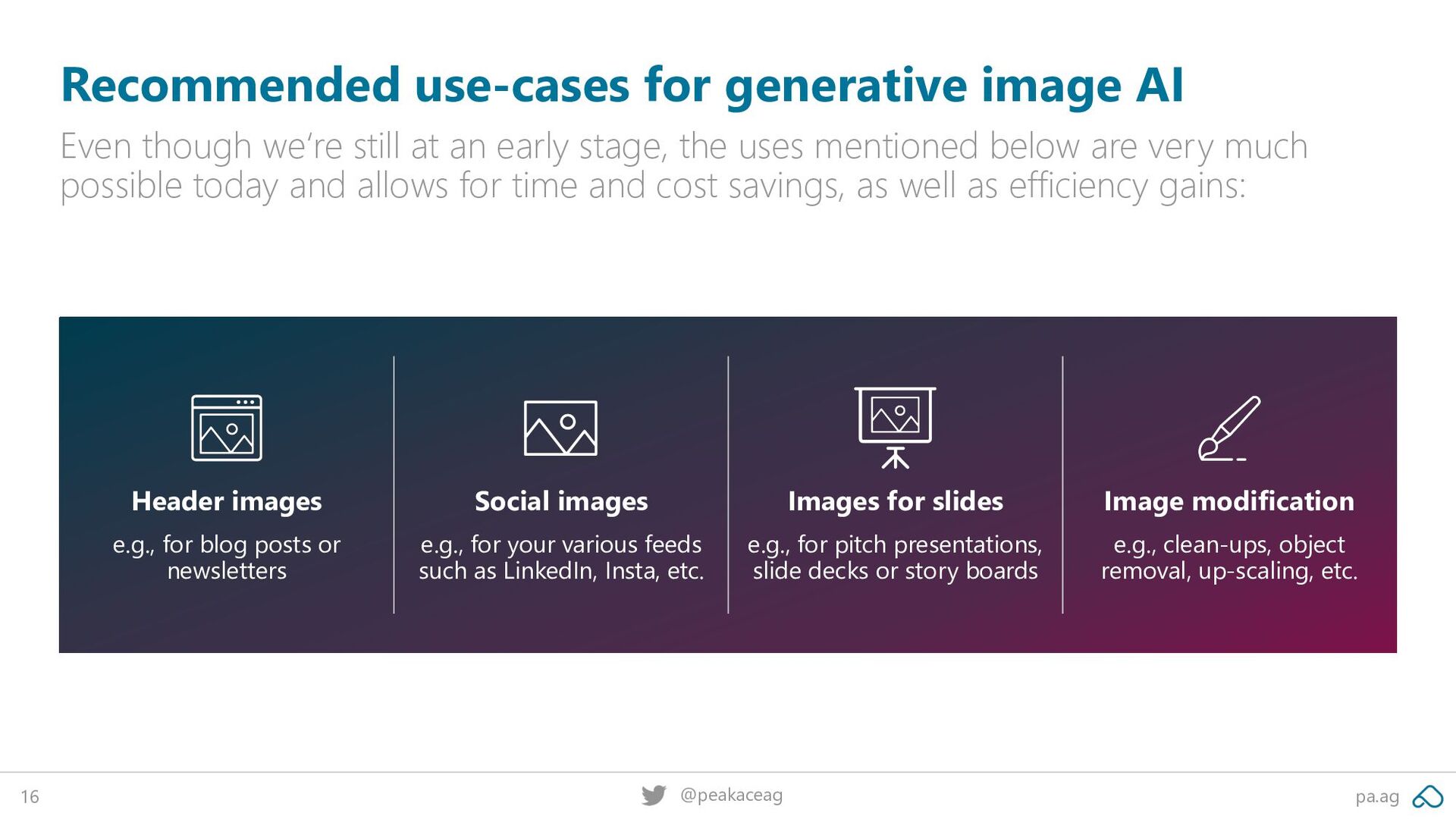
That being said, I think there's a whole bunch of other things that you can do with generative AI for imagery. Right? So there is, you know, header images for blog posts. There is social imagery that you can do, for, like, you know, LinkedIn and and other types of channels.
There is slides, like, most of the slides, images in slides. You're gonna see a lot of the images that are in this deck actually being AI generated, like background images and these types of things, and, of course, like image modifications and cleanups. But I think there's also some more, let's say, questionable or kind of scary use cases.
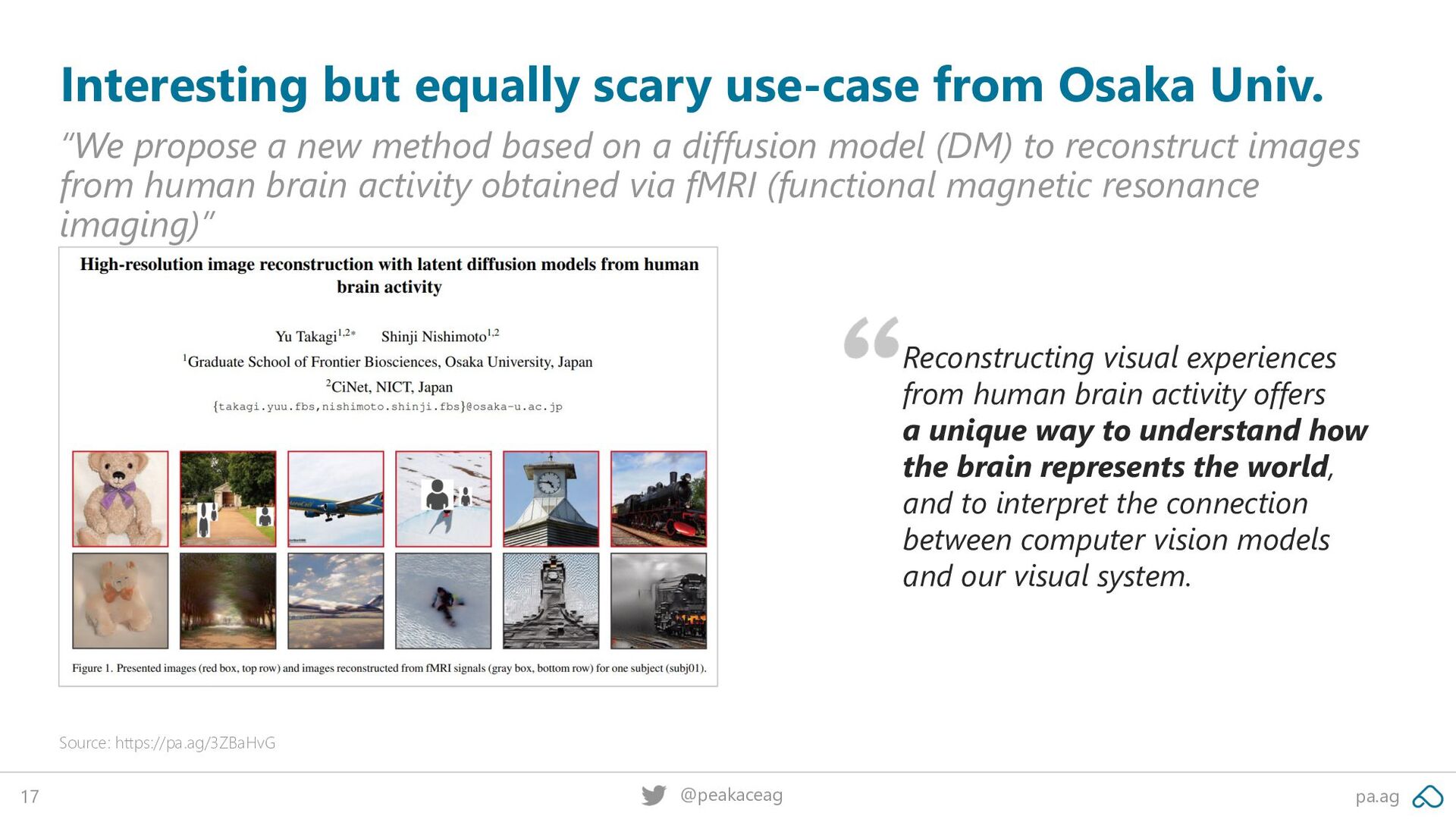
So this is from Osaka University in Japan, and basically they're proposing, to use a a diffusion model to reconstruct images from human brain activity. So I'm not entirely sure I want them to plug into my brain and kind of visually output what's gonna be happening there.
But nevertheless, I think we had this earlier. I think there's gonna be some very interesting advancements on the medical side as well. Right? But like this is really it feels a bit a bit scary to me. Actually, I came about across this this one statistic that I just thought I need to bring.
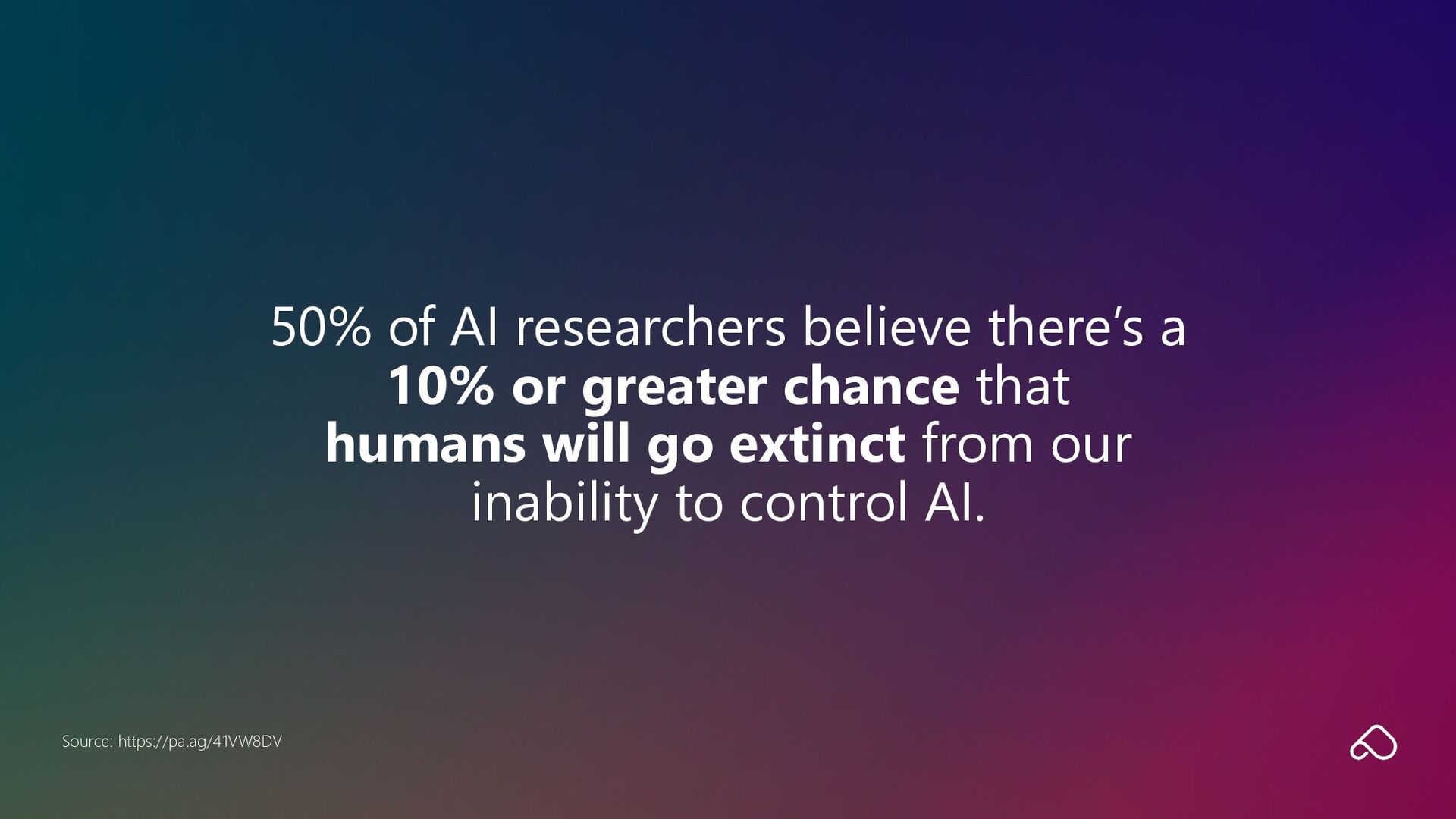
So it goes like like this. So fifty percent of AI researchers, I'm not, like, they believe that there's a, you know, ten percent or greater chance that humans will go extinct from our inability to control AI. Right? It's a bit like, you know, you're catching a flight when that's a fifty and fifty percent of engineers think there's a ten percent chance that that plane might not make it.
Right? What you get on the on the plane, probably not. But you could say that, well, you know, he's gonna talk doomsday scenarios and it's an integration. Yeah. I promise I'm not gonna go there. But the one thing that I wanna quickly address at least, if we talk about tools is there is a whole bunch of really scary use cases out there as well.
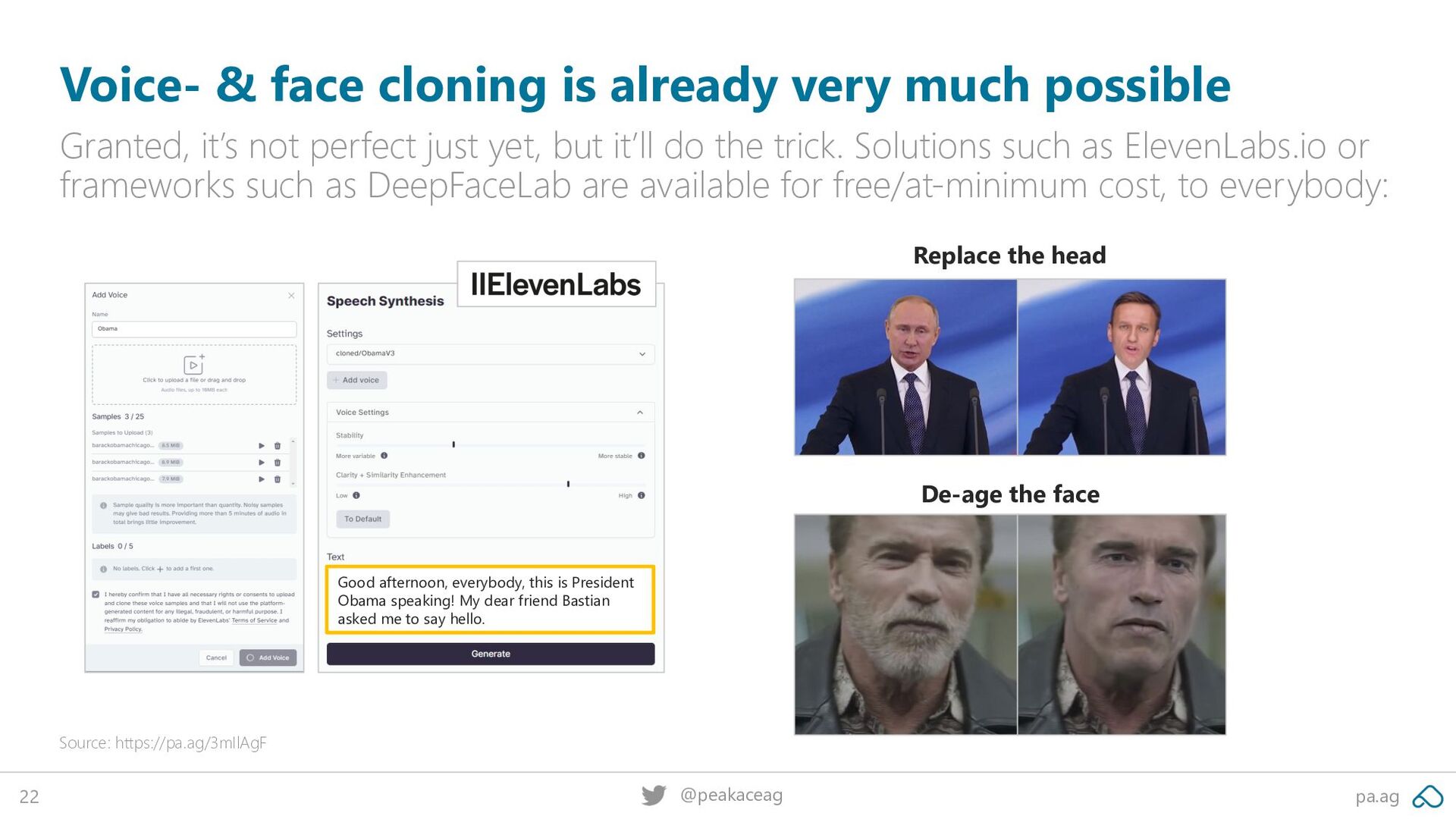
So specifically right now, and that is not future. That is that is here. Right? You can use that. Eleven Labs is voice cloning and it works really really well. It's scarily accurate. I mean it's not hundred percent yet, but you know it's ninety percent there.
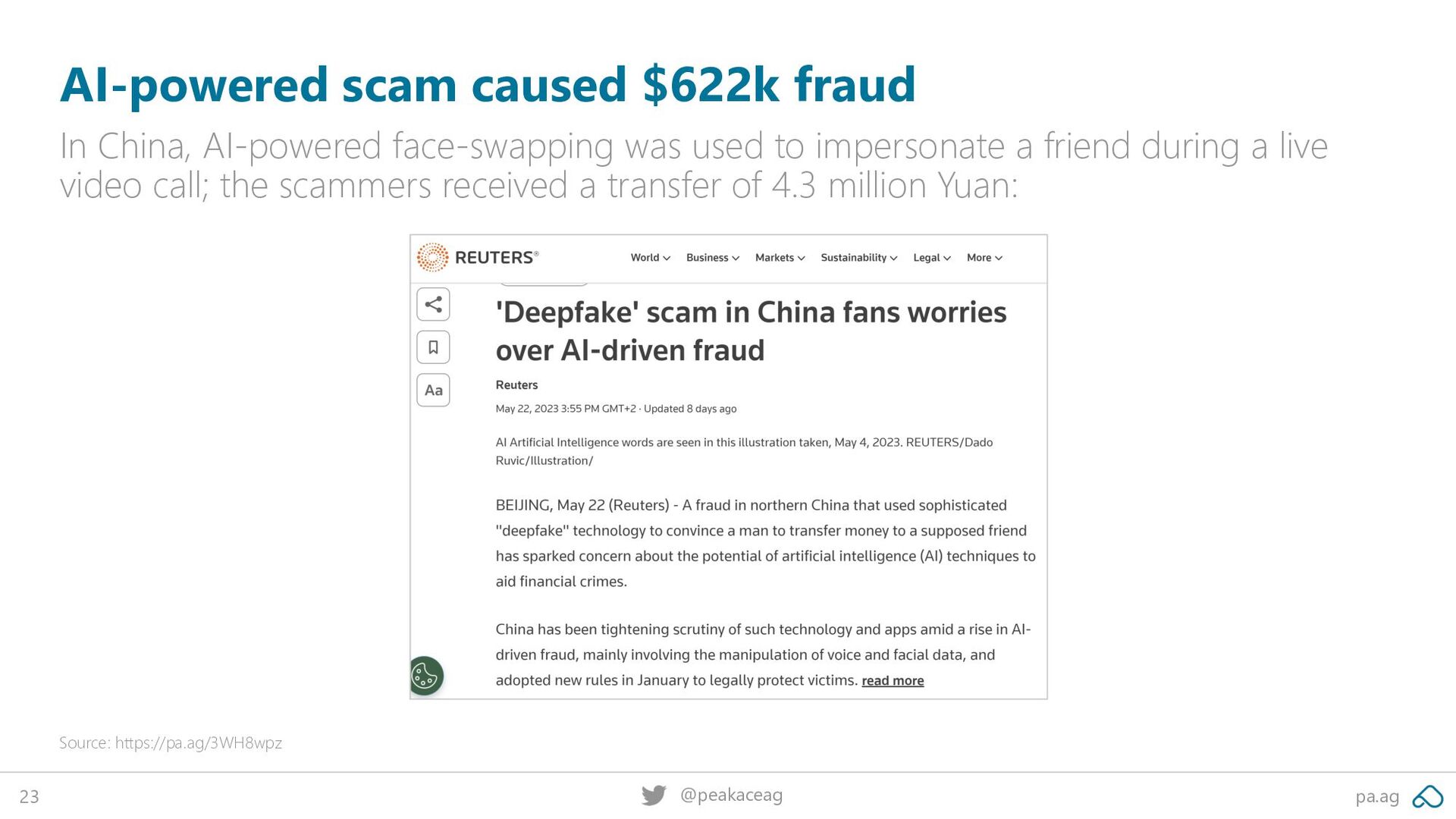
So, I've done for like another talk. I had Barack Obama read my opening slide, and it's it's fairly accurate. And the same is true for for, video or in video face swapping. And that obviously leads to problems like scam for example. Right? So there's that was on Reuters the other day.
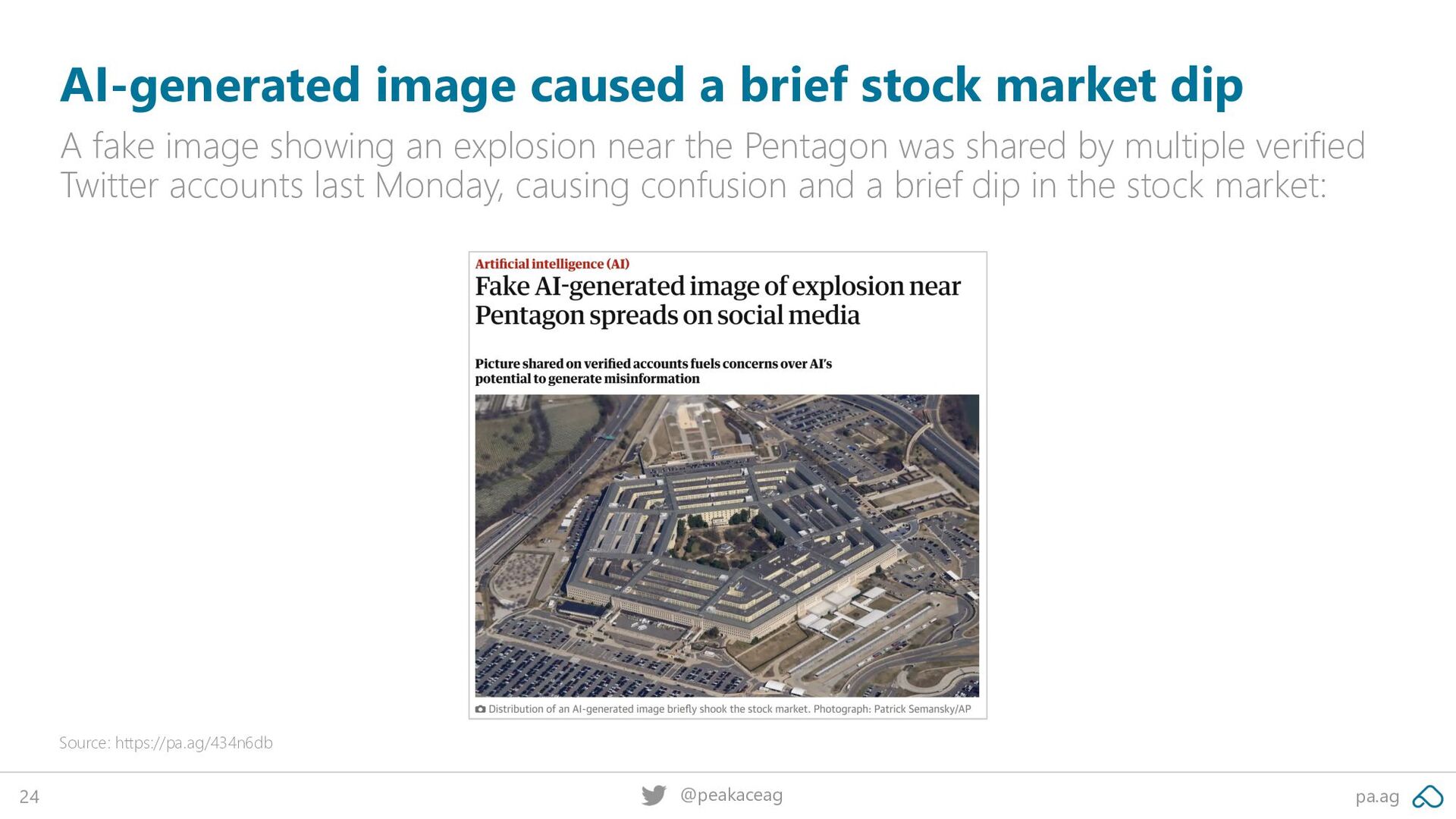
Basically, like an AI powered face swapping was used to impersonate someone during a live video call. I probably wouldn't have wired six hundred k anyways, but that's a different story. But you know where I'm going with this. Right? Or you probably have seen this one, which was obviously a fake image, but it was showing like a kind of smoke or fire next to the US Pentagon. And that's not the surprising part.
I mean that of of course there is fake imagery. The surprising part to me was that at the same time, the stock market took a hit and that is scary. Right? Not the other side. I mean we have we have been dealing with misinformation and you know fake generated stuff for a very long time.
This is not really new. But I think the issue now is it's very easy to do and therefore the scale significantly increases. So yeah. And I don't wanna kind of go into like what's already out there that we probably don't have access to.
So I think it's, you know, it's it's a scary scary time. But kind of a bit more theory before we really go into some of the other things. But I think what's really important to understand is a bit of the tech behind. I don't wanna make this like a, you know, a huge theoretical piece.
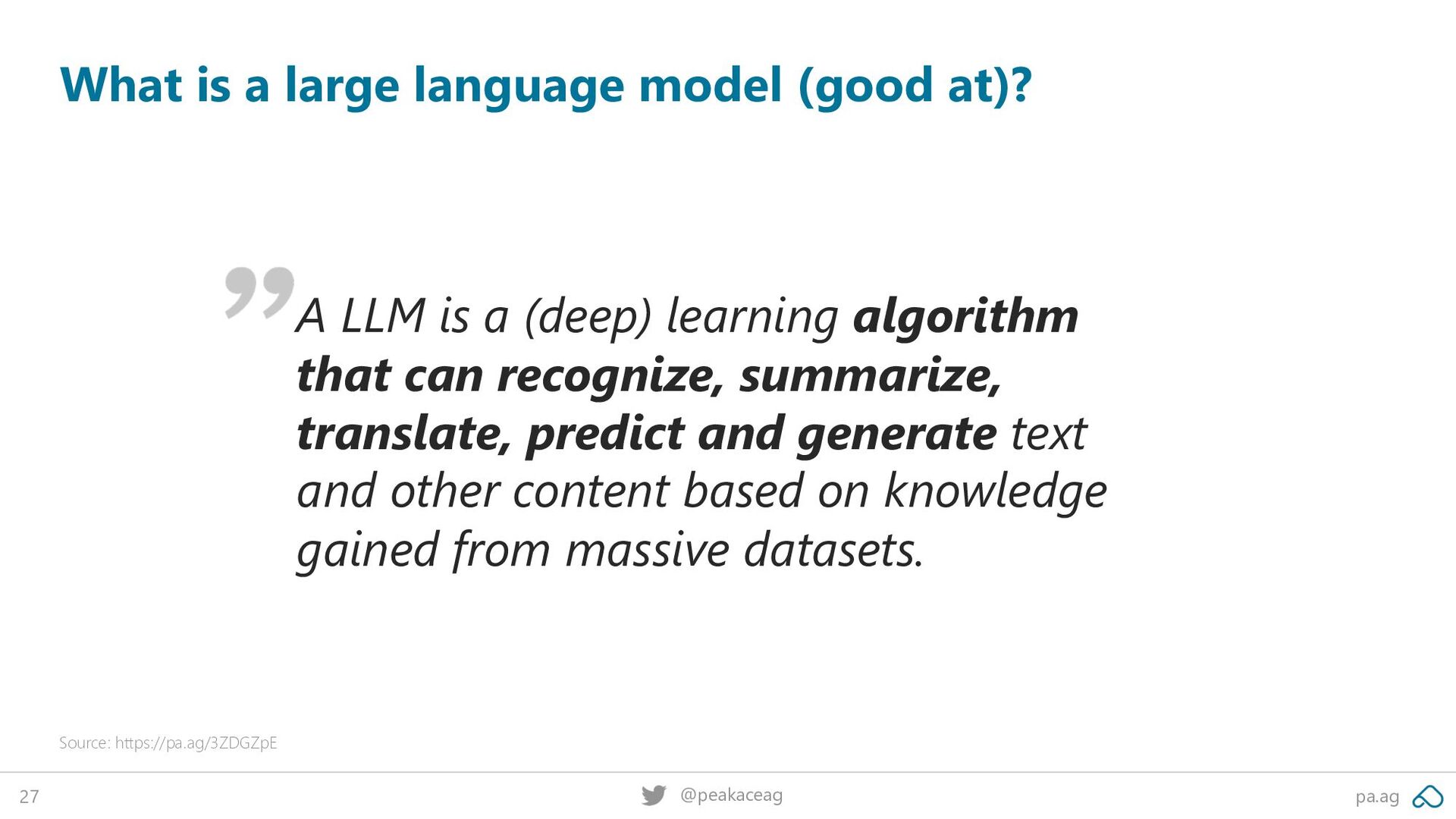
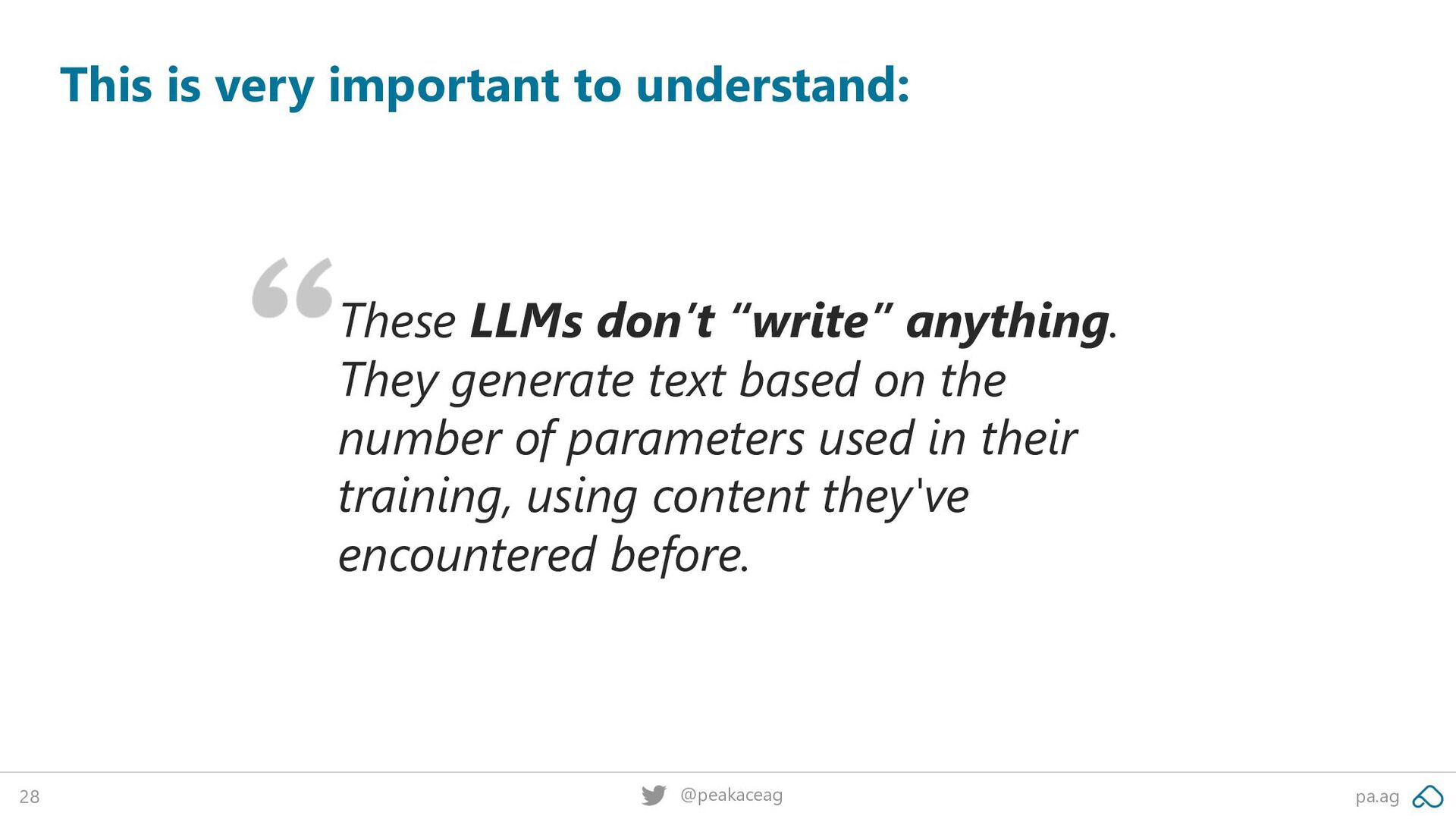
But I think what's important to understand is how large language models work, what they are and what they are good at. And I think the important part here is basically these models, they don't write anything. Right? They what they do is they generate something, an output, based on training data that they have fat with in the past.
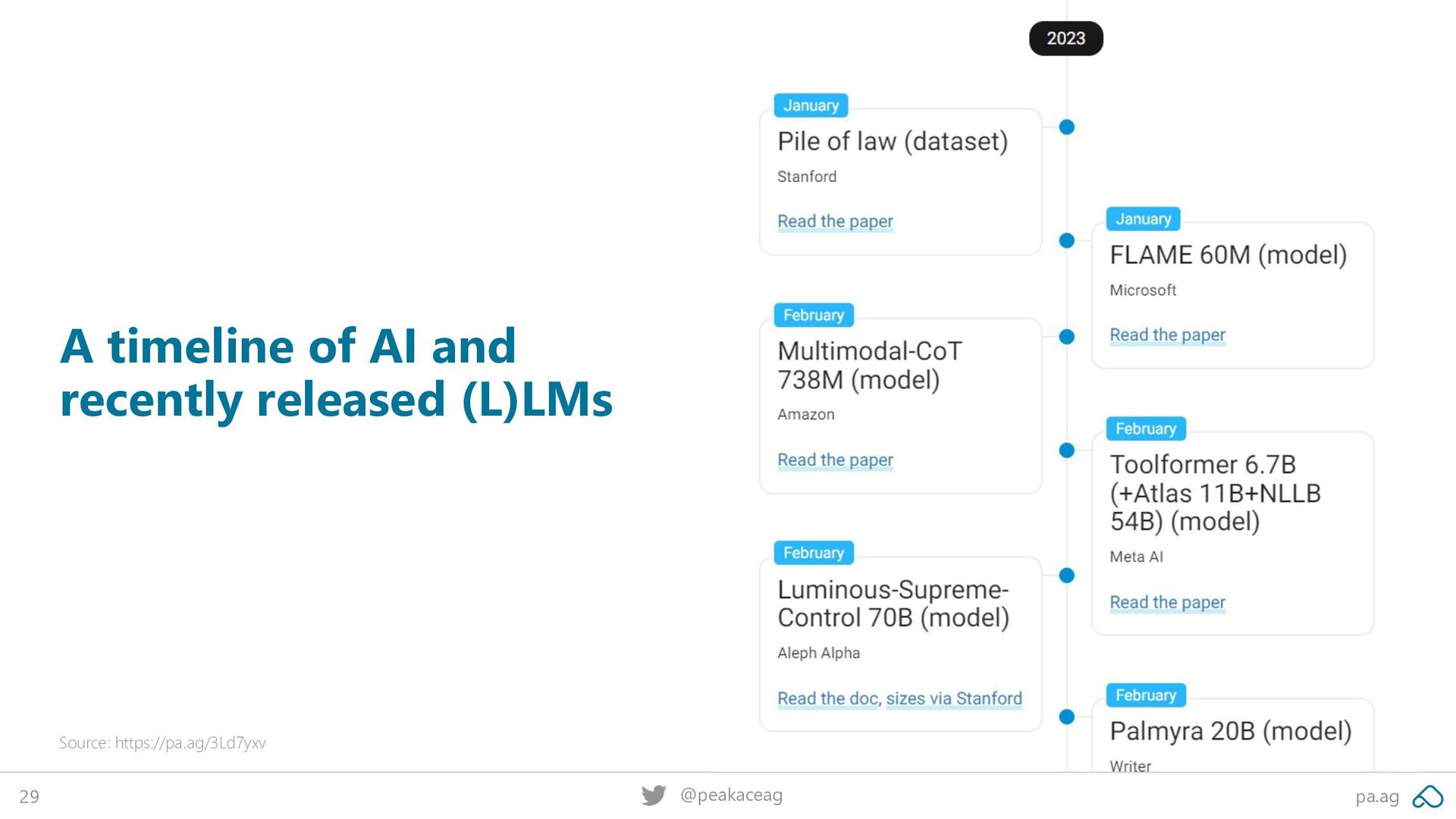
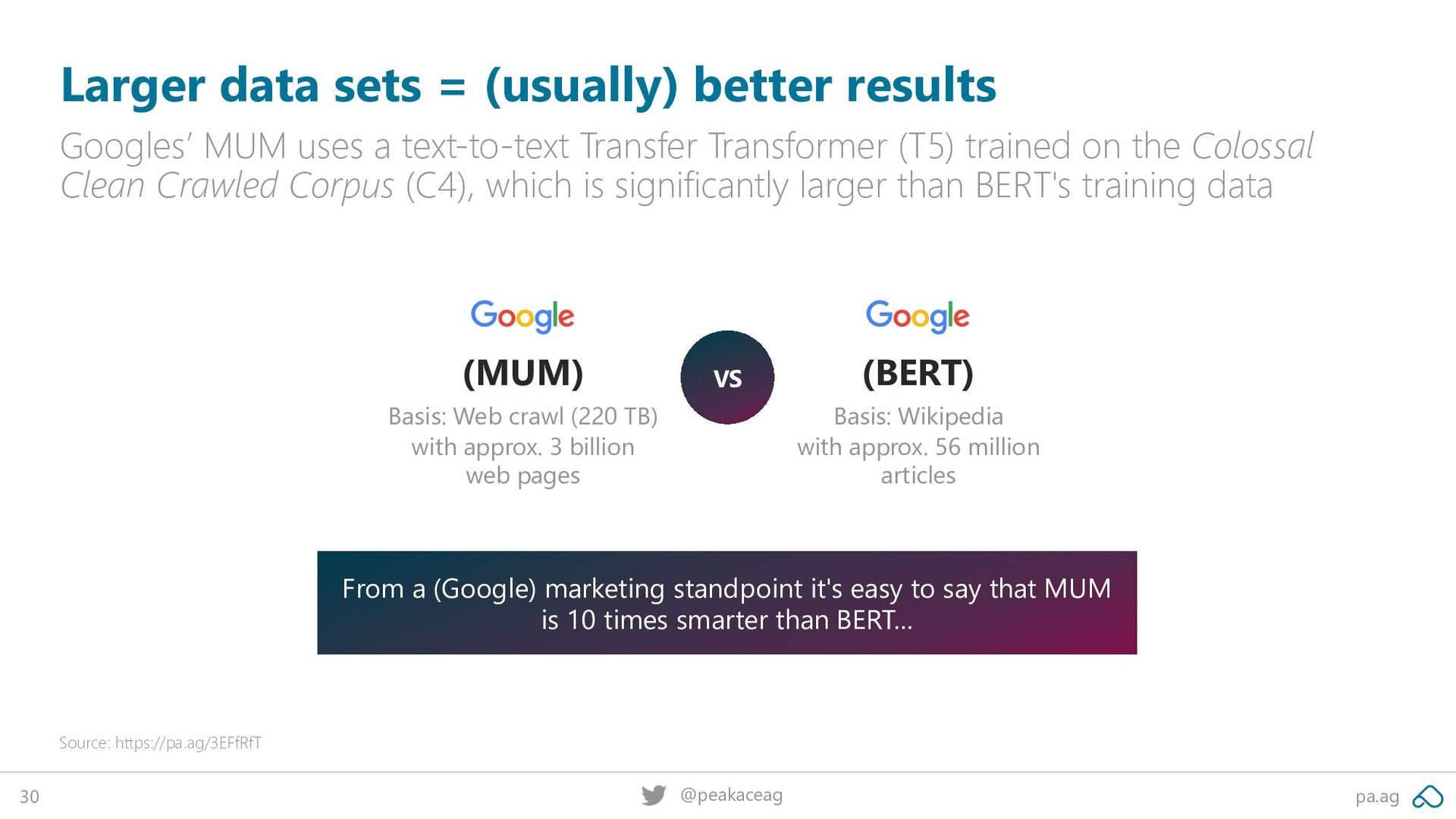
So they're not, you know, in any way shape or form creative. That that's very important. Right? And if you look into some of the things that that happened in the past and and, you know, a lot of the stuff that has been released so if you take, for example, Google's mom and bird, some of the, like, models that probably have been talked about in the press quite a bit, like, it's fairly obvious why Google can say especially from a marketing standpoint, you got a marketer.
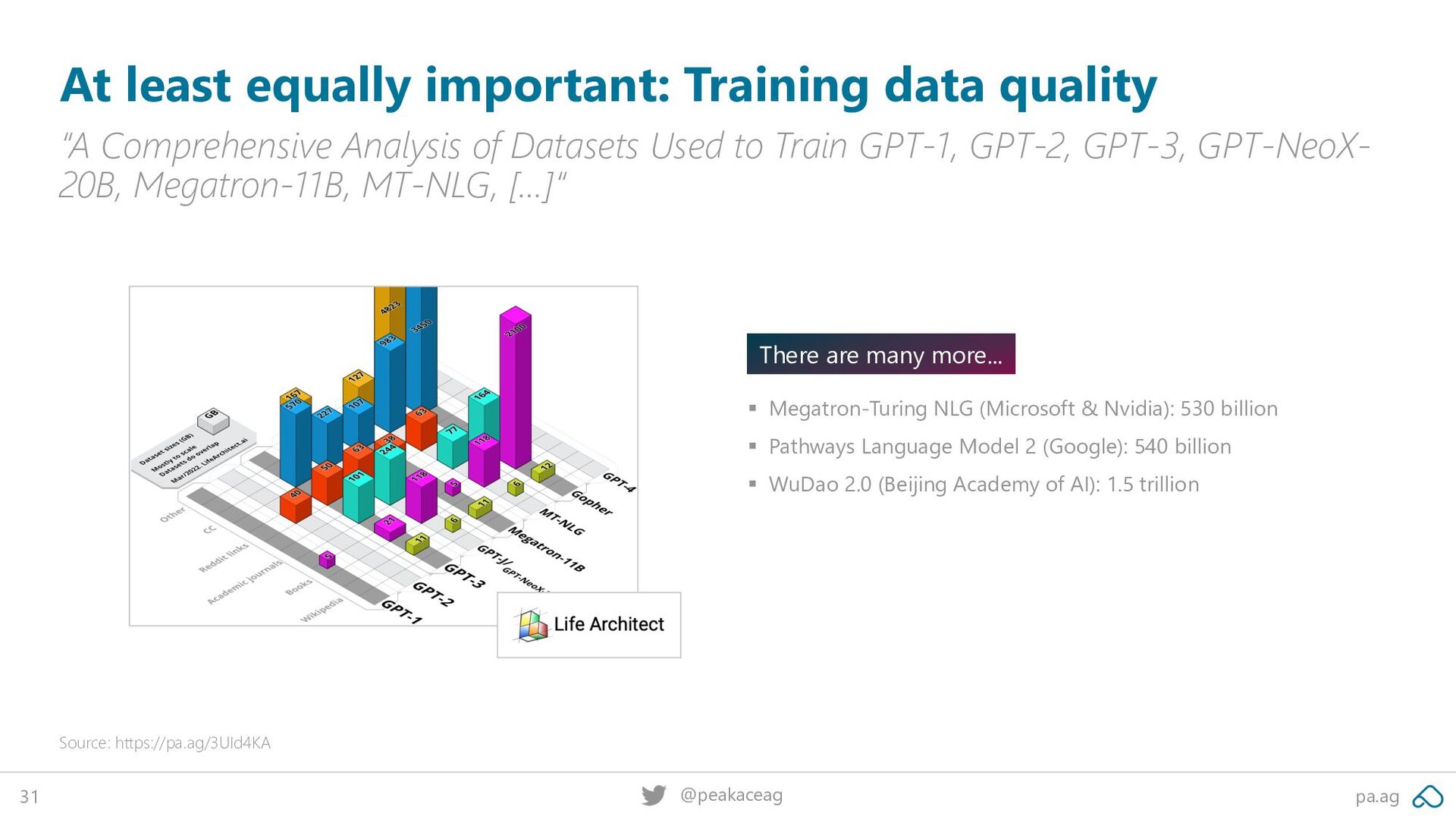
Right? Like, you know, one model is ten times more powerful than the other. It predominantly has to do with the size of the model and the training data they have fat have been fed with. So like one has been trained solely on Wikipedia data.
The other one has been trained with the web crawl. I mean obviously that web crawl has much more knowledge or much more data in there so therefore a model is more powerful. I think more important though is is training data quality, in a way, not so much size.
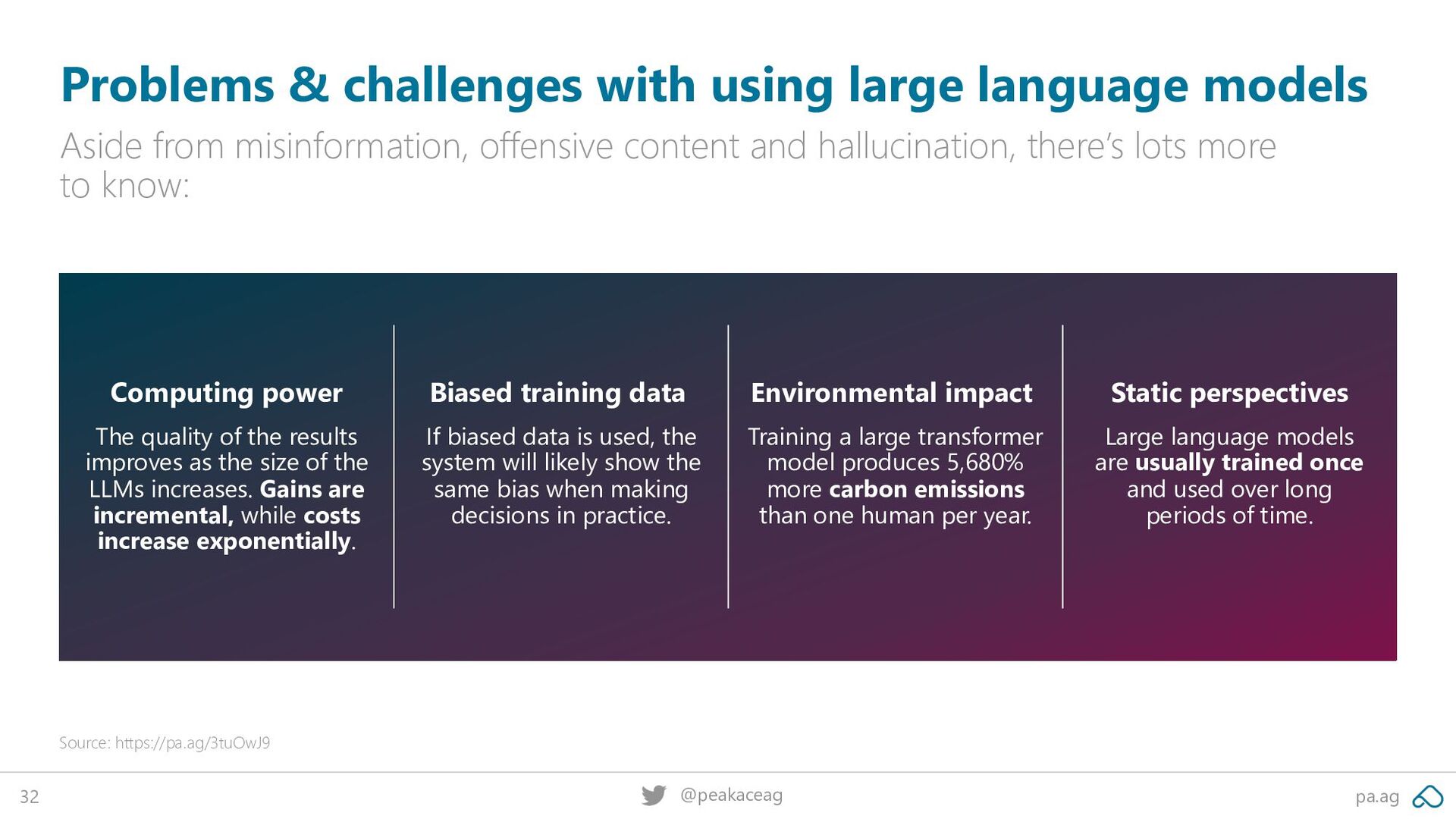
I mean there are mega large models like with trillions of parameters but it's, you know, at some point that's not enough. Like you can't you can't grow forever. It's it's not sustainable. Right? There's a whole bunch of problems with with large language models moving forward.
Right? There is issues with computing power. Right? I mean the gains are incremental but costs increase exponentially. They're just not getting much better at some point anymore. There is bias in training data. We had that a bit earlier. I just have one quick example later on, but I think it's important to understand environmental impact.
And last but not least, static perspectives as well. So static perspectives, I mean, I guess you're familiar with when OpenAI pushed out like their first models back when. The issue was and still is that obviously the data is not recent, it's not fresh.
There is there's always a couple of months where your stuff is missing. This is why you can't use a large language model for anything recent with the exception of right now, if you use, like chat g p t, there's a browsing extension, then you can.
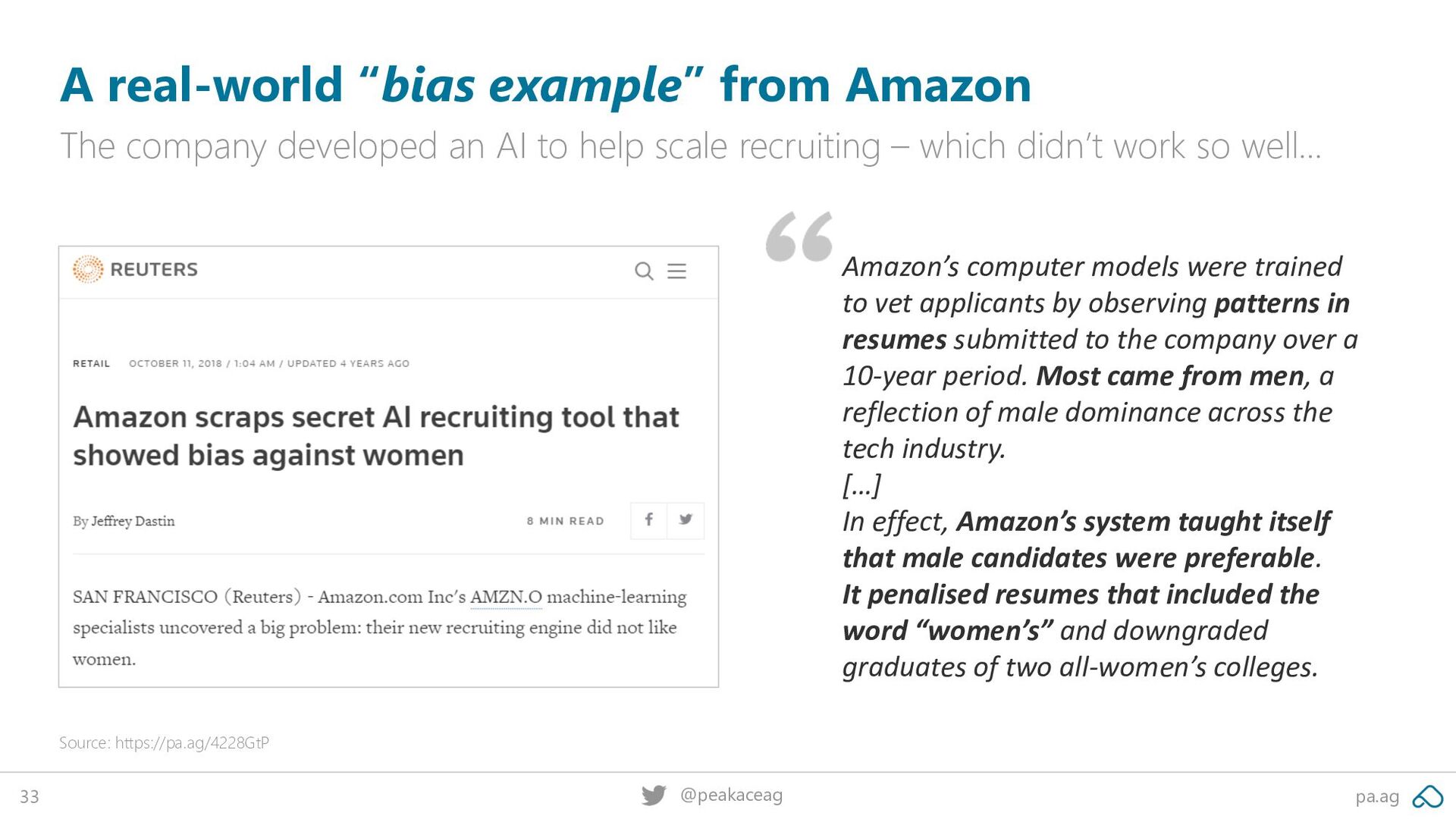
But generally the models have steady perspectives. On BIOS, this is a very, very sad example, but I think it's worth mentioning it anyways. It's from Amazon. They kind of tried to build like kind of an an AI for recruiting, I think, in in simple terms.
They fed it with a whole bunch of CVs from the last ten years. And what tech industry at that point in time being fairly male dominated, sadly. Obviously, what's gonna happen, that model and that's true for anything machine learning. Right? That's the problem.
Garbage in, garbage out. So women's CVs in this case didn't make it through selection. Go figure. But it's that's not a problem with the model. It's a problem with shitty training data. Right? This is nothing nothing new. Anyways, important point here I think is don't trust those things blindly.
Always question, like this is very important and no matter what you use now. Like there is problems with and disadvantages with most of the tools out there. They might give you gain but they also have all their weaknesses. So now the fun part.
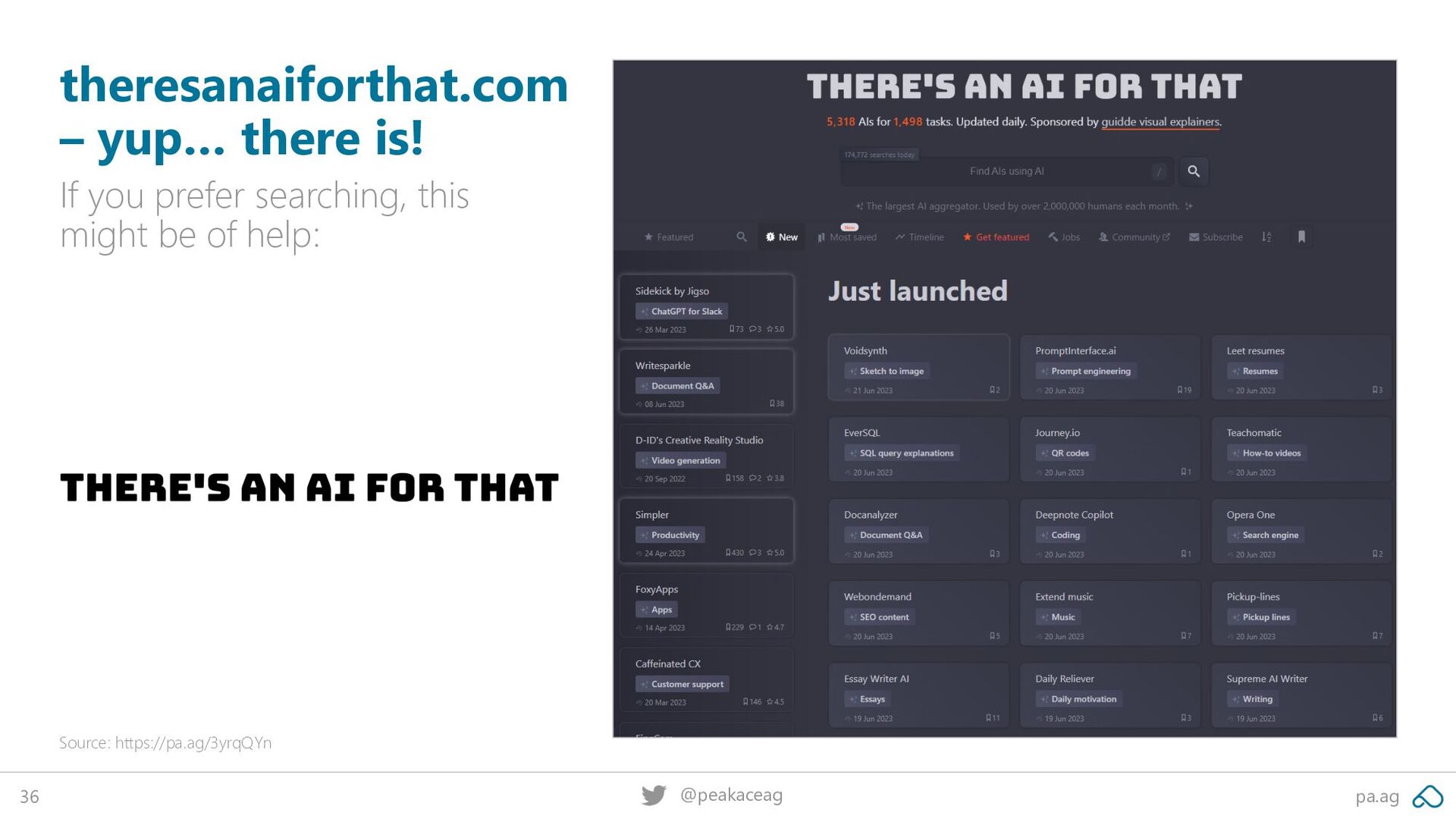
I have a favorite new website. There's an AI for that dot com. Because literally there is, I kid you not. And the funny part of this is so I I grabbed the screenshot like the other day and then, I had an old one in the in another deck that was like four weeks old.
And like, I'm not sure if you can see but it says like five thousand something AI's, to do x y zed and like the the four weeks old screenshot set like three thousand AIs. So it's it's crazy. It's absolutely crazy. Also I get I guess though, like probably eighty to ninety percent of those won't make it through the first year just because they're trying to solve very specific problems right now and then they I I think they would be absorbed by the bigger models moving forward.
So the reason why I'm saying this is, like if you pick stuff now, be mindful. If you have a very very like, you know, fast time to get these things implemented, that's probably fine. But if you have to invest a lot of resources to do something, you should be very thorough on figuring out if that is actually a sustainable way or a model that's or tool that's gonna last, you know, longer than the next four weeks.
And also, speaking of using tools, confidentiality and data protection. I'm not a lawyer, but probably should say that anyways. Like, you don't wanna be the next Samsung, right, where, people dump in unreleased product descriptions or, you know, even models and specifications of products that are not on the market.
It's not that smart to do that with a public with a public model, in in the first place. So really think about what you're gonna what you're gonna dump in. So going through a couple of categories real quick. I mean, there's our AIs literally for everything and anything.
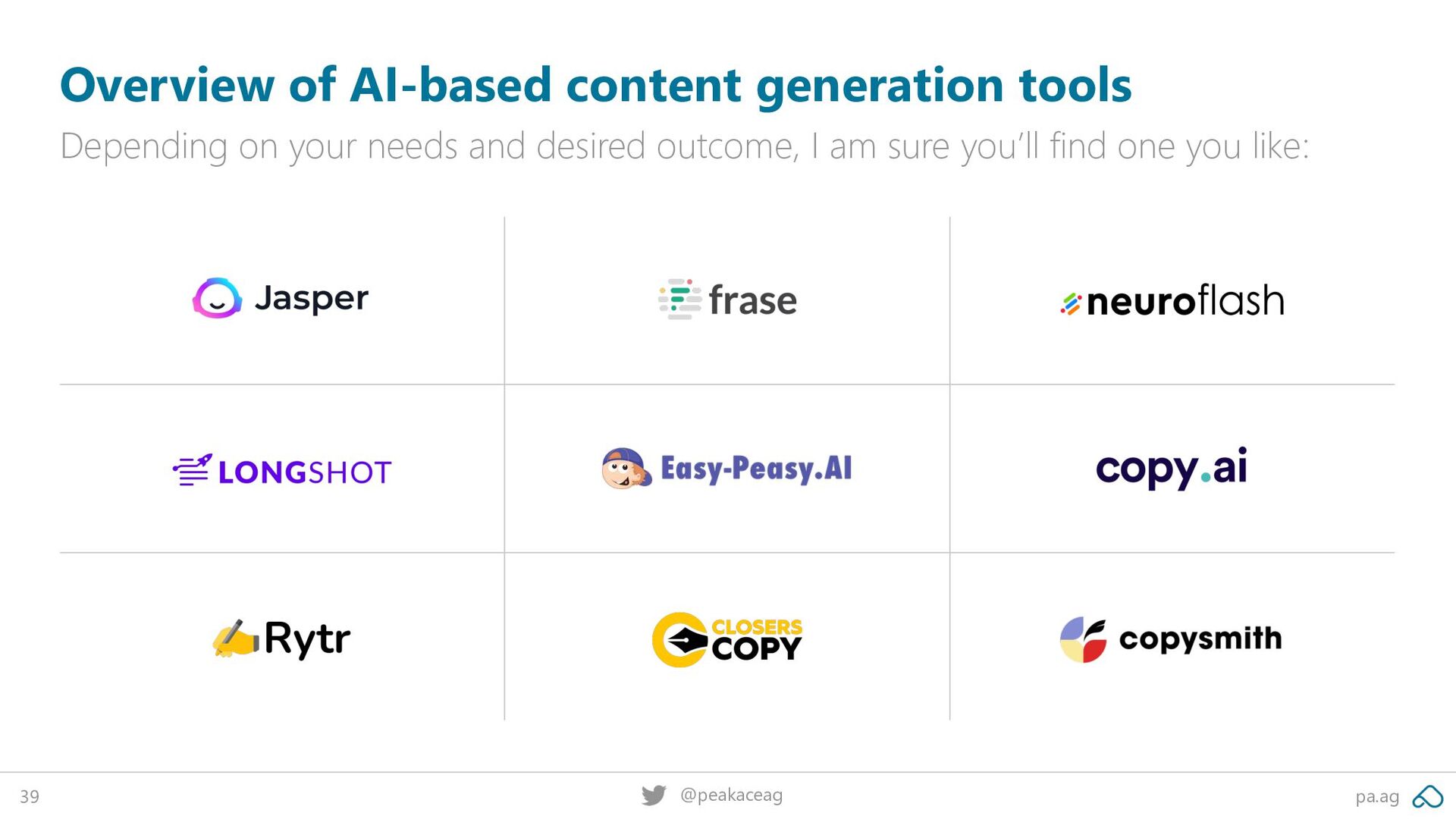
Text generation, I think, is one of the more common use cases. If you're a bit more like on the kind of search side or just generally creating marketing copy, I think this is something that you've been come in contact with, at least I guess in the last month.
You know, I'm not gonna name any of them or like recommend any of them because it heavily depends on the use cases. Right? They all have strengths and weaknesses. Some are more advanced than others. Some are stronger in one language than the other.
So really literally, you you need to figure out what you wanna do first, but those are all a fairly solid bet. Just to give you a quick example, you know, with Jasper for example, just because they are probably well very well known by now.
Like, they can actually help you to kind of do drafts for, for example, sales copy or outreach or drafts for blog posts, these types of things. So this is what you can do. Right? I'm not saying you have to, but I think it can be an acceleration in the in the process.
What's true for all of them? Never ever ever ever ever ever publish without fact checking. This is extremely important just because models make things up and this is the nature of how large language models work. They we call that hallucinate. And that is just because when they don't know something because the training data doesn't is like specifically say this is the fact, then they just try to kind of predict what the answer might be and that often, more often than not, is wrong.
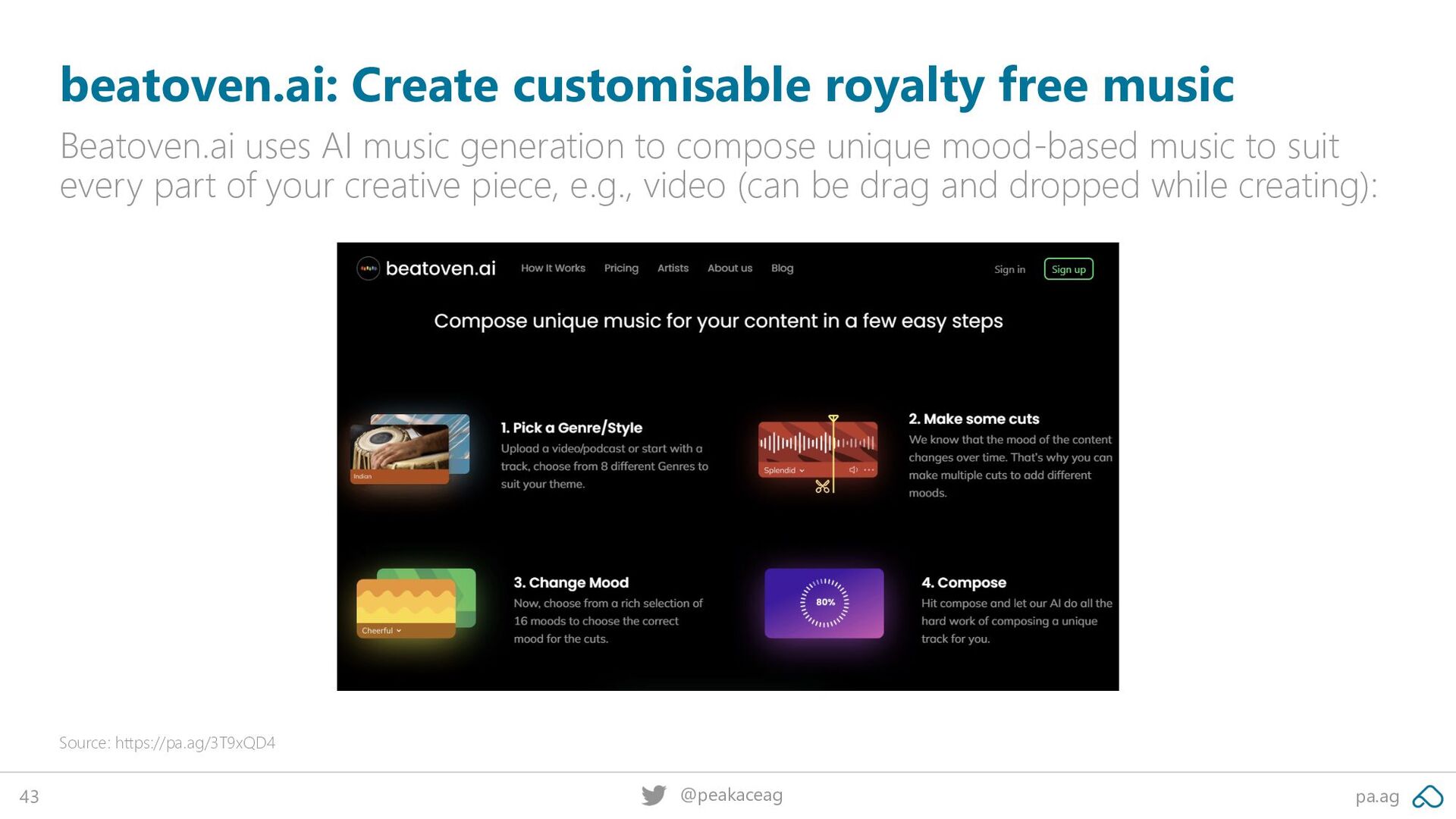
And And this is why you need to fact check. Audio. There's a whole bunch of things going on there as well. My favorite one is Beethoven, not just because of the name, just I really love it. It's like branding well done. But, so if you're doing, you know, if you do any type of video or podcast or whatever, you need kind of you know, jingles, intros, outros, these types of things, this is great.
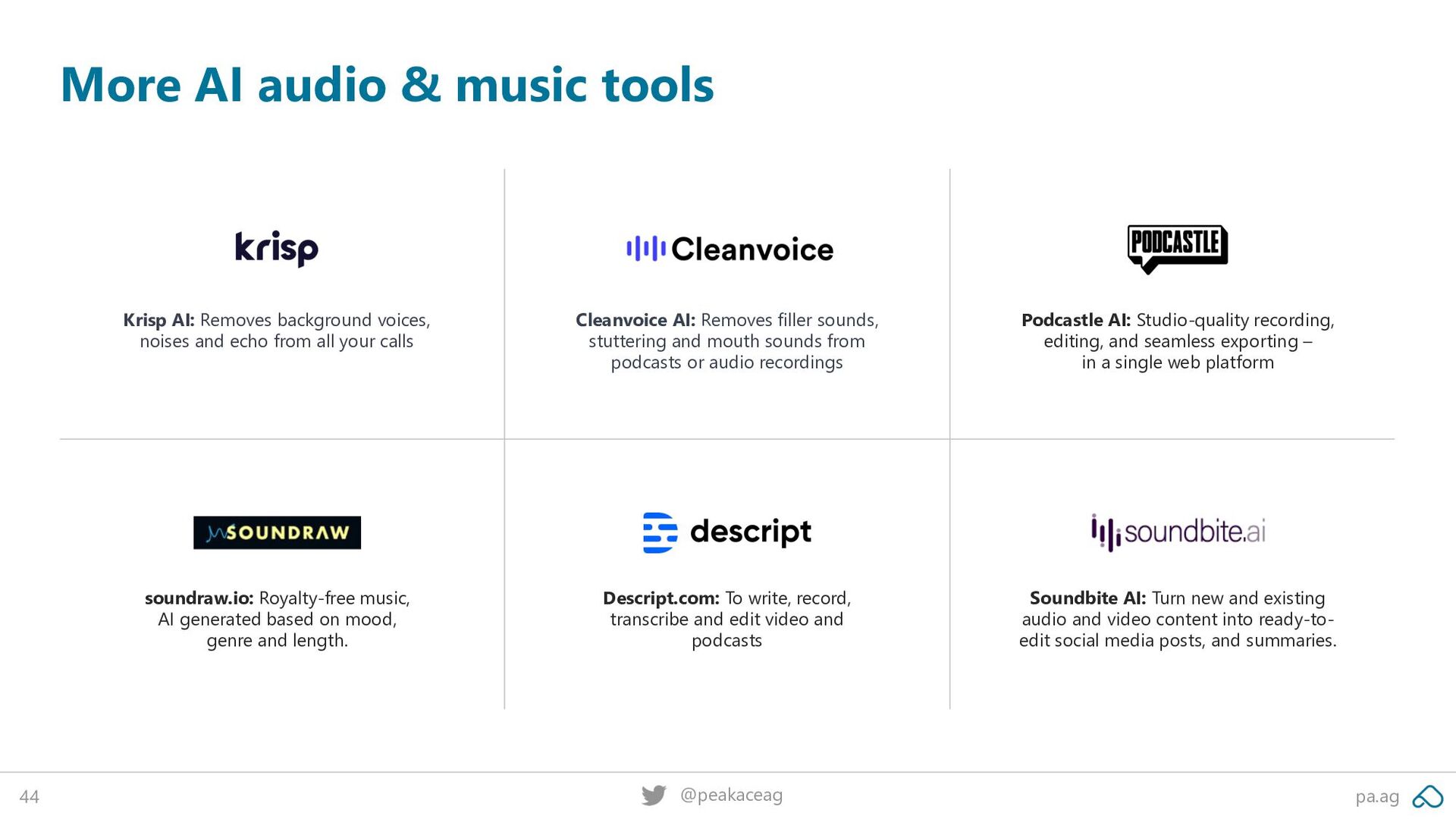
It helps you to kind of they have even like mood boards and things like that. It's just really easy drag and drop, simplified music production, and a whole bunch of others. Descript or Descript if you're into into podcasting is really cool. Or if you already have video assets, Soundbite is great.
So you dump in a whole video and it kind of cuts it for you to publish things on social channels without you having to worry about intros, outros, length, these types of things. Really, really cool. Speaking of video, there's a whole bunch of cool things going on on that front as well.
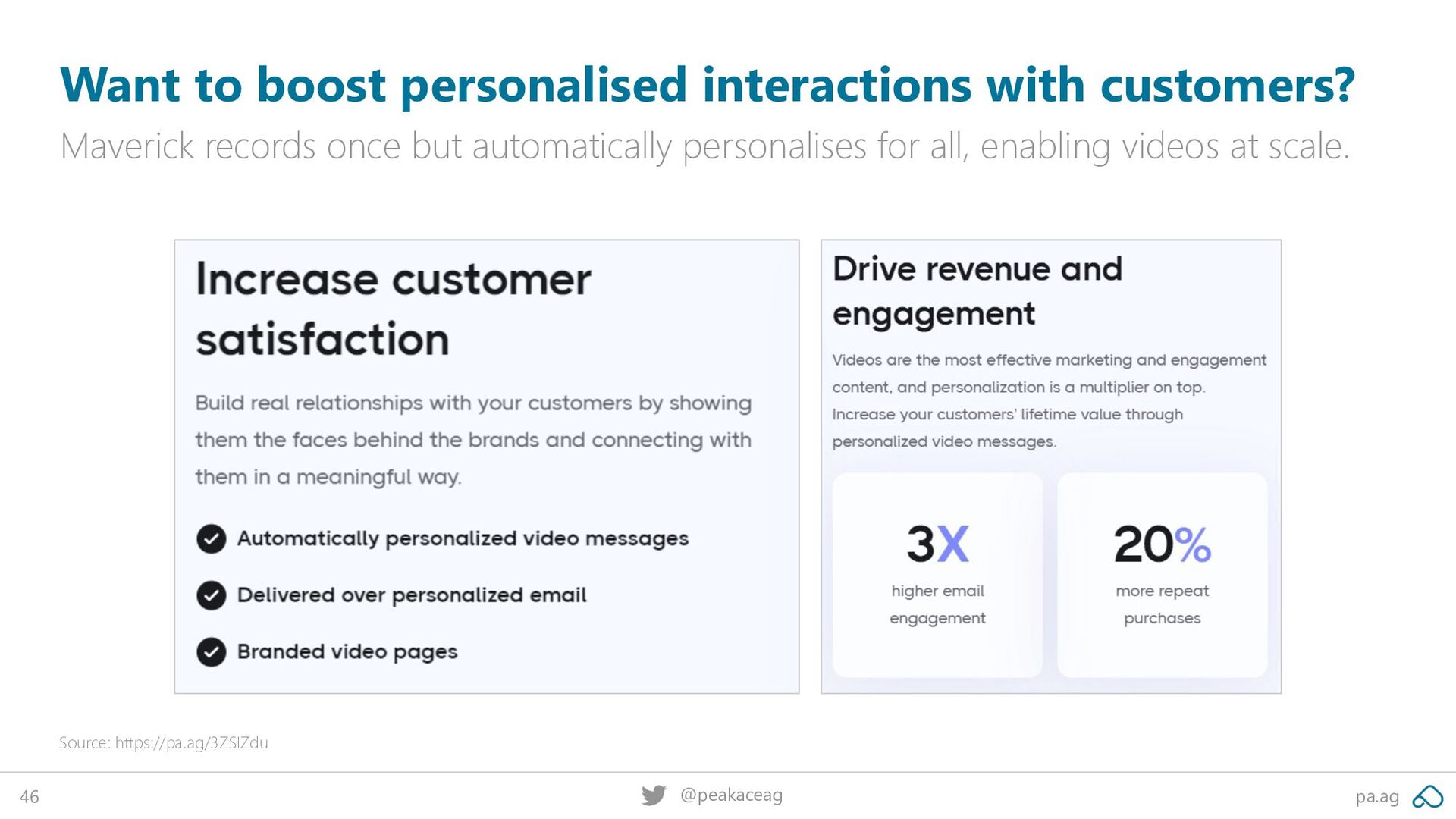
What I really like is Maverick. So the concept of Maverick is you record a video once, but what it does is it replaces variables. So we had a client we have a client actually that is in in skin care and the it's a very kind of consulting intense product that they have.
So basically what we did is like at the point when we knew someone by name and to the time where they put something in the basket, in the middle we send a personalized video with their name and, you know, certain things that are personalized to the profile that we knew.
Yeah. It's kinda creepy. But it drove conversion rate by plus ten percent comparison like person knowing to the basket. So and normally, you would have to produce an an individual video every single time. Now I just do one that I can talk to, in this case, about sixty thousand people.
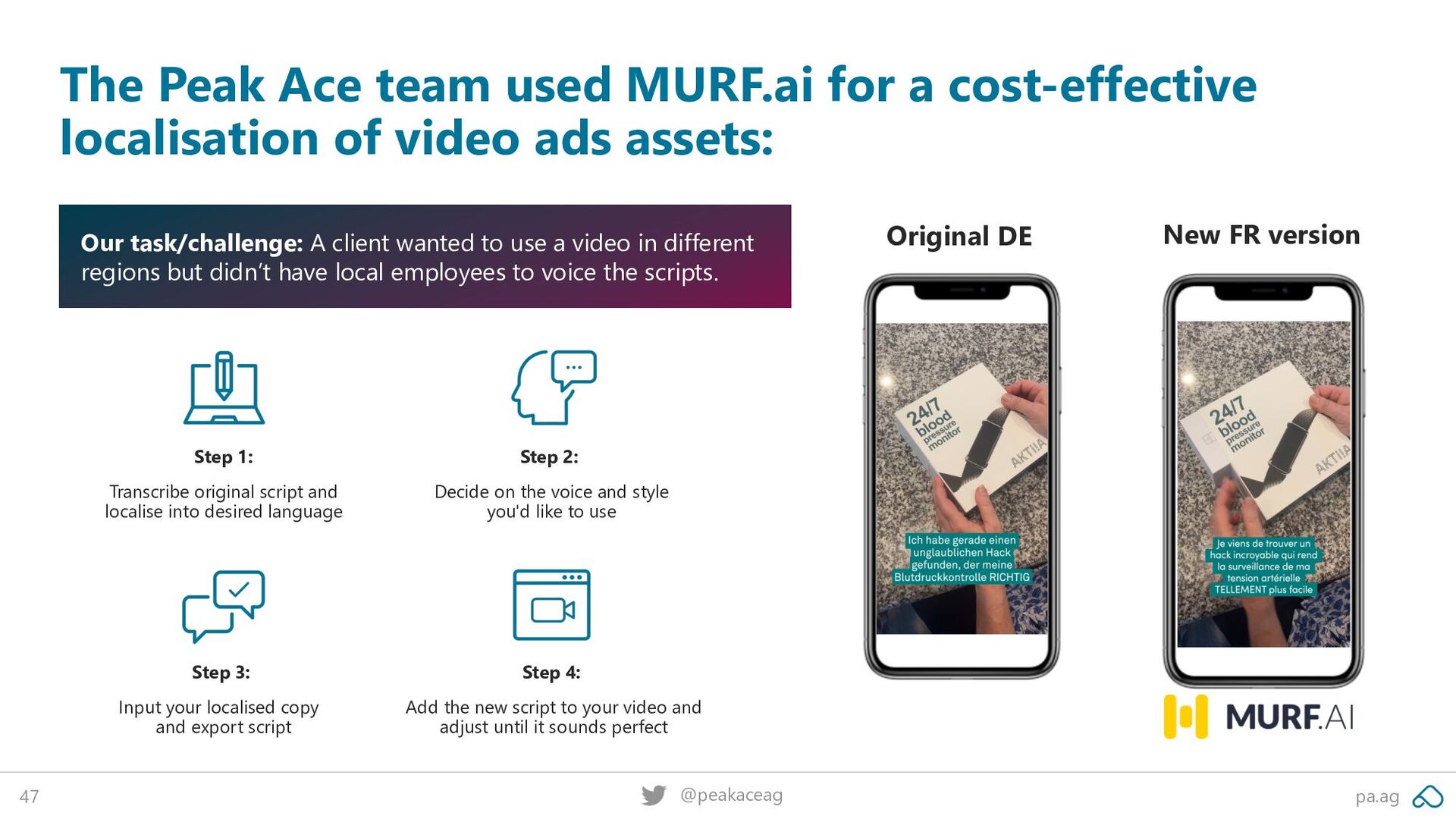
Pretty cool. Video assets, same story. MRF, if you haven't heard of it. So, same story. I think it's no secret if you are working in local markets that obviously localized videos work better than an English one. We just had an English one. The client didn't have the resources to kind of do proper voice overs so you can do these things with something like Murph.
It's not hundred percent perfect sometimes, but again, it is localized and therefore it works better than generic stuff. Video, I think, is gonna be the next big thing. There is one that I just wanna quickly mention, not because it's very actionable, just be kind of find it fascinating.
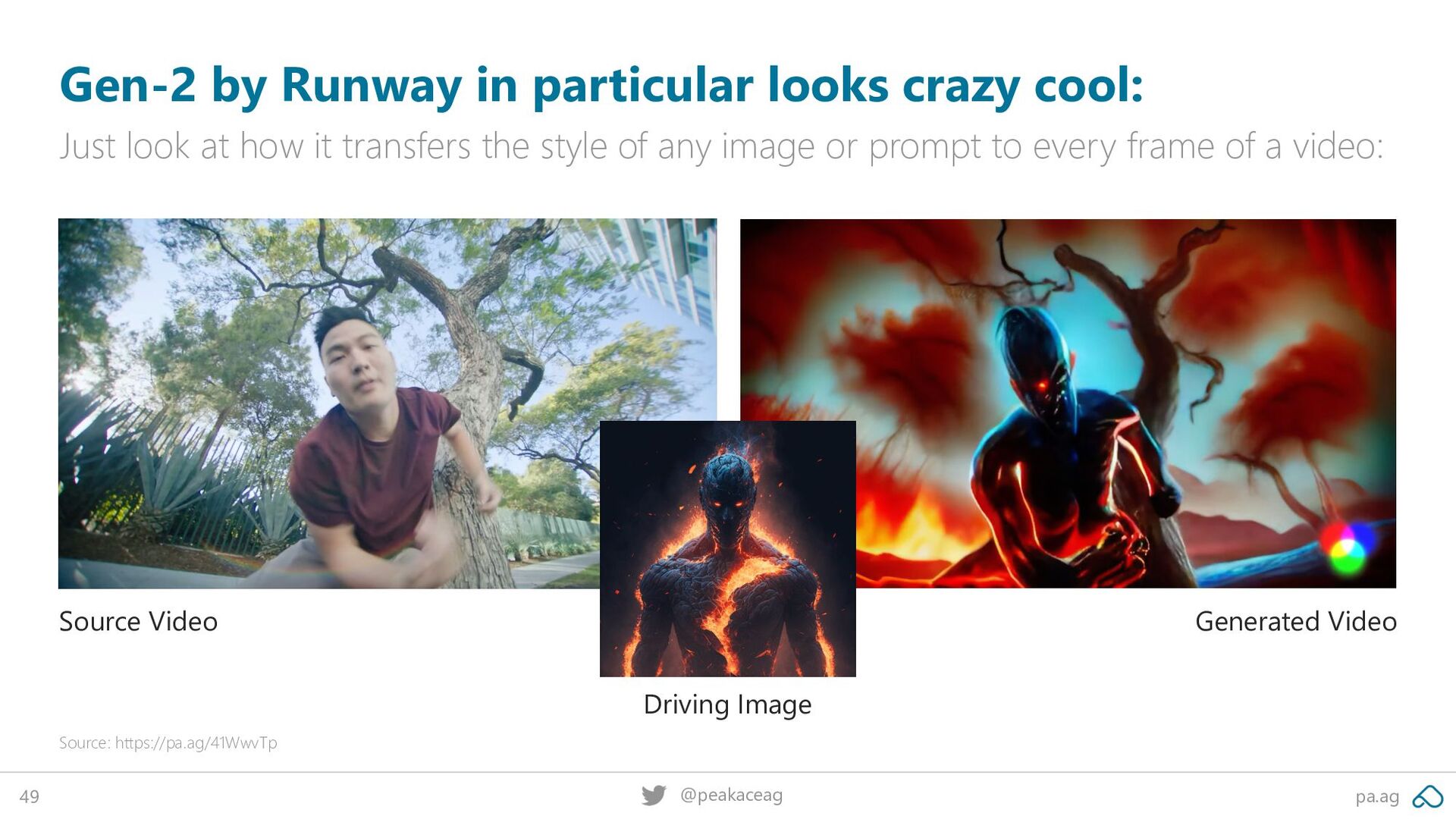
It's called, Runway or it's gen two by Runway, actually. Basically on the left, you have a source for you. You can you can record literally everything, anything that you want. In the middle, you have a driving image of a certain style and the right part is what's outputted.
And the crazy stuff I think is it's gonna revolutionize video production because that is much less expensive on the right than having to render these things on large machines. Right? So this is a very, very interesting way of actually getting, kind of into the this kind of style of video.
Productivity is a big topic. So if, you're like me and I'm kinda obsessed with getting things done real quick, I do way too many things at once. I mean, that's the nature of, I guess, when you when you when you do things that we do.
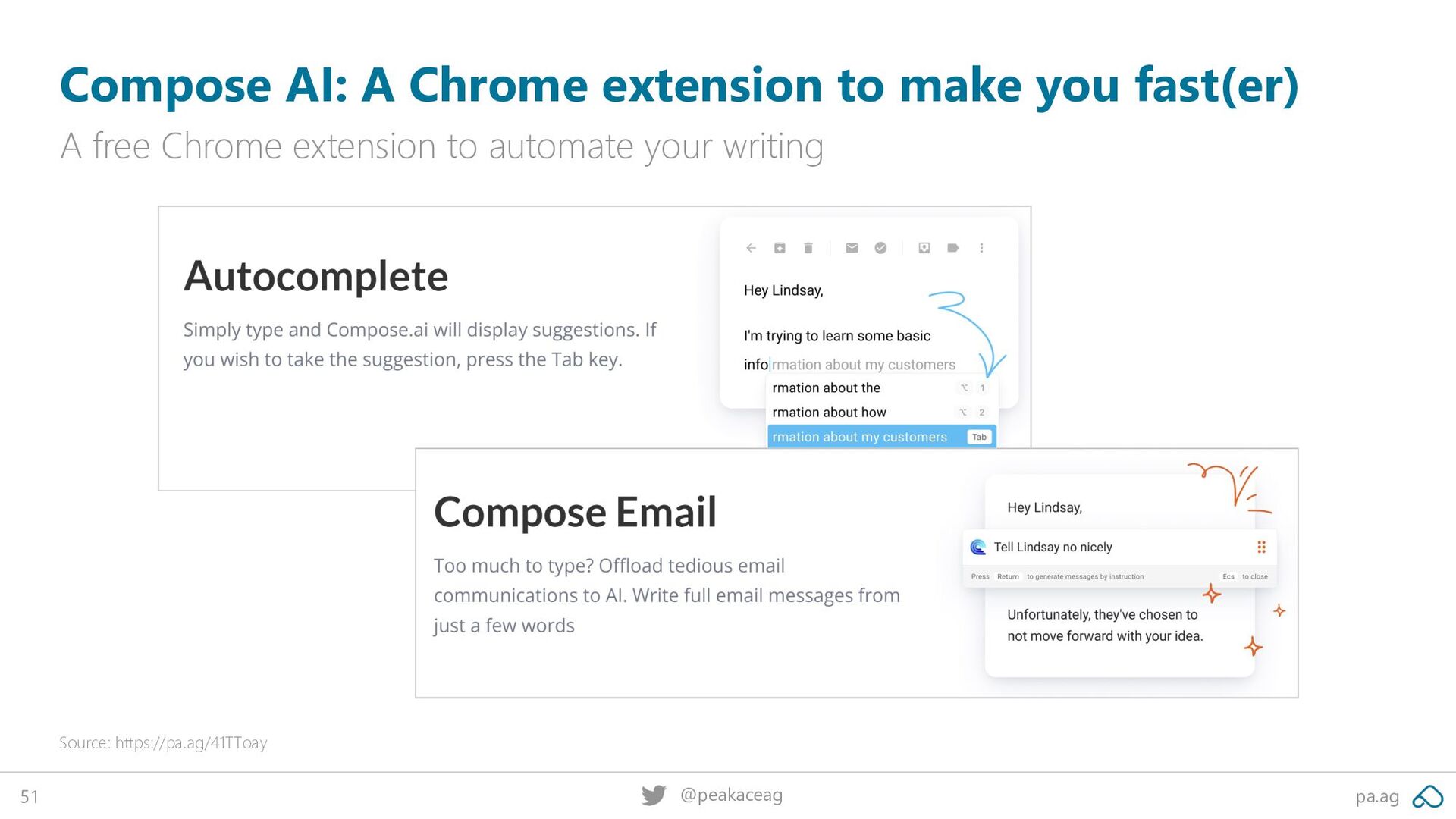
Right? Compose AI, if you take one thing away, that will be my bet for today. It's basically sitting in your browser. It's, auto complete in within different Chrome tabs. So if you start typing in one tab, you teach the thing and then you kind of use your WhatsApp tab or something else, and then you don't have to write anymore because it kinda predicts what you're going to write.
Really cool. It works multilingual, and really, really well. Scary well. Like, give it like a like, give it a couple of days to train, and kind of get kind of well, kind of adjust to your style. I think this is how you put it. And it's really efficient.
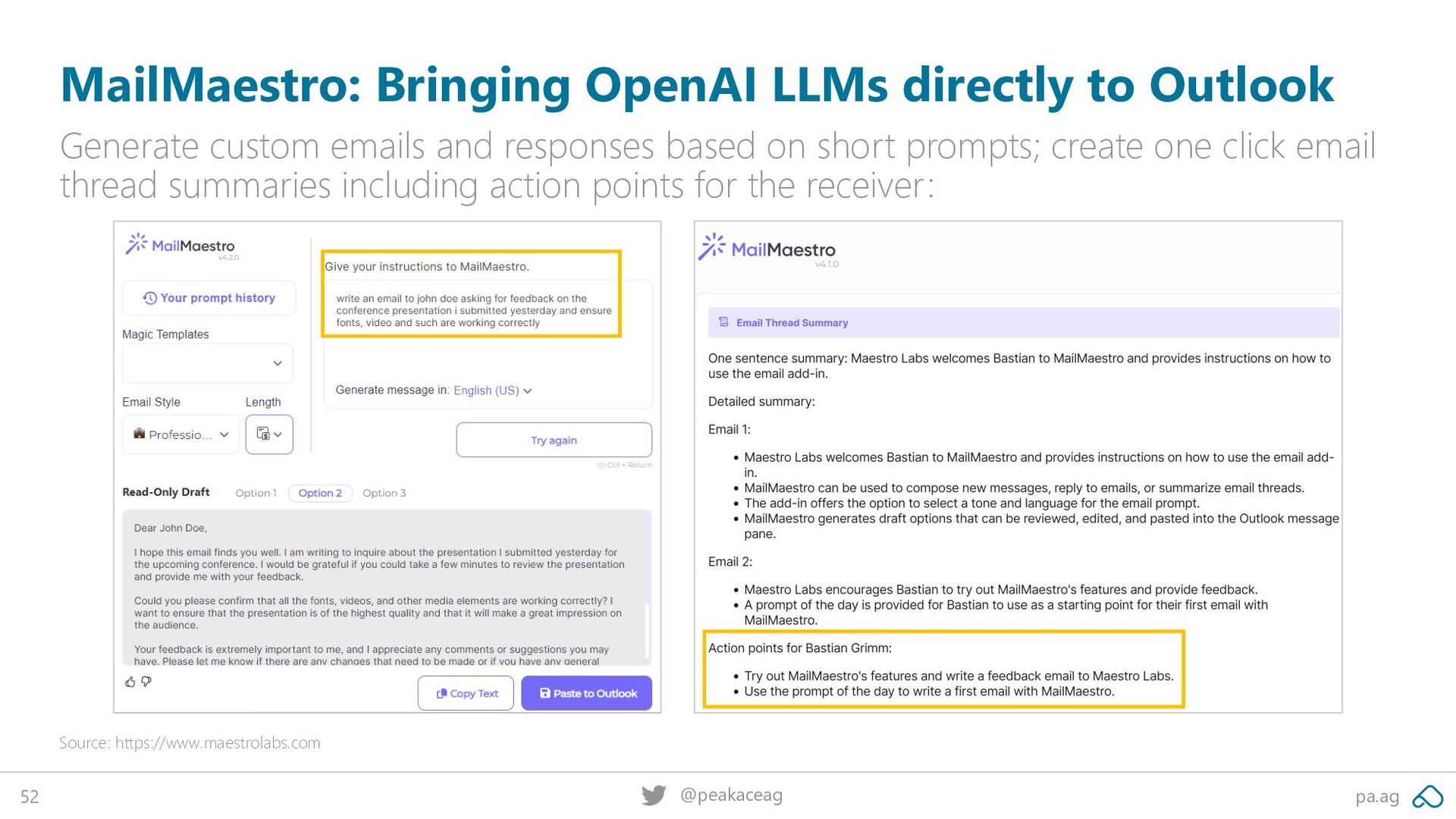
If you're living into kind of the Microsoft world, I do. There is a thing called Mail Maestro. I don't know how they picked that name but anyways, it's really cool. It brings OpenAI, the large language model into Outlook. And there's one thing that I love because I get way too many emails and I get like you know these email threads like they're crazy long.
There's five hundred people on this thing and like you have no idea what people are talking about. You you feel my pain? Yeah? Anyone? It has that's on the bottom right. It has action point extraction. I love this. It's like it's my favorite new time saver on things.
So it kind of does a summary and it tells me what I need to know from this insanely long email conversation based on the summary function that runs through, OpenAI's large language model. One click of a button. So I love this. I'm obsessed with it.
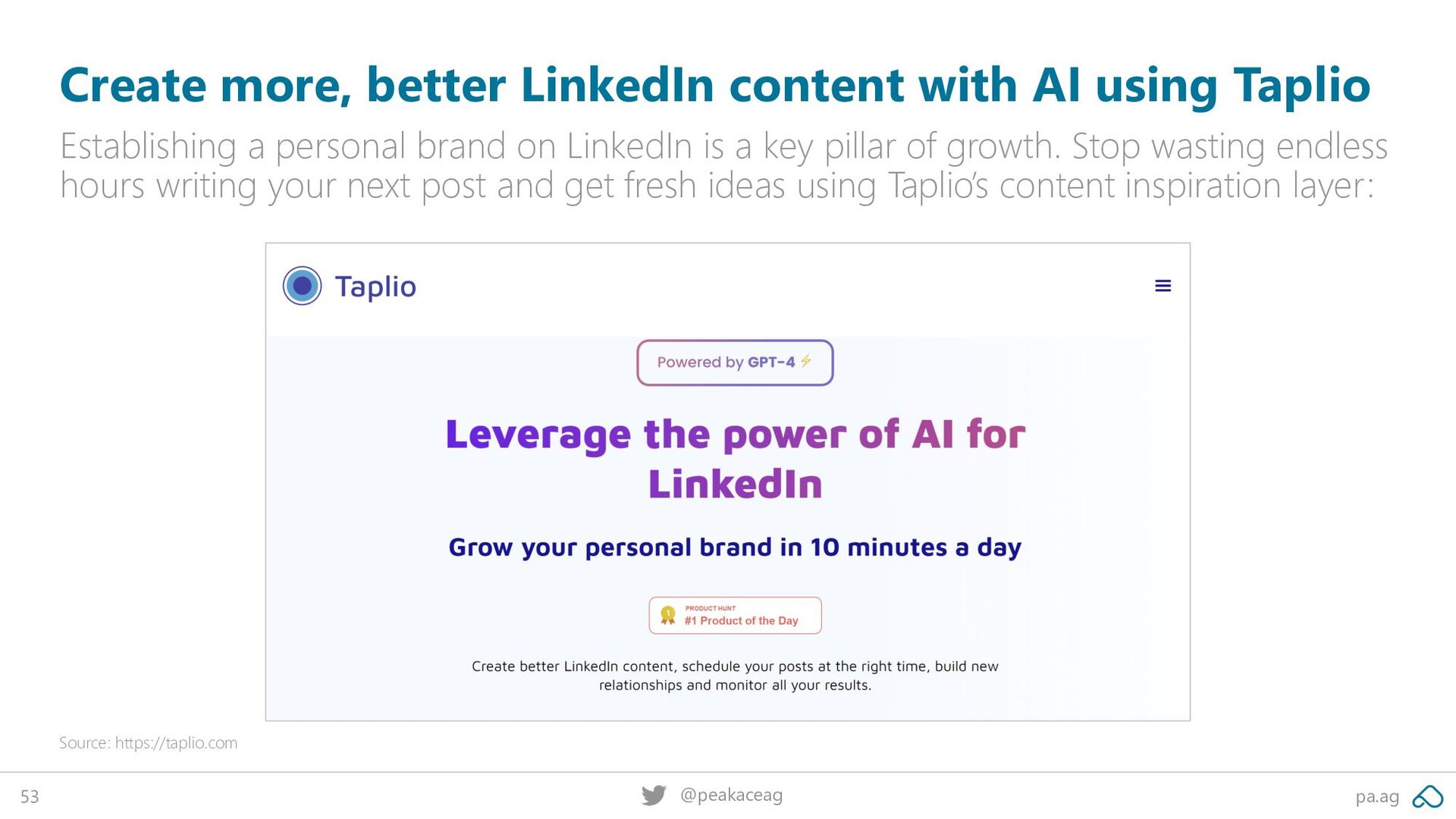
If, you I want If you're better than me and hope you are, in terms of LinkedIn at least, like, I'm I'm lazy but, like, building, you know, obviously a brand on LinkedIn is kind of a key pillar of growth. Right? And so there's a platform called Taplio, which is really cool.
So what they do is they they basically plug into your your profile, you could probably say, and then it kind of understands what you have interacted with, what you're going to interact with, and it kind of suggests stuff that you might wanna post on LinkedIn.
And it works scary well. I know LinkedIn does something similar as well. I hope Michelle is not here. It's gonna be Matt with me now saying that this is better than what they have right now, but anyways, give it a try. If you hate Excel with a passion, I do.
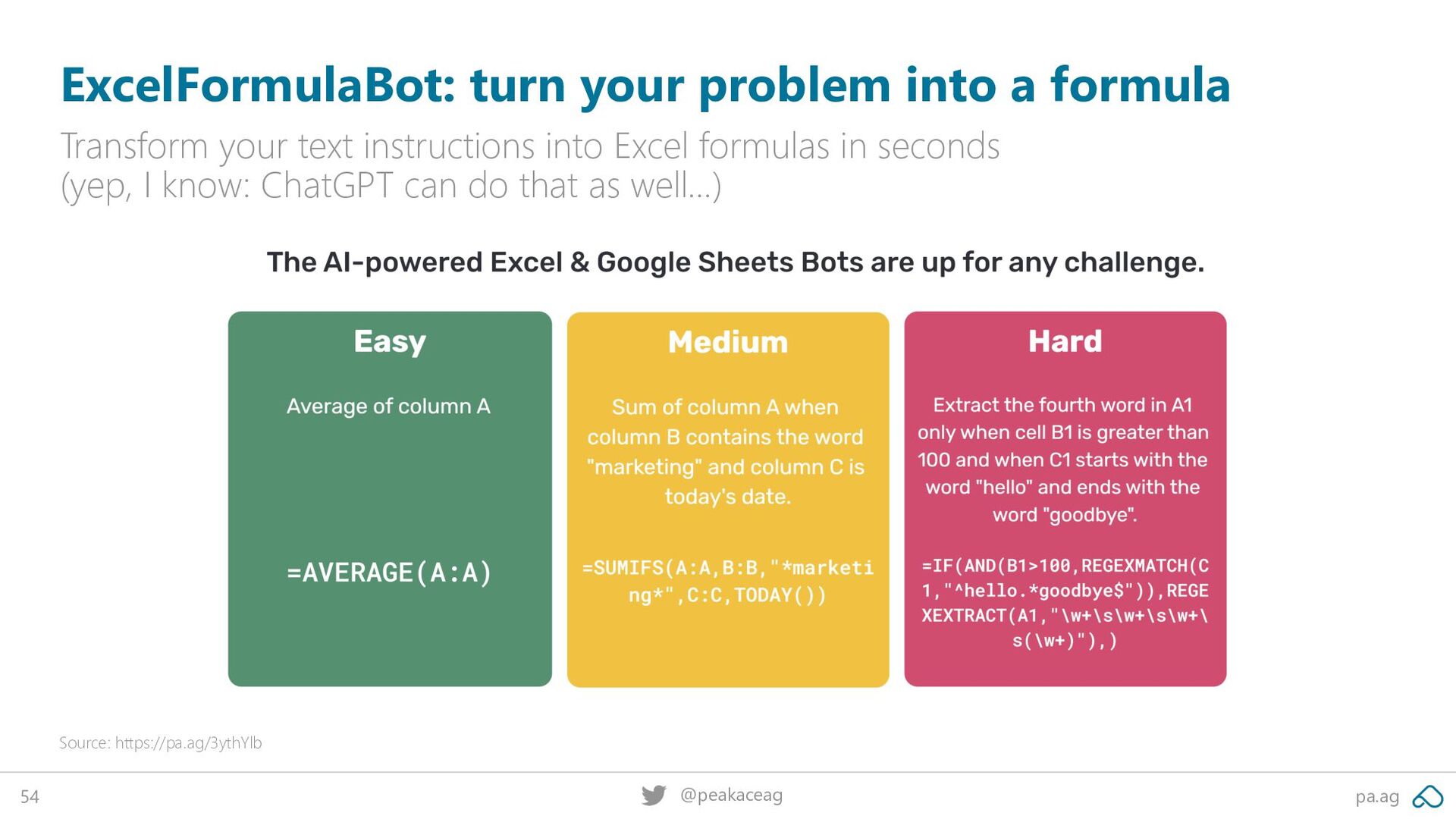
Excel Formula Bot is gonna be your new friend. I'm sure of it. Yes, I know you can do it in chat GPT, but anyways, this is much easier. You describe the problem. It builds the formula. You have your problem literally solved. It's really, really cool.
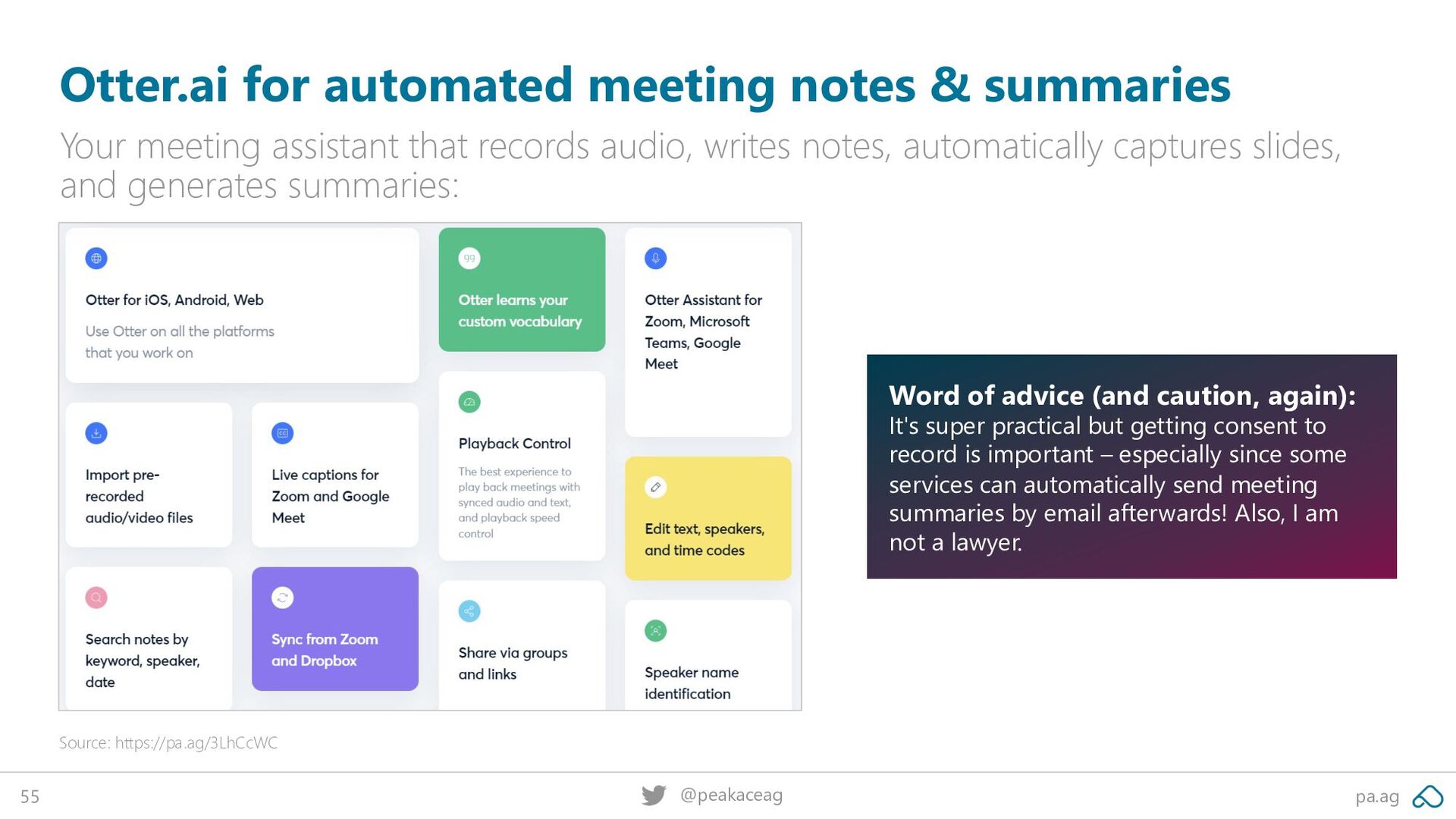
And last but not least, again, I have to say it. I'm not a lawyer. Otter dot ai is like if you spend way too much time in meetings, I hope for you, like, for your sake that your meetings are in English because other languages don't work really well.
But the cool thing is it does automated summaries in meetings or from meetings including like meeting notes and these types of things. Please don't be like me and just do it. Ask for consent beforehand because what's gonna happen is that thing is gonna send a summary to each and everyone in that meeting.
So if you haven't asked before, you might be in trouble. But anyways, it's, it's definitely worth, worth giving a spin. It's a huge time saver, to be completely honest. One thing that I really enjoy with all of this, is that there's a massive move kinda towards, you could say, like, no codes because, you know, the problem is and I give that, and include myself in in that as well.
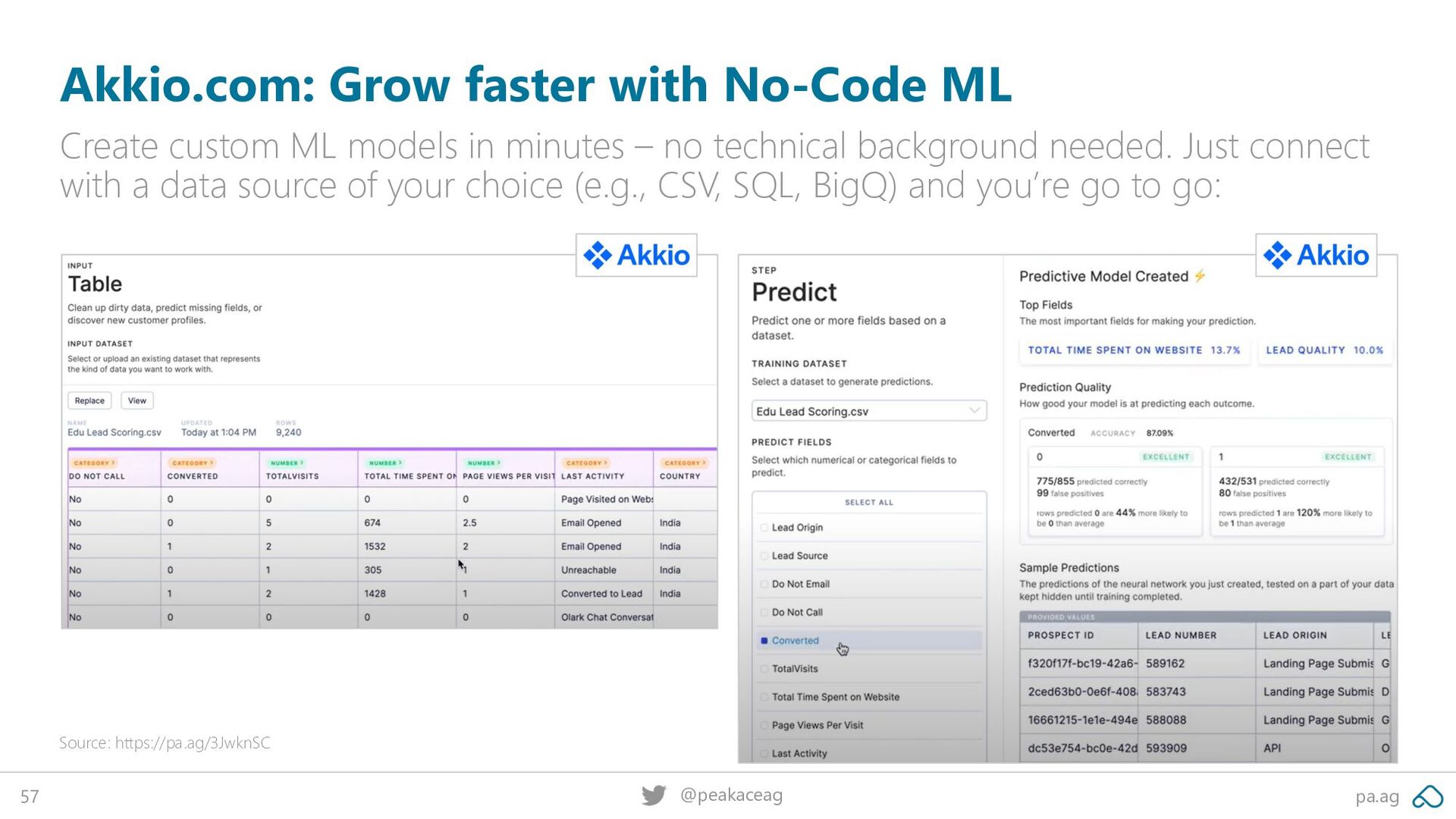
Like, I kind of learned development more than twenty years ago, and, like, I don't feel like a developer at all. But, like, the cool thing is there's a whole bunch of, like, platforms now, and this is Accio, but there's a whole bunch of others as well, where you can plug in any type of data source that can be a simple spreadsheet, but it can also be a much more powerful database.
And on top of it, you can run predefined machine learning models. I mean, obviously, you can also, like, adjust those models, but the the beauty of it is that basically, most of the things not all of them, but most of the standard common things that we do in marketing, for example, they're kind of more or less a solved issue.
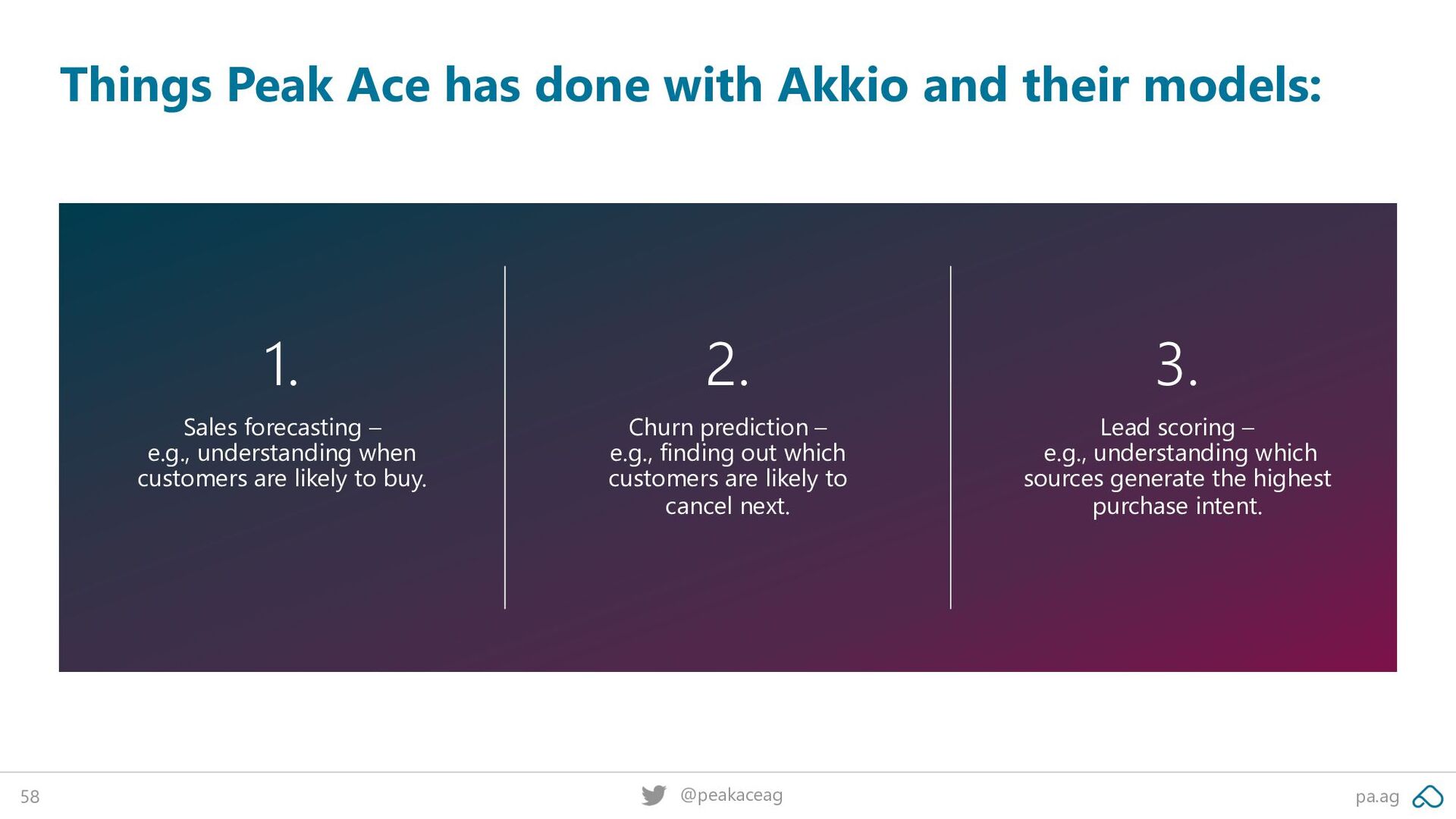
Right? You can do things like sales forecasting if you have sales data or you can do the opposite like churn prediction if you have client data or, you know, you can assess your pipeline, if you, you know, if you have lead data. It just you you plug it in, you pick the model, you might need to adjust it depending on, you know, the data that you have.
But overall, the machine learning tech is nothing groundbreaking that's already there. The cool thing it's plug and play. Literally, every one of you can do that in like ten, fifteen minutes once you have kind of got the hang of the platform. So I think this is quite quite powerful because it enables us to become more efficient or to do things without having to rely on development resources that are probably being utilized elsewhere much better anyways.
So I think this is quite cool. Obviously, about ChatGPT, we have to do a real, like, quick wrap up. Who's not using ChatGTP right now? Seriously? Holy wow. Like, I'm I'm impressed because you're not allowed. I just don't trust the thing. Like no?
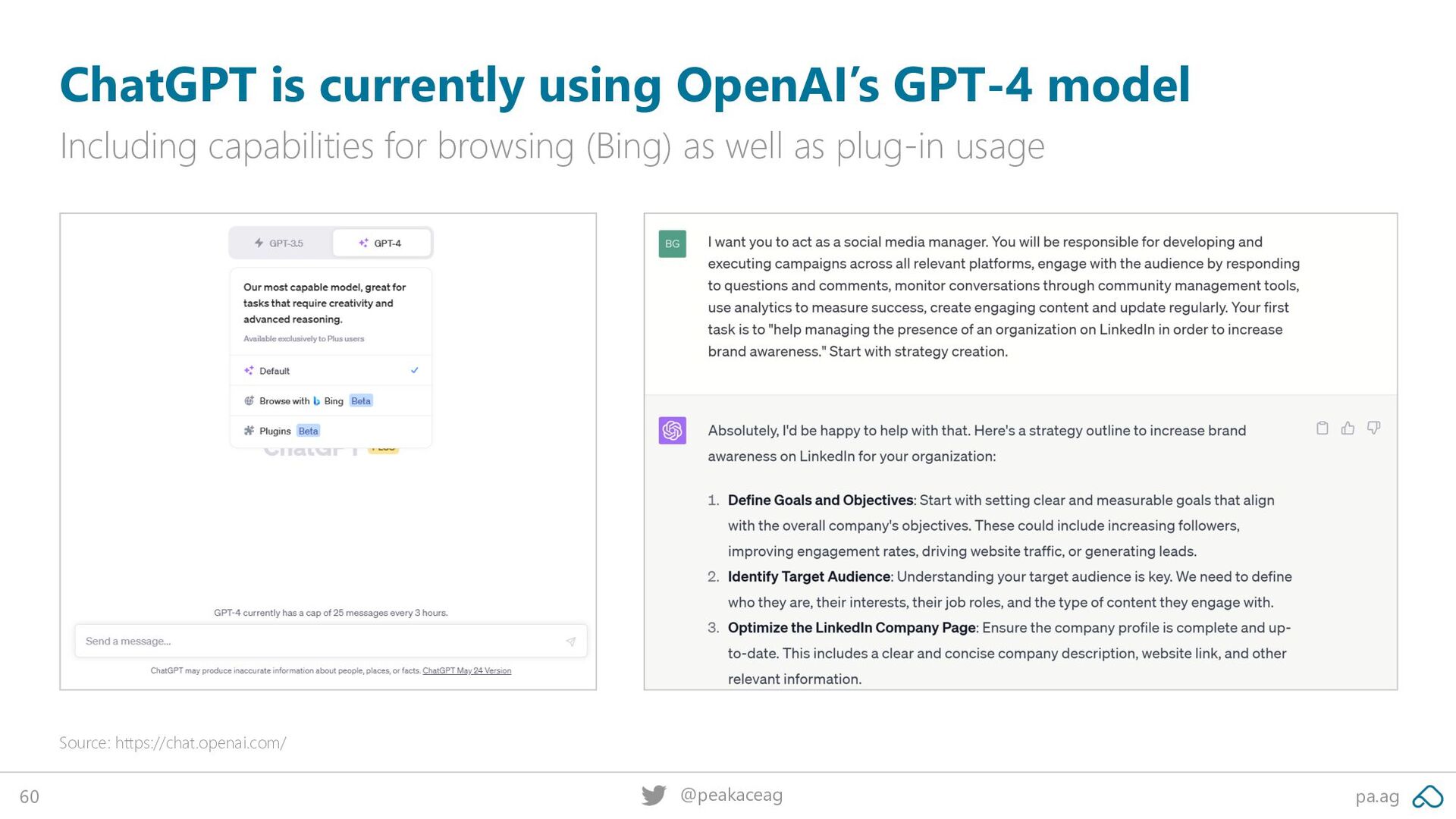
Okay. Well, anyways, that's good that we have a bit of a a very quick summary how it looks like. On the left hand side, you see if you have not done the subscription, so the plus version, you see how it looks on the left hand side.
There's two points that I just wanna quickly make. Well, next to obviously on the right is how it looks like you dump in a prompt and you see already like my prompts are much longer than what you would do for like a normal like Google search.
But anyways, the point being it has some functions that are quite powerful that people are not aware of. So one thing is, that before we go there and before, you know, we kinda go into the output, let's have a quick look kind of on the input side because that's probably even more important.
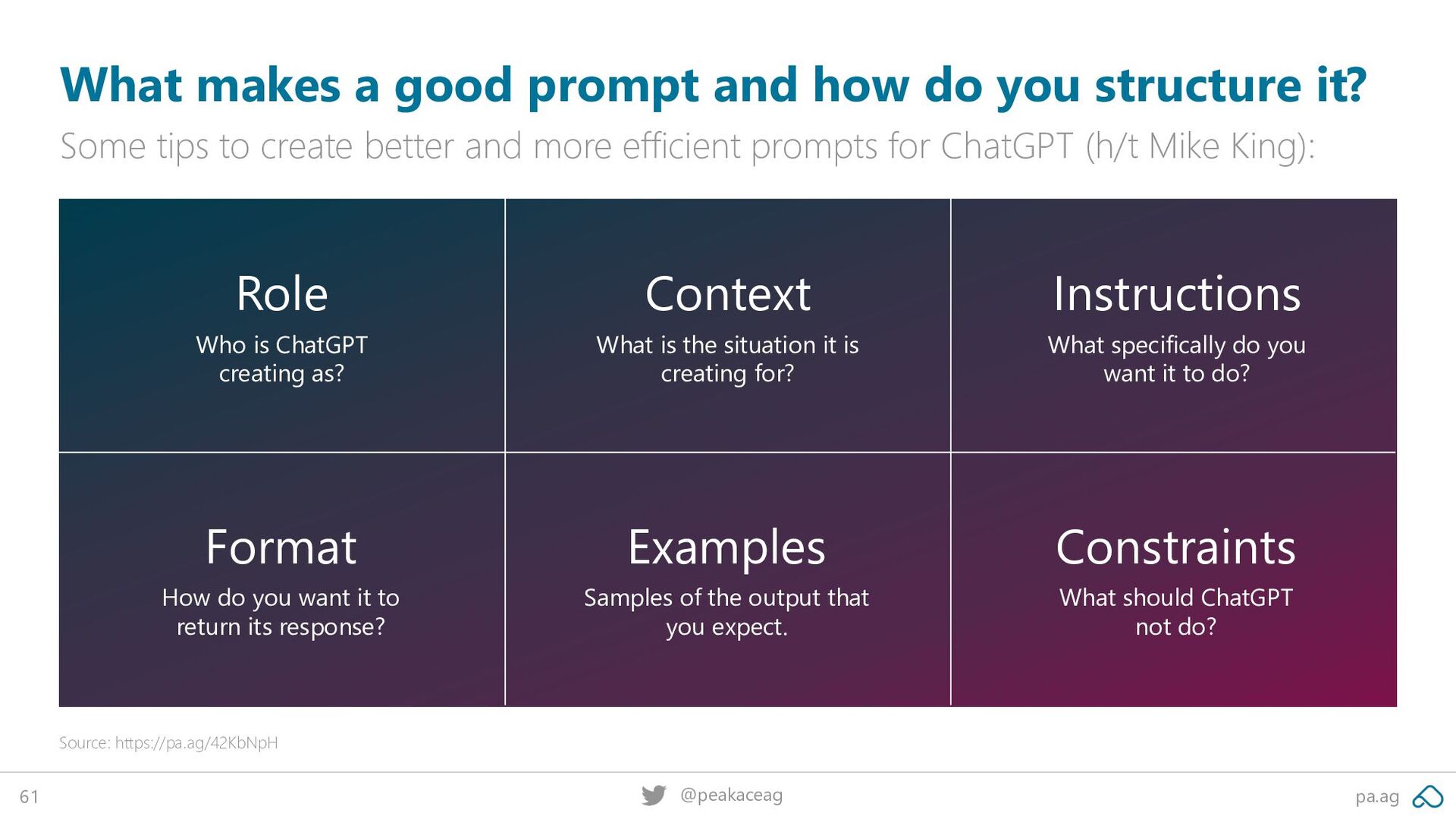
So the the things that people underestimate, and this is a really cool, thing that a friend of mine in the States put together, so hat tip to Mike. But, like, basically, you need to inform the model what you want. So first of all, what's the role?
So who is ChatGPT acting as? That is an important part. Then the context. So what's the situation that it's in? Instructions. Like what specifically and you need to be very very precise. Don't like use any, words that have multiple meanings basically. Very very precise. Then the format.
You can structure how you want the response to look like. You can say like respond as, you know, in a in a in a table format or these types of things. And this is what most people don't know. You can provide examples. So in the input, you can use an example as how you want the output to look like.
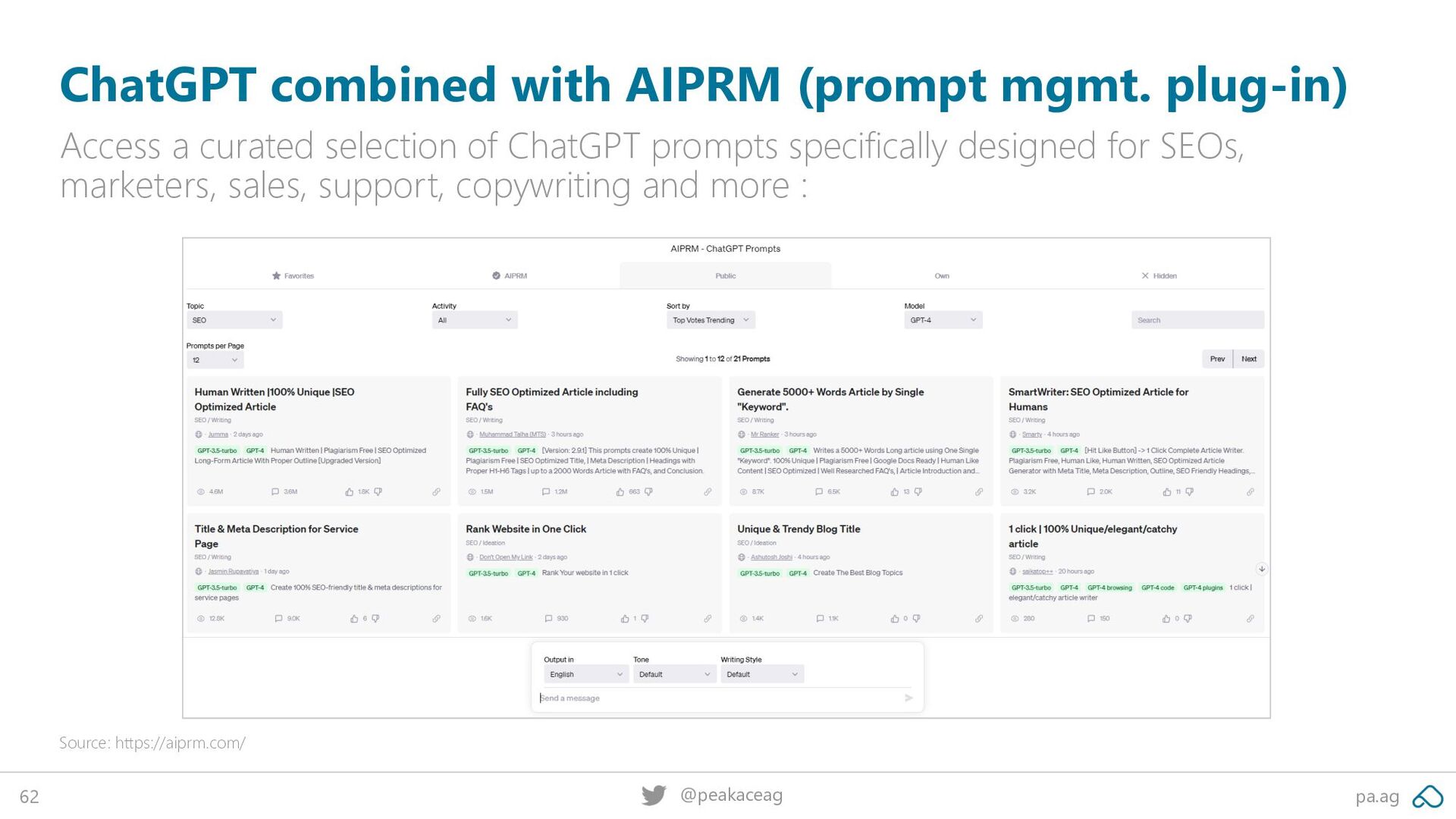
This is why prompts can be like multiple pages long. And then lastly, constraints. So this is really important, like what do you want not to happen or what do you want, Chat GbT not to do? Really important. You can if you need inspiration, the screen is a bit blurry but sorry for that.
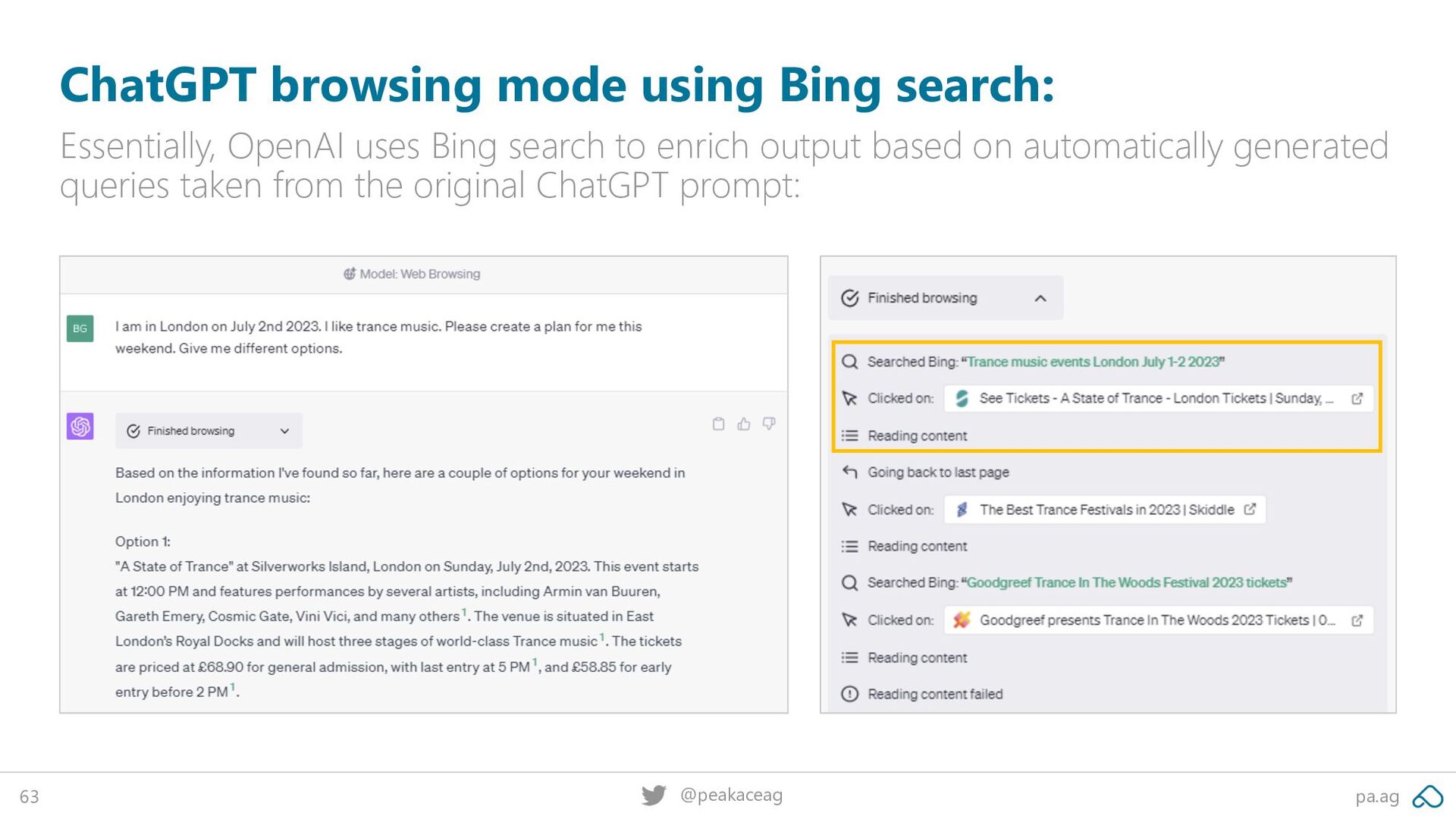
But anyways, there is plugins that have predefined prompts and prompt templates. I'm not saying they're all great. This is very important, but it can act as an inspiration. I think this is important. ChatGPT by default, like in the premium version now has a browsing mode.
So I can say something like, I'm gonna be in London July second. I like trans music. Please create me, like, something that I kinda can do on the weekend, respond with multiple options. And what it does, and you can see it on the right hand side, it actually does browse the web.
So that's what I what I what I was mentioning earlier. In this case, static perspectives doesn't really apply because it is actually using the Bing technology on the back of it, browsing certain type of websites, taking the data, extracting the data, and getting that back as a response.
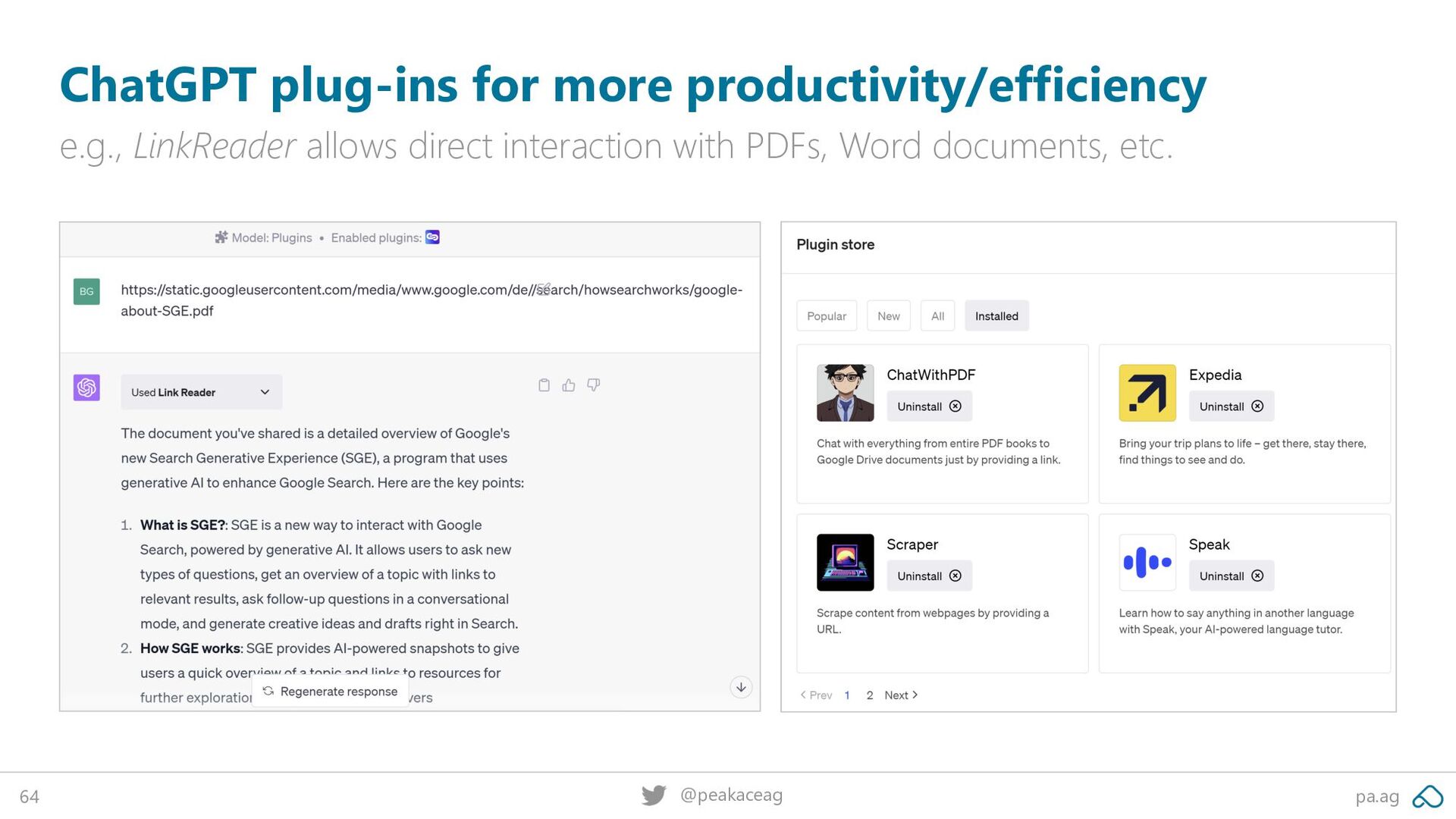
Right? There's plugins. I think this is gonna be huge, just because and so in this case it's it's, a plugin called Link Reader. So what you can do with it is you can basically then tell JetGPT to kind of read PDFs or work documents or anything else.
So it's kind of adding third party stuff. And I think third party stuff is the is the exciting part. Just because, you know, if you treat ChatGPT as a platform because it already has like that many users, then I think what's gonna happen is if you have something like, you know, a shopping basket or something else, if that can be can be executed directly from ChetGPT, people are already there.
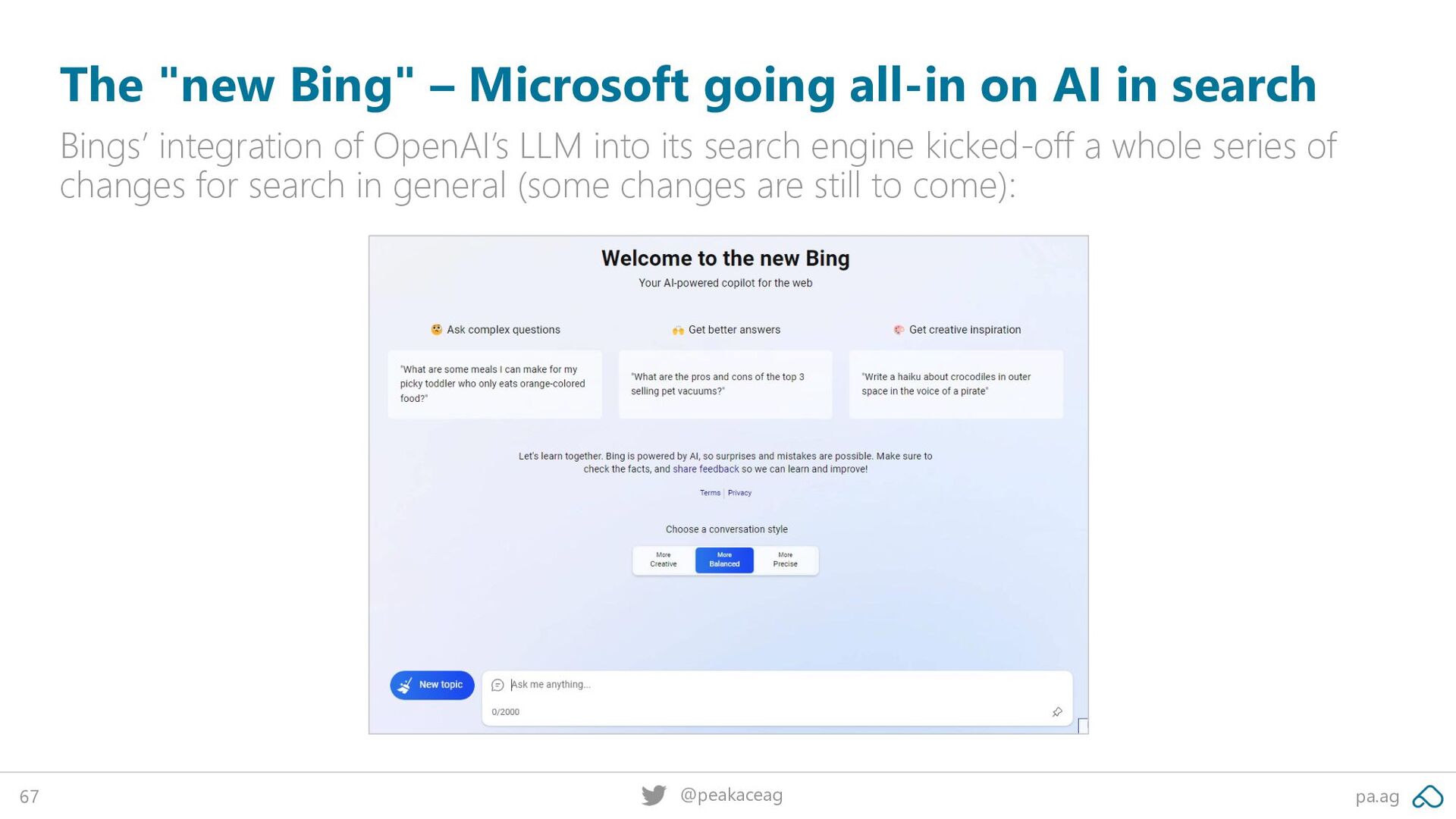
They don't need to leave anymore. This can drive additional conversions and these types of things. So this is really cool. And I think there's a whole bunch of other things that happen that's going to happen in search. I mean, you all I think you're all familiar with, you know, the new Bing.
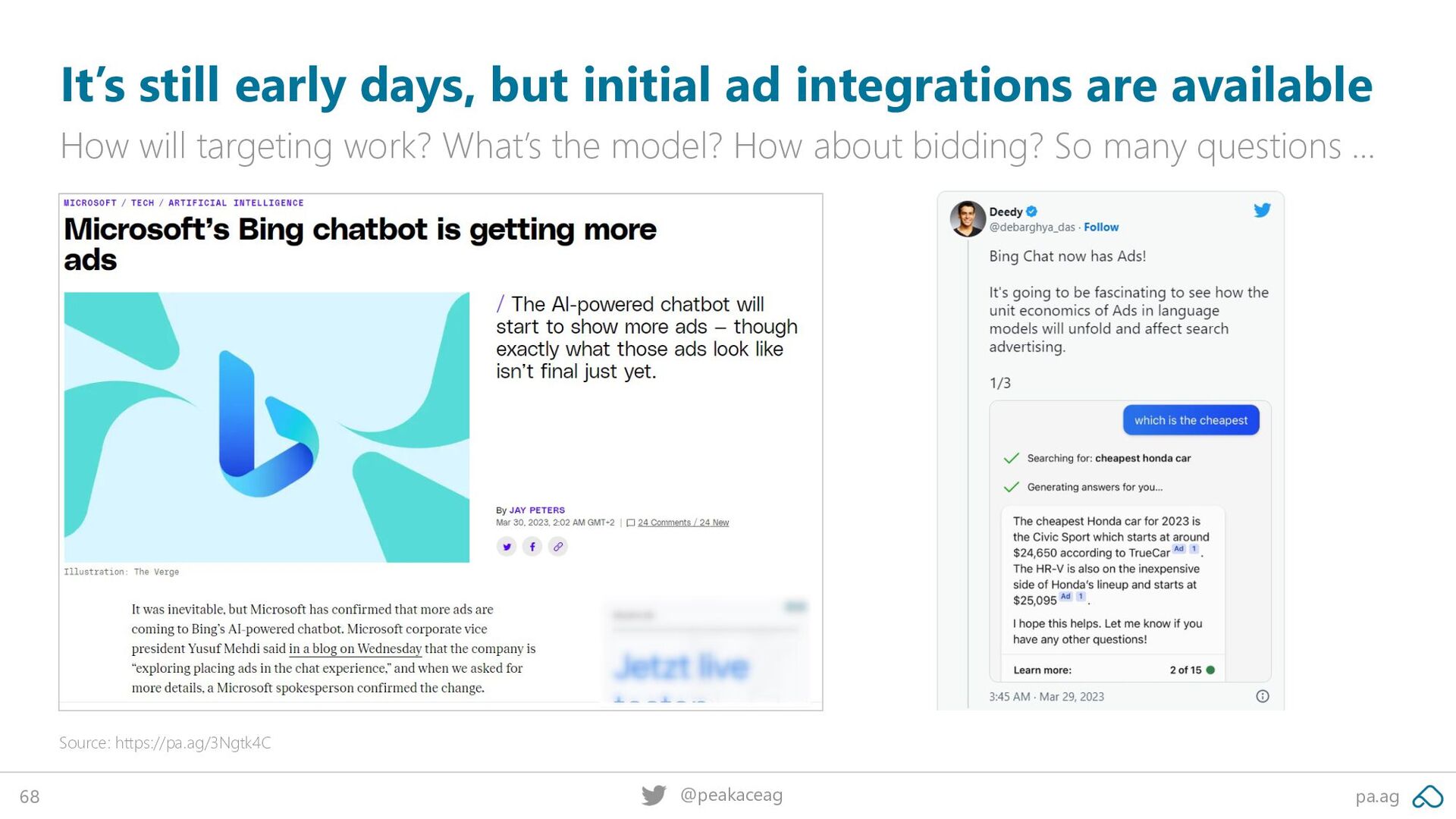
Right? This is something that that kind of, I think, kicked off most of the changes that we're seeing that we're seeing right now. There's a lot of questions like how are ad integrations going to look like. Right? So there's, you know, sometimes they're ads, sometimes they are not, sometimes they look different.
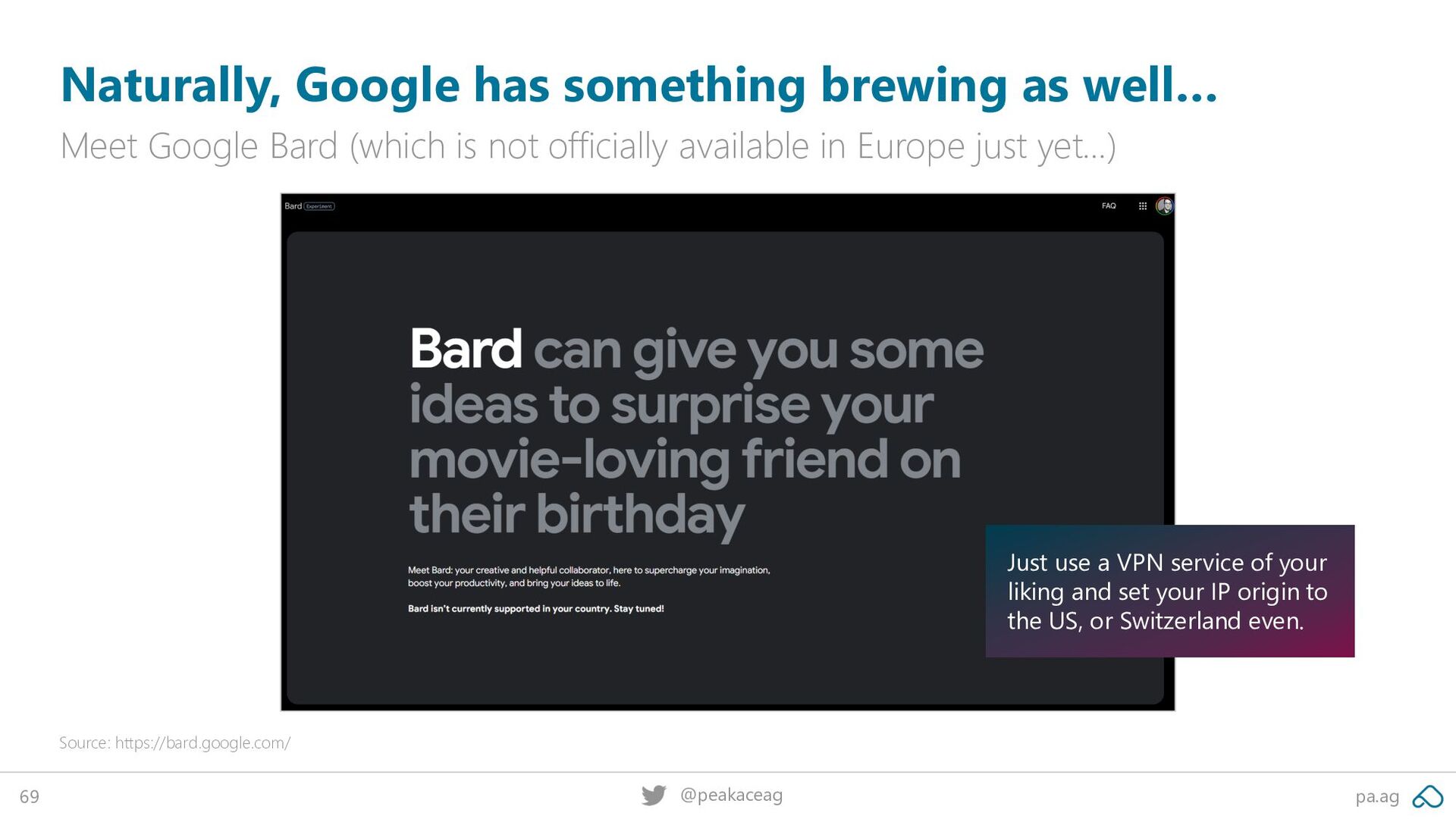
So these types of things, these big question marks from a search marketing perspective. Naturally Google has something as well. Right? They have bought, which you can't I mean, so I'm I live in Germany so there's like there's no way to access it. That's what they say.
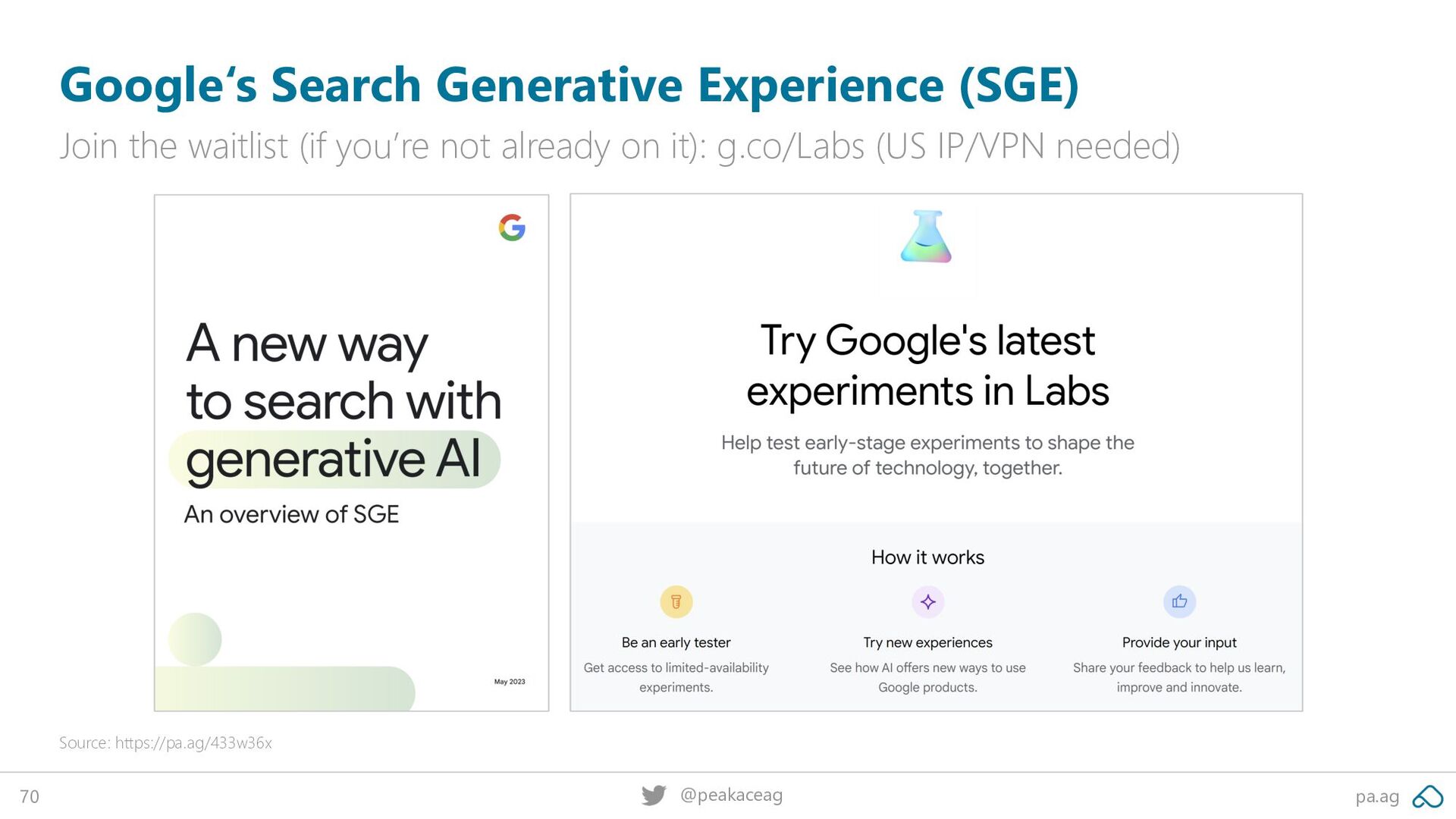
There is actually so just use a VPN, set it to, you know, the states and you're good to go. There's also something you're working on that's called SGE which is the Search Generative Experience. Again, same story. It's not publicly available. There's a waiting list.
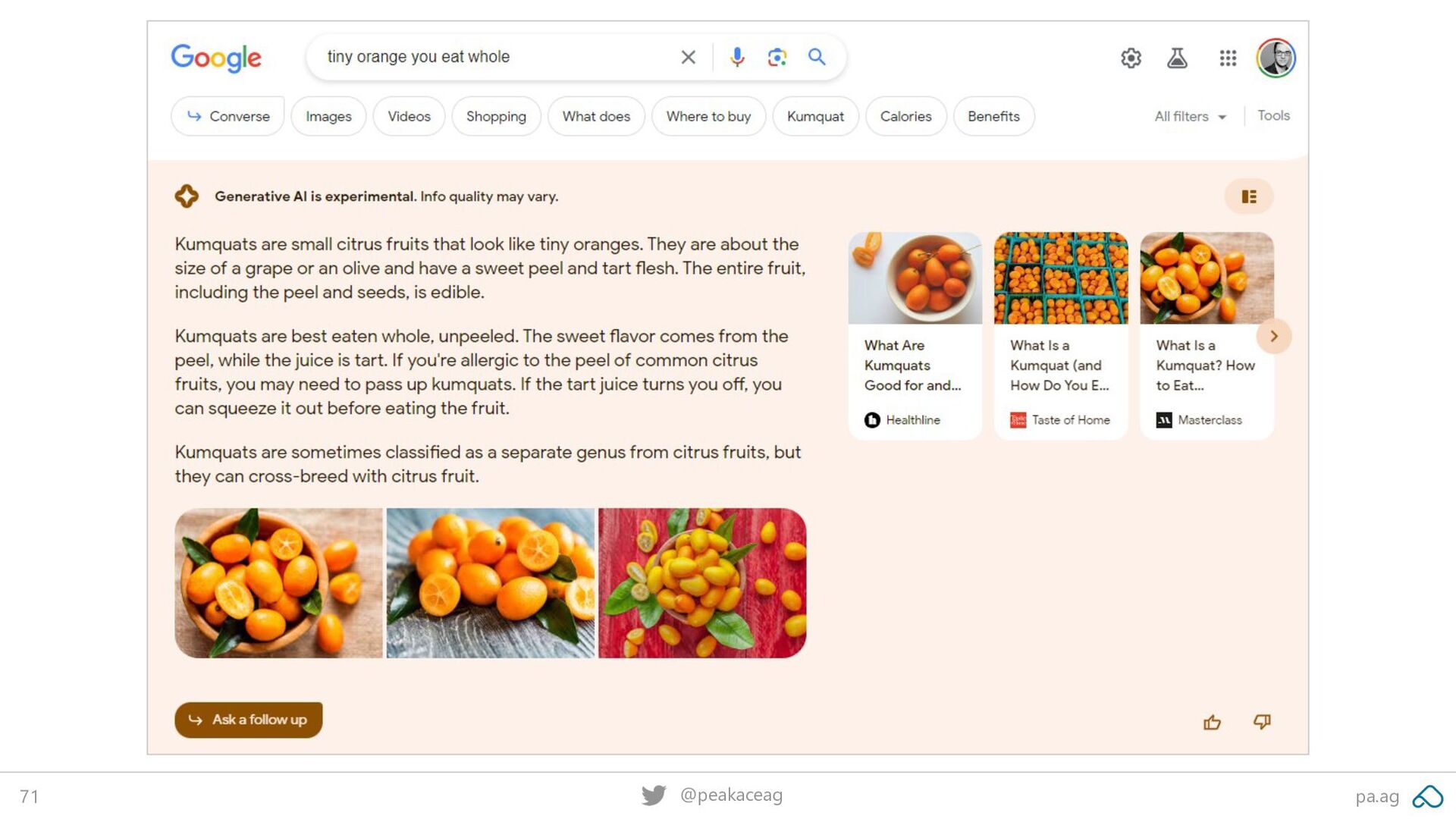
Link is in here. Same story. You you need a VPN. If you haven't had a chance to kinda play with it, how it looks like is something like this. You ask a question like tiny orange you can eat whole. I got no clue how that thing is actually called, and then you get what's, like, their generative answer, right, with images and, a whole bunch of other things.
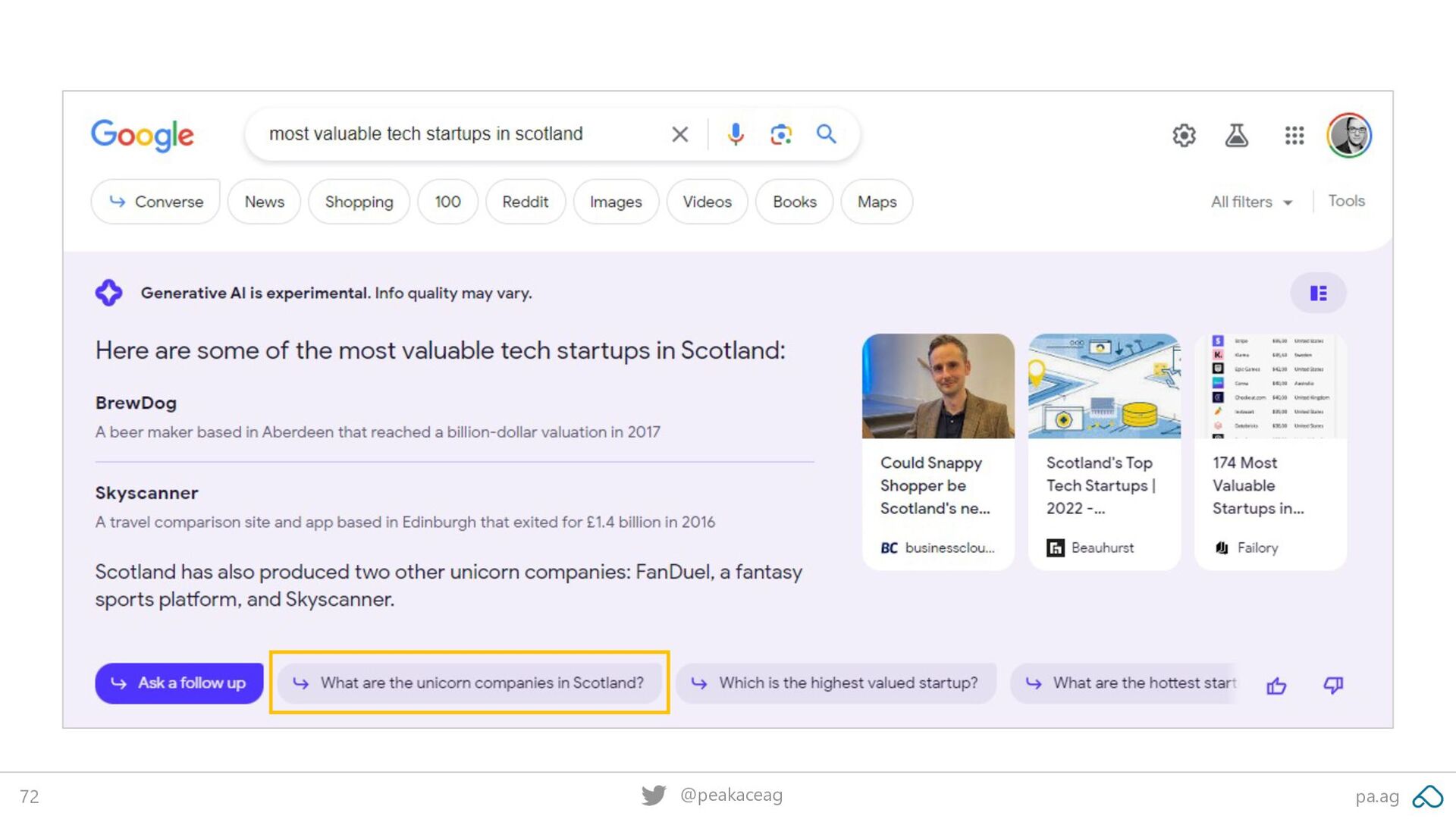
Or you ask, like, what's the most valuable tech startups in Scotland? And then it tells you it's apparently BrewDog and Skyscanner. And I was, like, kinda curious. So, you know, how is that with unicorns? And then you kind of do full up conversations like this.
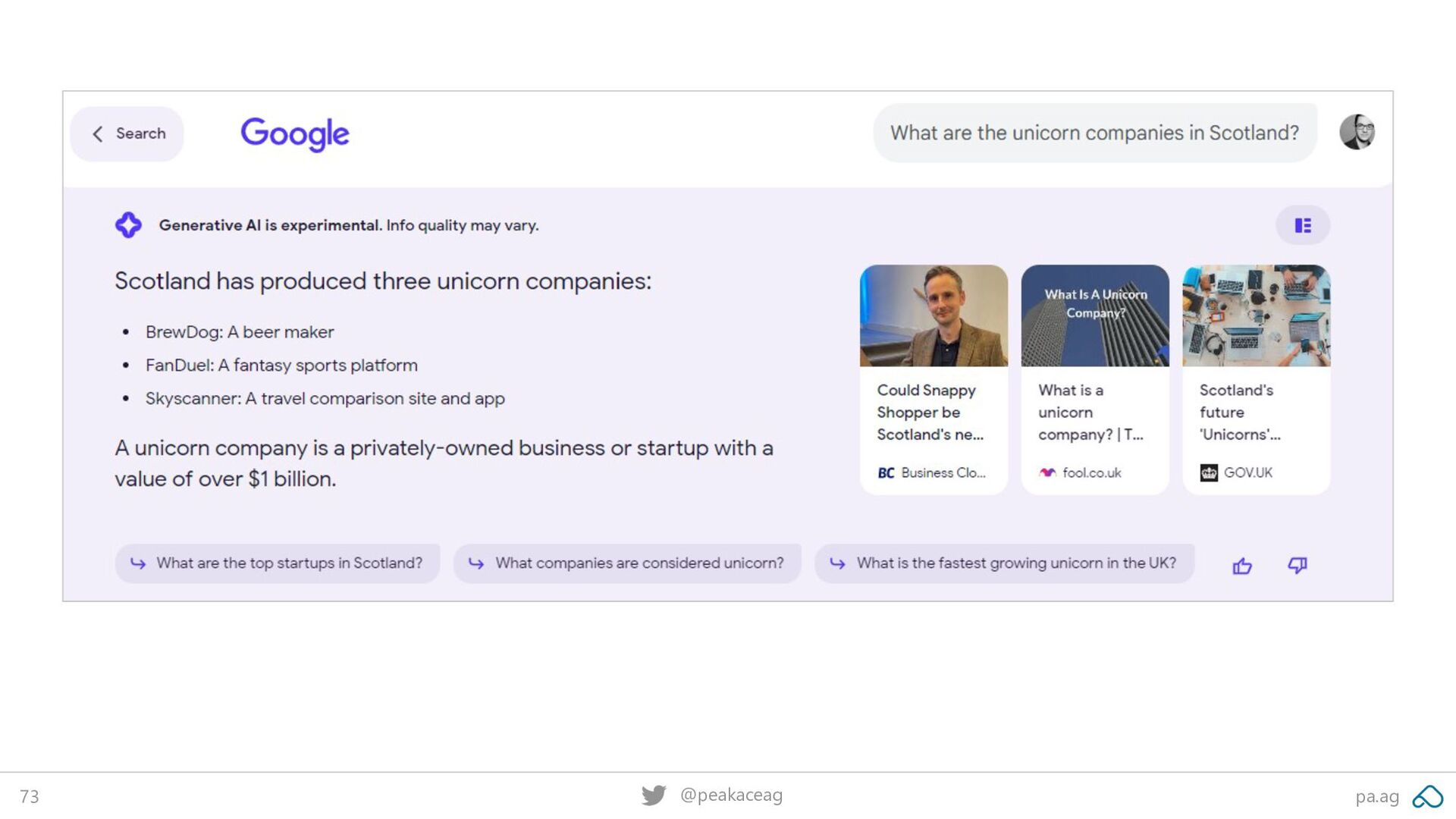
So what are the unicorn companies in Scotland? And it tells you there's apparently three of them. I haven't got an idea if that's true though. Just saying. Why should you care? I think that's the question. I think and I think especially from an SEO standpoint, I have no clue if that's gonna be the same. Most probably not.
It's probably gonna change five million times until the end of the year. But the the point is I think obtaining organic traffic on the kind of informational side is going to become much much much harder moving forward. So if you have been relying on blog posts to drive like kind of any type of informational, top of the funnel content, that might be an issue in the future.
Same is true obviously for ads. I mean, Google is going to introduce generative AI for ads as well. I mean, that's what they at least set. Meanwhile, I mean, it's not there yet but what you can do is you can do it yourself.
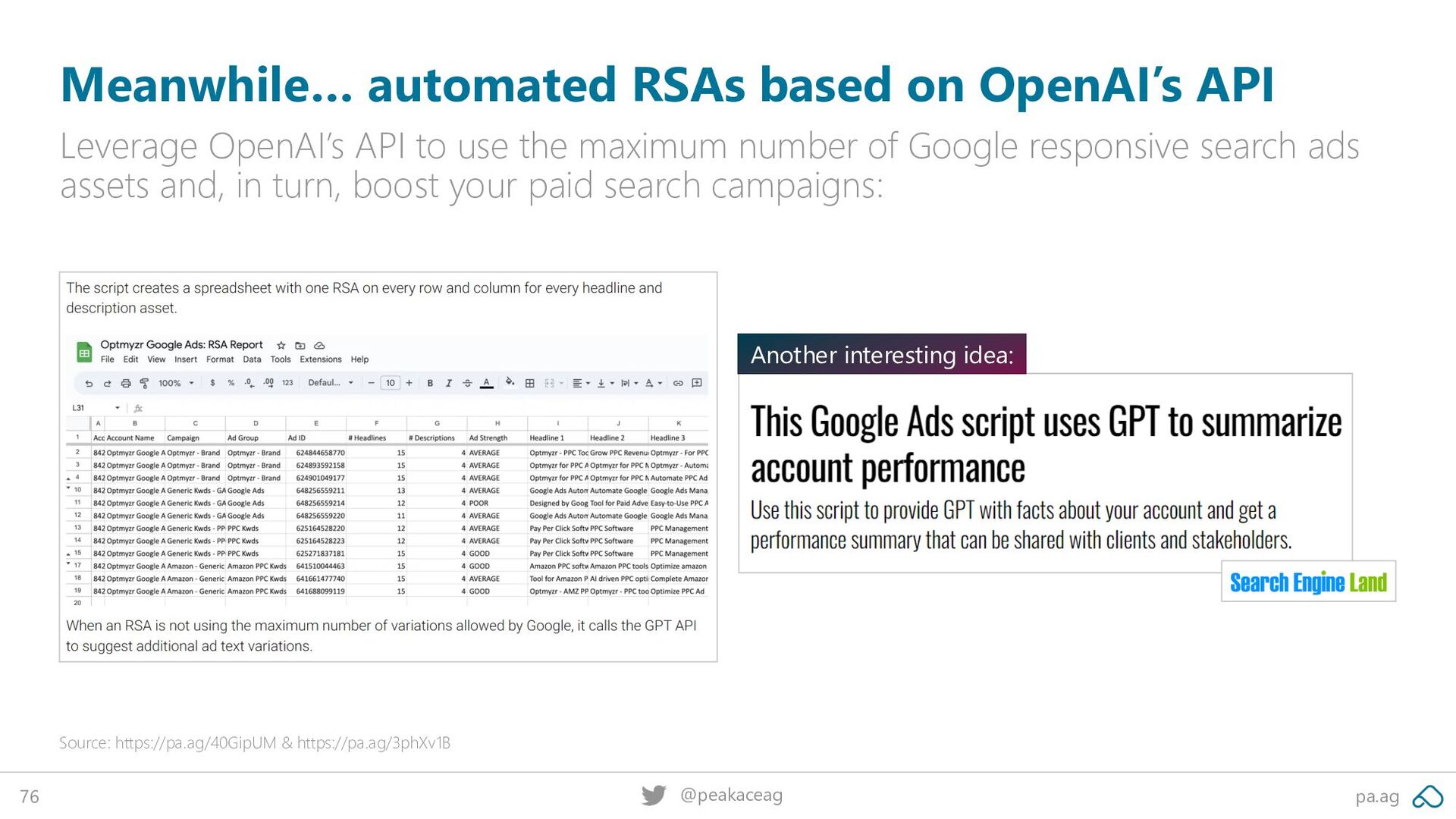
So this is basically a Google Sheet, from the guys of Optimizer in the States. What we've done is they've plugged together the API of OpenAI. And the idea if you're running responsive search ads with Google, you might be familiar with it. The more variants you have, the better they usually perform.
So you dump in one or two versions, it generates the other fifteen out of it, which is the maximum right now. So it's really easy, saves a huge amount of time. What they're also working on is a model called Gemini. I was kind of surprised that that didn't didn't really get much more attention, but the interesting part here is three things, multi modality, external tools and APIs, and memory capabilities.
If you know like what the hell. So multi modality essentially is just like the AI can ingest knowledge and input from multiple sources. So images, videos, audio, gesture, etcetera, which kinda leads obviously to the question where are models being headed in the future.
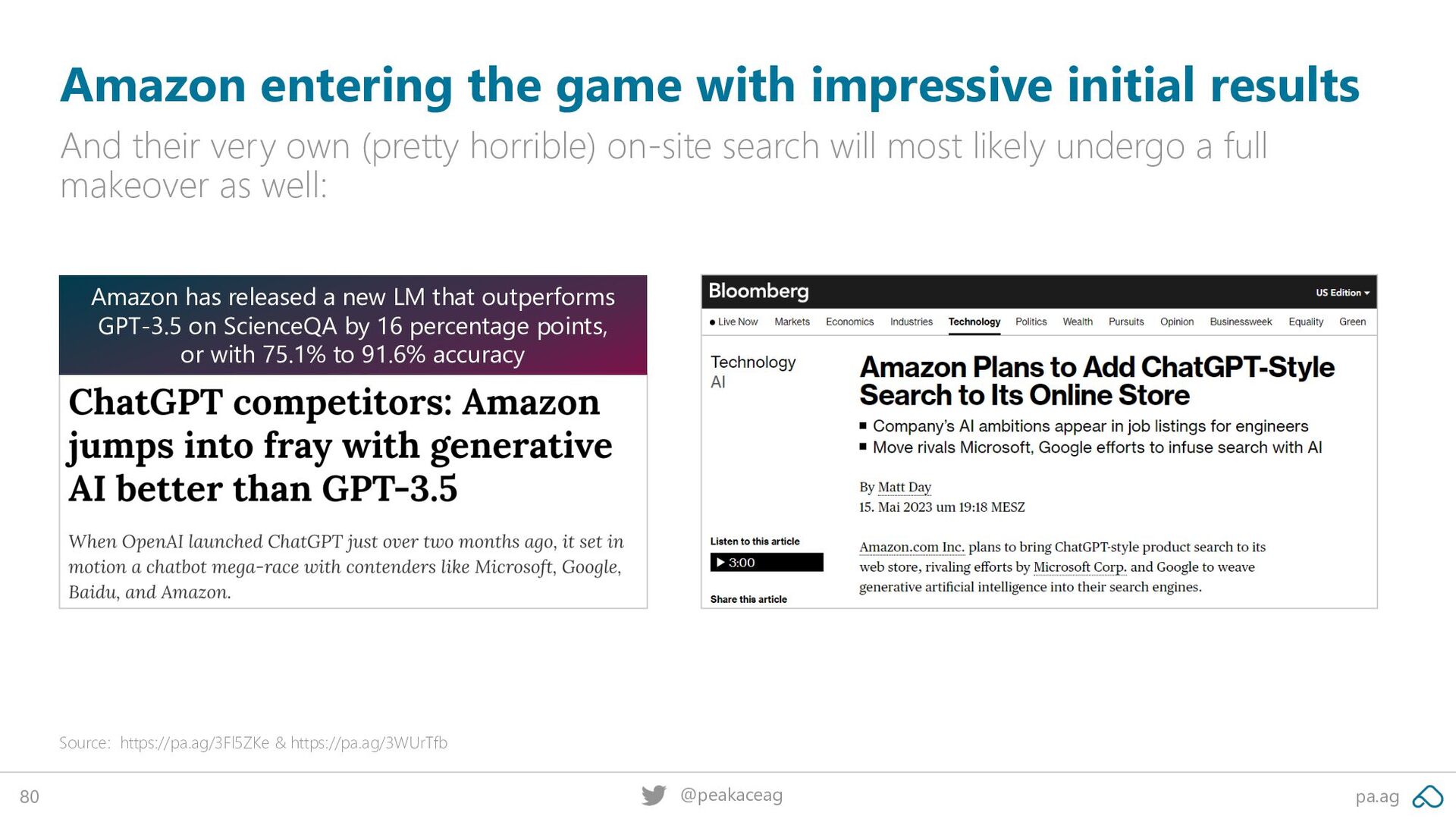
Right? I think Amazon is gonna be a part of the answer for sure. I mean, they released a whole bunch of new things just very recently. They also said like and I I live off Amazon. Right? So like the left hand navigation drives me mental.
It's such a garbage. You don't find anything. So I think for that, a replacement of something like a GTP ish style of approach might might be good. We shall see. Microsoft, I suppose, is going to kind of go all in or continue to go all in.
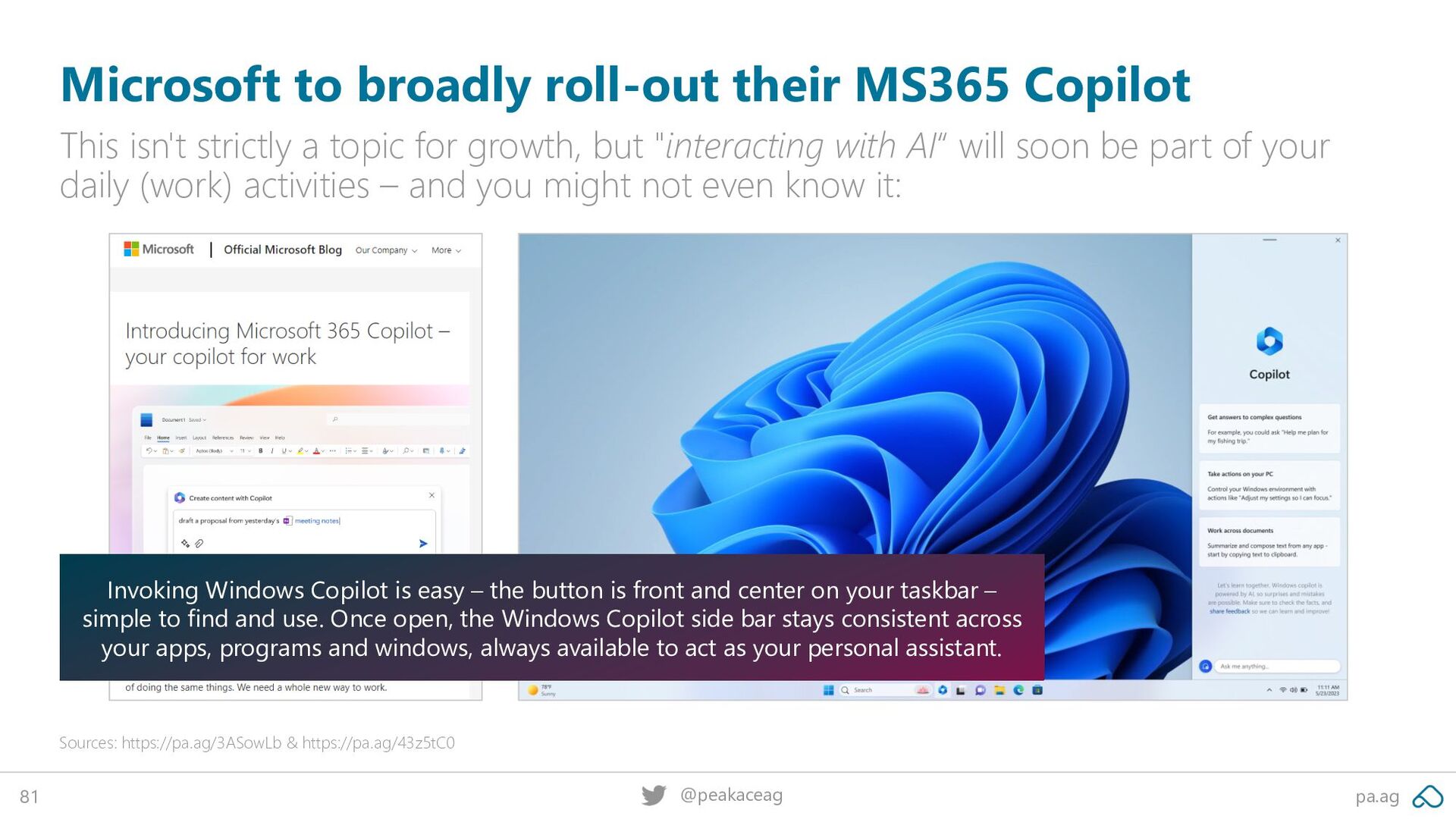
One thing, and this is just I think I found it very interesting. The the important part here is, I guess, that you and I and each and everyone else using Microsoft products is essentially kind of forced to interact with large language models on the back of it.
Just because all the Microsoft products like Office, Excel, etcetera, they have LMS in the background and the even more, exciting part I think is that they do it natively on operating system level. So they move it up. So Windows eleven with a search bar is basically powered by a large language model in the future.
So, you know, you might like it or not, but you just naturally are going to interact with a large language model in the future. I think models will also generate I mean, they do to an extent continue to generate training data just with the sole purpose of improving themselves.
They will start to fact check because that's an issue right now. And I think we probably will be moving to a whole bunch of different types of architectures because right now the problem is with all the big models, like when you do a query, they need to run through the entire data points and that's obviously not very sustainable con considering that models are continuing to grow.
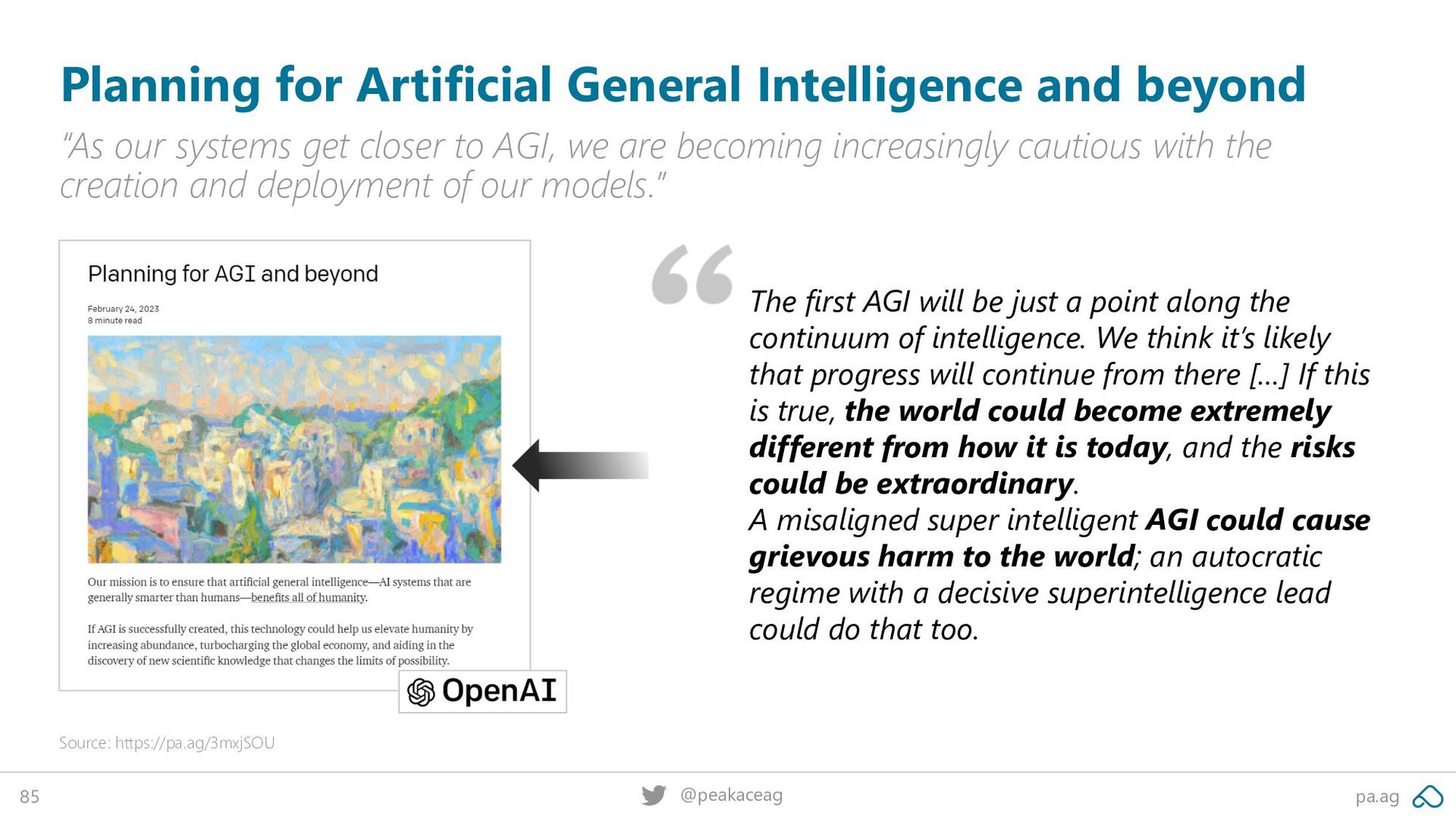
So therefore, if you kind of if we can move to an architecture where it can only be like I query part of that, then it's obviously much more efficient. Right? And I wanna kind of close this one with a post that you all should read.
It's, on the OpenAI, block and I just wanna cite one thing real quick because I find it fascinating. But they said successfully transitioning to a world with superintelligence is perhaps the most important and hopeful and scary project in human history. Success is far from guaranteed and the stakes, boundless downsides, and boundless upsides will hopefully, unite us all.
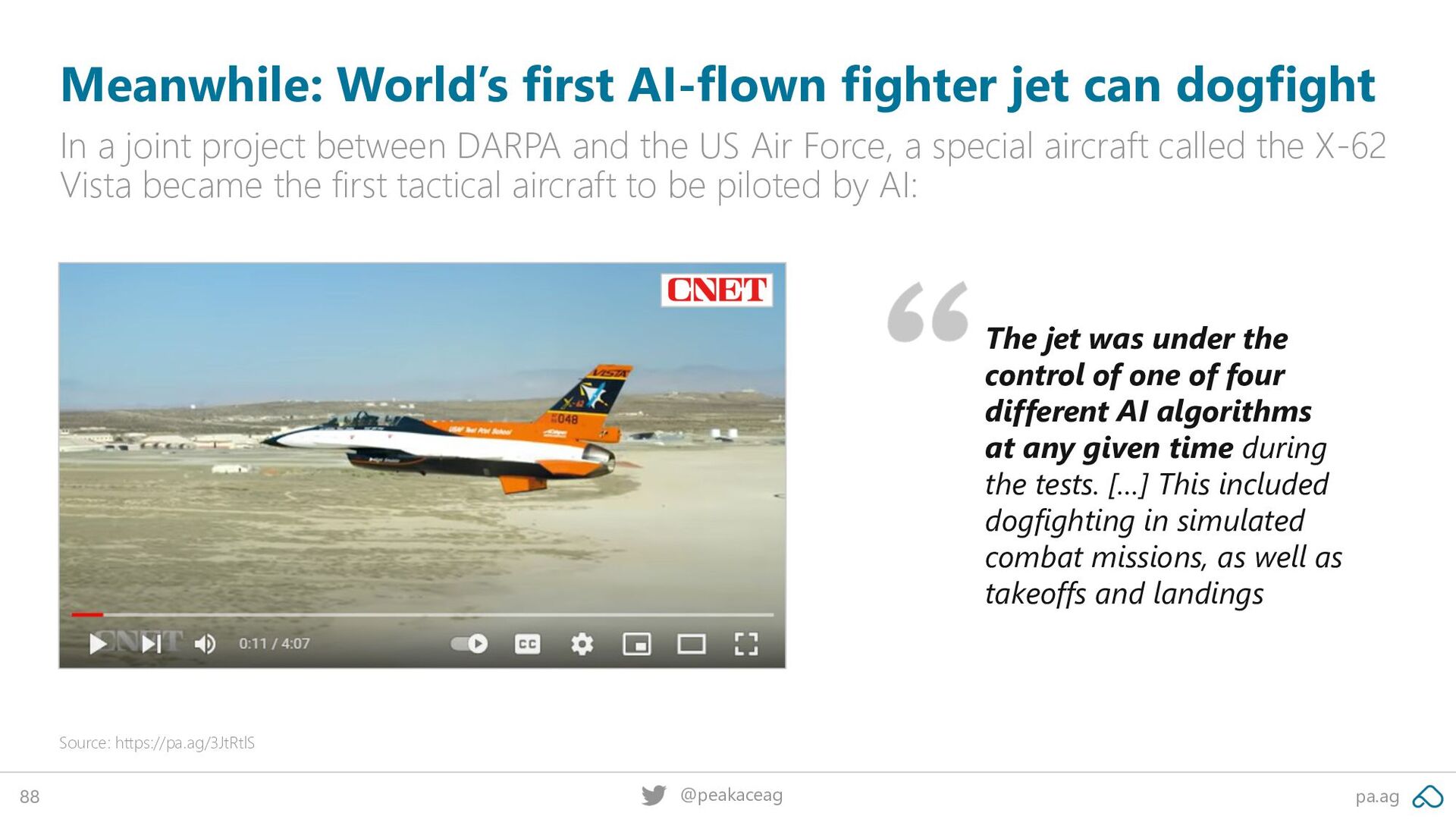
I mean meanwhile, we have and this is a true project as well, in the, we have, you know, AI flown fighter jets. And I'm not entirely sure about this, but, like, it said, like, the jet was under the control of one of our four AI algorithms at any given time.
Yeah. I'm not sure if that makes me feel any better. Are we ready for this? Honestly, I have no answer, but that's all I've got for today. Thank you very much.