
In this talk Aileen will explore four key lessons learned on the Customer Success journey from her time at a 10-person start up, all the way through IPO with Amplitude. This talk will explore why we need Customer Success, why retention is a team sport, how data drives successful teams and what changes as you scale.
← All talks 
Grow Growth Turing Fest 2022
How Customer Success Can Help You Win: Four Lessons From Startup To IPO
Auto-generated transcript - may contain errors. Tap a timestamp to jump the video.
My name is Aileen. I'm a customer success manager at Amplitude. And I've been working in customer success for the last five years. And in that time, I've learned a few key things that I think are really important, which I'm gonna share with you today from my journey from early stage startup all the way through IPO.
And I hope that when you leave here today, you have a better understanding for what customer success truly is and how it will help you to win. Quick intro to me. As I say, I'm a CSM at Amplitude at the moment. I'm also currently volunteering with the Open Door Policy, which is a nonprofit that provides training for refugees and misplaced people.
And we are always looking for partners for remote roles. So if you guys have any remote roles and you're interested in learning more about this, do let me know afterwards. We'd love to chat. Prior to this, I was working at Cognism. I was employee number ten, helping to scale the CS team there from two to twenty.
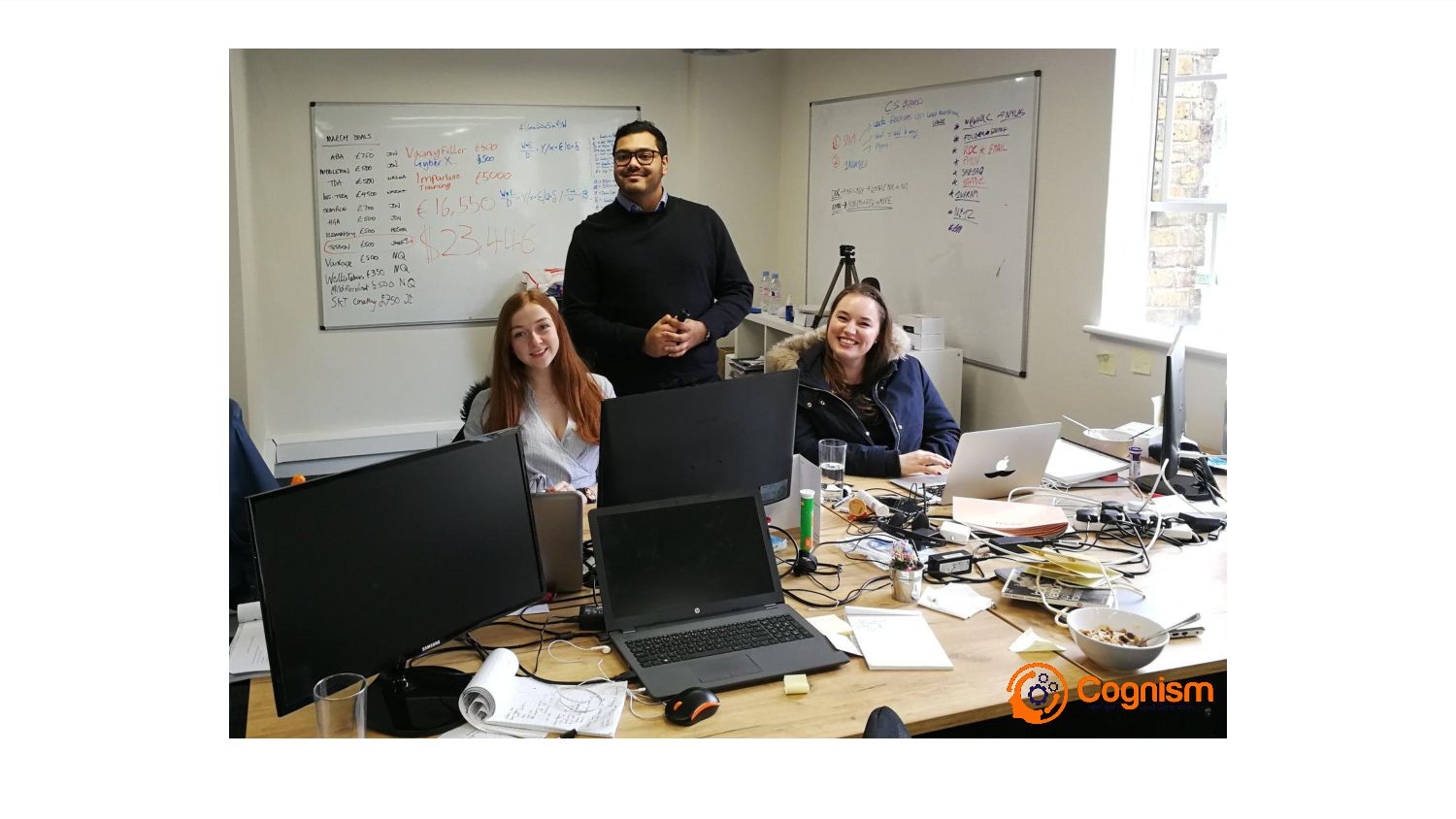
And prior to that, I was at university in Manchester, MIT, and I was a youth delegate for the environmental program at the United Nations. And so, you're probably wondering how I got into tech maybe to begin with. And so well, this is a picture of me my first three weeks at Cognizant.
Excuse the mess on the table. It was very early stage startup. But when I got into customer success, I got offered this role by a recruiter who's explaining it to me. She was like, oh, you love customer success. Couldn't really tell me much more than that.
And when I went and asked my parents about it, I was like, you know, what is customer success? You've heard of this. Right? Not a clue. And at this moment in time, I genuinely had no idea what customer success was or what I would really be doing for the next five years.
But now, looking back on that and looking at where I am today, I really understand the importance of having a CS function. I understand the misconceptions that surround it and why it's critical to helping a business to achieve its goals. And so, CS is often misunderstood because it is quite a multifaceted function and the responsibilities change quite rapidly as you scale.
And so what we're gonna jump into today is what a CSM actually is, what a CSM actually does, why retention will be easier to achieve when you're operating as a team, how data will drive your success, and why literally everything changes as you scale.
So, what is customer success? Can I actually get a show of hands who here has a success function? It'd be okay. About about a third, about half. Cool. That helps me to kind of tailor where we're going with this, dispel a few myths, and provide a bit of clarity.
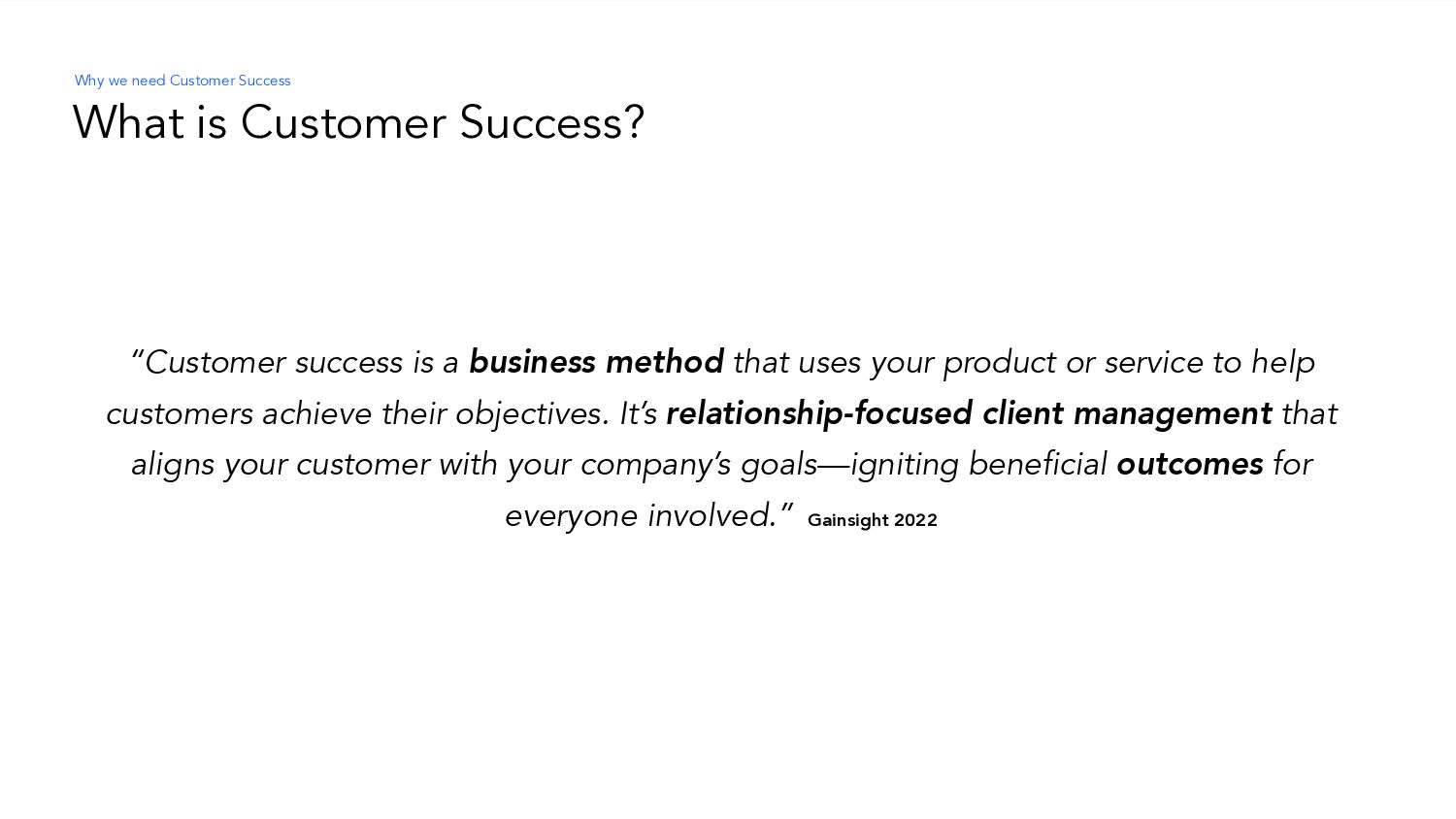
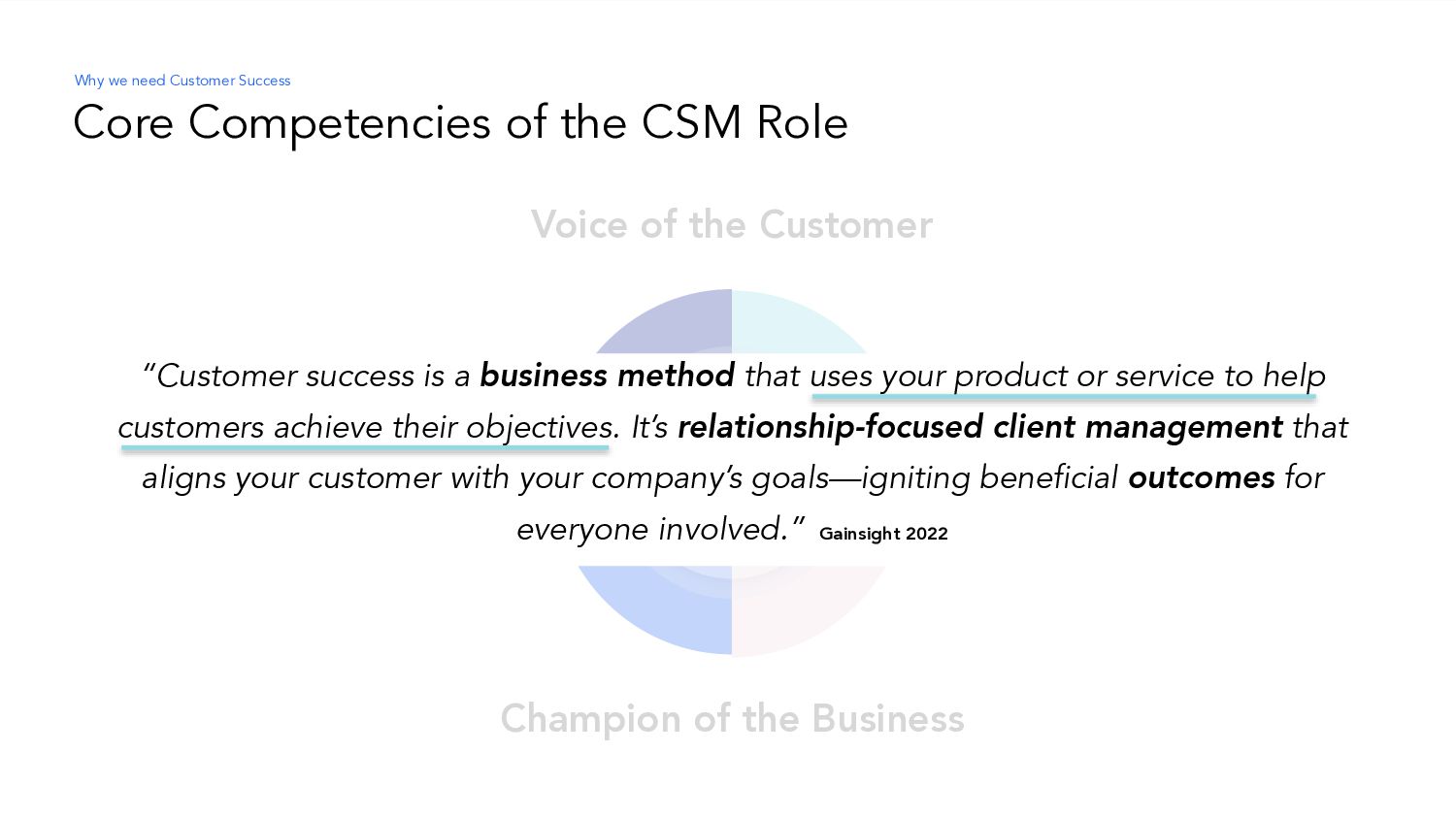
Because the generally accepted definition of customer success is that it's a business method that uses your product or service to align your customer objectives with your business objectives. It's relationship focused client management that ignites beneficial outcomes for everyone involved, which is a long winded way of saying that customer success, the goal is to help your customers be successful with your products.
And ultimately, what this boils down to is improving retention and increasing expansion. You're helping to retain and grow your customers. These two key goals will always stay the same regardless of the responsibilities and regardless of the stage that you're at in customer success.
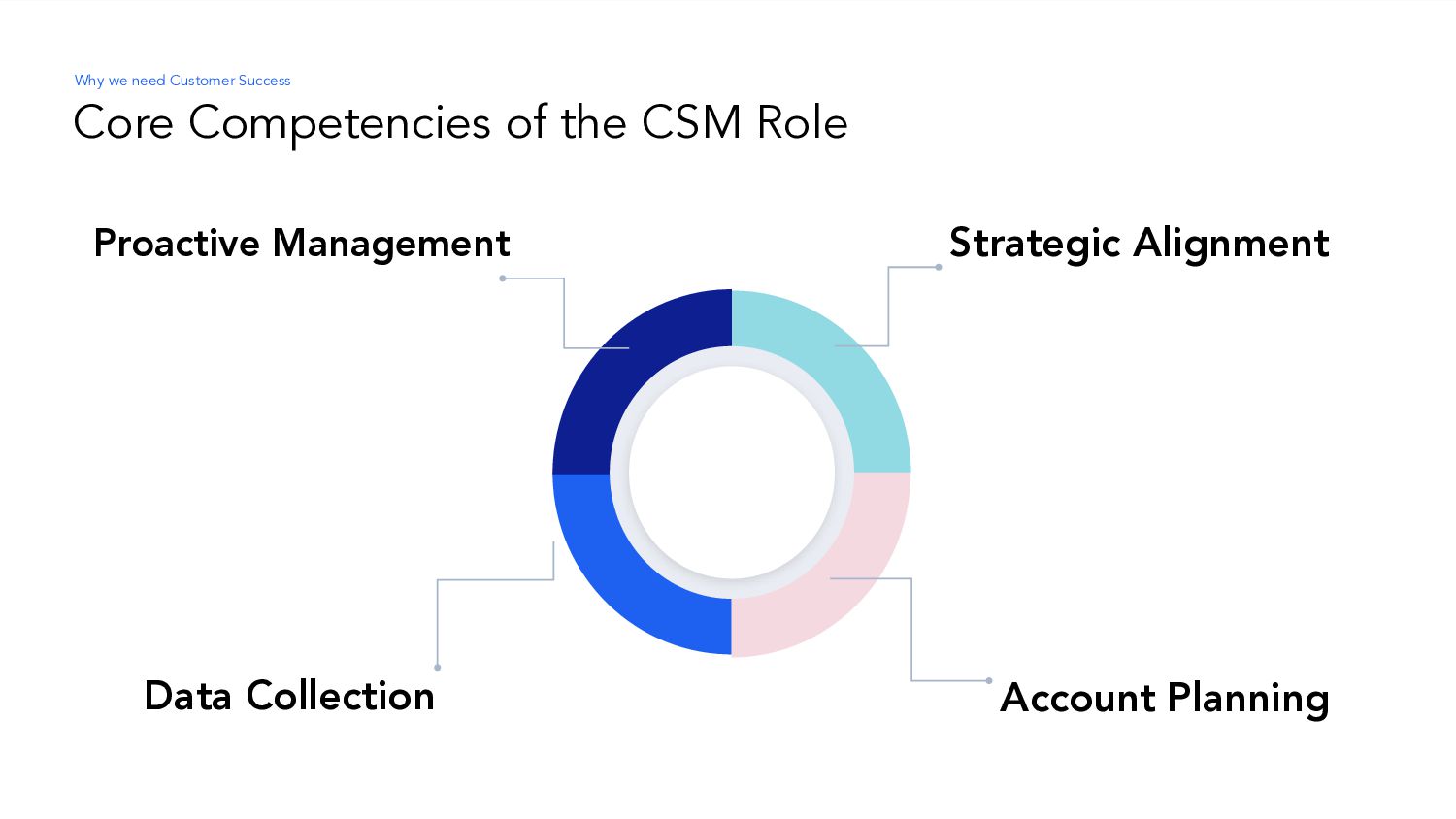
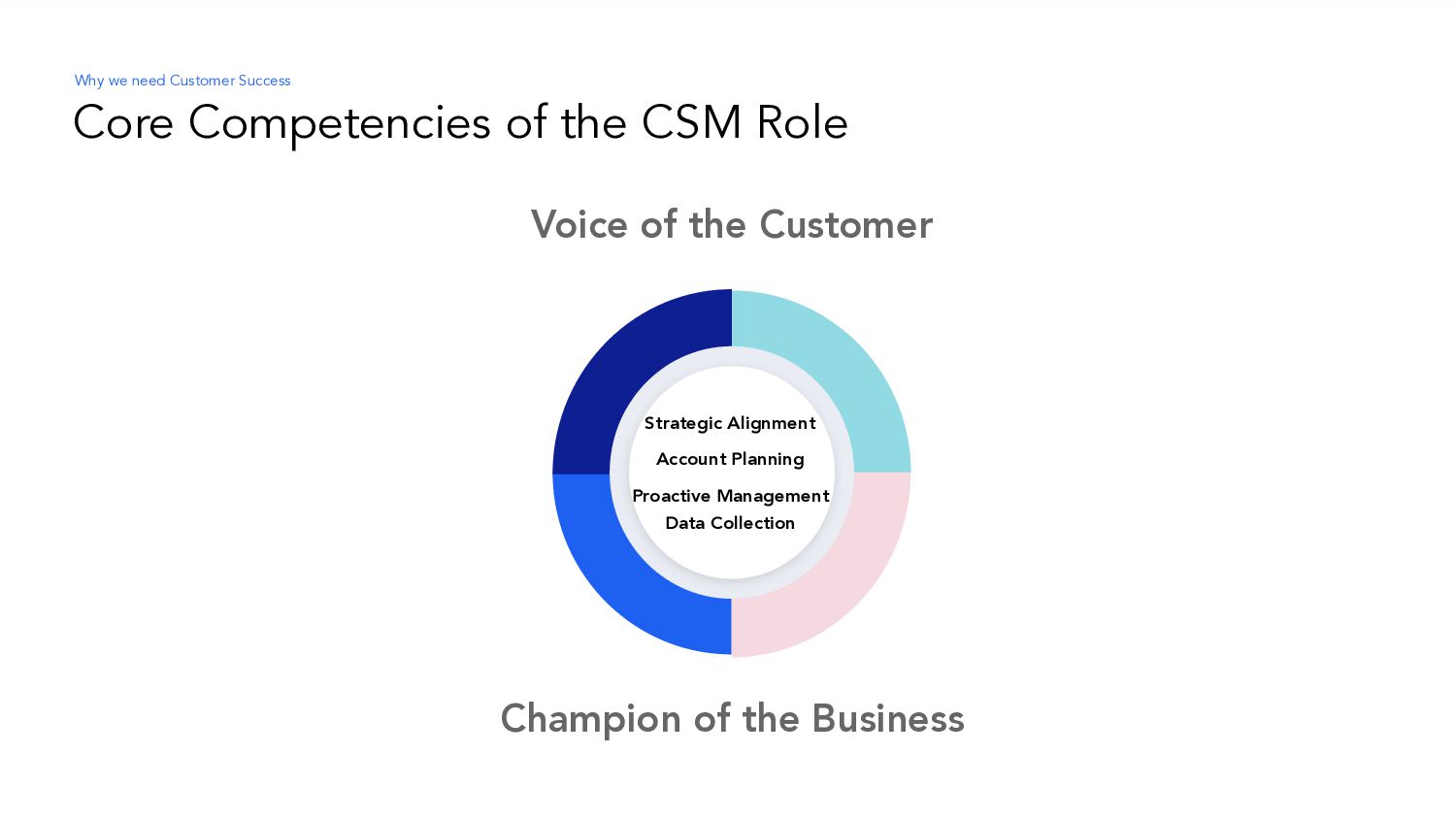
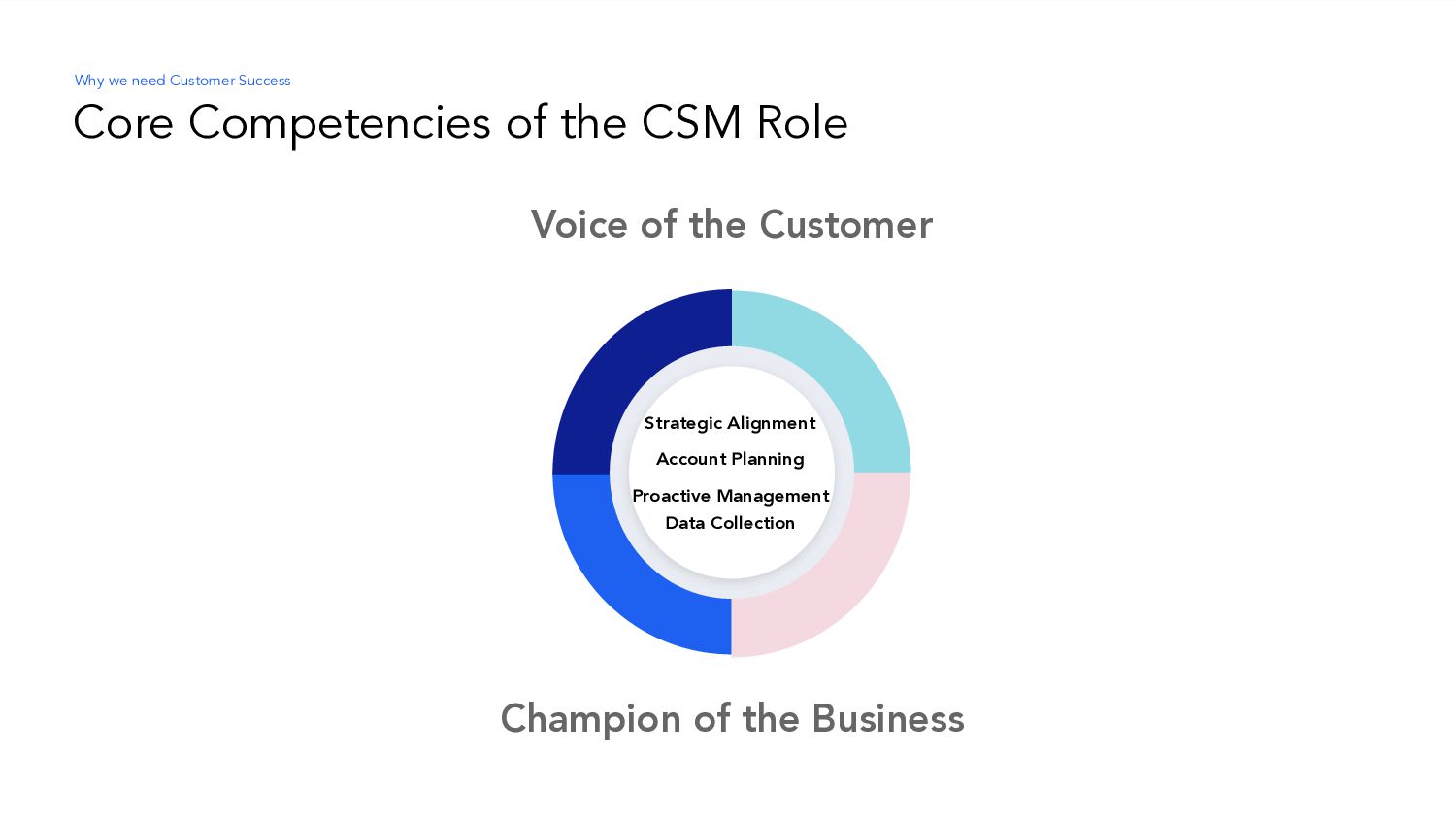
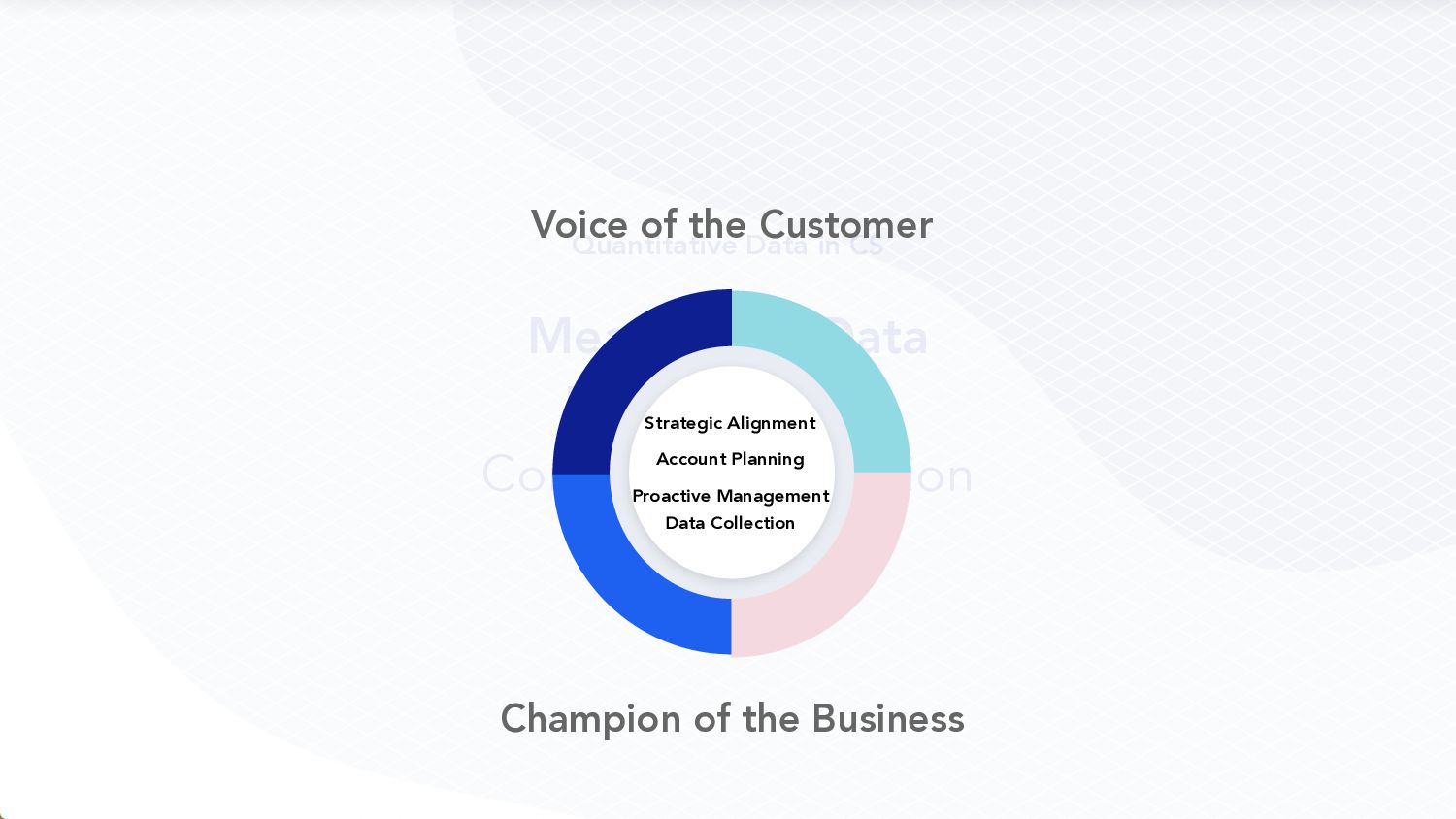
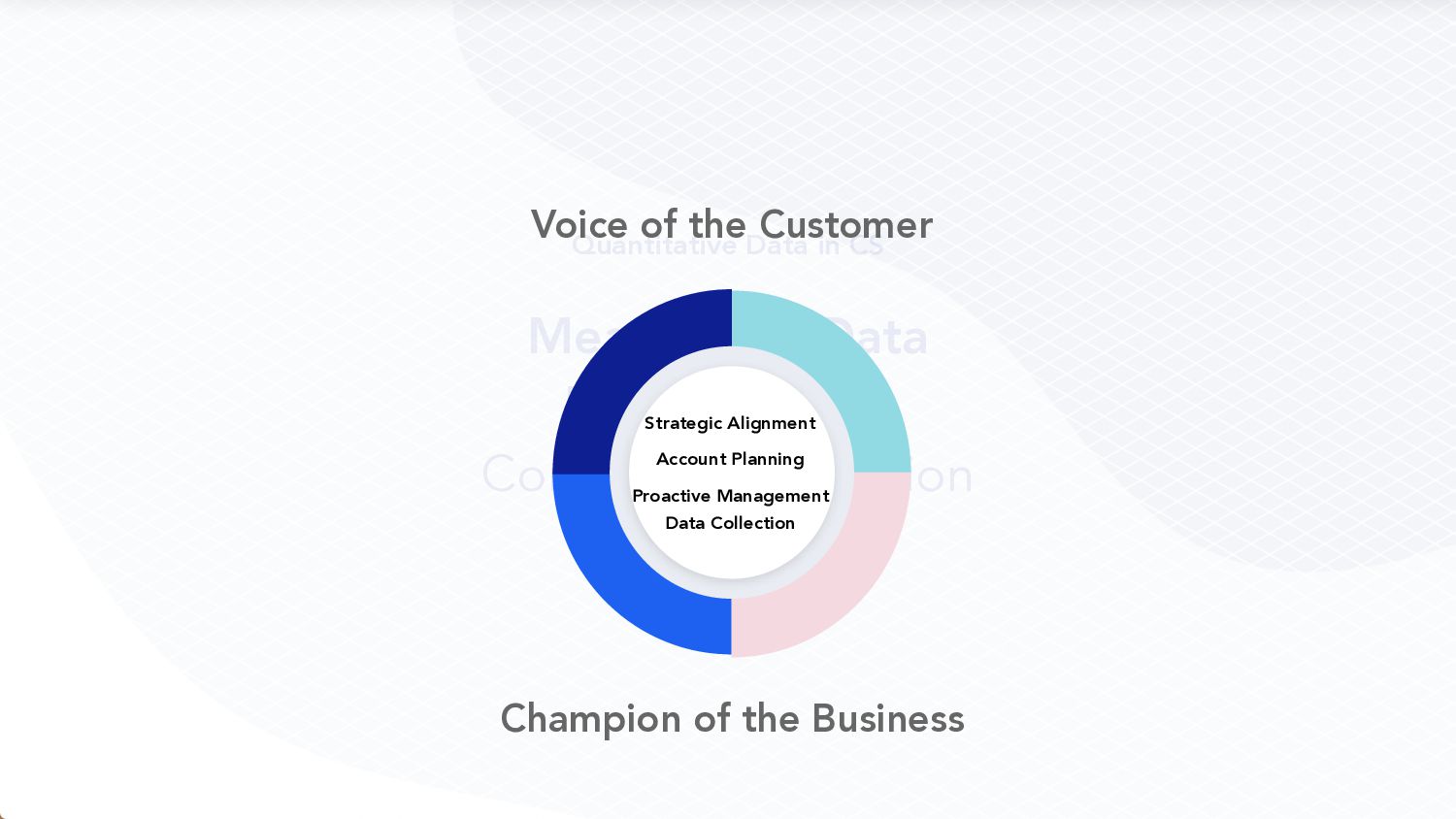
But again, it will be achieved by different actions at different stages. Also, what stays the same in customer success are the core competencies. So you will be these are kind of the foundations of the CSM and you'll be doing proactive management. So getting ahead of opportunities, any issues that arise, making sure that there is smooth ride for your product.
You'll be performing strategic alignments, you're building champions, advocates for your products, validating the goals of your customer. You'll be providing data collection, gathering critical insights that feedback into the business, how they use your product again. And finally, account planning. So keeping like a live document of what it is that you're planning to do in a strategic fashion.
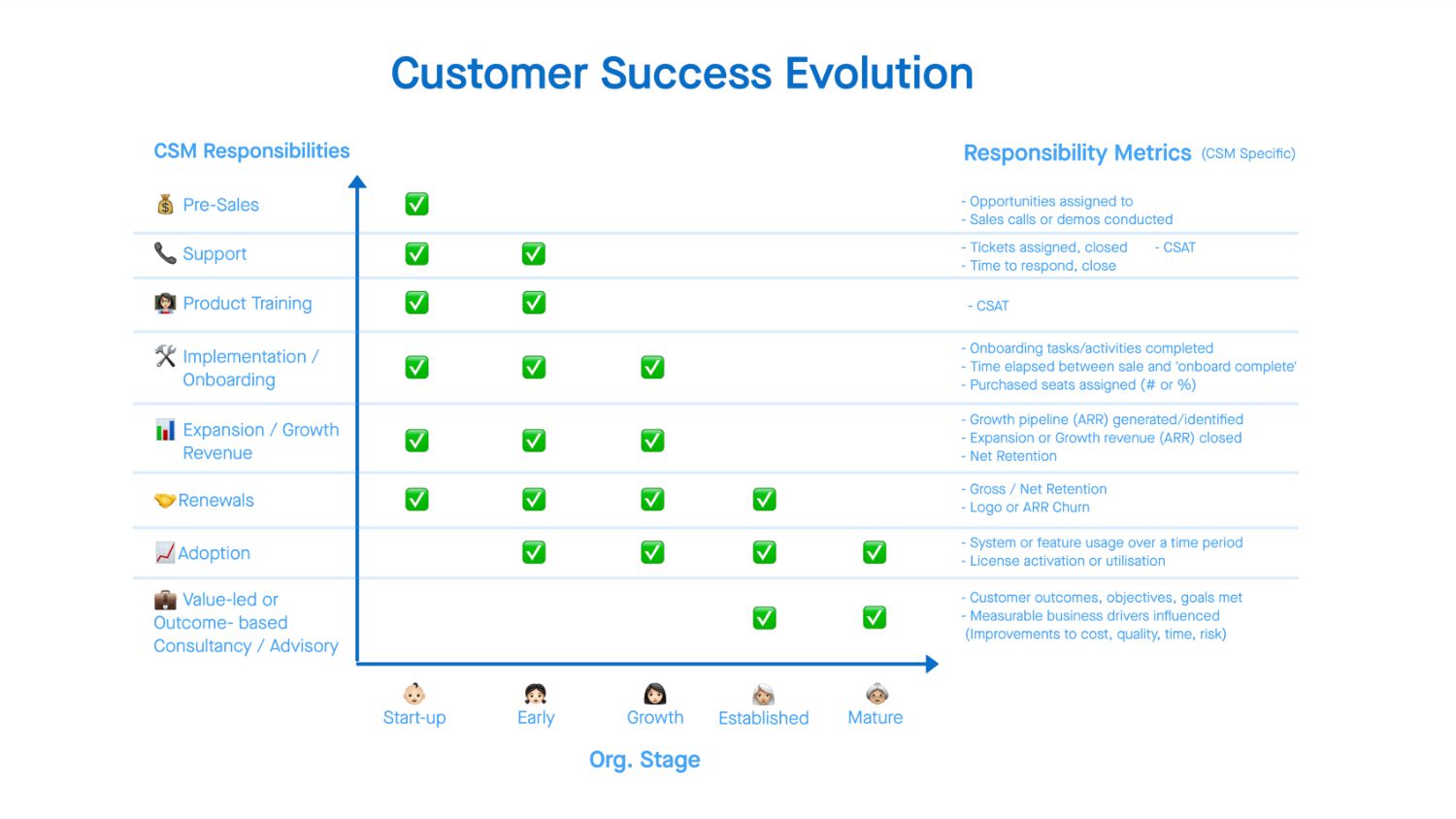
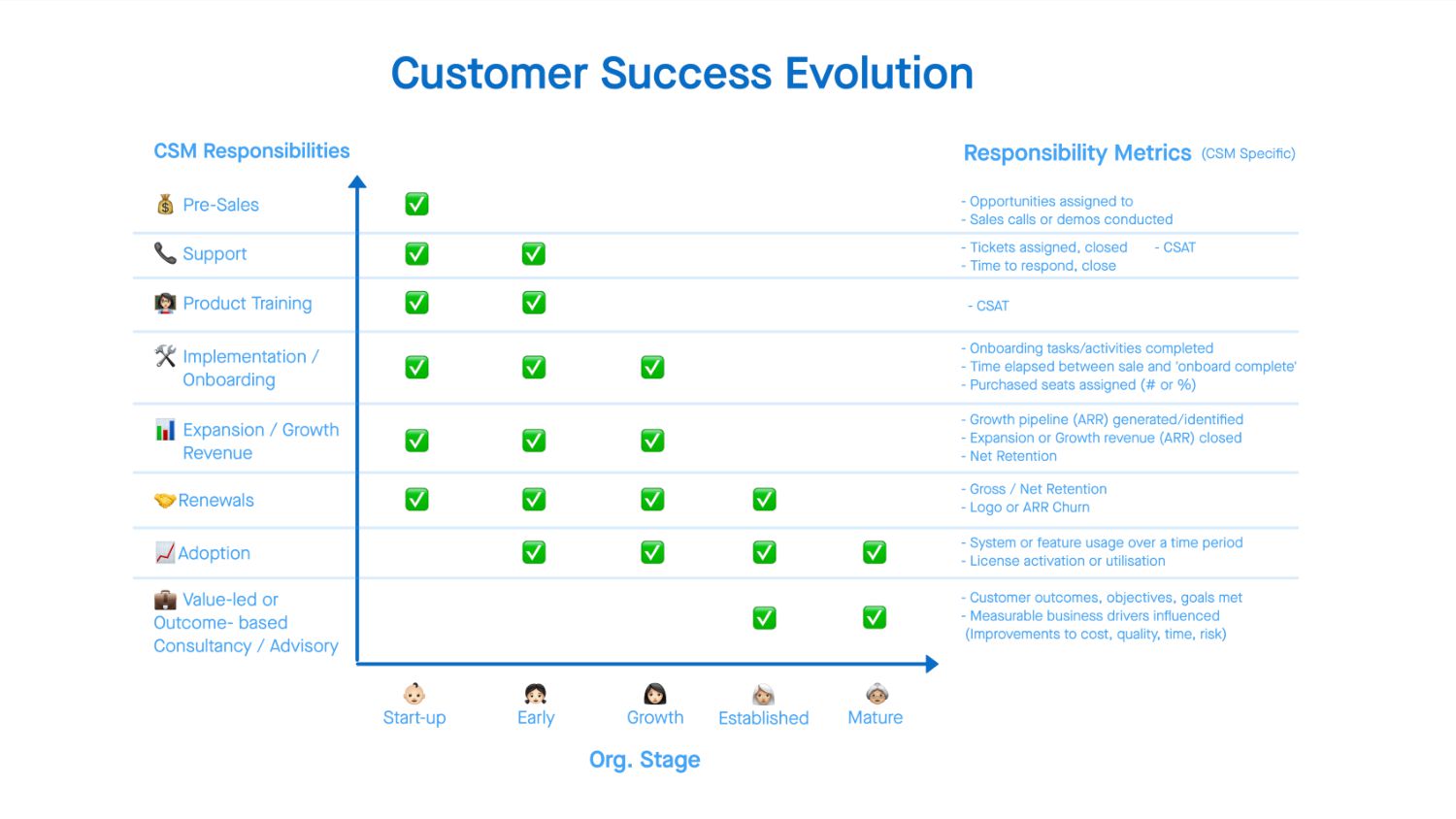
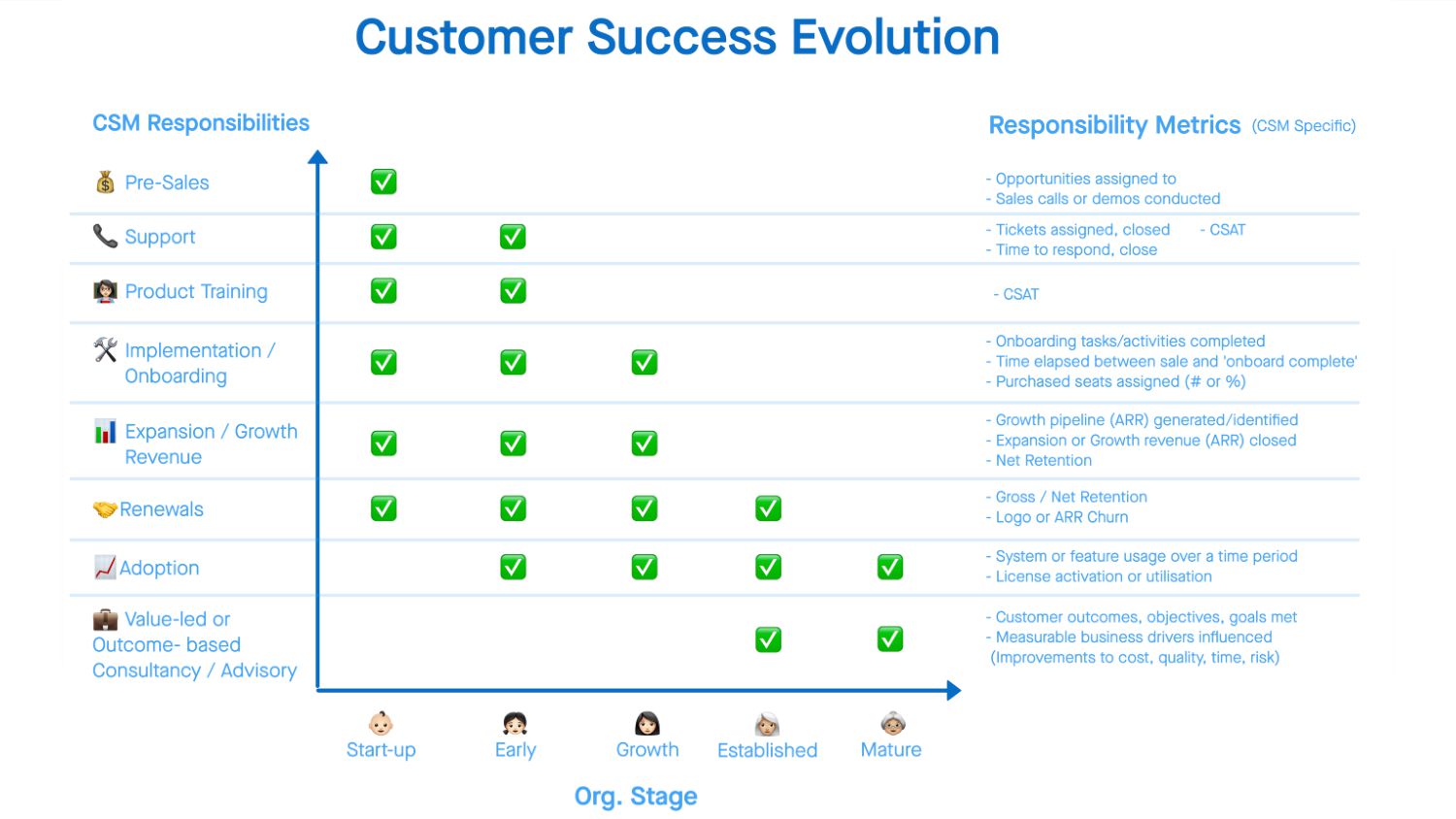
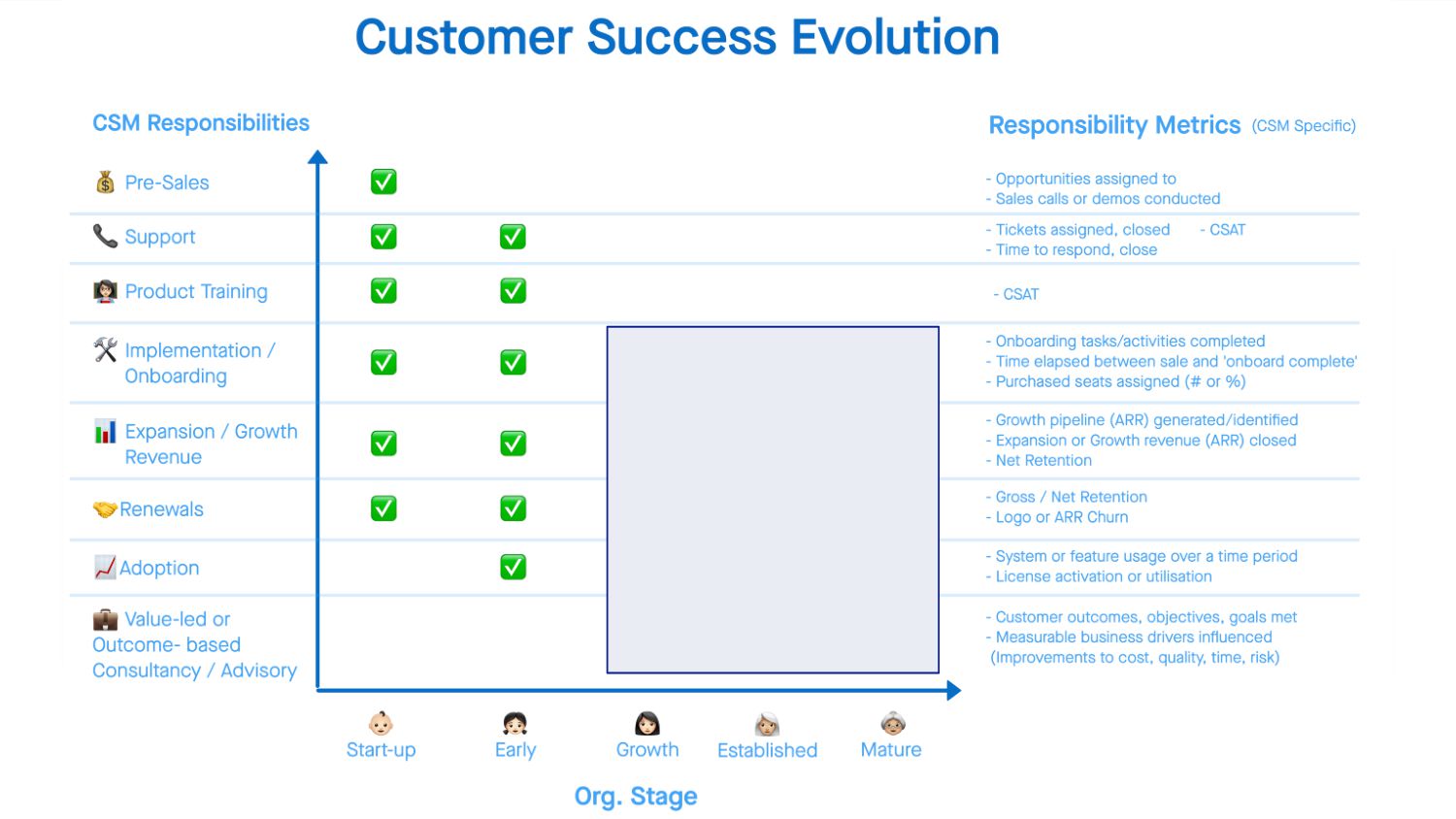
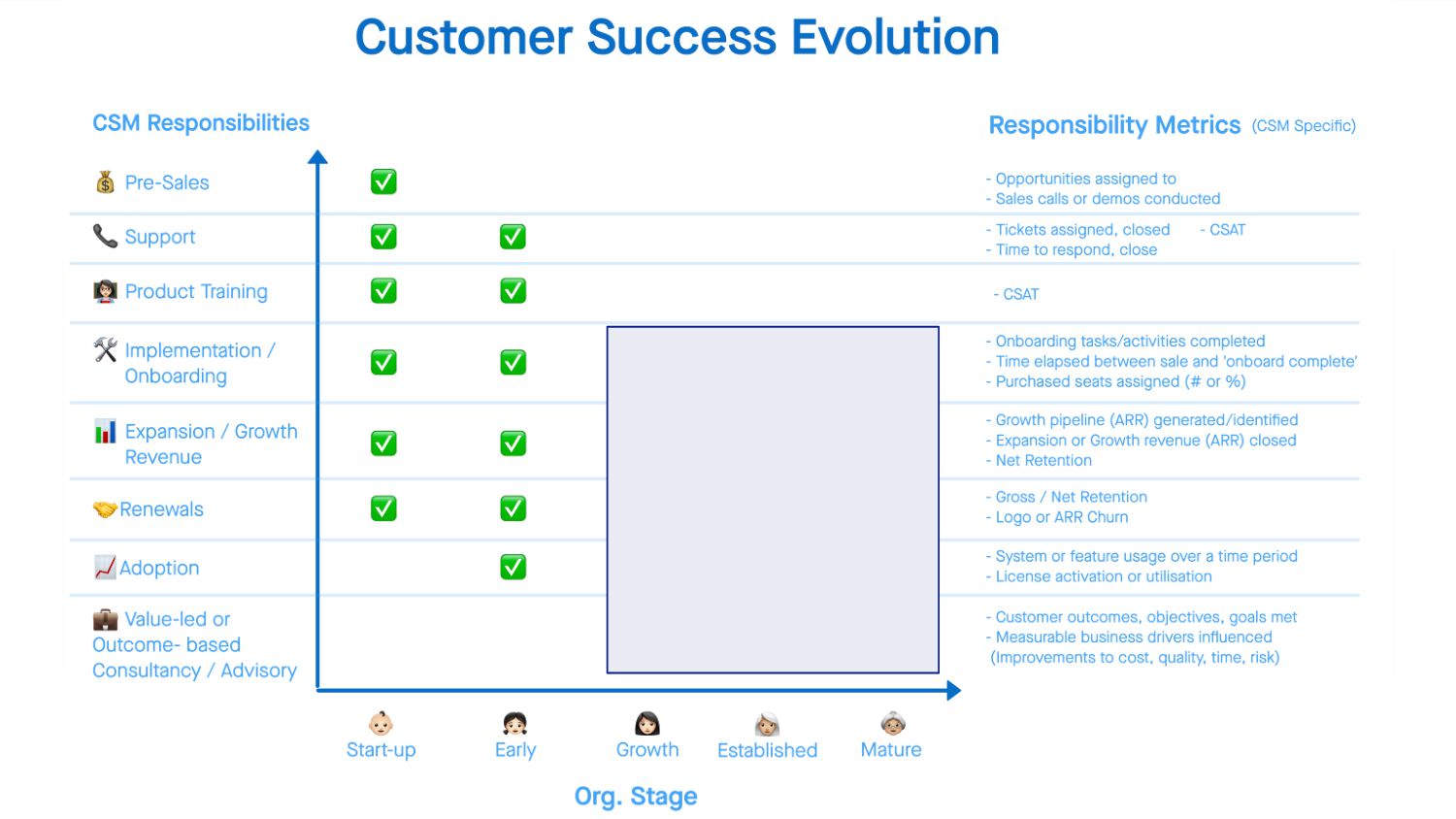
So this essentially helps you to be the voice of the customer and the champion for your business. This in essence is what a CSM does. This is what your CS function is trying to do day to day regardless of the stages. But what I wanna introduce you to is this chart on the evolution of customer success.
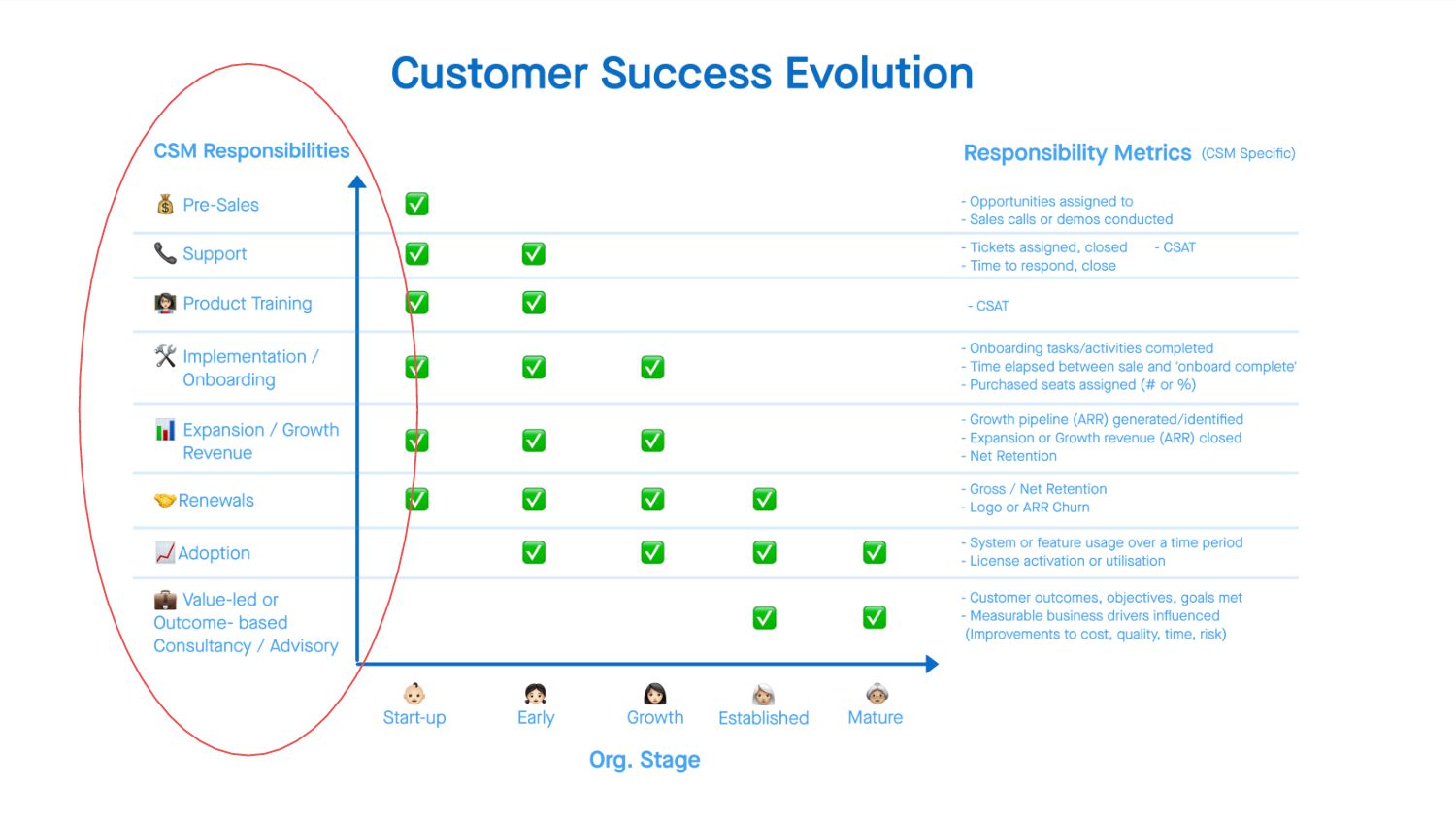
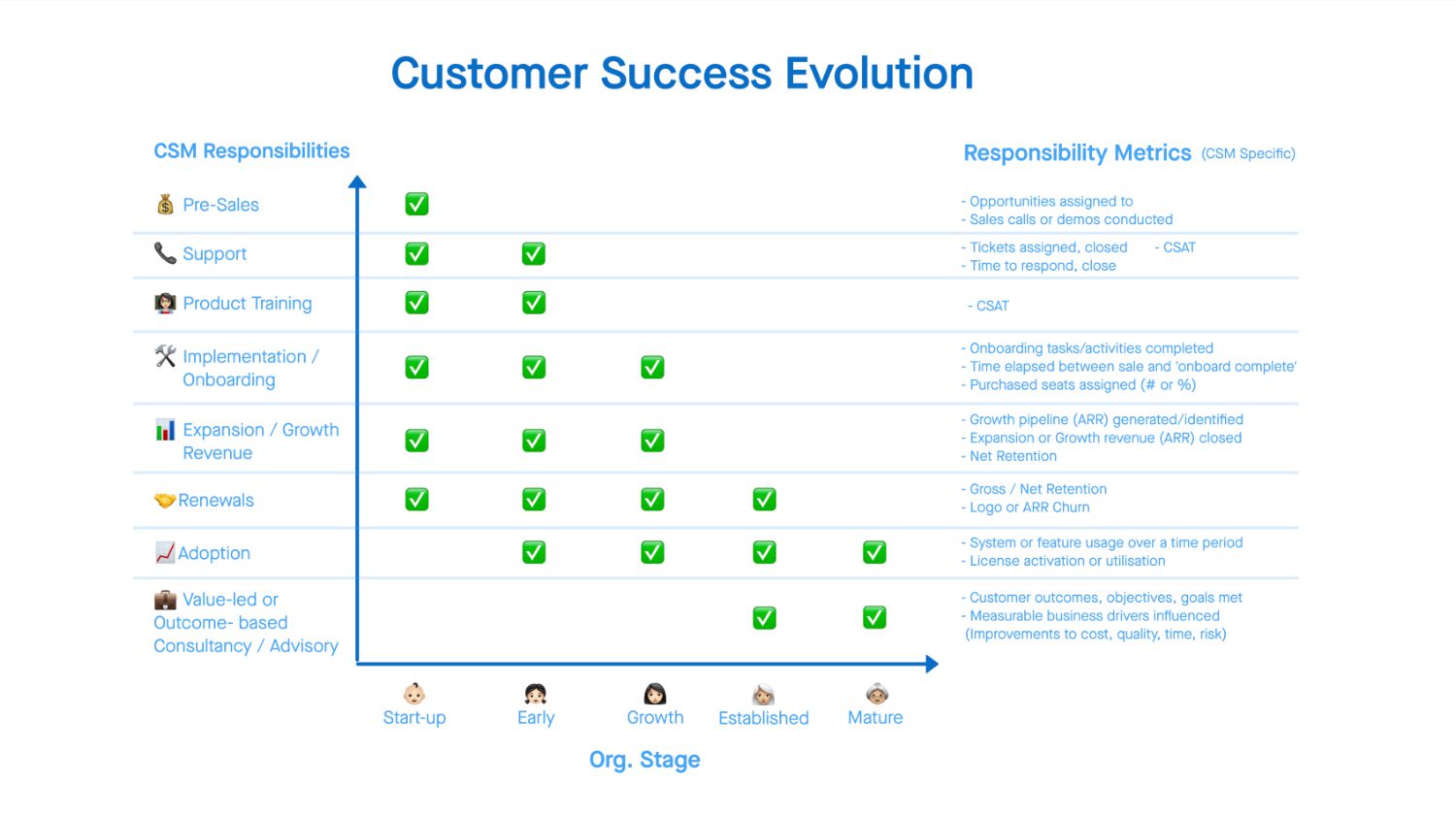
This is actually by Russ Durie who is the director of success at Zeppelin, very kindly allowed me to present this today. Just to show you how varied the role of a CSM actually is at each stage. So on the y axis, what we've got is a range of responsibilities for the CSM.
So you've got things like presales, support, product training, renewals, etcetera. And then on the x axis, what you've got is just the change over time. So the different stage that you're at from early to mature. And essentially, what this chart is showing is the nature of this change, which is the specialization of CSMs and the CSM role into the areas that they have the most impact.
So one of the common misconceptions that I hear and I actually heard on my way in to the talk this morning was CS is CS is just support. Right? And I use this diagram to highlight that that really is not the case. But whilst there is certainly an element of support involved, your support team are gonna be reactionary.
They're gonna be dealing with inbound requests. They're gonna be dealing kind of one and done scenarios, essentially. They're not gonna be focused on the ongoing relationship. They're not gonna be providing product training. The CS team in contrast to this is gonna be so much more proactive, focusing again on the long term ongoing relationship.
And then, typically, another misconception that follows that after that explanation is, ah, so CS is like account management. Again, a little bit, but not quite. So there is an element of account management in CS. You see it with expansion and growth, focusing on renewals, the revenue side of things.
But the AM is gonna be so focused on expansion and revenue, not adoption, not strategic goal alignment with your customer. And so, I use these examples to highlight that the CSM role is multifaceted in a way that other roles perhaps aren't. And it is quite pronounced.
And I think that this is why it can be hard for people to define. And if we look at this chart, you can see all of these responsibilities listed out. They could be their own roles independently. And actually, as you scale, you will tend to see them break out into these roles, particularly support.
But we'll dive into that a little bit later on today. But throughout this chart, throughout this growth, the goal will always remain the same, which is to retain and to grow your customers. You'll just be doing it with these different actions, different stages in order to do so.
As I say, we'll be coming back to this one at the end and digging into it in a little bit more detail. So, why do we need customer success? Well, if we return to the idea of these core competencies of being the voice of the customer and the champion of your business, if you have a team dedicated to doing these functions, you're gonna be making healthier, happier customers.
And what I mean by healthier and happier is a customer that achieves their goals by using your products. And so, healthier customers, happier customers are gonna be easier to retain, easier to grow. And your CS team is essentially building this out. They are building promoters, they are building advocates, they are increasing the lifespan of your customers.
And so, while CS isn't just kind of support or account management, I really wanna emphasize that customer success is dynamic in every sense of the word. It evolves at each stage. But ultimately, what it does is drive success for your customers and in turn for your business.
And so this was kind of laid out to me early on in the journey at Cognism. And the next critical thing that came across was understanding that retention is a team sport. And I'll explain what I mean by team sport in just a second.
But to lay the land, essentially, it's super common for teams to be siloed. When you say we're operating as a team, you typically mean I'm operating within my own department. I'm kind of reaching out internally to the other members of CS team to get answers, to get questions, and to get feedback.
But what I was introduced to at Amplitude was the idea of collaborating cross functionally to leverage skill sets of all areas of the business to improve outcomes. And in the context of customer success, the goal of retention becomes a lot easier to reach.
So, we have to talk about churn. When we talk about retention, churn is the opposite of retention. And you're always aiming to prevent churn and learn from it essentially. And the reality of a busy startup or busy scale up is that departments are gonna stay focused on their own KPIs.
They don't typically want to kind of branch outside of that remit. And so traditionally, CS is retention, sorry, is a CS problem or not really problem, but we look after the churn in CS more often than not. But what we were introduced to Amplitude was actually reframing retention as a company wide KPI.
And so the sales team were actually involved in looking after accounts, in saving accounts with us, working on strategies. And we were leveraging the strengths from their side and their perspective in order to boost our own results with our with our perspectives from CS.
And ultimately, this does produce better outcomes. In practice, what this looked like was a red account meeting twice a month where sales leadership, CS leadership come together, discuss accounts that they think are at risk, and understanding the different perspectives and strategies that you can apply to that.
Hopefully, leveraging the strengths so that you improve again the outcomes. And ultimately, we have a net dollar retention of a hundred and nineteen percent at the end of twenty twenty with Amplitude. And at the end of twenty twenty one, that was a hundred and twenty three percent.
But it isn't just about the business benefit. It's also about the customer benefit and the colleague benefit. You're learning from each other in this process. It becomes such a better way to work and to operate when you are learning from each other, supporting each other, and just putting yourselves in a stronger position to perform your roles better, essentially.
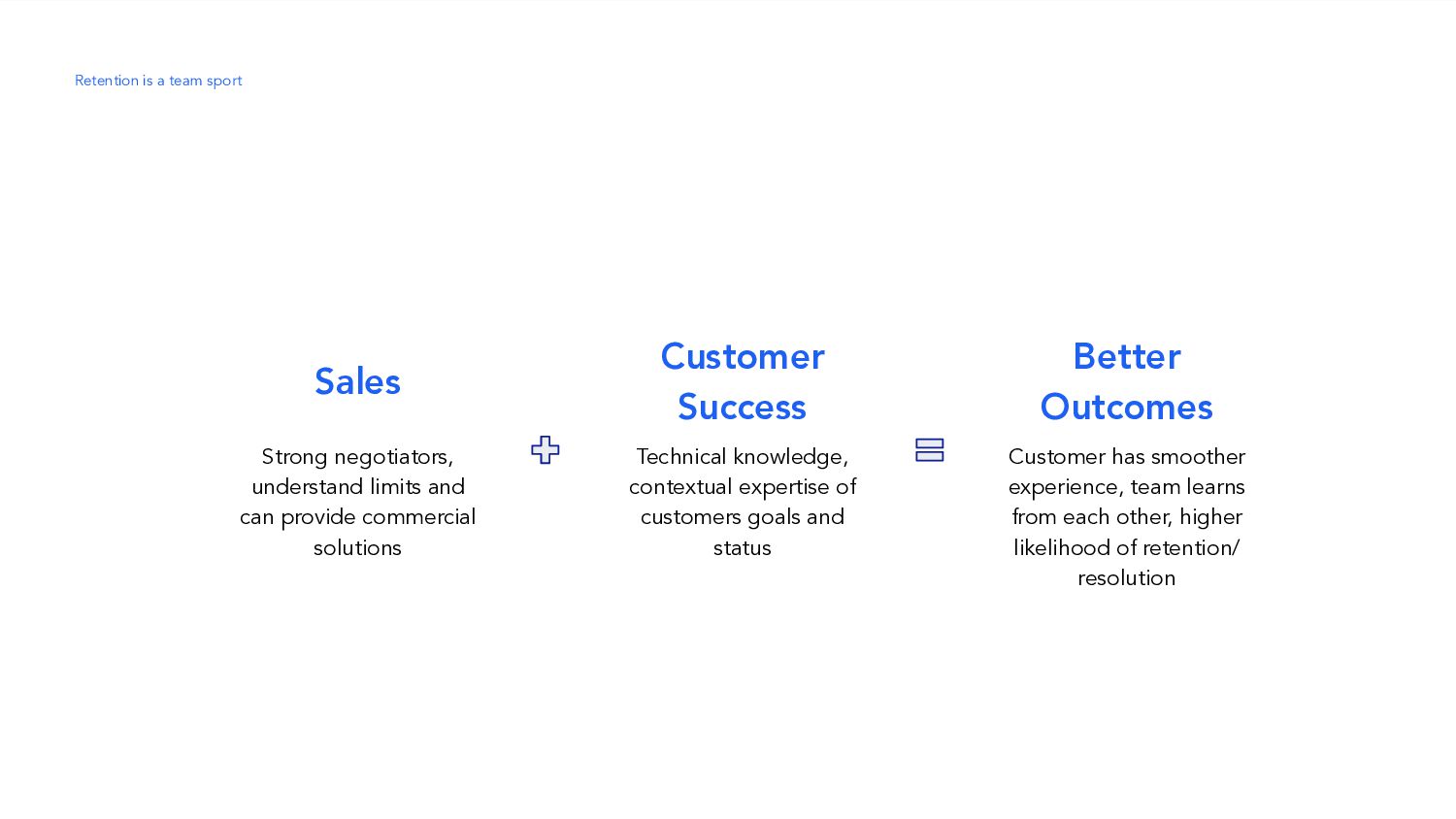
And so, I've been giving the example of sales here. And just to really open that one up, sales are strong negotiators. They know commercial limits. They understand how to combine that with us in CS, with our contextual knowledge, our customer knowledge. And ultimately, together, we produce better outcomes for the customer because they're having a smoother experience.
They have better support. They have quicker support because we've kind of double teamed and increased the knowledge base there. And we also increase the outcome for the business. Because at the end of the day, we're working together to improve everything for the customer, hopefully, retain them, hopefully, to resolve their issues.
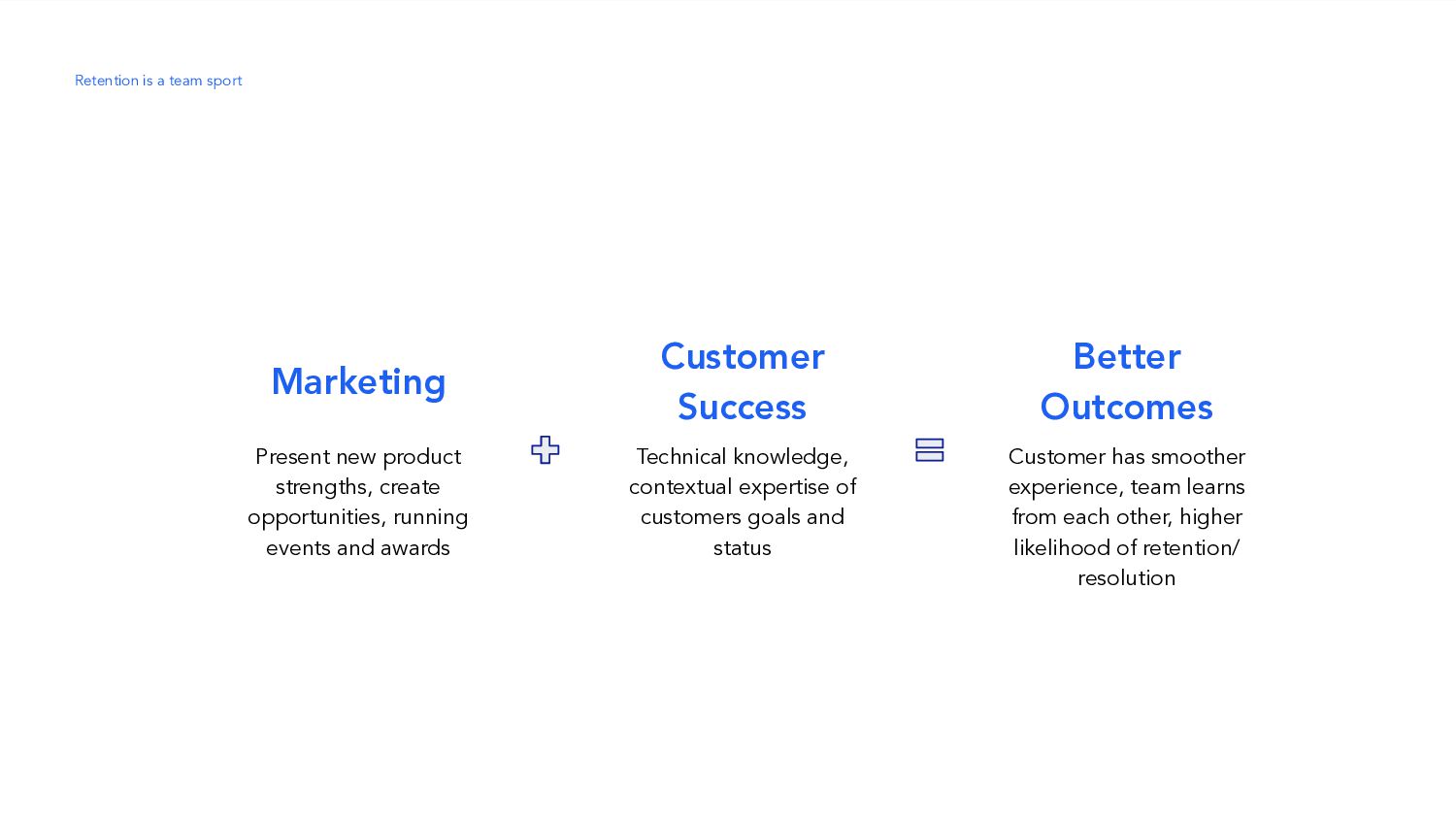
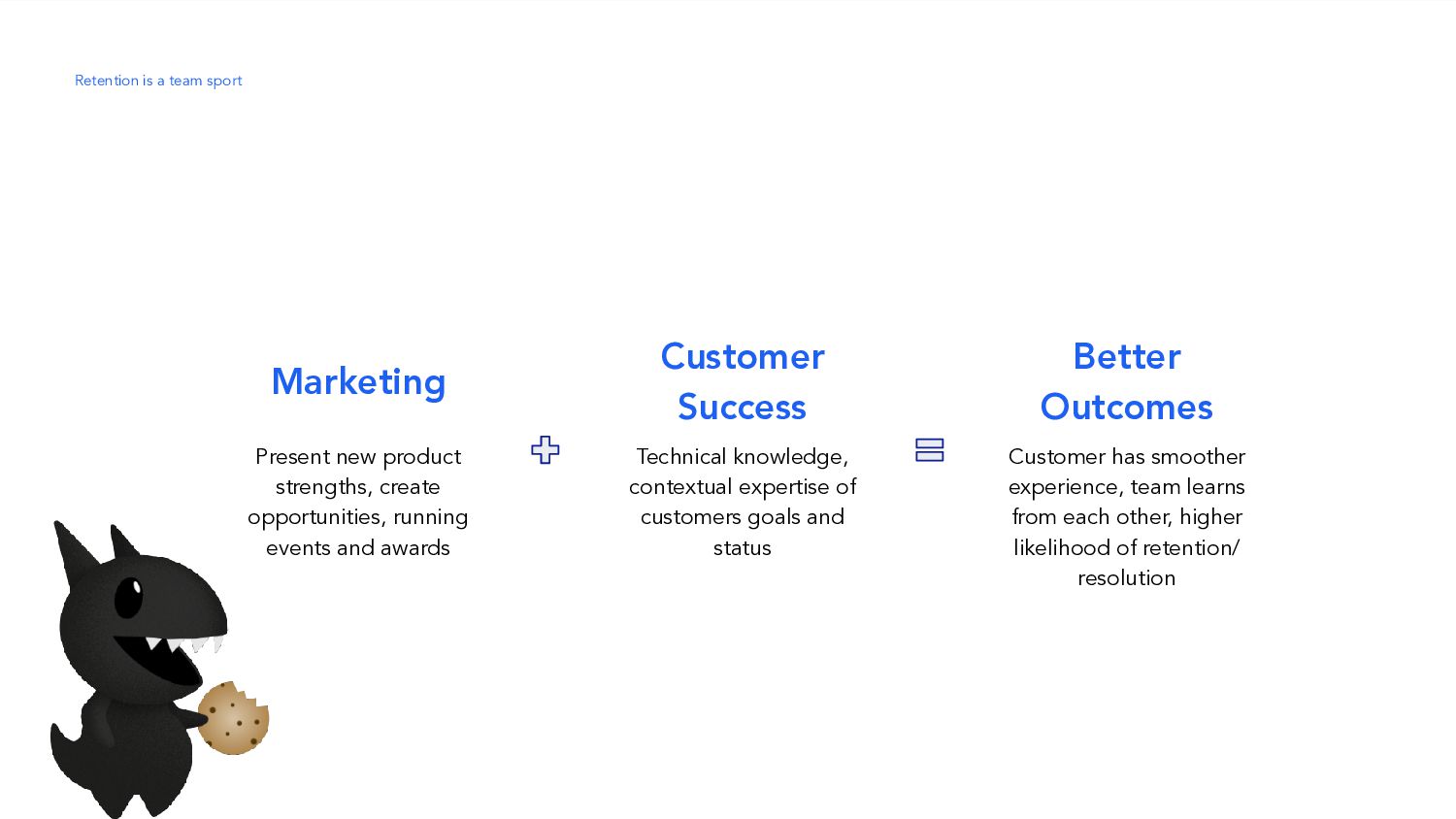
And that is what we achieve when we kind of come together. But it isn't just sales that you can kind of operate in this idea of retention as a team sport. It's also with marketing. CS are great partners for marketing as well. I think it's like Marketo in twenty seventeen came out with the line that customer acquisition, the conversion rate is highest from customer referrals.
And you're gonna get customer referrals from happy, healthy customers, which is exactly what customer success is trying to do day in day out. But marketing also boosts relationships back the other way. So this is our data monster, our mascot at Amplitude. You might have seen him before. He eats data.
Our marketing team recently held our data monster awards. And it was rewarding essentially the behaviors in our product for different customers. And what this did for for me and the CS team was opened up new lines of communication with new members of the accounts that we look after.
It allowed us to get them excited. You know, we sent out swag bags and we got to understand better their profiles, what they were looking to achieve with Amplitude and why they were so successful that they ended up winning awards. It's also true for products.
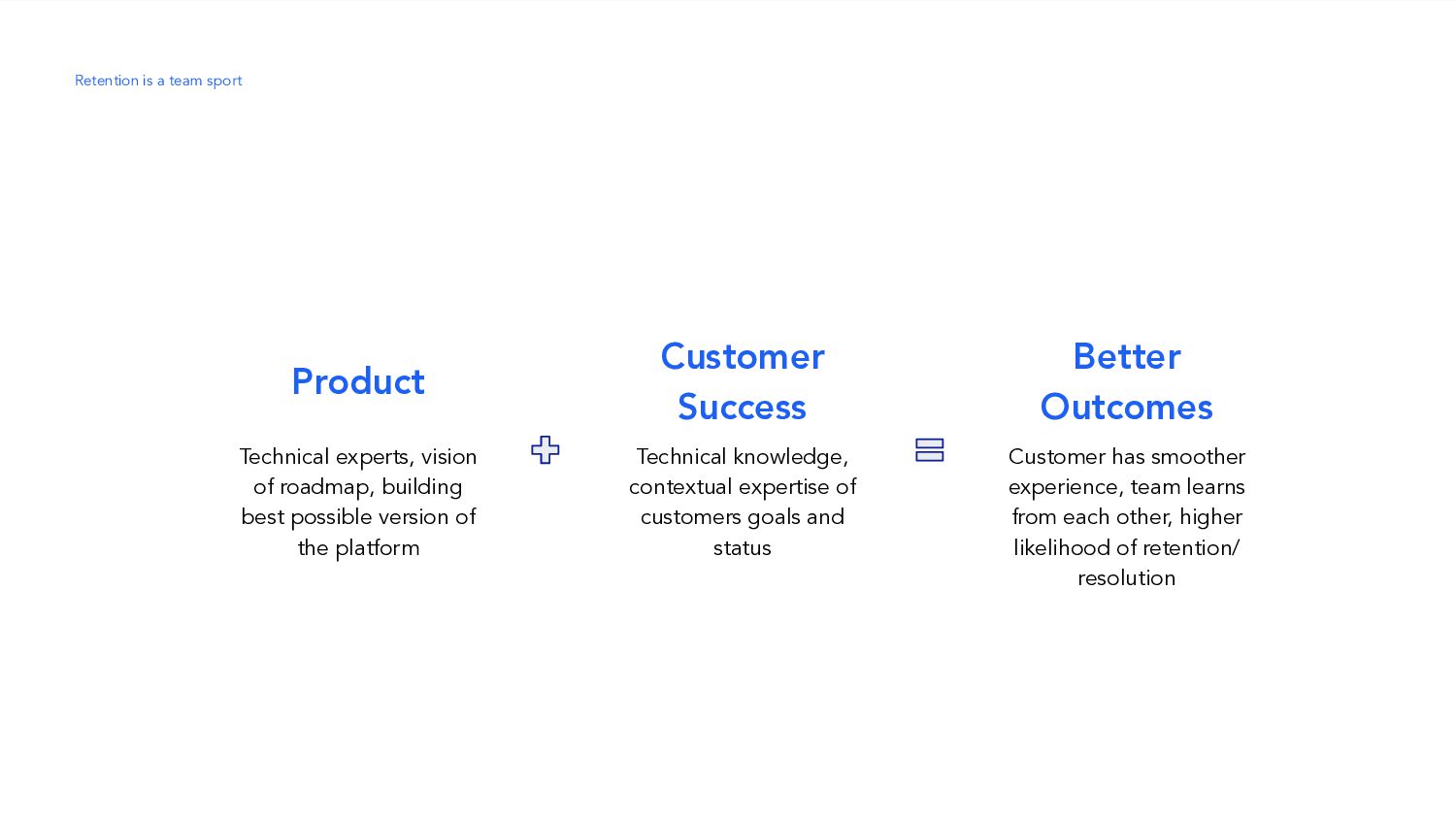
With collaboration, CS and product go hand in hand. We're helping them where to focus by providing data, by providing direct feedback. We're also bringing them to conversations with customers and ultimately helping them what to build. And that again is a better outcome for the customer because we're building what they actually want to use.
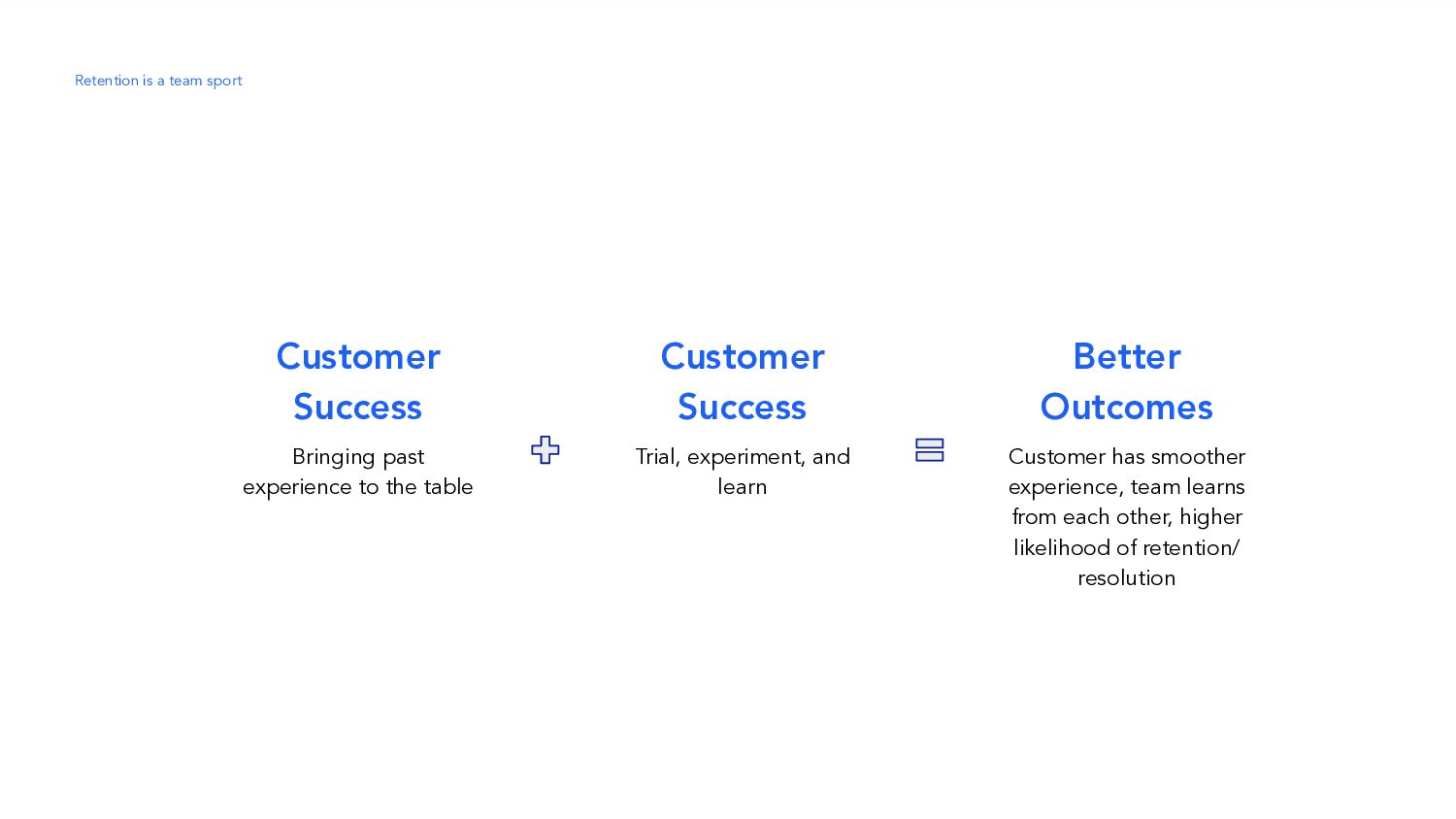
And so, I've also added in customer success plus customer success here. And the reason I've done that is traditionally, the CSM role is quite isolating. You technically work as an individual within a team. So you will have like your book of business and you'll probably speak to your customers maybe a little bit more than you speak to your other team members in CS.
But the real power from this is learning from each other, bringing expertise, testing things out, experimenting, rolling it out, seeing what lands, seeing what doesn't. When you work together as a team, you grow faster, you perform better. And so, learnings within customer success produces better outcomes not just for you as the individual, not just for the business, but again for the customer.
They have a smoother experience, they have a better experience. And so, why is retention a team sport? Well, there's no end state to retention unless you have, of course, cracked the code for like a lifetime contract, which let me know if you have.
The strengths of different departments compound when you work together. And what I'm really trying to highlight with this section is that when you work together, you're creating a team that is greater than the sum of its parts. And ultimately, leveraging the strengths from other parts of your business increases the customer experience, increases the team experience, and decreases the chance of churn.
And so with churn in mind, I'm gonna talk to you about my first churn. It wasn't a good time just to set the scene there. Essentially, I remember my first turn because it was a painful experience. We were about three months into Cognism, and our CEO James came into the room.
He just received an email from a customer saying, you know, we don't wanna renew with you. We're out. And he came into the office and he was like, guys, I've just got this email, like, what's happened? Why why has this customer left us?
And it was in that moment I realized I didn't know. I didn't have an answer for him. And it was because we haven't been storing any information on this customer. We hadn't been using any data. We hadn't been storing this data or putting it into like an account plan.
We hadn't been looking at what the customer had been doing, what their experience had been. And so I was kind of stood there quite uncomfortably, unable to explain why this customer was unhappy and, you know, how could we go about preventing this again.
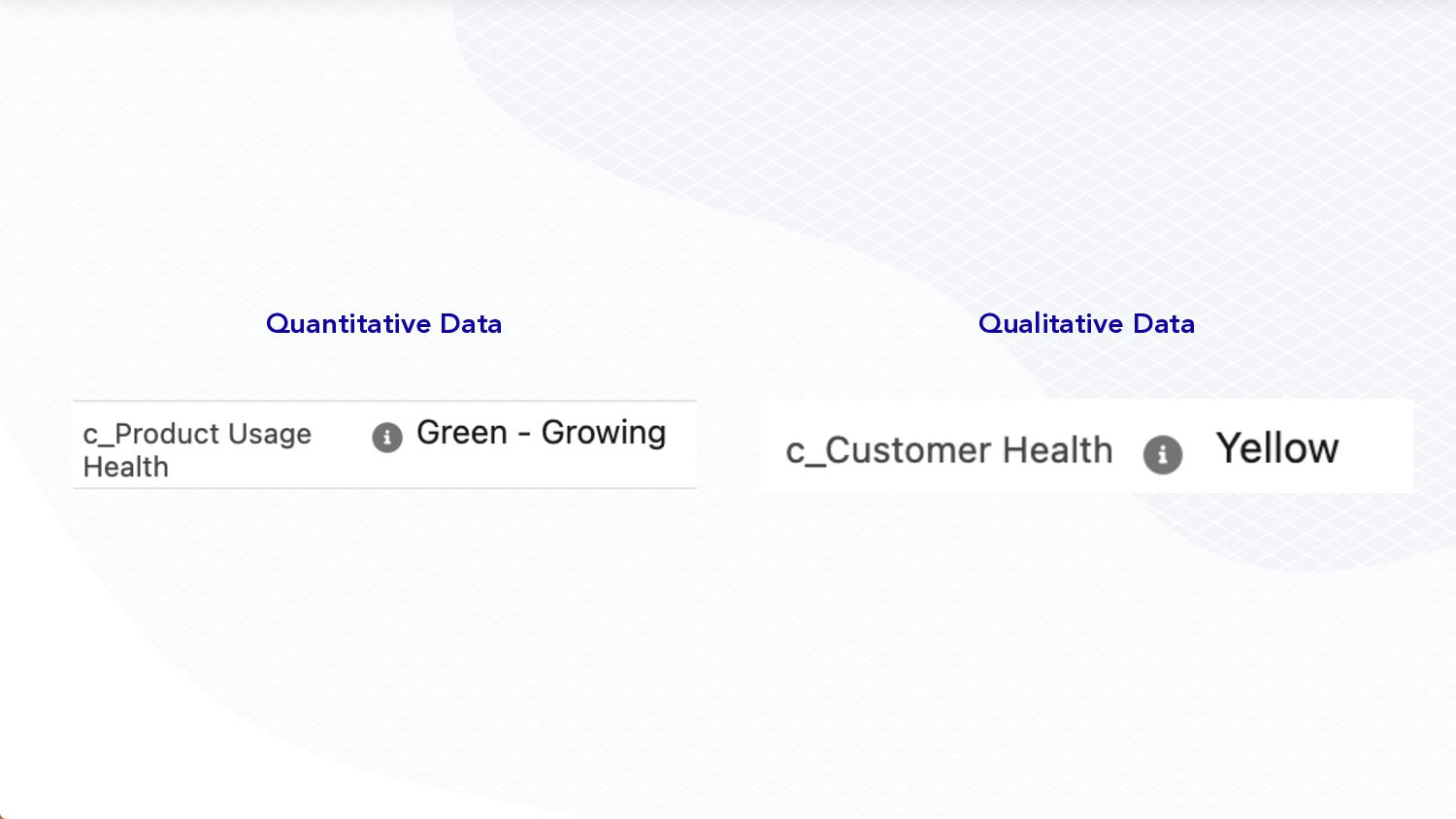
We had no context. We were flying blind in every sense of the word. And here lies the the strength of data because it lets you tell a story. And so we use data in a few ways in CS. The first is qualitative data, and this is kind of where we started in CS at Cognism.
Just collecting like the experience of the customer. So writing down quotes, emails, calls that you've had, internal info, internal politics, storing all of that in you internally. And essentially, it's helping you to build a better understanding of who your customer is, how likely they are to retain, how likely are they to grow.
And the aim with this type of data is to turn it into quantifiable data. Data that is easier to analyze, easier to view, and easy to go further in-depth with. So, for example, we went after this first turn to start categorizing what we describe as red accounts.
And so, we set up a red account meeting, a red account program, collecting these direct quotes and trying to find themes within them, so that we could produce these snapshots of the bigger problems. And ultimately, what we ended up with was a really holistic view of these issues.
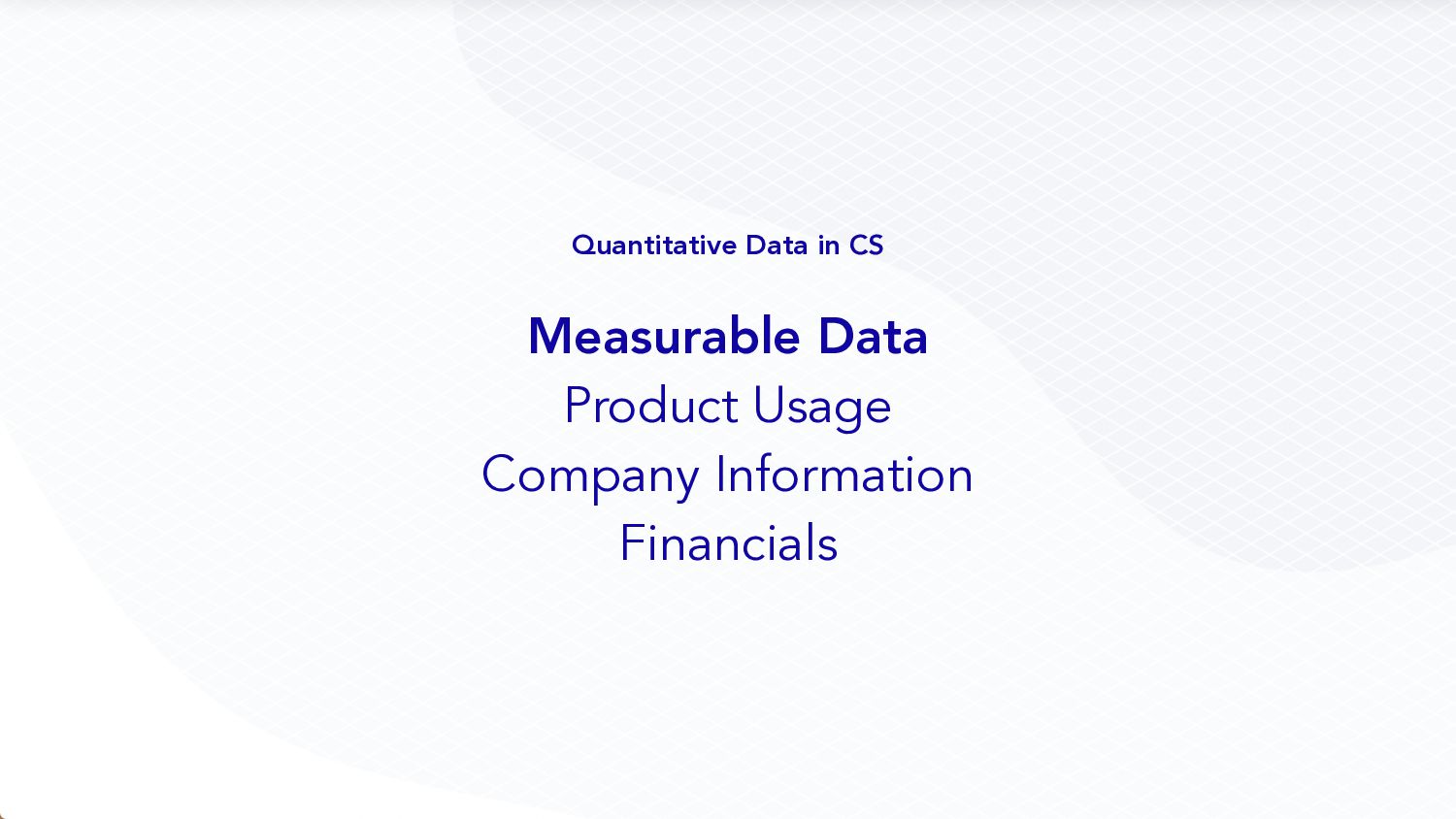
And we were able to then actually tell our CEO where we need to prioritize, where things are kind of going wrong, and what we need to be looking at. The other side of the data is quantitative data. So the stuff that's easier to measure, product data, user logins, how frequently are they logging in, what types of things are they doing inside of your platform, have they hit limits, those types of things, the data that you can export quite easily and manipulate quite quickly.
Again, it's important. It helps the CSM tailor where to focus. And it's using metrics that matter. So it's Amplitude, what we do is we have a bit of a traffic light system for customer health and we input the metrics that we think define success.
So one of them you might have heard us speak about before is weekly learning users. And that is a user that shares and has content viewed by two other users, and that is how we set that equation up essentially. And that for us is a success metric.
And so it allows us to identify users that are struggling. It allows us to identify accounts that are struggling and dig a little bit deeper into that. It's kind of like an early warning system as such. And so to round off this bit, we are essentially gathering this data so that we can feed it back into products, back into engineering, back into sales.
You know, if we start to identify an area where we're succeeding or we're failing, we need to we need to know that. We need to be able to iterate. We need to start pivoting and investigating essentially. And so, with this data, you're able to iterate faster and you're able to win faster because of it.
It also helps to power these four competencies. It helps you to be proactive on things like adoption. It helps you to plan ahead of overages, upgrades, typical things. It allows you to highlight issues early and it allows you to build trust as an expert with your customer by understanding the data that is in front of you.
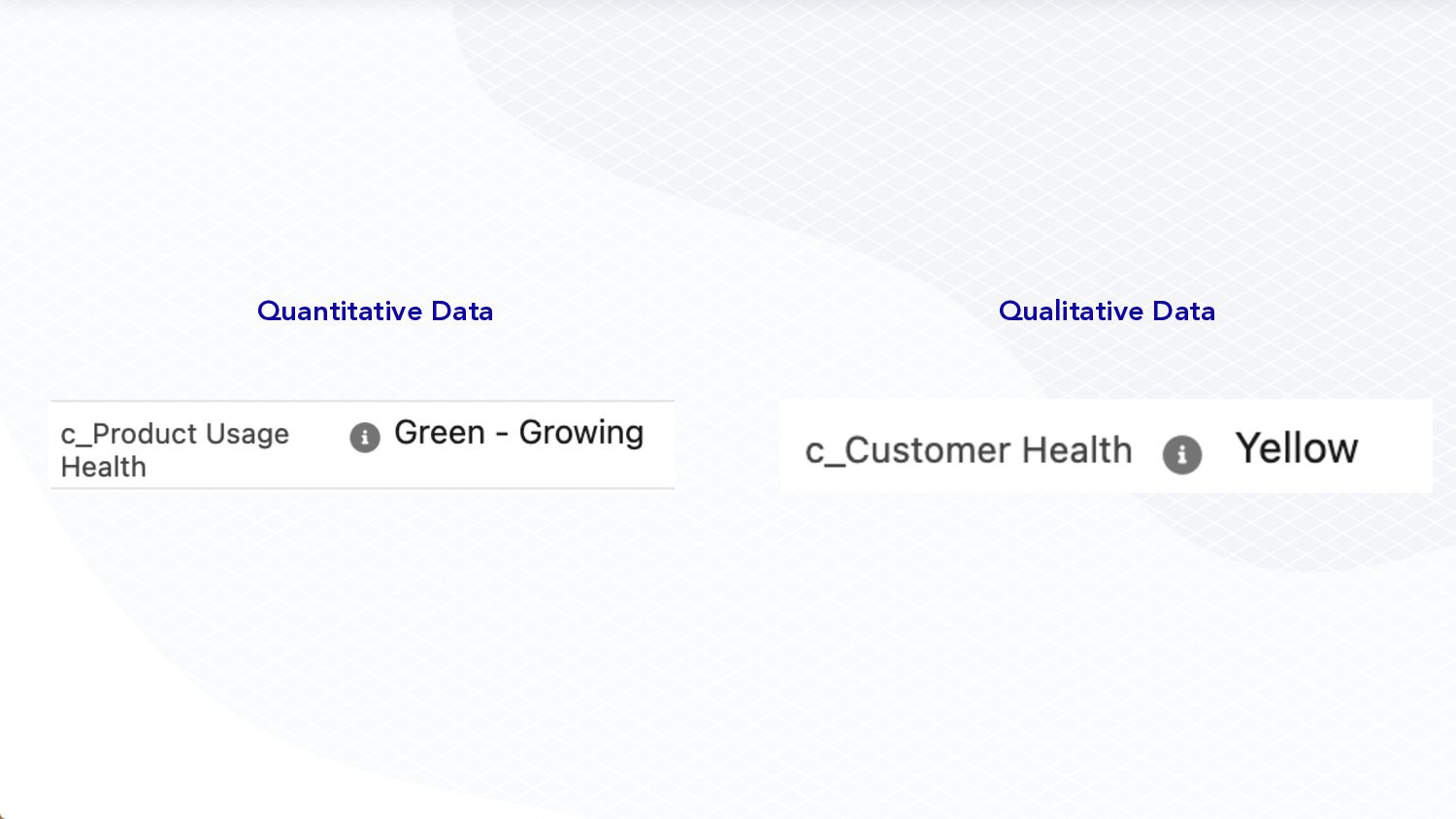
And so, I'm gonna show you just a quick simplified view of that red, yellow, green traffic light system that we use at Amplitude. This is actually a screenshot from my from my account. It's a simplified view, but essentially, it shows both the product metrics and the CSM context.
Because both sides of that equation are important to know. And the reason I say that is this customer in particular has green product metrics. The metrics I was talking about just a moment ago indicate that they are growing, that they're healthy, you know, they're using, they're sharing, collaborating, ticking all the boxes.
But I haven't spoken to them in over four months. I haven't been able to get in contact with them, and so I can't validate their success. They might be using Amplitude, but they might be pretty unhappy with it. They might be thinking how do we get more out of this product or how do we move to a different different analytics solution.
And so I need to input this so that everyone can tell when they have a look at this account. Actually, there is a bit more to this picture than you are seeing from just the product metrics. And if I come back to the idea of being like early stage at Cognism, we didn't have like a lot of tools at that time.
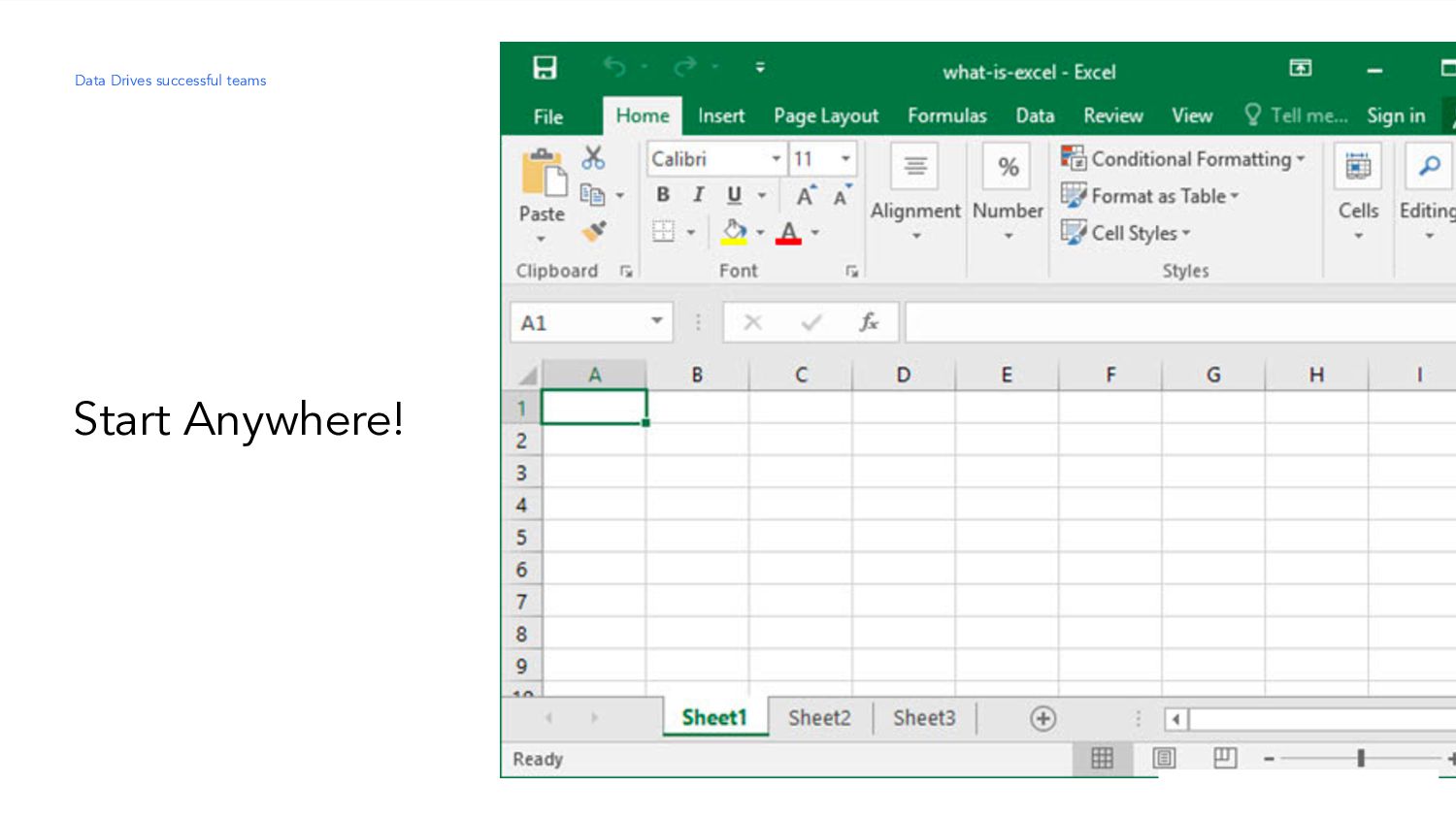
And you don't need them right away. And obviously, like in a dream world, we'd all have a fantastic stack. But any data is better than no data at all. And so we actually used Excel to track our first forty customers at Cognizant and it was oh, it was painful.
We used to upload it to Skype each week. It wasn't a cloud doc. So we'd just be like filling in fields each week, updates, adding new things. Painful experience till we got the CRM. But what I'm trying to say there is that having any snapshot of your customers is essential to understanding and keeping them happy and healthy even if it is rudimentary.
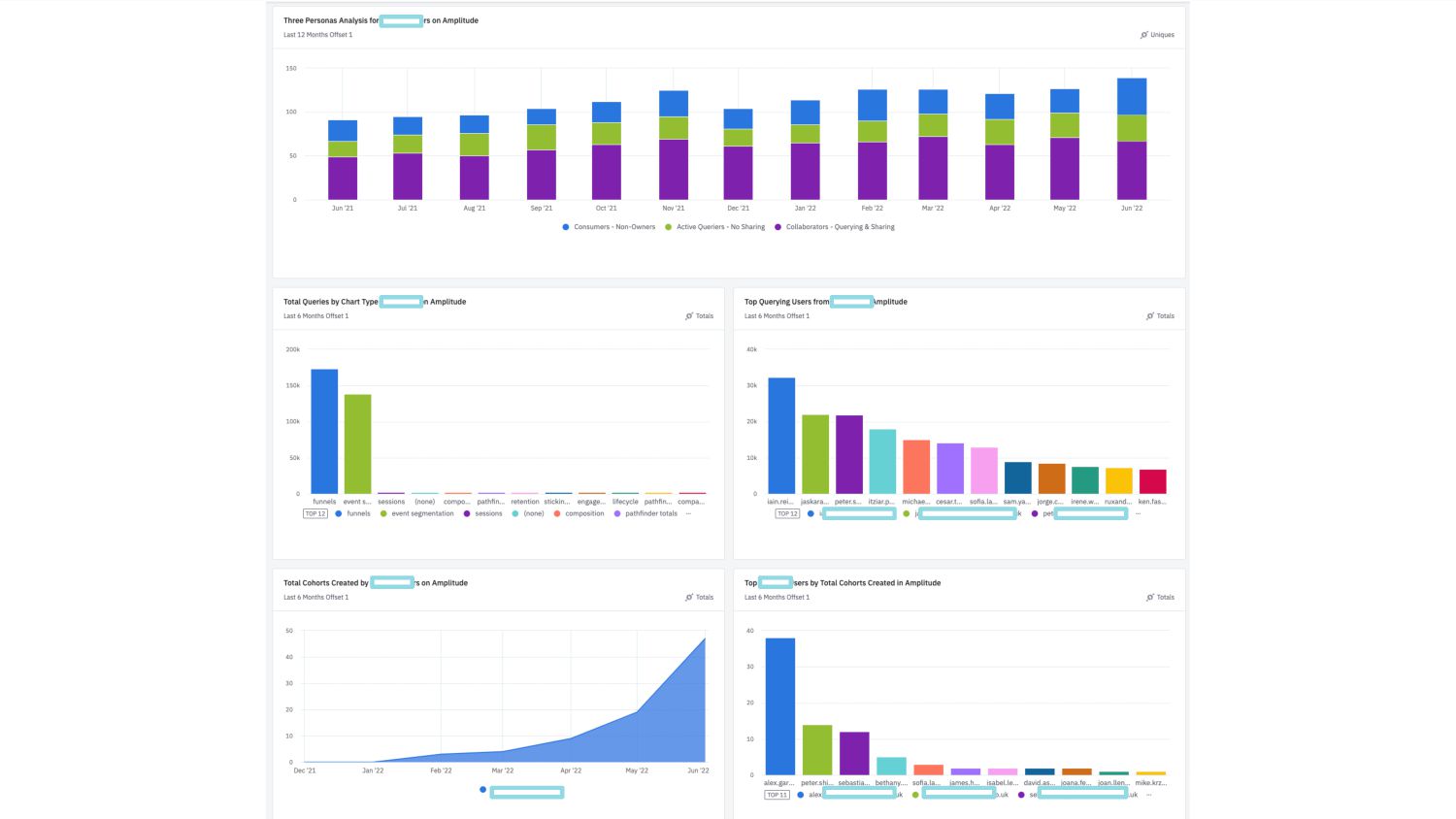
Data essentially helps you catch these opportunities earlier and identify risk earlier. Now, this is kind of how I'm using data today in Amplitude. We're using Amplitude on Amplitude. Surprise. But what this is is actually a screenshot from the email dashboard that I have.
So on Monday mornings, I get all of my dashboards for all of my customers emailed to my inbox and I have an instant snapshot of what they look like, what the health is. So a couple of these charts, one of them is showing like the usage, one of them is showing the volume, one of them is showing the individual users themselves.
And so I can zone in on that and be like, hey, I can see my champion's name at the end of that list. Why aren't they using my why aren't they using Amplitude? What's going on here? So I can open up communication quickly, easily, and in a targeted way that I know I can help to drive their success with.
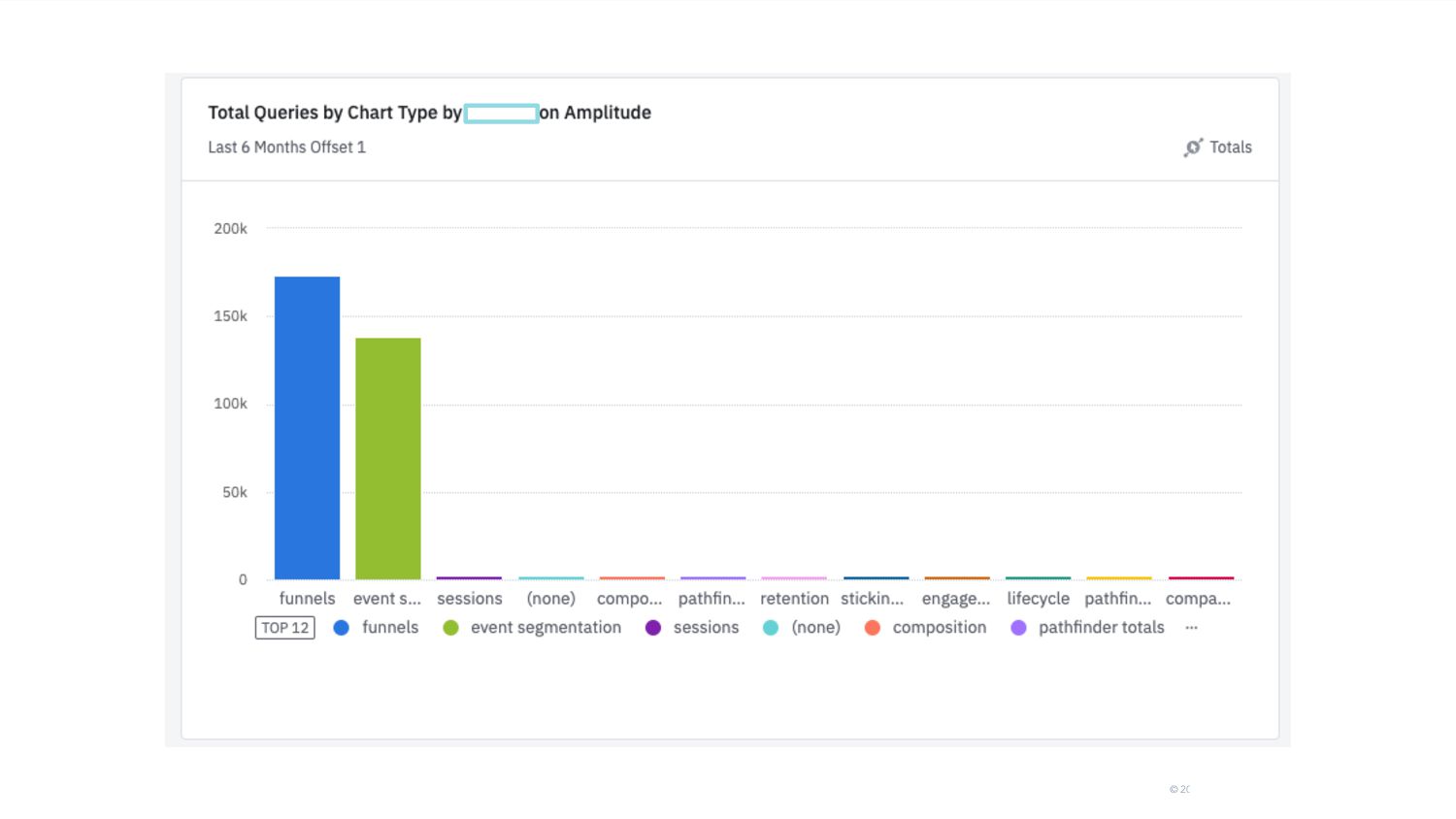
If we zoom in a little further, I can also see, like, the chart types that they're using, that they're not using. So this customer loves funnels, loves event segmentation, doesn't really explore much else. And this is important for me because then I can tell, you know, I know your use case is improving your user journey.
Why aren't you using Pathfinder? And so it helps me to be targeted in a way that I know my customers will be successful with. And essentially, what I'm trying to say with this is that CS data drives the bigger picture. It not only gives you, like, your business leaders a bigger snapshot of your customer health, it also powers your other functions.
It tells you who to target. It tells you how to go to market. It tells you what to build for your audience. Essentially, data tells you why your customers are happy or not, and it gives you the opportunity to take action early. If you arm yourself with as much data as possible, you come to the table with a much higher chance of improving the outcomes of having success.
And so we've explored throughout so far a little bit about how things change as you scale, but we're actually gonna zoom in on that now and explore my journey down this path because I've been through every stage of this, and it isn't a smooth journey.
I wanna highlight that this is, the perfect world. In in the perfect world, we would just kind of go down this. There would be smooth transitions. Everything would be hunky dory. But the reality is that this is a bumpy ride. There are a lot of transitionary periods where you'll be duplicating work, where you may be rolling back.
And for me, this only became clear as you're going through it. No one tells you that this is gonna be a bumpy ride through CS. And so let me walk you through the beginning of this journey for me. Essentially, was doing a little bit of everything.
I was doing a bit of presales. I was doing support, onboardings, also handling the renewals. It was very much as you can see from that picture at the start, hectic classic start up life. We were doing things like pulling in engineers to customer calls to troubleshoot user errors.
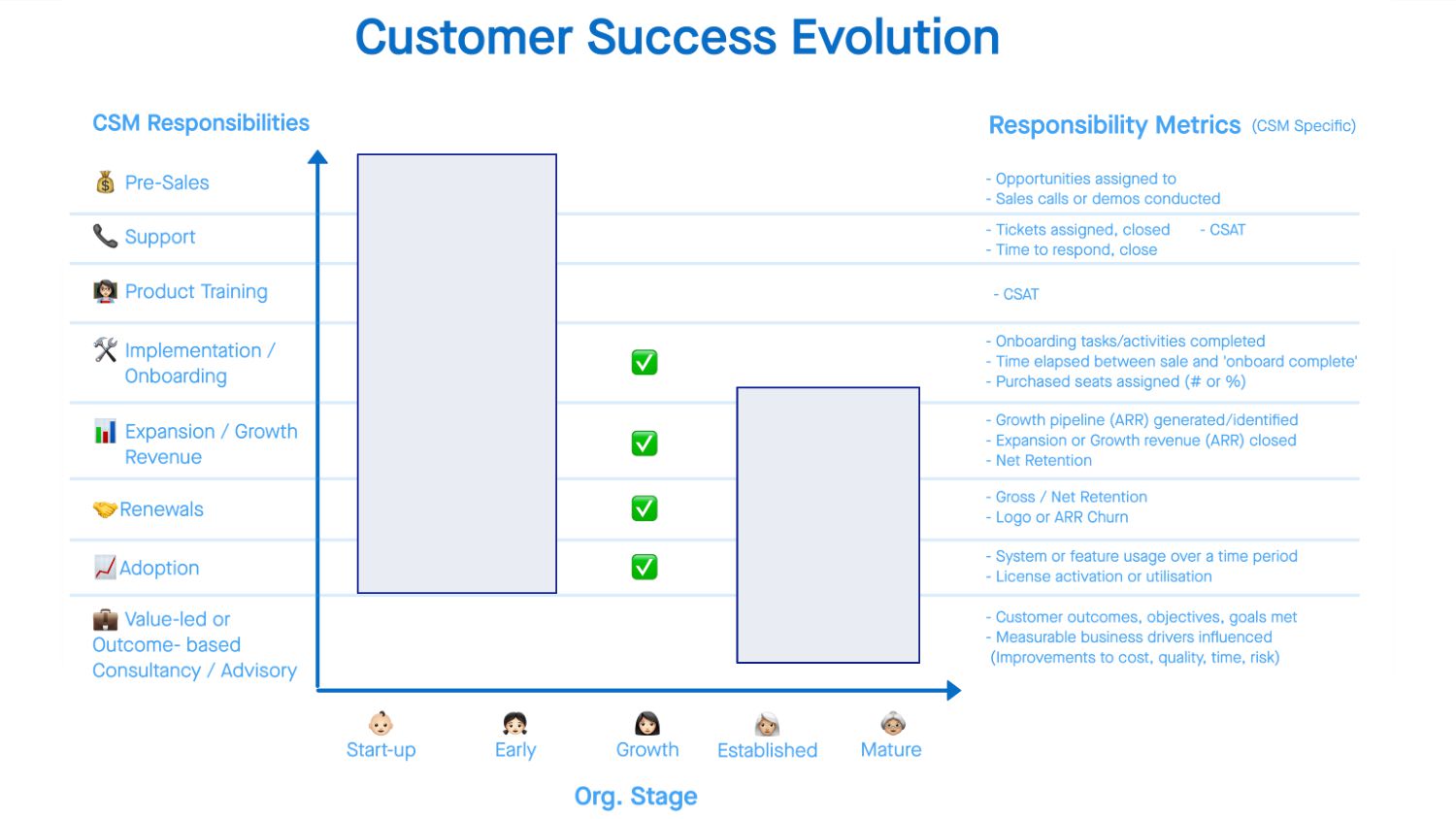
It was fun, but it was busy. But what I wanna highlight is that it was hard to push high impact responsibilities in this stage. But as we grew, we were able to break out into, we were able to break out our support function and shift away that focus.
And this is probably the biggest shift that you'll experience because it's like the first one. Right? But moving support out for us, it opened up about fifty percent more time in my day. And then I could focus way more on renewals, and I could start focusing on significant adoption of our tool.
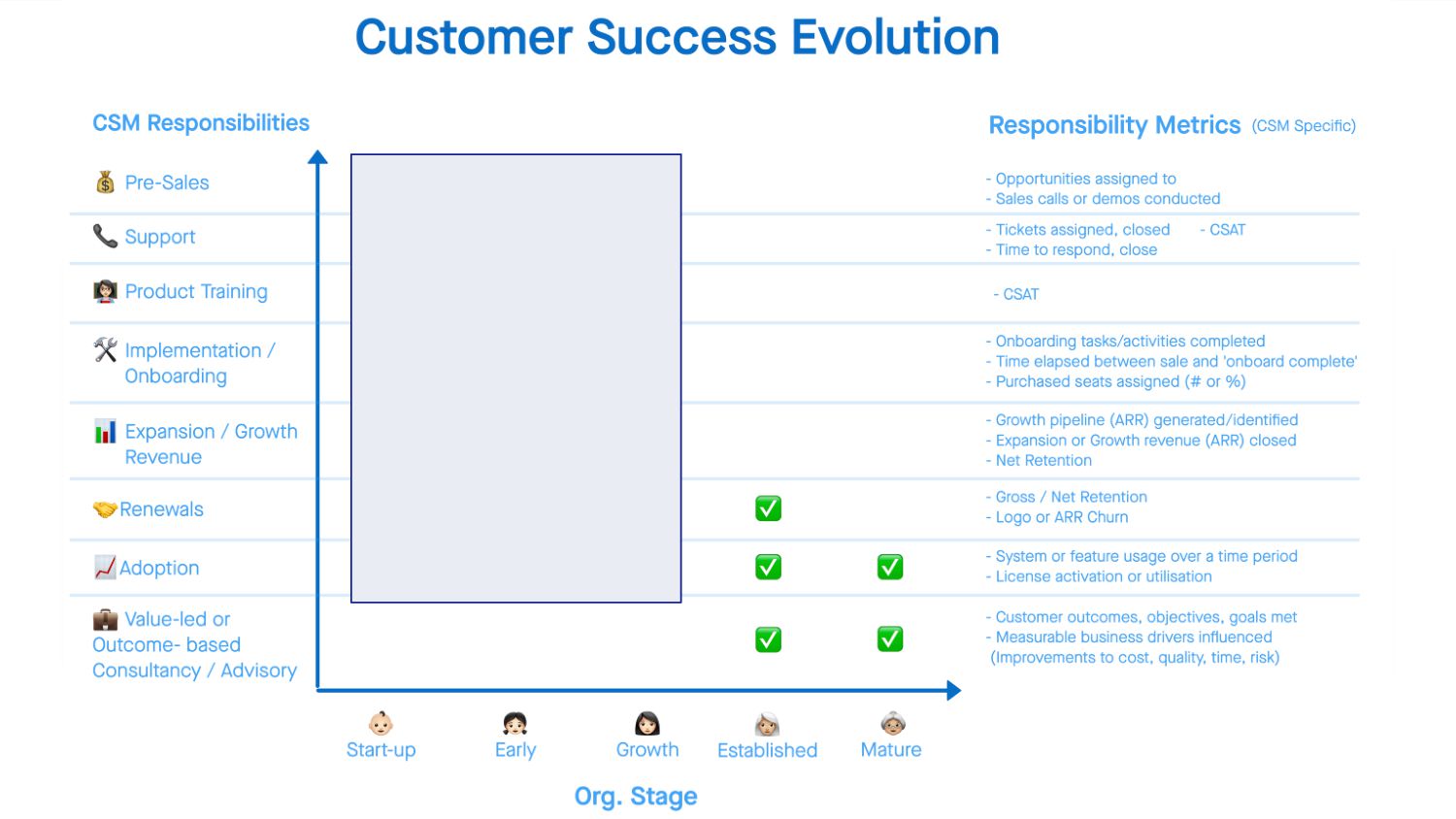
It allowed me to focus on the customer value, not just helping to like put out fires as it was in the early stages. And now what we're facing in Amplitude this year is bringing in the account managers and breaking out further into this area of maturity where the AMs have come in to focus on the business value, and they're taking away kind of the renewals, the expansion discussions.
And what we get to do now as CSMs is be a hundred percent focused on value for the customer. We have truly leveraged now the four key competencies to be the voice of the customer focusing on adoption focusing on adoption and value led outcomes for the customer.
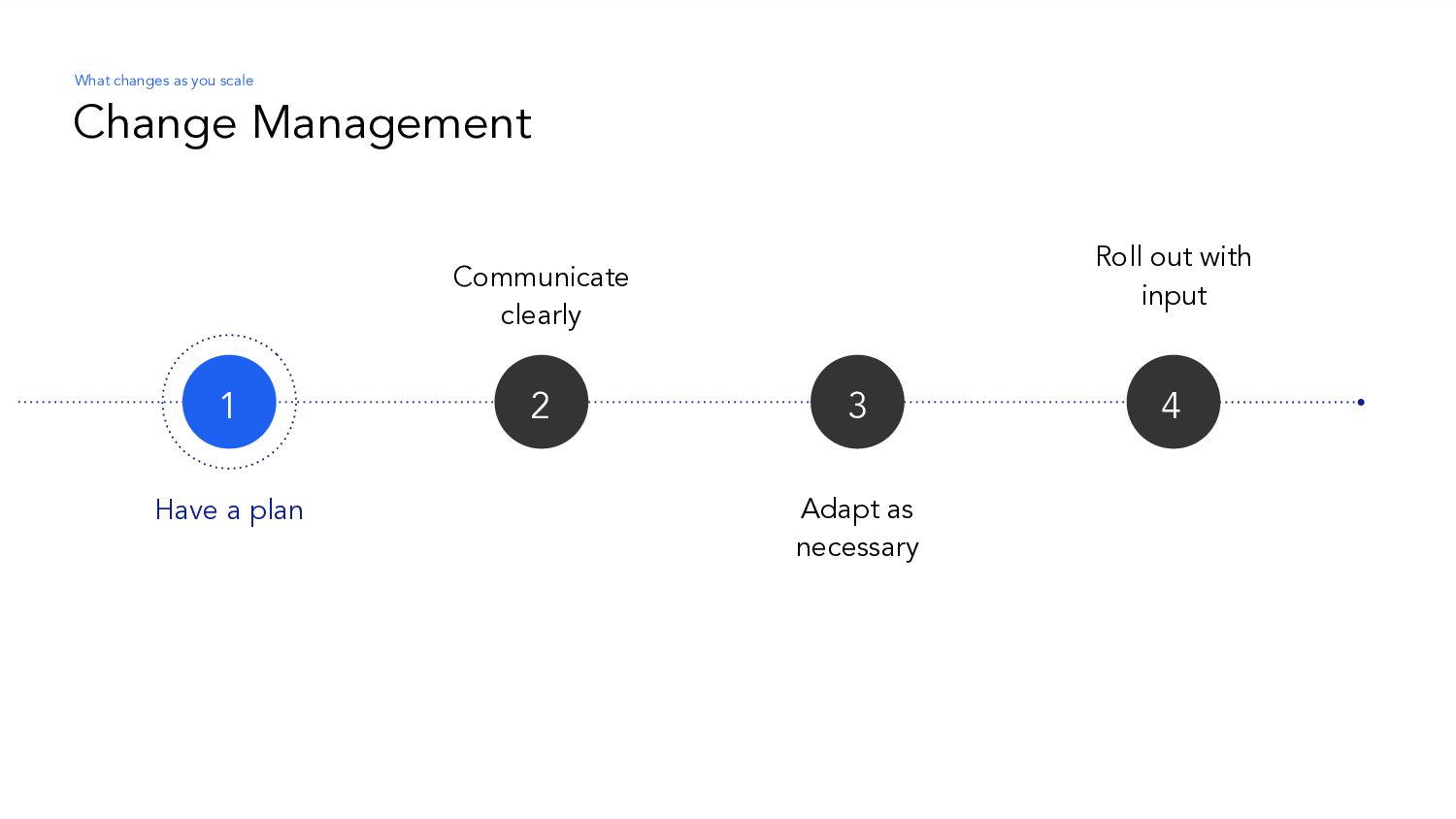
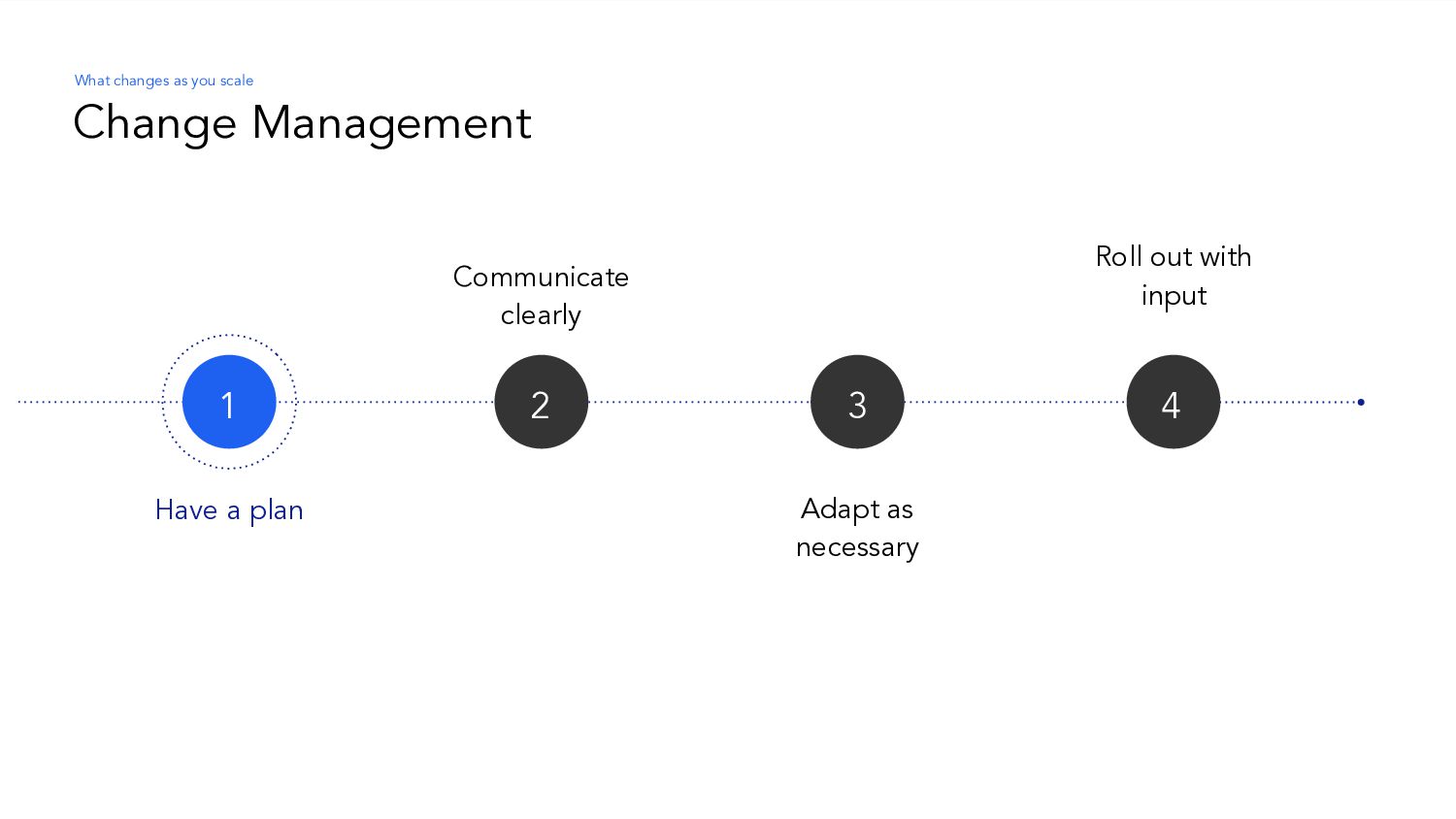
And this is the specialization of the CSM that I mentioned at the beginning. Now, just wanted to make a note on this. As I say, there is so much change in CS as you grow, and you just need to have a plan for this.
It's good to get ahead. It's good to communicate this early to your team to let them know that there's gonna be a lot of a lot of bumps on the road. But it's also important to take their feedback. They're gonna be the ones who are actually rolling this out and then adapting this journey as necessary.
It would be obviously great to have the ideal world where that journey straight through is nice and smooth, but trust me, it doesn't happen that way. So, essentially, what I wanna highlight is that everything changes as you scale. And there are super pronounced changes particularly in the customer success org as it grows, but it is a good thing.
You're essentially moving towards the specialization of CSMs to deliver the highest impact for your customers and ultimately improve retention and growth of those customers. And so I've only had five years in CS. I can tell the next five are gonna be equally as crazy.
And it has been a super varied time. But I hope that from today, you understand CS a little bit better. I hope that you understand why it's important to work cross functionally, that you're using data is gonna drive success for you. And ultimately, CS will change quite a lot as you grow, but it will be a fun journey.
Thank you so much.