Most of us find change hard, and group dynamics often exacerbate this resistance. Nonetheless, we all know that succesful products need to be constantly evolving. The friction between these two realities can cause huge, even existential problems on product teams.
In this talk, Randeep explores the causes of this friction, looks at how to resolve it to move products and people forward, and also imparts key tactics for avoiding the unspoken cost that can often be paid by the person doing the necessary work of challenging the existing product thinking.
1 / 63 Use ← → to navigate
Auto-generated transcript - may contain errors.
Tap a timestamp to jump the video.
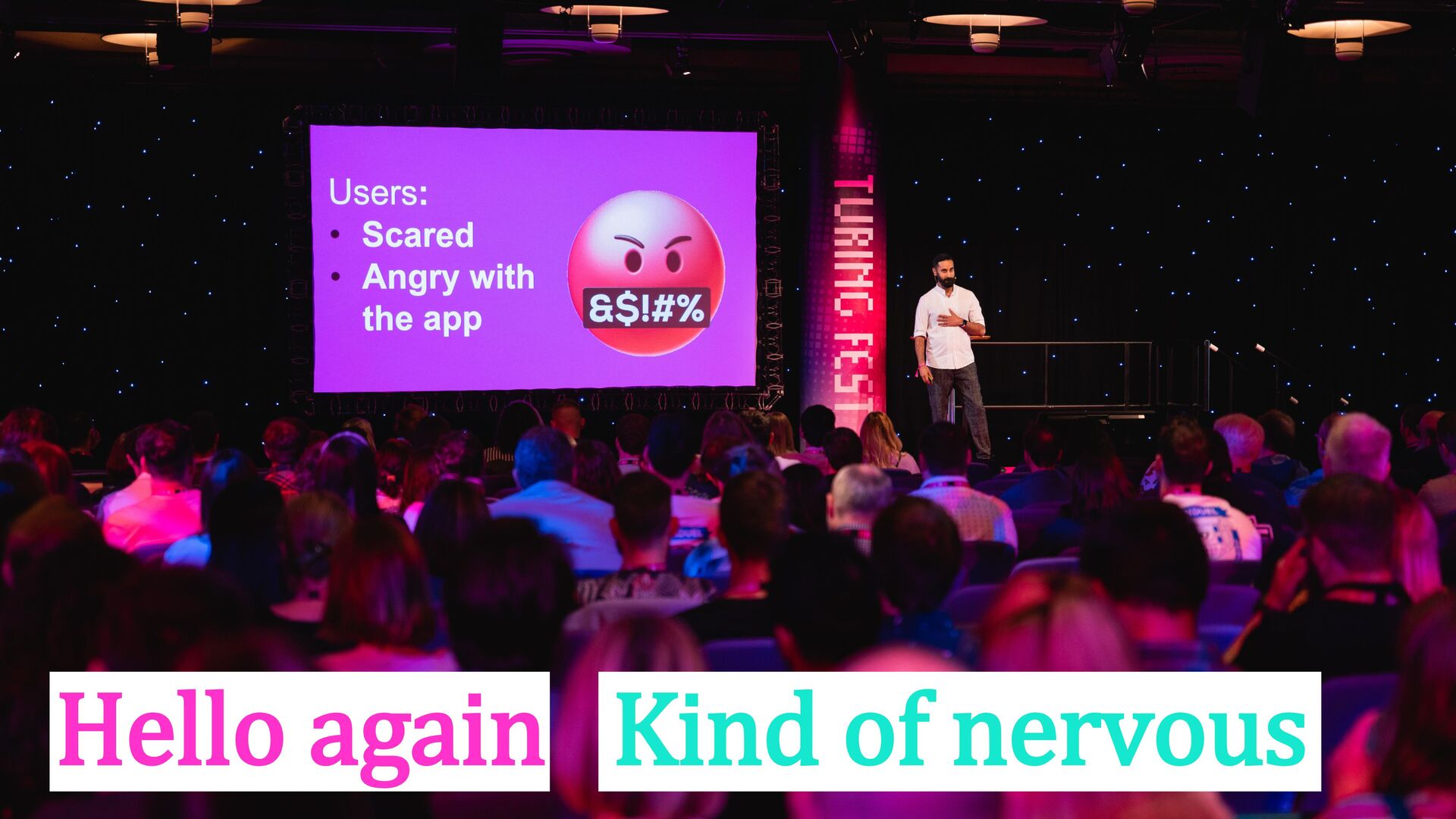
Thank you everyone. I'm Randeep Sidhu and I'm here to talk to you as a follow on from my talk last year. So, I was here last year and things seemed to go well, so they invited me back. But this is a little bit nerve wracking because this stage is very wide and you're very spread apart.
So, I'll try and kind of pace periodically. But last year I was here and I was talking about life and death decisions because I was a person who was asked to build the COVID-nineteen app for the UK government. Now, many years ago, someone said to me, who was a doctor, Randeep, a product you build will kill someone.
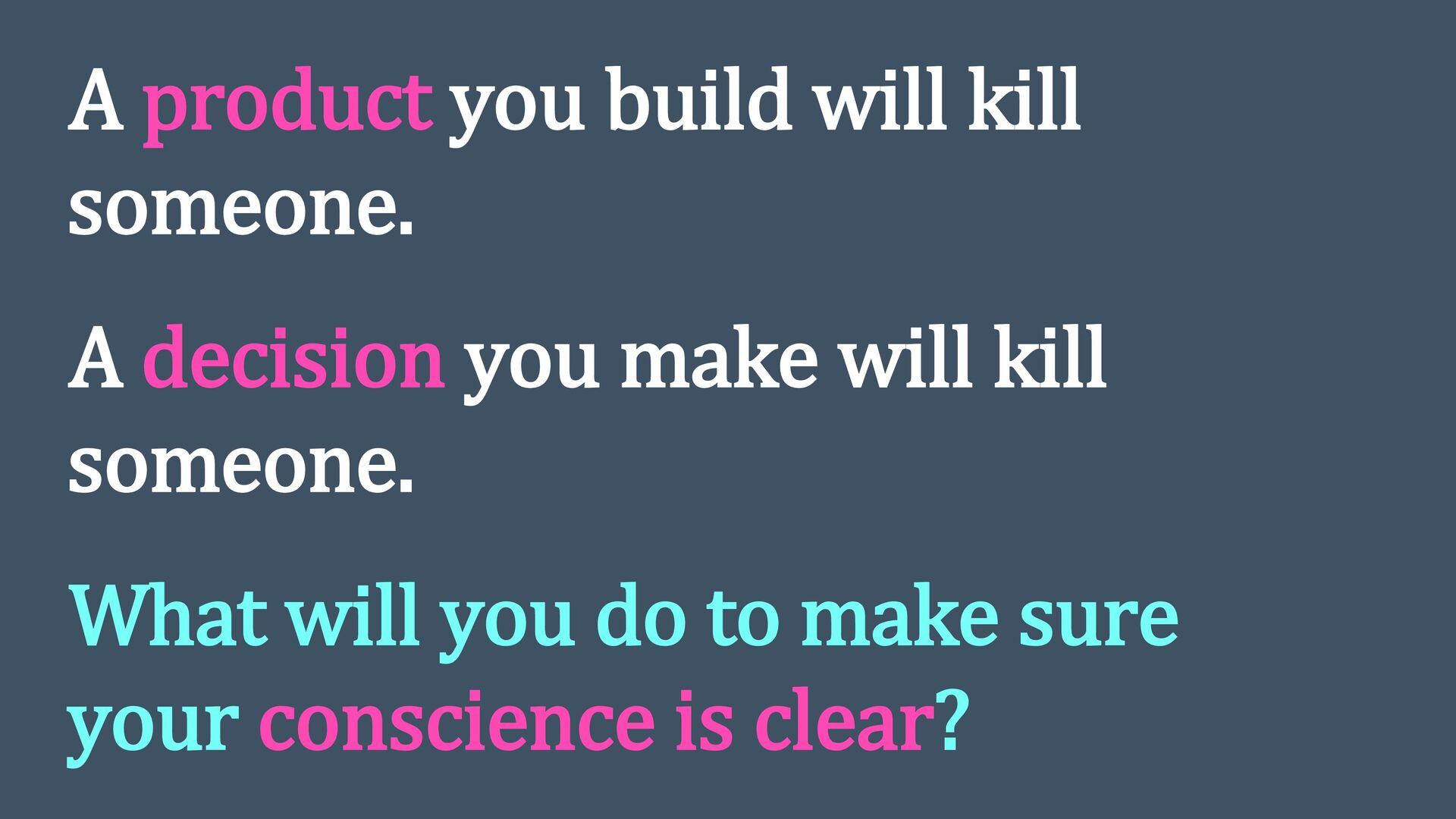
A decision you make will kill someone, you need to make sure you're okay with that. All of you are now like, why the head do we come to this talk? I promise you it's not going to be that heavy, but it is going be slightly different.
So, I will not give you product frameworks. I will not give you product insights. That's not what this talk is. This is more universal. It is about the psychology of making change. And it's less esoteric than that. It's about what **** goes wrong when you try and make things better.
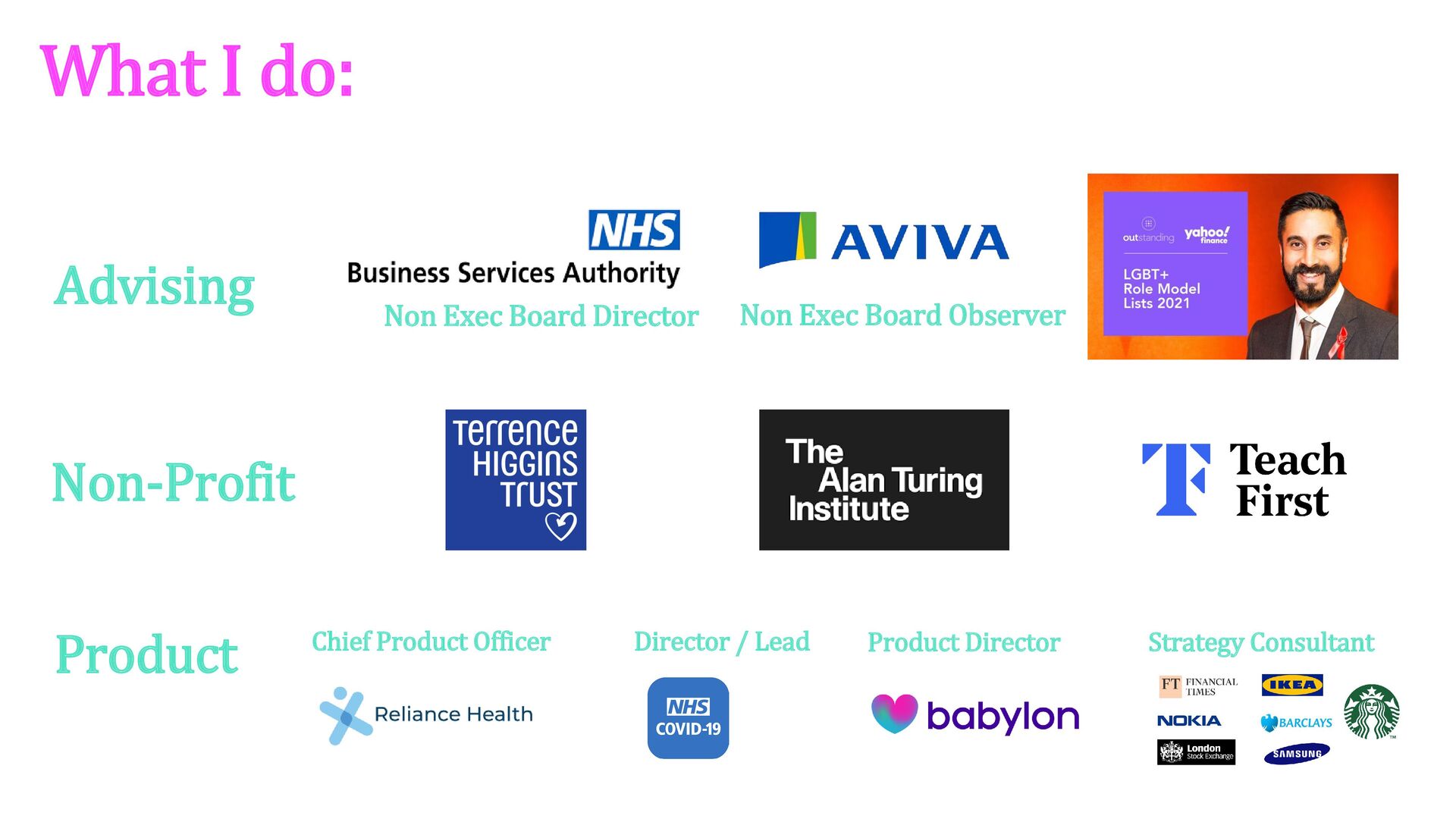
And I'm going to talk about how my perspective has shifted over the last couple of years, and how maybe some of my advice may have led into a trap in the past. But to start, I'll introduce myself properly. So, I'm Randeep and what I do, as was beautifully introduced already, is I'm a Chief Product Officer in Health Tech.
I was at Babylon, I bought the COVID app and I had done non profit work for HIV charities. I teach FirstUp, and mainly at the moment I do advising work. So I'm on the board of something called the NHS Business Services. It's forty billion a year and does so much stuff in the NHS that most people don't talk about.
My colleague, Darren, is here, who's the CTO. He'll wave at you at some point. I'm on the board of Aviva, the insurance company, where I'm an observer, which is super fascinating. And I do LGBT work. But let me rewind you back to June twenty twenty, the happy, happy days of COVID.
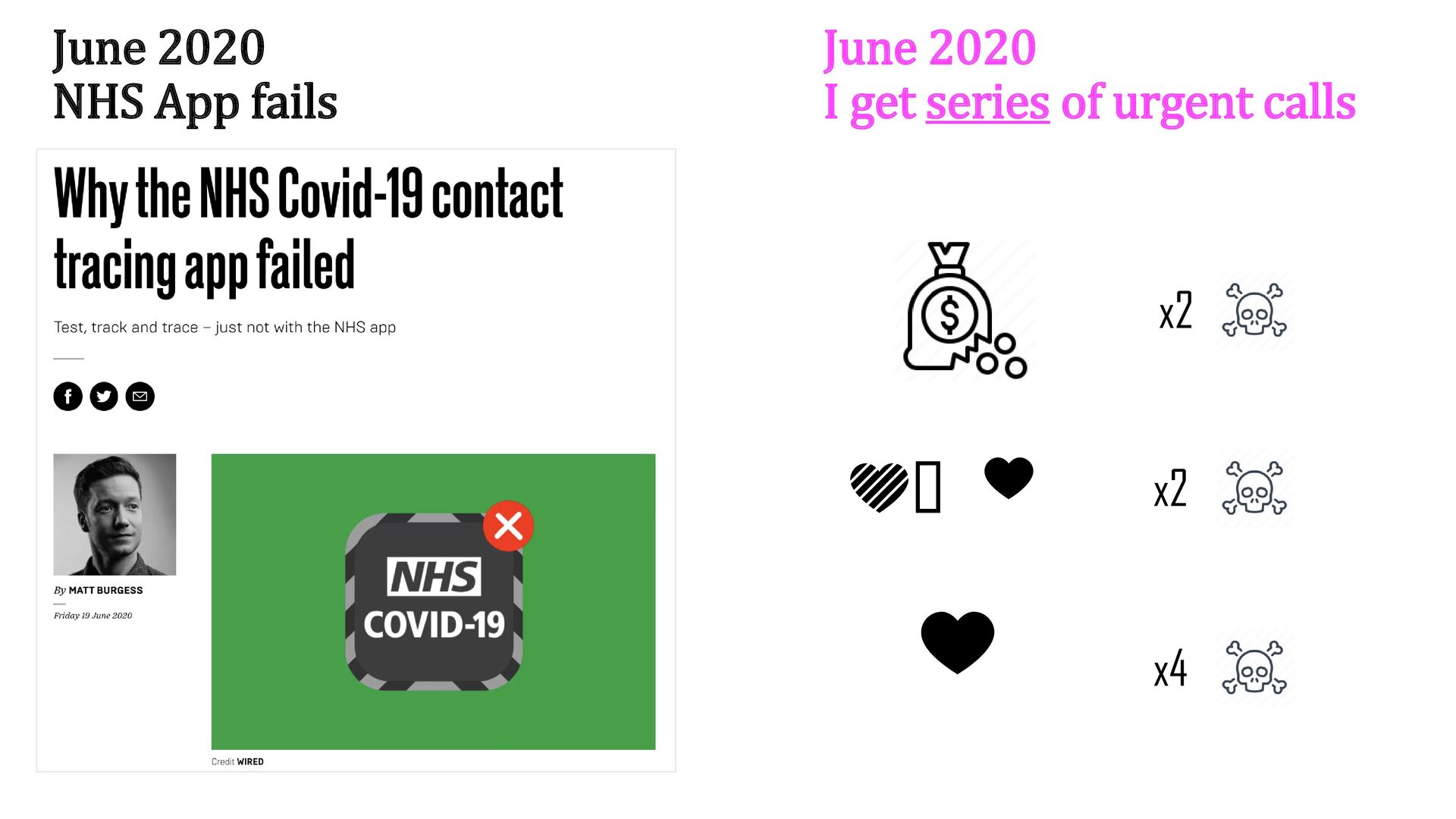
We were all in lockdown. We were making sourdough bread and getting overweight. And the NHS had tried building an app which failed. And then in the middle of that lockdown, I was given a phone call from the NHS, it's Department of Health, going, we tried building something, didn't work.
What advice would you have, because you build healthcare, to try and make this work? And I was like, okay, I'm this outside outside voice. I'm not from government. I'm someone who does stuff. So let me help explain to them. Poor people have died twice the death rate.
People of colour have twice the death rate. Black people have four times the death rate of COVID. So I was giving them some hard truths. I was like, you people need to understand the things that you're missing, which is why people are dying.
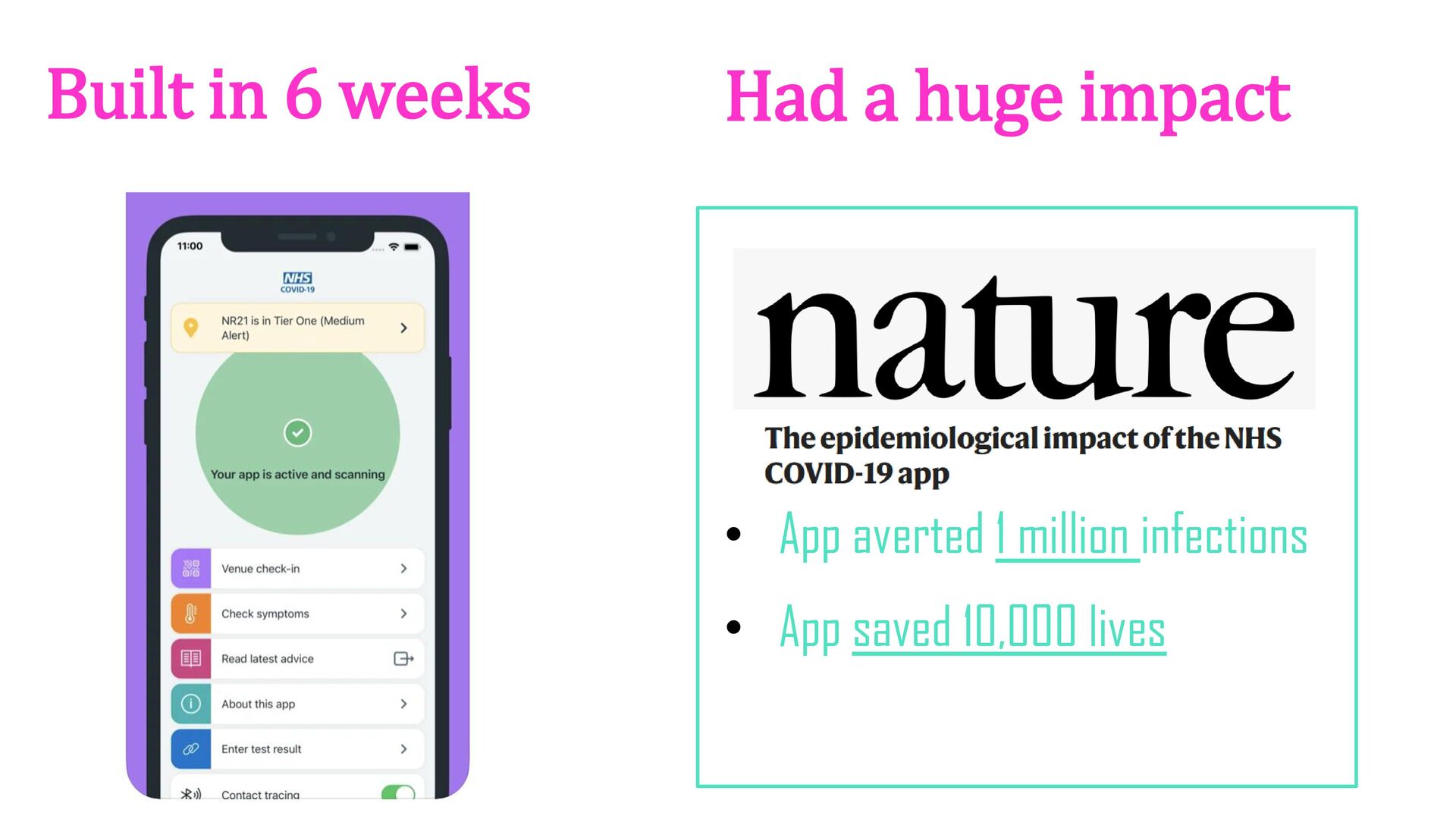
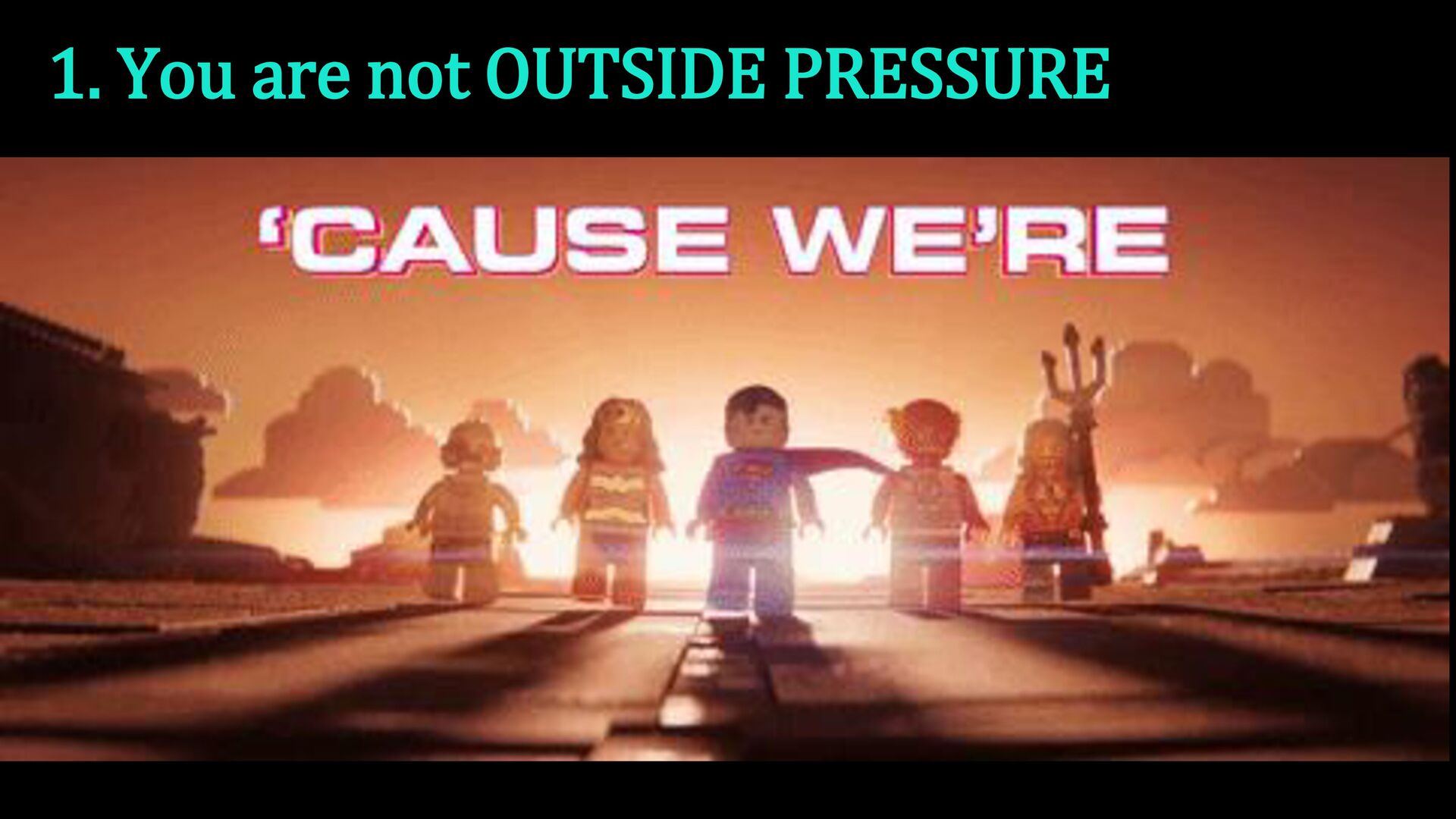
That external pressure worked because two days later they said, can you join? And I did, literally days later. Bit of a risk, of a challenge, built something in six weeks, and guess what? It managed to work. Somehow we managed to build something that actually saved lives and stopped the spread of COVID.
Was it perfect? No. But these numbers are quite conservative. So actually we're likely to have saved many more lives than this, which I'm proud of. But let me give you an example from those times about how to impact change. So if we go back, as many people in this room would have had, your CEO says we don't have enough users.
And we had that. In COVID times, there weren't enough users of the app. So there was a meeting with lots of senior Department of Health and NHS people. And in this meeting, I was with lots of directors across Test and Trace and there was some research shown which was how many people were using the Test and Trace app and using the services more generally.
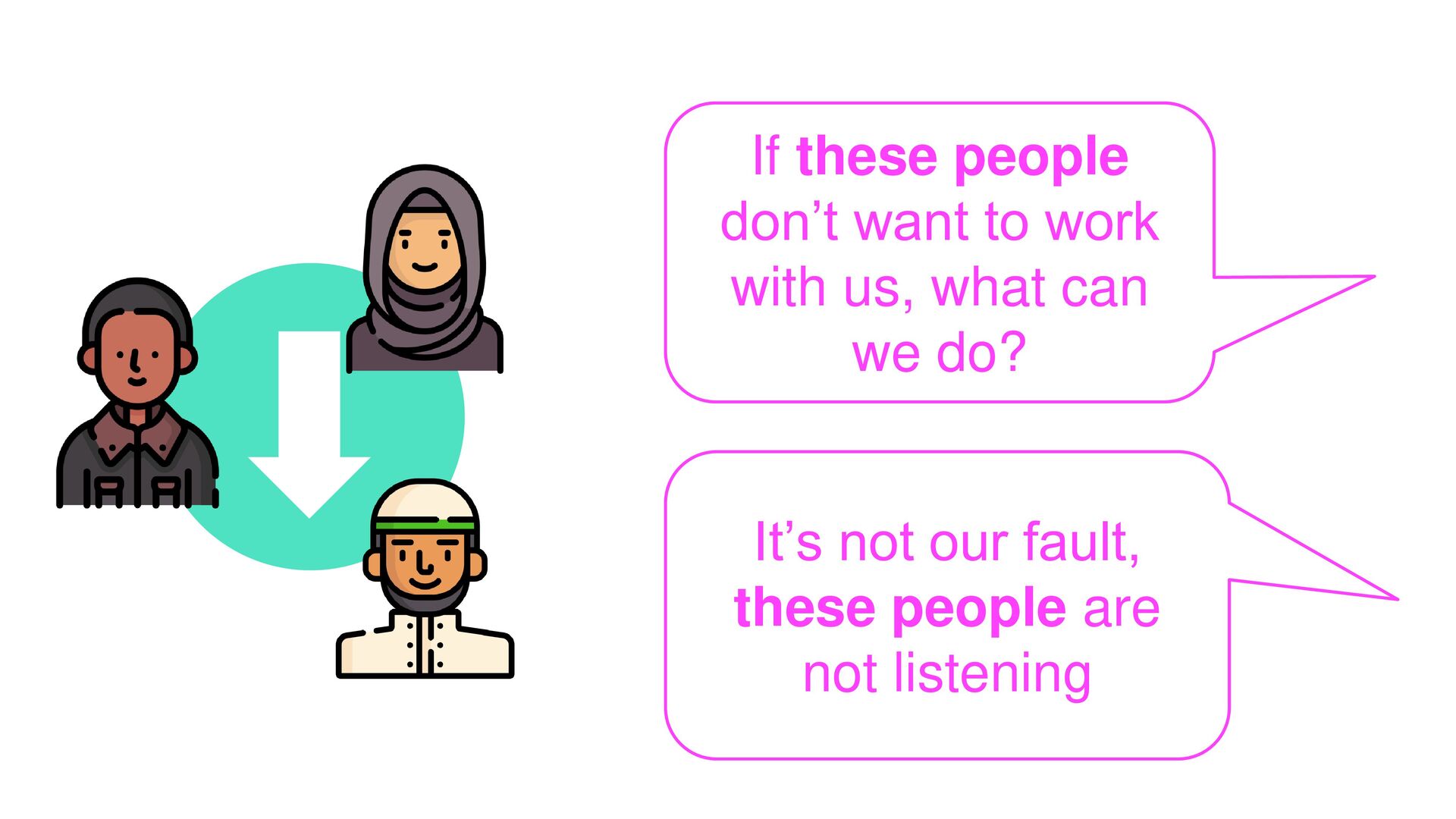
And what this research showed was black men and the Muslim community used the services less. And in this room, there were some interesting responses to that. Someone said, If these people don't want to work with us, what can we do? It's not our fault if these people aren't listening.
And there's lots of nodding, lots of agreement in the room. Everyone's like, Yes, yes, yes, these people. These people are doing it themselves. Yes, like not our fault, it's their fault. They're not listening. And of course, as the only person of color in this room of thirty people, I was like, what the actual like what is going on?
Like And so what do you do? You stop. You wait. And I waited. No one said anything. So I was like, okay, I have to say something. Put my hand up, you know, I'm from the outside, I'm not from the NHS, and I thought, okay, carefully, casually I kind of went, oh, you know, there might be a different reason this is happening.
You know, there might be Last year's talk I talked about some of the research we did to prove that. In essence, was like, there's some other things we can do here. So I wasn't directive, I wasn't attacking, I was very careful with what I said, and then something interesting happened.
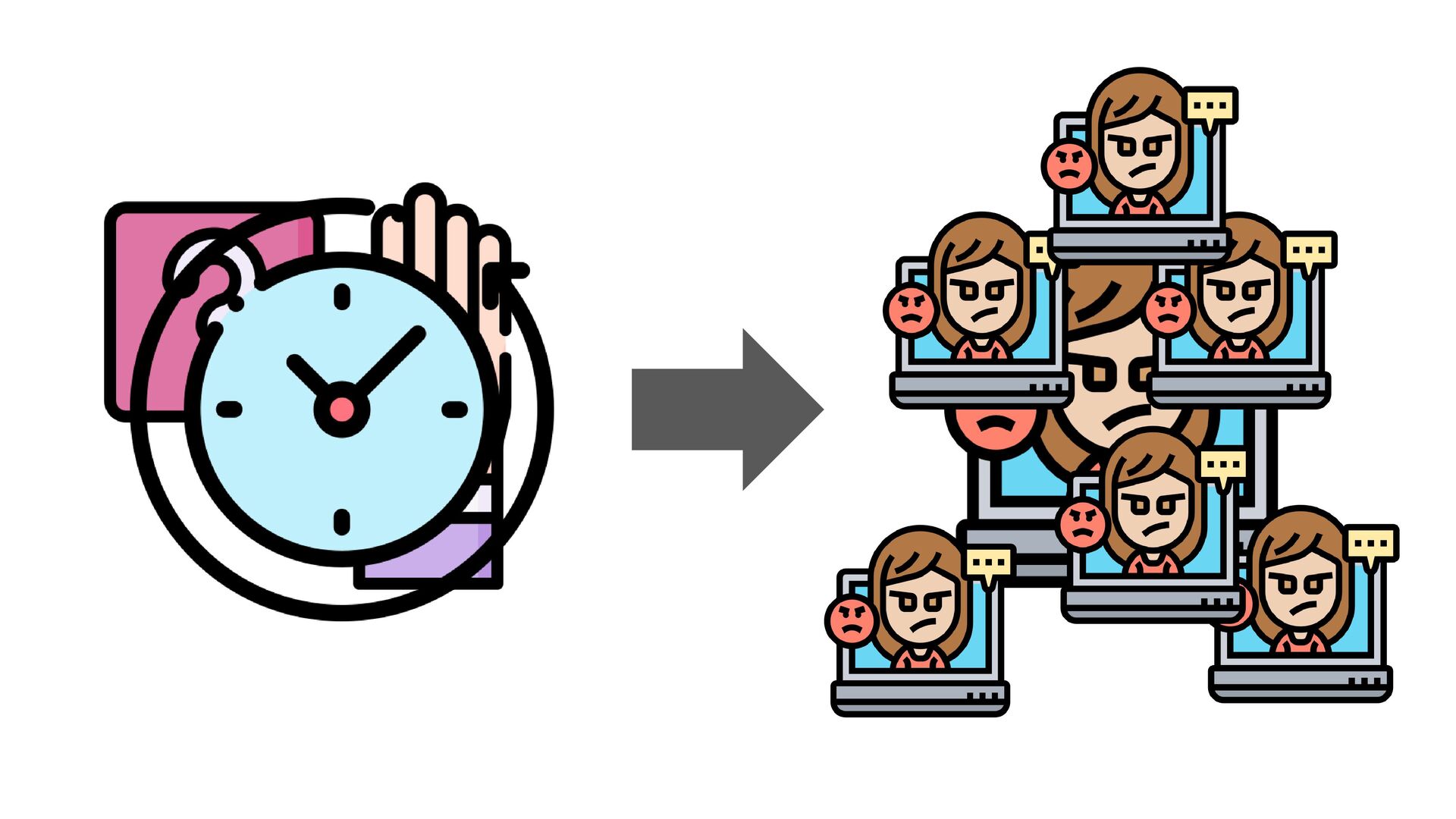
The person running the meeting pushed back. And not just that person. Two people made those comments. The room started turning on me, which I found fascinating because I was like, what's going on here? I'm saying something that has logical sense. I'm not trying to blame or attack anyone, but yet this room is pushing back against this external pressure.
I was like, what have I done to create this level of anger or pressure? And it took me some time and I was like, what did I do? I was everyone was nodding, everyone was smiling, everyone was agreeing with this fairly toxic comment, I had challenged the status quo.
The received wisdom in that room was that these people were doing it to themselves. I was challenging that with logic, with sense, with action. So ultimately, that's why I was pushed back on because do you know what? Haters are gonna hate. So what I realized then was I might have been doing something right there.
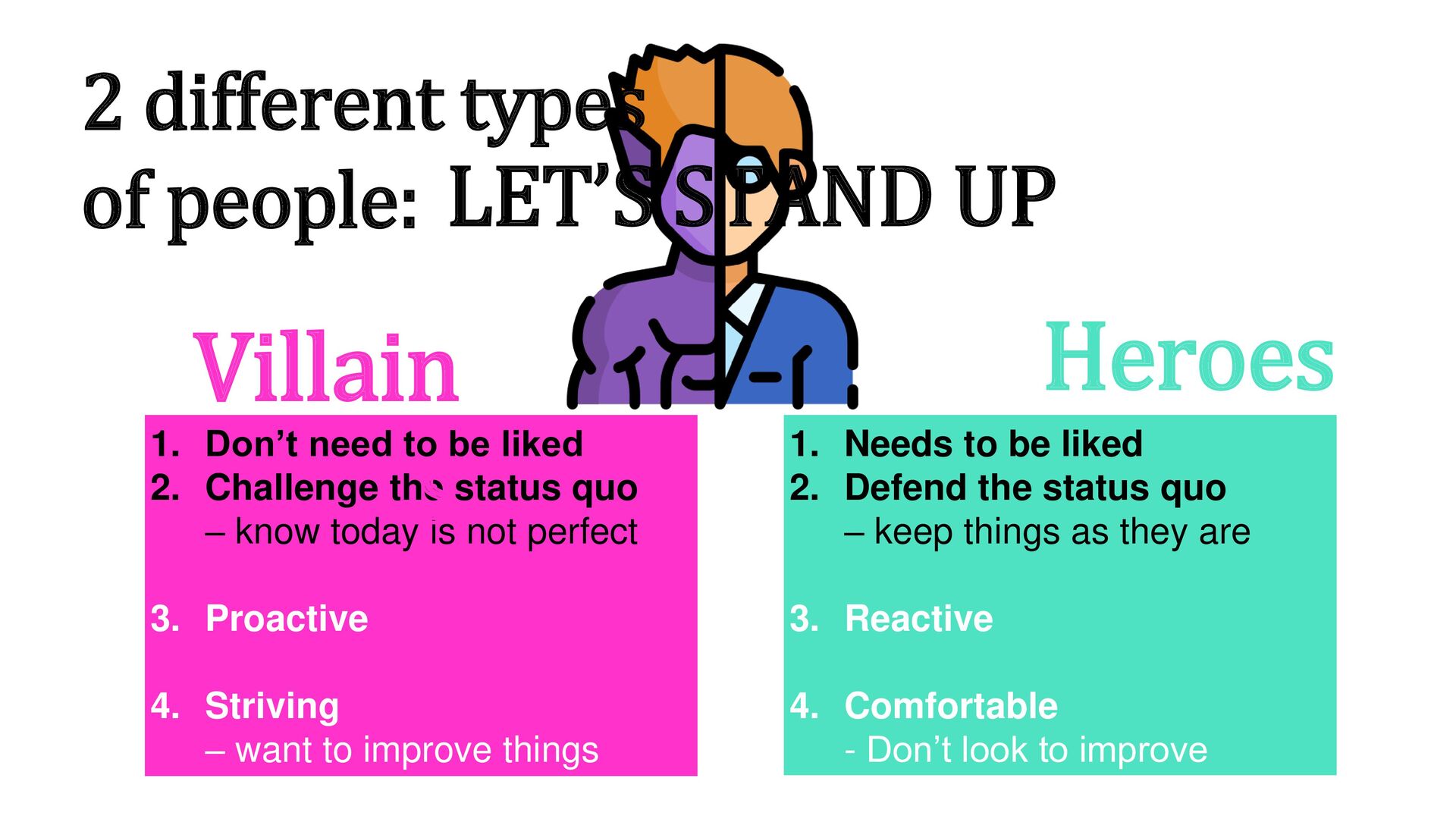
So I'm gonna introduce you to how I think about the world. There are two different groups of people in the world. I'll ask you to consider this. First group, They are people who don't need to be liked. And that's important because if you need to be liked, you don't always do the right thing.
They challenge the status quo because they're the people that know today is not perfect. They're the ones that are proactive. They've got a plan. They've got a sense of action and they're striving because they think it can be better than it is today.
And then you have the second group. They're the group that need to be liked. They're quite consensus driven. They actually defend the status quo. They're like, well, things are working for me. I don't need to change. They're reactive and they're comfortable. They're not looking to improve anything.
Where do you sit on those two camps? Are you a pink or are you a blue? And I'm going to do my first piece of audience participation. So if I can ask you all to stand up, please. I know it's been after a break but get a little bit of leg blood in your legs.
Okay, so if you think you're in the pink or aspirationally would like to be, stay standing. Okay, back up again. Stay standing if you think you would like to be a blue. So, sit if you're a pink, stand if you're a blue. Okay. Far, far fewer people. So everyone sit down.
Literally ninety percent, ninety five percent of people thought they were pink, and let me help you see something. When you look at the world and how it's broken down, the people that challenge the status quo are considered villains. And if you stop and think about it, and if you came to last talk with Petra Wiley, you would pick more of this up.
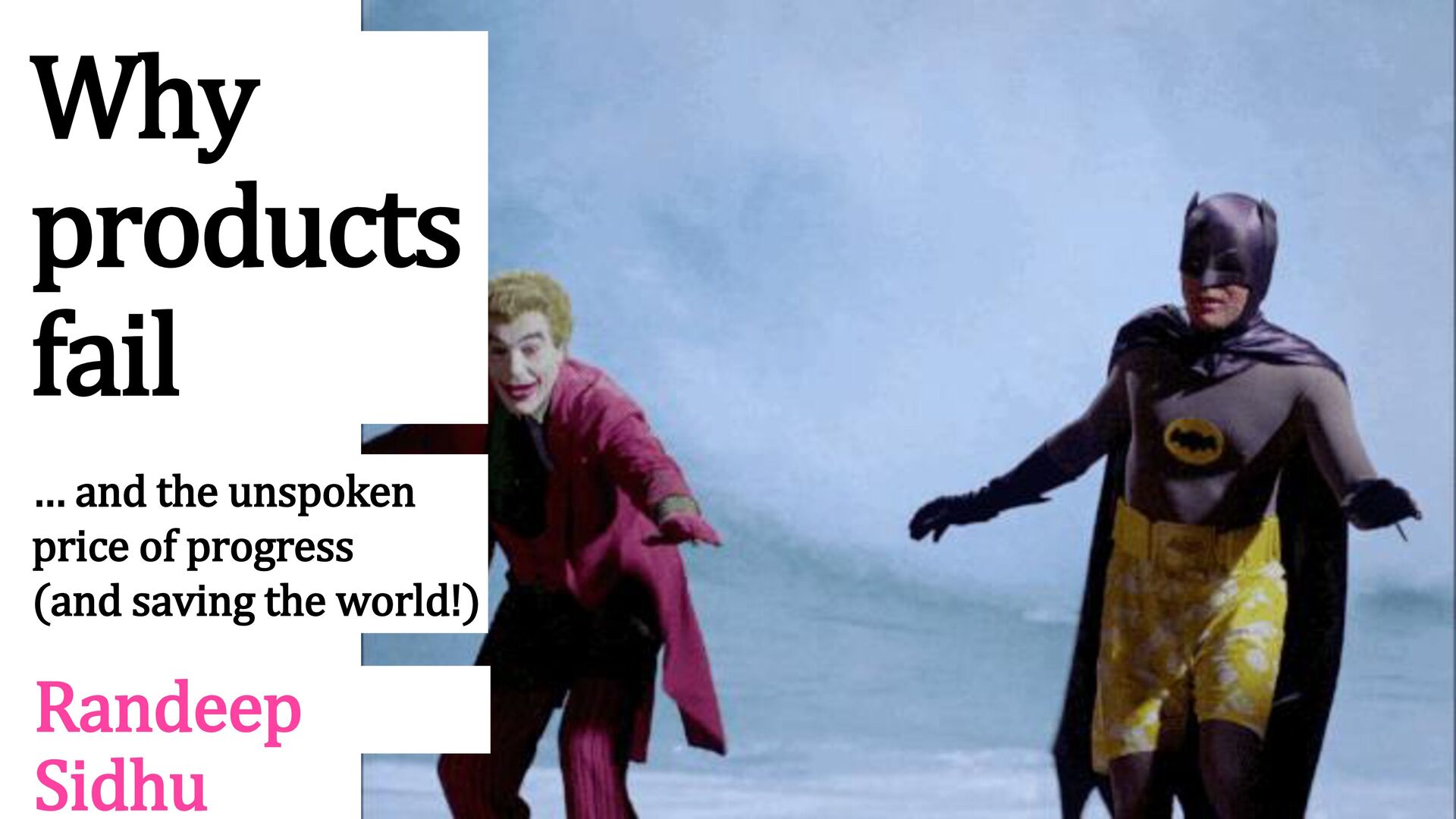
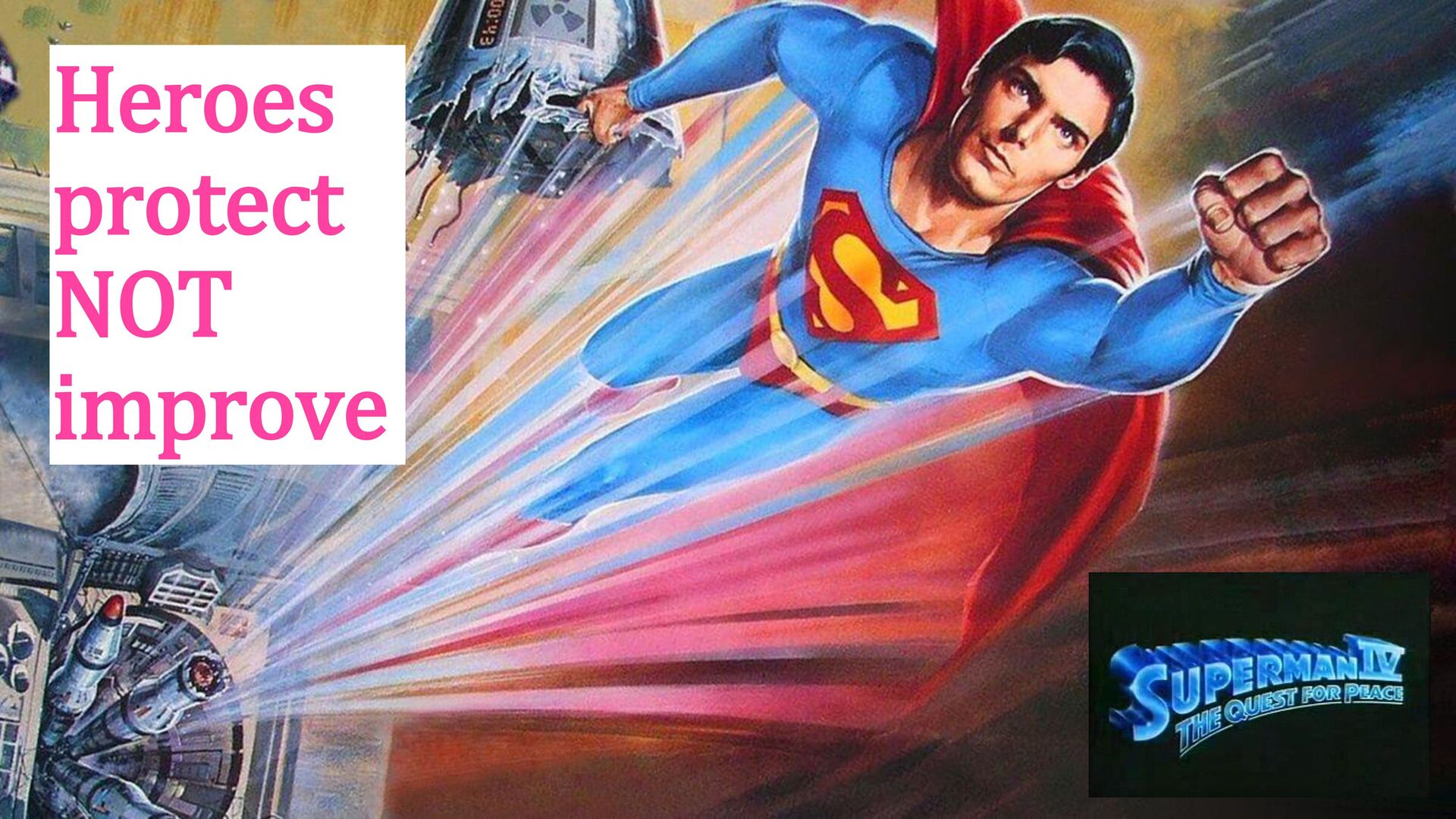
The reality is heroes as they're portrayed today do not challenge the status quo. When things are being changed, they push back to revert it. They don't look to improve. There's one movie I could find, Superman four, which is a terrible movie all filmed in Milton Keane shopping center, where you should really genuinely watch it for fun.
And there's a horrible backstory about why it was so bad. But Christopher Reeve wanted to make a superhero movie where the superhero did something positive. Superman took every nuclear weapon off the planet and threw it into the sun. That changes the world. No superhero movies ever look to improve.
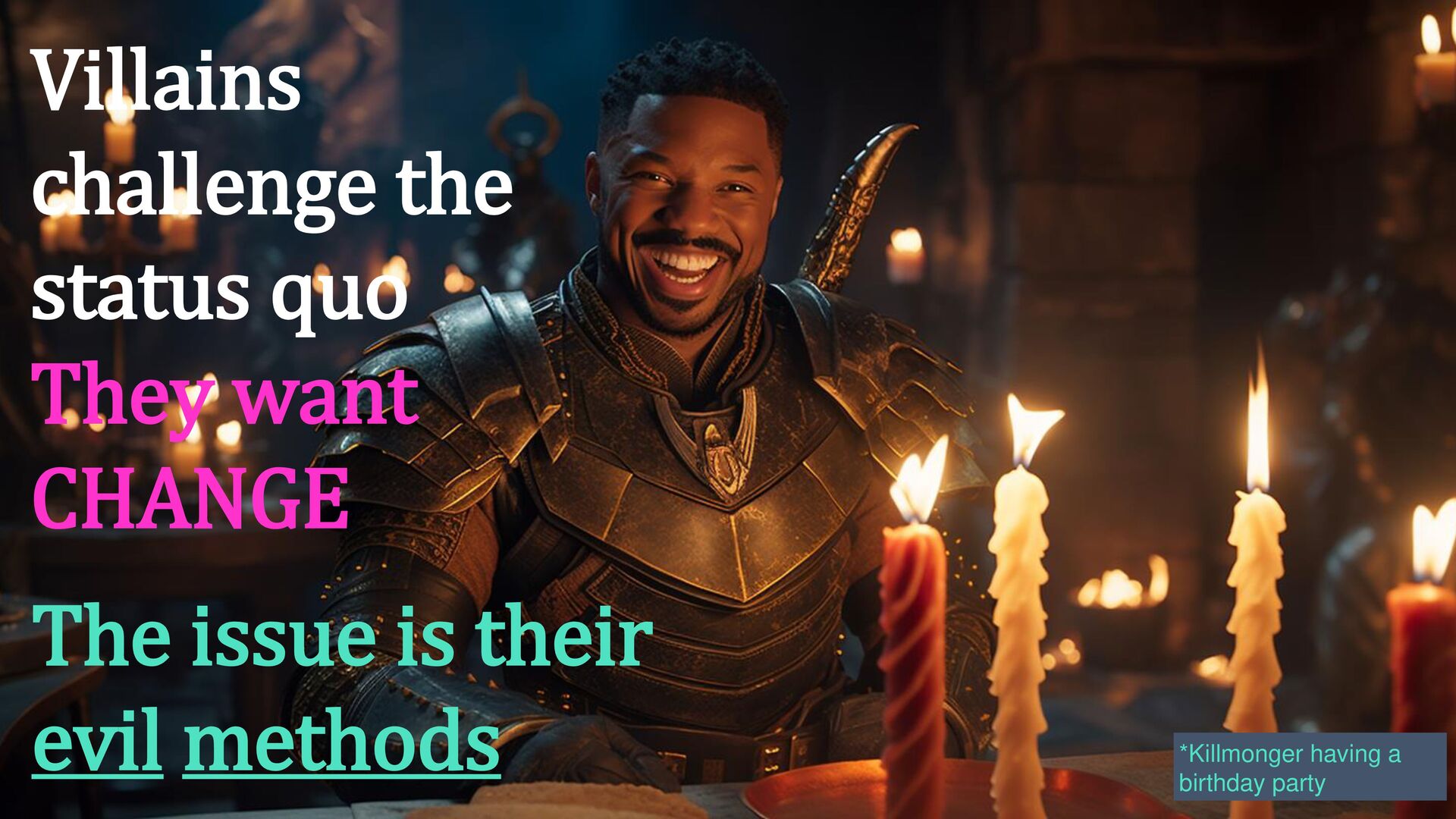
Villains are the ones that challenge the status quo. They're the ones that want change. Killmonger was right. What he was saying was good. The problem is his methods were evil. So, so far, so superhero. If you were at Petra Wiley's talk, you will appreciate this more.
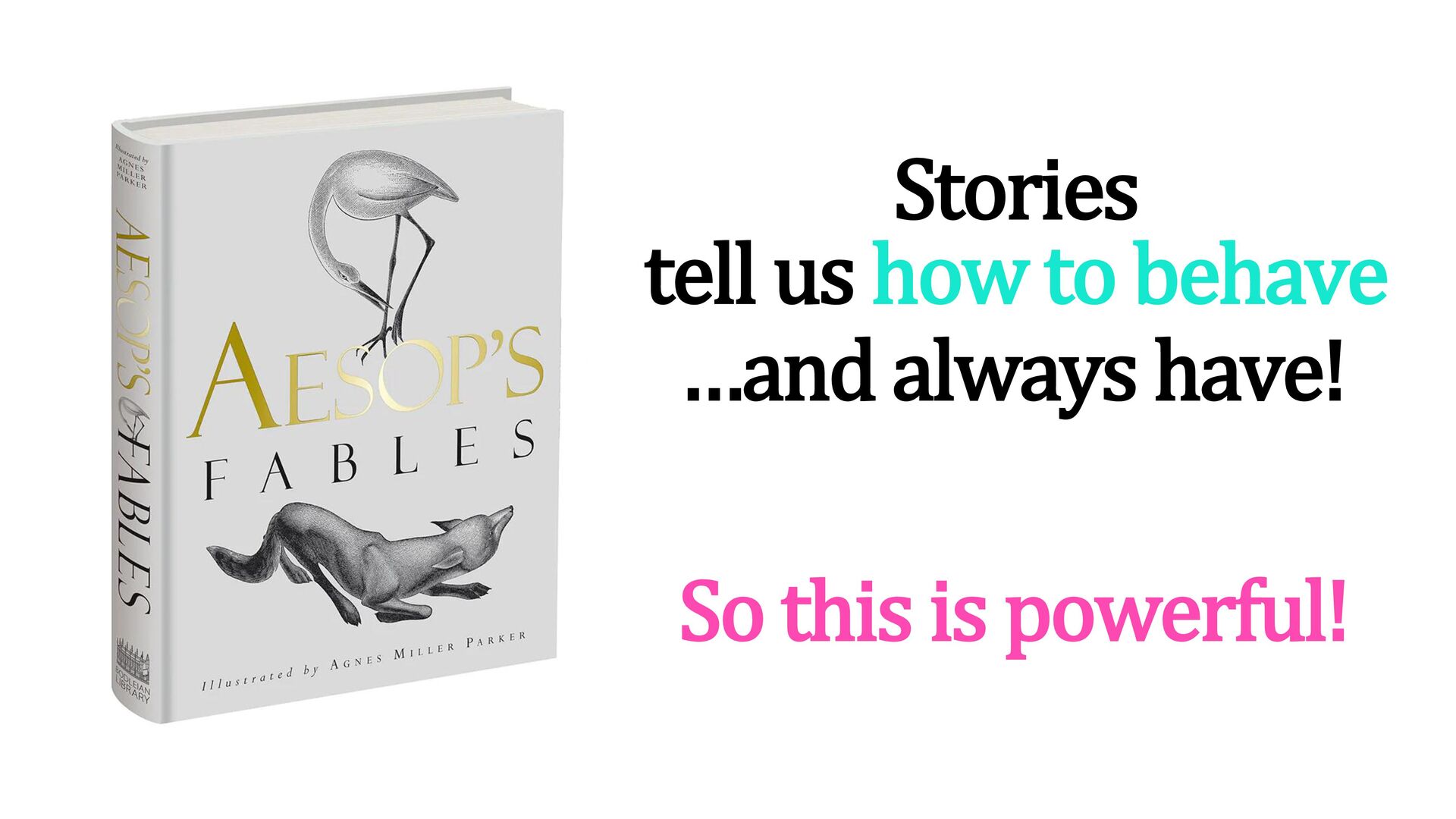
She spent thirty minutes talking about storytelling. Stories exist because they help tell us how to behave, and they have done for a long, long time, Back from the days of Aesop's fables. The reason this storytelling is important because it's powerful and I'll come to how.
So at the end of my last talk, was like, do you know what? You need to **** **** up a bit. You need to be a little bit more punchy, so you need to be a bit more villain. But of course, don't punch kittens and don't be evil.
So there's a kind of a way of being a villain where you can be effective. And that was great, but be careful what you wish for. After last year's talk, I do some coaching, I have some people reach out to me and I encourage anybody here who wants to continue a conversation to do so.
People reached out to me. And some people, this way of thinking was absolutely transformative. They're like, God, it really helped me achieve change in the organization. But some other people had some challenges and I spotted some common themes in the challenges that came up.
And myself, as I started doing some more of this, was like, maybe I set up a little bit of a trap for myself. So I did lots of research, which I won't document here, but I please assure you a lot of the stuff I'll show you, which looks like comical stupidity, is backed with different kinds of research and had some considerations.
So what I'll do is I'll bring you a more recent example from my days at health tech. So I was building health tech in the emerging markets and someone suggested a decision which was going to absolutely fail as a product launch. Many people will have this. The CEO says, let's do this thing.
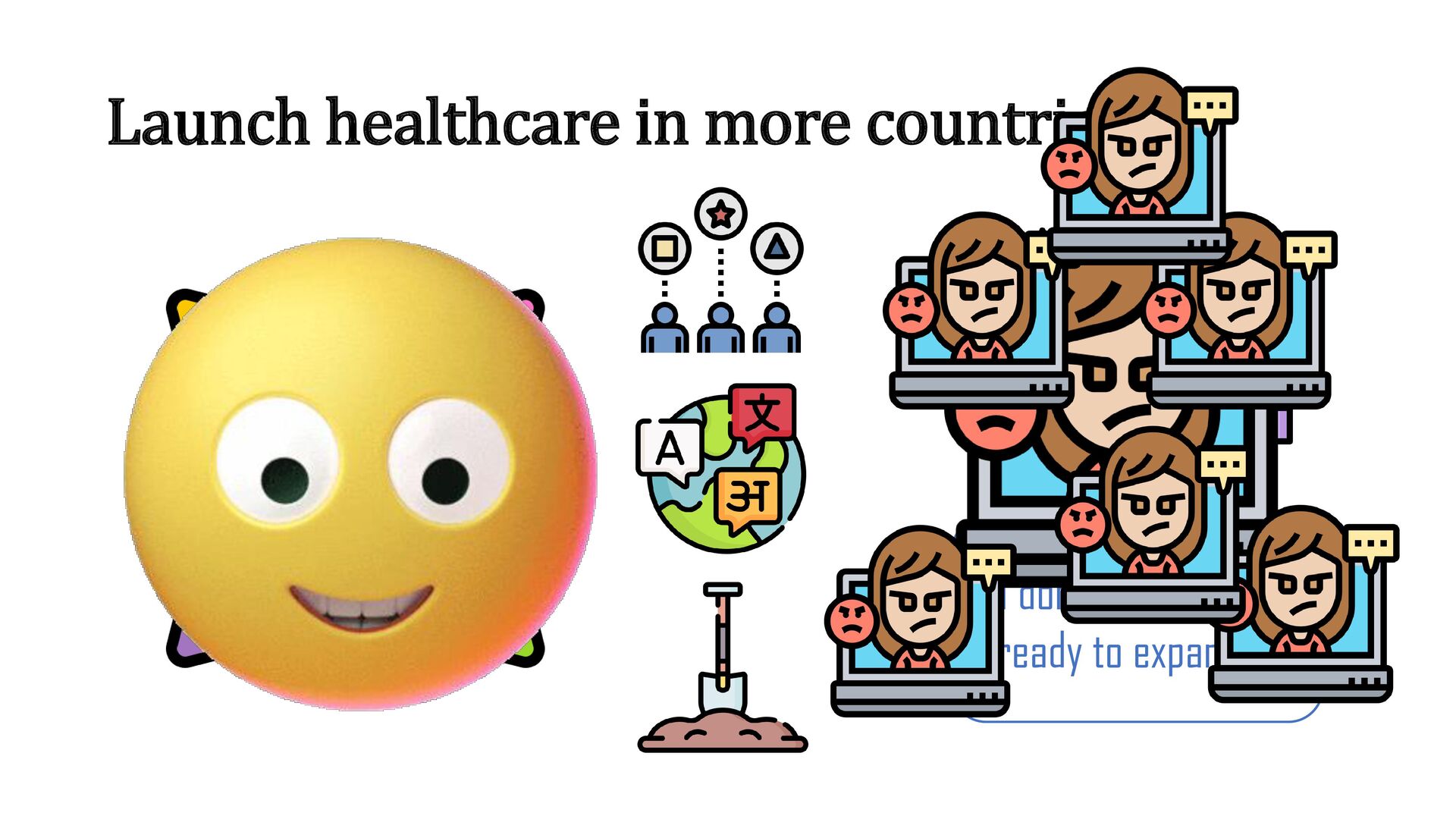
And you're like, that's a really bad decision. That is not going to work. And his suggestion was, do you know what? That thing you helped us launch in a couple of markets, we're going to launch that into more markets because you know what?
Investors and money. And I was like, interesting idea. We could launch this thing in other markets, but guess what? Healthcare works differently in that market. Language is really problematic and we have no one who lives and works in that country. So like, do you know what?
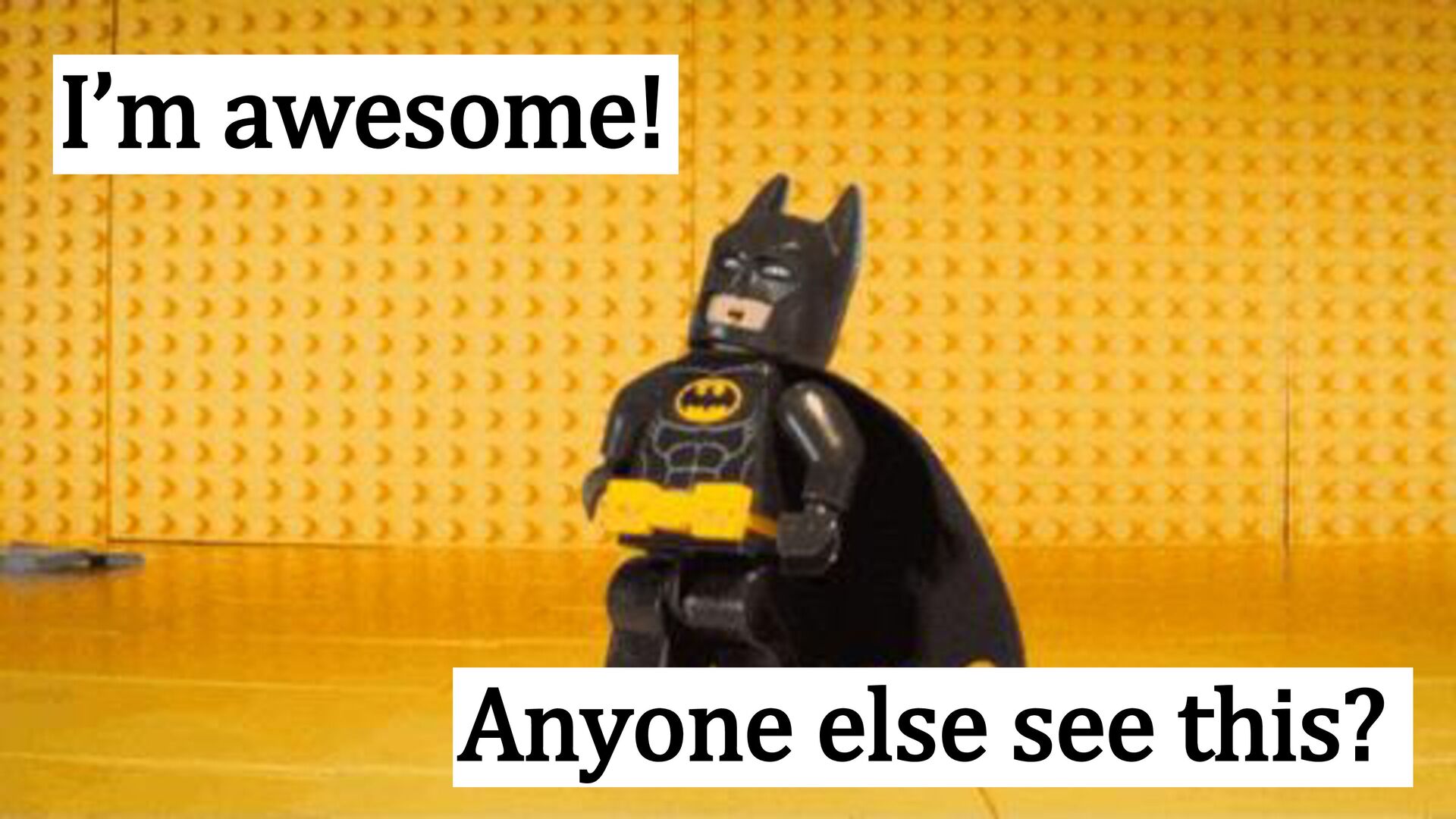
This may not be a good idea and you know what about healthcare? People die if you do it wrong. So let's think about this. So, know, me being Batman was like, you know what? I don't think we're ready to expand. So all the room which was smiling and nodding and thinking about all that big IPO money they're going to be getting when they launch was like, you've said no and we don't agree.
We don't like what you've said. How many people have had a situation where you stood up and said, I don't think you should do this. This is not going to work well. And people basically push back against you. Yes, okay. Well, I mean, okay. Thank you, show of hands, amazing.
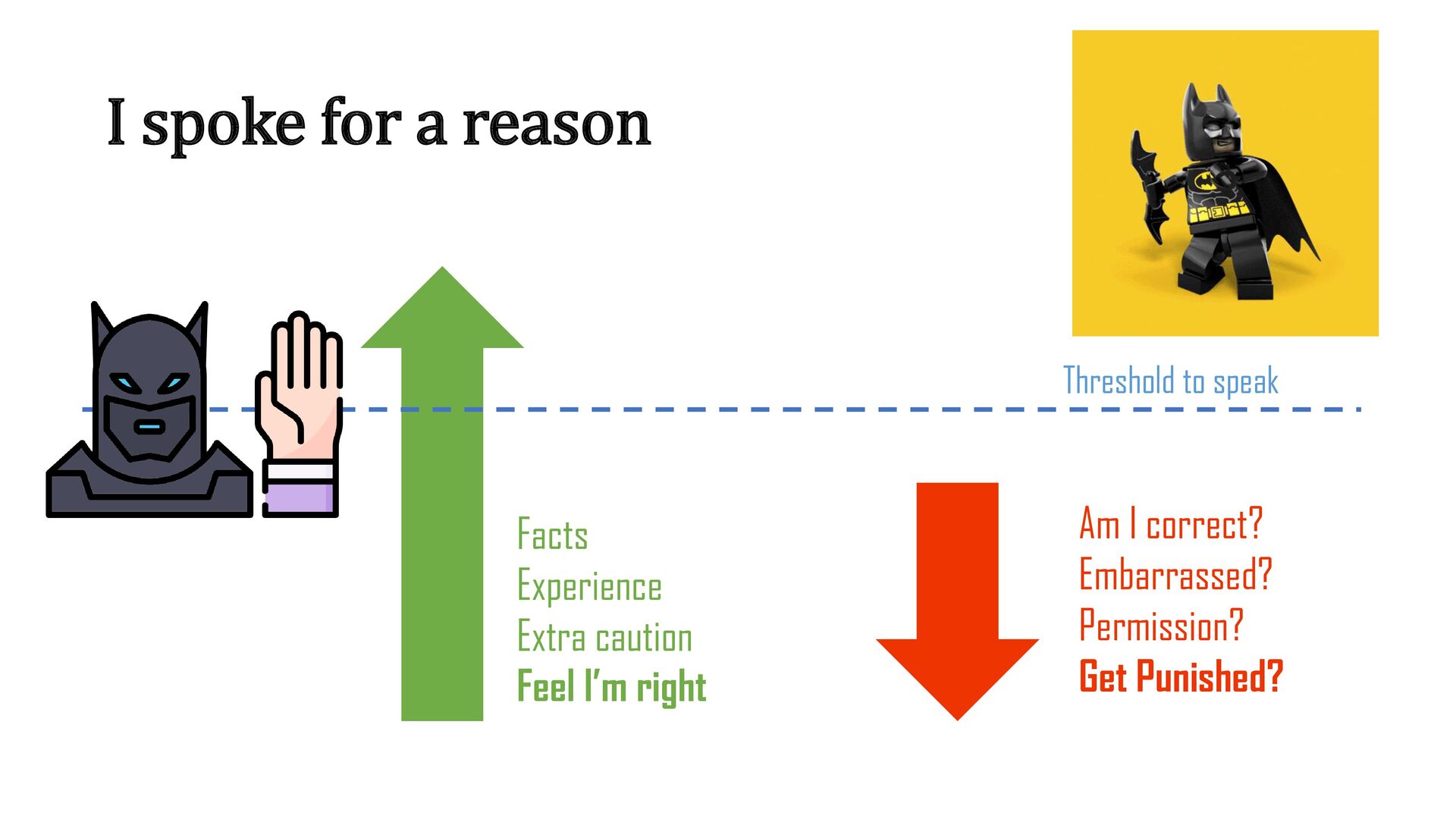
And this is where it gets interesting. This sounds obvious, but I spoke for a reason. So in the example in Test and Trace, when someone was saying the Muslim community are stupid, was like, my lived experience says maybe something different is going on.
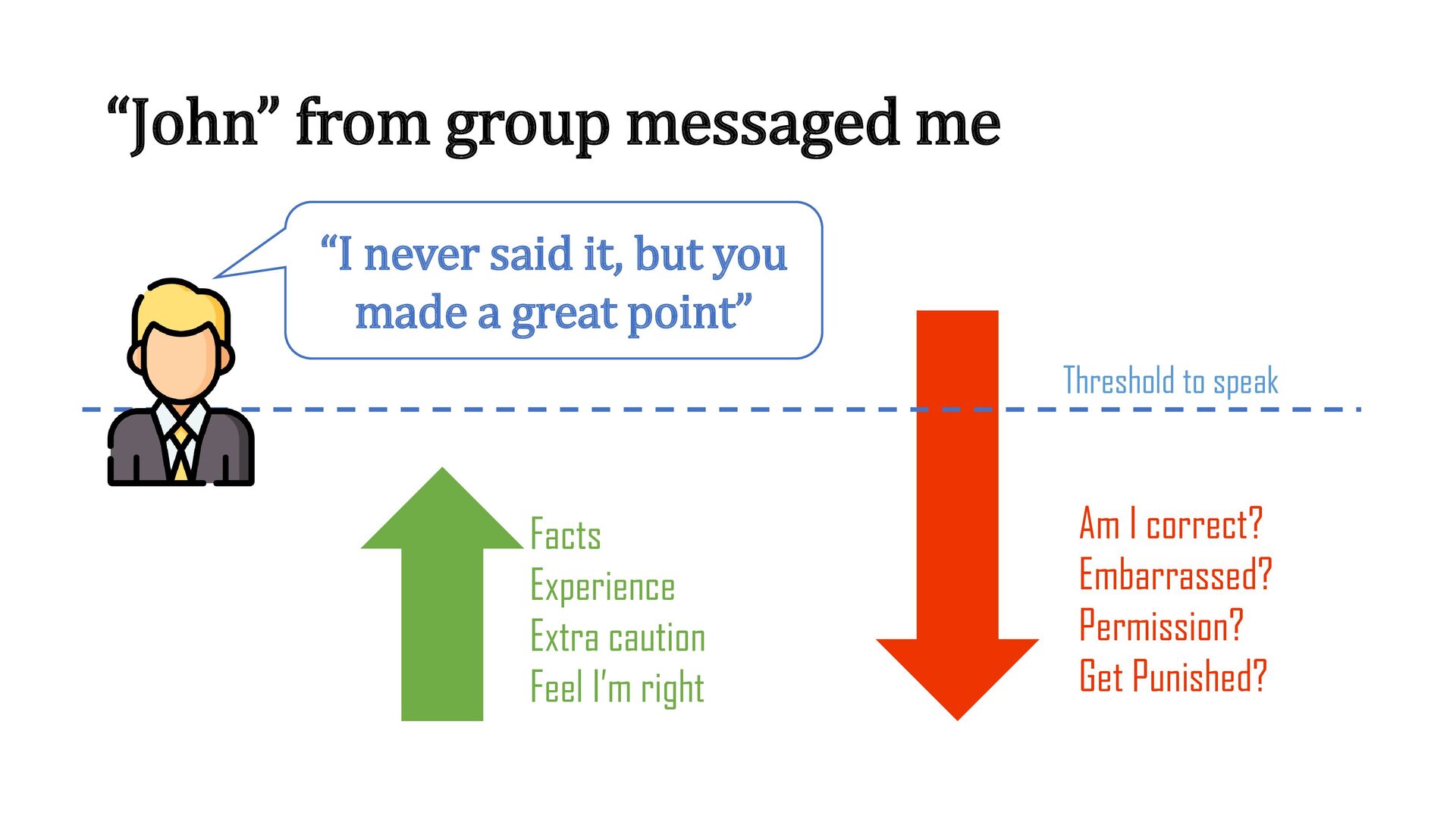
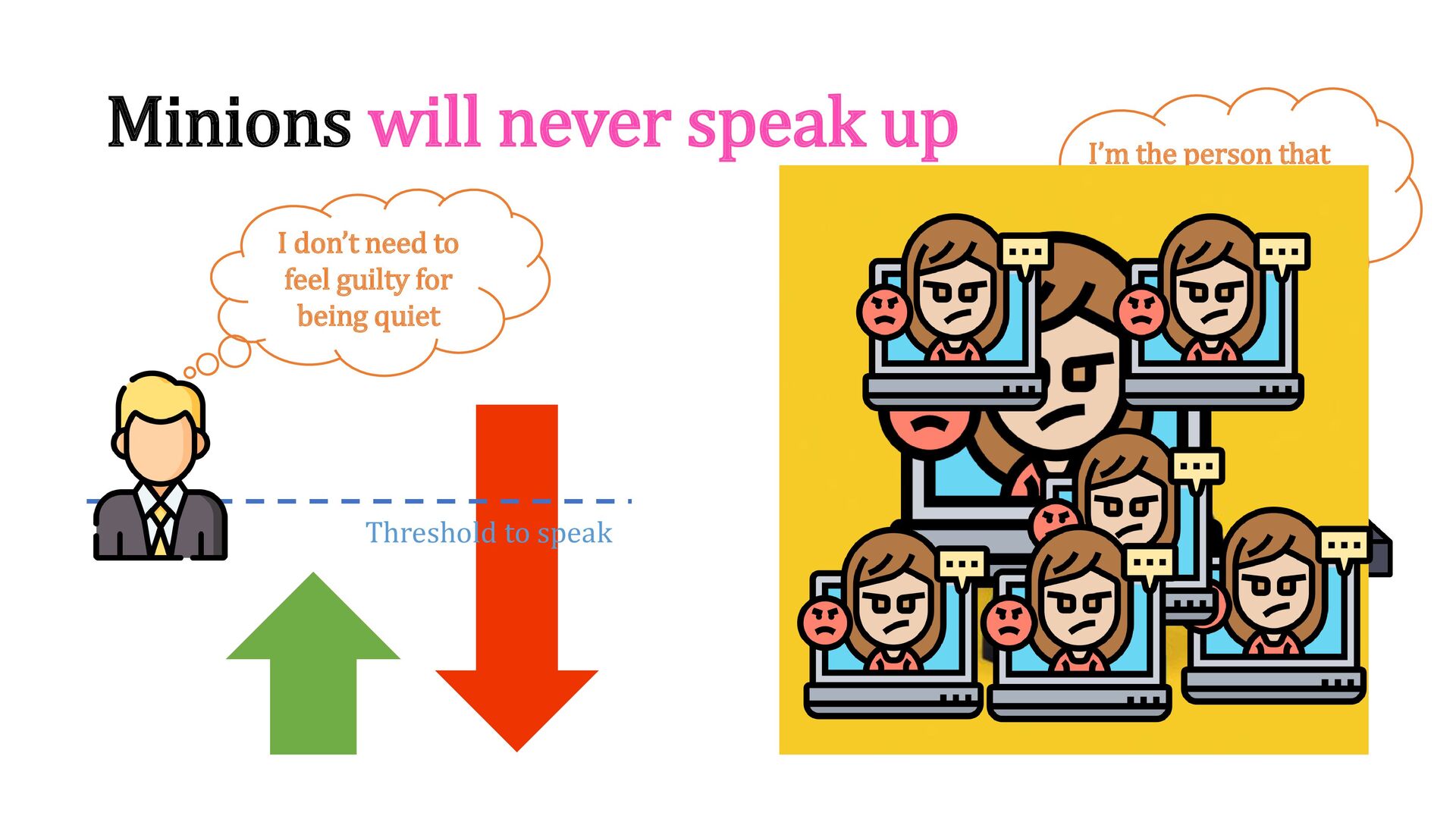
I have a threshold to speak, as all of us do, and this thing's making me speak. I have facts. I have lived experience or experience launching stuff. Maybe I'm a bit more cautious. I have less magical thinking, but ultimately I think I'm right.
Whereas the things that stop me wanting to speak are, am I right? Am I nervous? Will I get punished? Will someone laugh at me? And that's kind of fully standard, you know. I had more plus than negative, and I'm ******* Batman, so why not?
I'm gonna do that. But I had a lot of people push back against me. But what happened after that, me being in my villain era, John from the group messaged me. So as the team were piling on about how I was wrong, John was in the room, didn't say anything, but what he said afterwards was, I never said it, Randeep, you made a great point.
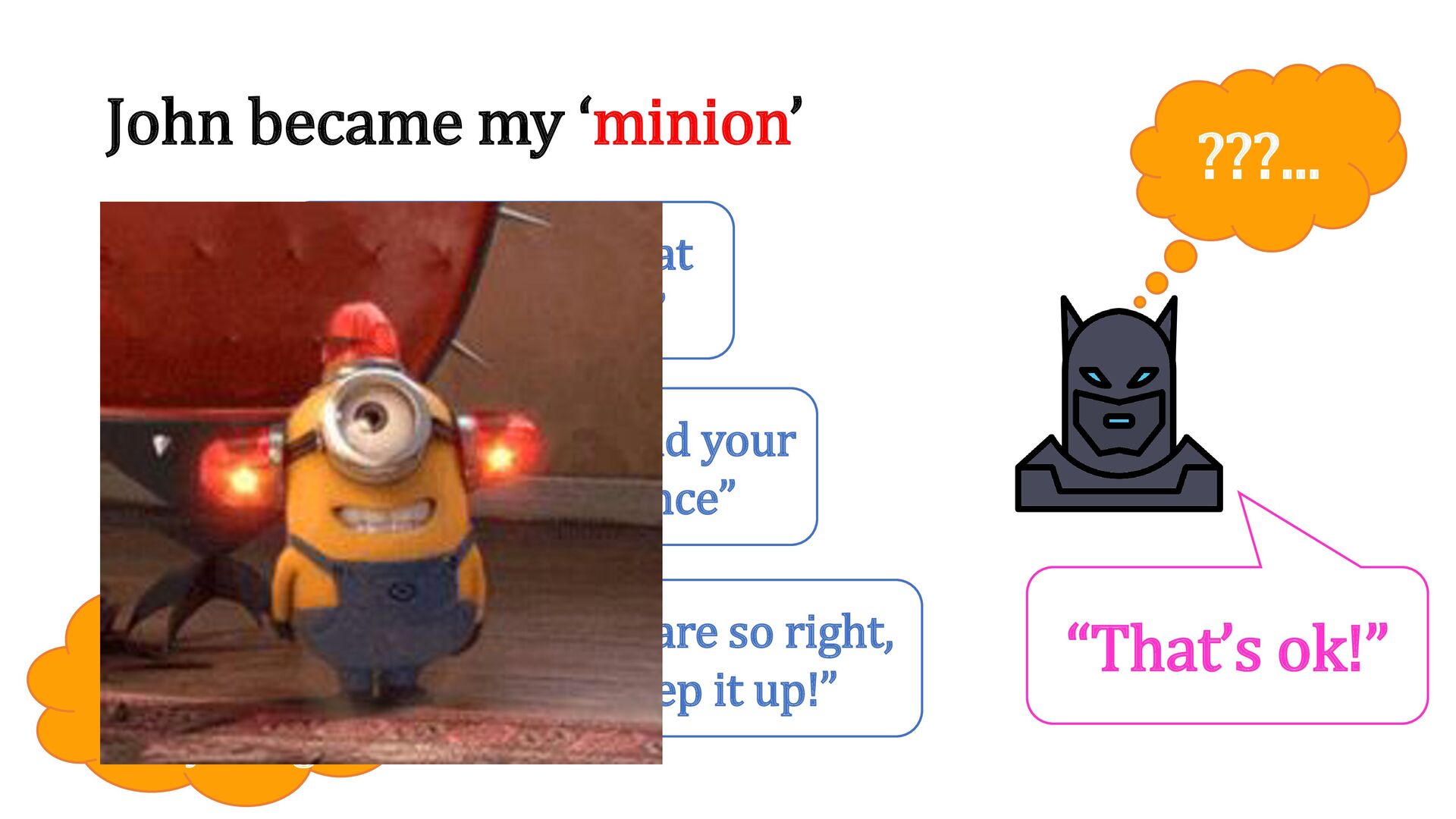
You're right. We shouldn't be doing this. And basically, was like, he had a threshold to speak, but his pluses didn't outweigh the nine minuses. So he basically felt, you know, like he wasn't able to have a voice. And in the words of superheroes and villains, John became my little minion and I loved him for it.
He said, you made a great point, Randeep. I wish I had your confidence. You're so right. Keep doing this. And guess what? I know why he did it because he felt guilty, but what did I say in response to someone going, you're amazing, Randeep.
You're doing the right thing. Keep going. I said, that's okay. It's fine because you're my little minion here to support me. You're making me feel great by telling me how great I am. What was I thinking? Like, lots of us have felt this.
You survey you speak out against something and you have the support after the event where people are like, No, you're doing the right thing. Keep going. How about this? How about this? Why don't you say this next time? I need you to help me because I don't feel comfortable enough.
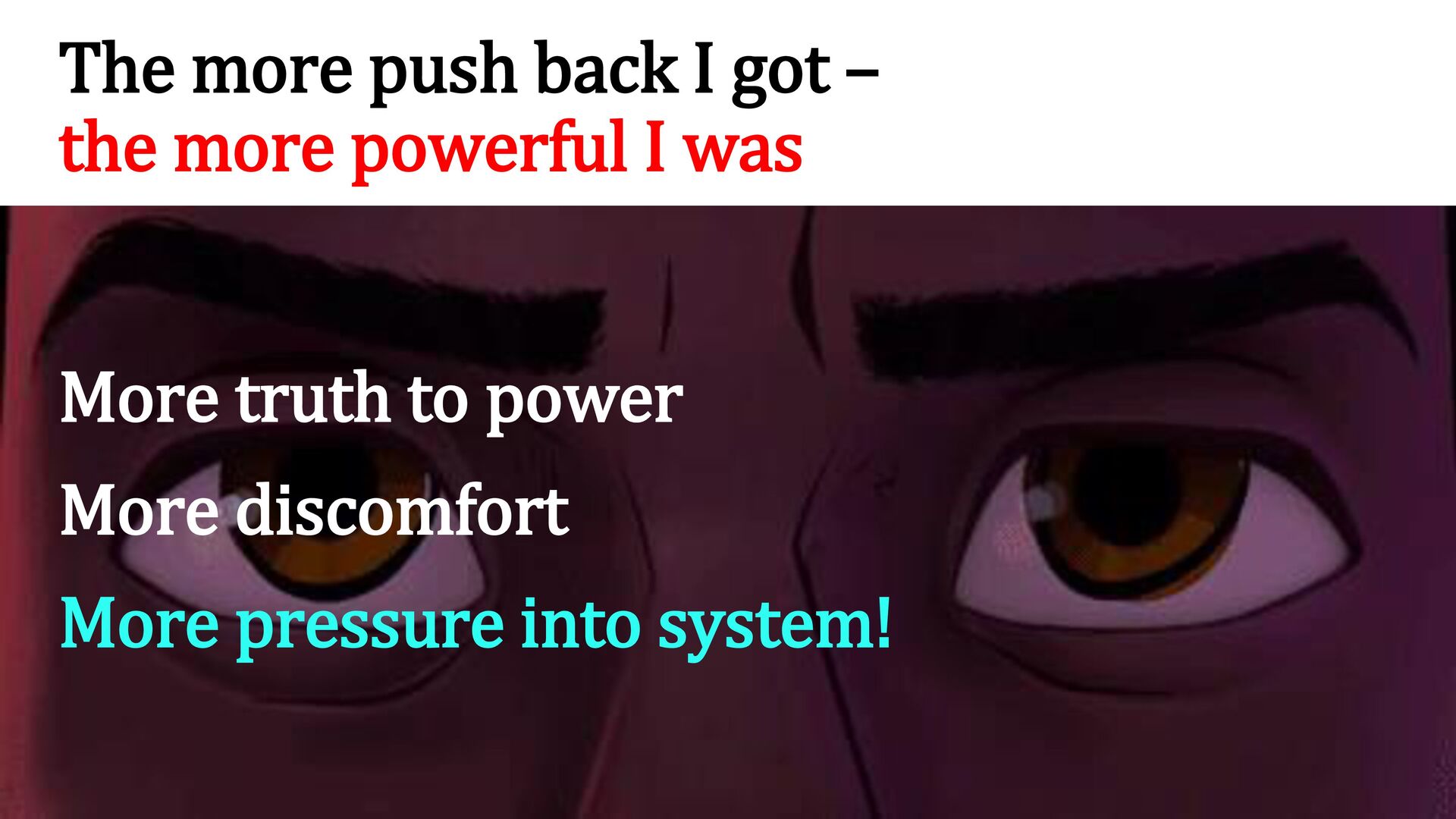
I don't feel confident enough. So lots of us have seen this. And what was interesting is the more pushback I got, the more powerful I was. I was doing what I was here to do. I was at outside pressure making people believe and hear the things that they should be hearing.
More truth to power. Getting them to confront things that they don't feel like they want to, creating a bit of discomfort, that bit of healthy friction. And I was being told by many people I was doing the right thing because ultimately I was just putting more pressure into that system.
And of course, the more you create pressure, the more feedback you get you're getting doing it right, you just feel more and more awesome. But at a certain point, something does happen, and this was some of the realities of the teams I was speaking with.
Some of the issues I raised stopped improving. I was getting less and less effective. I spent more and more time talking with less and less real change happening. And this was a trap I had set up unwillingly. The villain era idea, wonderful, amazing, but the reality is my little minions like John are great, but they'll never speak up.
The reason they'll never speak up is he feels guilt. Of course, does. I'm saying something that he believes and I'm being beaten up for it. But I'm the only one speaking. And so John, all that guilt he's feeling, he offloads onto me because he's like, Randeep, you're amazing.
You're so great. You should keep saying those things. So all of the guilt he feels of wanting to speak, all that just gets pushed onto me. And then guess what happens? Because John has pushed all of that guilt to me and he's seen what happened to me, I'm like, yeah, great.
I'm the person who puts that pressure on. I'm the one who's that system antagonist. That's what I'm valued for. John becomes even less likely to speak. I get even even more likely to speak because once again that's what I think I am and I get a lightning rod for all of the frustrations.
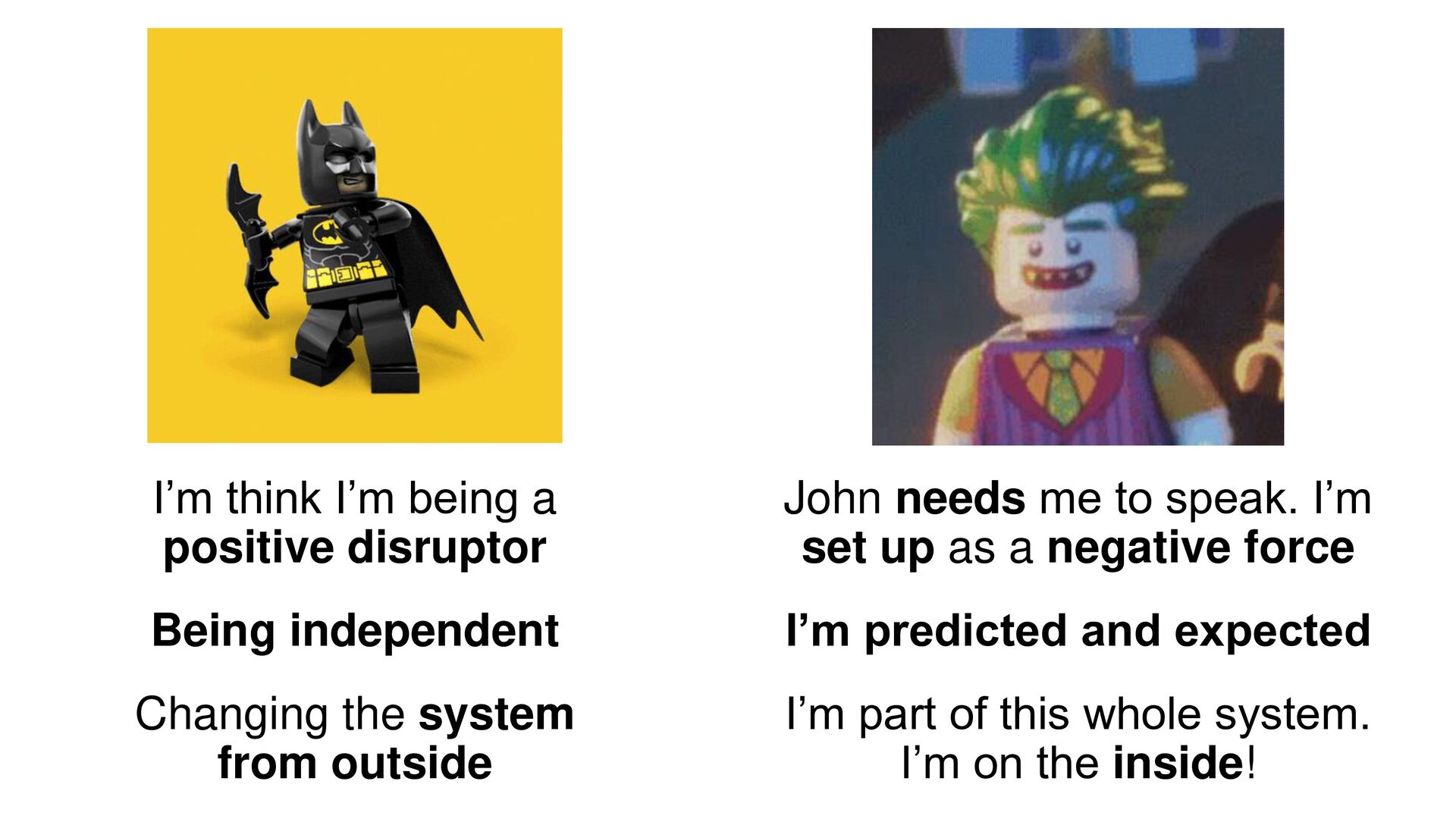
I am the person that is bundled on any time you raise that frustration. Because as much as I think, I'm that person who's being a positive disruptor. The person that's there to put pressure in the system from the outside. That independent voice that is making sure people do the right thing from the outside, I've been set up.
John and others need me to speak. And I'll be clear here, I gave you one tiny example. You have thousands of these happening day upon day upon day. There are thousands of Johns around you encouraging you to speak out, to be that voice, and you don't even realize you're being set up because I didn't.
What happens is the more pressure they put on you to speak out, the more negative it becomes and then the system reacts. You're never going be on the outside. They predict what you're going to do. They expect what you're going to do. Ultimately you're still trapped inside this system where everyone's pushing you to play out a role.
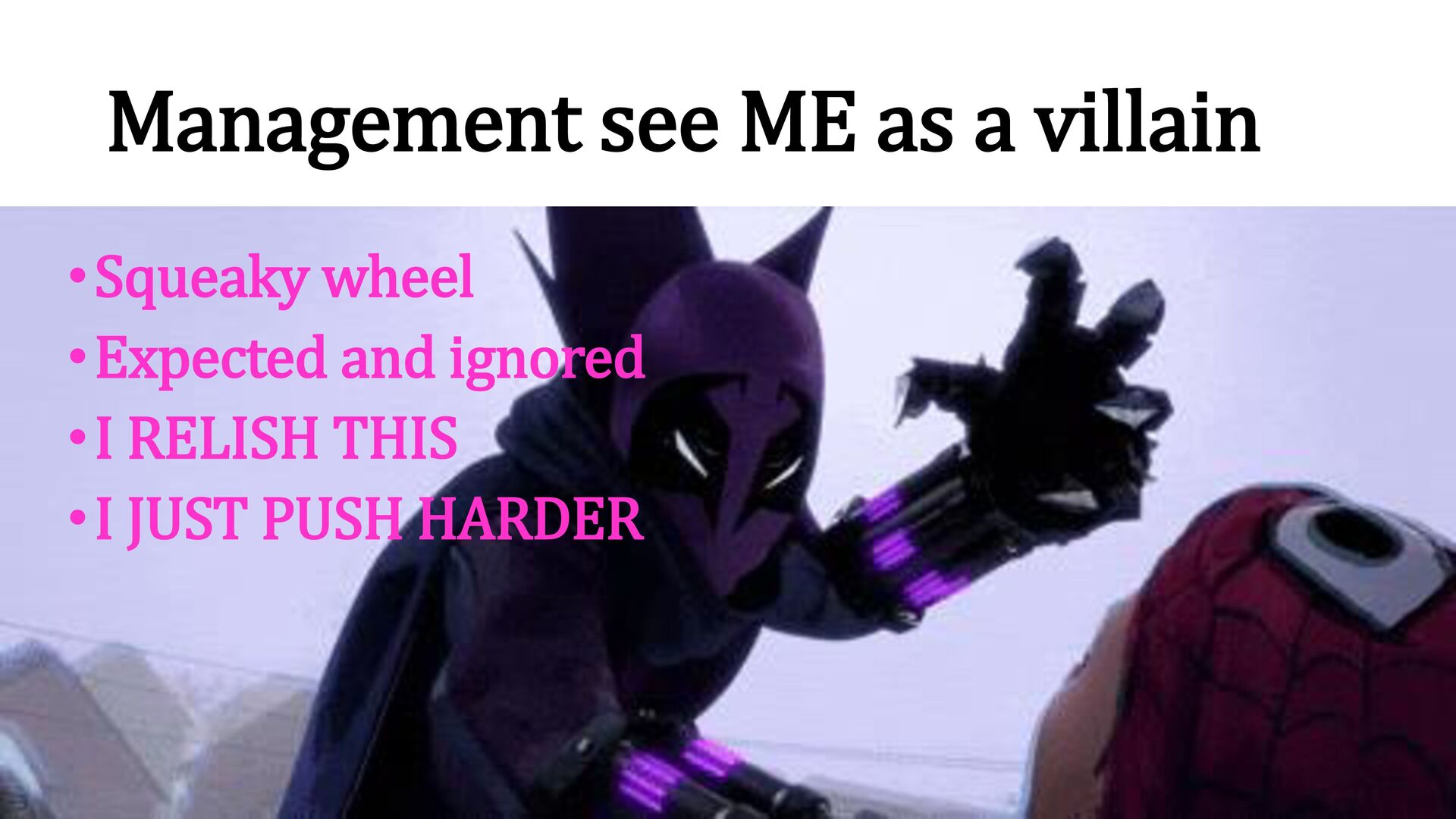
And the bad thing is, if you keep being that squeaky wheel, that's how everyone sees you. Management will see me as that scenting voice, the person who's got kind of a bit problematic, the one who keeps causing those problems and doesn't really listen to what we say because we're the ones who are sensible.
This person is always going to be negative. So they expect a pushback. And if they expect that pushback, they start ignoring it. They know it's going to come, so it doesn't have the impact. So over time, ability to put that pressure into the system diminishes.
But the most perverse thing about all of this is the way you get set up is, I love it. I relish the fact that people are pushing back against me because it means I'm doing a good job. And everyone around me, these minions are telling me I'm doing a good job, and if they push, I just push harder back.
Now this is something which is I found and other people found. And the biggest challenge is that idea of causing pressure, making things, ******* things up a bit, and creating some It's good, it's exciting, it's validating until you see the end of the story.
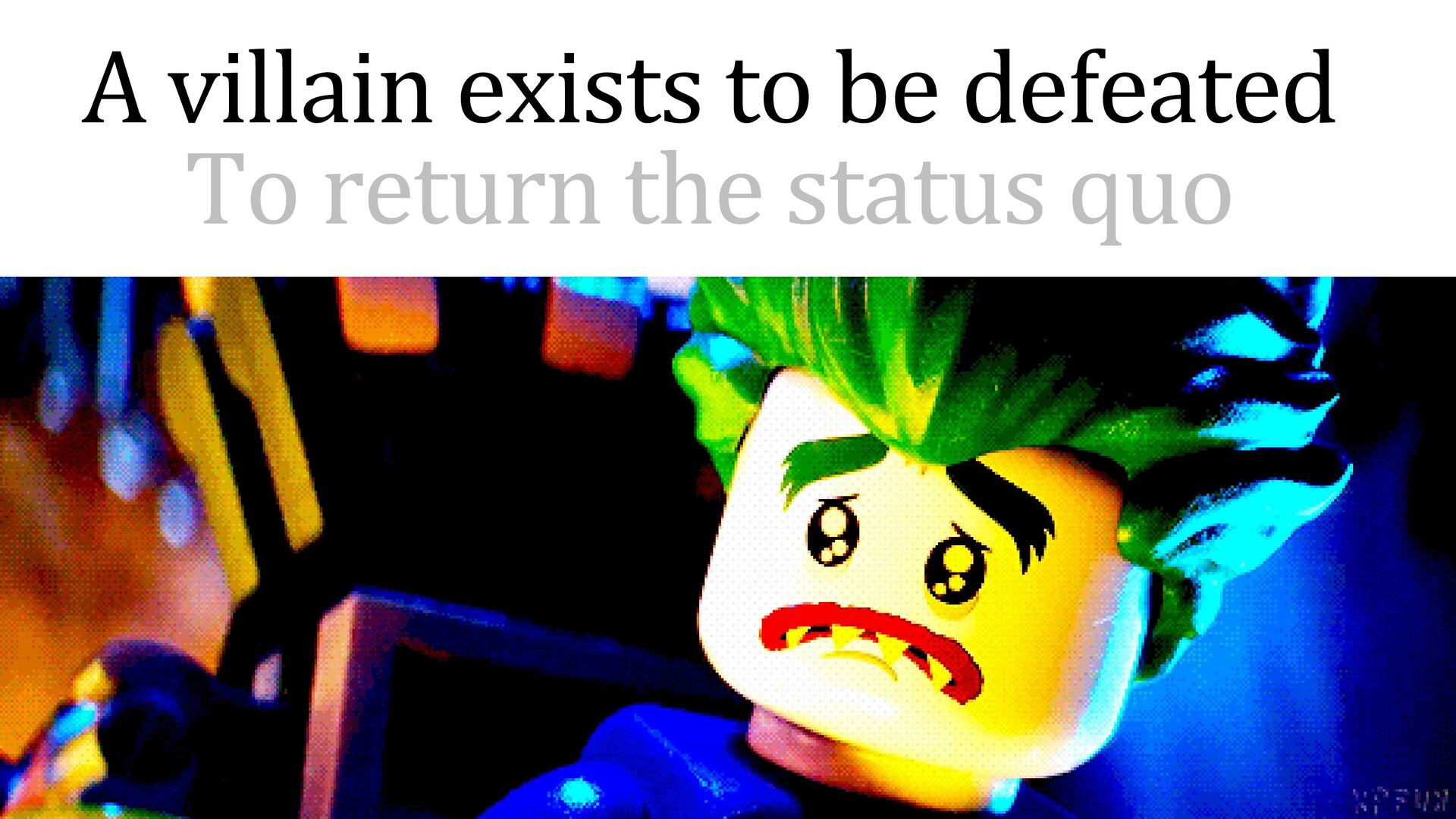
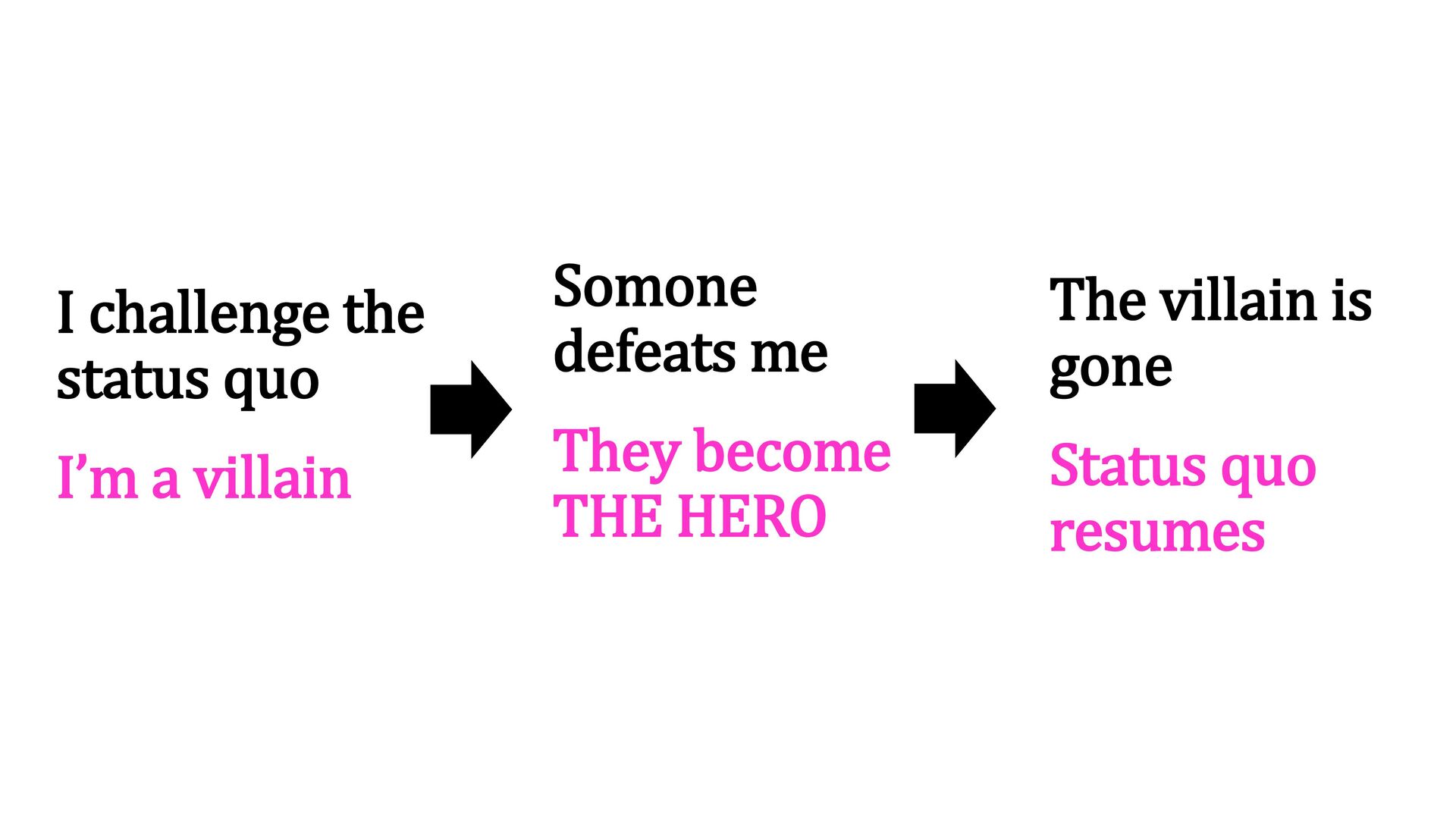
And the problem with being a villain is it never ends well. As I started and explained, if you look at that start, you know, who challenges the status quo? It's a villain. What do heroes do? Heroes stop the villains because a villain exists to be defeated.
And I appreciate this feels very esoteric, but there's lots of evidence that shows if you stand up and try and cause pressure in a system, you will be defeated and the reason that happens is it makes the team feel better. You exist as an embodiment of all the things that are wrong in the problem.
So that anytime someone speaks out about stuff, you're like, the thing you've spoken out about becomes ignored. It's not that that's a problem, it's you. You are the problem. Every bit of that problem gets embedded in you, so you have to be defeated.
Because if you get defeated, the problem goes away. We never have to think about it again. But there's this weird codependency between the heroes and the villains. If you saw Petra's talk earlier, what is interesting is you only exist to be defeated and someone needs you to be defeated.
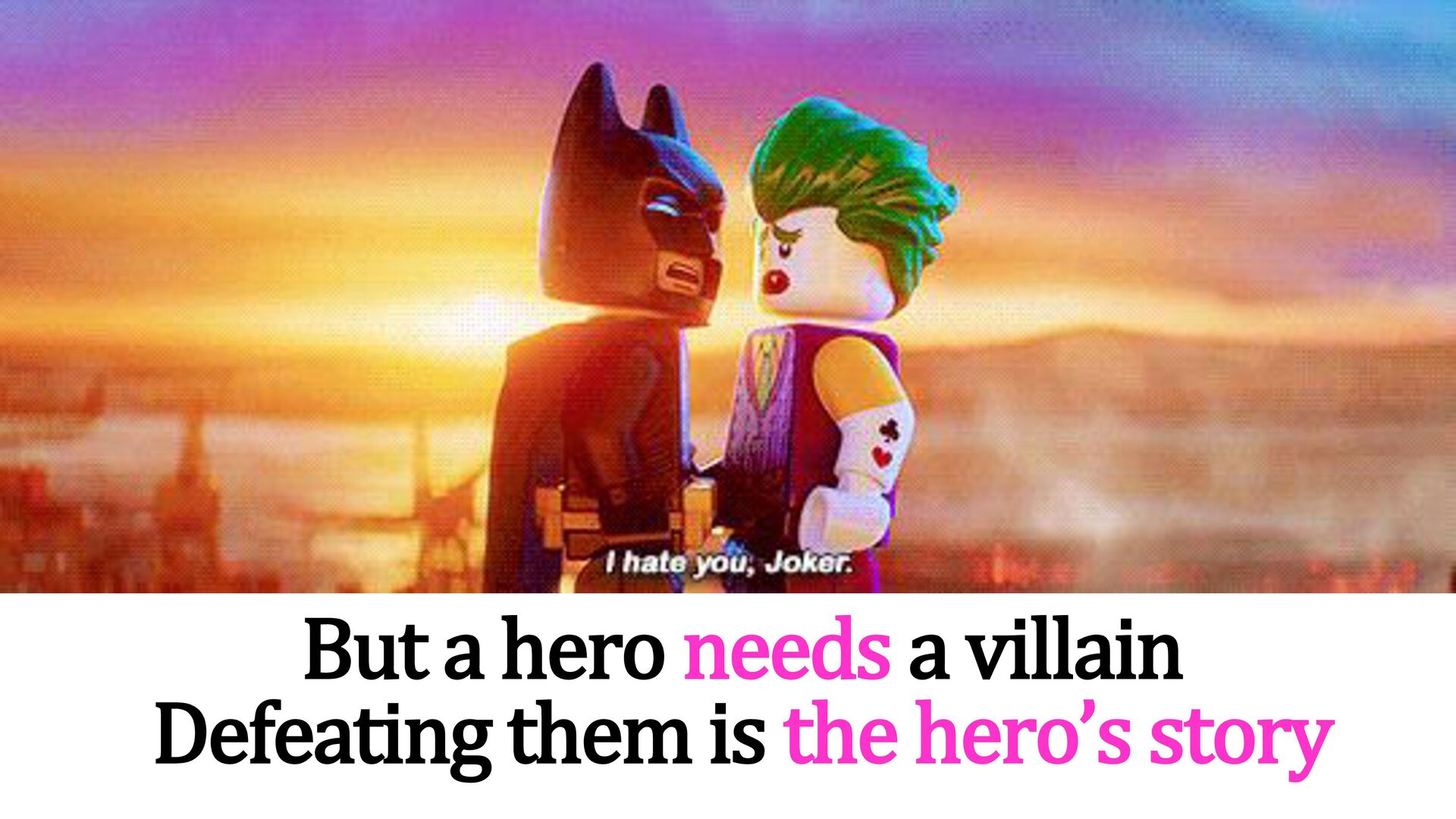
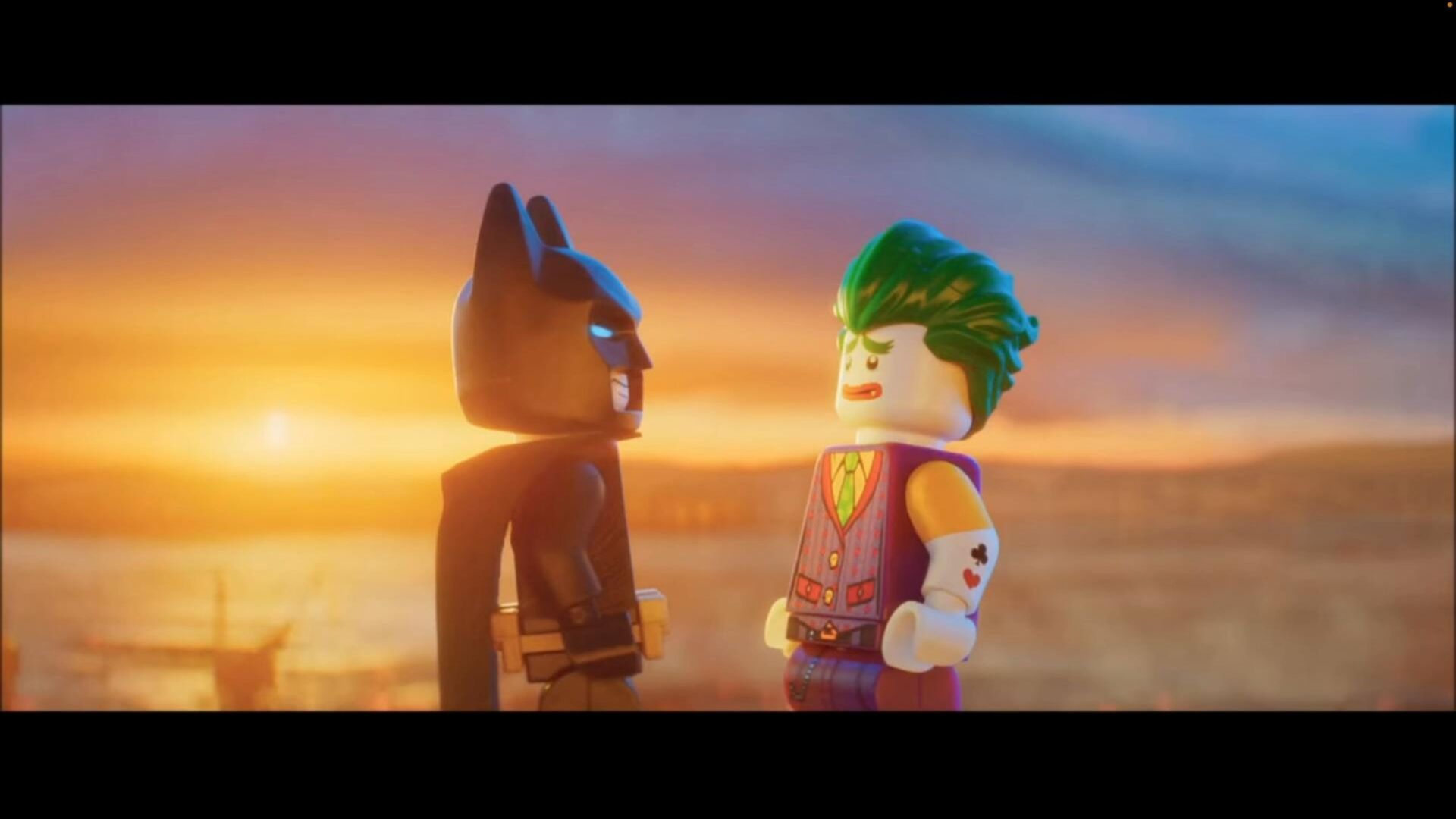
This person will set you up to be overcome. And there's this weird codependency which through the help of the Lego Batman movie, I will show you. No. please help us. No. I'm not gonna help you. At least if this city is destroyed, I'll die knowing I'm your greatest enemy.
I'm gonna die to know it. Shut up, Joker. If there's no Gotham, then I'll never get to fight you again. What? You're the reason why I get up at four o'clock in the afternoon and pump iron until my chest is positively sick. You're the reason I've given up a life spent with Russian ballerinas and lady active wear models.
And if it wasn't for you, I never would have learned how connected I am with all these people and you. So if you help me save Gotham, you'll help me save us. You just said, us? Yeah. Batman and the Joker. What do you say?
He had me shut up. So we have the dependency between them both, because if you challenge the status quo, you're a villain. If someone defeats me, become the hero. The villain's gone, everything gets back to normal. And the best evidence of this happening is around us at the moment.
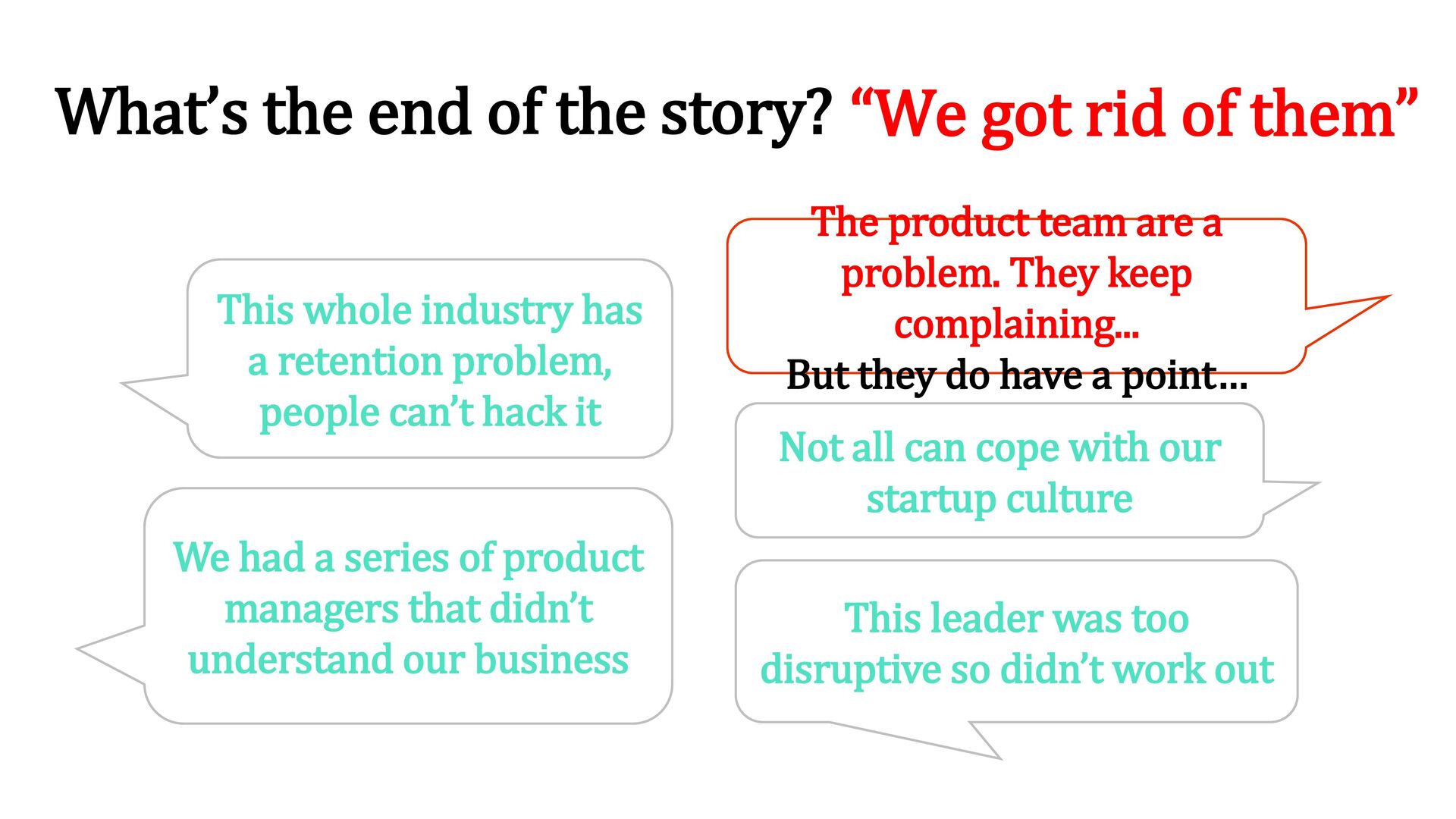
What's the end of the story? We got rid of the villain. And many many businesses you hear and many many people you speak to are like: Oh yeah, we just keep having a problem with hiring. Those product managers, they don't work out. That manager, Yeah, we've got the new manager.
It's our culture internally, you know, we're quite challenging. This sector is hard. Time and time again, you have people blaming the people who they hire, who create the challenge for being forced out. And the best, best thing that happens is occasionally, when you get rid of someone, you go, do you know what, we got rid of that person, but that problem keeps coming back.
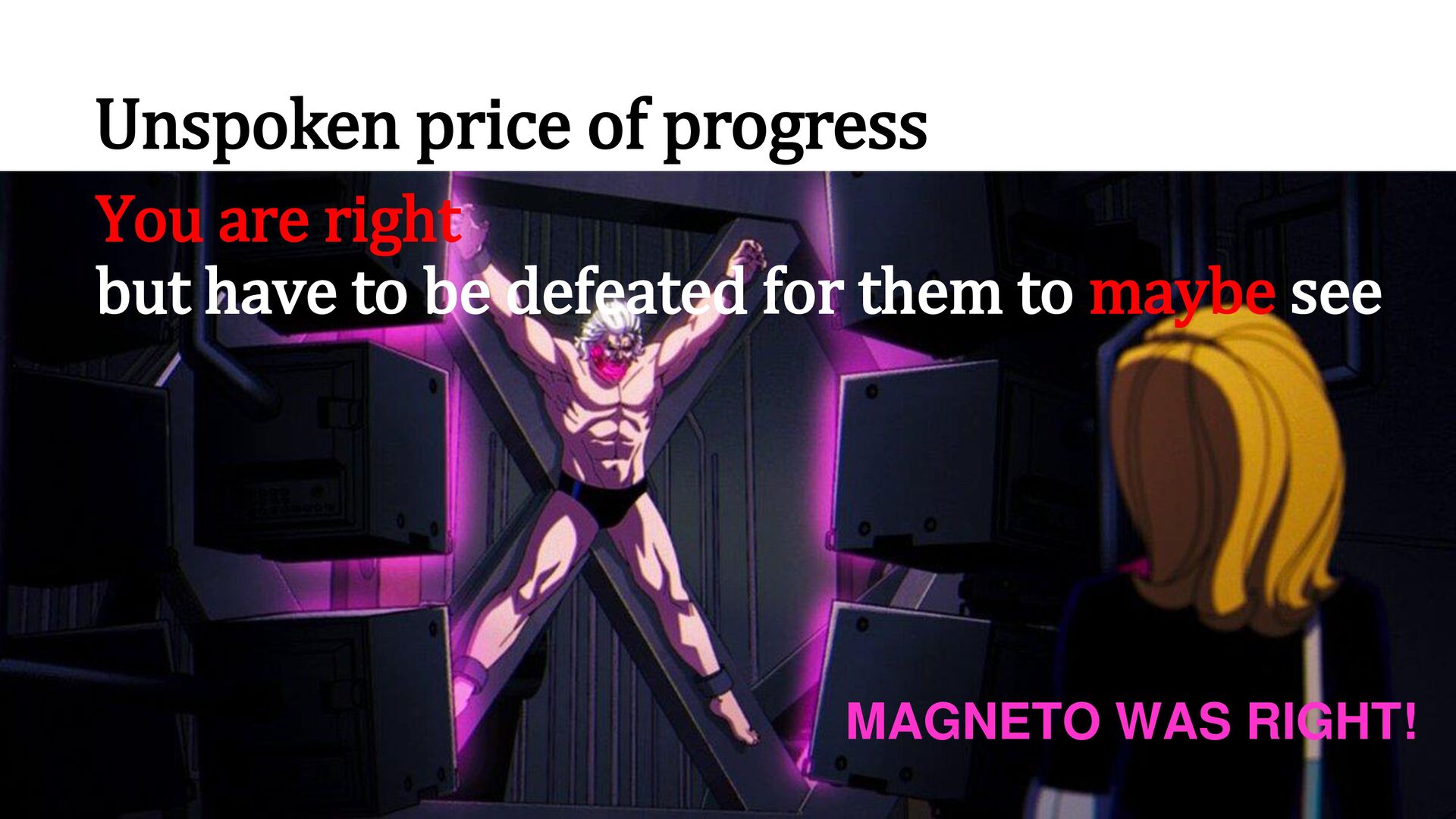
Maybe they had a point. Maybe all of that complaining they did, maybe a little bit of it landed. There might be some truth in it. Because the reality about the unspoken price of progress is the people who speak out are the ones who get punished.
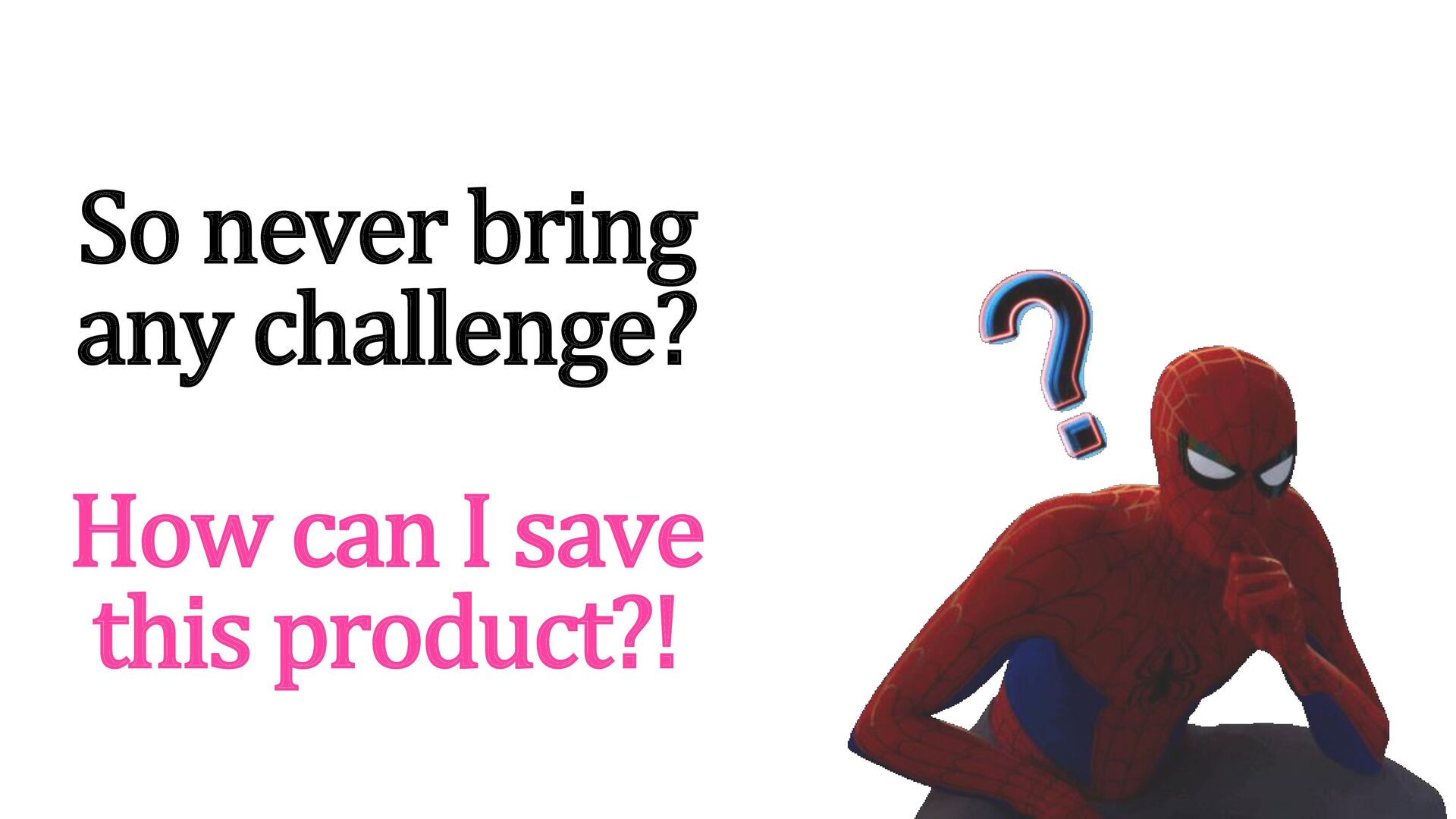
And after they are forced out, occasionally the management and others will go, Oh, maybe they had a point. So, so far so depressing. So I can never bring any challenge, how do I save the product? There are some ways that you can do that, so don't be sad, this shouldn't be depressing.
There are some ways that we have seen and research has shown that you can improve products without becoming vilified. If you want some ideas of that, please find me at the round table afterwards. But the reality is, awareness of the trap is one of the biggest ways of stopping it.
Knowing that this is a pattern, this is a narrative that you get fallen into, and that systems will align to force you out because they see you as a villain, and someone will rise as a hero to take you down, and the business will align to support the hero to take you down, is the trap to avoid.
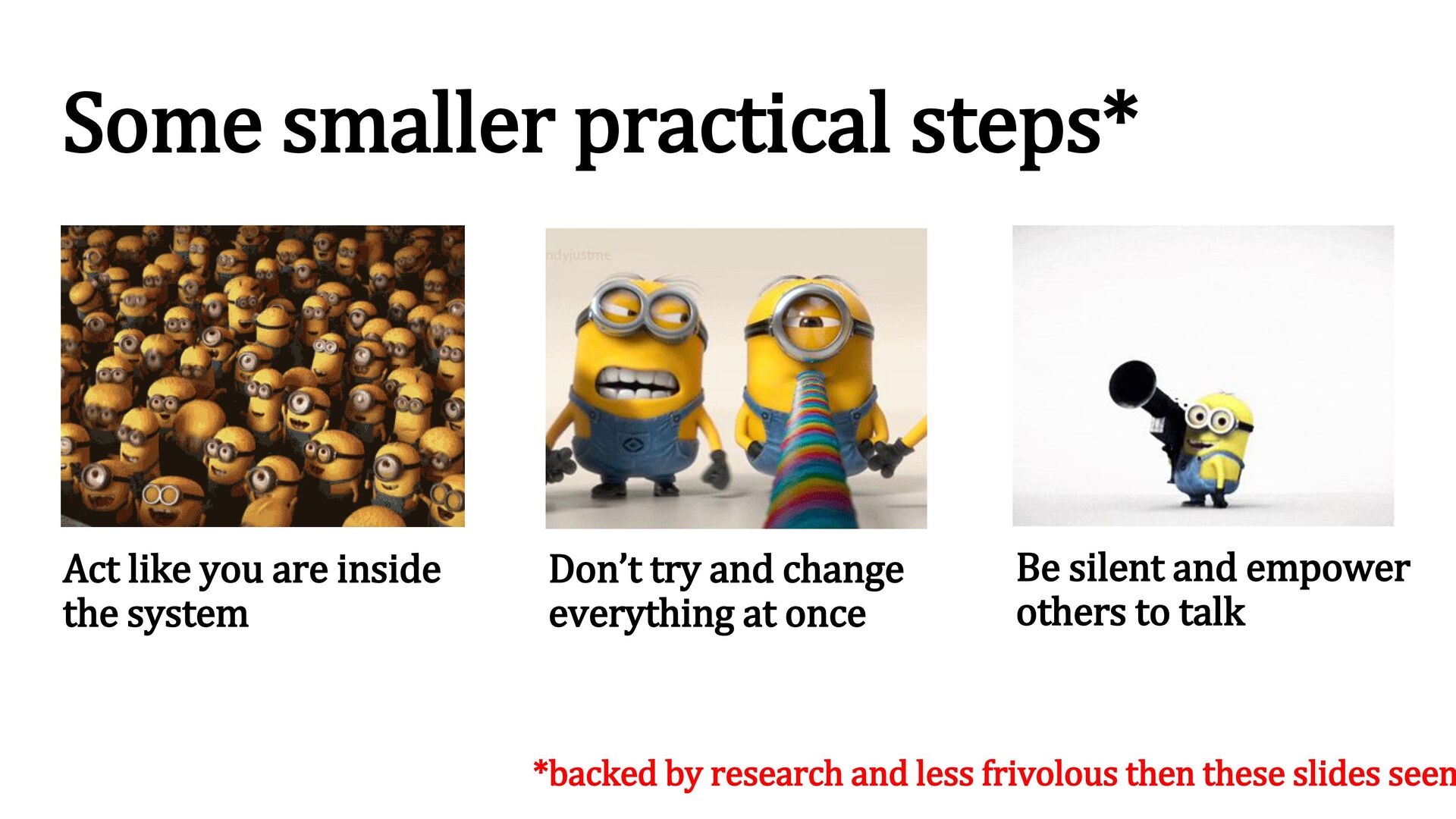
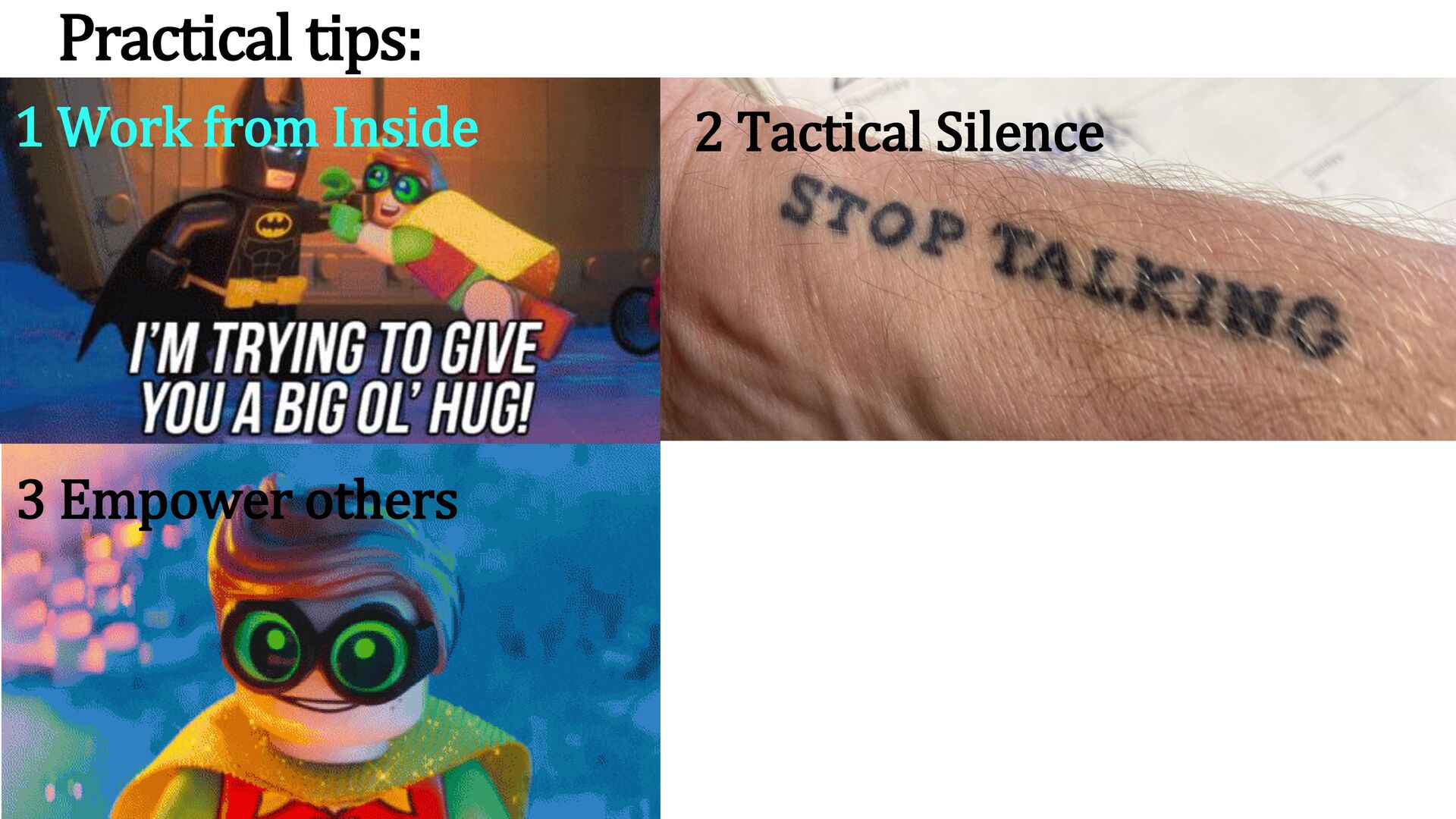
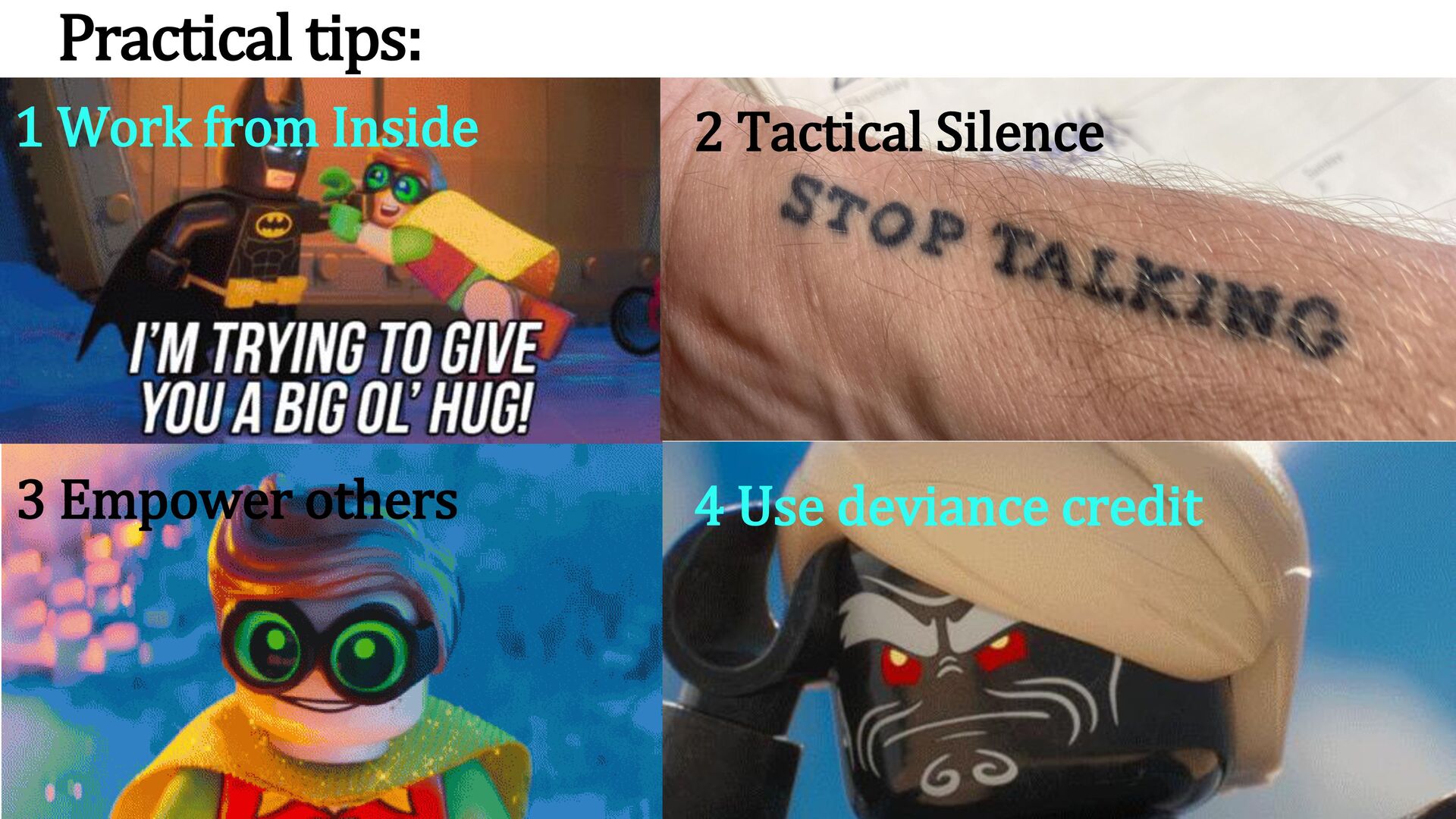
But practically, there's a few smaller steps, which I'll explain. You cannot work from outside the system, it will always take you in. So, assume you're working from the inside, I'll explain what that means. You can't try and change everything. The more pressure you put from the outside, the bigger the pressure back to stop, so be a bit more devious.
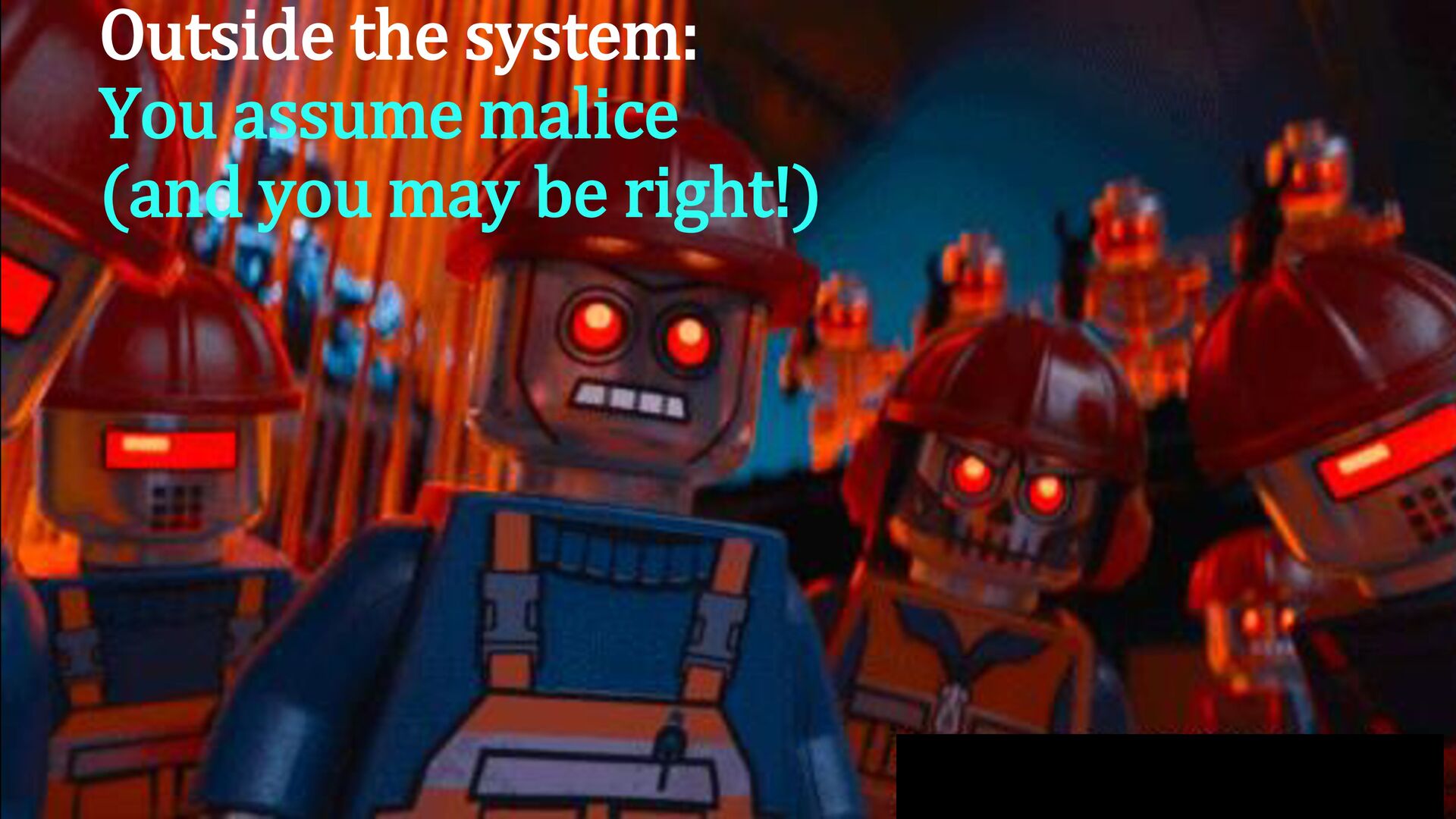
And ultimately, silence is your friend. I'll explain. So if you think you're operating from the outside, as I did, as many of us do, that pressure you're trying to apply from the outside doesn't always work because you assume malice in other people. Your team members, if you're from the outside, you assume bad intent from them.
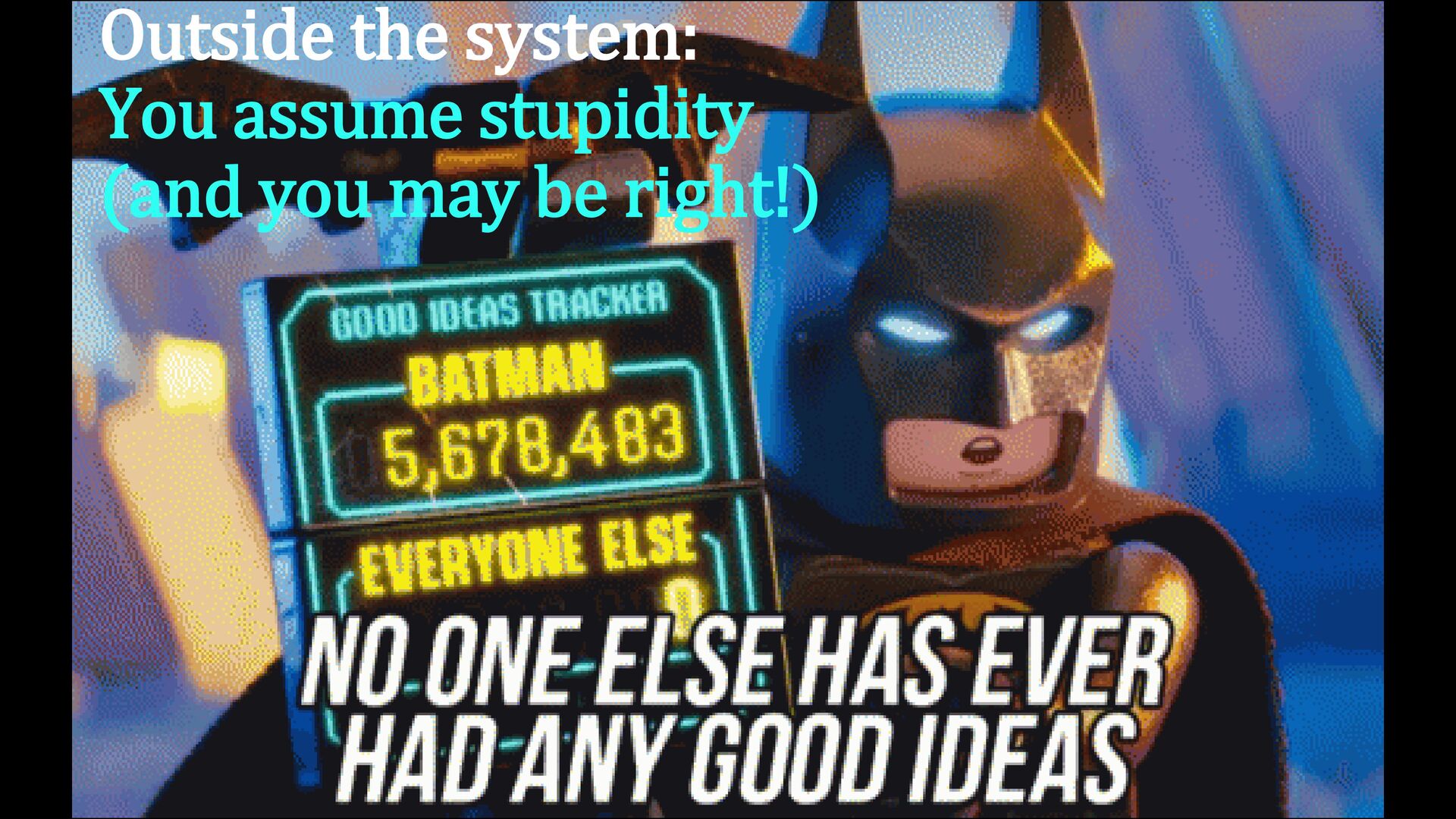
And the reality is, often they do act badly. There is some genuine proof that people will act badly to shut you down, but it's not helpful to think in that way. Outside the system, when you're trying to come up with logical and rational reasons, people come up with emotional and stupid reasons back.
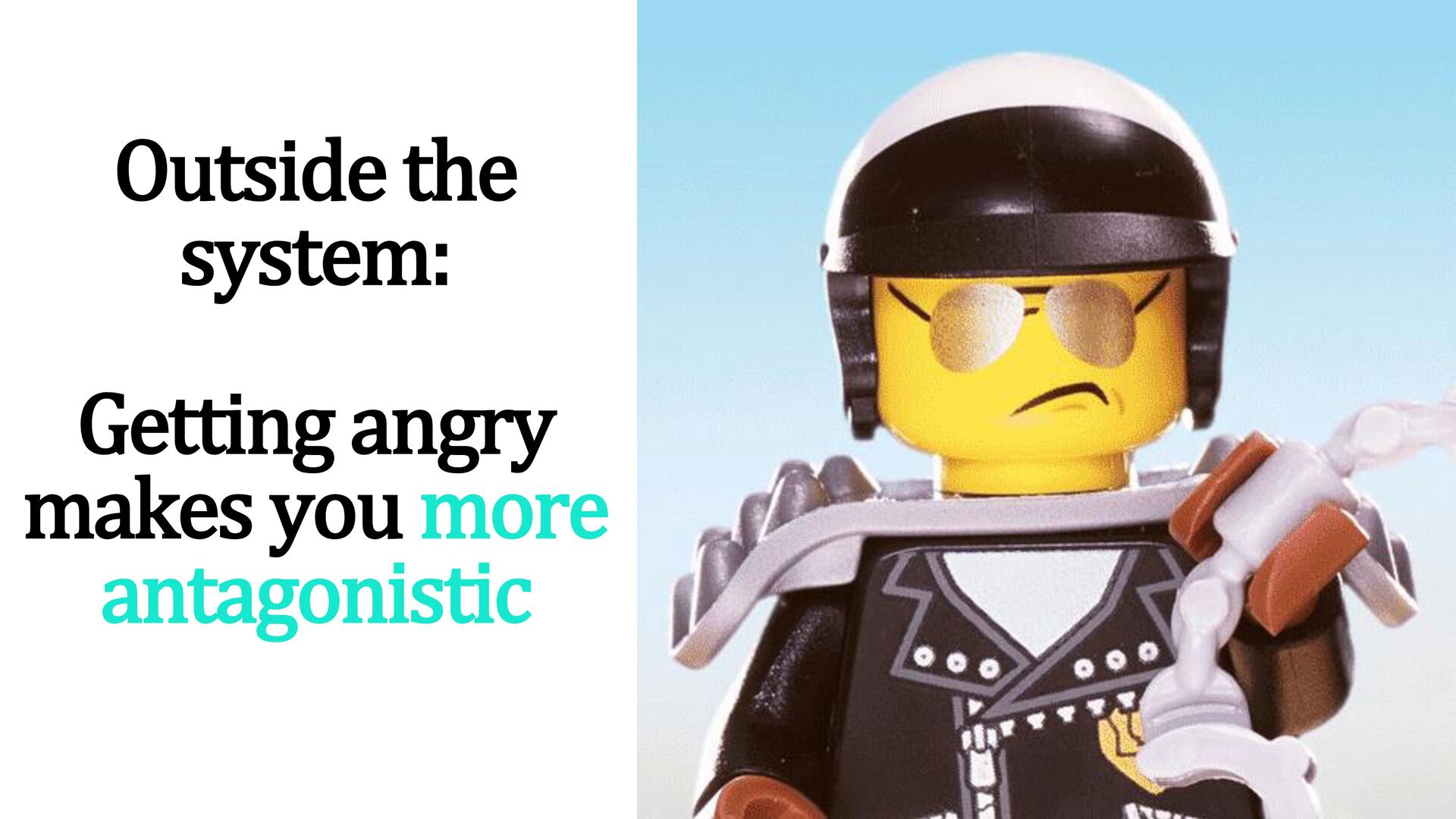
So you assume stupidity in others because you're like, I'm the only one coming up with the ideas. And outside of the system, the more people push, the more antagonistic you become and then that's that vicious cycle. And the reality is you are sometimes goaded into acting badly.
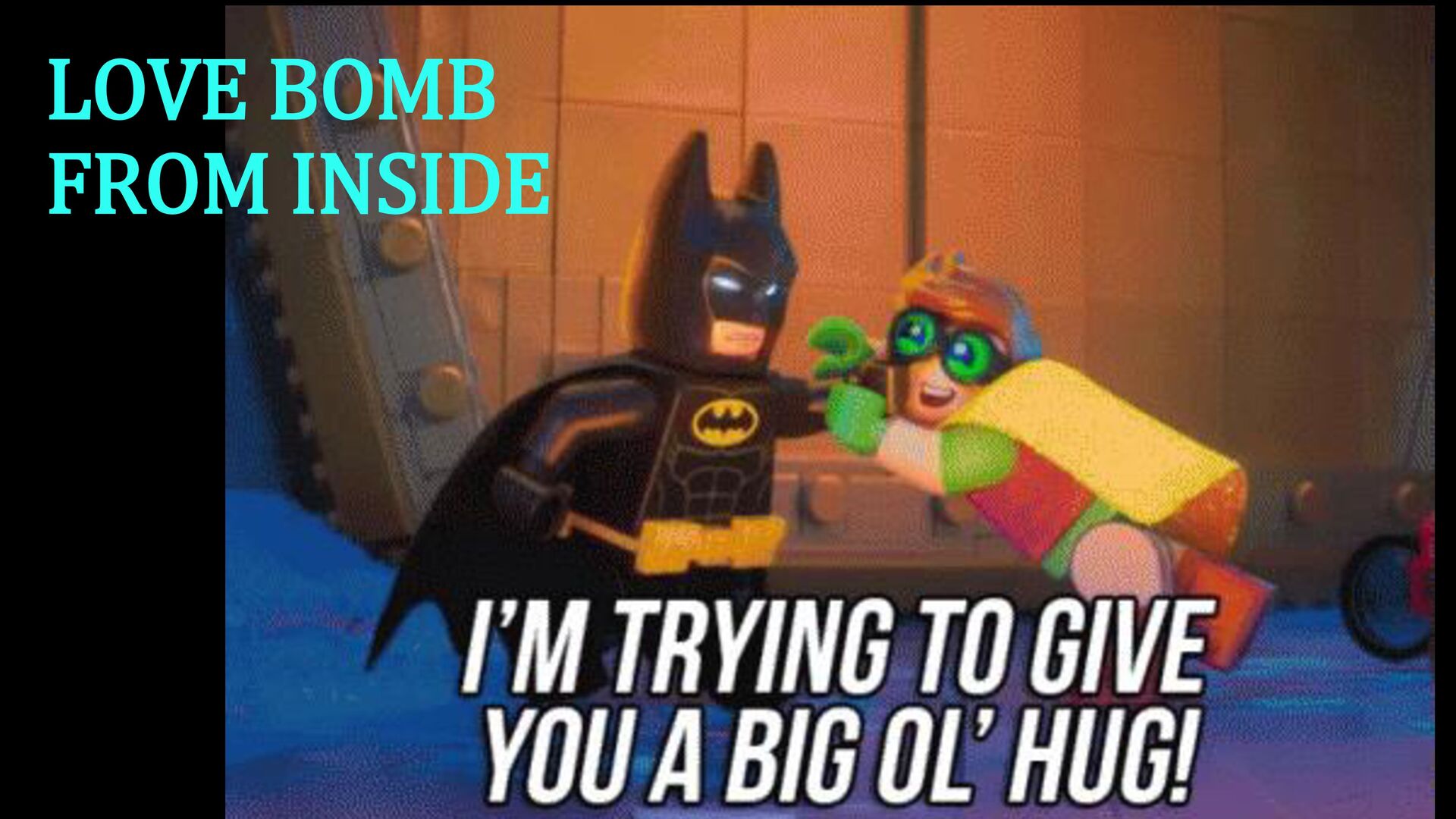
If you've ever had an argument with a relative, you've seen that, where someone wants you to act out cause that's what they need. They need you to become bad. So the reality for that is just try love bombing. You've got to work from the inside and you've got to try and understand that they will be trying to cause friction.
Your job is to not fall for it. In terms of big bang change from the outside, the thing to realise is a system that operates like this, many businesses have quite toxic behaviours inside, it is really hard to try and push that and change that from the outside.
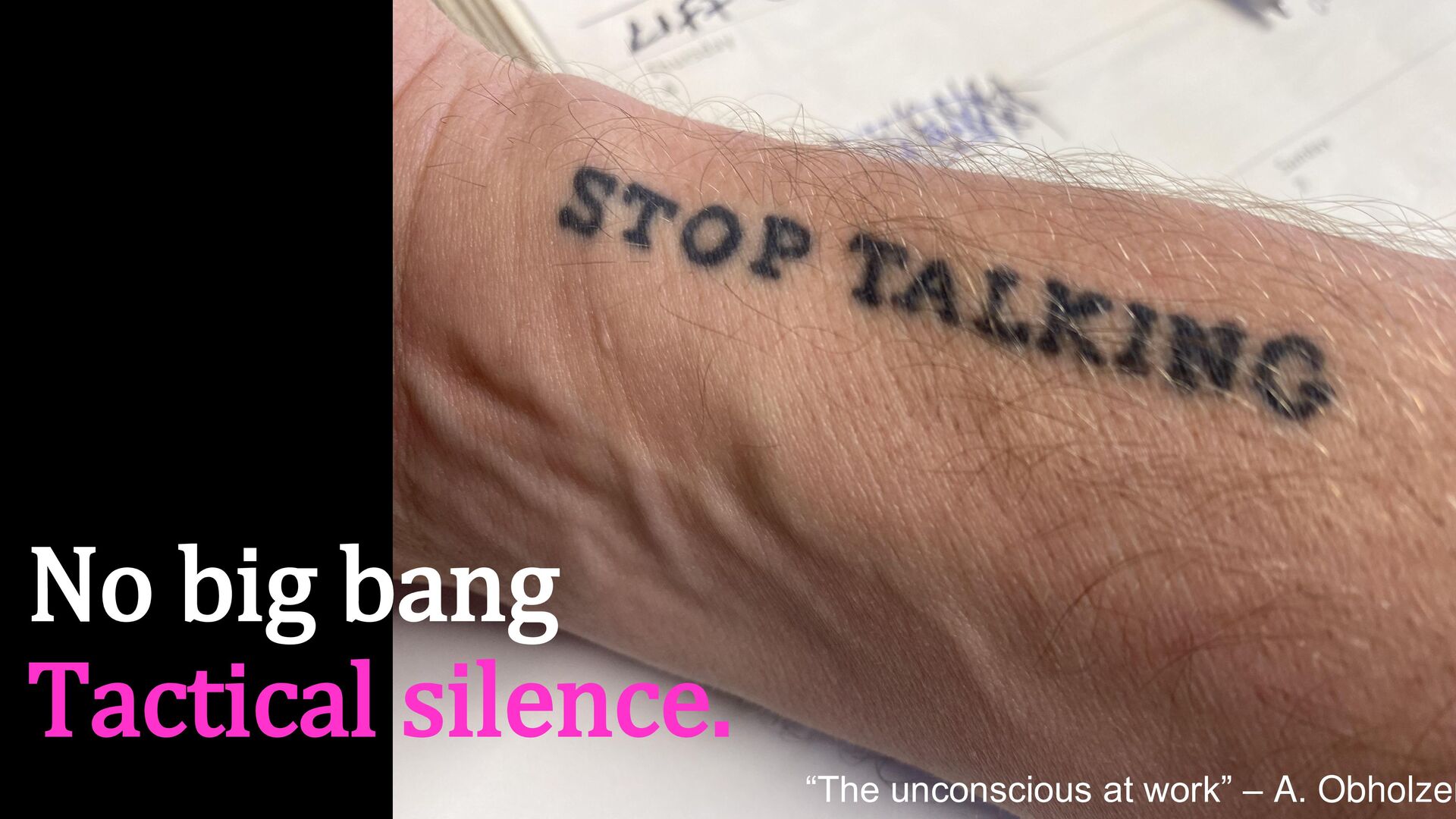
So don't try and do a big bang. One of your most powerful tools is silence. And if you want to laugh at this tattoo, my partner Ben, that's his arm. He has this tattooed on his arm and he's a ninja at getting **** done.
The reality is, if you are quiet, if you provide challenge and people kind of start getting weird backstop, it's not going to end happily. In addition, if you're the only voice that is speaking, no one else ever has to speak. If you choose to be silent, you can find out ways of encouraging others to become voices of the unsaid.
If you're the only voice, you're the lightning rod. If others end up speaking up, that is good. Your minions like John, they're like, You're right, Randeep. What can you do to give them a voice? Because once again, the more voices that you have, the less likely you are to be vilified for it.
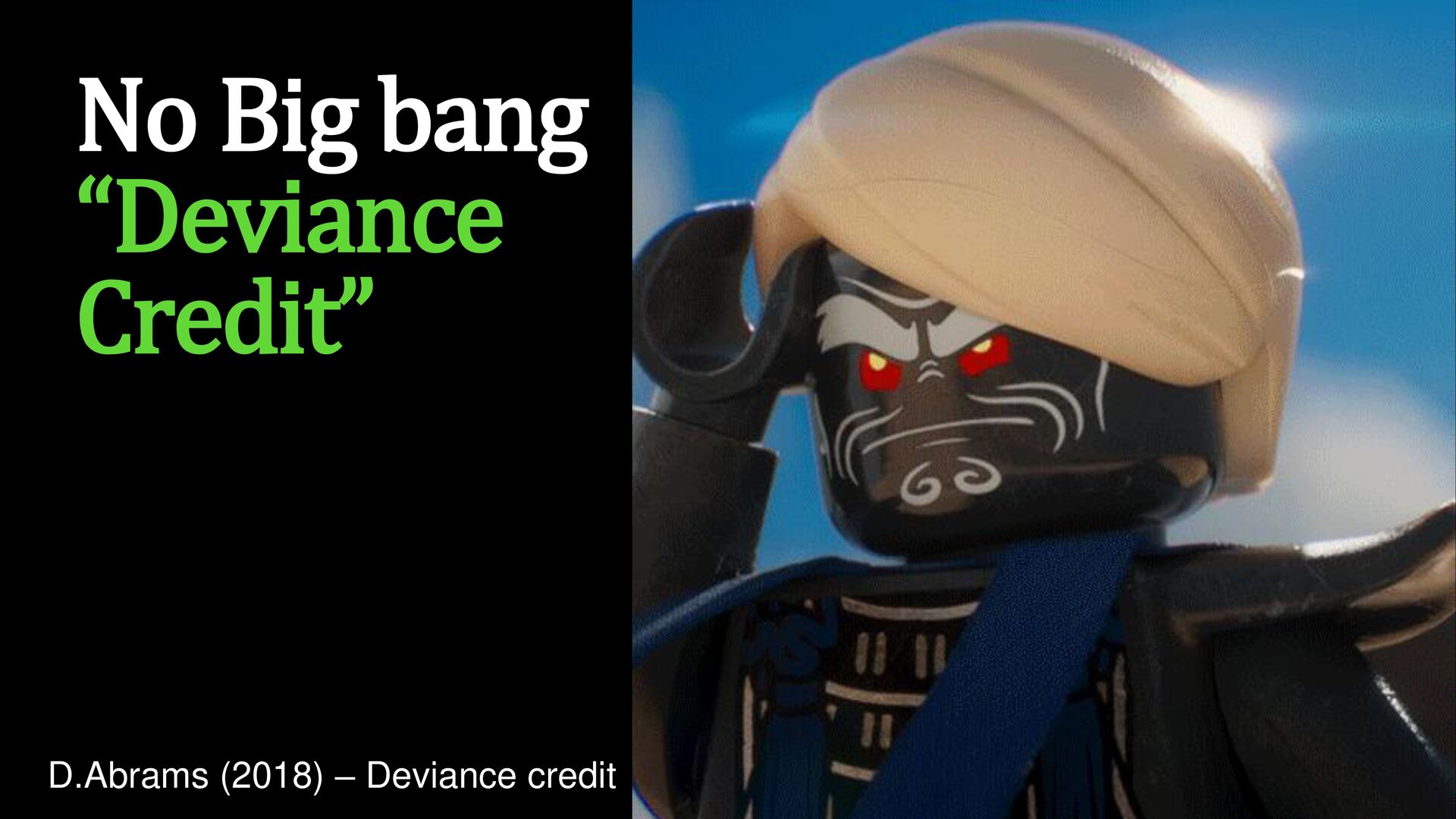
Encourage and support them. Work out ways to get other voices on the table And understand there is a thing called deviance credit. This is the paper, but any woman who's spoken and had her idea ignored because a man didn't say it has seen this.
Deviance credit is the idea that certain people, your prototypical straight white men in power, are the ones who have credit and can challenge the status quo. Realise that. Use that to your advantage because there's certain people that are given license to push back if you're not.
And ultimately, doing those small and different changes mean the system can't help but rearrange without you having to be vilified. So in summary, work from the inside, be tactical about when you do silence to encourage others to speak out so you're not the only person, empower others, and use that deviance credit to your advantage.
And I'll finish with one thing. Remember what we're trying to avoid. Falling into this hero villain narrative, which I will finish with I'm just gonna come right out and say it. I hate you, Joker. I hate you too. I hate you more. I hate you the most.
I hate you forever. And with all of you, I'll say, I love you forever, and come and find me at the round table for questions and anything else. Thank you.