
How to avoid the most common sales mistakes startups make and accelerate your growth with a no-BS sales process.
← All talks 
Grow Growth Turing Fest 2018
The 7 Deadly Startup Sales Sins
Auto-generated transcript - may contain errors. Tap a timestamp to jump the video.
Thank you. Alright. So first, a show of hands. If you've never heard of me, you have no ******* idea who I am. Just really high. This is really important for my ego. Thank you. You know, especially when you get interest like that. He's amazing, he's written books, everybody knows him.
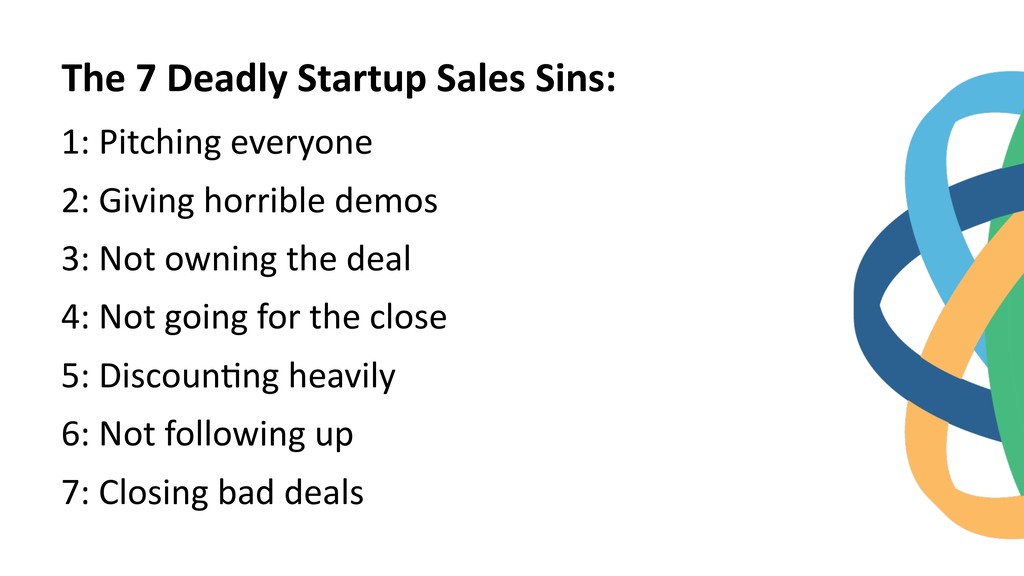
Then it's like, everybody's like, don't ******* know who this person is. All the seats we're taking in the other room, I just came here to relax a little bit. Alright, so a little bit about myself before we jump into the seven deadly start up sales sins and how to avoid them, how to make sure you don't make these very obvious mistakes that we all seem to still try to disprove, you know, after hundreds of years of them not working.
Alright. So a little bit about myself first. Originally from Greece, born and raised in Germany. When I speak in the US, I always say I have the best that Europe has to offer, the two ends of the cultural spectrum. You know? South of Germany and Greece are not really that compatible.
Culturally speaking, I moved to the US, to the Bay Area, twelve years ago to start my first tech company, and ever since then been failing and sometimes also succeeding through life. There's really one, if I have an entrepreneurial superpower, it's always been sales and marketing.
It's always been using communication to move the world forward. So I deeply care about startups and entrepreneurship. I've never had a real job in my life. And I deeply care about sales. So a little bit of context on why why I don't just care about it, but why I know a thing or two about it.
So the last company that I started originally started as an outsourced sales services company for b to b venture backed startups. Right? So basically, if you had raised a series a and you were in the Bay Area, and you were selling to other businesses, a lot of times one of the biggest challenge would be to scale your sales force.
So hire sales people to develop a process that will be repeatable and scalable. And what we did is we hired all these sales people for you. We trained them. We did all the exploration, all the experimentation, and we scaled these sales forces. And we did that for over two hundred venture backed startups in the span of less than two years.
So for a a short amount of time, we were kind of the best kept secret in Silicon Valley. We knew every b to b start up that had raised money. We knew all the CEOs, all the VCs. We knew everybody's, you know, dirty secrets, the things that were ****** up.
We knew all their data, we had access to their CRMs. But nobody really knew we existed, you know, from a from an end consumer point of view. And so we learned a **** ton about how to do sales for very early stage startups.
And then from day one, because I personally was the first salesperson we were renting out, and I hated all the sales software back then that was available, we started building an internal piece of software. Never really intended to sell that software to productize it, but eventually it become became so good that we decided to launch it and see what happens.
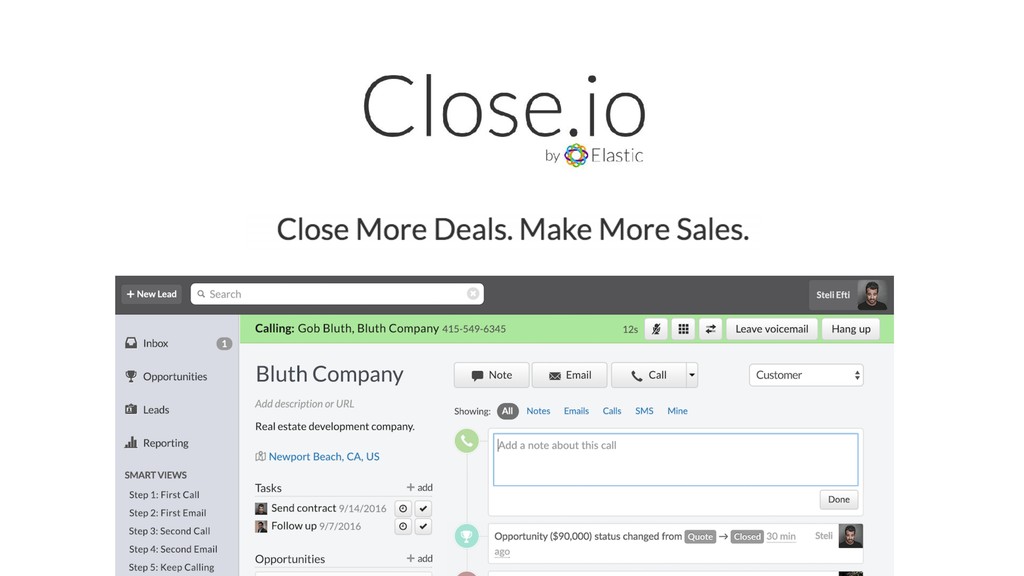
There was a software product called Close. Io, and that product really hit a nerve, and within six months it had outgrown the services business, although it had a tiny team attached to it. And so within a year, we shut down the services business and we've been running Close.
Io ever since. It's an inside sales CRM focused on small and medium sized businesses. You do a lot of calls, a lot of emails, this is the best piece of software, helps your sales team close more deals. We are a tiny team. We're thirty people. Right?
Our nearest smallest competitor is probably three hundred and fifty people, but similar in revenue. We're highly profitable, many many millions in revenue. We're completely remote, eleven different countries. And we are customer funded. Right? Bootstrap is kind of a funky old thing. But we're just our core investors are our customers.
So we don't need any VC money, which is the position you're in when they trip over themselves to give you all the money. Right? And you don't need it, they can't help themselves knocking on your door all day long. If you need it, they're all gonna run away.
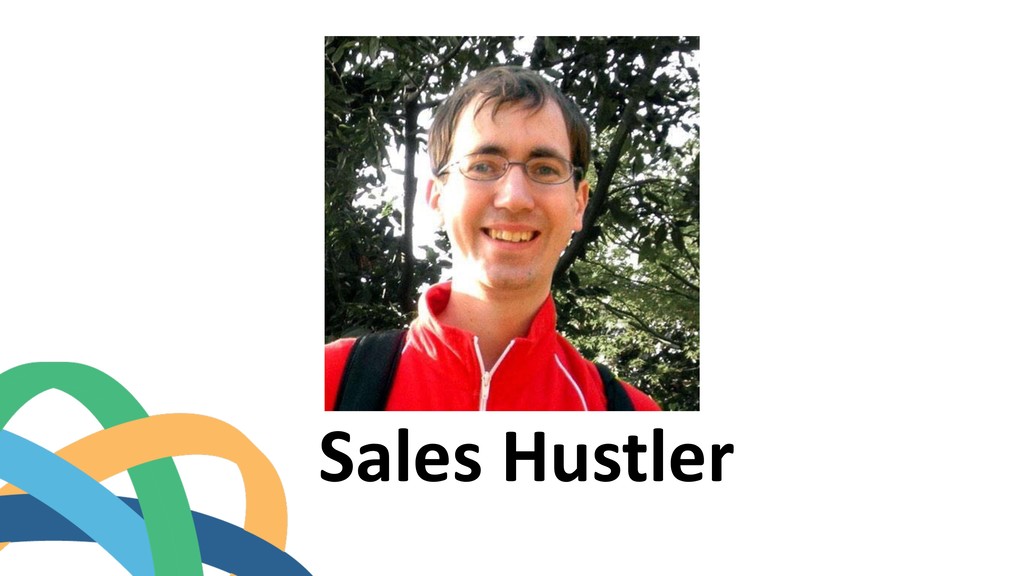
So this is a little bit of background on, like, why I care about sales, why I know a thing or two about it. Real quick, who here, show of hands, knows that handsome man? Just raise your hand. See, that's crazy. He's as unknown as I am, although he's much more famous in Silicon Valley.
This is Heaton Shaw. If you're in SaaS, this is one of the pioneers. Kissmetrics, Crazy Egg. He really is one of the smartest people in SaaS and in b to b, but also his like and yesterday was his birthday, just FYI if you wanna say happy birthday on Twitter.
But also he has one of my favorite reputation in the Valley, which is he's the most generous founder in Silicon Valley. That's the way people describe him. We have a podcast. If at the end of this talk you get go through Steli withdrawal, you're like, oh my God, I need to hear his voice at least twice a week, Tuesdays and Fridays, for twenty minutes, then I would recommend you to go to the startup chat dot com and subscribe to our podcast.
A lot of people tell us that they enjoy it. Alright. So I'm gonna give you away the goodies before I get to the end of this talk. So, you know, I've written a lot of books, a lot of templates, a lot of ****.
Everything I talk about today, there's probably a book I've written about it. An e book. Right? And something you should be able to read within a few days. If you want to have all my **** in one link for free, you send me an email, subject line bundle ************, and you'll get a link back with all my stuff.
Does that make sense? Yeah, this is yes, this is no, this is Steli, I'm just relaxing, all the rooms, all the seats are taken. Alright, so sometimes when I speak in Germany, people come to me and they're like, did I get the syntax right, is it all caps?
They're really worried about it. I'm like, if you make a spelling error, you won't get any of my books. Alright. So before I get to the tactical stuff in a second, you know, I am very aware that part of my personality is actually not helpful in teaching you how to sell better for your startup.
Why? Because a lot of people will look at me and they'll like they'll quickly make the the analysis that this dude is not like me. Right? I'm not Greek, I'm not as loud and obnoxious, so hence, selling is probably also not for me.
Right? We all have kind of a mental image of what a salesperson looks like, how salespeople move, and I'm not completely the opposite of that unfortunately. So a lot of people might get comfort from that and go, yeah, I reconfirmed this **** isn't for me.
I can't sell or I don't wanna sell because otherwise I would turn it to this, right, which I wanna avoid. So I always like to give a counterexample, right, because at the end of the day, through my lens, everything in life, every time you communicate with an end result in mind, you're selling, one way or another, right.
If there's an end result in mind, if you're trying to get to a conclusion, a decision, some kind of a conversion while you communicate, there's a purpose behind your communication. An interaction, you're selling, right? You're selling, somebody's buying, right? Some interaction is going on that's not just having conversations, you're having a purpose.
So you're selling, so you might as well get good at it, especially if you're in business. This is my favorite example. Who knows Patrick McKenzie? Petty eleven, he's famous in the internet, three people know him. Alright, so we all, nobody here knows any of these really famous people, so I feel much better about that.
Alright, so real quick, Patrick could not be more different from me. Like at least in physical appearance and in style, he's the exact he's the nerdiest person I know. I've been living in Silicon Valley for twelve years. That says something, right? He is so like I see him, he speaks a lot of conferences, quite well known although you don't know him.
And anytime I see him, anywhere around the world, when he walks into the room, he looks like he just woke up and he had fell asleep with those clothes on the couch, his hair is a mess, he's slightly confused, why am I here, what am I doing, you know.
And it's always the same outfit, it's always the Twilio jacket, and so like, he's very very nerdy, right. But he very quickly realized that if I wanna be an entrepreneur, I wanna build software that people purchase and pay me for, I need to understand marketing, I need to understand sales.
And he's like, well, he approaches like an engineer and was like, this can't be that complicated, what is selling, how does it work? He read a bunch of stuff and he went, alright, I got it. There's a few basic components, if I follow those patterns and I do these basic principles, I will succeed in selling. And he has.
And know, here's my favorite example. He had built a little tool that he wanted to sell, or he had started a startup that he wanted to sell to Stripe. So he met with the founder of Stripe in the Valley a few years back, and he told him about his new startup and the tool and the thing he wants to do, and he got some feedback.
And eventually, you know, at the end of the conversation, he was like, before I continue, quick question, do you know Steli FD? And then the CEO of Stripe went, yeah, yeah, I know Steli. And he went, well, if Steli Efti was here, he would not allow me to leave this conversation without asking if you're gonna be my first customer.
And then the CEO of Stripe went, that's weird, such a weird question, this is not like you at all. And he said, that's why I said, if Steli Efti was here, he would force me to ask if you're gonna give me money. And then CEO of Stripe went, okay, sure, yeah.
We're gonna be the first customer. To which then, Petiot tweeted, Steli Efti is the Chuck Norris of sales, he closes deals he's not even present for. Which I didn't understand, right? But I still appreciate it. So you don't have to be loud, you don't have to be obnoxious, you don't have to have a under average IQ to be good at sales.
Does that make sense? Yes. Thank you. Alright. Let's get into this. There's a bunch of clocks here, like timestamps, but I don't understand it at all. It's like twenty minutes and it counts down. I'm like, alright. Anyways, I'll figure it out. Startup sales team number one, you're pitching to many people.
Here's what happens all the time. I you know, I'm somewhat known for being a sales dude and then anytime I get off stage somebody comes to me and is like, alright, Steli, if you're so good at sales, sell me your product right now.
And I always go, **** ***. Who are you? What do you need? Do you have a sales team? What are they selling? Tell me more about you. I'm not gonna sell you without knowing if there's a need for my product, right? The biggest problem that a lot of startup sales team have, and startups in general, is they just pitch and sell to everybody, right?
You're not focused on qualifying well enough, and then you're struggling at the closing stage. If you qualify correctly, closing is very, very simple. If you take the time to truly understand a prospect, and understand who they are, what they need, why they're talking to you, what other, what the greater context is of their decision making, what other tools they're using, if you truly can help them, if you're the best person, the best team, the best product to help them, and if you understand if they can help you in return.
Does this person have the money? Does this person have the right time frame? Is this person gonna be a good reference or this customer gonna be a good reference? Can I help them? Can they help me? The answer to those two questions is yes, and you have the proper amount of detail, selling and closing is ******* easy.
It's not rocket science then. You know everything you need to know, you're convinced. You first have to sell yourself that They need to sell you that they truly need your product. Selling them then on it must be simple. But what do most startups do? They try to sell everybody.
They pitch everybody. If you go to them and you're like, well, tell me about your product, they just start talking. Oh tell me about your AI based pet food delivery crypto start up. And they just start talking, oh, what we do is And they talk and talk and talk and talk.
And at no point did the person take the time to ask one very simple question. Do you have a ******* pet? Do you like animals? That might be a really important question to ask before you launch into your two hour talk about your company's history and the AI technology that you're building that's gonna make all the dogs happy.
Right? So you qualify first before you sell. You don't pitch, you don't sell without qualifying. Now, once you qualify, once you're truly convinced, we can help them, they can help us. This is the right fit. Then, what is the next thing that most start up salespeople and founders commit?
They give really terrible, terrible, terrible, soul crushing demos. Right? When they demonstrate their product, and we all have done this sin, we do a terrible We just turn into the worst humans ever. Right? And there's like this whole book about how to give product demos that actually sell and this whole talks I give about it.
So I'm not gonna bore you, but I'm gonna give you the cliff notes. First of all, make it ******* shorter. No demo can be an hour. An hour is too long. I cannot retain sixty minutes of information. Right? Please, for the love of God, don't do that.
Fifteen minutes, twenty minutes, okay. Not longer than that. A demo is to demonstrate value. It's not to make them a black belt user of your product. It's not training. Right? Don't show me any ******* clickety click click link setting, this, that and the other.
I don't wanna see everything that your product can do. Right? I haven't even ******* bought the thing. So keep it short, keep it focused, demonstrate why your product is creating value. Please. When things go wrong, which they will with quite frequency, don't be flustered.
Oh my god, this never happens. Lie. Right? Oh, the WiFi isn't good. I don't know what to do. Like all that ****, just like be prepared. When I lose WiFi, what do I do? When there's a bug, what do I do? Here's what I do.
When there's a bug, I'm like, oh beautiful, I didn't even plan this. This is a great opportunity to show you how to get support. If something breaks in the product, here's where you click the help link, here's where the support team is, here's how you write something useful, right?
Not just like broken with a hundred o's. That's not useful information for debugging your problem. Right? So you go, hey, this is happening. I click this, that, it's reproducible. And then boom, see our support team is very friendly. The person will say, hey, Steli, we're gonna fix this.
Here are the steps we're gonna take. And I'm gonna show the prospect how to get support. And even more importantly, what do I demonstrate between the lines? Confidence. It's the most beautiful thing ever. Right? When everybody else gets flustered and gets into a life crisis when things go wrong, I seem calm and cool and collected.
What does that translate to emotionally? It translates to this company and this person seem to be very very successful. Right? I feel, at the end of your demo, if I feel overwhelmed, will never wanna talk to you again. Make sense? Right? Have you ever finished a demo call and you're like have you ever done this?
Like actually physically like, oh my god. Like as if you like had to run up a ******* hill. What is that? You're ******* overwhelmed. Right? If you feel overwhelmed at the end of an interaction with another human being, you never wanna meet that person again.
Right? What do you want people to feel? You want them to sit up. You want them to smile. You want them to go, all right, I now know what to do with my life. After this demo, everything is clear. Right? You want them to feel good, refreshed, clear, all right, I was not sure what to do about this, what to do about that.
Wait a second, is he taking a picture? Let me do this. Boom. All right. So priorities people, priorities. So you want people to feel confident. At the beginning they're not sure, is this the right product? How does this work? I'm confused about x, y, and z.
At the end they need to feel like, all right, I have all the clarity. I know the answers, I know what to do next. Here's another thing. People, especially start up salespeople and founders, you don't own the deal. You're just like, I'm just here to provide information. Right?
I show them the demo, I give them the material, I give them everything they need, and I'm gonna sit here and wait for them to make decisions. That's not how the world works, that's not how you create value. Any and every relationship that you're in with any and every prospect and customer, you should own, you should feel responsible for that communication, conversation, that investment of time to convert into a real outcome.
Yes is good, no is okay as well. But it shouldn't stay in that maybe zone. And here's what I encounter all the time. Somebody is like, Steli, next week we are gonna close this huge deal, it's gonna be a massive celebration, this is gonna save our company, it's gonna be awesome.
Next week passes by, crickets, I don't need anything from them, right? So eventually I check-in and I go, hey, what happened with that crazy deal, did you guys rage so crazy that you're still and can't write emails, what's the update? And then they go oh no, a little surprise came up, so the deal is not quite closed yet.
There's no such thing as quite closed, right? It's either closed or it's not closed. Same thing as people driving you crazy, oh we have a few early customers. How much do they pay you? If they don't pay us money, then they're not your ******* customers.
Right? You can't be a little pregnant, you can't be sort of a customer without paying money. Right? You're a user, but you're not a customer. And you can't be not quite closed yet. You're not closed at all. Right? So I go, what happened?
What was that surprise? Like was there a hurricane? Was there a natural disaster? Did somebody die? No. We still have to go through legal. How is going through legal a surprise? I'll tell you how. By not owning the deal, by not being prepared.
You gave the demo, they said, oh, thank you for the demo. Bye. Bye. And then you just made up a story in your mind, I think next week they're closing. Oh, I think this deal is really gonna happen. Based on what? Here's the most important question you need to ask once you have qualified somebody, you gave them a demo, both parties agree is a good fit.
Here's the question. You ask it, it's very simple. You go, hey, since it seems like there's a really good fit here, what will it take for you to become a customer of ours? What do we need to do from this moment on to arrive at a future where you are paying us money and using our product and gaining all the benefits?
What does it take? And here's the answer. Whatever the answer is, you're gonna keep following up until you arrive at a virtual time where they are a customer. So they go, oh we need to take this information, we need to go back to the team, and we need to involve some more stakeholders and think about it.
Most people will just take that ******** and go, oh cool, awesome, goodbye. And then they run back to the team and go, I think they're closing next week. Here's what you do, you go, oh, awesome, you go to the team, you talk, you update, all that.
What happens next? Well next we would wanna be on another call, get more stakeholders involved, ask more questions. Alright, let's say that that call goes well, I answer all the questions to your satisfaction, what happens next? Well next we wanna set up a pilot and make sure that it really works, yada yada yada.
Again, at this point people get nervous, they're like alright, let me just say thank you so much, that sounds great, and run away because it was a positive interaction up until this point, right? So I can run back to the team and go, they're gonna talk to the team, we're gonna do a pilot, everything is already agreed on.
And then they're gonna become a customer, that is the thing you added, they didn't say that. So I wouldn't do that. I would go, all right, so we do the pilot, it's a success, all the KPIs are checked off, high five, what happens next?
Are you a customer now? No, no, no, no, no. Then you have to go through legal and get approval through legal, all right. And then? And then you have to go through procurement. Alright. Okay. And then are we in business then? No. No. No.
And then you have to talk to my grandma. She needs to read your palm, your future, make sure your spirits are aligned. Alright. Cool. And then when granny says go, are we ready to go? Yes. Then we would purchase your product. Boom. Now we have a road map. Right?
Now I know here's where we are now, and here's where we need all the steps we need to take to close this deal. Now I can decide, ****, this is too long for a two dollar a decade deal. Right? I can't invest three years in this.
Or I can see red flags, **** they want us to talk to the CTOs and they're gonna do like a ******* security audit and all these things we're not prepared for. We've been around for three weeks, we're not prepared for this kind of a scrutiny.
There's all kinds of things, enlightening things that are gonna come up, information that's important for you to own, manage, champion the relationship. There's painful things that are gonna come up. What will it take for you to become a customer? I don't know. And they go, woah, how come?
Well, it's my first day and I'm an intern. I don't purchase software. Going back to the qualification part, maybe you should have known that before the seventh call that you made with this person. Or maybe they'll tell you other things that are painful, like I don't think this product is for us.
Because if you don't create a moment of truth, they're not gonna tell you that. You gave the demo, you showed them everything, they go, oh yeah, oh, looks very good, looks very good, looks very good. What will it take for you to give me money?
Well, I'll never give you money, this ******* thing is not good. Alright? Now we're creating moments of truth, reality is hitting, it's a beautiful thing, you can learn something, you can gain real information, And you can champion all the steps. Maybe instead of waiting six months to get in touch with Legal, you can put me in touch with Legal right now, we can send them our documents, we can run certain processes in parallel so we don't waste time and lose time and momentum once we're ready to rock and roll.
But people ask me all the time, how can we get better at closing? What's the closing technique that you like to use? Sally, we heard you studied hypnosis for many years, which is true. So how do you use hypnosis to close people? And here's the reality, right? Closing is not rocket science.
It's not that complicated, it's not that difficult. The biggest mistake startups and founders make when it comes to closing is they don't go for it. They never ask specifically for the close. And why do we not want to ask specifically for the close?
Because then we're gonna get a specific and real no. Right? That whole conversation was so good. They laughed at my jokes. They looked at my slides. Why ruin all of this niceness with ******* asking for money? Because you're in business ************. Right? Because you're not there to make friends or to entertain people for an hour.
Right? You're there to make money or learn how to make money. And you need to ask the question. And asking for the clothes is something you need to do early and often. It's not a one time event. People think, oh I need to wait till the stars align and the moon is exactly where it needs to be because I only have one chance to ask for a close.
No you don't. Right, I'm a ridiculous example, you're not gonna do this, but just to show you what's possible, we had somebody come in, a few people for a demo many years ago to a different company, and they sat down to get a demo of our technology and product.
And while they were sitting down I was like, hey, before I get to the demo, are you guys ready to buy yet? And they looked at each other and like, well, did you see the demo? We haven't seen the demo yet. Like oh cool, you seem very quickly to make decisions, I'm gonna get back to that question at the end of the demo then.
And I just started the demo. Nothing ******* happened. Right? You can ask multiple times, I love to ask early like what will it take for you to become a customer, because then we create moments of truth. They tell me, I'm not gonna be a customer, or until you get x y z right, this deal is never gonna work.
Those things are really, really, really, really valuable. Or sometimes they're just gonna tell you no, I don't think this is the right product, and again this is a moment for me to learn and see that there's a new, I made a mistake in the way I presented, I didn't give them the right information, or I misunderstood them, or I didn't qualify them correctly.
But there's gonna be a learning, an insight to gain, or money to make. This really drives me crazy. I ******* hate this. Most startup sales teams discount way too heavily. Right? And why is that? So they'll talk to a customer, they qualify them.
And in the closing period, sometimes even before the customer says something, the customer is like, yeah, we're thinking about fifty licenses for this. Well yeah, we can give you even a better price. ************, nobody said anything about price being an issue, Right? Why are we giving discounts away so aggressively and so heavily?
Multiple reasons. Number one, lack of confidence. Lack of confidence, right? I'm afraid the price is too high anyways. A lot of our competitors are cheaper, I don't wanna have to argue, this conversation went so well, I don't want it to the relationship to get scarred at the moment of money, talking about money, that shouldn't really be the center of this relationship.
I'll give them a better price proactively to never make them feel bad. It's insecurity. And if you allow your sales team or yourself, if you have like an open policy when it comes to discounting, everybody, everyone and yourself are gonna misuse and abuse that discount policy.
You should not discount super aggressively if there's not a real strategy behind it and some metrics behind it. Here's the reason why. Number one, if your overall strategy is not competing on price like we're always gonna be the cheapest product in the market, we're gonna crush everybody by being cheaper and cheaper and cheaper and cheaper, if that's not your overall business strategy, then discounting heavily is gonna get you in trouble.
Cause somebody else is gonna discount heavier than you. And now what, now you're on this race to bottom, right? The other thing is, it's gonna be impossible to build a predictable business. Every ******* deal is a unique flower and unicorn, right? And you can do that if those deals are millions and millions and millions worth.
But you can't do that when the customer pays you two hundred bucks a ******* month. Oh, this customer pays one hundred and ninety nine point two cents a month. This customer is on a four month prepaid deal where they only paid us eighty eight dollars Like you can't manage that level of complexity with this small ******* average lifetime values.
Like that doesn't work. And that's happening all the time. I see this throughout the bank. Don't do this. You need somebody personally to scream at you, you email me, I'll give you my phone number. If anybody discounts, I'll call them and scream at them for you. Alright.
Next, you're not following up enough. Right? This is probably the most valuable piece of advice I give measured on the arrow eye that it has generated for people. I've at this point, thousands of emails, there's a whole book full of it, of people case studies of people closing multimillion dollar deals, raising money, getting press, somebody got married following my follow-up advice.
People crushing it because they follow my follow-up advice. Here is it, the summary. Again there's a whole book about this if you wanna know more about it. But the basic summary is that when a relationship starts and at some point it goes silent, most of us will assume that silence is rejection.
So after we ping them once, we ping them twice, we stop pinging them and we start feeling really self shame and oh my god, I always knew he thought I was ugly and didn't really like my product and all that ****. We'll make up some ******* story, or aggressive, they are idiots, I'm gonna show them when we're a billion dollar company.
All that ********. I'm not a mind reader, my simple philosophy is I will follow-up forever. End. Now one of you, somebody's always the smart est, forever? Really? Yes, really. Forever, that's as simple as that. If it's valuable enough, I'll just follow-up forever. There's example, many many examples, but one famous one where I follow-up with an investor forty eight times.
It's a billionaire, a person that built a product that all of you have used. And I got introduced to him through a friend, he said, yes I wanna meet, this is many years ago. And then I emailed him, yeah, well how about tomorrow, you know, Friday this or that time, silence.
Emailed another time, silence. Another time, silence. It took forty eight emails for him to respond. You know what the response was? Steli, thank you for the follow-up and follow through, we had a crisis overseas, was traveling, I'm back in San Francisco, can you meet tomorrow at one PM?
And I replied, no ************. No I didn't, of course I said yes. No, no, no, no, no. Of course I said tomorrow one PM is perfect. Right? I met with him and there's so many stories of this, I follow-up relentlessly until an outcome is created.
Yes is good, no is good. Maybe is where startups, careers, all value goes to die. So don't allow anything to stay in the maybe zone. And then everything I taught you is about like closing deals, but even worse than not closing a deal is closing bad deals.
And this is another thing you need to be very careful about. Yourself and your sales team having the pressure to close deals by any means necessary, so you take money from people from the get you you know you shouldn't take. We have a platform that helps dog owners through AI know when to order food.
I don't really have a dog or any kind of animal, but I like AI, and maybe I should use your product to order lasagna for my grandmother. Now the product doesn't do lasagna, it doesn't do food for ******* humans, the person's like, yeah, I think that's also a really interesting use case.
Yeah, I can subscribe and pay you some money. Yeah, well maybe we should try this. No, maybe we should not ******* try this. This is a very ******* bad idea, right? Why? If you close bad deals, they are going to create a lot of support demand.
They're gonna constantly ask questions that are dumb because they are not the right customer for this product. They're gonna be giving suggestions that are terrible. They're gonna be influencing your team, giving them really really dumb ideas. They're going to be really unhappy at some point because this ******* thing they should have never bought.
So they're gonna start telling the entire world how terrible your product and you as a person, and your team as a collective of humans is. And then they're gonna churn, they're gonna cancel, which is gonna **** up your numbers, your unit economics, and your quarters, and your growth, and the company morale.
There's nothing worse than a bad customer. No customer is painful, but bad customers are even worse because they're distorting reality. You think you're gaining traction, you think you're making money, you think you're hitting your numbers, you think you're doing all this, but all you're doing is you're setting yourself up for pain six months down the line.
Building the wrong features, raising too much money, hiring too many people, because you have all this fake money on all these fake customers. And the other thing that startups are oftentimes confused about is happy customers and successful one. A happy customer might just be somebody in an emotional state of liking paying for your product.
Doesn't mean they're successful. A successful customer is a customer that pays you money and gets a lot more value in return and understands and knows it. So that if that person was fired and somebody else gets that position, that person goes through the math of like, what are we paying money for, and they get to your product, they can easily figure out, ****, this product creates a lot more value than what we're paying, we're gonna keep paying.
Versus some people are just fans, fanboys, right. They like you, they like the presentation, they like to buy sort of products, whatever the **** it is. They like the logo t shirt that you sent them. So they're like, oh, we love it, we love it.
But then when you want them to do the math of like why is this valuable, they can't. Right? If you build the first five, ten, fifteen customers, it doesn't really matter. But once you have fifty, one hundred customers, you need to know who are our most successful ten customers.
Who are our most successful twenty customers. And then you want to figure out what do they have in common and how can we get more of those type of customers. I talked to a bunch of founders, had raised twenty million and they were asking me all about going new verticals.
They were an enterprise sales company, had one hundred customers. They asked me all these weird questions about finding different customers. And eventually I went, who are your most successful ten customers out of the one hundred? Silence, three founders. And eventually one founder goes, I don't know about you guys but I have no ******* idea.
And the other two were like, yeah we don't also ******* know. And I thought you all ******. You are ******. The reason you don't know is probably you don't have any really successful customers yet. But you raise all this money, you are hiring all these people based on metrics that are not real, right.
So make sure you never ever ever close a bad customer. All right. Again, if you want to have all my books, all my ****, send me an email, stelliclose. Io, bundle ************. Besides that, thank you so much for listening.