
Mental health is top of mind for many leaders. The upheaval of the pandemic, worldwide economic stability, and the changing nature of work have required leaders to move into the emotional big leagues. Many technology leaders are now fluent in conversations about burnout, zoom fatigue, and psychological safety, and have a clear understanding of how mental wellness contributes to the bottom-line success of their team. In this talk, Dr. Sherry Walling will help leaders and individual contributors take a step deeper. Emotionally literate leadership gets particularly tricky, and is extremely important, at the edges of the emotion spectrum: grief and joy. Dr. Sherry will walk you through the importance of these emotion states and give you practical tools to help you be present and engaged in the full range of human experiences.
Sherry Walling - Grief, Joy & Presence: Leadership Superpowers You Didn't Know That You Needed









Auto-generated transcript - may contain errors. Tap a timestamp to jump the video.
Hello, everyone. Thank you for coming to this talk as part of the lead track. Isn't leadership great? How many of you consider yourselves a leader, are in some way in charge of other humans? I think that leadership is the funnest. You get to do everything the way that you wanna do it.
You can make your plans. You organize things just so, and everyone executes just the way that you want it done. Right? Is that your experience of leading? Not quite. Okay. So what's the problem? What breaks down when we think about leadership? What makes it complicated?
The humans. The humans make it complicated. Our leadership challenges have very little to do with our great ideas, our creativity, our problem solving. Most of our leadership challenges have a lot to do with humanness. The humanness of those we work with and the humanness of ourselves.
So I hope that we can dive in today for a very human conversation around how to deal with complicated emotions because emotions are often the core of our humanness. We are very complex in our way that we feel about what's happening to us in our lives.
So emotions shape the way that we think, they shape the way that we act, and they shape the very things that we do on a day to day basis that impact the way that we show up at work. So, thankfully, if you've been in leadership for any amount time, you've probably read some articles or had some great conversations about emotional intelligence, emotional IQ, and strategies to think about how to lead other humans as a human that are emotionally informed or emotionally nuanced.
I'm really glad that we're having some conversations around emotion at work Because I see this as one of the things that can make or break your mental health as a leader and the mental health of the people that you lead, that you serve, and that you support.
What I'd like to do today, though, is a little bit different than our general conversation about how emotions are important at work. I wanna talk about a bit of a deep dive into what I would call emotional edge states. These are the ends of the spectrum.
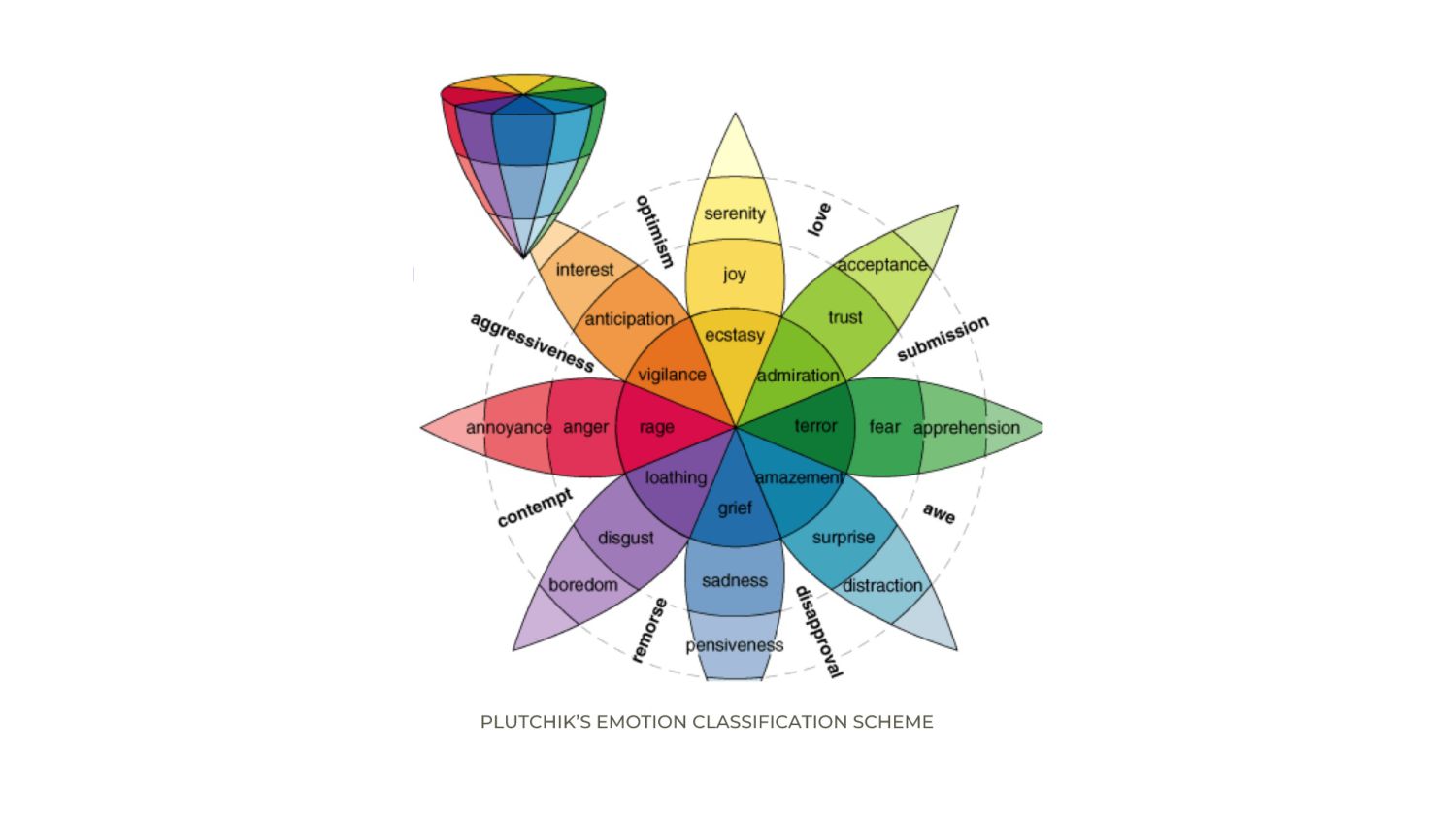
A lot of us throughout the course of our day experience contentment, frustration, maybe some stress, maybe some happiness. We kinda stay in the middle of the emotional ends of the spectrum. If we go back to this one, you can see that our spectrum is quite significant and quite complicated.
We have things all the way from, like, mild discomfort to terror or contentment all the way to ecstasy or elation. There's so much range. And unlike other creatures in the animal species, best we can understand, we think that one of the unique human components of our emotional ability is that we can combine emotions.
Isn't that fun? So we can feel maybe happy and sad kind of at the same time. Or when we combine emotions, we move towards things that are more complex, like love as the combination between joy and trust. So understanding emotional nuance is important in thinking about how to do that very human thing that we must do as leaders.
But we don't necessarily get a lot of practice on the edges. Edge states are things that are not frequently occurring. They're the ends of the spectrum. They're the things that are really, really important to get right, but they don't happen so often, so we don't get a lot of practice with them.
Well, traditionally, we haven't had a lot of practice with them. But one of the edge states that I'd like to dive into today is the experience of grief. Grief has become an incredibly important conversation in our business lives. Grief is, of course, the emotional reaction to loss.
And grief is tricky because there's lots of things that fit in the emotional bucket of grief. We can think about grief as sadness. That's most probably commonly how we talk about or envision grief. But grief can also be anger. It can also be joy.
It can also be gratitude. Lots of things can go in that bucket, and lots of events can cause the emotional reaction of grief. Again, we maybe most often think about grief as response to death or to the loss of life. But grief can also be a reaction that goes along with loss of our plans, loss of security, loss of stability, loss of health.
And grief can show up at work, maybe the loss of a treasured employee or a team member. They're moving on to another opportunity. Maybe it's a happy occasion, but we still experience grief because there's loss. We can also feel grief around failures. Maybe we had a an important project to us, and it didn't quite work out the way that we wanted to.
And there's this sort of loss of hope around this thing that we wanted to create or build. So grief happens a lot in our personal lives, in our work lives. And I think it's easy to think that grief is something that we should sort of deal with at home.
Grief is a personal problem. Maybe you've lost a family member or someone on your team has lost a family member. That's something that you you know, take a day off. Just go deal with it. Come back to work when you're ready. But I think we're seeing that that's not quite how it works.
Because grief is such a big experience, it shapes our brains, shapes our neurological functioning, the way that we think, the way that we process information, our ability to focus, our ability to sleep, And, of course, it shapes our relationship. So every part of the way that we show up at work is impacted by grief.
So I think it's probably really important that we become, as leaders, a little bit more grief literate so that we can understand the role that grief plays and the way that it might show up at work and how we can support ourselves, remember our humanness, as well as support those that we serve.
I've been thinking about this a lot. I've become this sort of accidental expert on grief. I had been training as a psychologist. I've been doing that for a long time. But my deep dive into grief began a few years ago when I lost my father and my brother in very close succession within six months of each other.
So you gotta trust me when I say I know what I'm talking about when we think about what grief does to the human psyche and how that can shape performance, especially among high performing people. So grief at work. I will argue that if we don't do grief well, we'll lose people, even if the grief has nothing to do with anything that happens on the job site at the workplace.
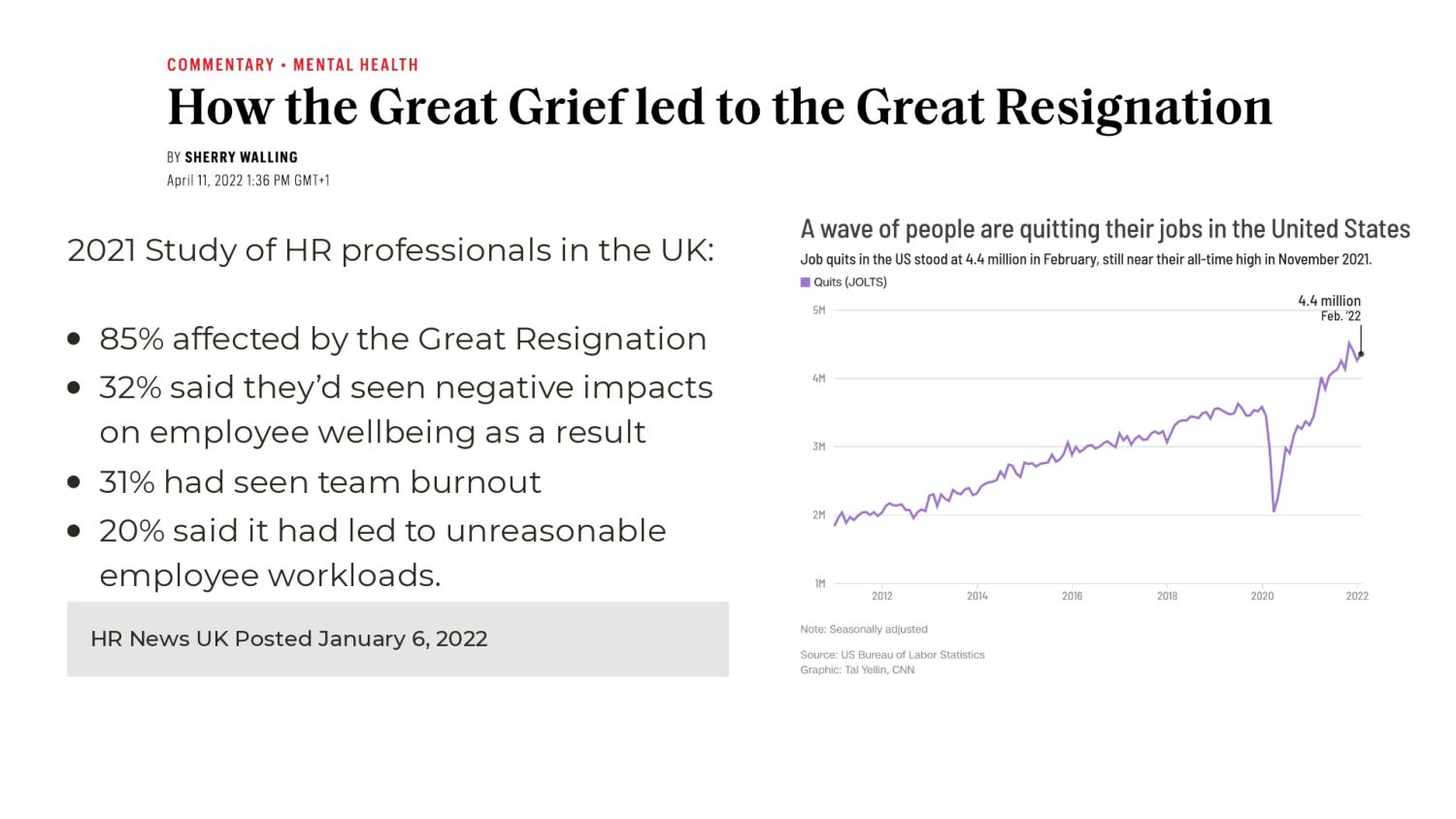
I've done a series of articles for Fortune magazine about the relationship between the great resignation, as it's so called, and what I would call is the great grief. One of the things that the COVID nineteen pandemic did was to immerse many of us in this land of grief.
About a hundred and eighty thousand deaths in the UK, a million in the US. You know, we're trying to outdo everybody else, of course. And research suggests that for every single death, there are eight people who are in a state of grief. So that's a lot of people who are grieving just from that particular experience alone.
That doesn't include, of course, all of the other components of COVID that cause grief or all of the other ways that grief enters our lives. So I will argue that because people have been in grief, they are doing this deep dive into what's meaningful and important to them, a little bit of a an existential crisis.
And for many people, that has led them to say, this job, I no longer wanna spend my time here. And so we've seen people leaving the workplace in record numbers, and this includes the technology sector. So about four million people have left their jobs within the US.
The UK numbers are a little bit harder to find, but there was a recent study that looked at the great resignation by asking HR professionals, and eighty five percent of them said that their businesses, their companies had been affected by people deciding no longer to continue their employment.
And, of course, when people are not working, when they're not tied in or tied in is probably not the right term that's used there. When they are not connected to their workplace, And when they're not thriving, that's that's bad for everybody. When we're understaffed, you all know what it feels like on your teams when you just don't have enough people, enough humans for the jobs that need doing.
We see increased level of burnout. We see other problems that have to do with just not enough hands. So I think we should probably think really critically about how to keep people connected to their work so that they'll stay, so that it's sustainable for them and for all of us.
So the conversation about grief is not so much just about keeping butts in seats, keeping people on the job, but helping people thrive. And as leaders, there are a few relatively simple things that we can do to help grief go a little bit better for people in our companies, on our teams, who are experienced grief of any kind.
So a few simple suggestions. Grief necessitates flexibility. One of the difficult things about grief is that it's unpredictable. It goes kind of up and down. Some people will tell you that they've done some of the best, most creative, most interesting work of their lives in the shadow of grief because they're focused.
They're clear about what matters to them, what's important, and where they wanna put their energy. So you don't necessarily wanna say this blanket statement that says, okay, if you are in grief, if you've had a grief in your life, like, you know, go away.
Go take a leave. Go deal with that, and then come back to work. It's possible that people will wanna really engage, that you may wanna really engage in components of your work in light of grief. What's also tricky is that you can feel that way one day, but then the next day, you're, like, barely functional, hard to get out of bed that day.
And so as much as is within your power to advocate for flexibility, for modified work schedules, for people to be able to work on projects that seem most life giving to them, that they have the most energy for, and maybe have less duty in other parts of their work.
So adaptation, modification, flexibility for a period of time following significant grief is something that can help people stay in their work and find meaning in their work and stay connected to what they love about their work without feeling so distant and separated from, I guess, the the meaning or the core of what they're trying to do in their work.
Grief takes a lot of energy. It takes a lot of time to work through the complexity of those emotions, and so giving as much flexibility as possible. I know, unfortunately, in the in the US, when people have a death in their family, for example, they get one or two days.
So it could be like, go to your mom's funeral on Saturday, and you have to be in the office by Tuesday. It's not very compassionate. And it's not going to create sustainable ways for our team members to stay connected and stay successful in their work.
Second suggestion is to remember that when grief happens, it's usually because something is lost. Some choice is lost, some freedom is lost, some ability is lost. So any conversation around grief that happens within your workplace should involve a lot of consent and choice, which is to say, say you have a team member who had a death in their family.
It's important that you have a conversation with them about how that information gets shared. You can say, I'd like to tell the team. I'd like to help everybody understand why you may be out. I'd like to help everybody know how to support you.
What would you like me to say? How can I frame that conversation for you? So nothing happens without their consent, without a conversation that involves what would be most useful. Similarly, because grief involves the loss of choice, the loss of something, often people, in light of grief, want to be able to take meaningful action.
They wanna have a a cause to give to. They wanna have a card to sign, flowers to send, something to be done. And so at any level of your organization, no matter what your role is, to think about what's the meaningful response here.
And grief, again, can be one individual single member of your team, but many of us are exposed to griefs which affect our whole company or our whole community, whether that's an act of terror, whether it's a loss of safety, whether it's an act of gun violence.
These are things that we all carry heavily. And so when those things happen, when we are holding grief and then trying to muddle through our work, Often, it's just helpful to say what it is, to label it, to acknowledge, you know, in light of such and such events, we're all in some grief right now.
Would it be helpful to create a space for people to talk about this? Would it be helpful to create a space for people to write notes or leave letters or take some kind of action? Would it be helpful is an important phrase because, again, there's an emphasis on choice.
Not everybody wants to sit in the conference room and talk about the sad traumatic thing that's happened in their community, nor should they be required to or expected to, but people should have the choice. Sometimes those conversations are very important. So this is not easy territory.
And hopefully, it doesn't happen to you a lot as a leader. But the thing that I want you to hear me say, maybe more than anything else, is that ignoring it is very likely going to be a problem. Ignoring it will mean that you lose that affected employee.
Ignoring it will mean that you fail the human side of leadership. I can't give you a playbook of exactly what to do in every situation because there's nuance and specificity. But I can tell you that being thoughtful when grief is at hand is one of the leadership challenges that offers you the opportunity to most shine, to most support the people who you are entrusted with.
K? Let's take a little shift over to the other side of the emotion spectrum. Grief is hard, but another surprisingly difficult emotional experience to process at work is joy. Joy. Joy is light and playful, but it's also an emotion that we feel really deeply in our bodies.
Joy is this deep expression of gladness, of happiness, of delight. Brene Brown calls it one of the most vulnerable emotions because we're so open to it. It's a it's a kind of like a full hearted, full body immersion in this feeling of happiness.
And it's we don't have it all the time. Right? This is still sort of an edge state experience. But I want us to think a little bit about how joy shows up at work. Because it's worth asking if we're making our space safe for joy.
Can people be open heartedly delighted, or do they need to be defended? Do they need to be very stern? Do they need to come across as professional all the time? And depending on your context, maybe. But I will argue that there are some really important mental health benefits to joy.
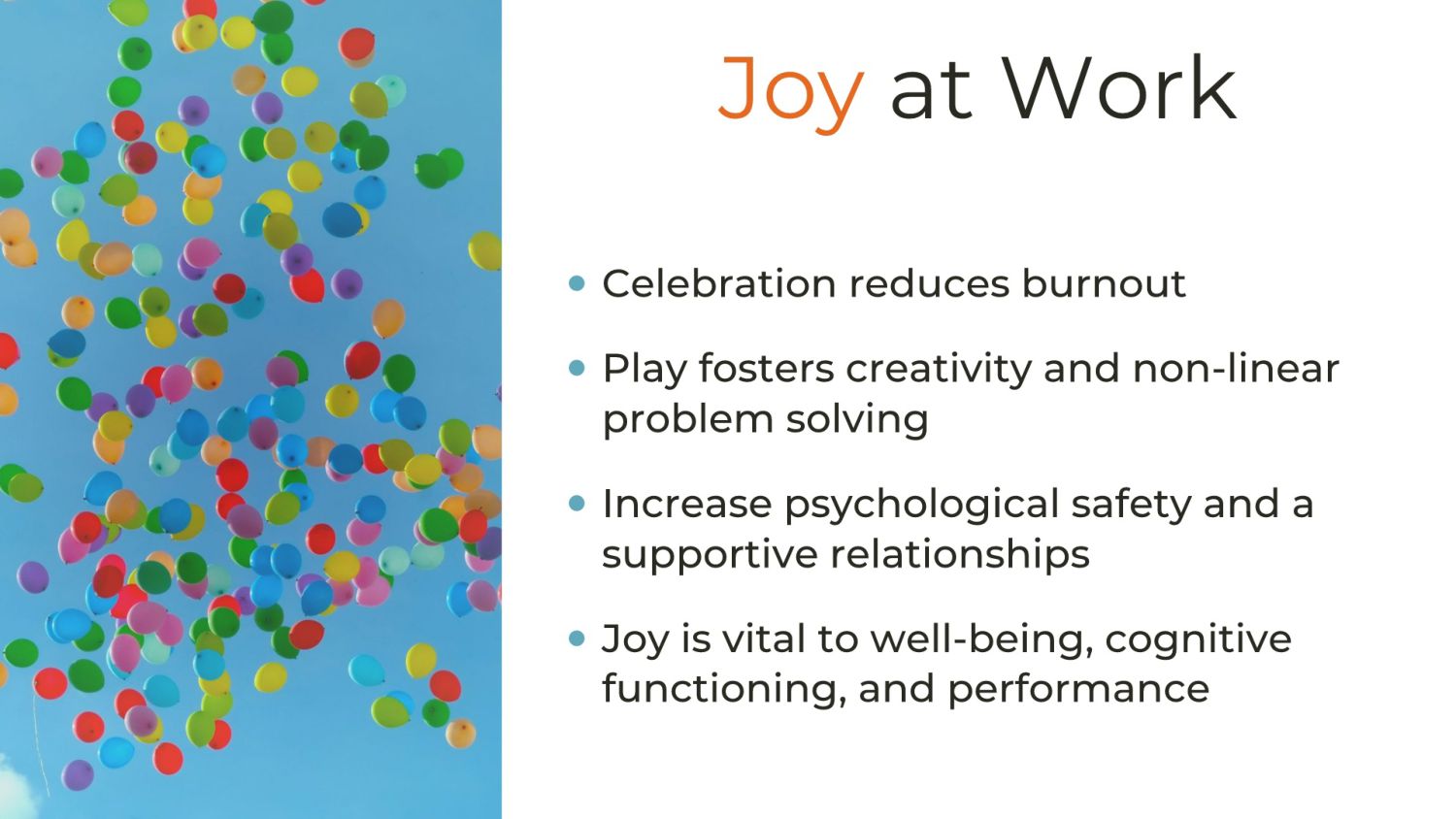
For example, celebration reduces burnout. Burnout, of course, is a term you're all very familiar with and many have experienced. But one of the key drivers of burnout is a sense of continuing to work, work, work without these clear benchmarks of meeting your goal, and then those goals be acknowledged and celebrated.
So how do you really deeply celebrate as a team when that launch goes off on time or when something goes well, when you have a wonderful success? Those moments are important. There are times to be creative. There are times to be really thoughtful.
And, again, that opportunity to lead with the best of your humanness. How do you party well? How do you party intentionally? Things like play, which is the sort of activity of joy. How do you play at work? How do you invite your team members into nonlinear activities?
Because those are wonderful opportunities for problem solving, for creativity, for shared experiences between team members that bring that sense of lightness and trust. We know that joy increases psychological safety. Right? It's really vulnerable. So if you can be joyful next to somebody else who's joyful, you have this shared sense of, like, being in this wonderful emotion state together.
And it requires trust between you to both feel joyful together. So if you wanna think about team building, you know, a lot of us do these team building exercises that maybe are a little bit silly. You know, if anybody's ever done the practice where you have, like, paper cups and spaghetti noodles, and you have to build the tallest tower, or people do trust falls.
But we do these things that get us in our bodies and get us playing in a nonlinear, not super outcome oriented way because it creates some joy, some shared experience. So joy is vital to well-being. It's vital to cognitive functioning. When we are working with the same emotion states all the time, the neurons in our brain kind of act like little, you know, little connections conducting down a train.
And when we have a limited range of affect or a limited range of emotion, we're using some of the same neuronal paths over and over all the time, which is some of what contributes to burnout. Essentially, it's a repetitive stress injury. You're doing the same thing with the same emotion state over and over and over, and your brain gets tired of it.
Your brain's like, this is boring. So I'm not saying that you wanna live, enjoy all the time. Your workplace can be serious. You can be driven. You can be very goal oriented and work very hard. But sprinkling in some experiences of joy, being joyful yourself, inviting folks into joy is a lovely way to kind of jump start your brain, prevent burnout, have a little more fun.
So we've talked a little bit about these edge spectrums, grief, joy. Let's come back to the middle, to the center point, to equanimity, to baseline, to homeostasis. One of your superpowers as a leader is your ability to be emotionally present at work to your team.
And this is not always easy because, of course, there's a number of humans you're interacting with, each of whom have their own, as we identified, very complicated set of emotions that can happen in combinations and happen in different intensities. So you might interact with lots of emotion states in one day.
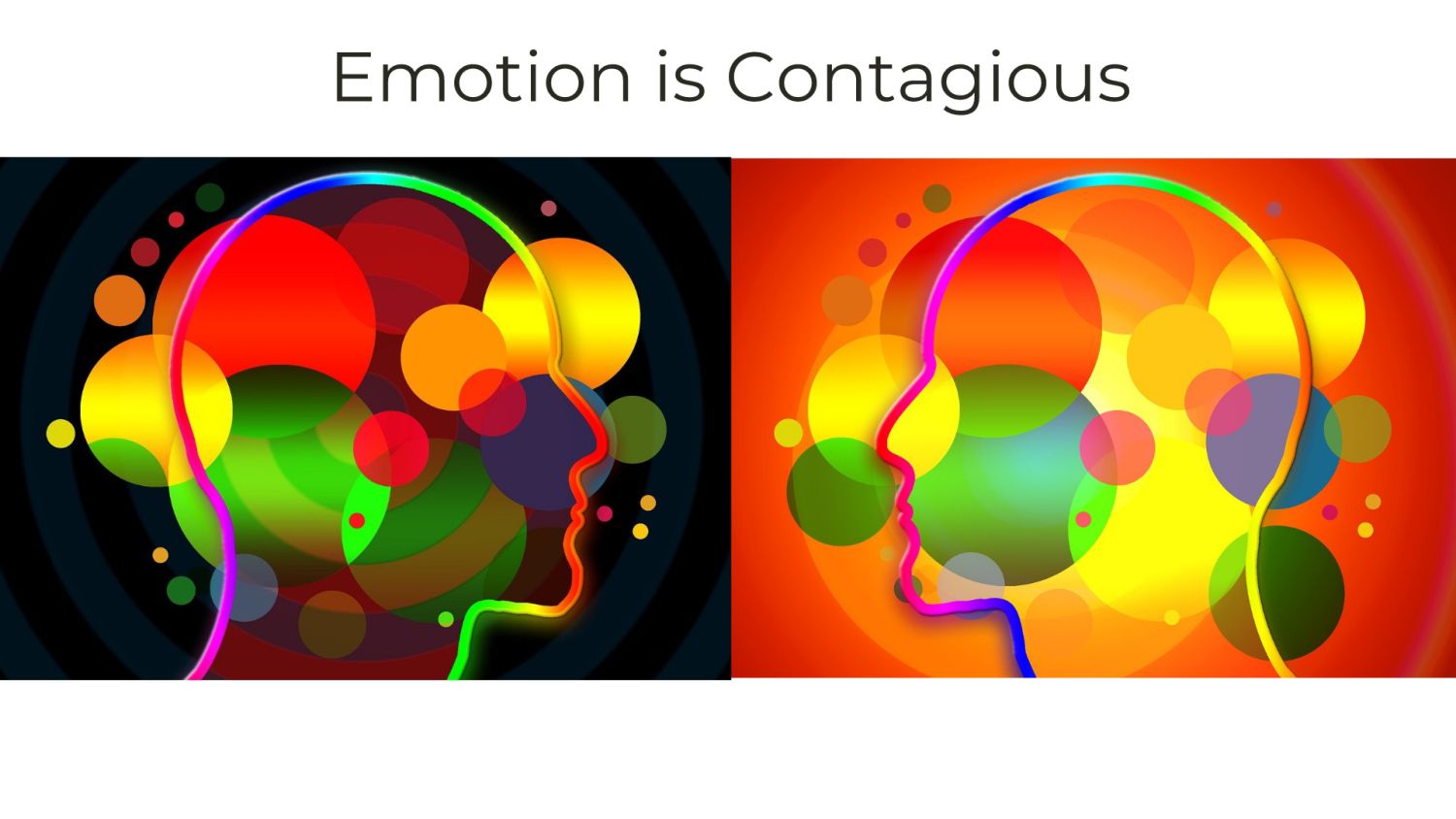
And then, of course, there's your own humanness and your own emotional life on any given day, in any given hour, in any given moment. One thing that I want to remind you or tell you for the first time is that emotion is highly contagious.
So if you can show up in your team as a leader from a place of calm, equanimity, of open heartedness, of kindness, that is a superpower. It's kinda like in Star Wars when they use the force. It's like these are not the droids you're looking for.
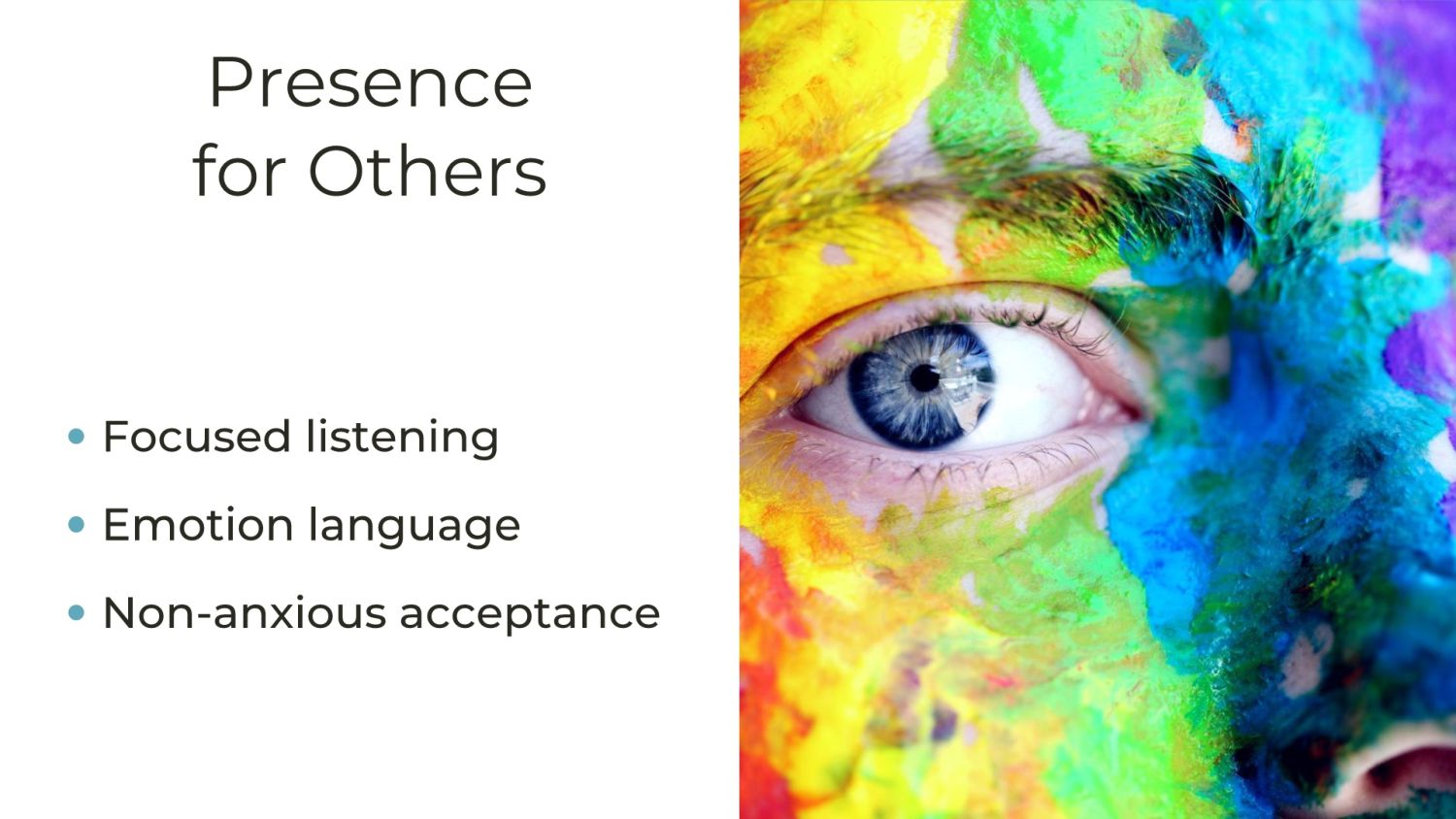
Your emotional presence is like that. The way that you show up will shape how the other people around you show up. So no pressure. Don't have a bad day. Your ability to be present for others has very much to do with your capacity to sort of dive in and to listen, to hear their emotion state.
One of the things that as a psychologist, I'm always doing is something that we call content and process. Content is what is being said to me. You know, I was born. I got a dog. I got a cat. Like, the story. It's the narrative. So your team member may be checking in.
I had this conversation with the marketing team, and then we went over and talked to, you know, whatever, the printer. My examples aren't very good today. But underneath that, underneath the story, underneath is the process. It's the feeling. It's the what's going on under the surface.
And I don't expect you all to be doctoral level psychologists when you're listening to your team members, but be always be curious about the process. What's the feeling behind what they're saying? Why are they saying it in this way? It's an extra level of active listening to not only understand what's being said, but the thing that's underneath.
I would also say, as very human leaders leading other humans, bring a lot of emotion language into your conversations. Ask your team, what's bringing you joy today? Which of all the things on your to do list is most joyful? Is there anything getting in the way of you showing up at work today?
What's going on underneath the surface? Realize that when people on your team talk to you about emotion, you can hold that, look at it, observe it without having to take it on. I did tell you that emotion is contagious. But once you know it's contagious, you can put up like a shield, the sort of blocks, and say, okay, this person is having this complicated emotional experience today.
Because this person is in grief, or this person is in anger or frustration, it doesn't mean I have to be too. I can observe, be curious, be accepting without having to sort of take it all into myself as well. Does that nuance make sense?
You know, when you're sitting with someone and they're they're just venting, they're expressing, and then you leave the conversation, and you're like, well, I'm mad too. And you can't really like, why are you mad? You don't know. You just you caught it. So being really aware of how to sit with emotion with a non anxious acceptance, Just an observation, just a curiosity.
All of that, of course, requires you to have a deep capacity of presence with yourself, which is probably the trickiest of the superpowers. Right? Something that we're all always working on through the duration of our lives is to be self reflective. What's my state? How am I feeling?
What's going on inside of me that might be showing up in my work today? Simple practices, like starting your day with a one sentence, how I'm feeling today, ending your day with the highs and lows of your day, little moments where you check-in with yourself and think, how am I really?
What's my state? What's shaping how I'm showing up? Honoring your own humanness is not weak. It's not soft leadership. I hate that we call them soft skills. It's a deep, profound skill to be in touch with yourself in a way that you can then wield that power to show up well for others.
Because bottom line, healthy companies come from healthy people. If you wanna be on a team that executes efficiently, works together with minimal conflict, is respectful to each other, is cohesive, all of these beautiful components of leadership, So amazing to watch them when they fit together and to be on a team like that.
Then you have the invitation to do the work of being a very sort of deeply in touch emotional leader who's very human, who is comfortable at these edge states, has some capacity to tolerate conversations about grief, has the playfulness and lightness to live in some joy, but can find the center point, can get back to presence, can get back to one's own sense of equanimity.
Sound good? Alright. Thank you very much.