
Sherry will share her experience of building boards that support growing businesses, and talk about how a good mentor can be an asset to every entrepreneur. As your business grows, the requirements for board support and mentoring will change, and Sherry will travel this journey from start-up to scale-up businesses.
← All talks 


Lead Strategy Turing Fest 2017
Startup to Scale-Up: Getting the Support Your Business Needs
Auto-generated transcript - may contain errors. Tap a timestamp to jump the video.
Thank you. I did not threaten him. But I do want you all to sign up to Founders for Schools. And we've put up a special thing, Founders for Schools slash Turing, so that we can track how many of you have signed up as a result of this.
And then next year, we'll report back on how many children's lives you have changed. And that's one of the things that I love about technology. You can the accountability and the transparency is pretty fantastic. So, Brian was very clear about what I was to talk about, so I know that I'm going to somehow get some sort of struck by lightning if I don't speak about these things.
So we're going to talk about mentoring, advisors, and boards, and really thinking about what you need to, as you grow from start up to scale up to large corporate that's making acquisitions of other scale ups and start ups. And I understand that this is an earlier, an early stage.
So hands up if you're in a start up. Okay, and hands up if you're in a scale up, which means you've been growing for twenty percent for two or three years. Cool. And hands up if you're in a large corporate or a professional services firm.
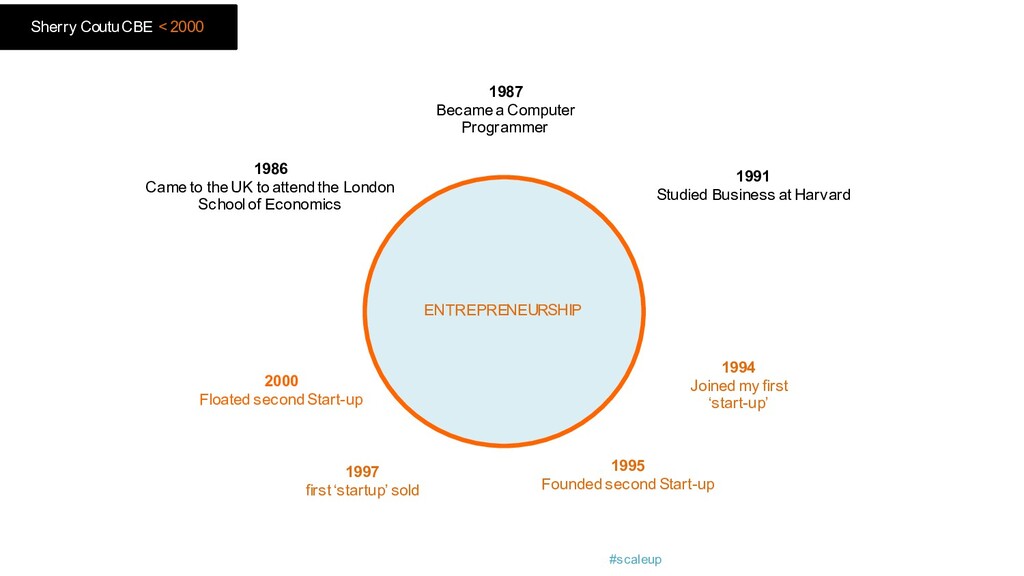
Oh, I'm going to have fun. Okay, cool. Brilliant. So a little bit about my background. It's a Canadian accent that you hear, and I originally came over here. I was one of these sort of, you know, students that came over a long time ago, and I went to go to London School of Economics, and then I became a computer programmer because that's what you do after you're getting an economics or an econometrics degree.
Not. But I met some entrepreneurs who were doing really, really cool stuff, and it made me excited about that rather than what I had studied, and that's not that unusual for an entrepreneur. Joined my first startup in nineteen ninety four, and that was really quite fun.
Founded a second startup in 'ninety five because I started doing something simultaneously at the same time, and being a parallel entrepreneur is not as good as being a serial entrepreneur. So try to resist the temptation of starting several things at once really is quite painful and doesn't work for anybody.
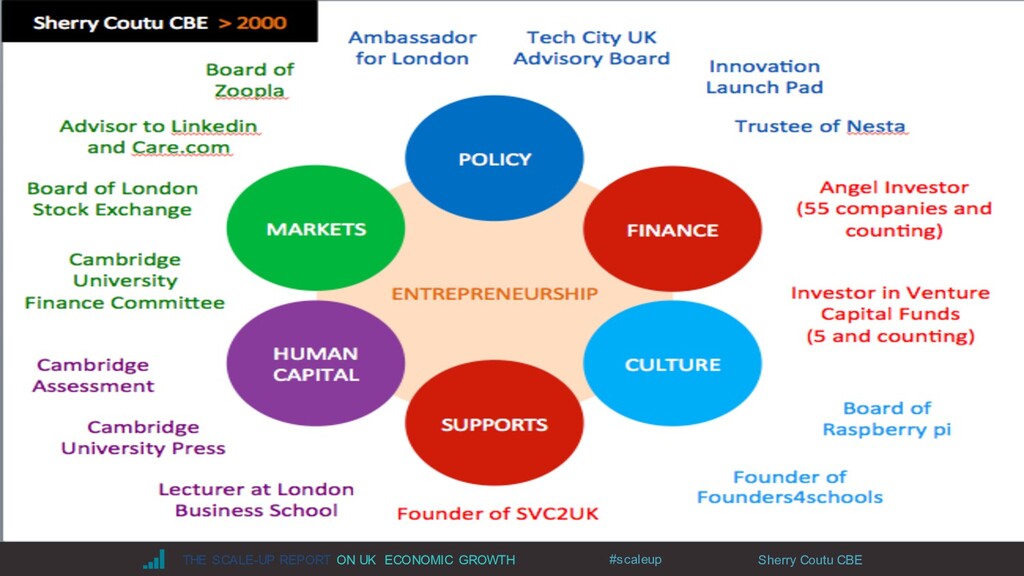
And then I've sort of sold and floated to some others. After that, I sort of all went very portfolio for a while, which was quite confusing if you look at it, but that's quite a lot of years. But I've got this sort of blobs to show the different things, the different directions that you can go after your first start up, or maybe after your first and your second and your third start up.
And some of the things that I've done is sort of played around in investing, and I've sort of got, I think, fifty five companies and counting at the moment. I'm an LP or investor in a bunch of venture capital companies, not only in this country, but in some other countries.
Bordeaux Raspberry Pi, which is in education and technology, and I hope you use them, if you have young children, they use them. Founders of Schools you talked about, SBCD UK, all about entrepreneurship and technology one way or another. And then over on this side, there's a lot about education as well.
And what I love about Cambridge Assessment and CUP is they have operations in one hundred and forty five countries. They've got quite complex businesses at scale in a number of countries, and I've learned a lot from being an advisor and a board member on those companies, but they're very, very different than some of the startups and scale ups that I've been on.
And what I'm going to try to talk about is how you get the best or how you don't get the best out of advisors and mentors and board directors in all of these different circumstances, so that when you go through this same cycle, maybe a nugget might come back to you at some point.
Board of the London Stock Exchange, which is quite interesting, and also chair their technology advisory group, and that in particular is trying to make sure that we do enough business and procurement from startups in our space, so that we're a good corporate citizen to this to the startup space and the scale up space.
So if you've got anything in financial services, can come and talk to me later with that hat on. And Care dot com and Zoopla, anybody move house or have used Zoopla here in the audience ever? Okay. Good. I was the first angel into Zoopla, and I knew Alex Chesterman from his love film days.
So for me, he's like, oh, I'm thinking about my next, you know, my next sort of start up. It's like, well, I'm just totally in, And that's been very good, and I was an advisor to them for the first six years. When they decided to float, they asked if I would join their board board of directors as opposed to board of advisors, and I did.
And I did it almost to make a point that many people think of exits as when you enter the stock exchange, it's like, that's an exit. And many angels think of that, and certainly VCs think of that. But, you know, when you're on the board of the stock exchange, think that's when they enter.
And I liked the idea of joining something that I'd been the first angel into that haven't been on the board of to take it to its on its next journey. And it's now at one point six billion market cap, though I like to measure turnover way better, way more than market cap, as you'll hear later.
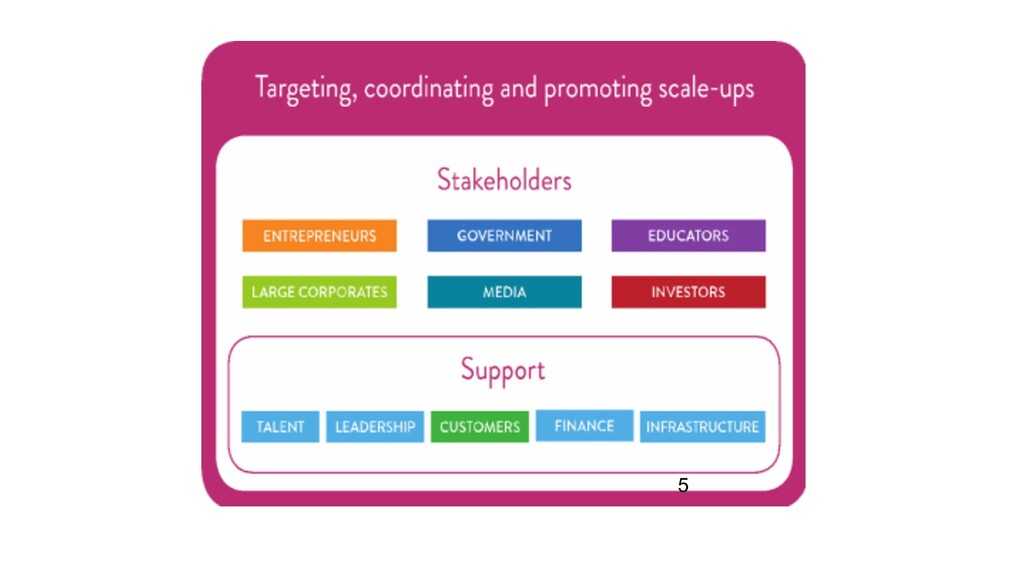
One of the things that I didn't think about that much when I was first starting out was how much it was an ecosystem play when you're in technology. And so I just thought I'd put this up and sort of talk about, you know, to make sure that we all scale and the diversity of what you're going to want and your advisors and your mentors and your board directors is different aspects of a bunch of different parts of the ecosystem.
So if you don't have anybody from the government, but you need to sell the government, you might want a mentor who has been there, or an advisor or board director to be there. So when you think of diversity, I will talk about diversity not only in gender and culture, but also thinking about different bits of the ecosystem and what you can learn from them, and what you need to learn from them in order to scale really quickly and really, really, really far.
I'm going talk a little bit about some of the some of the mentors that I've had, and they're back over here on the screen. My mother, believe it or not, I consider her a mentor. Father, Jean LaPonce, this is the lady that convinced me that I would be an entrepreneur, that that was the right thing for me to consider.
It was that man who actually well, actually, he convinced me to be an entrepreneur, but it was her that made me think that I could be one, as opposed to just being told that I was one. And then on the far right hand side, you've got Lucinda, who I adore.
She's one of your entrepreneurs, one of the Scottish entrepreneurs, and I met her quite a few years ago when she was just starting to scale up Genius Foods, which is again an interesting company. I think one of your success stories, though not pure tech.
Although I tried to convince her that she was a tech company because she was using it quite a lot of it. She still didn't see herself as a tech company. Something that I think we should all bear in mind and the difference between a startup and a large company or a scale up, and because there's a huge amount of enthusiasm for starting things up, and just if you look at of all of the companies that get started up, so you have your cohort of all the companies in a single year
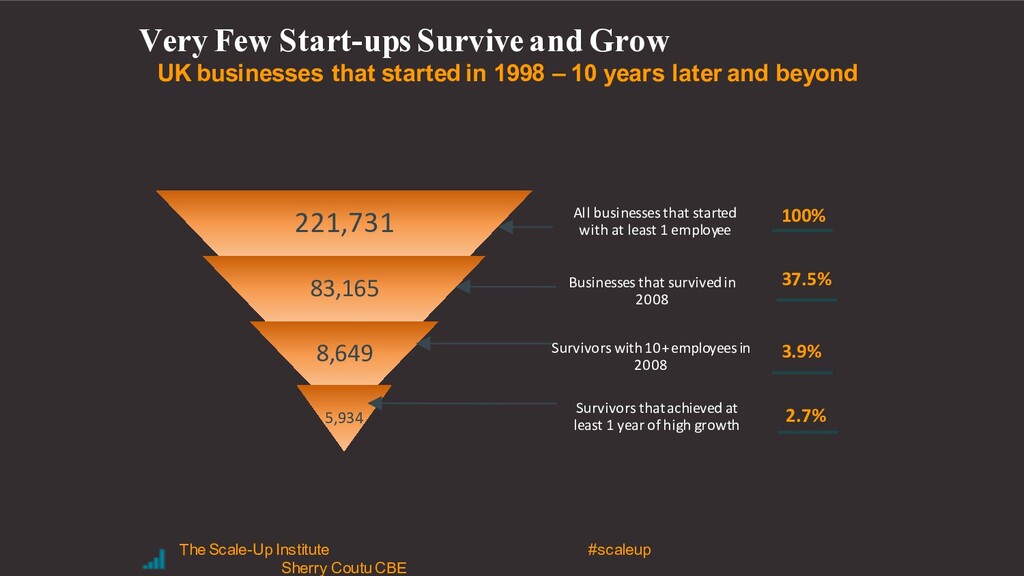
that start up, and then you want to know, well, in ten years, where where are they, and where have they gone to? And so this is just an academic study that shows that, you know, the survival rates of the cohort is about thirty thirty seven percent.
If you look at of all those companies started up ten years ago, how many actually even get to ten employees? You're down at four percent of any given startup population in any given year. And then if you go down to those that not only got to ten employees, but got to ten employees and got at least one year of growth exceeding twenty percent, your data two point seven percent in in the UK.
And if you go further and you talk about this, you know, scale up companies, which is two years of consecutive growth and more than ten percent, sorry, and more than ten employees, you're at point five percent of the business population. So think about whether or not you're going to learn more from a start up or a scale up.
There's also some fascinating research that talks about learning if you're an employee of a startup versus your productivity and learning if you're an employee of a scale up or a company that's growing. And the percentage difference, which again has been peer reviewed as well, is that the productivity of a person who's been in a scale up is something like twenty two times that of somebody who's only ever worked for startups.
So if you can join a scale up for some period of your life, you will learn a great deal good things and bad things. And bad things are even better than good things to learn because they're far more poignant and they they help you, you know, pain is a good a good thing to learn from.
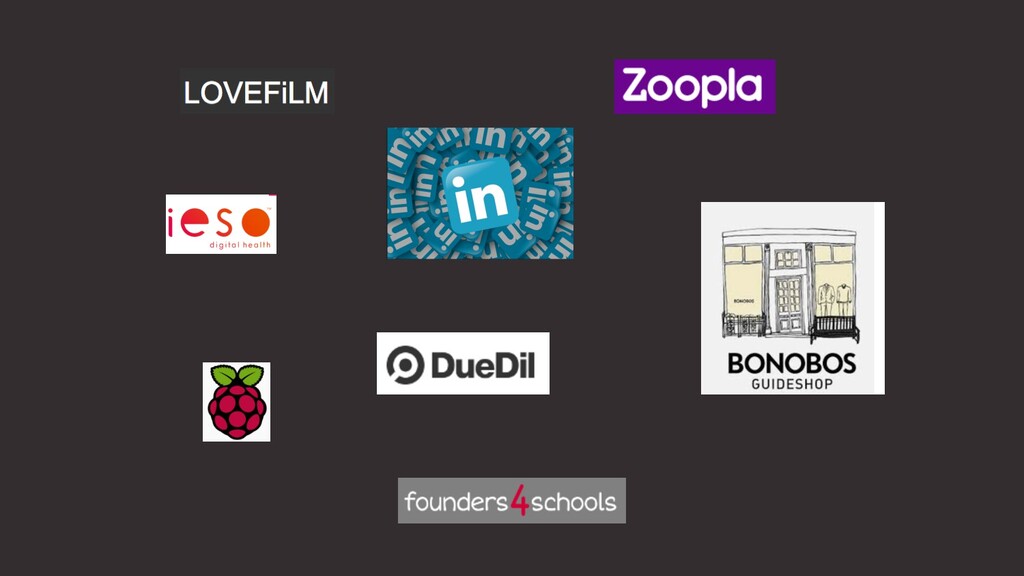
And sometimes we we forget that. So I think you should think about that. These are some of the scale apps that I've been involved with, and it's been quite fun. So, LinkedIn is probably the one that you know about the most. I joined them when they're I think they had one hundred and twenty employees, and their market cap at at the time was about two fifty million, and you'll know that they sold recently for twenty six billion to Microsoft.
Supplies mentioned already Bonobos, I put them on there. They are a tech company, but also they produce clothing for men. And they just sold recently, founder schools mentioned, DooDill, which is a small company that allows investors to do due diligence on small and medium sized companies that are growing quickly.
Raspberry Pi, and Aeso is I like that one because it's in health it's in health care. And they've cracked how to sell to the government and the NHS, and selling to the government and the NHS in mental health in mental health technologies is not at all simple, but they use technology in a super super super smart way that I think is really really exciting.
And what I'm going to try to do is talk about how each of these I'm going to take stories from each of these about how they've used advisers, mentors, and also directors. And I want you, hopefully, by the end of in the next twenty minutes to know the differences and the nuances between mentors, advisors, and directors.
Because if you can, you know, once you've grasped that, you've got really effective amazing levers in your hands that you can use as great growth hacks. And great growth hacks will make growth and scaling really simple. And my objective really in some ways is to make sure that the number of companies in Scotland and certainly the UK as well, grow far faster that are scaling up.
I feel pain when companies get ten employees, and they've got a great product, and they don't grow further. I would like to make it really easy for all of you who are running your own companies or working in them to keep on growing them.
And I think that your one of your secret, one of your secrets to that will be how you use mentors and advisors and board directors. So can't really not have a picture of a unicorn. I don't really want you all to be unicorns because I think measuring by valuation is wrong.
But it's useful and people like unicorns, so I thought I'd put something on the something on the page. If you survey the companies that have scaled up, or not the companies that have scaled up, let's be personal, the leaders who have been responsible for scaling them up from startup to scale up.
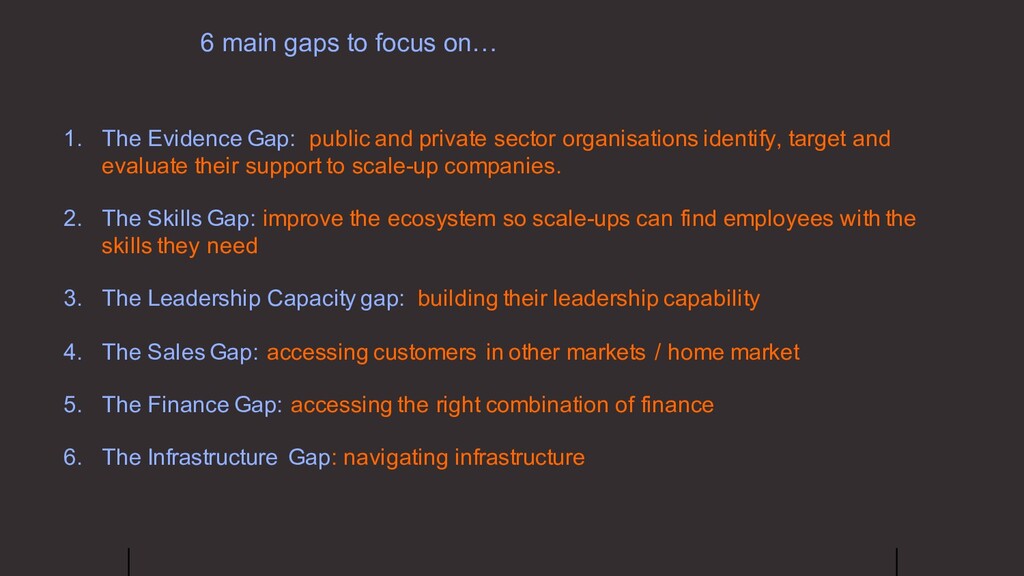
It breaks down into six different categories of what given that they're very ambitious and they've already been growing for years, what they we know what's preventing them from growing further. And it's kind of simple. The first is that people think that they're a start up and they think, well, you're going to feel like ninety eight percent of everything else, so I'm not going to pay attention to you.
Or, oh, you're already started up, you don't need help, because it's really simple once you've started up. So the identification and even empathy with somebody goes a great deal. Eighty two percent of companies complain that they could grow faster, they could accept additional customer orders if they had the skills that they could hire to fill those orders.
So the skills gap is a very real and excruciating pain in the UK, and that's why you should go sign up to Founders for Schools at the end of this. Seriously, it's a real issue. The third one there is leadership capacity. And if you again go back to ninety eight percent having not had more than a year of fast growth, your ability to tap people who have had that experience and your ability to learn quickly how to deal with it yourself is constricted here, and it's harder than it's harder than you might seem.
So what can we do and what can you do to get over the fact that you don't know how to do all the stuff that you need to do as a leader of a small company that's growing quickly? And part of that is advisors and board.
Sales gaps, selling to corporates and selling to government is usually really very difficult. So understanding how to do that. Finance is not at all the most important thing for growth. It is an important thing, but if you can't crack the first three, then you're kind of stuffed for the finance, and and as an angel you're really stuffed if they can't crack the first the first three.
And then infrastructure isn't something that you deal that you suffer with particularly here. So if I'm going to sort of think about what the stories are is choose a big enough problem. And sometimes you might focus on that, but if you're thinking about a mentor, you would I would advise you to think really hard about a mentor who's gone really really, you know, really very far, and who's going to push you to solve a bigger problem if the problem that you've started out trying to solve isn't big enough.
And I think that you should also, if your problem isn't big enough, you should get rid of it and just try something that's a bigger problem. We've got enough really big bad problems. And the thing that I love about choosing big problems to solve is that the ability to get advisors and mentors and directors to come join with you in a team to defeat this nasty thing that you're trying to solve.
It's so easy. But if it's a little problem that nobody recognizes, then it's really hard to get a team of talent around you, and what you need is a team of talent around you. So the first thing, if they're saying a stopper is choose a big problem and surround yourself with other people who have conquered difficult problems.
Because if the problem is hard, you don't want to surround yourself with people who have not tackled really difficult gnarly problems. You because they might give up, or they might tell you it's all too hard, but you want people to push you because you might feel alone some days, and you might feel like giving up, and you don't want people around you to feel like giving up.
Unless, of course, the problem is too small, in which case you should give up and you should choose a bigger problem. I think embedding yourself in the right network is really important, and I know that we are here in Scotland, but and in Edinburgh particularly, your network for your big problem is probably greater than and outside of this city.
And so you shouldn't restrict your mentors or your advisors or your board directors to your immediate geographic vicinity because you might suffer from what they suffer from in Silicon Valley. They're in an echo chamber there, and often they don't really know what's going on in the rest of the world.
If you're on a tiny small island like this one, you really want to make sure that your advisors and mentors are going to connect you to the rest of the world so that you can help sell they can help you sell your products in China, or in India or in Canada or any of the other markets you might want to sell in.
But if you surrounded yourself by people who haven't thought in other markets and operated in other markets and where it's not second nature, then you might find yourself constricted if you really do get that product market fit, which we were talking about earlier today, which is super important.
So think really hard about your definition of right network. What does that mean? What does it mean for your customers? If you're focused on your customers, where is your customer's network? Who understands them? And then that ecosystem graph that I sort of put up there earlier, do they work for the government?
Do they work for a large corporate? Do they work for an advertising agency? Do they work for the media? Who do they work for? And it's probably in most cases companies will need to interact with each part each of those, and you might want to put together a matrix or I always put together matrices because I like thinking in matrices.
They used to call me Matrix Cotoo, which is a bit sad. That was before the movie The Matrix. Much before the movie The Matrix. But I think being thoughtful about who you surround yourself with rather than accidental and opportunistic is probably good advice.
And this is probably one of my biggest bugbears. Sometimes you just want to solve pain, and you think, oh, I really need somebody to do this, and you know what this is, you're very clear on what this is, and you can just take the first person who's presented to you, hopefully through your network or maybe through a great partner, advisor, or something else, but you really need to think forward one, three, five years.
Because if you pick someone who has done this before, but you're growing at twenty, fifty, eighty, one hundred, two hundred percent, and that's all that's they're at their peak and they haven't gone further than that, then they will constrain you or you will find yourself constrained, and it's much better if you're looking between two candidates to push yourself a little bit harder, even if it's more expensive, even if they challenge you more, and they will challenge you more, but you actually want them to challenge you more.
And I think be that a mentor or an advisor, I think it's really critical. When I was recruited to LinkedIn by Reed, that was before they had any operations outside of America, and they had lots of users that were adopting LinkedIn all over the world, but they didn't have any outside operations.
And prior to that, my companies had started up and floated in and had operations in a bunch of different countries. And having set up operations a number of different countries, he was interested in the lessons that I could particularly help him on how to expand globally outside of a single country, and they hadn't yet made that made that transition.
And that was at the start of the journey when I joined LinkedIn, and that was why he wanted me as an advisor. And that's really helpful. When I was at my first company that floated, I wanted people who had been at really big asset management companies, because we wanted to sell to asset management companies.
So, and again, we sort of again got one of someone from, again, of through the network who had worked in asset management and was interested in how disruptive asset management was going to be. So they were curious about what the future would look like for ten years because they were a little bit fearful because they were an incumbent.
And they were very interested in joining a disruptor. And that's very much in your favor if disruptor and you are growing quickly. It's going to be pretty easy to get some ambitious person who's thoughtful about the, you know, where incumbents might be in ten years time.
You just need to ask because they will if they're curious people, they will be they will want to be around you. They might not, or they're almost certainly not going to want to be on your board of directors because it's they would they that presents them with a conflict.
But it would be very easy for them to join your board of advisors. And that is the right place for them. And you can interact with them once a quarter, you don't tell them your company secrets, even though they like to know them so that they can take them inside for their being incumbent and convince, you know, stop themselves from being eaten up by the likes of you, you know, the disruptors.
But think about who you want as advisors and who you want as board directors. On the it part of it before, if you are a fast growth company and you think there are a hundred million customers for your your product or potentially that many, that might mean that you might have to raise finance a number of times.
And if I put my investor hat on, there have been many occasions where my heart was breaking when I had a fabulous entrepreneur in front of me, and they brought with them a really ill advised, well meaning person who was their chairperson, who had never got financing for a company, had never been at a company during its growth stage.
They maybe they were I don't know what they were they were sort of professional services background or whatever, and there's nothing wrong with professional service background, but if you need someone to help you raise finance repeatedly over and over and over because your company is very hungry and is growing, it's much better to have somebody join you with that on your journey so that they can help you do that.
And if you surround yourself by people who are interested and curious, but who haven't done it before, then you find yourself with chains around your ankles. And it's very painful because you're getting, you know, you as the entrepreneur, you you are getting poor advice because they just don't know, and their networks don't extend into other people who know either often.
So be really, really careful who you choose as a board director because it gives all sorts of signaling to others, and it will also once they are a director, it's very, very hard to undirectorize them. Very, very hard. So you want to be very thoughtful, particularly with directors.
Be more careful with directors than you are with advisors or mentors. Again, think always about tomorrow, not today. It's too easy to think about today, but tomorrow comes very, very quickly. And that again, think about not the problem you're trying to solve today when you're thinking about mentors.
And on mentors, I think you should have, let's say thirty. Just to be provocative, a mentor isn't somebody who you sign up to have be at your side. That's kind of a coach, and you pay coaches. But mentors are other curious people that are interested in the industry reconfiguring around you and around them.
And they are somebody that usually you get along with. I probably have seven or eight mentors right now, and I've certainly had north of thirty in the last thirty years. And I have no idea where I'm going to be in the next ten or fifteen years, but I can tell you I definitely need mentors still today.
So think really hard about, you know, you're probably pretty good at where you are now, but if you've got glimpses of where you might be going in the next five to ten years, either as a person or at the the you know, on the helm of your company, or maybe you're thinking you've been there eight or nine years and should I be going portfolio?
Should I be selling? Should I be floating? What should I be doing? Talk to other people who have done that before because it will help you, and they'd be very happy for that interaction because they felt lonely when they were at that stage too, and they had questions that they didn't know who to answer or who to ask.
And I wouldn't be fearful at all about about that. Embrace diversity, but a diverse of diversity. I think that gender is very important. I also think thought is really, really very, very important. And depends on which part of the ecosystem that they have come from before, they will have a very different view.
And surrounding yourself by people who look like, smell like, think like you won't get you anywhere, Or it may get you somewhere in a sprint, but in the marathon that you will want to be on, you're going to need that diversity. So I would just encourage you to think about it broadly, and it's really important.
I'm a hopeless sort of entrepreneur, but also optimist, and I actively look for people who see glasses bone dry because I see them more than half full because they're always half full. There's always a way to get around that barrier, whatever it is.
But it's really important, and I've always tried to make sure that I have somebody who's that doubting Thomas who just shoots down everything. And I can tell you, they're generally very annoying people, but they're really, really helpful to have around, and it's really important to have them around you.
This is a really super important one. Systems that scale. Bearing in mind how rare it is to scale, making sure and also if you're of an engineering background, I've got a sort of an engineering and science tilt to me. So I like perfection. I like things being just right.
But things that are just right and perfect, pretty hard to scale to a hundred million, if that's what your your aim is. And I, you know, as an angel investor, I probably got better at looking at this and helping people think about it because I probably suffered from it enormously when I was sort of first starting out.
But the making sure things at scale. So let's not have seventeen different contracts for every possible conceptual type of market segment that we could have. Let's have one. And let's just make it right for for everyone so that it works, and you don't have to rewrite it.
And then when you're acquired, you don't have to if you are acquired, you don't have to rewrite it. And it doesn't require seventeen different sets of lawyers to look at seventeen different sets of terms and conditions, or any of those other things. So what may seem to be perfection can be over engineering.
It can really slow you down when you're pivoting it around pivoting around and trying to expand your product into other countries or other markets. So try to keep it really really simple. And that leads on to product market fit. Think being obsessive, and of course here is perfect to be talking about product market fit, and I think it was covered beautifully earlier.
Obsessing about getting that fit right, and then once you've got it, scaling like crazy is really really important. So if you're it's quite fun. If you're at that, I would really obsess about have we got the product market fit? For me is, are we at about twenty percent market share yet in our segment for that?
And that's when it's right to go international, and that's when it's right to start expanding other into other products. Until that you pivot around until you've got that because the is it working better than anything else and will it scale really really quickly?
And am I obsessed enough about fitting that market and getting it better for the customer rather than just moving on continually to the next thing? It's really easy if you're quite a curious individual to keep on moving on to the next thing, but that doesn't work if you want to scale.
It's quite interesting, but it doesn't work if you want to scale, and you want to end up having something really substantial that millions and millions of people are using. Which is a good segue into the next thing. We're at so the point here, we're we're actually quite a small island here.
There's only sixty million people, and I think to really grow, if you're especially as a tech, if it works here in one country, it will work elsewhere. And there's nothing more fun than getting your product used in hundreds of countries, solving lots and lots and lots of different people's problems.
And if you've got it right, and it's a flexible, good enough product, it will be. And that is very joyous to to create that. So think about going global from the first day, because that is it's a good thing to do, but it also solves a lot of people's problems.
And if you set out to solve a big problem in the first place, it's really nice to solve it not only in one country, but in lots of countries. I think board the right kind of money at the right time. You know, if they've never raised seed and you know you're going to have to raise a seed, you should have somebody, you should think hard about surrounding yourself with people who can help that.
And so I think think about the different levels. If you're, you know, if you think about now, we're sort of raising secondaries for a couple of companies that I'm on so that they can make other acquisitions. And having board experience and people around you at that time to help you smooth the next two, three years is really, really important.
So think about where you're going and what skills you need, and either as a director or as an advisor, make sure that you've got the right people around you that can help you understand this new uncharted territory that you're going into, but that isn't rocket science for some people.
So just keep on finding your rocket scientists who have done it before, and you'll be fine. And I think curiosity, I mean, it's what I love about our industry and the tech industry is you surround yourself by curious people who want to solve that problem.
What's that thing that we're trying to make happen? And if you surround yourself by that, you'll find yourself solving solving those problems, and there's nothing nothing better really. So on there, I think I've sort of got twenty four seconds left, and what I want to say is that one of the problems you may not know that you have yet is your skills.
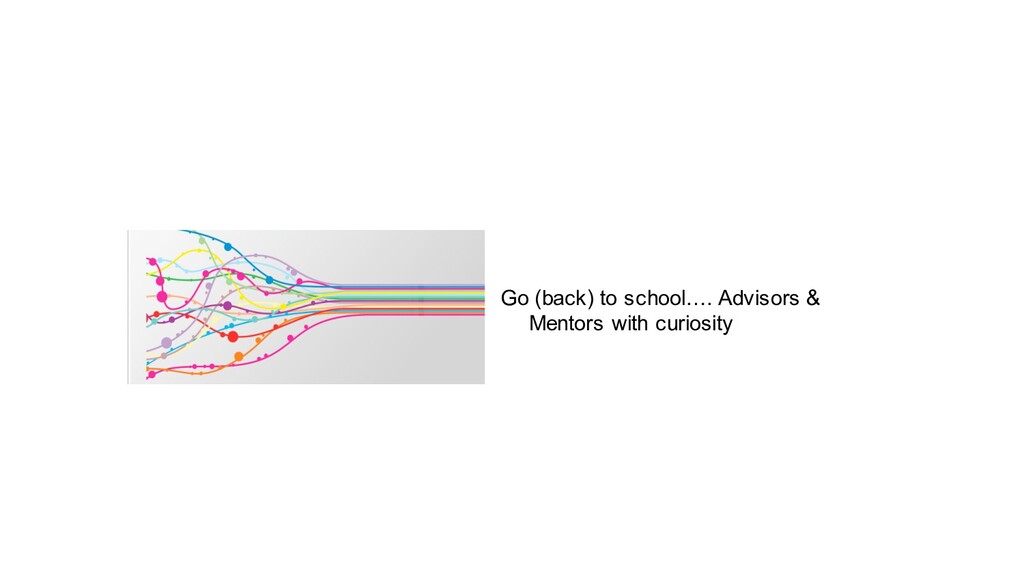
So one of the things you can do is make sure you go back to your school or a school near you if your school where you went isn't close enough, and talk to them about what you're doing in your company and why it's cool, and why it makes you feel good about the contribution you're making to society.
Because one of the things that the kids aren't hearing enough at the moment is how they can control their fate and the contribution that they can and will and should and must make to our world. And making them feel brave by introducing into real life people like you, who have started up your companies makes a world of difference.
It actually triples the percentage of them that choose a STEM subject, but it massively multiplies how likely it is that they will make decisions that will make them employable by you in order to fill your own customers', you know, your own customers' needs.
So I think that's it. I'm looking forward to not hearing your questions now because I'm going to get kicked off the stage. But I'm looking forward to the panel, and I hope that this might help some of you. And I look forward to watching every single one of you scale massively.
And every time you get a win, please drop me a line. SQ2 is great anyway. Thanks a lot.