
As paid media marketers we often pay too much attention to the bottom of the funnel and we neglect the rest of the funnel which is why advertisers are missing out on a huge percentage of their potential marketplace. During this session, I am going to show you different strategies that can be deployed for all types of industries and brands (big or small) that target audiences at different stages of the funnel. This talk will be action packed full of tips and takeaways that you can use within your paid media campaigns.
← All talks 





Grow Marketing Turing Fest 2016
Paid Media: It's Not All About the Endgame
Auto-generated transcript - may contain errors. Tap a timestamp to jump the video.
Hi, everyone. Thanks ever so much for having me here today. I was thrilled when I got asked to to speak, and I've kind of taken the presentation that I did in Valencia and tried to adapt it for the audience that's here today because a lot of the brands that were included in my talk were Spanish brands.
So what I wanna talk to you about is how you can use paid media to not just target people at the end of that buying cycle. I think when people think of paid, they think direct response. People want money off the back of using paid advertising.
So I'm trying to educate people a little bit more in how you can use the different features and platforms that are available to us now in order to help you win more business off the back of it. Paid media for search engines, social networks, and the like, it's more about money.
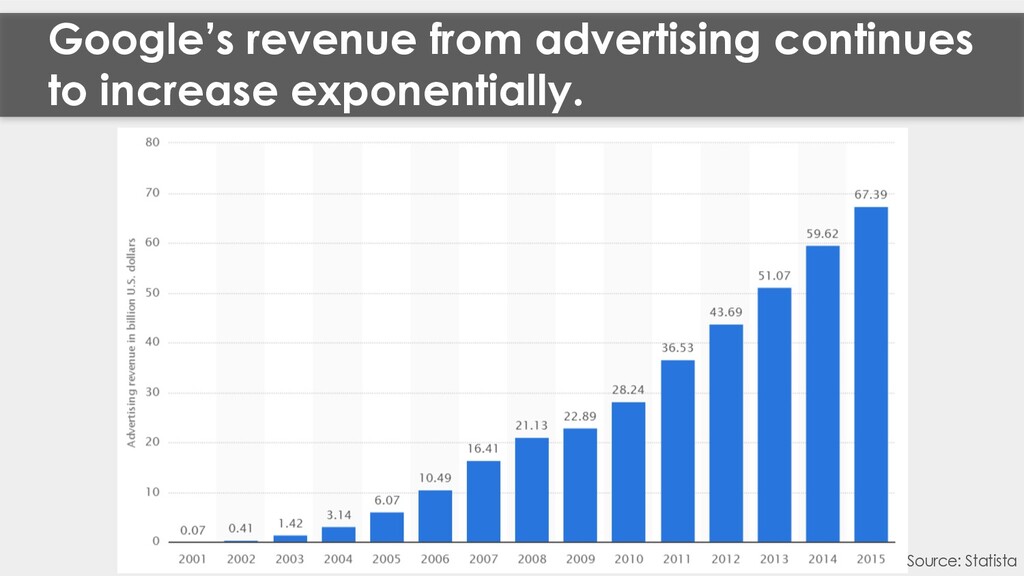
Right? They're there to actually increase their revenue off the back of this. I think we we really need to make sure that we remember that when we're when we're using the different features. And I think if you look at how Google's revenue has grown over the years, this is a fantastic revenue curve.
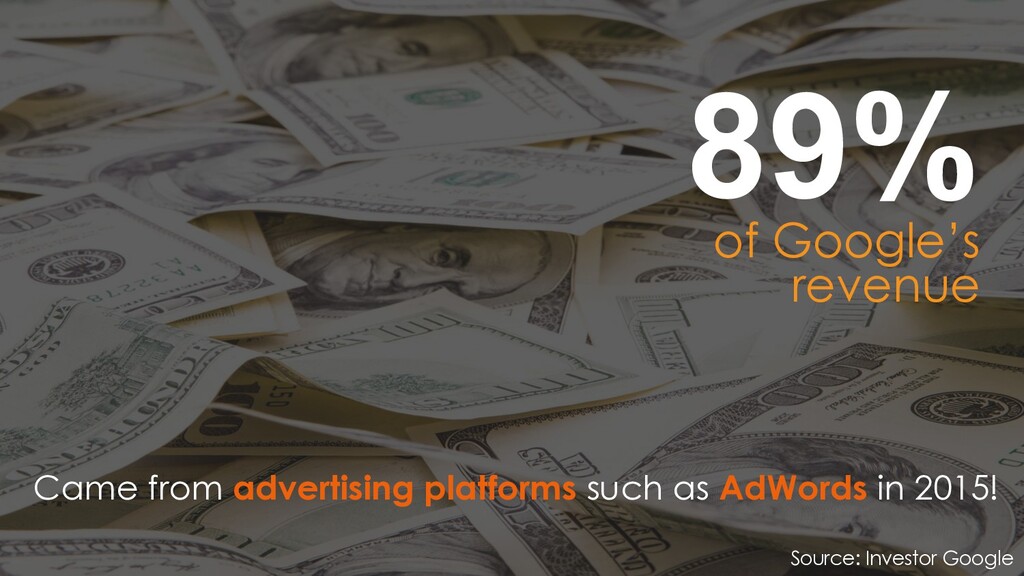
Right? We would all love one like that. I think it made sixty seven billion from platforms such as AdWords and YouTube last year. Huge. And when you work out how much that is as a percentage of their overall revenue, you're looking at eighty nine percent.
Massive amount. But in order for them to maintain that level of growth, they have to innovate. They have to keep adapting and adding new things. And I think as marketers, we need to be aware of what these features are and make sure that we're using them to the best of our abilities within our campaigns as well.
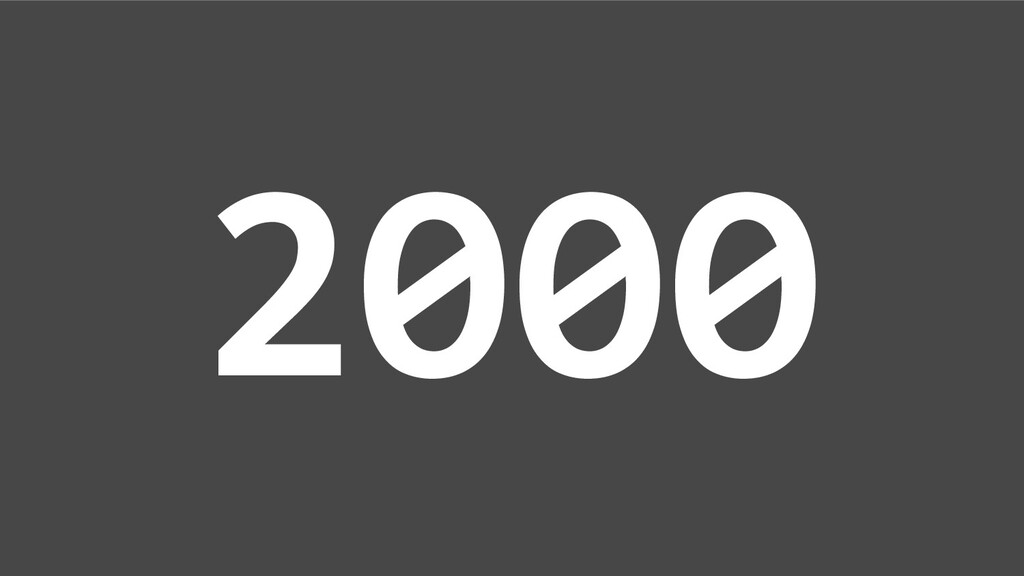
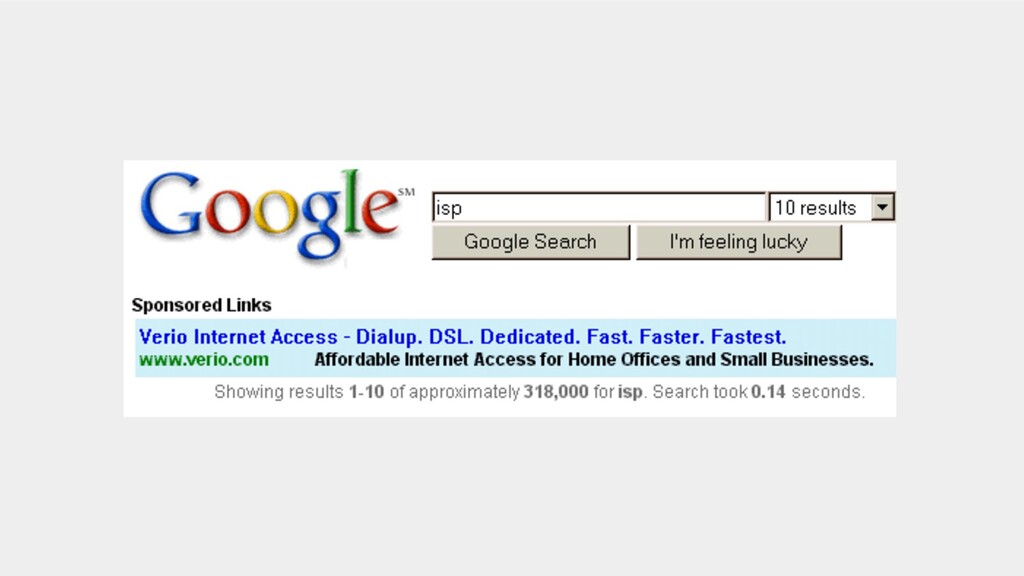
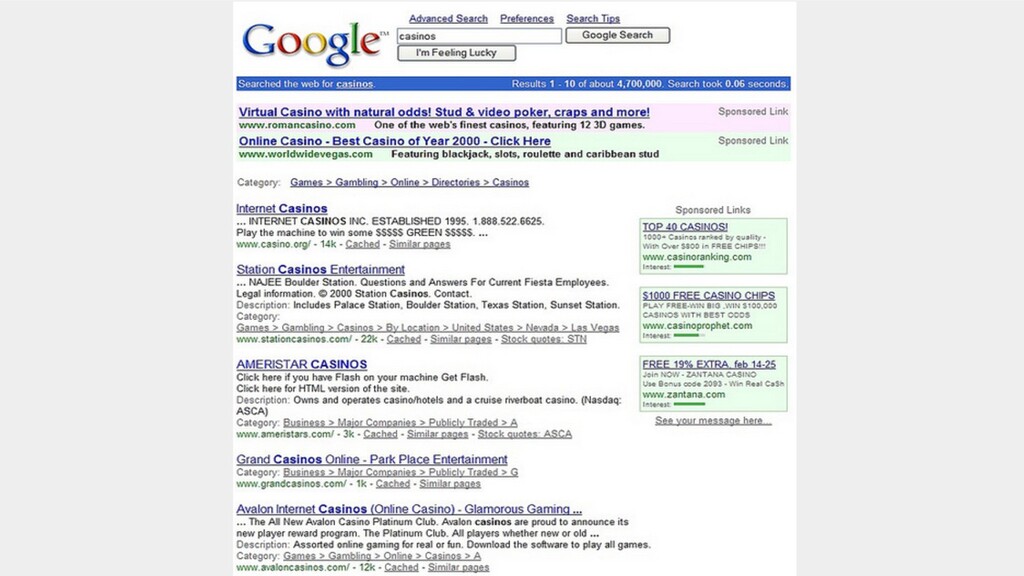
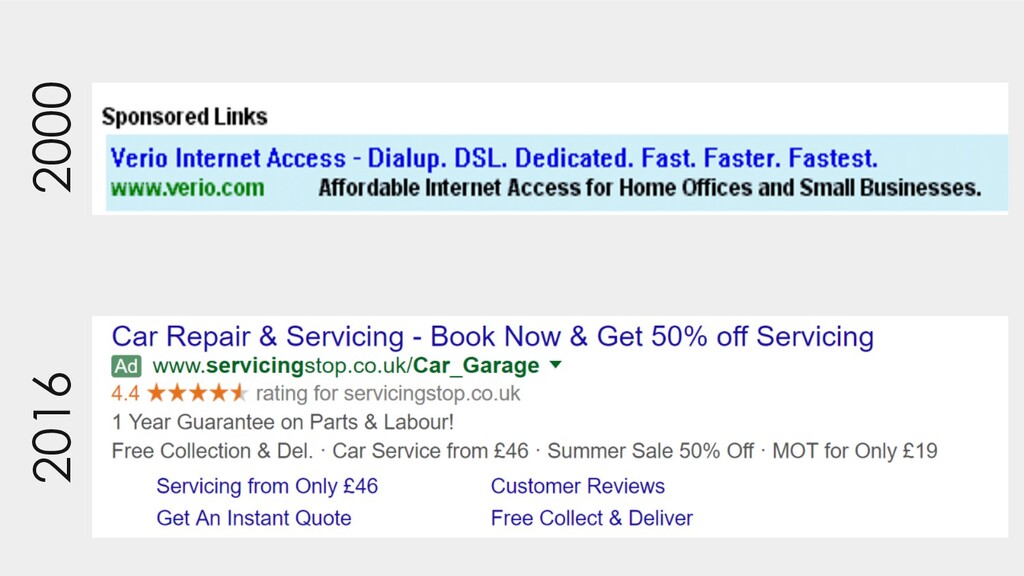
So I wanna start by going back to the year two thousand. Hands up who was doing paid media in the year two thousand. Not many. This was what an ad looked like. So there's similarities in the two when we look at what we've got today versus then.
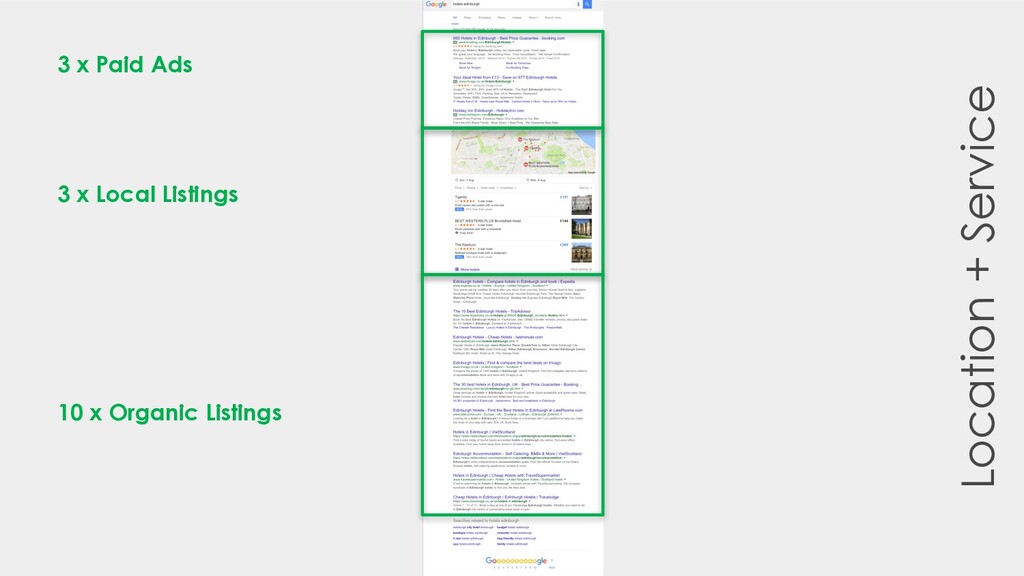
But when you look at the search results page, this has changed massively. The concept is still the same, but when we look and we'll compare some in a moment when we compare in two thousand and sixteen, there's some real big differences. This is a search that I did for a location plus a service.
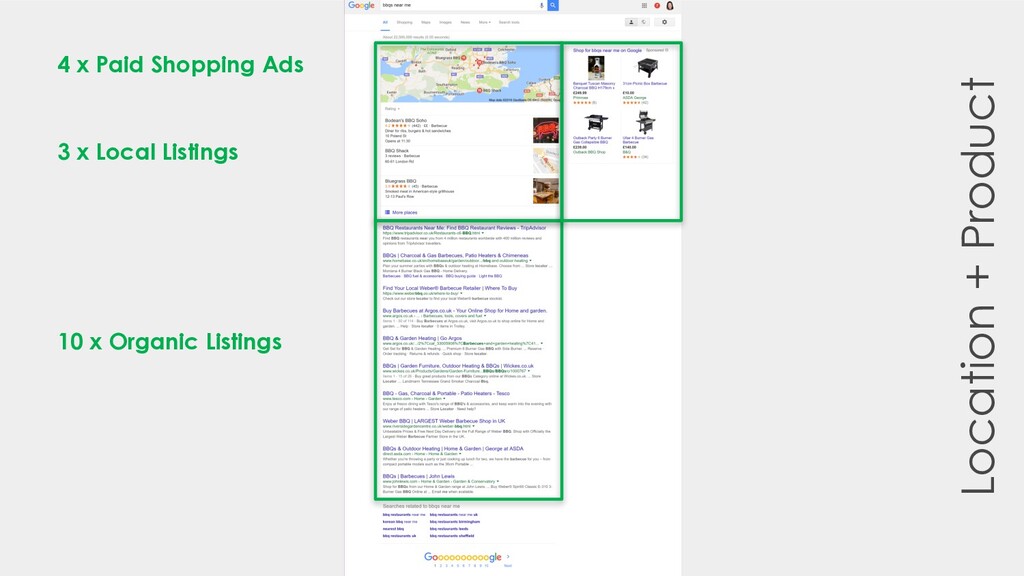
So we can see that we've got paid ads, local listings, and organic. If you then take a location plus a product, you see slightly different search results. And anybody in this room can search for the same term, and you will all be returned with something different.
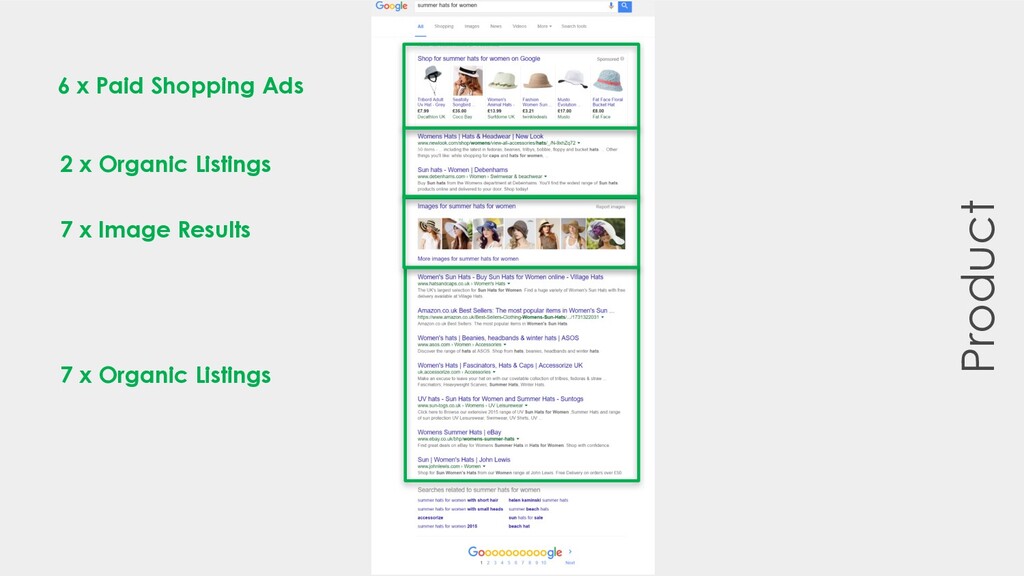
And then if you look at a standard product related term, a search query for something that somebody actually wants to buy that commercial term, we start seeing a lot more heavily paid ads. So we can see how much things diversified and how much things have changed, but when you compare the ads side by side, that's when you can really see the difference.
You can see how much we can we've got available to us to actually play with within ad copy, within star ratings, and all these different things with standard paid media that we can actually put into our ads to make those stand out. But the biggest change on Google in the past year is this.
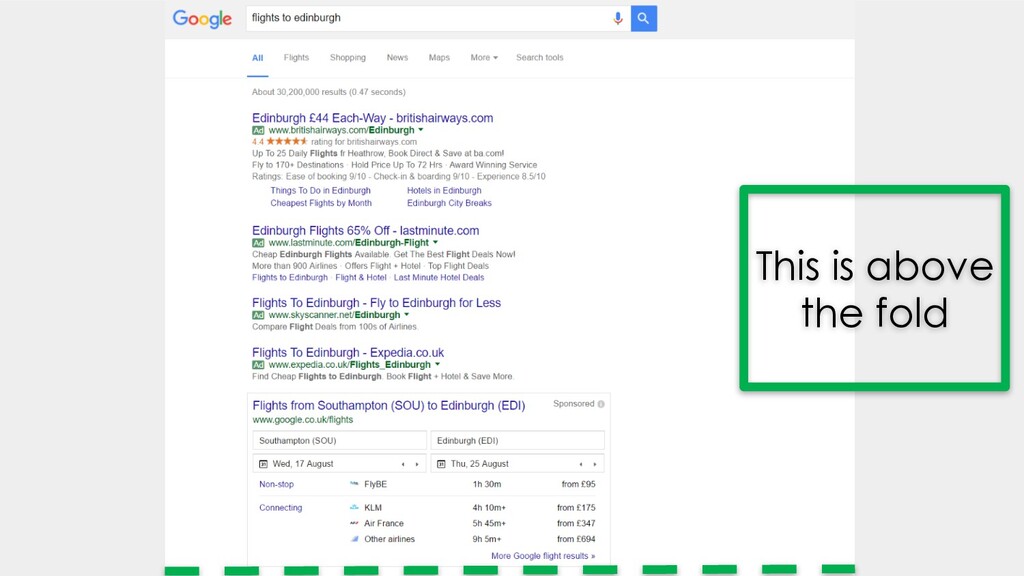
We've got no ads on the right hand side anymore. But what we have got is in this example here, so flights to Edinburgh search, five ads above the fold. There's no organic listings at all. And this is where we need to start making sure that we're adding paid media into our marketing campaigns, strategies, as well as organic, as well as everything else.
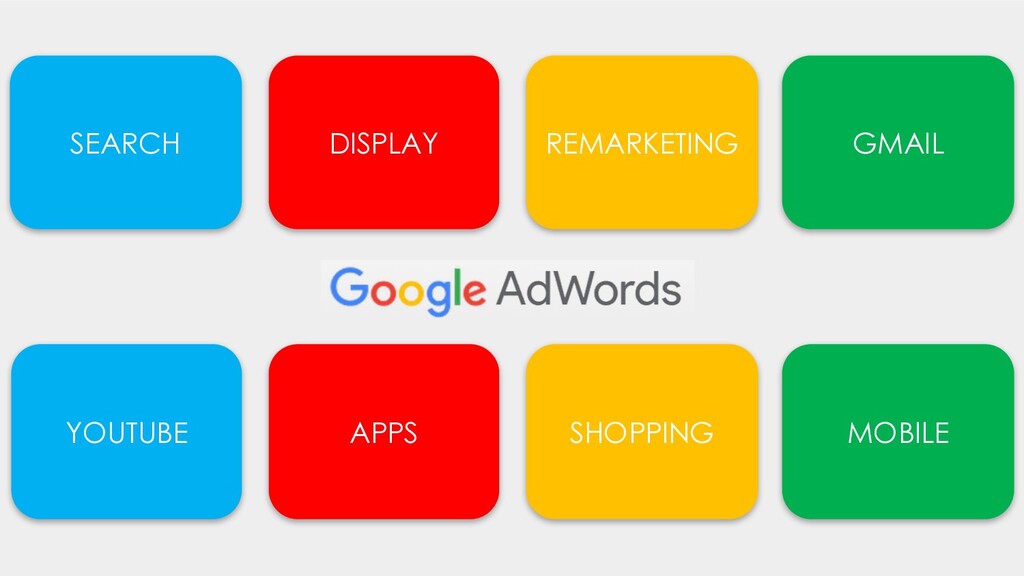
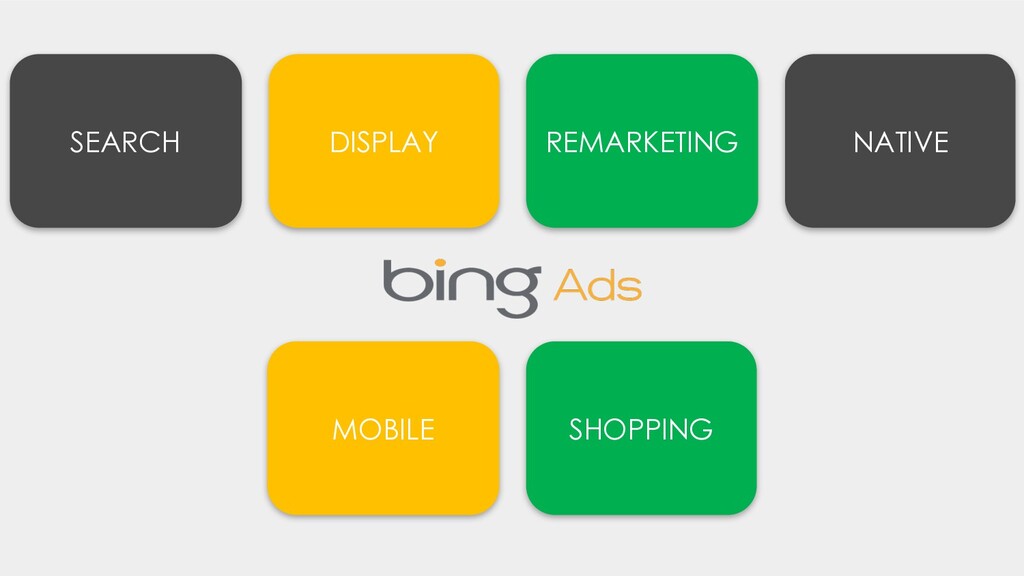
But this is going to continue to happen. So if we look at the landscape as it stands, we've got Google with lots and lots of different features, lots and lots of different platforms available to them. Bing, similar. They've got a couple of different ones, but likewise, they always try and copy each other.
The big addition that we've had over the past few years is the rise in social networks and how they are all starting to play in the paid advertising game as well. So if you go back to the year two thousand, all we had was keywords.
Right? We had keywords that we could apply to ad text that we could then apply to landing pages. And that was the that was the main concept of paid. Now, don't get me wrong, that's fundamentally still there. But nowadays, we've got so much more that we can get excited by.
And the big thing for me is the fact that we can take our actual audience, so the traffic that comes through to our websites, and we can use that within our paid advertising campaigns. This is where things get really, really powerful. And the reason it gets powerful is your competitors, they cannot replicate your audience.
Right? All the traffic that you are getting into your site, whether it's paid, organic, content marketing, whatever channel that is that you're using to drive traffic into your site, that audience is yours. Your competitors cannot copy that. And I think as businesses, we're always trying to strive to find what's our USP, what makes us different to our competitors, which we absolutely still need to do, but that's becoming more and more difficult as the as the marketplaces get more crowded.
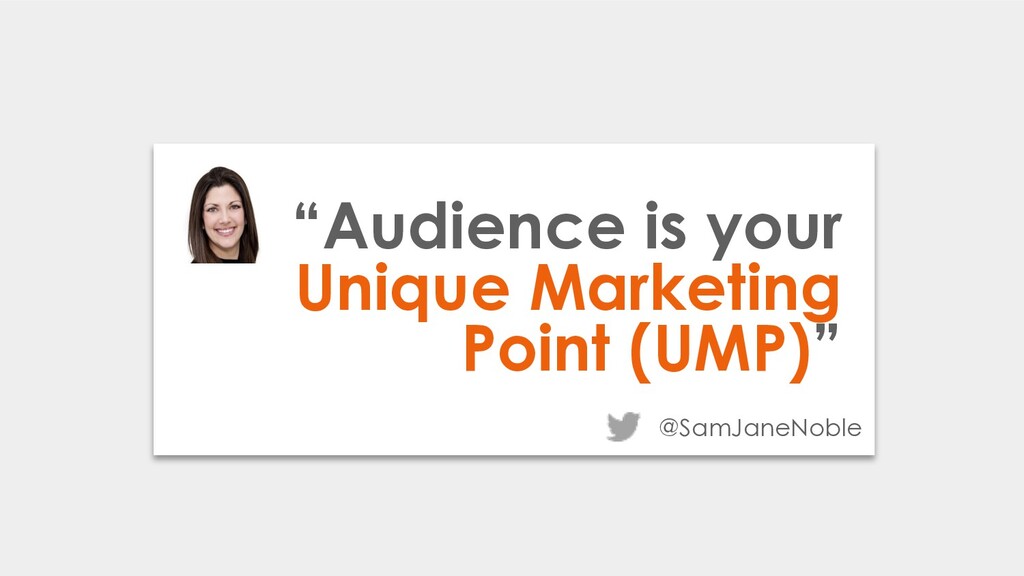
So if you look at your audience that's coming into your site, for me, that's your biggest unique marketing point because nobody can copy that. It belongs to you. As advertisers, we really, really need to use that and benefit off the back of that within our paid media campaigns.
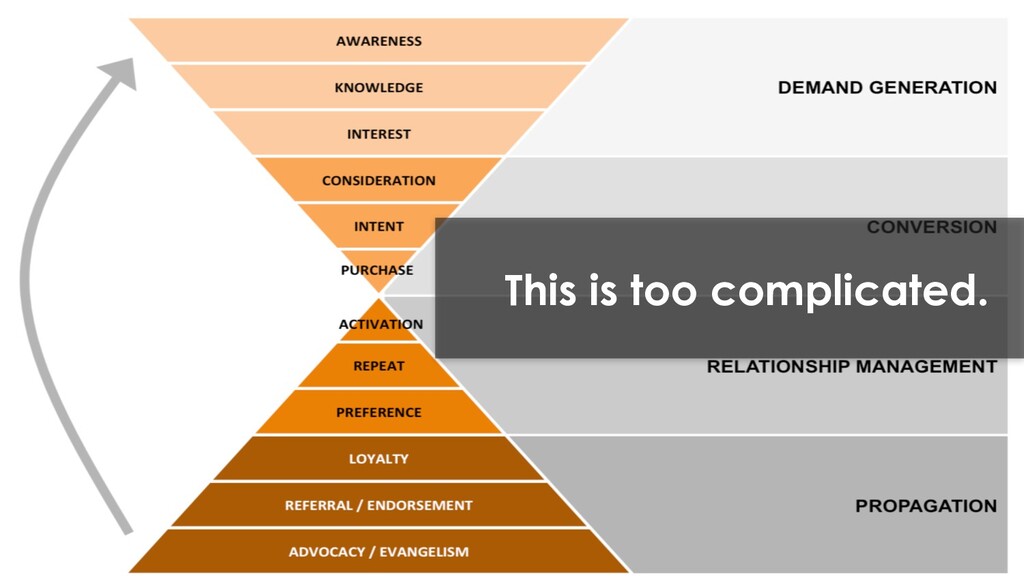
That takes me on to looking at the funnel. I think, as I said at the start, most advertisers when it comes to paid think about the buying stage. This is a complicated marketing funnel. Now, if you're trying to use paid as a funnel, you could do something like this, but it will get quite complicated.
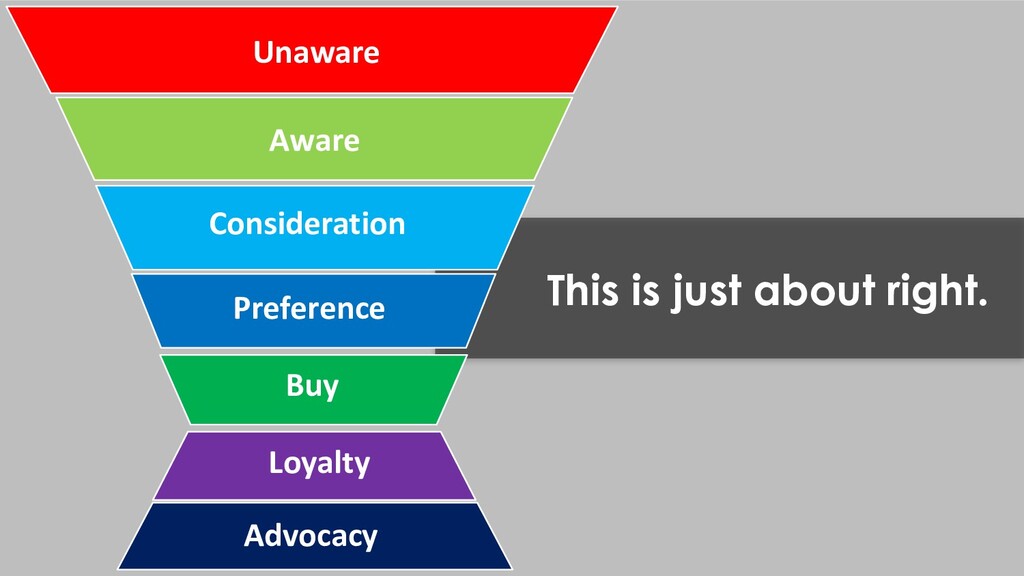
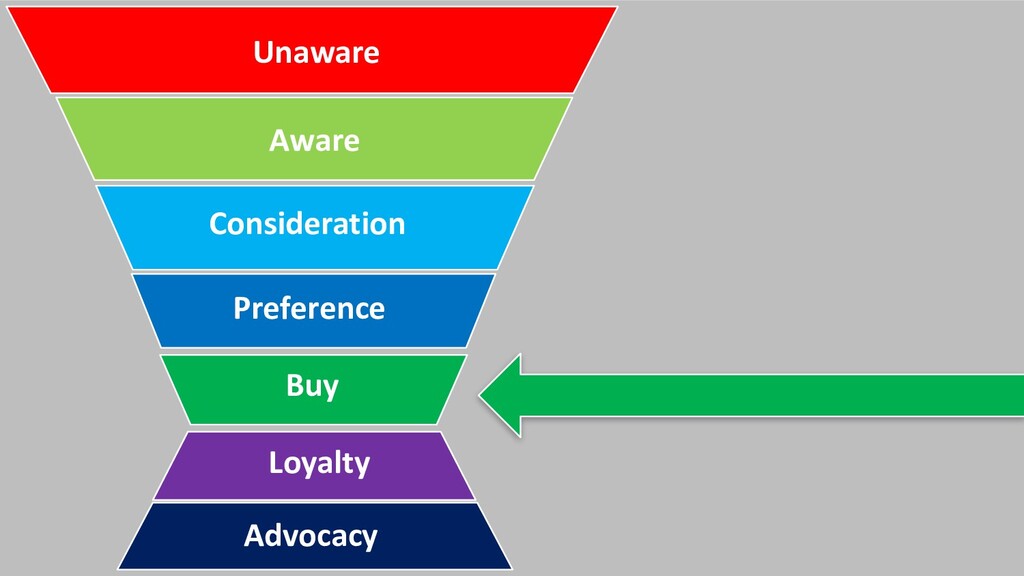
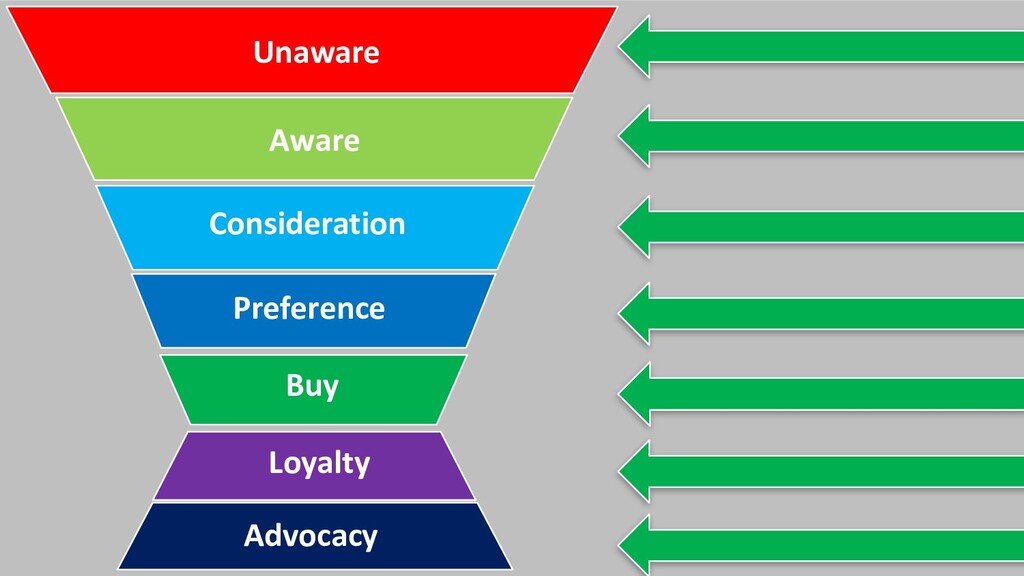
This is a bit too simple, but for me, this is about right. We've got seven stages of the funnel there. As I say, most people focus on that buying stage. That's where most people focus. This is where as paid advertisers, need to be focusing on every single element of that funnel.
So what does all this mean to you? Let's go back to the paid media games. And over the next twenty minutes or so, we're gonna look through thirty two different strategies for seven brands that I think most of you will be aware of so that you can try and relay that back into your own paid media campaigns and see if you can take some insight off of that.
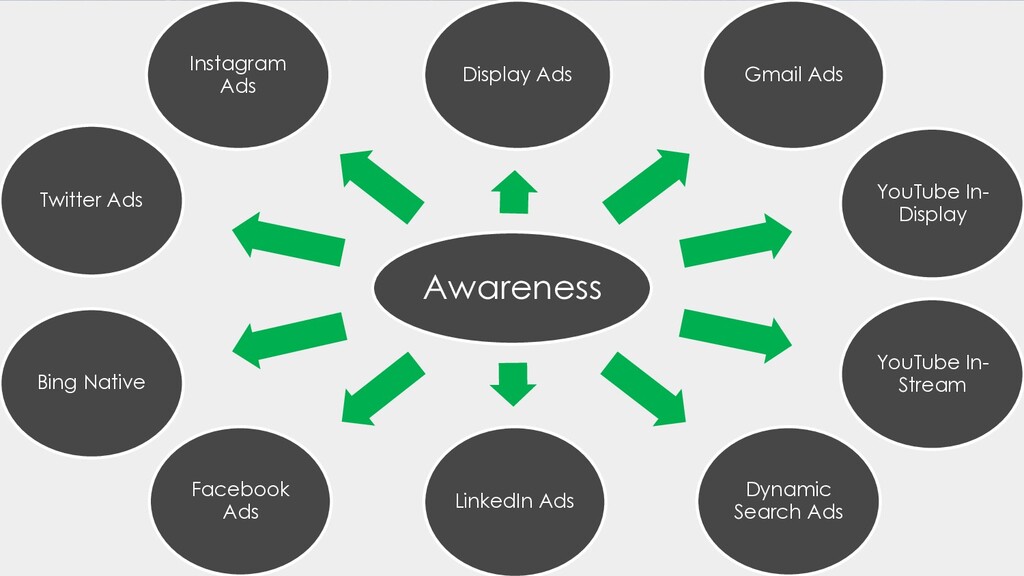
So let's go. The first stage is awareness. So whether business whether your customers are aware of you or unaware, this is where we're starting to funnel people through. So there's loads of different things that you can do with this. This is just some examples.
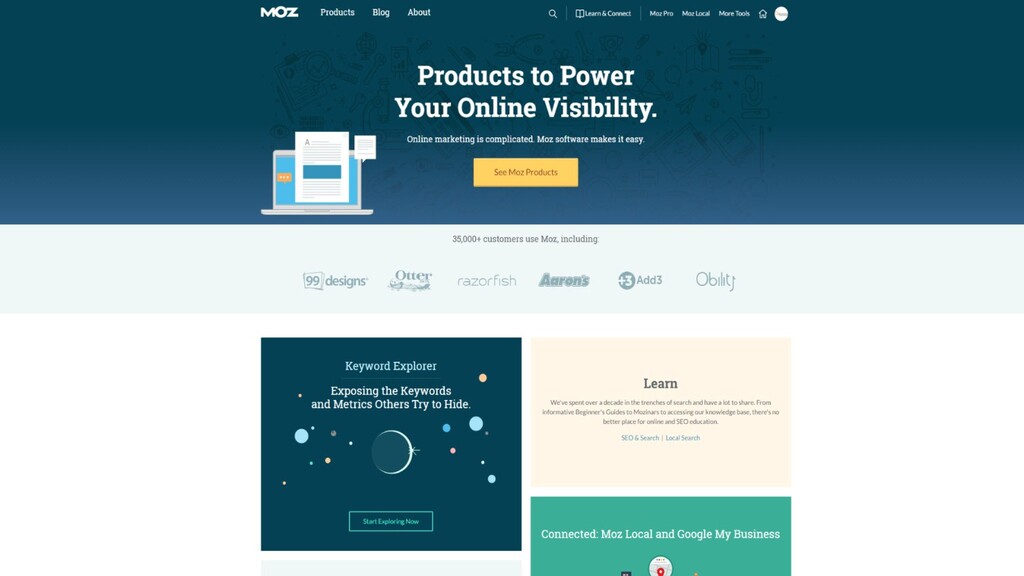
And in this example, I'm gonna use Moz. Everybody knows Moz. A few things that Moz could do to try and drive more awareness of their product is in display advertising on YouTube. YouTube is massive, and it's massively underused when it comes to advertisers.
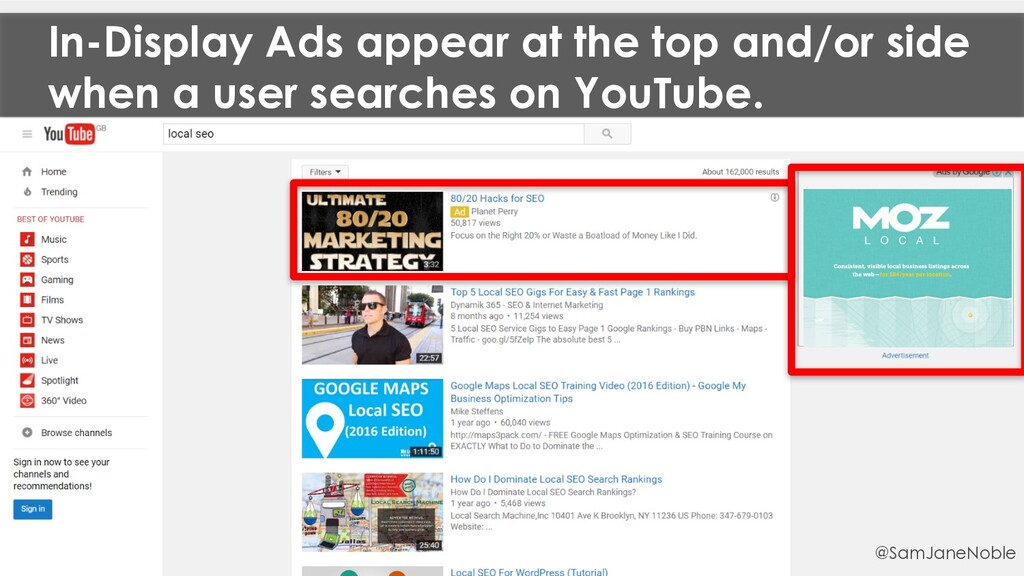
In display is where you can use it very similar to what you would on normal Google search or Bing. You search on a keyword, and then you have your video that populates at the top or on the right hand side on the left hand side, sorry, of the of the search bar over there.
So you can tie this back into various keywords and start promoting your videos off the back of that. Every time someone clicks on a video, you then pay. So it's standard CPC start type kind of model. The other one that's widely underutilized is in stream.
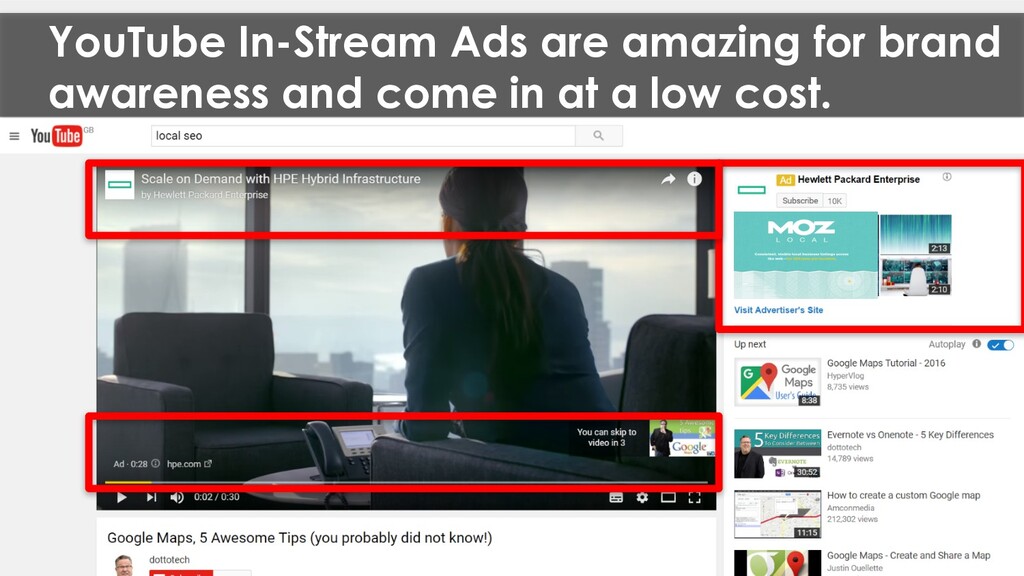
And what a lot of people don't know about these skippable ads, so you know the ones where you have to watch five seconds and then you can skip it. What a lot of people don't realize is that first five seconds, you don't pay for unless somebody clicks and they engage with your ad.
Likewise, if you go past five seconds, you've then got between five seconds and thirty seconds that's also free advertising unless somebody clicks. So this is great exposure for brands. If you can really, really create a brilliant video that captures the attention of the person that's watching the other video within the first five seconds, you've got loads of free branding there, which is really, really is really useful and really cheap and can drive great results off the back of it.
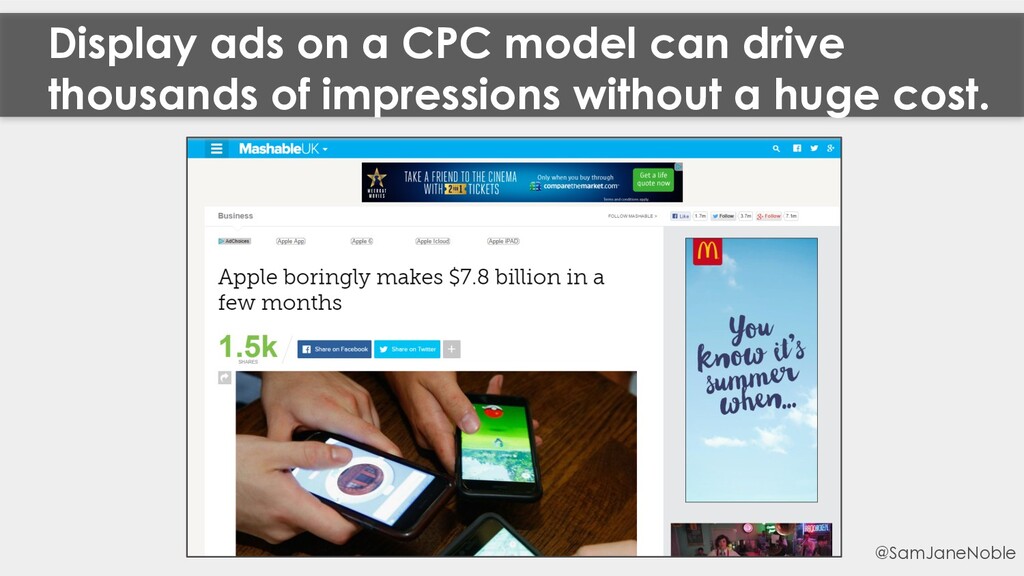
Likewise, display advertising. Widely underused in terms of I think with The problem with display is that brands often think, oh, it's not working. It's not actually driving any revenue for me. But display is not there to do that. Display is there for that awareness.
So used correctly, this can be really good. You can handpick sites that you want to advertise on, or you can let Google decide. But the best way of using this is you set up a normal display campaign, let Google decide where to run your ads, and then you look and see which ones are working best for you, and then you then handpick off the back of that.
But this can be a really great way of doing display. Also with display, you don't have to do a cost per impression model anymore. You can go back to standard CPC. So you're only actually paying for traffic when it comes through to you.
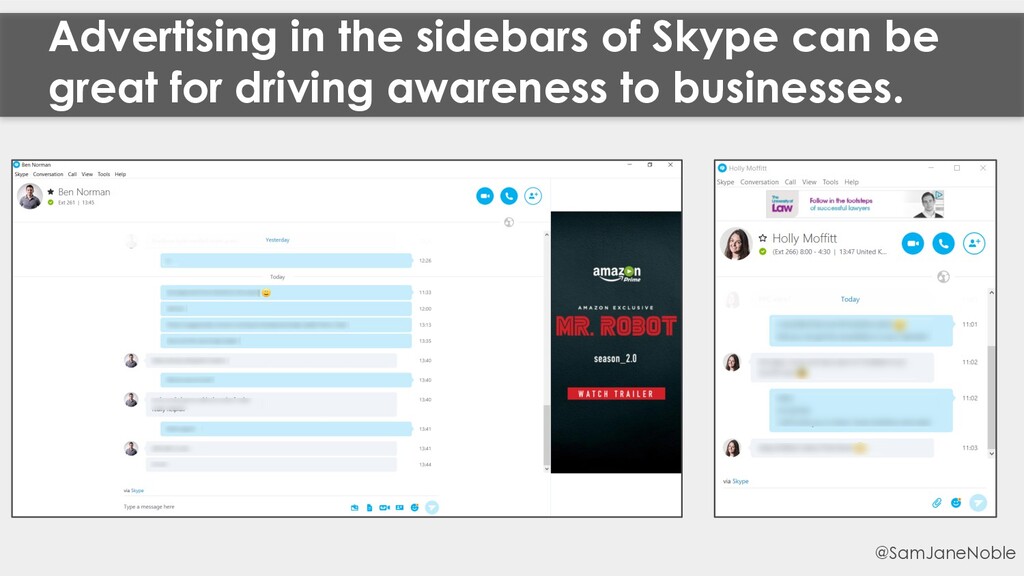
So even if people aren't actually clicking through, you're getting that brand awareness out there. The other thing that you can do is you can advertise on Skype. So especially if you're trying to go b to b, Skype's a great way of advertising just for awareness.
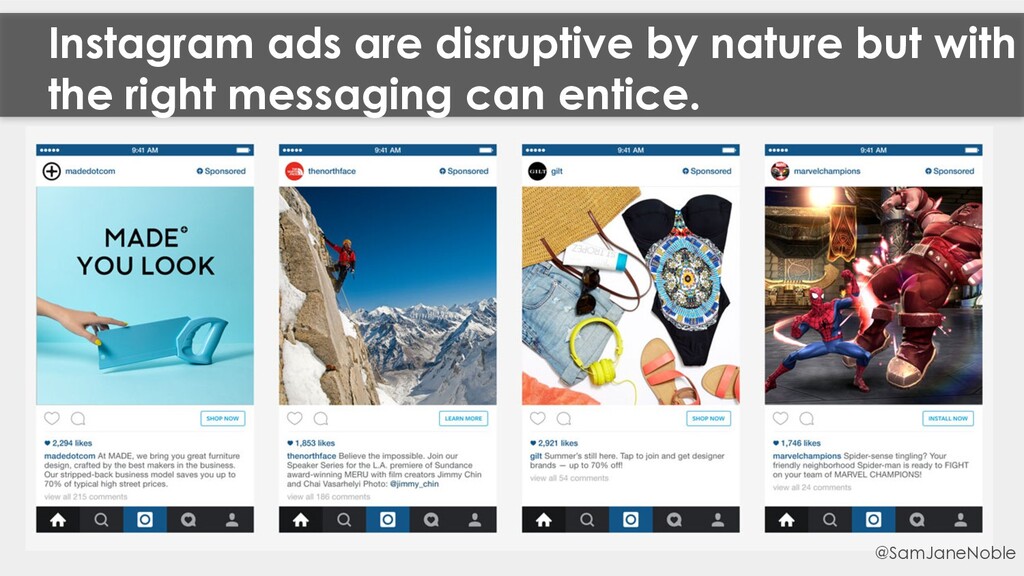
Again, don't expect too many people to necessarily click through, but it's that branding, that extra awareness that you can get for your brand off the back of it. Instagram, disruptive by nature, you know, people are browsing. If you're going to use Instagram ads, the images that you need need to be eye catching.
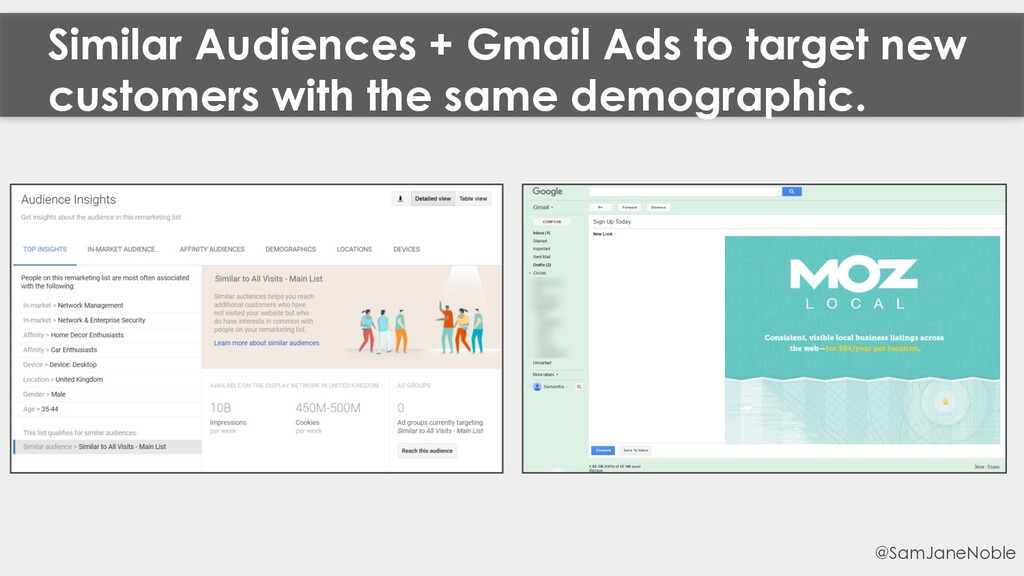
You need to try and entice people through for the use of those images to stop them in their tracks and stop them doing what they're doing. Instagram can work really well for awareness as well. And then the final, example I've got for awareness is using similar audiences plus Gmail ads.
So what you can do within Google now is you can upload either a list of email addresses of your existing customers, or you can have a remarketing list of people that have converted with you. Google know a stack load of information about people that are in those lists.
So they know the types of sites that they frequent. They know their buying history. They know their demographic. They know all kinds of information. And Google will take that list that you've uploaded, whether it's email addresses or a remarketing list, and they will build you a similar audience, a lookalike audience that matches the same demographic of the people that have bought from you in the past.
So taking that list of people, that similar audience, and coupling that with Gmail ads, if people are actually reading their emails, you can now have an advert that pops up on the at the top to try and encourage them into your site. Even if they don't click, again, you just need to remember that anything that you're doing at this stage is awareness.
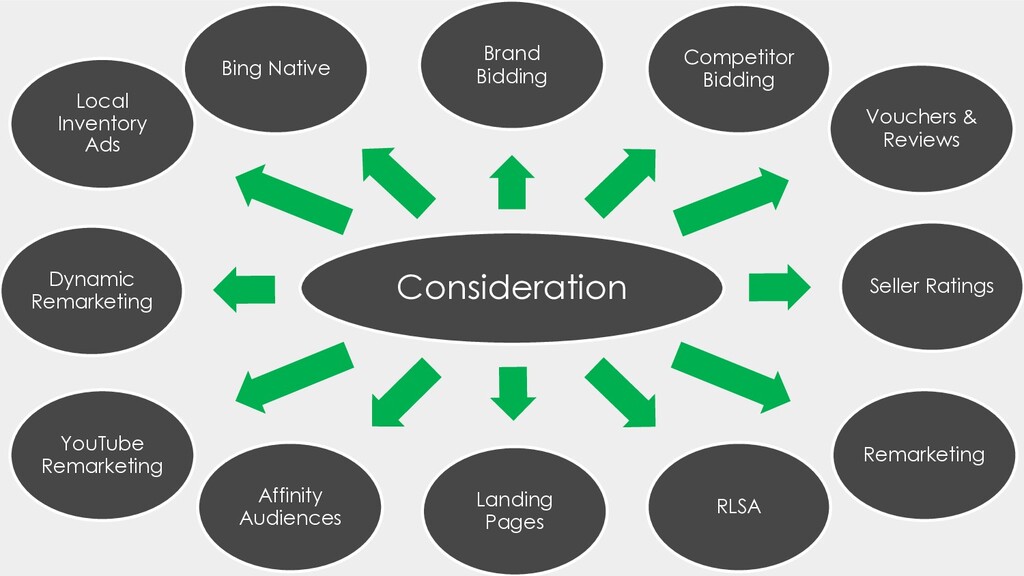
Every impression counts. When people start to see your brand over and over, that's what helps them funnel into the customer journey from the back of that. The next stage is consideration. So consideration is where somebody's aware of your brand, and they're starting to do a bit of research like, do I wanna buy from this person?
Don't I? What do they do? And a lot of brands, I feel, just don't pay too much attention to this stage. And there's a lot of stuff that we can do. Right? There's all of the this this is just some example. There's so much more stuff.
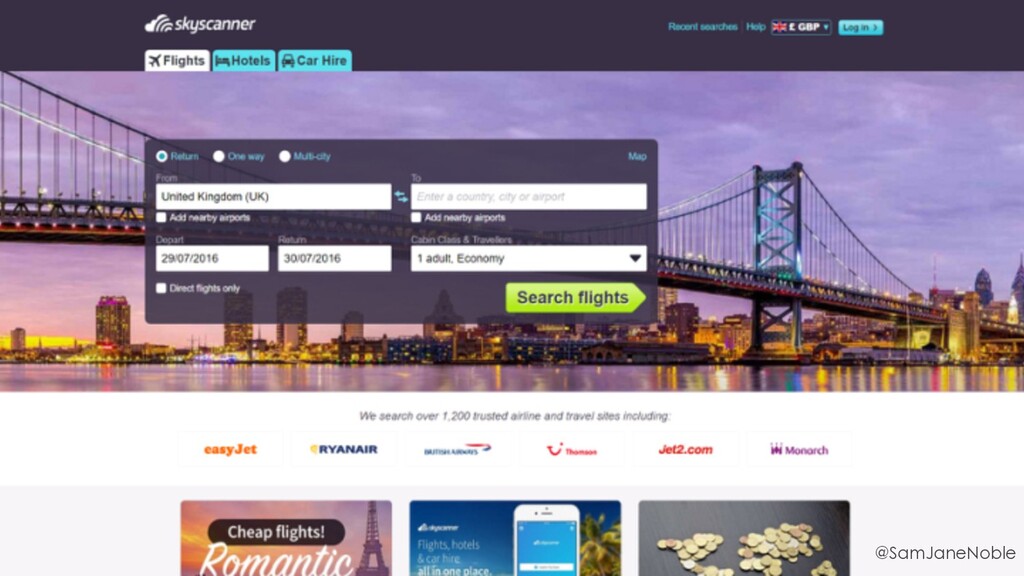
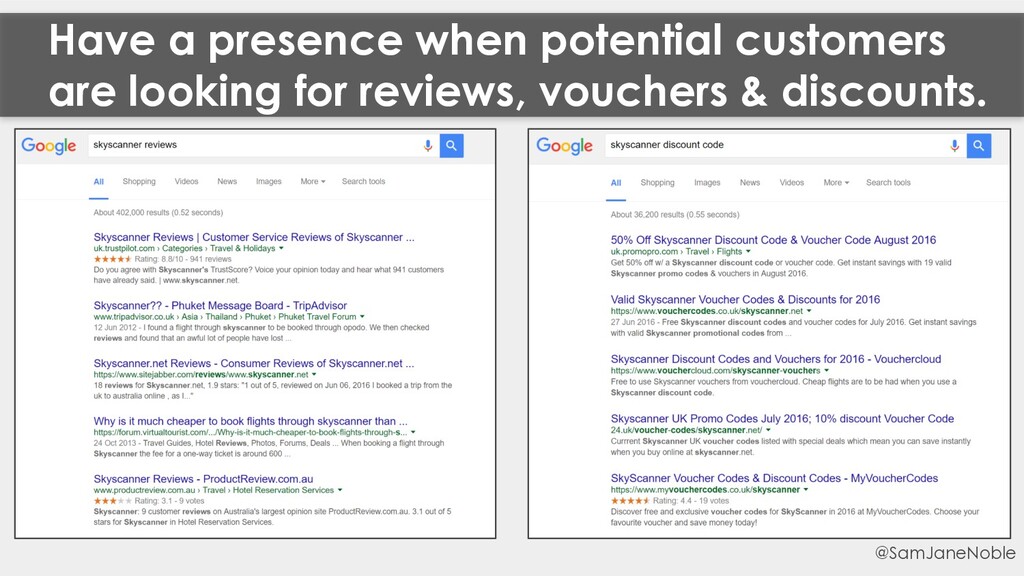
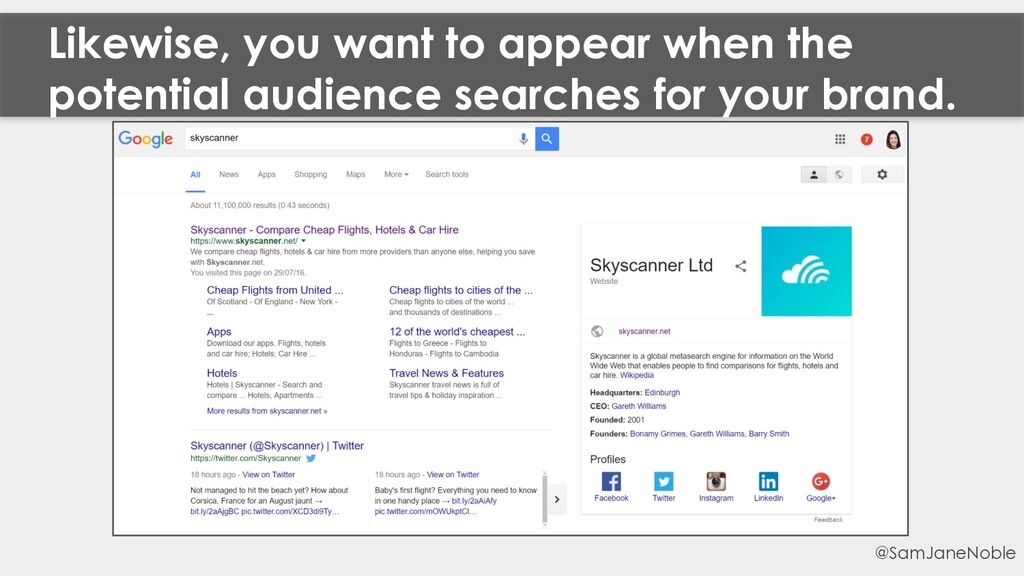
In this example, I'm gonna use Skyscanner. So if somebody is searching for Skyscanner in the consideration stage, they may be looking for reviews about the brands. They might be looking for discount codes, vouchers. And these are search queries that whenever people are doing these searches for brands, the brand typically doesn't dominate for those searches at the top of the results, which surprises me because what what you want to have there is if somebody is searching for that, surely you want to be the one displaying as much as you
possibly can to try and encourage people back through. Don't send them off to somewhere else, push them through to your site. Offer them if you're trying to do discount codes, offer them discount codes. If you've got a review page of your site, put them through to the review page.
Just try and capitalize on that traffic as much as possible and push the other sites down. Likewise with brand. I have arguments, not arguments, like disagreements if you like with clients every single day about should we advertise on our branded terms. You absolutely should.
There's nothing stopping other advertisers advertising on your brand, even if it's just for a small amount of time before the ads get taken down. What you wanna do is make sure that you've got as much presence above the fold as possible. And with paid, you can control everything that is said about your brand.
There's ways that you can test to see whether you wanna advertise on your brand or not. I know for some clients, we do we We basically take remarketing lists and use them as RLSA lists and negative off people that have either been to the site before or existing customers because you know that they are aware of who your brand are anyway, and they're already a loyal customer.
You can do stuff like that to reduce your cost, but because it's your branded campaign, those CPCs are low anyway. They also help increase the overall quality score of your actual entire AdWords account, so it can be real quick wins for you if you've got a brand campaign.
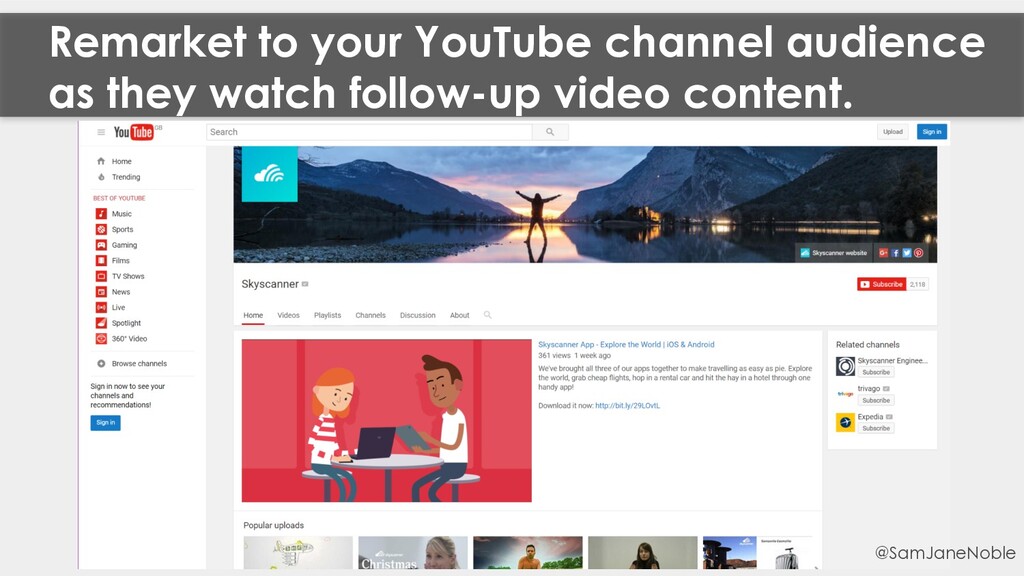
The other thing that you could do at this stage is if people have interacted with your YouTube channel, you can now build up remarketing list of people that have watched either certain videos or they've just navigated to your YouTube page, And you can start following them around with ads as they're watching other video content on YouTube.
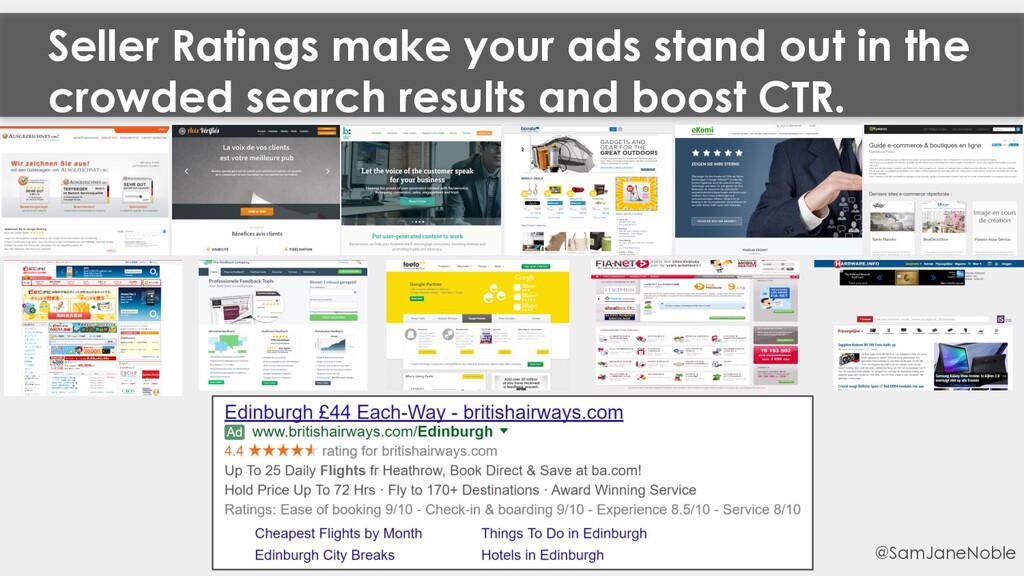
So it's again reinforcing that brand message. Acceleratings, so going back to the the whole brand campaign, but those star ratings, if you're using a third party review platform, as FIFA review or whatever whatever ones there are, Google will aggregate all of that data, and they will create automatically the star rating for you.
That in a search result against other advertisers that don't have those star ratings, people will naturally gravitate to that ad. People like star ratings. It is important to look and see what these are actually doing for you. There's a report in the ad extensions report for automatic placements because you can't control this.
Google will decide whether or not to put these on or not. If they are having a negative impact on your ads, you can opt out. Google make it quite difficult to do that, but there is there's ways of doing that. So it's important to check to see whether these are actually working for you or not.
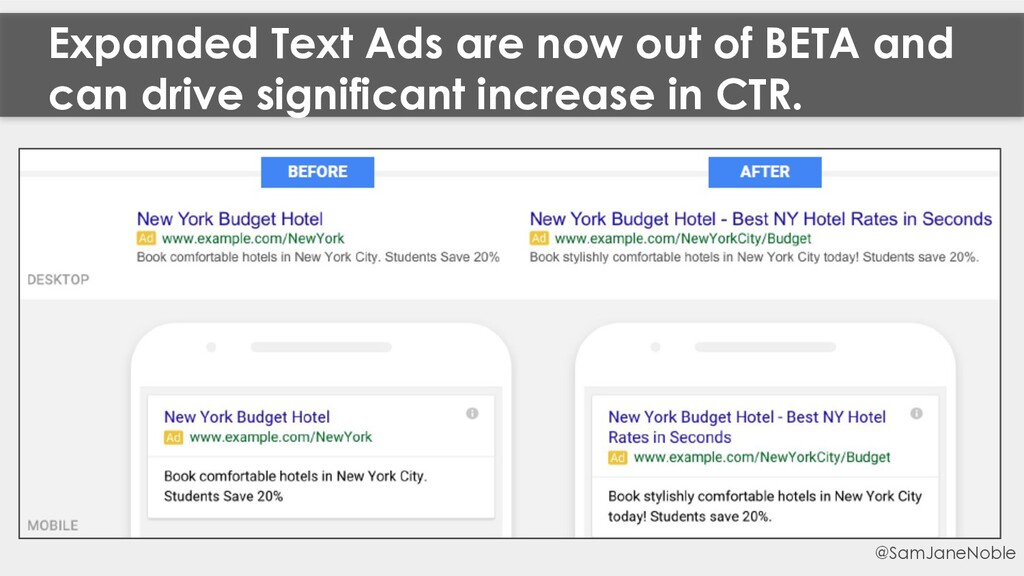
And then the final example here, I think it's the end of October, standard text ads are actually retiring. So the ads that we've had for the past, however many years, sixteen or so years, we've always had the ads that have had the headline, two descriptions, and display URL.
Because Google have got rid of the ads on the right hand on the left right hand side, left hand side, whichever way they are, right hand side, they've now got more real estate to allow the ads that are appearing at the top of the page to take up more space.
So they've introduced expanded text ads. So as I say, the old version of ads is retiring soon. So if you've got an AdWords account, you do need to switch over to this. There's various strategies that you can use, but trying to capitalize on that now before everybody has switched over can give you a real competitive advantage.
We've seen increased CTCs, increased CTRs. We've seen increased revenue off the back of doing this as well. So whilst you can and before everybody else jumps on this, try and take advantage of that now. The next stage, preference. So we've got somebody into the funnel.
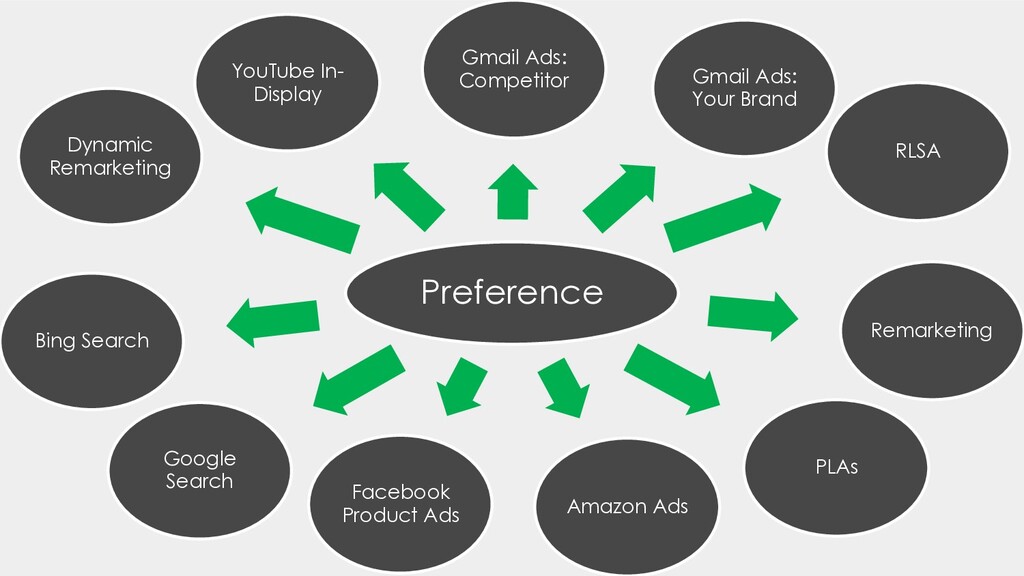
They're aware of who we are. They've done a bit of research into you as a brand. Now they're starting to look to see whether there's a competitor that they might want to buy for. And it's vital that you continue to remain in the forefront of people's brains at this moment in time.
So let's use Lloyd's Bank as an example. Everyone knows Lloyd's Bank? One of the things that's worked really well for us is using Gmail ads when we're trying to target b to c. I've seen examples of it working with b to b, but not as much.
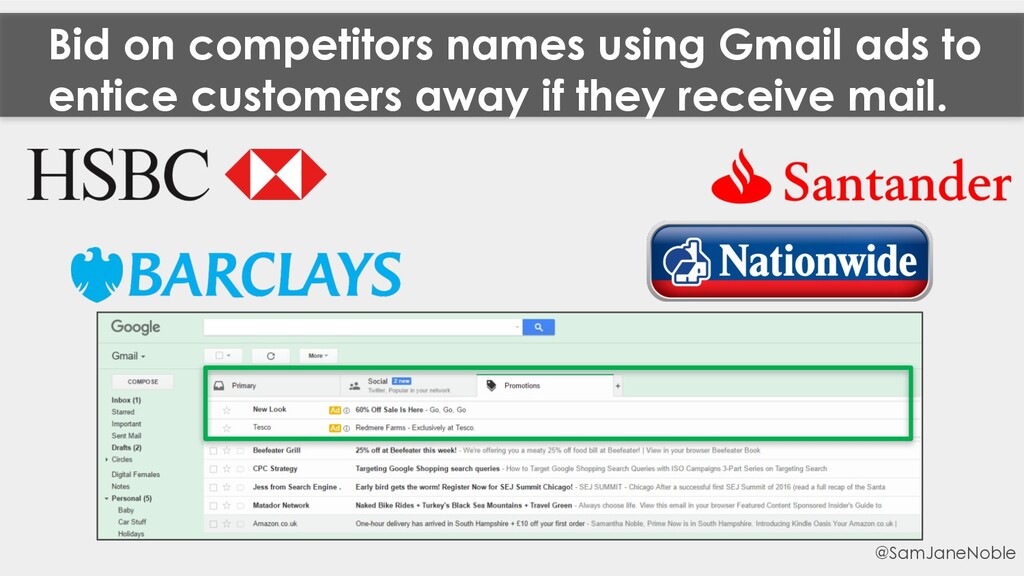
It depends on who you're trying to target, but it's definitely worth a test. The one thing that you can do with Gmail ads is you can upload a list of all of your competitors' domains, and you upload those as keywords. So you would you'd write like h s b c dot com, Barclays dot com, Barclays dot co dot u k, whatever the domains are.
Upload all of those. Then what you can do is display adverts to your customers who are receiving emails from your competitors because they're seeing that domain as a keyword. That way, if somebody's receiving an email from a competitor, you can couple that with other words as well.
If you're trying to target, in the example Lloyd's, they might be trying to target people who are looking for a mortgage or something like that. If they then upload a list of competitors plus the term mortgage, whenever anyone's receiving an email from a competitor that's about a mortgage, you can display an ad at the top and try and funnel them back in and take them off of the competitors.
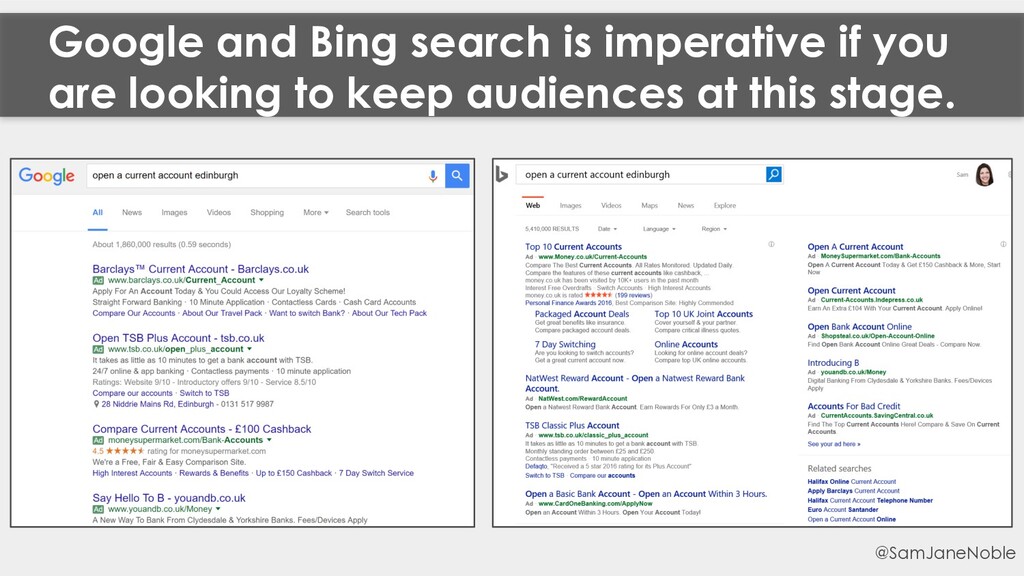
You want them to buy from you, not from them. Normal Google and Bing is massively still important. I think when you're trying to focus on where that sits into the funnel, think this is where it kind of comes into its Definitely works at the awareness stage as well, but it can be more costly because you're kind of going after more generic terms.
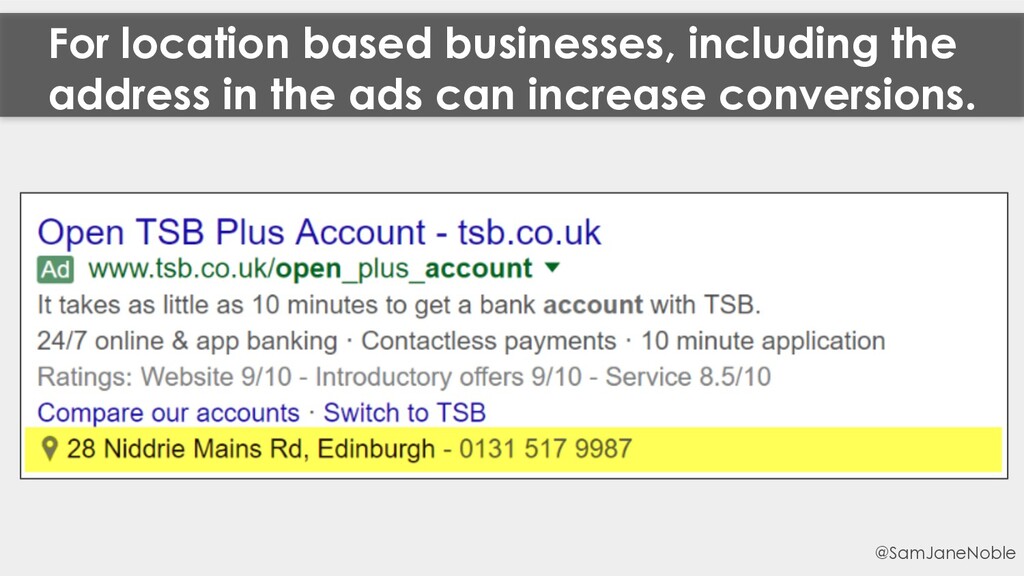
But at this stage, you absolutely need to be there. Location extensions. If you are a local business and you've got bricks and mortar premises, making sure that you've got your AdWords account hooked up to Google My Business, and you're actually pulling people through, pulling all of the information through about the locations and the addresses and everything else, and then Google will display that within the most relevant ads when people are searching in in that area.
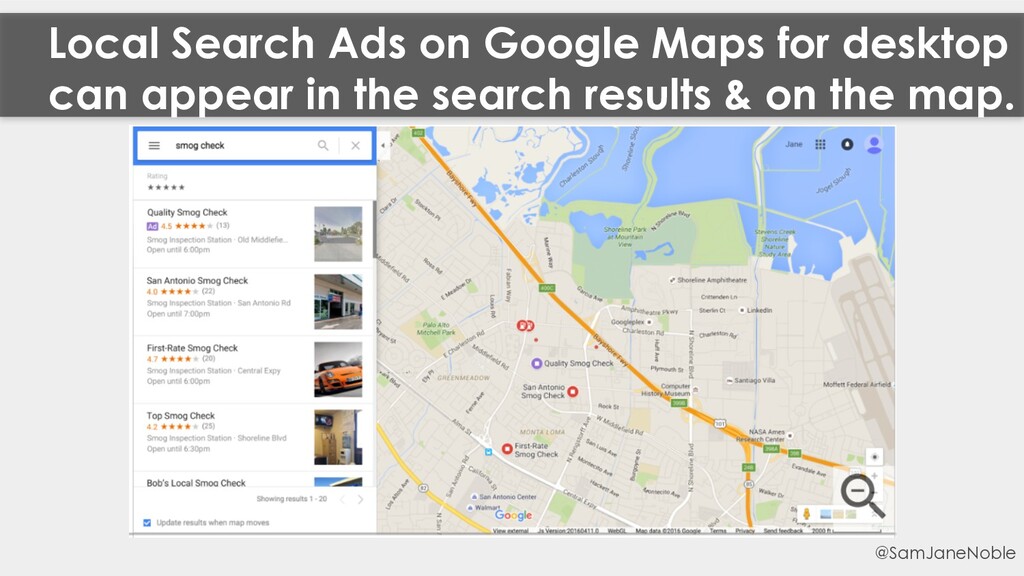
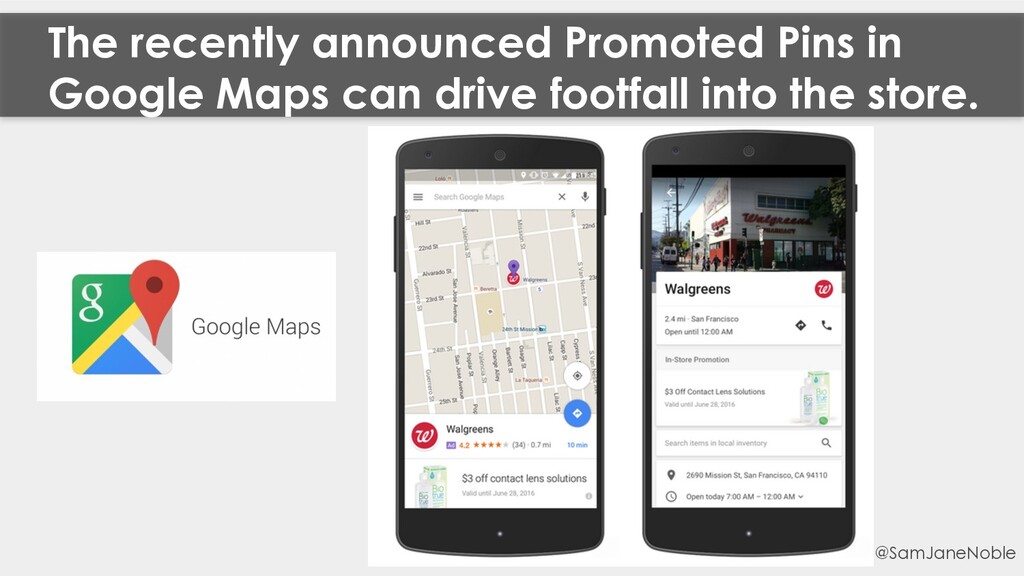
Something that got launched earlier this year at the AdWords Innovation Summit, Google put a massive emphasis on local this year. The past couple of years, it's been really sort of shopping heavy. Now they're really, really pushing for local. What we can see now is if you're using Google Maps on a desktop and you're searching, there's now an ad that's gonna start appearing at the top.
In the UK, it's slowly starting to come out, but also you can see ads within the map as well. So that's a really good way if you're a local business to try and push yourself to the top of that listing now. If you're not doing this and you were previously dominating in terms of the local pack listings and everything else, you need to watch out because other ads are gonna start pushing you down.
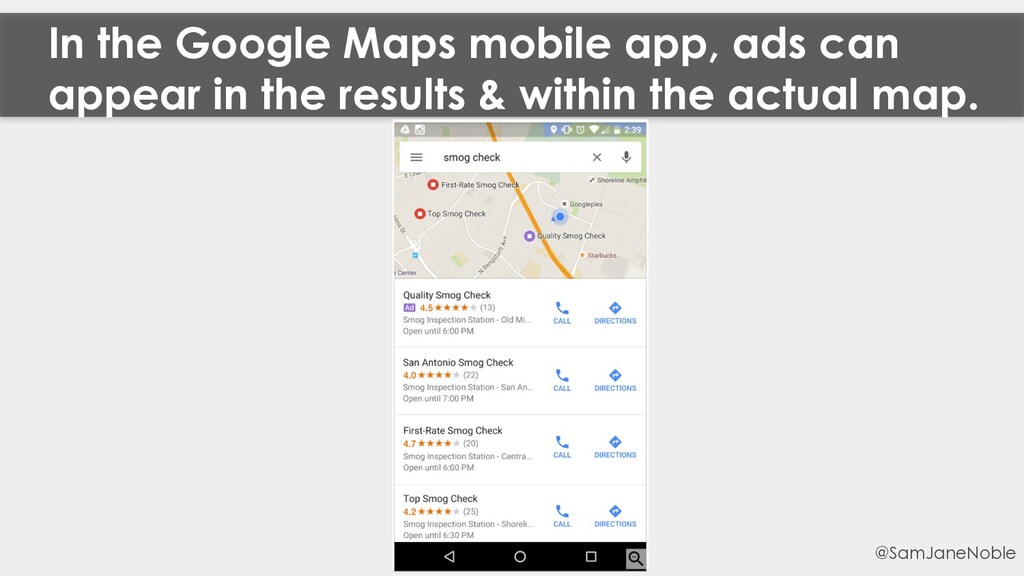
So if you're starting to lose traffic off the back of this, this will probably be one of the reasons why. Likewise, you can also have these in the Google Maps so the Google Maps app on phones. This is what it will start to look like on there.
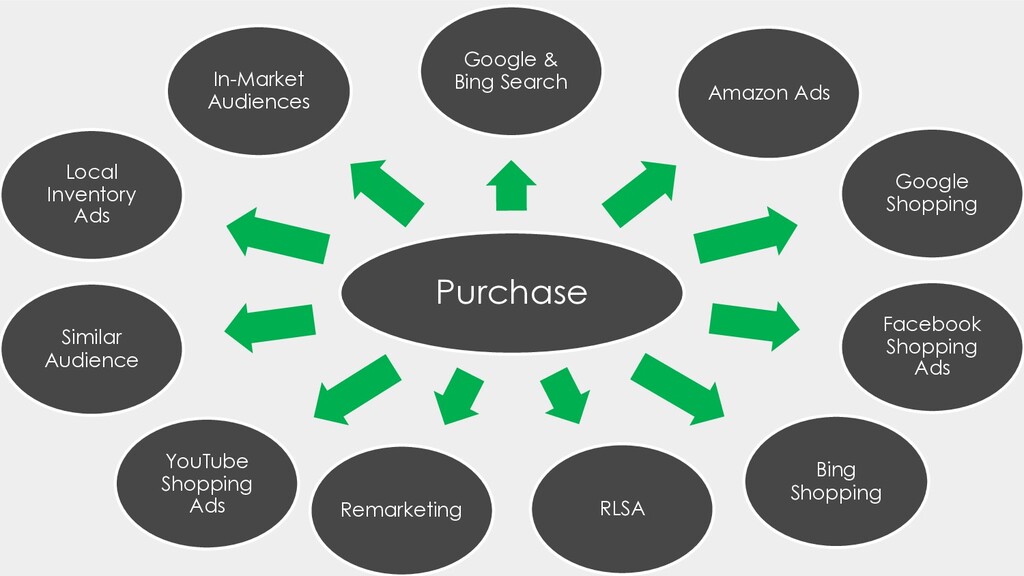
Again, you've got the ad at the top, and then the ad within the map listing. They're much more prominent, and Google are trying to push people through from that site standpoint as well. Now we've got the purchase cycle. Now, this is where most people pay the most attention, and they try and drive people straight through to this stage.
I cannot stress enough. If you only focus on this stage, you've missed out on a massive chunk of potential customers. If they're not aware of you and if you're not trying to funnel them through from the start, if competitors are trying to focus on that, like, they're they're the ones that are gonna win at this stage.
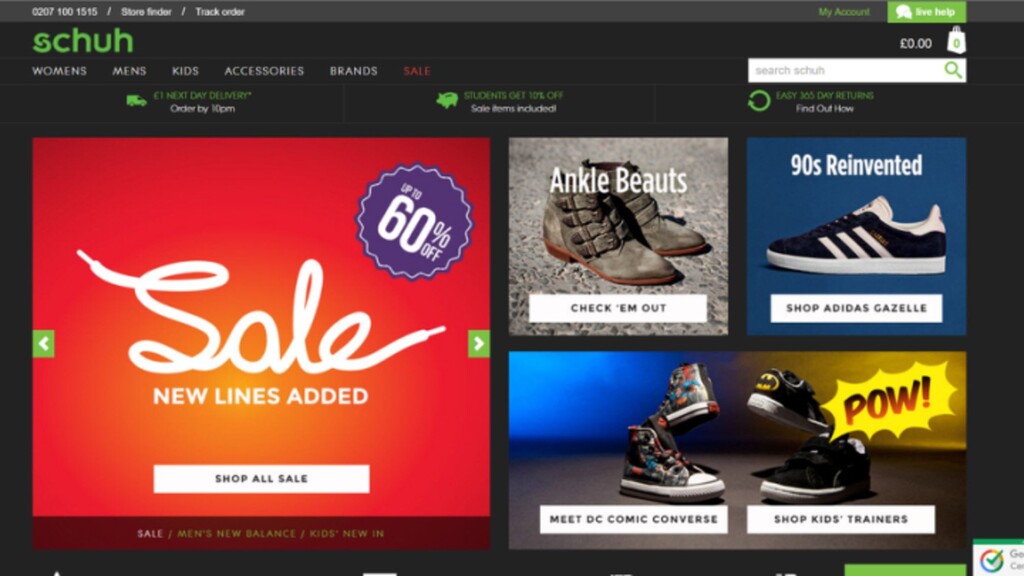
You're only gonna take a small slice of the pie. So focusing on everything, this is where you can really start to win. So again, some examples of strategies here. My slides will be available at the end of this as well on SlideShare. In this example, let's look at Shoe.
So a typical retailer with bricks and mortar premises and a huge online presence. Something that can work really well for them is promoted pins. So likewise with local search ads, promoted pins are slightly different because you can click through on that pin and see loads more information about that particular business.
You can try and showcase any special offers that you've got, any products you're looking products you're looking to push, directions to the business. These can work really well if people are looking for something in a particular area, and having that presence on maps is is really, really important.
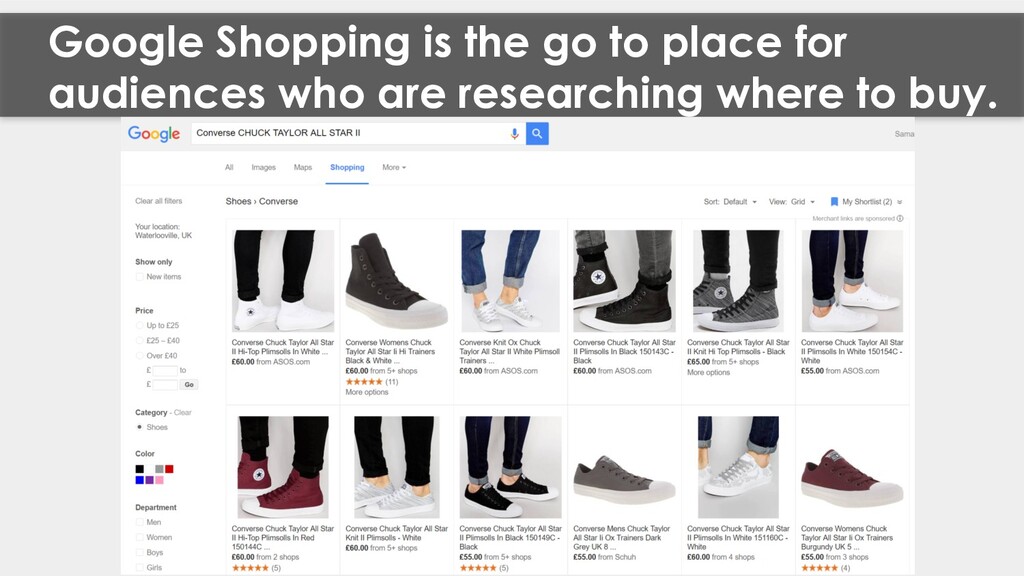
Google Shopping. About six, seven years ago, think it was now, maybe not that long actually, we used have something Google based and frugal. We used to get loads of traffic through organically, loads of traffic through from Google Shopping, and then they've monetized it.
And for Google and as well as Bing, think that's a huge move for them, they've made such a big impact on their bottom line revenue off the back of doing this because this is actually working really well. For businesses and brands that we do paid advertising for, this is an absolute killer if you're a retail business.
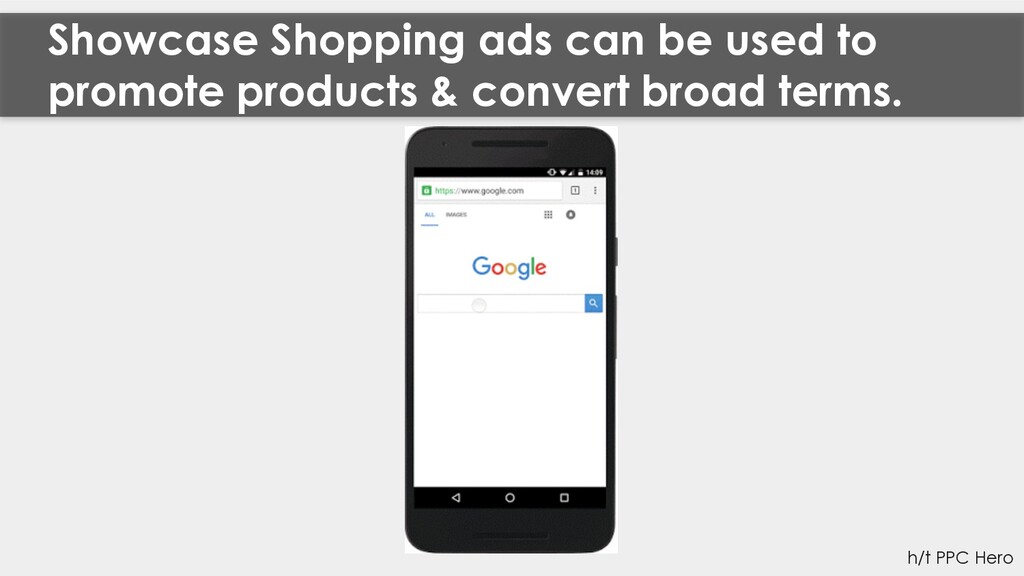
You absolutely have to be on here. Something that's coming out in the coming weeks, months, it's been in beta at the moment, so a few brands are testing it, is showcase ads. Now these ads, when somebody is searching for one of the more generic terms, PLAs and shopping shopping ads don't convert as well because people are still in that research mode.
But in this example of some addresses, and somebody then goes through to ASOS, you can then see all the different variations of some addresses that they're looking to promote. And these are showcase ads that can work really, really well for for retail businesses.
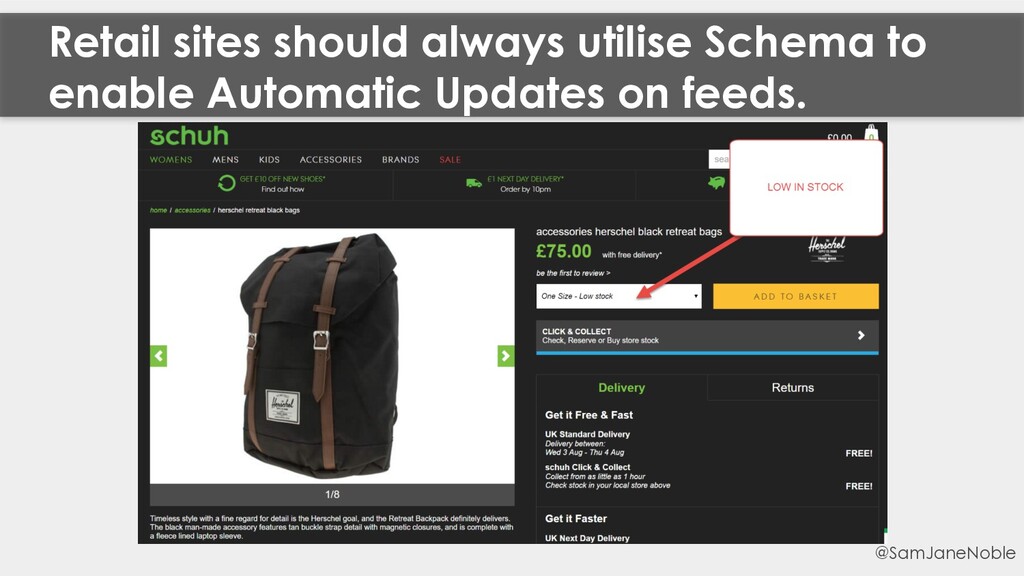
One of the biggest problems when you are running a shopping campaign is that feeds get disapproved really, really easily if the information that's in the feed doesn't match the landing page. And the easiest way around this is by implementing schema markup across all of your product pages, which is great for SEO.
It's great for paid. Once you've got all of that implemented, you can tell Google, hey, if my prices are different, if my stock levels are different, if the title changes, or if anything doesn't match in the feed in comparison to the landing page, make sure that you show the stuff that's on the actual landing page.
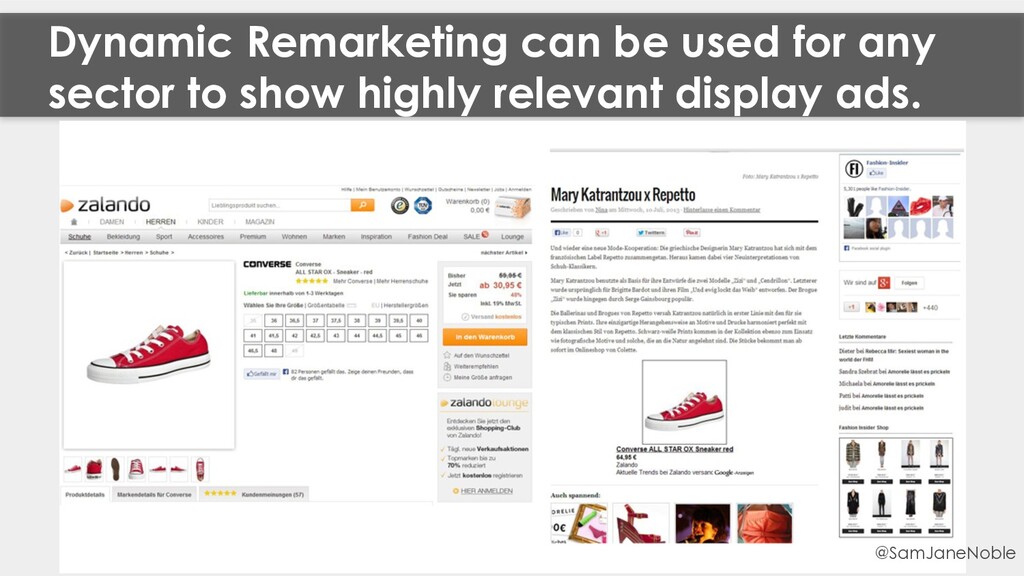
That's automatic item to update, and that can work really well. It stops loads of ad disapprovals due to things not matching. Dynamic remarketing, we've all seen this where we've looked at a product, and then the ad starts following you around, and it's like, buy me.
I get it with dresses all the time. This is like gold dust, and it works really, really well. But remember to have another bucket of people that have actually bought from you. Once I've bought the dress, I'm not going to buy it again.
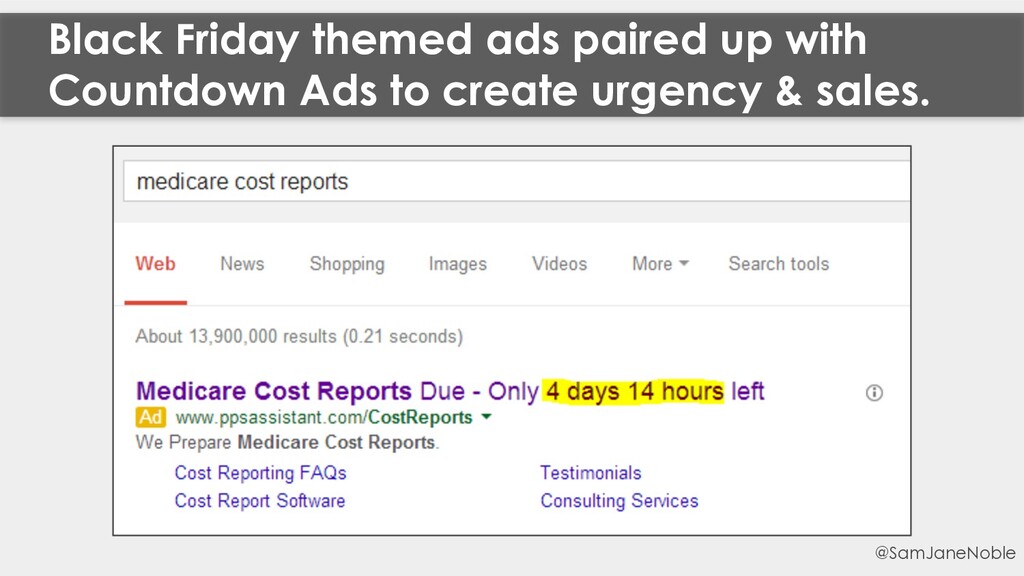
So it's important to negative off anybody that's actually purchased the item, and you can do all that within AdWords as well. Final three things within this stage, countdown ads. If you've got a sale on, these are so easy to set up. They create massive urgency and drive loads more traffic through, and these things tick down at sales end.
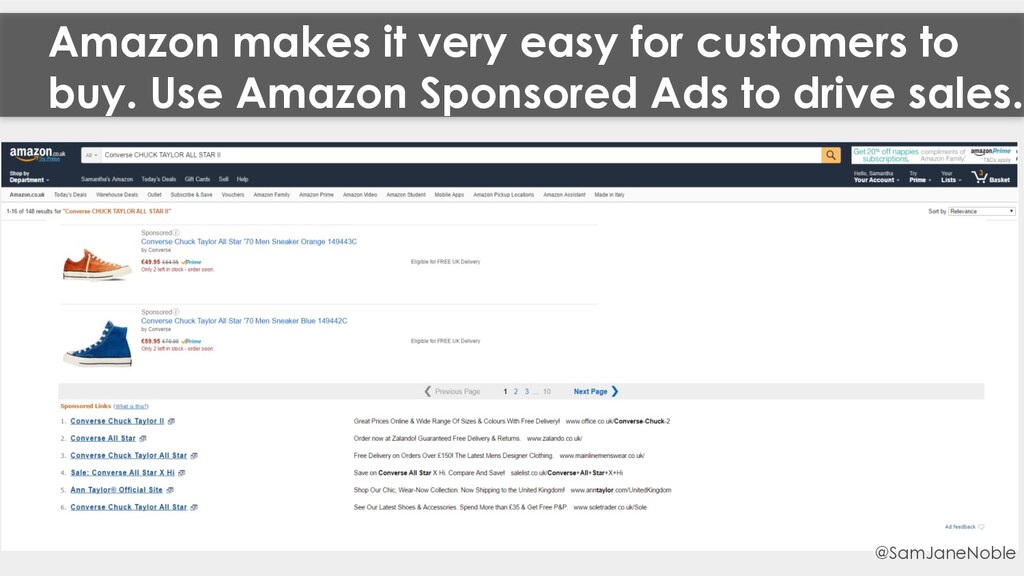
If you've got Black Friday coming up, this is a great way to try and drive awareness of the fact that you're gonna be doing a sale at Black Friday, Boxing Day, any of the key shopping dates over Christmas. Amazon ads as well. If you've got a Google Shopping feed, you can upload a feed to Amazon.
Another way to just try and drive awareness of the products. You obviously pay the feed to Amazon, but it's another way of actually getting your products out there and selling those. And then Unbounce. I'm not gonna talk too much about this because Ollie's gonna speak about this lot later.
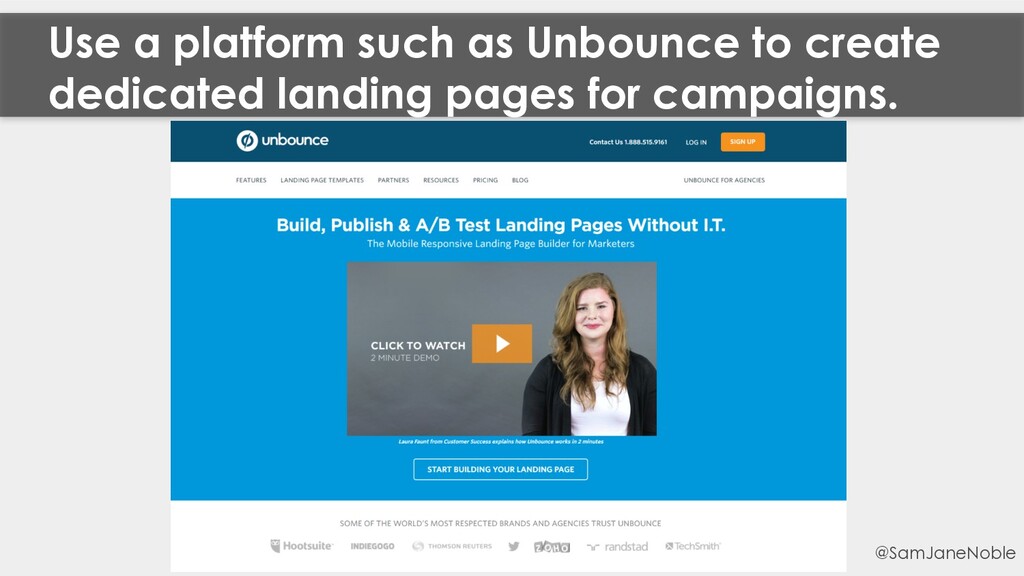
But Unbounce is a platform if you're not using it. You can really try and hone people in to the most relevant landing page. So you're not driving them necessarily through to the main site, but you're creating dedicated landing pages to try and get people to convert off the back of your paid advertising.
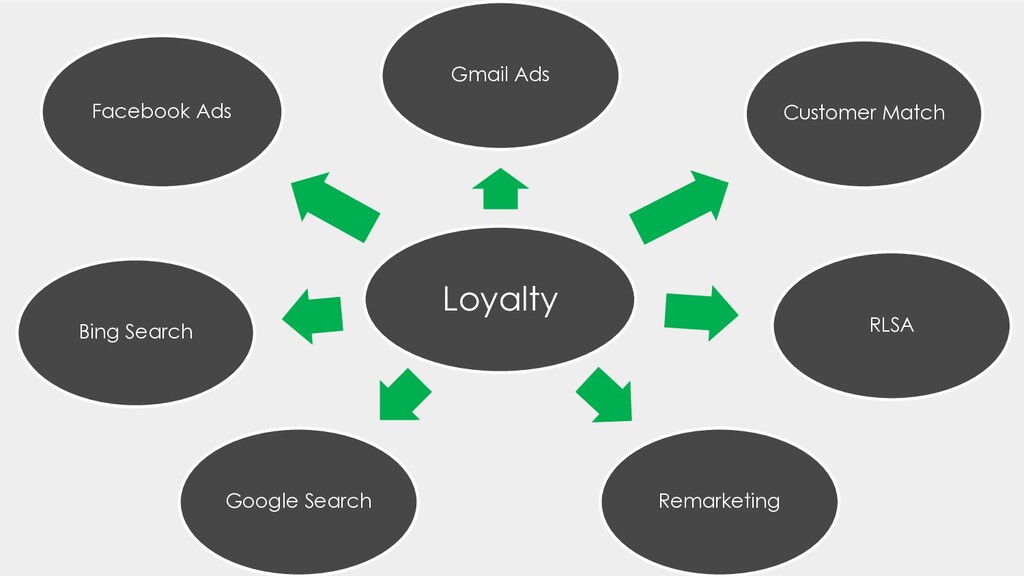
Okay. Final two stages. We've got loyalty now. Businesses often get to that buying stage, and they've paid all this money and they've done all this hard work to get that customer on board, and then they forget about that. This is where you can really start to make money off the back of your existing customers.
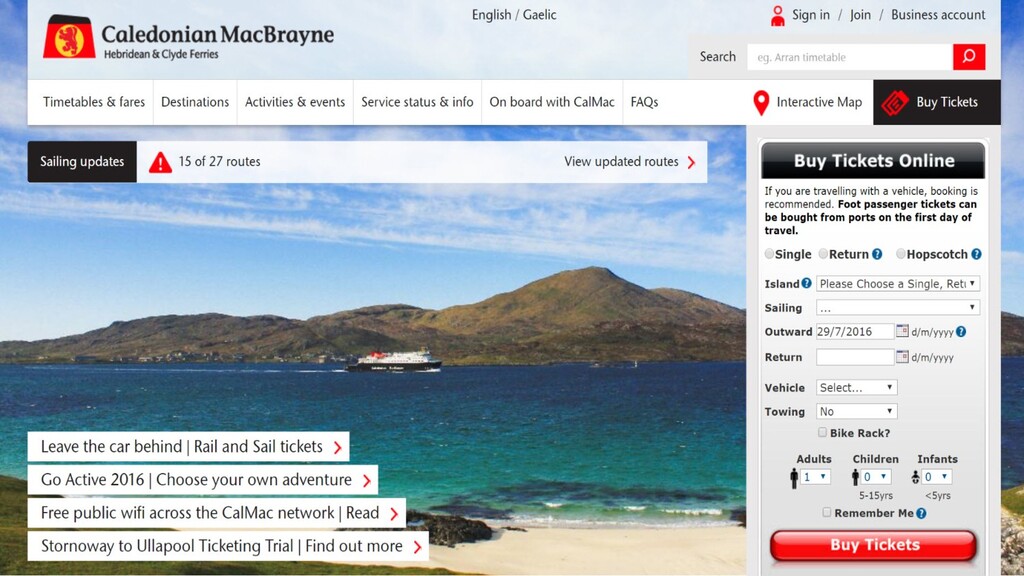
You've done all that hard work, so keep using paid to try and drive loyalty. Kalmac, those of you that are local are going to know who this is. So we've got the ferry company here. So if you've had somebody that's actually gone on on the ferry, let's look at ways that we can try and encourage them to keep coming back.
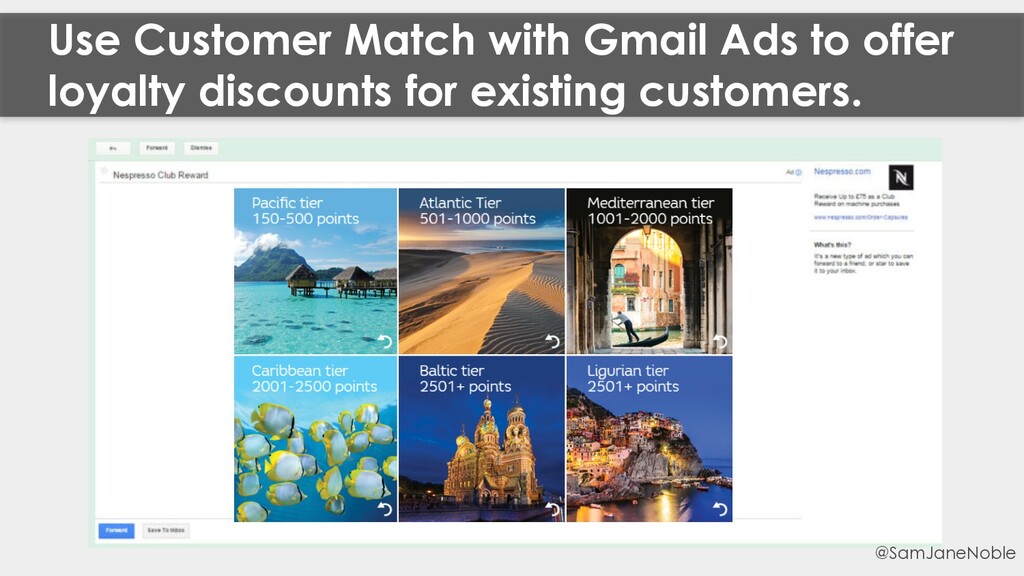
Gmail ads, coupled with customer match. So again, where we take an email list of all of our database of people that have been on a ferry with us in the past. You upload that to Gmail, and then you can start to promote loyalty discounts to your existing customer base.
They already know who you are, so seeing an ad from you at the top, they're already very familiar with your brand, so they'd be more inclined to look at that and think, ah, loyalty discount. Let's click from there. Likewise, as individuals when we're searching, especially in this current day and age, loads of brands offer, like, reward schemes.
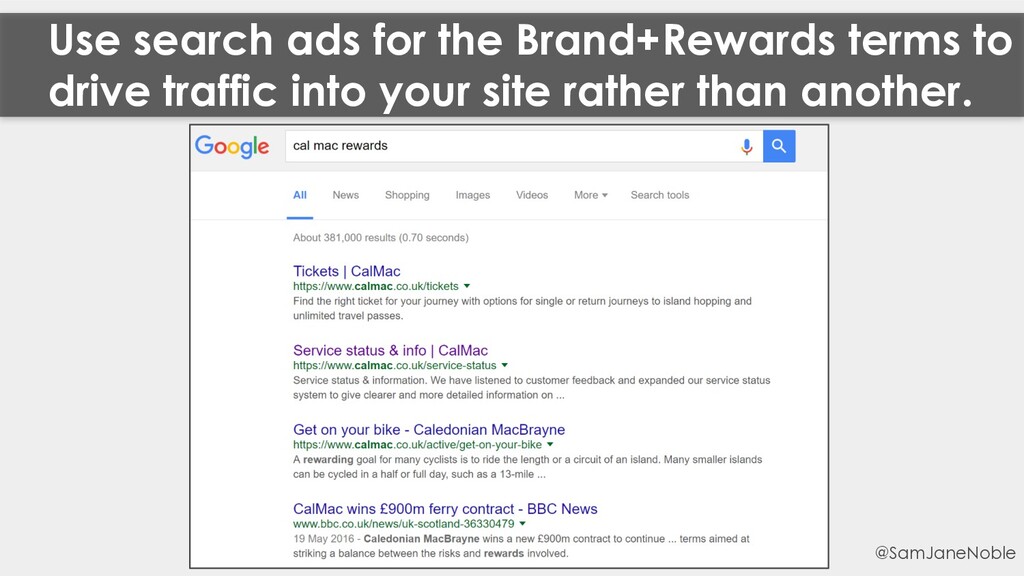
So this is a good way if you're making sure that if you have got a reward scheme, having an ad there for your brand plus the word rewards and reward scheme is another way to try and funnel people back in and make sure that they stay a loyal customer of yourselves.
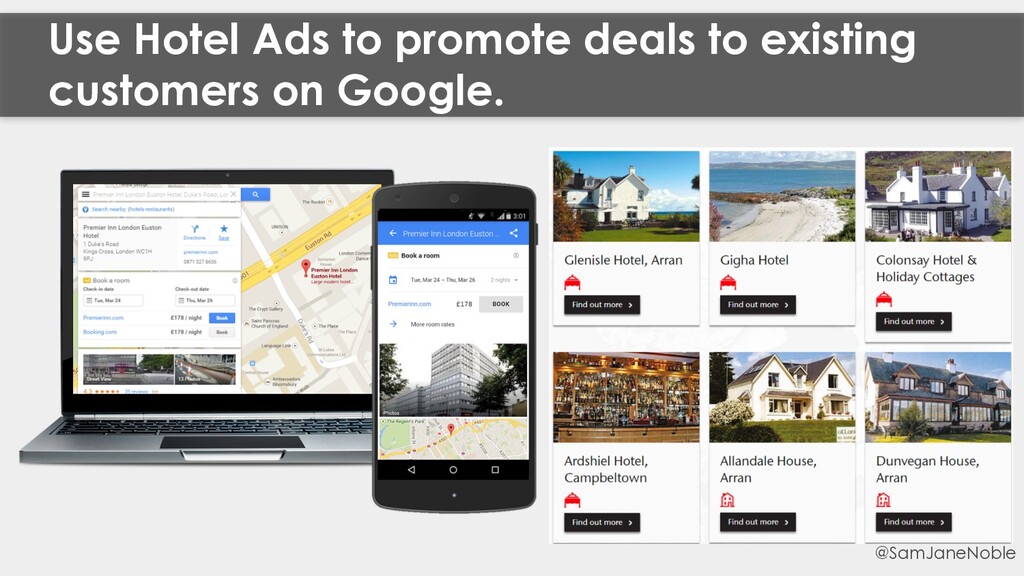
Hotel ads, so these guys also offer hotels. Hotel ads are relatively new, and they're still quite underutilized, but you can now have a list of all of your hotels, and then the ads will appear, and you can actually book hotels and accommodation from directly within the Google search results.
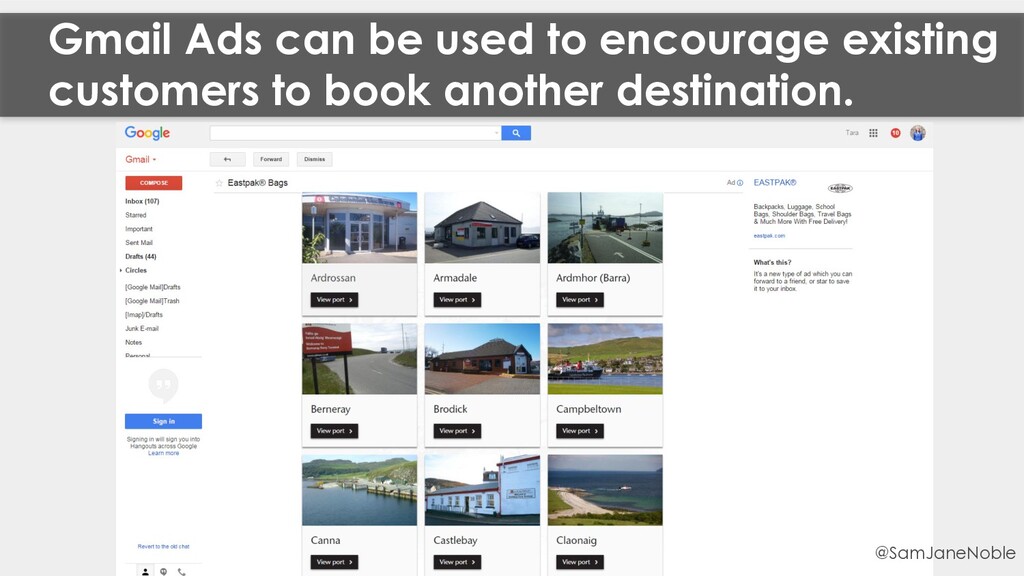
This is great for anyone that's that's got sort of accommodation that they're looking to push. Back to Gmail ads again. So Gmail ads with customer match, so again, upload in your existing database or your email addresses, try an upsell. If you know that they've bought a ferry crossing, they might be able to be upsold to a hotel.
Or you might know that they've bought one ferry, and the lifespan of a customer, they typically may come back in three to six months, whatever it is. Why don't you start advertising to them again to try and encourage them to book a follow-up ferry crossing?
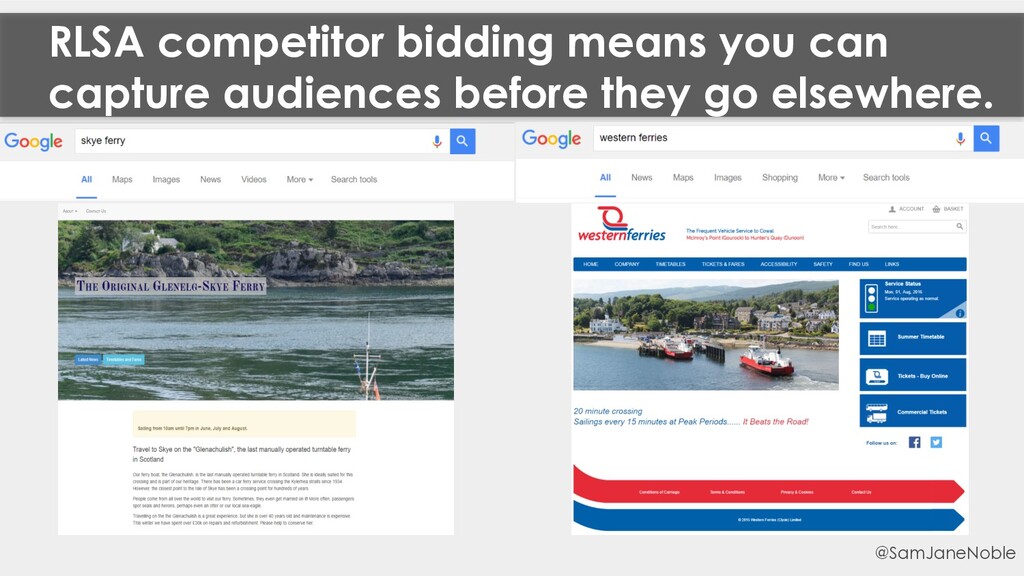
And in the final example here, competitor bidding can work if the brand isn't trademarked. And while I but I don't really like doing just standard competitor bidding for and just trying to bid on those competitors' names all the time. But if you couple that with a list of your existing customers, what you can do within the search results now is if one of your existing customers, somebody that you've funneled all the way through and you've got them to convert and they're a loyal customer of yours,
if you see that they're going and searching for a competitor, get an ad up there that only shows to those existing customers, and you offer them a discount. Offer them a repeat a repeat deal to stop them going to a competitor. Pull them back into your site.
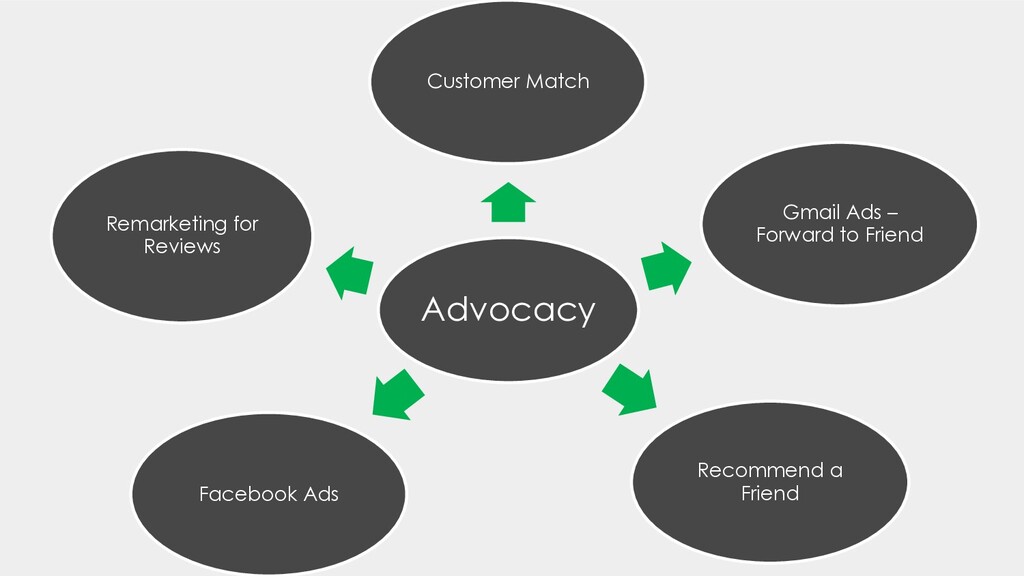
You've done all the hard work to get them there in the first place. Final stage, advocacy. So you've got your loyal customers. Now you wanna make use of them to get them to recommend you to a friend. Some ways of doing that here.
And in this example, I'm going to use Deliveroo. Deliveroo have come onto the market, know they were speaking yesterday, and absolutely smashed it. They've got huge huge amount of customers now, and it's now about spreading the word and making sure that you're recommending them to friends.
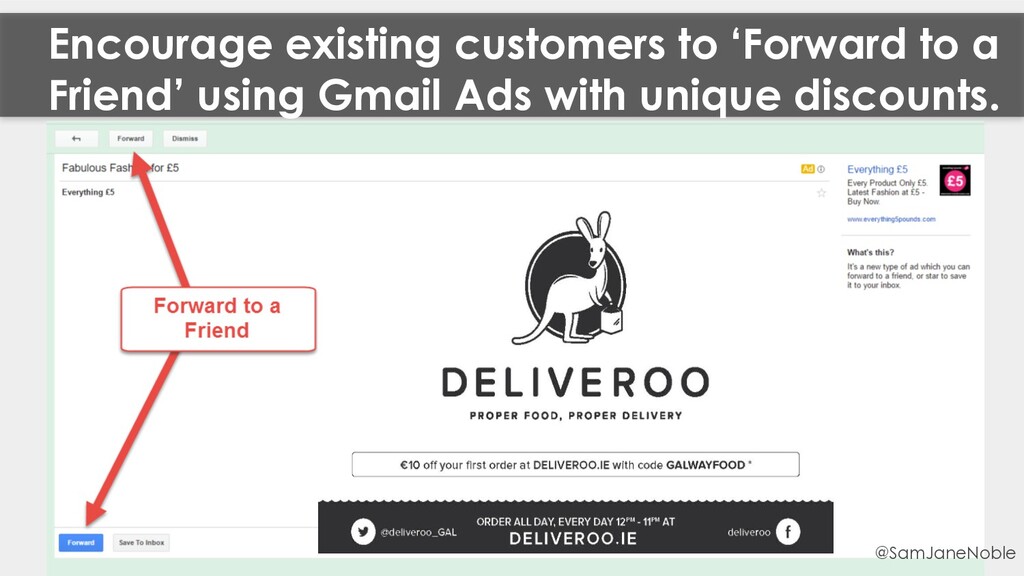
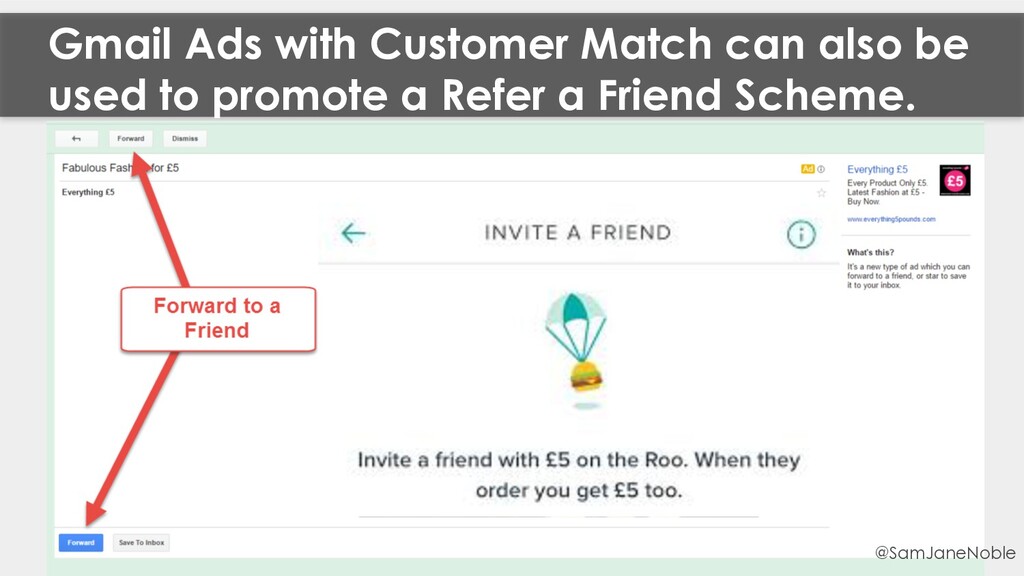
We all kind of take recommendations from friends and family, and that helps us to entice us to actually buy from a company or not. Delivery could do something with Gmail ads where they're encouraging existing customers to forward a special discount to a friend.
If they're offering a unique discount that they wanna pass on to to friends, you can use Gmail to try and encourage people to simply forward the email. So Gmail ads, you open them, for all intents and purposes, they look exactly like a like an e like an email.
So you can forward them to a friend. You can, save it to your inbox, and then you've also got the ad over on the right hand side as well. So you can then encourage people to forward that discount on. Likewise, could use Gmail to promote if you've got a recommend a friend scheme.
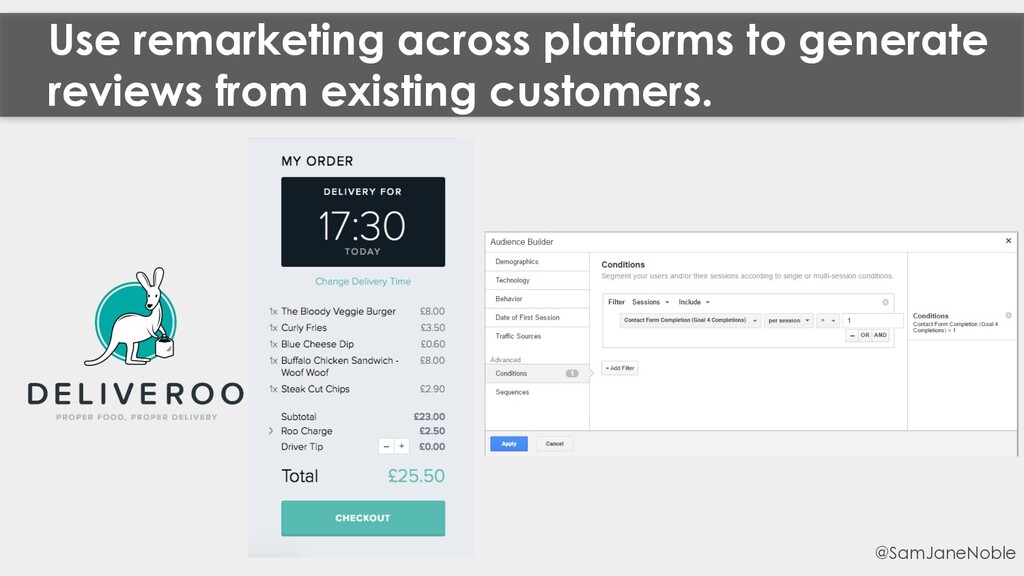
You buy from me, then you'll get that, all these different point type schemes that you've got. Promoting a recommend a friend scheme in Gmail can be really useful. And then using remarketing to follow your existing customers around and trying to encourage them to leave reviews about your business.
Whichever platform you're trying to use, whether it's your own site or a third party site, trying to encourage those reviews from existing customers to get them to start recommending you to their friends and becoming advocates of your brand. So the final thing is is attribution.
When you're trying to prove the ROI of paid media and you go right back to the awareness stage, it's quite difficult to try and say to your CEO, yeah, this isn't actually generating us any actual business, but it is. It's having an impact across the board.
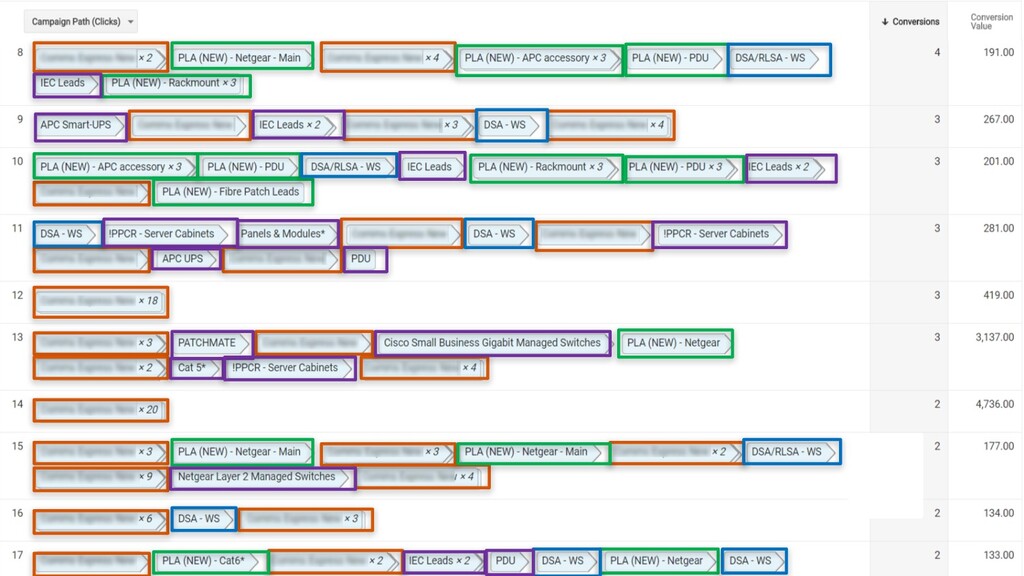
This screenshot here is taken from an actual AdWords account, and I'm just going to talk you through very quickly the funnel in which and the paths these people have taken. So the first example That's not working. Oh, no. Well, in this example, what would normally happen is the four different colors would come up and show you that people have clicked on display ads, followed by shopping ads, followed by normal search ads, followed by branded searches, and they've got loads of different different paths before they convert.
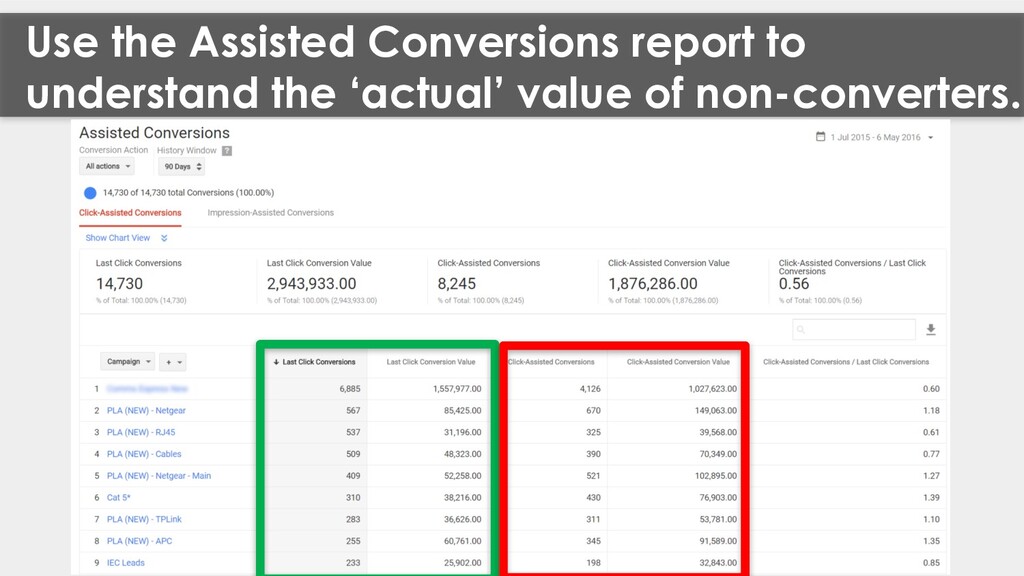
In AdWords, the last one is the one that wins. That's the one that gets all of the credit. So you can use reports like the assisted conversions report to actually see whether it's first click, last click, and how that actual channel contributed along the way.
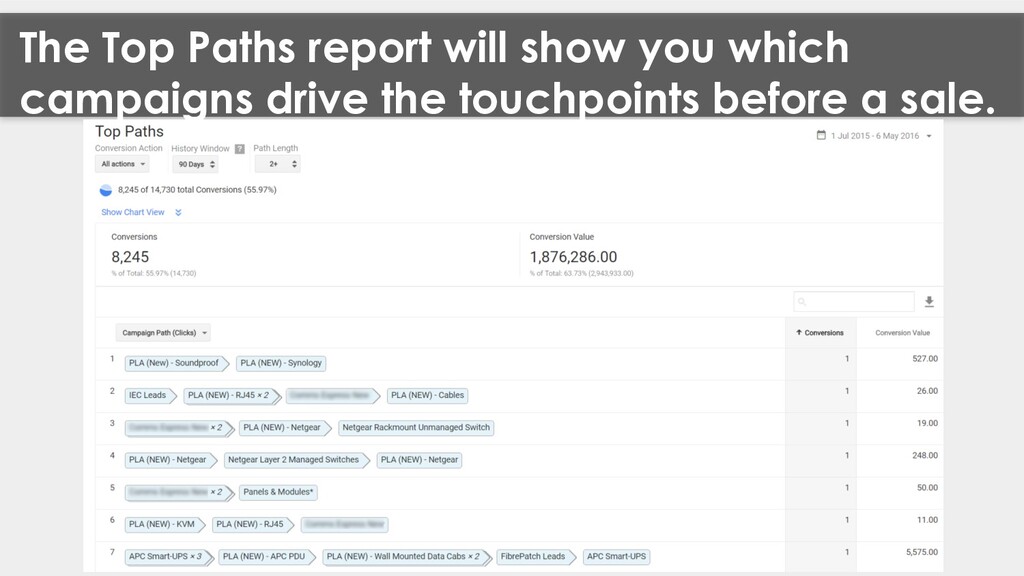
So you can see different campaigns to see has that actually assisted in a conversion. It may not have been the last click one, but it has assisted along the way. Then you can use the top paths report to see the campaigns. You can do this by ad group, can do this by keyword.
Go down to that level to see which campaigns, which keywords are actually assisting people along the way. You don't want to then just go switch off all of the other keywords, ad groups, or campaigns because they are the things that have led people to be aware of your brand at the end.
Final thought, your audience is your unique marketing point. I cannot stress this enough. And I think if if you take one thing away from this, making sure that all of the traffic you've got coming into your site is being used properly, and you're converting it along the way through your paid media campaigns.
Thank you very much. Thanks.