
To unlock growth, a business needs to continually (re)organise and (re)educate itself, across the disciplines of product, marketing and engineering. This presentation will talk through what we have done to continually organise and educate for growth at Skyscanner, and share the resulting learnings, successes, fails, tips and techniques.
← All talks 


Grow Growth Turing Fest 2018
Self-Disrupt for Growth
Auto-generated transcript - may contain errors. Tap a timestamp to jump the video.
Thank you. Hi there. Morning, everyone. It's great to be here on Home Turf talking to you about growth. I'm going to talk about self disrupt for growth. By that, I mean two things. First, me, myself, I, how do I self disrupt myself? Secondly, how do I disrupt an organization in a really positive way?
We're running a bit behind, so I'm gonna power through these slides really quickly, but everything is online for you to catch up if I'm going over something really, really fast. A bit about me, I've come a really unusual route to what I'm doing now.
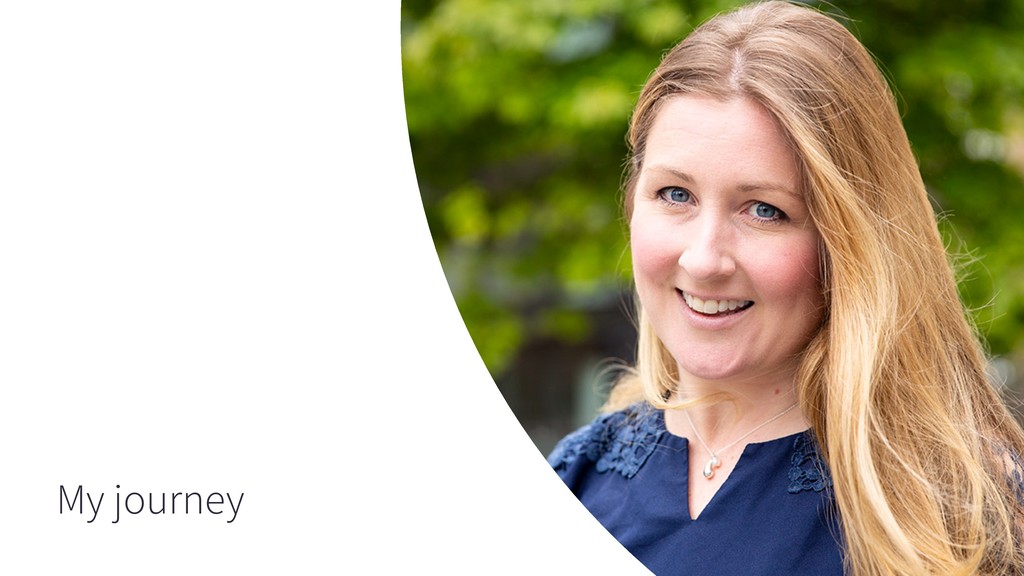
I I actually have an industrial engineering degree. I started manufacturing, food and drinks. I went into consulting, then I was in banking for a while. Got introduced to the team at Skyscanner about four years ago, and I came into working a business strategy role.
And my first project was to move our then marketing teams into what is now our growth organization. So I'm gonna talk a bit about that today. After that, I went out to Asia, ran our Asian growth team for a while, set up our new ways of working there, our new tribe and squad model, which we'll talk about.
Saw some transformative growth there. We doubled our growth rates in about six by working through this this model. I then moved on to moved back to the UK, had a baby. Came back at the end of last year from maternity leave, I picked up the role now that I'm doing, which is running our growth tribes in Europe, Middle East, and Africa.
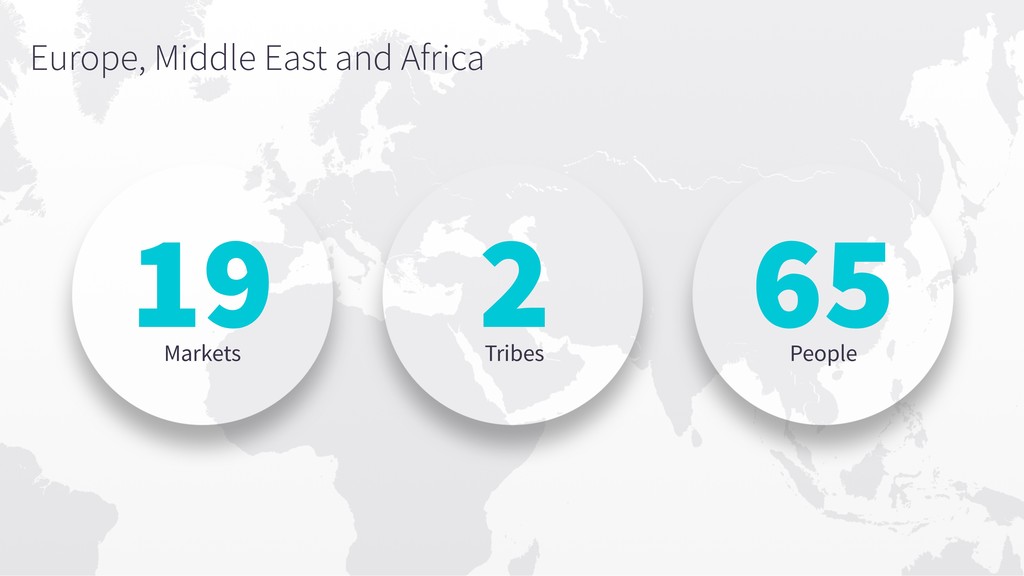
So we have nineteen markets in this region, two tribes, I will explain what I mean by tribe, and sixty five people. So you might think, yeah, great. We've got some good coverage there, good number of markets. Not really. If you consider there are a hundred and thirty four markets in this region and there's a two hundred nine billion pounds opportunity in online travel, we still got a bit of work to do.
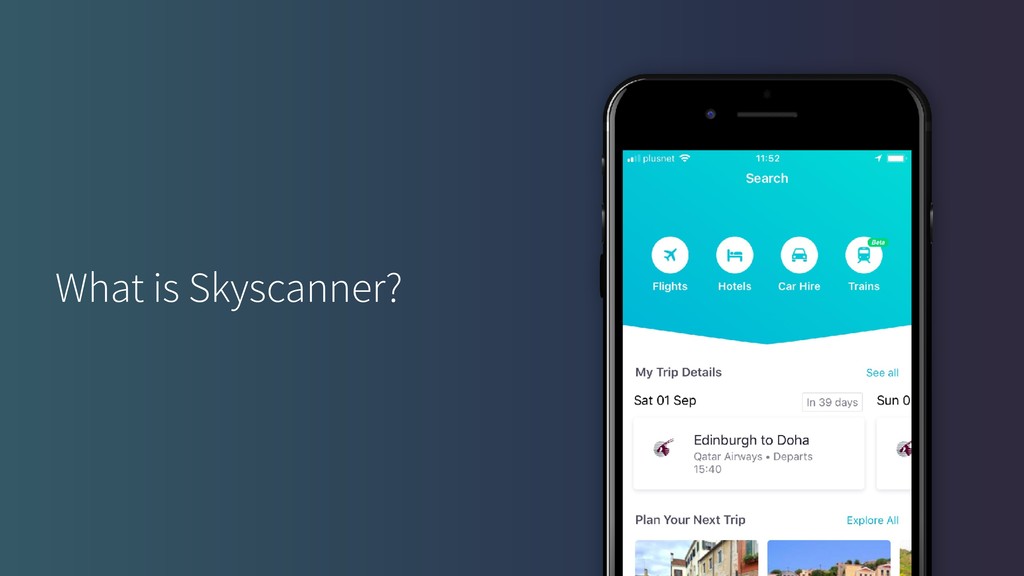
So just in case you haven't heard of Skyscanner, we are all over the hoarding, all over this place. I'll just quickly explain who we are. We are an online travel search site. We have unique proprietary technology which connects the user directly with all the travel opportunities that are out there.
And there are two things people always ask me about Skyscanner. One is, do you get cheap flights? And the second one is, how do you make money? So taking the first question, yes, I do get cheap flights. I get the same cheap flights that anybody gets if they go onto our website and run a search or download our app.
Sorry. Couldn't resist cheap plug. We are biased. We are free. We are transparent. Therefore, there are no perks or freebies for staff. Second one, how do we make money? We get a really small referral fee from our partners or we get advertising revenue and that there are two main revenue streams.
We started in two thousand and three. Gareth Williams, our chairperson and two other co founders, Bon and Barry, came up with this idea to make travel search easy because Gareth is doing a lot of traveling and and finding it really hard to narrow down his travel choices across all the options on the Internet.
So they came up with a simple Excel spreadsheet in two thousand and four, launched it, got great word-of-mouth, expanded out to Europe, then into Asia and the Americas. We've gone through a series of acquisitions as well that we have made. We were acquired by Chinese business, Ctrip, end of two thousand sixteen, continue to go from strength to strength.
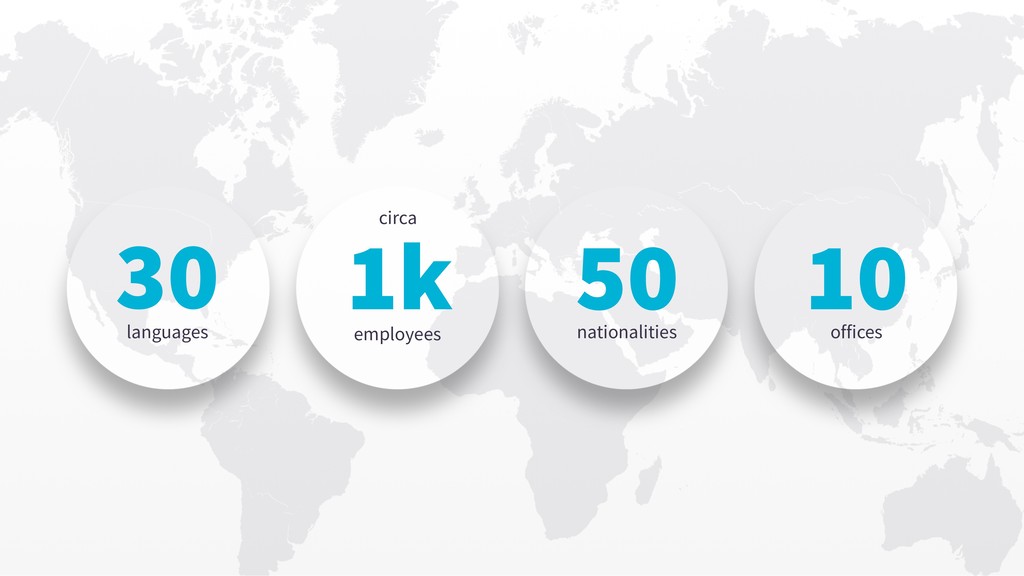
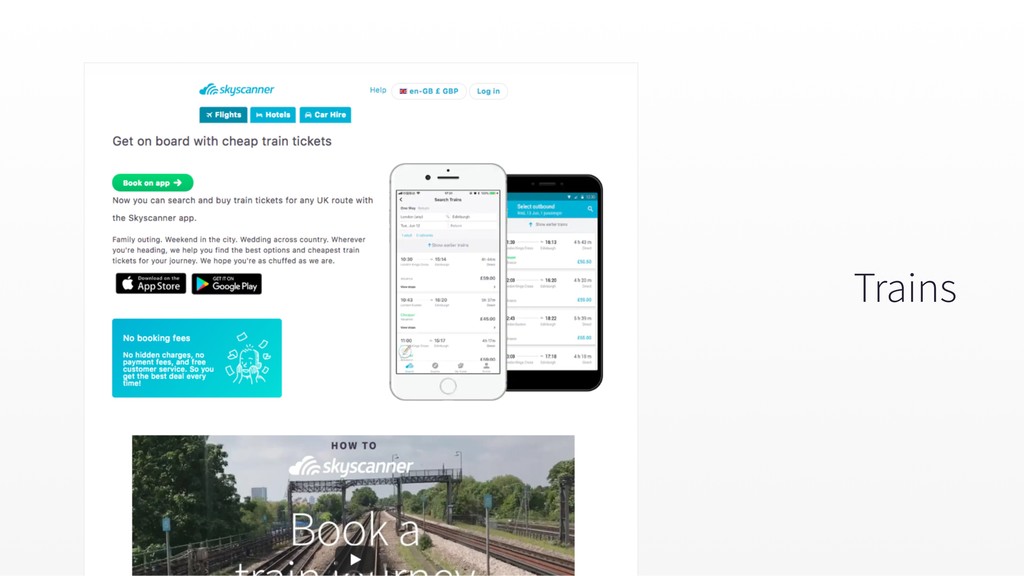
We've just launched our latest vertical, which is rail in the UK. And you can see the scale we're at now, thirty languages, a thousand employees, fifty nationalities, ten offices. You might look at the best and think, yeah, doing alright. Okay. Got a bit of scale, got a bit of growth.
But it's a really important question actually. What is growth? Is that growth? And actually, an even better question than that when you're thinking about your growth metrics and how you measure growth is what is the goal? We spent quite a bit of time trying to dig into this and really understand what what the goal is.
Once you're really really crisp and clear on that, the growth metrics drop out actually really really easily. So first question, the goal. Second question, what is growth? I recommend a book called The Goal by Eli Goldrat where he talks about this quite a bit so that's that's a really good read for this.
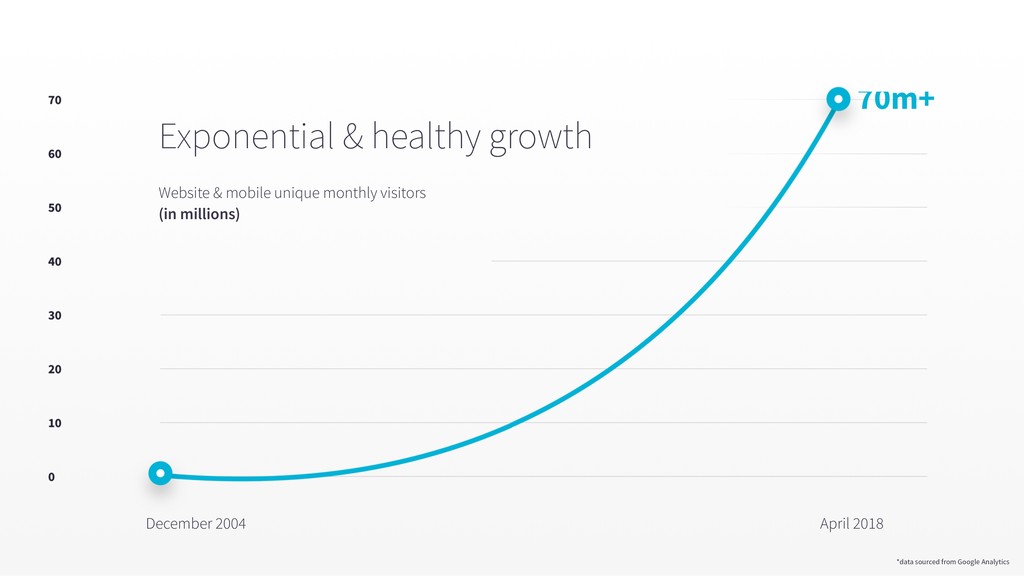
So is this growth? Seventy million visitors, nice hockey stick there, seventy million downloads on our app. Marketing team going, yeah, we're bringing in all these visitors, we're kicking them over to the product. Aren't we doing an awesome job? Fantastic. The truth is, this is vanity.
We can bring in as many visitors as we like, but if we are not giving them value, it's pointless. It's a waste. And we we realized this quite a few years ago. We spent quite a bit of time actually really trying to dig into that question, what is the goal?
We believe our purpose after after examining that is to help travelers travel, to facilitate travelers to travel. If we are doing that, we are bringing value to the travelers. And if they are doing that, they are booking, therefore they are also bringing value to our partners.
Happy travelers, happy partners, happy skyscraper. And so we we wanted to measure that. We wanted to get get a metric that really captured that. And the one that we've come up with, the closest proxy we can get to tell us that we are facilitating people to travel is this one, total ticket value.
So what I mean by that is the the amount of money that someone spends on a ticket on total to travel that we've facilitated times by the amount of tickets that we've sold. That is the best indication we can have that we have helped someone to travel.
They don't necessarily need to have transacted on our site, but we have helped them travel, and and this is this is our indication of that. Our whole business is oriented around this. That means everyone is pushing in the same same direction. How do we grow this?
Of course, we use all the regular growth metrics through acquisition, activation, retention, referral, revenue as our leading indicators to tell us we're doing this, but that is what we're after and that's what we've oriented all of our growth teams around. A second really fundamental question, who is responsible for growth?
Especially when you actually build out a team and you call them growth, it's fair enough that the rest of the business go well, they're called growth, so they must be responsible for growth. When you're in a start up, it's really simple. Everybody's pushing in the same direction.
You're a small team. Everybody has one focus in mind. How do we get a sticky product? How do we grow it? But as you start to scale out your organization, you bring in maybe a finance team, you've got an HR team, you've got legal, you've grown out your engineer, you've grown out your product, it gets harder and harder to get everybody oriented around that goal, and you can't expect it to happen naturally.
You have to hardwire your organization so that people are all pushing in that same direction. So I'm gonna talk a little bit about how we've done that at Skyscanner as well now that we've got to a certain size. And the main question I wanna answer today is how do you continue to grow when you started to amass some scale?
I'm gonna talk through a lot of the things we've done at Skyscanner. These can be applied, a lot of them, when you're a really small business as well. You don't need to be big to take advantage of some of these ones. In fact, it will help you for for when you do need to scale.
And the reason I'm I'm I'm talking about this here is so you've got a sticky product. You've you've got something that's starting to work. You think, oh, we can scale this up. You you start to go into new markets. The new markets have have taken that product really well.
You haven't really had to change your your your product mix too much. You haven't had to change your marketing mix too much, and and it it scales really quite quickly. You've started to do your your long and hard, like your SEO scaling. You've done your quick and easy wins from SEM and got that that nice high endorphin rush that you'll never get again because it's a one off.
And you've done all that easy stuff, and you're you're now at the point of, right, how do I scale from here now that we've got to a certain level? By the way, I know that stuff isn't easy just in case there's any startups in the audience.
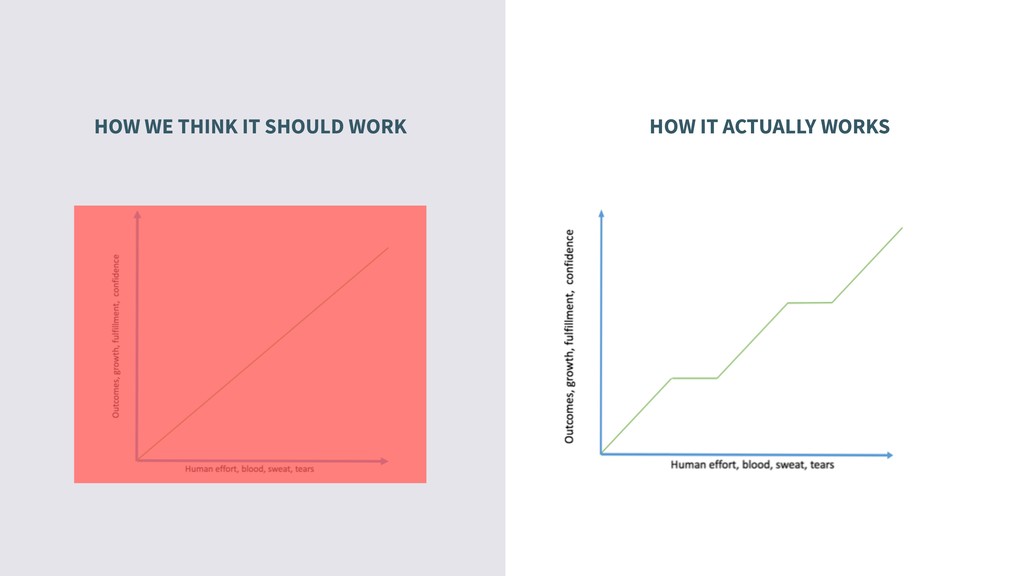
The truth is it is hard, complex, and there's no consequence. You have to keep disrupting yourself to continue to scale. Quite often, people think, well, we'll just we'll just put more people into the system. We're just gonna get more humans, more blood, more sweat, more tears into the system, and we'll get more growth, more outcomes, happy people, fulfill people, and it's a really linear relationship.
The truth is when you scale that, that's actually not the case. It looks a little bit more like this. You get inflection points in your organization, where despite pumping in more people, more blood, more sweat, more tears, more skills, everything starts to get just a little bit more difficult and you're not seeing that same level of growth, that same level of of contentment in your people, and the machine doesn't work quite as well as it used to.
So be aware of this because the better you can anticipate these inflections as they come along, the more you'll be able to nurture your organization through it without it causing too much pain. And I'll give you a bit more of, I guess some flavor of where those inflection points might might come.
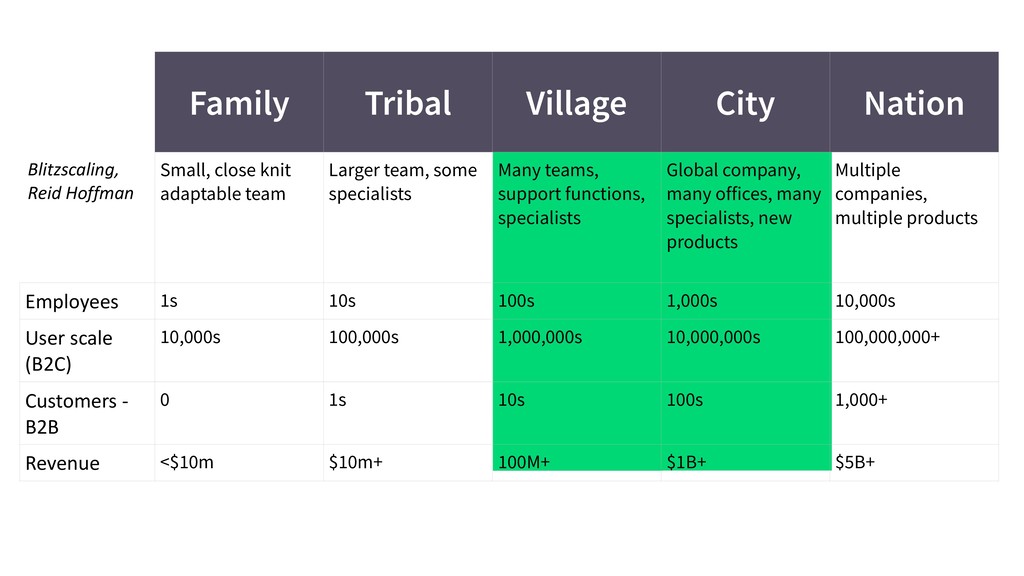
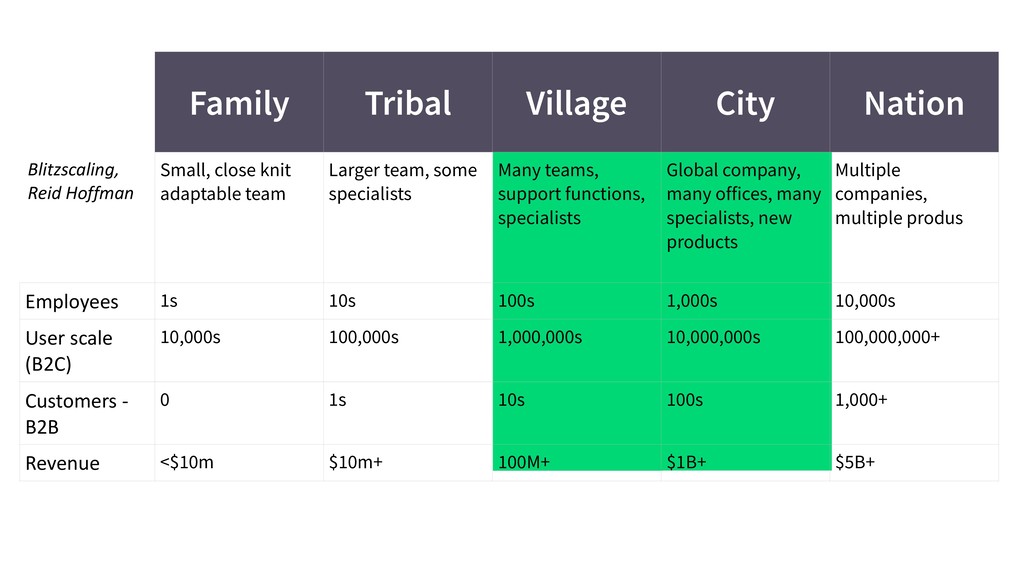
I've taken this from Reid Hoffman's split scaling series of lectures online to Stanford that he gave. Reid Hoffman is one of the cofounders of LinkedIn, and he talks about these different transitions that a business goes through. Family, tribal, village, city, nation. These these are indicative numbers.
It's not an exact science. Businesses travel through this at a different pace and different rates. If you're in the family mode, you're probably under ten people. You're probably all generalists. You're switching and pivoting all over the place, you're at startup mode. We want to get product market fit.
And get into the tribal phase, You you can still start to scale out in that way. Maybe you have a slightly bigger team, you've got a clearer idea of where your product market fit is, you're starting to refine things. A really important concept here Dunbar's number.
So Dunbar had this belief that there is a cognitive limit to the amount of human relationships one person can have and and and how a system can operate, and he suggested that limit was a hundred and fifty. By relationship, mean, you know how you relate to other people and how all those other people relate to each other.
And he suggests once you get past that number of a hundred and fifty, that system starts to break down. The relationships alone are not enough anymore, and you need other things system to help you to scale. So when you get into village mode here, you enter the hundreds of people, you busted through Dunbar's law, so everything that worked at family and tribal stops working because the relationships alone are not enough.
So you need to look at your org model, look at your systems and processes, and get that system in place to help you continue to operate. So it worked before stops working. Now I was employee number five hundred and thirty five at Skyscanner, so we were well into the village phase when I joined, and it was really evident actually that stuff was starting to to break.
I've actually lived through two of these transitions now. The city transitioned too, and I'm gonna talk through both of those transitions today. So game of two halves in this presentation. So taking the village first, when and why change your growth org? Now when I reflect back it's actually so obvious the the symptoms that we that told us we need to change, but when you're in it, it's not always quite so obvious.
Things like our PR and our social team are working in the same market and weren't talking to each other. We thought we had globally set ourselves up for scale by function, but actually what we were doing was we weren't executing at a local level very well, and we were marginalizing our local teams and they were getting frustrated and upset.
And the biggest indicator, and this is the one to really look out for, was we just couldn't get anything done. Stuff that took days was now taking weeks and months. People were working really long hours, getting really, really hacked off, and couldn't get stuff out the door, or they just gave up because they couldn't get get stuff done.
So that is the one to look out for. Also, we're at Turing, because we're in Scotland, something I just wanted to pick up on as well was we've been hiring end specialists in marketing through this village stage, we've got some great talent in the business.
But we do not have on our doorstep a LinkedIn, a Google, a Facebook, a Netflix. So we didn't have necessarily that disruptive thought coming in. Fortunately, our our founder, Gareth, is extremely attuned to this, and he saw the field we were playing in.
He saw where we should be taking our inspiration from, and it was the tech giants. So we went on a bit of a crusade as a business to pull that thinking in. We got every book we could out of Silicon Valley and then ate ate them up.
We got all the blogs, TED talks, lightning talks, company updates themed around it. We actually coined a phrase called Internet economy sensibilities. We defined what that was. It's in our competencies, and we hire against it even today. So in Scotland, it is still possible to get that disruptive thinking into your organization.
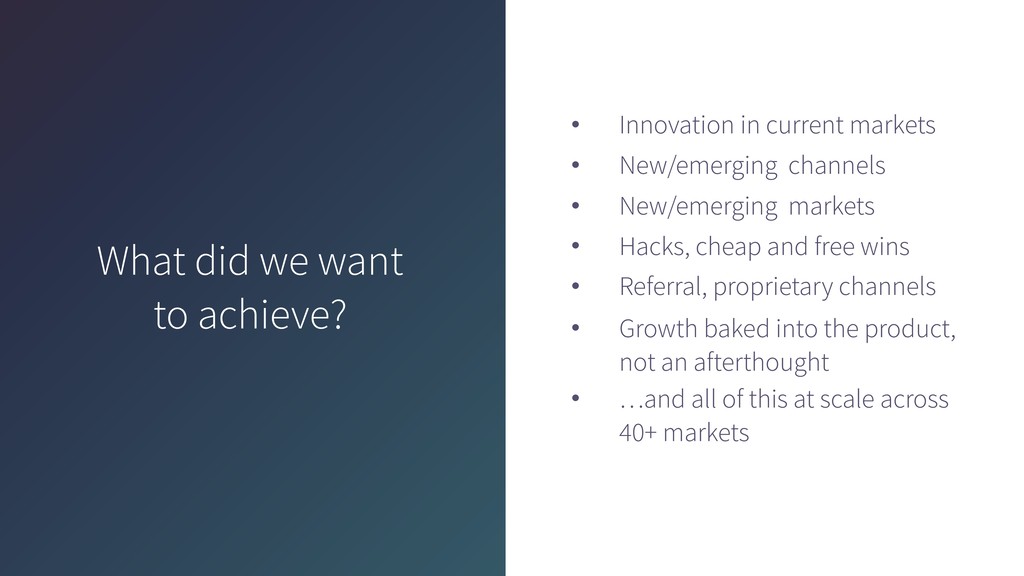
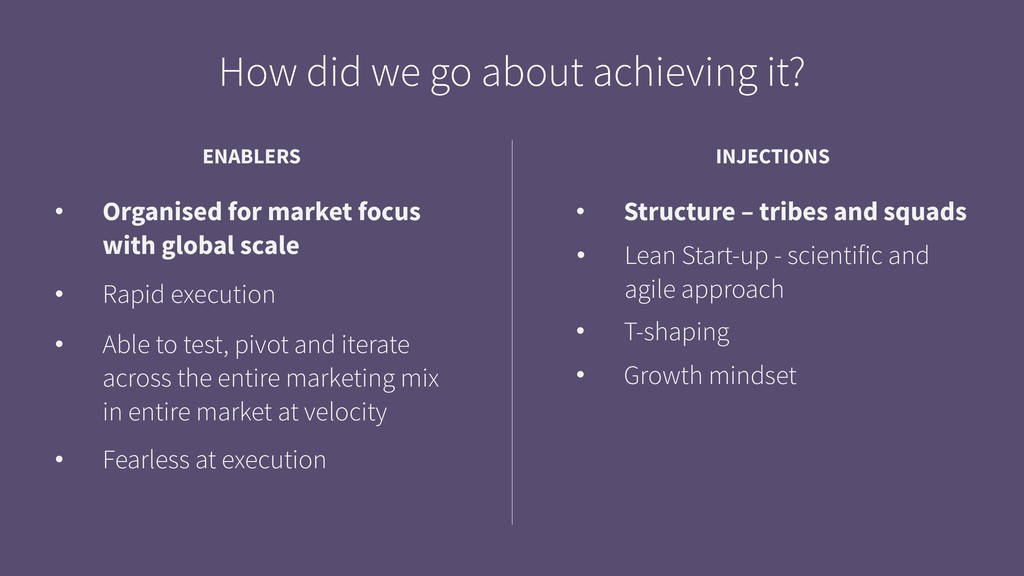
You've just got to be inventive about how you do having done all this research and reading on how the tech giants do growth, we came up with a list, a must have list of things we wanted to go through. So we wanted innovation in our current markets and our current channels.
We wanted new and emerging channels. We wanted new emerging markets. We wanted hack, cheap, and free ones. We wanted referral, proprietary channels, virality, key factor. We wanted growth baked into the product, not an afterthought. We wanted it across forty markets globally. Where do you start with that?
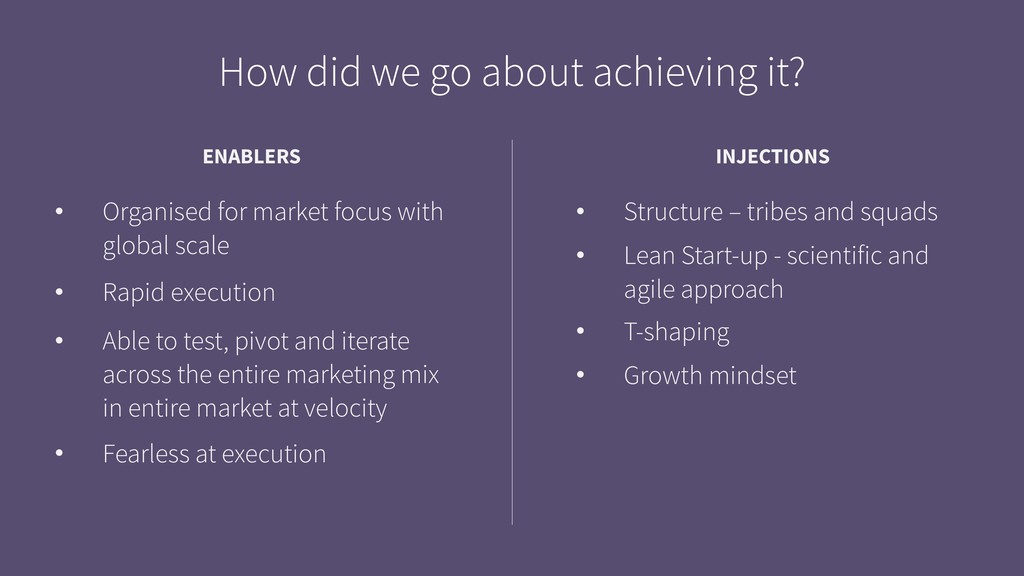
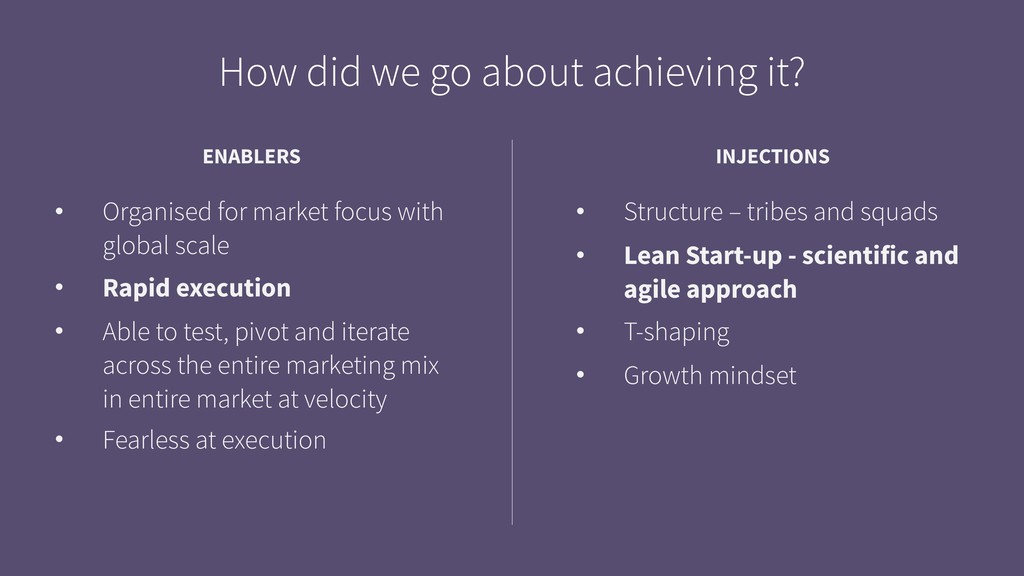
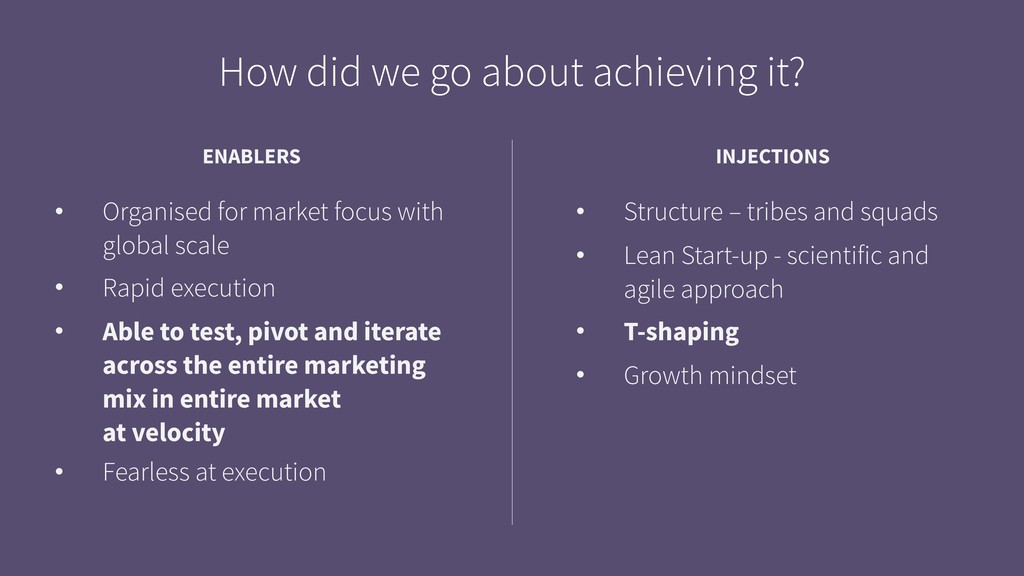
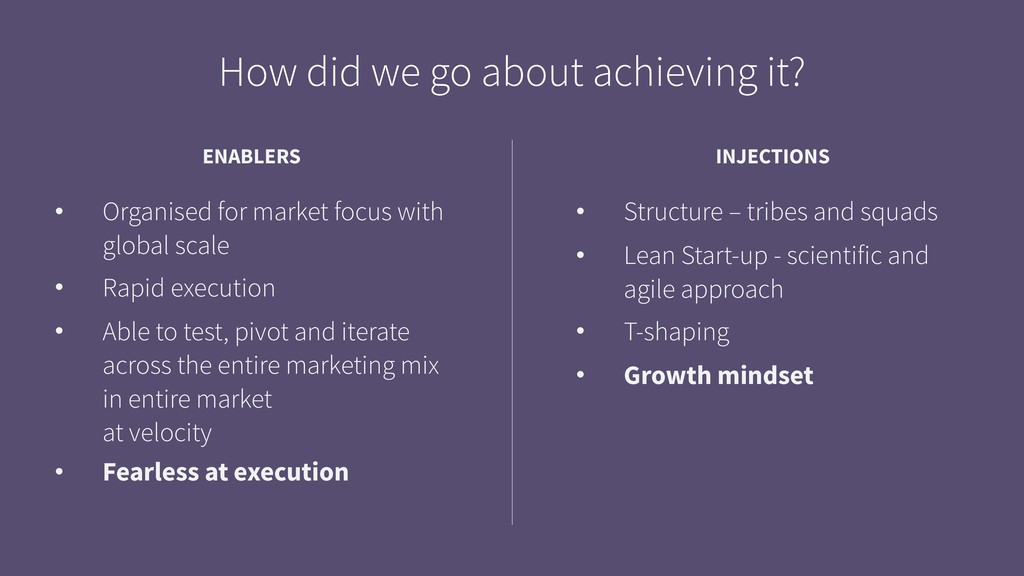
So we went about working out what are the enablers to this, and and the first one was looking at our org model. We wanted a market focus. The really important thing when you're looking at your org model though is you, by default, have to optimize for something, which means you are deoptimizing something else.
So be really, really clear on what you need to optimize for. You can mitigate the things you're deoptimizing for. So we were optimizing for a local focus, but we were mitigating with ways to scale globally, and I'll show you how we've done that.
We wanted rapid execution. We wanted the ability to test, pivot, iterate across all of our marketing mix across all of our markets, and we wanted to be fearless in execution. So the injections we put in, tribes and squads, lean startup approach, great book, Lean Startup, Scientific and Agile Approach, and T shaping our people, growth mindset.
Super buzzwordy, might not look make a lot of sense. I'm gonna talk you through what each one of those means. So tribes and squads. Tribes and squads have actually been around for quite a while. It was Spotify that really popularized it. They did a a load of work on actually putting on the net what they've what they've done worth a read if you're interested.
We left it into our product and engineering teams, and it worked really well. The speed of execution, the velocity, the quality went up dramatically. We looked at this from our marketing teams and thought, can we do that in marketing? Now it hadn't actually been done in marketing before or any non product engineering function.
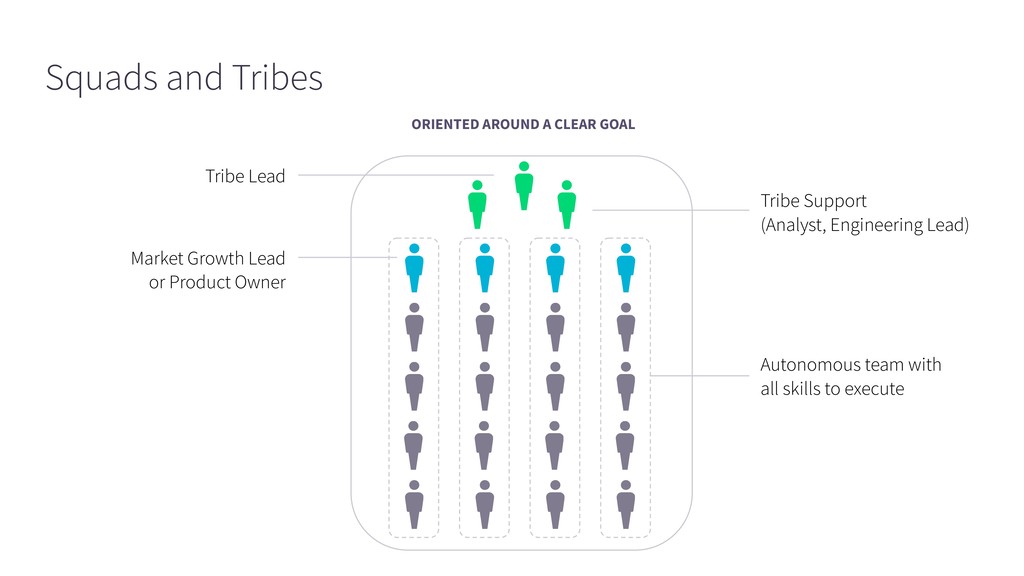
So we worked on it, we came up with our own marketing version of this, which we call growth. And how a tribe actually works, so you've got a leadership team with a tribe leader, and and they have a really clear mission and goal that they are setting for that tribe.
You then have squads. Each squad is a team. It's a cross functional team. They each have a leader too. We call them market gross leads or product owners. Now really importantly, those teams should be autonomous teams, cross functional, all the tools in place, decision making authority to deliver on the goal of each of those squads.
And your collection of squads ladder up to deliver your goal for the tribe. So the tribe is goal oriented, it's not function oriented. It's not, I wanna be a PR team and do the best possible PR, it's, I wanna win my market, or I wanna win my region, I wanna grow.
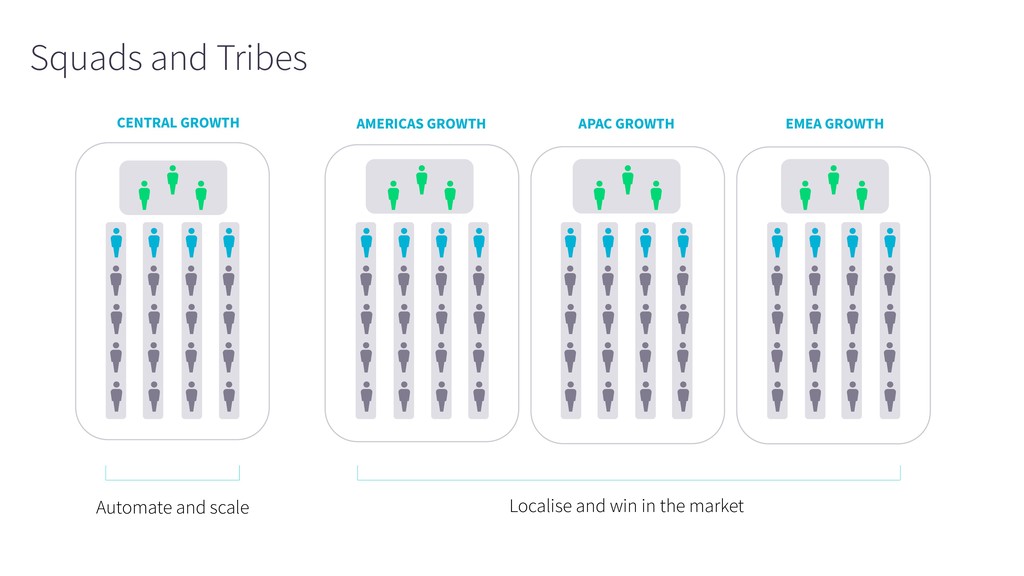
So we put in place four tribes, and talking about that local focus, Americas and APAC, EMEA focusing on the markets in those areas. And in our mitigation where global scale was our central growth. Anything that we can automate, we can programmatically do, we can do at scale, this team took care of, and everyone else was looking at how do we localize in the market.
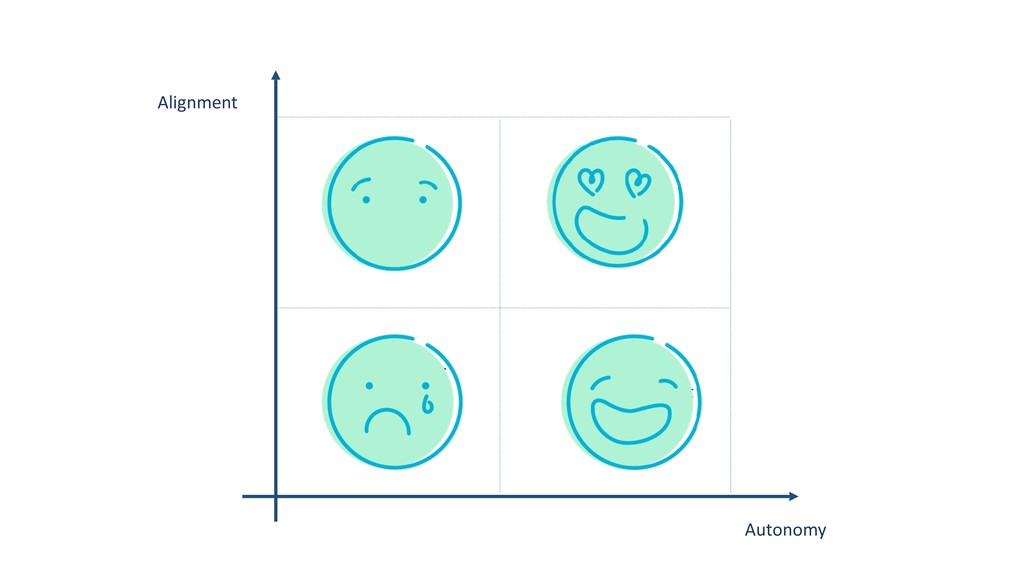
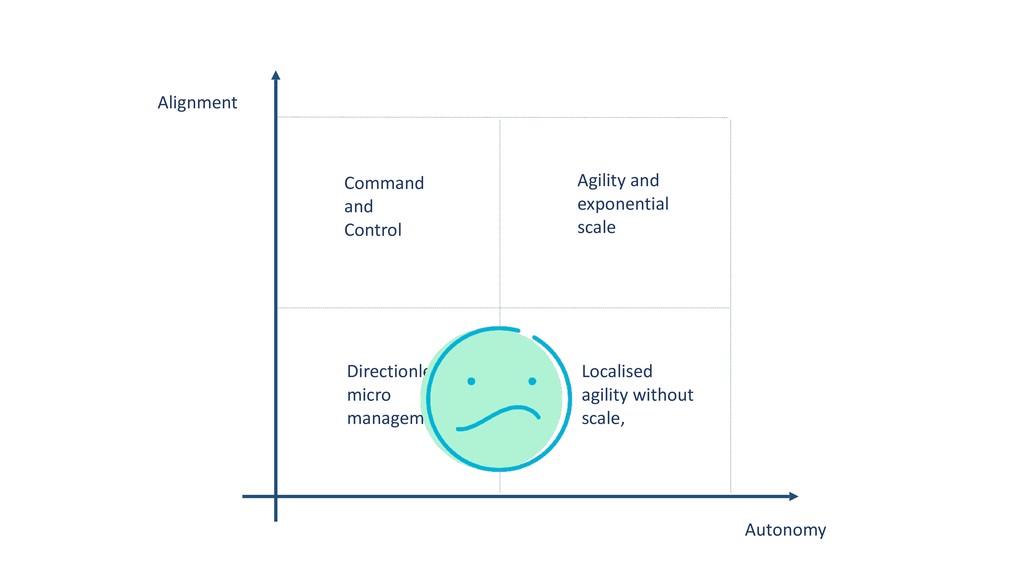
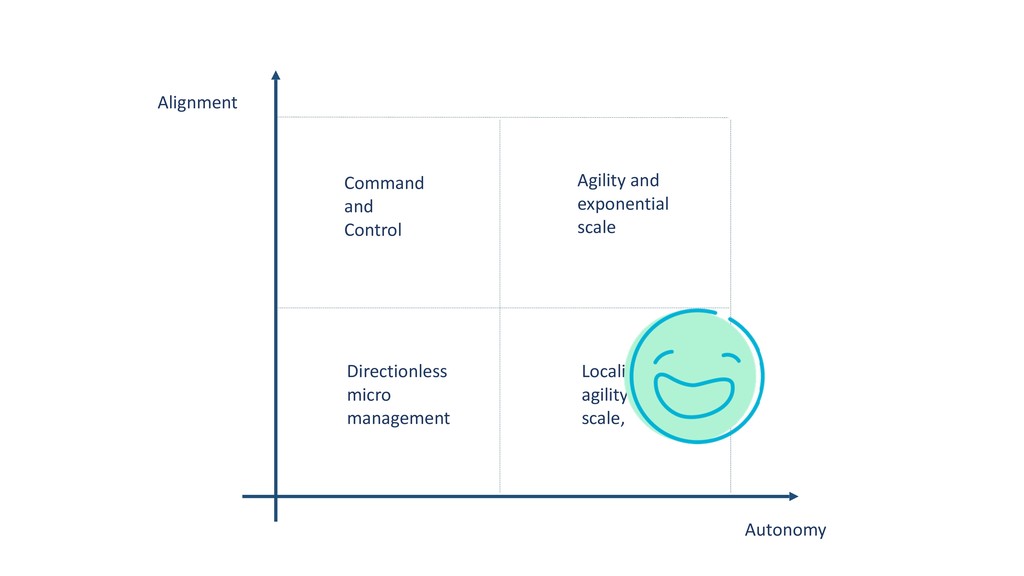
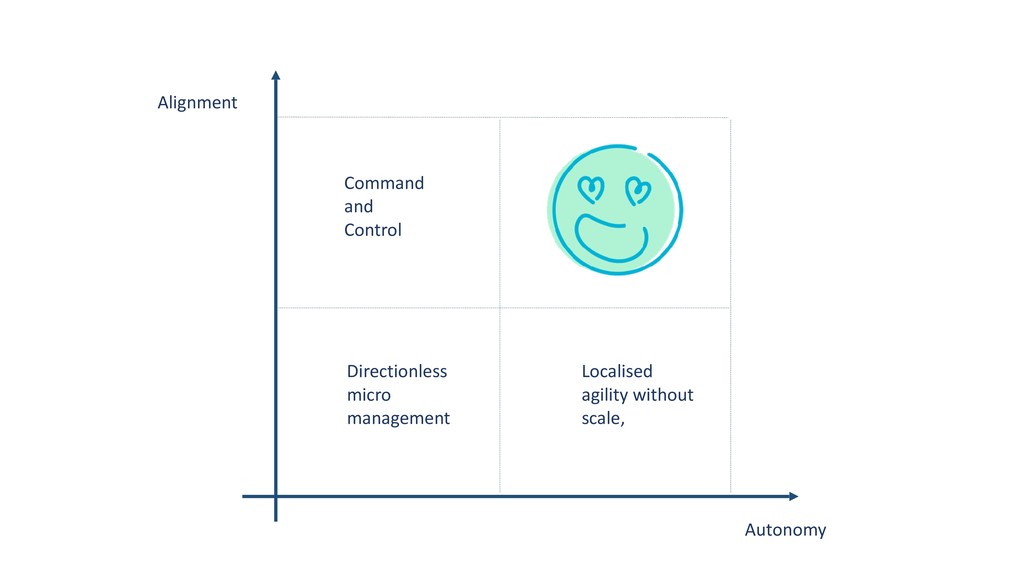
And really why we were doing that, we were trying to get up into that top right agility and exponential scale. We don't want command and control, and that's only fun for one person really, and they very quickly become a bottleneck. Even worse, directionless micromanagement.
Nobody really knows what they're doing or why they're doing it, but they're not having a lot of fun while they're doing Or high high autonomy. Lots of great autonomy happening, but not pulling the same direction. Design team came up with some emojis for this.
So top right box, ecstatic employees, really empowered, really motivated because you're in that that that top right. We were probably round about here before we went through this transition, so we're trying to move up in that direction. Lean start up scientific approach. So I'm going to quickly run through an analogy here which explains what I mean here because a really key part of this is reducing your cycle times and your batch size.
So Korean War, bear with me here, two nineteen fifties. Two fighter jets, the MiG fifteens and the f eighty sixes. The MiG fifteens were Russian. The f eighty sixes were American. These planes were often in high speed dogfights up in the skies, and despite being technically superior, the MiG fifteen wasn't doing as well as the f eighty six.
In fact, they shot down something around the seven hundred odds, MiG fifteens to less than a hundred of the f eighty sixes. People couldn't figure out why because they were massively outgunned, the f eighty sixes, and they didn't have the same technology. And actually, the reason why was they had a very flexible tail plane, which allowed that craft to move really, really quickly.
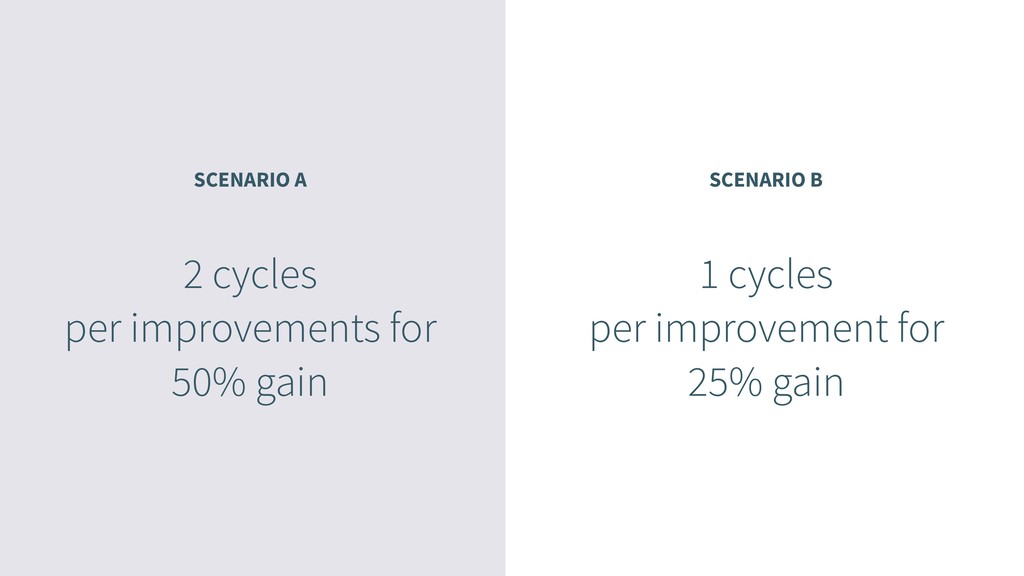
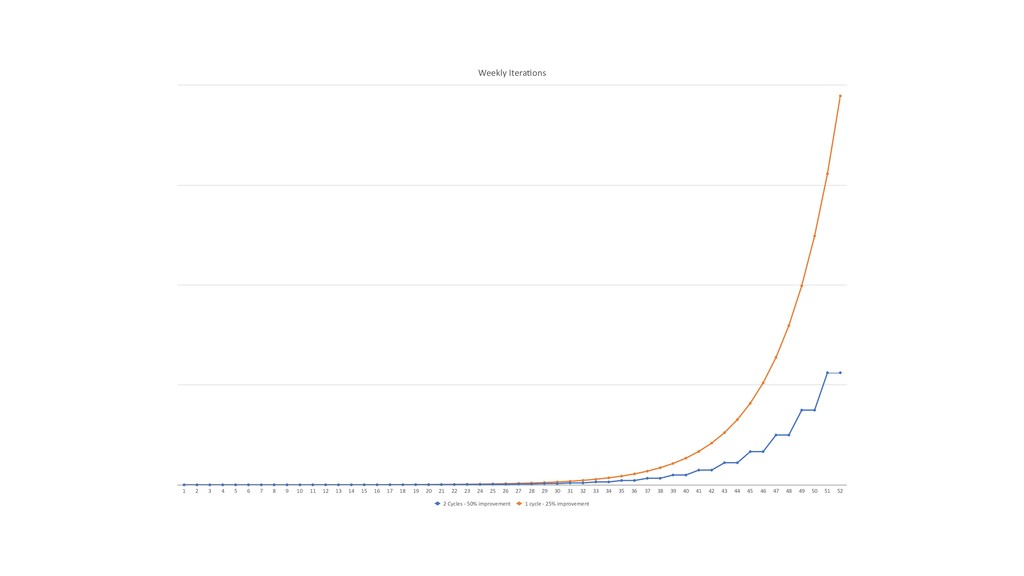
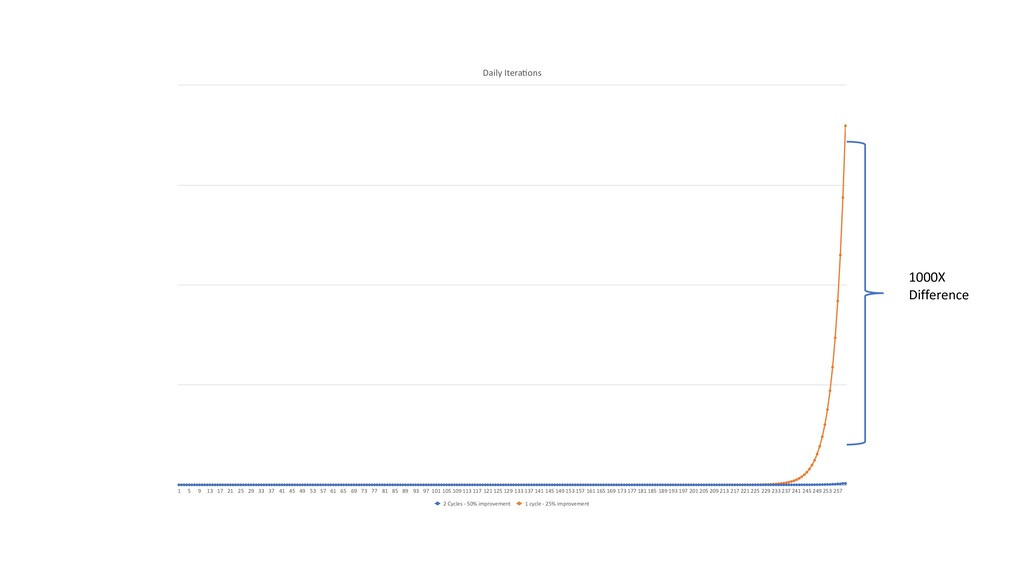
It was incredibly responsive. It could iterate. It had a very, very low cycle time. So if you pull that into a business situation, think about two scenarios. First one, two cycles, I get a fifty percent gain. Second one, one cycle, I get a twenty five percent gain.
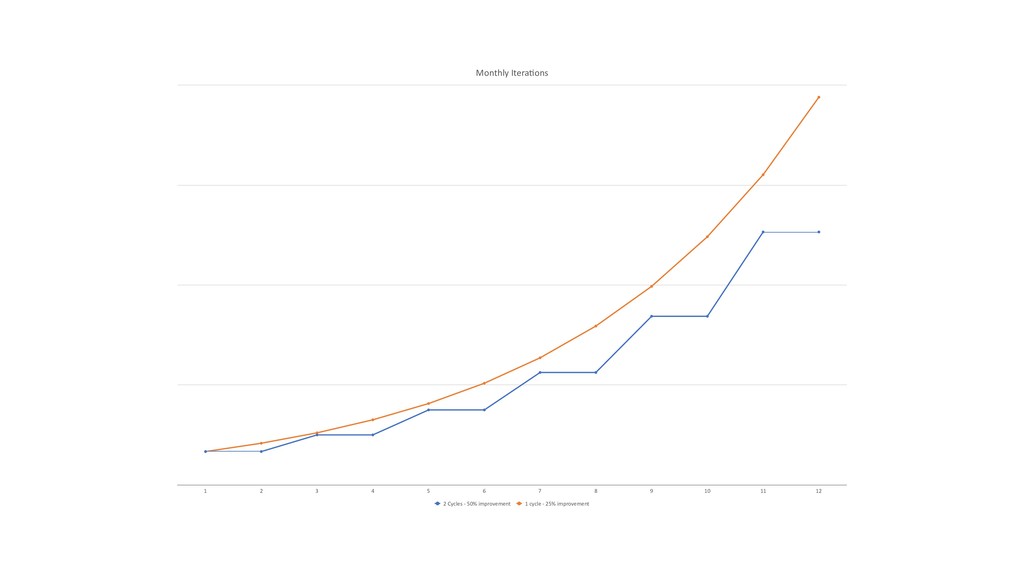
Where do I get the most improvement fastest? If you start to model this with your cycles becoming months, weeks, and days, this is what it looks like. So if you go to months, the top one, that is your one month cycle, twenty five percent gain.
Second one, two months cycle, fifty percent gain. Go to weeks, it looks like this, and goes to go to days, it looks like this. You get your cycle time right down, you are going to improve rapidly. Now there is a friction in cycle time because you're shifting directions, so you need to get that friction down too, which is where the agile practices come in.
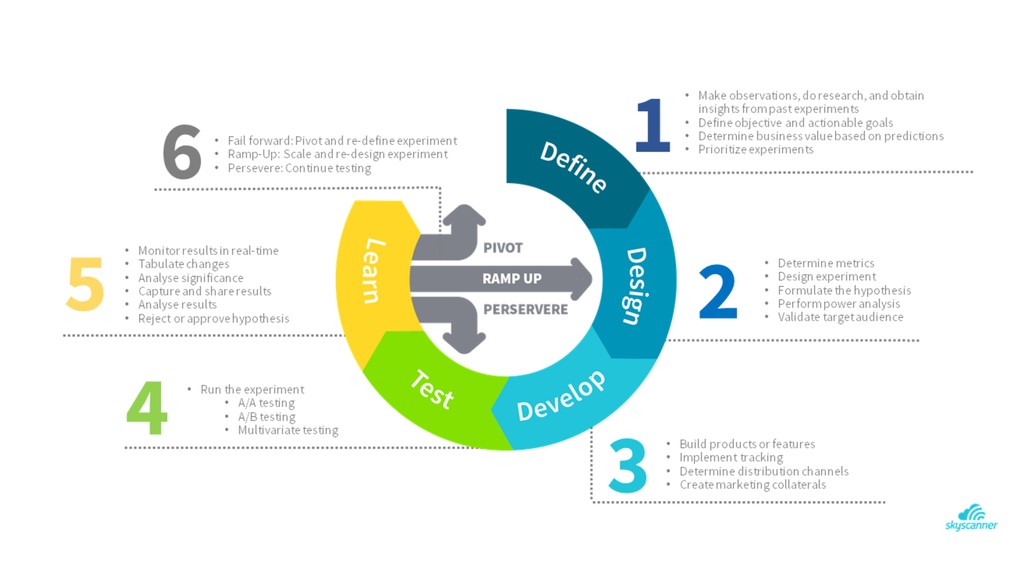
Build, measure, learn, lean start ups. So we actually took this and we developed our own embellishment on that for marketing. And the key thing about this this is how you get to that short cycle time in a really objective way. We we wanted to move away from an emotive, this is what we've always done in marketing, we're going to keep doing that because my professional pride tells me I should do this, and to objective scientific thinking.
I've got this idea and this data tells me it's a good idea, step one. Step two, I design an experiment, a really objective experiment that tells me whether or not, with real user data, this is going to work. Step three, I build the asset. Step four, run the experiment.
Step five and six, I review my my data. I understand whether or not I do scale up, pivot, persevere. So if you build this into your cycles, it gets you that really quick pivoting and iteration and scaling up pace. Underpinning all of this, agile practices.
I've not got any slides on that because it's all over the web, and I've said I've got some links at the end of my presentation you can go to, but things like moving to a Kanban scrum, moving to stand ups rather than long, long meetings where we never actually got anything done.
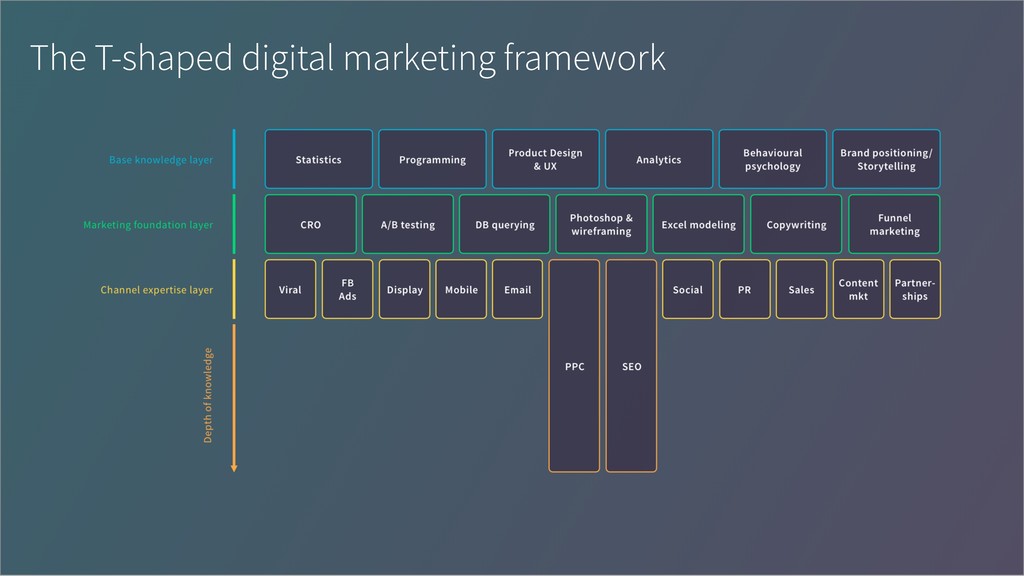
All those good stuff really, really enabled this as well. T shaping. So what do I mean by t shaping? What I mean is someone's got a real depth in something, but they've got breadth in in the adjacent skill sets as well. So again, when we started, we had people who were really deep experts in what they did, but they didn't have any breadth at all.
So we had to counter that. We put in place an e learning site which took people through the basics of all the different marketing functions, and we layered down some additional grounding for them as well in data, product, user testing. We wanted people to go beyond marketing, beyond just the core growth skills getting set right into the product.
A great example of what this has achieved, so our Russian team, they took a good look at their market. We don't need to do PR in this market. What this market needs is SEO at scale really quickly. So our PR manager who'd never done SEO before upscaled himself on Python, coded up all our SEO pages, releasing thousands of SEO pages himself, running multivariate tests, huge impact on the market.
That would not have happened if we didn't t shaper people. And growth mindset, really important one, probably one of the most important things that you can do to your organization to set it up for scale, and it's about culture. And if you get this right, and you can do this at any size of an organization, it will set you up for the years to come.
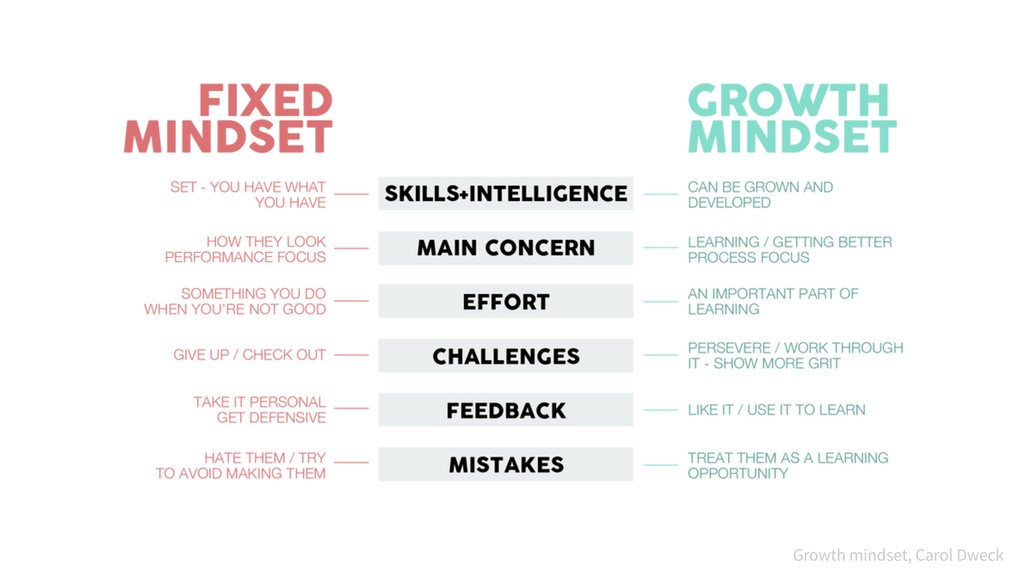
And for us, mindset was all about instilling a learning culture. Carol Dweck, another good book, Mindset. She talks a lot about growth mindset. Really, what is a growth mindset? It means you are not fixed. You don't believe you have learned everything you can learn about your topic.
You are open to the fact there is more to learn. You are willing to make mistakes and fail to learn. You want the feedback. Give me the feedback. I want to learn from it. Really, really important to instill this into your people. So again, we went on a bit of a crusade on this.
I was blogging almost daily on educating people on what are tribes, what are squads, what's the growth mindset, what is the scientific approach. More reading than people could actually consume. We collected all that research that we'd done from our our our tech giants, and we have blog libraries, we had physical libraries in the office, we even had fail forward parties and awards.
All of this infrastructure to help people to learn. We completely overhauled our competencies and our recruitment approach. We gave everyone new titles. They were no longer marketing. They were growth. But that's not enough. The biggest thing you can do to get a growth mindset in your organization is to role model it and to have it role model to you.
The great thing about a growth mindset is it's actually relatively cheap as well. The amount of learning that's out there online, you do not need to have gone to a fancy school or a fancy university or have a privileged up upbringing to have this.
Anyone can do this at any point in their life. And I'll give you an example. You take me for example. There is nothing special about me. I was raised in a tiny farm in the west of Scotland. My brother is a cheap auctioneer, a very successful one, and I was state educated right the way through school.
My dad got really sick when I was eleven. At the age of fourteen, my dad died. My mom was caring for him. My mom is a nurse. She'd been practicing nursing for twenty years, just gone gone through something really traumatic and looking after two children, decided, I'm going to do a nursing degree.
Now she's been practicing for twenty years. Does she need to learn more about nursing? We could argue not, but she wanted to learn more because she had this she had this growth mindset. After that, after she got her degree, I want to learn about diabetes, so she went off and did her diabetes qualification.
After that, I want to learn how to prescribe so she went and did her prescribers course. So I had this role model to me when I was young, and it stuck with me. So when I came to choose my university degree, I saw my subjects like, yeah, I quite fancy engineering.
I didn't have my dad there coaching me into it or anyone pointing out to me. I'm gonna go find me the hardest engineering degree I can find and put myself through it. And I scoured the country through the UK, ended up at Strathclyde University in Glasgow, brilliant university, and we've got loads of them right on our doorstep here.
So anyone can do this. If there is one thing you take away from this presentation, please you're clearly all here because you want to learn. Take this back to your organization. Show people you are learning. Be a role model for growth mindset. It's infectious.
Once people are surrounded by it, it will grow and grow and grow for them. And and we've we've been really lucky in Skyscanner. Gareth, our board, all of our senior leaders role model that, and it's my job now today to role model that learning to my people.
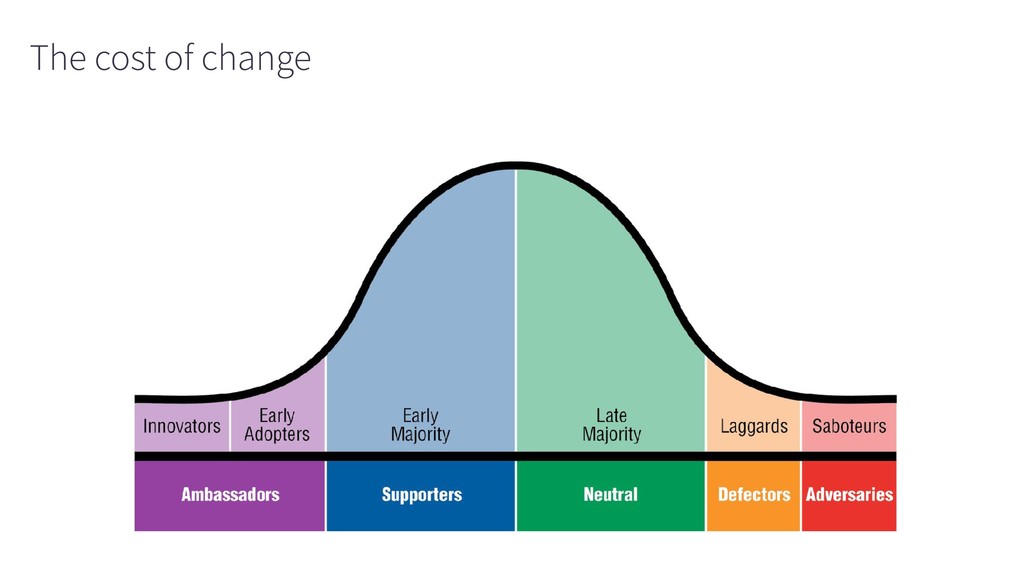
Also, I just wanna touch on when when we talk about organizational change, change does have a a cost, a price tag to it, and it it would be wrong of me not to point that out. So you've got to go into it really knowingly that you're going to disrupt things.
It's going to be hard for people. There is this emotional cost to change, and you will see a distribution like this whenever you put a change in place. I've done loads of them. Trust me, it's fairly true to to what actually happens. The best way I find and I was out in Asia when I was I was running this change.
The best way I found to really pull people through this is you will have your ambassadors there who've been sat there going, when are we moving to growth? When we moving to growth? Waiting for it. And as soon as you're like, oh, thank God. They get it.
Finally, I'm off, and they're doing it. Showcase their work. Make a big deal of it. Recognize it. Reward it. Show everybody else this is what good looks like. Pretty soon your supporters will catch on and go, hey, I want a bit of that action, and they'll start to do it.
Now they won't get it right straight away. People are like, yeah, that kinda looks like an experiment. But if they are trying, they are learning. And the more they try, the more they learn, the better the quality will be, and it will pick up really, really quickly.
Now you will also get the other end of the scale. You will always get people who just either, I don't get it or I don't want to get it. Be really careful. One thing I I'd also recommend on this, you need to tune your emotional intelligence right up when you're going through a change.
And be honest with yourself, if you don't have it, get someone on your team that does that that's really good at reading people, that could really good at seeing what's going on the ground and surfacing how people are feeling because, actually, people might not be defectors or adversaries.
They might just be having an emotional reaction. And quite often, all it takes is a conversation, something to reassure them, educate them on something, or you've just not settled them quite in the right place in the new structure. So it can be a really simple fix to help people on their journey.
We actually find some people that had a real wobble going through it are absolutely thriving in this this new world. But there will always be people who do not want to get it or who don't get it, and when that's the case, when you know for sure, it's time for some honest conversations about that.
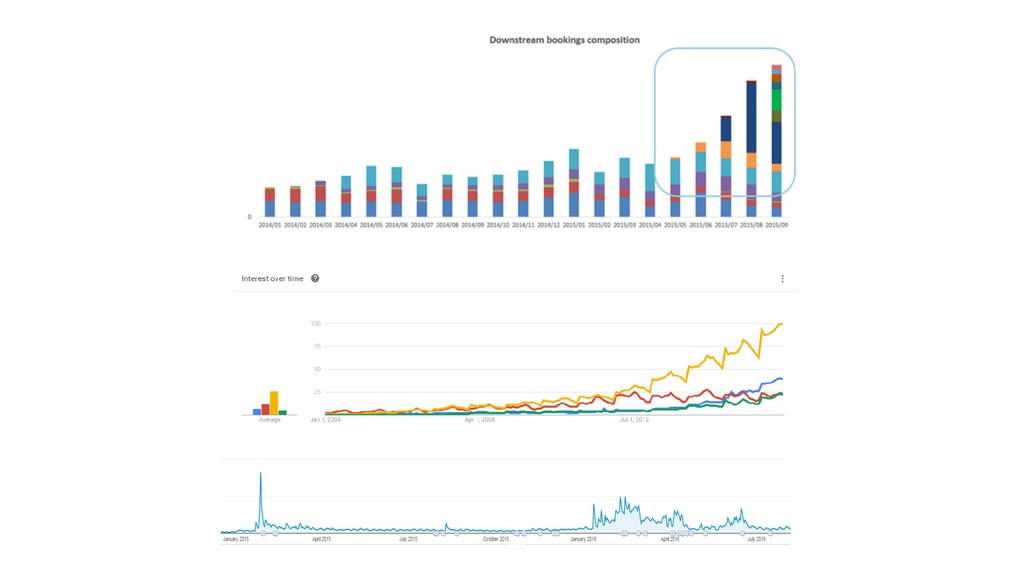
So impact. Lots of graphs like this. Top one was a market team that were a market squad that started to realize we don't need to be blasting the cash in marketing this market. We need to focus on our product market fit. Second one, this is our share of voice.
We're the yellow one lifting away from the competitive set. We were not on TV and the rest of our competitors were. We were doing this through cheap hacks, through free channels getting some great results. The third one, on the left you see the spike, that's a big bang campaign, would have taken us months to plan and yeah, got a bit of a spike out of it, but on the right hand side, you see the cumulative effect of iteration and short and fast cycle times.
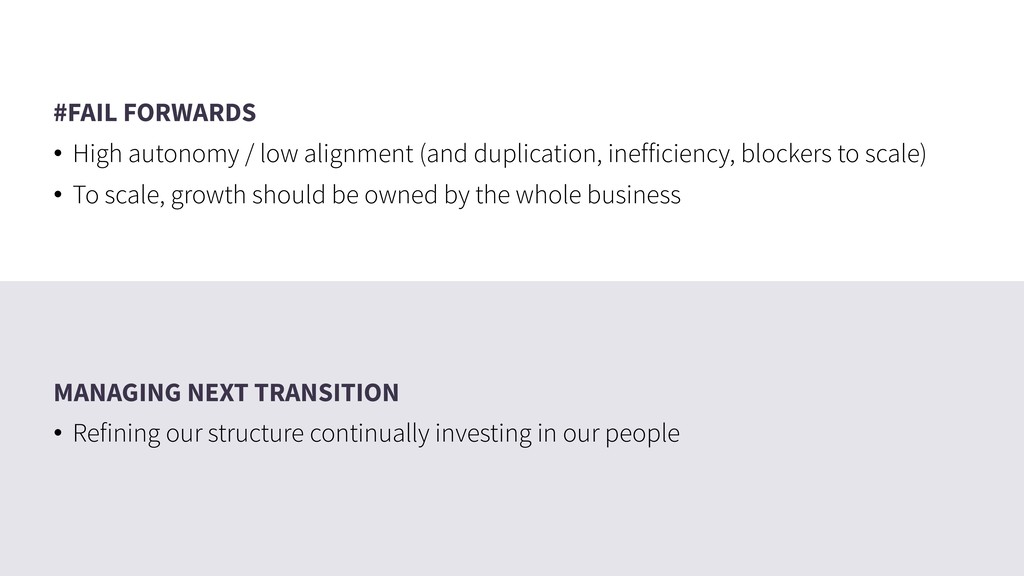
So these are some of the examples of of what we achieved through it, which is all good. But I promised you a game of two halves. We're into transition number two, the city transition, and we did get some stuff wrong. It wasn't perfect.
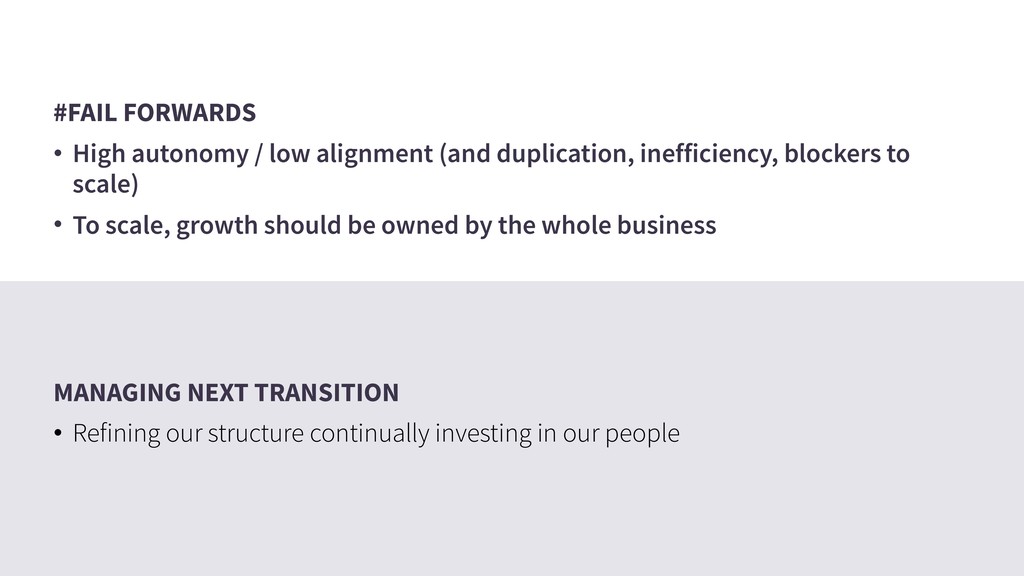
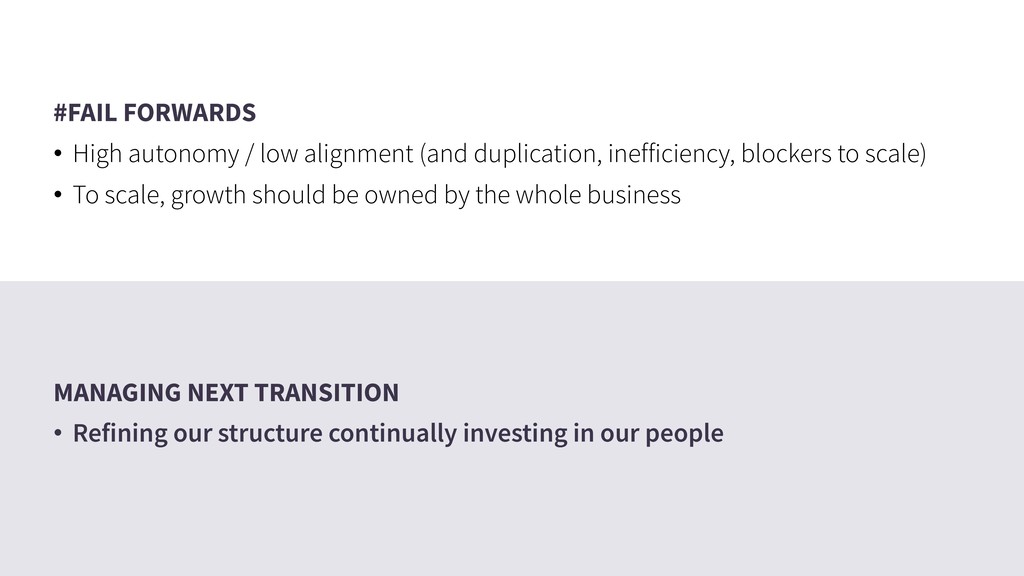
So our fail forwards, we didn't get that quite up into that sweet spot of the top right box, and we had a bit of duplication, some blockers to scale still. We we made some progress but not not enough, and also that growth being owned by the whole business wasn't quite right.
And also we had another transition to manage our people through. Now the really good thing is that this bit's really short because if you get the right scalable org model and the right culture in place, the next transitions are nowhere near as traumatic as that that first initial change.
So taking taking the feel forwards first. As I said, we're right out there in high autonomy. I came back from Matt Lee with the fresh pair of eyes that you get when you're on Matt Lee and think, oh gosh. Yeah. Haven't got up into that alignment space yet.
So each of our markets, we tasked them with going out and we gave them one question. Not give me a great marketing plan for your market, but how do you win your market? If you can do anything across the product, with your users, and across the funnel, across your channels, how do you win that market?
Now we could do that because we t shaped our people. So they were as obsessed about the product as they were with the marketing channels now and they were able to read all of that data to come up with this this plan. We used the McKinsey three Horizons model.
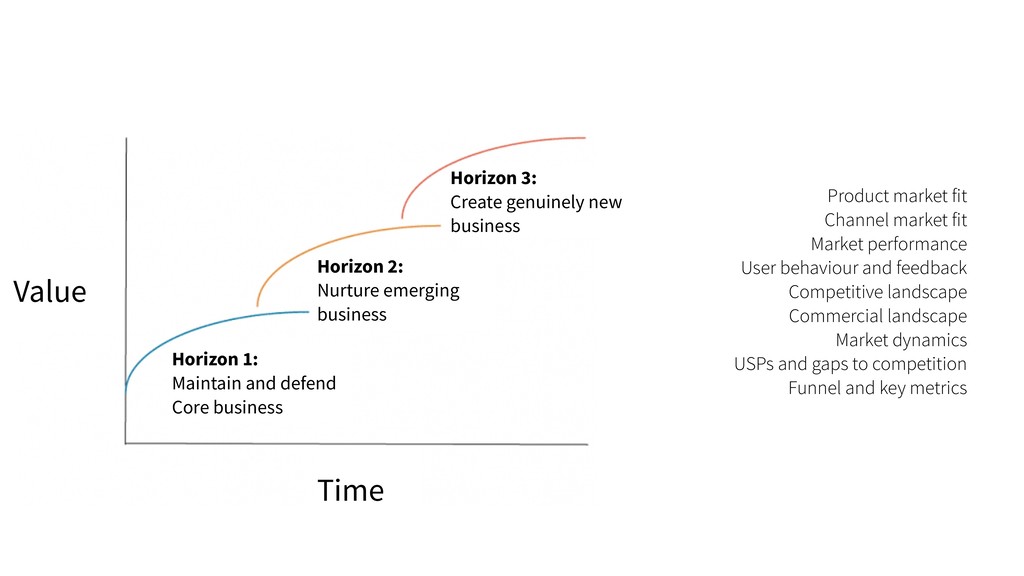
It's a really simple model, really effective at organizing your stack banking of what I need to do first. The way it works is so growth. You have to keep the growth pumps going today. If you stop the growth pumps going today because you're trying to work on new fancy things for the future, people don't come.
So it's a seventy twenty ten methodology. Seventy percent of your time should be focused on here and now, how do I strengthen my core product? How do I defend my core product and make it better? Then you start to move into your horizon two, twenty percent of your time.
What is my core product of tomorrow? What new verticals? What new channels? What new markets do I need to move into? Twenty percent of my time on that. Ten percent of my time, the new, the beautiful, the stuff that's not been disrupted disrupted yet could be a massive opportunity but it's a big bet, a big gamble so I do not want to be spending all my time on We bottomed all of this up into our regional view for each of our three regions.
We sat our board in a room for a day, took them through the whole lot, loads of market examples as well, and I'm really pleased to say that as a result of that, not only were our growth teams right up in that top right box, the whole organization is.
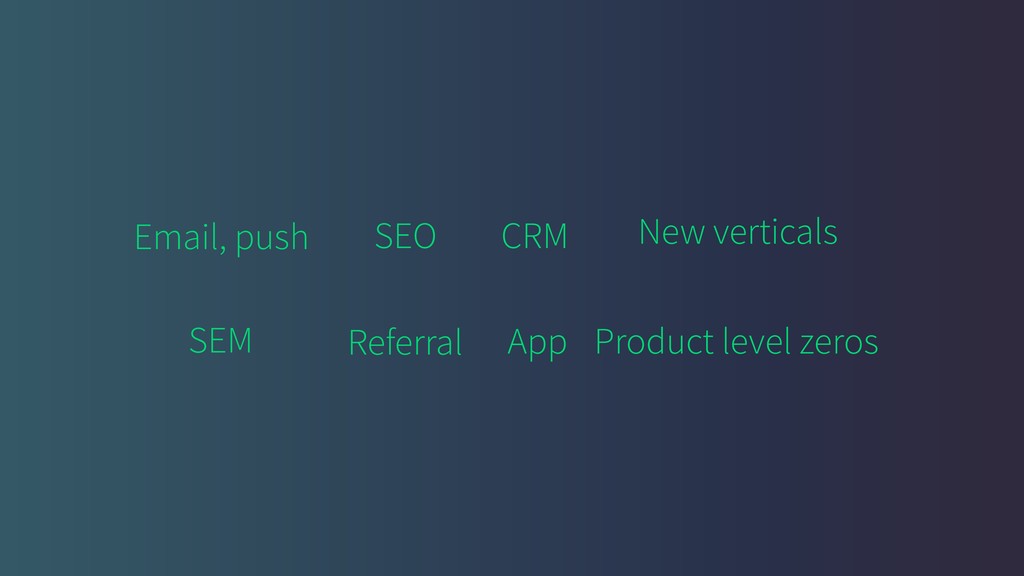
So we no longer have a central growth type. We have product and engineering and growth tribes combining together to fix all of our growth problems and to power growth for now and for the future. So we have teams around email, push, SEO, CRM, new verticals, SEM, referral, app, our our level zeros, and we have organized against that TTV North Star metric to drive these these different areas.
Some examples, so we launched a new vertical start of this year done by about seven or eight people, really cross functional team, and for the first time, we've launched a vertical from day one fully enabled for growth. All of our growth channels set up our landing pages up for SEO, for SEM.
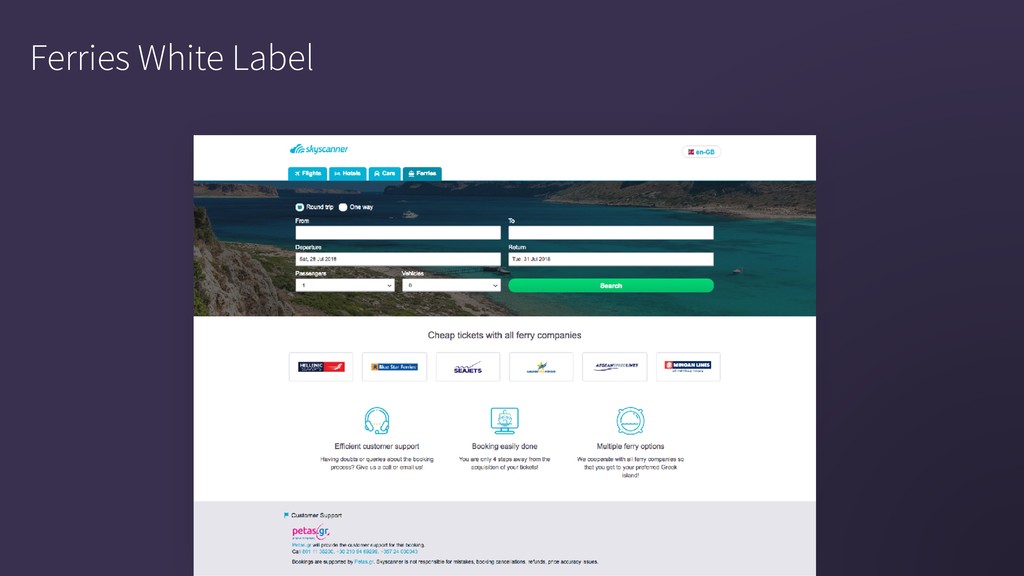
We were doing push notifications, in app pop ups, etcetera, from the very, very start. We've had some great results from this. Greek ferries. Our Greek team spotted an opportunity. We don't have a ferry vertical. Ferries is the mode of transport in summer. Why why don't we have that?
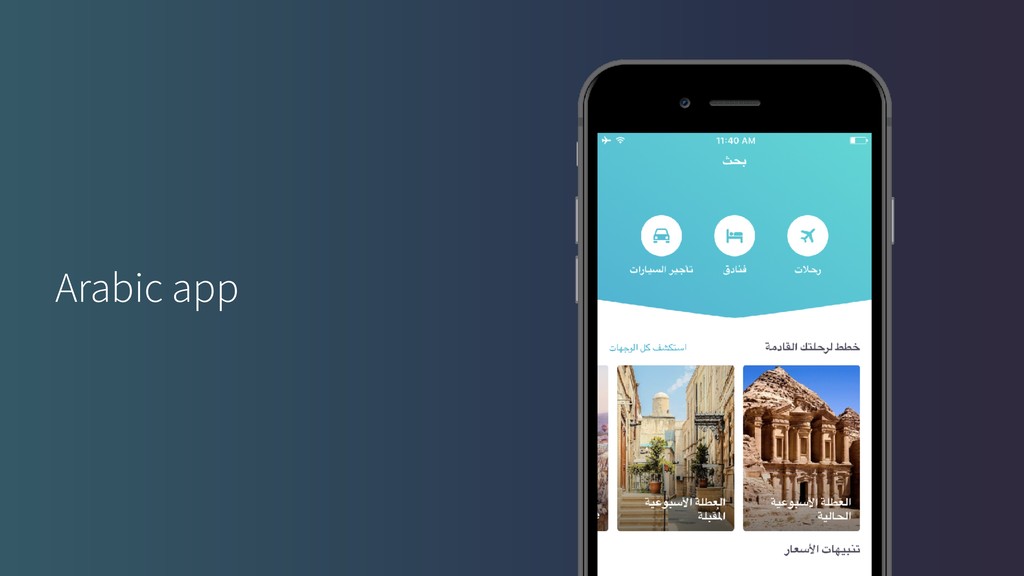
Three guys in our our Greek team just went off and hacked the product and got this up and running. No product people, all growth people managed to do this all themselves. They were taking bookings within twenty four hours. And Arabic app, we had a small team of growth people looking at new markets, new space, where where should we be going into next?
They said, hey, Arabic, best most spoken language in the world. Why don't we have an Arabic product? And this is hard to do. Okay? Product people are oh my god, right to left. But they worked with the product people and managed to get it into our app.
It has the best word-of-mouth growth of any of our app products. And what I wanna point out about all three of those examples, none of them are, can I have a big pile of cash to go and spend on marketing? It is all growth baked into our product, again, because of t shapes, those people, and because we've organized for growth.
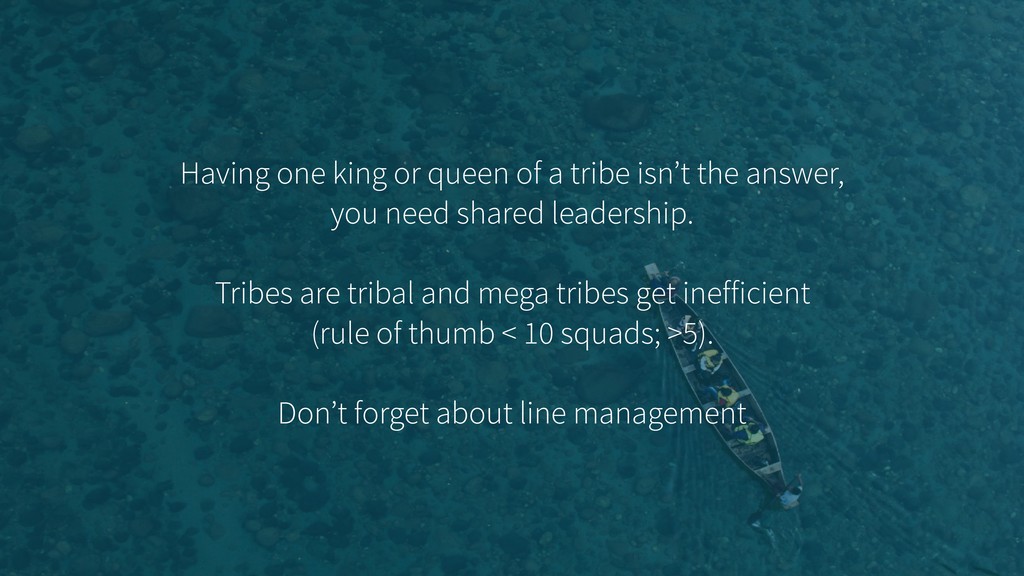
So managing the transition really quickly. A few learnings on tribes and squads. Having one king or queen of a tribe isn't the answer. Because you have all these cross functional specialisms in a tribe, you need shared leadership that represents those specialisms at leadership level.
So we've really bulked out our leadership layer. Tribes are tribal, and megatribes are quite inefficient. I came back again from Matliev, EMEA, thirteen squads and growing, really unwieldy, and we started to lose that core focus of what is the goal, so we split into two tribes.
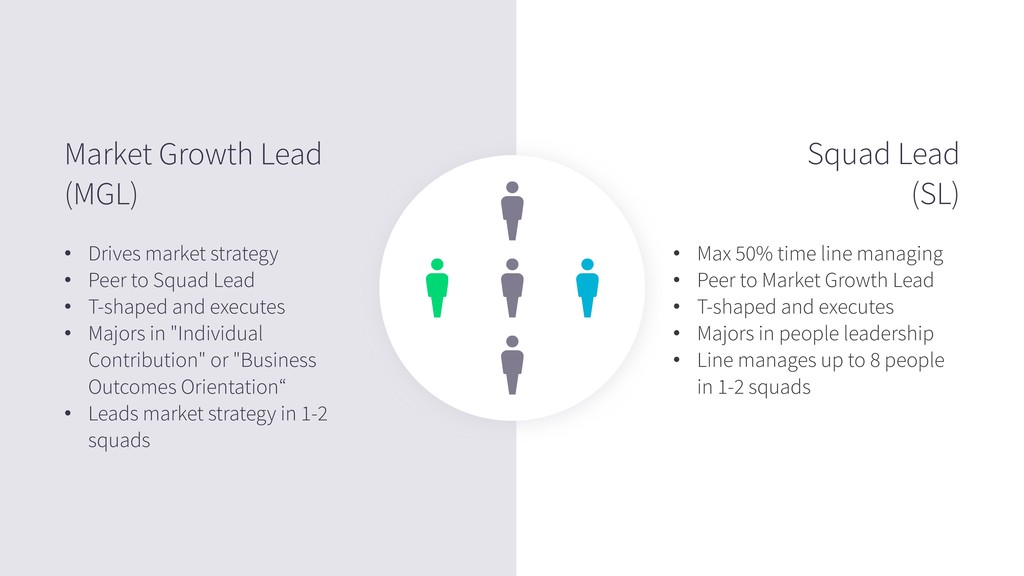
But tribes are really scalable. It's quite easy to do that. So rule of thumb, no more than ten squads per tribe. And the one thing that we didn't quite get right in our structure was the line management model. So we revisited that. We've put now a squad lead role in place to mirror our market growth lead.
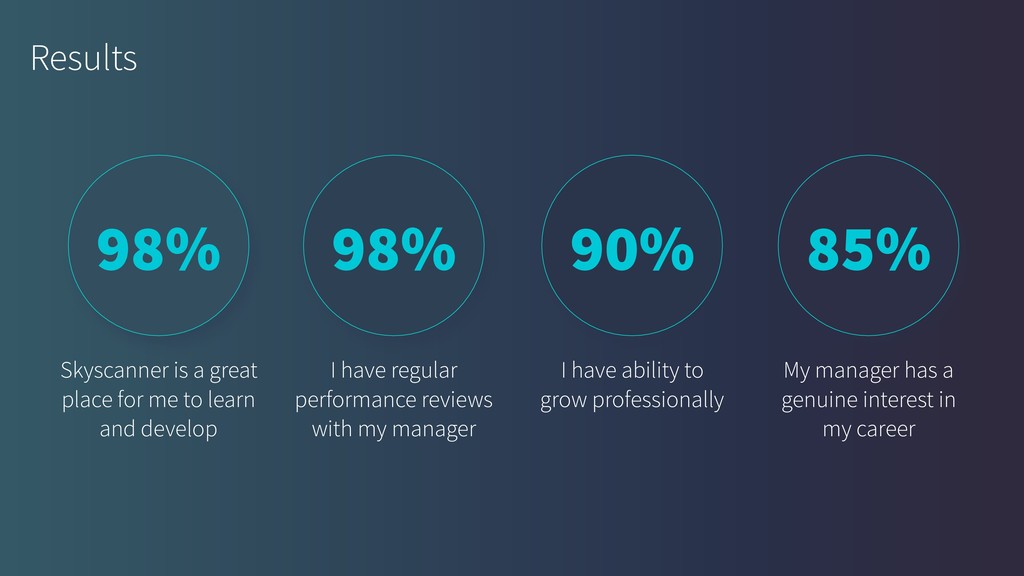
Market growth lead focused on the what, how do we grow our market, what's the strategy for that? Squad lead focused on the people. How do I grow my people? How do I develop my people? How do I execute with excellence? And I'm really pleased to say that's done some great results in terms of how people feel they are being, you know, managed, developed, and their career progression.
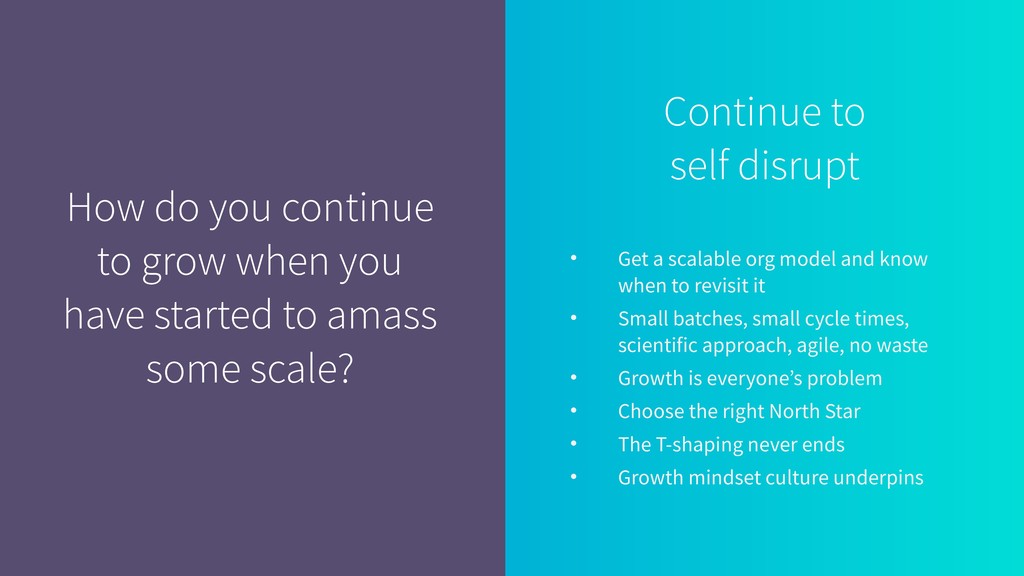
This is from our EMEA people survey earlier this year. So sorry, know I've rushed through that at quite a pace. The key question I wanted to answer was was how do you grow when you started to amass and scale? Well, for me, the answer is you have to continually self disrupt.
You continually have to challenge yourself on that org model. Get a scalable org model and continue to revisit it. Small batch, small cycle time, scientific approach, agile, no waste. Growth is everybody's problem. It is not a marketing problem. It is not a product problem.
It is everybody's problem. Hardwire your organization to work on that. Choose the right North Star that will help you get everyone going in the same direction. That t shaping, it never ends. We've got more and more we need to upscale on. And most importantly, please get that growth mindset instilled in your people.
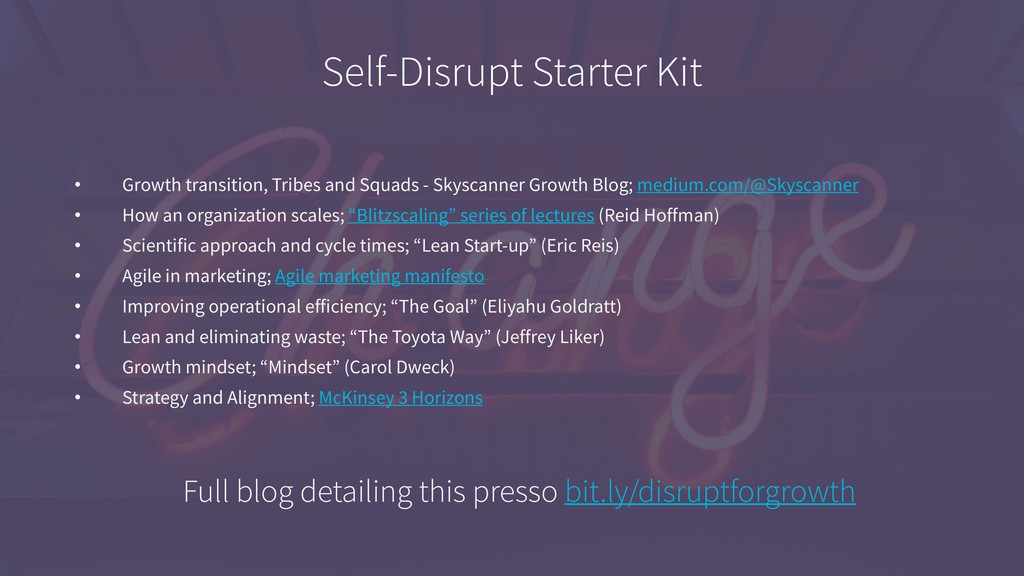
So I've put together a wee starter kit for you. Here's some of the reading that I've talked about in the blogs, but if you want to see the full narrative for this presentation, if you go on to this shortened URL, there's a full blog up up online now that you can go in, read through everything that I've talked today and all the links and slides are in there.
So I hope that's been helpful and I hope it's inspired you to do a bit of self disruption. Thank you.