
Rand explores some common mistakes and misconceptions that can have a detrimental impact on marketers' content strategies.
← All talks 

Grow Marketing Turing Fest 2016
The Worst Advice Marketing Ever Gave Content
Auto-generated transcript - may contain errors. Tap a timestamp to jump the video.
Amazing. It's it's very exciting for me to see that, you know, you can travel the world and the quality of speakers and presenters of information given is this high. You know, here in Edinburgh, I I think Brian and Jamie deserve a round of applause for the amazing work that they have done.
It's an honor to be here with you. I I have a tremendous amount to get through. And unfortunately, today, one of the things I, ninety nine percent of the time, have for you is a link to the presentation. This one, you're gonna have to wait about two and a half, three weeks before it goes up live, and that's just because I'll be giving it in Cleveland, Ohio at the Content Marketing World.
You're seeing a preview of that before I before I do that that keynote. So let's dive in and talk about some of the worst advice that marketing ever gave to content. You know what? One thing I'm gonna do before I go to Cleveland is get the name of the presentation right.
That's what happens when you're sleep deprived and your company lays off people and it's just a bad week. Okay, all right. So I I wanna ask you a question. What what is it that makes the content that we produce successful? Ranks really well, drives a lot of traffic, gets a lot of shares, converts a lot of visitors.
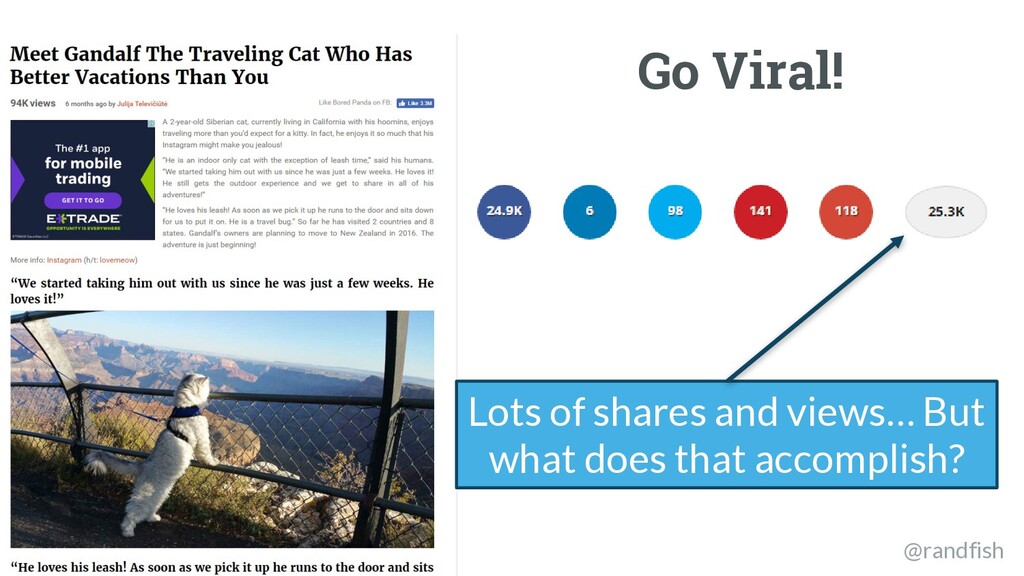
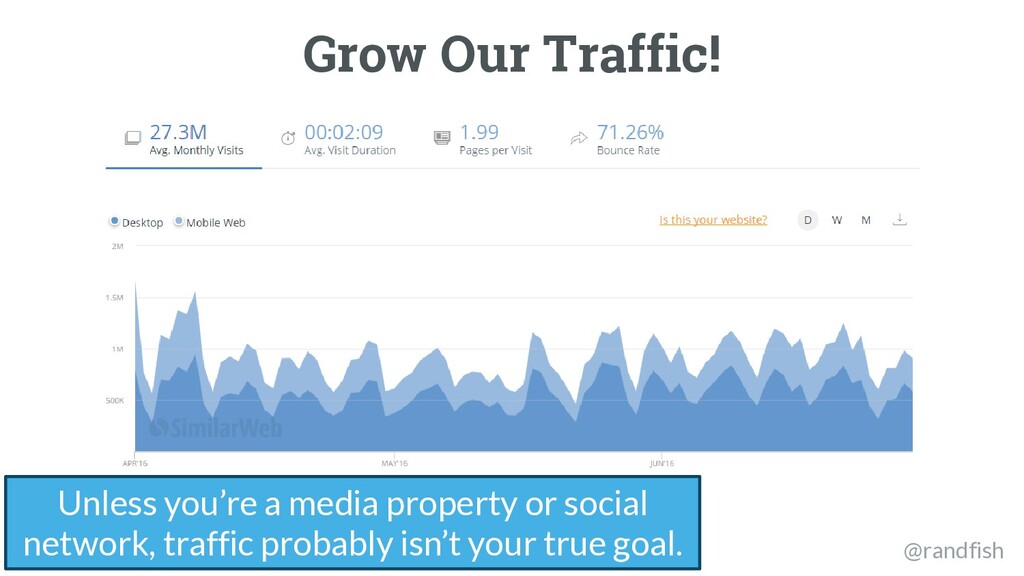
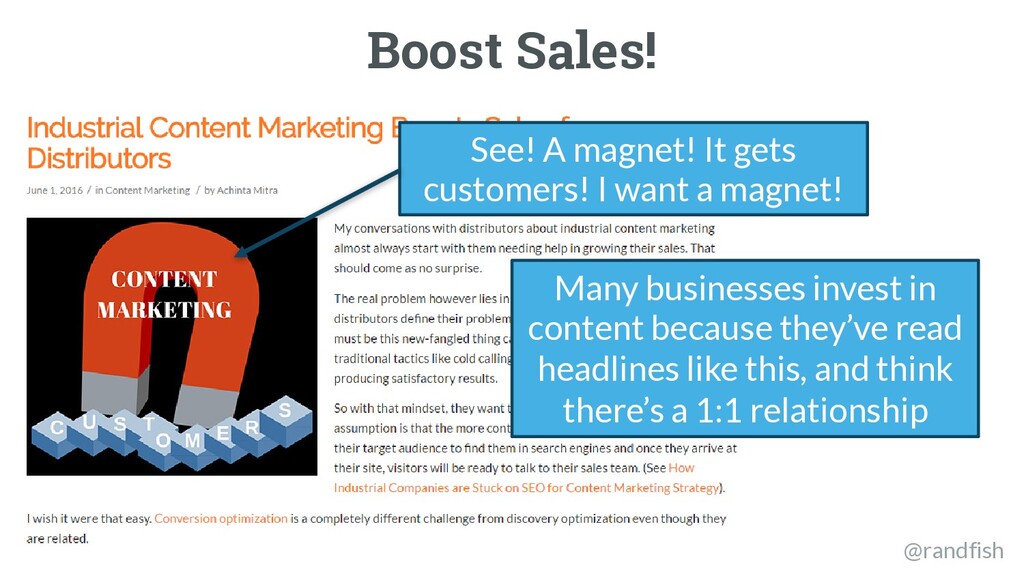
Something else gets us the right kind of press. Well, I think there's just one thing. One simple thing. It accomplishes your goals. It's creators' goals. And there's, complexity there. Two kinds of goals. One, not so smart goals. Like, let's go viral. We'll grow our traffic. We'll boost sales. See? Look.
Do you see that? There's a magnet and customers underneath the magnet. I want a magnet for customers. No. Seriously, there's a lot of businesses that invest in in content in this fashion. They're like, oh, look at the picture. My god. Alright. Then there's also some smart goals.
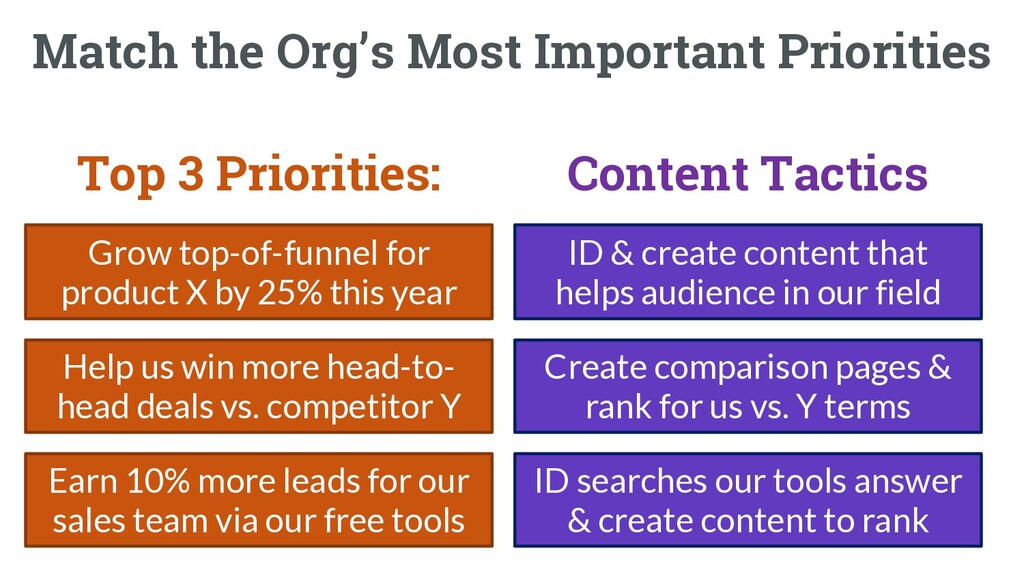
Intelligent things like, I wanna match my organization's priorities to the tactics that I'm employing with the content. I'll show you a couple examples. Alright? Let's say that your organization, right, your your CEO, your manager, your client, whatever it is, says to you, our goal, our priority right now is grow the top of our funnel, right, the traffic at the site that converts eventually, grow top of funnel traffic for this particular product by twenty five percent over the next year.
Okay. Great. Content can do that. Right? I can identify. I can create some content that actually helps the audience in this particular field for this particular product using these types of keywords. I know what that means. Right? And I can tie that. Maybe I can help us win some more head to head deals versus competitor Y.
Yeah, I know how to do that too. Maybe I can create some comparison pages so that people can see those. That content can help drive people. Maybe I can create some pages that help rank for things like their branded terms or the search terms that lead to their website, which I could figure out.
Maybe one of your big goals is I want to earn ten percent more leads for our sales team. Right? That lead gen is a big thing, and we want to do that via our free tools. Okay? I bet we can do that too, right?
Content can accomplish this. We can figure out searches that our tool can help answer. We can create the content that ranks, and we can plug our tool into that, and then we can see those leads coming through. This is a great way to do goal setting.
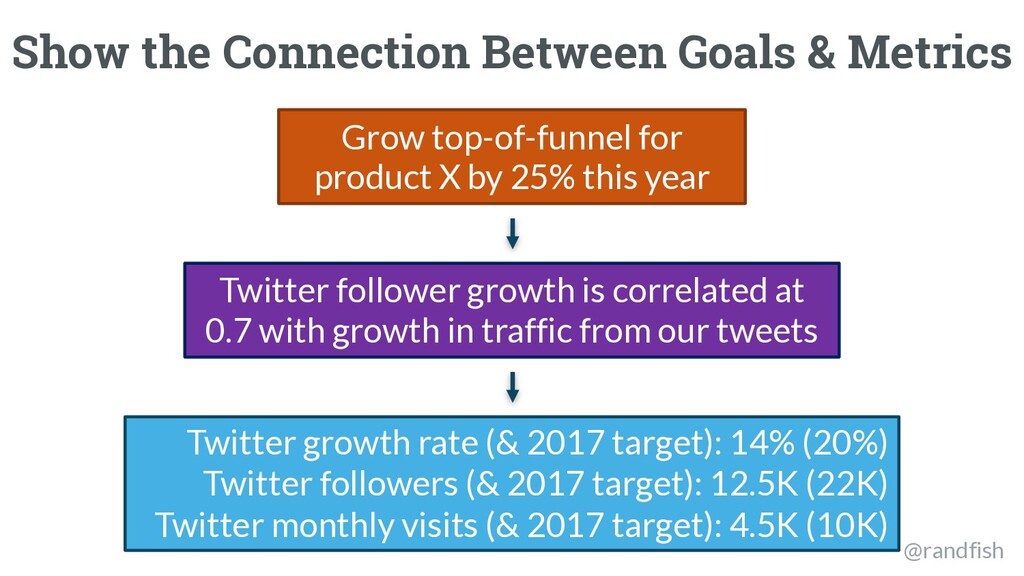
You actually know what the organization wants to accomplish, and you have the tactic that content is gonna do that matches up against it. Right? If if you can show the connection here between these goals and metrics, so if it's, you know, grow the top of funnel, great.
Twitter is gonna be one of the ways that we're gonna do that. Why? Well, because Twitter, follower growth is correlated with traffic to the site from all the tweets that we send to the content that we share at zero point seven. Great. And here's our Twitter growth rate targets as a result.
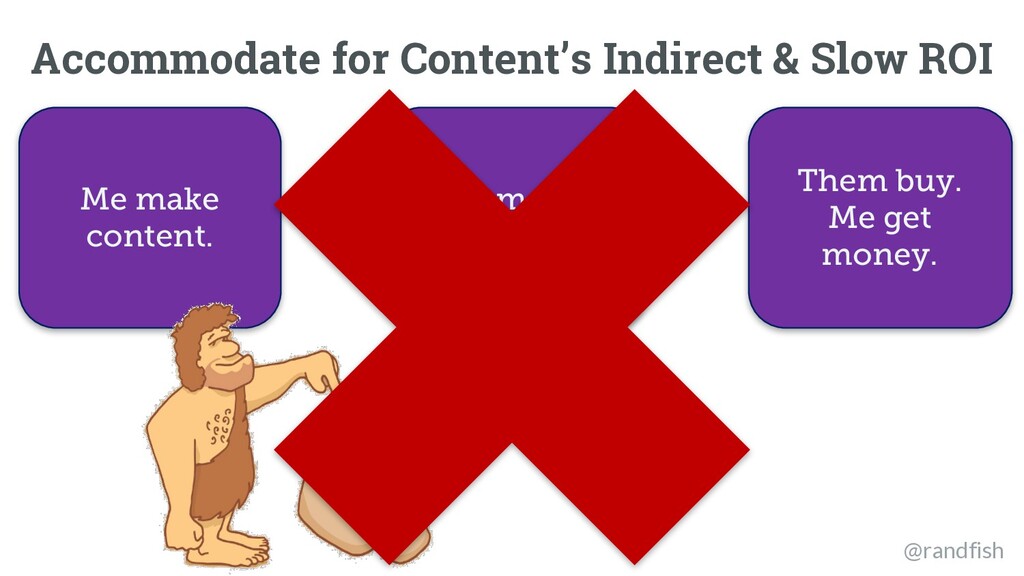
Okay. This is the kind of social media strategy that I can get behind. This is a smart goal. This is a good way to do it. Right. Alright. Let's accommodate for the indirect ROI of how content works. Right? So let k. Me me come me become Cave Rand. Cave Rand say, oh.
Cave rant have very fast moving PowerPoint. Right? So that's that's not the way it works. I even put on a Fred Flintstone costume to make sure that you knew that that's not how it works. I'm serious. I I you thought I was kidding. Right?
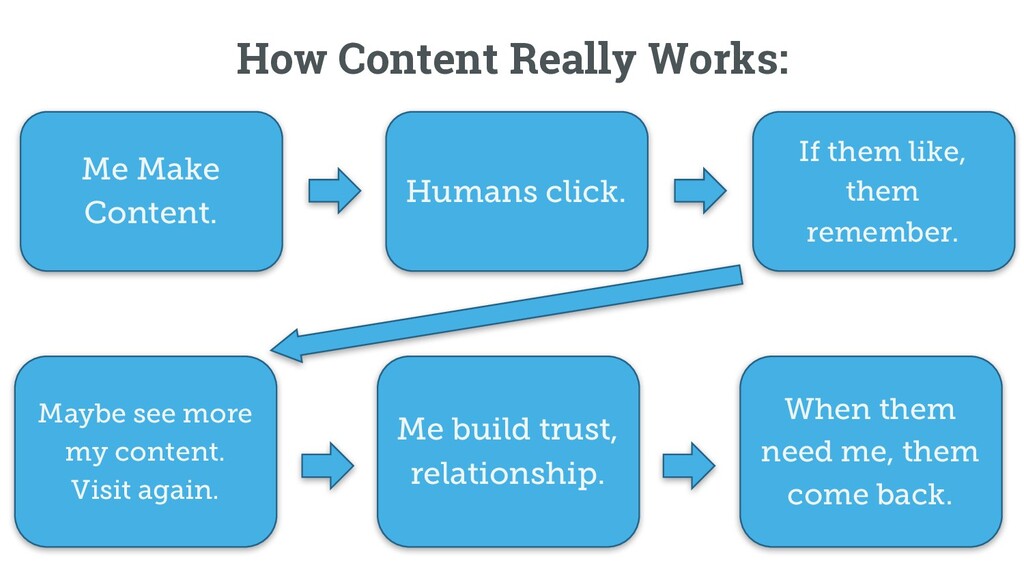
But no, I did. That's that's not how content works. Content works like this. Okay. You make some content. People click. If they like it, they're gonna remember it. They're gonna remember you. They're gonna have a brand association. Maybe not the first time, but the second time, the third time, the fourth time.
Maybe they're gonna see that content again. Maybe they're gonna visit you again. Maybe they're gonna come back. Great. You build trust. You build relationships. You build brand association, especially if that content tells a story, a similar story, a connected story, one that's consistent.
And then when they need you, they're going to remember you. They're going to come back. They're going to be biased to click you in search results. They're going be biased to search for your brand. Google Suggest is going to point you out more frequently because you've already been to the site.
You're going to get their emails because you've already been to their site and give them your email address. You follow them on social media, so you see their updates. All these things are are how content actually converts visitors, people who are exposed to stuff into buyers.
So what I wanna try and do, now that we have our our goals figured out, is spend a little bit of time today talking about these terrible, terrible pieces of marketing advice that bias people to do dumb things with content. And, you know what?
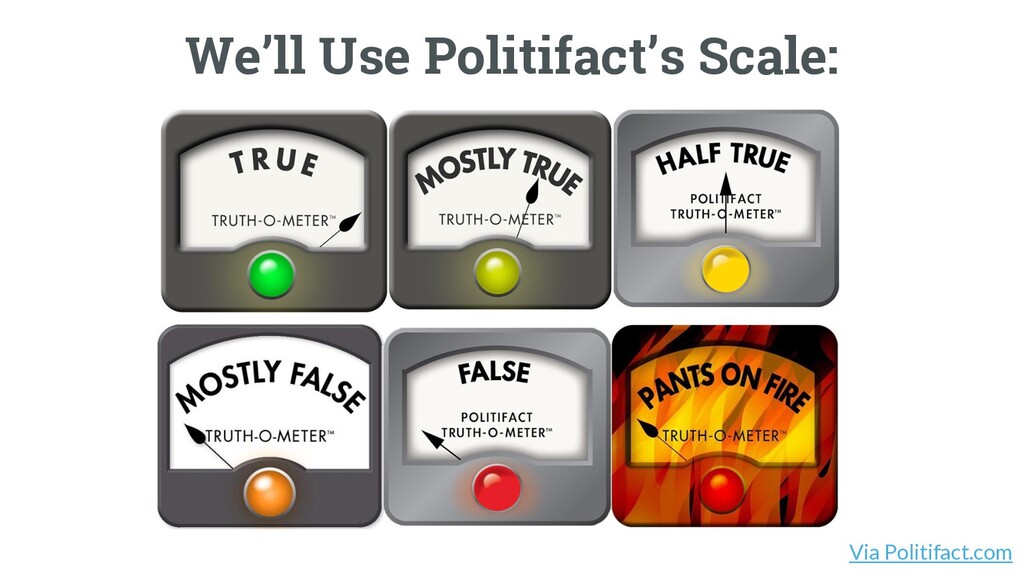
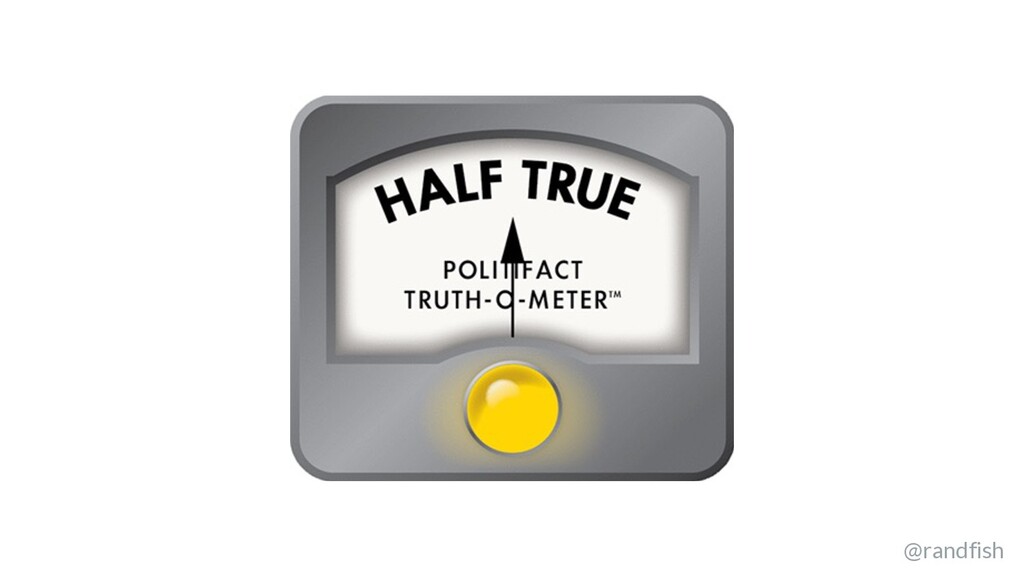
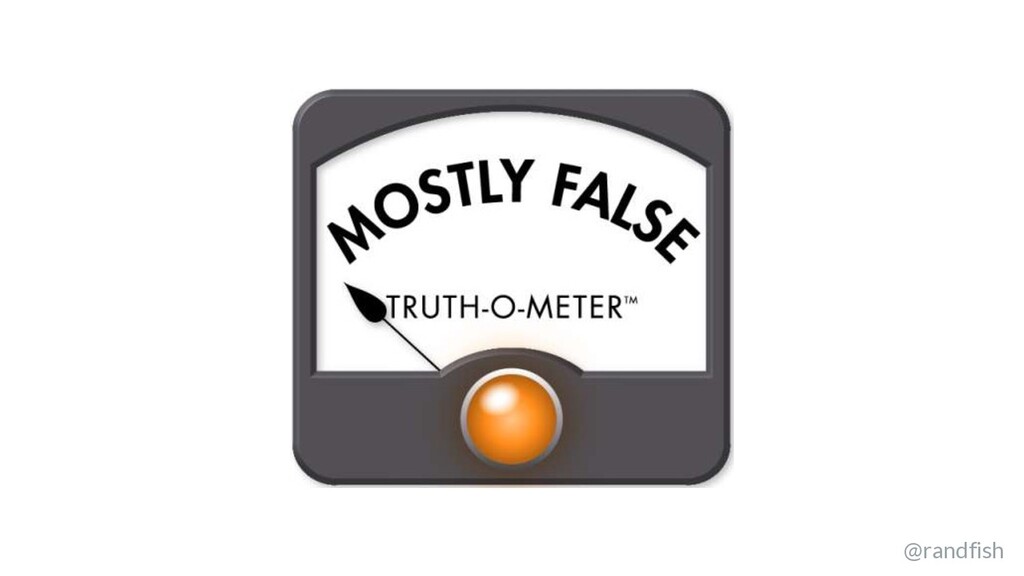
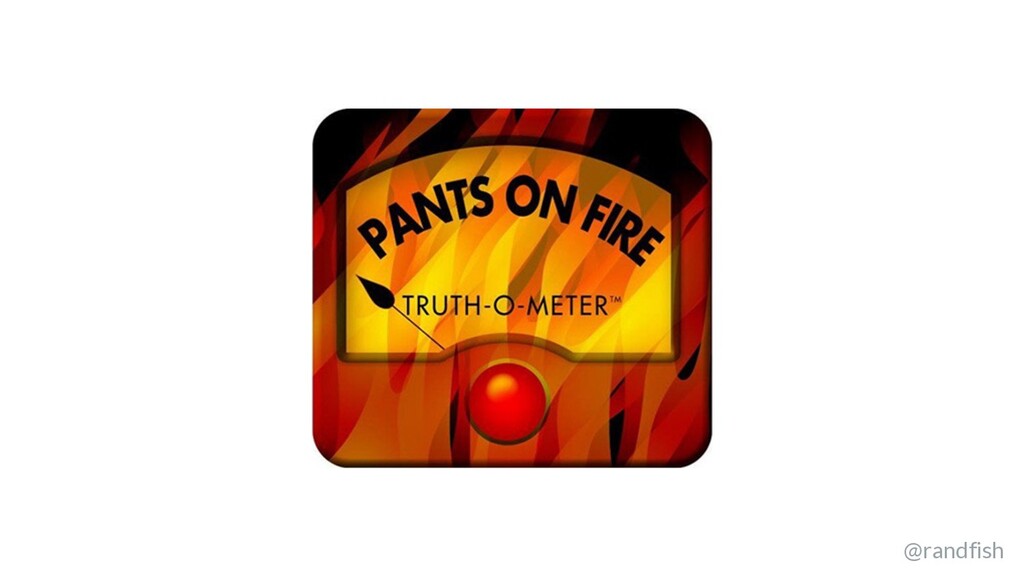
I'd like to use this is an American organization called PolitiFact. PolitiFact, rates the accuracy or truthfulness of statements mostly by political parties, and and political, candidates, but also by media organizations and those kinds of things. They use this great scale. Right? You can see it goes all the way from true to pants on fire.
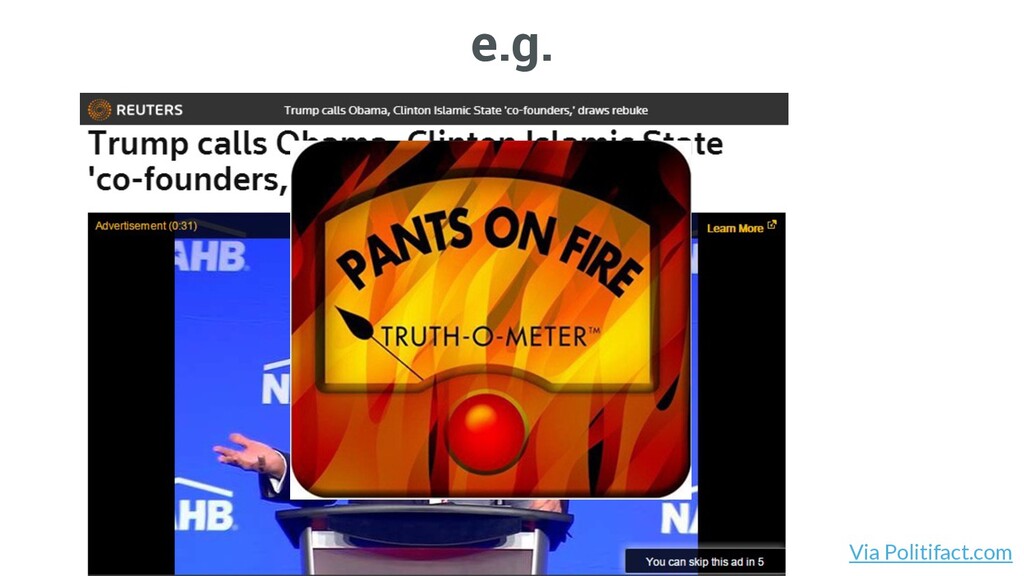
Let's have a nice pants on fire example, shall we? What do you think? Maybe just to I I will give you one guess as to who's on the next slide. Alright. Here we go. So I you know, I cofounded a couple of things, and I'm ninety nine percent sure that you have to be there to do it.
It takes a lot of work. PolitiFact, of course, gave them a nice pants on fire rating for this. And this is let's try and do this ourselves. So these are common themes that I see all the time in content marketing advice. Right? If you read those articles that are like, oh, here's the, top ten content marketing tactics for twenty sixteen, These show up way too often and just without the caveats that they should.
So that's what we're gonna dive into. Alright. Number one, content brings in leads and sales. It's not not true. Right? I'm gonna give this like a half true. I think this is half true. It is the case, right, that content is an acquisition channel, but it's an indirect acquisition channel.
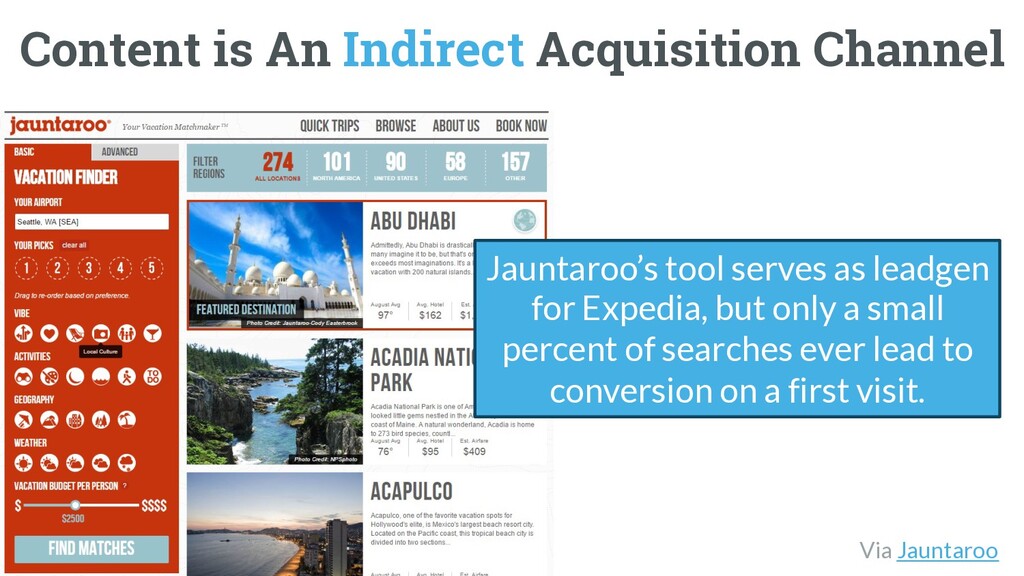
So this is a piece of content that I think is terrific. It's called JauntaRue. You can fill in these little forms here, plug in your airport, things that you care about, you can plug in activities, geography, weather, and if you make the weather ****** enough, it will put in Edinburgh.
It'll give you gag Edinburgh, which is really great. It does a good job. This serves as lead gen essentially for Expedia. But a hundred percent of people don't convert from this? That's crazy. And Expedia doesn't think that way and John Trudeau doesn't think that way.
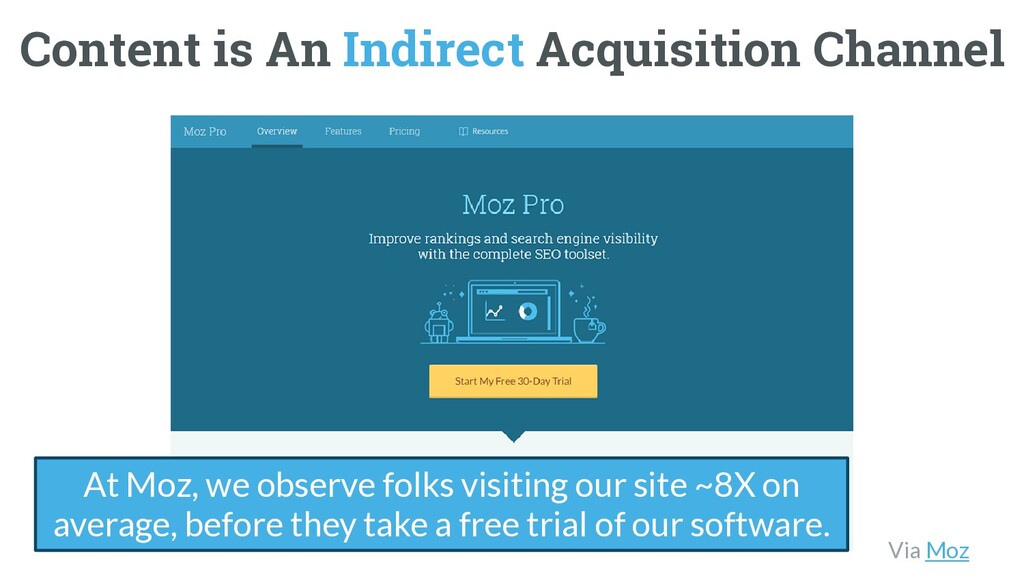
That's not how content works. And yet, some people make this investment thinking that's how it's gonna work. Here's the truth from Moz. We do SEO software. On average, before you click that button, that start my free trial button, on average, you visited our site a little more than eight times.
Eight times. We gotta produce a lot of content to bring someone back eight times before they click our start a free trial button. In fact, even more interesting than that is that if this does happen, there are some people who the first time we ever see them or the first time at least we can record seeing them is just they searched for SEO or SEO tools or something like that.
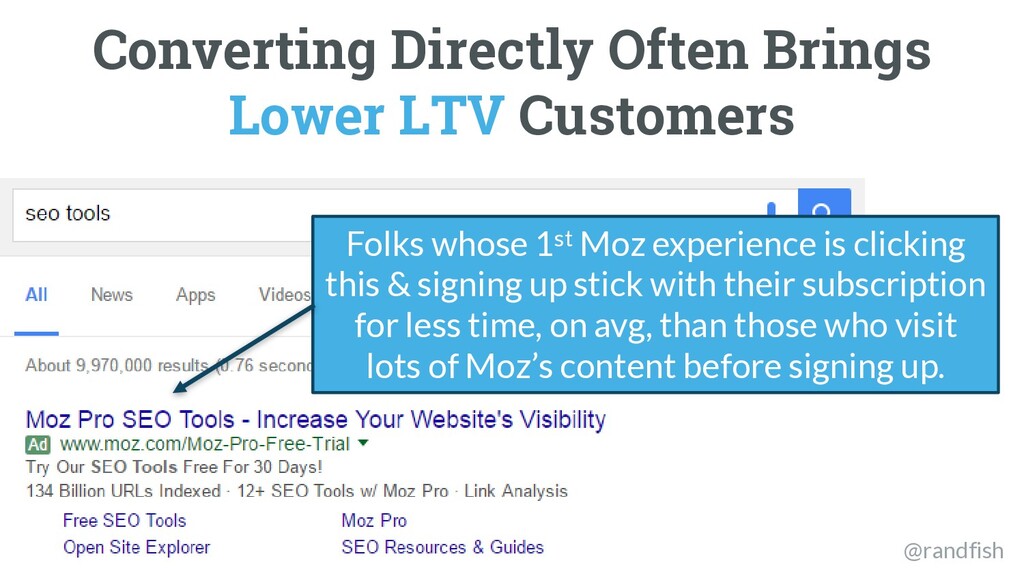
They click on an ad from us. They come over to our website, they immediately take a free trial. When that happens, it tends to be the case that that is not a good customer for us. Those people tend to have a low lifetime value.
They tend to quit their subscription pretty quickly or never even make it through the free trial so that they essentially cost Moz money rather than making any money. That's that's pretty tough. No wonder for us it's so so important to make sure that people are in our community, reading our content, get helped by the stuff that we do before they ever convert.
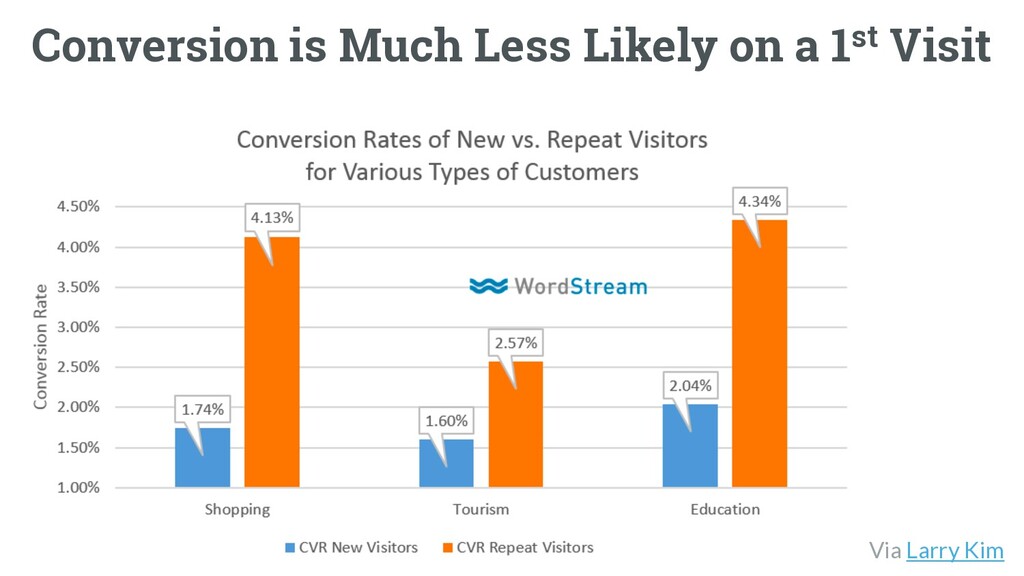
I think this is true for a lot of folks. We have to know that conversion is very unlikely on a first visit, and over time, it does get better. This is data from WordStream. Larry Kim, of course, the genius behind WordStream, and he put this post up, I think this was actually on Moz.
And Larry noted across WordStream's hundreds of millions of paid search clicks, right, all tracking that they do, that the first visits, you can see those in blue, tended to convert much worse, dramatically worse, horribly worse than the ones in orange. If you know this, you know that content is not about conversion, at least not initially, But it is about turning those blue bars into those orange bars, and that's a beautiful thing.
And you can prove this to yourself and to your teams and to your clients with data. Right? This is this is how you sell, hey. We're not trying to capture a lead every time we get someone to our site. This is how you tell a story of we're just trying to get the visit.
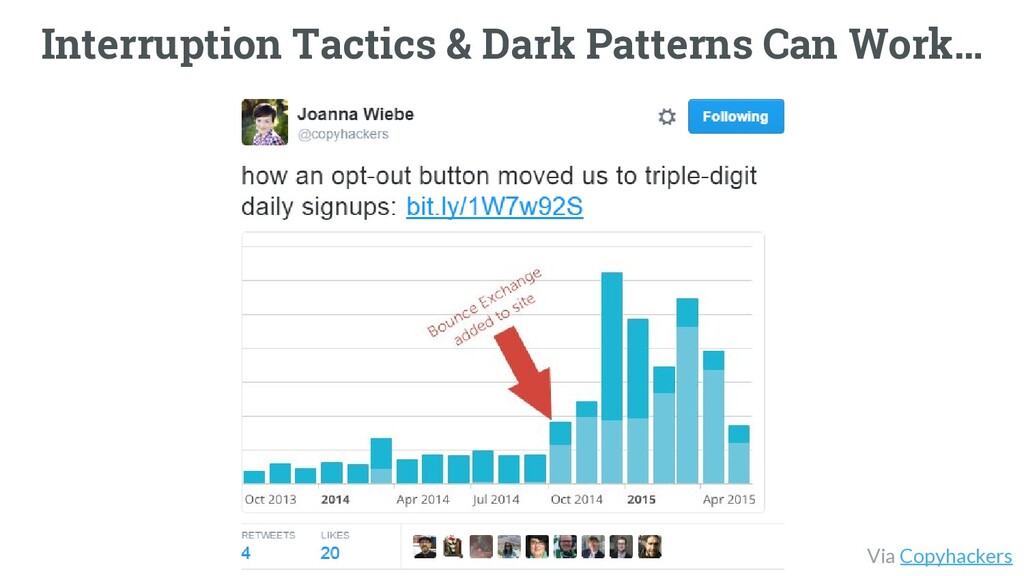
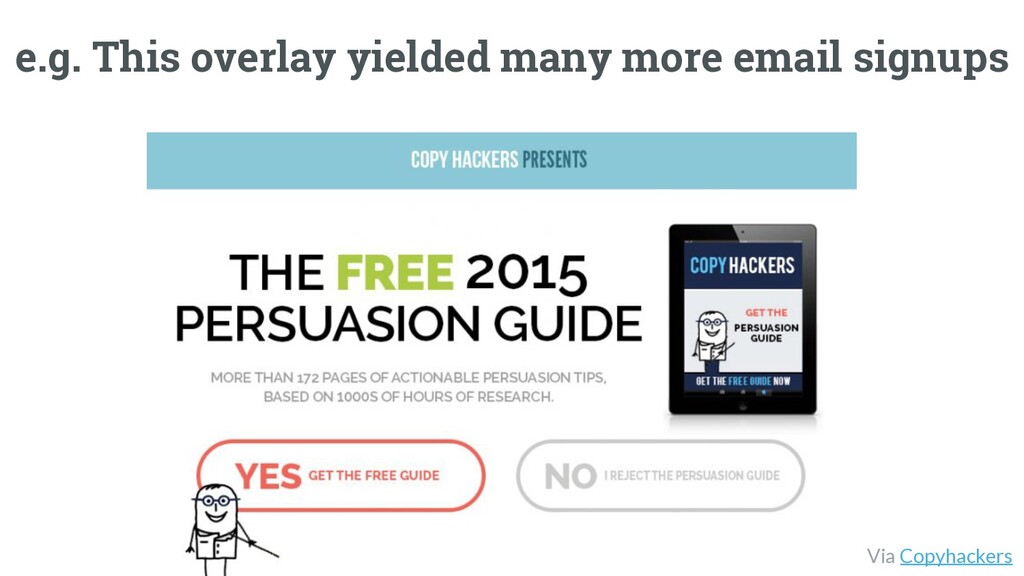
Some tactics, interruption patterns, dark patterns, these can work. They've been very effective for some folks. This is Joanna Wiebe from Coffee Hacker, so I think is a brilliant speaker, brilliant marketer. And she's showing how they added this tool called Bounce Exchange. I'll show you the overlay in a sec.
It's a dark pattern. It's essentially saying it's an opt out overlay, which I'm not gonna lie, I personally despise with a passion. I get so turned off. I have real trouble tweeting anything that has a dark pattern in it and especially these opt out overlays.
But you can't argue with those results. It really did increase the leads that they got. This is what it looks like. Yes, get the free guide. No, I reject the persuasion guide. To be fair, this one's more honest than most of the ones I see.
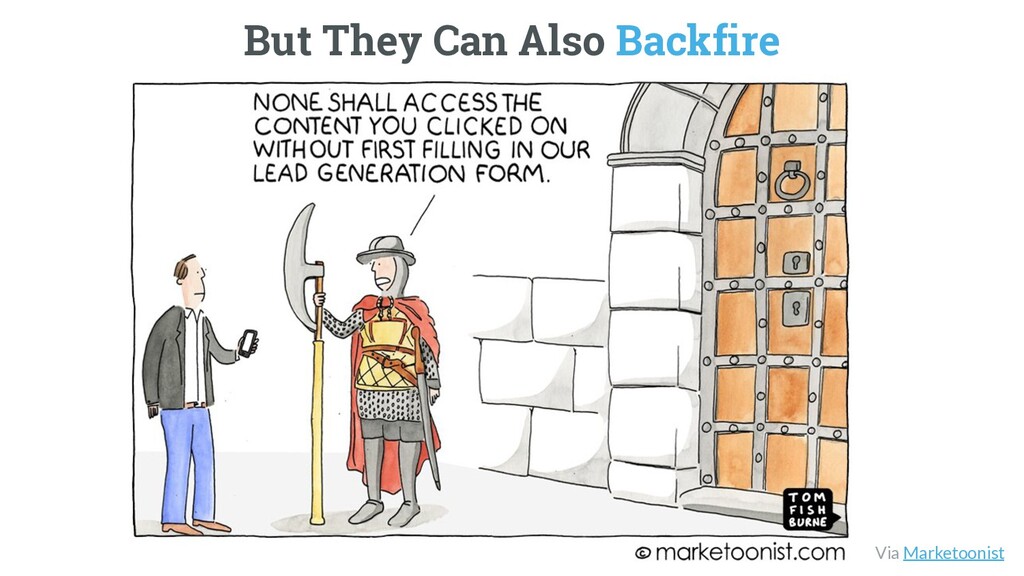
A lot of them are like, I am a bad person and I feel bad. You know, like, oh jeez man. Or like, I do kill puppies for breakfast. Oh, god. I just wanted to see the content without giving my email. Now I have to admit to pup aside. Pupp aside?
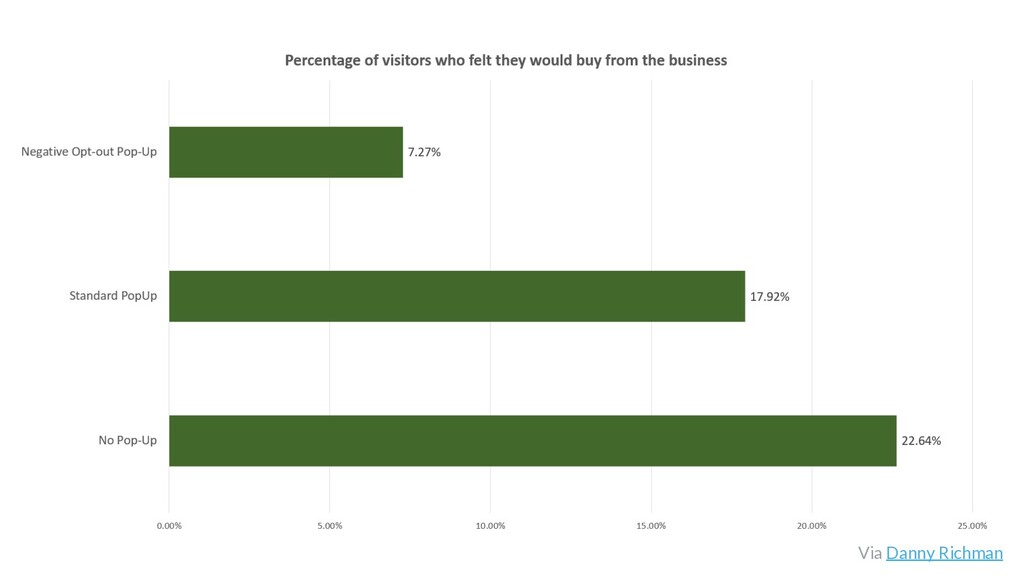
Canine aside? I don't know. Alright. But these things can also backfire. There've been some, interesting data just recently, interesting data, mostly survey and opinion data, not yet, I think perfect data around real user behavior, but showing showing. No? You don't wanna see the data.
There's a dark pattern here. Alright. Negative opt out. Right? Pop up. Basically, folks are saying, I have a much stronger, much worse perception of a brand when I see that stuff. So it's not just me. There are people who are basically saying, yeah, this really does impact my perception of this.
Alright. Number two in our patterns here. Growth hacks are the future of marketing. If any of you have traveled to Silicon Valley in the past three or four years, almost certainly heard this. I don't know. Really? Or let me see if I can do that.
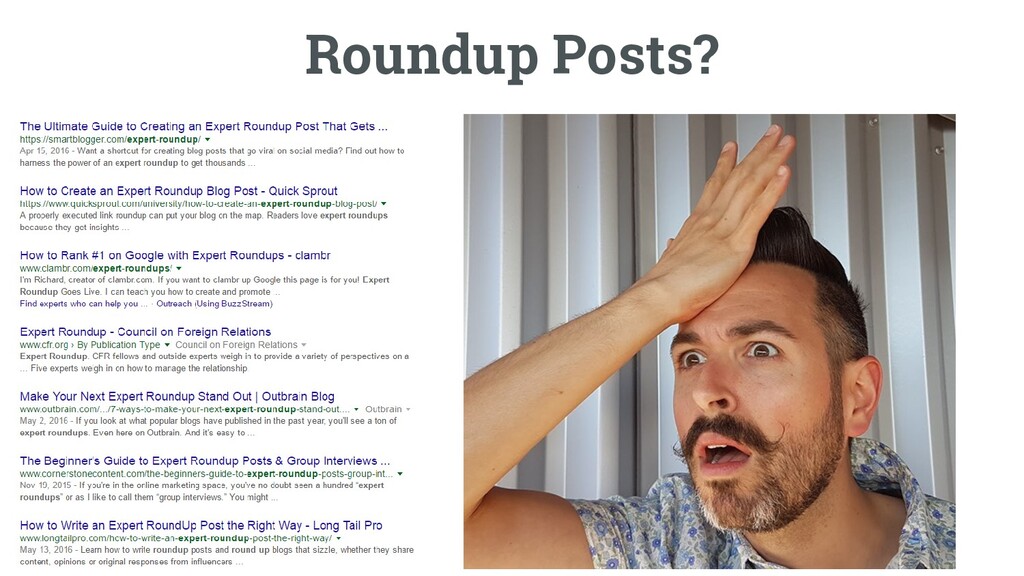
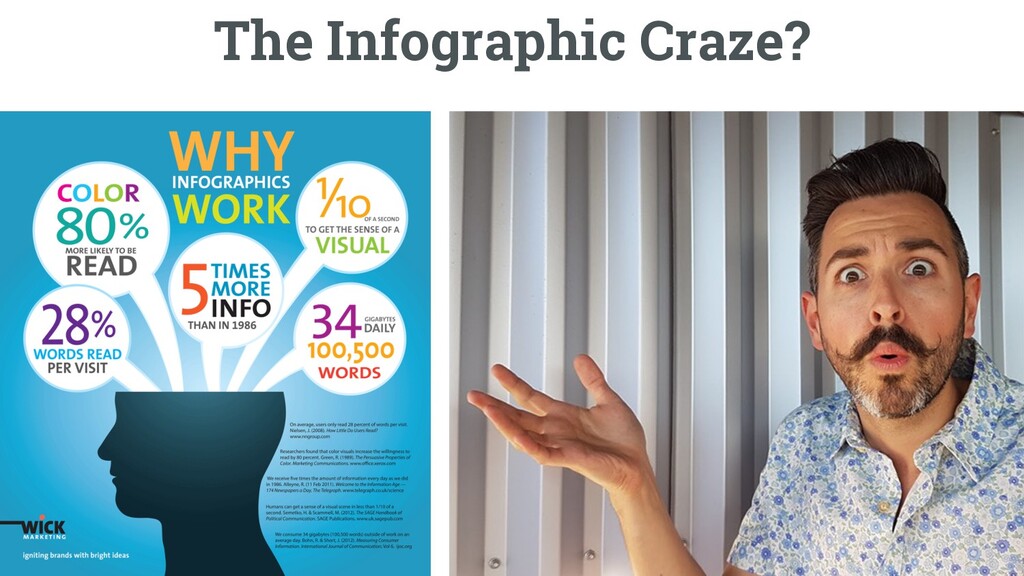
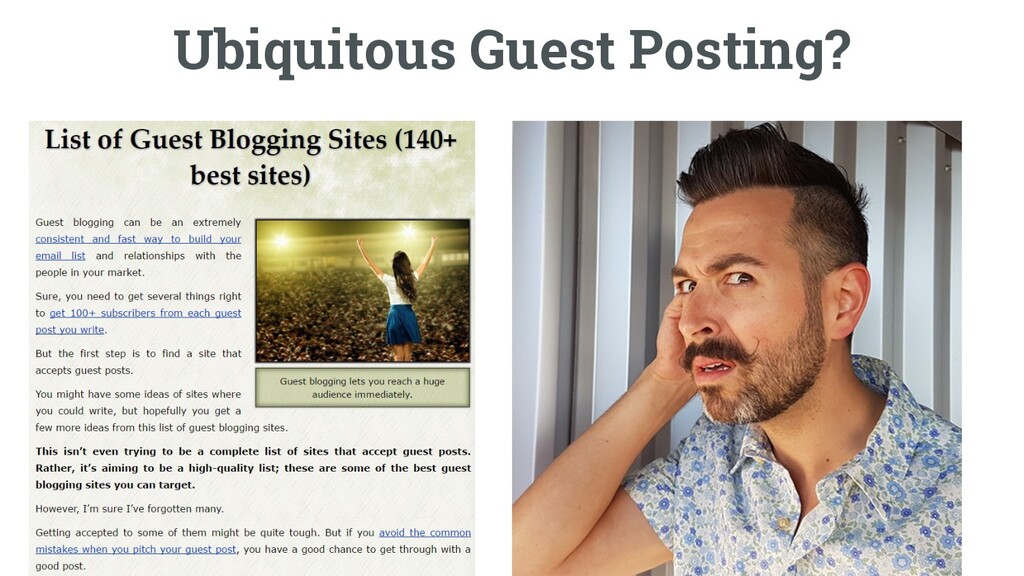
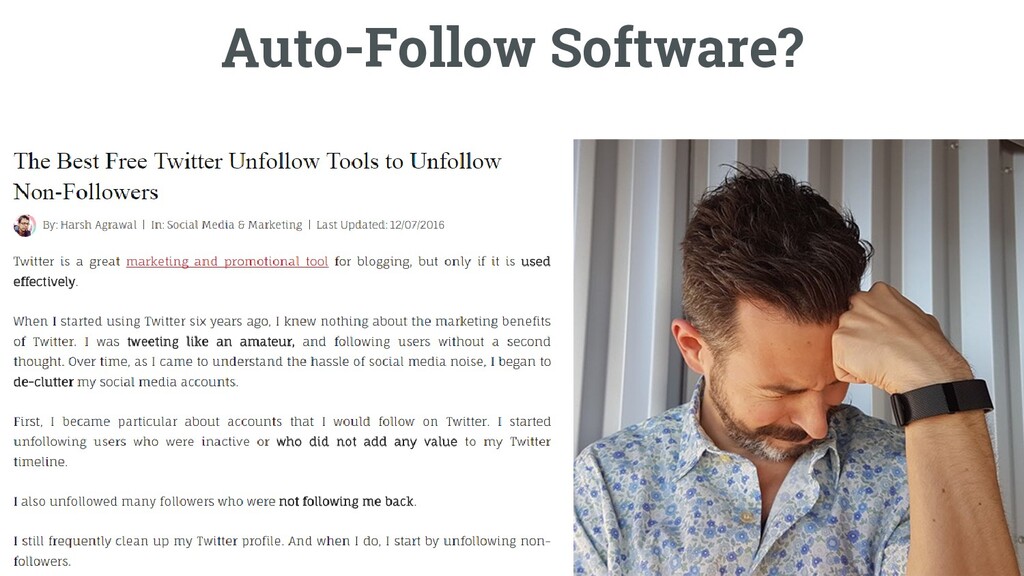
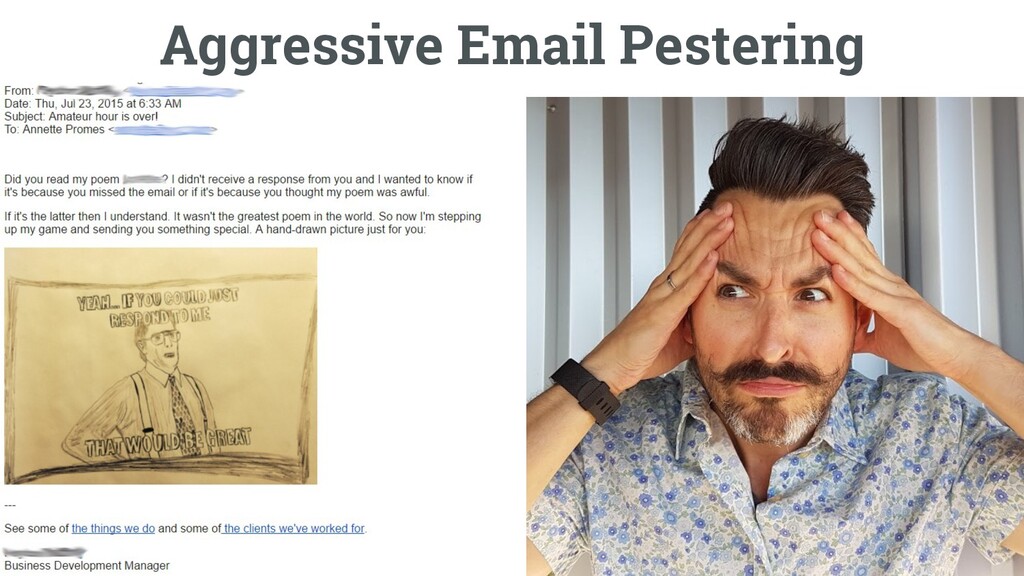
Really? Roundup posts. Right? That that's the future of marketing? Just kill me now. I I don't wanna what what what about the infographic craze? God. That was horrifying. I hate that crap. Guest posting, auto follow software, this aggressive email pitches and follow ups, hey, Rand. I haven't heard from you in a week.
I just wanted to reach out. You know I hit spam on your email last time. You know I did. I'm sure for one out of one hundred people it works, but do you really have to piss off ninety nine of them? Oh, oh, this is beautiful. Did you see that?
This this was this is to our CMO, Annette. Did you read my poem? I didn't receive a response from you, and I wanted to know it's because you missed the email or it's because you thought my poem was awful. F you, oh, salespeople, that's the worst.
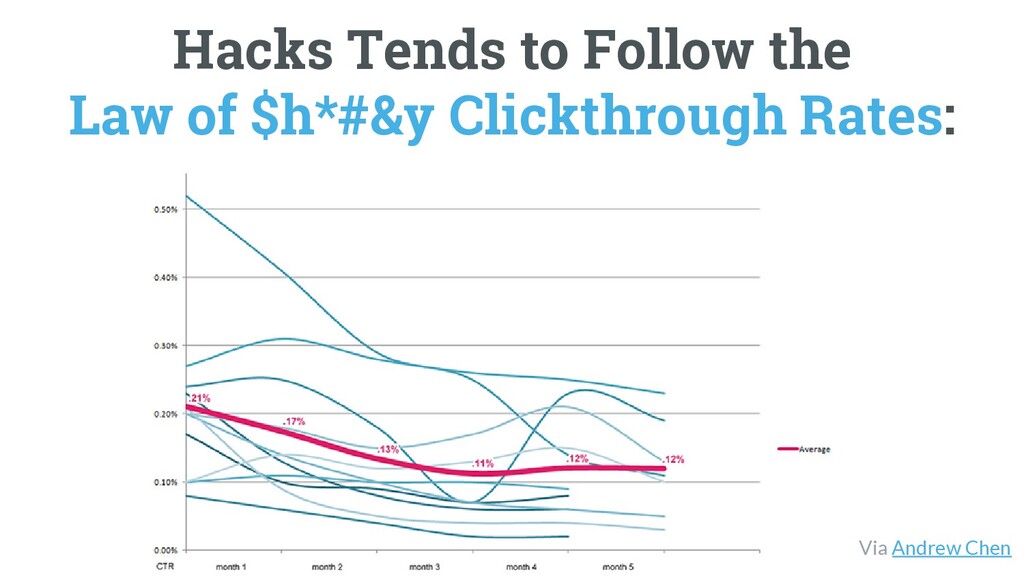
Annette actually had a whole system where she'd send around to Moz all the worst sales emails that she got. For some reason the office of the CMO just gets the worst. My experience has been that hacks tend to follow what Andrew Chen calls the law of ****** click through rates.
Initially, when a hack first comes out, when someone's like, I discovered the guest photographic, you know, I don't know. Dear God, please never let there be a guest photographic craze. But whatever it is, right, that it starts up here. These the through rates, the conversion rates, the effectiveness rates are high.
And then over time, as people see more and more of them, the click throughs, the engagement, the conversions get ******** and ******** and ********. I hate that kind of stuff. I don't think that's where we should invest. I do, however, and I will admit this, think that some types of hacks, some types of marketing hacks can be effective when you apply them to a content flywheel in the right ways.
Right? This is why this is not pants on fire. This is sort of like, well, partially true, a little bit true. So this I wanna walk you through what I'm talking about when I say a content flywheel. Because I think if you're investing seriously in content strategy, you've gotta know that you have a flywheel.
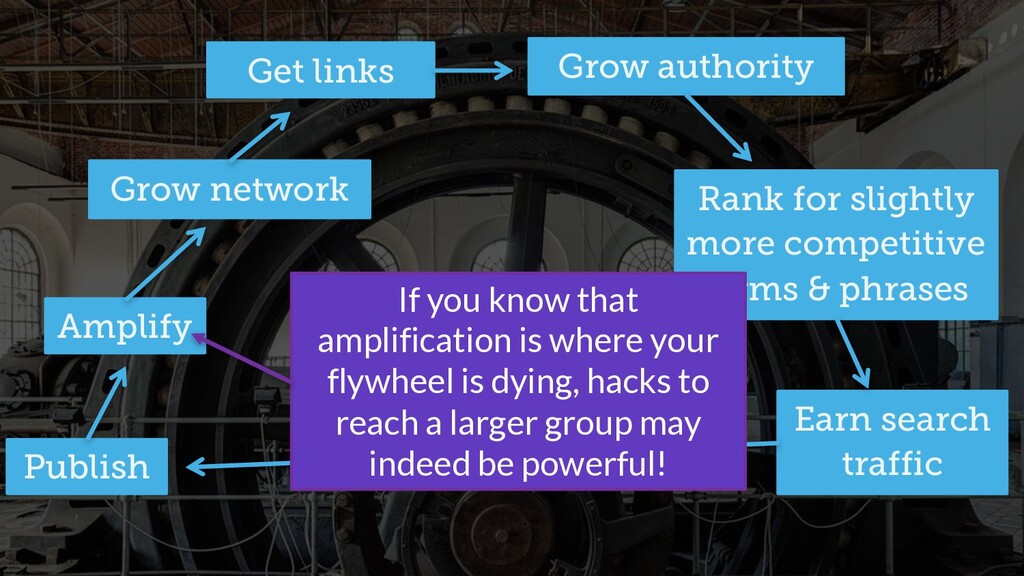
You've gotta be working to build one. For those of you who haven't seen me talk about this in the past, I'll start here. So the idea is I create a piece of content, I click publish. Let's assume I did a good job choosing my target audience and the content I'm creating and all that.
I amplify that content. I share it out on social. I pitch some folks via PR. I talk to some people via email. I share it with my friends who I know are interested. And I dear God. I grow my network from that. Right? Because I amplify it.
And hopefully, if people go and share that and click retweet and they share on Facebook, a few more people follow me. Right? So now I've grown my network. And then I get a few links from it, especially if I've spread it to the right people in the right places.
And that's awesome because that will help me rank. In fact, that will grow my authority so that I can rank a little bit better next time, which is awesome, right? The next piece of content I publish, it'll be even easier to rank because I've grown my site's authority.
And so now I can rank for slightly more competitive terms and phrases in search and drive traffic that way as well as through my grown network. And now I can earn search traffic, which search traffic is great because a lot of social traffic it's great to get it, absolutely great to get it, but a lot of social traffic does not convert very well.
Right? It's very one and done. It just browses, then it's out of here. That's Okay. That's fine, especially if it helps you grow your authority because then you can rank for things. And ranking is usually very intent driven. Intent driven searches mean high quality visits on average.
If you identify that this is your flywheel but you are having a lot of trouble, let's say, in the amplification phase, you're just not reaching people with your content when you amplify on social, well, guess what? A growth hack can be beautiful. You can apply a specific growth hack to say, Hey, I'm not reaching as many people on Facebook as I hoped I would.
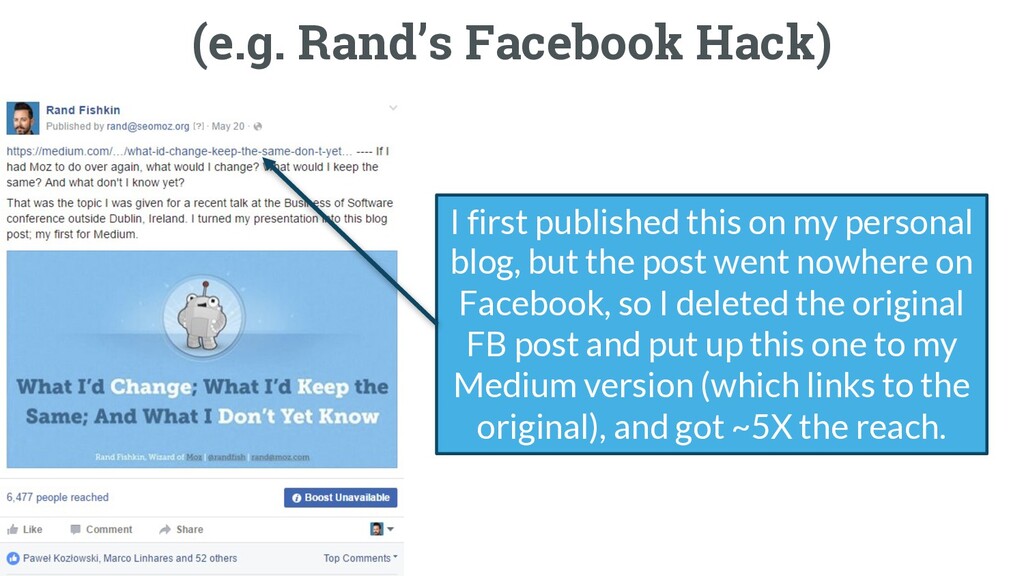
Therefore, I'm gonna hack my amplification on Facebook, and now this growth hack is actually gonna work for me. I'll you an example of that. This is one of my personal Facebook hacks that I've been trying out, and you're welcome to to steal it.
If you publish a piece of content on Facebook and it doesn't perform very well, you know, it only gets a small amount of your audience, you're kind of screwed. Because even if you delete that post and repost it, I don't know if you've seen this, but Facebook will essentially show that to no one or almost no one.
They'll be like, no, no, no, we've already seen this content. We know this content doesn't perform with this audience. You're not going anywhere. And amplifying it with paid, very frankly, doesn't work well. Now, it could be you got a bunch of things wrong.
Maybe you got the image wrong initially, or maybe you didn't say something compelling, or you just posted it at the wrong time. And so it was exposed to the wrong audience right when you posted it. This is okay. This is okay. We can hack this by reposting on Medium or another platform that lets us canonical over to our original because that's a different URL.
Right? So I took this blog post that I had already written on on my blog. Then I posted it on Medium, which helps it reach a new audience via Medium, which is awesome on its own. And then I reposted the Medium link at a better time with a better image, with a better description here, and it reached a lot more people.
The initial one reached like a thousand. This reached six thousand five hundred. I only have about thirteen thousand fans on Facebook on my personal page. That's not bad. Right? What is the average Facebook reach? It's like one percent. This is almost fifty? I'll take it.
I'll totally take it. It's a hack, but it affects my funnel in the way my flywheel in the way that I want. That's a great example of how to use a growth hack in an effective way. Okay. This is a fast one. Number three.
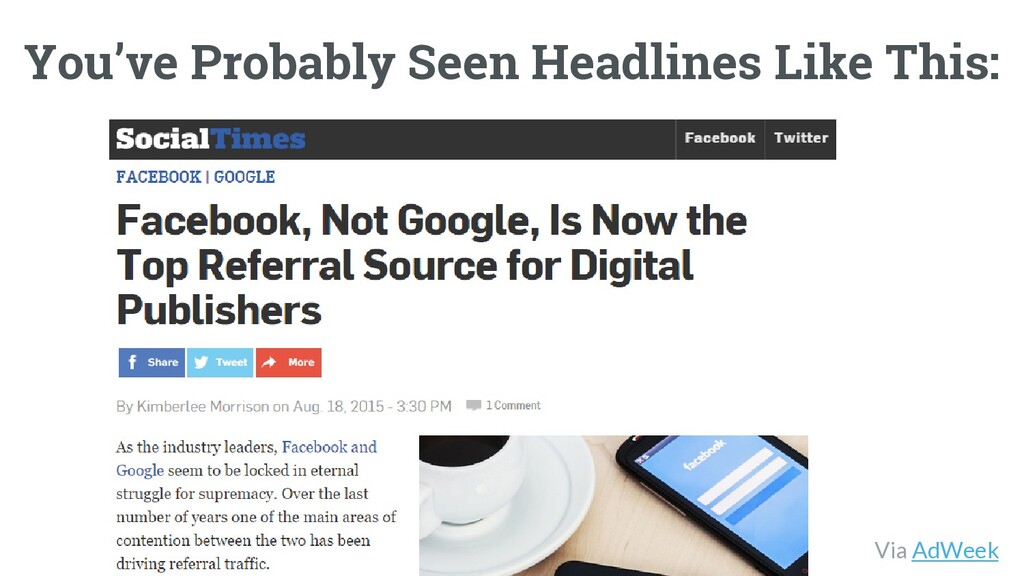
Facebook is everything. Look, no, I You probably are vastly more intelligent than the majority of marketers that I hear this from, but you will see this sort of world of these kinds of yeah, okay, pants is on fire. Because look, this is the kind of headline you see. Right?
So this is Social Times, right? And this data comes from places like Parsley, which is almost all media company tracking, comes from places like BuzzFeed, right, and they put up these articles. Facebook is now the top referrer for publishers. And what do content marketers think?
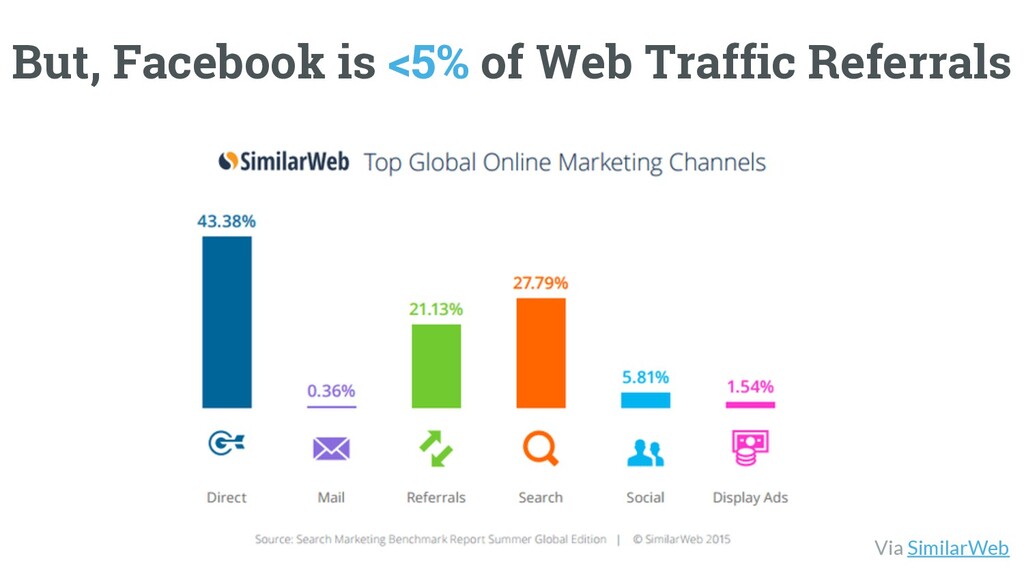
I'm a publisher. You're not BuzzFeed. That's not the same thing. Right? Facebook is about five percent of web traffic referrals globally. This is well so this is similar web for the United States, but globally this holds too. Do you see search? It's like almost six times as big.
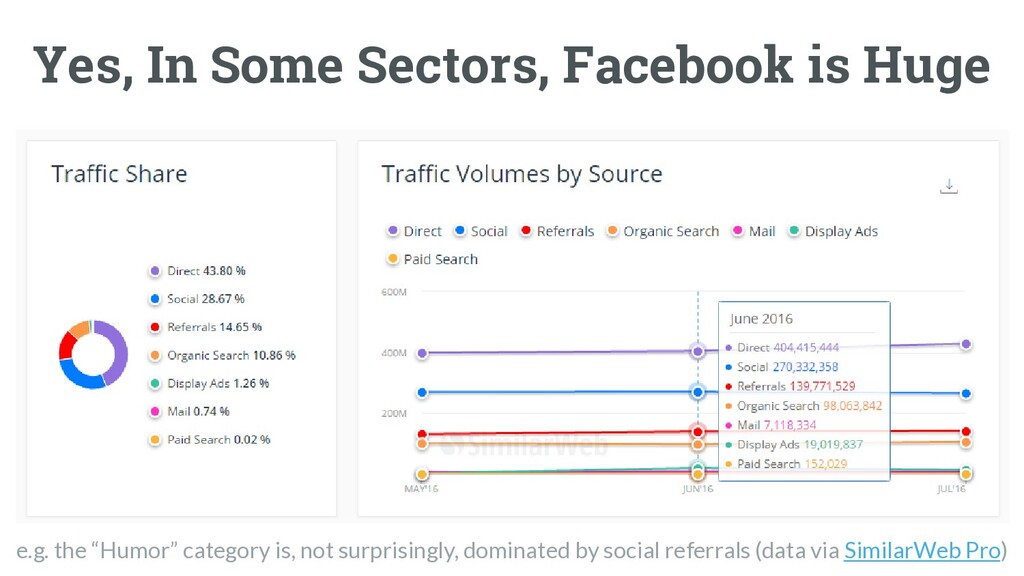
And Facebook's only a part of this. Granted, it's like almost five percent of the five point eight one percent. But still, Facebook is not everything. Certainly not for everyone. Yep. Some sectors. If you are a humor publisher, if you are the onion, sure.
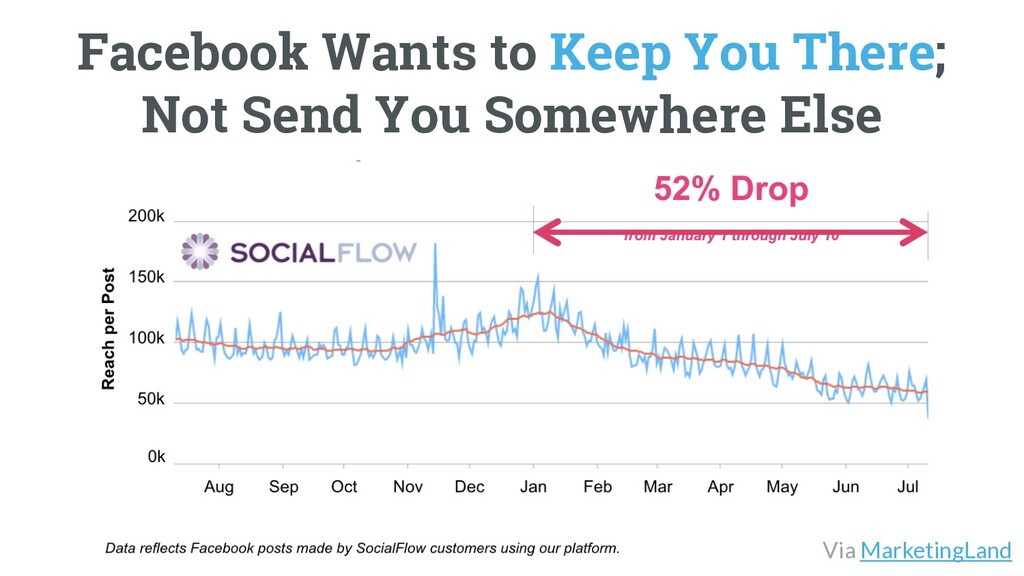
I agree with you. You prob Facebook is probably a huge leading indicator, if not the overwhelming majority of your traffic, and it's okay to invest pretty hard there. But let's keep in mind that Facebook wants to keep you on Facebook. Google, with some exceptions now, wants to send you off to the places that you need to go to to get the information or accomplish the tasks that you need to accomplish.
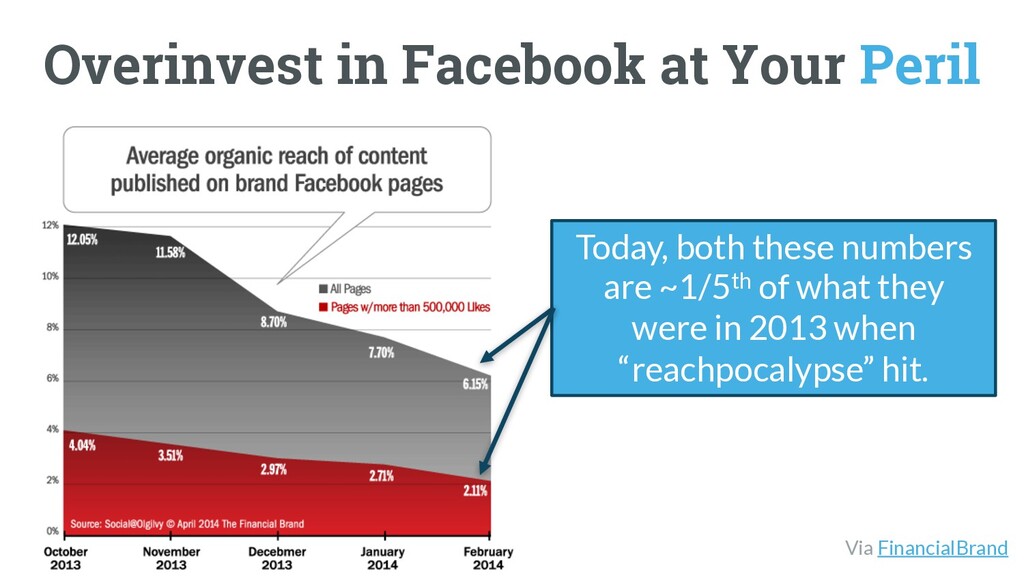
I wanna I want people to go places. Facebook wants to keep them on Facebook. And this declining reach, this dramatic drop that we've seen again at the beginning of this year, is just telling that story again. This is the average reach of Facebook back in twenty fourteen.
Twenty fourteen feels like a lifetime ago. Two years ago. Two years ago, you were reaching six percent of your audience, and people were calling calamity, Armageddon on Facebook organic reach. Armageddon. One percent today. One and a half percent today. Alright. Next one. You do amplification of your content after you hit publish.
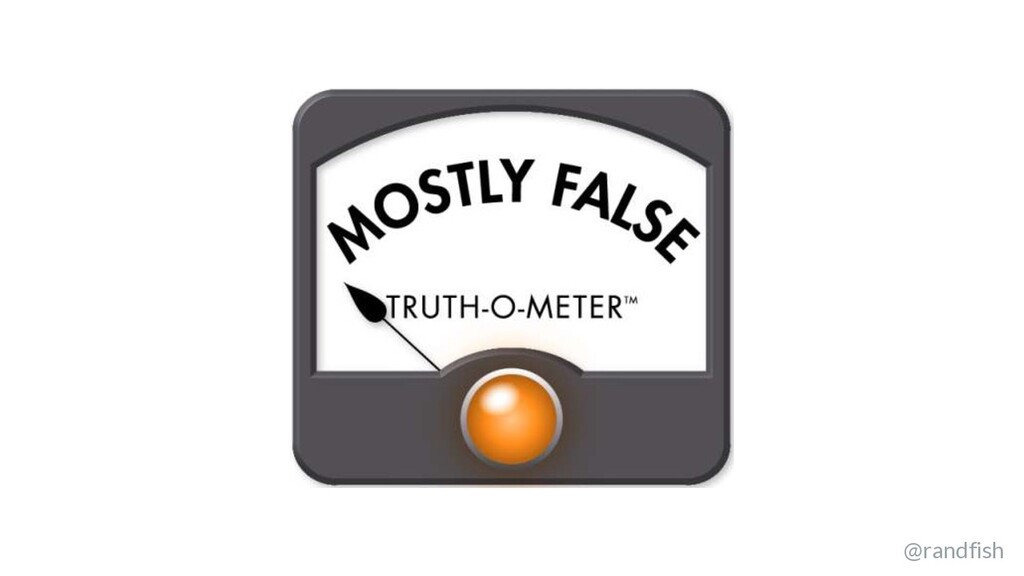
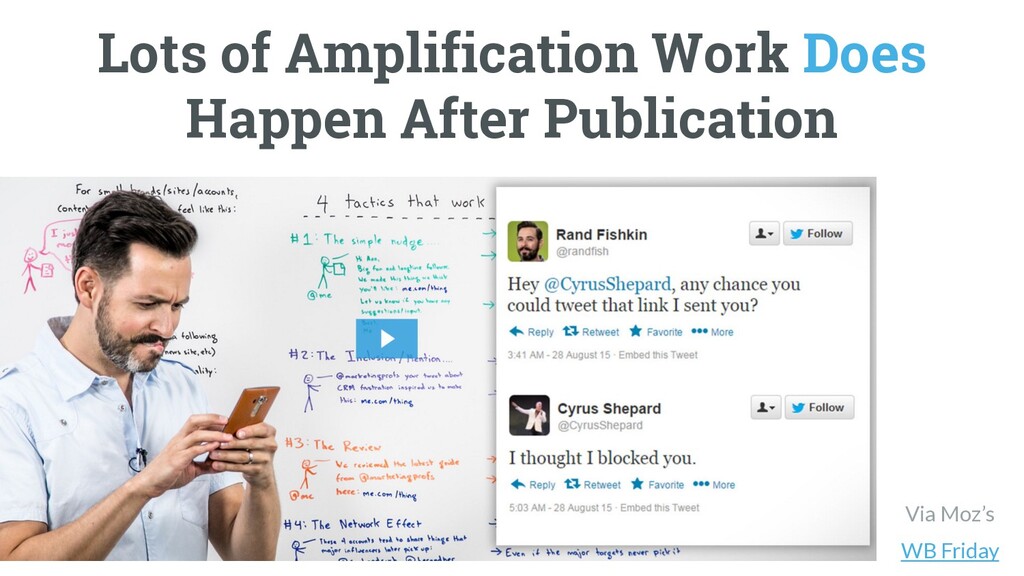
Right? I don't know about that. I'm gonna call this mostly false. Mostly false. Why? Well, lots of amplification for sure. It does happen after you hit publish. Remember Cyrus was here last year. Now he just doesn't even listen to me at all. It's real sad.
But if you haven't set up your content for amplification success already, it is very unlikely that your content is just gonna spread naturally. And unfortunately, this is the the strategic approach that many, many brands and companies and consultants take to content. They go, well, we have a lot of followers and a lot of fans.
We have a big network. We have lots of publish lots of PR folks who listen to us. So if we create this, it will do well. And that is that's crazy. That's crazy. If you if you wanna have content success, especially content amplification success, before you ever hit publish, you need a great answer to one question.
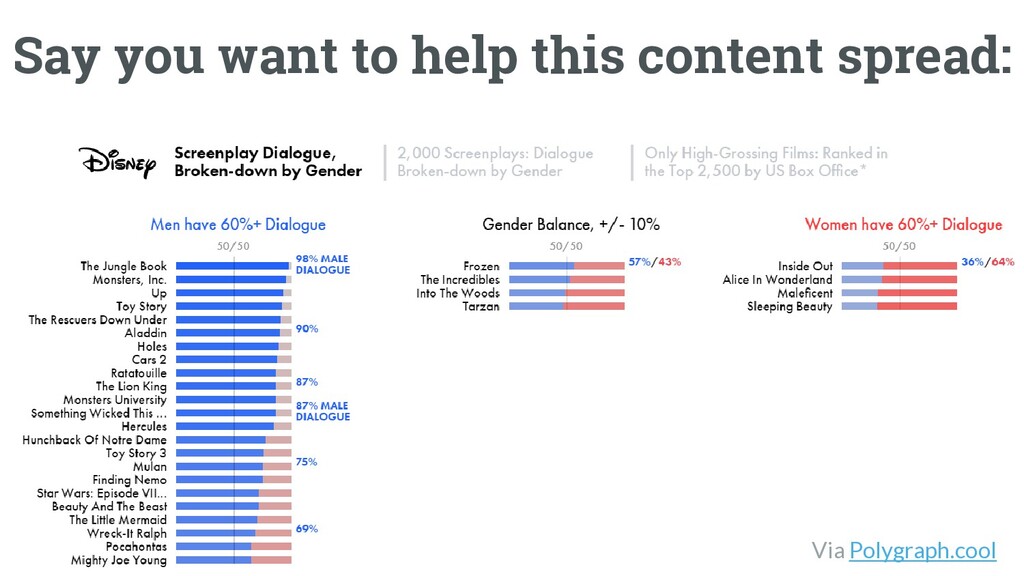
Who will help amplify this and why? Who and why? Let's say you want to help this content spread. Right? This is from Polygraph, who does a bunch of really, really cool data analysis types of articles, and they're showing basically the dialogue of the the analysis of dialogue in screenplays of Disney films, Disney kids movies, right, not the other studios, but the kids movies, cartoons, that kind of thing, And then analyzing, the distinction between dialogue given to male characters and dialogue given to female characters.
And that's men have sixty percent or more dialogue. This tragically keeps going down here, down there, and then through the corridor and out to the pub. Gender balance, that's nice. There's four movies. Women have sixty percent of the dialogue, also four movies. But don't worry, institutional gender bias doesn't exist.
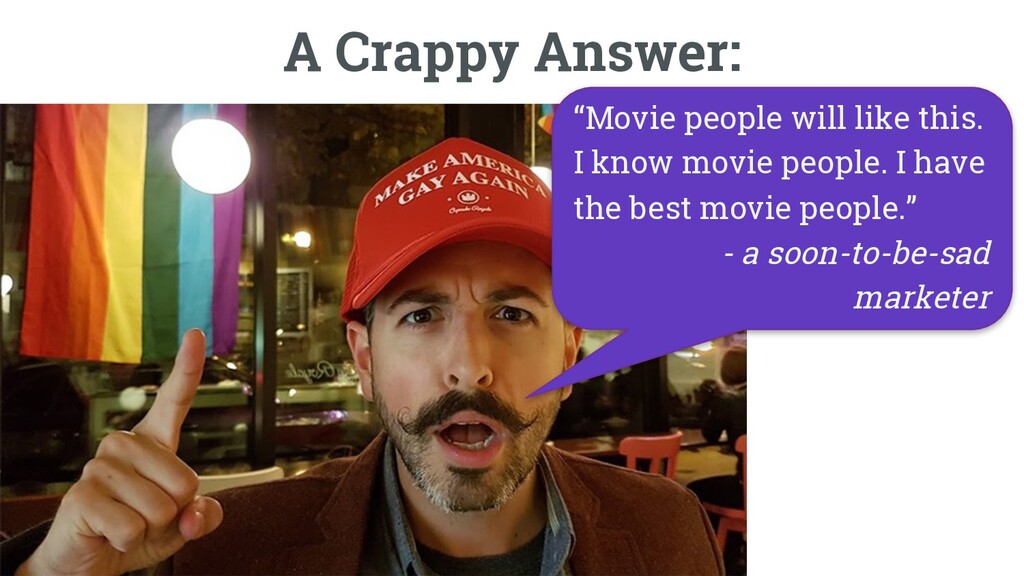
********. Sorry. I got so pissed I'm done with the whole talk. No. This is a **** answer to that, which would be movie people are gonna like this, and I know the best movie people. That's me wearing it. Trust me, in Cleveland they're gonna love this.
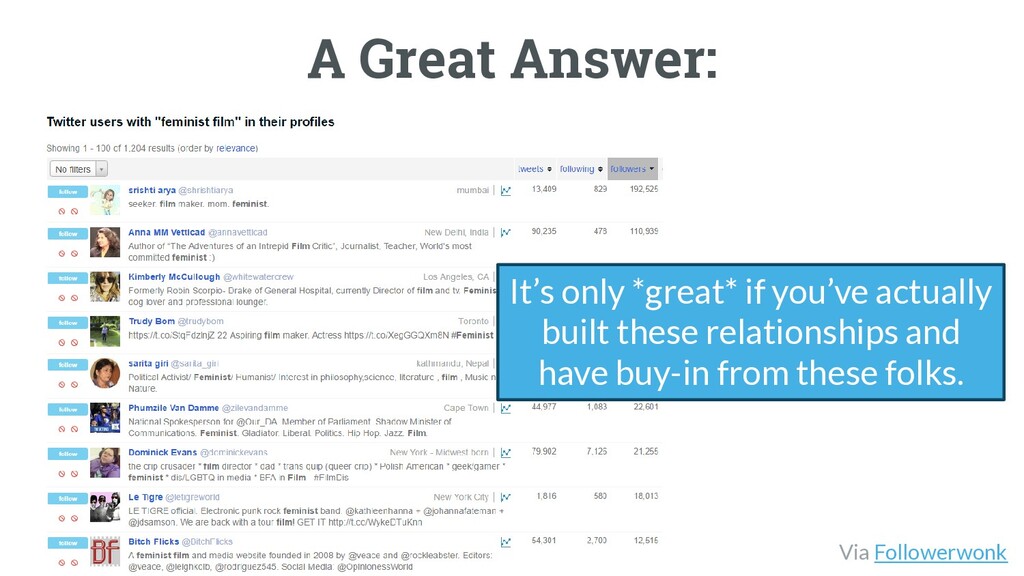
I'm telling you right now, it's gonna go over great. It'll be like a Nicola Stott joke, which I don't know how to make because I'm not familiar with her politics. A great answer is, here are people who tweet about feminism and film and they note so in their Twitter profiles, and I've reached out to them and talked to them about this piece and shared it with them before it's published so they know that this is coming and they've said, yes, I'd love to have some input on this.
That's a great answer. That's a great answer to who will help amplify and why. They're passionate about the things you're passionate about. They wanna share with their audience. You've talked to them ahead of time. You have a list of them. Great. Alright. Got an itchy trigger finger. Paid.
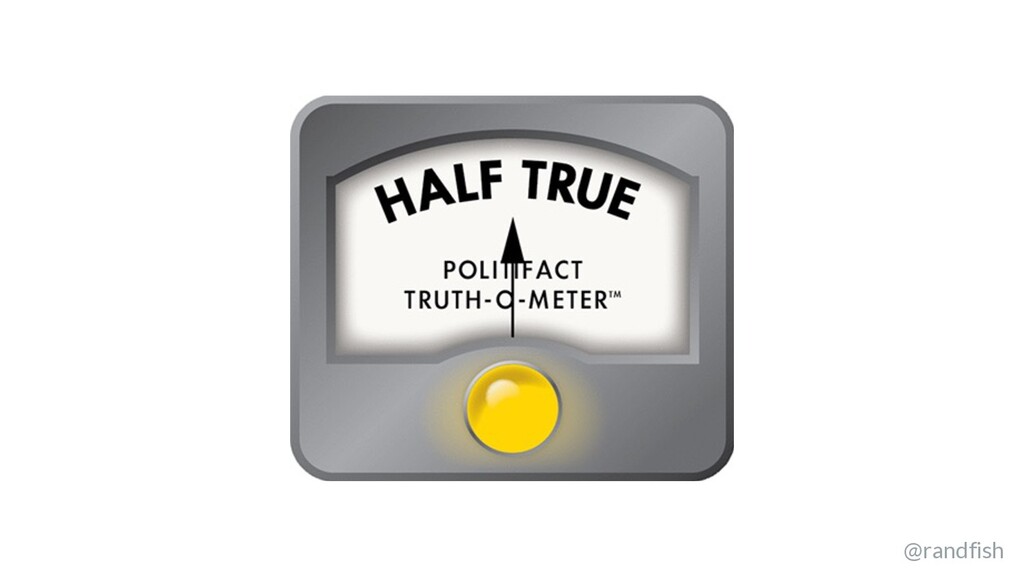
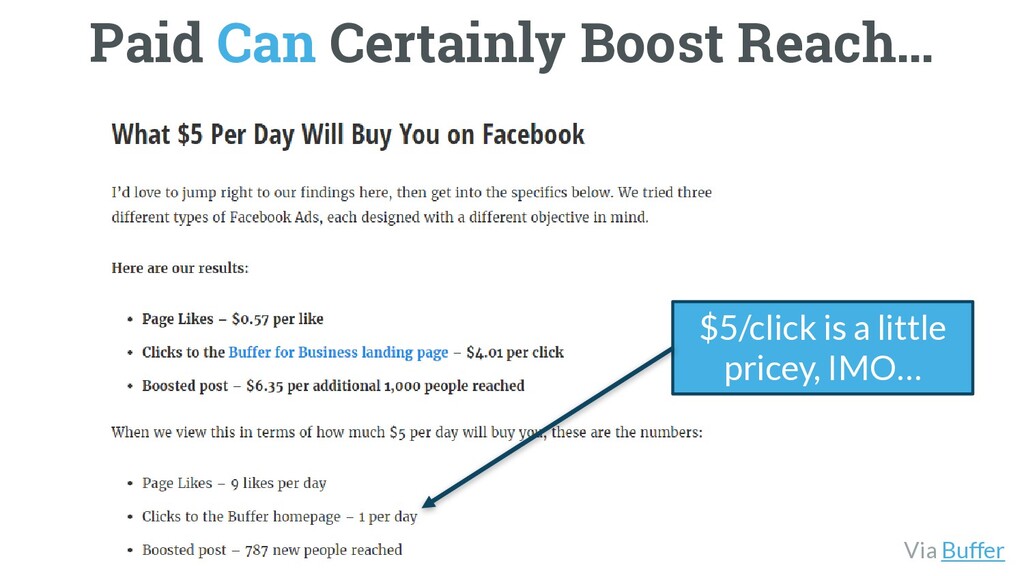
Paid channels, that's how you boost content's reach. This one, I'm gonna say is half true again because, yes, paid can do a great job, can do a great job amplifying content's reach. And sometimes, I would even urge you to invest in it. Think, again, some folks like this is from Buffer who's extremely transparent.
You got to hear from Courtney. And look, you know, I I think this is a it's a little pricey. Right? I I'm not sure that I would spend here, although I assume they have good mechanics about, whether and how this works for them.
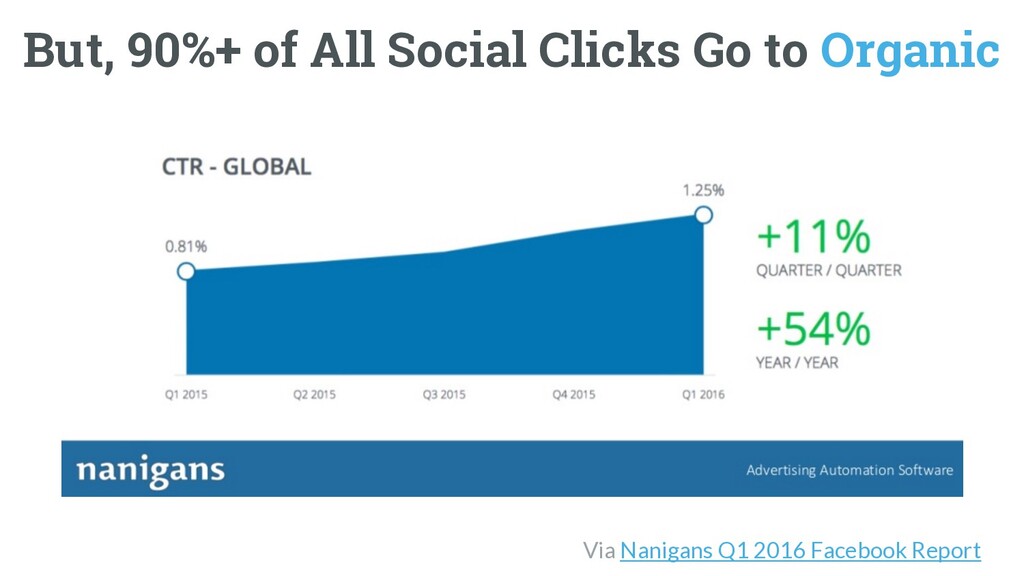
But I would say content, paid amplification, it does work. But just be careful about where most of the clicks go. Ninety percent of all social clicks, more than ninety percent, it's more like ninety seven something percent, go to organic. Think about your own behavior on Twitter, on Facebook, on Instagram.
Occasionally, yes, you will click an ad there. But most of the clicks? Out of one hundred clicks, how many are unpaid? One? Two? Maybe? Yeah. That's accurate. So are you gonna go and invest all of your dollars there? All of your efforts? That's that's a little scary.
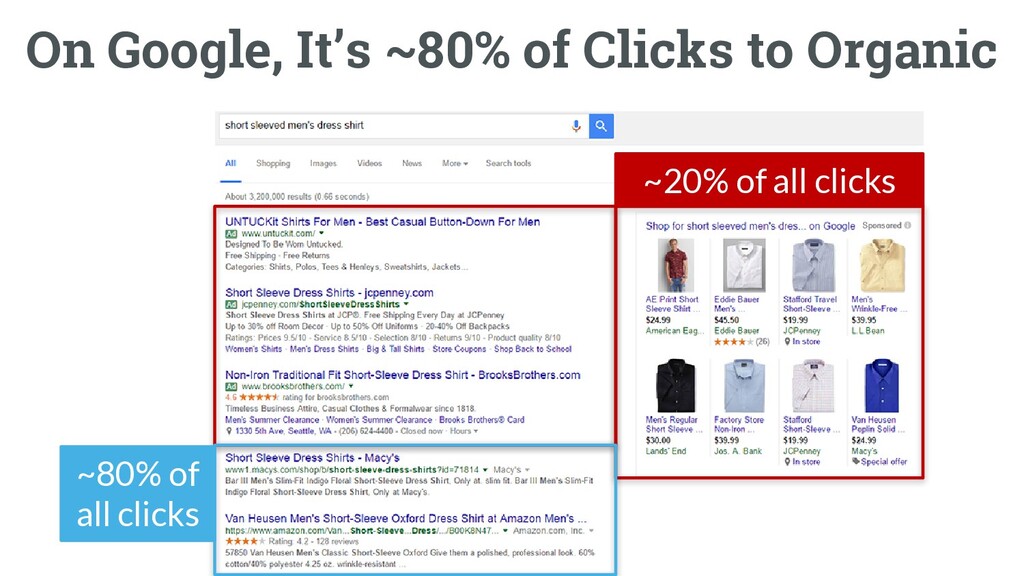
On Google, by the way, this is about seventy eight twenty two. It was about eighteen eighty two, and it's sort of shifted around a little bit. We'll see where it nets out. Usually over time, the organic grows and paid declines, and then Google makes a change in how the ads look like they did here with a little green box, and paid goes up for a little while, and then people get ad fatigue, and the law of ****** click through rates clicks in, and etcetera, etcetera.
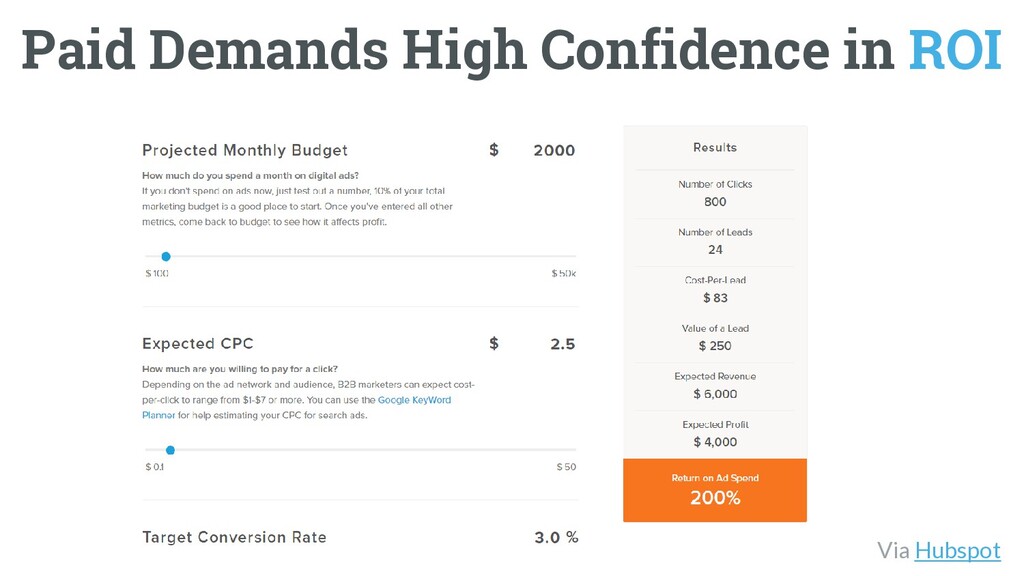
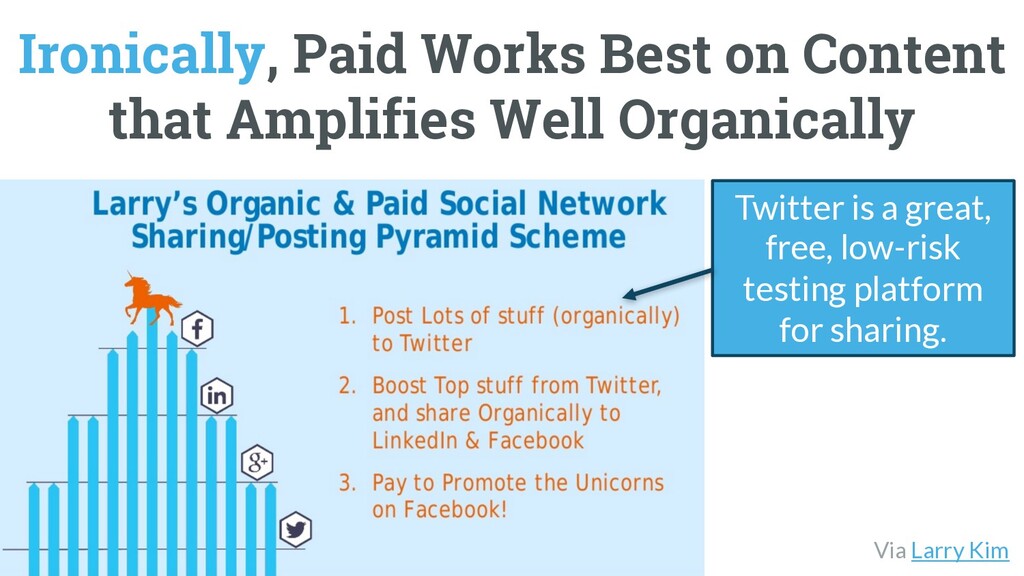
If you are gonna do paid, you better have very high confidence in ROI because you are not gonna get marketing dollars or buy in for a long time if you don't have good numbers around it. Organic, a little bit different. Ironically, and interestingly in my opinion, the analyses of this is again Larry Kim who's done a ton of research into which types of amplification works well for paid amplification works well with content.
It tends to be the case in fact, universally, it's pretty much the case that the content that does best with paid amplification is content that did well organically. So it's sort of a chicken and egg problem. Like, you need that content to do well organically or you're gonna be spending a tremendous amount of dollars for it to not go very far with paid.
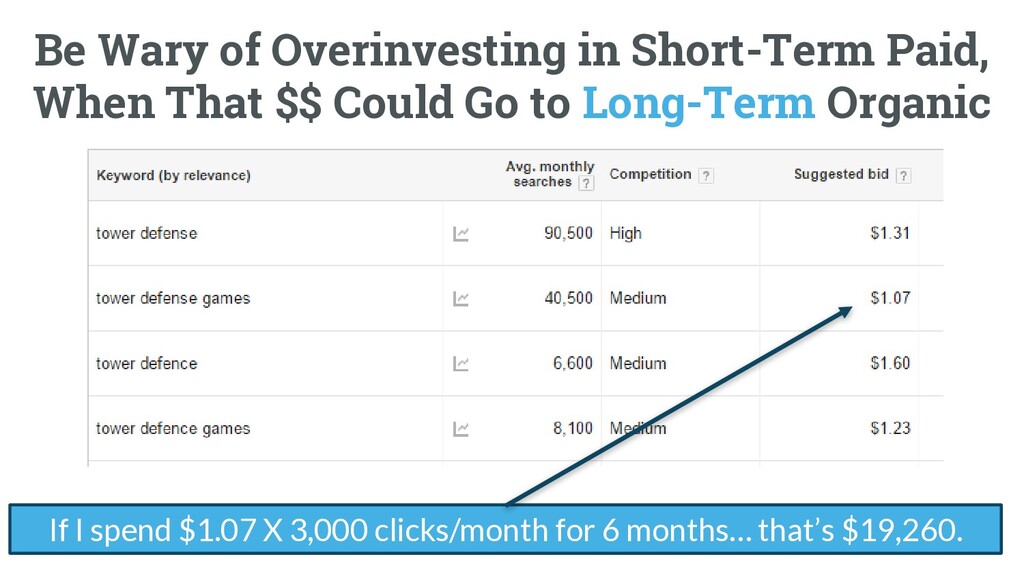
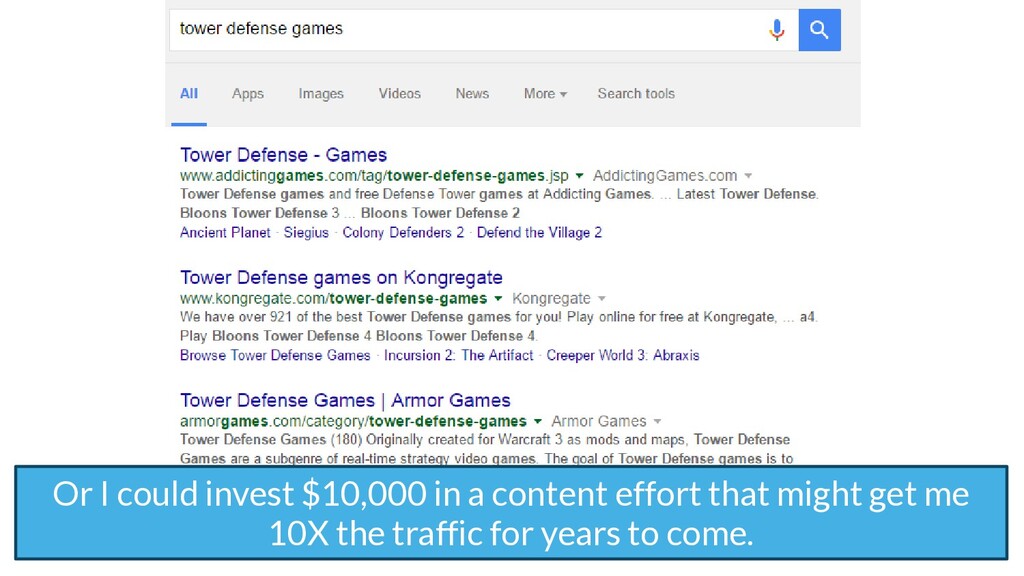
I I'm warm. Man, sure. So much for Edinburgh being cold. That's gonna have to there we go. I'd be careful about over investing in short term. One of the challenges that I see a lot of the time, a ton of the time in fact, is that folks put a bunch of dollars towards paid spend in some category, and then they look back at those dollars and they go, man, we spent thirty thousand dollars forty thousand dollars on paid in the last few months, but we realized that if we had spent a quarter of that on a
piece of content over the next two years, that might have driven ten times the traffic and continued and not been a pay per investment basis. Content takes a long time. Organic takes a long time to invest in. But I think that's a competitive advantage for you if you can do it well.
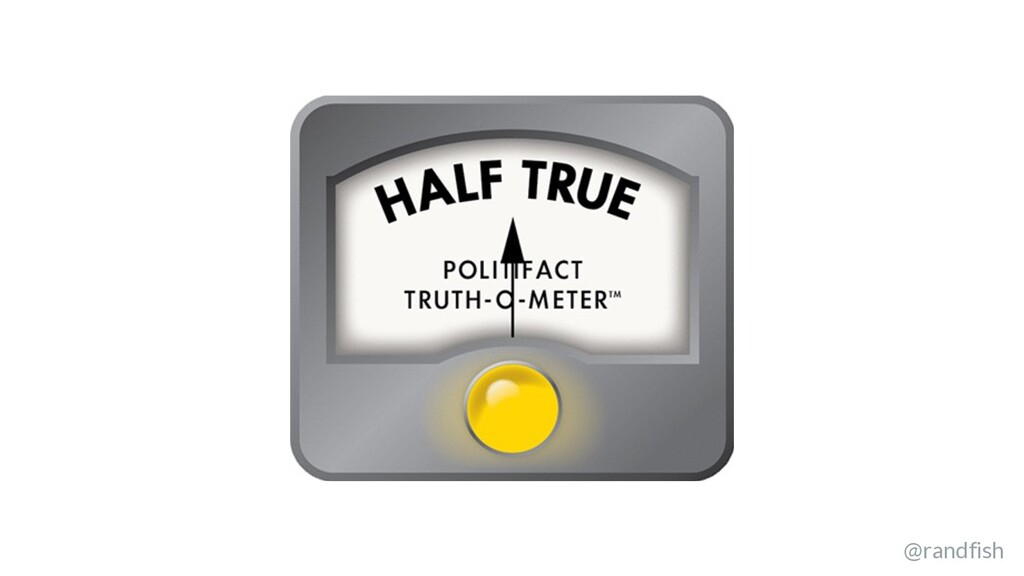
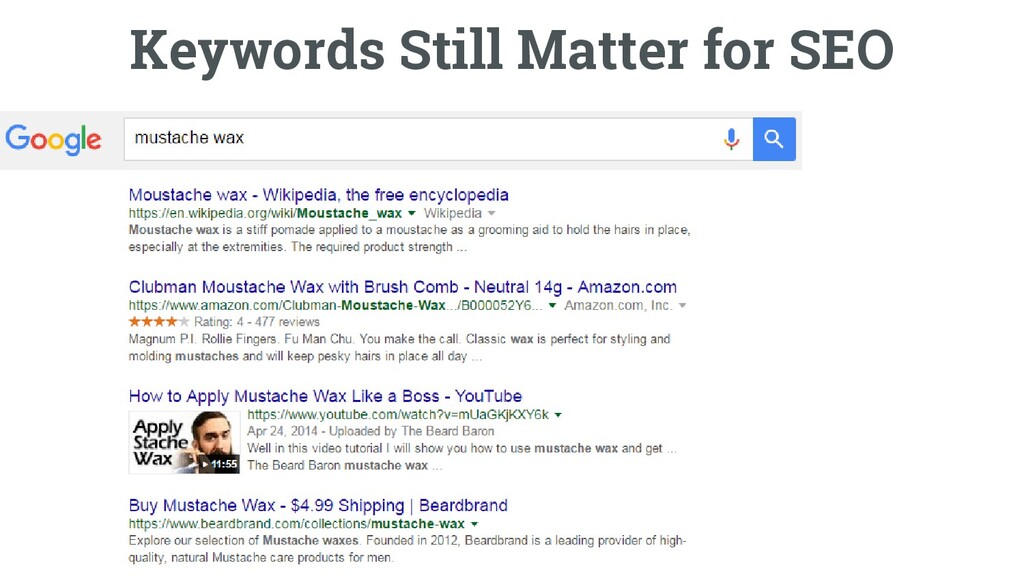
All right. Let's say you want to rank in Google. Got to use keywords. Well, okay. Yes. I agree. I know this is very popular advice in the content marketing sphere, but it's not the whole story. Only half true. Alright? Keywords still do matter for SEO.
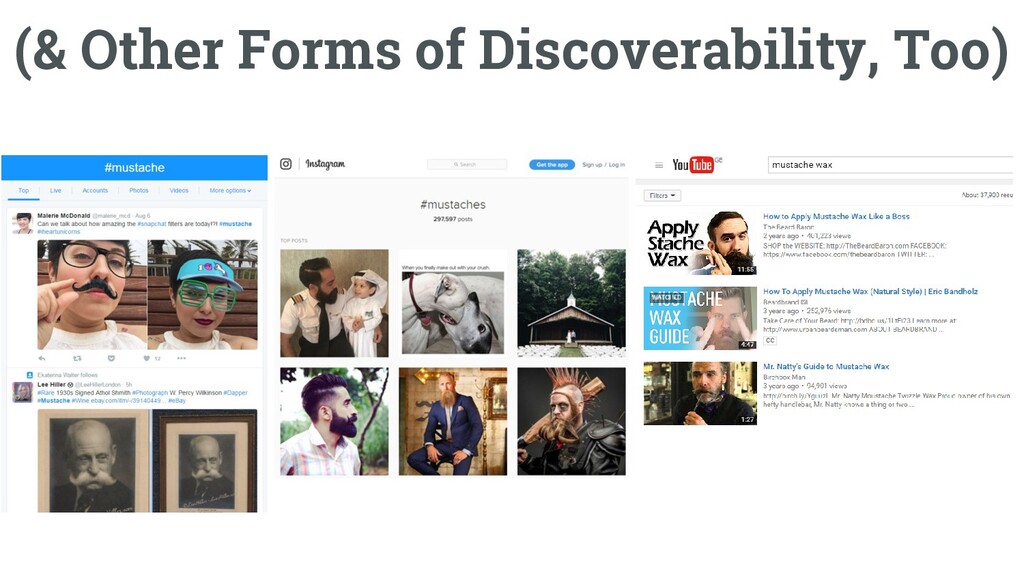
If you want by the way, this humid weather is murder on mustaches. Murder. I know I don't know how the Scotts maintain curly mustaches, you know, without you must have, like, cement wax or something you put in there. Other forms of discoverability, same story.
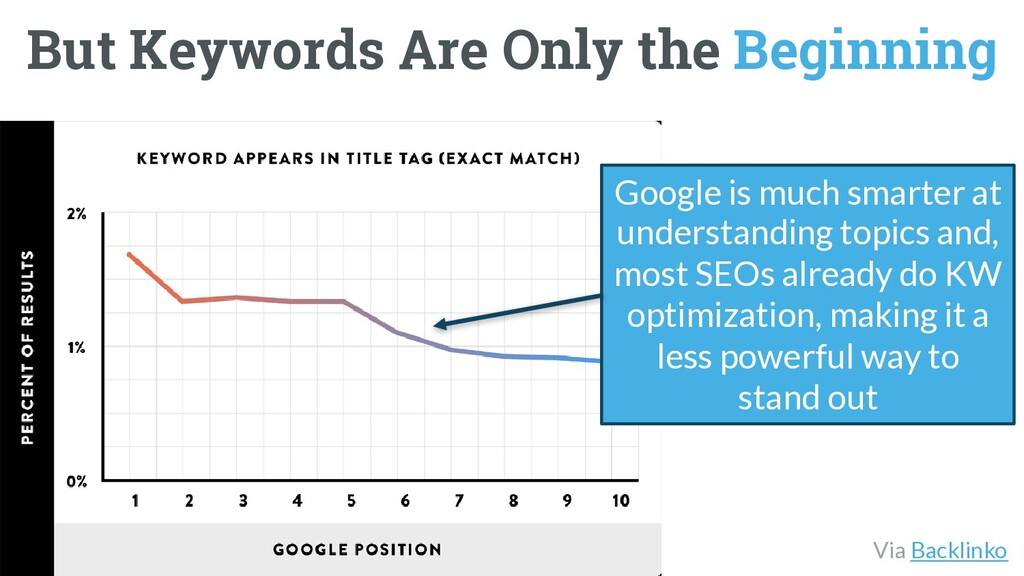
If you want to do well on YouTube, on Instagram, in hashtags on social, you need keywords. You do. No argument. But keywords are just the start of this. This is a great analysis from Backlinko, right? And they're showing essentially that keywords are no longer a big competitive advantage.
In fact, there are barely any advantage when it comes to ranking in search because everybody's already doing it. Everybody is already using keywords. Keyword based SEO will not help you stand out. It's just table stakes. It gets you in the game, but it doesn't help you win.
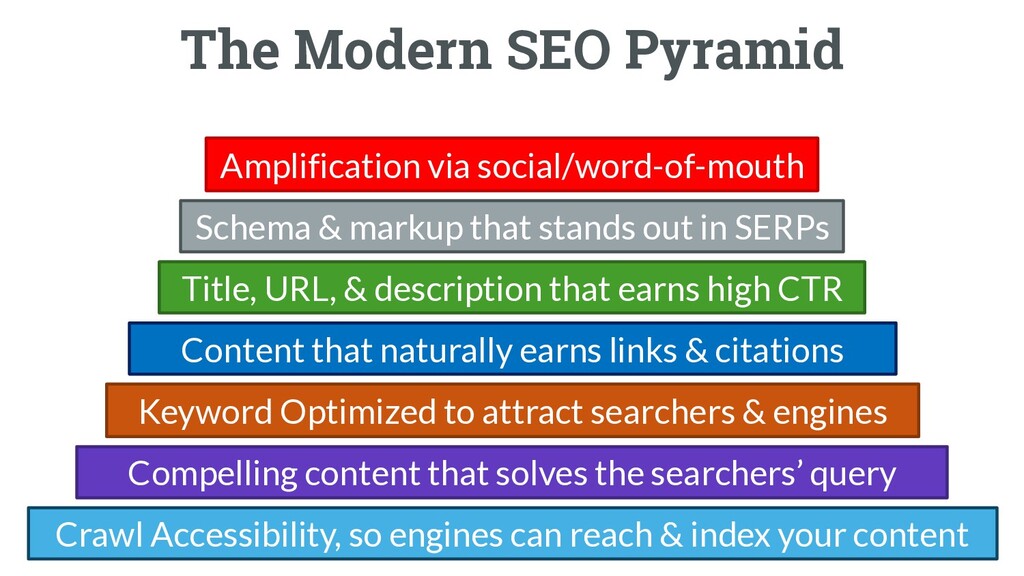
If you want to look at what a modern SEO pyramid looks like, this is sort of my personal take on what modern SEO looks like. At the very base, we've got our crawl accessibility. On top of that, our compelling content that solves the searcher's query.
Above that, it does have to be keyword optimized. No argument. Absolutely does. Oops. We want content that's gonna hopefully naturally earn some links, right, and shares an amplification for sure. Right? Citations, all that kind of stuff. We want a title and a description that will earn click through rate.
We want schema and markup that stands out in the search results. And last but not least, we want to get some social amplification, word-of-mouth, all of those kinds of things. This is SEO. The orange bar is not SEO. I mean, it's tiny piece of SEO.
But that's sort of being like, well, underwear, that's what fashion is. You should wear it, but it's not gonna get you all that far. I mean, you're the other Will Reynolds, then it probably takes you all the way that you need to go.
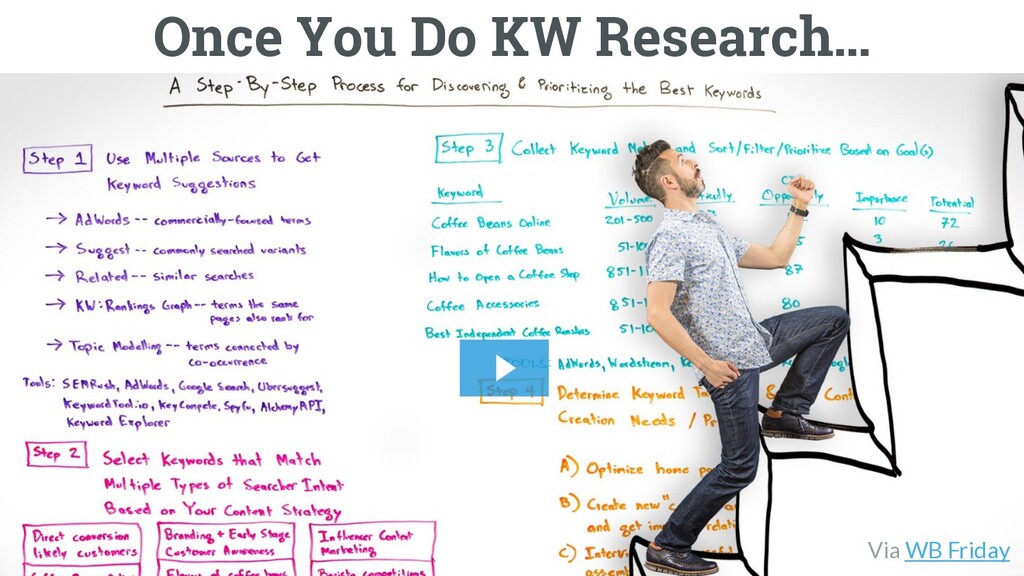
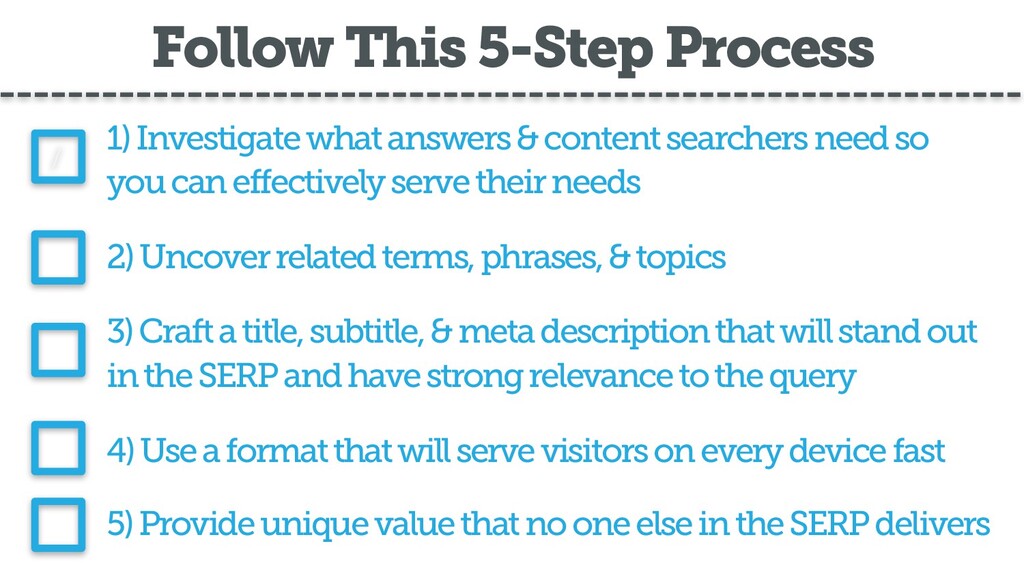
Once you do that keyword research, I've got a five step process for you from what to do next and that is first, is there a little slash in there? All right, someone make a note of these things that I need to fix. First off, investigate it is that the searchers actually need, Right?
We're gonna go back to the real Will Reynolds, the only Will Reynolds to me, talk about content that serves your visitors, to make sure they don't have to do another search. We want to uncover the related terms, phrases, topics. We want to craft that title, subtitle, and meta that's going to stand out in the SERPs.
We want to use the format that's going to work best for our visitors. Sometimes that's something like responsive design, but sometimes that might be adaptive design. Sometimes it might be a tool. Sometimes it might be video. Sometimes it's just text content. And then we want to provide value that no one else in the SERP is providing.
This is generally the after I've done my keyword research, now I need to nail all this other stuff. Okay. Next one. Oh, man. Goddamn do I see this all the time. I know why it is. Right? But there's some like And, you know, look, Moz, over the years, has done tons of correlation studies.
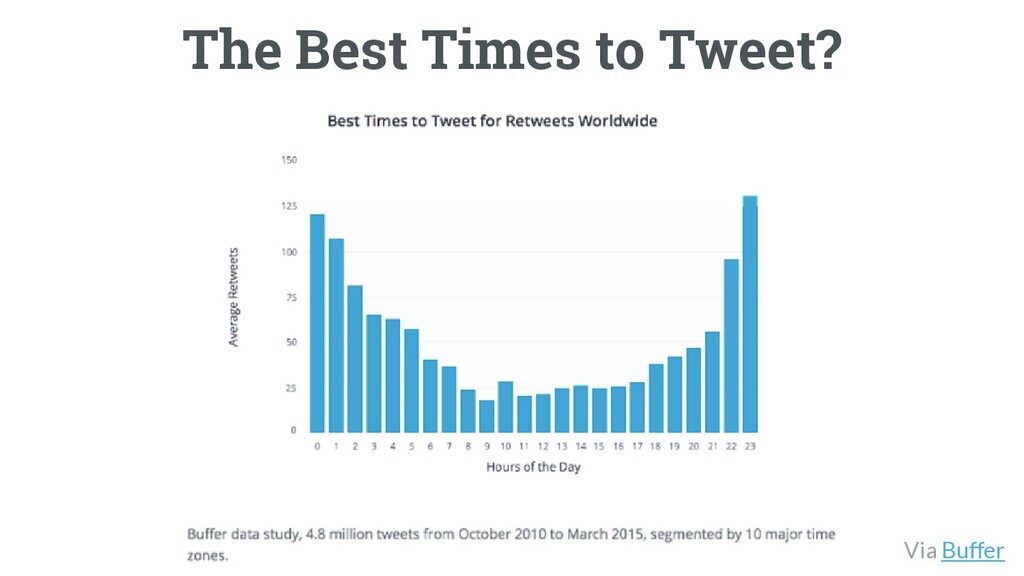
And we have our search ranking factors, and these are things that are correlated, and here's the opinions that SEOs have and all that kind of stuff. But despite being really careful with all these caveats, for some reason, when you see, like, top social media tips, it's always like tweet at four twenty one p.
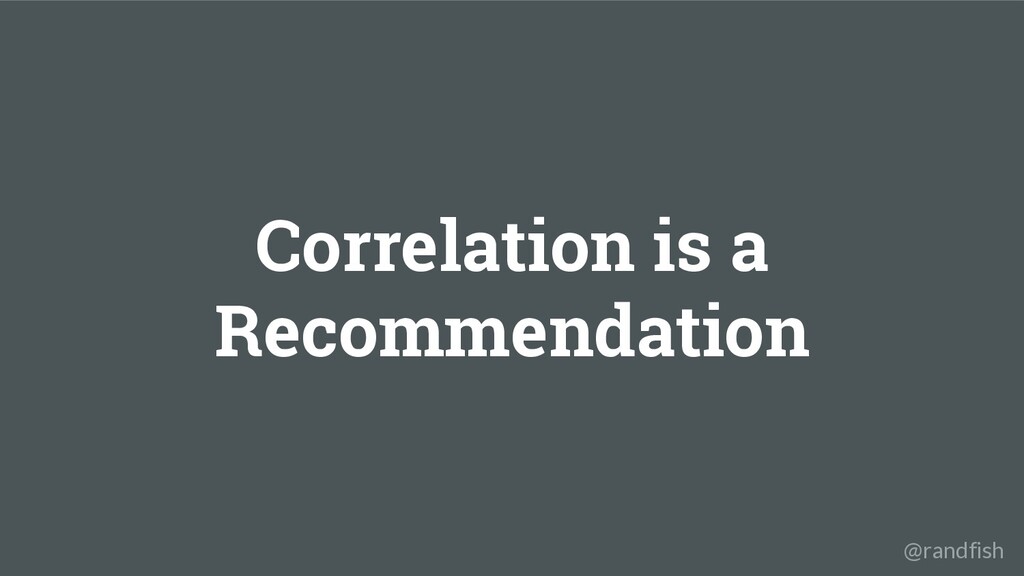
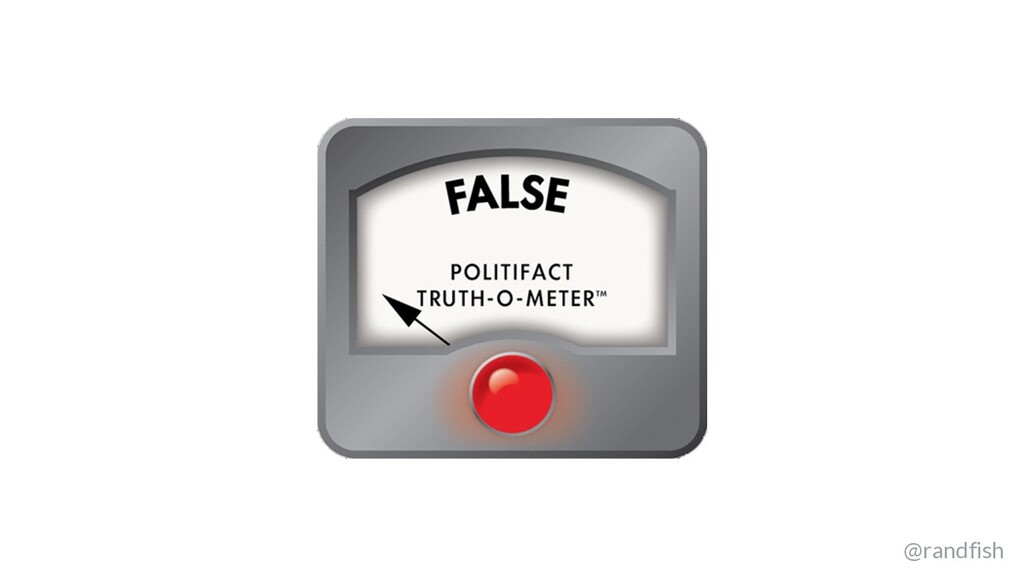
M. London time. If we all tweeted then no one would see anything. Right? That would be insane. So I'm calling this one, this is false. Like this is not correlation is not a recommendation. The best times to tweet, these might be correlated, but they are probably not your best times to tweet.
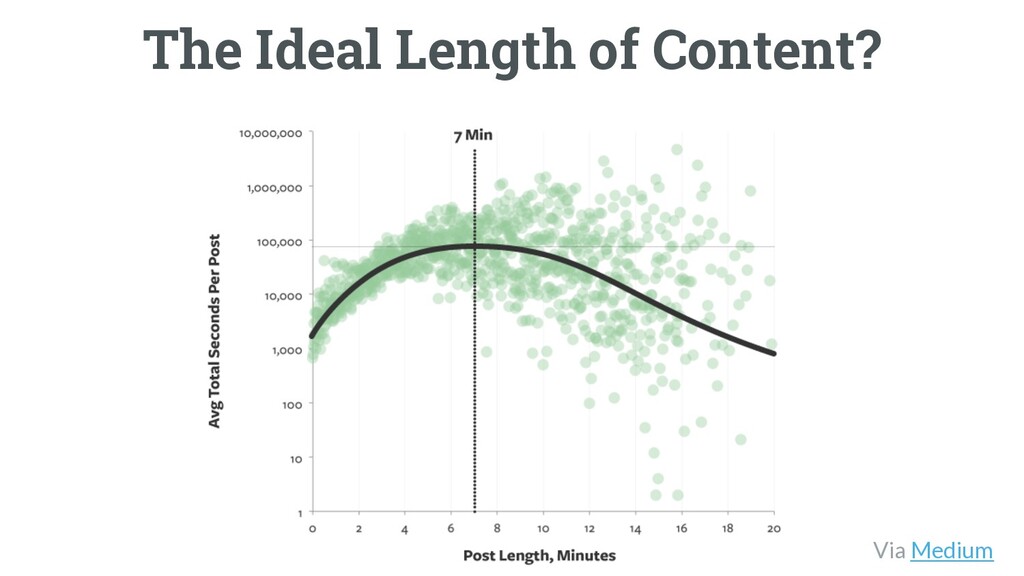
Right? I wish the label was not best times to tweet, but rather the times when tweets that have been sent receive the most retweets, amplification, visibility. I think I think that that's what this is, right, really saying. Set whoops. Ideal length of content? Oh, great. Seven minutes.
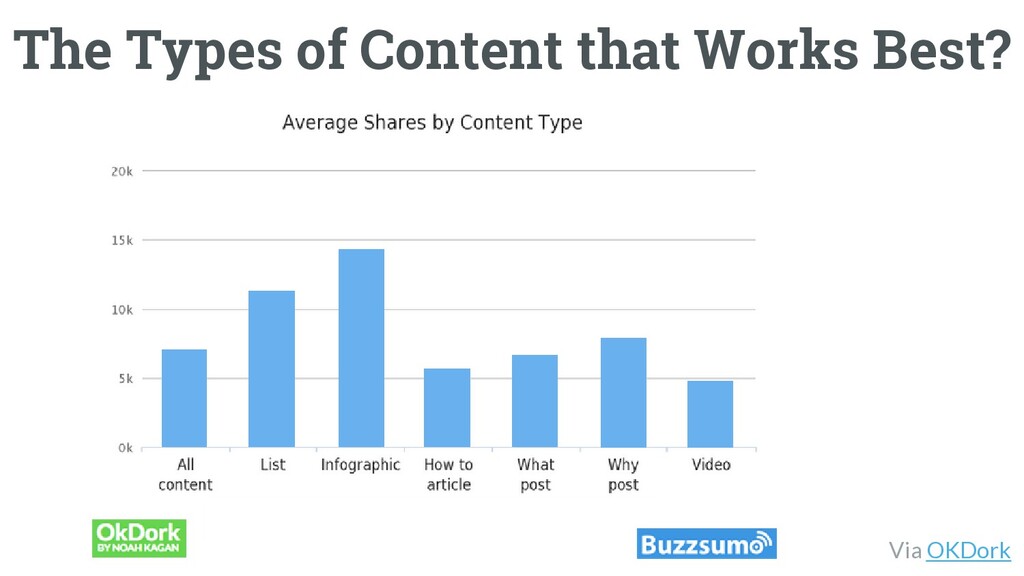
I should make my content take seven minutes to read. If you spend five minutes reading this piece of content, get out of here. Hey. You need to stay here seven minutes or we're done. What? No. The types of content that works best? Okay.
First off, I'm just pissed in general that infographic made it number one. That is you we something is wrong. Something is wrong where we you can't even read most infographics. Why do people like that? Okay. Correlation, not causation. The way I think about correlation is that it's a path to investigate.
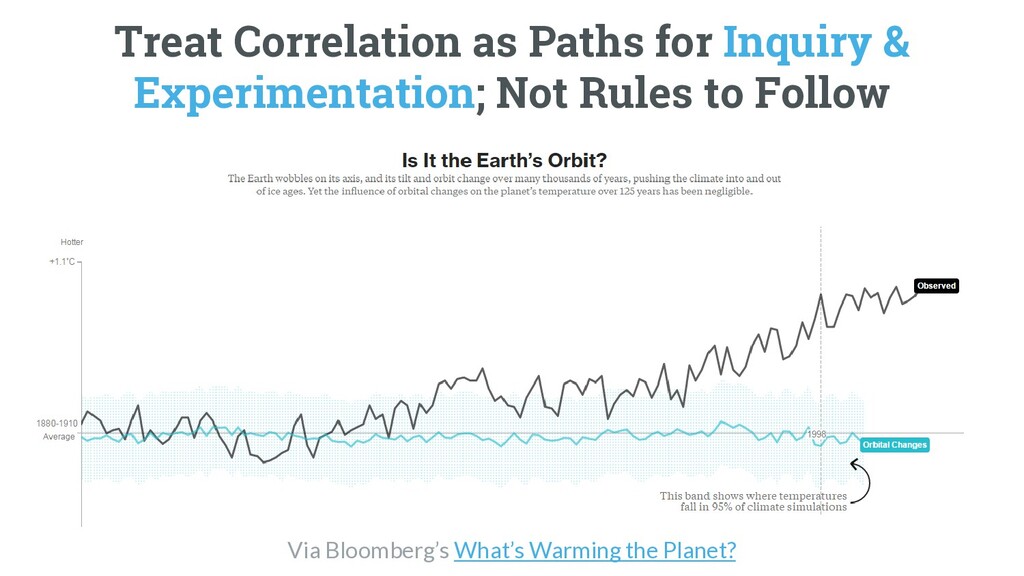
If certain types of content outperform other types of content, that is fine. That's great. No problem. But that doesn't mean they will for you or for your audience. That simply means that on average across whatever sample set was analyzed by this particular author or this particular data source, that's how it worked out.
That's a very different thing. Right? This is you know, Bloomberg here is looking at, the correlation between, for example, orbital changes, which you have to understand, Americans are poorly educated people. I know that like every other country in the world they're like, yes, global warming is man made.
But in our country we have something weird in the water. I don't know what it is. You have to have articles like this that prove that it's not the case. If something in this case, right, what they're showing is there's no correlation between orbital changes and the observed world temperatures.
When there's no correlation, there's also no causation. Right? Like, you can't you can't you can't be like, well, orbital changes clearly caused it. Nope. Nope. I mean, even if they were correlated, you couldn't prove that it caused it, but when they're not, it can't.
So correlation is useful for these things. Make great content and you're welcome. Alright. Number eight. Last one here. I feel really conflicted about this one because the last piece of advice I would ever wanna give you is no. No. No. No. Just make ****** content.
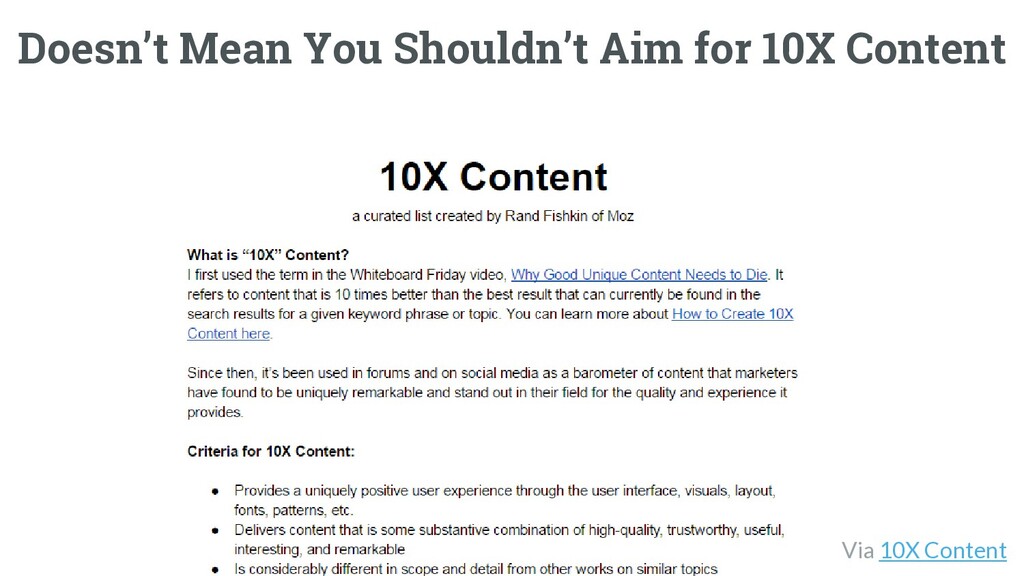
Right? Like, I'm the guy who's like, 10x content, 10x. So this is tough for me. But great content, 10x content, I don't care, does not by itself mean that you're going to get a bunch of traffic. That is, in fact, I don't think the correlation is all that high.
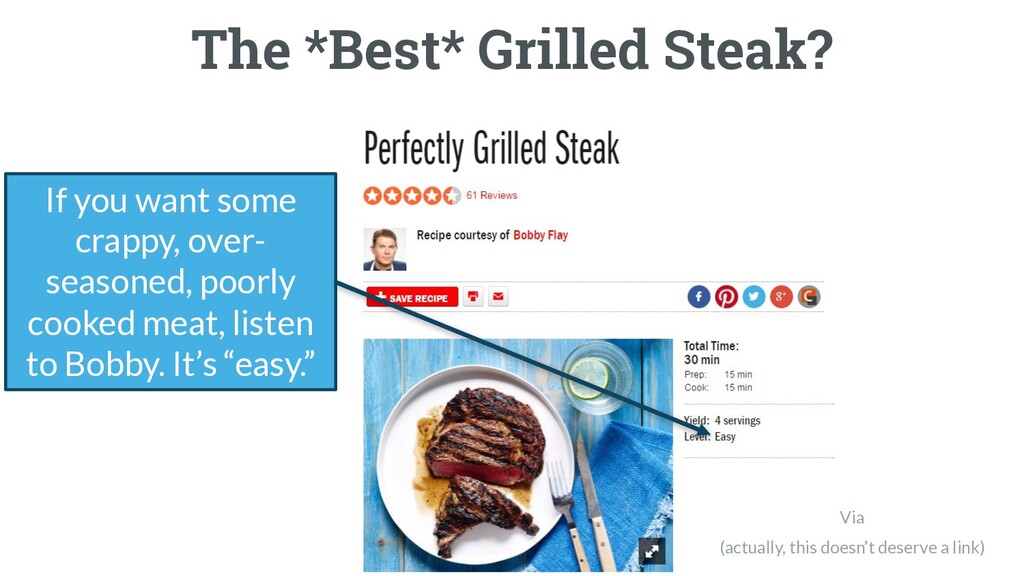
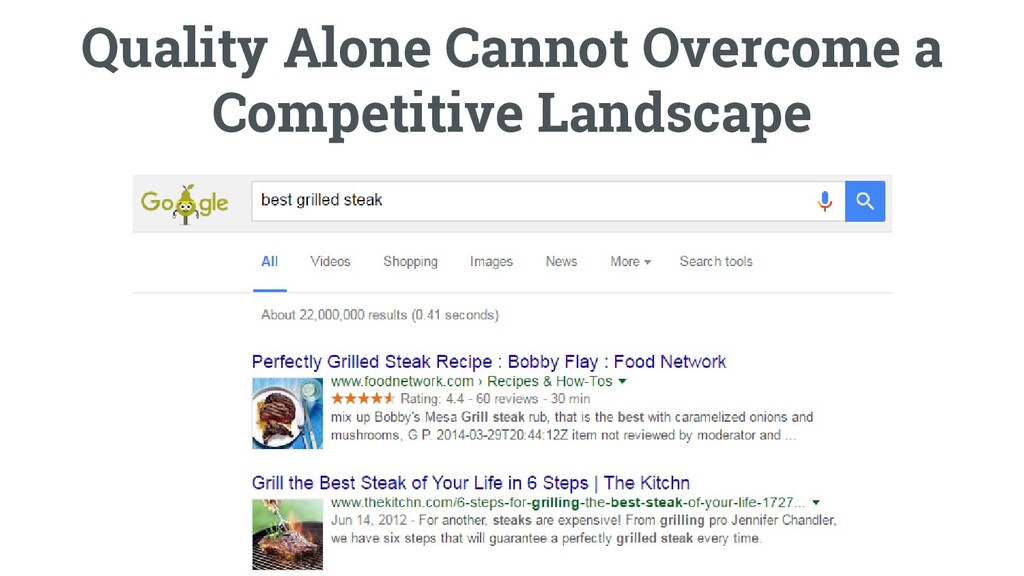
It's decent, I don't think it's outstanding. So let's take a look. This is an article from the Food Network, specifically the talentless hack Bobby Flay. He's an American chef. You'd never need to know that again. If you can see I actually don't believe he deserves a link, I didn't put one in there.
So please don't go find this piece of content. If you want some really crappy, overseasoned junk that will destroy your meat, then you should follow this recipe. You know, if there's someone in your life that you really dislike and you would like to feed them, great.
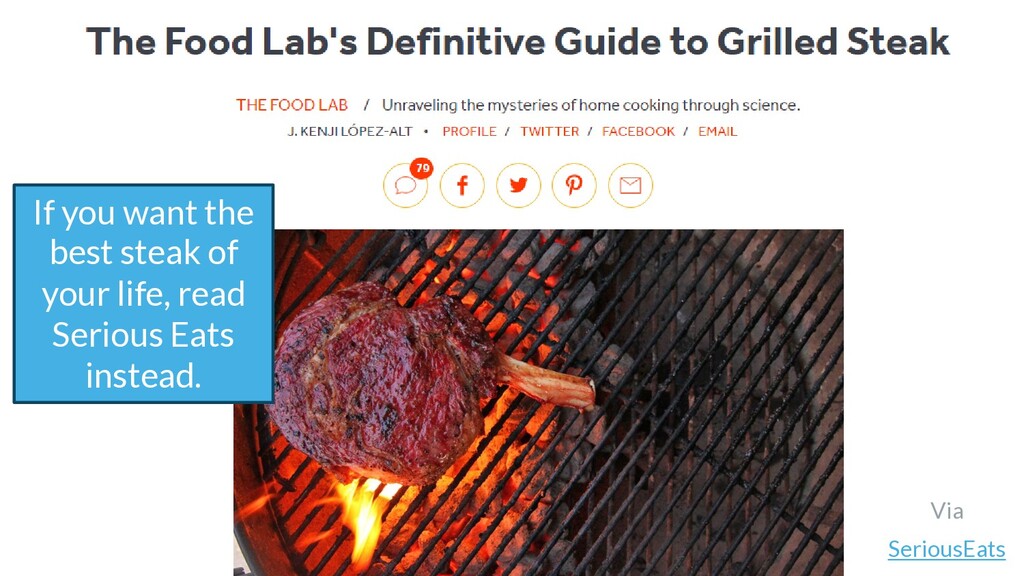
Go ahead. This is from Kenji Lopez Alt, culinary god. And he has a recipe. You take a steak, a beautiful steak. He tells you what cut to get. He tells you how thick to get the cut. If you just go to the butcher and you get the default cut that they have in the window, that is not correct.
You need to show them exactly how many inches you want in your cut. Then you are going to take it home, unwrap it, and you're going to salt both sides, heavily salt both sides. I know, sounds crazy. You're going to salt both sides, very heavily.
Then you're gonna put it in your fridge on a rack for four days. Four days, and you're gonna leave it in there. Every time you open your fridge, you're gonna be like, is that a raw piece of meat sitting in my fridge? Yes. It is.
Do you know why this is amazing? Kenji will explain it in this article why this steak is incredible because most of the heat when you grill a steak goes into just drying, just removing the water, the moisture from the surface. And so it takes forever for that heat to reach the middle.
By the time the inside gets fully cooked, the outside is way overdone. It's too tough, you lose a bunch of the flavor, and the salt never penetrates. So you're not getting the flavor that you want from the meat either. If you do this process, what happens is that the fridge plus the salt will dry out the top and the bottom, the outside of it, so that all the heat goes into making that steak phenomenal.
And the salt will actually seep through the porous meat and make every bite taste like heaven. It's awesome. This piece of content changed my taste buds life. Geraldine, my my wife, she's like, no. I don't want steak when we go out. Why would I want steak when we go out when I have Kenji Alt Lopez at home?
She's ready. It's crazy. Alright. So this I'll show you in a sec what what happens here, but well, let's fast forward. Bobby? Bobby, tragically oh, there he is. Is that the saddest thing you've ever seen? Can you all please go home, make the steak I just talked about, link to Serious Eats, and kick this m f'er out of here?
My god. I I don't even know why Google likes it. It's just bad. I think they gamed the reviews too. Like you have to sign up for a Food Network account. I don't think anyone with TasteBuds does that. It's not going to help.
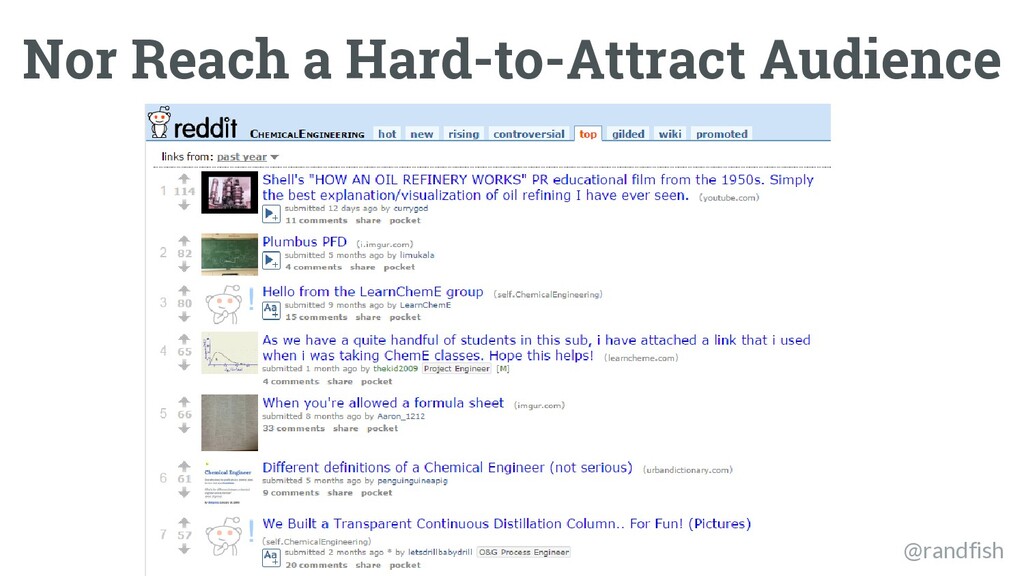
Great content does not necessarily rank first. It does not necessarily get all shares. It doesn't necessarily get all the links. It may be amazing, but it's not gonna do that for you. It's not even gonna help you reach a hard to reach audience on its own.
You produce something amazing and you just sit back, it's gonna sit there in silence. That doesn't mean I'm not telling you don't aim for 10x content. And I have a big list of them here, right? Pieces that are awesome like that steak recipe that will blow your mind, that got lots of shares, that got lots of links, do rank.
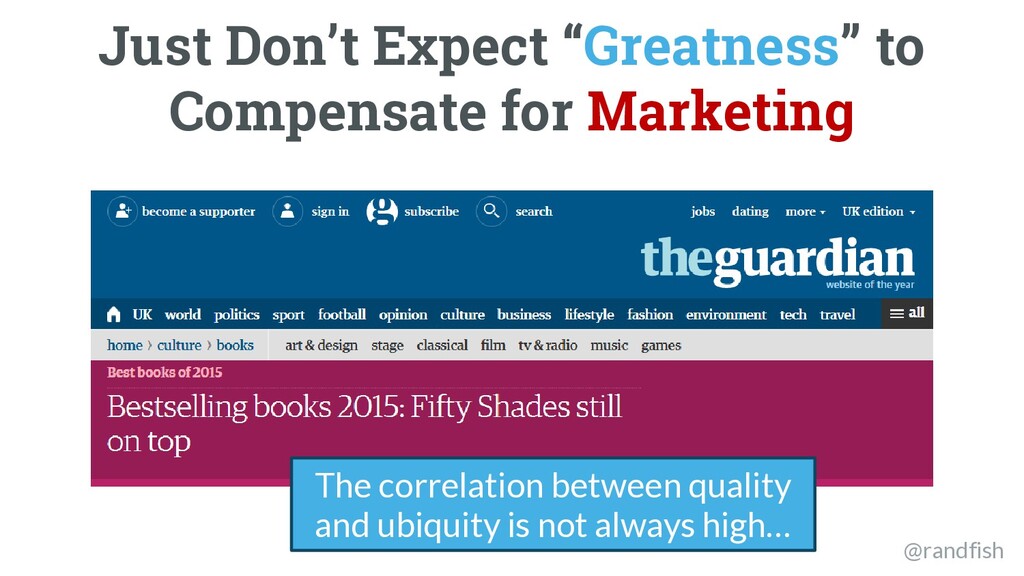
Many of them do rank. But if you expect greatness to compensate for marketing, you're gonna be really disappointed. For example, the best selling book of twenty fifteen was the same as the best selling book of twenty fourteen and twenty thirteen. I don't know what you define as great content, but I don't think it's Fifty Shades of Grey.
She's never even been to Washington State. There are no tech entrepreneurs with dungeon basements. That is not how we operate. I get calls all the time that are like, oh, you're an entrepreneur in Seattle. You must love fifty shades of gray. Yeah. I I wow. It's not also in the spam box.
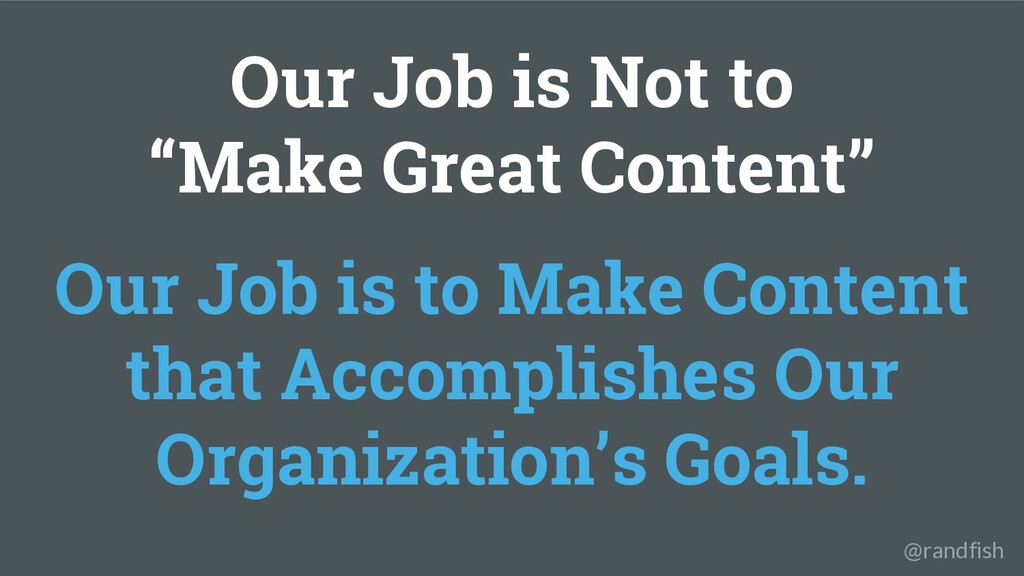
Alright. Our job, content creators, is not to make great content. Our job is to make content that accomplishes our organization's goals. I love making 10x stuff. I love it. I do. It it it it's what makes me passionate about this field, but that's not actually my responsibility.
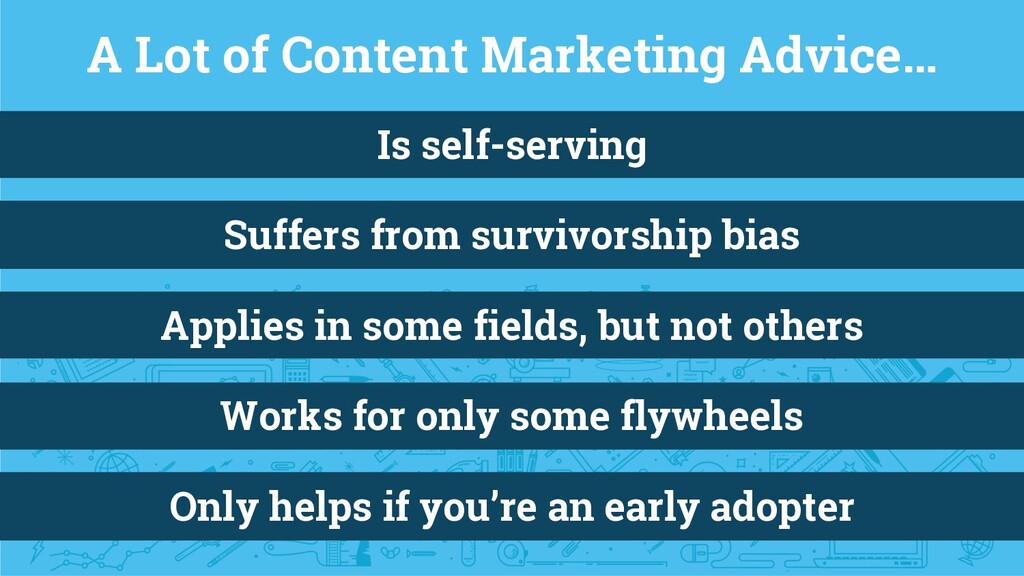
My responsibility is to my audience and to my goals and my customers. And so a lot of the content marketing advice that you hear out there and that you read in these types of articles is gonna be self serving. Right? And sometimes that's okay.
That doesn't necessarily mean that it's bad, but it can also be it suffers from survivorship bias because those are the people who actually created content that worked for them enough to make a career in it. Then there's folks who did that and either stayed completely silent or folks who didn't succeed with it.
It also applies in some fields but not others. It works only for some flywheels, and it might not work for yours. And that's okay. Right? And some of it only works if you're an early adopter before the law of ****** click through rates comes into play.
And we have to be aware of these biases. Otherwise, our content marketing efforts are gonna really struggle. So I'm not saying that the advice that you're gonna hear or that you read in these articles that you get from content marketers is invaluable. Sometimes it is. Absolutely. Right?
What I'm saying is we need to apply in context. How to apply in context. And other people have different experiences than we do. That's okay. But but please build your own model for evaluation, for experimentation. That is what is gonna give you great success.
Thank you very much.