
More than ever before, marketers are launching things - content, tools, resources, products - and being held responsible for how/whether they resonate with customers and earn the amplification required to perform. But this is hard. Really, really hard. Most of the projects that launch, fail. What separates the wheat from the chaff isn't just the quality of what's built, but the process behind it. In this presentation, Rand will present examples of dismal failures and skyrocketing successes, and dive into what separates the two. You'll learn how anyone can make a launch perform better, and benefit from the power of being "new."
← All talks 

Keynote Turing Fest 2018
Why Launches Fail
Auto-generated transcript - may contain errors. Tap a timestamp to jump the video.
Brian, thank you so much. This is a testament to the hard work that you and your crew of volunteers and members of the TuringFest company have put together. It's pretty remarkable and special. I first came to Scotland eight years ago. Is that right?
Eight years ago? To an event in Glasgow. And, you know, as an American and as a I was, what, thirty at the time, I landed in Glasgow and, was very very jet lagged and hungover, but super excited because I got to a room with literally a hundred people in it, maybe maybe even a little bit less, organized by, by Brian Mathers, by the way, who's who's here in the audience today.
And there were three guys in kilts, and I I was over the moon. This was the best day of my life. I had always dreamed that when you go to Scotland, everyone's in a kilt, and, I appreciate Mike McGrail keeping up the tradition.
I don't I don't know if you know Mike. Geraldine and I have a rhyme about you that we say to each other very often. I'll tell you about it later. After drinks. It's it's work appropriate. It's just it's embarrassing for me. So so all of us, all of us are marketers and entrepreneurs and folks in tech, and we have to do something on a regular basis.
We have to take things that are created either by us or by other people, and we need to launch them to the world. And it's hard. It's hard. In fact, I am reasonably good at it. I seem to have a reputation for it, and yet I suck at it more than I'm good at it.
And we all do. So I wanted to talk today about what I mean by a launch and how we can fix some of the biggest things that hold us back from doing great launches. So what do I mean when I say launch? Alright.
I mean new content. So you put out a blog post. Yes, that is a launch. New product offerings. Definitely a launch. New announcements. Right? New campaigns. All launches. You you changed your name from IHOP to IHOB. I don't know. Did you see that?
That was ridiculous and insane. And also, your pancakes aren't good. How are your burgers gonna be good? That's not possible. So Bloomberg puts out a blockchain explained, piece of content. Yes. That counts. Sure. Cyrus's new, SEO guide, that that totally counts. Technically, yes. New campaign, sure. Why not?
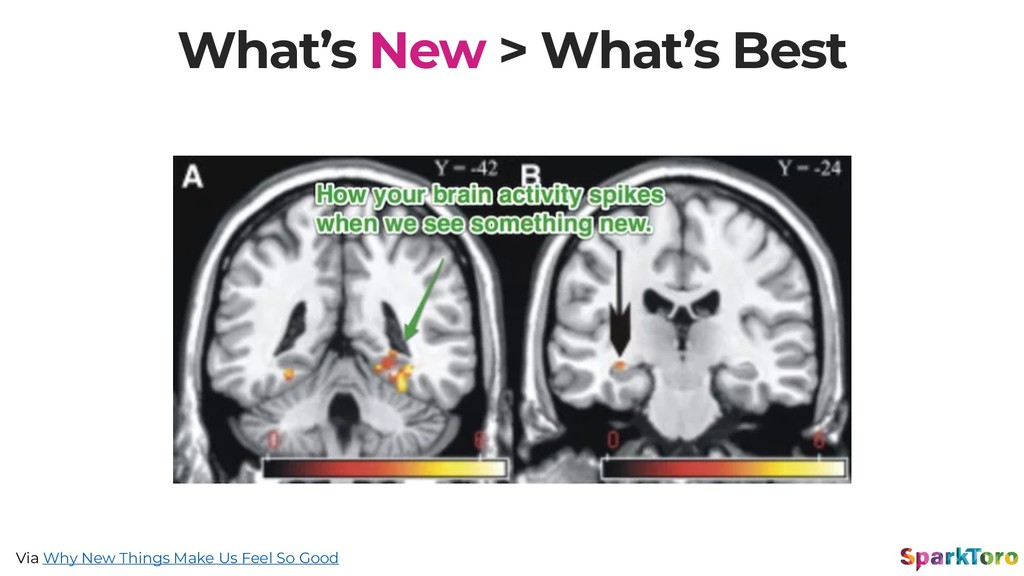
Yep. Fortnite coming to the Switch. Definitely new book, that is a launch. And absolutely, you're coming out with a new game for Xbox. These are all launches. And launches matter because we have an obsession, an obsession with what's new. We all think that what is new is better than what is best.
What we share on Twitter and Facebook and LinkedIn and Instagram and when we talk with our friends through word-of-mouth and what we link to and what we blog about? It's not this is the best thing in this field. It's this is the new thing in this field.
Google didn't have the best algorithm update they've ever had yesterday, but they had a new one, so we're all tweeting about it. Right? That's this is how it goes. Like, we're obsessed with new because we're human beings. And in fact, we have we have another big bias as human beings, which is we often only remember the launch.
Right? So whatever happened around the day or or or the announcement, that is the thing that sticks in all of our heads. And we sort of know this intuitively as marketers, and we're also scared of it, which we should be. I think that's that's an appropriate fear to have.
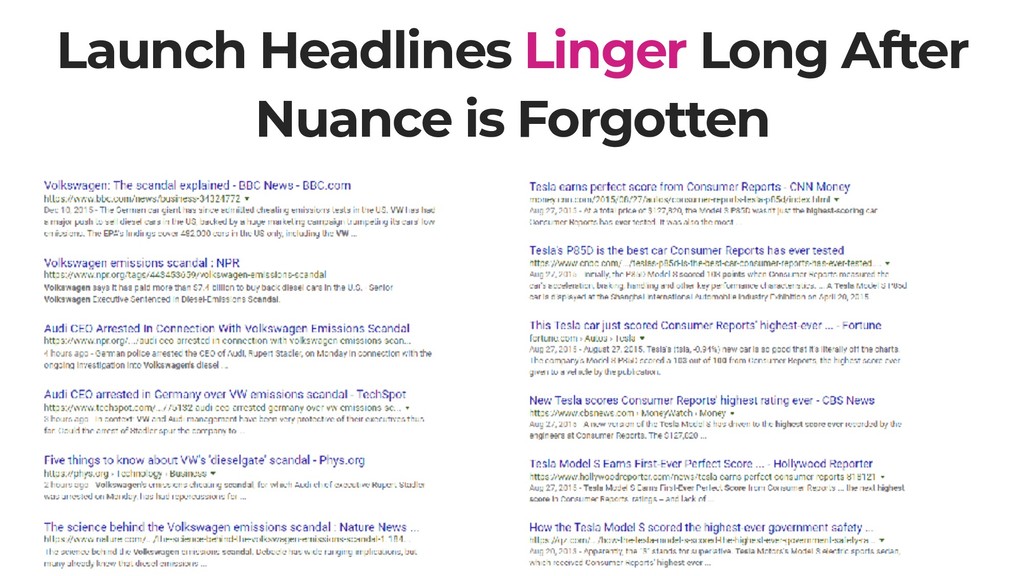
Right? Because the associations oh, good. Thank you, Fitbit. Ten thousand steps. Yes. The associations, right, linger long after Nuance has forgotten. So when when I think of Volkswagen, like, should probably think of the brand as a whole, but I I can't. I the only thing that sticks in my head is just I think their what was this?
Last month, their, their CEO was, like, arrested in Germany and actually sent to prison, which I The American way is that if you have a CEO, if there's anyone with like lots of money, you don't send them to prison. You just You have their money bribe politicians instead.
We've legalized that. We call it lobbying. It's very effective. But Tesla, the only thing I really like I don't I'm not a strong car person, but the launch association I have with Tesla is most awarded vehicle ever, which I think it no longer technically is, but I still have that association.
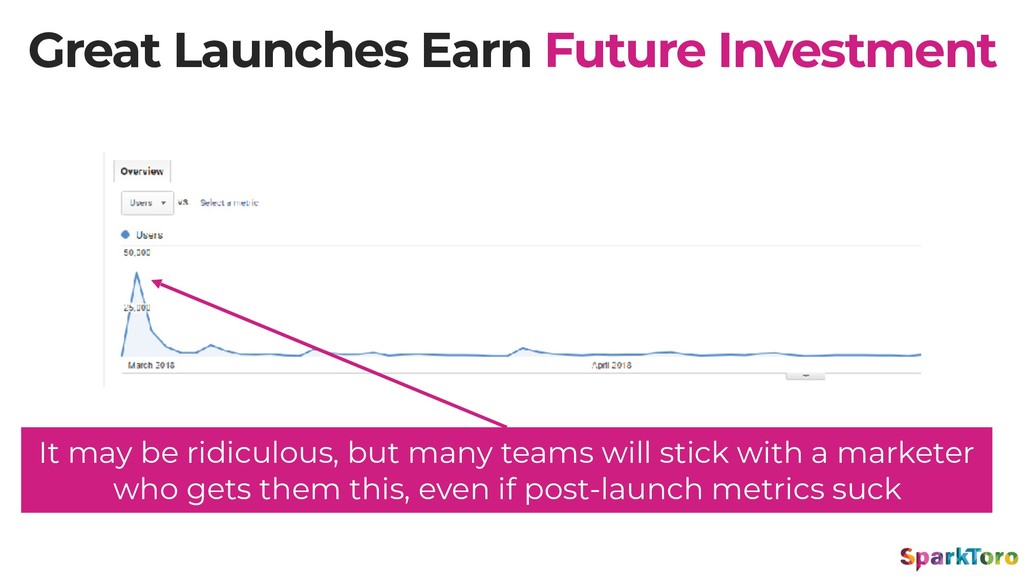
Right? That's still what's in my head around Tesla. So these these headlines linger. And a lot of times, the launches are what earn us future investment. So if you're a marketer, you're working on a team, and your launch goes well, it might be ridiculous, but a lot of teams, lot of CEOs, a lot of executives and leadership teams will be like, yeah, You did great.
Good work. The launch was big. That's what I expected of you. You get more investment next time, which is not sure that's the wisest proposition, but we all know it's a reality. So what what is it that makes these launches fail? I I ended up having a bunch of conversations, actually over the last year, yeah, year now, with lots of folks up mostly on the small business and entrepreneurial side, lots of startups, as well as many marketers in house and some consultants and agencies.
And I heard five things again and again. I actually heard seven or eight, but I condensed them into five groups that I think fit pretty much everyone. So the first one, there's this misconceived notion that what a launch is and what a launch can accomplish is different than what it can actually do.
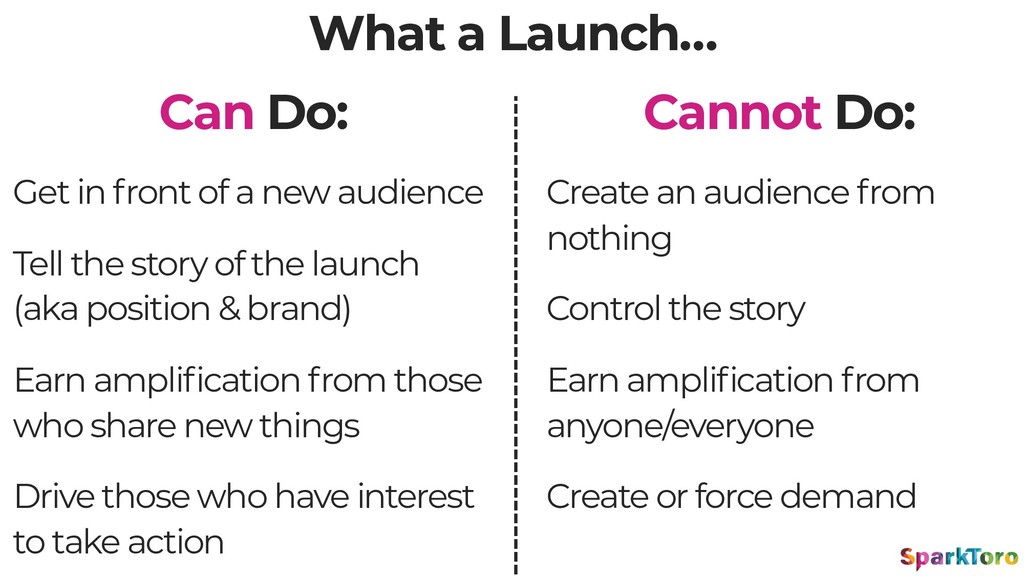
So these are things launches can do. They can help us get in front of a new audience. They can help us, tell a story. Right? Create a position and and brand the thing we're gonna put out there. They can help us earn amplification from people who share things.
Right? They can help us drive people who have interest in what we are doing to take some action based on our launch. But a launch cannot create an audience from nothing, Even though a lot of times we're expected to do this. God, I can't tell you how many times you talk to a startup.
Okay. Well, we've been in development r and d for the last eighteen months, and we're now ready to do some marketing. What? No. You can't that's not gonna work. You have no audience. Well, you know, we were building. We were busy. We didn't have time to get anyone to know about us or like what we were doing.
A launch cannot control a story. A brand cannot control a story. A CEO, we can't control a story. And we're not gonna be able to earn amplification from anyone or everyone, only the people who care about what we have to share. You can't create or force demand through a launch.
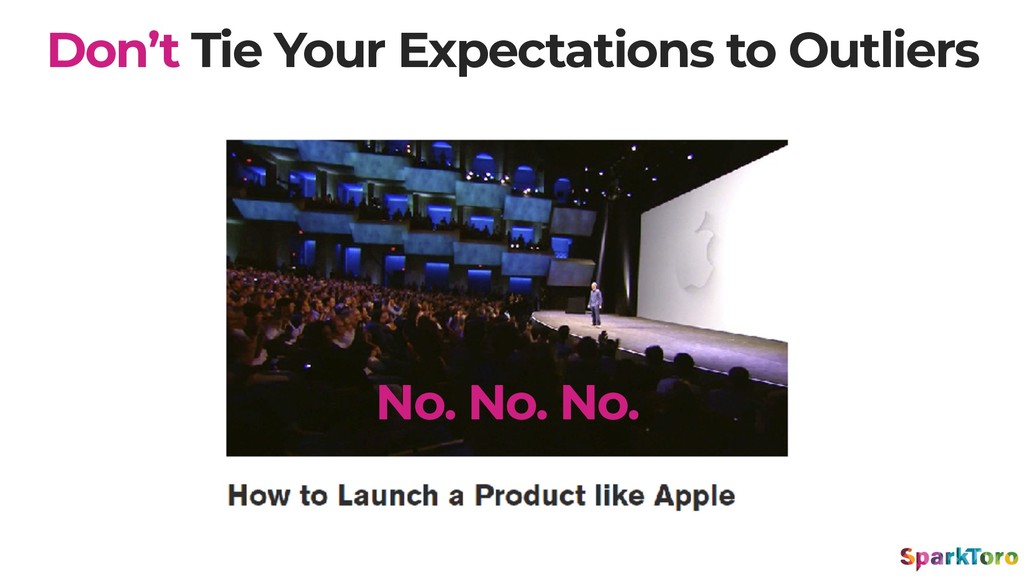
Don't worry. I'll leave it up. Good? Good. Good. Yes. No. Alright. Excellent. So let me let me highly recommend that you do not do what so many companies do, which is basically to say, alright, we're ready to launch. Let's find our oldest, baldest, whitest, turtleneckiest dude, and put him on a stage, and then have him present to a big audience, and that will get us the investment we deserve.
That'll get us the amplification that we lead. I this this is not a good plan. Right? I would not try and tie your expectations to outliers. And this is actually one of the reasons that I have so much trouble, if anyone was in here yesterday for my talk during the strategy session with Robin Waters, one of the things that I complain bitterly about, and have for a long time is that there's this huge over indexing on what unicorns do, right?
What billion dollar companies or, you know, the few publicly traded sort of big five tech companies do, and that we can all learn or sorry. We can all learn from them, but should we only ever learn from them? And I I don't think that's a good idea either.
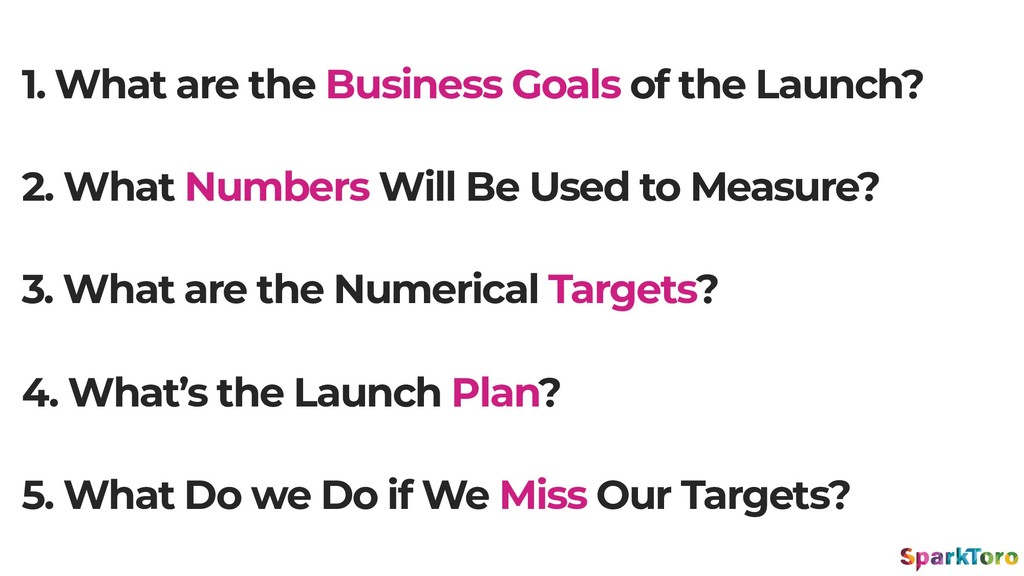
Learning from these few outliers, and then assuming that applies to our business that has a few million, you know, pounds of turnover, I don't understand that. So some things that I do recommend that we do. Instead, we should ask things like, what what are the business goals of this launch?
What do we want this launch to do for our company? And then what numbers do we have to measure that? And what are those targets? And what's our launch plan? And what do we do if we miss? You have answers to these. Now I think this is a reasonable thing that marketers can work with their their teams, right, or or product creators, right, entrepreneurs.
You can work with your team or your agency or yourselves to agree on these, and then have a reasonable plan. So nice thing is I used to have to get buy in from a lot of people to do these. And now now I only have to agree with this person, my my co founder Casey.
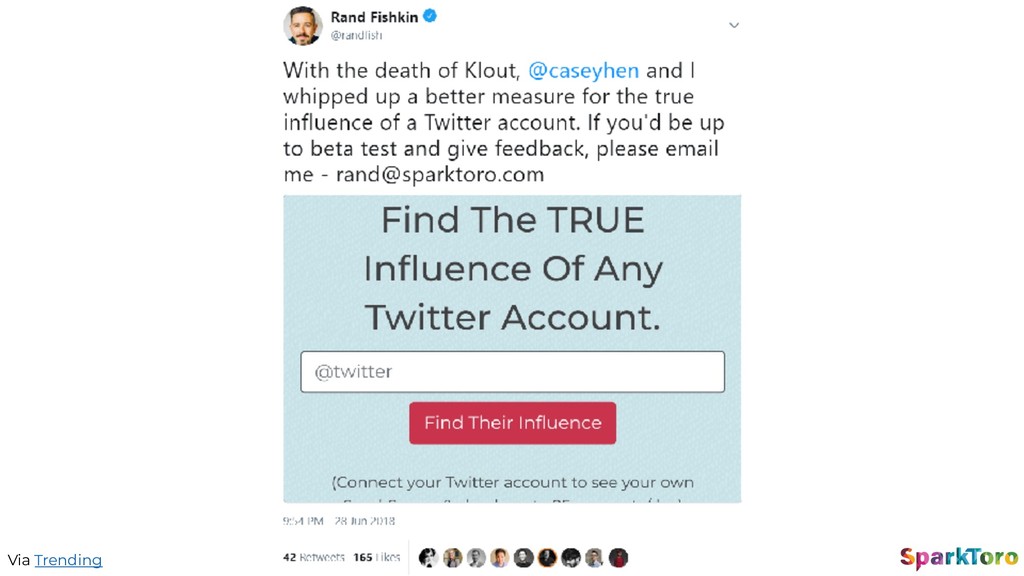
It's basically just the two of us. And so we agree right on these items, and then we go forward. So we had a launch, was this a couple months ago now, Trending and SparkScore. And these launches where we basically said, okay, here are our business goals, which is we wanna build something that will attract traffic on an ongoing basis and that we don't have to continually invest in.
Because what one of the issues so I had this with Moz. I spent, what, five years blogging basically every night. Right? Sunday through Thursday nights. And that was a tremendous amount of work, and it did help build the Moz brand, absolutely. Right? And it it sort of worked, but it was a long, slow content marketing flywheel that got built up.
And for SparkToro, we sort of said, well, maybe maybe there's another way to do this. Maybe we can build assets that have ongoing value that people wanna visit again and again that don't require us to put in an equivalent amount of work every single time we want to attract traffic.
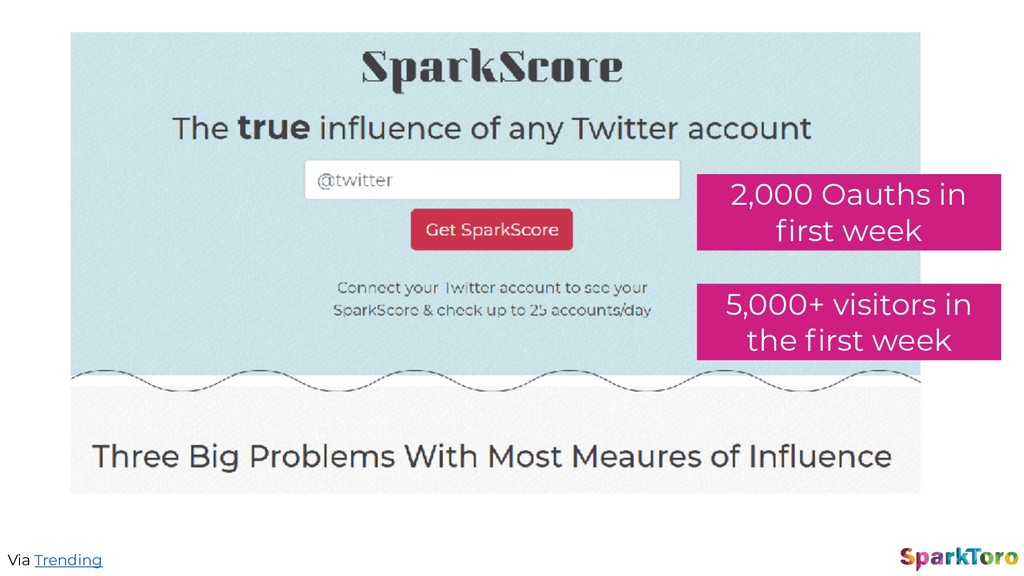
Right? And so, you know, we had some goals. Two thousand OAuths in the first week and five thousand or more visitors in the first week. Those are sort of our numerical targets. The OAuths, by the way, are because we need to use OAuths to collect a bunch of Twitter data for our eventual product.
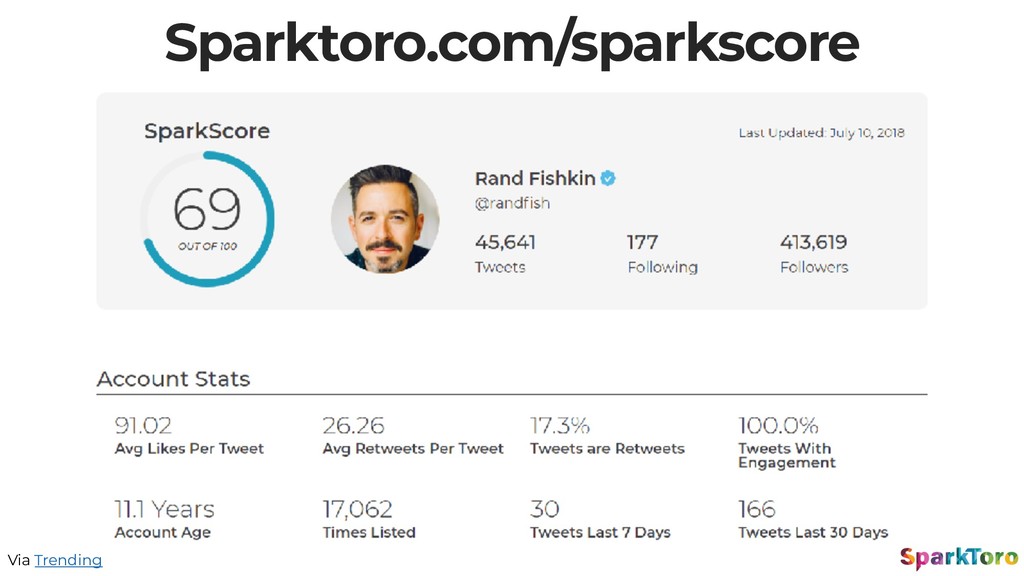
And this worked out pretty well. I think you so basic the basic idea behind SparkScore, if anyone hasn't seen it, is that we noticed a very unusual well, it's not unusual, but it's something you all probably know, which is a person's followers, like the number of people who follow them on a given social network, is not indicative of the audience that they can reach on that social network.
So it is very often the case, right, that I might tweet something, and technically, I don't know, four hundred and ten thousand followers or whatever it is right now. But Jono might tweet something, and Jono, you're like in the eight thousand, nine thousand, ten thousand ish range.
Right? So Jono tweets something, and it's actually if we were to go look at the impressions for that tweet, we might see that John O actually has more impressions. More people saw his tweet of this than saw mine. But unfortunately, we we grade these things totally wrong.
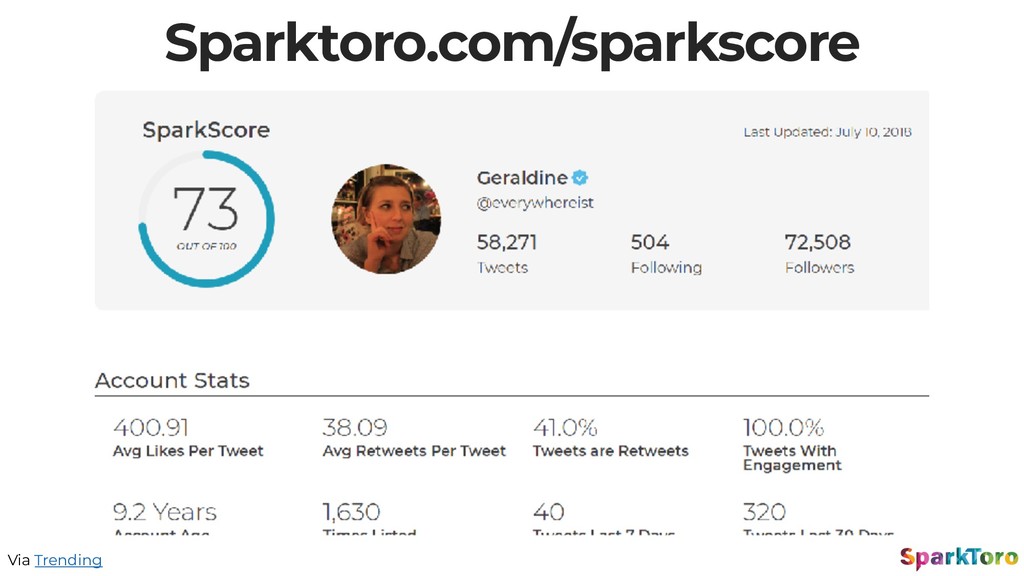
And so we tried to get a score together using some, you know, basic, just pulling some basic metrics in and then doing some simple machine learning, like not even machine learning, just regression stuff. And you can see Geraldine, my wife, regularly gets a substantive amount more engagement than I do.
And though I might have like four or five times the followers, we should be giving her a higher score because her tweets are seen by more people. Right? So this was the this was the idea. And I think what a launch should ideally do is boost what we sort of call the new normal.
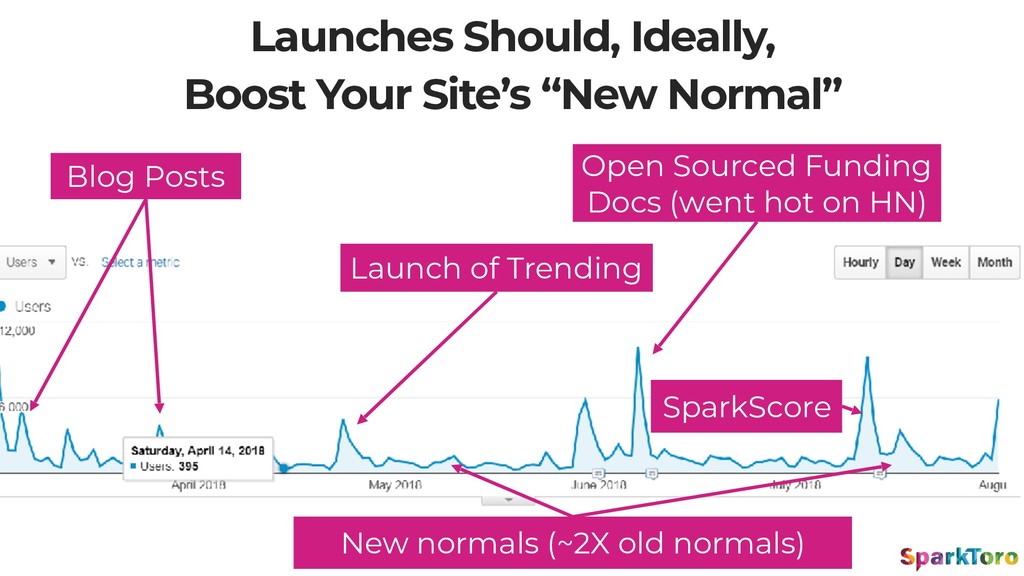
Right? So there was there was historically, we were doing this. We launched this thing, and now the new normal is higher than what the old was before. So you can see, we had some blog posts in here that attracted some traffic. This is SparkToro's Google Analytics graph, right?
And then we launched trending, and the new normal is higher there, and we did some funding announcement. There's SparkScore, and now the new normals after each of these are significantly higher, about two x. Right? So, you know, four hundred visits a day to about a thousand, and now a thousand to about two thousand.
So we're getting the new normal up, and that is exactly what we wanna launch to do. We wanna have that sustained ongoing dynamic. Second big thing. It's a heavy one. Alright. I'm gonna have to I'm gonna have to take a drink. It's not it's not actually Glenn Leavitt, is it? Okay.
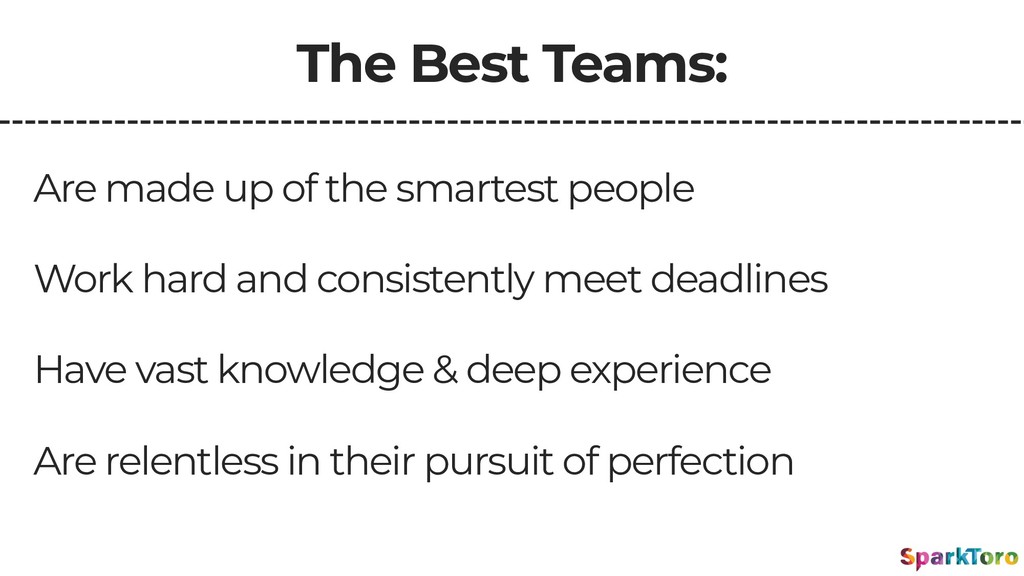
Please don't take a picture or tweet this slide. I'll tell you why in a second. I bet you've heard this a ton, right? You've seen motivational speakers and entrepreneurs and, you know, important influential people say things like the best teams are made up of the smartest people, and they work hard to consistently meet their deadlines.
And they have vast knowledge and deep experience, and they're relentless in their pursuit of perfection. That sounds like a car commercial, actually. But this is ********. It is. None of these things in research, none of these things are correlated, never mind causal, with high quality outcomes, which sounds insane.
How could it be that smarter people don't make for better outcomes than less smart people? Well, guess what? So I think the most recent organization to do a big public study about this that that sort of we would all be familiar with is Project Aristotle, which was an internal project at Google that they then publicized the results of.
And they basically looked for correlations between what what do successful teams at Google, right, the teams who produce the best projects that have the most success, the most impact on the company, and on the company's goals, what do they have that's different from the teams that that don't do that?
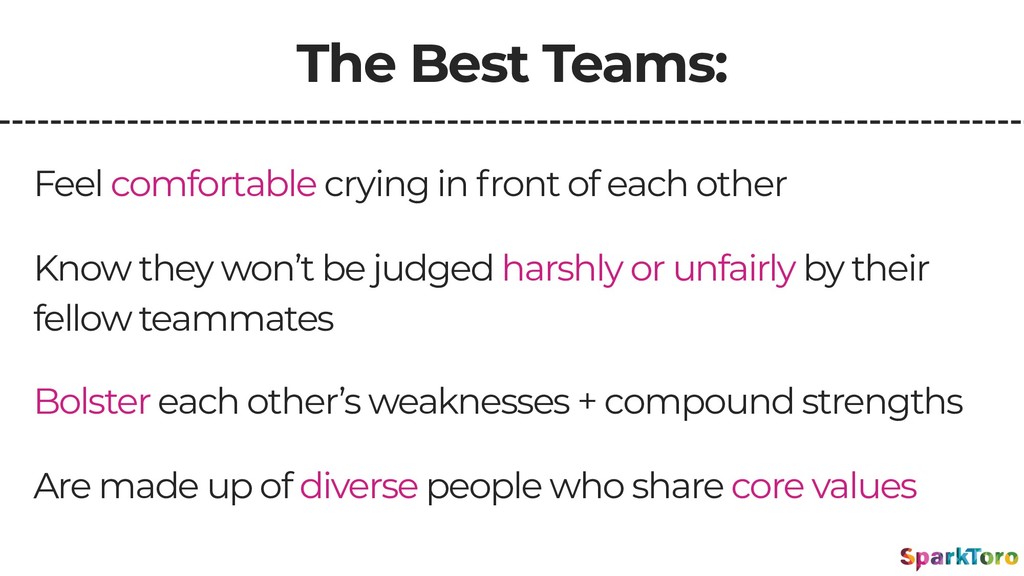
And they found things like, the best teams feel comfortable crying in front of each other. I think can laugh at this, but we were laughing out of discomfort. We're laughing because we're like, oh god, it's true. It's true. Right? They know they won't be judged harshly or unfairly by their fellow teammates.
They bolster each other's weaknesses and they compound each other's strengths. And they are made up of diverse people. I mean, diversity in sort of all its aspects, but diverse people who share the same core beliefs. You're welcome to tweet this one. I just I didn't want the other one coming out there and being like, oh, Rand says no.
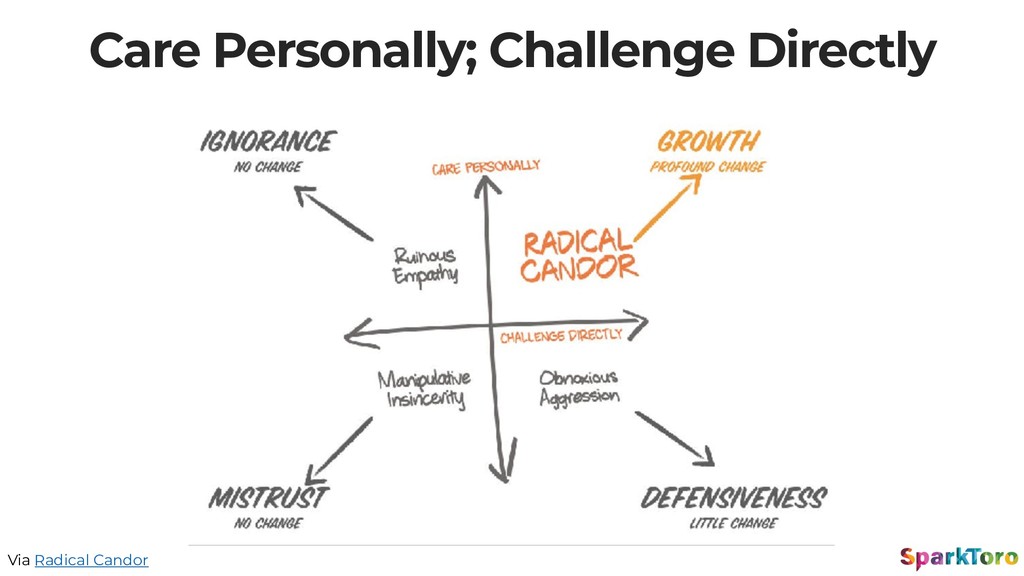
A lot of this actually is reflected in, I mentioned Kim Scott's book, Radical Candor, right at the start of this, and she does a nice job of explaining a bunch of the concepts behind what makes for these great teams. And in in Google's research, like what surprised me so much was they went in with the hypotheses of, you know, the the candidates who performed previously, you know, very well on their applications, right, or their code was very high quality, or they were said by their other teammates to be the most
technically adept person in their group, that teams comprised of those people would have the best outcomes and results. Which makes intuitive sense. I think we all think, you know, that teams in a business environment perform a lot like teams in, you know, athletics.
Right? Where you you get a bunch of superstars together, and they're amazing, and, you know, they can kick butt, and that turned out not to be the case in the research. Right? What turned out to be the case was that the teams, not just at Project Aristotle, but even when they got people together for sort of university style research.
Right? Like, hey, I'll go solve this problem together. We're gonna put the lowest IQ, you know, the five lowest IQ people all together here, the five highest IQ people over here. How do they do? Okay. Pretty similar. Doesn't seem to be a correlation here.
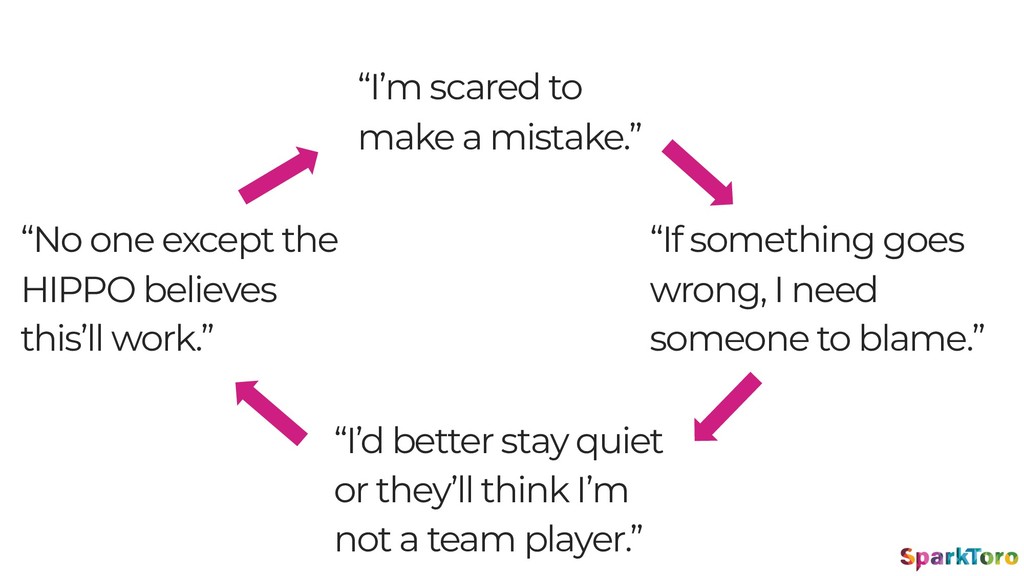
What what what makes a team perform well? Well, this team feels psychologically safe. Psychologically safe. So I'll I'll give two examples. I bet most of you who've been in work environments, I've certainly been in work environments that are like this. Right? Where you say, I'm scared to make a mistake.
I don't feel comfortable making a mistake. Because if something goes wrong, I'm gonna need someone to blame. Right? Otherwise, the blame will fall on me. I better stay quiet or people will think I'm not a team player. Right? Better shut up about my my problems or my issues that I have.
And as a result, no one except the highest paid person in the room believes that a project is going to actually work. These environments suck and they sap our morale. And they mean that even if we are very smart and talented, we are not doing our best work.
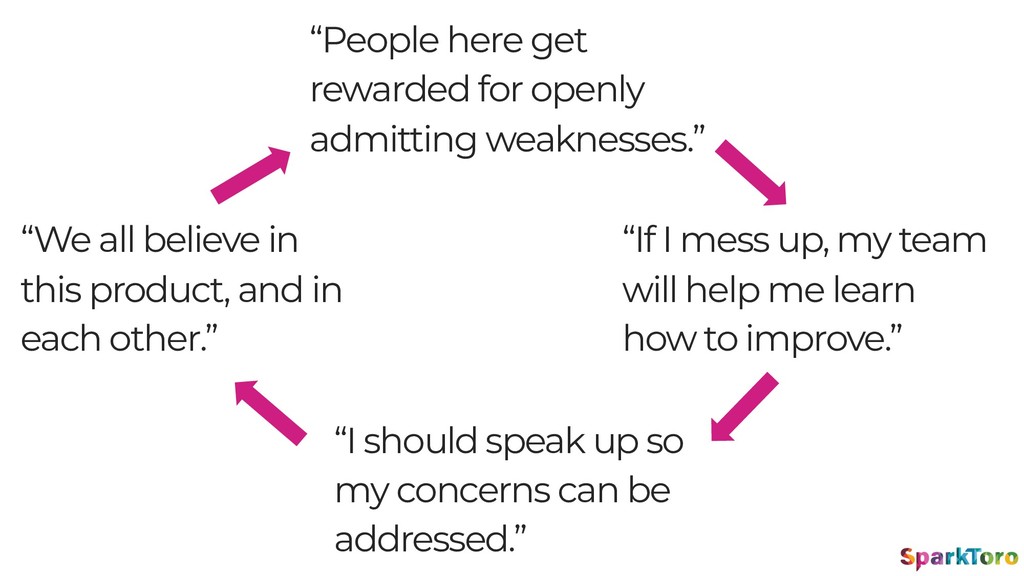
I've seen it. You've seen it. The alternative is an environment an environment like people here get rewarded for openly admitting weakness. Right? When they when they say, I have this problem. I can't solve it. I don't know what to do. I need help.
And instead of being looked down upon, they are bolstered by the rest of their team, by their manager. That's awesome. If I mess this up, my team is gonna help me learn how to improve. I should speak up so my concerns will be addressed.
And as a result, we all believe in the product and in the team and in each other. These are awesome places to work. These are places where even if you weren't the person, you know, with the best code or the person who, has the highest IQ or whatever alternative metric you like, these teams do extraordinary work.
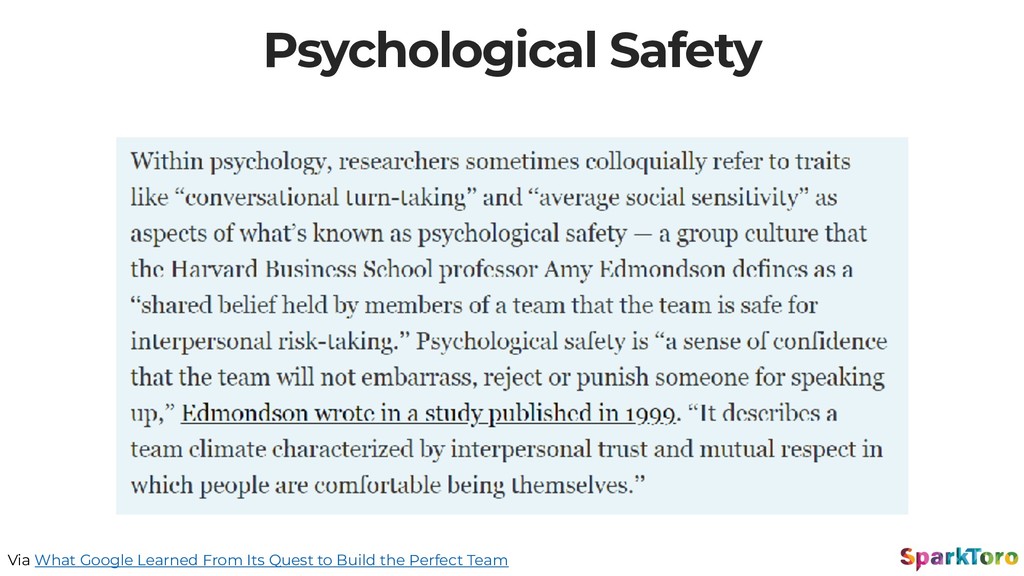
This concept of psychological safety has been written about for a little over a decade now, and oh, sorry, a little over two decades now. And I hate slides with tons of text and like reading them, but I'm gonna make an exception and just read a little bit of this.
A group culture that Harvard Business School professor Amy Edmonson defines as a shared belief held by members of a team that the team is safe for interpersonal risk taking. Psychological safety is a sense of confidence that the team will not embarrass or reject or punish someone for speaking up.
And this, more than anything else, high r, in fact, I can't remember, zero point six five seven, something like that. Right? This was the best correlated factor in teams that outperformed other teams. So I I would advise you, don't hire or reward Wangrods.
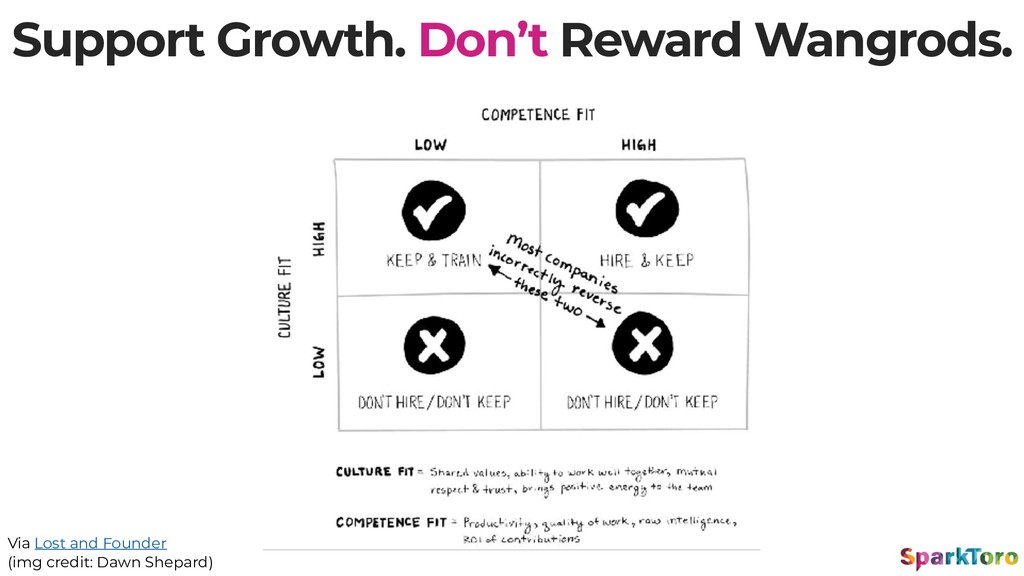
It's not this is a Dungeons and Dragons term that I am stealing for this for this purpose. I stole it from Ian Lurie, who introduced me to the game. So this is the fundamental problem. Right? Basically, you have lots of people, I'm sure you've seen this too, right, where they are a a good culture fit, but they're they're not a great performer on the team.
Right? Like, have trouble consistently doing their work. Sort of need to be trained up. Right? They're early in their careers, or they're early in learning this particular skill set, whatever it is. And unfortunately, what do we do with folks like that? What do most teams do with folks like that?
I'm sorry, you're not performing effectively, we've gotta let you go. Right? What do we do with someone, however, who is a terrible culture fit, dragging down the rest of the team with them, but their individual work is high quality? Right? And they get the things done that they say they're gonna get done.
We keep those people, and we try to work on them. We try to work on their soft skills, which I can appreciate that. Right? I like having empathy for all sorts of people. And I like working on soft skills and hard skills, but one of those is way easier to train up.
Think of yourself five years ago. The skills that you have today in the hard skills department were a fraction of what they are today. Your skills in the soft skills department have probably not increased nearly as dramatically. Right? We are all really good at getting better at our hard skills, right, our technical skills, or whatever it is we need to do our job, it's pretty hard to get someone to upgrade soft skills.
So called soft skills. I'm not sure I love that terminology either for a bunch of reasons. But regardless, I think if we can flip this model and keep and train people who are great culture fits, and let people go who aren't, we might have more winning teams.
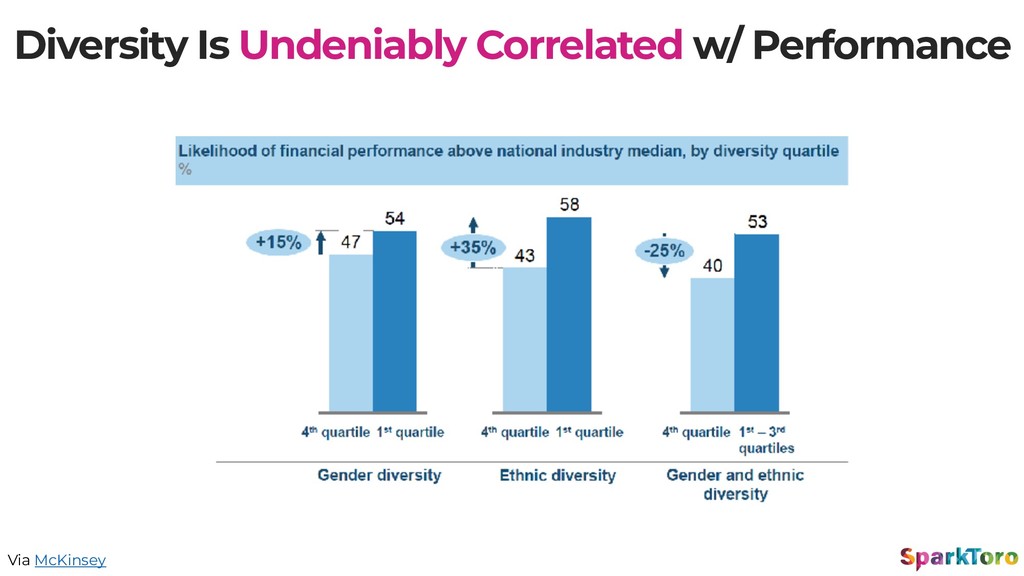
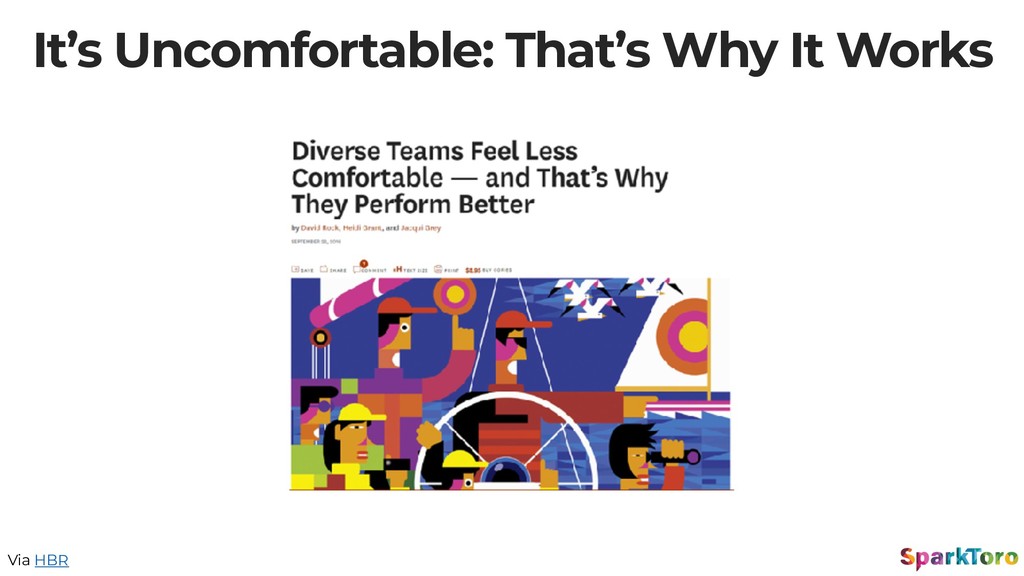
Last thing I mentioned on this topic was diversity, which is undeniably and very positively correlated with performance in everything from tiny startups to big public companies, and nonprofits, and boards of directors, and all those kinds of things. Right? And this feels uncomfortable to I mean, especially to a lot of Americans.
Right? I think especially now, diversity feels uncomfortable. And in fact, that is why it works. That is why it works. It's not that it's not that this feels uncomfortable, so maybe we shouldn't be doing it. It's oh, wait. By having people in the room that I am not sure I agree with, and I'm not sure we all come from the same background, and I'm not sure that we all sort of appreciate the same things, I need to be on my I am at my most thoughtful.
I have upgraded my thinking and my emotional intelligence, and I am acting in a more responsible way, and thus I do better work. We all do better work. And that's, I mean, along with all the other benefits of diversity, that's an awesome, awesome thing.
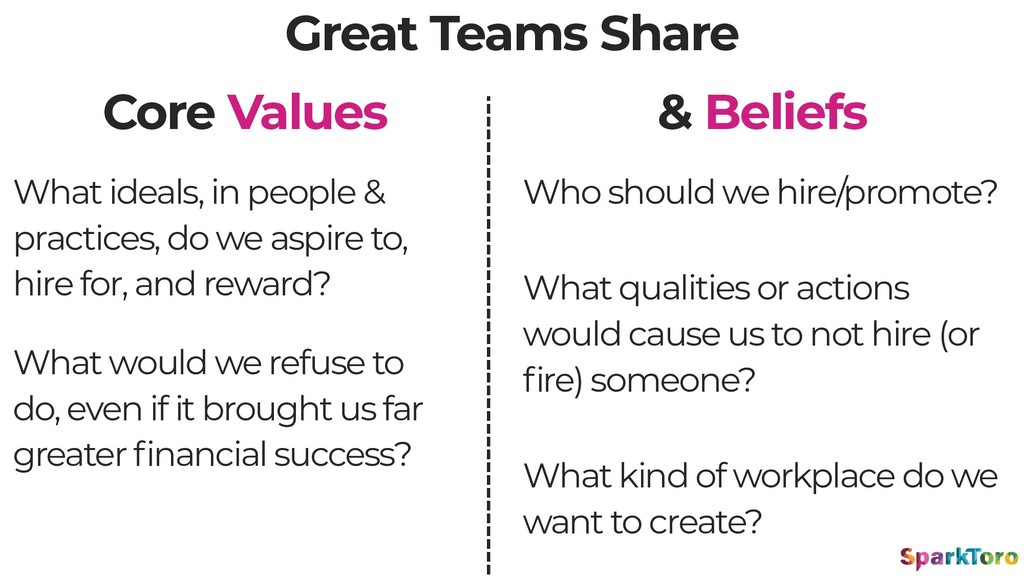
But when I when I say diversity, there's one kind of diversity that I don't mean, which is a diversity of values. Right? So when you hear one of the things that really frustrates me is when I see a lot of articles in the startup world about culture.
Right? Like, oh, what's your startup culture like? What's your team culture like? And I'm sure you've seen this stuff, right? It'll be things like, oh, well, we really like IPA beers, and you know, we have an air hockey table, and foosball, yeah, right.
That is not culture. We cheer for this sports team, not this other sports team. That's not culture. Culture is is these things. Its core values, things like what ideals in in people and practices do we aspire to, Hire for, reward. It's what would we refuse to do even if it brought us greater financial success.
Right? And it beliefs like who should we hire and promote? Who should we let go? Who should we not hire? Right? And why? And what kind of workplace are we trying to build together here? So you get diversity of people and shared culture, and you get an amazing team.
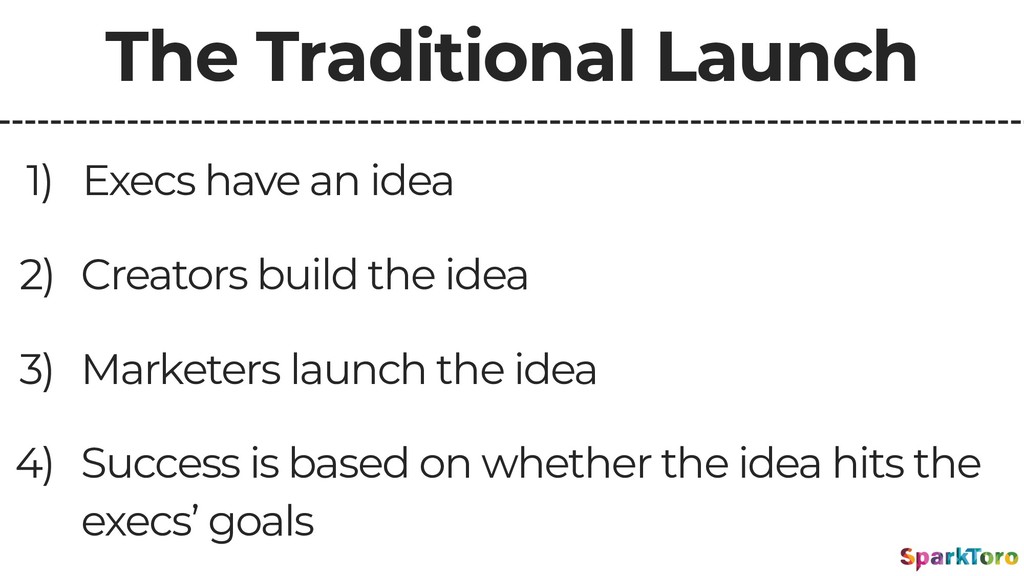
Number three, the wrong process. So traditional launch, something like this. Right? Executives of the company have an idea, creators go build that idea, marketers launch it, success is based on whether the idea hits the executive's goals. I bet you're thinking, oh, and now Rand is gonna be real mean to this process, and he's gonna excoriate it.
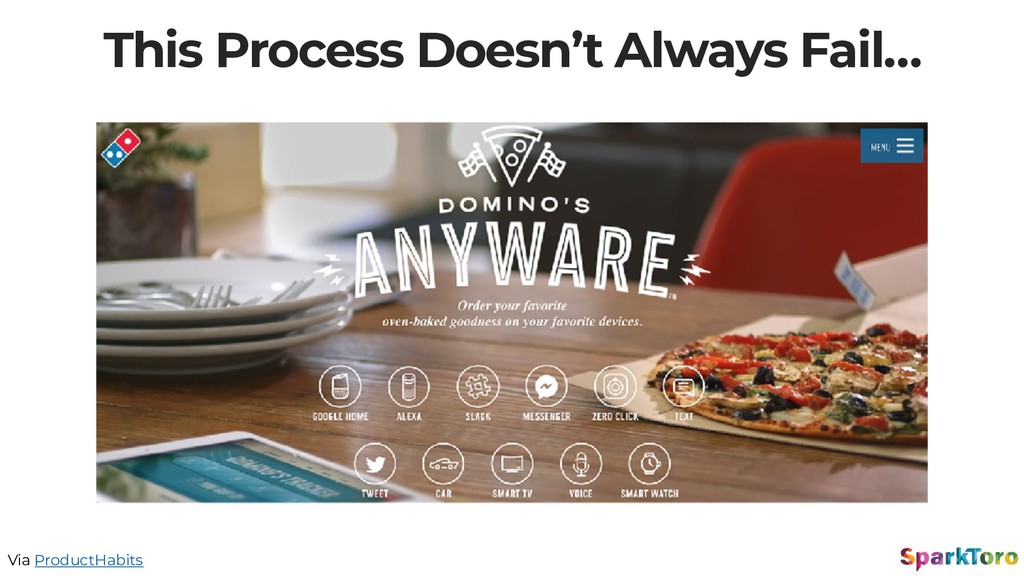
This process works fine sometimes. For some companies, this process is just fine. It is a totally reasonable way to go. It can even be very successful. One of my favorite examples, recently there was a there was a great piece, yeah, from Product Habits about the Domino's Pizza launch.
So so Domino's Pizza, do you have that here in Scotland? Oh, I'm sorry. That's that's another thing that we've ruined. Poor Italy. They were like, no, we we made this great thing. What are you doing? So so Domino's Pizza is historically in in United States infamous, was infamous for having pizza that tasted like cardboard.
Just just an awful quality product. But they were really good at customer service, really good at delivery, really good at getting things on time, really good at not messing up orders and being able to customize orders. Very good on the technology side, right?
One of the early adopters of sort of the web based ordering and mobile ordering, all that kind of stuff. Okay. And Domino's basically had a new CEO come in, I think it was two thousand and seven. They launched a campaign a couple years later, where they basically, you know, rebuilt their whatever pizza making process and recipe from the ground up.
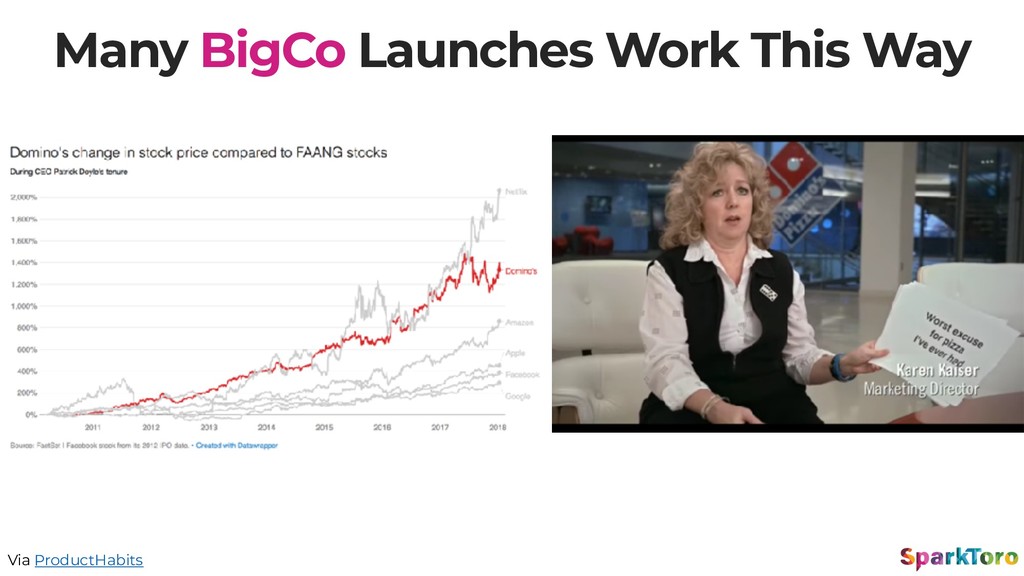
And then launched a big campaign about it, where they took a ton of things people nasty things people had said about them. This is their marketing director, Karen Kaiser. And she basically read things like, okay, this person said, Domino's, you are the worst excuse for pizza I've ever had.
And did advertising that was designed to directly address these concerns and rebut them with sort of a yes, we agree, our pizza was terrible, and we are making it better, which is historically something that's not not done, especially big public companies not doing it.
That red line, that is the performance of Domino's stock price. Below them, you can see the performance of Amazon, Apple, Facebook, and Google, which which is damn impressive for a pizza delivery company. That's that's that's pretty remarkable. But this process, this classic process is definitely not right for everyone, and there's no way it's right for early stage startups.
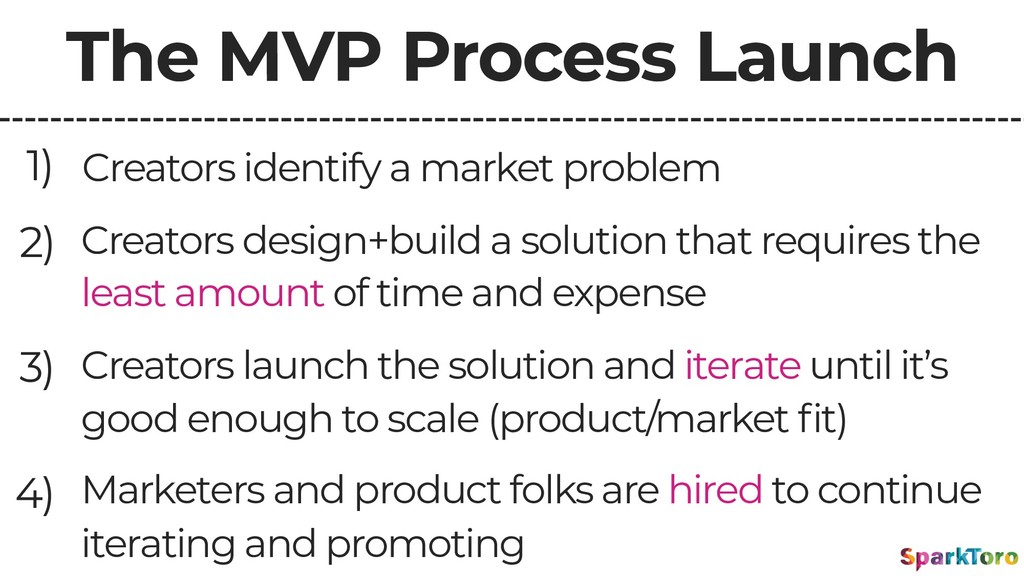
So let let's go to another model on the far side of things, the MVP. Right? Eric Reese's famous MVP process from Lean Startup, which looks something like this. You know, creators go out and identify a market problem, and then they they design and build a solution that requires the least amount of time and and dollars, right, of investment and expense.
And then they launch that solution and then they iterate on it until it's sort of good enough. It's found product market fit and then they scale it. Right? Marketers and product folks get together, they're hired and they scale it. Classic, classic startup. And this process can be awesome too.
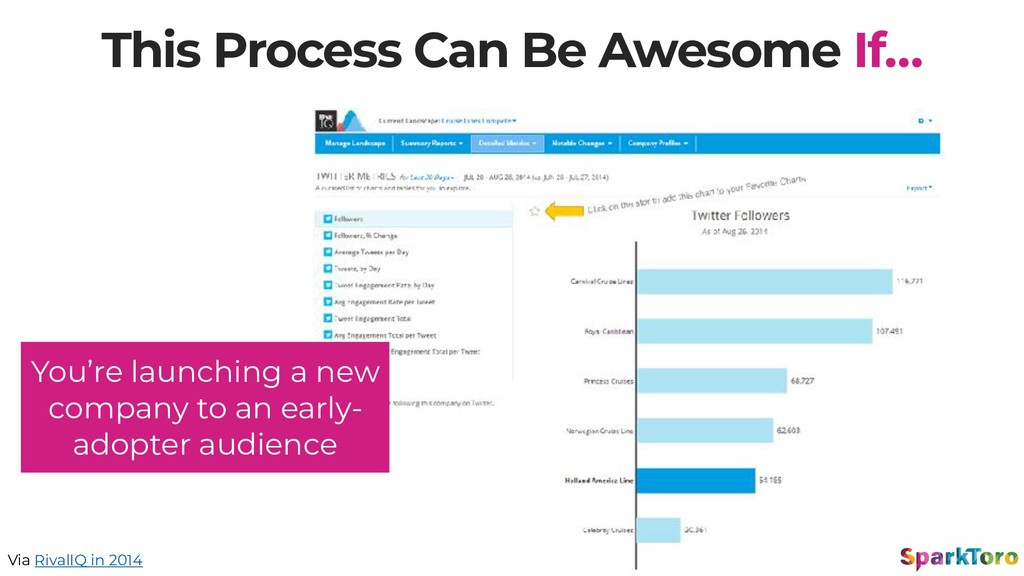
If if you are like Rival IQ, Seattle Seattle area marketing startup, right, and you're launching a new company to a very early stage, early adopter type of audience that is comfortable with new things that don't maybe work great, and there's not too many of them.
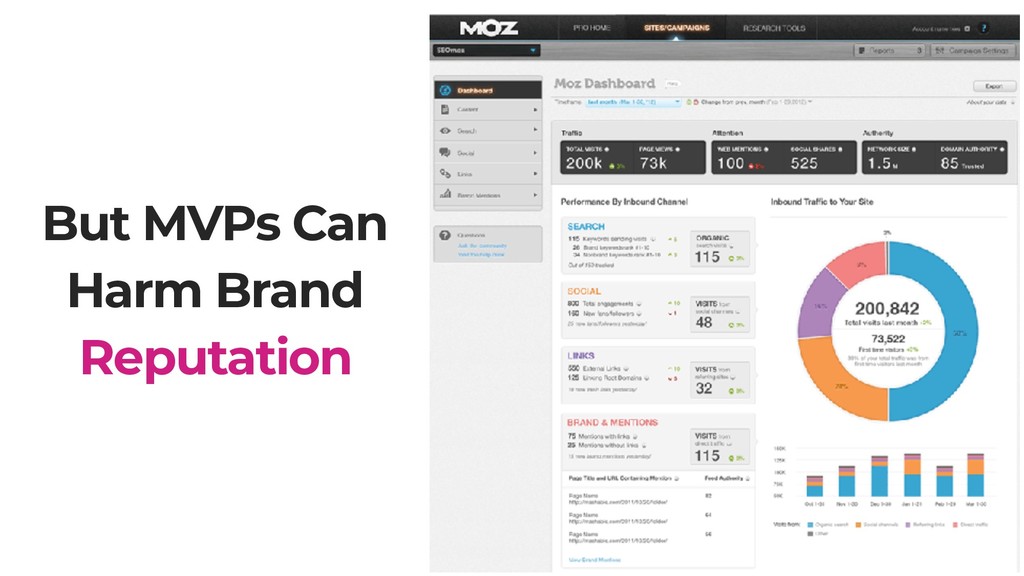
And so you're not gonna burn your brand reputation. But you try and apply this to a bit of a bigger company does not always go very well. In fact, in two thousand what was that? Two thousand twelve, two thousand thirteen, I launched this product while while CEO at Moz.
It was called Moz Analytics. It looks pretty. It sucked. It was real bad. It was probably the most embarrassing thing I have ever launched, and it took a little over two and a half years and just about twenty million dollars of investment to build.
And if you're thinking, I mean, I'm looking at it and I feel like me and my friend Amy over here could build that maybe in a few months, you're probably right. It was deeply, deeply embarrassing on all sorts of fronts. And as a result of this sort of, like, we got it to we got the product to this point after years of investment and sort of, you know, poor decision making on a bunch of parts.
And even though it was kinda crappy, it was very much an MVP. Right? It barely worked to do the things that we wanted. I I decided let's launch it, and then we'll iterate on it. Just like classic MVP process. And what happened? A bunch of people in our community, a bunch of our long time subscribers, probably a lot of you went, I guess, Moz is launching **** now.
Right? And that that became associated with the brand. Even years after, two years after this this launch that came out, even even when it got to the point that it was not just much better, but really pretty darn good. Like a high quality piece of software that did a lot of the things that it was supposed to do as good or better than anyone else in the field, it still carried the brand, the the MVP hangover.
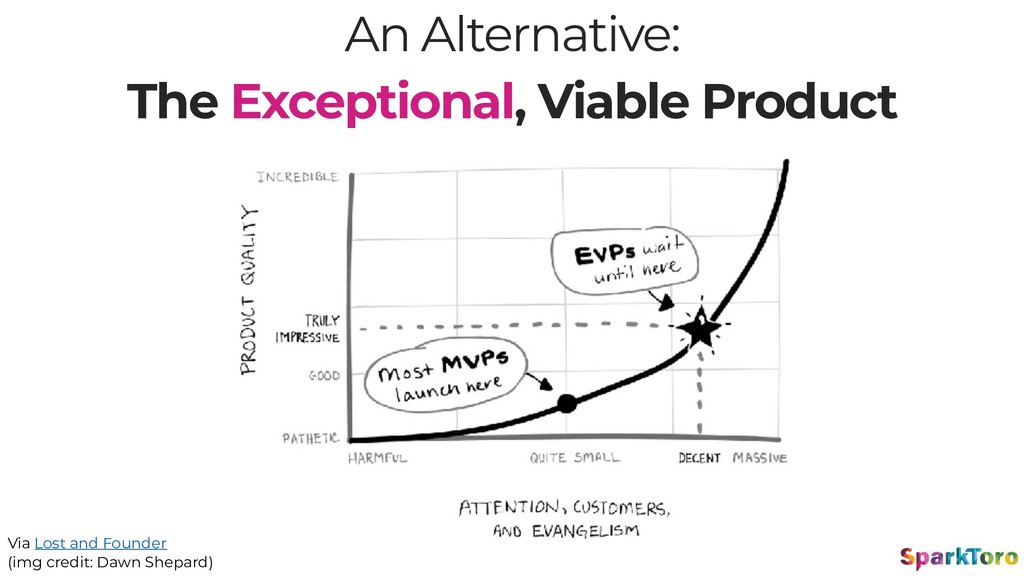
Right? This this sort of reputation for being minimum not viable. And I think an alternative to this is something that I've I've been calling the exceptional viable product. The the EVP, which is essentially saying, yeah, most MVPs launch when they're, you know, barely good enough to do so.
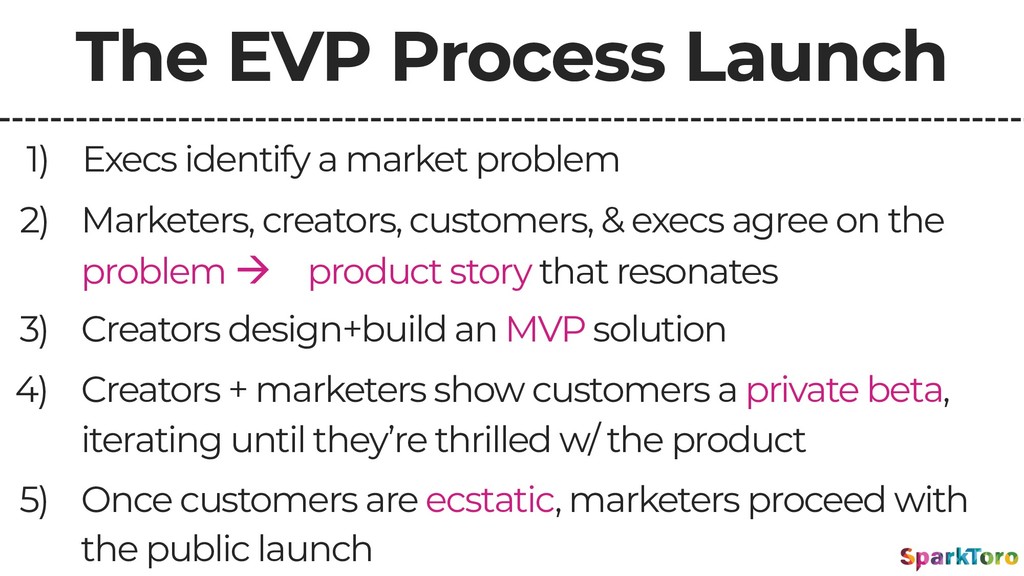
What if instead of launching, we did this? You know, we identify our market problem, we get everyone together to agree on that sort of problem to product story, we design and build an MVP just like before. Right? We want something with minimal expense so that we can we can identify and iterate, but we do it privately to a very small group of people.
And then once those people, those early adopter folks are like, oh my god, this is amazing. When can I share it? This is incredible. This process, by the way, I've done this for four different launches now, and this this usually takes between three and six months to get from MVP to ecstatic, you know, early customers who want it.
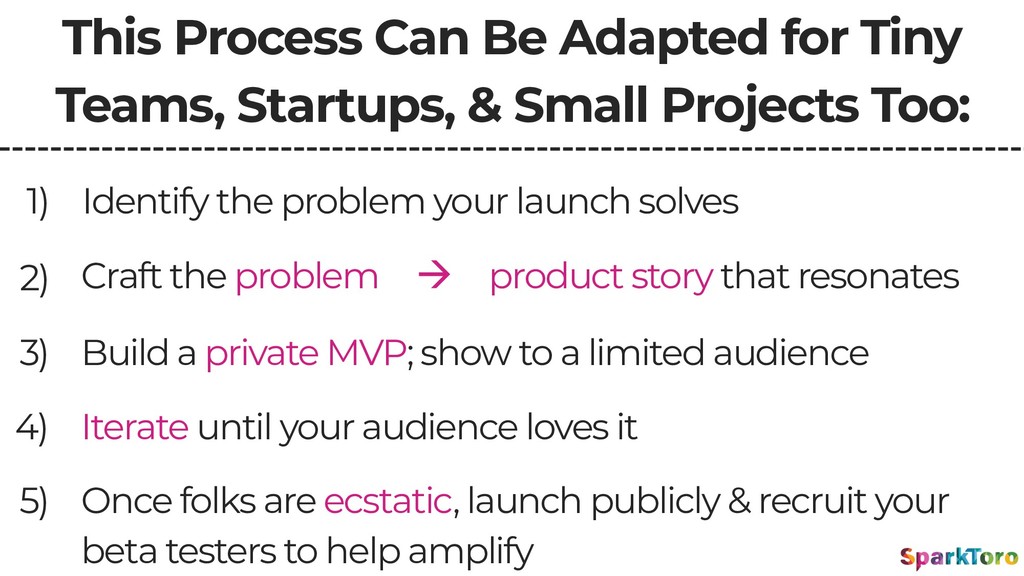
And you can adapt this process from mid stage all the way to tiny one person, you know, startup idea. Right? So identify the problem that your launch solves, craft that problem to product story that's gonna resonate with your audience, build a private MVP, iterate until your audience loves it, and then when everyone's ecstatic, then launch publicly.
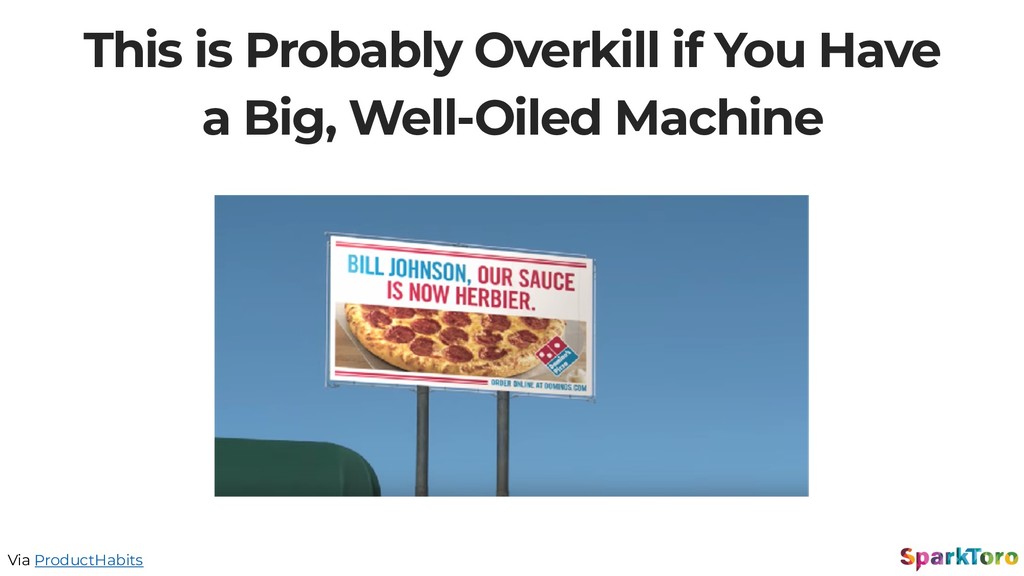
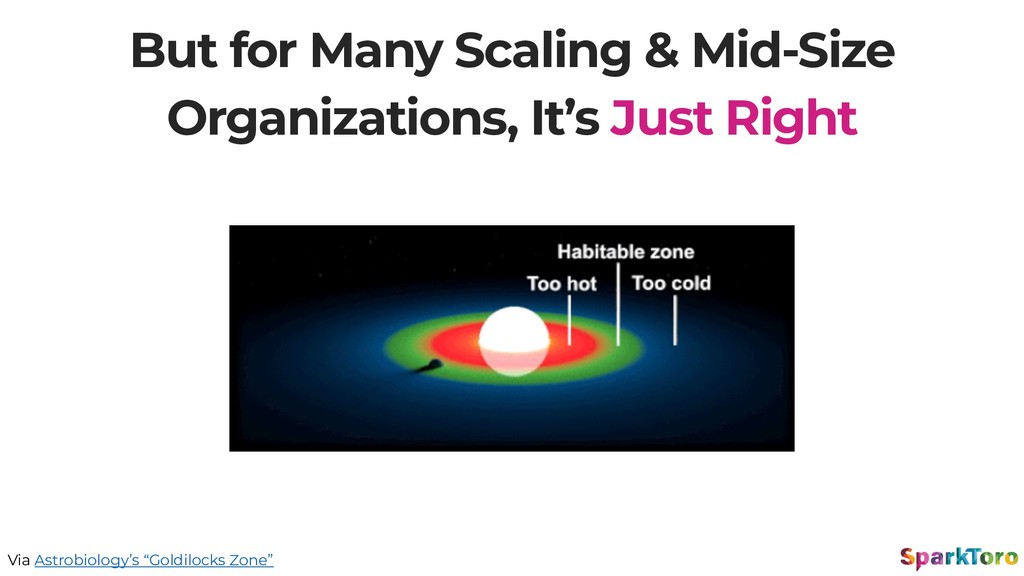
And in this fashion, you sort of get the best of both worlds. You get the the the iteration of the MVP and the, know, the early commitment to that, but you also get you don't get the MVP brand hangover. This is probably overkill if you've got a big well oiled marketing machine like Domino's.
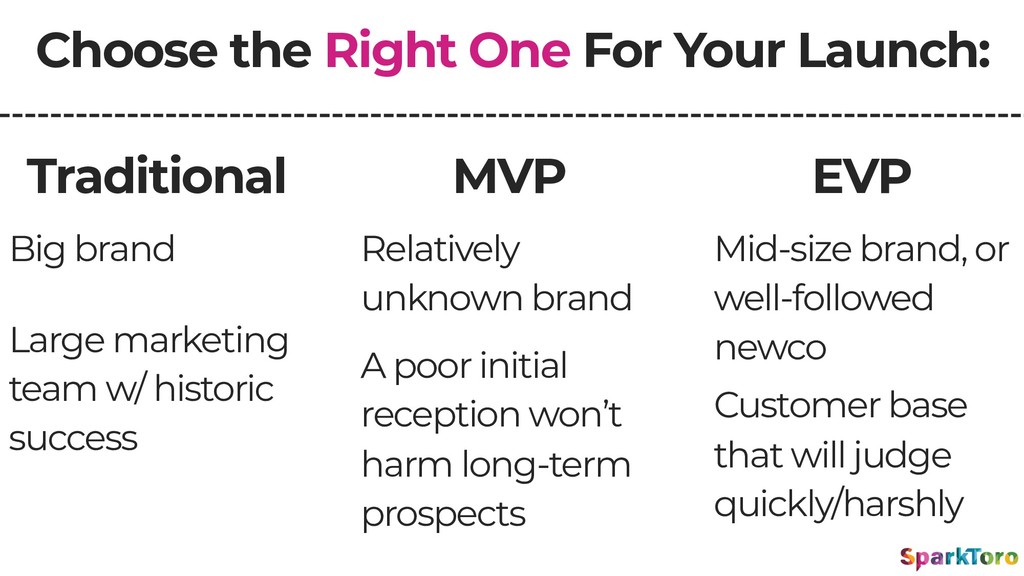
Right? But for many scaling and mid sized companies, I think this is sort of just right. It's the Goldilocks zone. So I'm gonna suggest that you sort of pick the one that's right for you. Right? So traditional, you're a big brand, you have a large marketing team with historic success.
MVP, you're very unknown brand, poor initial reception, doesn't really matter. You're not launching to very many people anyway. You have plenty of time to iterate, no problem. And EVP, if you're sort of right in the middle of those. Alright. Number four, Your launch could not reach your target audience.
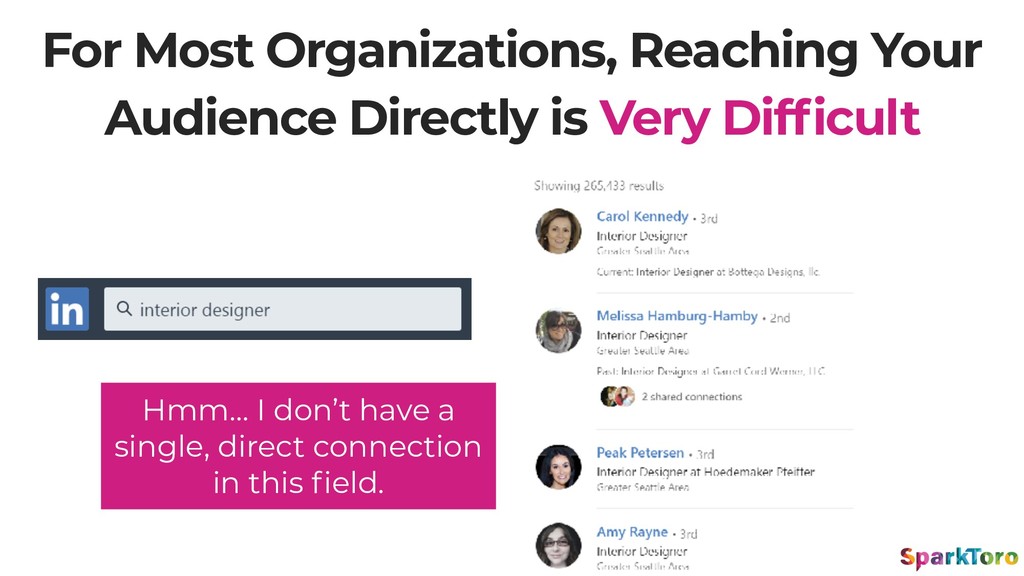
So this is actually a really damned hard problem. Right? Let's say for example that I I've been using this example a lot because it's a it's a challenging one for me to try and solve. So maybe Mike, you know, and I get together, and we're like, gosh, you know, I think we wanna be lighting designers.
I don't know why, but we these spotlights, we can do better. We're gonna come up with something amazing. So we go out and we create a new company, make our great lights, and then we think to ourselves, okay, now we need to get in front of the interior designers, right, who are gonna help us interior decorators, who are gonna help us reach our our customers.
Right? They're gonna be the people who buy from us and amplify this. And that is really hard, especially because I did a search for interior designers. You can see that I am I know one person who knows one person who's an interior designer.
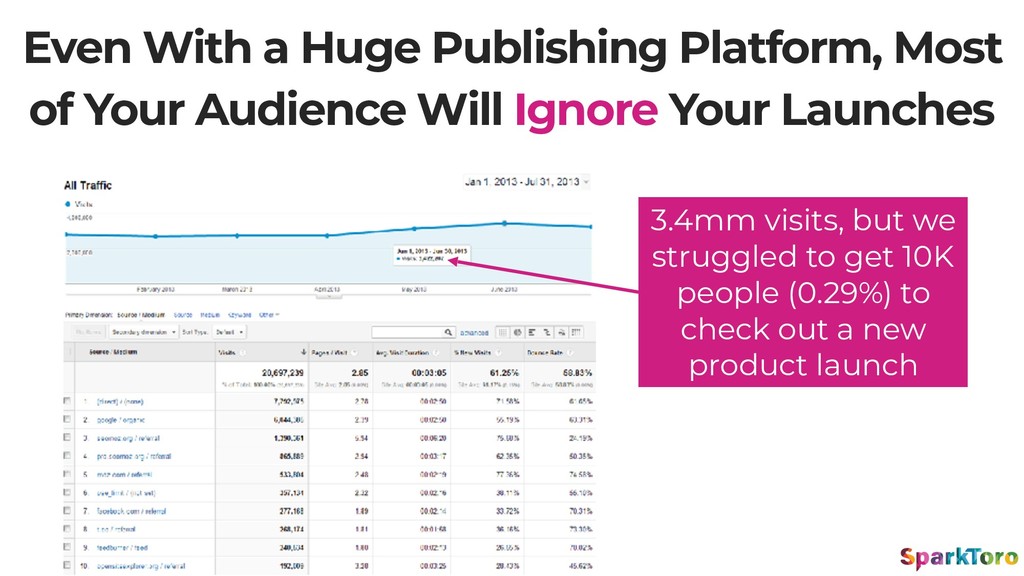
And I have a lot of LinkedIn connections, but that world is totally inaccessible to me. And so I yeah. Not not not gonna work well for Rand. I hope, Mike, that you know some people here. So even if this isn't the case, even if you have a huge publishing platform, for those of you who saw Ollie Gardner's talk this morning, right, this harkens back to that, where he talks about how they do a ton of content marketing, and they improved all these things, and they're still reaching well under one percent of their visitors
to their content who eventually become a paying customer, or even take a free trial. And Moz, we were even worse than that. So you know, three and a half million visits a month, and we would struggle to get, you know, zero point three percent, ten thousand people to check out any new product launch that we had.
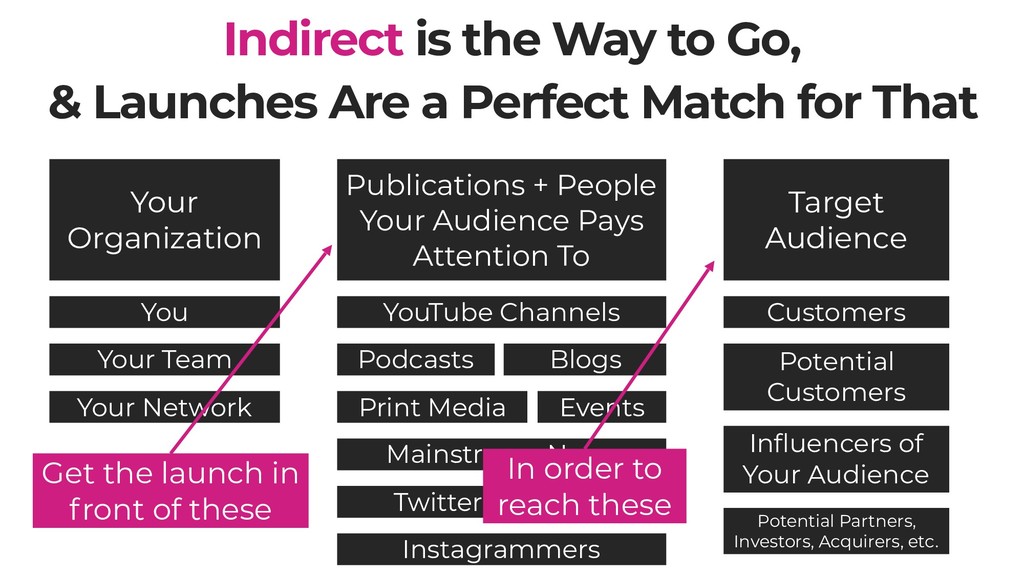
It was it was very hard. The way to go, the way that we found that consistently worked, I think the way that many many businesses find that consistently works is that you have to be you have to go about this indirectly. Because what we say about ourselves, people immediately discount.
Right? IHOP says they have the best hamburgers we like, we don't believe that. Right? But, you know, if the Times and the Guardian and the New York Times all say, oh my goodness, IHOP has the best burgers. I'd be willing to give it a try. Right?
And I think this is true in our world too. So you've got your organization, right, with you and your team and your network, and then there are the publications and people, right, individual sorts of folks, who your audience pays attention to. Everything from YouTube channels and podcasts to print media, mainstream news.
And you've got your target audience. And if you can get in front of the right people here, they will take care of getting in front of your target audience in a way that is credible, and believable, and amplifiable. A way that resonates. But this is really hard because well, for a bunch of reasons.
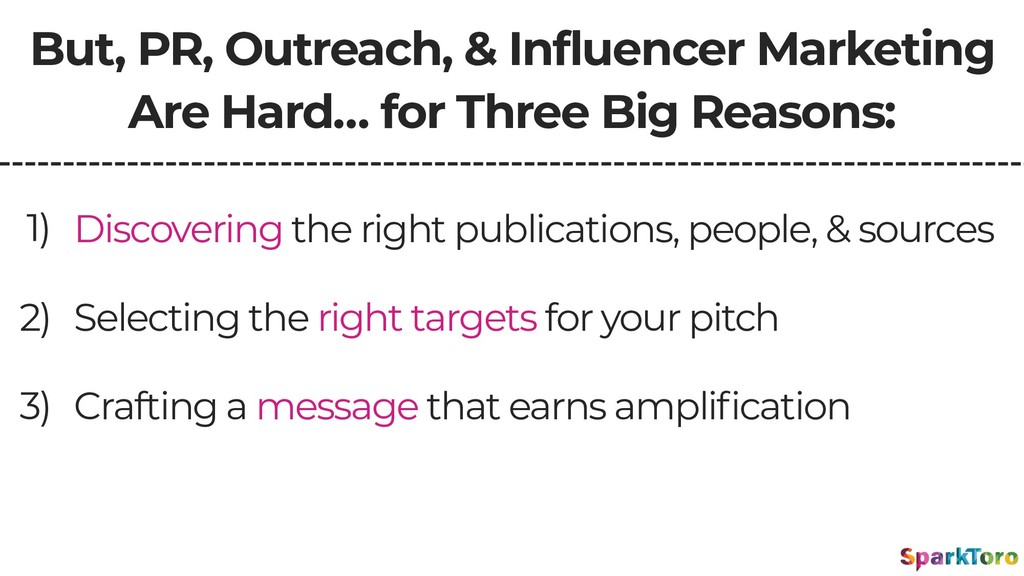
Discovery is super challenging. Like just figuring out who are all those people and publications that your audience pays attention to, which is something I hopefully will eventually be able to help with with SparkToro. Selecting the right targets for the pitch, right, getting in front of the right folks, and then crafting a message that actually earns amplification.
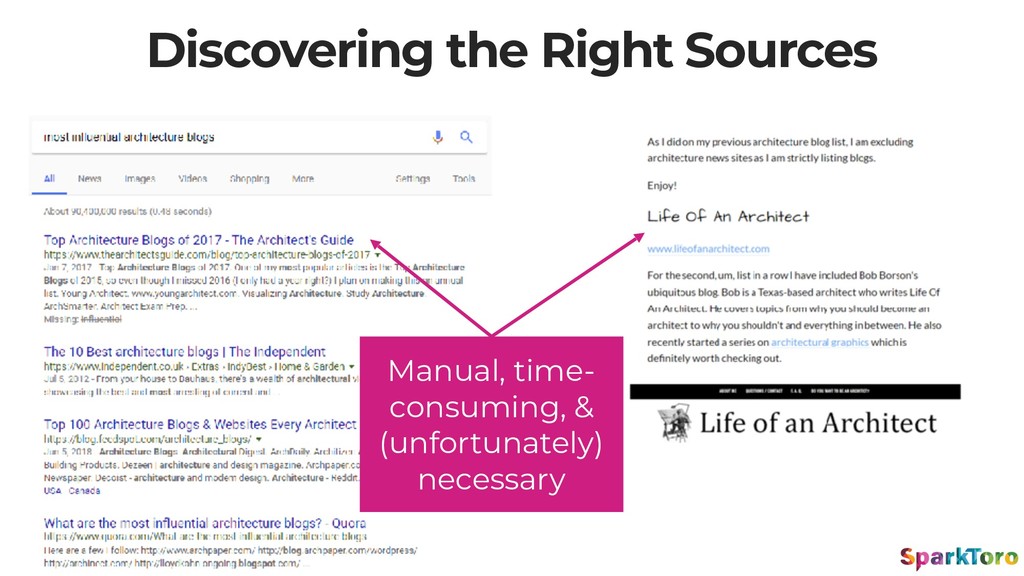
So I I don't have a ton of advice, but I've got a little bit. First, if you're trying to discover right sources, I have observed tons of people doing this now, and one of the little tactics that I saw that was very effective when they were crafting their list of who should I reach out to, was that they'd use this particular tool.
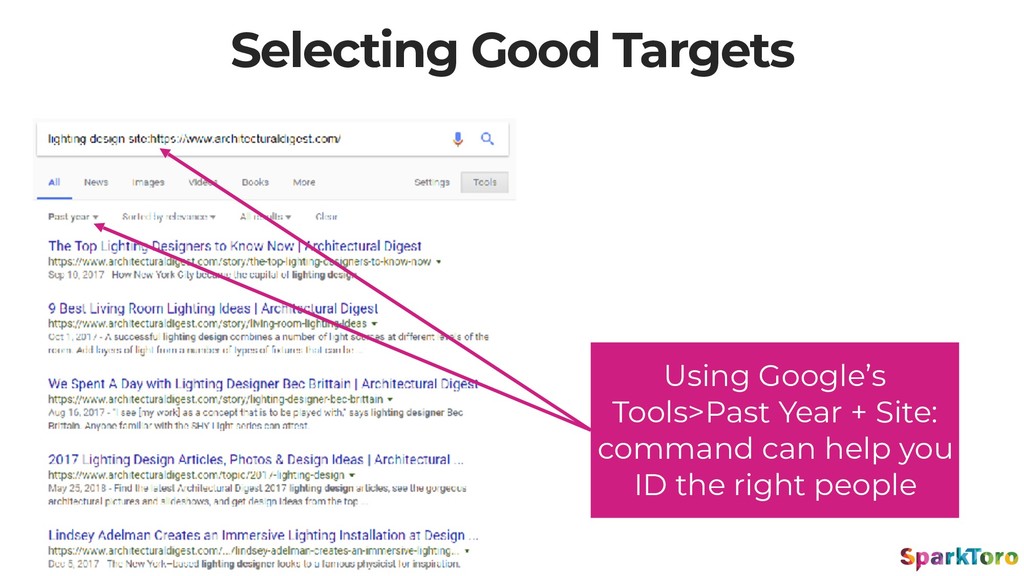
So they'd go to yeah, they'd go search for, okay, what are the most influential ones of these? And then they would select their targets by taking the tools in Google search and choosing only people who had published pieces in the last month, year, few days, whatever it was, and then ID ing those.
Because these people are probably still at the publications that they need to reach, so this is reasonably effective. I have seen, you've probably seen, a million articles. How do we let let me not be hyperbolic. A few hundred articles about how to improve your pitch.
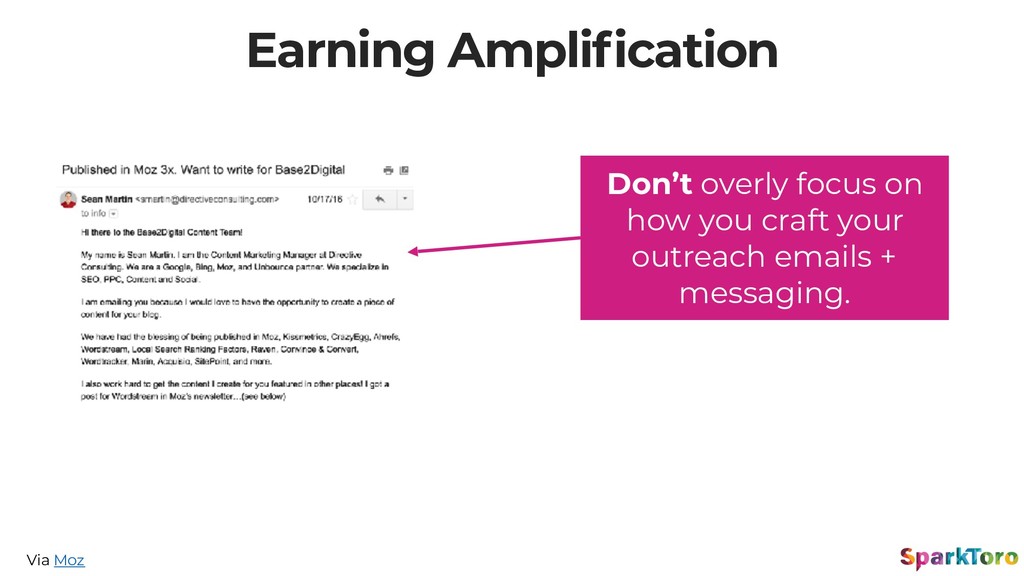
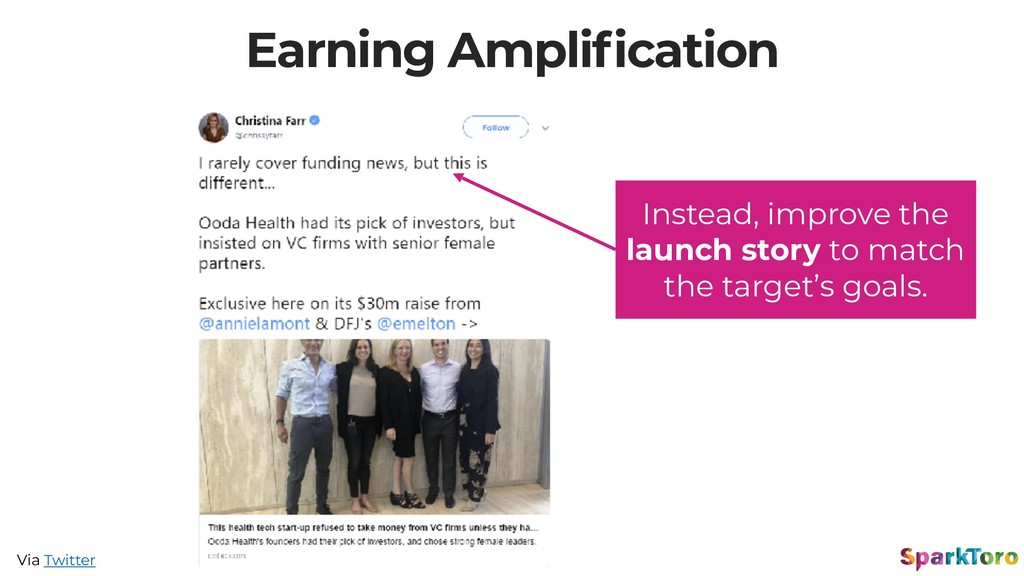
Right? Oh, this is how you should craft your email, this kind of stuff. I don't think this should be the focus. I I think you can make very increment only very incremental progress here. I think if you really wanna earn more amplification from your launches, you need a better story.
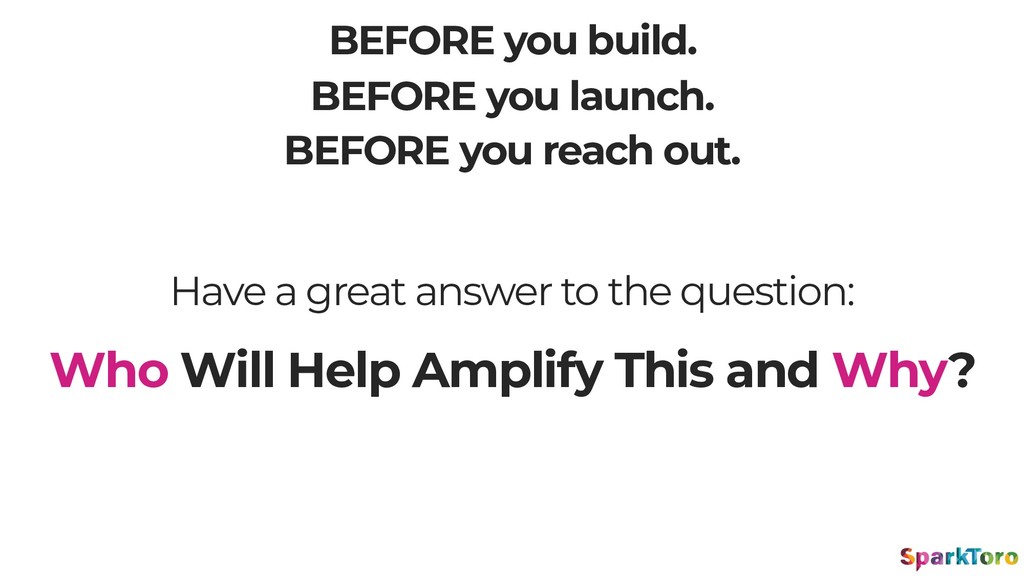
You need the launch story to match the target's goals. Right? The publication or the person that you want to do that amplification. That is who you need to have that resonate with. And so I have this advice. Before you build, before you launch, before you reach out, you should have a great answer to the question, who is gonna help amplify this and why?
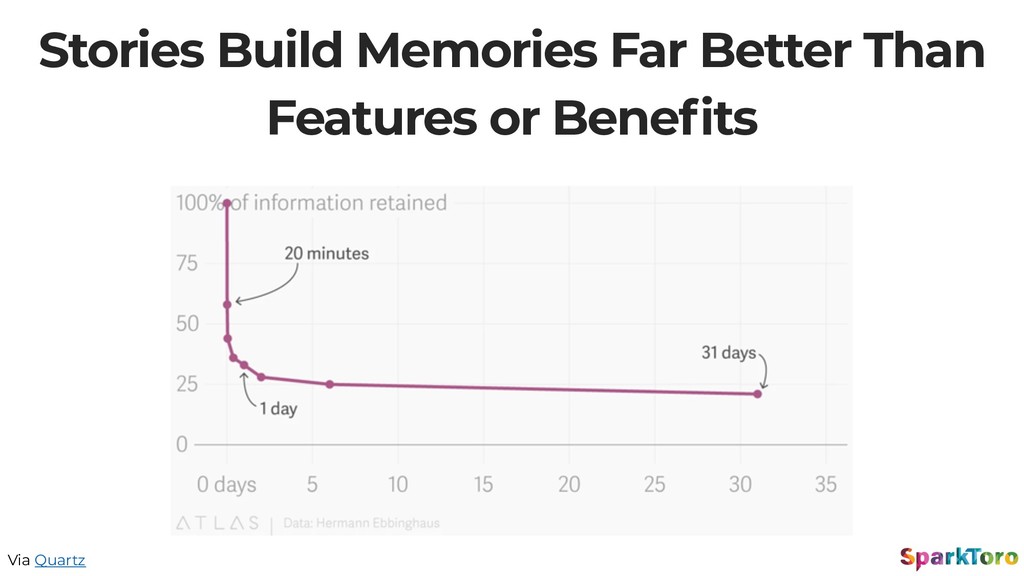
If you do that, a lot of this amplification stuff is solved. Alright. Last piece. Your launch lacks a compelling story. So it turns out, no surprise, stories build memories far better than features or benefits. So I'm sure you've all seen the advice, right, from the startup world, which is talk about benefits.
Talk about how your customer becomes, you know, a better version of themselves, not about the features. That's what you should make the launch about. And and I would say, maybe there's an even better way than that. So great stories, right, they follow this classic story structure.
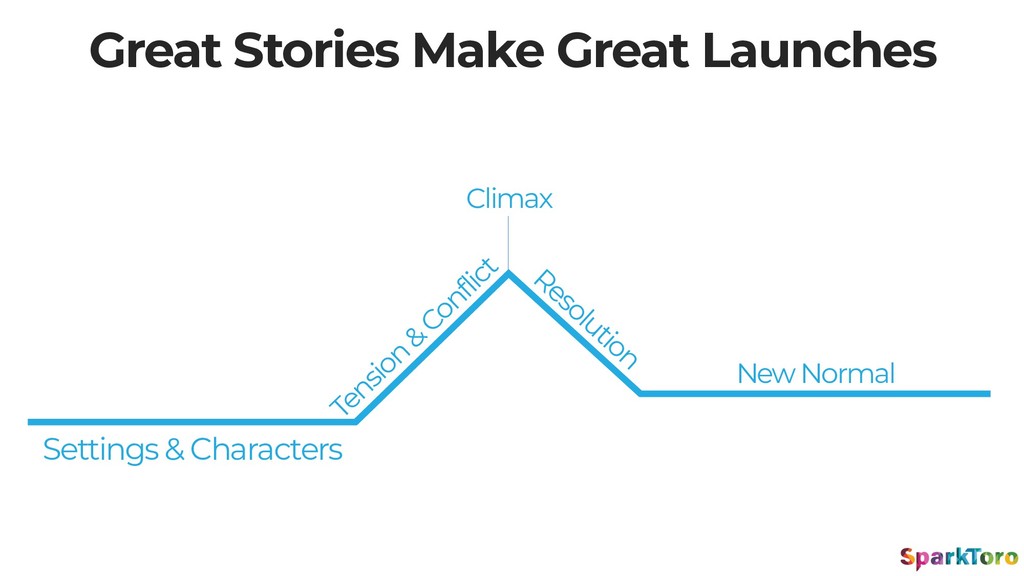
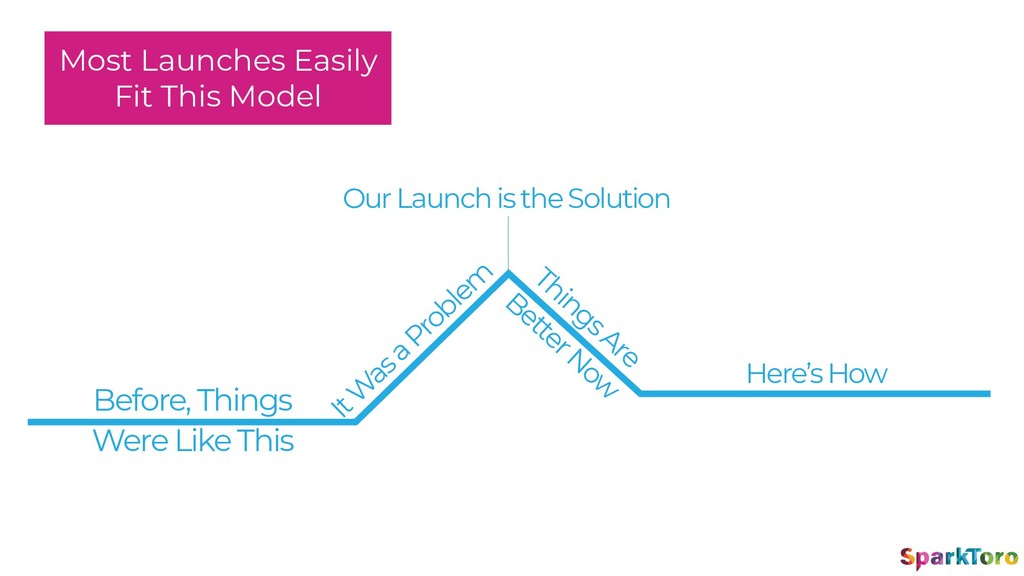
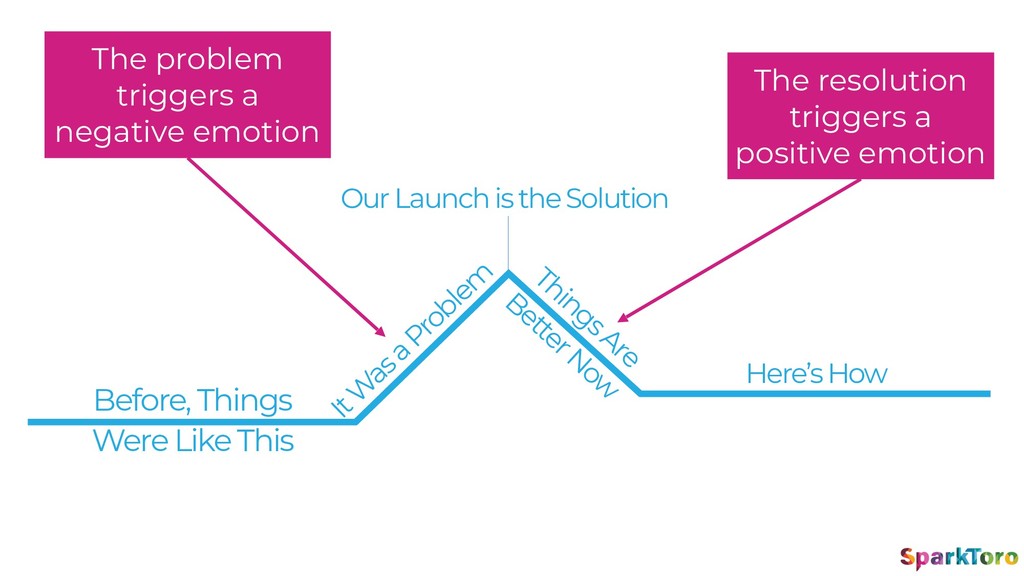
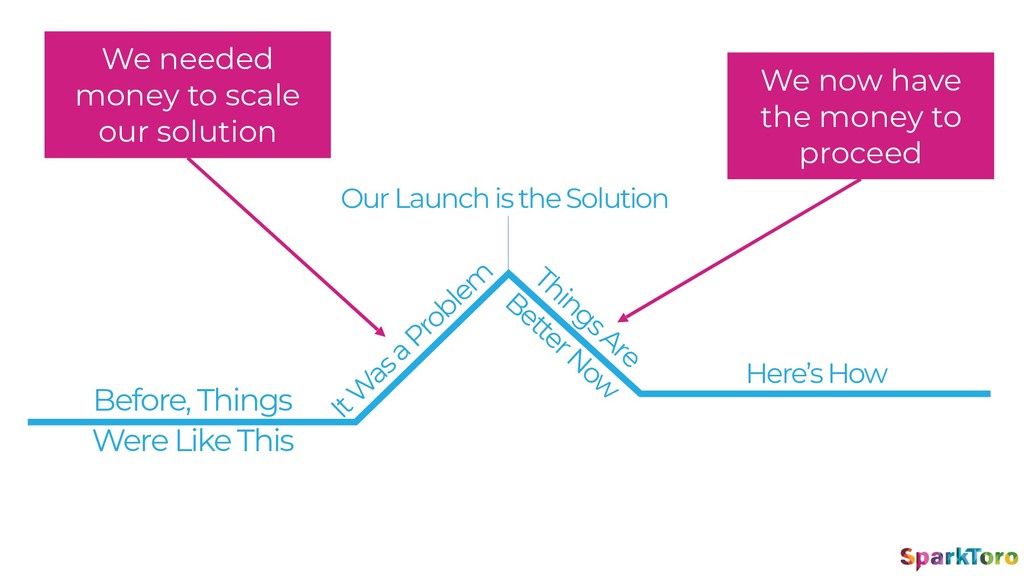
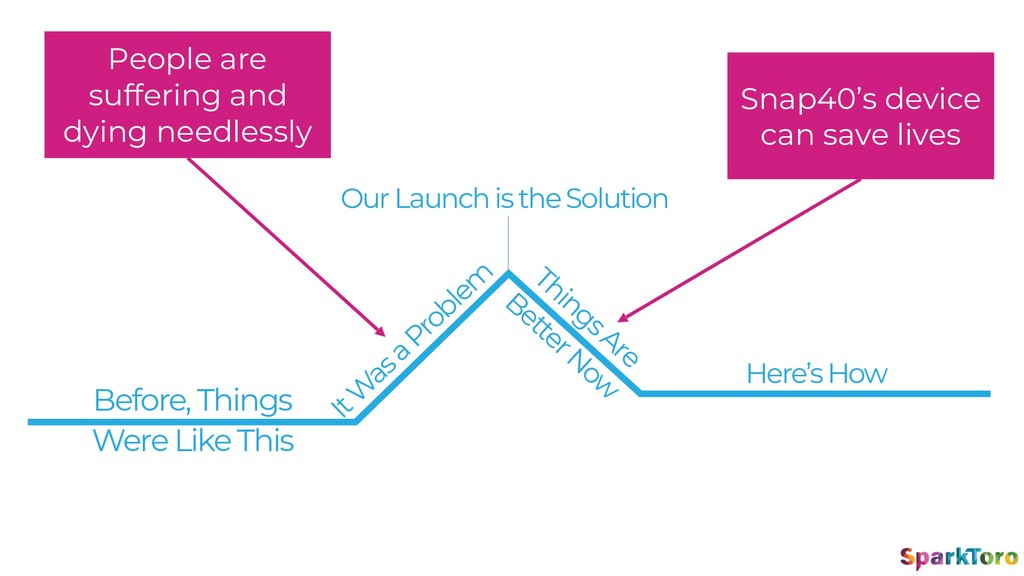
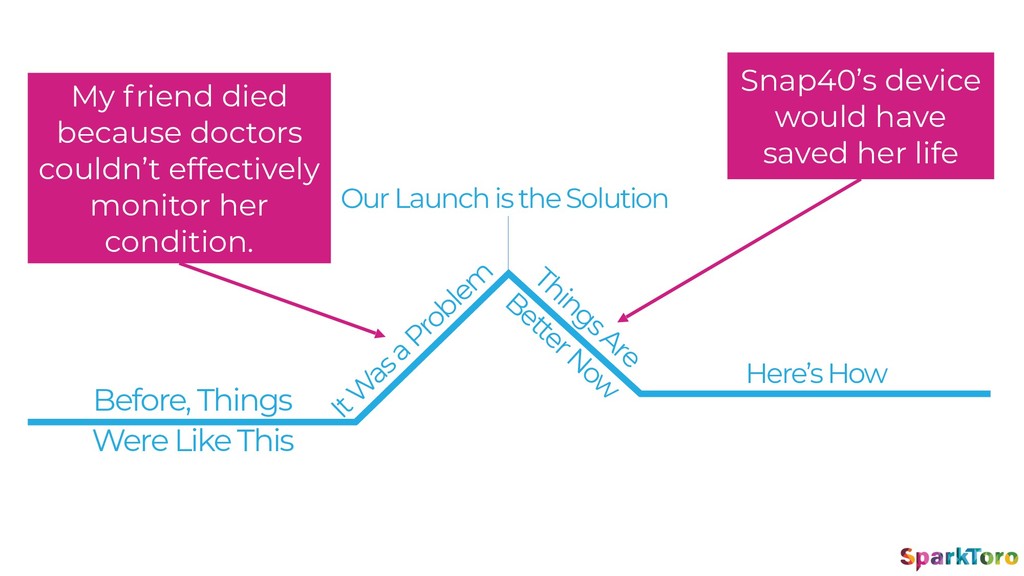
Right? You've got you have your settings and your characters, your tension and conflict that builds up, climax, a resolution, and then a new normal. Right? And product launches fit this really well. Most launches do. Right? Before things were like this, it was a problem.
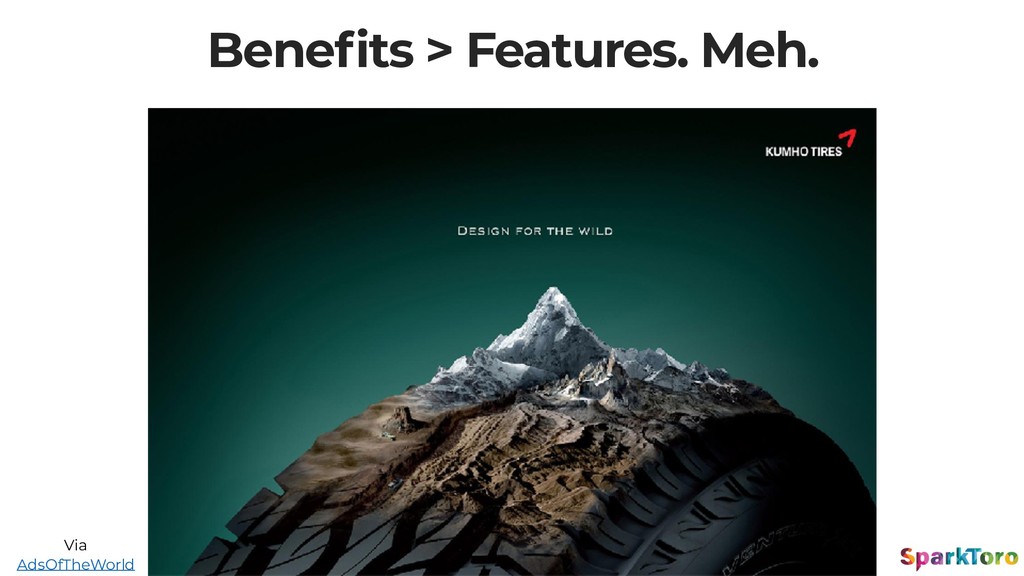
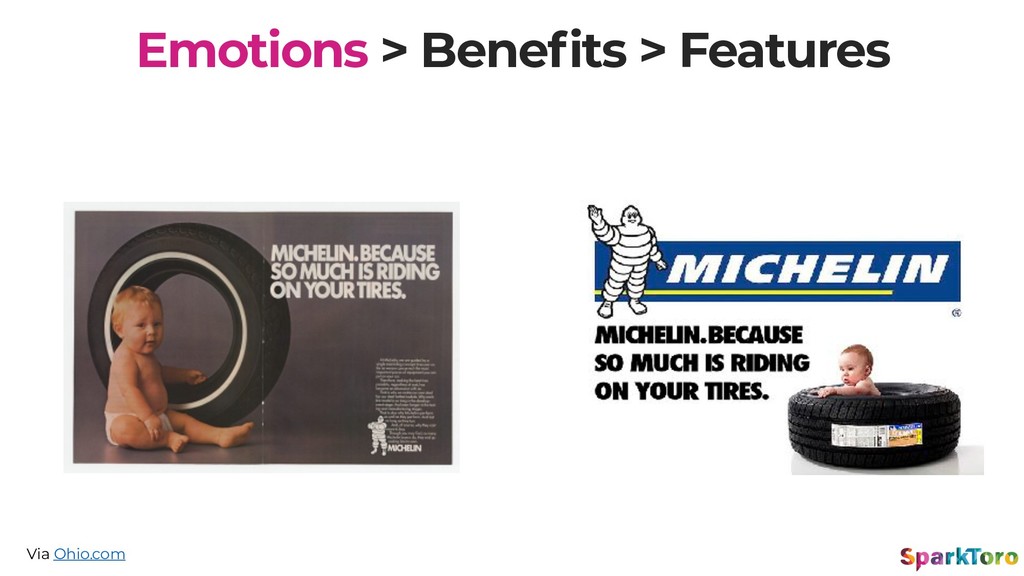
Our launch is the solution to the problem. Things are better now. Here's how. Right? So I'll use tires as an example. Features. This is actually on a I can't remember which tire manufacturer's website. Oh, uTires. Right. Benefits. You know, okay. Design for the wild. Yes.
I see that your tires are rugged and outdoorsy and having mountain on top of them. Very impressive. Even even better, emotions. Right? Which is why sort of the one of the world's best performing tires uses the same emotion that it always does. Everyone loves white babies. God.
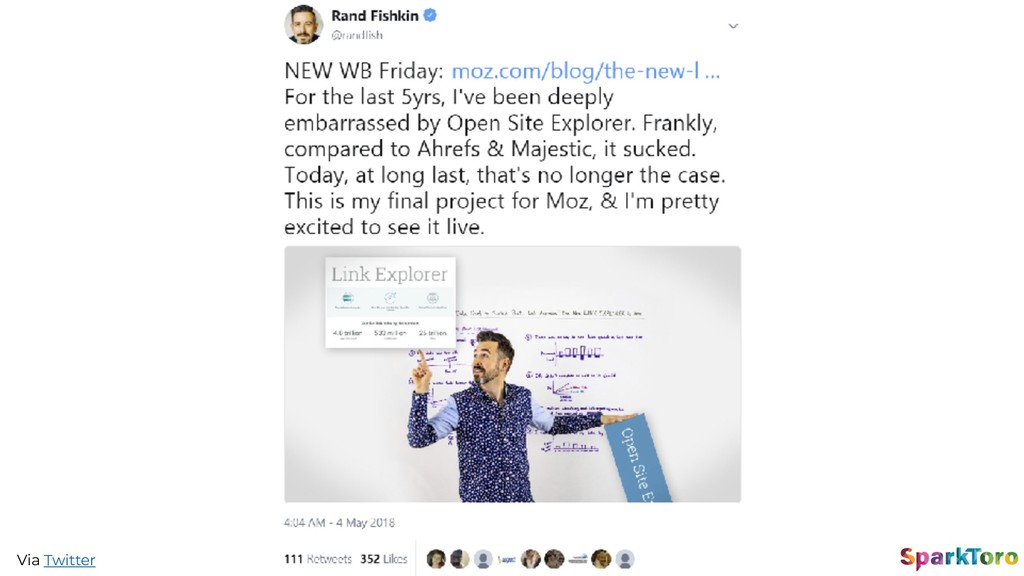
So if you can go over here and craft your story in this way such that the problem triggers a negative emotion, and the solution, the things are better now triggers a positive emotion, right, you are in good shape. So for did a launch, my last project at Moz was this project called Link Explorer, which for years, Moz's link data had fallen behind Ahrefs and Majestic.
If you're familiar with sort of the SEO world, those are the big competitors in the link data space. And this was very embarrassing, right, because Moz initially is a software company, was my baby was like the link graph. And so I basically stole Domino's story.
I said, yes, our data used to suck. It used to suck in comparison to these competitors who I am gonna call out and name. And today, finally, but this was a few months ago now, but it's no longer the case, right? So we sort of we waited until we, statistically speaking, had a bigger and better link graph than these competitors and then launched it intentionally that way, And that was a nice story to tell, and that did end up resonating and getting a lot of traction
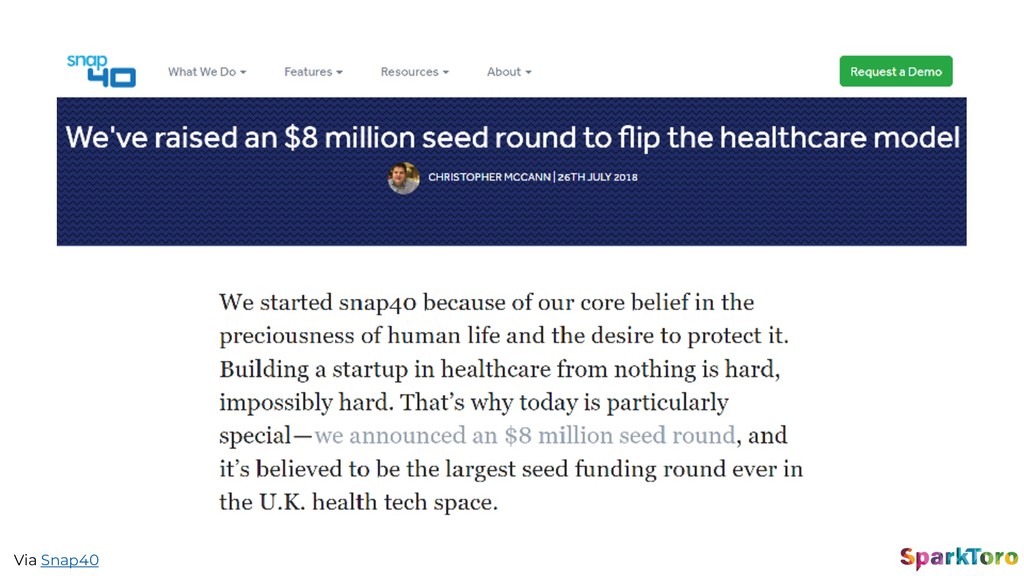
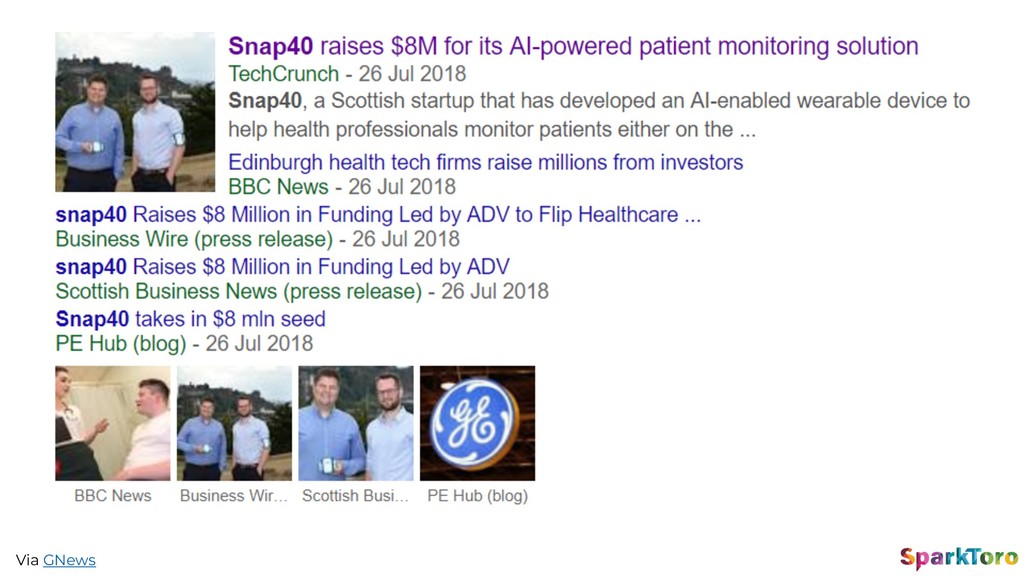
and helped a lot on the LinkData brand for Moz. So I thought I would apply this before I before I take off to a Scottish company as well. So this is Snap forty, and I actually I don't know if if if you folks I think they're they're a sponsor of Turing Fest. Right?
Which is amazing and awesome. The product is super cool. I think they raised eight million dollars, yeah, what was that, a week ago? Just a week ago. And so the story is a pretty classic, pretty classic venture capital fundraising story. Right? That we're announcing this eight million dollar seed round to be able to sort of do these things that we've got.
And they did get coverage from a lot of the classic sources who, you know, were sort of like, wow, this is a big round. This is a big round, especially for Scotland and for Edinburgh and for medical tech right here. And so they basically told this story.
Right? We needed money to scale our solution, which is an awesome solution. Right? It's a it's a basically looks like this thing, right? And it's strapped to your arm, and it can inform medical professionals of your condition even after you leave the hospital or leave care, such that they can have a bunch of data about how you're doing, and so if your condition deteriorates, right, they can help out before it's too late.
And, you know, we now have the money to go do this thing, which is great. That's not a terrible story, But I I don't know if it's as emotional a story as it could be. Right? In in fact, especially for this product, which I think is an incredibly emotional product, I think there are other ways you could do this. Right?
Which is people are suffering and dying needlessly. In developed countries, right, like the United Kingdom and the United States and and places that are are very wealthy and have plenty of money to take care of people if they only knew about them. And Snap forty's device can help save lives.
That's pretty good. We can do even better. How do we make a story even better? Turns out have you ever seen like a Marvel superhero movie and like forty thousand people die as like a, you know, trade center collapses because some colossal monster stepped on it.
And you're like, oh, that looks scary. And then you're watching like a romantic movie, and one person dies of old age. And you are bawling. And you can't control your emotions. Right? And you're on an airplane, and you're like, oh god, people are gonna see me.
This is terrible. Or you're watching the first five minutes of Up, which is basically it's just a let me step on your neck and then twist it right in there. And so what we know resonates, what we know works in story format, what we know gets emotion is one person.
One person. My friend. I actually have a friend that's gonna make me tear up a little bit, but I'm gonna stay cool. So I have a friend who his wife had a had a brain aneurysm, and she just died two weeks ago, totally undiagnosed.
She was on a fishing trip. He's my age. When I think about, you know, losing my partner, whew, that's hard. There you go. That is an emotional story. That is a story that resonates. That is a story people are gonna talk about and remember.
I think I think these are the kinds of things we can do with our launches. Not everyone. Right? The product I'm making is not gonna save anyone's life. But we we can we can do these things. We have this potential. I hope after seeing this, some of your launches hopefully all of your launches will be a little bit better.
Thank you very much. Thanks.