Are you getting your full money’s worth from your content? The constant content clutter in the pursuit of vanity metrics is damaging our relationships with our audiences. What’s the antidote? Here’s what it’s not: It’s not running to stand still with the latest trends or tweaks that will have incremental impact. If you want high-impact content, you need to build to last and scale your distribution. The key here for us content marketers is to do less, not more.
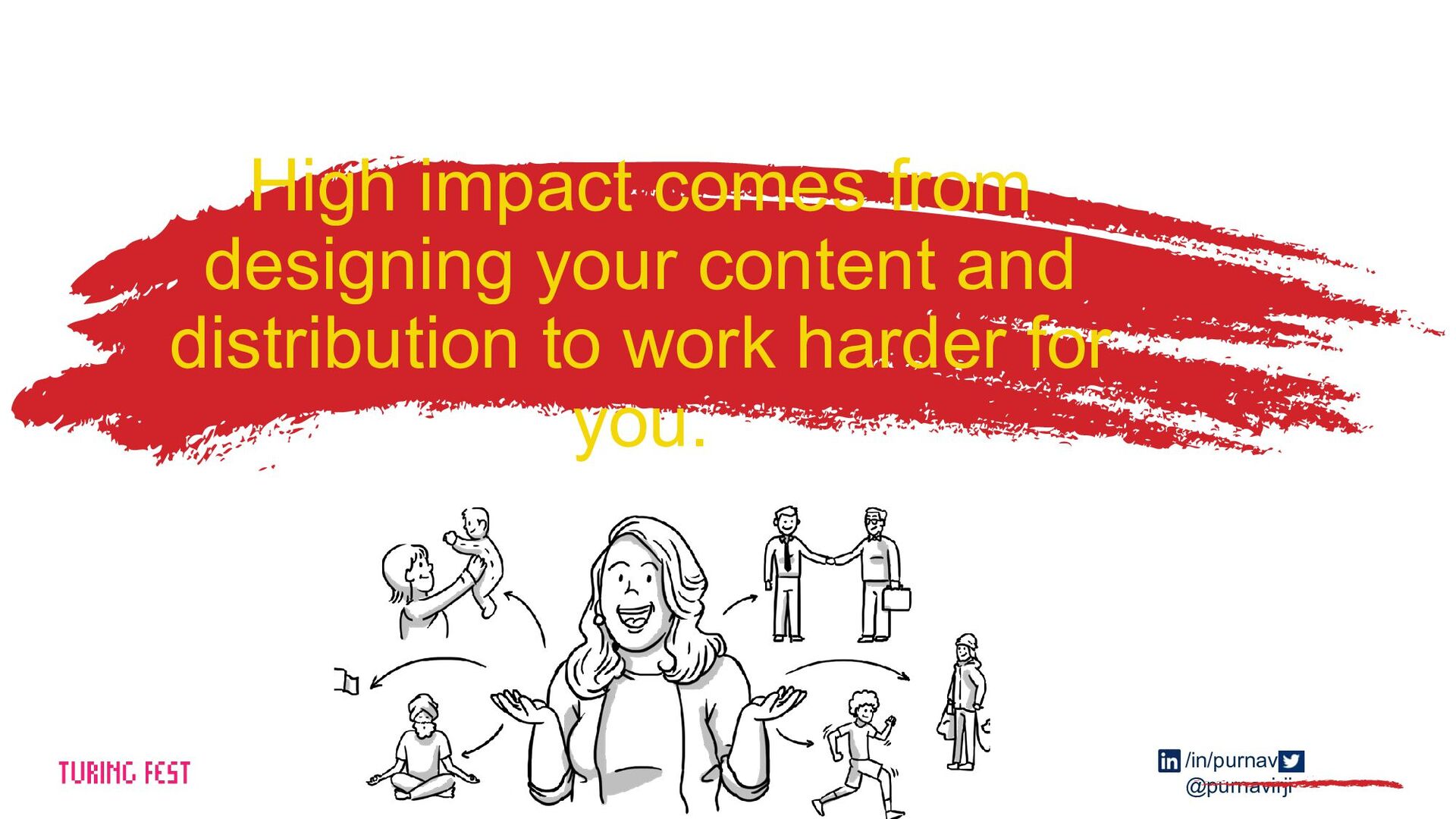
Create timeless content campaigns. Get regular use out of them. Sprinkle in shorter shelf life current ‘trends’. Mix and match. You don’t have to work harder and harder. High impact comes from designing your content and distribution to work harder for you. In this session, Purna will share practical content creation strategies for making the most out of each piece of content you build.
1 / 41 Use ← → to navigate
Auto-generated transcript - may contain errors.
Tap a timestamp to jump the video.
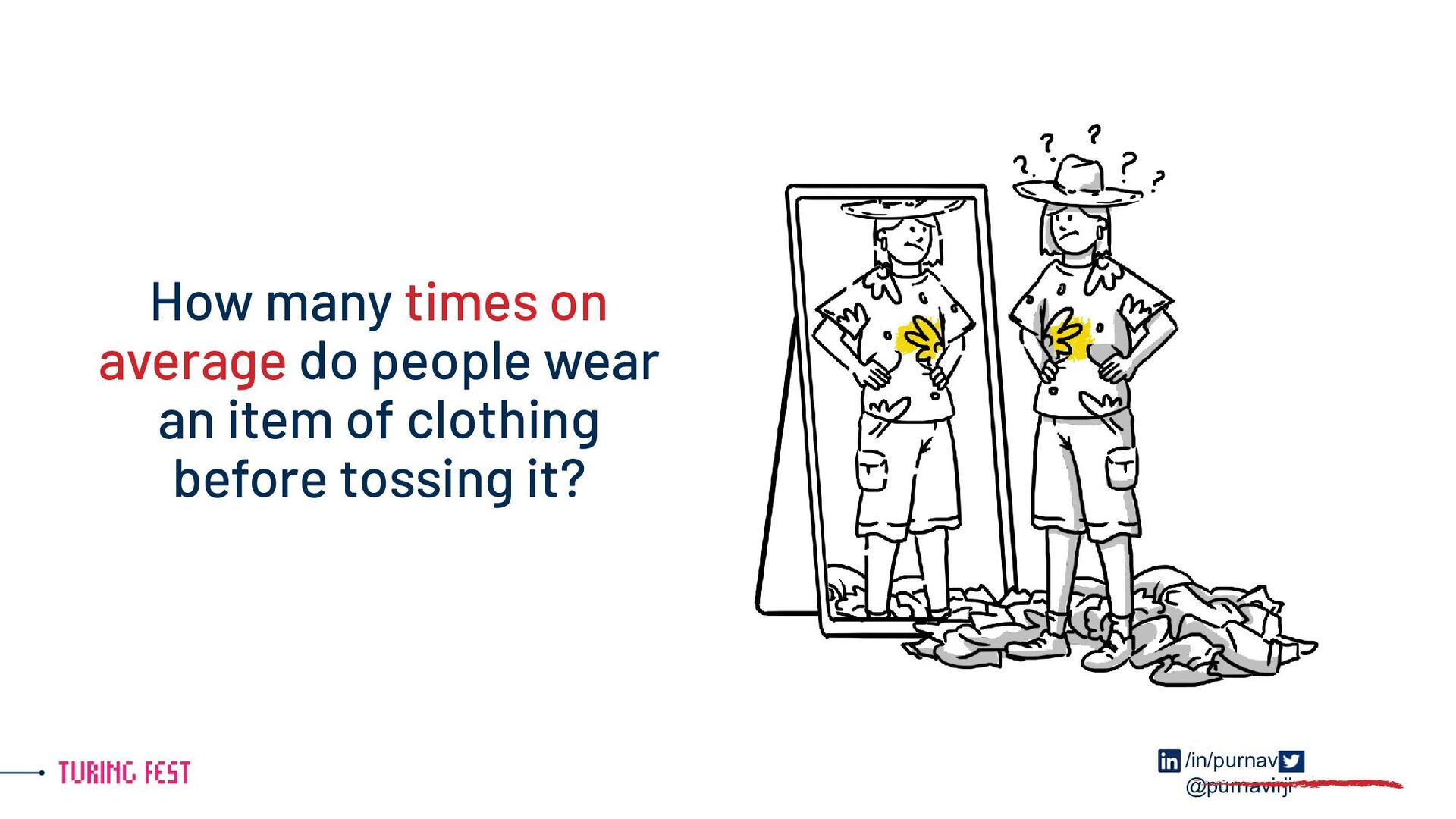
I'm delighted to be here. Overly optimistic American energy coming out, so I apologize in advance. But before we get started, I have a question for you. How many times on average do you think people wear an item of clothing before they throw it out?
Let's do an over and under. If you think it's more than ten times, go here. If you think it's less than ten times, go here. Well, a lot of you say more than ten times. Love it, very sustainable. Well, the British charity Bernados did this research back in twenty fifteen.
And even back in twenty fifteen, they found that it was seven times on average that you buy a piece of clothing and then you chuck it. That was before fast fashion and then social media came into the highlight, and now people make headlines when they wear the same outfit twice.
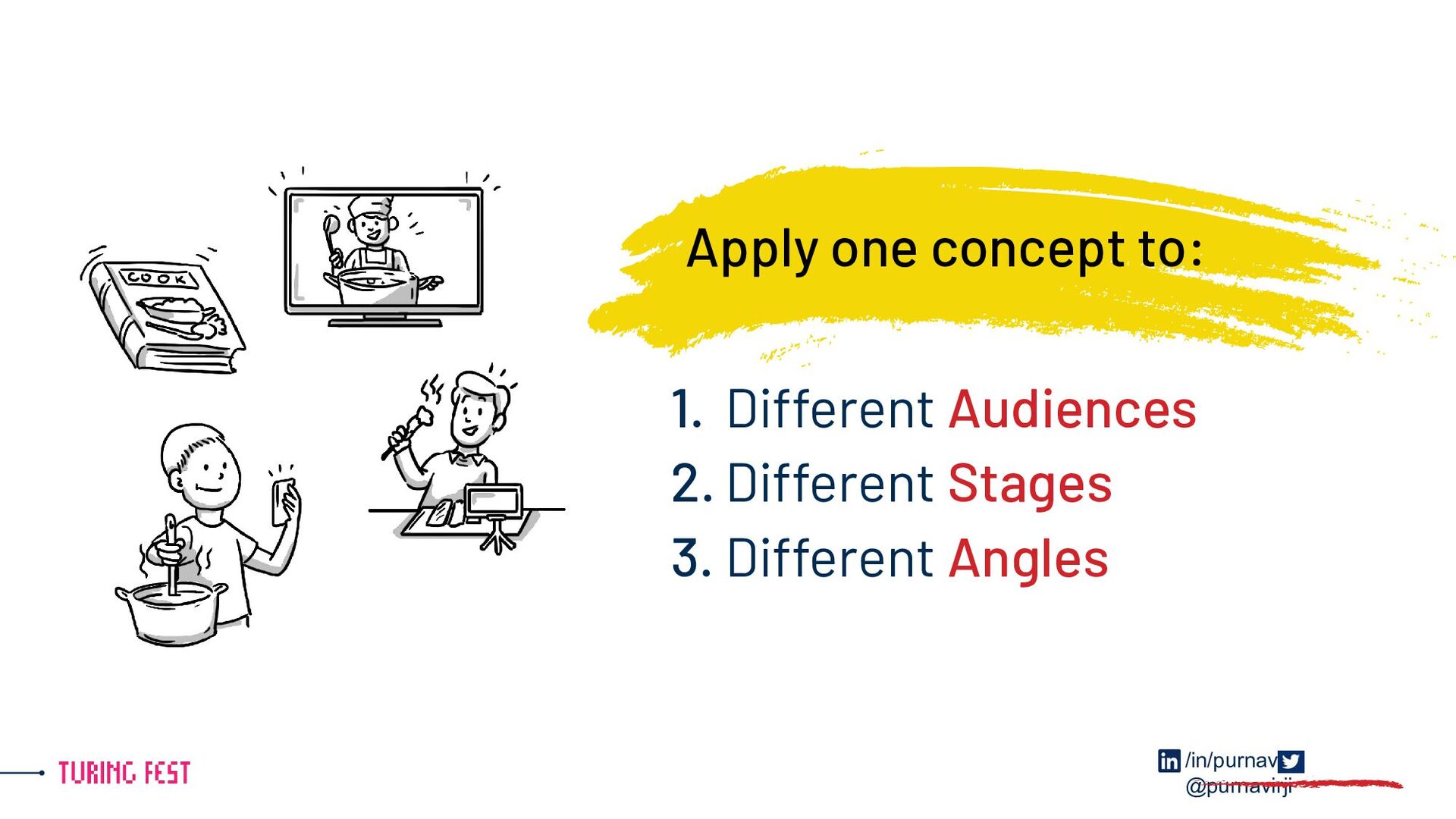
But we're not here to talk about fashion. The big question is, are you treating your content like fast fashion, created with speed and cost in mind and then used once or twice before throwing it away? We all know that high impact comes from designing your content to work much harder for you.
And you're like, Pranav, this is like best practice, we all know this. Exactly, we all know this at a higher level. But then too many marketers will sometimes make the mistake of just like, oh, well this just means like I can take all my tweets and put them on LinkedIn or I can just take all of my content from this channel and then just like peanut butter, spread it across everything.
Sadly, it will not give you a delicious sandwich if you do that. Good content has to be thoughtfully done with your audience, competition and even the platform you use in mind. And it is much easier than people think. Let's use the music industry, for example.
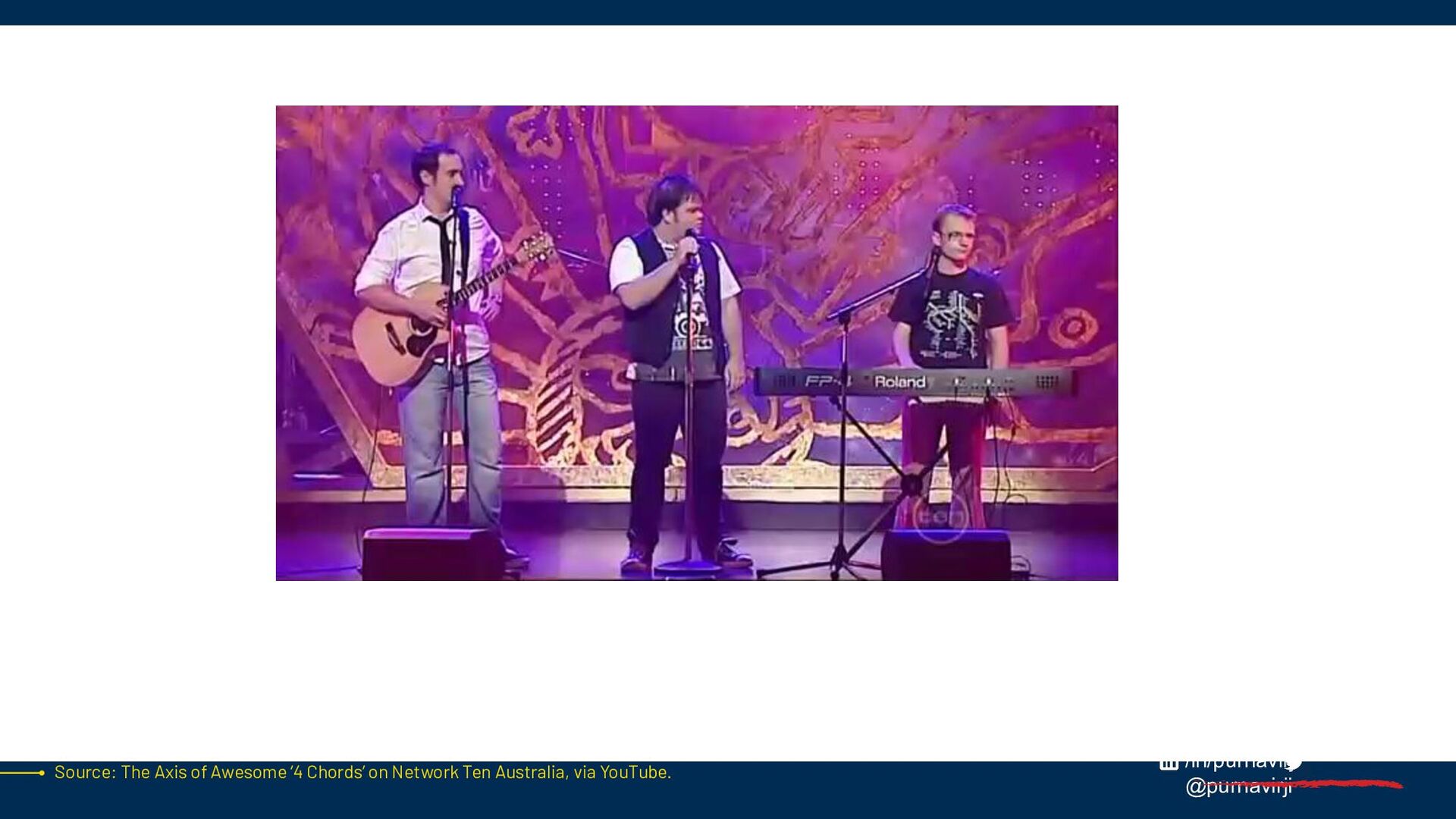
If I had to tell you that Beyonce, U2, James Blunt all had the same element in their songs, would you believe me? Well, let me show you this video that I discovered on YouTube, and it blew my mind. So I love this one.
So they found the same four chords are there in most pop songs. So let's have a quick listen. Just listen. Do you recognize this? That is Don't Stop Believing by Journey. Very original There's few more that fit. Check it out. My life is brilliant. My love is pure.
I saw an angel of that ocean. Well, that's just two songs that are similar. That's Forever Young. I wanna be forever young. I won't Same four chords, all of these different songs. Each of them feels fresh and unique. That video blew my mind.
I'm like, we can do the same thing with our content, surely, can't we? And here's the best part. It doesn't need any super advanced technology at all. In fact, my big peeve sometimes that I hear from marketers is that we're all chasing the next big silver bullet when the secret to success lies in the foundations, in this unsexy stuff that we all already know.
So that's what I'm going to share with you today in the next twenty five minutes, which are three core different ways that you can take your one idea and turn it into multiple fresh greatest hits that will hopefully have you ranking number one in your audience's eyes.
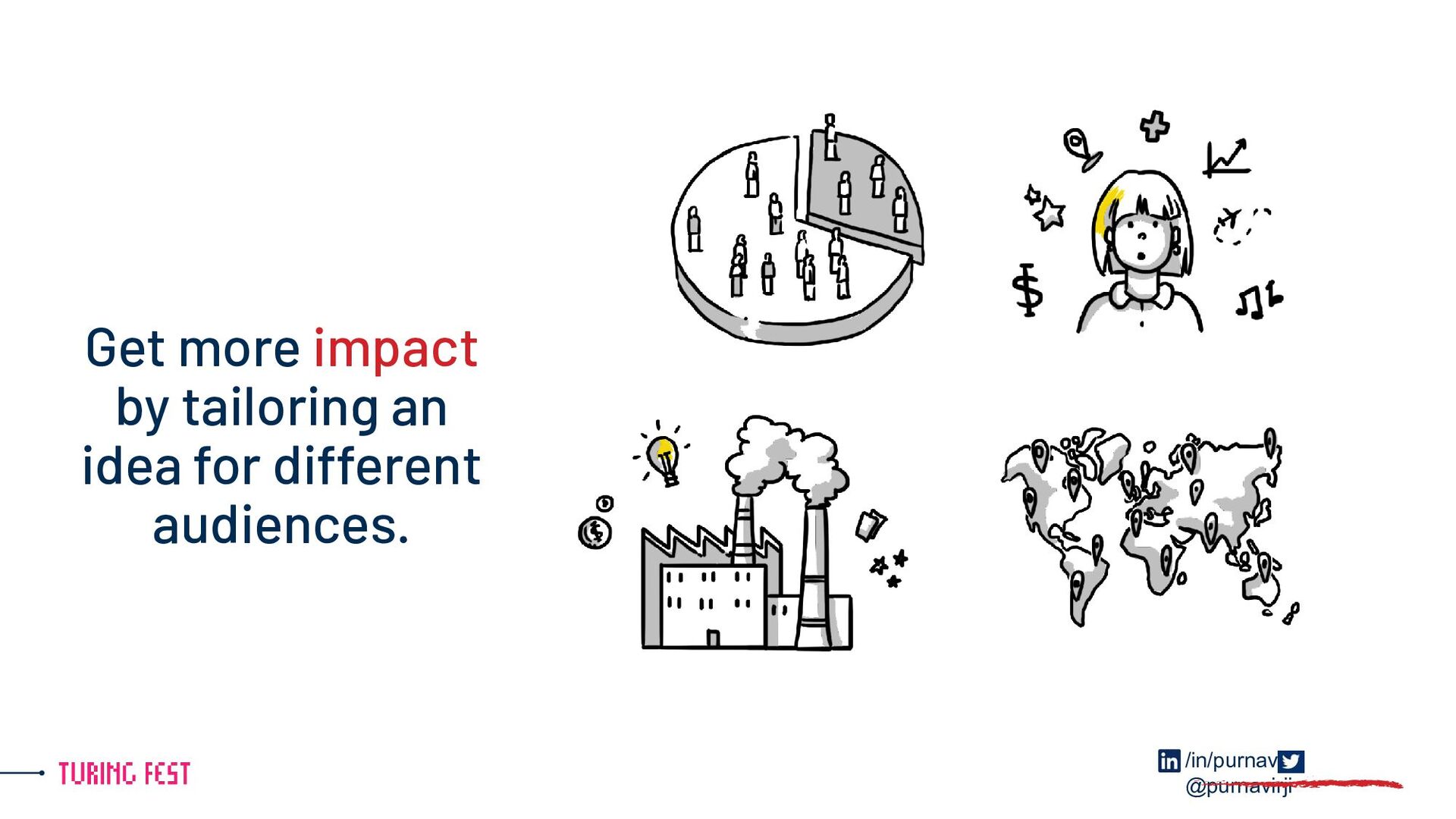
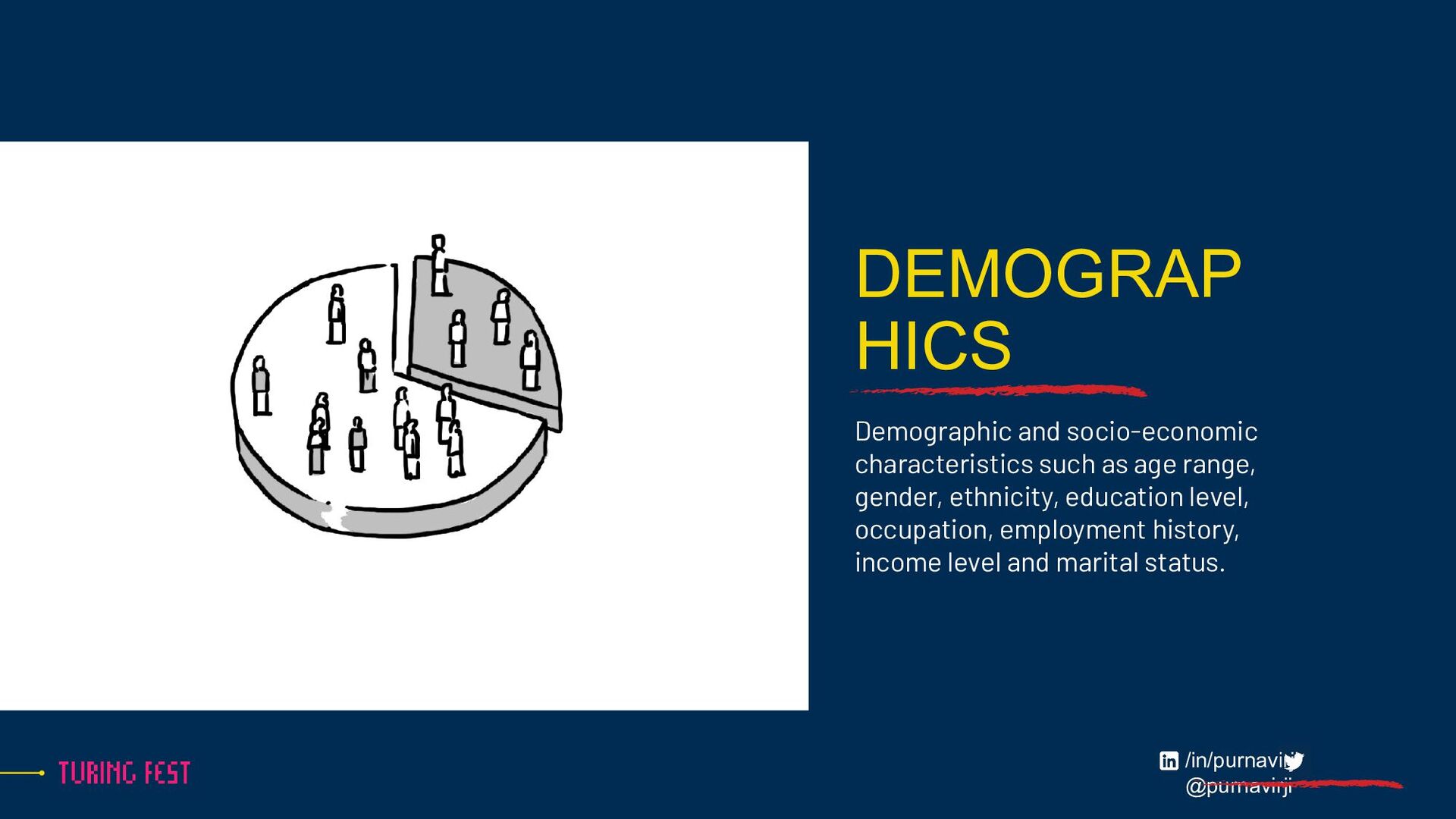
So let's start with different audiences. When we're buying our marketing, when we're buying our advertising, we're so thoughtful about those different segmentations, right? Demographic, psychographic, geographic, all of that good stuff. Why? Because we know that different audiences are influenced in different ways, and different audiences influence the purchase decision in different ways.
So we will go in and tailor our ads and our buys that way. We could think about that same approach with your content. If you think about what makes great content great, it's as you start reading it, right from the first two lines, you're like, Oh, yeah, that sounds like me.
That's relevant for me. That makes sense for me. Right? You'll notice that any content that you really enjoyed reading or learning has that element. It speaks to you. So how do we do that? Well, let's break the four most common segments down. You already know this.
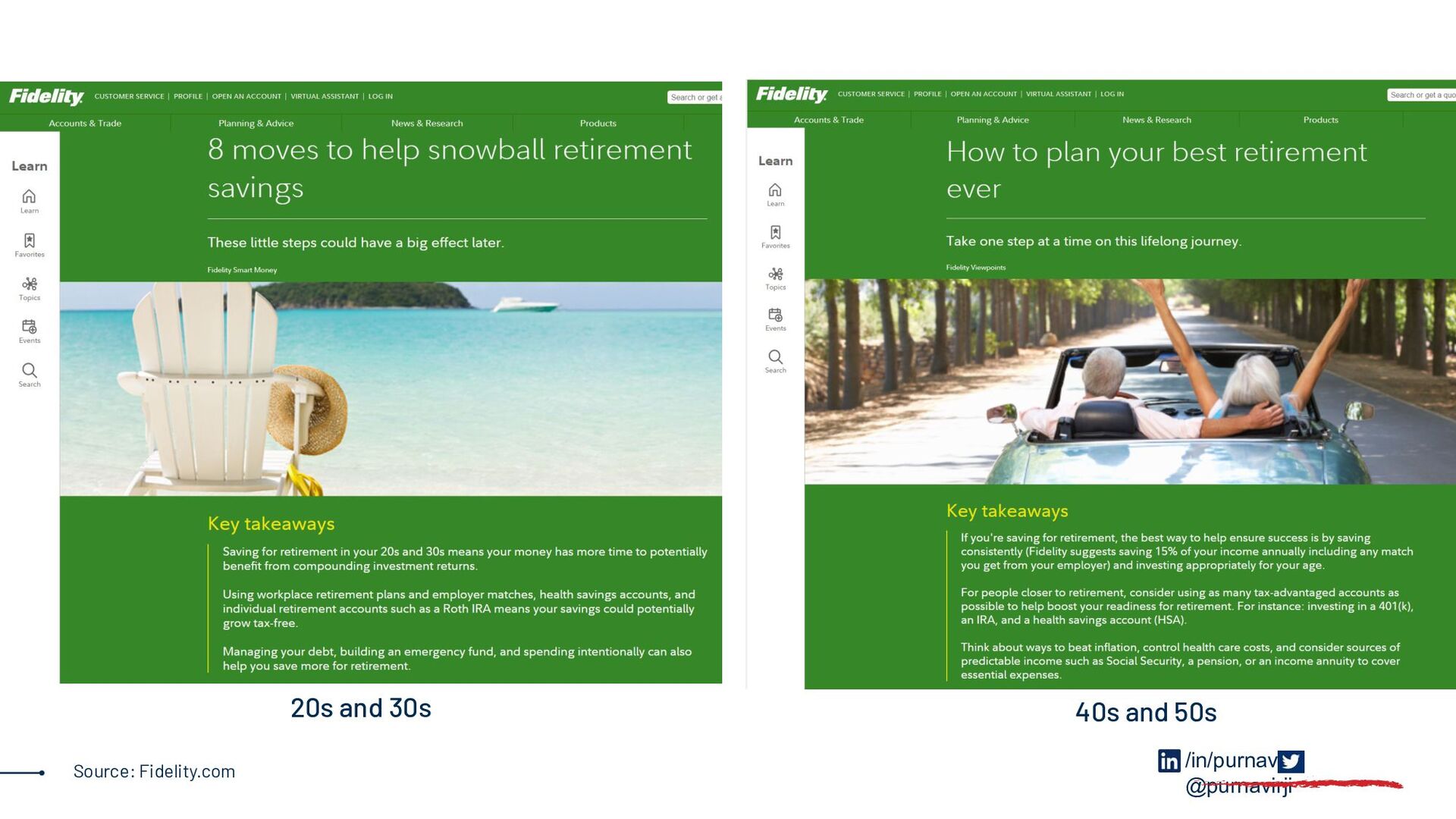
Just little reminders for what we can do. Let's think demographics, things like age range, gender, salary level, education level, etcetera. Each of them can warrant being spoken to slightly differently, so it feels a lot more relevant. Let's take retirement planning, for example. You would tailor your content differently for people who wanted to retire abroad versus locally.
For different levels of income, they might have different advice or even for different ages. Right? If you're in your 20s, you probably are thinking about retirement or not thinking about it versus somebody who's in their forties or fifties. So one same idea about giving people advice on retirement can be shared so effectively with small tweaks to feel super, super relevant.
So for the 20s and 30s, if you look at the key takeaways, which you probably can't read at the back, it says that, hey, you've got plenty of time for your money to compound and do this and blah blah blah blah. Whereas here, for the 40s and 50s, they're like, Okay, you're getting closer to retirement, like, here's how you really need to think about making the most of your money.
One idea, slight tweaks, slight different areas emphasized versus not, and it feels fresh and unique and you've got tons of different ones. But we can't only stop with demographics, right? Let me ask you this. I read this in the BBC and it's just stuck with me and it's so funny.
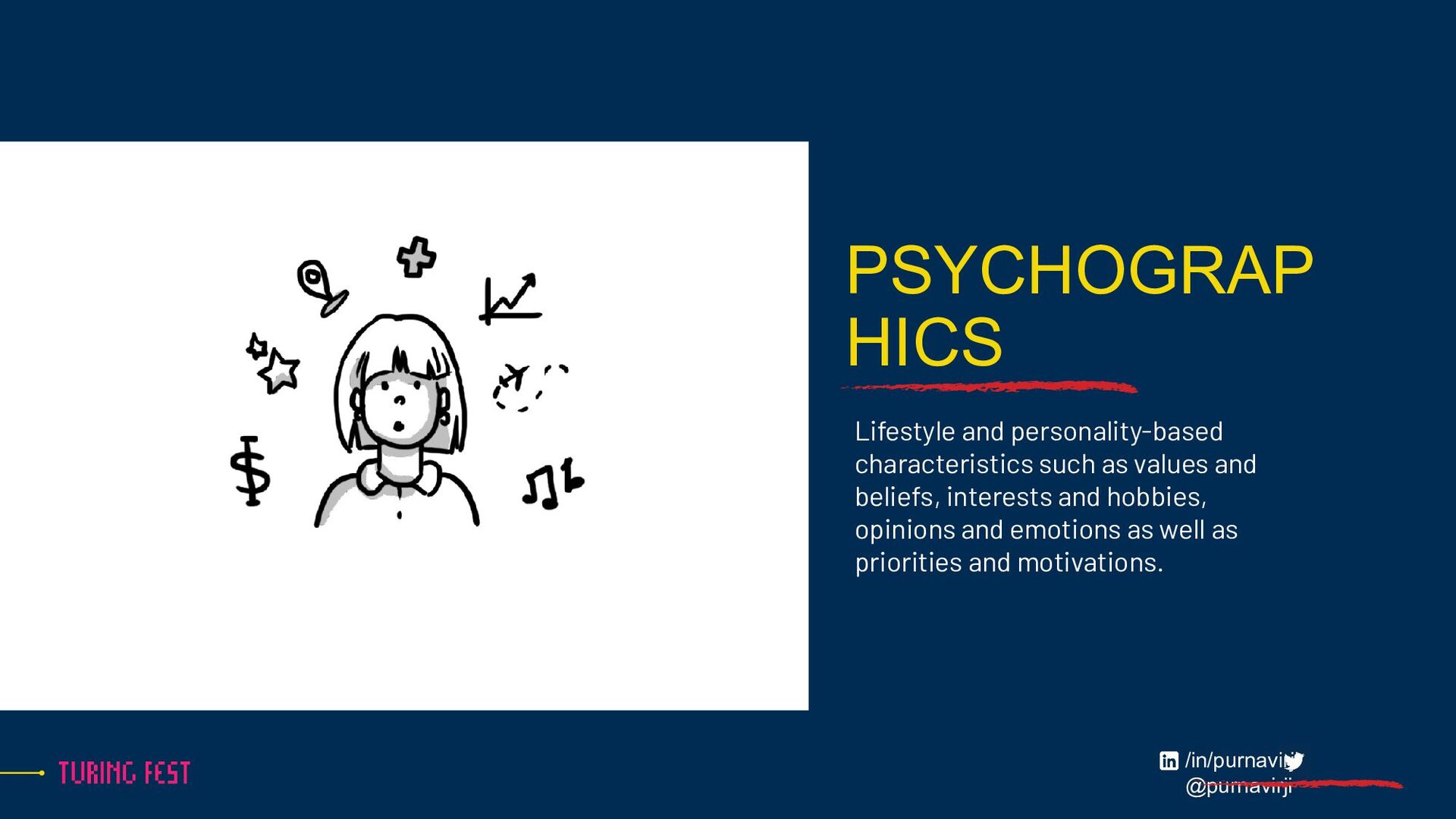
Let's say there's two males, both born in nineteen forty eight. They're independently wealthy, self employed, both spend most of the time in London. They've been married twice. They have adult children and they tend to like fast cars and fine wine. Would you create the same content for them?
Yes, I know some people say yes, that's good. Yes, no. But that same thing could describe King Charles and Ozzy Osbourne. And I'd go out on a limb and guess that they're probably consuming slightly different content right there. So you want to start thinking about, like, what do they like, what are they interested in?
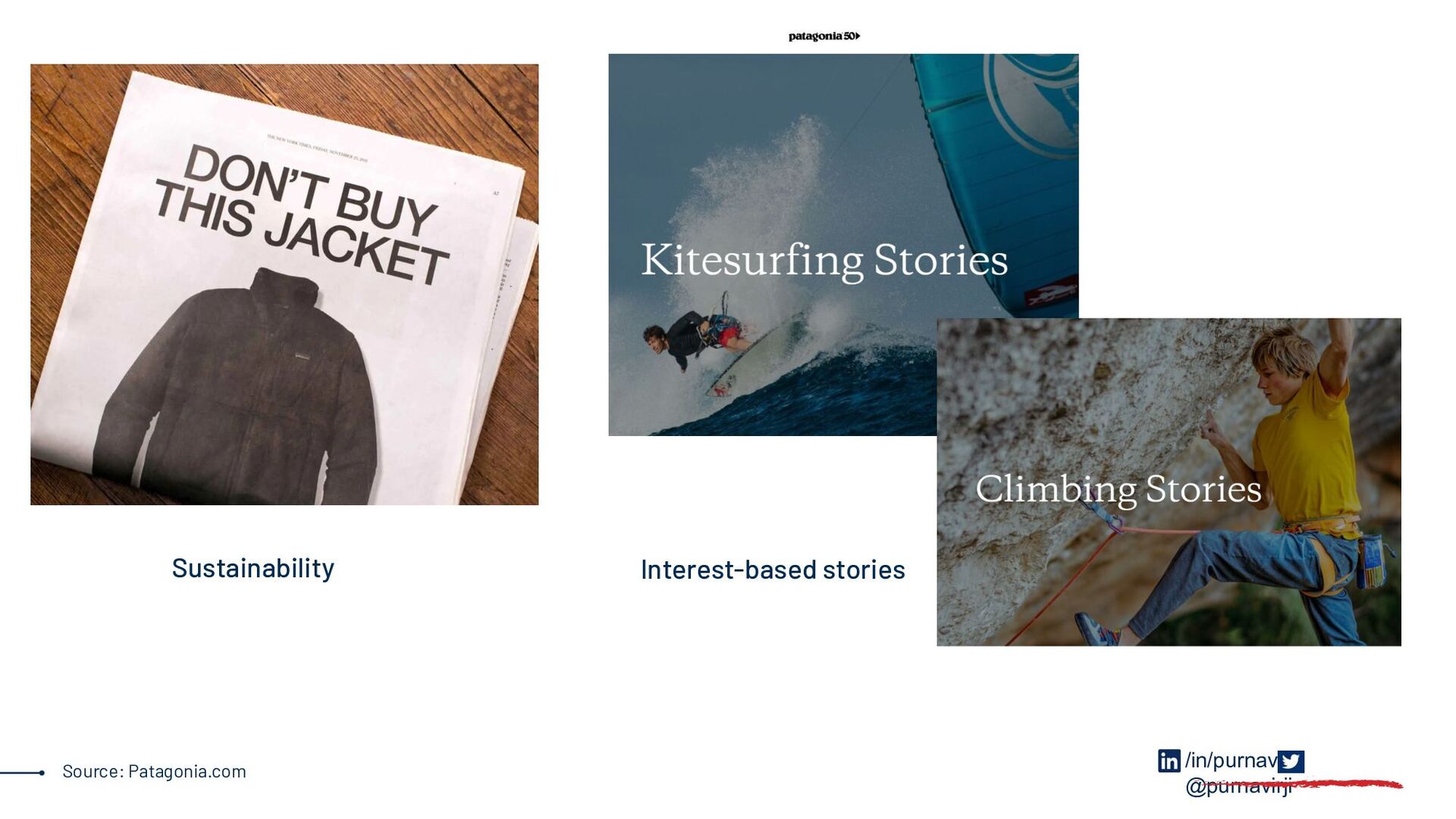
What motivates them? What moves them? Think about Patagonia. They're so good with their content. Right? Over and over, they have consistently spoken to two things. One is their audience's love for sustainability and the environment. Right? I love their twenty eleven full page ad in the New York Times saying, don't buy this jacket.
Nice and contrarian. And then their website is bursting with content that goes really niche into people's different interests and activities, whether it's climbing stories, kite surfing. It feels like me. Oh, you get me, you understand me, right? That's memorable. What about B2B now? Pharmographics.
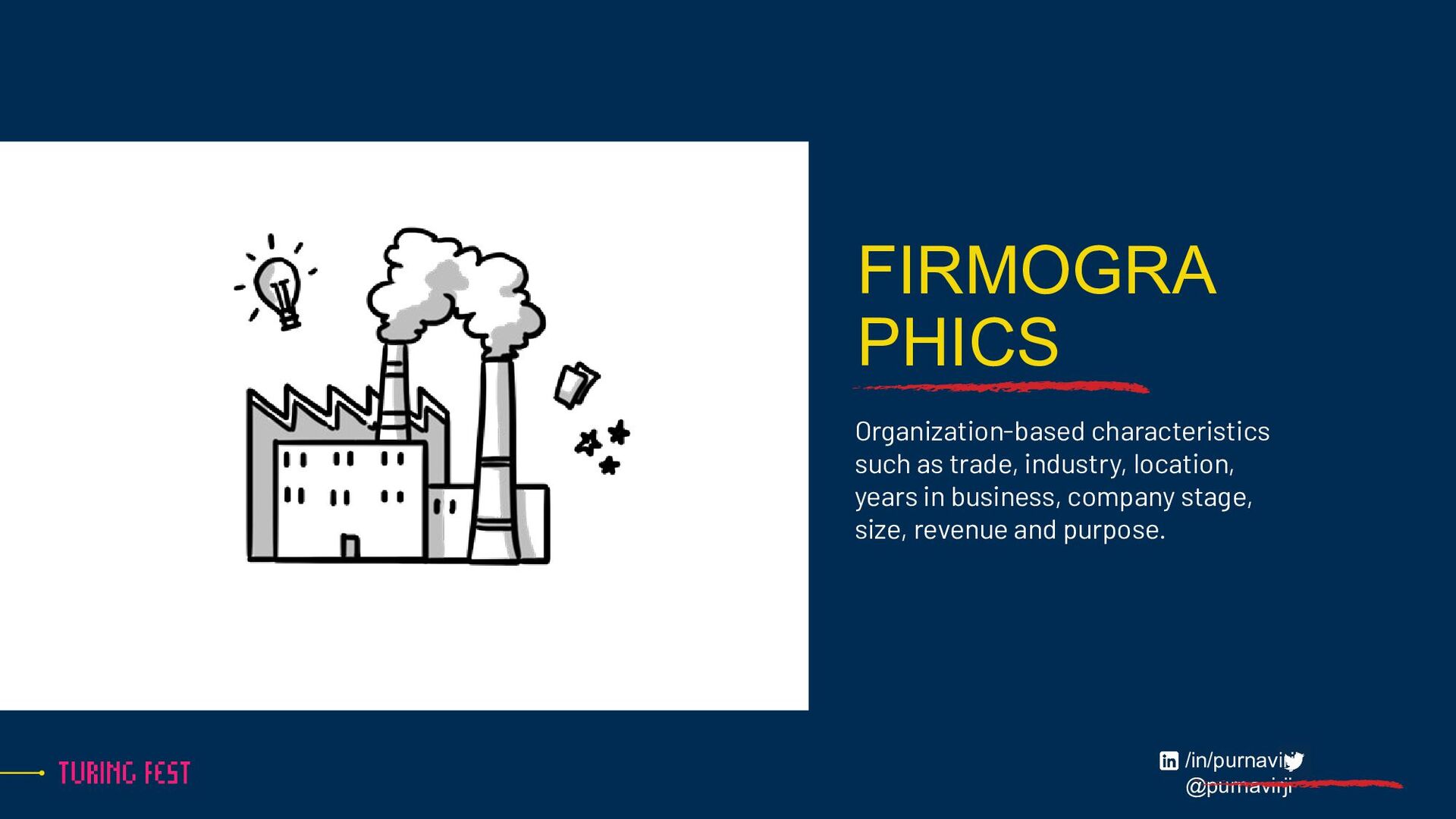
How many of you work in B2B here? Okay, quite a few of you. So then you know that the decision maker is not only the person who signs the contract. Right? There's multiple people who weigh in on the decision, whether it is the influencers, the end users, the implementers.
There's multiple people. In fact, there's about six point seven people on average in a buying committee. Each of them is researching content. Each of them is looking at things in different ways. You want to make sure that you are appealing to them. Or another thing you can do is make your content seem super relevant to their industry.
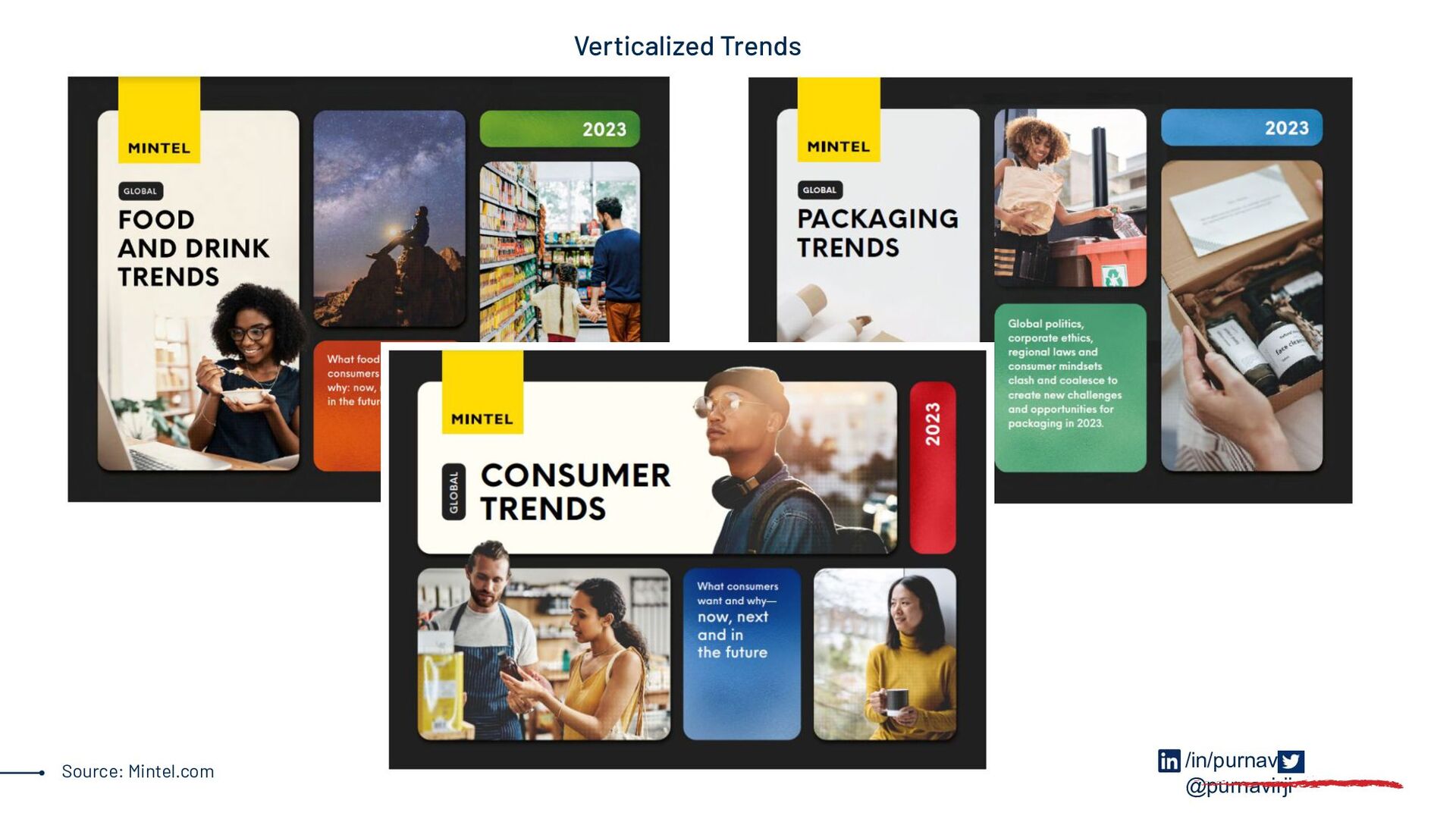
So many times we'll have like an amazing piece of content, but it's just vertical agnostic. If you could take your top two or three audience vertical and look at who you're serving, you could come up with very similar designs. Like I love this one from Mintel.
Do you see how the design is exactly the same? It's the same format and then they have, oh, here we have consumer trends, here we have food and beverage packaging trends. There are so many different ones. It all looks the same. It's the same design.
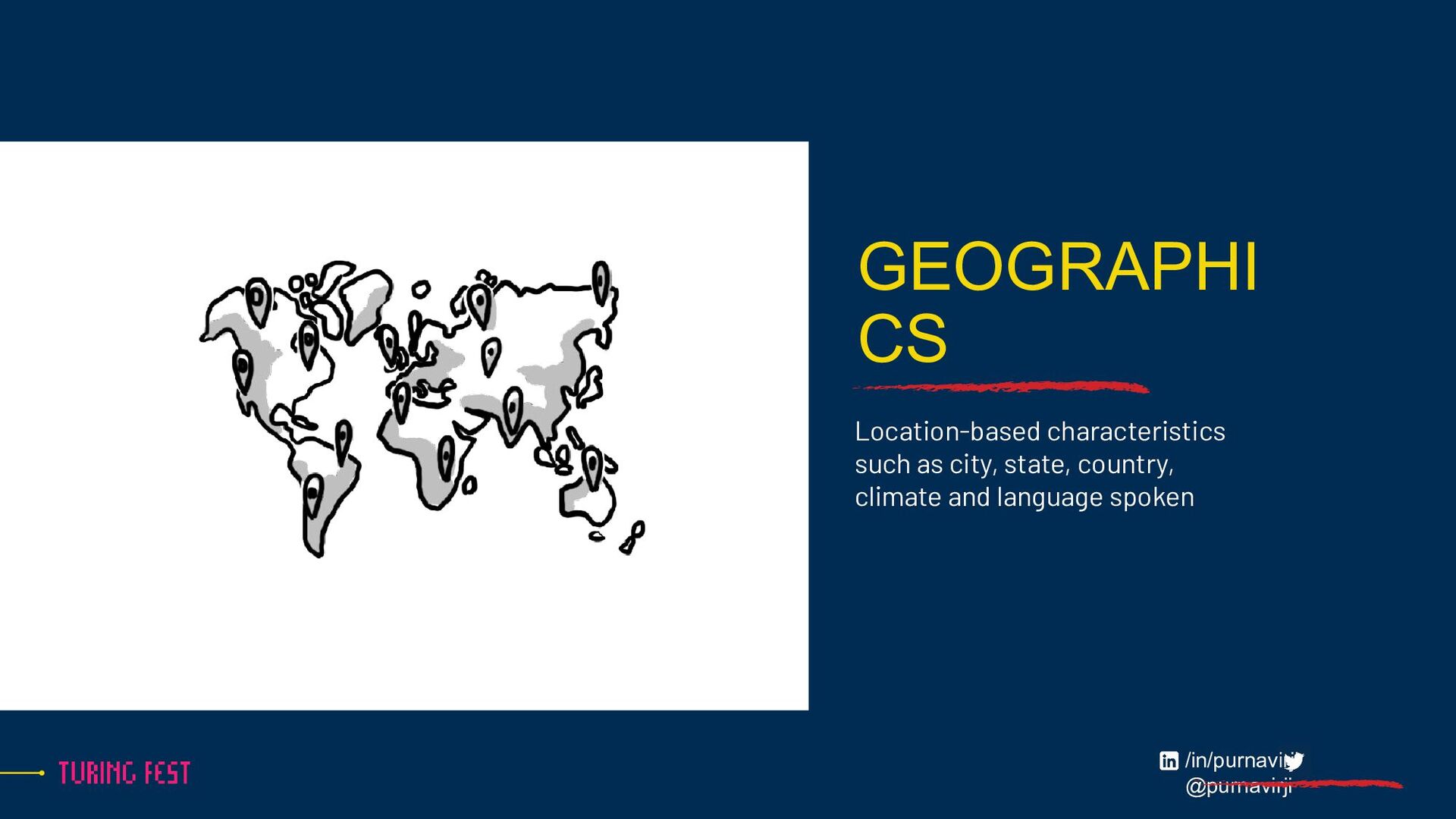
It's so much more efficient to put together when you can take one little piece, one design, one idea, one template and turn it into different things. And then with your geographics. I mean, how many of you have tried a McDonald's in different parts of the world?
Okay, a lot of you, right? You see how they're so different? Like in India, where I'm originally from, we have the Maharaja Mac. In Canada, they've got the McDonald's version of poutine. In Korea, in South Korea, they have the bulgogi burger. But it all feels very cohesive and globally as one core McDonald's brand.
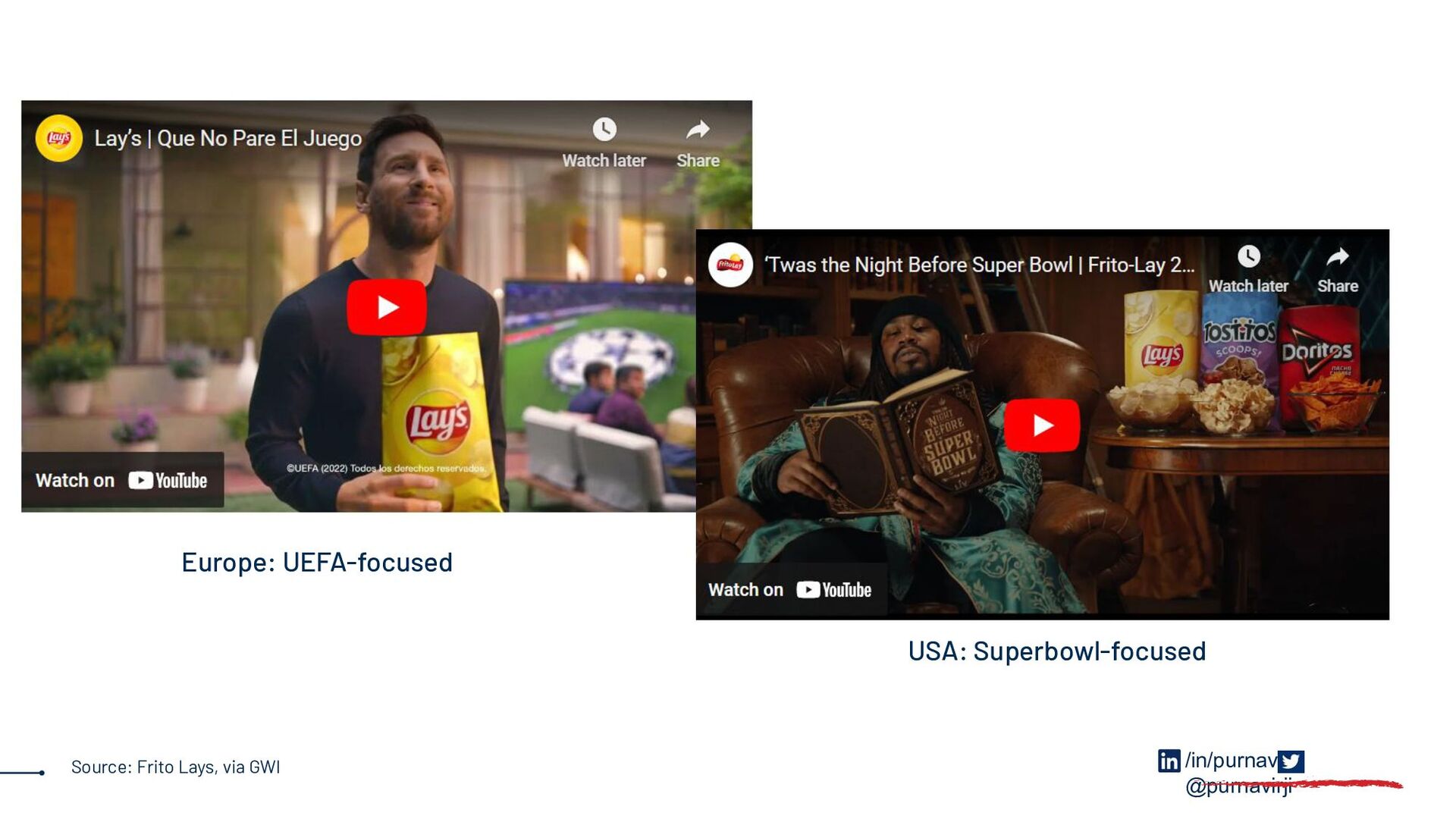
That's what we want to make feel for our brand too, where it feels locally relevant but globally cohesive if you're serving different regions or markets. I love this example from Frito's Lays because it's just such a big one that we've all seen. Their idea: promote the products before a big sporting event.
So in Europe, of course, UEFA. In America, Super Bowl. Same idea, same concept, just feels so locally relevant and interesting and all is one idea that feels different. So don't start from scratch. Like, I am very anti hustle culture. Do not hustle. Be lazy and effective and efficient.
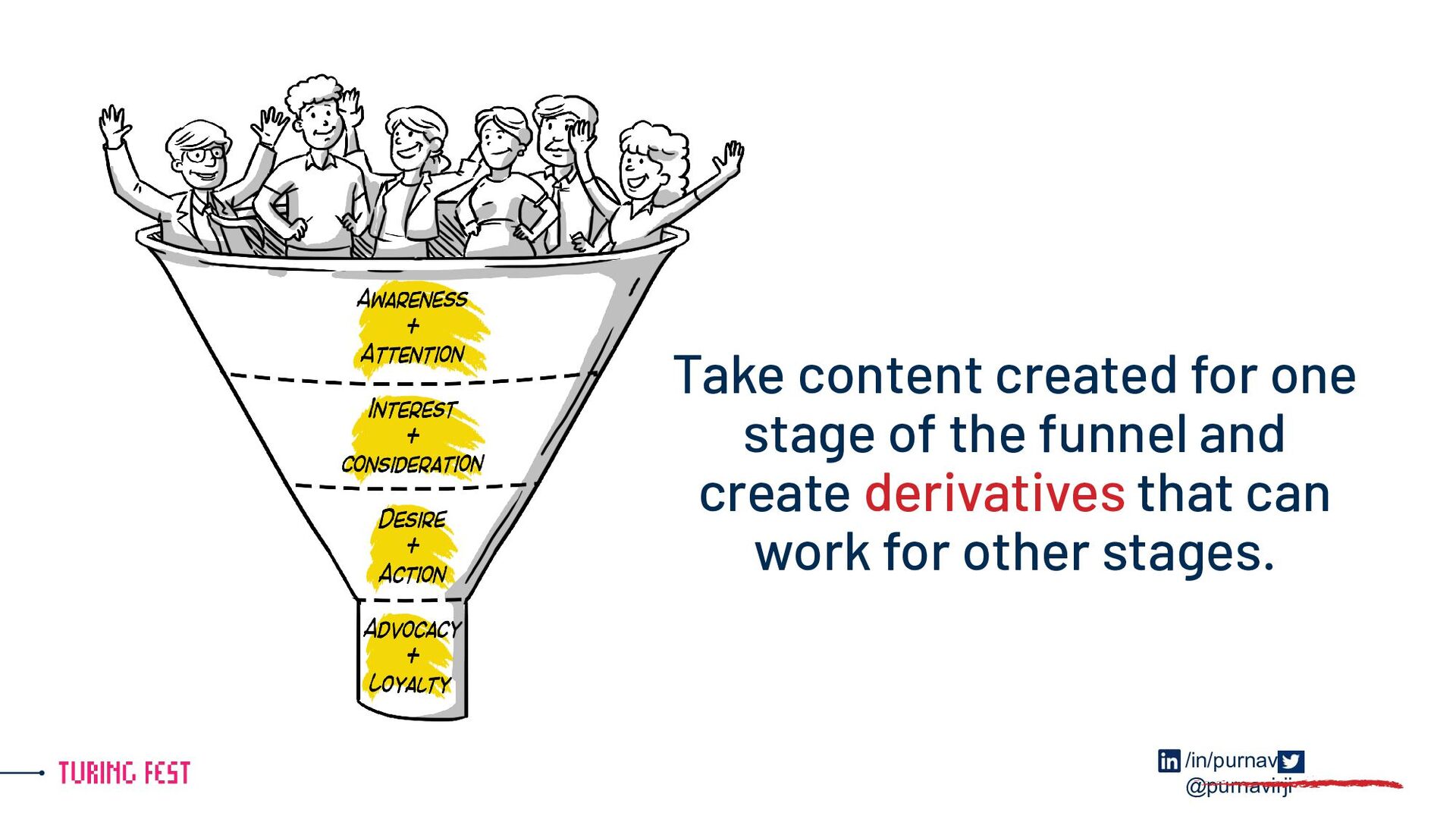
So don't start from scratch. All right. We know that audiences segments with who they are. Different stages of the funnel is where they're at in their journey, which is their level of awareness. Now, have you ever tried explaining what you do for a living to, like your nan or parents or somebody at like a holiday dinner?
Yeah. Versus talking to a fellow marketer, it's just so easy. Different people have different levels of awareness, understanding, interests. So you want to speak to them and meet them where they are. You'll often see advice that, oh, you need content for every stage of the funnel.
And that's true because if if I came to you with this best idea ever and you had no clue who I was or whether I did anything, I'm like, You must do this. You'd be like, Who are you? Like, runaway crazy person. So you'd want to talk to them with getting them some awareness and attention.
You could also be really smart by taking one idea and tailoring it for different segments. And one of my favorite frameworks to do that comes from Eugene Schwartz. In his nineteen sixty six book Breakthrough Advertising, he breaks it down as five levels of awareness.
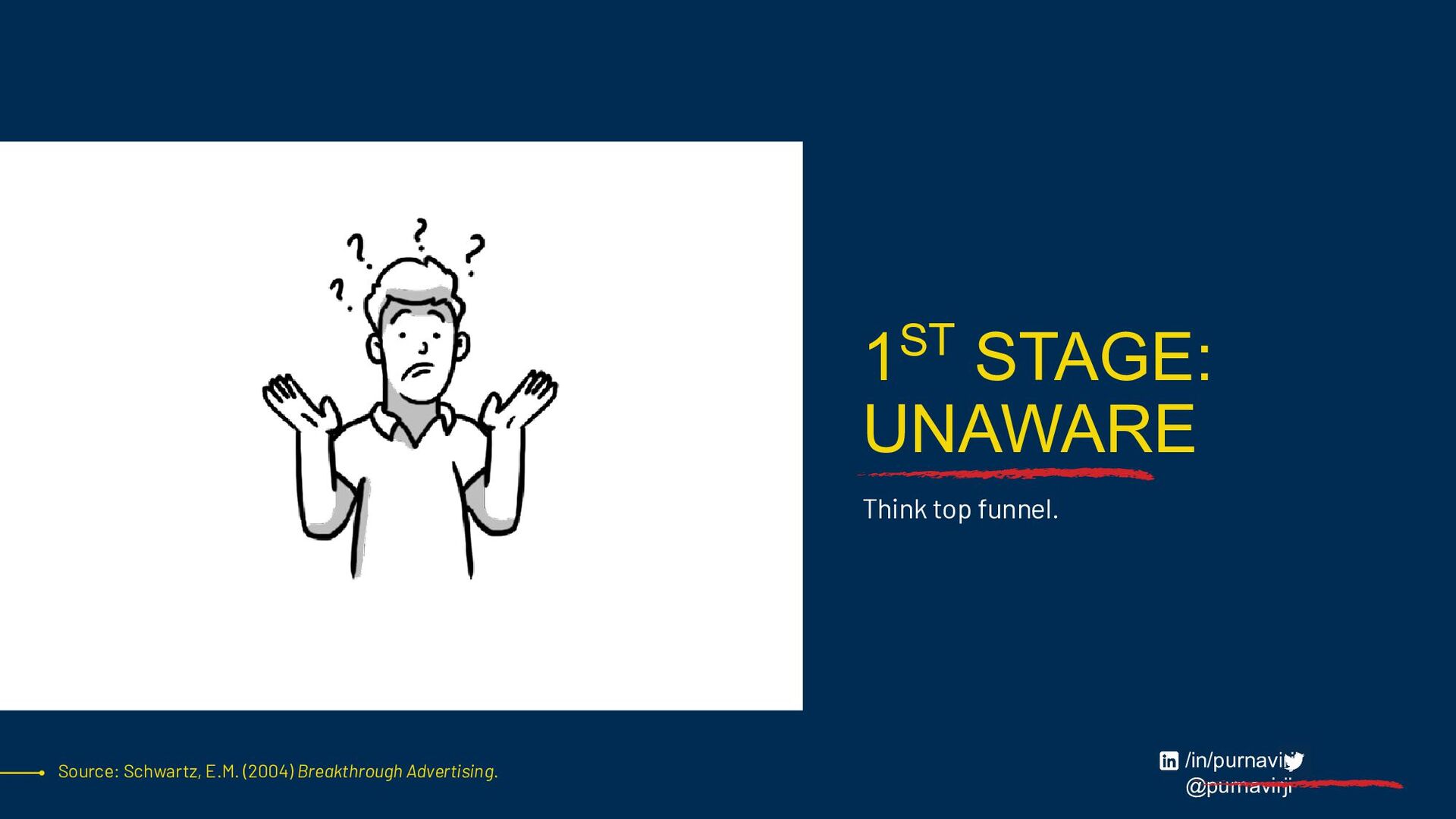
So let's dive into them a little bit, and we'll use AI as an example throughout. Stage one is they're unaware. So they don't know that they have an issue or they don't know that they can make their life better or just more optimised.
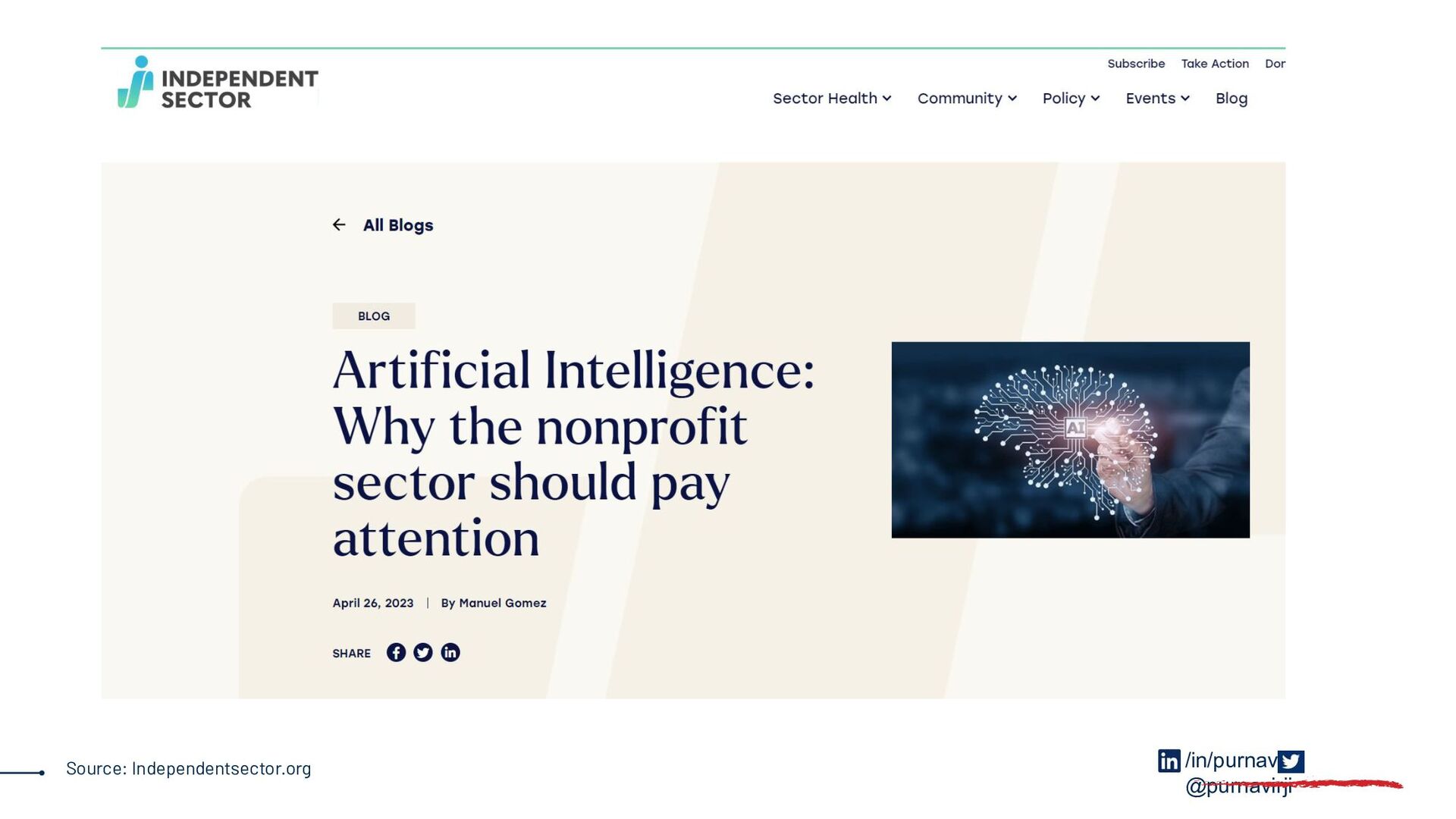
So what we need to do here is highlight like, hey, this is something you need to be paying attention to and this is here's how you can solve it. So let's take a look at this example. I love this. It is from independent sector and they're saying, hey, artificial intelligence, why the nonprofit sector should pay attention.
Notice the firmographic reference as well. Now, if I was working in nonprofits, I'm like, oh, this is actually super relevant for me. I should read this because it is up my alley. And again, it's just high level, it's high interest. It's fine, gets them there.
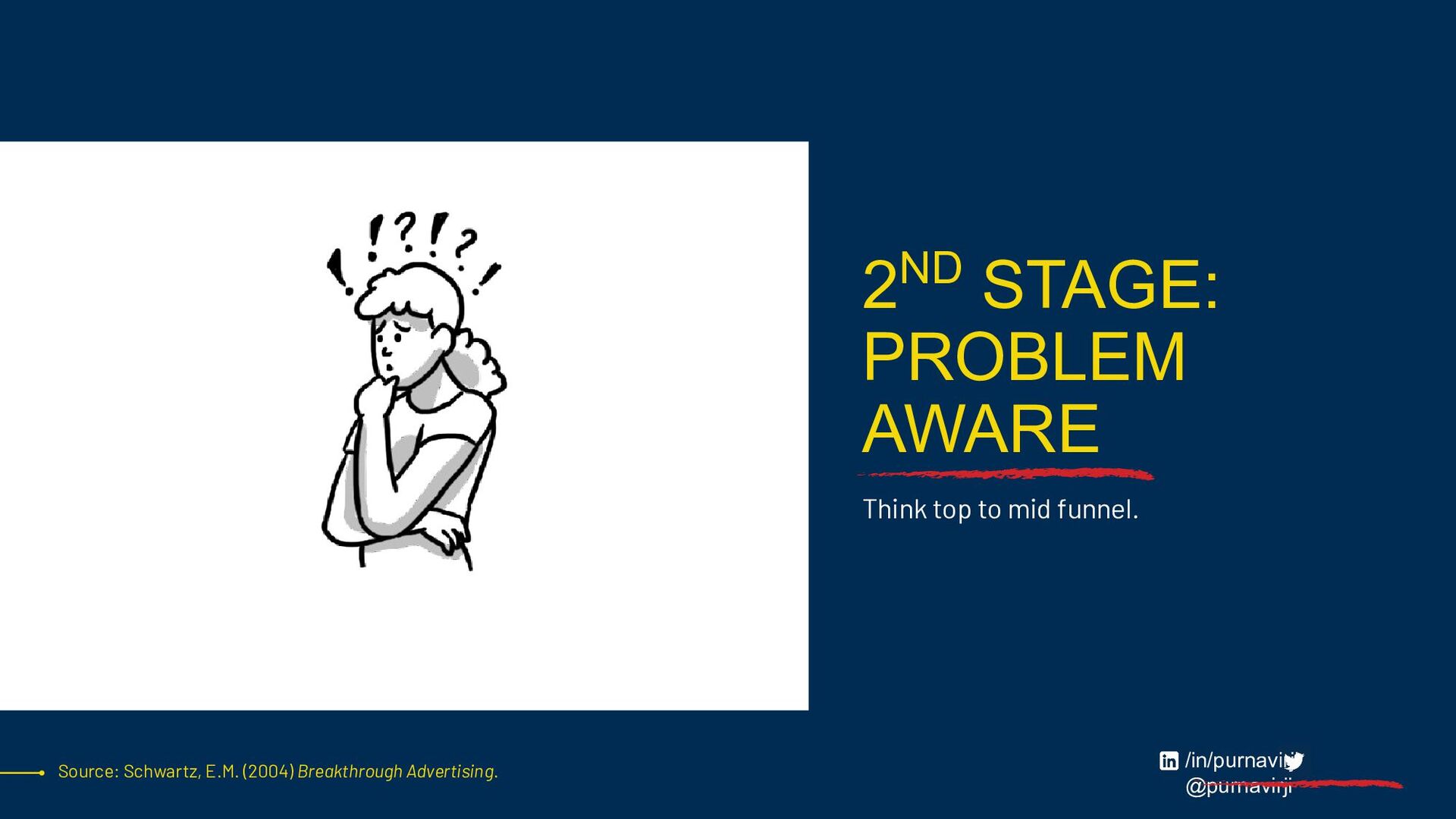
If you go one level below, again, think top to mid funnel, it's problem aware. So maybe they are aware that there is a problem, but they just have no idea that a solution exists or what the solution could be. At this point, they're probably worried.
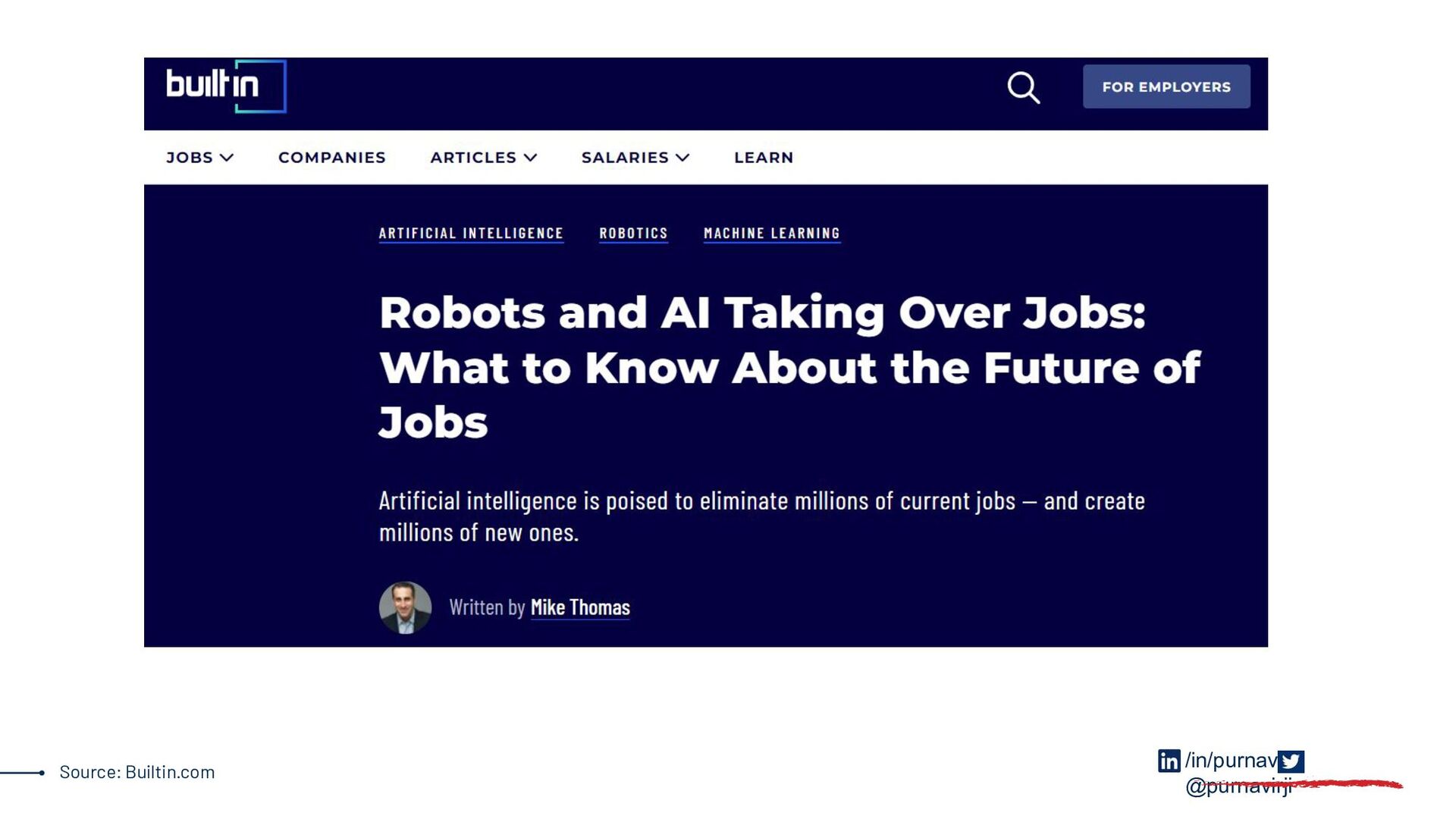
So your content could come with empathy. Yes, I understand your problem. I understand what you're dealing with. Here's a solution and here's hope. You want to lead with hope. It's so much better. So let's look at this one. This is everyone's worry right now.
The robots are coming to take my jobs. It's like, here's what you need to know about the future of jobs, and this create millions more jobs will be created, right? So there's a little element of hope as well. Same topic, what is AI, why is it important?
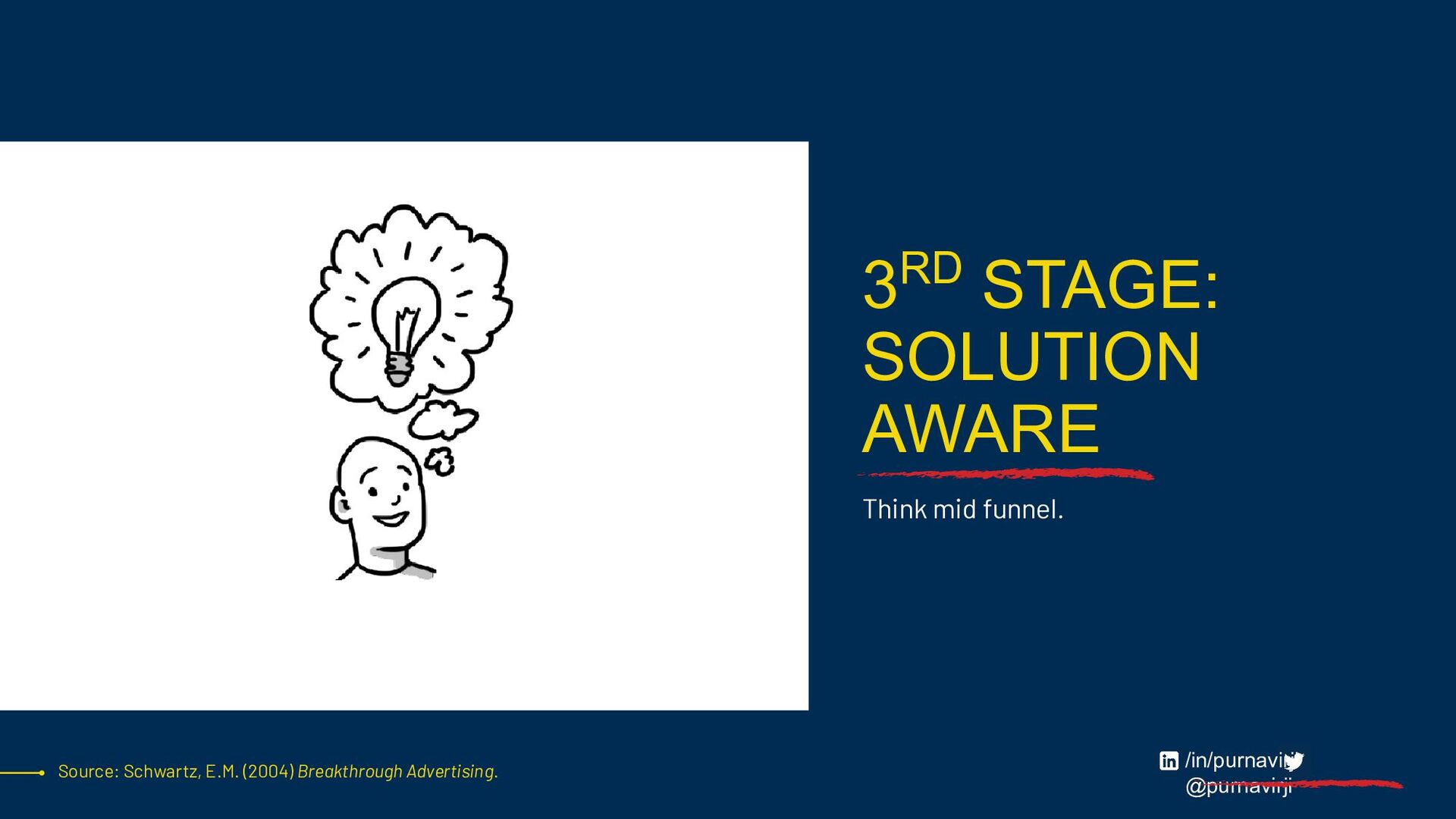
Just coming at it from there. Now, they're aware that there's a problem, they're aware that there's a solution. They just may not know that you're the perfect person to go with and choose for that. So now you've got to highlight to make them aware of who you are and what you solve for.
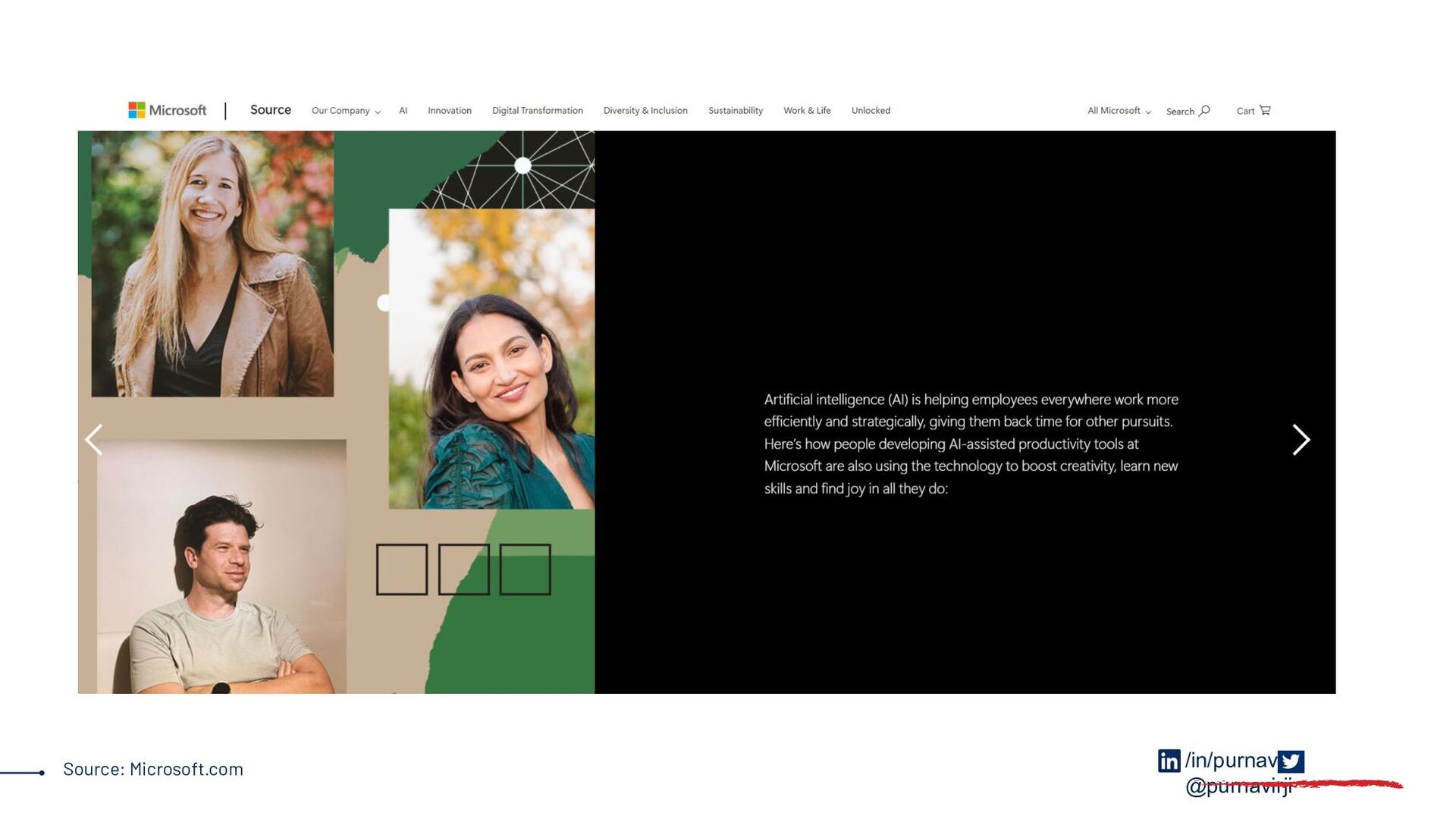
So my parent company, Microsoft, I love this. So on one of their blogs, what they did was they created a human interest story. This isn't a hit you on the head. What they did was like, hey, these are the people who build the AI products at Microsoft.
Let's talk to them about how they use it. Interesting. You'd want to read that. You're like, oh, yeah, the people who built it, like, how are they using it to make their lives better and more optimized and fuel creativity and yada yada. Such an interesting way to come at it.
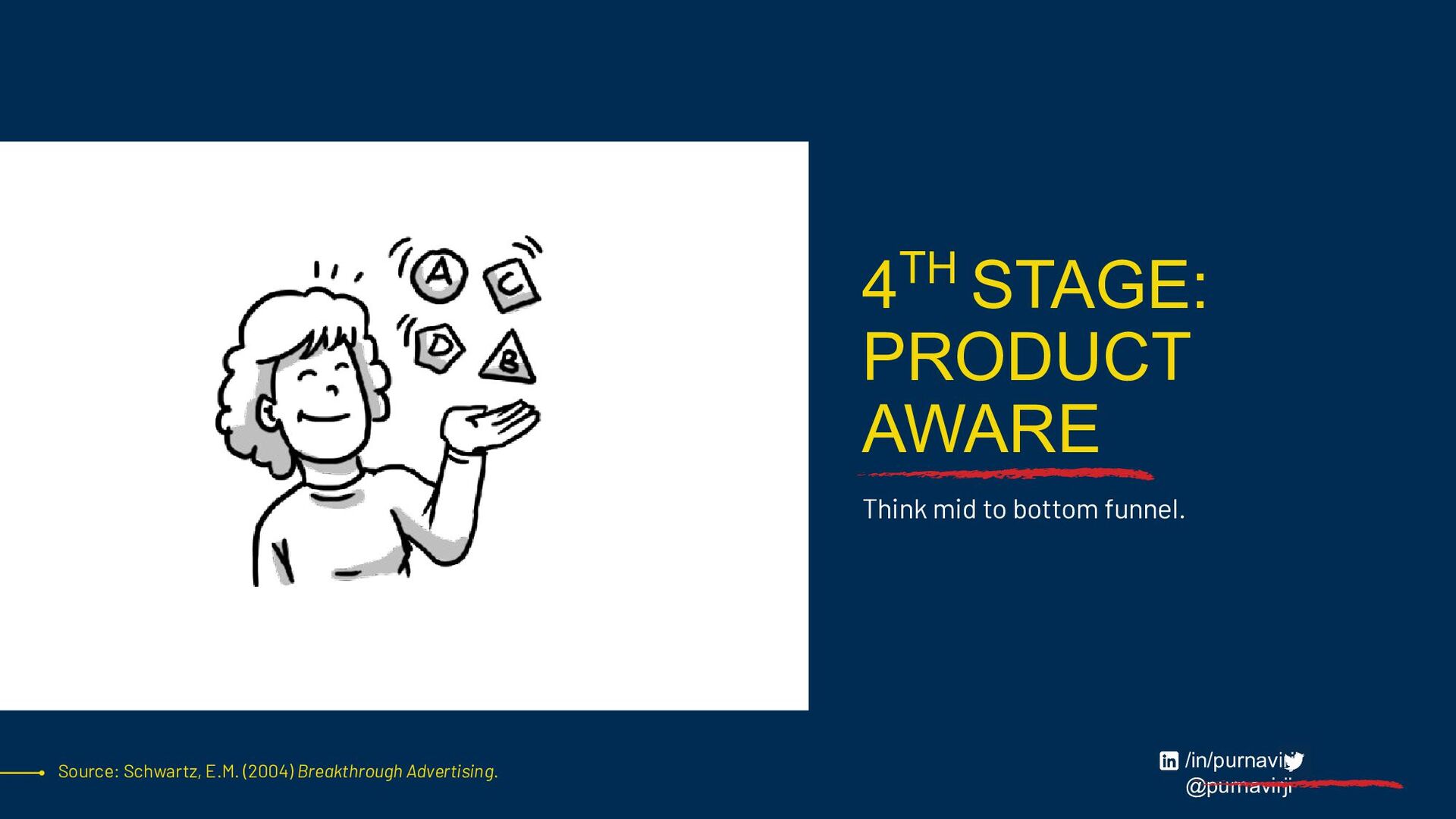
It's like a magazine article I'd be reading through and going through that. Stage four. Here is where they are product aware. So they know you exist. They're trying to figure out what else they should do and what whether you can solve their problem or not.
What kind of content do we need at this stage? All your awesome product marketing content is perfect for this. So go make friends with your product teams, with your product marketing teams and just get them to give you all of their awesome content and you just like put a little spin on it and put it out there.
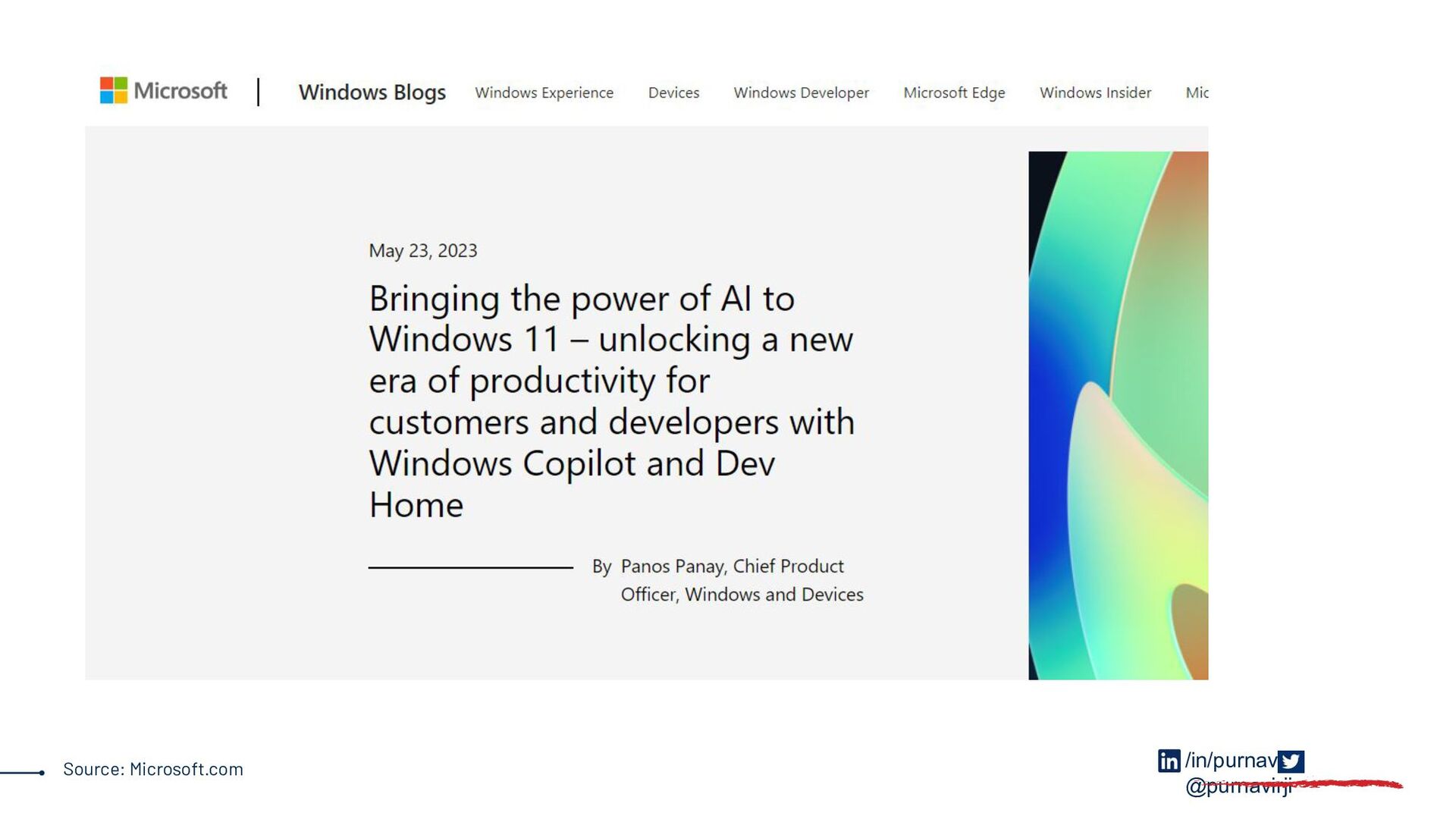
Here's another example from Microsoft. Here's Panos Panay who's our Chief Product Officer who's sharing about all of the different AI powers within Windows eleven to help developers do. So again, it's super relevant to the audience and what they're doing and it's all existing content just with an influential person to write about it.
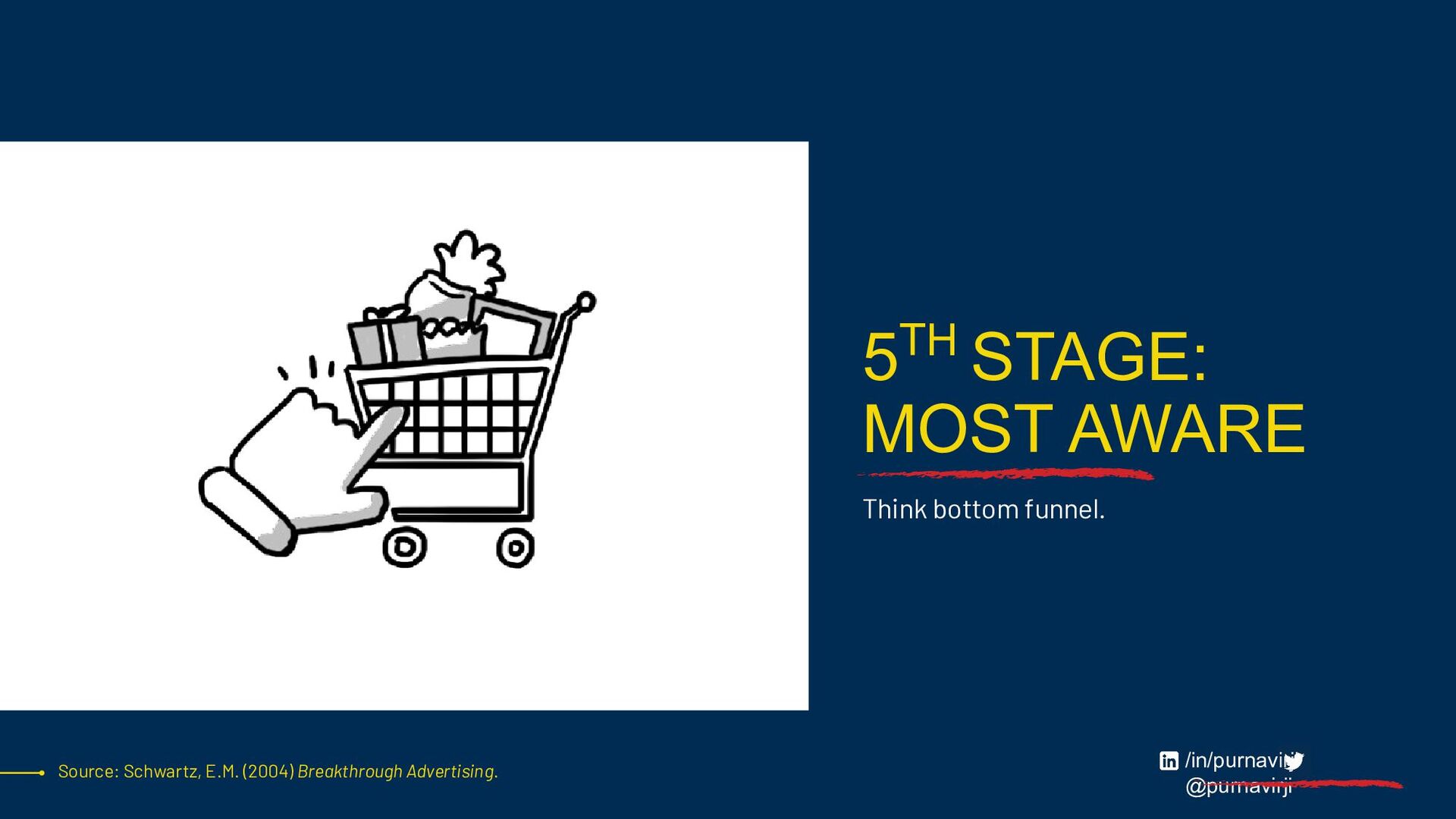
Now stage five. This is when they're ready to buy. Like, they're in the market, they're hot, ready to buy. You need to convince them. If it's B2B, you need to give them the research to overcome some of the objections or those social proof points to help them want to choose you.
Great social proof. Again, you can't go wrong with case studies, success stories, where you highlight what you did for other people. Remember, it's not about how awesome you are, it's how awesome you made other people's lives and the success that you got for other people.
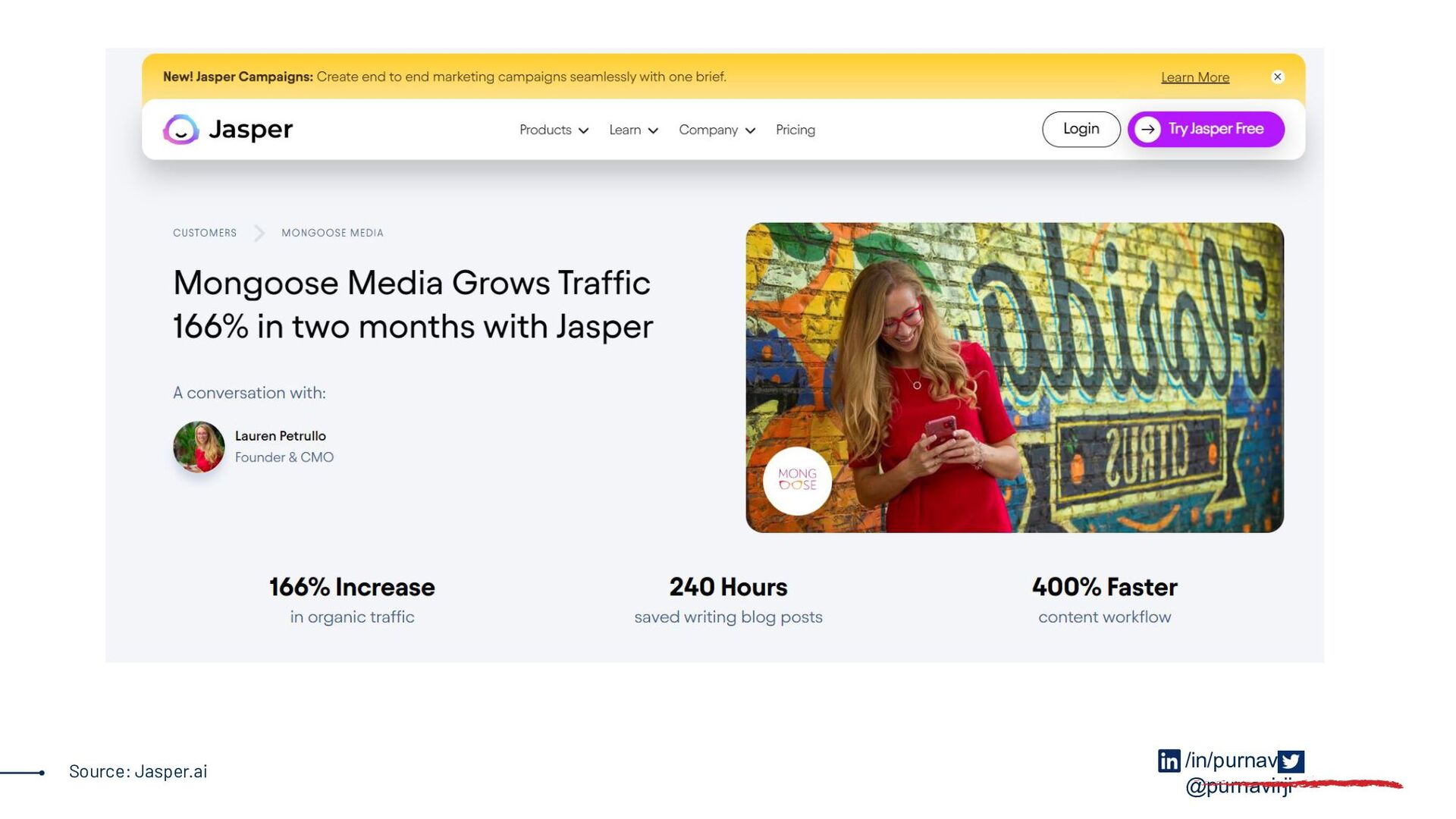
It's all about how you empower others. And case studies are just amazing content that literally writes itself because you can follow a lovely format and they'll do that. So here's Jasper dot ai talking about how they had helped a company grow one hundred and sixty six percent with their traffic.
In this way, no matter where they are, you want to be able to meet your customers where they're at or your audiences where they're at and guide them down the journey with you and hook them then. And you do need to create it for every stage of the funnel.
But as you saw, it's much easier than most people realize. Now we go to the same concept but different angles. I have another question for you. How many musicians do you think aspire to be a one hit wonder? Nobody, hopefully, right? Everybody wants to have tons of different hits across different genres because, heck, if we only listen to ballads all the time, even if that was our favorite genre, we'd soon be like fed up and no more.
The same way with high impact content, right? It's vibrant, it's diverse, it's like a playlist of your favorite hit songs from your favorite artists. It speaks to different moods, it addresses different motivations. That's what we should do. Motivation is such a keyword. One more question.
How many of you think that our job as content marketers is just to inform and educate? I love it. No, no hands up. Brilliant. Yeah, we're not. Our job at the end of the day is to sell, right? We're here to, like, push this.
We have to justify our existence, our salary. And we can. Content has so much power in getting people to engage. Since the dawn of time, humans have always used content to sell. And so if you're looking to sell well with your content, you want to study the best ways that people sell.
Now, good salespeople know that there are six top buying motivations that have been there since the dawn of time. It just appeals to human nature, which, regardless of technology, comes and goes, human nature tends to stay the same and pretty consistent throughout. So let's break each one down and we'll use toothpaste as an example because hopefully we all used some this morning.
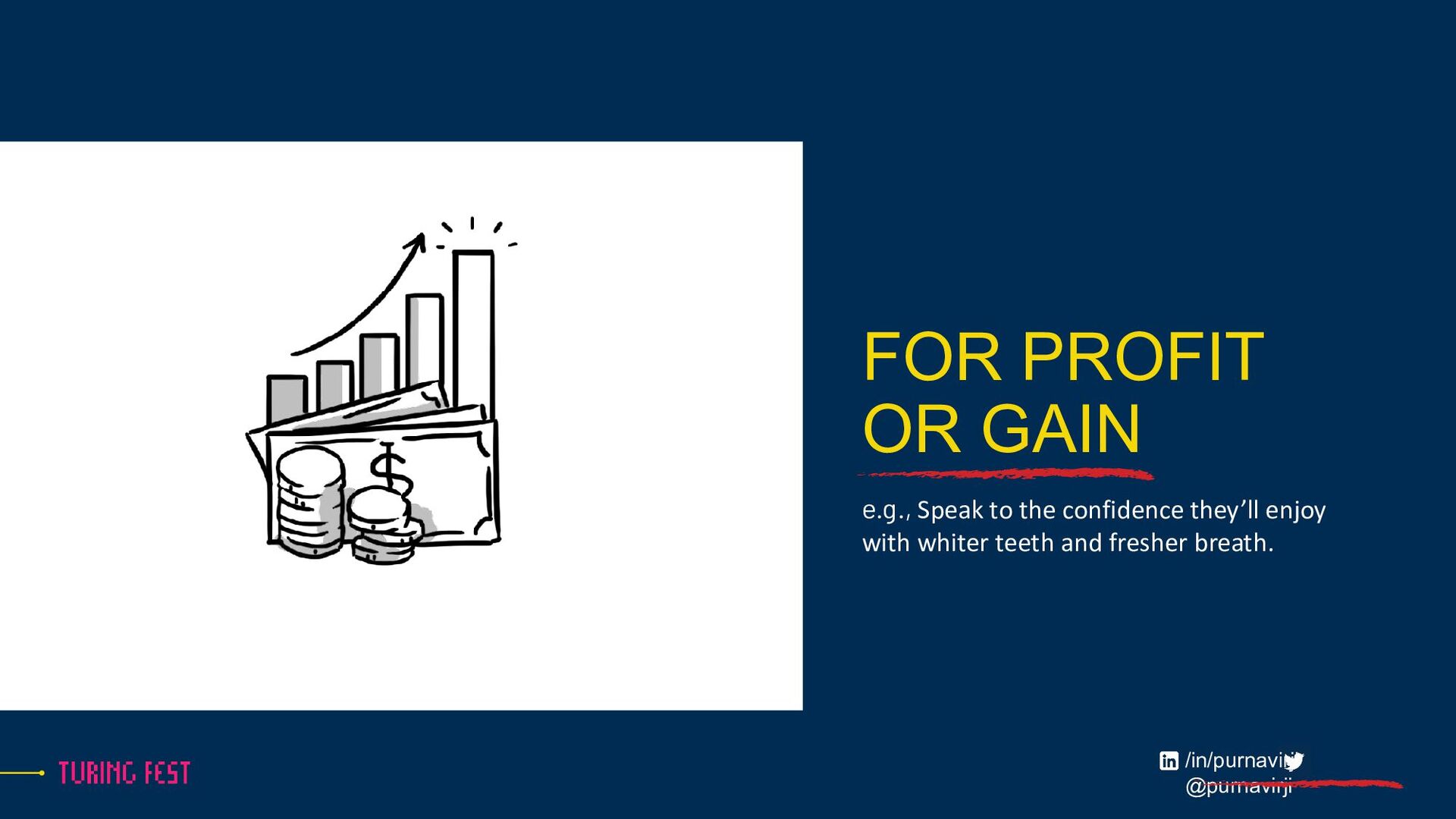
Let's say for profit or gain, right? We're all humans, we want to just do better, we want to win, we want to grow. We're greedy, right? We can be motivated with the carrot. So let's say if I'm trying to market my toothpaste and speaking into the for profit or gain aspect, I'll be like, hey, think about how confident you'll feel with whiter teeth and fresher breath, that you'll be great, you'll be so much more attractive.
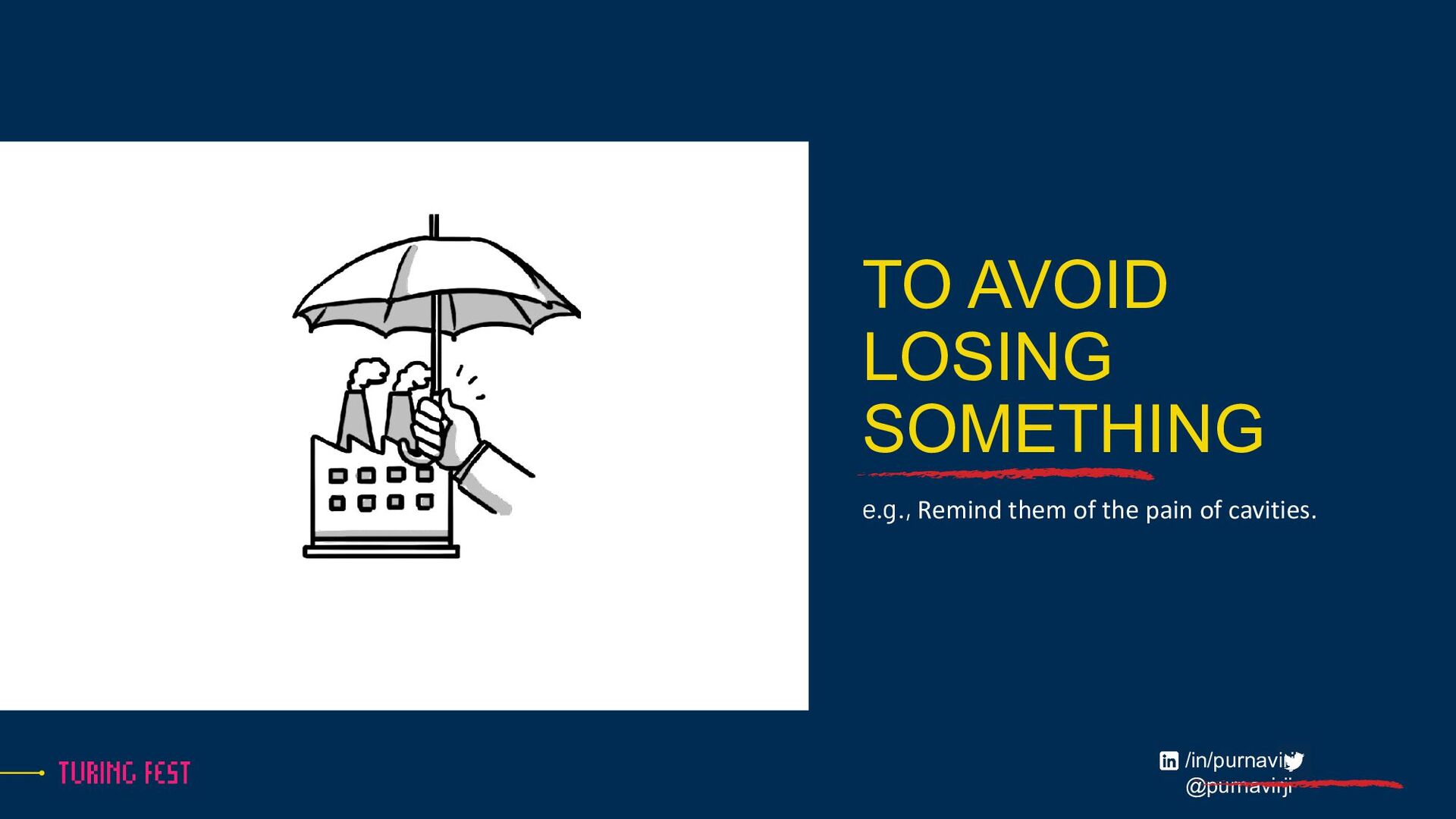
People want that. They will do that. You've seen toothpaste commercials that speak to this. Another thing that we want to do is we want to get away from pain. We want to avoid losing things. Moving away from pain is so ingrained and it's necessary to our survival.
If you think touching fire once as a kid, touching something hot, you'll never do it again. So here we can say that, hey, remember how painful those cavities are, that root canal? Who wants that? This toothpaste is amazing because it helps you avoid cavities.
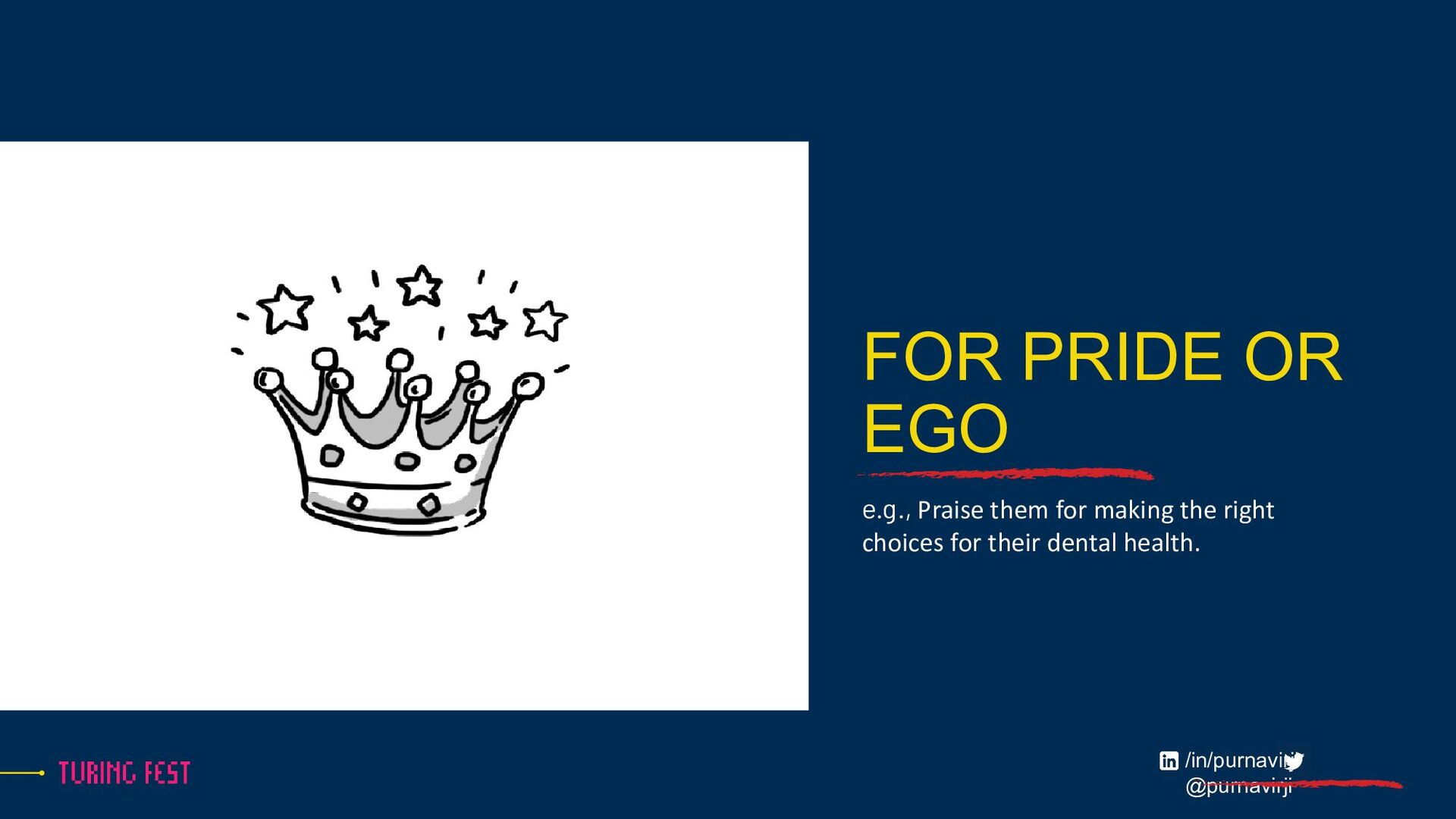
Pride and ego. Yes, we all are prideful and egoistic. It is one of the sins, but it's also very much a great motivation that we can speak to. And here you can say that, hey, you're smart. You're going to make the right decision for your family with your toothpaste.
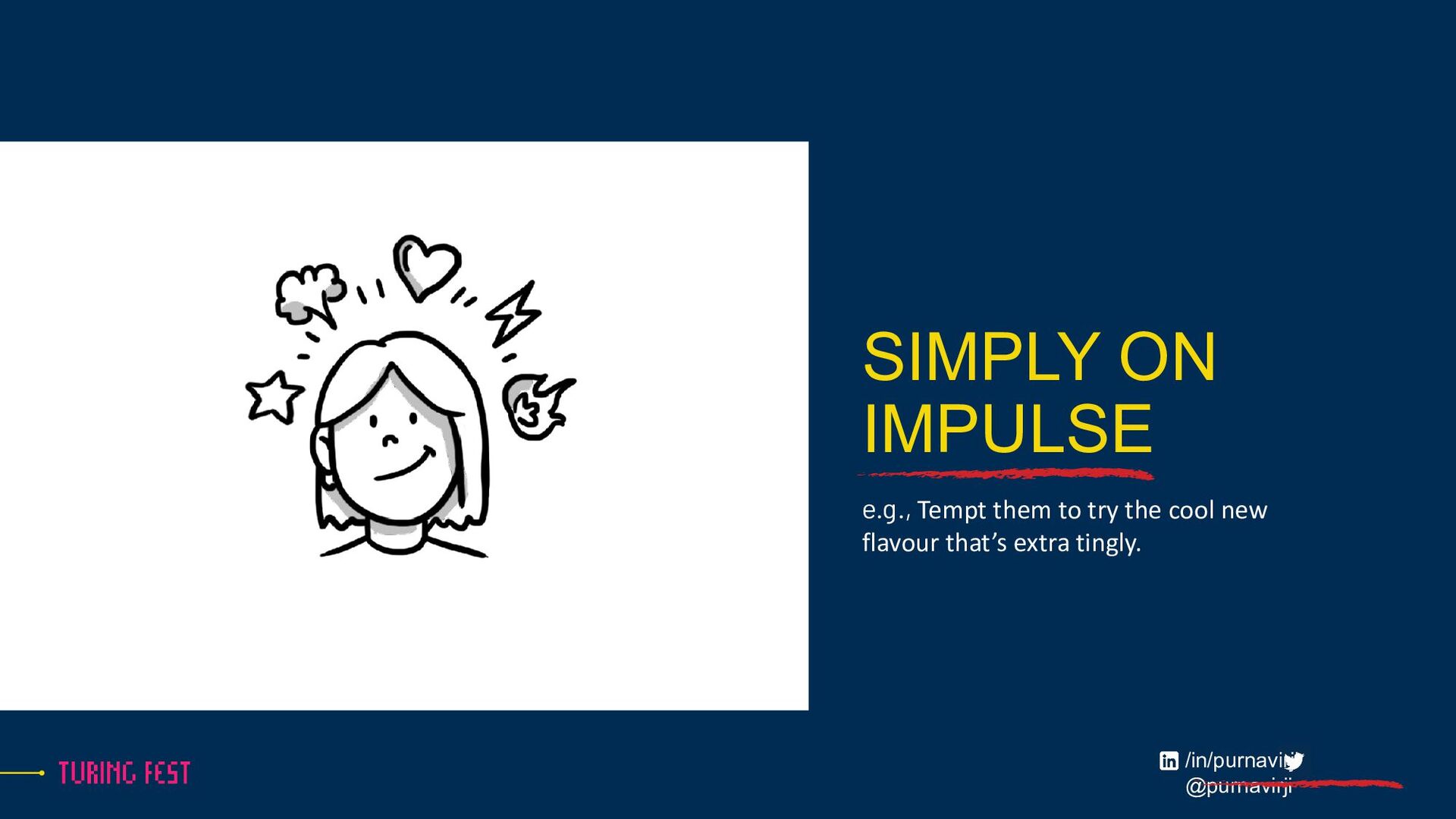
You know how to take care of your dental health, right? Stroke that ego. You're going to make the right choice. Sometimes just on impulse, right, you're there, you're buying the pack of gum while you're checking out. So all we can do here is, hey, tempt them to try the cool new flavor.
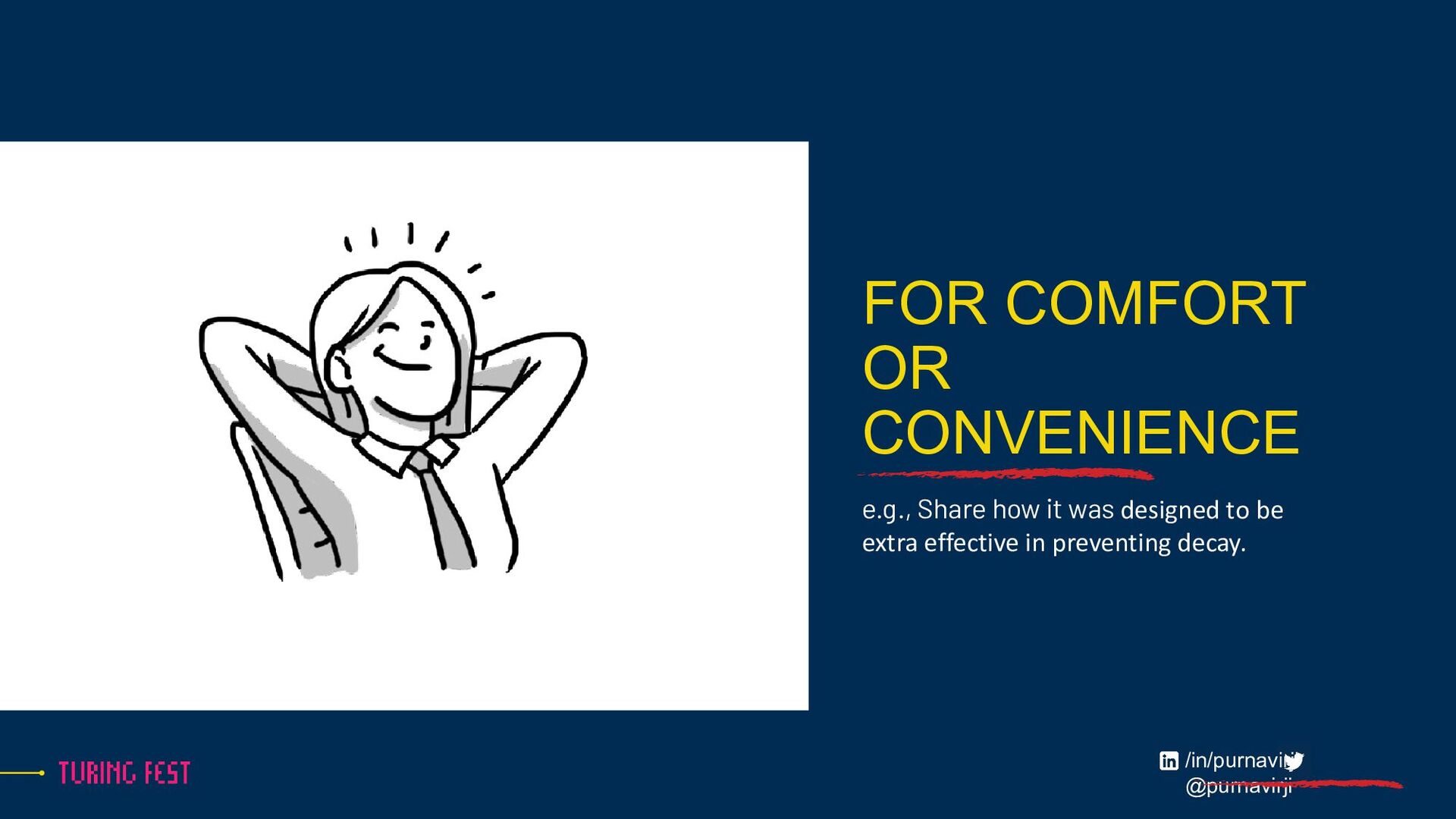
It's extra tingly. Or there's extra stripes, so we've got sparkles in the toothpaste. We've all been won over. We all bought the toothpaste based on something like that. Because they're like, Oh, this is fancy. Let's try that. Or then sometimes just for, like, comfort, convenience, for, like, long term health, we can just think about how, listen, this was clinically proven to help prevent tooth decay.
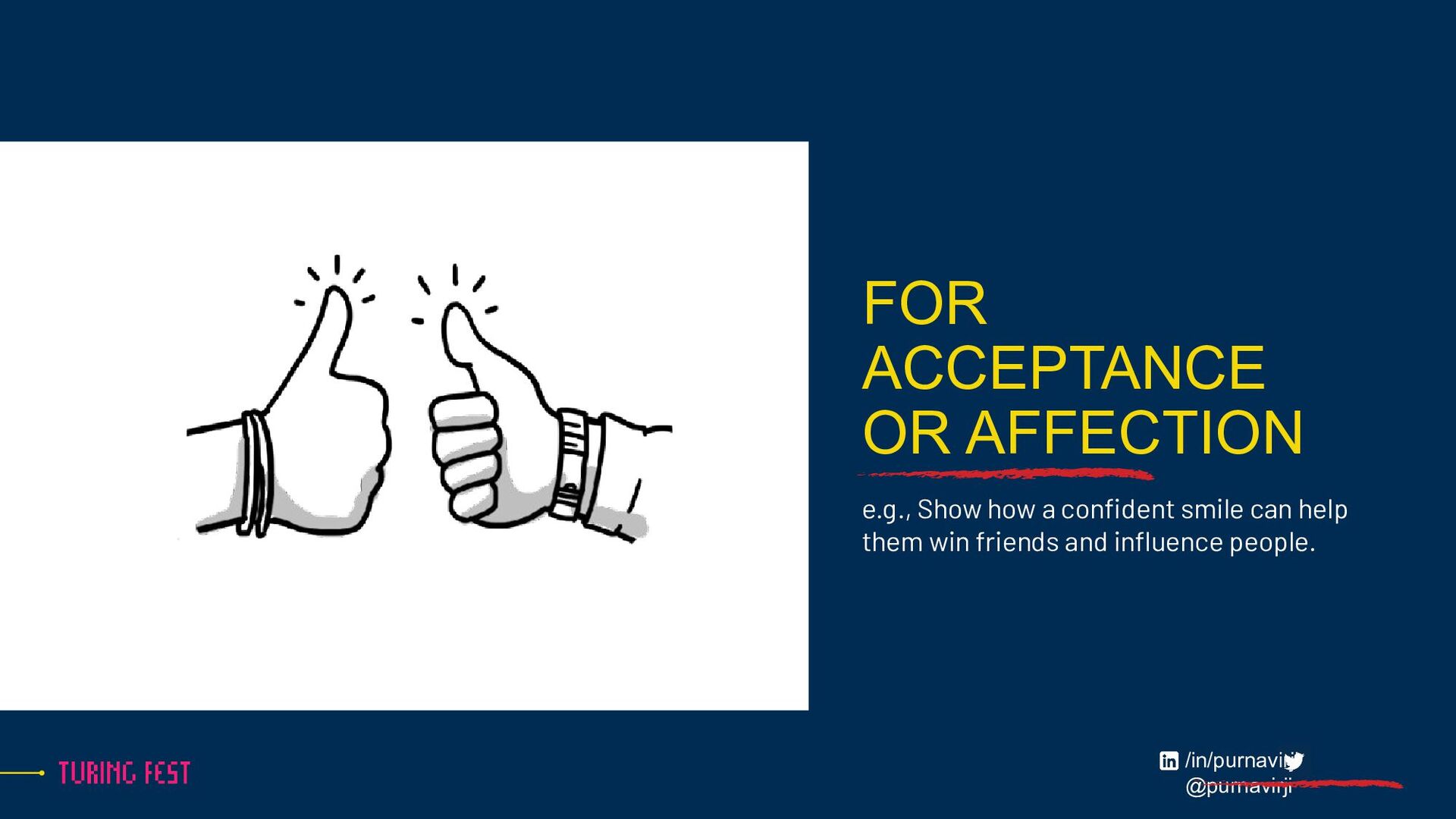
Four out of five dentists agree, right? And then for acceptance and affection. If we think love and belonging, Maslow's core hierarchy of needs, right? It's all been there. We want that. Like, this toothpaste and your confident smile will help you win friends and influence people.
The same idea, just with different buying motivations, can help your content feel minty fresh and sparkly when you come at it from these different angles. And each one has it. I know toothpaste is a pithy example, but it's something we all know. What are those different motivations that each of you have?
If you're going out there and you're promoting something to somebody and maybe for them, you're trying to push it like, Look, this is going to be such a quick solution, it's so fast. But their objection is not that it is they have lack of time.
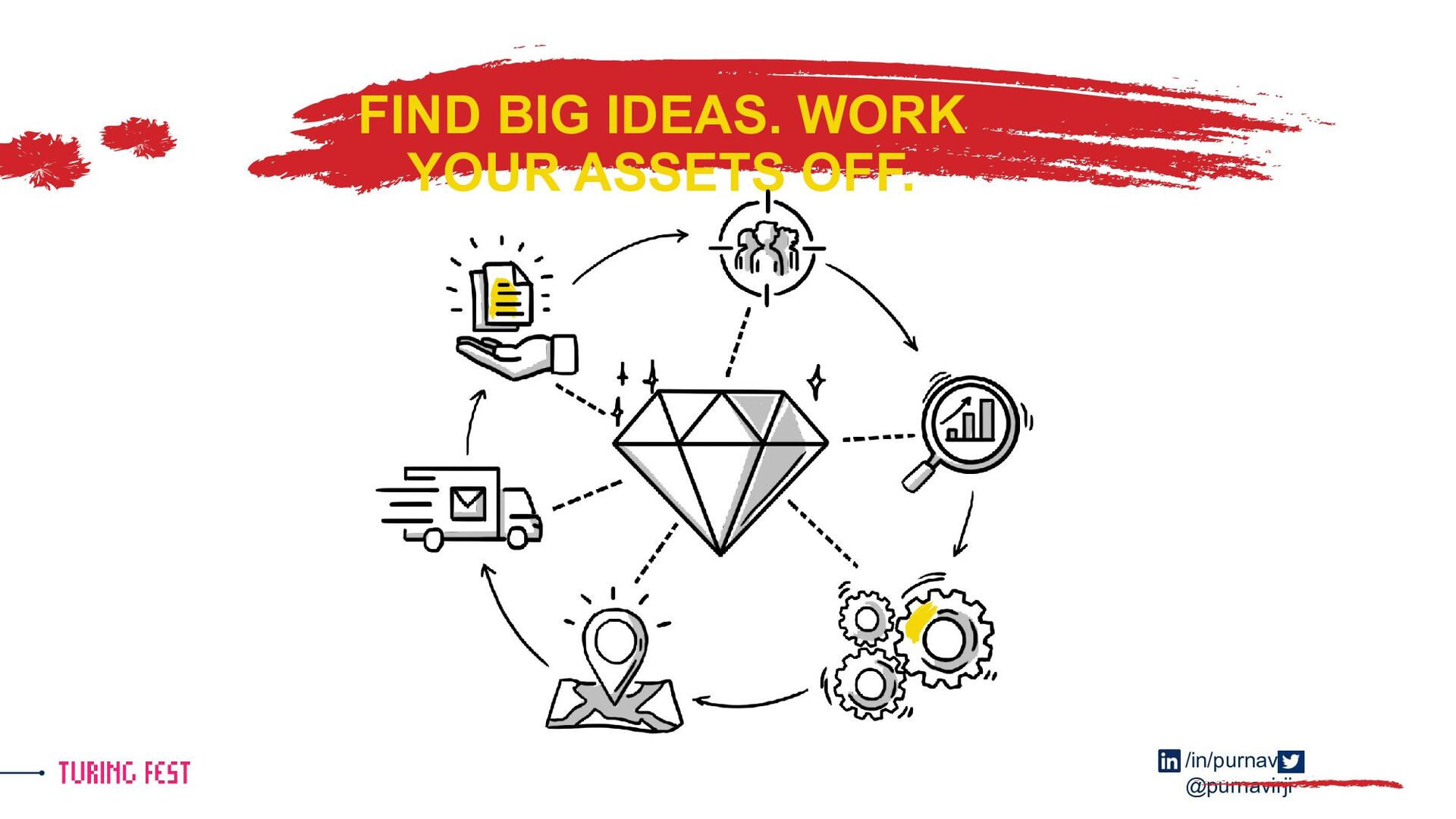
It's like their worry is that they don't have like it's too expensive. Is it going to be worth the money? So you come at it with these different motivations. You can speak to and overcome different objections. So remember, find big ideas, work your assets off, right?
Your content, every single piece of content is a high investment opportunity. So don't treat it disposably as people do with fast fashion. Find those big ideas. And how do you tell if it's a big idea? A good tip that you're onto something big is if you can find different ways and angles to use it.
If you're like, Oh, I could take this idea and I could do X, Y and Z with it, and then A and B and C with it, you're like, Ah, now I'm onto something. Now I've found the nice big idea. So find those ideas, see if you can tailor them and tweak them for different audience segments.
Tailor then tweak those for people at different stages of the journey and then come at it from those key top motivations to really help people feel like, yes, this is for me and this solves my need and this is the one I want to go with.
And you build that intangible, I like this company, I trust this company, I want to work with them. And so that's really the whole keys. Don't keep creating more and more content. No one needs that much. Take your existing content and make it work way harder and harder and harder.