
Capturing and keeping attention is one of the hardest parts of our job today. Fact: It’s just going to get harder with the advent of new technology and conversational interfaces. In the brave new world we’re stepping into, the key questions are: How do we get discovered? How can we delight our audiences? And how can we grow revenue? Come to this session to learn how to create deeper relationships with your audiences via conversation.
← All talks 








Grow Marketing Turing Fest 2017
Marketing in a Conversational World
Auto-generated transcript - may contain errors. Tap a timestamp to jump the video.
Hello. Hello, guys. Let's start by taking a little stroll down memory lane. Let's go back ten years in the past. The year is two thousand and seven, the iPhone was first introduced. Apps we take for granted today, like Uber or Instagram, didn't exist.
But probably the craziest fact to me was that about twenty ish percent of people in the UK were still accessing the Internet via dial up. Remember dial up? This sound? Yeah. Doesn't that feel like a lifetime ago, you guys? It does, but yet, despite all our advances in technology and apps and the way we reach our audiences, we're still doing things like this.
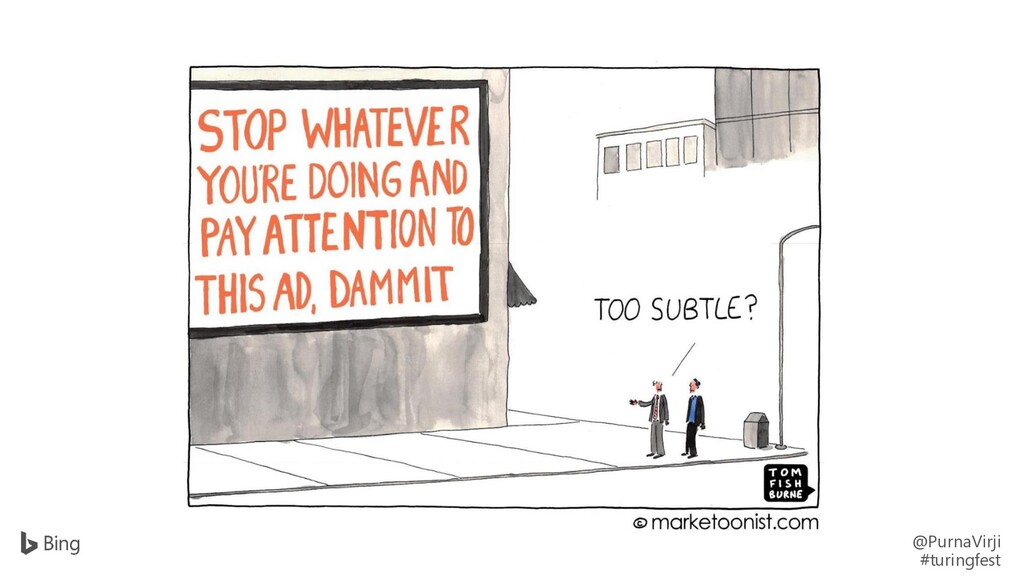
We're pushing, we're interrupting. And and I get it. Right? Attention is so difficult to get and to hold onto that we find ourselves doing things as marketers, that we hate as consumers. Right? There has to be a better way. Advances in AI have really made it possible for us to engage our audiences in a way better way.
Our marketing has to do better. We need to start saying goodbye to interruptions and hello to conversations. And we can do that via chatbots. So, that's what I'm gonna walk you through today. I'm gonna walk you through how to use AI and chatbots and personal assistants to create deeper, meaningful relationships with your customers.
So we're going to cover how our technology has been evolving. We'll talk about how we need to evolve our engagement with our audience, and then how our strategies need to evolve to keep up. So with evolving technology. Now, I'm a big believer that to understand the future, it's always good to look at what's happened in the past.
So let's go back now twenty years ago and take a look at how, over the past, I guess, twenty years, how the fate of companies has been determined. So I tried to look at the top five companies in terms of market capitalization across the world according to Fortune.
And if we looked back at nineteen ninety seven, it was all about like GE and Dutch Shell and ExxonMobil and Coca Cola. It's all really, really companies that were a big part of our lives then. If we look back ten years ahead, in two thousand and seven, I think petrol prices must have gone up a lot because ExxonMobil was number one at that point.
Still GE, still Royal Dutch Shell, cell phones were coming out, right? AT and T just got iPhones at that point, so it shuffled around. But the companies were very, very similar. If we look at the companies that are there today, in the top five, it's a humongous shift.
It's all tech companies. Right? Amazon, Alphabet, Microsoft, Apple, all of them are right there in this one. So it just makes sense. Like whichever company is dominating around us in our lives tends to be the one that's in the top five. It makes perfect sense.
But have we stopped to think about how, as a brand, if we're pervasive in every aspect of people's lives, how profitable that could be? Let's take the case of pizza. If you think back to how you used to be able to order pizza even like five years ago, What were the options?
Or maybe website. Right? Phone or website. That was it. But if we think about, say, ordering Domino's or Pizza Hut today, how many options do we have? We can use phone and website, of course. But what about I can use my digital personal assistant?
I can send them a text message. I can I can interact with their chatbot via Facebook or Skype, for example, and be like, Hey, Domino's, I want my easy order? It'll come home. Let's look at what it does to a company's profitability to be there in every aspect of our lives, right where we are.
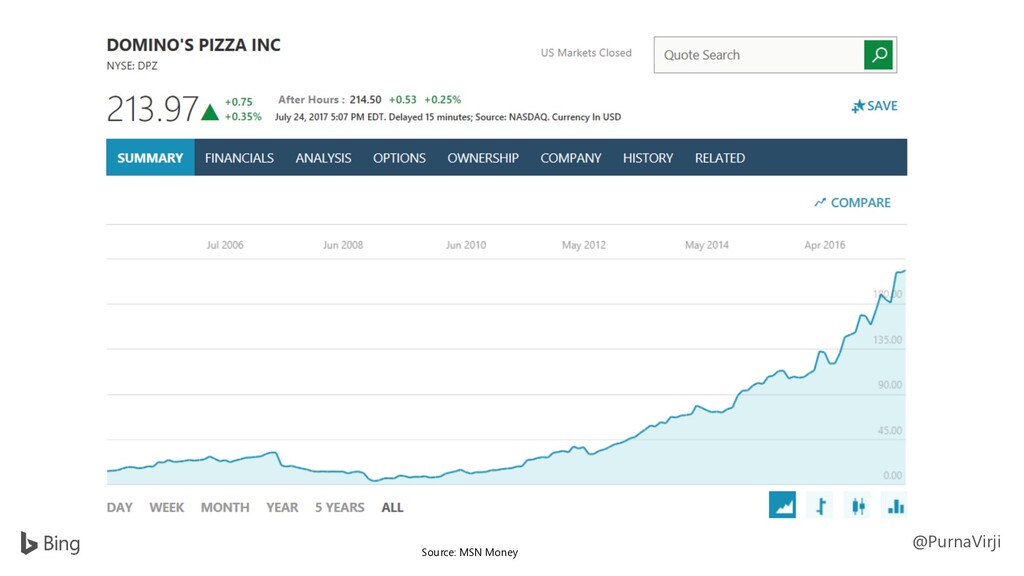
So I just used Amazon Finance to go ahead and look at the stock price of Domino's over the past since the beginning of time since they had it. And look at what's interesting. If you look post the iPhone, so post two thousand and seven, there was a little dip, but then they figured out how to use it and look how profitable they've become.
Domino's has been an amazing example of using technology to engage really well with their audiences. And that pays off, my friends. So let's see how we can do the same thing. If we want to interact with different companies, we can't just rely on the mainstays of today.
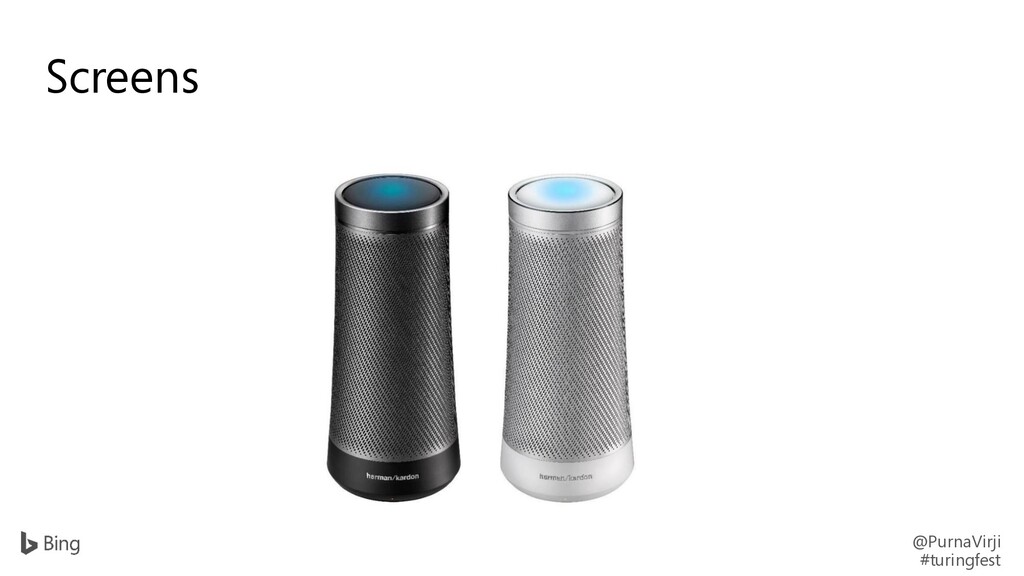
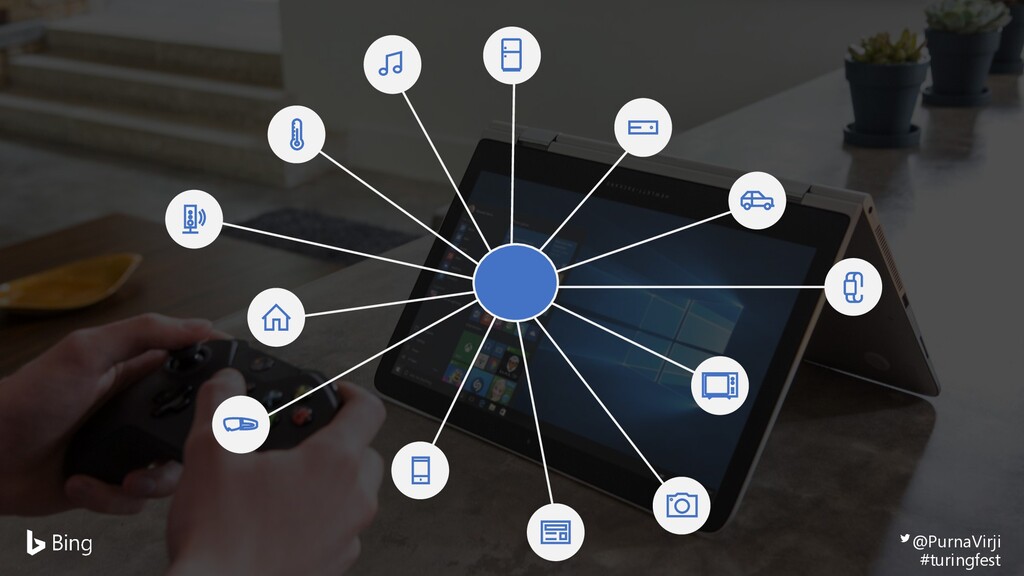
We want to be everywhere, and that means thinking beyond screens. I don't need a screen to be able to order pizza, for example. I can do it through my Amazon Echo. Looking at apps. Now, this was really interesting. Somebody pointed this out to me, and they said that the different apps in our phones, they are the interruptions.
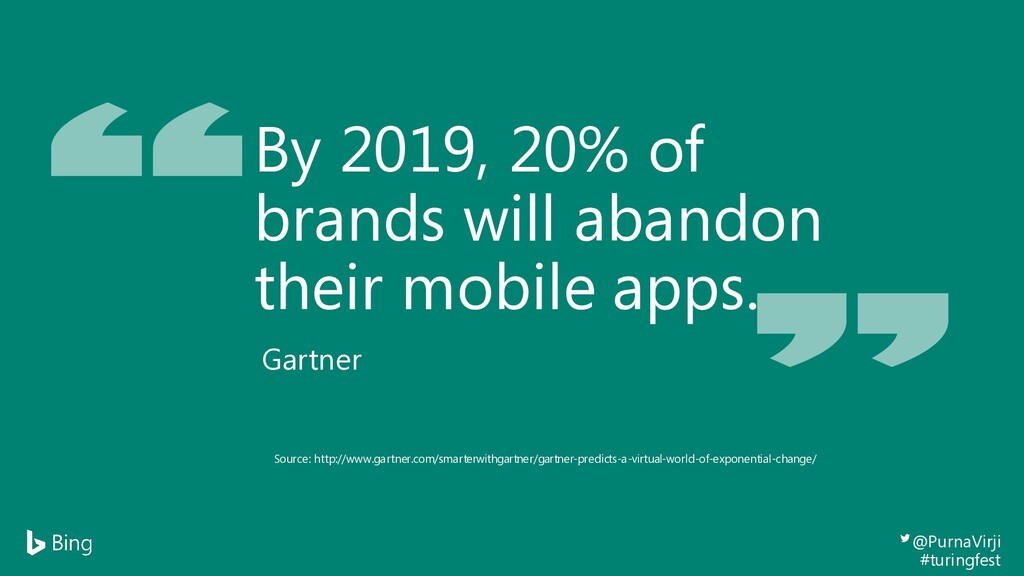
Because I've got to stop what I'm doing in one app to go and do something in another app. It's a completely different user experience as well. And a lot of companies are fed up with creating apps and pouring all that money and resources into it for something that people barely use.
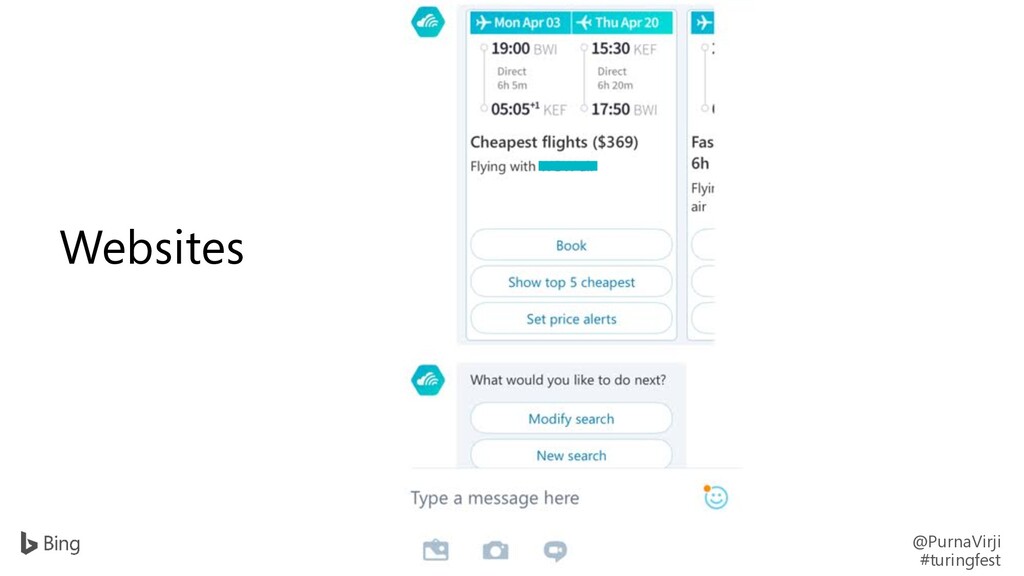
Let's think about our own behavior. How many apps do we tend to use most often? It's barely a handful. And websites as well. Now, our whole jobs have revolved around sending traffic to websites. But what happens when the website isn't always necessary? Example, Skyscanner, I can go ahead and research and book my flight through their Skype or Facebook Messenger app, and I don't need to go to the website.
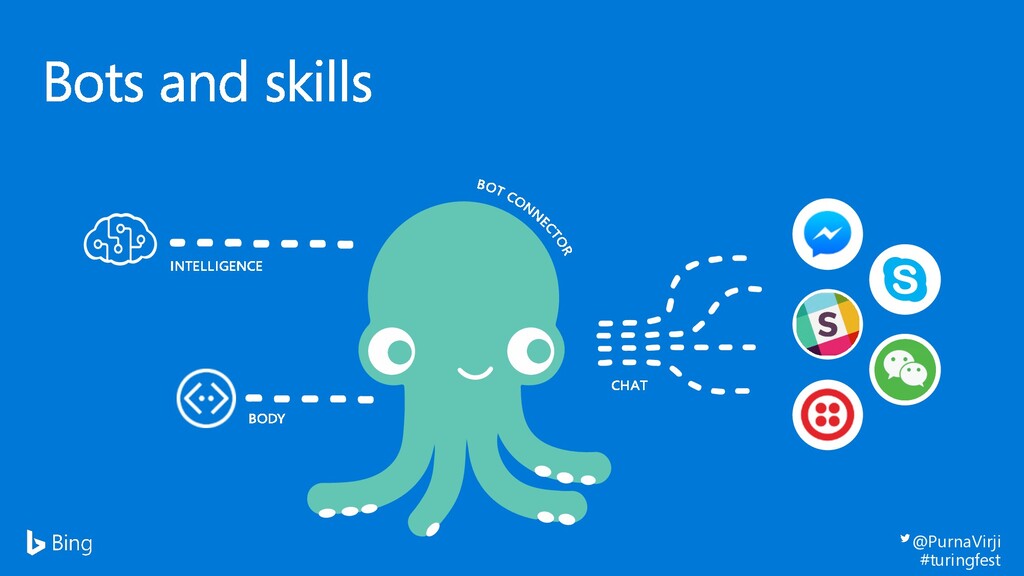
So we have to think beyond that. There's three new players in the game. We have chatbots, skills, and digital personal assistants. And all of these are powered by AI to have very human like interactions. Now, one of my favorite examples of how AI can be really great and human like is this one.
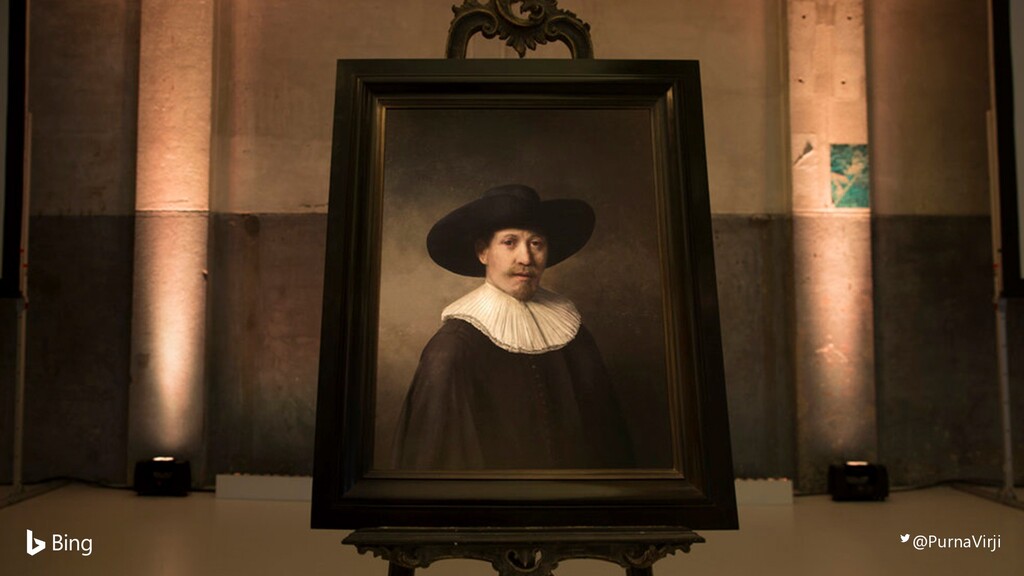
Any fans of Rembrandt in the room? Okay. A few. A few. Now, hopefully, you will not be or you will be surprised to hear that this isn't an actual Rembrandt painting. This is called the next Rembrandt, And it was created by an artificial intelligence, which is sort of blowing my mind, but here is what it did.
So, Research looked at all the different works of Rembrandt, including his use of lighting, his use of subjects, and on its own, it created a brand new painting. The most amazing thing about this was now, if you've ever looked at a painting, you've seen that there's a little three d effect of the paint on the canvas.
Right? This AI printed this painting out and used the different layers of ink to recreate that three d effect of paint on canvas. How crazy is that? Right? This is all super super human like. AIs are great at being human. And yes, it has stumbling blocks, but it's really getting there.
So if we think about personal assistants to level set, they are meant to be your agent or your person across all the different areas of your digital life, with your permission, of course. And their only goal is to know your likes, your dislikes, and your patterns so it can serve you better and make your life more productive.
Then we have bots and skills on the other hand that are the agent on behalf of the brand or the company. And they can engage with the consumer either directly via, say, a chatbot or a skill that when you talk to Cortana, for example, or they can interact with the human via the personal assistant.
So you don't always have to engage with it. So let me show you an example. Let's say I have continued to fall madly in love with Scotland in this trip here, and I want to come back, and I want to go to another city that I've been to before, Glasgow.
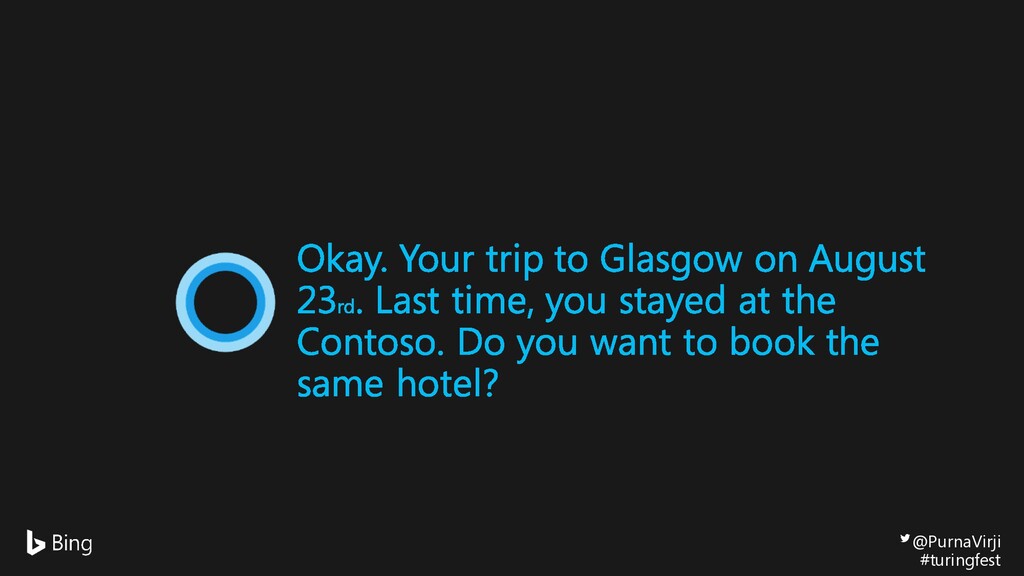
Now, like most people, I tend to book my flights really early, but I save my hotel till last minute, and then I panic. So imagine if I went to Cortana and I said, Hey, Cortana, ask my travel company to book me a hotel in Glasgow.
She says, Okay, your trip to Glasgow coming up on August twenty third. Last time you were there, you stayed at the Contoso Hotel. Is do you still want to stay in that one? I'll say, yes, of course. That's perfect. I'll do that one.
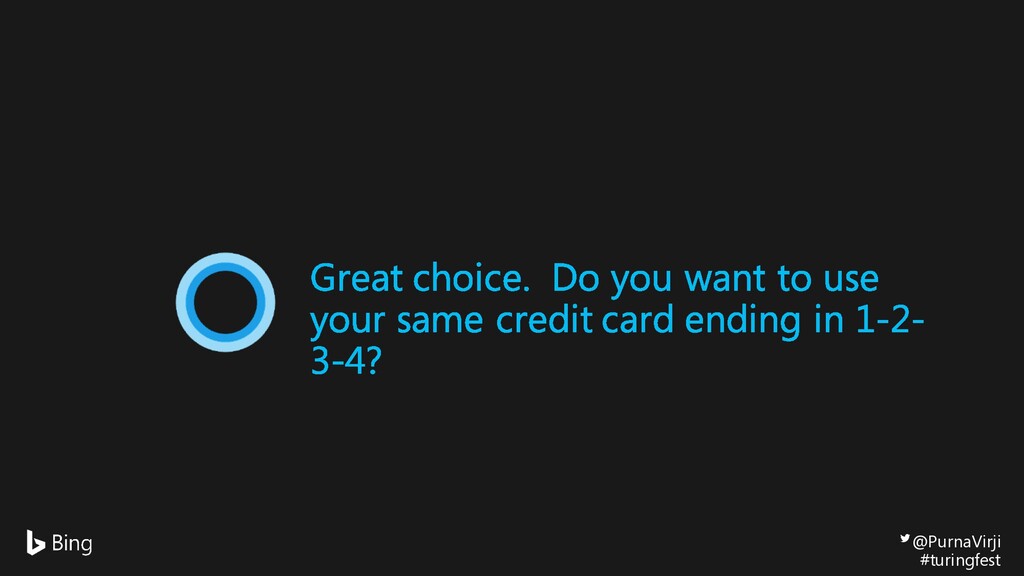
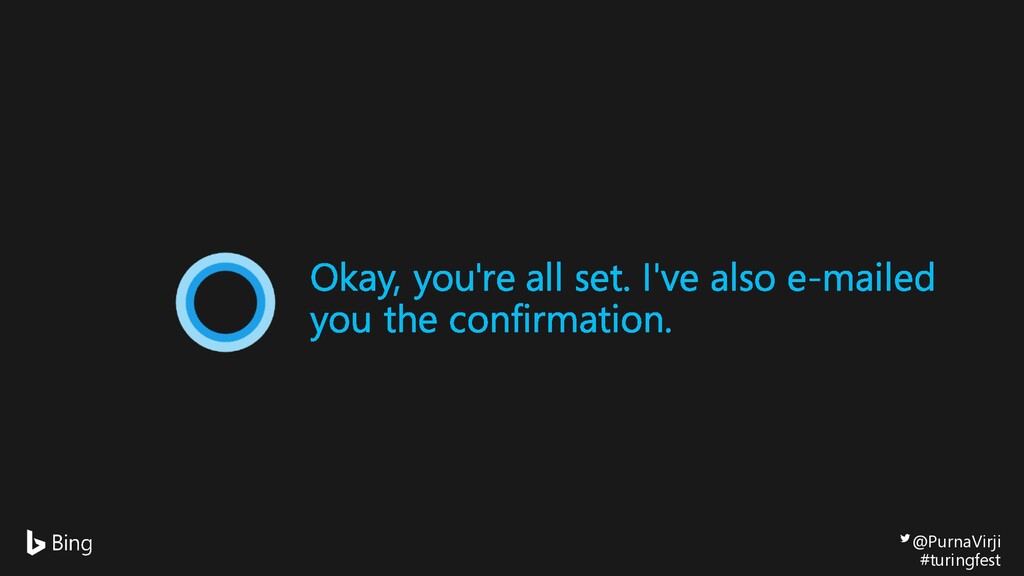
Great choice. Do you want to use your credit card ending in one, two, three, four? Yes, Cortana. That's perfect. Let's do that. Okay, you're all set. I've also emailed you the confirmation. So she spoke to my travel company, say Expedia, Skyscanner, you name it, on my behalf, booked all of this, and it was so easy.
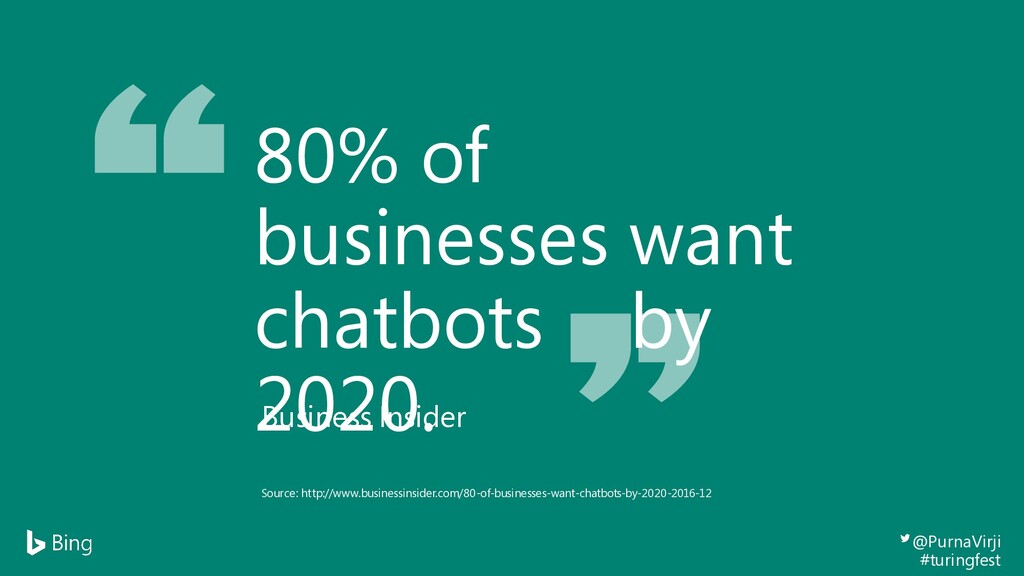
A task that takes several minutes at best can now be done in under a single minute. So it's no wonder if you think about Business Insider's predictions that they say eighty percent of businesses want chatbots by twenty twenty. It's not a fad. It is really something worthwhile for businesses because, a, it saves them money and time on customer service, but most importantly, it's better for the consumer.
We can get our stuff done so much faster, and there's none of that annoying thing like wait time or dealing with that automated system on the phone. Right? We all universally dislike it. And, a natural question to ask at this point is, hey, how is this going to change SEO?
Is it going to destroy SEO? Because, right, isn't everything like something's going to new, it's going to come and kill SEO? It is nuts, that pattern of articles. But in search, we're used to these really big shifts. We are we're used to facing them, and we've dealt with it with grand aplomb throughout.
So this time, we can see the shift coming even before it comes to us, and we can prepare for it. So what will this really do? I think it will just expand our roles beyond websites. We're going to have to look at ways that we can engage with our customer through things like chatbots and personal assistants as well.
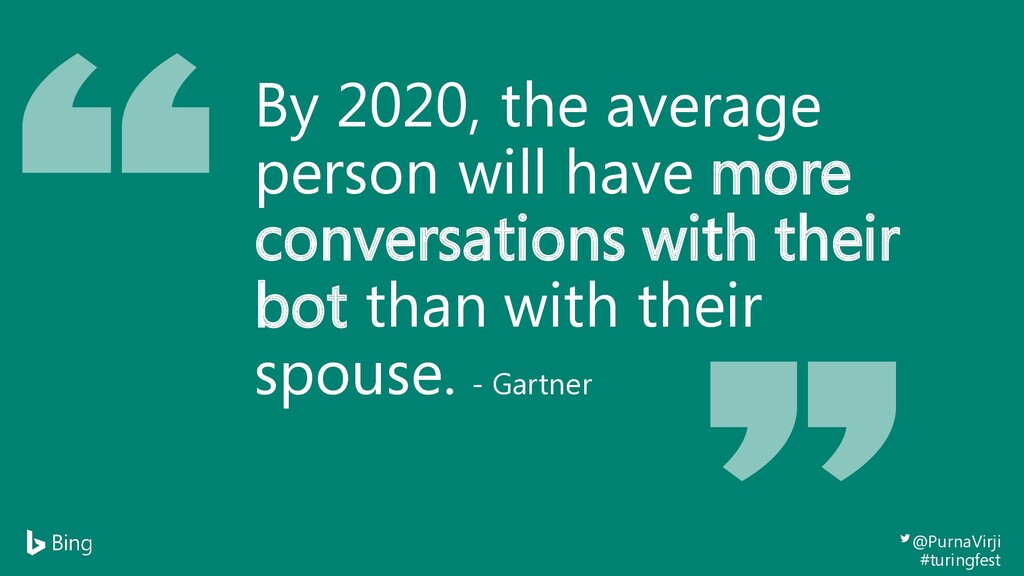
So let's look at how our engagement is going to evolve. The main thing is that it's changing the conversation from a one to many to a one to one. And that allows for a lot of personalization and a much stronger rapport. In fact, another really funny prediction that I actually laughed when I saw it was that by twenty twenty, the average person is going to have more conversations with their bot than with their spouse.
And my husband's in the audience, and I think he will celebrate that. Right, honey? But bots are fantastic for everyone, no matter the size of your business. In fact, small businesses can benefit even more from having a chatbot because it takes a load off the actual human employees for answering things like common questions or doing like little menial repetitive tasks so that the humans are free to do something else.
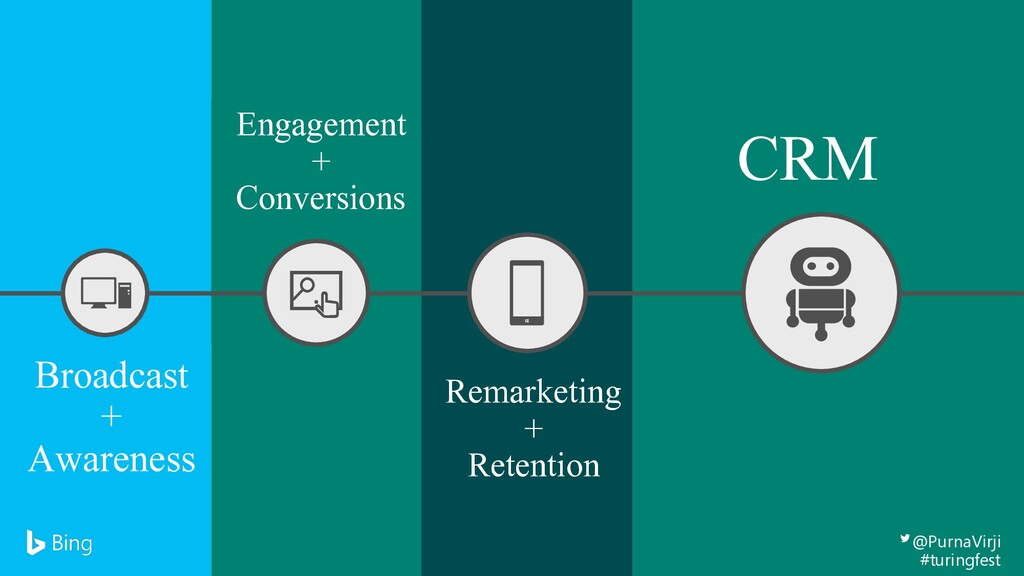
And they're great for every stage of the funnel. If you're thinking about only as a sales draw, there's a lot more you're missing out. So let's think about how bots can be fantastic at the broadcast and awareness stage for engagement and actual conversions, for remarketing and retention, as well as the good old customer service and customer relationship management.
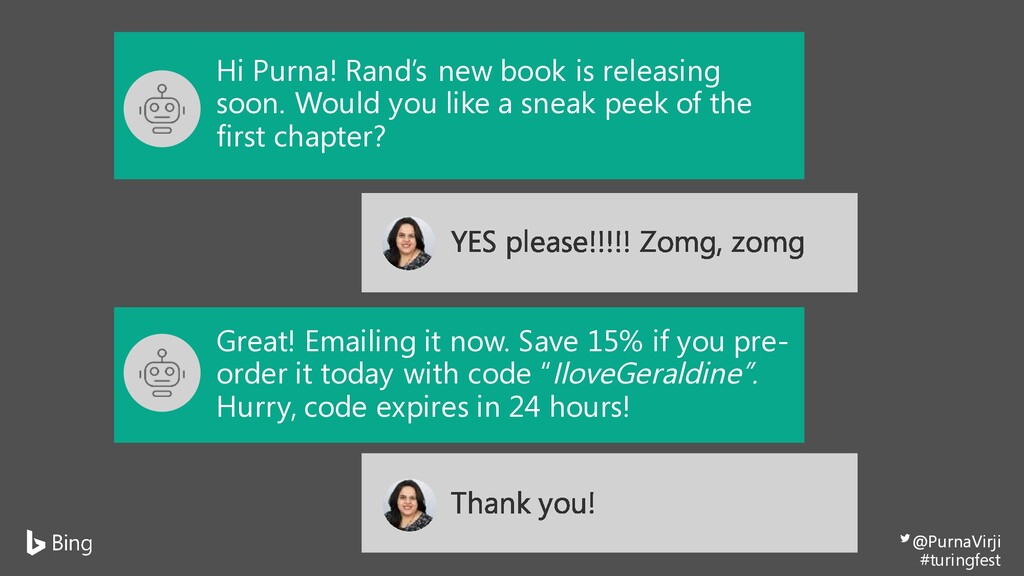
Again, I'll give you the example of Let's pick a bookstore. Something like WH Smith, for example. WH Smith may know that I'm a big fan of Ran Fishkin, and I read all the books that he's written. So it can come out and ping me with a message, which is sort of helpful that, Hey, Perna.
Rand's new book is releasing soon. Would you like a sneak peek of the first chapter? Now, like most normal fans of Rand, I would be like, Yes, please. Oh my god. Oh my god. I would want that. So do that. And it would write back to me like, Okay, great.
I'll email it now. And it also knows from my shopping patterns that I'm a sucker for a sale. Like, even if something's on sale, I don't need it, I will still buy it. So, it can say that, hey, Perna, you can save fifteen percent if you preorder it today using the code ILoveGeraldine, who's Ron's wife, and hurry, the code expires in twenty four hours to get on some anxiety and FOMO.
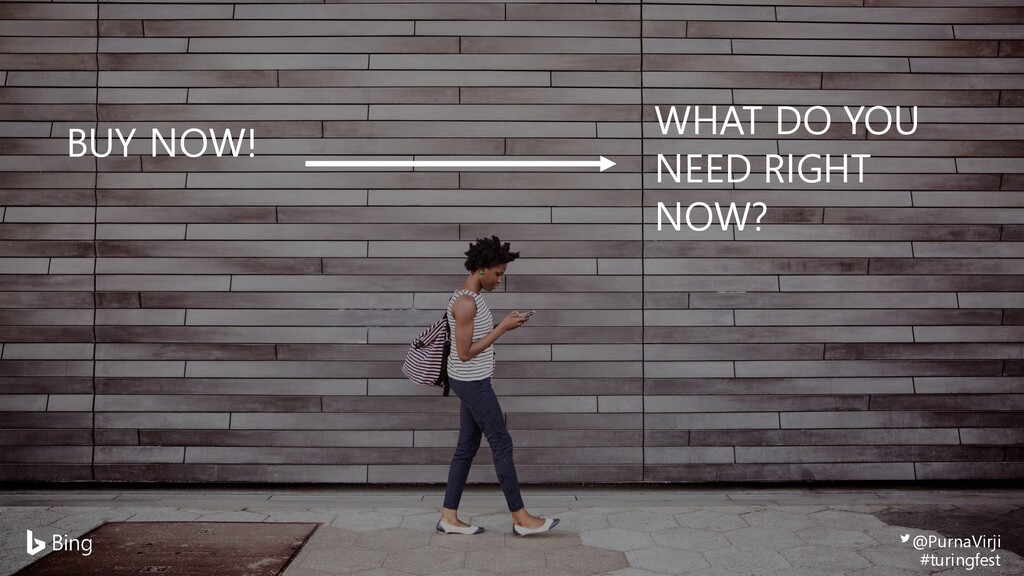
How guaranteed would this be to work on somebody with my behavior patterns? Pretty good, right? I was like, thank you, pre ordering it right now, and I would be right there. So, it worked because it was super, super relevant. And it changed the conversation from a buy now to a what do you need right now?
So it gauged my interest, it gauged my previous patterns, it knew how I would like to shop, and it gave that to me. So by going from aggressive to being more helpful, you can make your marketing something that people are going to want to consume.
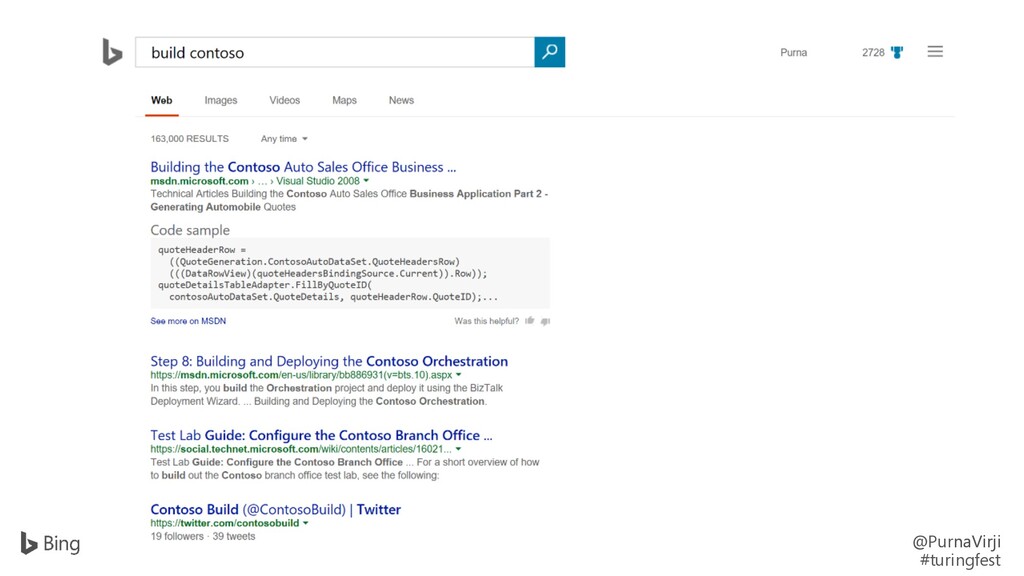
So let's look at how we can start the conversation across all our channels, even beyond search. But let's start with search for a second. This is what we're used to seeing if we do a search. Right? Put in a keyword, you see a list of results.
Beyond that, there's no further interaction with the search engine. Right? Well, at Bing, we wanted to shake that up a little bit. Now, this works in the UK too. Kindly bothered somebody earlier to make sure it did. If you have your computers in front of you, it doesn't work on mobiles yet because it's in early, early, early stage.
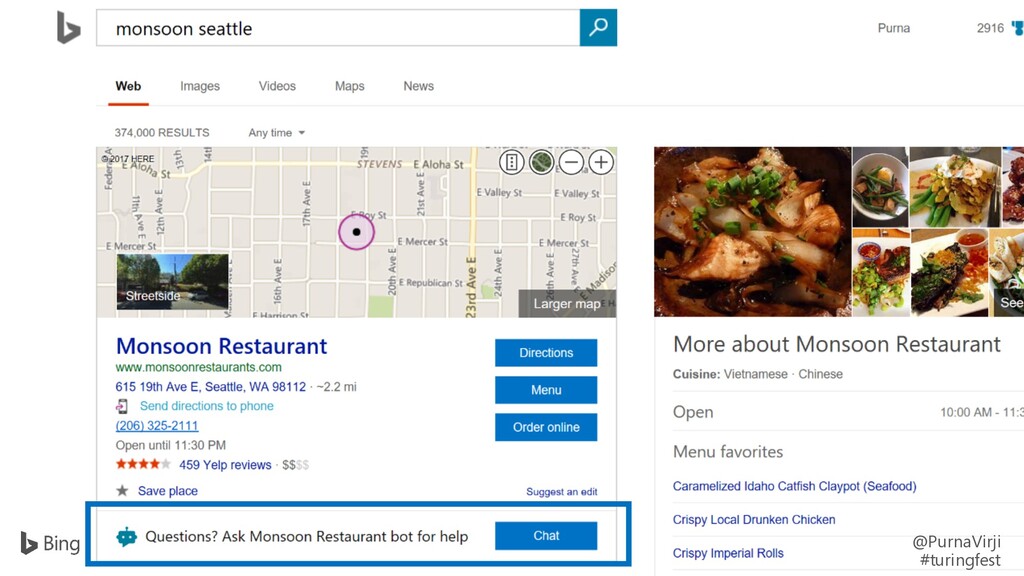
Do a search on bing dot com, because again, it doesn't work on Google, it's Bing. Sorry, Juan Felipe. Do a search for the words monsoon Seattle. And what you will see under the regular old business listing that we're used to seeing is this little guy.
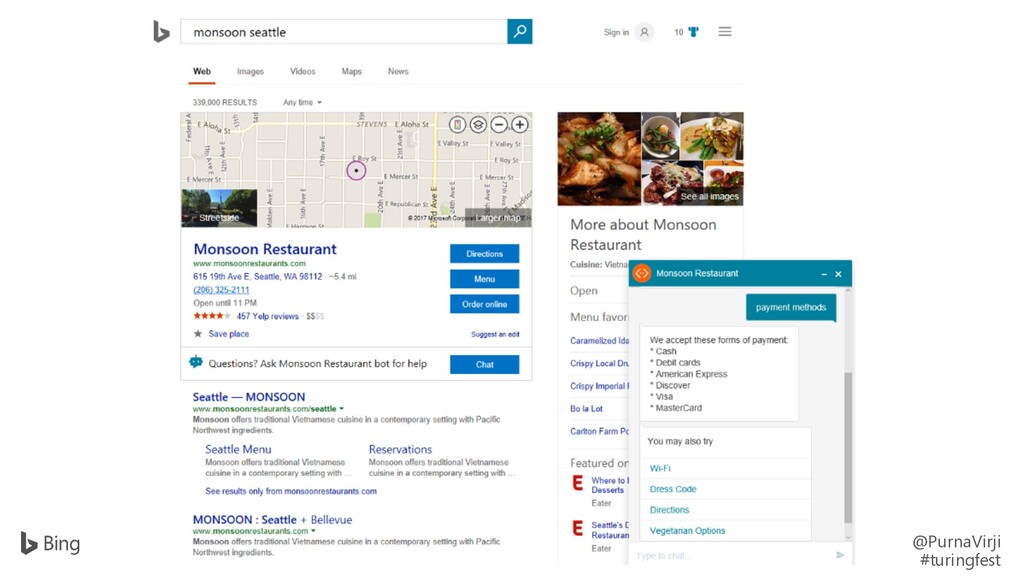
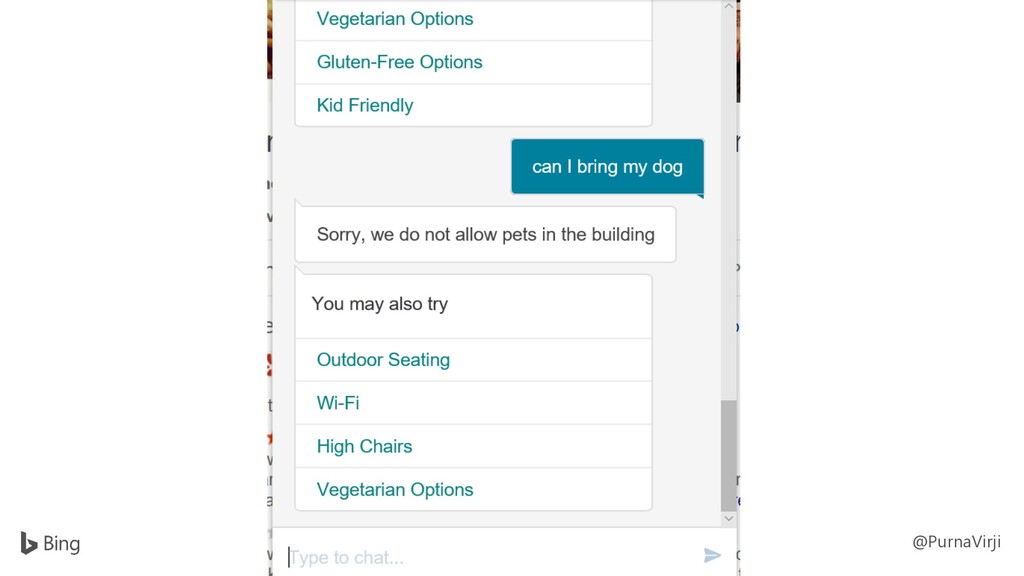
Questions? Ask a monsoon bot for help. So if I hit chat with it, I could suddenly start asking it questions like, hey, where's the best place to park? What? Do you have any vegetarian options? I could even ask questions in, like, really normal conversational language, And it would understand.
So, I could say like, hey, can I bring my dog? And it would understand that I'm asking whether the restaurant is pet friendly or not. And it would respond that yes or no. Super, super interesting. What do you think that would do for your local SEO for people to be able to engage with your business listing?
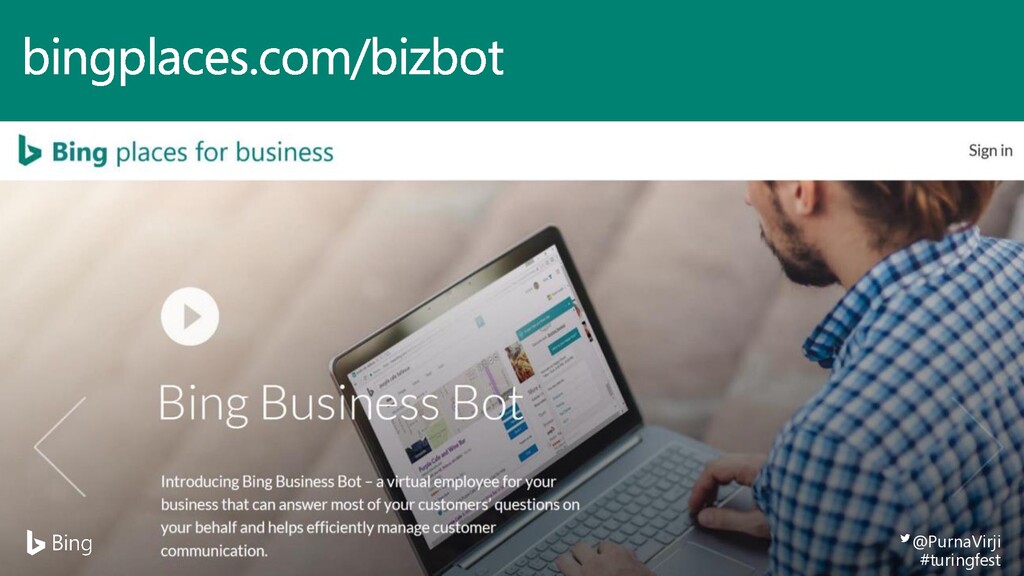
Quite cool, right? So, it's in early stages. If you wanted to see and learn more about it, you would go to this link right here. But so far, it's only in Seattle yet, and only for restaurants. Though, of course, we've got plans to expand this beyond.
It's still early, so we're testing this out. Of course, that's fantastic for business listings, but what if we want to go beyond that? I want to give you a sneak peek into something that actually you can't access online, but this is a super sneak peek exclusively for you guys.
It's about how advances in artificial intelligence, like NerdSpeak Alert, machine reading comprehension, which is the machine reading online understanding it in a way that a human would. I want to show you how that can botify the web. So, Monsoon had to go and create their business bot for their business listing.
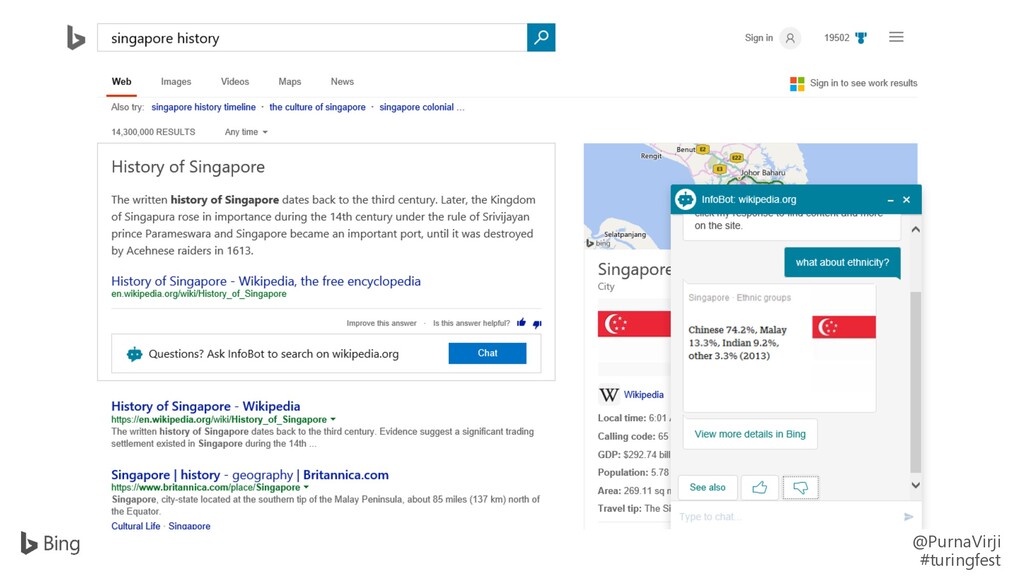
Fantastically helpful for them. But what if there was a website and Bing could create the chatbot for you on the fly? So something called Bing Infobot is being tested. And in early stages, we're testing it with larger sites like Wikipedia, WebMD, or Recipes.
Only a handful right now with a small amount of people. But, say if I did a search for the history of Singapore, and Wikipedia had come up as the first result, I could suddenly see the options to be like, hey, do you have questions?
You can ask infobot on Wikipedia. So this is not Wikipedia's bot, this is Bing's infobot that went on the fly, and I could now start asking it questions, and it could peruse wikipedia dot com for me and give me the answers. So if I said, Hey, what's the ethnic breakup of Singapore?
It could suddenly start giving me that. It saves people time again, and we're becoming really lazy. I remember I was asking somebody the other day that, Why do you guys like Uber? Now, if I had to ask you guys, Why do you like Uber?
What would your answer be? Or you don't like it at all? Well, most people give me the very logical answers, like, I like Uber because it's cheaper, it's cleaner, the drivers are friendlier, something like that. Right? In the US, it's much cleaner than I mean, here in the UK, you've got lovely cabs, but think New York, yell at your taxi.
No, no, no. So, I would prefer Uber. But the real reason is not that it's cheaper, cleaner, friendlier. It's none of that. It's because we don't have to take out our wallets and pay at the end. We prefer it because you get in, you reach your destination, you get out, you're done.
This is how lazy we have become. We want the seamless experience, which is what this type of thing can do here. So, if you want to be right there when people are looking for you, there's a few things that you have to consider.
The first one is the importance of brand. Now, you guys are already doing a lot of excellent work in terms of brand building and brand marketing. I'm going show you why it's so much more important when it comes to this new conversational world.
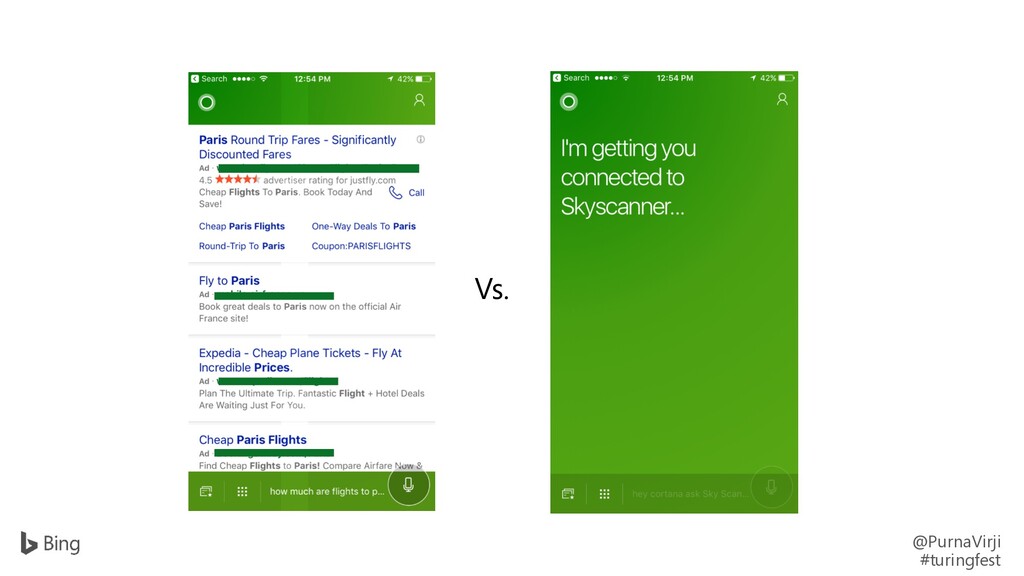
Now, if I did a search on, say, Google Assistant or Cortana, I would say that, Hey, Cortana, how much are flights to Paris this weekend? She would give me a regular answer. It's a regular SERPs that we expect. Right? It would say, here's different websites, here's different prices.
But what if I knew to invoke the Skyscanner skill? I could suddenly say like, Hey Cortana, ask Skyscanner how much are flights to Paris this weekend. Look at the difference. I don't see any other listings. Now, I only deal with the Skyscanner bot through the skill that I invoked, and I could just look on that website.
I'm not distracted by competitors. The value to Skyscanner for me to have top of mind awareness of their name and choose them is humongous. What are the odds that they get the sale now? Pretty high? Yeah. So, remember your branding. Another way that you can get your bots discovered is through good old search.
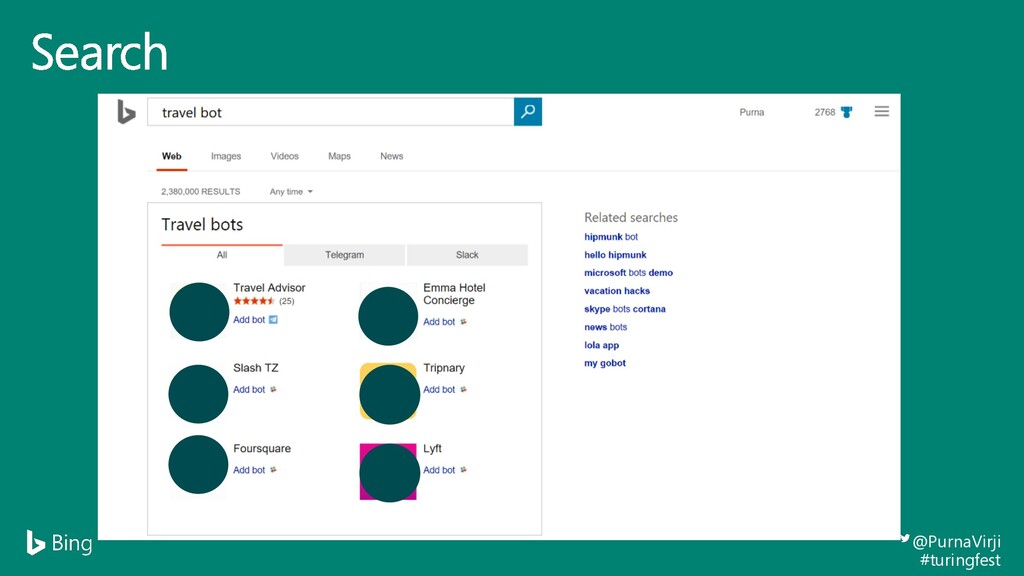
You know, it's normal that bots are going to have the same issue that apps did. Right? Apps was always discovery was an issue. So, all of our bot providers are trying to take this into account and overcome that. So, both Google and Bing let you go ahead and do a search for different bots.
On Bing, go one step further, where if you see the blue thing where it says Add Bot, I can click on it and it would enable it in my conversation, my SMS messaging app for me. So it makes it super easy to enable them right from search.
Now, let's look at email for a second. Most of you run email marketing? Okay. Can you guys tell me what is the average open rate for a marketing email? On average? Twenty? Okay, you're super close. It's actually about fifteen to twenty five percent on average.
Good numbers? No, it's pretty crap, actually. Sorry. What about the click through rate from email to the website? Anyone want to take a guess at that number? Yeah, super close, Mike. It's actually two point seven ish, according to Mailchimp's research. Good number? No. I won't curse again, but yeah, it's not that good.
Let's think about this. Raise your hands if every time you get a text message, you check it within ten minutes. Yeah, almost all of us. Right? Oh, keep your hands up if you respond as well within ten minutes. Yeah. The majority of us, messaging is just a really fast medium.
It's not like emails or advertising, where you're constantly inundated with all of the info. Chatting is something that's really, really great. Now, I'm not saying we want to go ahead and use our chatbot to interrupt people and ping them all the time, because God knows that would be even more annoying.
What you want to do is give people opportunities to want to engage with your chatbot, because we know that the experience will be far more effective if it's in a chatbot than just in an email. Because you can look at your email and then forget about it, and not take the action, because you just got twenty more emails and you forgot the earlier email.
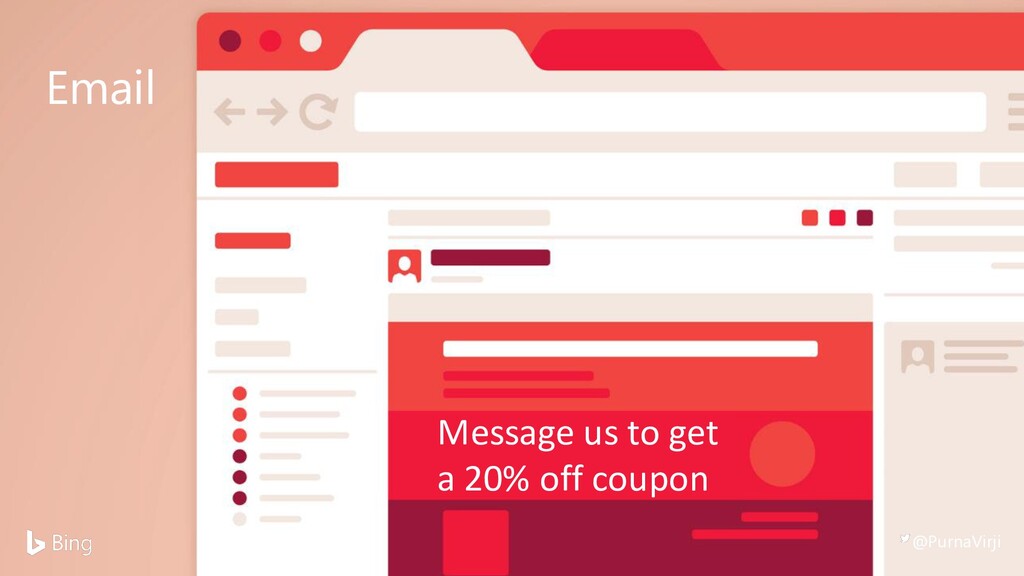
I could make my call to action in my emails being like, Hey, message us to get a twenty percent off coupon. That could incentivize people to go ahead and interact with my messenger bot. And, once I've interacted with it, I would be open to the new cadence of communication that I could create with the bot.
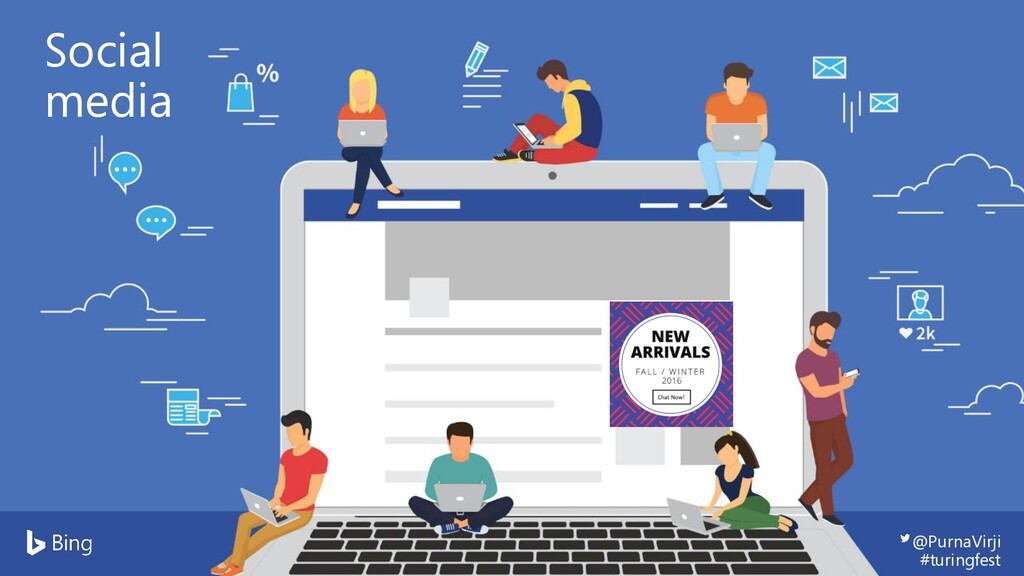
The second thing is through my regular good old social media. We go on social media to share all our updates with our lives. Why not use it to share updates for our business? You can send people to your chatbot, whether it's through regular posts or through your social media advertising.
You don't always have to send them to your website. You can be like, Hey, come and chat with our chatbot instead. The advantage to that is that it is a native interaction and people feel more, you know, you're already on Facebook, you're interacting with the Facebook Messenger.
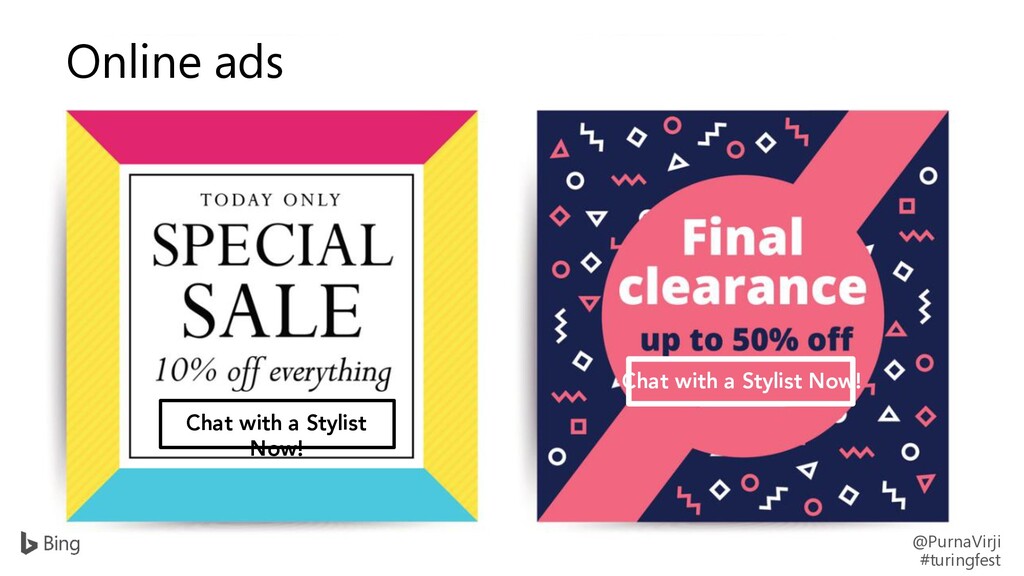
It's all the same ecosystem. It feels just natural. So, that's another advantage to it. You can also have your online ads lead to your chatbot too. So, for example, if we had, oh, special sale, ten percent off everything. The normal call to action would have been shop now, buy now, something like hitting them over the head to take an action.
But what if we just changed it to chat with the stylist now? It's almost like we're being helpful and giving them something rather than just getting them to ask for the action that we want them to take. So, you can always find ways to get people to chat with you because once people chat with you and you get that ball rolling, you have that top of mind awareness.
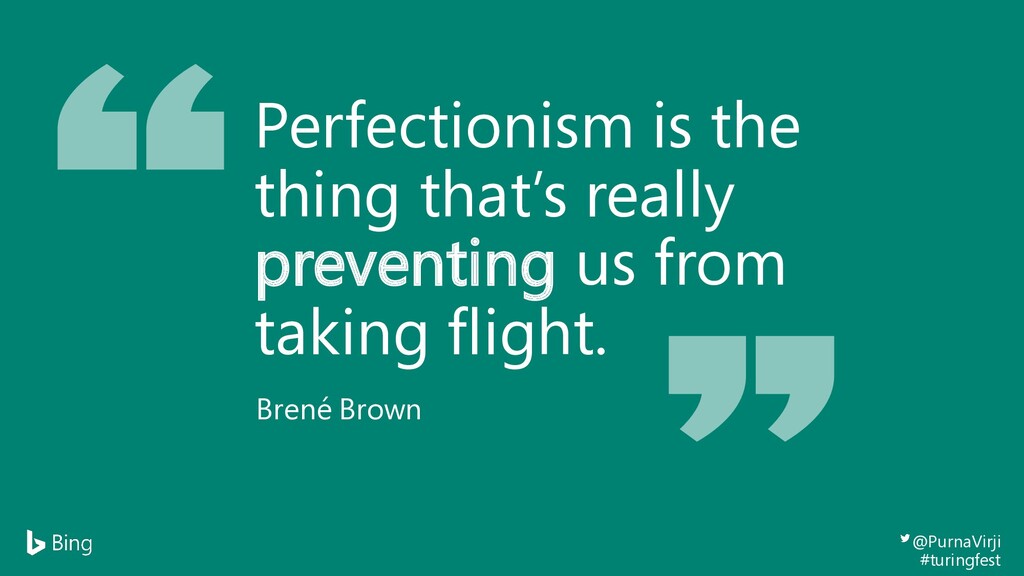
You have the better engagement stats that you can get. So at this stage, if you're like, okay, I love it. How do I get started? That's what I'm going to walk you through. The first thing you have to remember though is my favorite quote by Brene Brown.
Perfectionism is the thing that's preventing us from taking flight. Super true, right? Especially if somebody type A and crazy like me, I'm like, no, no, no, has to be perfect. Take the pressure off. Your chatbot does not have to be perfect. So if a lot of people are hesitating to even build their bot because it's like, this is such a big endeavor, it has to be really great, don't worry about that.
Just get started to test it out. And bots aren't supposed to have those in-depth conversations like the movie Her. And Facebook's research found that bots that sounded really robotic actually helped the engagement rates, because we have lower expectations of a bot. You're like, Oh, you're a bot.
This is what you can do, it's fine. So if you try to sound too human, it works against you. And the fact that even today's basic conversations work means that as these platforms get more sophisticated, marketers will adopt them. They're making a huge difference.
In fact, some of the banking clients that we work with are super keen to go ahead and create chatbots for some of their repetitive tasks. Have you ever tried to call your bank for a balance inquiry? And it's a simple question, but what happens?
They have to put you on hold, then they have to ask you like eight hundred secondurity questions, and then they'll dare to share your balance with you. So it's three to four minutes. Painful for us, but even more for the bank. Think about the cost to them of customer service time.
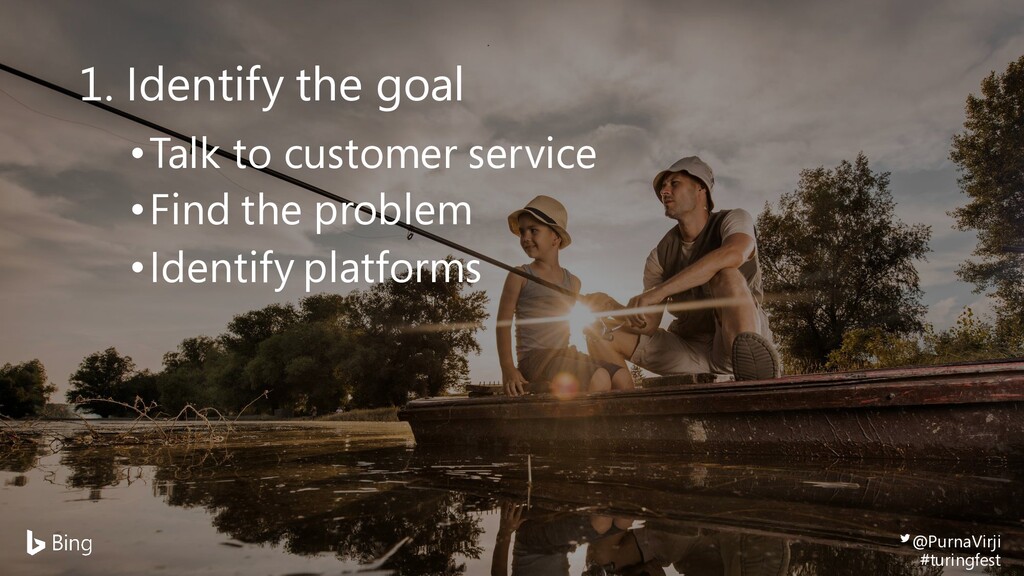
So a bot can be super, super helpful there. So here's my four step plan for designing your bot. The first one is you want to identify the goal. Talk to customer service reps at your company or think about your customer as well. What could make their life easier?
What are repetitive things that they're doing? Try to find the one problem that you're trying to solve. Shockingly, chatbots can't solve world peace yet. So, start with just one single thing, and that can help you to get started. Also, that the platforms that your customers are on.
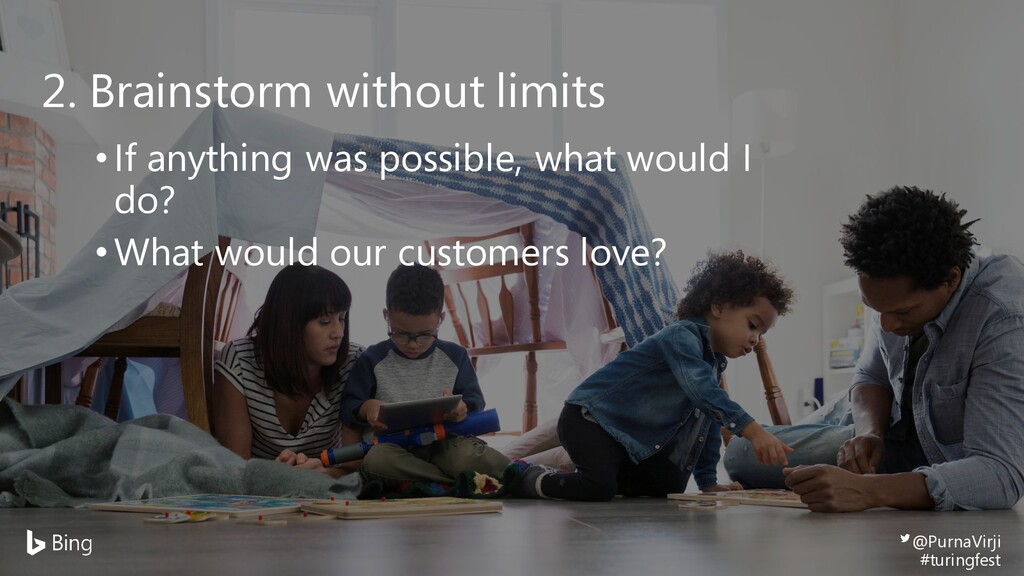
So, example, maybe are they using Kik? Are they using Skype? Are they using Facebook Messenger? Figure out which one, so you know how to create your bot. Then, my favorite step is you want to brainstorm without any limit. You want to think about this one question.
If anything was possible, what would I do? And even if the answer is, I'm going to fly in Brad Pitt from Hollywood to sit next to me and create my chatbot, put it down. So, a good idea. Nothing is off limits. And, I think that would be very pleasurable, but Then, you can try to narrow it down to what would my customers really love from this list?
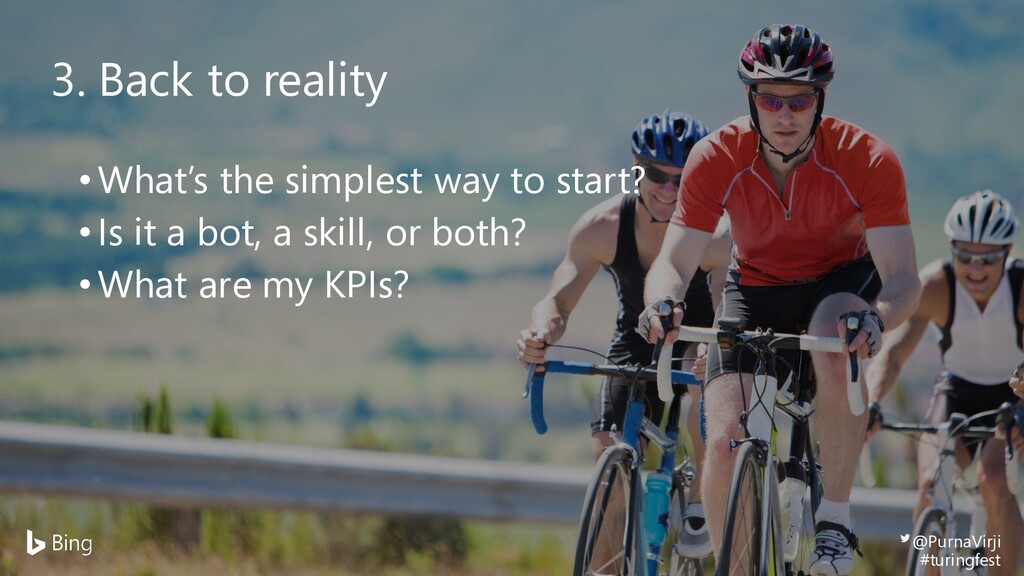
And, hopefully, it would be Brad Pitt. So, let's see if he's free. Then, you bring it back down to reality. This is the part where, okay, what's the first step that I could take to create the magical thing that my customers would love?
What's the simplest way to start? Then you want to think about, is it a bot only, so it's just chat via thumbs? Or is it a skill as well, wherein you would have to have some voice controls added onto it, which is super simple.
You create the bot, then you can just enable natural language understanding, and you can talk to it there. And then, what should my KPIs be? Is it engagement? Is it conversions? Is it repeated chats? That's what you can think about measuring. And then, you bring it to life.
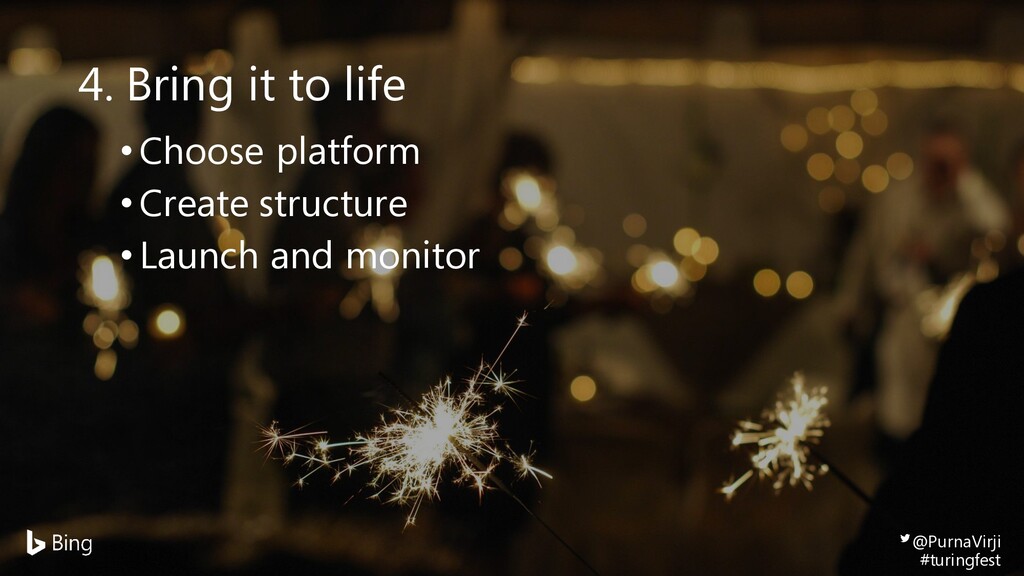
You choose the platform, you choose to create the structure, and then you launch and monitor. Now, people always ask me, Perna, how long does it take to create a chatbot? And to that, I give you the search engine answer that everybody loves, which is, it depends.
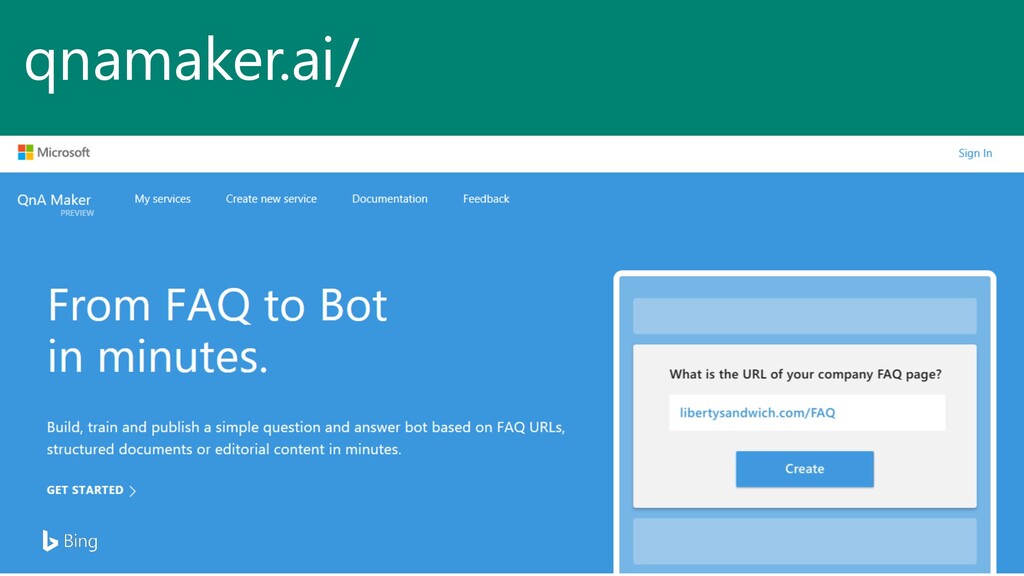
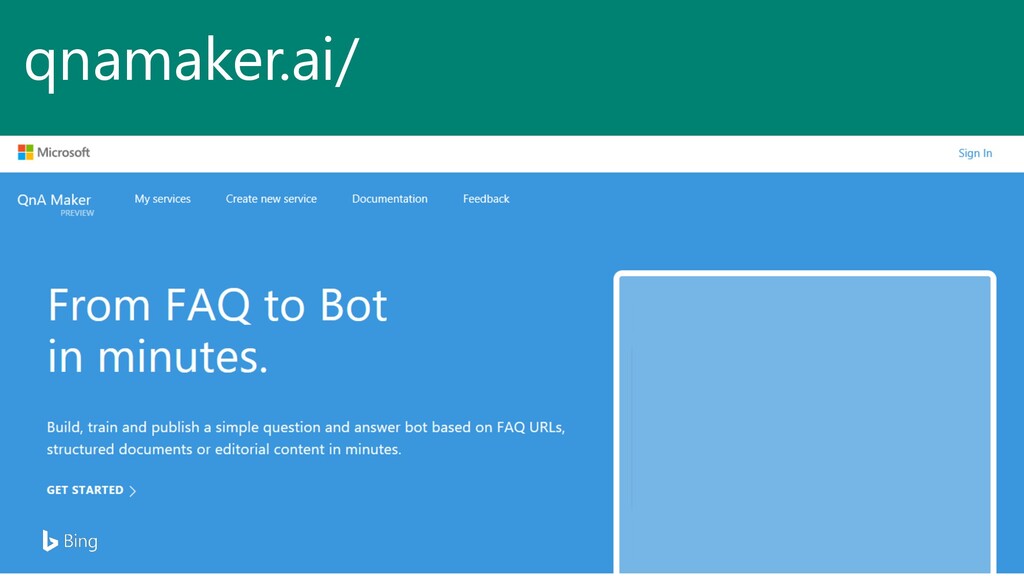
Don't you guys love that when we say that? So, The correct answer is actually it can take anywhere from ten minutes to several months, depending on how complicated you want your bot to be. If you want a really easy way to get started and test chatbots, you can use something like qnamaker dot ai, wherein you plug in your URL for your FAQ page, which I think almost all of us have one.
And what it does is then it reads the URL, and it understands the different ways that people could ask the same question in natural language, and it spits out conversations in a chatbot form. So, it's super easy to get started. There's no coding required, which is awesome for me because I'm not a coder.
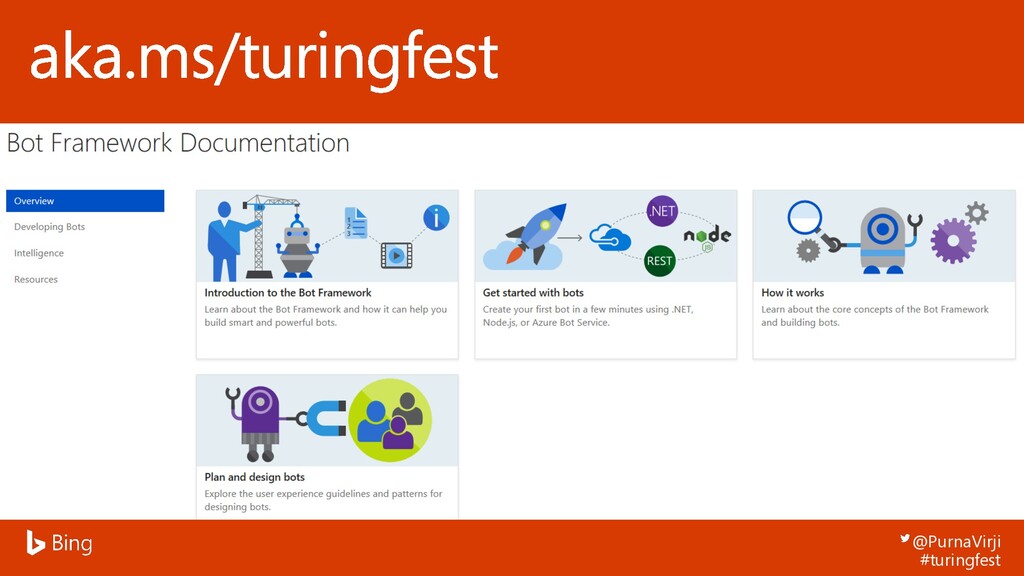
And I could get started with a chatbot in ten minutes on my own. If you're looking for more resources, you can go to aka. Ms TuringFast, and you can go ahead and find different ways to test your bot or sample structure or anything like that that you can use to help you get started.
The main thing, if we cap, is you want to start building a simple AI powered bot or skill. You want to promote it across all your different channels, and you want to measure and engage across multiple different touch points. And, yes, this is new technology.
Mistakes are definitely going to happen with anything new. As you learn to walk, you're going to stumble. It's natural. But while caution is necessary, avoidance is not. One day, a chatbot is going to be your very best employee. It's going to be your best salesperson, your best customer service rep, your best analytics person, all rolled up into one.
It's possible. The proof is in the pudding. Let me talk to you about one-eight hundred FLOWERS. They created a chatbot last year for Facebook Messenger, and they gave an interview with Digiday two months after they launched. And they said that seventy percent of the orders coming from their chatbot was from a brand new audience.
They were able to reach a younger, different demographic through their chatbots. Seventy percent, that's really big. Or Sephora, they said that once a user engaged with their chatbot on Kick, they averaged ten messages per day. That's incredible engagement. Or my favorite example from Taco Bell, when they have a chatbot on Slack.
They have taken ten million US dollars in orders via just their Slack chatbot. Ten million dollars, you guys, of tacos. So my question to you is, are you guys going to be the next success story? Thank you so much, Edinburgh.