
Most product builders know that storytelling is essential to convincing a team to use their skills and knowledge to solve a difficult problem. But many product people struggle to build that muscle. This is especially challenging when your inner critic is telling you that you are not a great storyteller. Join this session if you are one of these product folks with a malicious voice in your head telling you your storytelling isn't good enough. Petra will talk about the power of stories and why she calls them a design tool. Plus, she will share hands-on tips and proven frameworks to improve your storytelling capabilities. Why focus on storytelling? With better stories, it will be much easier for you to: Inspire your product development team Unite stakeholders Ask senior management for more budget Help marketing sell the product And most importantly, help users understand the value your product can add to their lives.
Lessons on Storytelling for Product Builders










Auto-generated transcript - may contain errors. Tap a timestamp to jump the video.
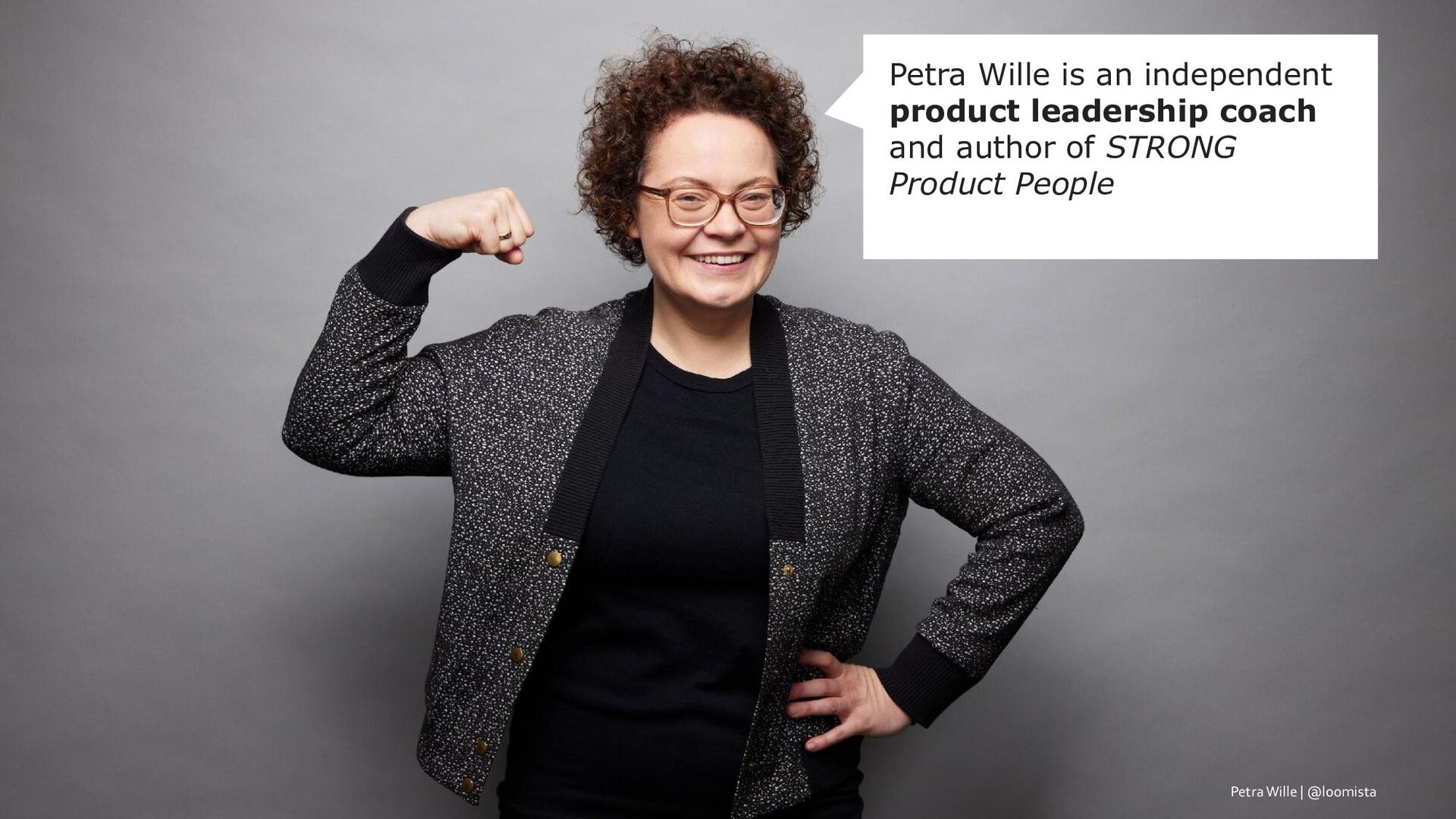
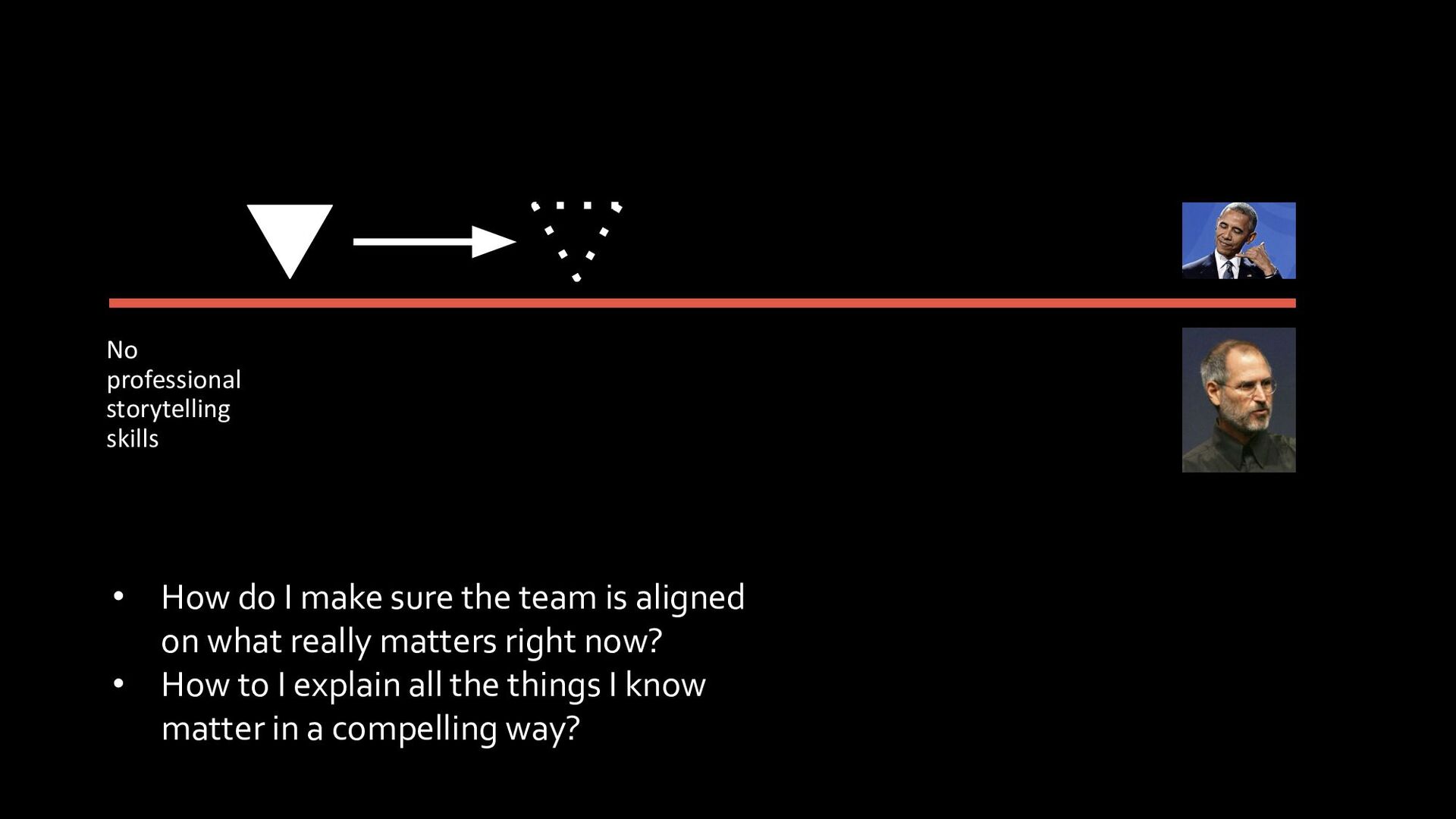
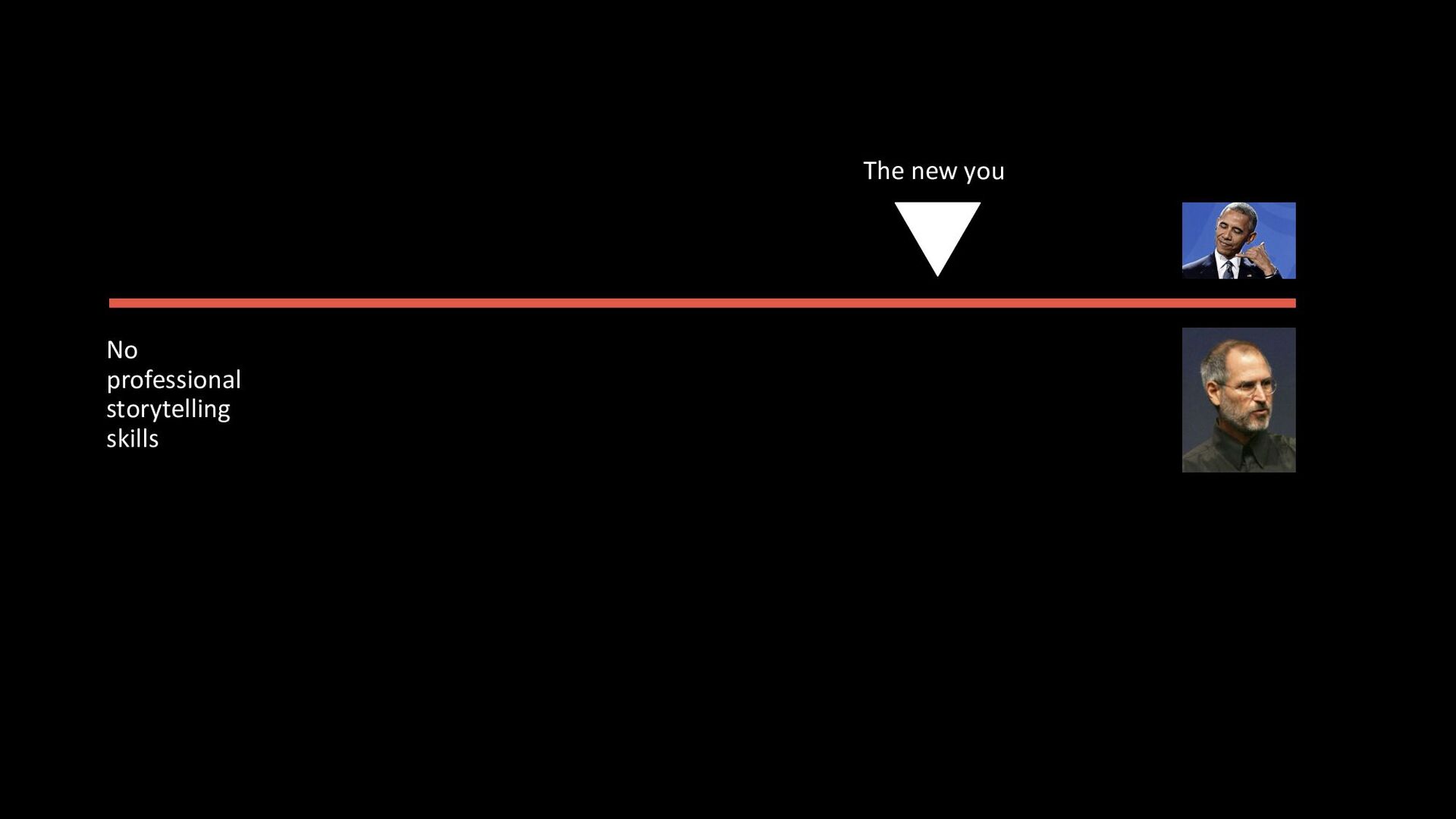
I'm so glad to be here today to talk about storytelling for product builders, as promised. And as I am a product leadership coach, I often get asked by people to help them to get from basically no storytelling capabilities closer to the steves and barracks of this planet.
It's often that product designers, the tech lead folks, the product managers ask me for things like, hey, Petra, we have so many findings in our product discovery. How do we share all of these findings in a compelling way with the rest of our team?
And this is usually when we start to have the conversation about storytelling. And therefore, I'm on this stage today to share what I learned in this countless coaching sessions on business storytelling. And this talk is packed with tips and tricks for storytelling and how product builders can come up with more compelling stories.
So it in itself is not a story. Let me start with a small task for all of you. Take your favorite note taking app or pen and paper. It's three questions that I need you to answer, and I have a bit of context first.
So please think back to an occasion where somebody, and it could be by the way a company's all hands meeting or a quarterly kick off or something like that, where somebody truly inspired you, where you were inspired to maybe change course and to take action.
A meeting after which you went back to your desk, truly motivated to tackle your next task. So the question is, what was that occasion, and who was the person talking to you then? I'll give you a minute to think about that, maybe half a minute.
Really inspiring talk, conversation, something like that. Great for the pictures if you're in deep thinking mode, by the way. Now, with this person in mind, help me to answer the last question. Would you like to be as inspiring as this person? Guess the answer is yes.
But let me guess, you struggle to picture yourself in that role, right? So I'm here today to help you mute your inner critic and learn a bit more about the frameworks that might make you a great storyteller. So, we're here to reframe storytelling for you.
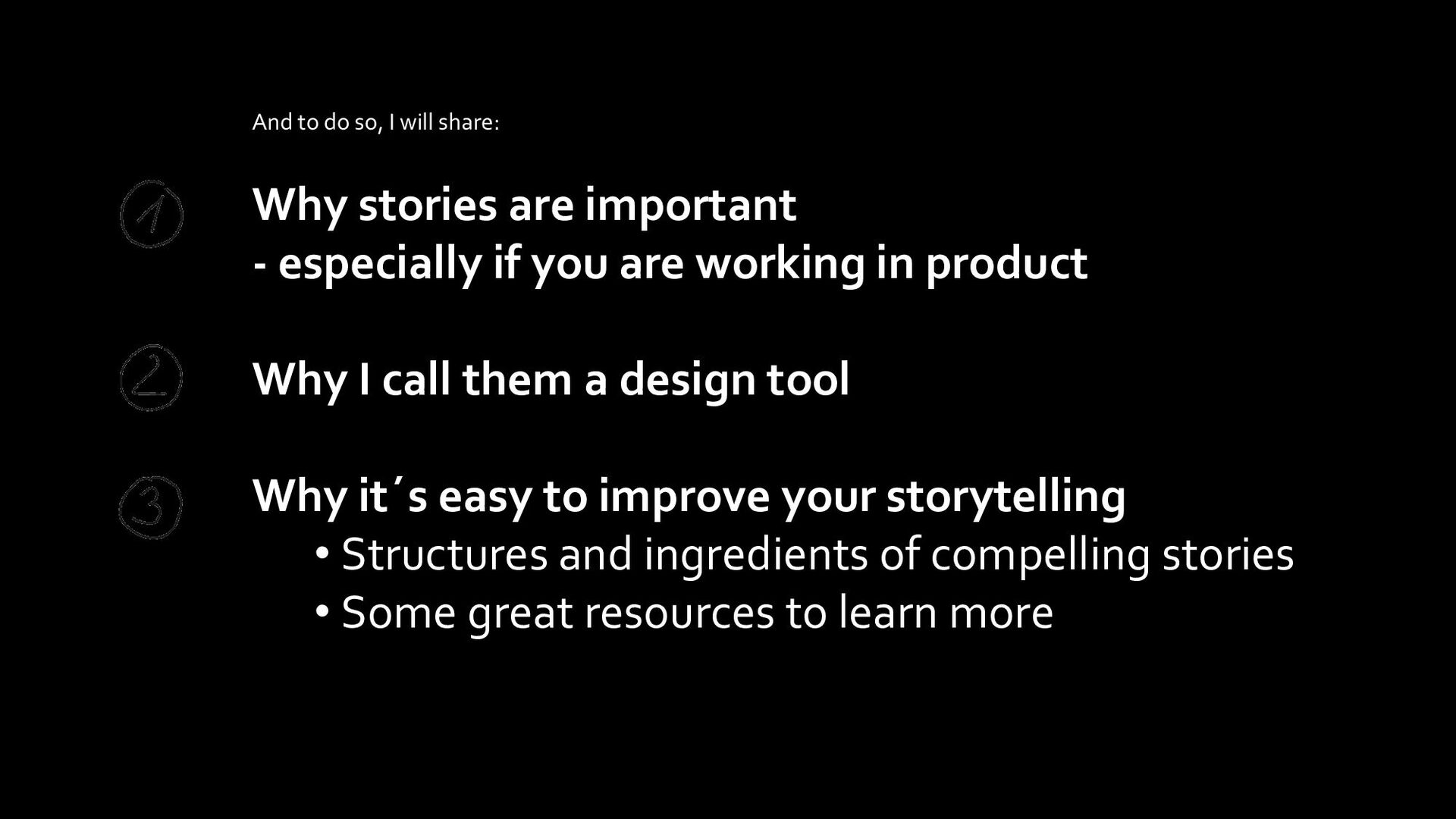
And to do so, I will share why stories are important, especially when you're working in product, why I call them a design tool, there's a cliffhanger here, and why it is not so hard to build and improve that skill if you know how to do it.
And therefore, we'll share structures and ingredients of great stories and some resources that help you when you're going back to your day to day work. While we are not exactly born telling stories from an early age because we just can't speak from our first day on this planet, right?
It still is baked into our DNA as human beings. And we perfect our storytelling skills throughout our childhood because we early on learn that a good story is what helps us to get what we actually want. Right? And people that are around kids a lot in this room know what I'm talking about.
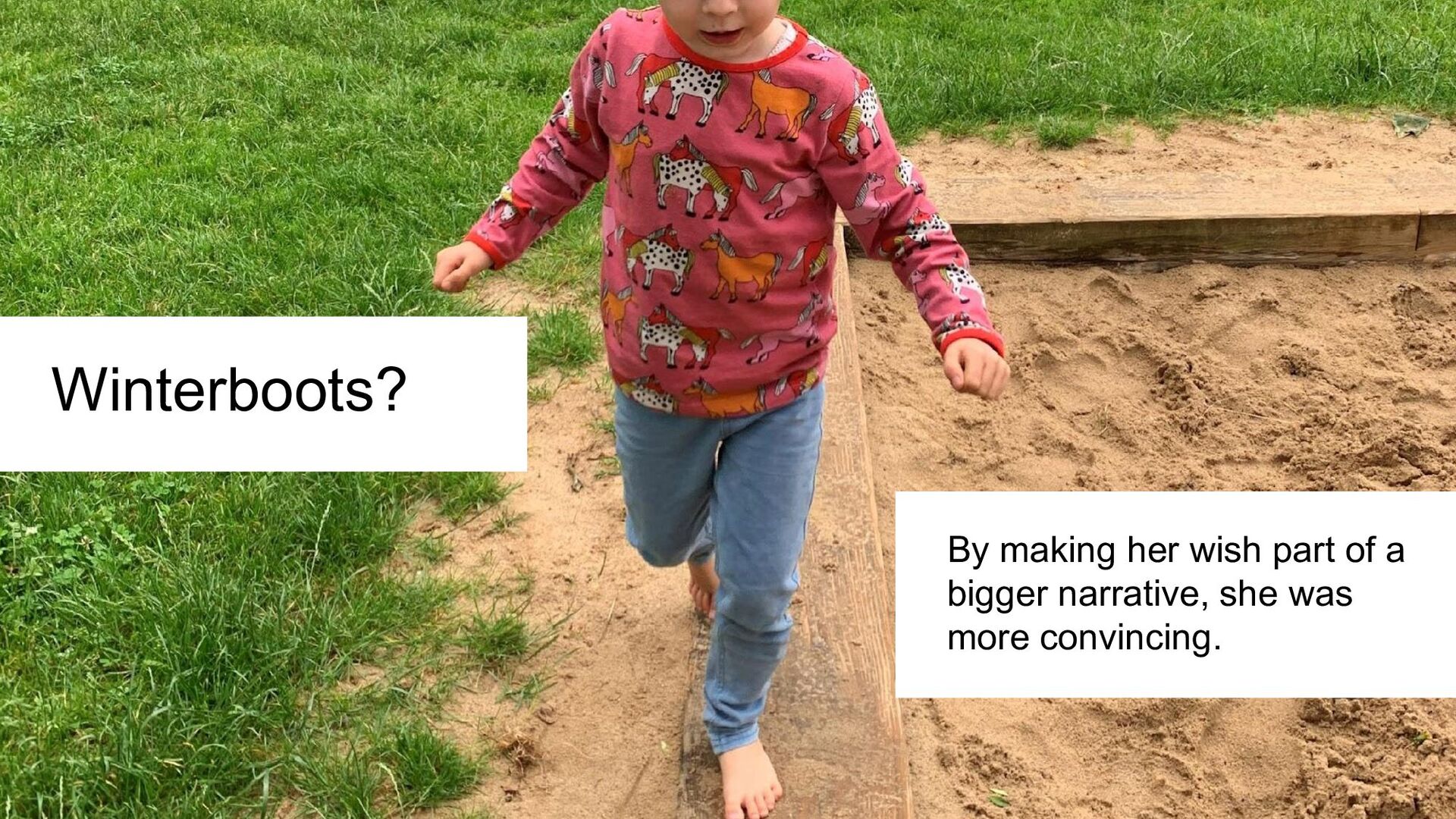
It happened to me three summers ago when my back then three year old approached me on a really hot summer day wearing her heavy pink winter boots. And at first, I was not convinced that she should wear them to kindergarten, but then she was explaining to me that they want to play Frozen in the kindergarten, she and her kindergarten friend, and that part of an authentic costume is winter boots.
She was not using the terminology that I used as a three year old, but she really convinced me by that. So clever kiddo, right? By making her wish part of a bigger narrative, she was way more convincing. And it is not only the active storytelling.
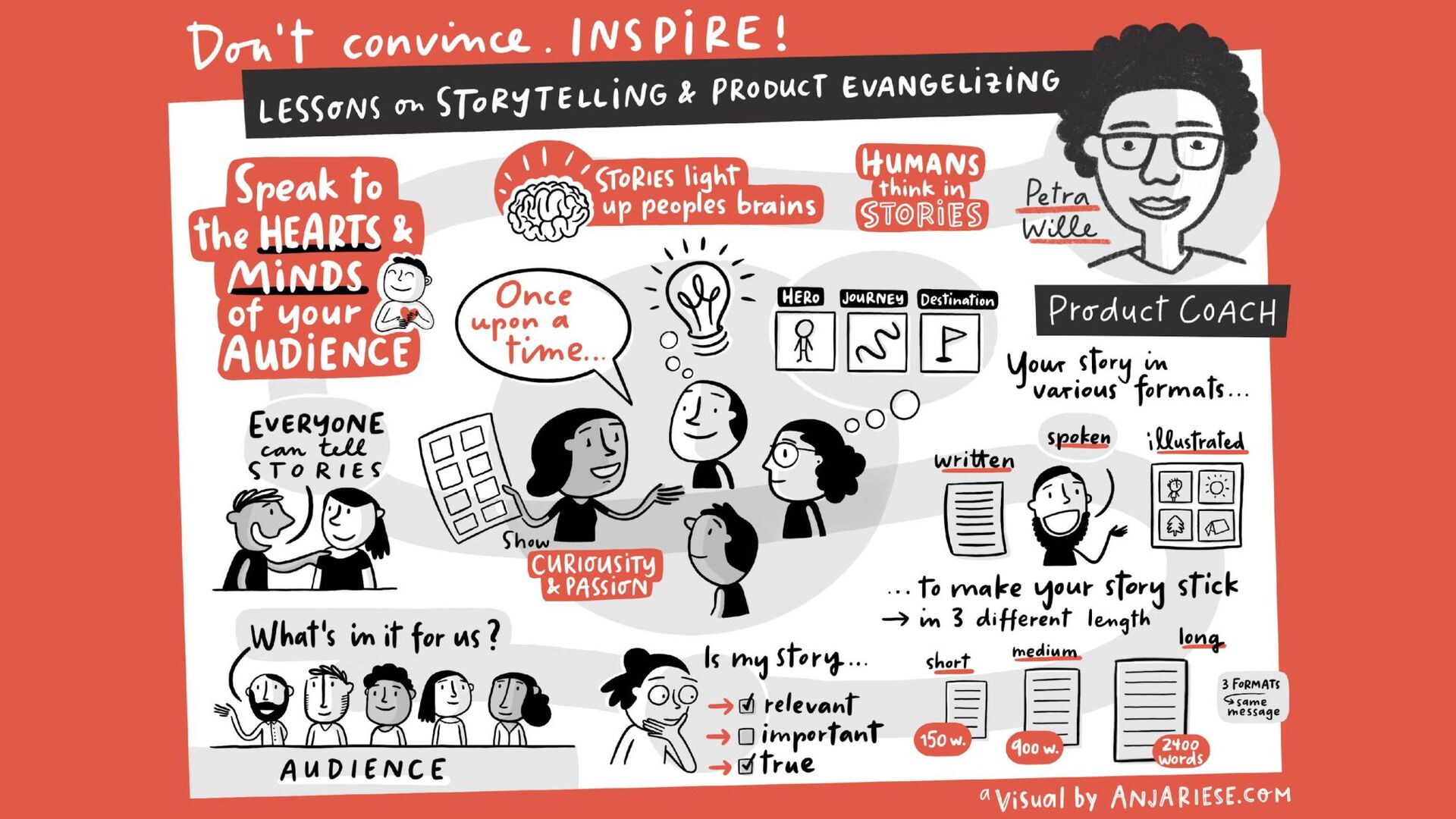
We love to listen to stories from a very early age, and they captivate us, and they really entertain us, and we learn that this is how, as a human being, you gain new insights. And stories have this attraction to us because they literally light up our brains.
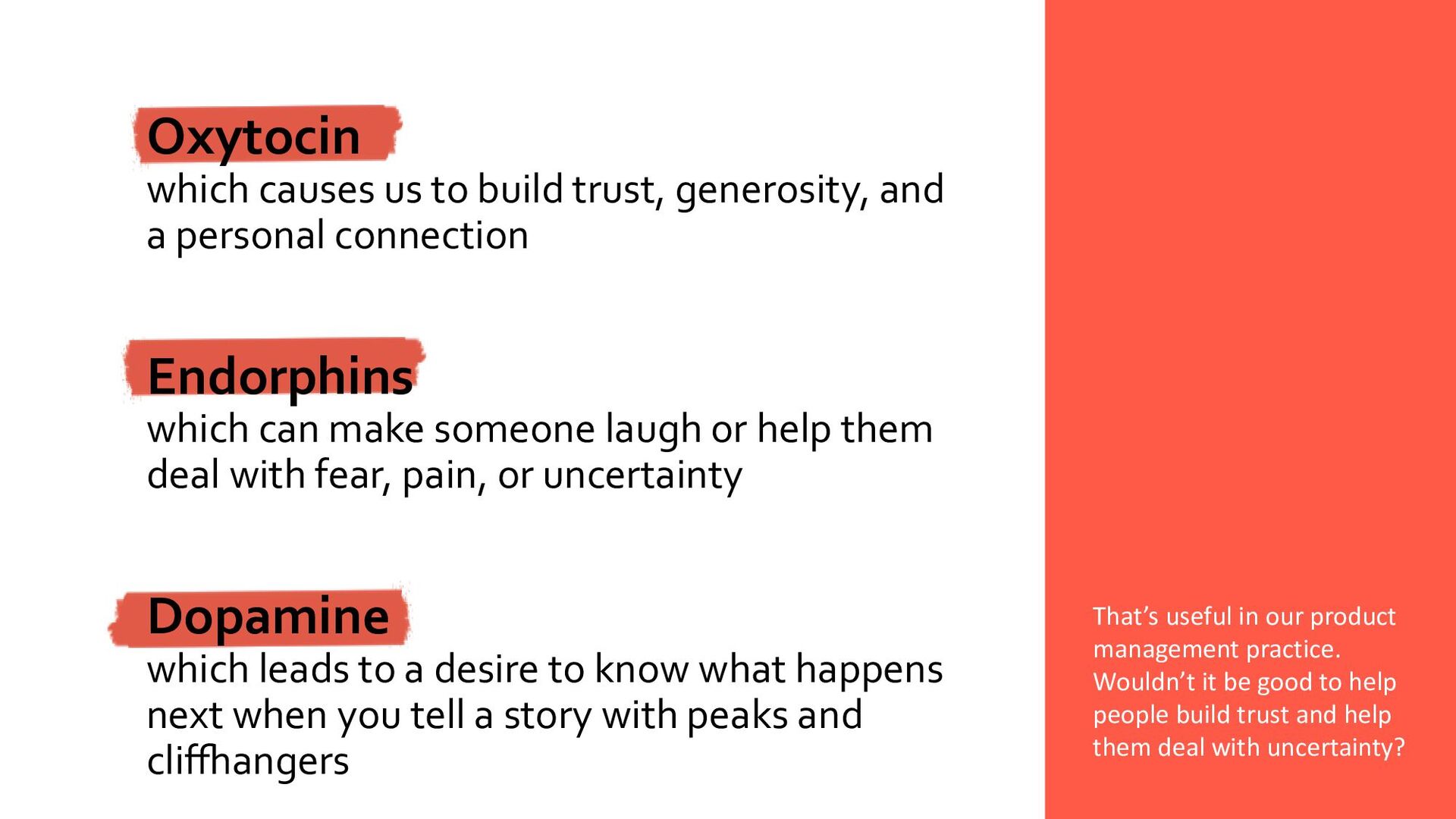
If you put people in an MRI scan and you expose them to an exciting story, that's actually what you see. And it has this biological impact on us because they trigger the release of hormones. It is oxytocin, which causes us to build trust and generosity and a personal connection with people.
And it's endorphins which make someone love or help them to deal with uncertainty. And it's dopamine which leads to the desire to know what happens next when somebody tells a story with pigs and with cliffhangers. And many of the things that I'm mentioning on this slide are super helpful in your product management practice.
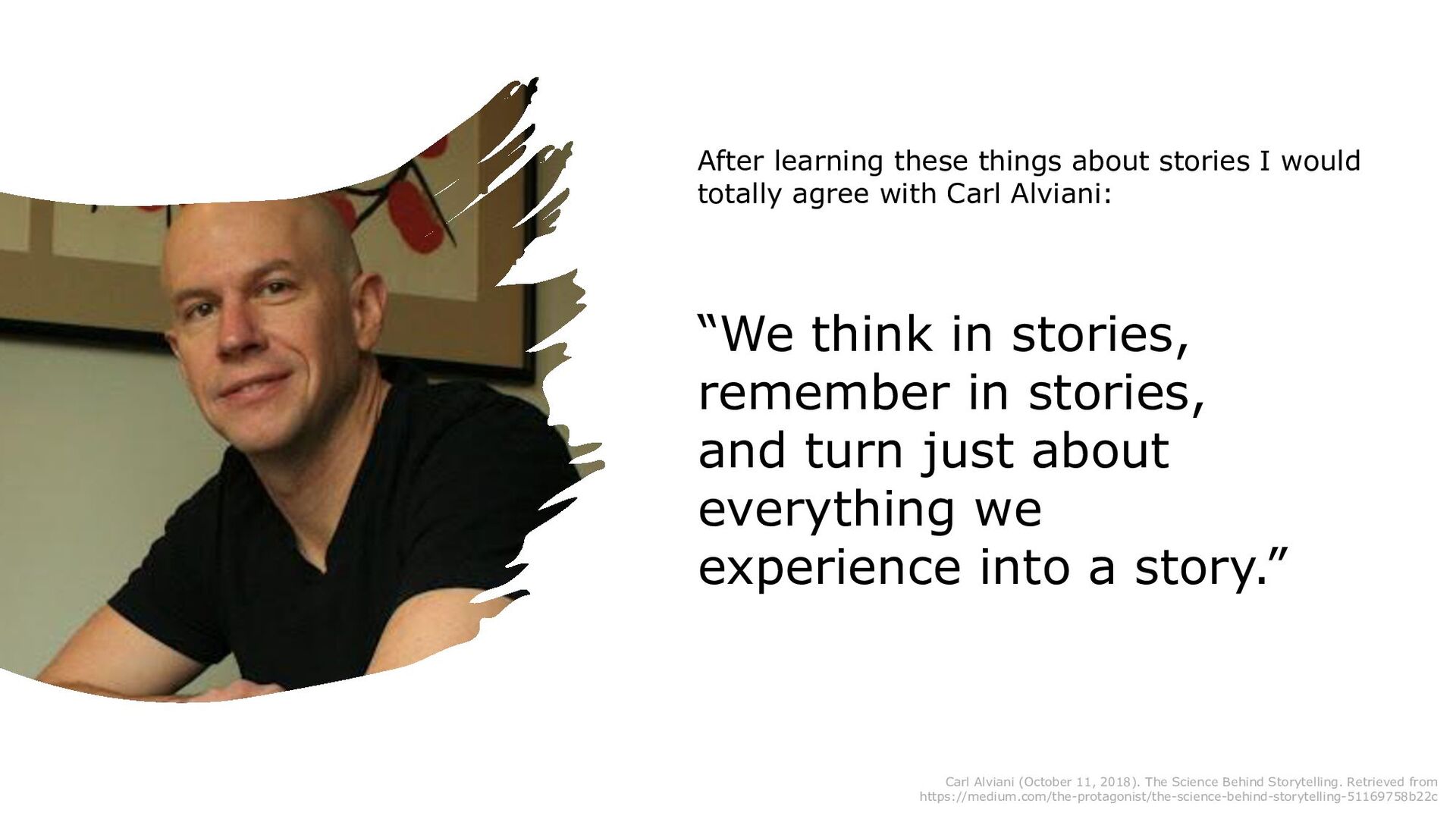
Right? Because wouldn't it be good to help people to build trust towards your team or to really inspire them, or help them to deal with the uncertainty of the promise of a new product? And after learning all these things about business storytelling, I think Karl Aviani really sums it up in a nice way.
He says that humans think in stories, and that we remember in stories, and that we turn just everything we hear and experience into a story. And this ability to use a great story to convince others to help us solve a hard problem for our users and the world out there, that that is an evolutionary advantage to some extent.
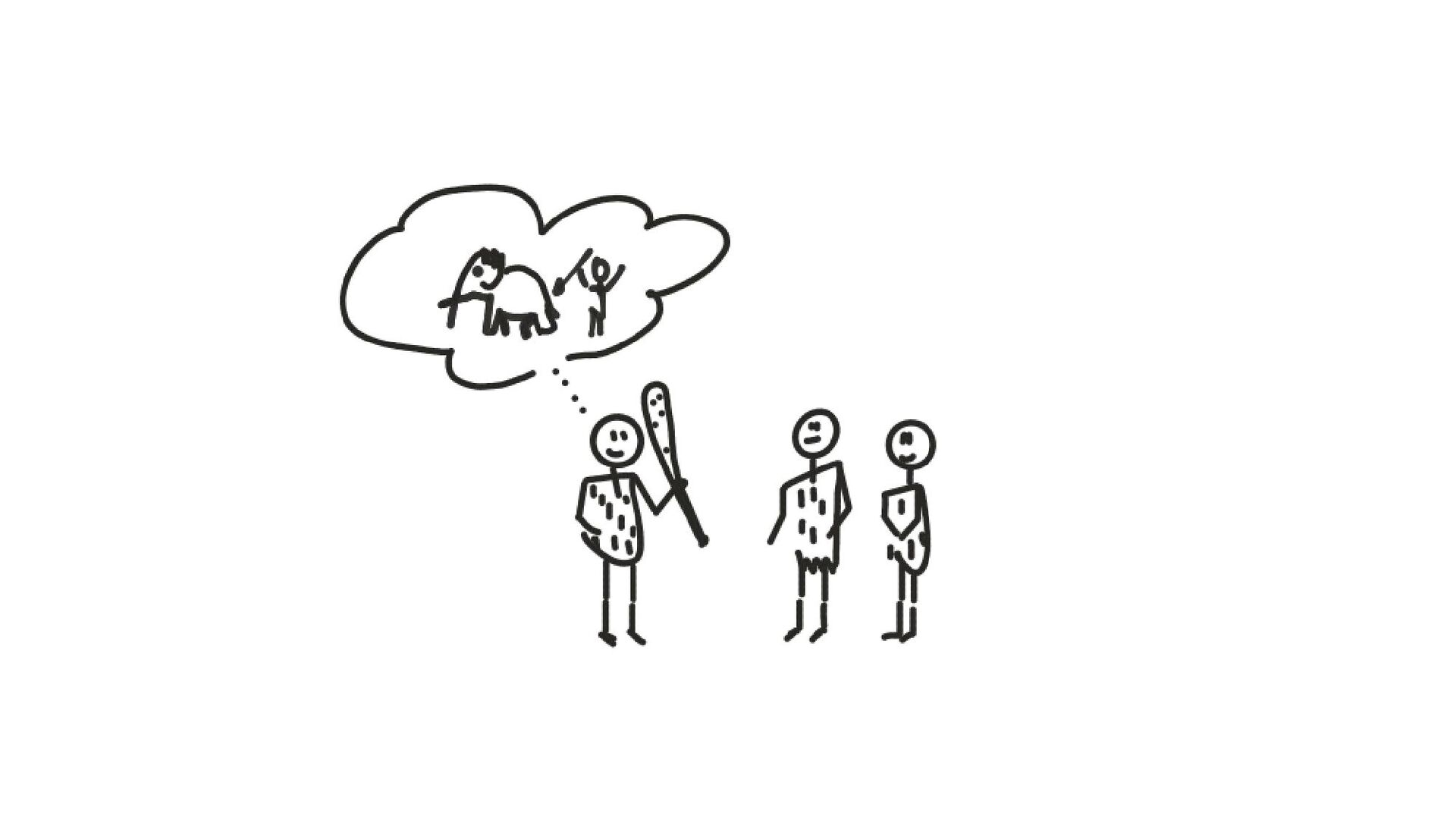
Right? So it has enabled us to collectively survive and thrive on that planet, the storytelling. Thousands of years ago, it was all about hunting down dinners cooperatively, and these days, we saw the more corporate selfing or big problems like a COVID pandemic, hopefully things like a climate crisis.
So now that we've learned why stories are important and that every one of you, by default, from a very early age, is a storyteller, so we have that in the banks already, now let's dive a bit deeper into the power of business storytelling.
You have probably experienced throughout your career that a good story can unite a group of people, from a small product development team to an entire organization. One well known use case for business storytelling is the storytelling that iconic brands, the iconic brands we all know, are used day in, day out.
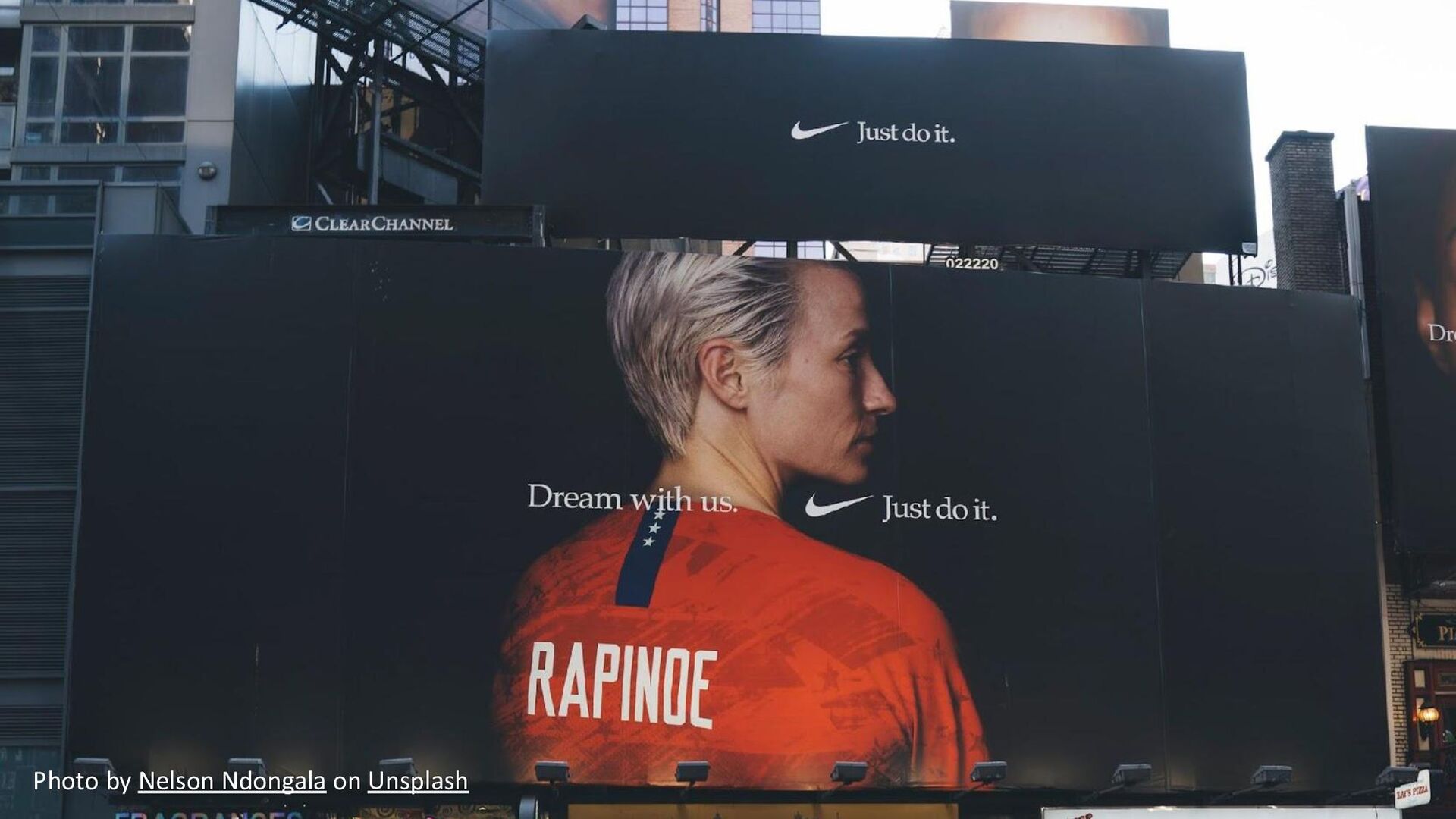
And they are masters in telling their brand stories. Even their short slogans, often just a few words, really can evoke images in the minds of their clients, users, customers that encourage these minds to wander to what I would call a better future. So think of Nike's Just Do It, for example, or I like Apple's Think Different, or BMW's US campaign was, a few years ago, the ultimate driving machine.
Right? They do something with our brains, and it is not only their marketing claims, they also have amazing personalities within their organizations that share these stories, their claims, their pan perception with the world and within the organization. And I think this is a highly underrated skill.
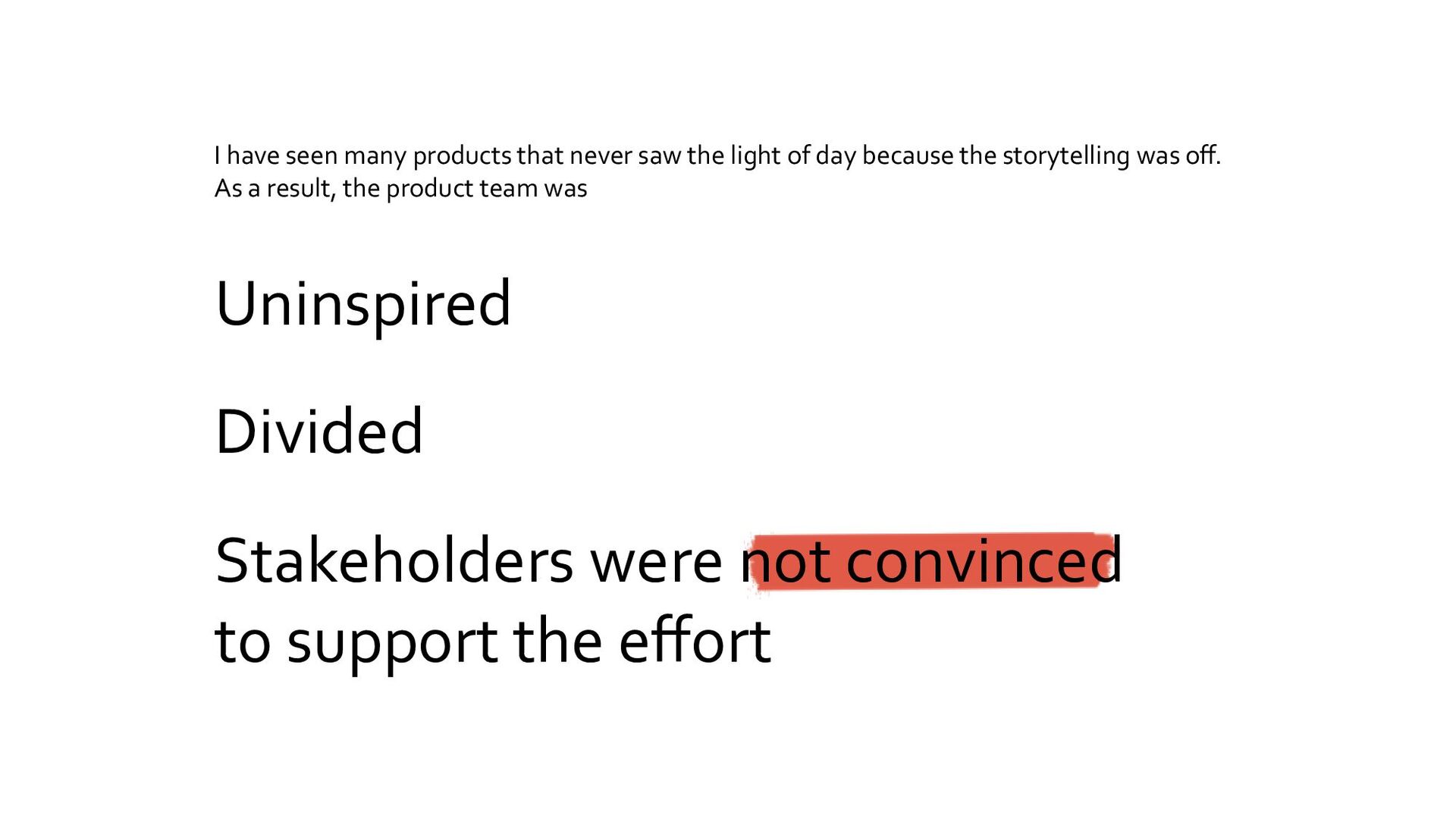
So many companies are unaware of the fact that better storytelling would really ease some of the pains that they're having internally. So think of your organization and think if this could be easing some of your pains as well. I, in fact, have seen many, many products that have never seen the light of day because the team was uninspired, sometimes even divided about what we are currently building and what are we doing next, and in turn stakeholders were not convinced to support the team's effort.
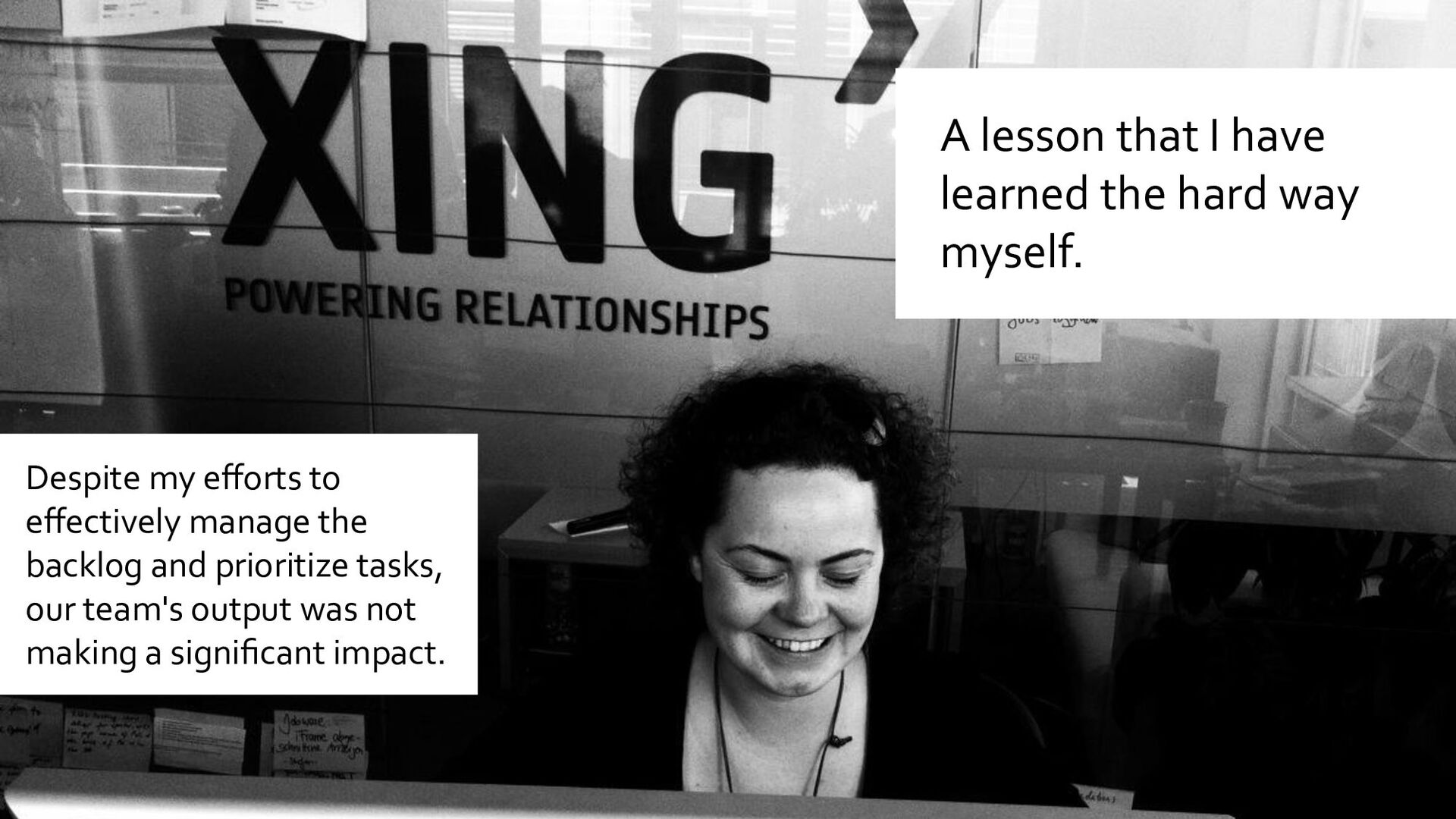
And this is the lesson that I learned the hard way myself. Let me briefly share my own storytelling story. I once was a product manager for a job board product. It obviously was our job to help companies fill their open positions and to help candidates to find the job that they actually love.
And despite my efforts to effectively manage the backlog and adding amazing user story, I did all of that. Right? And we were doing a lot of discovery as well. But our team's output didn't make a significant difference. We were running several of these initiatives again, and we were adding more and more features.
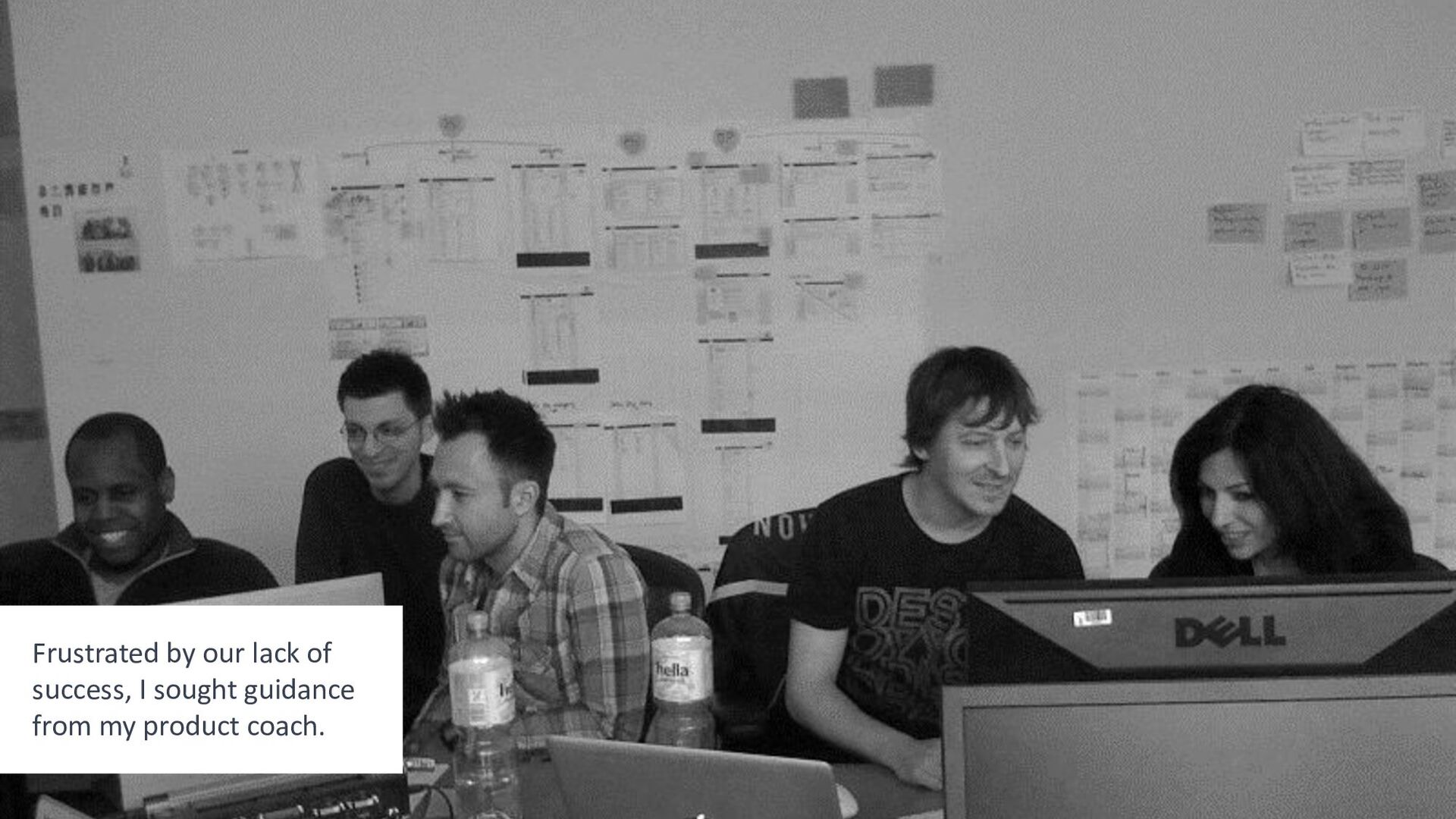
And we were even researching the shortcomings of our product because we really wanted to understand why the features that we're building were not making a big improvement. And we struggled to gain traction with all of our metrics either. We were really frustrated by the lack of our success.
And back at the time, luckily, I had a product coach that I could seek guidance. So I laid out all of our challenges in front of him. And he did point out by his observation that we were not, or I, in particular as a product manager of that team, were not effectively communicating all the findings of our product discovery.
So we had many, many data points, many, many interviews, many, many insights, but I was not sharing all of that in a compelling way with the team and with the rest of the organizations. And therefore, information was lost and sparks did not fly, and the team was neither inspired nor motivated to innovate on behalf of the user.
And this is actually what we want them to do. So that was why our results were rather mediocre. And without a clear understanding of the users' needs and how that fits into the bigger picture and how we can tie this back to our product strategy, the team really was not able to deliver on what they actually wanted to do.
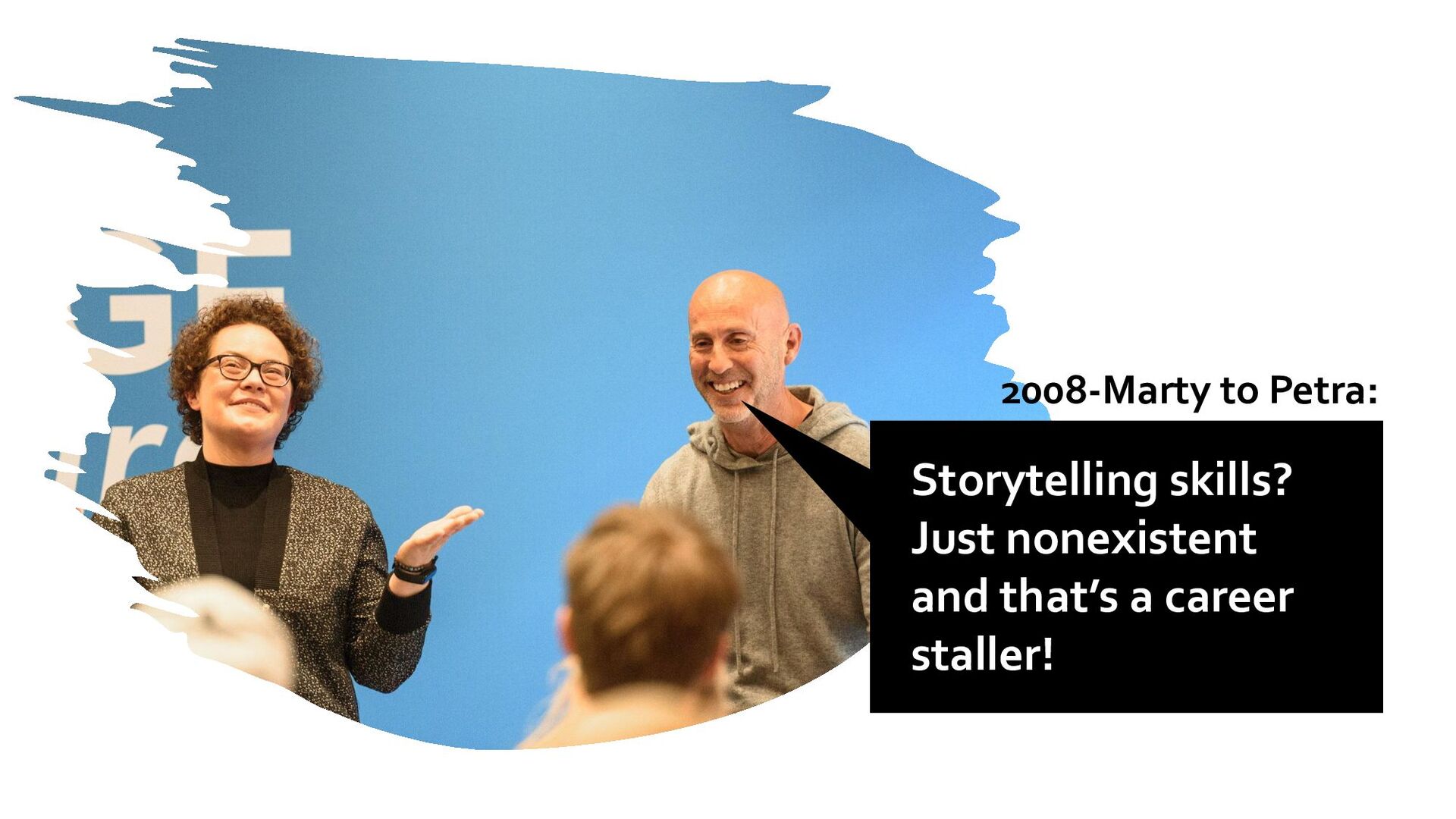
So my coaches helped me to make this connection between our pain and the storytelling skill that I may should improve over the few months or weeks, product evangelizing was, to some extent, not my strong stake. And this was definitely not an easy learning for me, especially as my product coach at the time was Marty Cagan, and he's not famous for sugarcoating feedback.
Let's put it like that. In fact, what that quote, he said, like, Petra, your storytelling skills are just non existent. That's what he said in that one session. But, as every great coach, he not only left me with the observation, he also left me with a ton of material and some inspiration where I could start my self progression journey on storytelling.
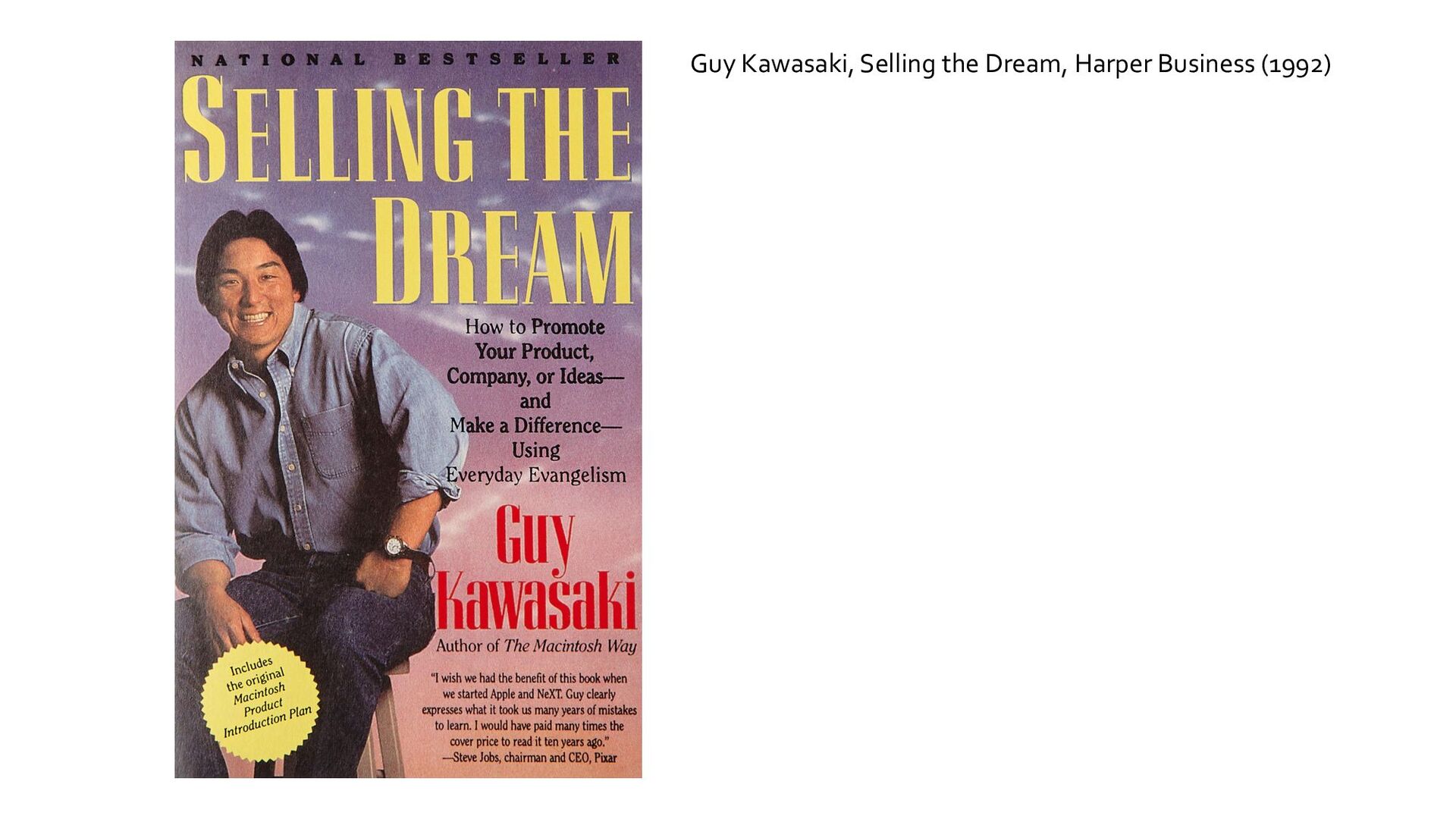
And one book that he recommended me to read, because I have to admit I was not yet fully sold on the storytelling thing making the difference, was Guy Kawasaki's Selling the Dream. Amazing ninety vibes on that book cover, I'd say. After reading that book, I realized how Guy Kawasaki's ability to tell a great story was so vital for the Macintosh and later Apple success story.
It's really hard to get a copy of that book because it's so old, so maybe you can find it in some archive somewhere. But I really had to trace it down, so that's not an easy one. And did it help to develop my skill?
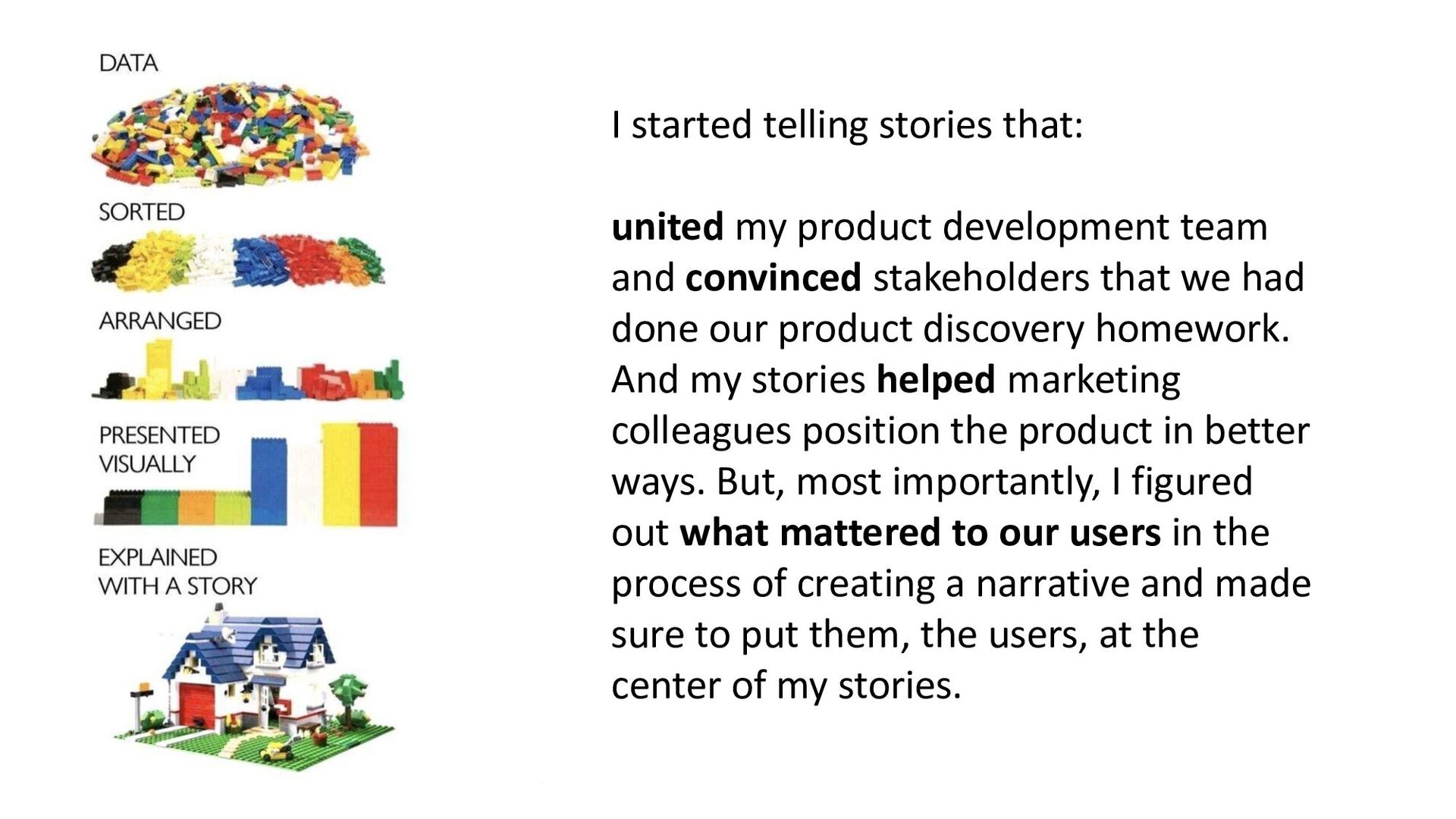
It actually did. I think it would have been a career starter to some extent if I would have not built that skill a bit more. So I can totally recommend, I'd say. I started telling stories that united my product development team. That really worked out.
And it really helped us to convince stakeholders that we have done our product discovery homework. So that was actually a nice benefit. And it helped our marketing colleagues to understand better what the product team is currently building and is up for. And and therefore it helped them to reposition some of the products that we were working on or some of the parts of the product we were working on.
So that was really helpful. And in fact, this is the aspect that I liked the most. While I was creating the narrative, the story with the team in all our discovery initiatives, we managed to reduce a lot of the fluff that we thought matters most to the people, but didn't in the end.
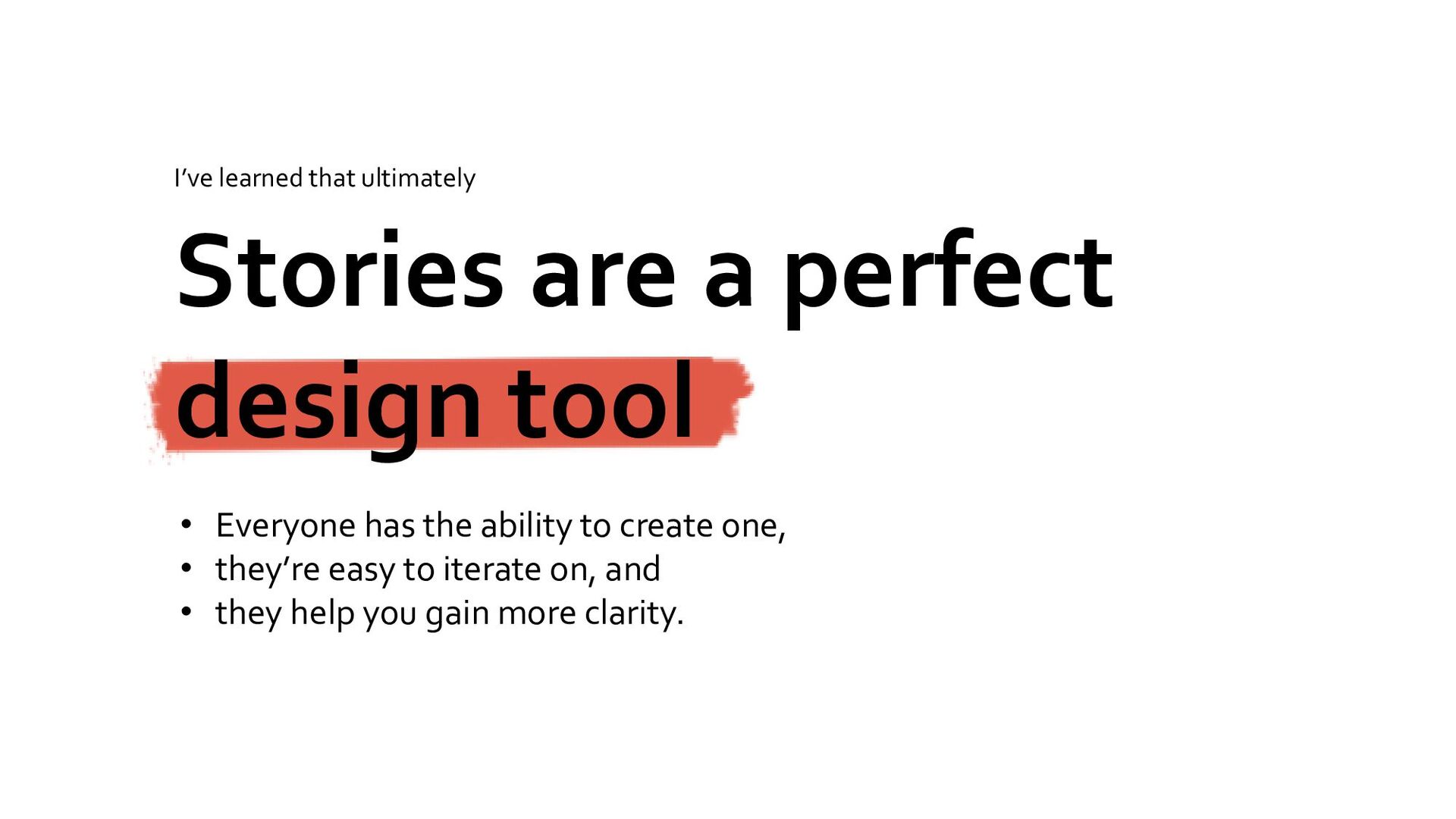
So it really helped us to be more concise, more precise, and that was actually an amazing thing to have. And after sharing all of this with you, I think you already get the idea why it could be the perfect design tool in addition to your toolkit.
So everyone has the ability to create a story. You can open a random notepad and lay out a story like narrative. Right? You don't need an expansive tool for that. It's super easy to iterate on a story, especially if you keep it to the spoken word.
You just go tell your story what you're planning to do the next three months to somebody. You see if it resonates. If it doesn't, you iterate and you do it again. You don't even have to touch a single notepad line of your writing.
You could. I work better if I just share or lay it out in a notebook like structure and then change it. And it helps you to be more concise, be more precise, reduce a lot of fluff, I'd say. So, you hopefully now want to reframe storytelling and just make sure that it's more like creating a prototype or creating a click dummy.
It is just part of your product management practice. You just put it into your product management tool kit. And now, maybe some of the tech folks in the room say like, yeah, but I'm not a product person, so when do I need to get on the stage and tell a story?
You will progress in your career. Right? And maybe you're a tech lead at some point or maybe even a CTO at some point, and I bet you will need to explain why this fighting tech legacy initiative is the right thing to do in the future.
So I think it is, in general, a helpful skill to have. Now, you're asking, rightfully so, Petra, what makes a great story? Right? So what makes a great story, we start with what makes a well defined story or what is a well defined structure for its story.
And a well defined structure is a structure that is easy for people to navigate, so they understand where in the story they actually are while listening to you. A good story has a beginning, and it has a middle, and it has an end, which sounds obvious, but it helps as a mini framework if you start writing a story.
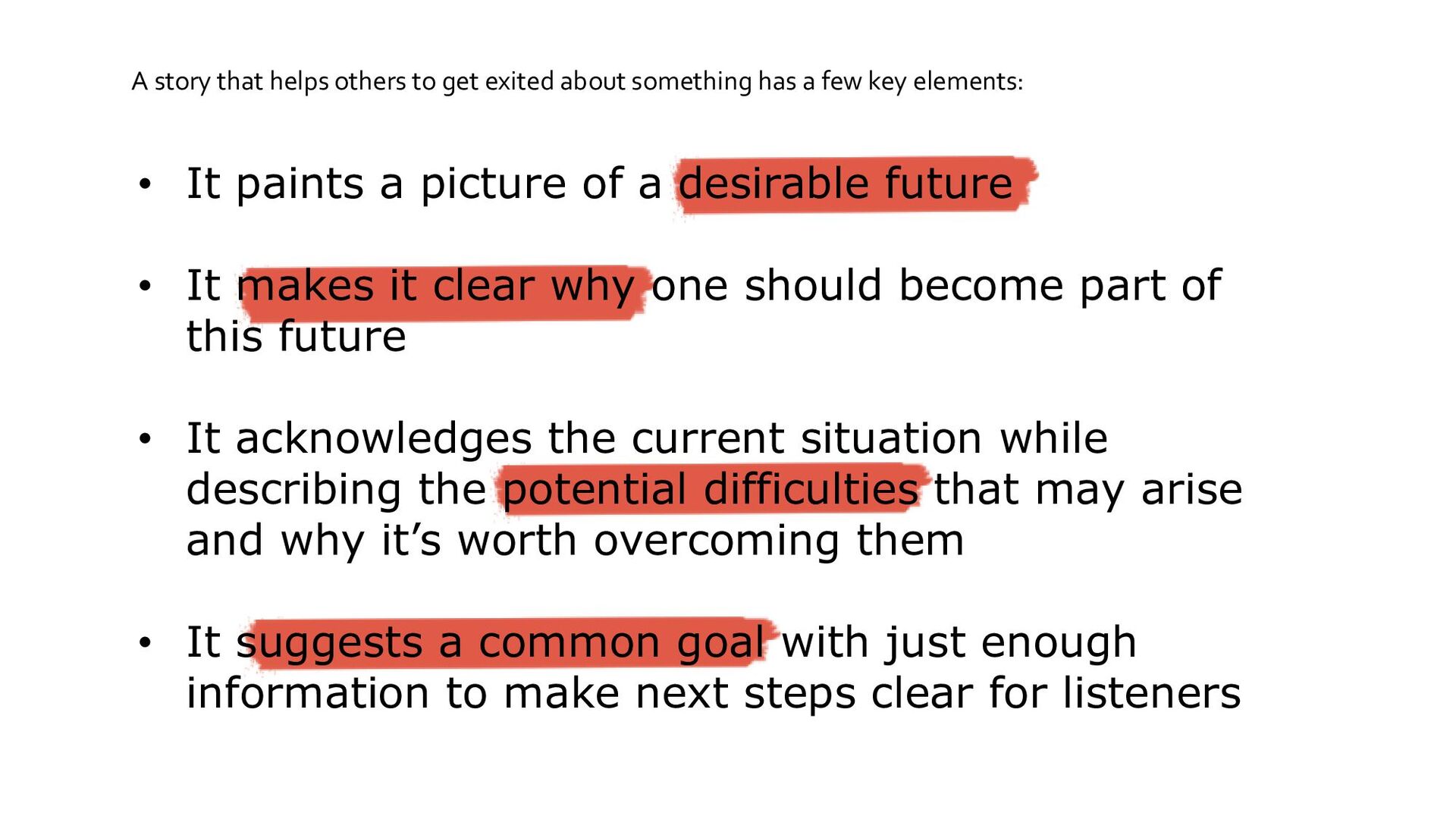
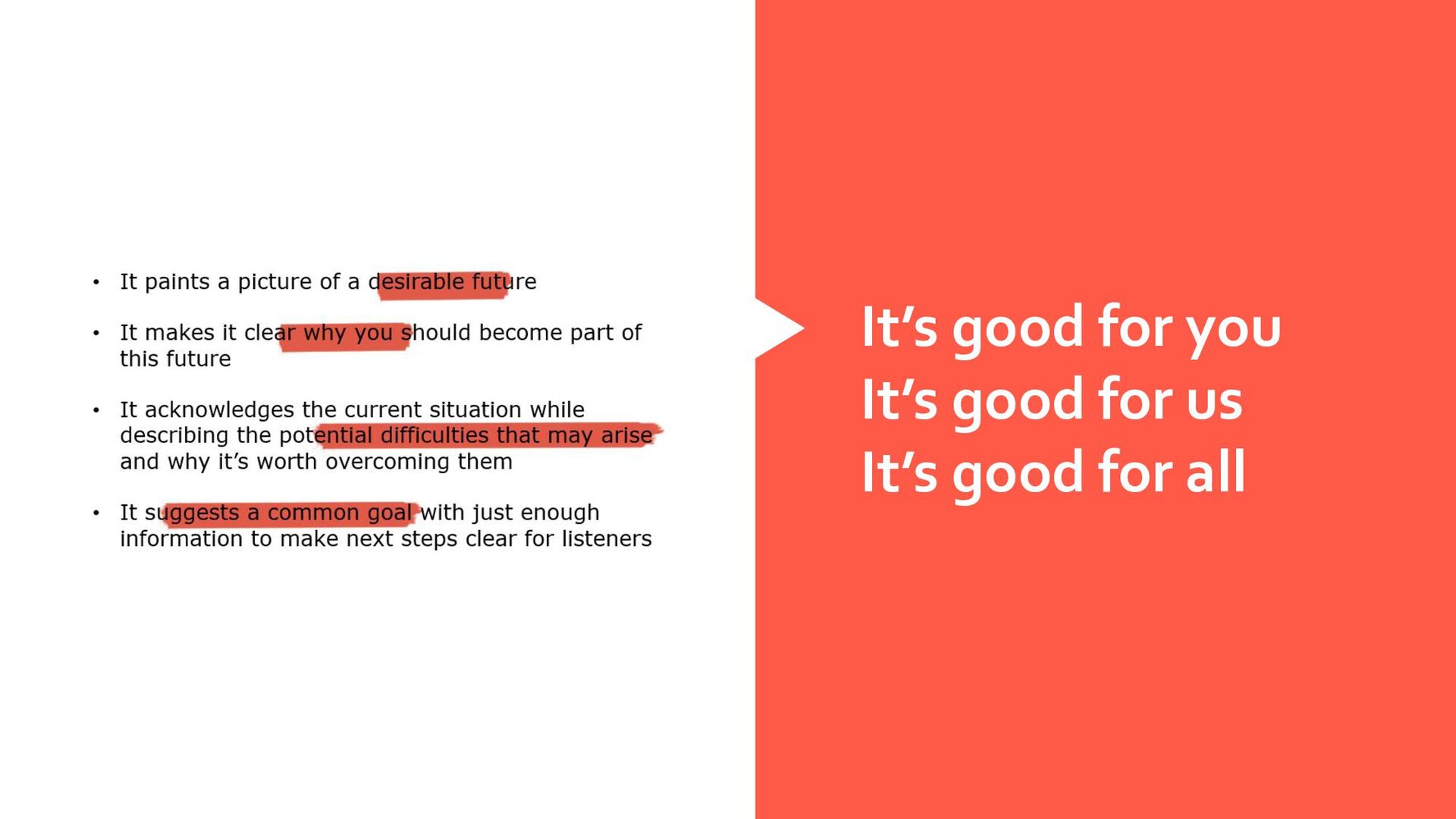
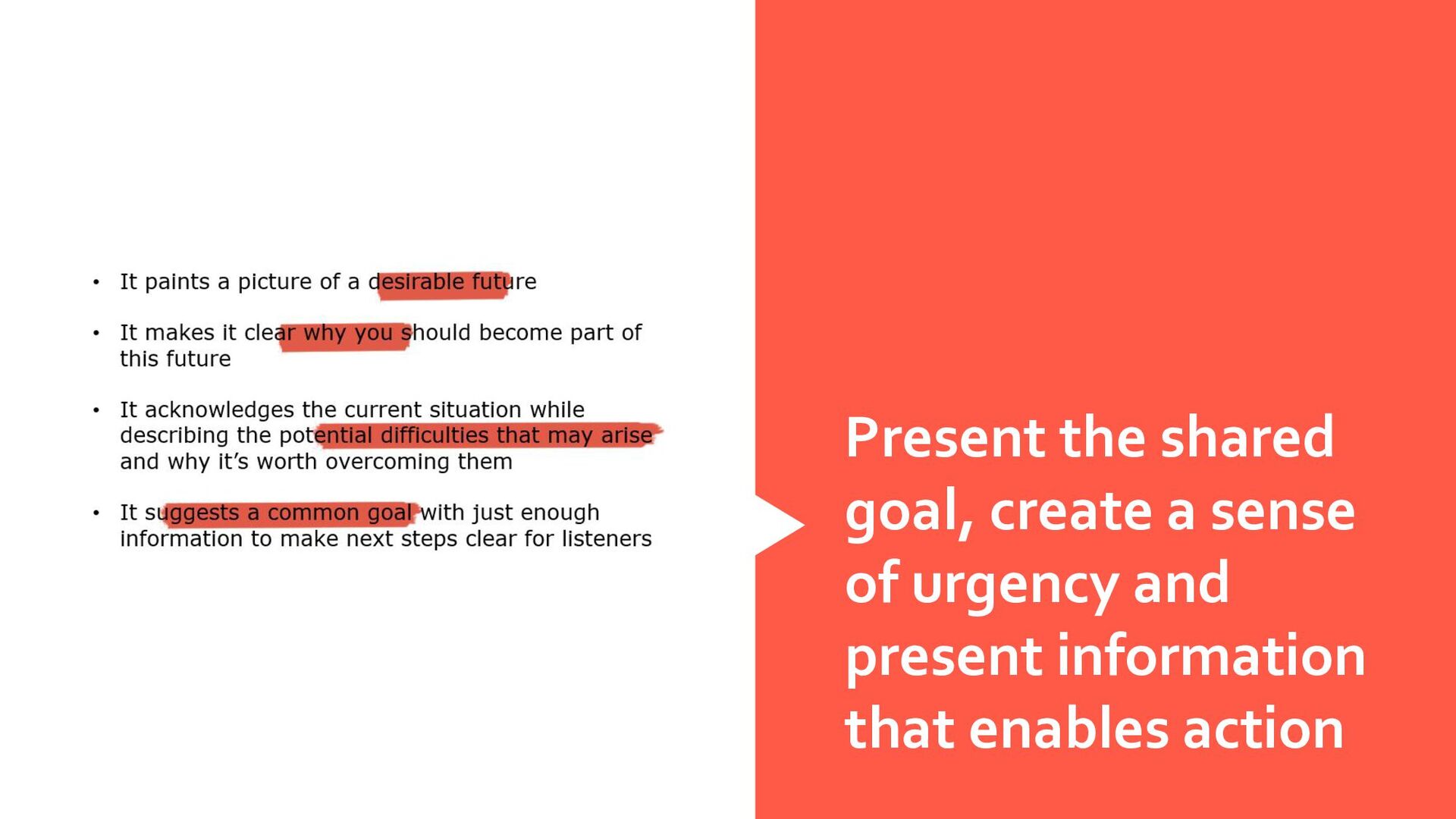
A high level structure that works well in our product management context is this one here. So you want to create a story that has these elements. It needs to paint a picture of a desirable future. So what is the outcome? Then you need to make sure that each listener understands why it makes sense for them to be part of this future.
Right? So it needs to be desirable. And then it should acknowledge the current situation while describing the potential difficulties that may arise and why it is worth overcoming them. Because we don't want to say it's all plain vanilla, it will be easy. It won't, but it is so that's why it's super important to share the difficulties and talk about how to overcome them.
And then what I really like is you should suggest a common goal with just enough information so that people can go back to their desk and know what the next steps ultimately would be. And one story structure, and it's maybe the most well known story structure that is helpful in that context as well, is the hero's journey still.
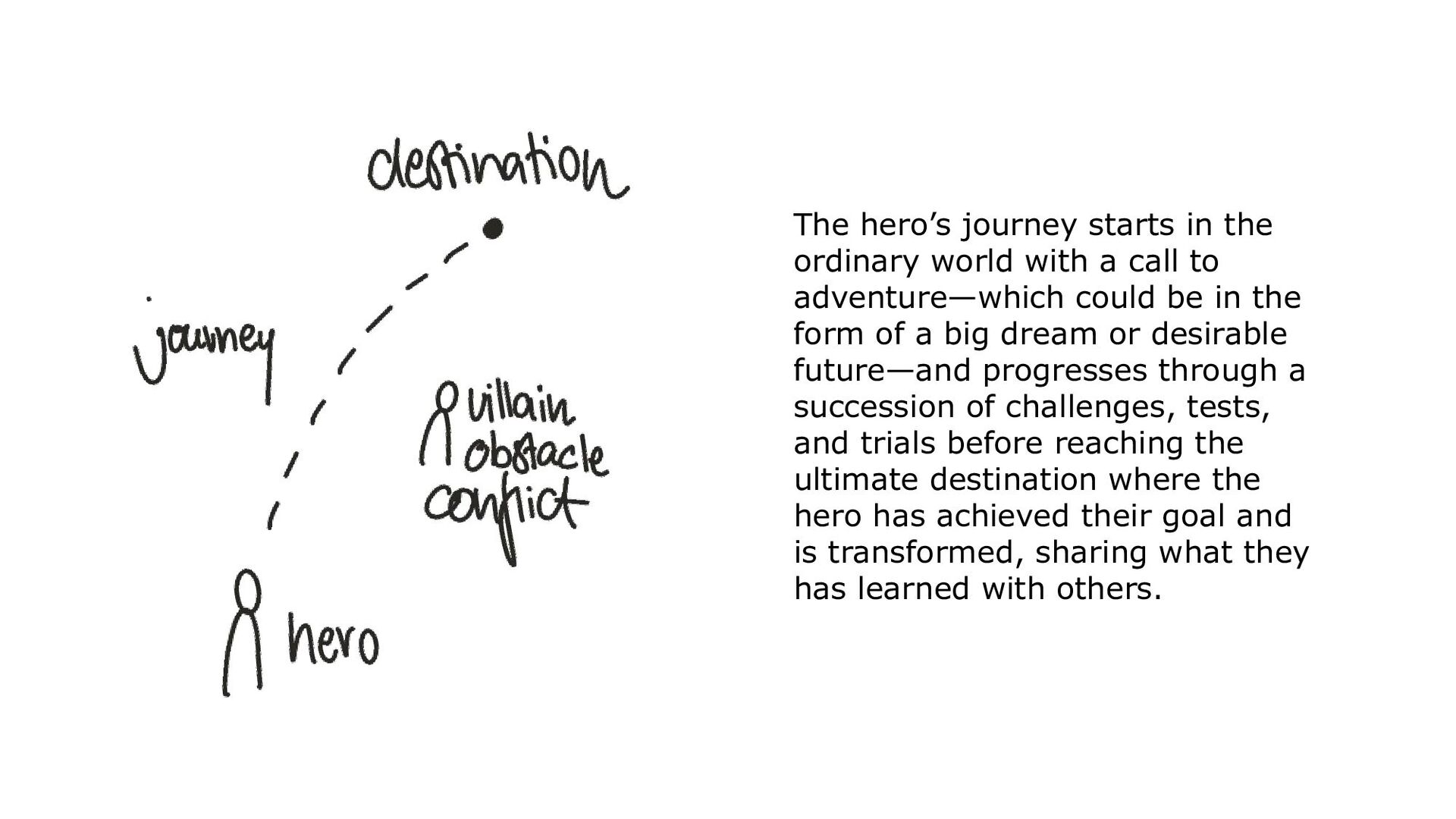
And it's elucidated by professor of literature, Joseph Campbell. The hero's journey starts in the ordinary world with a call to adventure. That's the big dream. That's the desirable future I was talking about. And then it progresses through a succession of challenges and trials and tests, and the hero has to go through all of them before they reach the ultimate destination where the hero has achieved their goal and is actually transformed and can share what they have learned with others.
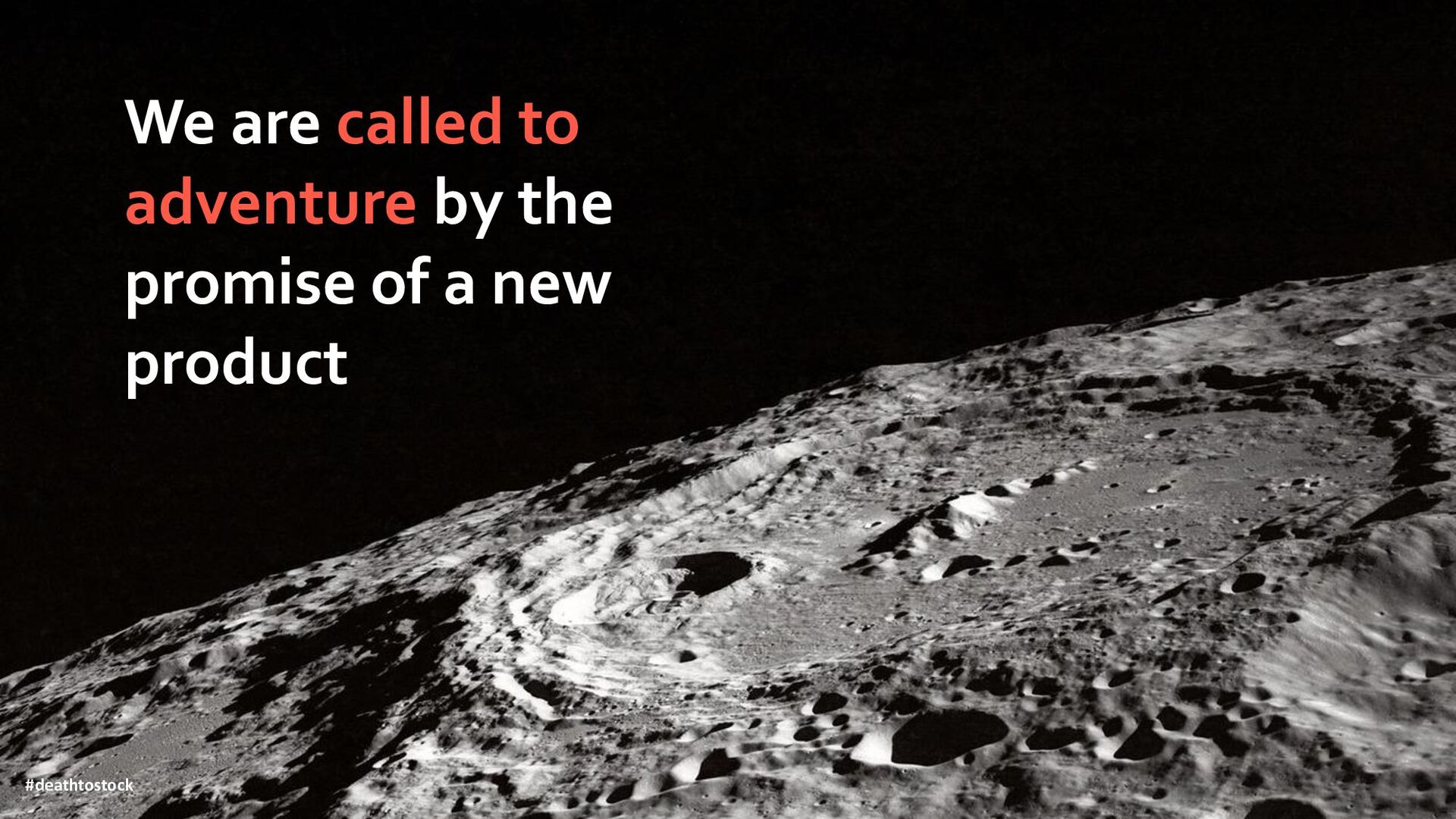
So that is basically the story. And in much the same way, we are called to adventure by the promise of a new product. Right? So that's why I think the story works really well. And we want to achieve a goal creating this new product, and we have to get others excited to join us and join our strategy and our mission and to make this future come true.
And on the way, we have to make sure this message sticks with them so well that in the moment when they have to make this tough product trade off decisions, the story is at the back of the head, right? Because then everybody is more aligned, it's clear what we're here for.
So think about what do I need to share with the team, with the rest of the organization that they could make tough trade off decisions while they're working on the product. So let's assume I have inspired you that storytelling is a thing, you now have a structure to do so, so how would you start creating your first story?
I know this is the hardest part for most of us. We have busy calendars, but undoubtedly, you need a bit of time in your calendar to really work on the narrative. Creating and writing down a story is a bit of upfront work. But, if you do it right, think about, for example, your product strategy.
That's usually a twelve to eighteen month thing. Or think about how you will fight tech legacy with this initiative in the next nine months. Right? So you can create a story for that, and then you can use it for months, sometimes even years.
Because let's face it, sometimes we're not as fast in development as we would like it to be, and then we can use the story for even longer. So a good story will save you tons, hours and hours of meetings actually, because usually you need to convince people that the things that you're planning to do are the right things to do.
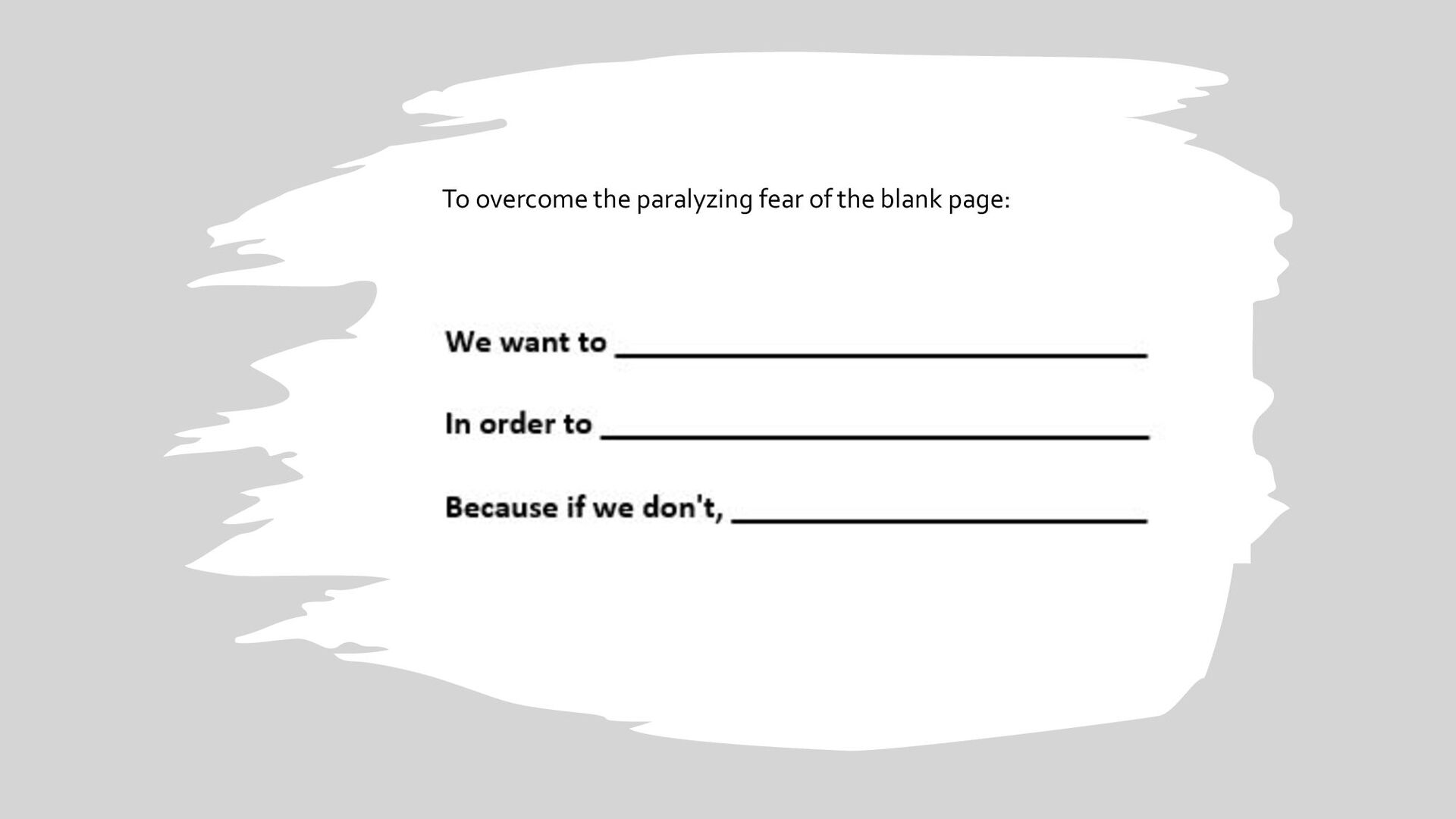
If you have a compelling story, this is way easier to be done. So step number one, make some time in your calendar and then you come back to some of the things that I will share in the next few slides. This is for the ones in here that need to overcome the fear of the blank page.
For some it's a thing, so then I would recommend to start here. We as a company, team, organization, whatever you want to put in there, we want to, in order to So what do you want to achieve? And because if we don't, what happens if you don't tackle this one thing?
This is something you can do in uninterrupted thirty minutes, maybe on your train ride back tomorrow or something like that, and it really helps you to just get started. This is not a full story, but it helps you to have something in writing, and you can start to have conversation with several people.
And then once you've done that, there is no magic source. You have a notebook maybe, and then you start to lay out the narrative. Some parts of it are already kind of inside of you, they're just like implicitly not stated, because you've done your discovery, you talk to a lot of users, you know what your stakeholders want.
So just start to bring that in the structure that I was talking about and make sure that you're not missing on any of these ingredients. What I recommend people to do is, at the beginning, you decide if you want to be should be the hero of this journey?
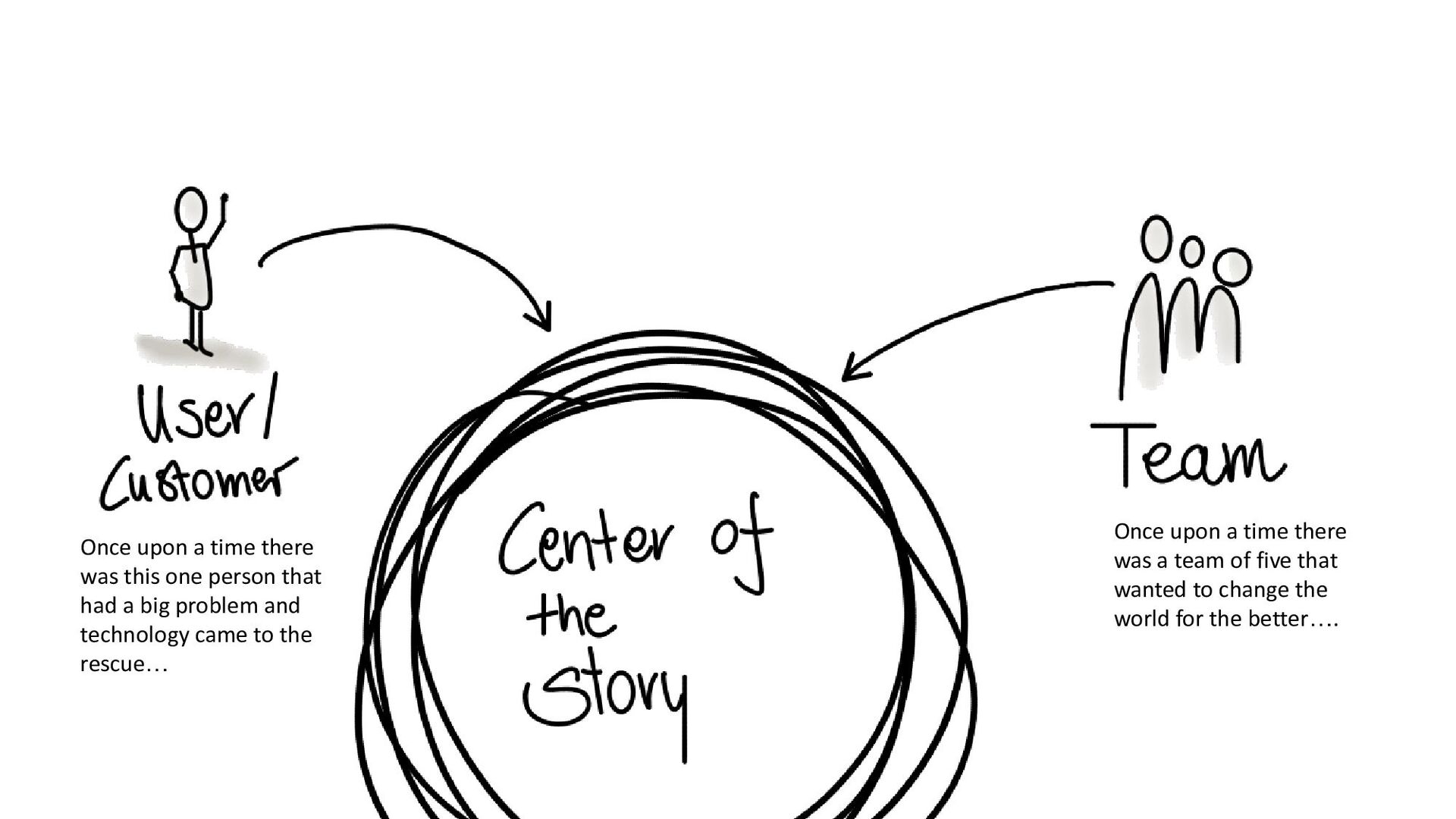
Is it your team? If they need maybe an extra motivation boost, that's a nice idea. Or you put the user in the heart and the center of the story. Both is possible. So it is either once upon a time, there was a team of five and they want to change the world for the better, so that is your team in the heart and center, or it is, once upon a time, there was this one person and they had a big problem and technology came to the rescue.
Both structures work and it really depends on, yeah, I don't I think in which phase your team currently is. And then I coach people to just check-in on the first aspects of my structure here. So check if it paints this desirable picture of the future and if the audience understands why they should be part of this future.
I have a super easy checklist for that, that's on here. So think about why is it good for each one of your listeners, what is in for them? So think about if you're touching on some interesting stuff for the engineers, maybe some interesting stuff for the marketeers.
So really think about the audience. They need to hear something interesting for them in your story. And then check why is it good for us, Us as a team, us as an organization maybe, or good for all, that could be the company and the organization, or if you're working on a product with a big purpose, this us or good for all could even be human kind I'd say, depending on the purpose of your organization and company.
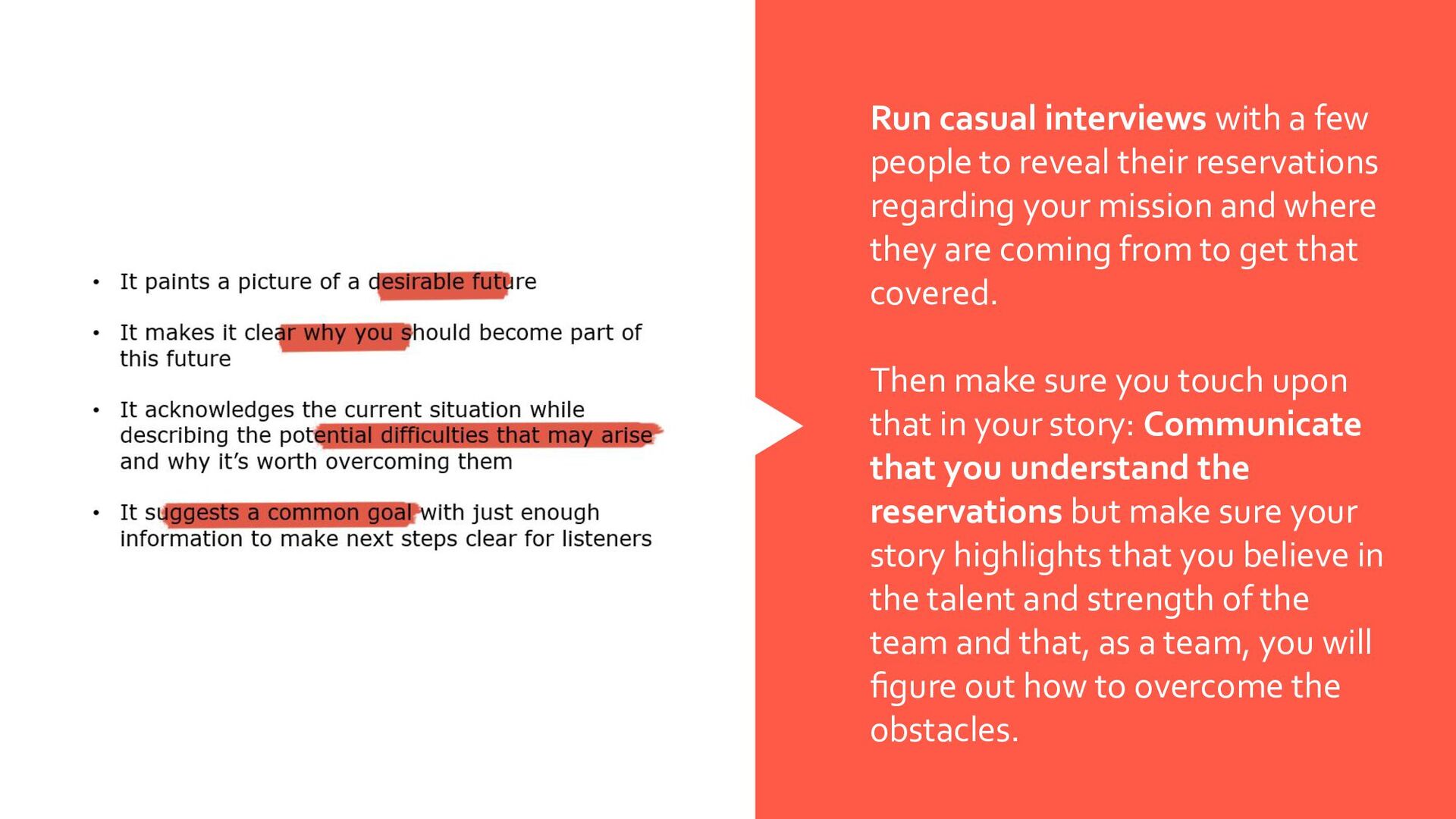
And once that is done, we check if the story acknowledges these difficulties that may arise, right? Product folks should make an effort to understand the audience's reservations. We talked about the scheduled interviews already where you just see if your message is already compelling and then you need to refine it.
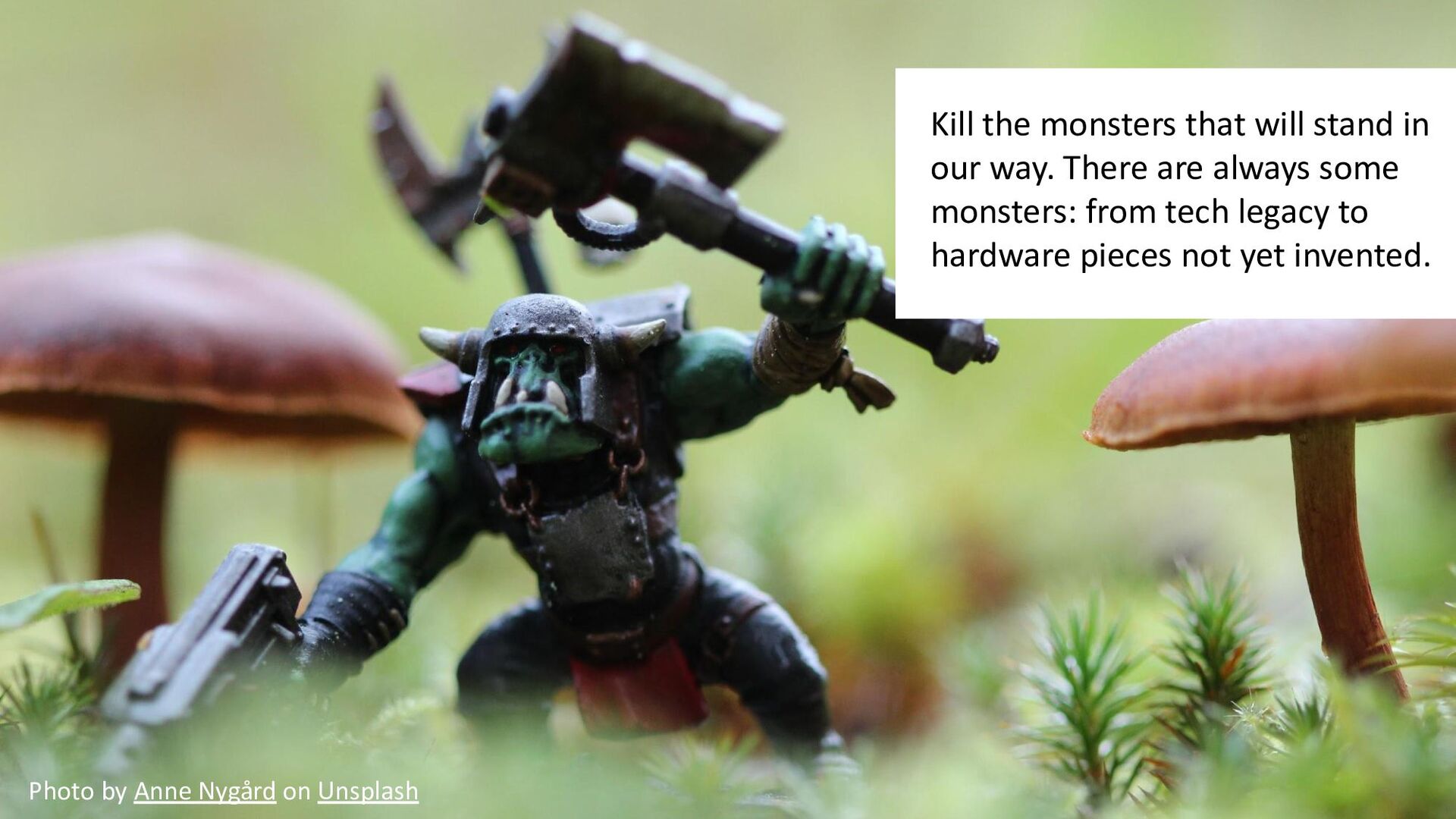
And then you need to make sure that you tackle this conversation or tackle this maybe the wrong one, but you get the idea. Talk about these conversations, and you communicate that you understand these reservations. They're here for a reason. But make sure that your story highlights that you believe in the talent and the skill of the team, and that as a team, you will be able to overcome all these obstacles, and you will be able to fight all the monsters that will stand in their way.
Because there are always monsters in product management, right? From hardware pieces that maybe have not yet been invented to tech legacy that we all need to fight. And finally, make sure that you present a shared goal. Create a sense of urgency and suggest next best activities.
So now you have your story, and as you see, no magic sauce, it's work to do, but at least I gave you a structure and a checklist for this part of the process. But how do you make sure your message sticks? That's the bigger challenge to have.
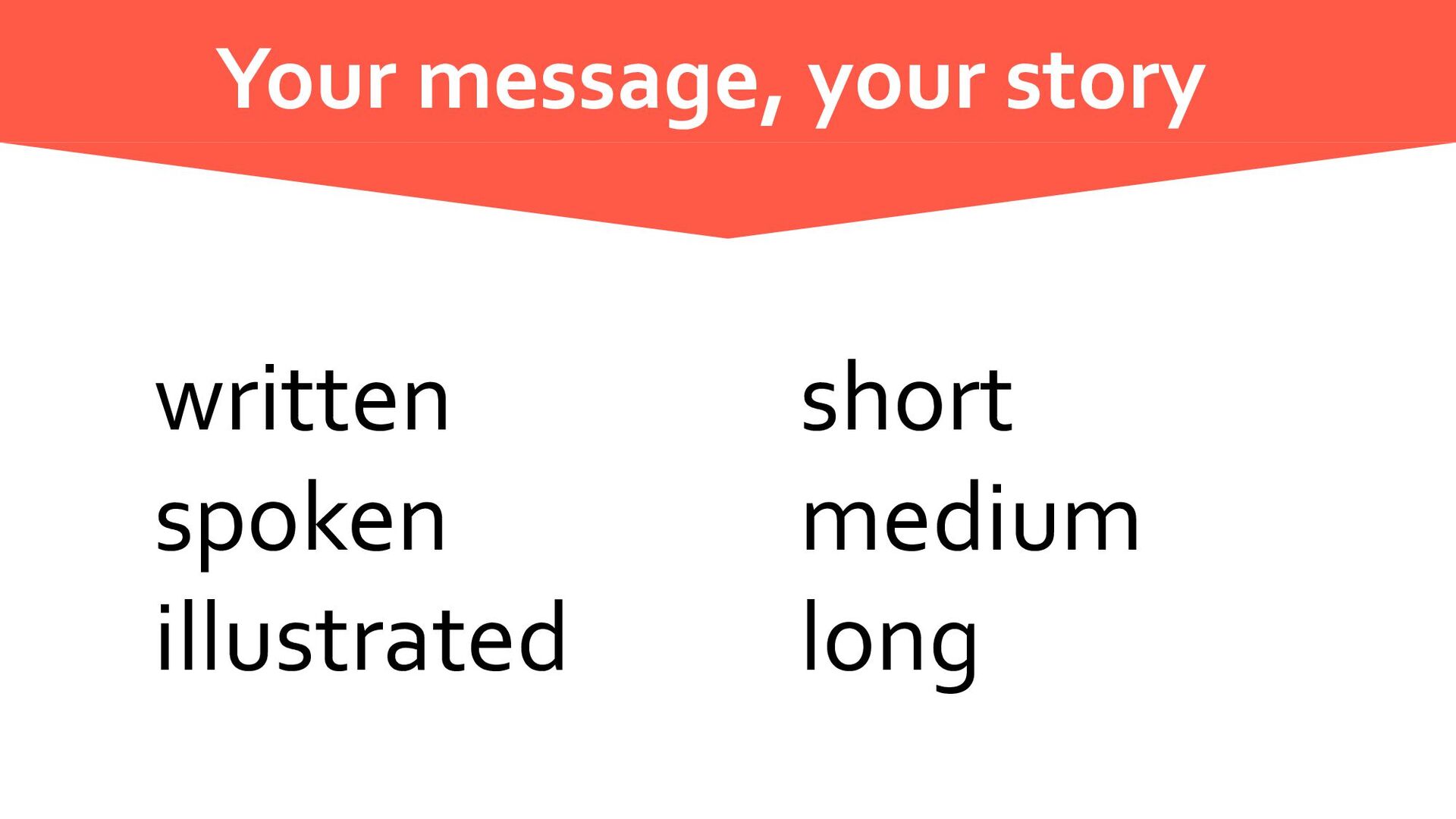
So we humans are clearly inspired and motivated by written and spoken words. And you noted a person in the beginning of my talk, and it is a person that has motivated you in the business context, right, because they shared a compelling vision for the future with you and that really inspired you.
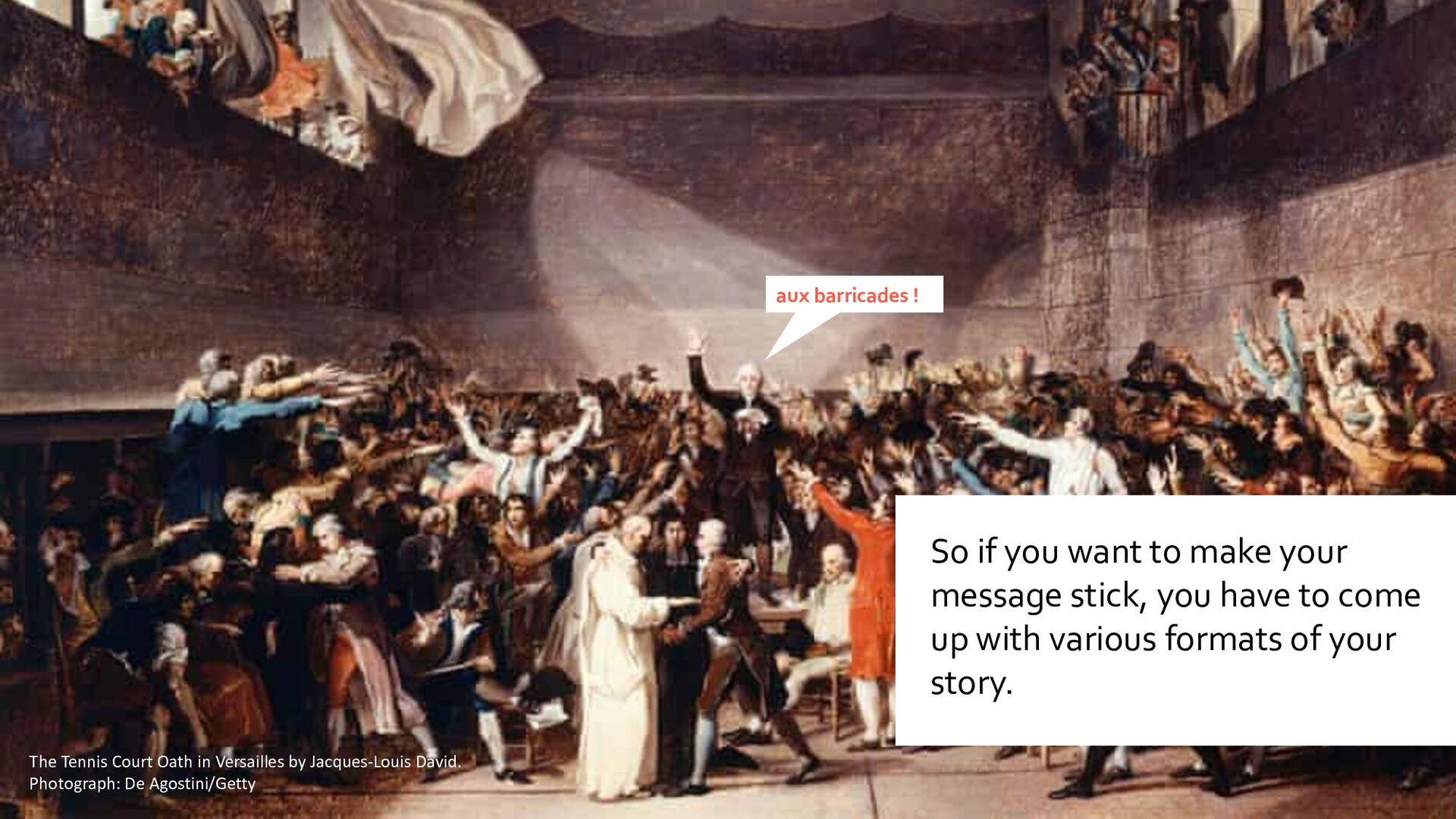
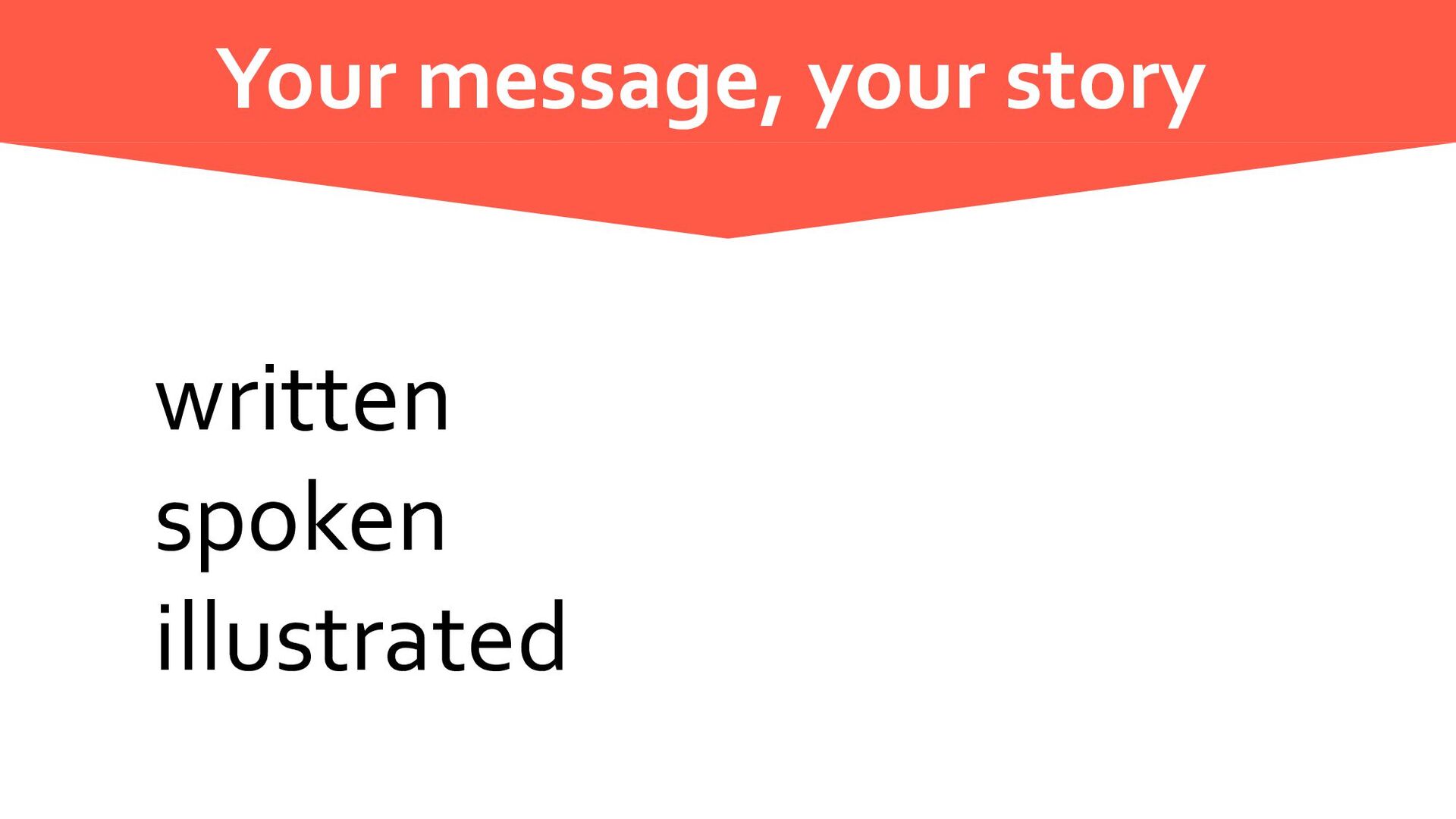
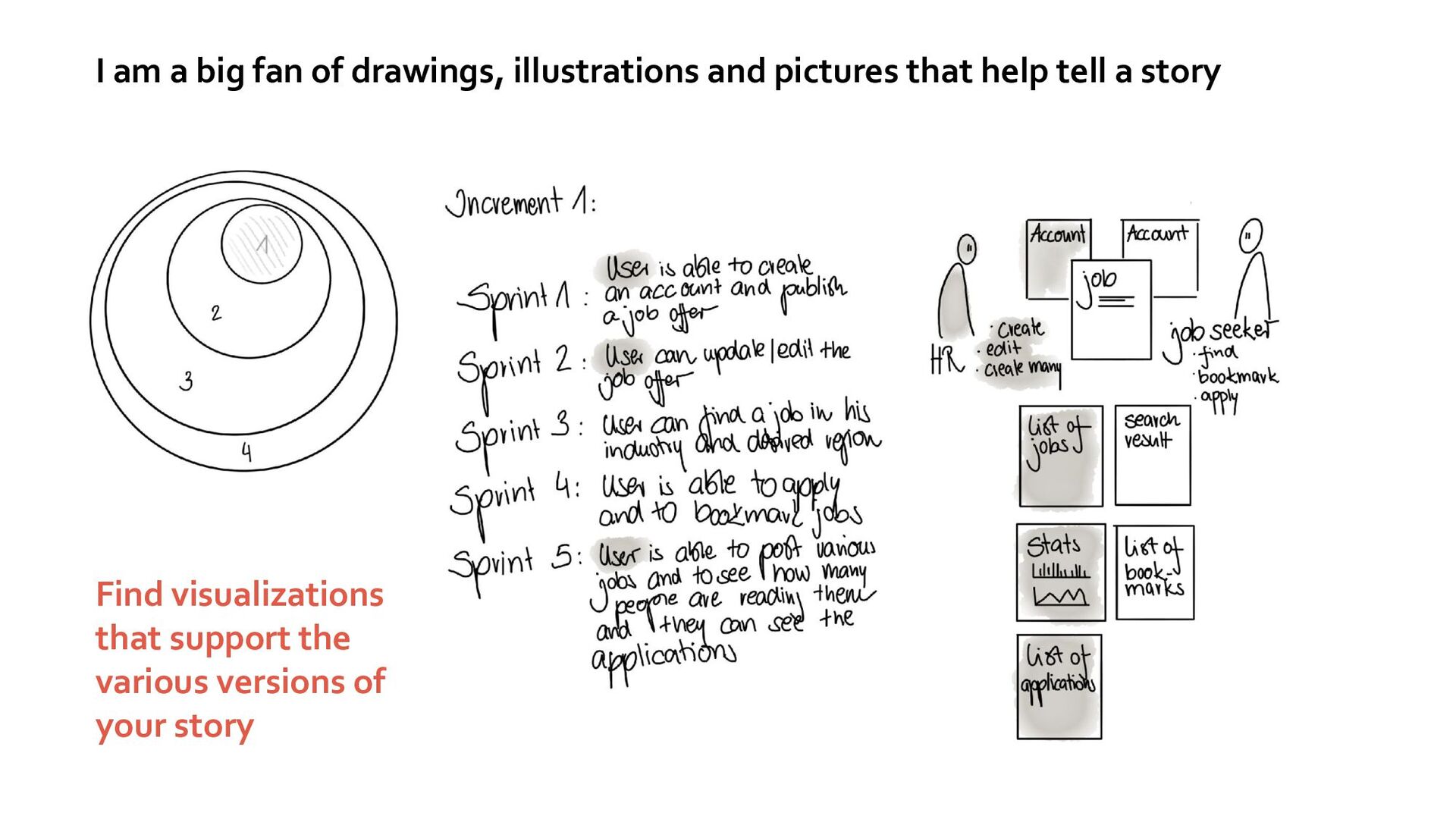
But we are also inspired and motivated by images, and by drawings, and by illustrations. So if you want to make your message stick, I suggest you to create it or be able to share it in various formats. I think you have to create a written, a spoken, and an illustrated version of your story.
The spoken one could, for example, be a video recording of you walking people through your narrative. The written one might live on your company wiki or something like that. And the illustrated one is a drawing that you use over and over in every meeting.
It can be a simple thing that you put on a flip chart or a whiteboard. And when it comes to the narrative, I'd recommend to prepare the story in three different lengths: short, medium, and long to be able to tell your story in a compelling way in whatever situation you need to tell it.
Short would be the equivalent of one hundred fifty spoken words, that is seventy five seconds. Why seventy five seconds, Petra? Research indicates that when you tell a short informative story in an online setting to an executive, it's seventy five seconds where the attention span maxes out.
So that's where you have to get your message across. This is your elevator pitch, have your story ready in a very short version. Would I recommend you to start with a short version? No, that's way too hard. Start with a longer narrative and then make the shorter version later.
Medium is a bit longer. I like six spoken minutes. It's about nine hundred words. It's what you can use in your sprint planning meeting, for example, to remind people what you're currently about to do. And at that length, you want to start thinking about repetition.
So tell the people what you're going to tell them, tell them the thing, then tell them what you told them. That is really helpful. Our brains love repetition even if it feels a bit weird. By the way, that's the length we talk about if we talk about Amazon six pages, so that's approximately what we're talking about here.
And then you need a longer version, usually. You only use that once or twice, usually. In the beginning, maybe you're rolling out your product strategy, then you want to share a lot of your discovery homework, lot about competitors and the market and what trends you see and all these kind of things.
So this is eighteen spoken minutes and I like to think of it as in three acts for about eight hundred words. So you can cover three topics, for example, in this longer version. It is not a coincidence that the TED Talks are at that length.
So it's long enough to be serious and short enough to really hold people's attention. So that's usually what I would recommend you to do. And as you have, without any doubt, noticed, I'm in love with pictures and illustrations and drawings. This is just a random one that I use when I need to explain iterations and increments.
But it could be drawings as simple as that. Right? So that's the next things that we're doing, and after this, people will be able to do this, this and that. You need to be a bit more compelling and concise with that, but that's what I'm talking about if I say, like, you need an illustrated version of your story.
It can be rather simple. If you struggle to do these kind of illustrations, reach out to some of the design colleagues in your organization. Maybe some somebody has a cartoon talent and they draw you product strategy cartoons. One of my coaches actually did that within his organization.
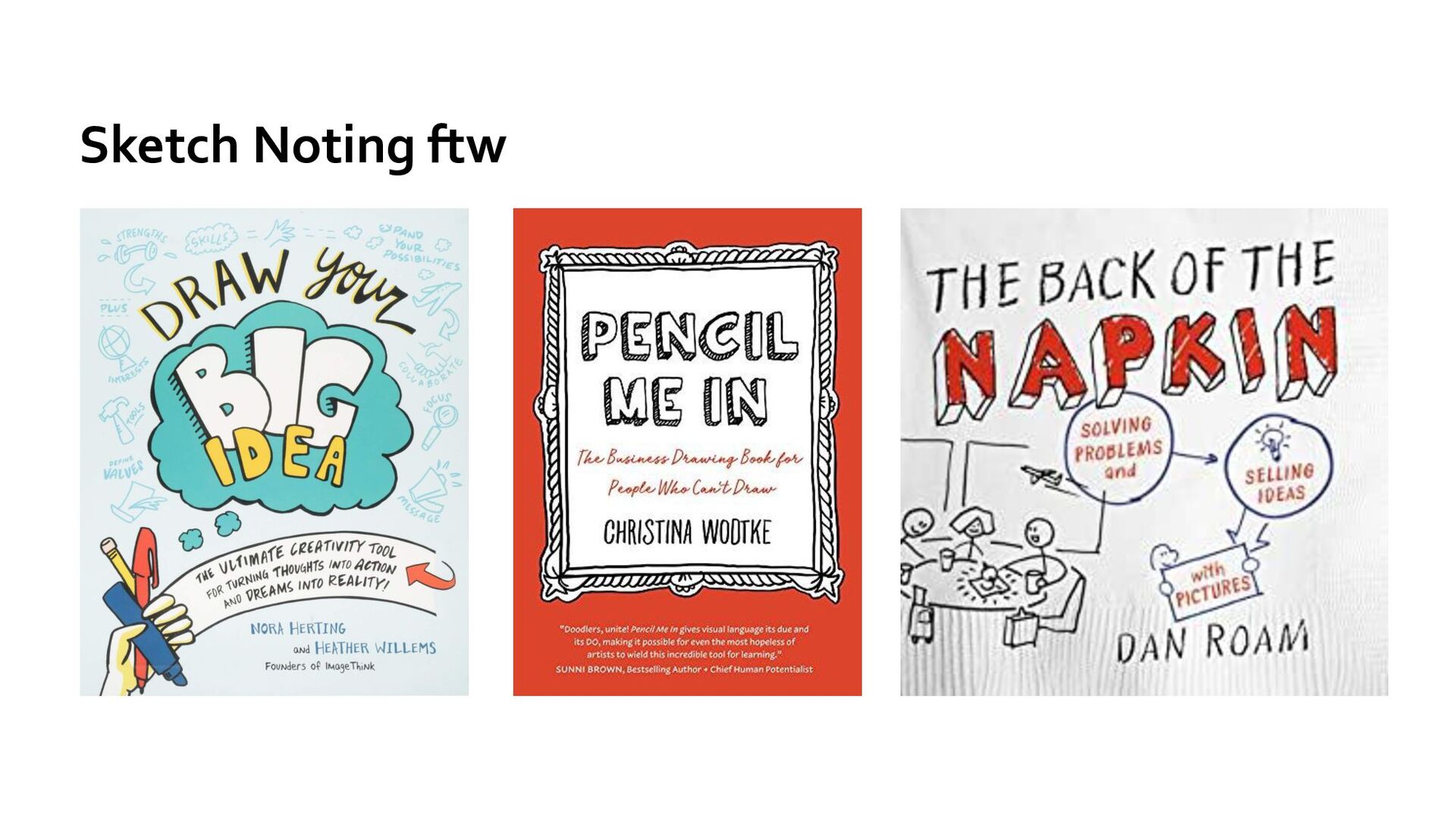
And I have a blog post on my blog talking about Matthew Arnold and his product strategy comic strips if you want to look that up. So that's something that you could do. Or you invest in the art of sketchnoting. It's an easy to learn thing as well.
You just need to practice a bit. It's basically like storytelling. You all can do this from a very early age. You doodle a bit and then it should be good. Now, once you did all of that, you have your story ready, we just do one single last round of refinements, and here's my checklist for that part of the process.
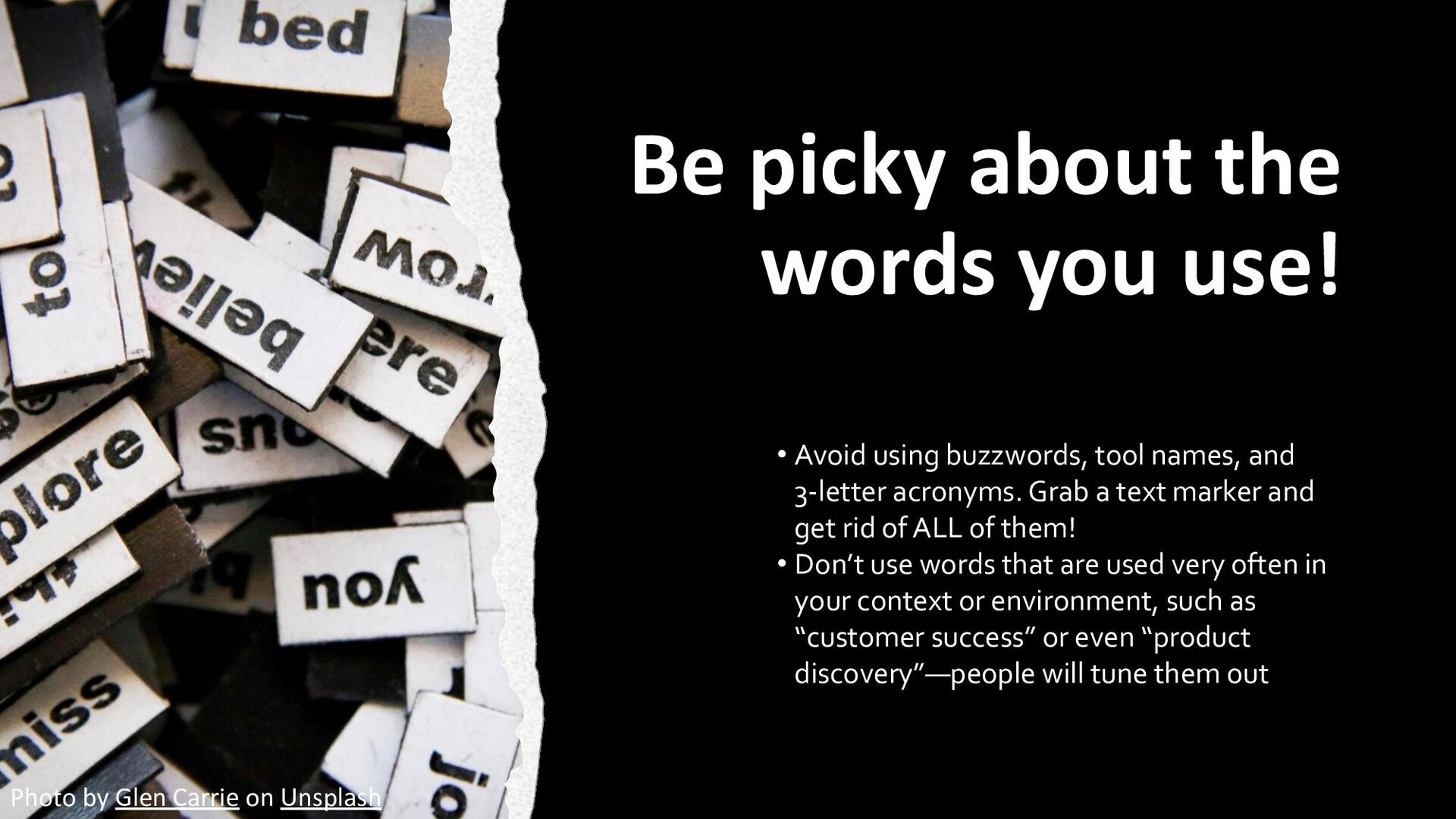
Avoid all the buzzwords, get rid of them. I see way too many of them. I know it sounds obvious, but please, three letter acronyms, we get rid of them. Tool names, we get rid of them. Company buzzwords, we get rid of all of them.
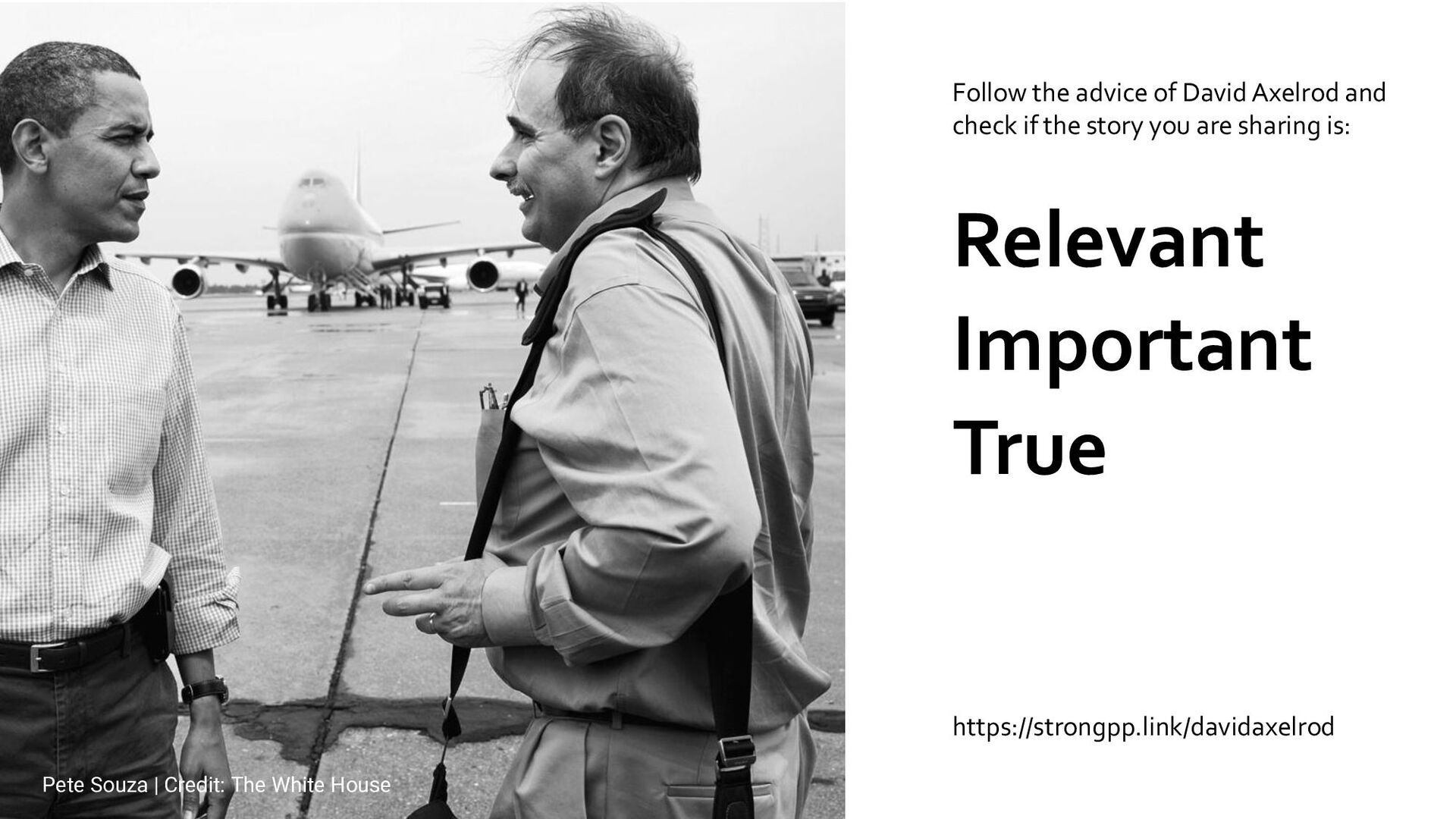
Same applies for the words that are overused in your organization. Sometimes that's words like customer success or product discovery, even if we like these words, but sometimes people are already tuning them out, so get rid of all of them. Then I like this quick checklist by David Axelrod.
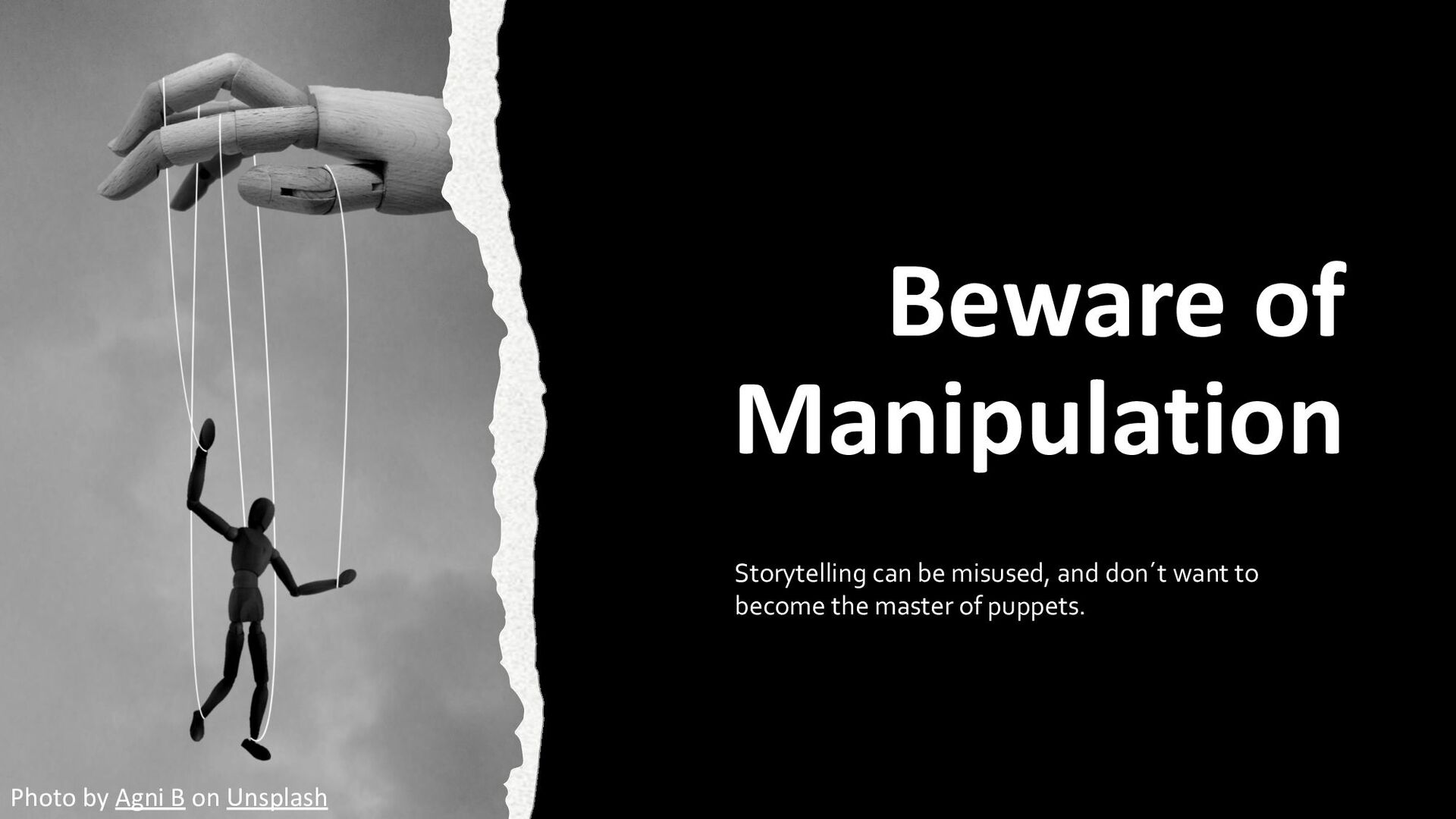
He was one of Obama's big campaign strategists. Check if your story is relevant, is important for the audience right now, and is true in its core. The true part is especially important in these times because storytelling can be misused. Because people are presented with fake news, and they believe in these fake news as long as they're part of a compelling narrative.
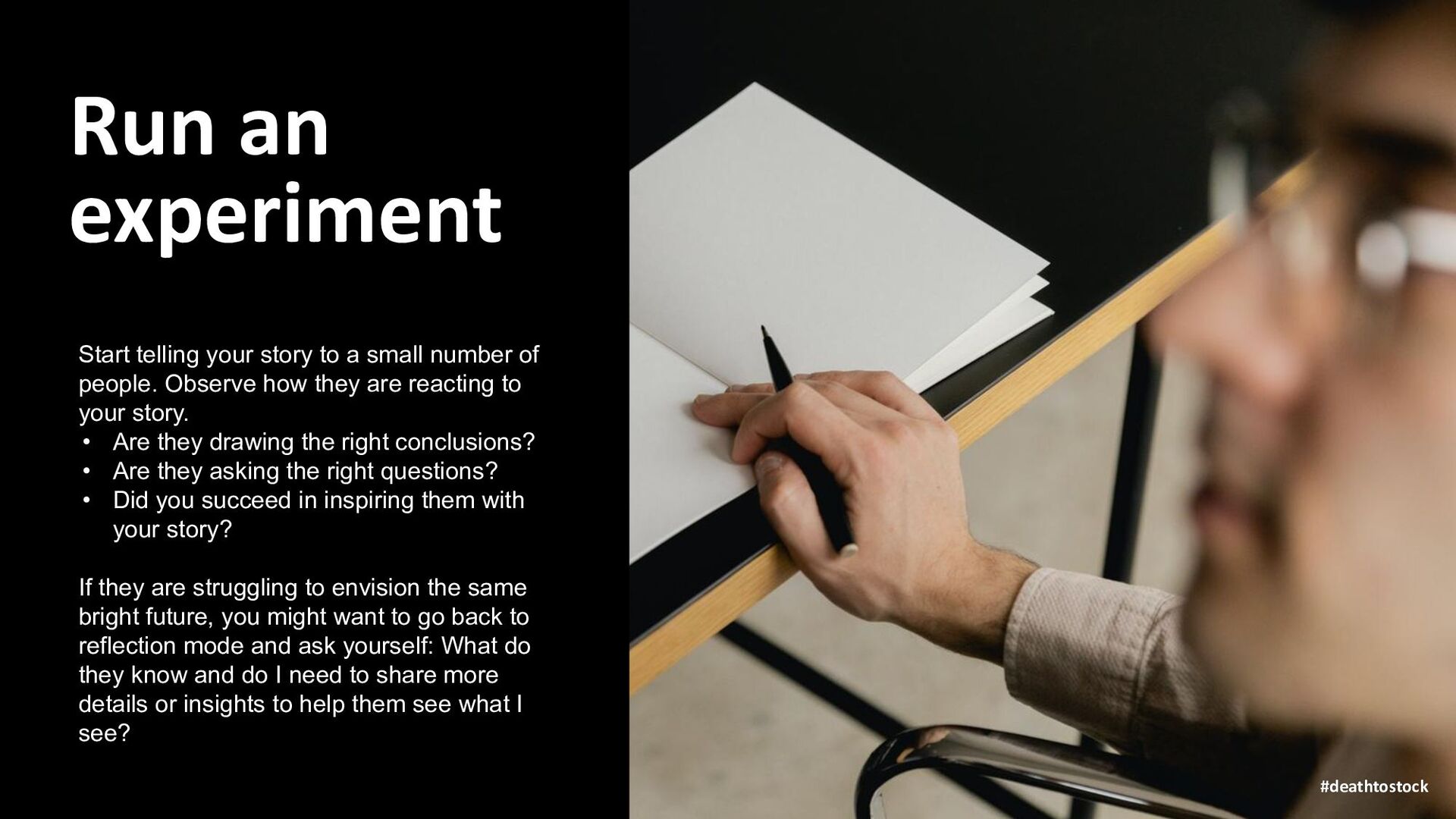
Right? So you want to inspire your team, but you don't want to become the master of puppets. And then start telling your story. Go see what colleagues what what conclusions they draw after you shared the story. Are they asking the right questions? Would they go back to the to the desk?
Actually, the next task that they would actually start working on would that be tasks that are in line with what you want to achieve. So that's actually an easy one. And then, I really like this check check if you light up their brains, if you talk to their hearts and to their minds.
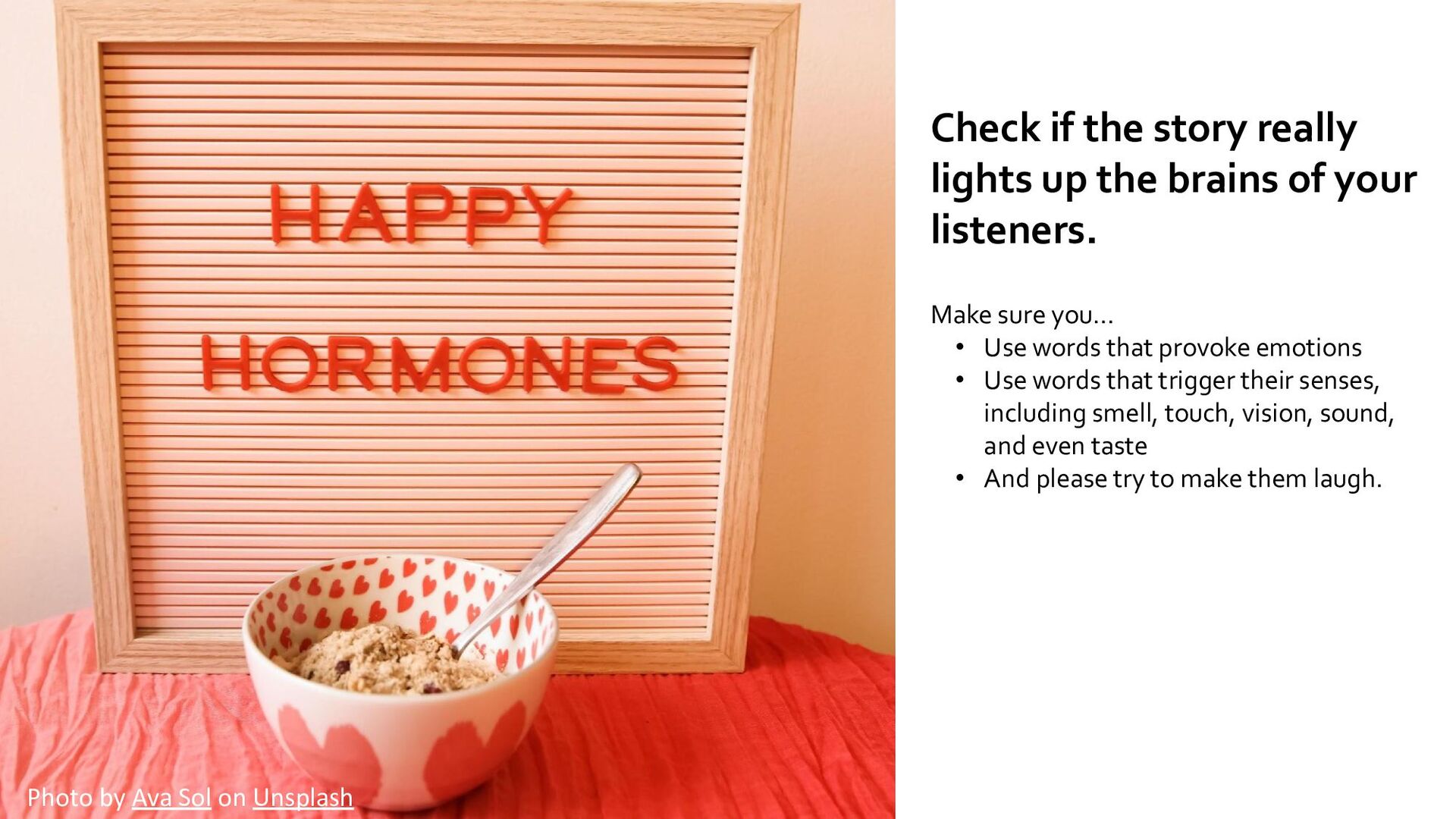
Use words that provoke emotions. Use words that trigger their senses, smell and touch and vision, sound and even taste. You remember that there was a little girl in heavy winter boots on a hot summer day? So that's what we actually want to do.
And please, if that's a talent of yours, try to make people laugh. That really triggers a lot of hormones to be released in their brains. So if that's something that you love to do, then please do this. And then make sure you have your story ready in your format, the various formats, and that you can tell it.
Start rehearsing it. Start showing the curiosity about the topic and that you really care for it and that you're really passionate about it, that's an important thing to do at this level as well. And now let me come back to your storytelling journey, right, and your capabilities.
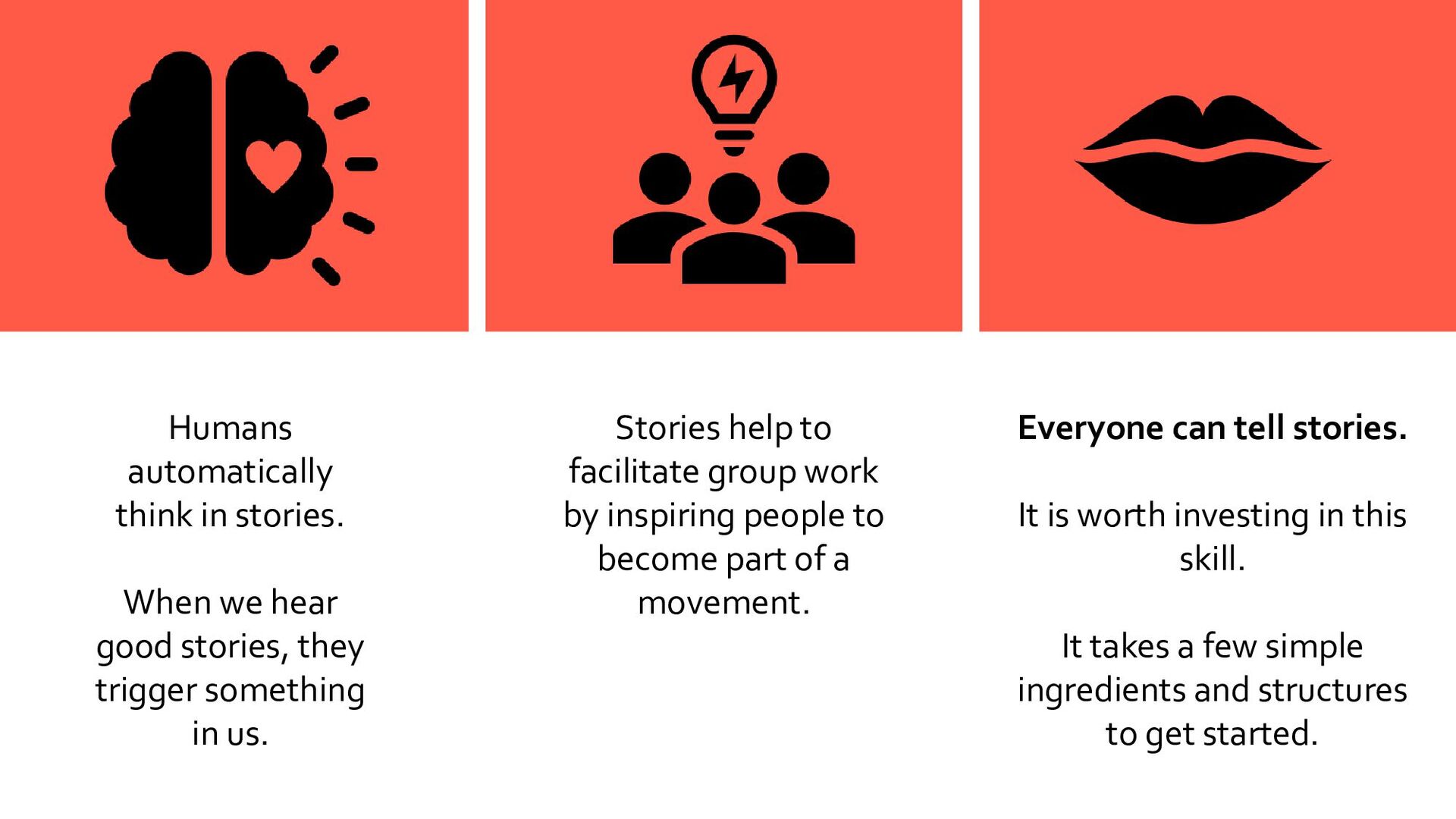
To make sure that you are equipped with storytelling techniques, let me recap some of my key points. I want you to remember that humans automatically think in stories. That's how we are wired. And when you hear a good story, they trigger something in us.
Stories are the tool that enables one person to get others excited about using their skills and their know how to solve a hard problem together. Everyone, in fact, can tell a great story, but we don't practice this skill often, and therefore it fades, so I would encourage you to bring back that muscle.
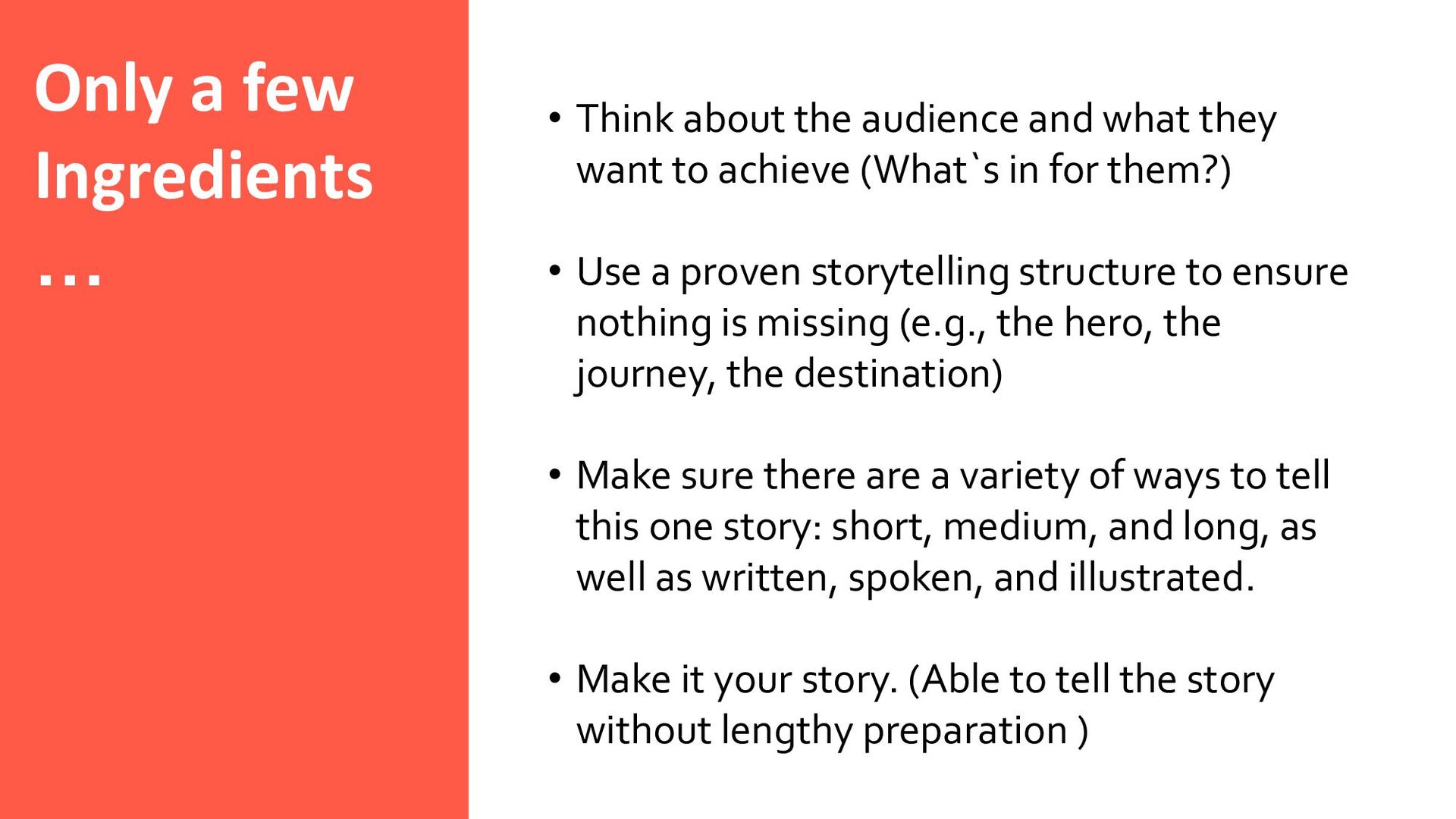
And it only takes a few simple ingredients and structures to get started. Think about your audience. What's in for them? Have a proven storytelling structure at hand, for example, the hero, the journey, the destination, and talk about that. Then make sure that you have a variety of ways to tell the story, the short version, the medium version, your long version, as well as the written, the illustrated, and the spoken version of it.
And then make it your story. Make it so good that it's hard for you to miss anything about your story, and that you're ready to share it whenever you need. I hope this leaves you with enough information and tools and motivation to start your written narrative exercise tomorrow.
And if you get stuck, and you will, you can come back to this talk and the slides, or you let yourself be inspired by some of the great storytellers of our time, and then analyze what they are doing, learn some of their tricks, and use it for their stories.
And I'm sure your rating on the Jobs Obama scale will dramatically improve. And now thanks to Brian and the organizer team for having me, and for all of you for being here and listening in on business storytelling. Thank you.