Making something complex feel simple is hard work. We spend a lot of our time as product teams trying to do just that. But we’re missing a trick - more often than not the best user experience is actually no interaction at all.
Pete Herlihy, lead product manager at the UK’s Government Digital Service (GDS), shares his biggest successes and failures delivering high profile online services like voter registration and petitions. Exploring just how far ‘doing the hard work to make things simple’ really can get you.
1 / 38 Use ← → to navigate
Auto-generated transcript - may contain errors.
Tap a timestamp to jump the video.
Lovely being back in Edinburgh. It's about my eighth time up here. First time at Turing. Who's who's from Edinburgh? Quick show. Okay. Let's do this the other way. Who's not from Edinburgh? That's the same number. Okay. Who's come the furthest? Who's come from Glasgow?
Alright. Who's come from south of the border? Alright. Who's come from another country? Which countries? Spain. Nice. I was there two weeks ago. Dress for the weather you want, not the weather you have. Anywhere else? Who's further from Spain? Nice. Nice. Okay. I've been there. Love it.
So it's a great time to be in Edinburgh because there's Turing festival is on obviously. And there's a nice warm up festival going on around town as well. It's really nice. It's quite Kenny that managed to time it so well to lead up to Turing this year.
So my name is Pete. And I'm here to share some thoughts around why I think no one should ever see your best work. I'll explain what I mean by that in a moment. And before I do, a little bit about me. So I'm from the government.
So is he. You might recognize him. His name is Bond. James Bond. Always wanted to say that. It's clearly not his real name. Everyone knows that as Daniel Craig. But I'm from a different part of the government to this guy. I'm from this part of the government.
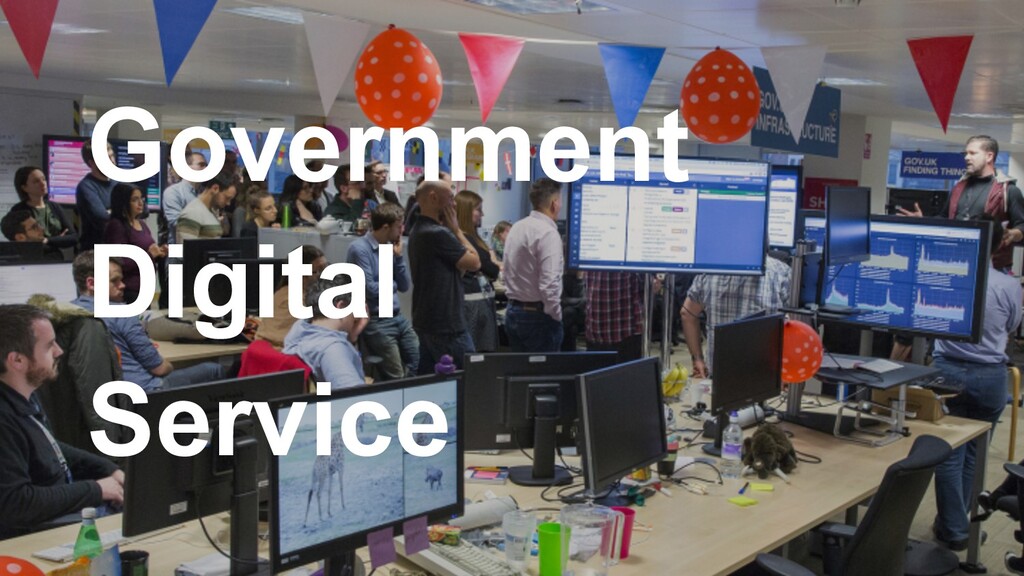
Government digital service. Now, the government digital service is relatively young. In terms of government anyway. It's five years old. And it was formed to help the government fix web publishing and help the government fix its services and transactions. But it's also formed to build up expertise back in government.
Because we had spent many, many years outsourcing all of our expertise to often large companies. And we left with nothing more than quite strong procurement knowledge. But not a lot of digital expertise. And we started, as most startups do start, small, awful offices, terrible offices.
Chairs that didn't really work. Some of the rollers didn't really work. There weren't enough desks. Was no air conditioning. Awful stuff. But brilliant people. Very passionate people. And there were about twelve, fifteen of us to start with. And we've grown over those five years.
Of course, have lots of us. Now. There's around about four or five hundred people that work for GDS. And we work on stuff that matters. And what I mean by that is that we get paid slightly less than the private sector. But we do work on stuff that matters.
Everyone works on stuff that matters. But that's that's generally what they mean when they advertise a job is working on stuff that matters. So we started on gov. Uk website. Which was Is a website. The single domain for British government. And it closed down something like eight hundred different websites.
They all looked different. They all felt different. They generally had the same information or conflicting information. And they all had different publishing systems beneath them. It was a very sensible and obvious thing for us to have done. And I'm not going talk too much about that.
Other than to say that's where we started. And then we moved from web publishing into online services. Okay. Important online services like voting or registering to vote, should say. You can't vote online, just to be clear. Although you can in Estonia. But we're not talking about that.
So, online voting. Sorry. We're definitely still not talking about online voting. Registering to vote. Comma online. It's fundamental. It's at the heart of our democracy. And there's been a lot of voting recently. As you know. Particularly in Scotland actually. And it almost always never leads to decisions you don't agree with.
But I'm not going to talk about Brexit today. My views on that will remain my own. And they will stay that way. Because as a civil servant, I clearly can't express political views. However, elections are really important. Local authorities are obliged by law to maintain an electoral register at the expense of everything else they do.
It's the last thing they can stop doing. So, they can stop doing schools. They can stop doing libraries. They can stop doing social work. They can stop doing parking. I mean, they should stop doing parking anyway. But they can stop all of those things but they cannot stop administering elections.
So, it's fundamental to our constitution. And before online registration, you had to register on a bit of paper. Or if you were really fancy, you could go online and fill in a PDF and then download it and print it. AKA 90s digitization. I'm going to come back to online registration in a moment because there's some interesting stuff there.
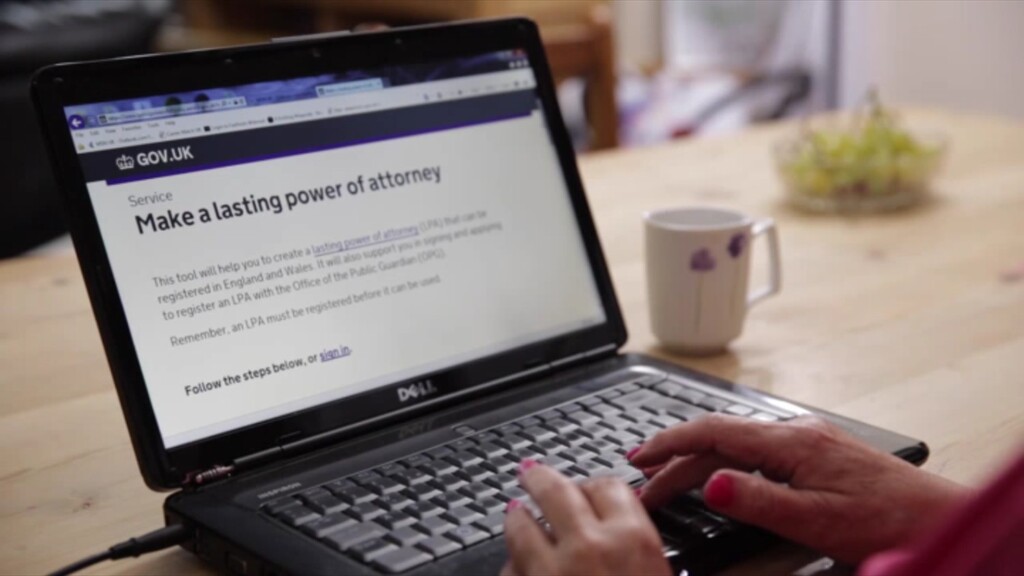
But before I do, I'll talk about a few other services that we are responsible for. Elasting power of attorney. Anyone heard of Elasting power of attorney? Okay. A few. So, this is what If you set one of these up in the event that you one day are unable to take decisions for yourself due to mental or physical incapacity.
And you choose somebody you trust or some people you trust to make decisions for you in that event. So, it's obviously a very important thing. It's not a fun thing to go through. It can often be quite a stressful thing to go through.
And it's important that we, as the government, offer this kind of service to people. We make it as quick and as simple and as easy to use as we possibly can. Student finance. Who's got a student loan? Okay. Sucks to be you. I did have a student loan.
It's a really important service. It's a really important thing. If you want to know if you're going have money to further your education, to attend university or higher education. It's really important that you've got access, that you know where you're at, that you know how much money you owe.
That you know if you've been approved. A very important service that we need to offer. I'm not listing all of the services. But I want to talk a little bit about how some of the services we offer are not pleasant to have to go through.
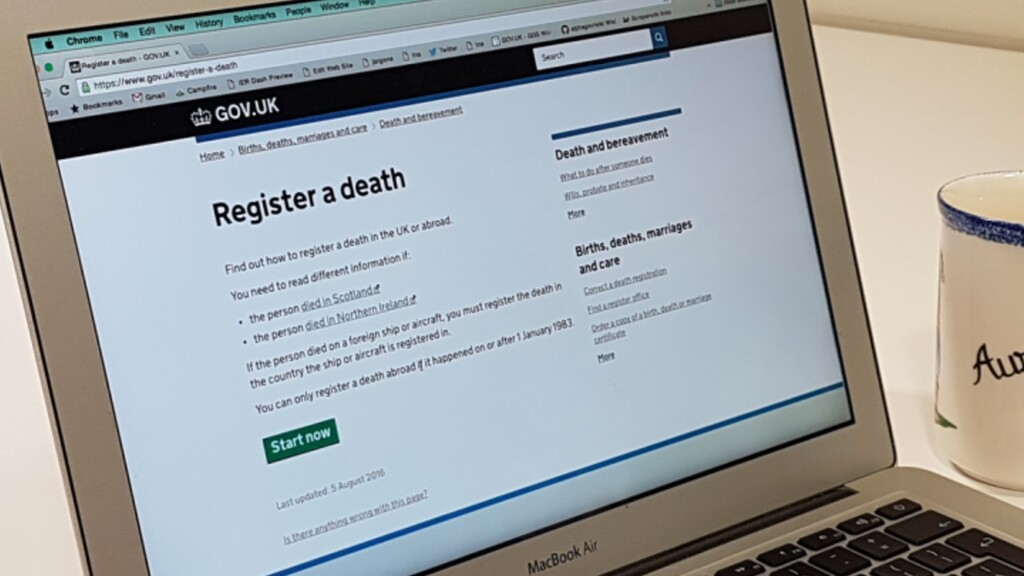
Obviously, this one here. I'm looking for wood to touch. Okay. Touch wood. None of us need to use this service. But it shows that there are a bunch of things that we go through where we're not They're not fun transactions. They're not about making money.
They're not about booking holidays. But we have to offer them because we're government. And we need to offer them. We need to therefore make them as simple to use, as quick, as painless. So you're in and out. You've done what you need to.
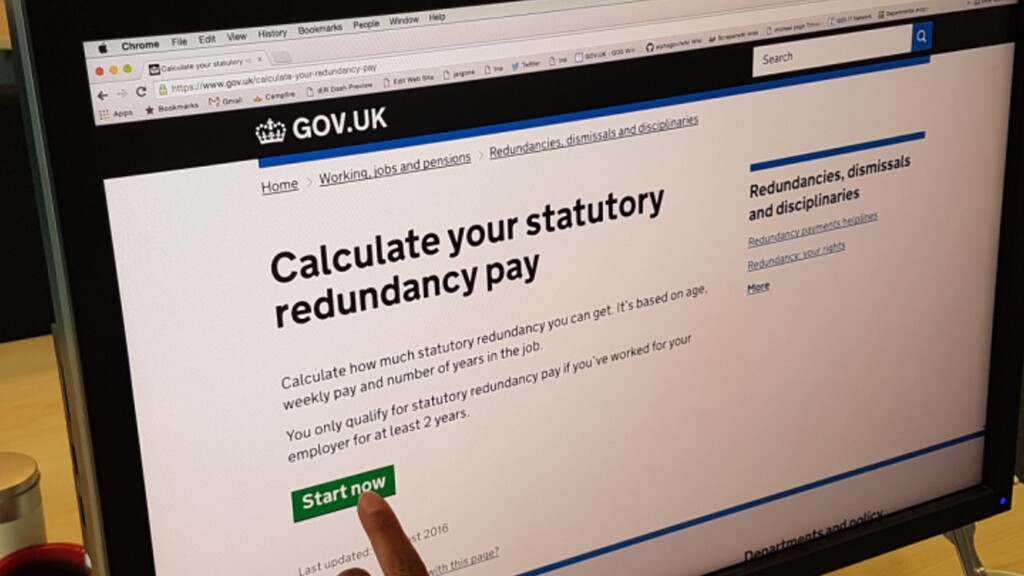
Another one doesn't need much explaining. Calculating statutory redundancy. The most interesting thing about this slide I think is the fact that this photo is of a colleague of mine pressing a Dell monitor that's not remotely touch screen. But, you know, let's pretend it's a kiosk somewhere.
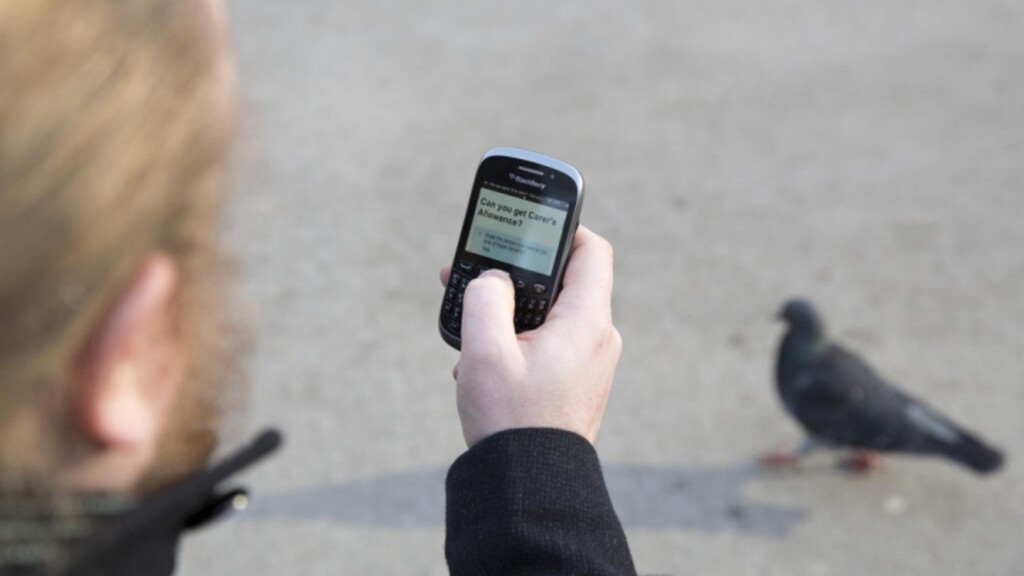
And finally, the last service I'm going talk about. There are literally hundreds of services. Are government services. I'm not going to talk about all eight hundred. I'm only going do the first seven hundred or so. Carers allowance. This is a tiny amount of money that the government gives you to allow you to take care of someone who needs it.
And that it's really trivial amount of money, really. It's not something at all. But it can be the difference between whether or not you can afford to care for that person to take time off work or not work at all. Again, another example of a stressful Not a brilliant service that Well, it's a brilliant service.
It's not one that everyone looks forward to using. And interestingly, again about the slide. We've got some great stock photography in government. Like amazing really. This one reminds me of a sort of late nineties Pokemon Go sort of set up. With the blackberry and I've never used Pokemon Go but I'm told it's very similar.
I'm lying a little bit there. Okay. So, GDS is here to help. And we want to make it easy for government to be digital. GDS didn't build or deliver all of those services. We did deliver some of them. But More importantly, we worked with all of the rest of the government to ensure that they've got the skills and capabilities to deliver those kind of services.
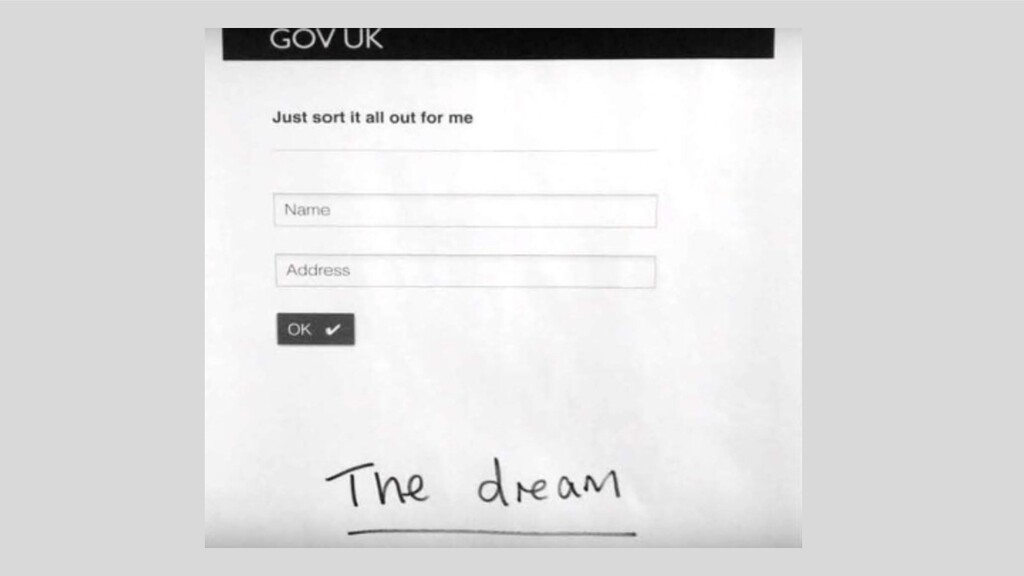
So, I'm from the government. And I'm here to help. I'm just going have a drink of water. Okay. Let me take you back to twenty eleven. And this is where we're working on the alpha of what was to become gov UK. And this I don't know who did this, but they printed this out and put it on the wall of the office.
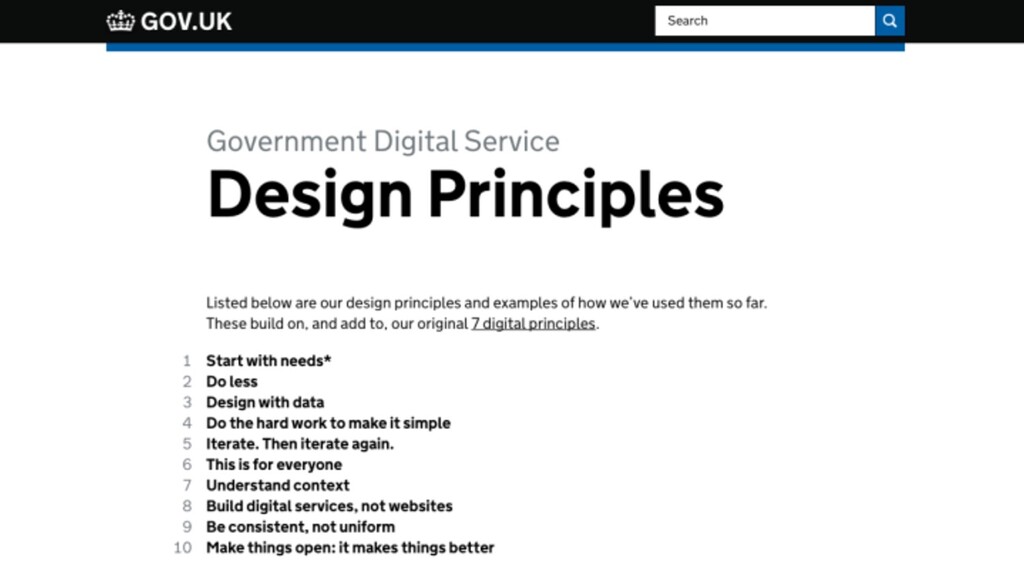
The dream. And, it was obviously done. It was a bit tongue in cheek. But, maybe not. And we'll come back to that in a moment. But what that led to or that became part of anyway was a set of design principles that we developed within GDS.
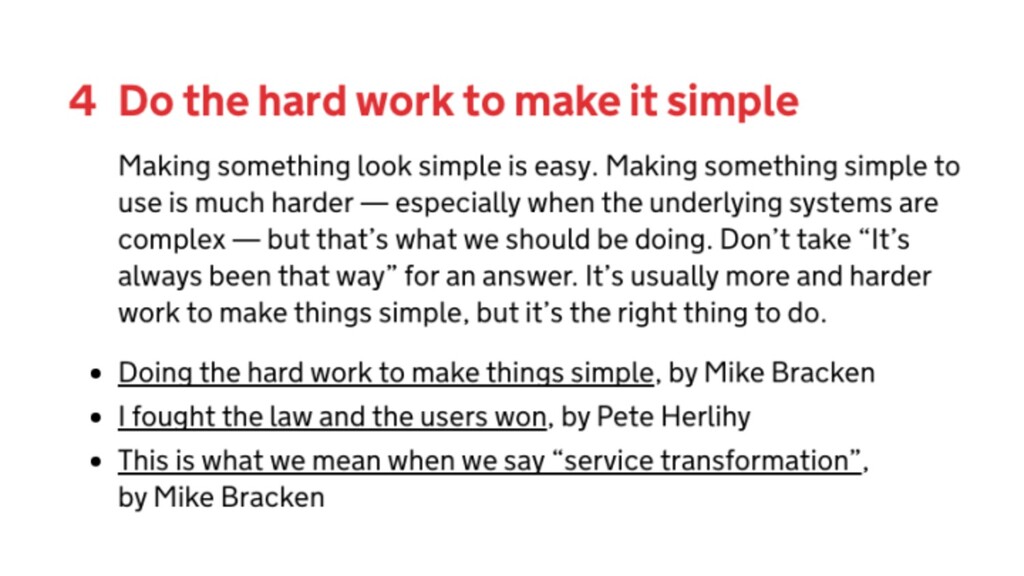
And we apply these across government now. There are ten principles. If you haven't seen these already, you may have. But if haven't seen these already, you can find them Google GDS design principles. Or other search engines exist obviously. But I'm going have a quick look at the fourth of these principles.
And that's this one here. Do the hard work to make it simple. Now, not gonna read that out to you. I think it's large enough. If you wanna read it later, read it later. But I'll give you twenty seconds now to read it.
Just wait for the stop. Don't read it yet. Okay. Just waiting for the second hand to get to the top. Okay. You can read now. I'm just going check Facebook while you do that. Okay. That's time. Stop reading. So as product people, I think too often we're starting from the wrong place.
We accept constraints that exist and we then try and find the best way to navigate someone through that world of constraints. But these constraints can pretty much always be removed. Not always. But quite often can be removed. Laws can be changed. Regulations can be changed.
Systems, equipment, whatever it is can be changed. Now, I'm not saying that we should be ignoring constraints. I think that's quite the opposite actually. Ignoring constraints is incredibly naive. And I'm sure we've all been given pictures from people with product design ideas where they just completely ignore the constraints.
Blue sky thinking, here's something that could be amazing if we could land it. But the reality is those things never ever land because those constraints can't just be ignored. And likewise, I think accepting all the constraints is incredibly lazy as well. And what you end up with is half baked products that don't really meet your user's needs.
I'm talking about something that's a bit different from both of those things. And that's really understanding the constraints. It's doing the hard work to understand what those constraints are. It can be very dull. It can be very unexciting, unsexy stuff. But understanding the legislation that's blocking or causing a constraint to you can help you remove it or at least find ways to get through it or around it or over it.
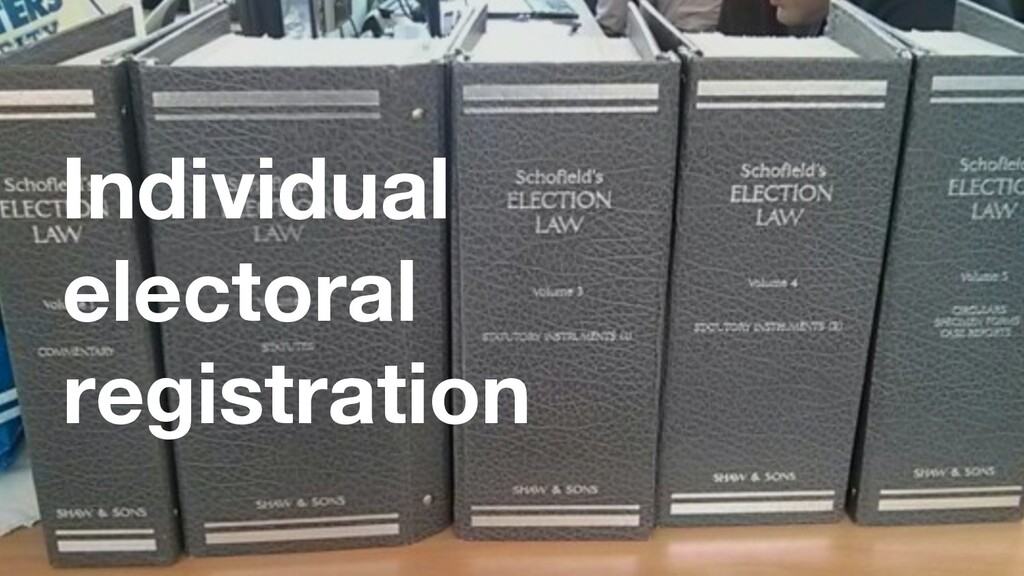
Understanding how the regulations are put together. And that means reading boring legal text. Reading boring regulation guides. But it can be worth it. Because then you can have a proper informed conversation with the regulators, with the lawyers, with whoever you need to speak with to try and remove some of those constraints.
And you might also occasionally find your way to the ultimate. And that's to say, giving somebody something they want without them having to do anything at all. Because I think often, particularly in service delivery, the best user experience is no interaction at all.
If I can get what I need and I don't have to do anything, that for me is a good thing. And I don't think we aim for this often enough. I don't think we even ask ourselves this question often enough. Is that something we could do?
Let me give you an example of that. Individual electoral registration. So, this is a service that I was involved in twenty thirteen, twenty fourteen. And it's when the government introduced a policy to try and increase trust in the accuracy of the electoral register.
There have been a few cases. But a few cases where there have been some electoral fraud. And they're massively reported. So, it feels probably a bigger problem than it is in reality. But it's still important that people trust the integrity of the register.
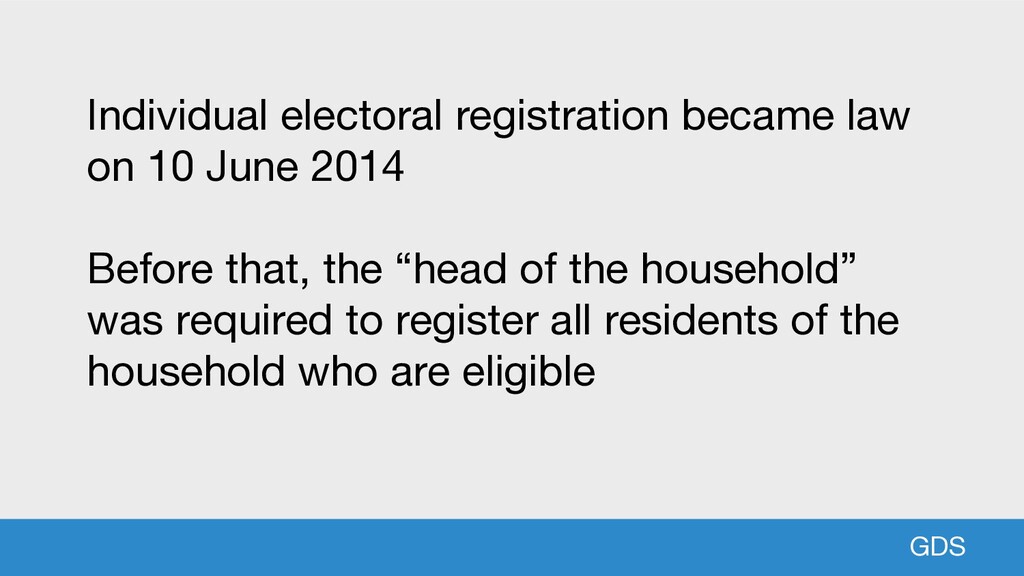
So, an initiative was put down by the government where we would rather than doing something called household registration, we would move to individual registration. And that came law on the tenth of June twenty fourteen. Sneak peek. And it's good having deadlines on your service delivery.
I'm not sure having a law where you'll be breaking the law if you don't meet your deadline is the ideal way. But it's very effective motivator to deliver your stuff on time. Particularly when you can't also be early. But as the name suggests, moving to a system where everyone would be individually registered.
And there's forty six million people on the electoral register. And I say the electoral register. There's not actually one. There is about four hundred of them. Because they're all held at local authority level. And so before that, the head of the household would be required.
The paperwork would come through the door. Head of the household would be required to fill in all the various bits and pieces. And they would be the person who decided who should be registered to vote within that house. And the head of the household is the actual name of the legislation.
Which gives you probably some idea about how old that legislation is. Head of the household in my house is about four years old. And I'm pretty certain she's not got my democratic rights in mind. But we had the problem. We had forty six million people who were registered to vote or felt they were registered to vote.
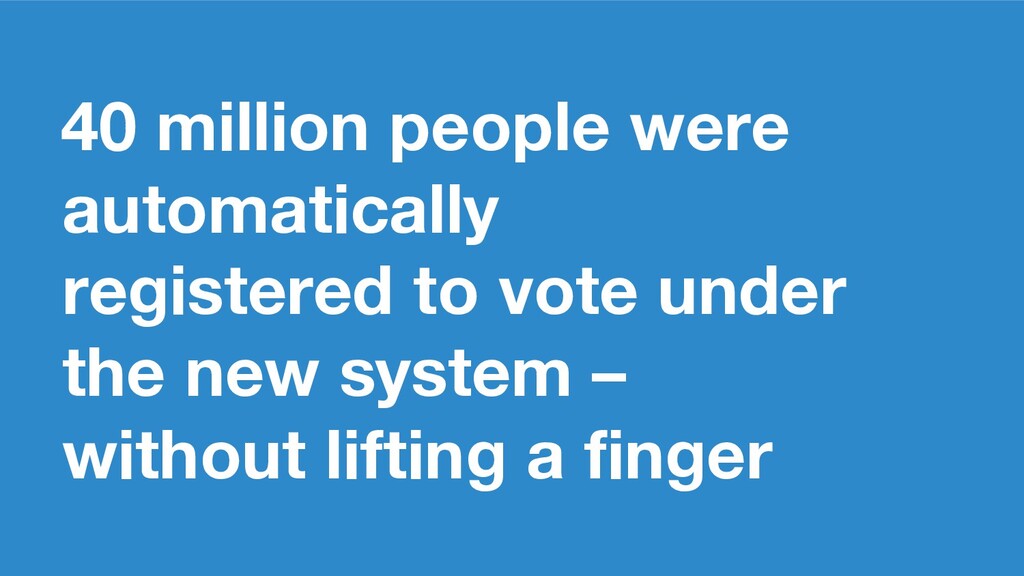
And we didn't want to have to get forty six million people to go and have to re register individually. That was the challenge. So, did some thinking. The result of that thinking and doing, obviously, was that forty million people automatically registered to vote.
And they didn't have to do anything. Now, we did that in a I'll give you the whistle stop tour of how we did that technically. So, we built a hub, digital hub at the center. We built APIs. We then integrated with four hundred local authorities who held each of these local registers.
We got some legislation change to allow us to transfer data because there's all sorts of data sharing legislation involved. We then got each of the authorities to load their data into the central hub. We took it. We passed it again over to department of work and pensions who hold a big set of information about individuals and where they live.
Dates of birth, etcetera. And we got some confidence ratings as to the likelihood that the information held on the local electoral register was accurate. It was the same as what was held on the department of work and pensions systems. We then got those kind of confidence ratings back into the hub.
And then passed that information back out to each of the local authorities. Technically, the electoral registration officers. They then made a decision based on that information as to whether or not to move the people across. And eighty seven percent of people, as I said, were moved across which is where the forty million comes from.
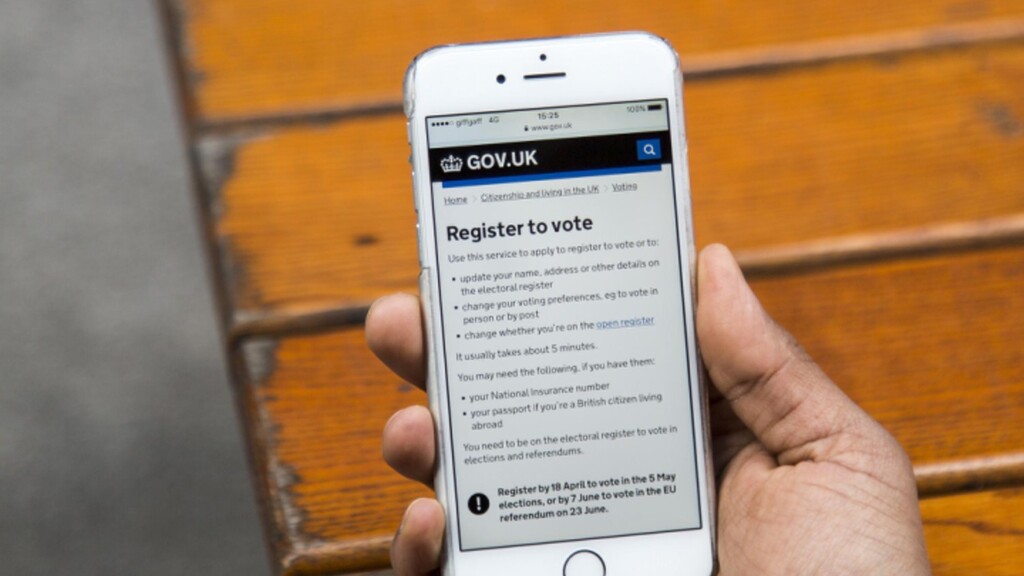
So, the experience for those people was no interaction at all. They got what they needed. They didn't necessarily want to register but they needed to. And they got to be on the new electoral register without lifting a finger. For the remaining six million and indeed for anyone who subsequently wanted to register or update their details, we needed a new system as well.
And this is the online registration that you saw on a smart iPhone six before. This now takes about three minutes. Two minutes forty seven for the average user on a mobile phone from anywhere in the world any time of day. But getting to that Oh, sneak peek again.
Getting to that took about twelve months of wrangling with policy teams and lawyers about removing questions that really didn't serve great purpose in an online world. That removing of the need for a wet signature. That was a very difficult thing to deal with online obviously.
And it allowed us to really focus on a very quick, very simple online transaction that is hugely used and popular particularly with the younger members of the electorate who, as we know, we struggle to get them out and voting. So, we didn't get everything we wanted.
And it's certainly a case of picking your battles. But it's testament that learning and understanding. Doing that hard work to understand the constraints. To understand the regulations. The legislation lets you have a proper conversation with the lawyers and the regulators. Because the lawyer's job isn't to tell you what you can and can't do.
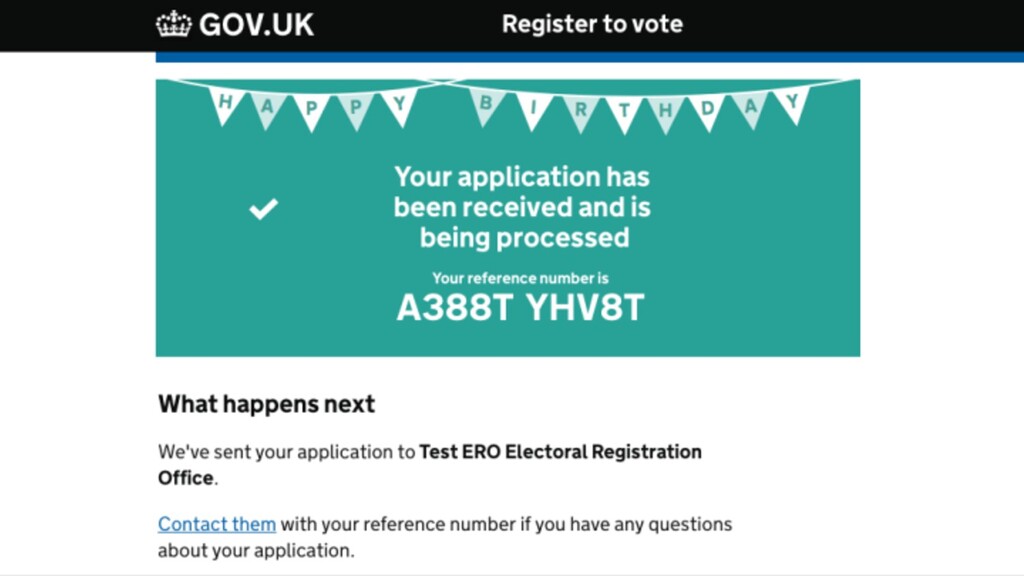
The lawyer's job is to tell you about the risks of what you can want to do and don't want to do. So, you can always have a conversation with them, particularly if you're speaking the same language. Last picture on this is a little sneak peek of an easter egg that I snuck in to online voting registration.
If you register to vote online and it's your birthday, and we know that because you tell us your date of birth. At the end, some bunting. Which is nice. And, it didn't make the national media this one. Which is to say there have been other Easter eggs that have done that.
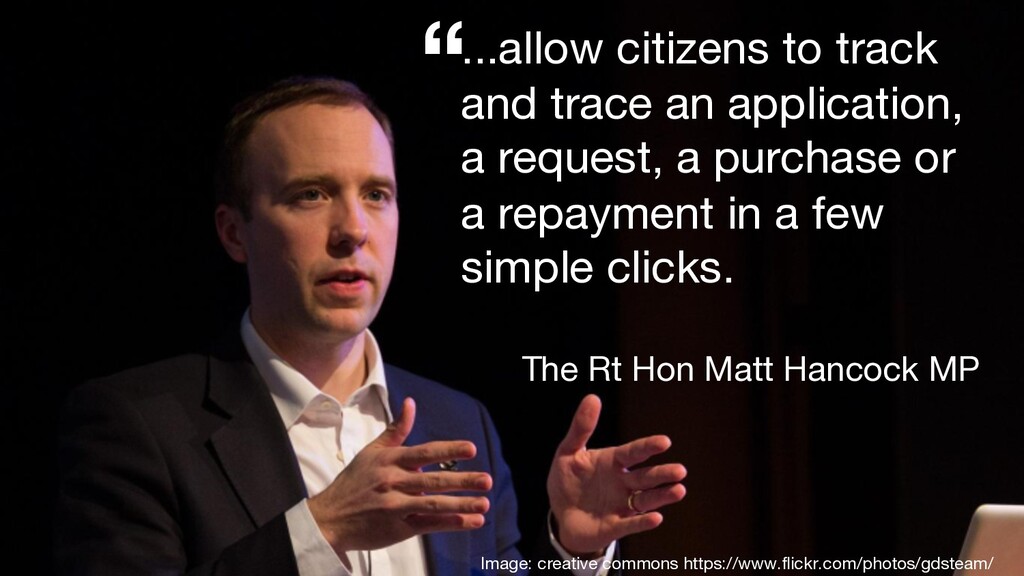
But I'm not going to talk about that for HR reasons. Okay. Another example. This guy, Matt Hancock, minister as was minister for the Cabinet Office, now minister for department culture media and sport. Last summer, he was saying to anyone that would listen that we were going to build a status tracking platform for all the government.
So, that anybody could log into this thing and could see where all their stuff was at. And a few clicks, you know, as he says there, whether you're purchasing, repaying, applying for something. So, that was handed to me to make that a thing.
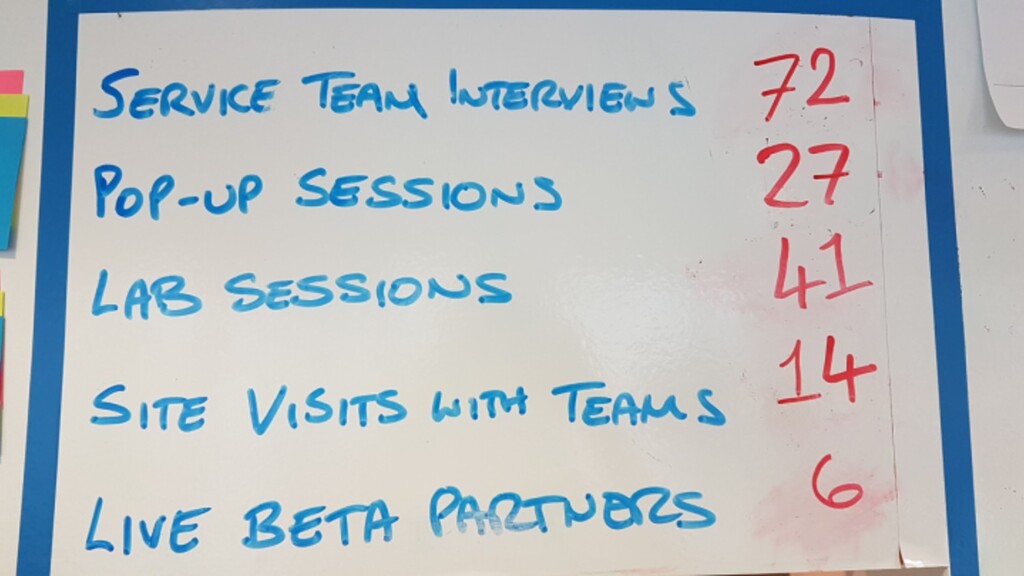
So, I did a tour of the country. Small team. And we went around the country. A lot of train stations. A lot of pasties. And we quickly came to the conclusion that a status tracking platform was good. But actually, much better than a status tracking platform would be if we just told people stuff.
So rather than waiting till they came to us to ask us where their stuff was at. Why don't we just tell them where their stuff was at? Because that's really what they wanted to know. They didn't want a website to go to. They didn't want to have to remain anxious enough to get to the point where they went to a website.
They wanted to know immediately when we took a decision. When we received something from them. When we're sending something out to them. Where their thing was at. And the status tracking platform is a very obvious thing where it meets the government need to reduce costs.
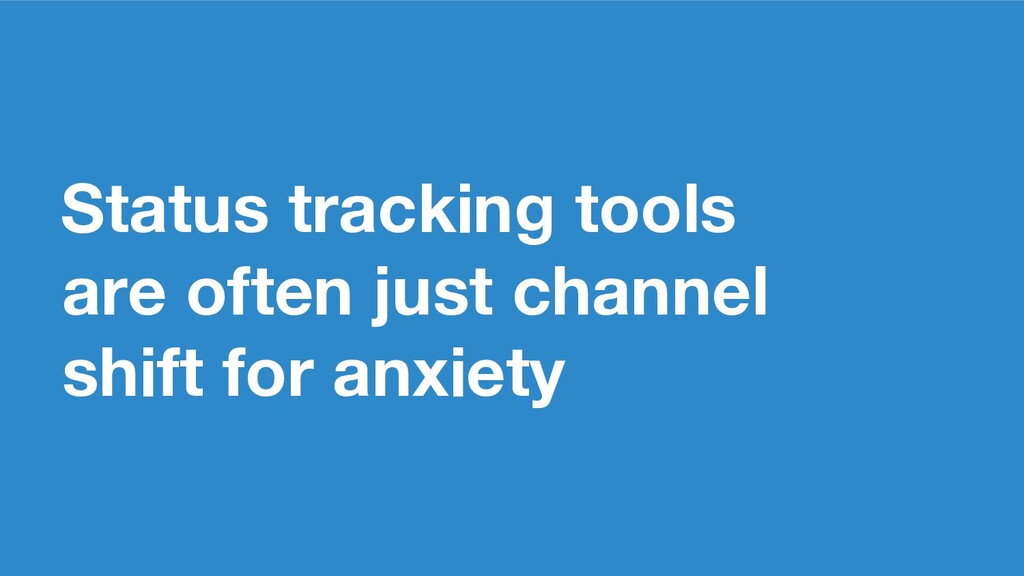
To reduce calls into contact centers. It says go and self serve. Channel shift, right? But it didn't meet the needs of the end users at all. I mean, it's not bad, a status tracking platform. It's slightly better than calling up. But it's not as good as just being told immediately.
And the conclusion of that discovery work was we're doing the wrong thing if we build the status tracking platform. Because it is channel shift but it's only channel shift for your anxiety. You're moving it from a phone call, An anxious phone call to an anxious website visit.
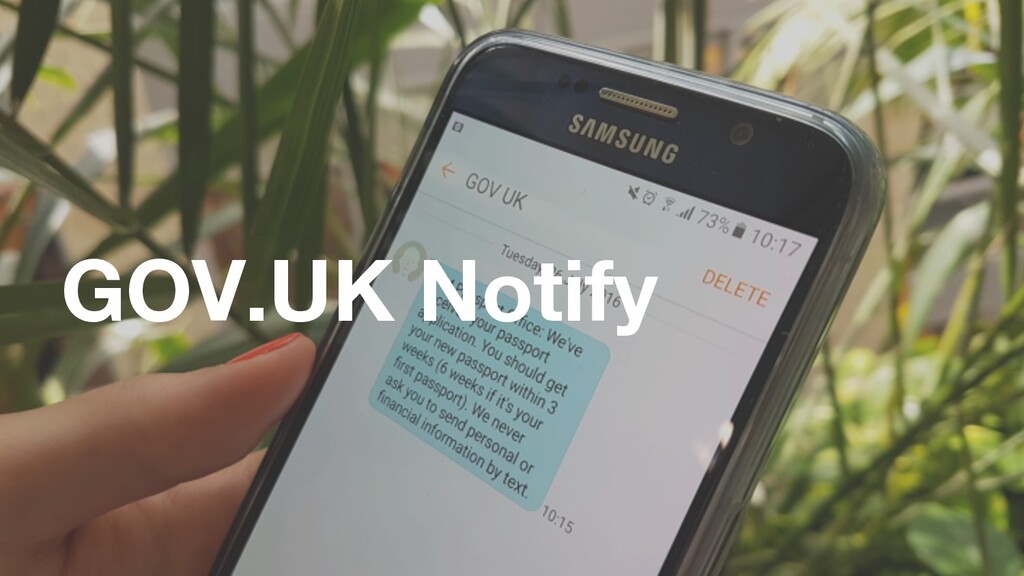
And that's pretty unacceptable. Which meant saying no to the minister. No to what he'd been promising everyone through the summer. Also a bit awkward. But it's the right thing to do. And instead, the thing I'm currently working on is WK Notify. So, this sends text messages, emails and even physical posts to people.
It's for all of government. Different service teams across government will all integrate with it. And they will use that to automatically send notifications to people using the service. So, that means the second that somebody clicks a button to say yes, that's approved for you.
Boom. Text message on your phone. It's been approved. Less fun if it's been declined obviously. But, you'll know within seconds. And, the day you send your passport and you're worried about your passport and when you're to get your passport back because you want to go to Spain or Estonia.
Then, the second it turns up in a post room and it's scanned, an email is pinged off to you to let you know that's been received and let you know when it's gonna come back. So, we're not waiting for you to phone us to tell you something that we already know.
Waiting for you to phone up during your lunch hour. Probably sit on hold. I'm sure we've all done this before. I know I do. And listening to awful music. Sort of largely Justin Bieber related music. Which is awful. No one should have to suffer from that.
And this is another example where the best experience for someone is no interaction at all. If they don't have to do anything and yet we deliver to them the information they need, That's a much better experience than them having to go and do a thing.
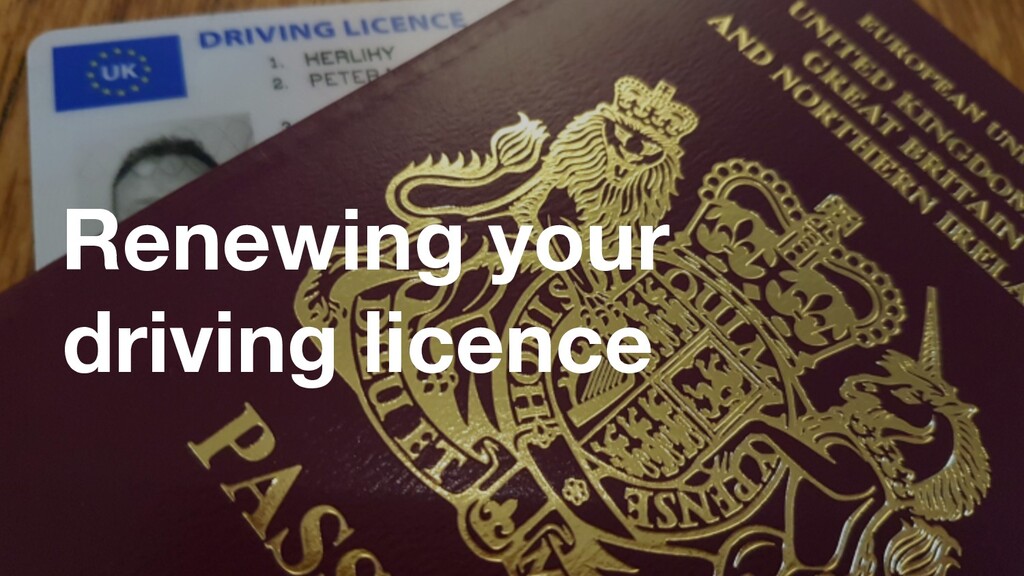
Okay. Last service I want to talk about is renewing your driving license. And those eagle eyed will see that that's actually my driving license and passport photo I took myself and added to the government stock photography library for all time use. If you pan back a bit, there's all the other **** stuff that's on my kitchen table.
But luckily, I could zoom in on my smart mobile phone. Now, when you renew your driving license, you have an option to use the photo from your passport. So, rather than you going out, taking another photo, going down to snappy snaps or whoever other photo booths exist, Getting that photo, uploading it, being told that it's wrong because you're happy or whatever other reasons that photos are not allowed to be taken.
Fake mustaches. There's all sorts of reasons. You don't even need to do that. We'll take some information that we hold in another part of government that was clearly provided for pretty much exactly the same purpose. And we'll let you nominate that as your photo on your driving license.
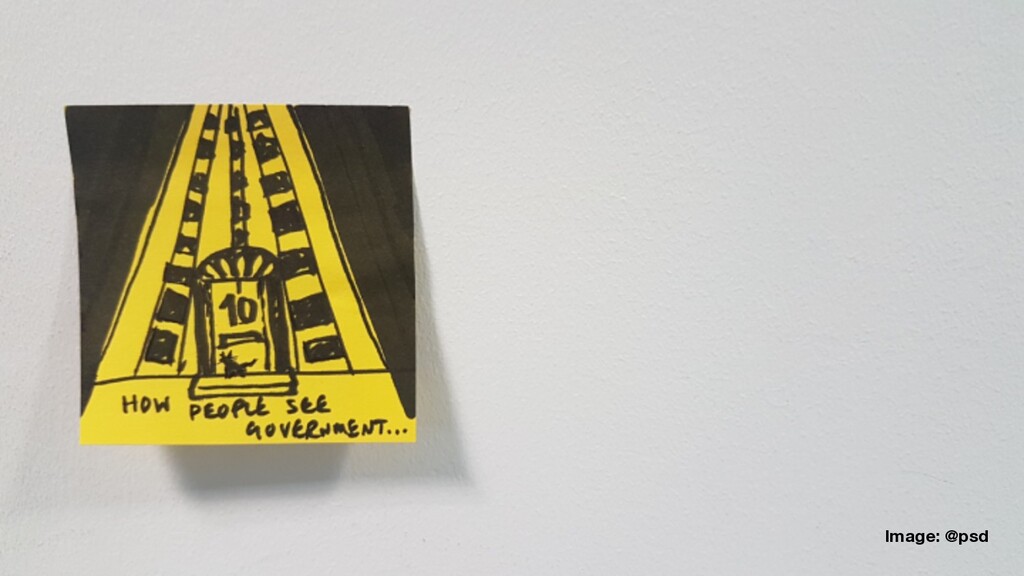
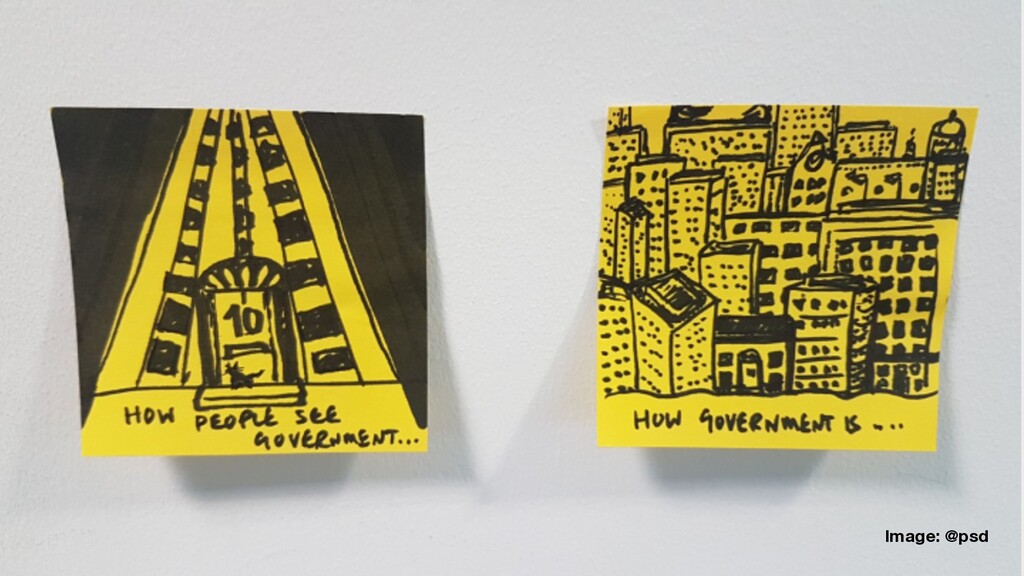
Now, it's a pretty obvious thing in hindsight to do. Government holds a photo of you. We need another photo of you. Let's use the other photo. But it's actually a lot harder to make happen in reality. And that's because a lot of people see government like this.
One front door. I'm not sure they all see it number ten being the front door to government. But one front door, one big computer system with all the information. The government knows all this stuff. And everyone's quite astounded when they're told you have to update your address over here and here and here and here and here.
And even within an organization here, here and here. Because the reality of government is actually more like this. We've got better clickers in government, I should say. Just a thought. The reality of government is this. Every different bit of government is a different legal entity.
They've all got different front doors. They've all got different systems. They've all sadly got different standards that have evolved for data, for information sharing. And so, what seems like a relatively straightforward thing to do is actually incredibly hard. Now, we are working on this problem.
We are aware of this problem. We are working on this problem. In the meantime, something like that example of the driving license and the passport requires a hell of a lot of hard work. A lot of wrangling. A lot of work with lawyers, with legal teams.
With policy Is anyone a policy person? Anyone like to admit to that? Okay. Policy people are the gatekeepers to the lawyers. So, you want to go pass them. Don't write that one down. So, it's difficult. But it is difficult. I say difficult. Not impossible. Clearly, it's not impossible.
The examples that I've just given you where it is worth doing that hard work, understanding in-depth the regulations so that you can find a way. You can have a frank conversation and try and find a way through them. And that's the challenge. Doing the hard work to make it simple.
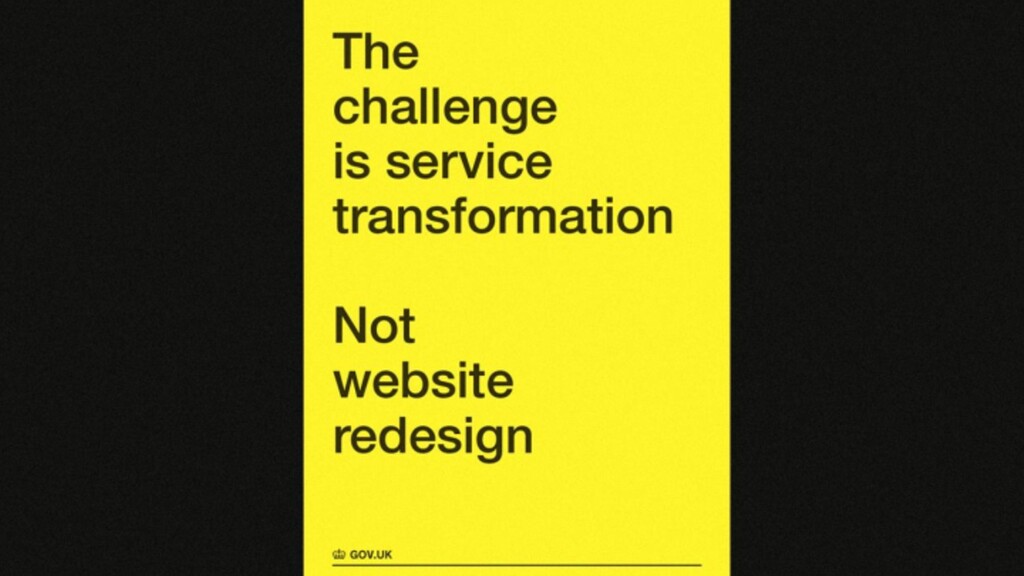
Now, this is a poster. And it's something I think that we've done not very well or not well enough in government and certainly even in GDS and even myself. Is that we've spent too long focusing on fixing transactions. Trying to make the transaction better or make the transaction quicker or make the transaction easier.
And not step back a bit and thought about the whole experience that somebody has of that service. Because following on from a transaction is a whole bunch of case working that goes on often. There's a decision that's taken. There's a passport that's issued.
There's a driving license issued. And then you get the thing at the end. So, your experience of a service starts from the moment you decide I need this thing. And, maybe you start on Google or Bing, whatever. Alta Vista. Probably not there. And, it ends when you get that thing.
You get that driving license in your hand. But, we focused so much in the early days on getting that transaction, getting that bit where you apply. So that was really slick and nice and easy and simple. And then it was just carnage after that.
And you didn't know when it was coming. You you know, you had no idea. It would be late. You weren't getting any of these notifications. All this sort of stuff. And so, we had to step back and say, let's stop thinking about transactions and let's start thinking about services as a whole.
And that's gonna be, I think the difference between making something feel easy Which is where the transaction bit comes in. To make it actually be easy. Or ultimately, if you can get all of the constraints lined up and all the constraints moved. Then we get to the situation where we can achieve something with somebody not having to do anything at all.
And I think that's the challenge. I think that's where we need to start. If we don't start a new product piece of work by asking ourselves how can I achieve what this person needs to without them doing anything? Then we're asking the wrong question.
The answer is not always going to be yes. But every now and again it will be. And that's the challenge for us all. That's that. It's hard with this thing. And he he's I've only got three. So I'm not gonna do that. Anyway, thank you for your time.