
We've reached the point in the market where the "best practices" we've been taught are no longer applicable when it comes to growth. Using data from millions of customers and thousands of companies, Patrick will debunk much of the dogma that drives our mental models around building a business, before offering up a practical guide around pricing, building the right product, retention, and targeting the right customers – all to ensure we're building a sustainable, thriving business.
← All talks 










Lead Strategy Turing Fest 2018
Our Fundamental Strategy of Building a Business is Broken
Auto-generated transcript - may contain errors. Tap a timestamp to jump the video.
How's everybody doing? We got the slot right before lunch, so you guys are all just ready to go. I feel it. So, just for a show of hands here, who's a founder who wants to be a founder one day? Okay. Who here is an exec at a company?
Okay. Who are the rest of you? Okay. Awesome. And just for a show of hands, who here has received a piece of business advice either from a blog post, a a fellow founder, a mentor, an advisor, a fund someone who's invested in you, and that piece of advice ended up being just not right, not applicable, or just complete ********?
Yeah? Okay. Everyone look around the room. Basically, we got about everyone. And the reason I wanna talk about this today is in particular because ******** best practice advice really just drives me nuts. One, because my background's in econometrics and statistics, and so that means I had an incredible amount of friends as a child.
Not really. But it also means that it just feels really uncomfortable just the uncertainty of a lot of the advice that you typically get when you're trying to build a business. It's very guess and check. It's very, well, this worked in this sub thing of this other thing where there are a bunch of extenuating circumstances or Apple does it, therefore we should do it, which exactly is ********.
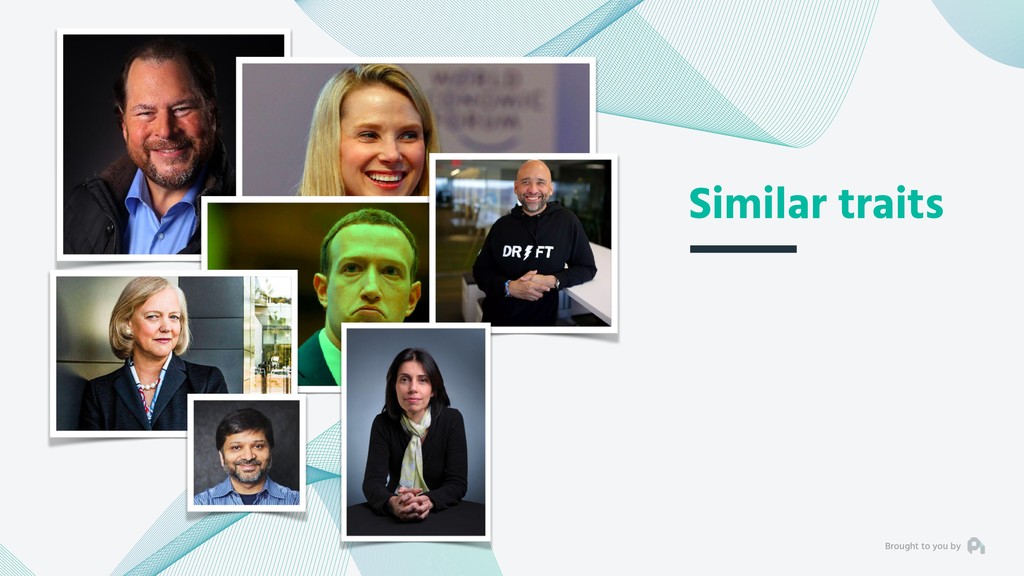
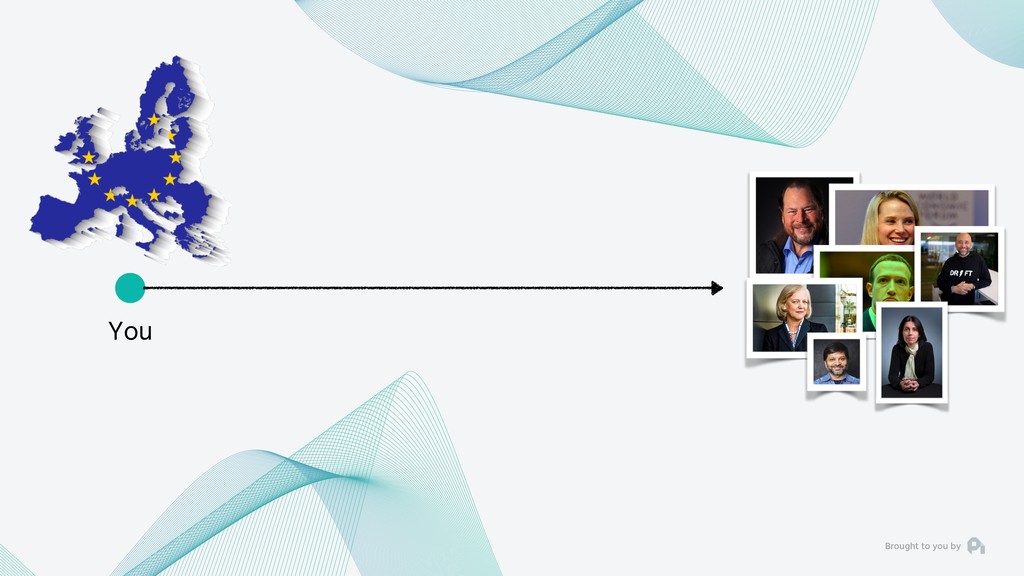
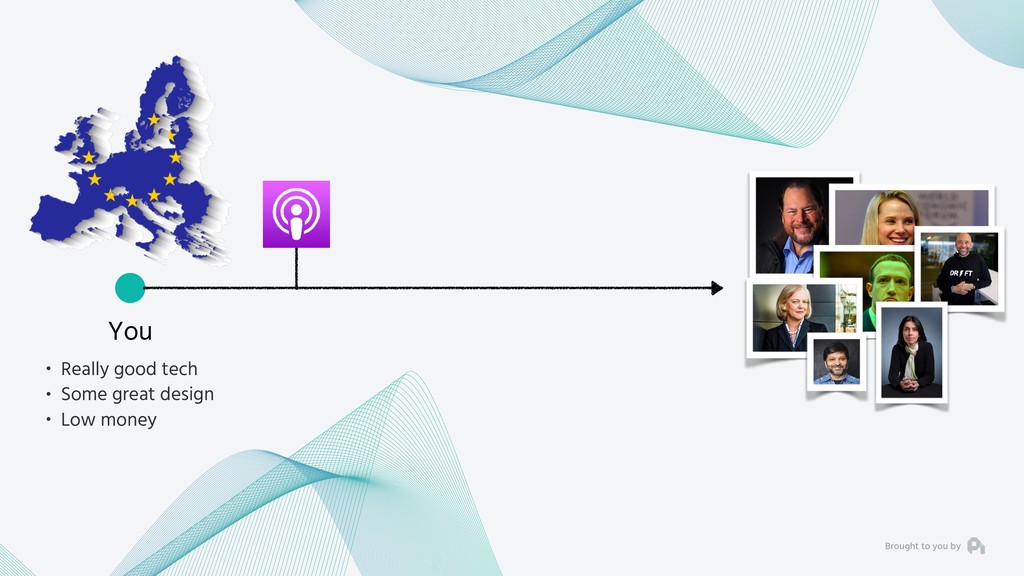
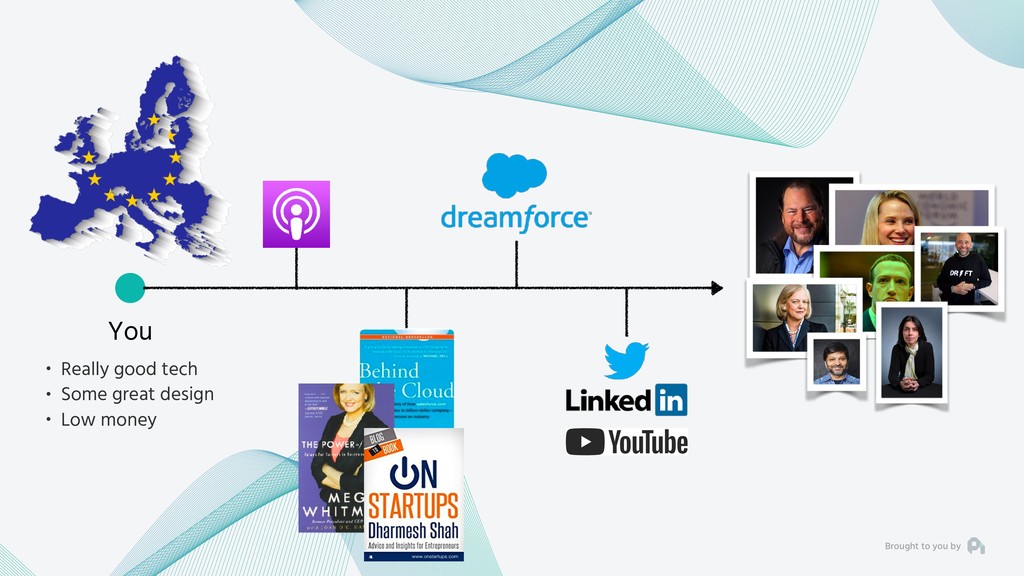
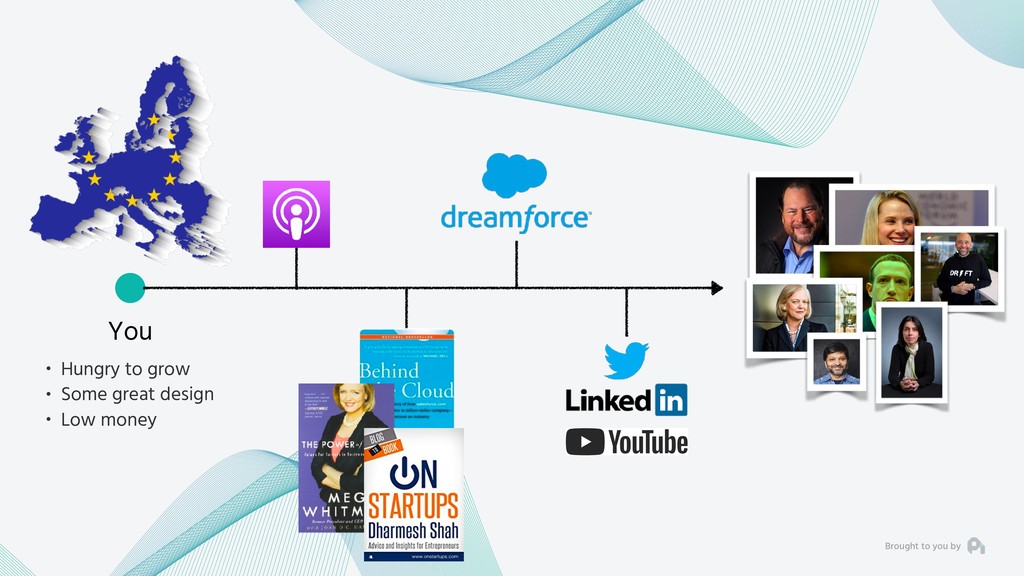
But it just feels wrong. Right? And I don't know about you, but for me in particular, I wanna be like one of these guys. Right? So who knows who this is? Just shout it out. It's Mark Benioff. Right? CEO, founder of Salesforce. Right? Or these folks.
Who knows these folks? Come on. It's gonna be a long half hour if we don't get excited here. Right? So a lot of us, we're trying to be these folks. Right? These are folks who have been really, really successful when they built their businesses.
They've been really, really successful in creating value. And ultimately, they've they've learned a lot along the way. But what oftentimes happens is that when we look at these folks for advice, whether they're reading their books, whether were watching or listening to their podcast, we're ultimately just taking their learnings.
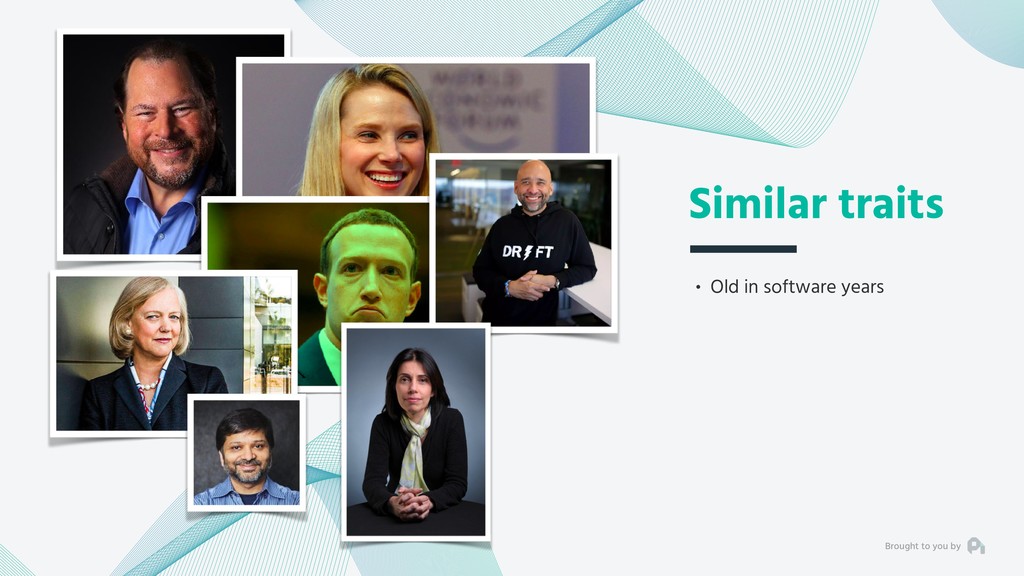
Most of the time we forget that these individuals have two main traits that none of us really have. The first trait is that they are old as hell. Especially in software years, most of these folks have been building software, building companies for decades.
I don't wanna, you know, call out anyone's age in the room, although Colin just recently turned forty. Where's Colin? Colin? Happy birthday, bud. But it's one of those things where a lot of us, we haven't had that much time in the software industry.
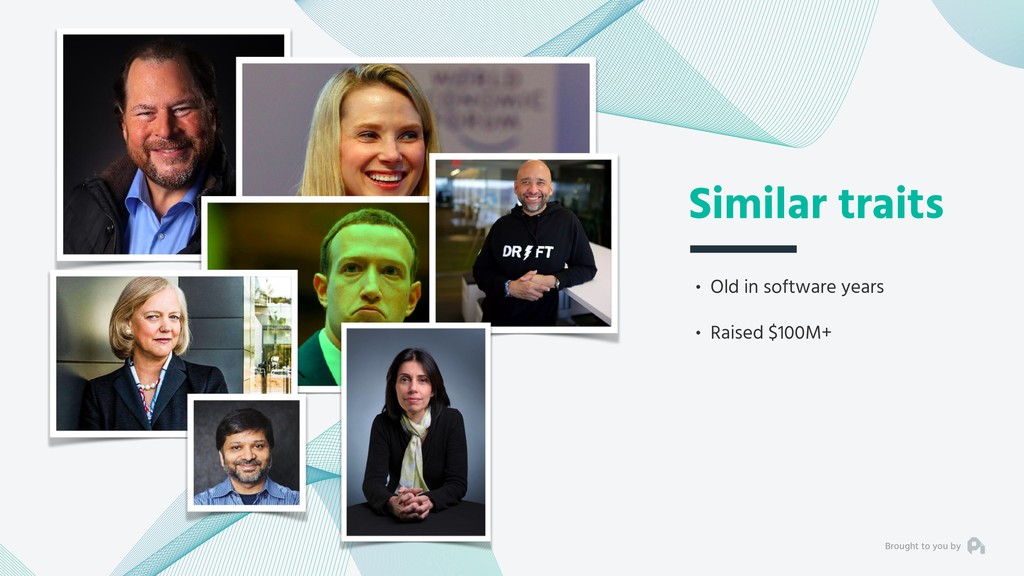
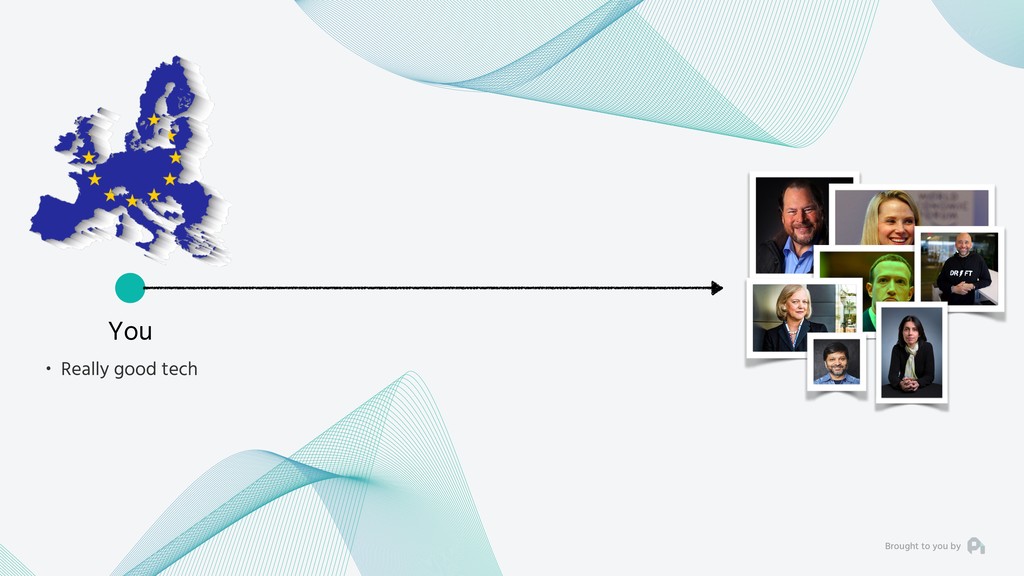
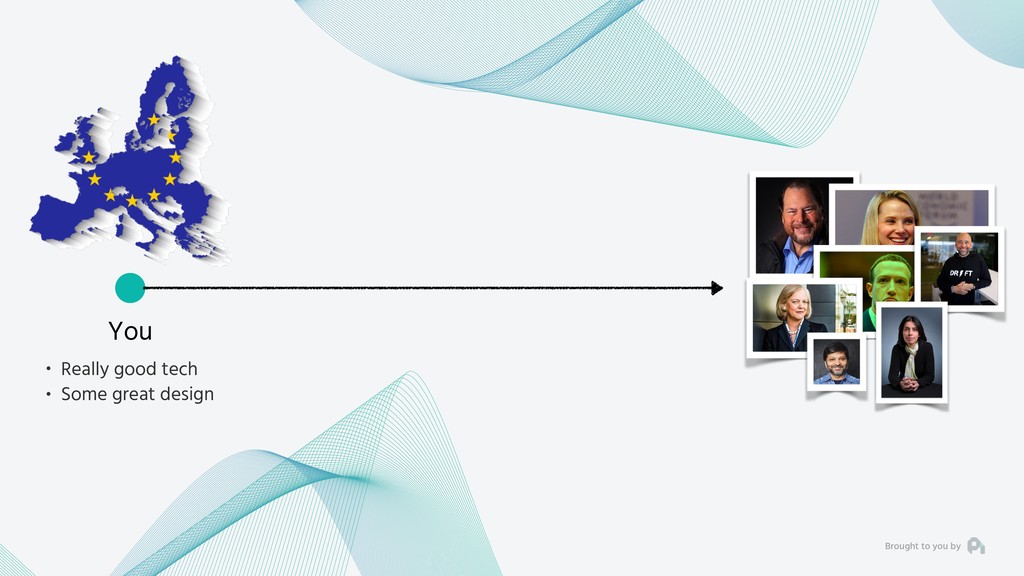
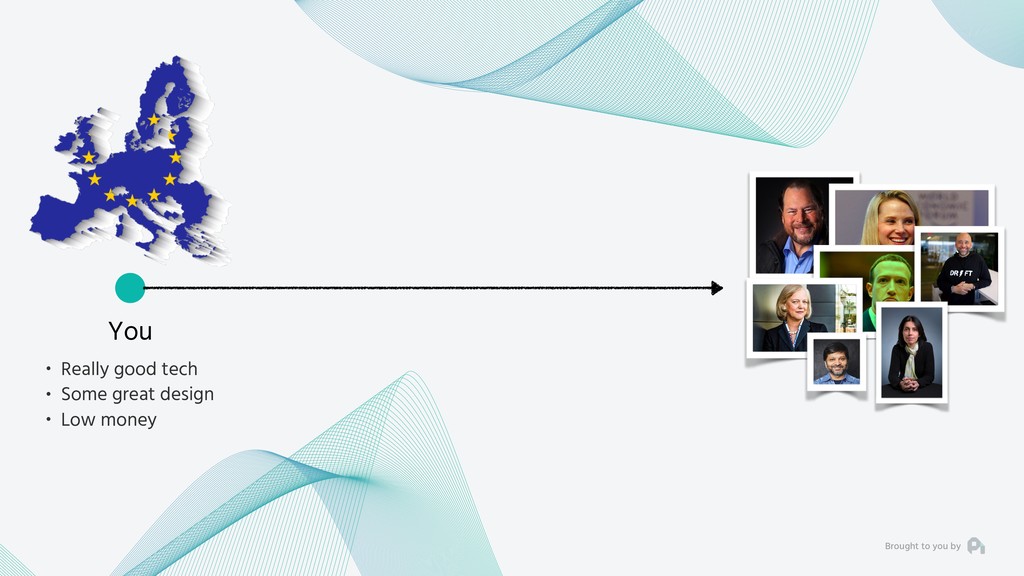
And then the other thing is that these folks have raised a hundred million dollars plus. Anyone here raise a hundred million dollars plus? Okay. So no one's buying drinks. Got it. So what's interesting is that especially when I talk in Europe and even in the United States, what ends up happening is we have folks like you and me who really wanna be successful.
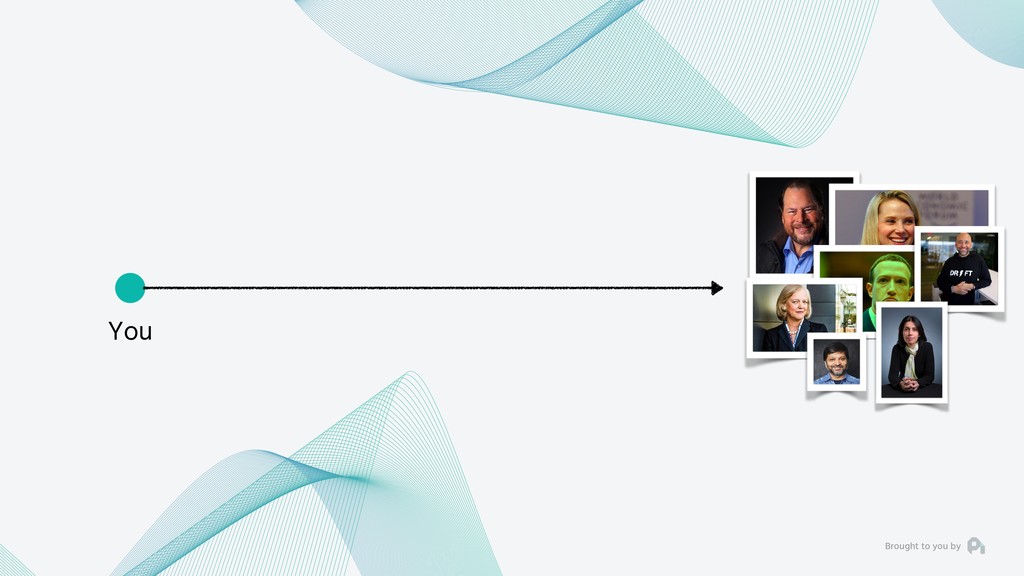
We wanna be like these folks. We wanna make sure that we're creating value in building these businesses. And what we normally have, especially in Europe here, is we have really, really good tech, we have some really good design, And just relative to the entire market, we haven't raised a lot of cash.
And so the way that we try to bridge ourselves from this particular point now to that success is the first thing that we do, and I alluded to it already, is we listen to a lot of podcasts. Right? We listen to a lot of advice. We're like, oh, yeah.
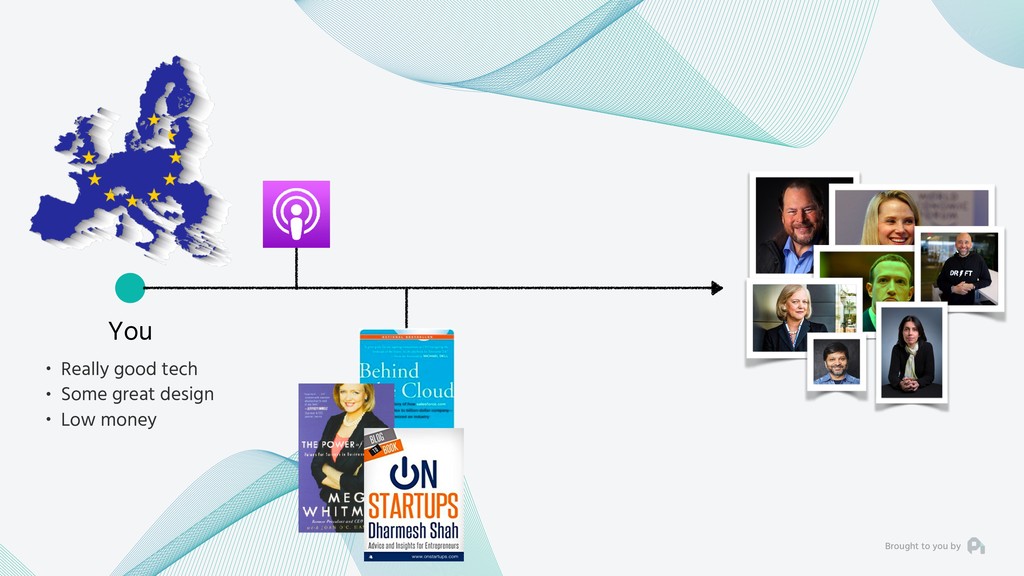
That little piece of advice that I got from that one generic podcast, that's gonna be awesome. Right? The next thing we do is we read a lot of books, especially from these folks. And they're all watered down. They're extremely generic, and they're basically just general business advice.
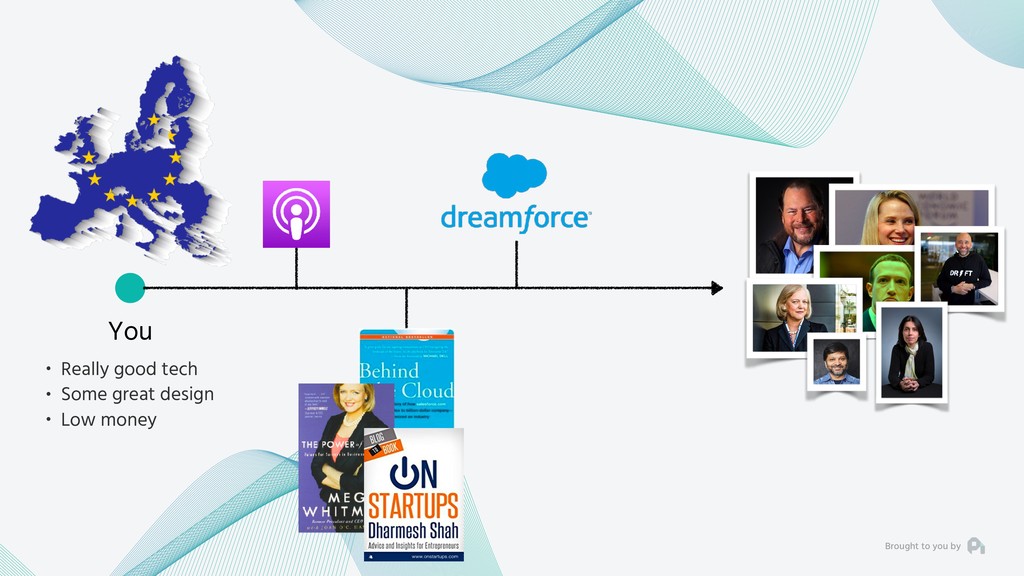
Then what we do is we go to a lot of conferences. No offense during fest. But we go to a of conferences and we're like, yeah, that was inspiring. I'm gonna go do that thing. And then we'd never really do that thing. Right?
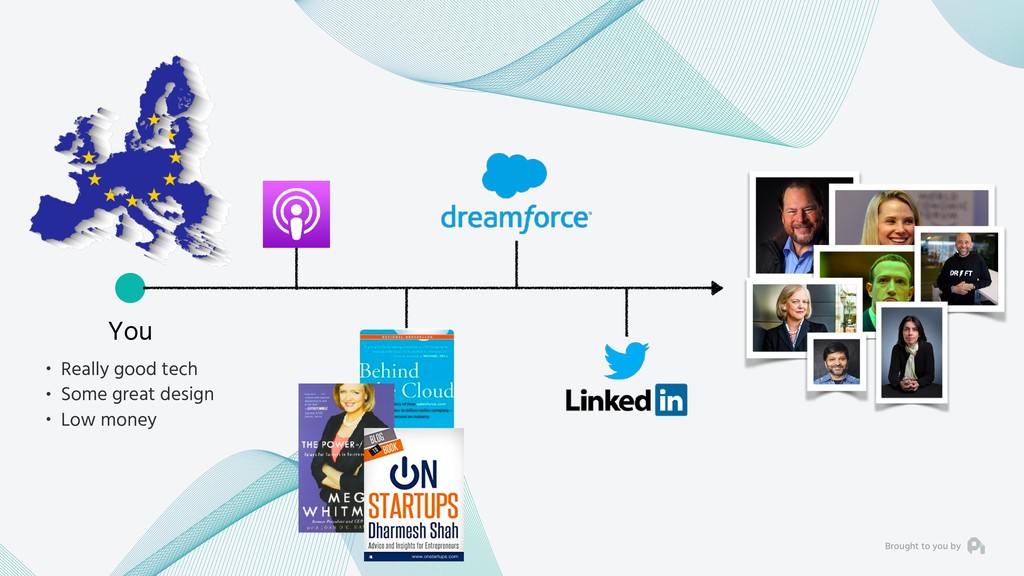
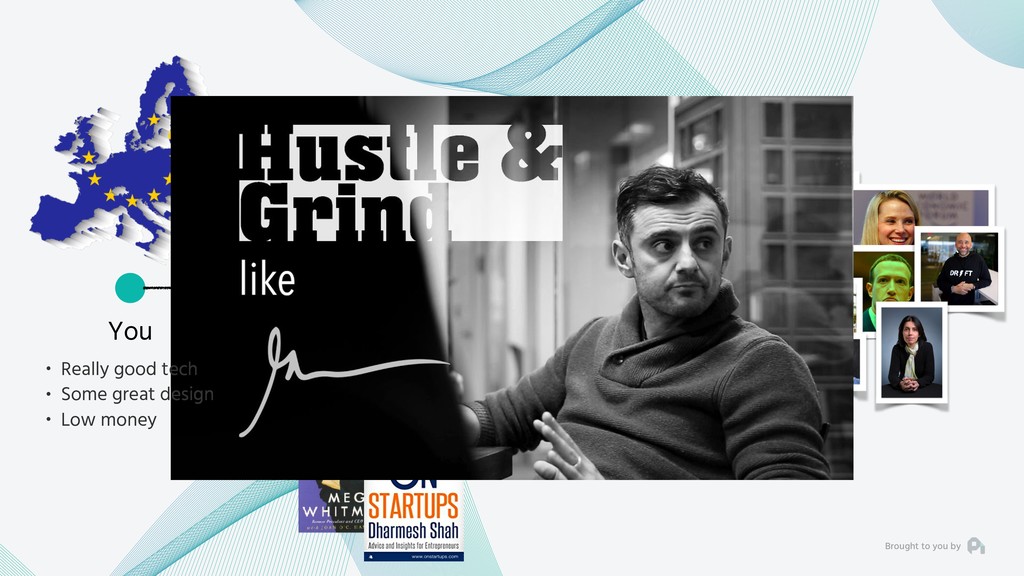
And the final piece is we go to a lot of social media, and we're like, hey, this is the thing that's gonna save us. This little tactic, this little hack, this little blog post that I read. And then some particular folks in the room, we listen to a lot of this guy.
Right? Talk about hustle, talk about grind, like hustle your face off. Right? Like all that kind of stuff. Just a lot of yelling and swearing, which, you know, I respect but don't appreciate. Let's just put it that way. And at the end of the day, what ends up happening is we look back and we go, why aren't we these people?
Why isn't this working? Right? And the real reason is is that it's because this advice is not actually advice. It's not really actionable. It basically means that we need to spend decades and decades overworking the things that have already been figured out and overworking trying to discover what the fundamentals of building a business really look like.
And frankly, when we're going at blog posts, podcasts, a bunch of other stuff, it's just not how you build a business. It's just not how it works. It's not what any of those folks have actually done. And the big thing that we're gonna talk about today and we're gonna unpack through just a ton of data is this whole concept that you can't best practice your way to success.
And I know what some of you who have never met me are probably thinking, large bearded man, who the hell are you? Well, I am no one, but my name is Patrick, and, I run a company called ProfitWell. We used to be called Price Intelligently.
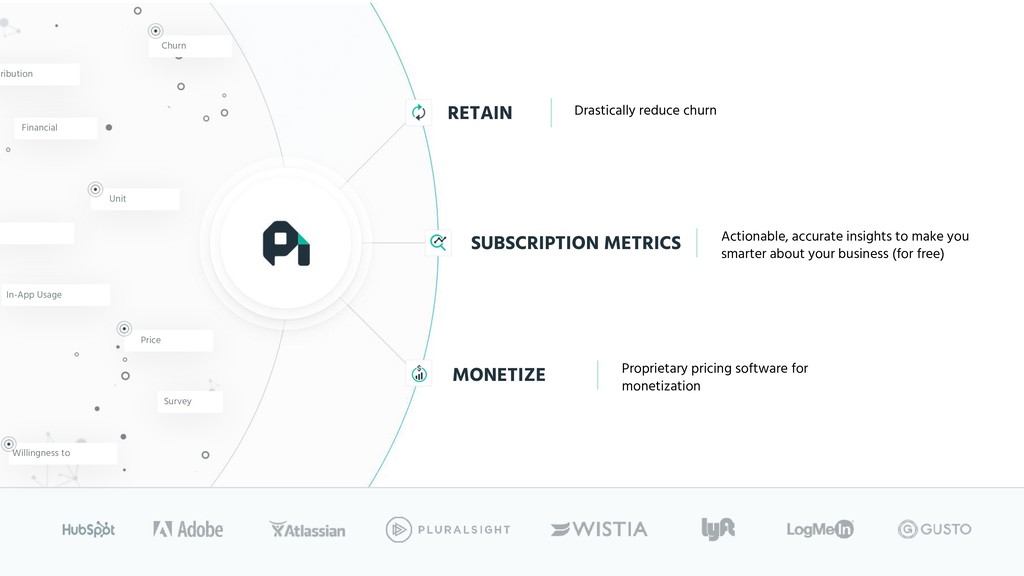
We're still referred to as Price Intelligently. It's really weird, but we're ProfitWell. We have a bunch of different products. Our first kind of flagship product really focused on giving you free access to subscription metrics. So you plug in Stripe, Braintree, Zoro, whatever you're using, and basically get access to your MRR, your churn, all that kind of fun stuff.
Our other big product is monetize or price intelligently where we help companies with actually getting their pricing right. Then we have a couple of other products that help with different types of areas within their business. The way I like to look at it is we're in the business of finding really good leverage for growth and then building products based on data to do that.
But the really important thing that's really applicable today is that at this point in time, we've seen inside more companies than anyone else out there. We've collected more data than anyone else out there on how people think, how subscription, and how businesses in general are working.
And what we're gonna do today is we're gonna go through a bunch of data to basically curse and kind of get rid of some of these best practices or validate some of these best practices that are actually good. And as I already kind of jumped the gun here, everyone's going to be unhappy.
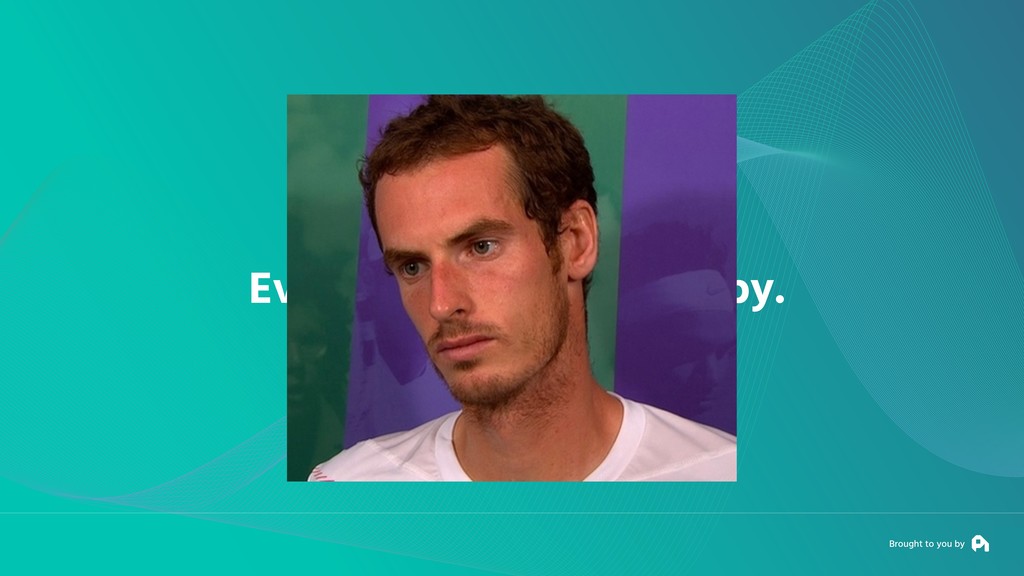
This is gonna be a fun session, I promise, but you're gonna realize that something's bad in your business, and you're gonna have the Andy Murray face. He always looks like that. I don't know. What's going on? Right? He's not British. Right? He's Scottish. Right?
I heard that that was a fun thing to say. No? No one cares? Alright. Anyways. So the three areas that we're gonna go through, we're gonna go through company level cliches. These are company level things that people tell you that you should do or should not do that are just completely wrong.
We're gonna go through some product problems, then we're gonna go through some growth terribleness. Sound good? Everyone excited? Yeah. Promise you it's not gonna be a big lecture, but the data is gonna scare you a bit. Awesome? Alright. Let's talk about company cliches.
We're gonna start off with a nice just punch in the face, and that really is around funding. Any investors in the room? Excellent. There's no investors in the room. Well, you go to an investor, what they're gonna tell you is that funding is necessary for growth, and it's kinda like going to a barber and asking if you need a haircut.
Like, of course you need a haircut. Right? And then some of the other bootstrappers or the folks who have been burned, they give you the other side of the equation, which is VCs are basically demons. Vcs are terrible people, etcetera. Right? And what we found in actually looking at the data is that both of these folks are right and both of these folks are wrong.
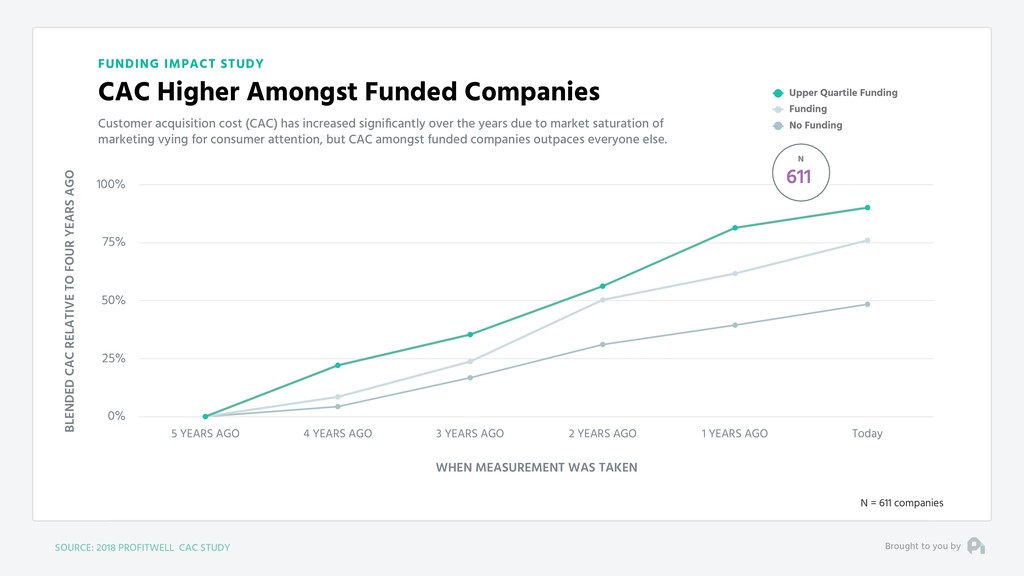
But fundamentally, what we found is that funding really messes with your unit economics. And what I mean by that is when we look at companies that have been heavily funded or just funded in general, and we compare them to companies that haven't been funded or only taken on minimal funding, what we typically find is that their customer acquisition cost or their CAC, basically the amount of money it takes to actually acquire a customer, is typically very different.
So what you're looking at here, down here, is basically the CAC for a company that's not funded. And then what you'll notice is that essentially those companies that have taken on funding, especially a lot of funding, those companies have twenty five to really thirty five percent more customer acquisition costs on an absolute basis than those companies who weren't funded.
And this is mainly because you have the cash to actually accelerate and acquire a ton of customers. But at the end of the day, what's kind of fascinating about this is that we've also noticed that this isn't necessarily helping with a lot of the other unit economics that are out there.
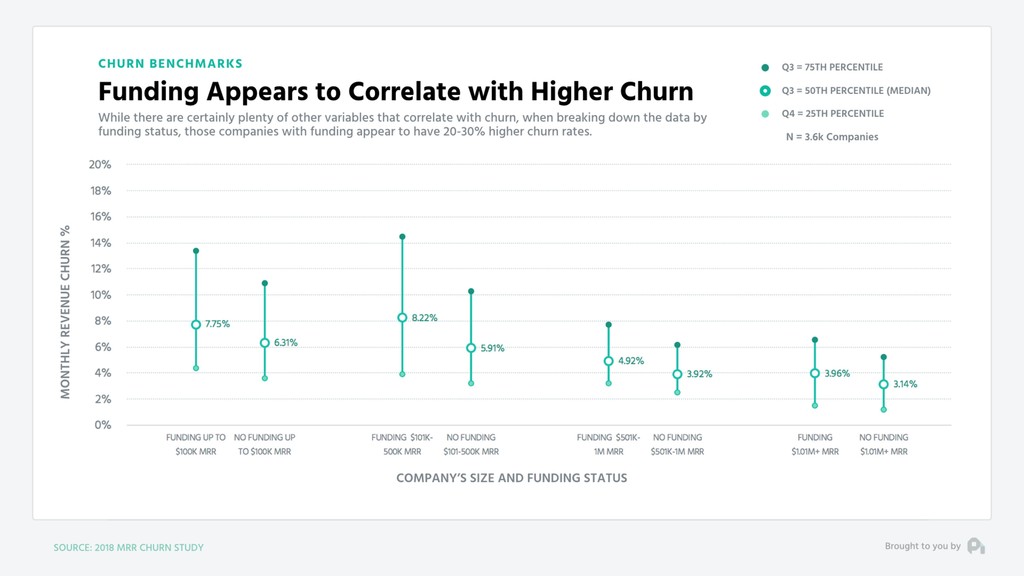
When we look at things like churn, what we've actually noticed is that those funded companies, and churn for those of you who don't know are customers who are using your product or buying your product and no longer are. Those companies that have taken on funding essentially have higher churn than those folks who have not taken on funding, which is kinda interesting when you think about it because when you go to these folks and you say, hey, we really really need your money to grow, all of a sudden,
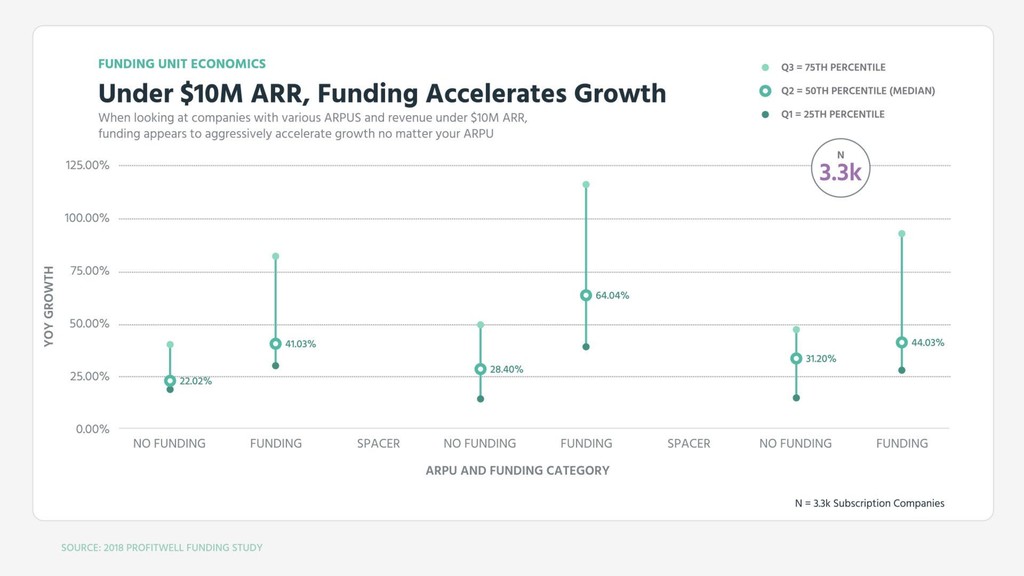
the efficiency of companies who have taken on funding is actually not that great. And they're relying on that funding essentially as a crutch in a lot of cases in order to make sure that they can actually build their business. Now, being a customer funded CEO or a Bootstrap CEO, I do have to defend venture a little bit here because what we found is that funding does help with growth, but it helps with growth in a very specific place, and that is between zero and ten million dollars in revenue.
What we've actually found when we compare those folks who have no funding to those folks who have funding across different ARPU levels is essentially that when you're from zero to ten million, funding is really really helpful in accelerating your growth. You're basically going out, you're buying the market, and all of a sudden those folks who don't really have that funding, they're sitting back, they're growing, but they're not growing as fast as a rate.
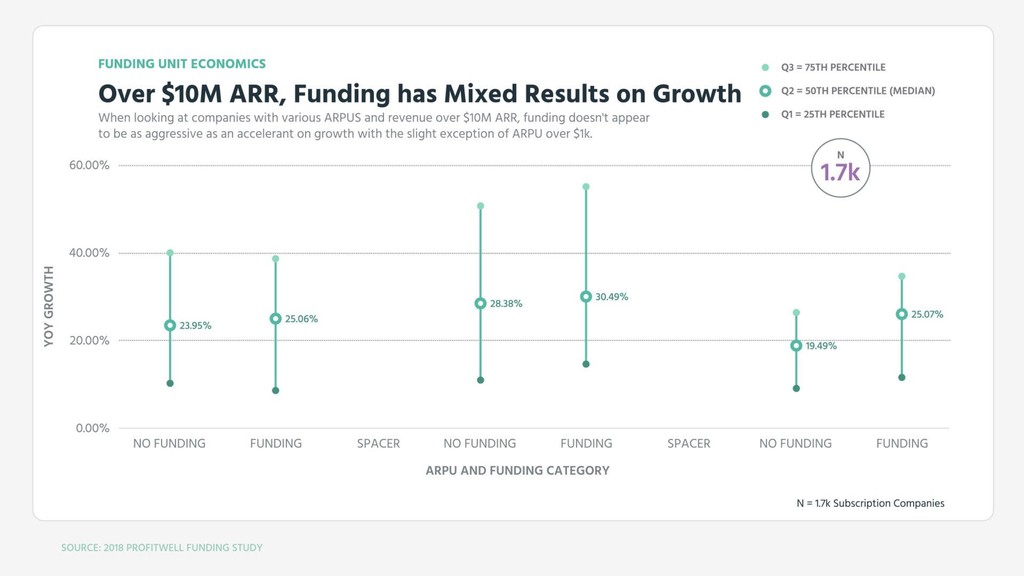
Now when we get over ten million, this is where things get a little bit slower. And all of a sudden, that acceleration that you were getting through that funding is sadly kind of going. And you've seen this with companies who have gotten over ten million without actually raising, and all of a sudden, they're able to basically fight just with the funded folks really, really well, mainly because at that point in time, that capital is already going to be not as efficient as it was in the zero to ten million range.
So long story short, funding isn't terrible, but it should be used like a scalpel. It should be used for efficiency. It's not something that should be used as a sledgehammer, which unfortunately a lot of us end up doing. Now next up here in the company cliche category, we're gonna talk about competition.
Right? Who here has heard don't focus in your competition? Okay. This is a really, really big one. Right? It's like don't focus on your competition. You wanna make sure you focus on your customer and focus on product. And what we've actually found is that over time, competition has increased substantially.
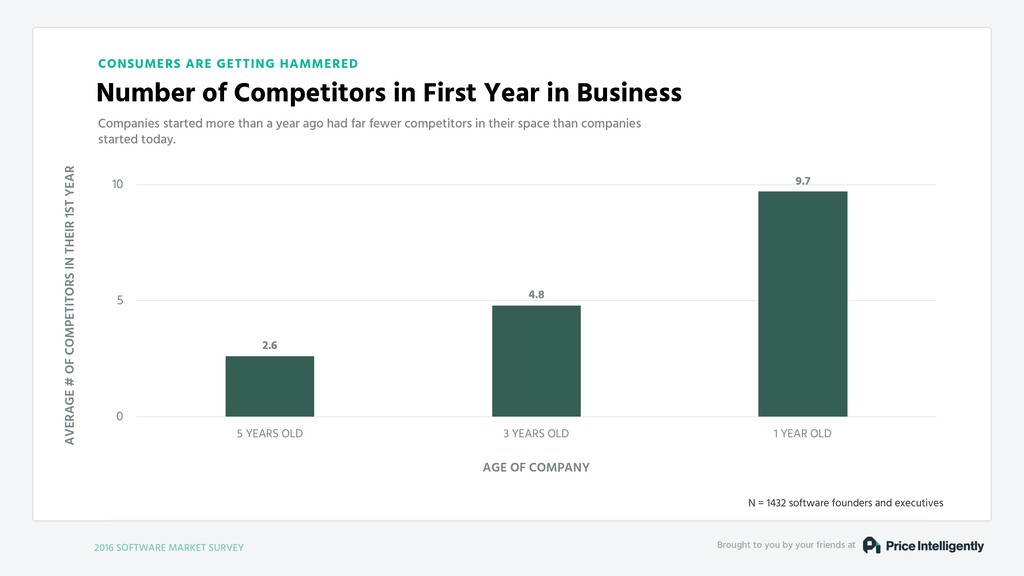
So what we're looking at here is basically the number of competitors that people have had in their first year of business. So those folks are about five years old. They only had about three competitors in their first year of business. If you started a business about a year ago, you have about ten competitors.
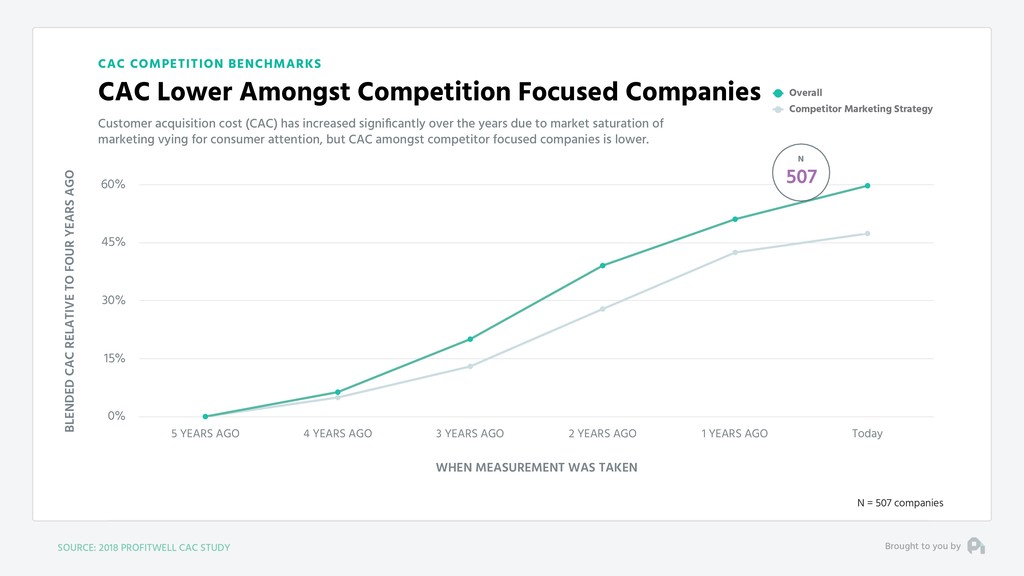
This is just because software and technology and companies are a lot easier to build today. But unfortunately, what we found is that even though there's all this competition, that lack of focusing on competition is actually hurting you in certain places. So the first thing that we did is we compared the customer acquisition cost of those individuals who have no competitive marketing strategy to those folks who do have a competitive marketing strategy.
And what we found is that those individuals who have a competitive marketing strategy, and what that meant was comparison pages, they had different ad campaigns that were going after their competitors' customers, those types of things, they tended to have about fifteen percent to about twenty percent less customer acquisition costs than those folks who essentially had no competitive strategy.
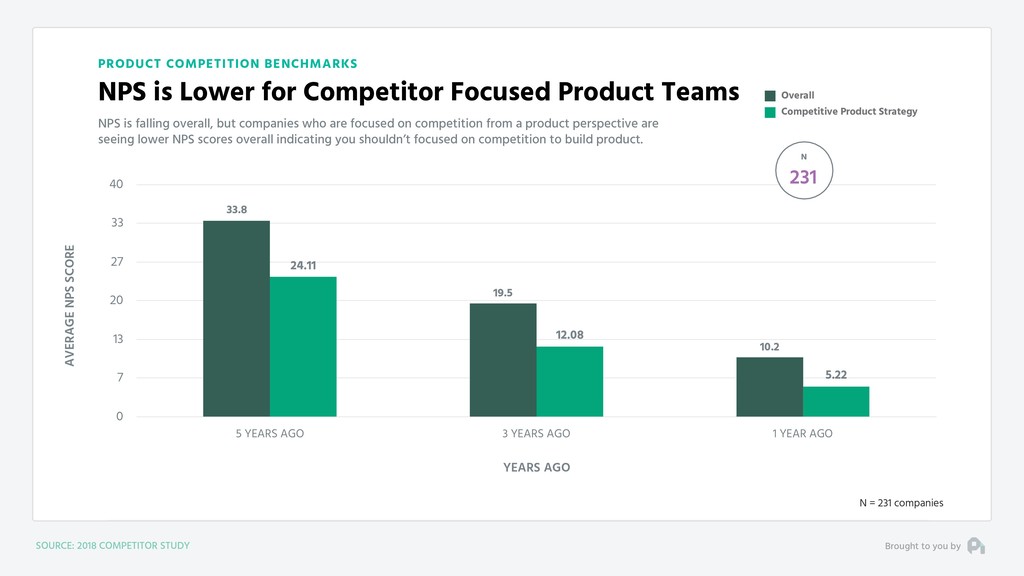
And what's interesting about this is that all of a sudden a lot of you might be saying, oh, now we need those competitor pages. But we actually found from a product perspective is that focusing on competition does actually hurt quite a bit. And we did that by looking at net promoter score.
Everyone here know what net promoter score is? NPS. Customer satisfaction. It's a measure of customer satisfaction. And what's really been interesting is that over time, NPS or customer satisfaction has been going down. This is essentially because software and just technology isn't magical anymore.
It was really, really magical ten years ago. But today, all of a sudden, it's like we're just really, really expecting things. But if you look at individuals who have a competitive marketing or, excuse me, product strategy, what ends up happening is those individuals are essentially seeing lower NPS because they're not focusing on the customer.
And so this puts us in a little bit of a bind here because what we're looking at is from an actual marketing or acquisition strategy, you need to understand your competitors. But from a product perspective, you have to put the blinders on because they're not necessarily gonna help you build the right product.
And last on the company cliches here, we're gonna talk about work life balance. Who here loves to talk about work life balance? Anyone? Okay. Got the ******** folks in here. I don't know if there's an automatic thing happening here with the slides. I don't know if that can be turned off manually or not, but it's advancing when I'm not clicking it.
I don't know if they can hear me in the booth. But what's interesting is that a lot of folks talk about work life balance as something that's really, really important. There have been a lot of articles that have been written on how founders need to make sure that they're taking care of themselves, which is definitely something that does need to happen.
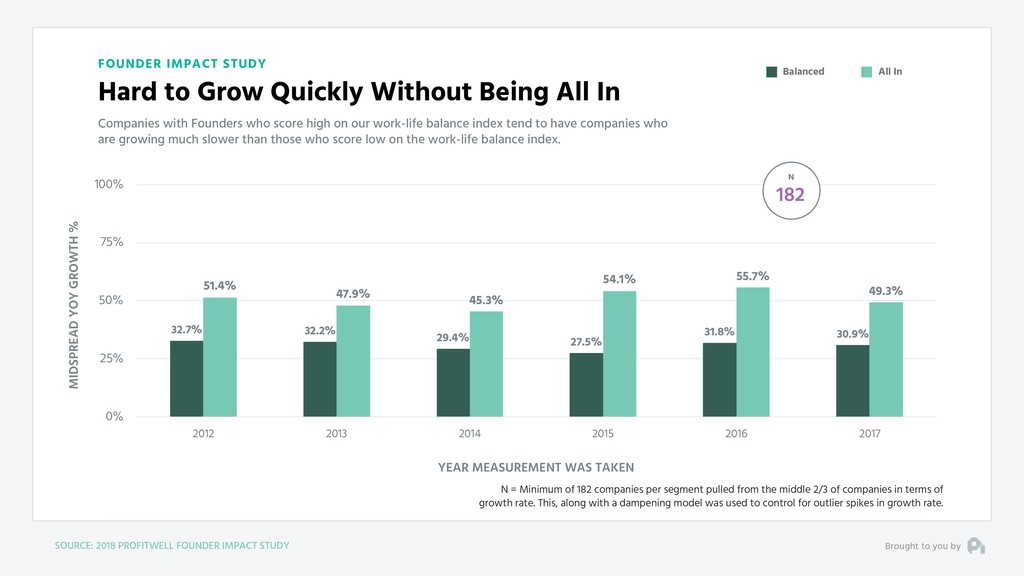
But what's kind of scary is that when we look at companies and their growth rate and we compare individuals that index really, really high on work life balance to those folks who index very, very low on work life balance, what we've actually found is that those companies who have a balanced perspective, this left color here, are basically growing at almost half the rate as those founders or those companies that are basically all in with their founders and execs teams not focusing on work life balance.
Now this is a little terrifying to me in particular, mainly because it just means that you do need to basically be a slave and nose to the grindstone in your company, but it also indicates that that hard work does pay off when it comes to growth.
And there's a ton of lurking variables to kind of consider here and to think about, but it does show that that nose to the grindstone does pay off at least for these two hundred companies or just under two hundred companies that we looked at.
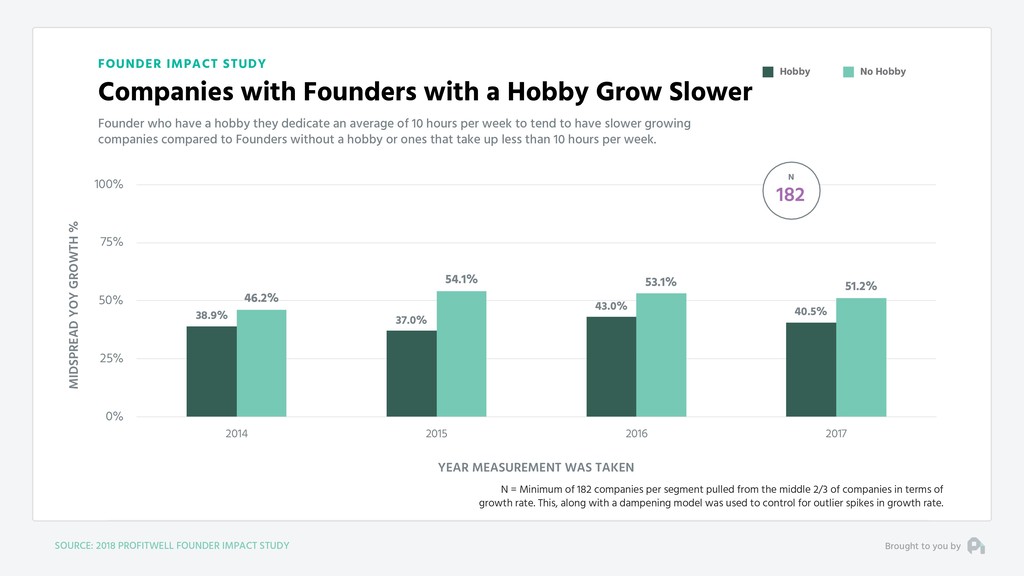
Another way that we slice this data was looking at founders who had hobbies that they were spending ten hours or more per week on. What we actually looked at is that those founders who had a hobby that they basically were spending ten hours or more, they were doing a little bit better than the folks who over index on work life balance, but they were still growing at a lower rate than those companies or those founders who were basically all in.
Now there's more research to be done here on what's the mental state of those founders who don't have work life balance. And are they happy? And what are suicide rates? And all that other just terrible stuff amongst those folks. But it is one of those things and this is something that, you know, I take a little bit personally when people say, you you work too hard, you know, you can build a company without working hard.
Where it's like you can, but maybe you're trading off that type of growth and you have to make those decisions particularly as a company founder or as someone who's kind of being the stewardess and executive at a company. Let's kind of move on here.
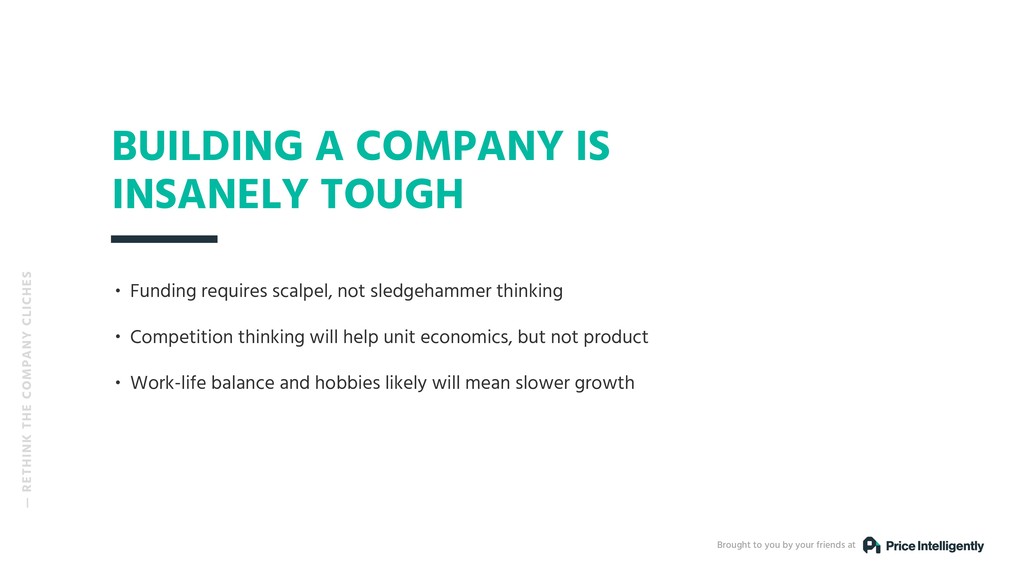
First thing, funding. It's not a or not a sledgehammer. It's a scalpel. Second thing here, competition thinking really helps with your acquisition. It hurts you with your product. Then finally, work life balance and hobbies, they will mean slower growth, particularly if you're a founder or you're an exec team.
At least that's what the data is suggesting here. But if we talk about product, any product leaders in the room right now? Couple of you? Awesome. The rest of you are watching Spotify. Totally get it. Totally fine. The big thing that I really love to dig into was really this concept of that focusing on one product.
So how many of you have one product at your company right now? You're only focused on one product. Right? What's kind of fascinating is that a lot of folks say, hey, you should focus on that one thing because you're gonna get too distracted and all of a sudden the market is gonna be too confused and you're not gonna be able to grow.
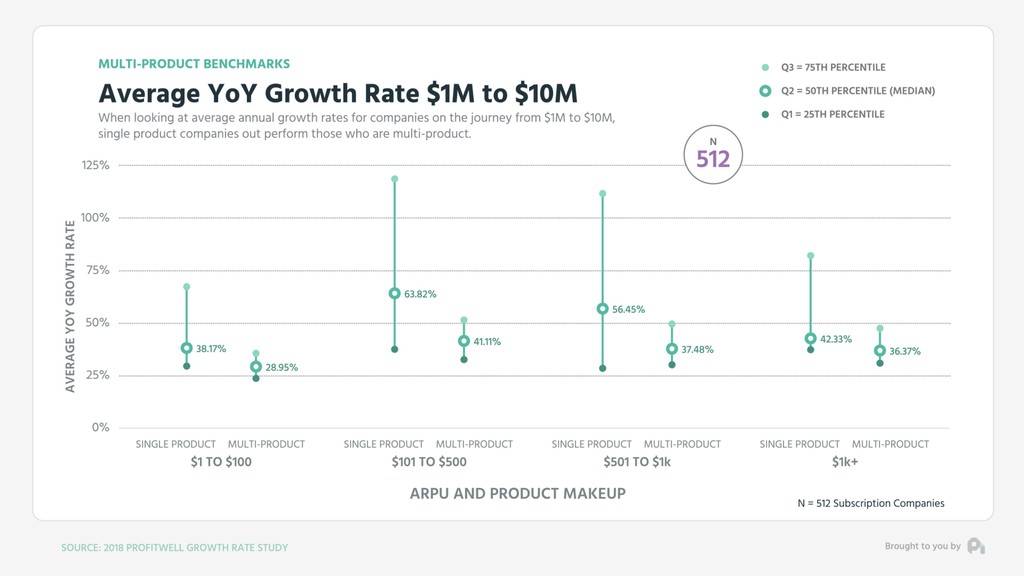
And it's not necessarily something that's wrong, but what we found, again, looking at the bifurcation of that data, is that when you're between the one and ten million dollar range, meaning you're trying to grow in essentially in those early days, one product is an advantage.
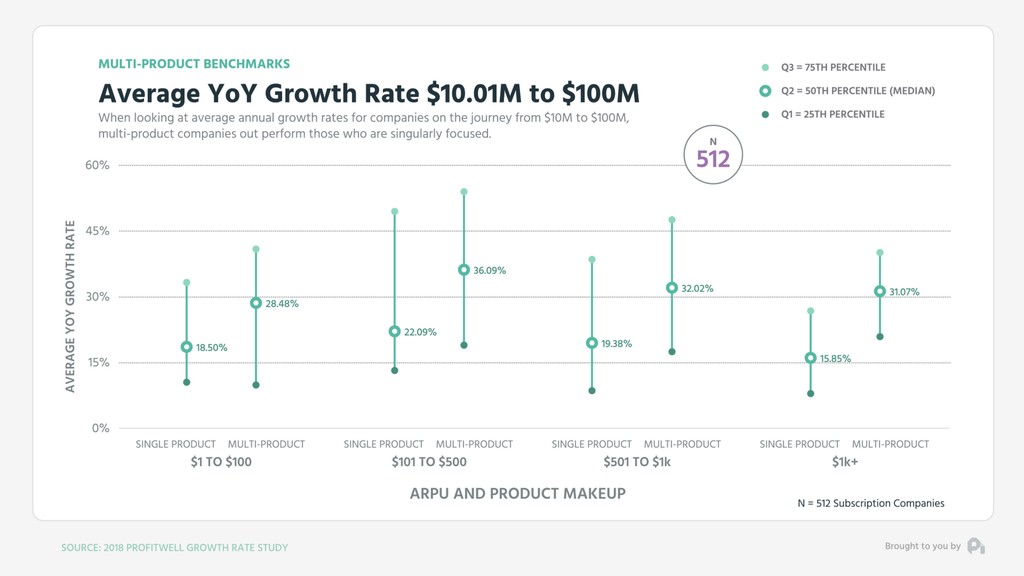
Basically, what ends up happening here, you have single product in the left of these different groups, and you have a multiproduct company on the right side of these groups. And basically, single single product handedly wins this particular debate. But what is kinda interesting is that when you cross that ten million dollar threshold, all of a sudden it's reversed.
Where multi product companies are essentially the ones that are seeing those higher growth rates and those single product folks are seeing growth, without seeing as much growth as they were seeing in the one to ten million range. And this is pretty intuitive. This is pretty validating to some folks who have probably already known this in the past.
But the reason this is so intuitive is that basically growth rates start to slow down mainly because as you're capturing more of the market, but to sustain those really, really big growth rates especially if you're funded, you have to be thinking about multiproduct.
And what's cool about this is that software is quote unquote easier to build. It's not easy, but it's easier to build than ten, you know, fifteen years ago. And a lot of these products can kind of spin up out of, hey, that's a feature request that's completely different, but let's start to explore if that makes sense for our customer base.
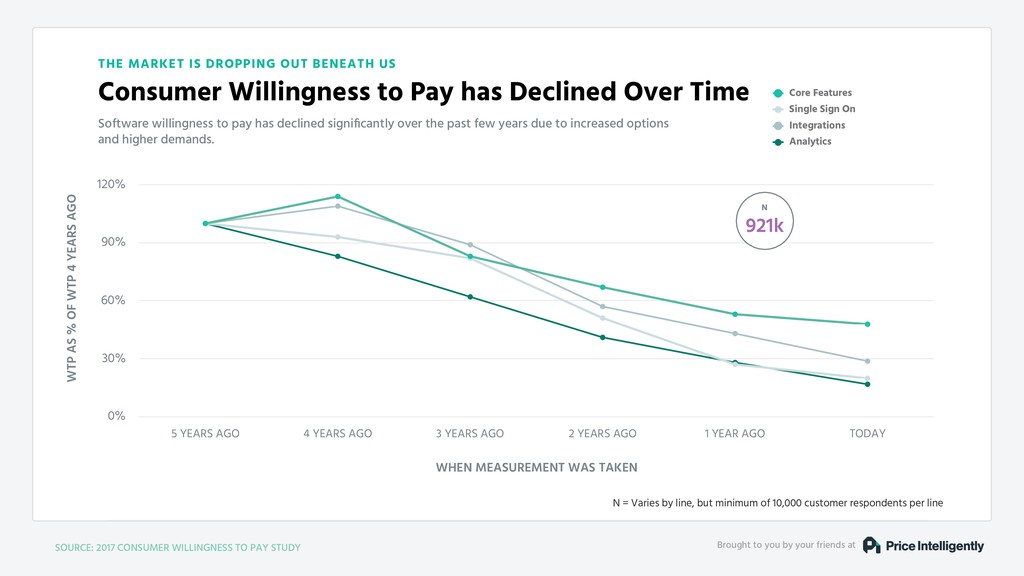
The other thing that's really interesting here is around features. So a lot of folks think that features equal growth, and that definitely was true for the past ten to fifteen years. But what we've actually found in studying a ton of people is that the relative value of features is declining quite significantly.
So we looked at using some price elasticity work that we can do in the business just under a million different consumers. And we asked them not only about core features of a product over time, so basically asking, you know, Dropbox customer about Dropbox over time, asking Spotify users about Spotify over time.
And then we also asked or indexed some different really common differentiable features like analytics, integrations, and things like that. And essentially, we're seeing this phenomenon where over time, features are basically declining in their value because as I mentioned before, software isn't as magical as it used to be.
It used to be you created a database product and you were just like a god because it was like, oh, I don't have to use a spreadsheet anymore. But now it's like, yeah, we just expect those things. We expect good design. We expect really, really good software.
And that's caused this decline in value. Now what's interesting about this is that the way that you can get over this is by using what's called a value metric. So a value metric is what you charge for. It could be per user, per hundred visits, per something, some measure of actual usage.
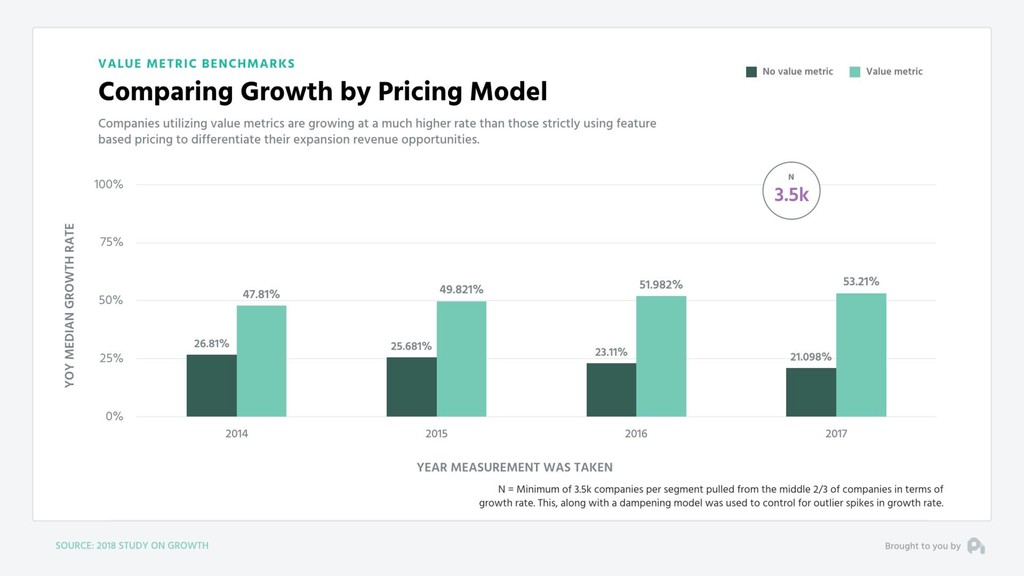
And we're seeing this not only in the subscription world, but also in the retail world, in the marketplace world, enterprise world. But what we've actually found is that those companies that are deploying a value metric are growing at about double the rate as those companies who aren't.
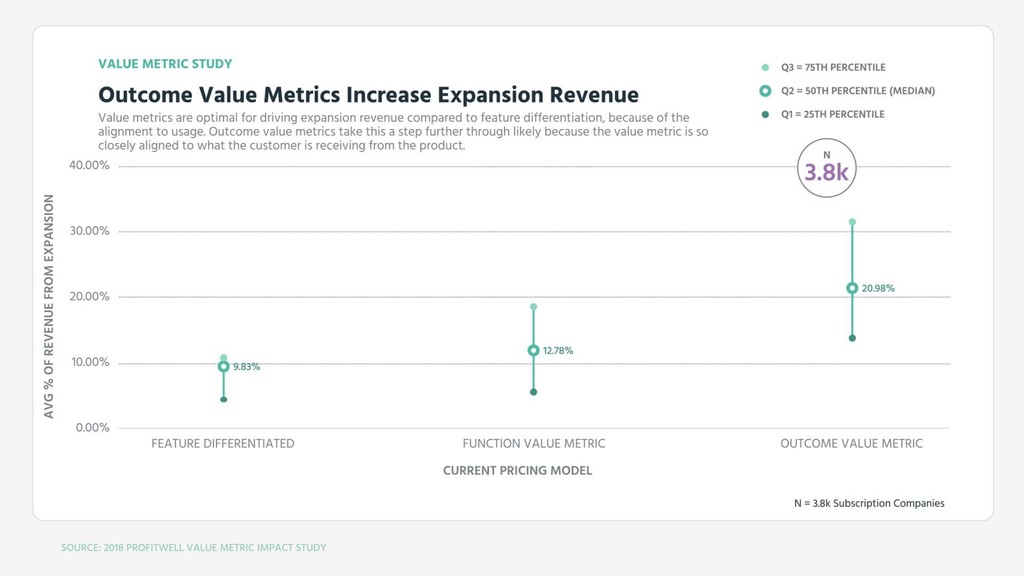
And it's also really interesting when you start to compare and contrast different types of value metrics because what you'll notice is that when we look at something like expansion revenue, we can actually see that if you're feature differentiated, your expansion revenue, meaning that money that's gonna come from your existing user base, is actually much lower than those folks who are using a function value metric, so something like per user, versus those folks who are using what's called an outcome value metric, which is like per dollar I save you or per hundred dollars I bring you.
And more and more companies are using these, basically get over that feature trap that we're seeing within the economy. That last thing here in product is my favorite favorite topic of all time. It's the Steve Jobs defense. So a big thing that's been happening, particularly in the industry, when you look at products, blogs, and things like that, there's been this whole kind of wave against customer development.
And there's been plenty of people who are for customer development as well. But what's interesting is that there's this whole concept of like, you don't need to talk to your customers, you have to build the future. Right? And you got Saint Steve Jobs and then, I don't know, Archbishop Henry Ford. I don't know.
I don't know what the metaphor is there. But basically Henry Ford's quote, if I ask my customers what they wanted, they would have set a faster horse. Right? We've all heard that quote in some some relative way. But what's really kind of interesting is that a lot of us aren't doing our customer development regardless of this phenomenon.
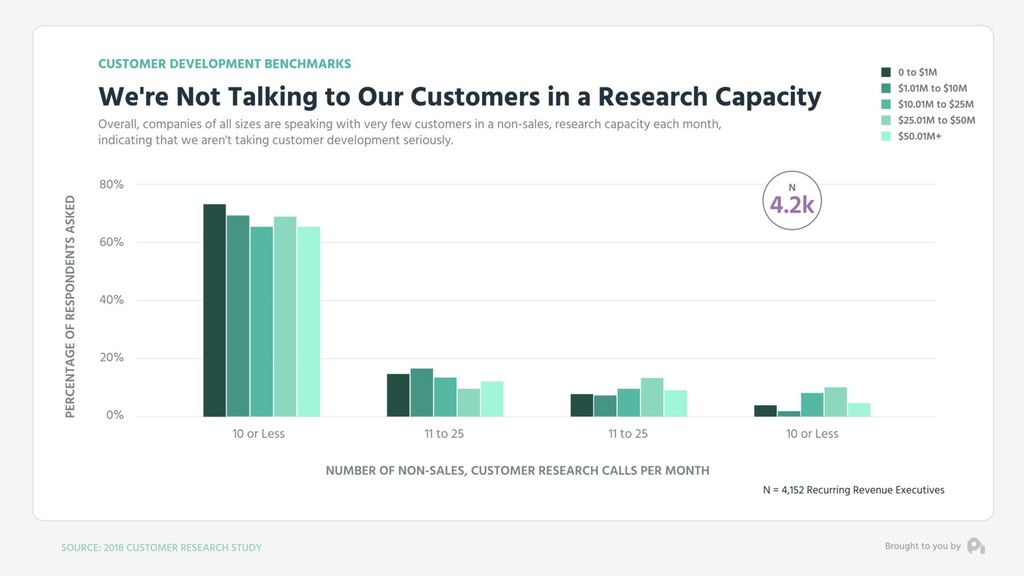
So what you're looking at here is, a bunch of different segments of different types of sizes of companies, and you're looking at how many calls that they're doing in a non sales capacity to customers. So basically customer research calls. What you'll find is that most of us, we're doing ten or less calls a month in our non sales capacity.
So we're not really doing these research calls. And that includes fortune five hundred companies, some really really large companies are in that dataset. And a lot of folks come up to me and they say, you know what, Patrick? We don't do customer calls.
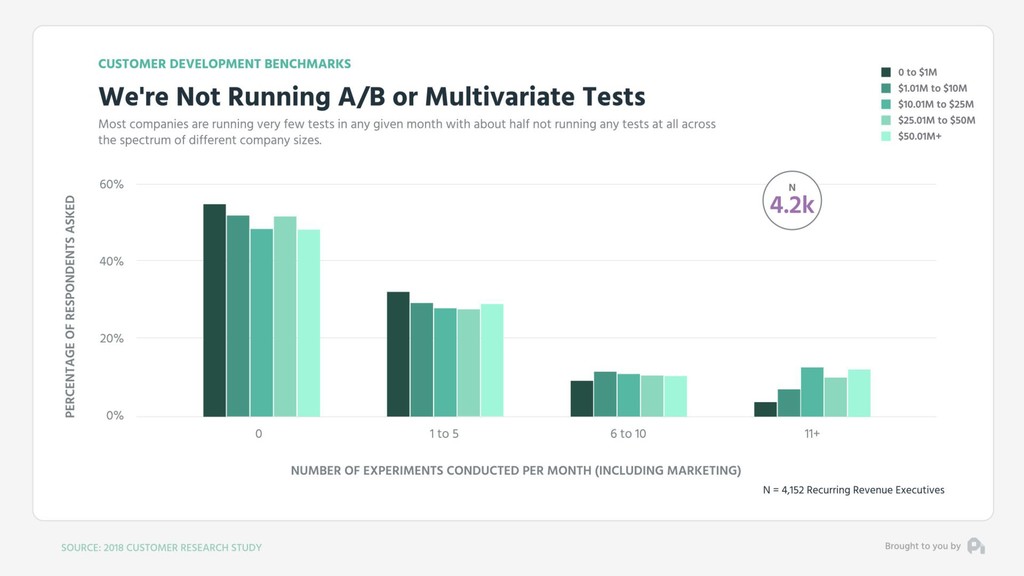
We do a lot of AB testing, multivariate testing. That's what we believe in. Nope. Most of us aren't doing those either. So over half of us, zero tests a month. This includes marketing tests and how hard is it to do an a b test on a subject line.
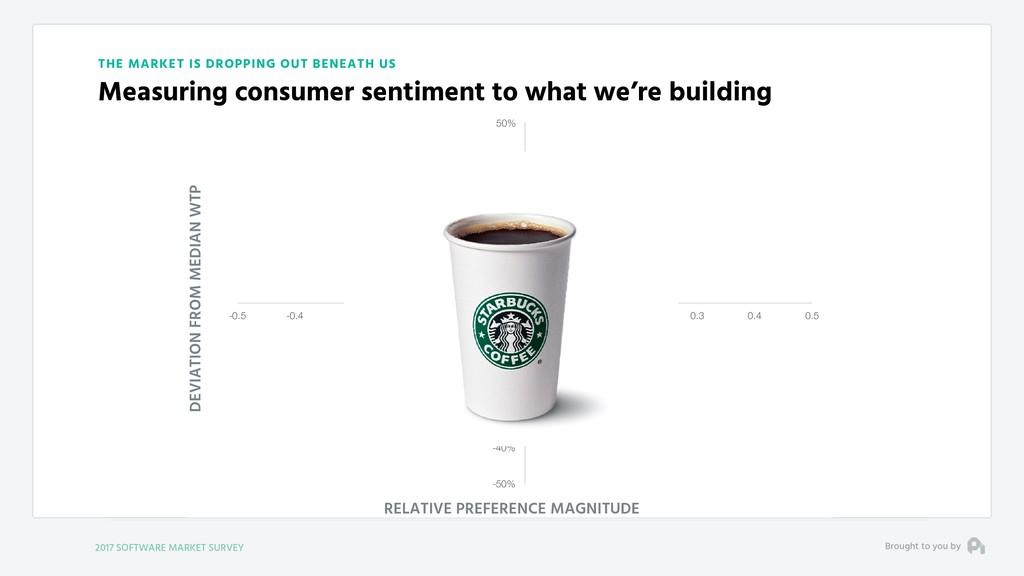
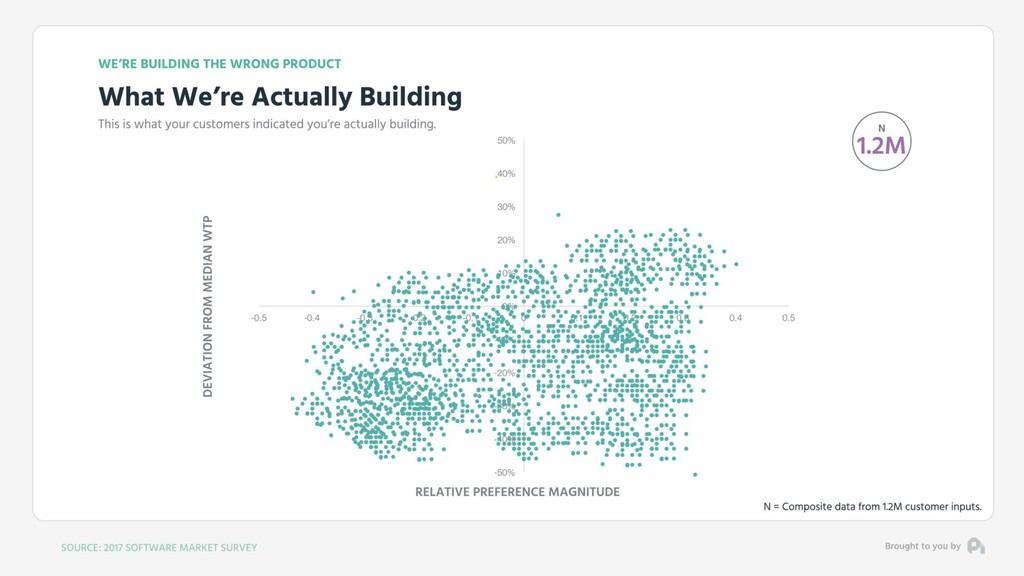
Right? And this is amazing to me because what ends up happening from a product perspective is we end up building the wrong product. And I'm gonna introduce a little bit of a different model that you might not have seen before to explain this, but when you think about value of anything, it could be a cup of coffee, it could be a piece of software, there's two axes of value.
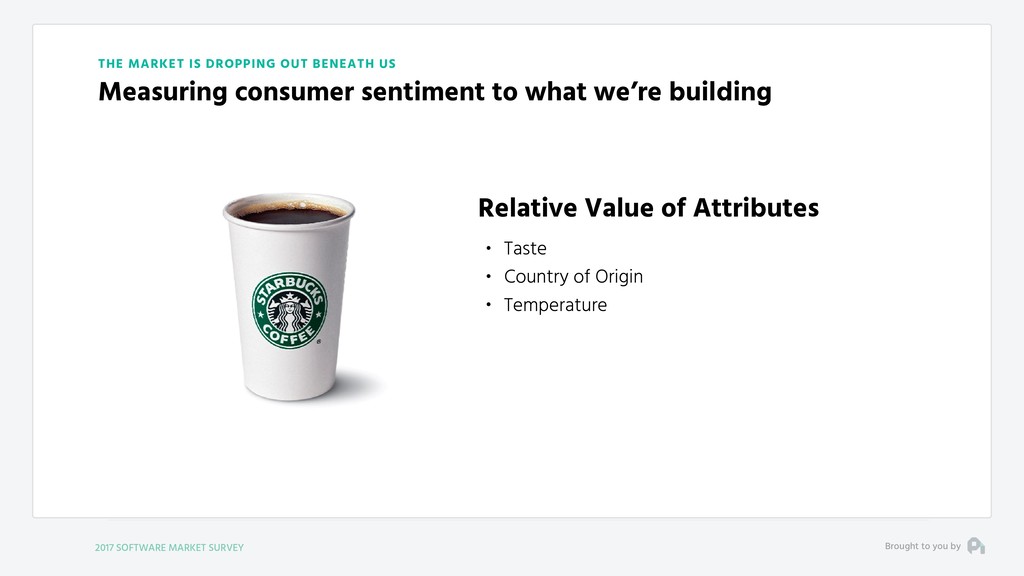
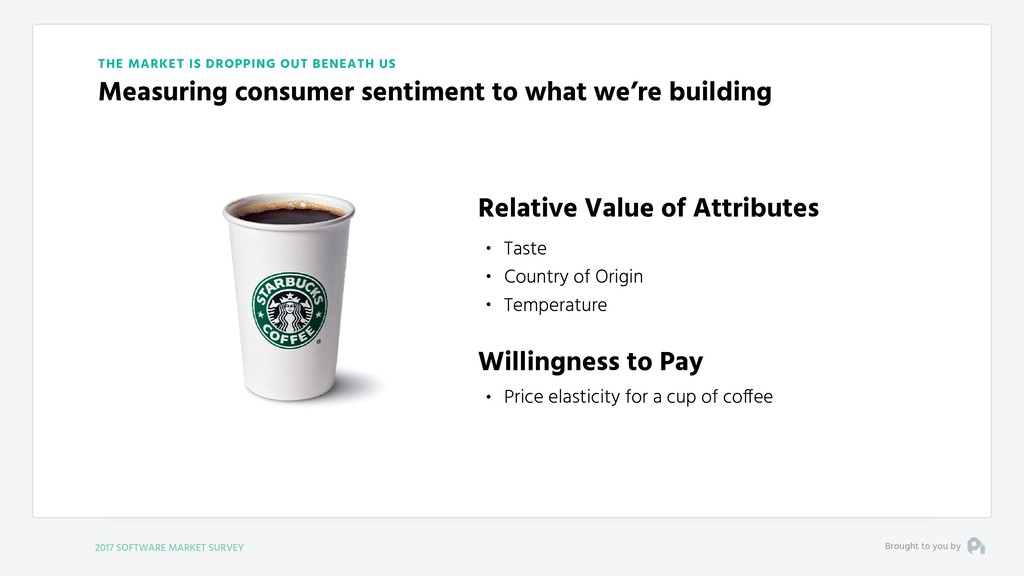
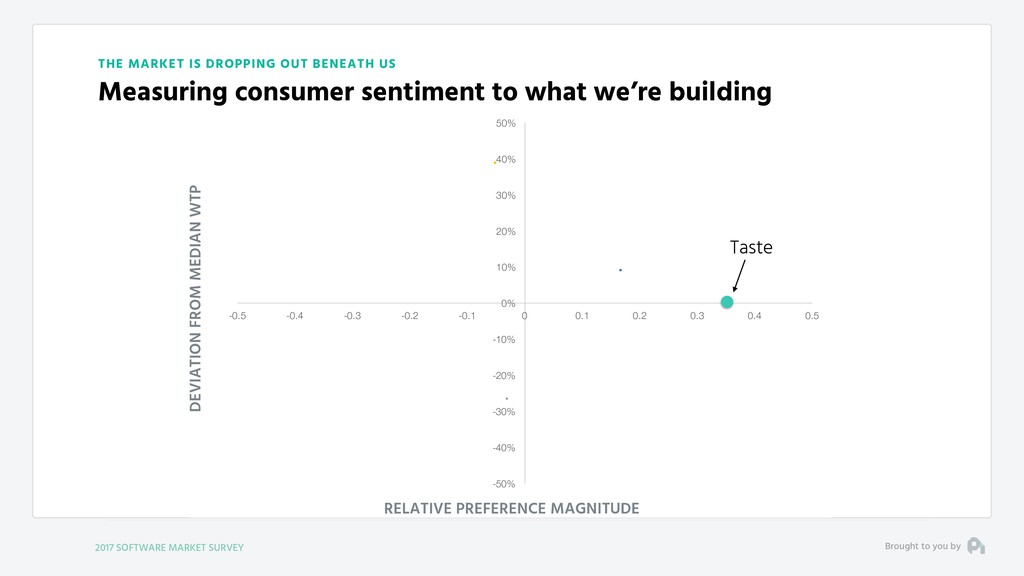
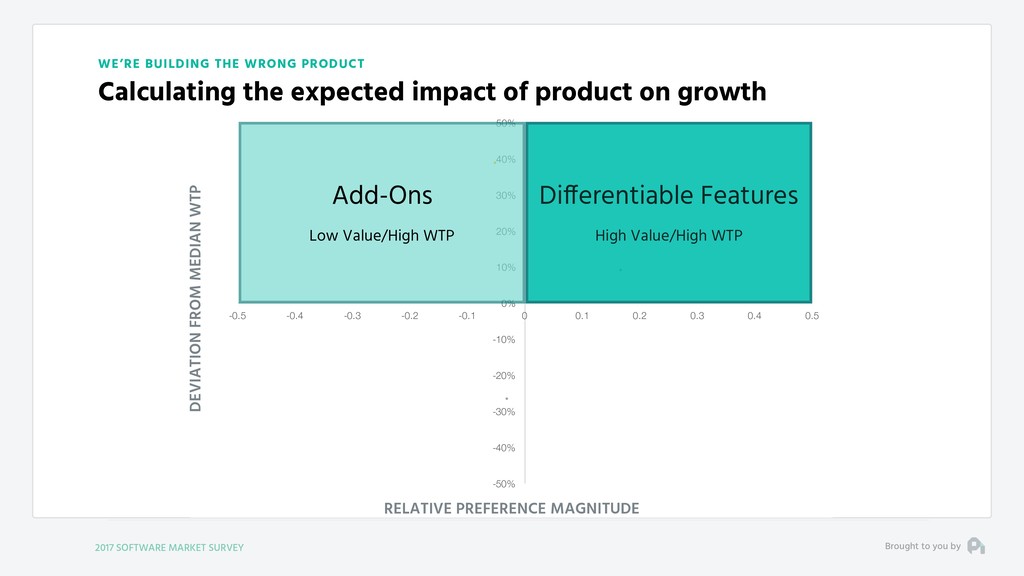
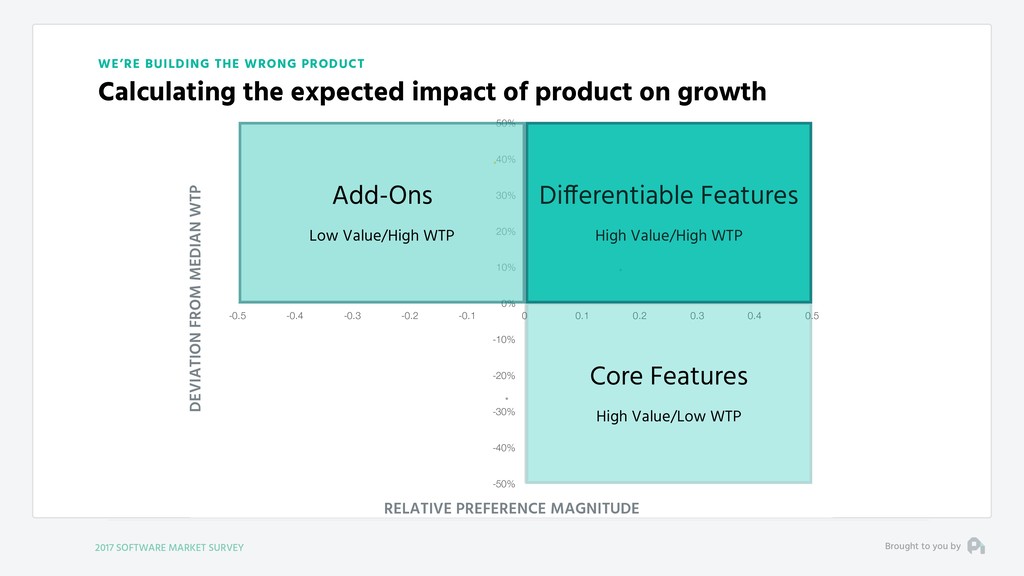
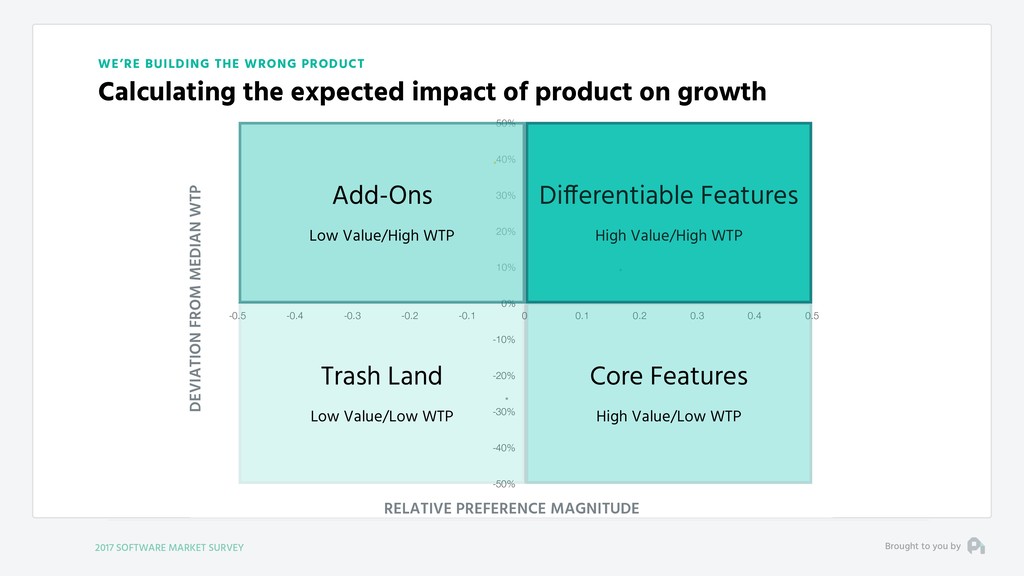
There's the features, basically the taste of a cup of coffee, the temperature of a cup of coffee, etcetera. And then there's the actual price for that cup of coffee. And we can represent those on a nice x and y plot. Any MBAs in the room?
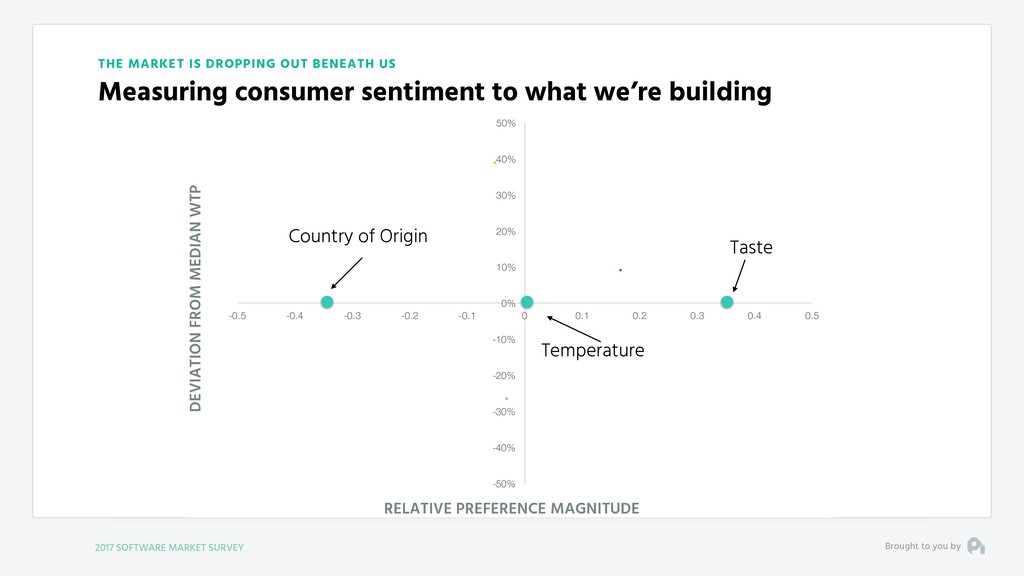
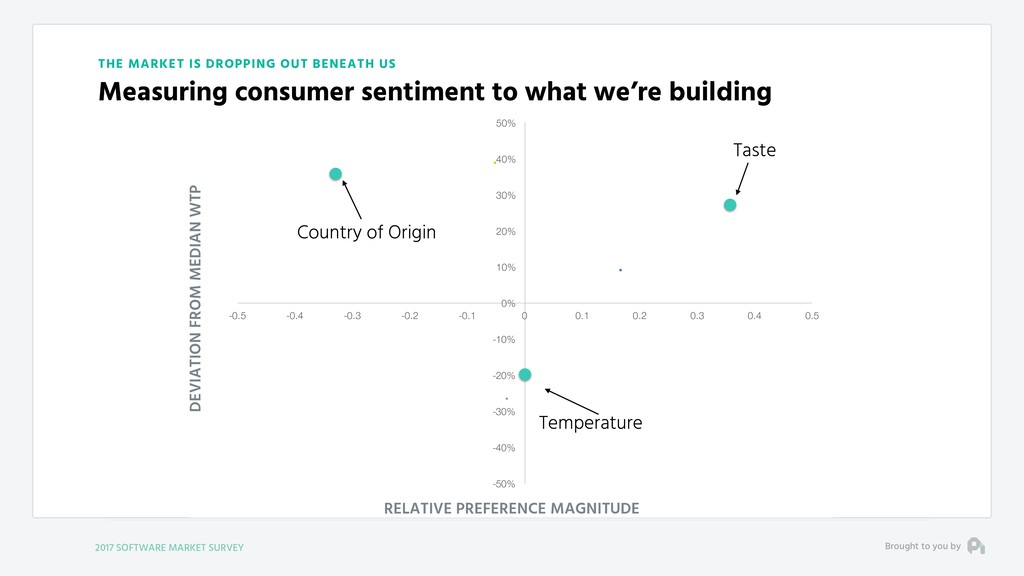
That's crack for you guys, I know. Right? Yeah. You're excited. I love it. So what we can do is we can look at these relative value features, so taste, country of origin, like I mentioned, and then also the actual willingness to pay or the price, and we can represent them on this x and y plot.
So I can survey this entire room using some methodologies we're not gonna talk about today, but I'm happy to share with you, and I can find out that most of you care about taste. And then I can find out that no one really cares either direction about temperature.
Most of you don't care about the country of origin, but there's a few of you who really do care about it and that's why it's not exactly at negative one. Now if I cross reference that willingness to pay data with that, all of a sudden I have a phenomenon where I know that people who really care about taste, it's not all of you, but the people who really do, you're willing to pay more.
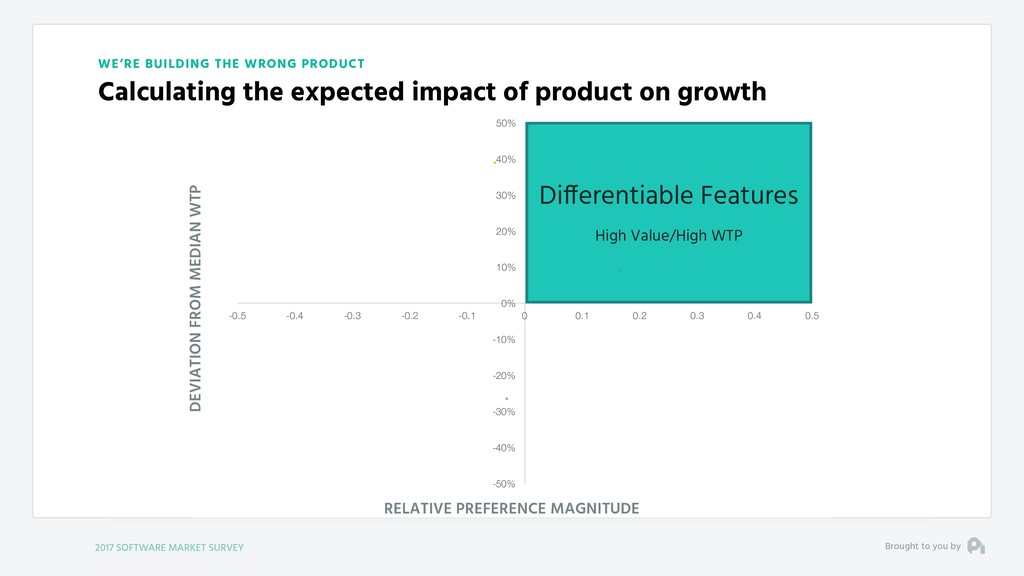
And those people who care about country of origin, again there's not a lot of you, but you also are willing to pay more. Now what we did is we actually found a way to kind of categorize these different quadrants, Where if you have something that is really high value and also high willingness to pay, you have a differentiable feature.
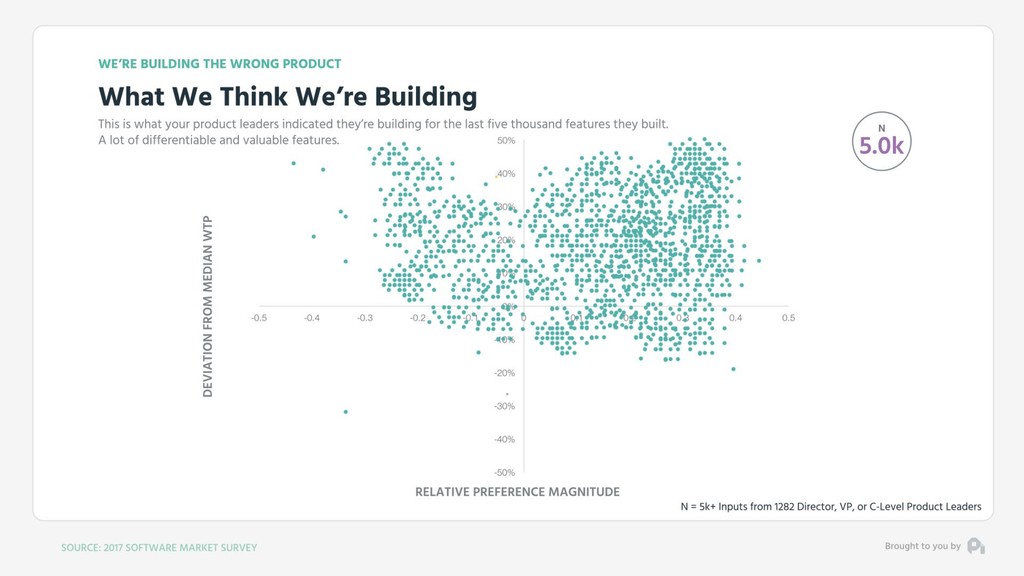
If you have something that's low value but high willingness to pay, you have an add on. Something that's high value and low willingness to pay, you have a core feature. And then my favorite quadrant, trash. Okay? Now what's interesting is we went out to your product leaders, about five thousand product leaders.
We actually asked them or excuse me, it was thirteen hundred product leaders and we asked them for their last basically n features. And we asked them to place it manually on this quadrant. And this is what your product folks said you're building. They're really confident. Super confident in this.
There's some really insecure folks for some reason, but everyone's super super confident with this. We then went out to about one point two million different customers of these products, and we used these statistical methodologies to measure basically truth or as much truth as we can get with limited bias of course.
And this is what your customers or their customers actually think of the features. That was so dramatic and there we go. Right? Again, super confident. Quantitative. Right? And that's what's scary. Right? Because you're not talking to your customers, you're not doing experiments. You're just like looking at a support ticket and then finding a pet little feature or pet little project and like building that thing.
And then you're wondering, oh, why isn't anyone using it? Right? And that's not for all of your features, but it's for a good amount. And this is what tends to kill a lot of businesses from a product perspective mainly because this is such a thing when you actually are talking to customers in a systemic way.
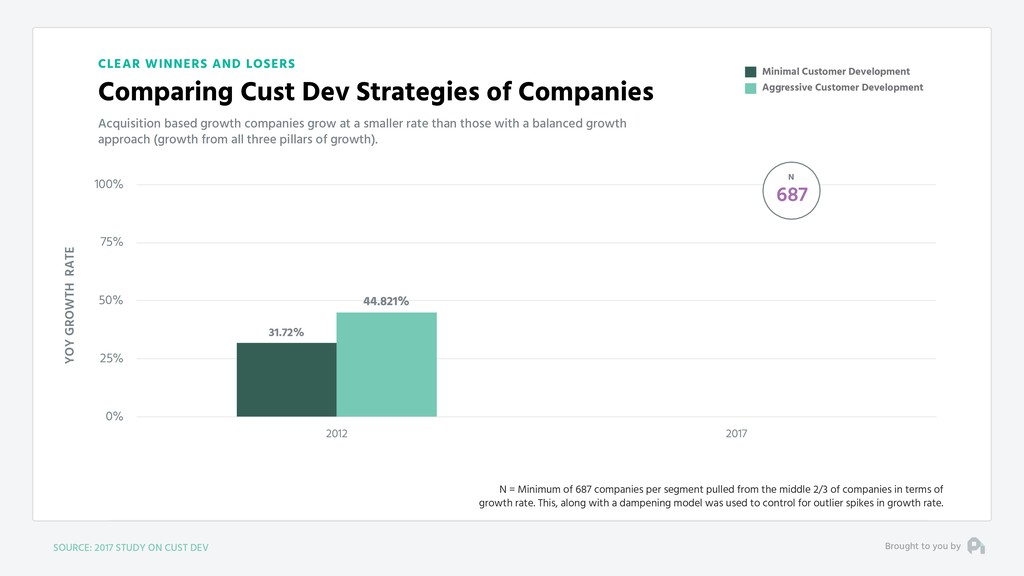
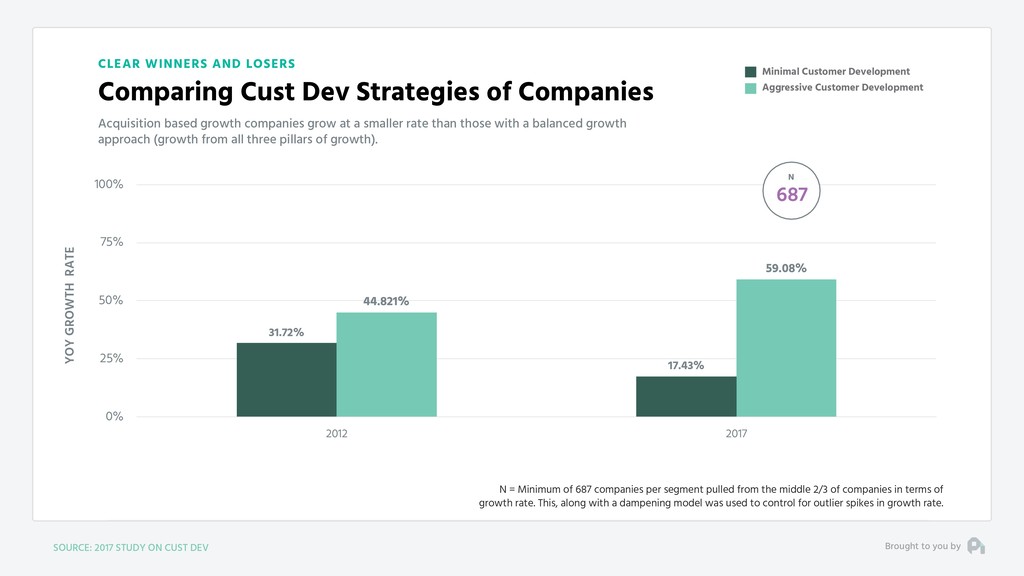
Particularly if you were at the previous talk in this room, talked a lot about that user research. And just to kind of put the nail in the coffin here, we compared those companies that were doing pretty aggressive customer development, customer research to those who weren't.
And basically in twenty twelve, that's how the numbers looked like. This is what it looked like in twenty seventeen. And the reason for this is because there's so much more competition in the market. It's getting harder and harder to acquire customers. And all of a sudden, features are declining in their value.
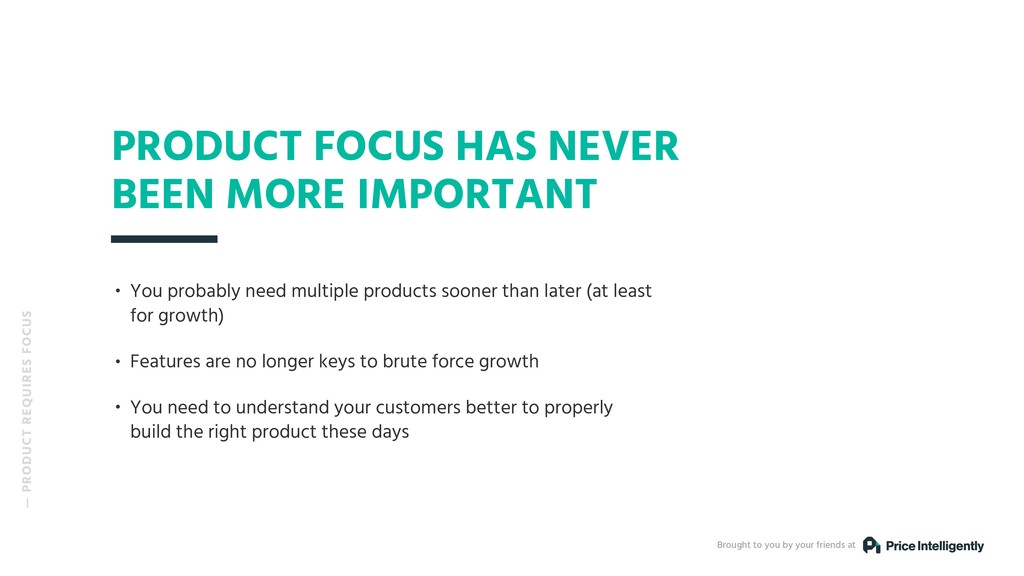
So the folks who are actually doing their research, they're able to figure out where that value is and they're basically able to build that future. Whereas the other folks, they're growing but they're guessing and checking their way to success again. And so to summarize here, you probably need multiple products sooner than you think.
Features are no longer keys to kind of brute force that growth. And then finally, customer development is absolutely crucial to making sure you're building the right thing and actually expanding that value of your product. And the final kind of pillar here, growth terribleness, which is my favorite title of this section.
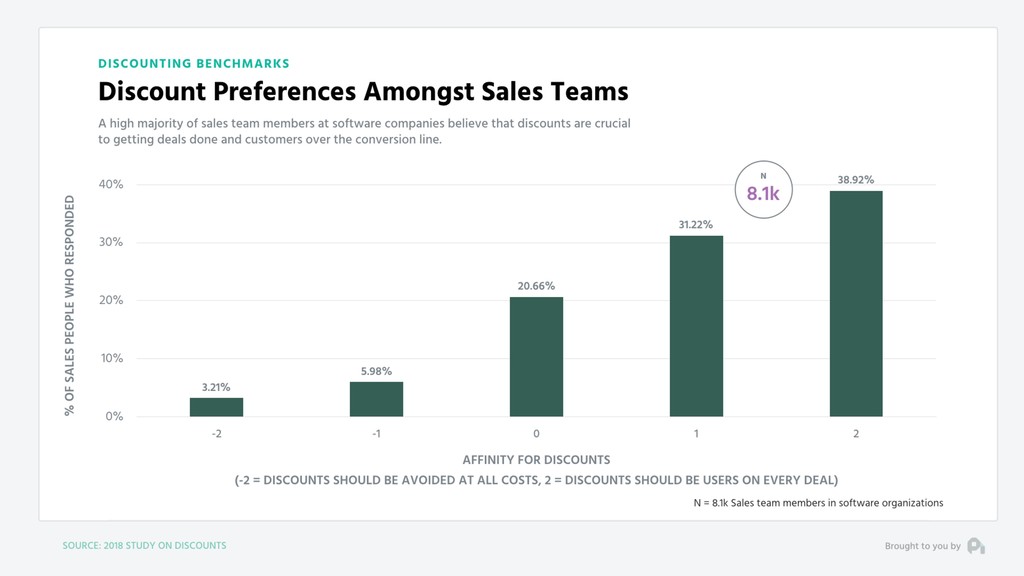
First up, discounts. Who here discounts their product? You're all lying. You're all lying. Those folks who have sales folks, discounting is a very, very viable thing to a salesperson. And that's not a bad thing. But just to give you a perspective, this is what people think in terms of discounts or sales folks, about eight thousand of them.
We asked them kind of their affinity for discounts. There's a couple of questions then we scored it. And basically over half, a really strong over half basically say like discounts are really really important to them closing deals, or discounts are really really important to them actually growing their bottom line.
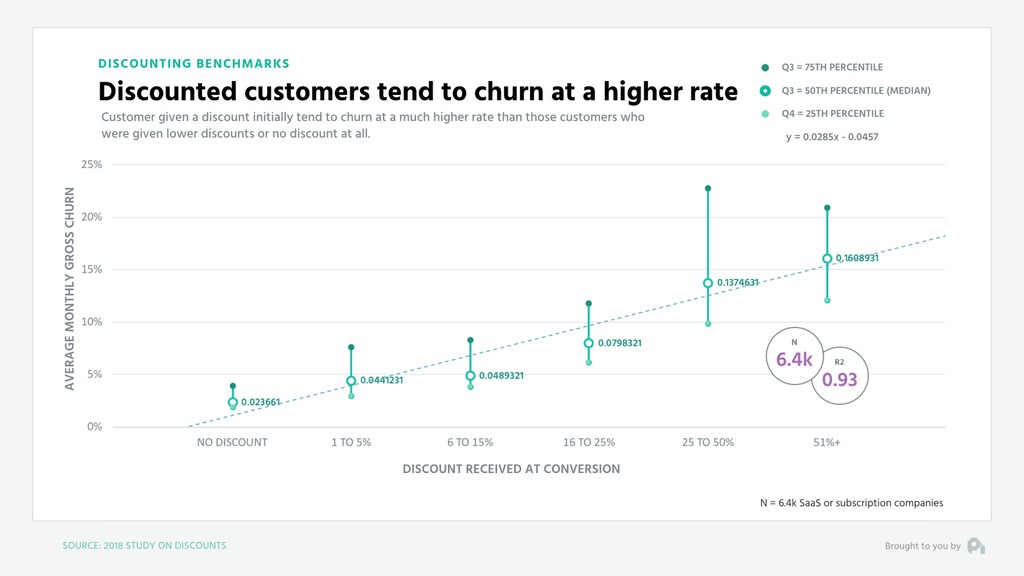
Now what's kind of fascinating about this is that discounts are actually pretty terrible, for your unit economics. And what we measured here is we basically looked at the discounts received at conversion and then we compared that to basically churn rate of those groups.
And what you're seeing here is that basically as the discount goes up, basically the churn rate goes up as well. And the main reason for this is because those customers who are receiving those really really big discounts, they just weren't ready for prime time.
They weren't ready to actually be a customer, but they were enticed by that discount. And then all of a sudden a month in, two months in, these are the folks who weren't using the product and all of a sudden they're like, I'm out.
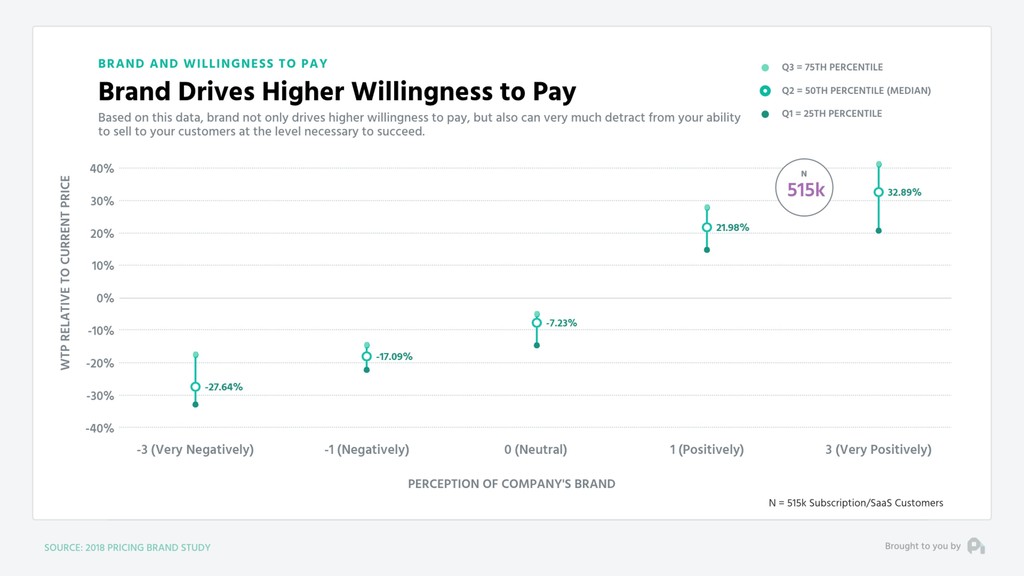
Right? You lost that at bat, and maybe they'll come back, but there's not really good reactivation with these types of customers typically. Now what's also really interesting is that when we look at brand, brand has always been known, especially as, you know, as tech has been kind of in its infancy, as a very retail or b to c phenomenon.
And what we found is that brand is actually really really important across the board. We looked at it was about five hundred thousand different consumers. And we basically asked them in a couple of different questions that we scored how they looked at a particular brand, whether it was positive or negative.
And then we compared that to their willingness to pay against the list price. So what you're seeing here is that people who positively or very positively view a brand, their willingness to pay is between twenty and thirty percent higher than what they're actually paying.
And those folks who have a negative or a very negative view, it's about fifteen to thirty percent lower than the actual list price. And this data, just to give you a perspective, this data was almost flat about six years ago when that was the first time we actually were able to measure this.
And it just is kind of an indication of all the other stuff that we're seeing within the industry, which is it's getting harder and harder to acquire customers. There's so much more density. And all of a sudden, we're in a world where things like brand are starting to actually matter.
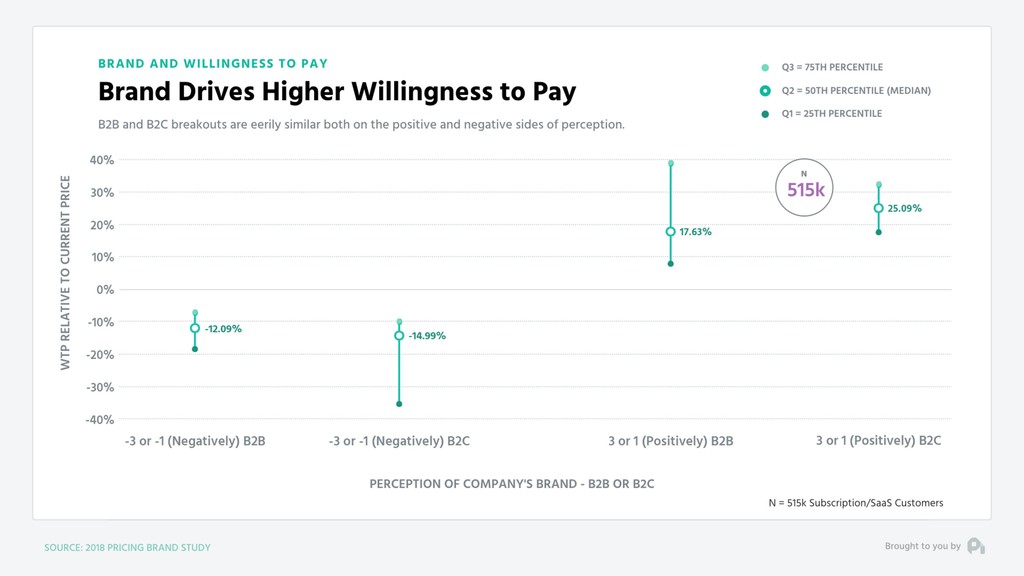
And for those of you who think, hey, this is just a b to c thing, just comparing b to c and b to b, those individuals who positively looked at b to b and b to c are pretty close. B to c still is a little bit more important.
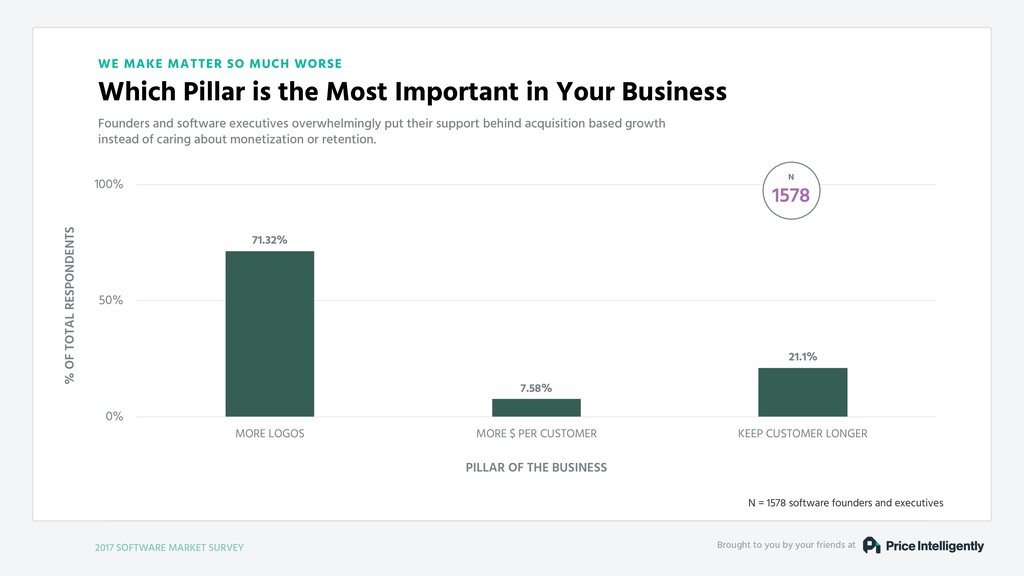
And those folks on the negative side, you're still looking at very, similar splits. And then the final piece here, my other favorite topic for those of you who've read our content. Acquisition is everything. It's what a lot of people think. And just to give you a perspective, when we asked execs at a company, and I think it was about fifteen hundred execs, what's the number one thing if you had to only choose one growth lever?
And the growth lever being acquisition, monetization, and retention. This is what they said. Seventy percent, seven out of ten of folks care about acquisition. My very few homies out there care about pricing. And there's a little bit more who care about retention and keeping customers around or keeping repeat repeat purchase rates up.
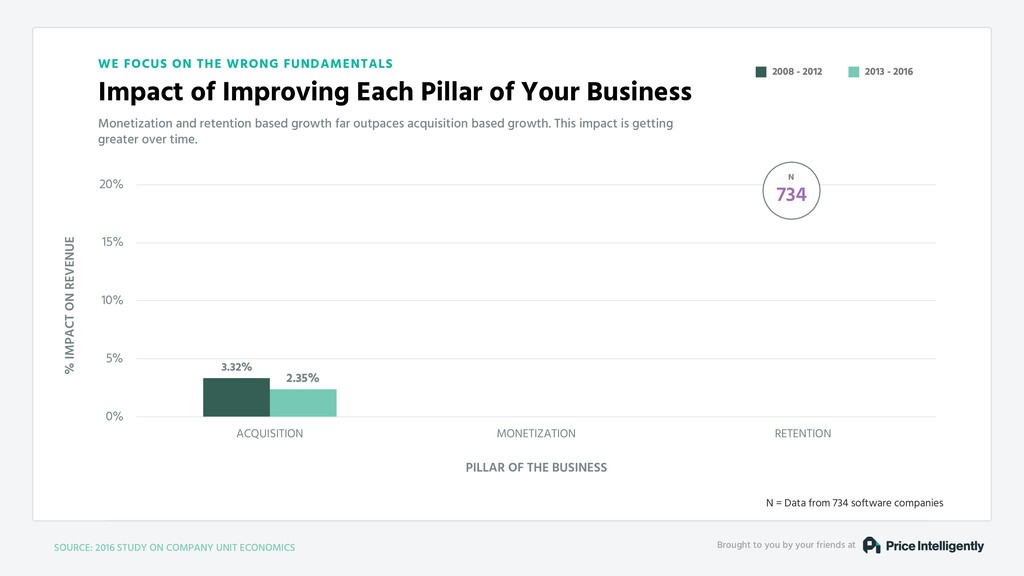
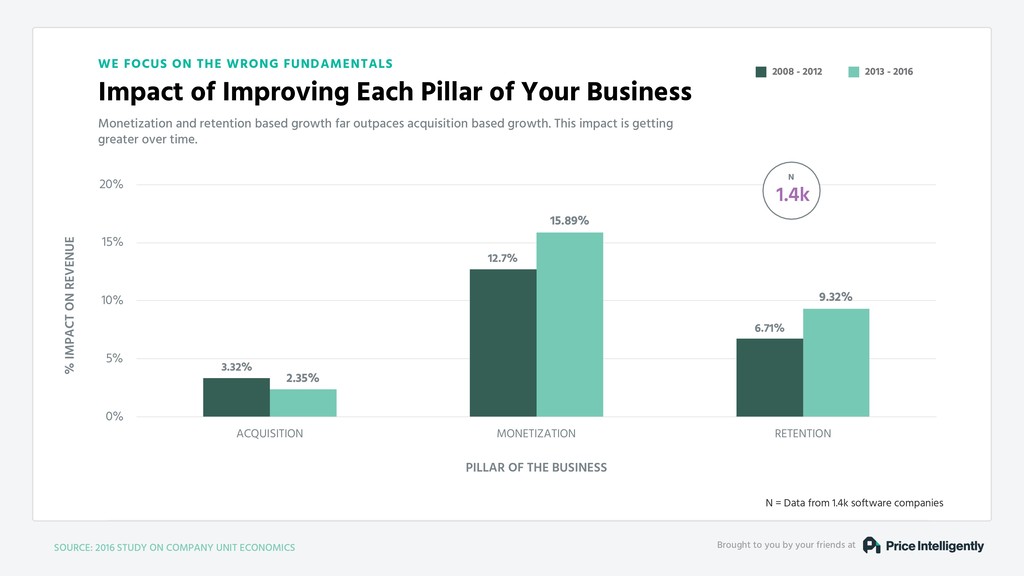
Now what's interesting is that when you actually look at the data, what we found is that the actual value of these different levers is completely inverted from where we actually value them. So to give you a perspective, if you improve your acquisition by one percent, meaning you improve your conversion rate or you improve your net new leads by about one percent, you can expect to see a three percent boost in your bottom line, at least that was five or so years ago.
And now that same one percent is only giving you about two percent in your bottom line. So it's not gonna get to zero, but basically you're looking at a world where you just need to acquire customers at a good rate just to survive.
Now if you look at that same one percent improvement in your monetization, which is your ARPU essentially, or your retention, which is your churn, all of a sudden we're looking at a world where you're looking at four to eight x the impact. But if you remember, we're spending all of our time over here.
And again, you need to acquire customers. I'm not saying you don't need to acquire customers, but the simple fact is in order to grow actually in the future, you have to spend some time over there. Most of us really aren't taking those other two growth levers that seriously.
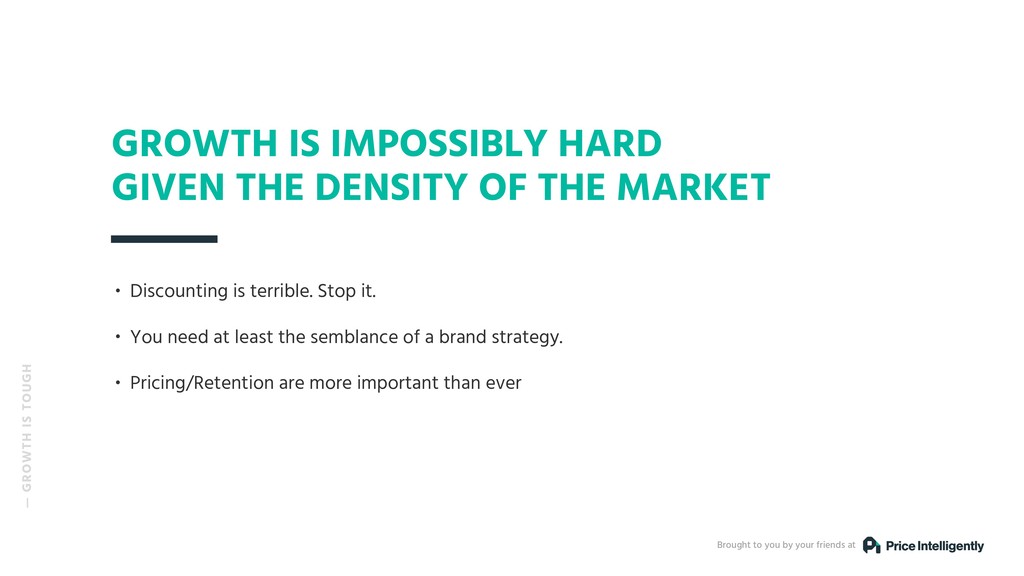
So to wrap up this section here, discounting is terrible. Do it minimally. You need at least the semblance of a brand strategy. It doesn't need to be something dramatic. And gotta focus a little more time on your monetization and your retention. And to kinda wrap up, just in general, the big thing here, and this is what I really encourage you to really think about within your business, is that these fundamentals, thinking about where the data actually indicates even in your business or just in building a business in general where
growth comes from, those are so much more important than every little growth tactic or every little growth piece that you see within your industries, mainly because those fundamentals are really what's gonna make sure that you're compounding that growth over time. But sadly, all of this was deaf ears on some folks.
Right? A lot of you aren't going to do this. Right? We've all heard talks. I'm not the first one to bring some of this stuff up. A lot of this data is the first time you're probably seeing this. A lot of this data is the first time we're publishing this publicly.
But a lot of you are gonna go back to this. Because this is easy. Right? It's easy to listen to that podcast, tell someone to do something, run a little bit of a marketing tactic. But at the end of the day, remember, those tactics weren't what got those folks to success.
And frankly, a lot of this breaks my heart because a lot of you have so much in your businesses right now and you have such high potential within this world of tech and this world of just online, basically commerce, that you don't need any growth tactic or any growth just lightning in a bottle.
You can just focus on those fundamentals to actually succeed. So with that, that's my email address. The slides will be shared. If I made you too depressed emailing me, I'll I'll give you a lot of the answers that we weren't able to go through on like how to fix some of this stuff.
But I really appreciate the time. I love sharing this type of data. And again, hopefully you didn't feel too terrible. Lunch is happening, so that should hopefully help. Right? But appreciate it. I'll be around the whole conference. So we'll see you.