Building a product customers love is getting harder, not easier. Markets are saturated with direct competitors, the perceived value of any given feature is trending toward zero, and acquisition costs keep climbing - yet most teams stay obsessed with chasing new logos while barely talking to the people they're building for.
Patrick Campbell argues the era of throwing things at the wall is over, and the fix is getting back to customer development. He walks through how ProfitWell quantified its buyer personas in about twelve hours - using tight, well-designed surveys, relative-preference questions and price-sensitivity analysis - to discover what different buyers valued, what they'd pay, and ultimately which product to build and give away for free.
1 / 87 Use ← → to navigate
Auto-generated transcript - may contain errors.
Tap a timestamp to jump the video.
The big thing that we want to talk about today, at least on my end here, particularly given the topic. Or first, just housekeeping. If you want to get the slides, we're gonna go pretty quickly. There's a ton of data that we're gonna share as well.
So you can download the slides here. Or if you have any trouble with that link, you can send me an email at patrickpriceintelligently dot com. But the big topic that I want to talk about today, given the day and the introduction around pricing in particular, is this whole idea that building a really good product is getting harder, not easier.
And it's gonna get harder and harder as we continue to move along in the software and even the non software life cycle. And to put this a little bit more bluntly, the age of throwing **** up against the wall and seeing what sticks, is over.
And I don't mean this from a perspective of like it's harder to build a particular feature in your business. I mean this more from the perspective of building really good product that customers love. But to give you a little bit background on who the heck am I to make a statement like this.
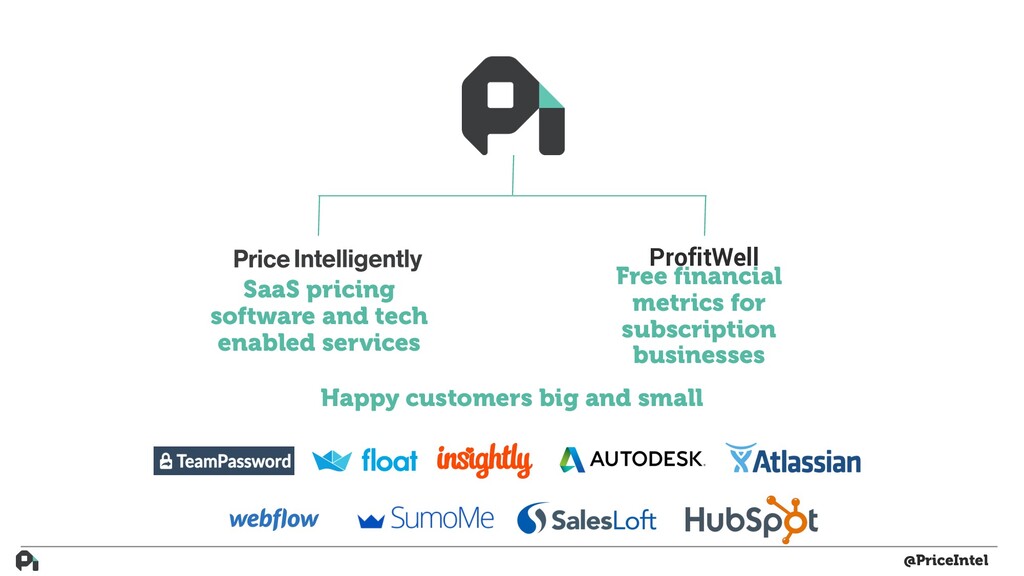
Brian kind of alluded to it, but we have two pieces of software. One is a suite of pricing software. So this is software that we actually help other software companies essentially make more money through pricing. And then the other is ProfitWell, which we'll talk about in a little bit.
But it's essentially free subscription metrics that plugs right into your billing system. And we help some fun companies here. Float, is Colin here? Colin? Maybe? No? Oh, there he is. In his Float t shirt. Yeah. Colin was one of our first beta customers on ProfitWell, so we'll talk a lot of **** about ProfitWell in a bit.
But what's interesting is that given all this data, we have about three thousand five hundred companies on ProfitWell right now, all in the SaaS and software space. We've essentially seen inside more SaaS and software companies from a financial perspective than anyone else out there.
And it's given us a really, really interesting perspective. And to dig into this thesis around basically that software production is getting harder. The first part of the presentation, unfortunately, is gonna make us all feel bad. Including ourselves. Mainly because we're gonna go through a lot of market data, as well as some individualistic data that just doesn't make a really good case for, hey, this is all gonna go really, really well into the future in terms of software.
But then in the second half, we're gonna build everyone back up and basically work to how we can solve some of the problems. So let's dig in first and look at some market data. So the first set of data that we're gonna look at is the idea that the market is becoming really, really saturated.
So it used to be ten years ago you could go and solve a particular problem, particularly in software. Like building marketing analytics like Crazy Egg, or even building something like Dropbox. And you were the only company out there. But right now, because software has seemingly gotten easier and easier to build with the development of a lot of different DevOps products, all of a sudden we've run into a world where competition is pretty rampant.
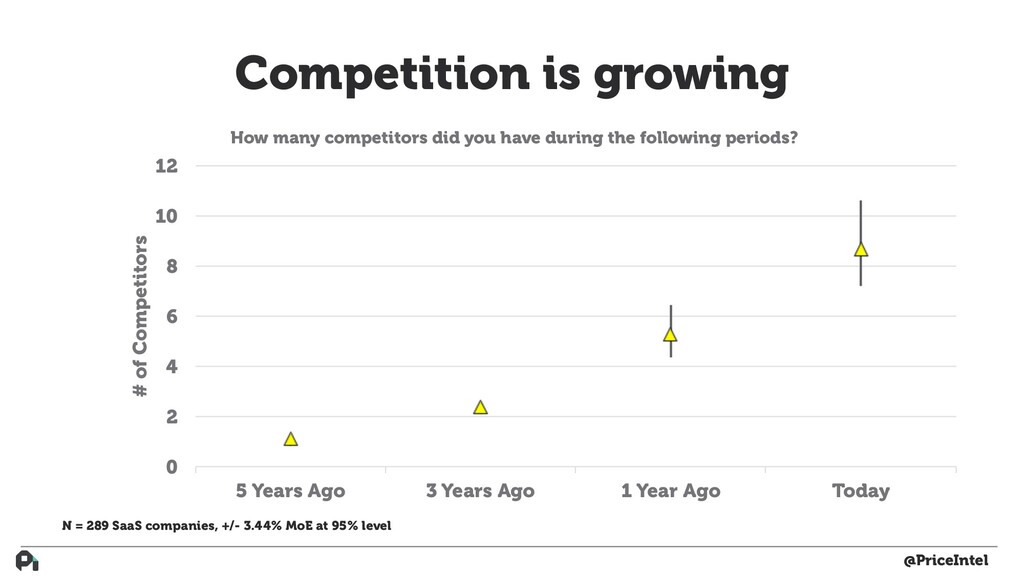
It's made switching costs for a lot of customers easier and easier. So the first set of data we're gonna look at here, is we looked at just under three hundred founders who've been around for about five years. And we basically asked them, how many competitors did you have five years ago, four years ago, three years ago, and then today?
And what we found is that most of them really started off with very, very few competitors, even five years ago. And then today, all of a sudden, just rampant with competition. Now, what's fascinating about this is you might say, well, hey, if they were successful, they invited a lot of competition.
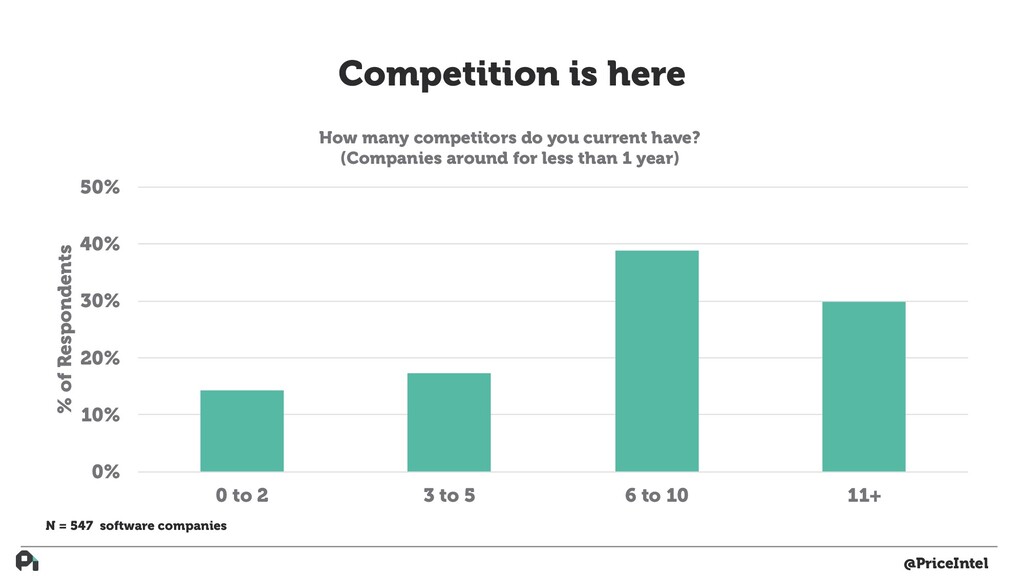
But even if we look at companies that have only been around for about a year, this is about five hundred and fifty companies, all of a sudden you'll notice that the majority of them have six or more competitors. And we're not talking about tangential competitors, we're talking about direct competitors.
So basically, hey, you have a product and it's basically the same type of product, maybe a little little bit different. Now what's interesting about this is that if we look at the value of features, and we're little bit ahead, but what we're finding here is that the relative value of features from a customer's perspective is also trending towards zero.
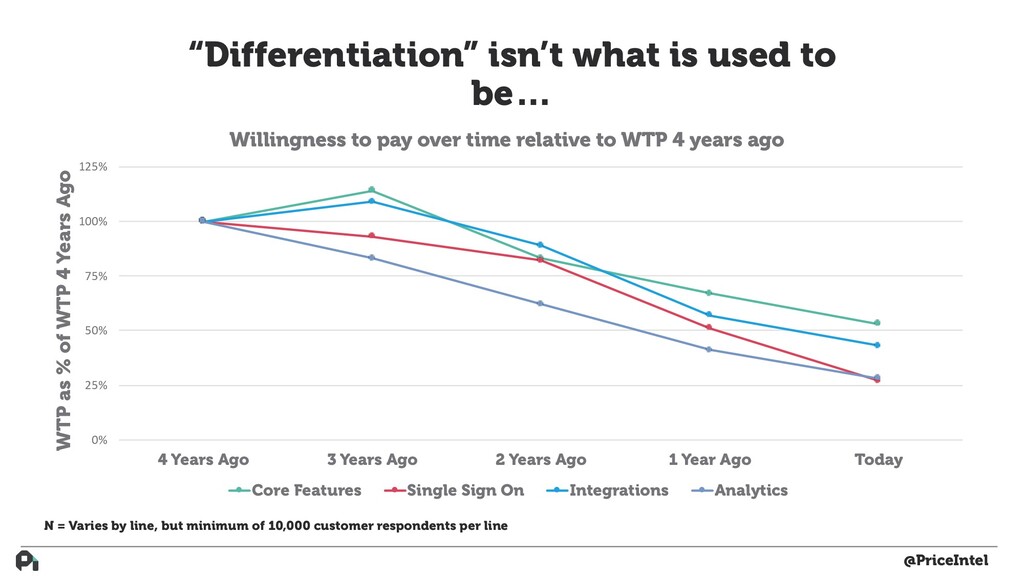
And so what I mean by that is what we did is we used our software around willingness to pay. We actually looked at different types of features, including core features for a particular company. And we compared and contrast that willingness to pay four years ago, three years ago, two years ago, and then today.
And what we found is is that the actual value from an end customer perspective, so from your individual customers, their value for a particular feature or even for software four years ago was so much higher than it is today. And this should feel intuitive. Right?
Everyone out there, now everyone has integrations. They have analytics. They have different pieces of their product that they've kind of worked on to basically make themselves have parity in the market. And with all types of different competitors out there, all of a sudden, the value of a lot of our software is getting less and less from the customer's perspective.
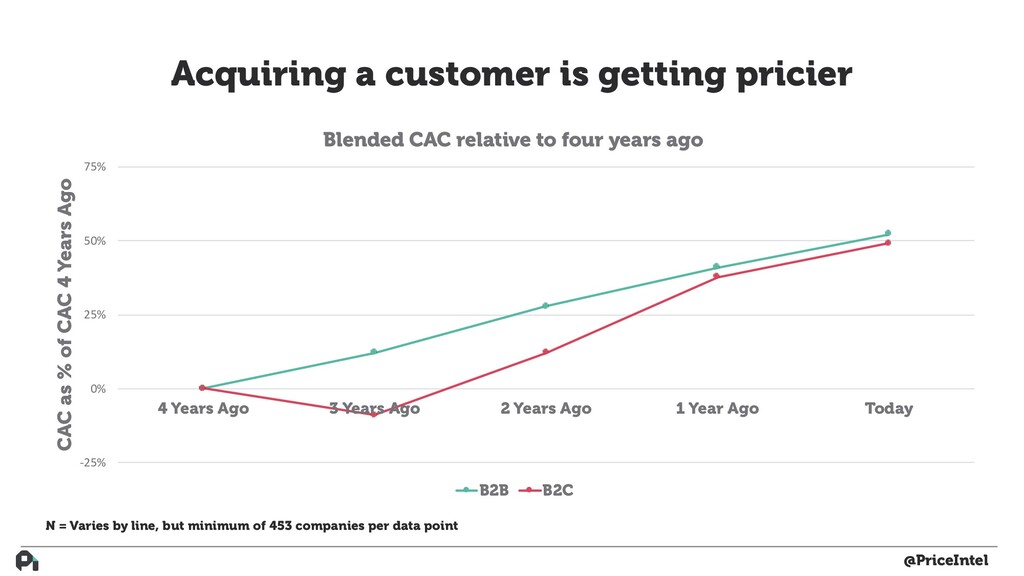
And what's interesting about this, is if we go even further here, we've also find that CAC is increasing over time. So for those of you who don't know, CAC stands for customer acquisition cost. It's essentially the cost to acquire a particular customer. And what's kind of fascinating about CAC is that for both b to b and b to c companies over the past four years, relative CAC continues to increase.
Now, what's interesting about this is this should also feel intuitive. Everyone and their mother has an e book now. Right? Everyone's running Facebook ads. Everyone's running AdWords campaigns. It's becoming more and more expensive out there to basically run a business. And ultimately, what's interesting is that in the context of competition, as well as the relative value of features, what we're basically finding is is that this is a great opportunity for good software.
Right? If you have really good customer driven software that customers love, as we learned in some of the other presentations, you have a really really good opportunity to kind of own your particular market. But, what's interesting, or unfortunate, is that another set of data, more on an individual level, shows that we are very, very ill equipped for this transition.
And what I mean by that is, we don't really know our buyers. So I might basically fail here, given the actual room and who's in here. But for a show of hands, how many of you have buyer personas in your business? K. I'm gonna say half, just to be generous.
Keep your hands up just for a second. Now, of those who have buyer personas in their business, how many of you have a central document that the entire team can access to look at those buyer personas? Cool. We lost a few. That's okay.
How many of you have your unit economics? Your CAC, your LTV, different channels, those types of things for each of those buyer personas in that document? Okay. We lost. We got one. Anyone else? Alright. Do you have willingness to pay data for your buyers?
Willingness to pay, like what their willingness to pay for the product is? Okay. Do you have, hey, what features do they like best? What features do they not like best? You have that sense of? Okay. We should all hang out with her. She's got this information down.
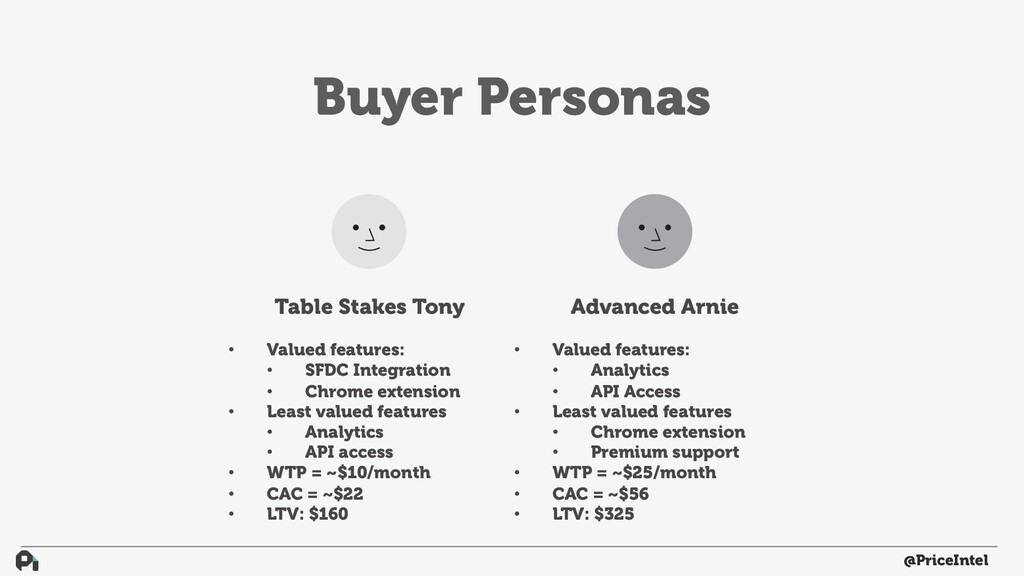
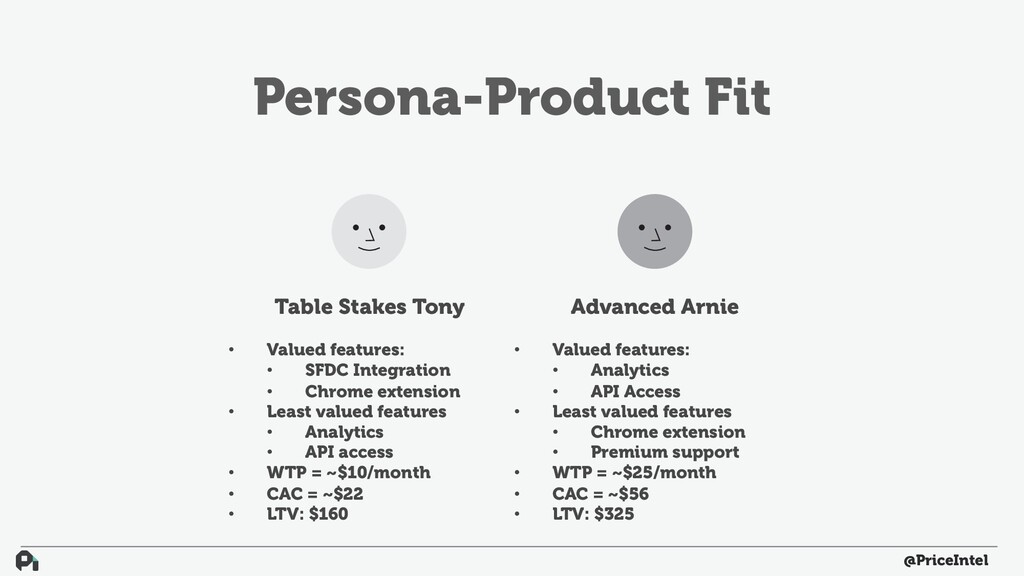
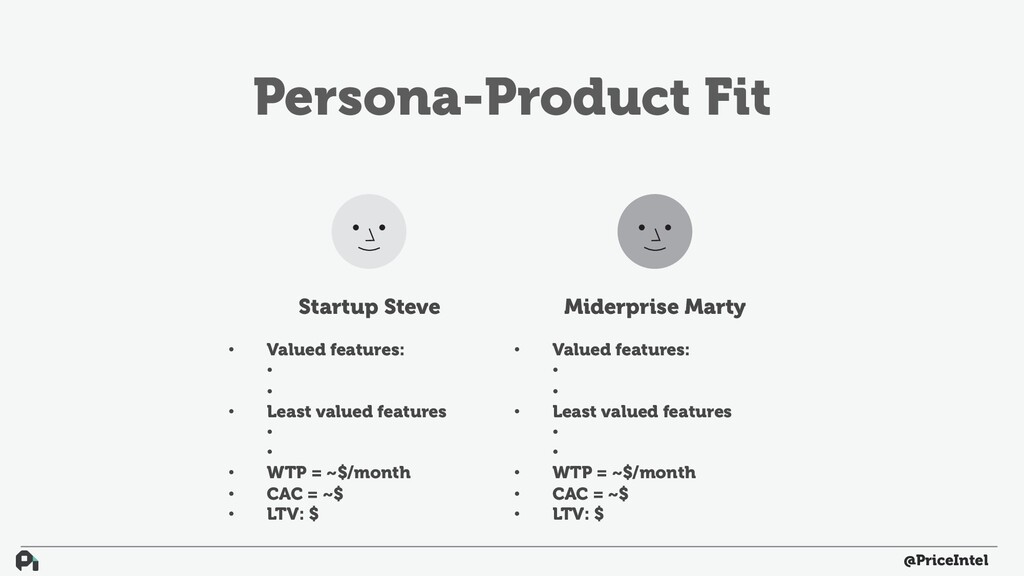
But when we talk about buyer personas, we're talking about something that looks like this. And ideally, it should look even deeper than this. You can still have your cute name that HubSpot and Marketo talked about ten years ago in the nice little avatar.
But we're actually talking about you intimately knowing Well, maybe not intimately knowing your buyers, but you knowing your buyers on a very, very granular level. And what that means is you know what features they like most, what features they like least, what their willingness to pay looks like, you have your unit economics for your different buyers.
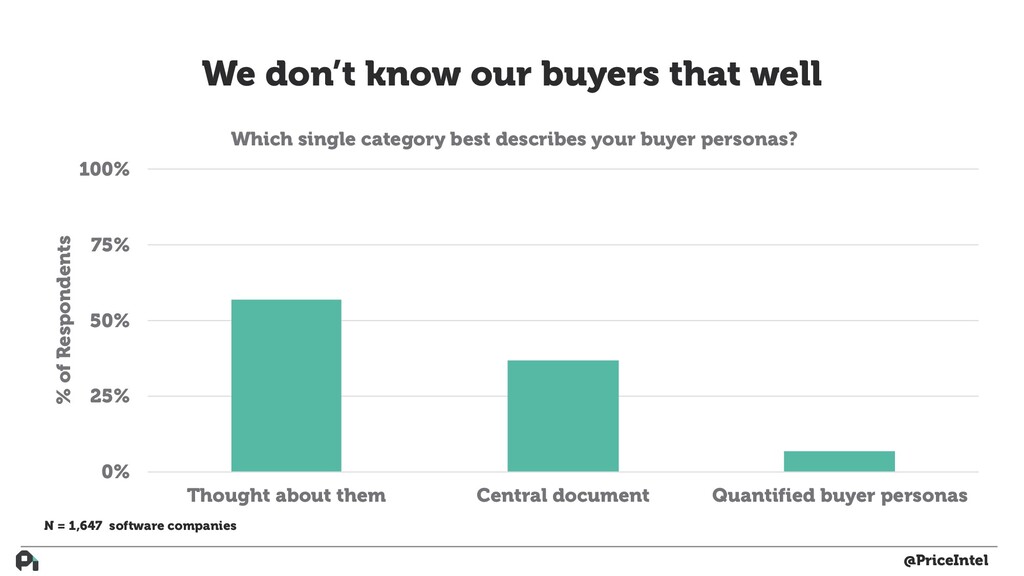
What's funny, as we kinda saw in this room, is that most of us, we've at least thought about them. Right? Everyone's thought about their customers. But very, very few of us have some sort of central document. And then even very, very few of us have quantified buyer personas.
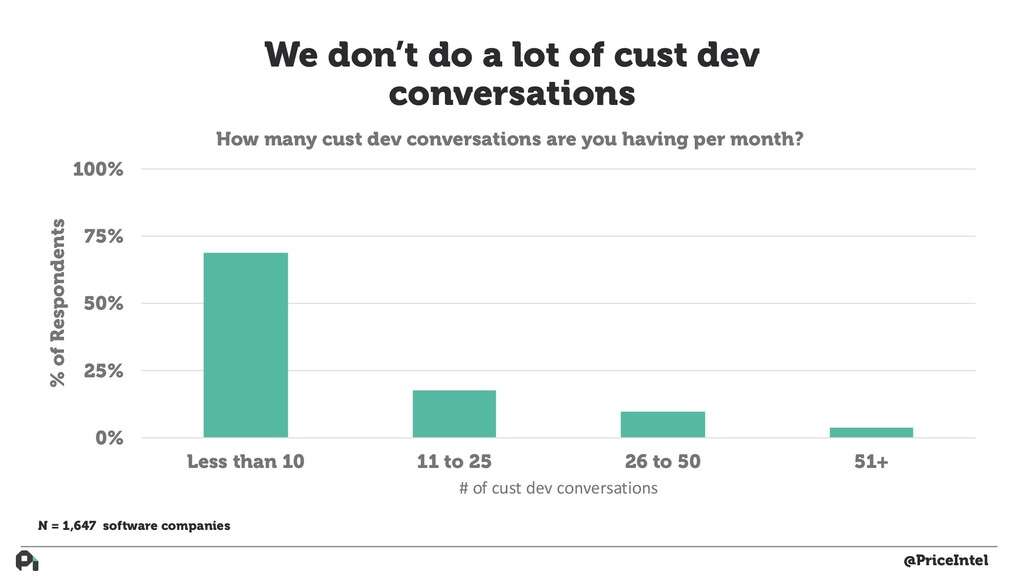
And when we dug into this data, what we found is we asked a lot of product folks, lot of marketers, a lot of founders, and we asked, well why isn't this happening? So we asked a few extra questions. The first thing that we asked is, how many customer development conversations you were having per month with your target personas?
Not a lot. Clickers, little It's the common joke of the day, I guess. So what we found is that most folks are talking to less than ten buyers per month. To give you some context on this list of, I think it's sixteen hundred, sixteen hundred or so software companies, there are Fortune five hundred companies in this list.
There are just new startups in this list. There's B2B, B2C. But what this is basically saying is that there are a few Fortune five hundred companies who are talking to less than ten people in a customer development capacity per month. And we hear a lot of excuses then when we show this data to a lot of folks.
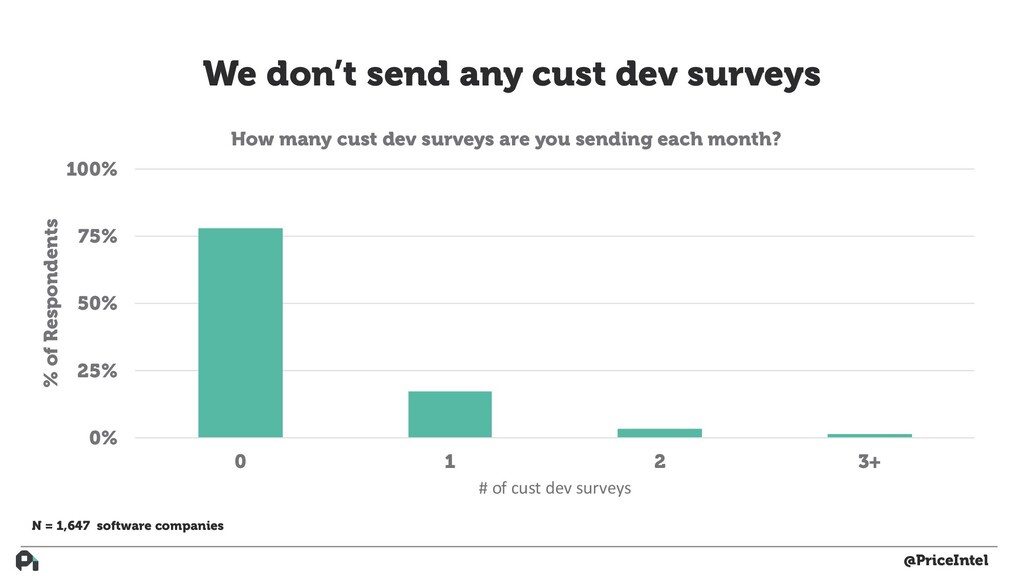
They say, well, we don't really talk to our buyers, but we do surveys. Not a lot of people do surveys. Most people are running no surveys each month. Very, very small percentage of people are running one survey. And we'll talk about surveys in a bit, but surveys are the most wrongly used, or incorrectly used, but most powerful tools that you can use in your business.
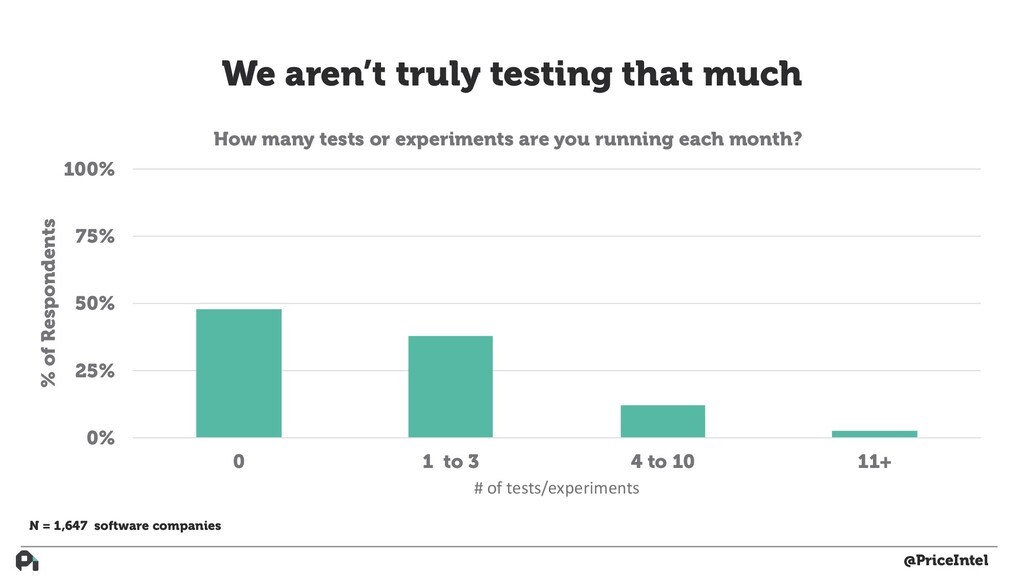
We'll talk about those in a bit. But then the other excuse we have, particularly from the growth hacking crowd is, well we don't talk to buyers, and we don't really do surveys, but we run a lot of experiments. We do a lot of AB tests.
Nope. Most people aren't running that many tests, and this includes marketing experiments. That should blow your mind. Like, we're not even running more than a couple marketing experiments per month. And so what's amazing about this is that when you look at your businesses, a lot of times, a lot of us are so focused on acquisition.
We become so obsessed with acquisition. And what's fascinating is a lot of the data shows that we're not really focusing on our buyers. We saw that not a lot of us have quantified buyer personas. And the reason, I believe the lurking variable here is how obsessed we are with acquisition in terms of the only lever of growth that we have.
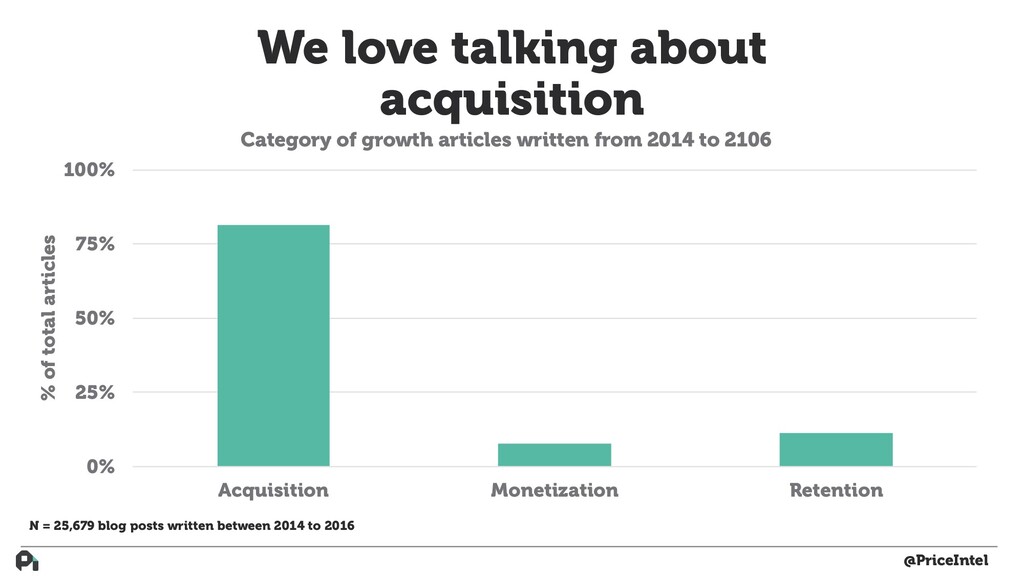
So what's fascinating is we wanted to prove this out. And so what we did is we did a little bit of an anthropological study on blog posts. Looked about twenty six thousand different blog posts, all of them on growth. We basically coded those into three different buckets.
Acquisition, monetization, and retention. And we found, unsurprisingly, that the lion's share of them were written on acquisition. So these were posts that were essentially written on, hey, five Facebook tactics for your Facebook ads. Lot of different things. And the reason we studied blog posts was because we write about the things that we know.
And then ultimately, we also write about things that get us more traffic. So if we write that Facebook post, and all of a sudden it gets us traffic, we're gonna write more and more about acquisition. And we thought, maybe this is just the nature of the companies that are being produced out there.
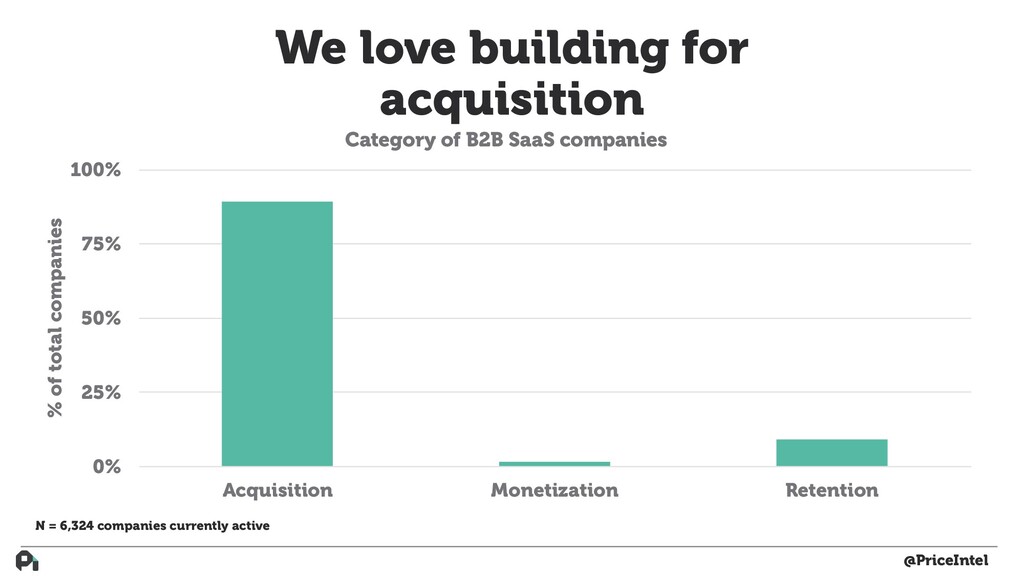
So we looked at six thousand b to b companies, and we coded them similarly. And we found that the trend was even worse. So about nine out of ten different companies out there are focusing, at least in the b to b space, on acquisition.
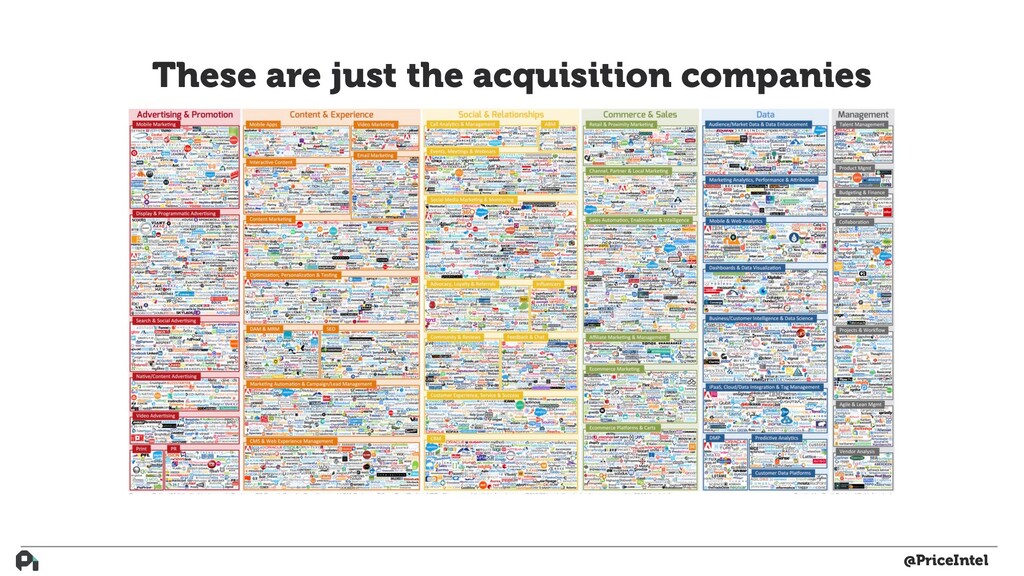
There's kind of like just under one out of ten companies out there that are focused on retention. And then there's like the saddest SaaS club in the world, us included. The company's focus on monetization. And what's cool about this is I wanted to do kind of a, hey, here's all the acquisition companies.
Here's the retention companies type slide. But this is the acquisition company. There's just a ton of them out there. And so we wanted to dig further. Know, this is a little bit of a self serving bias. There's a lot of b to b SaaS companies focused on acquisition.
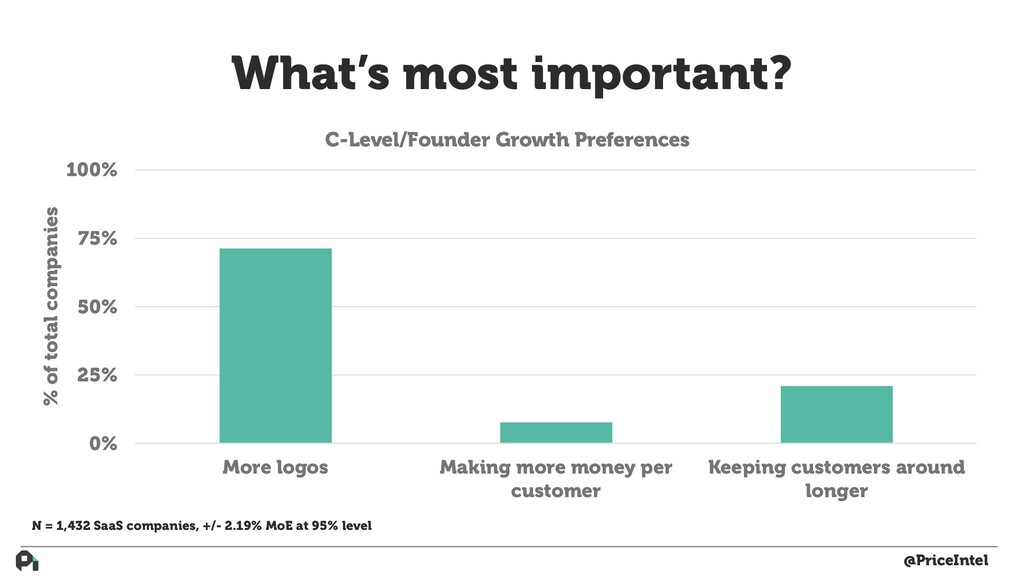
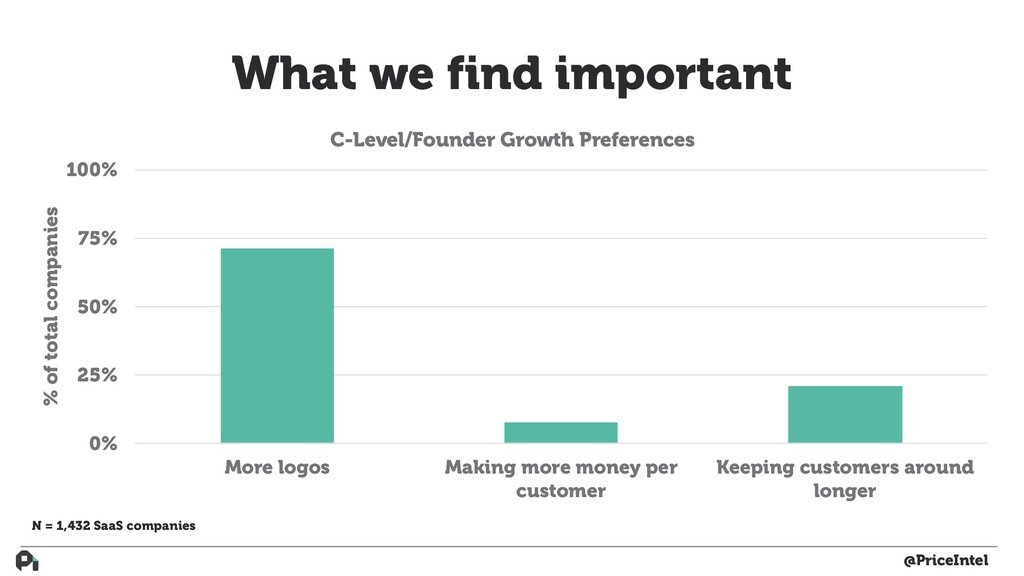
That's why they're writing so many posts. So we went out and asked you guys. Hey, what do you care about? All about them logos. Everyone loves new logos. We really, really want more logos. We do not give a **** how long they stay around, and we really don't care how much money we make on those customers.
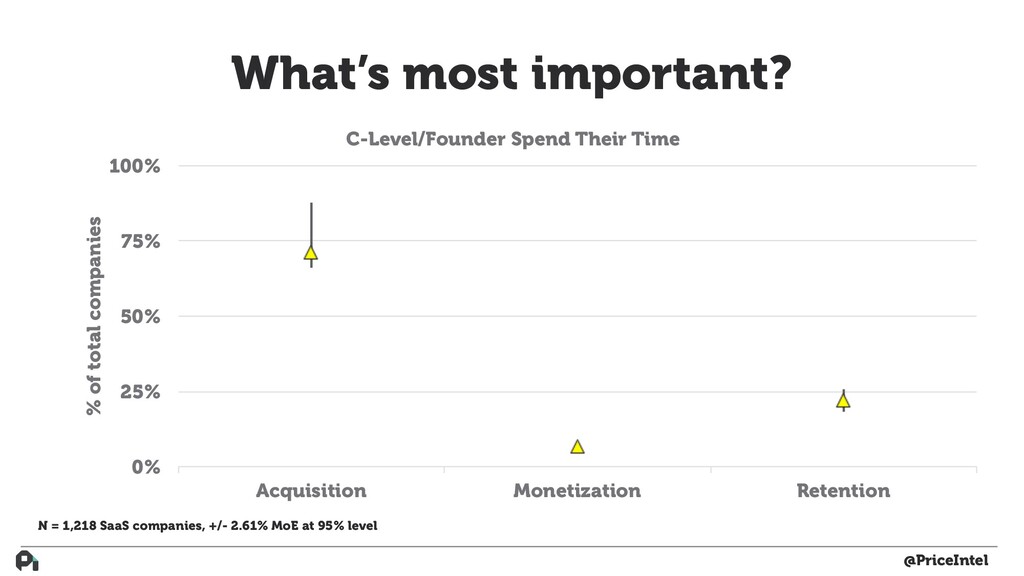
And what's funny about this is we thought, oh, we're forcing them to make a decision. Right? We're forcing them into one of these buckets. So we said, you had a hundred units of time, where would you put those hundred units of time? Acquisition.
I want more logos. Now, what's interesting about this is that we did another study and we said, alright. Maybe this is okay. Right? Maybe all this focus on acquisition is actually appropriate. Because maybe that's what's spurring growth. And so we compared those three different levers of acquisition, monetization, and retention.
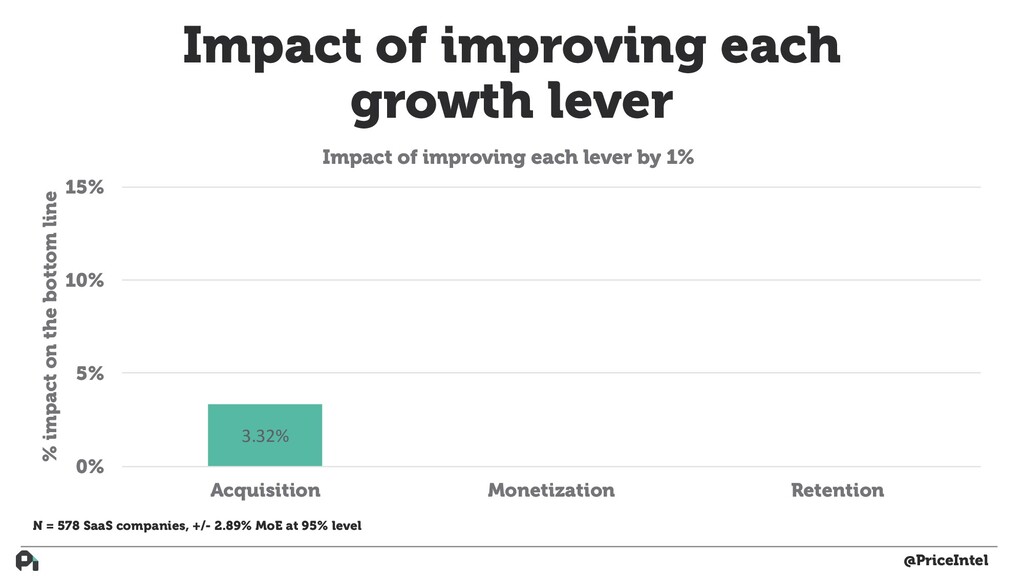
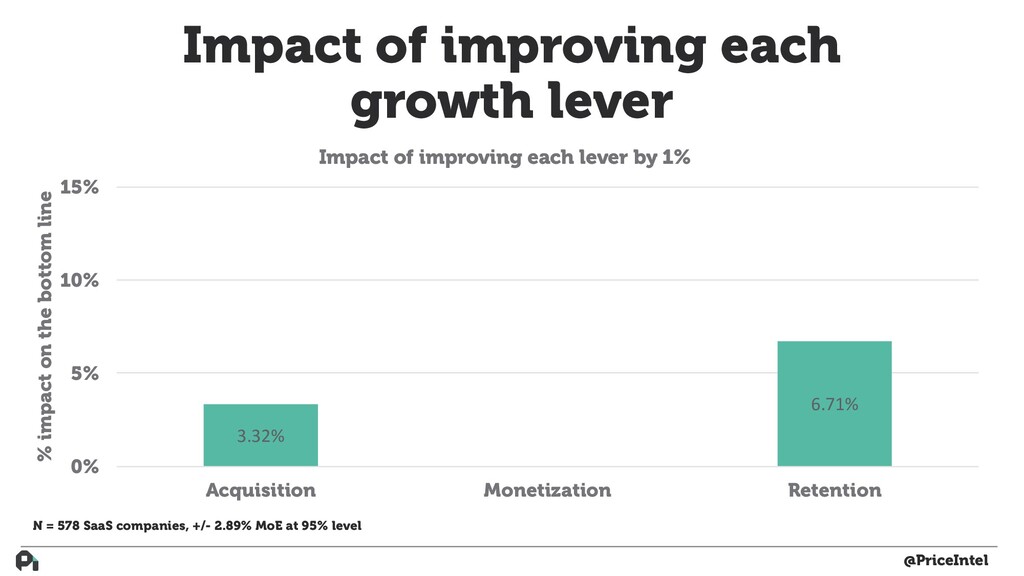
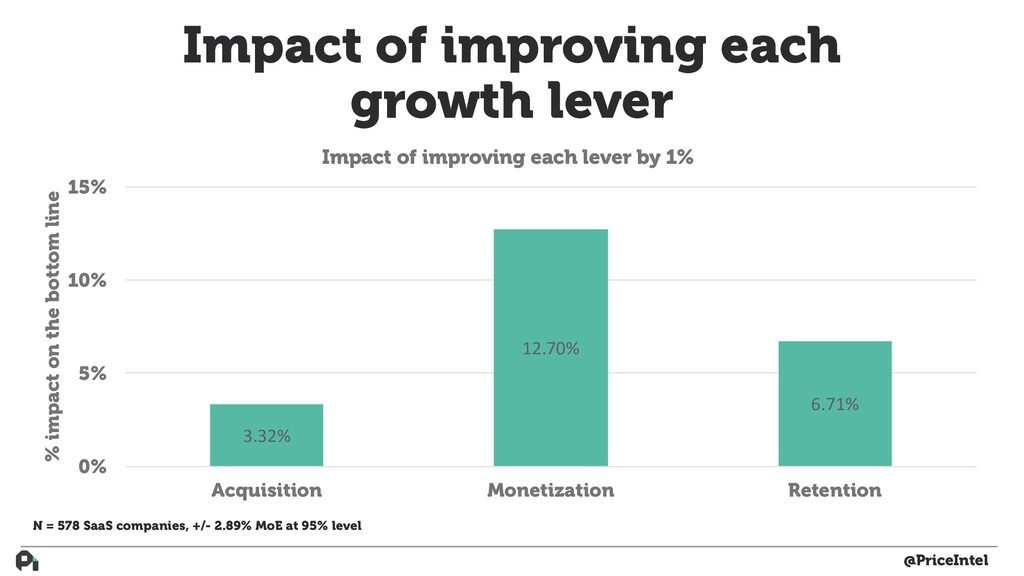
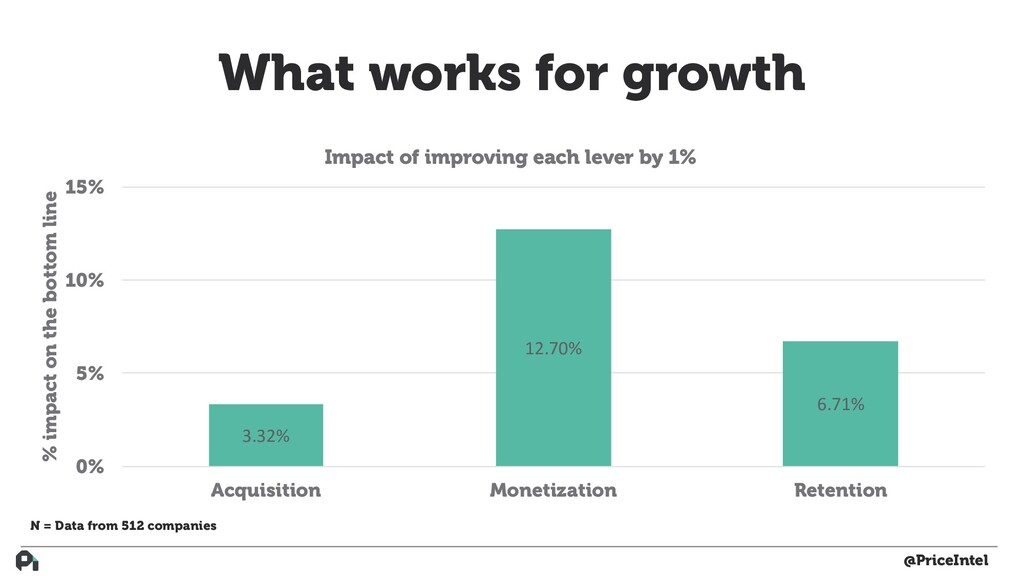
And we basically said, if we improve each of those by the same relative amount, what would be the impact on the bottom line? So if we improve conversion or the number of leads you have by let's say one percent, on average you're gonna see about a three percent boost in your bottom line.
It's not bad. Now if we improve your retention by reducing your overall gross churn or increasing your net retention by about one percent. You're gonna see just under a seven percent boost in your bottom line. And then if we improve our monetization by either just raising our price, add ons, basically raising your ARPU by about one percent, you'll see just under a thirteen percent boost in your bottom line.
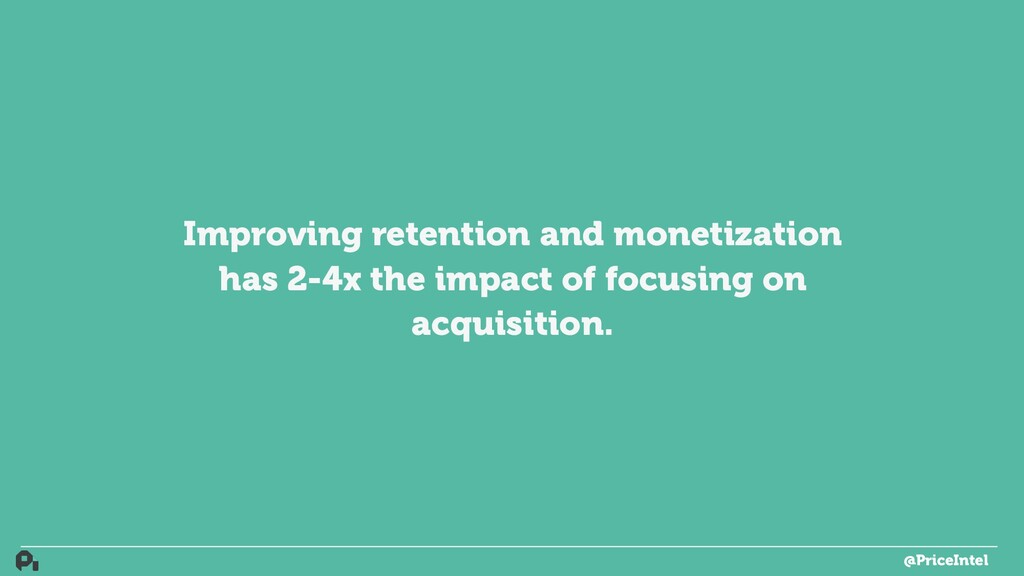
So the individual numbers aren't the important part here. The important part is is that if you improve your retention or your monetization, you're gonna see two to four x the impact on your bottom line than improving your acquisition. But again, that's what we care about.
That's what works. If I can get the clicker to work. Oh, no. This should be scary. Frankly, this should scare the **** out of you. Like it scares me because, you know, as as John was talking about and some of the other speakers, like, we're not in some ivory tower and we're doing this perfectly.
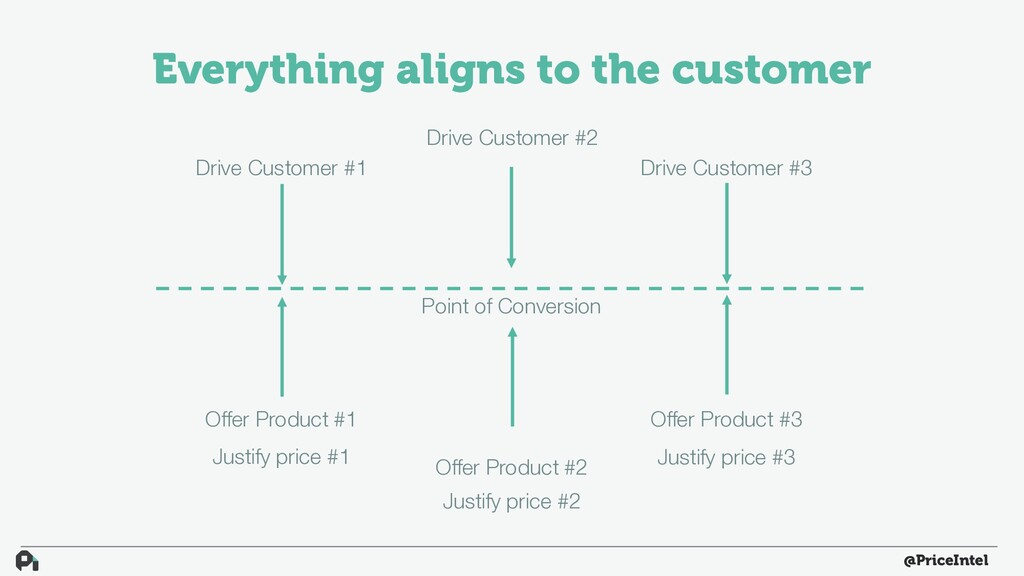
This is something that we need to work on as well. But the reason this should be so scary is because everything in your business starts with the customer. I'm not saying that as some blog post that's easily retweeted. I'm saying that in the fact that if you think about your business, everything that you do.
From your operations, your finance team, to your sales, and your marketing team, is used to drive a customer to a particular product, and to justify a particular price. So if you have no idea who the hell your customer is, you're running an inefficient business.
And you're running a business that is destined to fail. Because you're just gonna keep throwing **** up against the wall, whether it's acquisition ****, whether it's product, whatever it is, and just hoping enough of it sticks at the bottom of the funnel that you can stick around.
So how do we fix this? I promised I would make us all feel bad, including myself because I was making you feel bad. And how do we make this a little bit better? So what I'm about to show you is nothing here is revolutionary or new necessarily.
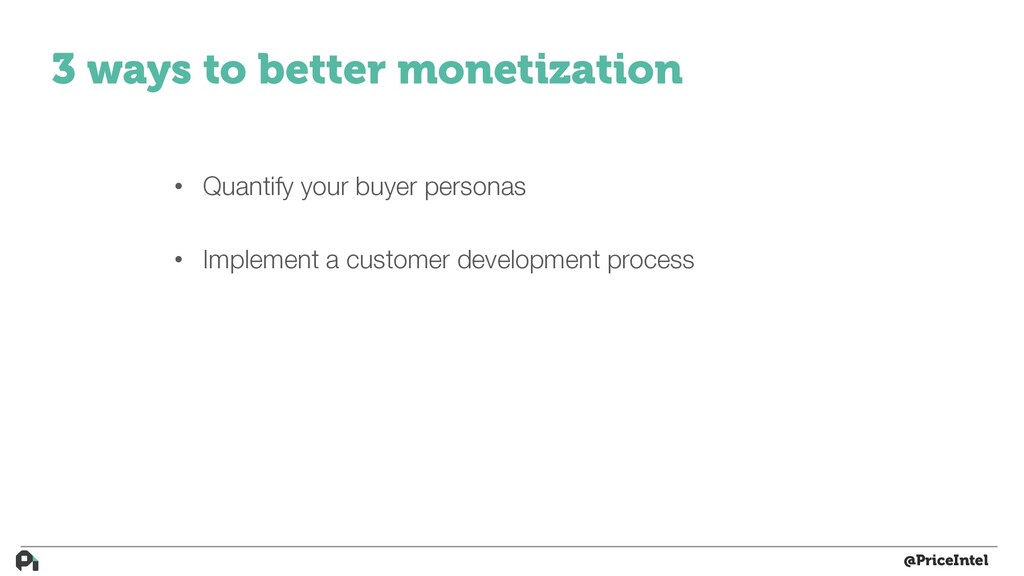
It's just getting back to the basics of your customer development. And the way that we can do that is first, quantifying your buyer personas. And then simply making sure that you have some sort of customer development and process in your business. And that means like literally just putting a number up on the whiteboard.
We have to talk to this many people in a non sales capacity per month. And just hitting that number and keep going. But we'll give you a few extra insights into that. And so what I mean by quantifying your buyer personas, is getting to some sort of visual representation of this.
Could be an Excel spreadsheet. Could be a Google doc. Could be anything. But just knowing who your buyers are, and knowing them on a quantifiable level. Rather than just shooting the **** in a boardroom and coming up with who you think you should target.
So the way that we're gonna do that, and the way that's so important is because as I said, if you don't know who you're very targeting with your product. You're gonna know what to build. You're not gonna know how to price. And ultimately you're not gonna know why you're in your actual business.
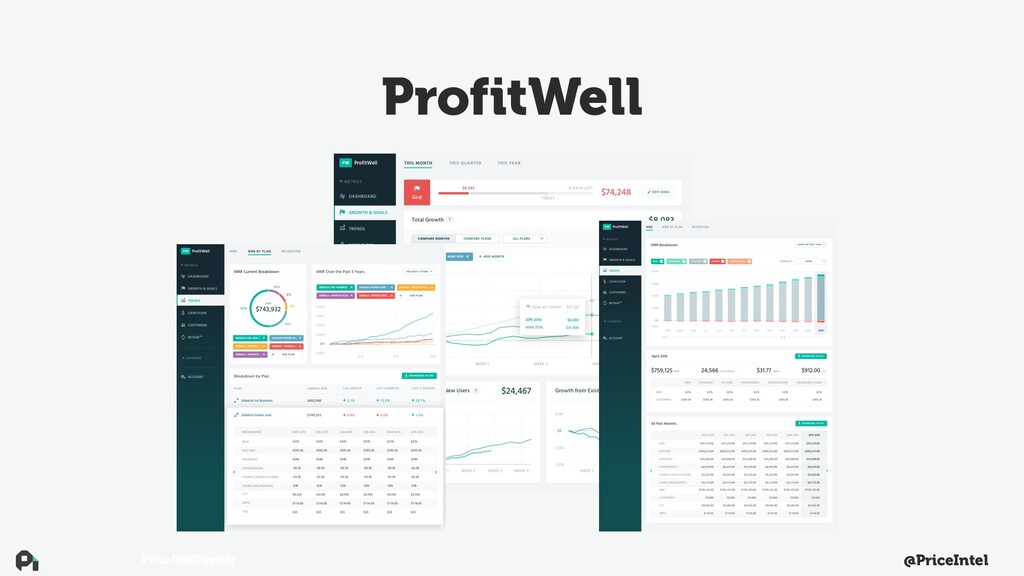
So let's walk through an example. And with this I wanna talk a little bit about ProfitWell. ProfitWell, as some of you might know, free subscription financial metrics for your billing system. The idea came out of a boardroom when we were helping a company that was about to IPO.
And we discovered about two years ago that they were calculating MRR incorrectly. So that should be a little shocking to you guys. A company that raised one hundred and fifty million dollars was about to IPO. CFO who had taken two companies public before, both in the subscription software space.
And they were calculating something that was so pivotal to their SaaS metrics, that all of a sudden it was It took us, a team of people working on their pricing, to discover hundreds of millions of dollars in missing money. And what was cool about it is when we discovered this, we were like, wait a minute.
This guy who is so experienced got this wrong, and we got it right? Like, were like, every SaaS company in the world needs this. Like, let's put our down payments on our Ferraris. This is gonna be awesome. We're gonna build a huge ******* business.
It's gonna be amazing. And so what we did is, we didn't put down payments on Ferraris. Don't worry. Is we went out and we found about ten customers, or ten users I should say. And we built a really really bad MVP. It was real basic.
Colin was on the MVP. I'm not gonna show how ****** it was. He can tell you how ****** it was. But basically, put this together and we had this group of ten that we just wanted to make happy. And so we were making them happy, making them happy, making them happy, doing everything that we could.
And then all of a sudden, were like, let's go get more users. Like, let's go do it. Let's go out into the market. Let's find some more people. Like, this is gonna skyrocket. It's gonna be amazing. I sent forty emails just from people that I basically figured out their email addresses, knew that they were on Stripe, because we launched with Stripe.
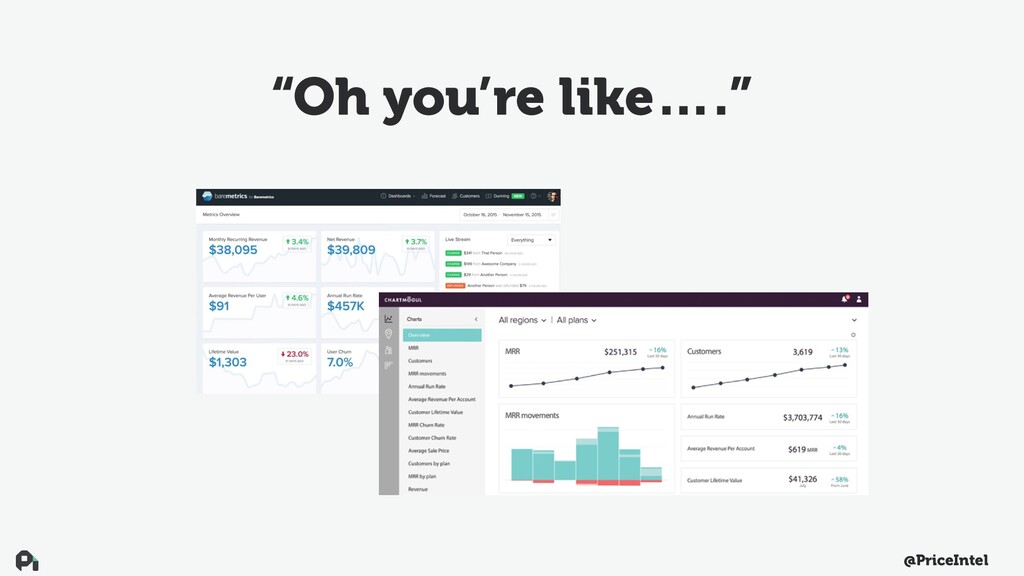
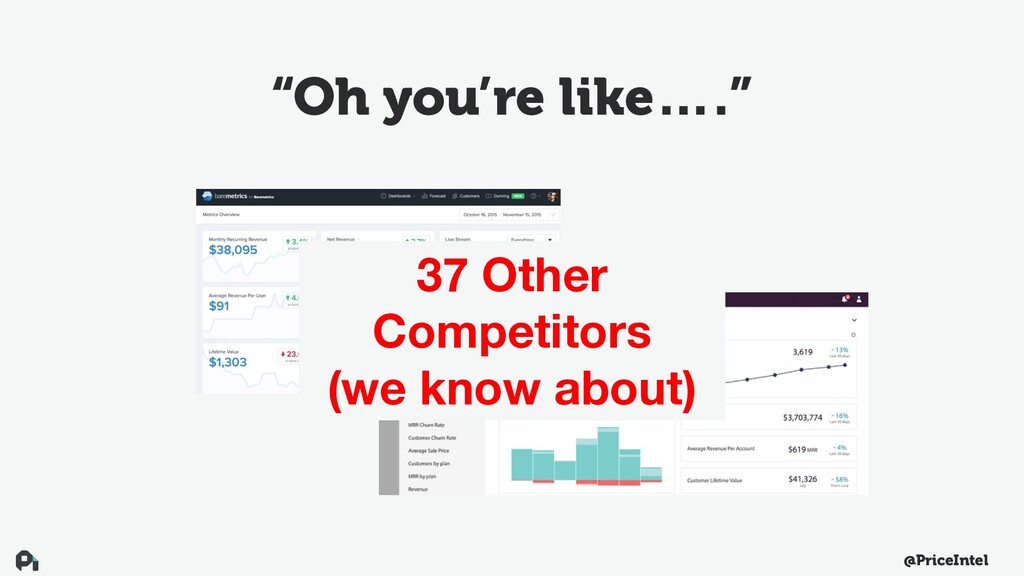
And the first five people to respond to me went, oh, you're like Barometrics. Oh, you're like what Chartmogul's trying to do. There are a couple of products that you guys might be familiar with. We were like, ****. Stopped subscribing to the Yacht magazine.
Stopped We didn't actually subscribe to a Yacht magazine. But we were like, oh man, someone else is in this market. Damn it. What we did is when we started looking at a lot of Google searches just to try to feel out what the market looked like, we found out there were thirty seven other competitors that we could find.
Not all of them were there two years ago, but there were plenty of other competitors out there even when we launched or tried to do a wider launch. And so we sat down and we were like, great. Should we stop working on this?
There's thirty seven other people, or at that time there were a couple dozen people working on this. And we were like, we should just stop. Maybe we should because people do need this. But all of a sudden, it's it's so competitive even in a very, very small space.
But before we did that, we stopped all product development. And what we did is we went back to our buyers. And we hadn't done a ton of the research up until then because we had an MVP. We knew that there was a need for it.
So we spent the time to build it. We put it out there in the market. And then we decided, alright, if we're gonna spend a ton of time building this, if we're gonna build a team around this particular product, we need to go back to our buyers.
And the first thing that we did is we went to our target customers. And that's how you're gonna get these quantified buyer personas. And I need to repeat it, for the love of God, go to your customers. This is the biggest thing to take away from this presentation.
Is that your customers, especially in this competitive world, are the only ones who are gonna be able to tell you what they want. And ultimately, only ones who are gonna obviously put down a credit card or an invoice or whatever to pay you.
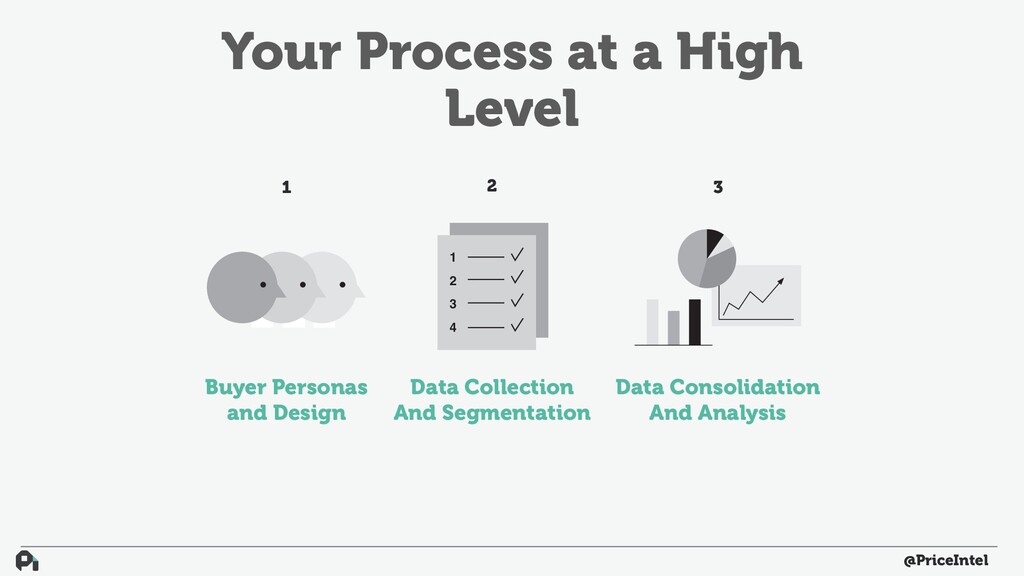
And the process that we used is not anything oh boy. Not anything rocket science y. We put together a basic idea of who our buyer personas were. Just a really, really rough sketch. We went out to those customers, collected data, consolidated that data, and then we just ran this process over and over again.
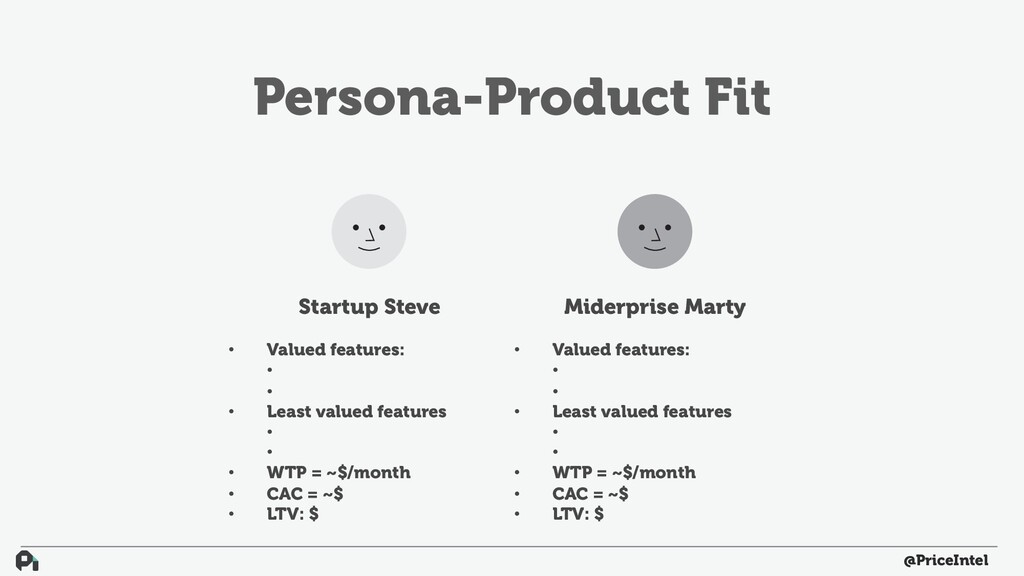
And so, in that initial conversation, we knew we had a certain archetype that we were gonna go after, or that we wanted to test out. And so we had about five, but we're only gonna talk about two right now. But this was the first step. We sat down for a half hour.
The people who had been working on the product, studying the market, talking to customers. We basically said, who are a couple of people? What do they look like? And then we filled in essentially what we thought the hypotheses around these gaps would look like.
And this is where a lot of you guys are. You have a basic idea. You've talked to these customers before. Some of you are much further along. And all of a sudden, you have a bit of a tableau of who you should be looking at.
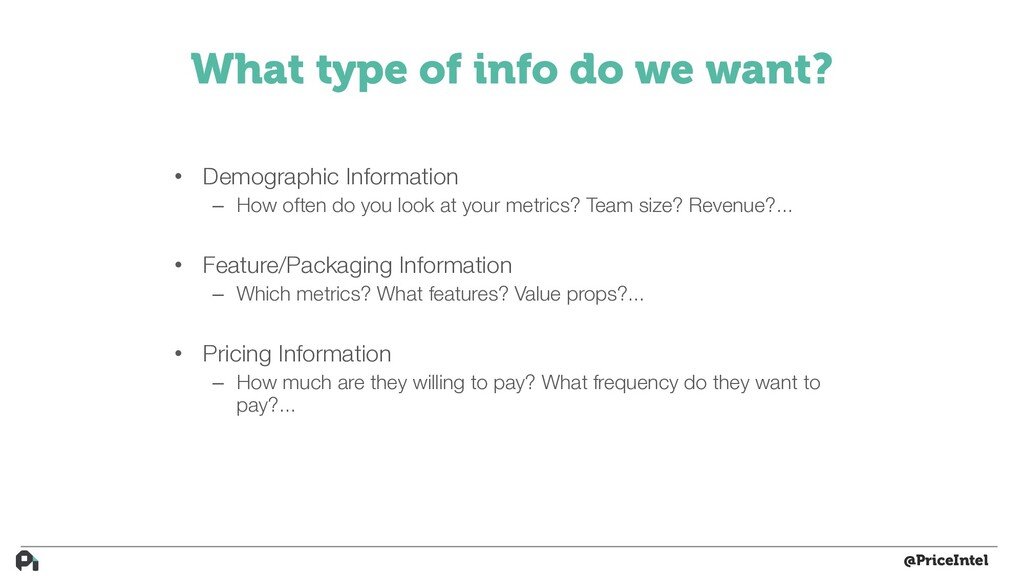
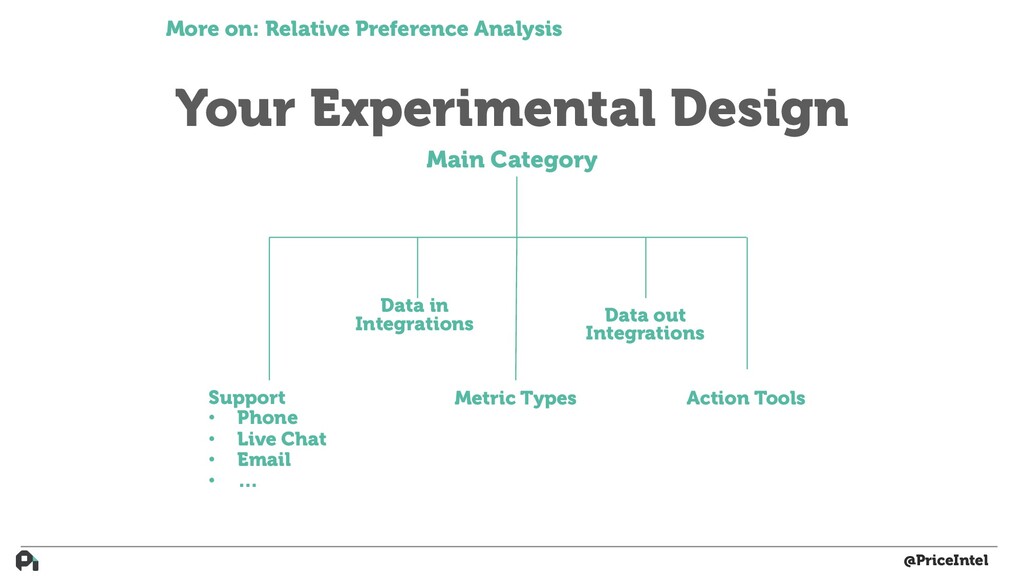
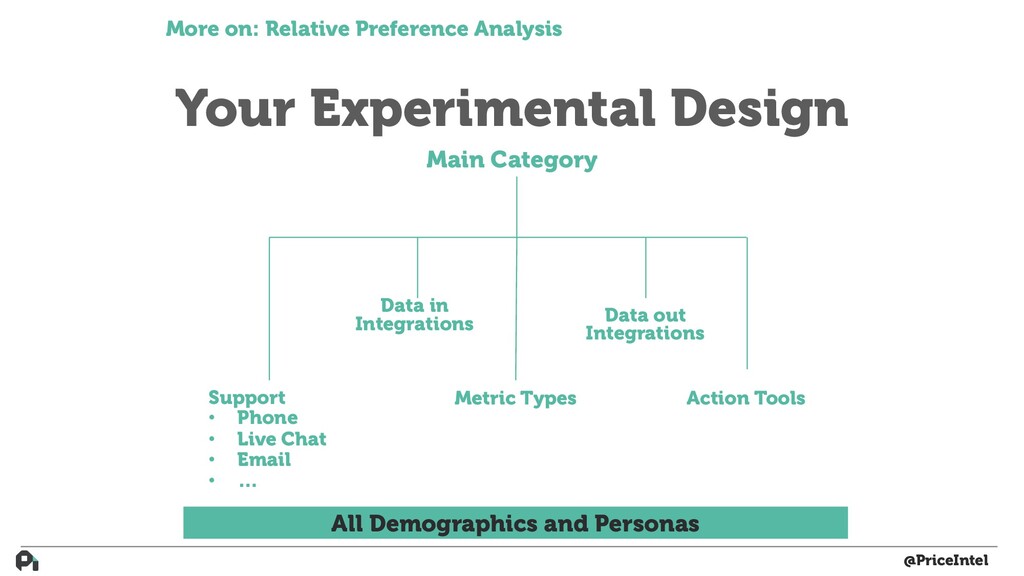
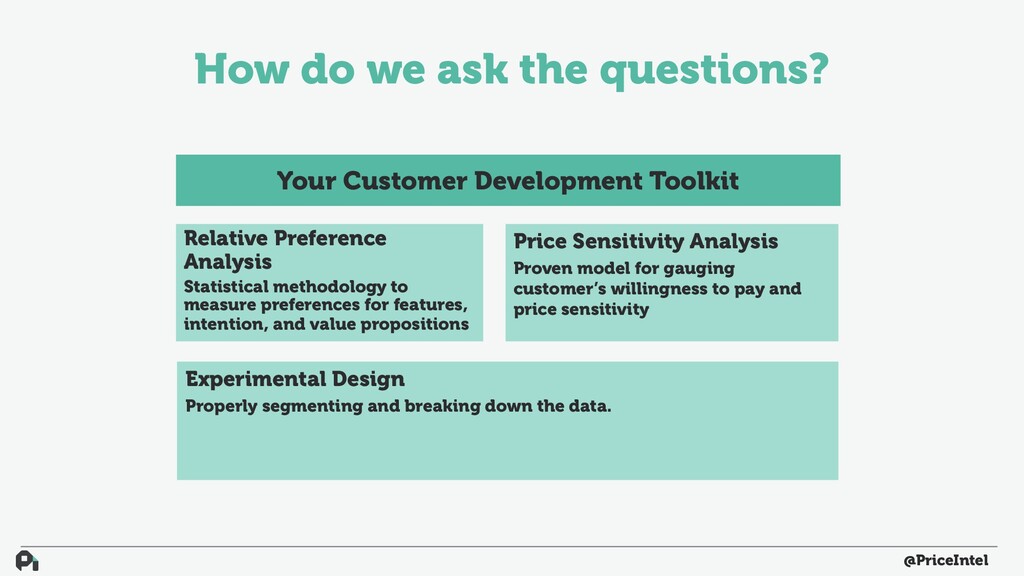
And so then what we did, is we set up an experimental design. So an experimental design is just a fancy phrase for what questions you're gonna ask to who. And they typically fall into three categories. The first one is demographic info. So for us, it was things like, how often do you care about these metrics?
What metrics do you care about? How big is your team? What's your ARR right now? Just things like that. For your business, they might be very different. If you're in a B2C environment, you wanna know age, income, those types of things. But in B2B, you typically wanna know what's going on with their team and what's going on with their company.
The second layer of data that we went after was feature and packaging information. So this is, do you want these types of metrics? What do you care about support? All the different things around features. And then ironically, some of the easiest data to get is around pricing.
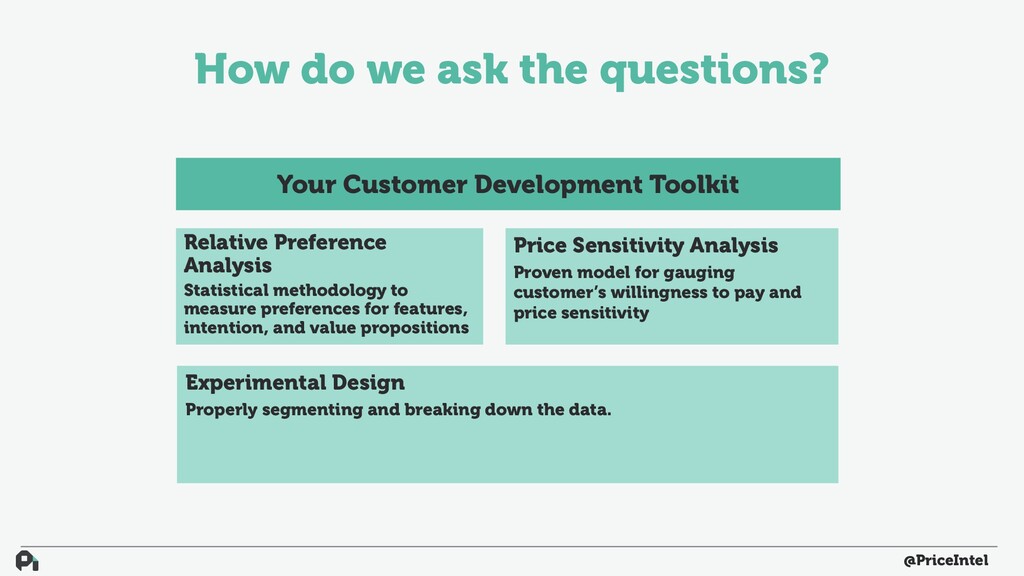
And the two tools we're gonna talk about today that everyone can use, you don't really need any software to use these two tools. The first is the relative preference analysis. And the second is price sensitivity analysis. And this helps you quantify who those buyers are as you go out and use, in this case, surveys to basically get this information.
And a quick note on surveys. All kinda hate surveys. Right? Is that a fair statement? Most of us hate surveys because most companies do surveys really, really poorly. So we've all received forty fifty question surveys that clearly had too much bloat when they were being put together.
But oftentimes, if you use surveys in a really really good capacity, and we're gonna show you how to do this. You can get answers that are just really really rich. And also can give you in a right direction. And that means first, not sending a survey that's over four minutes.
So we've sent about fifteen million surveys at this point. That's how our pricing software works. And we find that if any survey's over four minutes, you should just not even send it. That's like the actual taking time by an end user. And in addition to that, you should really limit it to five questions.
Nothing more than five questions. That gets the best response rate. In both of these tools, they use surveys to basically get the data that you need. So on the first step, what do people value? The second thing on surveys is the reason they mostly suck out there is because people ask the wrong questions.
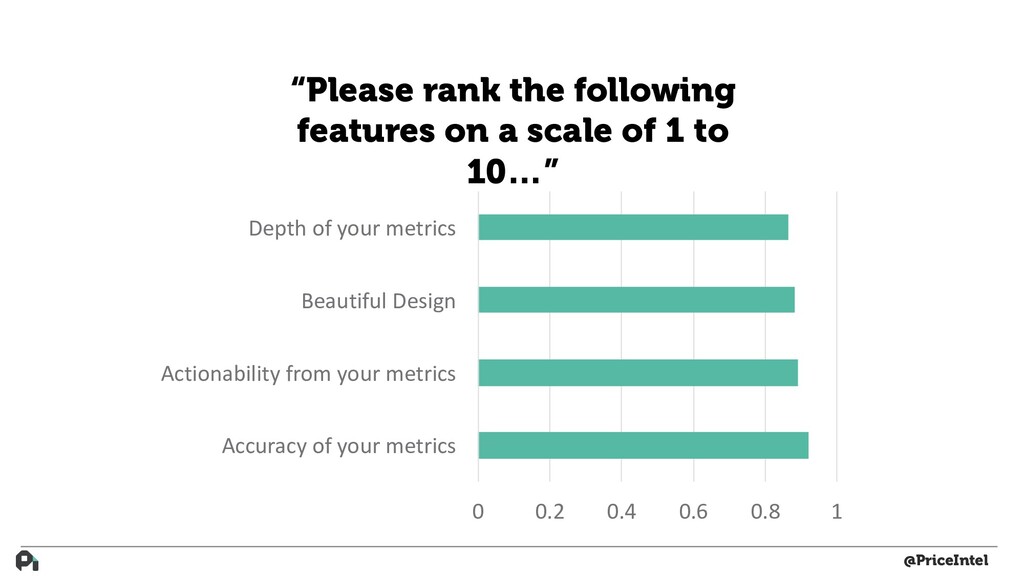
They ask questions that look like this. Out of these four features, or five features, or ten features, or however many features you wanna use, rate them on a scale of nine to ten. This is really bad. I don't know what's most important. I don't know what's least important.
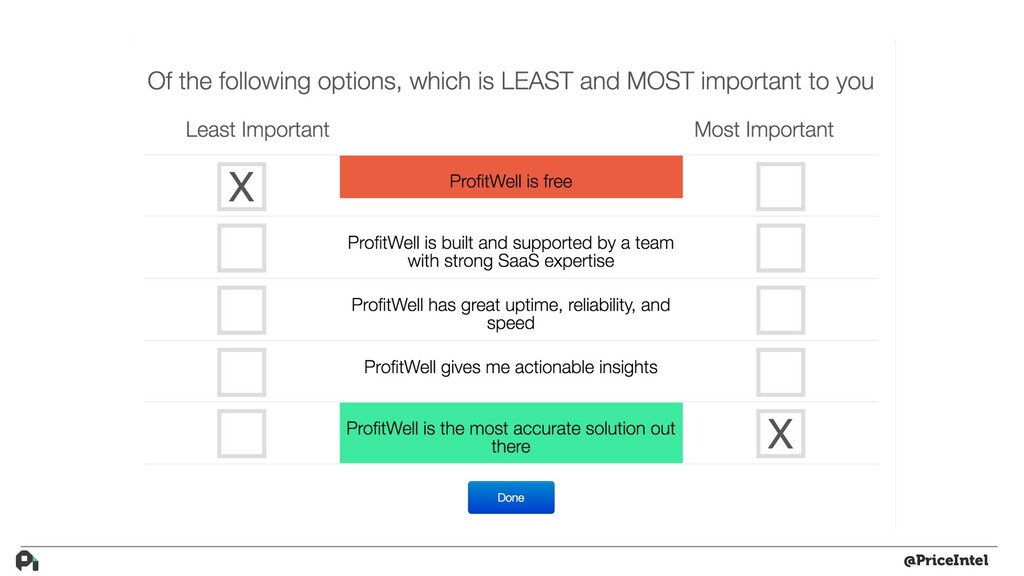
Like, I kinda have a rank order, but I don't really know. Right? And so the simple change that you're gonna make is not ask a question like this. And instead, you're gonna ask a question that looks like this. Of the following options, what's the most important?
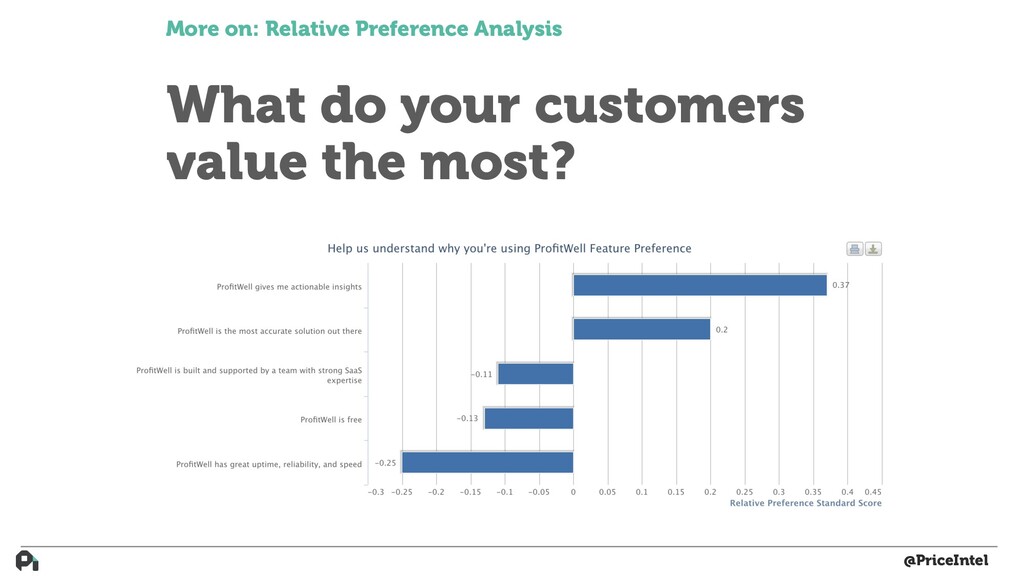
What's the least important? And the reason that this survey methodology is so powerful is that you force the respondent to make a decision. And it's one question. And all of a sudden, with that one question across a good group of people, you have output that looks like this.
And now I know not only what the rank order is, but I also know magnitude. All of a sudden, I know that that top feature is the most important, and I know it's about almost double what that second feature was. And sometimes you'll get data back where everything's aligned perfectly.
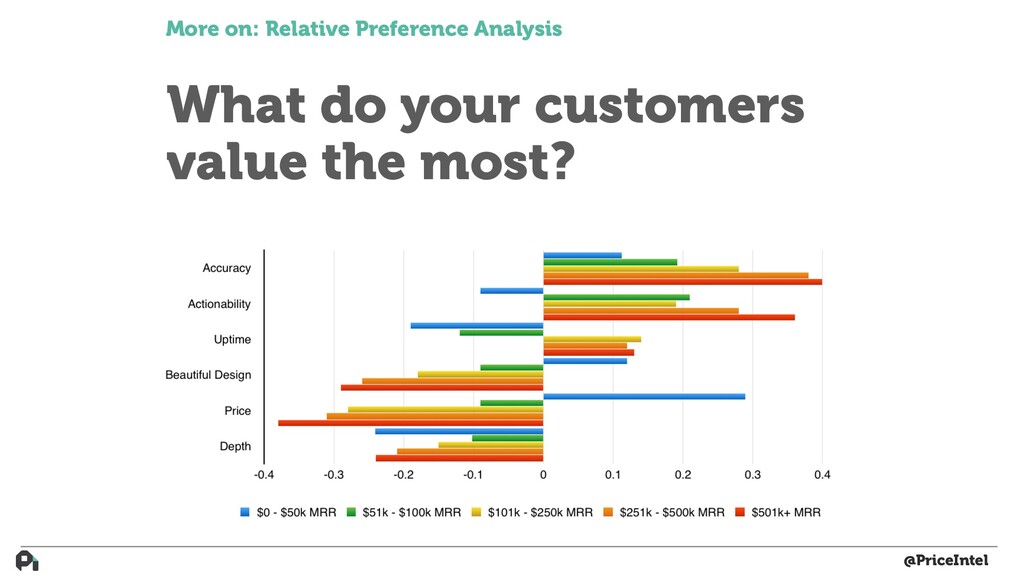
Meaning, no one could really decide between the different features. But all of sudden, I know because I forced them to make a decision. And when you break this down on a demographic basis, all of a sudden you discover, holy cow. These really, really large companies really care about that thing.
And the small companies, they don't really care about those things. And when you break that down kind of on a persona by persona basis, when you start to make some assumptions about who your personas are, all of a sudden, we can start to fill in oh, boy.
We can start to fill in what those people care about. And for us, we stopped everything because we wanted to get this data because we had some hunches about what people actually cared about. And we could have gone and just start iterating and iterating and iterating and iterating on the product, But every iteration would have taken at least a couple months, and then all of a sudden, we really wouldn't get enough data for another couple months.
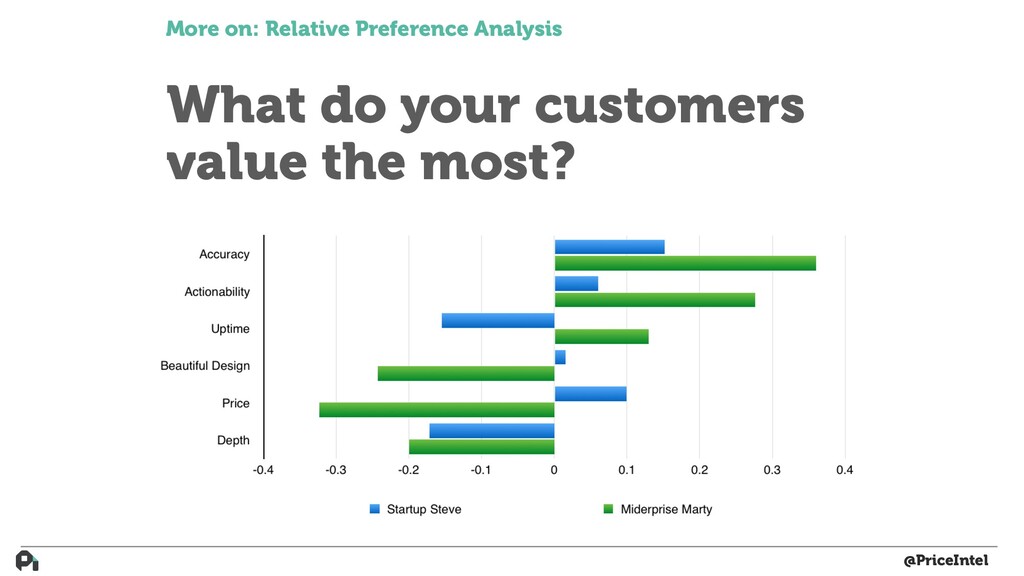
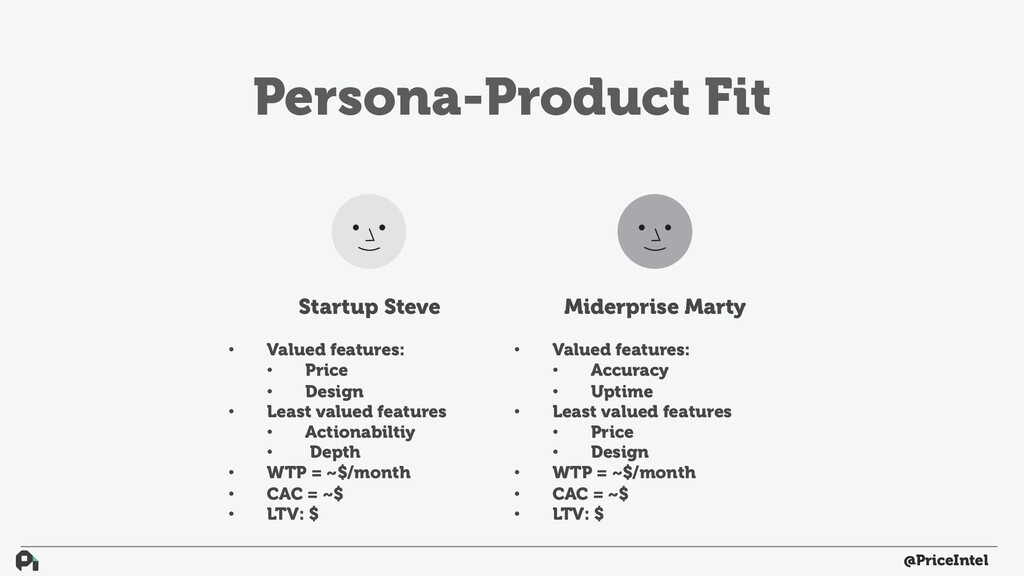
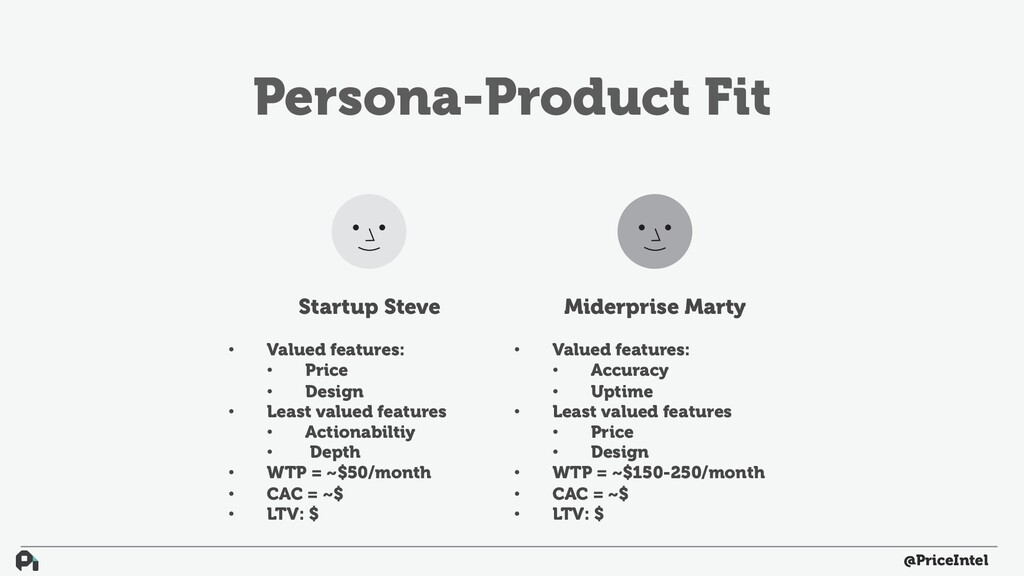
And that would have taken so much time. But instead, going to the customers, we immediately figured out, startup Steve, they really don't care as much about accuracy as mid enterprise Marty. And then both of these individuals, one cares about price, the other doesn't care about price.
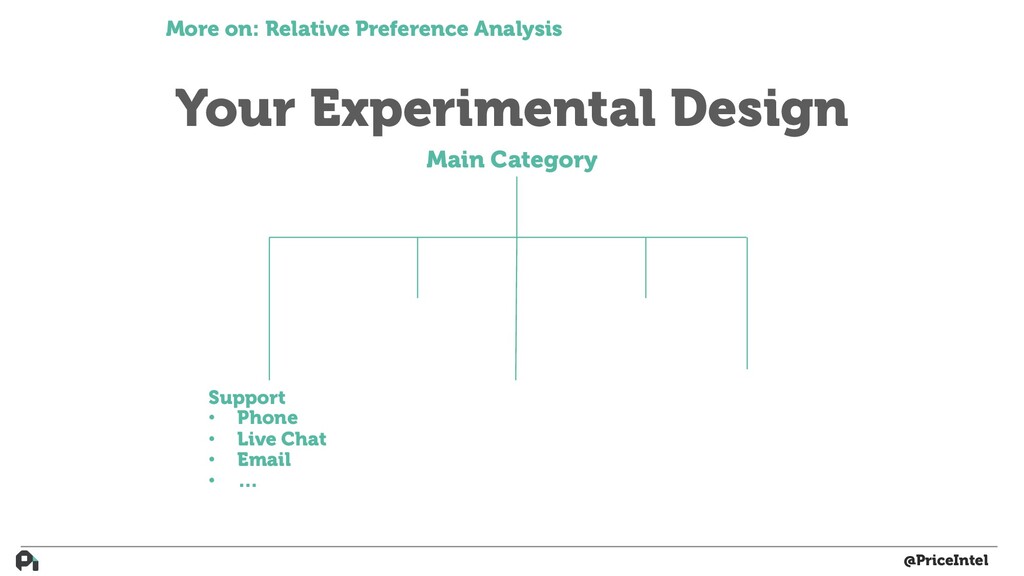
That's cool to find out. And we could have done this for different features. And normally, the methodology we suggest doing is you'll first have a main question. So the main question here, we're gonna ask about support, data integrations, metric types, data out integrations, and then action tools.
And then we're gonna ask additional questions about each of these different main category features. And the reason that's important is because if we find out on the main category question that support is most important, what I wanna then do is know what of support cares is what's cared most about.
So if support's most important, I don't wanna immediately go out and give everyone a dedicated account manager if live chat fulfills the problem or the cause of the problem that people want. And then if you break this down by all the demographic data, that's when you can start to put together this really, really rich look at your users.
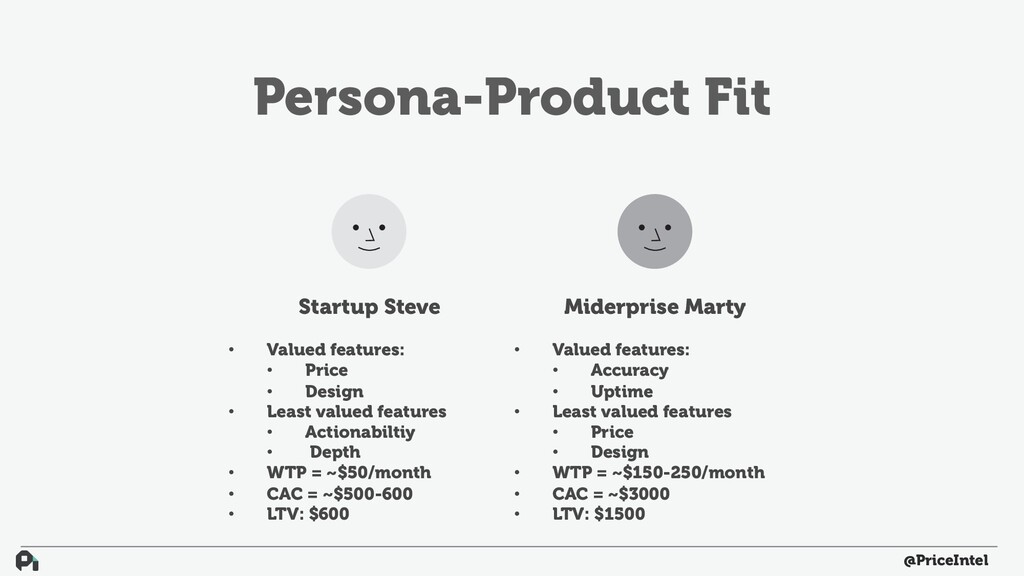
And ultimately, can quantify those buyer personas down. So what you'll see here is all of a sudden, with Startup Steve, we knew that price and design were really, really important. And we also knew that actionability and depth were not important. From Enterprise Marty, accuracy and uptime, and then price and design they really didn't care about.
Which was good because our design was horrible. We didn't have a full time designer in the early days. I was doing the design, and just look at me. Clearly am not a designer. I don't know what that means, but it sounded good, I guess.
But what's kind of amazing about this is all of a sudden, had all this data that showed us, maybe we just shouldn't give a **** about Startup Steve. We wanna be friends with them, but if they really, really care about price and design, and we weren't ready to really compete on those two things, maybe we should go after mid or price Marty.
We already knew that Barometrics, for instance, was so into Startup Steve. Startup Steve loved their content and all these different things. We were already selling to mid enterprise and enterprise Eddie, I would argue, with price intelligently. It's one of those things where we already kinda had a good base with Midderprise Marty.
If we could get Startup Steve, great. But we could focus a lot more because we had this data. And on the second side of this, we wanted to really explore price sensitivity. Because we were like, alright, how much do we charge for this?
We had heard a lot of inklings about analytics products and how they basically suck. Every analytics No one is like, give me more analytics products. Investors don't wanna invest in analytics products. The retention is always awful for analytics products. So we're like, alright, we have this analytics product.
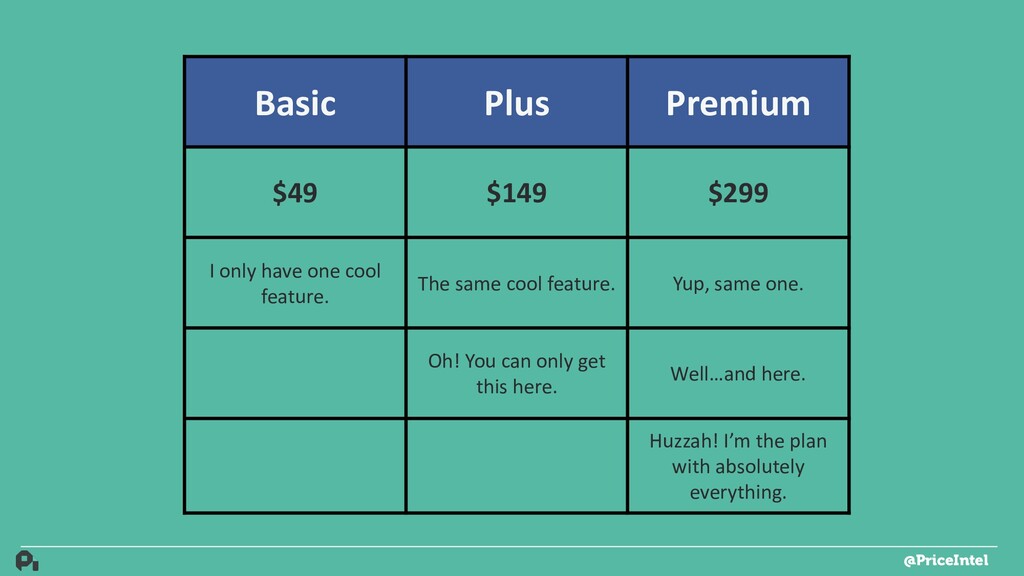
Let's figure out the willingness to pay for it. And what we found, or what we know just from our experience with price intelligently, is that if you look at a pricing page, you have these two axes. Right? You have the features that you can sell individually, and then you have the actual price point.
So the relative preference analysis helps us with different features. And then the price sensitivity study that we're gonna talk about in just a second helps with the actual price point. And pricing is quite fascinatingly really easy to ask for. You just have to ask the right questions.
The reason it's easy to ask for is human beings, or at least psychologists and economists have studied this. They think about price as an actual spectrum. Or we think about price as an actual spectrum. Sorry, I'm also human. But what's fascinating about it is what that means is that I intuitively know that the computer running this particular slideshow is more expensive than this clicker.
Or at least I hope it is given how good this clicker is. But I also know that this clicker, as well as the computer, are both less expensive than this building. Right? It's a really dramatic example. But it shows how we think about value.
A really kind of funny anecdote is there's a professional poker player who he only was playing poker on tables. He didn't play online or anything like that. When online poker started really really getting popular and he found out how much people were making on online poker, he was like, oh I'm gonna go start doing online poker.
And he never had a computer. So he went to Best Buy, which is an electronic store in the US. I'm not sure if it's global. And he brought thirty five thousand dollars to buy a computer. And this was like five years ago. And the reason he bought it brought it was he was like, well they're making a hundred thousand dollars.
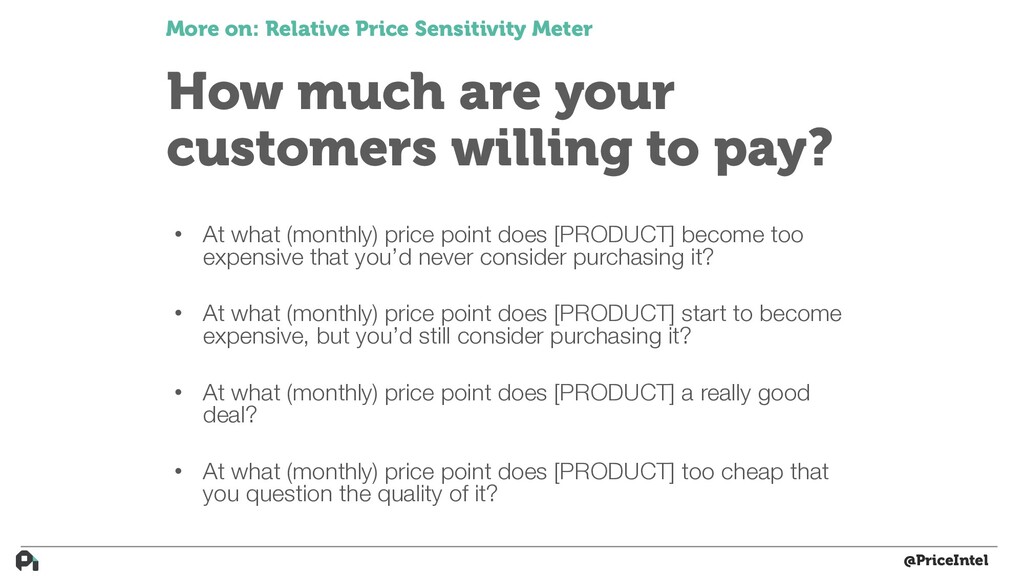
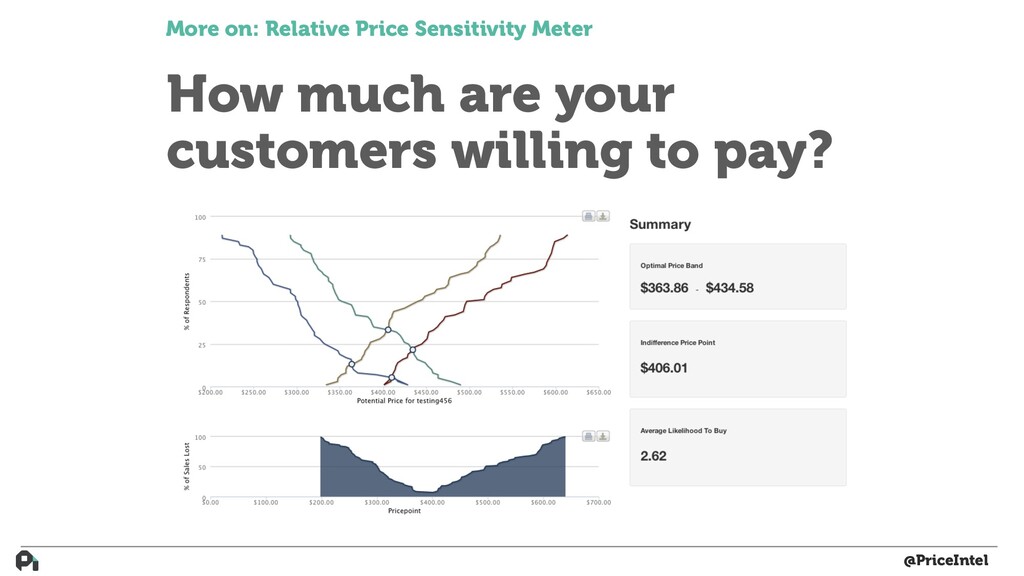
The computer must cost thirty five thousand dollars. Values a spectrum. And so you can take advantage of that by asking four questions. At what price is this way too expensive that you would never consider purchasing it? At what price is this getting expensive that you consider purchasing it?
At what price is this a really good deal? And what price is this too cheap that you question the quality of it? Now, what's cool about this data is that if you collect enough of it, and enough is like at least fifty. It's not quite statistically significant, but at least gives you enough output.
You get a graph that looks like this. So each of those questions corresponds to one of these lines. So the rightmost line is at what point is this way too expensive, and the leftmost line is at what point is it too cheap that you question the quality of it.
But this data also gives you this really nice price elasticity curve, which all of a sudden we can use to know, well, at what point are we way too cheap? Because oftentimes, and I would argue, European startups almost unequivocally are always priced too cheap.
That's not a hundred percent, but every European startup I meet is charging way too little. Every US startup is charging too much. I won't get into why that might be. We're arrogant, as John said. But it's just kind of really funny how you can look at this data all of a sudden, and you can get a really, really rich look at where your willingness to pay actually is.
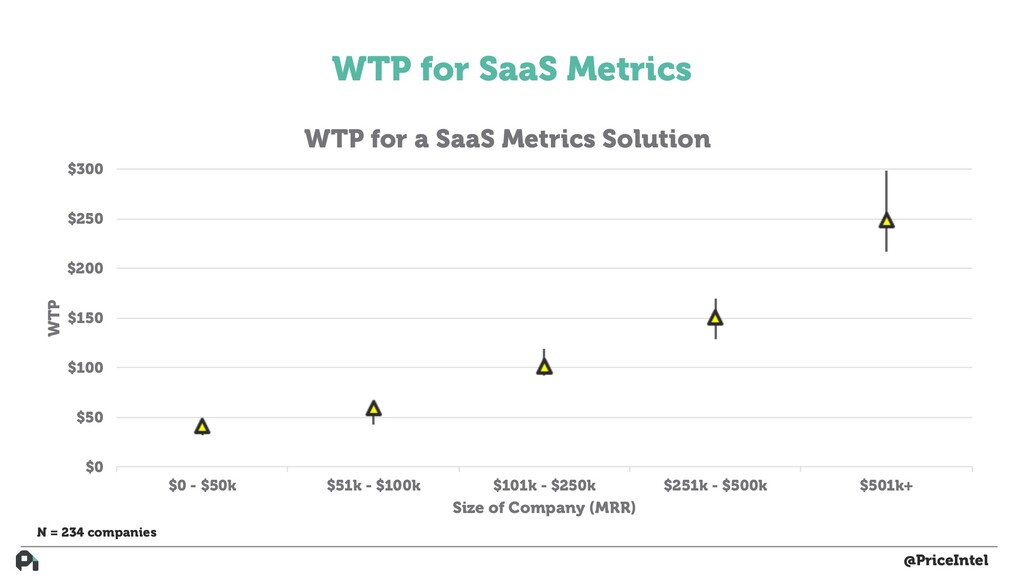
And what we found is that for analytics, the data was not great. So this was what for ProfitWell. And the willingness to pay, we kind of expanded it because ProfitWell wasn't full featured yet. And we were like, if you had a solution that's solved for your SaaS metrics, how much would you pay for it?
And what we found is like, the really little folks, fifty bucks a month. It's not bad. It's kind of a good entry point. But the biggest problem is that when we got up to mid enterprise Marty, his or her value did not scale exponentially with their size.
They were willing to pay two hundred fifty bucks a month. Now, that's not bad. Like, you can build a really good business on essentially low three figure MRR in SaaS. But the problem is, is that there are only about fifteen to twenty thousand subscription SaaS companies out there.
So all of a sudden, our addressable market not only was small from a logos perspective, but was super tiny from a value perspective. Then what was funny about this is that when we looked at some of the other metrics like CAC, all of a sudden, we're at a fifty dollar per month willingness to pay.
Our LTV, and this was just an estimate, was six hundred bucks, And it was gonna cost us five hundred to six hundred dollars to acquire someone because there's so much competition in the market. And even on mid enterprise Marty, it wasn't really that much better.
Our CAC was upside down. We weren't gonna make money. And so we started looking around more and more. And we said, okay. What could we make money on? And we asked this all in the same survey. But what was fascinating about this is we looked at churn reduction.
And we said, if we reduced your churn by x amount. And this was We looked at delinquent churn. So fun fact, twenty to forty percent of your gross churn is typically attributed to failed credit cards. It's just huge growth hack. Growth hack. Hate the term, but whatever.
Look at your churn and look at that in particular. But what we found was, is all of a sudden these companies that weren't willing to pay fifty bucks a month for analytics, and we already knew there were more problems with analytics because the retention curves on most analytics products are just really really small.
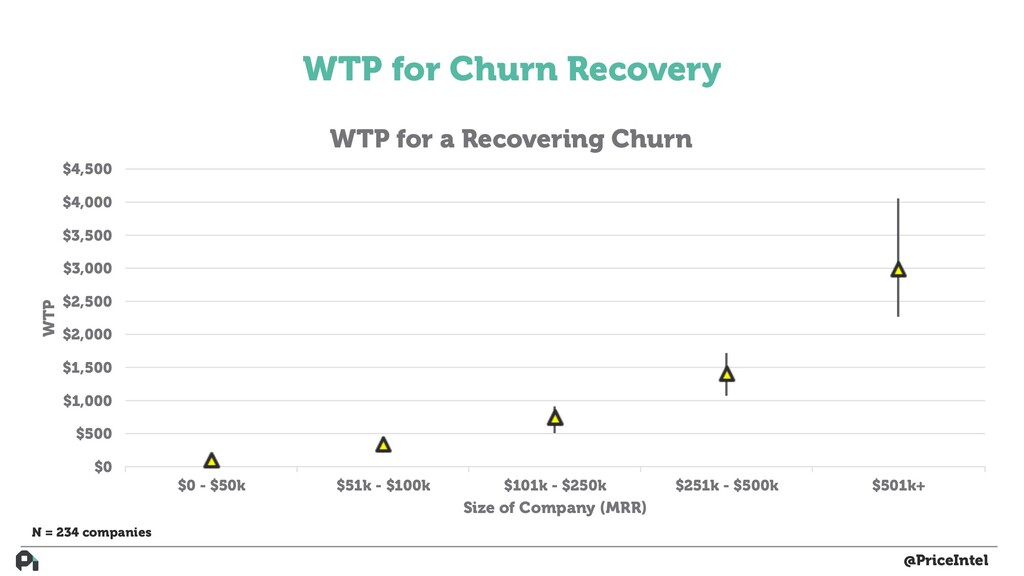
All of sudden, they're willing to pay a you can't really see on this graph, they're willing to pay three times as much. A hundred and fifty bucks a month for us reducing their churn. If we could prove and point to that we solved part of their churn, there was more value there.
And what's really cool is all of sudden, these big dogs, were willing to pay us almost three grand a month. That's like a full time employee. On the low end of a full time employee, it's still, that's a lot of money. And we also looked at another product around revenue recognition.
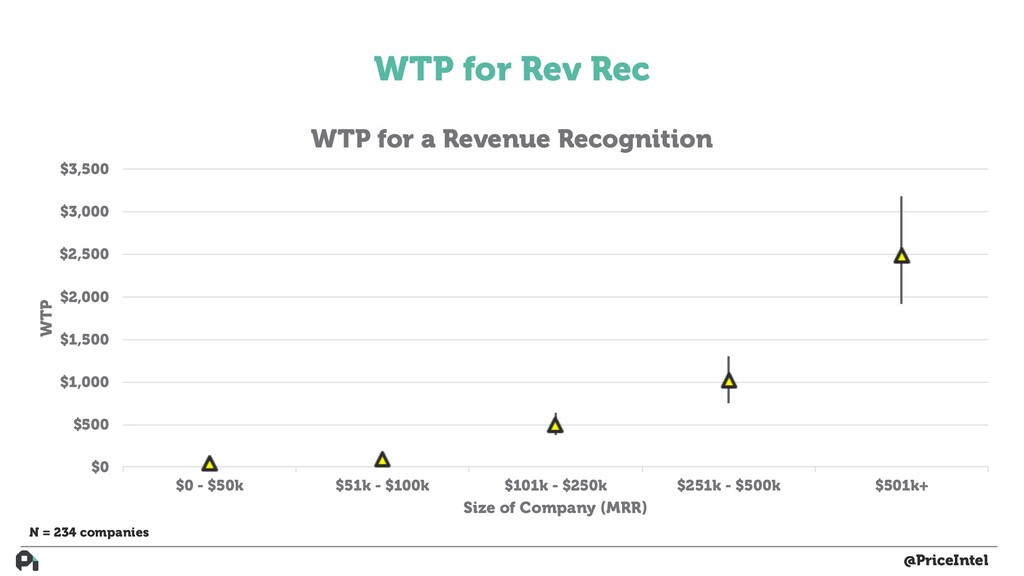
So there's a certain point, I don't know how the laws are in the UK, but in the US, accrual accounting or gap based accounting for SaaS companies is really really difficult. So we looked at what the willingness to pay was for that. And again, we saw a similar trend.
These small folks weren't willing to pay much because most of them don't do that type of transition for their accounting. But these really, really big dogs, they were willing to pay again, four figure MRR, even though they weren't willing to pay anything. Or they were willing to pay something, but very, very small amount of money for the metrics.
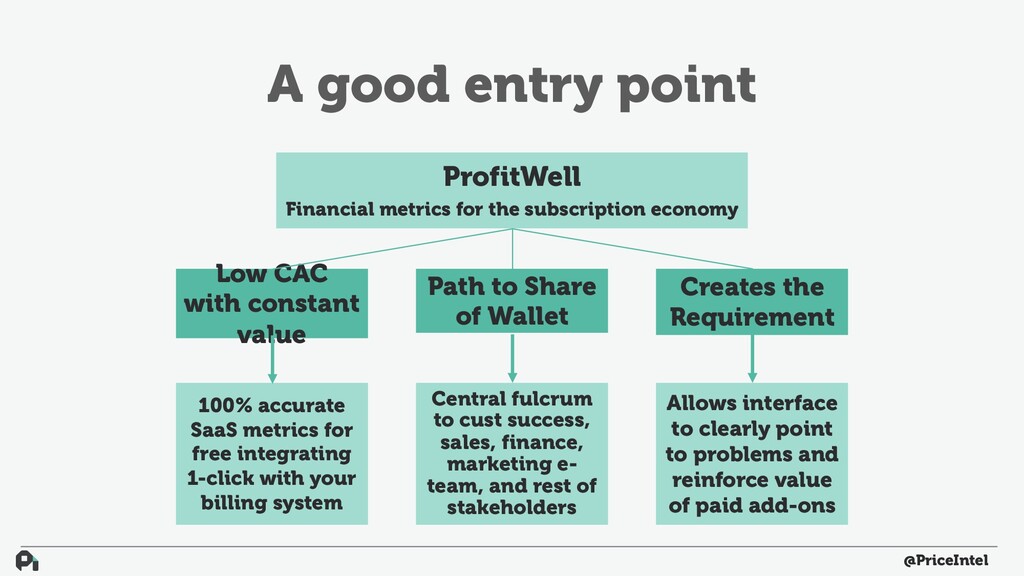
And so what we did is we decided, we're gonna give ProfiWell away for free. So ProfiWell, all the financial metrics, and we would argue, obviously we're biased, that we're actually better than our competitors. Because we focused on accuracy, we focused on uptime, we focused on these different things.
We give it away for free. Because it has a low CAC, free product. Not a lot of decisions around it. Past the share of wallet. We could point to the churn and say, hey you should use our product that helps you with churn.
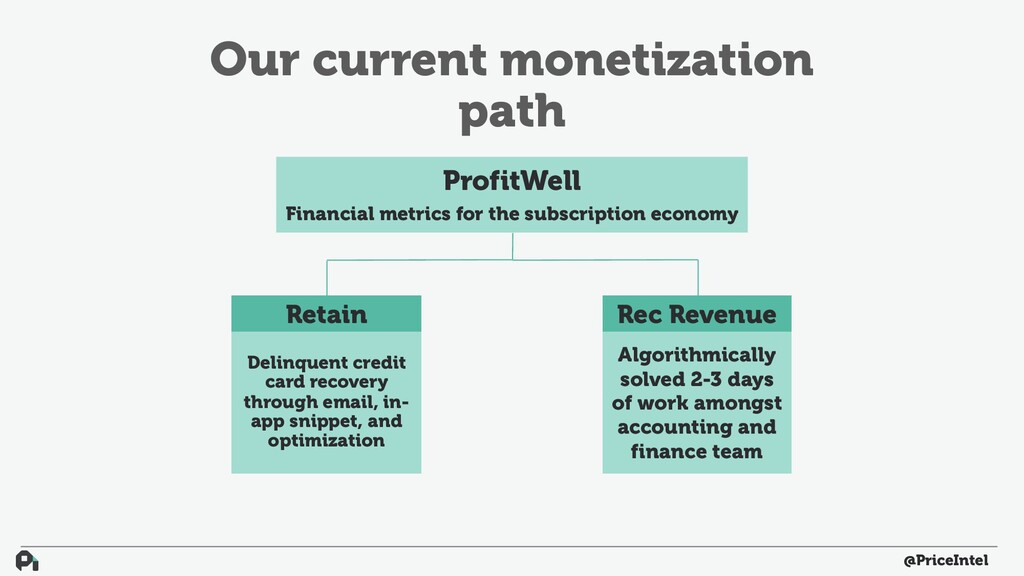
In addition to that, it creates the requirement. All of a sudden we're like, hey, we already have your data. Do you wanna just buy this product that helps you? Yeah, okay. And what's kinda cool about that is our monetization then follows retain, which is that delinquent credit card product.
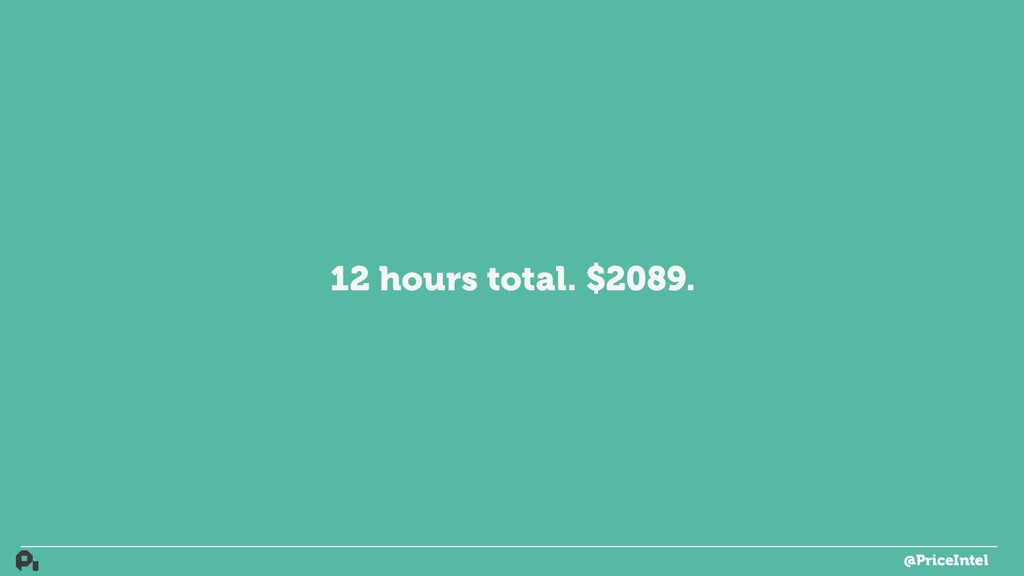
And then our recognized product, does the recurring or the revenue recognition. And all of this, I know it looks like a lot of research, took us twelve hours. Twelve hours total. So it wasn't like twelve hours like we just spent an entire day.
But we had the first discussion about our personas that took us about a half hour. Put together this survey design that took us about an hour. And frankly, do do this for a living. But it didn't take us that much time. And all of a sudden we had this data that literally set the groundwork.
And then now has We're not quite proving it all out quite yet. It's one of those things where all early data indicates we made the right decision. We have three thousand five hundred people on ProfitWell. We now have a lot of money coming in on the retained side.
And this cost us about two thousand one hundred dollars to do. That money came from, we sourced what are called market panelists. The dirty secret about market research is that you can find anyone from a mom or dad of three kids, all the way to a fortune five hundred CIO.
And you can get them to answer survey questions. And they're incented to do it. And so that's what you have to pay for. But we used a company called Ask Your Target Market, aytm dot com. And then also a company called Fulcrum to basically fill these panelists and get this data.
And we got the data in three days. We plugged it in. Three days later, had all this data that we just had to analyze. So what's fascinating about this too, is that we now have set up a customer development process. So our VP of Product Marketing, she basically focuses on customer research.
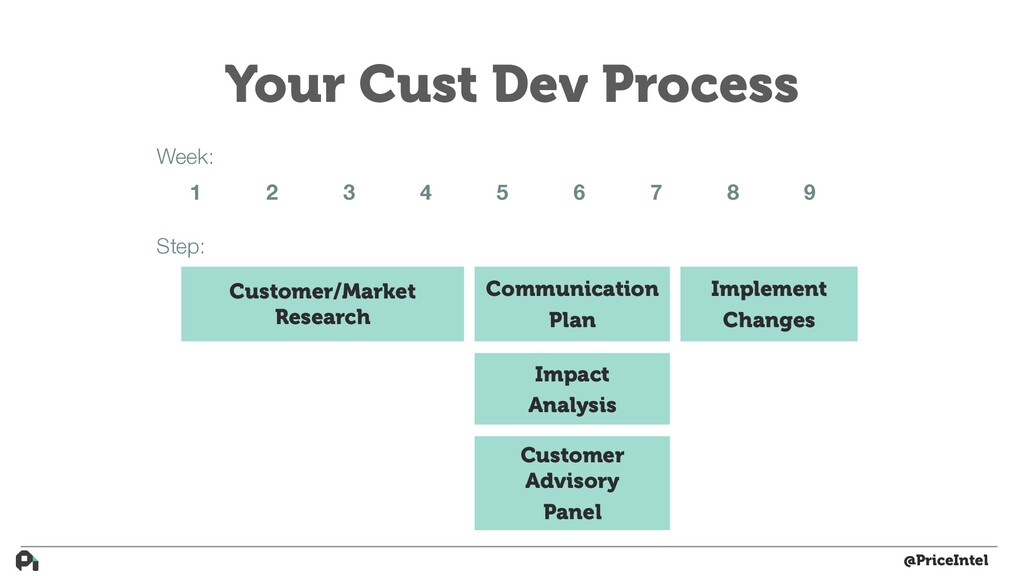
That's her job number one. Collect data and then disseminate it throughout the organization. The process that she follows is basically this one. This got a little skewed. But the first week of every quarter, she basically goes out and we have a discussion about what particular problem do we need to look at this particular quarter.
Maybe for us, this isn't applicable. But in other companies it's maybe annual payments was a big problem. And so we want to investigate what's the willingness to pay, let's say, for annual payments. She goes out in the first five or six weeks of the quarter.
She goes out, finds the information, collects the data. Then she comes back and we all sit down and we say, what's the data say? In that meeting, we make a decision. And depending on the impact of that decision, we'll either just create a communication plan.
We might just launch it if it's something small like adding a feature to a particular plan or product overall. And then if it's something that's bigger, we'll go through an impact analysis around churn, as well as around conversion. And then we'll also go through maybe a customer advisory panel if it's crazy.
If it's like, holy cow, this is gonna affect everyone. Let's just make sure we didn't mess anything up here. We do that every single quarter. And it takes It's maybe twenty percent of her job. It's not one hundred percent of her job. But you should have someone in your business focusing on this, no matter your size.
Because it's likely you don't have someone now. And the market, as we saw, is definitely gonna be continuing to make this harder and harder in your business. So, customers matter. I know that's obvious. And I know that everyone's like, yeah, of course customers matter.
They're paying our bills. But they matter from a very quantifiable perspective. You have to make sure that you're talking to your customers. And if you think you are, you may not be. So make sure you're checking this within your organization. But they really really do matter.
And that's because software building these companies and just building product in general is becoming harder and harder. You don't want to make it harder on yourself. So with that, thanks for having me. Here's where you can get the slides with the data. And then here's my contact info if you want to chat.