
Don't miss Patrick sharing his top tactics that led to the $200m acquisition of ProfitWell by Paddle.
← All talks 





























Grow Growth Turing Fest 2022
7 Growth Tactics We Used to Scale to a $200 Million Exit
Auto-generated transcript - may contain errors. Tap a timestamp to jump the video.
Hello. It's a type of intro that makes me incredibly uncomfortable, but I'll take it. Right? Today, though, I want to talk about some fundamentals. And these are some fundamentals that, when I think back through the past number of years here, they represented essentially the inflection point, not only in terms of our growth, but also in terms of strengthening our culture.
And when I thought about what I wanted to kind of curate or try to curate in terms of conversation at Turing, it was one of those things where I really thought about, like, what would I want what would I have wanted someone to kind of shake me to my core at when I was at a million, three million, five million, ten million in revenue?
And I think it's because these are some of these things that, like, we kinda all know, but we're not really internalizing within our businesses. And the downside is is it's a little preachy. Right? And I want you to know that I know that we are in the tall poppy syndrome capital of the world here in Edinburgh.
It's okay. I'm Scottish. I can say this. It's totally fine. But what you should also know is that, like, I am the human embodiment of tall poppy syndrome. I cut myself down all the time. I'm one of the most insecure people in our space right now.
And the reason I'm sharing this to you is because when we go through these things, I don't want you to take it as if I'm saying you have to do these things or you should be doing these things. My goal is to kind of shake you to that core for you to have a conversation with your exec team, have a conversation with your cofounder, or just have a conversation introspection with yourself about some of these pieces within your business.
Sound good? You fired up? Come on, Edinburgh. Let's go. Alright. We'll bring the mood down a couple of times. Don't worry. So, for those of you who don't know, Patrick Campbell, now the chief strategy officer over at a company called Paddle. Up until a few months ago, I was the founder and CEO of a company called ProfitWell.
My personal background is in econometrics and math, which means I am the best third party guest that you've never had. I started my career working in US intelligence. I worked for NSA. It definitely ****** me up a little bit. Don't worry about that.
And then I worked at Google before kind of jumping up into the startup scene and founded ProfitWell. And ProfitWell, it's not really important to the talk for you to understand what exactly we do. But just to give a little bit of background, hopefully, a little bit of credibility here, we are a bootstrap company based out of the States in Argentina.
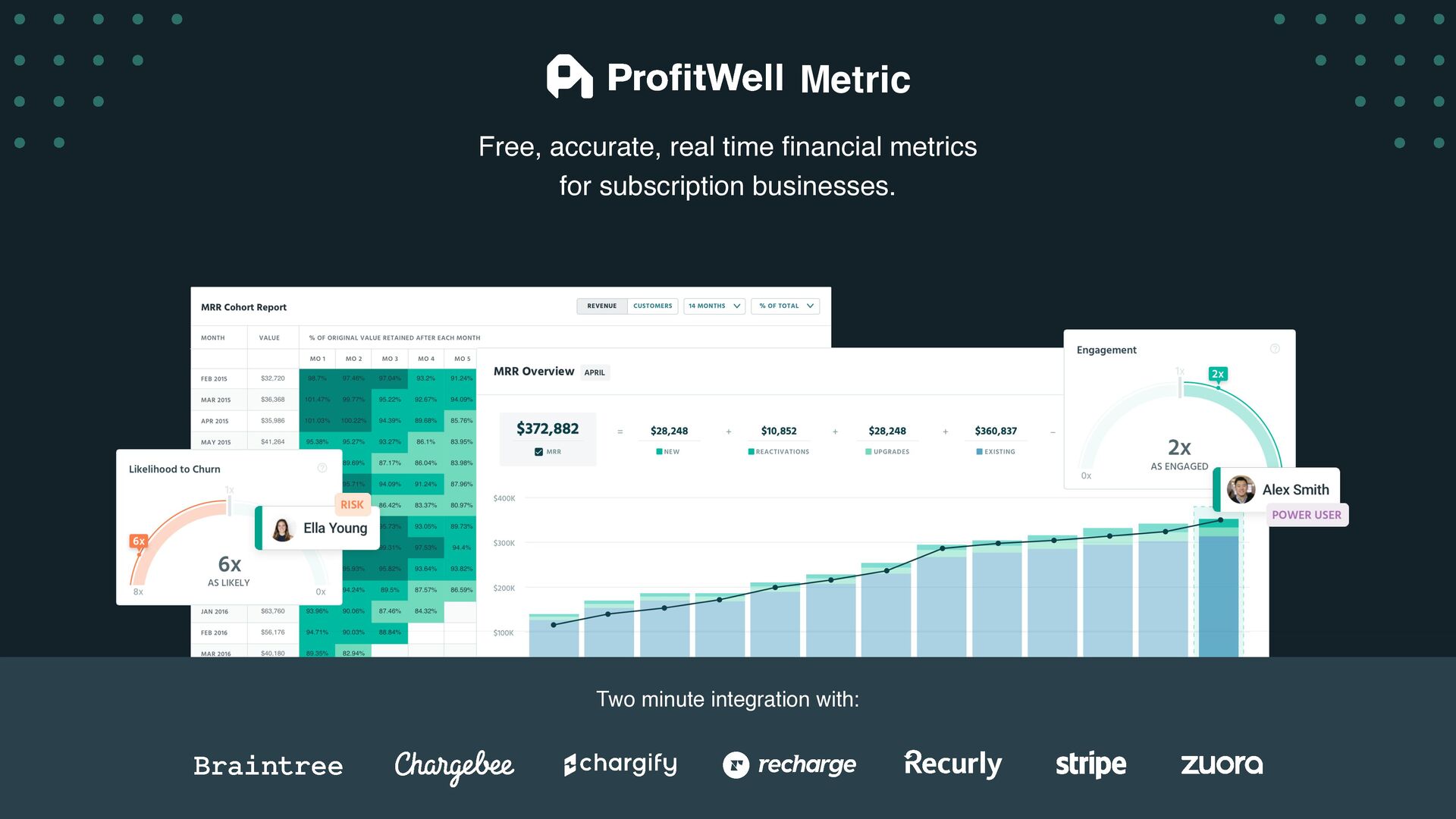
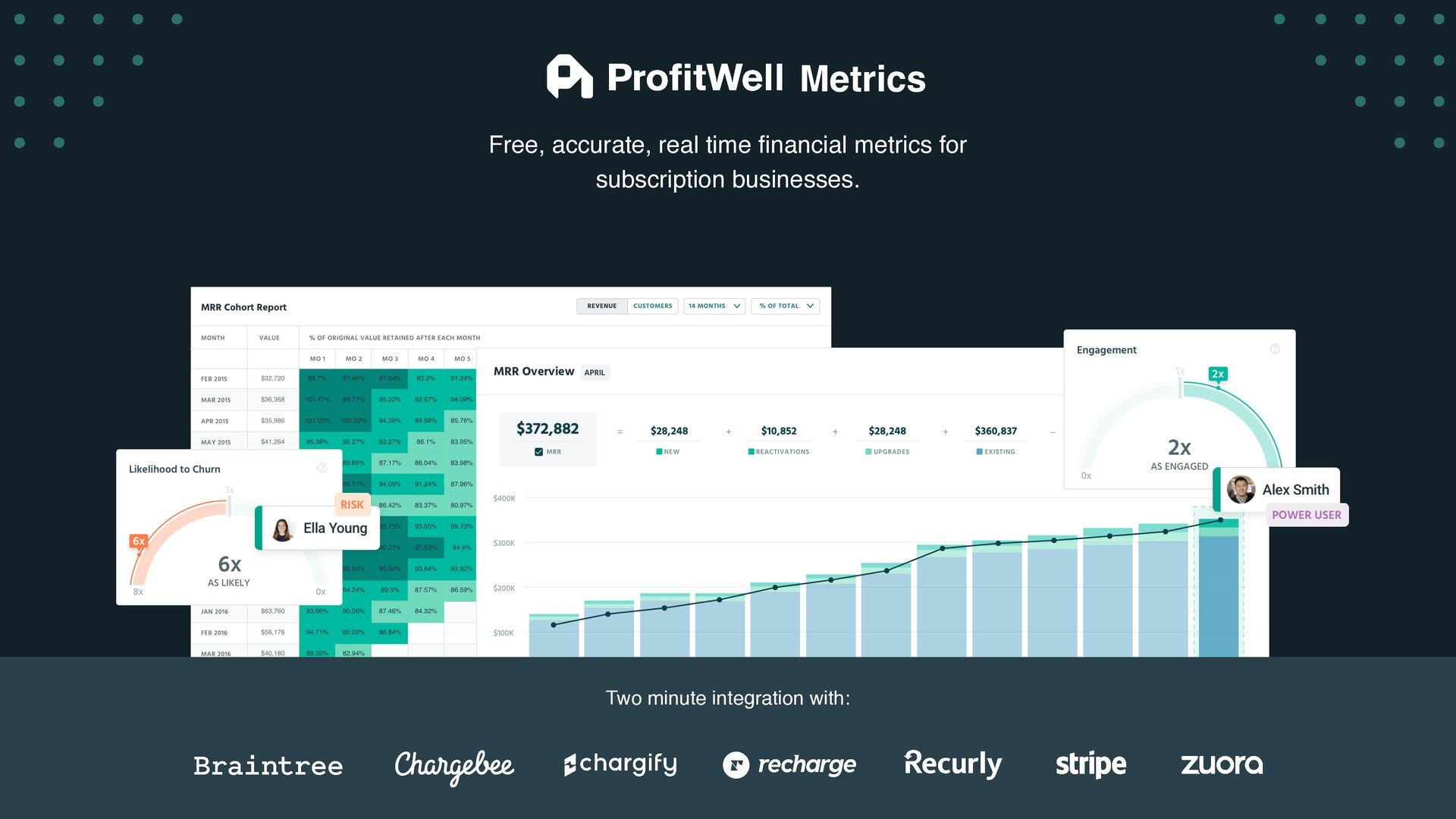
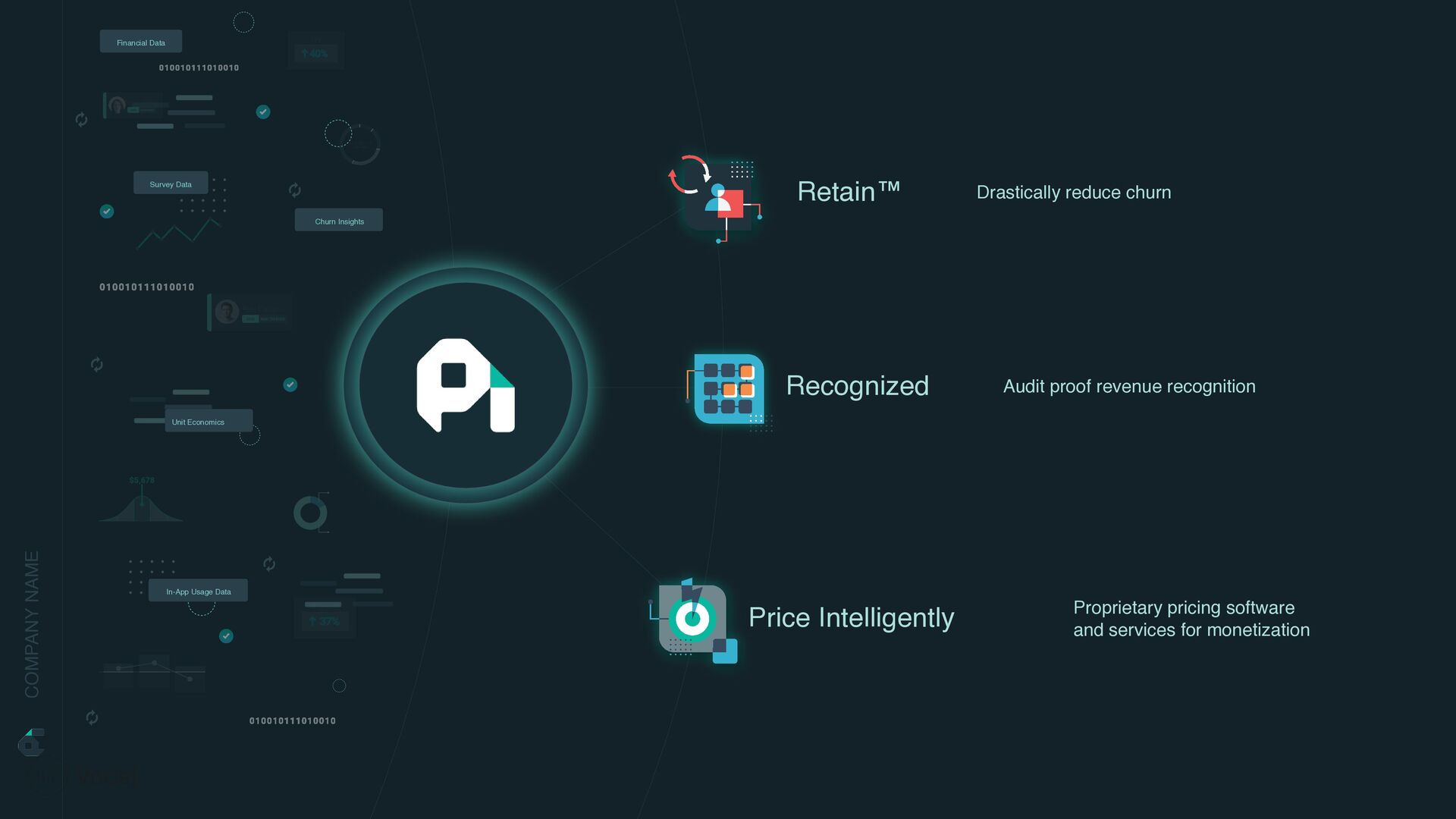
We built basically a suite of tools to help subscription companies grow automatically. What we're best known for is this free set of tools called Profitable Metrics, which basically you plug in your subscription billing system and you automatically get all of your financial reporting for free.
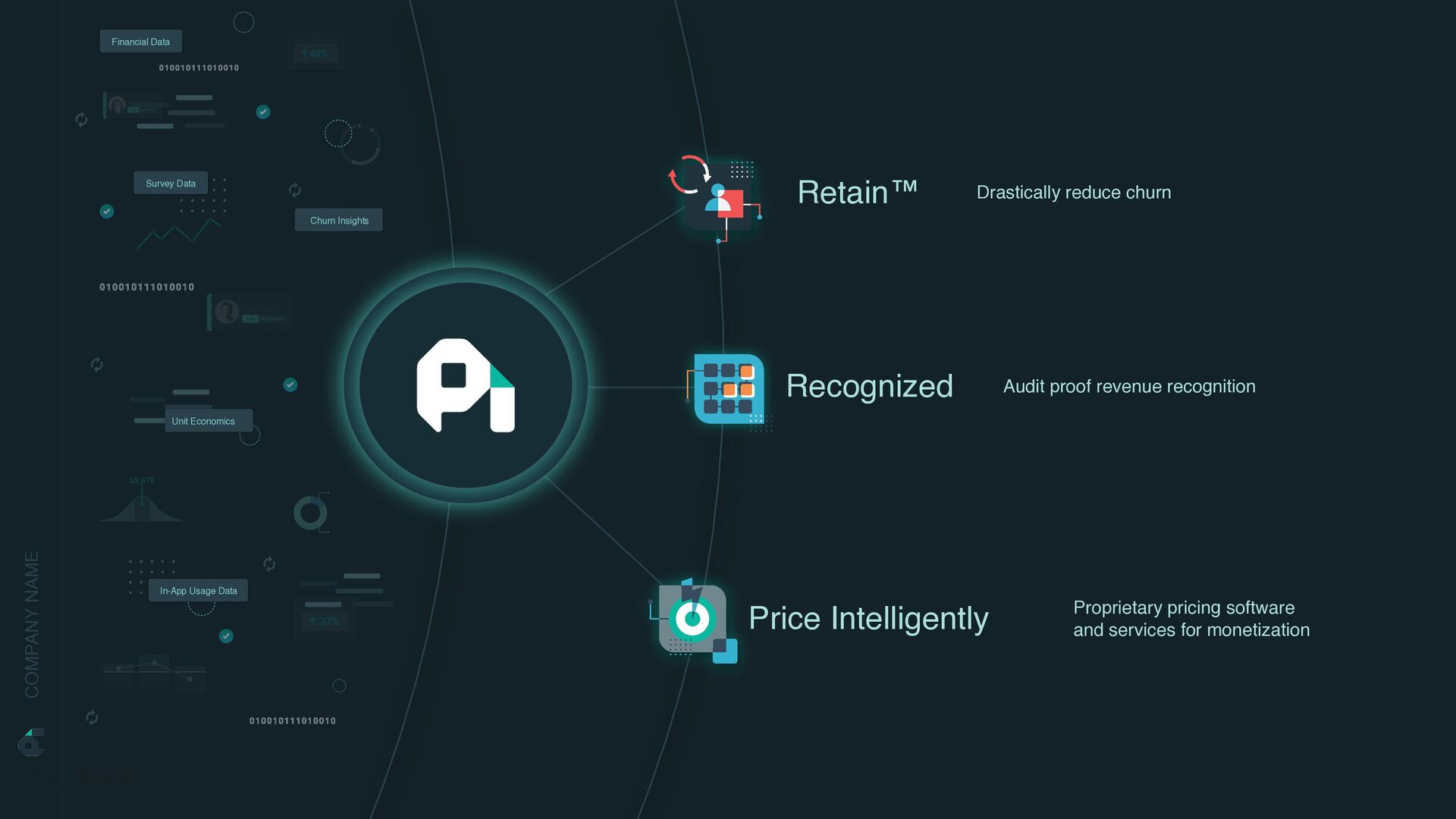
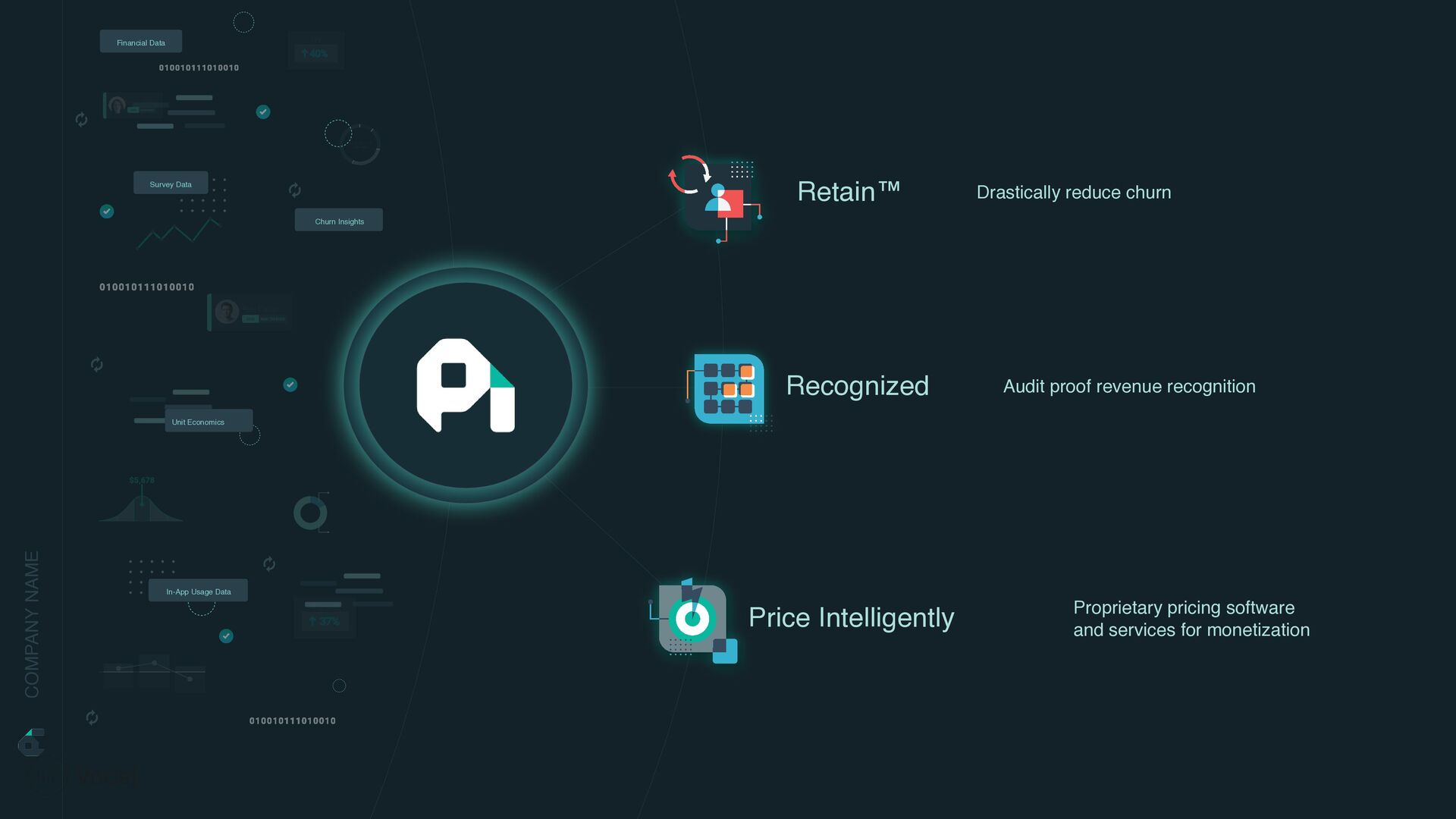
At basically the last year, we now have about twenty percent of the entire subscription market using that product, which is great. And then the way that we make money is we study that data, learn from it, and ultimately help you with products that reduce your churn automatically, optimize your pricing automatically, all that kind of fun stuff.
And then, as was told previously, recently, we went from bootstrapped basically to selling for over two hundred million dollars, which is pretty cool. Also, it makes me incredibly insecure for some reason. I don't know why. It's just something I can't complain to you about, because who the hell is going to sympathize with a guy being insecure about an exit?
I'm not asking for the sympathy, I'm just throwing it out there. But why Paddle? Paddle is one of those companies that I've always admired from the sideline, and I said this on the record before we got bought, so you just know that I'm not just saying that now.
But the main reason is because the way that Paddle sees the world is exactly how we saw the world, which is the future of software, especially software that helps with growth and running a business, should be automatic, meaning we do it for you.
And so now the combined mission is very much, we do it for you. We help you run and grow your subscription business automatically. That's that's the overall vision. But with that, I'm not gonna talk about our products or anything else anymore. You can come get a sales pitch in the q and a or something if you really want it.
But I got three big points and then four small points. The first one we're going to talk about is people. People is one of those things that we've all heard the advice about, like, how important your people are, how important your culture is.
Right? Like, we've all heard some sentiment about people and culture are everything. Right? Who's heard this before? Who's watched the YouTube video? Who's read the Medium article? Those of you not raising your hands just don't read or watch videos, basically, because this is a really, really common thing.
Right? Who agrees with this sentiment? Raise your hand. I'm definitely setting you up, just so you know. Okay. So I agree with the sentiment as well. But what's really, really fascinating about this sentiment is while we internalize this, while we retweet the articles that talk about this, while we talk about this with each other, while we talk about this internally about, hey, it's so important.
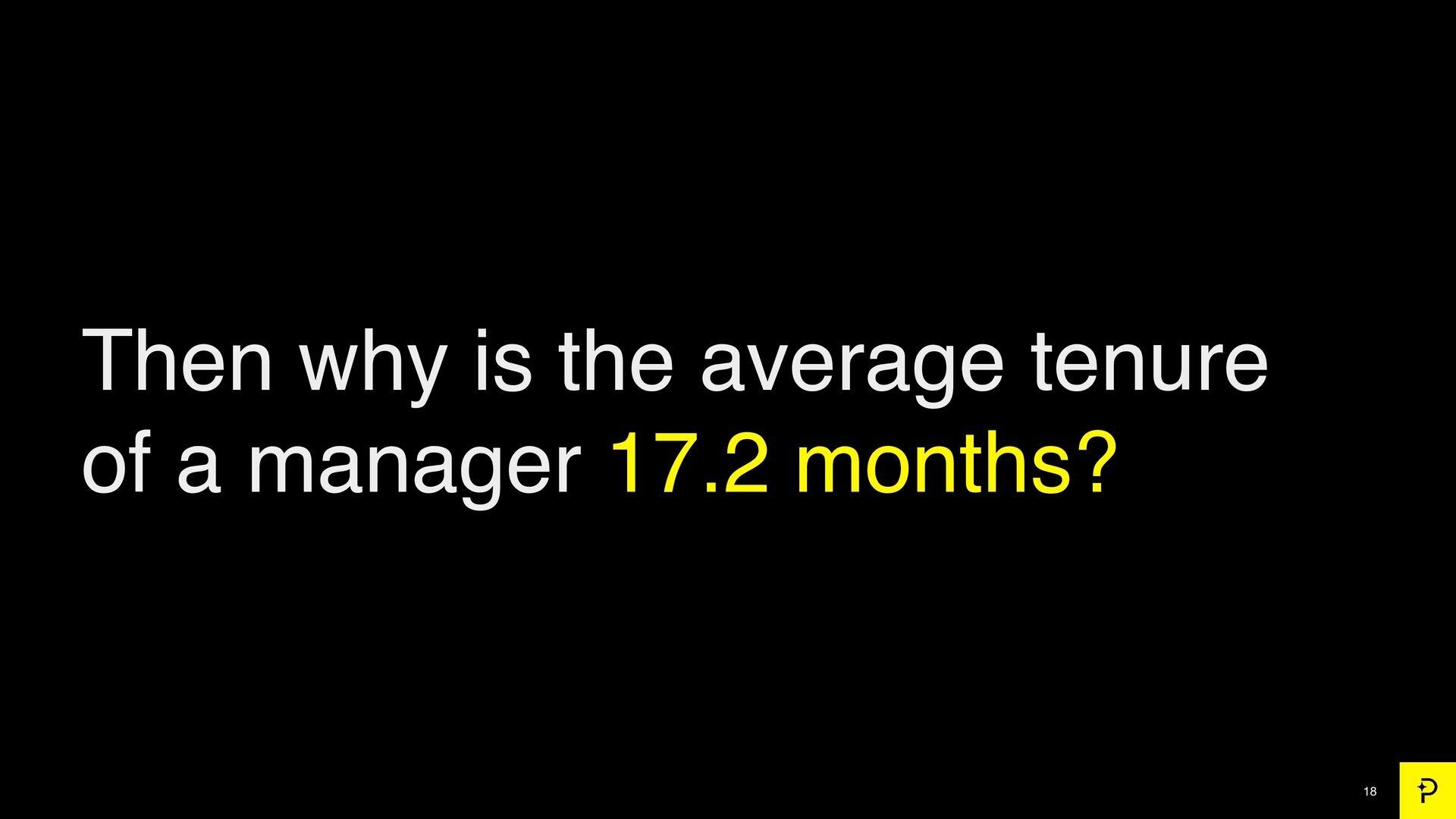
These are the people that are building the company, the company is the thing that builds the thing. We have some interesting antipatterns. Why is the average tenure of a manager in tech less than eighteen months? Why is the average tenure of a director on Up less than two years?
And these are the questions that we kind of started pondering a couple of years back, because if these are the people that are defending your culture, but they're not there that long in the grand scheme of things, why is that? What's going on with that?
And what was really kind of fascinating about it is when we were thinking about why, and we were trying to, like, struggle with this. Because as we continue to grow, we were like, oh, we gotta find great talent. You know, people are everything.
We gotta make sure we have the right people. We gotta grow the right people. We gotta get the right people. Right? We're sitting here and like, why why is this so hard? Right? Part of it is people are just hard. Right? Human beings, we're difficult just to deal with. Right?
Myself, especially, if you know me a little bit. But it's one of those things that, in my mind, I think it's because we're really scared. We have this founder fear. We have this exec fear. We have this impostor syndrome. We have this tall poppy syndrome.
We have all of this fear of not only losing, but of losing the people that come to the company. It was hard enough to get that person to take on DevOps. If I don't do exactly what they need or I don't accommodate them or I don't figure out exactly how to keep them, all of a sudden, we're going to end up losing them.
And if I lose them, we're gonna lose because we don't have someone to take on that particular part of the business. And the problem with this is is that you end up helping that person, but then that person's needs, their accommodations, all of a sudden offset someone else's needs and someone else's accommodations.
And you have this downward spiral where you have these **** glass door reviews. You don't know why. You're just trying to help everybody. You have people who are unhappy. People want more money. You have people who are really happy, and it's just kind of all over the board.
And you as a founder, you as an exec, are sitting there and going, oh my god. I'm just trying to do my best. Right? Anyone felt anything that I just said? Just me? Okay. No. I'm seeing some hands. And I think when when I really try to understand, like, what is the root cause, what is the helpful thing that could help everyone here kind of understand, is that you need to define who you are, who you are for.
And when you define who you're for, you're ultimately defining who you're not for as a particular company. And I think that this is so important because the minute we started doing this, we were so scared to do it. But I'll talk about some situations or one particular situation that didn't necessarily push us to the edge, but it was an example of a situation where we went, oh my gosh, We just don't feel this is right, but it's just untenable anymore.
We need to lock in who we're for, and then all of a sudden, we'll see what happens. And all of a sudden, it was amazing for us. And I heard this time and time again from founder friends who went through similar situations, and it wasn't because of, you know, a location.
It wasn't because of the type of product. It was just because the natural inkling of a growing company, you get more people, and all of a sudden, all those people had different views, different accommodations, and this is why values are so important. So let me walk through an example to bring this to life a little bit.
So at ProfitWell and I want to be very clear. This is a very ProfitWell example. We're right now going through kind of integration with Paddle, and, you know, we're trying to figure out this combined company, what our identity is, where our value is, those type of things.
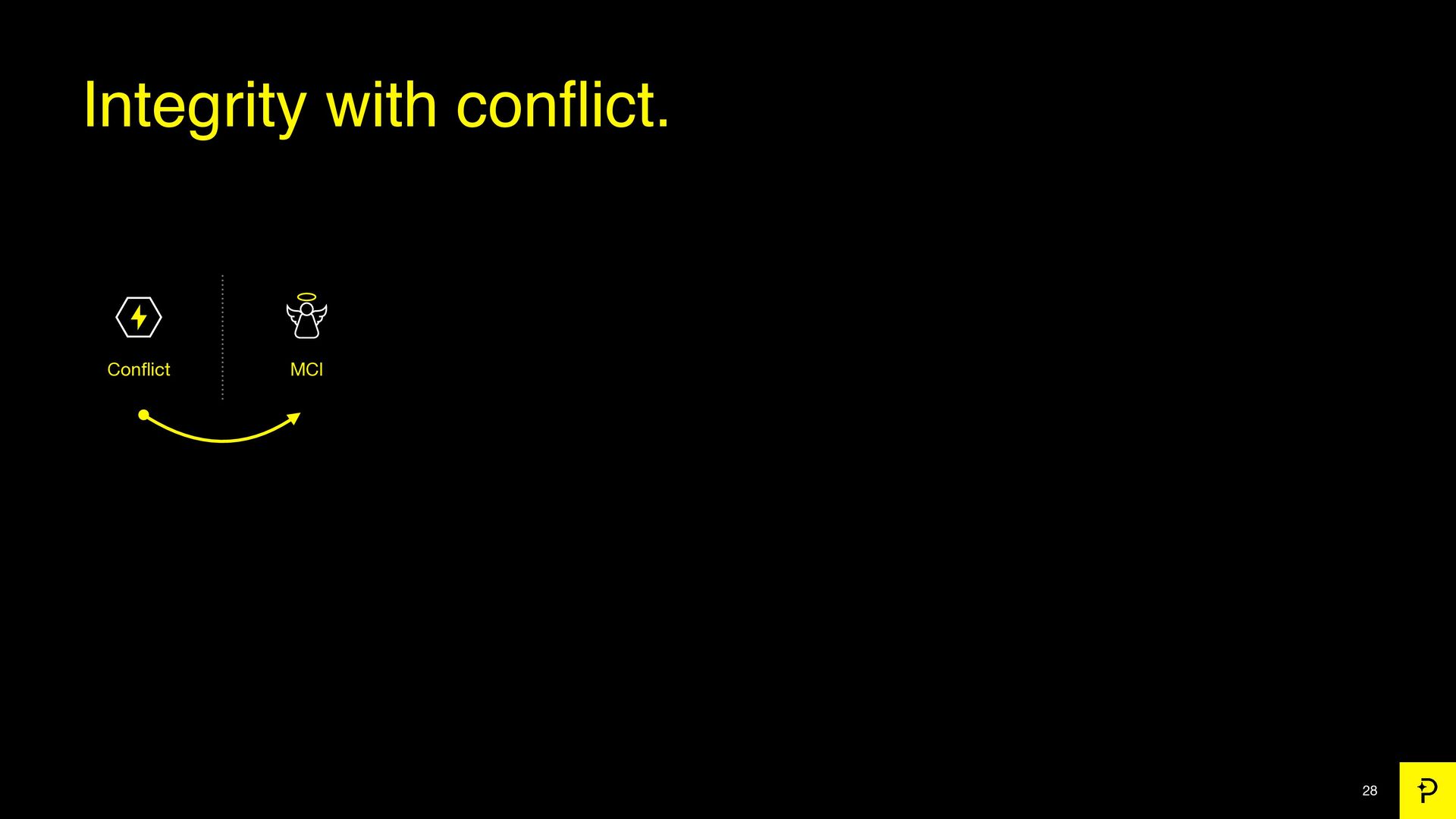
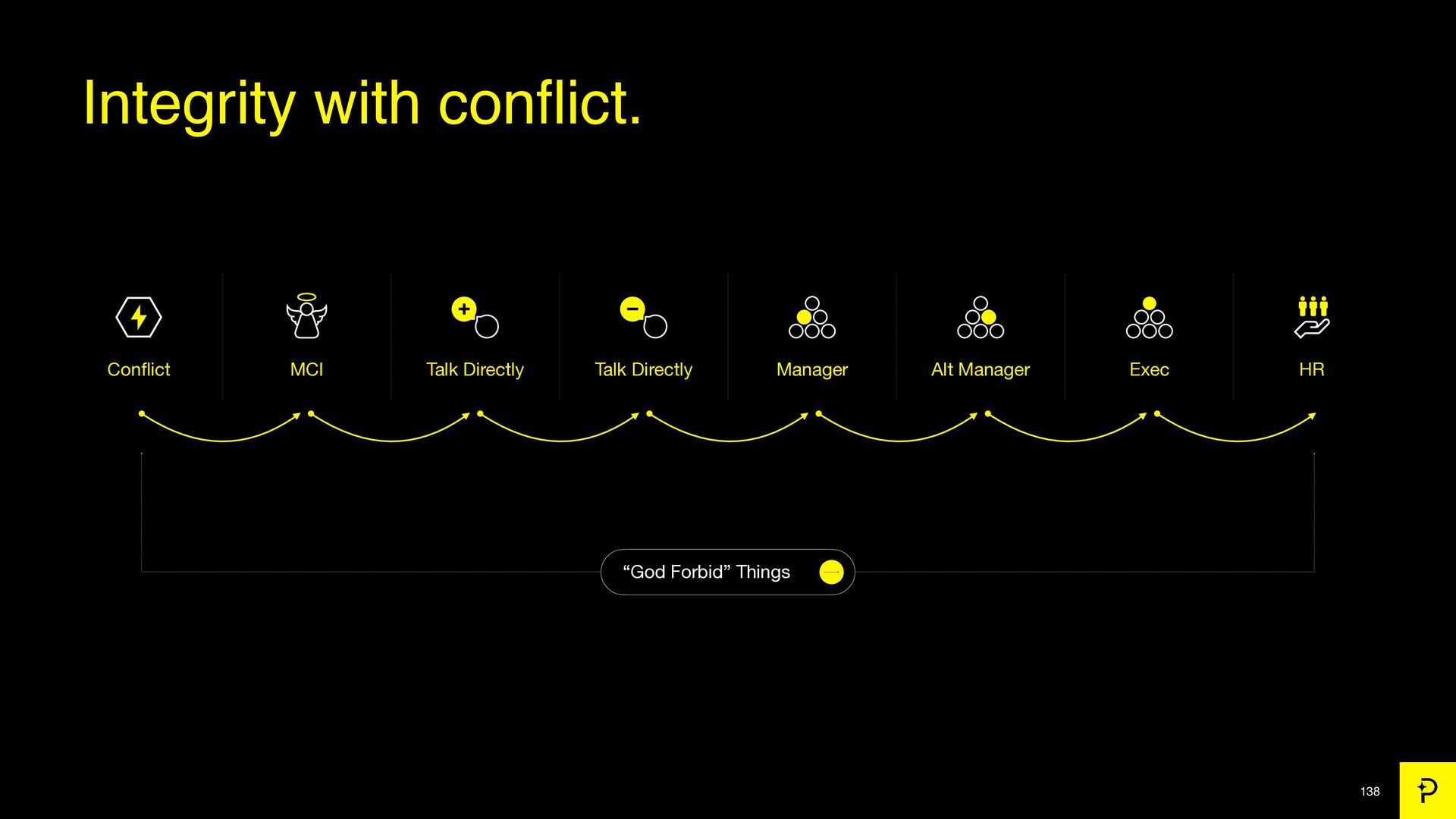
So I'm saying, like, the way we would handle this at Paddle might be completely different in six months. You'll have to ask me in six months. But at ProfitWell, we believe this thing that I've talked about in the past. One of our values, one of the behaviors that we hold really, really dear is this concept of giving the most charitable interpretation.
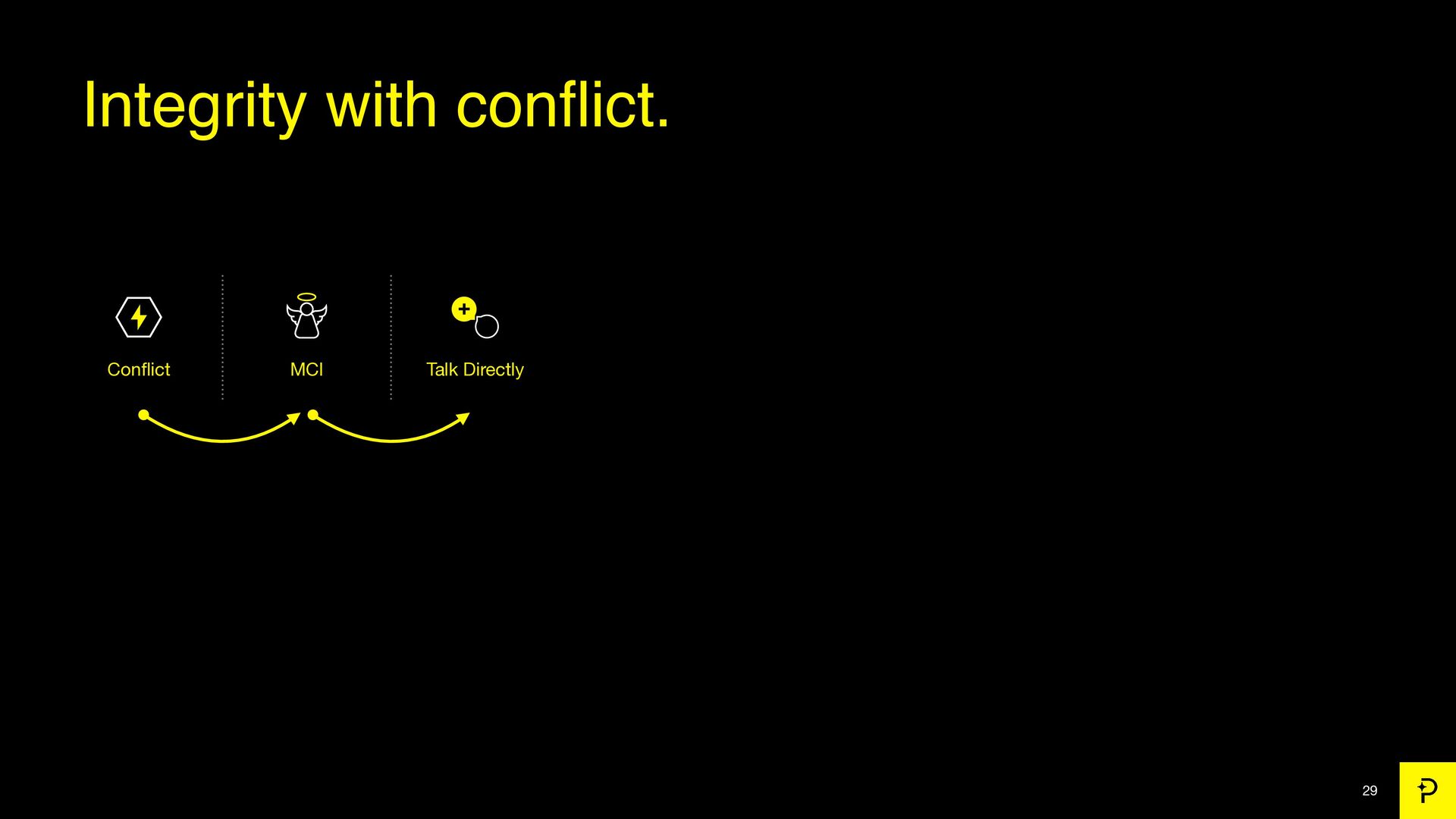
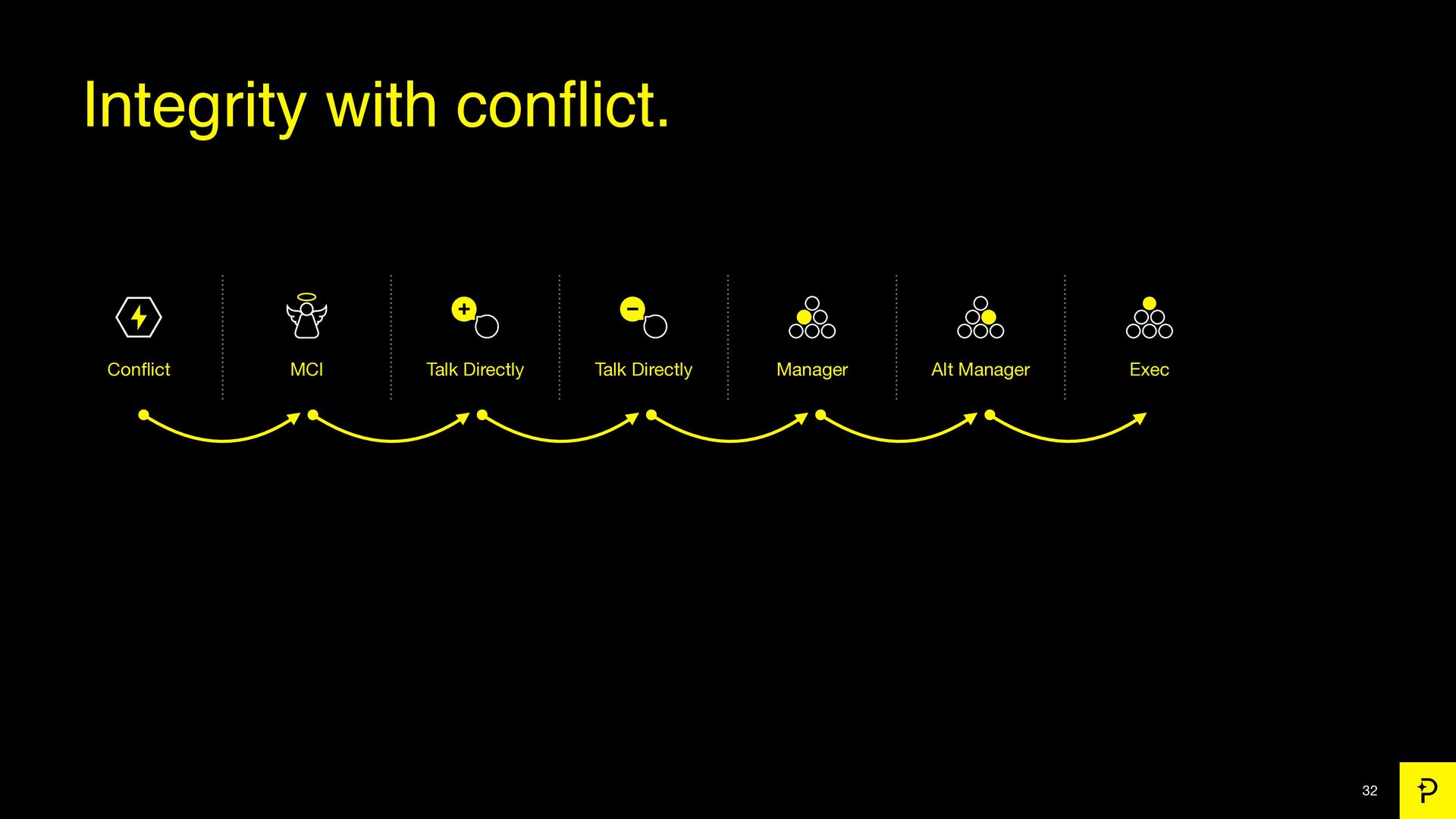
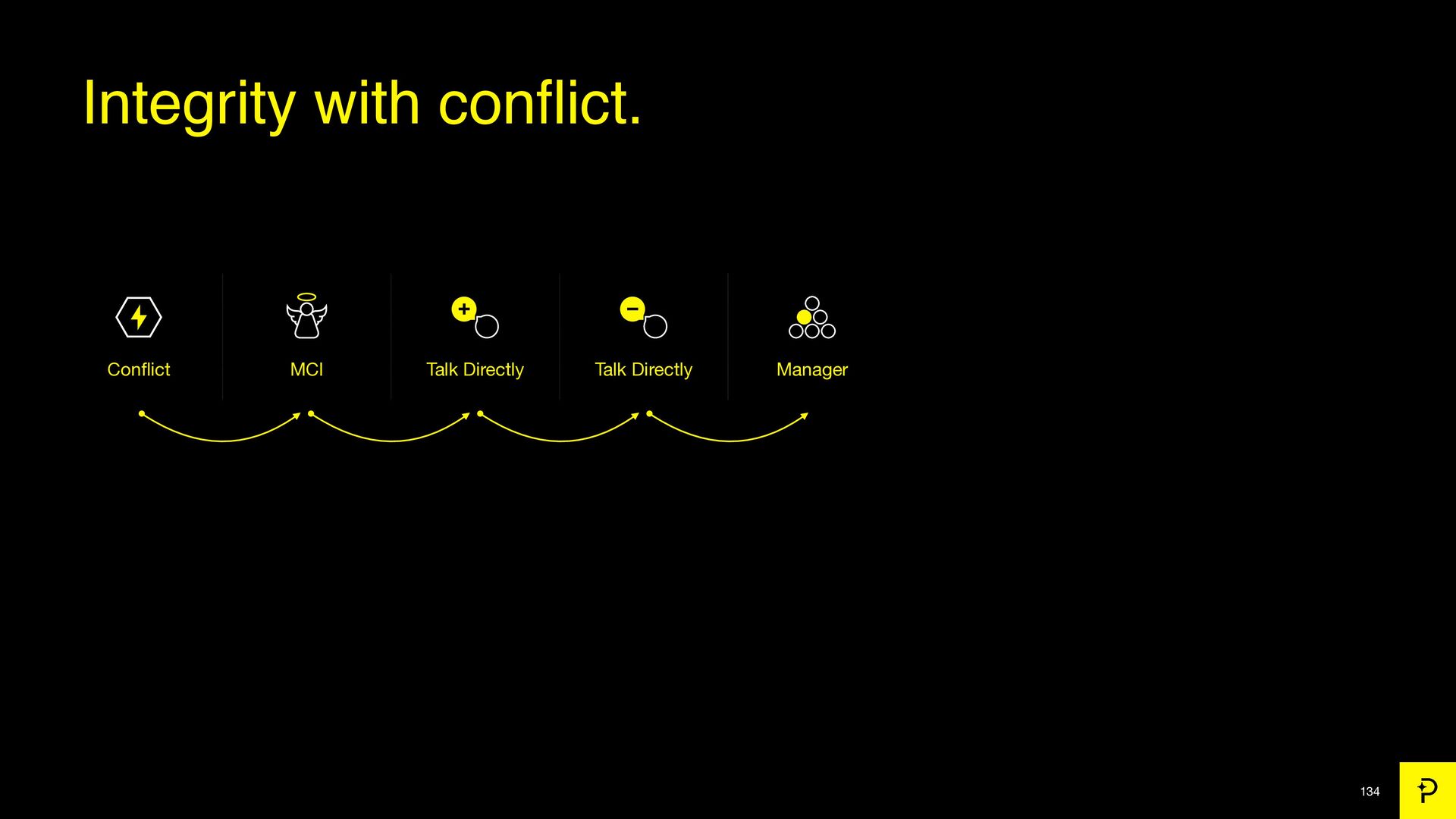
And what this basically means, and I'll explain a little bit more in a second, but to give you a little bit of context, what it means is that when you have a conflict with someone, you essentially give them the benefit of the doubt.
You're both adults presumably because we hired the right people. Yes. There's gonna be conflict. Hopefully, it's not, like, volatile conflict. But when you handle that conflict, give that person that you respect because you work with them, they're good at their job, the most charitable interpretation of whatever happens.
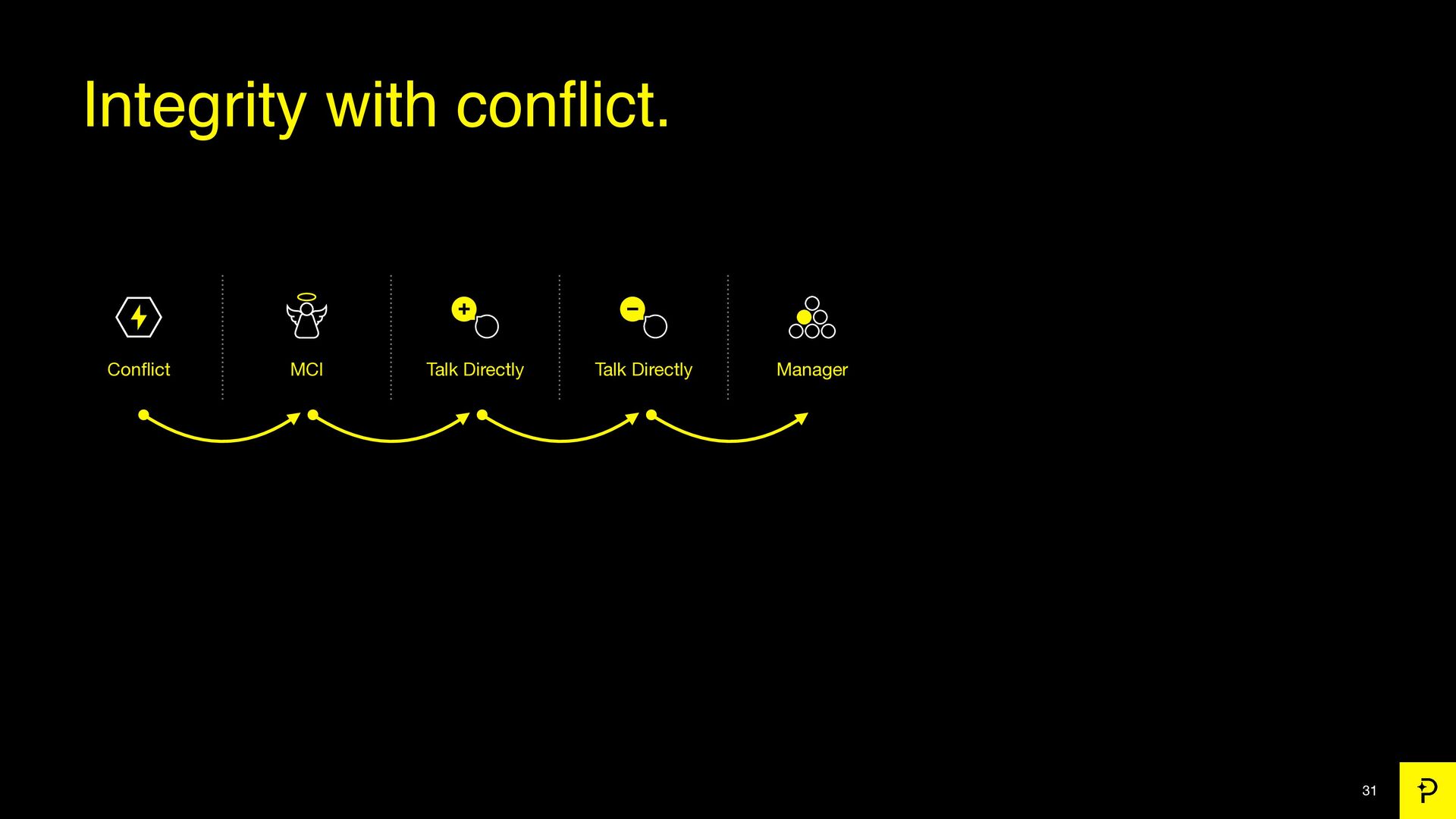
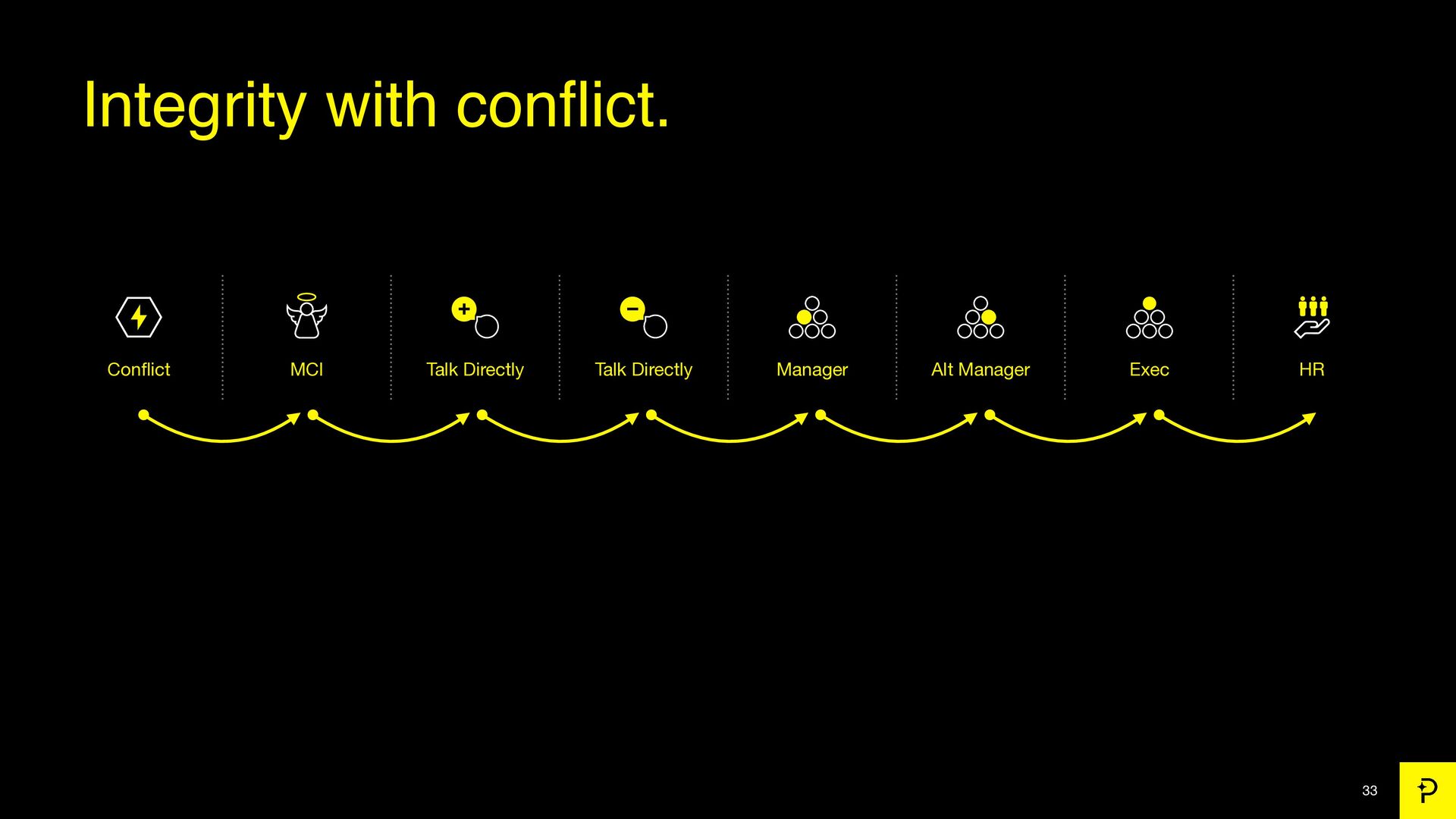
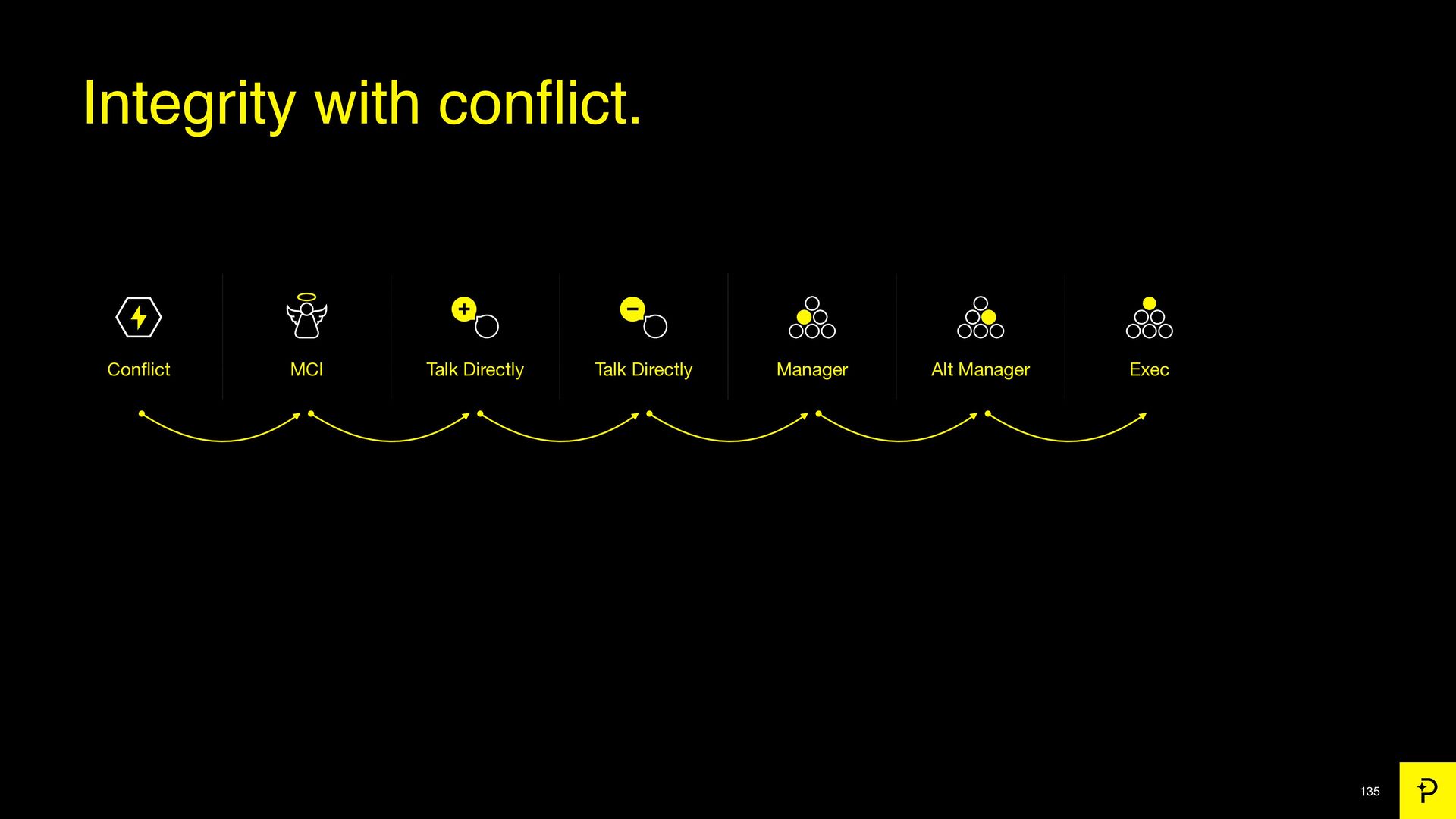
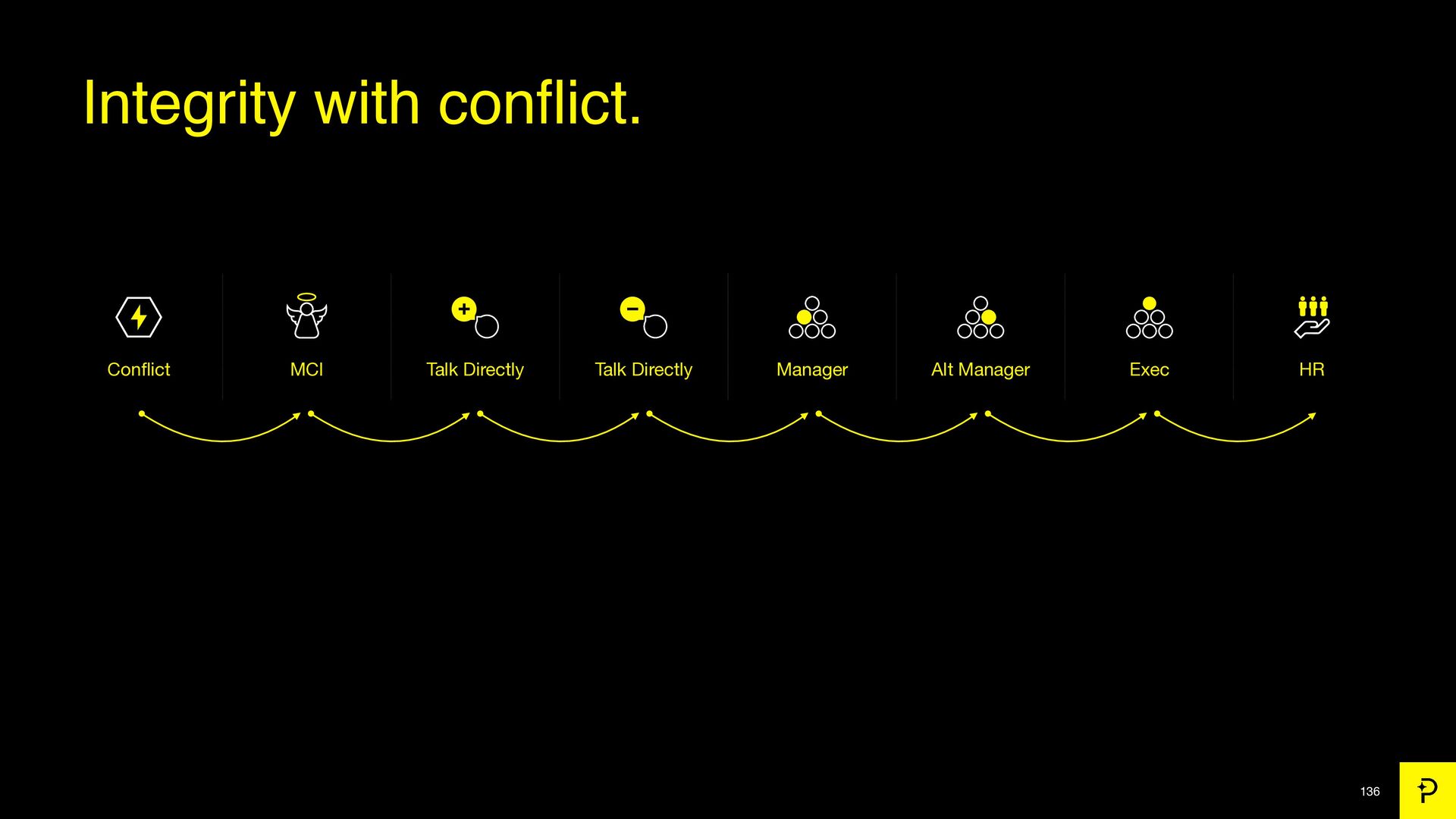
And if you can't, go find a manager, go find HR, whatever it is. But that's the order of operations. And so I have a story. It is the girl's story. And, it's a little controversial, so please give me the most charitable interpretation because I'm not going to be able to give you every idiosyncrasy of the story.
But we had a team of two. They were essentially a customer success team, a man and a woman. They're on a call with a customer in the customer's team. They hang up the call. The call went well. They start talking about the call, and these folks had worked together for a couple of years already.
They hang out outside of work with their significant others. They're very friendly, good friends inside and outside of work. Well, they get off the call, the man turns to the woman after they start kind of recapping, and he goes, who is the girl that they added to the call?
The woman throws down her notebook, audibly gets upset, storms off. The man is like, I don't I don't know what happened. She goes to HR. She tells our HR person, ProfitWell needs to write a memo about that you shouldn't use the word girl in a corporate setting.
Needs to write a Slack channel message from Patrick from the exec team. We need a training for people to come in and talk about these things. And ultimately, we need to make sure this is written throughout ProfitWell. Interesting. Right? How many of you think the woman in this case is right?
Be brave. It's okay. How many of you think she's not right? Be brave. It's okay. Okay. I set all of you up there. She's right and she's wrong, and let me explain. She's absolutely right that in a corporate professional setting, using the term girl is infantilizing and is condescending.
Right? But when I went and spoke with her, because I wanted to understand, and I said, hey. Not gonna use names, but so I'm gonna describe him as man. Did did man has he has he done this before? No. Did did he do it in a, like, very condescending manner? No.
Did like, is this a problem at Prophet? Have you seen this ever before? Nope, I've never seen it. This is the first time. Okay. Myself as a man, I'm like, I don't know. He says, I know not to do this, but is this like huge deal?
It seems like this is a really, really big deal, right? So I ask a couple other women in the office, and I don't explain the situation. I'm like, hey, I'm just trying to understand a little bit, like, how do you see this? And we have some people who are like, it's not a huge deal, but it's not nothing.
And then there's a couple people who are like, this is not a big deal at all. Right? And I illustrate this example because no one's right or wrong here. It's a level of preference, but it's also a level of protection for a very dramatic situation.
Like, that he was doing this condescendingly, imagine he was doing this over and over again. Like, that's a ****** workplace. Right? Not something that probably underpins a bad culture. And so we looked at this, and what we did was terrible. What we ended up doing, it made no one happy.
We brought in HR, me, two people. We said, hey, you know, this is what's going on. We talked about it a little bit. The man in this case is like, what the hell is happening? He's like, I didn't I'm so sorry. Like, first thing I was, I'm so sorry. I had no idea.
Like, I'm so sorry. Like, super apologetic. But we're like, hey, man. Gotta be careful. I shouldn't be doing this. And then for the woman, like, we were like, listen. Like, I it seemed like he had really good intent. He didn't even know. I understand you don't think you should have to educate him, which I totally understand.
But, like, I don't know. We're adults. You've never had a problem. There's never been a problem at the company, you said. I think it's like, you guys got to figure this out together. And so she's aggravated because she wants all of these other things that we're just not going to do, right?
So tricky situation. Right? And it wasn't this situation, but it was kind of an amalgamation of a couple of other situations that led us to what do we want Profitable to be? And what we kind of came to terms with is and what I think is really important for you to think about is you need to design your culture for protecting the ninety nine point nine nine percent of occurrences.
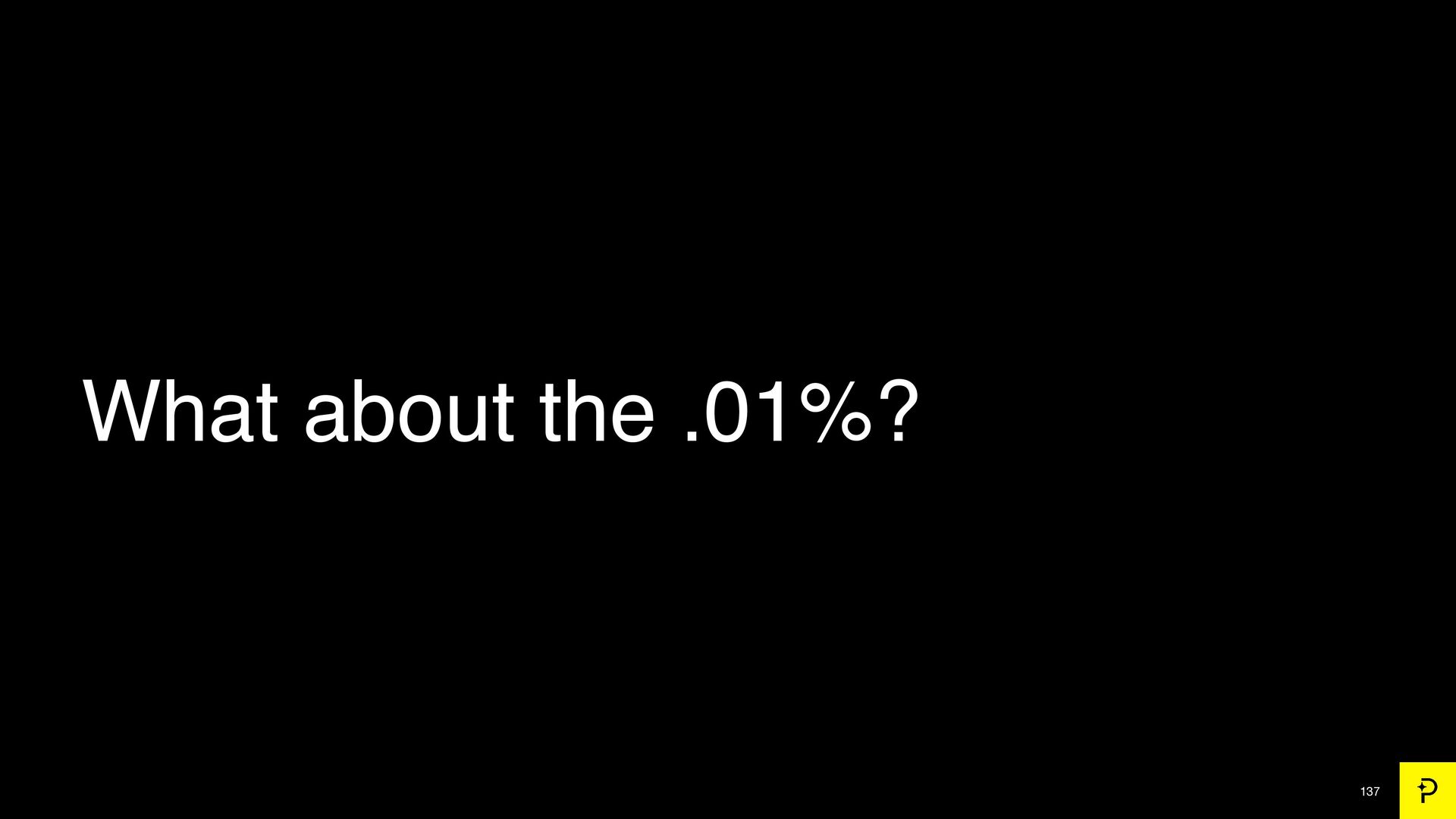
And I know that's hard because there are some point o one percent occurrences, and we're going to talk about those in a second. But we start from the premise that we're hiring adults, and those adults should handle conflict in a certain way. It does not mean that this situation with different contexts, all of a sudden we don't treat like a point o one percent situation, but it does mean what are the things that we're going to trend towards?
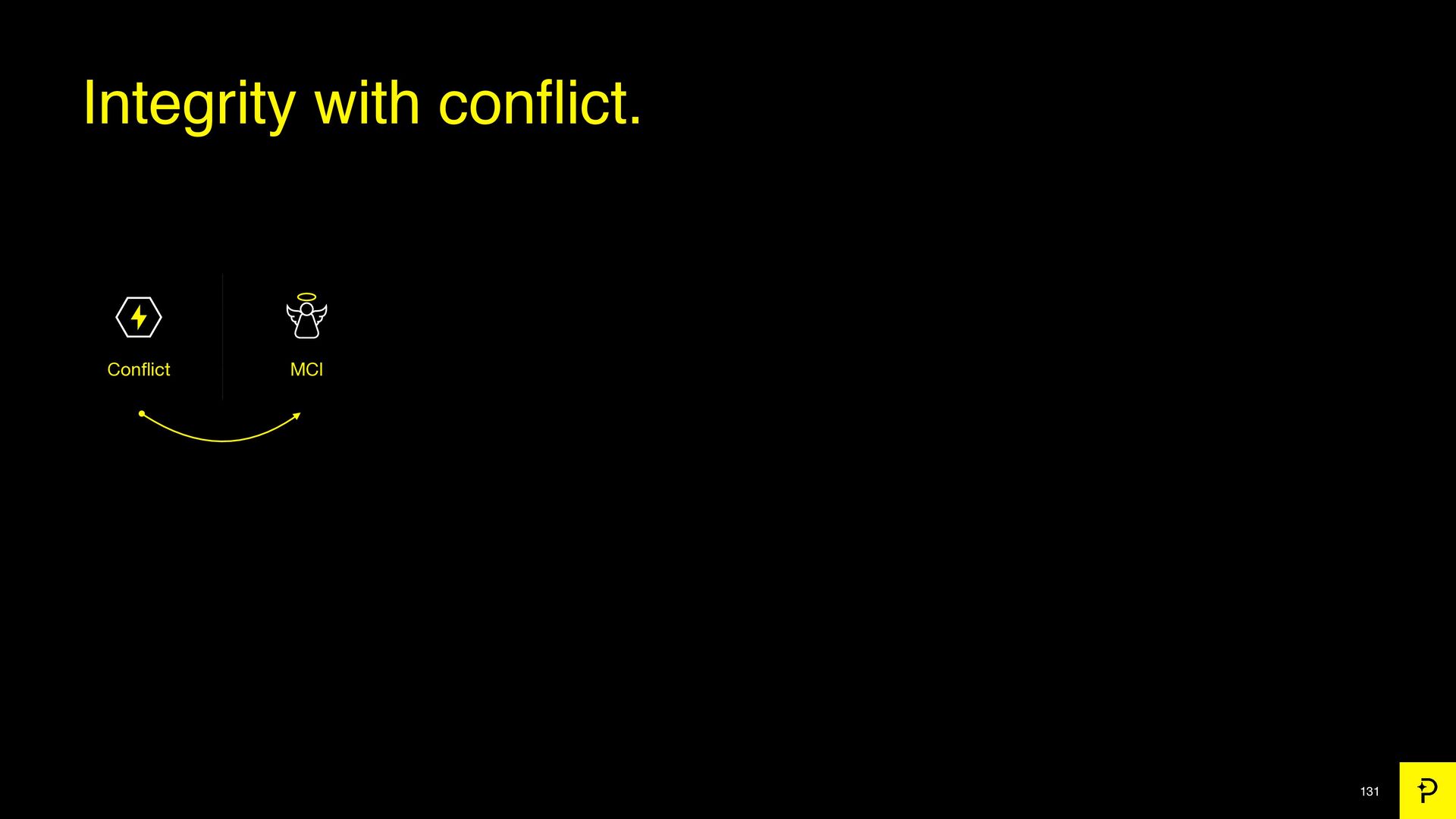
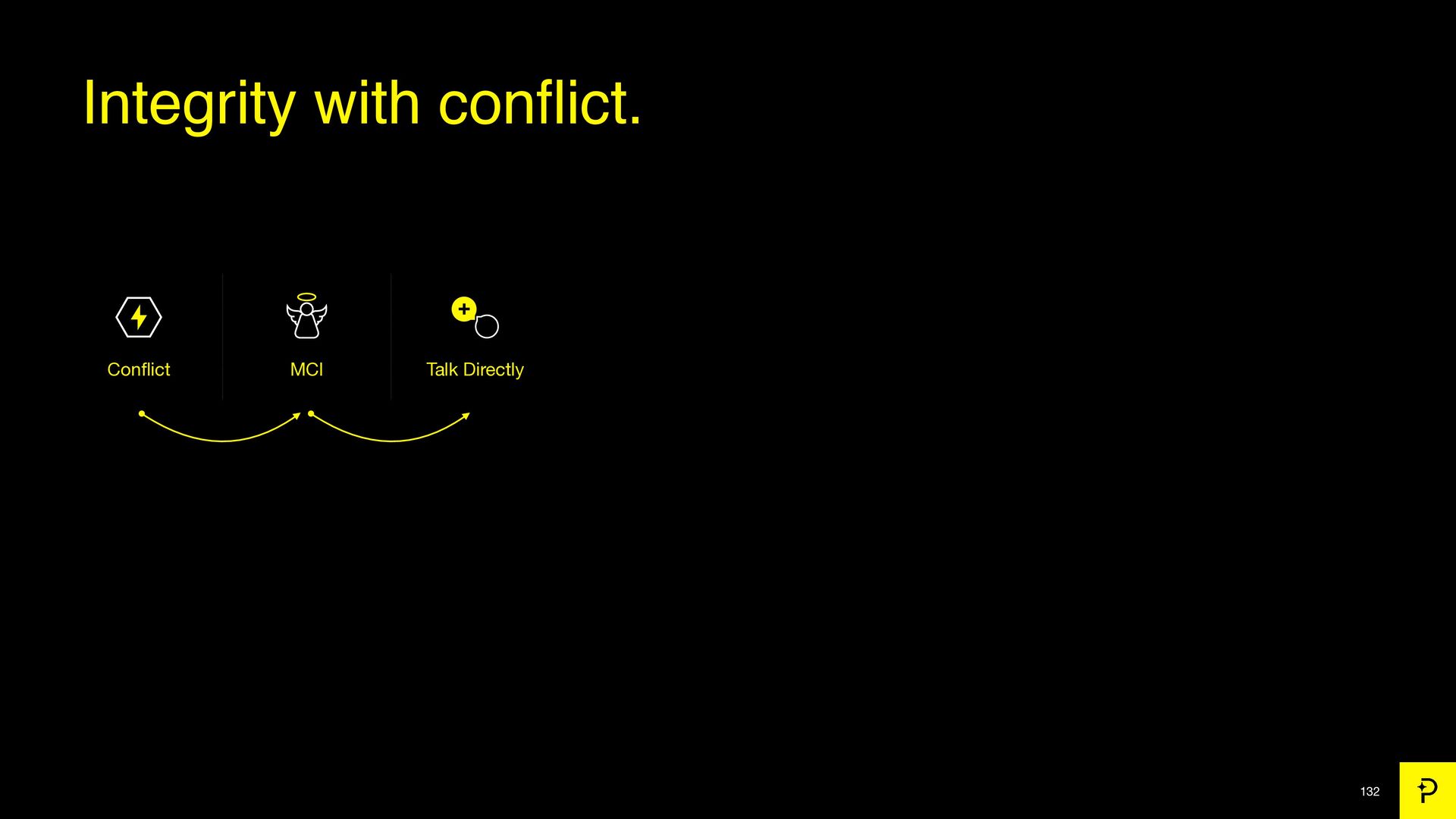
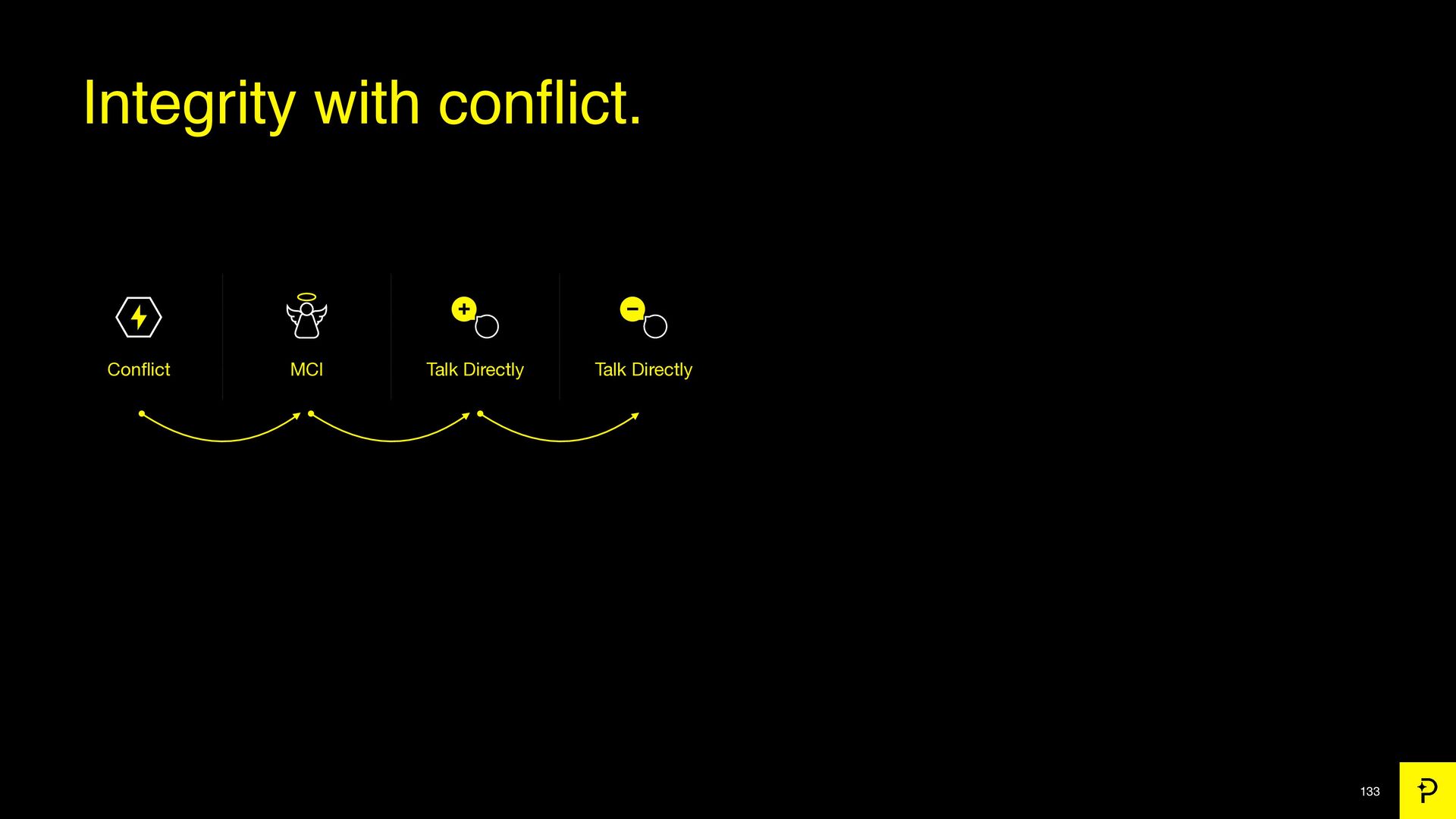
And what we came up with was this most charitable interpretation concept, which is not something we invented, but something that we kind of took from philosophy, which was in that situation, if someone if you were upset with someone, the first thing you should do is try to give them the most charitable interpretation.
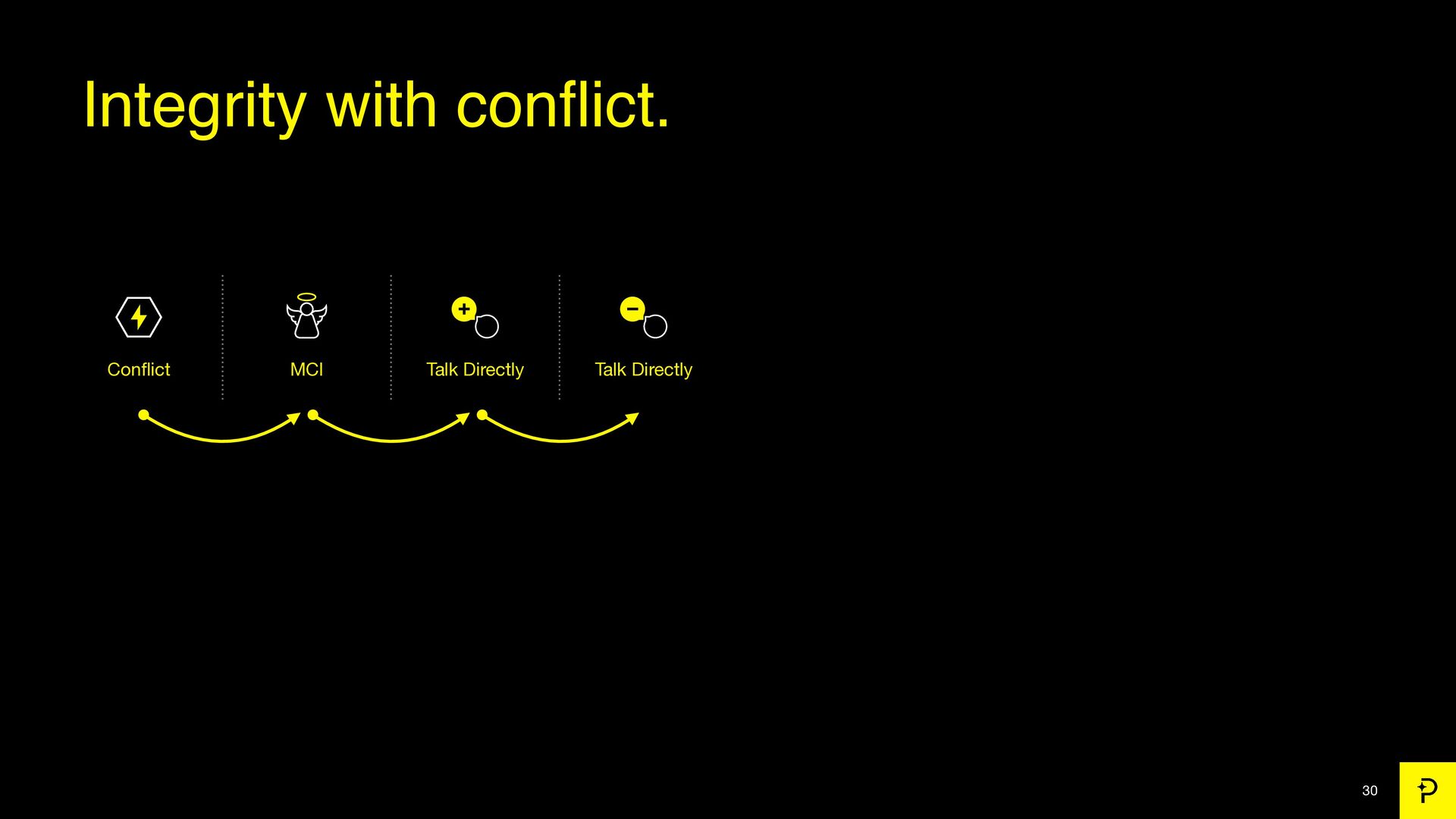
Hey, he hasn't done this before. Maybe he doesn't know this really bothers me. Maybe he doesn't even know that this is like a thing. It's not really bothering me that much. Like, I'm gonna move on. Or if it's continuing to happen or it bothers you on the first occasion, have a conversation with him.
Have a conversation, and maybe that's like a really positive conversation, maybe that's a really negative conversation, but again, your adults working together work together. Now in some cases, it's all of a sudden gonna be like, can't give the person the benefit of the doubt.
I can't have a conversation with them because this has been happening, or maybe it's the first time it's happened, but I just don't feel comfortable. That's okay. Go to a manager. I don't feel comfortable going to that manager? Great. There's other managers. There's other execs.
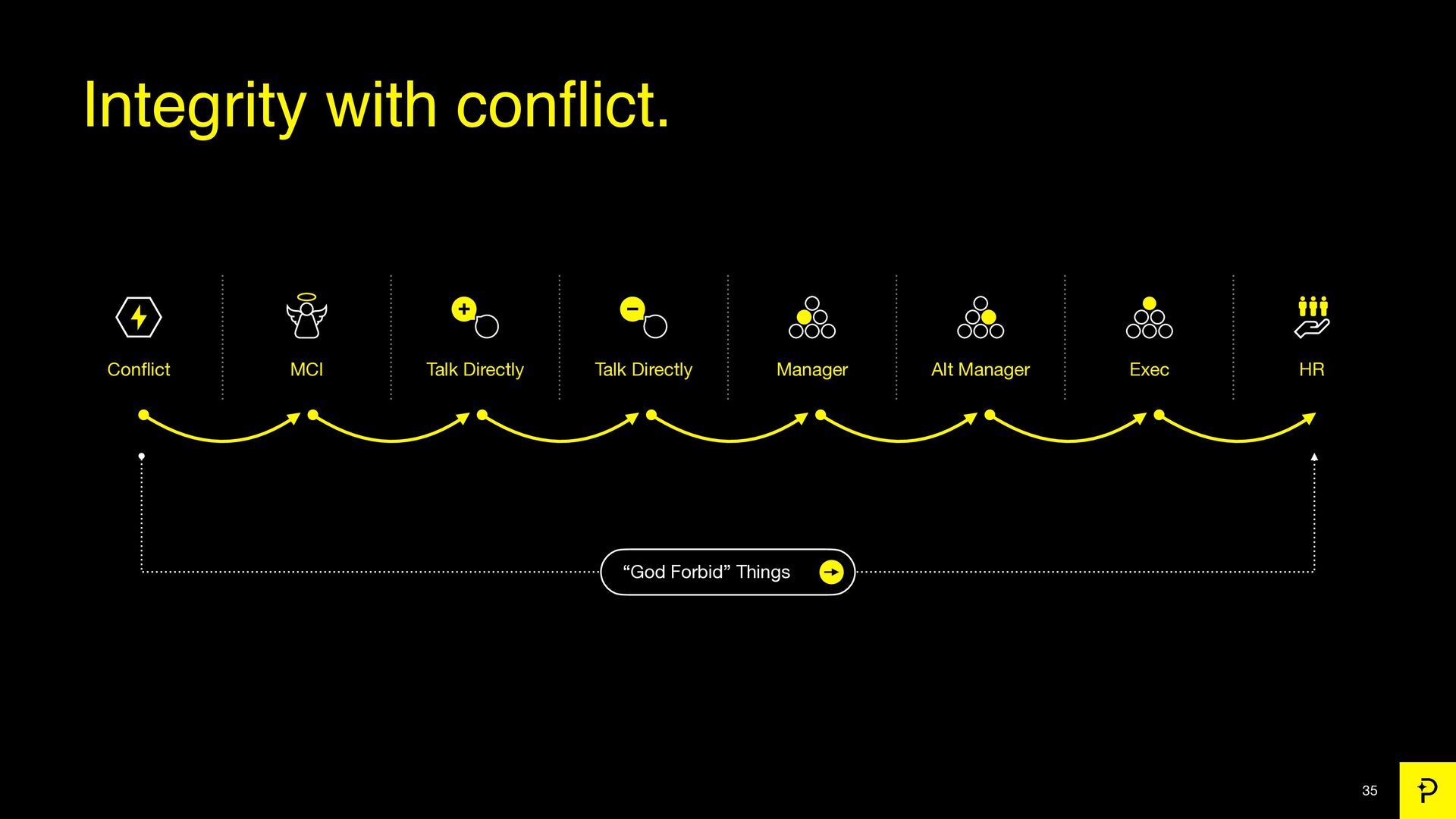
And then the last part of the chain is HR. Right? And the reason that this is powerful and the the detractors against this go, well, what if there's a bad thing? Right? That's that's not something that we're talking about here. We're talking about the ninety nine percent of occurrences.
This is the order of operations. Right? It does not mean that you have to go through each one of these. You can skip to one. It makes you more comfortable. We trust you as an adult to have the best judgment in your work capacity to figure out where you should go.
And we're a little bit more like, hey. If you're junior, maybe skip some steps because you don't really understand quite yet how to have those conversations. If you're an exec, we expect this, as long as it's not a point o one percent conversation, we expect you to go through this order of operations or try your darndest.
And for the point o one percent conversations, which I'm sure we can all assume, go right to HR. Right? And what we should have done is we should have had a conversation with the team at large when we hired people, because it should happen when you hire someone, about this is how we handle conflict.
We basically want you guys to be adults. Use your best judgment. Obviously, if it's a little bit more outlandish, you gotta skip steps, you gotta go right to HR, that's totally fine. But we wanna coach you to handle conflict in this particular way.
And what's really interesting is that this is not easy for some people. There's some of you in this room who are like, this ******* guy sucks. Right? And I want you to know, I am not saying all companies should do this. I am not saying that you can do this as you get larger.
There are some sizes where you're just not gonna be able to do something this, or you have to keep it amongst certain teams because this just isn't practical anymore just given all the surface area and obviously trying to CYA on certain things. Right?
But it's one of those things where you come up with your values or you come up with your culture, whether it's something like this or whether it's something completely different, you have to make sure you stand your ground. So in this particular case, when we had people who were really struggling with this concept, we would say, listen, we are not a great place for you.
That does not mean we're better than you. That does not mean you're better than us. This is how we run our culture, and we totally recognize there are great companies that have different cultures. Let's, like, let you find that place. We'll give you a generous severance, or we'll let you work until you can find that new place.
We'll even help you because we know companies that run-in very different place or very different ways in the same places that we are. It's super, super important. The other piece of these values, though, is you have to make sure you're hiring properly. And this was the hardest thing to understand because we all talk about how important recruiting is.
We all talk about how important hiring is, But then our hiring is just skill focused, and all of sudden when it comes to values, it's like, oh, we'll figure it out. And then we have those VPs who are just not nice or just not effective, and we're sitting there and like, oh, well, we can't lose him.
We just we just hired him. Or she's really, really good at this stuff, but, you know, she's not really what we want for the culture. That's really harm. So a couple of things I did for the most charitable interpretation is I would ask questions like this in the final interviews.
What are the five happiest moments of your life? I'd ask, what are two of the top ten worst moments of your life? You don't have to give me the the worst, but two of the top ten. Right? Just give me a couple of bad moments.
And what I found with these types of questions is that someone who was uncomfortable with these questions, again, not worse than us, not better than us, wasn't gonna fit into the culture because these are a little personal, and they don't have to go deeply personal.
Like, I'm not going to verify anything, obviously. But it's one of those things that's really, really important to kind of suss things out. So I think it's really, really important to define these things. You can disagree with the actual concepts that we're talking about, but you've got to define your culture and who you're for and who you're not.
Sound good? Have I lost all of you? Alright. Cool. I'm trying not to alienate you, just to let you know. But I'm American, so it's very natural. So I'm just letting you know. Alright. Let's talk about chaos. Let's lighten the mood a little bit.
Alright? So alignment is everything. Right? Who here has heard about alignment, read an article about it, read about communication? Right? Alright. What's your alignment plan? Anyone have an alignment plan? Nope. You don't, because we didn't no one has one. Right? It's just how it works.
Right? Because it's like, yeah. Yeah. We need to align. Right? The problem that we ran into is that everyone would ask, what's the vision? And we would get pissed off as founders, not at them, but we would be like, oh, they don't see the freaking vision.
This is the vision. Right? This is where we're going. Didn't they read the seventeen page blog post I wrote? Like, don't they get it? Right? And it's like, of course they didn't. Right? Especially as you continue to grow because you are assuming as a founder and executive that like everything is up into the right, right?
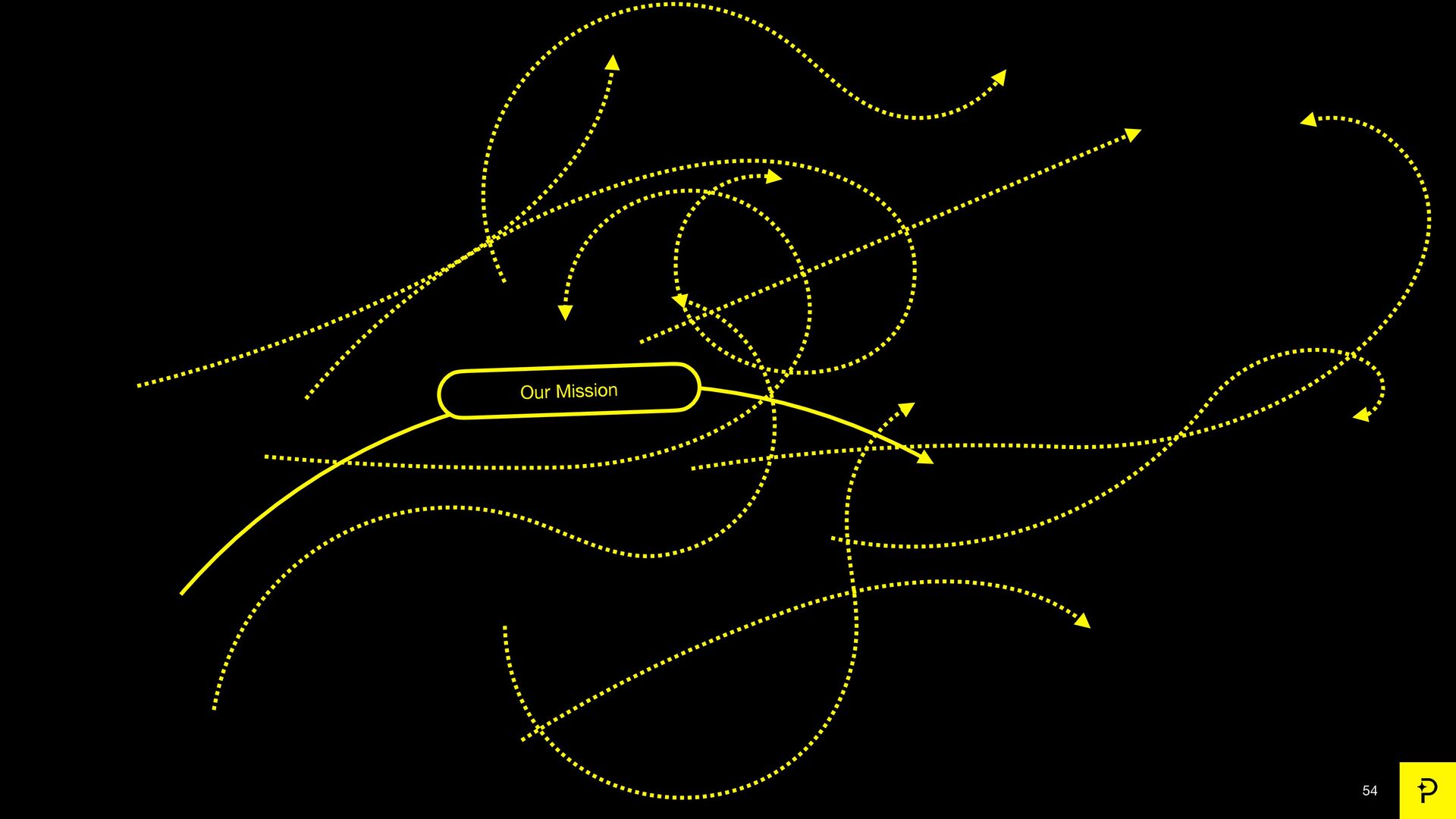
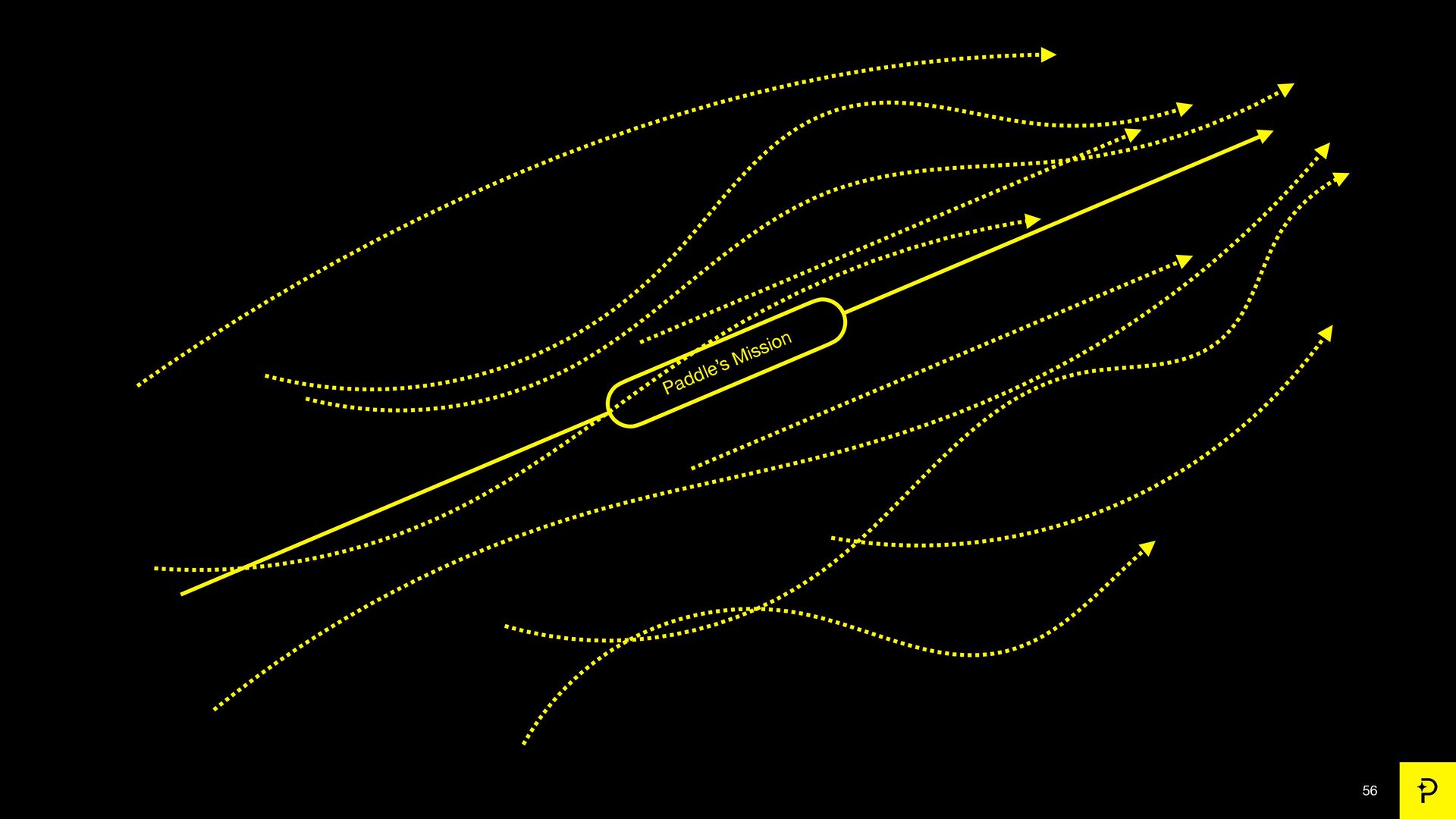
Everyone's aligned, right? We hire a couple people, everyone really gets it, right? Like everyone's moving in the same direction, right? Like everything's great. Yeah, you got like Charlie over in HR who like doesn't really understand what's going on. And like Jimmy in product who's kind of like going up.
But we'll have a conversation with Charlie. We'll have a conversation with Jimmy. We'll get him back on track. That's not reality. This is what reality looks like. Right? And every new person that you hire, it looks more and more like this. And what ends up happening is all of a sudden your mission starts to go like this because you think you're going up into the right, but like, obviously not everyone's moving in the same direction.
It's unrealistic to have them move truly in the same direction, but it's one of those things where you have to kind of coax them towards the right direction at least a little bit in order to avoid you spinning your wheels. Right? And so the thing is is, like, this is what we want.
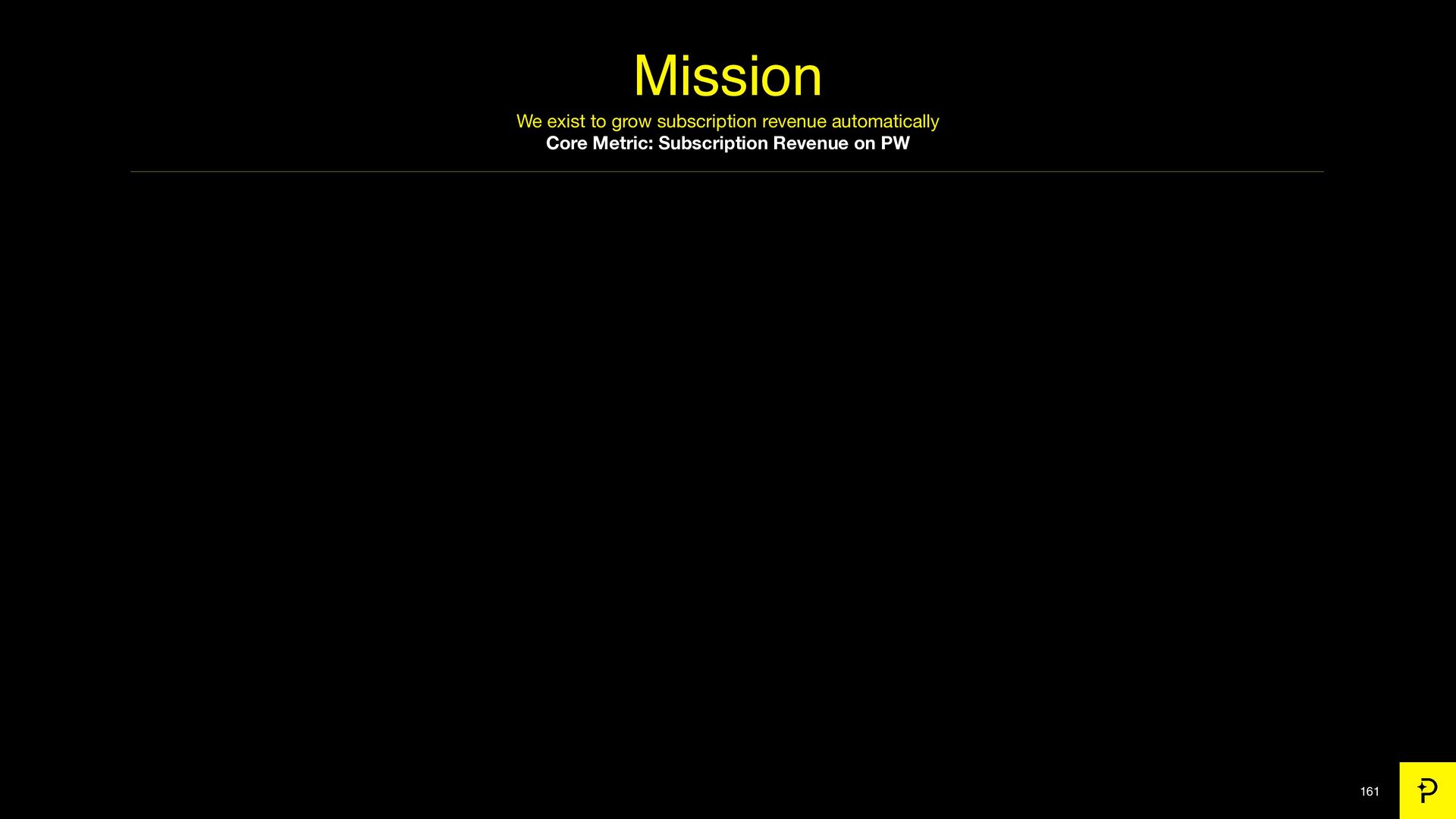
We want people to move forward. But you, as an exec, as a manager, even if you're just overseeing a small team, that's okay. You have to define what things look like. So you need a vision. Right? You need a vision and a mission.
I just literally combined the words mission and vision there. I don't know if you guys noticed that. I felt pretty cool for a second, and then I was like, oh, I'm really dehydrated after this red eye. So but you need a mission. Right?
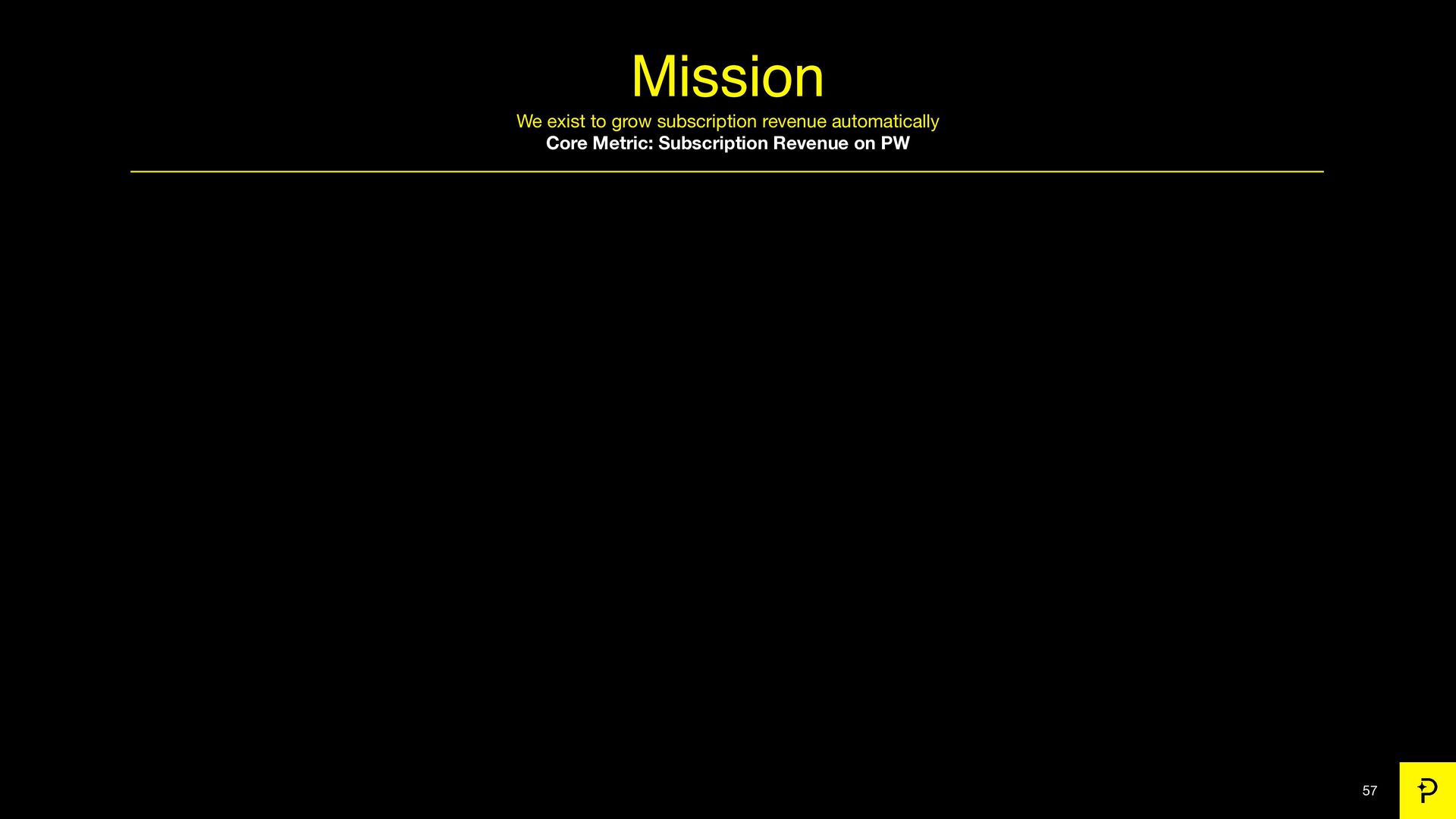
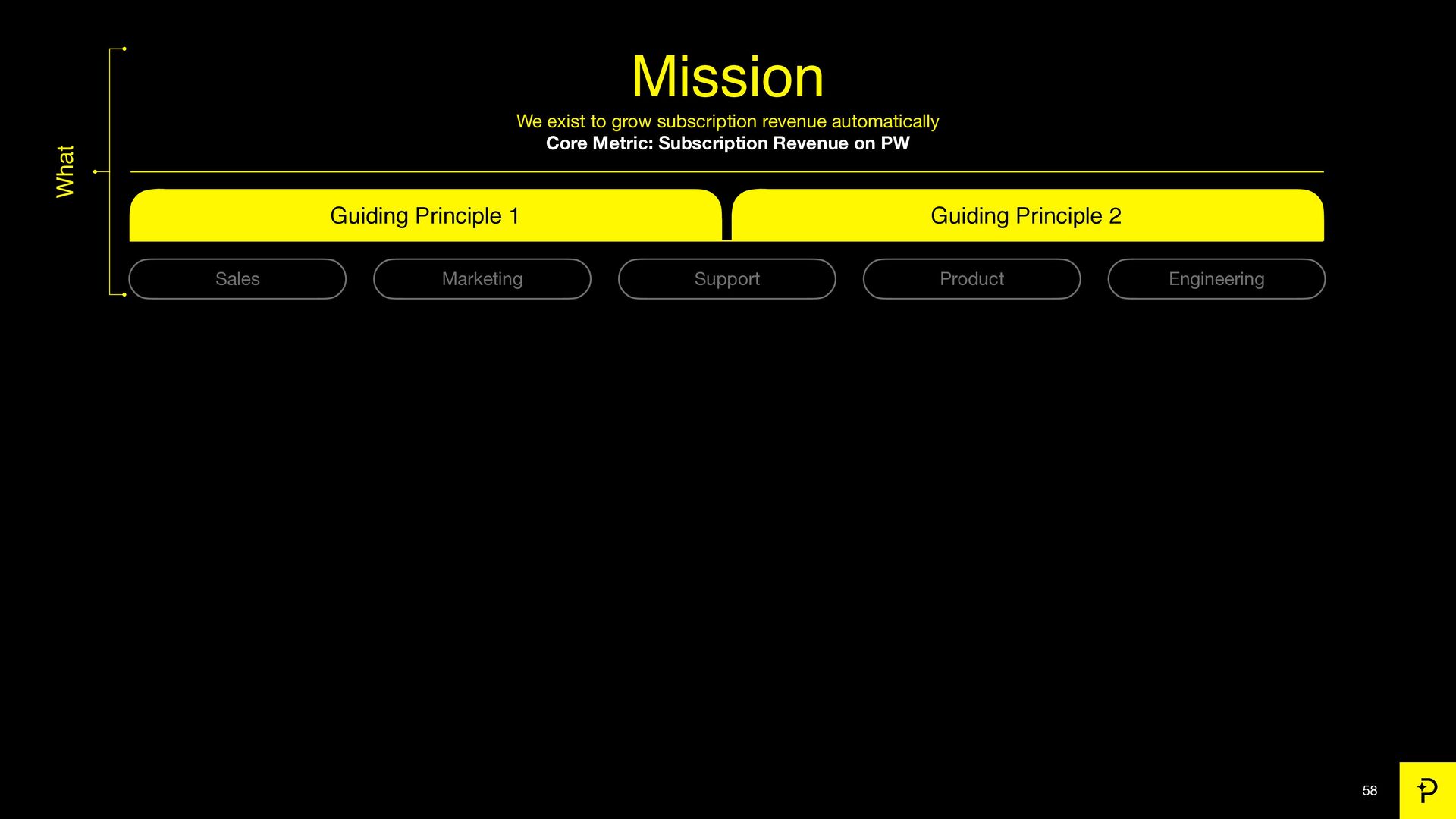
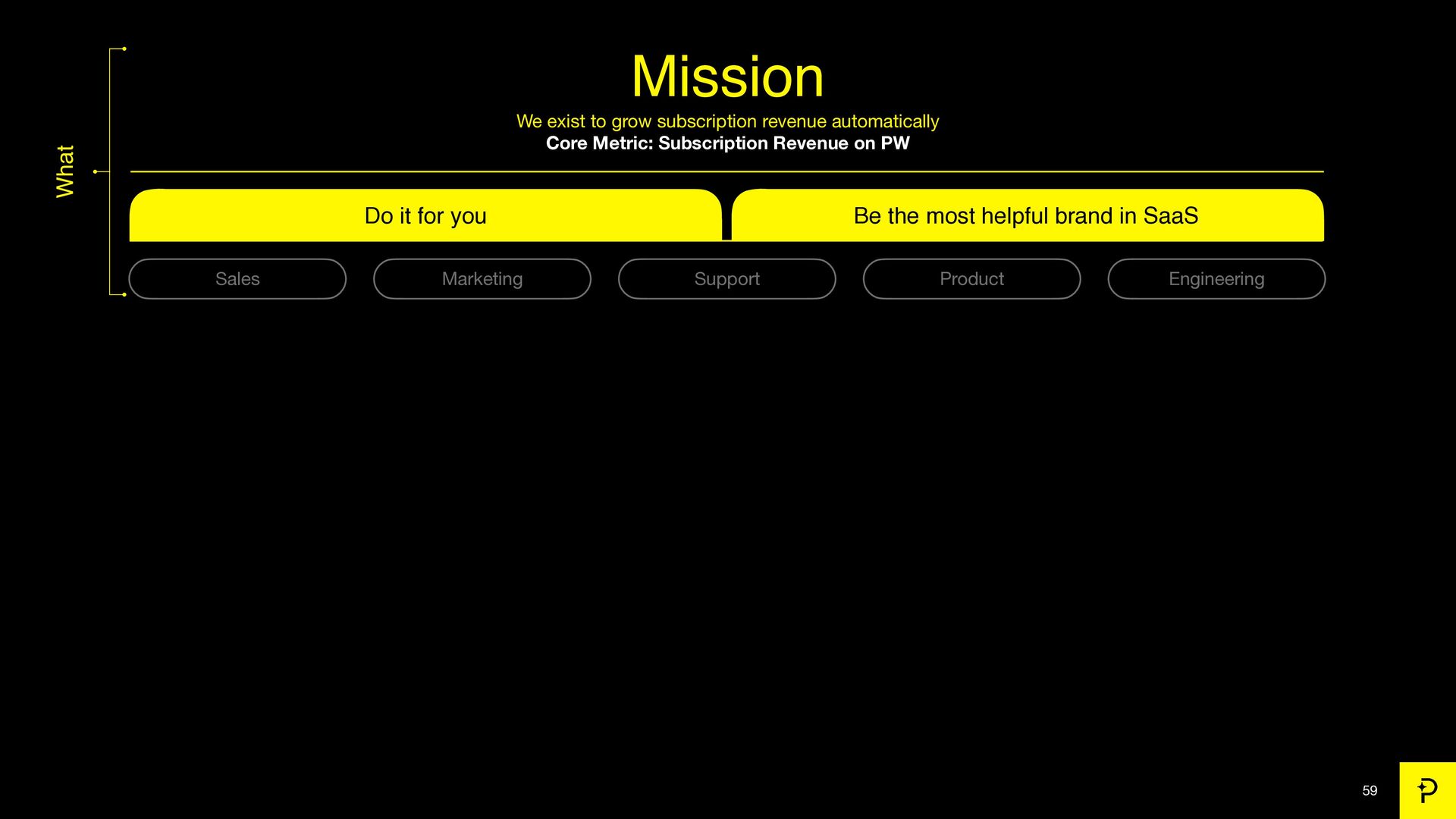
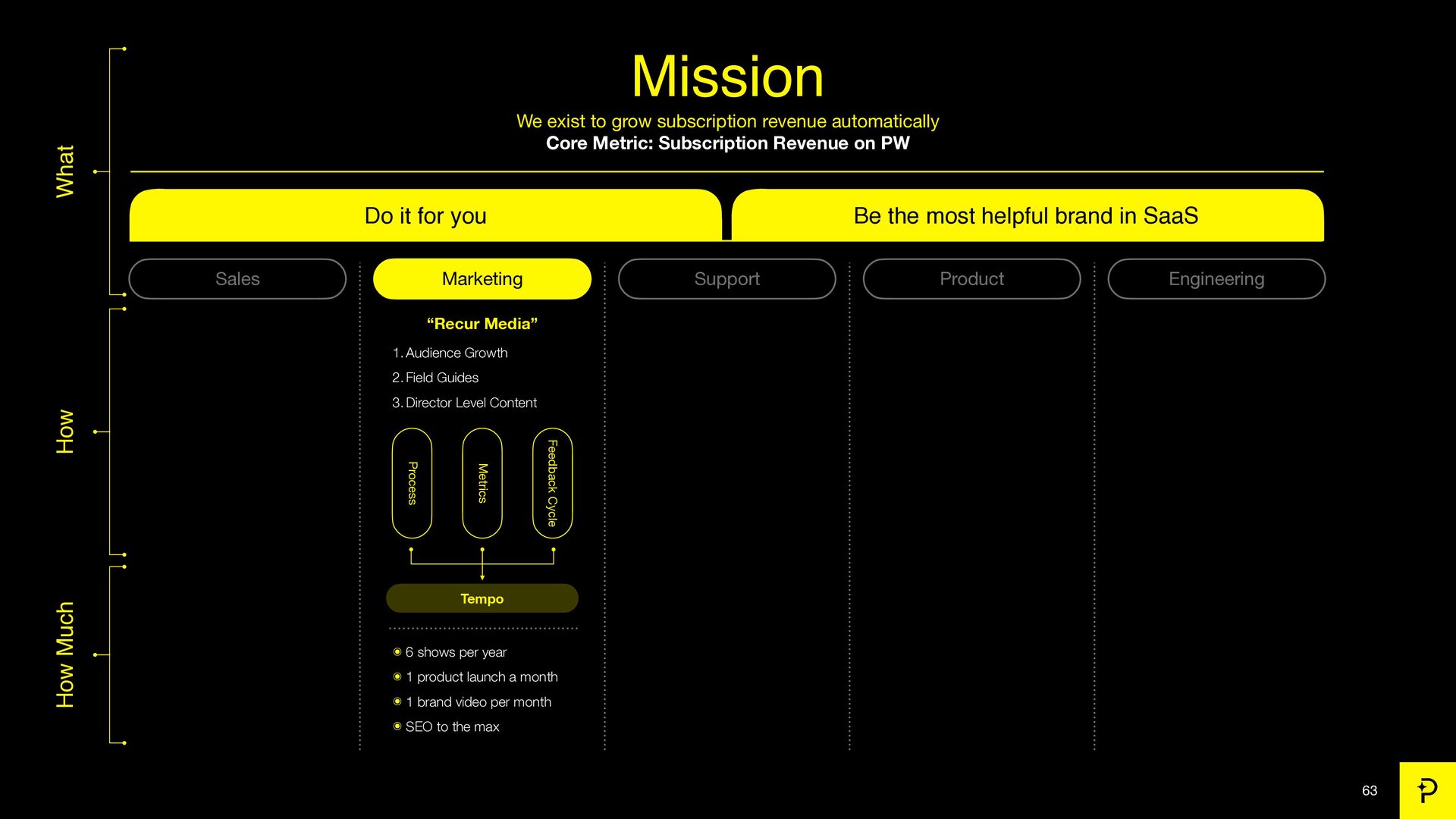
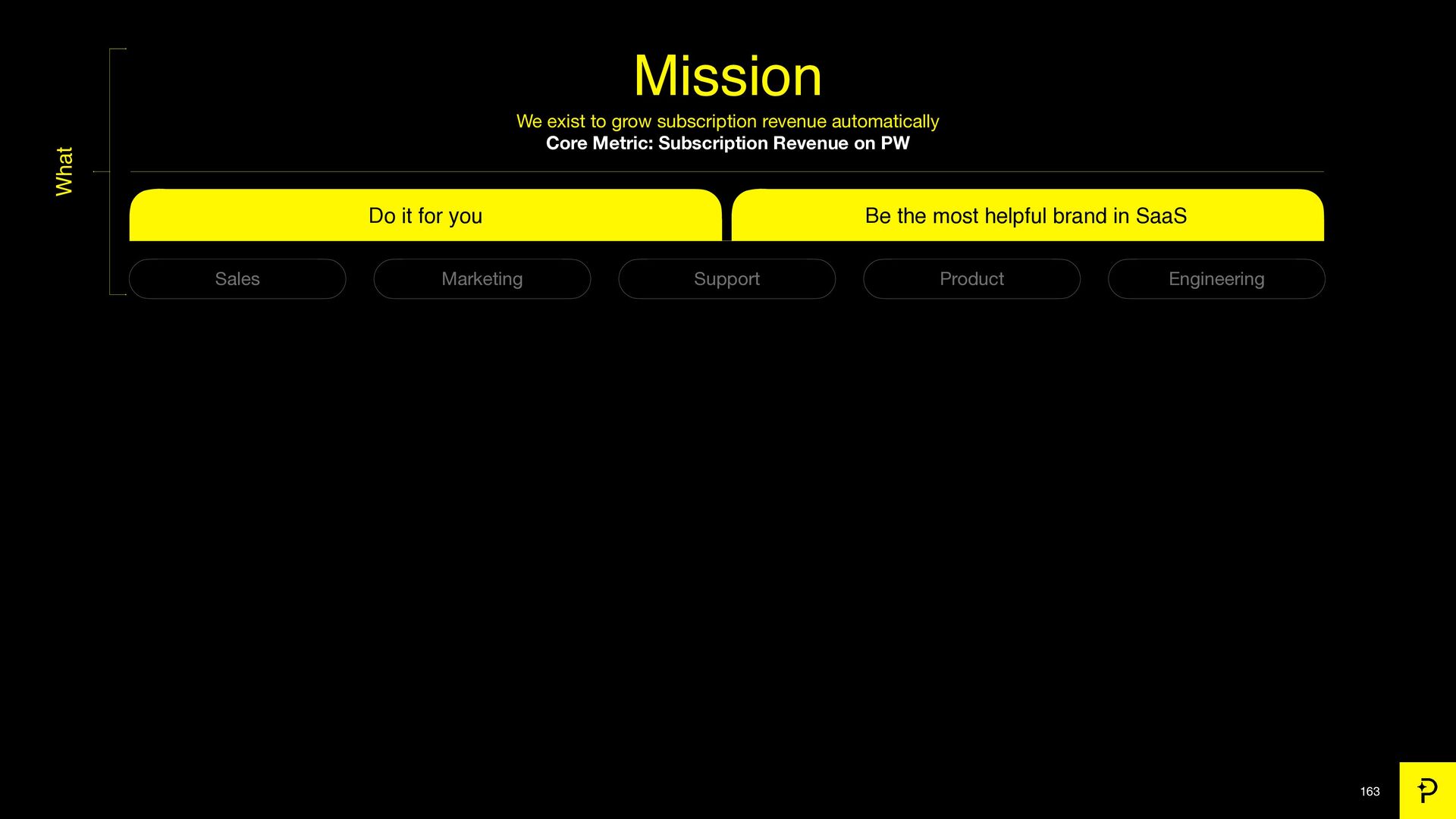
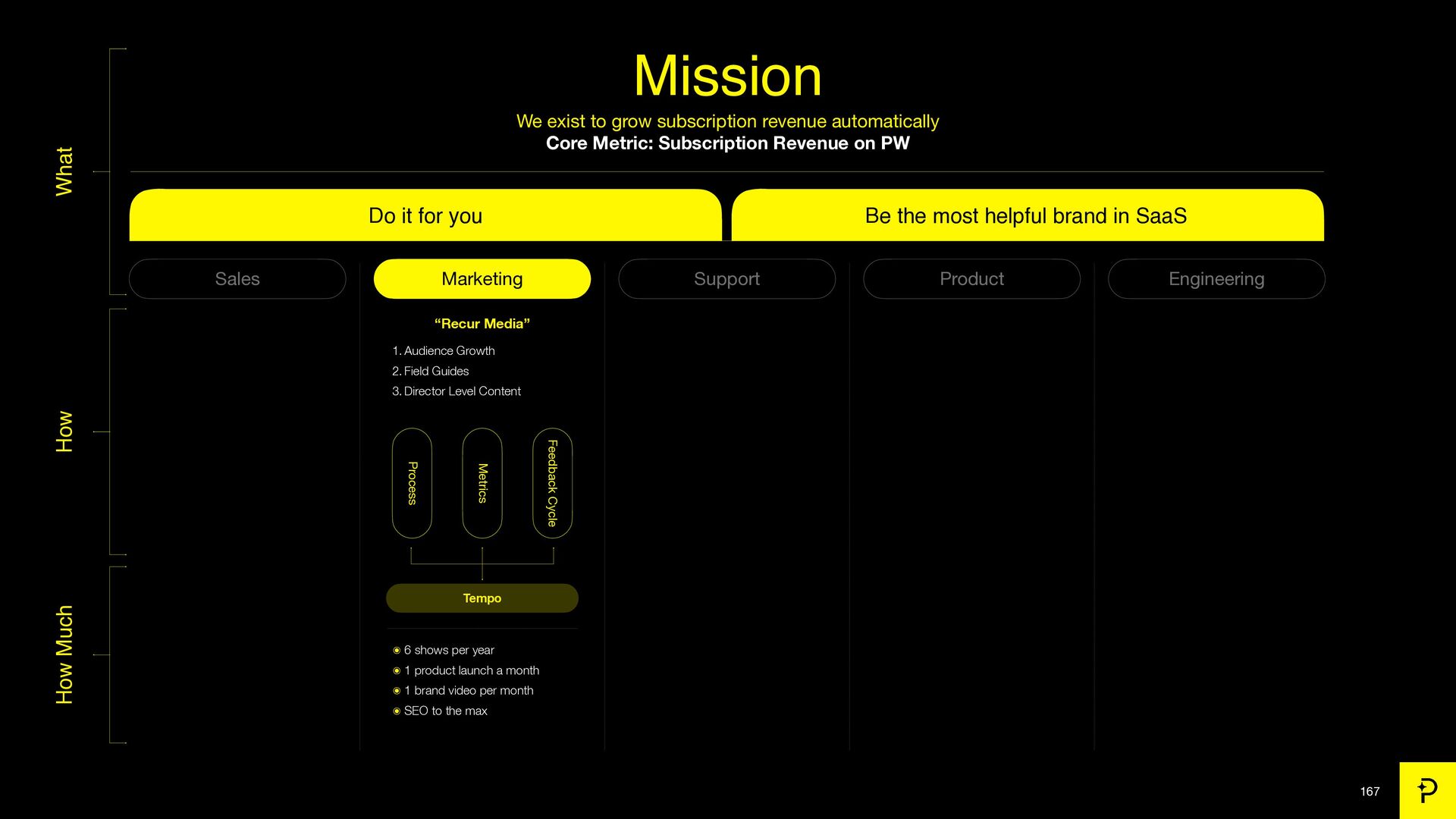
For us at ProfiWell, we exist to grow subscription companies or subscription revenue automatically. Right? All of a sudden, just with that sentence, hey, should we go do this thing? Well, does it help us get to the mission? Yep. Cool. Yeah. Let's go do it. Or we have these five things.
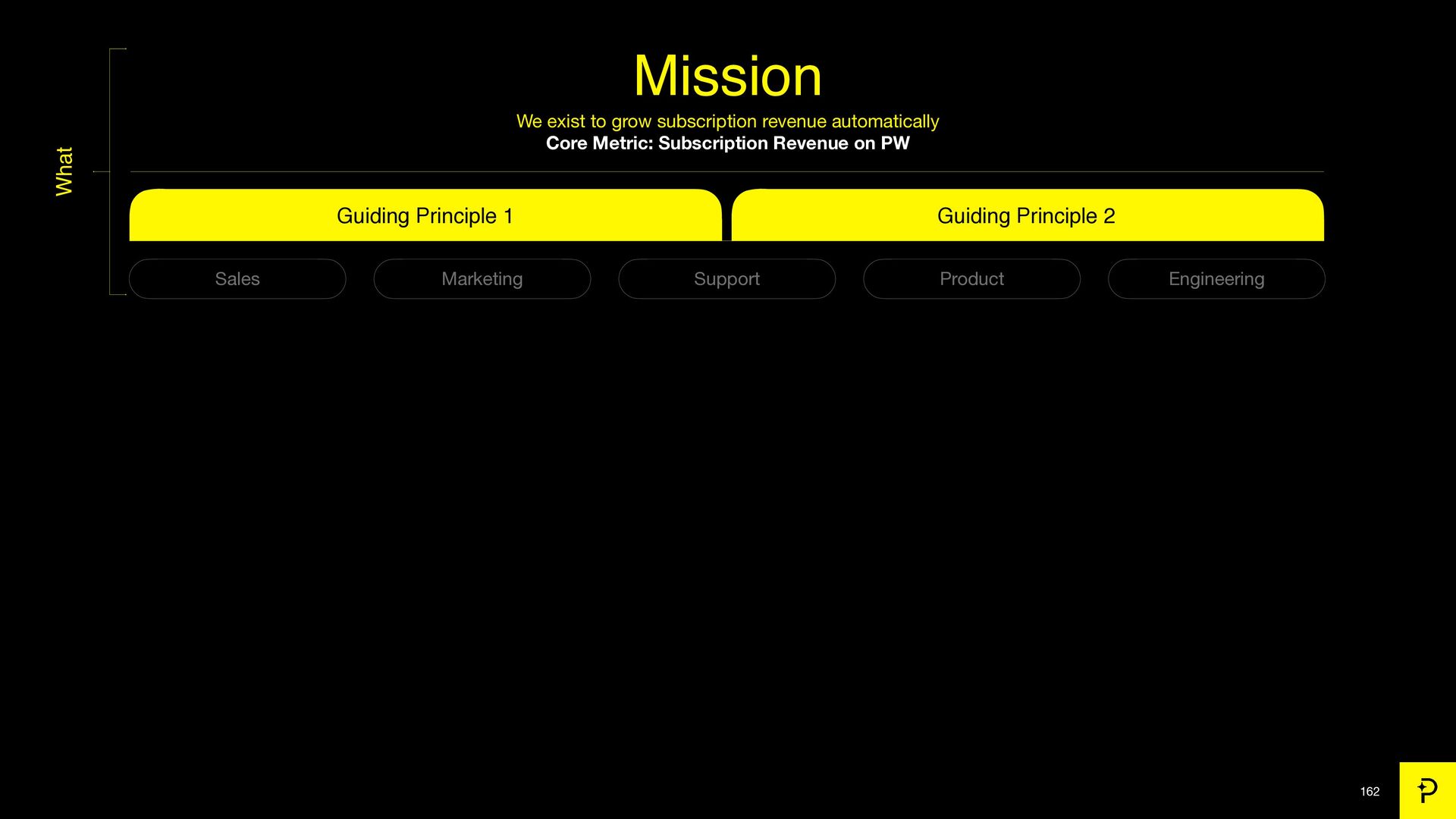
Let's figure out what we should prioritize. Let's figure out what we should do. It's a little broad, though. Right? So you need principles. Right? What are the guiding principles? How are we actually gonna get there? And two, that I'm kind of bastardizing where we're going with Paddle with ProfitWell here, but again, we're very aligned.
That's why it kinda works. We wanna be the most helpful brand in SaaS, and we wanna make sure we do it for you when it comes to everything around the world of ProfitWell and Paddle. Well, does that initiative do those two things, and does it get to our mission?
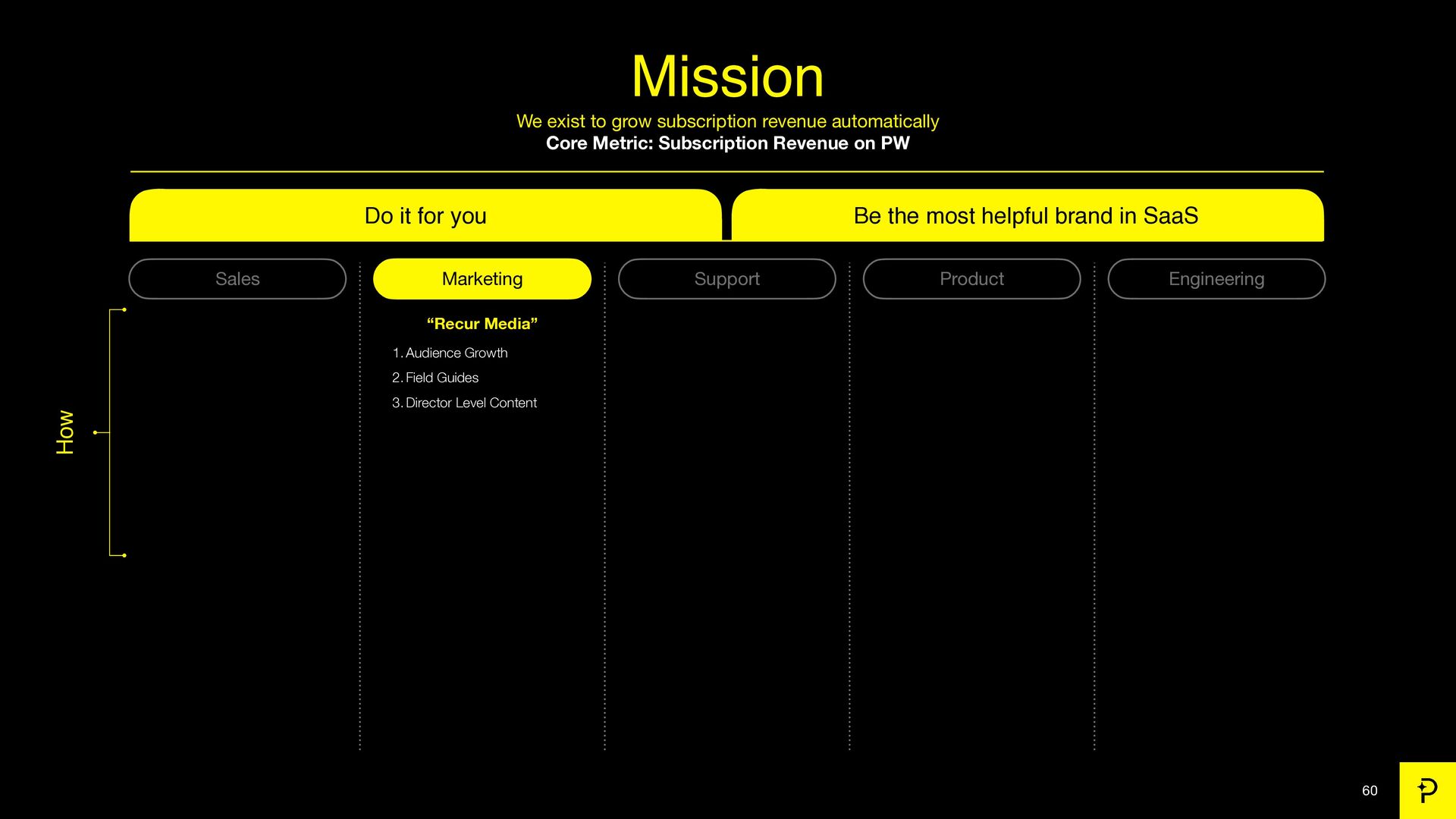
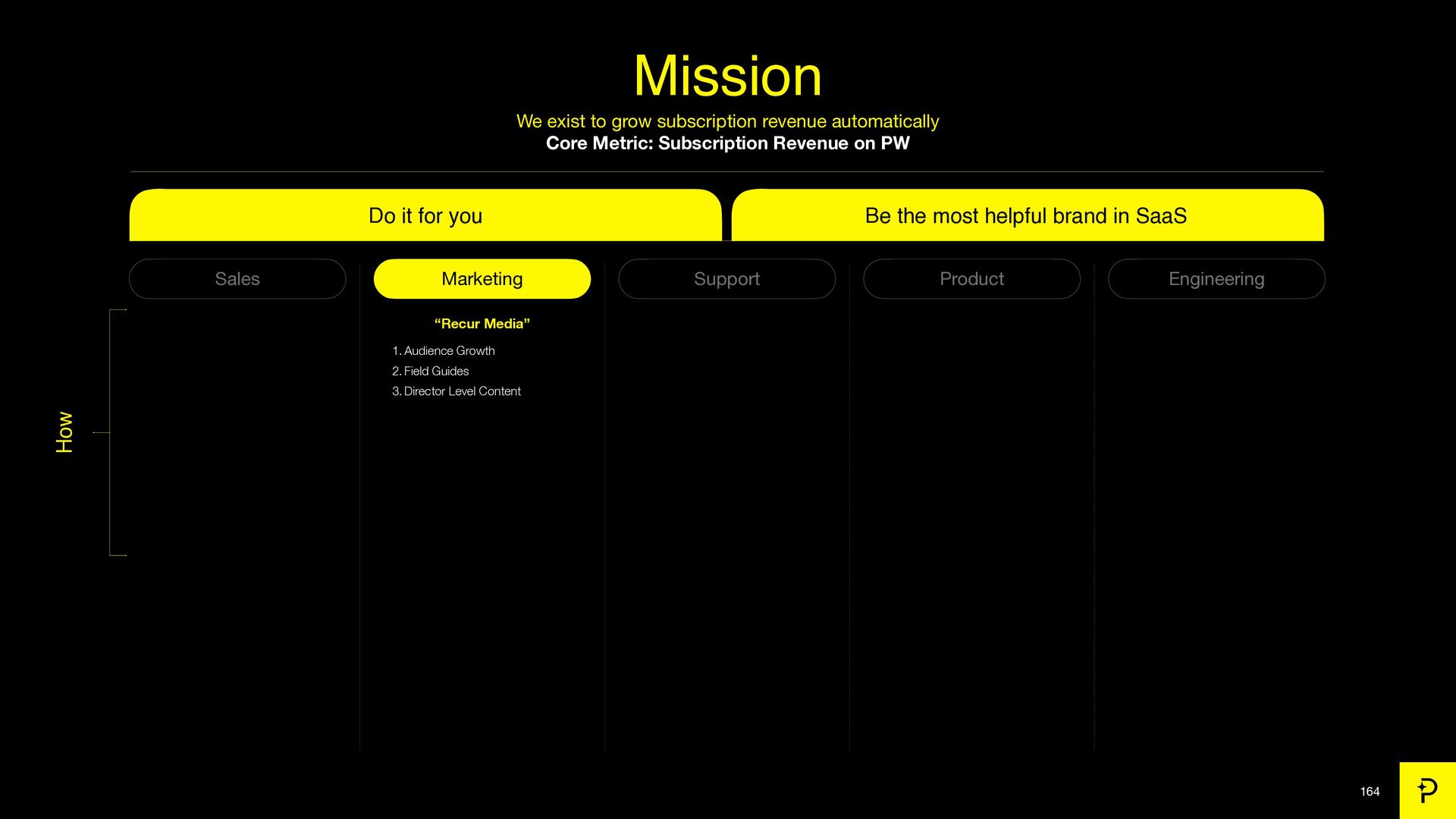
Yep. Great. But the work to define this is actually incredibly difficult. Right? Well, what happens on a team basis? Right? Well, all of a sudden, marketing needs a strategy, needs a plan, needs an actual document that says this is how we make decisions in marketing in order to get to this mission.
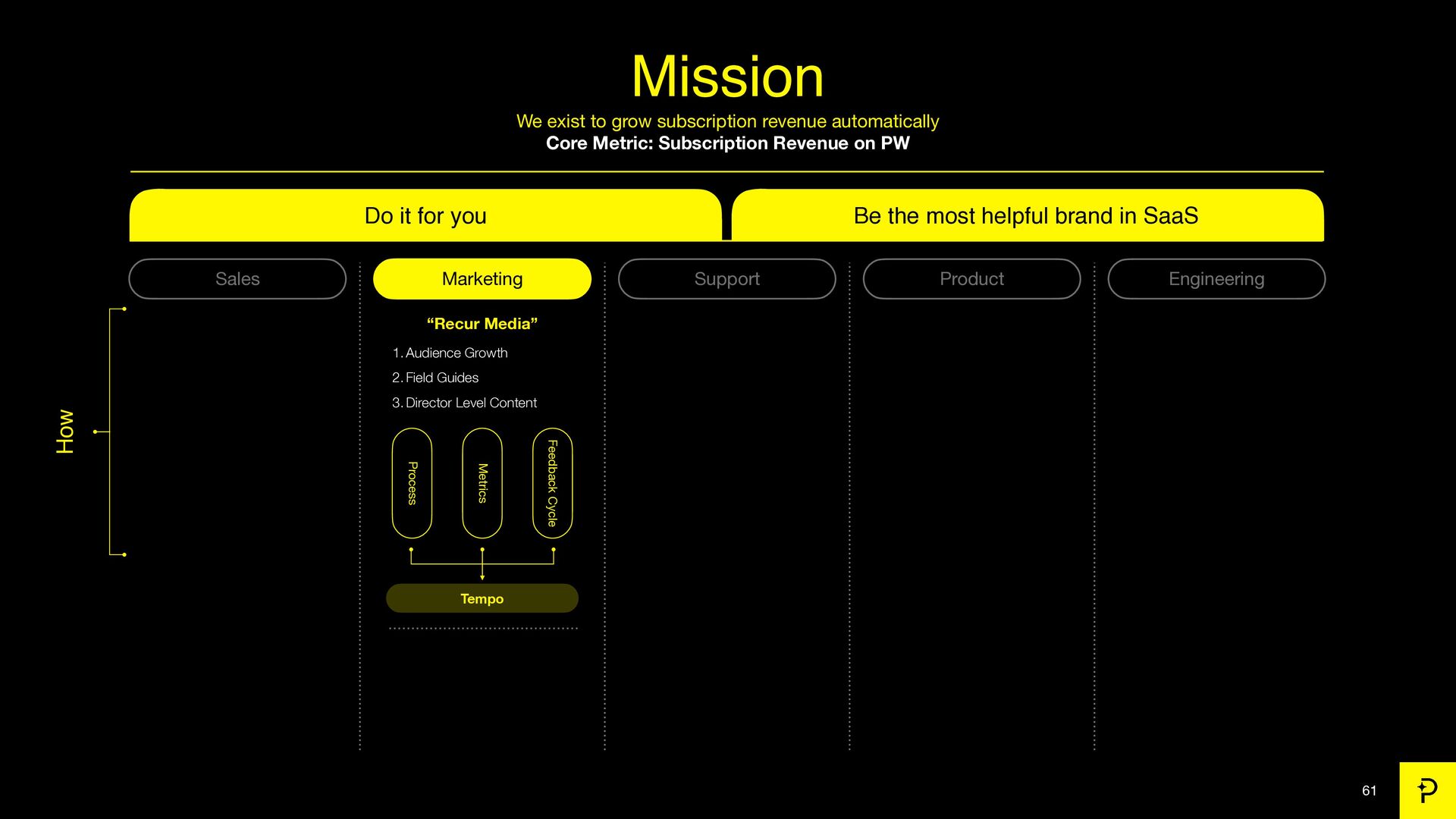
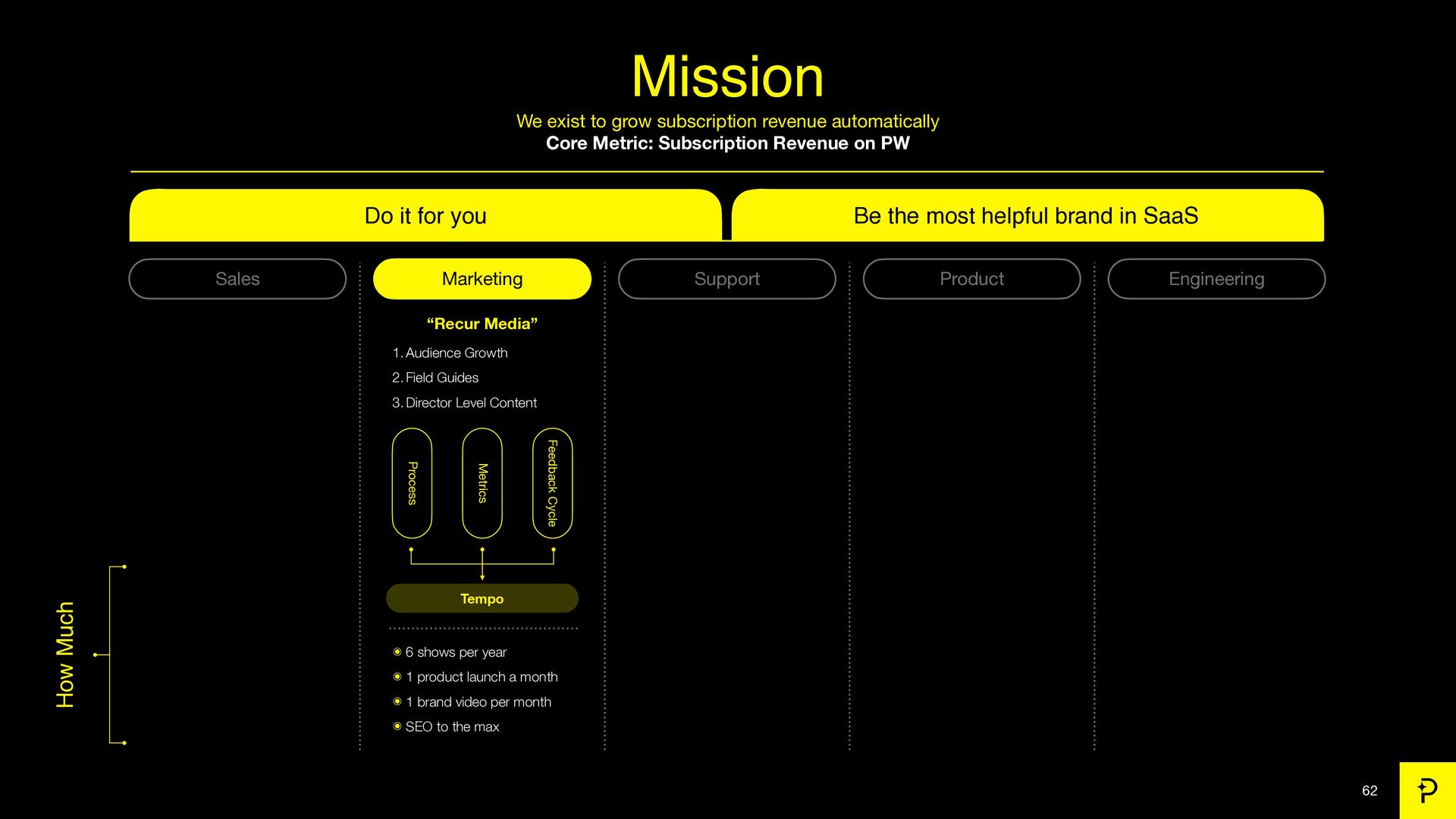
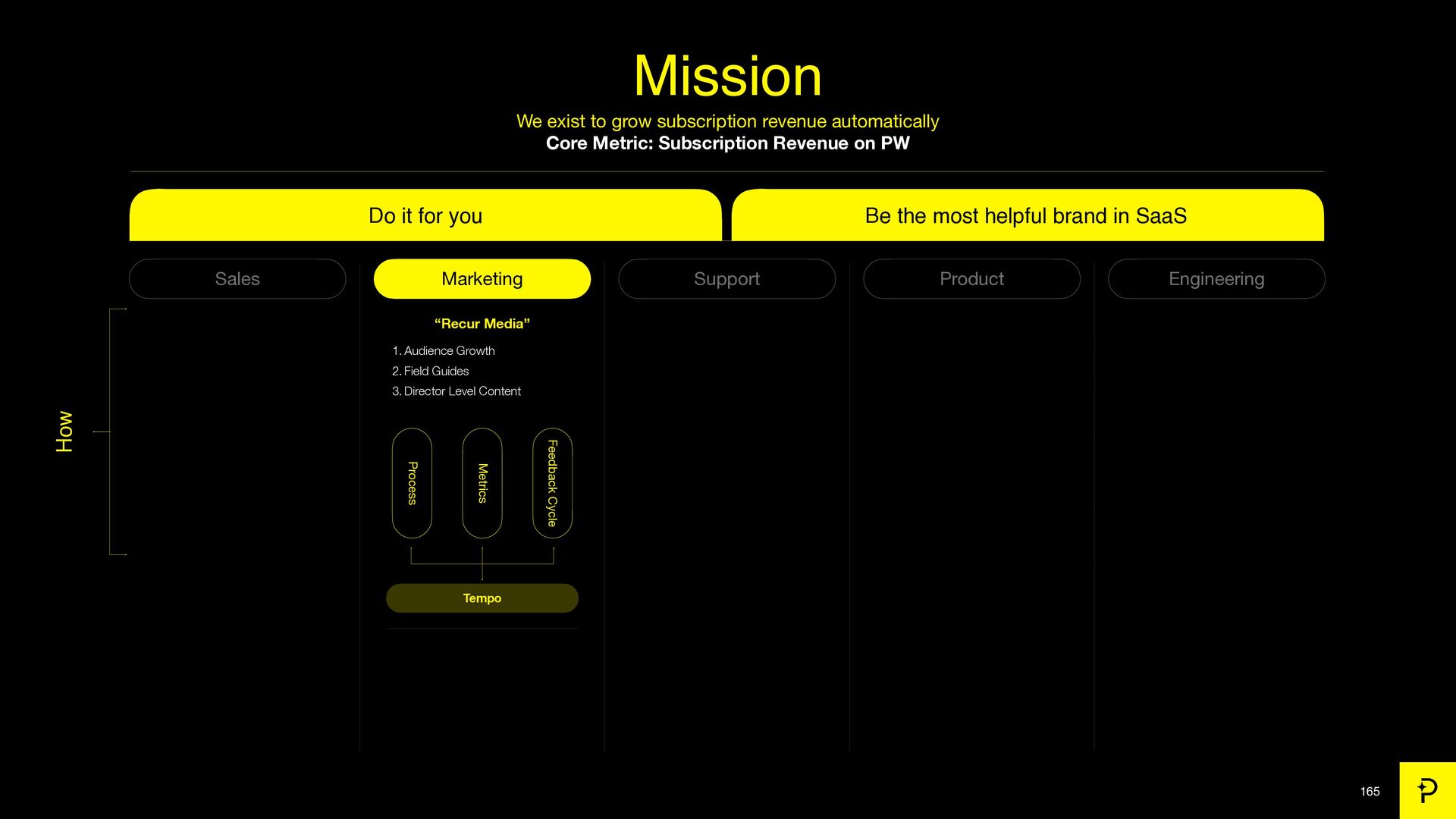
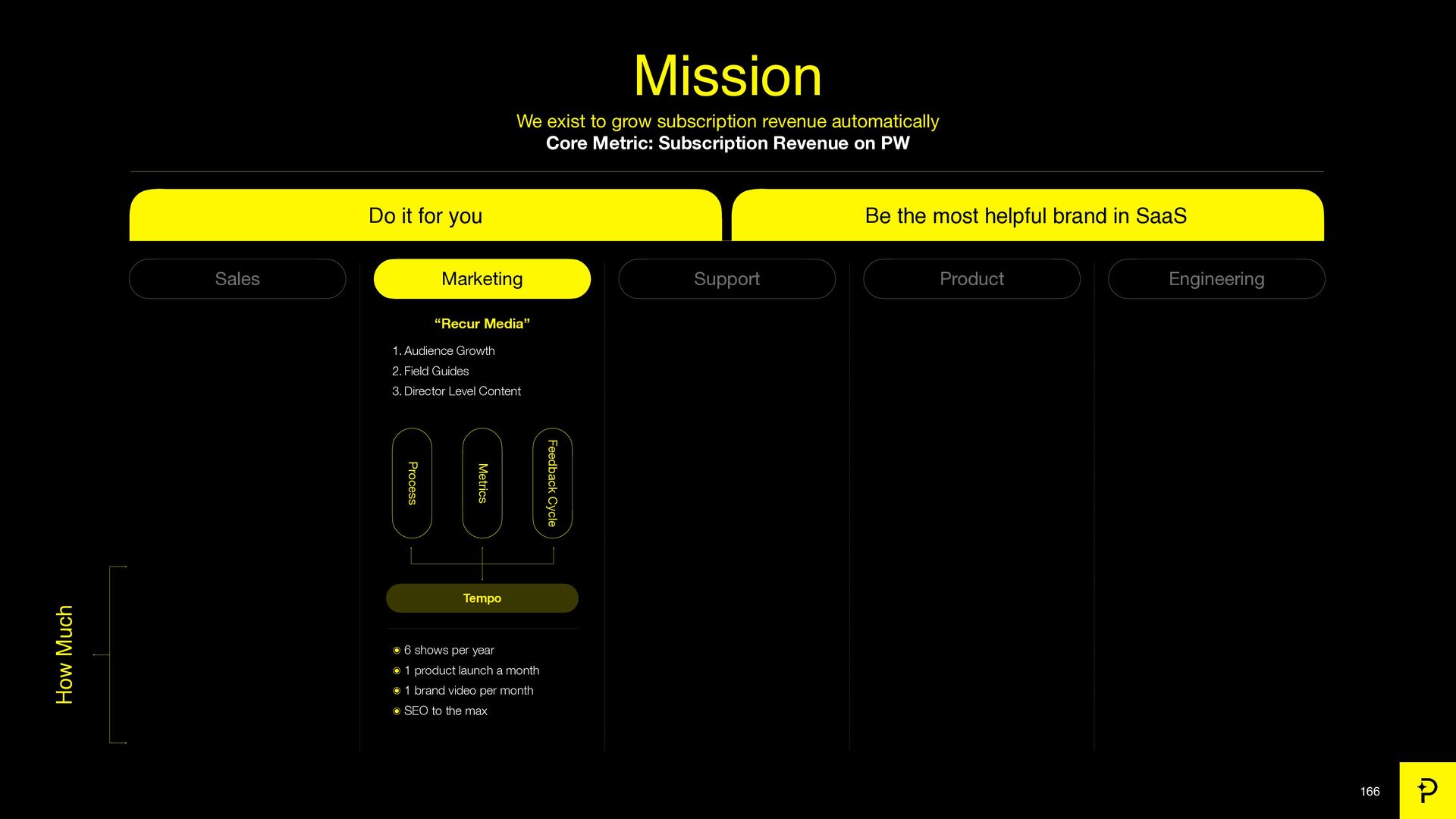
Right? And then, in my opinion, you need a tempo. How do we make decisions? What are our processes? What do those things actually look like? And then ultimately, how much are you actually doing? How many blog posts do we want to publish under that mission?
And each particular function of the company should have some sort of alignment doc. And if I was suggesting to you, I would actually start with each function of the company. It's a little bit backwards, but it's a little bit easier to align the product team than it is to align the entire company around something.
And then you'll start to kind of vector things into what that overall mission is if it's not obvious. If that's obvious to you, go for that right away. But it's really, really important to figure out what is the what, what is the how, and then what is the how much that you're going to be doing to feed into that mission.
Because when you don't have all three of these things, you end up with a really aligned company really moving slowly. Or if you don't have the top things, you end up with a company that's doing a lot of stuff, but it's not really pushing you in the right direction.
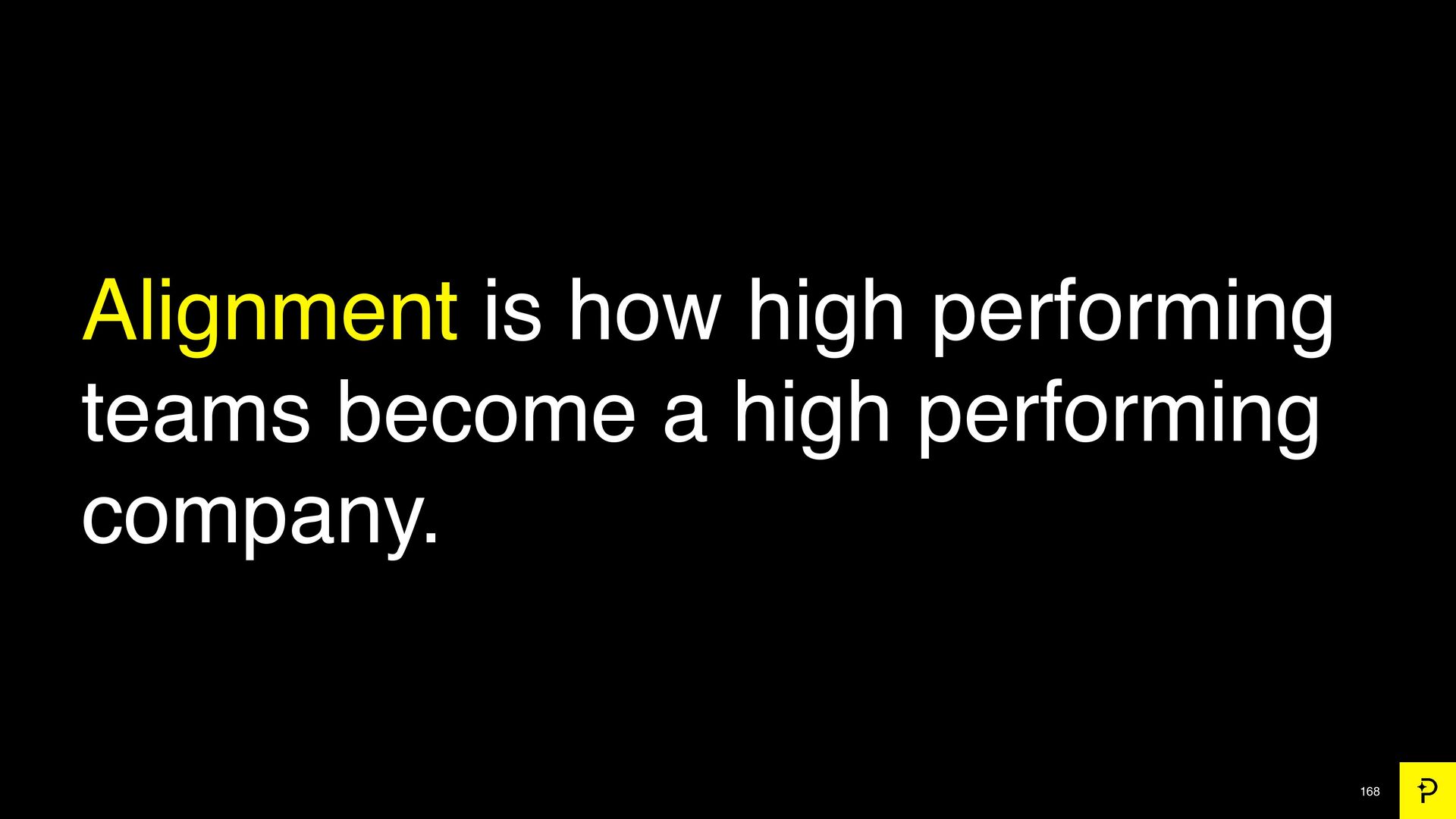
And we did this through memos. You can do this through videos. You can do this through decks. It's really whatever you think you need within your company and how you want to talk about. But the thing to keep in mind is alignment is how high performing teams become a high performing company.
Things like planning, things like these docs, if you would have told me this the first two years of my business, I would have been like, you're an idiot. I'm going write another blog post. I'm going to go do this other thing. This stuff is stupid.
I'll just have a conversation with Charlie. I'll just have a conversation with Jimmy. It's going to be fine. But it's really, really important as you grow that people can reference this, because not everyone's going to be moving in the same direction. But you can at least coax them mildly in the same direction.
Sound good? Helpful? I can talk about pricing for the next five minutes if you want. Right? I can do that forever. All right. Let's talk about constraints. Who here has enough time and money for everything they want to do? Yeah, set you guys up. That's right.
None of you do, right? And I think one of the things that really helped us as a bootstrap company was all of these constraints really pushed us to basically like really have to think of not only prioritization, but really have to think of how we are going to get the most out of a particular investment, right?
We're going go sponsor a conference. We're going go spend some money. We've got to make sure we get as much as humanly possible out of that. And I think one of the best examples of this type of thinking is really why ProfitWell ended up being free.
So ProfitWell is our free metrics tool. I kind of described it before. Tons of data, tons of companies using it. Well, real answer is we read a blog post. I'm kidding. That's not what happened. We did read some blog posts, but I joke a little bit, right?
Because who here has done the founder exec swoop and poop, where we read an article or watch a video and then send it to someone and go, this is what we should do, this is how we should run support. Anybody? Who's been on the other side of a swoop and poop?
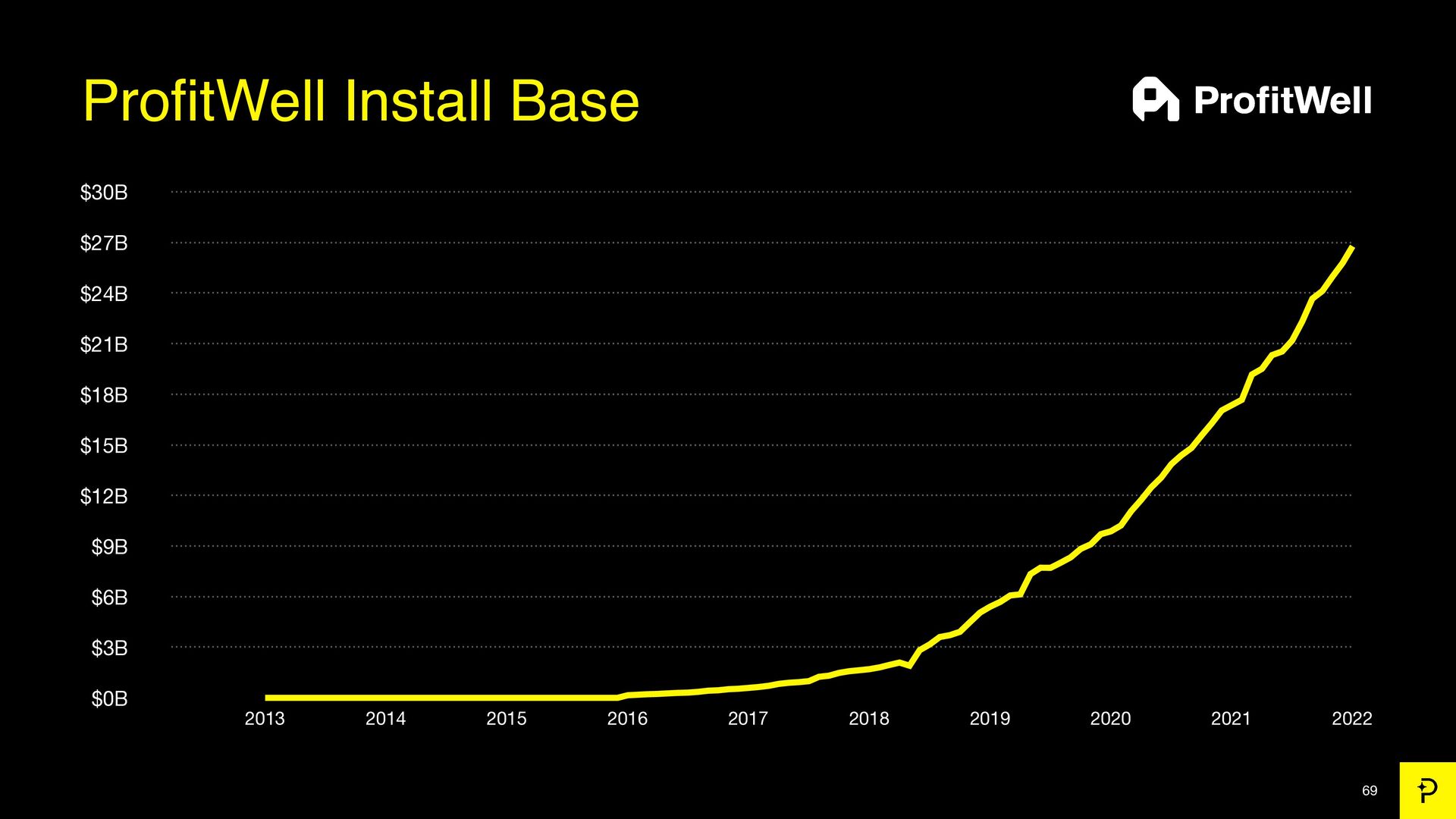
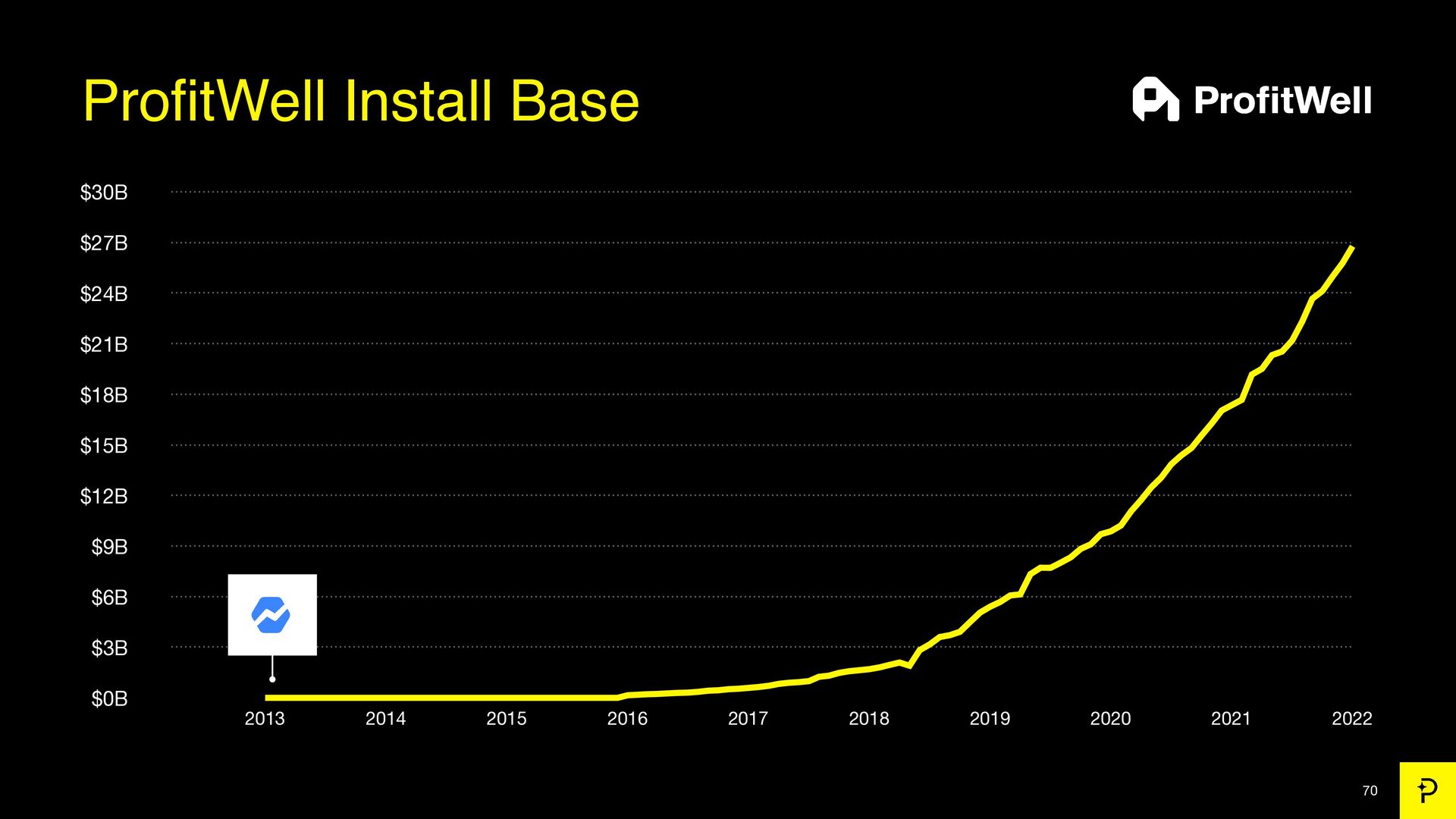
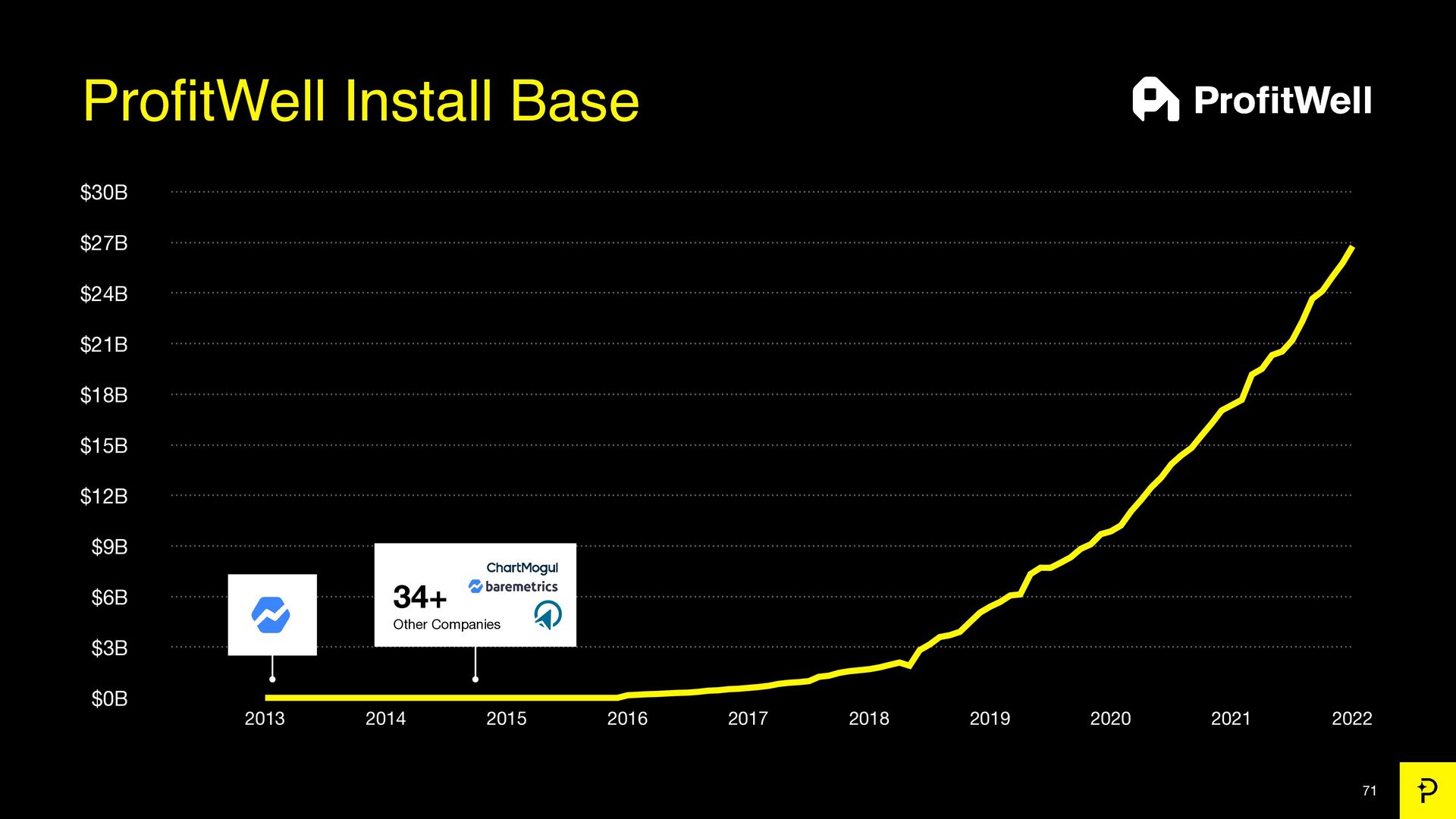
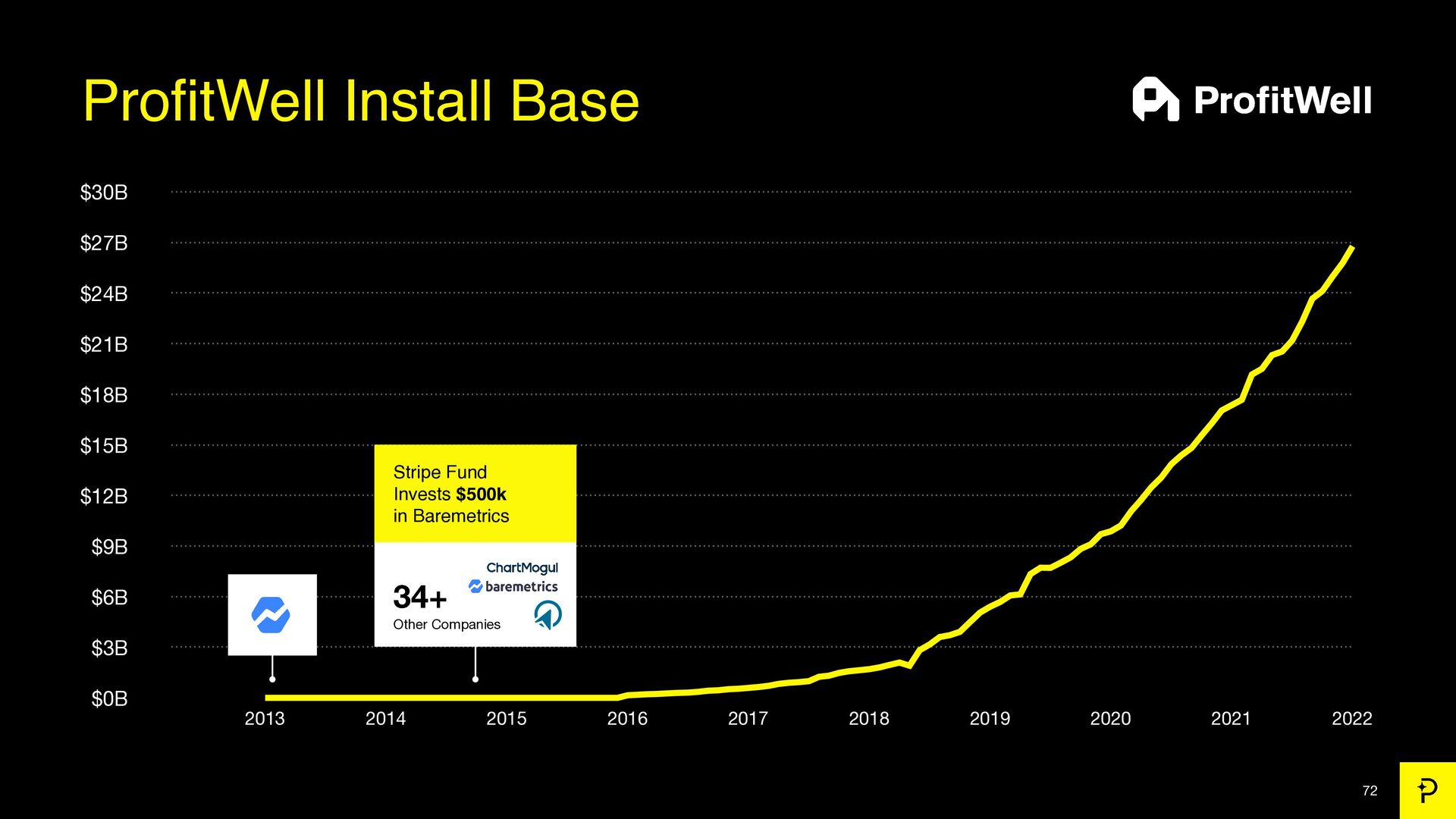
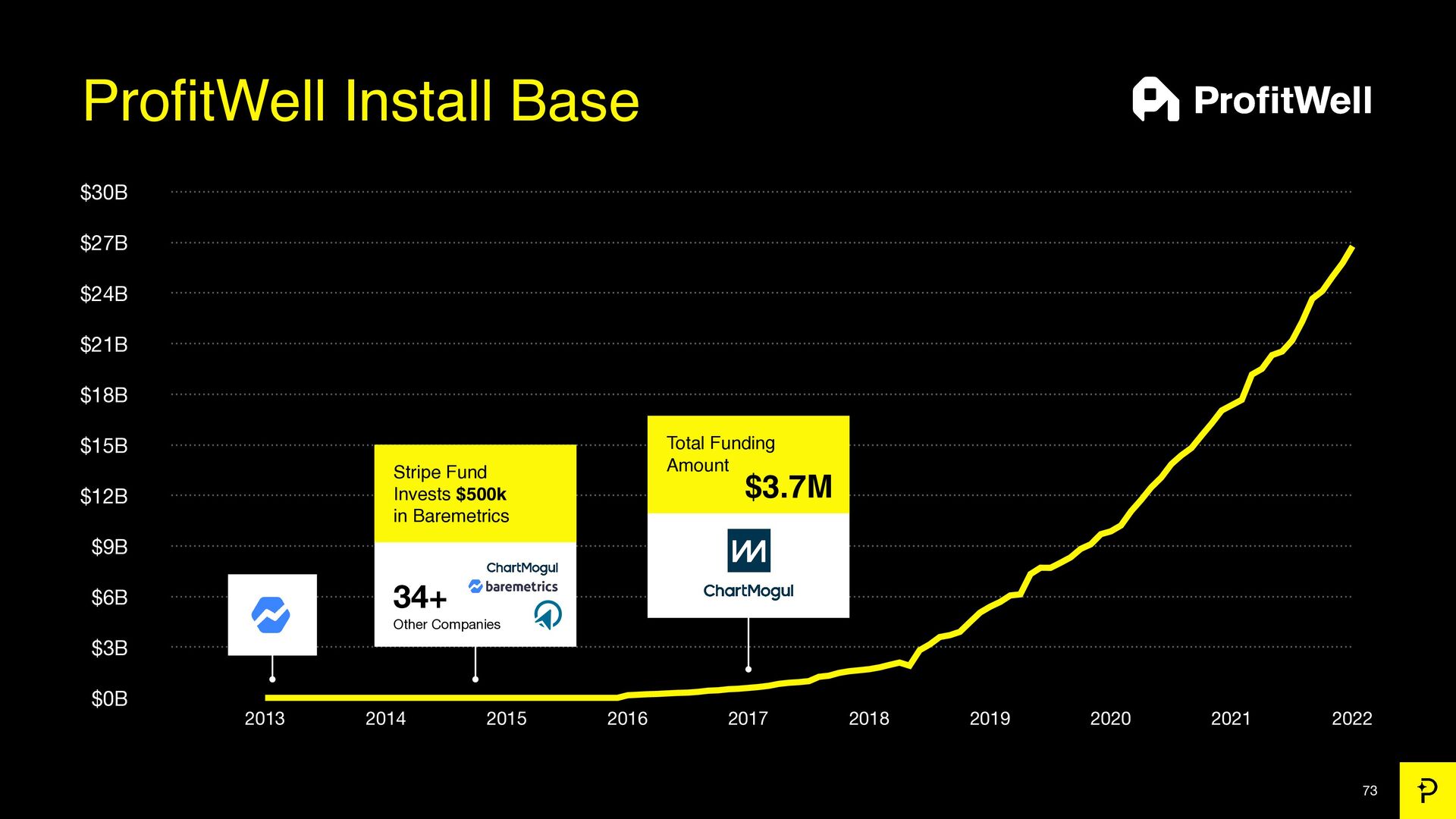
I've been on the other side of swoop and poop, and I'm a founder. So it's a lot of fun, right? I did more swooping and pooping than receiving swoops and Okay, I'm gonna stop talking about poop. Anyways, so this is the amount of revenue on ProfitWell, and it's like a really cool graph, right?
The problem is, is like most of like the pain was over here, right? And you're like, yeah, we're gonna get there. Over here, you're like, you're an idiot. You're not gonna get there. No, I was saying that to myself, just to be clear.
But to give you a little bit of context, like, this looks really cool now over here, and it's, you know, growing even further. But over here, we, like, thought we were brilliant. We were like, we're gonna start this metrics tool, and we're gonna be billionaires.
Right? That's the founder's hubris. You need that. You need that exact hubris to figure stuff out. Well, all of a sudden, we're about to start doing outreach on this cool app that we had incubating with a couple of different companies as our users.
And then this company called BearMetrix came out. Who here has heard of BearMetrix? Yep. Okay. I'm glad that was only a fifth of the room. That really makes me happy. Anyways, I'm kidding. Josh and I are friends now. Okay. And then all of a sudden, like thirty four other companies, Chartmogul, First Office, or all these companies, because everyone was like, we're building on Stripe.
And it's like, everyone builds on Stripe. Right? And so we were like, okay. That's okay. And then all of a sudden, Stripe invests in BearMetrix. And we're like, no. The one thing we're all integrating with just invested in that company. And then Chartmogle raises a bunch of money, at least relative to the time, and we're like, oh my god.
What's happening? Right? And then it was what I like to call the reverberation of ****, where you're like, ****. Everything's gonna be terrible. We're gonna suck. I'm gonna need to get a job. I don't want a job. But what we did in this situation was do all of that, and then we went to this concept of first principles.
Right? Who here has heard of first principles? It's like you read an article about Elon Musk. Right? Like, that was the thing. Like, rockets, first principles, costs, right? Like, the thing about first principles is, like, what does that actually mean? And I think that the most practical way that I can describe this to you is all it really means is just, like, stop and think through the problem and try to get to the root causes.
And what I mean by that is there's couple of other frameworks. There's the five whys, which I'll reference in a second, which is basically like, just keep asking why. Like, why are rockets so expensive? Well, they're expensive because of this. Well, why is that? Well, because of this, right?
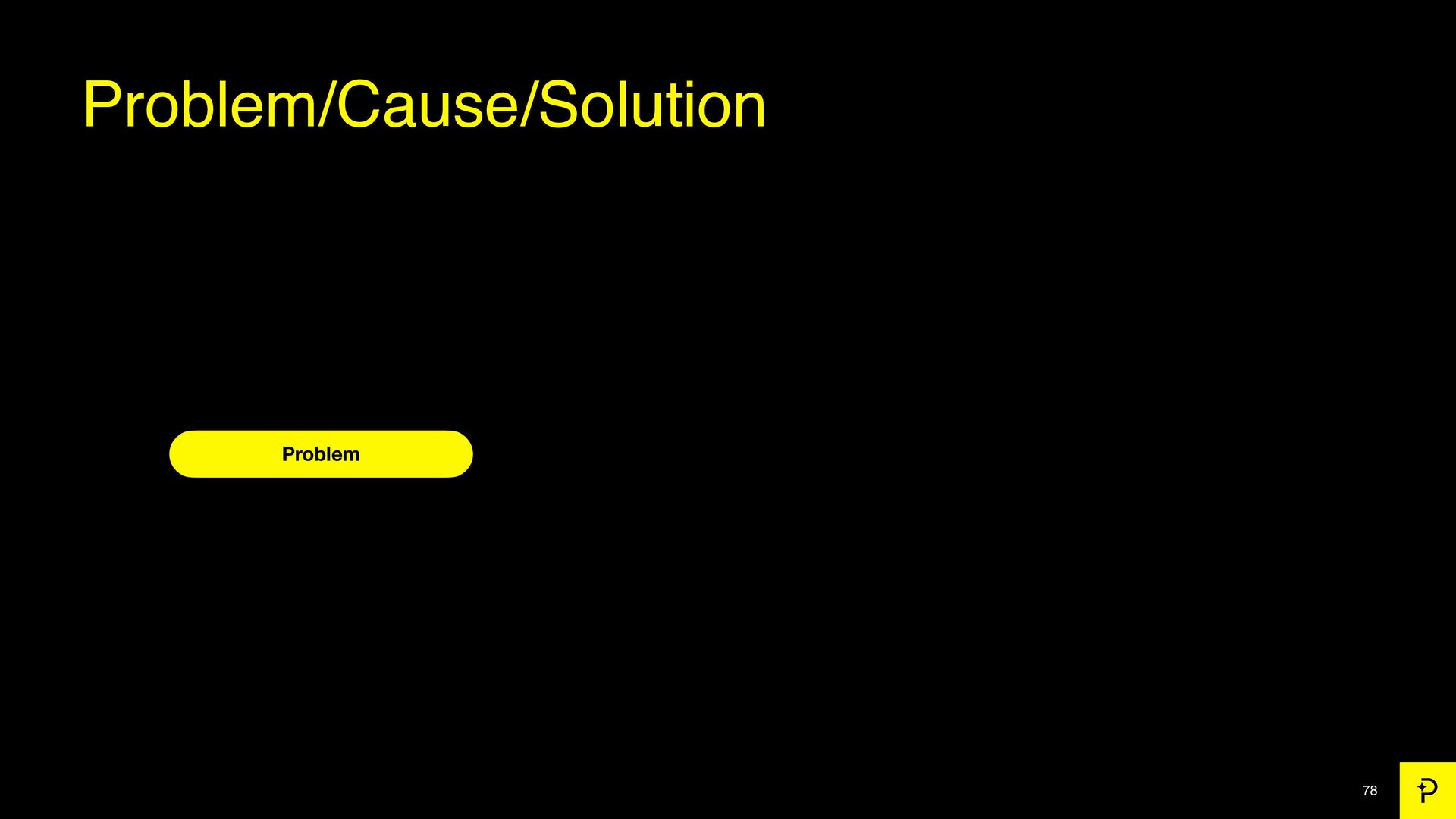
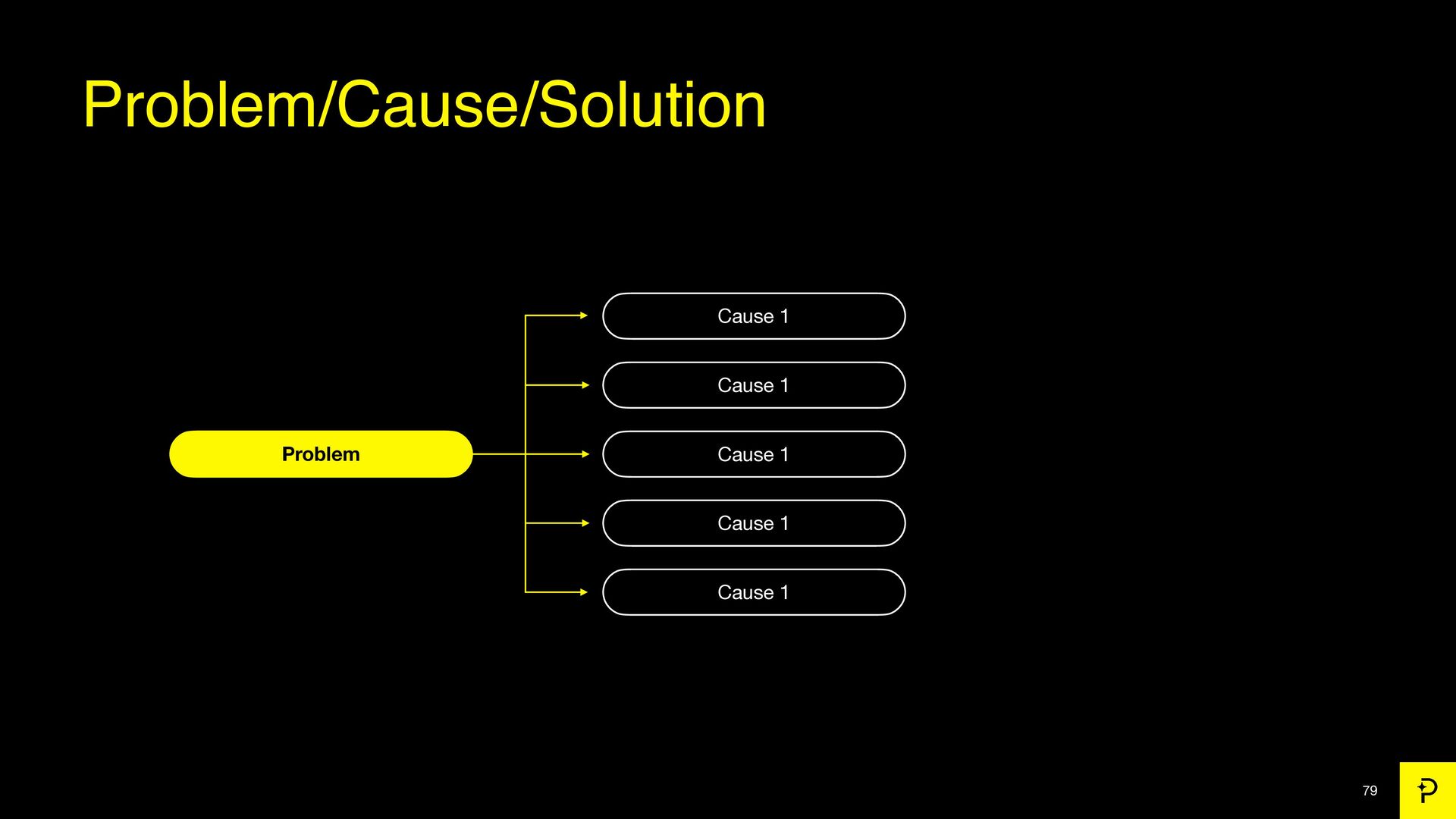
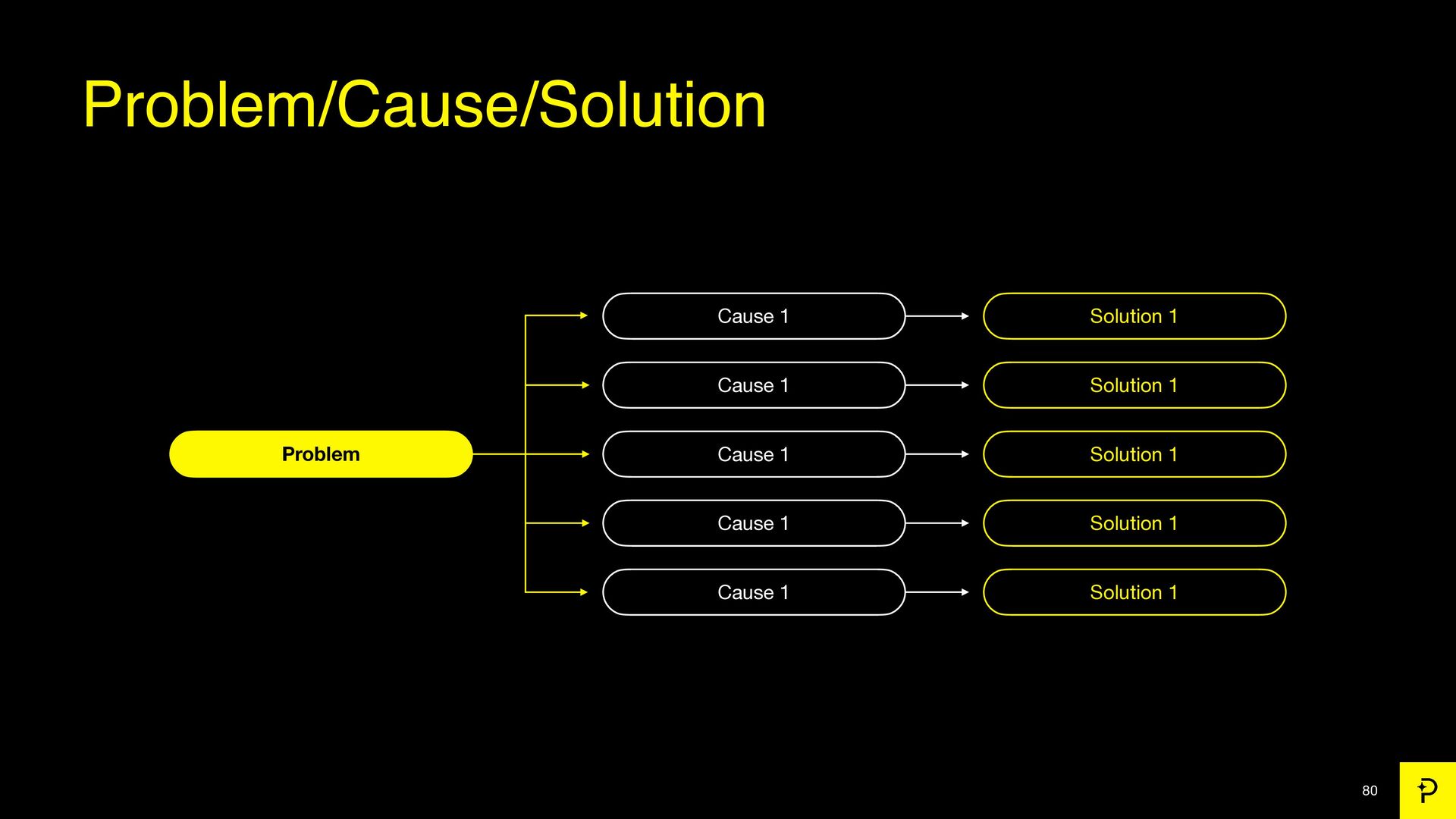
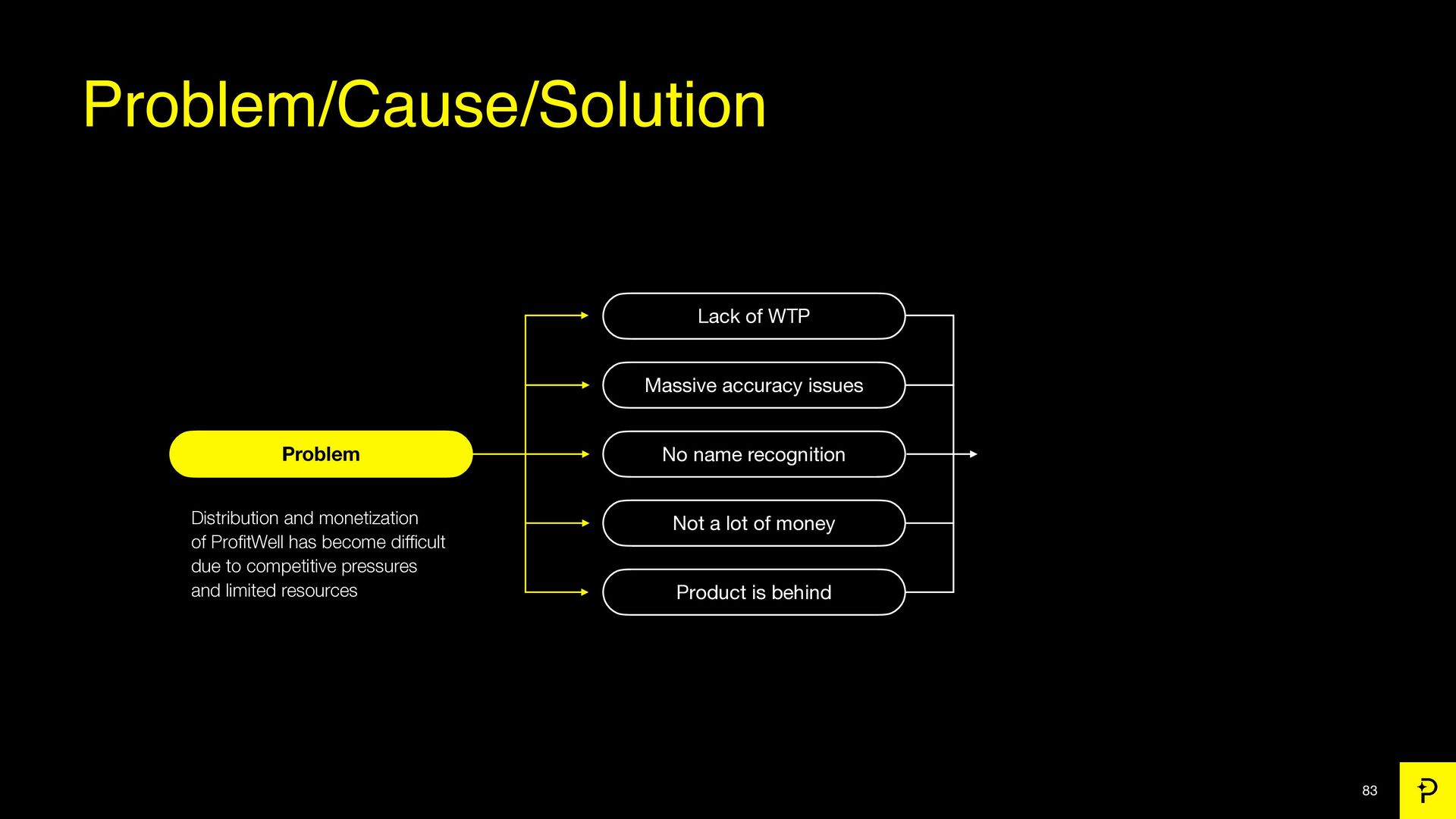
And so on and so forth. The other way that we found really useful is this concept called problem cause solution, which is like, when you have a problem, if you don't think through the causes, you end up just throwing a bunch of stuff at the problem and just hoping something sticks.
Put another way, you can't actually solve a problem. If I was like, let's go solve world hunger or water shortages or something like that, everyone would have an idea of how to solve that. But if we went to the next step and said, well, what are the causes of worldwide hunger?
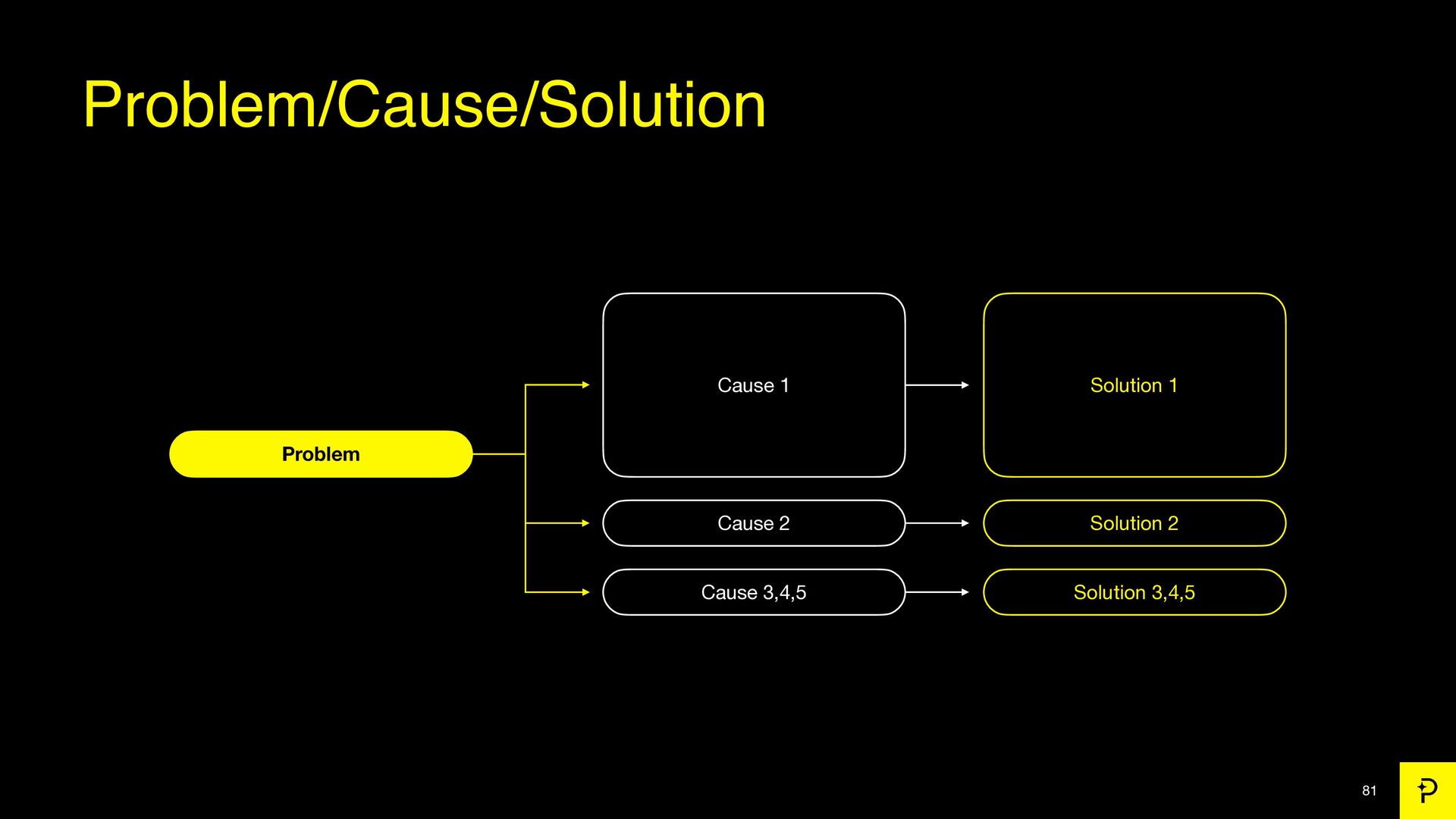
Right? Improper irrigation, aid not getting to a certain place, we can catalog why world hunger exists. And then what we can do is we can go, interesting. Well, let's align solutions to each of one of those causes. Right? And then what's really cool is when we're doing this exercise, we can go, well, it seems like there's some of these causes that are much, much bigger than these other ones.
So depending on our resources, we can go after some small things to try to get things started, or we can go after the big kahuna here and go after the really, really big cause to actually solve it. And so what we did and we collected a bunch of data that I don't have time to share today.
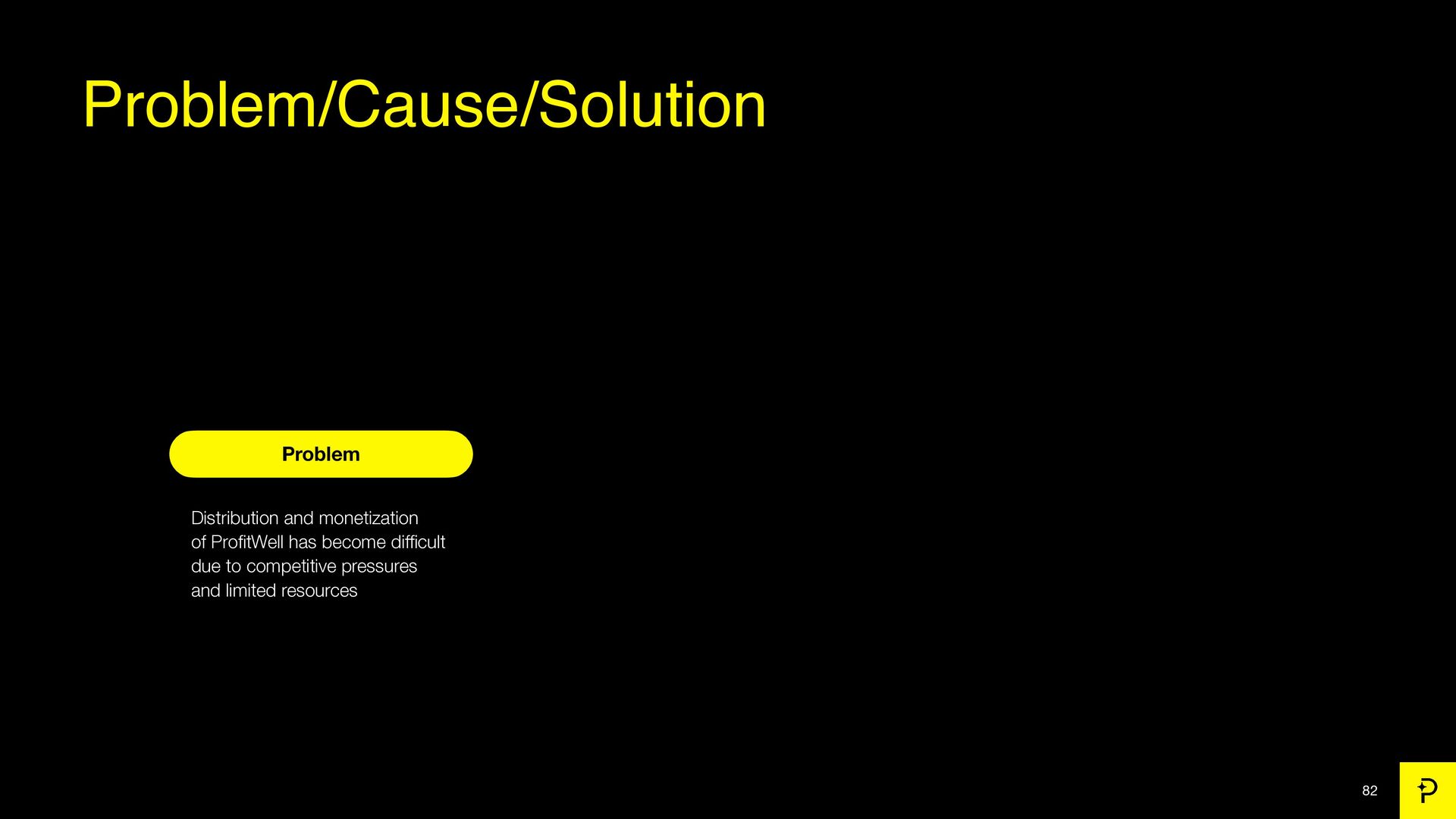
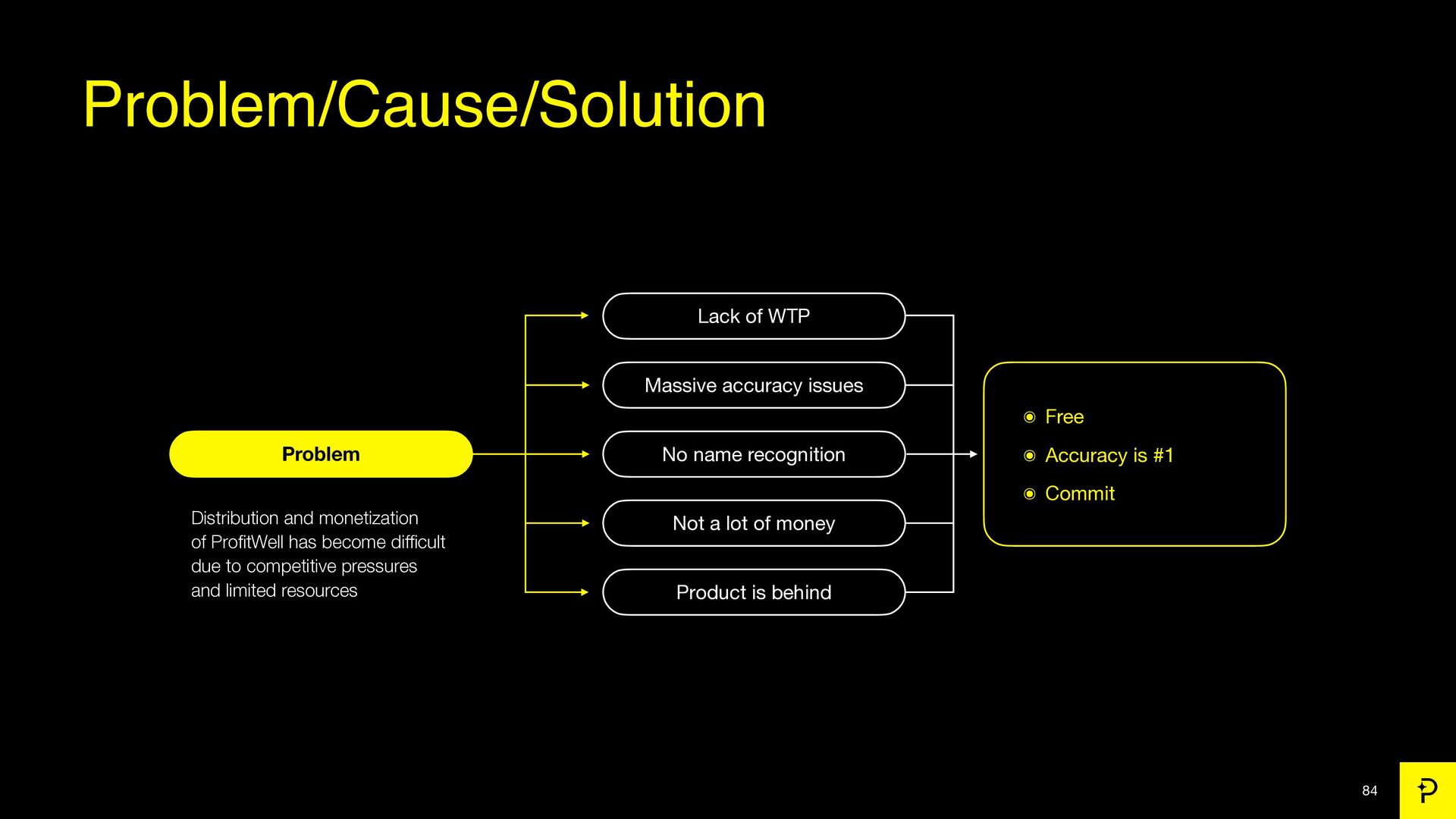
But we basically said, Okay, here's a problem. Distributing this paid metrics product that we thought was going to make us billionaires now all of a sudden is going to be really complicated, not only because of the competitors in the market, but also because just distribution is harder than ever as a SaaS product.
And we said, well, what are the causes here? Well, there's a bunch of things. We didn't really have willingness to pay. Turns out people don't like to spend money on analytics products. That's just how it is. Like, BI is a terrible place to be.
Sorry if you're an analytics product in the audience. It's really bad. I have so much data on how bad analytics products are. It's just letting you know. Accuracy issues. Turns out, not only are people not willing to pay for it, but it's really hard.
It's really hard to get right that particular data point or that particular graph you're putting out there. We don't have any name recognition. Our product's behind. Of our competitors have all these pretty graphs. And we would go, yeah, but the numbers in the graphs are wrong.
And people would be like, yeah, I still like the graph. Right? Which was like, what? Okay. So where we looked was we're either going to shut this product down, which we didn't think was the right idea, or we're going to go free. We're going to undercut the market, undercut the expectation, actually.
We're going to focus on accuracy as the number one thing, and we're going to go through eighteen months of hell getting things to be accurate and hearing, but you don't have this other graph that we want constantly. Every support ticket. It was and I did support, so it was great.
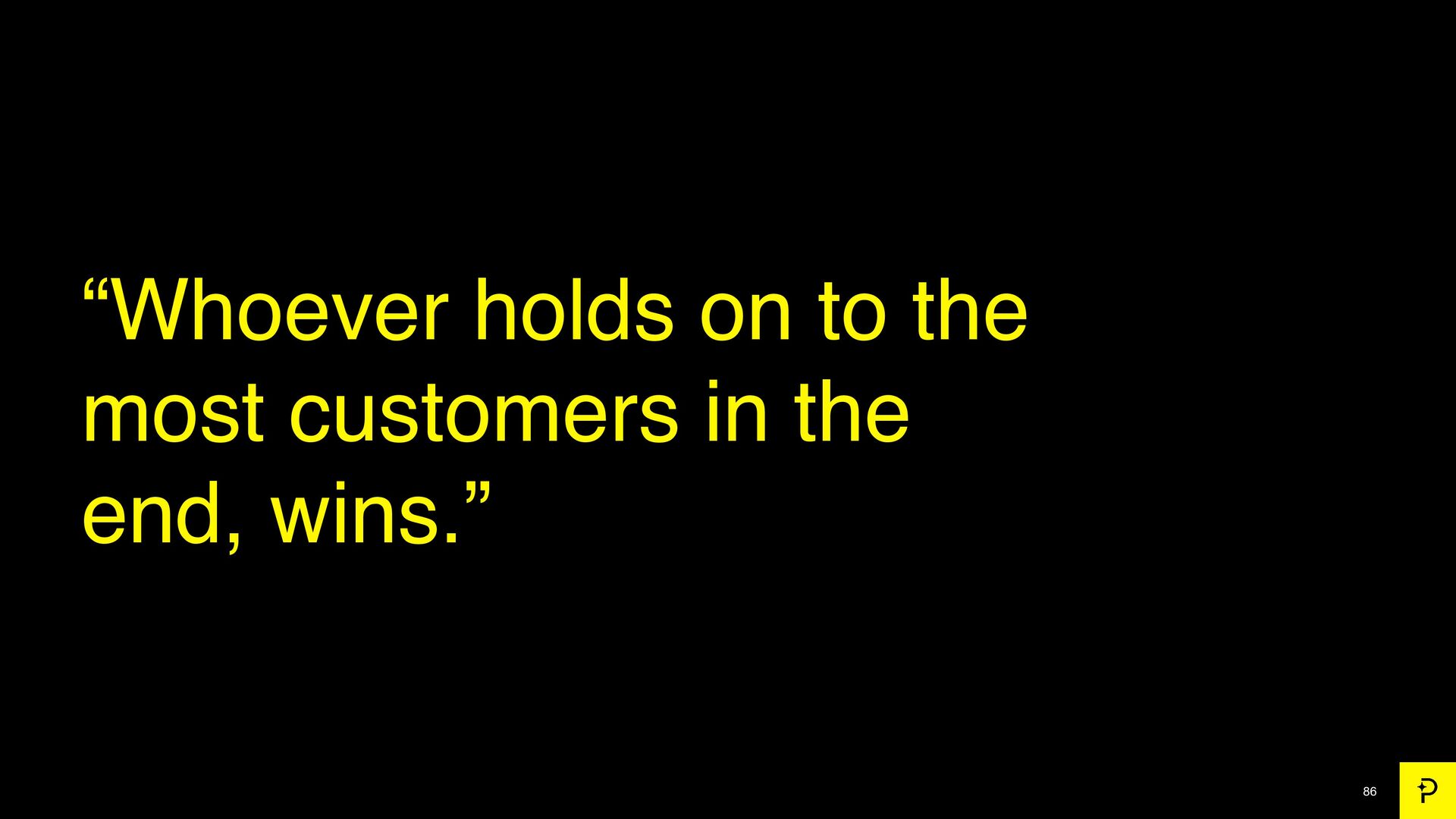
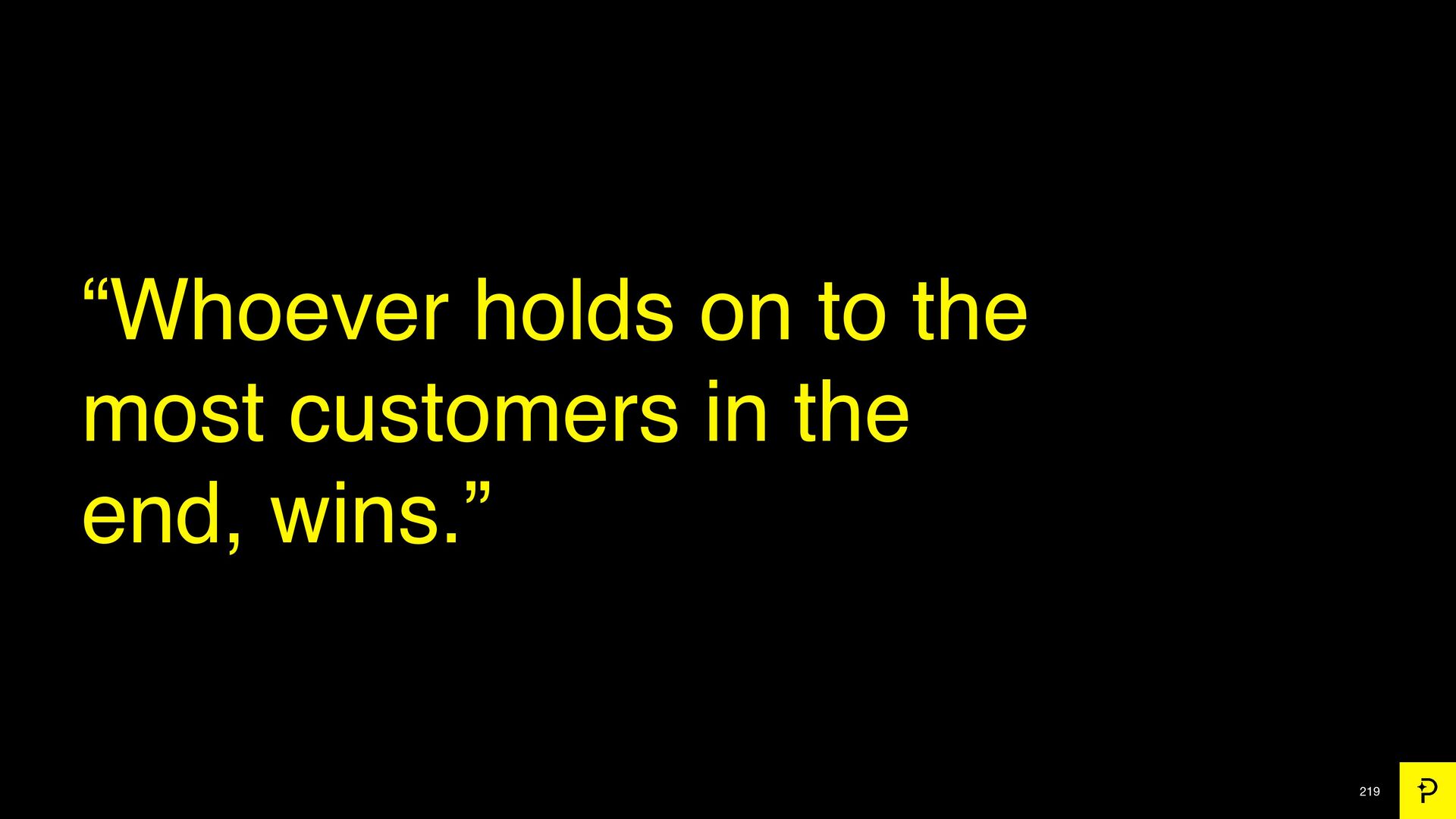
We've talked about the five whys. But I think for you, when you're thinking about your business, this also really guided a lot of the marketing strategy that some of you have seen in our content, events, those types of things. Because we started to kind of get this concept, especially when you're running a freemium strategy, whoever holds on to the most customers in the end wins.
That's how all businesses work. Because even if you have competition, you can figure out how the most customers at the end, end of the runway, end of whatever the journey is, you're gonna end up winning. So we did this with freemium. We had competitive programs, which I'm happy to get into in the q and a, a lot of community stuff and a lot of events.
And we did this in a very, very bootstrapped ROI driven fashion, where we didn't always spend the most money, but we really, really drove ROI for every single thing we did in terms of our acquisition. So told you I was insecure. Right? This is what I think about.
Every time someone's like, congrats. Like, you got a lot of money now. And I'm like, yeah, but I don't have this much money. Right? No. I'm just kidding. A couple of other things to close this out. This is a great question, right? Because I think you as an exec, a manager, a founder, or whatever position that you're in, you should be constantly asking, like, why am I not better?
Now, there's a point where it becomes way too much impostor syndrome, and you need a good coach to pull you out of that. But it is something that you should always be striving to figure out, how do we improve, even if we're doing really, really well at something.
And it was kind of funny. Just in true form, deal closes. Like, we go to this summit where we bring both companies together, and it's a good retreat. Literally the dinner after with my two co founders, this was the question we talked about.
And it was natural. No one was like, oh, like, what should we done? We were like, it's fresh in our mind. What does this look like? Let's have this conversation again in six to nine months as well. A couple of things. I'm not going be able to talk about a lot of this.
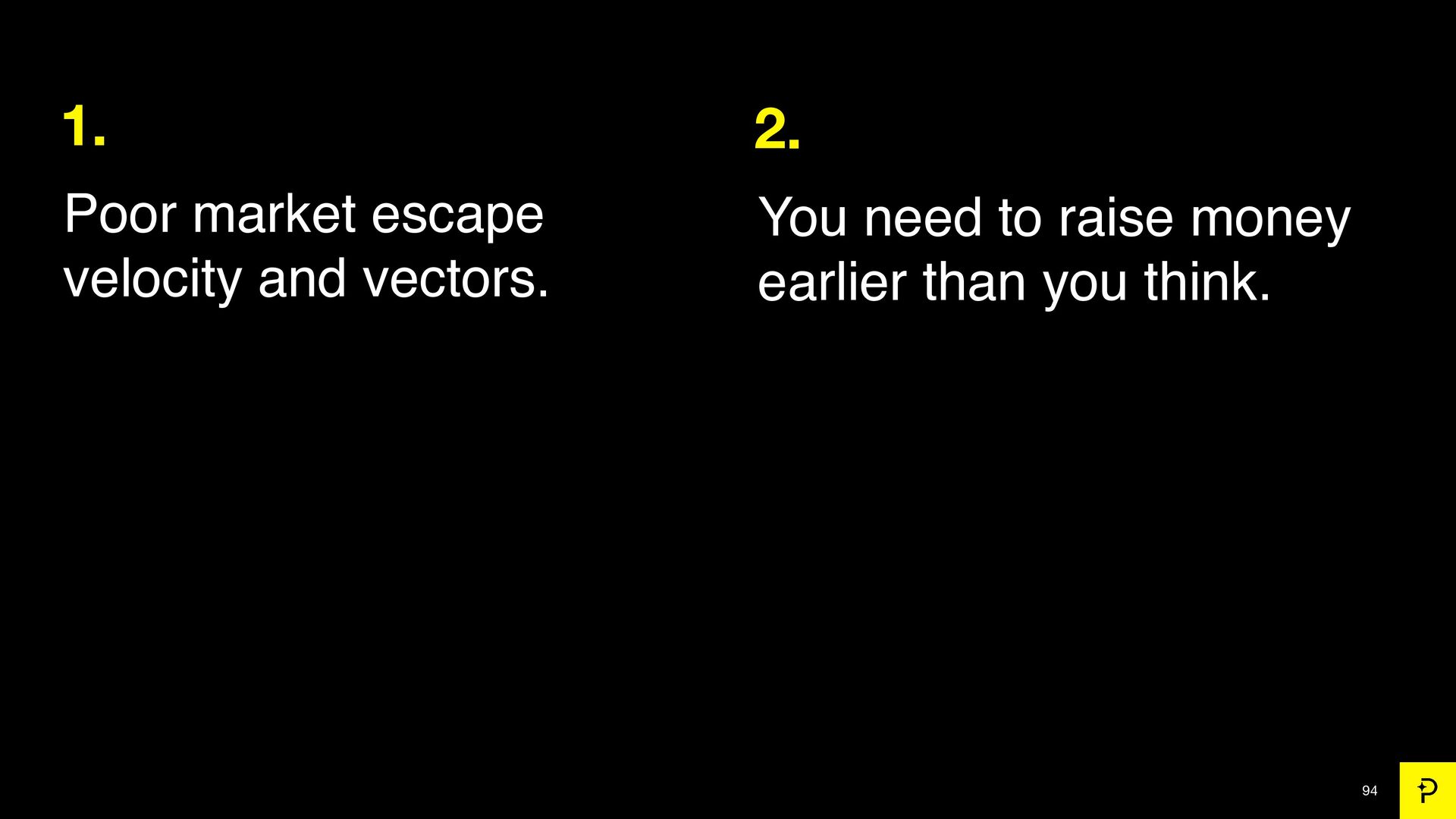
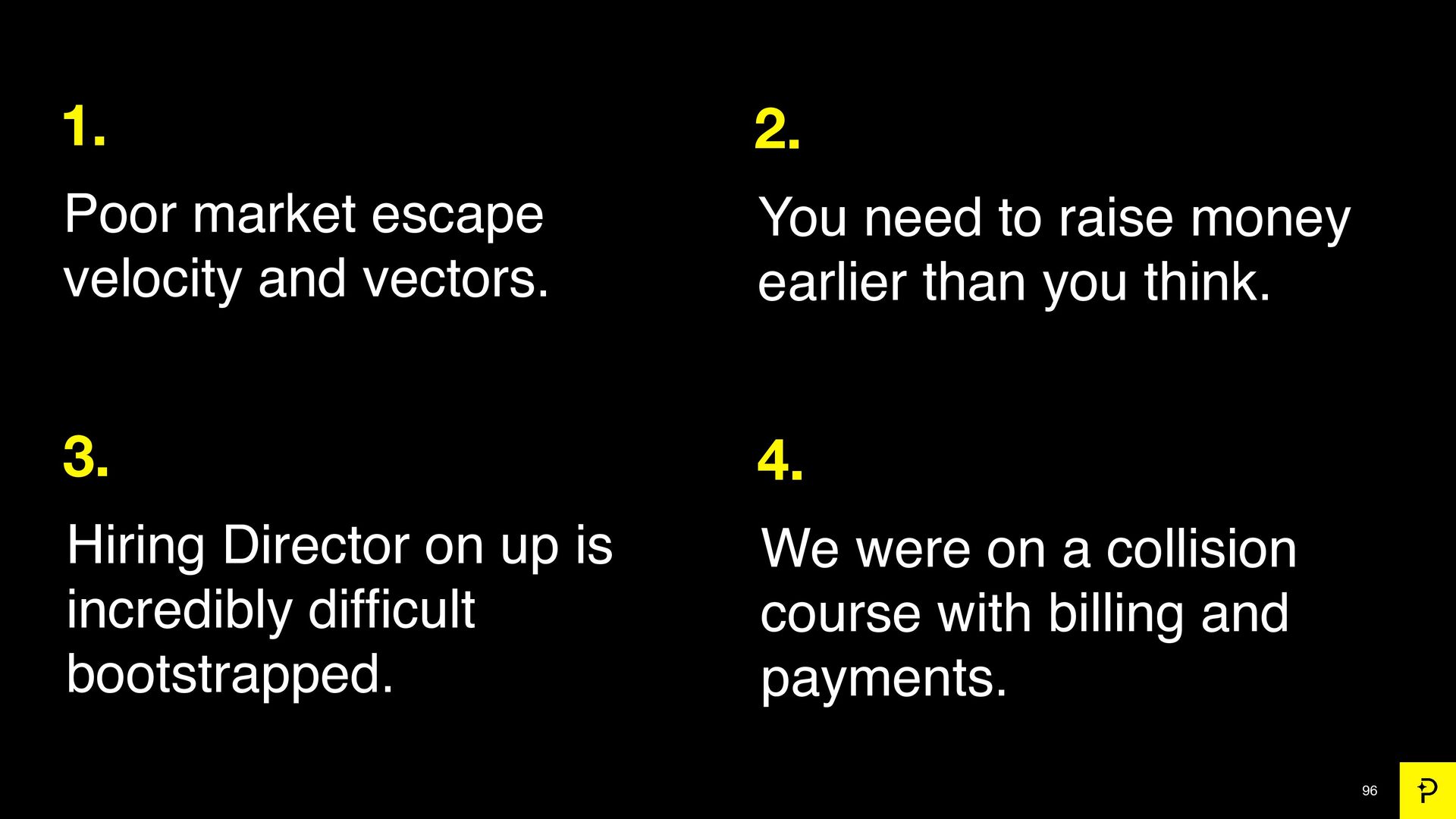
But we didn't have a great market. There only one hundred and fifty thousand subscription companies in the world. That number is flat. That number is not going up. It's going up very incrementally. The amount of revenue on those subscription companies is going up exponentially, but it's really, really hard to fight in a market where your logos aren't increasing.
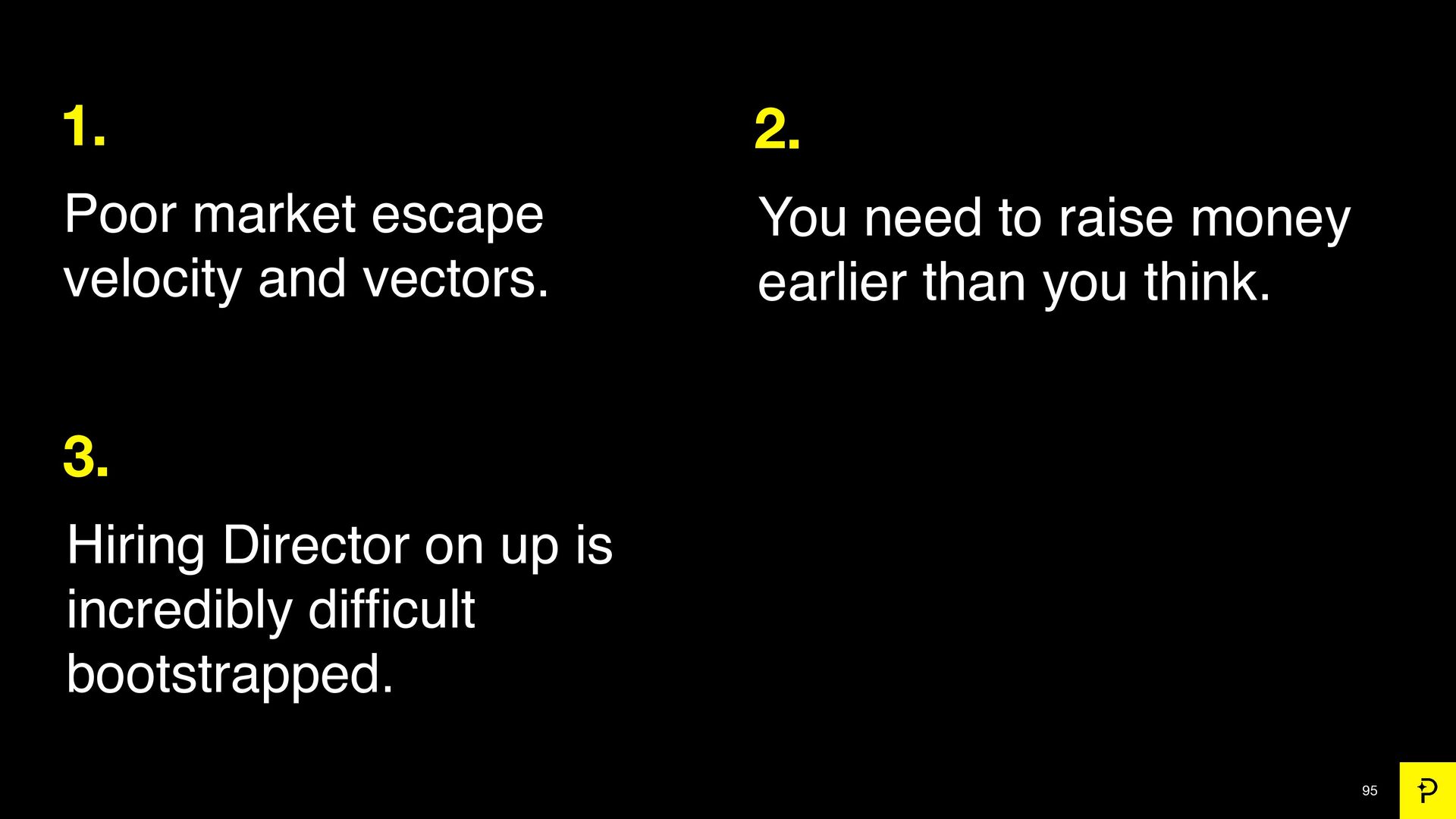
So we didn't have the velocity that some of you might have in your spaces. Two, we were bootstrapped throughout the entire thing, which everyone's like, oh, it's amazing. Bootstrap Hall of Fame, that's awesome. And yeah, we feel that. But also, we look at it and we're like, well, if we weren't going to sell, we should have raised money as soon as we knew ProfitWell was going to be free and as soon as we knew it was going to be really difficult.
Because when you start raising money when you're in eight figures in revenue, you just don't look like all of the other VC backed companies. And there's specific firms that are totally fine with that. But it's just all of a sudden, you're just in this weird pitching mode a lot more than a traditional fundraise, which was kind of interesting.
And we got turn sheets to raise cash, but it was one of those things where it was like, it would have been easier to cut probably two years off of our timeline if we had raised money as soon as we thought this was going to be free.
When you were bootstrapped, hiring senior talent is really, really difficult. And you're thinking, yeah, I found a director. I found a VP. Yeah. But if you want to be a giant company, if you want to be a really large company, which was what our ambition was, and I guess still is now with the combined vision, those people who go to those companies and are really pushing needles, they go where most of the time for VC backed companies, not only because of the pedigree, but also because the pay that they expect.
And then the sweetener with obviously the equity is just so much higher in those scenarios. And the final thing, we were just on a collision course with billing and payments. When we think about our products, eventually our product was going to have to start dipping into checkout, all of the different products that we were building.
It was just one of those things where we were going to suffer from the classic, oh, we're a ton of revenue, but we want to be a big company. We don't want to just take profit. There's nothing wrong with that. But we wanted these higher aspirations.
And just with the wrong market, the wrong positioning, all of a sudden we were on a collision course with the very people that we were partnering with. So it's really, really important. Alright. I'm way over time. But how are we feeling? We still pumped?
How many people did I piss off? I don't care about your feelings. That's fine. I very specifically don't care about his feelings, just to be clear. All of your feelings, I care about. This stuff's hard. Right? Like everything I talked about, yeah, it's some pretty slides, but it's like, no, this stuff's hard to make these decisions because you have that founder fear, and you're having that fear that you're facing amongst all the other crazy **** that's happening in your business.
You've got to cuddle with the chaos. You just have to do it. It's so hard, but you gotta make some of these decisions. And I promise you, once you start making some of these decisions, once you start writing these memos or these decks or whatever it is, all of a sudden the emotional aspects that are weighing you down right now, I promise you, those start to lift.
Because instead of having this like, wow, this person's this, or I've explained this seven times about the mission or whatever, all of a sudden it's like very clear, or at least clear where you stand on certain things. It's really, really important, and obviously you need to keep going.
I think there's like a roundtable thing that I'm going go to for questions, but you can hit me up on Twitter. I have a new Paddle email address if you'd also like to hit me up. But yeah, I appreciate you all. I'll be around tomorrow as well.