
Data is all around us, which is both a good and bad thing. Good, because we need it. Bad, because there’s simply too much to know where and how to start using it. This is one of several reasons that marketing teams are currently dysfunctional – I’ll reveal the rest in my talk – but it doesn’t have to be this way. Data-Driven Design (3D) is an actionable evidence-based framework that gives marketing teams (marketers, designers, & copywriters) accelerated access to the data they really need, coupled with a process for understanding how to use that data to make informed changes to the digital marketing experiences you’re creating today. In Oli’s talk, you’ll learn how to use The 3D Playbook to narrow four hundred sources of overwhelming data into the five you actually need.
Data-Driven Design





Auto-generated transcript - may contain errors. Tap a timestamp to jump the video.
Thank you. Who are you? It's me. Who's me? Your inner voice. This is not the time. I'm giving a talk. This is like Why are you Wait. No, I can't wait. There's like six hundred people here, including some people I'm actually trying to impress.
They don't care. Look at them. Half of them are asleep. They might well be, but what are you doing? What do you want? Why are bugging me? I just saw what you did to the homepage. What is that all about? No, it's amazing. We're doing a complete brand refresh.
It's called A Day in the Life of a Marketer. It's just gonna be really great. Boring. No. No. No. No. No. It's it's good. Like, it's gonna have cinematic background videos. It's be awesome. We're gonna have parallax scrolling. There'll be like a big promo slider at the top with all these features and it's gonna be so amazingly good.
Yeah, but there's gonna be an explainer video and I guarantee that will increase conversions by twenty percent at least. How on earth do you know that? I've read a blog post about explainer videos from an expert. A blog post? Seriously, you're such an idiot.
We're going to test it. And what if it doesn't win? If it doesn't win, well, you know, I went on the homepage regardless. We spent a lot of time and a lot of money on Are kidding me? Shut up. You shut up. What? It's like it's all day, every day.
It's yapping in my ear. How's the test going? The test is going actually, the test is not going very well. It's losing by about ten percent. Yeah. Whatever. So it doesn't work. We need to find a way to make it work. I bet the data says it, doesn't it?
You know what? **** data. That's the theme of my talk today. Not really. That was like a conversation I had with myself a few years ago. We made an explainer video, put it on the home page, and it tanked. And I wasn't angry at the data, I wasn't angry at the result.
I was angry because our biases and our assumptions weren't confirmed. Like we were loaded with confirmation bias. Everybody thought this is gonna be like it's just gonna convert so much better. The problem was that I didn't give any data to the copyright of the marketer or the designer.
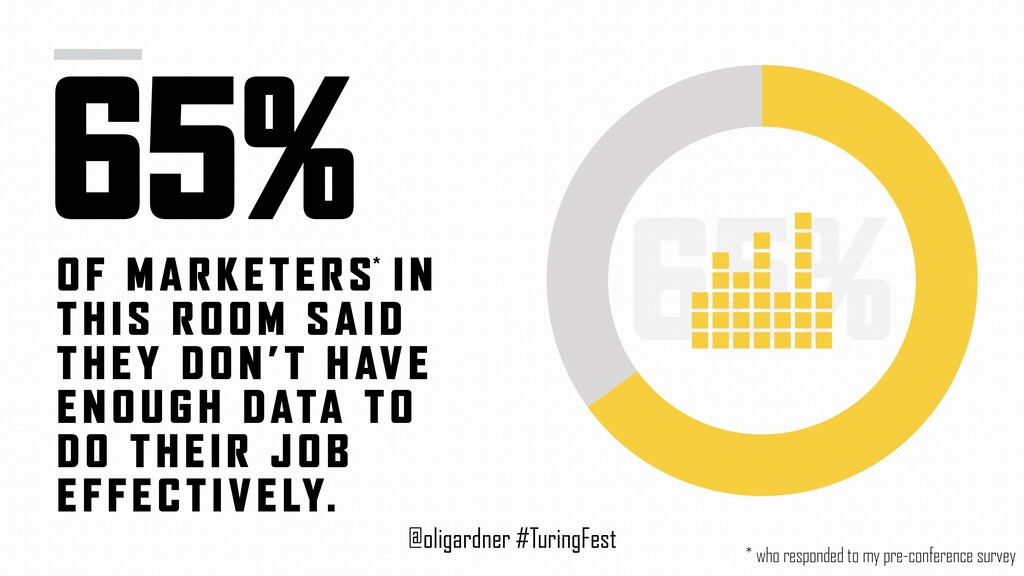
So they're just kind of shooting in the dark. In fact, sent out a survey, a lot of you filled it in, thank you, and it said that sixty five percent of you don't have enough data to do your job properly, and that's not good enough.
That's not fair. It's not right. We can't do a good job with data like this. The biggest problem with what we did was there wasn't a single piece of data to suggest we should. No qualitative, quantitative, not even anecdotal data to suggest we needed an explainer video.
We just did it because everyone else was doing it. And that's not how we should be operating. We need to base our decisions. And when I say design, design decisions, when I say design, I mean experience design. This is not just graphic design, it's everything.
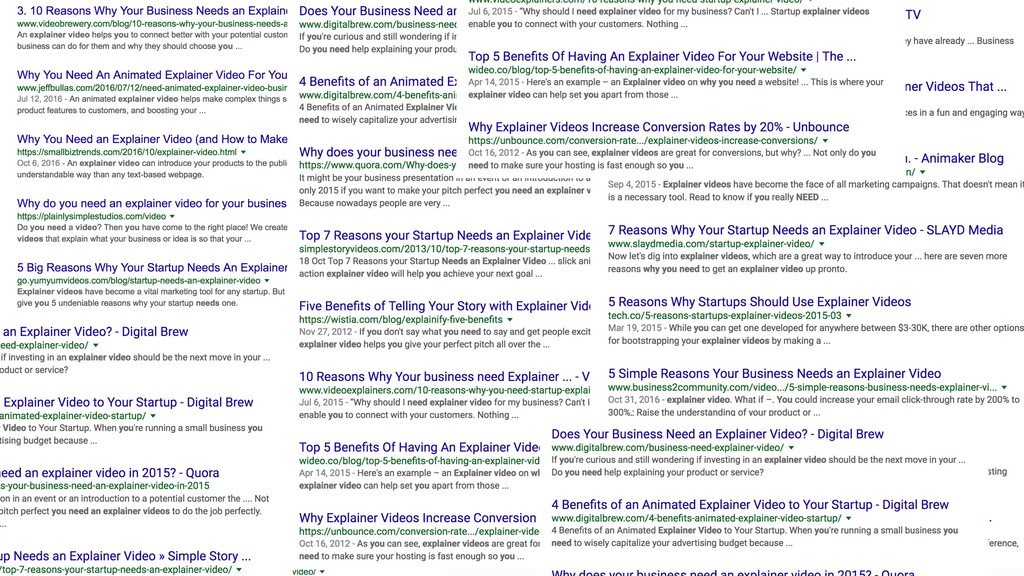
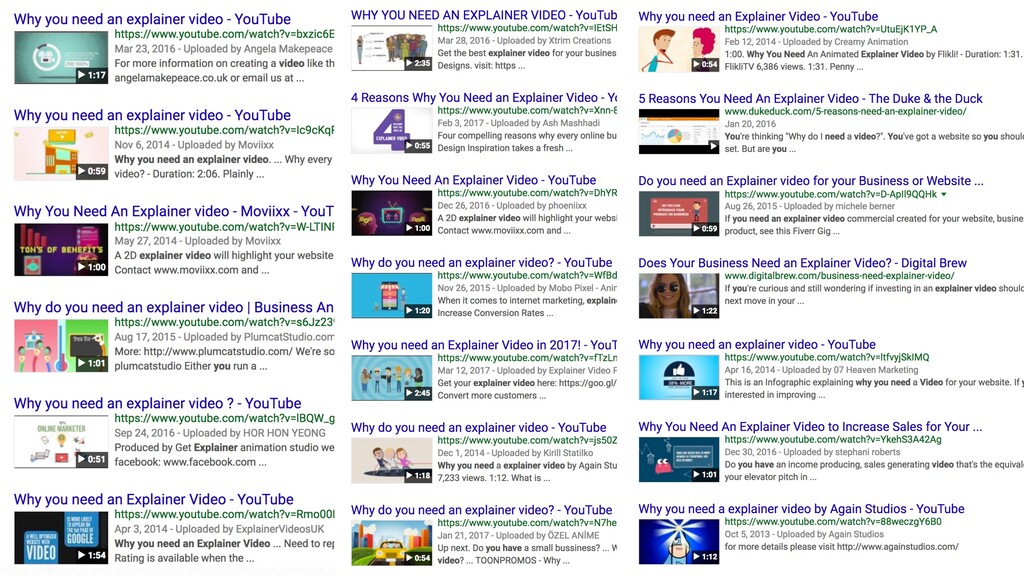
We can't just follow trends. This is what happens every single trend. It's like four hundred blog posts about why you should use an explainer video followed by a hundred and fifty videos in the form of explainer videos explaining why you need an explainer video.
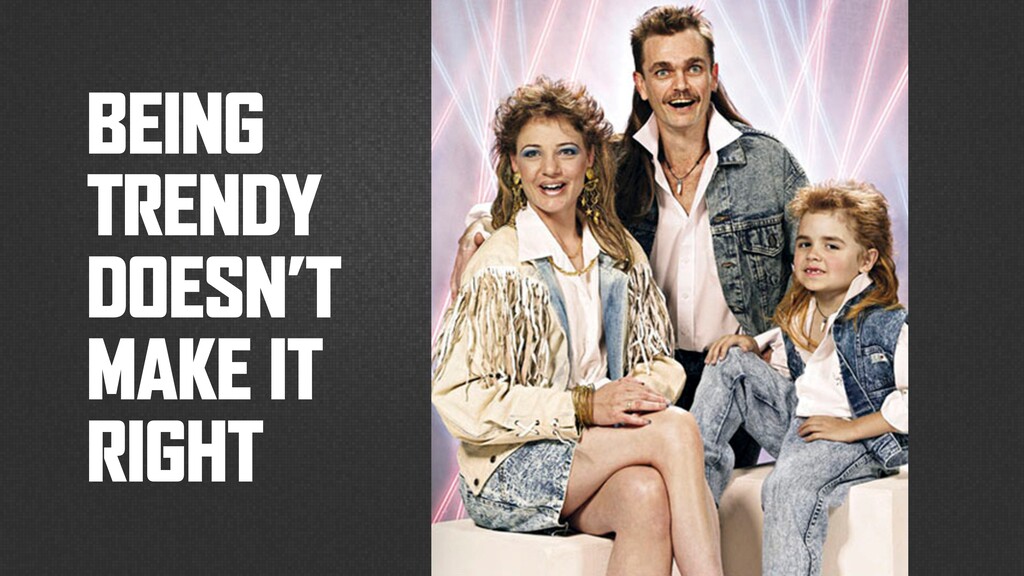
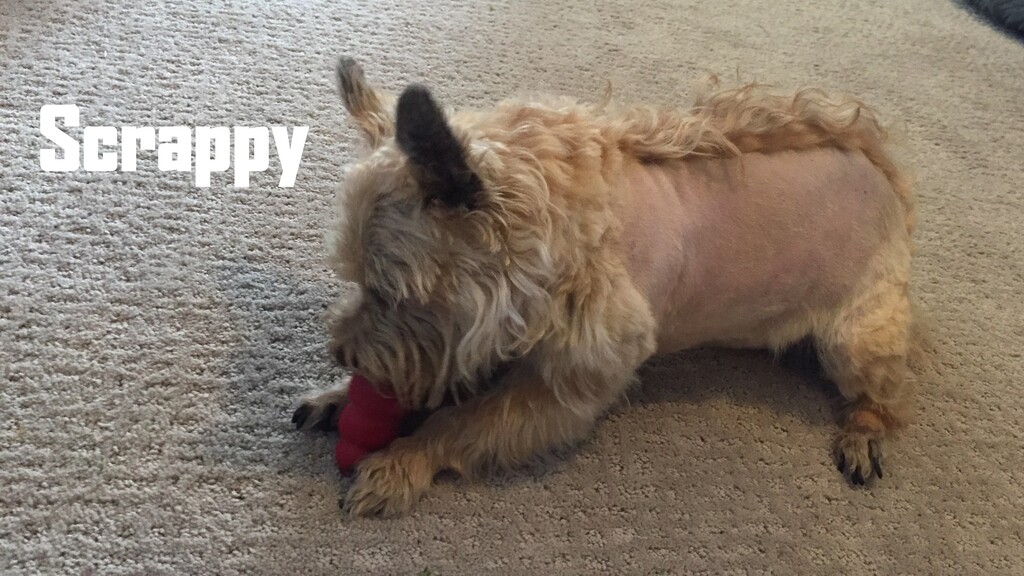
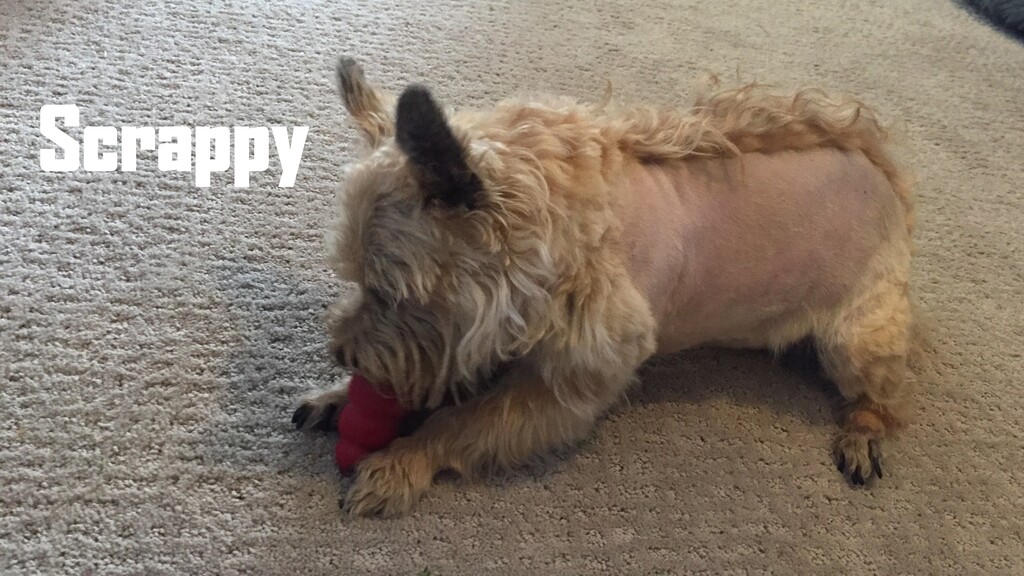
And it's just not the it's all coming at us all the time, and it's not kinda how it should be. Now, I promise I didn't have this in mind when I when I gave one of our dogs a haircut. I thought, you know, some mohawk, some kind of thing, know, mullet thingy was gonna be good, but I used human clippers, Not very good.
And I like I got all I had to go all way down to his skin. I had to put sunscreen on, and he was so bald. He likes to sunbathe. Everything I talk about, slides, the tools, and the process I'm gonna show you, you can get everything at this link.
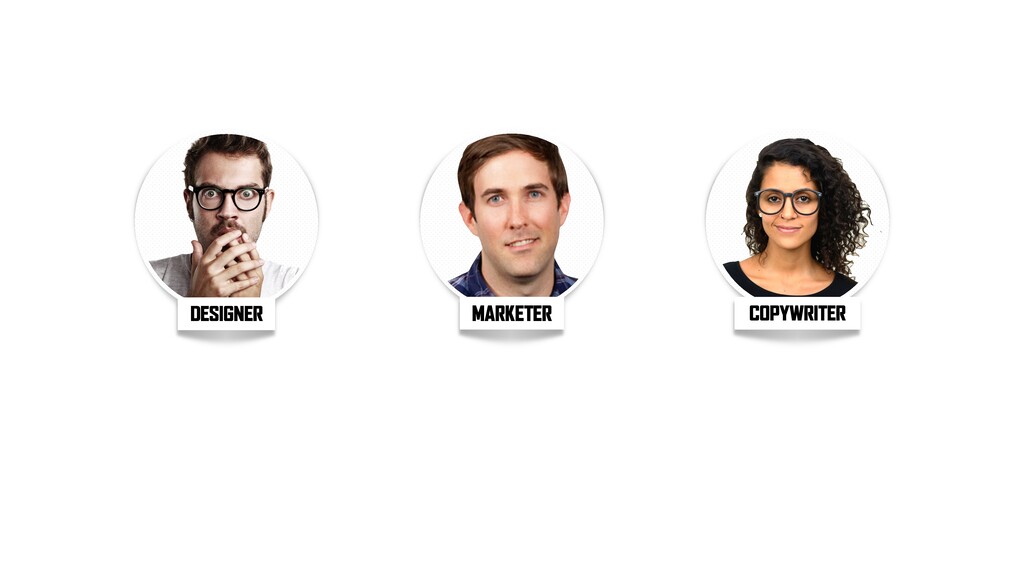
I'll repeat it a couple of times. The slides won't be there yet. I'll upload after I get off stage. Okay. So I've done a lot of research because I think marketing teams are broken, fundamentally flawed the way we all work together. So I've been interviewing and surveying hundreds of marketers, designers, and copywriters to see kind of what they feel about working with one another.
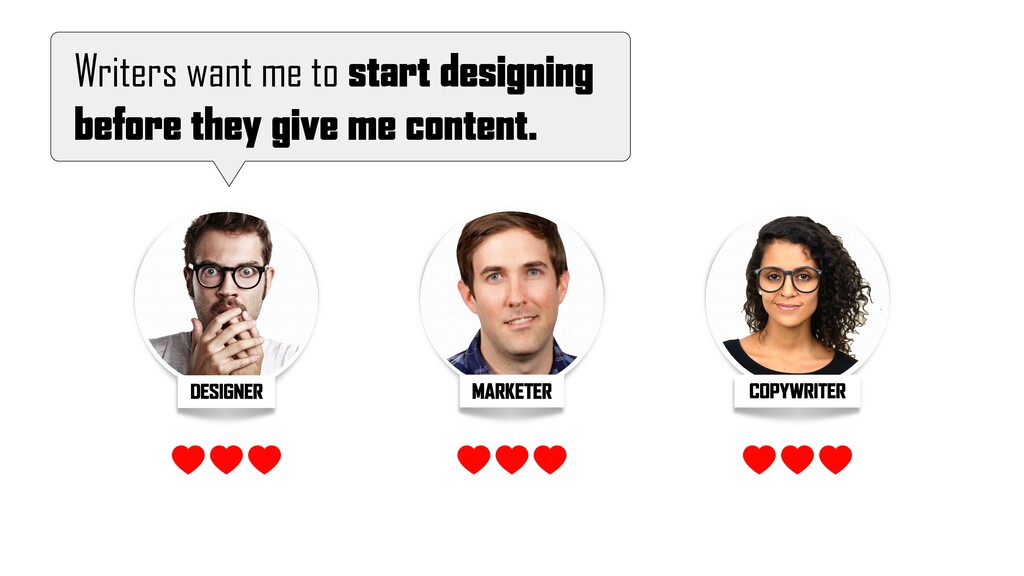
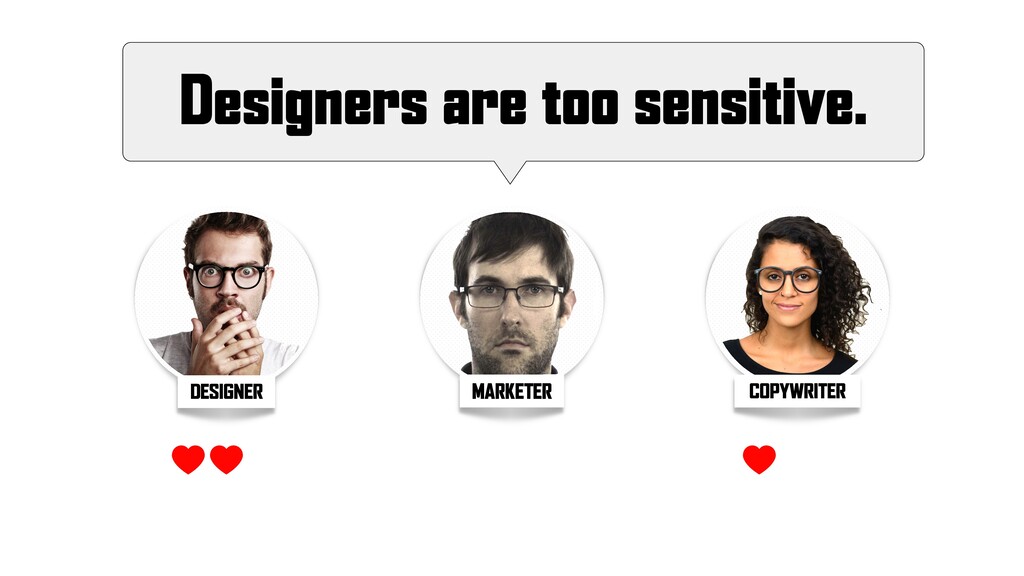
So we're gonna give them three lives each, and then we're gonna hear what they think about one another. So let's start with a designer. Right? There's one minute start designing before they give me the content. This is really common. Eighty one percent gee, this is a life.
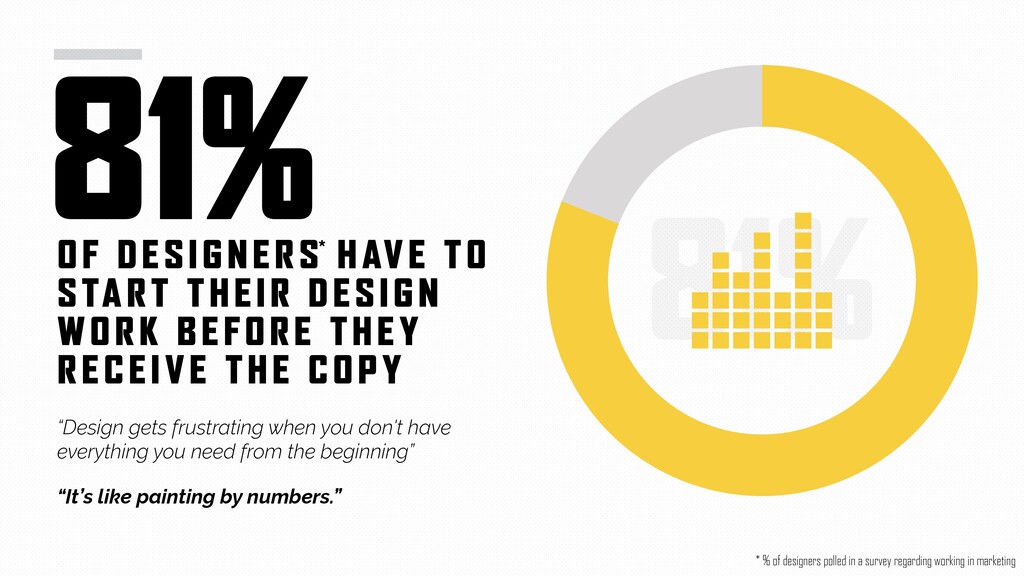
Eighty one percent of designers say that they have to start their work before they get the copy. So no wonder we get template y designs because I don't know what the content is, and I probably didn't get any data. So like that's what results that's why we get some kind of generic stuff, and they might go, I'm just going to copy someone else cause no one's given me any content yet.
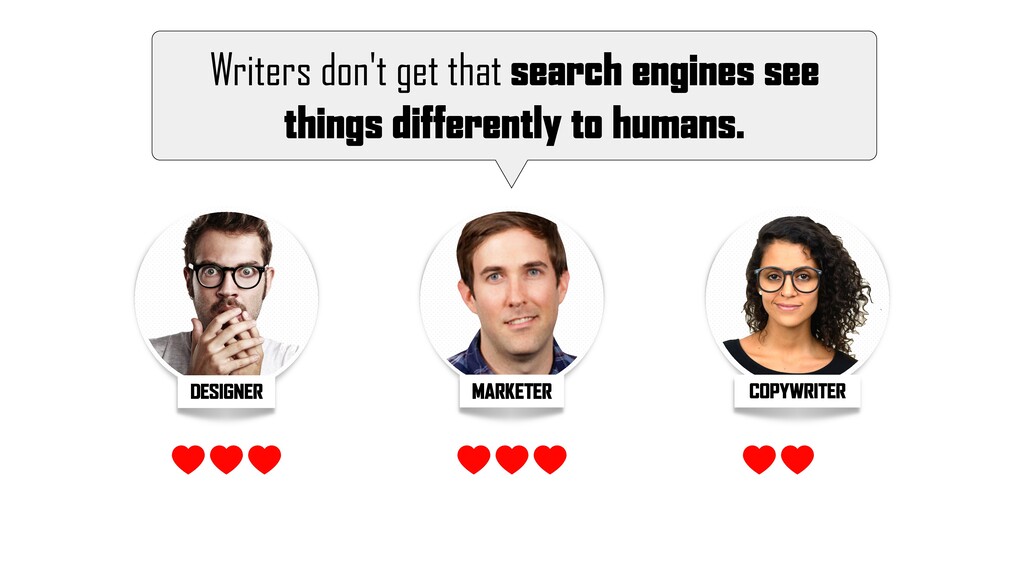
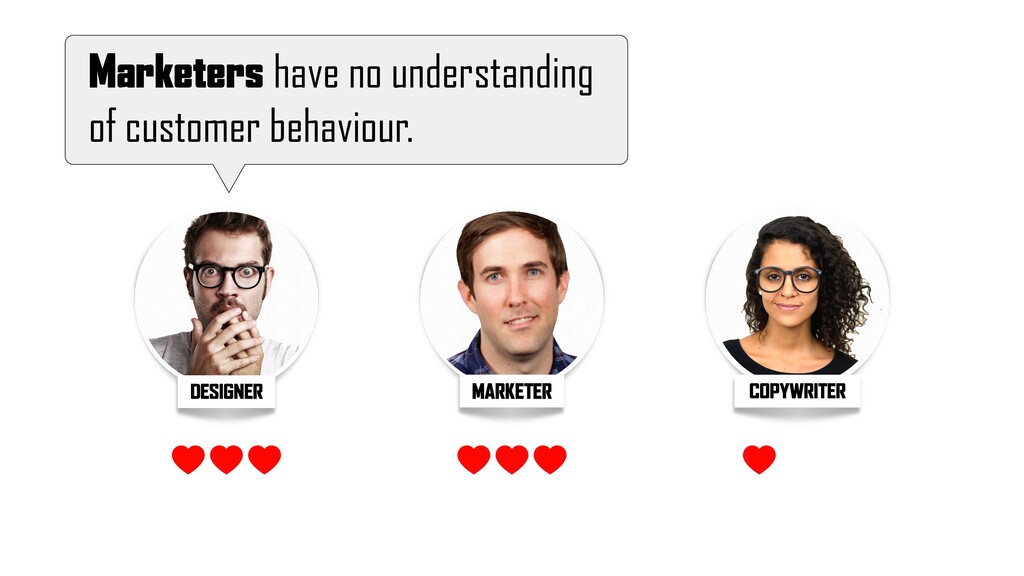
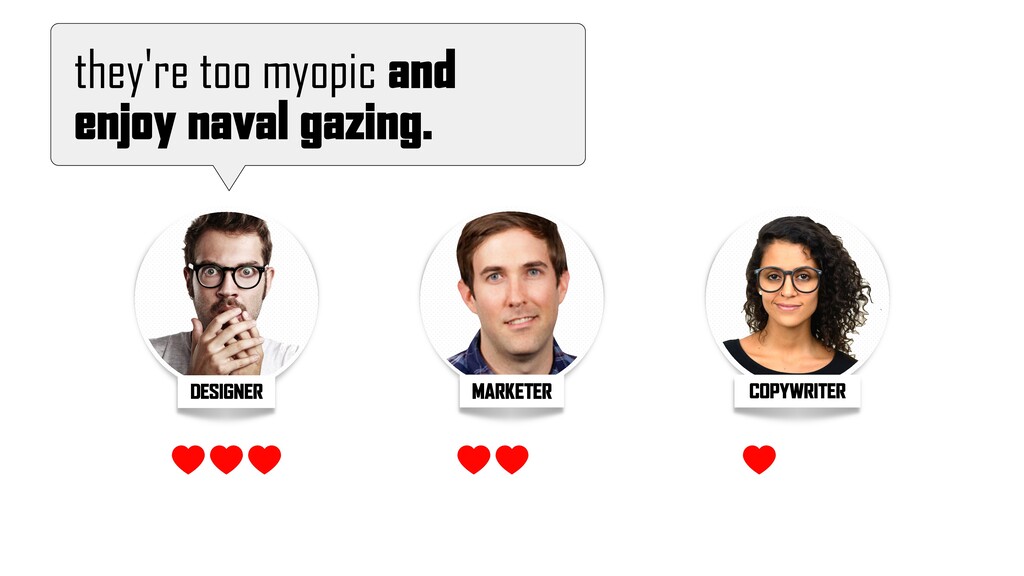
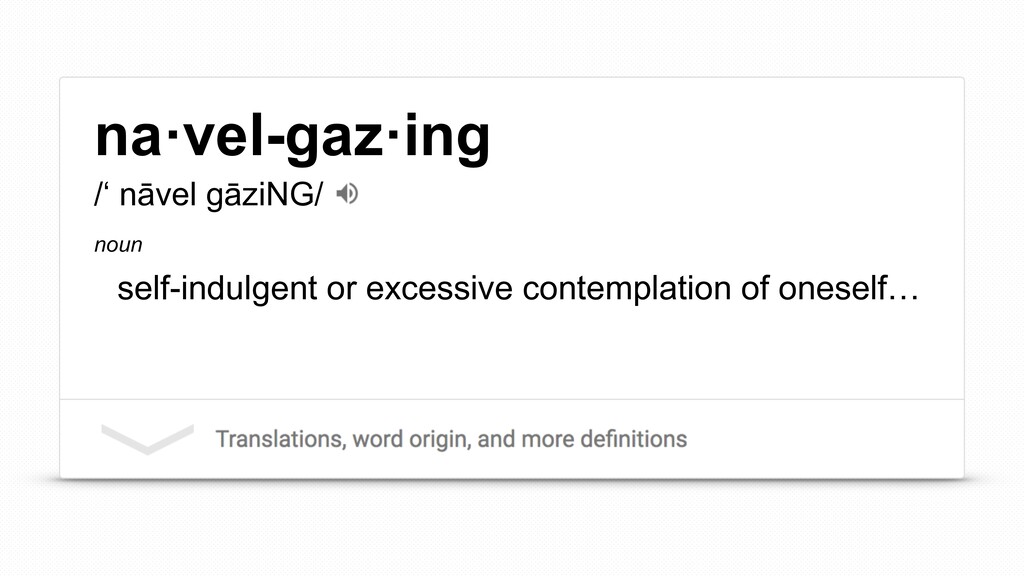
Writers don't understand that search engines and people are different. We're picking on the copywriter here. How about this? Marketers have no understanding of customer behavior. They are too myopic and enjoy navel gazing. Does anyone know navel gazing means? I don't I had to I had to look it up.
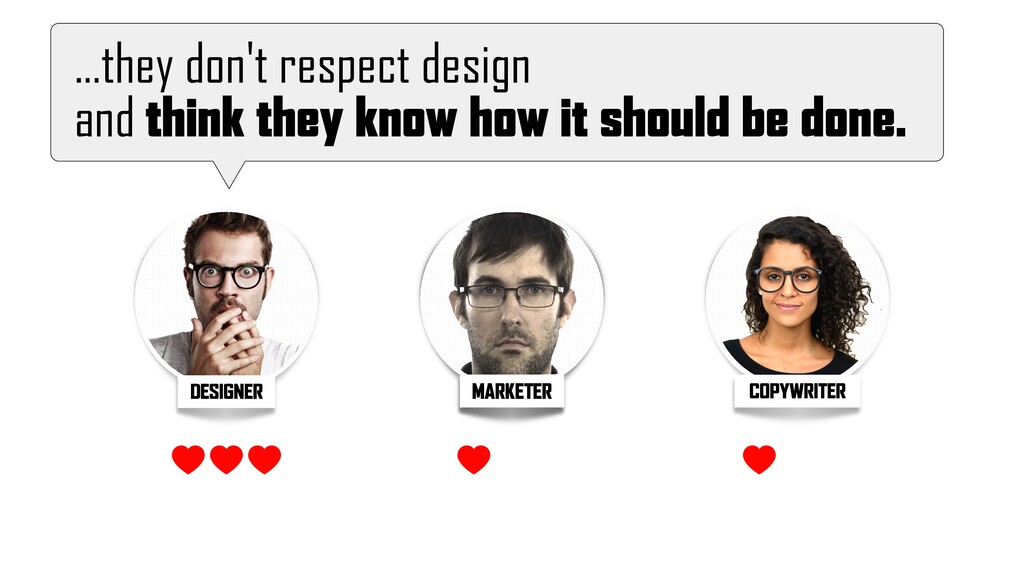
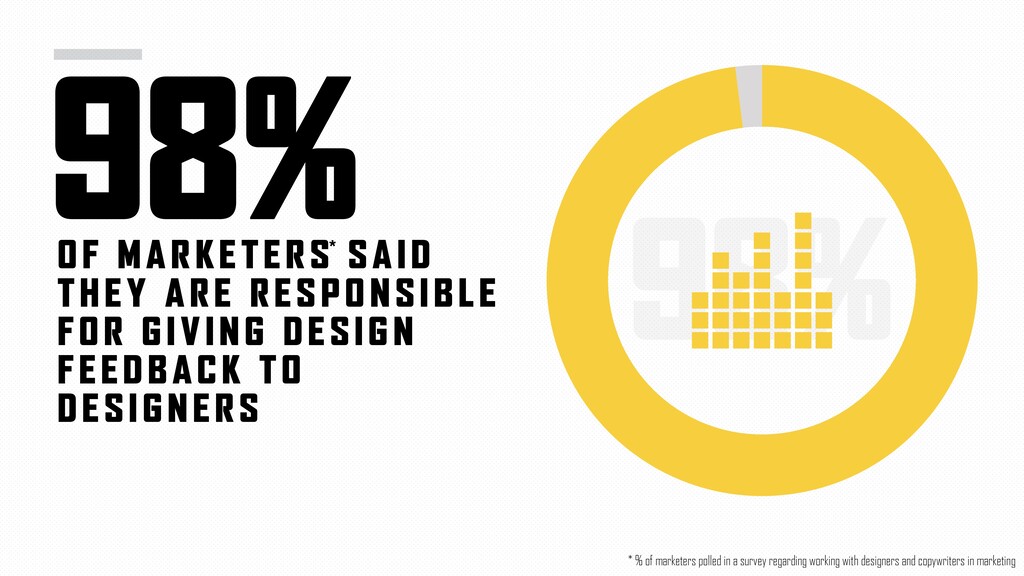
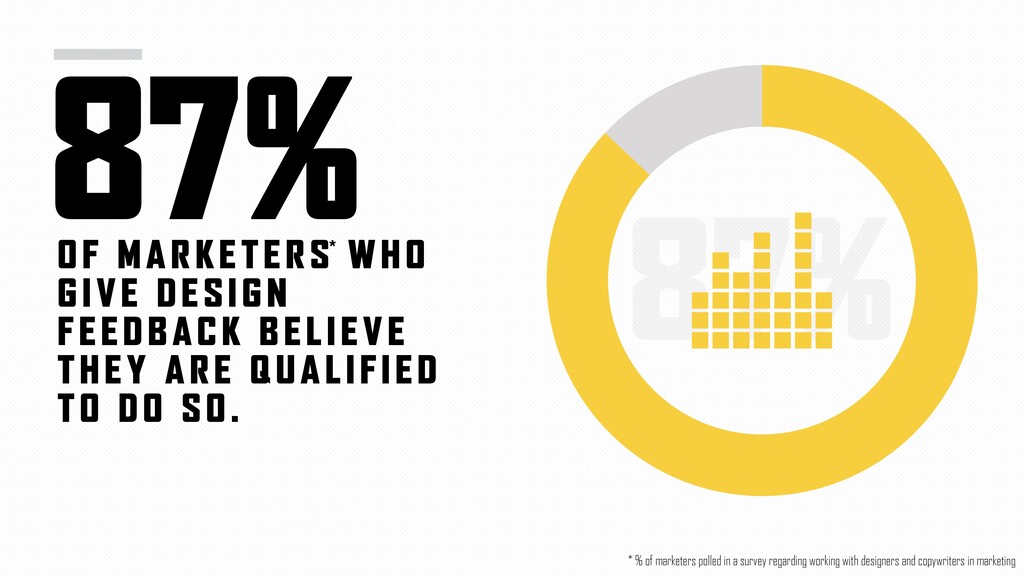
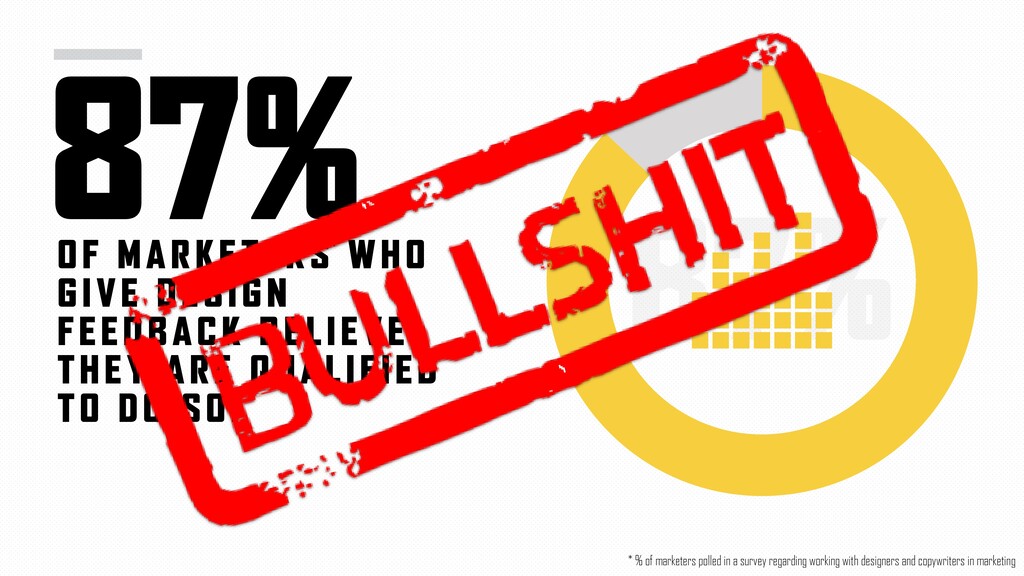
Wow. My fly is open. That's terrible. Okay. Good job. Was looking down. Okay, so marketers are narcissistic apparently. And they don't respect design and think they know how to do it. Now this is a scary stat, ninety eight percent of designers of marketers say they're responsible for giving design feedback to designers and eighty seven percent of them think they're qualified to do so.
********. Total ********. I've been doing this for twenty years on both sides and that's way too overconfident. There's a lot of misunderstanding between these different disciplines and a lot of frustration that if you ask the right questions to the right people in an anonymous way, they'll tell you.
Alright. Marketers are kind of like a zombie dead guy now. He's been picked on a lot too. So what does he think about designers? Designers do not like to be spoken to like that. Okay. So that's that out of the way. Now quickly, put your hand up if you're a designer.
Okay. So everyone who doesn't have your hand up is wrong. You're all completely wrong. Everyone's a designer. Design is just problem solving. We all solve problems every day, that's what we do as a marketer, writer, designer, whoever you are, creative director, doesn't matter.
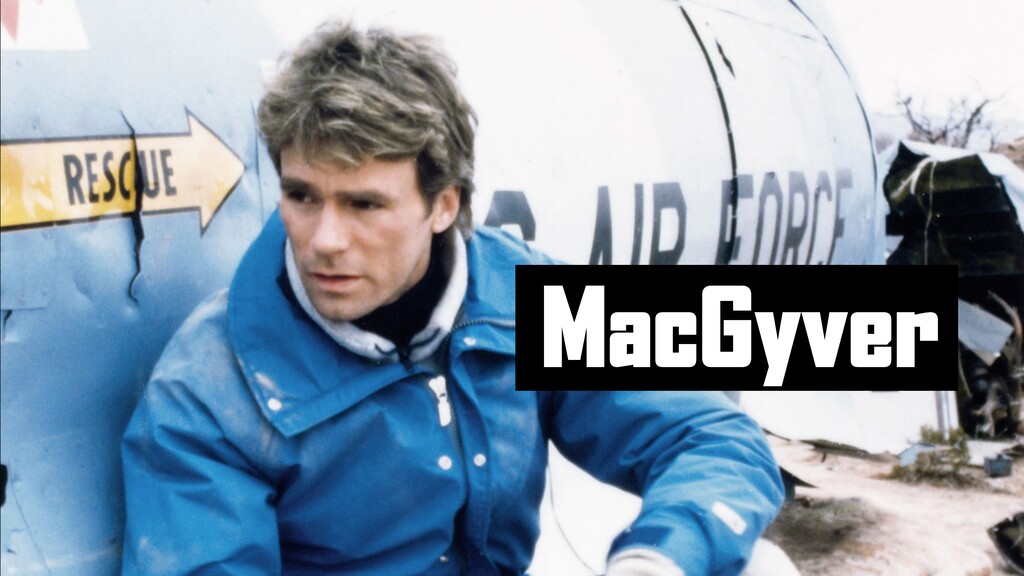
Your job is to solve problems. And if we start thinking, live our lives through the lens of an optimized, like this is my this is my hero. He's just he can take any ****** situation, pick something up off the ground and fix it.
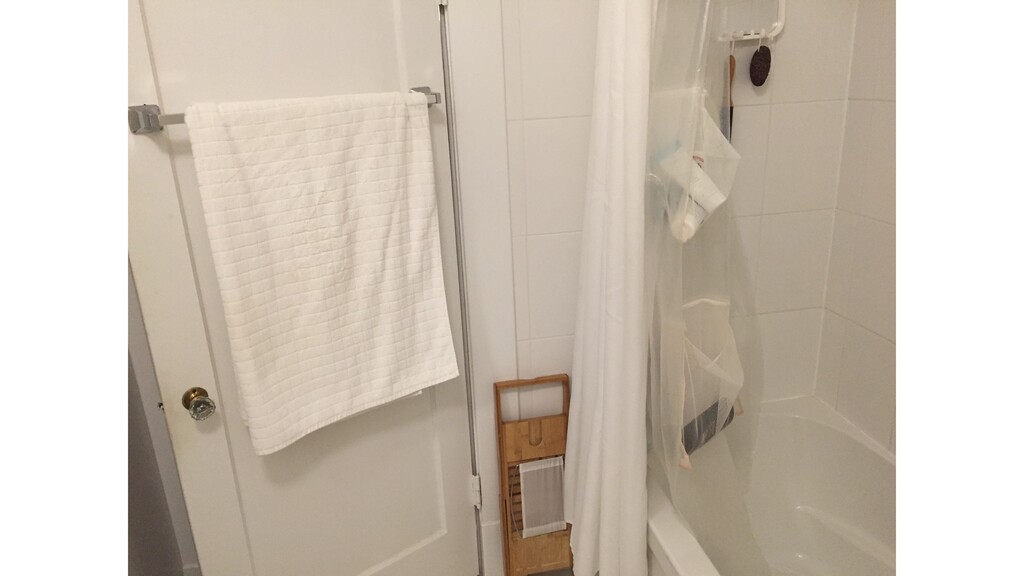
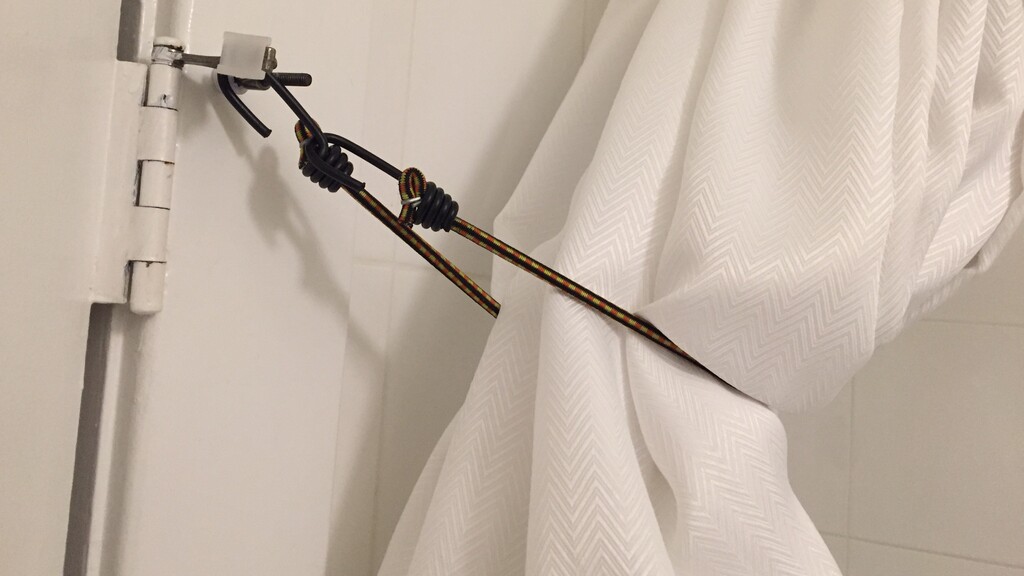
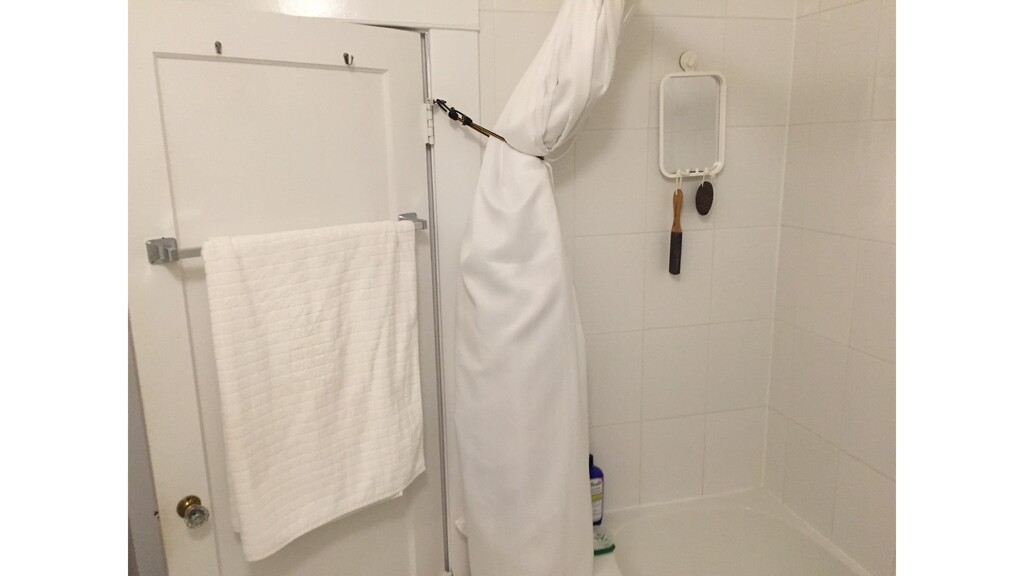
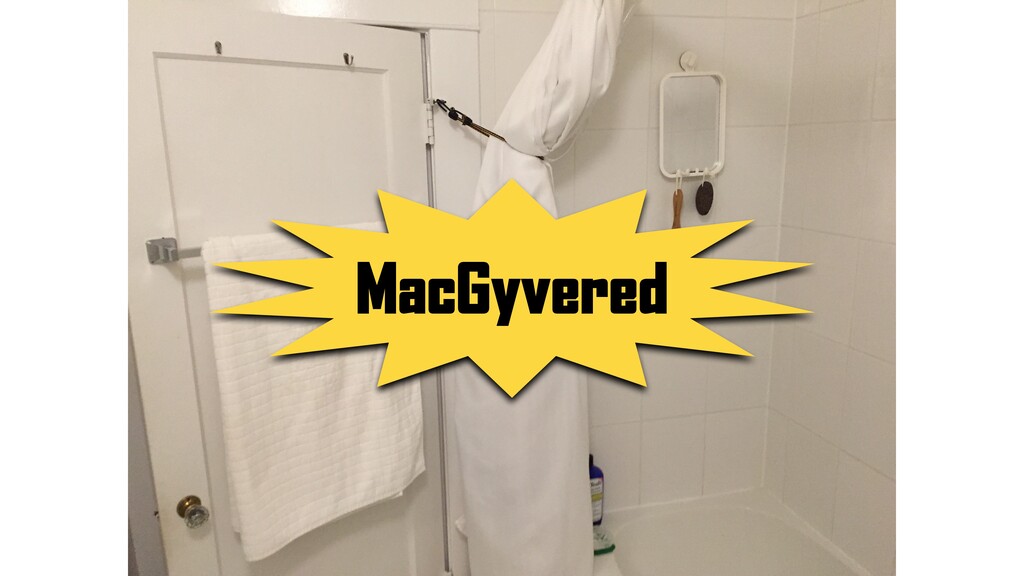
It's amazing. This is how we should approach life. You see something broken, go, It's not just walking by it. How do I fix that? Start thinking like this. Nicole, my fiancee, takes lots of baths. She probably hit me putting our bathroom on here, but that curtain thing is really annoying.
You're in the bath like this, and it's hitting your arm. It's blocking the light. That's kind of annoying. Easy solution, just get a bungee cord, because why not? Now it looks like a hotel. Look at that. Look at how posh that looks. It's beautifully wrapped together.
I know it's a bungee cord, but still, it looks nice and it's much better, you know, with your elbow down there. That's that's my favorite thing to do. One of the biggest problems we have in the world right now is lack of empathy, and there's a lot of it sitting like right with us.
Designers are just built this way, and if we only know how to kind of work with them and bring this stuff out, we'll all learn how to be better optimizers, designers, and business people. Now that's what design is. It's not just copying other people.
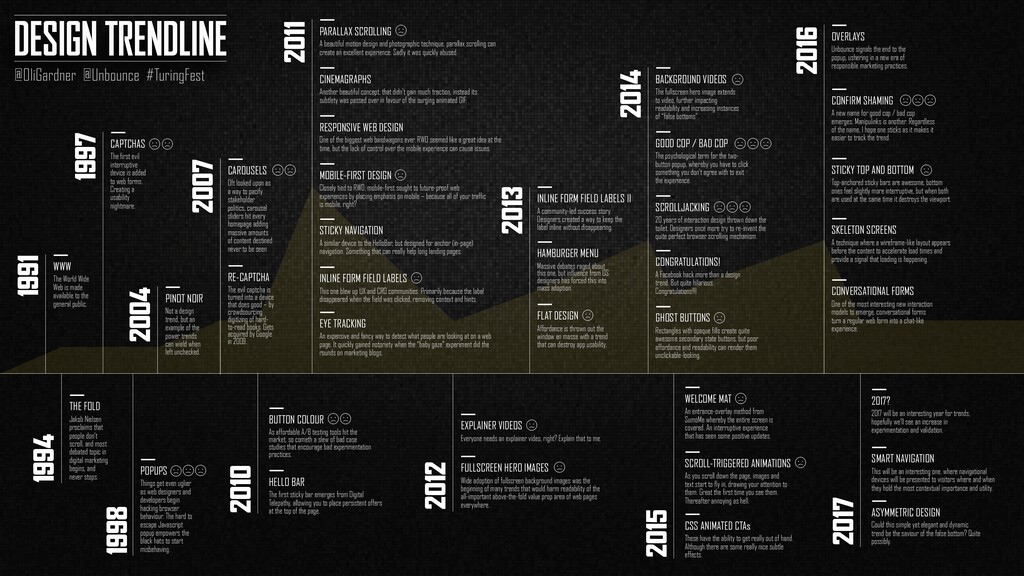
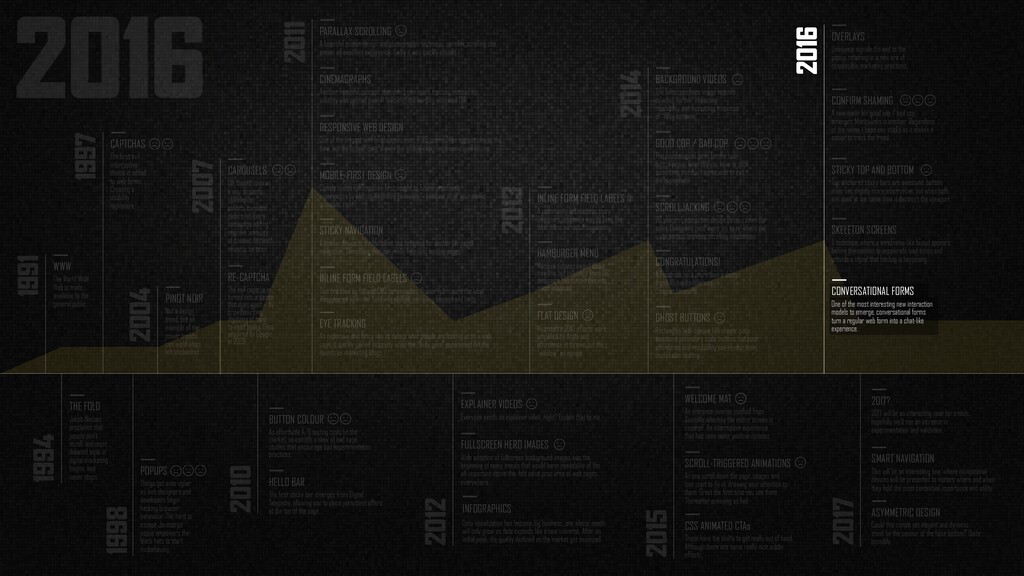
That's not the right way to do design. Okay, so trends. There's a lot of design trends that come along every year. Here's a big kind of map of design trends since the web started. I'll be missing some I'm sure. Some years there's an awful lot of them, and the problem is that theme designers primarily, WordPress themes, that kind of thing, they put all of these in because they're salespeople.
I want all of these features in here, and then people who don't know any better buy one of these, everything's turned on, they've got scroll jacking and all these awful things, and they're slow, clunky, and over bloated, and they can be a UX and conversion nightmare, and they don't even know because they don't know what's happening, they don't know what's going wrong.
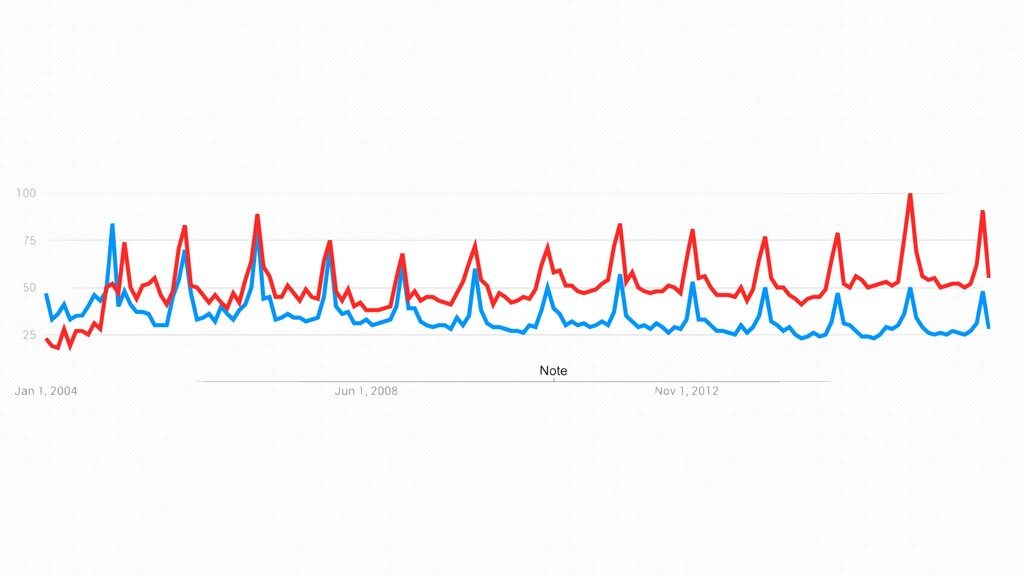
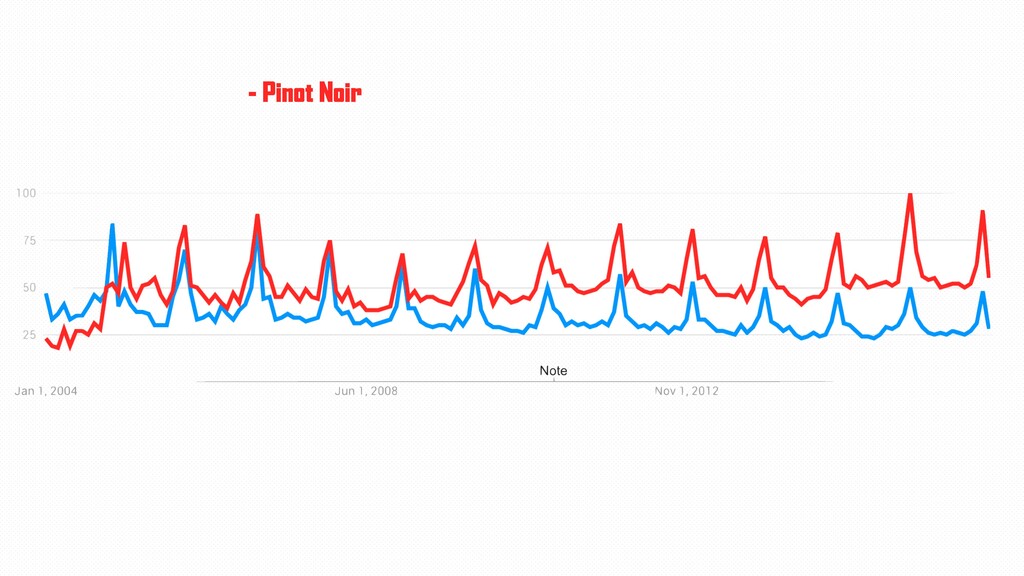
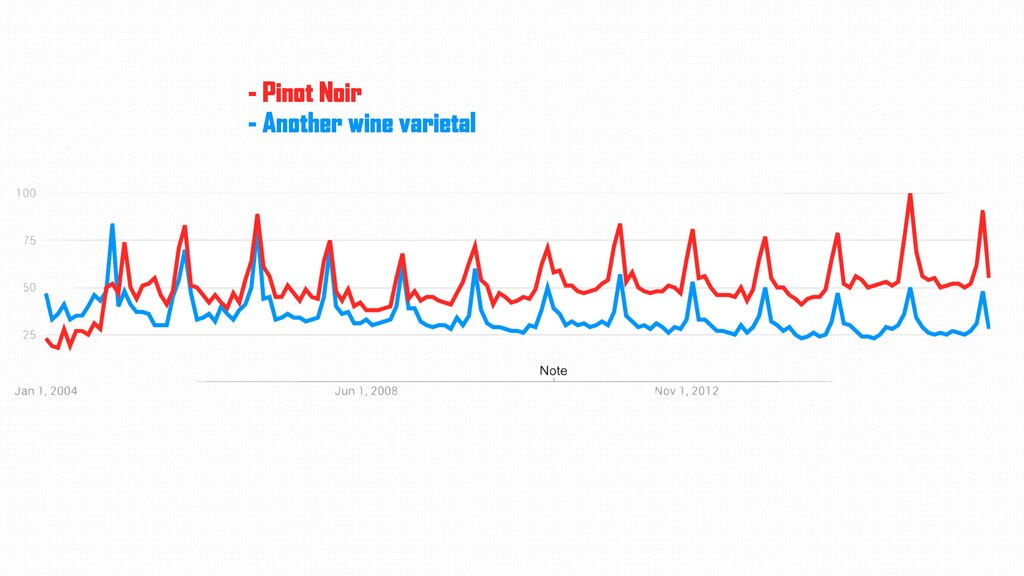
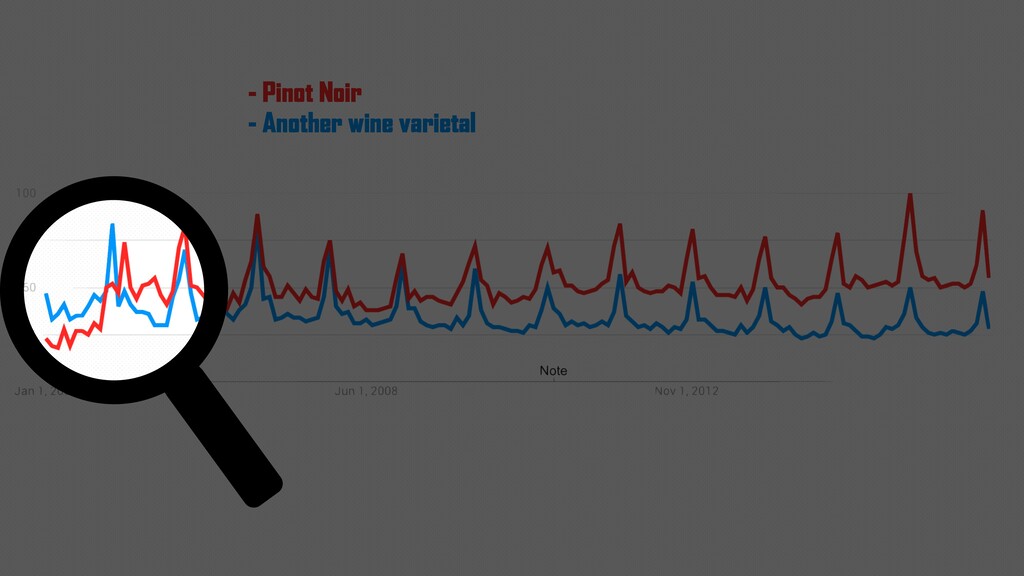
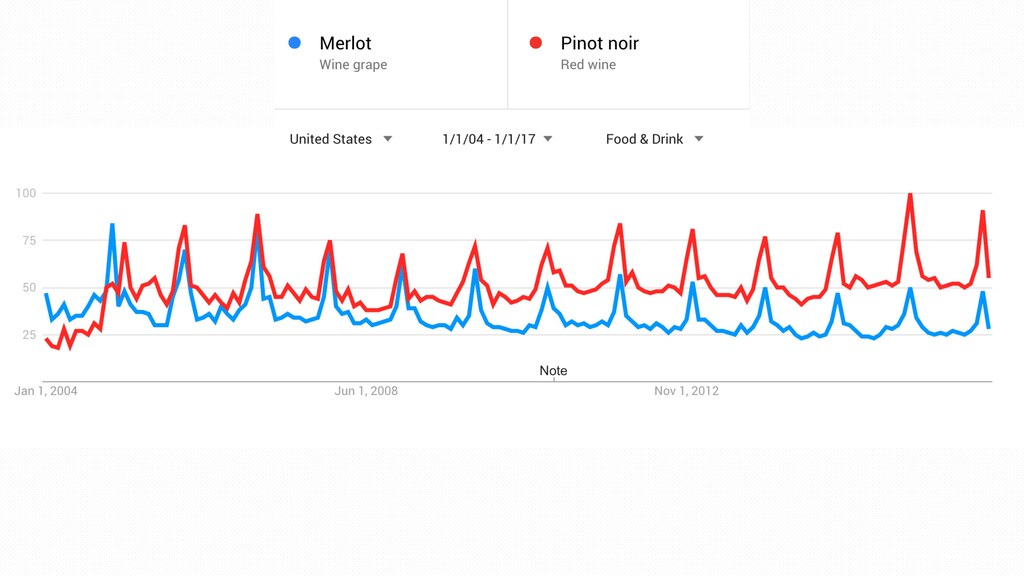
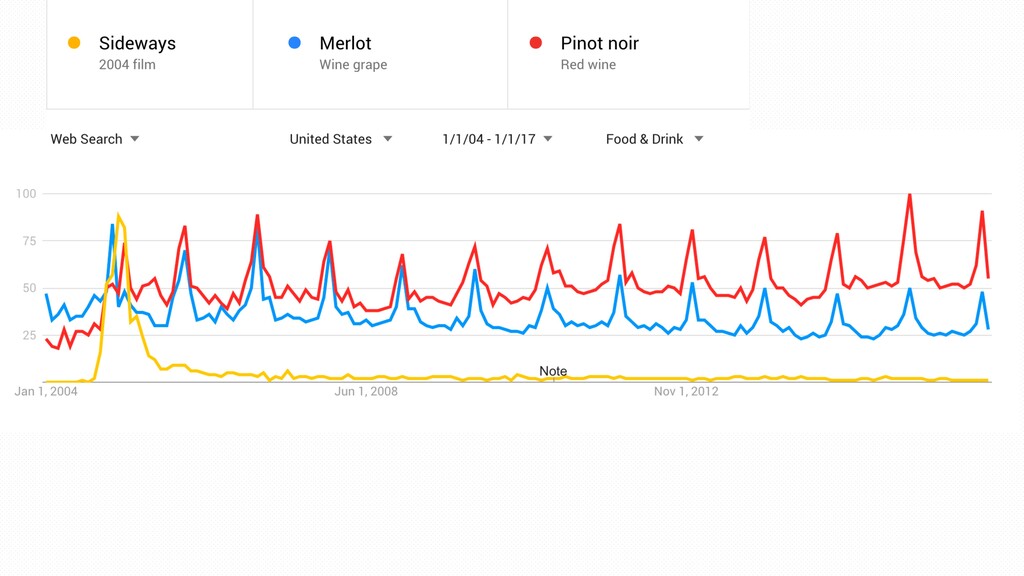
I'm gonna touch on a few of these, but I want to take you back to two thousand four. This is a Google Trends chart. Red line is Pinot Noir. The blue line is a different kind of wine. In two thousand four, something happened that changed wine forever.
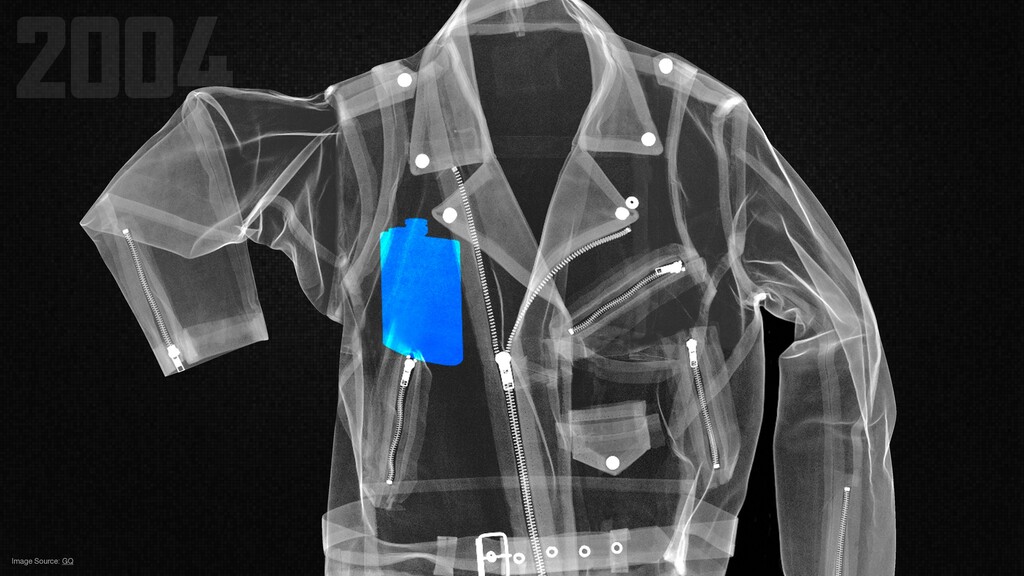
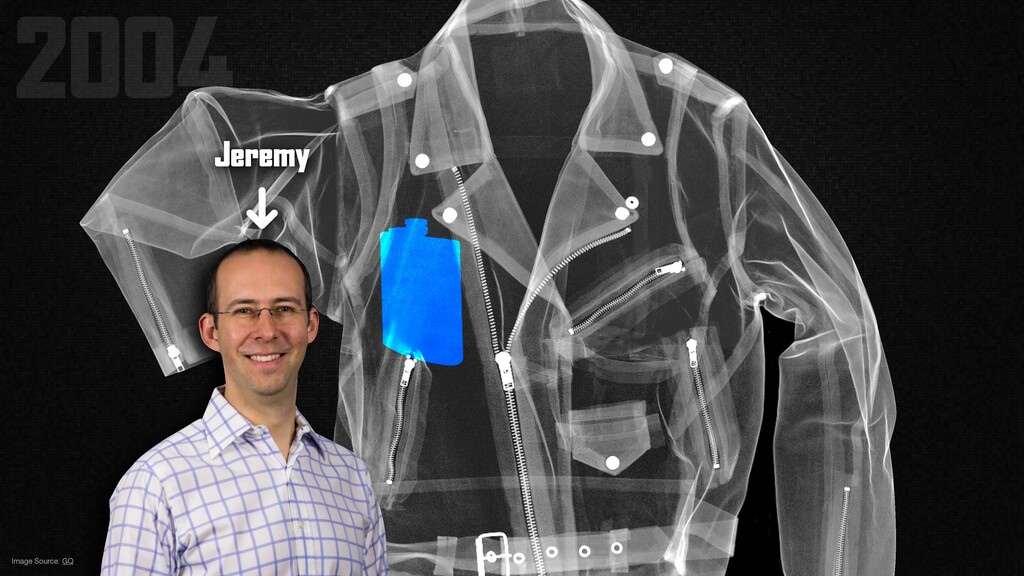
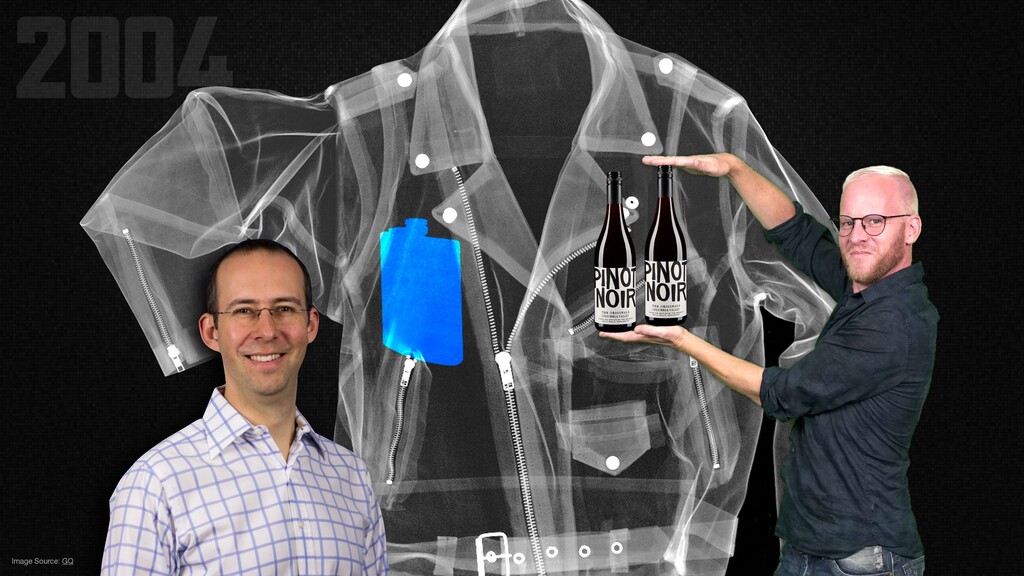
So back in two thousand four, I went to see a movie about wine with my friend and now our CMO at Unbounce Jeremy, and because we're adults, tried to sneak in two bottles of Pinot Noir, You know jackets because that's what you do. Right?
So we're sitting there and we're taking our turns pouring it. It's my girl. Nothing in there. Nothing in there. And there's a wine tasting scene happening. And all of a sudden, the guy two rows in front of me goes, **** ****, I can smell wine.
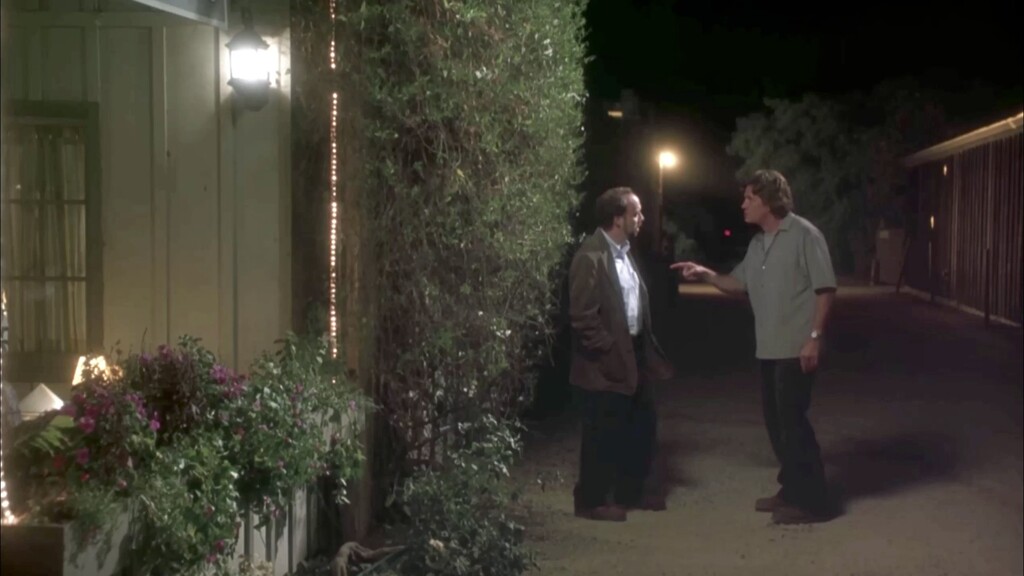
This is amazing. Because I wasn't doing the right angle to put it in my glass, I was just doing this. It was running around the bottle and going all over the floor. There's just red wine everywhere. And then this scene happened. Do not sabotage me. Woah.
Aye aye, captain. You got it. And if they wanna drink Merlot, we're drinking Merlot. No. If anybody orders Merlot, I'm leaving. I am not drinking any ******* Merlot. Okay. Okay. Relax, Miles. Changed wine forever. Alright? Because the Merlot is the other one, and that's when Sideways came out.
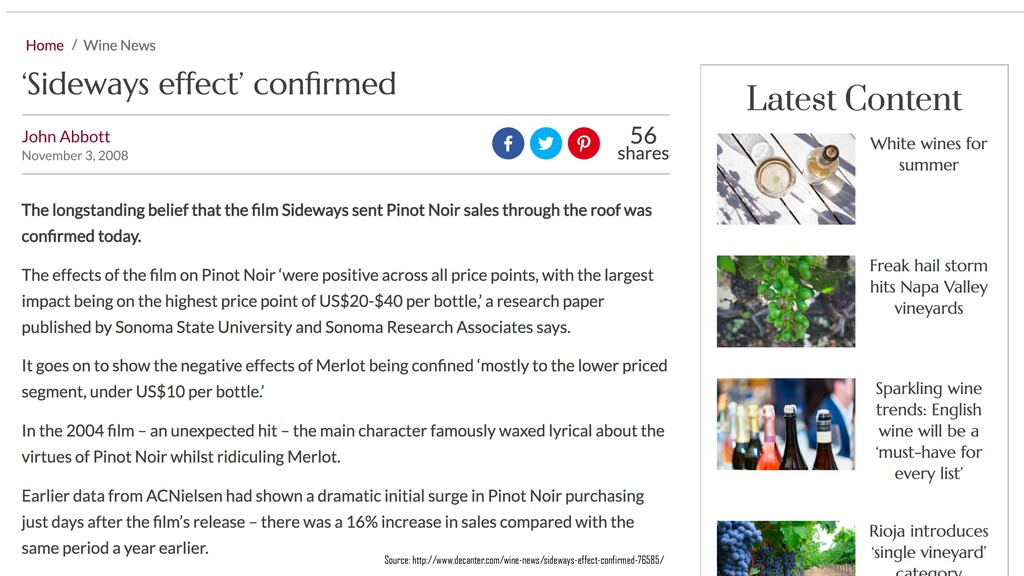
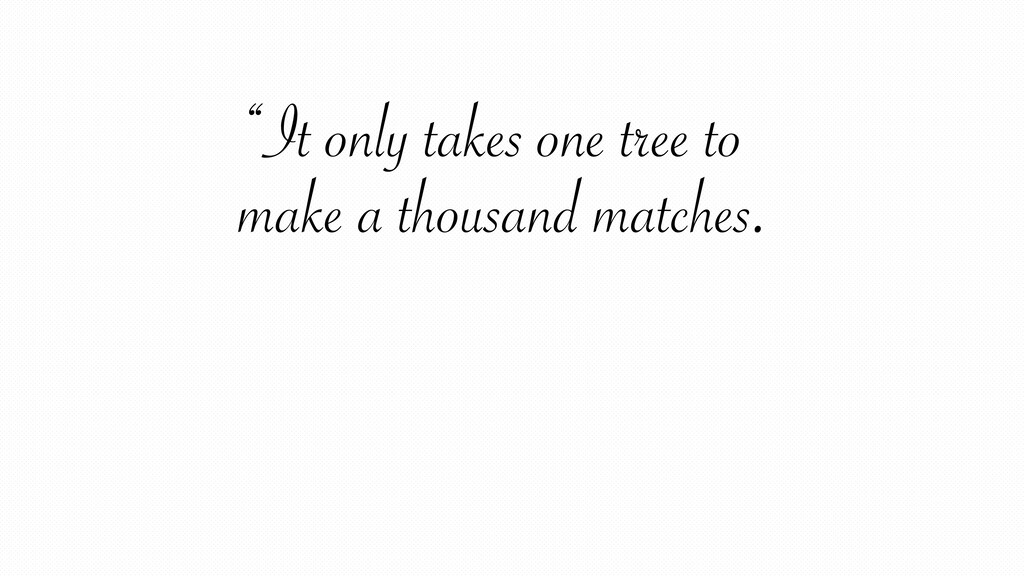
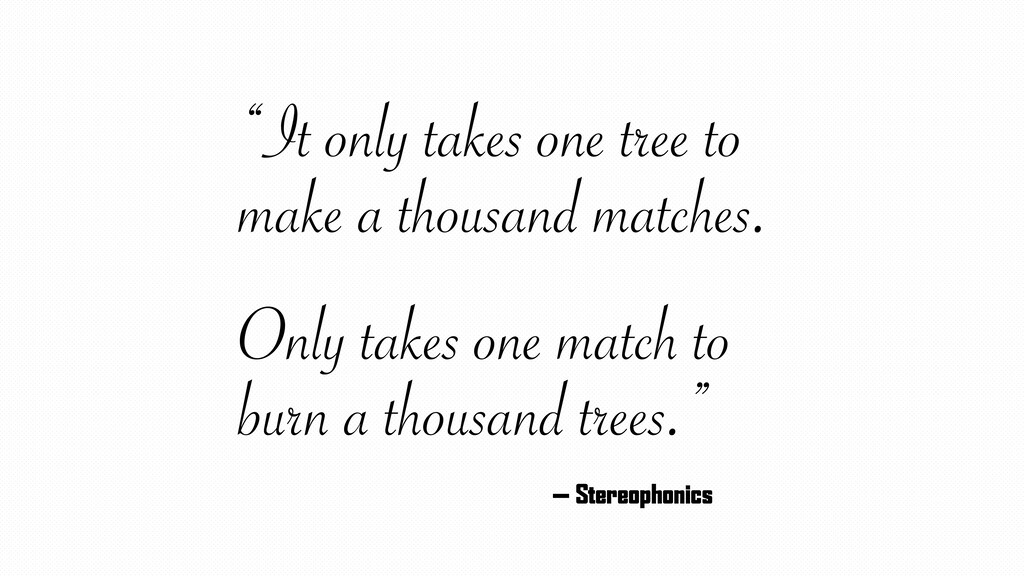
Right there, that inflection point. And I predicted it at the time, and sure enough, four years later, sideways effect confirmed. Sorry, Merlo. And this I love this way of describing it. This is how trends are. Only takes one tree to make a thousand matches, only takes one match to burn a thousand trees.
Epic song. You should listen to the song, A Thousand Trees. So that's a true fact. But I love judging books by their cover and judging wine. By the way, they look at me, I'll go in a wine store and I'll be like, oh, that look actually, I never got the bottom shelf.
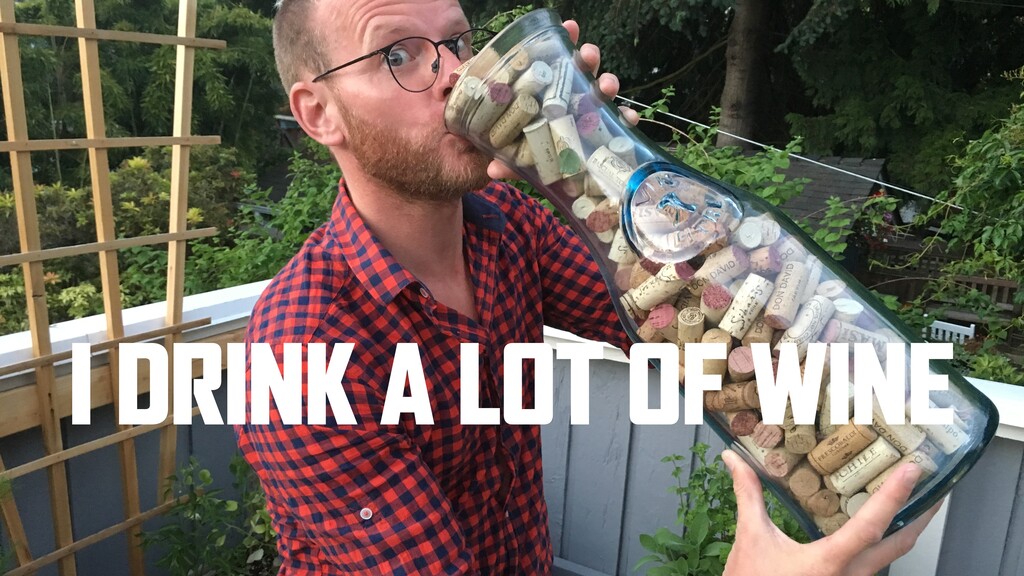
I'll go this far. I go, oh, it looks awesome. Just put it back. Thirteen years, I have not bought a single bottle because of that movie. That's the impact trends can have. They're dangerously powerful. Okay. How was my Scottish accent in that intro by the way?
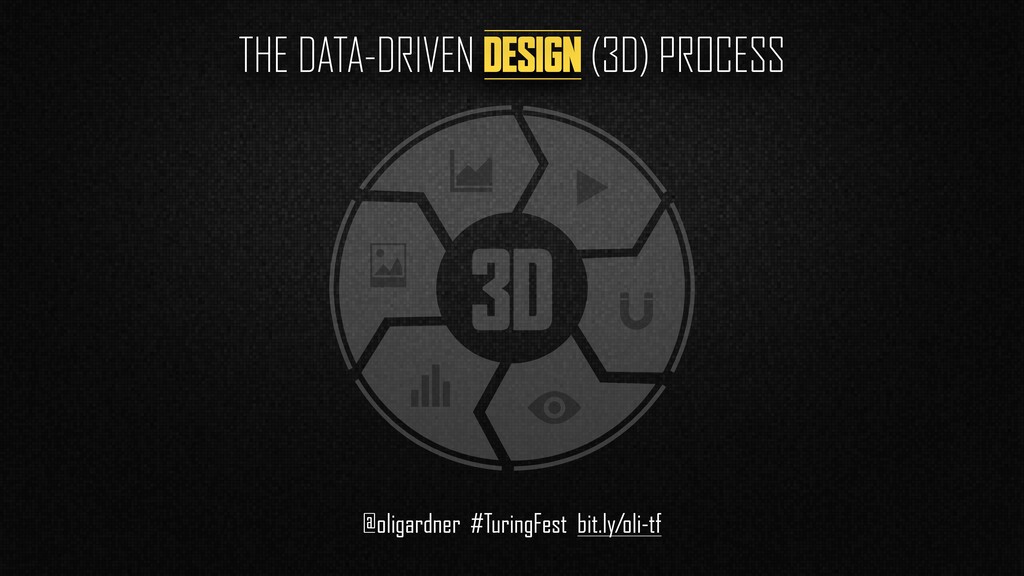
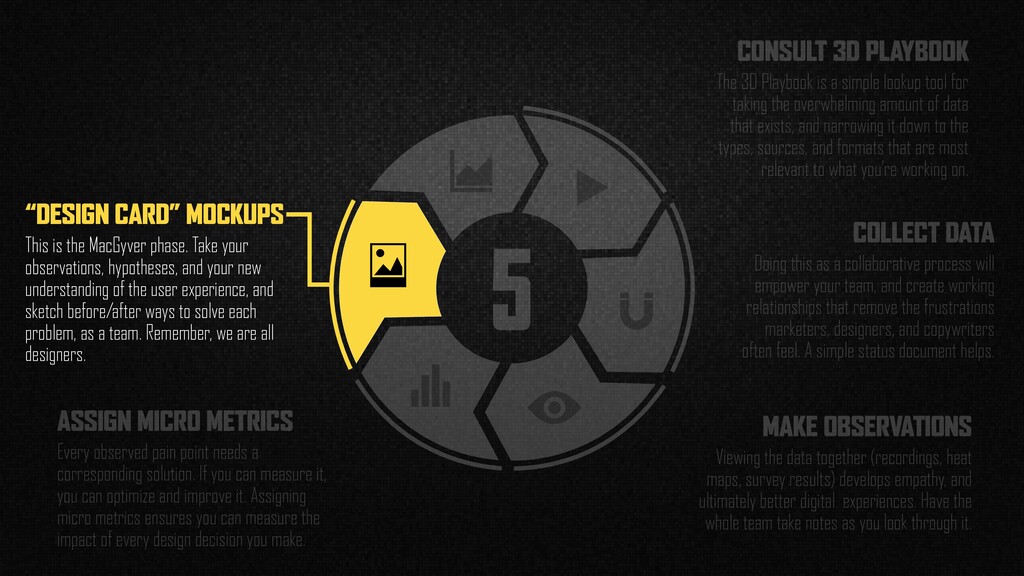
I find the more I'm here. Rand does a pretty good one. Okay, so this is why I created this process. It's an optimization process to solve these two problems. One, the impact of trends. Like how do we deal with this stuff when it comes at us?
How do we validate that this is actually beneficial to the experience and to conversions? And also, how do we make teams work better together? So that's what this is about. I'm going to rock through the process, what it is, but I'm going to come back to it later with an actual example of a trend and we'll go like through the whole thing.
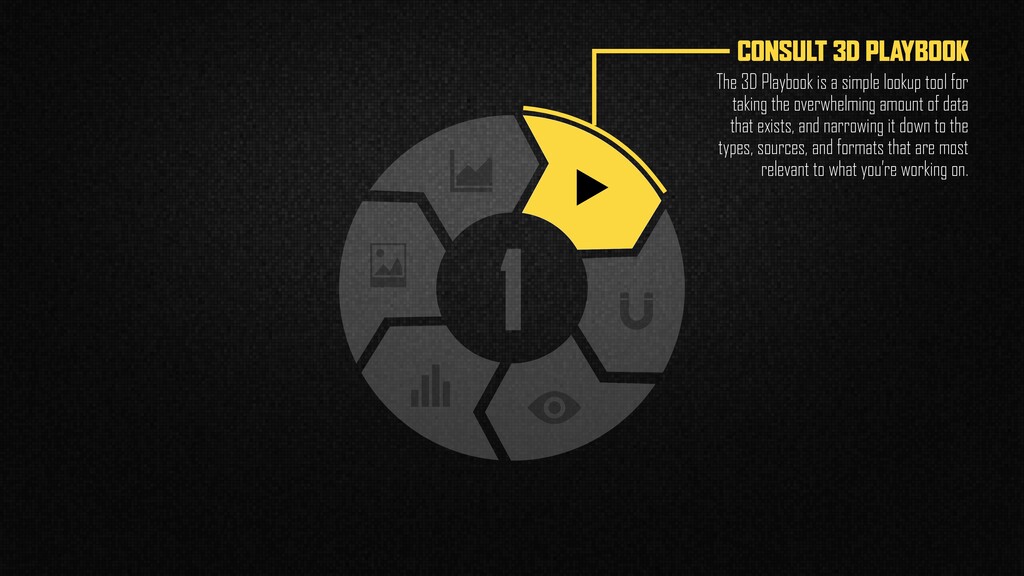
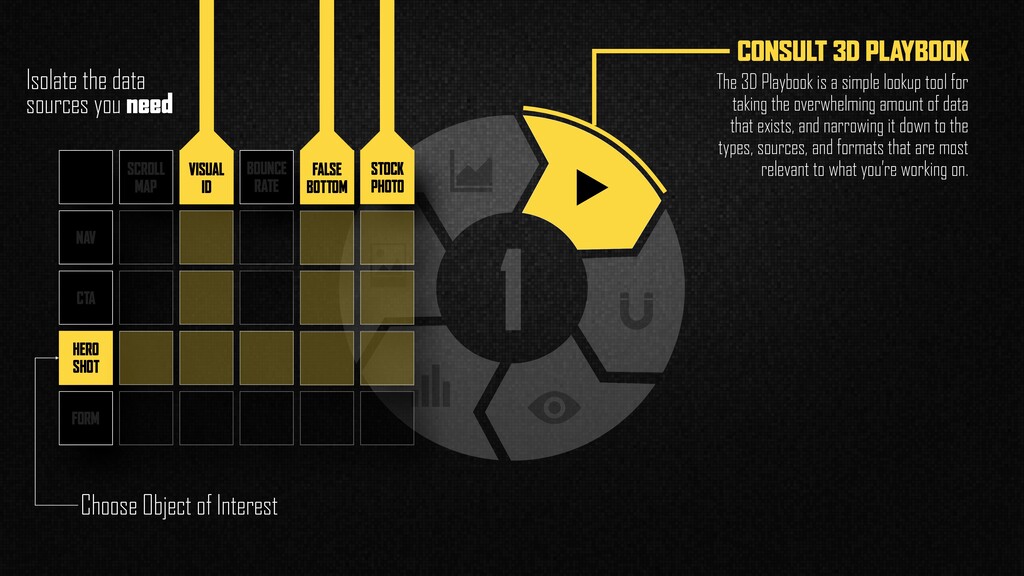
So it starts with checking the playbook, the three d. So data driven design, three d's. I like alliteration. I actually prefer data informed design as a concept, but that doesn't have three d's, so it's data driven design. Okay, so we consult the playbook to see what we should do, and it's kind of like a lookup table.
So maybe I'm interested in a hero shot, hero image, and it will then tell me I should pay attention only to this small subset of data, instead of like because there's data everywhere, which is amazing, but also problematic because there's too much and people get overwhelmed.
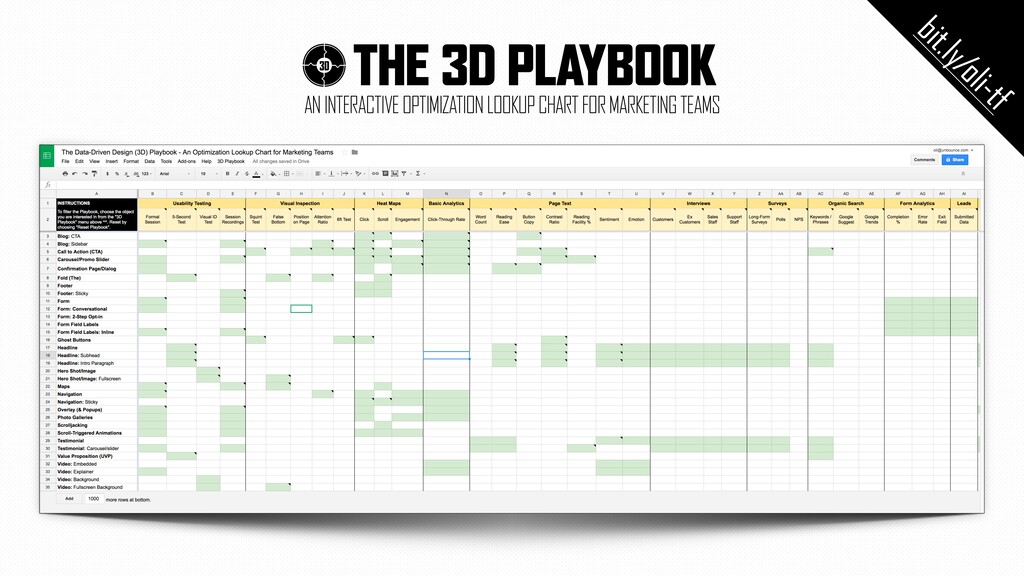
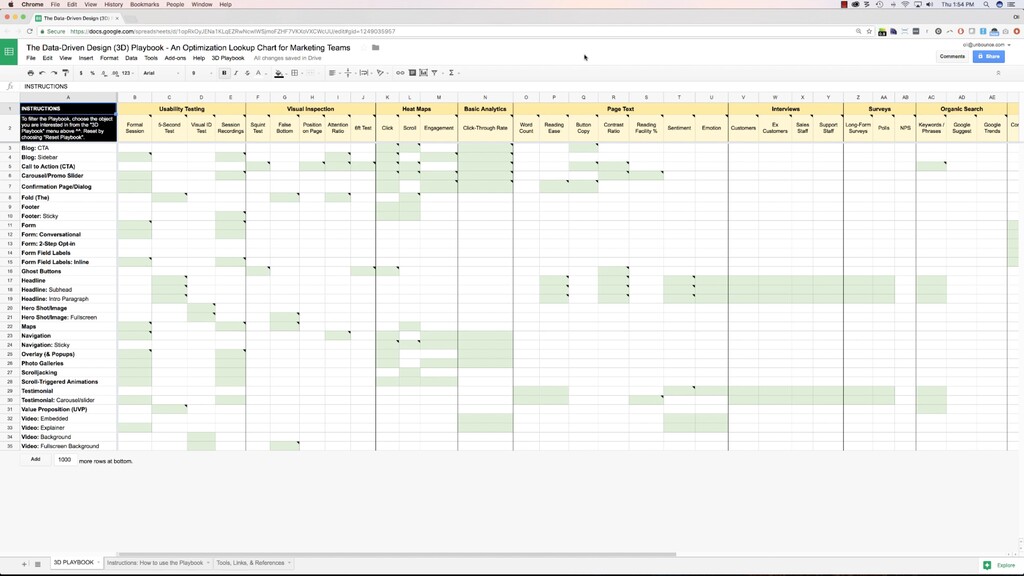
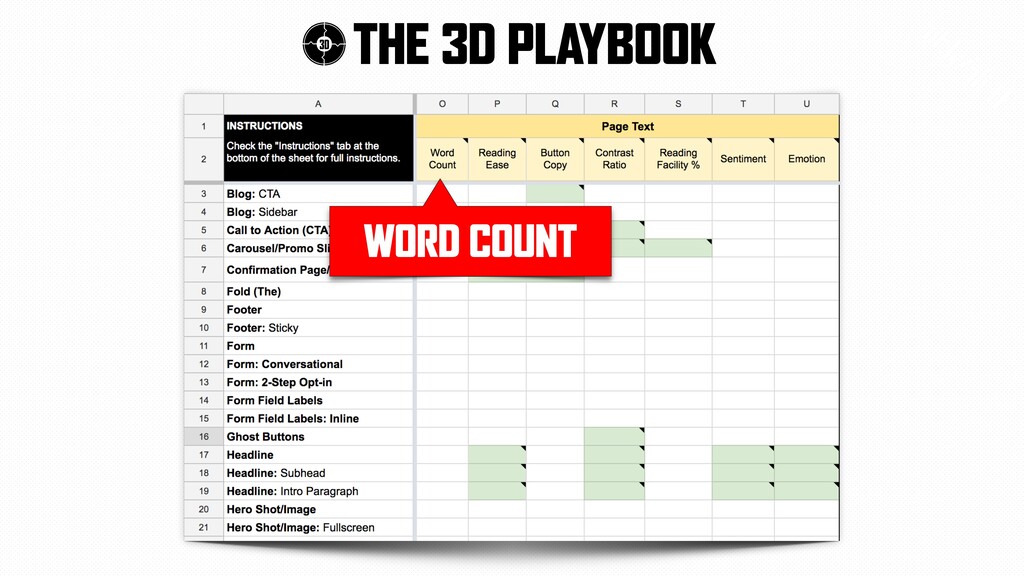
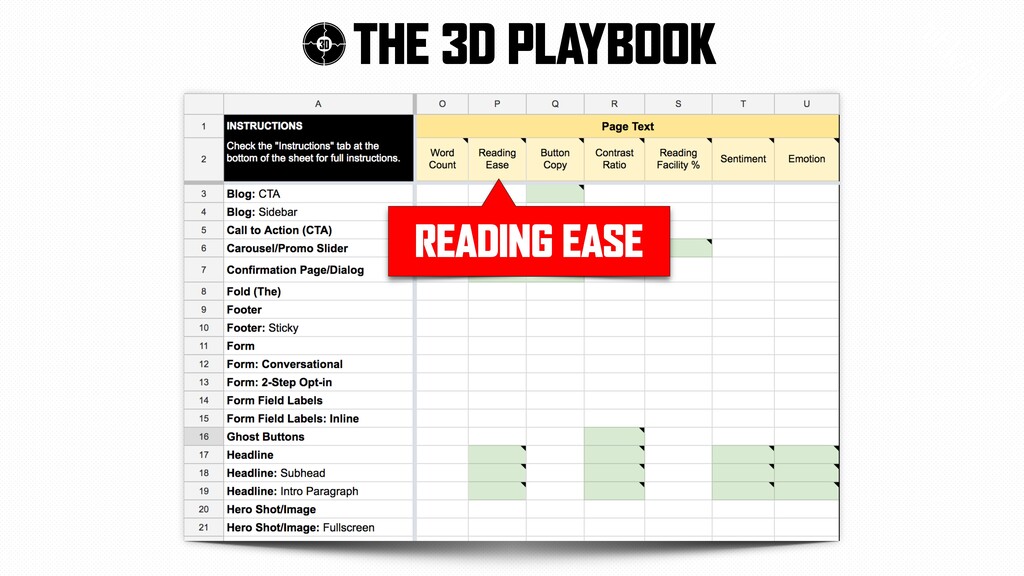
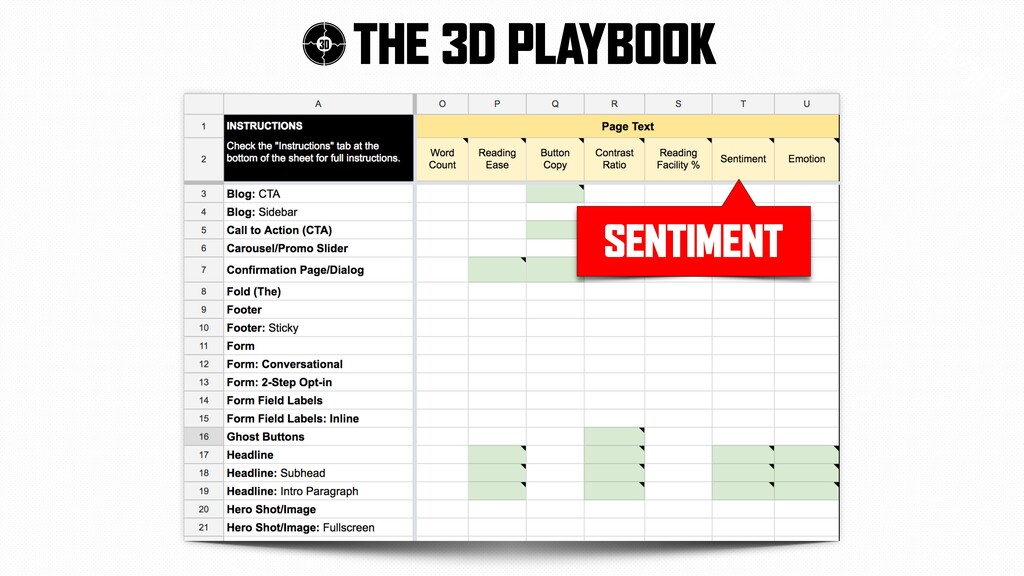
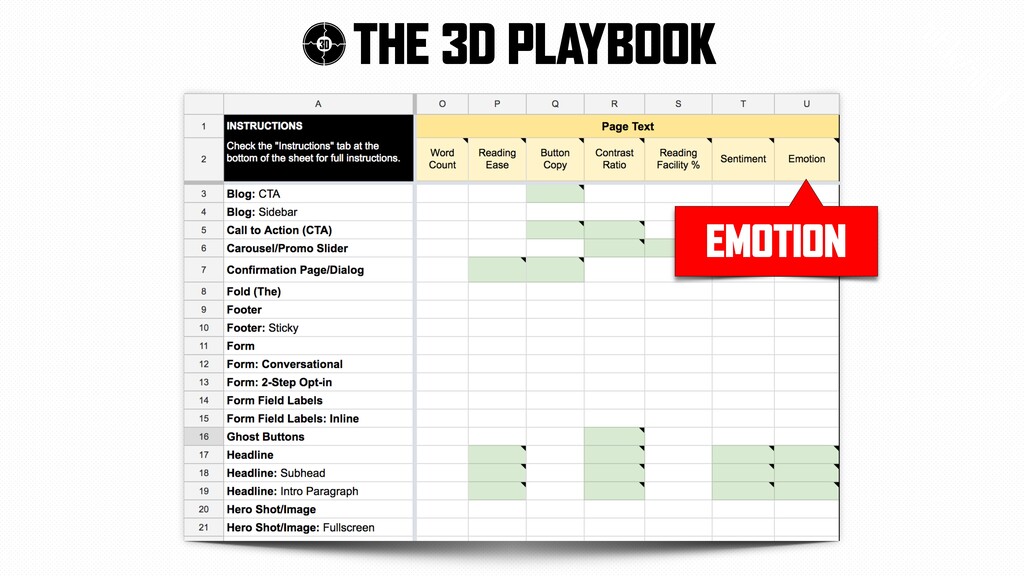
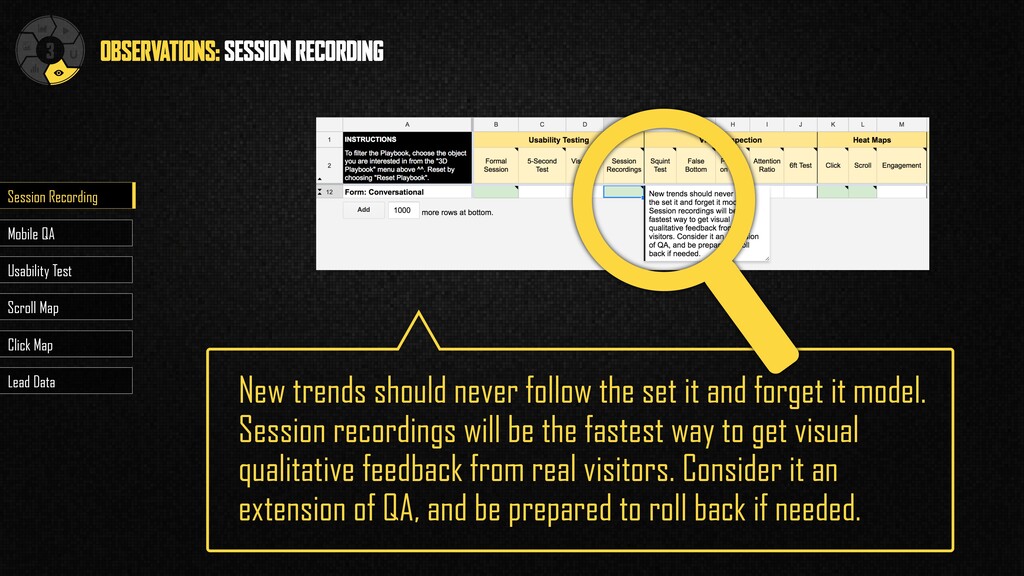
They don't know what they should be looking at, especially someone who's maybe not an advanced marketer. So this will tell you, you know, it'll focus your attention. This is what it looks like, it's a giant interactive Google Sheet, I'll play a video. So along the top in yellow, these are all the different types of data and data sources.
Down the left are different objects on your page or trends, that kind of thing. The green boxes are where they intersect, and they all have notes on them explaining why it all matters and how you should use it. Then you can filter it.
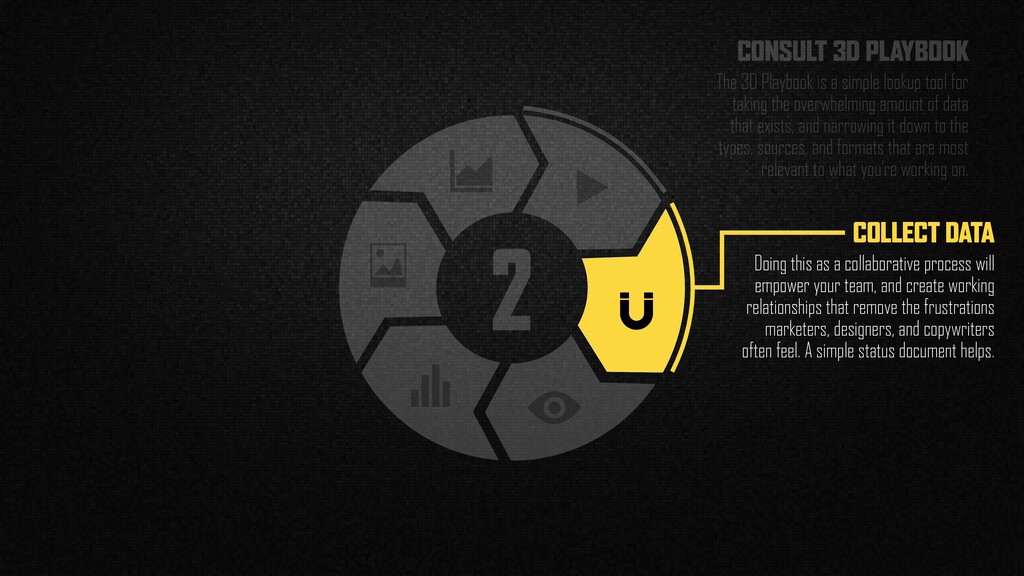
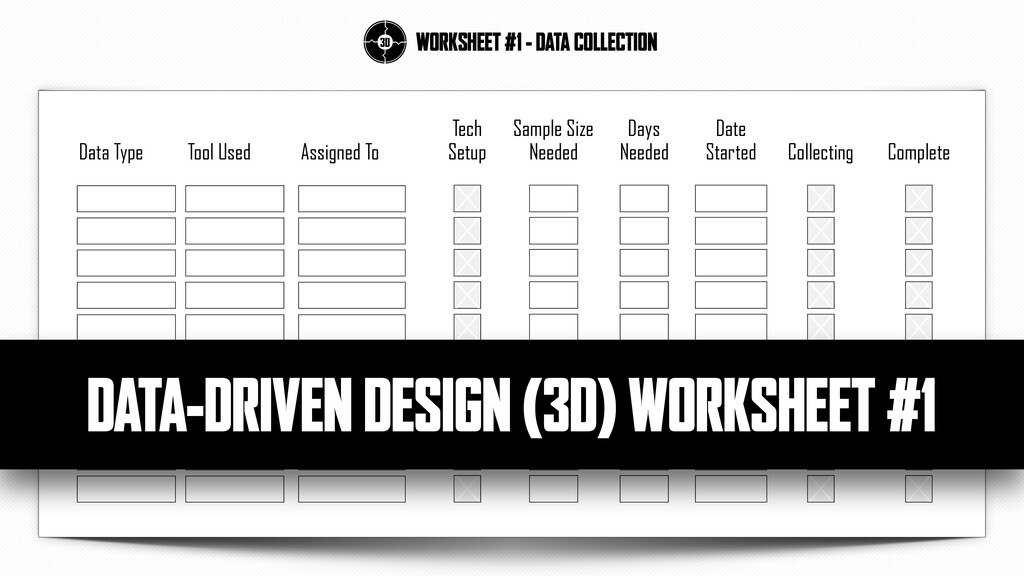
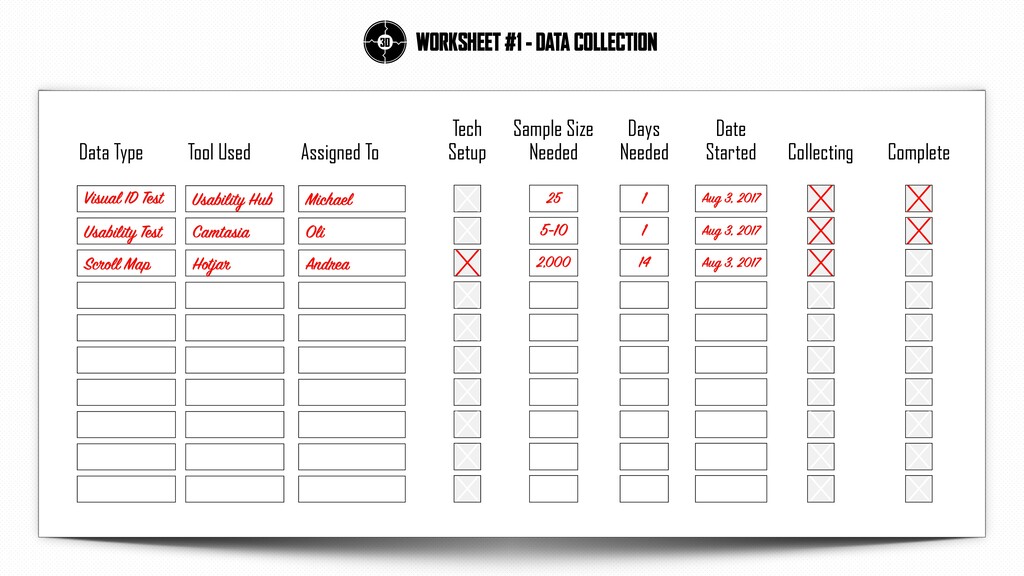
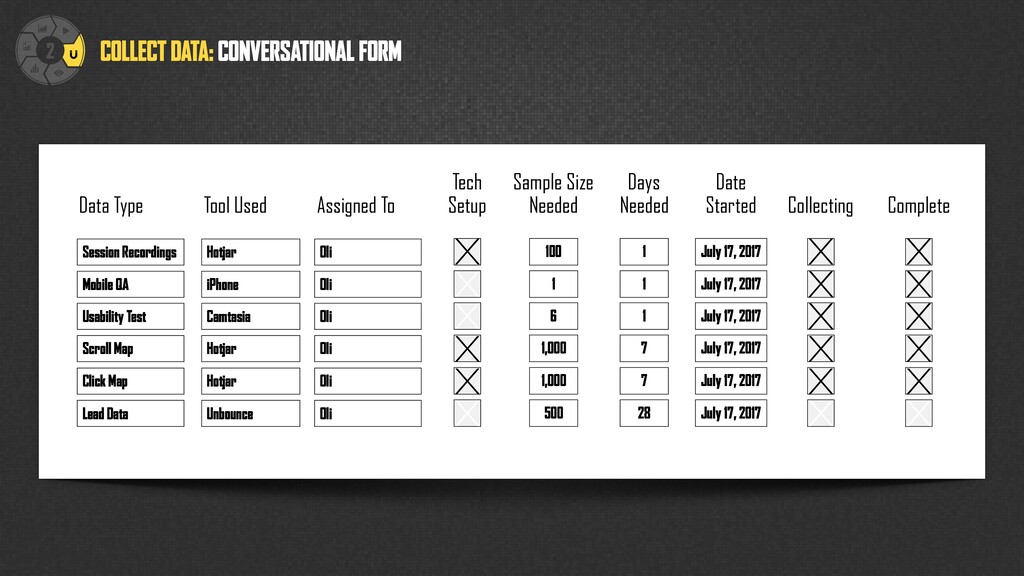
There's a menu at the top, and it will just you choose the thing you want and it'll just show you that only. Super useful. Then you have to collect that data. Now this is where the collaborative process has to start. If you can work with other people in the team and kind of assign like you get this data, you get that, so it's a simple checklist.
You write down all the data that the playbook says you should be getting, what tool you're going to use, who's going to do it, what sample size you need. All the details here are in the Playbook as well. It will make those recommendations for you.
And you just use it as a checklist to make sure you do it. And if you have a designer or copywriter, and you have them going to collect some of this data, they're going start going, oh, I get it now. I see where this data comes from.
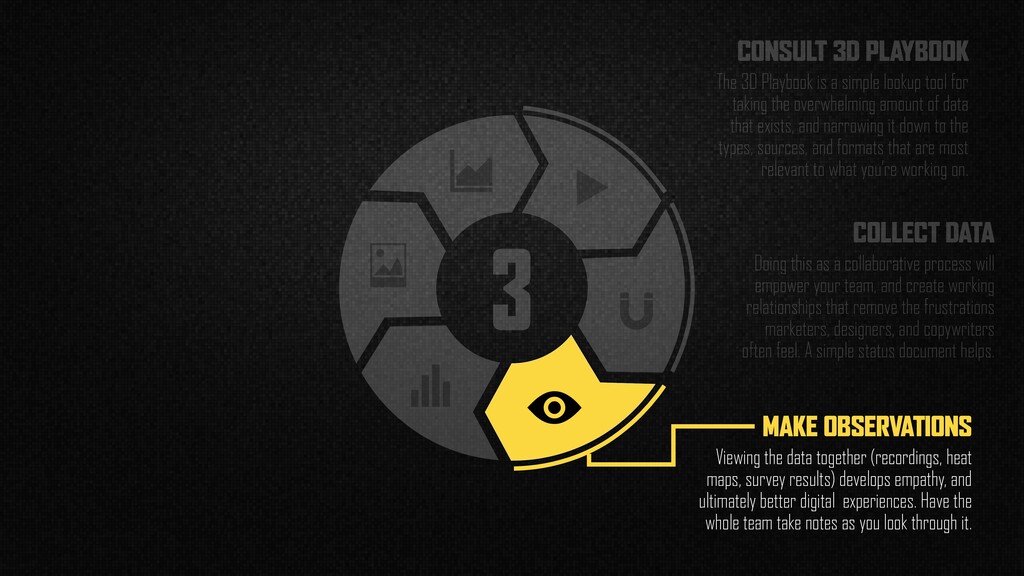
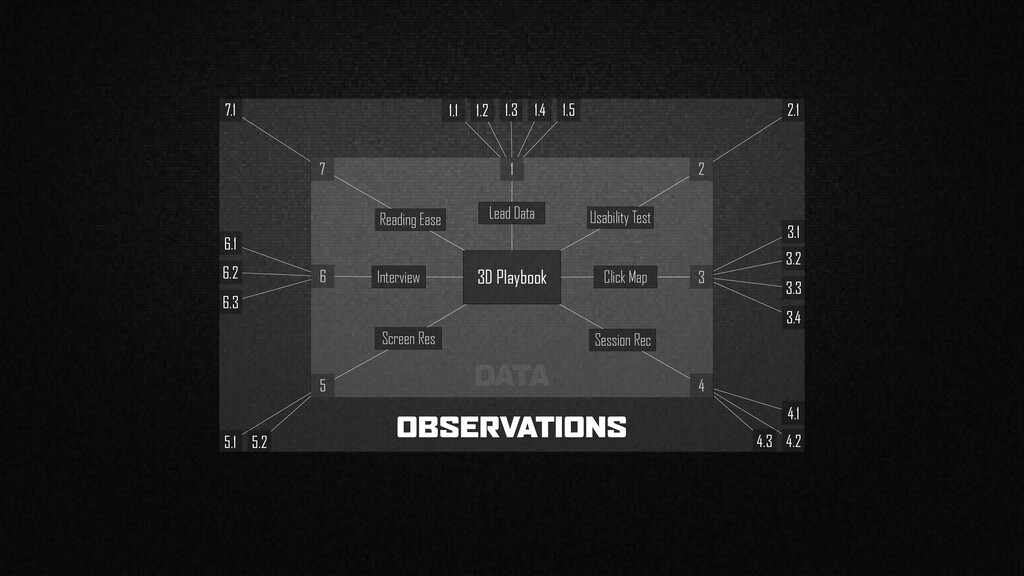
I see what it looks like. And this is where the empathy begins. When you start looking at these things together, understanding how someone else thinks and how they react to it, which is the third part, making observations. You have to look at the data together, whether it's a recording or doing a usability test or just looking at a chart in GA, whatever it is, do it together, because you're going to see different reactions from different people.
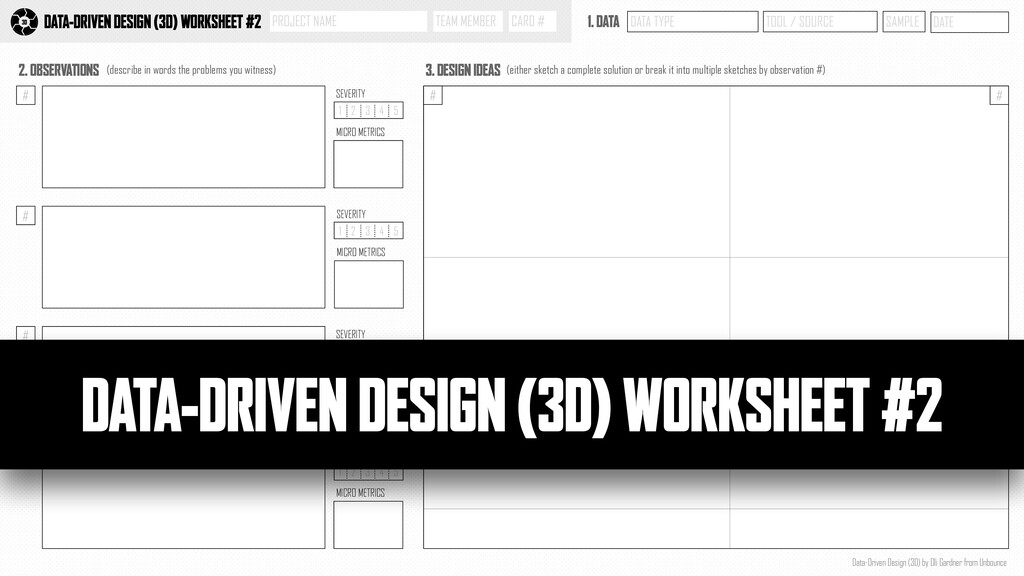
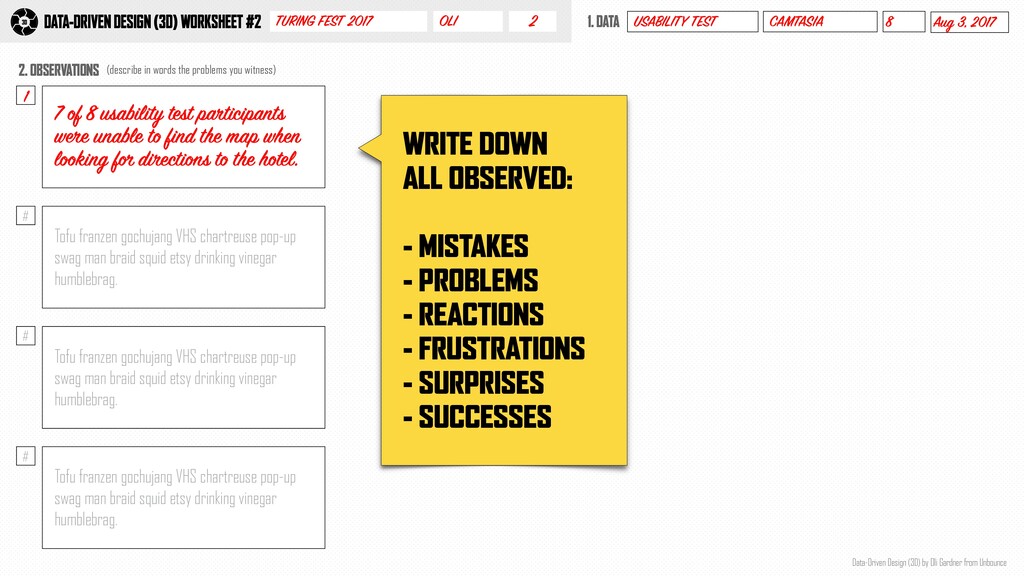
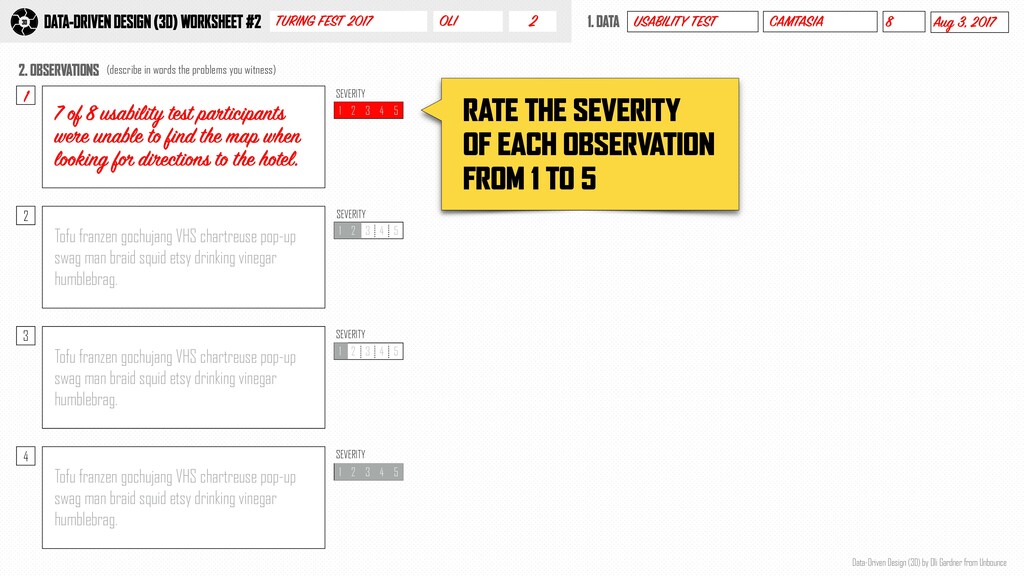
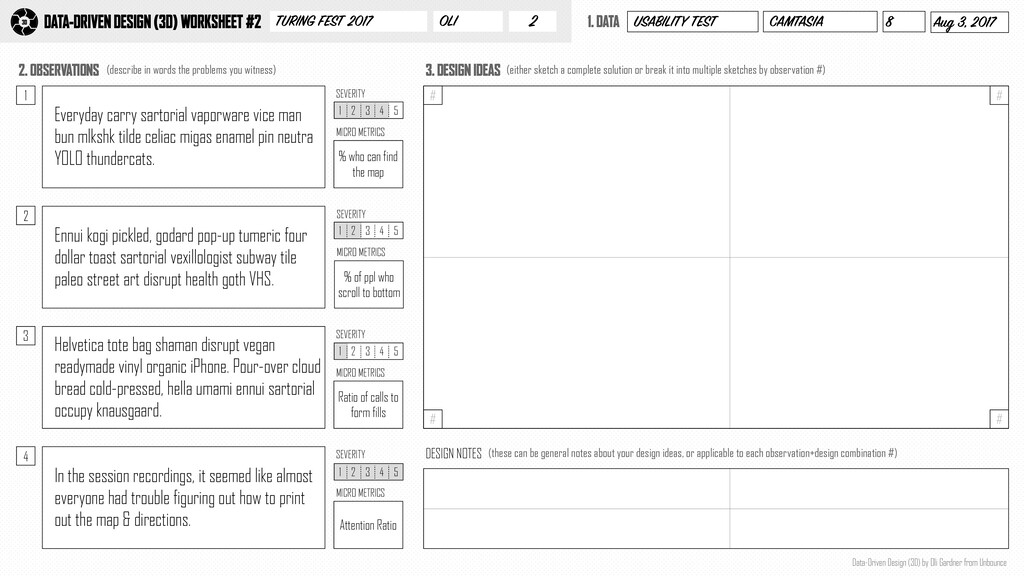
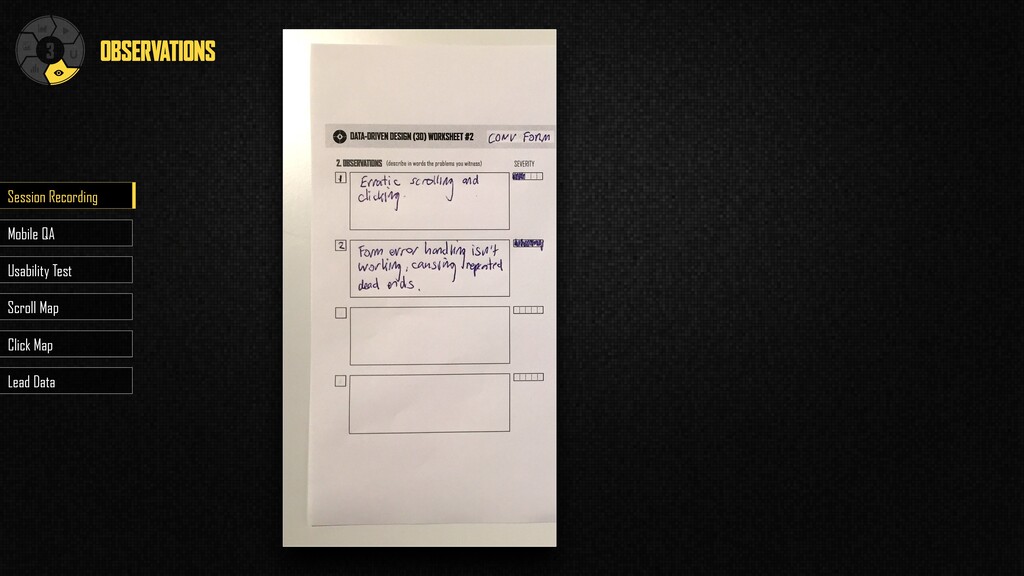
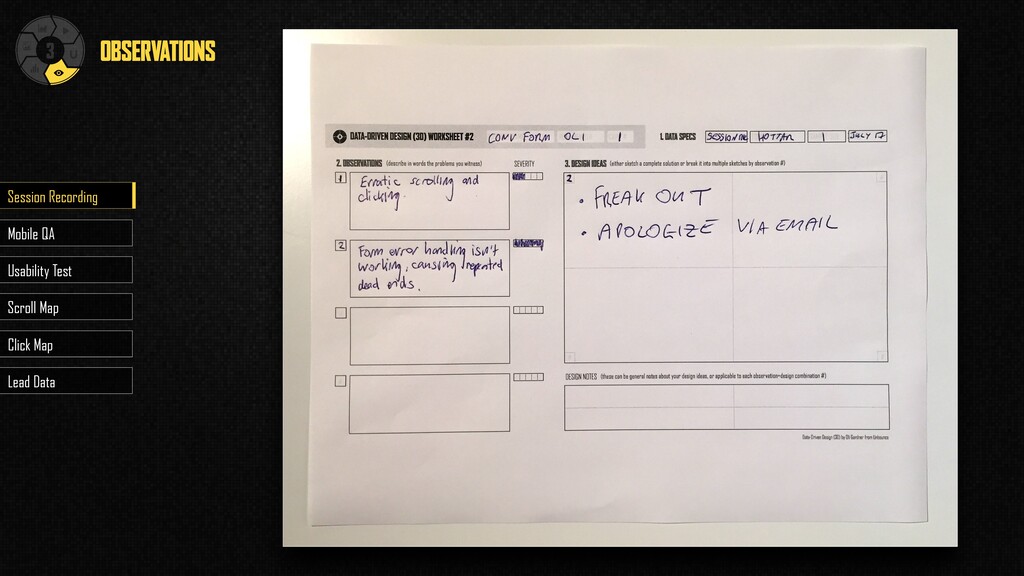
And you go, oh, you're really smart, didn't know that. And it can be helpful for relationships. So again, best thing with these is print them out and do it by hand in a room as a team. So look at the data and just write down everything you see, whether it's good or bad, if it's broken, if it's awesome, whatever it is, just have all of these observations written down, and you rate them by severity.
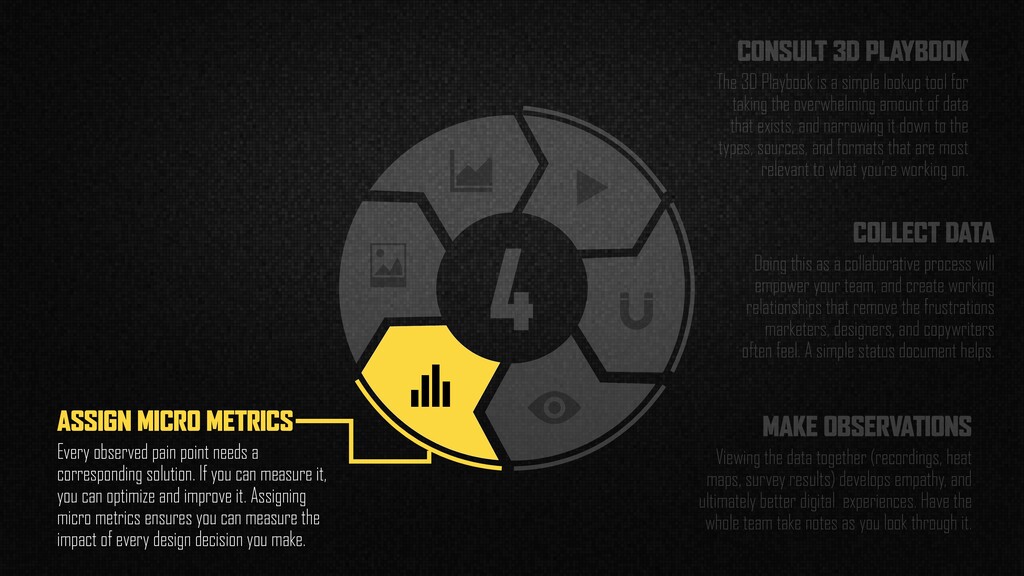
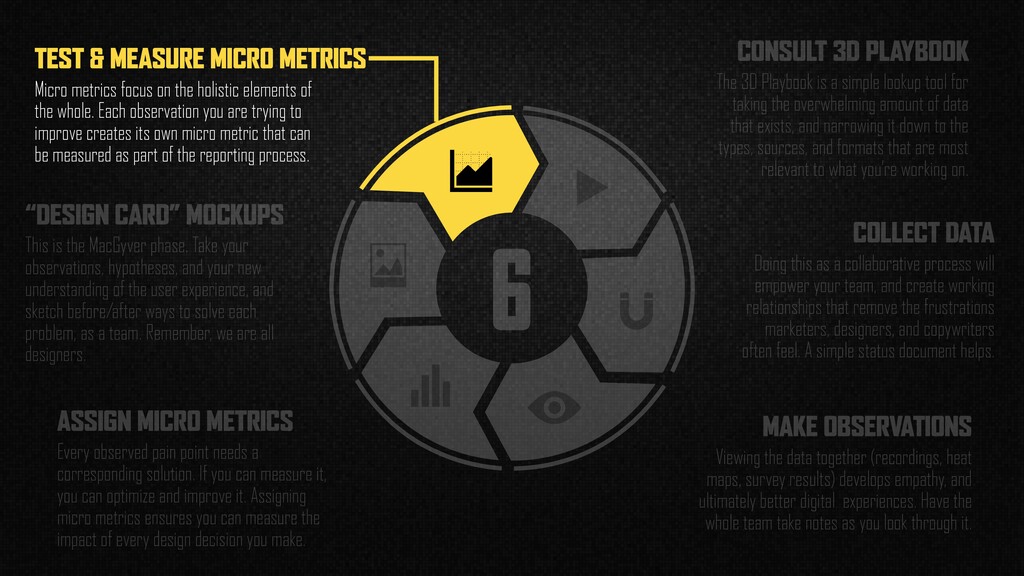
Five is like a serious bug, so someone can't complete what the task is. And then okay. So that's that. You've got all these observations, you did it together. Now, this part, you assign micro metrics. Now what do I mean by that? This is if you're familiar with UK racing, bike racing, you might be familiar with this.
It's all about these little little pieces of the hole that when you optimize them everything gets better, and that's not original concept, but in this context for optimization, it's a little bit different than just looking at conversion rate, which isn't enough. So here's a different way of thinking about it.
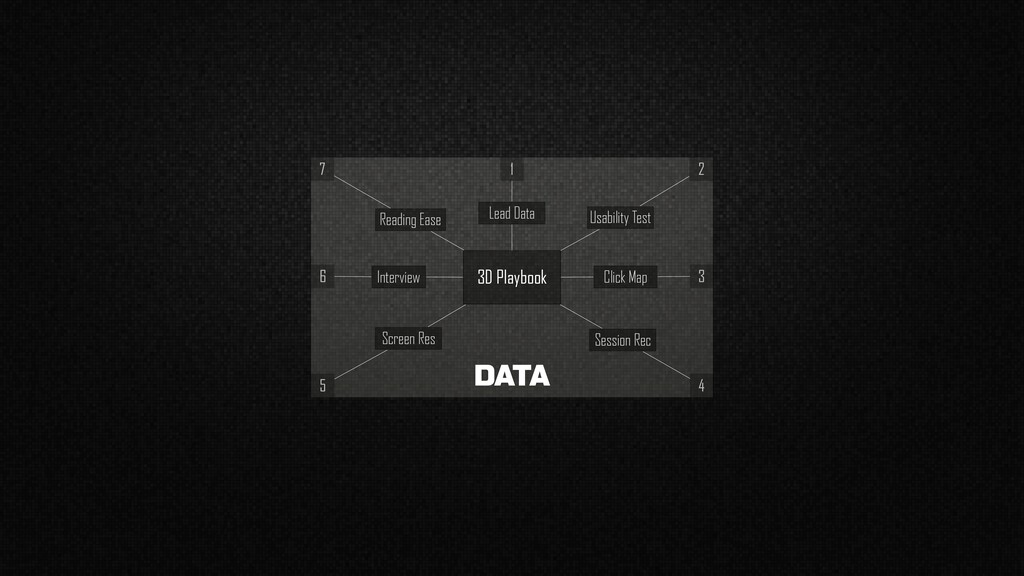
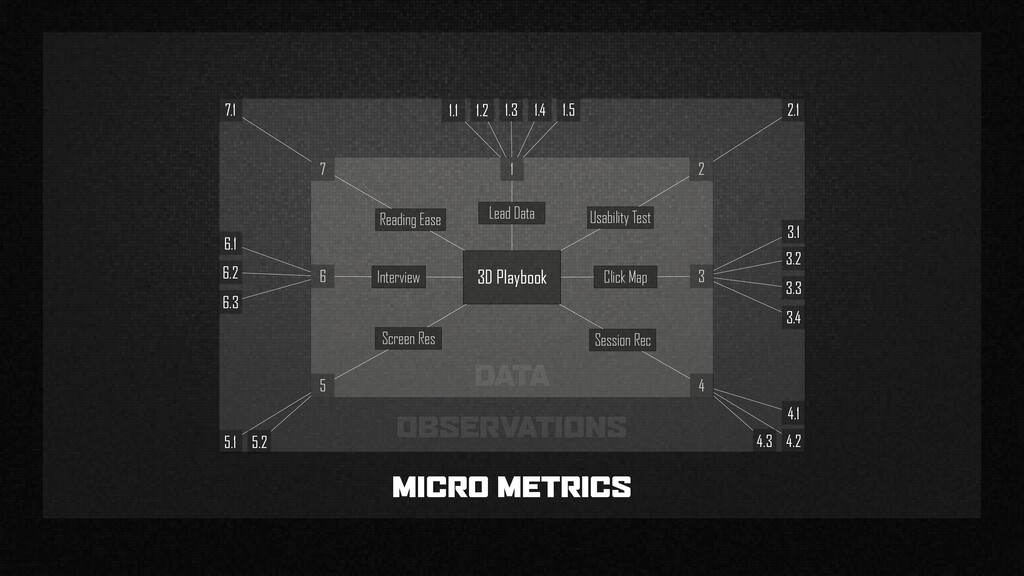
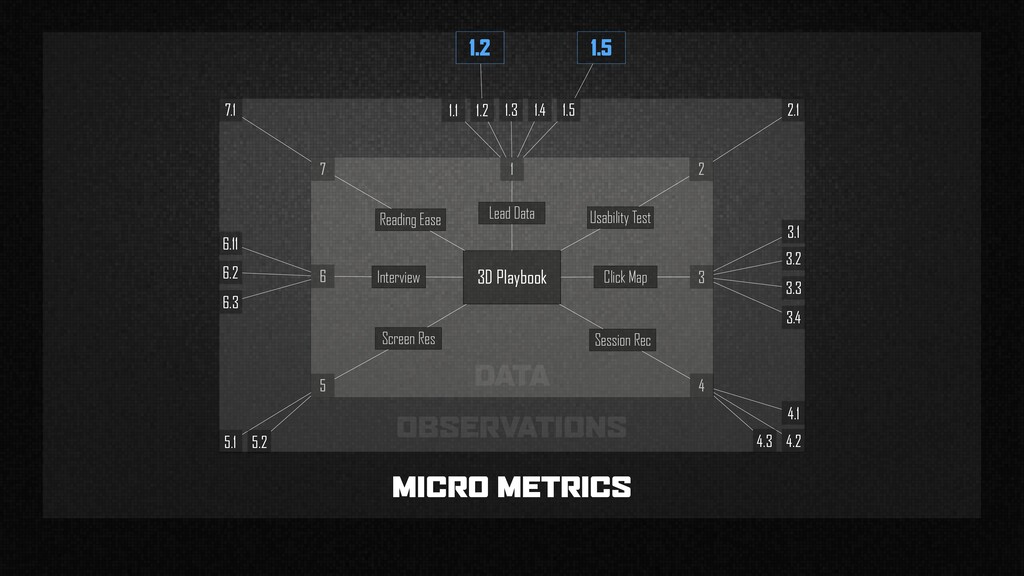
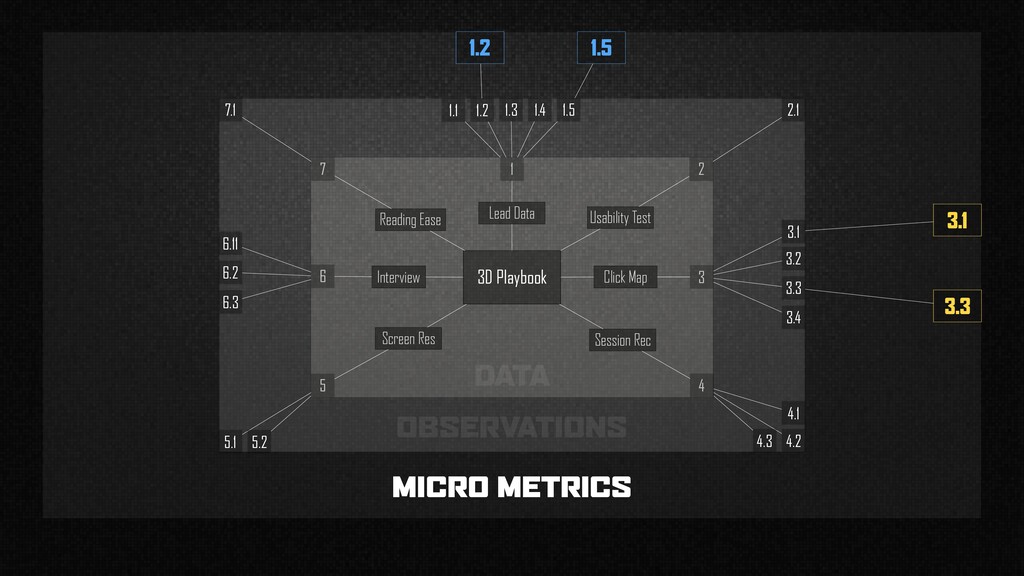
It helps you measure all of your design decisions. I'll make it a little bit clearer. So the playbook says, look at these seven types of data. Okay, we've done that, then we made all of these observations. So now we have all this stuff that we've observed and written down, then you have to make three choices for each of them.
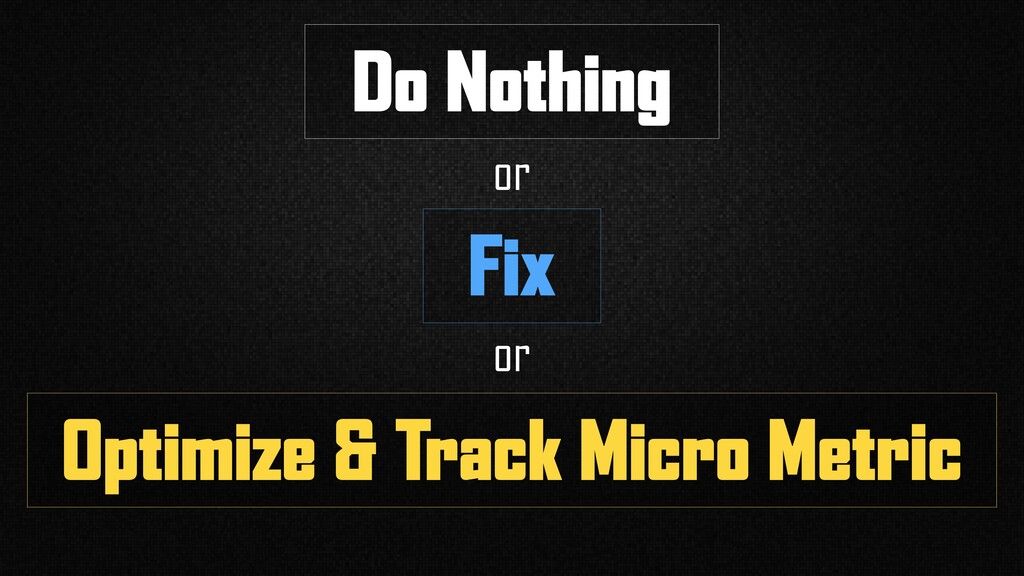
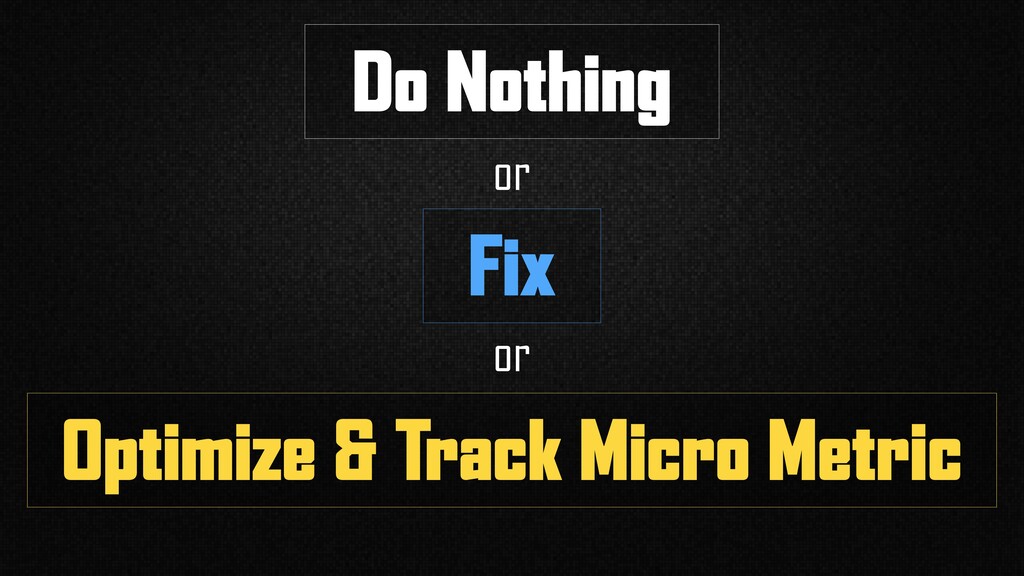
Do nothing. So you observe something, oh, that's cool. Nothing I can do there. I'm not interested. It's just interesting. Or you can fix it if it's a bug, or you can measure it and use it as a micrometrics. So when you are doing running an AB test, you're not just looking for the conversion rate because that's not enough.
And you'll see why as I go through this. And then so in this case, two of them I'm gonna fix and two of them I'm gonna track. And and again, I'll explain that in a second. Okay. So yeah. That's that's optimistic. There's about five hundred people in here who probably have some semblance of understanding about what I'm talking about.
But there are four people here who have no ******* clue of anything I'm saying, like none whatsoever. That would be my family who are sitting down here. Where's the guy with the video camera? Oh, he's not here. Okay. Well, can we just embarrass him and give him a big round of applause?
It's the first time they've ever seen me speak. I was way more nervous coming on stage with you there than than six thousand people in Brazil. Like, it's you guys are intimidating. Okay. So then you get to the the sketchy part. No. It's not sketchy, but you're doing sketches.
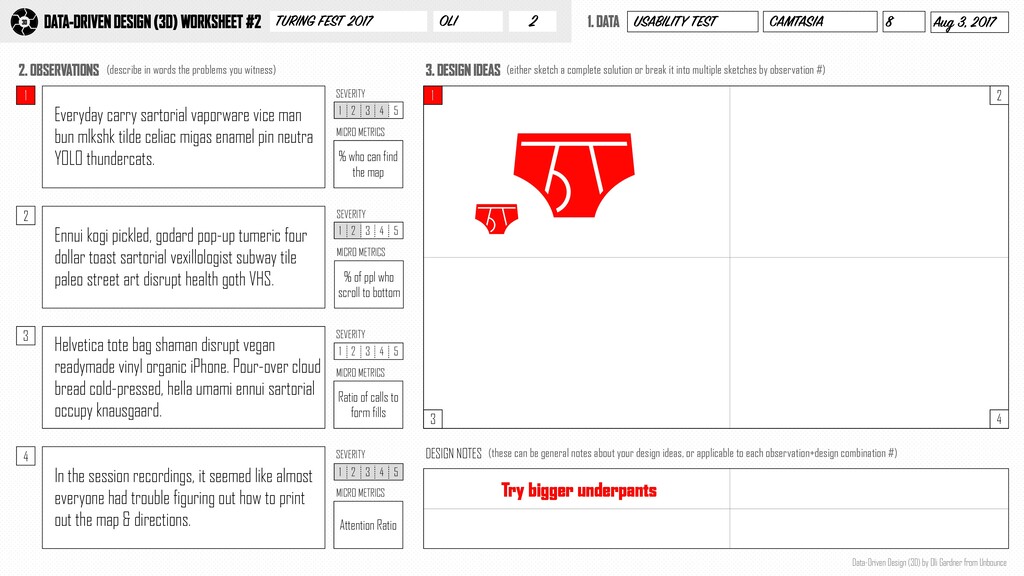
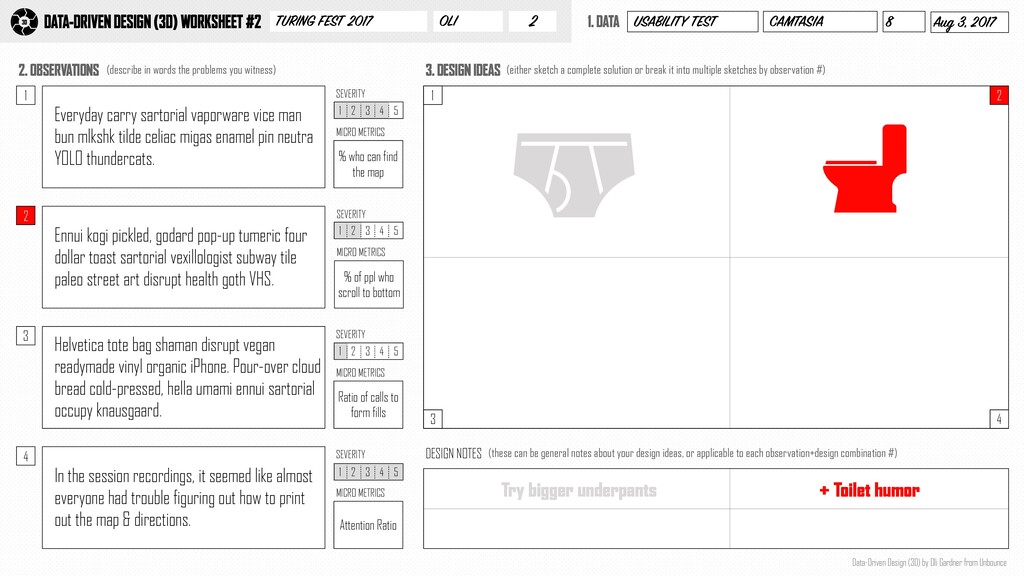
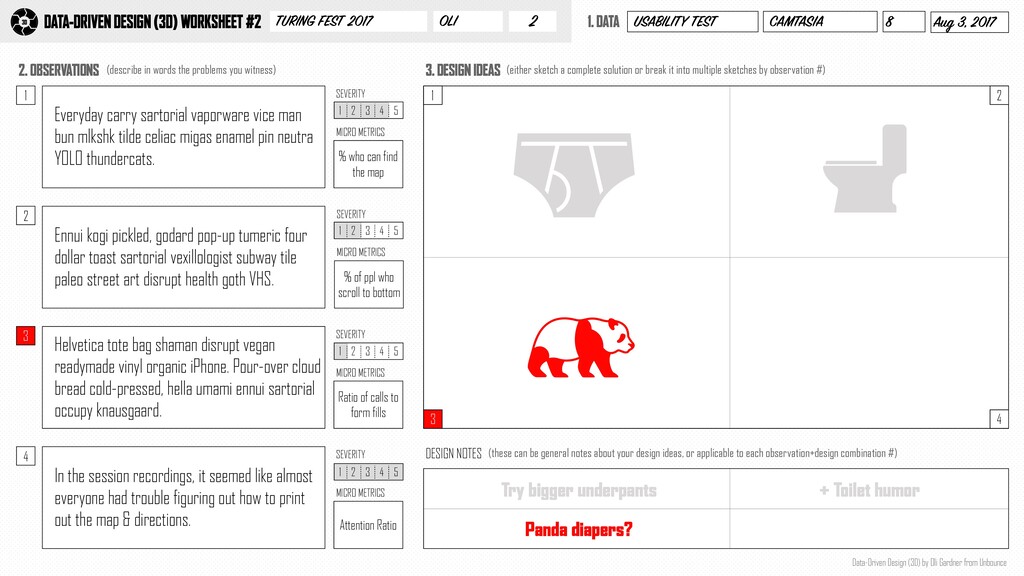
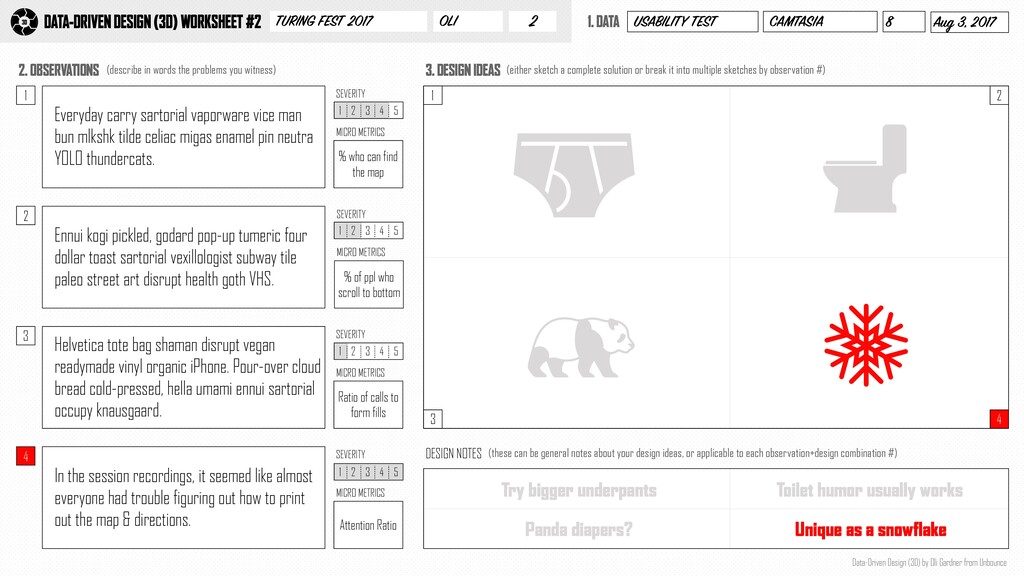
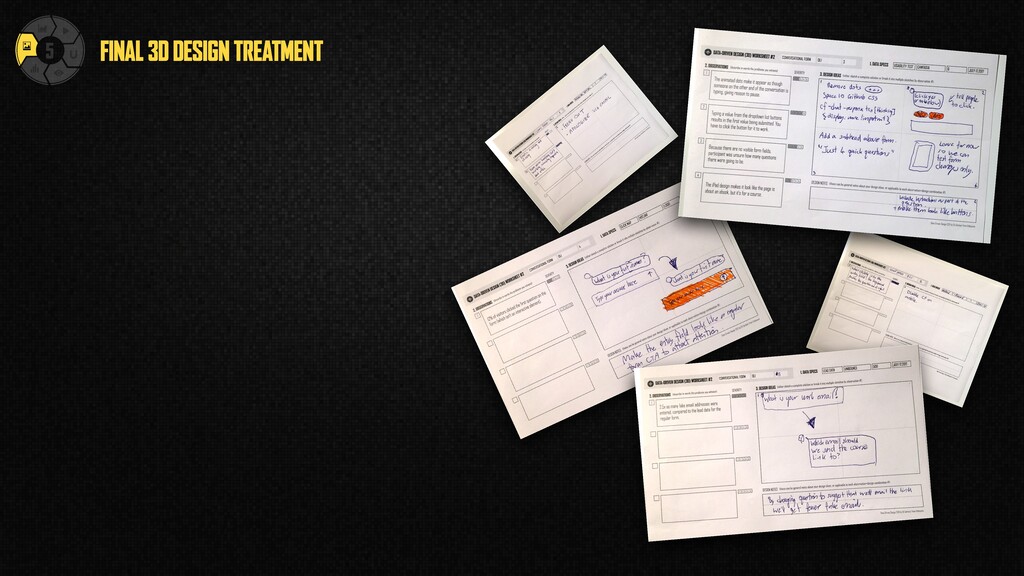
So you do this again as a team, you print these things out, and you look at your observations, you go, how will I MacGyver this? How would I fix it? And there's two ways you can do this. You can either take each observation and sketch your solution to that.
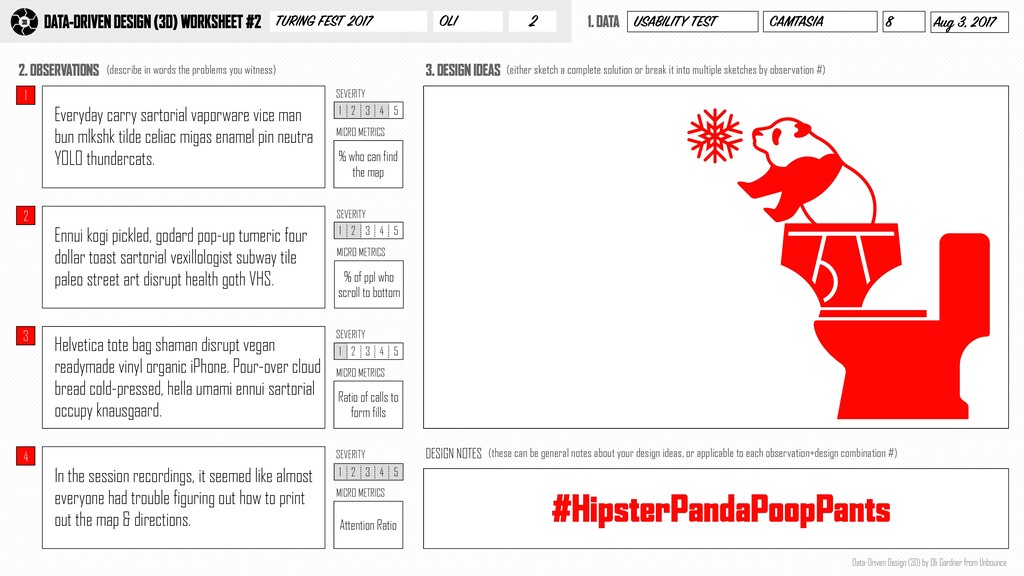
So like this, so maybe you need bigger underpants, maybe that's the design solution. Maybe we need some you know some immature jokes in our copywriting. Pandas, kind of like bacon, they make everything better, so maybe put a panda in there, and then we need to be unique as a business so a snowflake.
So you can either do them individually or you can take all of them and just go, I'm just gonna solve it with this one big idea. So something a bit more like that. And that's now this is the point where you give these things to the designer.
You don't bring them in and go, hey, we did a bunch of thinking. Can you design someone? Can you make this look pretty? No. It's they get to they worked on it, but then they can take all of this stuff, all these ideas, and roll that into their design for you know, for whatever they're doing, and it's a much smarter way of doing it.
You'll get much better results and happier people. Then you have to run a test, and then not just looking at conversion rate, look at the micro metrics that you set up. Measure it before, you make your changes, and you see the difference in them.
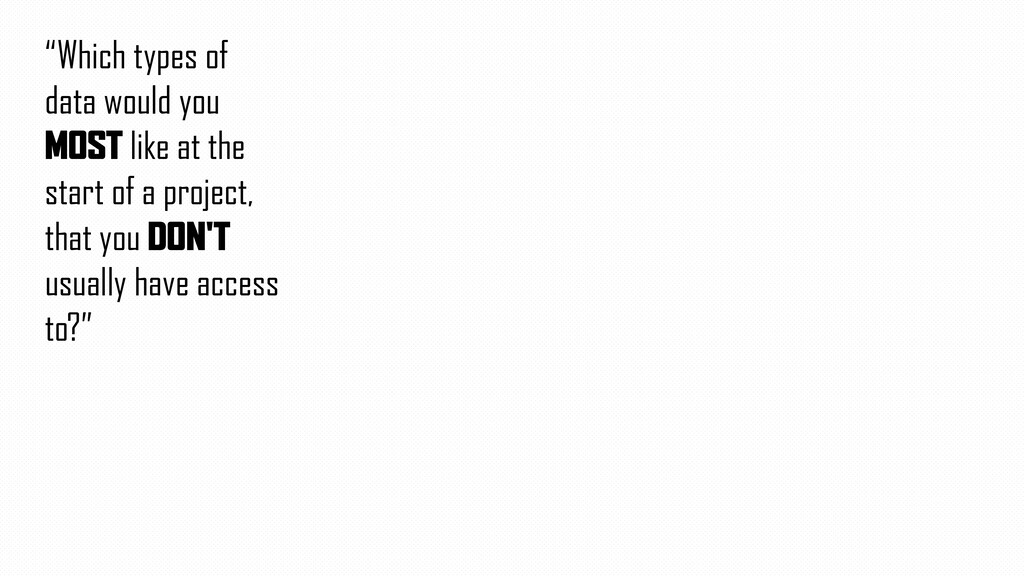
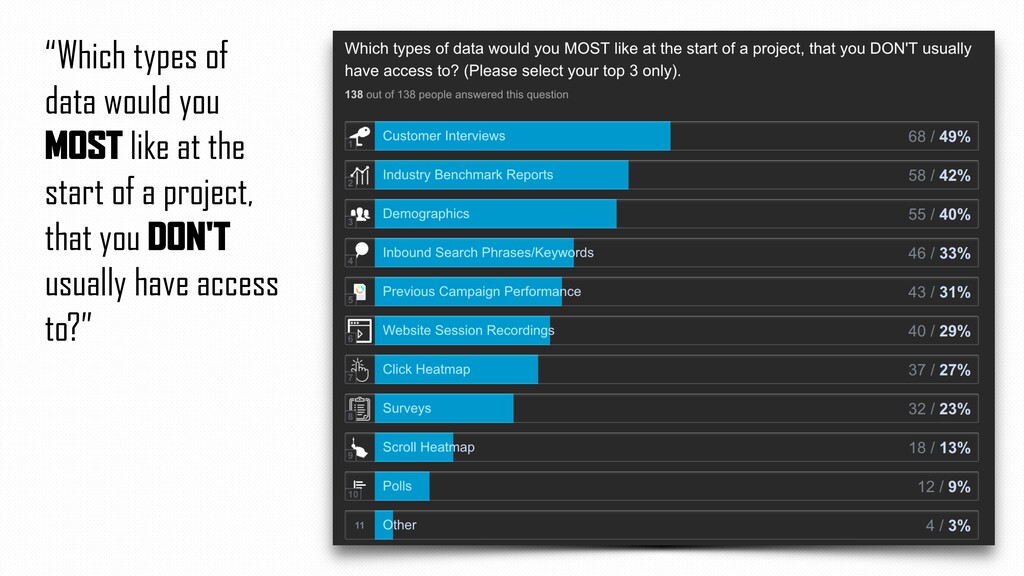
You'll see in a bit why it's so important to do this. You see whether they're good or bad. Okay. So one of the questions I asked those who answer the the question that I asked, what kind of data would you most like that you don't usually get?
And these are the responses. The interesting one for me was number two, industry benchmark reports, I have one to share with you which is really awesome. But before I get to it, I need to tell you a little story. A little while ago, Nicole and I were going to Nashville.
I was speaking at an event there, and the plane arrives kind of late. It's like ten thirty in the evening and the bags take an hour to get to the carousel, and I'm super stressed out. My laptop's died because there's no power on the plane, and my slides aren't finished and I'm talking the next day.
So eventually bags come out. We go out into a massive taxi lineup like, oh god, oh, one limo. Go over there. Are you available? Yes, I am. Okay. Takes our bags. We get in the limo, and I say, we're going downtown to the gulch to the Thompson Hotel.
Yes, sir. And off we go. Twenty minutes later, he goes, you know what, I don't think you're my first fare. Actually, even my second fare. I think I'm going to have to take you and drop you off with the lady. I'm like, what are you talking about?
And then he pulls over in the middle of nowhere and gets out and calls his dispatch, comes back in and says, yeah, you're not my fare. I'm like, Not fair at all. We came out, I said, Can we get a ride? And you said, Yes.
I look at Google Maps. Okay, here's Nashville. There's downtown. We're like twenty minutes over this way. He's on a completely wrong direction. So he says, there'll be another limo to pick you up. When? Soon. What does soon mean? Don't know. Where are you going to pick us up?
Back at the airport. So we get back to the airport. Super stressed now, it's really late, but there's nobody there and there's one taxi, so that's fine. We get in there. But before we do, Nicole takes a photo of the limo and gets the guy's business card because she's like super slewcy and sneaky.
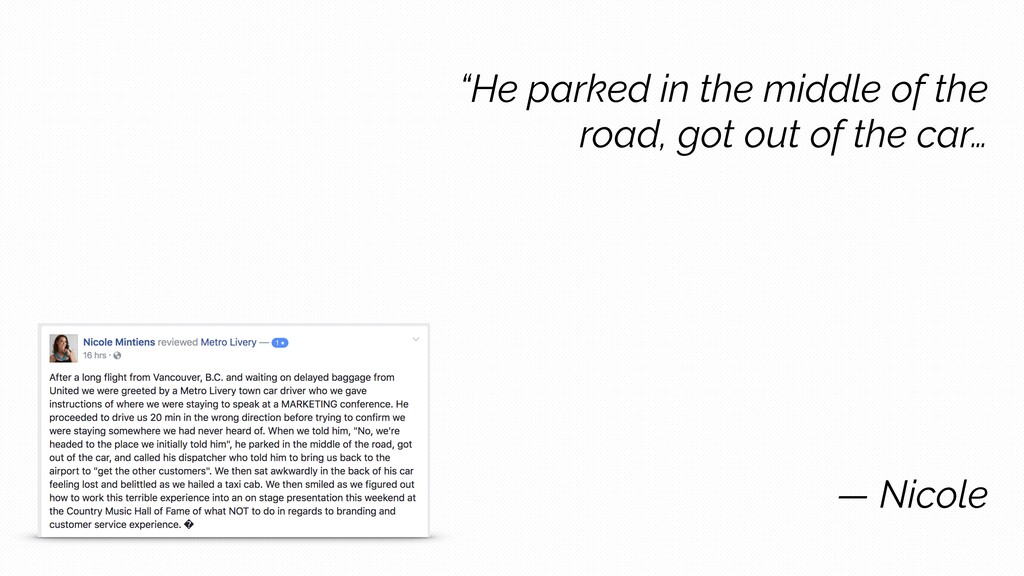
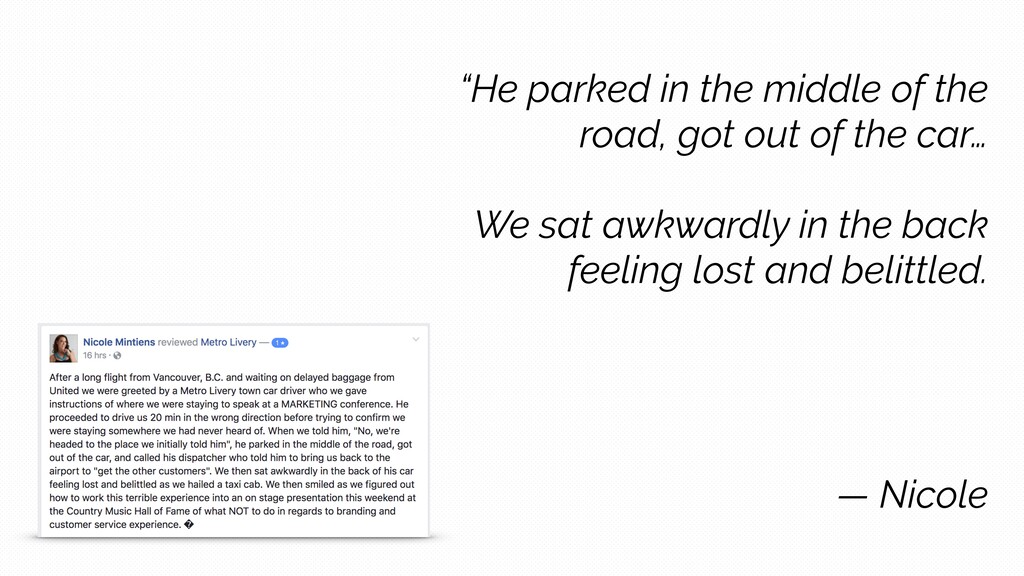
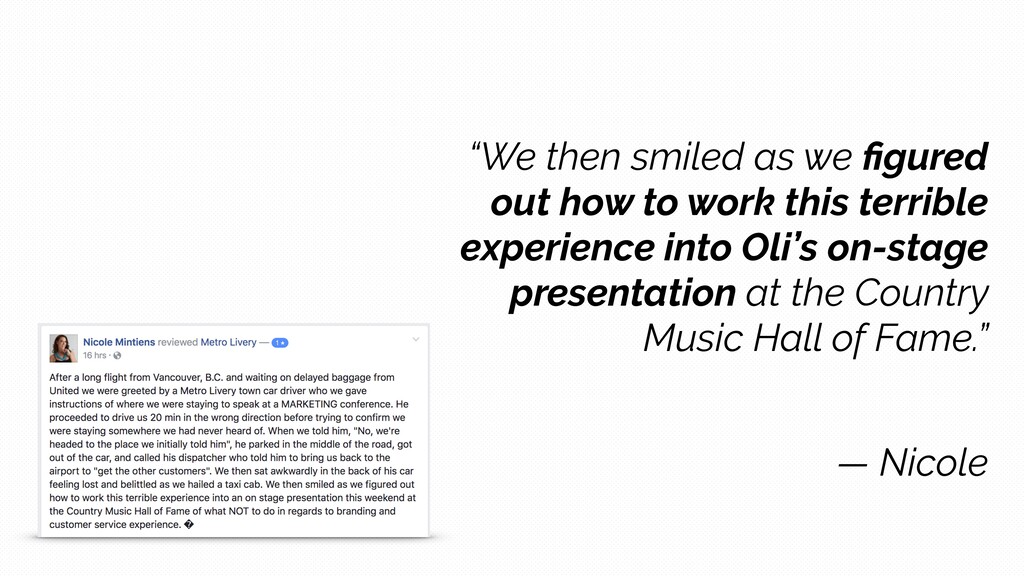
So she gets on Facebook and goes to this limo company's Facebook page and starts describing the horrible experience. Parked in the middle of the road, got out, and we're feeling awkward and like lost and belittled by this whole experience. Then we figured out how funny it would be to talk about it on stage the next day.
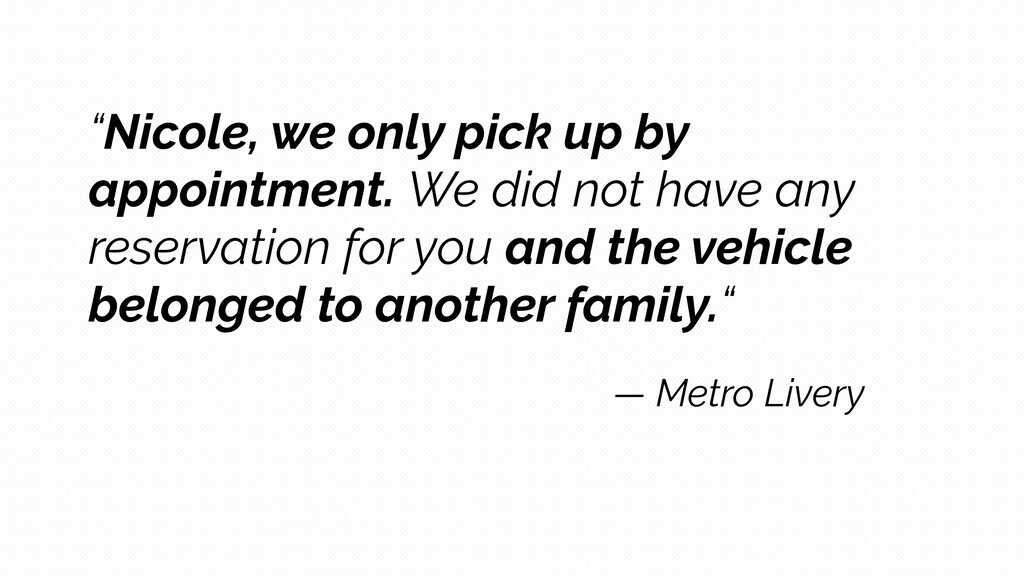
So thank you for this awful experience. They reply, instead of saying, Sorry, well, we don't take appointments. Now you've ruined someone else's, some of our family's trip. Took their like, No, we asked you to let us in. It's not our fault. It's your fault.
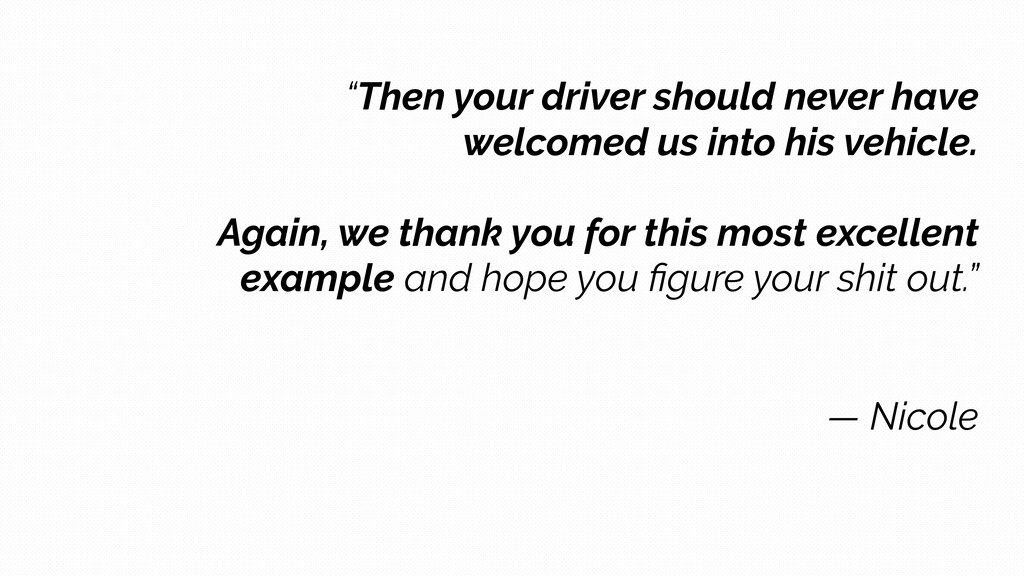
And Nicole's lovely. Really lovely. But you do not wanna **** with her. So she gets back on there and go, well, your driver shouldn't have let us in. And again, thanks for the terrible thing. It's going to be funny. Then they lose their ****.
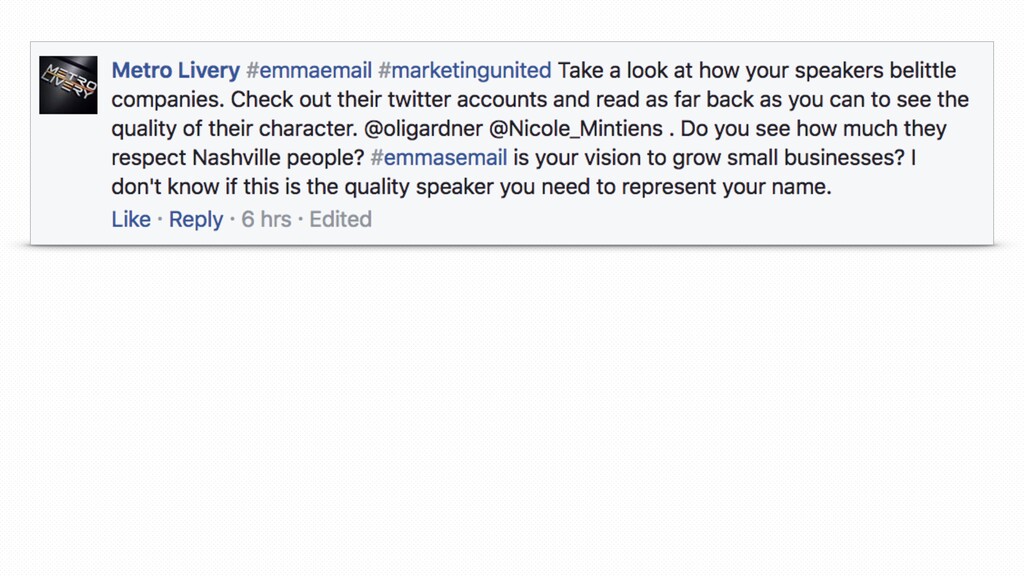
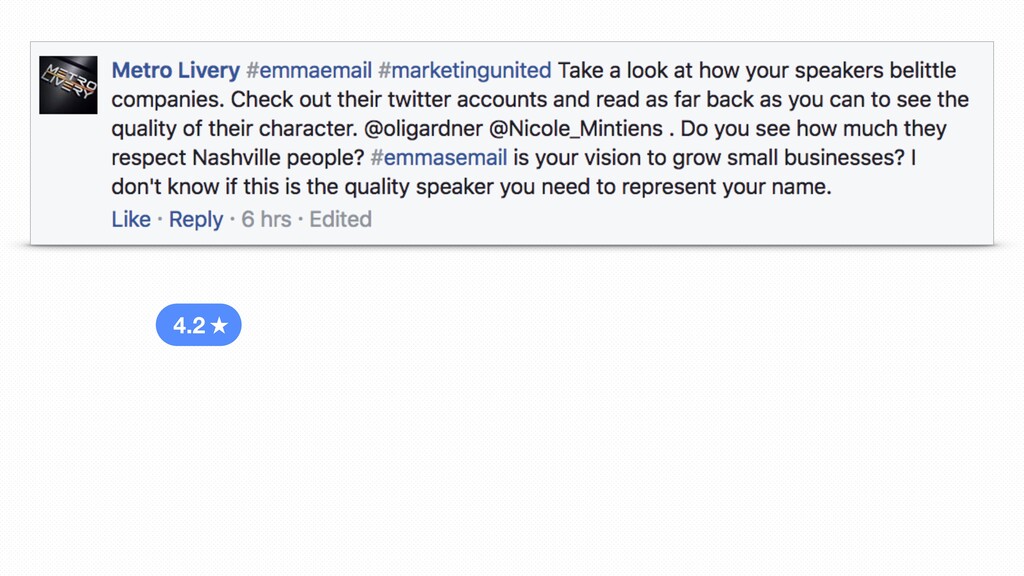
They're they're putting hashtags on Facebook. That's not going to work. Like trying to get in touch with the the conference organizers. Take a look at how these horrible these people are. They stalked us, got our Twitter handles. Go back and see the quality of their character.
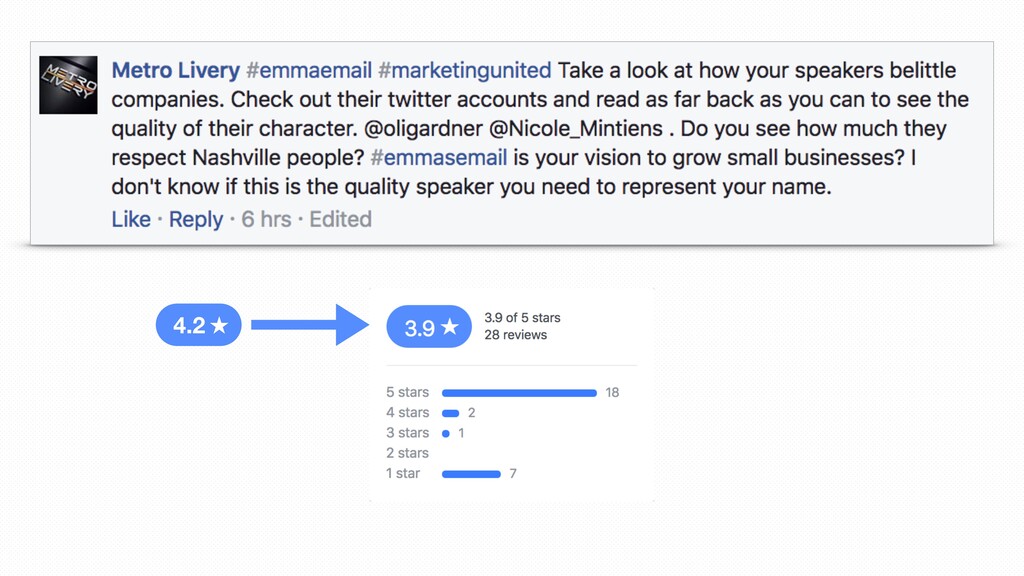
Just awful people. So, well, okay, what do you do with that? Well, you take their four point two star rating, you both rate it one, and it's three point nine. We just wanted a hug. We just needed someone to say sorry for the bad experience, and not to mention we get down in time finally, the block there's no power on the block.
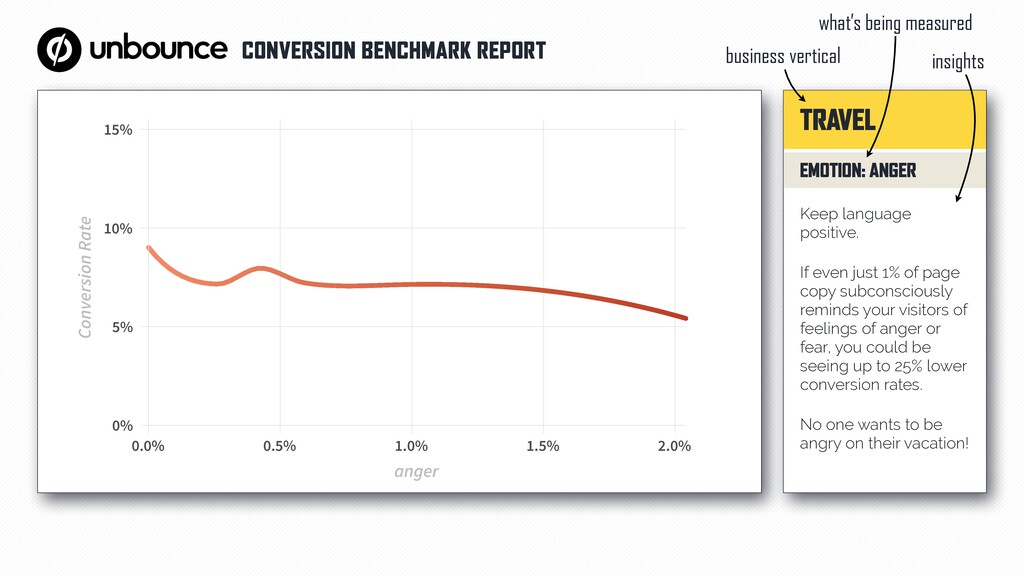
There's been a flood, so we go to weekend to room living by our phone lights and can't charge my laptop still. Anyway, stressful stressful situation and my very long winded point is that travel and anger don't go well together. So this is from our conversion benchmark report.
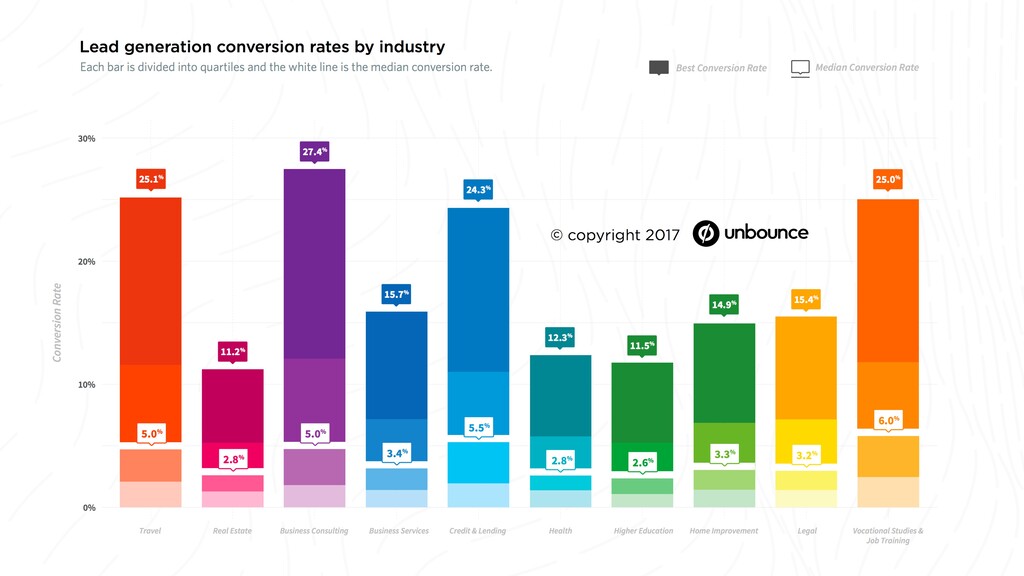
It's a machine learning based study, seventy five million interactions with sixty four thousand lead gen landing pages. Landing pages that have forms in ten different industries, and here what it showed was that the more words in the anger spectrum emotion conversion rate was going down.
There's a lot of cool stuff in there. There are ten industries in there. It's all in the landing page. I'll show you the link again, so you can see where you how you stack up with other people in your industry. But more importantly, if you go back to the playbook in the text part, there's four more things that this report has.
Word count, reading ease, sentiment, and emotion. So you can there's some tools you can do to measure this stuff, and if the report says you need to be more like this, then you can measure it and you can make changes, some cool tools.
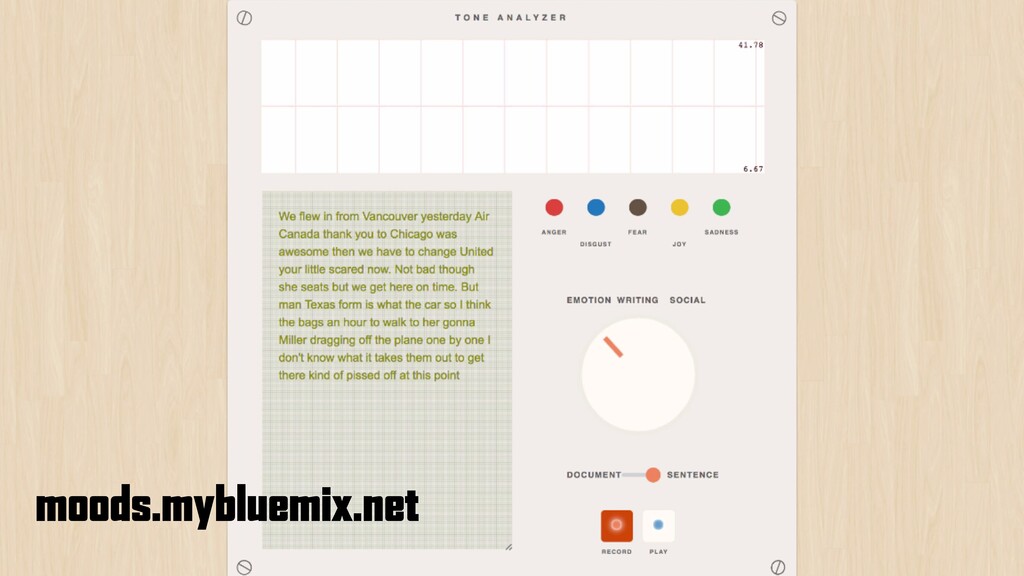
This is it's like IBM Watson thing. So with this, talk to it, and it transcribes what you're saying, and it shows the emotions. So this is me telling the story of Nashville to this machine, and you can see the anger and fear going up.
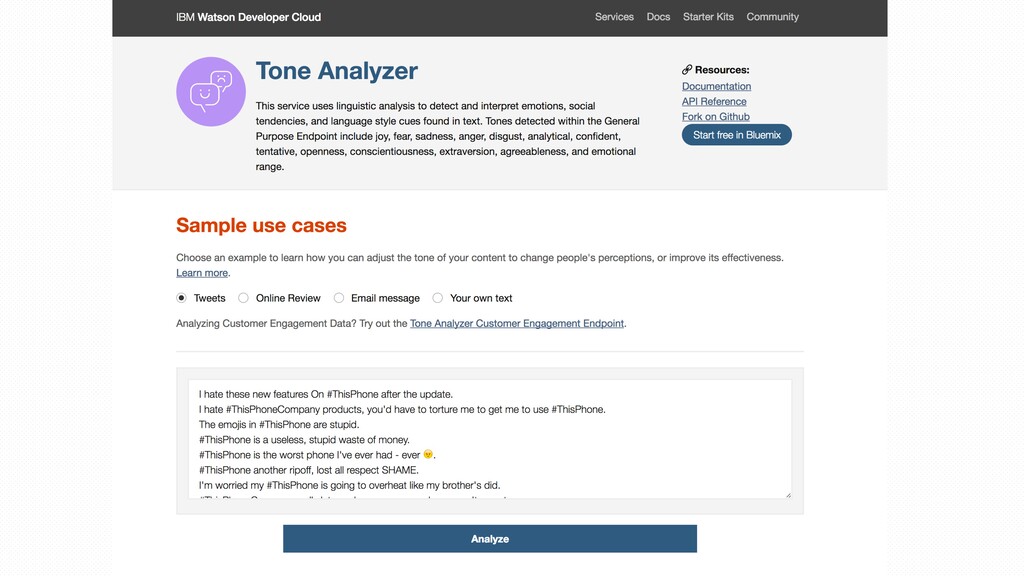
There's a little bit of joy when we're like, we're going to mess with them, but usually it was just like not good. So it's a really fun way of seeing how your writing stacks up, and they have another one which is just text based.
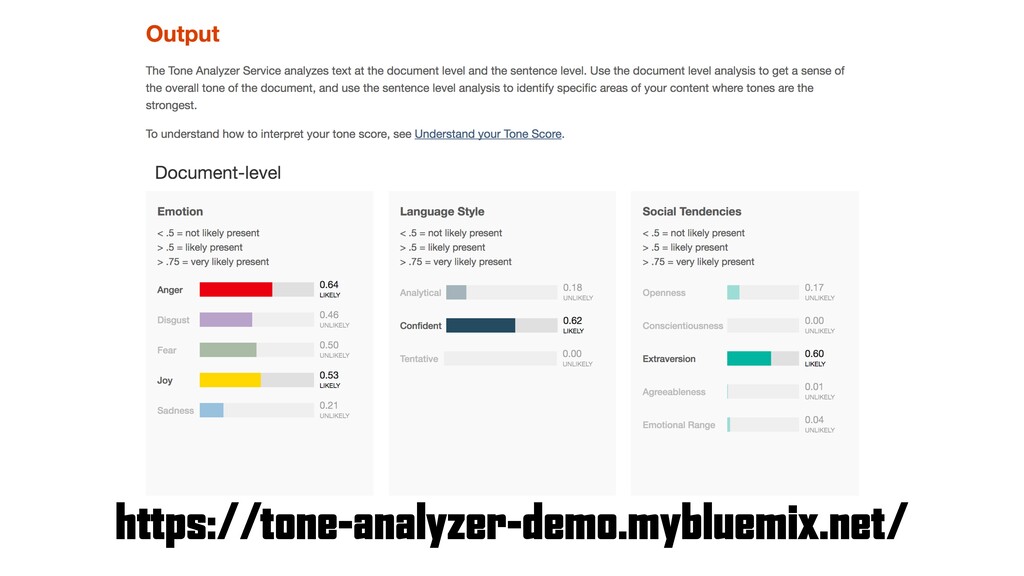
You put it in there, and it'll give you all of this cool stuff. So if you see from the report, for example, you need more joy or less negative sentiment, that kind of thing, you can use these tools to look at your copy, make some adjustments, and it might actually do a really good bit of helping out.
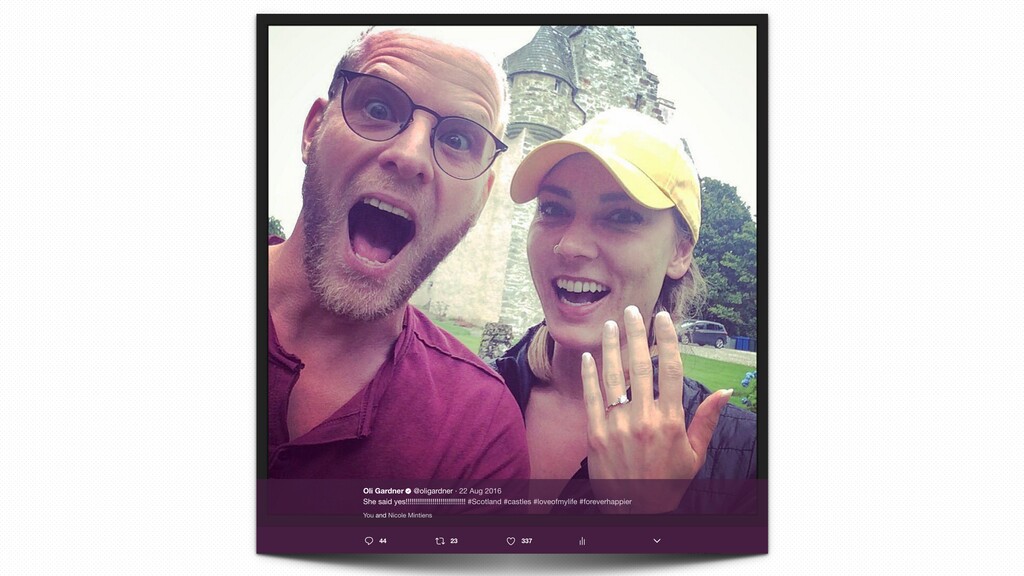
Travel is supposed to be joyful. It's supposed to be good. This is the end of our street where my parents live, last year. Thank you, Brian, for inviting me back every year. It's awesome. It means a lot to me. And a few days after, don't get emotional.
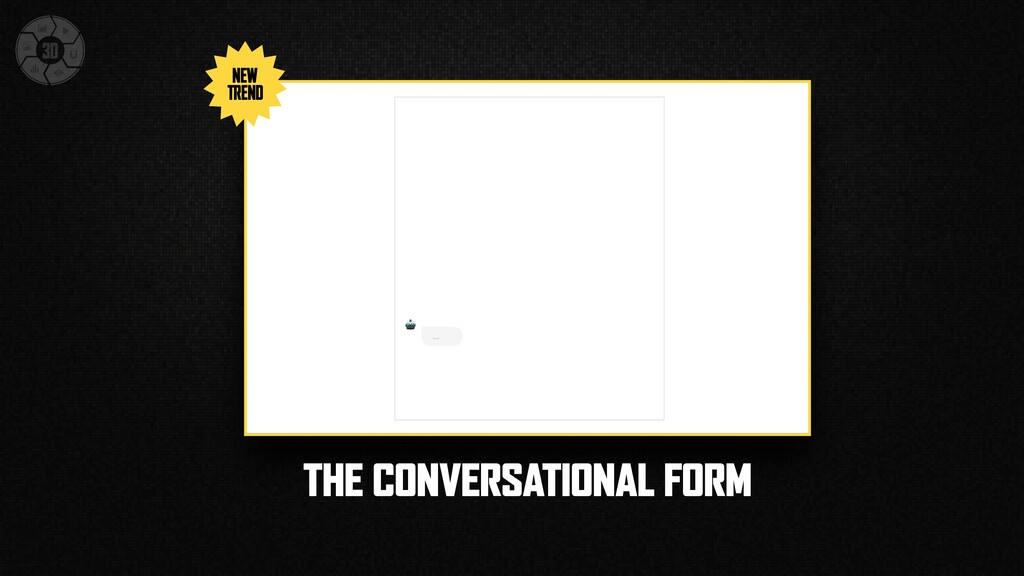
Few days after, TwinFest last year, we got engaged. So that was fun. Moving on. Alright. So back to trends. At the end of last year, I saw one of the most interesting design trends I've ever seen. It's called a conversational form. Now this was created by an agency in Copenhagen called Space Ten. They're really into human experience.
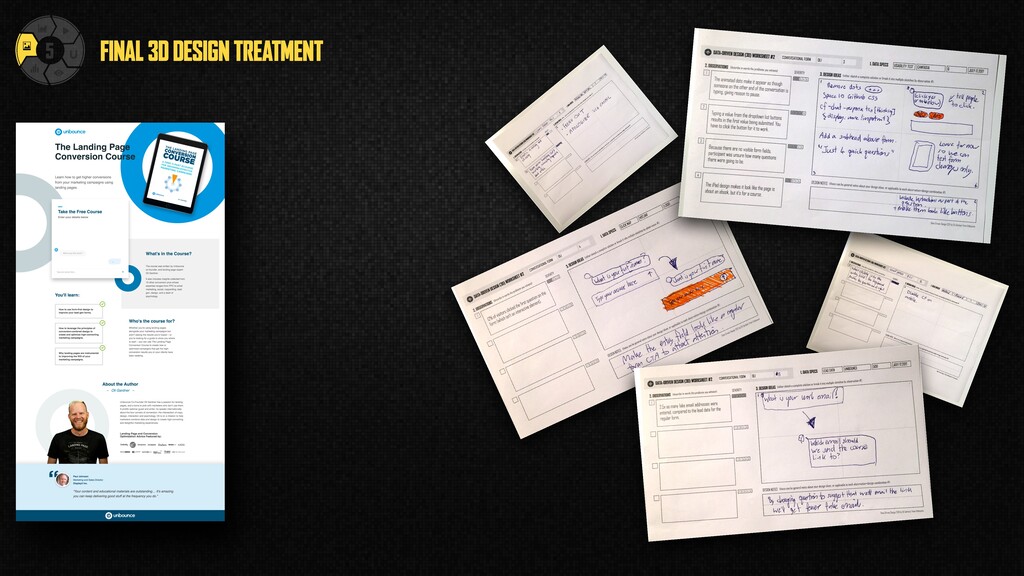
What it does, a little script, it'll take a regular form and transform it into a conversation, into a like a chat type thing. So this is what it looks like. That's just a regular form, now it looks like a chat or a chatbot, but completely different experience.
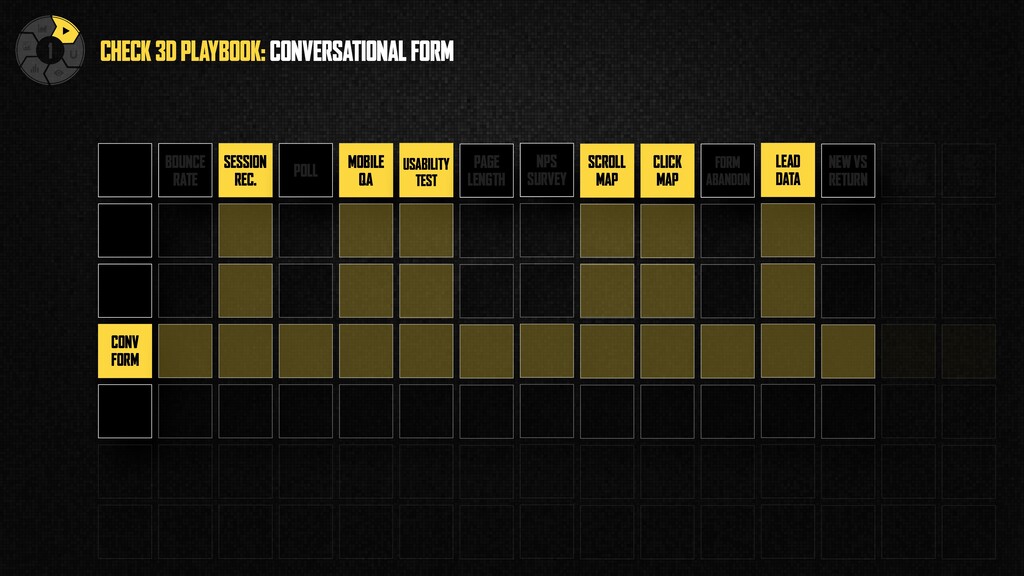
I was really excited, I wanted to validate this to see if it was actually a good experience. So where are we? There we go. Okay, so check the playbook. What does it say? For conversational form, we need to look at a session recording, do some QA on a phone, usability test, scroll click map, and lead data.
So I'm gonna go through these things. First thing I do, I use Hotjar. I oh, so I'm collecting data. It's boring slide. Okay, this is all the stuff I'm going to collect. So I immediately put Hotjar on there to get a session recording.
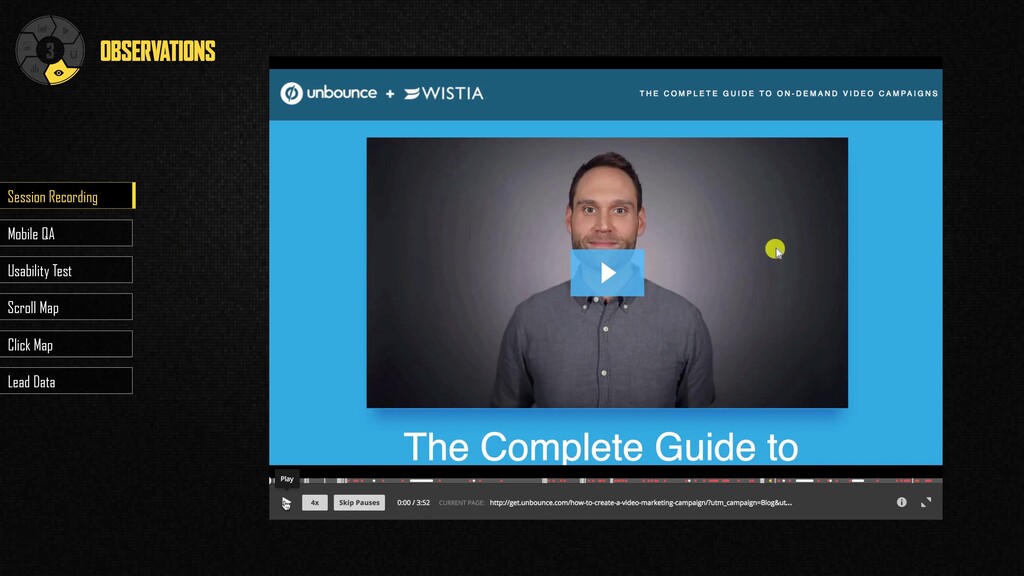
It's the first thing I want to do. And again, so in all of these green things it will give you advice as to how you should use the data in that context. This was the page I put it on. I got this recording five minutes after I launched the page.
Slightly sped up. It just gets chaotic. This guy's trying to fill it in, then there's an error and it just gets worse and worse and worse, and this guy's just freaking out. And then he refreshes the page and goes through it all over again with the exact same result.
I'm like, oh no, I'm ruining this guy's life. This is such a horrible experience. I felt so guilty, this is again where the empathy comes in. So I'm like, what am I going to do? Well first of all, I'm going make some observations.
Very erratic scrolling and clicking, and the error handling was broken. That was the problem, so that he couldn't complete the task. The first thing I'll do is freak out, but then Nicole, being the smarter person of the two of us, who was sitting next to me, she said, he put his email in.
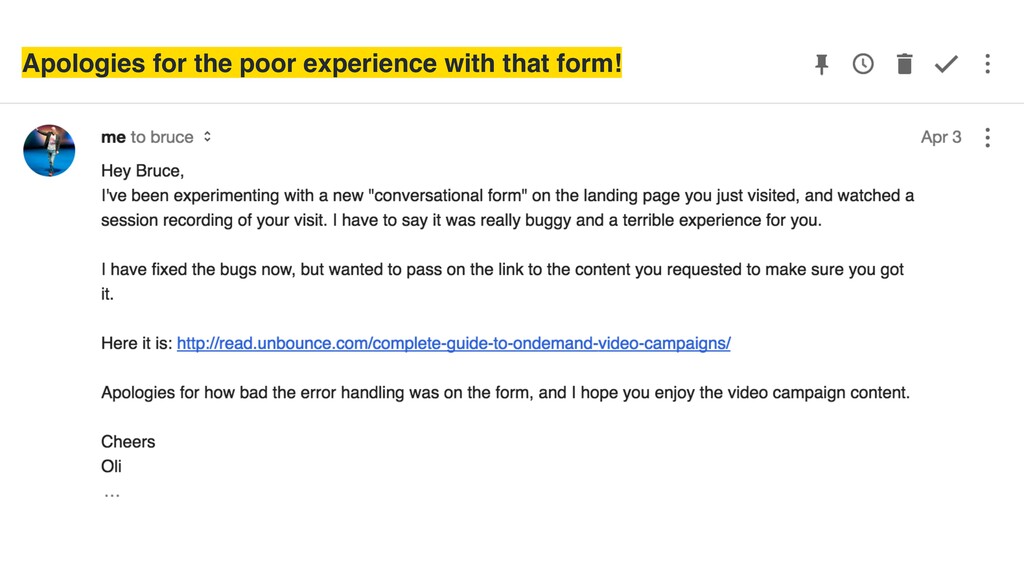
Bruce put his email in the thing. You should reach out. So I did. I'm like, Bruce, man, I'm so sorry about that terrible experience. I was testing something. I watched the recording. You had a horrible time. Here's the content you were trying to get.
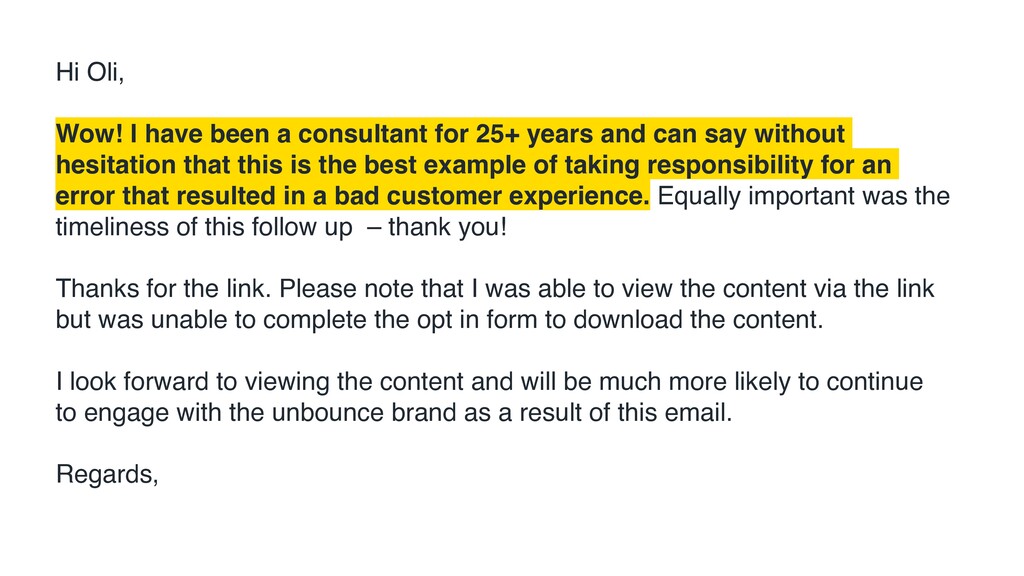
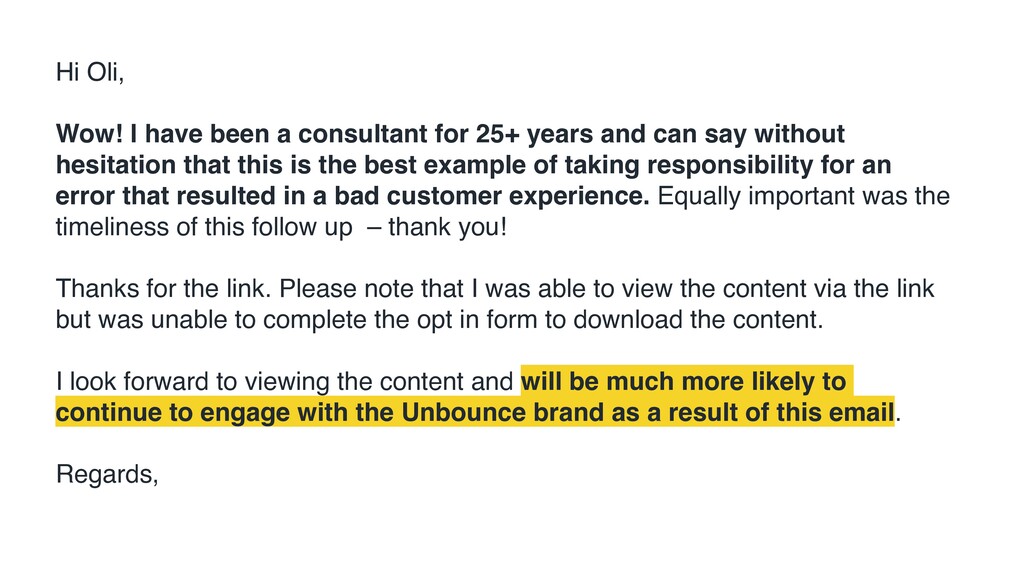
Again, I'm really sorry. Two minutes later, he replies with, that's the best thing I've seen in twenty five years of owning up to a mistake and dealing with it, much more likely to engage with Unbounce as a brand in the future. So something awful turned into something quite lovely and very positive just by observing that data.
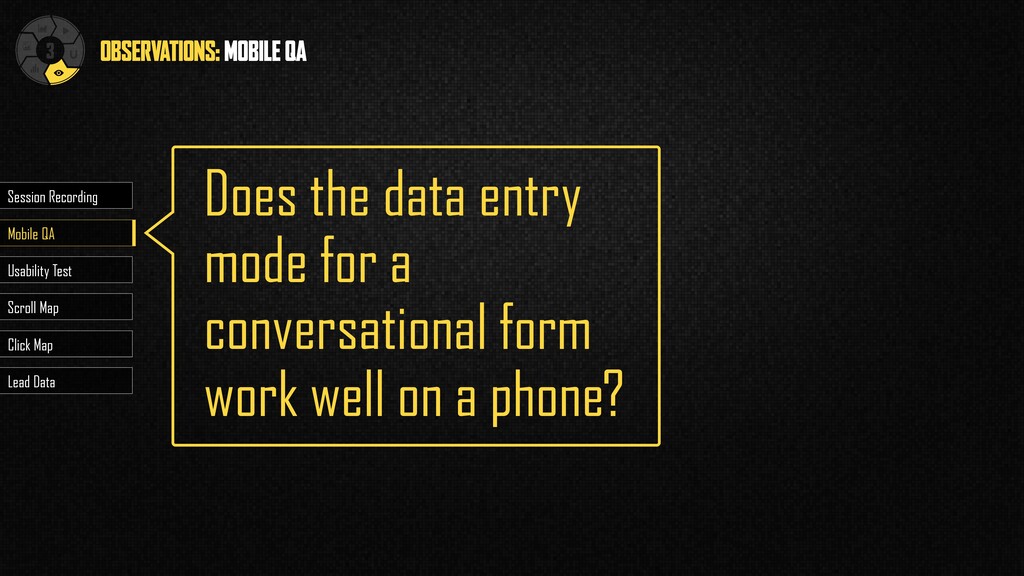
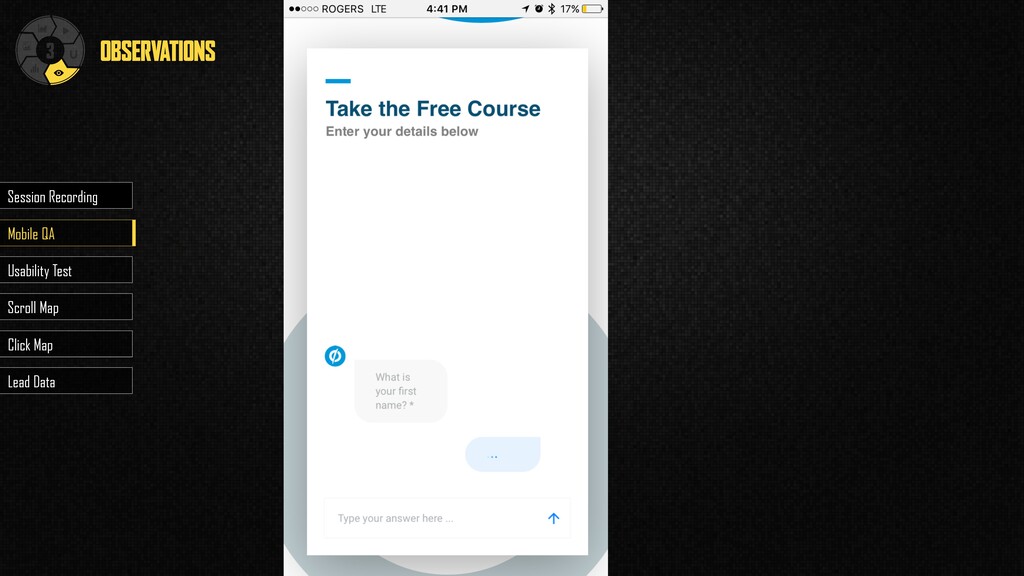
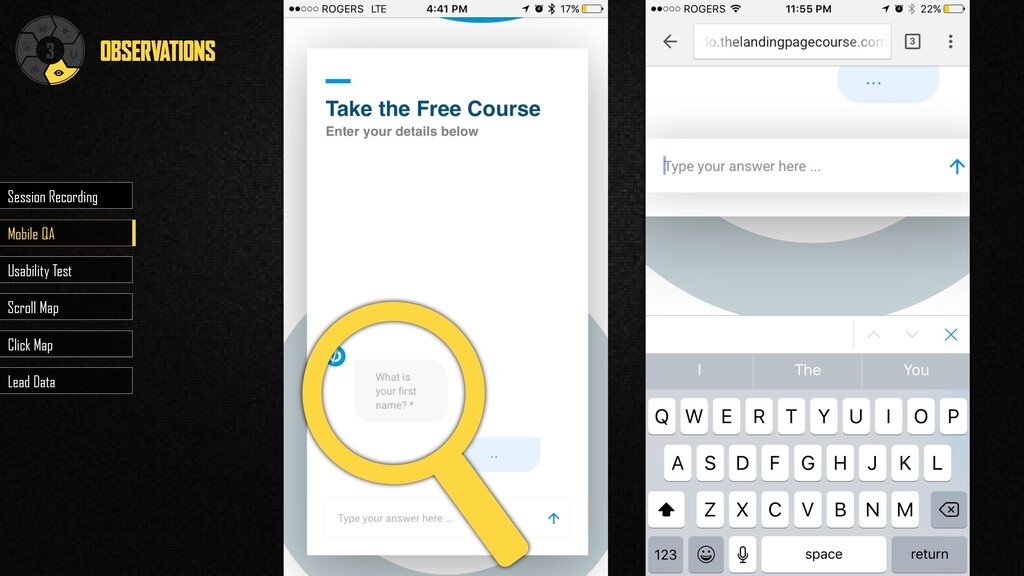
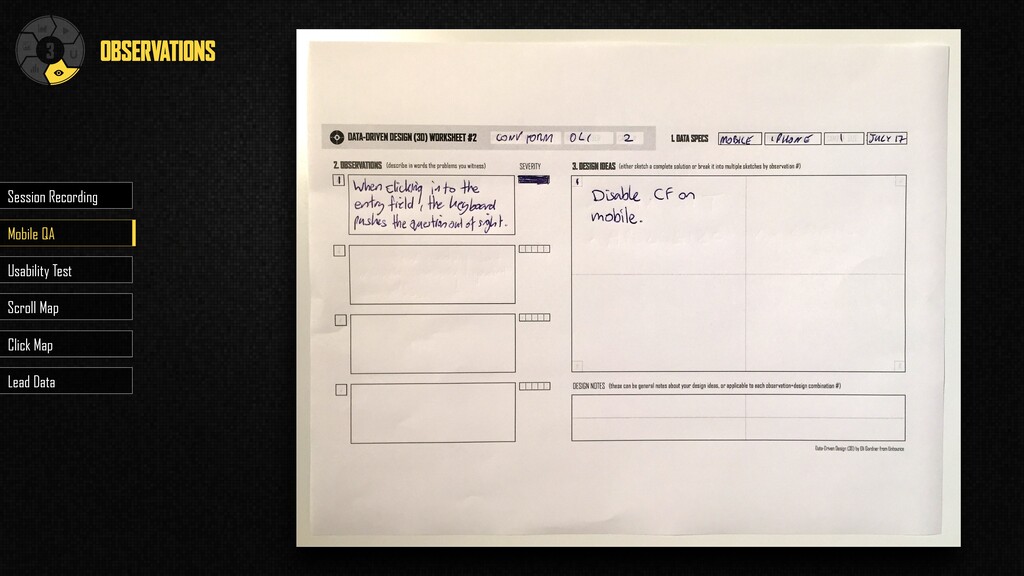
Okay, what's it like on a phone? It looks like this. But then when you click on the place where you enter text, the keyboard pushes it up so you can't see the question. That's terrible. You know what you're answering. So I just simply turned that off.
Like on the mobile version, just like, don't show it because it's I'd have to write some new code to fix it. Okay, usability test. A lot of people think this is a bit overwhelming to do usability tests. It doesn't have to be. It can be super easy, super quick, and super free.
I just Slacked ten people, and the company said, hey, can I borrow you for two minutes running a usability test? And everyone's like, yeah, I love those things, because people like being included. And this again is where the empathy comes from. This is how you build a culture of optimization in your company.
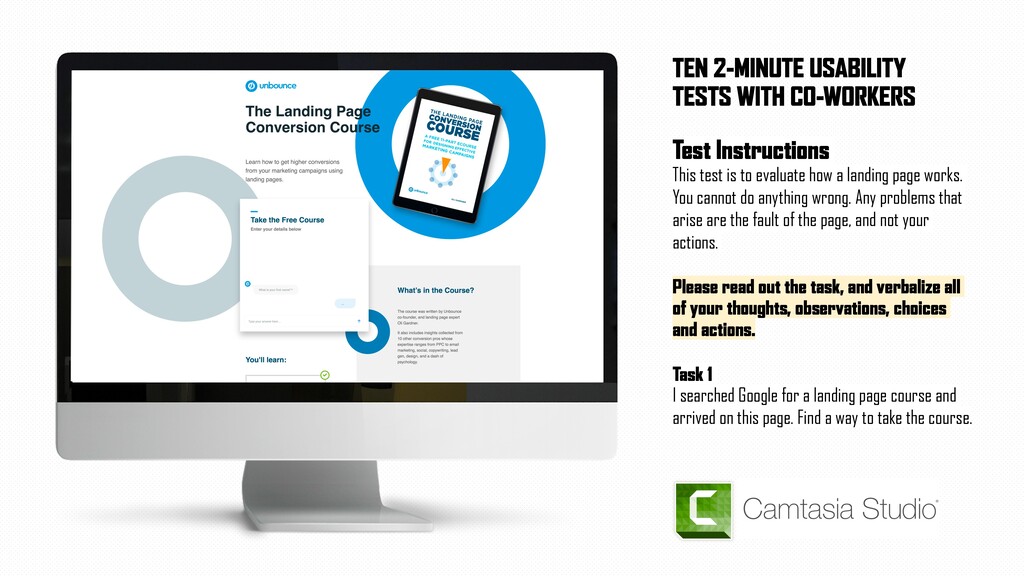
So I did really, really simple instructions. We're evaluating the page, not you. You can't do anything wrong. If anything goes wrong, it's the page's fault, not yours. Like setting them at ease. And then I had one very simple task for them. And you get them to read it out first, so you read out the task.
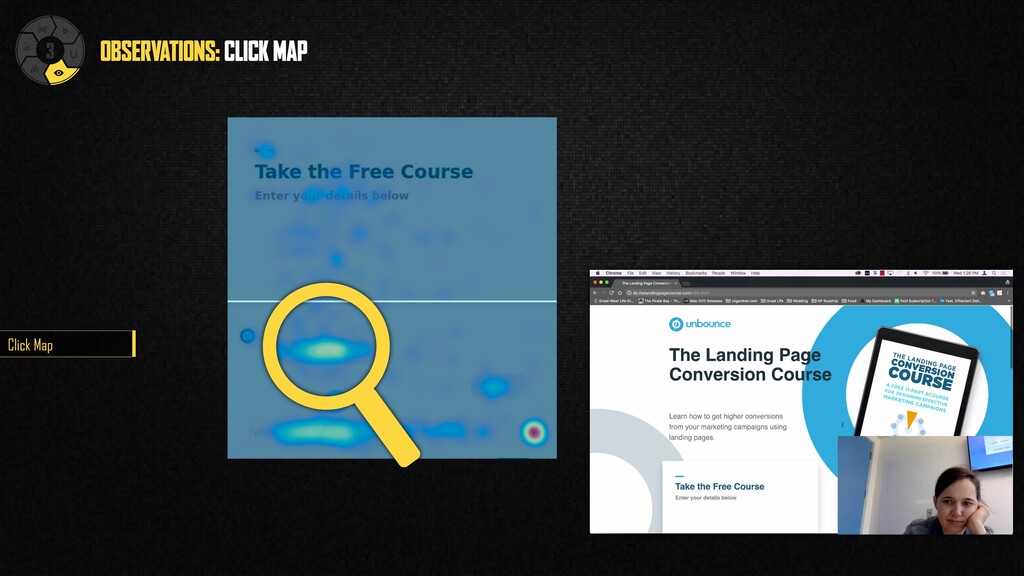
So I searched for Google for a landing page course and arrived here. Find a way to take the course, and then verbalize everything you do and think. That's what they're doing. I use Camtasia to record the screen and also because you can get the camera so you can see people's facial expressions, because that can be really helpful and let figuring out their level of disgust.
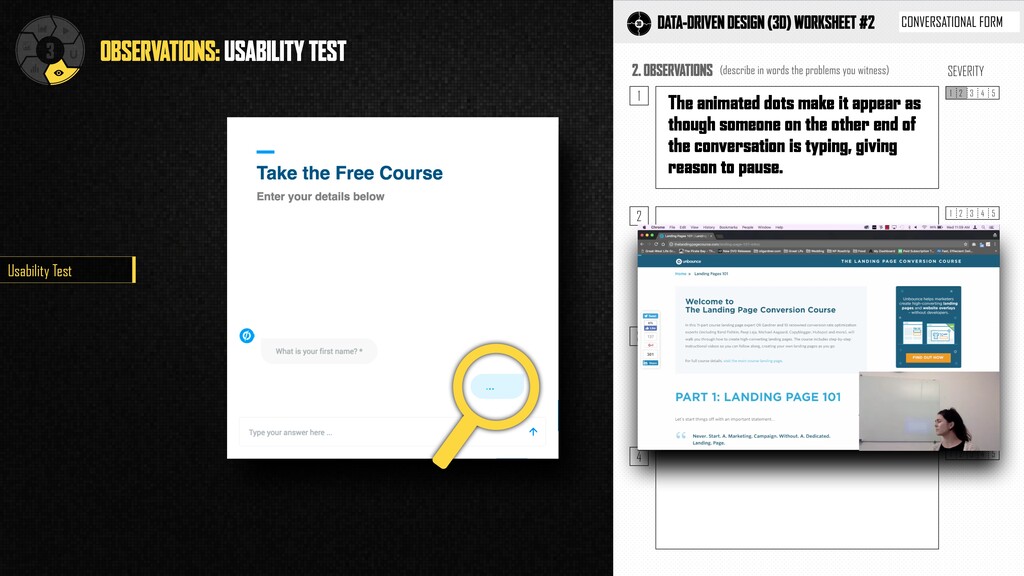
Alright. So the first thing Although the three dots kind of represent like, okay, am I typing or is somebody else typing? So there's a little animation there with three dots. It doesn't do anything. But we're used to from chat and messenger and things, that means someone's typing.
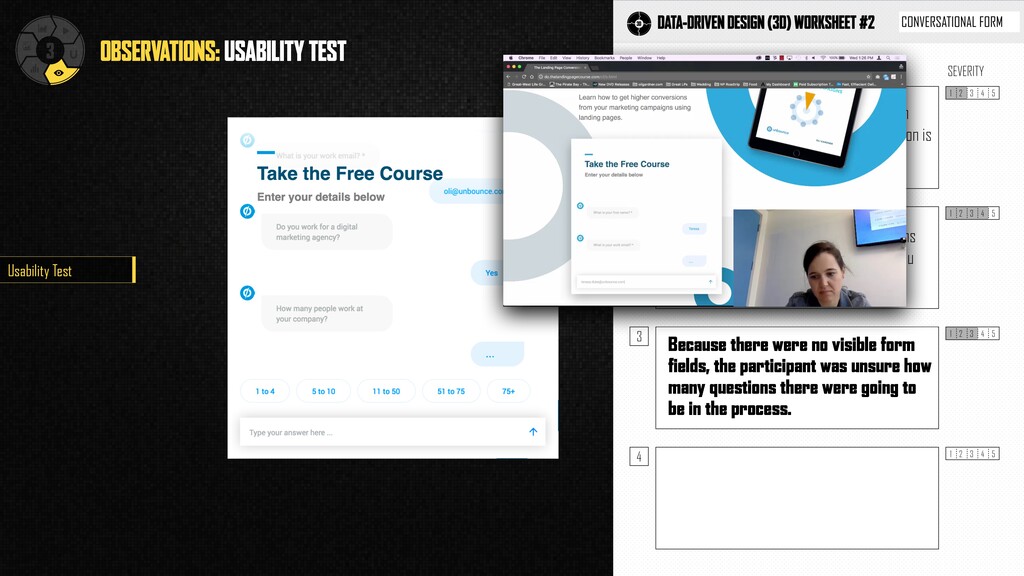
In this case, there wasn't anyone typing, so it made Maggie go like sit and wait for a while. So not serious, but a little confusing. How much information am I gonna be asked for? No. So I'm like, oh my god. Am I gonna be having to do this for a long time, and I don't know how long it's gonna take me and So because it's not a regular form where you can see it and go four fields, that's okay.
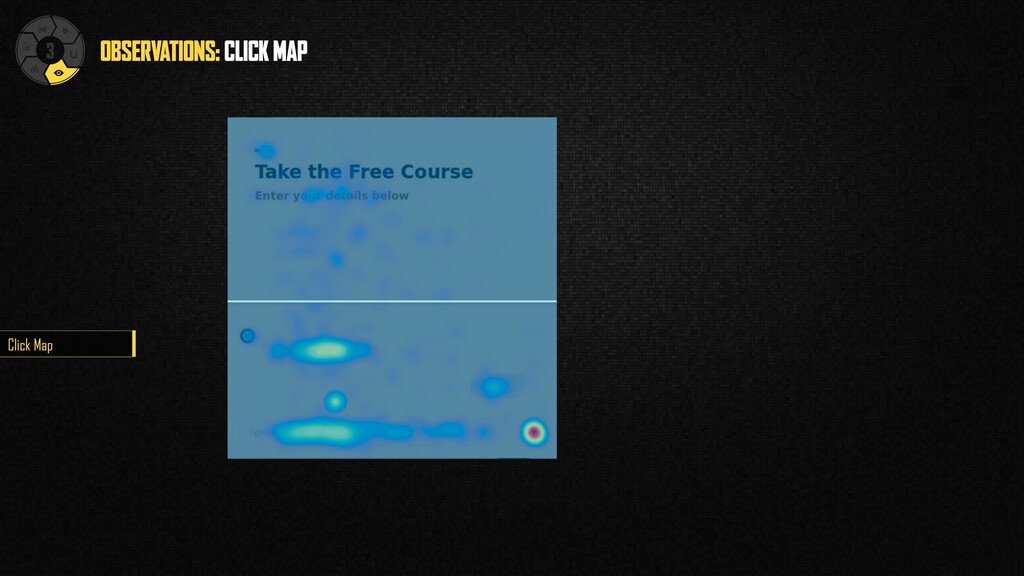
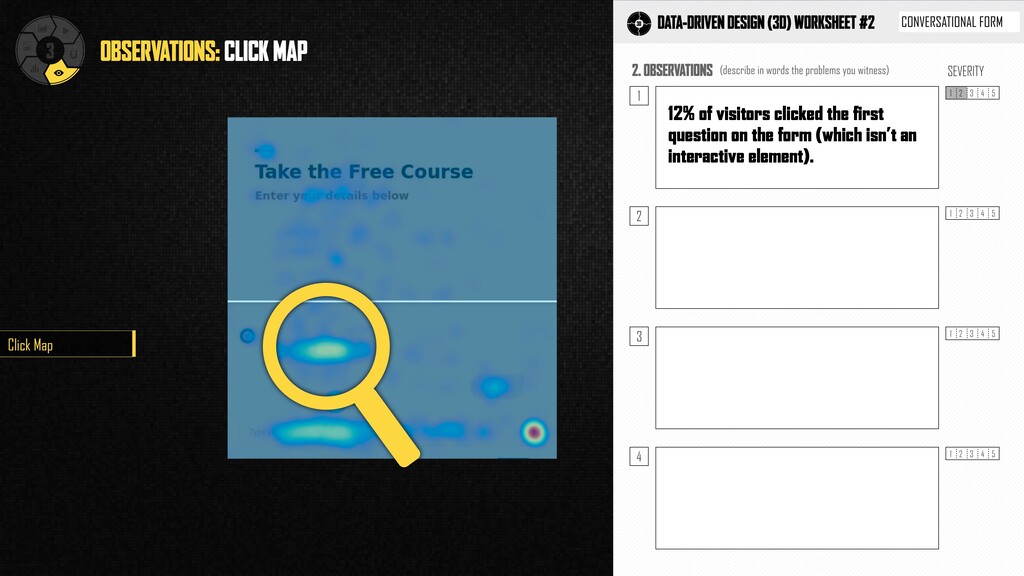
With this, you have no idea when it's going to end. That's a bit of a barrier, so we need to solve that problem. ClickMap. I saw something really weird. See the one is this going to work? That one there. This is where you should be going. That's weird.
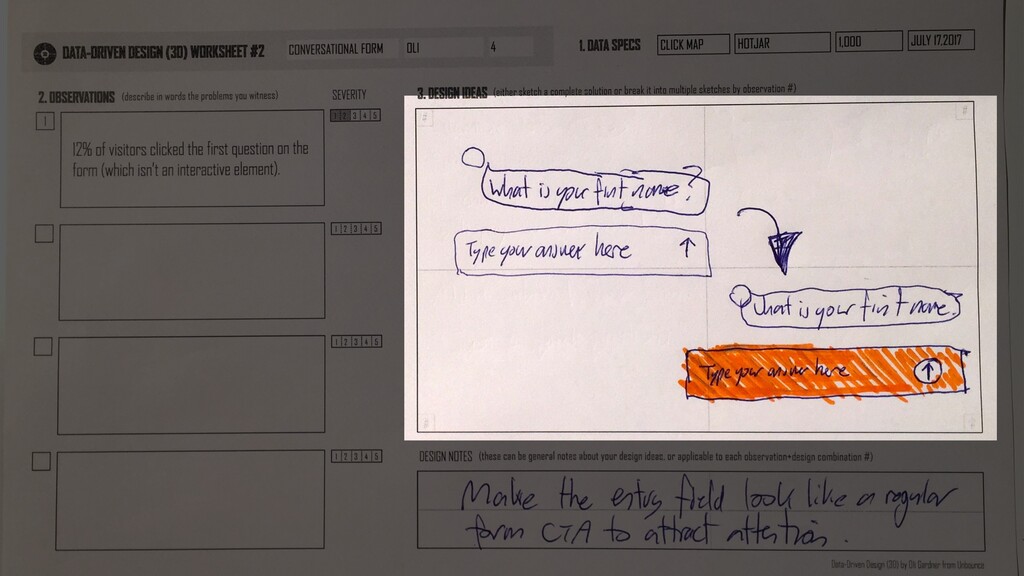
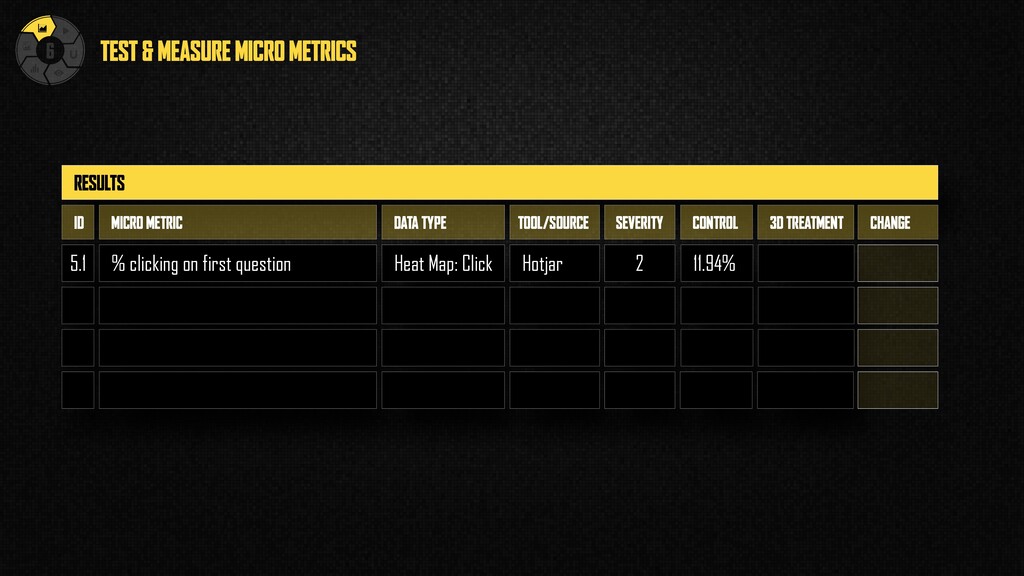
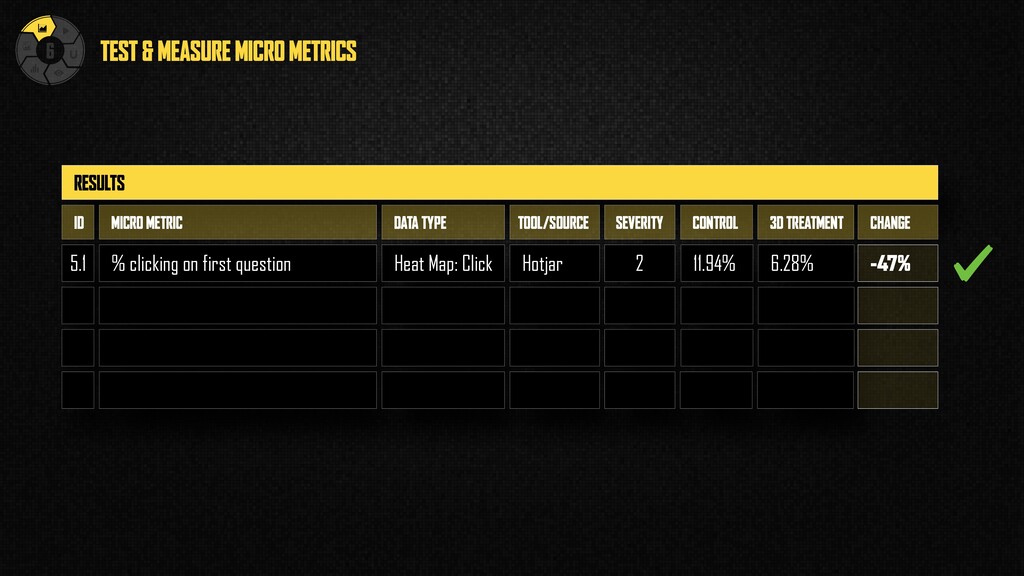
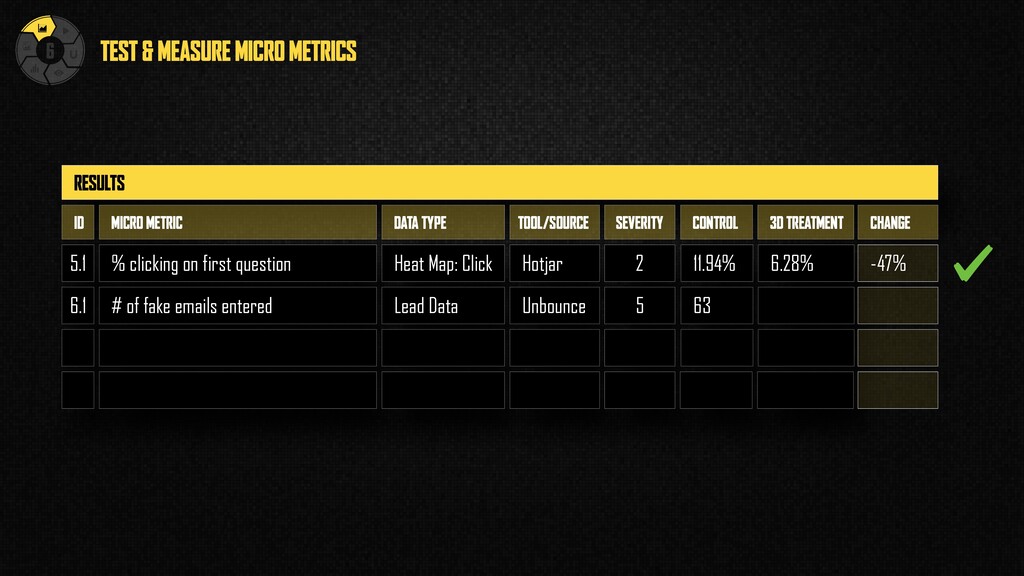
I guess I could check it out. I can't click on what my first name is. Just clicking on the first question. That's not what you're supposed to be doing. In fact, twelve percent of people did that same thing. So that's a problem. People are clicking on something that's not interactive.
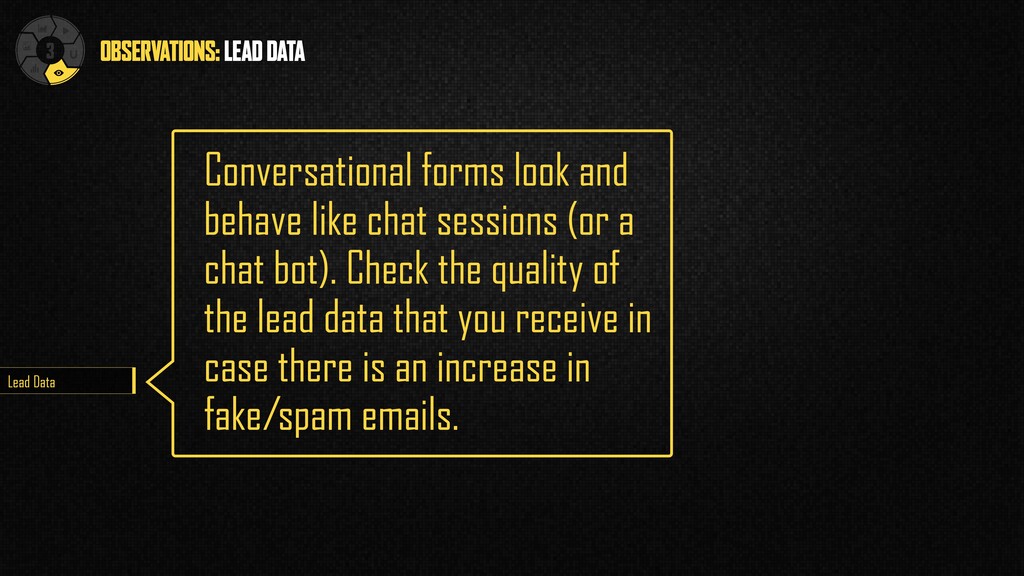
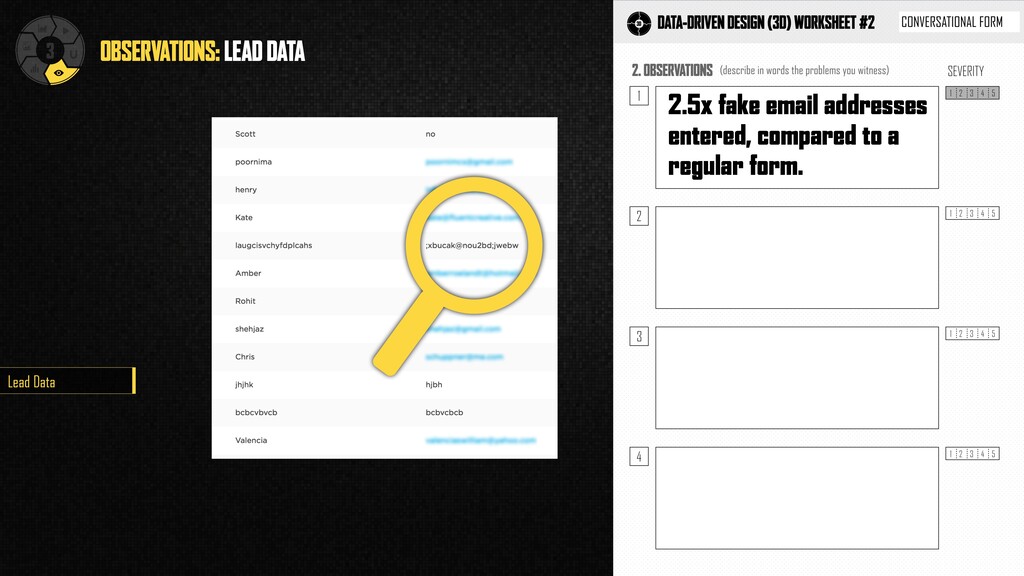
It's not what they should be doing. Okay, then finally, the lead data. And now this was really important to me because this is such a new interaction model. Are people and it might look like a chat bot are people more afraid of putting an email address in?
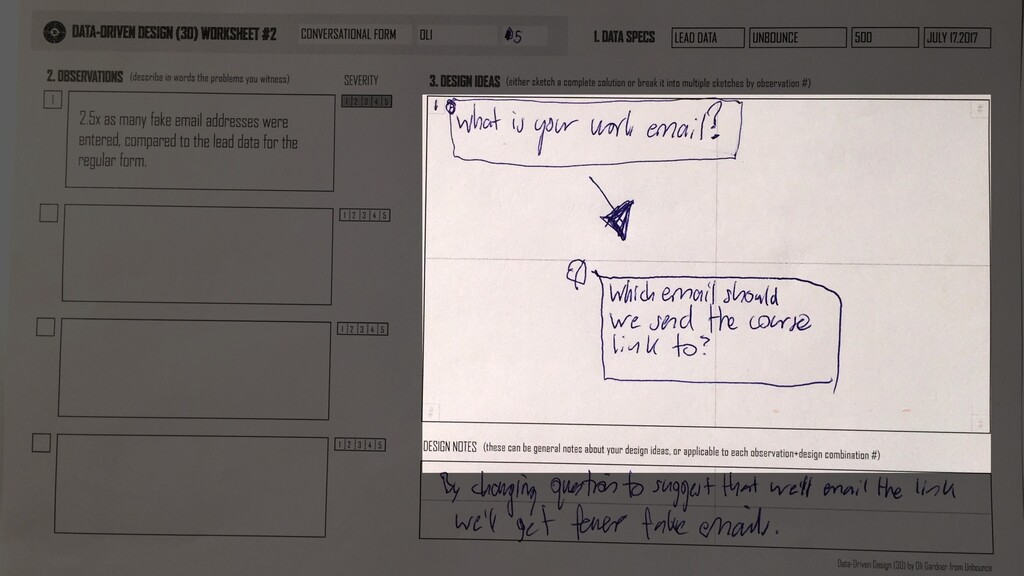
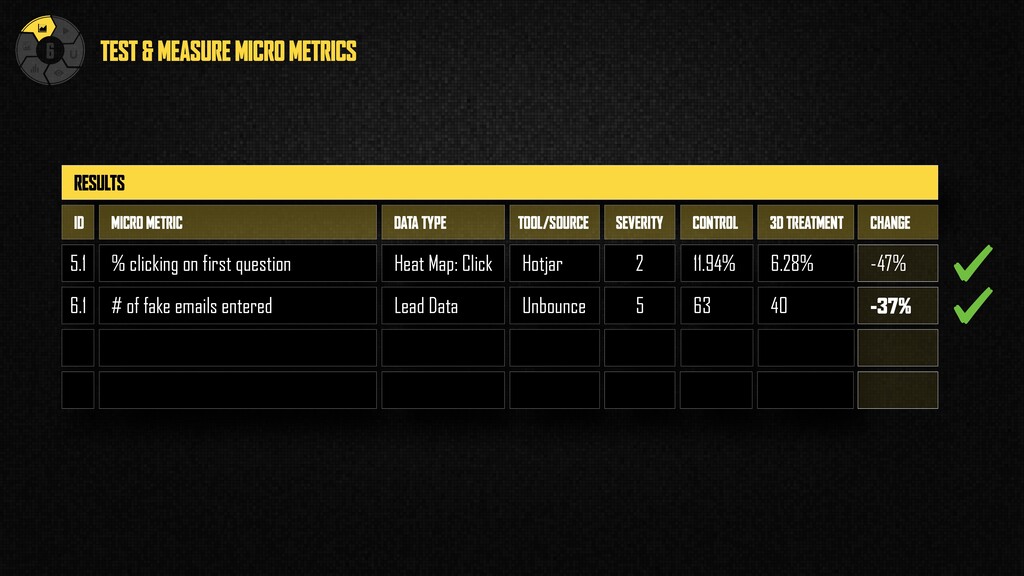
And this new thing they maybe don't trust. Two and a half times as many fake email addresses came into this compared to a regular form. That's a big problem. That's a five, so we really got to solve that one. Now, you don't want spammy emails coming through.
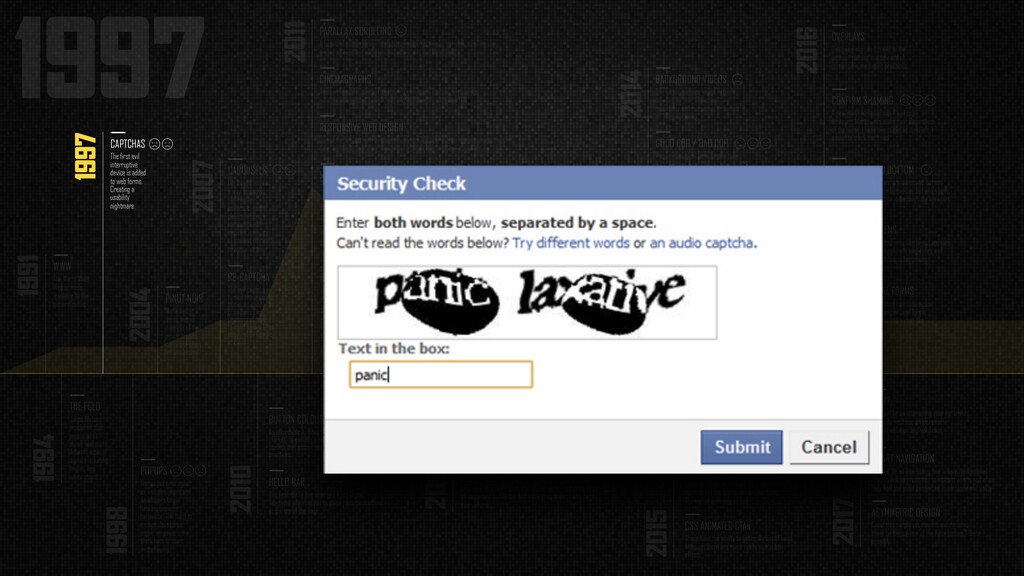
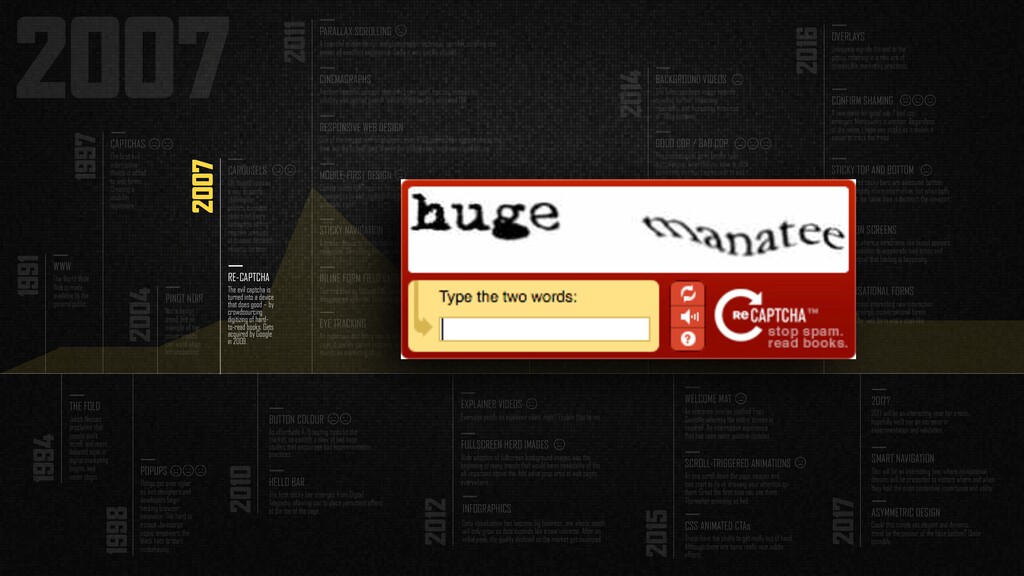
That affects your lead quality. Makes everything in your marketing less good. We're all familiar with these back in ninety seven. First interruptive device that captures, pain in the ass, sometimes funny. But then ten years later, our group got together and they made it better.
Same kind of functionality, but now it's doing good. So instead of just being something in the way, the words are digitized, words from old texts that machines can't read. So it's great for accessibility and, you know, bringing these books into the future, it's a really great thing.
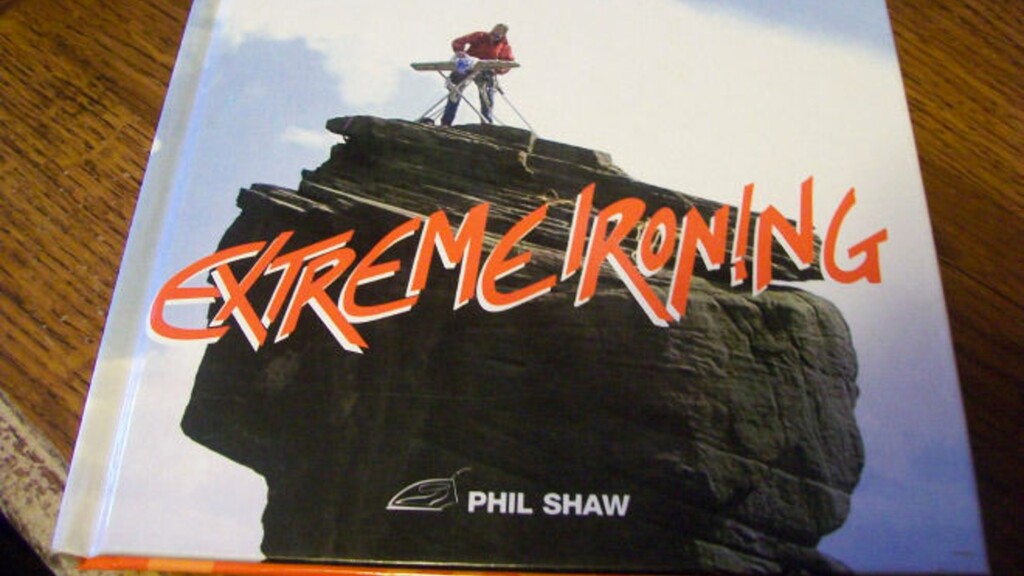
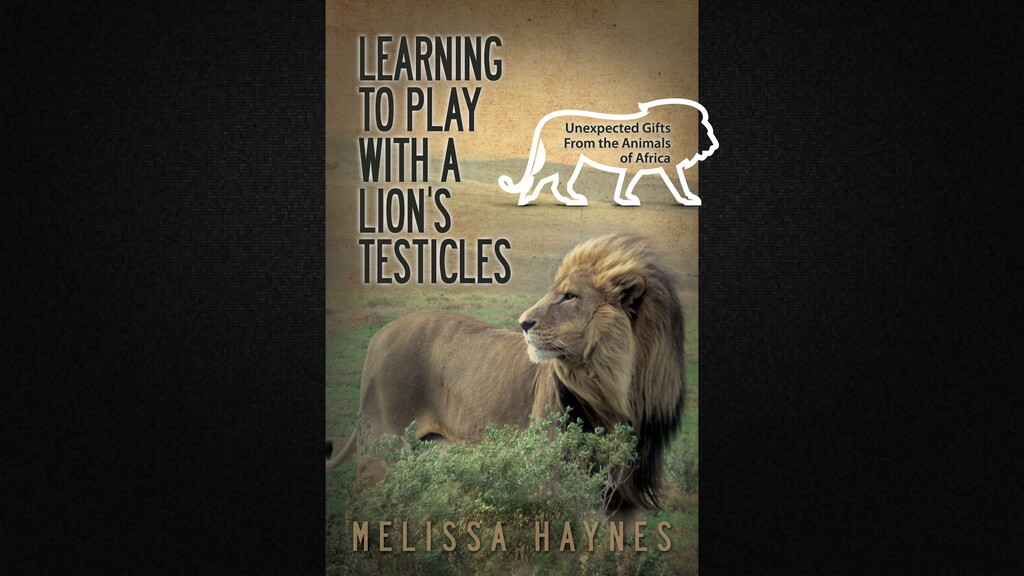
But there are some exceptions. Not everything that was ever written needs to be living on forever. And that's not what I was thinking with Scrappy. I did not keep his hair. Promise. This is a thing. Look at that ****. Unbelievable. Unexpected gifts from the animals of Africa.
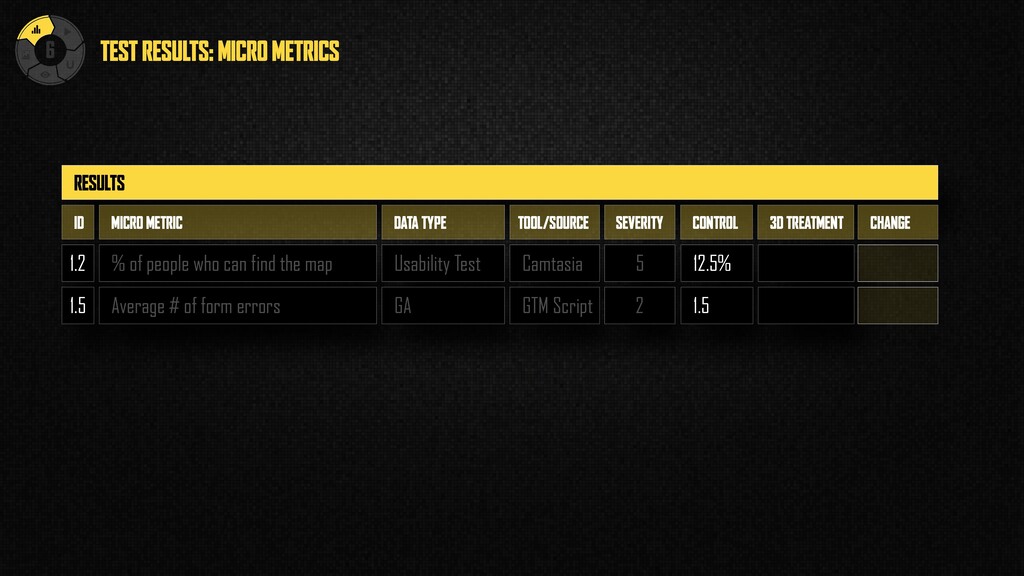
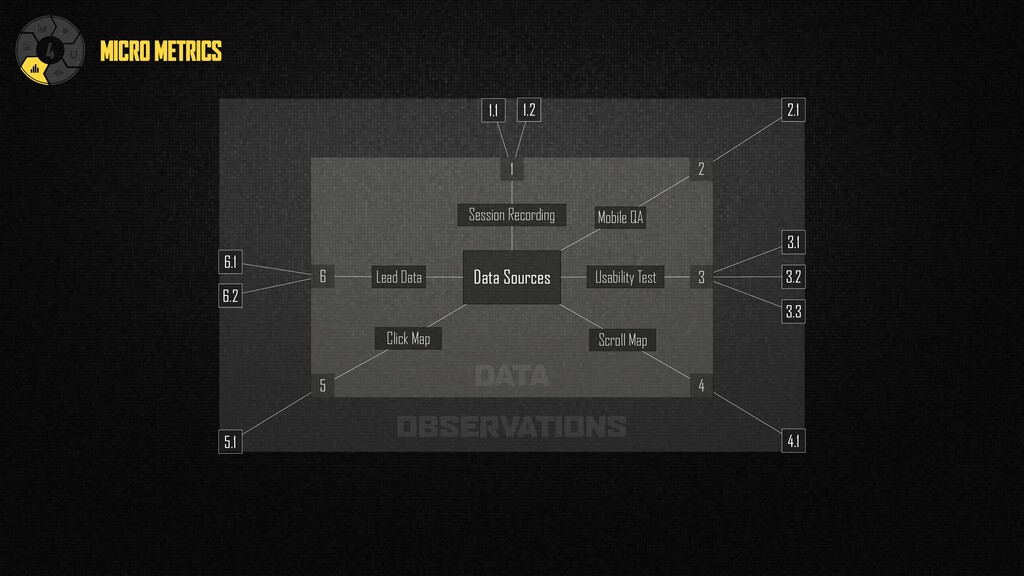
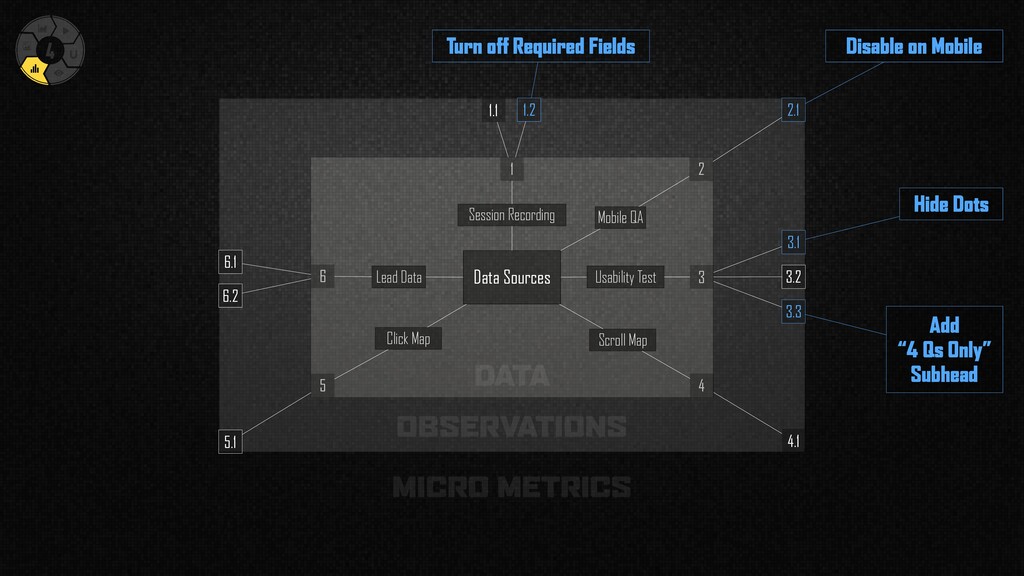
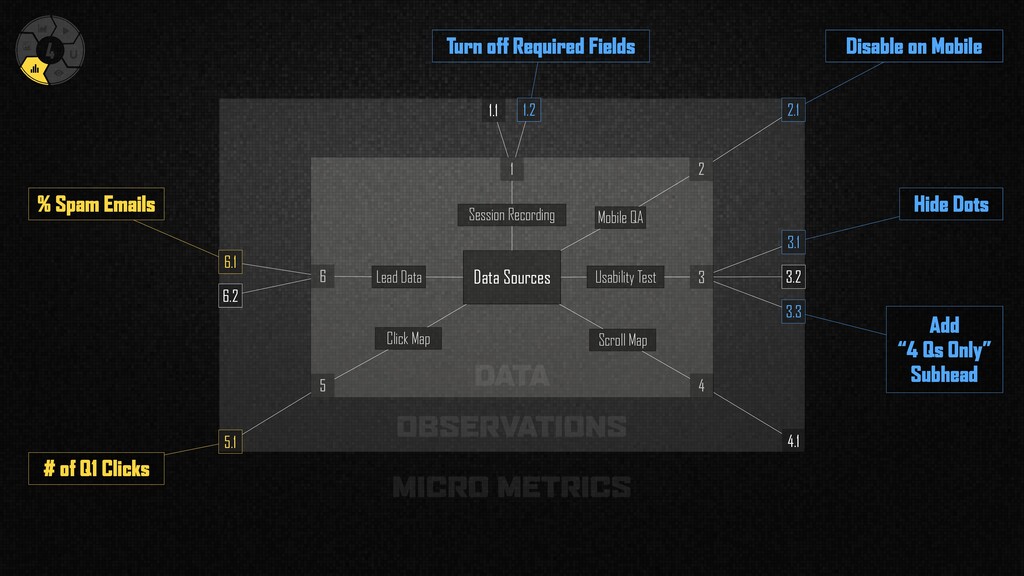
And then this one, guilty as charged, romance, suspense, haggis. I'm pretty sure it's Keanu Reeves. Alright, so we need to define the micro metrics for these observations we just made. So these were all the observations I made, and again, do nothing, fix or optimize.
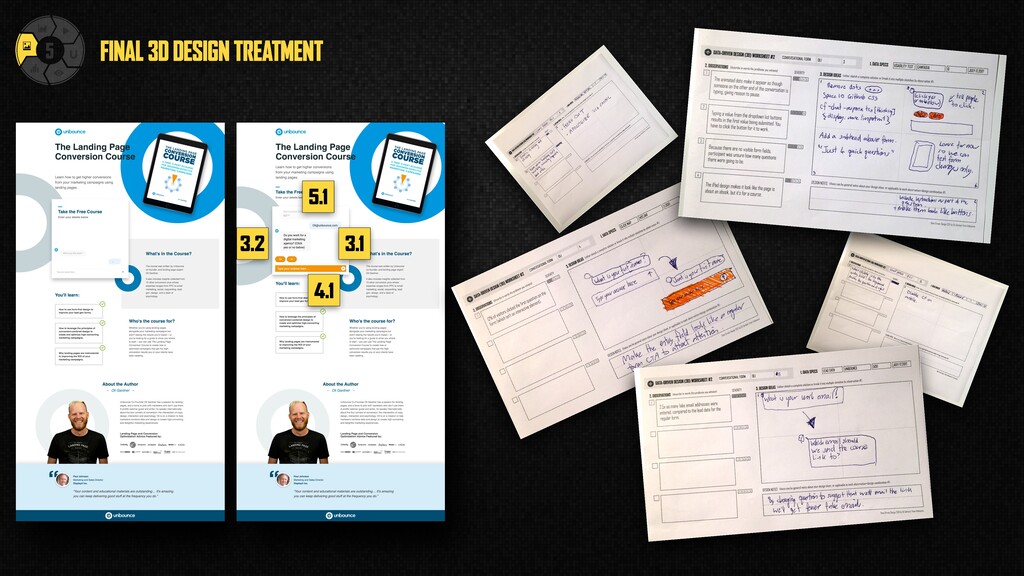
So there's four that I'm just going to fix. Turn off the required fields because that was causing the error. We're going to disable it on mobile, did that. Hide the dots because they have no value, and add a little only four quick questions subhead, so people know how long this thing is going to last for.
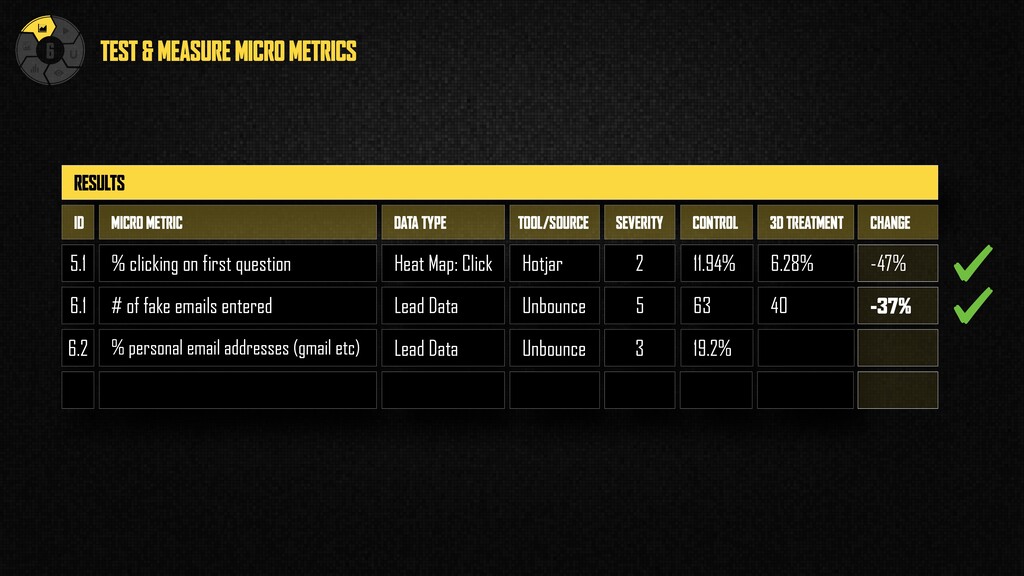
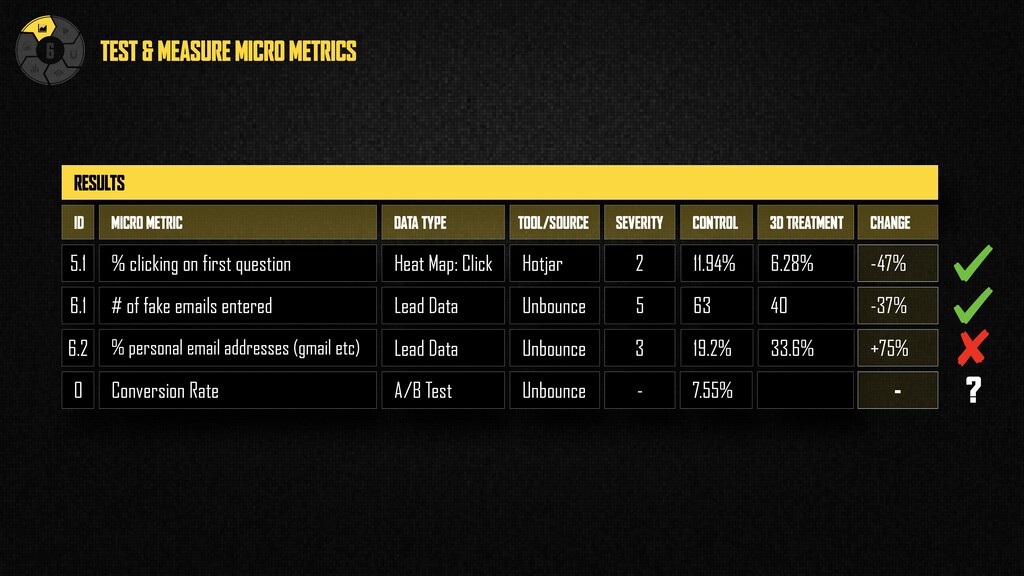
And then I'm going to measure these two things, the percentage of spam emails and the number of people clicking in the wrong place there. There are two things I wanted to fix. That's what this whole process is about, changing on page behavior using data and design.
If we can influence these two things in a positive way, that's way more important than just the conversion rate. It's because if, say you run a test and it flatlines, you're like, didn't win. Okay, should we push this live because it doesn't matter?
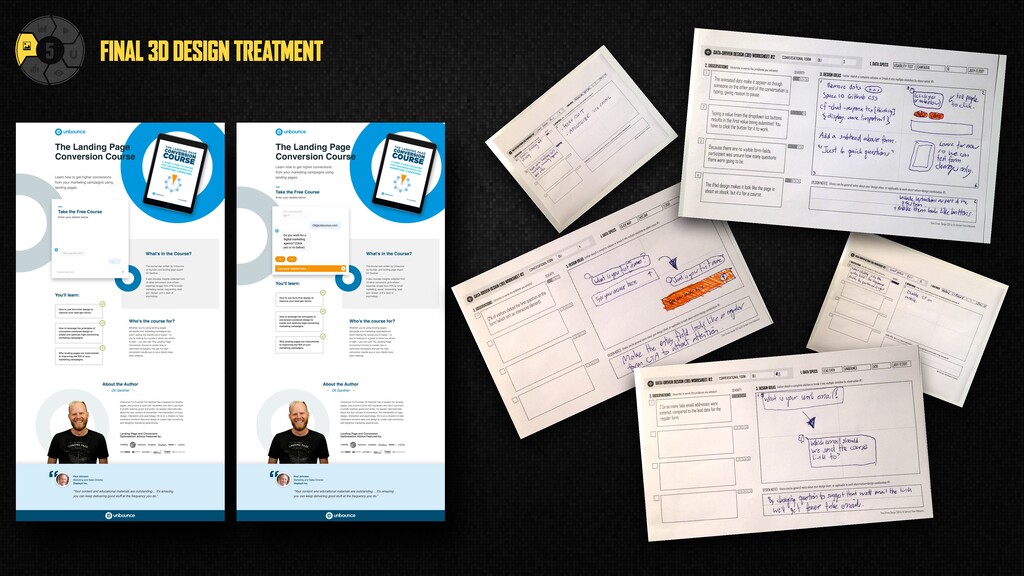
Or you don't really know what's going on. With micrometrics, you get to dig a lot deeper and make decisions based on things that might actually be more important than conversion rate. Okay. So for this, I did a couple of mock ups. So I want people to stop clicking on that thing.
One of my hypothesis was that it doesn't look like a traditional form. There's no CTA. There's no big shiny orange button, so people don't really know where to start, and we all know orange is the highest converting color. And so I did that to try and draw their attention.
Also when they see that it says type your answer here, so hopefully there'll be fewer people clicking the wrong place. And this one for the spam, it used to say what is your work email? So I changed that to say which email should we send the course link to.
That way people think, oh, I have to put a real email address in here. So those are the design decisions I've made to try and change on page behavior. So you get all these, you give it to the designer, they can take this, turn it into something based on all this data and observations.
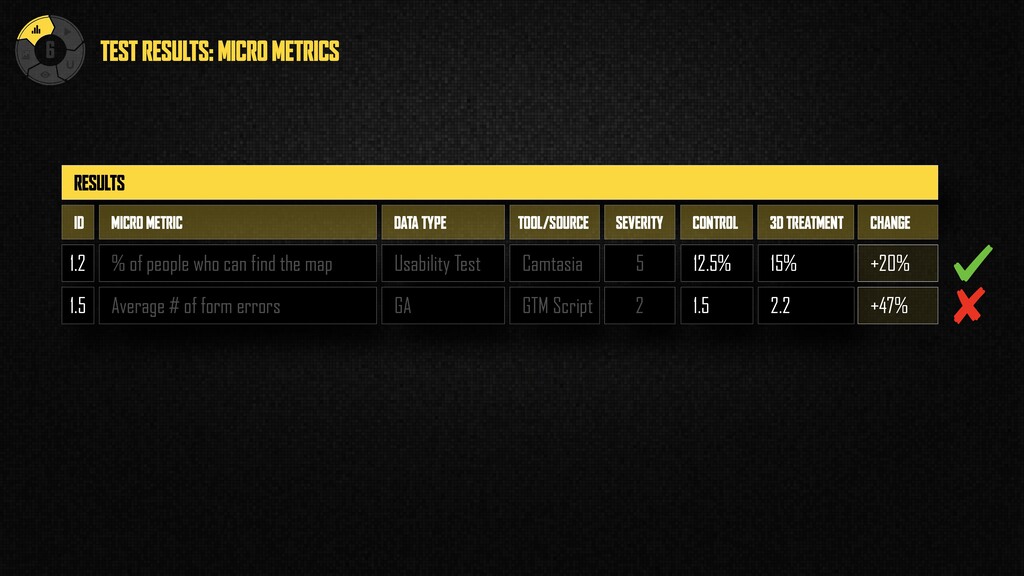
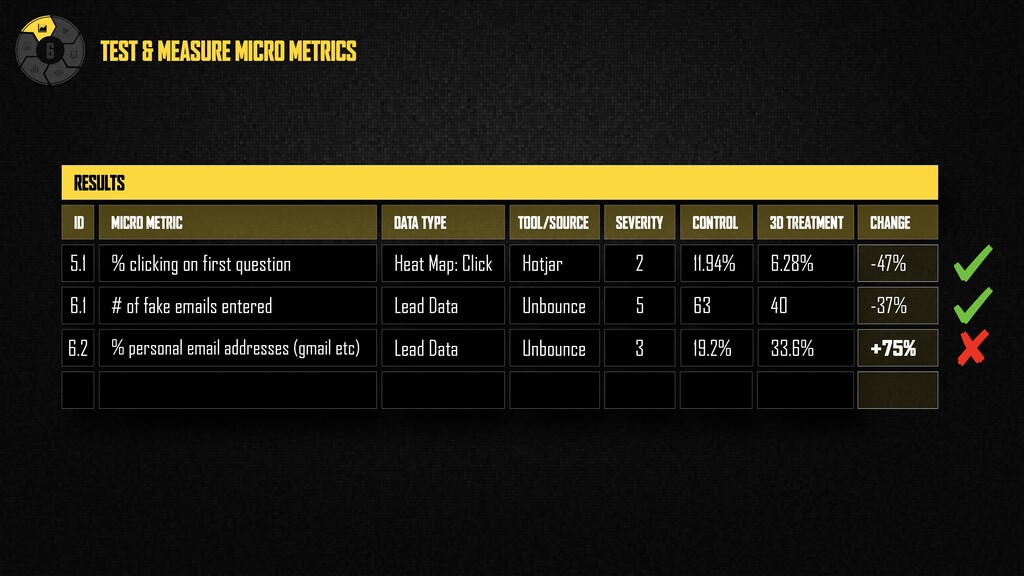
In this case, there's not much difference because I'm just focusing on the form. I label everything. So I ran an AB test on this to see how it performed and to look at these micro metrics. So the first one, clicking on the on that first question which you shouldn't be doing, cut it in half.
That's amazing. I'm changing behavior. Number of fake emails, down by thirty seven percent by that just that little bit of a different instruction. But while I was there I counted this. This is I've done a lot of testing on this before where you can just by changing a word in your field label instead of email address, do work or business email, you get more pro emails like company name dot com, not Gmail, which is great because when you're doing email marketing, you're emailing them when they're at work making business decisions.
So for this, that got way worse. A lot more personal email addresses, and I think I know why because I took the word workout when I changed it. So I'm going to go back in and put work or business back in there to try and reshift that.
Conversion rate, it's a low traffic page. To be significant, it's going to take about twelve weeks. It hasn't finished yet, but right now it's totally flat. It's not going to win or lose, so in that situation, it could just be wasted effort, you're like I don't know what it means, But with these things, I've learned how to change behavior.
I become a better optimizer, and I've made the performance of this page way better than it was, but the conversion rate is the same. That's how important these micro metrics are. Alright, you remember this guy at the start, this is Corey, one of our marketing directors.
He's very cynical. He's not always that sad, this was for a video shoot, this photo. So I asked him when I was doing this coming up with this talk. I texted him and said, you were on the team, the explainer video. What do you remember?
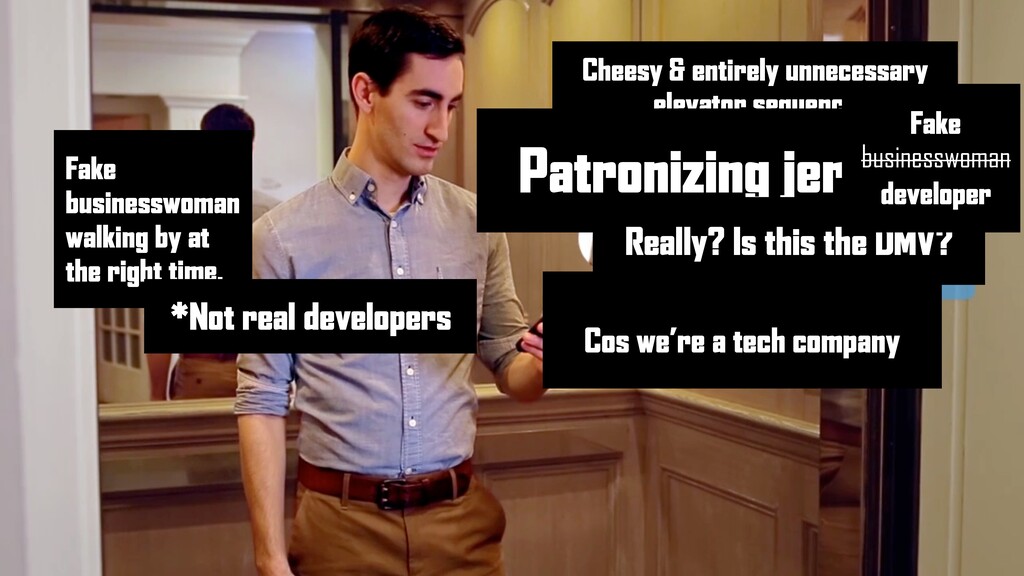
We made up a bunch of **** and we started because we thought we needed a video. Right? There's nothing good about the way we started this project. Oh yeah. Okay. So I'm going to show you a little bit of it so you understand what we created.
Every marketing campaign needs a landing page. We need them often, and we need them fast. I could use some help from design, but she's in the middle of a big project. And I'll need a developer to actually code the page for me. Our developers are busy, and building a landing page is not at the top of their list.
Different name you have for that kind of place. That's how getting landing pages built used to be. Now I use Unbounce. With the Unbounce landing page builder, I can start with a template or I can build my landing page from scratch. And it's quick and it's easy.
I dropped in my headline. We hated that guy afterwards. It's like you know, like everyone's like, yay, launch it. This is gonna be amazing. But individually, if you talk to us like, there's an integrations part in there and Honey goes, Mailchimp and Salesforce.
We couldn't get him to stop saying it like that. And and we could have got he got it right once, but in that one, he got our name wrong. So it's like So our team was really frustrated by this because all this time and money and effort we put into this, it was really frustrating.
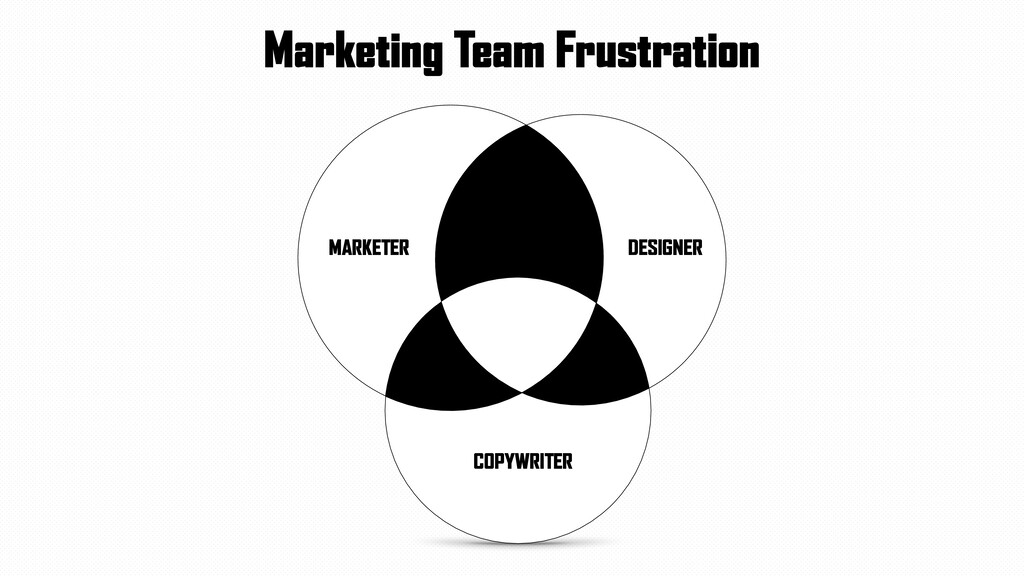
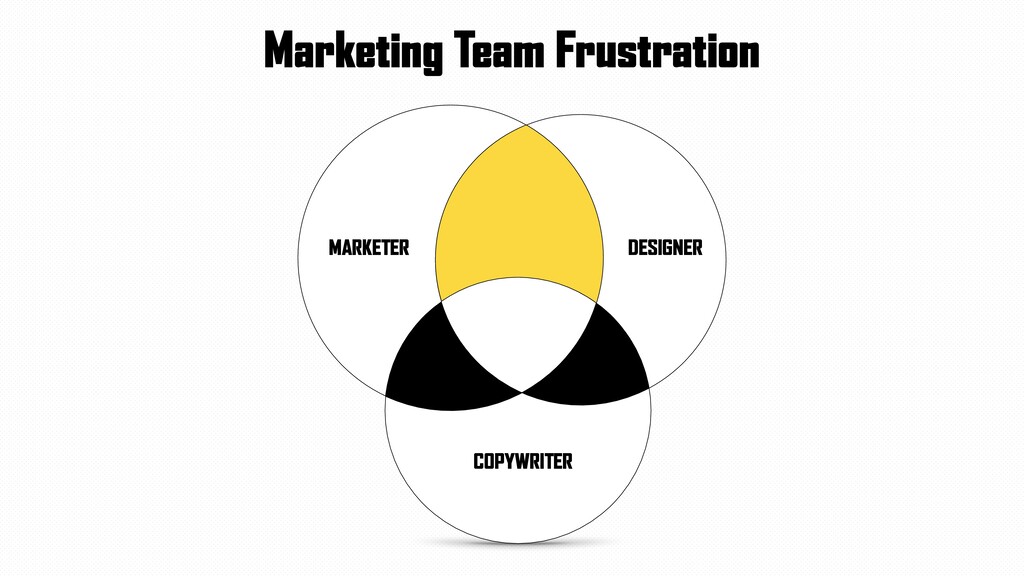
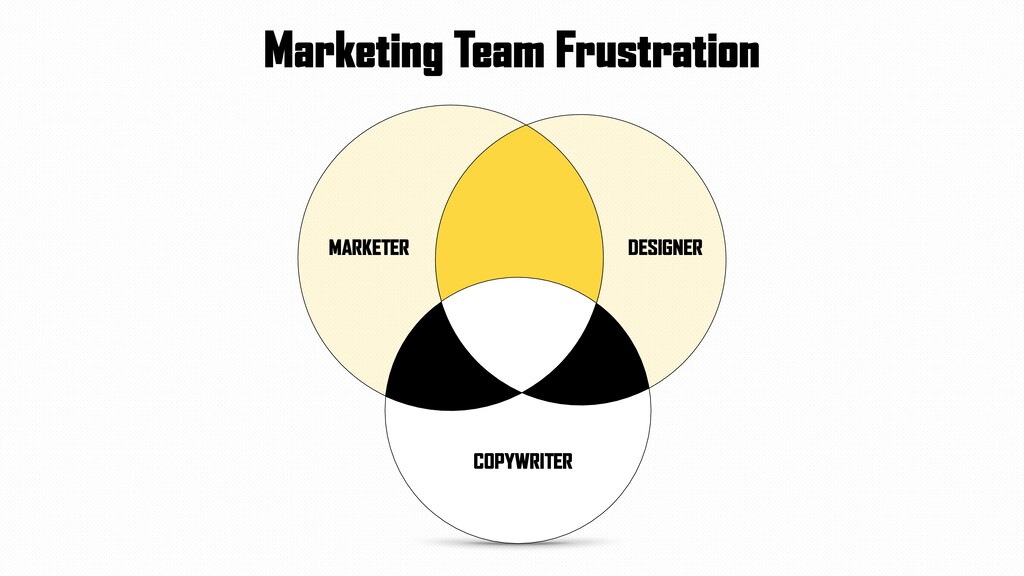
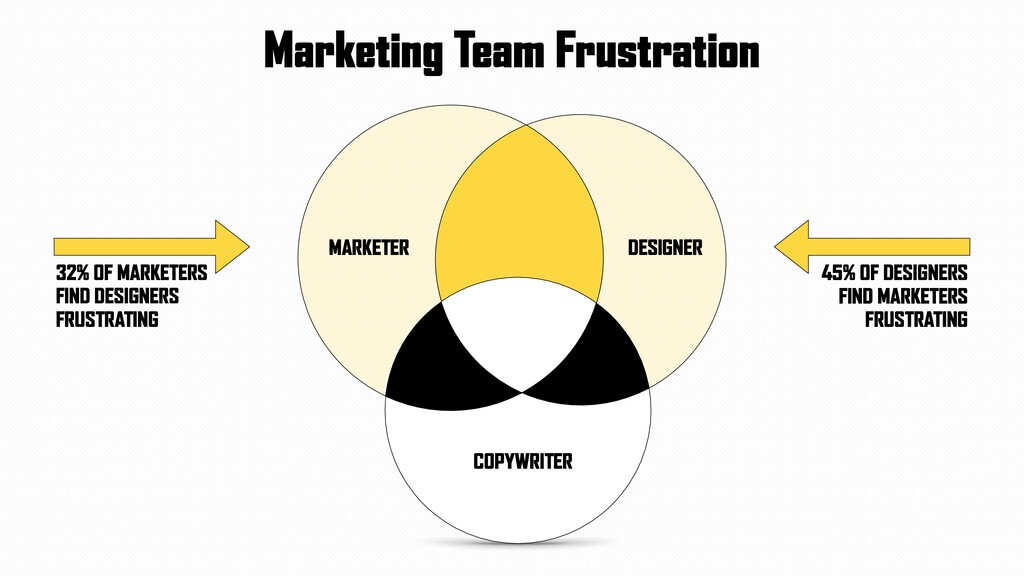
Here's a Venn diagram of marketing team frustration. The biggest overlap is marketers and designers. They really don't seem to get along well. That's the numbers specifically. There's a lot of tension there as you saw at the beginning. That's what this process is designed to solve.
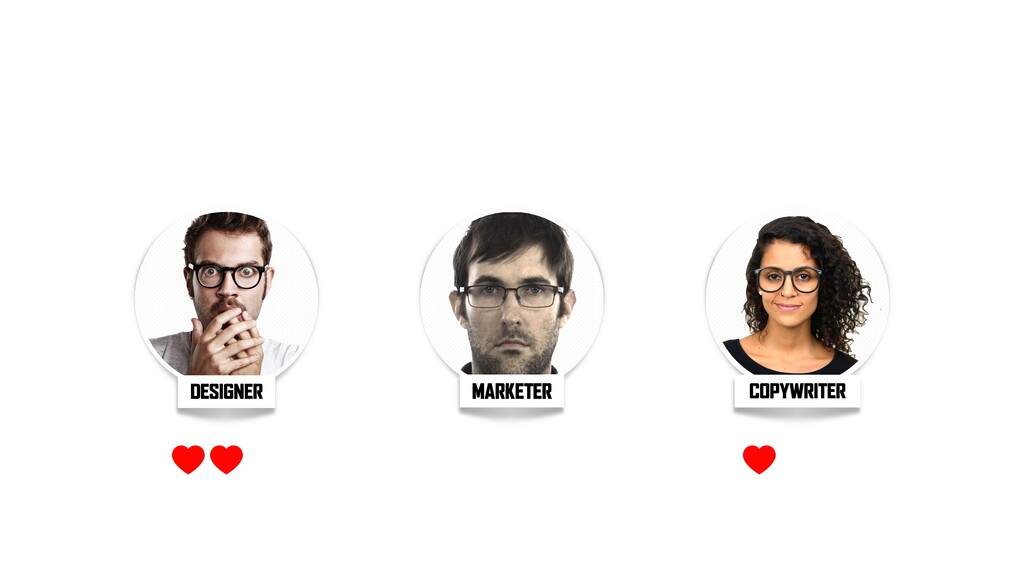
But there was a lot of inactivity at the start. All these frustrations and people not liking one another. So I went and did another survey, but this time I said, what's awesome about working with a designer, a marketer, or a copywriter? Marketers talking about designers.
Do you magic? I saw that that word came out a lot when people were anonymously talking about designers. Superpowers. Right? If designers only knew that someone feels that way about them. Designers talking back at marketers. Okay. Well, this will be interesting. They're enthusiastic and motivated.
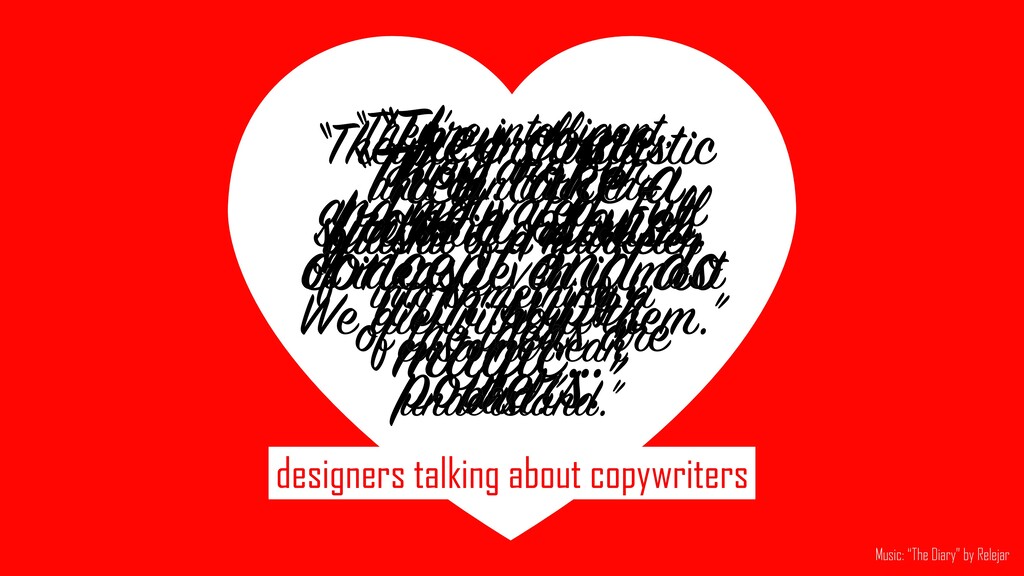
Yay. Business. Full of ideas. Our relationship is still needs a lot of fixing. Designers talking about copywriters. They're intelligent. And finally, they are a symbiotic organism. We die without them. Okay. That's pretty nice. Data driven design leads to empathy, which leads to results that actually matter.
Thank you very much for listening. That's the link to get all the stuff.