
What happens when you bring user-centred, data-driven product management techniques to bear on the creation and iteration of ‘imagination products’ such as stories for children? In turn, what can product people learn from the imaginative techniques used by story tellers? Why is it that only a water princess can defeat the pasta monster? Nick will use his experience creating bestselling children’s books at Lost My Name to explore these questions and more.
← All talks 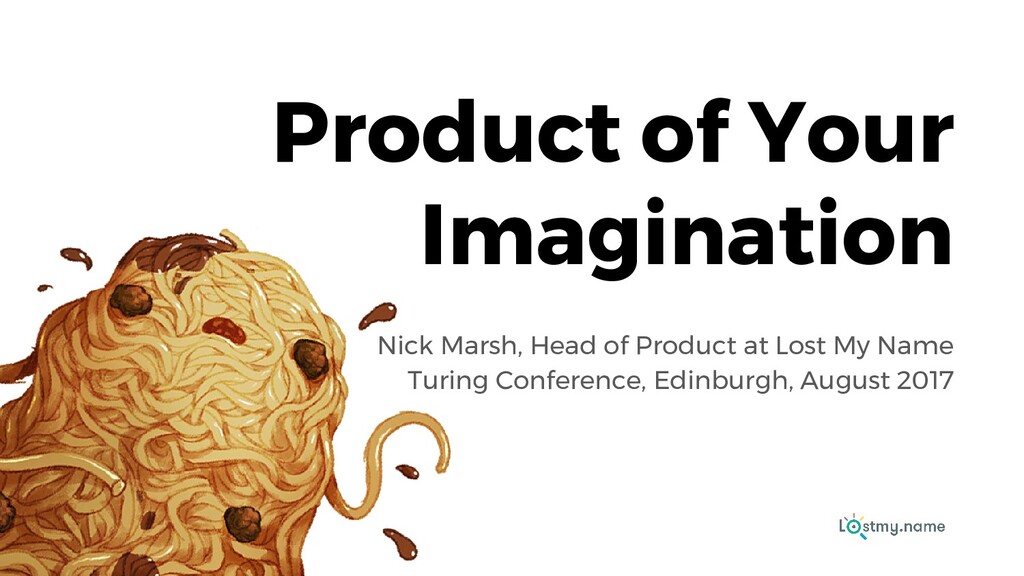
Build Product Turing Fest 2017
Product of Your Imagination
Auto-generated transcript - may contain errors. Tap a timestamp to jump the video.
Thanks very much. So, very honored to be here and given the chance to talk a little bit about the journey that I've been on recently with my colleagues. Lost my name over the past few years. What I'm going to talk about today is to sort of explore some of the connections that we've built in our company between the kind of the worlds of customer centric product management, which we've heard a lot about today already, and I'm sure many of you here are very familiar with, and with some of these more traditional creator centric,
imaginative techniques that are used in the publishing industry and in the entertainment industry more generally. So, in this talk, what I'm going do is tell you a little bit about the picture books that we make at Lost My Name and how they work, because it's important to explain them so you understand these sort of theories I'm developing.
Then I'm going to outline, my theory that I've come up with basically as to what an imagination product is and, what they do for our customers. Then I'm going to give you some examples of how we approach the design and optimization of these products I lost my name.
And finally, going end with a few thoughts on what these ideas mean for anyone that works making products and maybe a little mission for everybody now that you know a bit more about Imagination products. Before then, if you could just indulge me for a minute, I just want to share a little bit of news about our company, Lost My Name.
Last week, we launched the result of a really big decision that we made earlier in the year to rename the company. We'd outgrown the name, which is associated with our flagship product, which is a book a personalized book, which is also called Lost My Name.
And in this sort of delightfully meta corporate moment, we had to find a new name for our company. So our new name is Wanderbly. It's an imagined word which we've sort of come up with to invoke feelings of wonder, belief, and the notion that imaginative things often come with unexpected endings.
And, so, I'm going talk about the company's Wanderly from now on, rather than lost one in. So, little intro to Wanderly. We're a full stack publishing company, so that means that we do all aspects of publishing. We develop the products that's my team.
But we also sell the products direct to customers, through a website that we also build ourselves, very custom, website. We do all of our own marketing, performance marketing, all other kinds of traditional paid marketing, well as all of our own kind of content marketing, PR, that kind of stuff.
We make the products. We do outsource that to photo book creators, but we do take responsibility for manufacturing and shipping, and we do the customer service as well. So we've got this whole kind of stack, essentially, of getting a book to a customer in one company.
We have some interesting investors from across the world, companies like Google Ventures, and more recently Ravensburger, a very old German company that makes puzzles and other products for kids. It's about one hundred people working in London. Over the past few years, we've sold nearly three million books.
We'll break that number definitely this year at Christmas. And the flagship product, Lost My Name, is very, very popular. It's been a best seller in the United States, in the UK, in Australia, in Germany, in most of the markets in which we've launched the product.
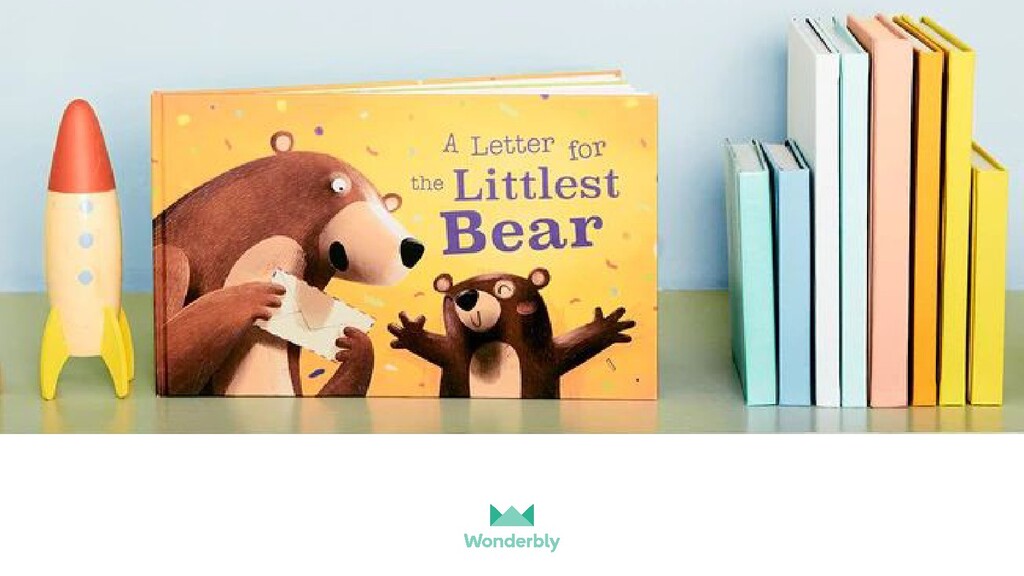
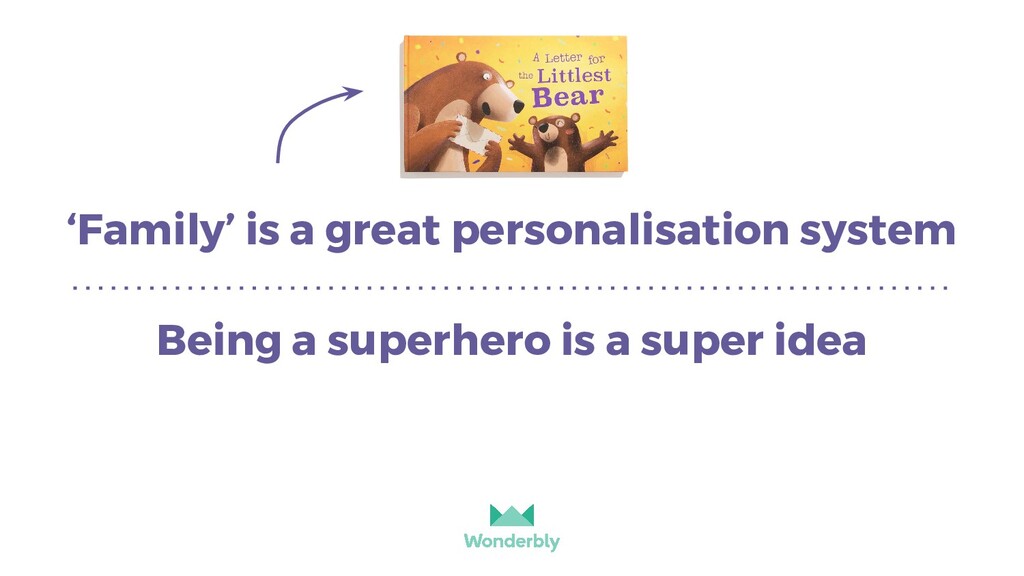
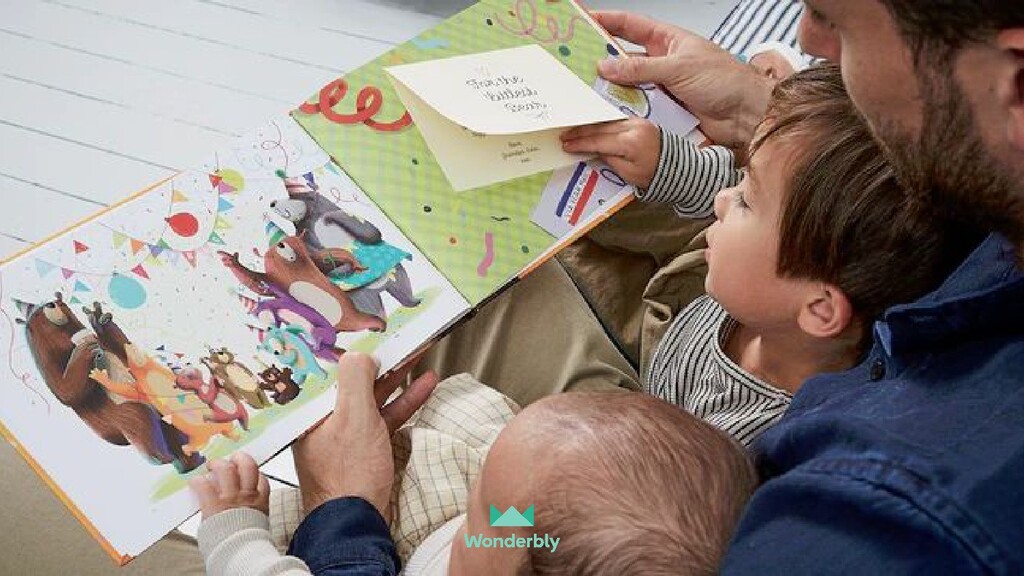
So, these are the stories that we publish. They're all personalized books, and we like to think they're the greatest personalized books in the world. And I'm very, pleased to announce that, this week, we're adding another title, to our range. It's called A Letter for the Littlest Bear.
At the moment, we're doing some internal testing on it this week, ordering samples and so on. We'll be telling customers about it next week. It's the most sophisticated, personalized book on the planet, and the cutest. And it enables you to write a letter to the newest member of your family from your whole family.
And just as every family in the world is different, every bear family in the littlest bear is totally customizable. You choose how many bears, which bears, in what order, what they're called, will assign gender pronouns automatically for you and so on. It's super, super customizable.
I can't wait to see all the different kinds of families that people create as bears over the coming years. So, I'm going talk about the products we make. I just want make sure everyone understands what these are. They're real, physical books. I've got some books down there if you'd like to see some later.
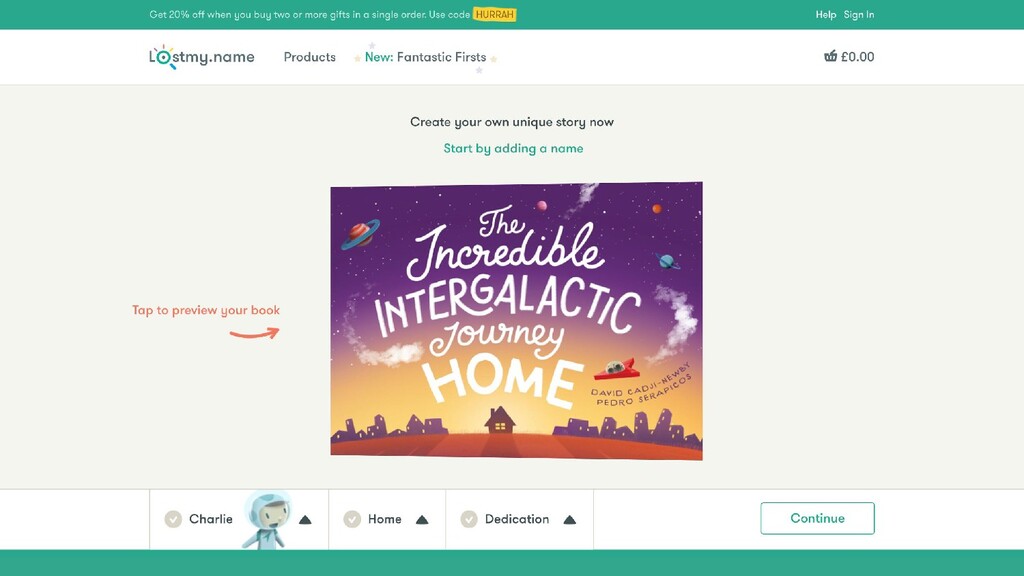
But all the books exist as digital products, initially. So if you go to wanderly dot com, you can browse them all. When you want to make one, you add in correct personal information, customize them, so on. You can preview the book and read it on the website.
And when you're ready to check out, you check out like a normal e commerce site. And then in three to five days, depending on where you are, you'll receive a super high quality printed book in a post to give as a gift or read to a child in your life.
So, we think these books are much more than just books. And in fact, we've got this sort of very big idea behind them all and behind the company more generally, which really is our sort of company mission as well as the vision for the products.
The books exist as vehicles to enable adults, moms and dads and granddies and grandpas, aunts, uncles, anyone that loves a child, to fill a child full of boundless self belief. And we spent a lot of time working on those specific words. It's a big statement, a big claim, so I'm going explain a little bit about how they work and why I really do believe that that is what they do.
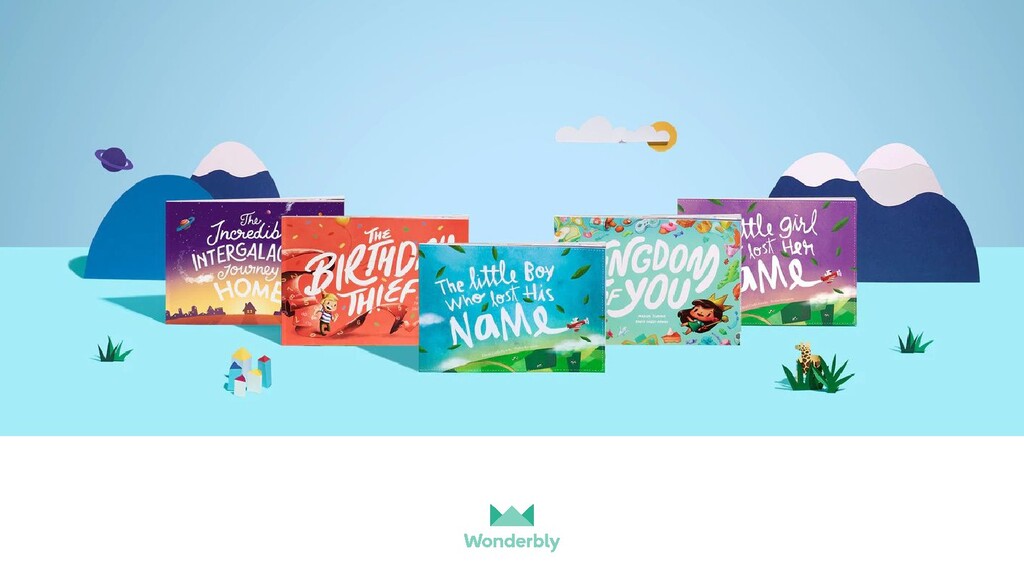
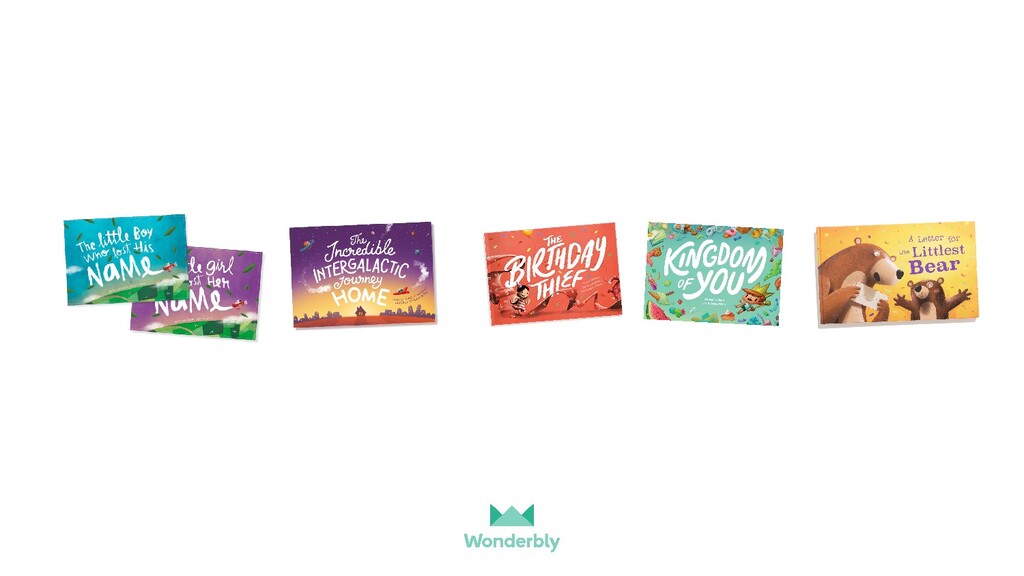
This is the core book range we have today. There's five titles, there's a couple more that are coming out this year as well, I'm really excited about. So, Lost My Name is our flagship product. It's a story about a little boy or girl who wakes up in the morning, they've forgotten their name, and they go on an adventure to discover it.
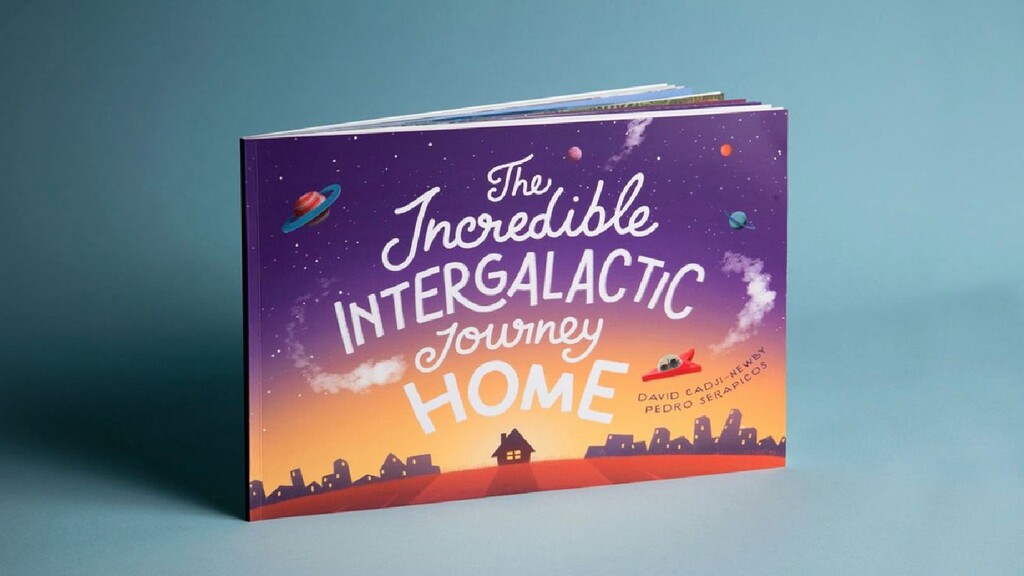
Along the way, meet different characters, and by the end of the story, they've found their name. Every story is different based on the letter of your name. Journey Home is a story about a child who gets lost in space, has to find their way home.
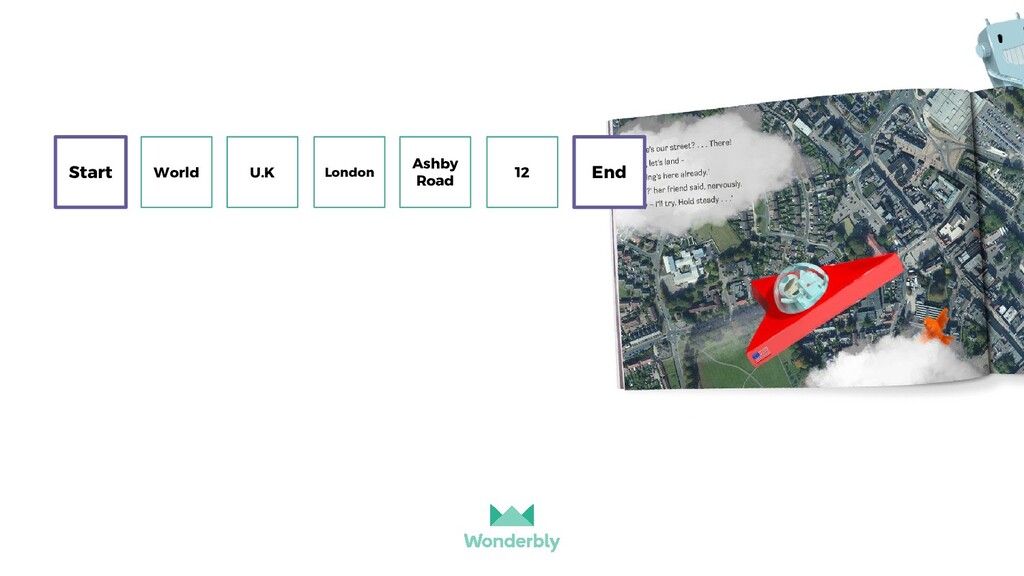
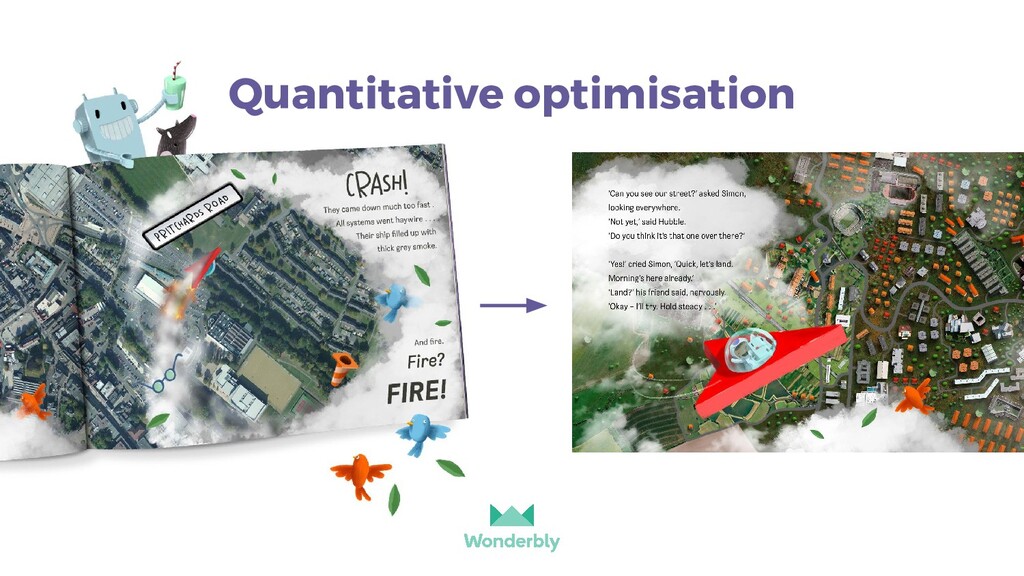
It sort of concludes with a climax scene where you actually have a satellite map of your actual house in the book, and you eventually find your way home. The birthday thief, the child has their birthday stolen, and they go off in an adventure to recover it.
Again, it uses the birthday to create a unique story. In Kingdom of You, a child is given some, wishes by a genie of the unwashed socks that they find in their bedroom, and they wish for, the whole world to be full of the things that are their favorite things, and calamity ensues.
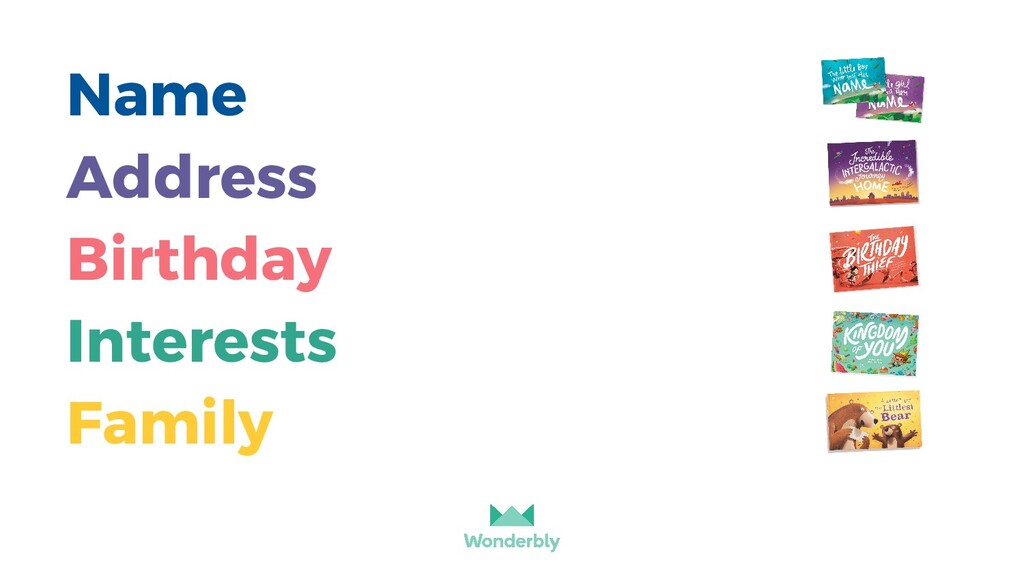
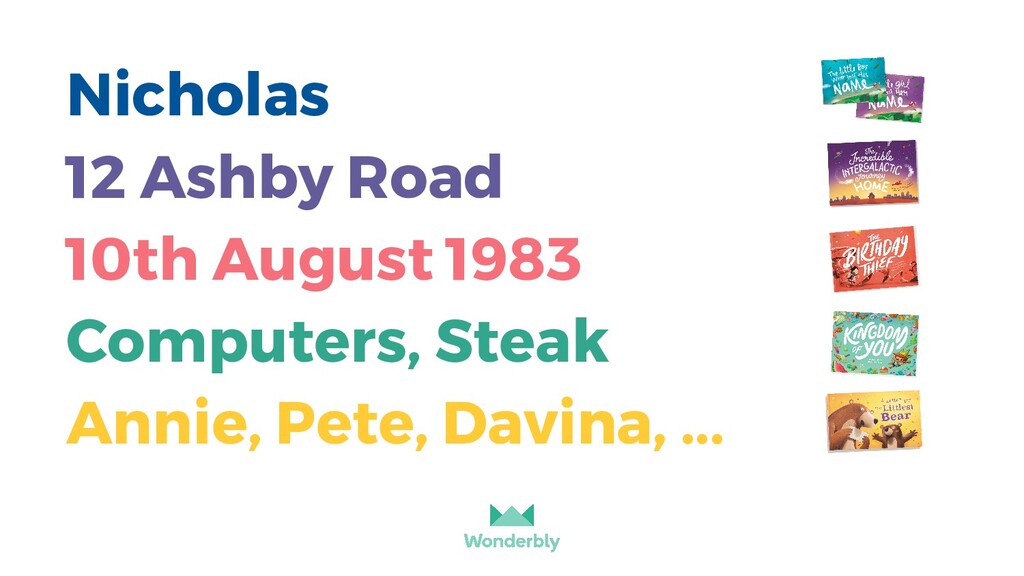
And I've mentioned Little Espeire as well, which is based around your family. So each of these books uses a specific piece of personal data to construct the story. And I've mentioned before, so I've got the name, the address, the birthday, interests, family. So this would be the personal data for me.
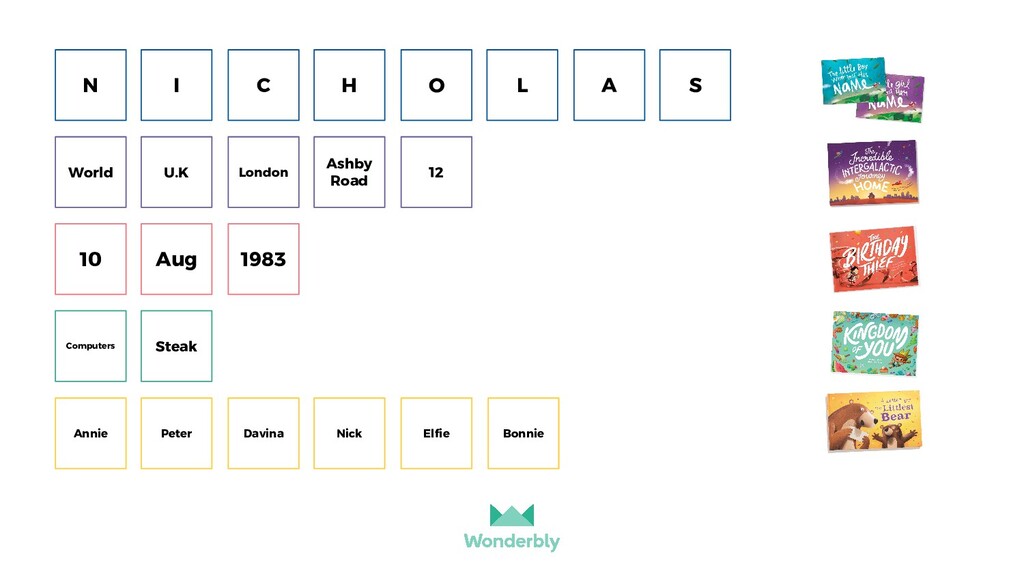
Some examples are my name, if I live, my birthday, my favorite thing, my favorite food, some people that are in my family. So what we do is we decompose the data into components and then we use these components to build out the beats of a story.
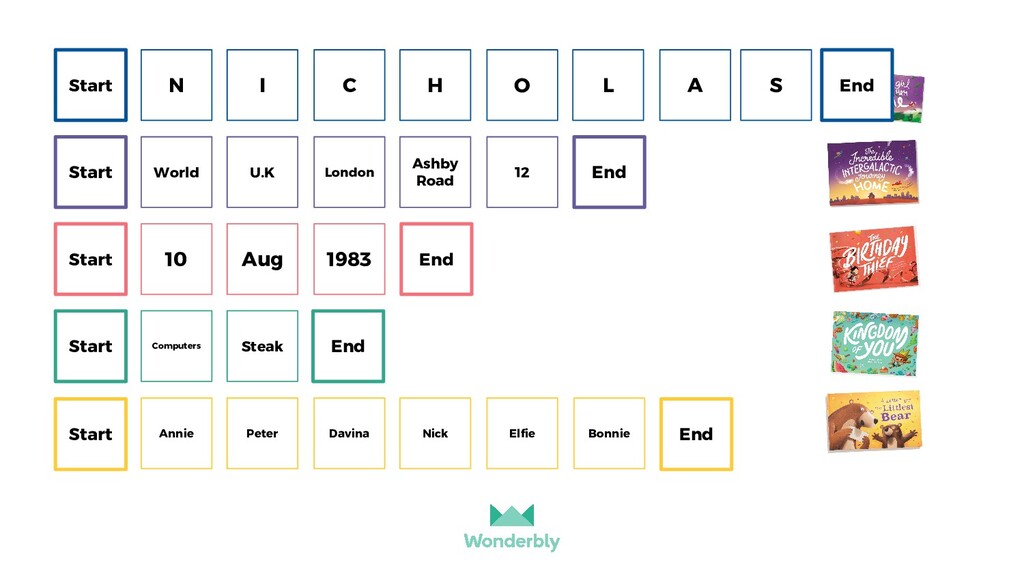
And this essentially is the foundation of all of our products, really. We put a beginning and an end on, because, obviously, all stories need to have a beginning and an end. And then we use this as the beginning for our creators. So, then we start to weave the kind of classic story elements that you'll find in more traditional story development work and themes around this personalized content.
Generally, our stories are sort of in this frame of what you would call a dude with a problem story. They're stories where there's a protagonist who has a problem that needs to be fixed, and they're very, very common for preschool books. We do have some other forms as well that we're working on.
So this is the journey home. And in this story, as I said, a child they don't want go to bed, they go off into space, they get lost in space because of a calamity with their satnav, where their robot sidekick spills lemonade on the satnav, and they have to find their way home.
And the only way they can do that is by asking different people along the way to help them out, and in return they help them out as well. Eventually, they find their way home. And it gets more and more personalized as you get closer to home, as said, sort of climaxing with this satellite map.
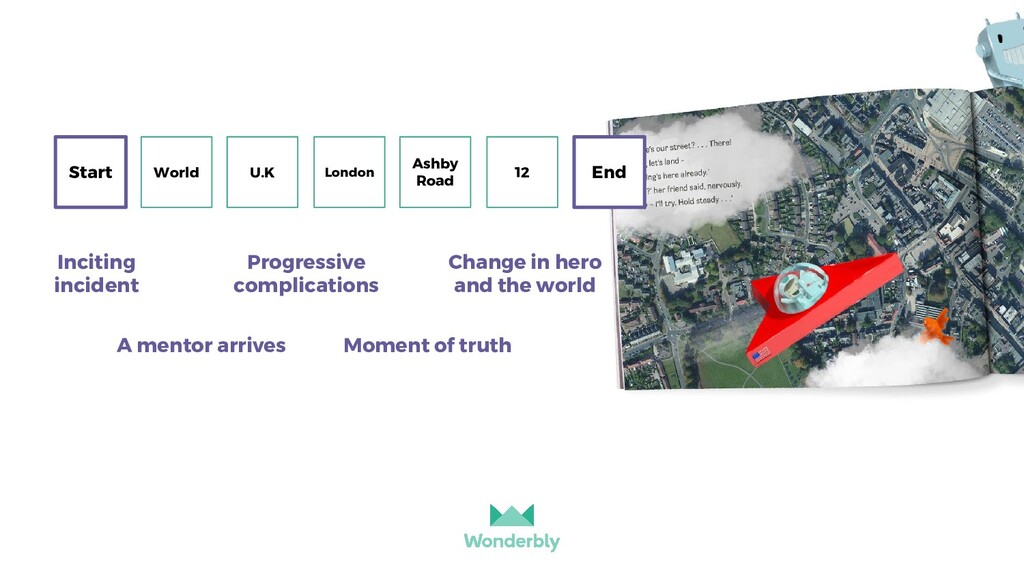
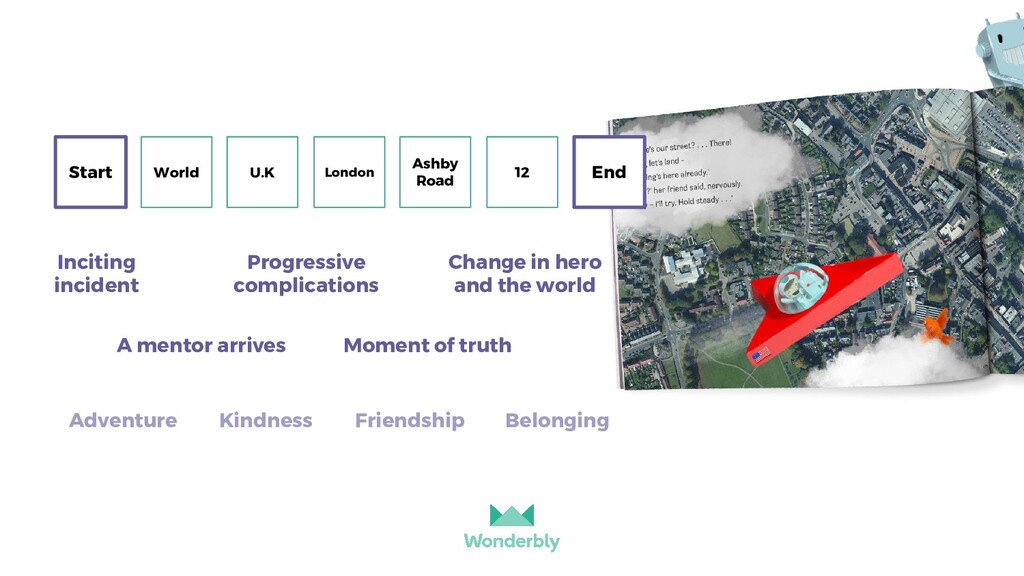
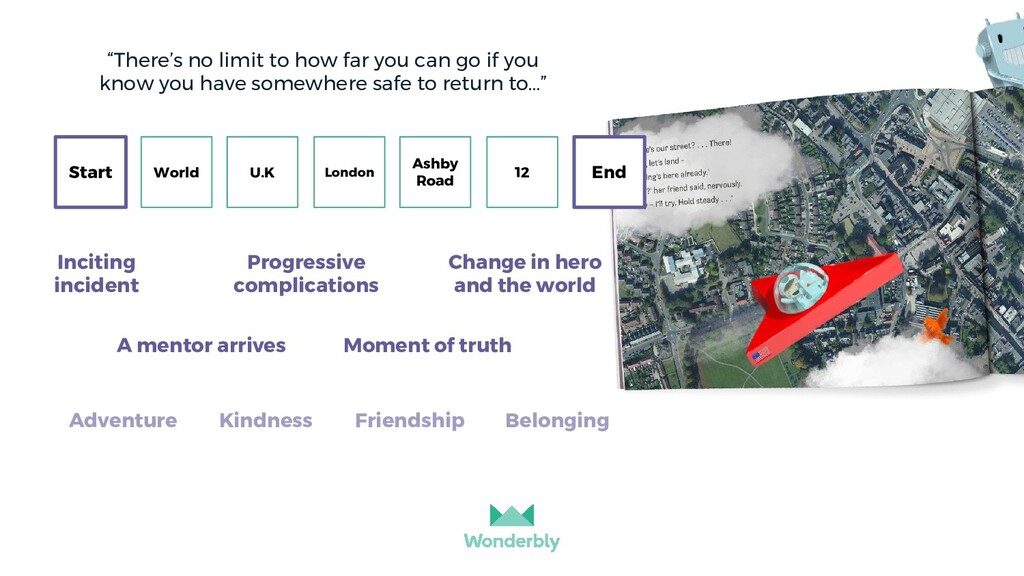
So, we sort of, you know, I think do many of the things that you'll find in other entertainment companies around storytelling. So, in the journey home, there's an inciting incident, the lemonade. There's a mentor that arrives, an alien zookeeper. There's progressive complications as the story gets more and more complicated as you go through.
There's a moment of truth, which actually is not really to do with home at all. It has actually to do with friendship and the way in which the stupid robot sidekick turns out to be the savior at the end when the spaceship's on fire.
And in the end, we get a change in the hero and the world, which is that the child realizes that, you know, wherever they go, they've always got somewhere safe to come back to. And we have these themes that we kind of weave around it.
And as I mentioned, there's a kind of big idea in terms of the proposition of the story. There's no limit to how far you can go if you know you have somewhere safe to return to, which is like the idea behind the book.
So, the interesting and valuable thing that's happening with our stories that's different to other conventional children's picture books is to do with this interface between reality and fantasy. And what we're doing is we're pushing elements of reality into the fantasy of the story.
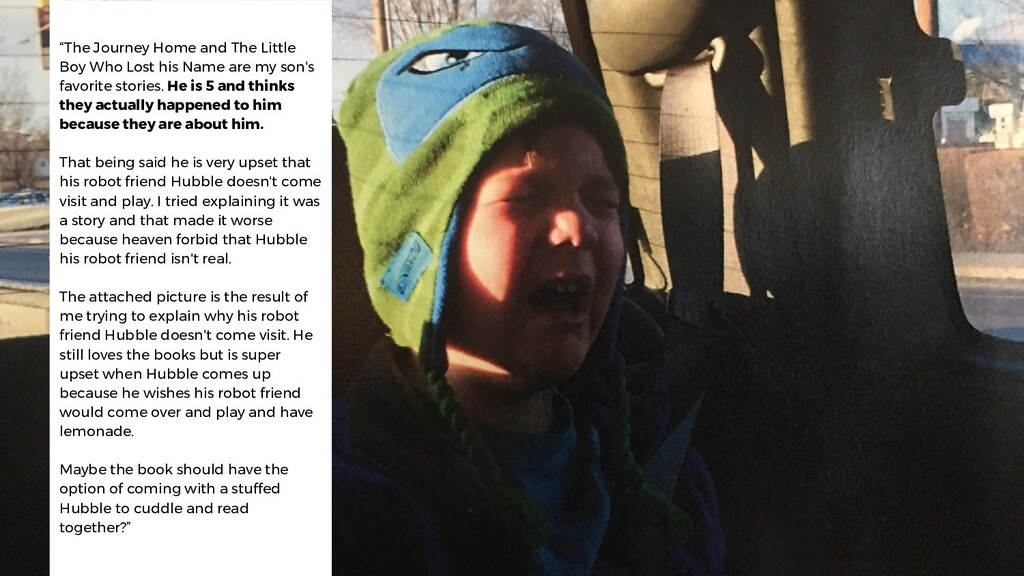
So it's your name, it's your birthday, it's your address, and so on. And it has a big impact. Here's a quote from a customer, and then a photo that they sent into us saying, Journey Home in Little Boy Last Name, my son's favorite story, he's five and thinks they actually happened to him because they're about him.
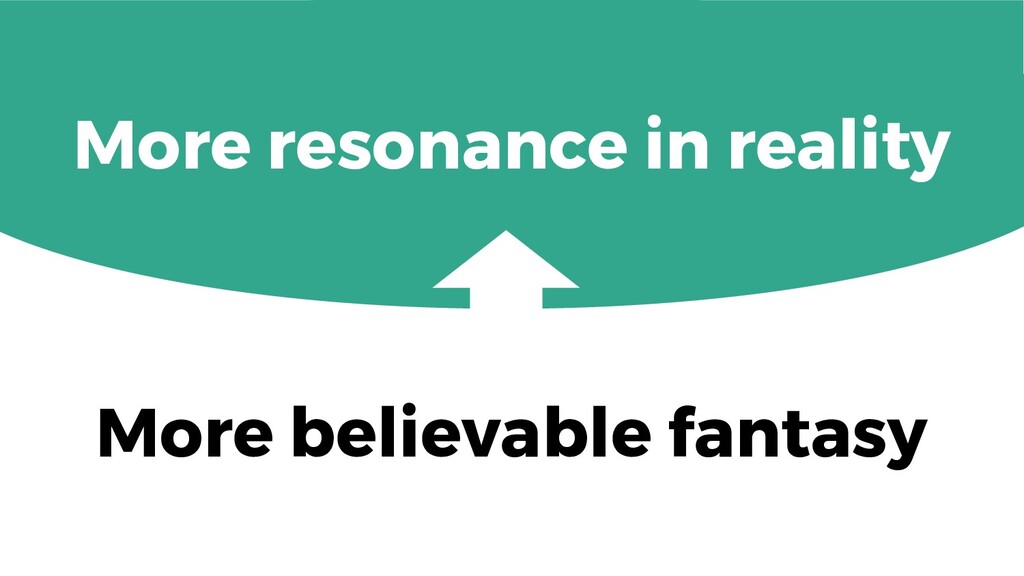
And this is him being very sad because he wanted Hubble, his robot friend, I mentioned, spills the lemonade to come and play, but he couldn't come. We did end up sending him a postcard from Hubble. But, you know, really emotional impact. And what's happening is because the reality is intruding into the fantasy in these surprising and subtle ways for young children in particular, he's making the fantasy more believable.
And so all of those themes I mentioned around, you know, courage and kindness and adventure and so on become more believable. And so the process kind of reverses itself when a story is over. And because of this, the fantasy is more believable. It had more elements of undeniable reality.
It sort of increases the chances of the ideas resonating in reality later on, and thus increasing the chances of the child having this self belief and belief that they could do something as big as go on a space adventure, or be as helpful and kind and so on as they are in the story.
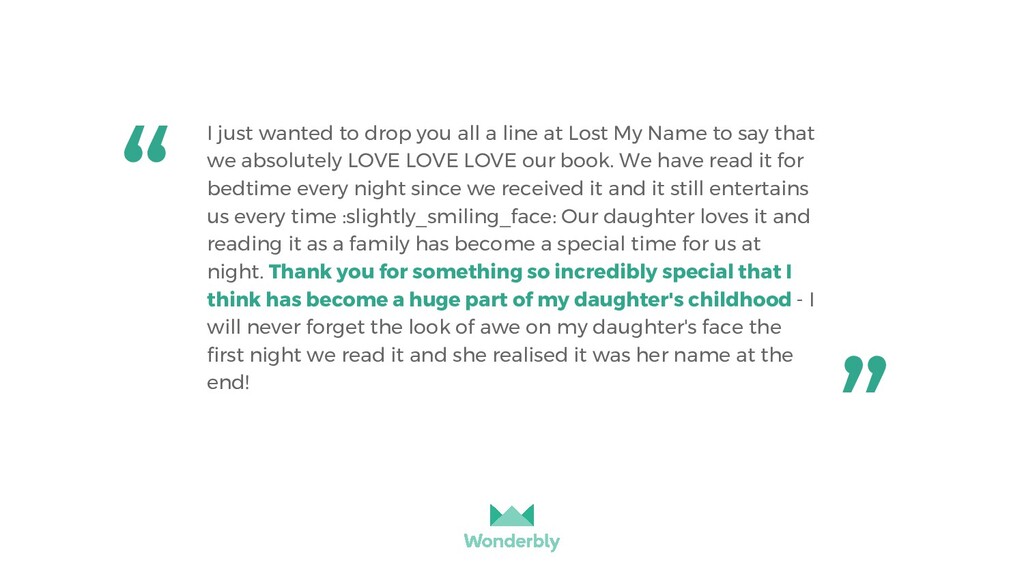
It seems to be working a bit. Here's a customer email we got. It was actually a few months ago we got this, but, I've picked this one out and used it in talks before, just because it's so profound. Thank you for something so incredibly special that I think has become a huge part of my daughter's childhood.
I mean, that's great. So, these products, the way I see them is as imagination products. And I thought it would interesting to talk a little bit about how we go about designing and managing them. I want to do a disclaimer. I don't think I'm going reveal any kind of astounding new processes in this talk around product management and product design.
The main thing that I hope you as a product manager or designer or someone working in that part of the business can take away from the presentations, not really the new techniques, but it's sort of the creative confidence that the customer centric techniques that you're using today can be used to create lots of different kinds of things, even things that exist purely in the realm of the imagination.
So, what do mean by an imagination product? Well, one way to think of it is that imagination products are just literally products that are the result of very imaginative processes. You know, they're literally made of imagination. Our products are very imaginative worlds, filled with imaginative characters and stories.
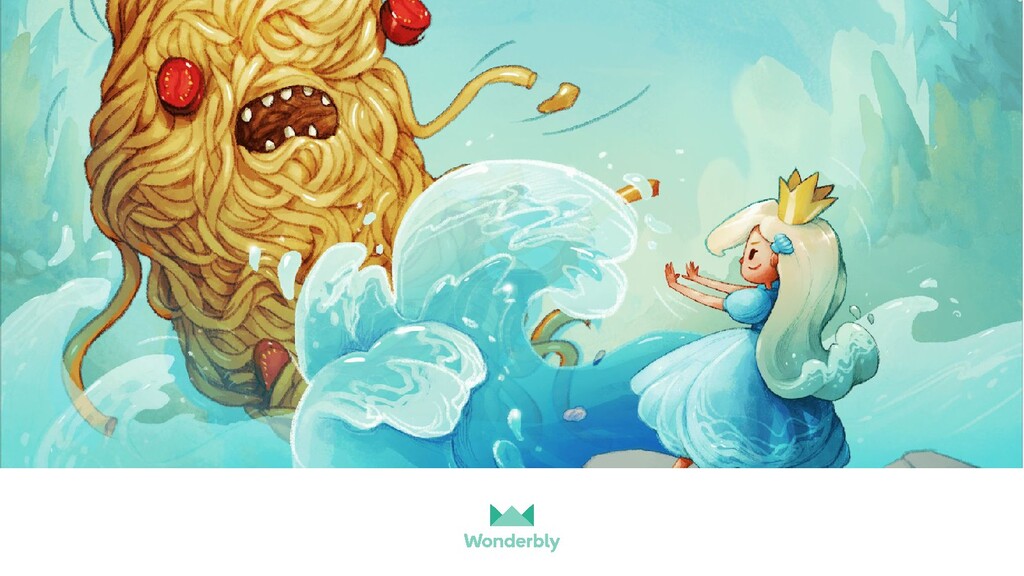
They're brought to life with imaginative illustrations, imaginative writing, imaginative uses of technology. And as a result, we use a lot of the traditional creative arts to bring them to life. This is in the sort of line of my talk about the pasta monster and the princess, but in this scene you can see a water princess defeating a pasta monster.
For example, why? Well, because water is the enemy of all glutinous foods. Simple. But another way to look at it is that imagination products are literally kind of imagination as a product. You know, when a customer buys an imagination product, what they're buying is imagination.
They're buying it from us. They're borrowing and they're sort of renting our team's imagination. You know, all of those artists and writers and so on that I just mentioned. And so, borrowing that imagination, in my opinion, in the sort of language of product management, is the customer job to be done?
The job to be done is, I need some imagination, and we're renting it to you. So what job is being done for the customer of an imagination product? You know, with our products, think it's becoming clearer to me as we develop them more and so on, speak to customers more about it.
You know, the customer job to be done is to help an adult to tell a child something very memorable and impactful, to inspire the self belief that I mentioned earlier. We're talking about some pretty powerful, you know, important stuff here, especially with young children in early stages of their development.
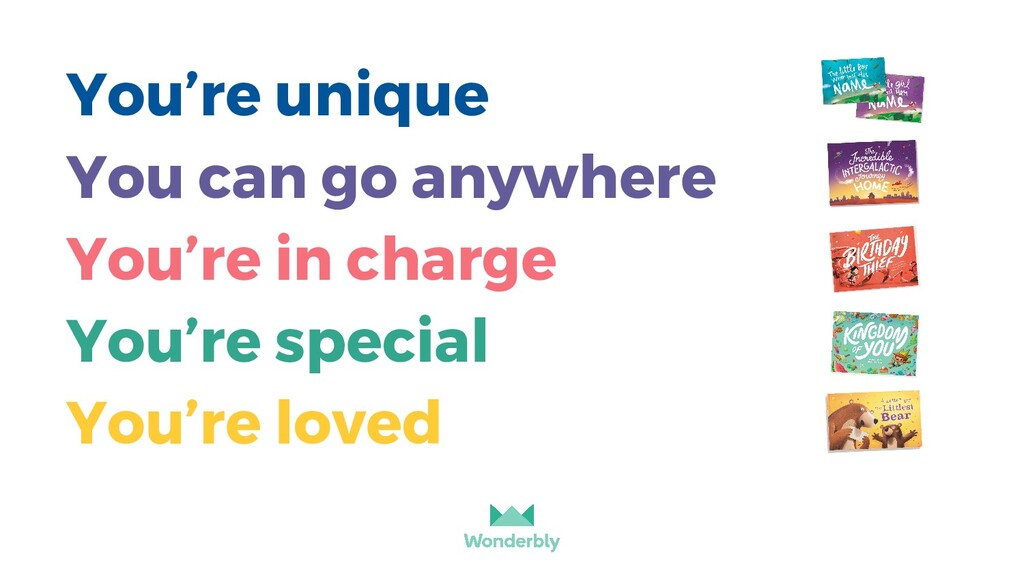
You know, you're unique. You're an individual. You can do anything you want. You're in control of the things that you do. You're special. You know, that's a really nice thing to tell the child. And Littlest Bears sort of is for younger children, it's really just about saying, You're loved.
Your family loves you. Making sure that a child really understands that and believes it is a really important foundation for them growing into an older person. So, the value exchange that you get with an imagination product happens in other imaginative media, of course.
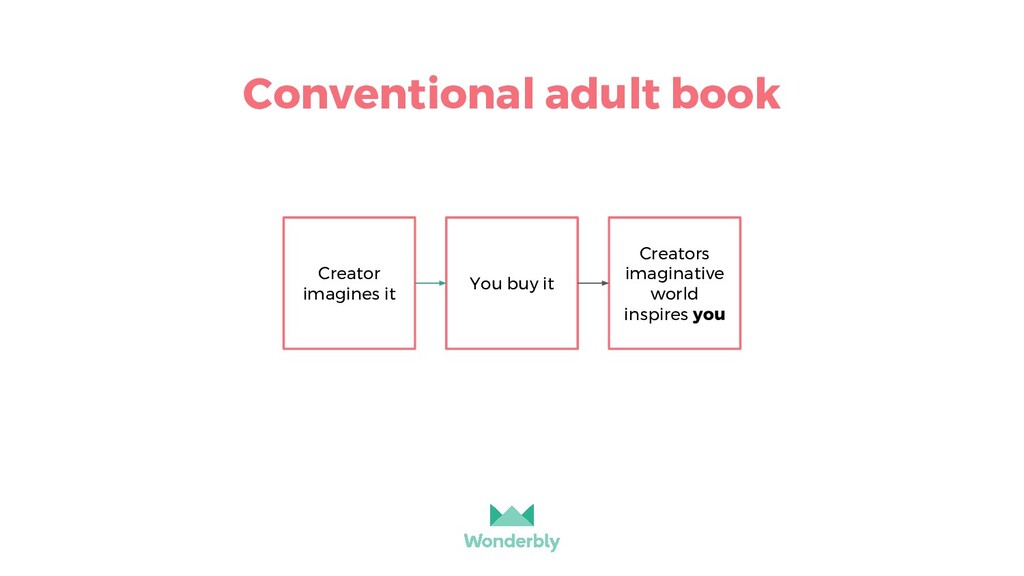
When you read an adult fiction book or you watch a movie or whatever, you project yourself into the world that another person has imagined. You know, you go on the case to solve the mystery with Sherlock Holmes. You know, you're there to you destroy the ring with Frodo Baggins.
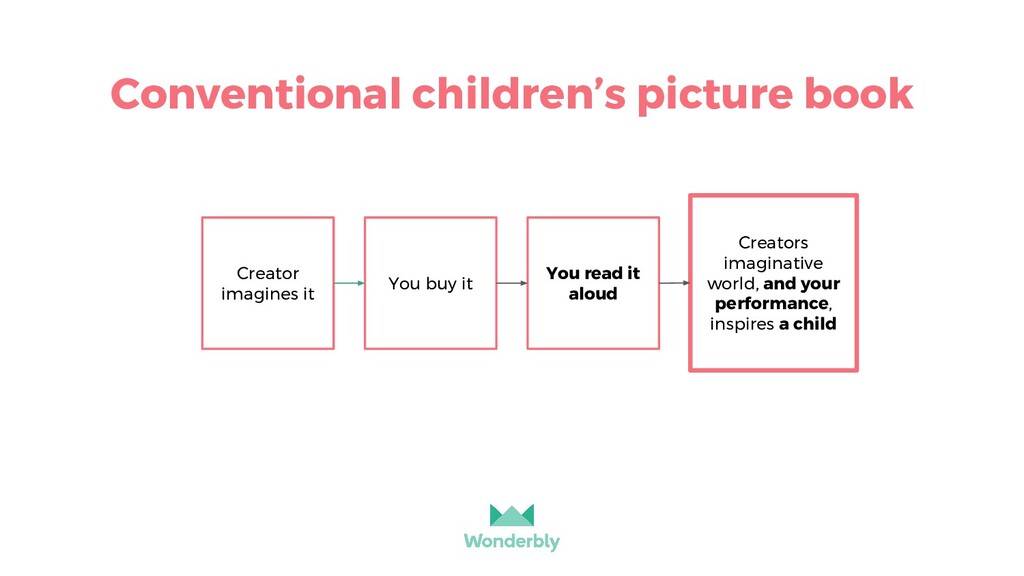
You become a wizard with Harry Potter. Inspires you in all kinds of ways. With a children's picture book, which is the medium that we're really, really focused on, it's different because we've got this more complex even though it seems really simple and so every day, there's a much more complex media delivery system, if you like, at play.
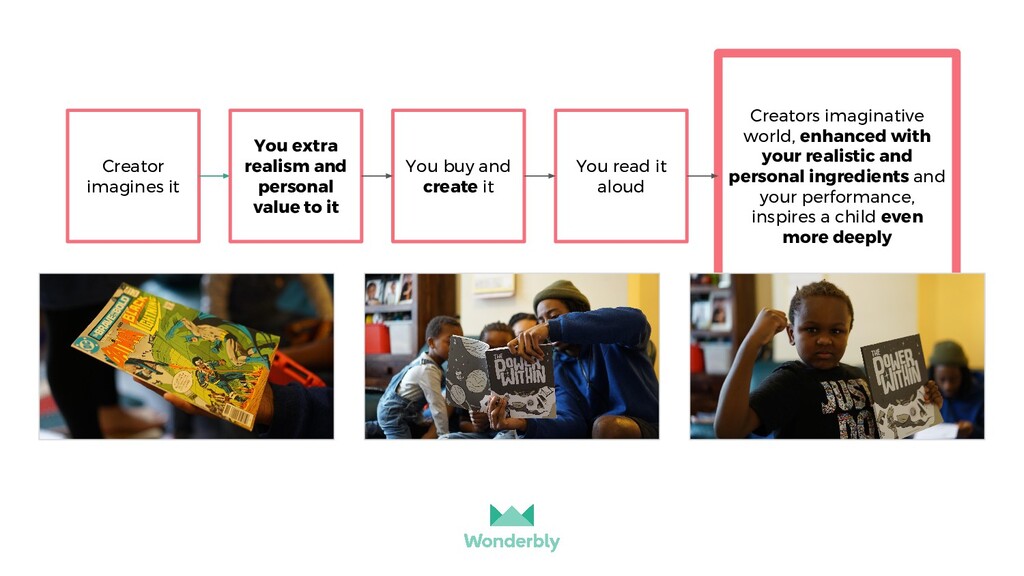
What happens is when you read a story aloud to a child, just like the adult fiction book, the imaginative world inspires the child. But the vital extra element is that you, who is the reader, also kind of like the actor, director, special effects person, and so on, you have a lot of control over how the story is delivered.
So your performance as an adult has as much impact on the level of inspiration delivered to the child as the content. And any of you that have read books to children will know there's so much more you can add beyond the story as well.
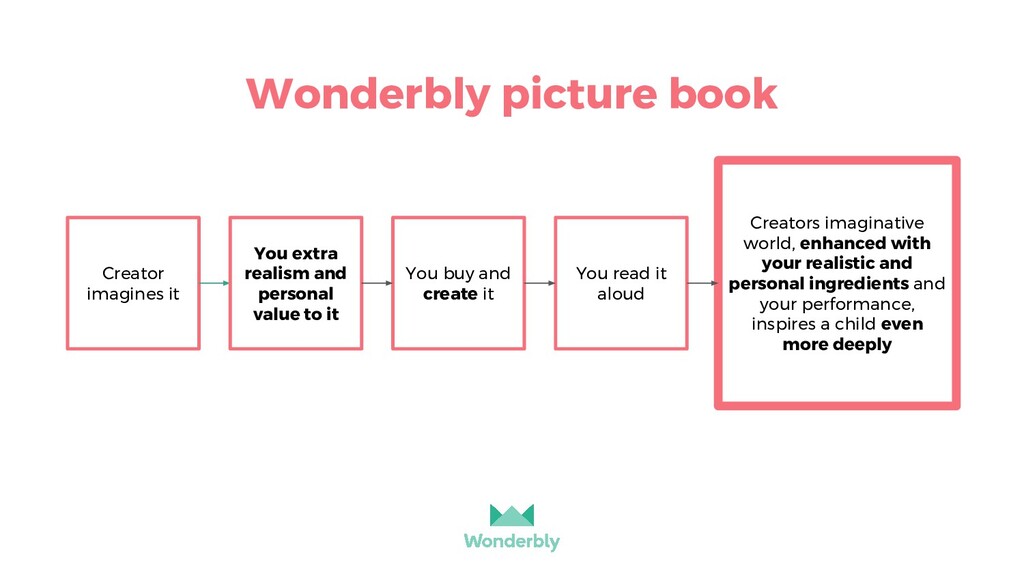
So with a wonderfully picture book, which is also full of this personalized content that's designed to muddy that fantasy reality divide and get adults more engaged and involved, the adult makes choices up front about what content to include. They're personally involved in the physical creation of the book, because they have to buy it themselves and make it, and there's this sense of agency of making.
And then, like any other children's picture book, they deliver the story, but then the story has all of that important sort of reality fantasy piece in the delivery of the story as well. So, you can see that there's some kind of really important differences here between our imagination products and the more traditional ones.
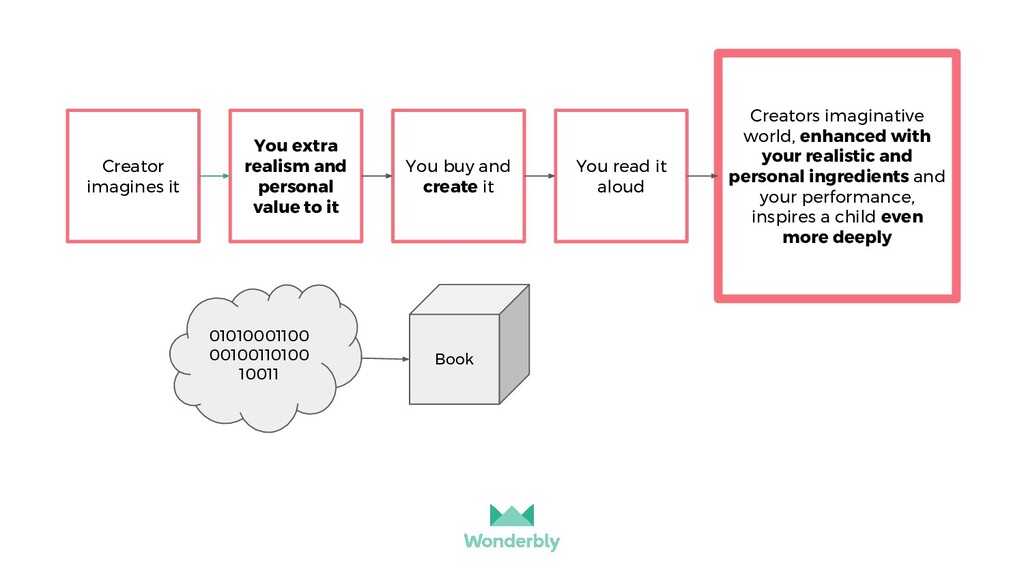
And those differences make the products uniquely suited to using the customer centric design and product management techniques that, you know, you're going be hearing about today from lots of other speakers. So, the big difference a huge difference for us from other publishers is that the product exists as software until it's made by the customer.
And so, because it's software, it means we can do many of the things that you've already heard about today. So, we can improve it constantly, as you would any digital product. We can change many different parts of it whenever we want, and that's also because with this full stack company, and from a legal perspective, we own everything, which is very different to a of other publishers.
So, change the content, we can change the user experience of creation, we can change the way we position it and talk about it, and this gives us a big advantage over traditional publishers in being able to be close to the customer and use those techniques.
But, secondly, and maybe more importantly, the customer is just really, really involved. You know, they're not just a consumer. They're co creator of the product, and they're co deliverer of the media. And so, we just have to find ways to work with the customer at all these different points in the journey.
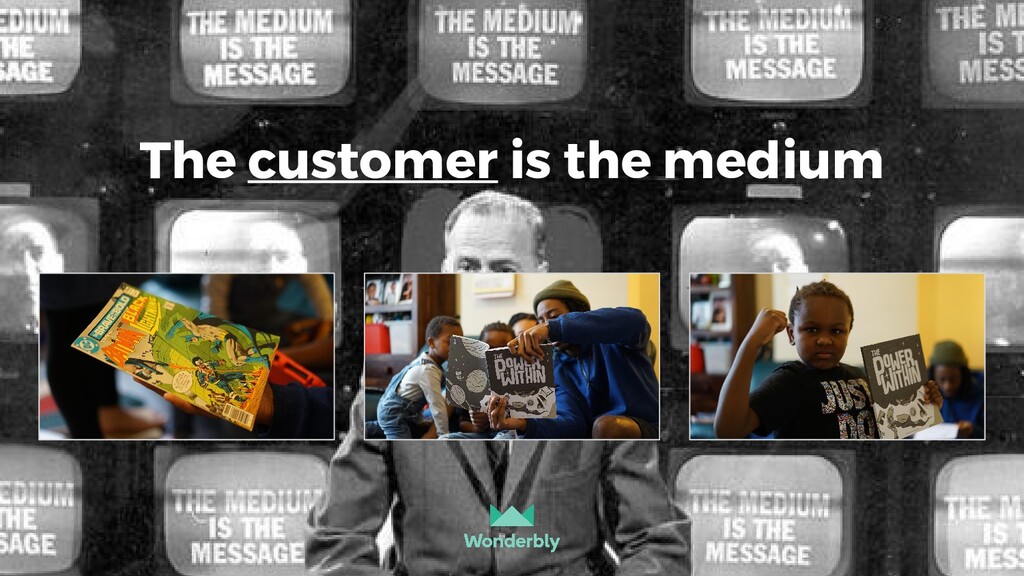
I think in this talk I sort of came to a realization that, you know, maybe you could go a little bit Marshall McLuhan on this and say that, like, with this media product, the customer is, in some ways, the medium. They're the thing that we're almost designing.
We're designing the sort of the way in which the customer delivers the content. And so, we're providing this kind of imaginative infrastructure that helps the customer deliver a message of boundless self belief that they have inside of them anyway, and they want to tell the children in their lives, and we're just helping them do that.
So, all of this software and customer centricity means not just that we can, because we've got software, but that we must design our imagination products quite differently to other parts of the entertainment industry. So now I'm tell you little about how we do it.
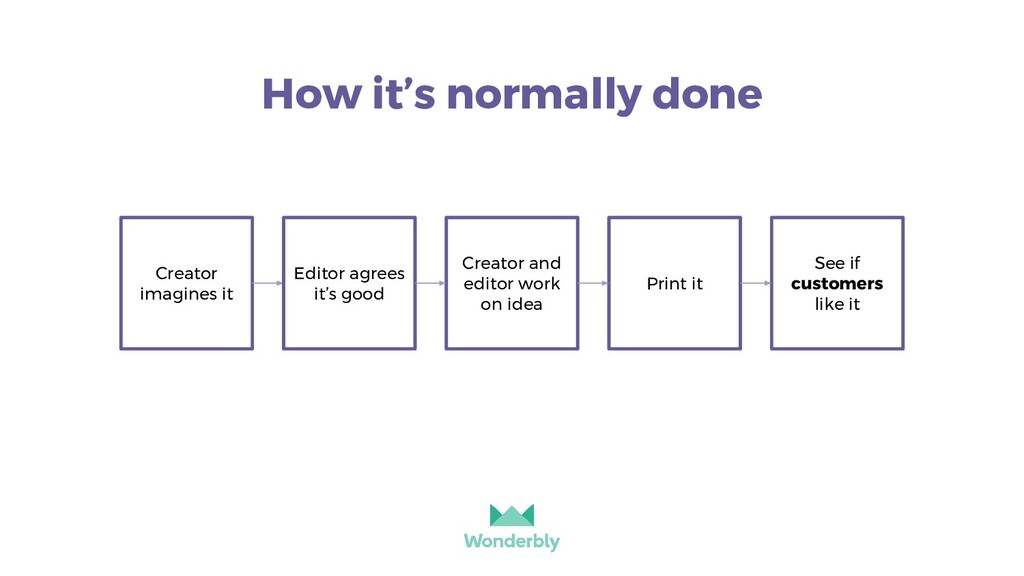
Hopefully there's some lessons and inspiration in there for you as well. First, I thought I'd sort of outline roughly and probably very unfairly how I think it's done in the publishing industry, generally today. Here's how it works. Creator has a great imaginative idea, or crap one.
The editor that they've met somehow agrees that it's good. The creator and the editor work on the idea, and that is normally a very productive creative relationship inside publishers, the feedback you get from editors and designers and other people in the business and so on.
When it's ready, then they print it, or they ship it or whatever, and then they see if customers like it. And the publishing industry has a sort of spray and pray approach, absolutely, especially to new talent. There's far too many children's books published every year to make the business that sustainable, and for new talent, it's very poorly paid and so on.
Obviously, celebrities and brand names, that's kind of different, but you don't really know how it's going to perform until you've done all this investment the product. So, we do things very differently, as you probably would imagine. We bring the customer into the process as early as possible.
And then, once we're live with the product, we use the vast amount of customer feedback that we get from all these different channels from the website, from our customer service teams, you know, obviously from structured research and so on as well, to improve the product and make it easier to understand, to create and enjoy for customers.
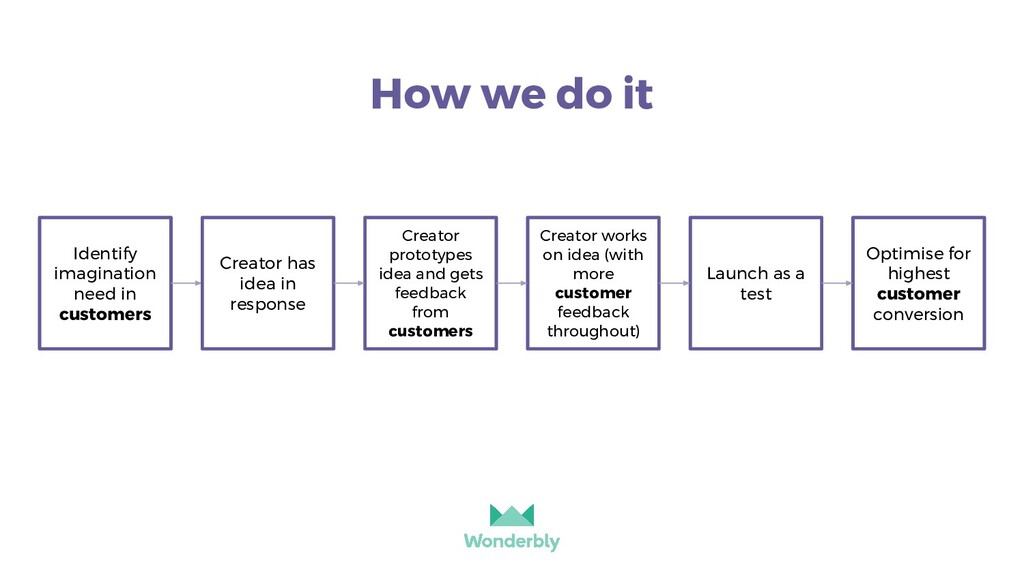
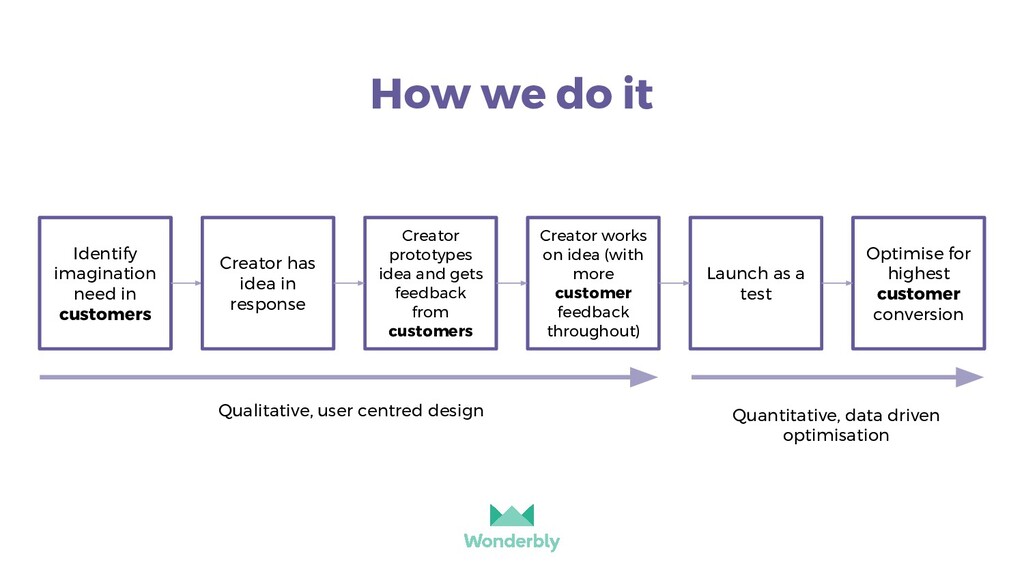
So our process looks a bit more like this, and I would say it's much more like a consumer product design process, really. So first, we try to start by identifying a kind of customer imagination need. You know, a need that you have as an adult to express something to a child, whether that's about love or about encouraging them to go in a certain direction in terms of their abilities or something like that.
So, for example, you know, I need help telling a new member a young child how much love I feel for them. You know, it's hard to say I love you to children, and you know, that's why books like Guess How Much I Love You sell so many, because they sort of have this job to be done, which is to express that emotion.
So then we have ideas in response to that internally. We've got a creative team and so on that develops those ideas. We prototype the idea and get feedback from customers as quickly as possible, making sample stories, going and reading them to children in homes and so on, bringing people into our studios to get them engaged in that.
Then we launch all of our products as software tests, you know, essentially, they're all launched as tests. And then we optimize on the presentation of the product, the content, and so on to raise conversion rates on the website and improve the experience for customers.
And we keep doing that until we see diminishing returns. So, basically, there's two parts to the process, and they should be really familiar, I think, to people working in product design and product management. We have sort of qualitative, user centered design techniques up front that we use to help to get to the core of the imaginative idea and get the idea as right as we can.
And then we have these sort of quantitative, data driven optimization techniques that we use later around improving presentation and appeal to different groups of customers. And I thought I'd just illustrate with a few examples for the last third of the talk. So, first, some examples of how we optimize the creative content to convert as many customers as possible once we've launched a product in some form.
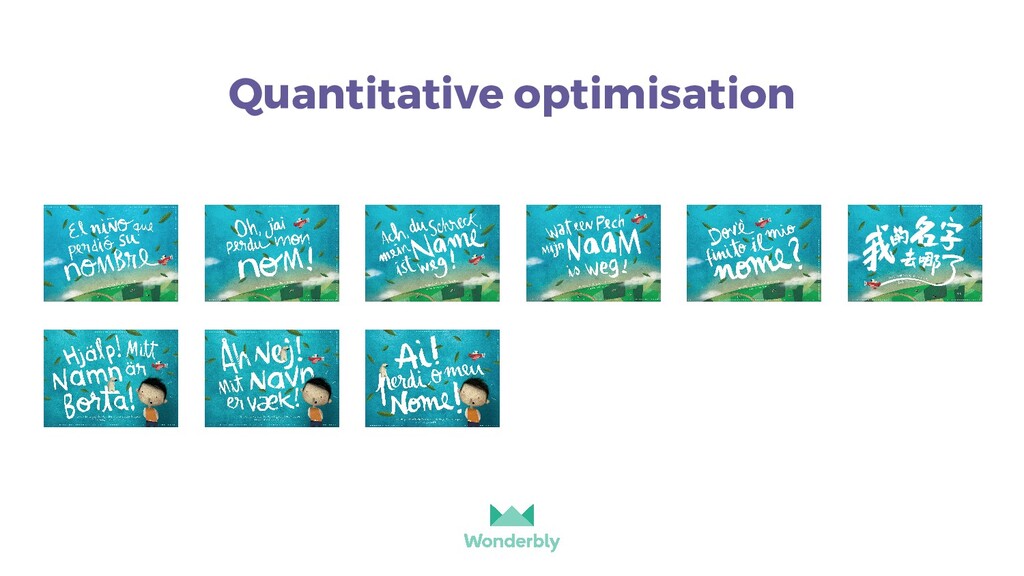
So, one very simple form of optimization it's actually probably our most successful commercial optimization is translating the products. For other publishers, this is a really complex process and it's just elaborate stuff to do with international co editions and so on. Loads of complexity, loads of legal complexity, takes ages.
But for us, it's basically it's just a software release, and it's not even that complicated. It's a software release. So, we've translated Lost My Name into twelve languages. The eagle eyed amongst you will spot some of these covers are different, and some of them have the boy on the front, and protagonist on the front.
And that's because those languages didn't perform as well in the tests as we wanted, in terms of the amount that we're selling. And so, we simply cycled them out of the product improvement process, and they haven't had the most recent software update. So, this product, which included this new land of lost my name covers and so on.
They still sit there, you can still buy them, they're on our back list. But, you know, the product is just a piece of software that's being optimized. And a huge optimization is to be able to read the book in the language that you speak.
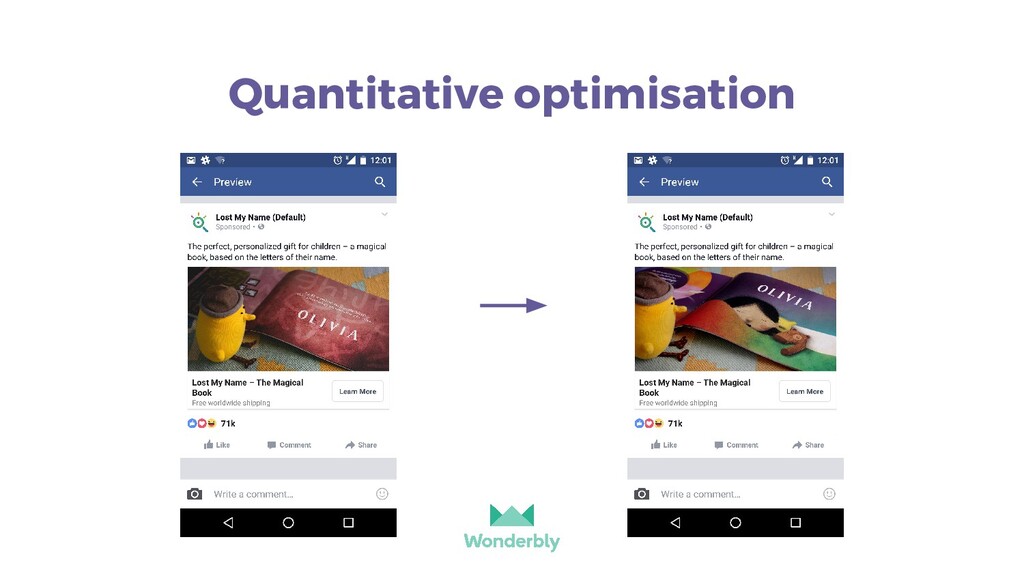
Another example, late last year we changed the last page of Lost My Name, which is the big climactic page, the page in which you realize all along, actually, the little boy or girl is you and the letters you've been collecting up make your name, to make it more colorful and to stand out.
And we did this not simply to improve the reading experience, because it was customers reported it as a little anticlimactic, but we really did it to actually improve the advertising experience. The photos of the last page of Lost My Name are our best performing ads on Facebook, and we spend millions, tens of millions on putting that picture in front of people all over the world.
And so, when we redesigned the page, we tested the designs through the ads first, rather than testing them through the product, instead of shipping the design and advertising it. So, by the time we shipped the design, we're confident that it had sort of higher appeal, higher recall, higher improved proposition understanding amongst new customers and so on.
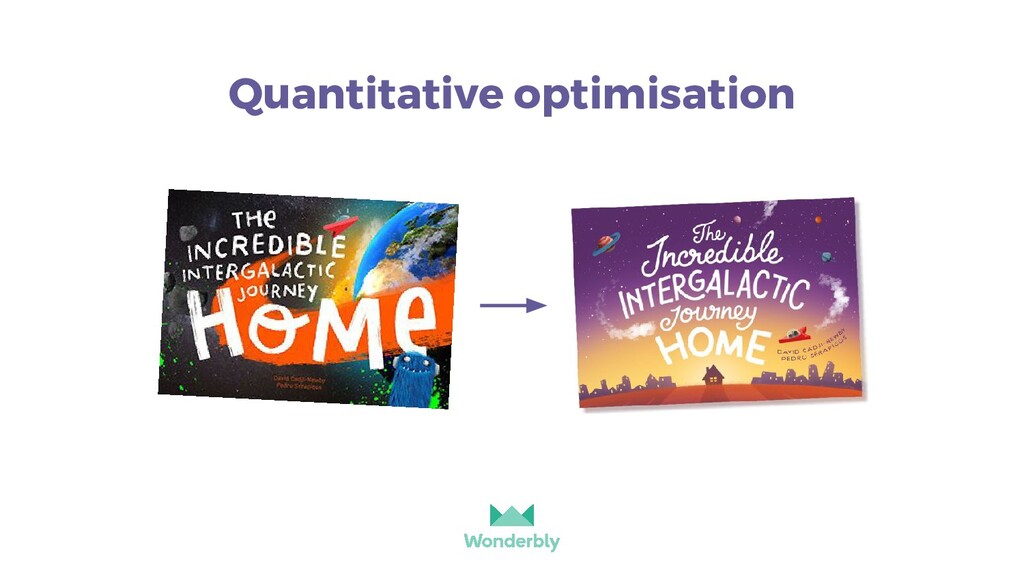
And then we changed the product. It's the kind of thing that I think only a business like ours could do. Another optimization vector for us is gender. When we released our second book, The Incredible Intergalactic Journey Home, there's this huge difference in the ratio of boys to girls featuring in the stories, which is bad.
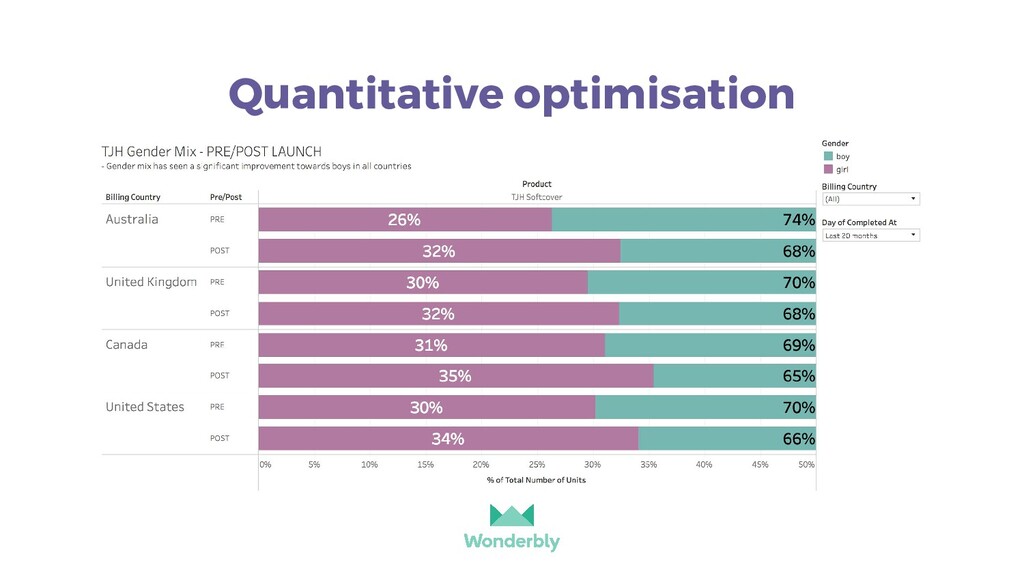
So there's a lot more boys than girls, because it means we're missing out on selling to a lot of girls. Lost my name sort of pretty universal fiftyfifty split in almost every country that we sell in. So we did a big upgrade to the content and the design in an effort to make the product more gender neutral.
You can see, you know, through this cover change, how we moved to sort of less harsh colors, tried to move the emphasis from space and to home, sort of feelings around home. Limited success, you know, customers still think the book is about space, and customers associate space with boy books.
We did increase the appeal and raise the number of girl books by about four absolute percentage points in most of the countries we sell in. But we still see this as a book that is bought mainly for boys. One of the biggest impacts, really, of this test was very expensive, actually, upgrading all this content was just to put a lot more effort up front into ensuring that the subject matter of the books has broad gender appeal, because we're really missing out on a lot of customers here.
Once we tackle the gender gap on the journey home, another example, we move to the next biggest blocker for customers. So, we survey customers all the time on the website with a survey we call Why No Buy? Which I really like. And don't know the address of the child, as always the biggest reported blocker for customers after price.
We also optimize price a lot as well. So, on average, had about seven percent of customers reported that not knowing the child's address was stopping them from buying the book. So we thought, you know, there's a nice little opportunity there. Let's raise that conversion rate by seven percent by allowing customers to create a book and buy it, which doesn't feature the full address by swapping out, you know, the flagship piece of content, the satellite map in particular, illustrated content.
So, if you want to buy the book right now, you can get this slightly more general content. It still has a child's name in it and so on, and the town, but you don't need to know the exact address. The results were absolutely unspectacular and completely useless.
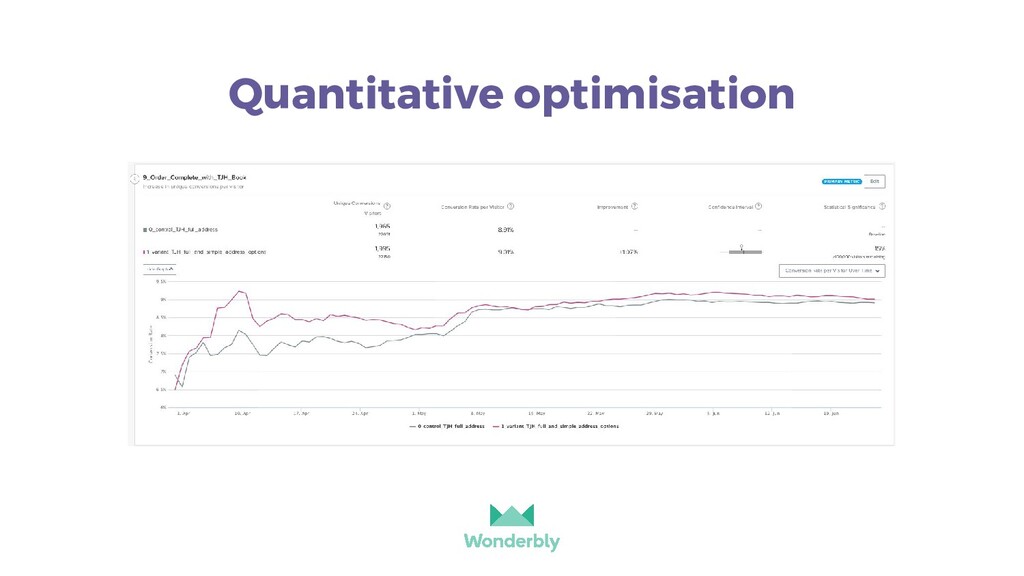
And it was really, again, another expensive, complex, you know, multi team project there to implement that feature. What we found was about seven percent of the books that were bought ended up featuring the less addressed content, but the overall conversion rate wasn't impacted at all.
This is an optimized chart for a test that ran for a really long time because we really just we're really rubbish at deciding what to do. An AB test comparing the two versions. So the hypothesis was that not knowing the address was blocking people buying on the day, but actually, it was only blocking them buying on the day.
Like, the product appeal was still there. And what would happen is that those seven percent who told us, I don't know the address, so stop me from buying today, they were still going away and buying the book. So, all that happened was we had seven percent of people convert slightly earlier than they would have converted otherwise.
And so I include this example because it shows in part the sort of limits of these kinds of approaches and how they, you know, very easily sort of top out within a local maximum. You know, this book is a book that is a lot about space, where you do really need to know the address, you know.
And, you know, without completely destroying the sort of original idea behind the book, it was going to be difficult for us to move on from that. So to deliver the kind of really big business impact from our products, we need to design entirely new propositions for our customers that deliver against even bigger and more important needs.
And this is where the qualitative and co creative process sort of comes in. So, like to end the talk by telling a little bit about how we came to design a letter for the littlest bear, and tell you a bit about a product we're releasing next year to illustrate how we use these techniques.
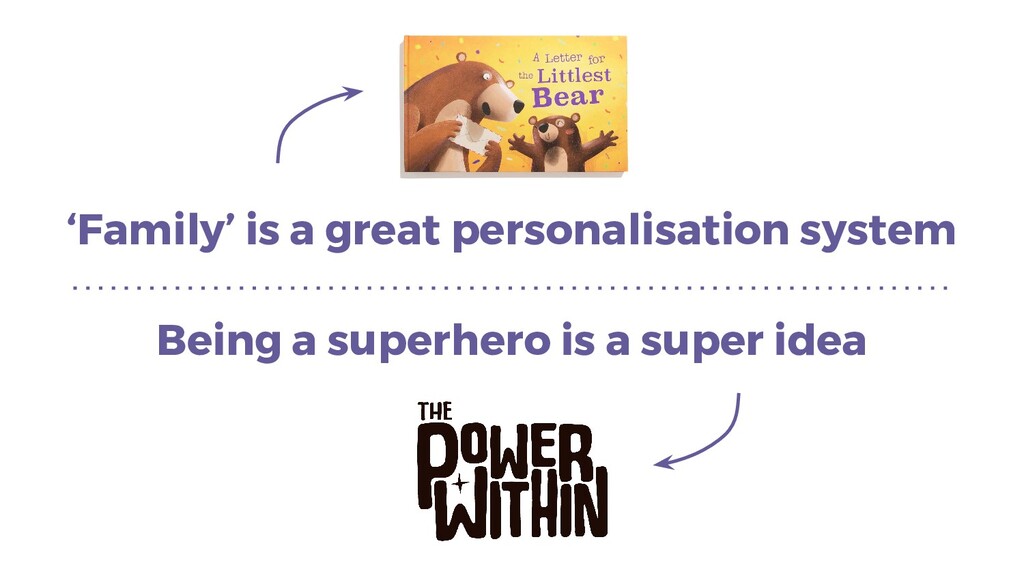
So, back in early twenty sixteen, we were exploring different personalization systems when we really sort of had started to professionalize the product development process a bit more. The company got some new funding and so on. And so, the studio was looking at appearance, birthday, child's interests, family members, and so on, as different kinds of personalization systems to begin the creative process around.
And we had this idea of adding different family members and using that system to create a product proposition that would try and sort of fulfill the imagination need, if you like, of teaching a child about the importance of family and the role that family plays in your life and how important all the different members of the family are.
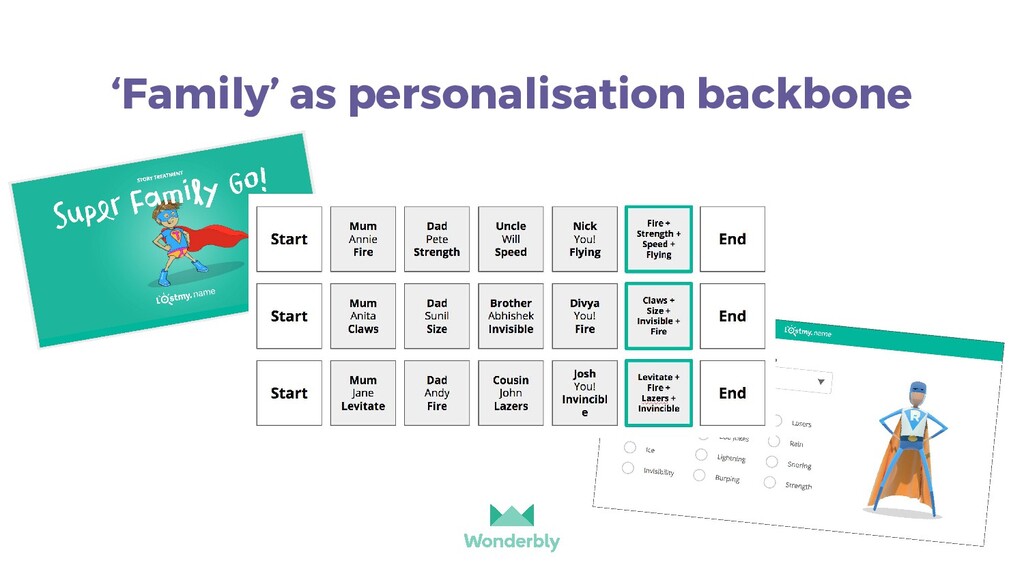
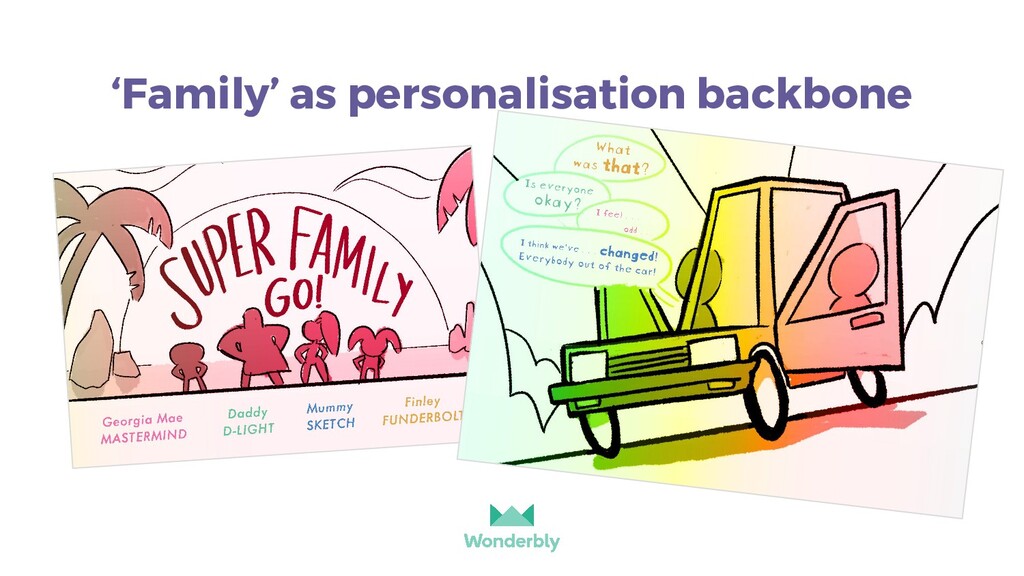
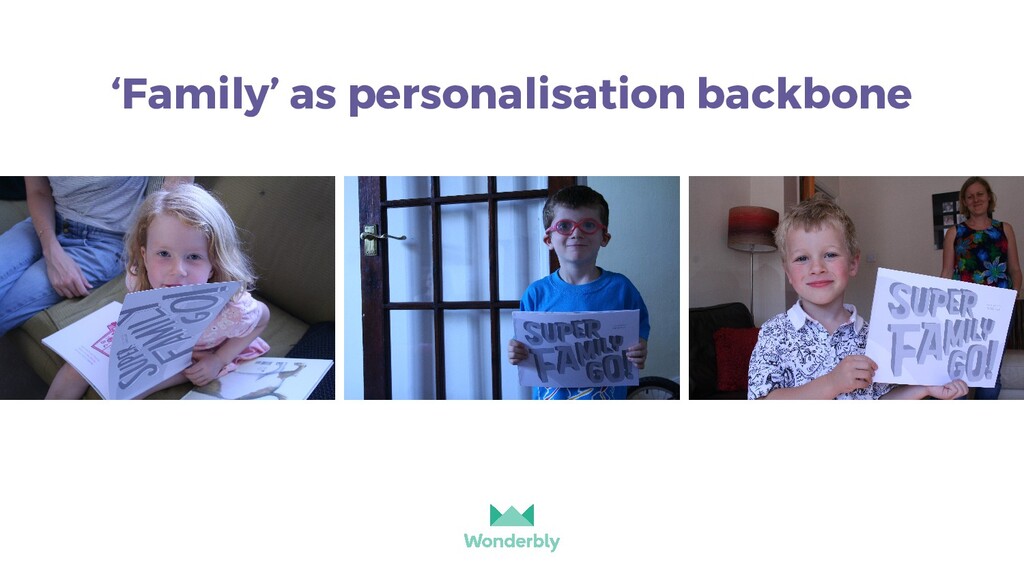
And so, we developed a story which seemed like a great idea at the called Super Family Go, where you're going to add these different members of your family, and you're going to give each family a superpower. And the superpower is going be some kind of expression of their personality.
And the clever idea in the story is going to be that in order to defeat a villain that's in the story, all the family members have to use all their powers together. So, each person's going try their individual powers, it's not going to work.
The combination of powers, that's going to defeat the villain, make the point about how, you know, every family's different, but every family needs to work together. And we thought it was going be all very, very clever. So, we made these kind of low resolution books, which we took out to test with customers after we got excited about the whole thing.
But when we went to test the story with kids and parents, they were basically pretty underwhelmed. The story was too complex well, sort of simultaneously too complex. So, there was too many characters. He had a lot of different characters to introduce, because he wanted to have at least like four, maybe up to eight characters, whatever, depends how big your family is.
It was too sophisticated in the use of the superhero reference for the target age group, because we were doing this as a sort of straight preschool picture book proposition, children sort of four or five. You need to know a lot about superheroes in order to enjoy the idea that your family having superpowers is cool.
So, it's very complex, but it was also too simple. Because of all that complexity, we couldn't really do very much plot development because we spent ages with all the character exposition and kind of setting up the scene of this family and so on.
So, these kids pretty much gave it a thumbs down. So, we took away two main positives from the project, though. First, the idea of the whole family appearing in a book was super appealing to parents. They loved it. They loved the idea of the family in the book.
Kids to a slightly lesser extent, but the adults absolutely loved it. Second, the idea of becoming a superhero was really, really exciting. Just that is a really exciting idea. Yeah, there's a bit more detail there. Anyway, becoming a superhero is very exciting for kids and parents.
But basically, bringing both these ideas together for a kid who's about five years old that they could enjoy wasn't going to work. So, we basically just split the proposition in two and developed two products to do a much better job of fulfilling each imagination need for a specific audience.
And it's this kind of thing you can only get from going out and really speaking to customers, really understanding, you know, the use of the products in home and so on. So, the top insight led us to A Letter for the Littlest Bare and a much younger audience.
So, instead of adding more to the family personalization system, like you've to add the superpower and so on, we just thought we should make the story about who is in the family. It's basically a list of who's in the family. And that in itself is remarkable because the book is completely unique, as is your family.
We make a big fuss around who's the newest and smallest member, and also we solved another tricky issue that was brought up around representation and the diversity of family members visually, because everyone's a bear. So, you can't complain about that, can you? So, Letter for the Littlest Bear just basically tries to hit the idea of celebrating how special your unique family is, you know, on the nose.
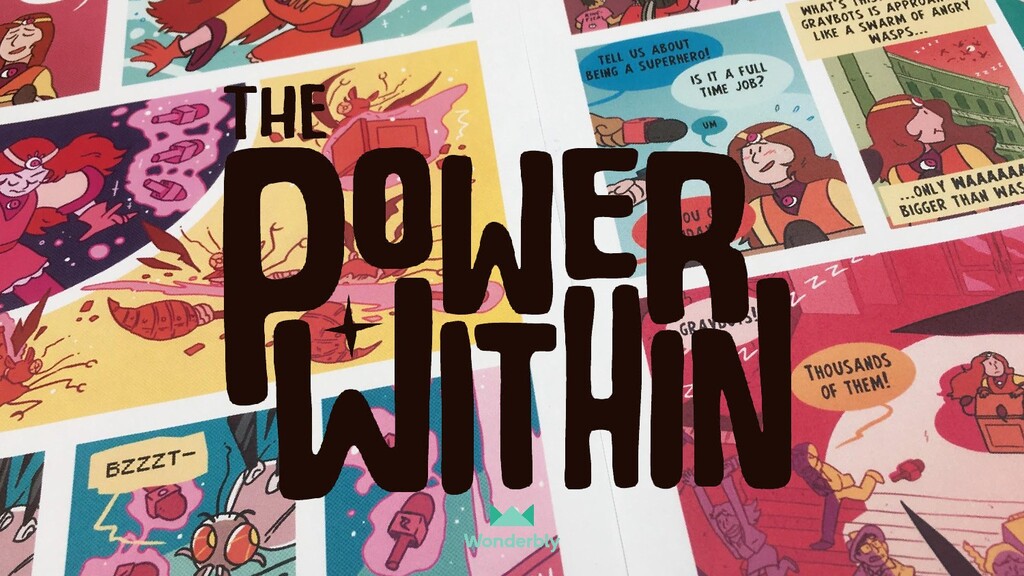
So, just to end the talk, going back to the split, with the bottom piece, we've decided, again, super simple, super focused, and just give kids what they want, a starring role as a superhero in their own comic. And we're calling this product The Power Within.
And it goes kind of a real step further towards this idea of inspiring boundless self belief than we've ever done before. It goes older as well. So this is aiming for kids to read to themselves. We're looking at about seven and a half, eight, as a sort of target reading age group.
So, it's a story about a child who becomes a superhero. And the sort of foundational structure is this: a mysterious mentor it's you gives a child a map and a call to adventure, and tells them to go out and find the power within.
And they go on the adventure, they discover the superpower, and the mentor's hint is kind of like repeated at various points throughout the process. And that superpower is chosen by you, the book creator, to be something that you feel is a reflection of an emerging interest in the child, whether they're very, you know, into sports, and so you give them energy or something, or they're feeling they're very creative and you give them some creative powers.
Then, obviously, there's a villain who's the antithesis of the power. They use a superpower to defeat the villain, but actually, in defeating the villain, the way they do it is not really by using their superpower, it's by helping the villain find their own true power within.
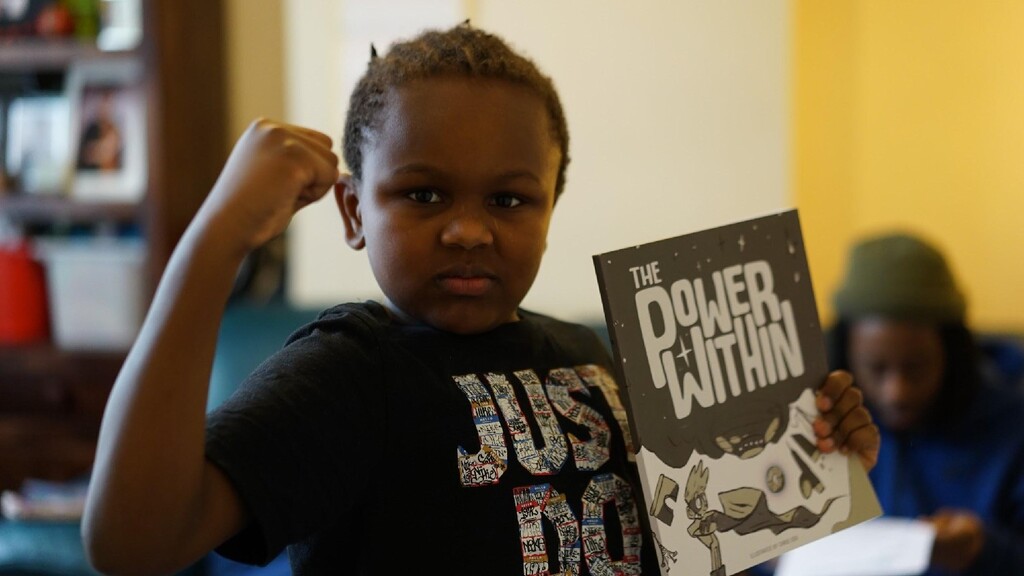
And so in doing so, the child discovers that the ultimate superpower is actually helping other people find theirs, just as the mentor has done with them, with giving them this book. And it's just really, really cool. And so far, the kids we tested absolutely loved it.
I put this photo in this little boy who's really, really excited. As you can see, he's black and people with his skin color are very underrepresented in super hero stories. And he's even more thrilled than most to see himself as a superhero, and his parents also are very, very excited.
But this one's gone down very, very well. The ultimate superpower is to help others find theirs. You know, I absolutely love this idea. This product is this very pure expression of what we want to do for our customers. Give them these amazing, imaginative powers to inspire the children in their lives.
It's a super imaginative story with stunning illustrations and so forth, but from the bottom up, the product is actually built on helping someone else become imaginative customers and the kids, you know, through the story as well. And it's about putting the customer's imaginative needs first, and then our imaginative ideas are there to help them.
And, I hope that this is a lesson that you can take away whatever role you have in designing and creating products, which it doesn't matter if your products are filled with pasta monsters and water princesses, or check boxes and drop downs. Whatever your industry and the personal role in creating and growing the products, know, I think your mission really is to help your customers find their own superpowers through your product.
Thanks.