
When we talk about product/market fit, we typically think of the initial stage of a startup - when we test solutions starting from a technology to find a market, or from a market to design a product. And then, if we are lucky, it's done and we can focus on scaling, right? But markets change, new ones appear - and as we try to adapt, while growing our initial success, we often end up with bloated products or doing dangerous pivots. And the growth actually slows down. Here’s a few ideas how to avoid this, based on some good experiences and a couple of bad ones.
← All talks 



Build Product Turing Fest 2018
The Continuous Search for Product/Market Fit
Auto-generated transcript - may contain errors. Tap a timestamp to jump the video.
Hello everyone, thanks for that lovely introduction. So, my name is Milos and I'm head of product at Typeform. Before that, I was working mostly as a founder in my own startups and I would probably most likely define myself as a founder first. So, I'm kind of trying to bring that knowledge, experience into product management whenever I work with more mature products which are not starting off.
So, the topic today is about the continuous search for product market fit. So, as Heidi said, like is it over when we find it for the first time and are we only focused on growth? And the answer is no, and I'll give you some examples of how things can go wrong and how things can go right beyond the initial kind of product market fit.
So, it's continuing with the theme of managing more mature products that we had other speakers focus on, but I think it's gonna be useful for people who are still not there and they'll encounter some of the issues afterwards. So, first, starting with the role of the founder.
It can be defined in many ways, and people tend to define it in terms of what does the daily job look like, and what do you do? Well, you do everything, but there's one main outcome that you do as founder. It's a big adventure to find a scalable business.
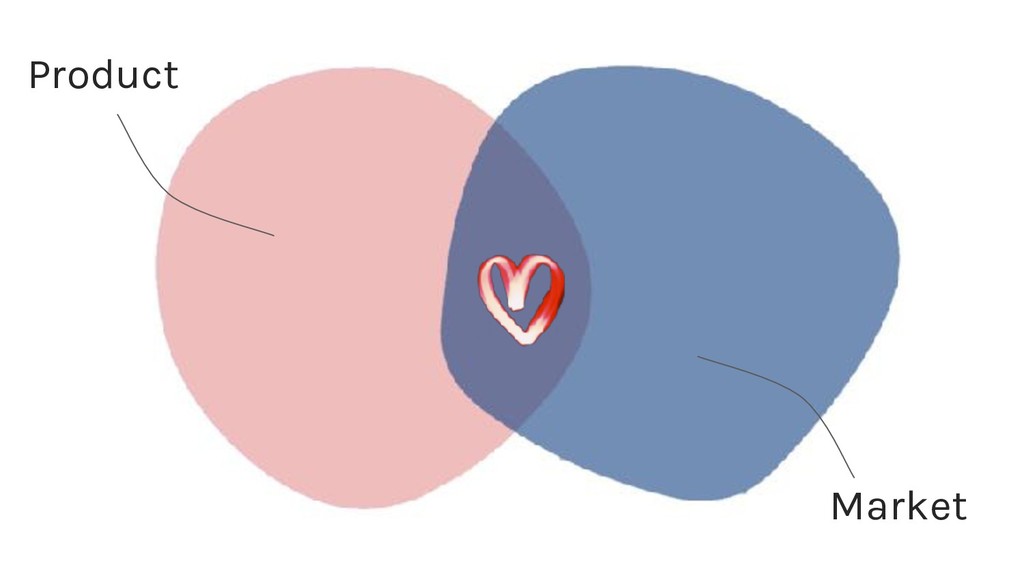
And what this consists of is these two pieces, obviously, of product and market. And you can look at, kind of think of this in one different way. The market being a problem that people have and they need to solve and they're willing to pay for that, and product being the solution for that problem.
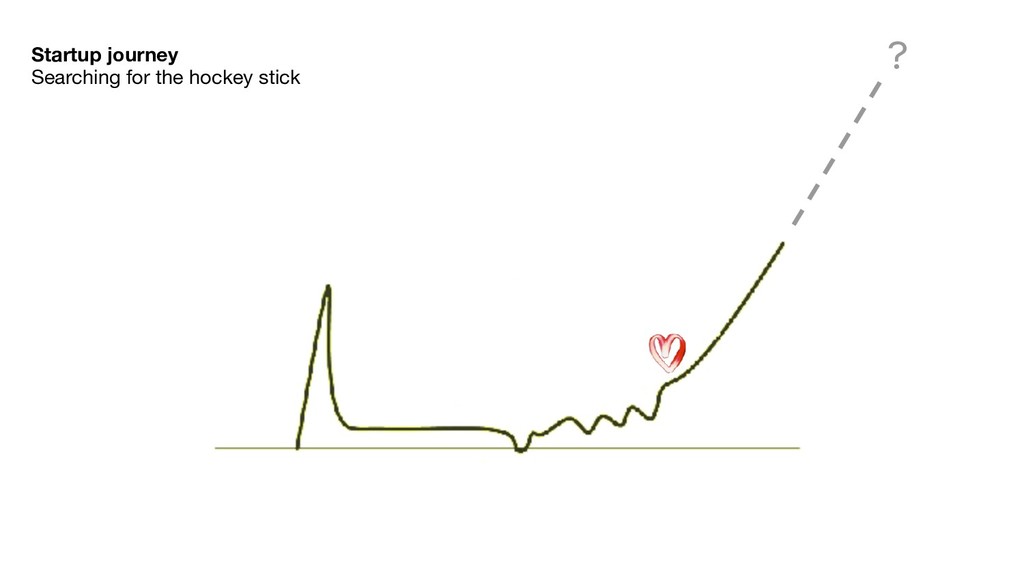
So when you find this, you're struck gold because you're able to solve this in a better way and it's a fit. So what typically we see, this is probably a familiar curve to you all, the startup journey, the initial stages of the startup journey, and people often talk about how dizzy it is and how it goes up and down, and I'm not gonna go deep into this and how to find the initial product market fit, but where typically this graph ends is here.
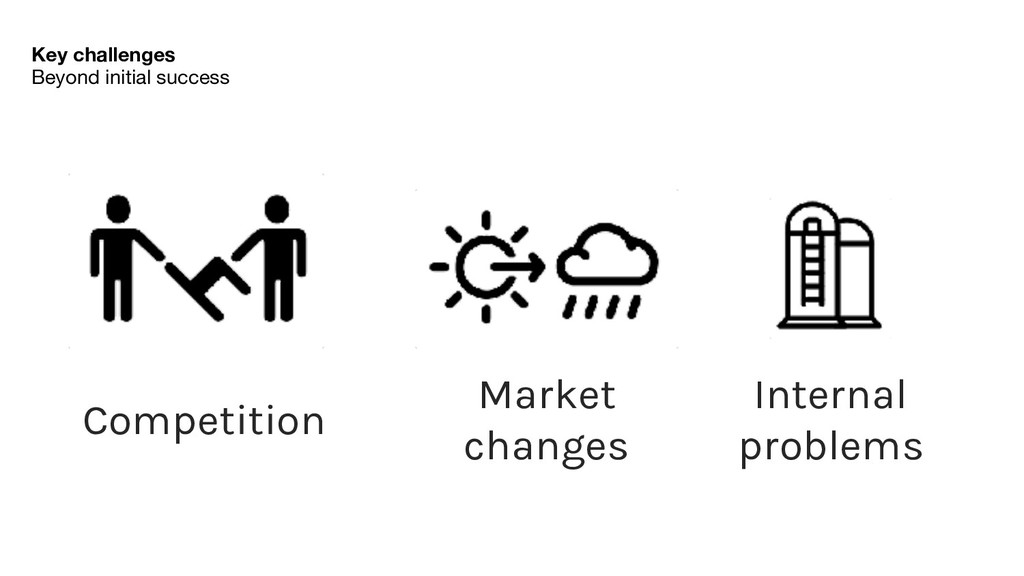
So, there's this heart going on here, they're scaling, but my question is, what does happen after this? Does this graph just continue going like this? Well, it would be nice, but typically no, because of a couple of things. One of them being competition.
People are gonna observe that you found something successful, they're gonna try to copy that. They're gonna try to take your market from you, be faster to it, do a different, better solution. What else? Market changes. So, maybe the problem stays, but the behavior or technologies that are out there changing how people observe the problem that they have.
And, finally, internal problems. A huge thing. Once you start scaling, you start hiring these highly specialized people, there's silos created, people are rightly so focused on their job, is either selling more or developing more, engineering, getting the systems up and running. So, what we end up often is a bit of a mess.
And talking mostly to the product managers here, everything ends up on your desk, and you need to balance between the wishes of current successful customers, of new customers that are not successful, sales leads that are not being closed, we just need this little feature to close this additional deal and also we end up with bloated products.
So, as Amy said, it's very important to kill features, but it's not something that we still do that often. So, luckily, there's a simple solution, but as always with this simple principle, they're difficult to apply. So, I'll try to distill them in the way I think of them.
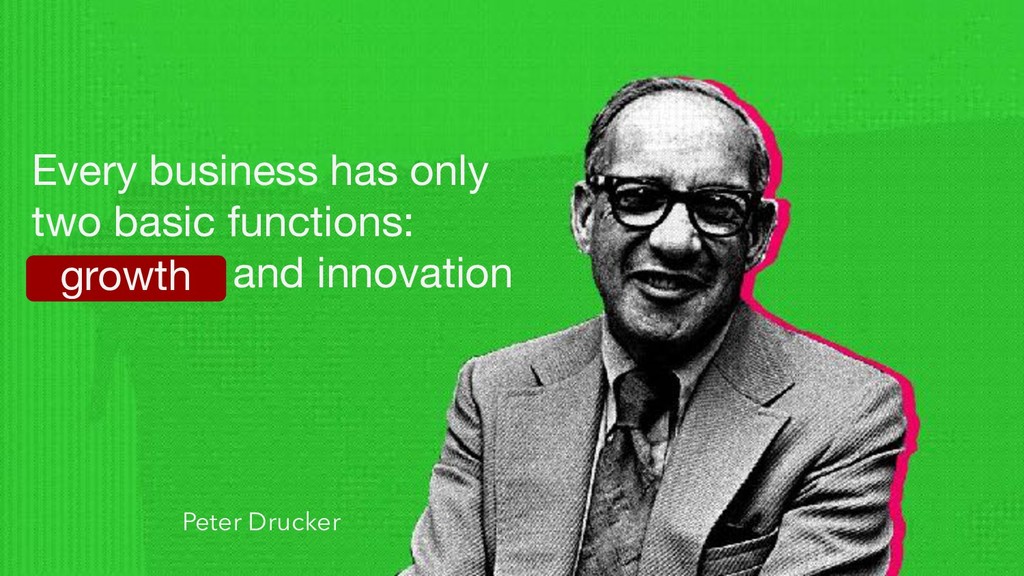
And starting with a quote of Peter Drucker, a great management guru of the last century, so this is not anything new. So he said many decades ago that every business has only two basic functions, marketing and innovation. And everything else, to his words, are cost, basically, which means everything else is in support of these two goals.
I'm gonna change this word marketing to growth, not because I disrespect this quote, but because of the word marketing kind of means so many things, and in this context, maybe I can explain it better between growth and innovation, because there's marketing people involved in innovation.
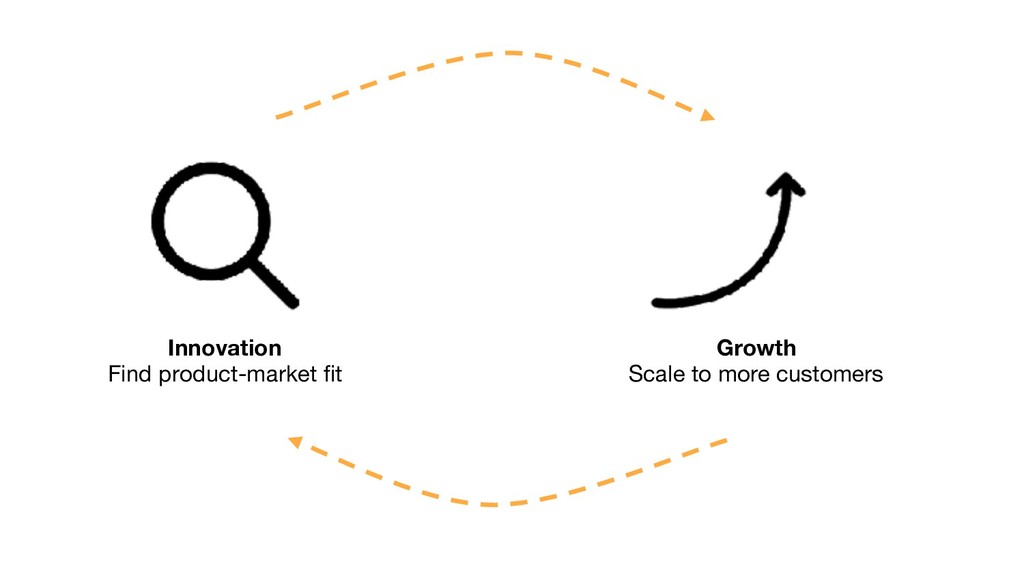
I don't wanna make it about the department. So, here are the two things. So, two main things we want to achieve. Innovation, and the way I phrase it is actually finding product market fit. It's finding new opportunities for scalable products, revenues, revenue streams, and growth is about taking these things to market.
And fair enough, these things, there's gray areas between them, right? Because when you're doing innovation stuff, you need to get some initial traction, you need to get it in front of some customers. And also, when you're scaling to more customers, you're finding out about new opportunities, so there's a bit of overlap here, but what you want to get is a nice handoff between these two things.
It's not just one way, it's not an innovation lab that's hiding somewhere and then a growth sales team out there, it's company wide, hopefully, a company wide effort on both of these things that's cross functional. Making this cross functional is a totally different challenge that I won't go into, but if you nail this right, you will be able to pass and continue growing your product in spite of competition.
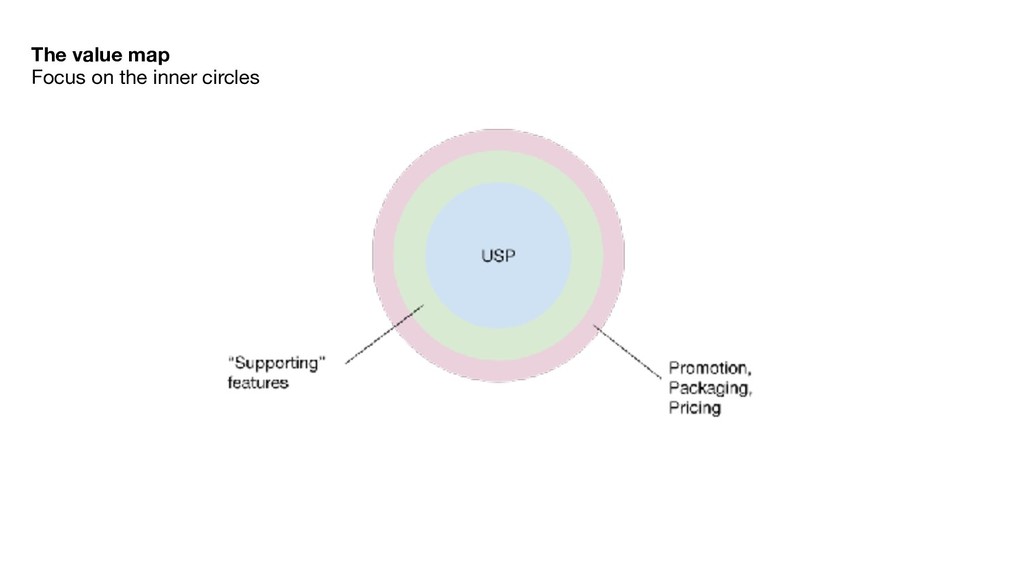
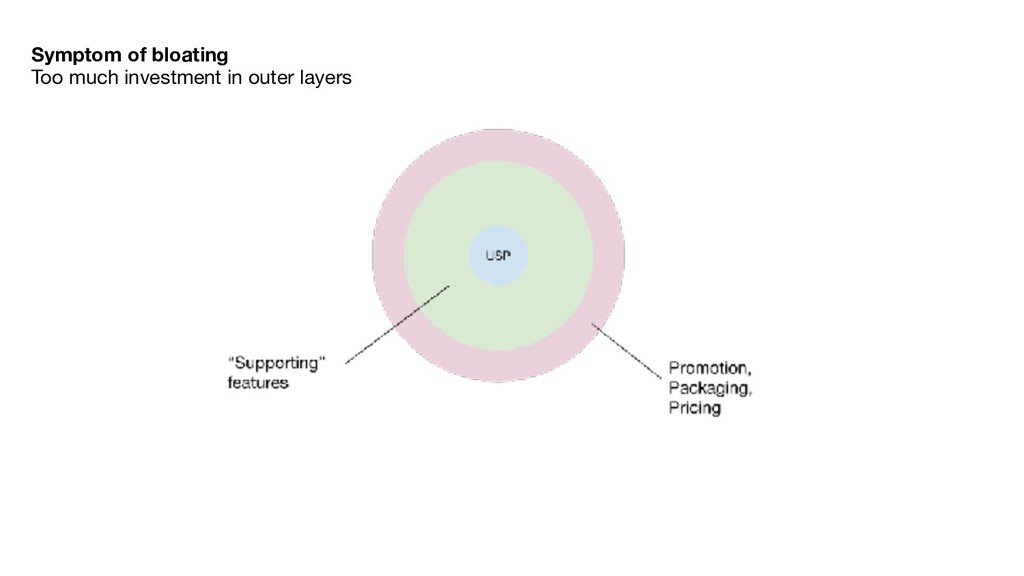
So, here's a graph that I created to kind of represent these concepts in circles. We use circles a lot, type form to try to explain things because squares are old school. So, in the middle is the USP, the unique selling point, also a pretty old term that's maybe not used enough in product management.
We hear the word core product a lot. The outer circle is kind of your go to market, so promotion, packaging, pricing, how do you take this unique selling point, the thing that differentiates you to the market? And what I added in between is the supporting features layer.
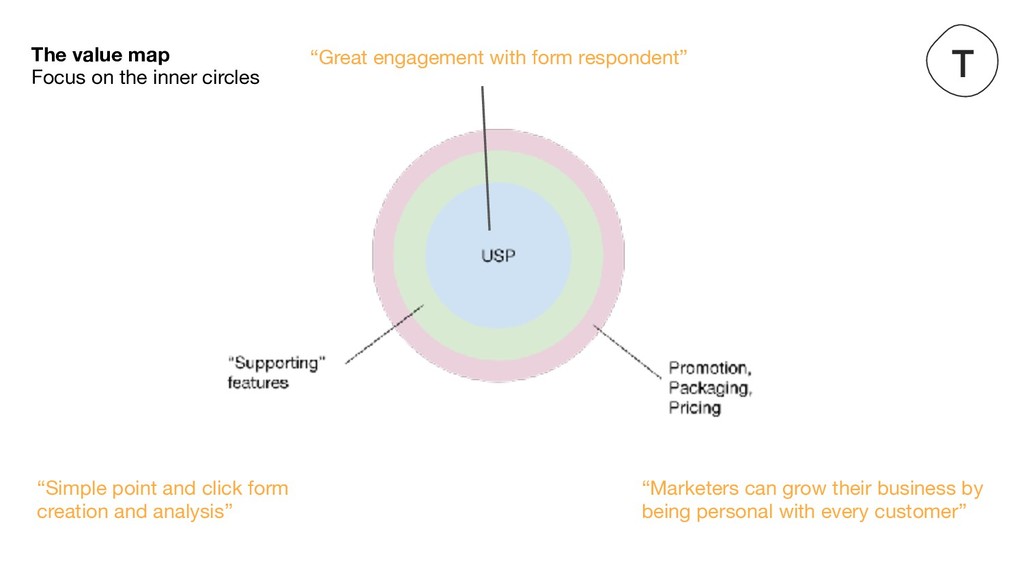
Basically, these supporting features, the main purpose is to make the outer layer easier to access the core value proposition. And to kind of explain what I mean, I'll use our own example of what our USP is, so great engagement for form respondents. If you don't know, Typeform's mission is trying to make every engagement really remarkable with your customers, so this kind of defines what we're trying to do differently than others.
So, our USP is really great engagement with form respondents. And on the other side, we want to reach a market, right? Marketers have a problem. They want to grow their business, and they want to be more personal with every customer. This is a need that they have, and we're offering this thing out there.
But there's this whole other layer of supporting features, which is simple point and click form creation and analysis. And a lot of the feedback from our customers would come around this area. So, I'll start with another example of a good kind of representation of what we have here.
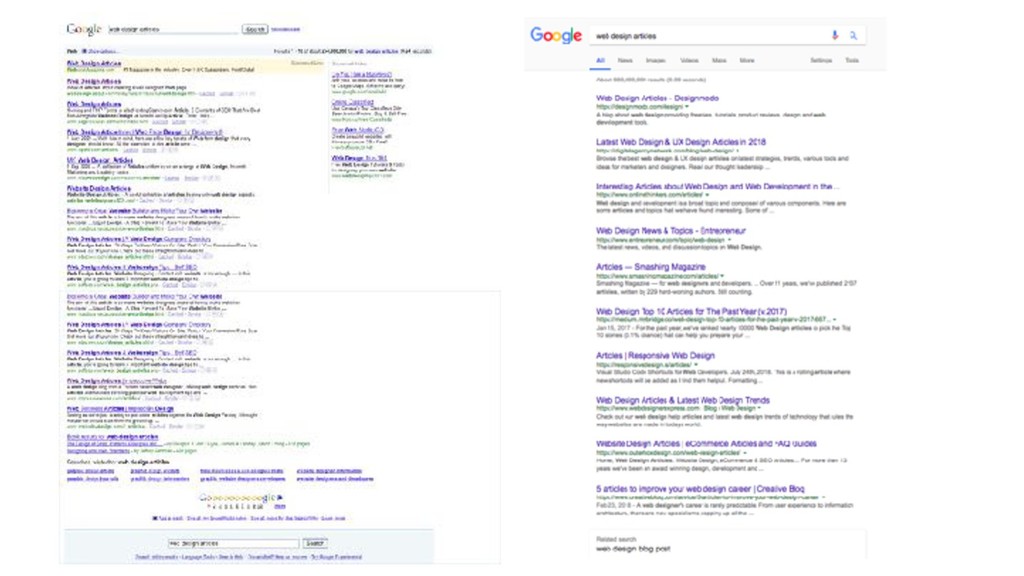
So, what my hypothesis is, if we try to make the investment in the inner circle, the unique selling proposition, the competition will not be able to follow you and then the other things are more of a distraction. So, going back to the example of Google search, their unique selling proposition is that whenever you search for something, the first result is gonna be the most relevant.
And on the left, you can see an old version of the design from years and years ago, and on the right is the new one. And I'm not trying to make a point that their design is not involving, that's not the point. The point is that they, in this product, they're really focused on this unique selling point.
Even though it's not visible here, the investment they took into making sure that that first result is actually exactly what you need is where they focus on. And that's why all the new stuff, see there's like a small microphone icon, which is super important, there's all these verticals appearing, news, images, videos, kind of making the core value proposition stronger.
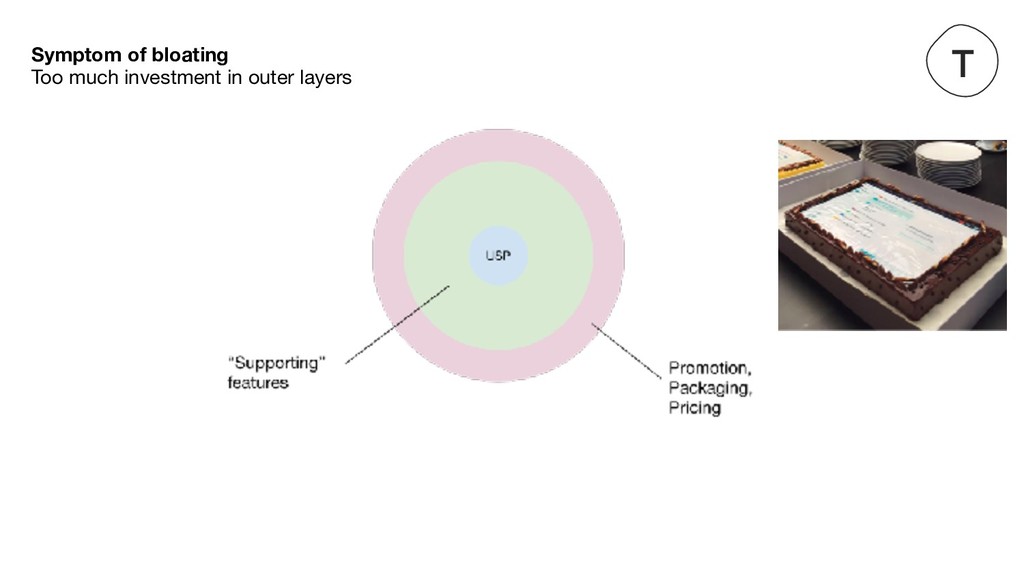
They're in there, but still the core thing is the main thing that they do. And this is what happened to us. So, we made supporting features investment way too big. So, kind of a first learning point of a negative thing that happened to us is this bloating, and this cake represents bloating, not because you get bloated because of cake, I love cake, but because what this cake represents, this cake was a celebration of our investment into a two year project in the green side.
And what that actually caused is that we underinvested in our core unique selling point and subsequently, the competition is trying to catch up. So, how can you try to avoid this? Well, first thing I think you should be really aware of what your unique selling point is, is the opening line from your sales team, from your, the top thing on your website.
So, try to, whatever that is, if it's faster than blah blah blah, make it even more faster. If it's more reliable, again. So make it deeper and even even better. But how do you make sure that you don't misinvest in other areas? So I have four strategies that we applied with different levels of success, and you can mix and match some of them, or you can use all of them actually combined.
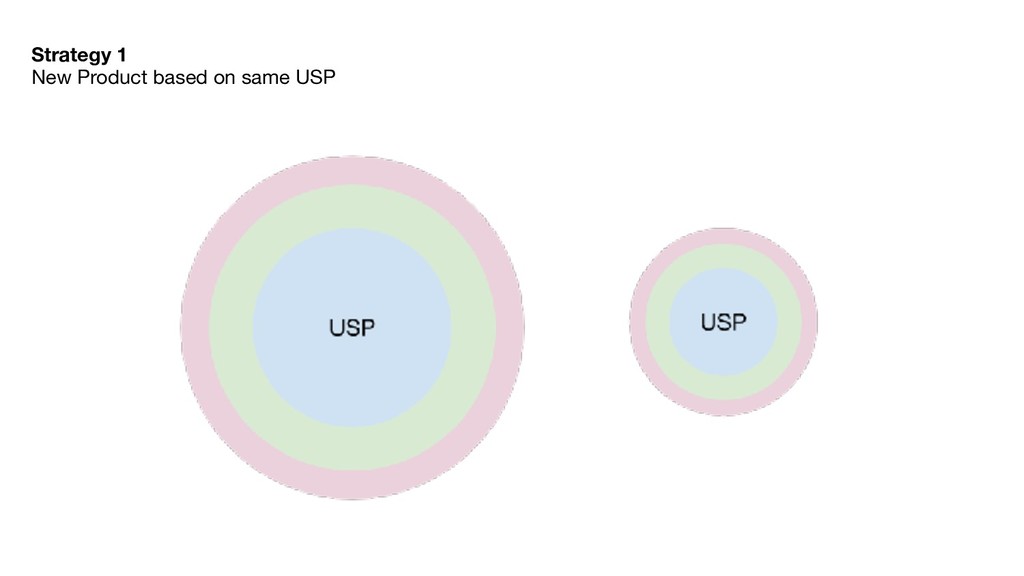
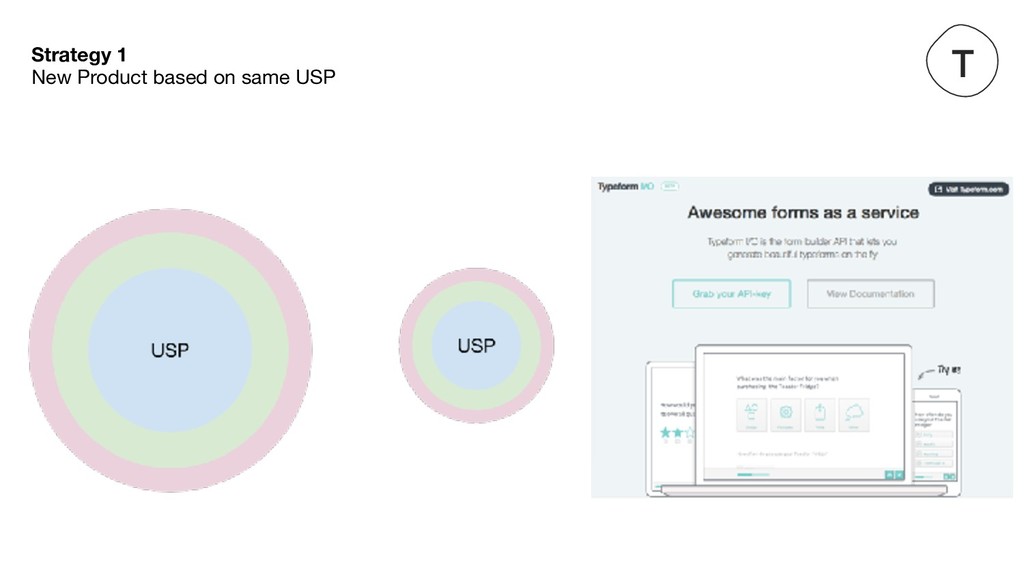
So first thing, you can actually take that same USB and try to take it to a different market, see if it actually works. What we typically do is we try to bolt it on to the same product and that's where the bloating happens.
The packaging becomes too complex, the pricing is like fifteen pages and the core product has segmented onboarding for each of the customers. So, why won't we, let's call it out what it is, it's a new product. So that's what we did for one of our new markets that we recognized.
We recognized that developers actually need to create a lot of forms and our core USP might work for them. So we basically created a separate product that's focused on this. The overlap in the green section, so the point and click interface is completely different because developers don't need this, they need an API.
And the similar could go for any other segment. And also, the packaging is different. We don't need to sell it. Look at the home pages. It talks about grabbing your API key and documentation. That's what the developers are interested in. So, basically, creating new products.
And if it works out and it turns out, oh, it's actually part of the same thing, it's easier to bring it back in into the same product than take it out later on. Because what you're doing is actually a very important thing in innovation, is validating a new product market fit.
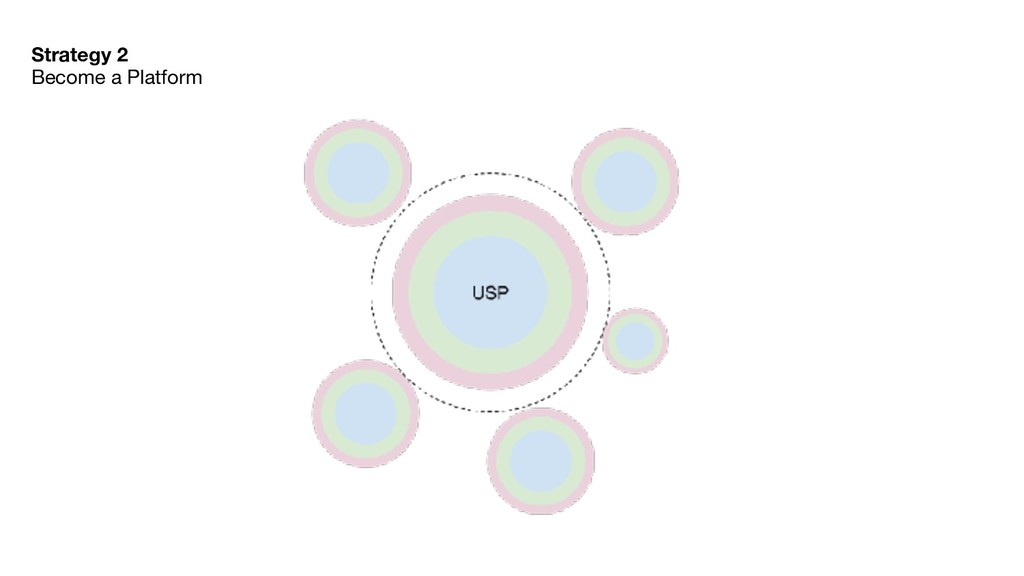
So strategy one, new product. Strategy two, become a platform. Question for the audience, how many of you has or plans to have the word platform in their strategy documents or any kind of high level documents? A lot of people, I guess more maybe after this presentation, platform is a very sexy term, VCs love it.
Just put the word platform in and they'll invest. I'm joking, obviously, but there's a reason for this, because what the platform allows you, apart from the technical sense, is to focus on what you are good at and to leverage the power of others and what you're not good at.
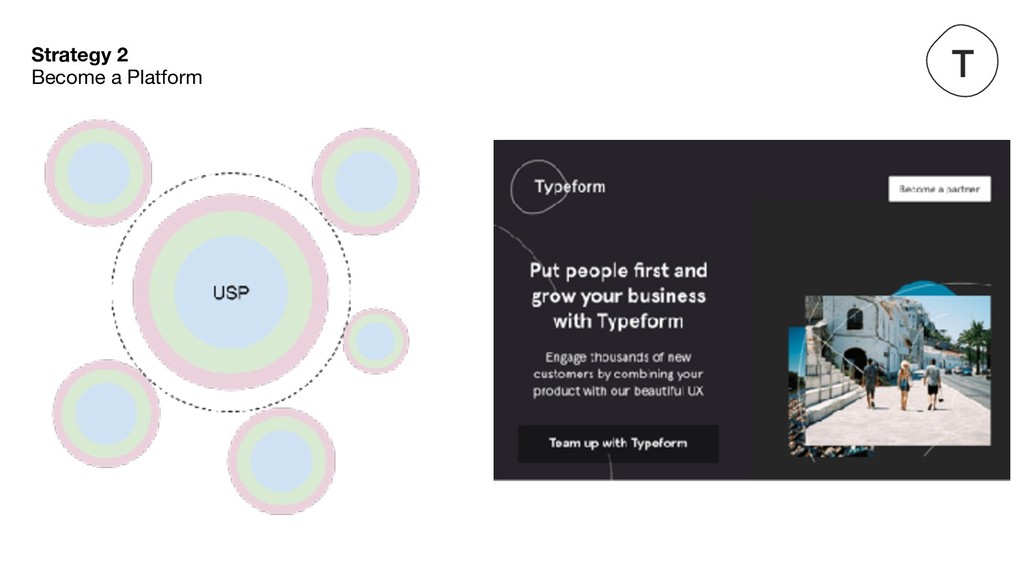
So what I'm trying to represent here is other products around you and you connect the value propositions together to provide additional value to your users by redirecting them to somebody else that's good in this. So, this case, the blue on the outer circles is the green in our circles.
So, what we don't do good, we basically make sure that somebody else does that well and we connect you there. So, that's what we did as well. So, we created a partner ecosystem and there's, it's not an easy thing to do as well.
I'm not gonna go into a lot of details because platforms are a complex thing. There's downsides and there's upsides obviously because the big upside is that you can focus. The downside is that you also need to invest. You're not building it, but you need to build this set of tools for other people so that they can work with you.
You also need to invest in marketing the platform, partner relationships, all of these other things, but the main assumption around this, if you want really to scale the collaboration with others, is that you need to invest in this. So now, platform is the core of our strategy, which actually enables us to focus on the core value proposition that we do.
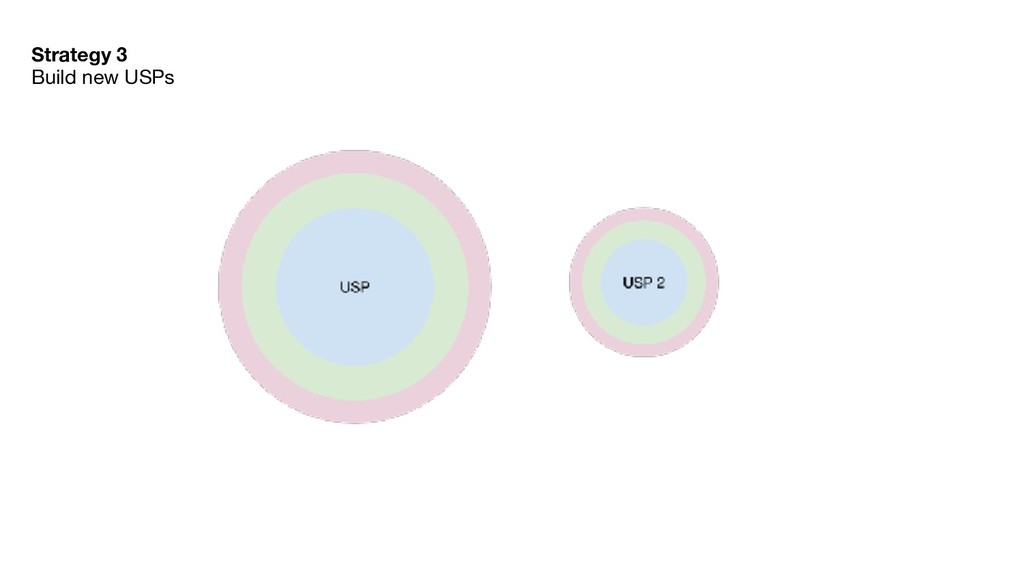
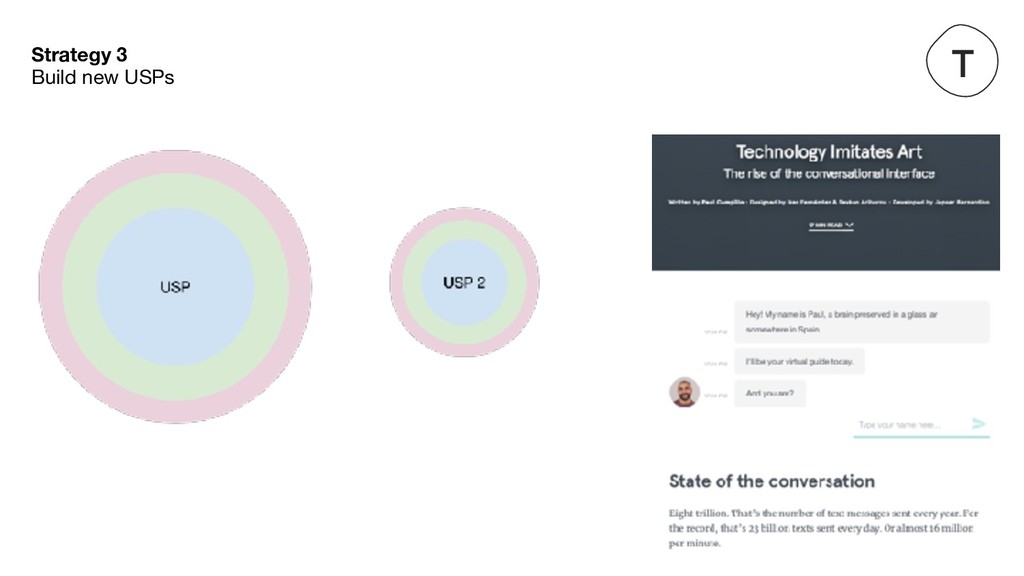
Finally, build new USPs. Sometimes what happens to products is we feel like growth is slowing down, maybe the problem is not as big, maybe we should try to expand the problem that we're solving. But by doing this, maybe you're merging two problems that are not necessarily related, and maybe the same solution doesn't work with them.
So, a typical thing that we would do is basically keep your initial vision and the product vision, but then go a level up and create the company vision that kind of encompasses a multitude of problems. And again, maybe giving an example of Google, for Google search, they want to focus on getting an answer to you, getting you to a place on web in the best possible way, but their company mission is all about gathering the world of information.
So, they did Gmail, they did a lot of other things, basically a portfolio of products on solving this bigger mission. So, we took a stab at this as well. So, we created this kind of offshoot which is technically based on the same architecture, but that's besides the point completely.
We're reusing it if it was cheaper to do it without the same architecture, we would have done it in that way, but it's marketed in a different way, totally. This is not a form, this is a conversational article. It's creating engagement with the customers, and what we initially thought wrongly is like, yeah, we should make this part of the core product, but then luckily, even though we're reusing the technical, the same technical things, we managed to pull it out and now it's a separate product until it proves itself.
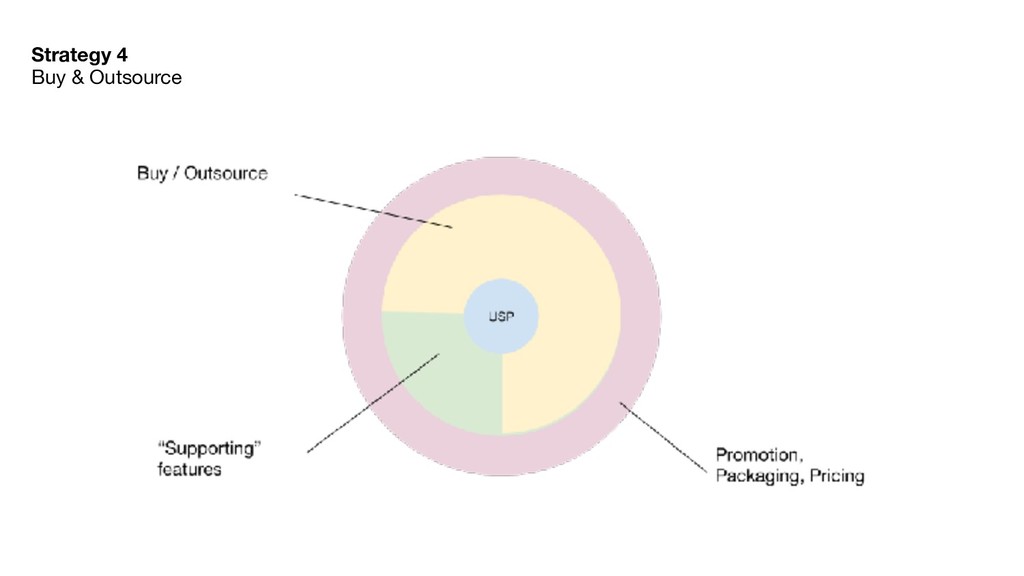
Can it be merged again back into the same product? Sure. But let's confirm where the value is coming from this one first. So the third strategy. Hey, is this better? Okay. So three strategies. And the fourth one, if you really, really, really want to put everything in your core product, then at least buy it or outsource it.
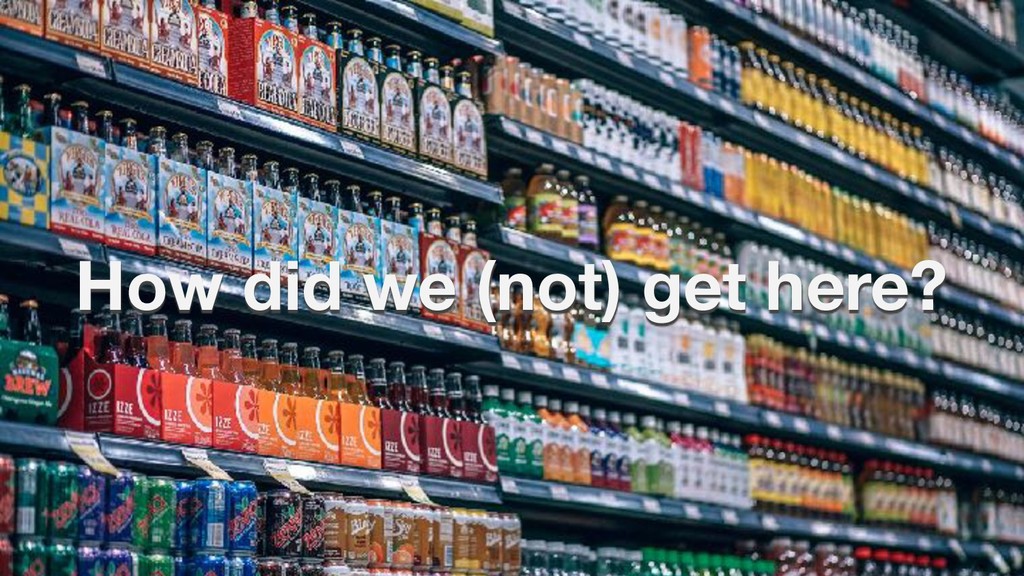
Don't use your internal engineering and thinking to solve stuff that's not necessarily the most important and that differentiates you. So finally, some kind of reflection. How did we not get here? Why does the physical product market look like this and software market is full of very complex product?
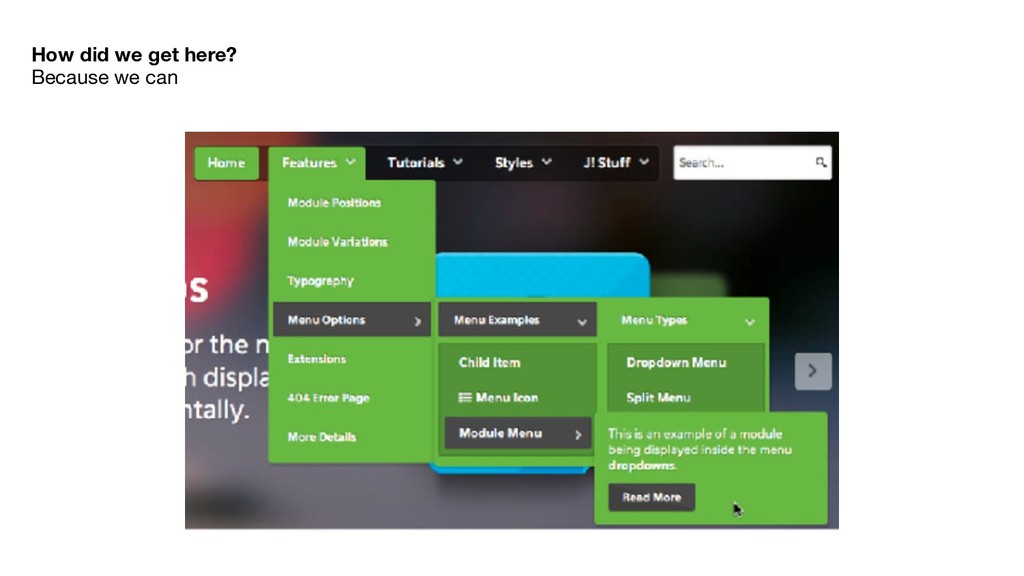
As you know, a lot of companies basically have series of products that answer different needs of the users, and you can see this in every supermarket and and in every shop. So I have a few ideas on how how this happened. Maybe one of them is because we can.
Displays are much more different than physical products. They allow us this flexibility. You can just write on top of something, and then a new thing appears. You can really erase the the whole thing and then, again, it gives us an impression that actually this is all part of the same experience even though it's getting more and more and more complex.
You can't get away with this in physical products, obviously, apart from those kind of two sided jackets that you see, but everybody thinks those are weird. So let's try not to do this. Because we can, number two, architecture as well. I'm all for microservices whenever they make sense, but let's not make product work for microservices, but microservices need to work for products.
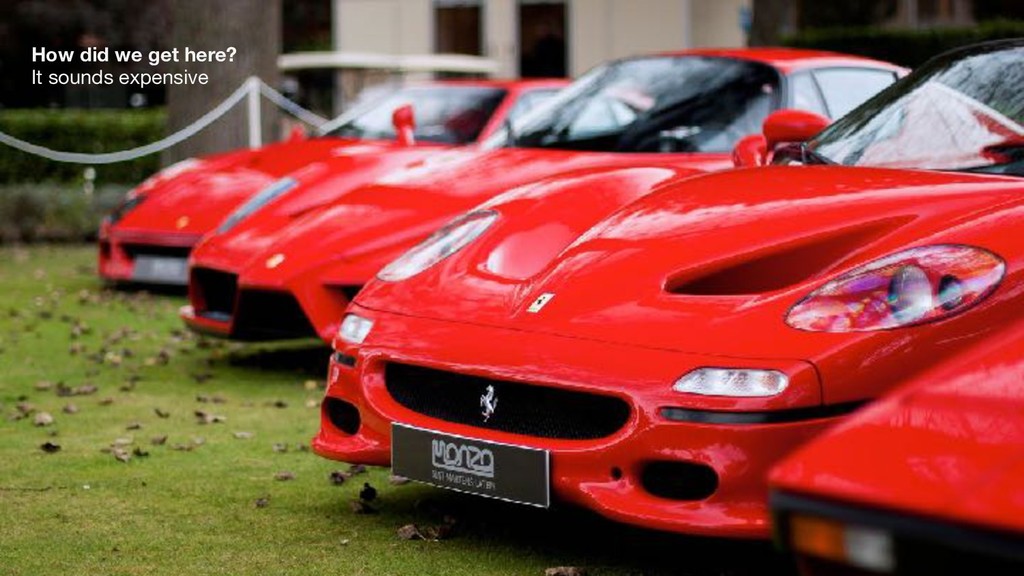
The fact that we can build something scalable doesn't mean we have to then package it all into into one thing. It actually provides us with an opposite, that we can actually market each and one of these components differently. So what else? It sounds expensive. I heard this a million times.
And again, it's it's weird for me that us in software, I'm talking like most of us are in software. We seem to prioritize the and we we seem to think that like building stuff is cheaper and like marketing is super expensive. But go back to your initial product.
Go back to the tools that are available now. You're not, if you're testing a new market, you don't need to rebuild the Ferrari that you you you built for your first one. You can do it really, really cheaply and basically try to do it again with your new with your new products.
Test, test, and fail fast. It's a typical thing we try to do, but only for our side of the business. So we tend to think that, oh, marketing, that's a different story. If you post something on Product Hunt or Twitter or wherever, you'll get quick validation.
Which kind of takes me to the next point, which is we prefer comfort of the unknown. And this is, I wanted to put a slide of fear, but this is easier. But this is how we feel when we add a product to an existing feature to an existing product.
It's just easier. Just add it in there. And then even if the numbers are not good, it's fine. Let's try and go build another one. But the kind of commitment when you launch a new thing is much, much more kind of scary. And that's why we try to avoid it.
We try to stay in the cozy zone. So finally, kind of paraphrasing a thing that came from famous companies marketing, but it's a it's a symptom of the world that we live in. And this kind of gives me the positive outlook on the whole software industry and the digital media and marketing is this became a thing.
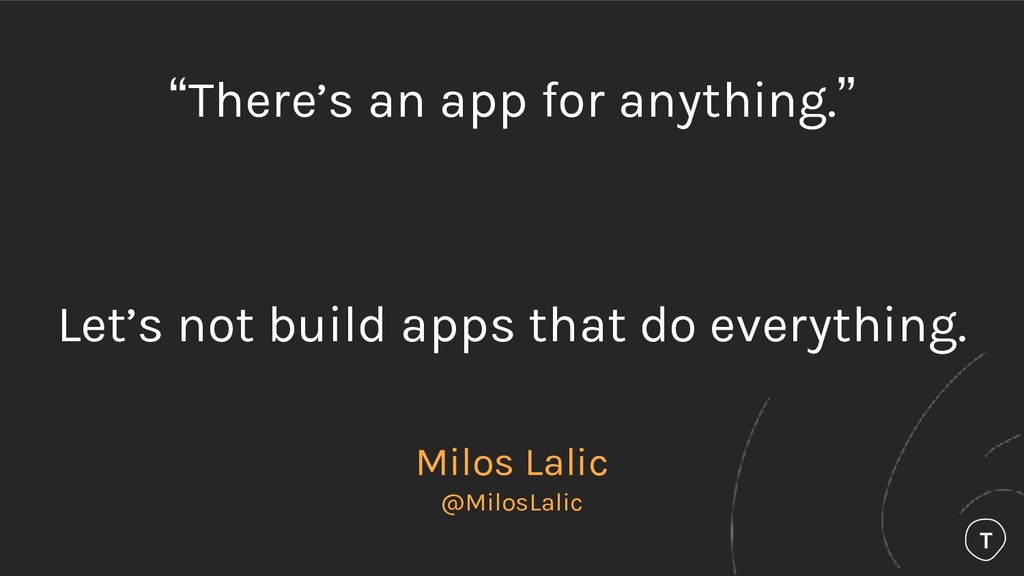
There's an app for anything. So mobile is not only about, the design or the user experience. It's about focus. The small screen and the lack of time that you have on this device really helped us try to think about products differently, and we create this very focused products.
So I'll end a little bit early by kind of pleading the audience, product managers of more mature startups. If there's an app for anything, let's not build apps that do everything. Thank you.