
Workspace in a hybrid world: lessons from GitHub, Nike, and Microsoft.
← All talks 
Lead Turing Fest 2022
Workspace In A Hybrid World: Lessons from GitHub, Nike, and Microsoft
Auto-generated transcript - may contain errors. Tap a timestamp to jump the video.
Thank you. Hello, everybody. Thanks for having me, and thanks for bearing with your dinner last night. There was a few there at dinner, and I'm surprised to see here. It was quite, yeah, enthusiastic to the first day. I'm Michael. I'm one of the cofounders of a company called Asana.
It's nice to be back in real life. So we're gonna talk about workspace, which is a bit of a dry topic. So try and make it wet. That's bad. I'm going to give you a bit of a rundown of what the status quo is, why I think it's broken, the status quo of office space forming the last sort of two hundred years of workspace culture, how the internet's changed things and how that can be better for people, better for business and better for the planet.
Which I hope we all agree that these are three worthy goals of trying to achieve. Over the last five years at Desana, we've been obsessed with the office space industry. We've been really lucky in the last three years or so to start working with some amazing companies.
And personally, I've been very privileged to speak to over five hundred companies about their workspace strategies and how they're thinking about office space in this crazy, undecided world of in the office, out the office, take a massive office, don't use the massive office kind of conversation.
And some of these companies are actually here. So we announced GitHub yesterday to the world. They've been working with GitHub for the last few months and Twilio. Some of the Twilio people that are here at Turing, cornering them, are going, please tell your line manager that the sound is a good thing.
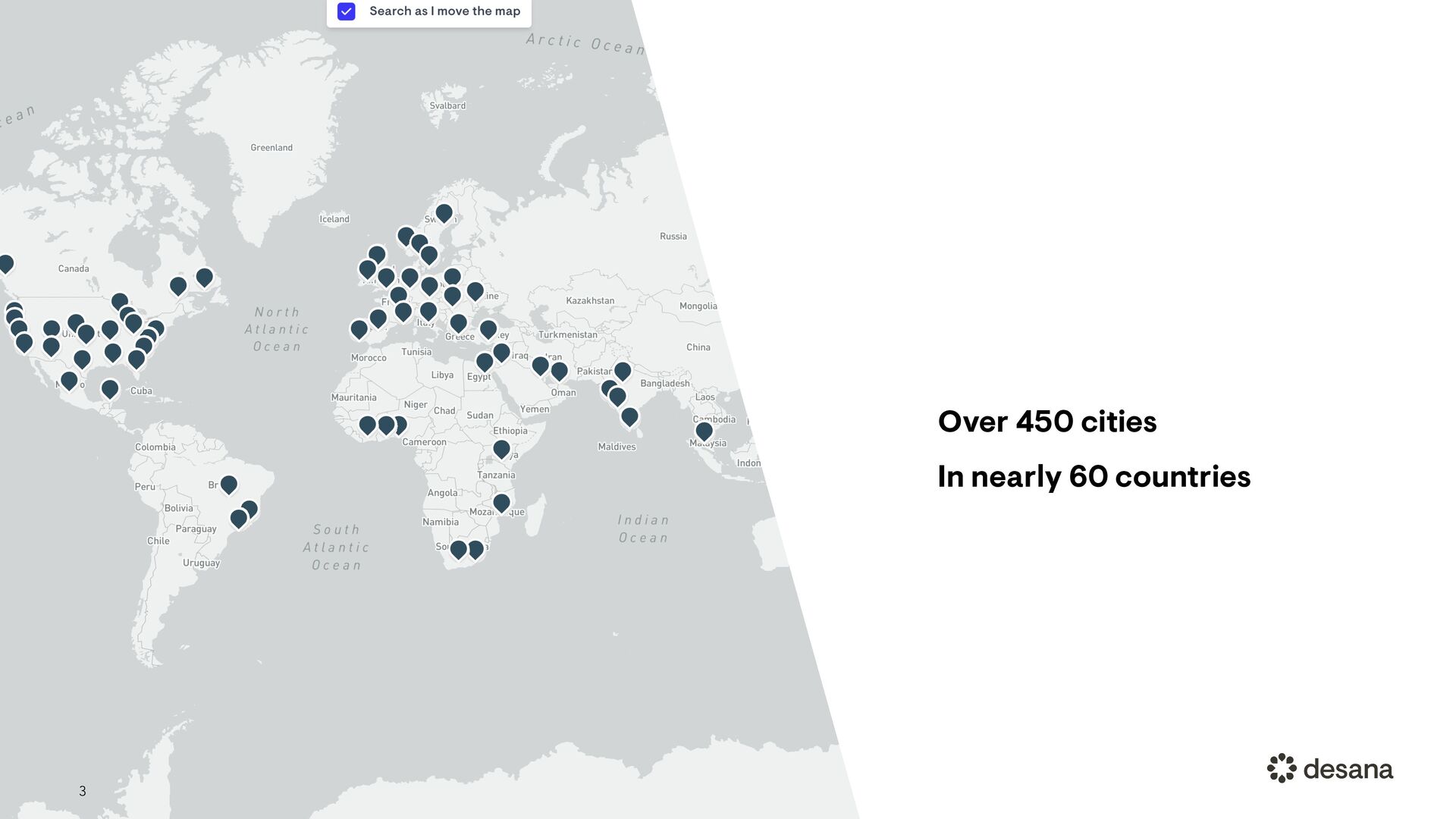
And we're working with these companies in over four fifty cities, nearly sixty countries all over the world. And the reason I'm passionate about office space is I believe it actually literally shapes our world. So at nine o'clock every morning and at five o'clock in the afternoon, we, previous to the pandemic, all unanimously agreed it was a good time to get on a bus, time to get on a train, time to get in a car and jam up these resources and go in to essentially use the internet in a different place.
And so the decisions that our companies make on the policies that they have around what space you use for work can change your behaviors. Through the pandemic, everybody got a new hobby, walked their dog at lunchtime and ate differently, lost weight or gained weight, stopped drinking or started heavily drinking.
This has all come from just the choices that we got to make ourselves on what was best for us for workspace. And I think it's such a minor thing that can be overlooked so often and it can make such a massive difference to our own lives and society.
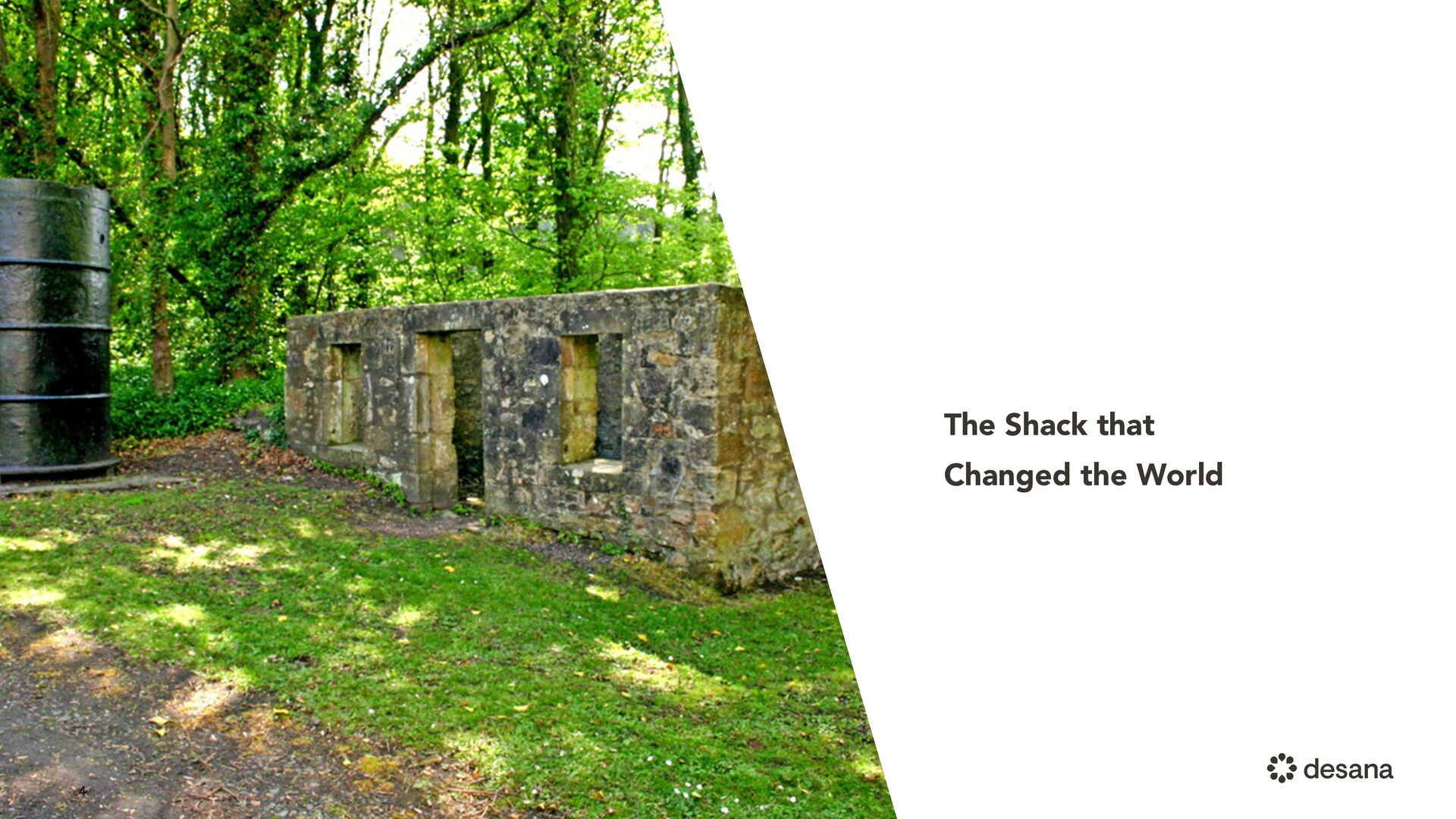
So I'd like to start with this very underwhelming photo of a shack. I've called it a shack. It's like an old sort of ruined building. Does anybody know what this is? You do. Shut the **** up. Don't ruin it. So if this was in the US, if this shack was in the USA, there would be a visitor center.
You'd have to pay to see it. This shack is in a place called Bowness. And my business partner actually bought a house in Bowness. Bowness, if you like mediocre Scottish towns, you will love Bowness and if you like reasonable priced property. So I went for a walk with my mum.
My mother lives in Bowness. And we came across this very underwhelming shack. And on this tiny little dusty plaque, it says, this was the workshop of a man called James Watt, not the BrewDog guy. He's not that old. James Watt was a Scottish inventor.
And in this very shack, he took the steam engine and improved it dramatically and made the steam locomotive possible. And this fundamentally changed this shack. I'm trying to make this interesting, this boring shack. Fundamentally changed the way the world worked. So we went from having factories where the resources were.
We had to build factories where the sheep were for the wool. We had to build factories where there was water to power the mill before the steam engine. So James Watts' innovation in the steam engine made putting factories where we're most logistically optimal, possible.
We could move the resources from where the resources were to where the factories were. And would you believe it? That was in eighteen oh two that he did that. I looked that up. Didn't know that before doing this talk. Would you believe it?
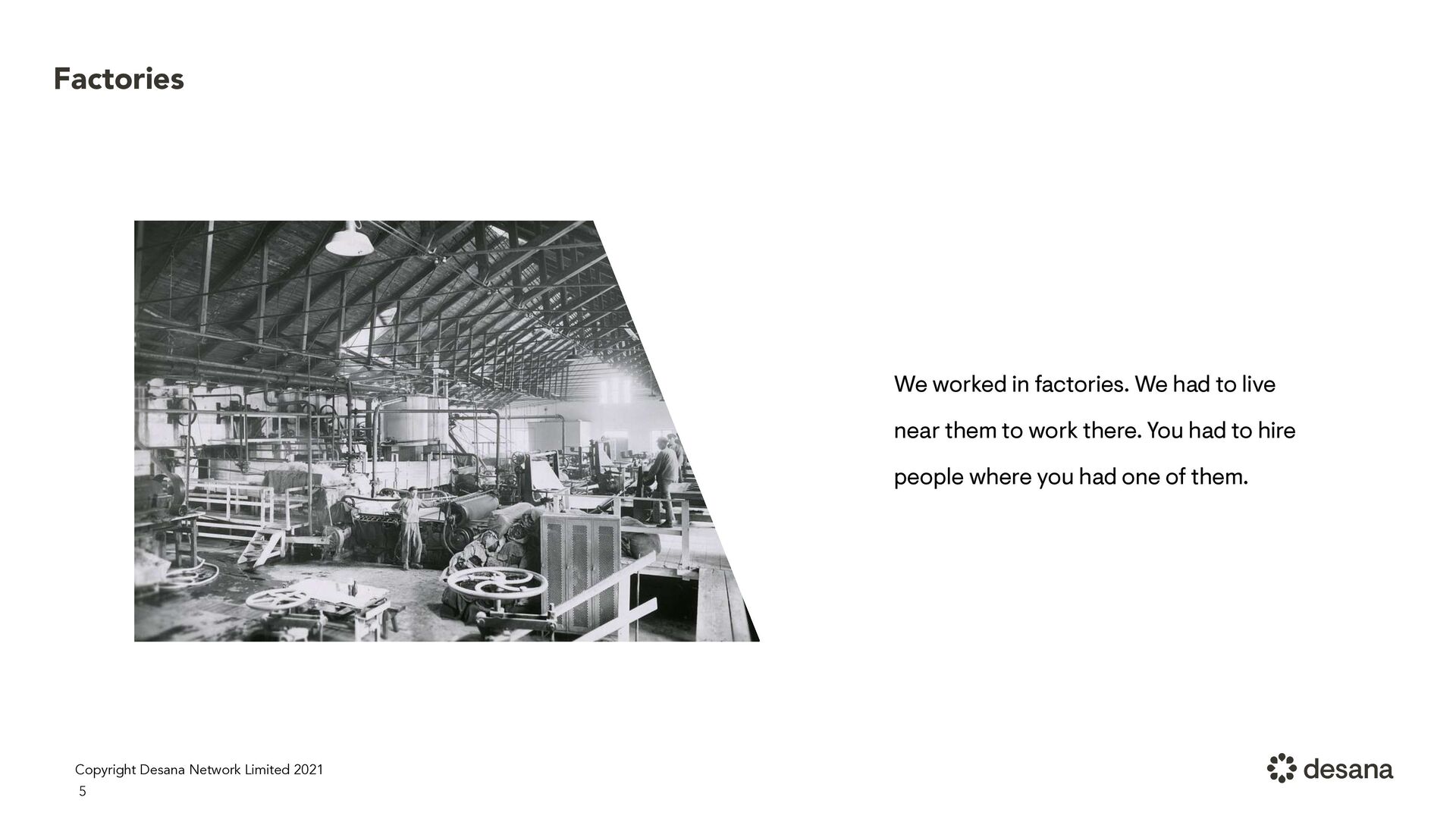
That, in some way shaped the next two hundred years of how we ran our businesses? So we all worked in factories. We had to live near them to work there. You had to hire people where you had one of them. And we moved on to computers.
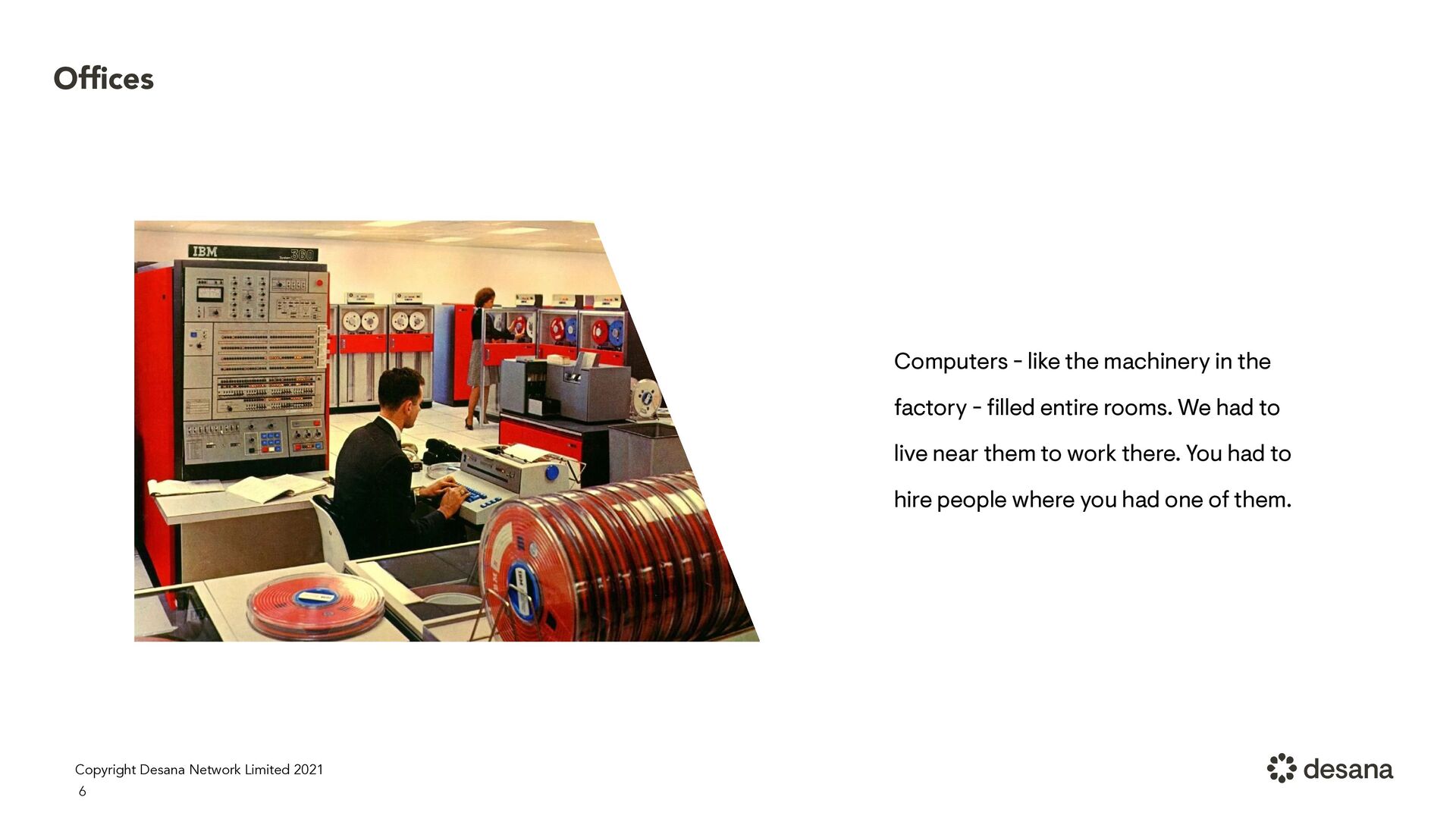
They filled up whole rooms, if you remember that. This is quite a cool looking computer though, isn't it? It's got a funky colour. I'd love to go to that computer factory. So yep, computers changed everything. Changed the way the world worked. It improved efficiency.
It's changed almost every aspect of our lives. But like the machinery in a factory, we had to live near where the computer was. We had to commute in to use the computer. And the companies that we worked for had to hire us to live near where the computer was.
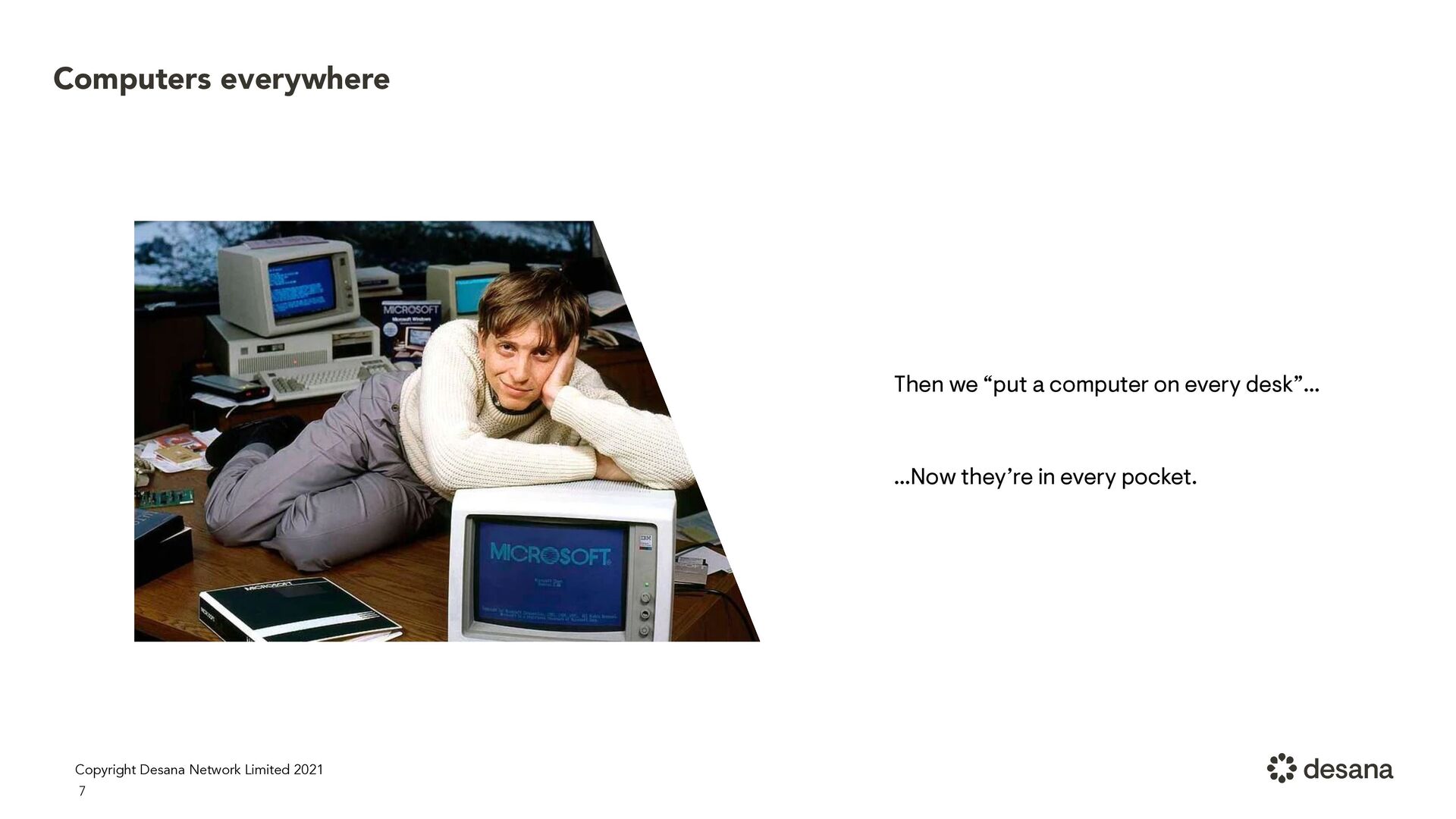
I love this photo. This sexy, sexy guy. He put a computer on every desk. Not him alone. There's loads of companies involved. But that was Microsoft's MO, to put a computer on every desk. Now if you look in your pockets and in your hand, you have a computer in your pocket.
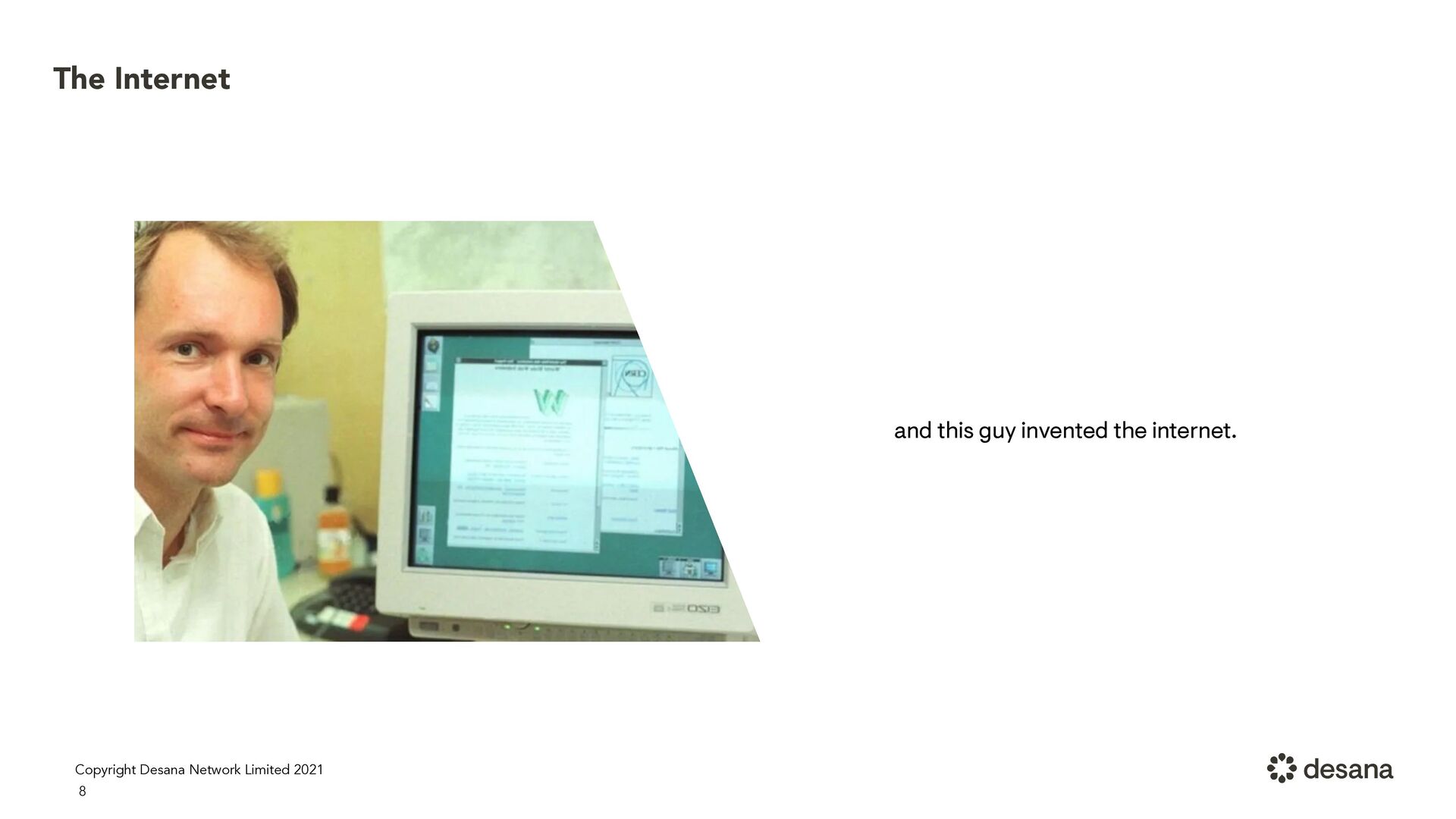
The rate at which computing has shrunk down and become more mobile combined with this guy. I also love this photo. This guy changed the world. And look at him. He's delighted. Should put Tim Berners Lee. I always forget his name. I put it in my notes here.
Tim Berners Lee created the internet. So this shrinking of computers from whole rooms to your pocket and your Patagonia backpacks. And the advent of the internet has changed everything. Yet, we still create workspace strategies and we create working cultures that are fundamentally similar to those of the factory for the last two hundred years.
And things have changed and so should we. And that's what I'm here to convince you of today, that we should be changing. It's been interesting, actually, speaking to people at the conference just about their office spaces. I've been going skulking about going, I'm talking about workspace.
Here's a tenor, come to the talk. Thanks for coming. Don't redeem the tenor that I promised you all if I was talking to you before. But hearing about how some of your companies are occupying office space has been quite comforting because a lot of what I'm about to see has been reinforced with some of the conversations we've had over the last couple of days.
Could you please raise your hand if all you need to do your work is some form of device that can go in your backpack or your pocket and the internet? Raise your hand. So just in case you're completely blind, that is, apart from this guy, is about ninety nine point nine percent of you.
So if we'd asked that question ten years ago, we might have had seventy five percent in the room. If asked that question twenty years ago, we might have had fifty percent in the room. So it's only very recently that we've had the ability to just have our Patagonia backpacks and the internet to do the work that we do.
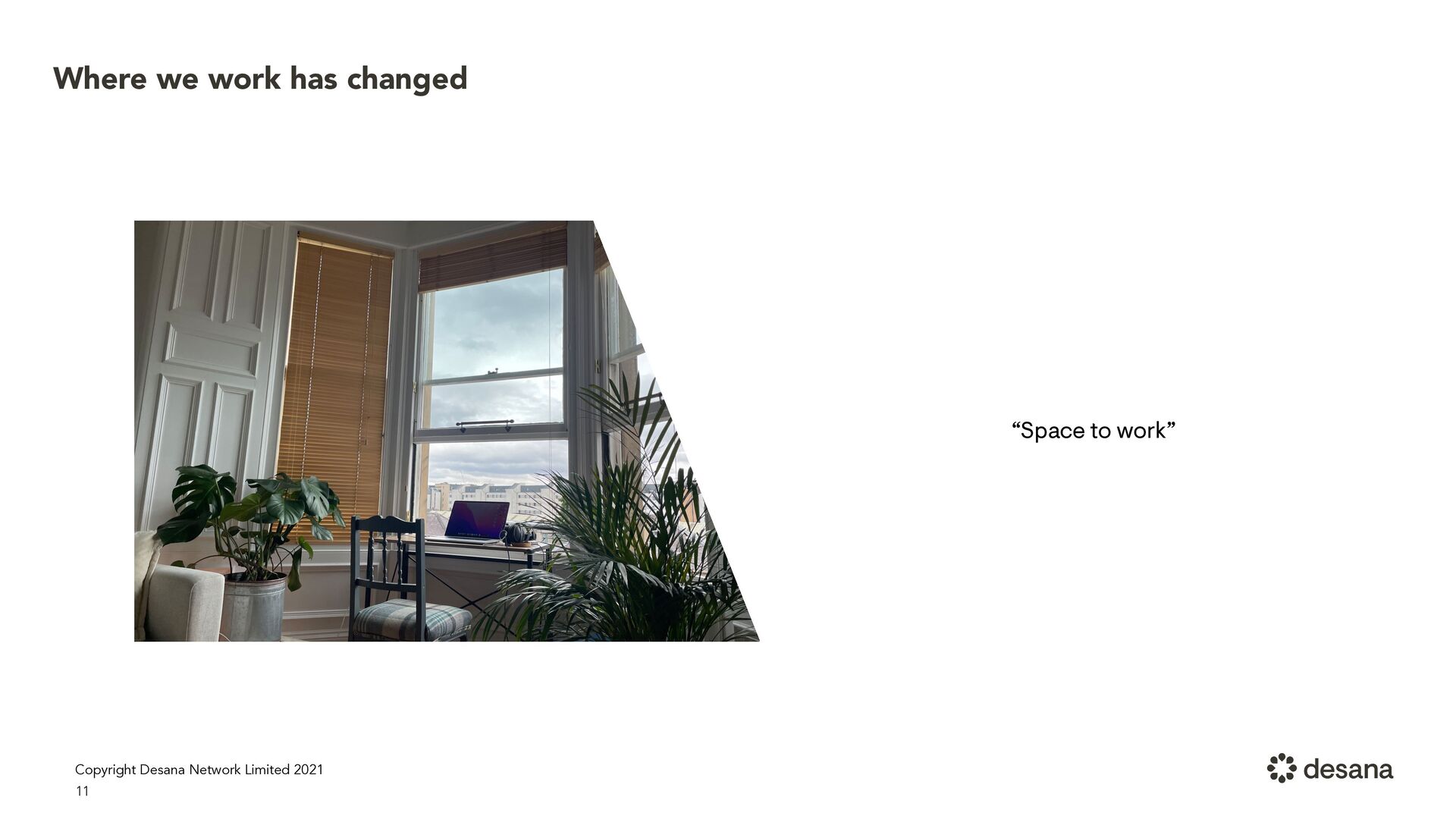
Essentially, for work has gone from a factory that we had to commute in and out of to this, your front room. This is my front room my plants, thank you. And this is my ergonomic office chair. I should really have a word with her.
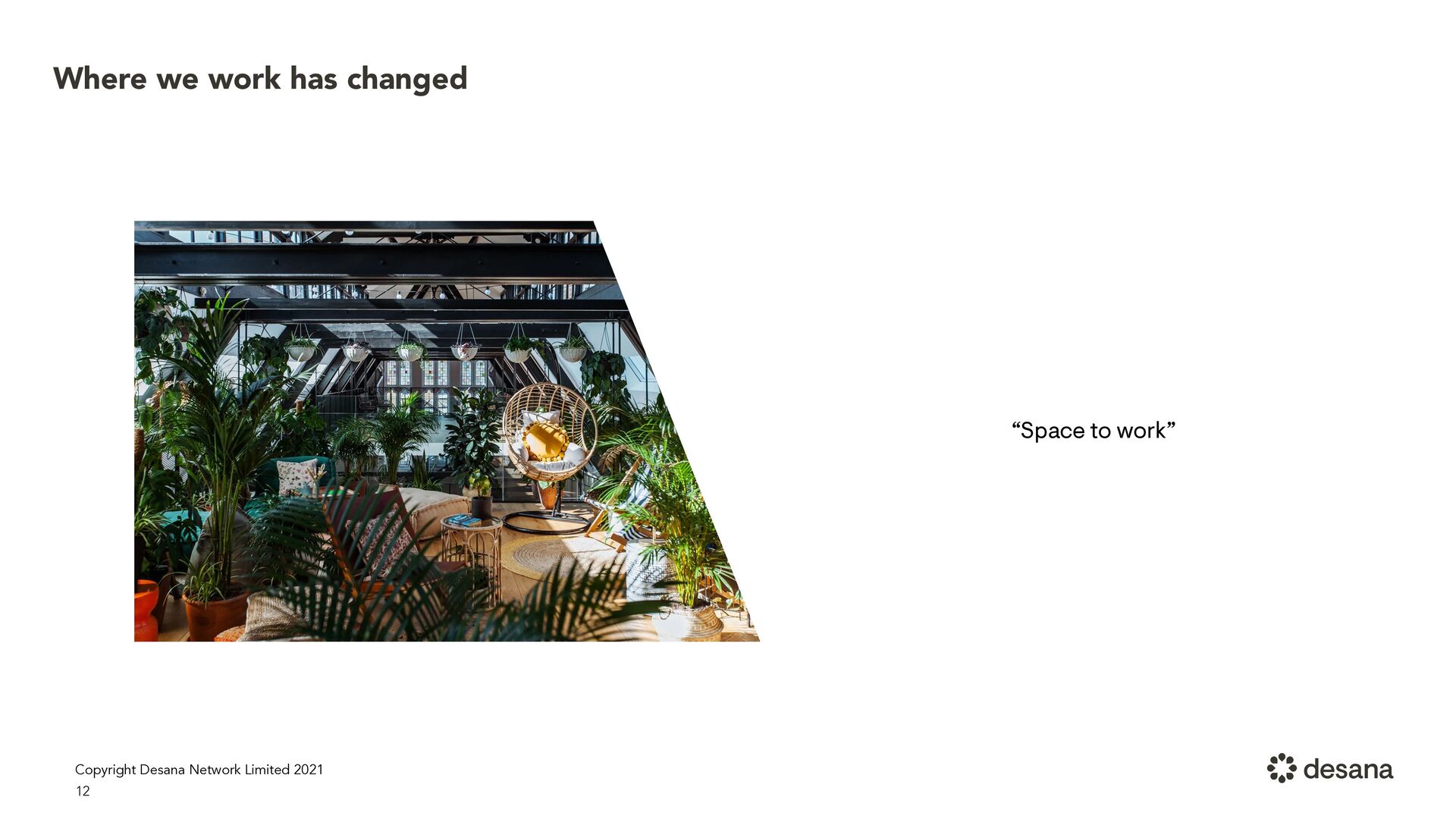
Probably myself, just buying myself a better chair. This is why I don't work from home very much because it's bad for my back. And this is a space for work as well. This is a co working space and frankly just as unergonomic as my setup from home, but very beautiful.
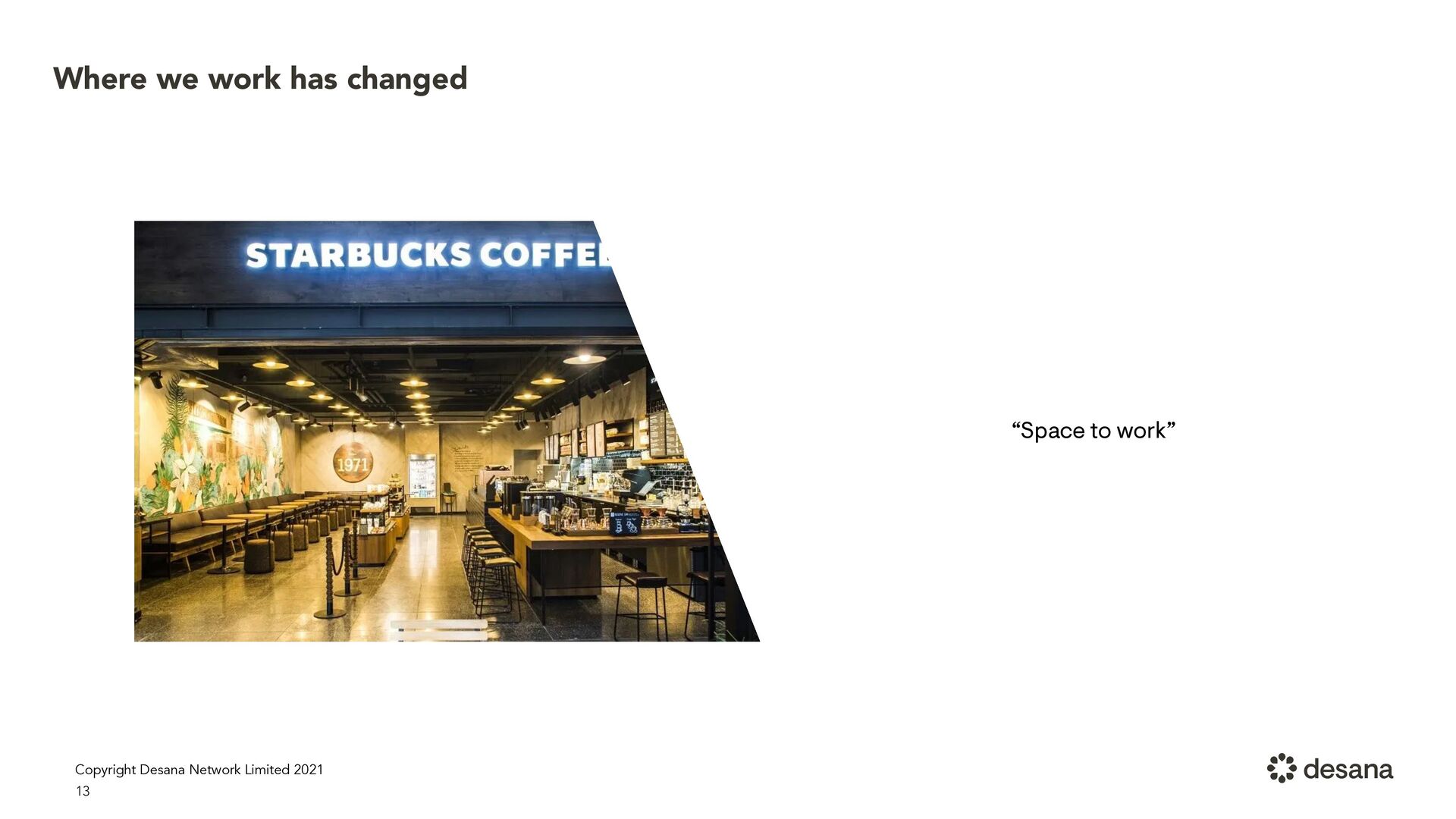
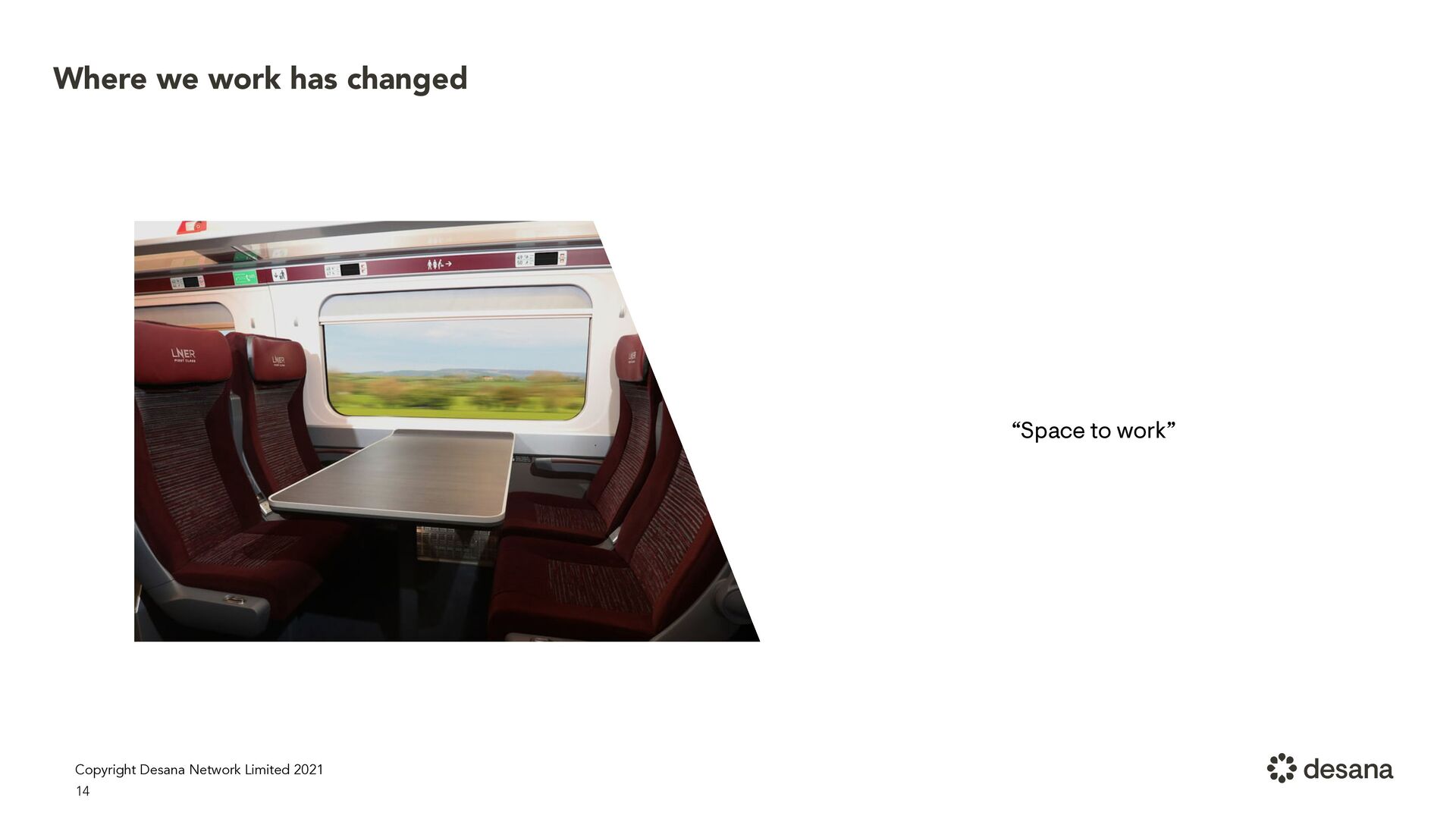
This is a space for work. This is a small local coffee shop in Edinburgh. This is also a very valid space for work as well. The first class lounge, a lot of you that go from Edinburgh to London will know these seats. And I'd say maybe ninety percent of the people that are on trains have got their laptops out doing work.
And this is just, we no longer need the McKinsey study to unearth the percentages. I had a look at them and I was like, **** it, I'm just gonna show some pictures and say you know that a high percentage of people are using Wi Fi and internet to do their work.
And we cling onto this idea that the status quo is still the safe and right thing to do for office space as a company. We need an office to have a company. We need an office to have a culture. And this is a bit of a polarizing statement.
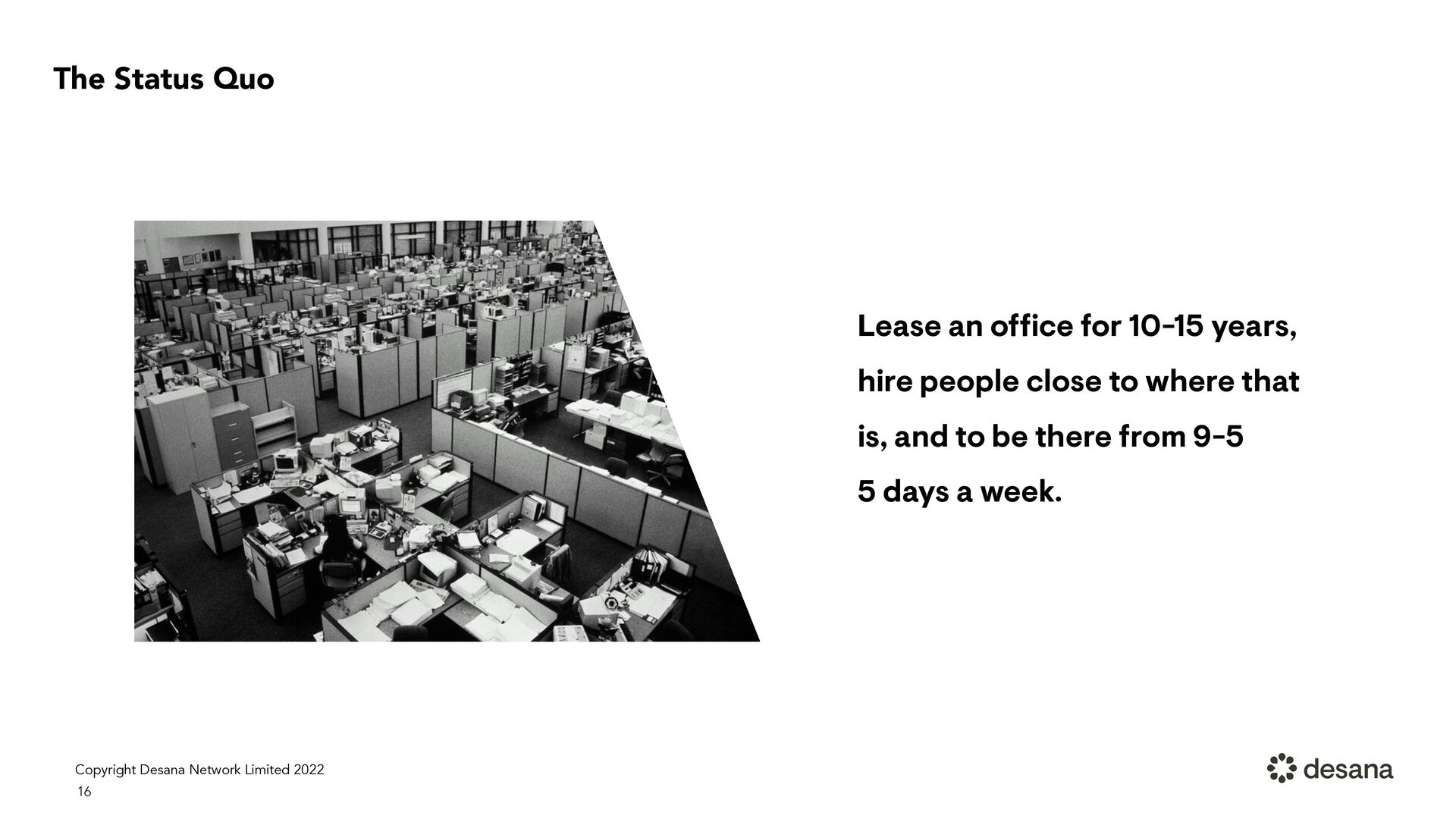
I kind of sit with one foot in the **** office space and one foot in the we all need offices to do work. We need a blend, actually. And this is my point. But the status quo of renting an office for ten to fifteen years, hiring people close to where you have that office, and telling them to be there from nine until five, five days a week is dying slowly in front of our eyes.
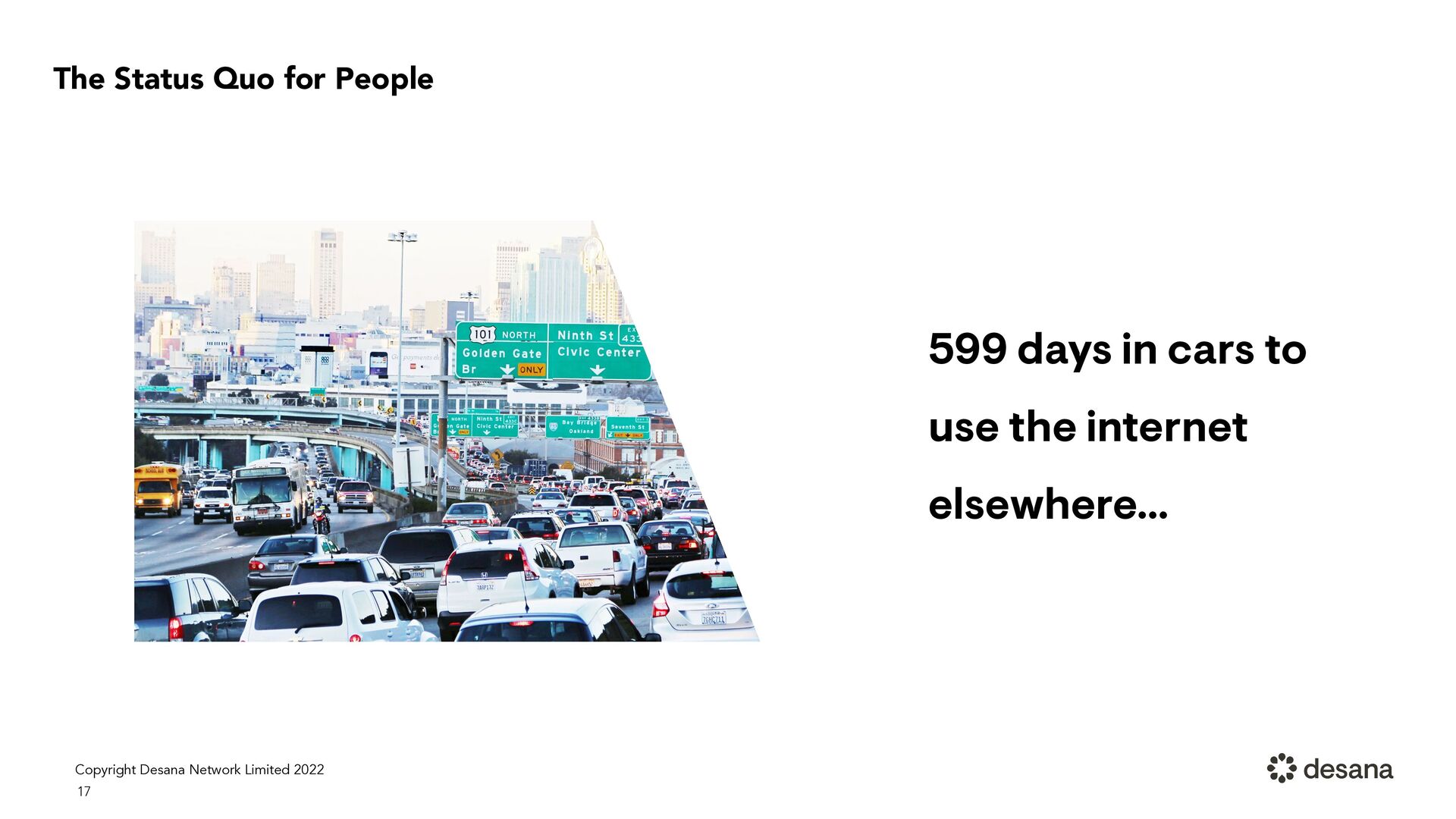
I could argue, and I'm about to argue, that it's never fundamentally worked. We now have the technological and physical resources that means that we no longer have to operate with this dysfunctional model. The average commuter in London spends five ninety nine days of their life in a car going to and from the place to use internet.
In twenty years' time, when your kids are eighteen and joining their employer, they're gonna look at this like the horse and cart, in my opinion. Dad used to get in your car and travel to sit in an office using the internet elsewhere. It's not necessarily good to be doing this five days a week as a human being unless you've got some weird obsession with sitting in traffic.
And I think we can all agree there's aspects of it quite nice to get lost in your thoughts. But doing that every single day is miserable and it's terrible for the planet. So we all get on the infrastructure at the same time, it sits pretty dormant for most of the day and then we get all back on it at the same time.
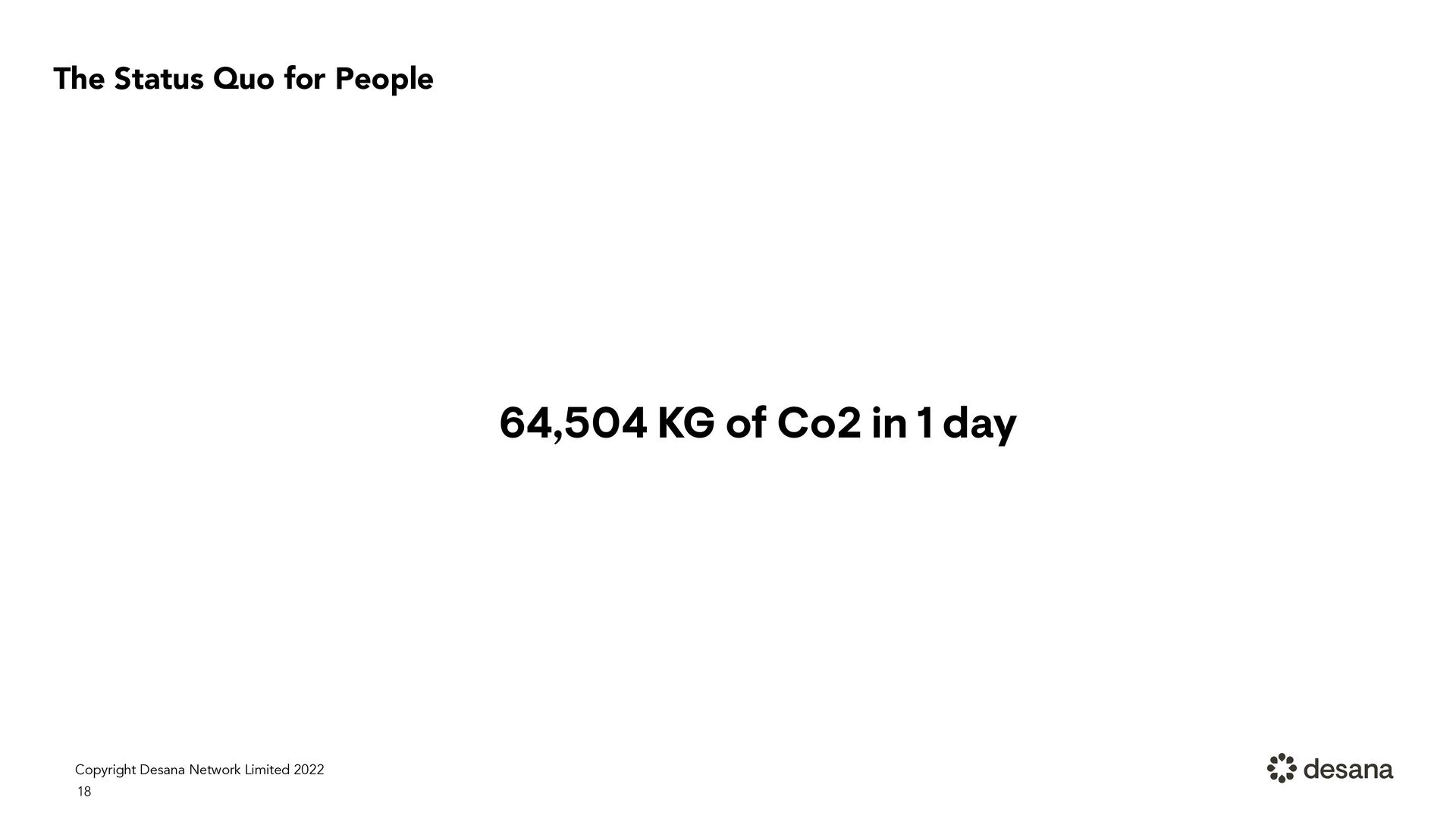
And we've got the ability to fundamentally rethink this and fundamentally rethink the way cities work and our entire society works and mitigate the need for sixty four thousand five hundred and four kilograms of CO2 in one day, in one country, which is Germany, which was the easiest stat to get in the weekend that I put this together.
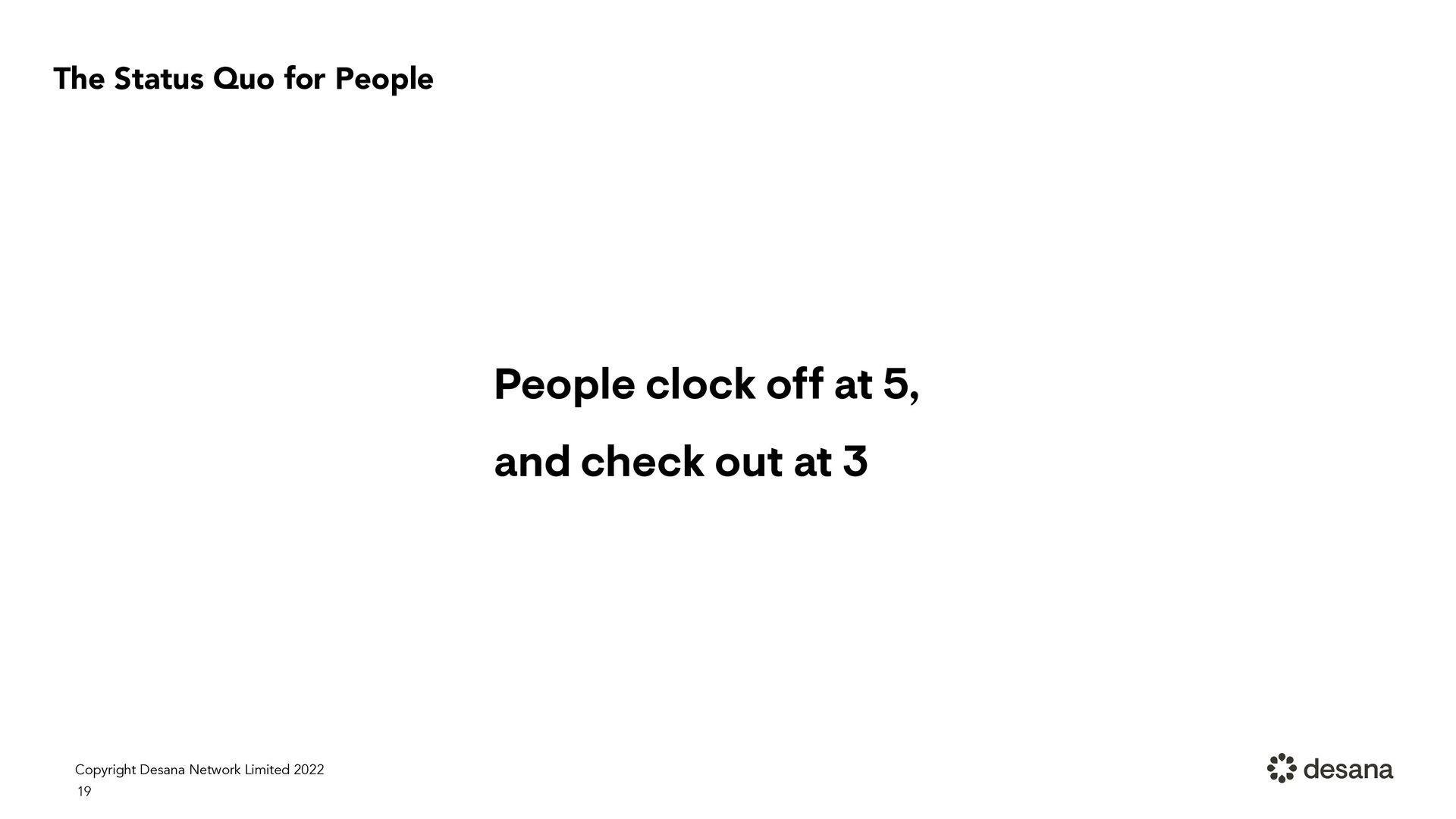
So that's a hell of a lot of CO2 going into the atmosphere just to use the internet in a different location. People clock off at five, so this whole nine to five, five days a week. They clock off at five and check out at some point during the day.
So this idea that we need office space for people to be productive, for people to be part of the culture, it's just completely false. I have a friend, I've not seen him in a while, but a friend I went to school with, he worked at one of the large banks, he worked in his office, was a good boy, got in his car at eight o'clock, got the office at nine zero five and left at four fifty five.
And he was with pride told me that he would spend an hour or two playing Angry Birds in the toilet. And it's like, you know, so I think that's a really great analogy for, you know, we need people in the office so we can see them being productive.
Neil bypassed this. He managed to find a corner in the bathroom. He locked himself away completing Angry Birds on his company's time. Well done, big bank. Your system works. No, it doesn't. It's broken. So there's a myth that this centralised culture of office spaces cures all of our inefficiencies as a company and it's simply not true anymore.
The way that you hire people as a company has fundamentally changed. Does anybody in the room, quick show of hands, try to hire a developer? If you're not Travel Perk, Travel Perk are desperate to hire developers. You've seen their efforts outside. Has anybody tried to hire a developer recently?
Are you still shaking? I am. So the needs of people have fundamentally changed and it came up last night at the dinner. You need to give people more of what they need to convince them to work for you. You need to give them massages and lunches.
Actually, don't need to give them any of that. I'm about to tell you what certainly we think you need to give them. Have a story here to quickly say. We tried to hire a developer, offered him ninety thousand pounds He took a job for one hundred and fifty thousand pounds at crypto dot com.
And it's like, Okay. Well, the war on talent is palpable, as you can see with Travel Perks' effort. Fly the drone into here. Give us your email address. Please work for us. And so the war talent is palpable. And this old model for office space is just not going to cut it anymore for the bleeding edge of that war on talent.
I was at a real estate conference recently, which I hope none of you have to go to. They're terribly boring. And the real estate industry is an archaic suit and tie industry, but the trainers are kind of slipping in there, so the dress code's changed a bit.
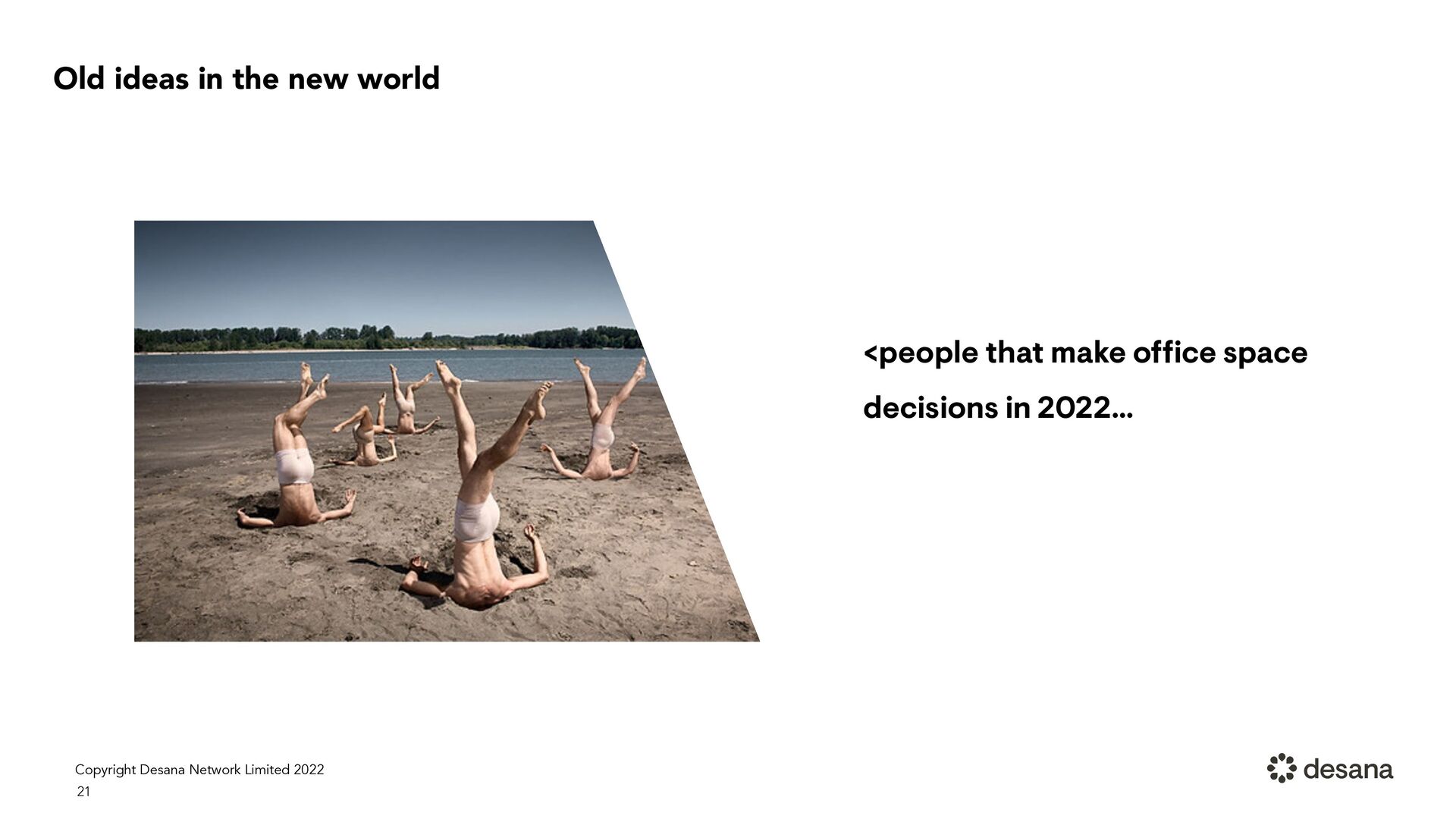
This is a photo from the, yeah, this isn't actually a photo, it wasn't outdoors. So yeah, this is a representation of how a lot of real estate decision makers are acting in twenty twenty two. This is meant to represent a sort of old tradition in the real estate industry where you'd go down to the beach and you would No, it's to represent that some companies still fully have their head in the sands, are upside down and are naked with how they're thinking about office space, even though the world has fundamentally changed.
Here's some stories. So we've spoken to over five hundred companies. We work with some of the biggest companies in the world to help them evolve the way they use office space. And this is a company that we've been quite close with. I won't name these companies because I'll tell you after if you find me.
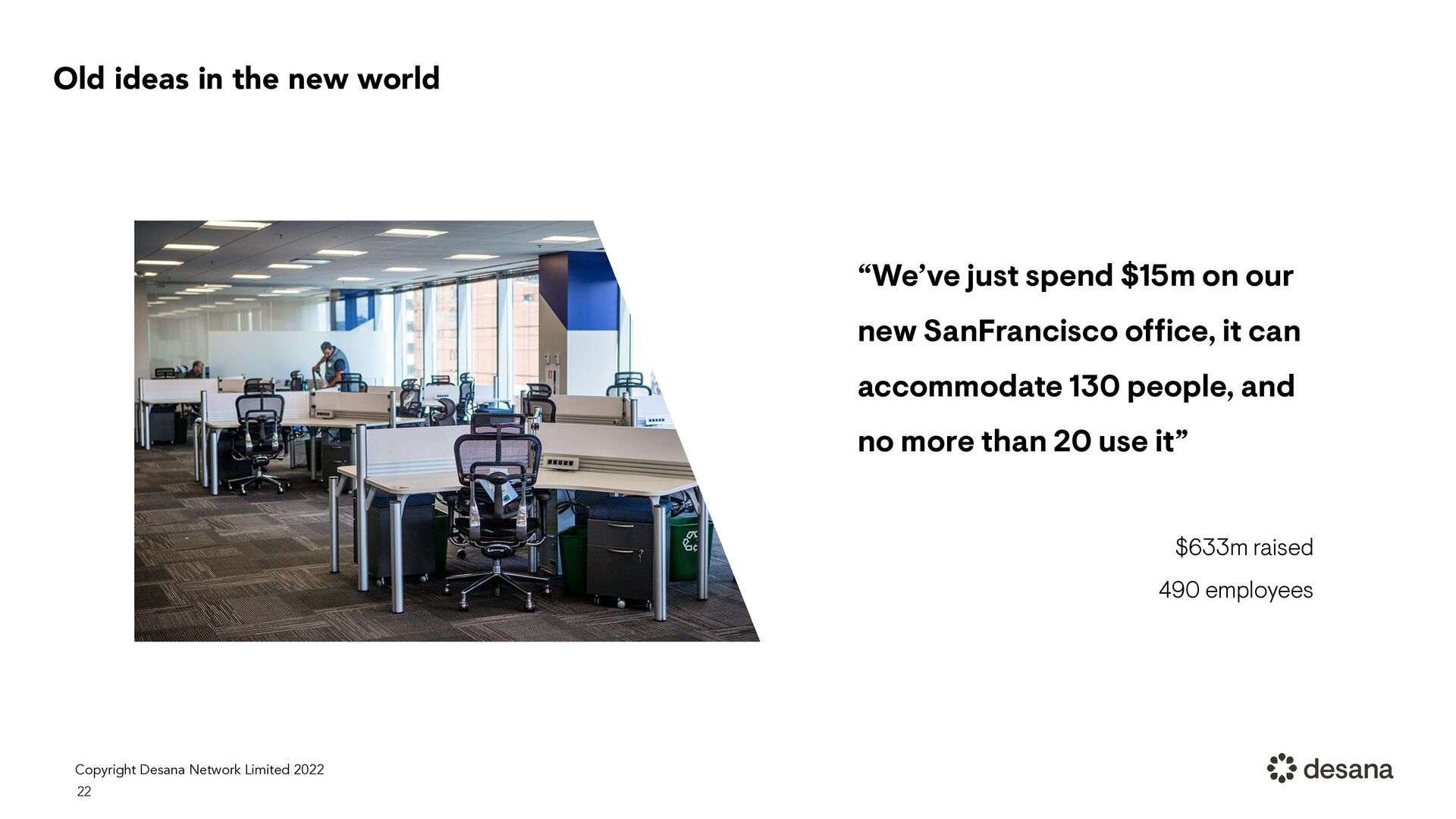
So this company is four ninety employees, growing really quickly. They've raised six thirty three million dollars They spent fifteen million dollars on making their San Francisco HQ look very pretty. It can accommodate one hundred and thirty people, which is how many people they have in San Francisco.
And no more than twenty people use it. Most days of the week, nobody uses it. Why? I don't quite understand done that. And they're sitting here going, oh, nobody's coming in. We can't tell them to come in because they don't still. We put lunch on and we have a game and they still don't come in.
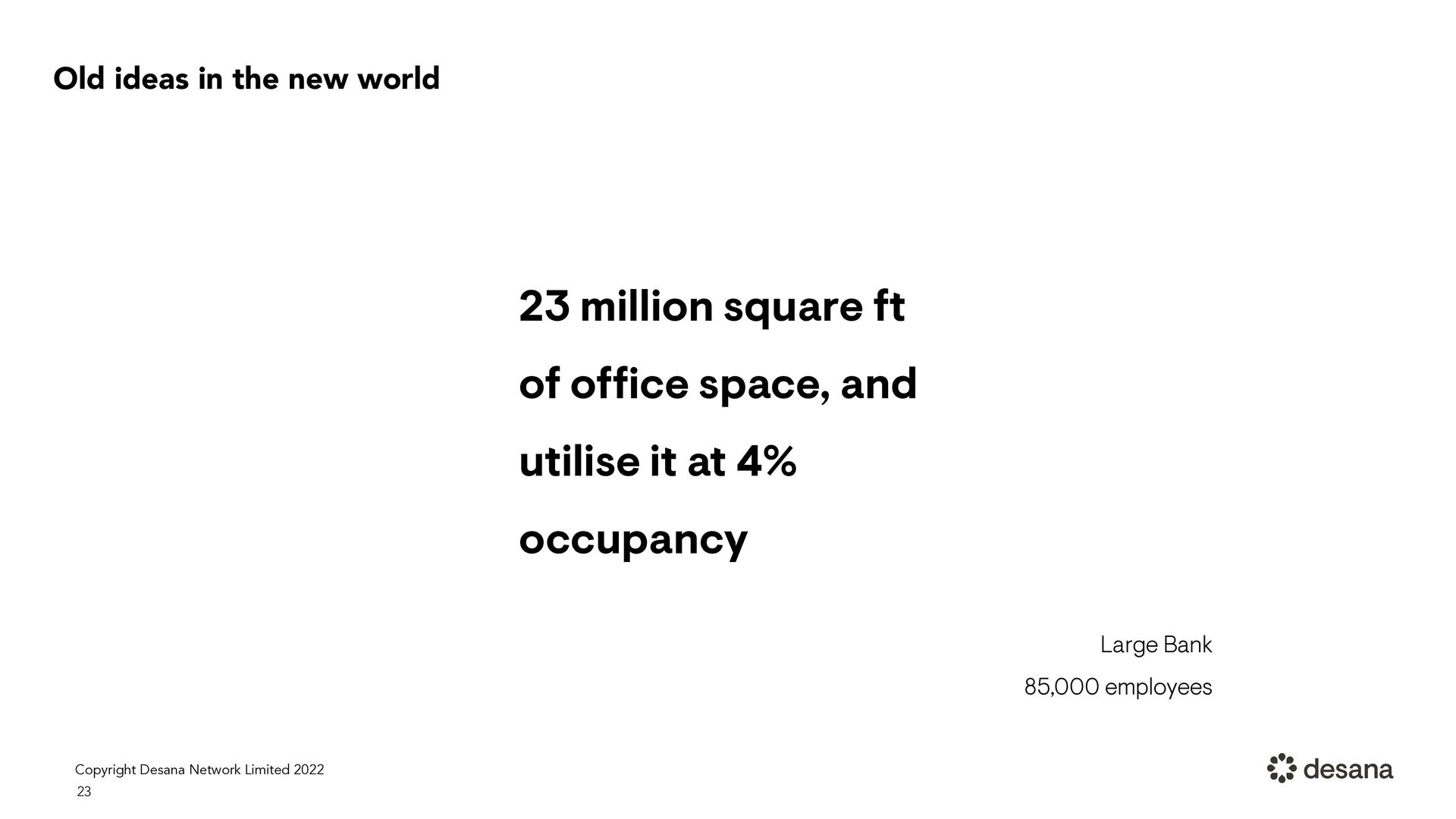
Why is that? I think we all know why. This is an example from a large bank that we've been speaking to. They occupy twenty three million square foot of office space. Before the pandemic, they occupied twenty four million square foot of office space.
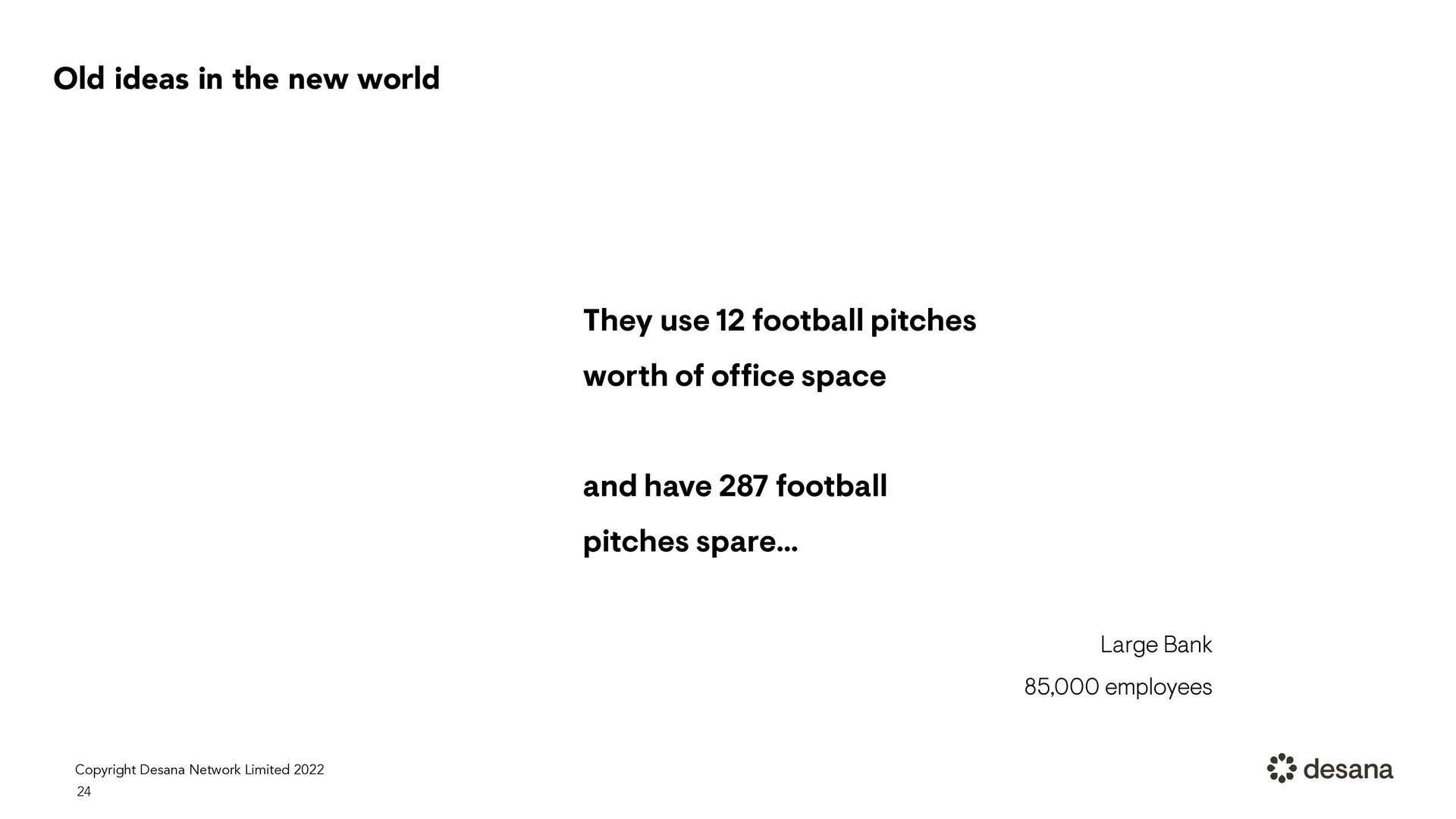
They let go of a million square foot of office space and they occupy four percent of that twenty three million square foot. So they used twelve football pitches of office space. I put this in football pitches because square foot means nothing to me either.
So they use twelve football pitches of office space. And they have two eighty seven football pitches just kicking about. They don't know what the **** to do with. And the head of real estate, we deal with the global head of real estate at this large bank, and he literally doesn't know what to do.
But we're still making decisions like this. Every single technology company that's scaling that we've spoken to is leaning towards this old model, which is why I've brought this up because I'm like, stop leaning. We spoke to so many that have gone to the old model and it's not working and they're going, what's going on?
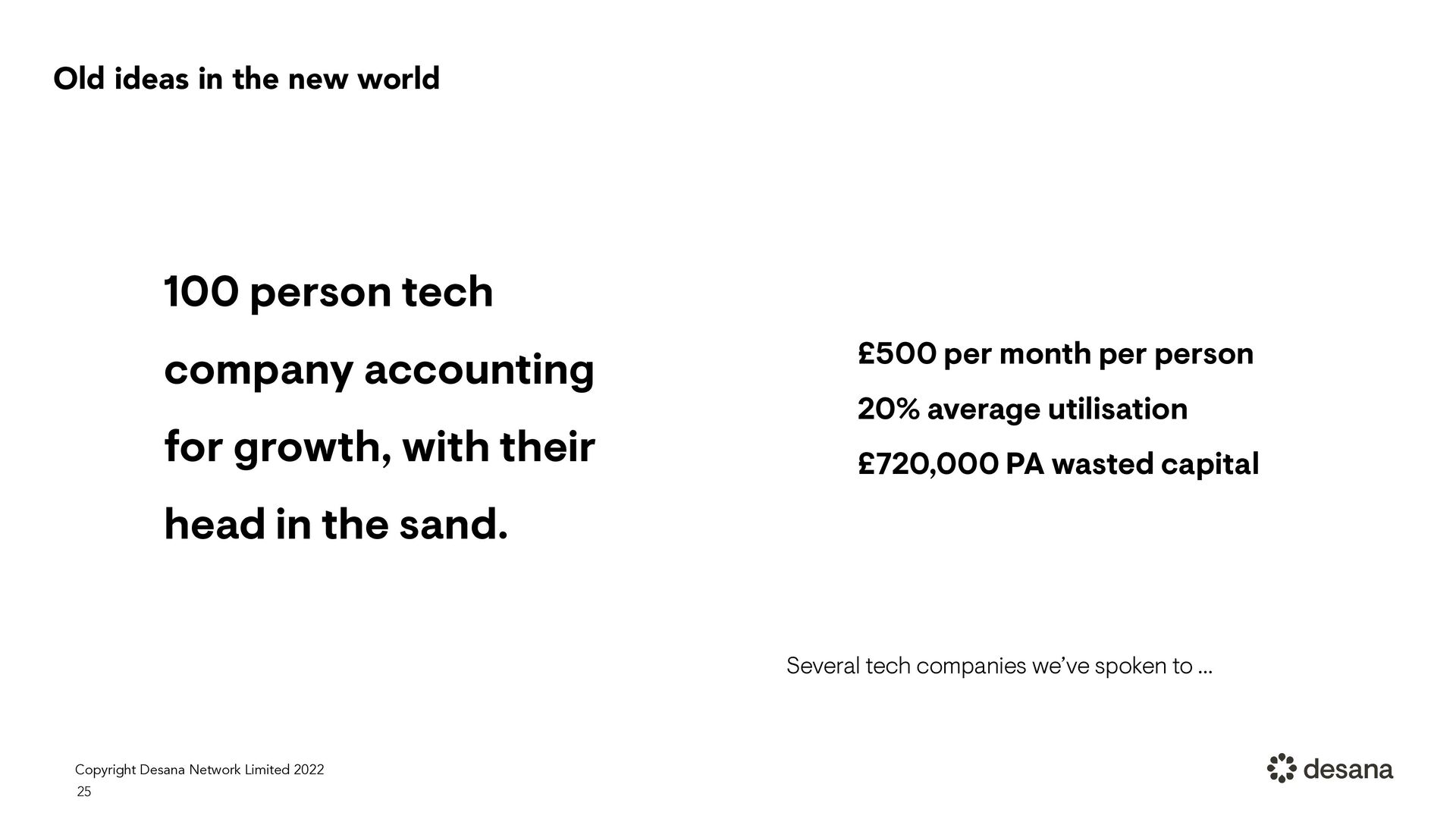
A one hundred person tech company that's accounting for their growth will typically take more desks than they need, right? So if you're scaling your company and you're working from an old model for office space, everybody needs a desk. And when you hire the fifty, one hundred people that you're going to be hiring in the next six months, they need a desk to come into.
So you take a one hundred and fifty person office and if you're in central London, for example, you're gonna at least be paying five hundred pounds per month per desk. We're seeing these companies utilize it from like zero percent to twenty percent. Percent.
So we're seeing these companies utilize a very low percentage. And they're kind of somewhat okay with that because they've just done a big round of funding and a bit waste is okay. They're wasting seven hundred and twenty thousand pounds a year on something that they don't need.
And this kind of default way of thinking boggles my mind a little, that we're willing to accept that level of inefficiency. We're kind of establishing that model for office space, office space model for the culture of the company where everybody should be in nine till five isn't necessarily good for people.
And yet, this is still the safe and easy thing to do. Nobody's getting fired for making this decision. They're just going, oh, what's wrong with the culture? But we're willing to accept that level of inefficiency. And I would argue that this model's never worked.
If you could quickly This is the third raise of hands. Maybe I'm doing too much audience participation. But if you consider yourself an introvert, where you get more energy being on your own with your own thoughts, raise your hand. That's maybe half the room.
Extroverts, more confident hands. We're all fundamentally different. There's some people cannot concentrate with any noise. I'm in the camp where I need a bit of noise and stuff going on around me so I don't feel lonely. And I won't look into why that is. I don't know why that is.
That's why we started a company. That's actually why we started this company, weirdly. I love this quote. This is a friend of mine, a guy called David O'Coyman. He's Irish. And I was saying to Steve, my business partner, this morning. I might do his accent. I'm not gonna do his accent.
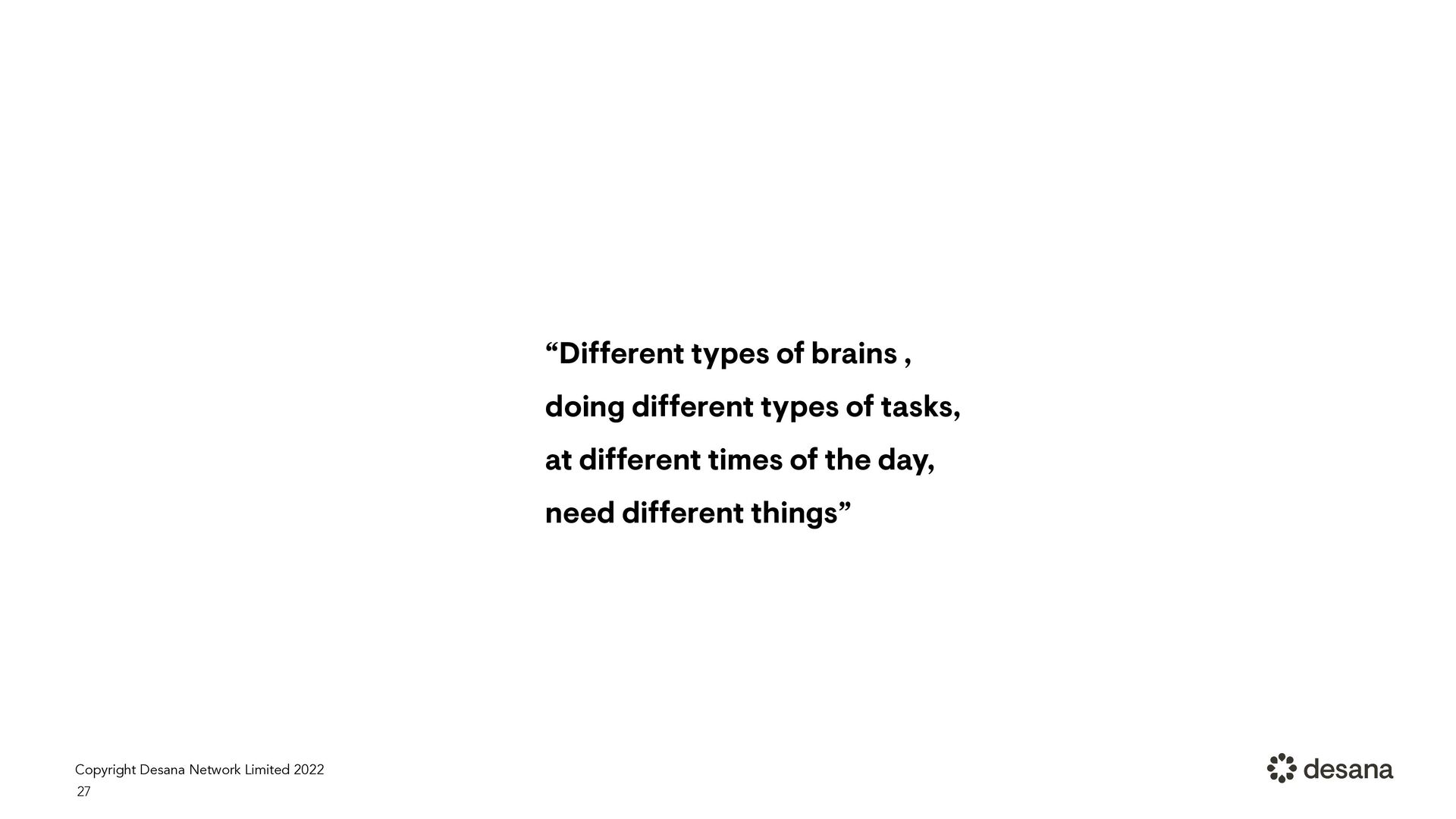
Different types of brains doing different types of tasks at different times of the day need different things. Thank you, David. That is so true. We're all fundamentally different. If you are hiring diversely, which you should be, you will be hiring people that have different types of brains that when they're doing different types of things need different things, different environments to do these different things.
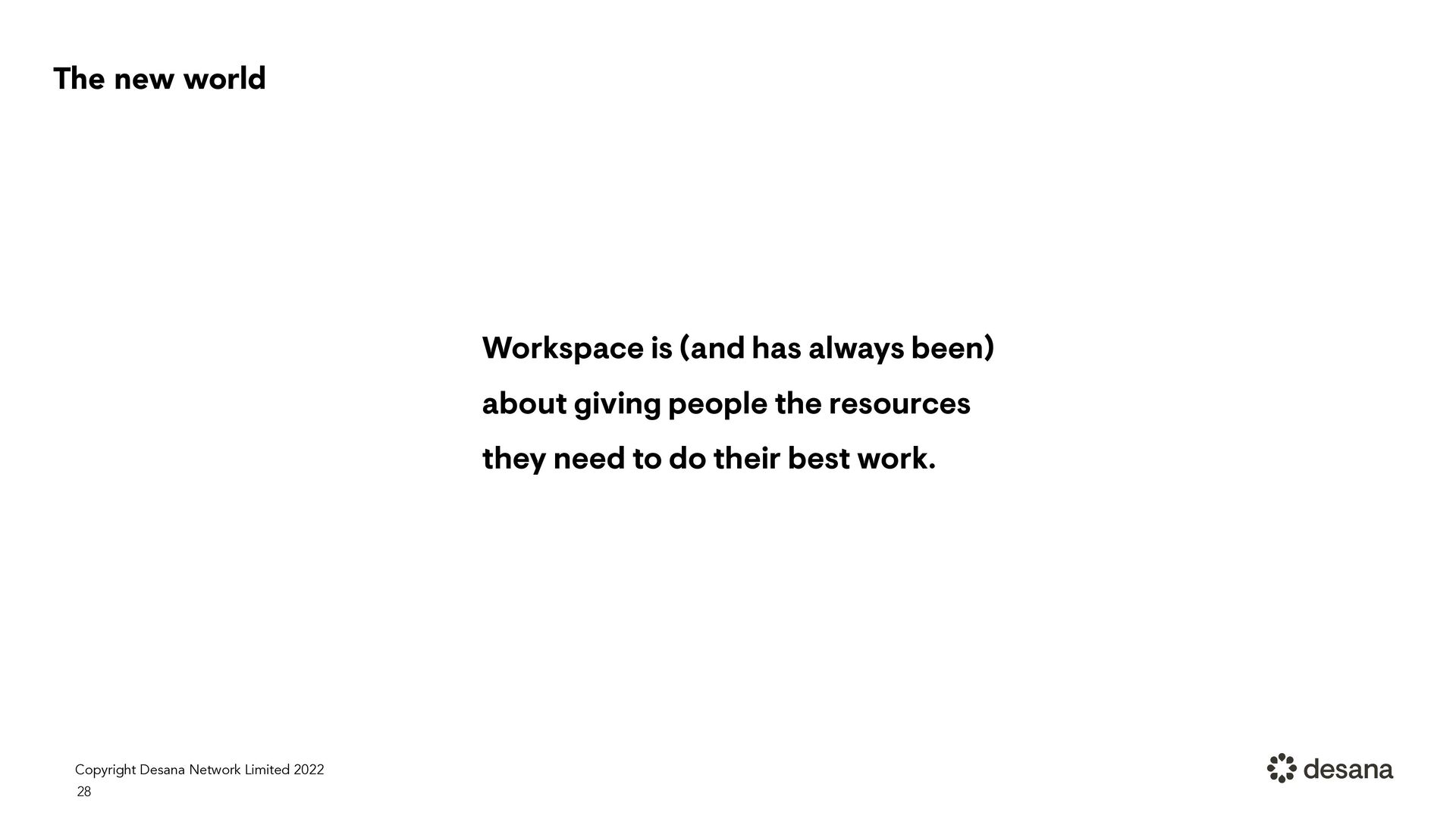
And workspace, in my opinion, has only ever been about giving people the resources they need to do productive work. And if you are in manufacturing, you need a factory, right? So I'm not here to **** on the office. I'm not here to **** on Tesla's decision to make an office first culture.
They're dealing with building cars. There's a reality of the work that you're doing. So this statement rings true no matter what way you slice it. You need to give people the right resources that they need to do productive work. And in this day and age where we've got a computer in our pocket, the only way to achieve that, especially in knowledge work, is to give your people choice, autonomy, and trust.
You can't micromanage meeting everybody's needs. It's just not feasible. You need to curate set of things and give people the autonomy to use them. Not the freedom. Don't like the word freedom because that suggests that we need to just lie down and let people do whatever the hell they want.
That's not necessarily the case, but we need to give people choice and autonomy. And you cannot exercise choice and autonomy pleasantly without being trusted. And I don't know how you feel when somebody doesn't trust you, but I don't like it when somebody doesn't trust me.
And I'm sure the people that work for us would appreciate being trusted as well. So I think we owe it to us all, yourselves and the people that work for you, to trust them. And in fact, that is one of the most important parts of the evolution of the way that we use space for work, is to trust people.
And that we should be creating workspace strategies back from the needs of people, back from the needs of the business, and back from the needs of the planet. And I think this is kind of the order. You could muddle them about a bit.
Maybe you should put the planet first, but then you make all sorts of bad decisions for your business. So if you meet the needs of your people somehow, ideally they give more of themselves to the business if you give them choice, autonomy and trust.
They're not doing this in a wacky way that doesn't allow them to do good work for the business. And if we do this in a sustainable way, like not occupying twenty three million square foot of office space and only using four percent of it, it should be good for the planet.
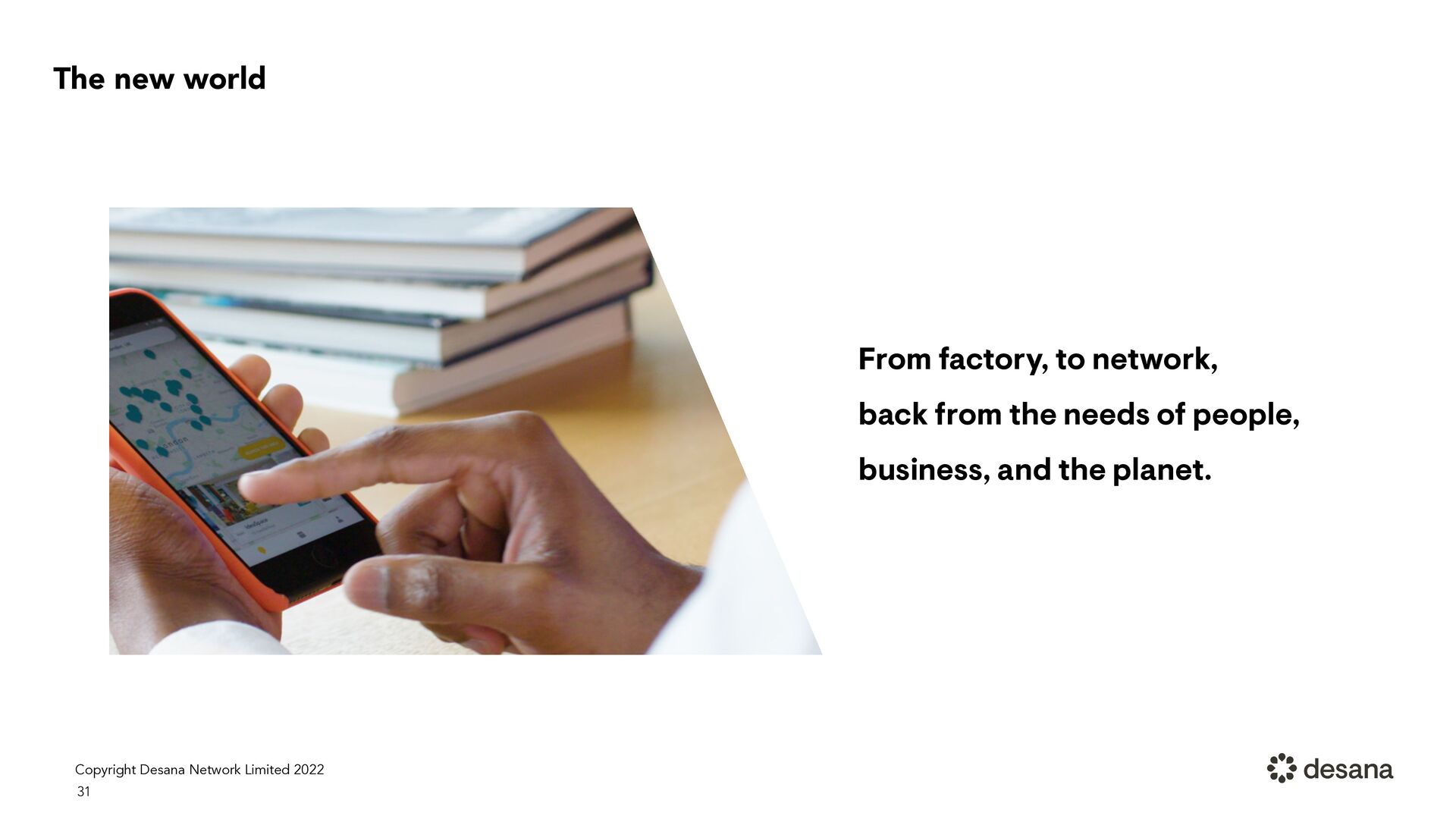
It should be better for the planet. So I put it to you all that we should be moving from this model of a factory for office space, like we've been for the last two hundred years, and some of these companies that we've been speaking to are still doing today, to a network of different solutions that work back from the needs of the people, needs of the business, and needs of the planet.
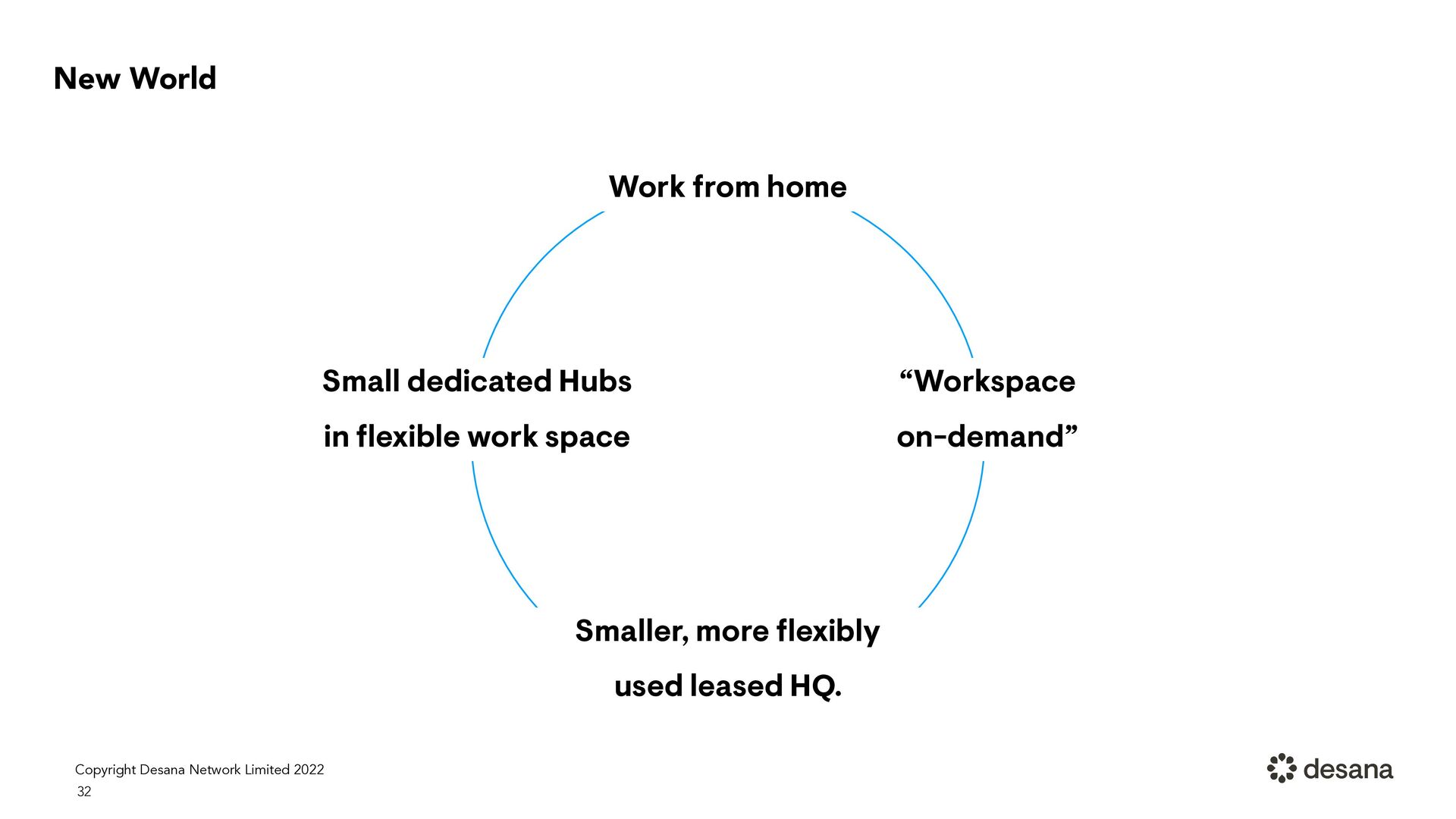
So what does that look like? I'm gonna try and give you some practical stuff here. So this model is something that we're seeing more and more companies move towards. I'm not saying this is the death of the lease, the ten to fifteen year leased headquarters with the big logo, welcome to KPMG Canary Wharf.
Nobody wants to be here. So welcome to KPMG, smaller, more flexibly used HQ where there's like a nice coffee machine and somebody that'll do a yoga class with you in the afternoon. Smaller, more flexibly used with more amenities and more service that isn't necessarily a farm of desks is the new model for the HQ.
We're seeing companies hire in a distributed way, and this causes all sorts of new challenges for office space when you've got people in fifty countries and an office space in one. So we're seeing companies adopt the use of flexible workspaces. The name that, it's so funny speaking to people the last couple of days, the name that comes up the most is WeWork.
So WeWork, I actually really like WeWork. So that's the most known name in the flexible workspace industry. WeWork are part of a category with thousands of other workspace providers that provide flexible workspaces and we're seeing companies at scale adopt offices that they can use for a month.
They're contractually obliged to only use it for a month or six months or a year, right? Which is radical when it comes to office space. When you've been signing ten year commitments to space, so you can use this for a month and then let it go if you don't need it, changes the game.
So we're seeing companies use small dedicated hubs and flexible workspaces where they need them. Work from home, we're all very familiar with work from home now. Some of us are far too familiar. And it makes up this tapestry, this network that we need to adopt for the modern way of using workspace.
So work from home is no longer a thing you do on a Friday. It's a thing you do when it is best for you in the business to work from home because some people are more productive, some people prefer it and give more of themselves to the business because of it.
So you need to take it into account. And then there's this new category that I'm very biased for called Workspace on Demand, which is the ability to leverage the entire network of flexible Workspaces, so WeWorks of the world and the other brands, the ability to use these as and when you need to.
To book in and walk in straight away and only pay for what you use, giving people more flexibility, choice and autonomy over where and when they use space, close to wherever they need to be. So this is now the new kind of tapestry of solutions that you can leverage.
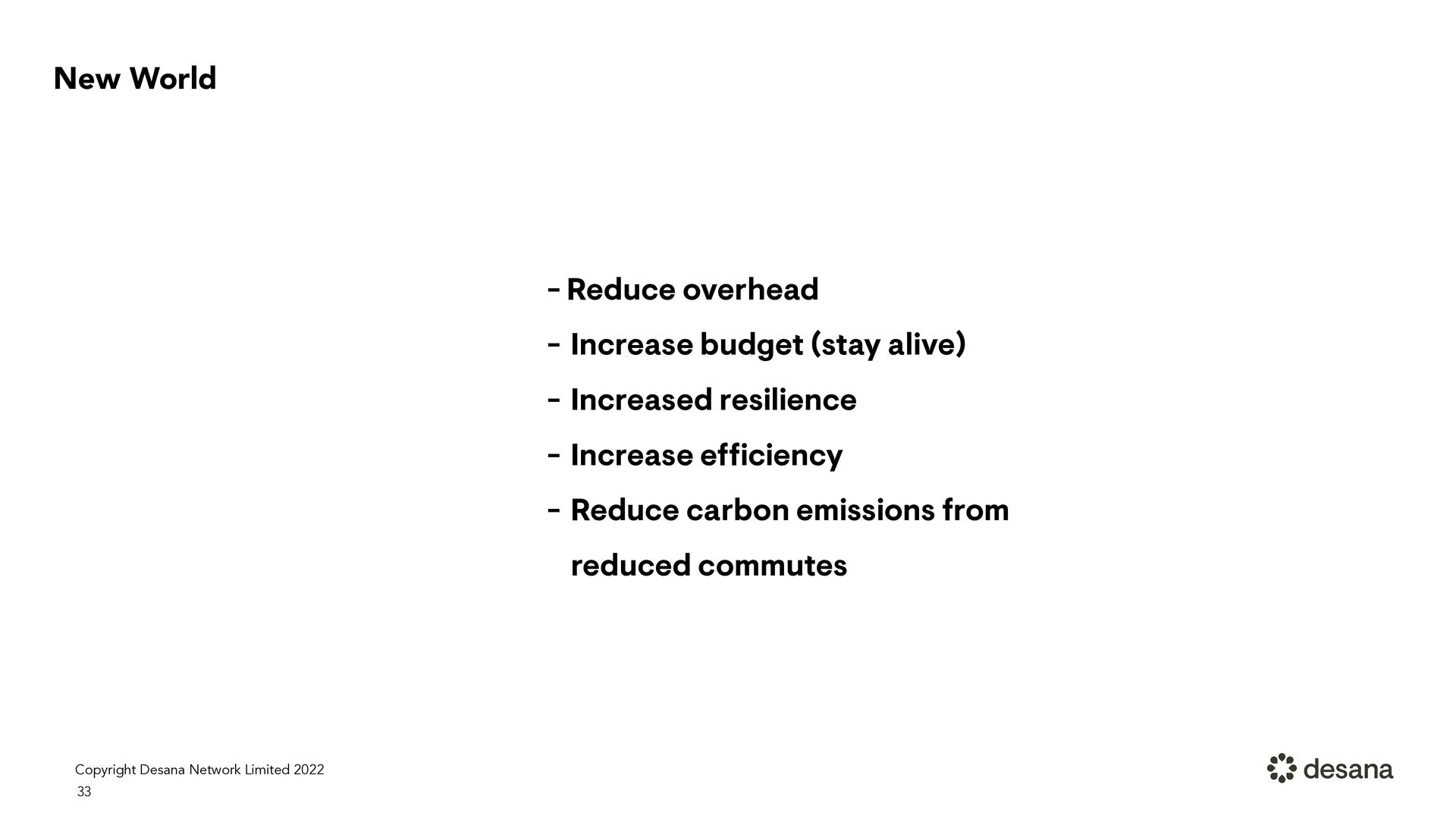
So I would encourage you to check out or start thinking about how you balance this network of different solutions rather than we need a desk for every single person in this company. If we move to models like this, we significantly reduce our overhead and increase budget for other things.
So the seven and twenty thousand pounds that you've been wasting on the office that you took in central London, can you imagine what you could put that capital to work within the business? Whether it comes to employee perks or mental health initiatives or whatever you wanna focus on that's just not money in the bin, you can focus on.
You can even, in this environment, just stay alive a bit longer, which is one of the challenges in early stage tech at this point. It's more resilient, right? So if there's some kind of catastrophe, bad weather, your company now has the ability to keep going even when the physical infrastructure is broken.
So if you can't go into the office because there's been a flood or some kind of natural disaster, your company isn't mind because they're totally set up for everybody to work from home, everybody to work from a hub, everybody to meet their own needs outside of that centralised office.
It increases efficiency, reduces commutes, reduces carbon emissions. Overall, having this kind of blend of different solutions is better in almost every single way to the company. I would argue that companies that don't embrace this new model need to evolve or they will die.
They will lose the war. It'll be a slow, painful, withering death of like, why isn't this developer working for us? And overheard yesterday somebody saying, we need to give flexibility, not as a perk, but as a native part of the culture within the company.
So companies that don't embrace this new model will need to evolve or they will slowly die. In summary, the world has changed and there's no need to continue this dysfunction that comes from these traditional nine to five, five days a week in the center of cities models for office space, where we take inspiration from the factory.
Workspace has only ever been about giving people the resources that they need to do productive work. It is not about a desk in an office. It's about the resources they need to do productive work. Everybody is different. Half the room said they're an introvert.
Half the room said they're an extrovert. That's far more nuanced than just introvert, extrovert. We're on a spectrum of that. So some days you'll feel like you're an introvert. Some days you'll feel more extroverted. The reality is if you're hiring a diverse group of people to do different tasks, the only way to meet their needs is to give them choice, autonomy and trust.
And you cannot do that effectively in this day and age where you have a computer in your pocket with the old model for office space. So moving to this new blend of different workspace solutions, working back from the needs of your people, the business, and the planet, can give people more choice to work from home and be a better mother, a better father, better brother, more healthy, a better dog owner.
We're all dog owners now. You can spend less time commuting, spend less money in Pret a Mangier. You can spend more time exercising and there's some people, as I said, we got really fit and really healthy from having this newfound choice in autonomy.
In my opinion, it can change absolutely everything. Thank you.