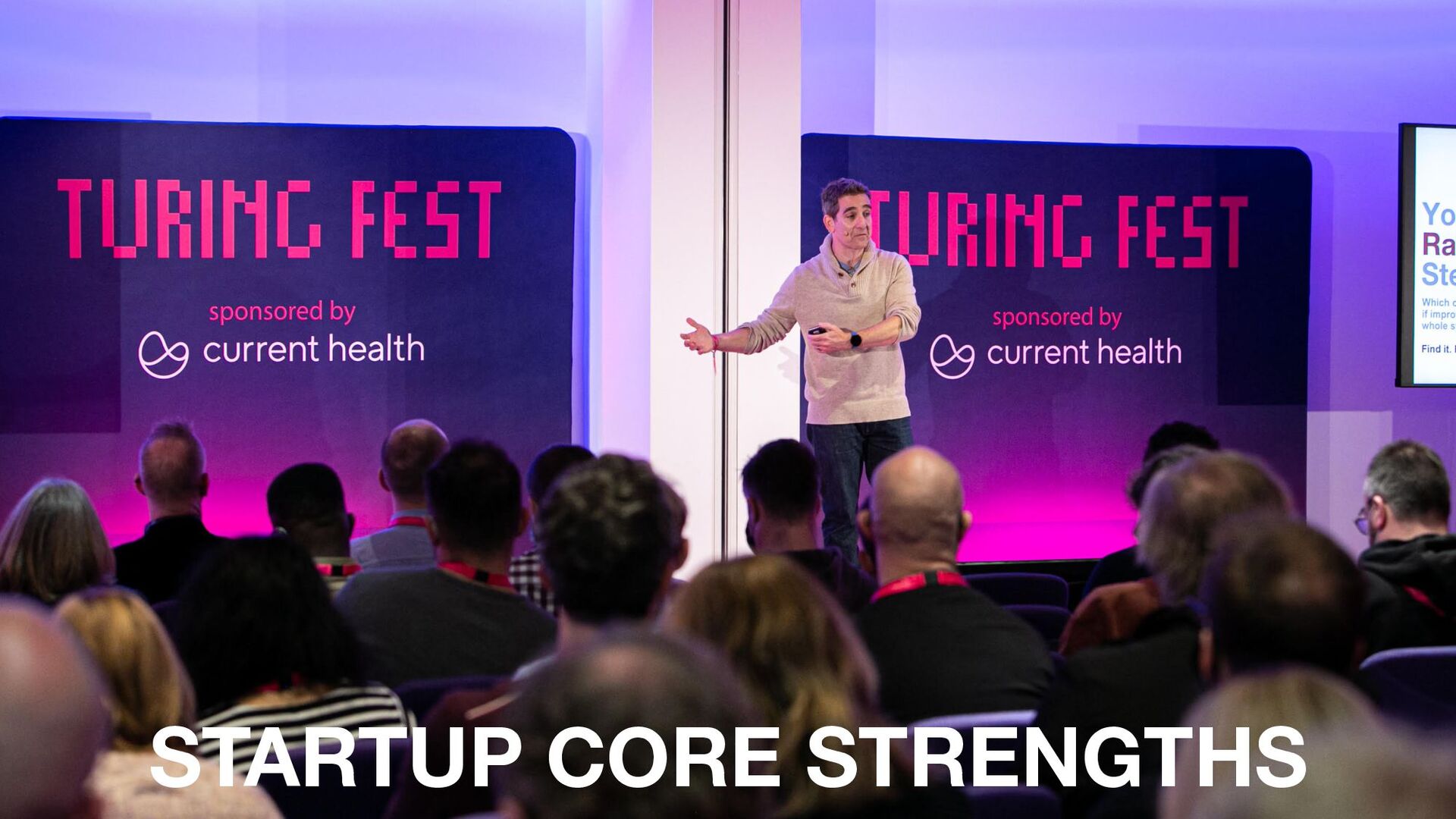
Matt is the co-founder and CEO of SYSTM, and bestselling author of Growth Levers and How to Find Them. Previously he built and ran growth teams at PayPal, and became a partner with the Silicon Valley VC fund 500 Startups. Matt occasionally lectures on Startup Growth at Imperial College and Stanford Business School, and of course TuringFest!
Matt shares how a chat with a theoretical physicist upturned his mental model of startup growth and revealed the two starting assumptions every great startup works from.
Follow Matt's presentation here.
1 / 31 Use ← → to navigate
Auto-generated transcript - may contain errors.
Tap a timestamp to jump the video.
Good afternoon. Just barely afternoon, but good afternoon. So if you can take out a piece of paper, your phone, wherever you write, I want you to answer a question right down the answer to this. So whatever you're working on right now, startup, business, project, book, whatever you're working on, imagine we're two years out, and I apologize, this is kind of grim, but imagine it's July two thousand twenty four, and imagine that thing failed.
Imagine it just as a shadow of what you had hoped. What went wrong? What probably went wrong that led to that failure? We'll come back to that. But first, I wanna tell you about a conversation I had with a physicist. So this guy, he's a possible candidate for the Nobel Prize.
He was on the team that helped discover the Higgs boson in the Large Hadron Collider, much more interesting than marketing. But why would I end up talking to a physicist? Well, it turns out that in addition to discovering Higgs boson, in his spare time, he's got a start up.
And people who have start ups, for some reason, keep getting introduced to me to talk about growing start ups. So I'm obviously American, and I started my career in Silicon Valley. The first startup I joined was dead in nine months. The second one was dead in only six months.
That's considered progress in the Valley. Fail fast. The third one we sold for forty million dollars, and that's considered a small exit in the Valley. But for me, was like, woo hoo. So I finished my earn out, quit, traveled, took some time off, came back and joined the early growth team at PayPal.
And to be honest, it's legendary now, but at the time, I didn't. We didn't know that. There was no mafia or anything like that. I mean, to be honest, I was pretty excited about the eBay acquisition because it meant I could write eBay on my resume instead of PayPal.
And I'll tell you when the but what I did know is these were smart people, and we were doing cool stuff, and it was working like crazy. I knew that. And when I first had an inkling that we were on to something special, I got invited to guest lecture at Stanford Business School.
That should have been my first clue. But I sat down with a professor, and just to prepare the talk, I asked for a copy of the syllabus. And I read through it, and I realized and this is Stanford Business School. Right? This is the cradle of entrepreneurship and thought leadership in the world, in Palo Alto, California in two thousand seven.
And it was like case studies of Levi's Dockers, business casual, Procter and Gamble inventing Swiffer's and things. It was just like this antique mad men advertising case studies. And I was like, really? This is it? Because we're on just a completely different I don't want to use that cliche, like playing four dimensional chess and stuff, but we were just doing completely a different level of stuff.
Actually, John Collison says it well, the the cofounder of Stripe. I heard him in a podcast, and he said, in Silicon Valley, there's a set of secret playbooks that go from company to company in people's heads. And what reinforced this for me was when I left PayPal, I became a VC in London, and I started meeting with hundreds of companies every year.
And I could see their thinking and their strategies and their approaches and their numbers and their results. And again, I realized, like, I've seen these secret playbooks. And so then I founded StartUp Core Strengths to basically start to disseminate that information, share it with the world, help people adopt some of these processes and practices.
So here I was, and I got introduced to, you know, another entrepreneur who had a question about growing his start up. I said, okay. Why are we talking today? And the physicist said, because I don't understand marketing. I said, I mean, with all due respect, that's ********.
Because before I take a call like this, I scope the site, I check his trial, his install numbers on App Annie, I check SEMRush, I Google his fundraising rounds. Like, I know he's built a successful business. And not only that, but I know he's built it off a very clever SEO strategy that's working really well.
I told him, like, actually, you do understand marketing. You've done this, this, this. So why do you think you don't understand marketing? And he said, well, Matt, we've gotten to the size where I need to hire a head of growth, a head of marketing.
I'm interviewing these candidates, and they're telling me this stuff. And the more questions I ask, the more confused I get. And it's just clear to me, I don't understand what they're talking about. And I'm imagining like Socrates here, you know, and like what he's a physicist, so he's trying to get to first principles, he's peeling back the layers, and it's like, you know, the emperor has no clothes there.
They're bullshitting him. So I I told him he understood marketing better than he thought. And now let's do a thought experiment, because physicists are famous for doing thought experiments. Einstein, before he was even in a university, physics was his side hustle. He worked in patent office in Mainz, and he did this thought experiment.
And I know there's some physicists in the room, Ian, whoever else is out there. I'm not a physicist, I was a philosophy major, so I'm going to butcher this. But basically, Einstein imagined he was in an elevator accelerating through space, and he could feel the weight down as he accelerated.
And he realized that inertial mass and gravitational mass are actually the same thing. And the equivalence the equivalence of inertial and gravitational mass was the foundational concept that helped him come up with the whole idea of general relativity. So theoretical physicists sort of think through stuff.
So here's a thought experiment about growing a start up. So take and this is going to sound crazy, but whatever start up or project you're working on, imagine you're right. Whatever you put on the market size opportunity slide, gazillion, trillion dollar market cap opportunity, whatever you told the investors, imagine that's right.
Imagine the startup you're working on is inevitable, because the best companies are inevitable. Right? As soon as there was a World Wide Web, there was going to be a search engine. As soon as, you know, we were all on that Web and with apps, there was going to be social media.
Like, Facebook was inevitable. Amazon was going to happen. Like, how's there going to be a World Wide Web and people don't order stuff online and get it delivered to their house? So the best start ups are inevitable. So assume for the sake of discussion that your business is inevitable.
I mean, look, if you don't like this first principle, you could take the opposite of it, but it's kind of a yucky scenario. So just assume the years is inevitable. If that's true, someone's going to do it. It might be you, it might be someone else, which means you're in a race.
Now the cool thing is you don't actually this isn't a race to execute. You don't have to be first. Google was not the first search engine. Facebook certainly wasn't the first social network, neither was TikTok. Boeing didn't invent the airplane. Right? It's a race to do it right.
You're in a race to figure out how's this business going to work when it's successful. So I like to think of it as like a race to solve a puzzle. Andreessen Horowitz calls this the idea maze. And it's this idea, and they like when they hear pitches.
They want to meet founders who have been through a bunch of wrong turns, can show the pace and velocity of learning and pivoting from the market. So the best start ups understand that they're in a race to solve a puzzle, And they run experiments constantly, and they're listening to customers and looking at data and constantly trying to figure out solutions to the puzzle and running experiments and testing things.
And the thing is, the details the solution of this maze or this puzzle lies deep in the details. So here's a story from early PayPal, to give you an example, and this is before my time. So originally, PayPal, the idea was you were going be able to beam money from one PalmPilot to another.
Has anyone here ever used a PalmPilot? Anyone? Okay. There's a few. Obviously, that wasn't gonna be a business because none of us are using PalmPilots now. Right? And so they pretty quickly figured out PalmPilots weren't gonna be the business. They went back and they brainstormed fifty other possible use cases for when someone might want to email money to somebody else.
And then they narrowed it down to ten that they thought could be a big viable business, and they assigned each of those to an executive, and their job was to go through and bottom out the assumptions and see if this could be a business.
And then one of the early PayPal guys, a chap named David Sachs, came back, and he had another one. It wasn't on the list. He said, I was looking at transactions and reading the comments, and I noticed some of these transactions have the word eBay in them.
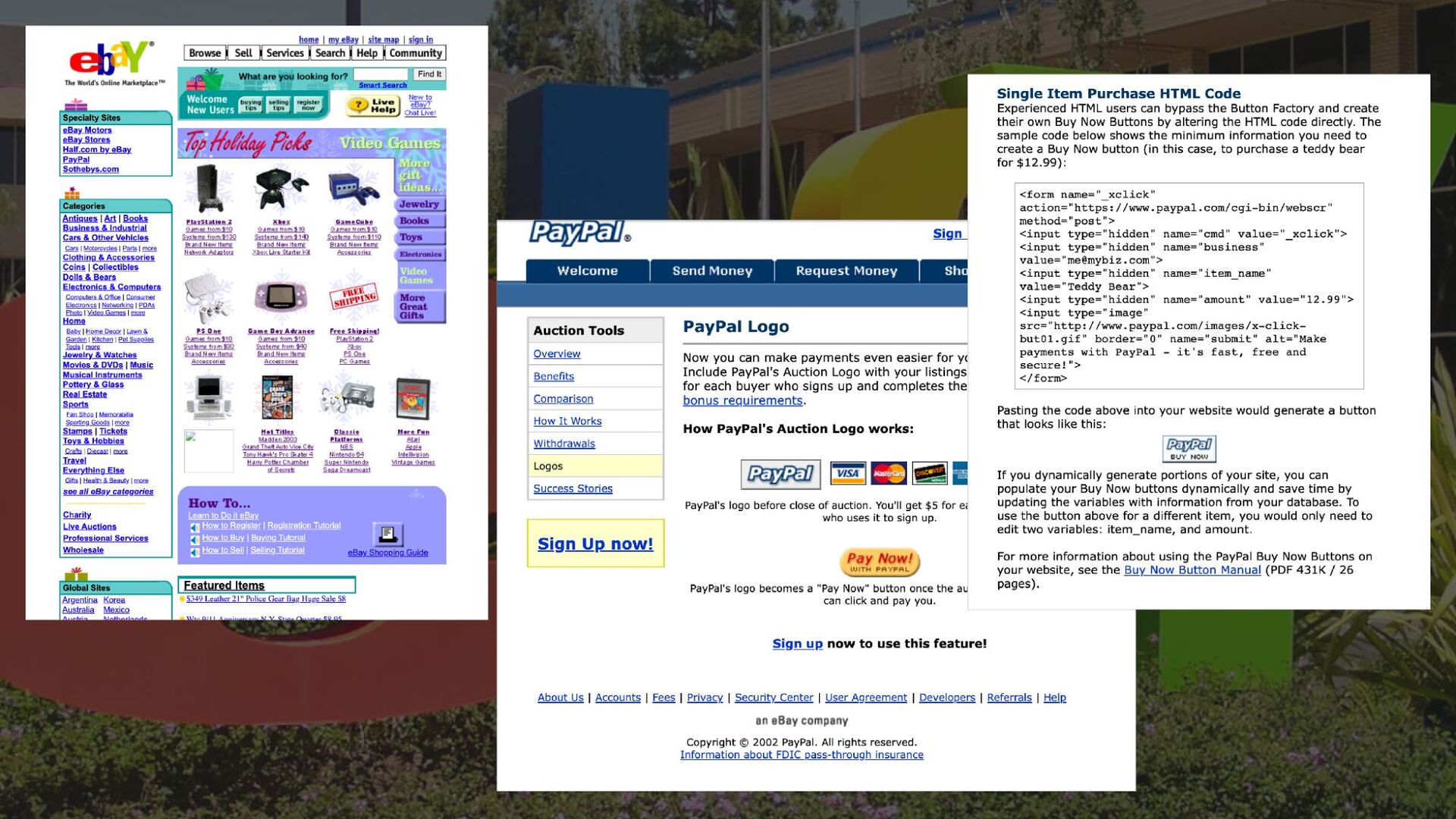
And there's this website. It's called eBay, and people can buy and sell stuff. And the founders of PayPal looked at the website, and it's like an online flea market or a garage sale. I think here it's called, what, a car boot sale or something.
Anyways, wasn't very nice. These guys went to Stanford. They were a bit snobby. Like, nah, these aren't our customers. How many are there? And David said, we've got fifty four customers out of ten thousand who are doing this. So like, no, that's not it.
Then David came back the next day with two more pieces of information. First thing he said, you have to go into your eBay listings and manually edit and write some HTML to add this link to your listing. It's hard to do. There's no tutorials.
And these sellers, some of them have fifty, even a hundred listings, and they're going through and adding PayPal to each one of them. It's a lot of work. And even though it's only fifty four sellers, the number's doubling every week. If you ever want to get someone's attention in the start up world, tell them a number is doubling every week.
Epidemiologists too, you can get their attention that way. Anyways, so the point of this story is they found and then, you know, I guess the rest is history. Like, they went crazy. So what they did is they wrote a tool, first just some code you could copy and paste.
And then, because it was a pain, they wrote a tool where eBay sellers could enter their eBay ID and their password, and it would pretend to be them, and it would go into the eBay site and automatically add PayPal buttons to all their listings for them.
And then to get more sellers, they wrote a bot to start bidding on different auction items and then messaging the sellers, pretending to be a buyer and saying, hey, do you accept PayPal? If you want to add a PayPal button to your listing, here's a link.
And the buyer the sellers all thought the buyers wanted to use PayPal, so they started adding it, and it went really quickly. EBay hated this, tried to shut PayPal down, made it against the rules. The sellers revolted. They had to bring it back.
EBay launched a competing product. PayPal crushed it. EBay tried to buy PayPal, PayPal told them to piss off, it wasn't enough money, PayPal IPO'd, and eBay ended up having to buy PayPal back off the public markets. And I think you know the rest of the story after that.
But the point is, fifty four sellers out of ten thousand. Like, when you're solving the idea maze, the answer is deep in the nuance and detail. So I explained this basically to our friend, the physicist. I said, this is really just like a science.
You look at data, you gather information, you create a mental model, you come up with some ideas, you make predictions, and you run experiments. And most of the time, they don't work. But a well designed experiment, even if it fails, gives you some information.
It takes one option off the table. It helps to focus your work. And then he said something that really blew my mind. He said, okay, I understand. But if you're right, Matt, then that means marketing is actually harder than coding. Now this caught my attention because, like, in the valley, and it's probably true everywhere, there's a certain reverence, a certain respect for coders.
They're the smartest people in the room. You buy a company to get the coders. You don't normally buy companies to get the marketers or the salespeople or the growth people. Right? They're more or less more more or less interchangeable. So I said, I don't understand. Can you explain?
And he said, well, programming is kind of easy because you take a known set of inputs and you're you know, permutate them and create a known set of outputs. And if you can code one app, you can code ten. And with no code and low code tools and things, it's getting even easier.
He said, but marketing is more like a machine learning problem. So, you know, if you're making a system to play chess, you put in all the chess you know, and then you challenge other chess playing computers. And pretty soon, it's going to see a move or a scenario it doesn't recognize.
It's going to try something new. It will get feedback very quickly to find out if that was a good or a bad move, and it will update its mental models. So it's learning very quickly, you know, whatever, a thousand moves an hour, twenty four hours a day for a few months.
You get a very smart chess playing computer. It's learning at a rapid clip. And then he explained there's a whole category of problems. They're called adversarial machine learning. So chess computers, network security, algorithmic trading, natural language processing. And marketing looks like an adversarial machine learning problem because unlike coding to a spec, you don't actually know all the inputs and outputs.
You need to learn because you're operating basically, you're operating at the edge of knowledge. Most of what's gonna make your startup successful is not yet known by anybody. And so therefore, your success is governed by the quality of your thinking, the rate at which you can take in information, your ability to experiment and learn and figure things out.
And that's what these machines do. And I thought about it, I realized the adversarial bit is really key to this, because if you think about, like, in startups, in tech, the amount of money being invested in startups probably goes up these days at ten or twenty percent a year.
The number of startups is certainly increasing double digit annual growth rates even in an economic downturn. And the number of marketers and salespeople and growth hackers, this is all going up at ten, twenty, thirty percent a year. And they're all competing for this scarce resource of humans' time, attention and money.
The number of humans in the developed world may be going up at one percent a year. The number of hours in a day isn't going up. And the amount of money in the ecosystem, right, the gross domestic product in a normal year might go up one or two percent.
This year, it's probably going to be flat. So you've got this increasing armies of companies competing with for this fixed scarce resource. So it's essentially an arms race. Right? It is very much an adversarial learning problem. So this takes us to our second thought experiment.
The first thought experiment, remember I said, imagine your startup is inevitable, someone's going to do this, and you're in a race to solve the puzzle. So the second thought experiment is, suppose my friend the physicist is right. Suppose that growing your startup is the hardest challenge your startup will face.
Growth is the hardest challenge. So that means the entire company, all your resources, the hardest thing you're going to do is growth. Now there there is a type of organization that is modeled to solve hard problems. It's an algorithmic trading fund. So these funds, they'll raise a hundred million dollars, they'll hire some very smart programmers, get them some very fast network connections, some very powerful machines, the right code to go out and learn how to arbitrage transactions, commodities and derivatives, futures and things across different exchanges,
at high volume, make a fraction of a penny on each transaction and make lots of money. And this is adversarial because there's lots of other computers out there competing against them to try to make this money. Now these organizations are incredibly intensely focused.
They hire the smartest people in the world. Like, they'll hire from, like, Caltech and Oxford and Princeton, but maybe not from Harvard if the physics department isn't smart enough, if the math department like, they're at that level. And everyone in this company's job is to make the network faster, computers more powerful, hire the smartest people, keep them full of caffeine and nootropics and God knows what, and try to win this arms race.
Now take this back to your start up. Are your smartest people working on growth? I mean, and this is kind of harsh, but, like, literally, if you took your whole team out to the parking lot and lined them up in order of IQ from one end to the other, and then you looked at the really smart end of that line, would the smartest five or ten people all be focused on the hardest intellectual challenge of growth?
Would those people get first crack at all resources, the engineering, the product, the the money? Would those people all be first on the agenda when the CEO's time and attention was being allocated? Right? Are most companies set up in a way where growth is the hardest challenge?
So that's our second thought experiment. If you knew growth was the hardest thing your company was going to do, how would you run your company differently? Now remember, we're in a race. Okay? We're in a race to solve a puzzle. So what slows us down?
What slows you down? Every every founder I meet is impatient. All want to move faster. What slows us down? Resources. Okay. Can't get the engineering, don't have the money, whatever. So I just told you, you know, you make growth first in line for all resources.
So you're hopefully solving the resource problem, but still, something's slowing people down. It's perfectionism. Right? People want to do a good job. People don't want to screw it up. People take their time and check things and want to do it right. And of course they do, because throughout their lives, this has been the optimal strategy.
It's like programming. Right? How do you get ahead in school? You don't make any mistakes. You get perfect scores. How do you get ahead in a normal job like McKinsey or Goldman Sachs? Right? By doing everything perfectly and making no mistakes. And suddenly, you're in this sort of adversarial machine learning type scenario of a start up, you're wrong by definition, because you're operating at the edge of knowledge.
Your domain is the unknown. So by definition, you're wrong. And so the sooner you can start making these mistakes and learning these things, the faster you'll go. But people come in with this mindset, because you hire the smart, successful people with great experience and good grades, and they come in and they want to do everything perfectly and they don't want to make mistakes.
So what's slowing us down really is our fear, our pride and our egos. And the good news is this is a cultural, organizational cultural sort of challenge. So the first thing, when we work with startups in my company, the first thing we do is try to help them empty their minds.
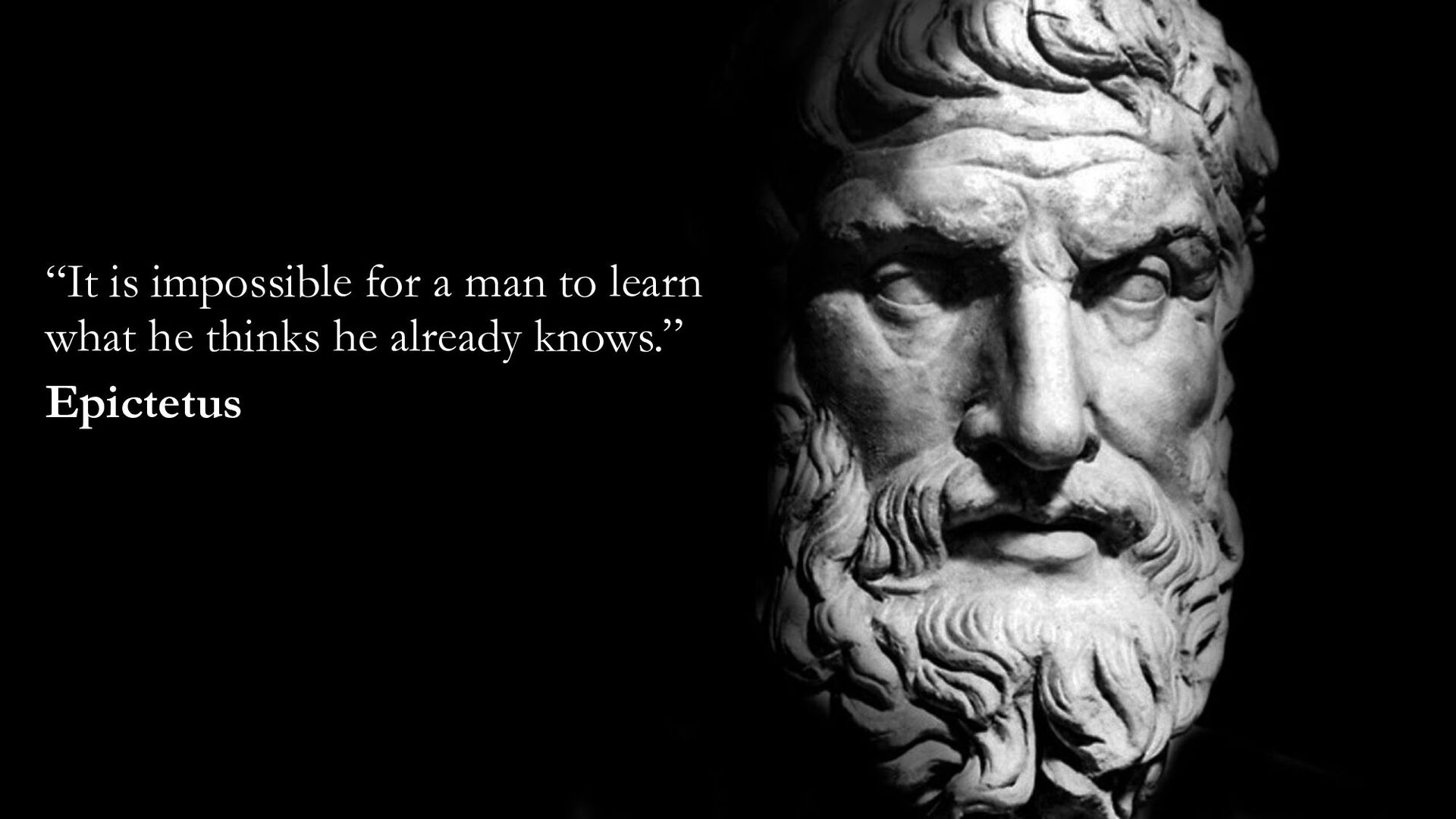
So there's a freed slave turned stoic philosopher, Epictetus, and he says, It is impossible for a man to learn what he thinks he already knows. So the very first thing is just to come to grips with the fact that we don't whatever we did in our last job, whatever we read in a blog post, we don't actually know the answers.
And this is critical because the person that we're competing with is this brilliant physicist who's so humble that he talks to ten smart marketers and doesn't understand them, and he thinks it's because he doesn't understand marketing. Right? This is he comes in with a beginner's mind.
He's approaching this task with complete humility because he wasn't an investment banker, because he's been a scientist his whole career. So now I've given you two different thought experiments, and I'm going give you a mental model. So the first thought experiment was, remember, imagine your start up is inevitable, you're in a race to solve the idea maze.
Thought experiment two was, if you knew growth was the hardest thing your start up would have to do, what would you do differently? So now here's the mental model. So we've got to fill in, I think of it as like a map. We've got to fill in a map.
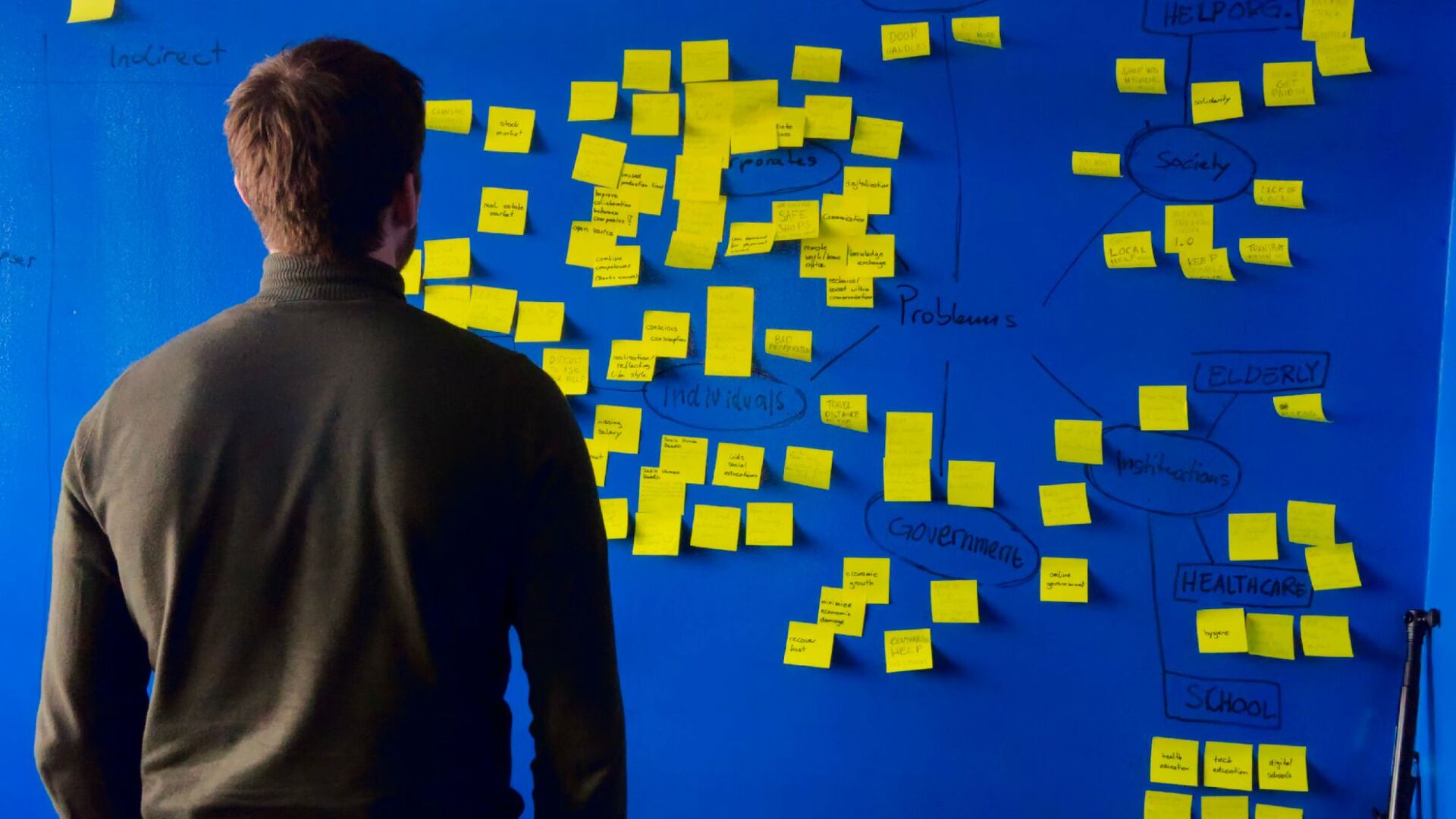
So the first thing we have to start with an empty mind because most of the answers are not yet discovered. So just imagine everything you know about your business is on this sheet of paper. Pricing, features, competitors, ideal customer profile, theories your investors foisting upon you, all the stuff you know about your business.
Imagine it's on this sheet of paper, and we're going to shrink that down. Now assume that everything you know combined as a team is two percent of the universe, and your job is to discover the other ninety eight percent. Because this is essentially the task you've got when you're trying to figure out how you're gonna grow your startup.
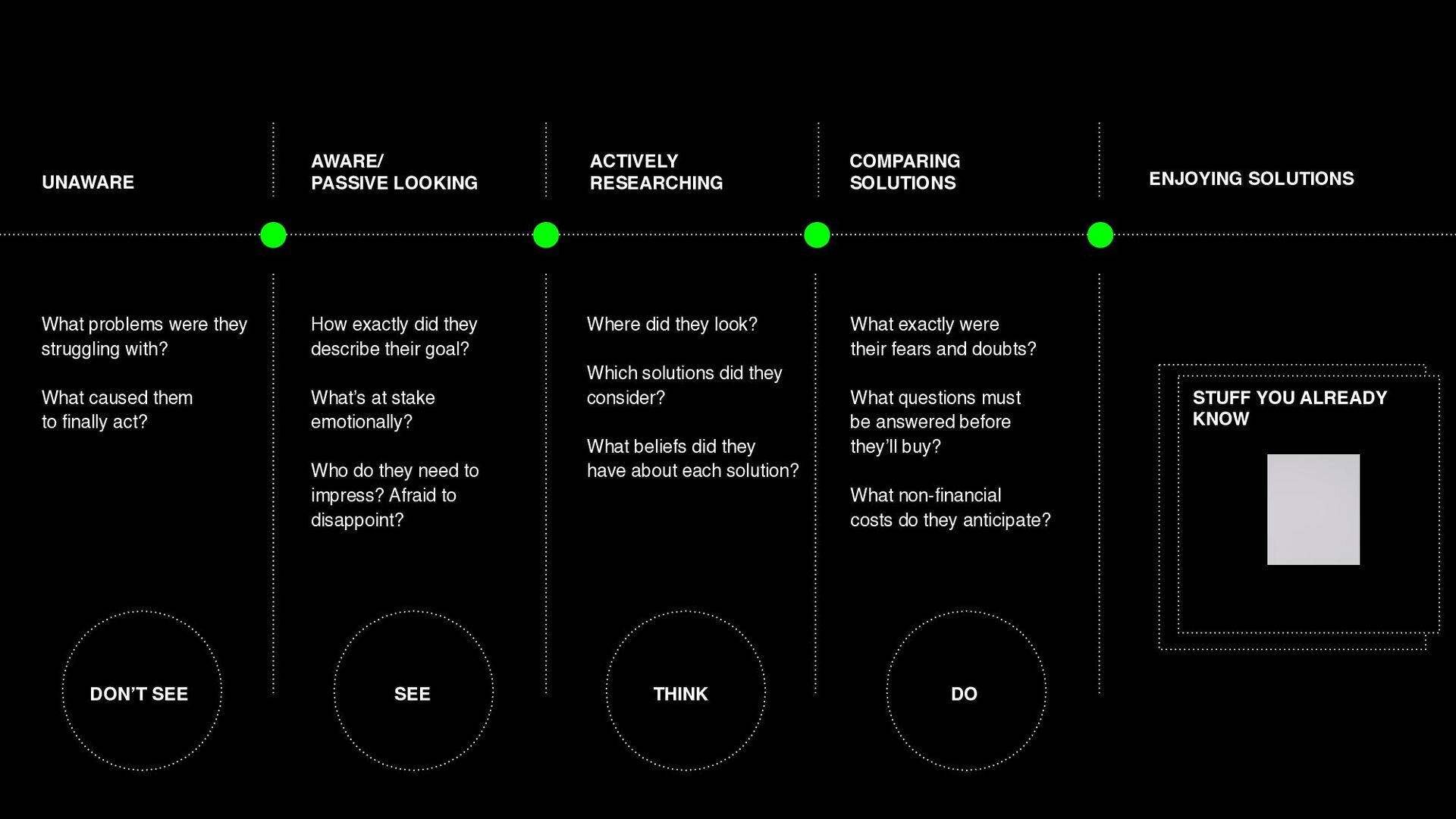
This is where PayPal was starting when they figured out that the PalmPilot thing actually was a bad idea. Now you'll notice all the information you have is on the right side of this page. That's because this is the end of a customer journey.
A customer journey ends with your product and your price and your features and your competitors and all those things. Right? But most of this whole story happens upstream. It happens much earlier. And so I don't know the answer. I don't know your idea, Mays, your solution, your tactics.
I got on a call last week, two weeks ago, with a company from Uzbekistan. They have a fintech app, and they're asking me, Matt, how do, you know, how do we market a fintech app in Uzbekistan? I said, I'm American. I don't even know what language they speak in Uzbekistan.
Like, how do I know? So I don't know the answer, but I can help a lot because I know the questions. Right? If we can just narrow down the field of play and figure out what things you're going to have to figure out before your startup can be successful, that's already incredibly useful.
So you've got basically, people are going to go through this journey. And by the way, denizens of jobs to be done, some of this is going look very familiar because this journey does involve struggles, desired outcomes, anxieties, the four forces. It's all in there, and that's a big part of it.
So first of all, a lot of potential customers don't even realize they have the problem you solve. So again, at PayPal, most people, we knew they didn't wake up and think, I need to add payment processing. Where do I get payment processing? I want to sell online.
But we did know that if someone woke up on Monday and bought a domain name, and then on Tuesday they signed up for shopping cart software, we did know that on Wednesday they were going to be thinking about payment processing. Right? So before they were aware of our problem, we figured out what other problems they were trying to solve.
Went and partnered with the domain name providers, the shopping carts and the hosting companies, and that ended up sending us about a third of our new customers. So first thing is just before they even realize they have your problem, what other problems are they having?
What are they going to be thinking about? And then when they become aware of the challenges that you're going to help them solve, they're not looking for your product. They're probably not even looking for your category because you're a startup and you just invented it.
Right? So you've got to know what are they struggling with? What do they think they're looking for? How do they talk about it? And then we also know from jobs to be done that even in B2B, it's the social and emotional weight that's really going to carry the day.
So who are they afraid to disappoint? You know, what's at stake for them? Why is this so important? Then eventually and most prospects just sit in that passive looking stage forever. I worked with a company that helps with weight loss. It's like Noom.
Most people who are struggling with their weight are not out there comparing features. Right? They're jaded and cynical because they've tried things and nothing works. And they're just sitting there thinking about the problem. But eventually, something changes. We start actively researching. Again, they don't even know your category exists, let alone your product.
But it's very helpful if you're developing a growth strategy to know where they look, who they ask, what they Google, what they think they're looking for, what they consider are the options, and what they like and don't like about the options that they consider.
Eventually, they're going to start comparing solutions, and you need to know, hey, when they do find out about our product or our service, they're going to have questions about it. Right? The first time anyone heard about an Airbnb, it's like, wait, I'm going to live in someone else's house?
Okay. How do I know they're not a serial killer? How do I know it's clean? How do I know they're not just going to take my money and run off? Right? Like, people are going to have all these questions and anxieties. You need to know exactly what they're worried about so you can address those.
So these are the questions you're going to end up having to ask and figure out. And remember, you need to figure this out in excruciating, nuanced four k HD resolution detail. Right? Like the the struggles of an eBay seller in their living room trying to figure out how to add payments to their listing.
You need that much granularity. So this is the mental model. You're in a race to try to fill in this map in perfect detail, find the people who are struggling. Where are going to get them? How are you going to get their attention?
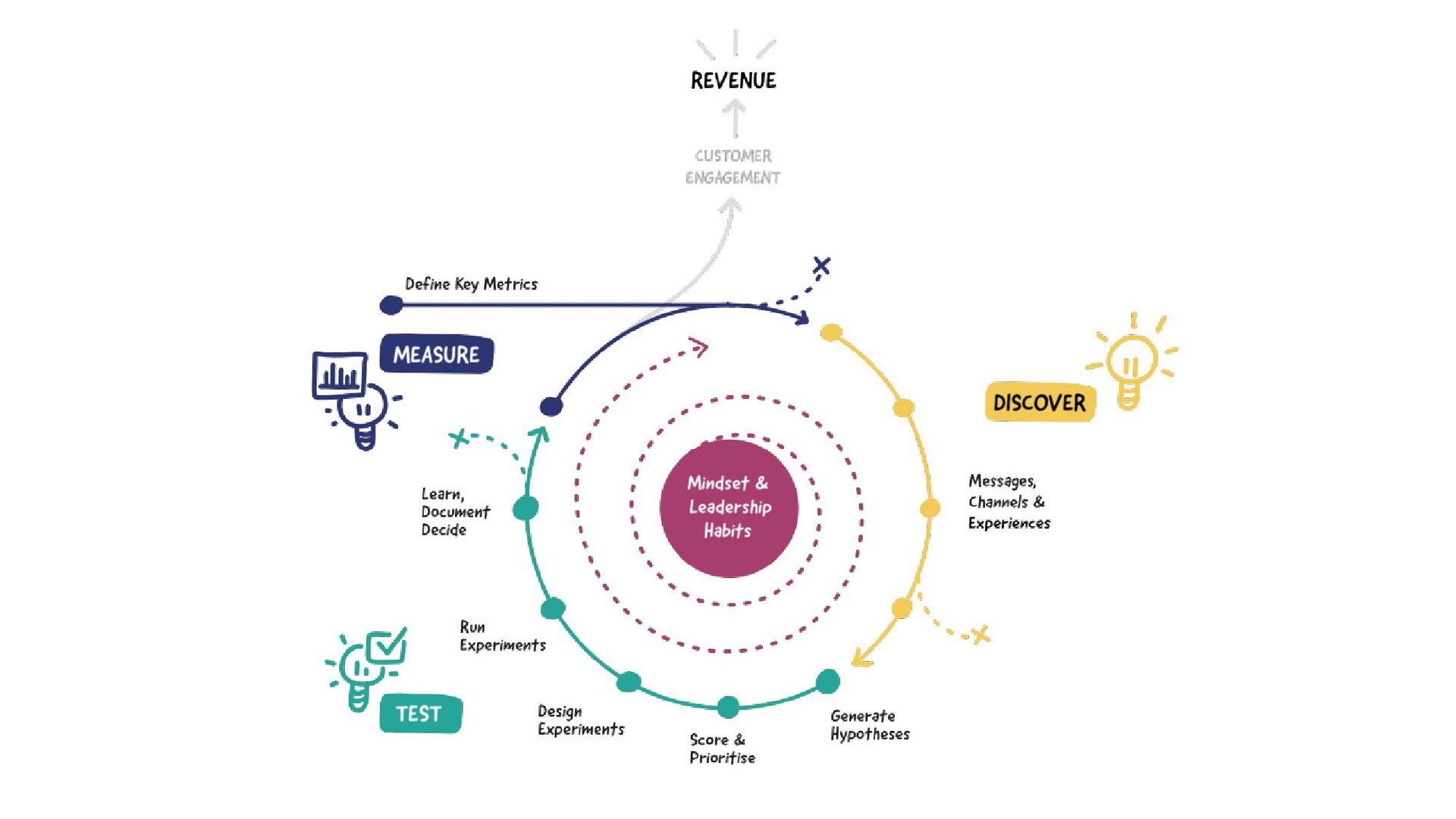
How are you going to get them excited? How are you going to get them to use your product? What does the out of box experience need to be to convince them they've made a great choice and habituate them? So when we work with companies, we basically just run through a cycle.
It starts with looking at your data, right? Just like David Sachs, hey, there's some people in here, you're doing this eBay thing. And then you figure out, okay, these are potentially based on their behaviors from customers. And then we do jobs to be done interviews, and we figure out, well, long and these are not like product jobs interviews.
When we do this, it's for growth, So it starts long before they even start thinking about your category. Like when did you even first realize you were going to need to do this? And where did, you know, how did you know and where did you look?
So we do these kind of early stage jobs to be done interviews. And that gives you a sense of, well, where do they look? Those are channels. What do they think they're looking for? Well, those are messages. Right? So do that, and that gives you a bunch of hypotheses.
And then you just literally run experiments and start to test these things. Now I'm talking about science. I'm talking about experiments. Is this just a metaphor? And I think people get wrapped around the axle and just think it's like only AB testing. So what's the difference between an experiment and like a JFDI?
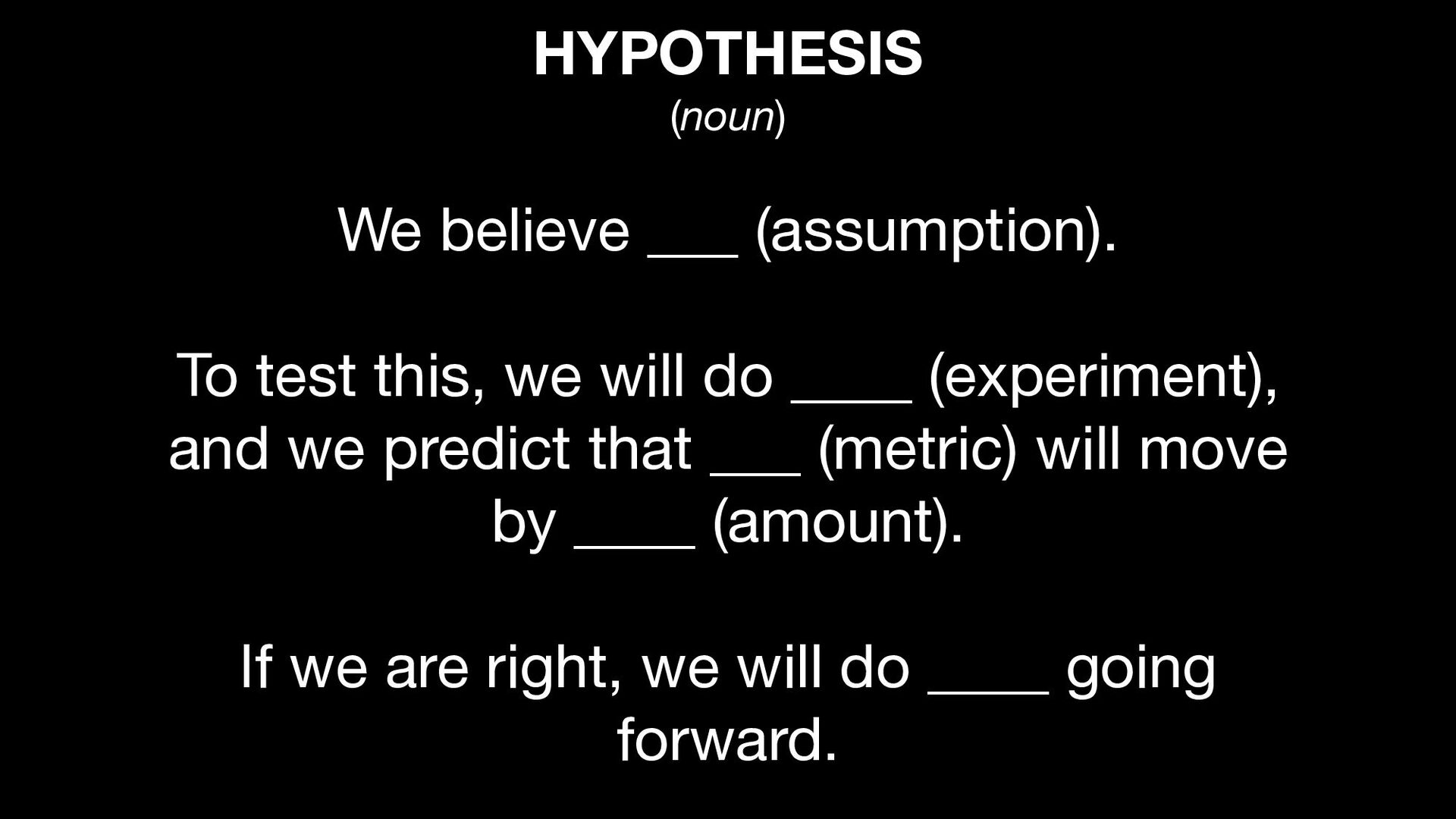
Like, you know, we're just going to do it, you know, like, hold my beer, let's just see what happens. So the difference between an experiment and hold my beer is only about five minutes, but it's a very important five minutes. It's the five minutes when you write a hypothesis.
If you start a project with a clear hypothesis, then when it very likely fails, you will learn from it. If you're not even sure why you're trying it and you try it and it doesn't work, you don't learn anything. So this is literally just a well formed hypothesis.
So the first very important thing is we believe x. Right? You're starting with a set of assumptions. You might be working from different assumptions, so document them, agree on them. Therefore, we predict that if we do this thing, that this thing is going to happen and this number is going to move in this direction by this much.
That prediction step is also very important. Everyone in the organization should document their predictions That eliminates hindsight bias, because you're probably all going to be wrong. But then if you go back and look at your thinking, can understand what made me think it was going be this when in fact it was that.
And then the last piece, very important for a business, if we're right, we're going to do this thing differently going forward. If you don't can't think of a way this experiment is going to affect how you run your business, you don't need to run the experiment.
Okay. So this all starts with our assumptions, documenting our assumptions. So take out that piece of paper, go back and look. In the beginning of my talk, I said, we're doing a premortem here. What happens if your business fails? Why did it likely fail?
Look at the thing you wrote down. Now, first of all, is it an endogenous or an exogenous risk? Is it something controllable or is it like Google makes a free version of our product or we have another pandemic or the government outlaws this thing?
If it's if the biggest risk to your business you think is something completely outside of your control, that's a bad sign. That is, we would say you're high on your own supply. Like, that's too much hubris. That's concerning. Now if it's an endogenous risk, like a controllable factor around execution, we don't close this funding round, We're not able to get these campaigns working.
We're not able to get this product built on time. That's good. You have an internal locus of control, but that's not your biggest risk. Your biggest risk is going to be something in that map you're trying to fill out, something in the unknowns.
We have some assumption about the customer. That has to be true. Or there's some big unknown about a customer that we've got to be able to figure out. So if you're endogenous, if the risk you wrote down was something around your customers and a big unknown, excellent.
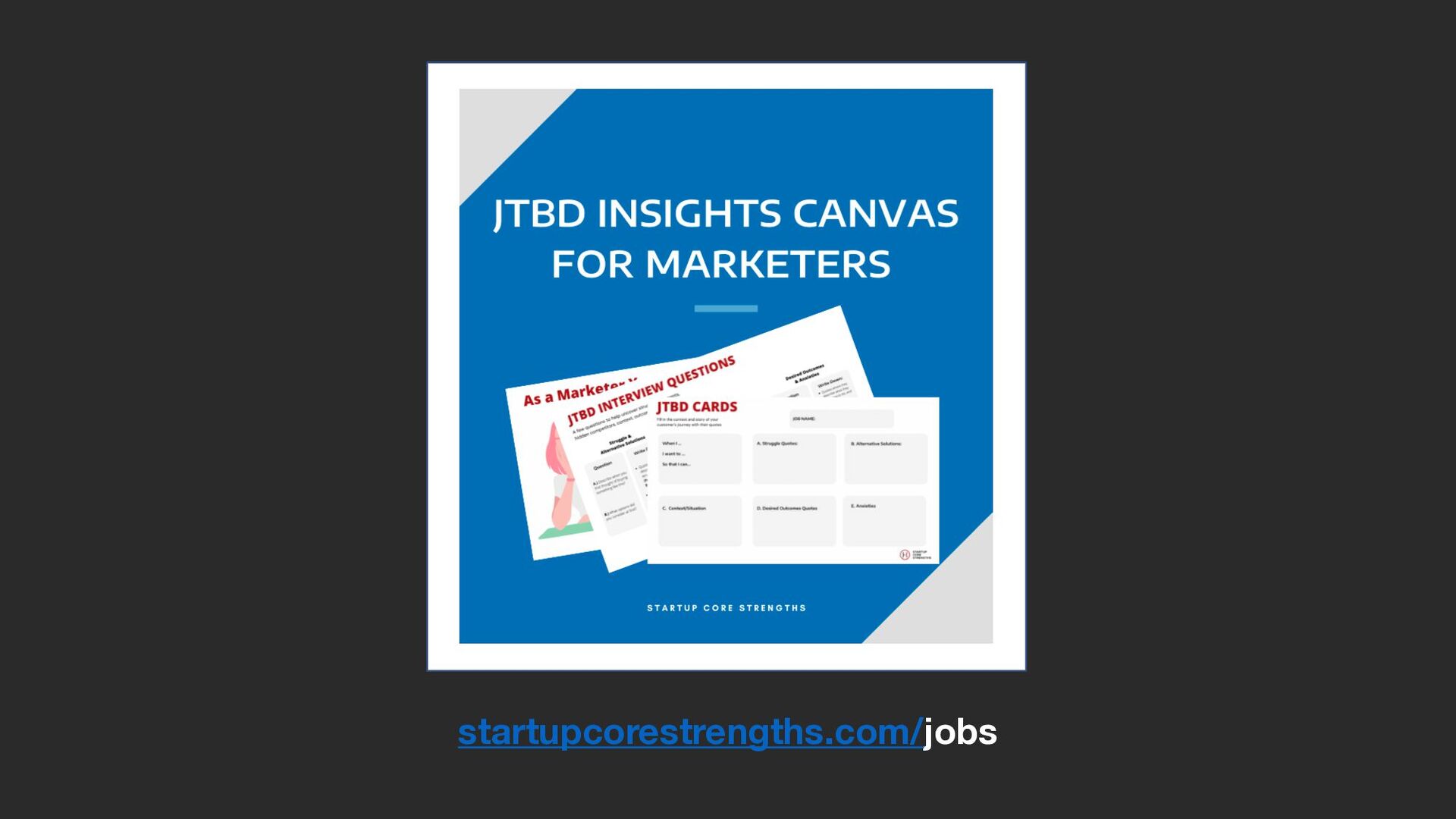
Ten points. You're on the right track. So I'm going to leave you with a small gift to help you in your progress. So after the last Turing Fest, I heard all these jobs to be done talks, and I decided we needed jobs to be done cards to replace the evil personas that were poisoning our organizations.
So my business partner, my cofounder, put together this jobs card. You can download it. But the first thing that's in here actually is a set of jobs to be done interview questions. But these are designed, again, like for growth marketers. So this is to get to the earliest part of the journey.
So he's got a list of questions for B to C and then some supplemental questions for B to B. And he has a list in there of like, here's the question and here's what to listen for in the answer. And then you can document what you hear in these jobs cards.
And then there's like a filled out example jobs card. I think he did it for Invisalign or something, just so you can see what one of these looks like. And then there's a checklist at the end of here's how you take the different boxes in this job card and turn this into channels and messages and partner strategies and like paint by numbers way to turn that into a growth strategy.
So use that with my compliments. So to quickly recap, two thought experiments and a mental model. One, if you assume your business is inevitable, you're in a race to solve the puzzle, the idea maze. Two, if you then assume growth is your hardest challenge, is it appropriately resourced?
Are you running your organization to solve a very hard puzzle? And then three is this mental model of assuming you only know two percent of the journey, where does it start and how quickly can you fill in this map and find the right path?
So I'm going leave you with a final thought. There's something else that physicists are fond of saying. They say all models are wrong, but some models are useful. I sincerely hope that this one is useful. Thank you for your time.