
Organisations reach a size and scale where complexity creeps in. With silos, layers and competing agendas, teams play it safe and focus on incremental tweaks at the margins, and this myopic focus on local maxima blinds teams to bigger opportunities. Matt will tell us how you can identify and challenge the fundamental assumptions that limit the growth of your business, push your team to zoom out and spot big opportunities, and create a bold ambitious culture.
← All talks 









Grow Turing Fest 2024
How I turned PayPal’s blind spot into $100M growth
Auto-generated transcript - may contain errors. Tap a timestamp to jump the video.
Hello. This is a story, obviously, about discovering a blind spot that was worth one hundred million dollars. It's also a story about my neuroses. It's also a story about Stanford University. It's also a story about the misuse of data. But mostly it's a story about enormous amounts of untapped potential.
So do you remember people used to think that humans only use like ten percent of their brains and if we could somehow tap into the other ninety percent we'd all become super geniuses like Tony Stark or Elon Musk. That myth was floating around for a while.
And then some scientists told us that that's actually ********. There's no scientific basis for that. But I'm starting to believe that something like that might be true at an organizational level. That something about by dint of the way that we are organizing and incentivizing organizations that we're actually missing out on ninety percent of the sort of collective brainpower of our teams.
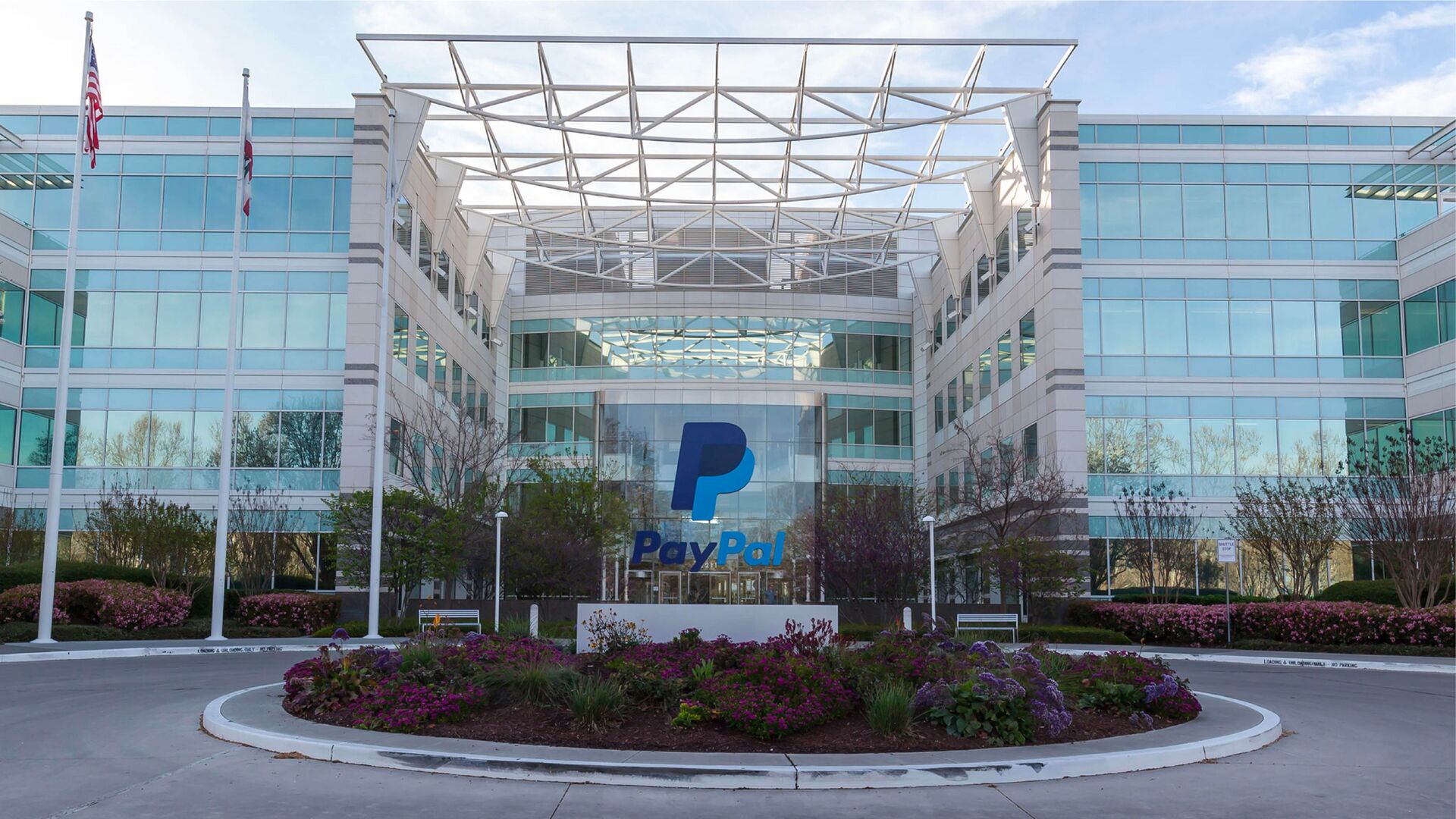
So I'll talk about that today. Quickly introduce myself. So as Denae said, I spent many years in the Valley working for a bunch of startups you never heard of, typically in growth marketing or general management roles. I also spent almost eleven years at PayPal.
Again, I was recruited over there in two thousand and four and then again in marketing and general management roles. We'll talk a lot about that. Left PayPal and became a VC. And that's a really privileged job because as a VC you get to see hundreds of pitches per year and you can see inside of companies and the founding teams and what's bedeviling them and their metrics.
And I started to spot patterns. And then I realized sort of I think I can add more value not as an investor but actually helping these companies avoid some of these preventable mistakes that they were making. And so that's when I left and founded Sytm.
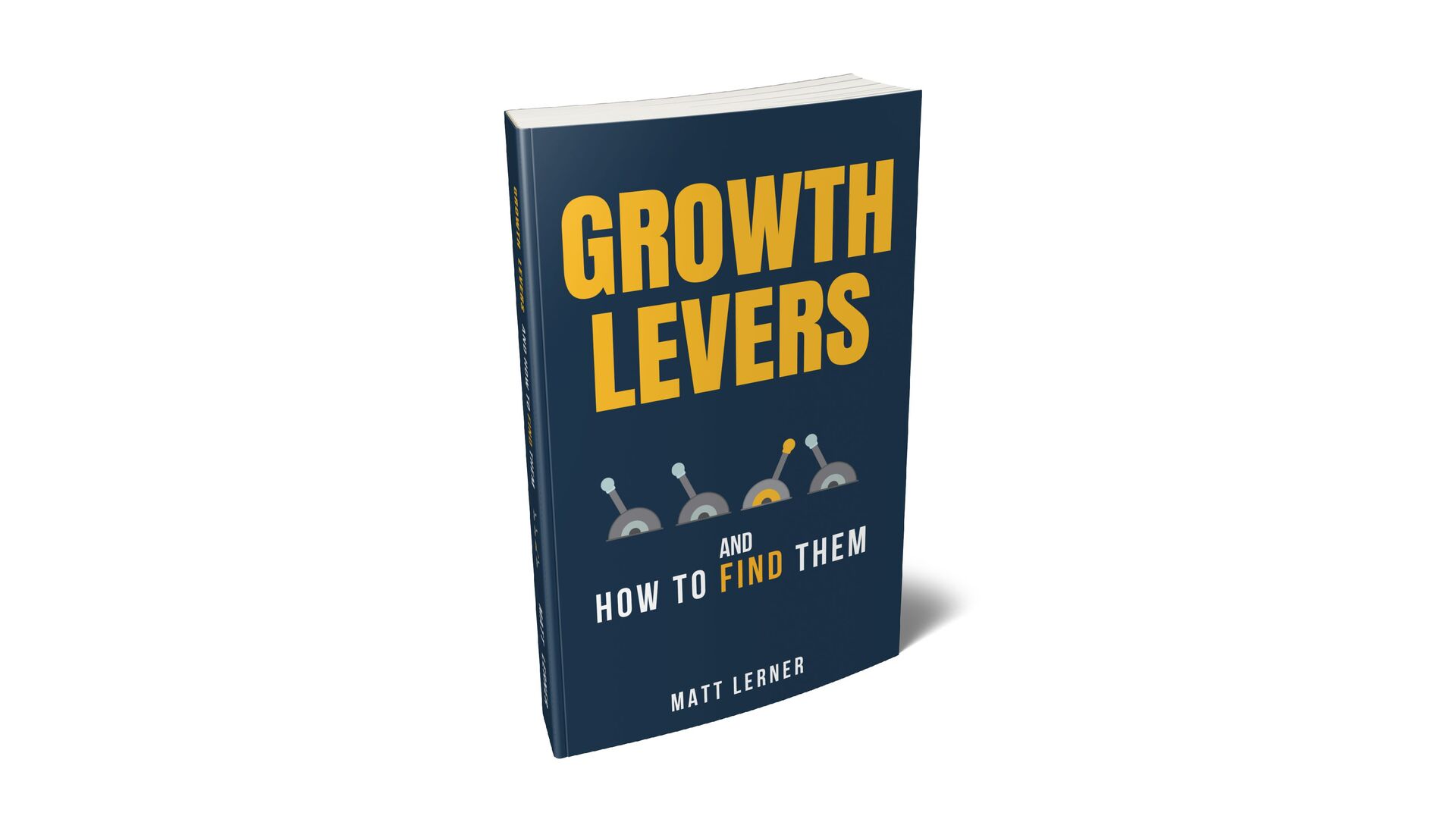
And what we promised to do, and it's on the cover of the book, is to help you find your big growth levers. So the basis of that idea is that if you take any successful startup and you look backwards at the early days, you'll see that ninety percent of their growth came from ten percent of the stuff they tried.
So if you have a tiny little startup, you don't need to do all the things. You need to find the right ten percent of things as quickly as possible. And that's the process I teach and that's what I do with companies. But today, I'm going to tell you a story about a growth lever that I found.
So this starts at two thousand and four in San Jose, California, where I was in charge of basically the company's biggest launch that year and it was completely failing. So the product was new card processing APIs. In the old days you might remember with PayPal you go to checkout and you get redirected to PayPal's website and blah blah blah.
People didn't like that. They just wanted to accept credit cards directly on their own websites. We created APIs to enable that. It doesn't sound like a bad idea, only as I said it was failing. And now to weave in the kind of impostor syndrome piece, when I joined PayPal it was a pretty academically high powered group of people.
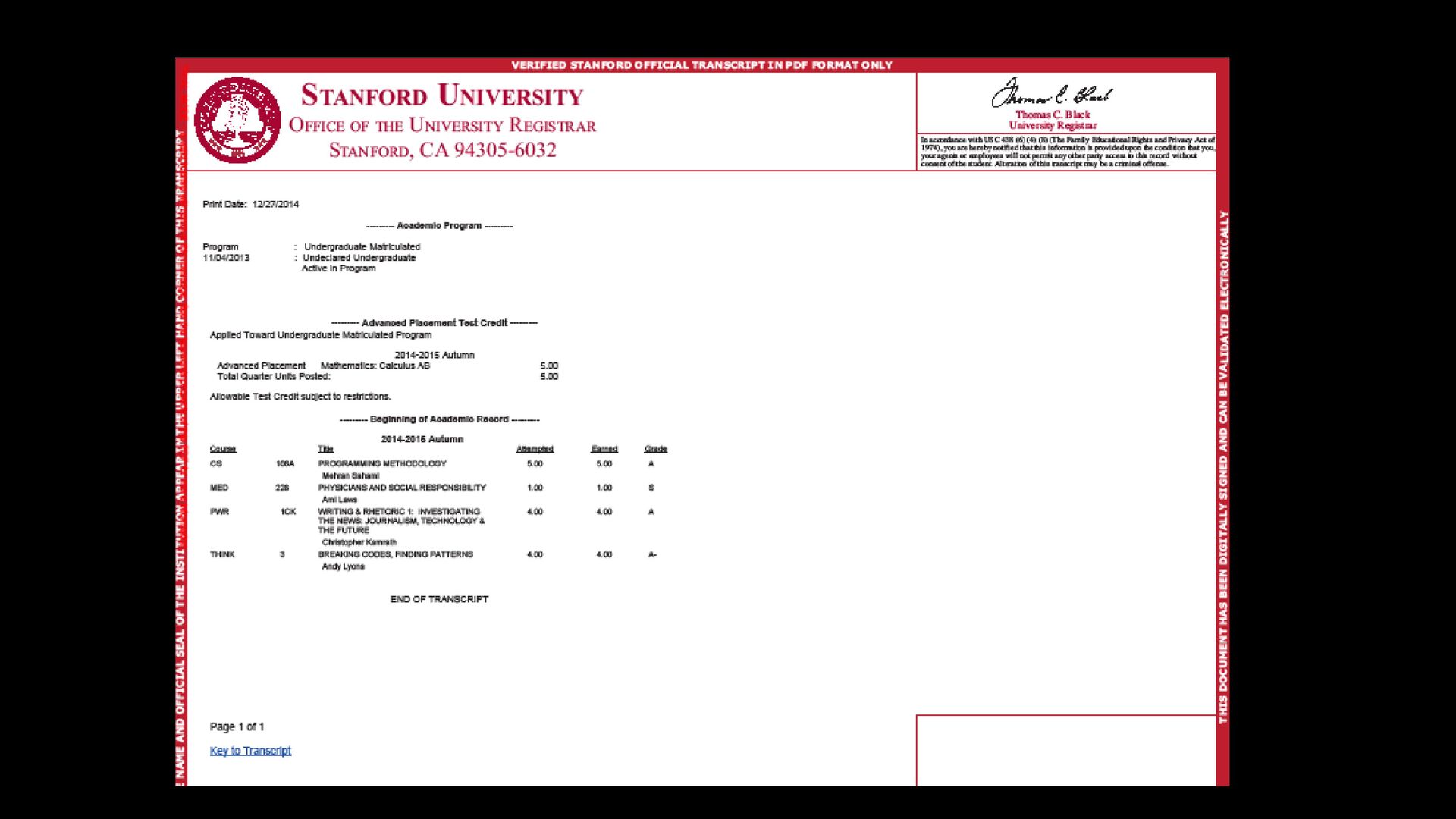
It was a Stanford shop. So like the first day, the woman to my left had a Harvard undergrad and a Stanford MBA. The woman to my right had a Stanford undergrad and a Harvard MBA. And I went to a school called Miami University, which is actually in Ohio for reasons which are beyond the scope of this talk.
Suffice to say though, Miami University looked every bit the elite academic institution. It looked very impressive. But unfortunately, that was the extent of it. So I was already having kind of impostor syndrome. So we launched this thing and lots and lots of people signed up and that was great, but then nobody started using the product.
And they came and they said, Matt, no one's using the product. What do we do? And I said, don't worry. It takes a little while. Give them a few weeks. They'll figure it out. So we waited a few weeks and they still didn't start using the product.
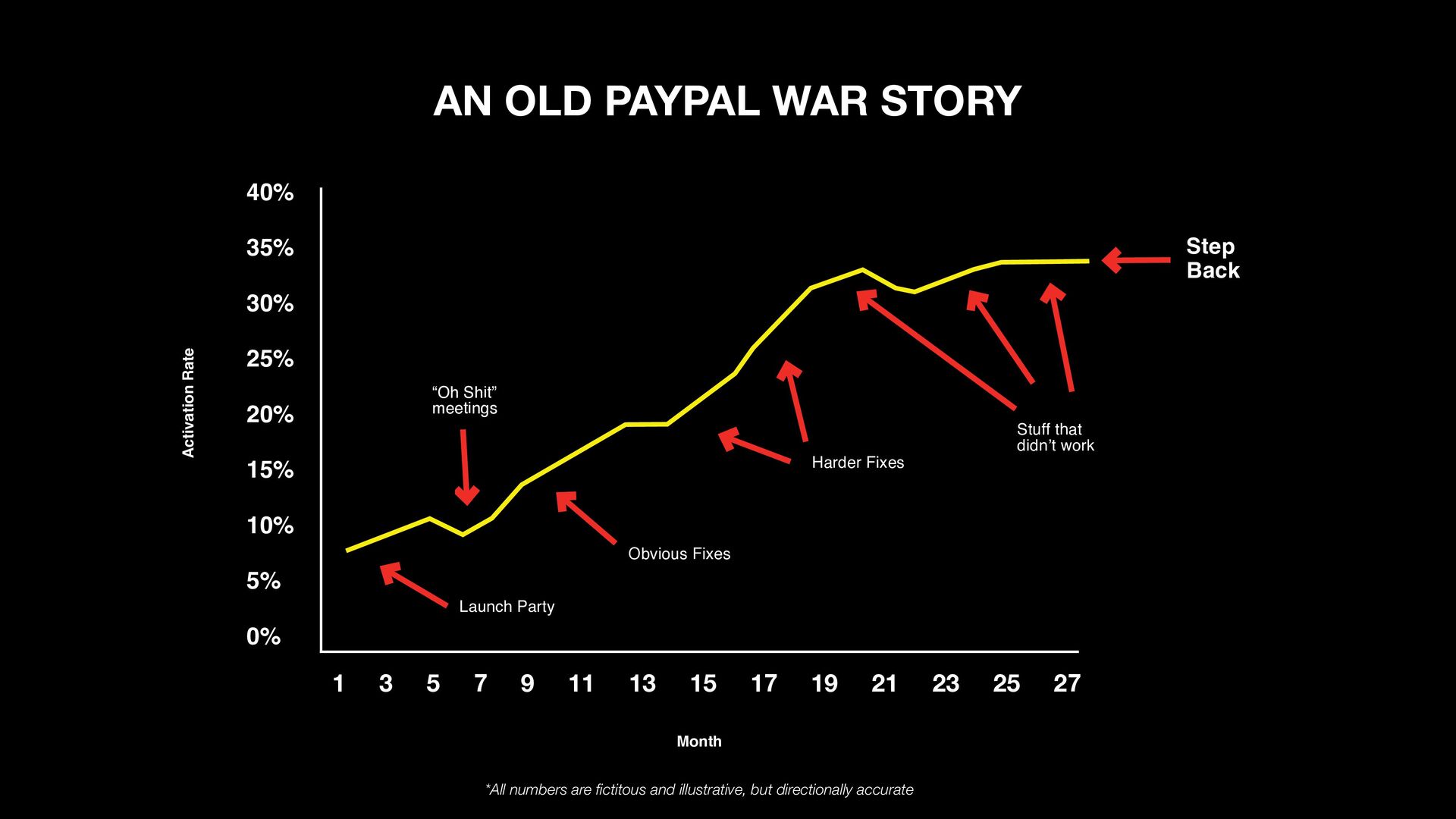
So then we had some very important meetings and we saw a bunch of easy obvious stuff we could fix. For example, when people sign up we could send them an automatic email with a link to integration resources, documentation, code samples, and a phone number they could call if they had questions.
So we fixed all the easy stuff and activation went up to whatever that just under twenty percent or something like that. And then we found a bunch of harder stuff like getting integrated with more of the e commerce platforms, kind of the early progenitors of Shopify, releasing a version that worked on Apache.
We had some problems with merchant vetting where we were declining good merchants and not letting them access the platform. Anyway, so we fixed the harder stuff. And eventually we just hit a wall. And we kept doing more and more stuff. And it didn't matter what we did.
We just couldn't get past this barrier. These numbers are directionally accurate but completely fictitious for obvious reasons. Anyway, so months and months of trying things and nothing worked. And finally, I did what I should have done all along. I stepped back to think about this and I got on the phone with some customers.
So I flew out to our operations center which was in Omaha, Nebraska. And I remember it didn't take very long. It was only like the third or fourth customer that I talked to when the penny dropped. And she said, oh, yeah. I love the PayPal.
It's up and running on my website. And called up her website and sure enough, there was the PayPal up and running on her website just like she said. And I said, well, why don't you have any transactions? And she said, we don't have any customers yet.
I said, oh, okay. Fair enough. How long has your business been live? And she said, four months. That's when I realized the problem. Some of our customers had no customers of their own and I couldn't growth hack my way around that. So I just had to acknowledge that some of our customers, just not addressable.
Didn't worry about it. The problem was I had no idea if that was ten percent of our customers or fifty percent of our customers. And I wondered how many more of these people do we have. So how do you figure that out? So I thought, I could survey customers, but it turns out, you know, if you sign up for a product, you don't use it for thirty days and someone emails you, you don't even remember you signed up for the product.
Like, pretty hard to get a hold of these people. So I emailed I had an idea. That night in my hotel room, I emailed Igor. Igor is my favorite analyst. And you know, you guys have heard of the eightytwenty rule, where eighty percent of your revenue comes from twenty percent of your customers.
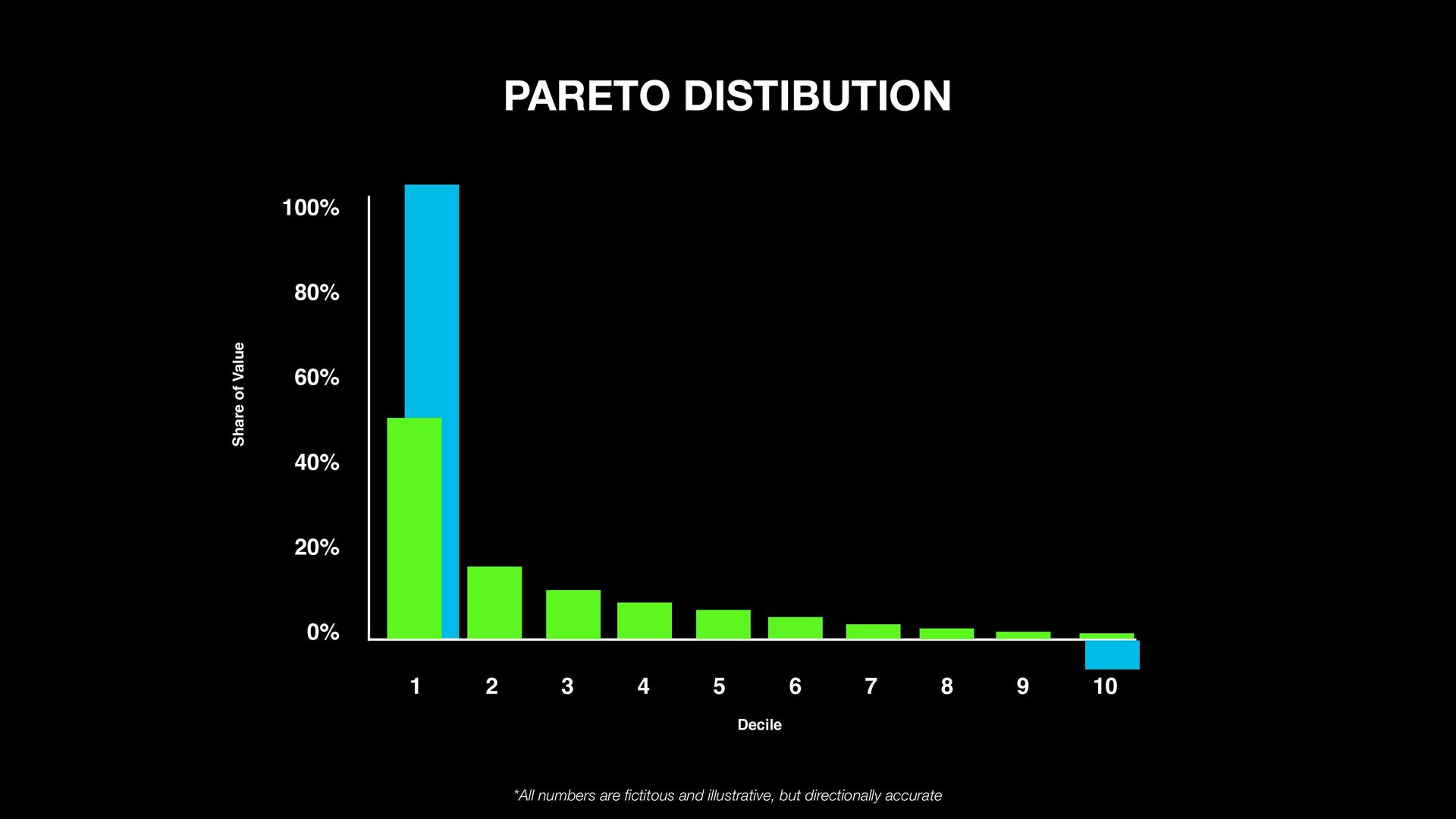
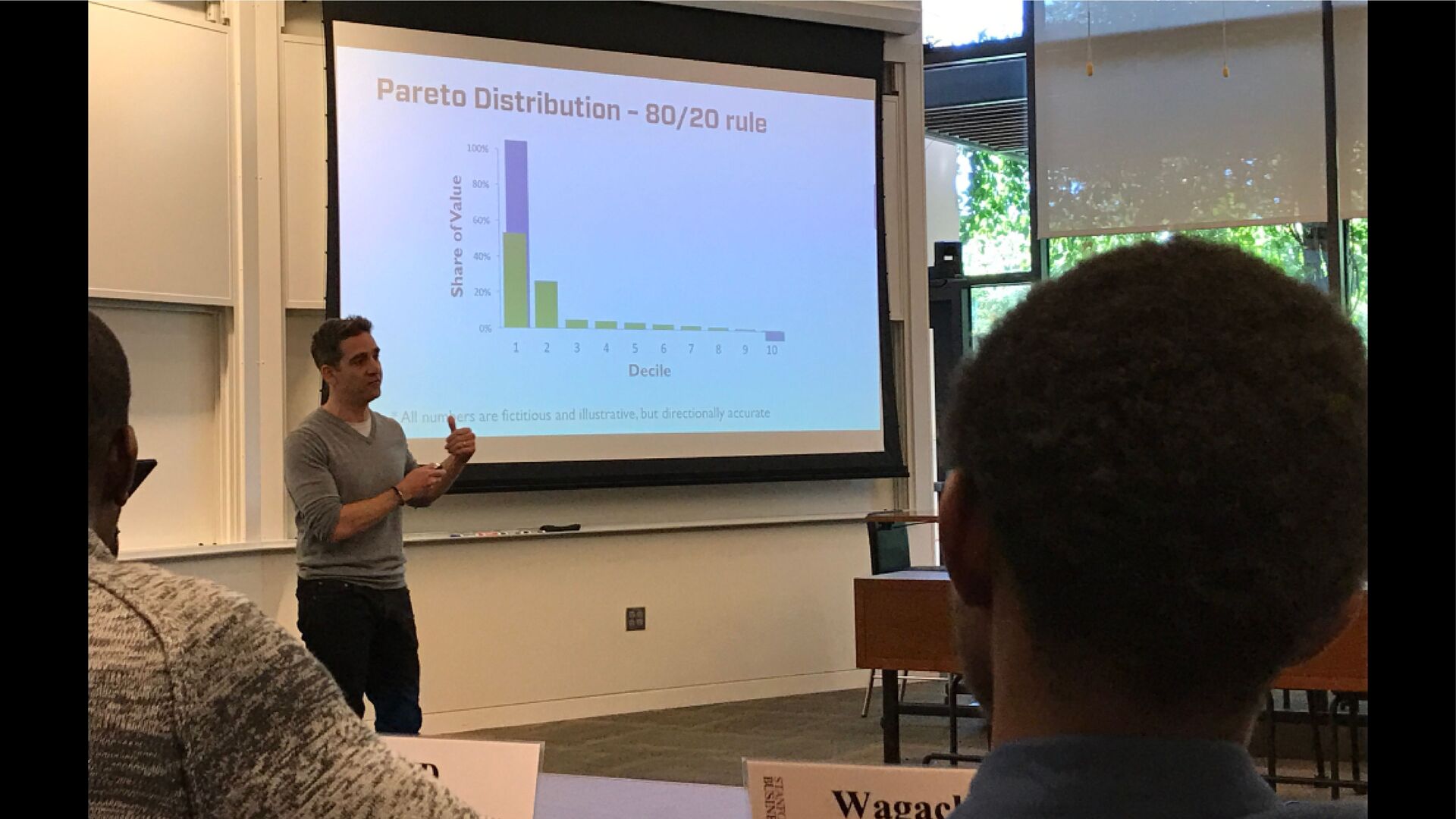
So I asked Igor, what percent of our revenue comes from our top ten percent most valuable customers? And he emailed me back about a half hour later. He must have been working late. And he said, one hundred and two percent. This is not a math error.
Igor has an advanced degree in aeronautical engineering from Stanford. This is a puzzle. Does anyone know the solution to this puzzle? I can't offer you a free copy of my book if you get it right because you already have one. But any guesses?
Assuming this is true, one hundred and two percent of our revenue comes from ten percent of our customers. That's the right answer. What's your name? Carlos. Carlos. Carlos said some of your customers are actually costing you money. It turns out in financial services and payments, some of the people, the bottom decile of people, a few of them are bad actors.
They're fraudsters. And they were pulling four percent of the revenue out of the system stealing it. Of course, we shut them down, but early in the cohort's life, this is how the value is distributed. So netting this all out, it was ninety eight percent from the top ten percent of customers, two percent from the middle eighty percent, and negative four at the bottom.
Point being, we didn't have to activate fifty percent of our customers. We just had to activate the right ten percent. We'd been looking at the problem completely wrong. We'd had the wrong success metric. So with that information in hand, I went back to Igor and I asked him if it was possible to build a predictive model when people sign up for PayPal that would score them based on their propensity to become a high value customer.
And he did. And then we took the output of that model, those people, and a lady on my team named Lori Duffy developed what she called the white glove onboarding experience. So we sent those top ten percent high scoring new sign ups to our customer service center, and a representative would call them, triage they were on the right product, get them through all the vetting and compliance hurdles, and just help them get up and running, teach them how to use the product, answer any questions.
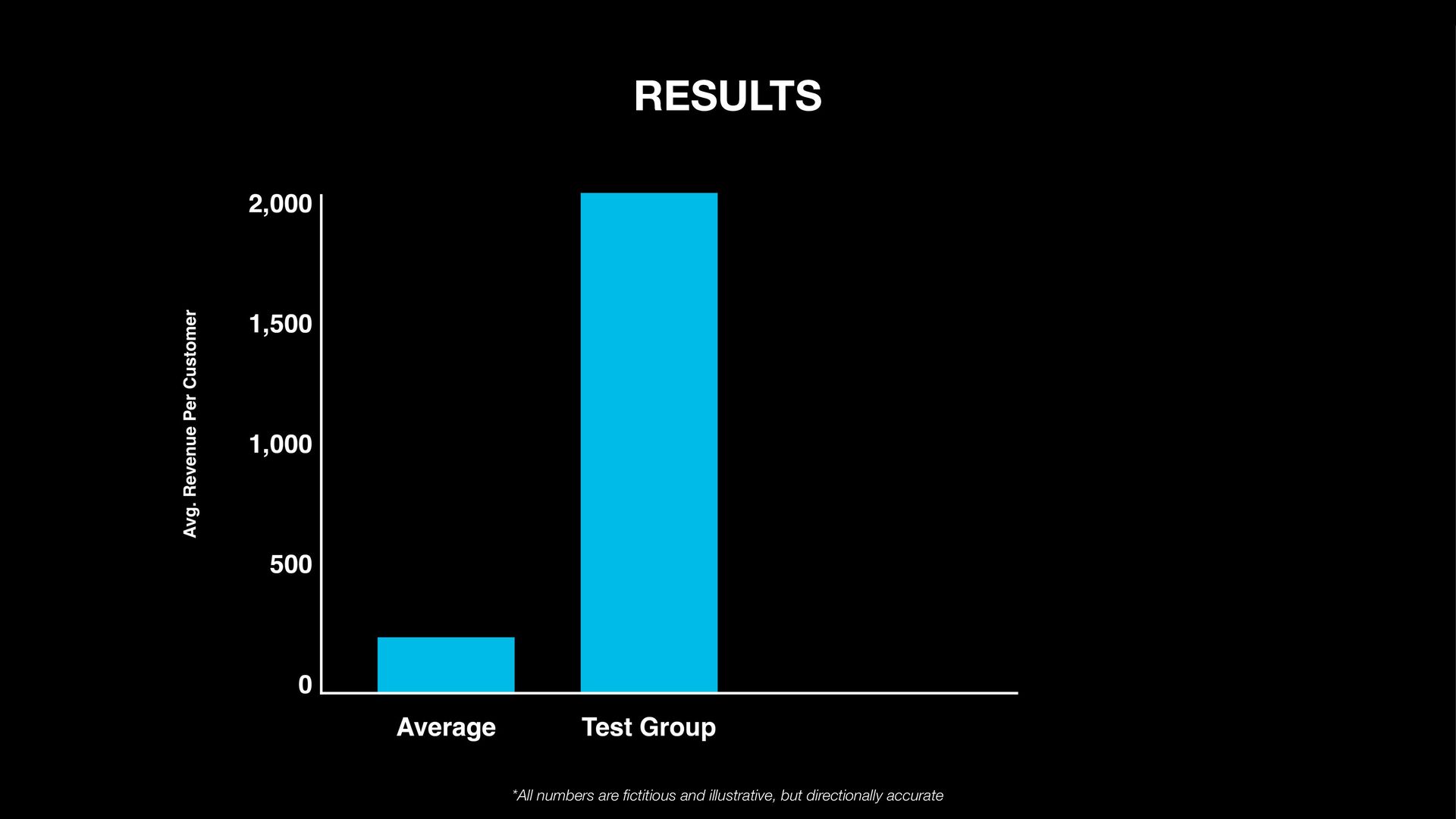
So we got the results after running this for a few months. The people that we called were worth about ten times more on average than the average merchant. Is this good? Is this bad? How many people think this is a good outcome? How many people think it's a bad outcome?
How many people think we don't have enough information to know? It's a data sufficiency problem. Igor's model predicted these would be high value customers. All this result tells us is they're high value customers. That might be because Igor built a good predictive model, or it might be because we called them and it made them more valuable.
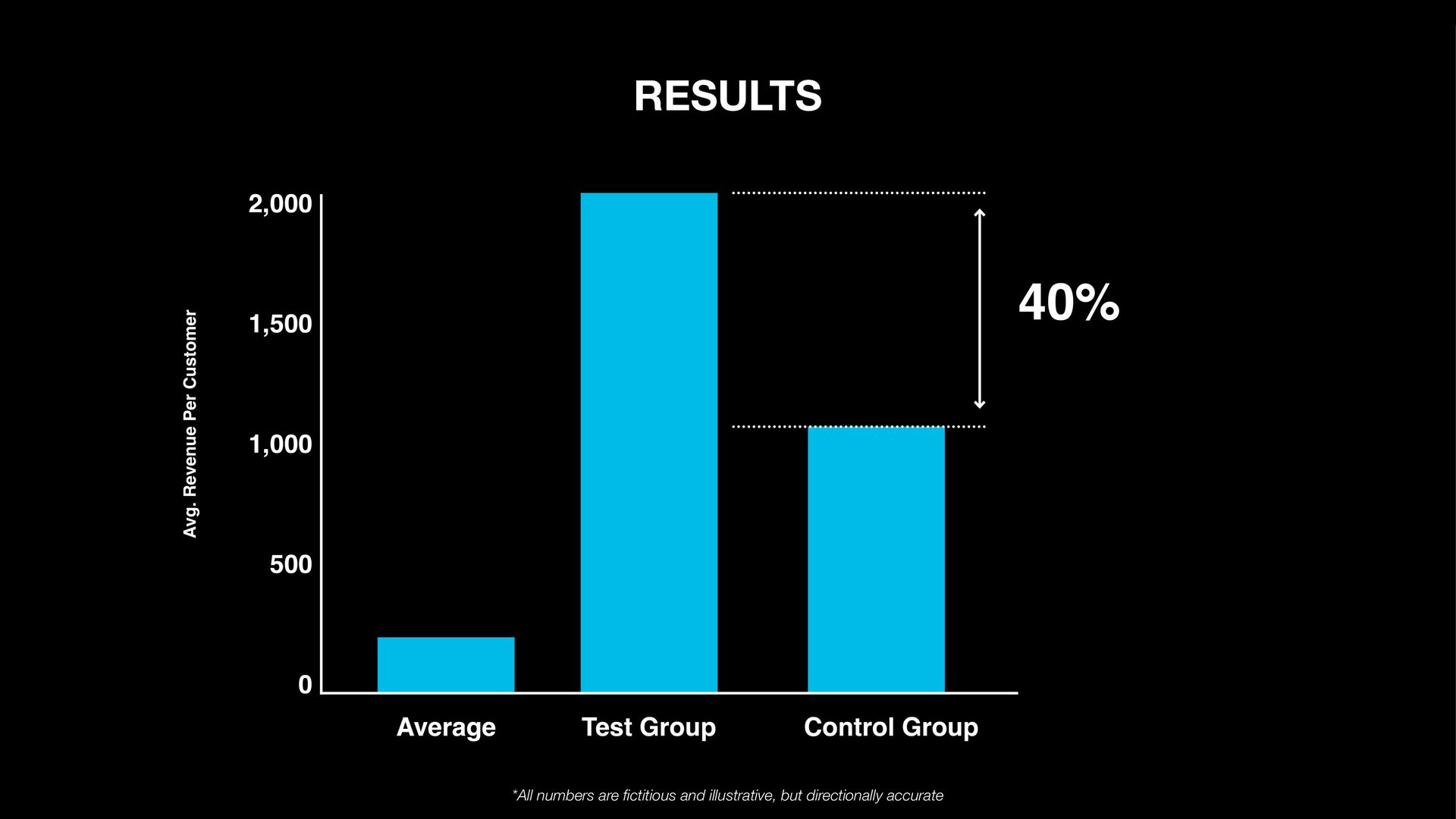
Thankfully, we didn't call them all. We only called half of them, and we left half of them to the vagaries of our automated welcome email sequences. Call that a control group. And the resulting revenue increase between the test and the control group was forty percent.
Maybe it sounds like a large amount of money, maybe it sounds like a small amount of money. Let me tell you that at that time, PayPal was onboarding three million dollars a week in new annual recurring revenue. That was hyper growth time. So increasing that by forty percent means an additional one point two million dollars per week in annual recurring revenue.
That by itself is an enormous company. Right? Just the the revenue increase. So the impact on the business was absolutely massive. And that that's a growth lever. That's a small action. It has a huge impact. So that's the growth lever piece. Now let's go back to Stanford University and my neuroses.
A couple of years later, I started getting invited up to Palo Alto to lecture at the business school. I went up there ahead of time to prep, and I looked through the syllabus and they were still learning like Levi's Dockers launch case studies from the eighties.
I was like, this isn't how we grow companies anymore. So, the professor said he'd like, you know, whatever this growth hacking thing is and give them some puzzles and make them think a bit. So I told this exact story, because it's got, you know, some puzzles and some questions in it.
Now the thing about Stanford University students is their confidence is unmatched, even by their own abilities. So they like sit sit back there and they'll be like, even the women manspread in Palo Alto. It's crazy. Matt, matt, back on slide five, you said blah blah blah.
Isn't it true that this and that? I was like, So it's a bit, you know, it rattles my confidence a bit, but it's also really helpful because I have some incredibly smart people looking at my theories, looking at my ideas and challenging them.
And that's what happened. So I gave the exact same talk. That's me. You recognize the slides, different formatting. And at the end of the talk, a woman put her hand up in the back and she said, Matt, it sounds like you discovered concentration in your business.
This is actually a pretty normal thing in the gaming industry. Most of the revenue comes from the whales, the big gamblers. In travel. Most of the airline revenue comes from, you know, frequent flyer business travelers. How did you guys miss that? How did you not notice that for so long?
And inside, was like, oh, I'm so busted. I just presented the most obvious thing in the world and pretended I was a genius. But, I didn't show that, obviously. I just said something about in the fog of war, you know, everything's obvious in hindsight, but in the fog of war, blah blah blah.
But the question stuck with me because that is a pretty good question. So then I took it to my friend, Moh Syed, who, he's he's a genius friend of mine in London. And whenever there's something I don't understand, I ask him and he explains it to me.
And the first thing Moh said was, Matt, calm down. First of all, put your impostor syndrome to rest. You're the one who figured this out. All those people from Stanford and Harvard and all those geniuses in your organization, they didn't figure it out.
You did. I said, okay. Fair enough. And he said, but, Matt, this is an excellent question she's asked. How does an organization that is chock full of some of the greatest business minds of our generation miss something that's so obvious and so incredibly impactful?
And I thought about it, you know, and that's true because if they're missing that, they're probably missing a whole lot of things. Right? And so that got me back to this question of untapped potential. So I was like, how did this happen? So I just sort of because I was like, if we can figure this out, obviously, this is massive.
So I just went back and thought over events in my mind back in two thousand four. And I remember, you know, people would launch a product, people were using it, and I'd have these check ins every few months with my boss. And he'd say, Matt, what's the activation target for this quarter?
And I'd say, I'm not feeling great. Like, nothing we're doing for activation is making the number go up. I he'd say, Matt, I need a target. I need a target. I was like, I don't think we're I remember like, I didn't understand why, but I was like, I don't think we're thinking about this the right way.
And he's like, Matt, you're sandbagging. I have confidence in you. I have confidence in your team. I know you can get this number to go up. So eventually, I just relent and I'd make up a number that I had no idea how it was going to hit.
And I'd give it to him, and that would be the end of the meeting. And so I was like, okay, remember that. Why was he pushing me for a target? At the time, I thought it's because he was a ****. But and he was, to be fair.
But I realized that his boss was asking him for a target. Right? And his boss also went to Stanford, also went to Harvard. She IPO'd started and IPO'd a company when she was twenty eight. And then she somehow took this job running a division of PayPal after that.
This was a woman who set ambitious targets and did not miss her targets. In fact, the entire organization was full of really impressive people who'd gotten where they were by doing all the things they were supposed to do, never missing any questions on any tests, doing all the extracurricular activities, doing them perfectly, getting jobs in McKinsey and Company or investment banks or whoever really smart people get their first jobs, doing all the things they were supposed to do, again, never making any mistakes.
I realized I was just working in this organization of people who were perfectionists. They were going to do all the things and optimize them. And I realized the whole culture of the organization was this idea of optimization. And optimization in most companies, most of the time, is a really good strategy.
We don't run you know, we basically, our job is to run playbooks. If you work for Unilever and you have a question about how to sell more dish soap, you can ask someone there, someone else. They've got a playbook. You can hire someone from Procter and Gamble.
You can ask the McKinsey practice on FMCG. Right? We're just running playbooks, the goal is to run them as perfectly as possible. We don't know the answer, we go ask someone, but the answers are all out there not far away. I think about this optimization as like when team GB had their Tour de France cycling dominance period in the whatever, in the last like five, six years ago.
And it was improbable that such a small country could dominate world cycling so much. And they asked Dave Brailsford, the manager, what's the secret? And he said, there's no one thing. What we do is we do a hundred things each one percent better.
And I think he even wrote a book about it, and it was called marginal gains. You're doing all these little things each one percent better. And that makes perfect sense in a mature business if you know what you're doing. That's a really good way to optimize.
But if you don't know what you're doing, it's a terrible, inefficient way to learn. So I was in this organization where we needed to optimize or where we needed to discover. So startups, early stage startups, they're not like team GB. They're not like Unilever.
They're doing something totally new. It's wide open. They're doing something no one's ever done before. They don't need to run playbooks. They might steal bits and pieces, but fundamentally, they need to write playbooks. And to do they're operating in an environment where they're only constrained by the laws of physics and maybe more or less the laws of the land in which they're operating.
And that's a different an entirely different sort of quest. That's an entirely different way to organize a team, and it's certainly a very different incentive structure than, Matt, stop sandbagging. What's your target? So they don't need to optimize. They need to discover. Now, I'm saying something very bold here.
I'm saying that companies, organizations can operate in discovery mode or they can operate in optimization mode, but that those two modes of operating are mutually exclusive. And, of course, most companies spend most of their time in optimization mode. So this discovery mode, how does this work?
Well, it basically just recapitulates what I told you in my story. So it started where I figured out, hey, nothing we're doing seems to be working. So step one was I went and I listened to customers, got on the phone, listened to customers.
Step two was to explore the data. I asked Igor to run some queries, and I was exploring the data looking for leverage. So step one, listen to customers. Step two, study your data and look for leverage. Step three, I came up with an idea and I designed and ran an experiment, an actual randomized controlled experiment.
So basically did science. No more, no less. Now, there's a lot more detail on these steps, and that detail is in the books that are under all the chairs in the first three rows. Grab a copy if you don't have one. Go through step by step.
My goal here isn't to try to explain all of this to you because, like I said, it's in my book. But the thing is once I figured out we were not in an optimization mode, once I figured out that we were missing some key information, we were in discovery mode, actually running that process was pretty straightforward.
Right? The hard part, the thing that cost me months and cost PayPal millions and millions of dollars was me doing the same things over and over again and hoping they'd work and not realizing that the problem was actually that I was missing some key pieces of, information.
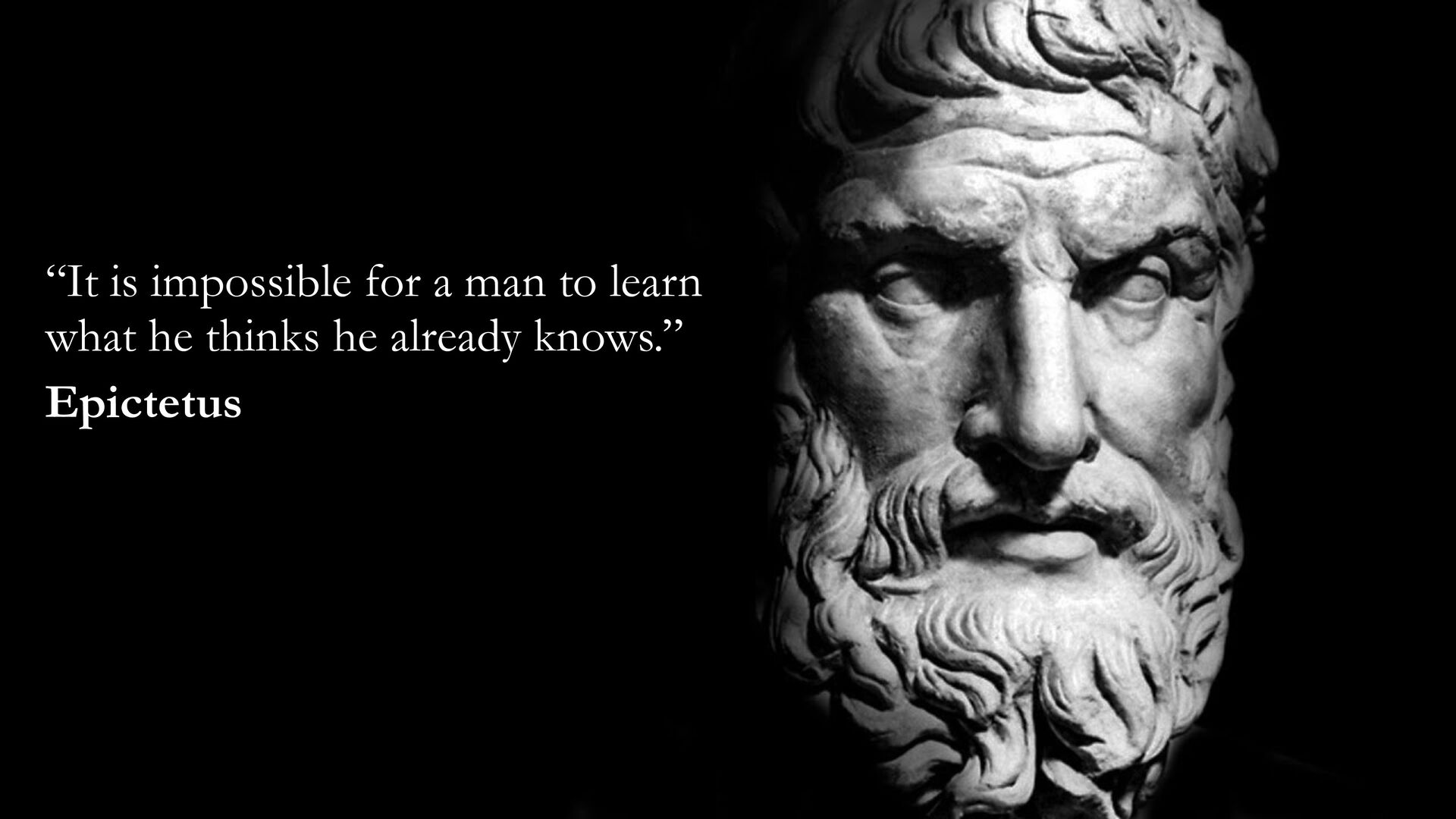
The problem was I spent too long believing that we already had the answer. So what I'm saying is in an organization at any given time, we're standing on all this facts, all this information. But what we're standing on, what feels like ground truth, is actually some mixture of information and assumptions which may or may not be true.
But they both feel like stuff that we know. They both feel like solid ground. And at some point, we're innovating and moving out and trying to do new things, at some point, the ground shifts imperceptibly underneath us, and we're no longer standing on facts.
We're mostly standing on a big fat pile of assumptions, which may or may not be true, but you don't realize that. And so the hard part of this whole problem process, excuse me, is to just have the presence of mind to say, hey, wait a second.
None of this stuff is working. Let's take a step back. I think the problem is that we're missing some information. And that's a very hard thing to do. It is hard to notice the absence of a thing, the dog that did not bark.
And the problem is, especially if your boss is like, hey, are you going to hit your target? Are you going to hit your target? It requires this shift, this mindset change. And mindset change in any business problem is always going to be the hardest part.
So I'm going to wrap this up by telling you about what is the new mindset and how do you start to shift your team's thinking when you realize that you're in a position where you need to be doing discovery rather than optimization, especially if you've hired a team full of optimizers.
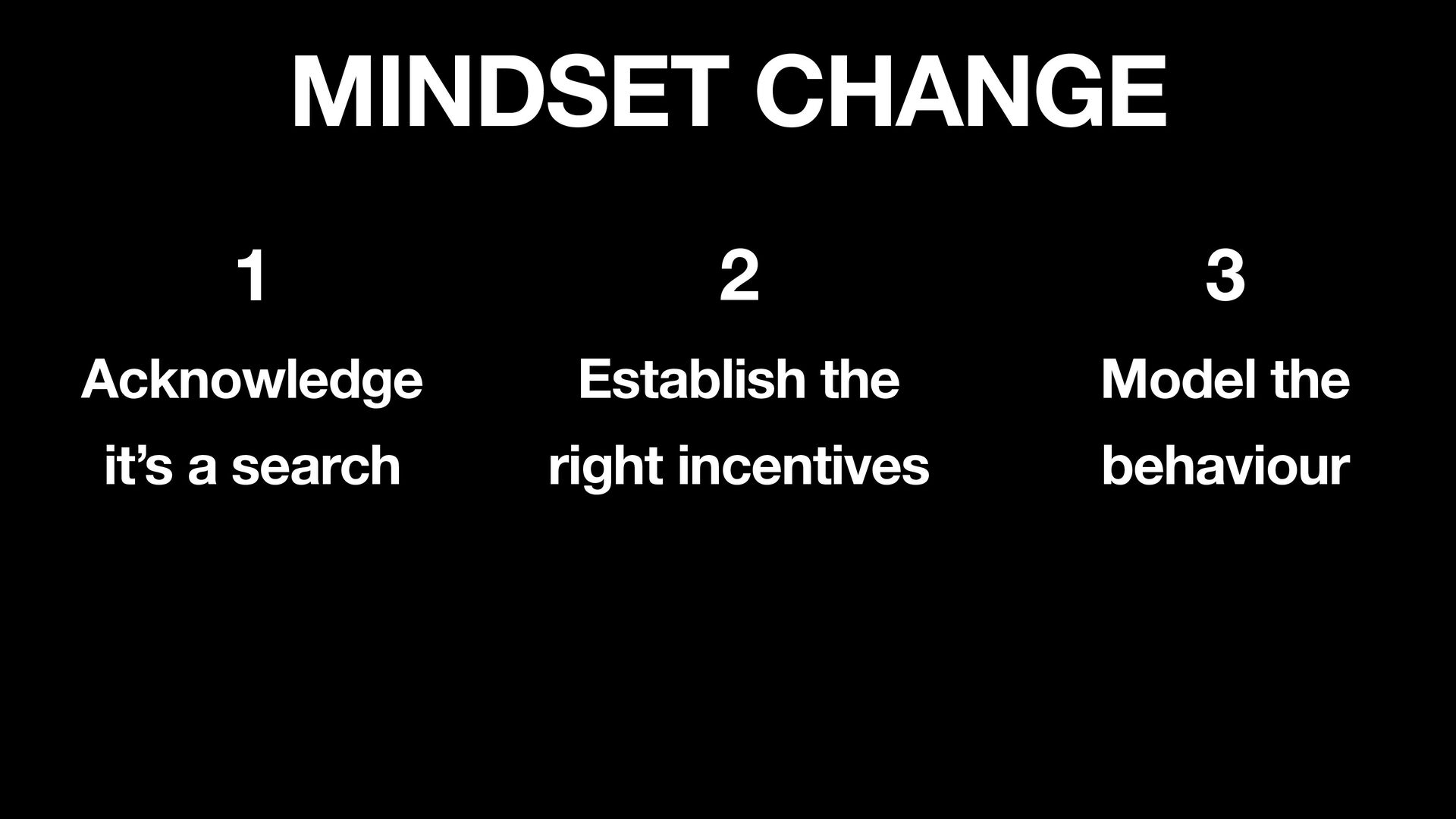
You've, of course, hired high achievers who've gotten where they are by always doing everything a little bit better than everybody else. Now you want them to kind of do the opposite of that. So first of all, like I said, just acknowledging a search.
Someone's got to have the presence of mind to say, someone very important to say, hold on, I think we're missing some information here. Number two, then you can reinforce that by changing the incentive structure. Establish the right incentives. I'll talk about that in a minute.
And then the third piece of that, because still going around saying, well, I don't know. I don't think we have the answers isn't something that's kind of politically acceptable to do in a high achieving organization. So you also need to model the right behavior because people won't do what they tell them.
They'll do what you know, they will behave as you behave. They will follow your behavior. So let's talk about incentives. So I think people who work in finance have a very and I hope I'm not offending anyone here. I am sure I'm offending someone here.
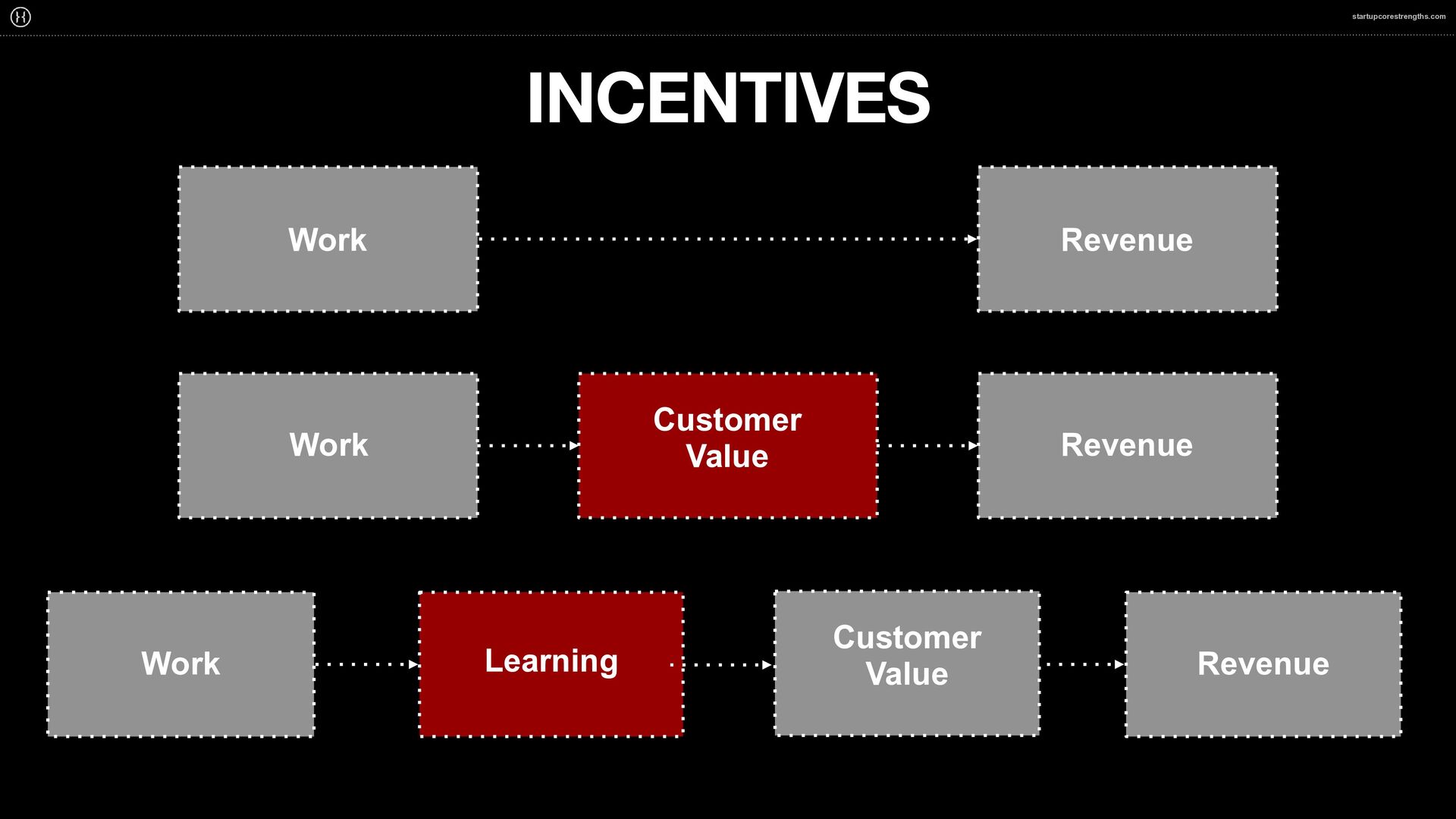
They have a very simple sort of view of business, which is like, you know, you put some money in one end and a bunch of people do work and then more money comes out the other end. And with start ups, it's not quite that simple because, sure, that's how it works for a chain of restaurants or a chain of car washes.
But in a start up, you've got to first remember that customers don't just give you money at random. They give you money in exchange for some kind of value. And so the key in a start up is to figure out who are our customers and how are we going to deliver value to them.
So the first step in the incentive structure is not to focus everyone on these revenue targets, but to focus them on some metric like activations, like weekly active users that shows you're delivering value. But then just like in my story, sometimes you get to a point where no matter what you do, the customer value delivery metric isn't going up either, which means you need one more metric in between there.
So what causes you to start to be able to deliver customer value? Some kind of learning. So that then becomes the thing that you're focused on. You've got to peel it back to the first step. So but that's kind of weird. How do you measure learning?
Well, it's really just that simple. I mean, it's like everyone tell me at the end of the week, what did we learn this week? Like, whether it's a weekly email or a stand up or a Slack channel or whatever, but literally asking everyone, what surprised you this week?
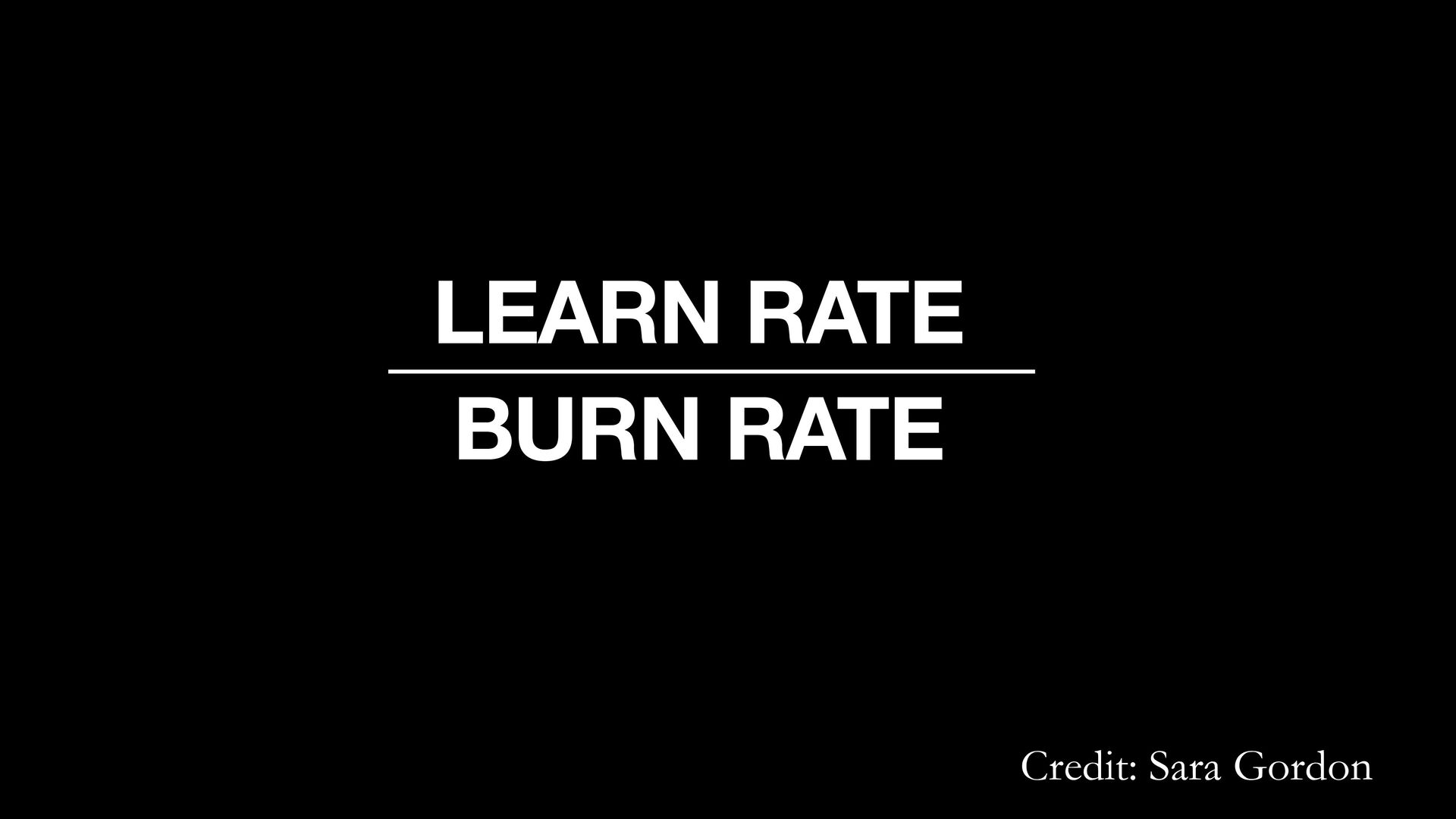
What did you get wrong? What did you hear from a customer? What did you find in our data? And you can total that up. And one of, my friend, Sarah Gordon, coined this. But most startups have a burn rate. So what is our learn rate over our burn rate?
Literally, we're burning, whatever, a hundred thousand a month, so that's about thirty thousand a week. Okay. What did we learn last week? And does that feel like we learned thirty thousand dollars worth of stuff or not? And that's a really helpful way to think about it because that focuses everyone.
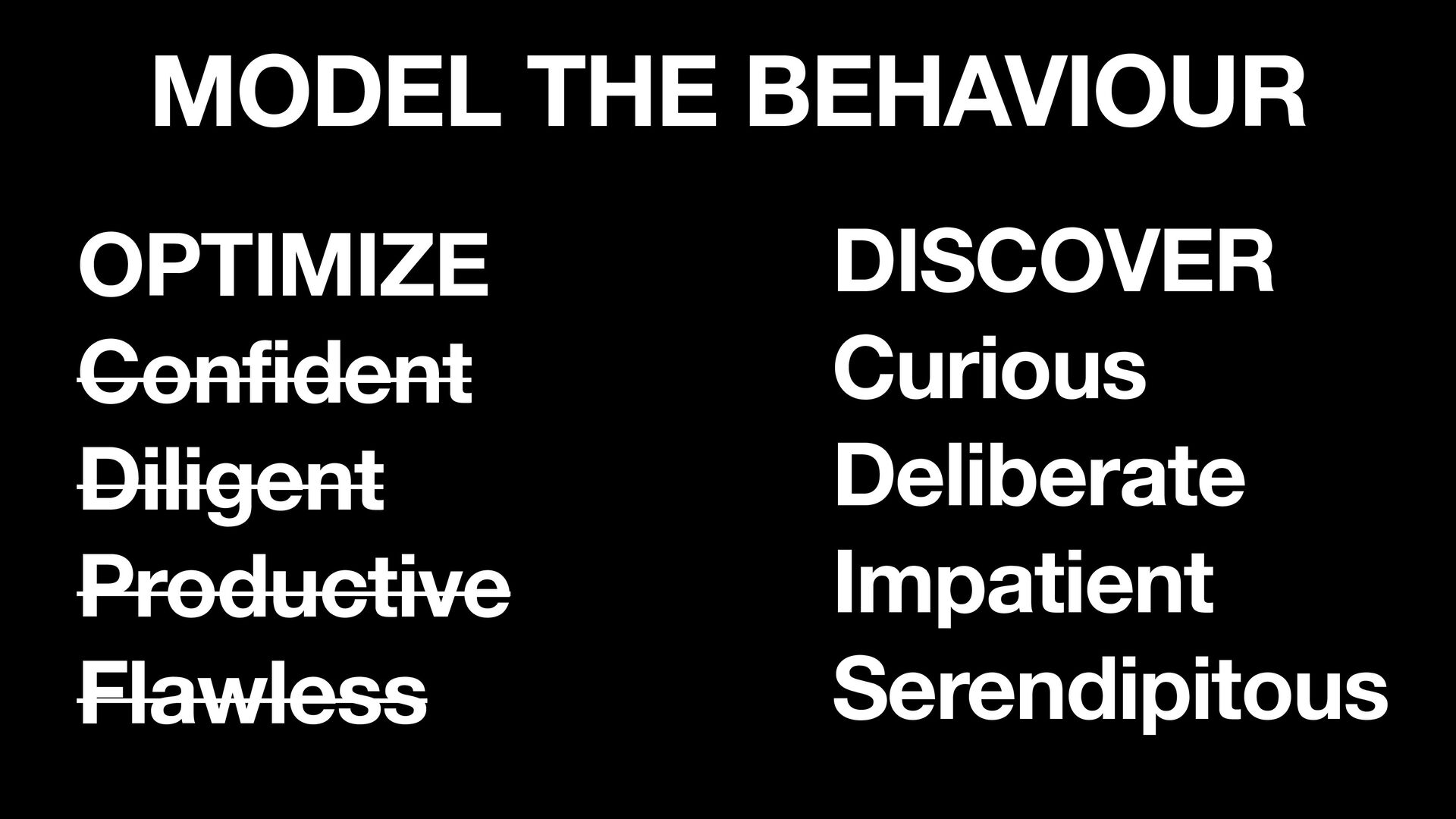
It connects the money to the learning, focuses everyone on learning as the outcome. In terms of modeling the behavior, basically it's a shift from going like confident. I know we have all the answers. We're operating. We're running a playbook to curious. Talking as a leader about these are the things I don't know.
These are the things I'm wondering about. These are the things I'm learning that surprised me. From diligent to deliberate. So when you hire playbook runners, when you hire optimizers, they're going to try to do everything on the list and they're going to try to do it perfectly.
Hire into a startup, you hire an experienced successful marketer from a big company. The way you get promoted doing marketing in a big company is to do all the things and get all the budget, manage all the projects on time and manage all the people and do all the things you're supposed to do.
In a startup, you can't do all the things. You only need to do one or two or three of those things. And you need to do one or two or three things well. So you need to go from people, you know, from not I did all the work to what's the one thing that you need to do.
So I joined PayPal after Peter Thiel had left, but one of the things I heard was with each of his direct reports, he would only talk to them about one thing. He would refuse to discuss anything else with his direct reports. So they had that sort of intense focus.
And that meant they weren't doing way more things than they were doing. And that was uncomfortable cause people were like, well, we really should stabilize the code base. That's a whole another story. But, there were lots of things they should have been doing that they should be getting money transfer licenses in some of these states where we're transferring money.
They didn't do that stuff. But obviously, PayPal was successful. Anyway, so instead of trying to do all the things, being really deliberate about which things you need to do. And then the last piece is getting away from this perfectionism. Because in a start up, things you do are going to fail.
They're not going to fail for any of the twenty reasons you think they're going to fail that you sort of planned for. They're going to fail in some novel different way. And whatever failure mode of failure you run into, that's going to teach you something really valuable.
So you've got to spend less time worrying about planning for what could go wrong and more time unpacking and understanding what did. So you speed up the cycles. So in short, to sum this all up, the whole point of my talk is that you've got to kind of realize when you switch into discovery mode, when the thing that's holding you back is that you're missing some key information.
You need to become curious. So a lot of people come up and they'll give a talk to try to sell you the book. Obviously, I'm not doing that. I've given you all copies of the book. I hope you enjoy them. What I'm trying to do here is get you to know when it's time to open up and use the book.
So that's it. I hope it's helpful, and I'll be at the roundtable later.