
There is so much content on the web, to get your content noticed you really need to make it stand out. It doesn’t need to be expensive, or even original, but it does need to be innovative. But there’s little point in creating content campaigns if you don’t make people aware of them. Lisa will be taking you through how her agency approaches content marketing and outreach, that has got their clients links and coverage from some of the biggest authority sites in the world including BBC, The Guardian and the Wall Street Journal. Don’t miss this hands on session on how to get your content noticed and covered.
← All talks 























Grow Marketing Turing Fest 2017
How to Make Your Wishlist Piece of Coverage Come True
Auto-generated transcript - may contain errors. Tap a timestamp to jump the video.
Okay. Guys, I have a lot of slides, so we're gonna have to go through this quickly. I run SEO agency. We specialize in off page, so actually getting links still a very, important part of SEO. I'm going to start off with telling you a story.
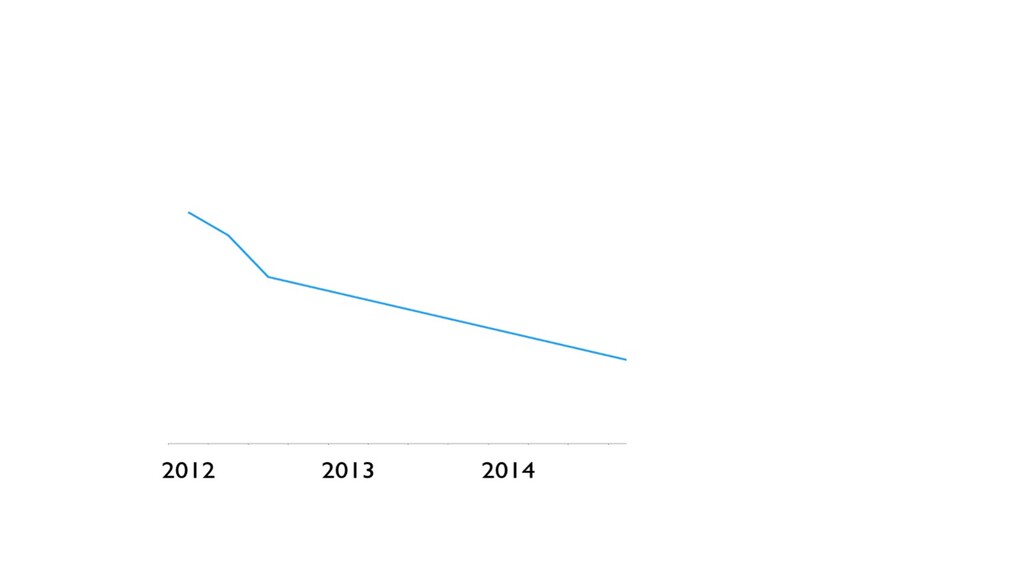
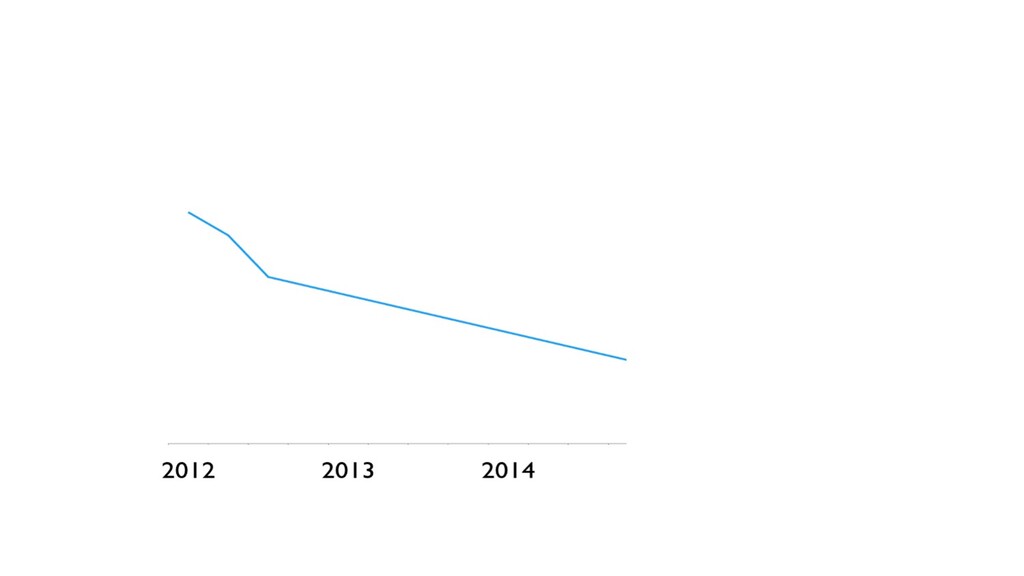
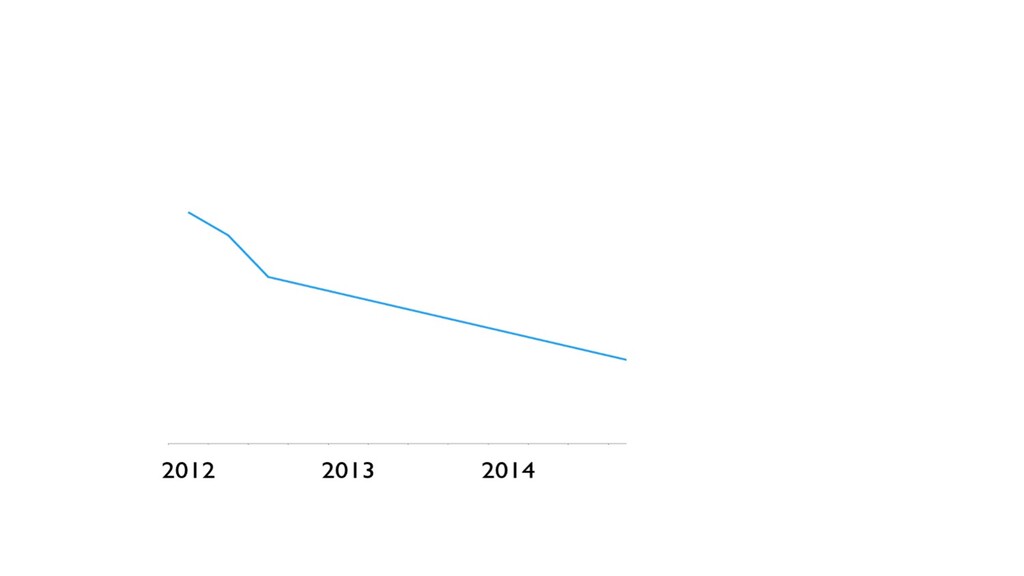
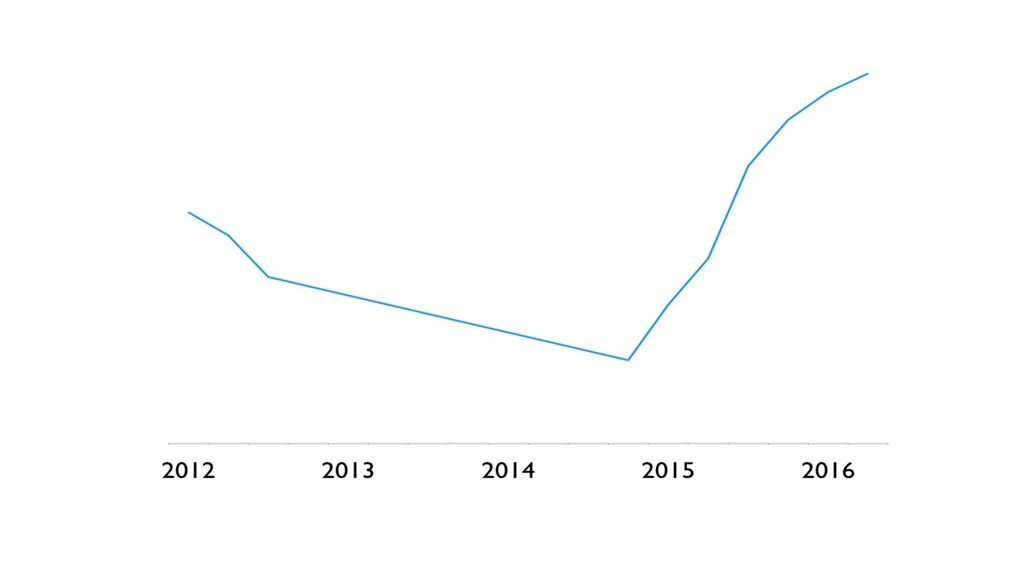
In January two thousand and fifteen, we were in a bit of a predicament as a business because the value of the links that we were able to contribute to our clients were sadly reducing year by year. So we have a link scoring metric in house, which allows us to see how valuable the links that we're able to contribute to client sites is.
That also likely to increase rankings, which is why we're doing this. And we could see see this was decreasing year by year. So I realized that we could continue doing what we were doing, and what we were doing was content marketing. Content marketing, traditional link building, which was mostly about creating content, written content, infographics, simple stuff, and then trying to get coverage with it.
But I realized that if we didn't considerably change our strategies, we would lose. We would maybe not even lose clients because I know loads of people that are still doing this ****. But, we would certainly lose result, which was important to me. So basically, we restructured the agency.
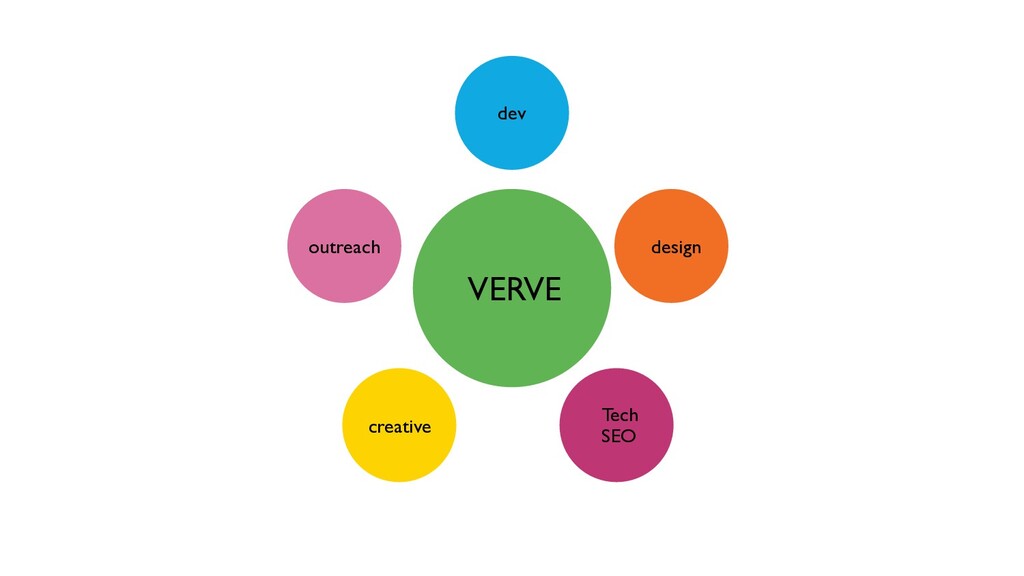
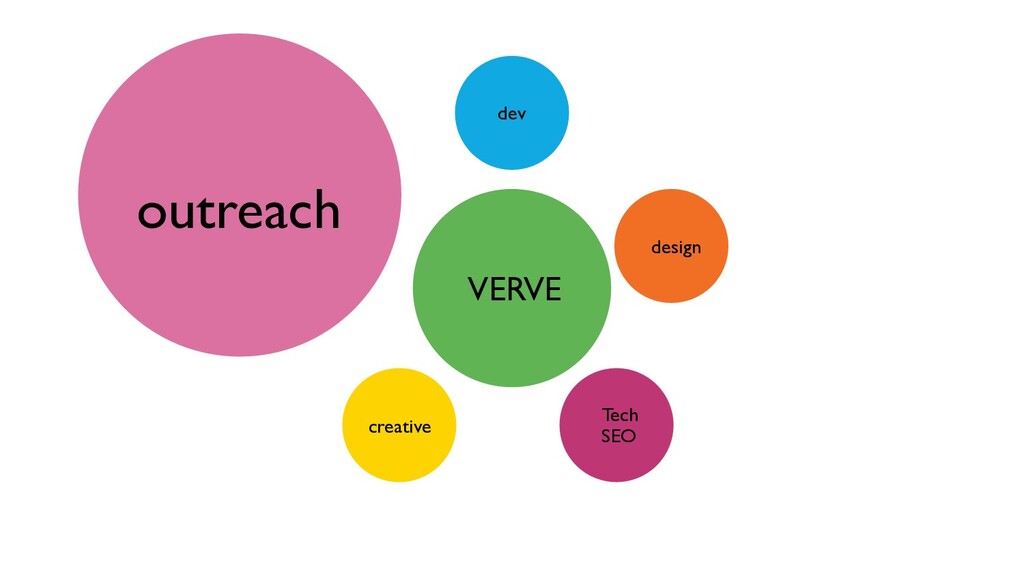
This is not working. This is typical. Oh, there you go. To become more of a creative agency. So today, we look pretty much like a creative agency, having designers, developers, researchers, project managers. Tech SEO is our smallest part of our agency. The reason that I thought this was a good idea was because we needed to do things that were of much better quality.
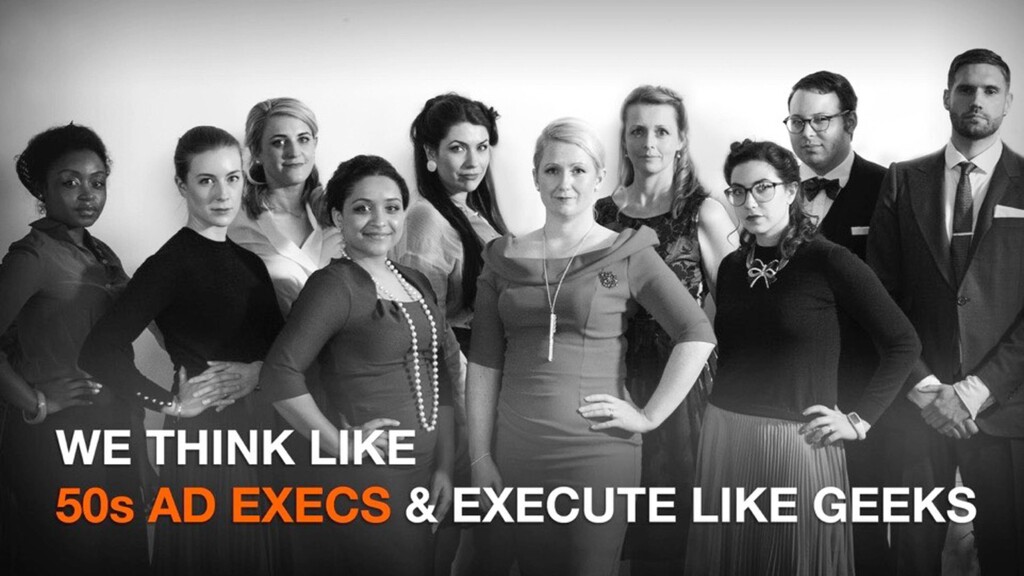
Basically, I wanted us to think like fifties ad execs and execute like geeks. And I made everyone wear these outfits for a week. No, I didn't. But I would have sported that. And so to get to that bit, so this is basically now two thousand seventeen.
We've we've been doing these kind of campaigns for a couple of years, but I don't want you to think that that was easy. But I'm gonna share everything that I've learned with you today. So, we have launched sixty six creative campaigns in the last twelve months.
Of those sixty six campaigns, there was about three hundred and fifty ideas to get those six and six campaigns. What does that say about us? We are really good at coming up with a lot of **** ideas. I'm gonna give you some examples of these **** ideas just to give you a perspective.
So, have you ever thought it would be really cool if you could print your tweets on toast? A toaster? Yeah. That's a really bad idea. It gets worse. How about, and I fear this was one of mine. Have you ever thought it's it's eleven o'clock on a Saturday, you, you really need a condom, it would be ideal to get it with your pizza?
My husband is sitting here. He's probably wondering, what the hell? Yeah. So the point is you have to come up with a lot of **** ideas in order order to come up with great ideas. I think this is really important. Not being afraid of failing is really where creativity lies.
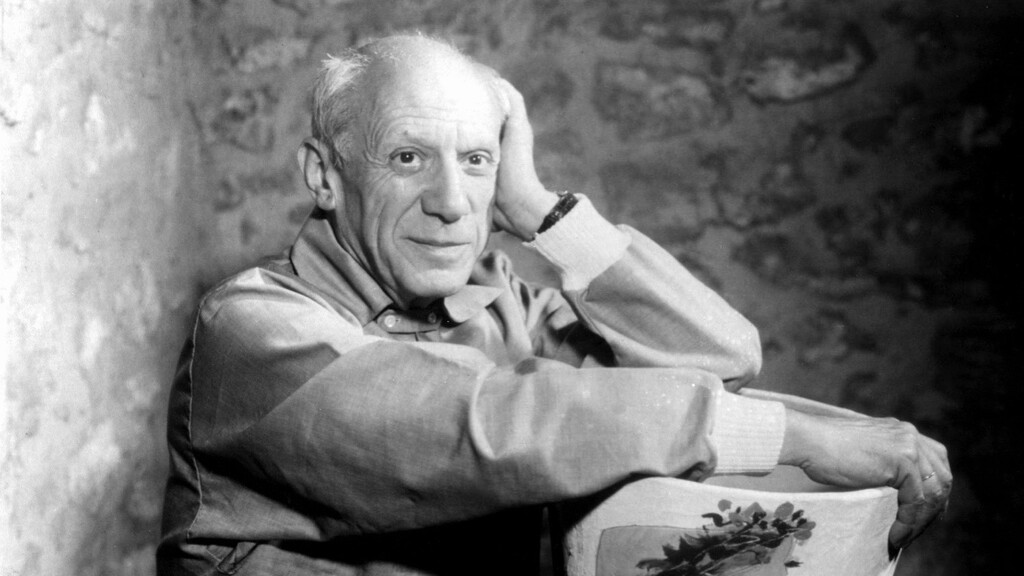
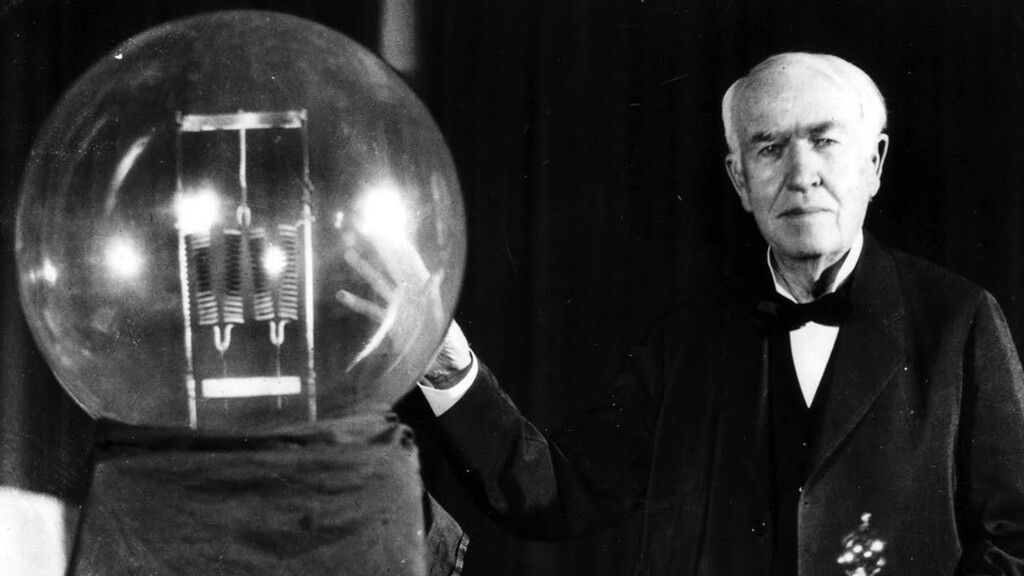
I know there's a lot of pressure to be original, and that's where we think creativity lies. And when we think about creativity, we think of people like Picasso or Edison or Steve Jobs, not us. And this is where I kind of think four zero four, creativity not found, panic, what we're to do?
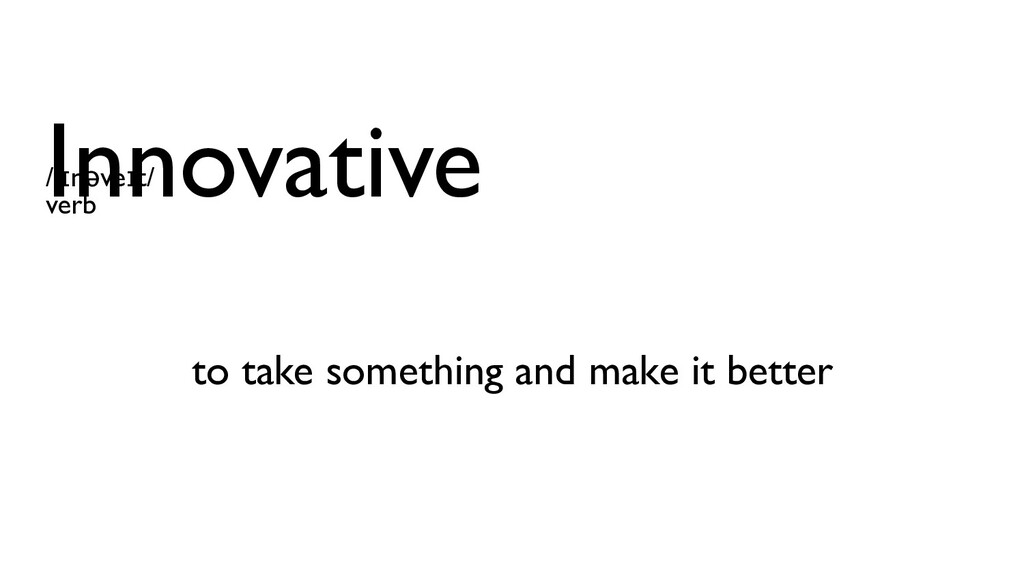
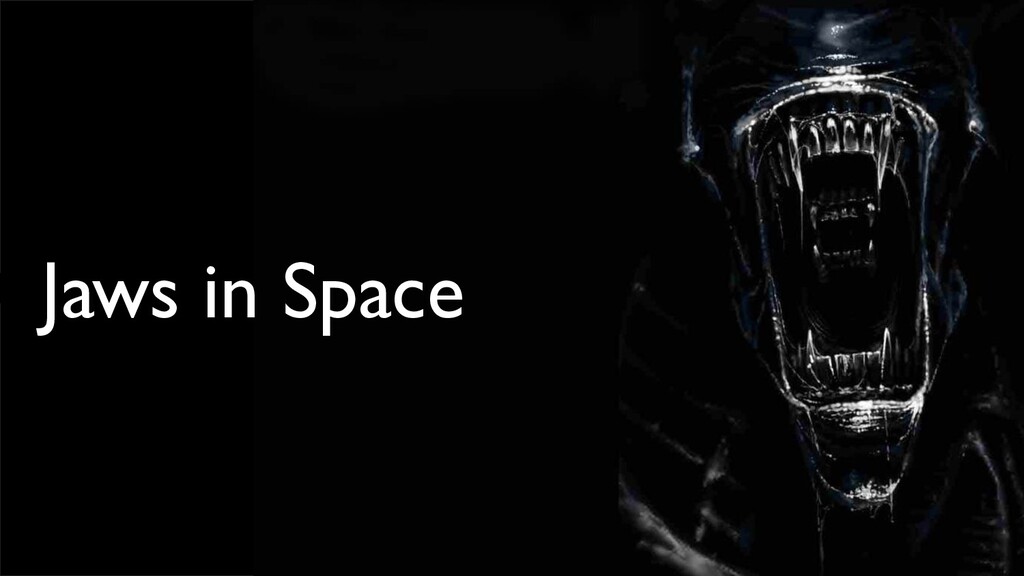
But if we just adjust our mindset a little instead of thinking, a creative, we should be thinking innovation. And innovation to me is basically to take something and make it better. So when Alien was pitched in to to the studios in Hollywood, it was pitched in as jaws in space, which I think is the best explanation of four liars.
And if you think about it, Deliveroo is kind of like Uber for food. Some of the best ideas are based on something else. And in SEO and in creative campaigns, working maybe on smaller budgets than a lot of creative agency. I think there's a lot of worth finding something that nearly works.
For example, Red Bull actually came out of a research trip with this this Austrian researcher called Dieteris Masterchitz. That sounds like I say Masterchitz. I cannot pronounce that name. But who visited Thailand, found this drink that was targeted towards trucker. It was a really cheap energy drink.
And he pretty much stole the whole idea including the label, because that's exactly what the label looks like now, and made it into a very successful drink. So I'm not saying that you should steal anyone else's ideas, but you can be inspired by them.
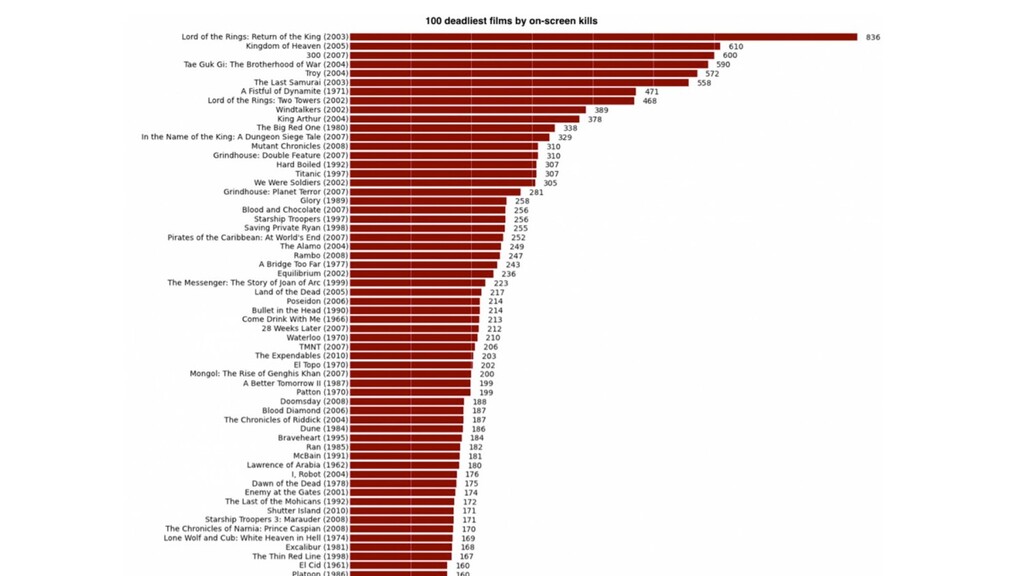
In two thousand thirteen, Business Insider had a piece that included this graph. This is basically a graph including the hundred deadliest films by on screen kills, which looks pretty bad because it's just like a table. But what we what we saw this, we thought, you know, it's really interesting because it would be good to see the data now and to see whether there are any big surprises.
Because data is always interesting if you find the odd ones out. That's what makes things then a story. Right? So we found a forum that actually include research on literally every movie that's nearly ever ever made, where they have counted the on on screen deaths in movies.
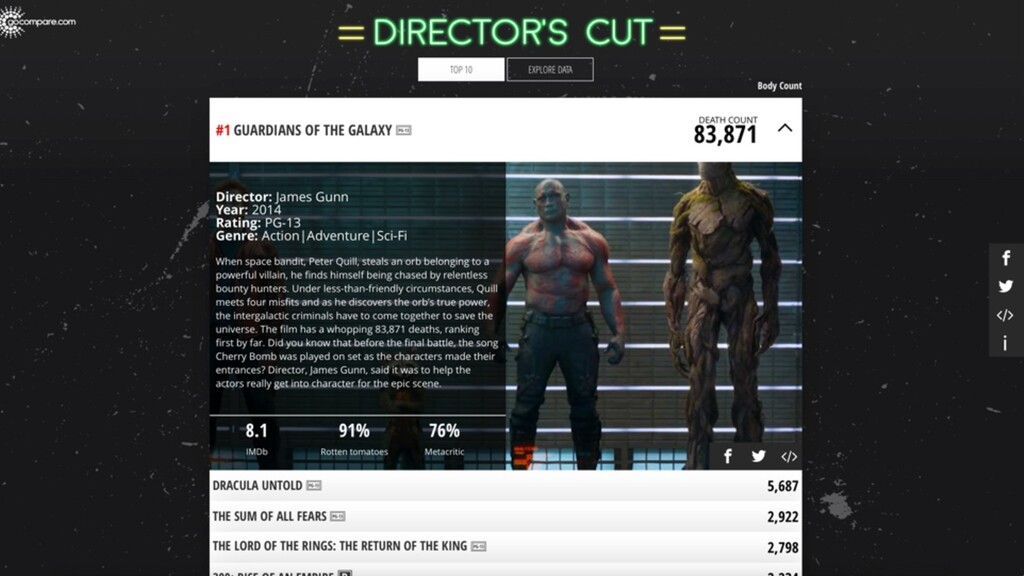
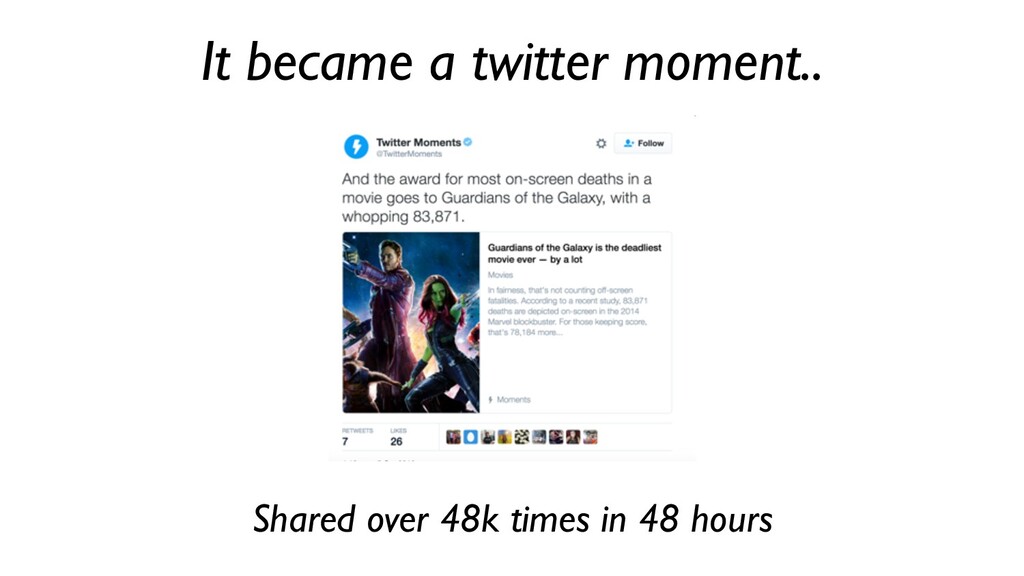
They are propagates for anything. So we created for Go Compare this campaign called Director's Cuts, which was basically updated version, better looking, but also the better data, more data points, And the very big surprise that the number one deadliest movie of all time was Guardians of the Galaxy, which is a p g thirteen.
Awkward. And to be honest, when we did this piece, I it was a smaller piece for GoCompare, so it was for the life insurance. Oh, I know, slightly tasteless life insurance, deaths in movies. And then we we we thought it would do well, but we were not aware of how well this would do.
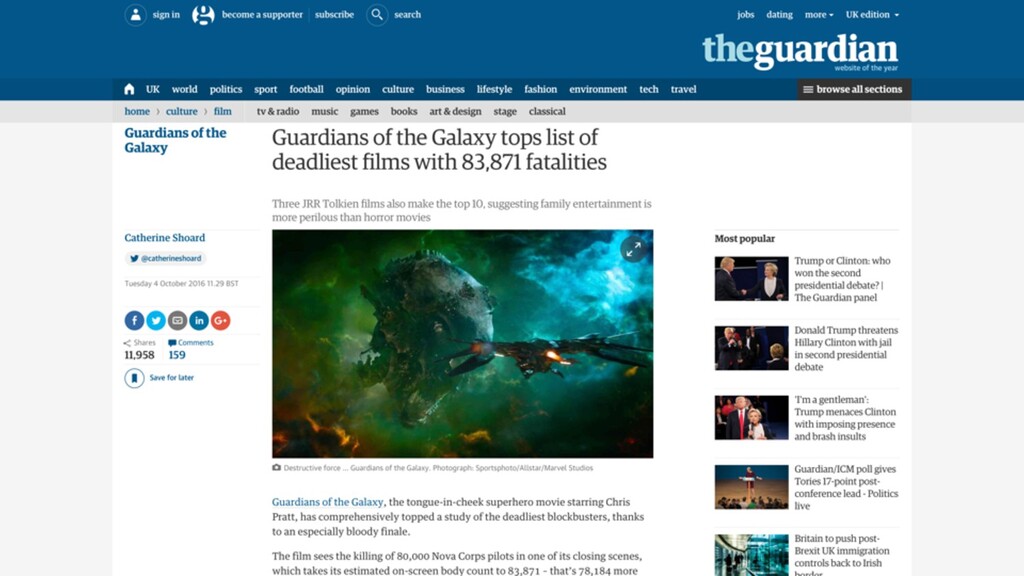
Because the first people to pick this up was the Guardian. And from the Guardian, it's, it got over eleven nearly twelve thousand shares and a hundred and fifty nine comments in like no time at all. The important thing of this and the reason why it really got engaged with everyone is that I'm pretty sure there's some Star Wars fans in here that's thinking, hang on a second, they blew up planners in Star Wars.
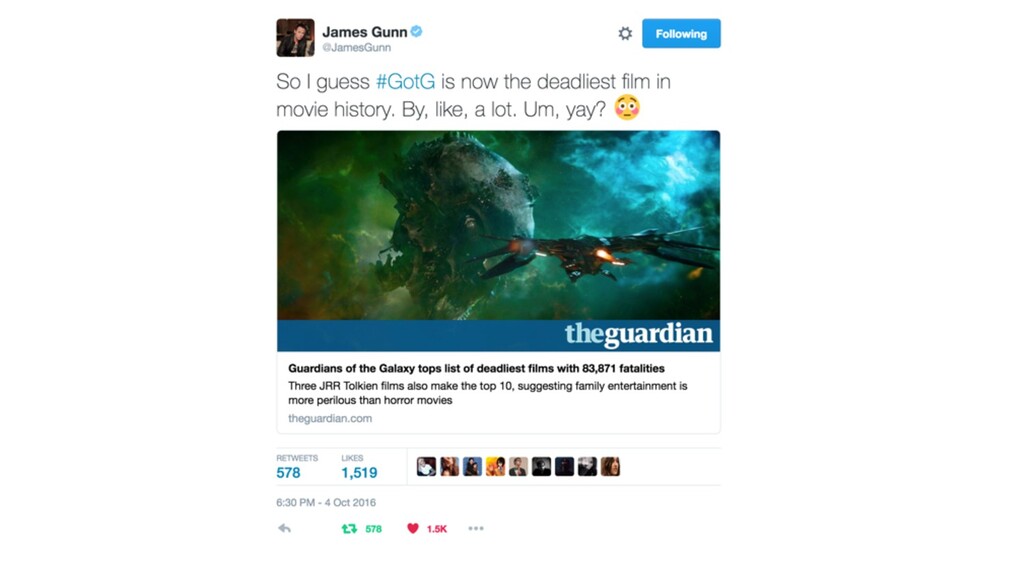
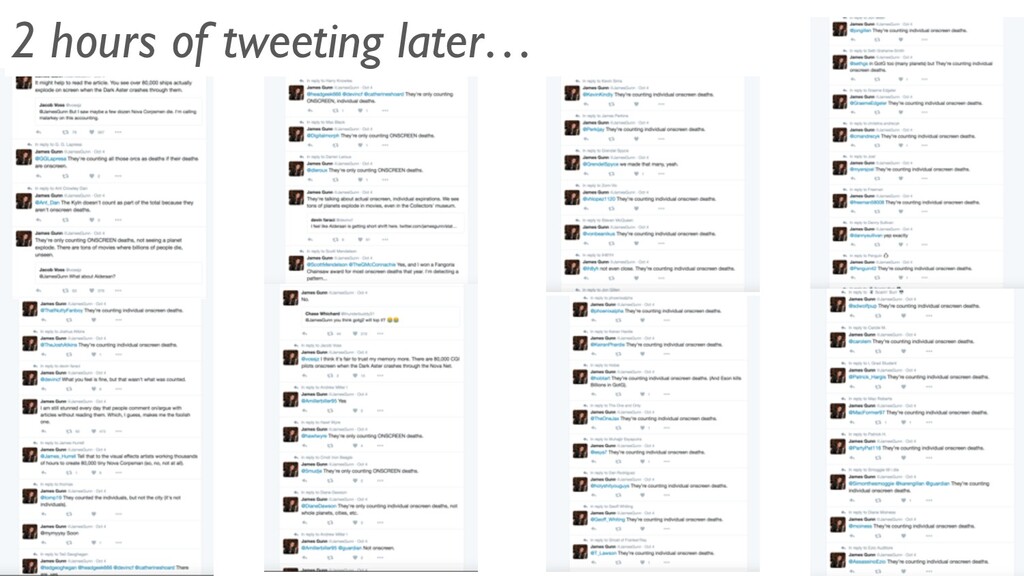
Which again is getting that kind of user, user interaction of like, well, I disagree. But not only did we get Guardian covering it, James Gunn, who is the director of Guardians of the Galaxy, tweeted it. Not only did he tweet it, he spent two hours replying to tweets saying, no, I think you will find GoCompare is correct in their data.
Which was insane kind of engagement because it did have a lot of people saying Star Wars had more more more deaths. But it's very important, on screen deaths. You have to see them dying. Sorry, this sounds so awful. But not only did it get coverage from the Guardian and get all these tweets and stuff, which which helped with engagement and further spread of the campaign, it got over seven hundred links from some of the biggest authority sites in the world.
Authority sites is hugely important because those links are worth a lot more than those ****** little blogs. It also became a Twitter moment, because it was shared, a lot, over forty eight hours. And and this is just one example of a kind of campaign that again is not rocket science.
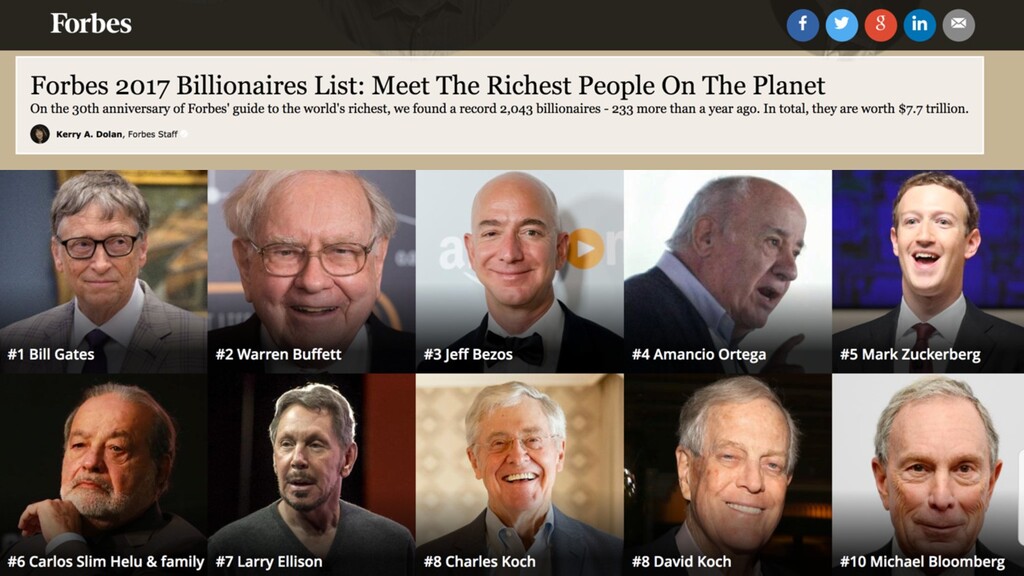
It's not it's not super creative, it's just innovative, it's just taking something, making it better, making it even look better can sometimes be better good enough. Another campaign we we use this kind of methodology for is Forbes releases site this list every year, the billionaires rich list.
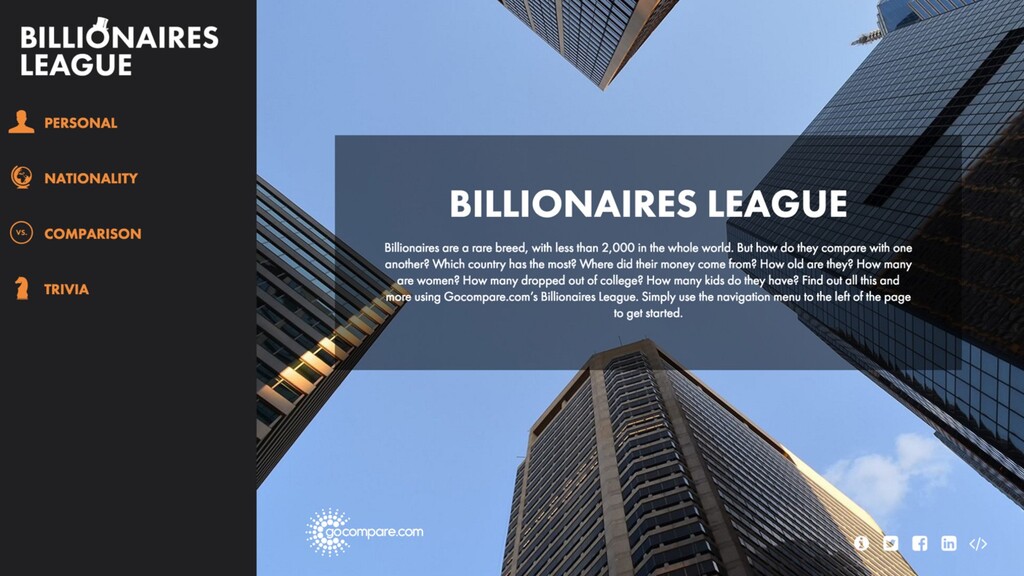
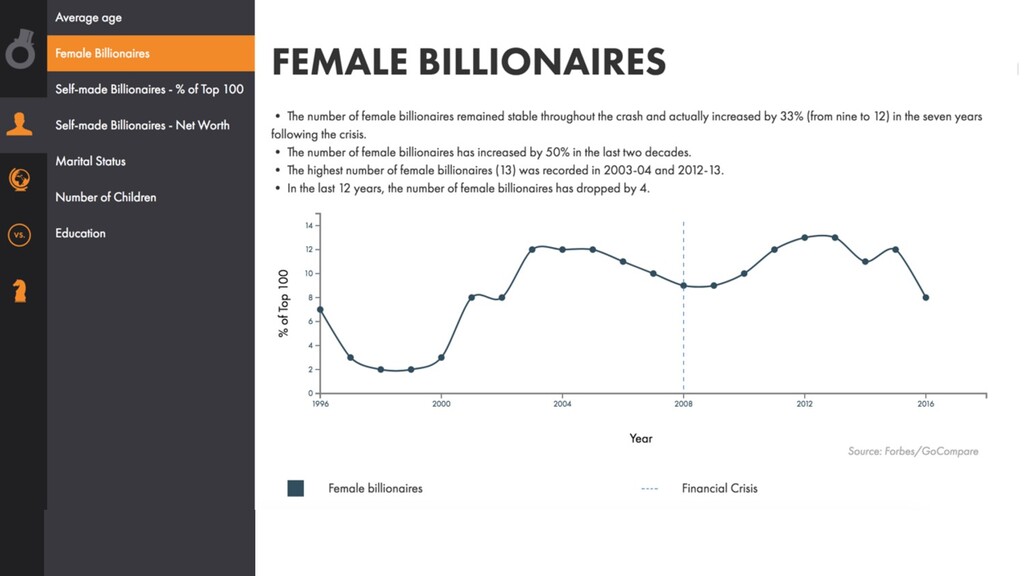
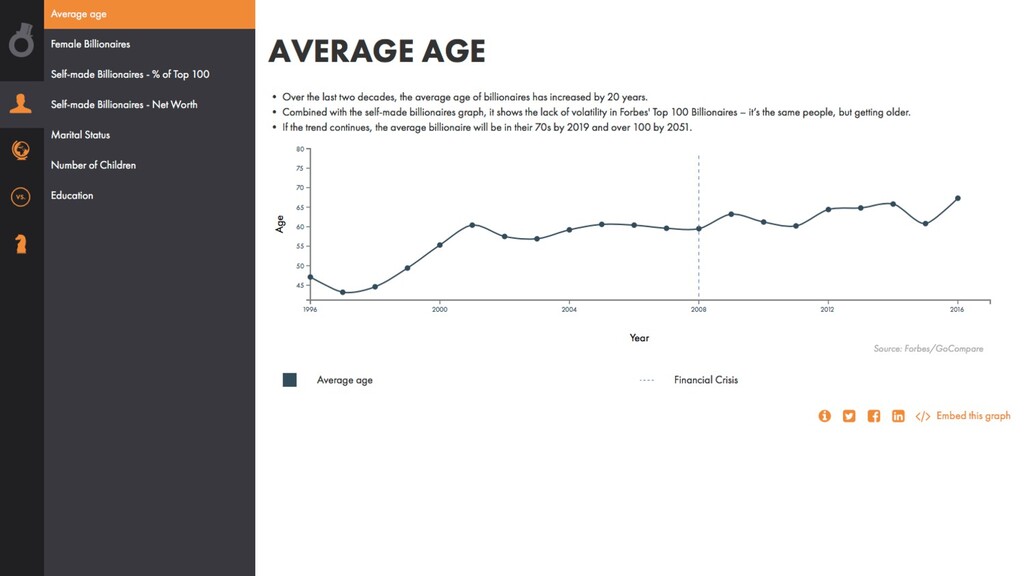
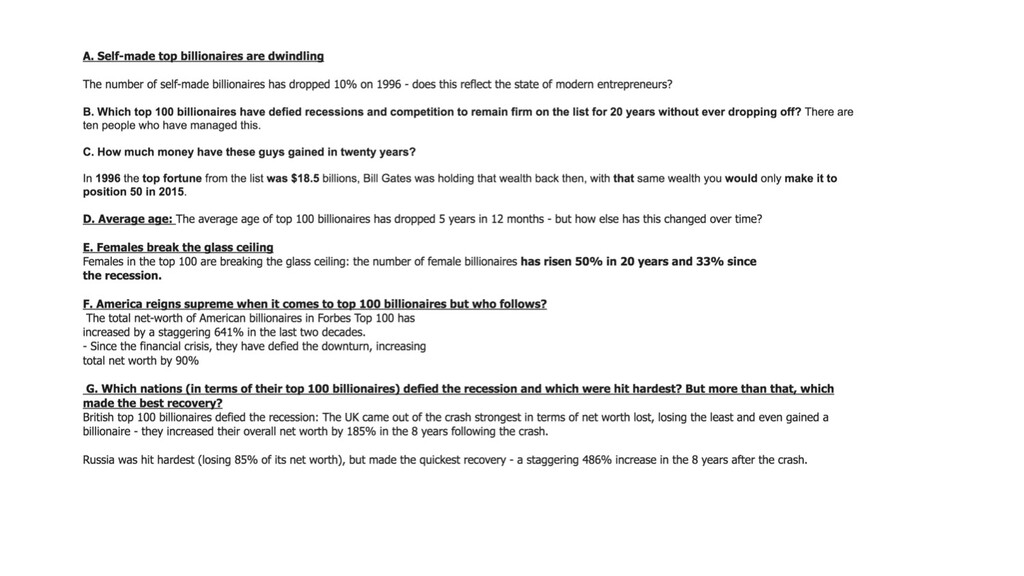
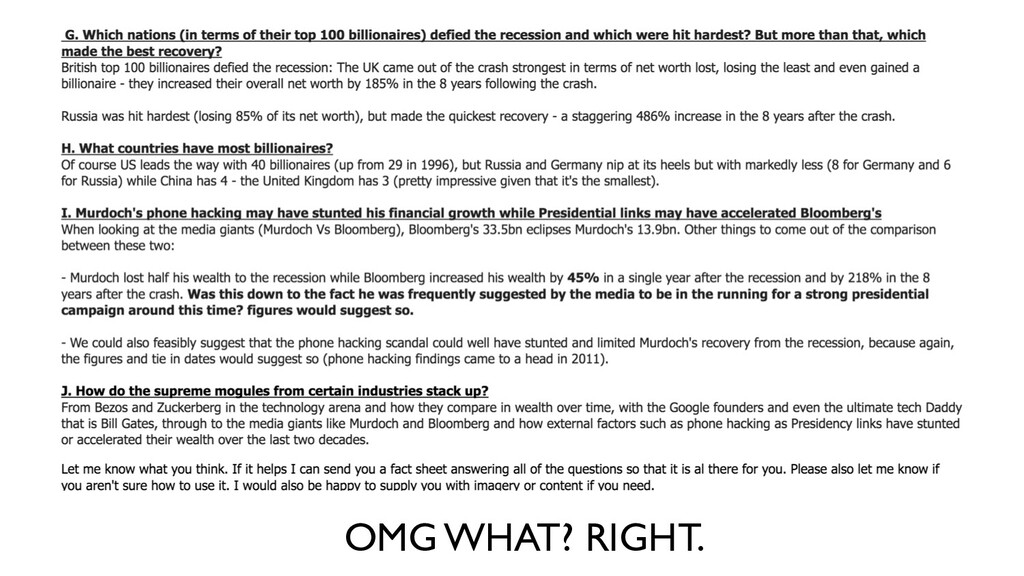
We realized that they release this every year, but they don't have anywhere where you can see all of this data over time. As SEOs and kind of data interested, we always want to see things over time. So we created the Billionaires League, which is basically a place where you can see all kind of details about this, Forbes list, including things like female billionaires.
Is that going up? Is it going down? The average age of billionaires. And so many other angles. We even added some very random angles like what star sign. Guess which paper took that? I'll tell you later. Anyway, that got about ninety seven links and eight hundred fifty thousand views.
That is some serious views for a campaign that is meant for SEO. But it's important to do campaigns that are worth the views and the additional coverage and not just the links. I would also say it's hugely beneficial to over invest in building formats that we could use again.
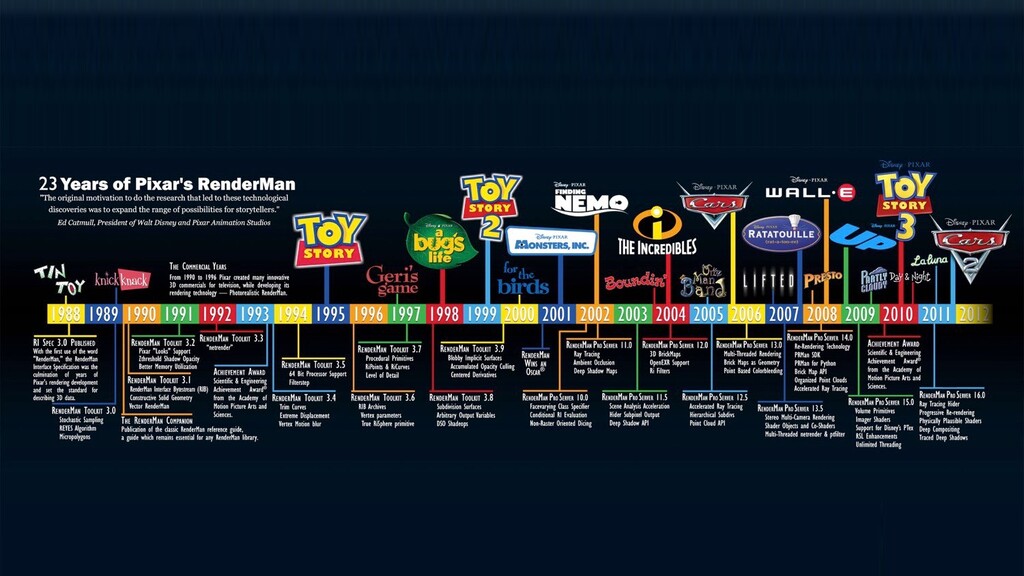
Are there any developers in house? Yeah. A couple. So, we have several developers in house and I must admit they weren't too keen on this to start with, but they come around. Finding Nemo, when they created that, they came into a bit of a difficulty where they needed to create some new technology to model the light dappling through the water.
So they spent a lot of time investing in being able to create that effect, but that they put into what is called their, the Renderman, library of basically additional technology that can use again and again. I would like you all to think about creating this kind of library.
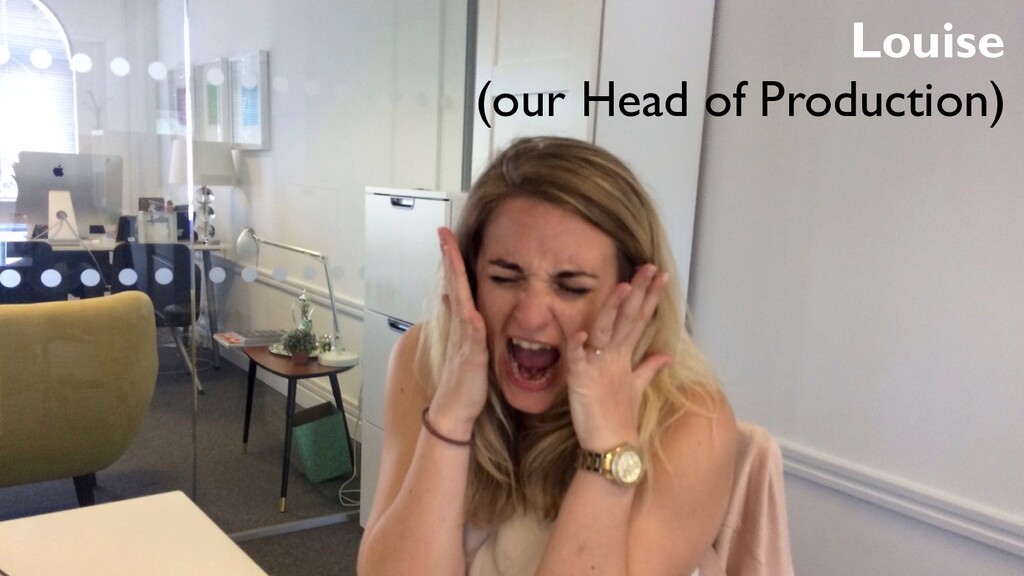
So overinvest once, and then you can use it again and again. Our head of production, Lou, was not clicking on this and got her very stressed. But let me show you some examples of campaigns where we've done this. So Billionaires League, obviously you saw before, by having invested in creating the kind of setup and stuff of the Billionaires League, made it really easy then to create another kind of informative graphic kind of campaign.
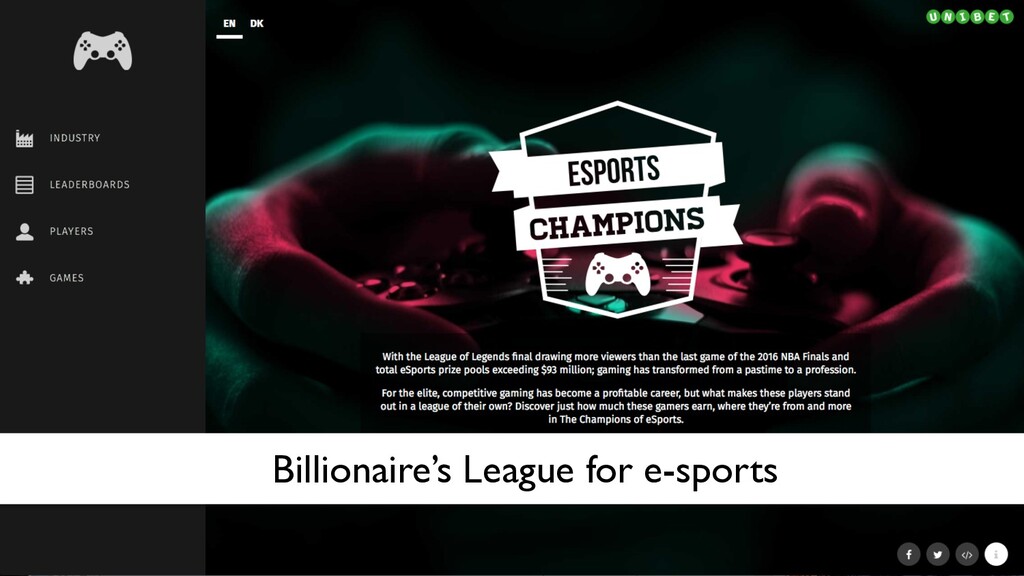
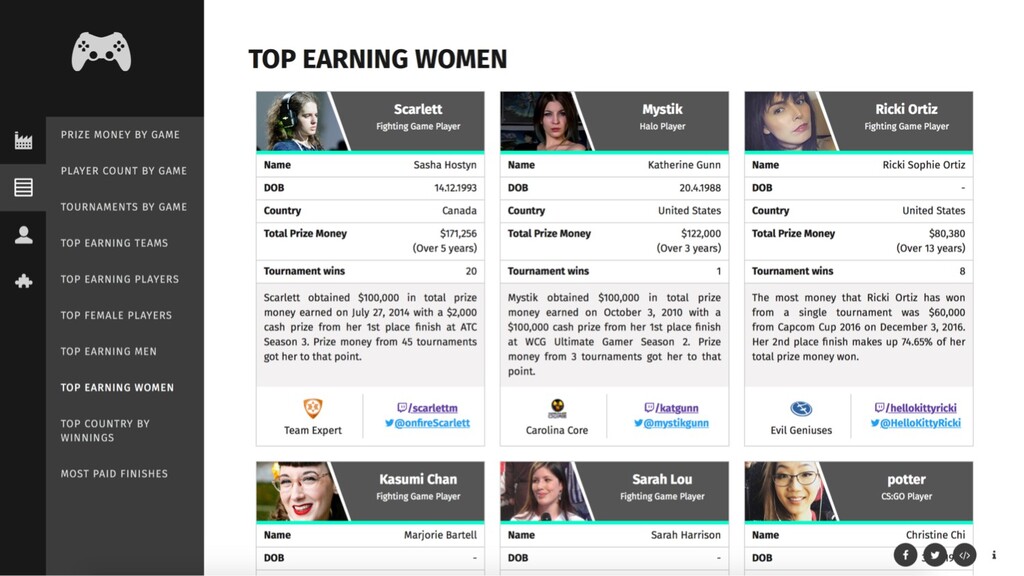
So I'm really interested in the e sporting kind of community and just how big that is. So we had this idea for Unibet, a gambling client to create a a kind of billionaire's league, but billionaire league for esports where we looked into all the data of esports.
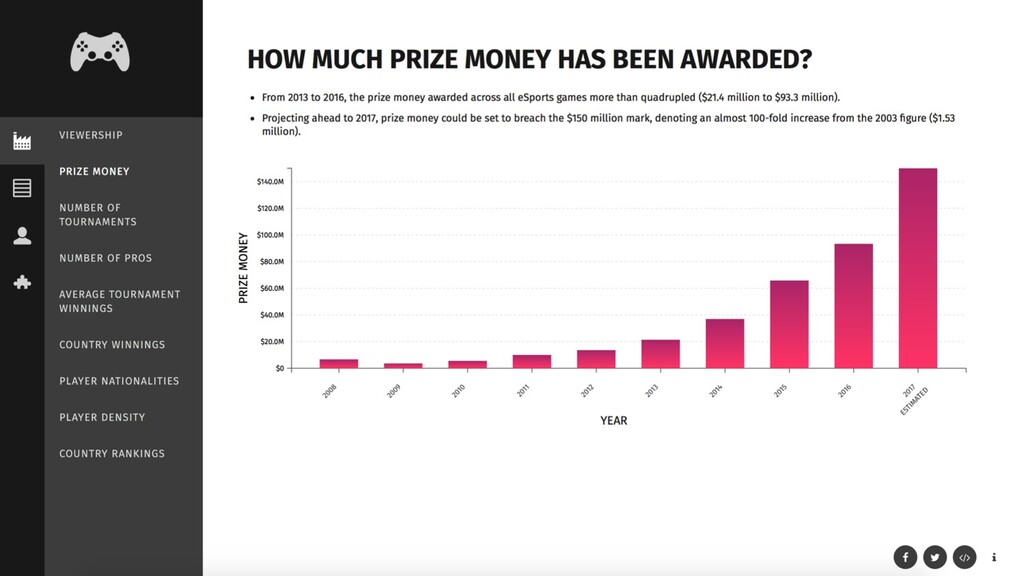
Did you know that esports is gonna be an actual Olympic sport? Amazing. Things like top earning women, how much price money is actually being earned. Like, look at that incredible increase there. This is the kind of data that really surprises people and is really easy to get coverage from.
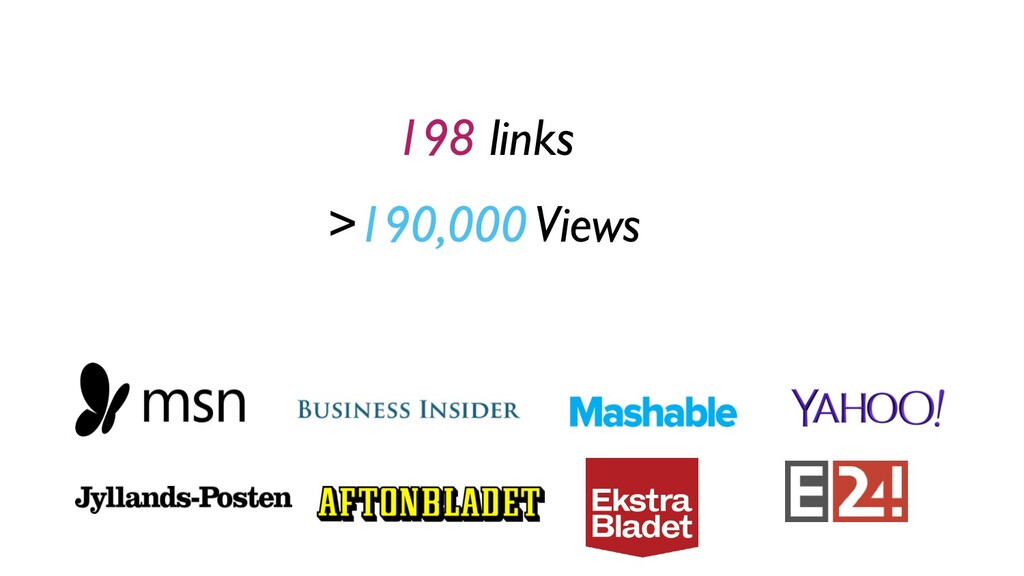
Now, we worked in the Nordic, market for this campaign, and the Nordic market in gambling is actually really, really difficult because there are so many laws, against doing marketing and gambling. So, it was a bit of a challenge, but because the campaign was good enough and because we could invest more time in doing the outreach for this, this got, hundred and ninety eight links and, nearly two hundred thousand views.
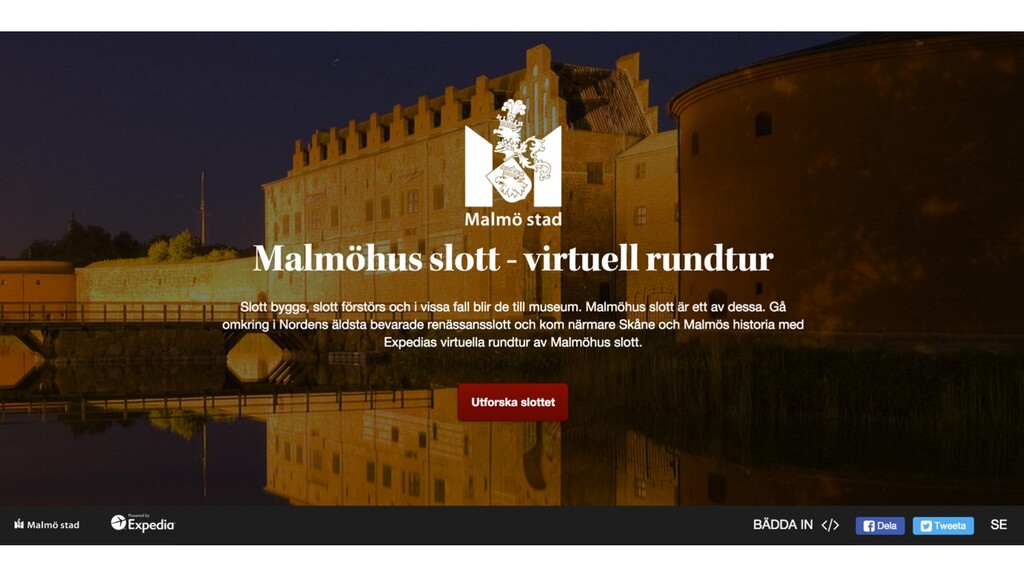
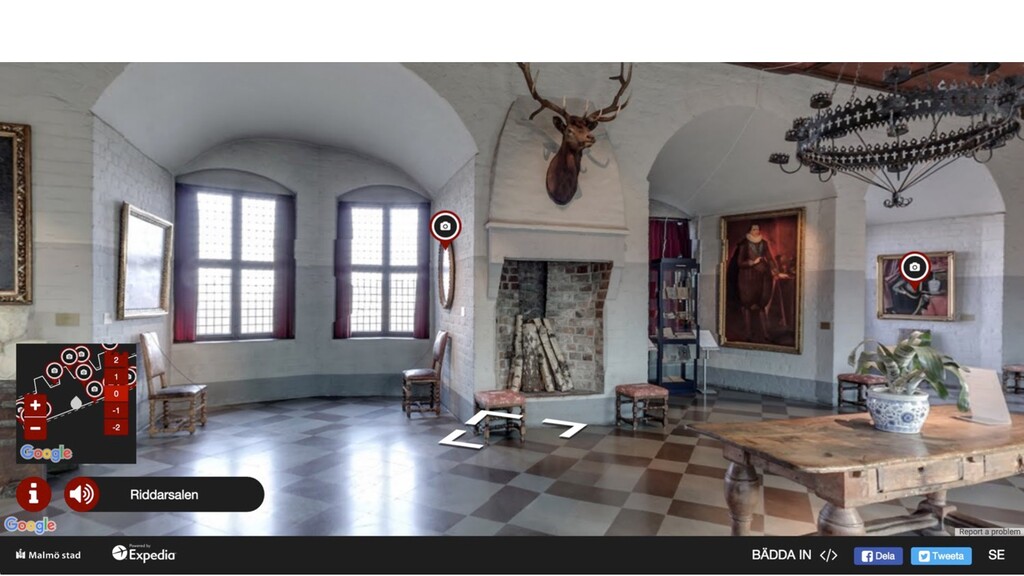
Some really big Scandinavian sites that were the targets, but also big international sites. Another example of a campaign that we've done that we have kind of over invested initially is this one. So I quite like doing street view kind of campaigns. And this is a castle in Malmo in Sweden, where we collaborated with the castle to do a street view inside the castle.
We also want to do audio, so audio visual tour. And as you can see, you can also click on all the different artwork and stuff and really have a immersive kind of tour of that castle from your home. And it will and it is on Google Street View.
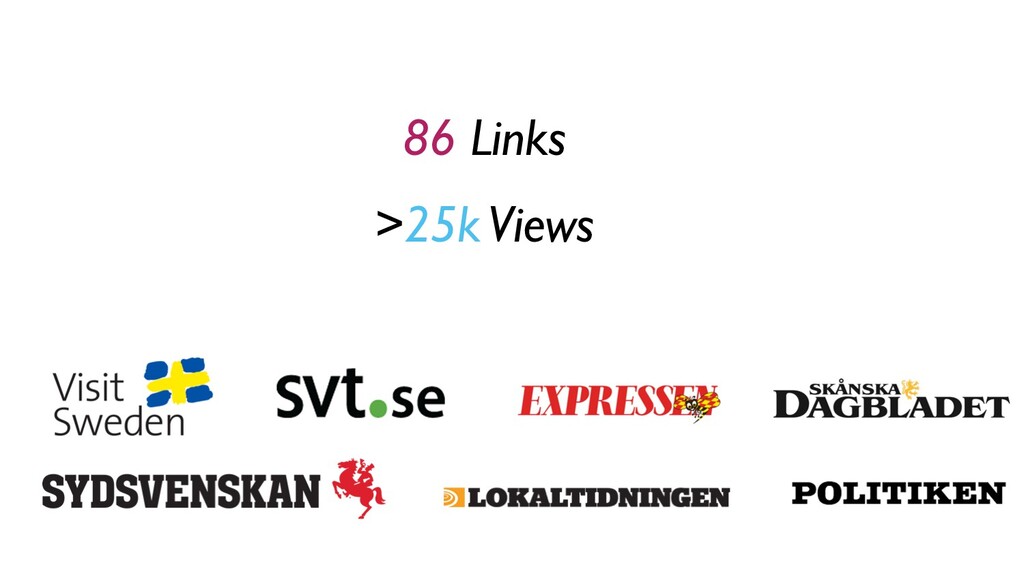
But to do this and the castle being over several floors, we had to create our own software to be able to do that over several floors. That took a lot of time to start with, but it was definitely worth it in then. Because this campaign got eighty six links, and and thus Swedish markets, which is very, is a lot smaller than the UK market.
Visit Sweden, obviously a big target for our client Expedia, as well as, loads of the Swedish, press. In fact, this campaign had to fly one of my outreach people out to Sweden to be interviewed by Swedish television, which was not really that I'm not getting bonus points for that from a SEO point of view.
But if your campaign can get on television, it sure as **** is not gonna be deemed as bad from Google's point of view later. I will I'll I'll reduce the swearing now. I got told I was swearing in Dublin. That's bad. So literally this year, we launched this campaign.
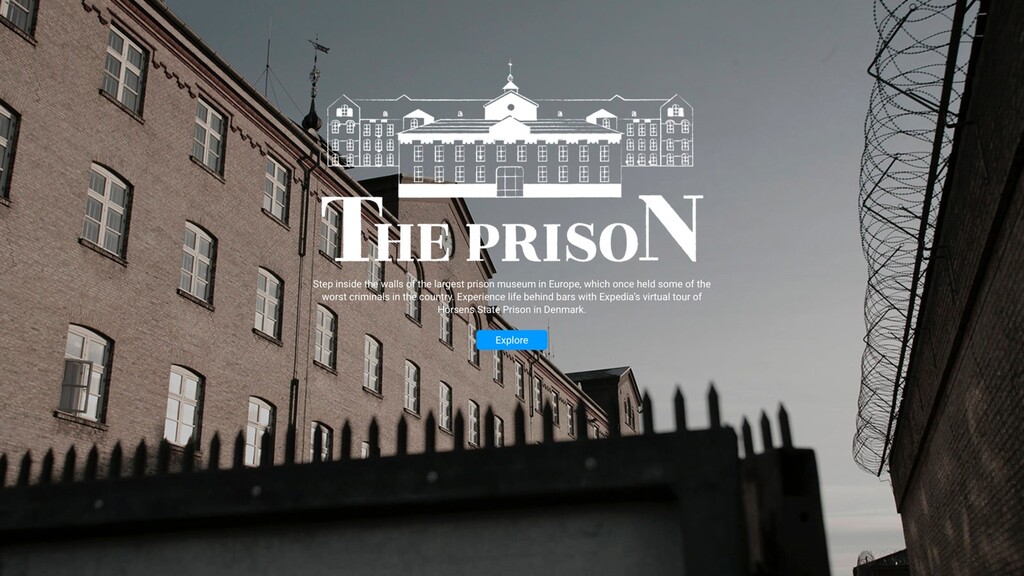
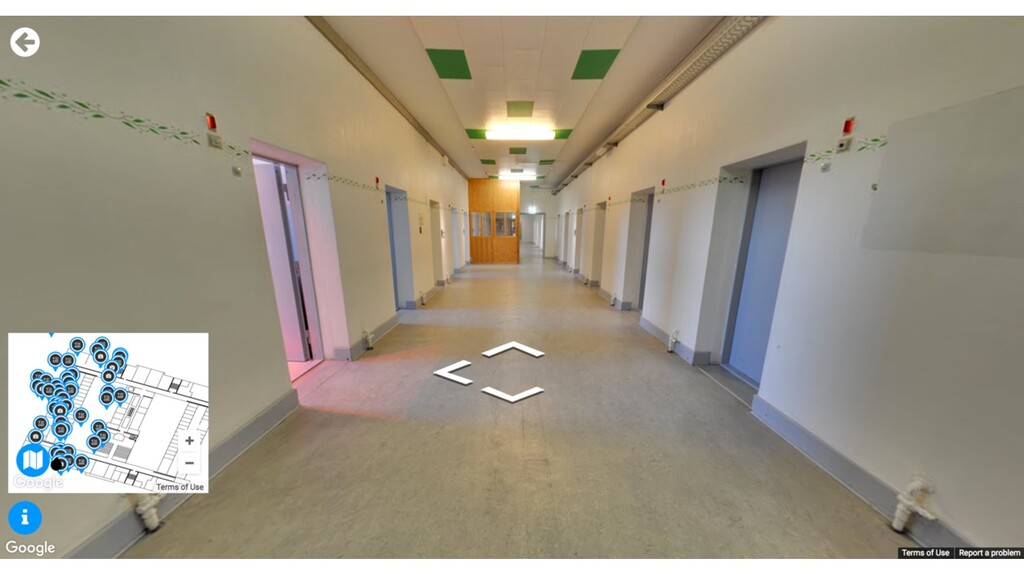
Again, Street View bought in this time in Denmark. So using Google Street View going through this museum of a person and doing the same contagion. We'd already created the whole technology for it, so it didn't take twenty days to develop it. And now we can do these campaigns much quicker and then get the same kind of value from us.
This got eighty three links. Literally nearly every tourist board in Denmark covered this. And in terms of relevancy for a client like Expedia, that is pretty much the the the top ceiling for the relevancy and quality of the links. That does not mean the developers need, get to put their arms out.
Also slightly embarrassed by that calendar that's hanging off of Idris Elba, just noticed. Awkward. But it doesn't all need to be like heavily invested development kind of campaigns you need to do. Sometimes it's the simplest kind of campaign that does amazing. This is a campaign for Expedia in the UK where, one of my outreach guys was really, really keen on doing this.
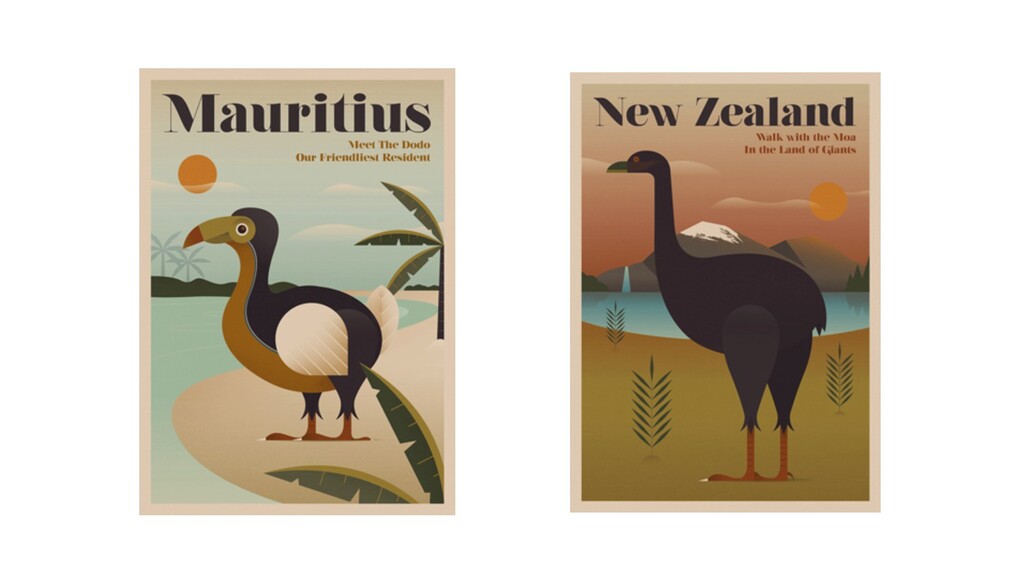
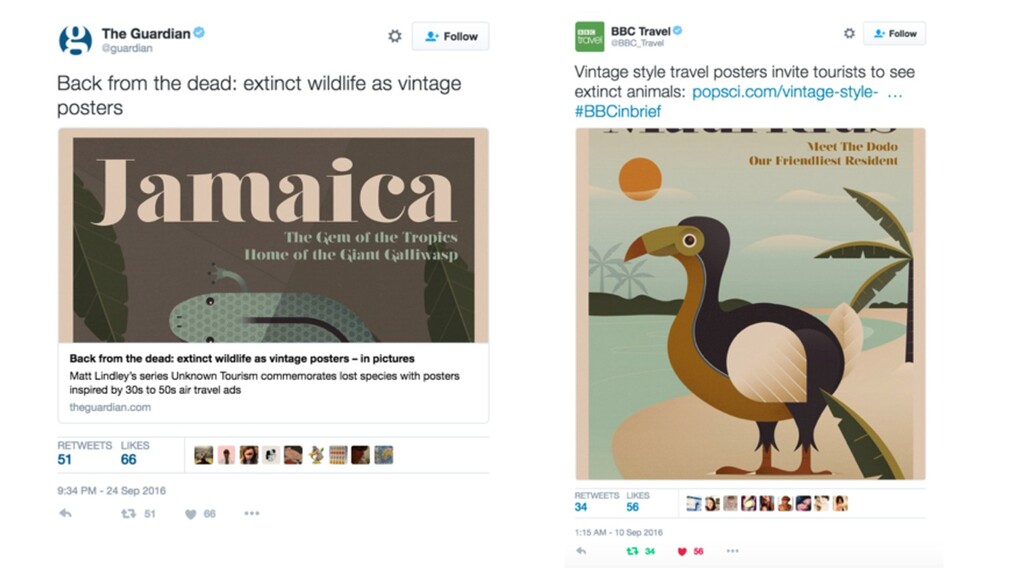
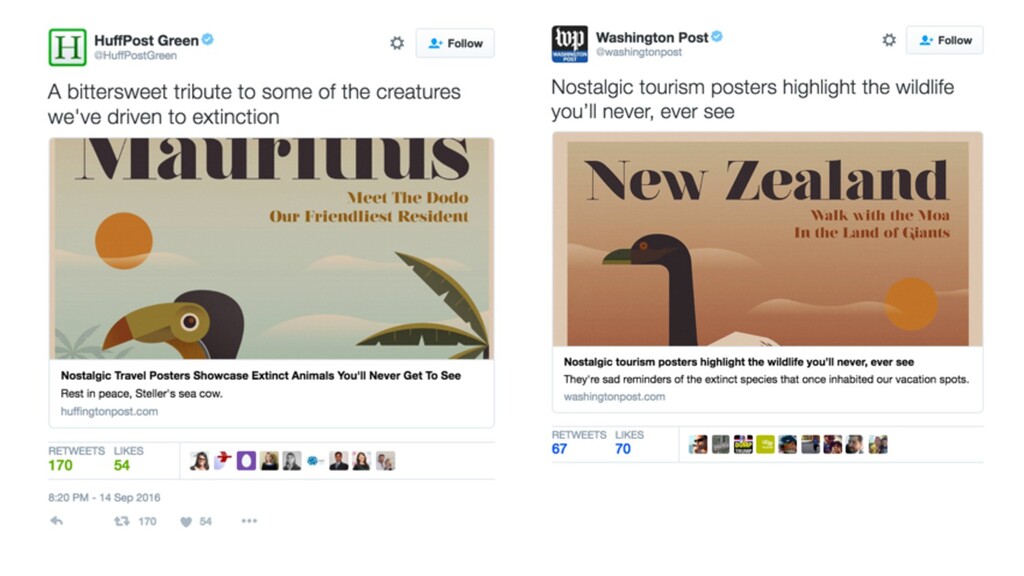
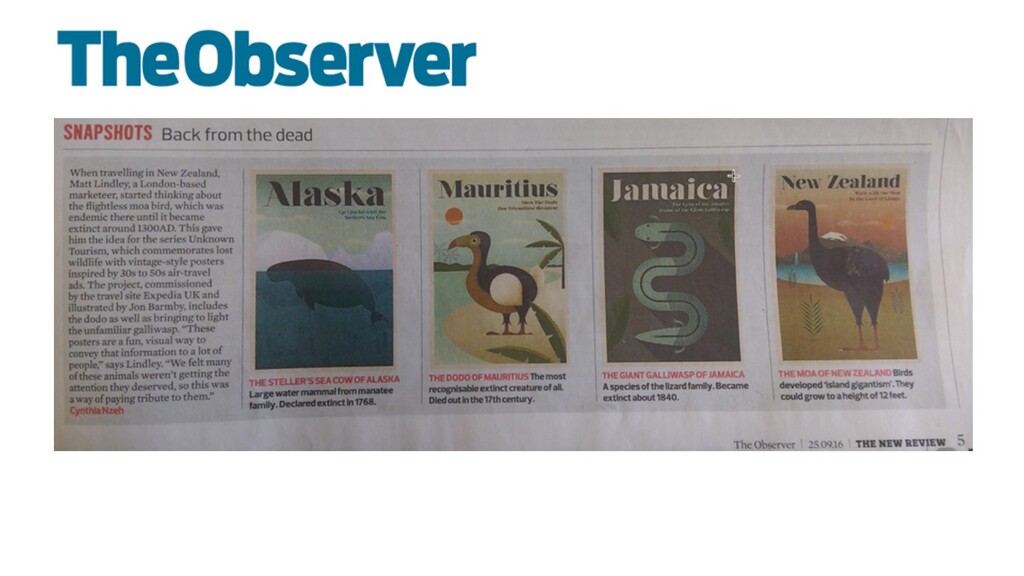
And to be honest, at first, I was like, oh, I'm not sure. It sounds very simple. And it's basically a kind of a poster campaign. Although we didn't create the posters, it's it's digital posters featuring, extinct animals in the country that they were from.
So the dodo in Mauritius and the bow in New Zealand and so on. So we had about eight of these. They look beautiful. And we'd we'd found a designer that we really like the style of and and and hired the designer to do this specific piece.
And this is a really simple piece, but it has a really kind of, good connection, I think, with people. So this got two hundred and twenty three links, including Guardian, Washington Post, BBC Focus magazine, a lot of very, kind of targeted green, sites as well.
This did amazing on, on all the social channels from these as well. So all of the ones that included it, on their site also tweeted it. And the Observer on Sunday also featured it in the paper. And again, I'm not saying that you should go out for, like, your objective as an SEO or as a digital marketer might not be to get the print coverage, but the print coverage will not hurt, and it will really help with the, with the kind of spread of the campaign.
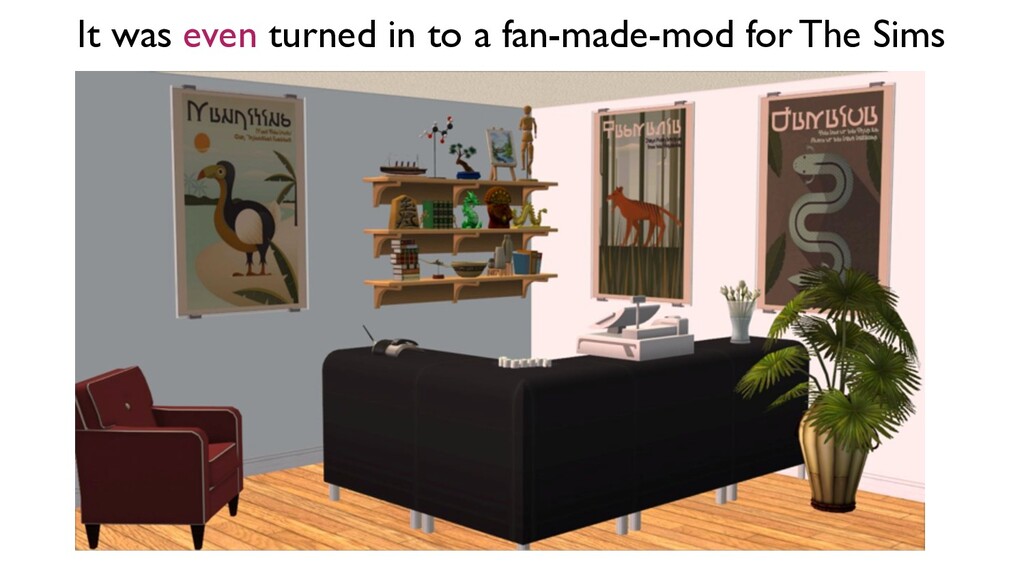
Maybe most awkwardly and weirdly, this was created as a fan made mod for The Sims game. I'm not entirely sure what language that is, but the posters are now featured in that game. That is really connected with someone where they they put in their time to do this.
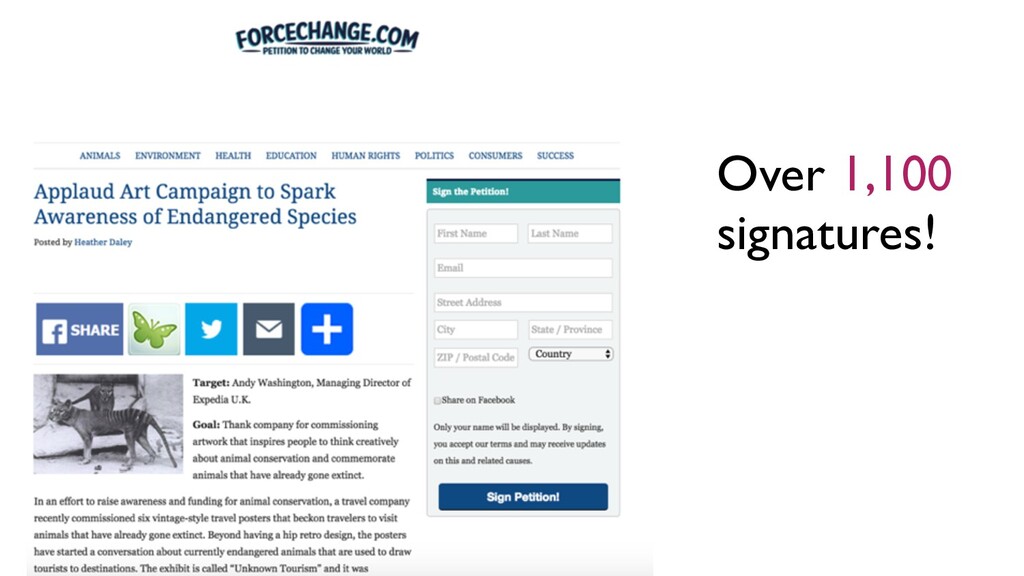
Lastly, people started calling the office wanting to buy the posters, which I thought was great, and I really wanted to create a whole online shop and stuff, but, I was restricted. It also had a a petition started where people were thanking the managing director from Expedia, for creating this campaign.
And he had over a thousand signatures. Like, when was the last time you saw a petition where someone thanked someone? So it could be the simplest little thing that really gets you the great coverage. But it's not enough to do this kind of campaign just once in a year for one client and think that, oh, we will increase and the rankings will then happen.
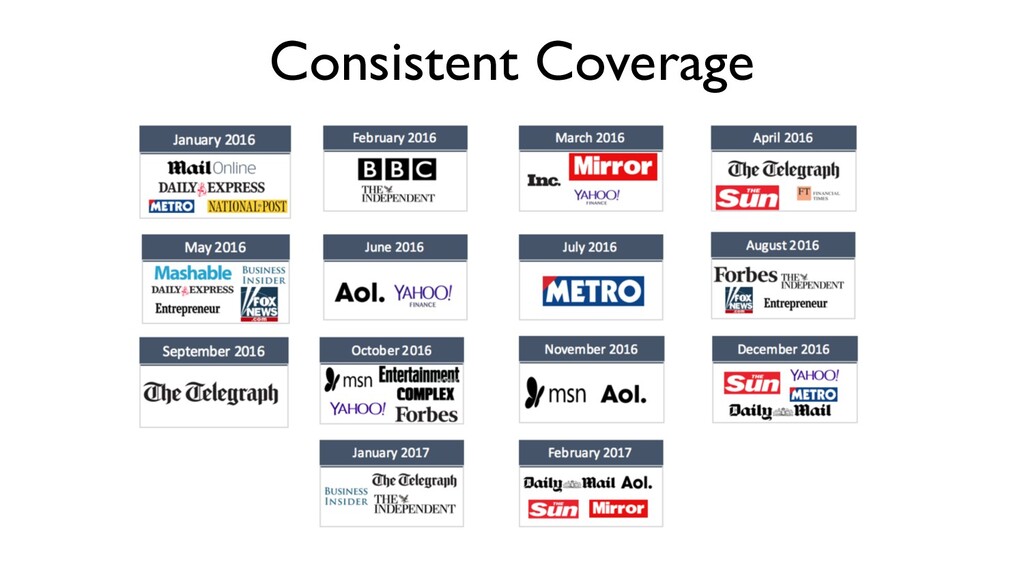
It has to be consistent. So this is why we've done sixty six campaigns. Each client has at least five or six campaigns each year and outreach and these kind of big sites that covering these pieces every month. And, yeah, I'm sure you think this is cool, but does it actually work?
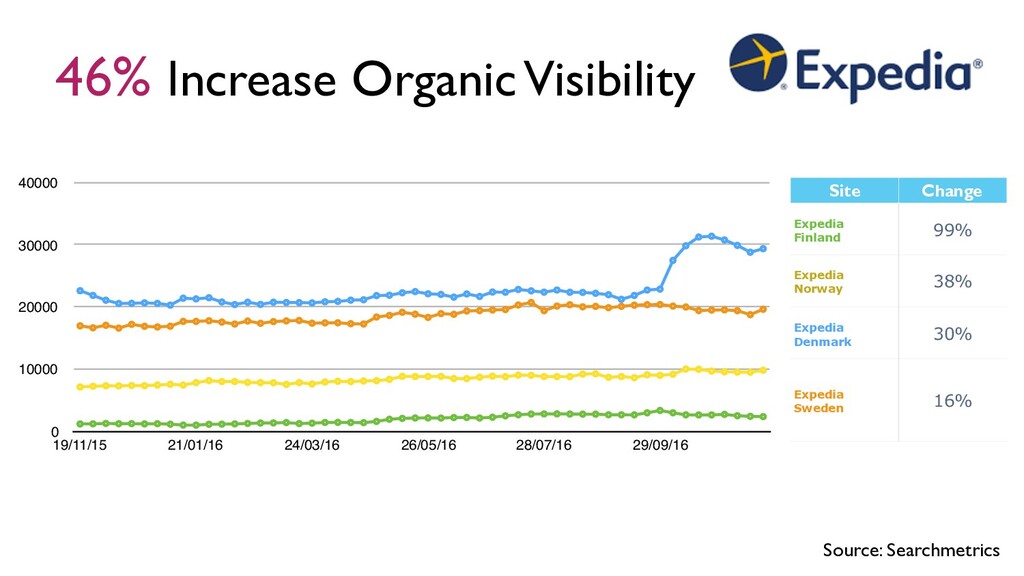
So, Expedia Nordic, we've worked with this is our fifth year with Expedia in the Nordics, and the UK actually. And, in the last, twelve months, so last year, had, overall forty six percent increase in the, visibility. To put into perspective, I think Expedia Sweden was the smallest with sixteen.
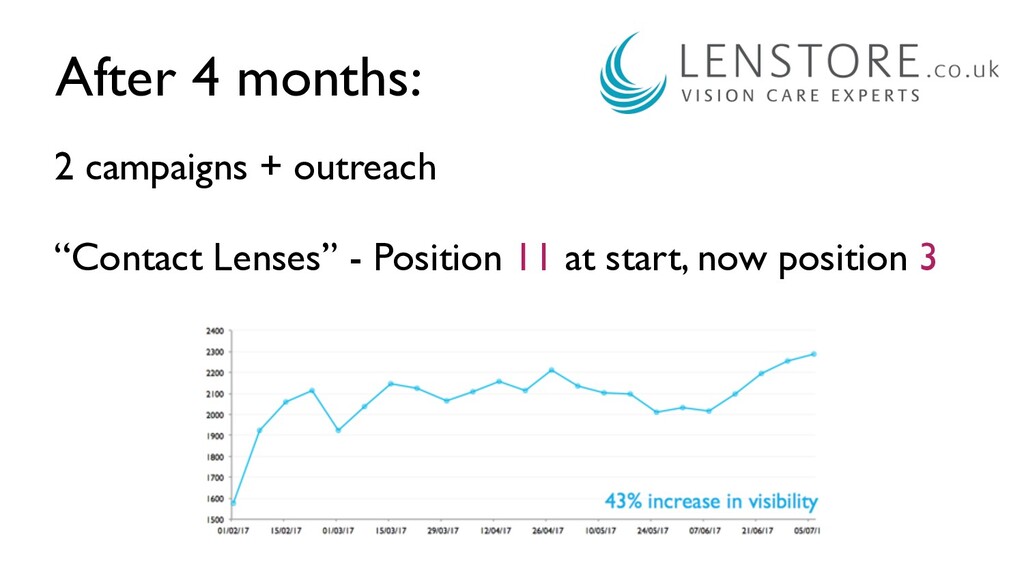
Expedia Sweden has a higher visibility in Sweden than IKEA. So getting that increase is is quite, quite tough in the first place. A very recent client, LensStore, they, we have so far done four months of outreach, two campaigns, main term for them is contact lenses, which they were at position eleven and they're already on position three.
It keeps on going three and two and three in the last last week or so. So this definitely works going for the high authority sites. The higher the better, is much more value. It means you have to invest in the creativity though. I know so many SEOs I think are like, oh, okay.
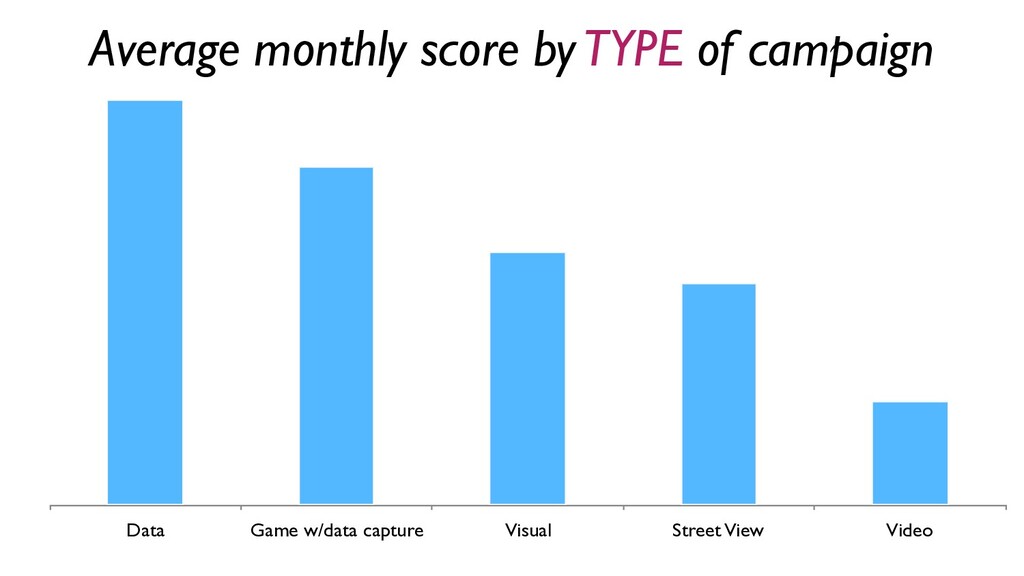
I just need to know which kind of format works and we will what kind of type of campaigns work and then we'll just do that. So obviously being SEOs, we did that research. And we looked into what kind of campaigns over the last six months have done the best.
So by looking at that this, it looks like data pieces are the the best performing in terms of the links who are. I think that is a big mistake to, draw conclusions over. And to help me tell the story of why that is, I'm gonna bring in some chickens.
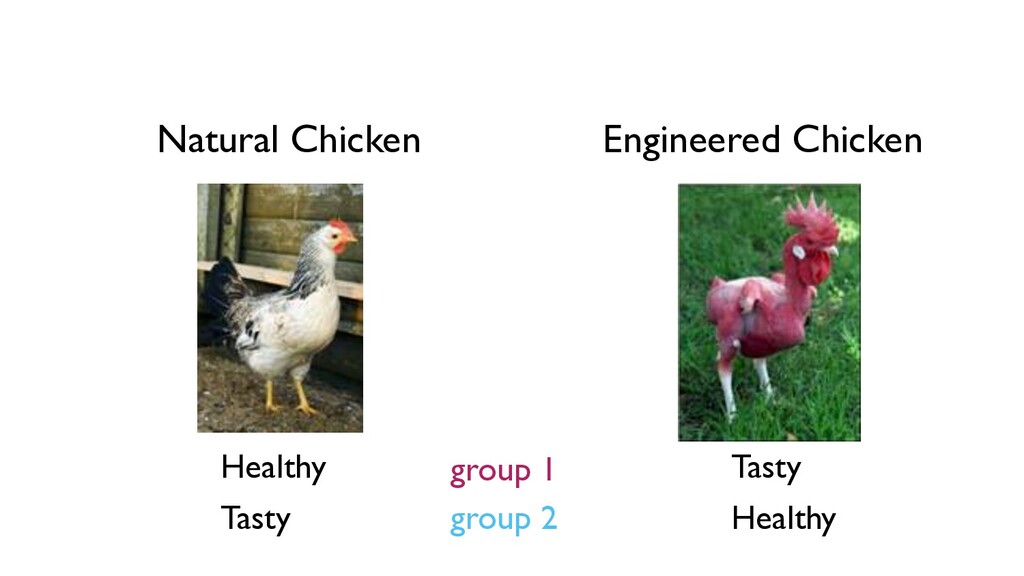
So there was a research by the University of Texas at Austin that had basically shown a group of people, these two pictures of what they call the natural chicken and engineered chicken or a prettiest chicken and ugly chicken. I don't know. They showed these pictures to people and and they said that they divided the groups in two and they said to one group that this natural chicken is healthy and the engineered chicken is tasty, but not really that healthy.
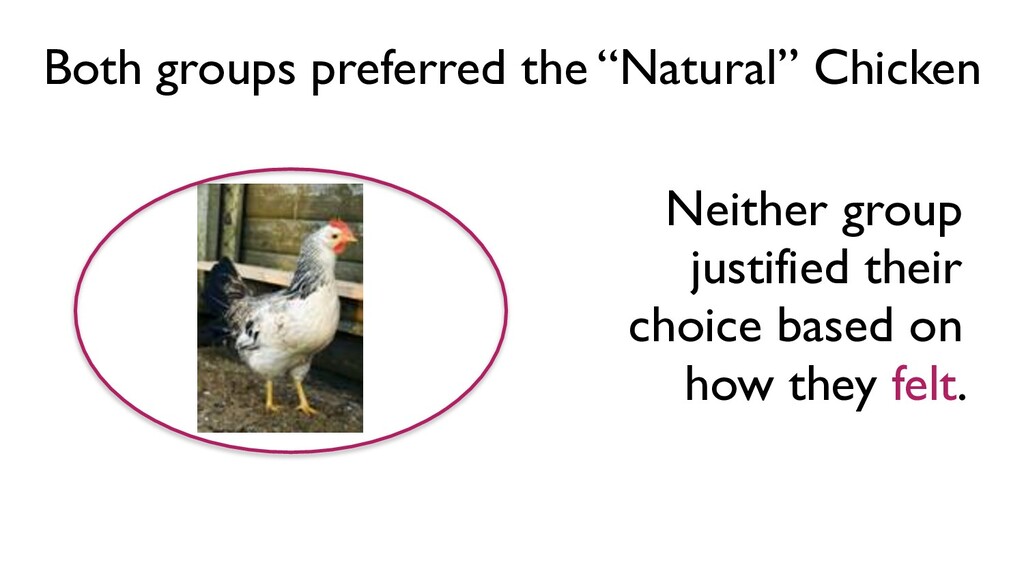
And then the next group they told, this one is healthy, this one is tasty and this one is healthy. The really interesting thing with this survey is that both of these groups, not very surprisingly, I think, preferred the plump natural chicken to the ugly skinny chicken.
It was only been plucked the feathers. But the interesting thing with it was that neither group just justified their choice based on how they felt. They justified it by the opposite reasons. In fact, so they said that they prefer things maybe tasty and they prefer the healthy one because it's healthy.
The point is that you have data like this and you think that you are making the choices based on, how what the data is saying, but what you're actually doing is you're making it on how you feel. So doing all this kind of, research into our kind of campaigns of what works and what doesn't work doesn't isn't really relevant because it all depends on how people feel about it.
It's not the poster campaign that made that campaign, actually work. It's that it had an angle that really appealed to people. It isn't that it is a data campaign that made the billionaire's league work. It's because it had something that people already knew about and people were interested So the post hoc rationalization, which is the concept I just described, I think is the reason why not to go into your data and try to think I'm gonna start doing data campaigns or so on.
Formats are just vessels basically. And the creative is what connects people, and this is what you need to concentrate on. But, saying that, it doesn't matter how many how how many great kind of campaigns you do if you don't actually do outreach. And this is this is the reason why I did a outreach conference only this year.
Because outreach is about making people aware of the stuff that you've made. So this is where kind of traditional PR like which Laura talked about earlier. This is the PR strategies are very much what we need to be doing in SEO to be able to get our campaigns found.
This is why the verb team, the outreach team is by far the biggest team. But I'm can't really tell you what makes a successful route outreach, but I can tell you what doesn't make, what isn't the rules, what isn't the thing that you need to focus on.
I get asked this a lot, like, okay, so you guys are really good at outreach. You get all this coverage. So what tools do you use? I just need to know the tools. Just tell me the tools. And I can tell you the tools.
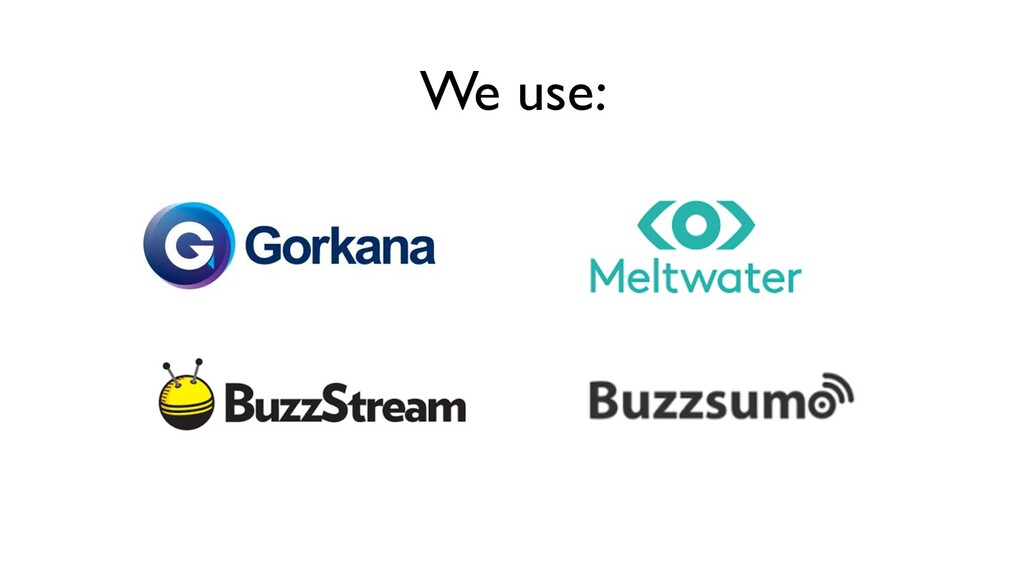
We use Gokana and Meltwater, which is traditional PR tools, which you can find all the journalists and all of that kind of stuff. We use Spotstream to to actually, do the, the process of outreach, be able to find like where the people open the email and so on.
And Vosumo, are often used for finding inspiration for kind of campaigns and stuff. But you can't build a house by just holding a hammer. Tools are just that. They're just tools. There's no optimum way of writing an outreach emails unfortunately. I can't tell you this is the way that you write to someone and then you will get the coverage.
In fact, a lot of people think that you need to put, outreach emails as short and snappy or my my least favorite thing when people outreach to me is when they try to make those like silly jokes about, oh, what happened to you?
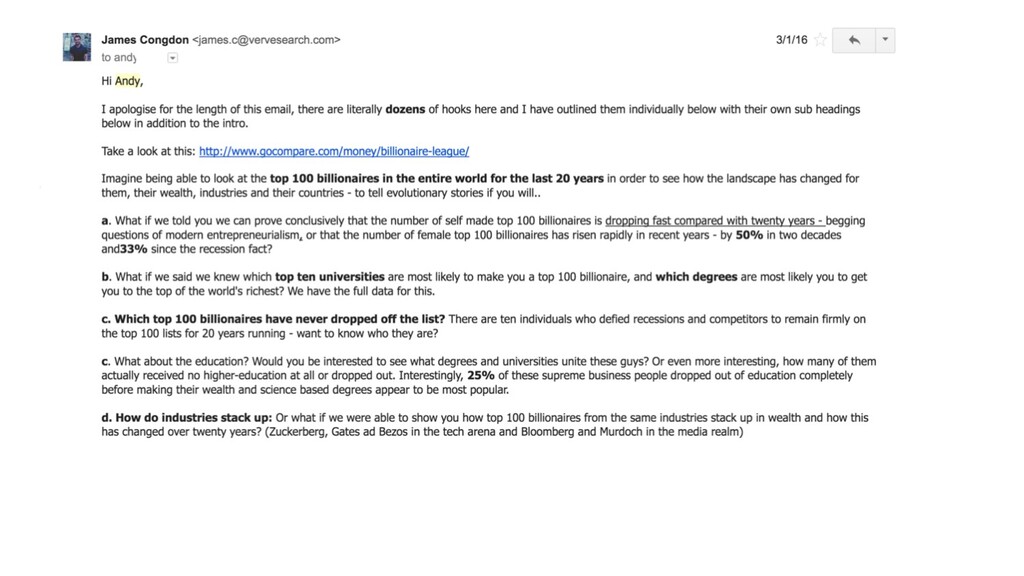
Are you under a bus? Are you It just annoys me. But so don't do that to me. But James Congdon is one of my top outreach people, and he is amazing at his job. But the way he does outreach will really surprise you.
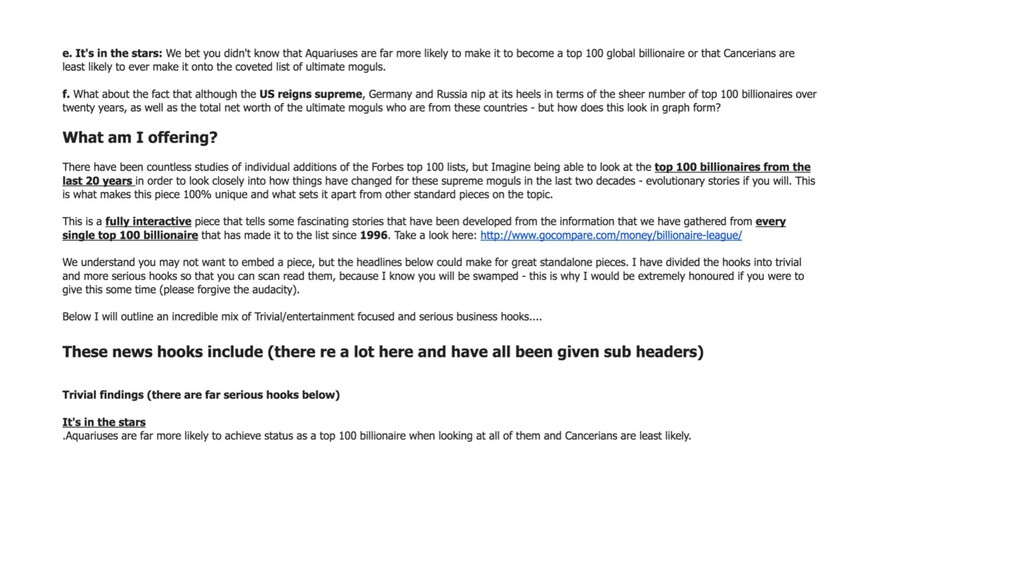
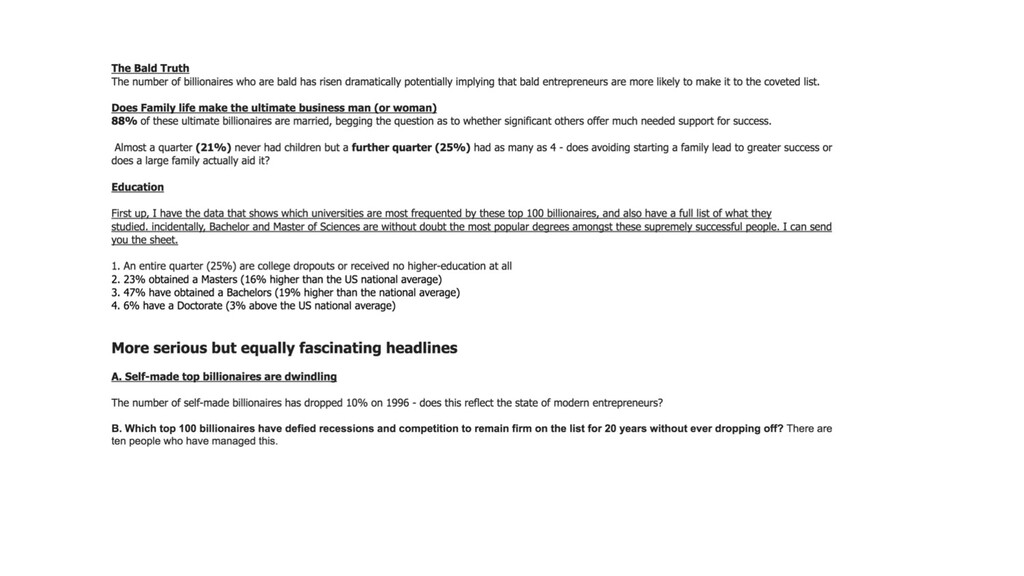
This is him doing outreach on the billionaires league. This is just the start, so don't start reading because it's gonna go on. So this is the start of it. This is him, going after a a national newspaper. Right? So this is the first bit, the second bit, the third bit, the fourth bit, and that's the end of it.
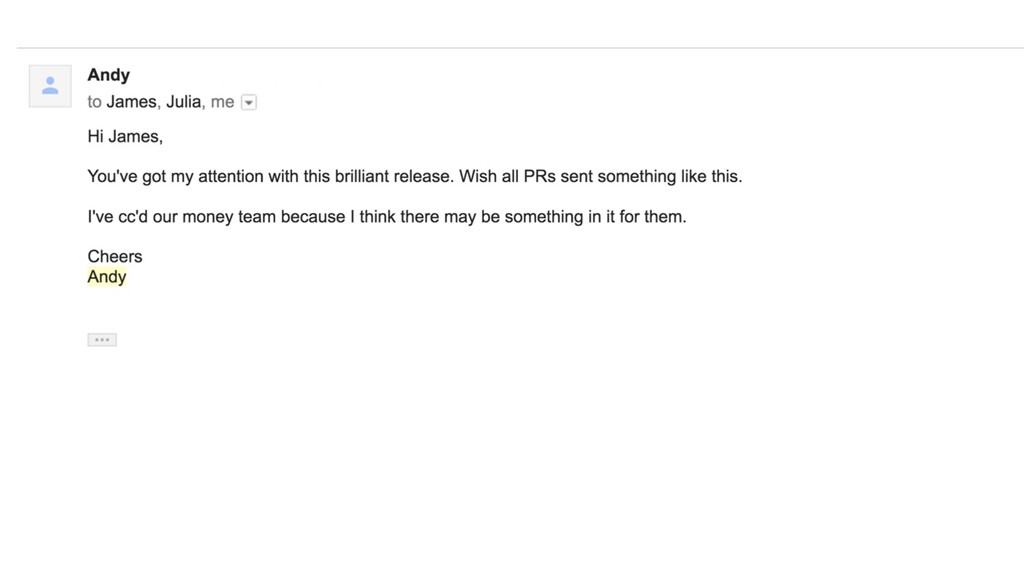
That's one email. That's his outreach email. That looks like the worst outreach email ever created. Right? Okay. So he targeted big national newspapers with this. This is the reply. Hi, James. You got my attention with this brilliant release. Wish all PR sent something like this.
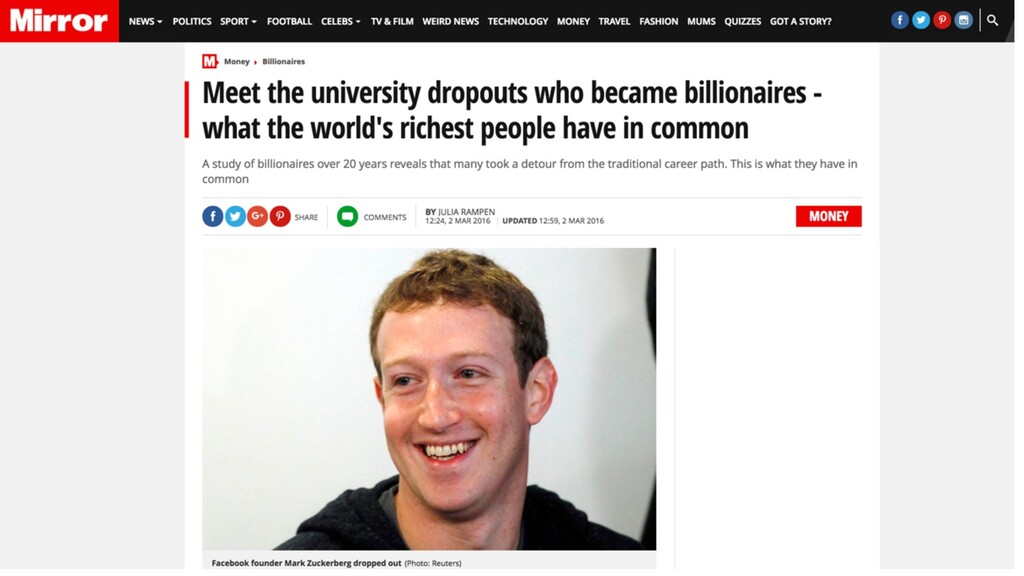
I've cc'd our money money team because I think there may be something in them. And here's the coverage. So what you think is a bad email or good email or whatever, it's it's very rarely the case. It's not about how many emails you send either.
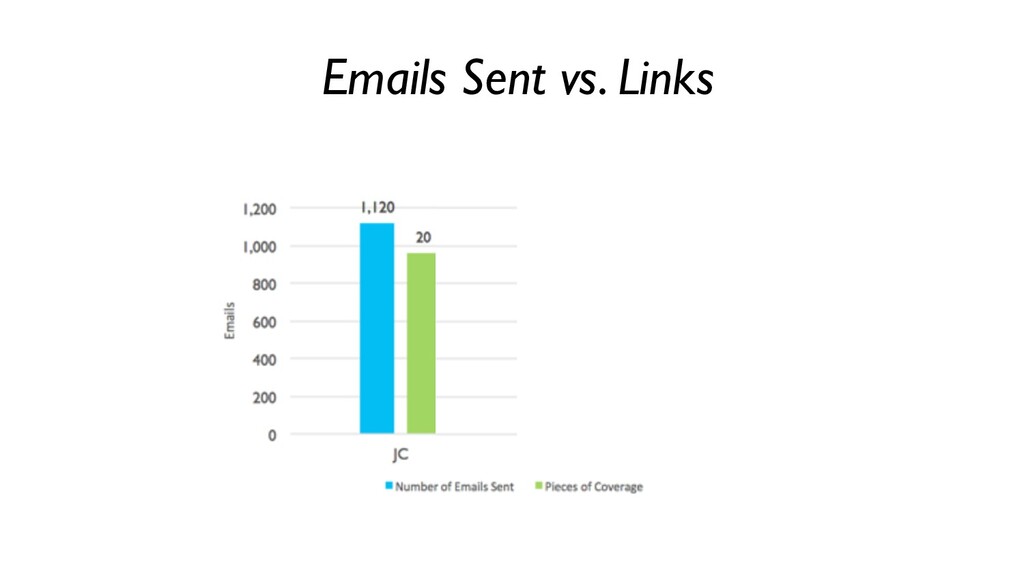
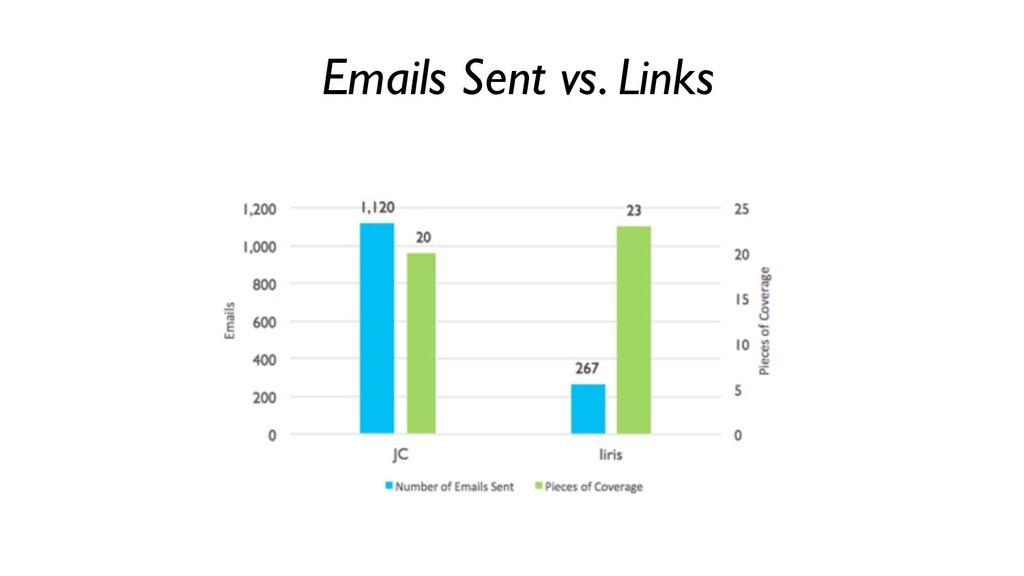
And I'm gonna show you this. So I have a large outreach email sorry, outreach team, but they are all very different. So JC, which is James Congdon's name because I've got three James, so he becomes a rapper. He sent in one month, he sent, over one thousand emails, and he got twenty links, in total.
Now, Eris sent twenty as, two hundred and sixty seven emails and got twenty three links. But they are totally different people. They are totally different people with totally different strategies. One is not right and the other is wrong. It it it just doesn't work like that.
I think the most important thing is that you really need to let people, come up with their own way of doing stuff. Coming up with their own way of doing outreach and their own strategies because that is where it lies. That is where you find, that people really succeed.
And that is more a people thing. Because outreach is about people, you know. In that time where I really struggle in two thousand and fifteen, that's when I realized that the thing I needed to really look at was the people. The people that I had and the way that they were doing things.
And I needed to change the way I was managing those people. So I think, outreach is about mindset. And I think the biggest kind of thing that you need to have to be good at outreach is grit. And to me, that is passion and perseverance.
Basically, keep on going. Because if you send those thousand emails and you got no five hundred times, you would have given up. Most of us would have given up. But JC never ever gives up. This is Alex. Alex has worked at Ver for about a year and a half.
Don't steal him. I will come after you. He is amazing. When I first interviewed him, he looked like pretty much every other person I'd I'd interviewed, those few months. He went to Tiffin, which is quite a posh school. Looks a bit like Harry Potter school.
I can't remember what that name is. But what was really interesting with with Alex is that he'd he got great education, he'd had a few kind of months working in papers and stuff, so he was interested in writing. But what he was really interested in is American football.
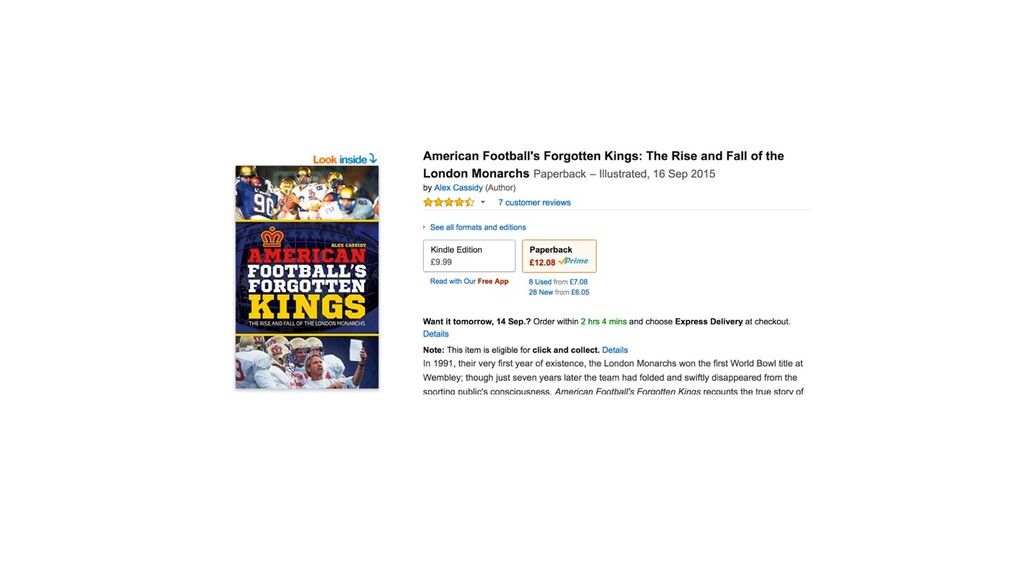
He was so interested in American football that when he was studying, he decided to write a book about American football because there were no real, like, no big books in the UK about this. So he dedicated time every day to write this book.
And when he finished, he didn't just let us sit there. He didn't even try to get an agent. He went straight to the publisher and said, you you're gonna wanna publish this book. And he got published. You could buy in a water stone and on Amazon.
Now, that's grit. When I saw him and when I realized that that he cares about something so passionately that we will keep on going. If I can if I can find a way of motivating him, he will do the same for us. And that's basically the recruitment strategy, finding out what people really care about and finding out whether they have that grit.
Basically, CVs are just shortcuts of missing the talent, especially in outreach, I think. It's about how they think. And I think when you have those people and you you know that they have the kind of ability to do it, you really need to encourage them of to be more of who they really are.
I know this sounds like a psychology jumbo stuff, but it really isn't. Like letting people be who they are and having the the ability to let them shine in their way. I think the world is just too much of a extrovert pro, you know.
Everything kind of get given to the extroverts, but the introverts are just as creative, just as able. And I think it's leaders jobs to listen differently, to listen to the quietest voice in the room. Because that campaign, the, poster campaign, that came from Matt.
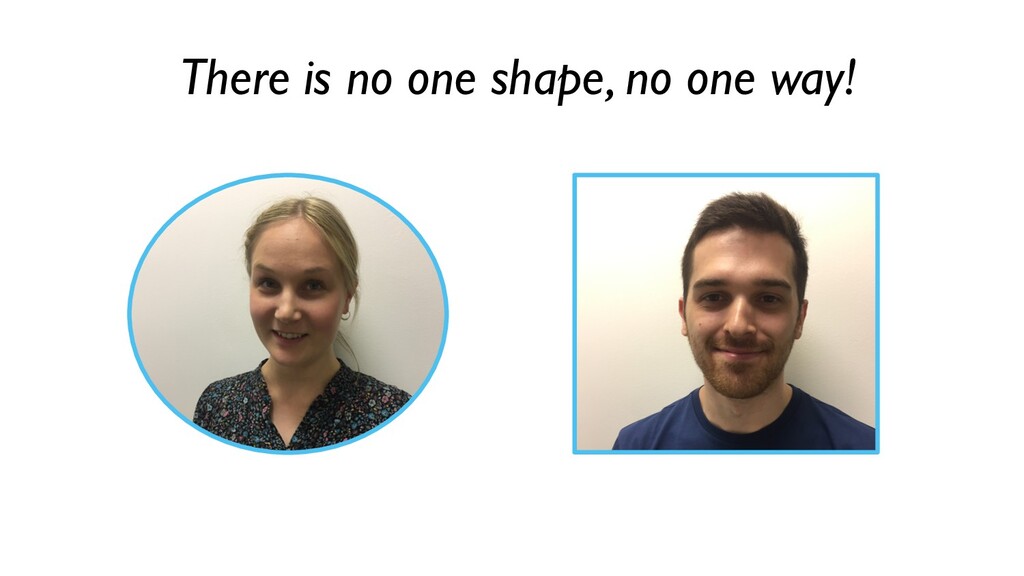
Matt is the shyest person in the the agency by far. And he's a real introvert. But my God, is he creative. My God, does he know what will work and what doesn't work. You need to really tune in to those people. There's no one way and and and one shape.
You have to let them be who they are and then make them better at being who they are. And the listening differently I think is a is a key. I have international agents. You have people from twelve different countries. I think that's been a benefit to us because I've had to listen differently because everyone has such huge cultural differences.
Really, the biggest cultural difference is actually the Latin, like the Spanish and the the Nordic. That's usually where we clash the most. And lastly, I'm gonna quickly tell you a story that I think is, extremely important and I have told my employees several times.
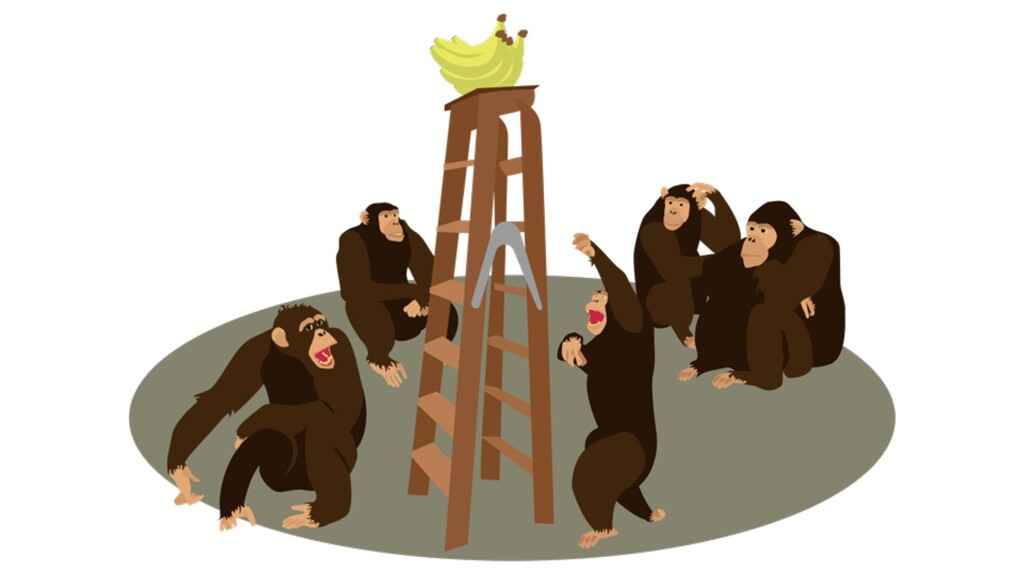
I think it's so important to find your own way and and be brave enough. So there is a paradox called the monkey ladder paradox. Some of you might have already heard of this paradox. It's basically a story of some scientists that had five monkeys in a room, and they put some bananas on top of a ladder.
And then every time the monkeys tried to get up to reach the bananas, they would spray all the monkeys until they stopped trying to go for the bananas. They then exchanged one of the monkeys with a new monkey. And what happened when that new monkey tried to go for the bananas is that the other monkeys just torn down and beat beat him up.
No. Don't go for that. And the next thing that happened was that they exchanged another monkey. Now the monkey that had had never been sprayed water on helped the others dragging that monkey down. Eventually, they exchanged all the monkeys, and all the monkeys didn't go anywhere near the bananas, although they had no reason to know why they weren't going near the bananas.
The lesson in this is you are not a monkey. The key to outreach is perseverance and being more of who you are and not being afraid. We need to be like professional labyrinth walkers. In fact, that is why I think SEO is. When we find a dead end, we find another way.
And whatever happens, whatever comes next, I know that as marketers, as digital marketers and as SEOs, we will be able to do that because we will find new ways of doing things. And that is how I went from that to this. Thank you.