
A growing company comes with many challenges - scaling product development is one of them. iZettle went from 70 to almost 500 people in 4 years and at the same time expanded the product portfolio beyond card payments. How can you create the best possible conditions to maintain the core values of the original product in such an environment? iZettle does not have all the answers. But we are currently on that journey and are happy to share our experiences so far.
← All talks 

Build Product Turing Fest 2017
Maintaining Product Values at Scale
Auto-generated transcript - may contain errors. Tap a timestamp to jump the video.
I'm actually a bit annoyed by the title I selected for this talk, to be honest. I think it's pretty fluffy, to be honest. And my name is Leo Nelson, I'm heading product management at iSATTL. Contrary to this title, what I want to make a point of is to try and be very clear and specific when you try to manage quickly growing product company or product organization.
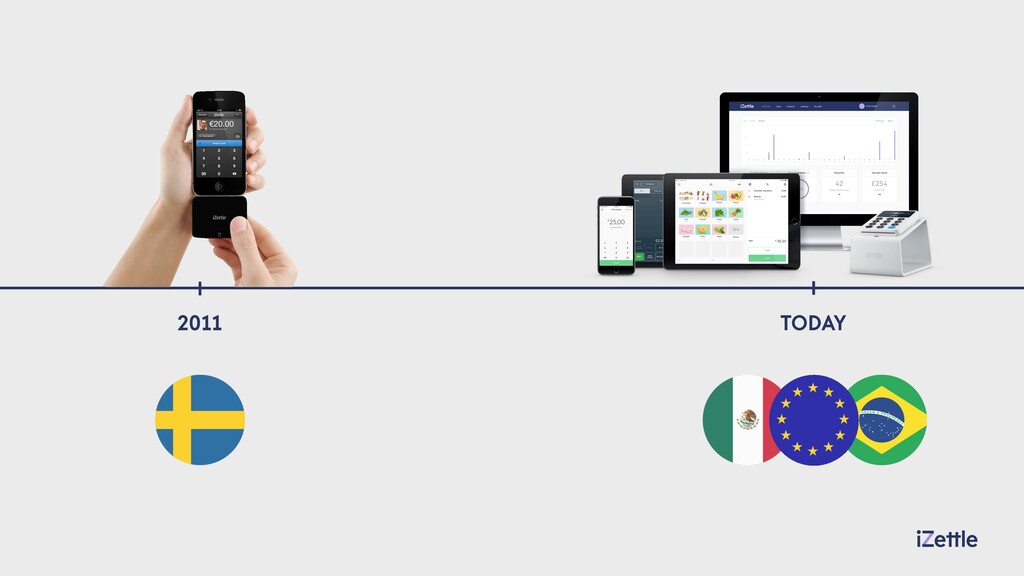
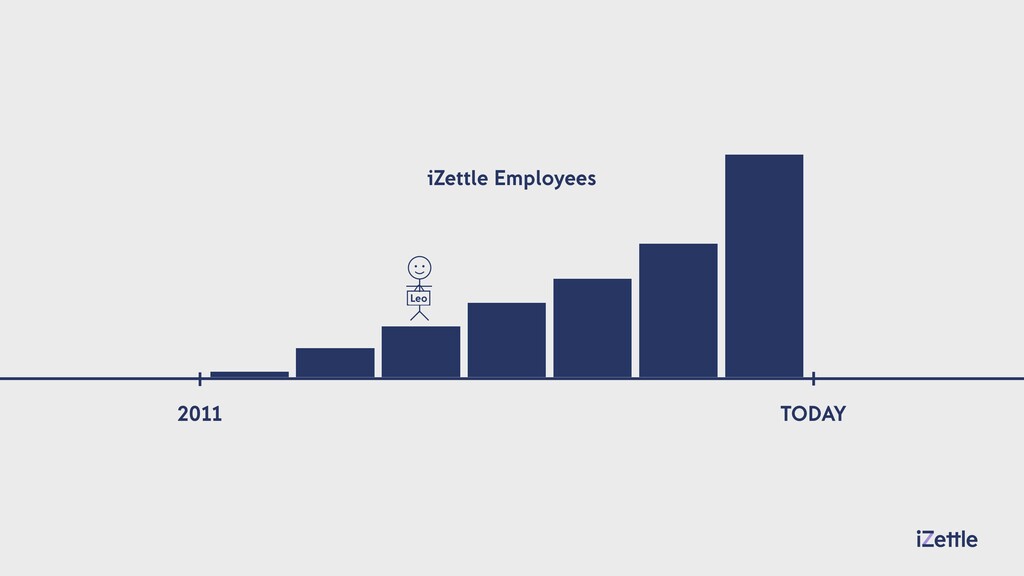
So I'll give you some background. Now iCetyl launched its first product in twenty eleven in one country. It was basically the ability to take payments on your cell phone. We did that with a team of twelve people, half of them were roughly, roughly half of them were developers.
Now fast forward until today and we have a suite of interrelated products, both software and hardware and we're live in twelve markets, ten European ones and also Brazil and Mexico. During this time we grew from those twelve people to roughly five hundred today including the acquisition of Intelligent POS here in Edinburgh.
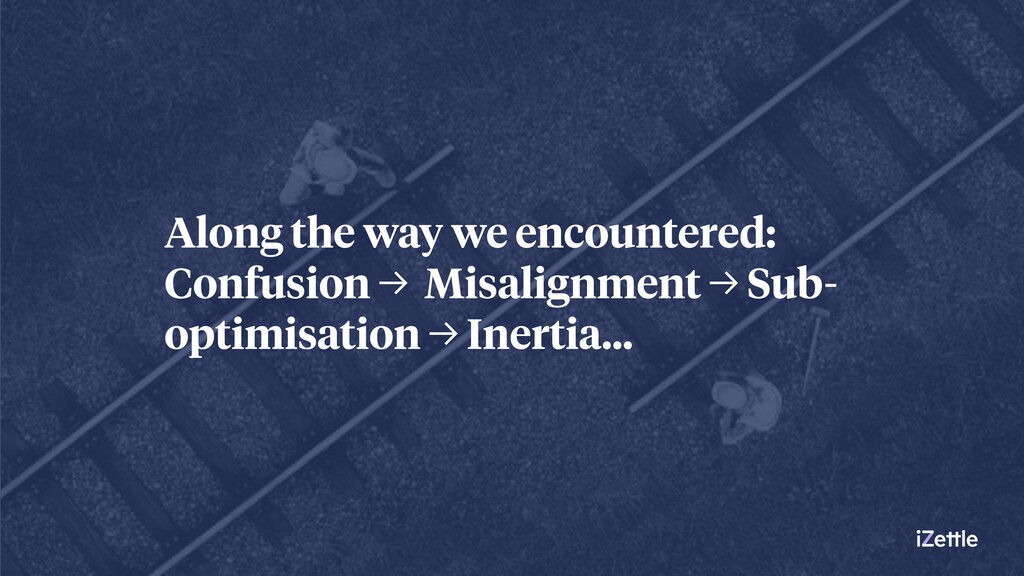
Now I personally joined in twenty thirteen, in mid twenty thirteen. So I really got to experience this journey, a journey from where we started to scale our product offering. So along the way I would say that we encountered, you know, it started as confusion, it leads to misalignment, misalignment leads to sub optimization which leads to slowness and I think it can be summarized in some type of despair.
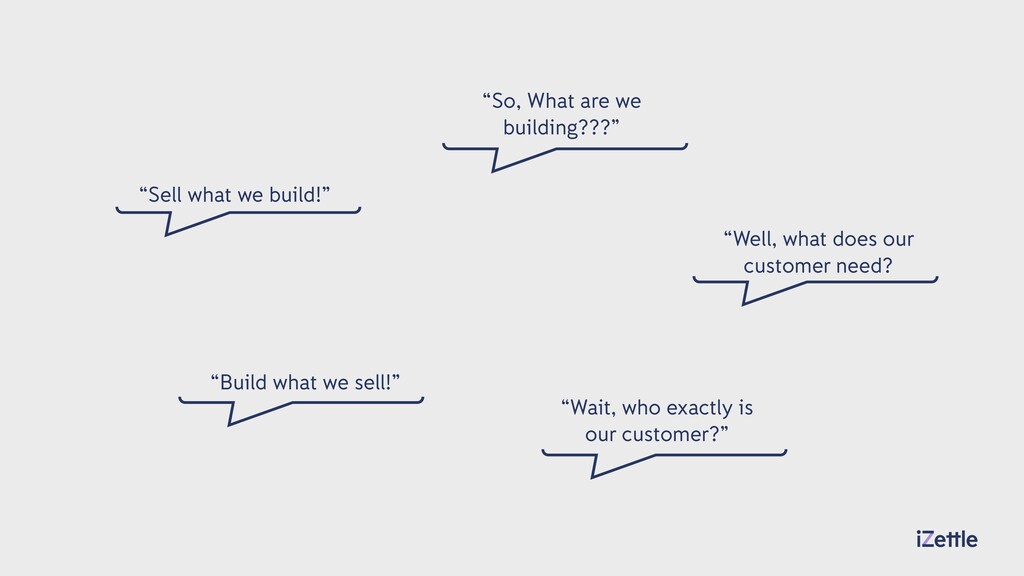
And maybe I'm a bit overly dramatic now but I think when you start growing you will start to recognize a few conversations like these. You will have product people telling sales and marketing to sell what you built. You will have sales people telling products to build what they're selling.
That will in turn creates questions to you know obviously what should we be building. An obvious question is what does our customers need? But this could even lead to questions like who exactly is our customer? So needless to say scaling core product values for iSettle was and still is a company effort.
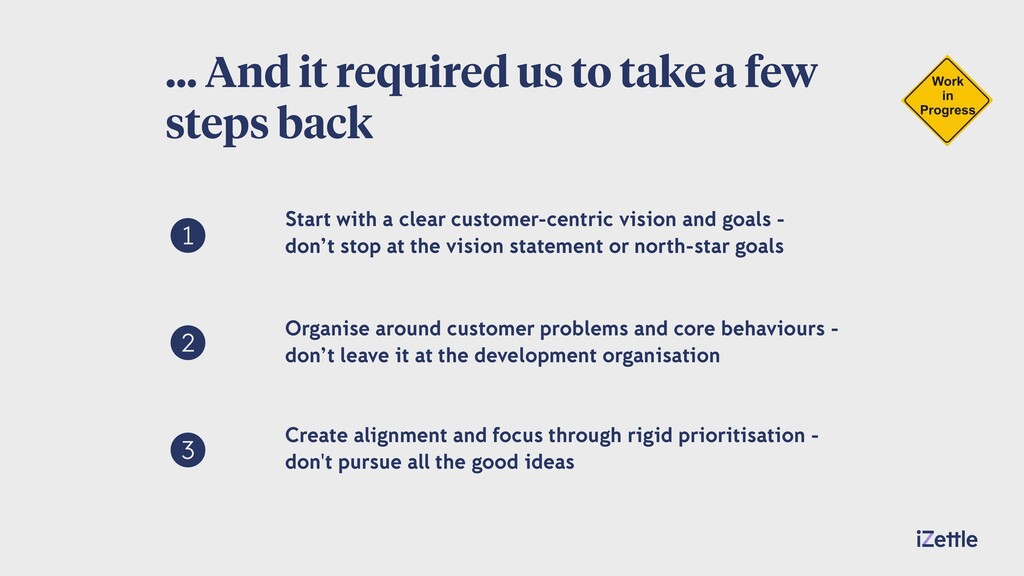
I don't think that's something that ever stops if you're a product company. It's a continuous process. And I'm going to share basically some of the steps that we have taken. I can't guarantee that it will work for you as your company grows, but they are working for us and I want to do a disclaimer again that this is work in progress for us.
And I also wish I could say that we did all of these steps exactly in this order, which we didn't. But we've kind of identified that these are some very important steps. Now basically you need to start with a very clear customer centric vision and customer centric goals.
And I think the important part here is again to be clear, don't stop at the fluffy vision statement. You should have that too, should have an idea of what it is that you want to create in the world and you want these sort of five star north star goals, what it is, what kind of world you want to create, that's inspiring, you should have that in a company.
But it's not enough to align people or to help people focus. Now when you have that in place you should start organized around customer problems and core behaviors. But don't leave this at the development organization, I think that's a very common way of doing it.
You group, take product and design and those are the people that build the product. Actually you have a load, a range of functions that are part of the entire customer experience, so it's quite important that they work together. And finally I'll just share some of the methodologies we're using to create alignment and focus.
And I think the key word here is focus. One of the problems you can find is to sort of try and focus and go for all of the good ideas. And you know the problem with focus is to not go for all good ideas but to stick to the ones and try and execute on the ones you think will deliver the most value.
Now let's start at step one. So this does not have to be a long exercise for a company, but it's done by the leadership team or a strong CEO. It's about setting the vision and goals centrally and communicate that to the entire company.
But you need to be really clear and specific about what you want to try and achieve here. And so this is basically how this happened at Dicep. And again this wasn't a big exercise for us, but it was definitely one of the most important ones that we made.
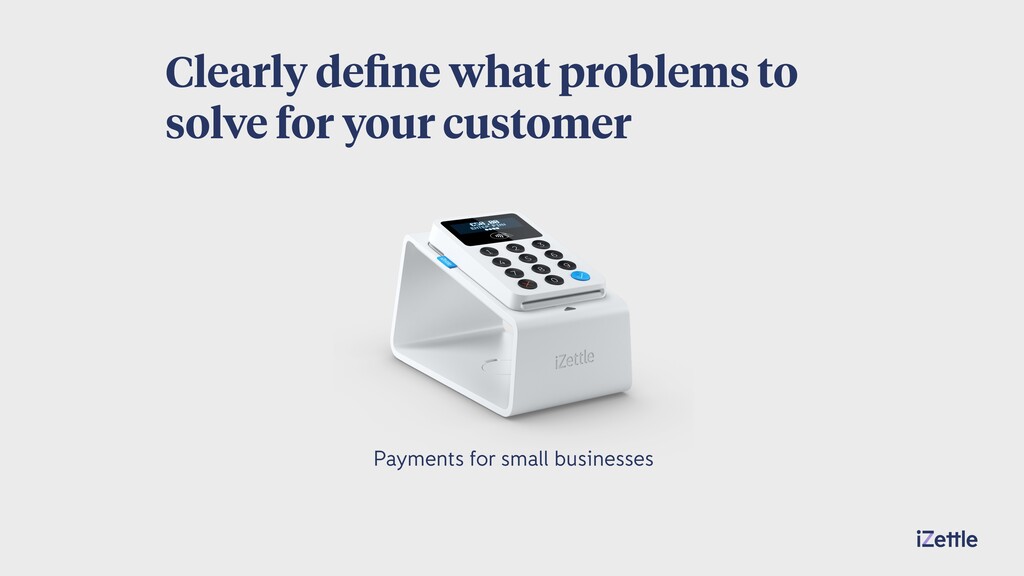
Now we at the time of launching our first products, we managed to scale payments for small businesses, that's really one product. But in that journey we gained two core capabilities. We learned about payments, we started to understand the technology and understand where it went and we also learned a lot about small businesses and the nature of their lives.
Now we had two options from here, we could keep focusing specifically on payments as the core capability and scale that and that would probably have led us to scaling and starting building for larger type of clients. Some point reaching sort of enterprise level solutions.
The other way to go was to focus on the customers that we already had to redefine how we could help them. And actually ISATEL was very much started, that was the easiest question for us to answer because we were started on the idea of helping the long tail to sort of level the playing field for small businesses.
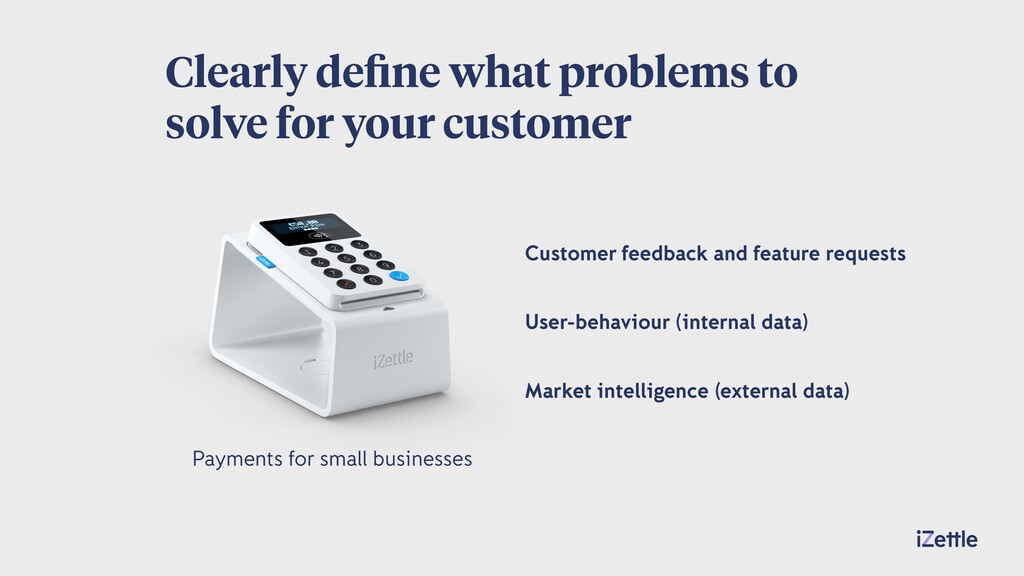
Now so that was an easy decision but what we started to do then was really to gather all the feedback that we had structured, unstructured, anything we had. And started looking at it very closely. Anything from feedback to requests to user behavior data, any market intelligence that we could get our hands on.
Now we quite quickly learned and we learned this early on is that payments for a small business or card payment specifically is really about sales conversion. It's just the final step of a sale, know the reason to accept card payments is because if you don't a customer may turn at the door and go to the merchant next door.
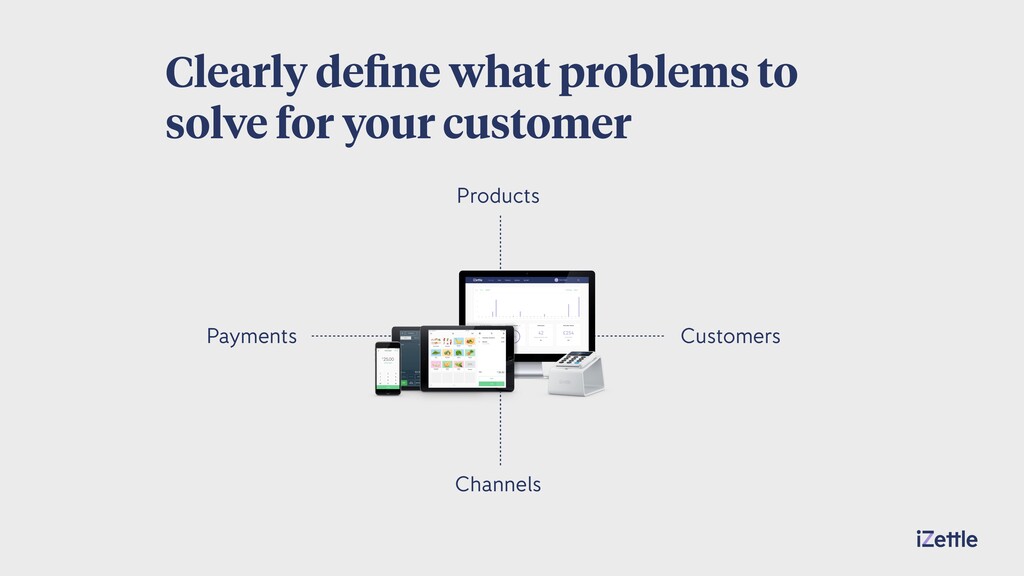
So really we expanded the focus to include commerce and what we have now in the market is what we call a commerce platform. It's basically a single solution to manage and grow your sales. Again, strict focus on the type of customers that we're aiming to serve which is the long tail, the niche type of businesses.
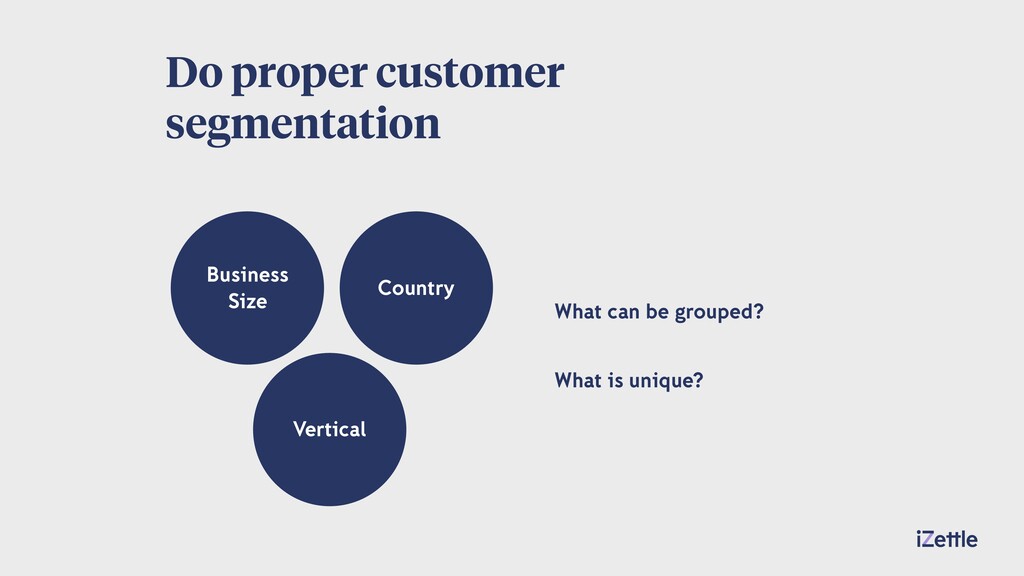
When we had this clarified for ourselves, it was time to do some proper customer segmentation and the reason for this is to help you focus. Now this will look very different depending on what type of business you have, if you have a consumer product, if you have a service company, But for us we landed basically in three general segmentations that we can use.
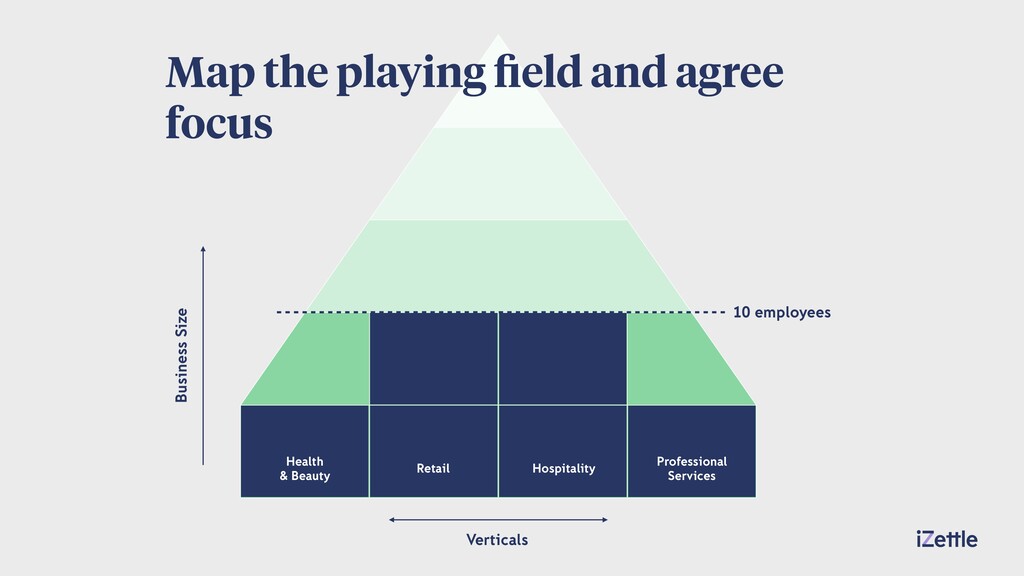
Business size being one of them, you know when we talk about small businesses we talk about micro businesses, that's businesses with less than ten employees. But even in that group you can see at least three different subgroups. We then look at verticals, the process of selling looks very different for a cafe versus a clothing store.
And then countries, commerce looks very different in Brazil compared to Sweden. So the question you start asking yourself is what can you group, what is unique, you don't want to be too narrow, you don't want to be too broad, but this is quite easy to figure out if you really start talking to your customers.
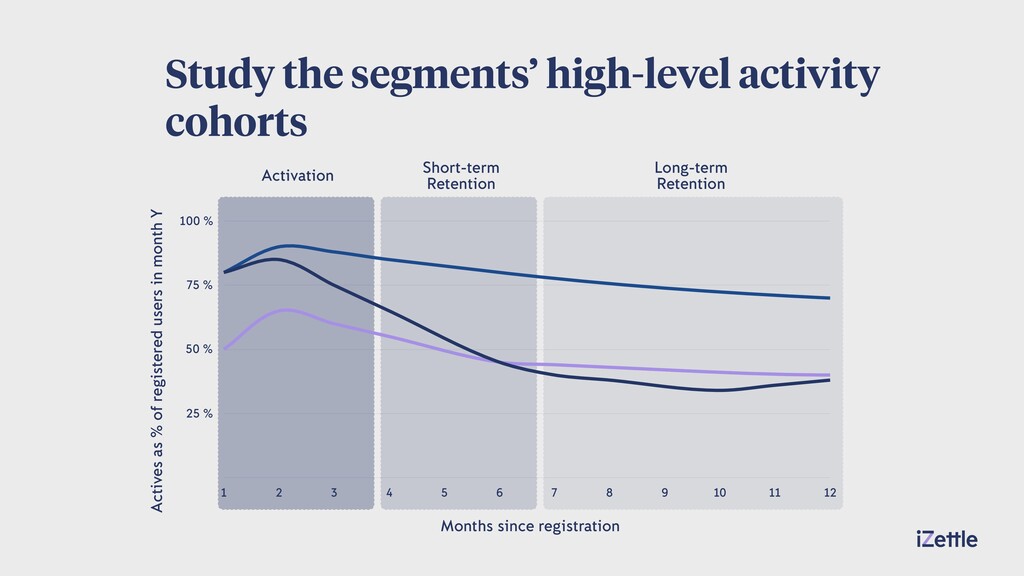
I think you know you will quite quickly find patterns. At that point we started looking at these segments behavior specifically. Now this is dummy data, you're not getting any company secrets here, but we did see patterns like this in our different segments. Know we could so basically what this shows are cohorts of how active users are after they sign up.
So what we could see was that in certain segments we had clear product market fit. In others we clearly didn't. In the third group we just didn't know what was going on basically. The point is that this exercise didn't give us any answers, it rather helped us ask the right questions or rather identify where we're already creating value and where we could potentially create more value.
So it helped us map our own playing field. It helped us map what our different customers group could be and it also helped us to decide where to focus for this foreseeable future. You know twenty four months from now this playing field may change and our focus may change but we could make a very clear statement of what customer types we're going after.
The ones you're seeing here, health and beauty, retail, hospitality and professional services are actually our sort of four key segments that we talk about today. Now here comes the part about clarity. When you had that in place it was time to formalize long term and clear company goals.
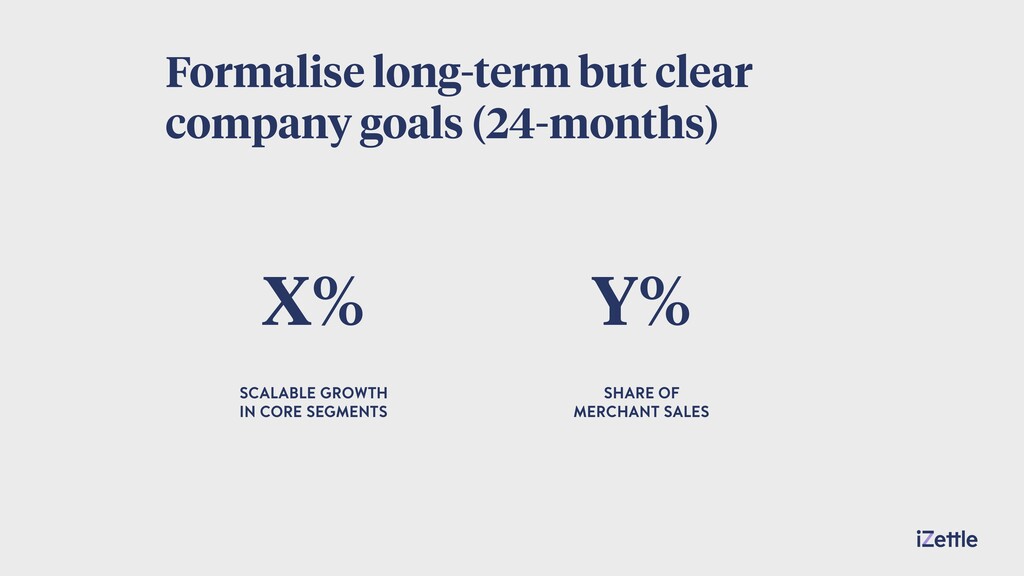
Long term for us in this case means roughly twenty four months, that's what we're using, that can change depending on what market or what of product you have. Now when I'm saying clear I'm actually meaning I think measurable. Measurable in the sense that you can actually discuss them between different functions and teams to understand if they will contribute to any performance improvement or not on that specific measurable goal.
It will also help you with accountability. I think you know if you don't have clear goals it's impossible to fail. And if you don't have clear goals it's also impossible to succeed in my mind. So that's really what it's about and it also will help you to make and define these bets and that's important in product to sort of frame bets towards these goals that may or may not fail and if you fail that's okay, you move on, you make a new bet.
Now the two examples here you will recognize growth is a very specific target I think most people can relate to that. You can also have goals that are purely sort of centered around product experience. Think for we talk about being the single place to manage all of your sales.
Well then we want one hundred percent share of our merchant sales. That will require a certain suite of products and a certain suite of product launches and a certain suite of behaviors from our core customers. But when you have these in place, however they look, it's time to start organizing around what everybody in the company should be caring about which is of course customer value.
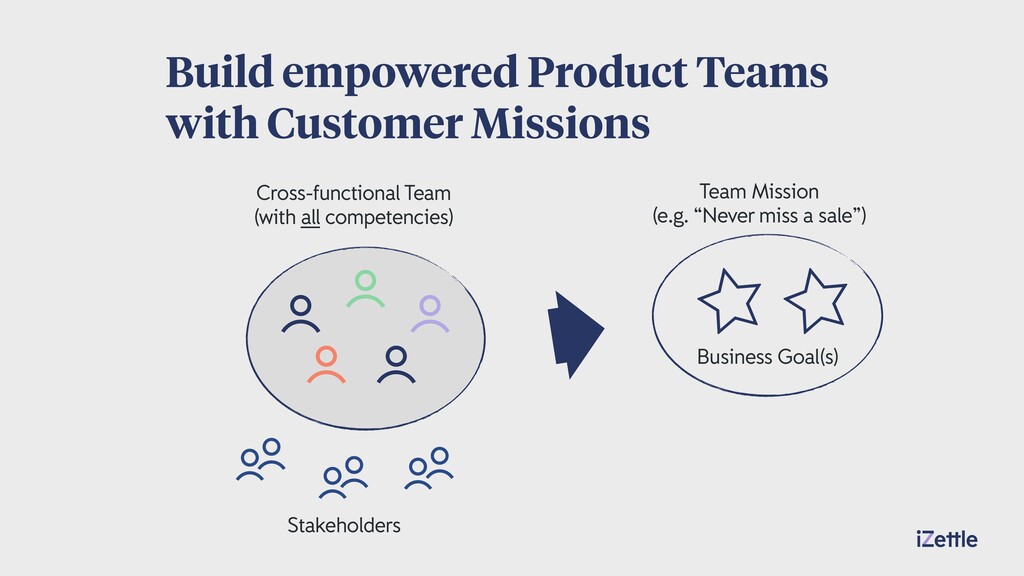
Customer value will amount to your business value be it if they pay you directly money or they pay you indirectly in time which you then just resell to advertisers. Customer value is the key. So the step here was to build empowered product teams and focus them around customer missions.
And I think actually I love Jane's talk because I think what she described to me is exactly the process that we have been through to build these empowered product teams. So if you break that down, it's really about creating these cross functional team with all competencies.
So tech, product, UX design, those are given. I would add product analytics in our case, know, and we started to dabble with data scientists in this case as well. And at the same time also include the right stakeholders to make sure you have all the right people in the room to deliver on a customer experience.
So the stakeholders are not only there to ask you for things or ask the product managers to build certain things, they're actually there to also help solve the customer problem at hand. And I think you know one of the most important stakeholders you have is your own customer basically.
Now, team mission in this case is kind of what we're trying to focus around a customer experience. So for payments we can say something like, as an iSETO merchant you should never miss a sale, right. No merchant had experienced that a customer turned into the door because you didn't accept the right payment type.
To that we again create business goals or clear goals and these kind of metrics or outcomes, whatever your team should be going for. And the usual question that, or one question that we were tackling was how do you set these business goals for product teams?
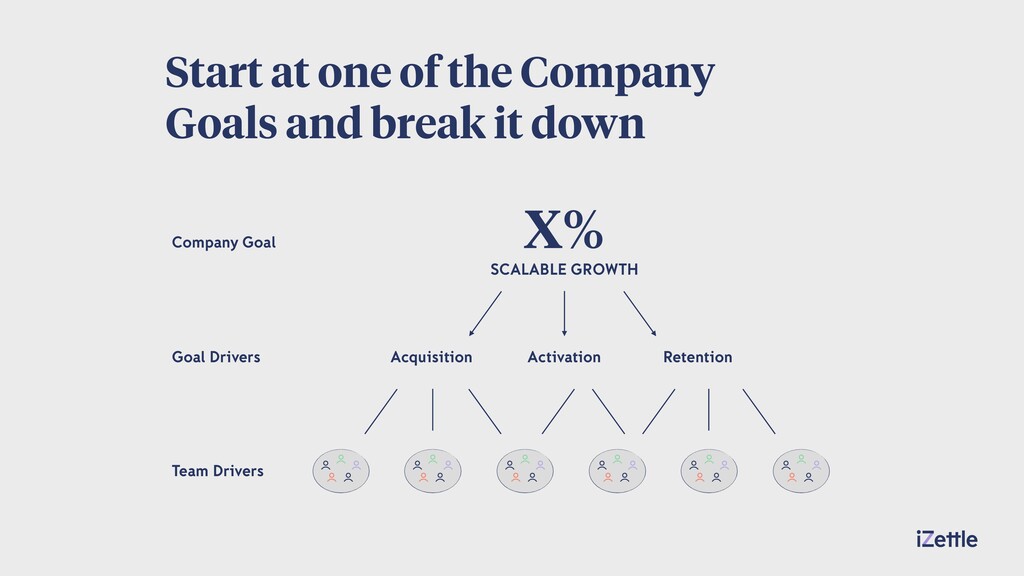
Because that can be a pretty complex process. And really what you do is that you start at one of the company goals and you start breaking it down, that's what we did anyways. And here you can make the mistake of breaking it down to little, like first you break it down to some sort of pretty high level metrics again, but you will quickly realize that if you do it that way you will have several teams working towards the same metric and they will affect each other and nobody really knows what's
going on and how they can affect the outcome for the company. So you really try to break it down to a level where a team actually own the performance. A great way to do this, a great method is called impact mapping which we're using all the time at ISOTO, you can Google that, I think it's a very useful method.
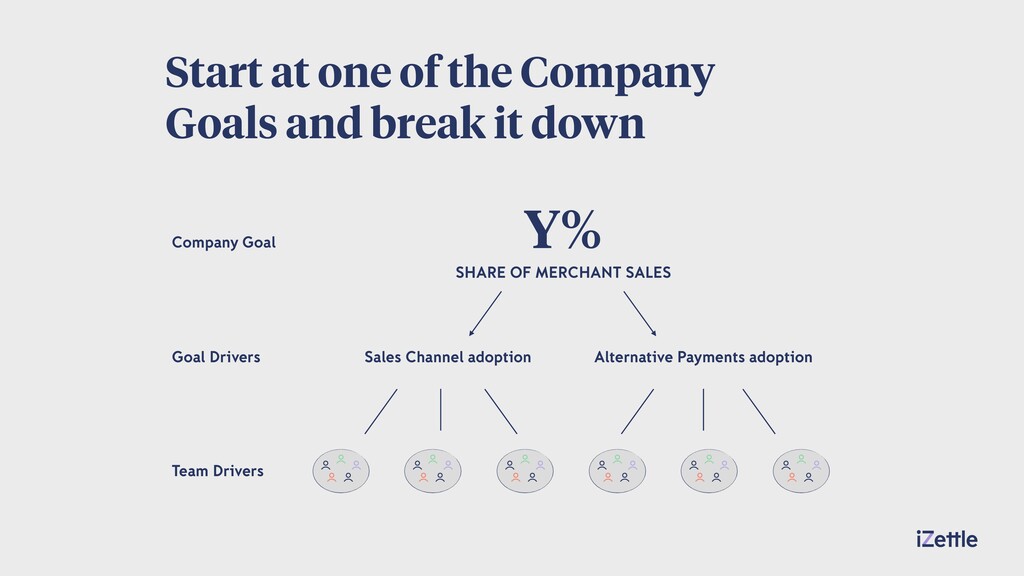
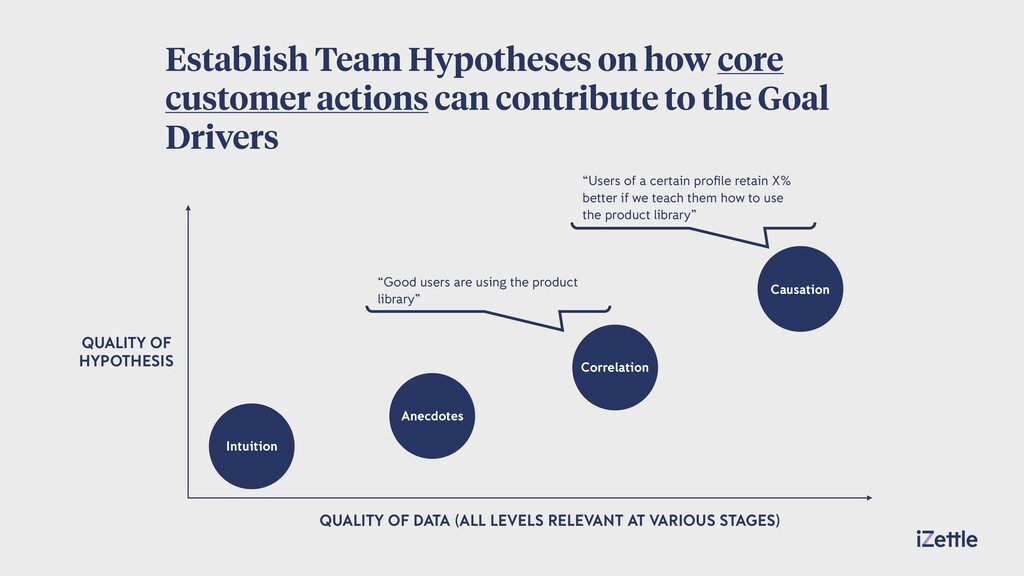
Yes, this is basically just the same type of example where you could focus on a more product related targets. But really what you're building with impact mapping or when you break it down is assumptions. You are building team hypotheses on how core customer actions or customer experiences for that matter can contribute to these high level goals, these goal drivers.
And I think again here the quality of the hypothesis or the quality of what you're trying to achieve, to drive will basically depend on what quality of data you have making it. I think this is really important, think all of these levels of data are relevant and it will depend on the product life cycle and it will depend a few, you know if you have zero customers it's really hard to ask them about your products.
You know you will have to go with intuition to start with but you can always compliment that with some anecdotes. You start talking to users either your own or to users you don't have yet. And I read a presentation the other day from a presentation basically saying the plural of anecdotes is data.
And it's when you get data or a lot of data from many customers you will start to be able to identify patterns. And again they are not the answer, they will just help you ask the right questions or form the right hypothesis. When you start seeing correlation between certain behaviors, that's great.
If you can prove causation, that's even better. So an example from my side will be that we saw that you know good users or high performing users are using our product library. But that doesn't really tell us much, we don't know if they are good because they are using the product library or if it's the other way around.
So through some AB testing you can start proving things like actually users of a certain profile will retain X percent better if we teach them how to use the product library. It's great if you can have those goals but don't think that they will hold forever either.
It's still a hypothesis and you kind of need to revisit to see if this core behavior actually holds, you know, next quarter and the quarter after that. Keep reevaluating those goals. So in the end you will have teams that kind of work like this.
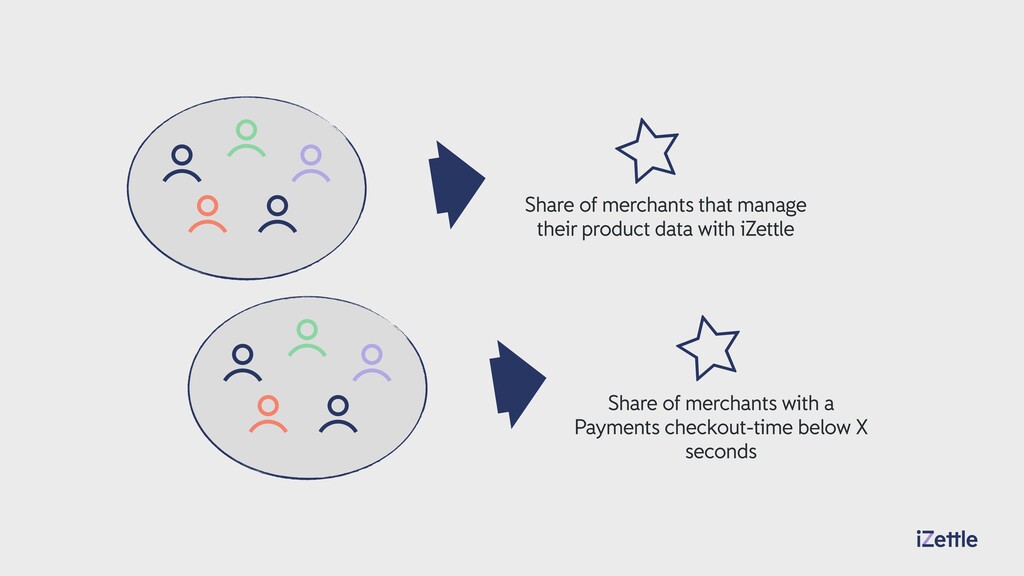
So you can have a team that focus on the share of merchants that manage your product data with iSettle and try to enable that experience in any way they can, which may include adding more certain features. For us it for instance included adding inventory.
If you have inventory, it's more relevant to keep all your product data with iSettle for instance. And then the second target here or the second type of goal would be more of experience related, know, the share of merchants with a payment checkout time below x seconds.
We know that both of these behaviors will actually improve retention for us. So now you have goals basically, you have set the high level goals, have broken down the goals for the specific product teams. I think the next step is quite an important one or has been for us.
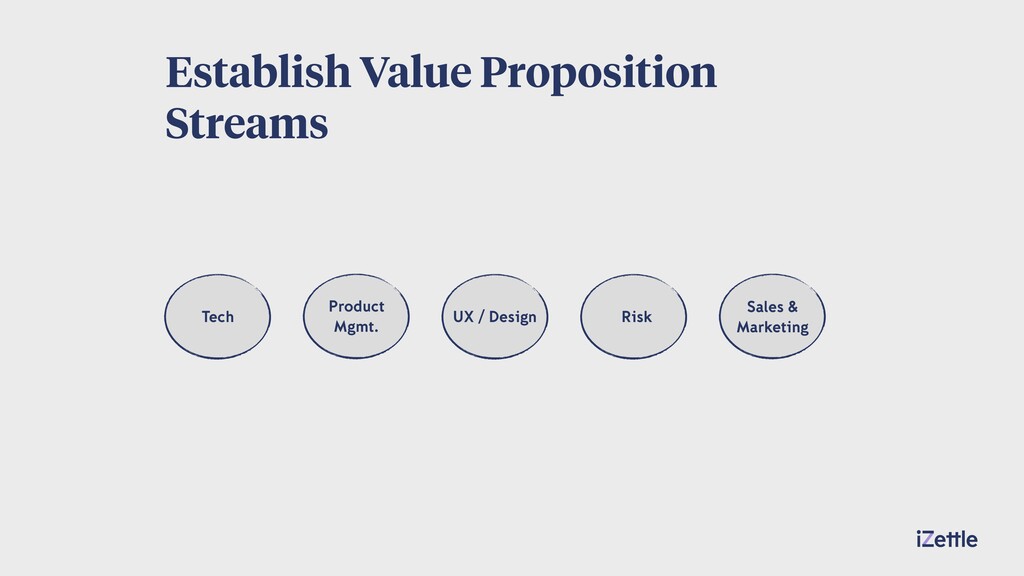
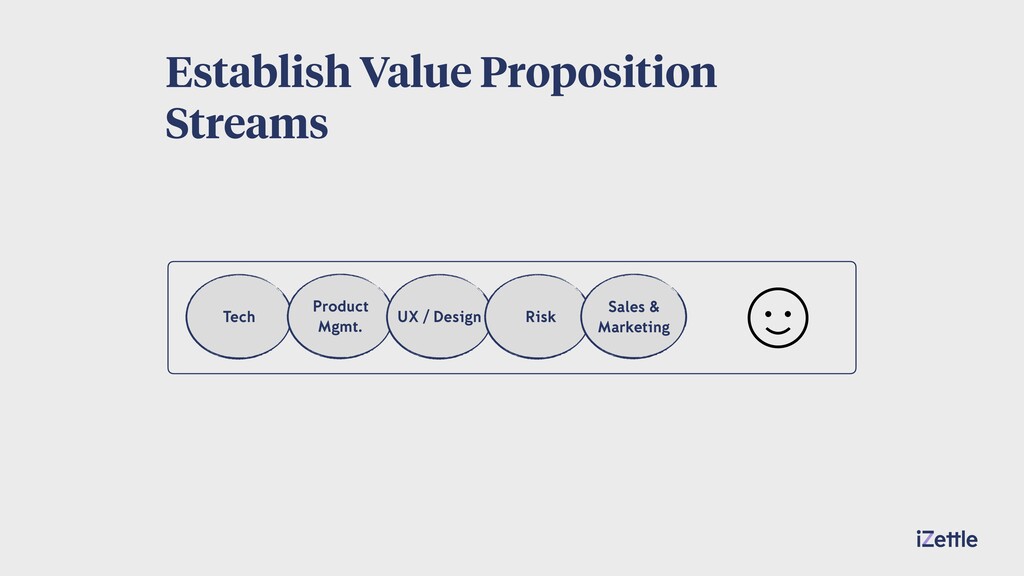
We have started to establish something that we call value proposition streams iSETL is organized by function. You know we're not really big enough to have all of these sort of product divisions and actually most of our product components are more or less related.
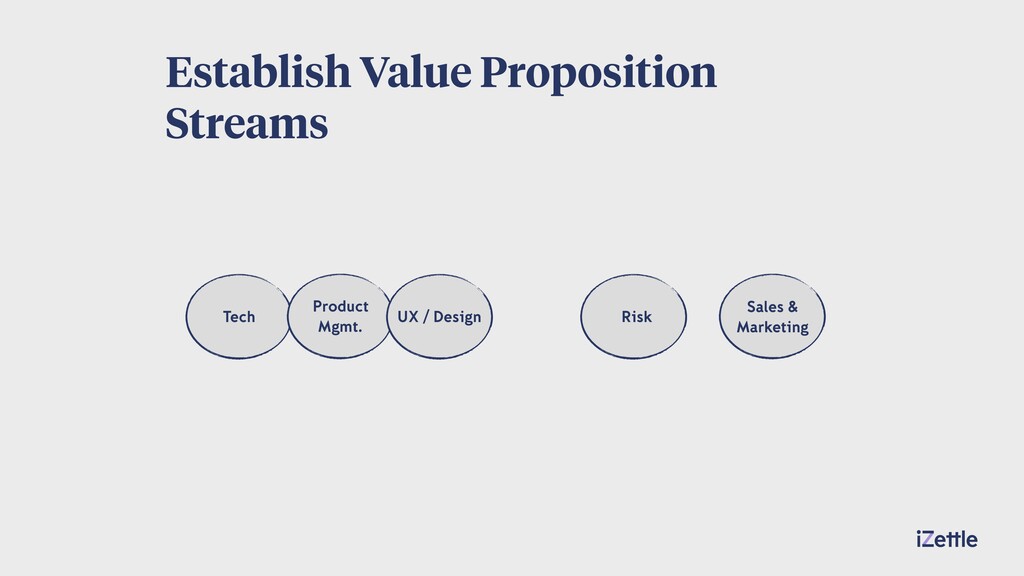
You can't really work completely on separate agendas. And then again we also have fifteen different product teams working at the same time. So this grouping is quite a classic one, we already talked about that and I'm just using risk here in sales and marketing as two examples from my side, but there are obviously more teams here and it will look different depending on what business you're in.
Now the point here is actually to make sure that everybody that's part of the same customer experience work together. That the overarching KPI that this group is using are the same. So payments, customer support is extremely important. People are very worried when you are handling their money.
So they are a key part of the experience, it's not really something that the product team itself will build, rather how they collaborate with that function. So, at iSETL as an example, well the point here is actually to make sure that they have the same overarching KPI that everybody within that group understand how the others are contributing to that KPI and also how they self contribute to that KPI.
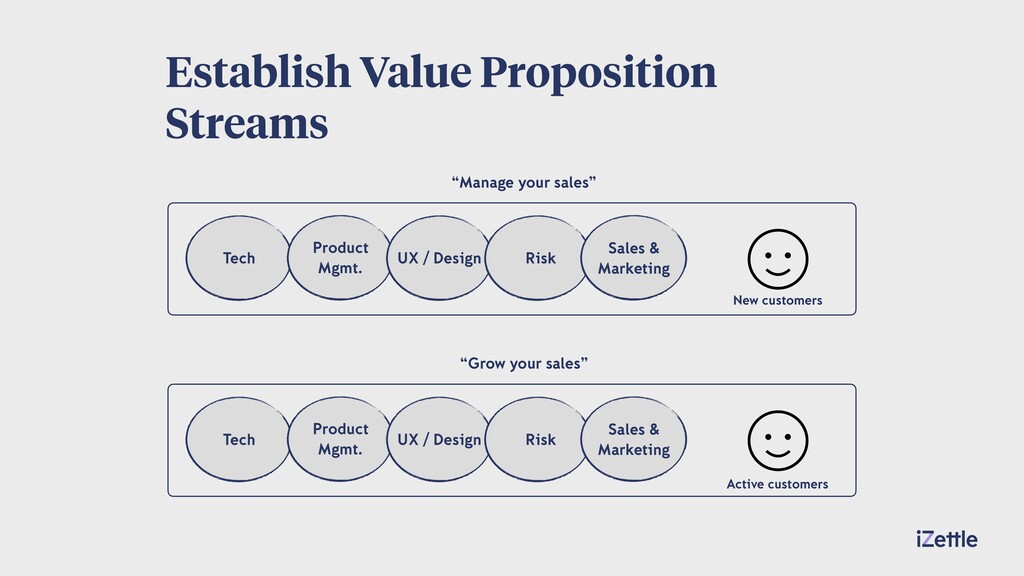
So at ICESat we basically have two value streams, right? One value stream is towards new customers. To them we come with a value proposition to manage all of your sales in one place. That's why they should come to iSettle. Now the way you talk to that type of user and what channels you use for communication and what products are relevant, that's part of the same value proposition.
But as they've been customers with us for a while and we've gathered knowledge about them and understood more and more of their data, we have a new set of products that are relevant to them. We have a new value proposition which we can promise them which is that we have these products that can help you grow your sales.
That in our case includes capital products, we have a few financial services products that can contribute to our users. Now these are of course users that have already been using iSET for a while, so the language and the channels and the way you think about these users is quite different.
They have another expectation on the experience than a new user would. So in a sense what we're doing is we're kind of creating this customer divisional thinking and we call them value proposition streams. So of course within these different value streams you will have several product teams working within the same value proposition.
Now finally, so you got the goals, you got the organization, just going to share some of the tools we're using to maintain focus and maintain alignment across not only the product teams but the entire company. So this is a quote from an old Netflix presentation, it's used a lot by Spotify as well and I'm you know the I'm going to go through here now I'm gonna with no shame say that we stole a lot from Spotify.
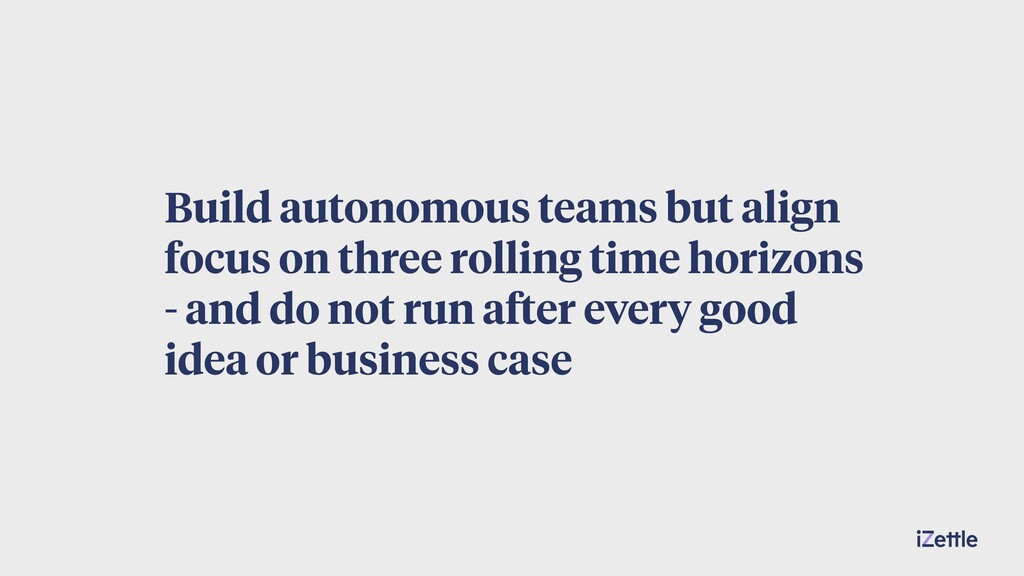
And I won't go through all the details because there are great presentations out there of how they implemented some of these techniques. So I'll just share our experience with them. Now so yes, autonomous teams, but you need to align focus and we're doing it on sort of three rolling time horizons, which again up to your company.
I will stress again not to run after every good idea or every good business case. That's not what a product company does, that's what an investment company does. So you really need to find where you should focus. The trickiest part about a good idea is to execute on it, not to actually conceive of it.
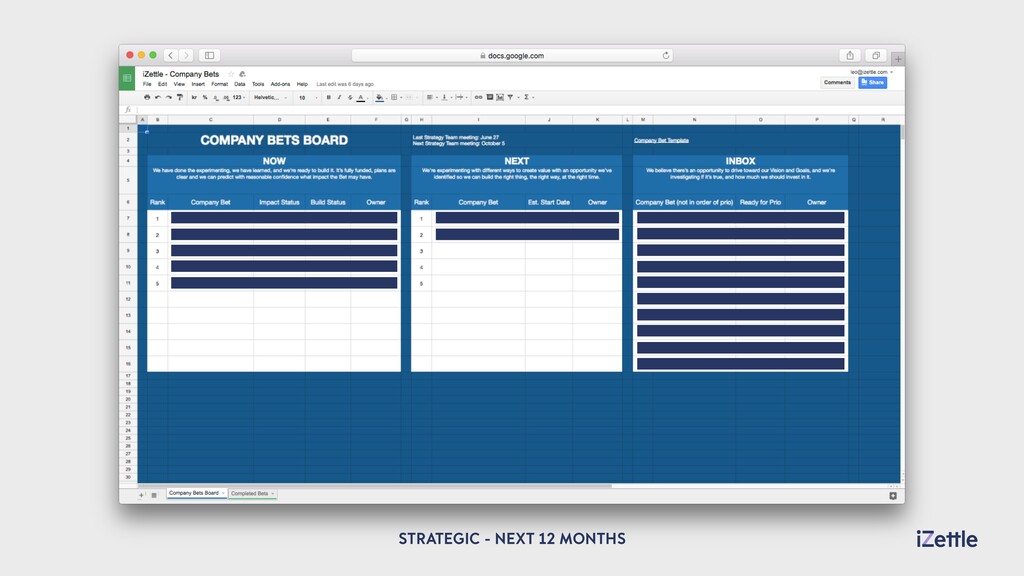
The horizons that we use are first a strategic one. We think about the next twelve months and we do basically have a sort of a strategic checkpoint every quarter where we look at company wide strategic initiatives that drive towards the company goals. And we create this actually strategic backlog basically which is relevant to the entire company.
An example here can be new product launches, it can be entering new markets, it can be focused on certain segments or opening of a new type of sales channel that we didn't use before. Now actually even the design on this one is stolen from Spotify just you know, so.
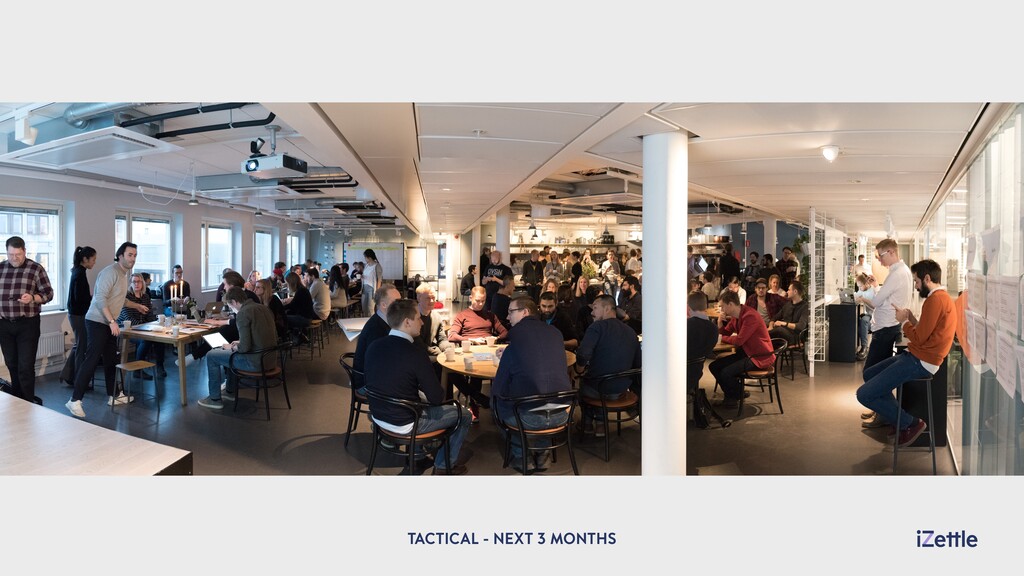
But this part here and the second, sort of second level or second time horizon is a tactical one. Then we think about the next three and we do a checkpoint every six weeks. So here we actually use something called big room planning and this is a bit different from what I've seen before.
I think perhaps that Lego is using a similar methodology as well. Basically how we started is that we gathered all of the development teams, everyone for one day in the same room basically to the extent it was possible. That's a pretty expensive meeting to have, but the idea is to actually have this tactical checkpoint to identify any type of dependencies and any type of help you can give each other or making sure that we're kind of working in the same direction with the context of the company
goals and the strategic battle that we have. So the idea is really to replace all of these ad hoc meetings that happened anyways relating the same issues and do that all of that in a single day and then move on and work on our own parts of the product.
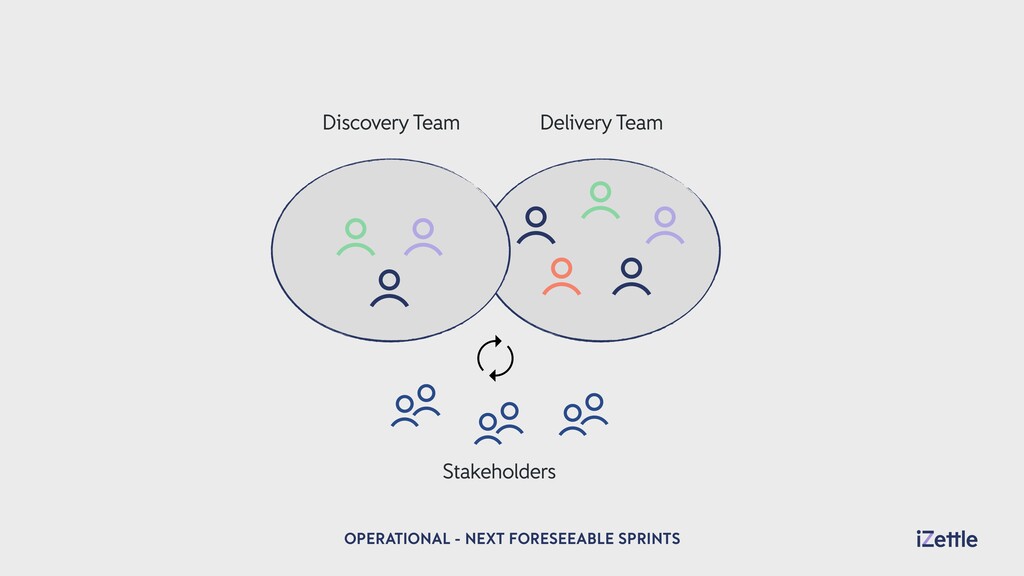
Which brings me to sort of the final time horizon which is of course the actual product team, more operational one. This is managed by the product manager, I think the presentation that Jane did talked a lot about how this works and these concepts here about discovery and delivery, I won't go through all the details here.
But I can stress the importance of that, to scale hypothesis testing, make sure that you sort of try things as cheap as you possibly can before you start shipping them. And you know there are many methodologies for that, Lean UX is sort of what we try and use as much as we can.
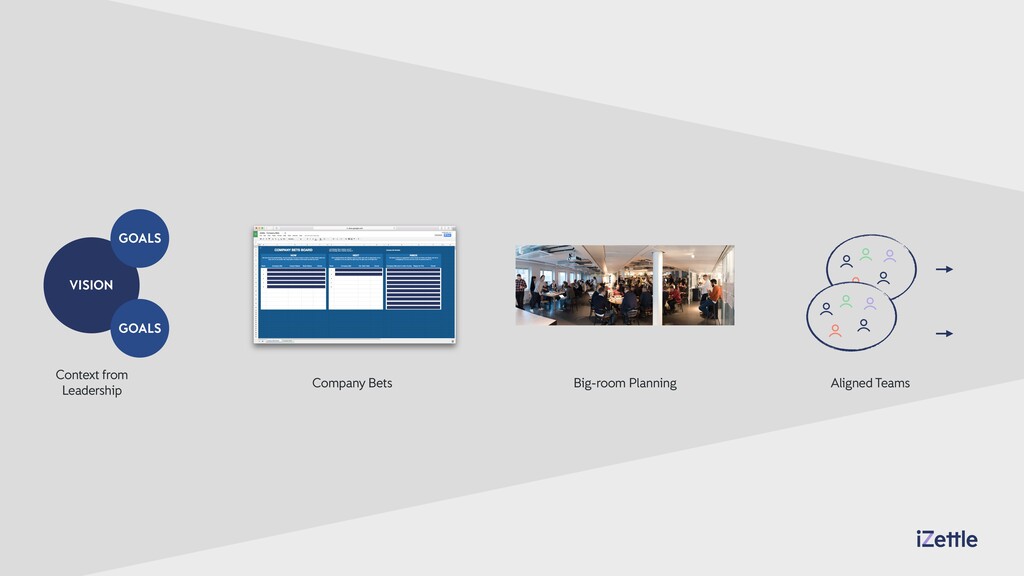
I can recommend reading a book called Value Proposition Design which talks a lot about this and we're using it a lot at ISO. Now it kind of ties together like this, you get the context from leadership. They set the vision, they set the goals.
You will sort of align around, you know, you kind of need that as well before you start defining strategic bets. It's really hard to prioritize between what's most important for the company if you don't know what you want to achieve, coming back to clarity.
And then you have it sort of these checkpoints on a strategic level, on a tactical level and then for us this is currently working to align our teams. Can't guarantee it will work for everyone but it has been really helpful for us. And possibly I would like to sort of add that conceptually this is probably quite easy to get, know it's not rocket science But I think as with everything, it's really about execution and what you're really trying to achieve here is really clear, transparent and sort of continuous
communication across the company and between the teams. Sort of get that focus and get that alignment that you need to deliver a cohesive experience. Now all of these matters here probably could have their own talk and they're probably all one hour long. So this is obviously not all the answers but I'm happy to discuss any of these concepts with you afterwards I will be around, so happy to do so.
Thank you very much.