
Marketing is about connecting with people – in every way – you need to connect with your colleagues and other teams to make them work with you, connect with a journalist/influencer to make them talk about you and connect with your audience for them to like you/do what you want. Making a connection(in marketing requires the following formula: the tools + the mindset (people, not users/page views) = successful connection. This talk will run through the reasons that making a connection is so crucial for success, the tools we have available to help make a connection more likely, the mindset we need to make this effective, and examples of how this works in practice.
← All talks 



Grow Marketing Turing Fest 2017
Making the Connection
Auto-generated transcript - may contain errors. Tap a timestamp to jump the video.
So what I'm gonna talk about today, I was thinking about what I wanted to talk to you guys about. And I thought the best place to start is thinking about, well, what are the biggest challenges that I hear from people? Because that's the kind of thing that the kind of challenges that you guys might also share.
And it came down to two biggest ones from when I'm at a conference and we get questions at the end, when I do a lot of training sessions, or just general friends in the industry and in my agency. And those two biggest challenges are these.
How do I get this person or this group of people to work with me? Now this comes up. I do a lot of training for PR people on SEO or SEOs on PR. And a lot of the questions I get are from SEO people.
How do we get our PR team to work with us? Won't tell us who they're working with. They won't share our content. They won't help us get links. How do I get them to work with us? And then from the PR teams, get, well, aren't SEOs just spammy?
Aren't they just going to spam all our contacts? You know people don't really like them. But how do we get them to work with us so that you know they are going to help us and they're not going to spam all our contacts if we give them to them?
So that's two of the big challenges. The other one on that one is SEO and PPC, which is what Will was just talking about. Know not sharing data, not necessarily wanting to work together. But actually, as Will's just shown you, that's really valuable if you're working together.
There's a lot of gains to be had for yourself as an agency in terms of what you can save your client, and also for your client in terms of what you can save and what you can make in extra revenue. The second biggest challenge is this one, which I'm sure anyone working in digital marketing will have come across at some point.
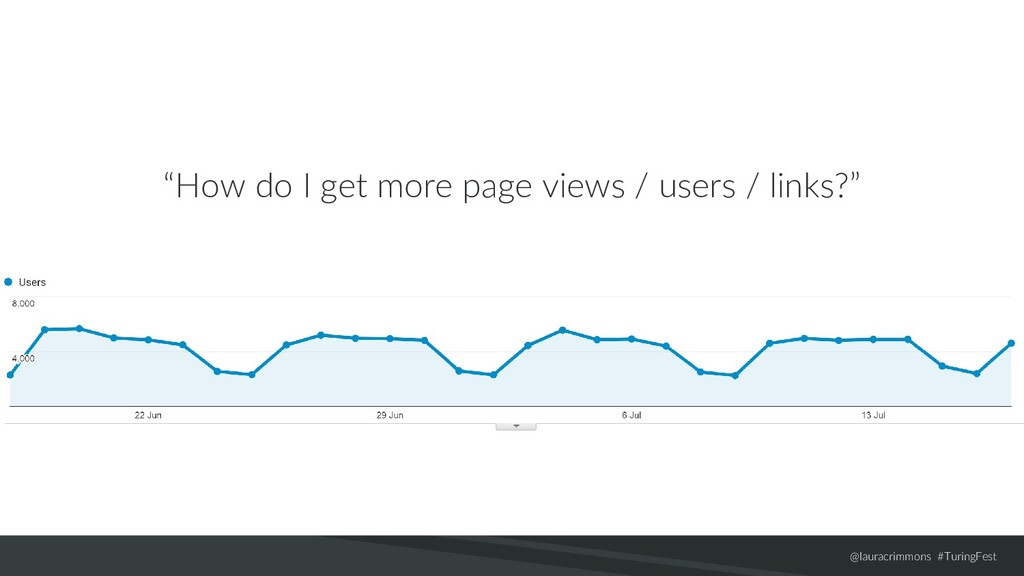
How do I get more page views? How do I get more users to my site? How do I get more links? How do I get more links is probably the most common question I've been asked in the five years that I've been working in digital marketing.
It's the one that everyone wants to know because everyone still thinks that links are the secret weapon for their SEO rankings. And at first, these two questions kind of seem a bit separate. But actually, when you think about it, there's one thing that they've both got in common.
And that's this, which is why I decided on this talk. Both of them are about connecting with a person or a group of people. If you want to get another team to work with you, you need to remember that that's a team of people, of humans with feelings.
If you want to get a user to your site or someone to link to you, a journalist or a blogger, that's another person with feelings and needs of their own. And the problem that you have is it's kind of a mindset thing rather than necessarily a willingness.
And it's you're going, how do I get them to do what I want them to do? How do I get that user to come to me because I want them to purchase from me eventually? How do I get the PR team to share my content or get links for me so I can improve rankings, which I'm KPI'd on.
And what you've got to remember is they're not going to help you for no reason. They need to feel connected to you. They need to like you to want to do that. Or you need to be giving them something in return. So what I'm going to go through today is first of all a few universal rules that apply to kind of getting people to like you, getting people to do what you want them to do.
And then also some specific things on getting colleagues, clients, agencies to work with you, journalists, influencers, and then also your audience connecting with them. So starting off with a few universal rules. Names. Now, I admit I am terrible with names and faces. It's one of the things that I constantly want to work on because I feel really rude when I go to a conference or an event, and someone comes and talks to me and I'm like, I've seen your face before.
We've had a conversation before. I can't remember your name. Or I am sat in a client meeting. It's a big client. There's a lot of them around the boardroom, and someone says something. And then later on, I want to refer to what they've said, and I'm like, oh, as God, what was his name said earlier?
Names are really important though, because people care about when you use their name. There was a study by the Journal of Consumer Research, and it found that using someone's name makes them so much more likely to do what you want them to do.
Which feels a bit obvious, but the study is actually quite interesting. There was a really big percentage increase from when you used someone's name and asked them to purchase from you, purchase something from you, to not using their name and asking to purchase.
So names are really important, but people kind of take that and go, right, I've used someone's name. That's personalization. Boxed. Ticked. They're going to do what I want. I've done an outreach email. I remember to use the blogger or the journalist's name. They're definitely going to give me that link in the bag.
Personalization is not using someone's name. That doesn't go far enough. What I'm saying is, it's important to try and remember people's names and use them, but it's not everything. Now, this is a quote that I'm sure all of you will have seen before at some point, or it's been said to you.
Said to me a lot in my life. I talk a lot. And my mom constantly used to remind me that, you know, shut up Laura. But this is a phrase that we're all kind of used to, but we probably forget, and we don't really know why.
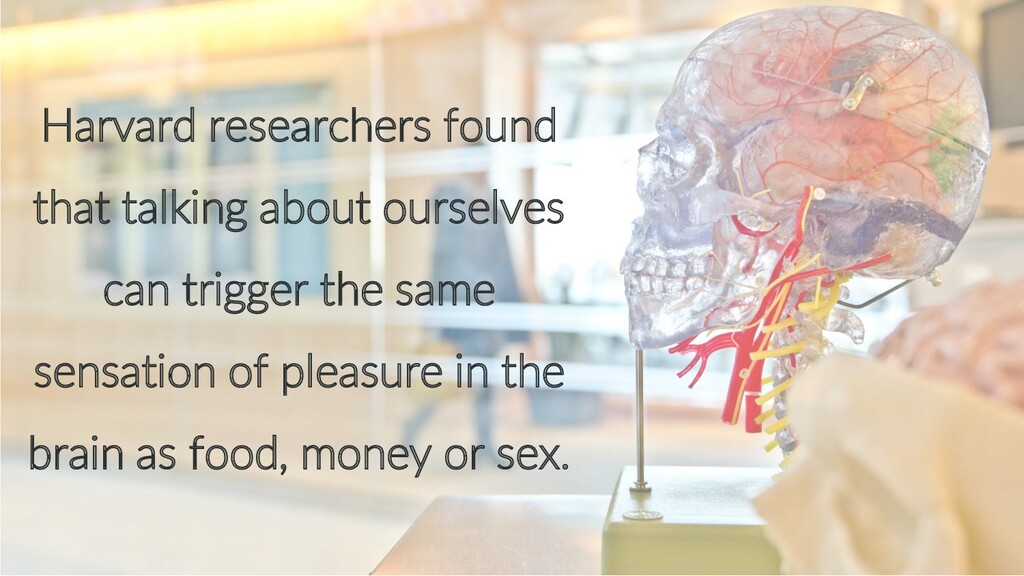
Are people just saying we talk too much? But there's a really interesting Harvard study that looked at what talking about ourselves does in the brain. When we're said, you know, two ears, you should be listening to other people, This is why. So me shutting up can give you the same pleasure, if you're talking about yourself, as food, money or sex.
That's why we have to shut up. That's why we have to let people talk because they enjoy it a lot more. I've done meetings before where I've gone to a meeting, I've not really said anything. The person's talked at me for ages. And I've kind of sat there and listened.
And then I've come away and I'm like, ****, I didn't really I didn't really say much. They're going come away and be like, well, Laura, she doesn't really know anything. Because I didn't really get a word in edgeways. And you come away and you're like, God, that's not gone well.
And then actually, they're like, really great meeting. Need to get something in the diary again. We need to talk about this some more. Found it really useful. And you're like, really? Because all you did was talk and I didn't really say anything. How did you find that useful?
But it's because I've made them happy. They've been able to talk about themselves, which is ultimately what everyone wants to do, because they're getting this pleasure sensation from doing that. So if you want to connect with people, if you want people to like you, just shut up and let them talk about themselves.
That's going to get you really far. Another thing that's really important, we're drawn to people that are like us. So all of this probably feels quite obvious, but we are. We're drawn to people that like us. We don't necessarily want to hang out with people that have opposing views to us that we know are really strong.
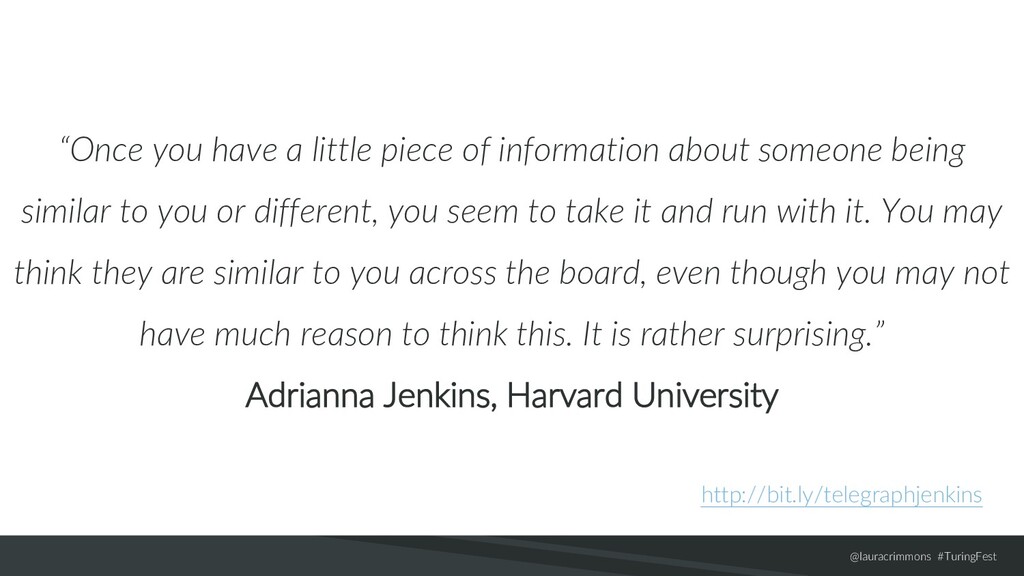
But again, like how important is that? You know, because I've got friends that have a different political view to me, that like different music, different TV shows to me. Well there's another Harvard study which is really interesting. That shows that even if you get one little hint that someone is similar to you in one way.
You then start to kind of think of everything they do as being similar. You kind of overcompensate how many similarities you have based on that one shred that you showed them in the first place. And what I think this is really good at is showing is in terms of getting someone to like you and showing that you are similar, which is important, you don't actually need to work that hard.
You get the first thing in there, and they're going to think everything is quite similar. So it's not going to take a lot of work to make people like you. It's just a little bit of effort upfront. And it's worth saying that the opposite is true, which I think it says in this quote.
So if someone sees that you are a little bit different to them, they are likely to see everything you do as being different to them. So it applies in each way. So it's important to really know who you are talking to. Political beliefs, especially in this study, had the biggest impact on that.
But so how do we show people that we're like them, if I've never met them before, if I don't know them that well? This is my answer. Stalk people. I don't mean in a restraining order kind of way. I'm not suggesting, you know, turning up at the house or kind of spying on them and seeing what kind of food they're throwing away and going into it that way.
Not stalk people in that way, but stalk them online. The internet has given us some really valuable tools. So I thought I'd use an example here. So let's pretend I'm meeting a lady, as you will shortly, when she's on the stage. So I've got a meeting coming up with her, and I want to show her that I'm like her, that we're similar, so that she'll like me and do whatever I want her to do.
Best place to go. So I'll say first of all, a lady's Twitter is amazing. Very work related. So if I want to talk to her about her views on something that's going on in terms of SEO, I'll find some great tidbits on there that she shared before that I could maybe ask her opinion on.
But if I want to find out about her as a person, luckily her Instagram is public, so I can have a look on there as well. So let's say she's coming in for a meeting. She's a potential client, or she's someone that works with my other like one of my clients' other agencies or something like that.
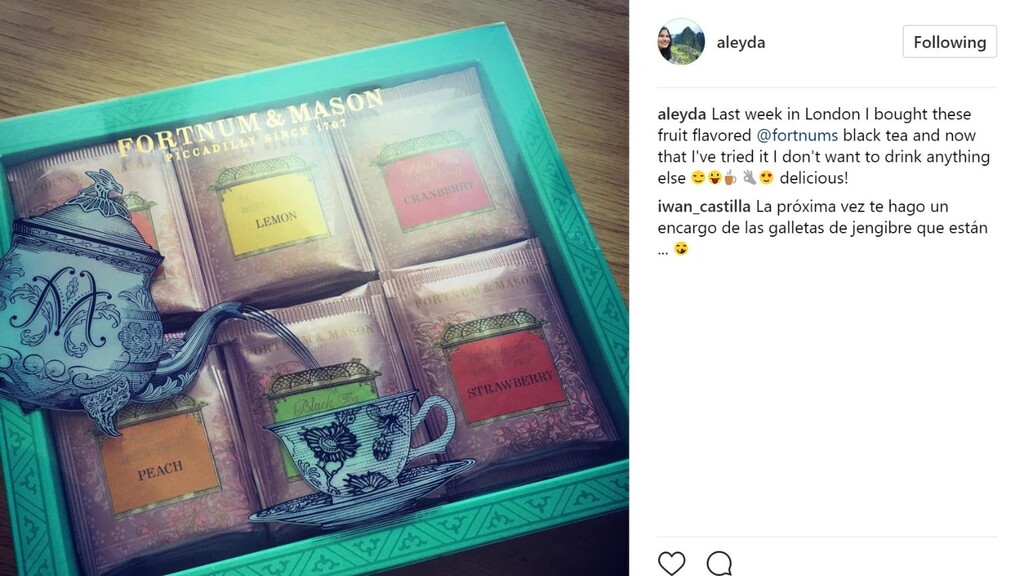
She shared that she really likes this tea from Fortnum and Mason from last time she came to London. So I can get that in, have that sat at the table, give her the selection to choose from, tell her I like that too. That's going to start a connection.
She's going think, oh she likes the same stuff as me. That's quite interesting. That's the first spark of showing that I'm a bit similar to her. Let's say that she's really important to me. And I really want to get everyone's side. And I'm like, right, I should take her out for dinner.
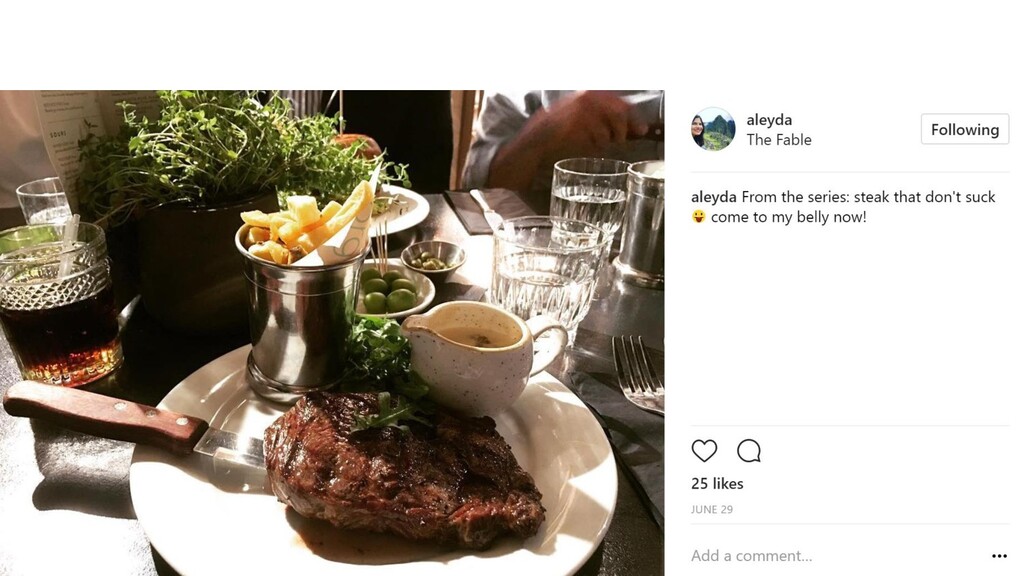
That's going to, you know, that's the way to everyone's heart. Isn't it food? Everyone likes people that take them out for food. Where am I going to take her? Steak. Again, I've looked at her Instagram. She really likes a good steak. I'm like, I love a steak restaurant.
I know this great steak restaurant. Let's go there. She's like, Oh, I like steak too. Again, that's a similar thing that we've got in common. We've gone for dinner. Let's say we're having this steak. And I'm like, Right. I've already shown her that I like the same food as her.
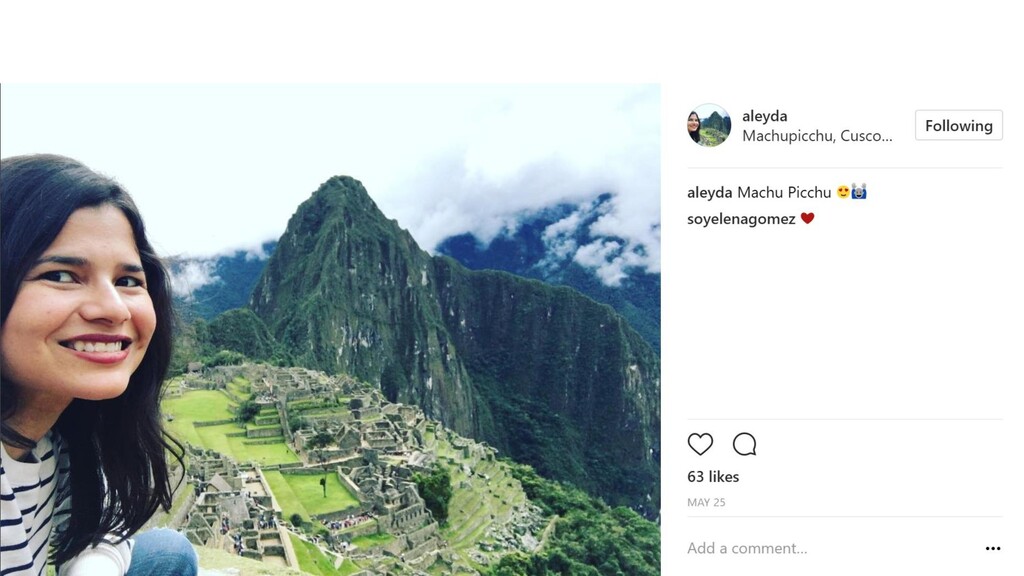
I've shown a little bit in common. But I want some kind of topic of conversation that shows that I put a bit of effort in. Well, she recently went to Machu Picchu. So why don't I ask her about that? Thinking back to what I said earlier, people like talking about themselves.
If I ask her about that, that gives her a whole space in which to fill with memories of what she did when she was there. What did she see? How did she find it? What were the flights like there even? I'm giving her that space to talk.
That means that she's going to be really happy. She's going to feel like the dinner went better than it did. Not to say that it wouldn't go great anyway. I'm great at dinner. But what if people don't want to work with you? So this will work with a lot of people.
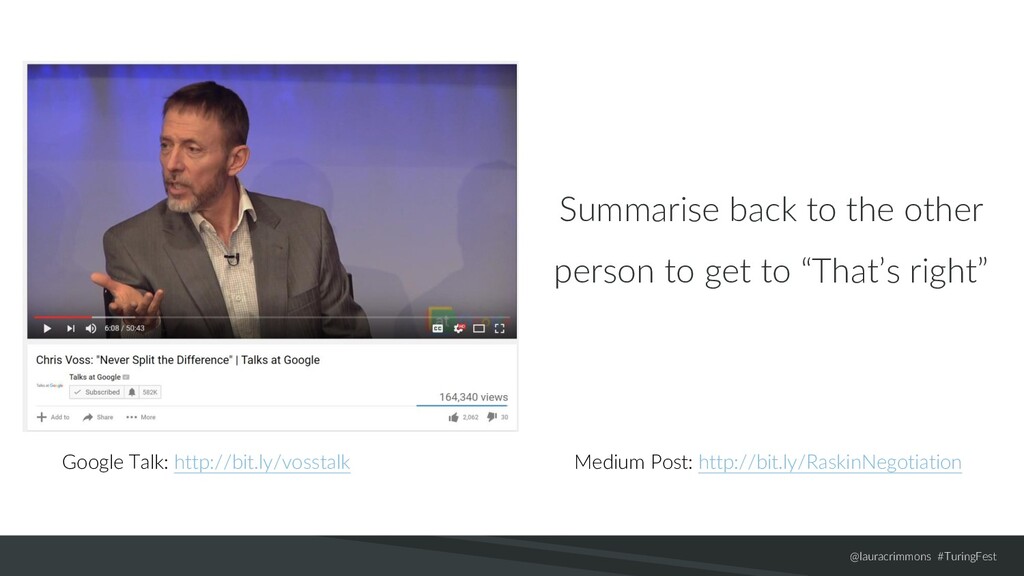
It's a great way to show that you're interested in people. Great way to get them on board, but it's not going to work on everyone. I don't know how many people have seen this before. There's a guy called Chris Voss. He used to be one of the best FBI hostage negotiators.
Was kind of his career. But he wrote this book and he's done some really good talks. This is one of them that I definitely recommend watching. And it's all about how you get people from a no to a yes. So there's kind of various turning points that he goes through.
But the biggest one that he found in turning someone around from not wanting to do something to agreeing to do something, is summarizing back. So it's about listening, but not just letting someone talk. Listening, summarising what they said back to them. So essentially what their argument is against what you want them to do.
And getting them to say that's right. And that's right was the magic phrase. And he did this, like I said, in hostage situations. But it's been applied in the business world quite a lot. So there's a Medium post here all about how a guy used it in a business negotiation.
When he was trying to bring his whole team on board with a new vision. Because he had an interview with the New York Times. And there was a colleague that wasn't on board and had some serious objections. And he used this technique to turn it around and get the guy on board with what he wanted to sell as the vision for the company.
So I'd say this is definitely worth a watch. Because if all the other techniques haven't worked, doing this, showing you've listened, repeating it back, is going to help to get people to want to do what you want them to do again. So that's some kind of general rules for how to get people to work with you and how to connect with them and get them to like you.
But let's apply it to situations that we'll find in our working life. So first of all connecting with colleagues and clients. I've put colleagues and clients. It applies to basically work environments, where we need to get someone on board with the work that we want them to help with.
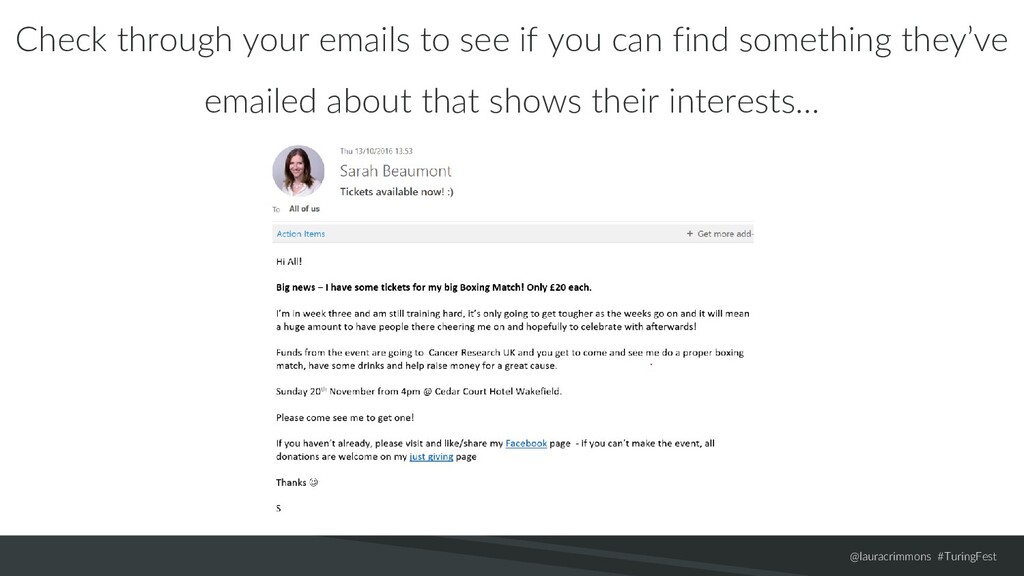
So first of all, looking at colleagues. I'm sure all of you have these kind of email groups that we do at Branded three, which are like the all of us email group, which is just spam. And anytime you get back from annual leave, you're like, for ****** sake, how do we have this many emails going around every day?
Delete all. But everyone has them. And normally, you probably ignore them. You're like, I really don't care what you did at the weekend. I don't care that you're going you want me to sponsor you for this as well. Everyone wants me to sponsor them.
You get a bit annoyed at it. But actually, it's really valuable. So let's say I'm meeting Sarah. She's one of our account directors. I don't know her that well. If I just do a little search through all all of us emails that have been sent, see if she has sent one.
I can see that she sent this about doing a boxing tournament. So let's say I am meeting her beforehand, before the match. I can ask her how training is going. She's going to love the opportunity to tell me about her training, because it's clearly something important to her.
And I'm giving her that space to talk, but also showing that I've got an interest in what she's doing. If I'm meeting her after the tournament, I can ask her how the match went. She's probably going to have some photos that she wants to show me about her winning the lifting that arm thing.
She's going to have stuff to show me. She's going to want to talk about that. If I start a conversation like that with her, she's much more likely to then do what I want her to do as a result of the meeting. Now, other ways of getting colleagues to work with you, some kind of tips I tend to use.
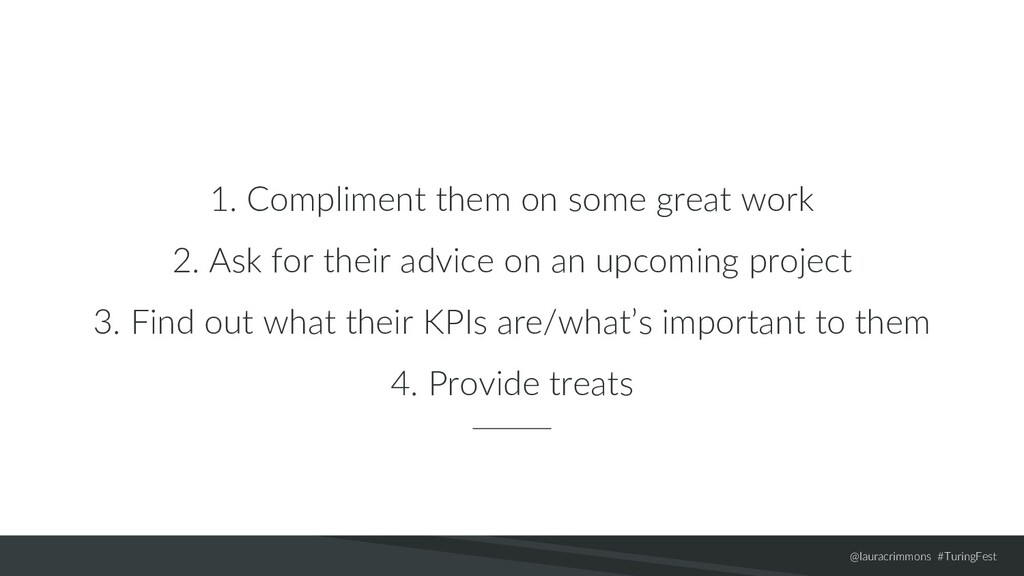
Compliment them on some great work. Seems obvious. People love getting a compliment. It makes them more susceptible to doing what you want. It doesn't matter if you actually liked what they did, as long as you can say it with a straight face and you can pick something out.
Just make them feel good about themselves. Everyone loves a compliment. Ask for their advice on something. So if you've got an upcoming project, whether you really need their input or not, showing that you're asking their advice makes them think that you value their opinion, which again makes them more likely to work with you.
So just take some time. And what you're also doing is again, you're giving them that space to talk about themselves. They're getting to talk because you've asked for their advice, which means even if you don't take their advice, they're going to be happy.
They're going to feel better that they had the chance to talk in the meeting. Find out what their KPIs are. So one of the biggest barriers that I said about going into these kind of meetings is you're thinking about what you want. You're like, I want them to do this for me.
You're not thinking about them. They have their own needs. There's a reason they don't want to work with you. If you don't take the time to find out what that is, you can't show them how you can benefit them as well. So for example, if I'm going into a PR team and I just want them to get links for me, well, if I don't ask them what their KPIs are, I can't relate what I want them to do to what they need to do.
I want them to get links. They're probably targeted on coverage. In certain kinds of publications, they'll have a target. If I can show that the content I'm producing, the campaigns I'm producing, is going to hit the same places, well actually, them helping me is also going to help them hit their KPI, because they've got better stuff to go to journalists with.
And if all that fails, provide treats like everyone loves a treat. You take some chocolate biscuits to a meeting, and it's already going to get off to a better start. But think about the treats that you provide. So like I said, if I was meeting her later, I might take that tea that I know she likes.
She's going to be happier because she's got something that we know that she enjoys. So to put this into context with a few examples, I worked with a gambling client. And their PR team didn't really work with their SEO team. They didn't even really talk to each other. That was my job.
And because my background's kind of PR and I was working with SEO. So I clearly knew how to speak to the PRs and they didn't. I sat down with them because they wouldn't really work with us at first. I was like, well, what do you have to do?
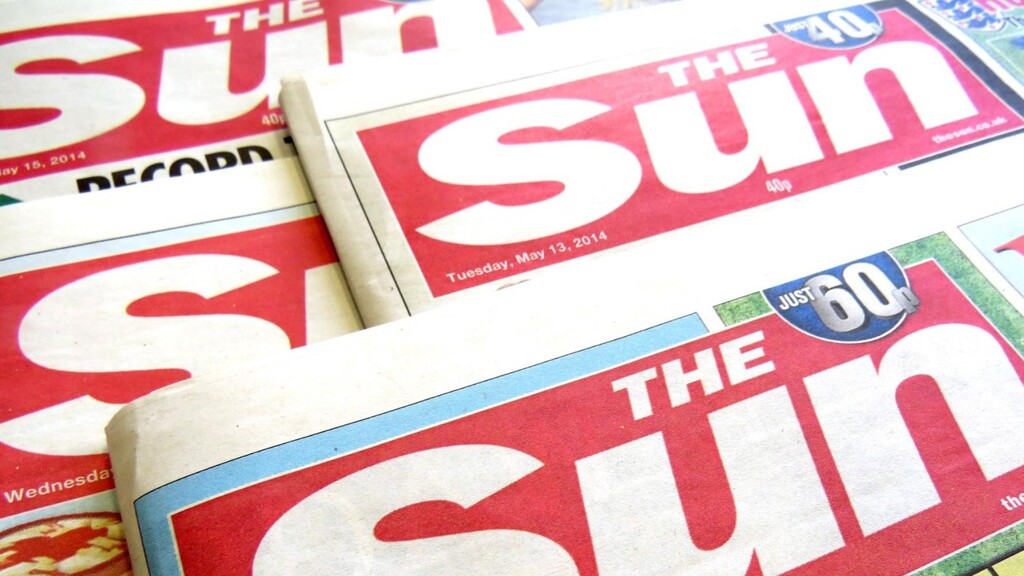
Like what what's your boss looking for? Turned out the number one thing that they had to do was just get in the sun. If they got in the sun every week, their boss was happy. It didn't really matter about anything else. Wasn't like a huge target on the amount of media coverage or penetration or brand awareness.
Get in the sun, that's where our customers are. So what we did is we came up with a campaign that we knew would get them in the sun. And sure enough they're happy. They want to work with us because we've shown that we can help them to hit the KPI that they need to hit.
Another client, notoriously quite difficult client, had made me cry on one occasion previously, which I don't often do. Very difficult, dread meetings with him. One meeting, I happened to do the lunch And I got these fruit pots because, you know, let's be healthy as well as having chocolate biscuits.
But yeah, I got him this fruit pot. And he ate three of them. Three of the fruit pots that I put out for everyone. And I was like, that's bit annoying because I kind of wanted a fruit pot myself. That's why I bought one, but whatever.
And then suddenly he's really happy. He's signing everything off. He's like, yep, I think we should do that. That's a great idea. How about we put some more into it actually? Because it sounds like a great idea. And I'm like, okay, this isn't you.
And then he keeps going and he's like, do you know what, I'm not sure if it's fruit pot talking or me, but I'm just I'm really enjoying this meeting. And I was like excellent fruit pots are now in every meeting. Something like that remembering what he enjoyed.
He's happier every time we meet now, which is great. He hasn't made me cry since. Another client, massive foodie, so we're based in Soho in London, which for anyone that's been or knows it, foodie paradise. Loads of food, loads of drink, Something to try every time you go out.
So what we do is, every time we have a meeting, I also choose a new restaurant that we're going to go to after. We've got a connection and that we both know that we're foodies. So in between meetings, we're sharing restaurant openings that we see or pop ups because there's a pop up for everything.
There's like a crisp pop up, a donut pop up, all different things that we can go to. So we do that. We've got a connection. We've got something that holds us together beyond the work that we're doing. And they like me better. This is another one of our clients.
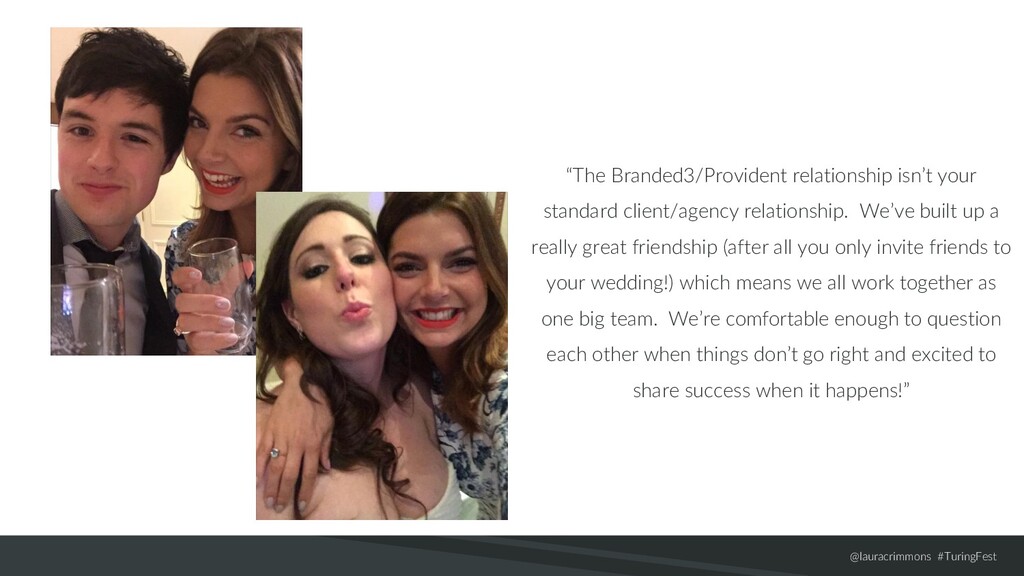
She's kind of going even further. We've worked with them for quite a while. She invited her client team to her wedding. This is a quote from her. But like if that's not a great relationship, I don't really know what is. And she talks about the fact that they've got a great connection.
They can say good things and bad things to each other. They've got a genuine connection so much that she wants them there on her big day. And that's great to me. That's exactly what we want with clients. Not to go to all of their weddings.
But we want to know that they like us. So don't underestimate the power of a drink. It doesn't have to be alcoholic, a coffee. Getting someone out of the office, whether it's a colleague, whether it's a client, whoever it is. They just open up more.
They're going to talk to you more. It's going to go better for you. So moving on to connecting with journalists or influencers, bloggers, whoever it might be. Twitter is your best friend for this. So coming back to what I was saying about stalking people, Twitter is amazing.
And it's the best way to make a connection because you can find out what people really like. So TV is a good one. A lot of journalists will be tweeting about their favorite TV show. You can find out what they watch. Don't try and fake it if you haven't actually seen the TV show or you don't like something they're talking about.
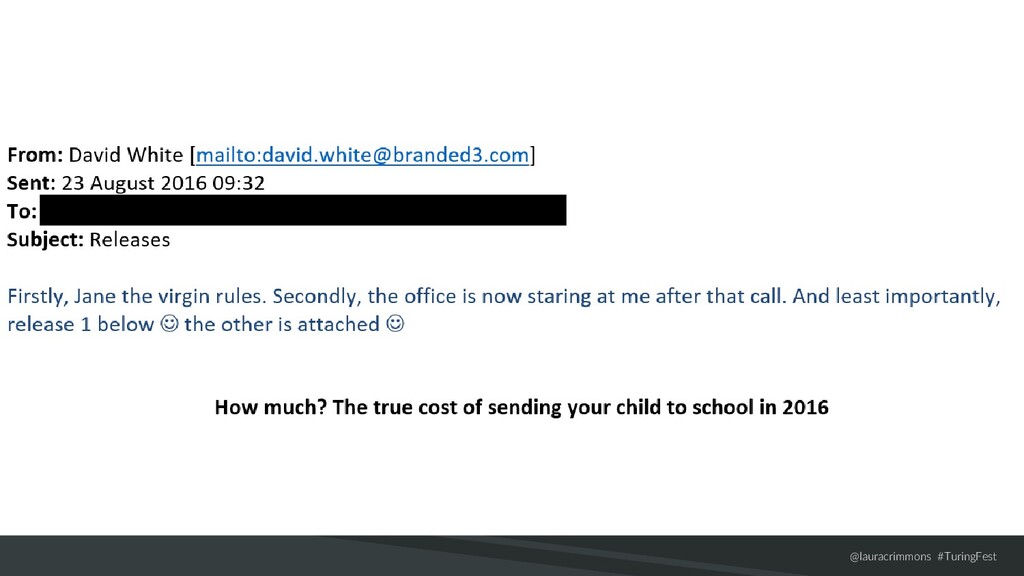
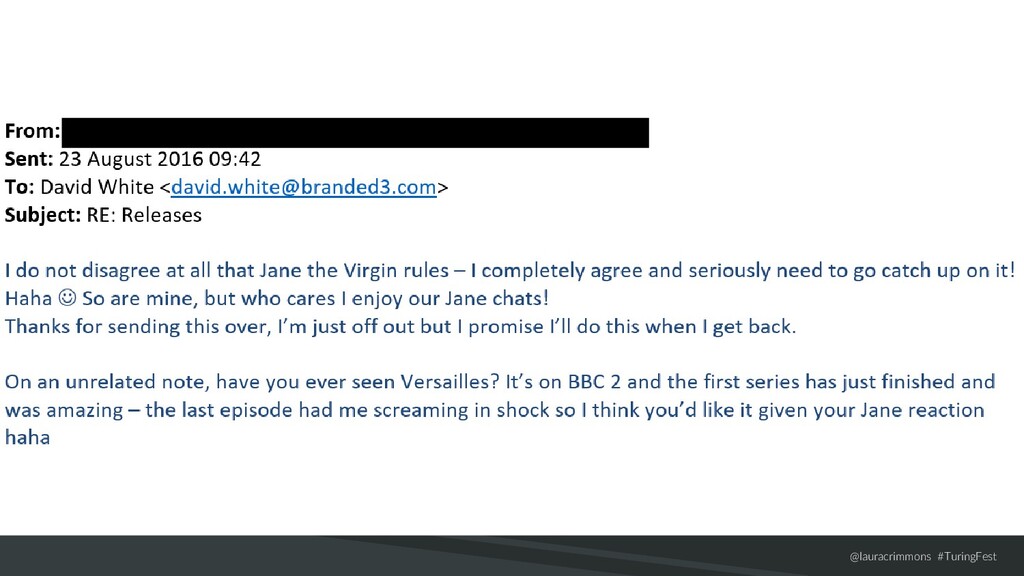
Try and find something genuine. But a few examples. So one of my colleagues, David, he watches a TV show called Jane the Virgin, which I have never seen. I hear it's great. I've never actually watched it. But he worked with this journalist. So he saw on Twitter that she also watches Jane the Virgin.
Since he's obsessed, he picked up the phone to her, started talking to her about Jane the Virgin first, before he actually moved on to his selling. So she knew that, oh actually, he's done a bit of research. He knows what I like. It's nothing to do with the campaign, but we've got something in common.
He's shown that they've got a similarity. And she's then just going to like him more and be more likely to do what he wants. And sure enough she does. So she replies. She says she's going to put up the campaign. She's going to link to it.
And she's also then recommending other TV shows that you might also like considering he likes Jane the Virgin. So not only has he got the coverage and the link that he wants, he's also got another TV show to binge watch. So it's kind of a win win for him.
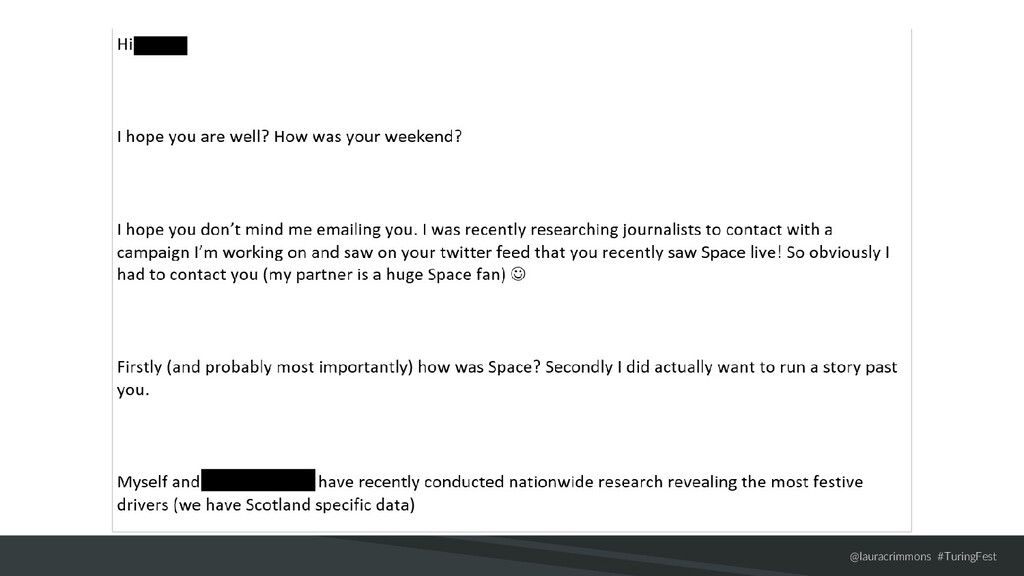
It's not just TV shows that work. Music, really powerful one, especially if you're really into music. So another example here where he stalked someone's Twitter, had a little look, and found that they went to see a band in particular. She went to see space.
His girlfriend happens to be obsessed with space. So that's how he starts his email. He's like, first of all, most importantly, seeing that you've seen this, how was it? Blah blah blah. Then here's this campaign that I want to work on. Straight away she wants to reply.
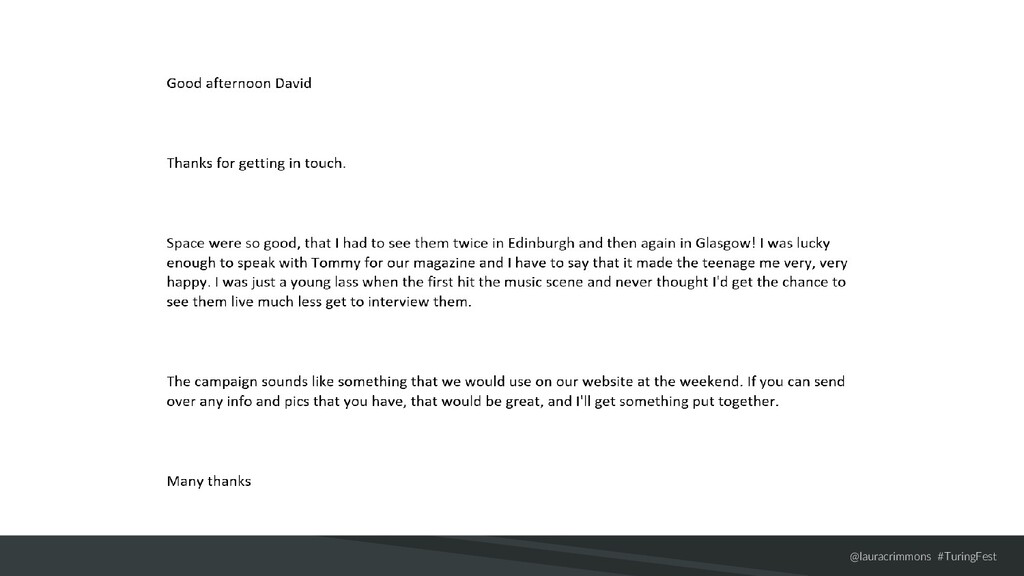
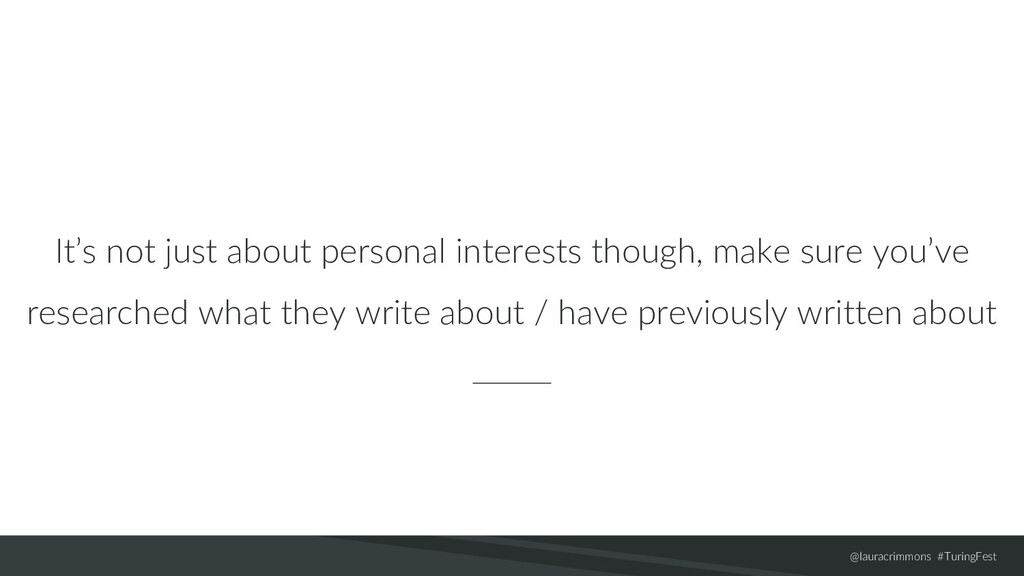
She's telling them all about how it was. She went to see them twice because they were so good. And yes, of course, I'll be putting your campaign up. That's great. We've got exactly what we want. It's not just about personal interest though. It's important to look at what they've written about before and what they currently write about.
So what column do they write about? It might be that you've got something that piques their personal interest, but if they don't write for that column, there's not really much point pitching it to them. So make sure you do a really good look at that.
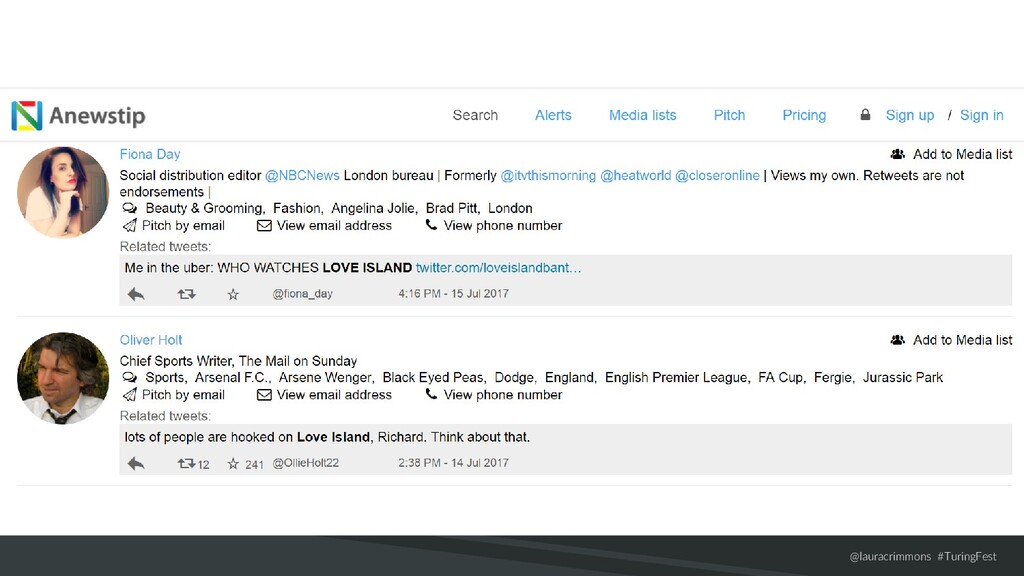
There's a great website that I use called a news tip. And this lets you look at different things that people are tweeting about and writing about. One thing I am not ashamed, I watched Love Island this year. It was great. I gave up all my evenings for it.
I don't know what to do now that it's over. If anyone's got great suggestions, please feel free to send them to me. But I was into Love Island. If I want to find people that write about Love Island, that tweet about Love Island, I can easily do it on this tool.
So you might have a bit of a cooler thing that you're into than Love Island. Have a look. Do your research. You'll find people that want to write about it. But this is the response after I go through all this that I often get from training attendees.
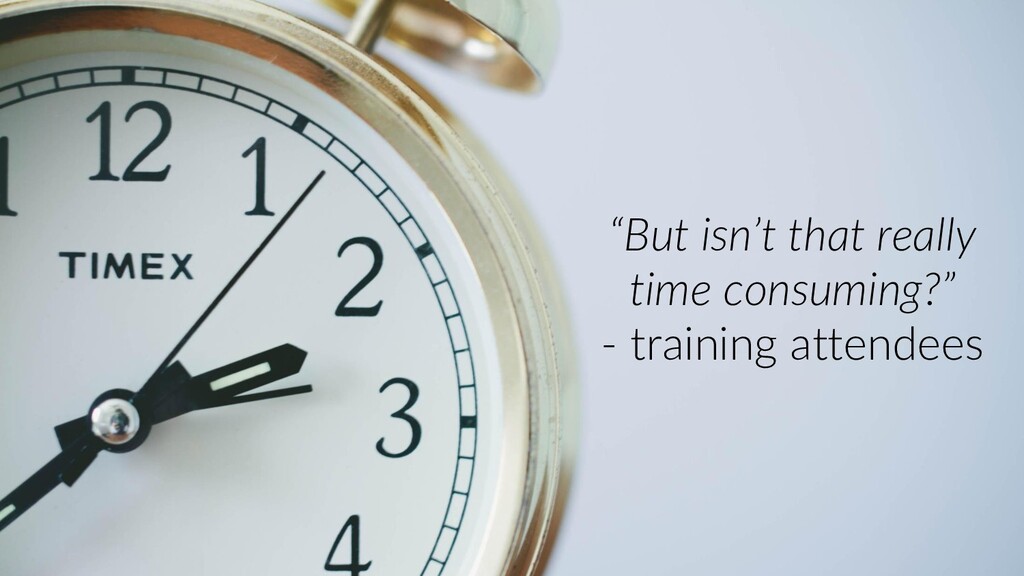
Isn't that really time consuming? Isn't it going to take me ages to research people and find out and then call them or email them and do this for everyone that I want to get a link from or that I want to work with?
Yeah. Yeah, it is. It does take a while. It takes longer than doing a mail merge. There's no point me lying about that. But what it does is it gives you people you can go back to time and time again. The value in that is much bigger than just being able to do a mail merge every time.
Because every time you're going to have to do that mail merge. You're going to have to find your list, send your mail merge, check whether people cover it. It's not a way to do PR. It doesn't work. Whereas when you've got a relationship, you can go back to that person.
Oh, we worked on that campaign before. We've now got this for you. Or we've got this great idea, which is what we do often. We've got this idea. Would you want to cover it if we went with it? What would you add? What would you take away?
And we actually get the feedback from the journalists before we're even at the stage where we want to get a link. They help us to make it a better campaign, a more link worthy campaign, a more shareable campaign because they know what they want better than we know what they want.
So this is the extra value and the time that you save in doing that research. Finally, connecting with your audience. Stop talking about page views and users. This is the biggest problem. People talk about how do we get links? How do we get people to view it?
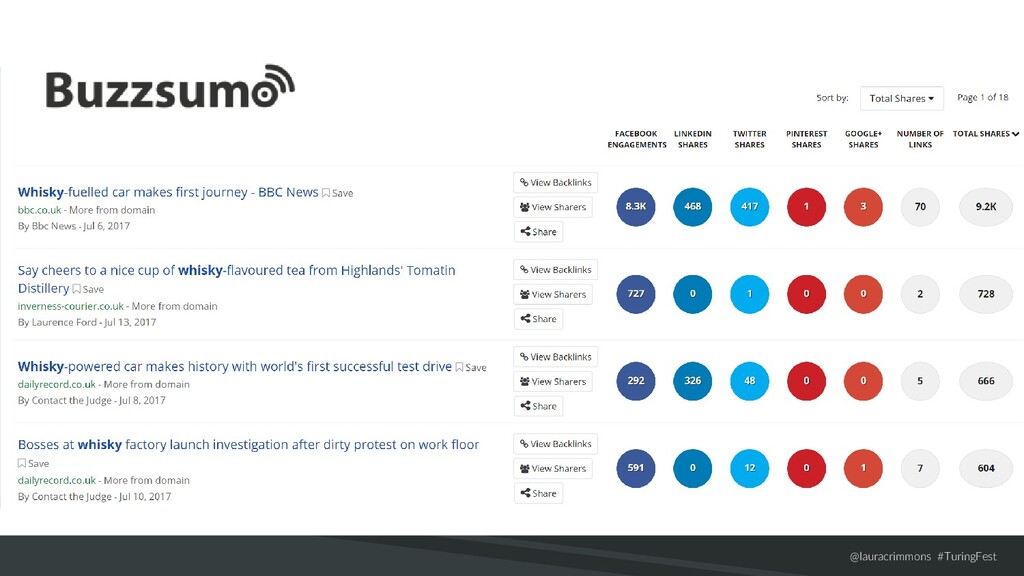
How do we get people to share it? They're all people that you want to do that action. You need to remember that and treat them as such. Some good tools to do that, so BuzzSumo, which is already mentioned, look at what kind of stuff they share.
So if I want to do something around whiskey, let's look at what kind of articles people share about whiskey. Let's look at what they're interested in. Make sure we're appealing to what they want to share. Oh, that was smooth. Is it still working? Excellent.
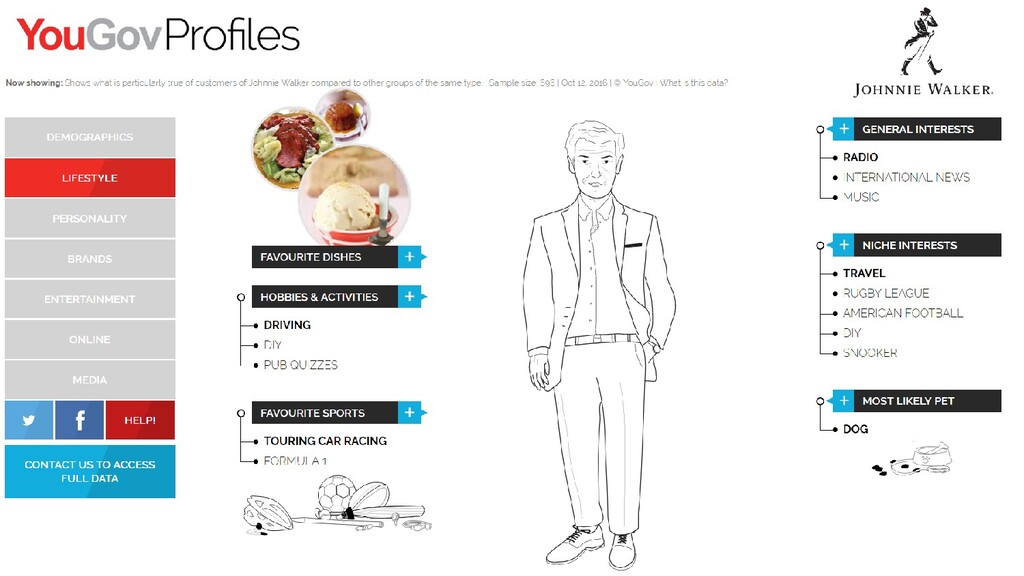
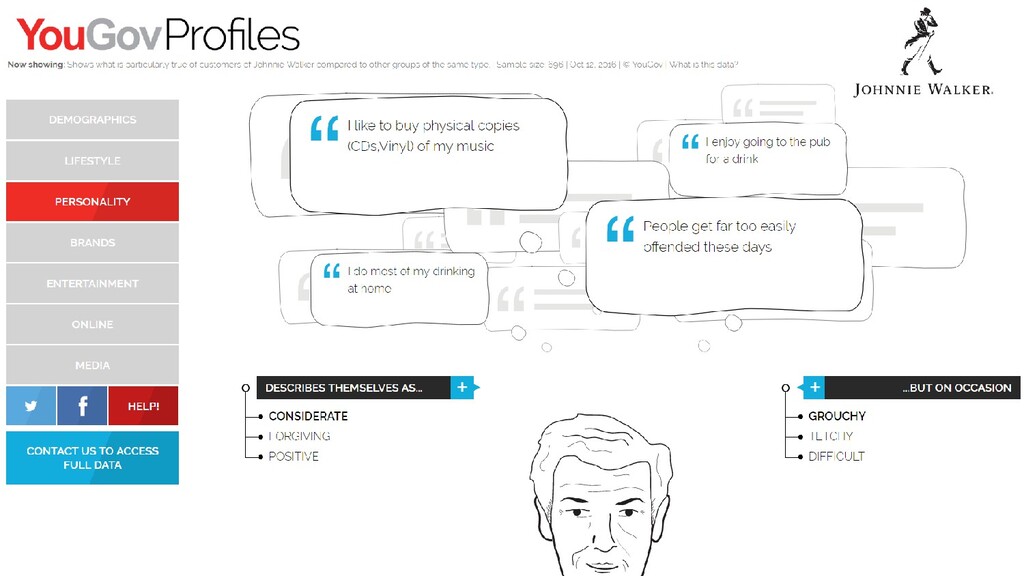
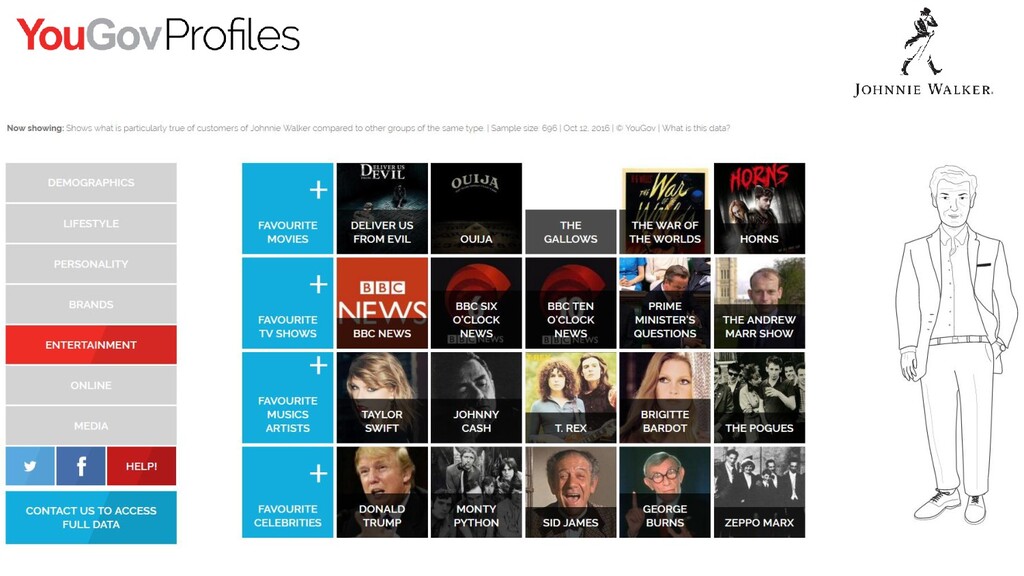
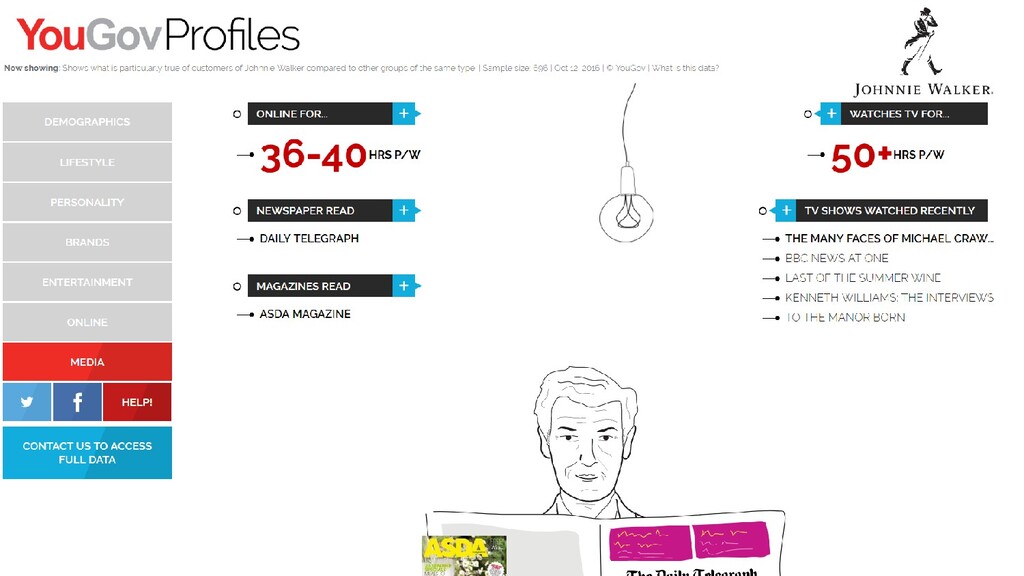
Another great tool, YouGov Profiler. This tells us all different things. So if I want to know about customers of Johnnie Walker, I can find out what kind of foods they're in, what kind of quotes they have. There's one of my favorite ones on here.
People get far too easily offended these days. They like a bit of good humor. They don't want someone to play it safe. I wanna know what TV they watch. I can find that out. I wanna know what they do online. I can find that out.
I can really understand who the people are, what their opinions are, what their likes are, and therefore tailor what I'm doing to them to make a connection. So to pull this all together quickly, this is a great book that I highly recommend to anyone.
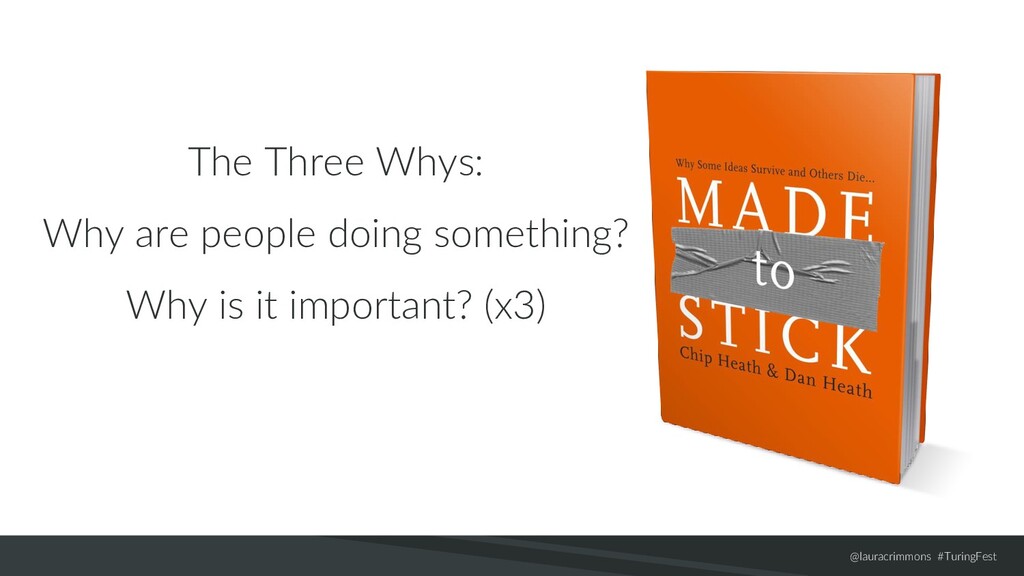
I've recommended it quite a few times now called Made to Stick. It tells you all about what makes people talk about campaigns, share things. The really important thing in here is they talk about the three whys. So why do people do something? Why is it important?
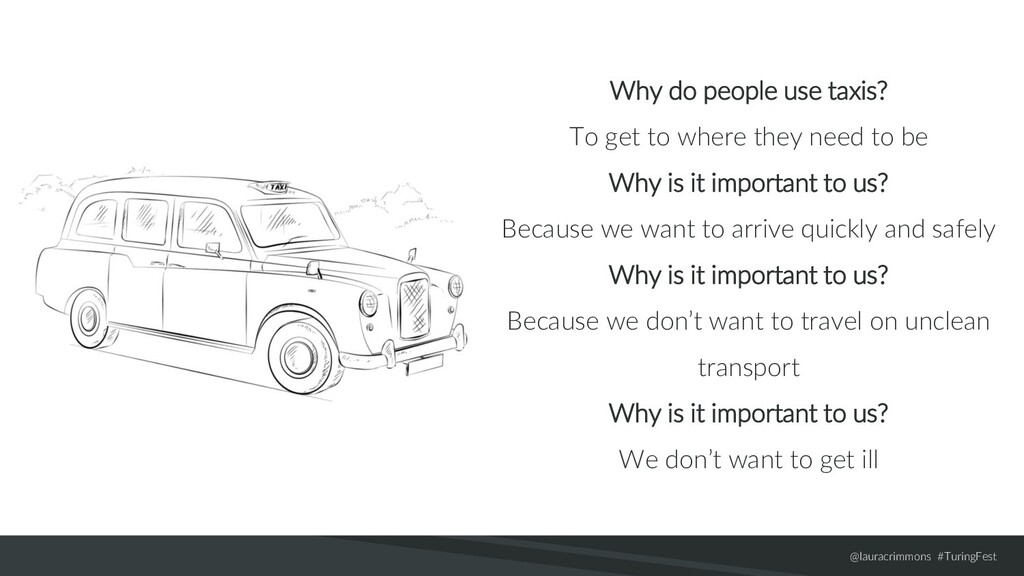
You ask that three times. Why is it important? Why is it important? Why is it important? And that's how you get to an emotional connection. So an example for a campaign that we work on. So we work with a company that insures taxis.
Why do people use taxis? They want to get to where they need to be. Why is that important? Well we want to arrive quickly and safely. You know we don't want anything to happen to us, but we need to get there on time.
Why is that important? Well we don't want to travel on something that's unclean. We want to get there, but we don't want to be ill when we get there. And yeah, why is that important? Because you don't want to get ill. So what do we do with that? That's an emotional connection.
People feel quite strongly about not wanting to be ill because it sucks to be ill. We did analysis of all the transport in London. So we swabbed all the tube lines, all the buses, all the taxis. We worked with a university on this to find out what bacteria is lurking on there.
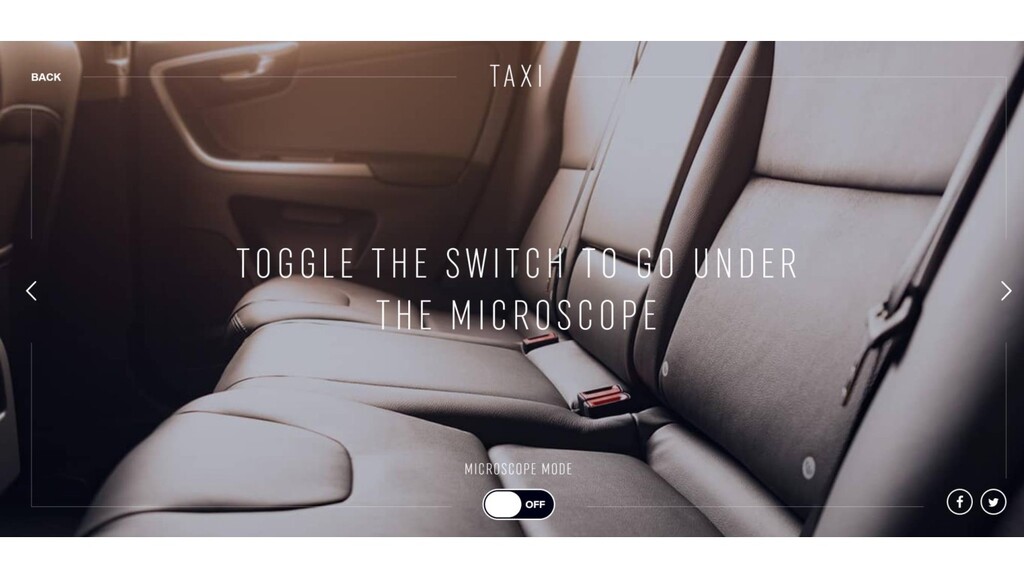
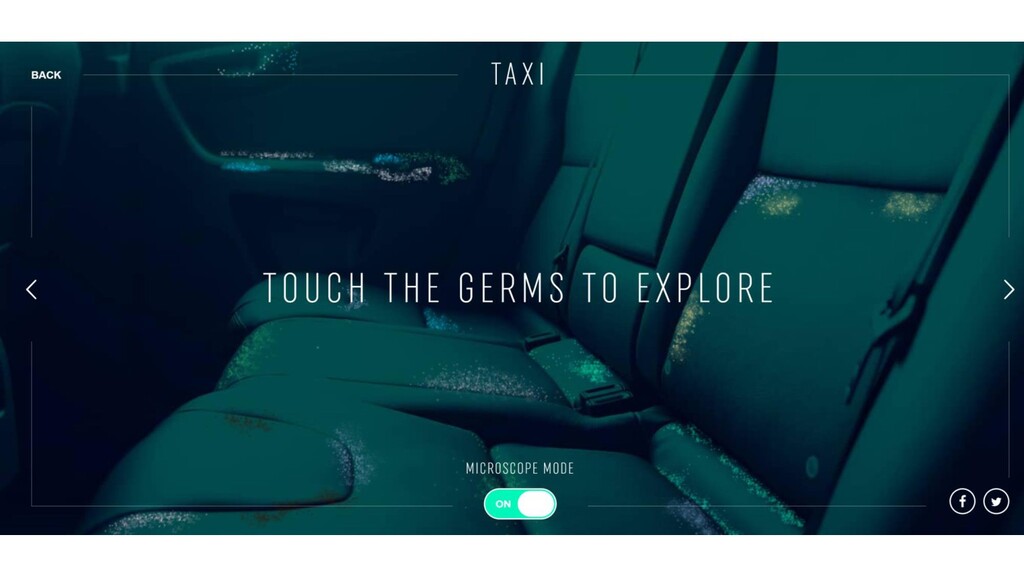
So to find out how likely are you to get ill from using these different modes of transport. We had this visual where you had a look at the taxi and then you turn the microscope on and it shows you where all the germs are lurking.
You hover over it. It tells you what kind of thing was found in the taxi. It's disgusting. It was our leads team that did this, not the London team. They didn't think about the fact that we then still had to travel on all of that transport.
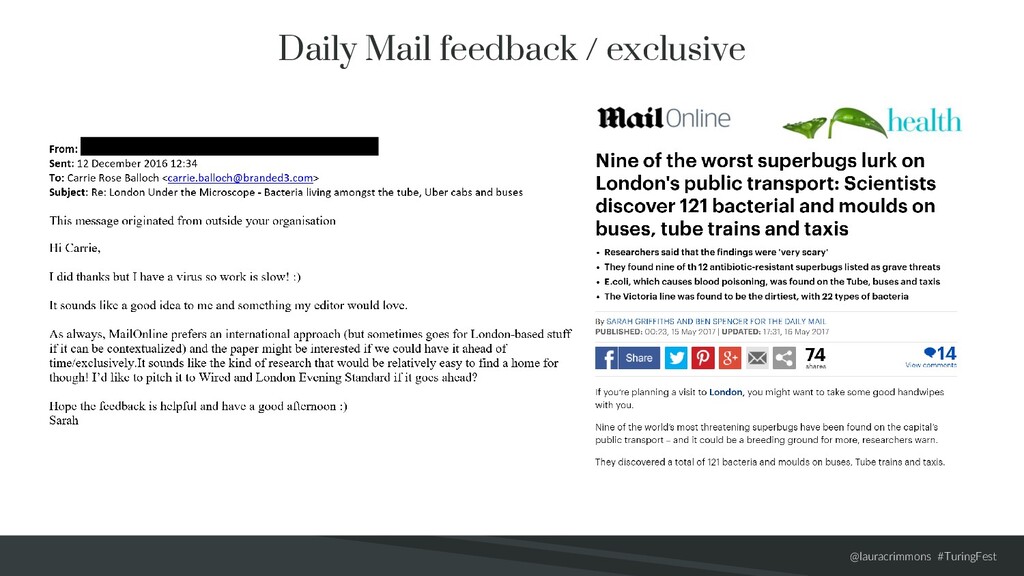
But how we put this into practice? So Carrie, the girl that worked on it, she'd previously worked on an automotive campaign before. And as I was saying on the time taking, she'd worked with this journalist before. She had a connection with her. So she got in touch to say, look, we're going be working on this campaign.
I've got an idea. What do you think to it? Sarah comes back. Sounds like a great idea. If you do this we definitely want to cover it. We want it as a she's a freelancer. So she talks about where she'd want to pitch it to.
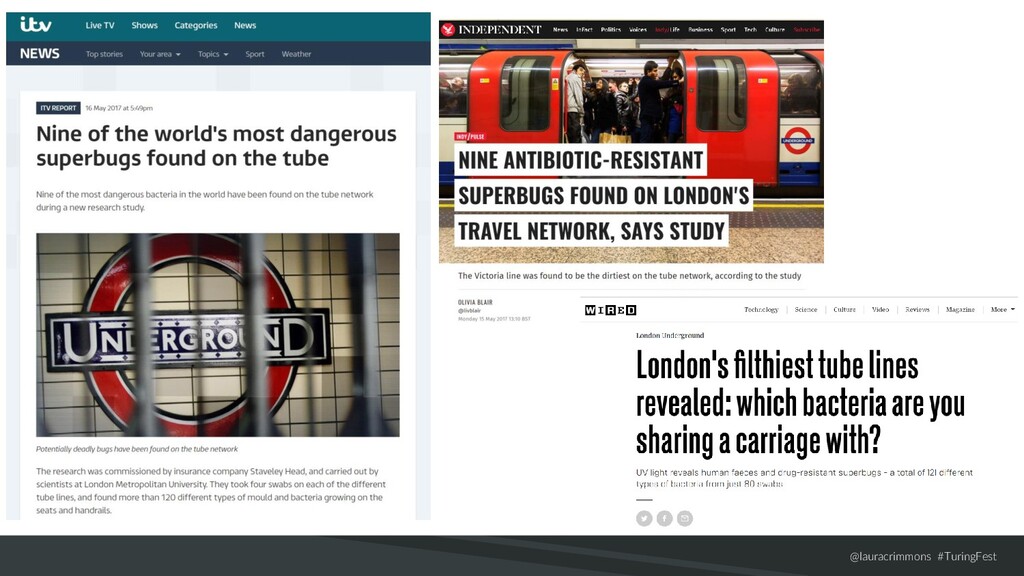
We'd worked with her on the Daily Mail. She also works on the standard and wired. So let us know if it goes ahead. It does. We get the exclusive. We get exactly what we want. We know if it goes on the mail online we'll get a ton of hits.
Loads more places will pick it up. And they did. So we connected with more journalists. So we personalised what we were doing to what mattered to the journalists. So if we knew where the journalist was based, especially with regionals, we generally knew what tube line they might be coming on.
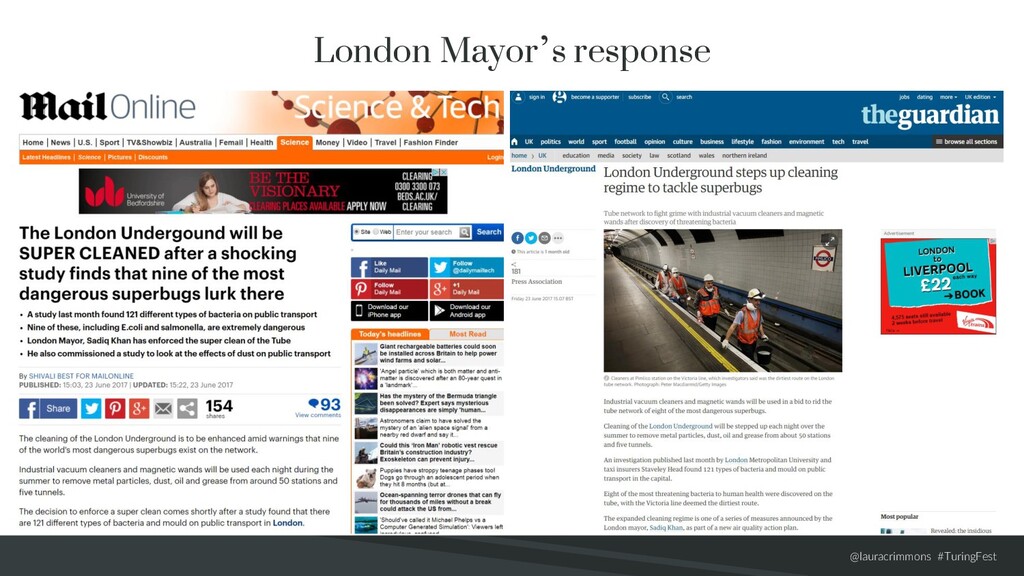
So we could say this is what's lurking on your tube line. We made a connection. It wasn't necessarily a positive one. It didn't make them feel all warm inside, but it piqued their interest. They wanted to cover it. It connected so much that the London mayor then announced a super clean of all the tube lines because we found all these superbugs lurking on there that had killed people in America.
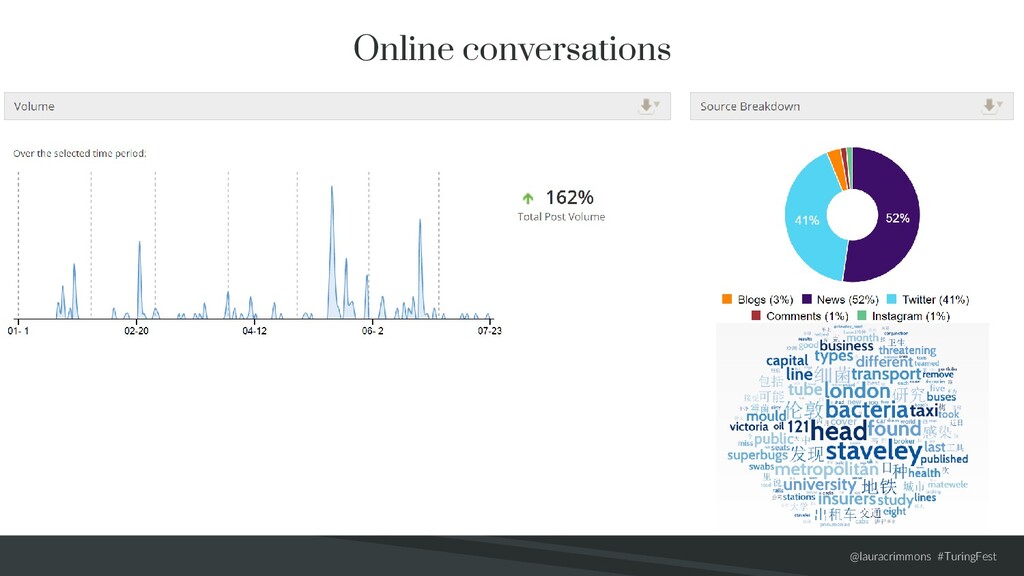
There was a superbug that they found that had actually killed people. That's how well it connected because we'd done our research. We knew what people cared about. People talked about it. We got the online conversations. All of this is great, but did it do what we wanted to do?
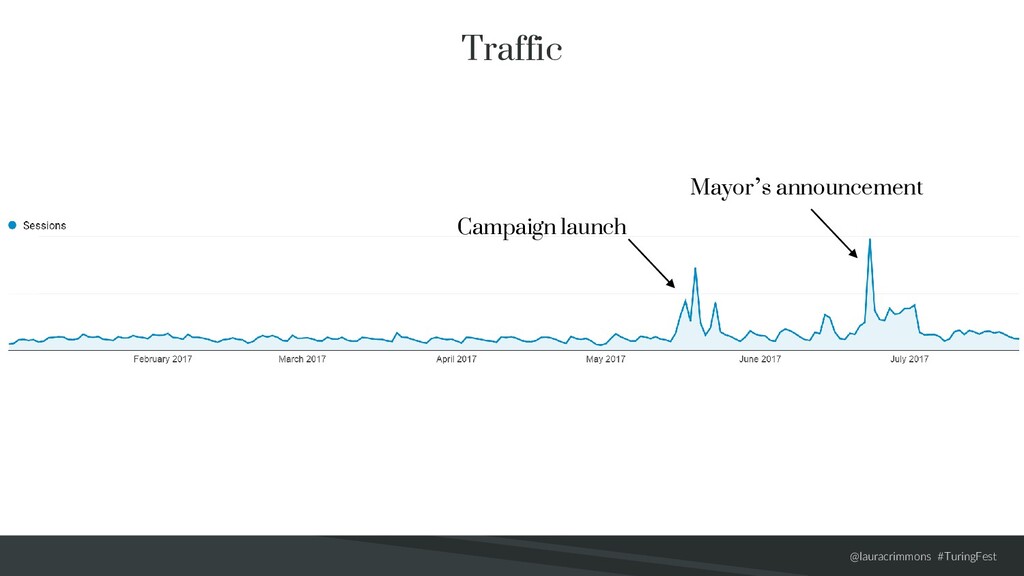
It was an SEO campaign. We got lots of traffic. The traffic spiked so it spiked even more with the Mayor's announcement than it did with the campaign launch. But we got people to the site. We got those page views. We got those clicks. We got the users that we wanted.
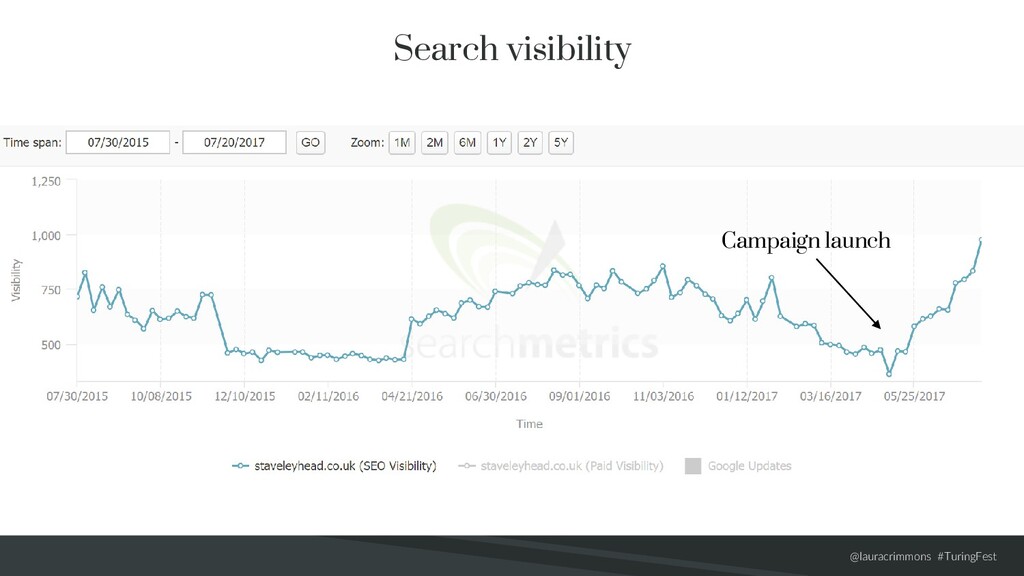
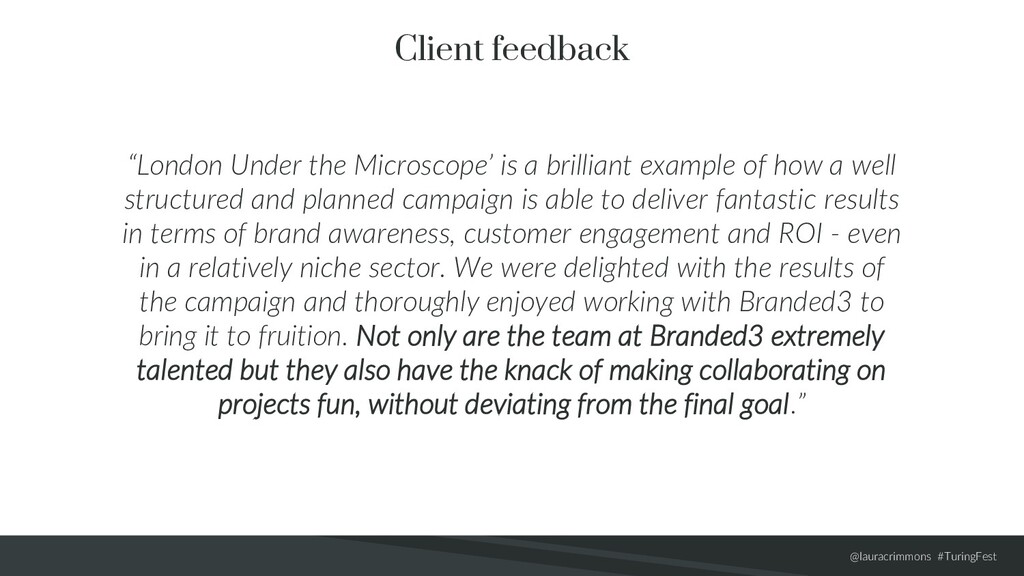
And it worked in terms of search. They've been hit by a penalty previously. We launched the campaign, they went back up. It resonated in the ways that we wanted it to do. Did it work from a client's perspective? Yes. You can see the feedback here.
I've highlighted the last line because I think this is the most important. It talks about the fact the team that worked on it made it fun. They connected with the client. They had a fun time doing the campaign and it hit the results which they were obviously going to be happy about.
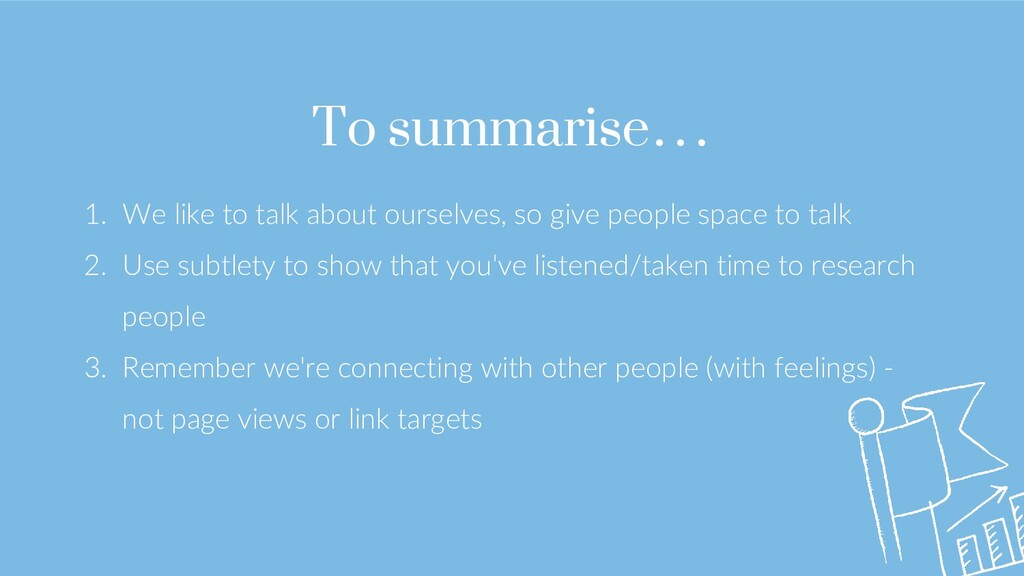
So finally to summarize, we like to talk about ourselves. So if there's three things you take away from this. Let people talk about themselves. Show people that you've listened or researched them beforehand so that you have a connection with them. And remember that you're connecting with people.
Stop thinking about how I get this team to work with me. How I get this service area. How I get clicks. How I get links. It's about people. Remember that they're people and you'll do much better. Thank you.