
Acquisition of new customers is what we all live for. Blogs, ebooks, webinars, podcasts, videos etc. and marketing automation all make part of a beautiful acquisition process to feed the revenue monster. However, all too often the golden nuggets lie in customers already acquired who are many times left to fend for themselves. Demand generation tactics activities must be applied past the acquisition funnel. The interaction between Customer Success and Customer Marketing teams is paramount where working in tandem will secure faster revenue and customers for life.
← All talks 

Grow Growth Turing Fest 2019
Demand Generation Doesn’t Die at Customer Acquisition
Auto-generated transcript - may contain errors. Tap a timestamp to jump the video.
Hello, everybody. So my name is Cassie Barrios. I am I'm based in Oslo, Norway. But I am American, but I do live in Norway. I've been living in Norway for about seventeen years. Great country to live in. Thank you first to Turing Fest for inviting me to this fantastic conference and thanks to Brian as well.
So I'm going to talk about a topic that I find extremely interesting. It's really important to me. I hold it dear. And it's basically that a lot of times we forget about our customers. Right? We sell and then we move on. Yeah. And this is going to apply to all companies and some companies here you may be have just starting out maybe two or three people.
You may be in a different phase. But really focusing on the customer post close one is something that we should think about from the very beginning. So we can always be good at acquiring customers. But if we forget about retaining and growing them, you know, we might as well go home.
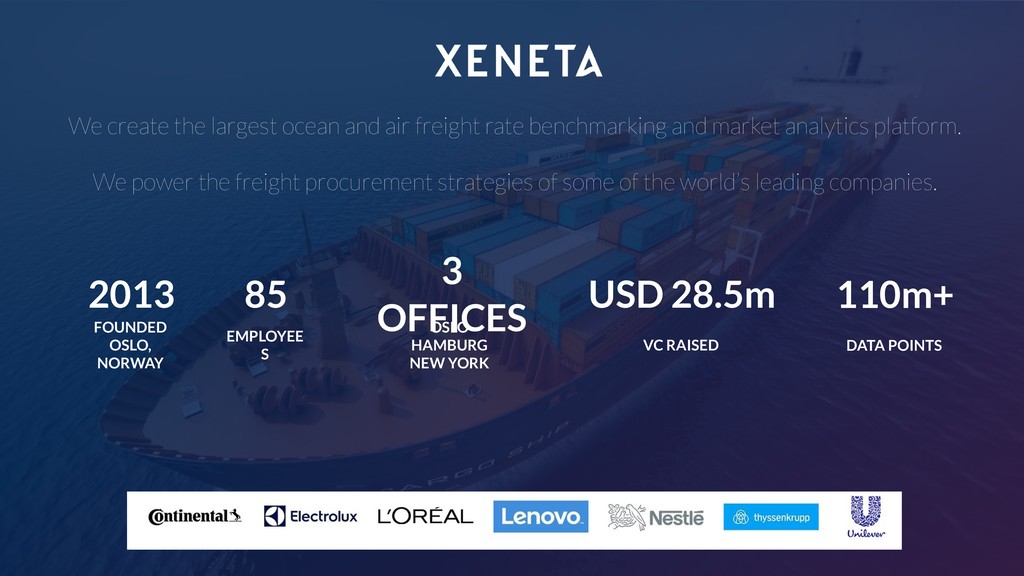
I'll give you a little bit of an introduction of what Sonata is, then I'll set that in stage. And I'm going use Sonata as a use case of the journey that we've been through. So we're a shipping and logistics company. Just quickly, we create a platform that collects freight rates from cargo owners, shippers.
So basically, if you want to know what are what it costs to send a box from a to b, let's say from Shanghai to Hamburg, we collect all those freight rates and we present an index back to to the buyer. Our founders found there was a challenge that if you wanted to procure freight, no one really knew how much it cost to send a cargo box from a to b.
And if anyone is familiar with the logistics industry or shipping, it's a very dated old school industry. Technology is it's only now starting to really pick up. So it it was you know, faxes, phone calls, and nobody knew really what it cost to send a box.
And so we created this platform, Crowdsource Freight Rate, and boom. There you have this beautiful UI, data as a service with a great UI, and you really know what is the going rate. You can market benchmark yourself against that, and it brings a bunch of other analytics.
And we're really fighting against the industry norm. It's a key thing to say. We are not only selling a product, but we are educating the market, the shipping market on a new way to procure freight. It's a double challenge for us. Quick stats on where we are now.
We're eighty five employees. Started in twenty thirteen. Twenty eight and a half of EC Capital. With our data points is our currency, the freight rates that we collect. We have a hundred and ten million plus data points and we add about six to nine million a month.
So data is our currency and it hasn't gone too bad. We have pretty good customers on our roster. But it doesn't mean that we didn't **** things up along the way. And that's what I actually want to talk to you guys about. And again we've you can acquire great customers but do we know how to keep them?
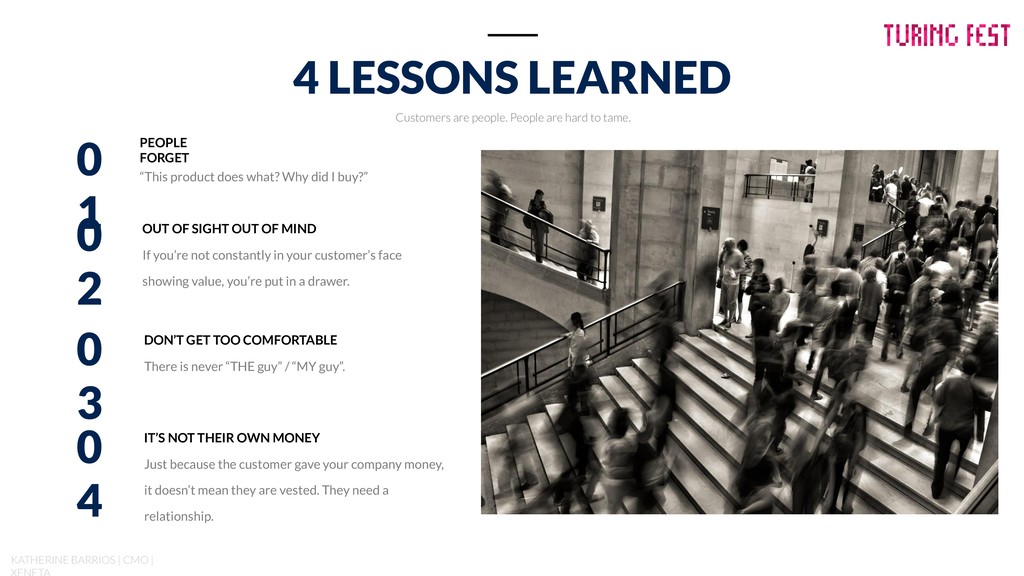
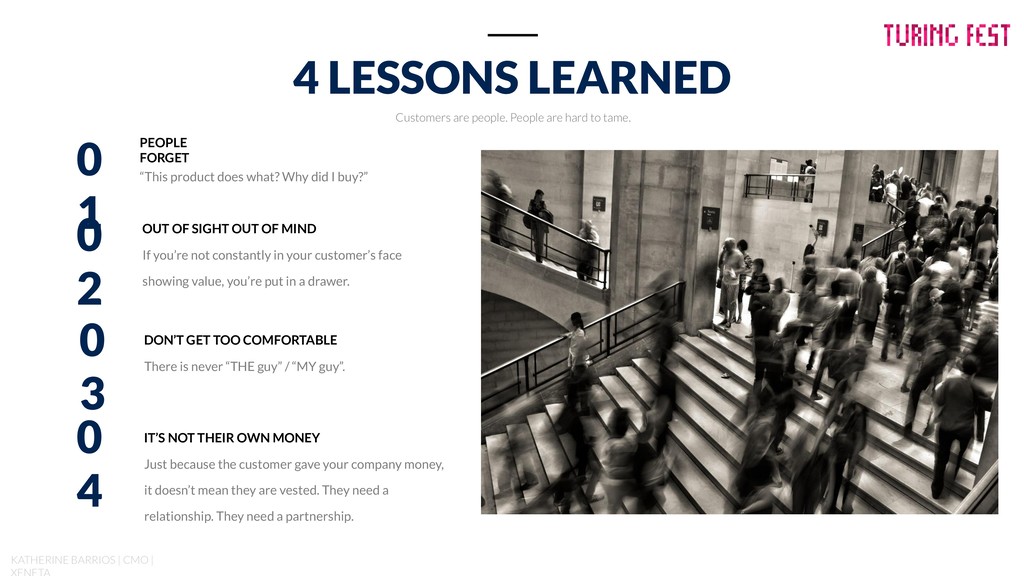
So I'm gonna start off with four lessons learned that I wanna share, and I'll go into a bit more detail after that. First, a lot of times we forgot that customers are people. Right? And people need to be tamed and nurtured. And I'm going to go through these.
Customers are people. People forget. They forget why they buy things sometimes. Right? They forget, like, what did I buy? You may have had a fantastic sales process. Right? And your sales guys are high fiving themselves because they closed the deal and they hand it off.
Then, you know, the customers could be like, oh, I just bought something. I'm not really sure what I bought. Right? They may not be as committed to that sales process as we thought they were. Right? Out of sight, out of mind. If we're not continuously engaging our customers, they're gonna forget.
Right? Don't get too comfortable. I love this one. I tell us there are top of the funnel teams or SDR teams. They say like, well I talked to my guy, the guy. I've I've been talking to him, it's gonna be good. He's my guy.
Like, okay you got one guy? That's it. He's got one guy. Did you know that you know get hit by the bus scenario? That can if you got that one guy, he's not going to always be there. Right? This is going to translate then to post close one.
You got that one guy, you're going close a deal with that guy, he's going to go the whole journey with you and then he's going to be that one that's going to be the one guy that you're gonna try to renew and retain.
What happens if he leaves? What happens if business strategy changes? What happens if he gets a new boss? Right? And it's not their own money. And I think that one is also important. Ultimately you want to have employees that that feel that the money that you know that the company's money is their money, but it doesn't really happen that way.
Right? You want to have employees that are so committed like that that feel that that founder feeling that what they spend is also theirs. But not everybody feels that way. Right? So you have to make yourself important and offer value and continuously build a relationship with customers post close one.
And I'll give it as an anecdote where we were as all startups are you sort of chase shiny pennies as I call it. Right? You just you're happy that someone bought your product. It's like it's such a big win. Right? And everybody's happy.
Sales guys are happy. You're just, oh, whoever gives us money, it doesn't matter if their ideal customer profile doesn't matter, but we got money. Whoo. Then we'd sort of forget to build that relationship and continue that. So we'll talk a little bit about just the customer journey.
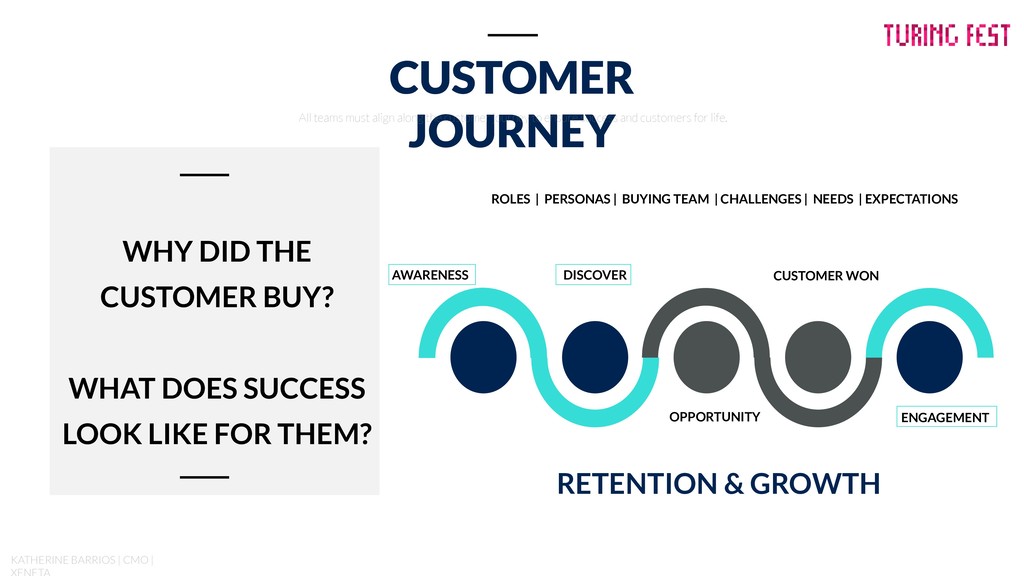
This is something I I say it so many times. I'm probably driving my teams crazy. The customer journey. The customer journey. But it is so important. It actually means something. Of how do you align the teams along the customer journey? First, to feel ownership and accountability, not just for what the top of the funnel team does, for example, your product marketing teams, your your demand gen teams, your SDRs, and then your AEs, and then your customer success teams.
All of these teams have a linkage. Right? Ultimately what we want to do is find out why did our customer buy and what does success look like for them. And this starts at the awareness stage with what we put out on your web page.
What what keywords do you use on an SEO campaign? What do you test when you run conversion rate optimization campaigns? And all of this starts there. Your SDRs collect this information and learn about the customer and firmographics, and you put that into your CRM, and it's handed in throughout this journey.
Post then it comes to post close one. You close the deal, woo hoo, everybody celebrates and you have your hand off to your customer success team. Right? They have to align and know what caused this company to want to buy from us. And then first you got to figure out who you're selling to, who are these people, who are the roles, who are the cast of characters that make up this deal.
Because the same cast of characters, and it's not going to be the one guy. Right? You're going have to have more people here because there's different people in organizations and particularly if you're selling to enterprises, we are now. You you have many people that make are part of a decision.
Right? You're going to have a user, decision maker, an influencer. You're going to probably have finance people. It depends right how large your organization is. In our case how complex the supply chain is that that's within our industry. So this cast of characters you need to know who they are because ultimately they're going to become very important at the engagement phase.
So the awareness and discovery phase I just want to highlight. It worked. So awareness, discovery, and engagement. There's a linkage there. We can use the same information that you've collected as the bottom of the funnel. And ultimately what we want to do is retain with all this information that we've gathered because we can be more personalized and offer information that is relevant to them.
And not only retain, offer value because then we can grow the customer. Okay. So I'll I'll tell you why there's such a link between these two and and I think the ultimate thing is that even though the customer has bought from us, we still need to continue selling to them.
It doesn't end there. Right? Depending on how your platform or tool or or your software or product is set up, you're gonna have upsell opportunities. If you sell per seat or per by in our case you know by data or whatever you you still want to do the upsell.
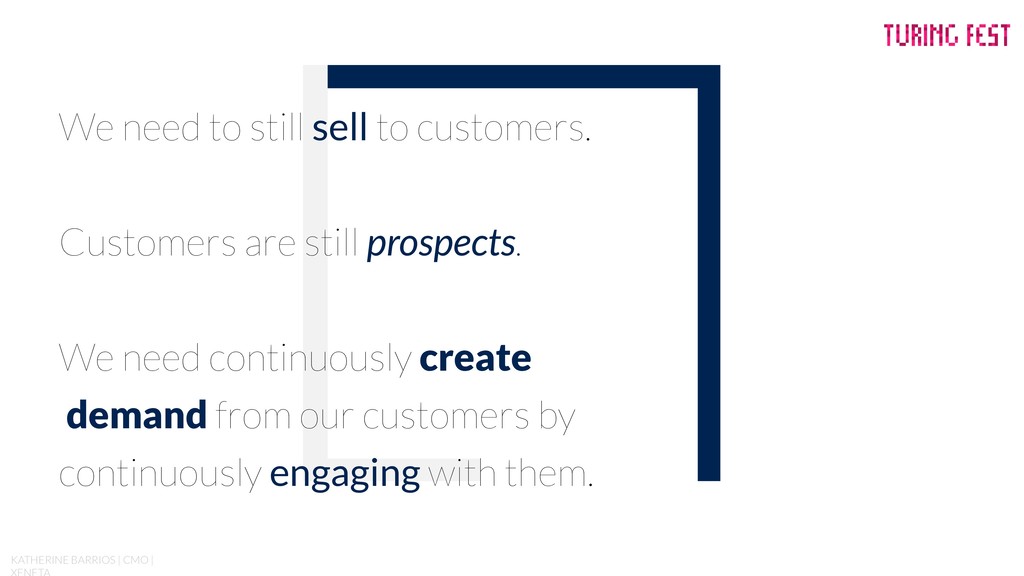
Right? Because you ultimately want to increase that ticket size. You may have other products so you're going want to do cross sell. No matter what you still need to sell to them and for them to be more apt to receive your message, you need to continuously engage with them because they're still even though their customers are actually still prospects just like they would be at the top of the funnel.
So the demand, we have to create the demand still post close one. In some cases it is actually only the beginning. And not only do we want to I always say like churn is such a reactive metric. Right? We want to be as proactive, which means that you want to make demand happen.
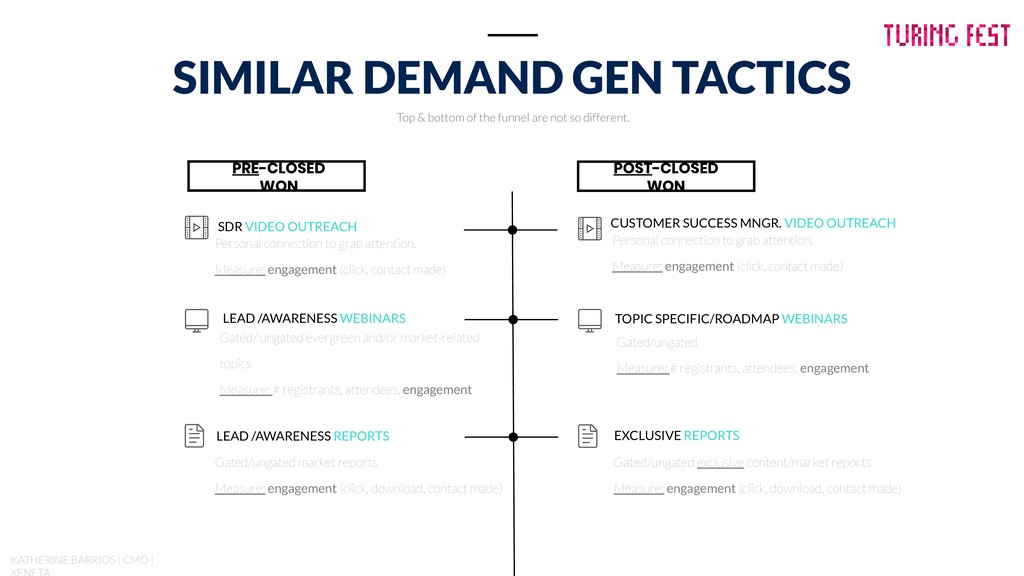
How do you cause demand from your customers? And this is how do you keep them engaged? How do you keep them engaged so that they're still with you? And essentially, the top and the bottom of the funnel are not so different. I'm just going go through some examples that I'm you'll see here some similar demand gen tactics that we've been using on the demand gen team, which is the we would have the marketing sales development reps.
And then also our customer success team, which is the post sales team. Oh, I I realize that it's not like really aligned. I'm sorry for that. I must have been doing it with one eye. Pre close one and post close one. Here's one of my favorites.
Video outreach. Actually using video to talk to our customers. Most of you probably have customers outside of the UK, you have customers globally. And you know the world is digital and we all sell outside of our borders. You can't always go and meet face to face with every single customer.
However, you do want to have a personalized touch. Right? We've had a challenge with our SDR team where the response rate wasn't that high. It's like well, you know, which we've tried different types of content and it was improving, but ultimately it was how do we put a personal face to this?
So we had them use video outreach. So instead of just an email, they would record themselves, and there's lots of providers that allow you to do this, and they sent a video message. They fought me hard to do this because nobody likes seeing themselves recorded.
Right? But just try it. Instead of just writing out an email and saying, hi, you know, my name is my name is Kim and we're Suneeta and we do x y z. You currently have this challenge. You actually talk that. You you say that and record that in the video and you send it out as your outreach message.
We tried the same thing and the success rate of the engagement was so much better. Just because they felt that it was actually a person and it wasn't like this robotic automated mail that went out. And it also maybe provides a bit of a guilt trip because if you see a face, you're like, oh, I have to reply to it.
Post close one, we did the same thing on the customer success side. Some customers, you know, as they all do, they go dark a little bit. They're like, they read your mail, but they like don't reply. Right? And some have ways of, oh, I will only view it, but I won't click it because they're probably tracking me.
Right? So they they know not as well. So listen, you're not getting a reply. This customer actually has paid. So let's try the video outreach there too. Let's put a face to you because we're not going to send all our customer success managers to every single customer.
We send them to, you know, the VIPs or the big value ones, but we still want to engage. Right? Say, hey, you know what? John is actually a real person. John is your customer success manager. This is what I look like, and I'm going to deliver that message in a video.
And people are taken aback like, oh, yeah. Again, it's that guilty feeling like, he's taken a time to send me a message. And what we want and what we want to measure is basically engagement. Right? And here you can you can you can measure clicking, click rates, and basically contact made.
Potentially what you've said in that message has caused them to go back into the platform in our case and check out what the market rates were from yesterday shipping Shanghai to Hamburg on a forty foot container and what was what's the market average for that.
Potentially what you know Kim said in her message has brought that customer into the platform and there we have then a sign of engagement. Another one, webinars. Most people do webinars at the top of the funnel for demand or lead generation. I'm a strong believer in webinars.
I've used that in many, many other companies, but particularly at Suneta. Because our with the challenge that we're trying to solve is so complex, webinars was definitely a way for us to explain what we're what the market is like and what we're trying to solve.
So we thought, webinars, it doesn't have to just be for prospects or for leads. Customers also can benefit from having their own webinars, you know, more exclusive webinars, more in-depth webinars, digging deeper into certain topics that we know about. Because if we've collected all this information at the top of the funnel, at the awareness stage, at discovery stage to know what was the reason that they bought and what is what does success look like for them, we can gear the webinars towards that.
And that is really a big connection between all the teams and in that customer journey. And there again engagement. Are they listening to it? Did they register? Are they listening to it? How long do they listen for? Were questions asked? That gives our CS team and our customer marketing team an indication of how engaged this customer is.
How likely then do we believe that we can close that renewal down, potentially extend to a multi year contract, potentially measure if they're interested in an upsell or cross sell of a different product. It's the same tactic. We don't sometimes we gate. We have been un gating our webinars now.
And I can definitely recommend that, you know, because there's other ways to track basically engagement. Another one, reports. Basic reports. Again, since we have market rates of how the shipping industry is moving in on global trade, we create a variety of reports at the top of the funnel, a lot for thought leadership to position ourselves as as the the thought leaders within within the shipping industry and particularly now during the trade wars and Brexit.
A lot is happening with import export. Right? And we can see a lot of trends in our analytics of how basic shipping is going. And all this socio geopolitical situations affect trade consistently. We push out that information also as demand and lead gen for us.
But we also can do the same even more in-depth for our customers and the slight changes of just releasing it the day before. It makes them feel special. Right? We actually have one going out tomorrow, publicly tomorrow, they'll release the customers today. And that just makes them feel special and you can track the engagement.
That creates a lot of questions for them. So what we see there is that then they then reach out to our customer success managers and say, hey, What you guys wrote about on the transpacific route, which is usually Shanghai or any sort of Asia to West Coast North America, on how those rates are moving.
I'm wondering because I'm I'm going into my tendering cycle right now and usually European companies or European headquarter companies would usually tender at this point in time entering into the second half or in the middle of the second half. So they'll come back and ask questions.
But they did that because they read the report and then we got them to engage. And that's what we wanted. We wanted a reaction. We wanted to engage. It's the same tactic, same report, top of the funnel, same as the bottom. What's different is when we triggered it the day before.
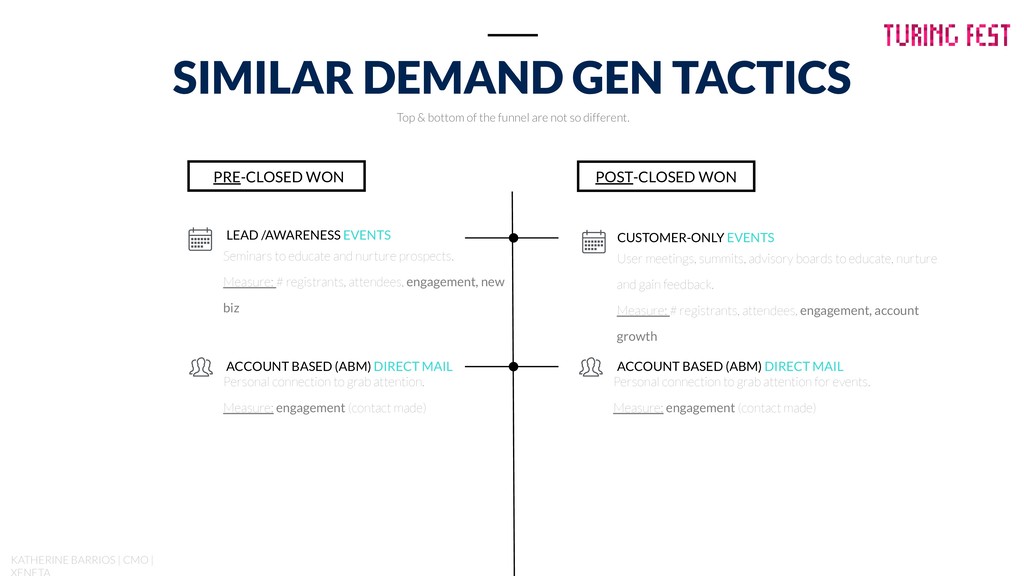
Events. I'm not a huge fan of like trade shows. And yeah, I don't know if we see the return on those. And some are good and some are bad. We really limit the ones that we go to. We do like to do our own seminars, which is also events at top of the funnel.
So we do those for more warmer opportunities. So we may have a special meeting in a hotel room for warm opportunities, and we'll have a couple sessions on certain topics. How do we measure that? Registrations, engagement, new business coming from it. At the same time, we run events, customer only events.
Right? We have our summit. It's a yearly summit. It's coming up in October in Copenhagen. And that's a big deal event for us where we invite customers only. It's a two day event. And that to us shows commitment. People are coming to these events, shows commitment.
It's engagement. And and having that arena to allow them to network with other customers is extremely important. But it's the same thing. Right? You rent out a place, you invite people, you have sessions. It's essentially the same tactic. And the last one is the ABM.
It's such a buzzword. But it is what it is. So this named account strategy. We've moved into having a list of named accounts and doing more tactical, personalized approaches on the top of the funnel. And this has been fun. It's been fun to test as well, to see what triggers people.
So one of the things that we do is we have sent them actual direct email. Not email. See it says direct mail, which you usually don't get in the post anymore. Right? But we have been sending them gifts, inviting them to a seminar, which they do receive personalized to them.
And these would be our big dog accounts where we have had potentially a hard time getting all of that buying team in and getting a meeting in. Also do digitally, we do ABM focus where we have our web pages. Our we can track what company people are on depending on their IP.
So we're then presenting a message that only resonates to that particular industry or potentially to that particular customer. So everything is very narrowed down, personalized with mail or ads or dynamic smart contact web pages. At the same time on the customer side, we still need to do the same, particularly for our summit.
Right? So I mentioned the summit. It's important. Just because we're holding a summit doesn't mean everybody wants to come like I wish. Right? So you still gotta sell it. You still gotta sell it. Our CS teams still gotta sell it. Our AE team still gotta sell it. Right?
So it's still the it hasn't ended. So we still have to create demand for our summit on how we position the tracks, the sessions, the speakers, what they'll get out of it. So we also sent gifts to the VIP customers that we really wanted to be at the summit, inviting them to make sure that we locked those companies down, that they were coming to the summit.
And particularly those the the big dog accounts, you know, make a difference. And and the type of companies that I'm talking about is you see them, you know, Unilever, Lenovo, Electrolux, you know, they're big volume shippers. They they take the biggest portion of global trade.
They're important for us. How they're procuring freight, how they're using our platform, what strategies they're using to procure freight is so important for them to be able to share that to our other customers. Right? So the social selling. So we want them there.
Same tactic. A gift. Top of the funnel, bottom of the funnel. Those were the only ones I had here. I have plenty more. So if you want to learn or ask me questions, you know, think there's a Q and A session after. But these ones I feel are extremely, extremely, extremely important and they make a lot of sense.
And I get a lot of times in the past the CS team and the SDR team and the marketing team feel like, we don't really get like what does that have to do with us? And you know, it's very siloed in their own way of doing things.
And I just want to stress again, I'm gonna go back and back and back here, back to this customer journey, right, of how the teams align. And I said, you know what? This has to do everything with you Because what you learn, what your colleague learns at the bottom of the funnel, whether that message resonated that he sent to that customer or whatever message they told you when you're running potentially a business review, We can use that to craft a better targeted message at the top of the funnel.
All of this matters. All of it. And that's a it takes time to change, teach what do they call it? An old dog new tricks? Is that how you call it? Yeah. It takes time to do that. But ultimately, I gotta say, it's it's been a struggle, we're moving in the right direction.
And and you can see that then. And how we see that is in the numbers when we look at the retention of how currently things are going, but as well as how we're growing our base. And we had a challenge with we did have a challenge with retention just because we forgot about the customer.
We really just didn't run these programs and we didn't engage them because we were just all focused on customer acquisition. Right? High fiving because we closed one. And then that was it. But I want to just bring this back. I can't stress this enough and it's so simple.
There was Martin, one of our CS managers. He said, I guess we got to bring it down to basics. It's basically just you know, talking to people and not being afraid and building relationship. Isn't that basic, right? It's like people, we want to build relationships with each other and talk to each other.
That's what our customers want. I think a lot of times we think that if we bombard people with so much information that they're going to be afraid. But sometimes you actually have to do that to continuously engage. Because at this day and age when you have so many different channels to receive information, Right?
Email, phone calls, social media, but the customer can turn it off. They are in control of that journey. They are totally in control. So we need to push harder harder harder at different times because we don't know what state of mind they're going to be at at a certain stage.
Someone can be reading an email, you know, at seven thirty in the morning and someone can read that email on Sunday at ten a. M. And they could see something at different times because the buying journey and that customer journey it is not linear.
Right? It's all over the place. So we got to keep pushing because ultimately people are people. They're going to forget. Out of sight out of mind. Don't get too comfortable. And it's not their own money. So we have to keep bombarding with information where it makes sense.
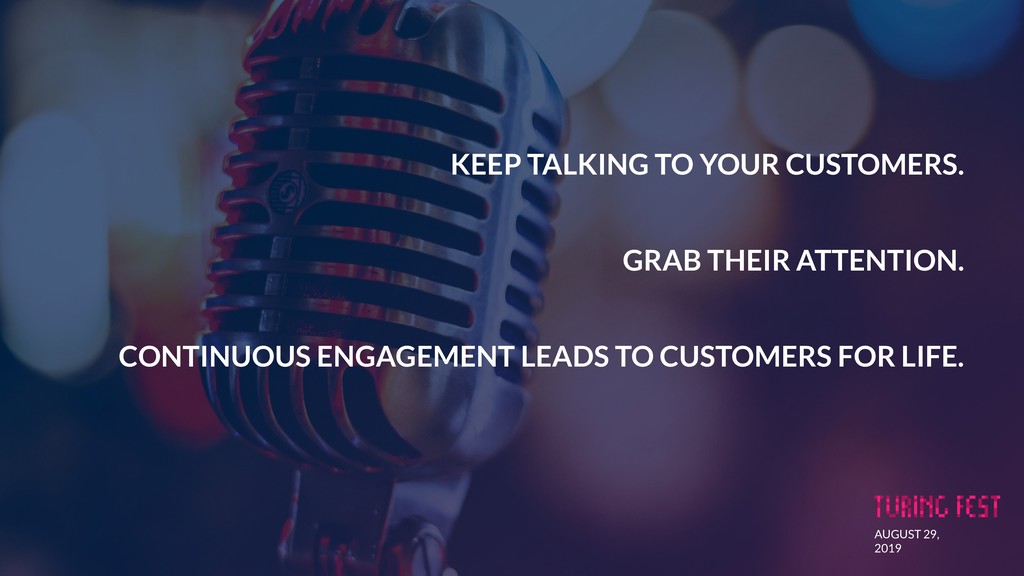
My words of wisdom for the day. Keep talking to your customers. Grab their attention. It's definitely important. Continuously engage. It is not only for top of the funnel. These same programs what's beauty is that you can replicate a lot. You can repurpose that content.
It's not it's not so much to do. You know, you may think like, oh, I gotta do so much. I don't have enough people. Take a step back and take a deep breath. You can probably take the same thing and just apply it to your customers, just perhaps in a different cadence.
But it's definitely possible. Thank you.