What makes one product succeed where another fails? Could be the design or how analytics are captured and dissected. Could be the technology or features. I say it’s the people behind all of these things. The way they think, communicate and relate. How they make decisions and show-up. Products are built for people by people. Yet when we hire new product people at any we often focus on the industries they’ve worked in, their mastery of certain technologies, or even their years of experience.
This talk explores:
the radical shift we need to make in what we focus on when growing our product teams and organisations - looking beyond mastery of traditional tools and techniques to emotional intelligence and attributes like adaptability, resilience, collaboration, leadership and the ability to learn.
how to make this change, including techniques to add to your hiring toolbox. Once you’ve onboarded, how to ensure your organisation is set up to retain high-performing product people
1 / 39 Use ← → to navigate
Auto-generated transcript - may contain errors.
Tap a timestamp to jump the video.
Hello. How's everybody? I always like coming to events like these because no matter what workshop you're attending or what talks you're going to and listening to or what chats you're having out in the hall or the marketplace, we're all helping to contribute to our understanding of what is product management.
What is it? How do we do it? How do we do it better? How do we even become a success at it? And when I was thinking about what I wanted my contribution to the topic to be today, I started, like, really big, really vague, and slightly philosophical.
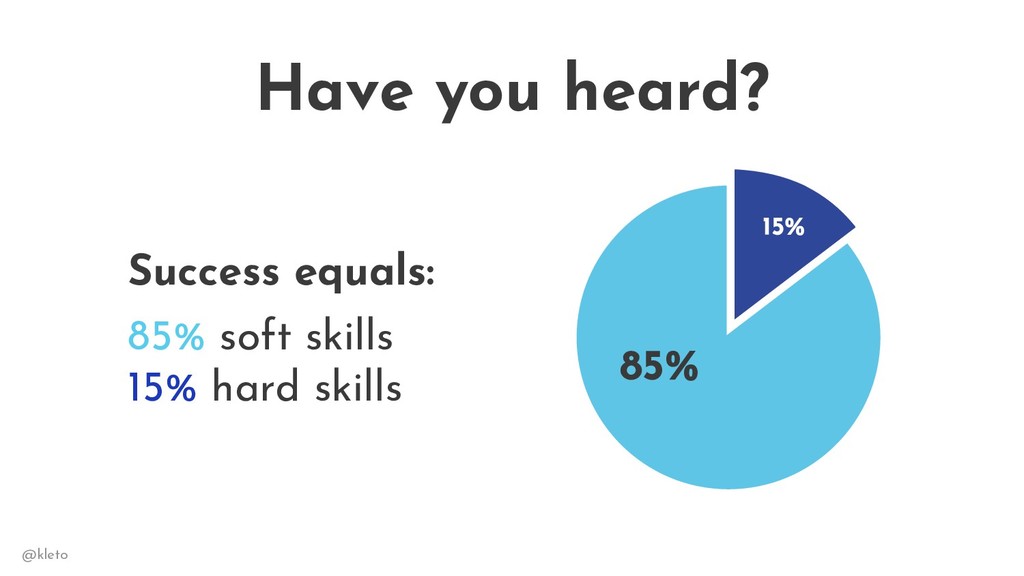
And I went to Google, and I typed in, what is success? Not just within product management, but in general. And as you can imagine, I got a lot of results back. And one of them was this theory that success equals eighty five percent soft skills and fifteen percent hard skills.
Is anybody familiar with this one? I got to believe there's a little little bit of acknowledgment I've seen it before and kind of thought like, that sounds cool. That's nice. I like the way they put that. But I hadn't really thought much more about it until this time when I went back and saw it again, and then I kind of released my inner nerd, especially my inner product nerd.
And I wanted to know a lot more about it. I wanted to know where did this data come from. Was it real, or is this just kind of fake news and something that sounds nice? What kind of survey questions were asked, if they were asked?
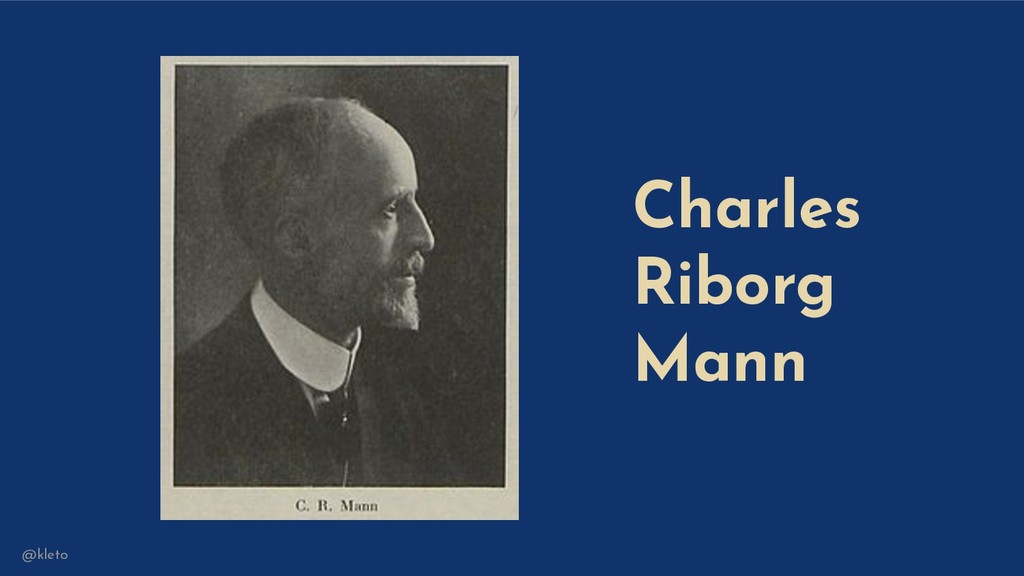
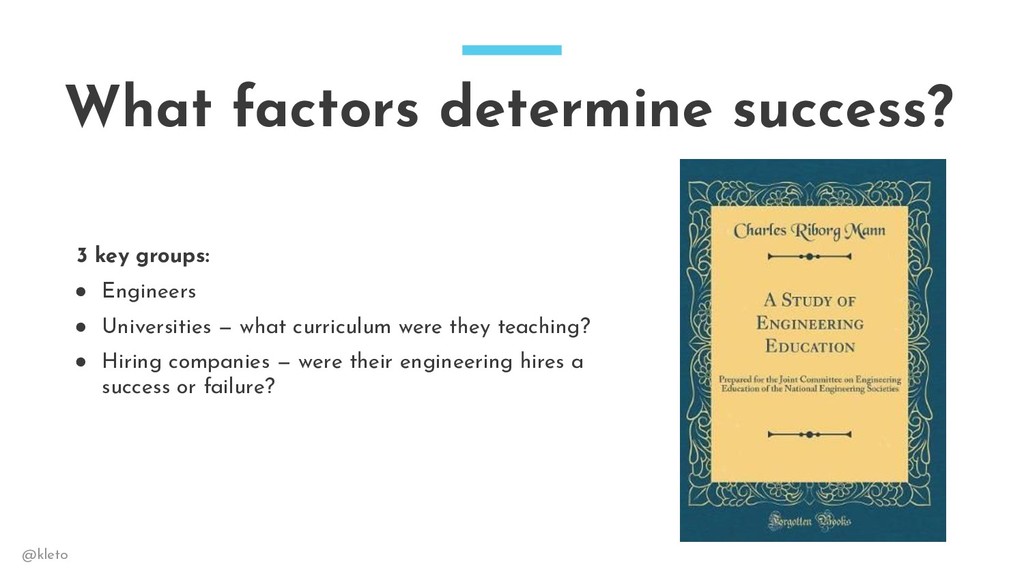
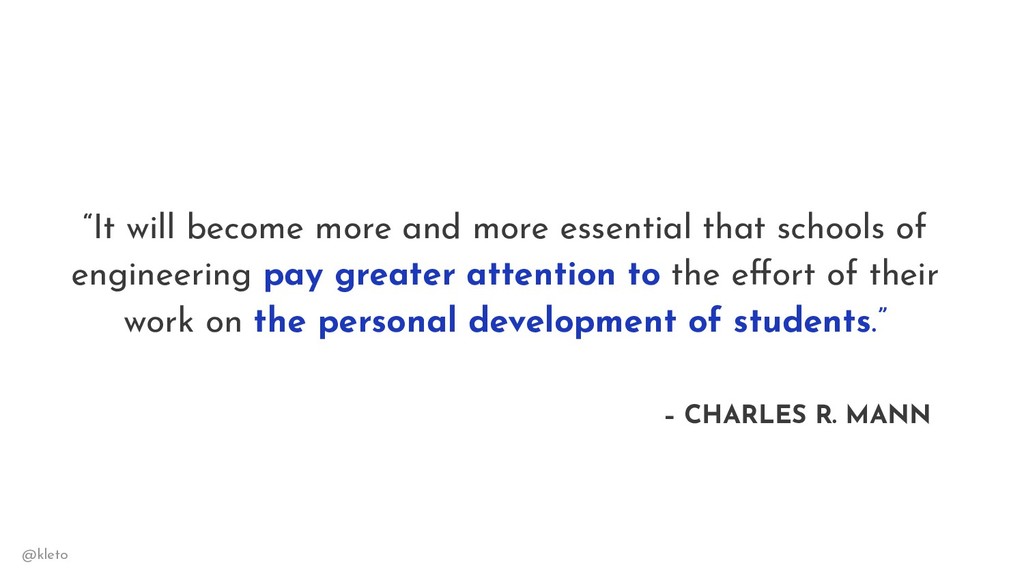
And of course, if the data was statistically significant, what's really going on here? So I went down my little rabbit hole on Google, and I found out that the data was actually extrapolated from a report that was done by this man, Charles Riborg Mann, who in nineteen eighteen was a physicist at the University of Chicago, and he was commissioned by the Carnegie Foundation and numerous engineering societies at the time to do some research into how well the education process for engineers was in America at the time.
Many universities had started to introduce different college courses and programs and curriculum around engineering, but they wanted to know if it was really creating successful, meaningful engineers. So Charles went deep and wanted to understand a lot more about what was going on with engineering in general at the time and how that really related to education and whether or not engineers were being prepared for successful careers.
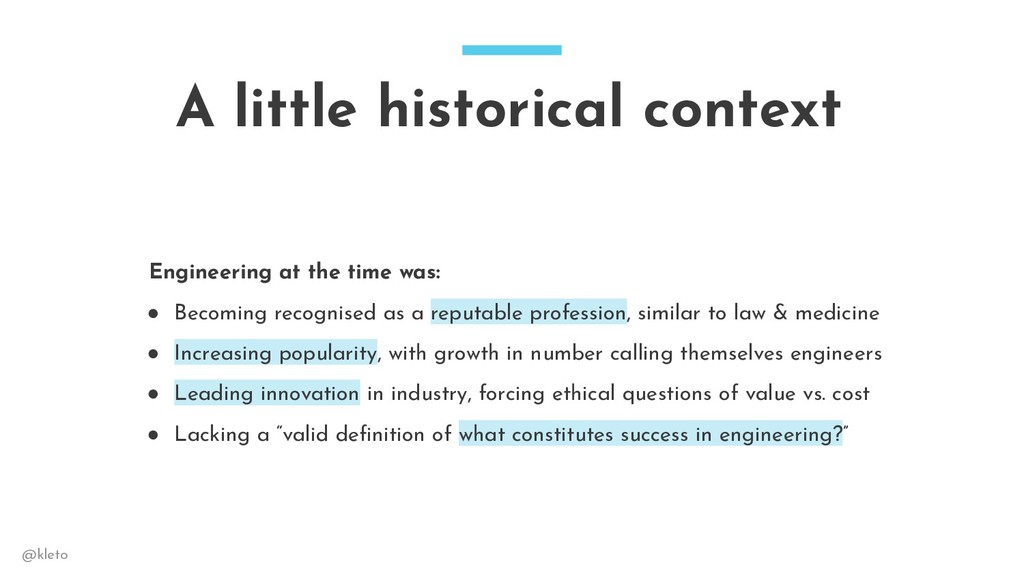
So just a little bit of historical context about engineering in nineteen eighteen America, in case you're not already familiar with it. Engineering at the time actually had, somewhat similar to our product community, had a number of different kind of sub segments. Right? We had mining engineering, we had chemical, electrical, transport, marine, you name it.
And all in all, as this universal kind of umbrella term of engineering, it was becoming much more reputable as a profession, kind of in line with law and medicine. So if you were a young man, and it was young men, very much so at this time, and that's another talk for another day, but it was young men who were really interested in applied sciences, then you had like a new opportunity here, a new career path to go down.
Pretty cool. It was also growing in popularity with many people hearing about this concept of engineering and understanding more about what it was. So they were raising their hands and saying, like, yep, I am an engineer. I already do that. So growing kind of self identification and popularity, and growing in reputation as innovators in technology and industry.
Engineers at the times were the ones that were creating the new technology, bringing it to market, kind of stewarding it along, and introducing it to society in various different ways. And kind of because of some of the different introductions and innovations they were making, they were getting to a point where there were a lot of ethical questions, and whether or not what they were bringing to market was actually worth the value over the cost.
The cost of way people were living and working and society was functioning. At the end of the day, those in the know in the engineering world, wanted to know, were they really actually producing successful people within engineering? And what actually validated that success?
They were growing so quickly and in so many different directions, they wanted to take a step back and really understand that. So in comes Charles, you know, on his knight in armor swerving around his research sword, and he went deep. Like, I thought I went deep on Google doing research about this.
Charles went deep into three different audiences. He looked into practicing engineers, he reached out to the universities that were teaching the programs, and he looked at the organizations that were hiring these graduated engineers to see how they were really performing in their organizations.
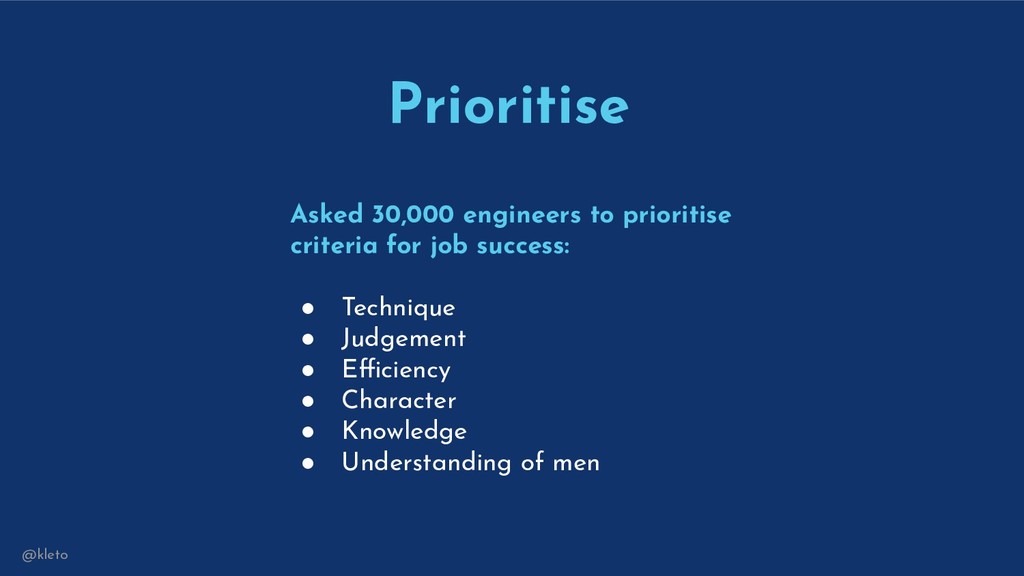
And one of the different research tactics, the surveys that he sent out, was this survey that he sent to thirty thousand people. Can you imagine in nineteen eighteen sending a mail survey in the mail to thirty thousand people and asking them to please prioritize what are the criteria for success in engineering.
And these were the six terms he gave them. Things like technique and judgment and efficiency, understanding of men, character, judgment. And what do you think what do you think people came back with? What do you think they said was the number one thing?
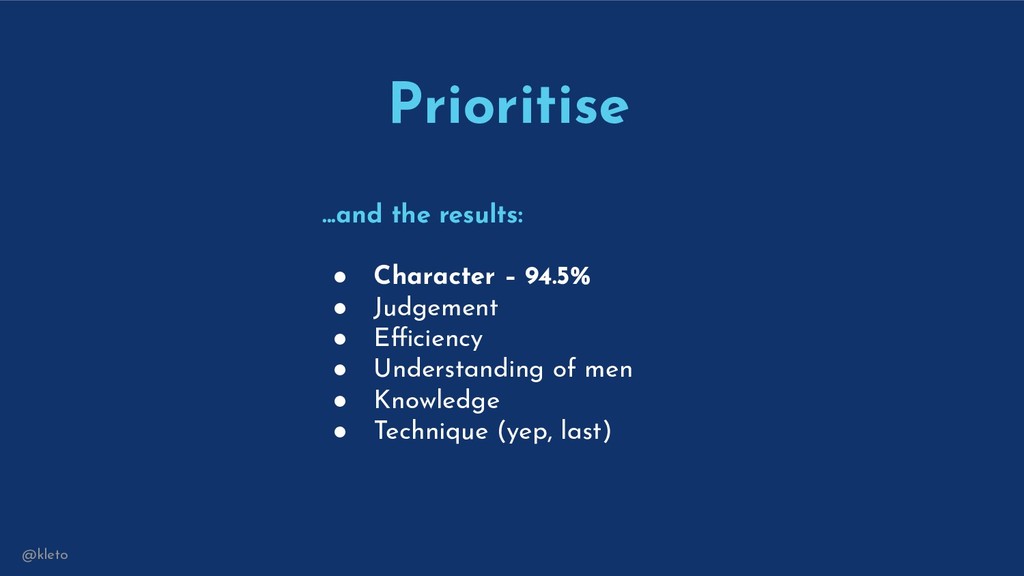
Anyone? Audience participation? Judgment. Understanding of men, judgment actually was character. They came back and said character. Ninety four point five percent of the seven thousand people that responded can you imagine getting seven thousand postal surveys back and having to go through that said it was character.
Very interesting. And through his ongoing research with him and his team of researchers, they validated this kind of finding again and again. That in order to be a successful engineer, it wasn't about the technique that the schools were really pushing, you know, a deep understanding of physics and chemistry and calculus and geology and things I could never understand.
But it wasn't about that technique, it was about character. So in his extensive report that he put together, it's about a hundred and fifty pages long, his findings, you can still download it on the Internet. The nerd that I am has read it, and I found it fascinating.
But he went on to say again and again that schools, the universities that were preparing engineers for professional life actually needed to make space in their curriculum for personal development. And it went on and on. So flash forward a hundred and one years, and here we are, twenty nineteen, at Turing Fest in Edinburgh.
And I tried so hard to find out what was the impact of Charles' research on engineering education at the time, now, anything. Couldn't find it. If anybody knows of anything, please come see me later because I'd love to hear more. I'm kind of fascinated by the topic.
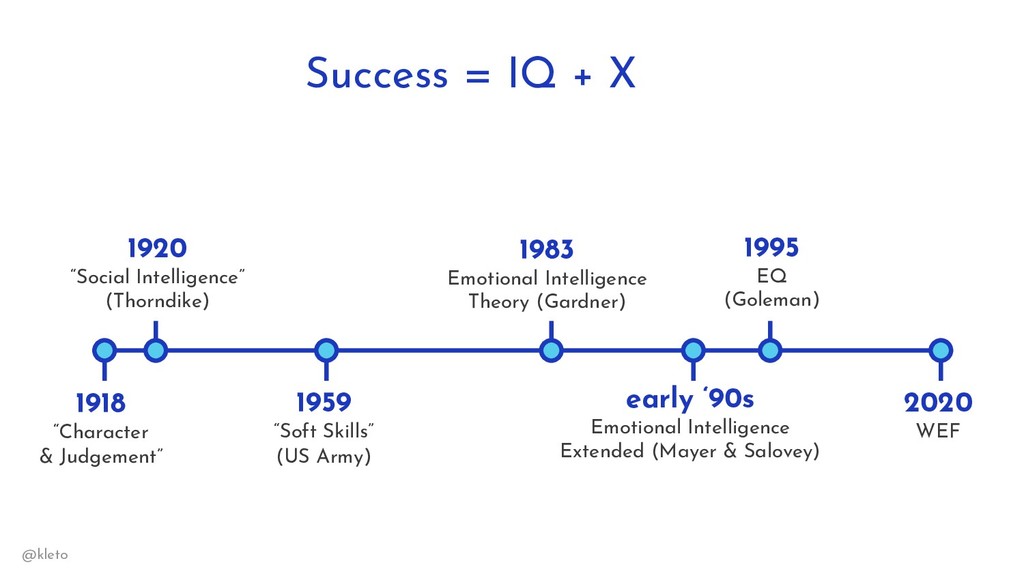
But what I did find is that his focus on the importance of things like character and personality and individuality and success was part of a broader conversation that we're still having today. And the words often have changed throughout the century. In the nineteen twenties, it was known as social intelligence.
In nineteen fifty nine, we actually heard the term, for the first time, soft skills. And that came from a US military training manual, believe it or not. And the US military used it to define skill set that people need when they are dealing with other people, planes, and paper.
Don't get it, but that's what it was. And you can find that online too. Thank goodness for for the Internet. In the nineteen eighties, we started to hear this term emotional intelligence. And it was really brought into our business context in nineteen ninety five by a guy named Daniel Goleman, who was a clinical psychologist at Harvard and also a scientific journalist with the New York Times.
And he published a book that argued that EQ, the measurement of your emotional intelligence, is actually more important in many situations than IQ in order to reach success and gain success. And it's gone on to today, most recently, the World Economic Forum has said that emotional intelligence is one of the top ten capabilities that organizations are looking for when they hire.
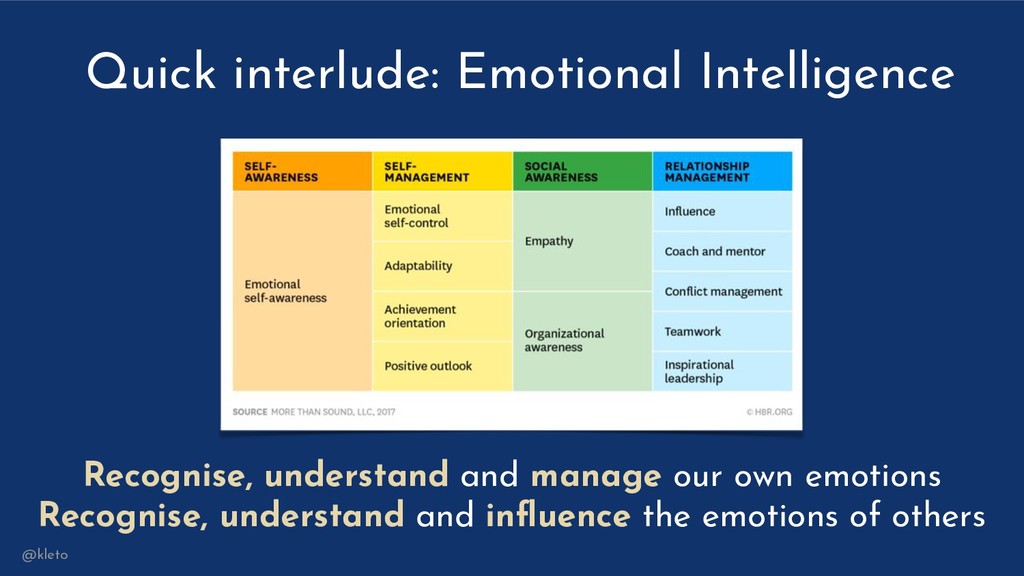
So just a really quick interlude to make sure we're all on the same page with what emotional intelligence is and what it really means. So Goldman, that guy who in nineteen ninety five wrote the book about emotional intelligence and how it could be more important than IQ, has really built up a ginormous body of data and research around the importance of emotional intelligence and really defining it.
And he says that emotional intelligence is our ability to recognize, manage, and understand our own emotions, and recognize, manage or recognize, understand, and influence the emotions of others. And that it really breaks down into four competencies: self awareness, social awareness, relationship management, and oh, I just missed the last one.
Exactly. And within these four competencies, we actually have a lot of little components that I'm hoping you've all heard of. Things like emotional self awareness, emotional self control, the ability to be adaptable, the ability to have a positive outlook, empathy, not just for customers but for other people too.
The ability to have organizational awareness. So organizational awareness means the ability to get things done in a complex organization through alternative channels, kind of winging it and being successful at that. The ability to influence others, the ability to collaborate, the ability to lead, the ability to coach and mentor.
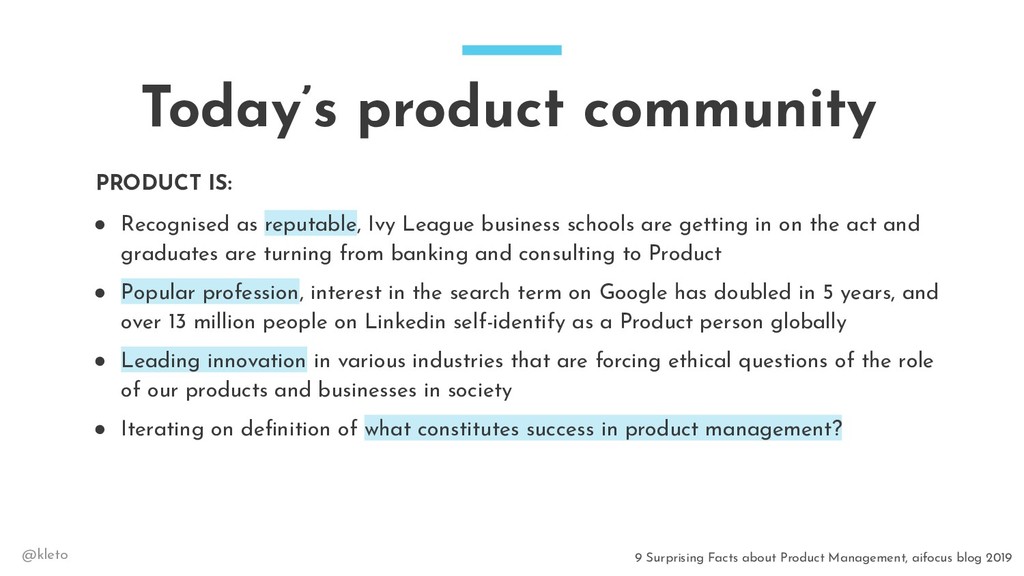
All of these are components of emotional intelligence. So let's bring it back to today, back to our product community and where we are. And I'm hoping that you see a few similarities between where we are in twenty nineteen and where our engineers were in nineteen eighteen.
Things like products our product community is becoming more and more reputable all the time. We even have Ivy League business schools in the US like Harvard creating product management courses. So they have a product management one zero one and one zero two, and at the end of that, you'll have an MVP that you can take to market.
And these courses are three times oversubscribed. And graduates from programs like Harvard Business School are going into product management more and more over things like consulting and banking and more traditional grad school roles, which might lead to some of the ethical questions that we're facing today, but that's also another talk.
Then when it comes to popularity, of course we're growing in popularity. Over the last five years, the number of searches alone on the term product management in Google has more than doubled. And I recently looked on LinkedIn to see globally how many people are self identifying as product people, product in their title, it was over thirteen million.
That's a lot of people. That's four times the population of my home state of Iowa. That's just shocking to me. And also, as we all know, we're leaders in innovation. We're working very, very closely with technology, producing new things, and creating new ways of working and living and moving society along that's causing a lot that's bringing up a lot of ethical questions around the value versus the cost.
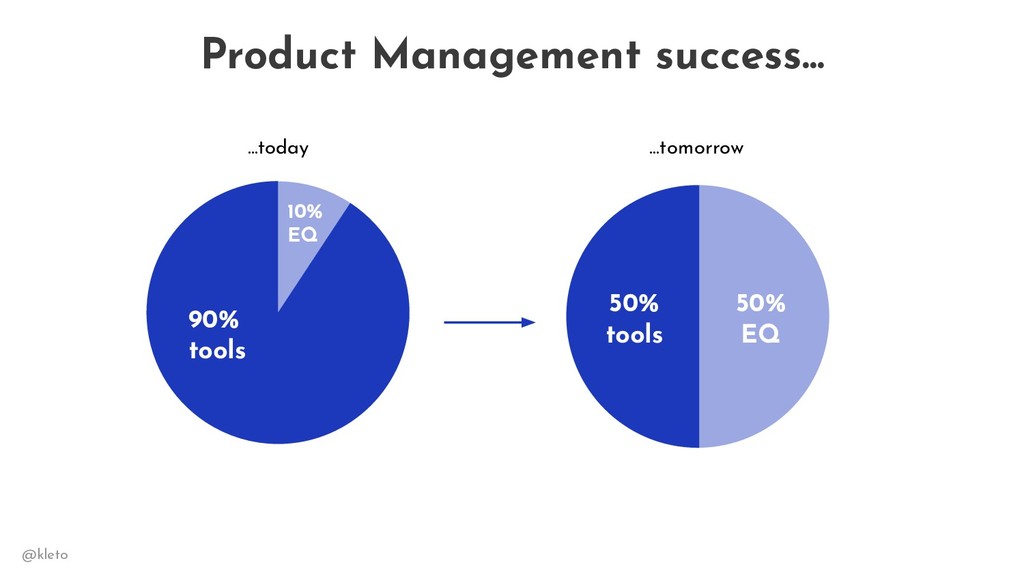
At the end of the day, we are still trying to figure out what is success in product management. How do we get there? I think one of the most striking comparisons between where we are now and where Charles founded the engineering world in nineteen eighteen is our tendency to over index our focus on things like tools and techniques.
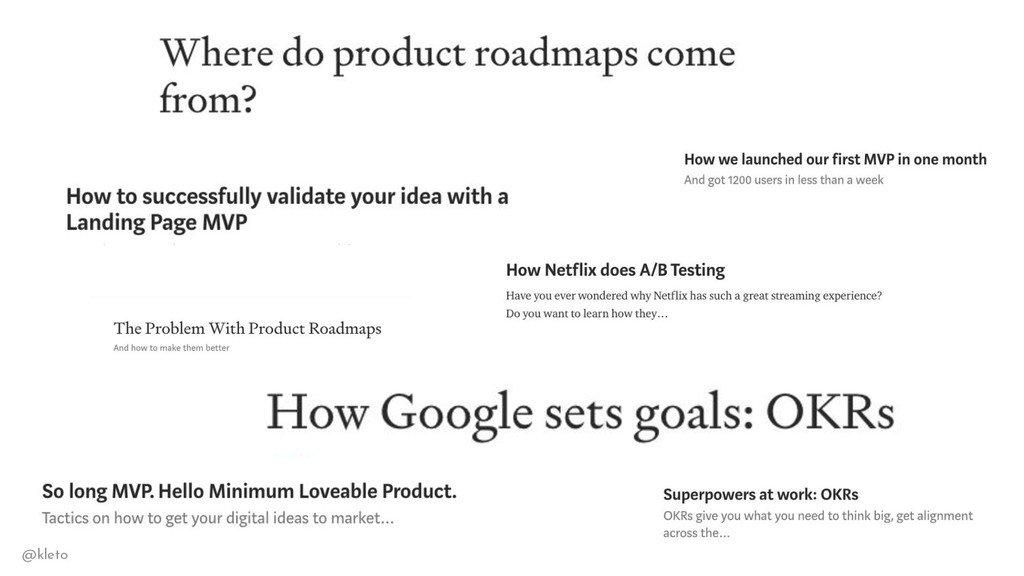
You know, things like MVPs, OKRs, road maps, AB testing. We love our tools and techniques. And in our minds, from what I've seen, a lot of times we equate mastery of these tools and techniques with success. This will make me a really good product manager if I can just get my agile ceremonies right.
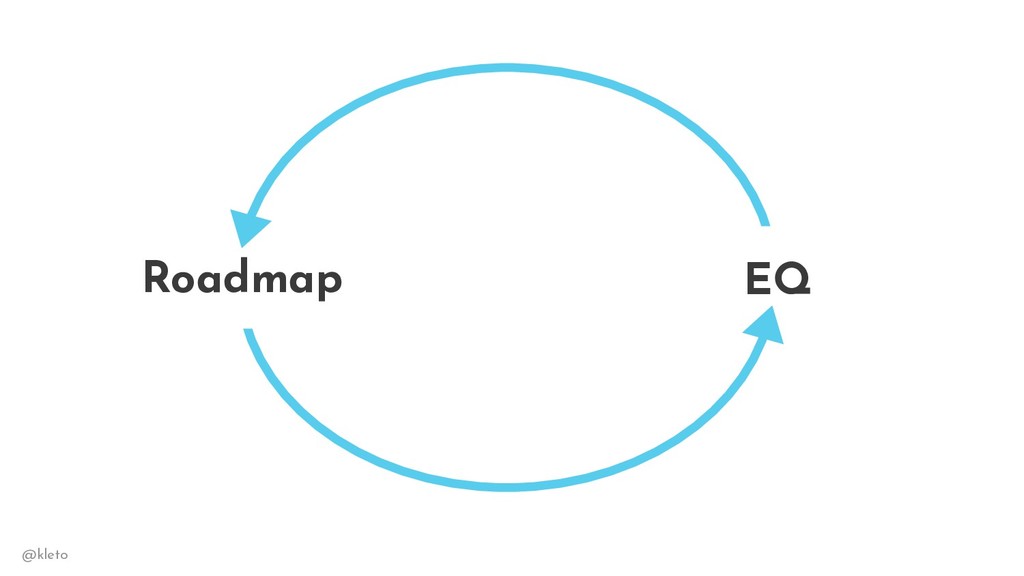
I'll be an amazing product manager and get a promotion if I can get my road map together and introduce OKRs to my organization. And my argument, my thinking is really, if you want to do any of these things and do them well and be a success at them, even when it comes to something as baseline as putting together a road map, you've got to have EQ.
You've got to have the self awareness to say like, well maybe that thing that I'm really pushing on, that product or service I really want on the product or on my road map, might be something that's in my interest, not interest not in the interest of my team or my organization.
Or you'll need to have leadership skills to be able to bring your team along with the vision that you've created for the roadmap. Influence skills to build relationships with stakeholders to bring them on board with you. You're going to have to have conflict resolution skills.
Right? Because we all know there's tension in putting together a road map. So what I'd like to really focus on is how can we reframe our narrative around what is success in product management, and start to move it from this over indexing on tools and techniques into a space where we actually have a balance with an understanding and awareness of emotional intelligence.
And realizing that it's not just roadmaps or OKRs, but it's also the ability to be self aware. It's our ability to adapt. It's our ability to deal with hard to deal with with hard to reach stakeholders. It's our ability to deal with conflict and learn really quickly.
And that all equates to emotional intelligence. I know this change isn't going to be easy and it's not going to be fast, but it is something that's possible. And I think the best way to start out our communal efforts to do this is to identify a few areas of the way we're working already that we can make some interventions and start to put in our own kind of experiments and ways of think changing the ways that we're thinking, the ways that we're behaving, and the processes that we use.
I think a really good area for us to do that in is hiring. Hiring is really interesting I think because it's something that has been really pushed down to our product teams in a lot of ways. Product managers, members of the product team are often taking active roles if not leading a hiring a hiring effort.
And they're using tools and techniques that I think are slightly traditional and outdated. There are things that are over indexed leading us to over indexed to tools and techniques and not making space for emotional intelligence and understanding how that can be brought into an organization and into a hiring process.
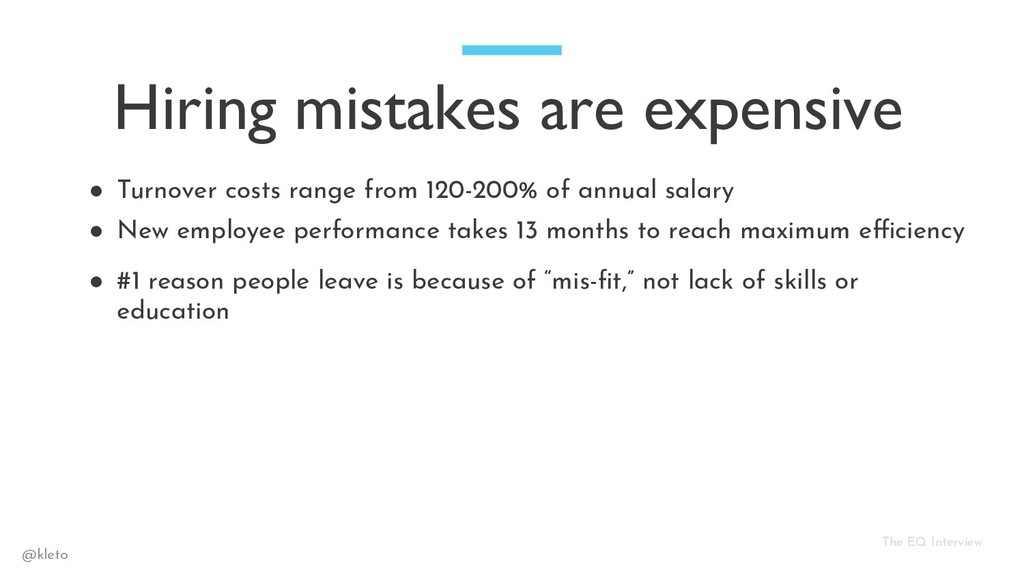
And when we get hiring wrong, it's really costly. Right? And we all know that. Hiring miss I call it a misfit. When we have a misfit within a team, within an organization, it costs us financially and emotionally. So financially, the data ranges on how much it costs to actually replace somebody once they leave, but it ranges from about a hundred and twenty percent to two hundred percent of that person's annual salary.
And it usually takes about thirteen months, once somebody new comes in, for them to get up to a level of maximum efficiency. The reason that this happens though is not because somebody doesn't have the right school or techniques or mastery of a certain tool.
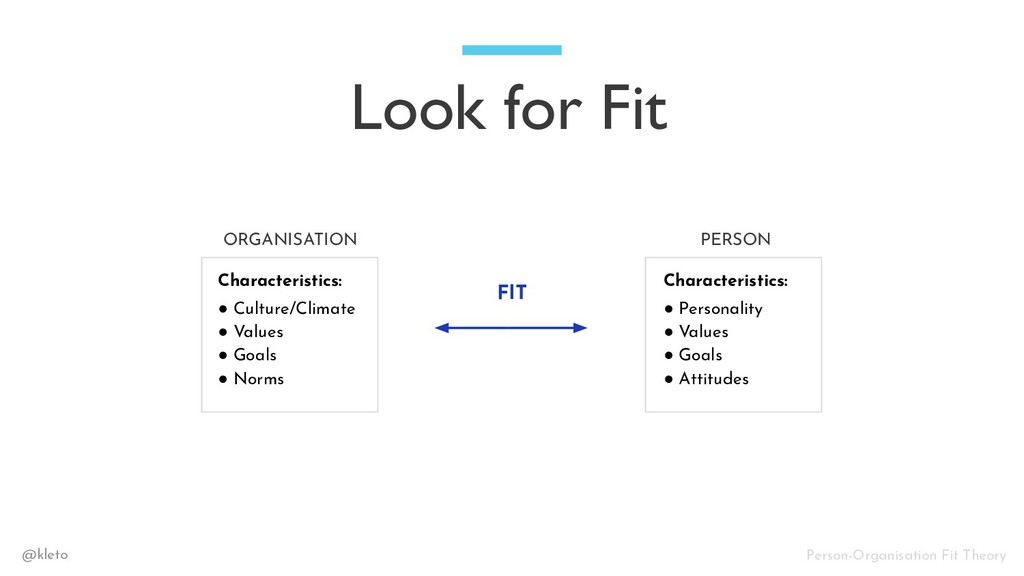
It's because there's a misfit within the organization. It brings us back to this theory called person organization fit. So we've all heard of product market fit. This is person organization fit or PO, as I like to call it. So within PO, it tells us that when a company's values and goals and culture and norms align with a person's personality and attitudes and behaviors and goals and values, that you actually get this fit.
Right? There's a real fit there. And when you have fit, really good things happen. Number one, people don't leave. Number two, they stick around and contribute to a really healthy environment and help that team and organization grow. Help them to create the product that we always wanted to.
So what I'd like to talk about are three different things that you can do. Hopefully, little tweaks, experiments that you can make to your existing hiring process to incorporate emotional intelligence into the work and help move you towards reaching person organization fit. Okay? Number one is to create a role that matters.
Let me explain that, give you a little more context. So what's the first thing that we do, we have a tendency to do, when we get an approval for a new head count? Anyone? You go create a job description. Right? That's like the go to. That's the knee jerk reaction.
And that's what I've seen a lot of product managers do is right away, I got a head count, I'm going to go work on the job description. And that job description is often something that while we think is super important, and research even shows hiring managers, eighty percent of them say job descriptions are super important, but fifty percent of those job descriptions are cut and paste.
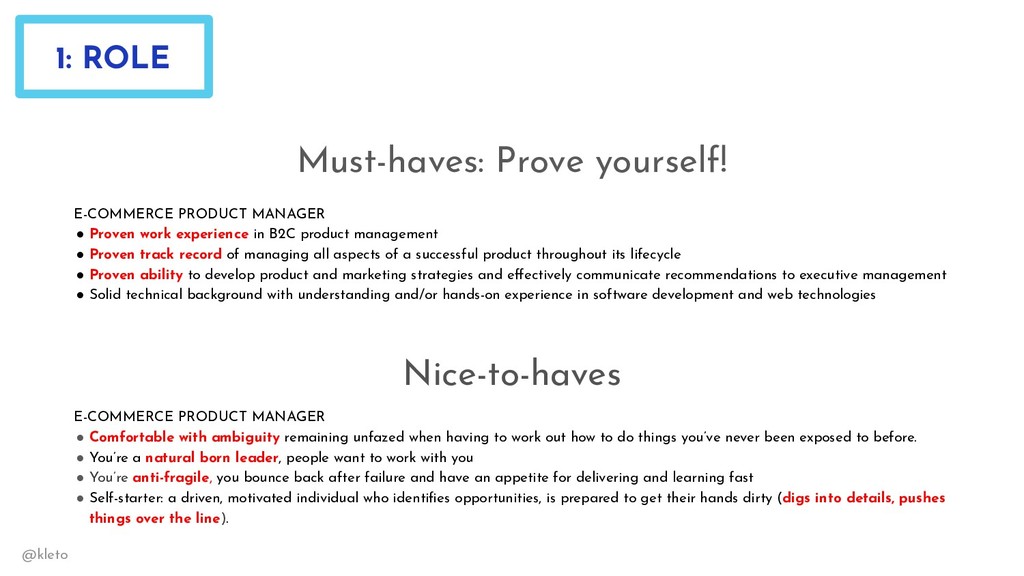
Right? So there's not a lot of thought, not a lot of consideration that actually goes into the job description and putting that together. And when we do put it together, we often use this traditional template of must haves and nice to haves. You know, this is is nothing new.
This is our traditional go to as product people. And this is an actual job description that I found without doing a lot of searching for an e commerce product manager. And it focused must have the must have focus on things that you must be proven you must be able to prove to the organization that you can do before you can even think about applying or coming in for an interview.
You must prove that you have expertise in a certain space. In this one it's b to c. You must prove that you've had experience managing a product through its entire life cycle. You must prove that you can actually create marketing and product strategies.
And by the way, it'd be great if you had a strong technology background too. Sure. Why not? Right? And then we move to our nice to haves. And the number one nice to have that I see probably about seventy percent of the time on product management job descriptions is dealing with ambiguity well.
I handle ambiguity well. This one's even better though. And if this is your company, no judgment. Thank you for the learning opportunity. This is really cool. But this one goes on to say, we'd also like you to be a natural born leader. Because I know a lot of people that come out of the womb, like, ready to lead.
Right? They don't need a lot of help. They're ready to go. And by the way, you're antifragile. You're not human. It's just it boggles my mind. So they're looking for a unicorn. Right? This does not exist. But this is what we see quite often in our product job descriptions.
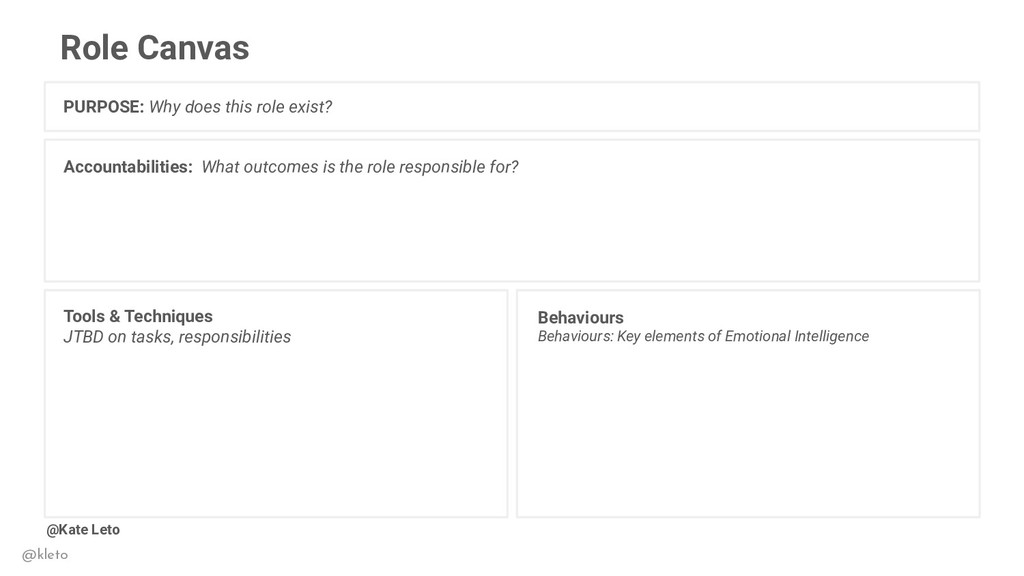
So instead of doing that, as I said, let's try to create a role that matters. And you can do it pretty simply. Start by answering four questions. What's the purpose of the role? What is it accountable for? What are the outcomes that this role is going to need to be able to deliver on?
And what are the tools and behaviors that this role is going to need to be able to be successful? When it comes to behaviors, this is when you can start to think about what are the emotional intelligence capabilities and components that you really need, that this role will really need to be successful.
And please get specific because I often see or work with organizations who use this in a workshop setting even, with stakeholders, with their team members, and they just put in behaviors emotional they have emotional intelligence. And that's not good enough. You've now seen the words.
You now know that emotional intelligence means things like self awareness and conflict resolution and the ability to influence. So list them and think about it as you're going through the process. For this role to be successful, does it need to be able to handle does this person need to be able to handle conflict well?
You know, maybe they're in a team or an organization where it's there's been a lot of tensions. So you want somebody who's gonna be able to adapt and deal with that. Is this role going to need to be going to need to have somebody who can influence well?
Because maybe the stakeholders are really hard to to get on board and to join your vision. So think about it. Be mindful about it and prioritize your needs. And from there, you can build out a job description. So the second thing that we need to do is broaden interview techniques.
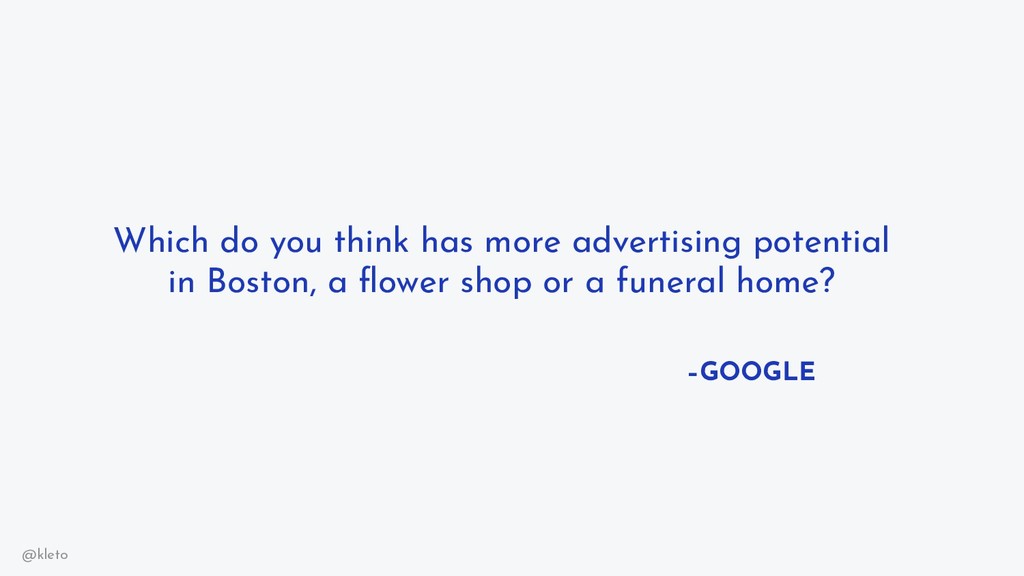
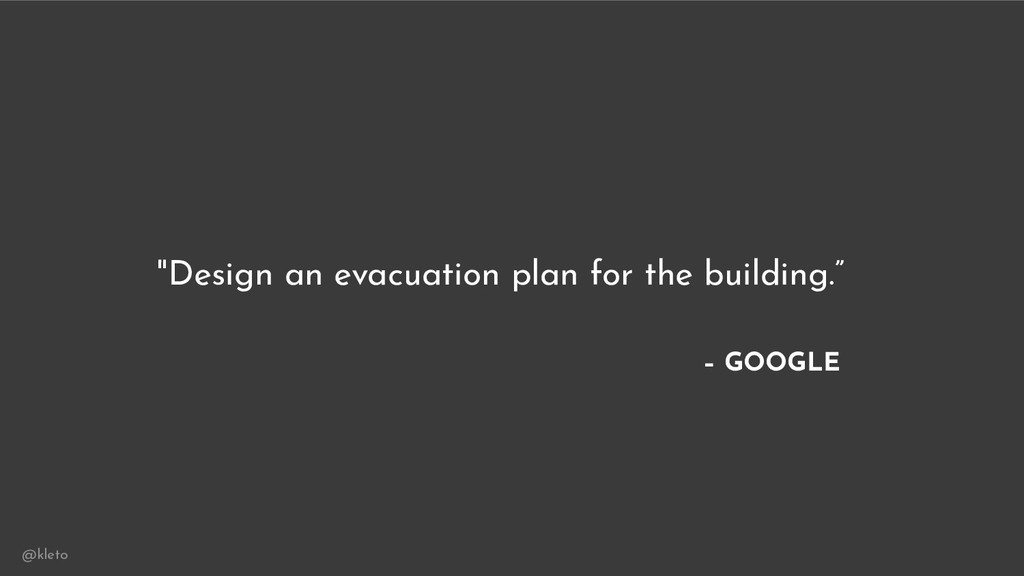
So what I often see with product managers or any sort of product people is when they're involved in an interview, when they're preparing for it, the preparation includes going to their desk and doing a Google search for brain teaser interview questions. Right? Things like, which do you think has more advertising potential in Boston? A flower shop or a funeral home?
Or design the evacuation plan for the building. So these are actual questions that Google has asked interview candidates. And I I kind of get it, you know? I think what we're trying to achieve by asking these kind of random questions is, does this person deal with ambiguity well?
You know, how do they deal work in stressful situations? And maybe, just maybe, you'll get to a point where you'll begin to see a thought pattern and how they would approach something like this. But I don't think that's really going to help us understand how someone's really going to behave and react to a situation that's so common in the workplace.
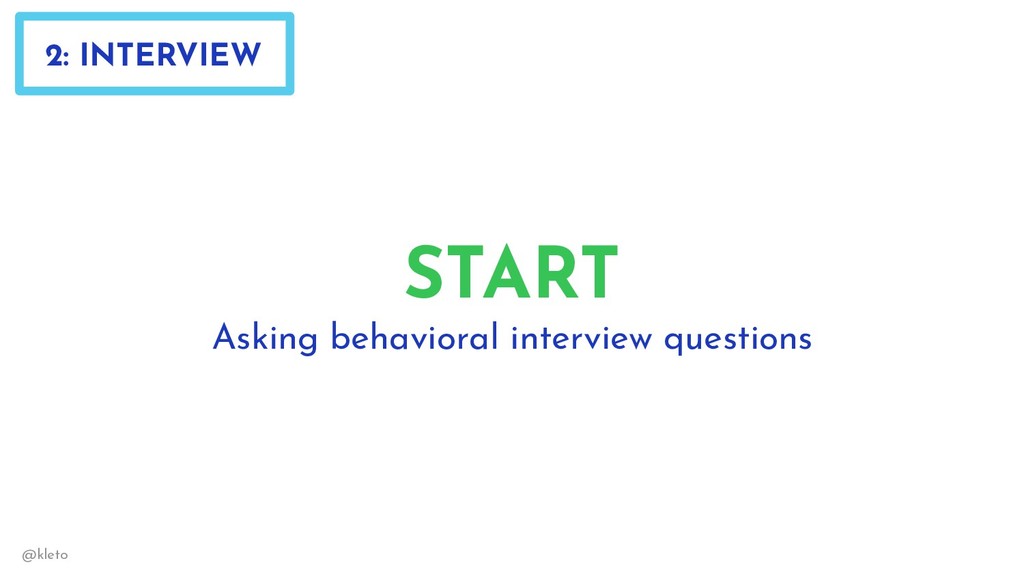
Instead, I encourage you to check out something called behavioral interview questions. And behavioral interview questions are a technique that have been validated as one of the most important and kind of significant type of interview questions you can ask to really understand how somebody is going to behave in a work situation, in a stressful work situation even.
And you know what? They're really simple. They're not complicated. They're not meant to freak somebody out or put them on guard. They're just meant to get to know them and see what their to understand what their narrative is for how they respond to certain situation, and if that really aligns with the way your organization is going to work.
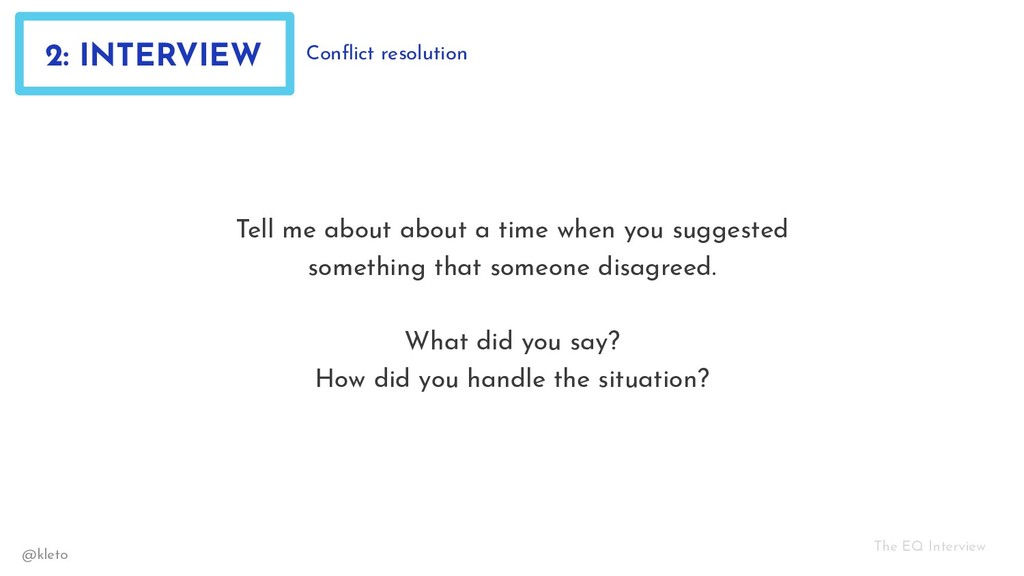
So for example, if you listed on your role canvas that one of the things that this role needs is to be able to handle conflict well, then ask some questions around conflict, how they handle conflict. And again, these are really simple. Things like, tell me about a time when you suggested something that somebody didn't agree with.
Like, that happens all the time. I think that's already happened to me five times today. Right? So why not focus on that type of question and that type of response to really understand where the person's coming from and how they're going to handle a work situation?
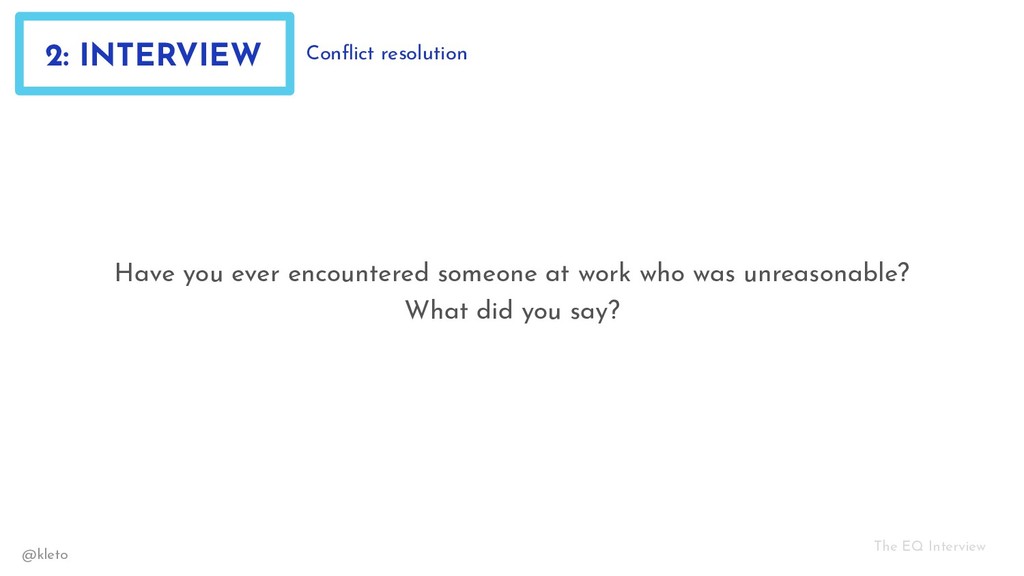
Or something similar. Tell me about a time when you've worked with somebody who was unreasonable. Again, this just right? This just happens. This is just part of life. This is part of work. And the trick here is, again, you're not looking to trick someone.
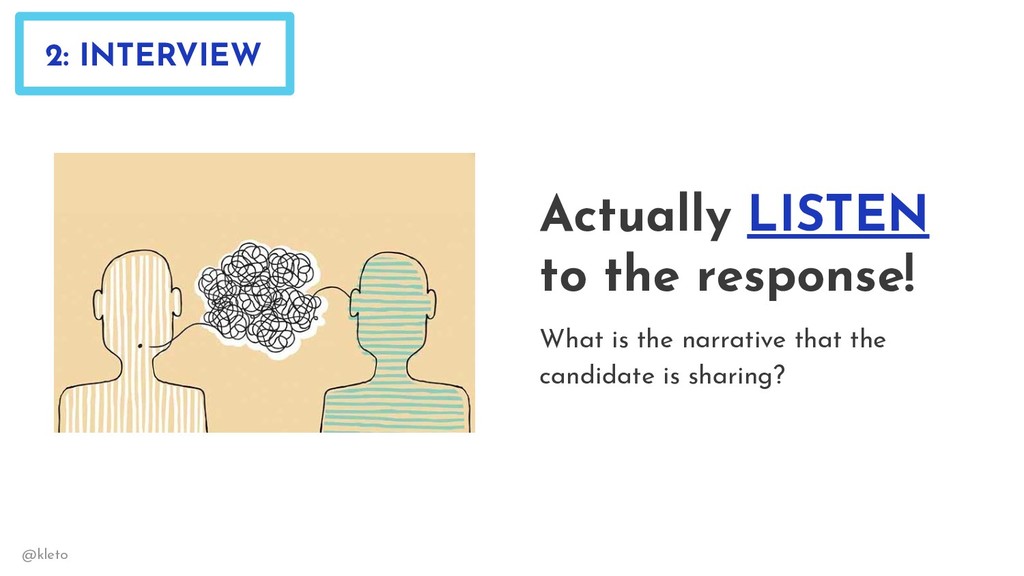
You're not looking for a specific thought pattern or behavior or thought pattern or way of thinking. You're looking to understand how they're going to react. And the onus for this is on you as the interviewer. Right? Because what you need to be able to do is listen to the narrative that this person is telling you and start to create some space where it's you're making the untangible, like conflict resolution skills, tangible.
Start putting together some patterns. So for example, with conflict resolution, probe into the question and the story, the narrative that the person your candidate's giving you and telling you to find out how they will react to conflict. Do they engage with conflict, or do they just walk away and avoid it?
If they do engage, how do they engage? Do they put everybody at ease? You know, do they want this to be a win win situation, Or is this something that they would rather have kind of a winner and a loser as an outcome?
And then really identify and think about what does that approach really align with what your organization is all about? Can you achieve fit? So that's the second thing we can try is change up our interview techniques. And if you want more questions, I've only gone through two questions for one component.
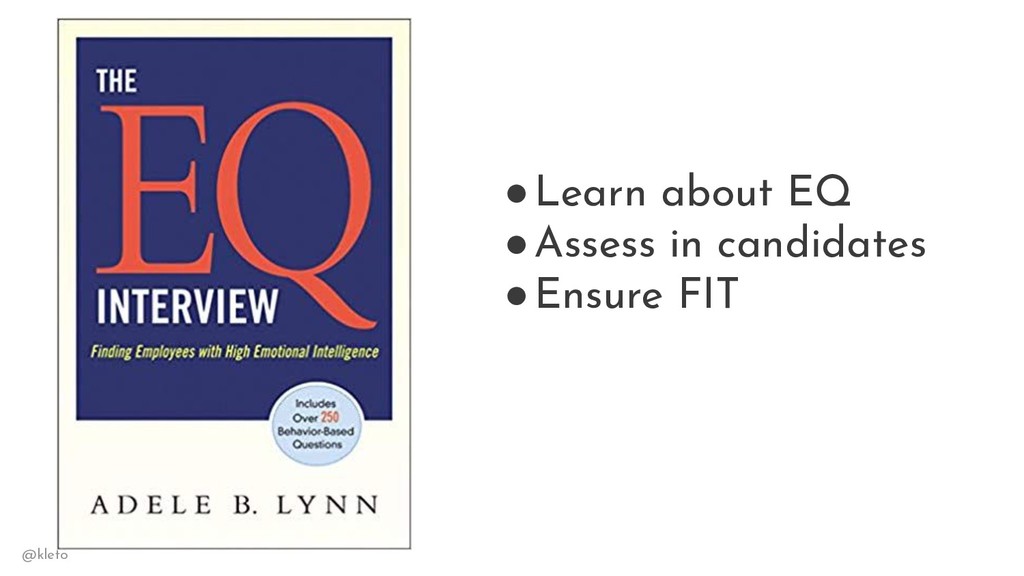
This book, the EQ interview contains, I think, about two ninety nine, so lots more. So please pick that up and give it a look. The third and final different experiment, different way of we can look to hire for Product EQ and move towards fit, relates to this concept of realizing that hiring doesn't end once the offer is accepted.
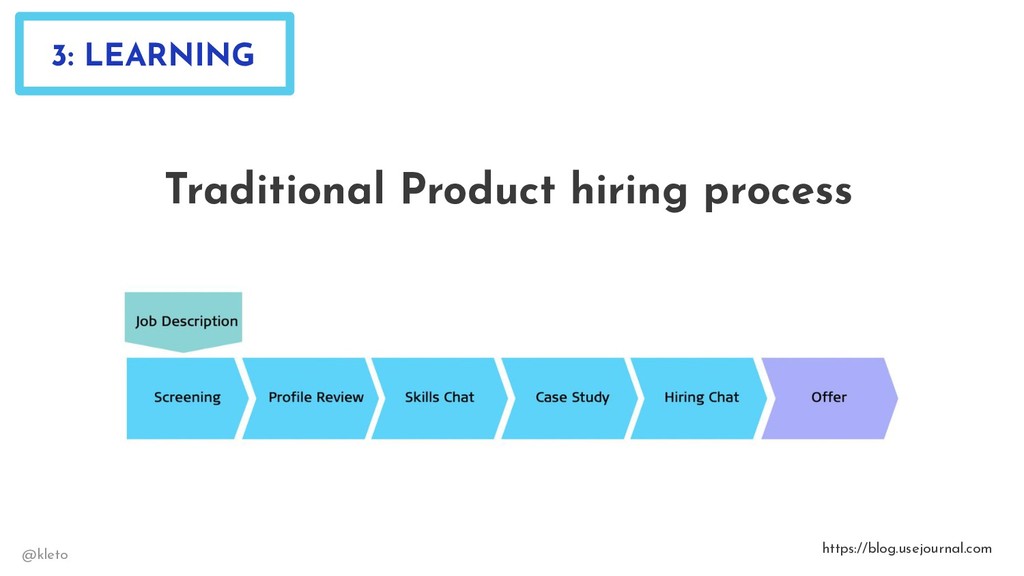
I often see this as a kind of a traditional hiring process, and this actually came from a blog from an organization that had just done a lot of product management hiring. And it starts with the job description and it ends with the offer.
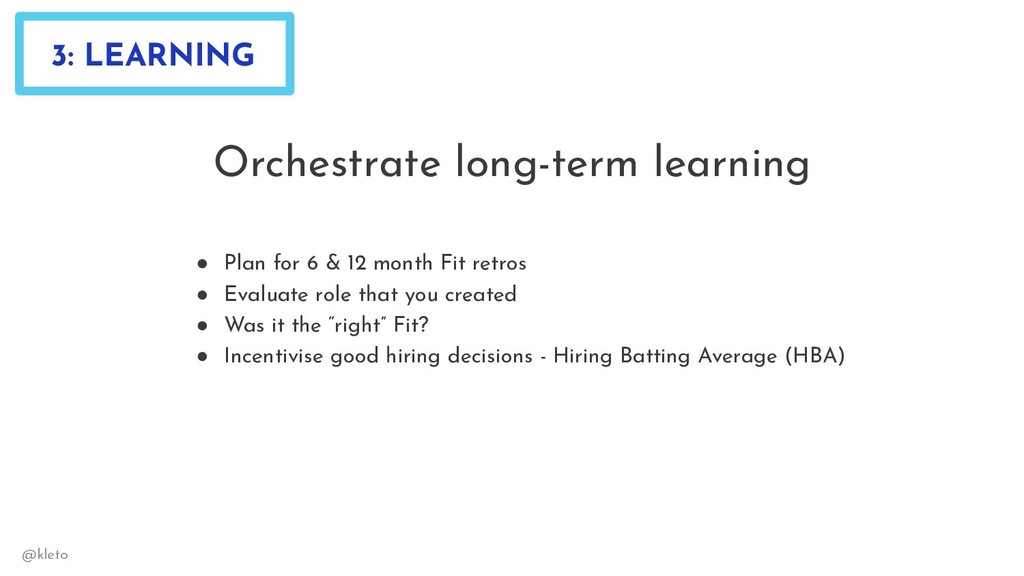
I think what we actually need to realize is just like everything else we do as product people, it's a learning opportunity. So we need to put in place some spaces to go back to reflect and learn, to see if that role canvas that we put together, that role we had in mind, that fit we were looking for was actually accurate.
Were we on? Were we right? Or were we totally off? And that person that we brought in, have we set them up for success? Are they successful? How are they feeling? Make them part of this conversation. Jack Welch at GE back in the day did did this type of retro in looking back, and he incentivized his people to really focus on making good hiring decisions.
So much so that they created a metric called the hiring batting average, which if you're a fan of American baseball, you've probably heard of the batting average overall. And it's just it's something that tells us how well you're doing at making hiring decisions.
How seriously you're taking it. How big how important it is to you and your organization. So please remember that hiring doesn't end at the offer. If you really want to hire for emotional intelligence and fit, you need to go back and see if you got it right or not, and where can you improve.
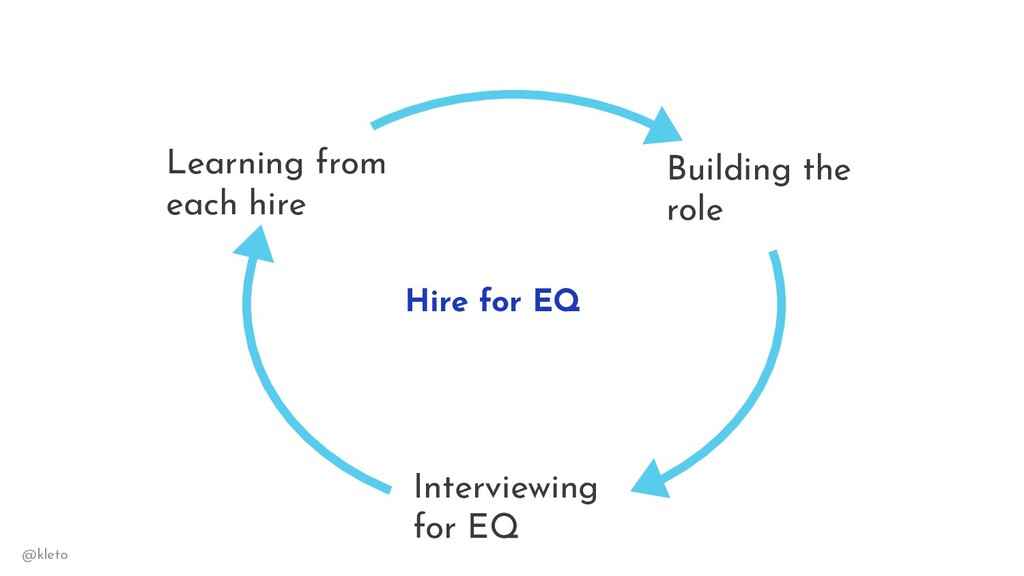
So the changes that I'm hoping that you can all go back and start to make are quite similar to other kind of movements and opportunities that we have in product, where we're focusing on build, measure, learn. Right? You're going to build a role that matters.
You're going to start to measure for and look for emotional intelligence in your interviews through different techniques. And then you're going to go back and learn, and you're going to make sure that you were doing that you're on the right track, and if not, you're going see how you can make a change.
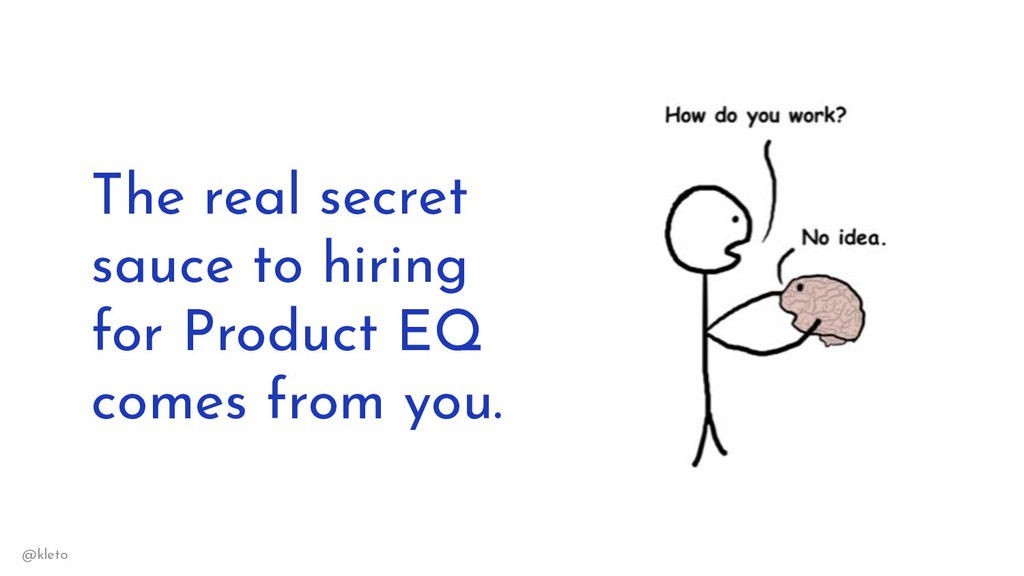
But one last thing to leave you with. If you're going to do this, if you're going to try to bring emotional intelligence into your team, into your hiring practices, you can't really do it. You can't see it unless you have it. Right? It's one of those things.
So the onus is really on you guys when you leave the hall, as you continue your conversations around what is success in product management, to think about how can you maybe improve your own emotional intelligence just a little bit and start to help all of us make this transition from a focus on tools and techniques to a more balanced view of what success is in product management.
And this is really this is really just kind of scratching the surface. I'm just I have a lot more that I wish I had like another half hour to share with you guys. So if you'd like to find out more information, please go to my blog.
Please follow me on Twitter. Also look for a book that's going to be coming out early next year through Sense and Respond Press, all about hiring with product with Product EQ. And that's it. Thank you very much.