
Zendesk's UK Sales Leader Karen Muldoon shares practical advice on how to structure productive sales teams.
← All talks 
Grow Growth Turing Fest 2019
How to Attract, Structure and Retain Sales Teams
Auto-generated transcript - may contain errors. Tap a timestamp to jump the video.
I'm gonna I'm gonna stand over this side this time. Good afternoon. Delighted to be here at Touring Fest. This is the first time I've attended. It's, congratulations. It's an amazing event. The operation has been extremely slick. The planning, super impressed. So a little bit more about me, I guess, just to touch on what we said.
Today, I'm gonna talk to you about how to attract, retain, and structure your sales team from start to scale. I think attracting and retain is what everyone's looking to. It's the biggest we probably compete more from this room than anything else right now in the tech industry.
So I've been in the tech industry for a long time. I was in engineering at one point. We were called programmers then. And more recently now, I'm in sales, worked in startups to big companies like Thomson Reuters. And the last eight years in Fast Grade Company was at eight years at Salesforce and one well, about fourteen months at Zendesk.
So many of you are going to be kind of at different stages, I'm sure, in in the room. You are maybe you're starting out. I've talked with some series of leaders over the the last couple of years or more recently over the last six months to understand what, you know, what they've situation have to deal when they've joined an organization around sales.
And every time they tell me it's well, not every time, but ninety percent of the time they tell me it's different every time. And if they tell you that they know it all, they're full of **** because it's you it's never the same.
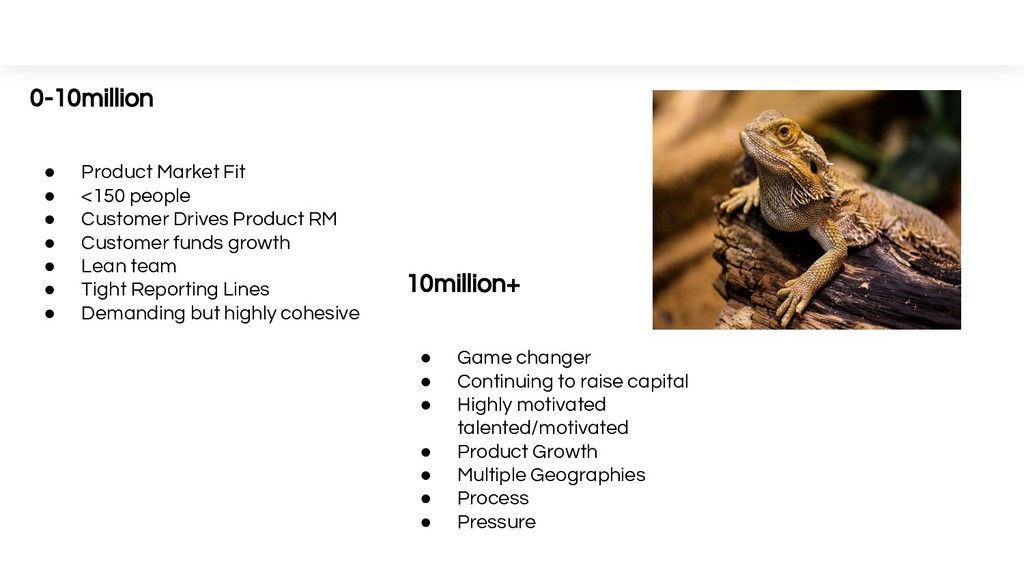
Right? So you may be at different stages of companies. Maybe you're, you know, you're you're developing your product, trying to get the product market fit, the customer is dictating the product, the customer is gonna be funding the growth. You're and maybe you're over the ten million plus, right, where you have a strong product.
You know, you're this is this game changer. Right? Everyone's gonna be at different stages. So what I wanna talk about, as you can see in the theme, was around attract and hire as kind of the two main focuses. And ultimately, if you build a foundation for your sales team, the most important thing is having you can have all your systems, you can have all your your processes in place, but if you don't have the right people, none of the rest matters.
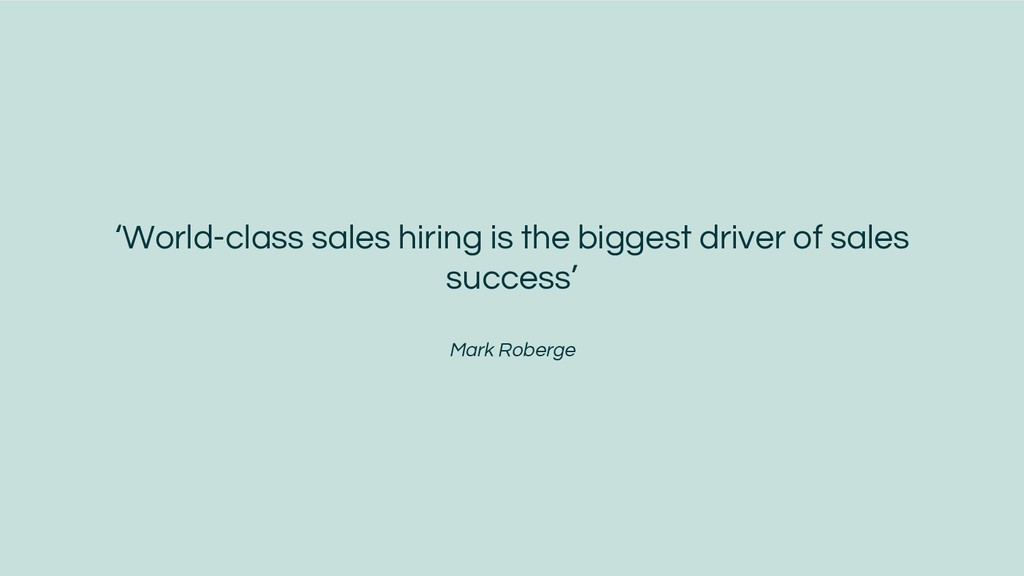
So if you see here Mark Roberge that was you may might know, have read his book from who's at HubSpot, world class sales hiring is the biggest driver of success. If you get that right, everything else will fall into place. The all the other stuff is boring. Right?
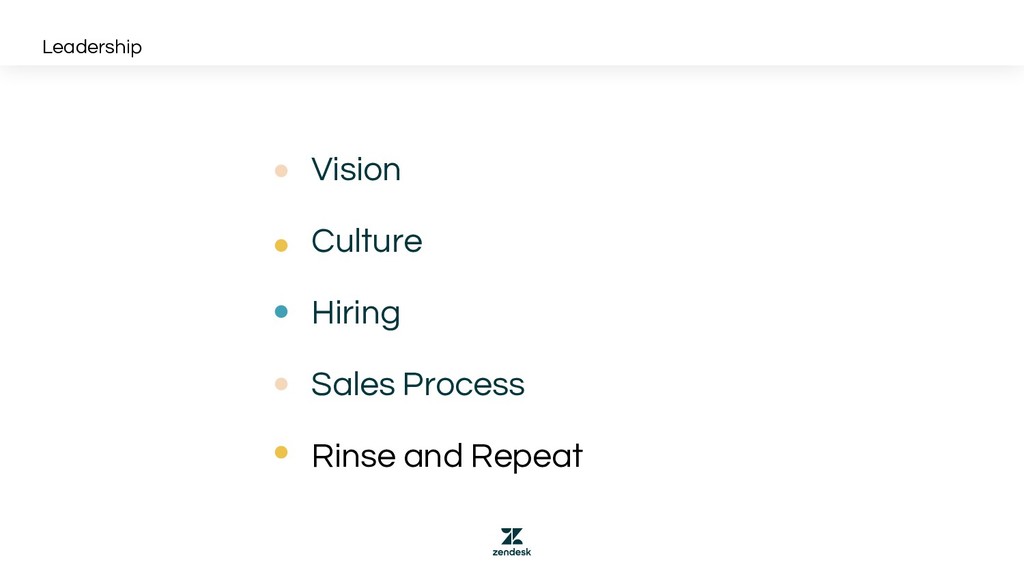
All the other stuff will is process, getting all the detail together. But if you can get the right people in, everything else will come together. So I've broken it down into key areas around creating a team, coming in, maybe you're at, you know, you're at the one million plus one million stage.
You're coming in, need to create a sales team, potentially wanna start hiring salespeople if you don't have already, coming in to lead the business and drive direction in the sales structure. So you wanna create that vision. Right? What is the vision for the business?
What's the vision for the team? What's the vision for the business? What is the culture gonna what is the culture gonna be like? Right? What what the type of people you want to attract? Hiring. What is your hiring process? What's that gonna look like? How are you gonna go out?
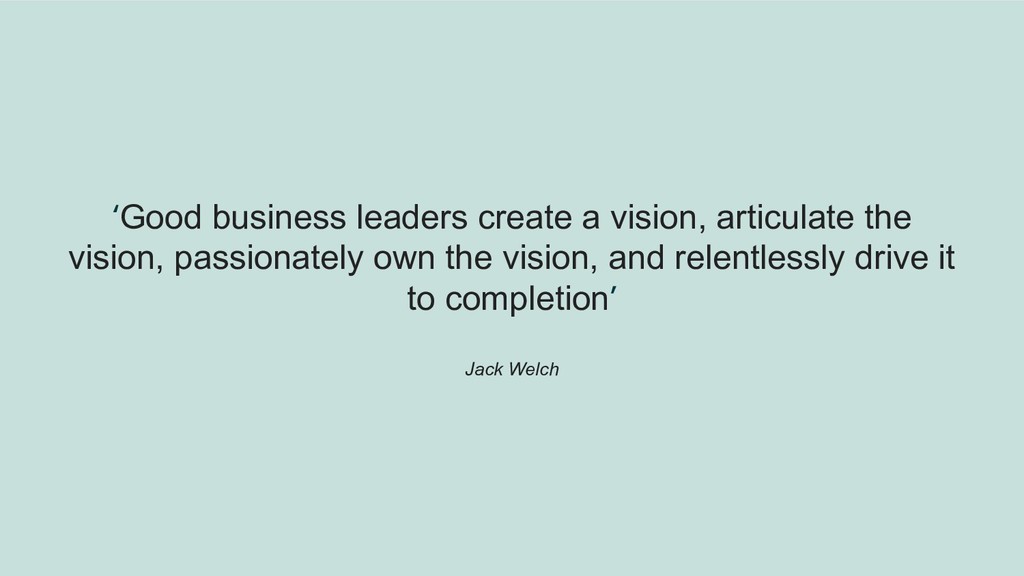
Are gonna get external recruiters? Is everybody gonna be hiring? Which is correct. Yes. They will be. And then your sales process. How are you going to define that sales process? So let's talk about a little bit vision. Jack Welch's days, I think, are a little bit behind us, but good business leaders create a vision, articulate vision passionately own the vision, and relentless and relentlessly to completion.
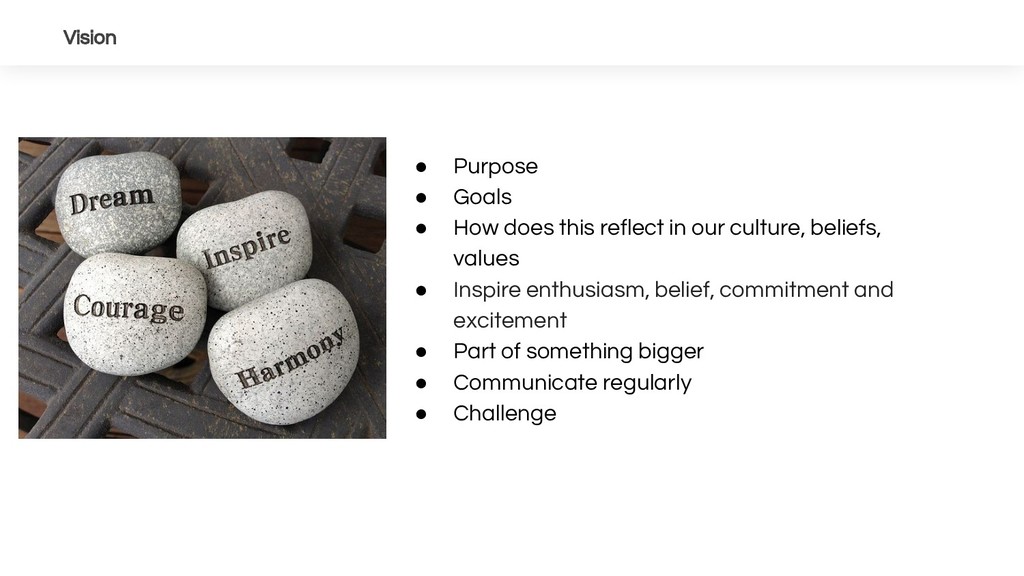
I think that still applies today. So what is your vision? Right? What is what do you wanna create? What do you inspire in your team? What are you as an individual? What is it where does the company wanna be in a year? Where do you wanna be in twelve months?
So for example, I'm at at Zendesk and my vision for the year was to create the highest performing sales team. Right? And I'm and and that is around numbers, but also being creative, looking like whatever they're doing is that this is their business, giving them the freedom and trust to do that.
So I wanna grow the business by forty percent. You know, I'm in a in a in a business that has pretty clear targets globally. Right? We've been in the business over ten years. We know what we're trying to achieve. We're trying to achieve one billion by twenty twenty.
What does that break down into the different regions? So I know what's, for example, the immediate number and then what that breaks down. I don't wanna just do that number. Right? I wanna do more. So I wanna do forty percent growth in my in my book of business next year.
How am I gonna do that? Right? How is my team gonna do that? I'm gonna make they're I'm gonna build some trust into them so they can feel free to be creative, to drive events, to do whatever they need to do to to create that.
We've launched a couple of products recently like Sell. For those who don't know, Zendesk is is is from the customer service side of the business. We've recently launched a tool for sales. So I want all my team to have ten percent of their deals to have sale sell in us.
I want them to promote our our platform called Sunshine to extend your business further. I want to make sure that that is in every conversation that they're having with their customer. I want to break down the right now, at Zendesk, we do about seventy five percent expansion and twenty five percent new business.
We have a large business and expansion, so I want that to be this year to be fifty fifty percent. So this this is my vision for the team, and then I articulate that to how that vision rolls up to the organization. A lot of you hear from from if you get feedback from individuals that they don't get they don't understand what their vision ties up to the overall vision.
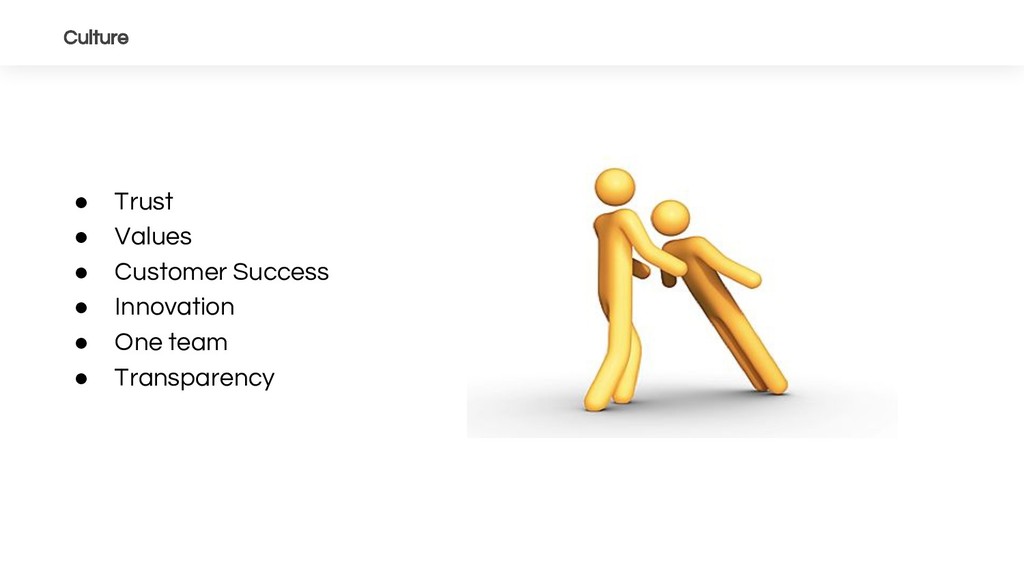
So make sure you communicate that. That's important. Culture. What's the culture? So this is probably one the most overused words in probably the last ten years. And is it is it a PR campaign sometimes? Or, you know, what is behind it? Right? Are you actually is it is it genuine?
And I think the you you know, so I was at Salesforce for over eight years and I think they've probably branded the hell out of that word more than anyone. And they use it a lot for hiring. They use a lot in their website.
But what's underneath all of that? What what what does culture mean? Right? Culture is what is when the CEO is not in the room. What you're doing when the CEO is not in the room, which is pretty much most of the time anyway.
Right? How you interact with people, what you do when when someone's not in the room, how you're treating your customers. We have on our recruiting page. At Zendesk, we have a a saying, we don't hire ********. And I kinda like that it was quite bullish about it on there, but sometimes we do.
And somebody asked me recently, what do you do when you hire ********? And I said, well, I think you have to have a culture where you don't tolerate certain behaviors. Right? If they're not working well with the customers, if they're not working well internally, maybe doing things, maybe a little bit of the lone wolf without looking at the big picture.
You know, if you don't tolerate those things eventually, they often take care of themselves. They don't you you're gonna have conversations, but ultimately, you create a culture that will not promote that type of behavior. Also, are you going to interact with your with your customers?
Customer success is number one. Also, something that happened when I joined Zendesk, something as you grow as a company, how your culture will, you know, change over time and how to keep that intact. When I joined Zendesk before I joined, I got some feedback that there was a bit of a running joke that we were just hiring Salesforce people, and people who were there for a while were getting a little bit concerned because they thought maybe the culture might change.
And it wasn't because Salesforce, it was because you're bringing in a larger company. And I think anything or or, you know, there's a comfort level, right, when there's two or three sales reps in the business and all of a sudden, you know, there's twenty.
What's gonna change? How's that gonna affect me? So then when I joined, they're like, great. Now we've got a manager coming in from Salesforce. So for me, it was important, a, to have the conversation and and and let them know what my vision and and how I run as it how I, you know, how I lead.
But secondly, you know, that takes time. Right? It takes time to see the trust. It takes time to build those relationships. It takes time to see how I am as leader and develop into that. So this is this is very important as as you as you're in the room, as you're scaling your business, keeping the culture intact and having that, you know, it's gonna change.
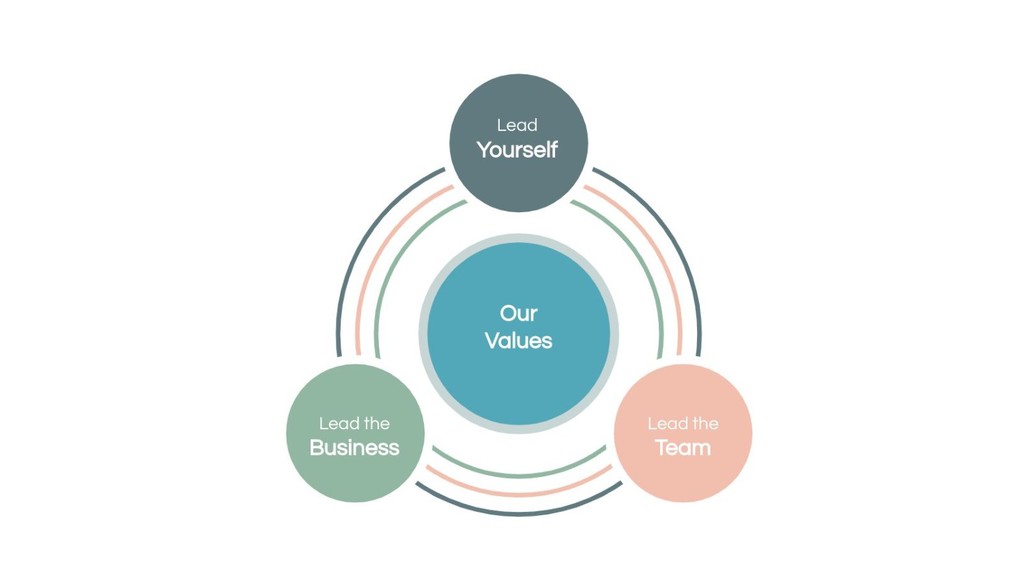
It's gonna change, but you as a leader continue to manage that and seeing it and making sure you're on top of it as it does change. And this just goes back to my point around, you know, me as an individual, how I what my values are.
Right? Instilling trust within the team and ultimately leading myself. Right? You can talk you can say what you want, but how you walk the walk is ultimately the most important. Hiring. So I gave a talk recently about coaching development in London, and one of the things that everybody in the room we discussed regardless of revenue, growth, the most thing the biggest thing we're all competing for in technology right now is talent.
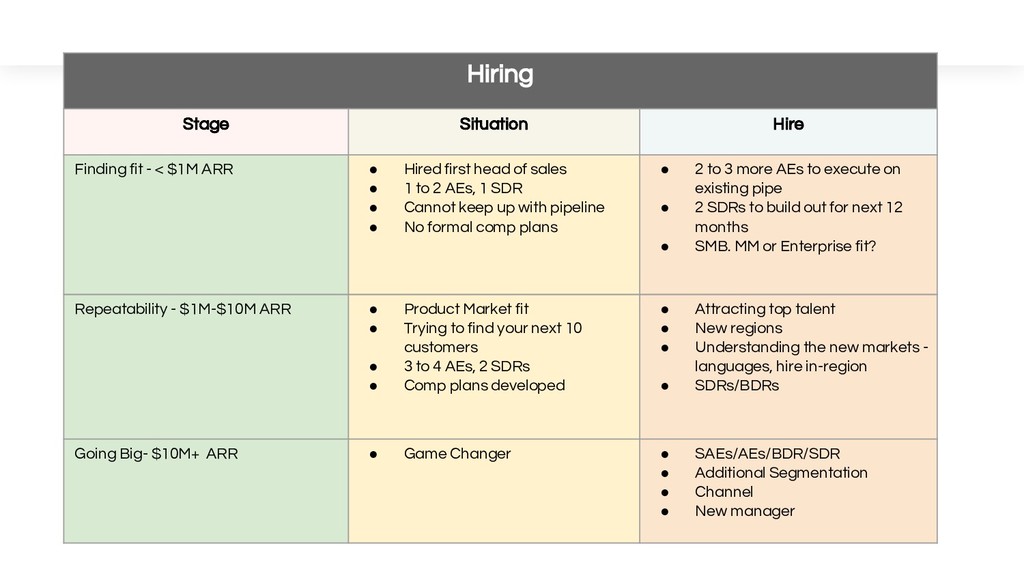
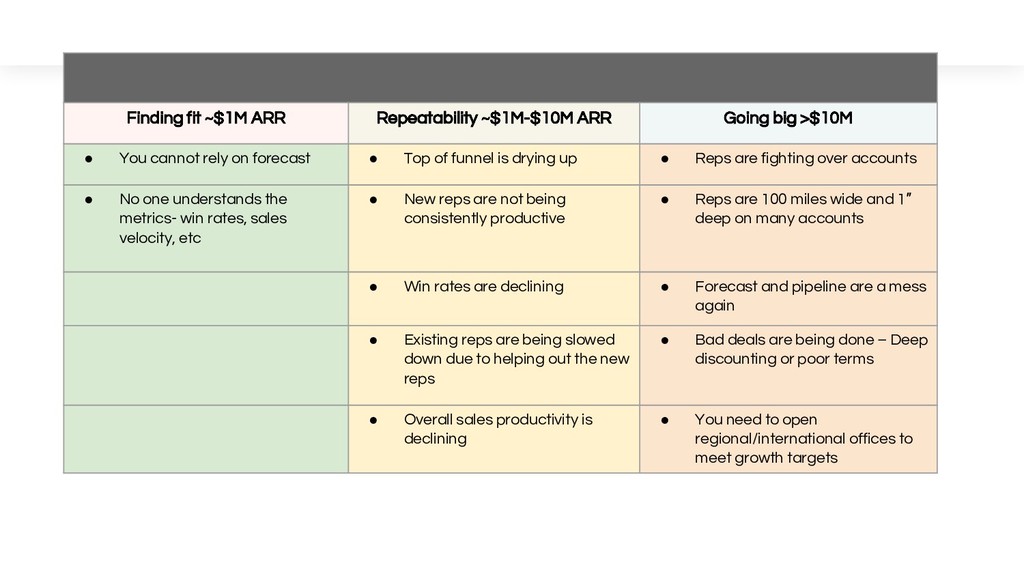
And how are we gonna be creative to to hire? So if you're starting a you know, chances you're starting a company and you have a couple of sales reps, you may be at a different stage. Can I get a hands up maybe in the room who's maybe a look around less than one million MRR? Okay. What about for one million to ten million?
Okay. Alright. And then anybody ten million plus in the room? Okay. So you're gonna be different stages, right, in terms of what you're looking for, what you're trying to hire. You may be if you're less than one million, you might be hiring your first set of sales, or maybe you've just got one or two reps.
You might not even you you think you can potentially do it all. You may not even have anyone with the sales title. You're gonna start to be hiring a couple of sales team. And then if you're in the one million to ten million, probably got a good product market fit.
Maybe you've still got you're still framing it around some of the industries, and you're trying to find your next ten customers, and then you just continue to scale. And then if you're at ten million, pretty much in a game changer. So how are you going? What are you gonna look for?
A lot of what you're gonna be looking for is going to reflect from where you are. Right? So if you are maybe you're from a right now, you're in the small business space. Right? You are maybe some mid market customers. You're in you may be already in the enterprise space, but what are you looking for?
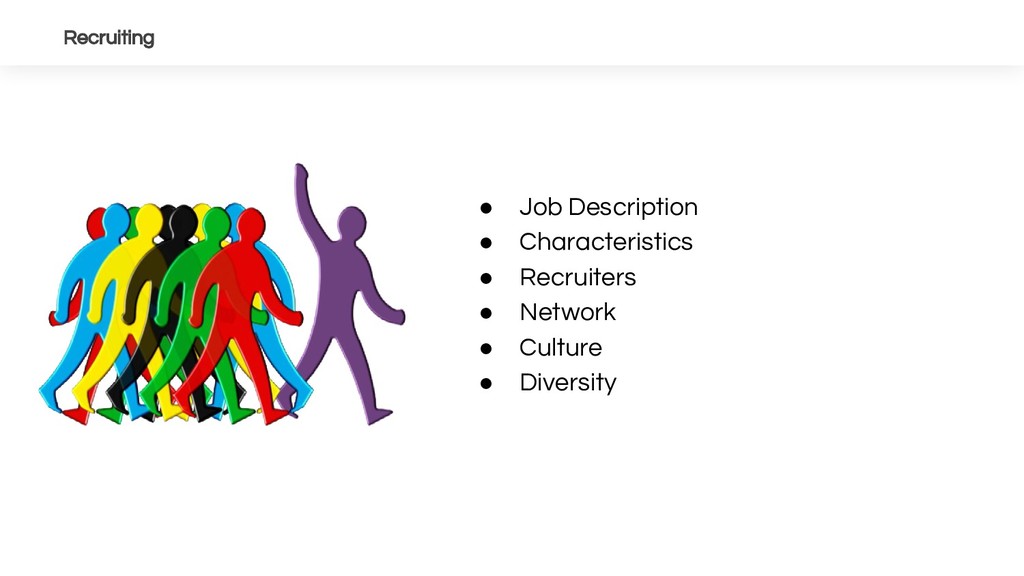
You're looking for someone with, you know, five, six years experience? You're looking for somebody with fifteen to twenty years experience? Understanding what you need and and creating that job description and what that is and what those characteristics are. Right? What the characteristics are that you're looking for around that, and that's just not going to be, you know, ten years.
So there's gonna be other characteristics you want within that and what that culture will be. How are you gonna go out and recruit? Now everybody in a small organization is a recruiter. Right? Especially if you're coming in to lead the sales team, you're going to be probably fifty percent of your time will be spent in recruiting.
You're gonna want to look into your network and and other people's network within the organization. It most the best talent are not looking for they're not applying for jobs. Right? They're already in a job. How do you attract people to leave a job?
Now you may be bringing some of your network. They may be looking to see how you do because they thought why, you know, it's a big risk you just join a company that, you know, is could could in in in one year may not even exist.
Right? So they may be waiting out a little bit to see or redo, but you need to spend a lot of time understanding your network. And I've also listed diversity down here not because I didn't put it at the bottom because you'd be at the bottom.
I listed it because I wanted to kinda encompasses everything here. This is very important, especially the hiring stage. We all know diverse teams create more of an analytical thoughts, see the stats all the time. Right? It's it's all there. I don't think anybody's arguing anymore with it.
There's a lot of discussions, I think, these the next couple of days around that on those topics. When you are recruiting from your network, this is difficult. Right? Because we often recruit we also we often are or worked with or or connect with people that we are similar to.
So just be mindful of this. I'm you know, I I was at a at Salesforce, we had a diversity data scientist speak to at one of our sales kickoff couple years ago, and I actually grabbed her at the end just to to speak with her because it was it's just always something I've struggled with as a leader to get a diverse talent.
She says, just have to stop doing referrals. So I went to the leader of the business. I said, this is the feedback I got. We need to stop doing referrals. How do you do that when you're trying to grow at the scale you're trying to grow at?
Right? It's tricky. I'm not saying you to do that because I think that's I don't I I think it's hard. Right? But you have to be really mindful when you are going down to your network that if you have a team of the same type, you will then attract the team of the same type.
So be mindful of that. Compensation. This is a tricky one, you know, and I I we were talking, I think, we were talking earlier actually, I was reading something this morning on Medium about that we often pay in in your when you're a startup.
Right? You're not gonna be often paying or giving the benefits like you are some of the big companies. But how are you gonna attract? Money is not the only attraction. It's not the only attraction in sales. People tell you it is. They're full of it.
If there's a it's a lot deeper than that, but you have to often get people in the door, and you're competing with other companies to get them in the door. And, also, it can be a big risk. So think about the conversation, and oftentimes, it is, you know, it's gonna be based upon it's gonna be pay.
It's gonna be benefits. There's gonna be equity. Right? You're there to try to hopefully get that big payout potentially. But how are you going to you need to take I believe you need to take money off the table quite quickly for people to get be motivated, to attract them to begin with, and and maybe you have different ways of incentivizing them.
Right? You don't have the structure yet to really understand the book of business and understand what the comp plan's gonna look like, but you should be in a position to build something such as maybe you have some team comp plans based on your your new product, increasing new sales, whatever those metrics are.
And they will evolve as your company evolves. So continue to, you know, flush that out, but continue to also think about when you are creating those salaries for bringing in new hires at the early days. Think about bringing in that little bit, pay more.
And some do. I have seen companies. I've seen when I worked at Salesforce, reps would leave for startups and they'd be making, you know, twenty to thirty percent more. I've also seen it the other way. Right? You know, it can also be around some logos or whatever you wanna create that comp to be around.
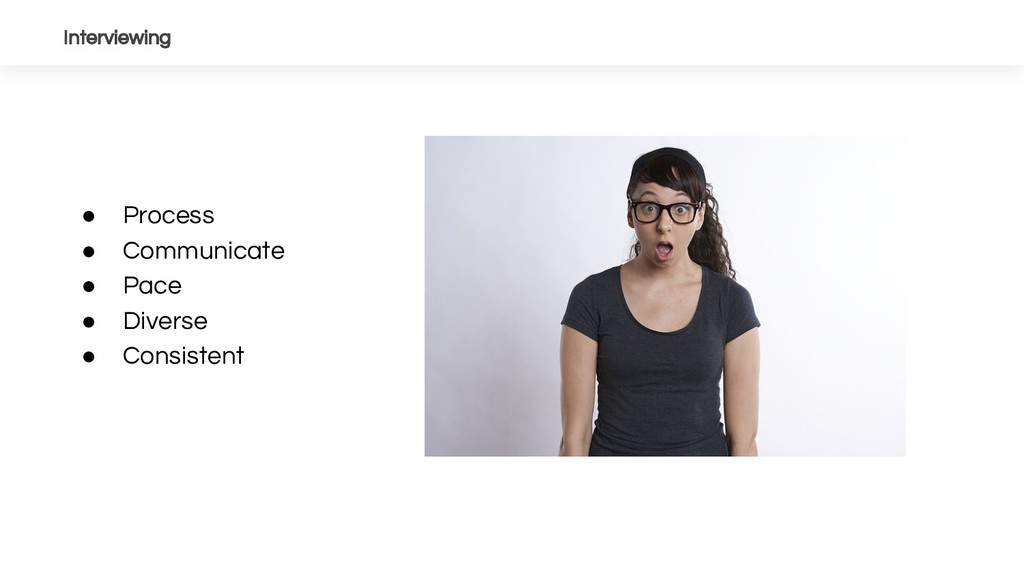
So your interviews, this is as you're scaling to this needs to happen at pace often. Right? And even I'm not at the pace that a lot of you are at the room right now, and it's still difficult. Right? Getting stakeholders in the room, getting people in room, getting schedules.
My hat goes out to anybody who's in recruiting who does coordinating diaries. I think it's got to be the hardest job to do. It's but it has to be you have to be you have to make sure everyone is that's the number one priority.
Right? That everyone is focused on hiring and interviewing and making sure that we and it also is it will your candidates it's part of the experience that your candidates will have. If you do this if you if you automate this process really well, it will reflect very well on you as well and get you to where you need to get to.
Also touching a little bit on the diversity here too. At Zendesk, we don't have in the London office, we don't have we don't have one female in our architect consulting team, which is pretty poor, I have to say. And I often become the token female to me in the interview, which is not perfect either.
But it's important that you do have a diverse team. If you if you bring someone in and they don't see this there's, you know, six white men in the room, they don't see that the company is very diverse, it will reflect upon your organization.
Companies are people are looking for that. So make sure not that just having me in the room makes the difference because I don't work on that team, but you we will know the direction we need to go in and that that's been worked on.
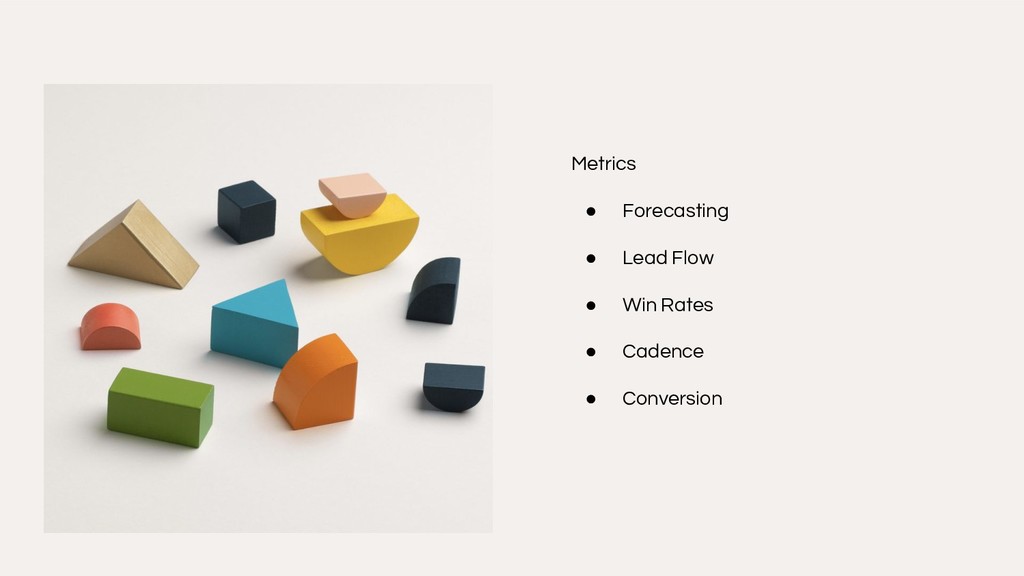
So here comes the boring process. Right? So if you have if you get all this right, get the right people in place, you pretty much have the framework there to to to be successful. But you do have to, fortunately implement some reporting and metrics and process around that.
That hopefully you'll have someone in sales operations to help you with some of these things and and building out what what this will look like. Right? Understanding your market, understanding your numbers, understanding your win rates. So if you're joining and you're trying to build this to build out this framework of what this process is gonna look like, gonna need to spend time and really digging into the systems and understanding what that will be.
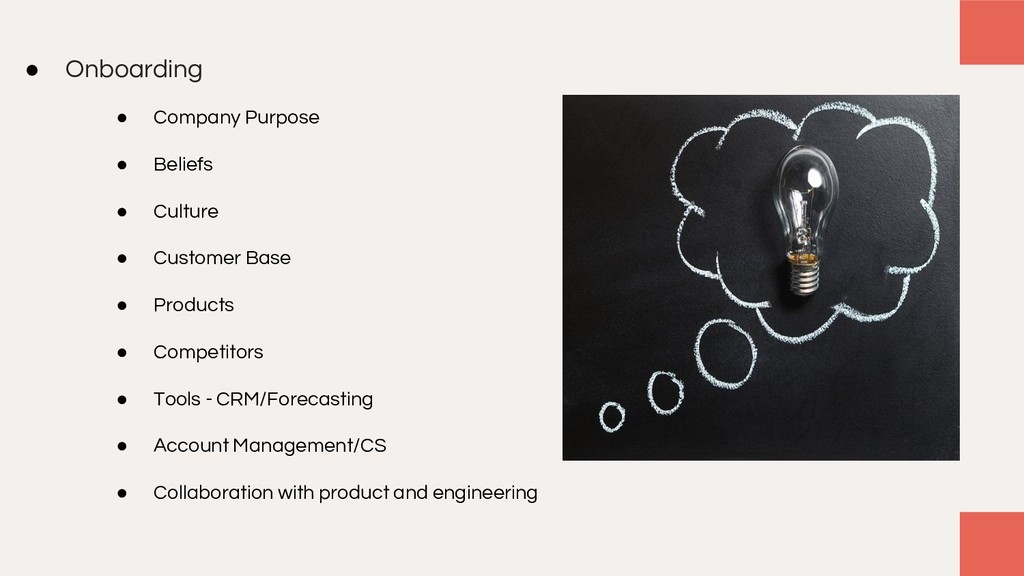
Maybe you have a maybe you have a CRM, maybe you don't, but you need to spend time understanding. It will depend where you are as a business. So as part of that, I also wanted to talk about because you're going to develop your processes, but when you're bringing in your new hires, you wanna take some time to do some onboarding.
Right? And, you know, you know, Salesforce, they send people off to San Francisco for a couple weeks. You know, we're not in a position to do that. Right? This is going to be something where you're gonna immerse everyone into the culture, into learning the product, into understanding the people, understanding the customers, understanding what the goals are, spending about, you know, whatever those couple weeks to do that, to immerse everyone that comes in and building some framework and methodology around that to set that up.
And then as you scale, you can implement something formal where perhaps you have, like, an off-site and you have, like, a week to do that. Understanding what your competitors are. You'll also be spending a lot of time at this stage collaborating with your with your product and development team.
The product will be often you'll be still tweaking the product to a degree based upon the customer demands. Right? So how do you interact? What's the process with that? You've come back. You've met a customer, a large customer you wanna win or prospect you wanna win.
You know that if you got if you got a product fit for this for this type of customer, you know that you can win twenty more other logos. So how does that look like? What is that process between getting that into development, getting it out back into the with the customer?
What's the time frame? How does that look? Making sure that the sales team fully understand how that process looks like because that can that can slow down things quite a bit. So once you have understanding of where you are and what the business direction is and and and all the the the stats around that, you're gonna build your, I guess, your system per se, right, whatever that system was based, understanding what those win rates are, understanding what those metrics are behind it, building some reports for the teams to look at so they can
understand and see what the growth what the what the goals are of the business and where they need to be, and building a framework that you can also use and manage from a day to day basis, right, to see what where you are and where they are against targets and so forth depending where those what those targets are, right, for the for the where the stage you are in the business.
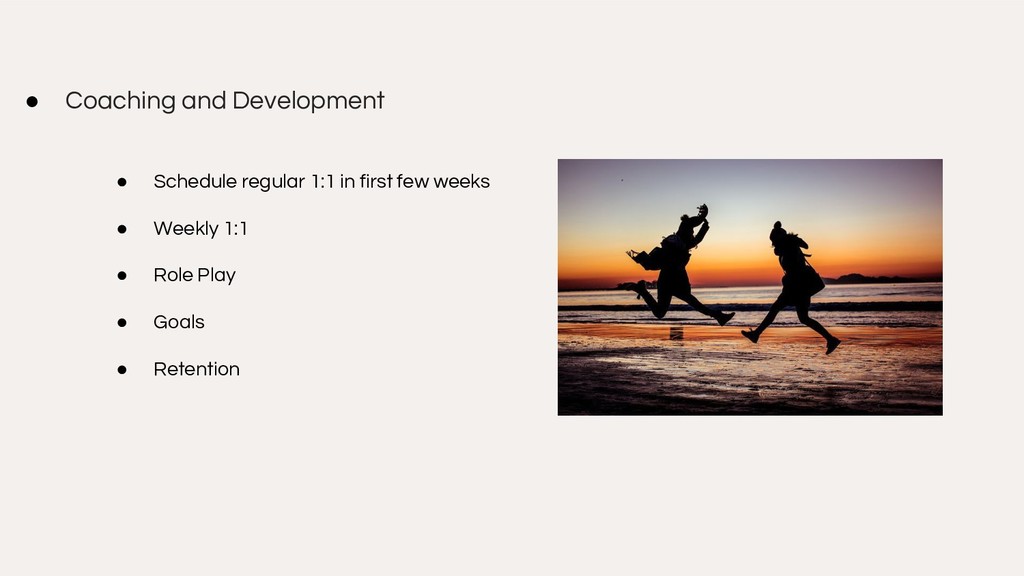
Coaching and development, it can't us to underestimate enough how important this piece is, especially as you're moving at pace like you are. As I mentioned, I've got I did a recent talk around this. I spent about fifteen minutes speaking about this because I I feel very passionately about how much time you put into your team is the amount of energy you will get back from them.
So making sure at the very beginning, even though you're running Mills and Meijer a million miles an hour, you're still trying to hire, you're still trying to get the people in the business, you're still trying to win logos, you're selling yourself, You're doing everything. Right?
Spend the time with your team, the individuals early on. Get to know them. Get to understand what drives them. What what what do they wanna what you know, what what's unique about them versus versus all your other team members members. Spend time with them.
Go through have daily catch ups you need at the beginning. Put in weekly one to ones. Coach them as you progress. Have the conversations progress from probably process to winning deals to understanding their career and mentoring them in the long term. Retention can be as you said, it this business is very competitive.
Right? Getting talent is is tough right now, and I think we're we're all very lucky to be in this industry. Right? It's a great industry to be in with there's lots of opportunity for each and every one of us. So we all know that. Right?
And we know that people who are working for us know that as well. So what are you doing to make sure that they're having the best experience there that they need to have in order to to to stay with you. Right? That's that's so important.
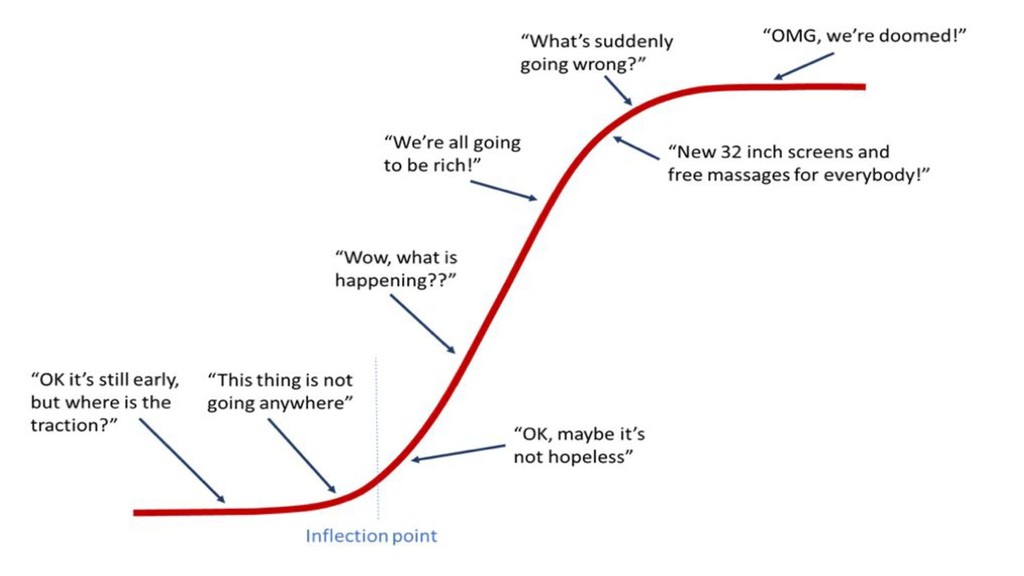
So as we continue to move through the business, we continue to develop the teams, develop your vision, your culture, implement some processes. You think you're starting to get places, and then all of a sudden you think, oh my gosh, it's we're doomed. Right?
It's just this ever evolving circle, right, where you'll get to the point where you're still thinking, oh god, you know, you've got to the one million, then you're over the one million, and then you're getting so you're gonna go through these these these hills.
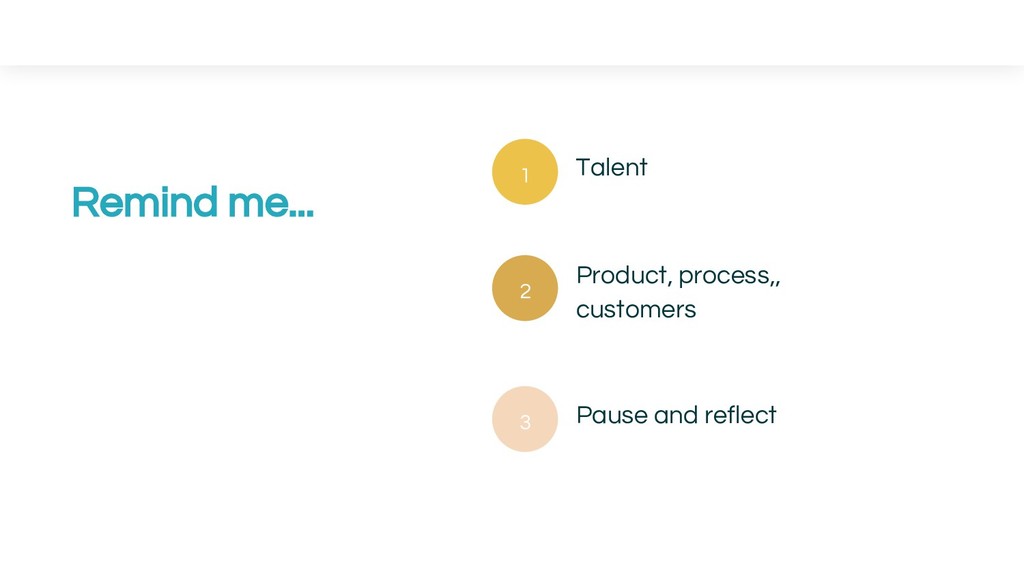
Right? You're gonna go through these ups and downs, and there'll be light at the end of the tunnel. Right? But ultimately, the most important thing is that you have the right people. You have the talent, and focusing on that is gonna be the number one indication of success.
Your products are processed. Your customers, of course, absolutely important. If you have the right people, you could teach the rest. If you continue, if you have a good product. Right? So I say at the end of it, just pause and reflect every time.
Continue to look at it. Continue what you can do better. Take the space. Take the time. Build a strong team, and you'll be successful. Thank you.