Search marketing barely existed twenty years ago, when the web ran on paid directories and companies like GoTo.com and Overture - not Google - owned the paid-search world. How did one company come to define an entire industry, and where is it all heading next?
With two decades in the trade, Jon Myers takes a fast, story-rich tour through the history of search: the garage Google rented from Susan Wojcicki, the two occasions Yahoo could have bought Google and passed, the shift to mobile that doubled advertisers' costs overnight, and the stats that show just how completely Google now dominates. He closes with a bet on the future - that nearly all media is heading toward audience-based, biddable auctions.
1 / 60 Use ← → to navigate
Auto-generated transcript - may contain errors.
Tap a timestamp to jump the video.
Thanks, Kirsty. I'm gonna see the positives in that. I look great for sixty five. All I can say is thank you for coming. It's great. I feel like we should just kinda cozy on up, huddling. Who works in search marketing right now? Okay, so some people.
Somebody's phone goes up at the back in the dark there. Alright fella. How many people have been in search for ten years? Some of you, that's good. Fifteen years? I know you are, sir. It's like our annual get together, this one, isn't it?
So obviously then, I'm gonna basically talk about what's going on, what's happened, where we went, what happened in the last twenty years, and take you on a little journey. So, thank you for coming along to come on this journey with me. You're gonna maybe learn some stuff as we go, because I've been very lucky to work in a very unique industry.
I haven't been in it for forty years, like Kirsty said. It's twenty years, so she's over egging it a little bit. I don't think search marketing probably existed forty years ago, but it's certainly been around for twenty years, Google's twentieth birthday came around, I kind of existed before Google in this world, and Brian asked me to kind of come and talk about what's happened in our history, because I think there's a very unique journey that Google has gone on in some respects, and there's a very unique journey as search marketers
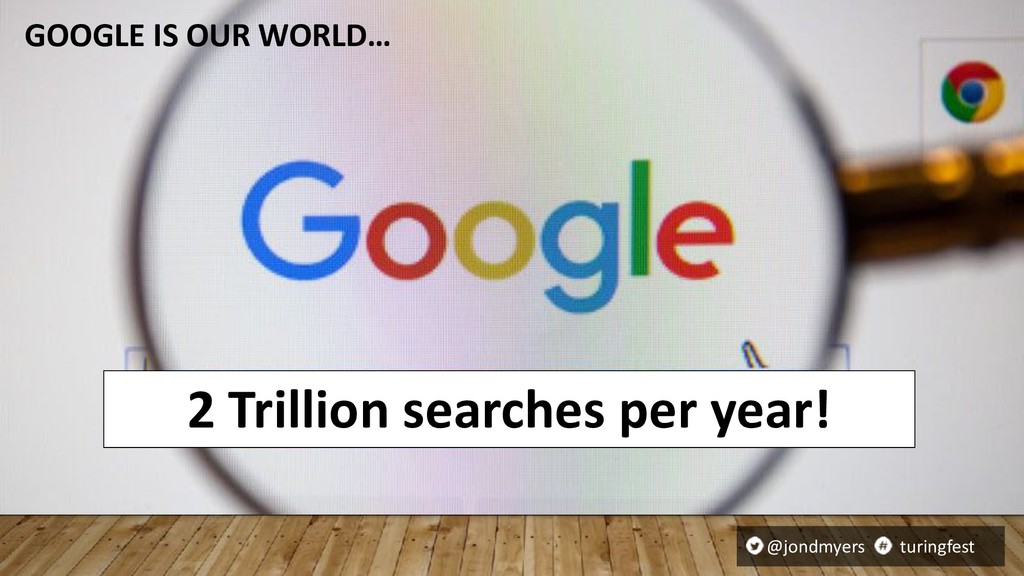
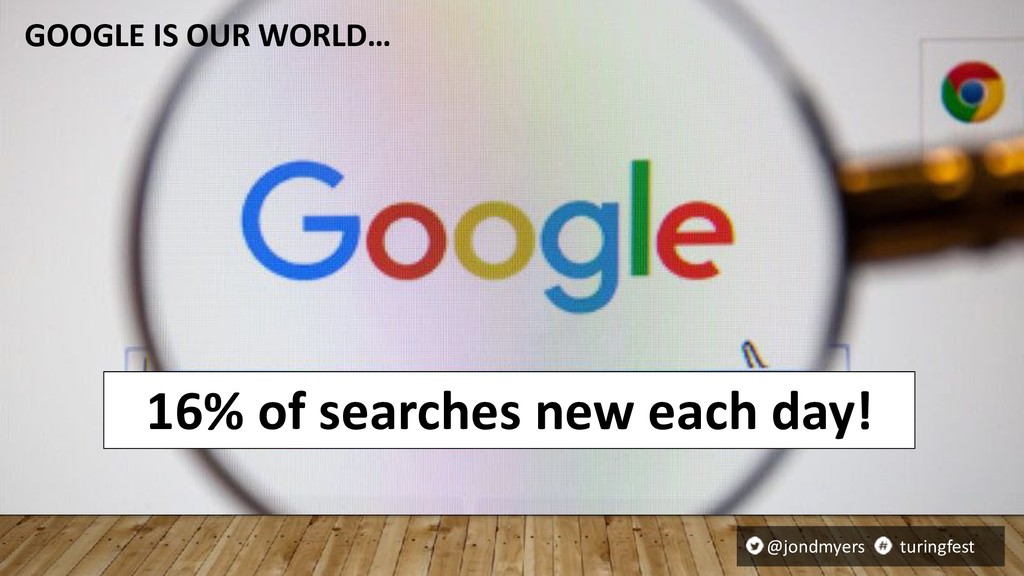
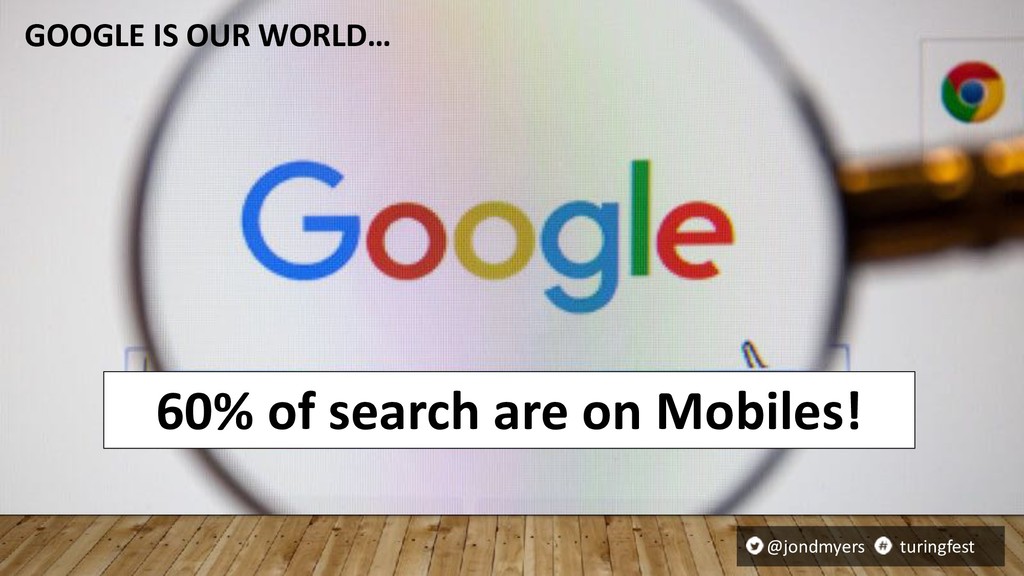
that we've gone So, I mean, I start from the beginning, in some respects, Google really, really is our world today. I mean, our world is basically driven by two trillion searches per year. It's slow on the click. There we go. Sixteen percent of searches are new each day, and I think what's really pertinent, and it's been talked about quite a lot today as well already, is mobile really, really is our world.
Mobile is starting to drive search in different directions. A few of the speakers on the marketing track this morning talked heavily about new features and functions and advertising opportunities within mobile, but I think it's fair to say that that will just keep accelerating.
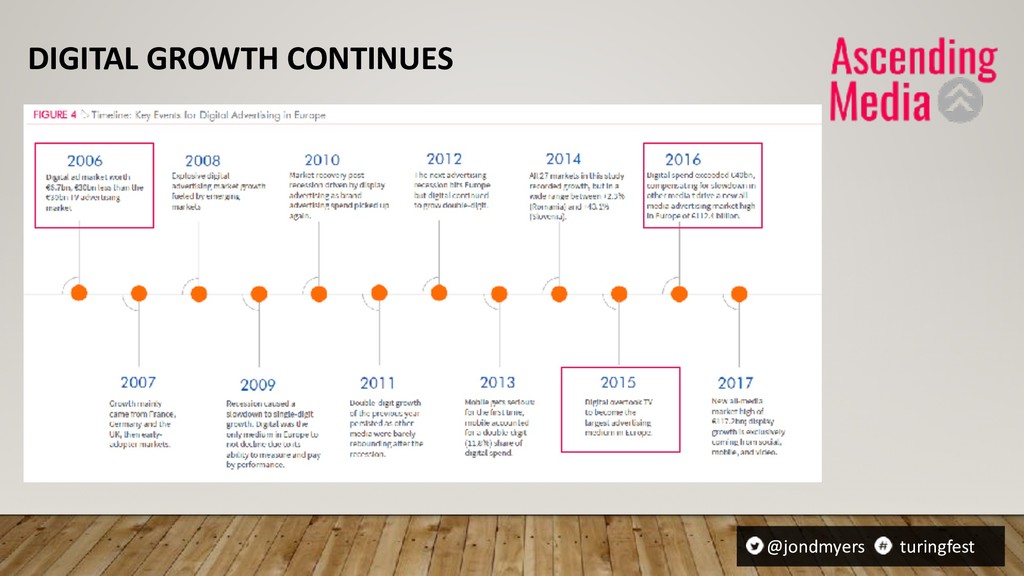
We literally live on our devices, and I think it's quite scary how long can we spend time wise on those devices, but it's great for people like Google and Facebook. Digital just generally keeps growing, and this is just so much I dragged out of the European ad ex report.
When you think back to two thousand and six, the digital marketplace was worth about six billion, and TV completely owned the space. In twenty fifteen, digital had more ad spend in Europe than TV, so it evolved very, very quickly, and we're continuing to see that grow now as we move into twenty sixteen, twenty seventeen, and they haven't released the twenty eighteen figures, but marketplace in Europe now is something like about forty seven billion euros of digital ad spend, which considering it was nothing when you look back,
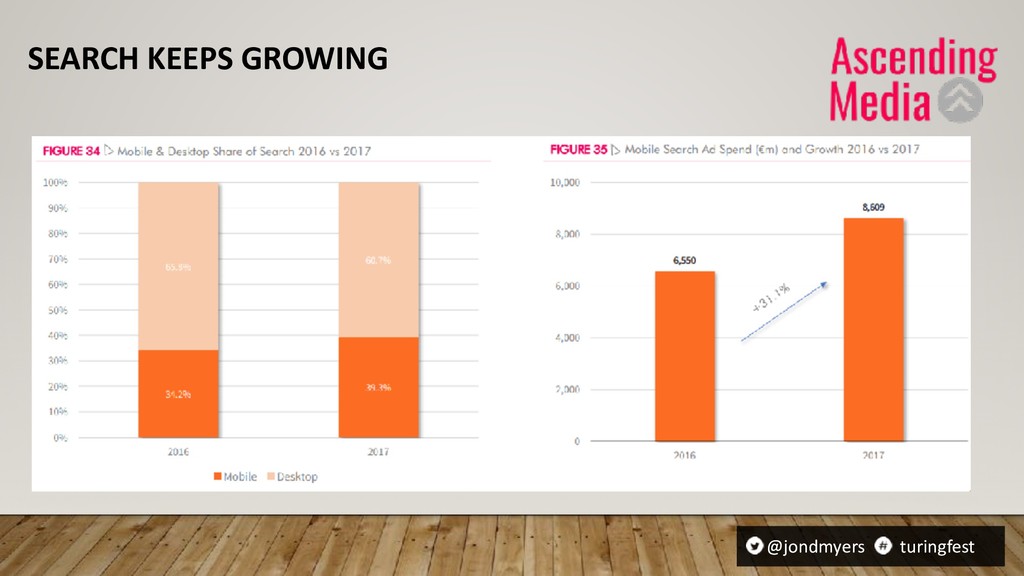
it's quite stunning and it's quite amazing, and we'll obviously come on and talk about how Google's playing in that. I really think it's fair to say search continues to grow, and search will continue to grow, just because of the nature of the marketing that we do, and the execution that we have, and the ability to be able to actually know that what that person is looking for, and to place advertising in front of them.
Search marketing has been a phenomenon, and I think we'll continue to see that grow. It's slowing down in certain countries like the UK, and established markets like the US and Germany and places, but all these other countries are seeing thirty, thirty five percent market growth year on year.
So, it's an amazing place to be. But let's take a little journey backwards. Let's go back twenty years. See the pun there, mirror, looking backwards? It's great. I try. In that world, when we think back to sort of 'ninety five through 'ninety eight, we lived in a world of directories.
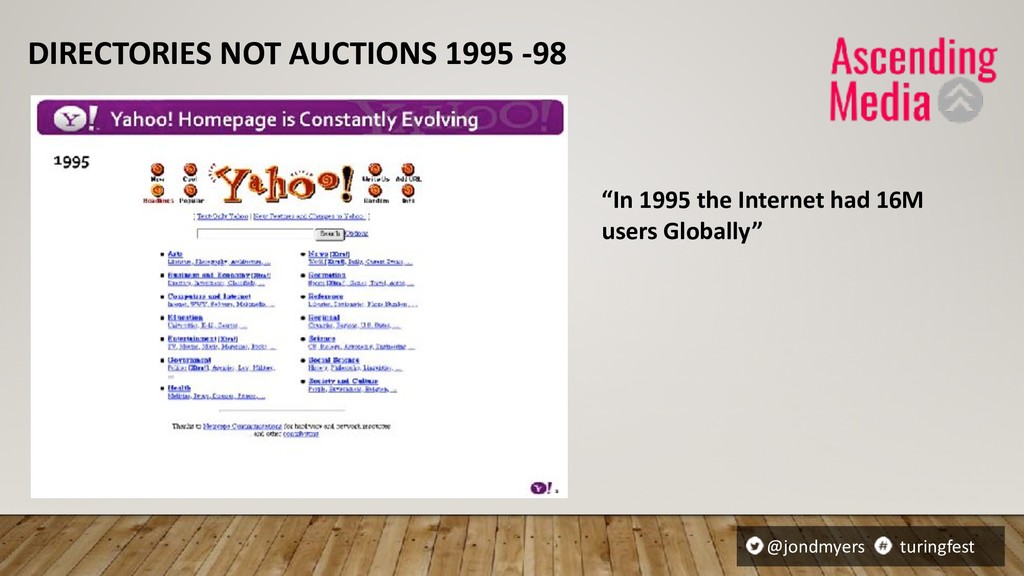
I mean, as Kirsty mentioned, I've been kicking around the SEO space and the paid search space for many, many years now. This is kind of what Yahoo! Was in nineteen ninety four, it was all about blue links, it was a directory, you paid to list yourself in there.
There was no search functionality. And their pages evolved, they created, and they brought in some level of functionality, but just to search the directories. I think what is amazing back in nineteen ninety five is that the internet only had sixteen million users globally.
That's nuts, innit? I'm gonna give you some great stats, hopefully, over the next. You can go home and you can go, look, I'm really clever, I knew this. And we'll go from there. So, let's think about the paid search landscape, and where it all started, and it wasn't Google.
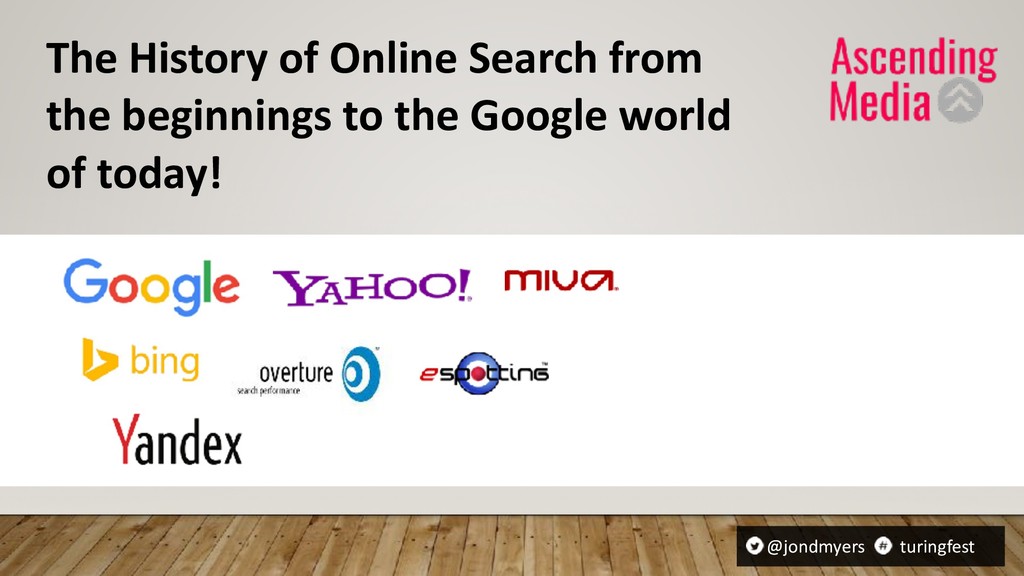
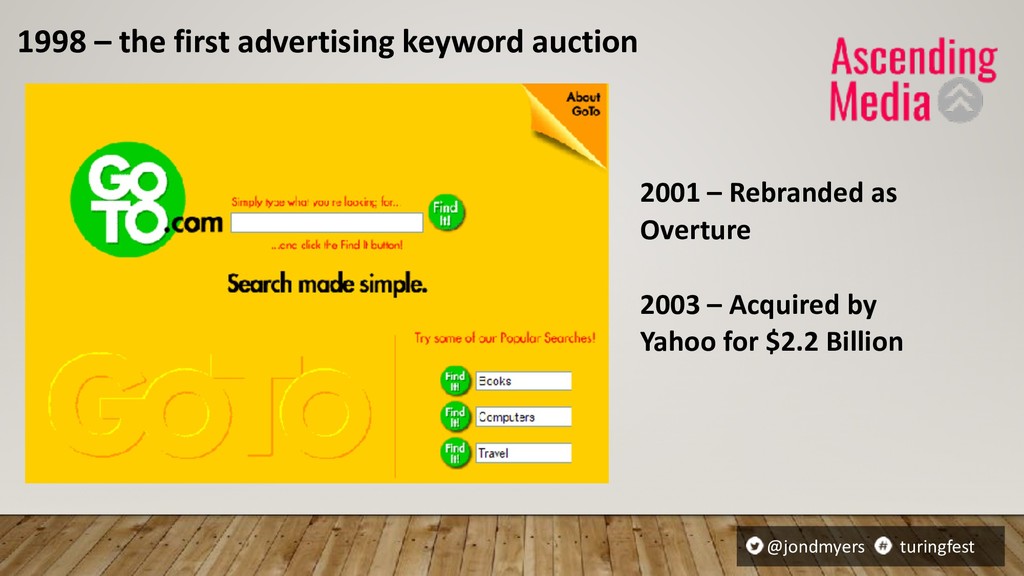
I is Google today, as we know, as I mentioned, Google is our world in some respects. Well there was this company called GoTo dot com, it was part of Disney, it was called GoToInternational, and it had this lovely yellow website, and it was brilliant.
I had still, for me, the best keyword research tool that ever existed in paid search. It was fantastic. It was a sad day when they shut that keyword tool down. When Yahoo bought them in about two thousand and six, when they shut it down, it was horrible.
I had to go and use the Google one. The Google one's never accurate. Is anybody from Google in the room, by the way? Never own up, but No? Okay, I might go on a Google bash once in a while. They rebranded this company called Overture, they changed the website color to be blue and white to make it a little bit more corporate, and that was in two thousand and one.
In two thousand and three, because of the nature of the nuts world that we live in in search marketing, it was acquired by Yahoo for two point two billion dollars. So from nineteen ninety eight, two thousand and three, forty percent year on year growth in revenues, sold for two point two billion.
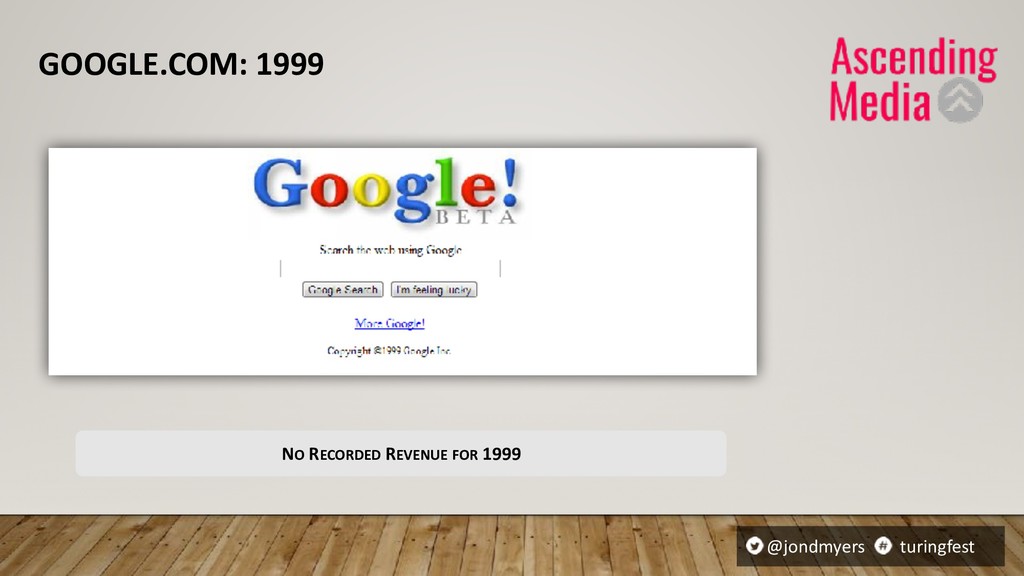
I love the world that we live in. There's gonna be some more of those as we go. So, if we think about Google, Google obviously came along in nineteen ninety nine, they were incorporated in nineteen ninety eight, and nineteen ninety nine they had zero revenue, and we'll come on to talk about them in a moment, because I'm doing it in date order.
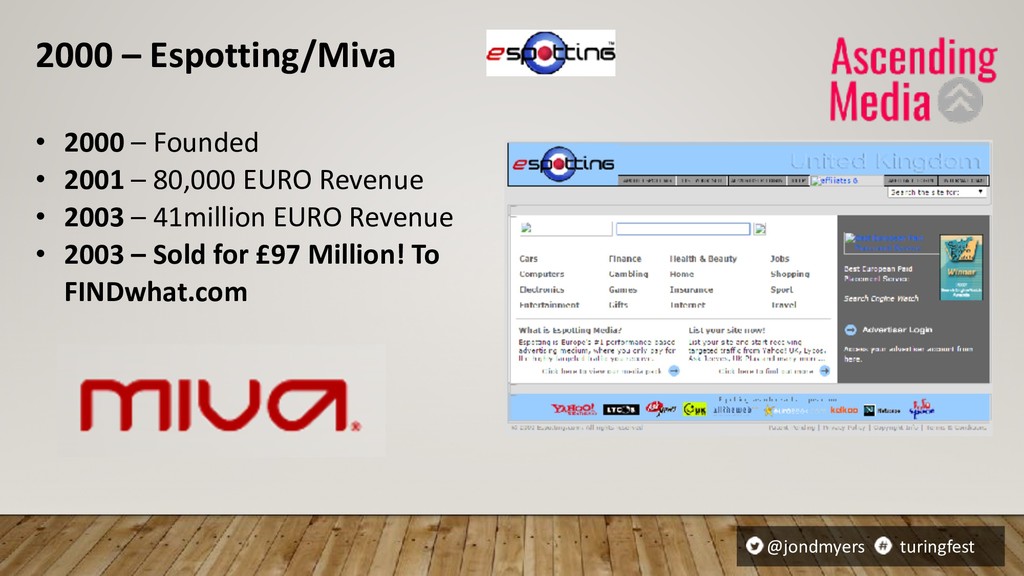
There was this other company in the UK called eSpotting Meeva. Anybody remember that one? Nope, because nobody's been in search that long, that's obvious, yes. It was founded in two thousand by some brothers in London, and they launched this site, and it was basically the UK version of what was Go To International that became Overture.
And in its first year, had around about eighty thousand euros of revenue. They had an office in the old Truman Brewery in East London. It's a bit of a scaggy office, I used to go in there quite a lot, and it was just all just laptops and desktop computers everywhere, and it was all leads everywhere.
And they were kind of organically trying to figure the business out. And I mean, when they first launched, they had like ten employees, and within six months, they were at one hundred and fifty employees, and within twelve months, there were over three hundred employees.
And they went on this amazing journey, as I say, when you look at that eighty thousand euros in two thousand and one to forty one million in two thousand and three, and then sold it for nearly one hundred million to a company called FindWhat dot com in the US.
They rebranded the company as Meeva, and it kinda went on from there, but as you can see, very small on the bottom of this thing, they were powering things like Yahoo, Lycos, AskJeeves, from nowhere, because they went and brokered deals, they did stuff, and Google's obviously gone on and done that.
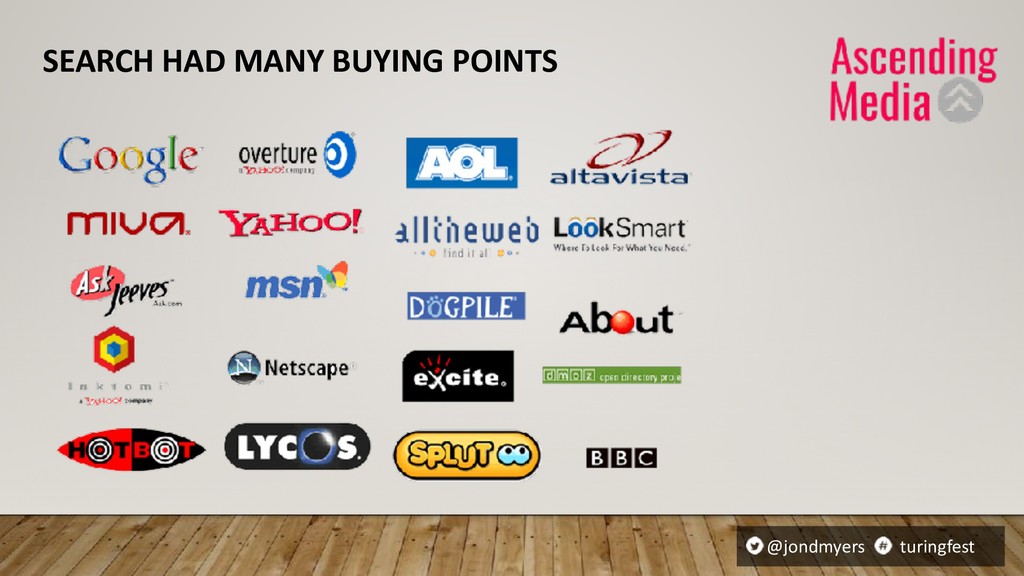
But back then, we had so many different places you could buy search marketing from. I mean, it's a plethora of places, I mean, pretty much just buy it from Google. I mean, you used to be able to buy it from BT LookSmart, so you could actually go and buy paid search advertising from BT.
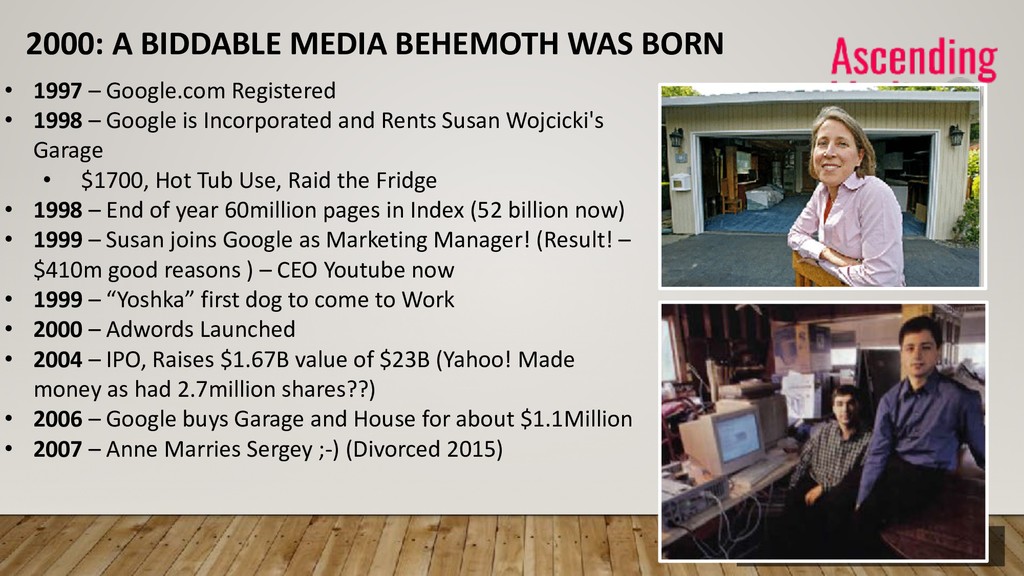
All of this got then consolidated and brought together, because in two thousand, as I've called it, the bittable media behemoth was born. And I'll come on to talk about, obviously, these people that are on the right hand side at the moment. Little quick history, nineteen ninety seven, Google dot com was registered as domain, and they incorporated their business in this lovely garage.
This is Susan's garage, Susan is a lovely woman, can't pronounce her surname, not gonna try. Anybody know how to pronounce that? Wychka? Something like that maybe? But they obviously went to do that, and the original deal was seventeen hundred dollars a month, hot tub use, and free rent of the fridge.
Serious, honestly. And this is our intern guy, Brynn, sat in the garage in the bottom corner here. Can you imagine when those two guys walk up and knock on the door? And the door opens, and they go, hi, we see the garage is for rent.
And Susan goes, okay. You wanna rent my garage? And they're like, yeah. And then she goes, imagine if she went, no, I don't think I wanna rent my garage to You just don't look at the part, we've got this tech company, you know.
Thankfully, she said yes for Susan, because basically what went on from there is in nineteen ninety eight, by the end of that year, they had sixty million pages in their index. They now have around about fifty two billion pages in their index, which is actually, ironically, less than one percent of the total pages on the internet, because there's one hundred and thirty trillion pages on the internet.
That's a lot of pages. Susan is incredibly happy that she rented her garage to Larry and Sergei, because in nineteen ninety nine she joins Google as their marketing manager. Total result for Susan. Four hundred and ten million dollars later, that's what she's worth today, she is currently the CEO of YouTube.
And she was the SVP of global advertising for Google until four years ago when she became the CEO of YouTube. As I say, imagine when those guys knocked on the door. She opened the door and she went, God, they look like a right pair of ******* idiots.
No thanks, not today. She'd be crying herself to sleep for the last fifteen years or so. But she went on from there. First dog was at Google in nineteen ninety nine, they were a dog company. Yoshka came in, and two thousand, AdWords was launched, or Google Ads as we call it today, because they've changed the branding.
It's not AdWords anymore, by the way. And on from there, basically, they went to their IPO in two thousand and four. So from a corporation in nineteen ninety eight to IPO in two thousand and four. The IPO raised around about one point seven billion on a valuation of twenty three billion dollars in a six year period.
Ironic thing in all of this, because I've mentioned Yahoo earlier on, Yahoo owned two point seven million shares when they IPO ed. So Yahoo made some money out of Google, which they never did again. And in two thousand and six, Google bought the garage.
So somebody owns Susan's house. Google owns the garage now. It's kinda like Elvis and Graceland's. People kinda come and flock to go and see it, and the computers are still in there, and you can have a little tour of the garage. So, if you fancy it, it's down there in Mountain View, but Susan's very happy that she rented that garage, for sure.
Because then they kept it in the family. In two thousand and seven, Susan's sister, Anne, married Sergei Brin. They got divorced in twenty fifteen, but she's three and a half billion better off in the bigger process of the whole thing, and she owns a company called 23andMe.
Who knows what 23andMe is? Who's spat in the tube and done the DNA thing? Who now, who doesn't know what 23andMe is, is kinda going like, this guy's going off on one. It's really good, you can find out everything about your history and all that sort of thing, but she, Anne, started this company called 23andMe, and the original investor in it was Google, to the tune of three point five million dollars, and 23andMe is doing unbelievable now.
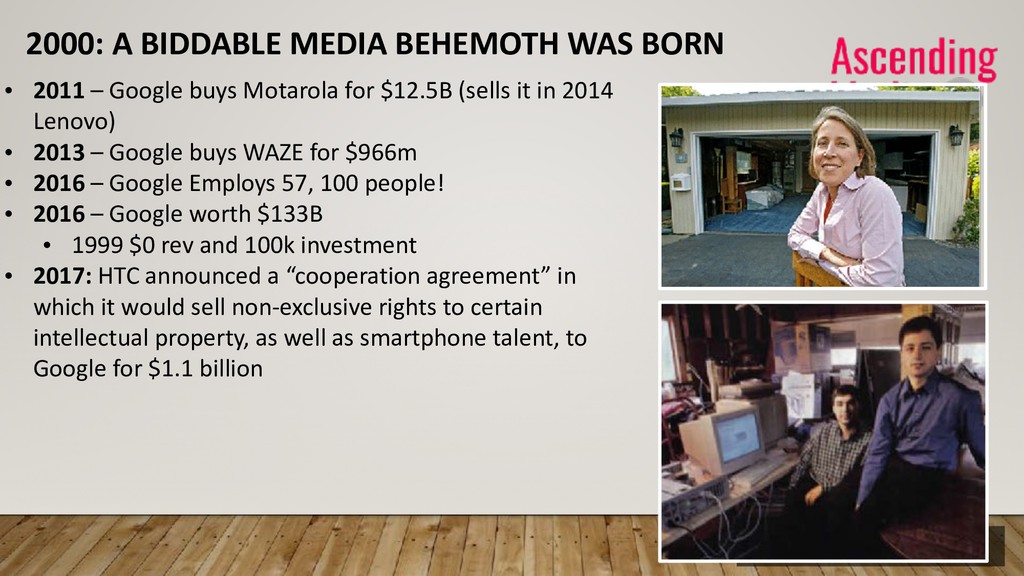
So going on from there, Google then goes and acquires Motorola for twelve point five billion, sells it in twenty fourteen to Lenovo. Google buys Waze, if you didn't know that, and they track all of your cars via your Google Android phones, and they can tell you where traffic is and everything like that.
Google employs fifty seven thousand people, it's now just over sixty thousand people. Google is worth one hundred and thirty three billion, so Susan really made a good choice. So, from nineteen ninety nine, zero revenue, and one hundred k of loan, they are at one hundred and thirty three billion, and recently, HTC announced the cooperation agreement, what they call it, to sell non exclusive rights to certain intellectual property to the tune of one point one billion with Google.
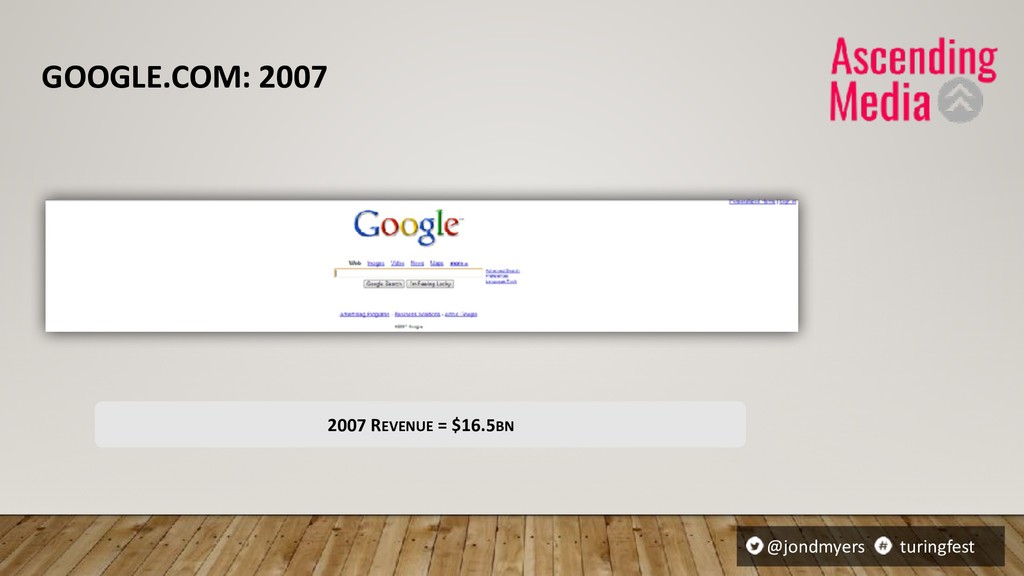
So, Google just keeps making these investments, which is amazing. So let's jump forward eight years, from no revenue in nineteen ninety nine to two thousand and seven, where they have sixteen point five billion dollars of annualized revenue, and we'll come on from there and go forward.
Who remembers this one? Oh great, nobody. That's how well it was going from them back then. I actually worked for Yahoo at this time. I was one of the UK leads on the search alliance with Bing. It was happy times. We put the markers together, worked really well.
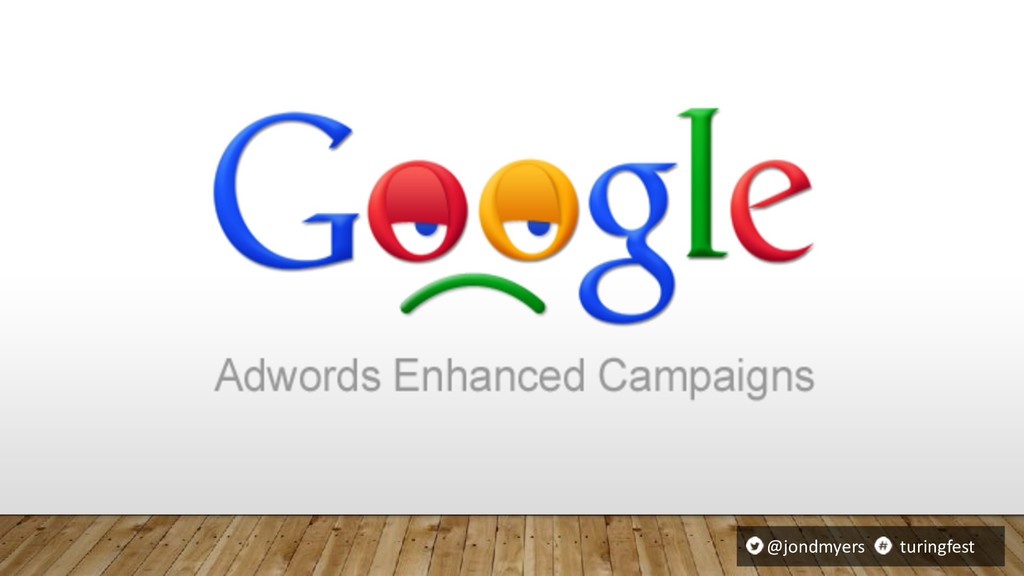
I'll leave it at that. Twenty second of July, twenty thirteen, what happened? Thank you. I told you that the other day. Who remembers Google enhanced campaigns? What a pain in the ass that was. Didn't know what to do, enhance campaigns. So for years, Google basically told you on your AdWords campaigns to basically split everything by device, set up for mobile, set up for desktop, set up for tablet, and they all had different CPCs, and you could do different targeting things, and then what Google realized, is Google realized in twenty thirteen,
that actually more people were using mobile to search, and the CPC on mobile ads was half the price of the CPC on desktop ads. So they kind of spun around and said, what we're gonna do is we're gonna smash the whole thing together, and you'll be able to target devices individually, and we'll give you amazing targeting capabilities, but you don't need to split them out anymore.
So overnight, suddenly the CPC doubled, Google's in the money, we're all looking at it going, what the hell is going on kind of thing. All of your campaigns had to be changed, and everything went on from there, but as I mentioned, it was the mobile opportunity for Google to do that, they created a revenue stream, and they've been quite good at that, they never said they would do things like gambling, and they never said they would do things like pharma, and now you can put ads out in those areas as well,
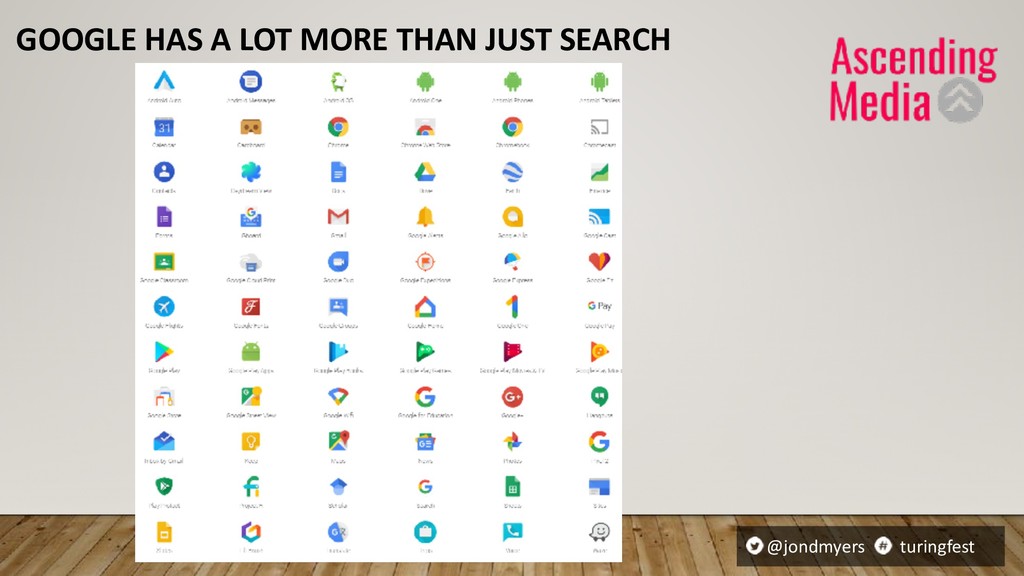
so they kind of re engineered a little bit, but the mobile opportunity was clear to see back then, and more so today, we see a real mobile opportunity to play. And Google really has a lot more available than just AdWords. Majority of their revenues, as I alluded to in twenty sixteen, Google was worth around about one hundred and thirty three billion.
We'll come on to talk about where they are today, and the majority does come from AdWords, but they have so many different things that they actually have got their fingers in, in some respects, and they're actually advertising options, or JV deals with things like NASA, so they've got an airstrip out the back of Mountain View.
NASA, Google has a plane, Google's done a deal, they land the plane on there, and then they rent the plane to NASA, and NASA flies engineers they want to fly them kind of thing. So there's all this sort of stuff going on outside of just search.
They have a government liaison officer, Google, that talks to the present, and stuff like that. So there really is a lot more than just you think there's the search marketing side of things. So, in twenty thirteen, revenue's fifty five point five billion. In twenty fourteen, sixty six billion.
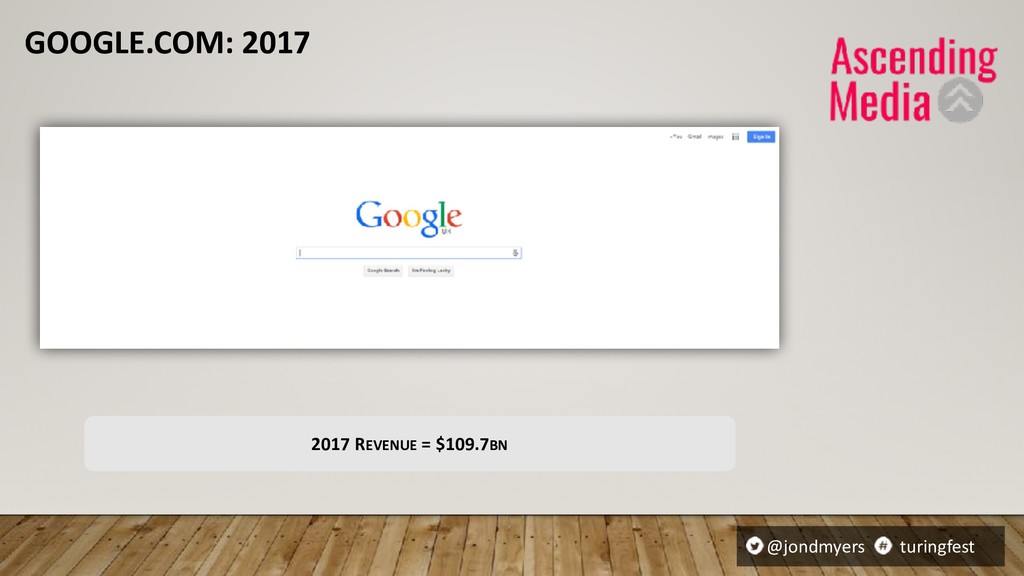
Susan's really happy that she joined the company, believe me. Twenty fifteen, seventy five billion. Twenty sixteen, eighty nine point five billion. Twenty seventeen, one hundred and nine billion. Twenty eighteen, who knows, but Google can just print money. Let's be honest, it's amazing. I mean, they're literally shoveling it out of AdWords, literally.
I mean, I'd be amazed on how much money they've made in the last ten minutes while I've been on stage. I'd love to know that number. We could probably do the math and figure it all out. But, think about the IPOs. In two thousand and four, they IPO'd.
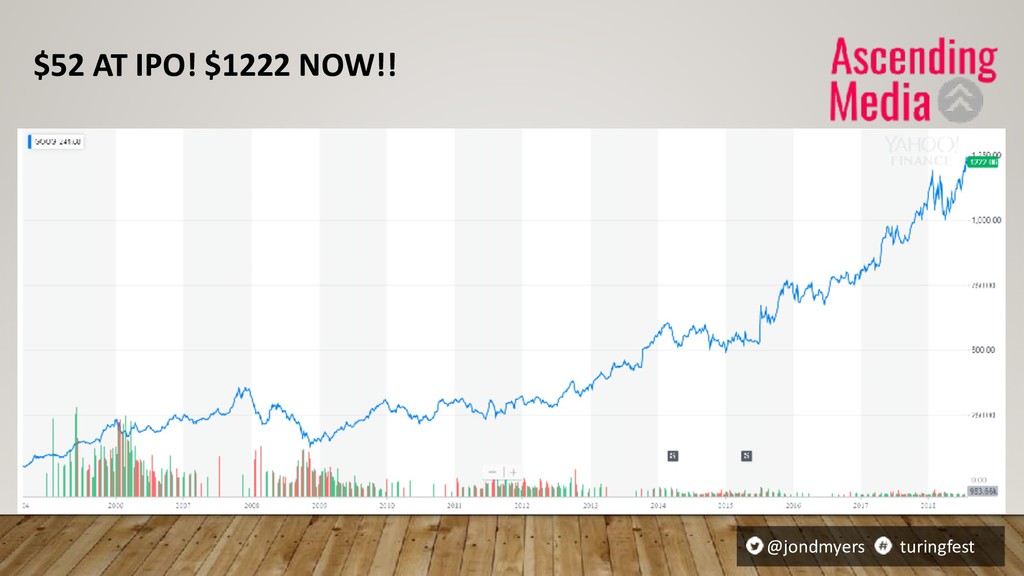
Their IPO price on the stock was fifty two dollars Their price on their stock today, or as in a couple of days ago when I took that screen grab, twelve twenty two dollars a share. Who wishes they'd invested in Google? I do. I'm the mug that really set on, when Facebook IPO'd as well, just letting me know the little thing.
They IPO'd and the share price went down, and I said, it gets to fifteen dollars I'm gonna buy some shares in Facebook. It got to sixteen and a half, and I'm like, nope, I'm gonna hold, and it went back the other way, and then I was hundreds of dollars, so I missed again on Facebook.
But hey, if you got Google shares, you are flying. If you're one of Google's first employees, you are flying. You're a millionaire overnight when they IPO'd. They made one hundred millionaires overnight when they took that company to IPO. And I can remember back to the days when Google had one employee in Europe, and there was a girl called Kate Burns that sat in a satellite office down by the River Thames in London.
Kate went on to be the first European MD of Google, and she's now off working at AOL and doing these other amazing things, but she absolutely got the right job at the right time back then for sure, and was literally Google's first employee outside of the US.
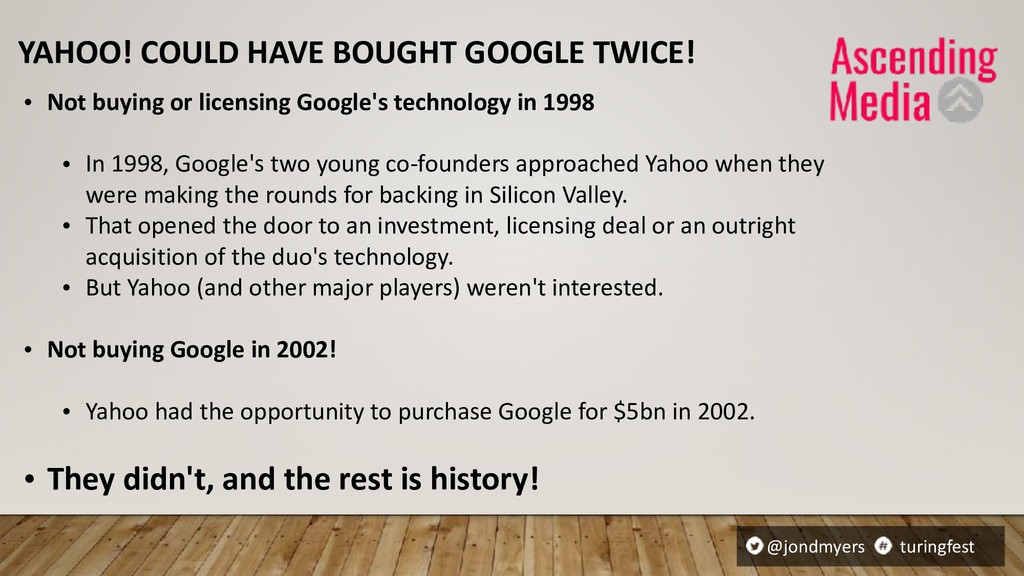
But when you think of all this amazing growth, I'm just gonna take a moment and pause, Because I think there's a real big dough moment here. Yahoo could've bought Google twice. Imagine that. Imagine being the guy at Yahoo. I can't remember who it was, I think it was Toward Capella at the time.
So in nineteen ninety eight, like the garage days, when Susan said yes, Yahoo said no. Larry and Sergey did a little tour of the valley. They went round and they saw many companies, and one of them was Yahoo, and they rocked up as the two co founders, they approached Yahoo and said, you know, we're open for investment, we're looking at it, but would you like to buy our algorithm, our technology?
Would you like to take it off our hands? And they said, no, we have our own thing. We've got our own search technology, we've got our own platform, we've got the directory thing on the go, we're building our own organic listing. The number which I heard in this scenario was five million dollars, is what they could have acquired it for.
So if you're not kicking yourself at this point, in two thousand and two, they could have bought Google again. But they went, no, no, we just bought this company called Overture, and we paid two point two billion for it. And they had the opportunity to buy Google at that point for five billion, and they went, no, we've got the overture thing, we're gonna back the overture technology, and we're gonna take it forward from there, and we're gonna build it into Yahoo, and we're gonna create this thing called Yahoo Panama.
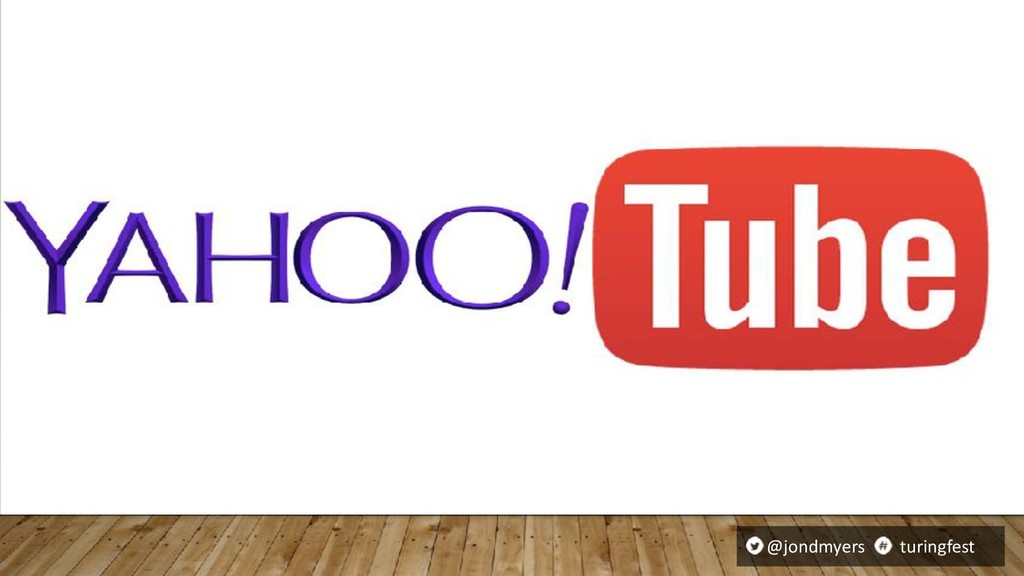
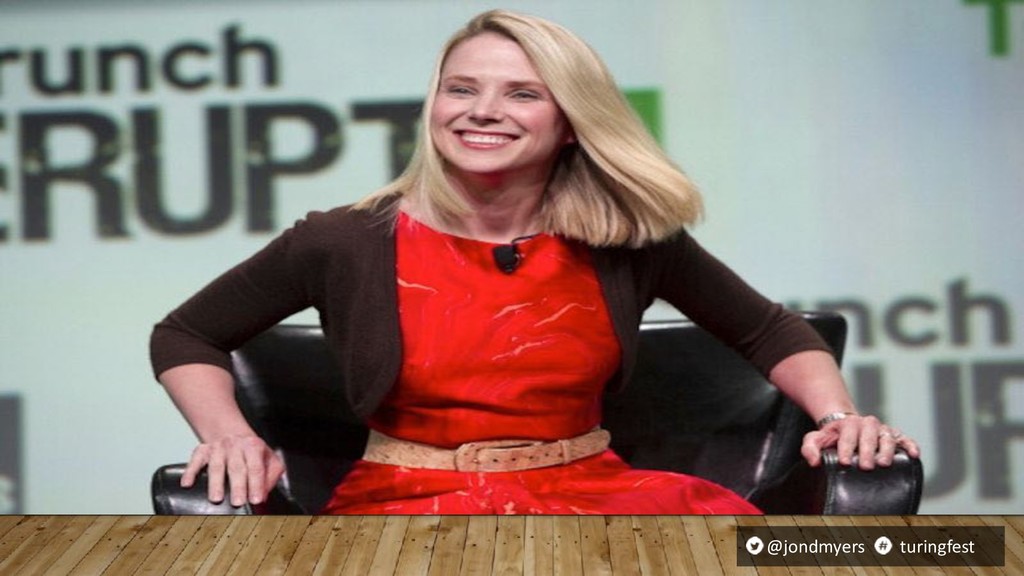
And if anybody remembers Yahoo Panama, it wasn't great, believe me. Yahoo's pretty much dead in the marketplace now, and Google's obviously flying. So, there was two opportunities, the rest of its history, we could have had Yahoo Tube, for sure. I think the unsullow injury was probably the fact that then down the line, in about twenty twelve, Yahoo hired this lady, Marissa Meyer, as their CEO, from Google.
She was one of the original search superstars of Google, and she came in as CEO, and she's not CEO there anymore, but she did a pretty good job, but by then the game was over, and the market had moved forward. So, if we think about today, and where we are today, we really do know that Google is your world, my world, our world, pays my mortgage, I get to come do things like this and stand on stage.
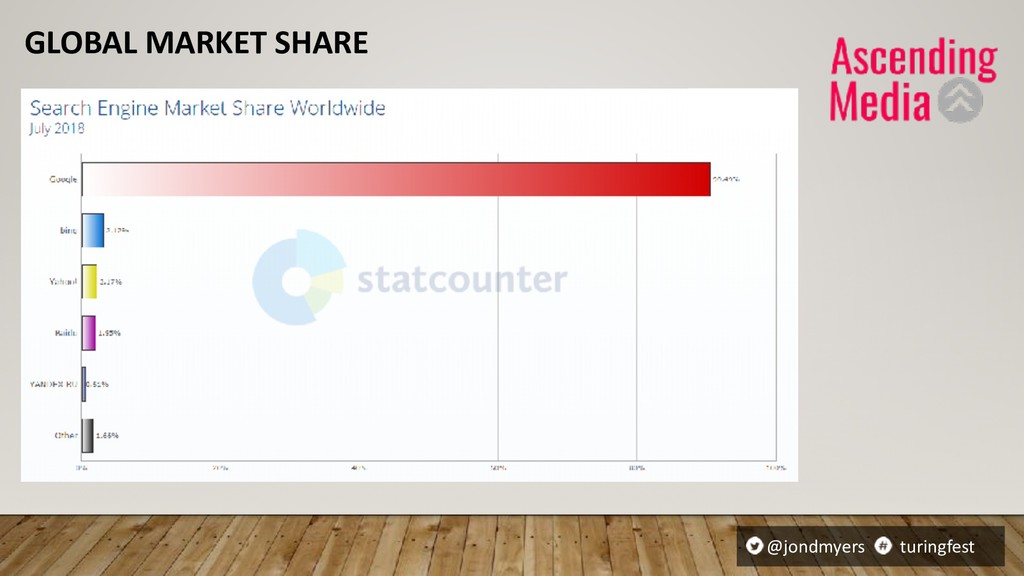
But when you look at global share, I mean, Google pretty much owns everything. I mean, it's ninety odd percent now of the marketplace is Google, globally. You have your two little outposts that are still fighting the fight. Try again. We have the Russians, with Yandex, who pretty much chased Google out of town, in ways that you don't want think about.
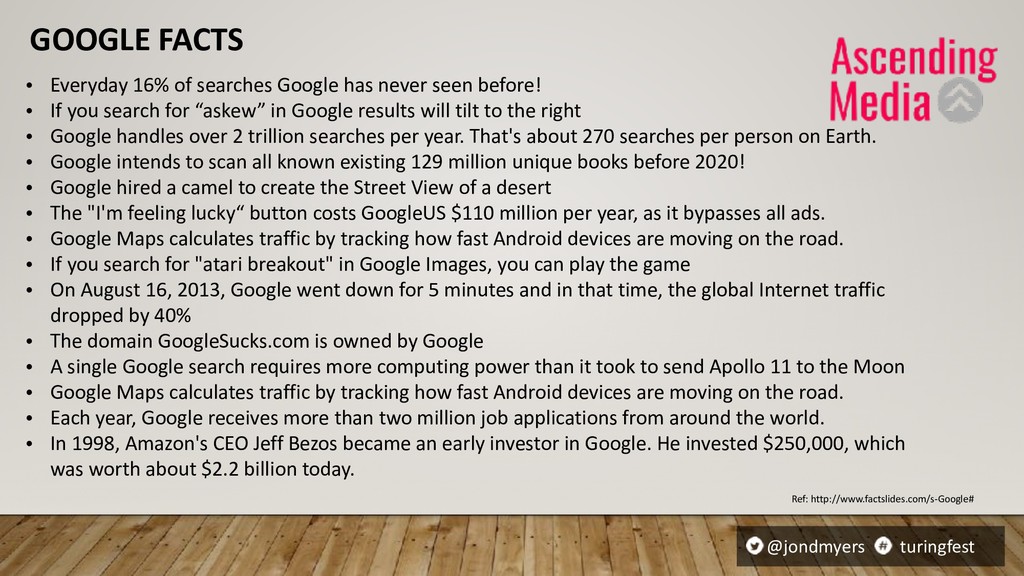
And we have the Chinese. So, it's the obvious places, they kind of kick Google out of town. I'm conscious of time as well, I've put a load of facts in here, but I think there's some really interesting things to pull out, as I mentioned.
If you type with skew in Google, Google goes askew. That's a good one to have a little play with if you want to. They will, by twenty twenty, have scanned all one hundred and twenty nine million books that are available out there. They hired a camel when they did Street View in the Desert.
I feel lucky button costs Google around about one hundred and ten million dollars a year, which is kind of ironic, but I think they can afford that. If you do Atari Breakout on images, you can play Breakout on an Atari. That's one for you to try this afternoon, if you're not interested in the talks.
It went down for five minutes in twenty thirteen, the global internet traffic dropped by forty percent. They own GoogleSucks dot com, just in case. And each year, Google receives more than two million job applications. Imagine that. If You want to try applying for Google?
Great one, Jeff Bezios, the man that always figures stuff out from Amazon, invested in Google in the early days at two hundred and fifty thousand dollars, which is worth about two point two billion today to him. See, he gets shares right. He gets it, he figures it out.
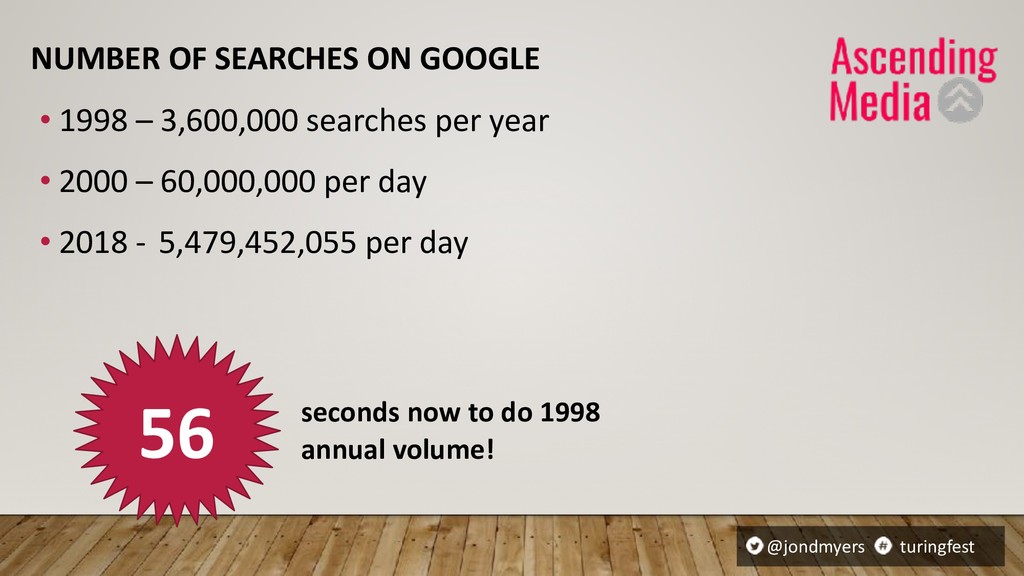
Think about searches as well. It's the first year of Google. Three point five million searches on Google in the whole year. Sixty million per day by two thousand. Five point four seven nine billion a day as of today. So for context, in fifty six seconds today, the annualized search volume of Google in nineteen ninety eight happens.
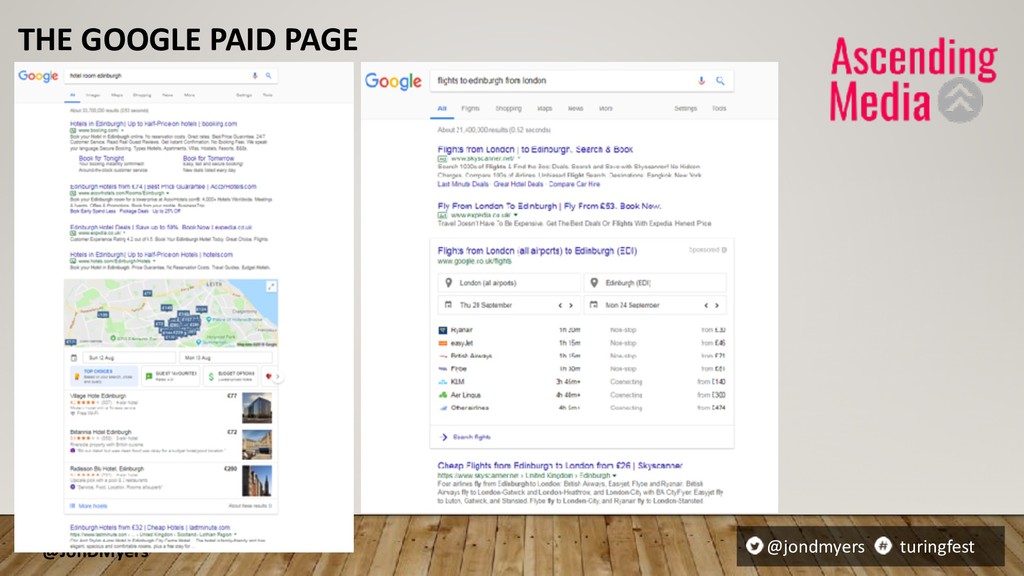
So while I've been stood here for about fifteen minutes, as you can see, there's an incredible amount of searches going on in Google, and it really has become a content destination. They always talked about in the early days of being having the ability to basically get people in, search, and leave, and we've seen from some of the talks this morning, Google really, really wants you to stay on their site.
I mean, when you look at everything from travel and hotel destinations to flights, they actually bought the travel and hotel booking system. There's a company called ITA in two thousand and seven. Google acquired it for about nine hundred million dollars, which basically is the back end booking system for all hotels and all flights in the world.
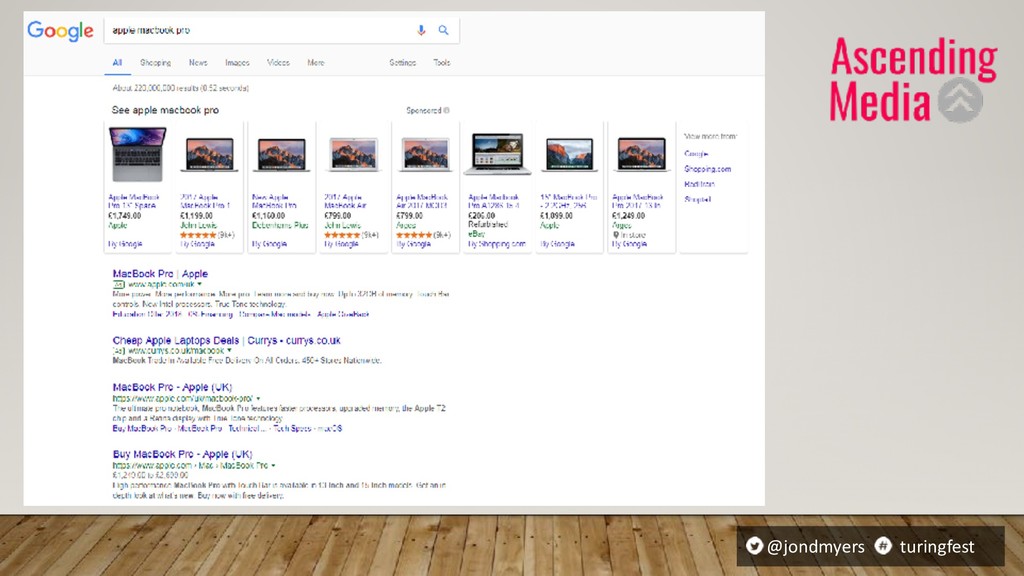
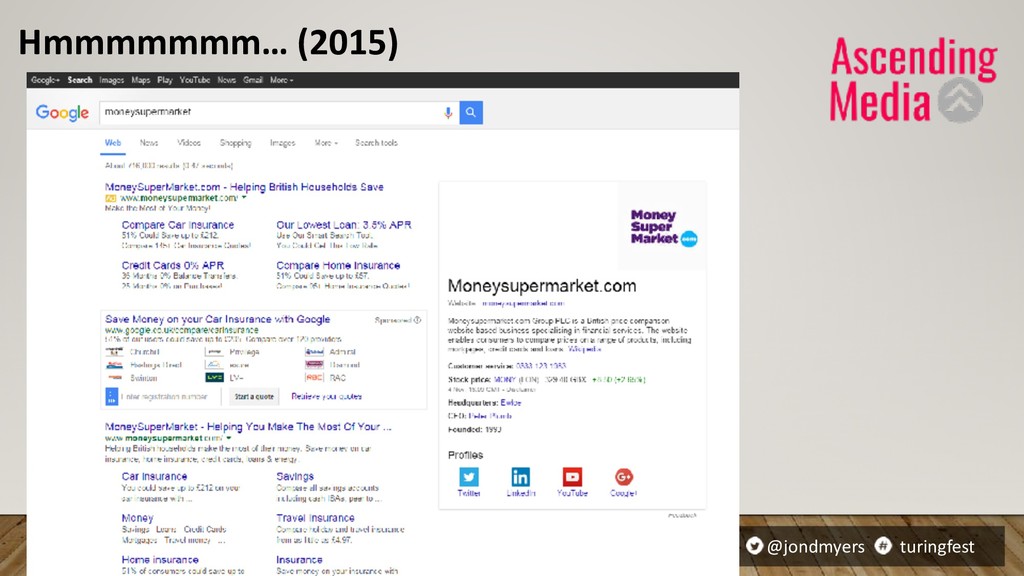
So everything that you see on Expedia and Oppo and those sorts of companies, Google owns that technology. Not to say. Shopping is amazing, you get all the carousel stuff. They probably went a little bit far in twenty fifteen, this is a screen grab from then, with Money Supermarket, where they basically introduced their own insurance company, Google, as a sponsored ad, with the sponsored ads, and they had one hundred and twenty people panelists on there, and they were trying to basically create their own insurance broker, which is probably not a good thing to do against the other
insurance brokers. From what I hear, talking to money supermarket had no discernible effect on those guys, they just carried on. But I think when we know and look at media today, our world is very much driven by Google, and the targeting capabilities of everything that we have available to us, as it was alluded to this morning, is phenomenal.
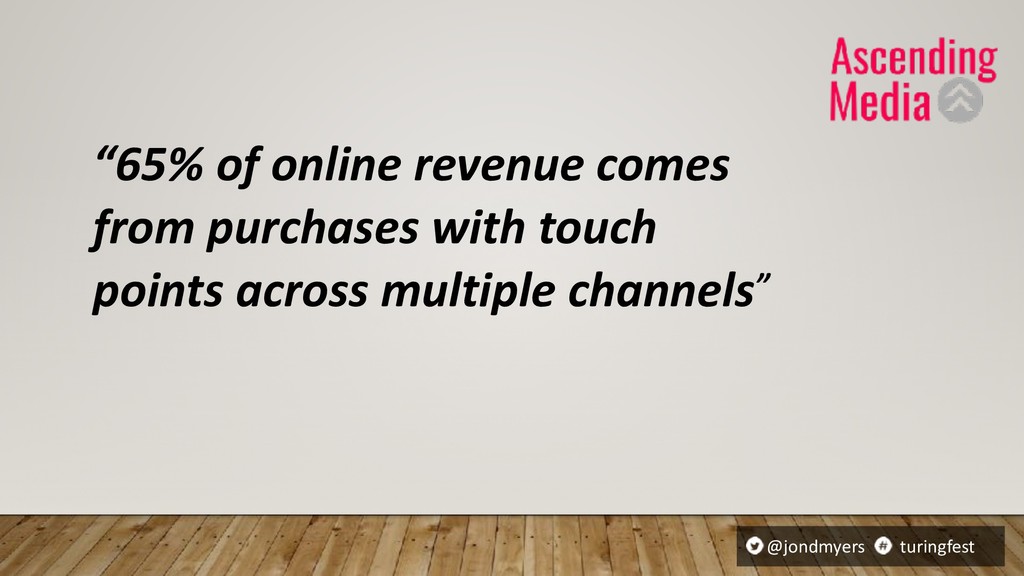
So it's not just the search terms, it's meeting the people behind that, and it really is all about you guys, and being able to understand you guys now and go forward. So we're pretty smart in the way that we think about marketing. Sixty five percent of online revenue comes from multiple touch points.
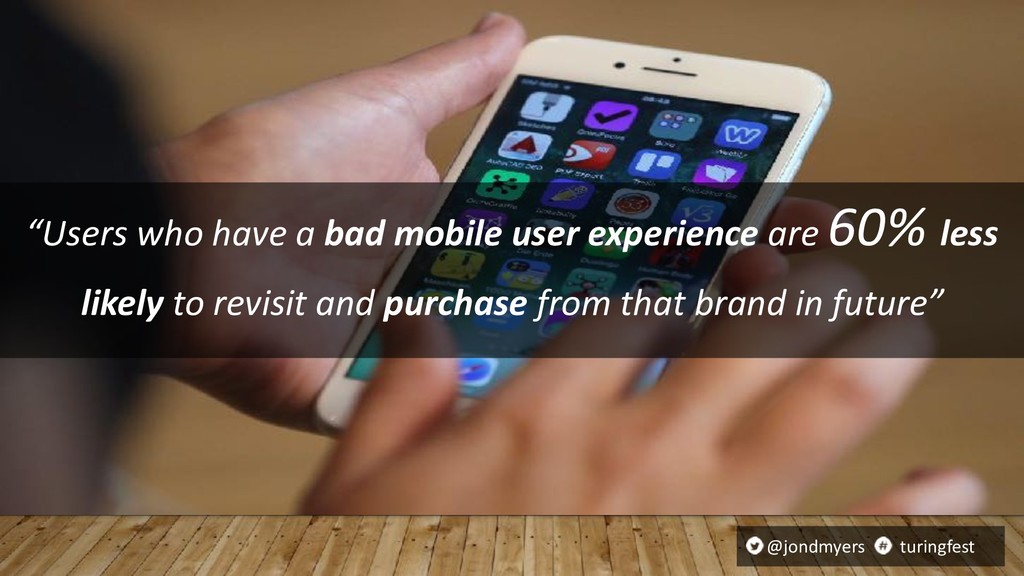
I mean, Sam mentioned it this morning. Jess Schultz mentioned it this morning. We're getting a lot cleverer as marketers, And I think in the mobile space, in the brand space, it's amazing to see that people are sixty percent likely to come back if they've had a bad mobile experience.
So sort out your mobile sites. Another thing I talk on a lot is how Google's moving its index to be mobile led. Get it sorted, because that is a pretty powerful stat, if you get it wrong as a company on mobile. So where do I think the future's going?
I think the future's flying in our world. I mean, I've said twenty years of PPC and running paid media campaigns, I think that can just continue. So, I think, and this is a big statement in some ways, but I'm gonna kinda go with it.
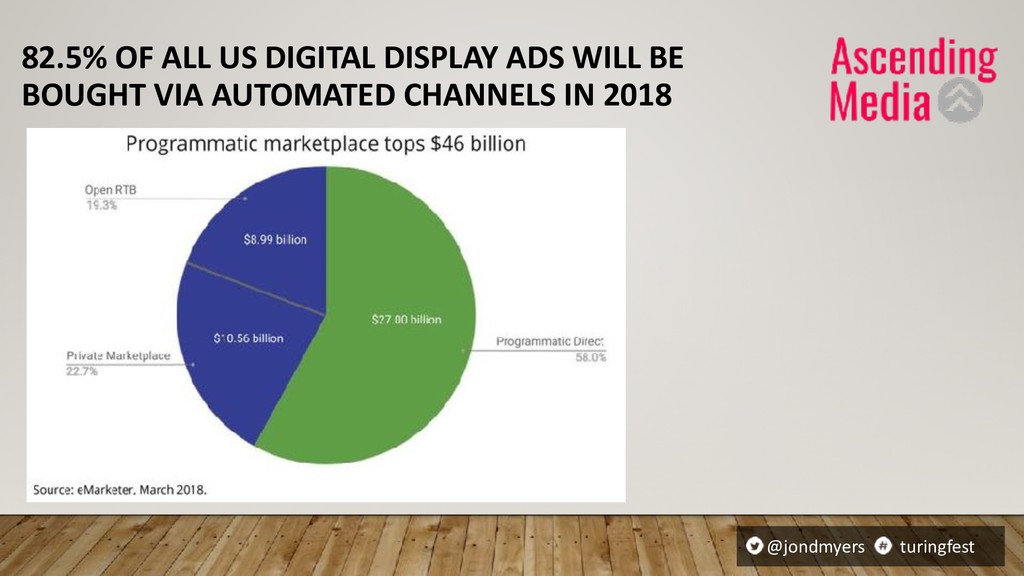
I think all media will be based against an audience based auction. We have biddable media today, but I think everything will start to move into a biddable and audience driven space. So, when you think about things like display, eighty two point five percent of US digital display ads are bought via an automated bidding system, very similar to Google AdWords already.
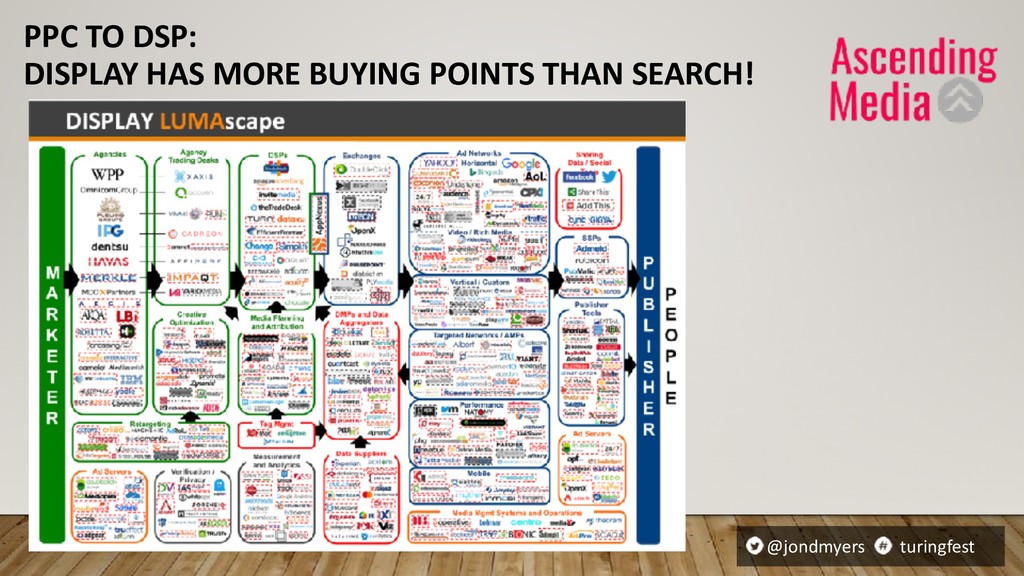
And there is an incredible amount of places out there that you can buy this from. Search is pretty much owned by Google, social's pretty much owned by Facebook, other media has so many buying points. So when you think back twenty years when search had an incredible amount of buying points, I think we're gonna go through that cycle again.
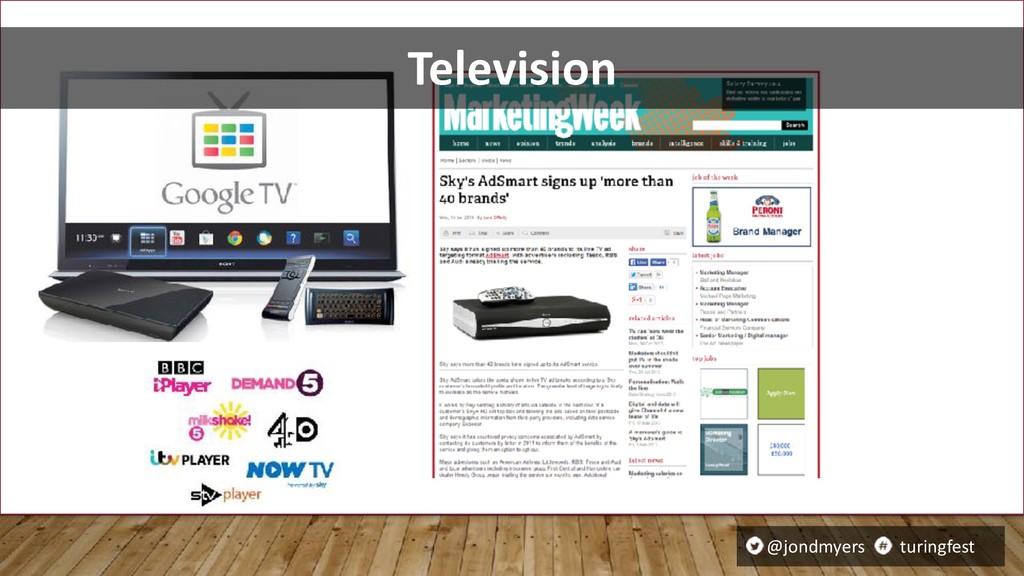
You can already do that targeting capability within television. You will get different ads to me in on demand TV because of my likes and dislikes. We're already seeing companies like Spotify in the radio space playing with auction based advertising model, and we know that the mobile space is incredibly app driven.
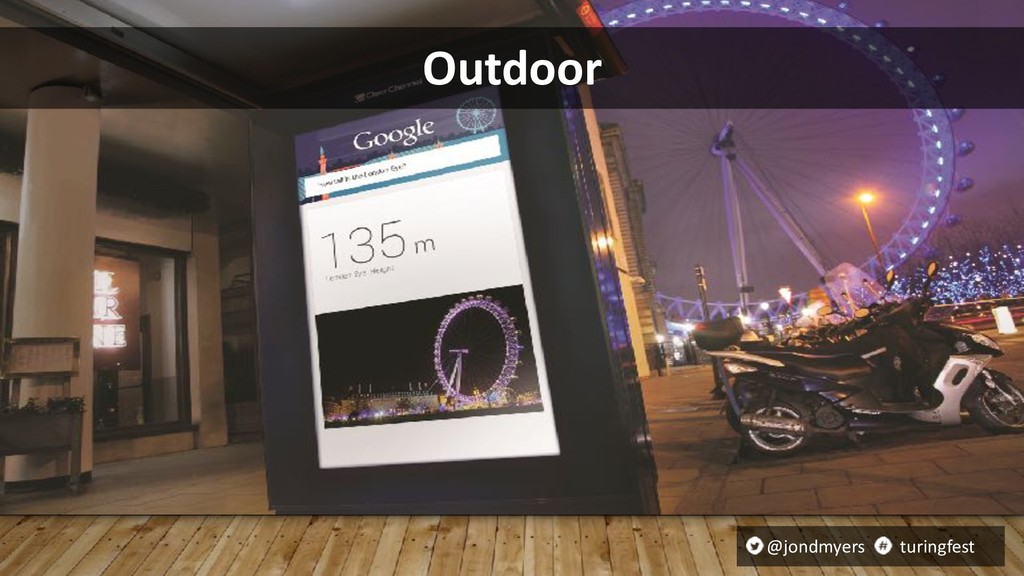
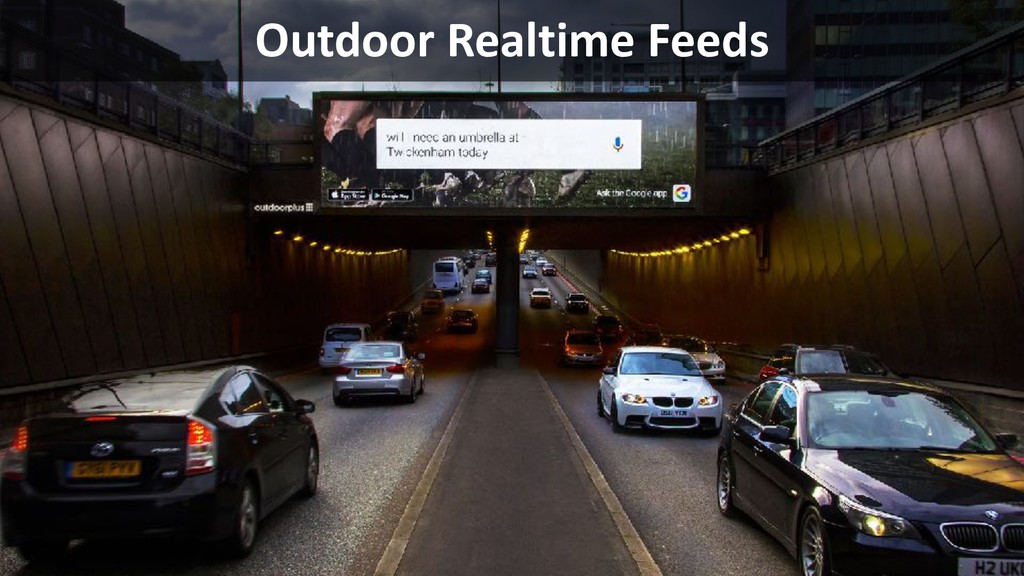
So when we start to move into the mobile more and more, and apps, we're gonna start to see more coming into that space that I think will be auction based targeting for sure. Outdoor, you're mobile. You walk past a billboard, they can put something on the billboard that relates to you, for sure, because they know who's in that area, because of the phone, and who that person is, what the demographic of that person is, because we've given our lives to them.
They know who we are. Outdoor real time feeds, for sure. If it starts raining, they'll tell you it's raining. If you're the way to Twickenham, you need an umbrella, they'll tell you. And I think, again, just to take that a little bit further, I think the world will start to move into a verticalized space.
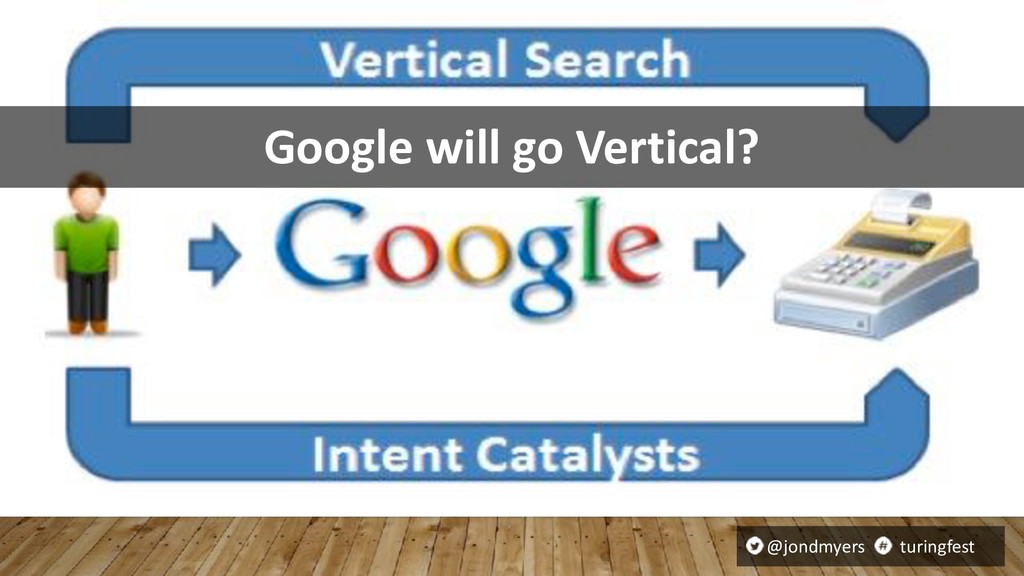
I totally see Google verticalizing its business, going down a travel Google, a finance Google, a shopping Google. You can start to see the remnants of that starting to build already within how they're putting their advertising models together. So Google really, really is our world.
It's been an amazing journey for the last twenty years, and we've arrived at the point where these guys pretty much own the search space. It's gonna be interesting to see where it goes. Yahoo's crying itself to sleep at the minute, of course, because they could've acquired them twice.
I really think that is the case. Susan is just loving life because Susan said yes to renting that garage, and she will do for the rest of her life. I'm absolutely certain, because as I say, four ten million dollars is a very good reason.
It's an interesting place that we play in. I've had an incredible journey through it. Hopefully, I've given you some stats and things that you can learn from, and see what actually has gone on in the wacky world that is search marketing, that is Google.
Thanks for your time, and on to the next speaker. Thank you.