Tech companies talk a lot about alignment. But in most cases, alignment means measuring complementary outputs, like marketing's lead goals being derived from sales' bookings targets. But dominant companies unify around something entirely different – the product experience. When companies shift their thinking from outputs to outcomes, from being project-led to being product-led, the result is alignment around the product as cornerstone for growth, retention, expansion, and long term success.
This session will explore what it takes to become a product-led organization, and what impact that transformation can have on your business.
1 / 42 Use ← → to navigate
Auto-generated transcript - may contain errors.
Tap a timestamp to jump the video.
Hello. We were asked to come in a little early, to, you know, orient ourselves with this stuff. And I so I get on the stage, and I realize it's a pretty big room. And so I do what any independent forty nine year old would do.
I take a picture of it, I send it to my mom. And she is up at all hours, so she responds from the States and says, in her sort of patented economical way, what do you have to worry about? You only have two kids to put through college.
So, that's that's my pep talk from, my mom. I wanna talk to you about this kind of rising notion of becoming a product led organization. And I wanna talk about, like, why it's happening, how you can take advantage of it, and what outcomes you may expect if you do it.
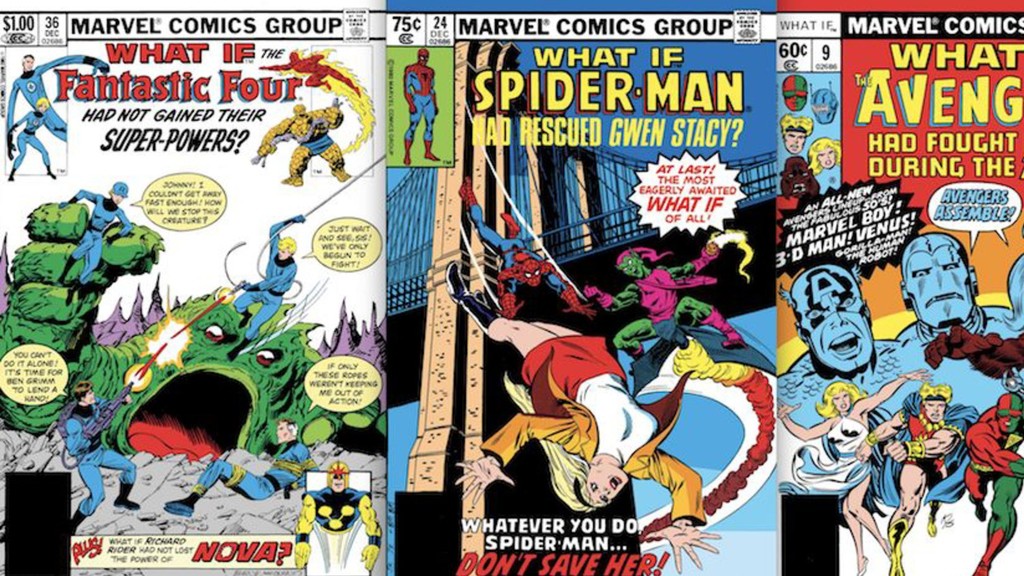
And as I thought about how to frame this talk, I flashed back to my childhood, and I thought of an interest I had, and that was comics. And specifically, I liked this series of comics called What If? And what they were is sort of a break from a narrative, a single issue that focused on alternate alternate reality.
And I was like, what if, Wolverine fought the Hulk, or what if the Fantastic Four were the Fantastic Five? It just made up a scenario and then explored that to its sort of, craziest conclusion. And so I thought, like, as we talk about becoming a product led organization, we could ask, like, what if a company was purely marketing led?
Eventually, what that what might that company look like? And I think a purely marketing led company could look like a broken promise. Right? It's really tempting at your user conference or in a press release to, you know, say from on high how you are going to adapt your organization to that next hot thing.
A lot of press releases with the word AI crammed into the headline. Right? And then the pressure is all on engineering to make it happen. In the end, you break a promise to the customer. What about sales, marketing's counterpart? If a company was purely sales led, what could that look like?
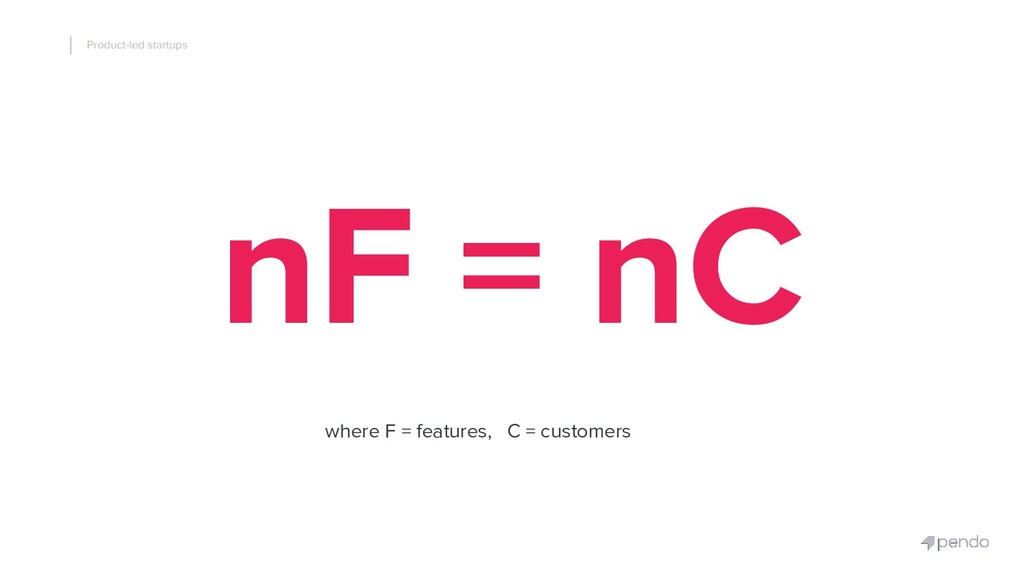
Well, that could look like some funky math where the number of features in your product equals the number of customers you have. Why? Because sales is prone to say, if engineering, if you can build this one feature, I can get this deal over the line. Just one.
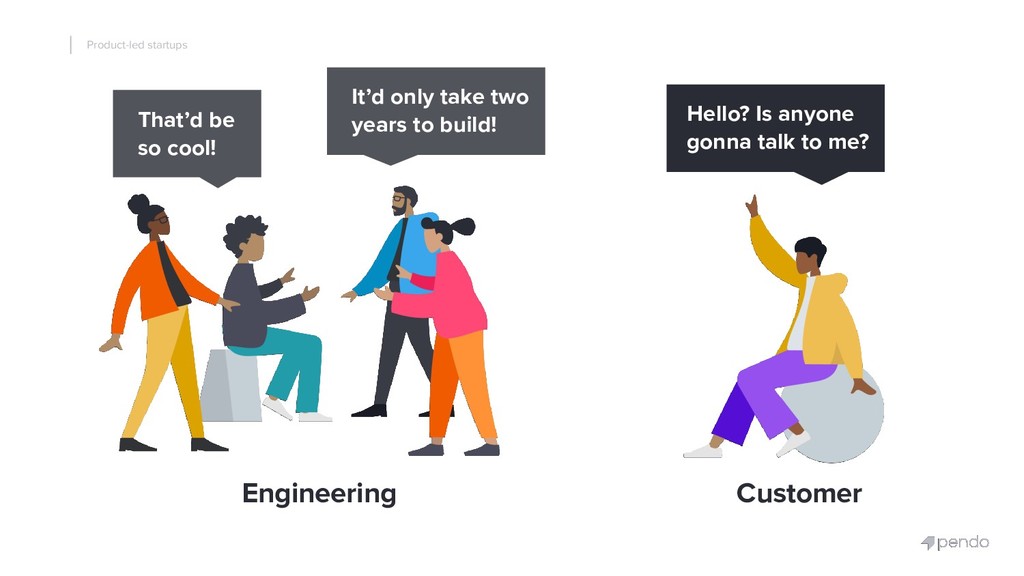
And over and over again, that's how feature bloat happens. Often, it happens because a company is sales led. Marketing and sales in these fictitious scenarios just put a lot of pressure on Eng. What if, those rational folks in engineering ran the company? That's not necessarily the best scenario.
They're not known as the department that is most aligned to the customer, and so they build great features that nobody uses. They build features that aren't aren't attached to a customer need. And so if the customer team ran the organization, would that be any better?
In some ways, yes. In other ways, no. Right? Like, the company's gonna go broke because you're gonna have happy customers because every time they complain, customer success just gives them something for free. Your product has to be something people are willing to pay for as well.
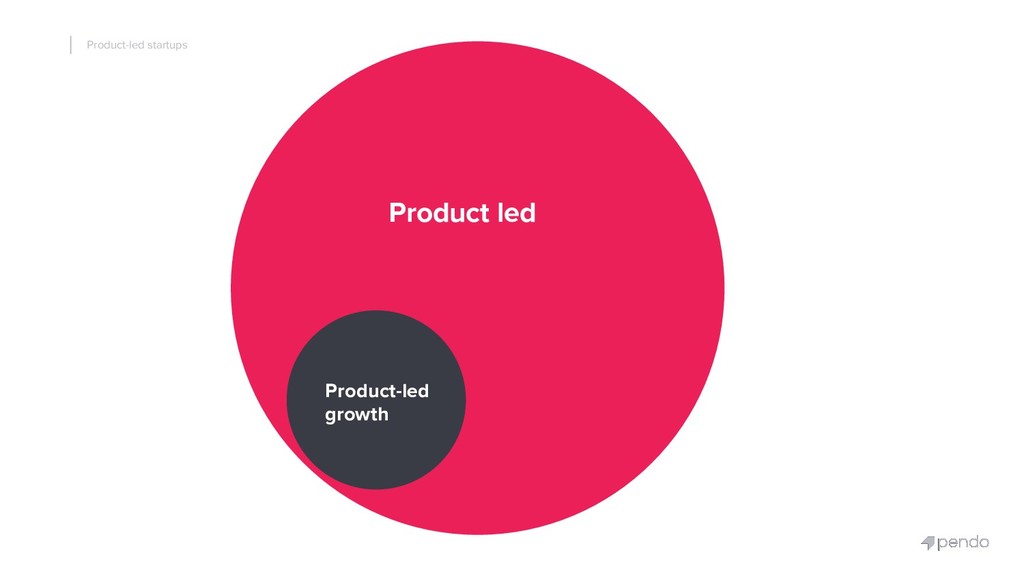
And so ultimately, like, our perspective at Pendo is that companies should be product led. And when I talk about product led, I'm I'm not talking specifically about product led growth. Raise your hand if you've heard the concept or familiar with the concept of product led growth.
Alright. Maybe a quarter of the folks. Product led growth is like, it is the mindset that you convert your product into part of your go to market engine, that the market the product itself is responsible in some way for growth and expansion of the business.
The product is a lead acquisition tool, a sales throughput tool. I talk about that a bit in this, but what I'm talking about here is something, higher order. It is the, organizing principle of your organization, to organize your organization around your product. And for me, this metaphor works.
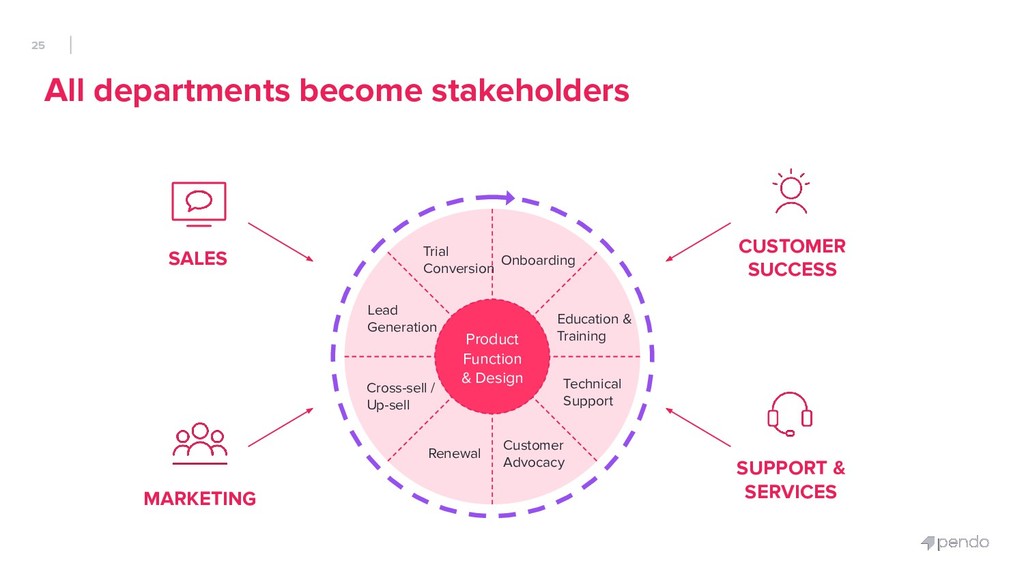
It is the watering hole around which all species, all departments in your organization gather. And and why does this make sense? Well, it makes sense because the product is the one common language that sales, marketing, success, engineering, the executive team all share. And so it just makes intuitive sense that if you're going to align the organization, align them around a shared language.
So all of this seems like this could apply at any time in any place. Why does this matter, and why does it matter now? Well, like, the buyer is changing in a number of ways. The b to b buyer is changing in a number of ways.
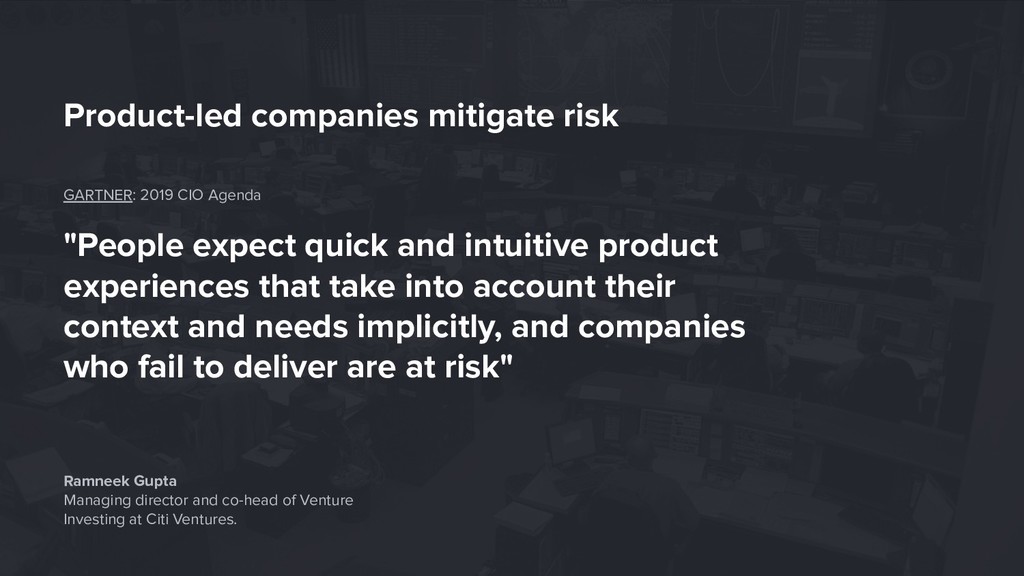
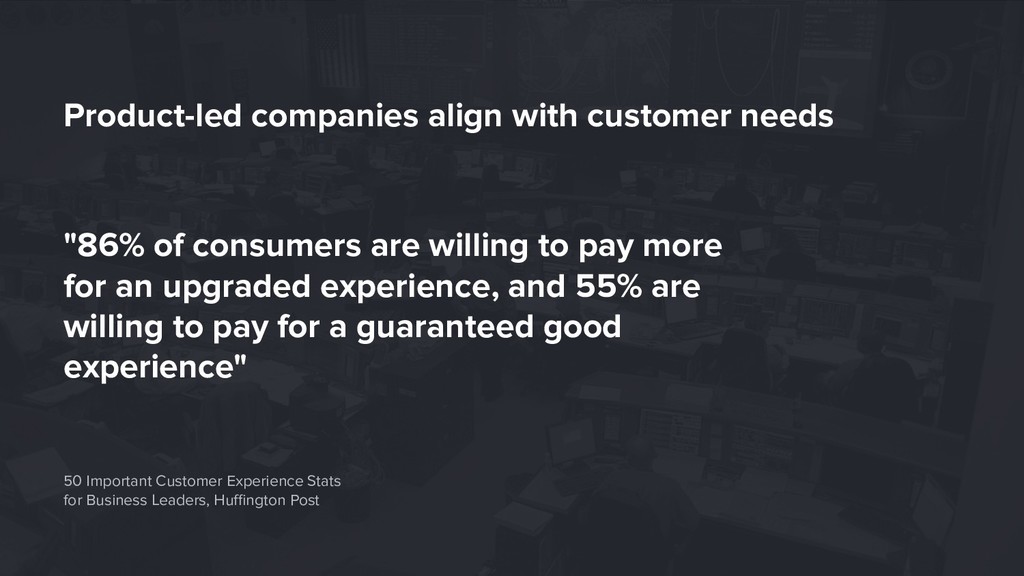
For one, they're they fundamentally expect their business software to behave, the experience to be similar to their consumer products. They don't expect a bright line between business software and personal software. And if your business software doesn't deliver that experience, that consumer like experience, you run the risk of losing these customers.
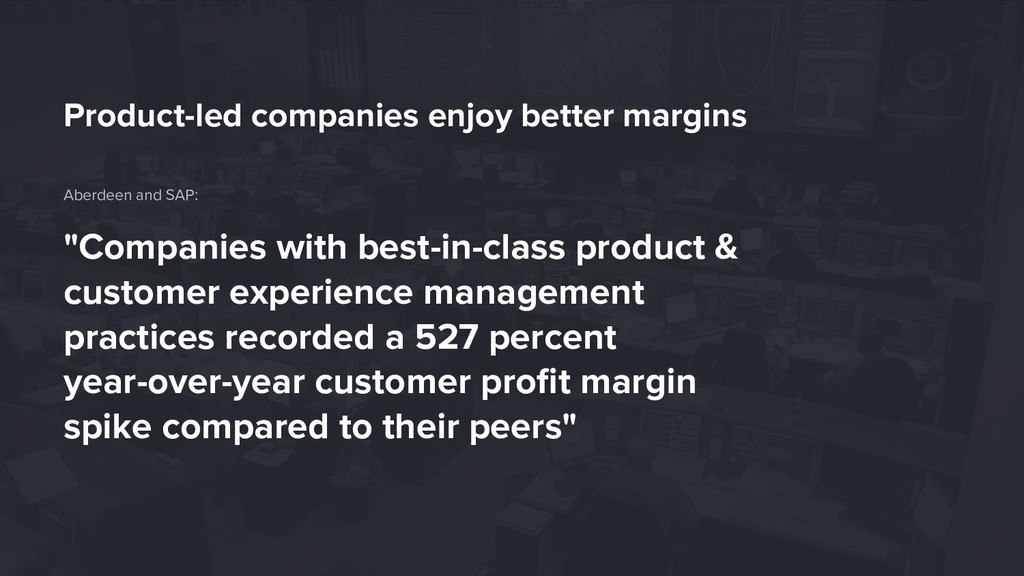
And it's sort of a two point swing because if you can provide that experience, business customers have expressed a willingness to pay more for them. So not only do you lose fewer, but you can charge a premium. And so unsurprisingly, if you lose fewer customers and charge a premium, you're going have better margins and better growth.
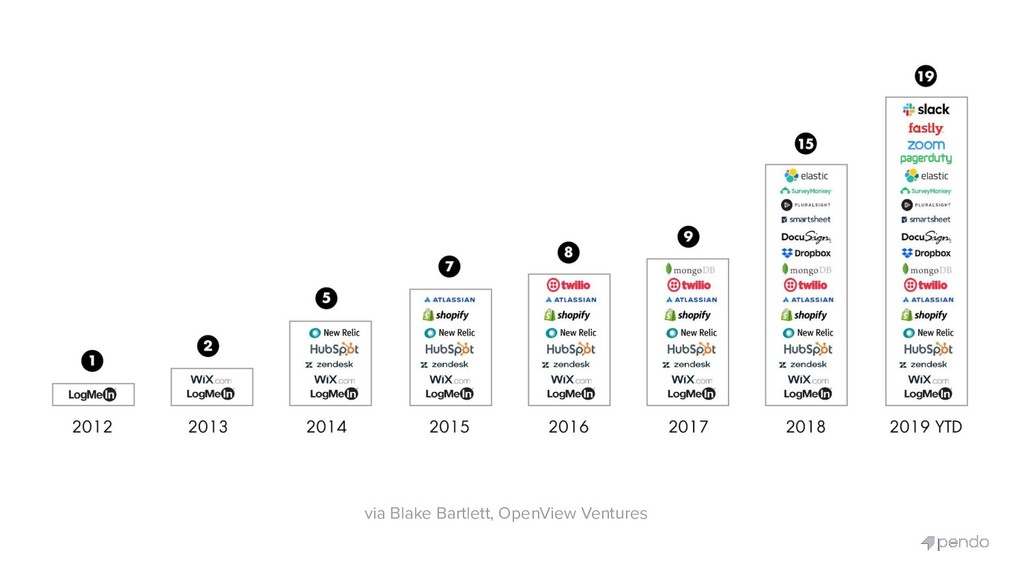
A friend of mine, Blake Bartlett, who is really the he's a partner with OpenView Venture Fund in Boston, and he's one of the leading voices on the notion of product led growth. He, he created this bar chart that's an assembly of some of the best logos in SaaS and the points in their arc at which they really embraced product led, product led mindset.
And if you see, it's not only it's not only growing year over year, but, like, the logos. It's Slack. It's Zoom. It's HubSpot. It's, like, not coincidentally the best companies out there. And it's not only because what the buyer's expectations are today, it's how software is entering the enterprise.
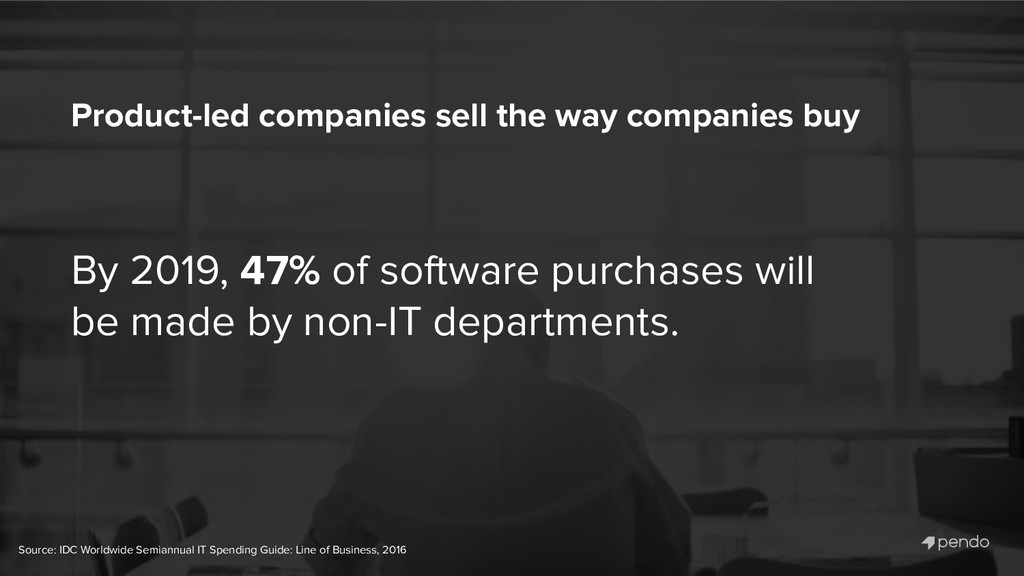
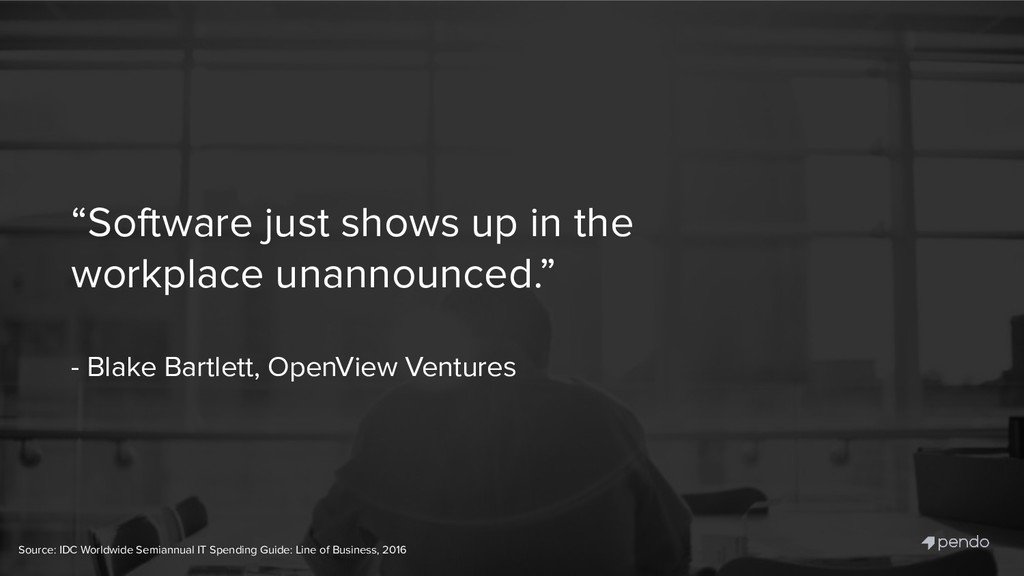
IT is no longer like the department of no. They're not the command and control center that determines what software is allowed to enter the organization. Departments make their own choices. In some ways, employees are the ones picking business software. This is a quote from Blake where he said, software just shows up unannounced.
It's like it's almost like that that Bruce Lee line, be like water. These companies in Blake's chart have found a way to seep into the cracks of an organization by involving the end user in that consumer like experience and having that person become an advocate internally for their product.
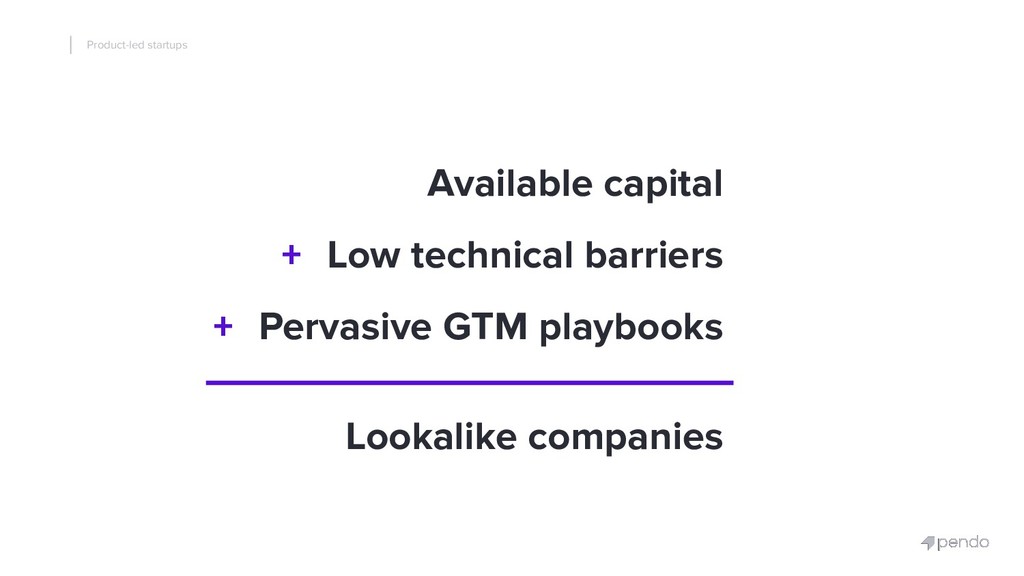
There are other reasons why this mindset makes sense now. There's more available capital for startups than ever before. There's more angel investors than ever before. It's easier than ever to get a product to market. There are low technical barriers. There's software that helps you write your software.
There's infrastructure on demand. There's back end services that are pre built back ends for your product. You get the product to, to market a lot faster than the past. And like, I don't every successful company has published their marketing playbook. So you have a instant marketing program just for the cost of your identity.
And so that results in a lot of lookalike companies that are a similar stage of development that have products that look and feel a lot alike. It's easy to copy each other. And there's a few ways around this, but it's expensive. I could put expensive in air quotes here.
It's not just the money, but the time and the and the mindset. You know, my friends Drift in Boston. They will say the way around this, and Dave Cancel talks about this a lot, this sameness. And he says the only way around it, the moat is brand.
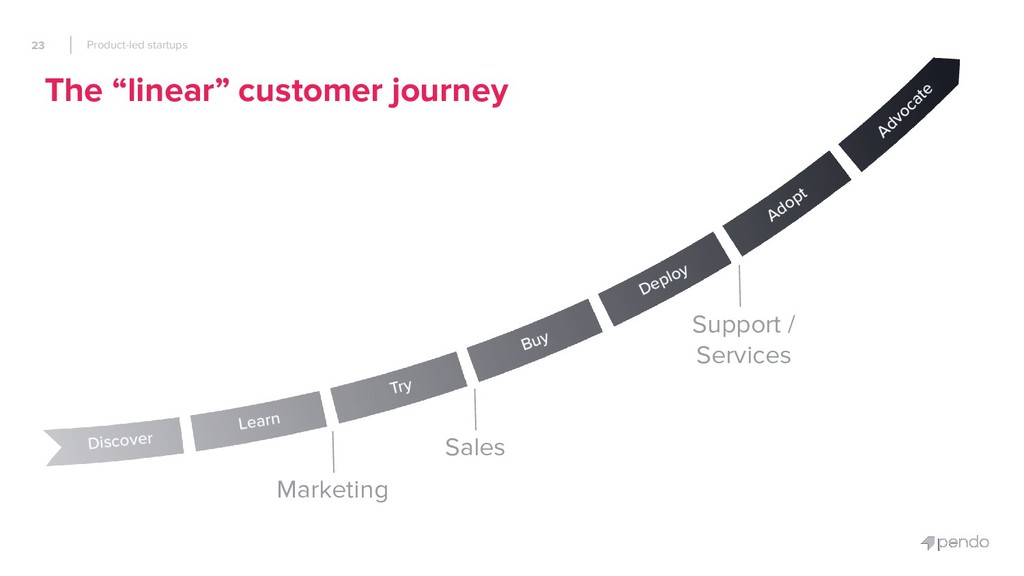
And that is one way around it. The other way around it is to think about your product as that holistic experience, that is that unifying language across your company, and deliver a consumer like experience to the business buyer. And look, this is this is the world that we're evolving out of, the linear customer journey, where you go from marketing to a firm handoff to sales.
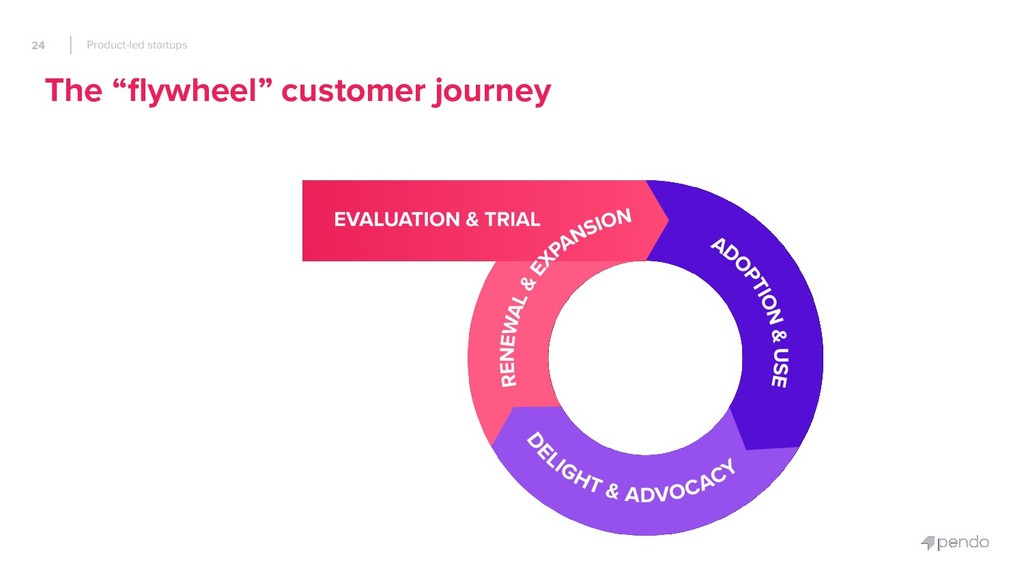
Eventually, enters the picture, you know, two thirds of the way across this. And then customer support and services scramble to try to get somebody successful in the product. So they like it and they renew. It's more of a flywheel now. And this is this is very much speaks to the notion of product led growth, where the product itself is part of the demand acquisition process.
There's a trial or a freemium element that gets people to sample the product before they ever pay for it. The product helps with onboarding. The product has embedded into it the means to spread the word if the person likes it, and the product also has a resale or expansion or renewal component built into it.
There's a frictionlessness to the market to the product as they grow flywheel. And so what happens when the product becomes the growth engine, the expansion engine, and the onboarding engine, and the services and support engine? Well, what happens is all of those departments have a vested interest in having their thumbprint left on the product because it's doing some of their job for them.
And all of those departments have KPIs, have growth goals, have performance goals derived from the product. It's a two way street. But all of a sudden, every department leader is a stakeholder in product. And that's what I'm talking about with the product led mindset.
Alright. So a lot of these sort of academic y discussions, you can think that it sounds good when the person is speaking. You go back to your desk and you're like, that was good, but I don't know what to do with it. So if you're gonna do one thing based on this session, let it be this.
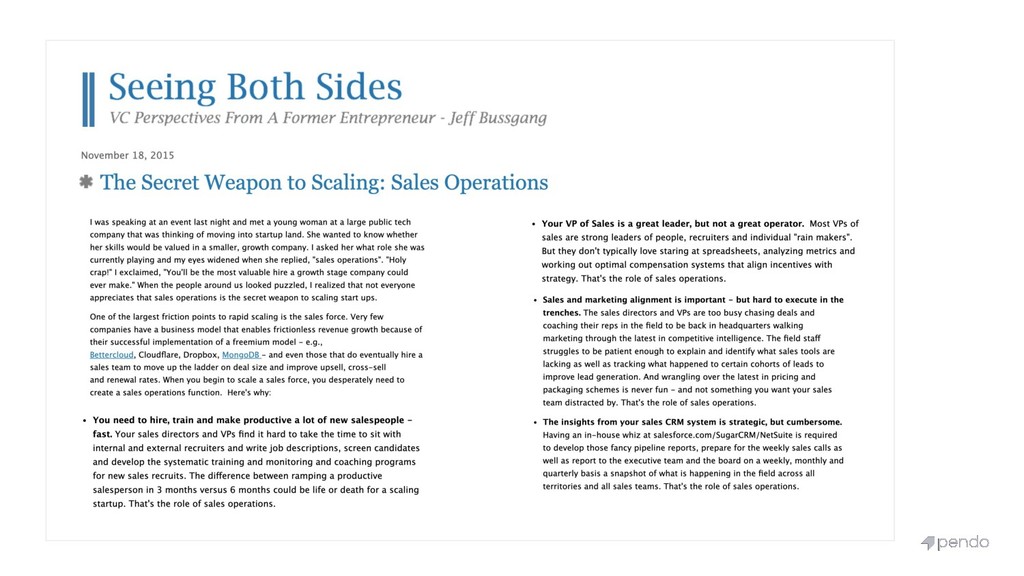
Go back to two thousand fifteen and read this blog post by a guy, Jeff Buskang, a venture capitalist in Boston. And he wrote that the secret weapon to scale scaling your startup is this new function, sales operations. And he goes on to talk about all the virtues of sales operations and how it can help you grow faster and more efficiently.
And when you're done reading it, pause and ask yourself, well, who the heck is doing this on the r and d side of the business? I get that go to market now has sales ops, marketing ops. They're fusing into revenue ops. But who's doing that same work on the product and engineering side of the business?
And there's a new role that's emerging called product operations. And product operations is to the r and d side what sales or revenue operations is to the go to market side. Folks at LinkedIn did a little side research project for me, and I asked them, you know, is there any evidence that what I'm about to say in this stage is true?
And because I know it anecdotally, but I wanted to make sure that it would it was verifiable. And they looked, and they said that there is an eighty percent year over year increase in the number of people claiming product operations as one of their skills on LinkedIn.
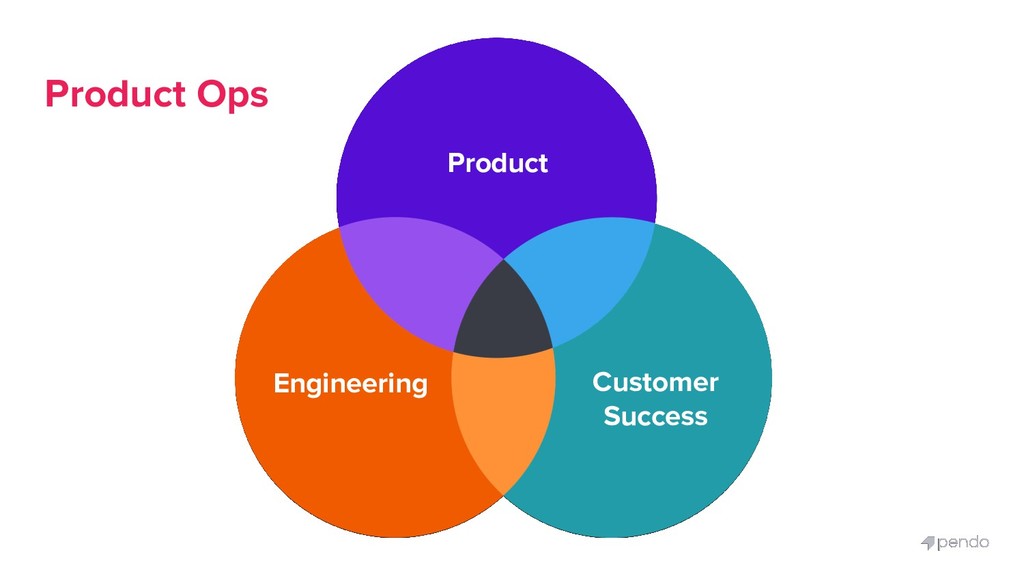
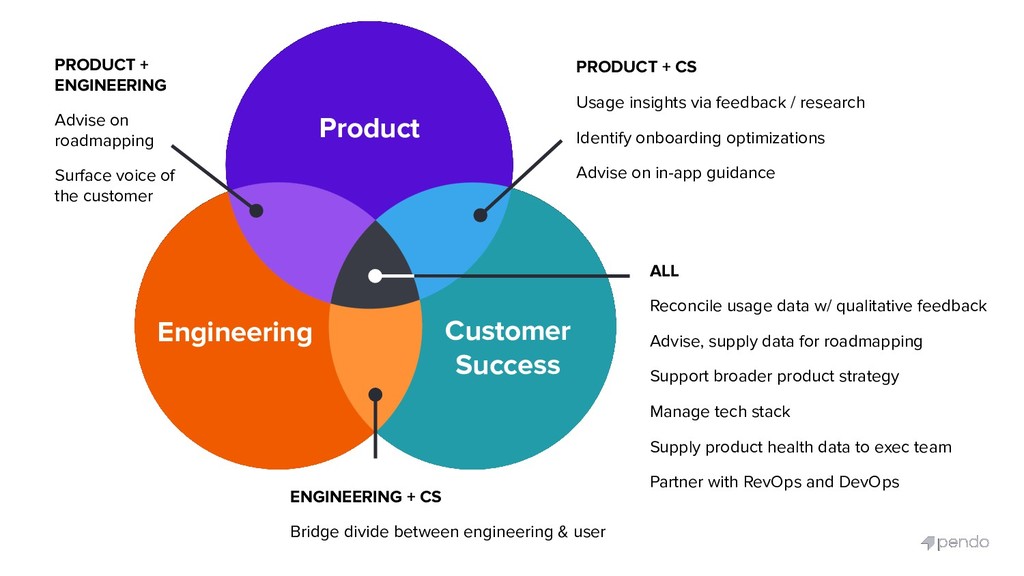
It's happening. And product ops is an overlay on top of product, engineering, and customer success. So what does a product ops person do? So if you're gonna take a picture of a slide, I think these guys send them to you after, but this would be the one.
What does a product operations person do? Well, at the intersection of each of these departments, they provide analytical, technical value, and guidance. Right? They help the product team and the engineering team share information, share insights into what features people want, what features users want, to weight those features to factor them into future road maps.
They make sure that the engineering team is not divorced from the voice of the customer, but that the voice of the customer is exposed to the Eng team. They make sure that product and CS are blending quant information, data on how the product is actually being used, with qual information, what the CS team is hearing on the phone, and that those get reconciled.
They look for ways to optimize the onboarding process to get people to value faster. The faster you get to value, the more likely you are to renew that customer. Churn doesn't happen on day three hundred and sixty four. That decision is made on day thirty.
I worked at a company, and we had this chart where, we looked at usage and probability to renew. And the die was cast on day thirty. If somebody was not engaged in the product post onboarding, they were highly likely to renew eleven months later.
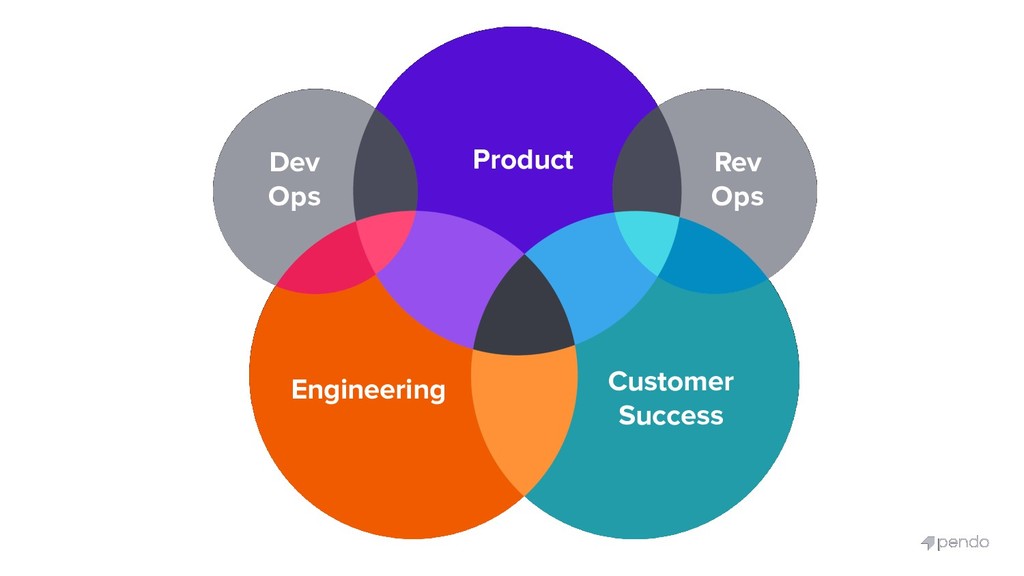
You can prevent that with somebody that owns the data at that intersection. So I'm not gonna read bullet by bullet, but you get the idea. And now product ops doesn't exist in a vacuum. They also need to have a dotted line to DevOps and revenue ops.
Ultimately, it becomes an ops center of excellence, if you will. We just appointed somebody at Pendo ProductOps, and they came out of product management. They report to the product team. My guess is over time, all ops will report to the COO or CFO.
I think personally, now I'm ad libbing from the Pendo narrative, but personally, I think ops should be like a referee in boxing. They should be a neutral party. I don't think they should re roll up to the department that they that they help create efficiency for.
I think that they should be independent third party. So I think we could see a time when product ops, dev ops, rev ops all roll up to one function that's outside of those lines of business. Alright. So the theme I keep going back to is all of these different departments having this common language and convening around the notion of a product.
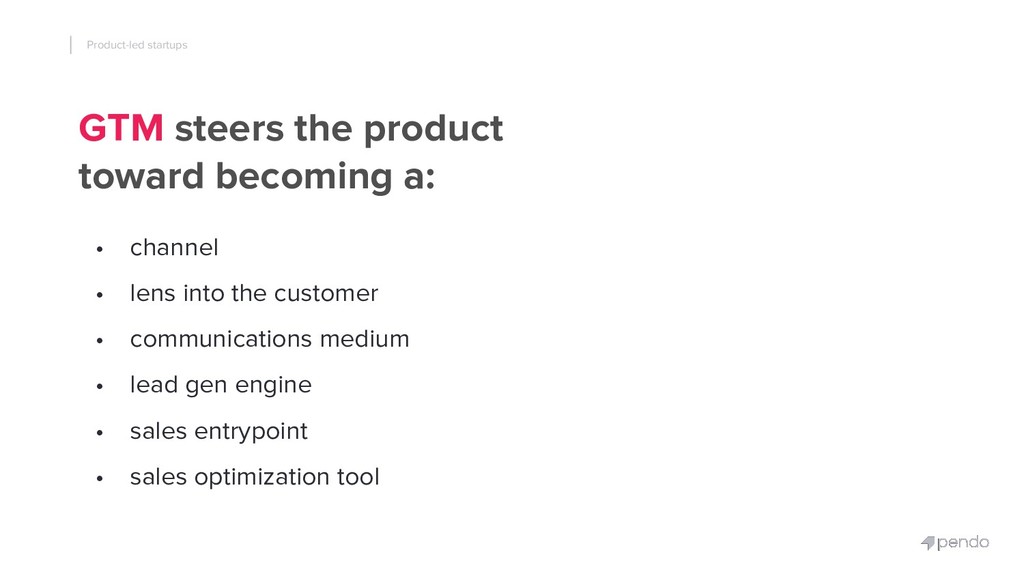
So let's look at how alignment might work. Think of the go to market team. When they envision the product in a product led company, what do they think about the product as? They think about it as a channel to reach customers, prospects. They think about it as a lens to understand, to view their buyer in a clearer light.
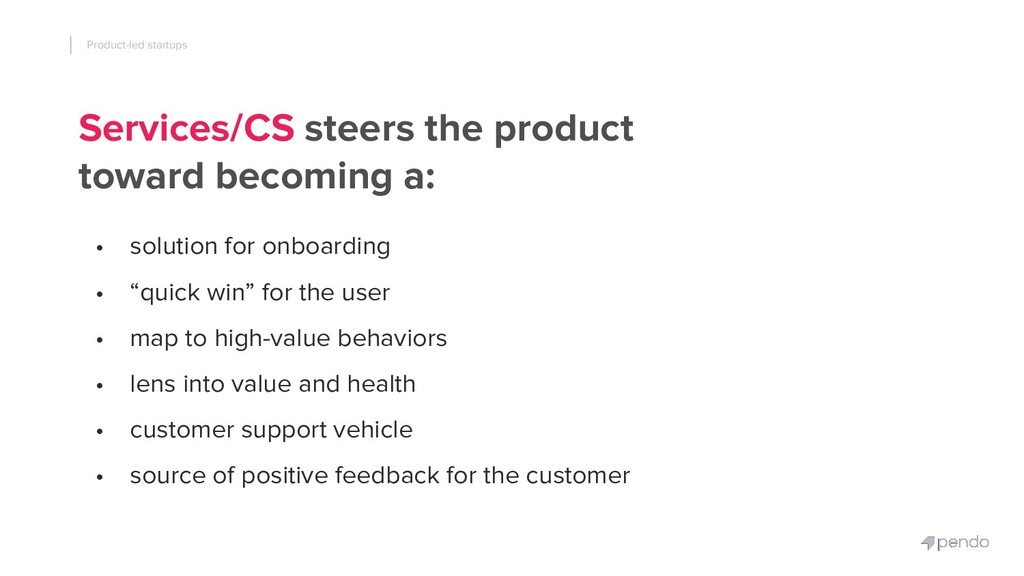
They think of it as a way to communicate with customers, identifying expansion and renewal opportunities. They think of it as the tip of the spear when it comes to demand creation. Services and customer success, they see it as a way to accelerate onboarding.
They see it as a path to get people successful more quickly. They see it as a as like a a hot spot indicator for when somebody might be struggling. When somebody might be struggling before they even realize that they're struggling. But behaviors that look like this tend to result in frustrated customers.
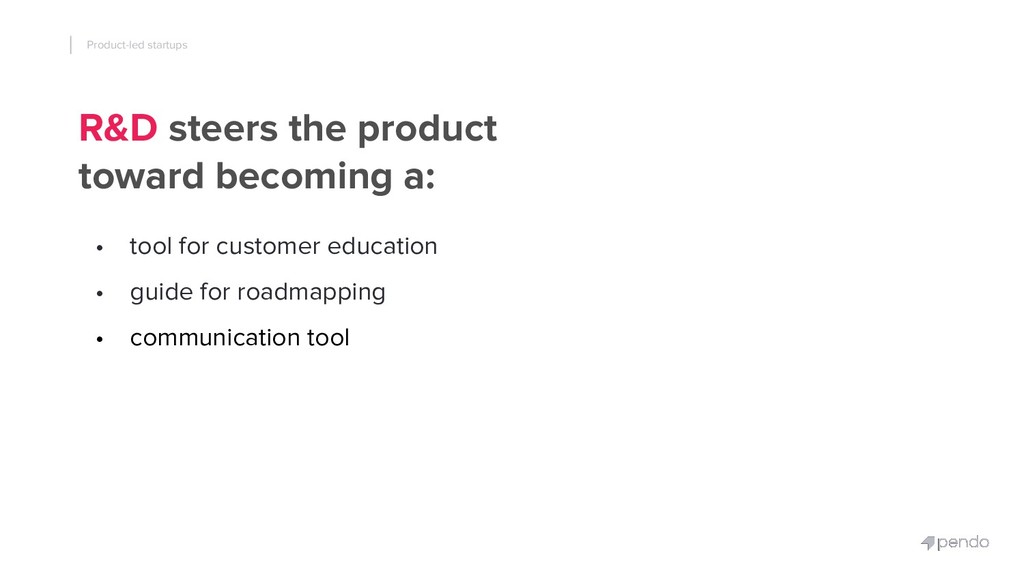
This person engages in that behavior, ergo, I need to step in at this point. R and D sees the product as the means to figure out how the product can be better. So let's drill down one more level in this talk, and let's look at the practical matter of how might a product led company combat some of the challenges that we've all faced in our business.
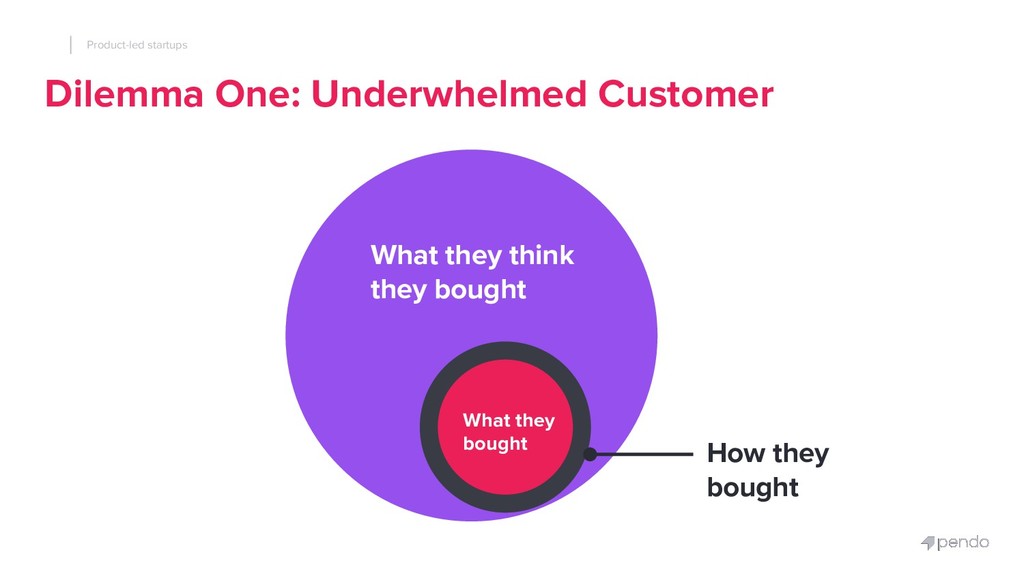
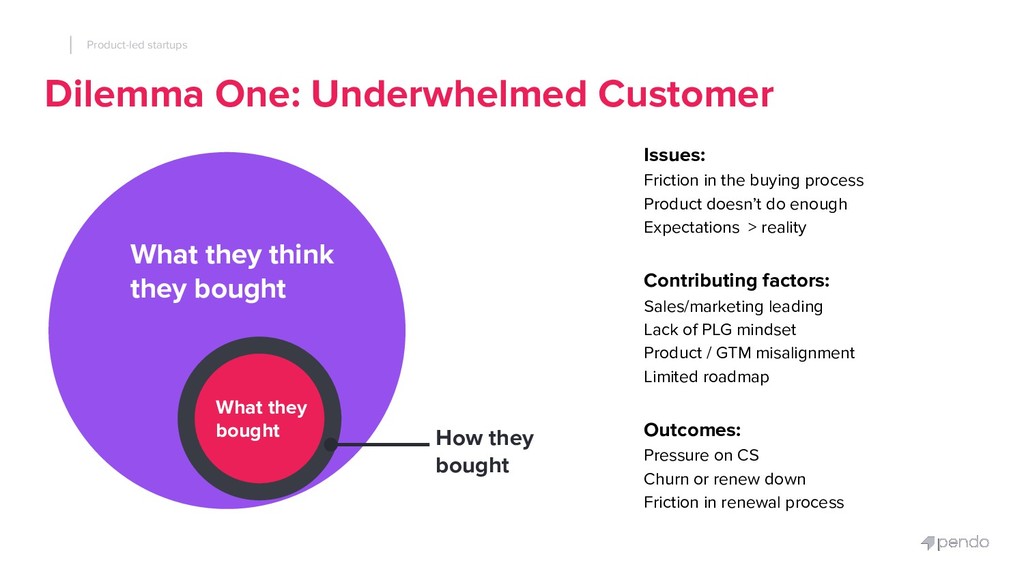
Here's a dilemma. The underwhelmed customer. What somebody bought is a lot smaller than what they think they bought. Right? They had higher expectations for what the product would do than what they ended up buying. And it's not that it doesn't do what they want.
It just doesn't do enough of it. And so what are the issues here? Well, there's likely been friction in the buying process because they've been oversold. So it's probably sales or marketing led company. There is, a misalignment between expectations and reality, and that misalignment happened because there's maybe a road mapping problem, that the road map isn't ambitious enough, that the buyer wasn't exposed to what the product truly does in the buying process.
They were shielded from it. They were sold. Right? They didn't buy. And so renewal is gonna be hard here. And they may be able to keep the customer, but they're probably gonna renew them down if they keep them at all because the product doesn't do what they thought.
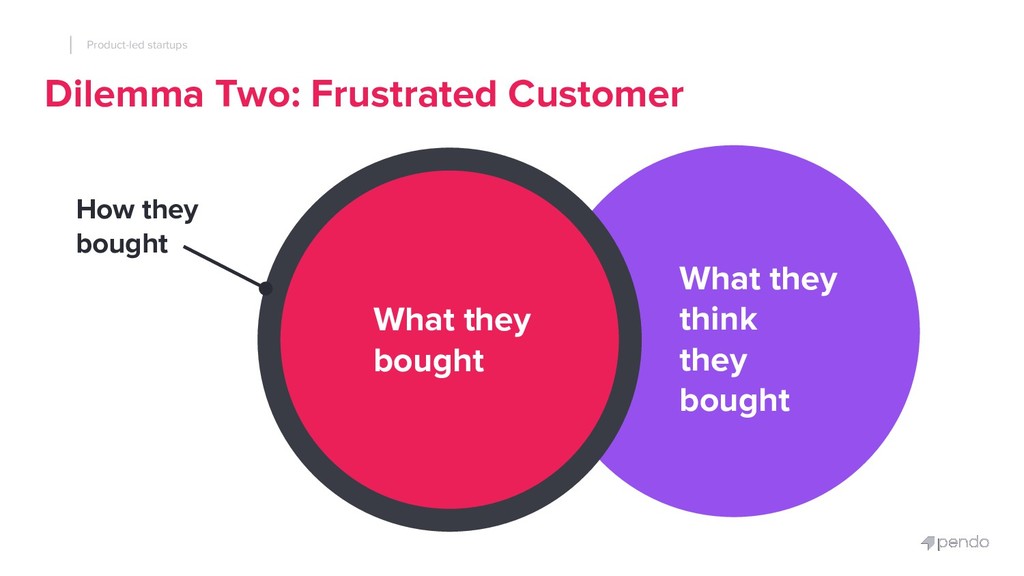
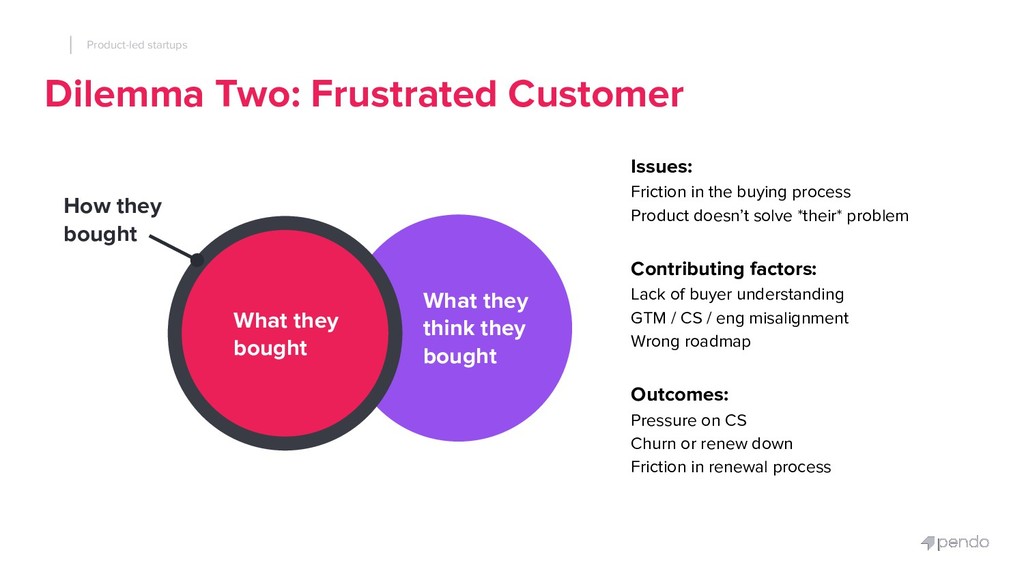
Here's a related challenge. Okay? This is the frustrated customer where what they bought, it's a full featured product, but the features don't really align with the reality of what that company was trying to buy. So there's also gonna be friction in this process because they were certainly blocked from seeing what the product truly was.
The product solves a problem, just not the problem they have. So engineering this goes back to that engineering challenge where the who is building the product doesn't have a a clear view into the persona of the person who's buying the product. These are very common challenges.
And so this lack of two way communication between the r and d and the GTM functions. The road map is probably plenty ambitious. It's just wrong. Or sales is selling and marketing is marketing to the wrong persona. But there is a there's friction in the organization.
There's a lack of communication going on. This is a company that you're not gonna renew. Probably not going to renew them at all. Certainly not down. You're just not going to keep best customer. And so how do you get there? How do you how do you overcome this?
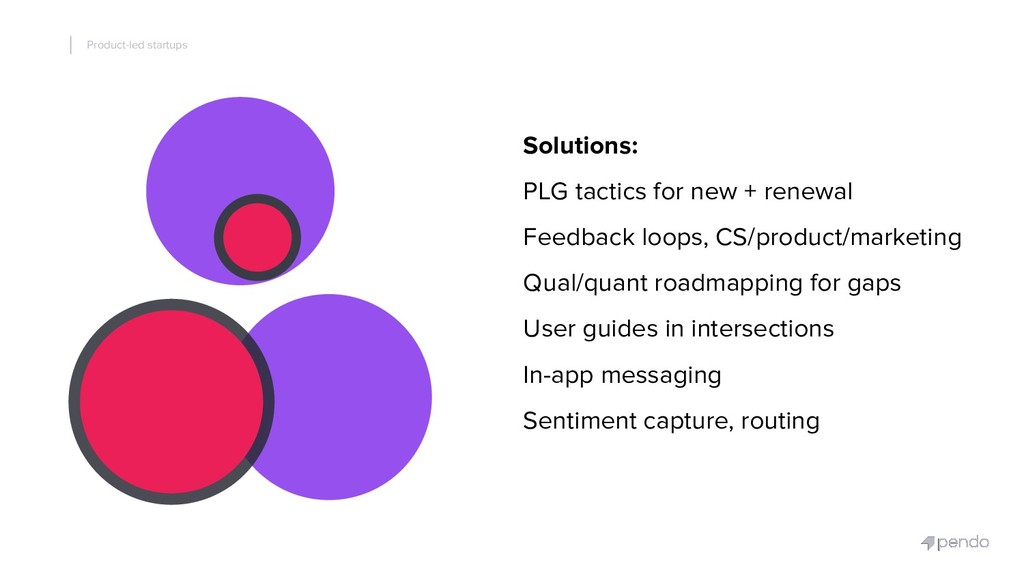
Well, this is elements of product led growth, exposing what the product does during the buying process, having them experience the product before they write a check. It's thinking about feedback loops between marketing, sales, customer success, product, and eng so that you're not targeting the wrong persona.
And those feedback loops aren't just based on conversations had, but analyzing how people are using the product. It's blending what customer success is hearing on the phones with the reality of how the product is being used. It's merging all of these elements together and then finding that in both of these cases, right, they're not gonna fix these problems overnight, but getting the companies that are using the product to be as successful as possible in the product by guiding them to the type of usage patterns that successful companies engage in.
And that's why I look at all of this as this watering hole, where sales, marketing, customer success, engineering, product. Right? They all all of those departments are represented in some way in this slide. And they gather around product, and they draw from it, and they add value to it.
And that's why being a product led company is ultimately about alignment. It's an organizing principle for your organization. That's it. Thank you.