An actionable talk that reveals the psych behind words + real-world copy test results to inform better word selection - which means increased engagement and persuasiveness - for everyone who writes, which is everyone in attendance.
The speaker:
Joanna is the founder of Copyhackers. and the Copy Chief at CH Agency. For nearly 15 years, incredible companies like BT, Canva, Glowforge, Intuit, MetaLab, Prezi, SAP, Sprout Social and VWO have trusted her to optimize their copy. And incredible conferences like Mozcon, INBOUND, SearchLove and CXL Live have invited Joanna to teach their audiences to write copy that converts.
1 / 80 Use ← → to navigate
Auto-generated transcript - may contain errors.
Tap a timestamp to jump the video.
Hello. Okay. So, yeah, we're going from really strategic with April's amazing talk to very execution focus. The words you're putting on the page in your email, things like that. The words, chat, GPT, maybe putting in your emails and things like that. But hopefully, you are not just sending them out blindly, because there's a lot of stuff you can do to make them form a lot better before you hit send on those emails or hit publish on that page or whatever that might be.
So we're gonna talk about money, words, words that help you make money, and words that may cause you to lose money. Both of those sides, we're gonna focus a little more on the lose money ones. Those are some quick wins that you might get.
In fact, you might even look at This, I know there's not room for your laptop to be out on your lap, but on your phone, maybe, bring your own website up and really start looking through your site for these opportunities to just make tweaks very simple tweaks to the words that you're using.
But in order for you to even care to do that, to take out your phone and look at your own website, and Take out your laptop and open your CRM as they're making changes. We have to first kind of a line on whether words are even powerful.
Like, what do words do? Like, I'm rattling off words. I'm not selecting each word deliberately right now when you're writing emails and your website, you're probably not selecting each word very deliberately. Should you bother to? Do words really matter. People have made decisions all the time. Right?
You're just kinda like nudging them. But I would argue having read a lot, so I'm doing this talk. Pulling together just years of research on word choice, on syntax, on nerdy nerdy things about words and how they get people to make decisions or not make decisions.
And so I've come across a lot of interesting studies, and so let's kind of get on board with whether words matter or not. So let's say outside of marketing. Let's say, let's go to health care. Words having to do with health care. Which of these?
I'm gonna give you a little pop quiz, a couple of them. So audience engagement is encouraged. It's a little quiet over on signed maybe, but I'm listening to everybody. So between these two, let's say, let's say you are somebody who is you and your partner have decided to go for IVF.
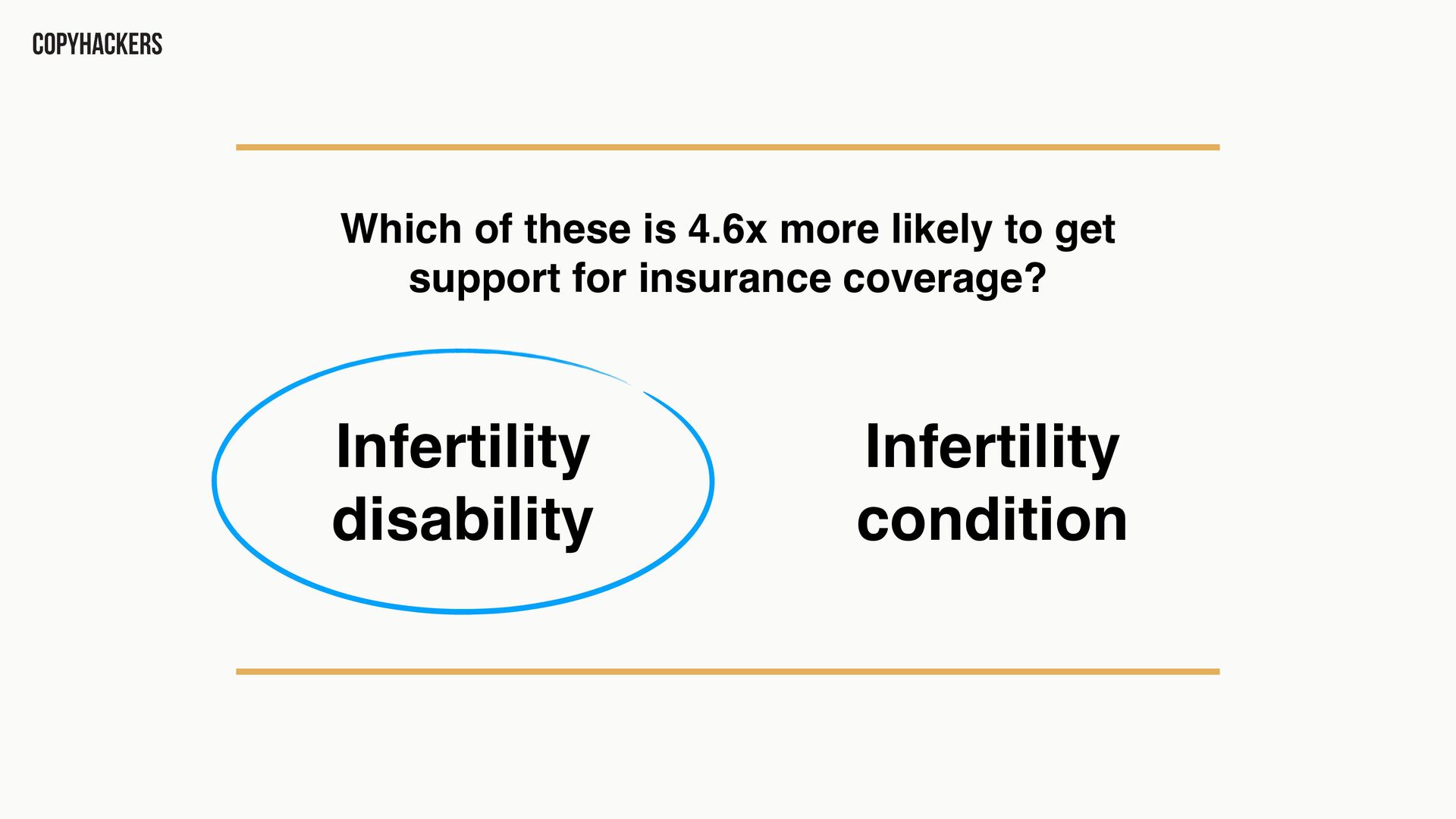
IVF, you need assistance with fertility issues. Okay. Fine. So you go to do this. It's twenty thousand dollars to get one round of this done. Which of these two is four point six times more likely to get you support for insurance So when people were asked which of these two terms, which are coming up, they're not there yet, which of these two terms is more likely to get support for insurance coverage.
In fertility disability, or infertility condition. Which one is more likely to get insurance to cover it? Disability. Make it a disability. Now insurance covers it. How do we talk about it, though? Not as disability. Who is that good for? Insurance company is not for the people. Okay.
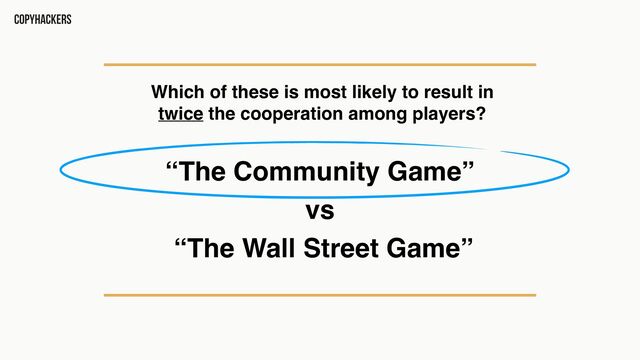
It's not political. I'm not being political about that, but it's a real money word. It's a real any word. If you work at an insurance company, you're gonna wanna make sure people are saying condition, not disability. Which of these? Is most likely to result in twice the cooperation among players.
The community game? Or the Wall Street game. If I sat you down and said you're playing the community game or you're playing the Wall Street game, which one is gonna make you wanna be more cooperative with others? You can say it. We're all friends here.
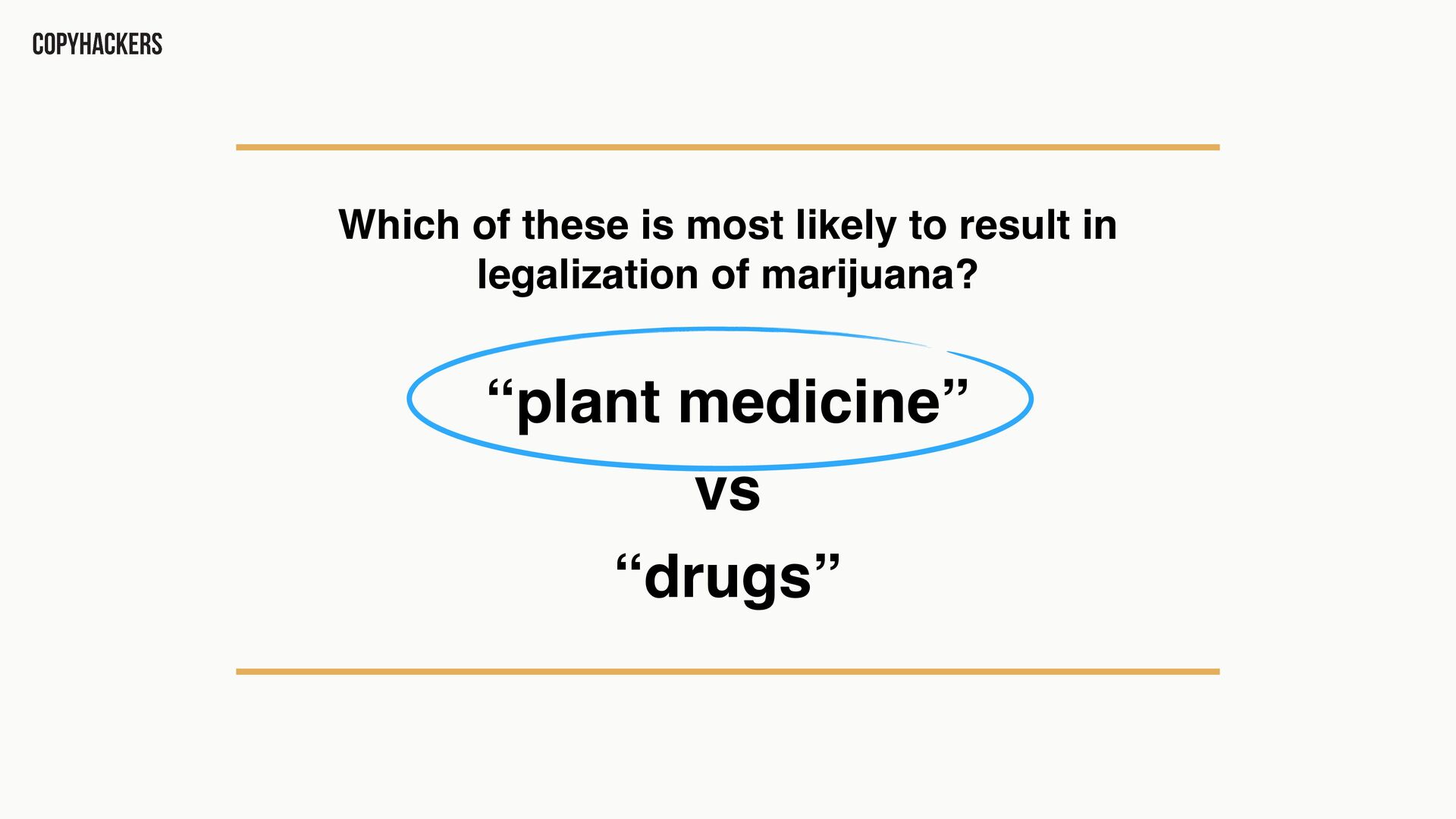
The community game. Right? You're with the community. In fact, seventy percent of participants were cooperative in the community game, and only thirty percent were in the Wall Street game. So naming your products matters. Which of these helped lead to the legalization of marijuana in Oregon and California.
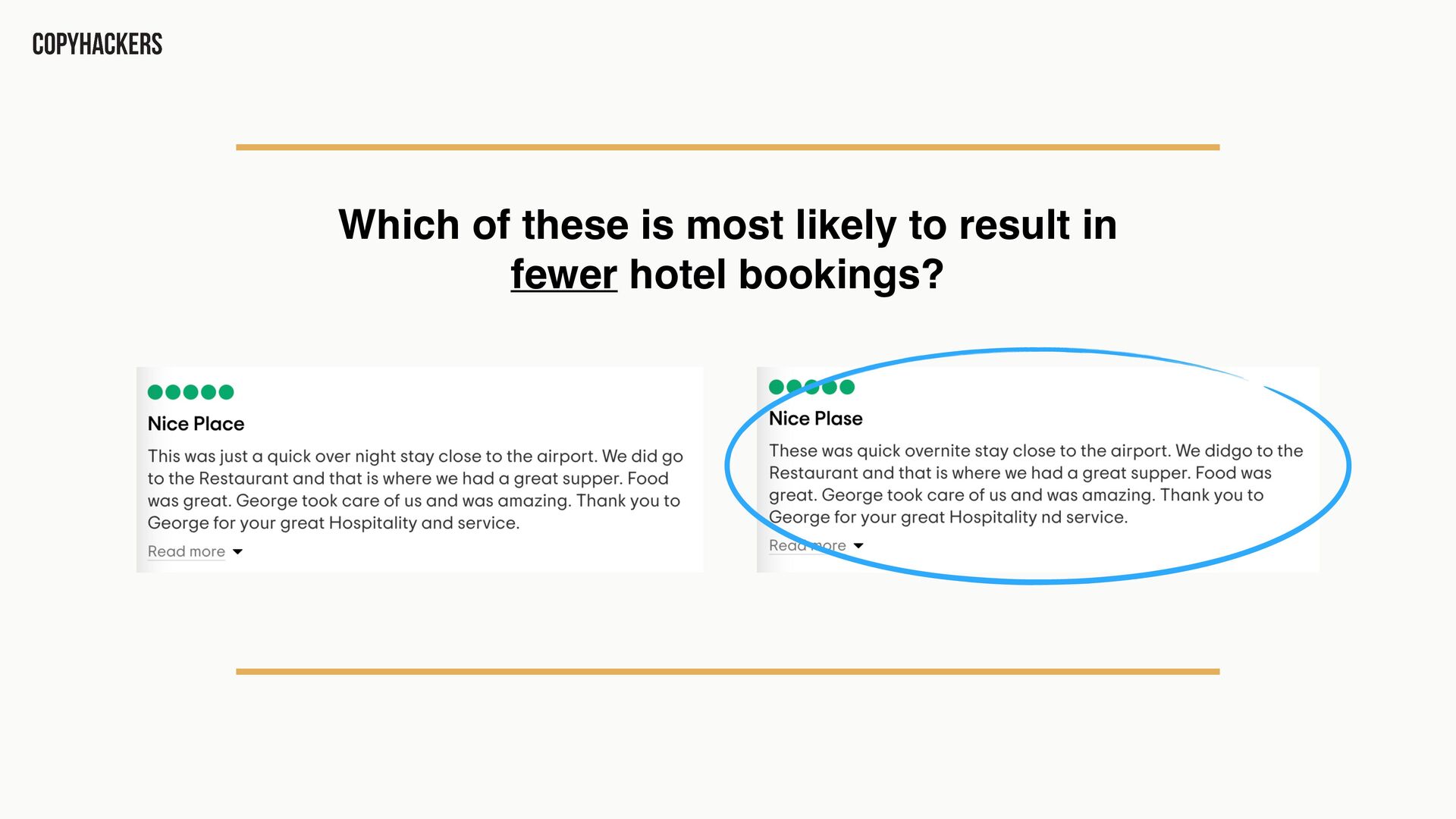
There's no war on plant medicine. Right? No. There's a war on drugs, not on plant medicine, and one more Which of these is most likely to result in fewer hotel bookings, look just at the title of these two side by side. Nice place or nice place spelled wrong.
Fewer hotel bookings, if you have more than two typos, in a hotel review. Twenty two thousand, I think it was reviews or studied. And that led significantly to fewer bookings for the hotel just because a review, left by some random hotels are hiring people go in and fix their typos now because of stuff like this.
So words do help us make decisions. Deliberate choice of words can help us either make more money. And if we do it wrong, it can make us lose money. Let's start with some lose money words. Number one. Okay. I'm not gonna just throw it at you, but this is going to probably appear on your pricing page, or if you're in e commerce, it will be in your product detail page.
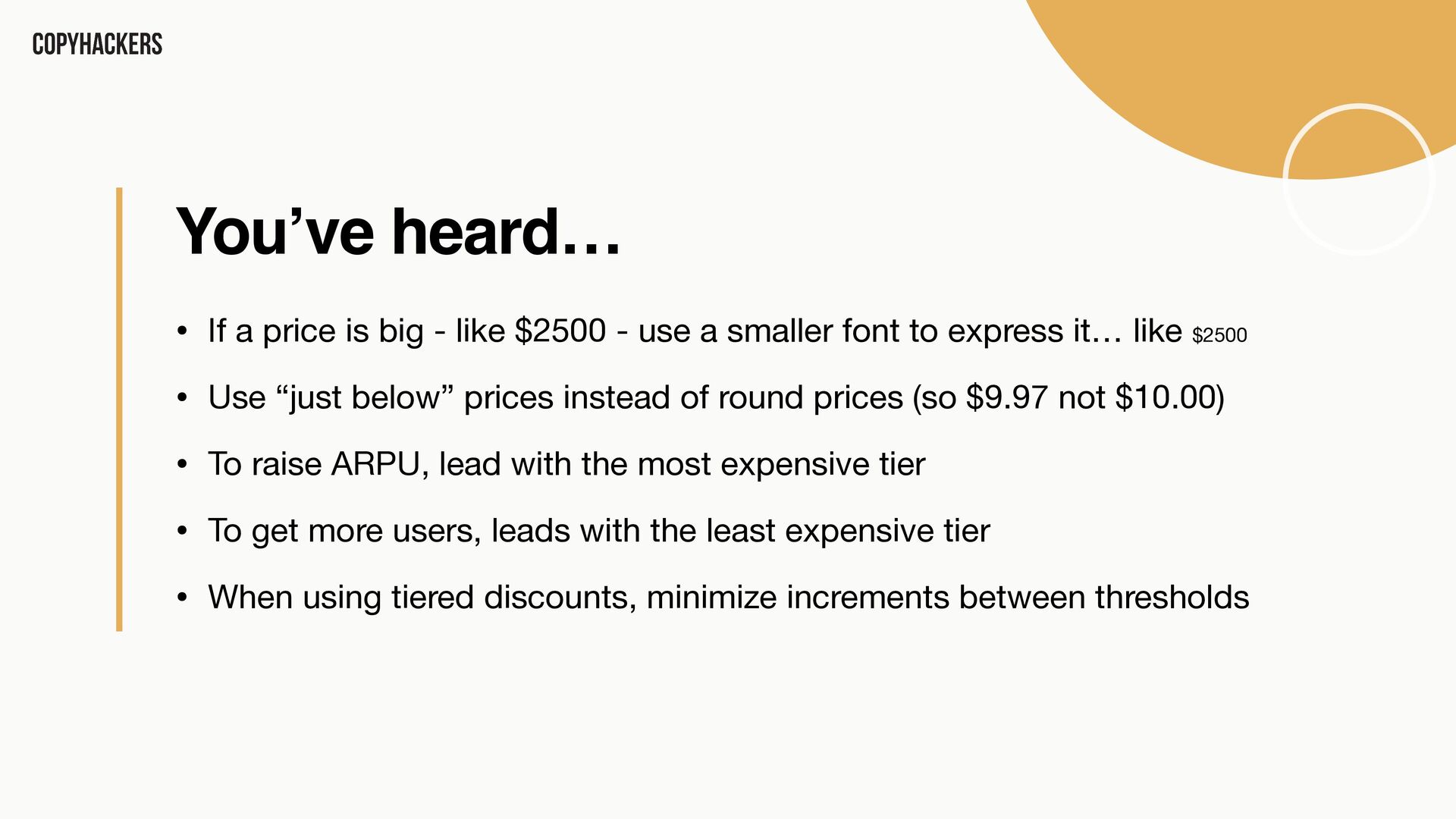
So we're all familiar with optimizing. If you're in growth at all, you're likely optimizing in some way on your pricing table, if you're in SAS, even if that is enterprise, or in e commerce on your product detail page. So you've probably heard about doing things on your pricing page or your, again, e commerce product page, if a price is very big, like, it's twenty five hundred dollars or seven thousand dollars to buy your laser printer or whatever, you should make it physically smaller on the page.
There's studies on that. Use just below prices, like nine ninety seven instead of ten dollars, To raise average revenue per user, you should, lead with the most expensive tier to get more users in. You should lead with the least expensive tier. And when using tier discounts like buy two, get twenty percent off, buy three, get twenty five percent off, you wanna minimize increments between thresholds.
Okay. These aren't money words. These are just ways to help people say yes on your pricing page. But my real question is, in SaaS in particular, Why are we dedicating an entire page on our site to reminding people about the money they're going to spend with us?
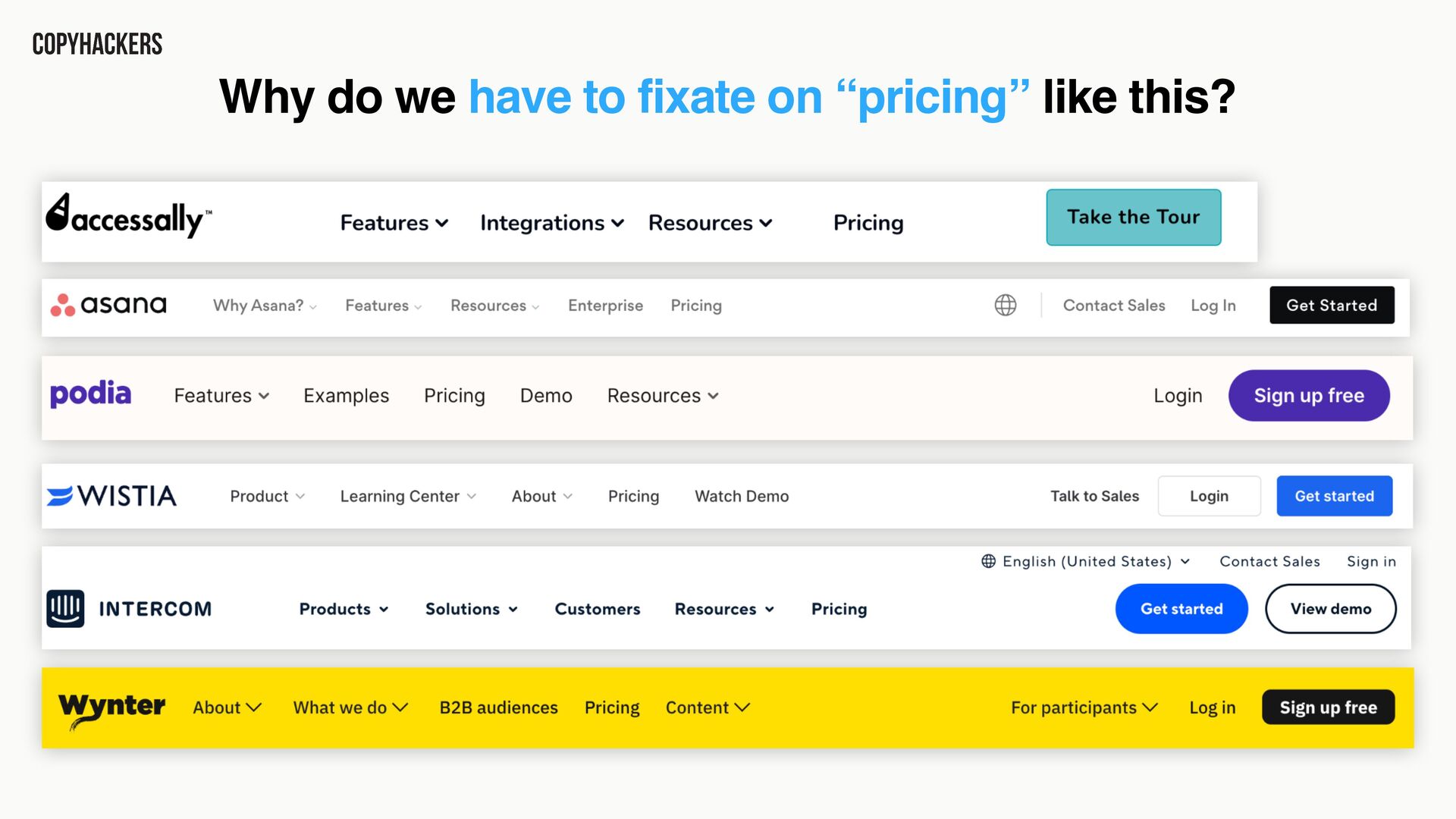
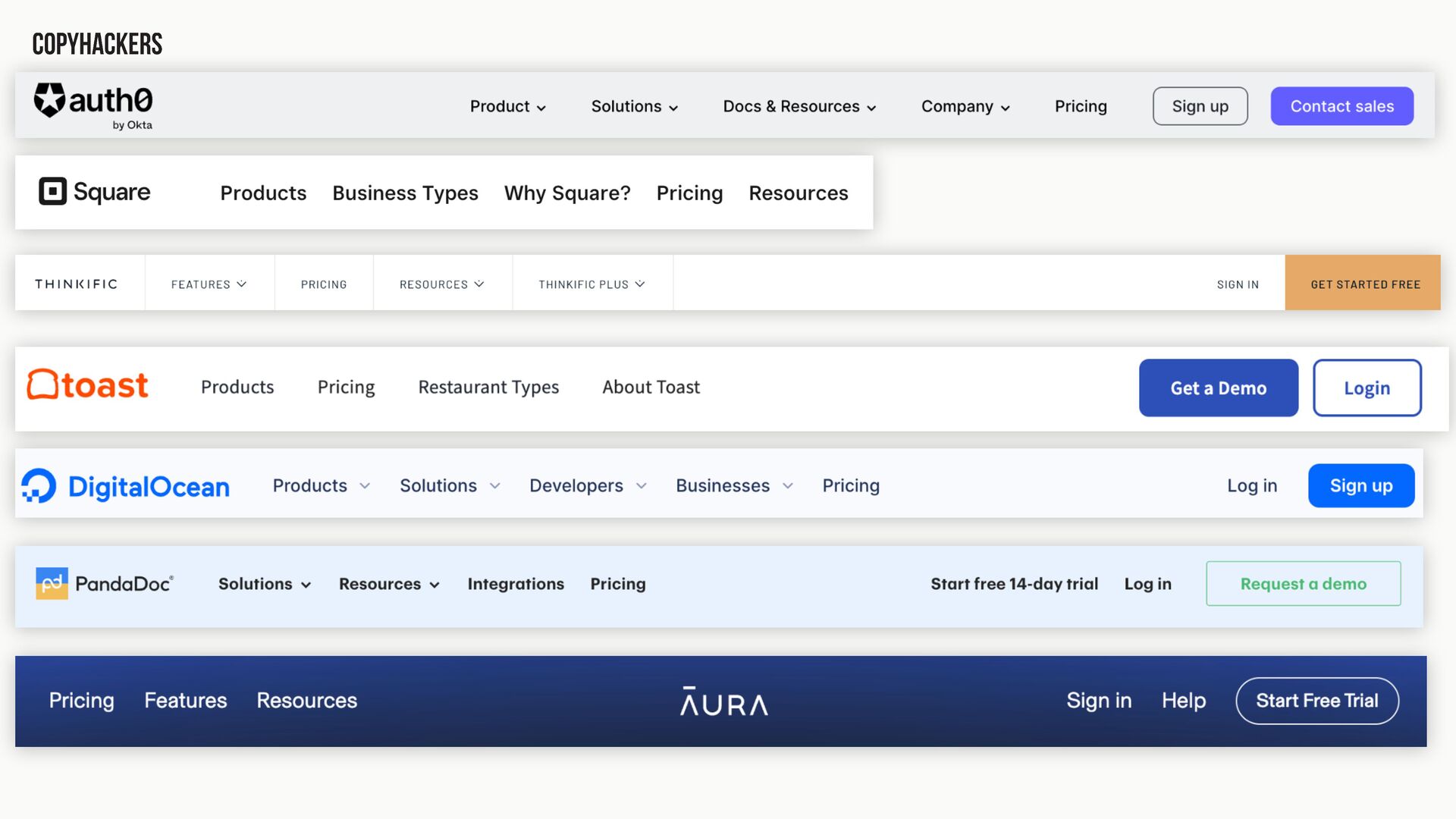
This is like randomly pulled from tabs I had open. Many tabs open. And you can see that in all of them, there's one in particular that's telling me that I'm going to spend money with you, or it leads with it, pricing. Pricing. We have across SaaS all across SaaS pricing.
Wherever you go, you can find pricing. And if you do click mapping, you will see that people click on the pricing tab in your NAV all the time without clicking on tour or features or any of the other stuff. They're going straight for how much does this cost me, and we're telling them this is gonna cost you money without having an ROI page or anything else in our NAV either to, like, balance that out.
So, Lou's money word number one is pay and anything to do with it. And people are using this all over your sites, particularly, again, on pricing pages. So our recommendation is called, it's a depletion of assets sweep. So you don't want people to come to your site, and think of you as a place where they lose money.
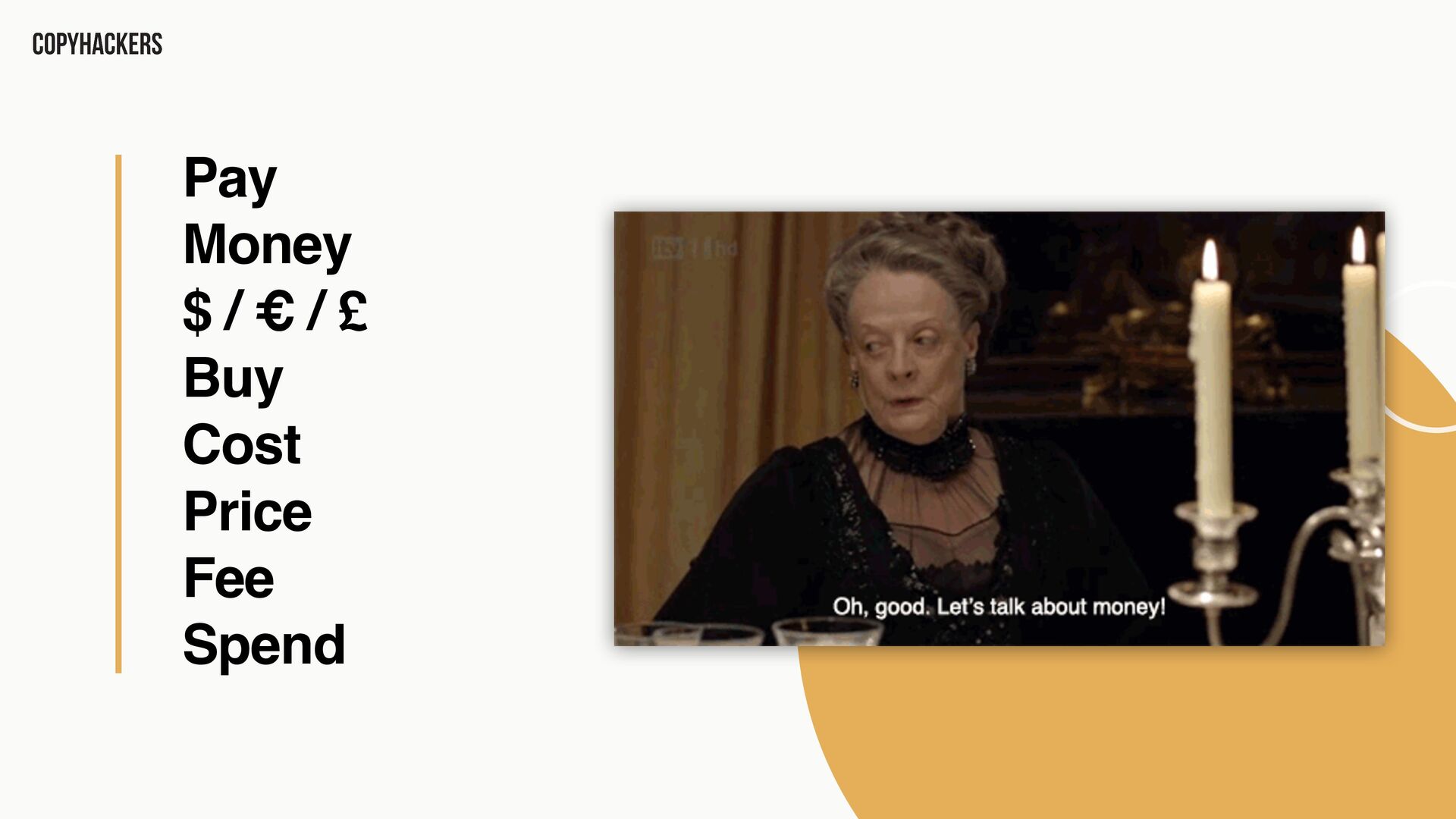
Of course not. Right? We think, oh, but they understand exchange of value. It's actually not when you say things like pay, price, money, when you show your currency symbol even. I know you have to. But we have to remember what that is as a signal to people.
Words actually matter. The words we're accidentally choosing or throwing on our site absolutely do matter. So there's been studies on this. And if you talk to people in sales, they'll be quick to tell you, like, Just like, let's not, let's not talk too much.
Let's not use words like money or cost, or this is what you'll pay. And I'm not saying switch to investment. I'm not saying anything like that. Like, there's lots of ways you can get around that. But we do want to reduce the emphasis on our prices.
And there was a recent test, experiment that was shared in the Harvard Business Review, around avoiding emphasizing prices for SaaS in particular so that people don't feel pressure to use your product and then don't end up using it and then cancel really quickly.
So this is all over the place. A bad word to use is price, pay anything like that. Now, we do need people to find our prices. Right? So that's important. We have to keep that label in our nap, but we have to reduce the sense that there is like this this cost center.
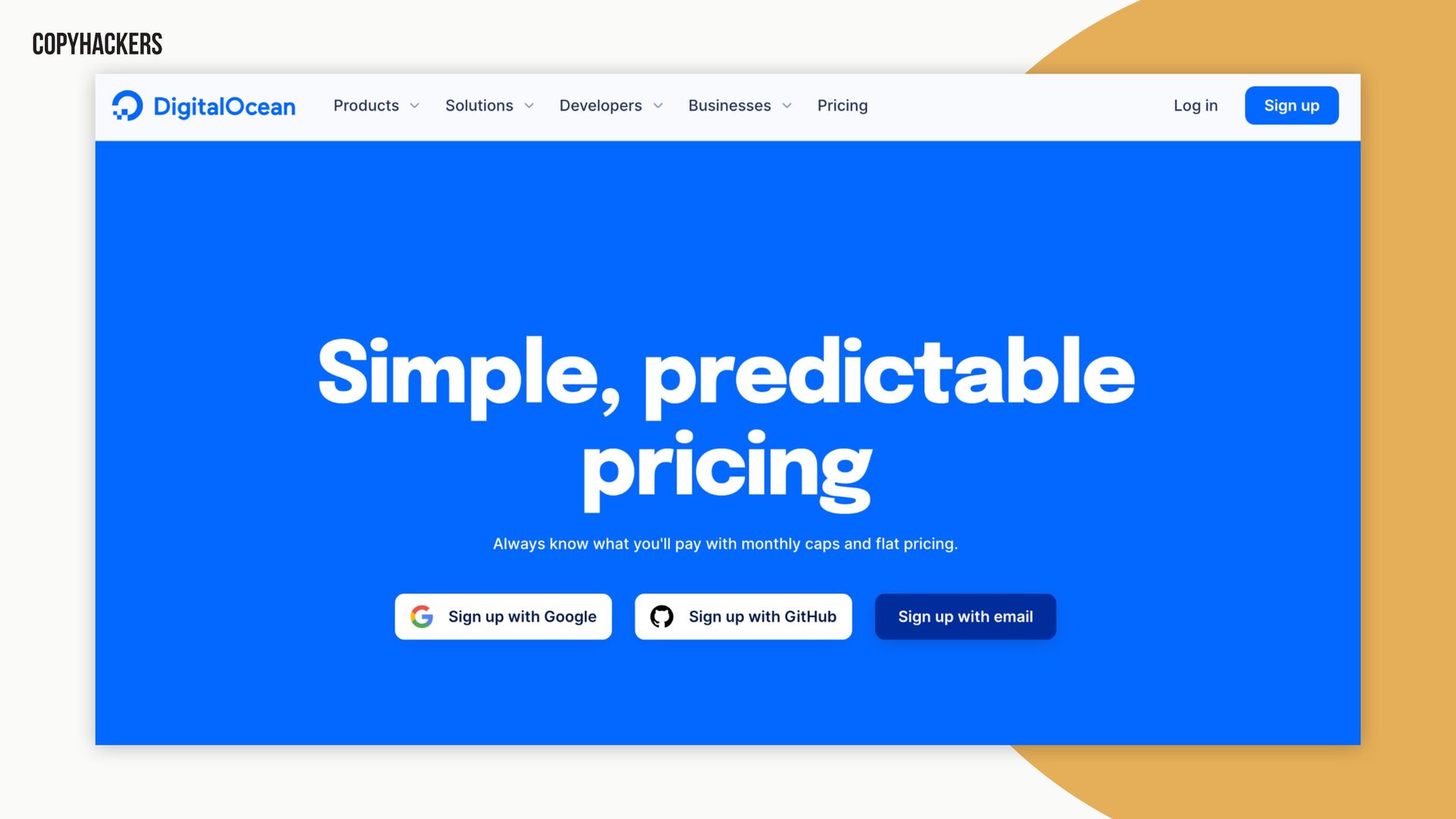
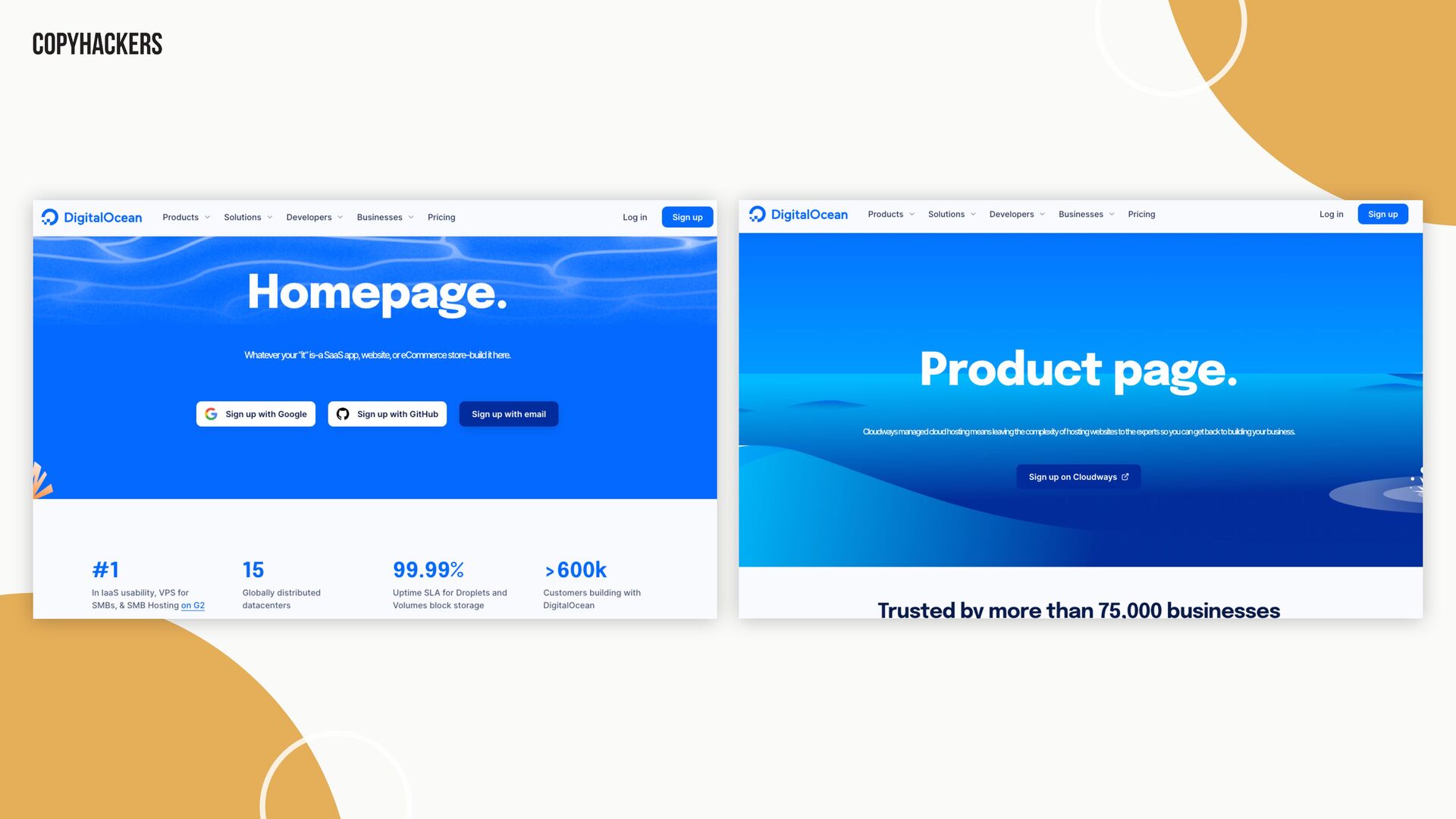
So if you were on your own website and you went to your own pricing page, you might see a headline that looks a lot like this. Digital Ocean, again, nothing against the people behind some of these websites I'm gonna pull up as examples.
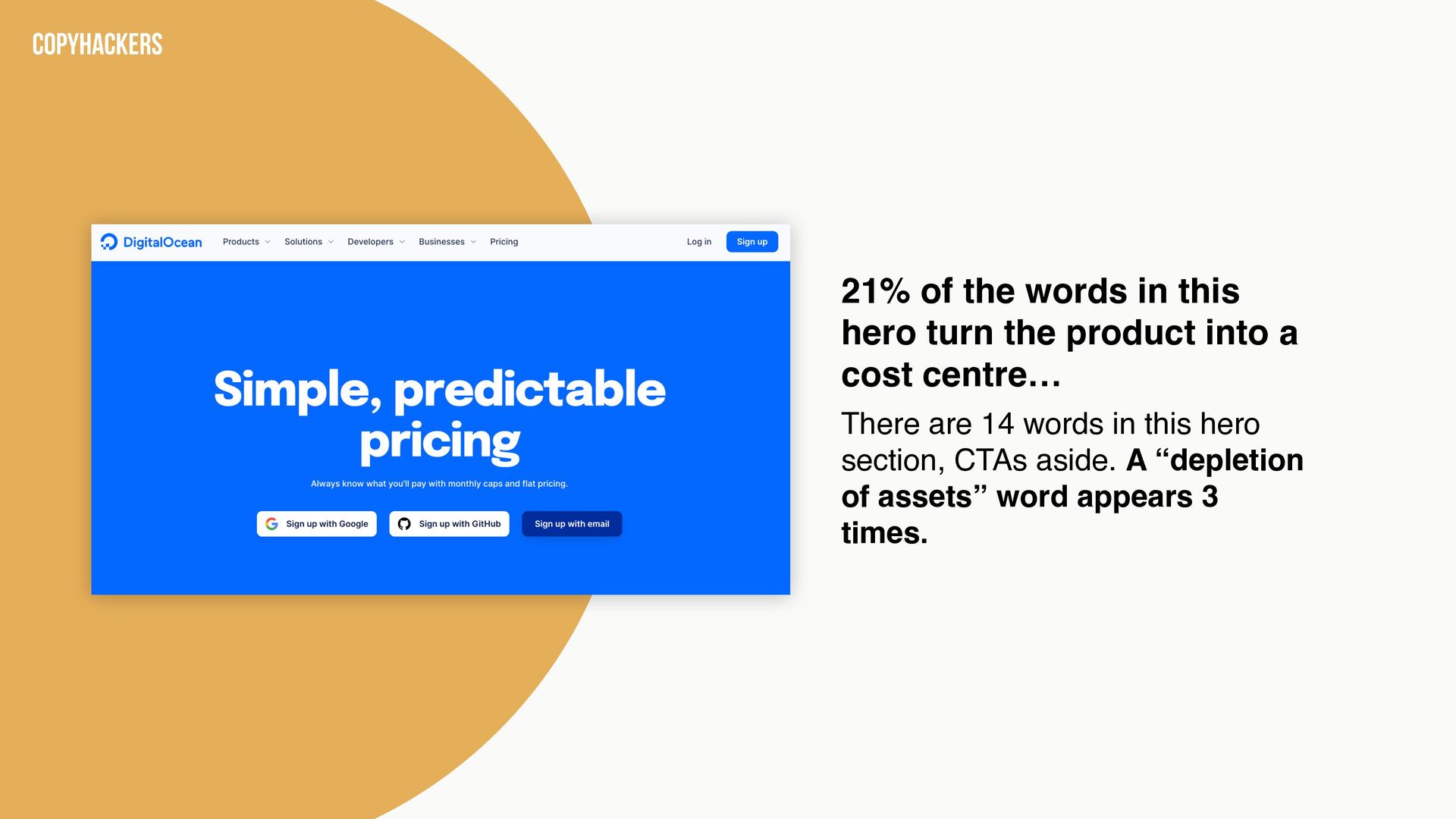
They're just randomly selected examples, and they're always the same. This is the entire above the fold for the pricing page. Simple, predictable pricing, couldn't be any big or the word pricing on there. Then I'll read, you might be able to see that. Always know what you'll pay with monthly caps and flat pricing.
Twenty one percent of the words in this hero section are turning this product into a cost center. They are saying you're going to spend money here without any sense of the value. There's no value proposition. There's nothing like that. Fourteen words in this hero, CTAs aside, Three of them are words like pay or pricing.
Also, side note. Like, you don't have to say pricing in your h one. This is like, we don't say homepage. We don't say product page. You don't have to say pricing in your h one. So what can we do instead, though? Here's an example, again, randomly chosen.
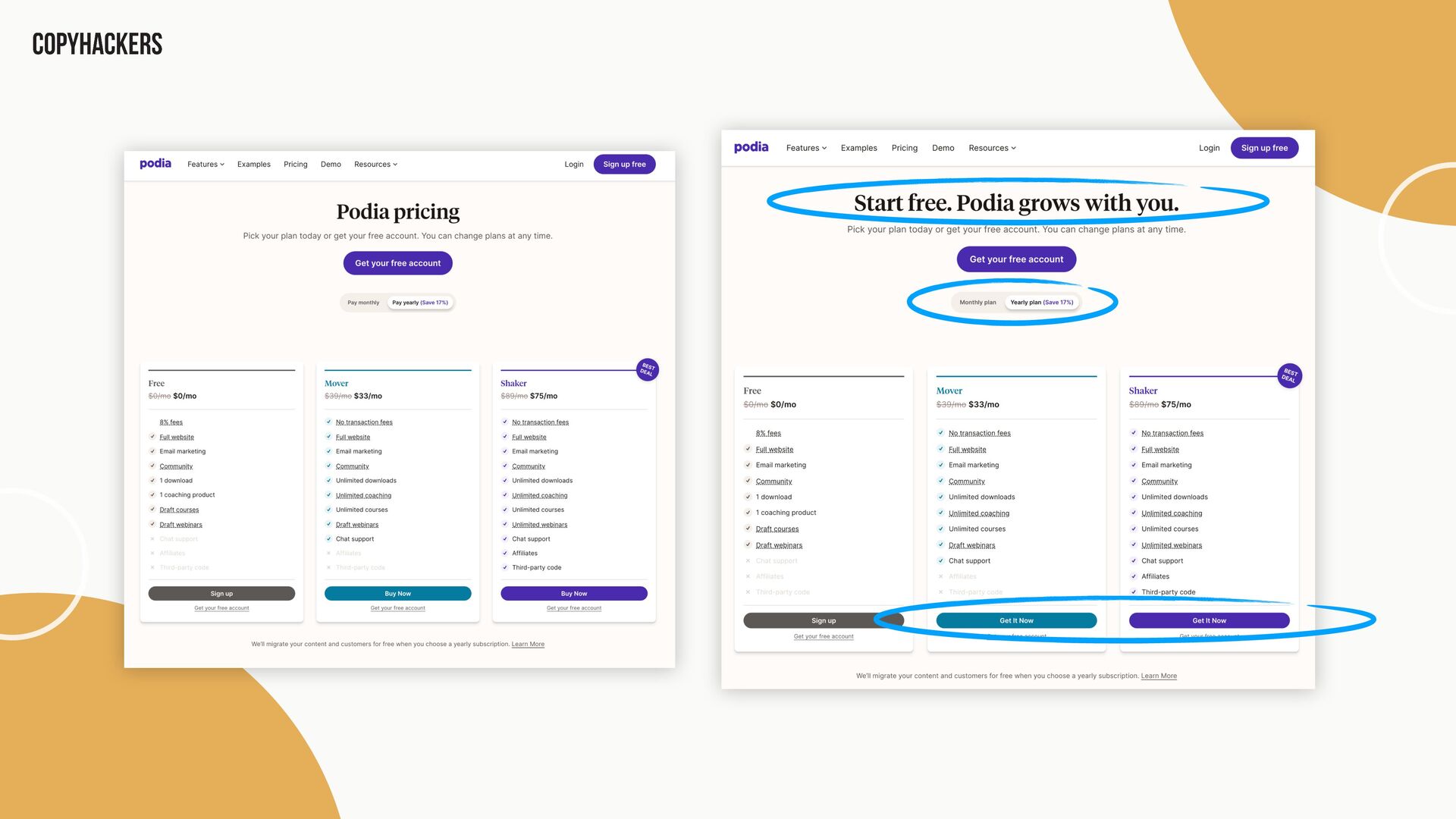
Portia pricing, this is their control on the left, and then you optimize it. So instead, what's the offer? Start free, podia grows with you. Good. Now I know what the offer is. I'm on the pricing page. I know we're gonna be talking about money, but you're making it more about, like, what's in it for me, which is basic.
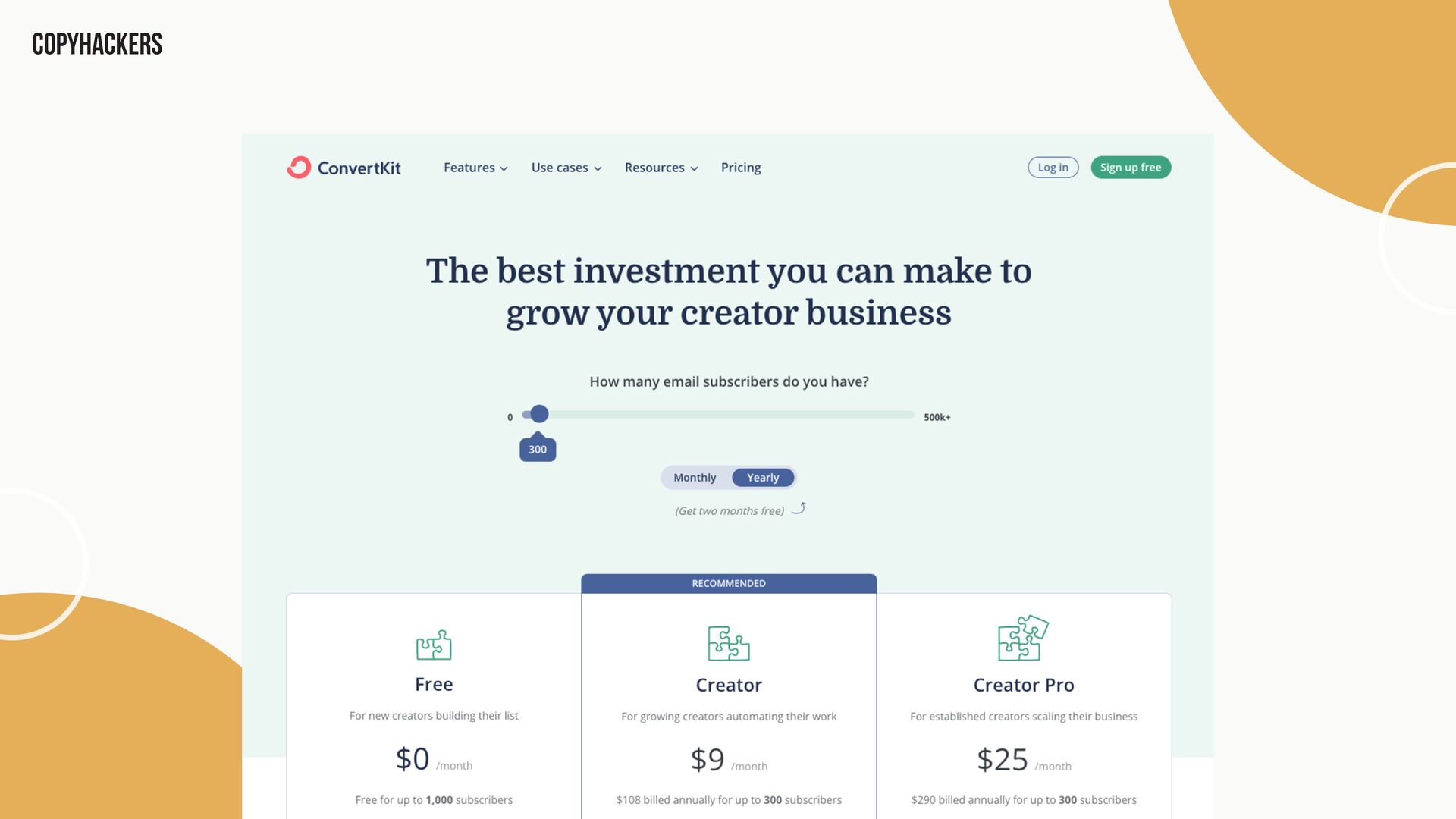
Switching from pay yearly to yearly plan, very small tweaks. Right? But we're pulling out the words that make people feel weird about it. Switch from buy now to get it now. Really straightforward stuff. ConvertKit does a very good job of this. A lot of websites do a good job of this, just not enough, and I would wager possibly not yours.
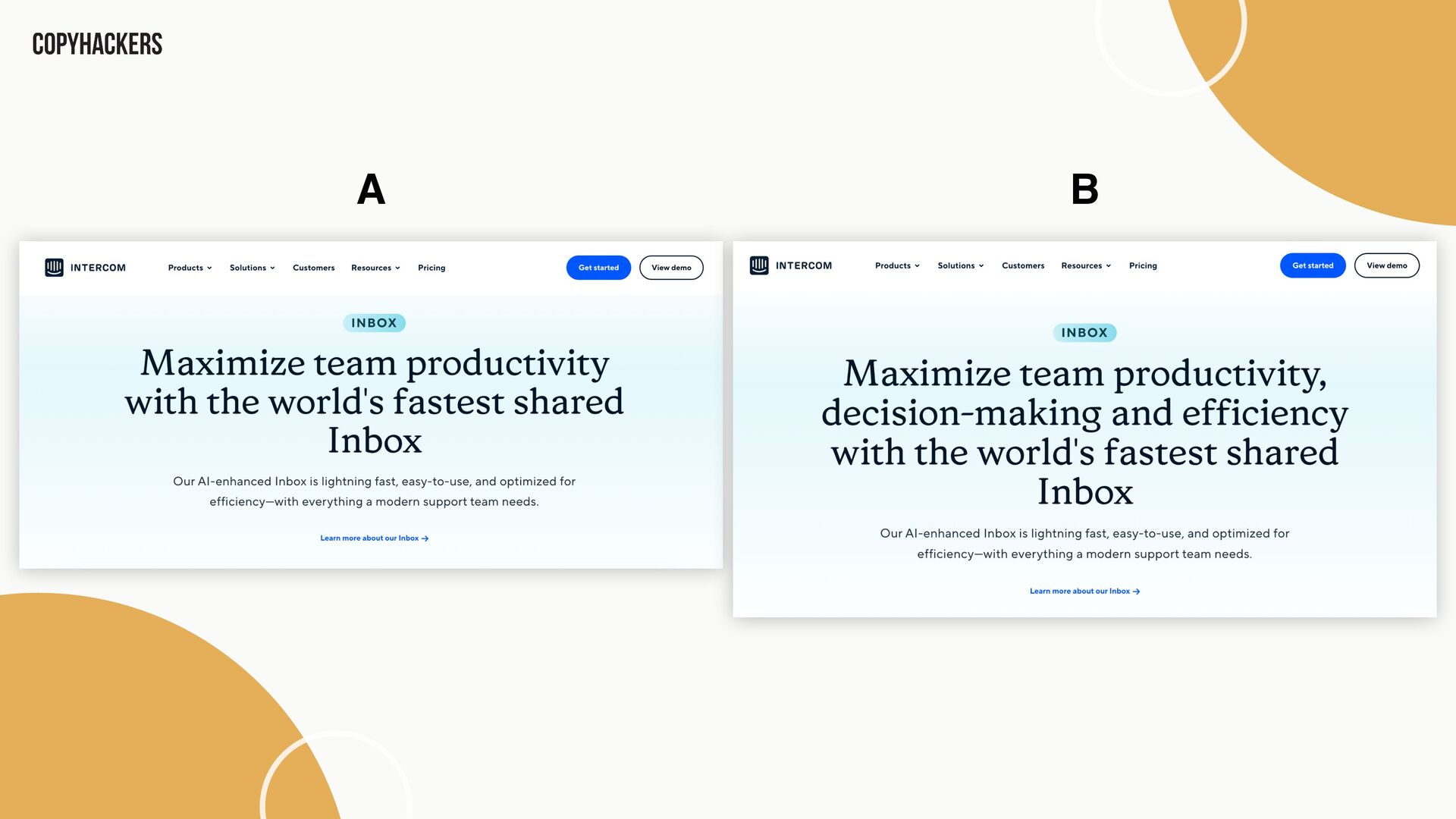
Lose money word. Number two. Alright. I'm gonna show you two side by side a and b, and you guess. It's hard to say because we're not doing a proper experiment here, but you guess at which one you're more likely to remember the details of.
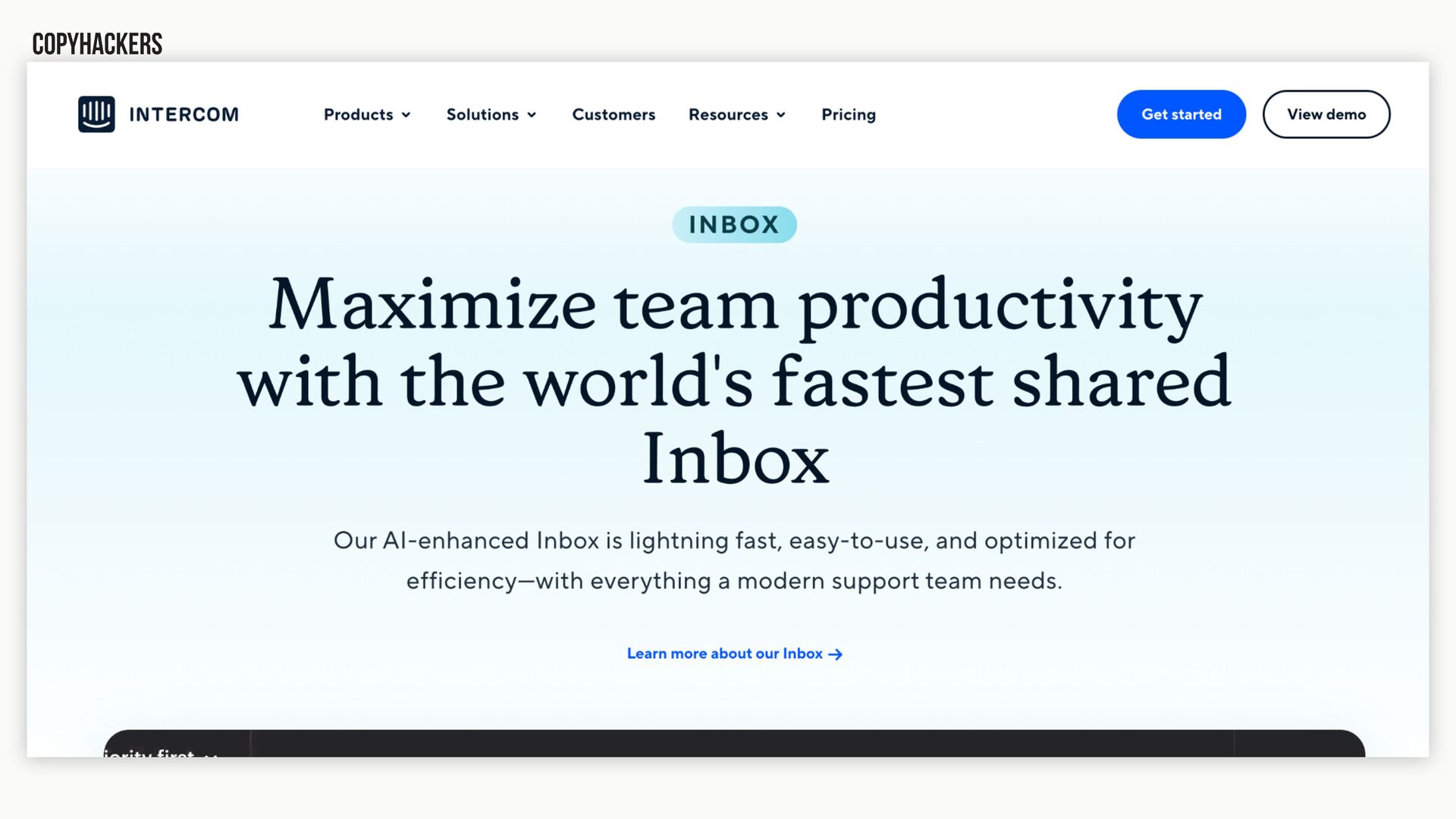
Option a, maximize team productivity with the world's fastest shared inbox. This is the feature for intercom. This is a cross head for that feature. Or b, maximize team productivity, decision making, and efficiency with the world's fastest shared inbox. Which one might stand a chance as sticking.
A or b a y. Shorter. How show hey. How much shorter? Like, what what's shorter about it? What's really going on there? It's a little more disciplined. Removed a word that I argue is a big lose money word, and it is all over your site, all over the word and Think of it this way.
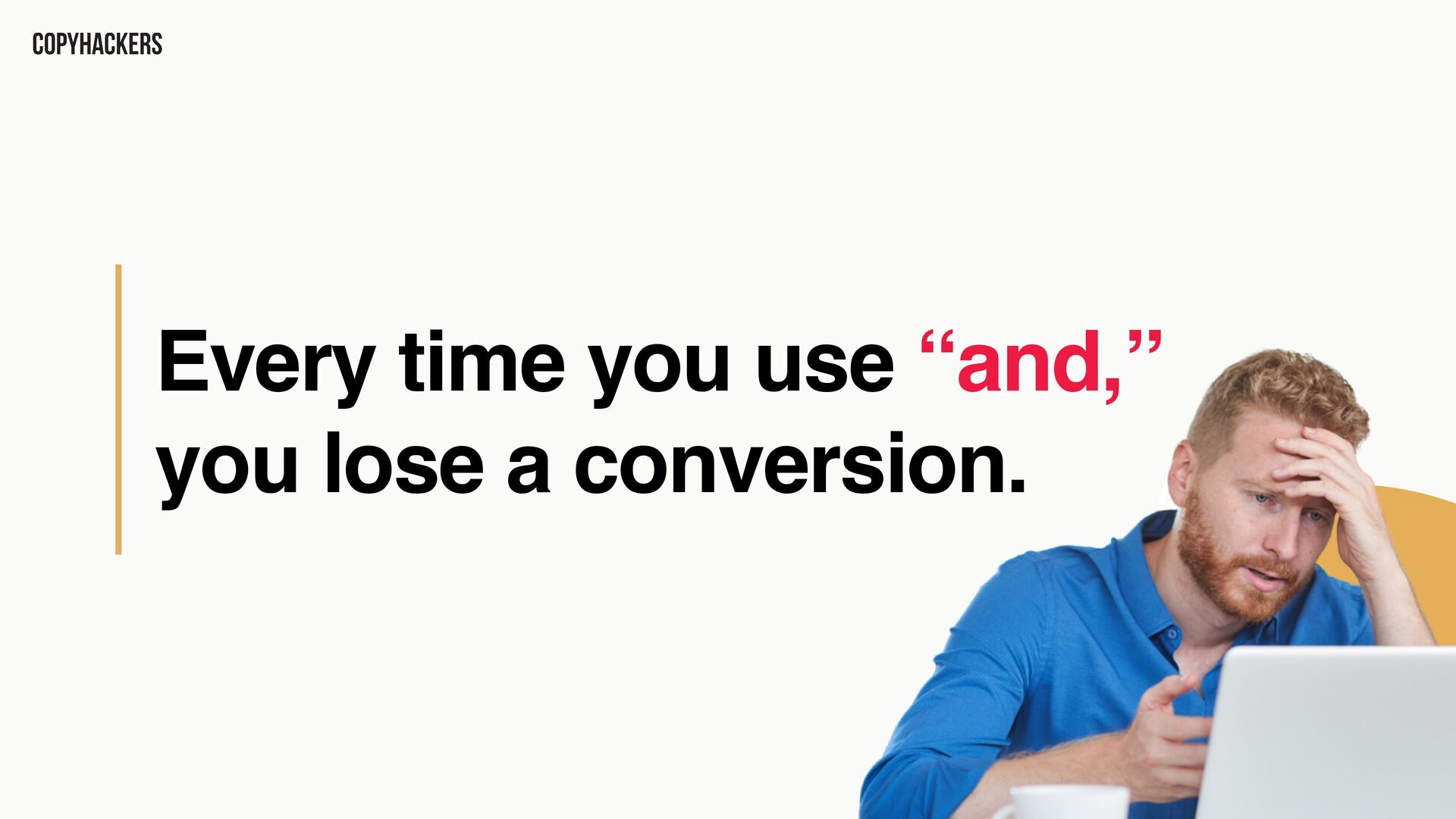
Every time you use the word and in your copy, you have to be okay with losing a conversion. That means you have to actually be okay with it, at least one conversion that you're going to lose because of it. This goes back to old marketing.
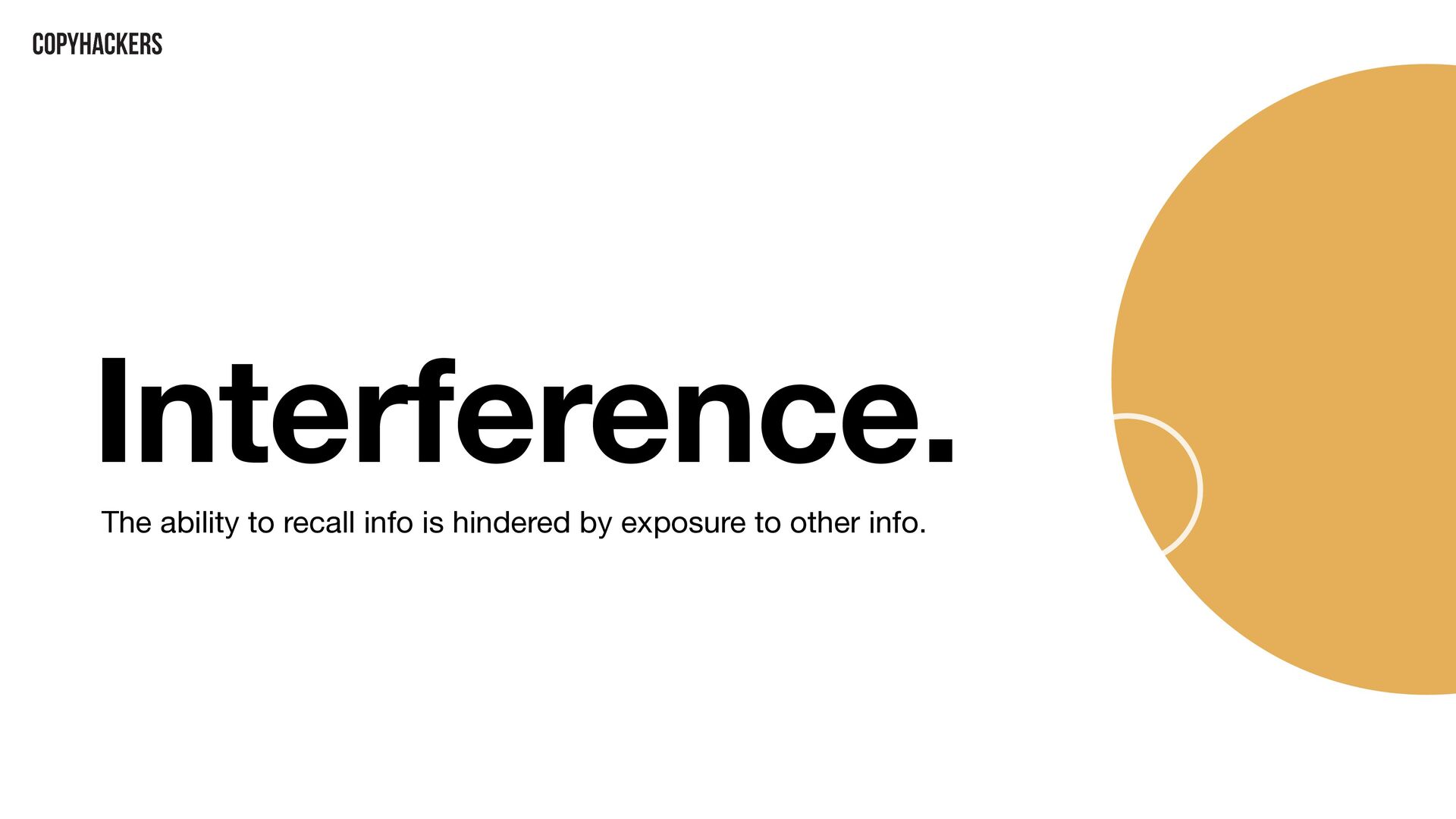
The marketing that we like to forget and move on from, but it's so foundational, which is a concept called interference. This goes honestly back to like the nineteen thirties. Interference kind of makes sense when you just hear it. This one we're talking about, your ability to retain information is hindered every time you add something new in.
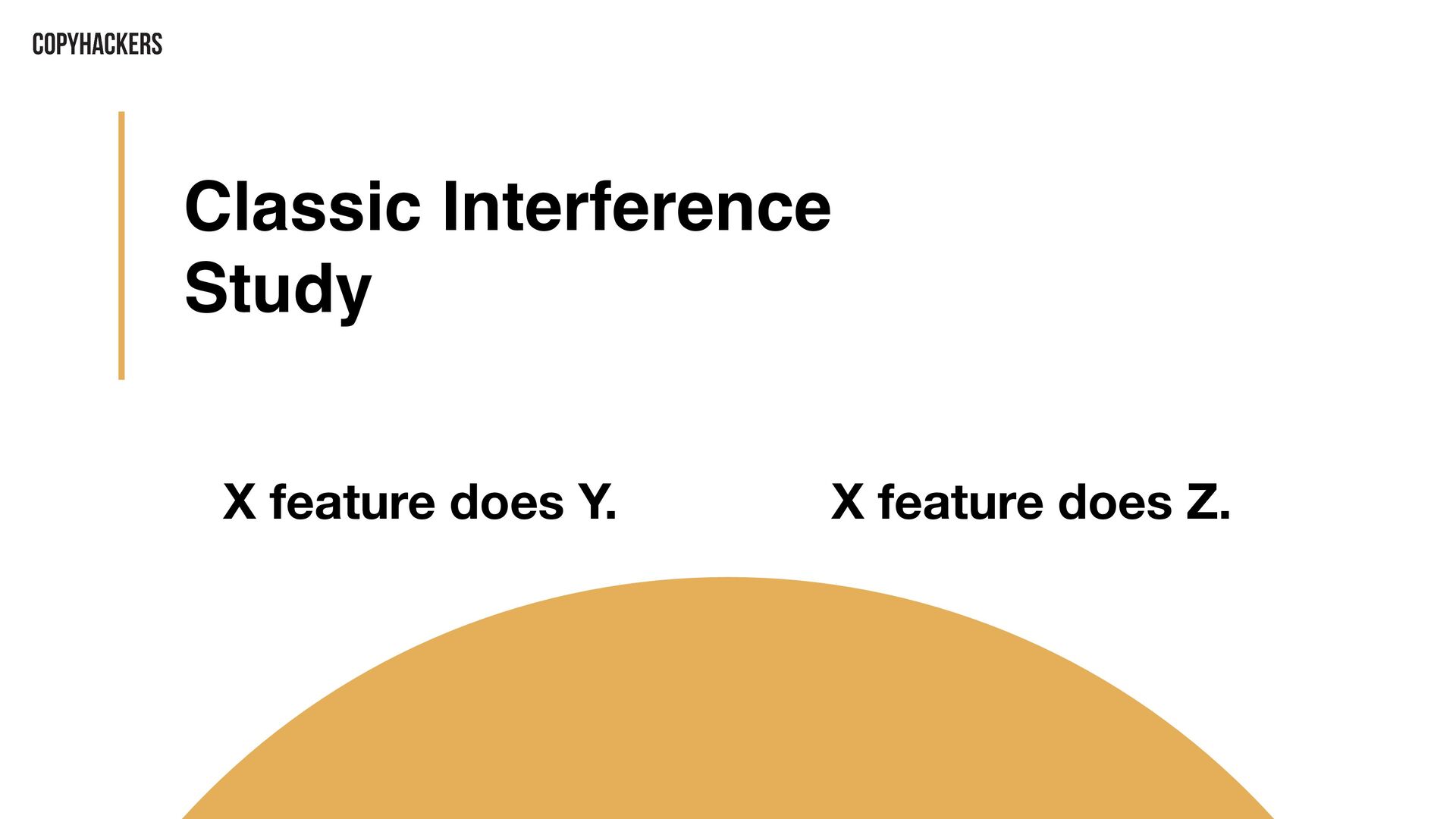
So every time you add the word and, or or, or a comma, every time you're like, I'm not sure which adjective to use. Let's use both. Just choose one is the idea. Now, here's a classic interference study. So if I were to say to you, x feature does y.
Shared inbox does this one thing. Cool. Then I say, what does it do? Chances are good. You're gonna have a pretty easy time answering it. And this was an actual experiment done in the thirties, nineteen thirty five, and then again and again through the forties, fifties, and onwards.
Great. Tell you it does one thing. You know that it does that one thing. You move on with your life. Now, if I say it does y, oh, and it does that as well, And then I ask you, what does it do? Again, and again, people are confused.
This shouldn't be surprising to us. Of course, you're confused. Right? This is like sheer empathy. We know that. I know it's harder to retain more than one thing, obviously. It's so obvious that it feels maybe weird bringing it in the boardroom? Like, doesn't everybody know this?
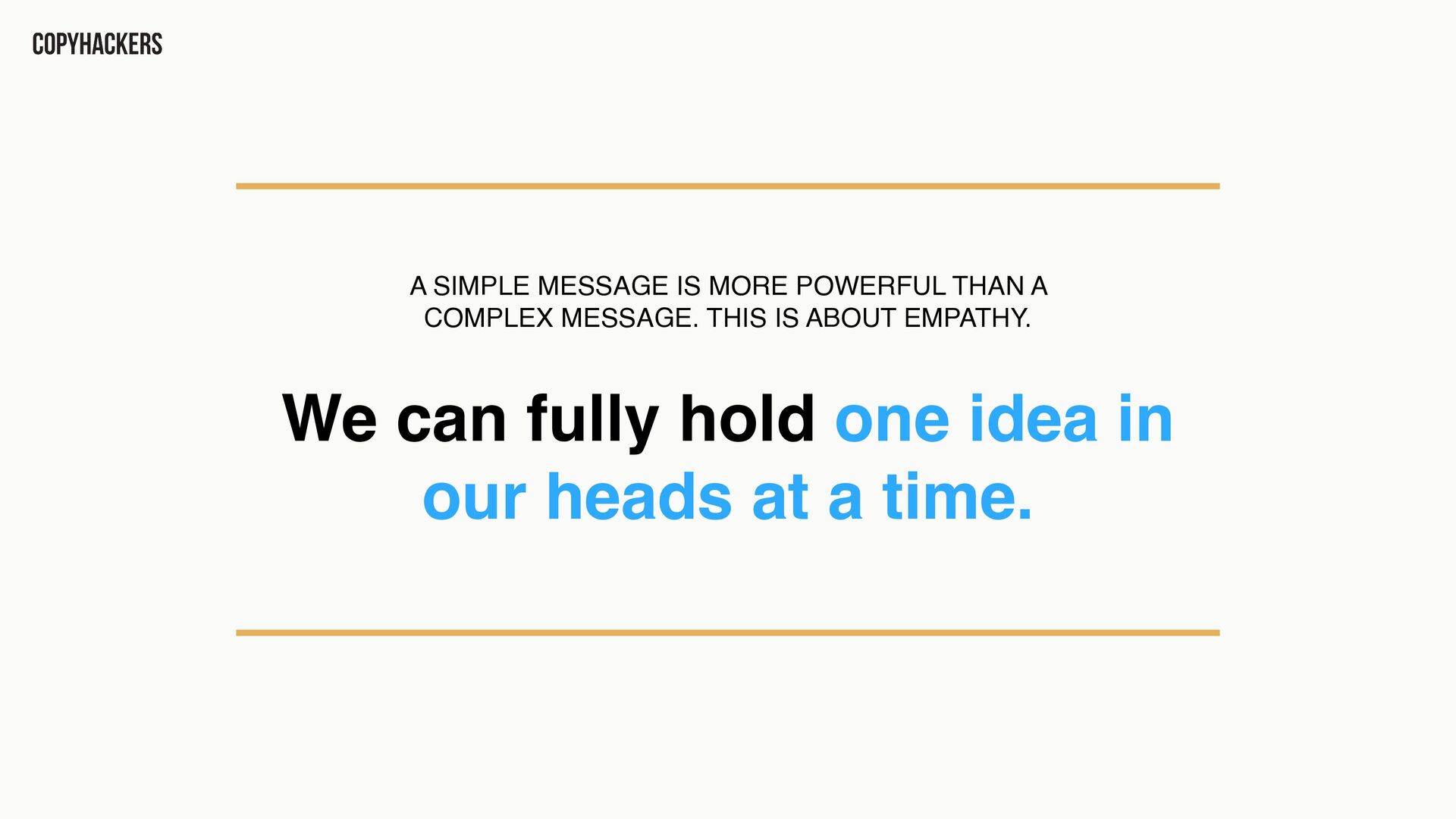
And why are we all approving this copy with so many words just repeating things and saying more and more things? We can hold one idea in our heads at a time. If you have empathy for your prospect for the visitor, for the person reading your email, And you know, they can hold one thing at a time.
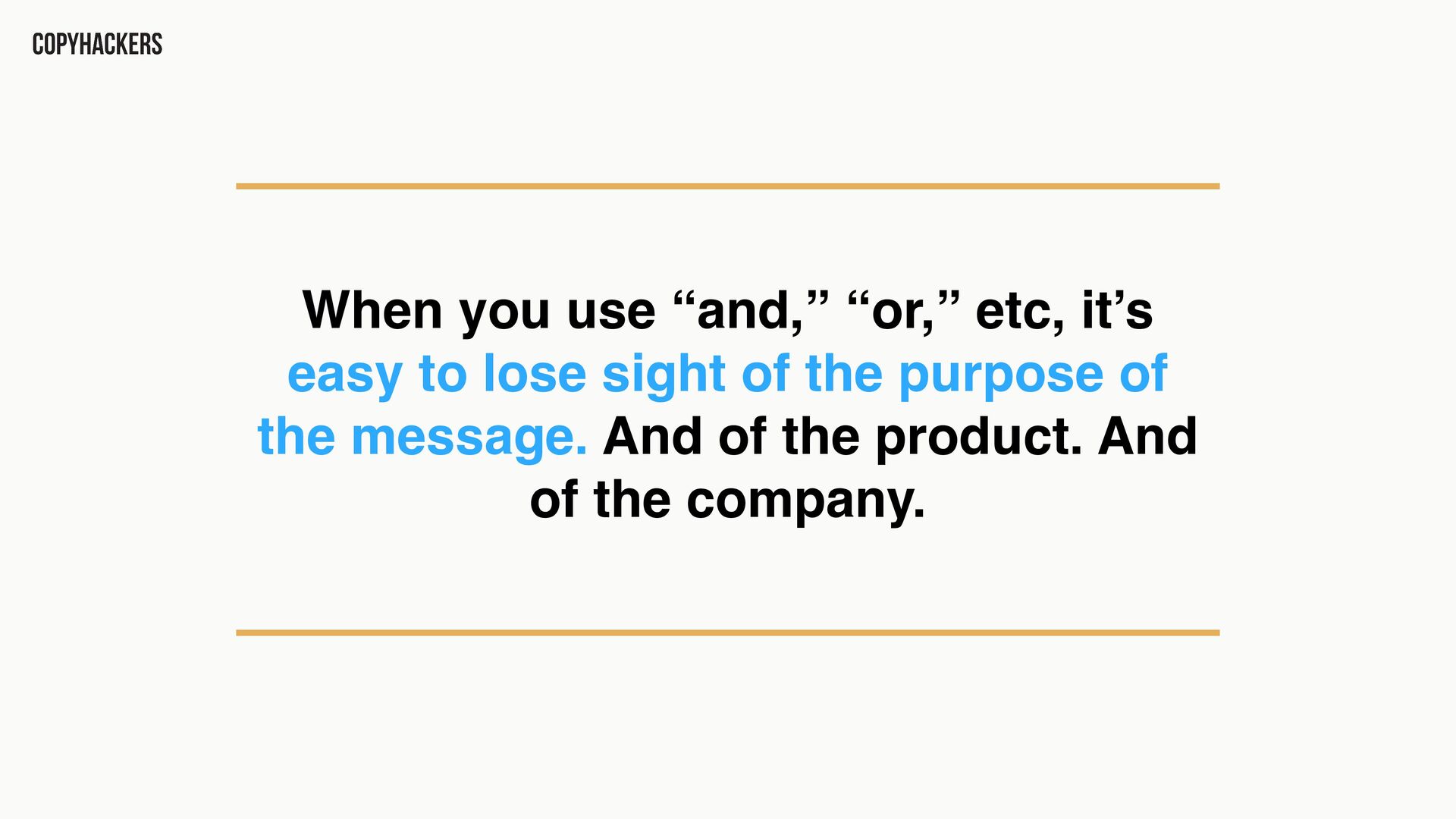
It doesn't mean you only have to say one thing, but at one time. Give me a break between the different ideas. So It's really easy to lose sight of the purpose of the message, of the product, of the company of everything when we keep listing stuff out.
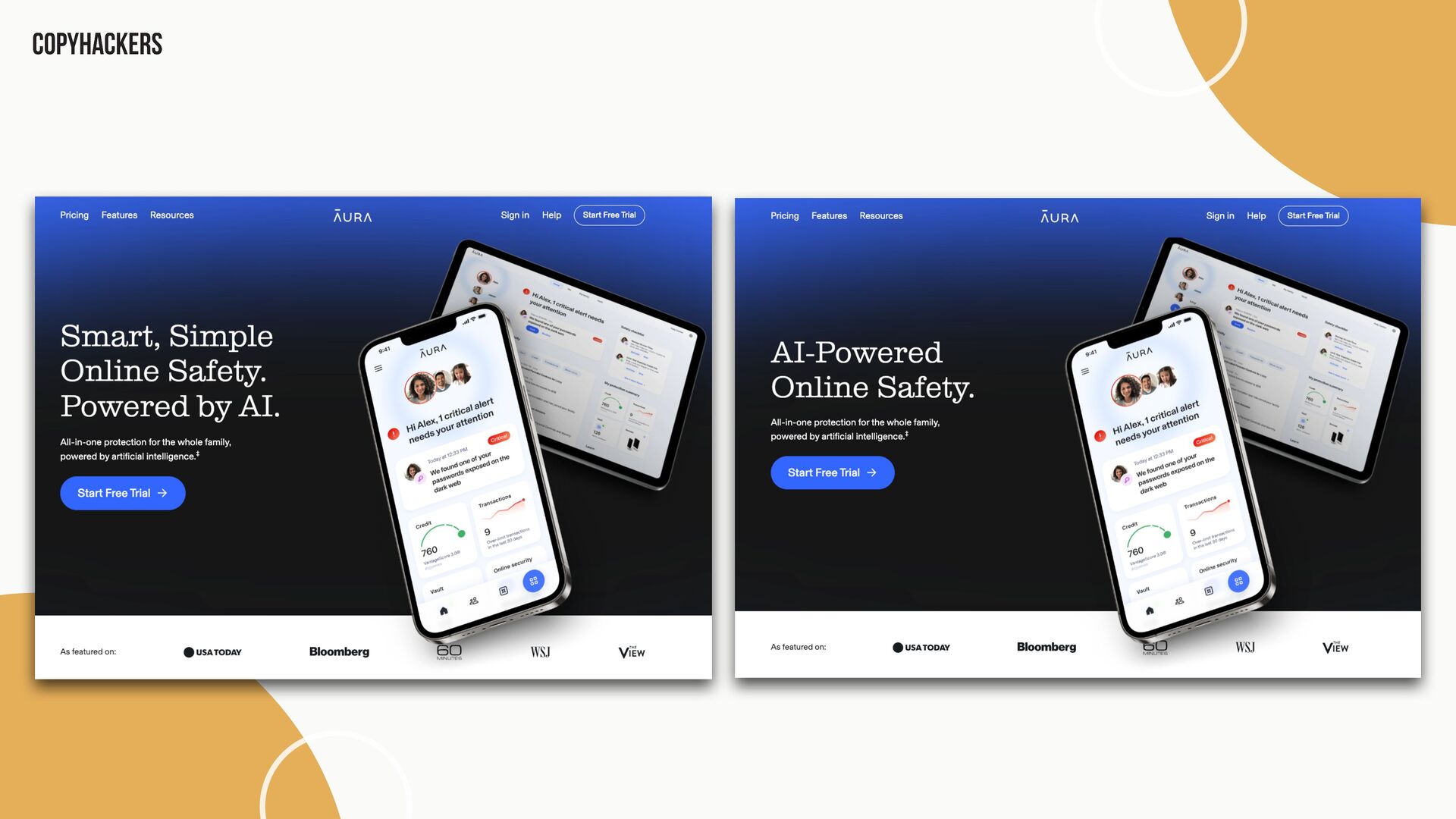
So what would we do with something like this? Smart, simple online safety powered by AI. It appears to be doing all the right things for copy. Right? We've heard things like, people were shouting out. It's too long. It's too long. This is objectively short as a headline.
But how am I? What's interfering here? What am I supposed to take away from this? So I could break it down to smart online safety powered by AI or simple online safety powered by AI, but we still have so much going on. AI powered online safety.
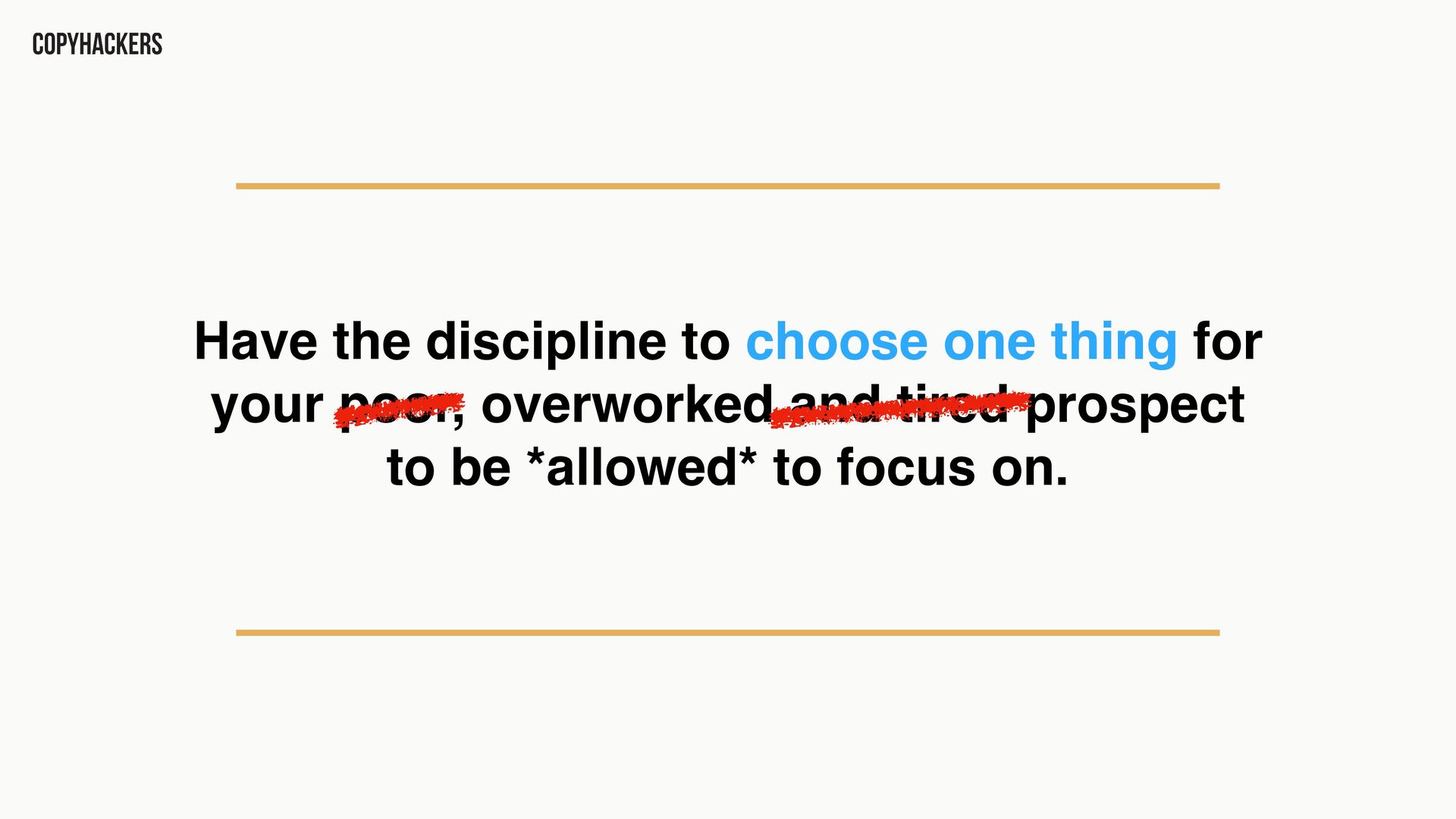
Bring it down to a thing I can remember because I don't really care for the most part. When I'm landing on your site, I'm not that interested in you. We have to have the discipline to choose one thing for our overworked prospect to be allowed to focus on.
Just one thing, and I know it can be hard to do. But if you have your phone out intercom is a great study in how to do copy write, how to focus on just one thing. It can do all the things, but just focus on the one thing.
Alright. Loo's money word number three is not a word. It's the right word for the wrong. Action. So what is the thing that you don't want people to do, and are you making it sound awesome to do that thing? So this is a study you might be familiar with.
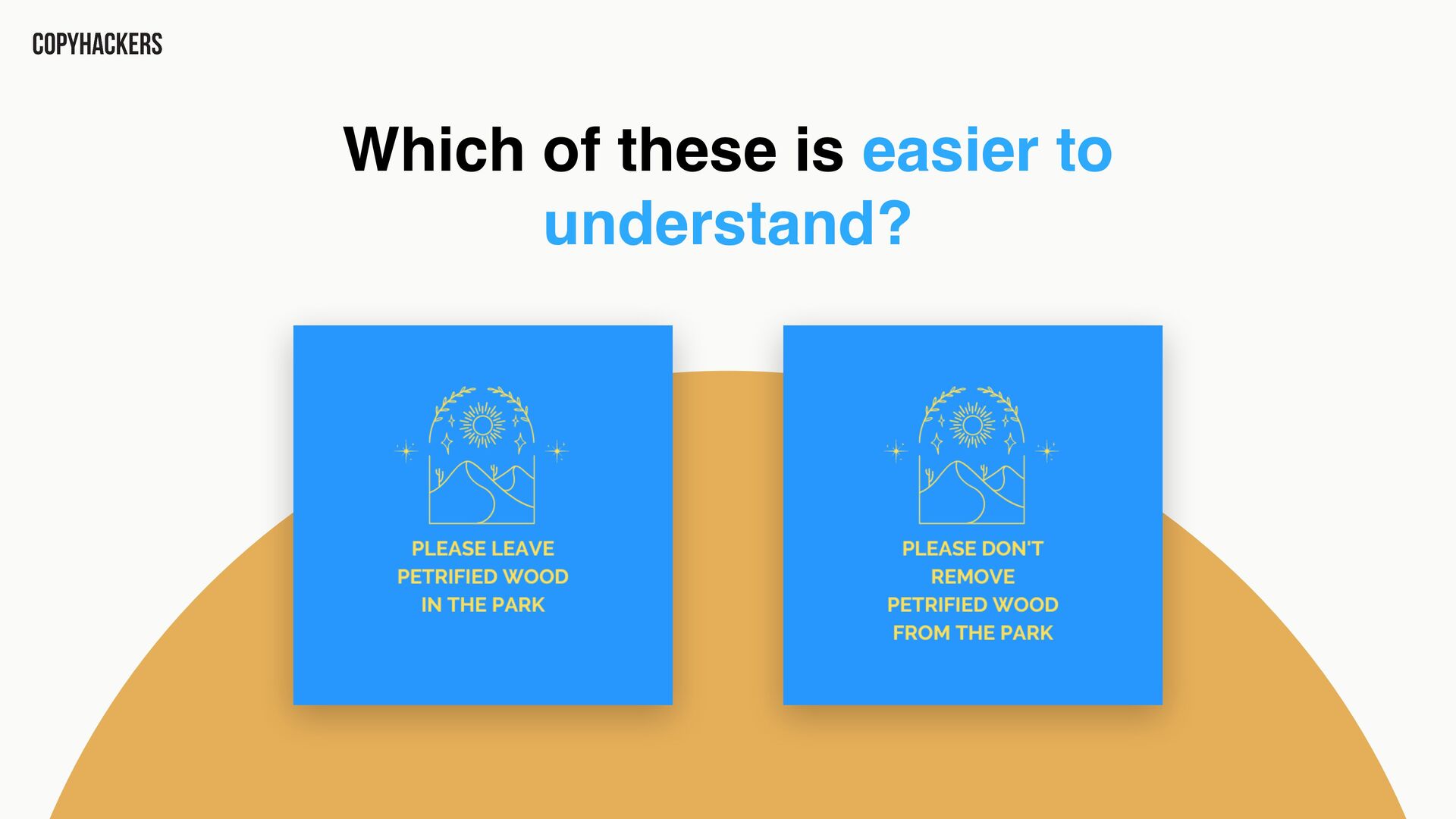
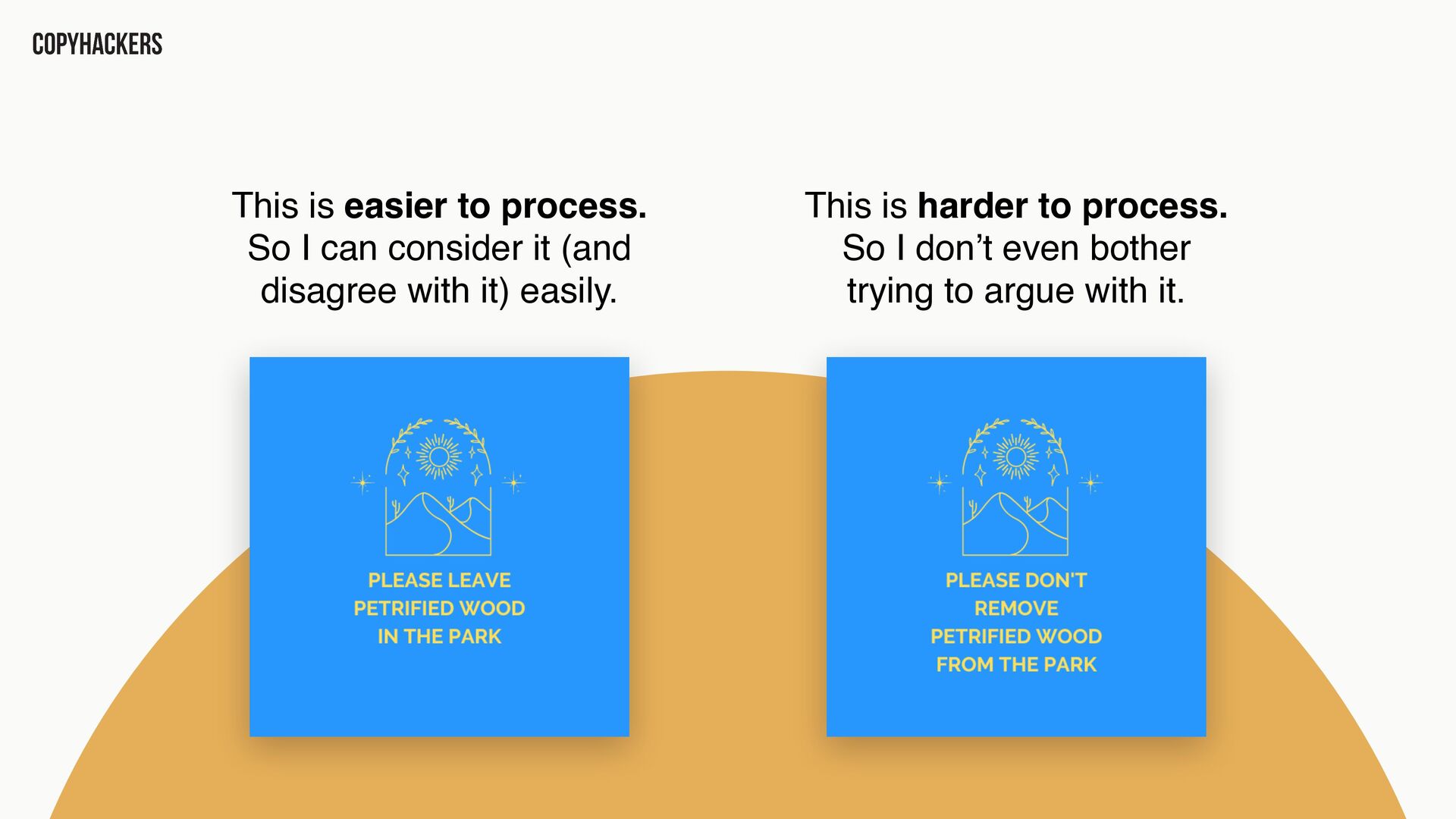
This is Chialdini. Which of these two is easier for you to understand? Please leave petrified wood in the park or please don't remove petrified wood from the So let's say you're in the park. You've walked through the park. You put some wood in your pockets.
You're on the way out hoping no one notices that you've got this in there. And you see, please leave petrified wood in the park. Or you see, please don't remove petrified wood in the park. Which of these is easier for you to understand.
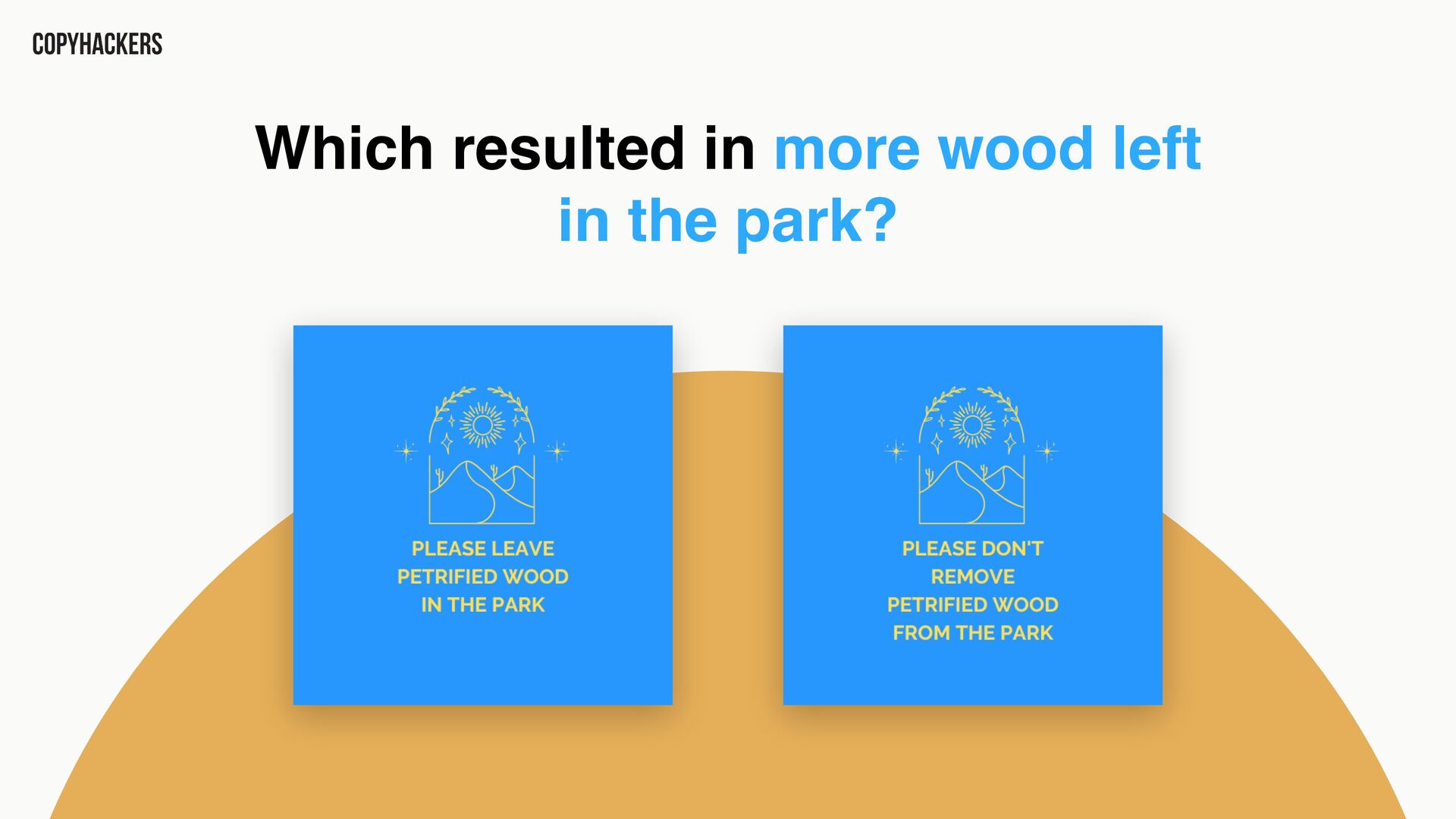
Probably that one. Right? Please leave. Like, I get it. Please leave. Versus please don't remove. Just a little bit less cognitive fluency. Which resulted in more wood being left in the park? I know I didn't put a or b above it. The trickier one, right?
The one that's a little bit harder to understand, and so it's a little bit harder to argue with. This one's easier to process? That one's harder to process. So which one can I say yes or no to? I there's one that's just a lot easier than the other one.
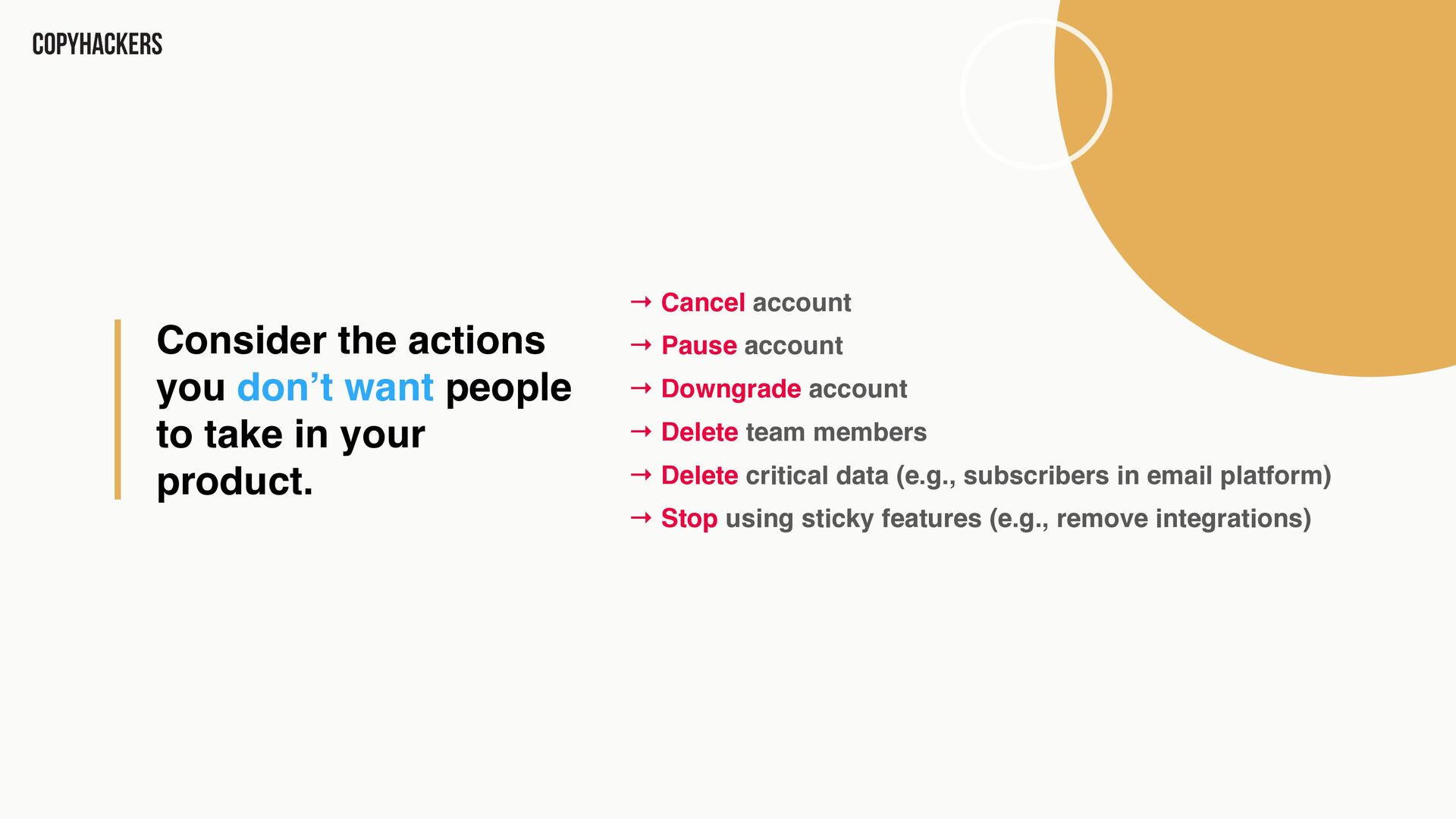
Okay. So what do we do with this now? In your product, there's a lot you can do with this, depending on what you want your users to do or not to do. Sometimes your message should be harder to process. So consider the actions that you don't want people to take.
Canceling accounts, pausing accounts, deleting team members, taking apart integrations or removing integrations, things like that. So what do we typically do? We hide those. Right? I've had to call in to cancel an account that I was able to start online easily, but I had to call and cancel, and I got put through to a pager service.
And this was last year, and there were still there's a pager service that existed that shocked me more than anything, we can do something pretty simple. We don't have to hide these actions. You don't have to make me call a pager service to cancel.
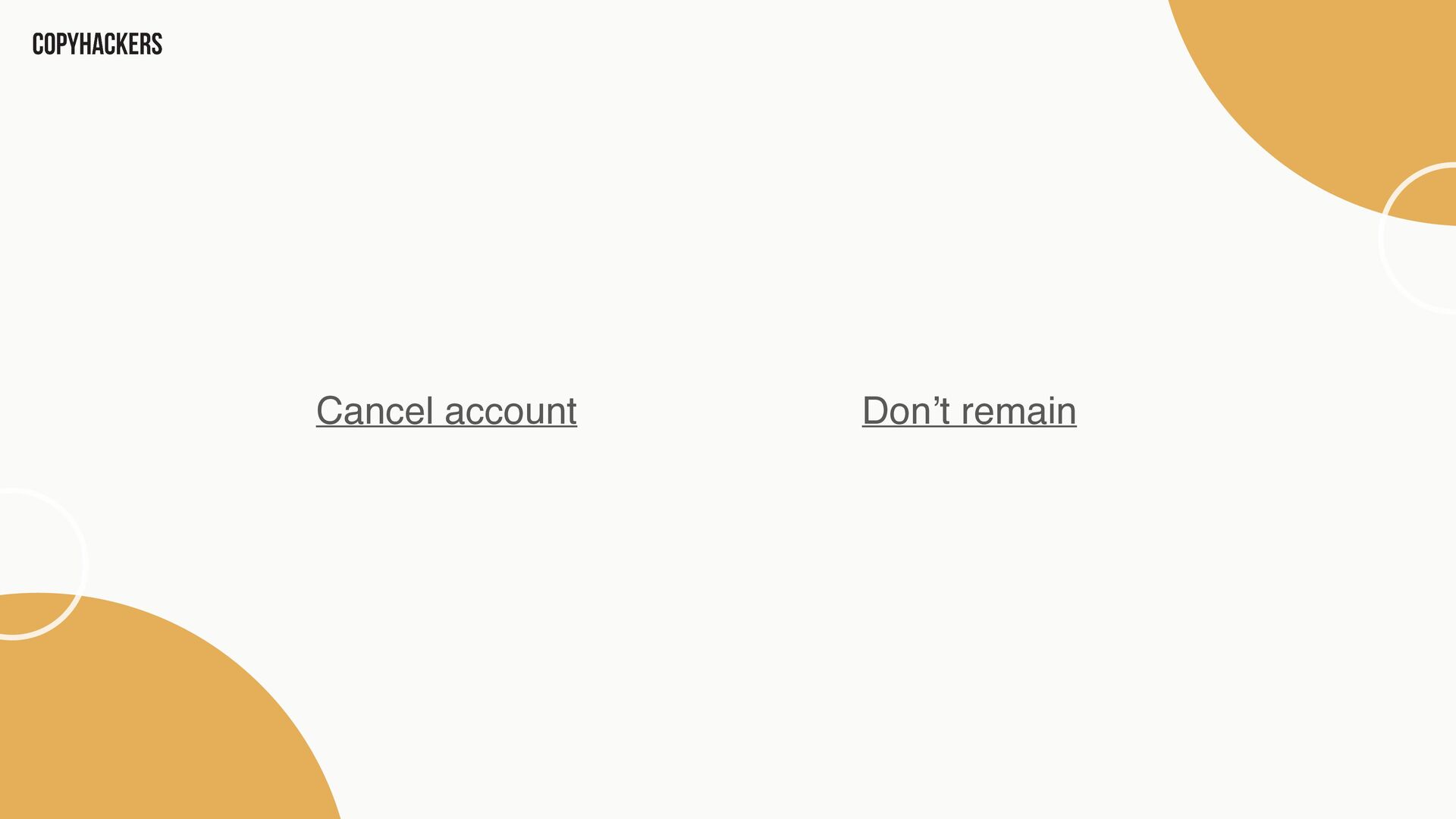
We can just make the words a little bit weird. Instead of cancel account. Just don't remain. It's a little bit weird. Like, oh, And if I really want to not remain, I'll figure it out. But if I'm just like, I'm not really on I'm not sure, then I might be more likely to just kind of move on with my life and forget that thing.
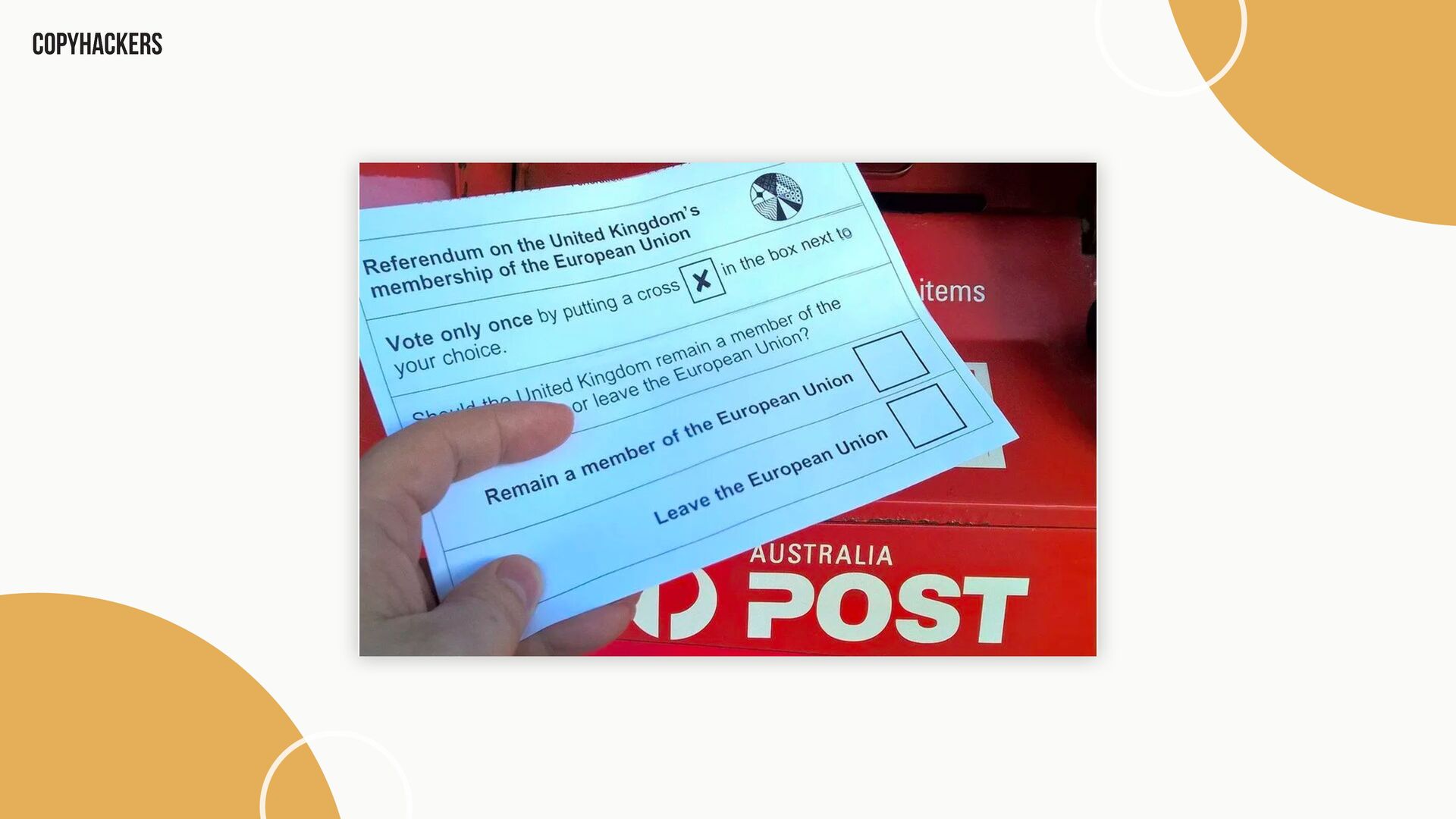
Now, if you're not sure if this is true, or if de optimizing doesn't feel like it's a thing. I'm gonna show you this. I'm from Canada. This is just something I observe. This didn't affect me directly. But if I was trying to de optimize an option here, between remain a member of the European Union and leave the European Union. What's the opposite of leave?
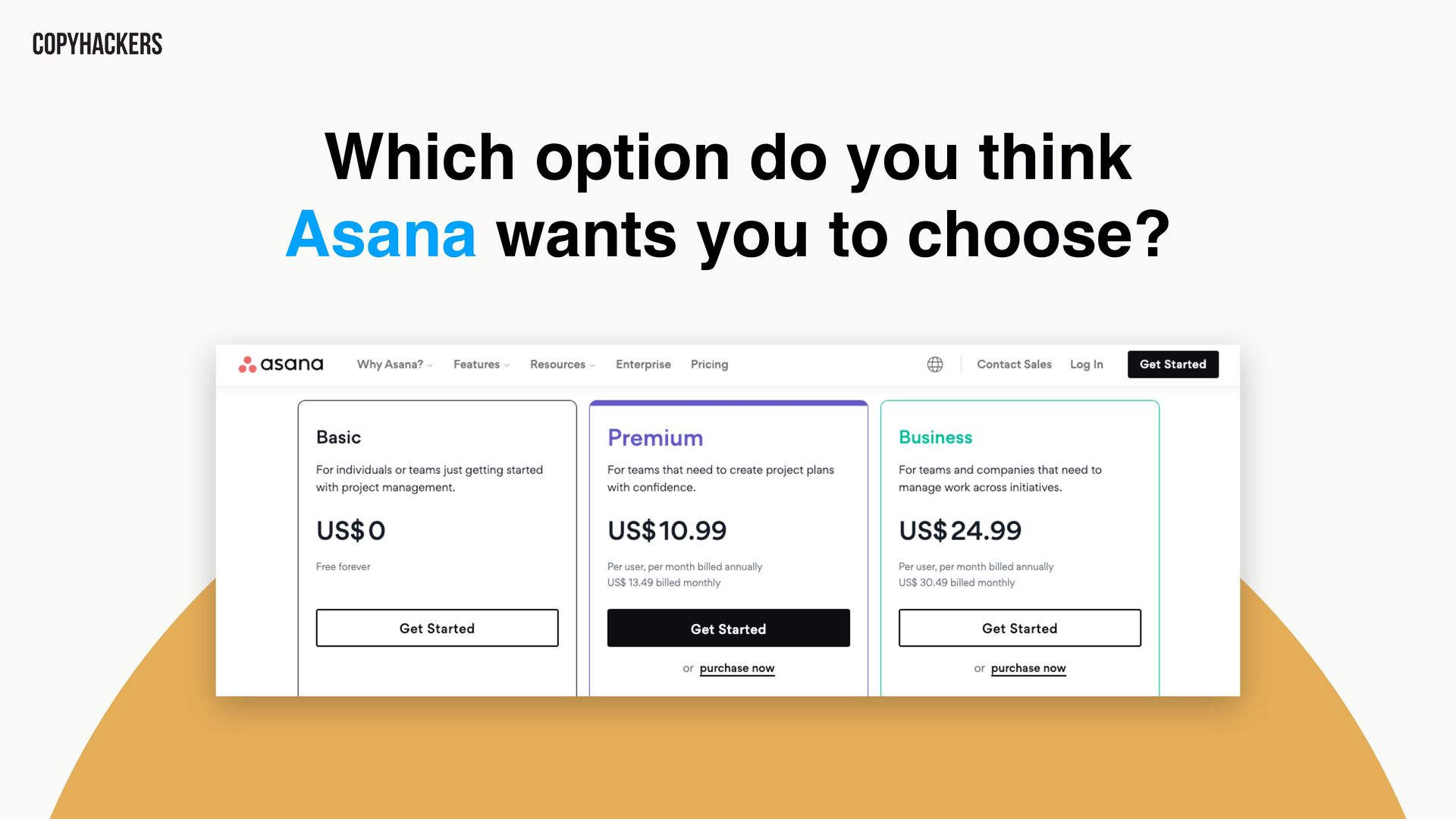
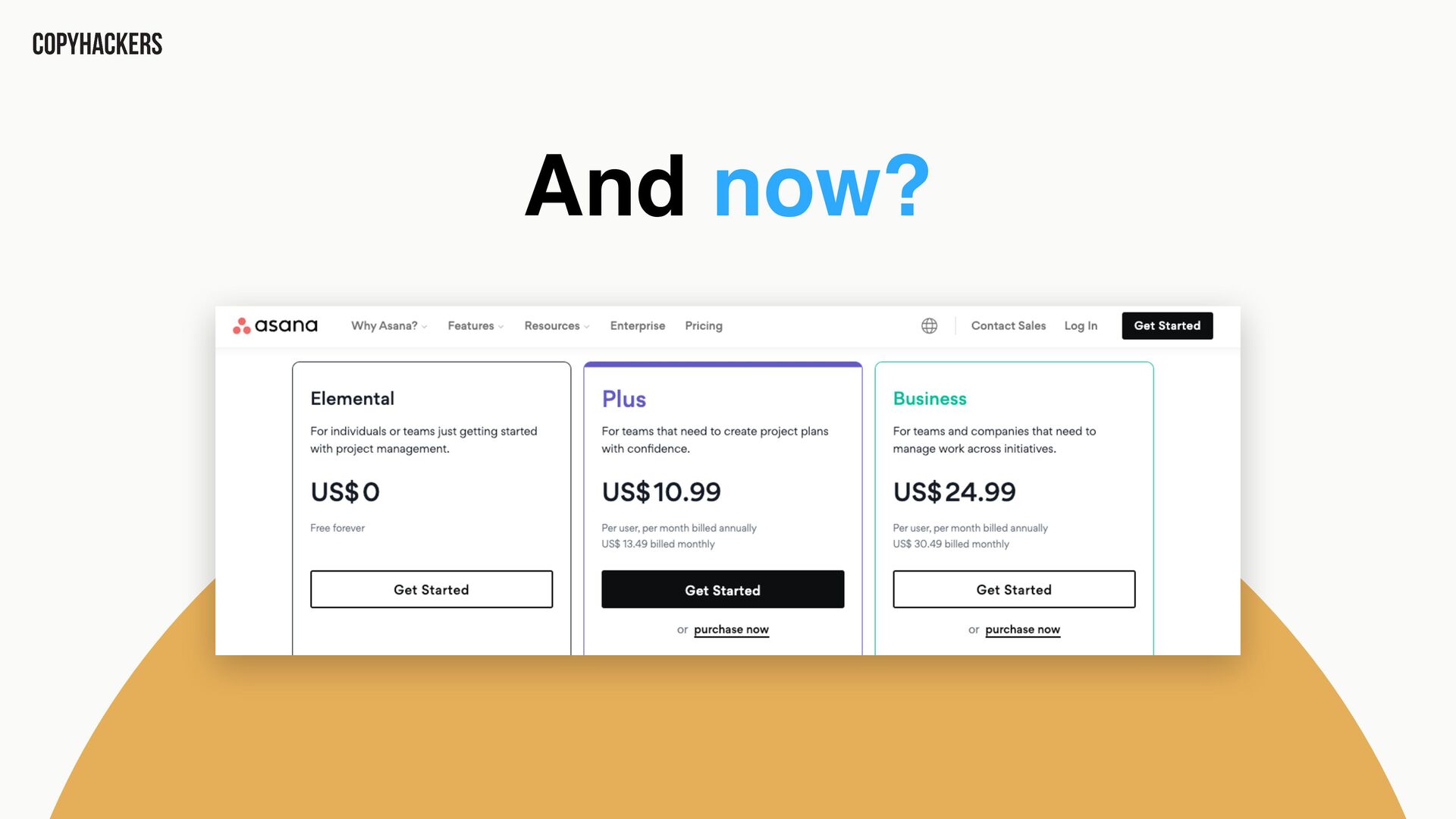
Stay. Why wouldn't it be stay in the European Union? But sometimes things get de optimized. Which option do you think Asana wants you to choose? So you can shout it out. There's not that many of us here. We can shout it. Premium. Right? They've optimized a Goldilocks principle.
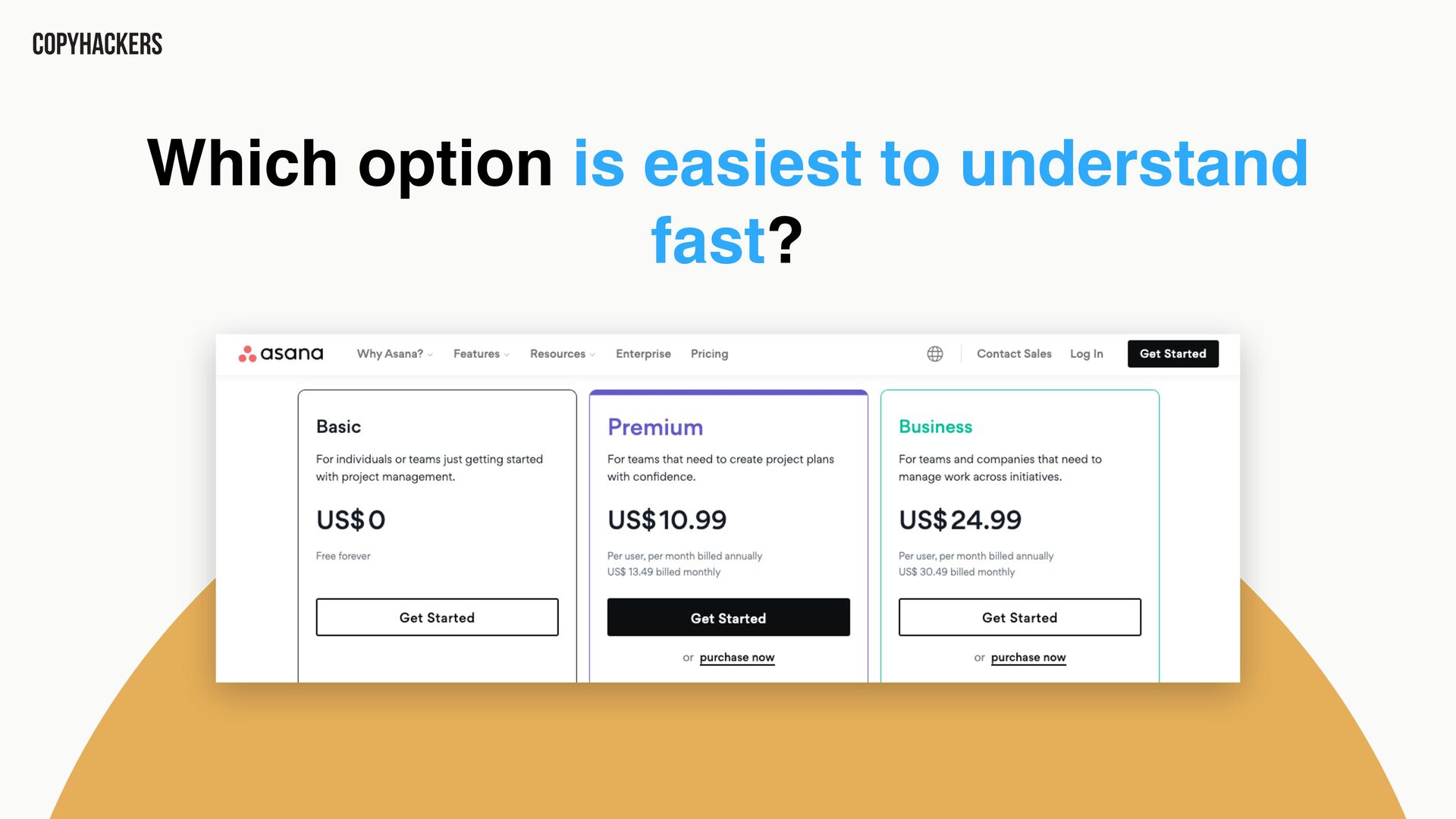
Any of the persuasion principles you may know, of course. Premium looks pretty good here. They want us to choose that. Which is the easiest, though, to understand quickly between basic, premium, or business? Which one? Which one is easiest to get? I would argue. I don't know what premium is.
And if we were trying to de optimize one of these three, premium is the one that I'd be like, oh, that's the one they don't want you to sell because what the hell is premium? I don't know what premium is. I know what basic is.
And I'm pretty sure I know what business is, but it's way over on the other side and it costs more. So to me, it looks like basic is the easiest and the fastest to understand. What about now? What the hell is elemental? I don't know what elemental is.
Suddenly, your basic plan doesn't become quite as enticing. And now I'm like, okay, am I plus through my business? Plus through business? Okay. So those are the lose money words with ten minutes left. We have our make money words. There are only two them that I'm sharing here.
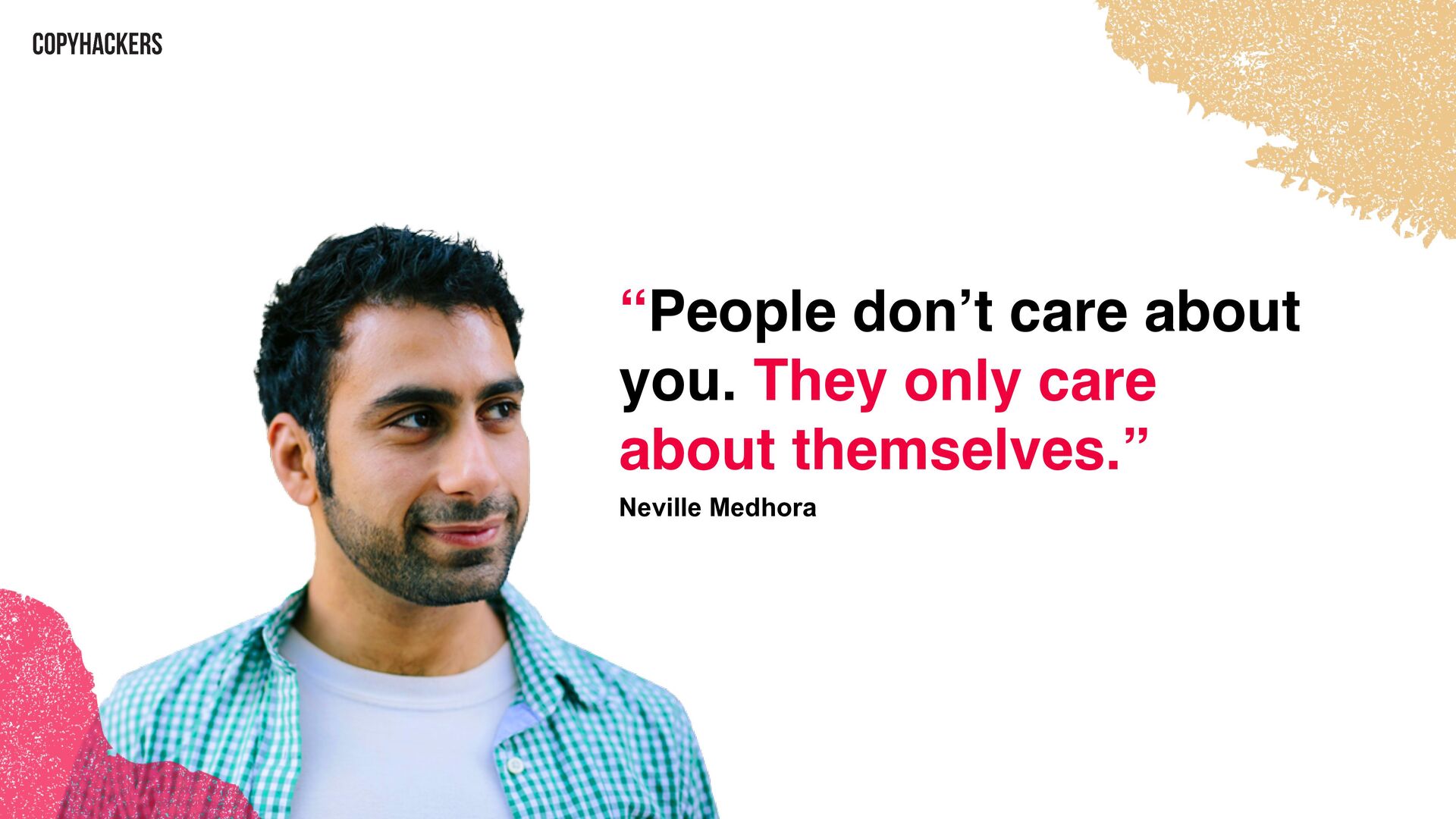
There are many, many more. But these are the two that I wanted to share with you today. The first one, is, maybe my favorite and the easiest to implement right away. And it's based on well, it's based on all copy writing, but my friend Neville, who's a copywriter out of Austin, put it really nicely, and people don't like to hear this.
Marketers don't like to hear this. But it's true. People don't care about you. They only care about themselves. Really bluntly stated, It's the absolute truth, though, when you're writing copy, when you're reviewing whatever AI writes for you. Keep that in mind. They only care about themselves.
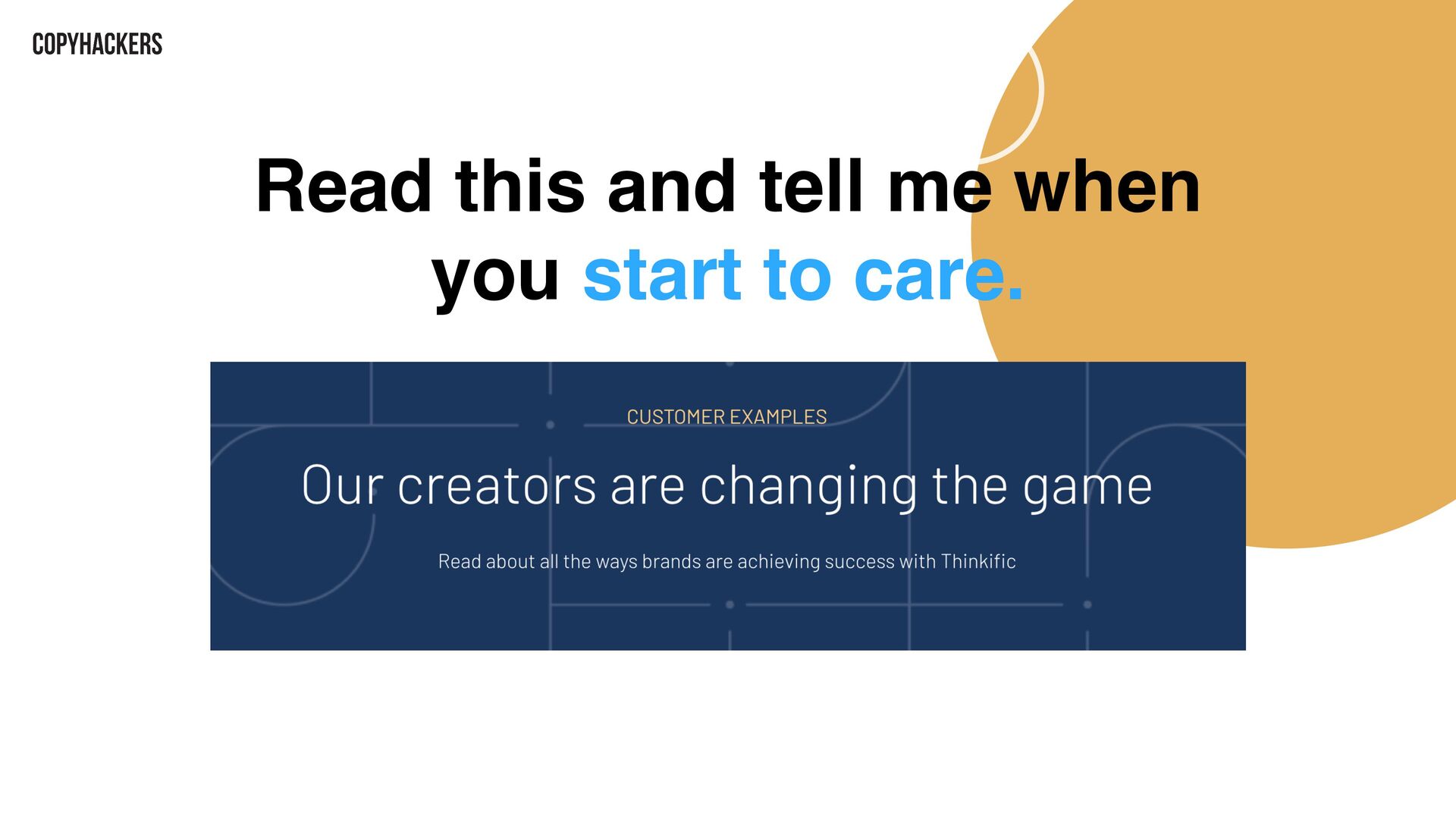
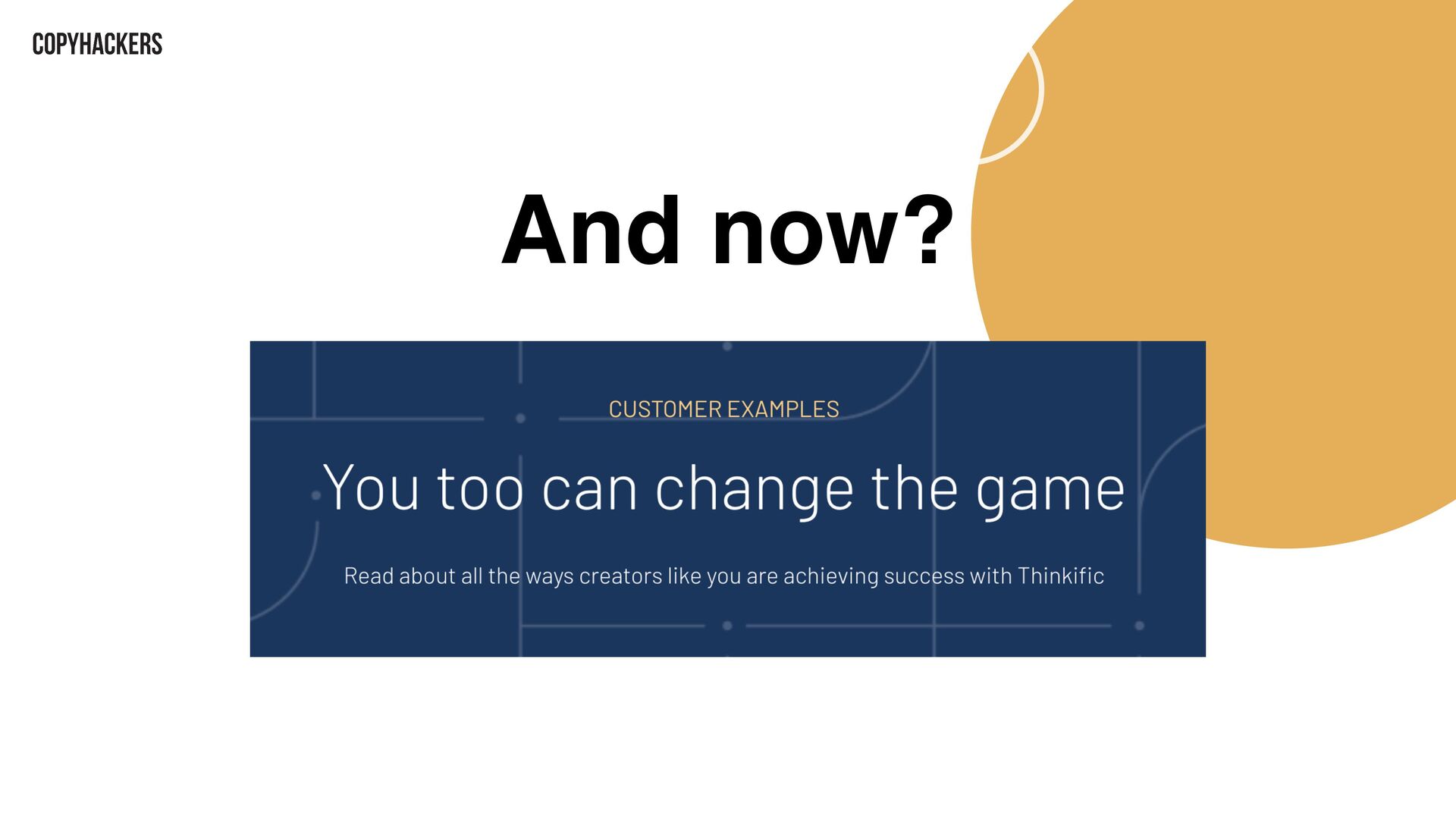
So As an example, let's take a look. Read this and tell me when you start to care. It goes. Our creators are changing the game. Read about all the ways brands are achieving success with Thinkific. Okay. At what point are you like? Cool. I care.
This is I get it. It's about me. Not really. Right? You too can change the game and read about all the ways creators like you are achieving success with thinkific. Suddenly, it's not about our creators. Some people I don't know, people I don't care about.
Why would I care about your creators? Now it's about me. I kinda like to change I can change a game. That sounds alright. Make money word number one is you. Now a good trick that we teach copywriters and anybody really who's writing copy or responsible for getting copy out the door is to rewrite every line with the word you at the start.
If you just do this one thing until you're so sure people are noticing that every word, every sentence, begins with you and they must be annoyed by it. You're doing it right at this point. You, you, you, they are the subject. They are the thing that they care about.
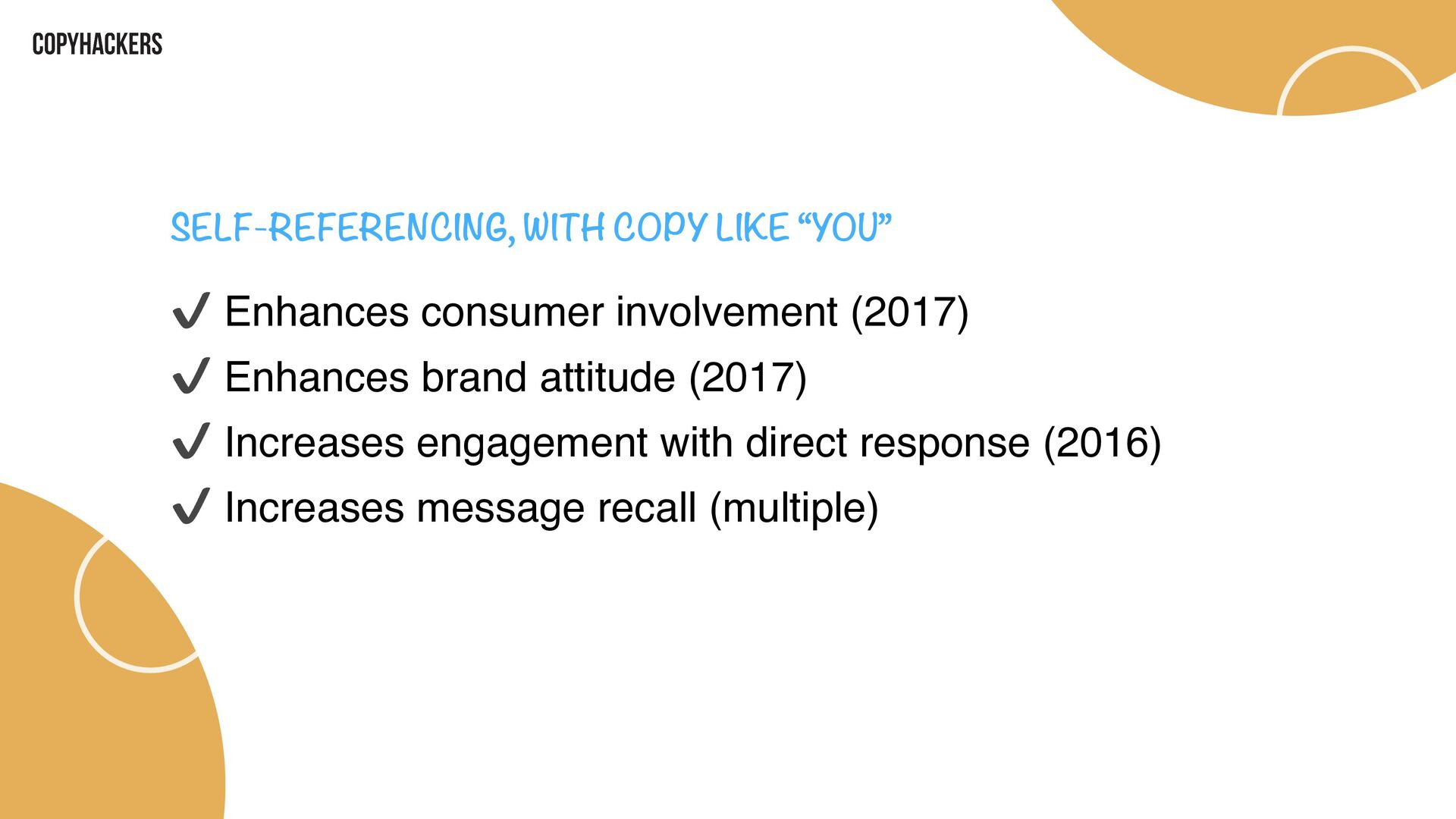
They're really the only thing we should care about, put you at the front of every sentence you or variation of it like your. This is called the u rule. It's a pretty straightforward rule. It's about self referencing, which is again another older marketing idea that still holds true.
Self referencing, again, showing people themselves in the copy that they're reading has been shown to do all of the things that we want it to do. Enhance consumer involvement in our message, enhance their attitude towards our brand, increase engagement, particularly with direct response, so email.
Emails that have you in them are a very big deal and increase message recall, and that's just like all over the place. How does this look in practice? Now it can be very hard for companies to hear that they should lead with you instead of leading with this cool feature they just worked on or leading with the project itself.
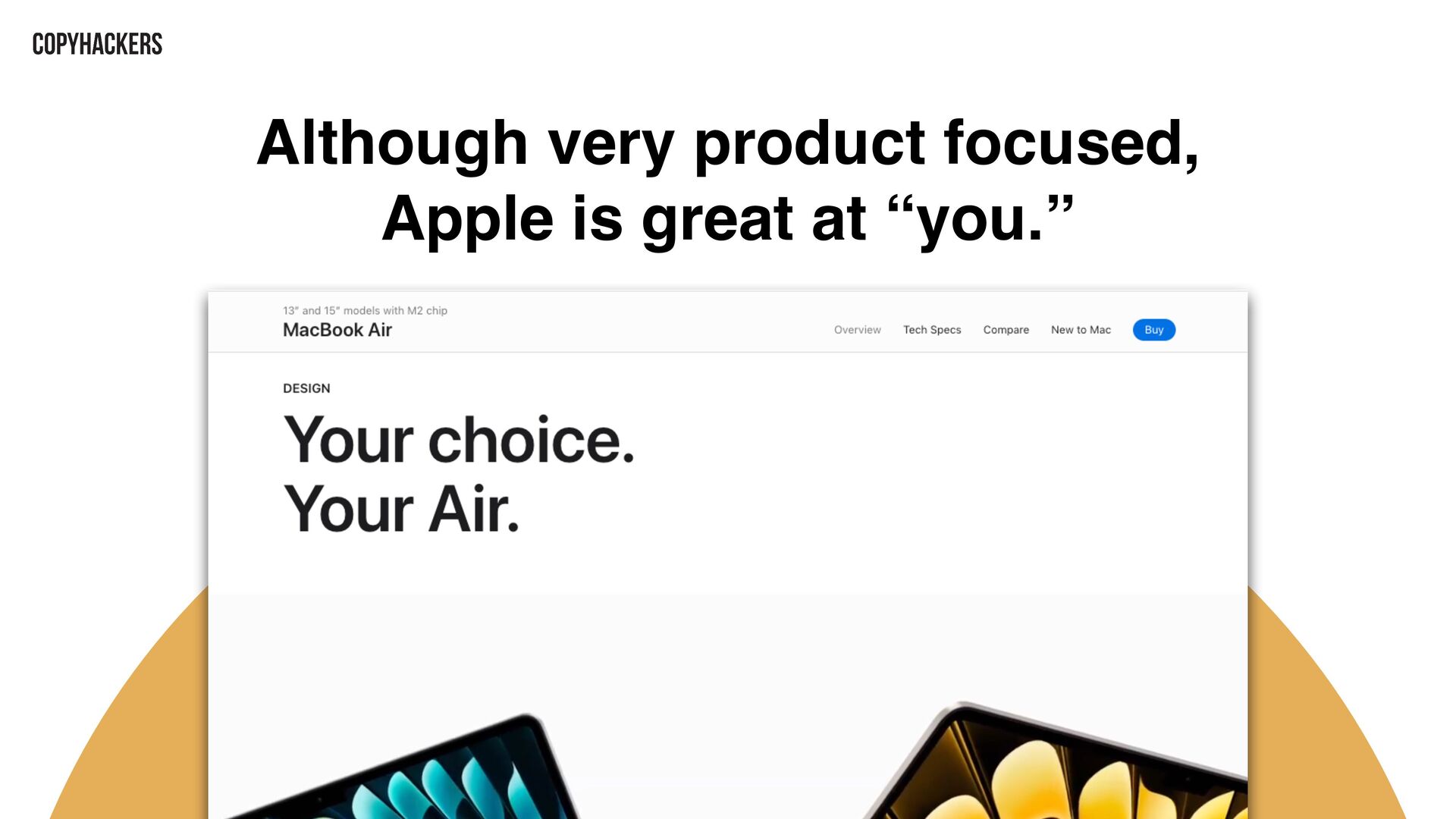
But the most product focused companies also do a really good job of this. And I hate to be a person who uses Apple as an example, but Apple's very good company for doing this sort of thing. They lead with you all over the place.
In fact, I first picked up on the whole youth thing when I was reading through a long form sale page on apple dot com, and it felt like they're really using the word you at the start of everything. I was like, maybe we should start doing that too.
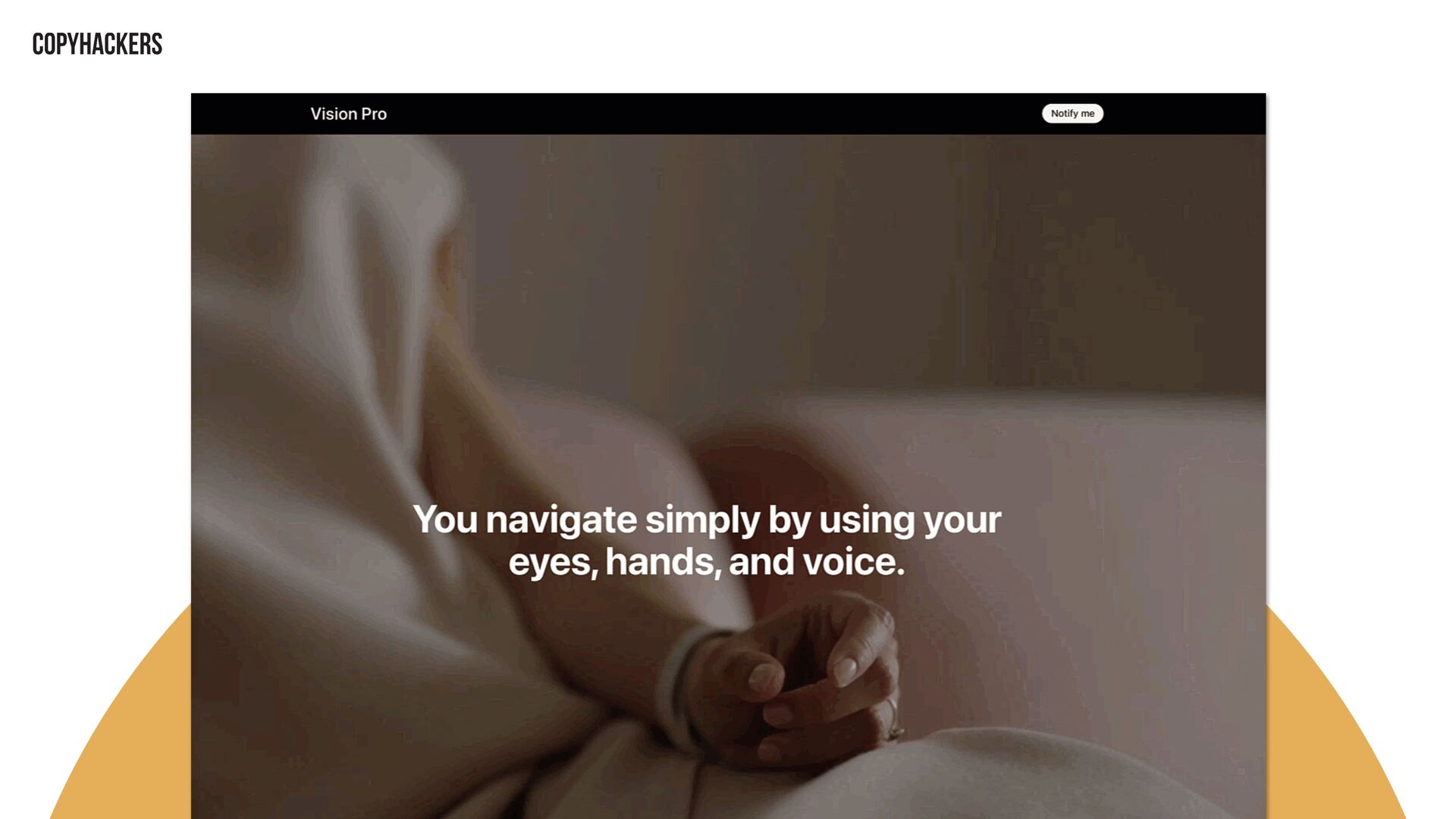
They do it all over the place. Their newest product, which most of us are familiar with, and are not necessarily gonna buy very quickly, is it's got all this hype around it. Their Vision Pro has all this hype. And even still, even still, they lead with you throughout their copy.
They talk about you at the top of the page. This is Canadian as well, so I don't know if it's the same over here, and then they get into the product. Only once they've matched me on the page, do they get into them?
Then, of course, then the product starts to speak for itself. But they're really, really, really good at this. Then we should all be really good at this because it's a simple as editing a sentence to start with you. You don't change the message.
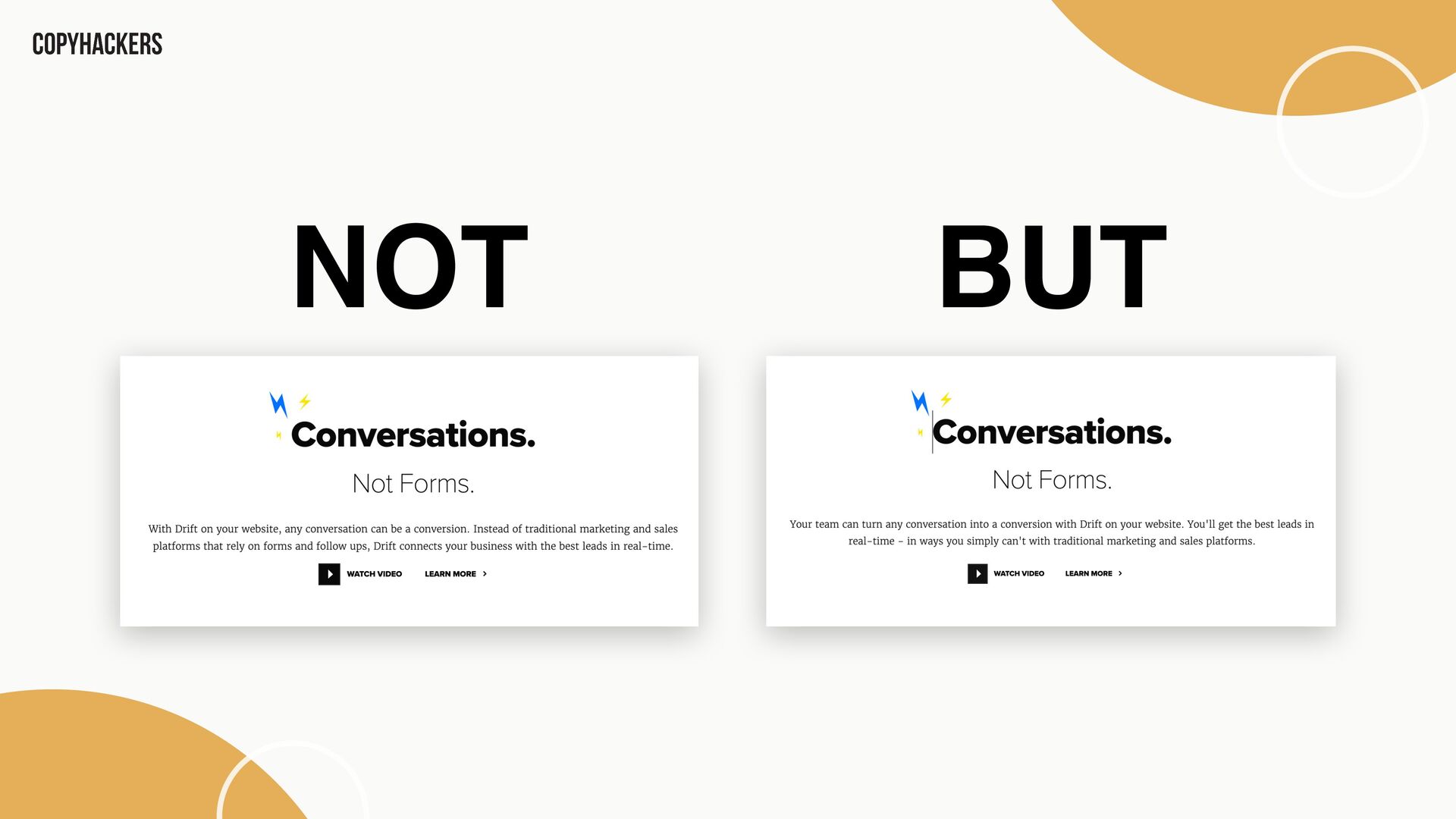
You don't have to come up with a new message. You can go into your wordpress or Shopify, and changed sentence right now. So on something like Drift, I'm gonna read this out, because I'm not sure how much you can see back there. Where this is the before and the after.
With Drift on your website, any conversation can be a conversion. Instead of a traditional marketing and story, instead of traditional marketing and sales platforms that rely on forms and follow ups, Drift connects your business with the best leads in real time. Okay. So Drift is talking about Drift.
If I'm reading about it, I'm probably not caring too much about it. But we can say the exact same thing, exact same message, just leading with you. Your team can turn any conversation into conversion with Drift on your website. You'll get the best leads in real time in ways you simply can with traditional marketing and sales platform.
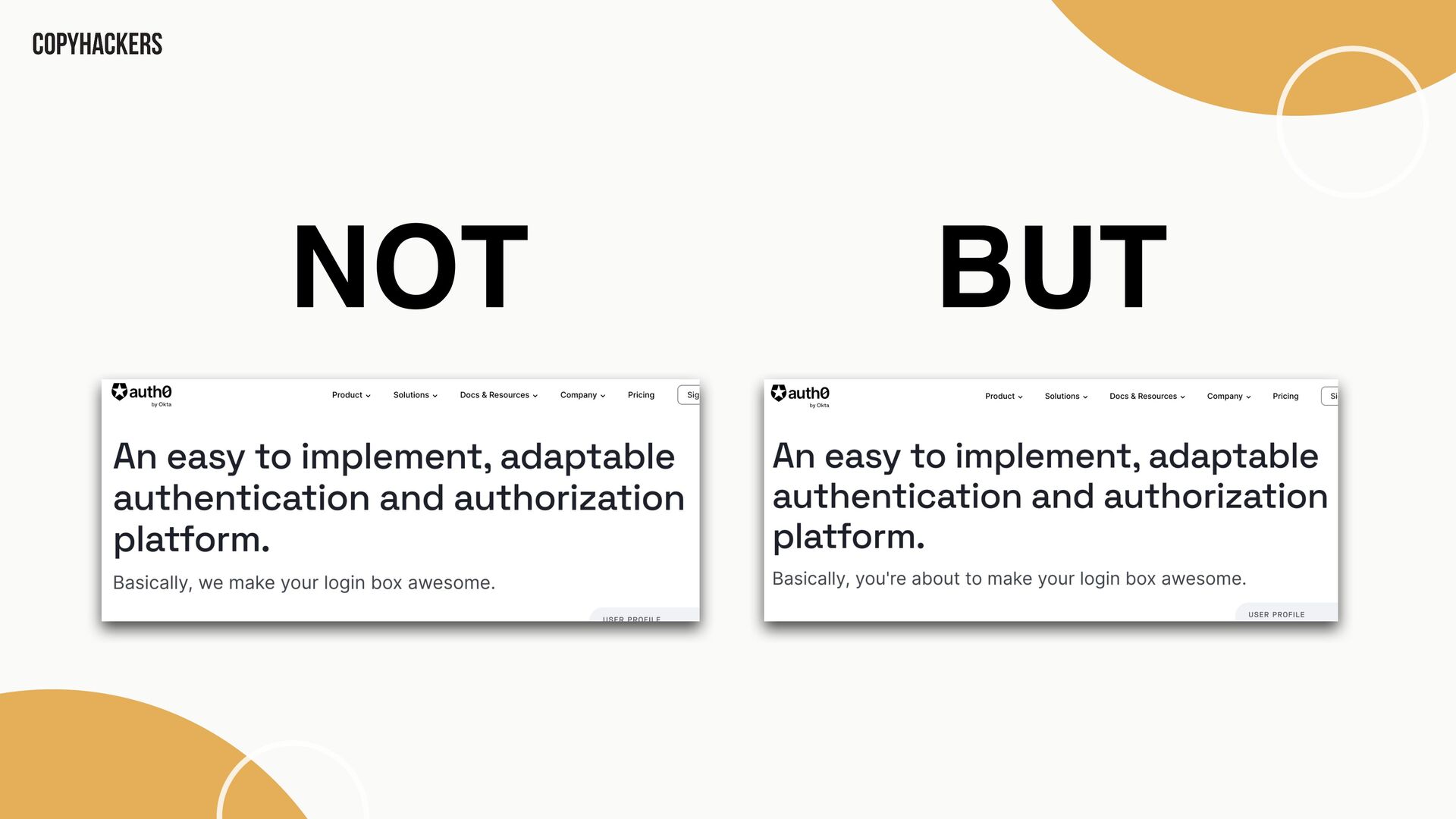
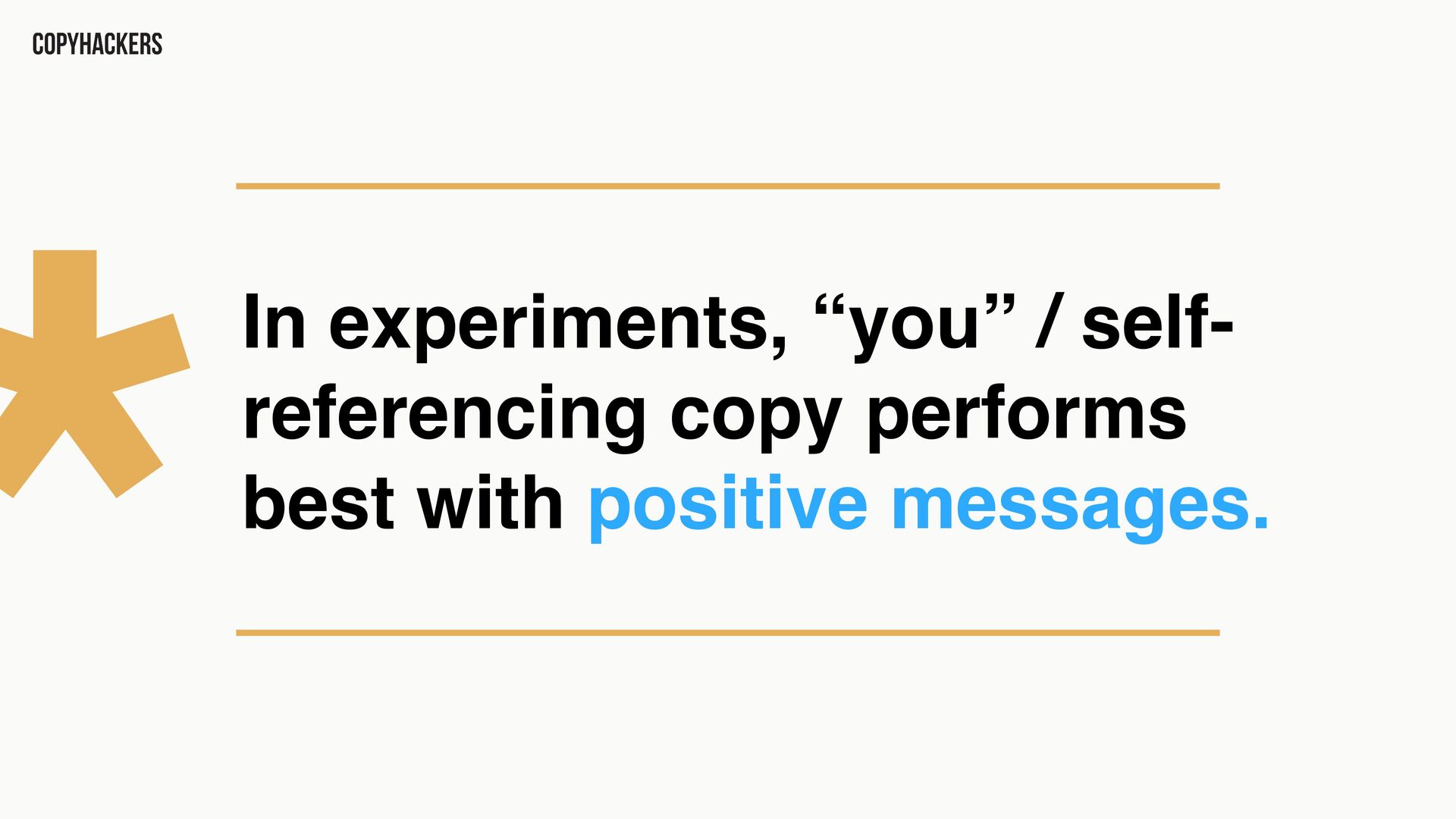
Very simple, copy, tweak, and now it's about me. The subhead here, basically, we make your login box awesome, Basically, you're about to make your login box awesome. Exact same thing. Just it's about me now. Only Cavy on the you rule. Only thing to pay attention to is it works best with positive messages.
So if you have a negative message, Avoid that, even ask yourself what the negative message is doing there, and it works best with positive messages. That brings us to our final money word of the day, money word number two, which is whatever word your prospect keeps.
Using. This should not be terribly surprising if you're at all familiar with conversion copywriting, but the idea is that we want to steal messages from our customers, not from our competitors, not sitting around in a boardroom dreaming things up, not even from me standing at the front of the room, telling you things, Go listen to your customers, which you probably have heard about before.
So I'm gonna actually show you how we steal messages, but the idea here is called word mirrors, right, just helping people see themselves on the page by, like, shaping them out of the words that you're using. So many ways to go listen to customers.
We're gonna hear about all well, we've heard about some things already, but there's, more to come on jobs be done and other things like that. I love interviewing people to listen to what they have to say about our products, what problems they were going through that drove them to us, all of that great stuff.
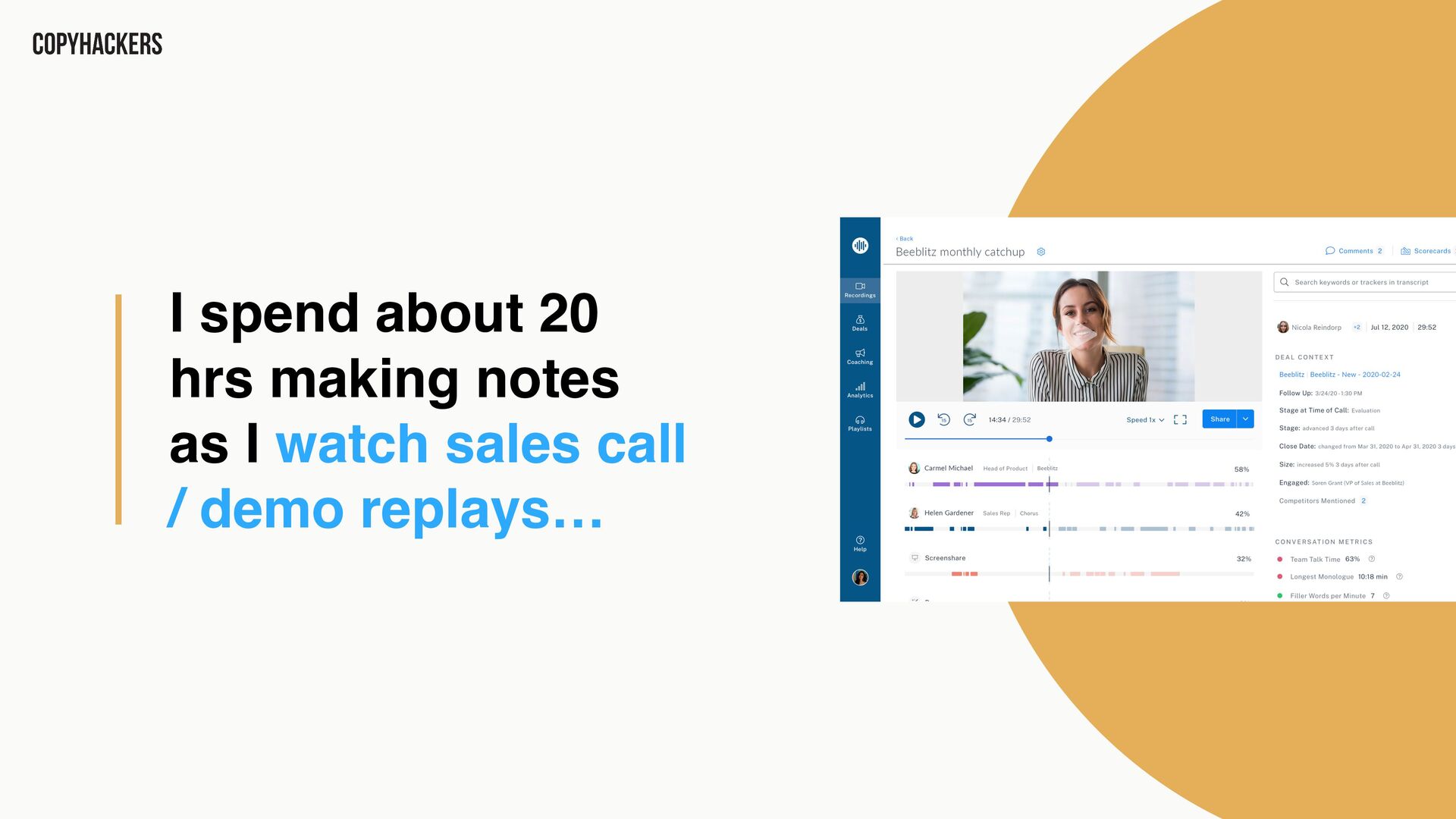
I love surveys. I love all of the things where you go out and listen, but one of my favorite ones that you might have access to if you have a sales team at all, are, sales call recordings. If you have access to these, It's wild.
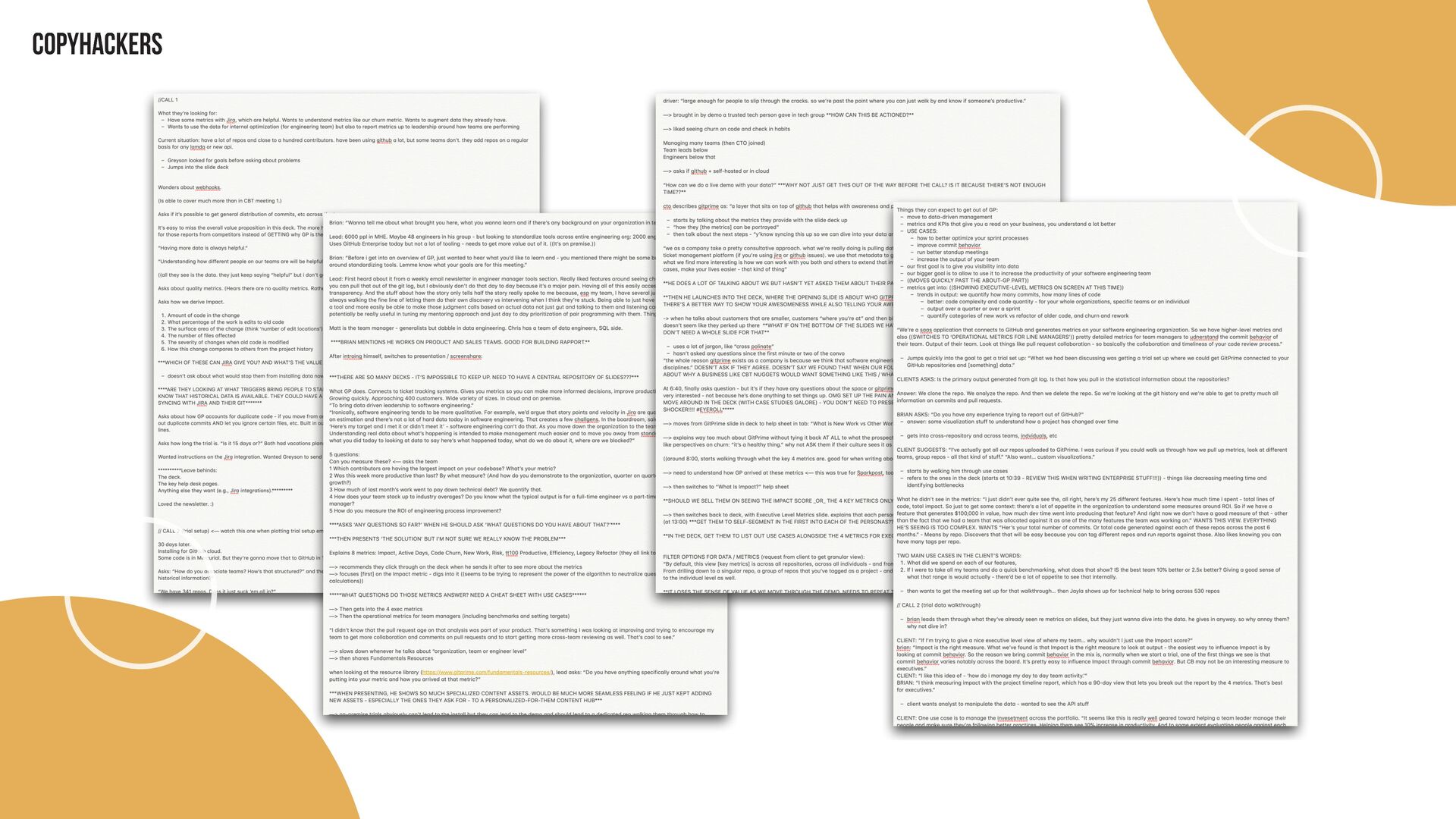
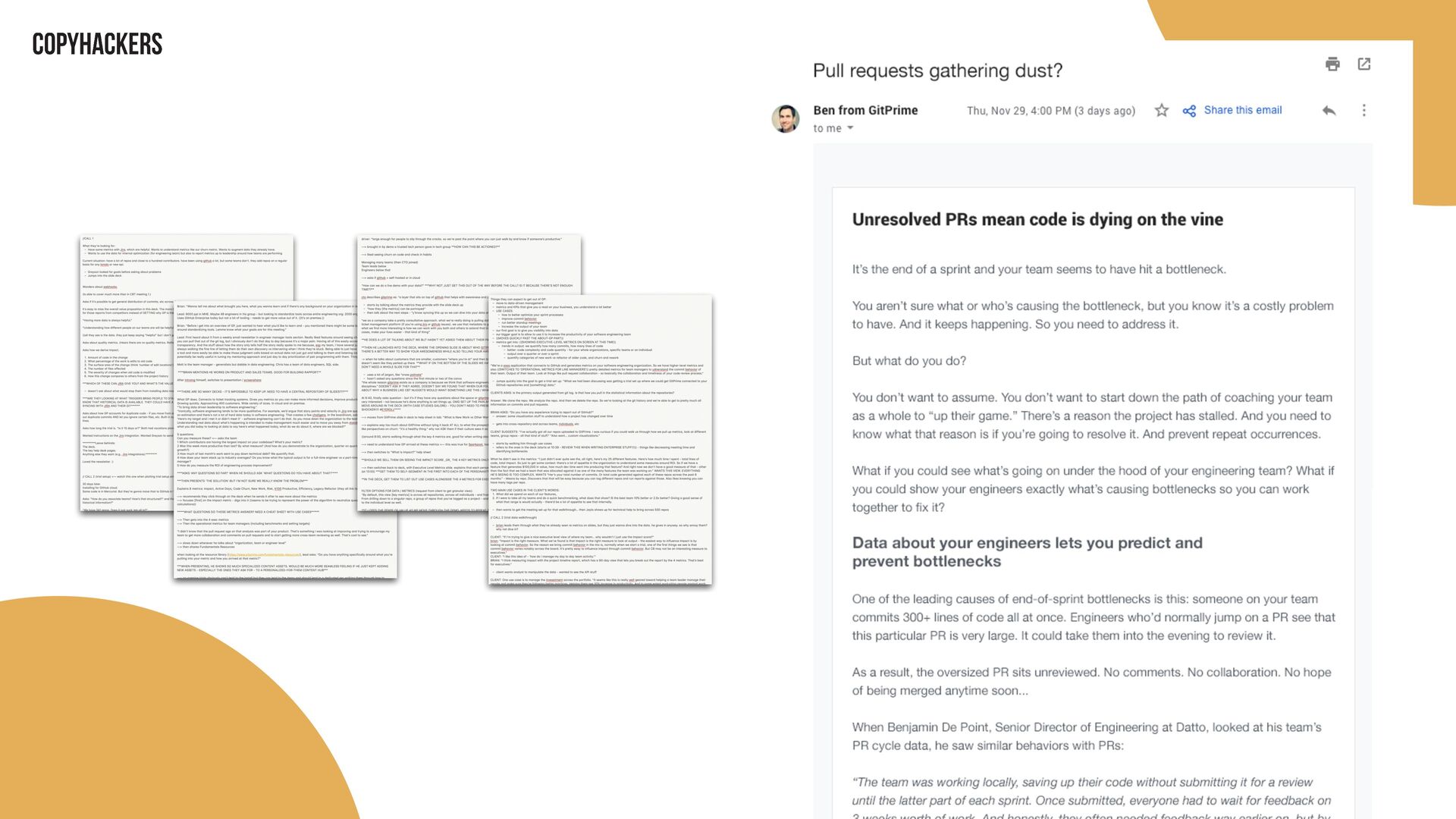
So this is the example I'm going to show you is for a product called GitPrime, which was acquired by Plural Site, and it measures engineers. How are they performing? So I would spend, and in this case, I spent about twenty hours making notes just listening to these calls.
And these notes turn into quite a lot of pages of notes in Apple. Like, in Apple notes, like that little yellow guy. Like, it's not this doesn't have to be fancy. It's not crazy. You're already saving time with AI. So, like, don't worry about it. You can spend time here.
You can afford to spend time on this important work. So we go through, listen to all these sales calls, watch people as they're reacting to the sales messages that the rep is sharing with them, listen to the questions they ask, put their actual words in quotation marks as you're taking notes, make sure your notes look different from those notes.
We're not gonna get into the whole workshoppiness of that. But what you just wanna take away is you're listening to people talk about Well, show me that and what they don't care about, the things that they're not interested in. And then when they are interested, how they express those things, how they talk about where they get excited.
That's gonna be really great for you. It's called voice of customer data. We organize VOC, voice of customer data, across the course of multiple sales calls, because there's typically gonna be call one and then call two. Someone else comes into that call and call three and so on and so forth.
And as you watch people go through these calls and learn more and more about the product and how it's gonna fit into their team, you have nothing but messages to use across all of your copy. So also, if you do work with copywriters, please give them access to this stuff.
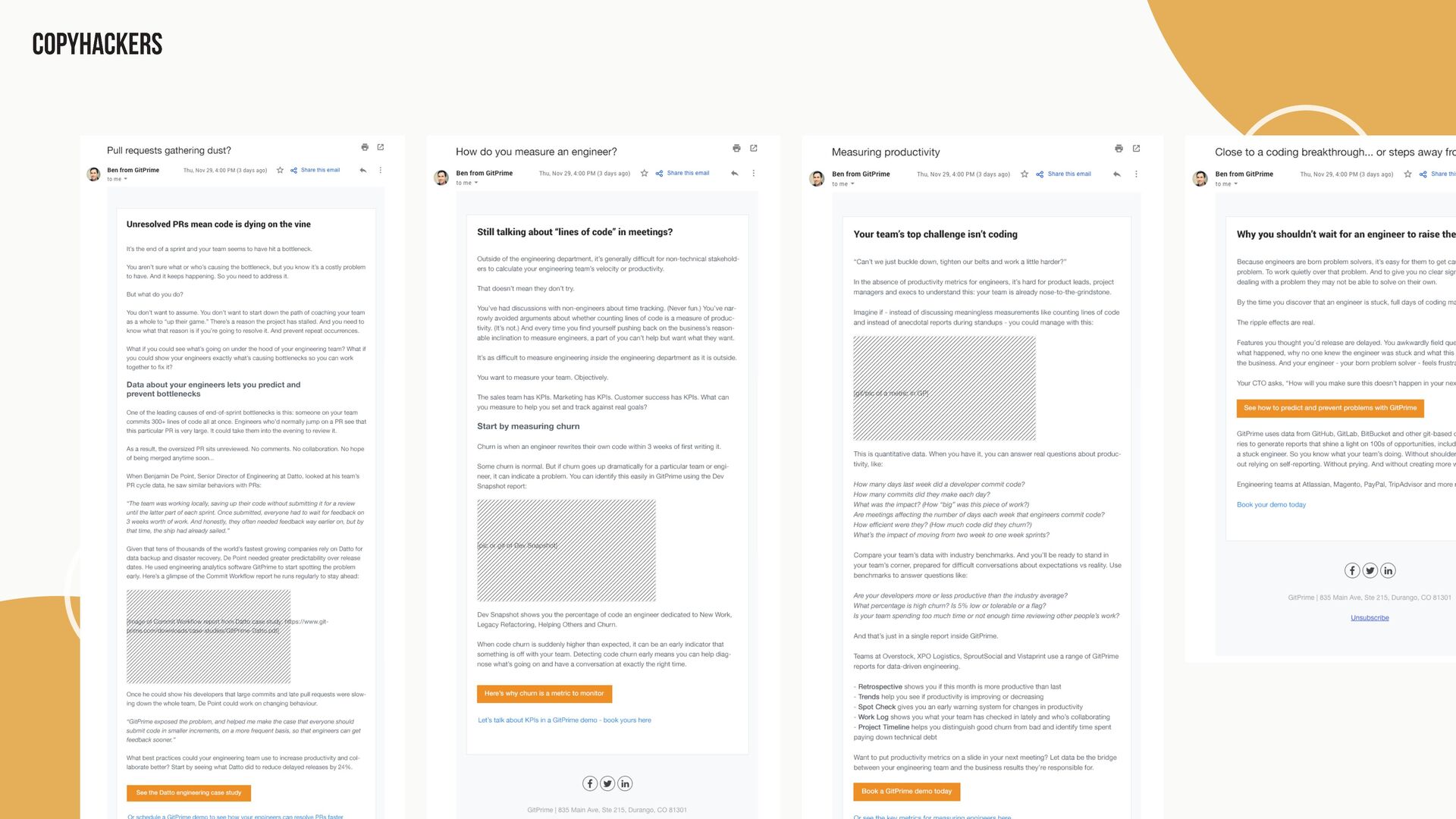
So we take that We take everything they've got, we map it out really, basically, and then we use it to plot our email automations. So if you've never been sure how to put an email flow together. If you're like, oh, well, there's like a welcome email.
And then the other ones, and then there's a sales email at the end. This is actually how you find the other one. As well. So this is the kind of end results, the wireframes of the emails that we write, or in this case, wrote for gitprime using.
This, but I'm going to zoom in to show you exactly how to take exactly what they say. Don't summarize it. Don't change it. If it sounds interesting to you and it's on brand, it's probably going to sound interesting to the person on the other side of it too.
So in this case, this, again, I mentioned this is for GitPrime. It's software for developers, to measure developers, and it's sold to the VP of engineering. I'm an English major. Like, I don't speak the language at all, which actually puts you in a really good position.
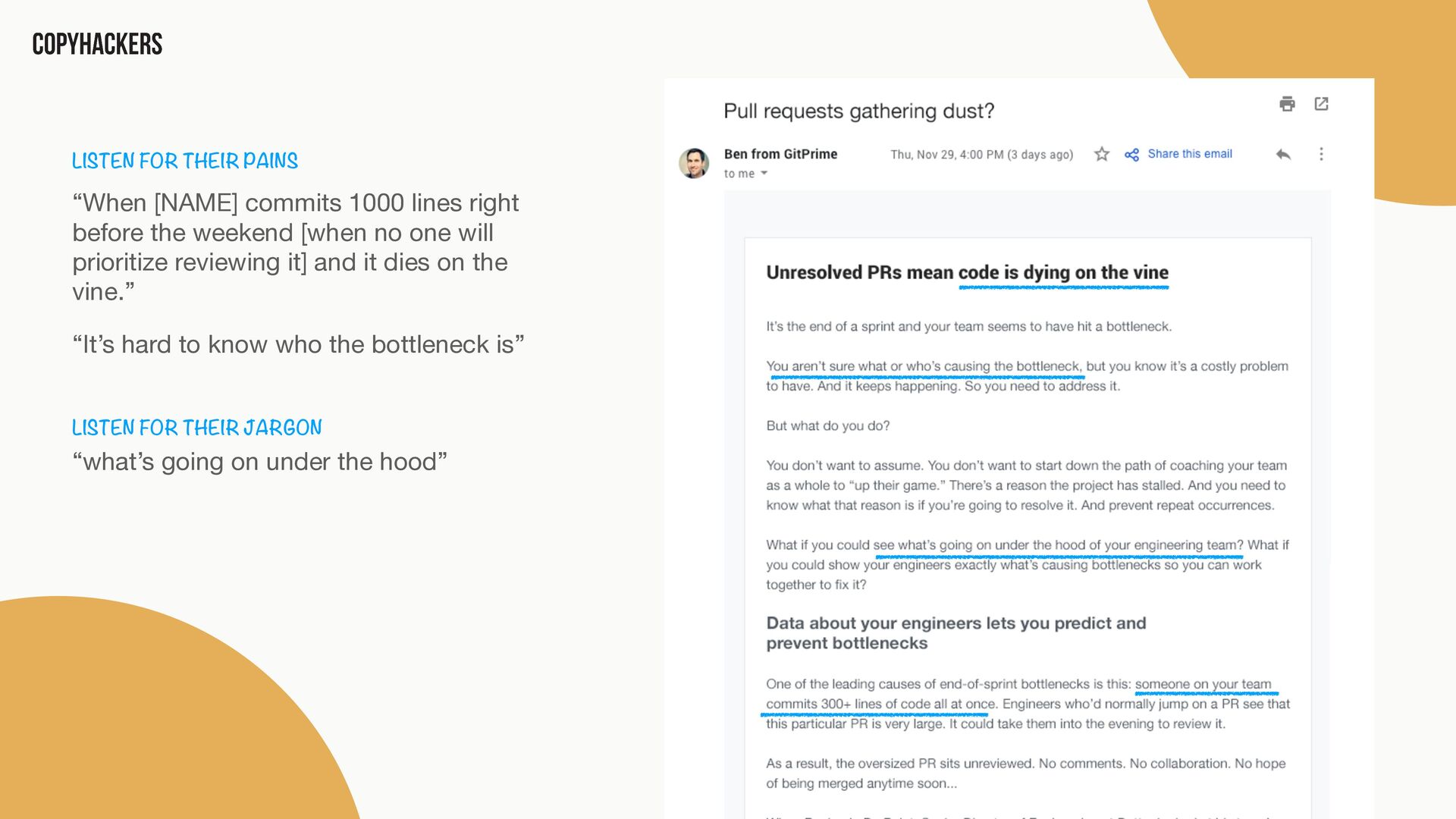
Because I could learn a lot. I was able to listen and not have my own crap getting in the way there. So I learned so much and got to put that on the page, and I didn't get involved in So for example, some of the things that they said that I took as notes were, a problem is when so and so John commits a thousand lines right before the weekend, and then it dies on the vine.
Okay. Cool. So that's a good insight. We take dies on the vine. And we just actually use that phrasing because why wouldn't we just use their phrasing in that case? It's hard to know who the bottleneck is. It's hard to know what's going on under the hood.
We take that and put those actual phrases unchanged into our emails, and this is just a few examples just for demonstration purposes. But this entire email is filled with voice of customer data. And if it looks a little long, it is a little long, but it's completely jam packed.
With the words and phrases that are prospect that we know they're using. We've heard it from many people across multiple sales calls So you can feel better about that than if you're sitting down and writing it, or than if you're asking chat GPT to write it, or if your boardroom is somehow getting together and opening Google dot god forbid and writing emails together like that or websites or whatever it might be.
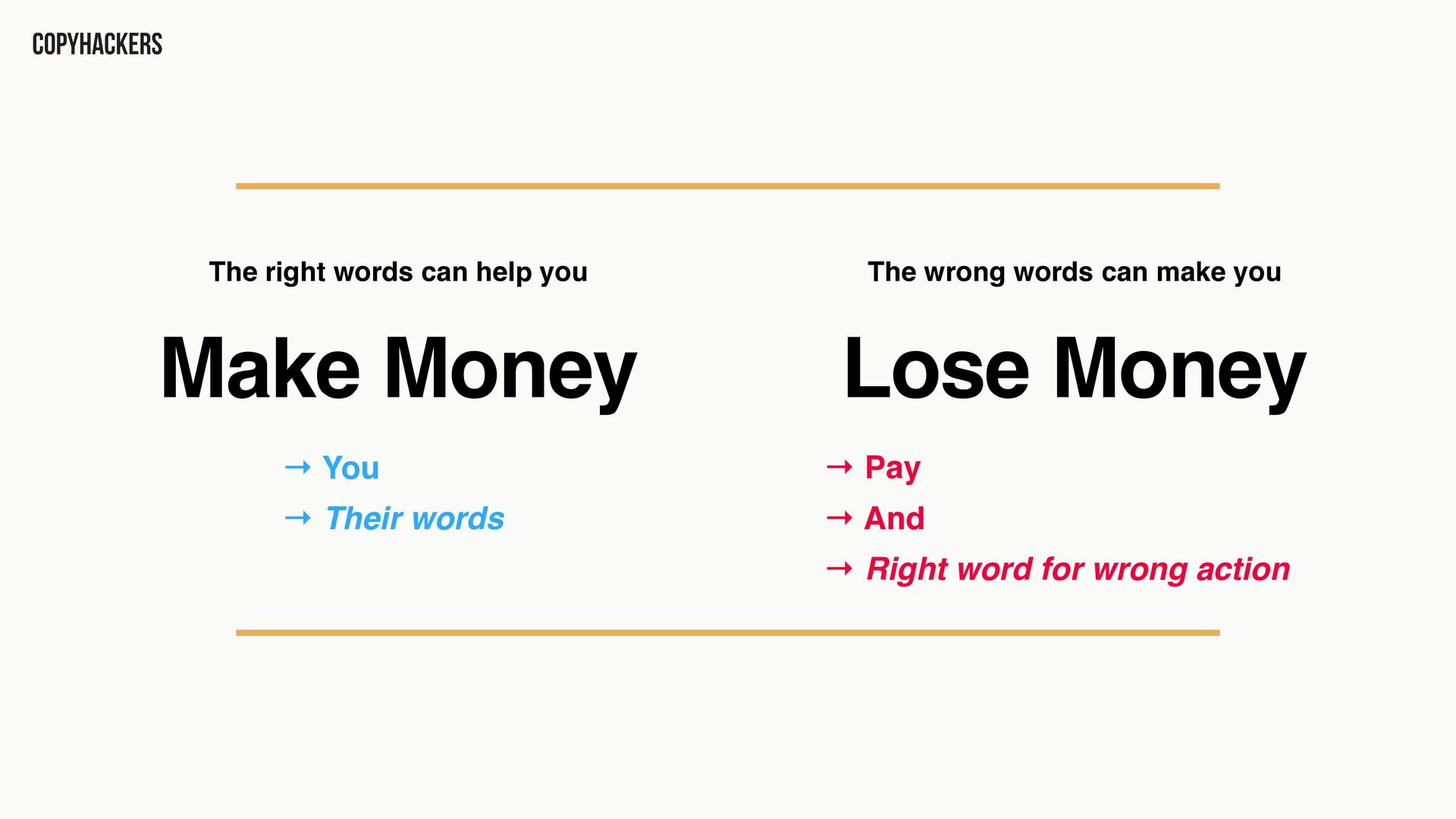
It's waiting the right words outside of the money words that are just really good tweaks to make. The best messages are one hundred percent in the hearts and minds spoken to you of your customers. So these are those words that make money words, you, and their words, the lose money words, pay or anything like that, and and the right word for the wrong action.
And I'm over by thirty five seconds, but that's not too bad. Thank you so much.