
In this presentation Joanna will talk through the many levers of growth, and how to organize your teams, processes, and channels to maximize growth. She’ll give examples of how the best companies in the world created growth engines, and leave you with tactics to bring back to your teams and beat out your competitors.
← All talks 














Grow Marketing Turing Fest 2017
How to Operationalize Growth for Maximum Revenue
Auto-generated transcript - may contain errors. Tap a timestamp to jump the video.
Alright. Hello, everyone. Super excited to be here. Thank you for that nice intro. I'm talking about a topic that is something I think a ton about. And in fact, yesterday, I know there was actually a presentation done about growth as well. So I sat in one to see how they complimented each other.
And it worked out really well because what I'm going to be talking about today is how do you organize and operationalize your teams, your processes, your relationship with product and engineering to drive growth and ultimately to make more revenue. When I say I think a lot about this, I mean I think and obsess about this.
As mentioned before, I'm at a company called ClassPass. We're growing very fast. We're very much in a hypergrowth stage. We're in thirty nine cities around the world, we're only four years old. But even before that, my six other startups, I tend to join either early stage when you're trying to get growth for that next level so you can secure fundraising and really go after an arena, or I come in mid stage when there's great product market fit, but now it's time to really stand up that growth engine.
And it's a fun time. It's a crazy time full of like, the community is growing, the customers are growing, people are excited, press is writing about you. A lot of the stuff we just heard about, you're trying to influence people and connect with people over this mission that people are excited to write about.
The challenge is, it's a mess. It's like a hot mess. It's everything is breaking, all the tech that you built doesn't work anymore, Your customers demand more than ever. Your investors demand more than ever. People want to work for you, but you don't know if they're the right people.
It is a constant challenge. And so, I want to talk a little bit about that. I want to talk about how you can take those things and look at the companies that have done them well and try to pattern match against some of those things to stand up your companies in a great way.
Before I get started, I do want to kind of level set on what I mean by growth. It's a loaded word. It's certainly a word that a lot of people are talking about. It even has a bad rep in a lot of ways.
And what I'm talking about is when you try to find inflection growth opportunity. So, maybe not exponential. Right? Like Andy yesterday talked about that search of that beautiful hockey stick and how ridiculous that is. I very much agree. A constant hockey stick's impossible.
But what I'm looking for is, can you change the momentum of your growth curve? Can you create something that isn't just incremental month over month? So you're growing like a steady five to eight percent month over month or ten percent, but you're trying to exponentially increase something, where something clicks on a channel, or something clicks with a customer, or you break into a new demo, or you expand into a new city, and all of a sudden, you have more margin to play with to reinvest into your company.
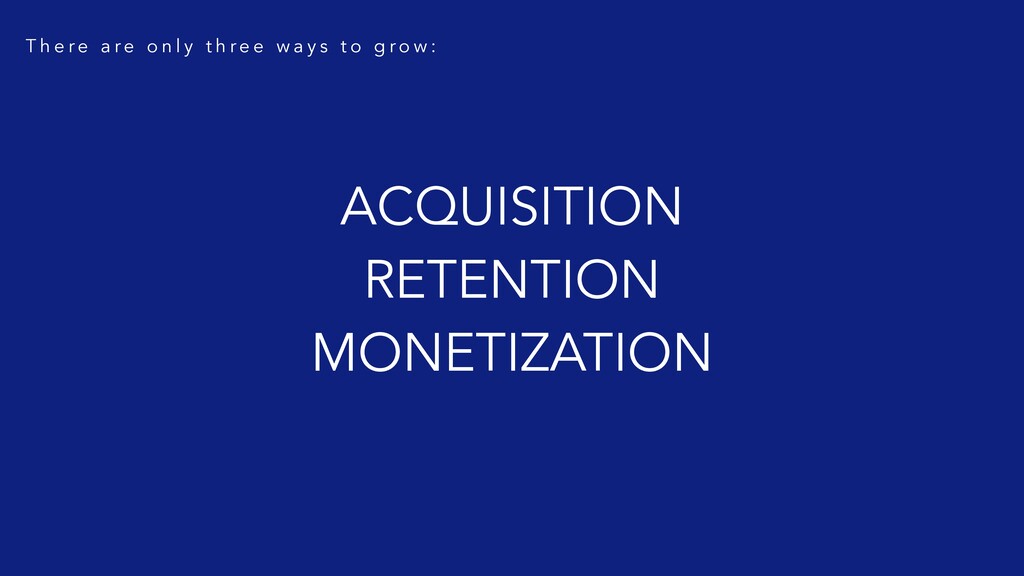
So that's what I'm talking about when I talk about growth today. The crazy part, and I mean this with love, is there's only three ways to grow a company. Like, we know this as marketers, we know this as business owners. You either acquire more people in, you retain them longer, or you monetize them differently.
Every channel, every strategy, every tactic, every tactic, every conversation we have with anyone is one of those three things. So, like, why does that feel so damn hard? And I think about this a lot, because anytime I rewrite my forecast, right, a quarter ends, I wrap it up, and I'm like, Alright, what are we going to do next quarter?
Or even right now, I'm starting to think about my annual plan for twenty eighteen. I get in the room with my CFO and my team, and I'm doing the bottoms up, and here's what I think the channels can do, and here's what we'll do if product supports us.
And then, I'm with the team, and I'm like, Yeah, we can totally hit that number. It's fine. It's only one hundred percent year over year growth. I'll totally do that. It's great. Then I go home, and I'm like, What the I don't even can I even do that?
Does that even work? We don't have this in place or that in place? I feel like that's just luck over there. You just completely freak out. And there's there's a lot of reasons that this is hard. And in fact, it's because a lot of things have changed.
All of the conversations in the ecosystem about how to stand up a great growth engine, a lot of that has fundamentally changed. And So I want to talk about some of those changes before I jump into the tactics we can do. First and foremost, ownership.
Probably one of the hardest things in the room. How many of you have sat in a room with product, engineering, or your executive team and been like, Who the hell owns growth? First of all, don't ask that question. No one likes the person that asked that question.
It's just very provocative. Right? Do I own growth? Does my CPO and CTO own growth? I don't know. Like, is it retention? Is the retention team own growth? Is it our city managers? Who owns growth? Is it me and marketing? It's a loaded question because it's evolved. Right?
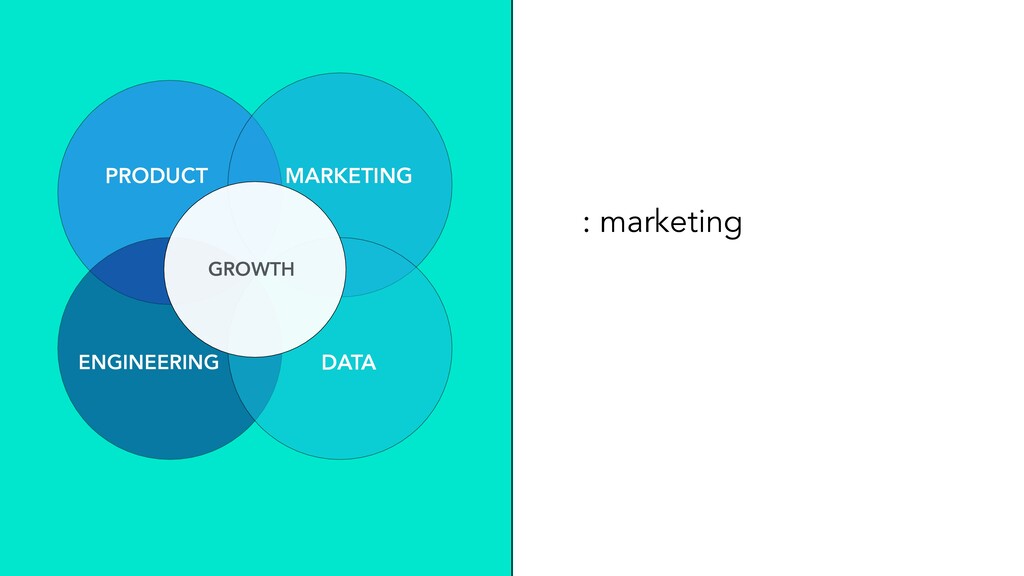
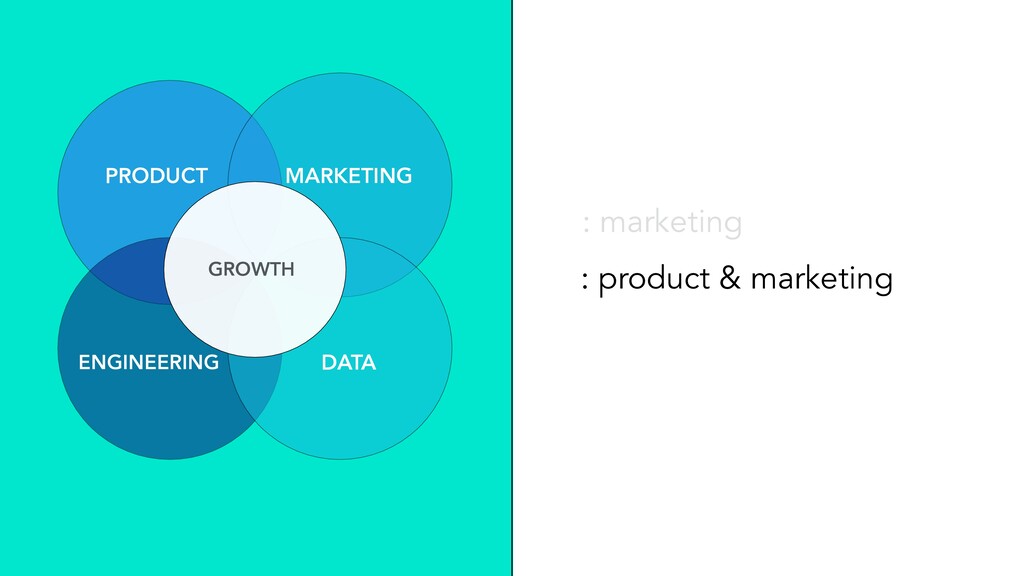
Like even eight, ten years ago, marketing owned growth. We acquired people in. That was all I did. I was looking at CPAs, CPCs, CPMs, CPEs. I was taking everyone in, I was throwing them over the fence. I'm like, Good luck product. I hope you do well with what I just did.
And like, you just feel so good about all that you're acquiring in. And then we realized that a lot of growth can be leveraged in early life. Right? And that's either the first purchase, or when they onboard, or when you get them to sign up for an account, or any of those early life value moments.
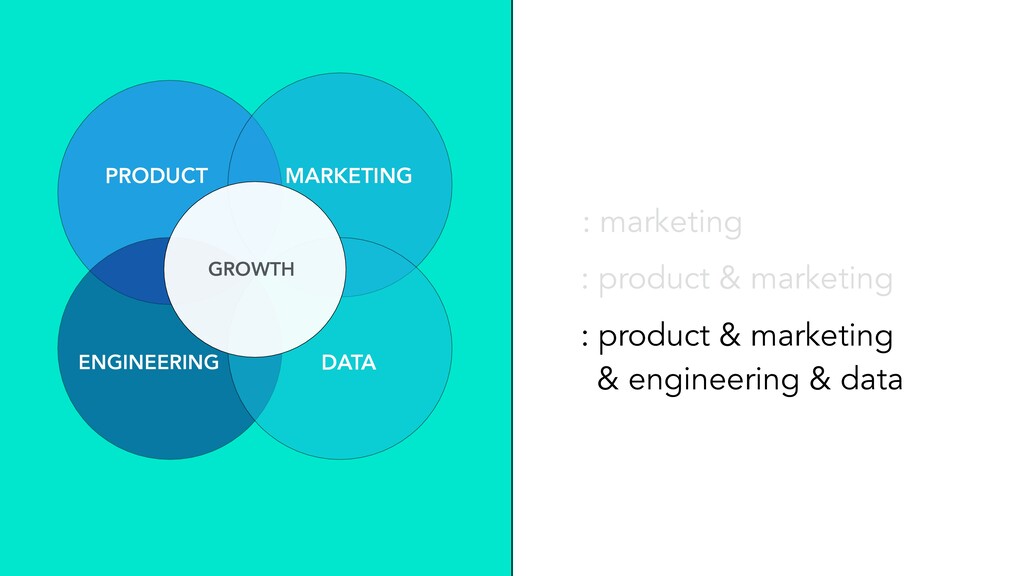
So we really had to start talking with product. Sorry. And we had to start getting in the room with our head of product and saying, Listen, I don't know, maybe the acquisition squads, engagement squads, maybe they have to talk more. Maybe some of this stuff has to be captured in early life and it's not done before the checkout.
You know, and we had to start really work with them and they were starting to have shared goals with us. The roadmaps were starting to merge. And then we were like, Woah, to do this, we got to build it. So we started talking engineering more.
Is this even possible? How hard is this to do? Can you make it autonomous for me to switch some of this in the checkout flow? Can you make it easier for me to go after my abandoned cart people? What does that look like? Can I do it with the CMS?
I don't know. Like, what can I track? What can't I track? Right? And so then we bring in analytics, and they're starting to give us full funnel views. And all of a sudden, every time I'm in a room doing our growth roadmap, or even my marketing roadmap for some of my other channels that are more top of the funnel, I'm in the room with my head of product, my head of engineering, and my head of BI.
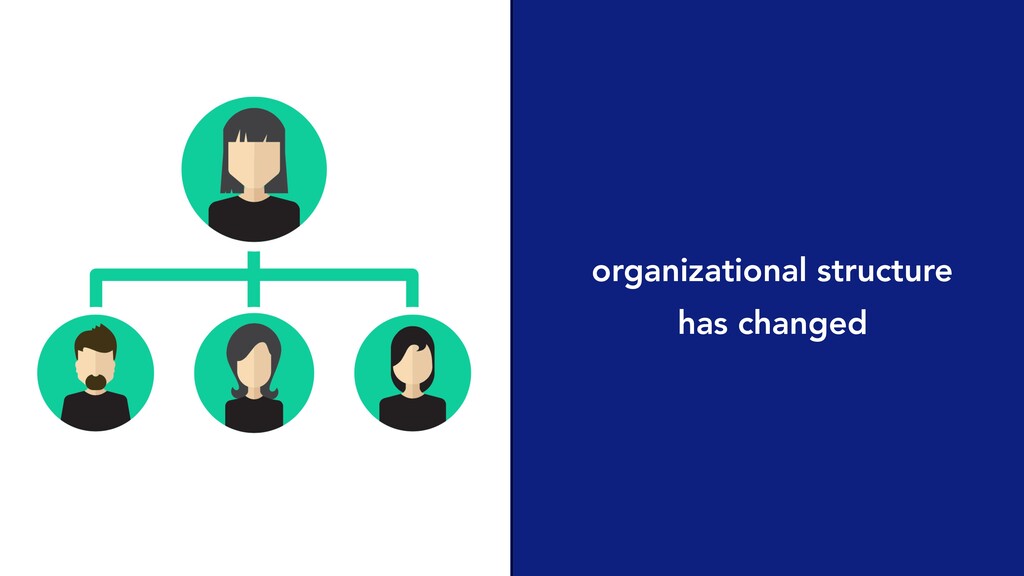
We're looking at each other, all trying to figure out our own roadmaps, all trying to figure out who owns what KPI and OKR, and who gets to prioritize against it. And that's complicated. That's hard. The second big change is the actual structure. Right?
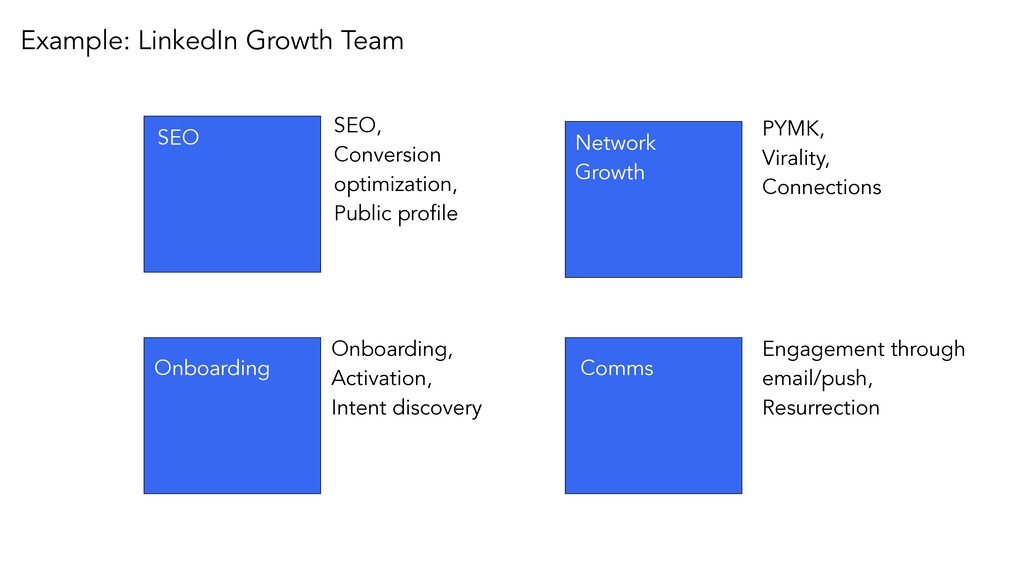
If how you are actually coming up with those roadmaps has changed and who owns it does, then obviously how you organize is going to change. And we're going to talk a lot about this today. This is a great example. One of the first published teams out there, LinkedIn came out and said, This is what our growth team looks like.
And so this came out and I remember I was like, Sweet. I'm just going to copy this. Problem is, like, at the time, I wasn't at a company that was a marketplace. Like, this made no sense for me. But you can kind of see just how different it is. Right?
So they kind of have four teams on their growth team. They have SEO, which does conversion optimization, public profile, network, which is people you might know, virality, connections, onboarding, which is activation, intent discovery, a lot of that early life, and then comms, which is engagement, email push, resurrection, basically any touchpoint management.
So you look at this and you say, This really works for them, but that is hella hard to organize around. You need a lot of low ego people that don't care about their territories or silos, that are willing to change up their habits and tactics, that are willing to sit with people that might not understand their trade as well and go after a shared problem.
And that's hard to do. For me, that means that I have to be stacking autonomous squads or teams outside of my channel structure with people that are creative, that are analytical, that are also very tactical and technical, and that have great intuition. This is a big problem a lot of companies make.
When they bring those squads together around growth, they tend to look at it as a very, like, new frontier way, and they're creating these new tiger teams with new hires, with technical skill sets. But the person that knows their tech stack best, the person that knows their product in and out, that person's on the evergreen stuff, that person's on the core product.
They don't bring that proprietary knowledge and that intuition, that really good magic stuff that makes your team crush it. They don't bring that into the growth squad. They keep them separate. And that's a huge problem. So that's another problem that faces us as we try to organize for growth.
Who we've had to hire has changed fundamentally. And it's great for all of you because you've all come to a conference like this. You're all in it. You're trying to learn the latest and the greatest. Your craft is important to you. These are the type of people you need to hire into marketing.
A lot of people, to like what Will was saying earlier, that have been doing the discipline for a very long time, but only that one discipline, they don't see around it. They haven't become technical. They don't understand analytics. They don't know how to talk and work with product people, they can't wireframe anything.
Those people have no place on my teams. And that's hard because there's a lot of those great people out there, and they come with really strong references. So what does that mean? Rand actually talks a lot about this. Rand from one of my old CEOs at Moz.
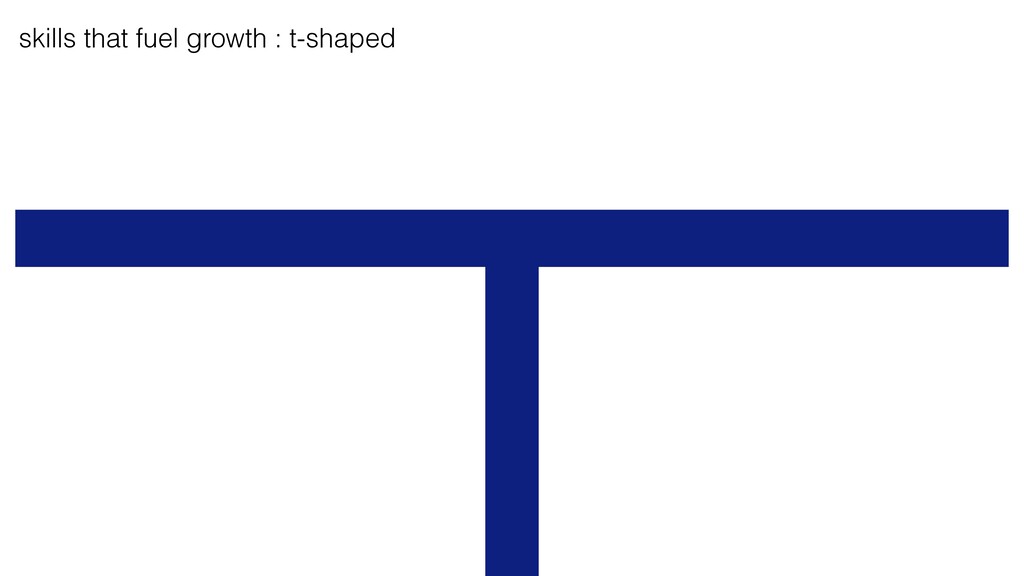
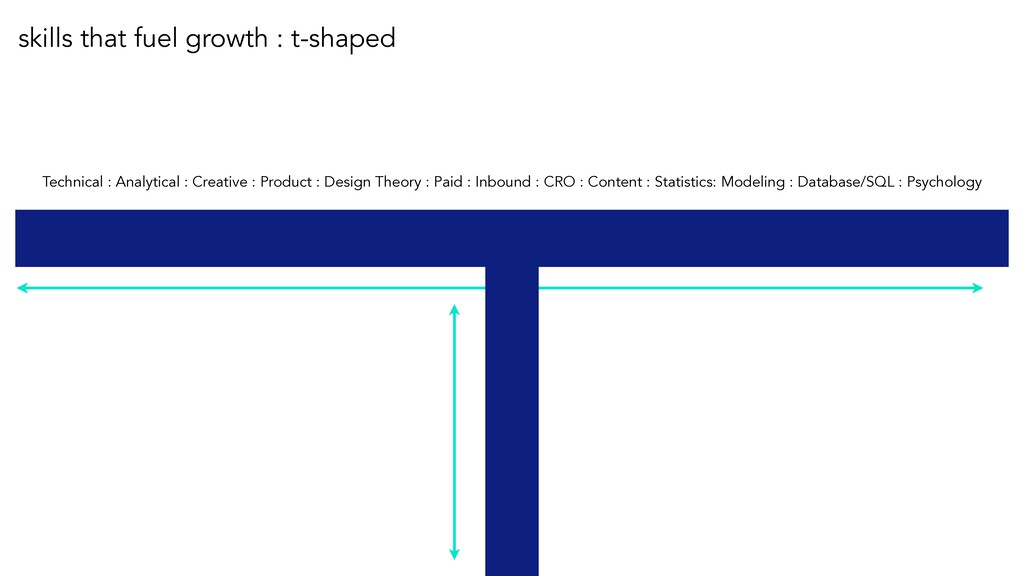
It's the T shaped marketer. I think it's even more than that. It's the T shaped hire. So, before in T shaped marketing, it was like me. I started in performance. I was a PPC marketer. Then I learned SEO, I learned design, I learned community engagement, life cycle, brand, and I consider myself a T shaped marketer.
Exposure to a lot of things, but quite deep in performance. What I'm looking for now is a T shaped hire, deep in all things marketing and exposed to all things outside marketing. So I need them to understand design theory. I need them to understand product management.
I need them to understand how engineers work in Jira and what a sprint means. I need them to understand all this so they can work faster and better than any other hire at any of my competitors at any given day. This is a team that's hard to staff, even harder to retain because everyone wants this team.
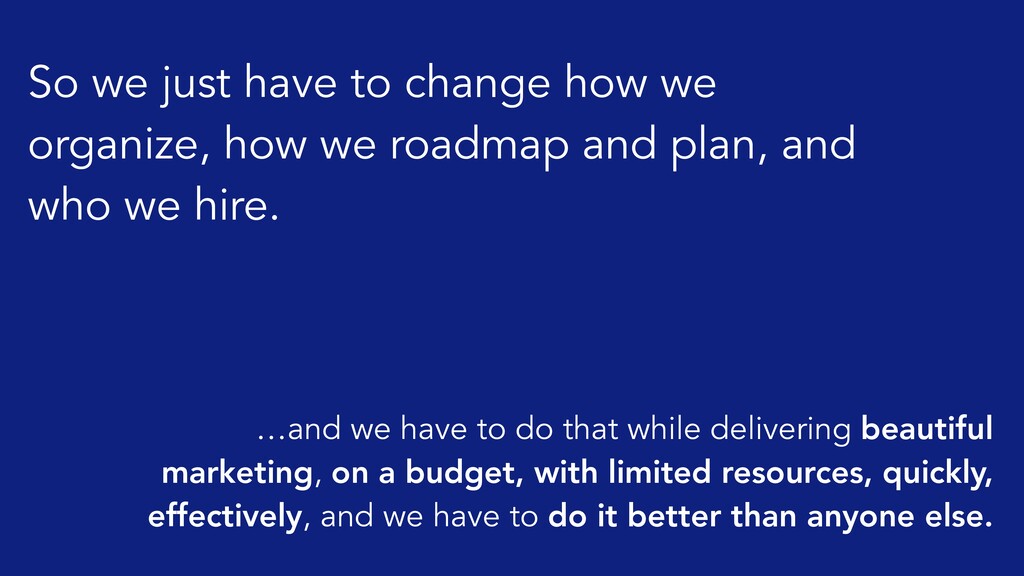
So, that's all we have to do, right? Seems really simple. We just have to change how we organize, our roadmaps, and who we hire, while delivering beautiful marketing on a budget with limited resources quickly, effectively, and better than anyone else in the world.
It's totally fine. I guess it's not it doesn't sound scary at all. It's hard, and that's why so many companies don't do it. It's not because they don't want to, it's because you have to deal with executive level conversations and hiring loops with your people team and reevaluating all the processes you know to be good that made you great as an operator.
You have to be fundamentally willing to change every single one of them for the better of the business and the output you're after. So it can be done, and there are patterns. And that's what I've been obsessing over for the last, I don't know, six to eight years.
What are the best companies out there that have grown? All the companies we've seen, a lot of the logos we love, but also some of the newcomers, what have they done? After they've hit growth, and actually, Andy talked about this yesterday, they tend to publish a lot of the learnings, a lot of the mistakes, some of the things they invested in early, some of the hires they made early, some of the hard decisions they made early.
Those are the patterns. It is very rarely a hack, it's very rarely a tool, it's very rarely one season or one partnership. It tends to be a culmination of really hard decisions and really smart decisions over the course of many years. And I want to talk through some of those patterns that I've seen.
So how do we organize? Let's get tactical. I'm going to run through this super fast. I'm a fast talker. I'm from the East Coast. So let's do this. One, you have to invest in the views that matter. This is the most important one.
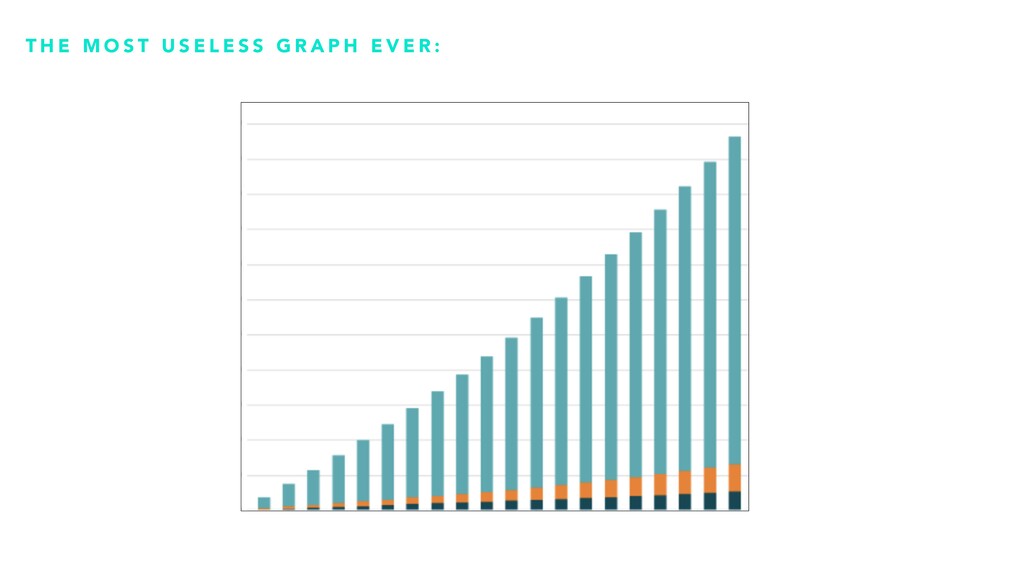
I actually put it as number one for that reason. Time and time again as marketers, especially marketers after growth, we spend so many hours reporting on things that are useless, like this. The number of times that my channel owners have sent me a graph to remind me that we are growing, I literally want to smack them.
And I mean with love, like sometimes I just I can't. I don't need to be reminded that we're growing month over month. That's your job. What aren't we growing? Where are we growing more? What's the delta differential? I need to understand the space, the space between the growth.
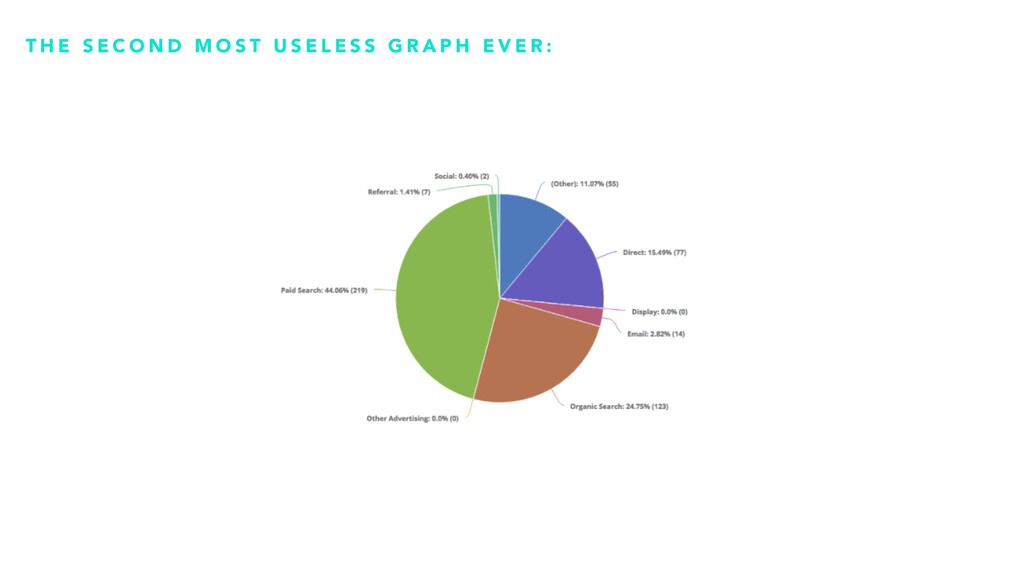
Why isn't something working? What's the anomaly? Give me the anomaly, come up with a plan to exploit the anomaly. This is the second most useless graph I've ever seen. I also don't want to know how they're going against each other. I don't even care. These aren't even real data.
I pulled this from, like, images. I mean, this is someone's data and I want to tell them, Don't report on this. Here's the problem. All of my channel owners every Monday come in and they work on their reports. A lot of this is automated now, now, so that's great.
But even if you just say, Really great overall growth report for the week. They spend half a day on a Monday to do. That's a half a day every week. That's two days a month. That's twenty four days a year. I just lost a month to my competitor.
I am in an aggressive arena that the world wants to own. I'm going against Google, I'm going against heavily backed companies. I can't lose a month to reporting. I can't lose a month to tell me that things are growing month over month, and don't worry, things are growing at the same rate against each other that they did last month.
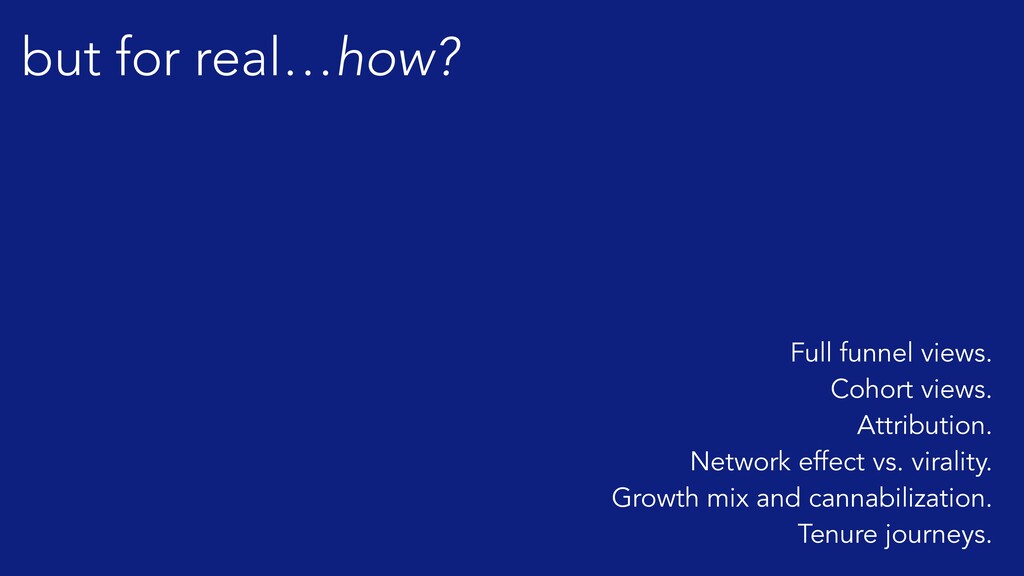
It's just, it's crazy. We spend way too much time reporting on useless things. So, what does that mean tactically? Here are some of the things that you have to be reporting on if you want to exploit for growth. Full funnel views. You have to be systematically set up.
We've heard heard a lot about BI over the last day and a half. I can't express this more. My secret weapon on my team is I asked and got invested in a growth operations team, which means on the marketing team sits analysts, integration specialists, and data scientists.
I spend a lot of my headcount resource into that team. Because I need to be able to build into Looker. I need to pull my GA data in. I need to be able to look at LTV to cap by channel, by advertisement, by click.
I need to understand it all really fast so that when I do get money off my margins, like Will Reynolds was talking about, I know where to spend it. And I know where to spend it fast. Next is cohort views. You have to be understanding how things go as you experiment and test.
You can't be looking at aggregates. We all know this. Attribution. This is probably the number one thing I talk about when I talk about going into a company. I'm like, Well, what is your attribution? And they tell me it's still last touch. Or maybe it's weighted and you're looking at secondary or assisted convergence.
The reality is attribution is a six month investment at best. And someone says to me, I can't spend six months on it. I go, You can't spend six months on the most important thing you can do for your company. It's going to take six months, let's do this.
And in six months in a day, we're going to go crush it. But you have to be willing to put in the time, You have to recategorize. You've got to work with finance for historical views. You've got to go back in a GA. You've got to refilter.
It's fine. That's the whole point. Let's do it. You've got to be willing to put in the time and take away from the roadmap to invest in the future. Other things like network effect versus virality, a lot of people invest in these wrong.
They're thinking about k factor when they should be thinking about a network effect. They're not working with product and talking about it effectively. Growth mix and cannibalization. Do you understand when and how you should be moving people up and out of plans? A lot of us think up is better.
What if moving them down is better? You reduce your churn for a SaaS business, or maybe if you're showing them different products that are lower ARPU, it's actually better because they come back more often. Maybe they're a referral or ambassador. It's about their MPS, and you want to influence them to get you ARPU like that.
There's a lot of different ways to make money on people. And if you think it's up and to the right, you're going to lose a lot of that margin. It's all about margins, you can reinvest back into the growth machine. Tenure journeys, understanding early life, midlife, late life.
A lot of us think one to three months, this is what they are, three to six months, fine. What about applying something like an RFM analysis? So you're starting to look at their recency, their frequency, and their monetary value, so you really understand what a high value user is, so you can treat them differently, bless you, in CX, or maybe on their way out, or maybe you give them more surprise and delight because you know how to invest in that person at the customer ID level.
This is what the best companies in the world are doing for growth. Complicated stuff, cross company stuff, totally worth it. The second one, and probably this is the most controversial one, I would say myself ten years ago had the complete opposite view, I was wrong.
I now feel that I'm closer to right. At least it's working for me, and it's worked for a lot of the great companies out there. There. Growth as a decentralized responsibility. So, it doesn't sit in one team, it doesn't sit in an autonomous team, it doesn't sit just in marketing or just in product.
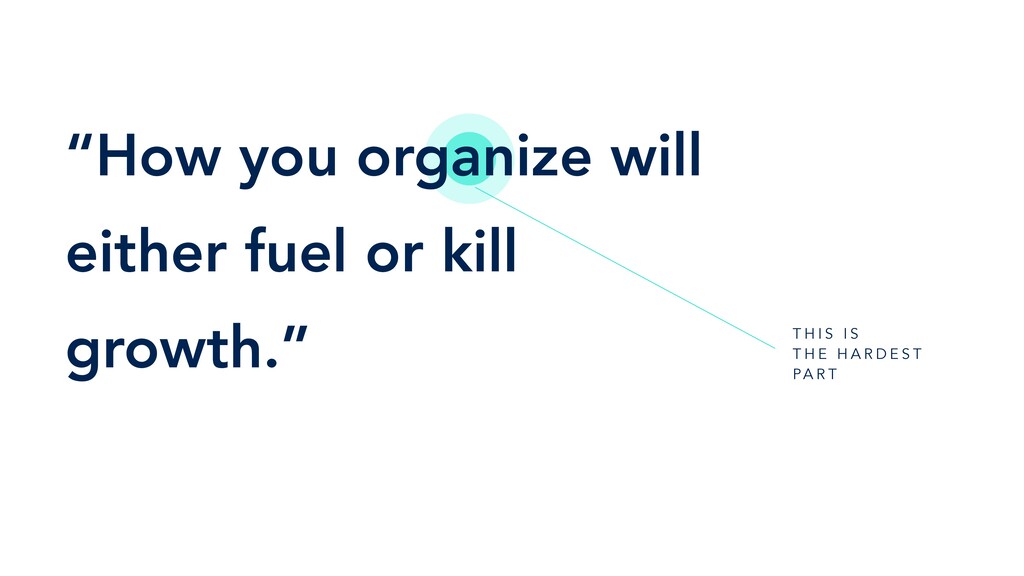
It's decentralized, so multiple teams have KPIs that are tied and roll up to growth. How you organize for growth will either fuel or kill your growth. I can't stress this enough. And the problem with organizational conversations is no one wants to have them.
Because we've all seen the five or six ways HubSpot's printed it in a beautiful slide deck that we should organize our marketing teams. Depends on your model, depends on your arena, depends on your market, depends on your stage. Not anymore, actually. It depends on your output.
It depends on the two or three things that you need to change in the next three months. Because growth is a quick game. It is a right in front of you game that you exploit, so you can take that margin and invest in the long term game.
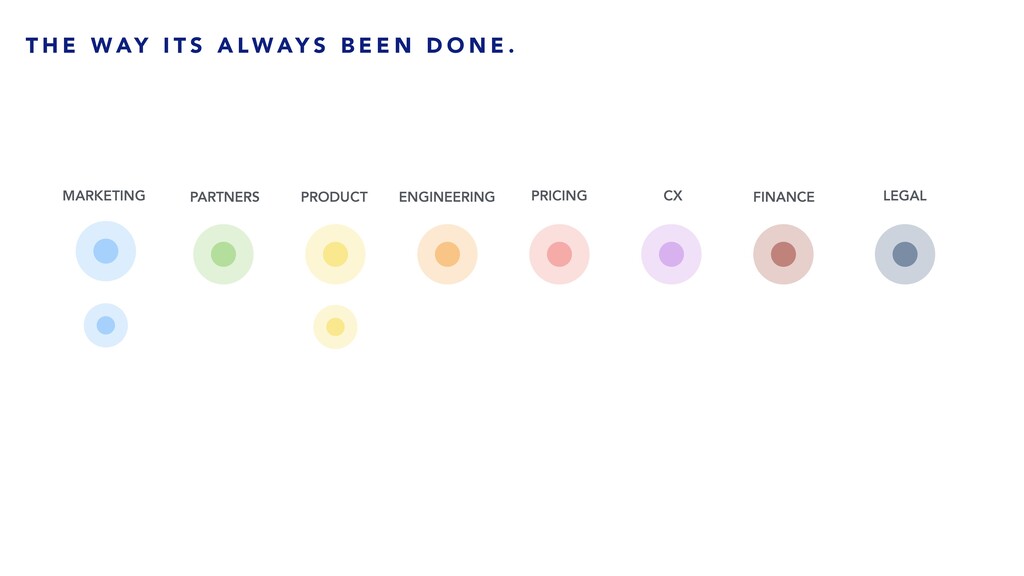
That's how you get to hypergrowth stage. So here's a great example. Here's the way it's always been done. And the thing about these silos is they all have their own roadmap, they all have their own offsites, they all have their own mission statements, they all have their own hiring budgets, they all have their own tool budgets, and every single one of them is sitting in different parts of the team, of the office, and they're walking around, and they're like, We're totally collaborative open office.
And they don't care about each team's OKRs. They don't care if their OKRs are at odds. And then they wonder in ninety days why their OKRs were at odds, and they've neutralized each other. This is what it actually needs to look like. This is from an actual example that we did at ClassPass earlier this year.
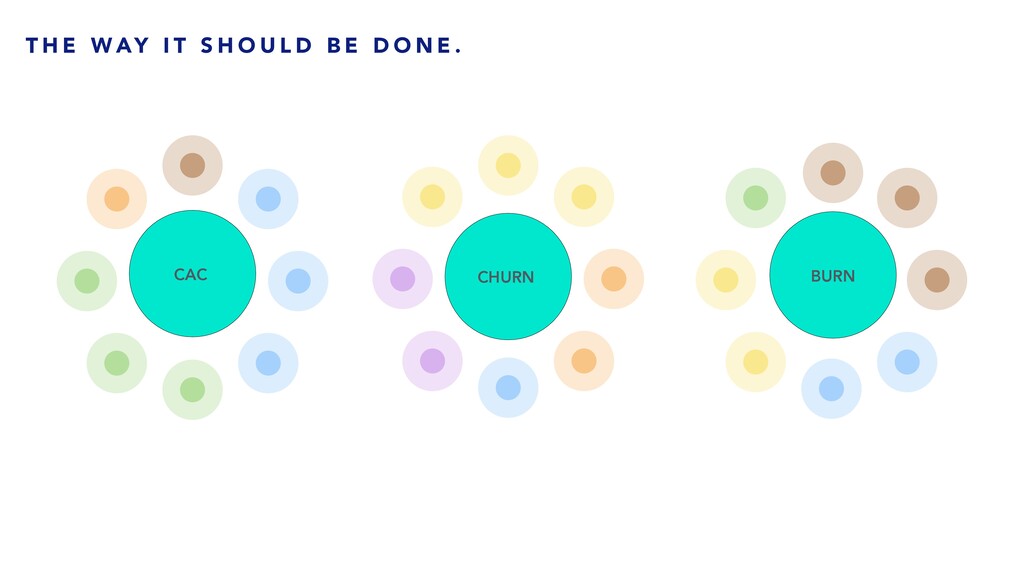
In the first quarter, we realized as we kind of went into a fundraising season, there were three key metrics that we needed to make legitimate progress on in the next ninety days. Not like small incremental, not like moving it a couple decimals or a couple dollar points, but like real progress.
So we stood up these three squads, these autonomous squads with teams from all of the different or representatives from all different teams against CAC because we want to reduce our CAC significantly. We wanted to reduce our churn by a couple basis points and we wanted to reduce the annual burn by a couple million or more if we could.
And so, in doing this, we had to blow up everyone's roadmap. We assigned program managers to these three squads. We gave them complete autonomy. We basically said to all the people that touch CAC, and that was people from CX, product, engineering, partnerships, marketing, design.
We put them in a room, the executives got the hell out of the way, and we said, You guys know this. What are all the different ways we could reduce our customer acquisition costs? Sometimes it's upfront in media spend, sometimes it's in cogs.
Right? Sometimes it's an early life reduction or a trial conversion increase. So when you think about those things, they came back with their roadmap, we waterfaulted it out, we again got out of their way. They were able to experiment, test, and allocate the money where they thought was best.
And in ninety days, we reduced CAC by thirty dollars churn by a couple of basis points across the network, which is huge, and burn came down a couple million over the year. Now, at the end of the ninety days, we ungated those three things and we said, What of these need to continue on?
And we got those back into the operational roadmaps. Right? So, it can be a timely thing. But you have to know your top three levers or four levers and you have to be willing to organize around them outside of the regular organizational structure.
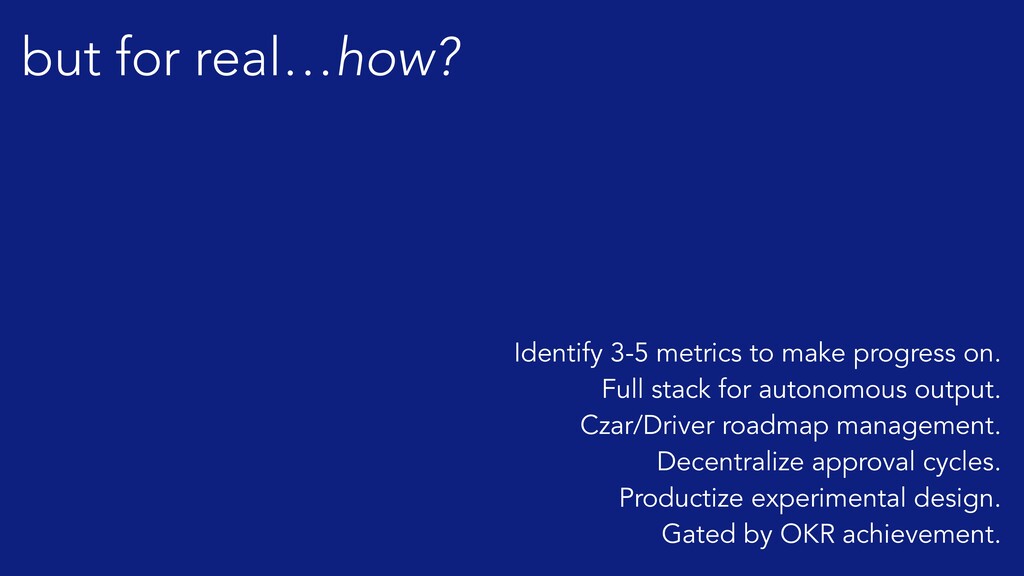
And so what's that look like? Knowing those metrics is probably the hardest part. Being willing to say, These are the only things we're going to make progress on in the next ninety days, and some things aren't going to get done. Full stack or autonomous support.
My engineers needed to be able to run. They can't run everything through the full product stack with our head of product or our head of engineering. It wasn't going to work. They need to have some sort of driver for roadmap management. Right? Whether that be a PM, we called them czars, or some sort of of operational leader.
Someone that kept the waterfall going and reported out when things were at odds, or if things weren't working as fast, we'd just get in a room, we'd change the plan. You need to decentralize the approval cycles. Again, we would have one to two meetings a week, where the full group would come together.
It'd be a fifteen minute stand up. It was a big room. It was an expensive meeting. But it was worth it because we'd get to hear about the things that were approved and we would be able to kind of be like, Okay, yes.
Like, dollars two hundred and fifty thousand to go media spend reallocated over here. Like, okay. But for the most part, all of the real approval cycles were decentralized. You need to productize experimental design. So this is probably one of the biggest things. As a company wide conversation, do you have an ethos on what an experiment looks like?
Do you know what stat sig means? Do you know what reporting out looks like? How do you de how do you decentralize and share all of those learnings so that the full company is hearing all of the learnings and using them? And then, you get some sort of gated by OKR achievement.
So, this is required to decentralize growth and this is really hard. But this is what the best companies in the world are doing. The third one is probably the hardest lesson we learned. It's also the one that I'm just I feel we don't want to do, but we all need to do it.
Not just at high growth companies, but just at good, healthy companies. And that's realizing that nothing is precious. At class class, I'm going to talk through an example we had, but you really do get to a point where a product, or a feature, or a partnership, or a hire, you're holding on to something that's holding your company back.
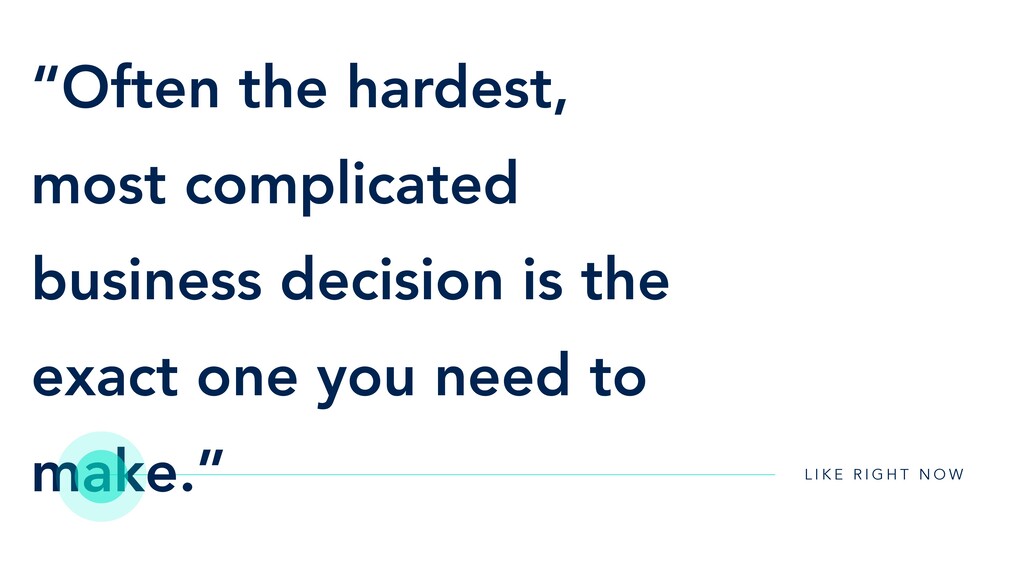
This is really common. And often the hardest, most complicated business decision that you need to make is the exact one you need to make right now. For all of you out there, I'm sure you just thought of something, you're like, I know. I revisit it all the time. I think this.
At the end of that really late day on Thursday, I go back to my desk, and I'm like, If only A. Whatever A is, let's deal with A. Let's just get it done. Let's stop punting it till next quarter and wasting cycles on relitigating and just get it done.
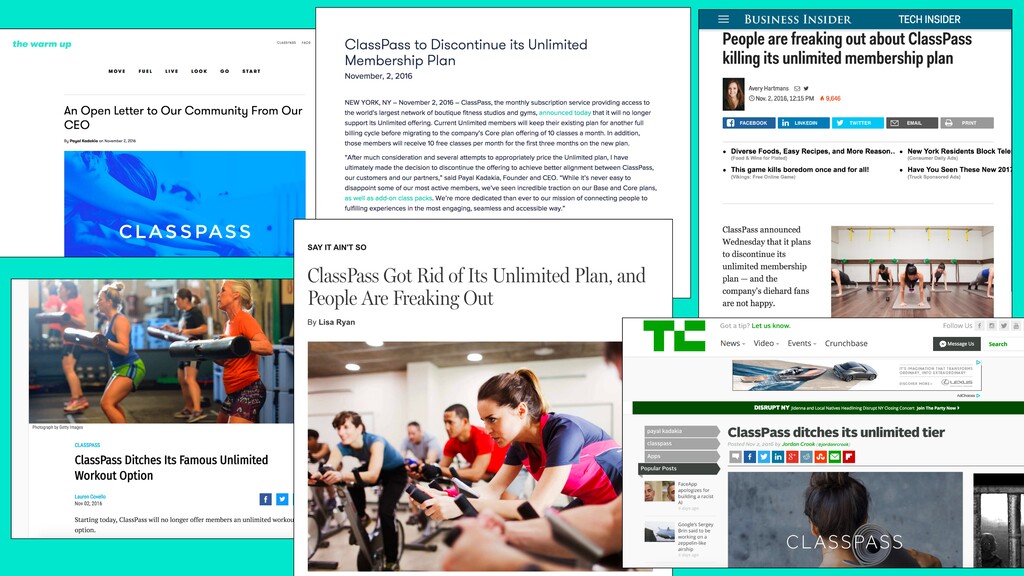
For ClassPass, some of you may have heard, but we sunsetted the product that made us famous last year. This was really hard. We had a product. It was unlimited. It had the highest NPS I've ever seen. It was growing amazingly. I could go to any market and dominate.
We were killing competitors. We were exploiting the margins. This was not intentional. This was a product that we just didn't expect people, when they got on the unlimited product, to work out as much as they did. And what happened was when they did, we became unprofitable on this product.
Small little problem about your key flagship product. It was syncing our company. And we tried all sorts of things to make this profitable. We tried to add features where people weren't going to work out as much and different ways to cap their usage.
And that was so hard, because basically my product teams, my super intelligent, incredibly passionate product people were in a room trying to think of how they could get people to not do our mission. Like, crushing, soul crushing, right? And so, we made the decision to sunset it.
This was a sampling of the response from our community. This was Yeah. Yeah. I still Even pulling these for you guys was like, This was the hardest day of my career. We knew it was coming. We worked up to this for six weeks, and we planned it.
Very transparent, very open, worked with the press. We knew it was going to be a hard day. I still had to come in to thirty marketers, two fifty or so class bastards, and watch them let down the people they've built for four years.
I had to watch them cry in the bathroom, handle the social media, I had my team managing this, my press team handling the insights. It was just devastating. And I would do almost anything to never have to experience this again, except for that I would do it again because this is what had to be done.
This was the hard decision that had to be made for the company. We launched other plans. Those plans were very well received. They're growing just as fast as the unlimited product. You have to trust that your company is bigger than any one product.
It's better than any one feature, and it's stronger than any one higher. You have to believe that, and you have to make the decisions accordingly. What this looks like, there's a lot of companies out there that have done this. Every single one of these companies was something before they were what was the best thing that you know them for.
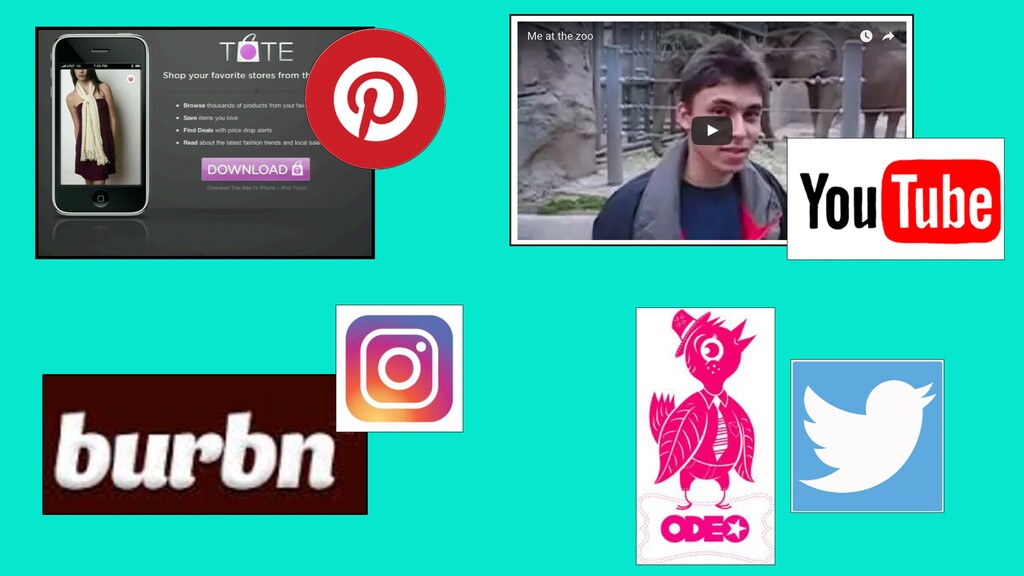
Pinterest wanted to be Tote, but they were ahead of mobile payments. They couldn't be what they wanted to be. They had to shift, they had to pivot. Same with YouTube, it was a dating site. These companies that set out to be one thing realized either the world didn't want what they had, they were ahead of the world, or they couldn't make what they were giving the world work for their business, and so they made a hard decision and they moved on.
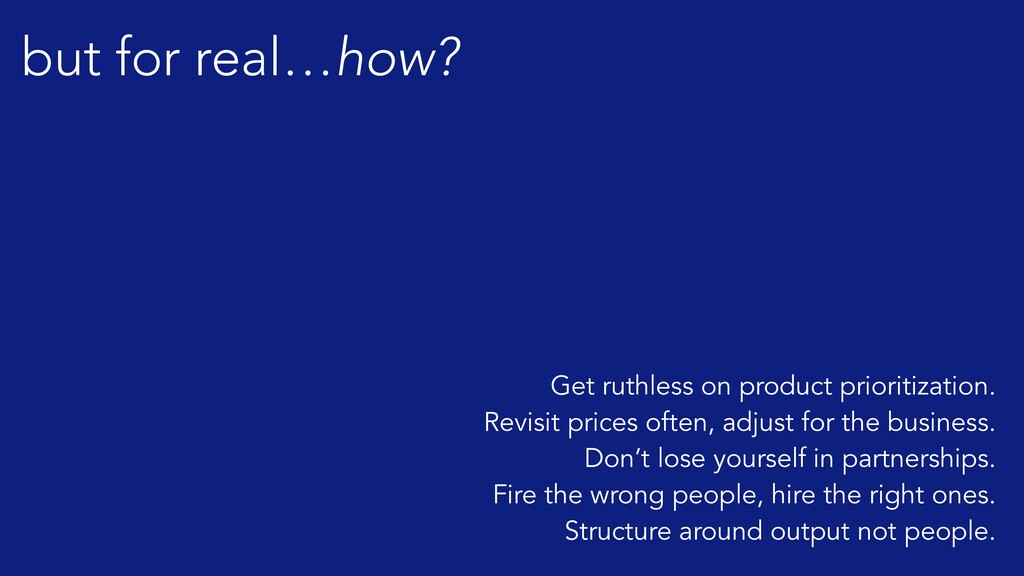
So for real, how do you do this? This is the hardest. You have to get ruthless on product prioritization. You can't keep building into a feature set because you like it, or because it was there at the beginning, or because your head of product built that feature.
These aren't real reasons. The features and products you have have to have value, and they have to return for your business. You have to revisit your prices often. Most companies revisit prices, if at best, once or twice a year. You should be doing it at most three months.
If you have a product that is selling excellently at a price point, and you can raise your prices, not at the detriment of your growth, do it. Trust that you're bringing value to the world and see the proxy of that value in money because you take that money, you reinvest it into the business, you build more great things for them.
Don't feel shy about having built something great. Price it accordingly. A lot of people lose themselves in partnerships. This is probably one of the hardest ones. Especially if you're an early company or you're a consultancy and you have a disproportionate amount of your resources on one partner, and so it's sinking everything else around you, Let go of that partner, let go of that logo.
Trust that you'll find another one, a better one. You will. You won't if you're dying to that one resource, to that one partner. And then this last one is probably, again, one of the hardest things. If you find that you have a lot of great ideas and your team is firing on all cylinders, but you find at the end of the day you're constantly going into a room with your other leaders, executive team, and operators, and you're like, Yeah, but we just can't because so and so won't let us.
So and so won't like that. That won't work for so and so. Fire so and so. Just fire them. I don't care if they were the third employee. Those conversations have to be had. Because one person does not get to outweigh all of the value you get to bring to the world.
No matter how great they were, their season's over. Namaste. On your way. Thank you. You know? It's okay. They'll be fine. Your company might not be. Playing to your advantage successfully. This is probably one of the more tactical ones. We build a lot for building's sake, and I love that about us as marketers.
We just love to build. We're like all in I'm like My happiest thing is when I have a beautiful acquisition portfolio that's diversified and lovely and has redundancy and it's you know, Google were to update something. That's okay because I have all these other beautiful channels and nothing can go wrong.
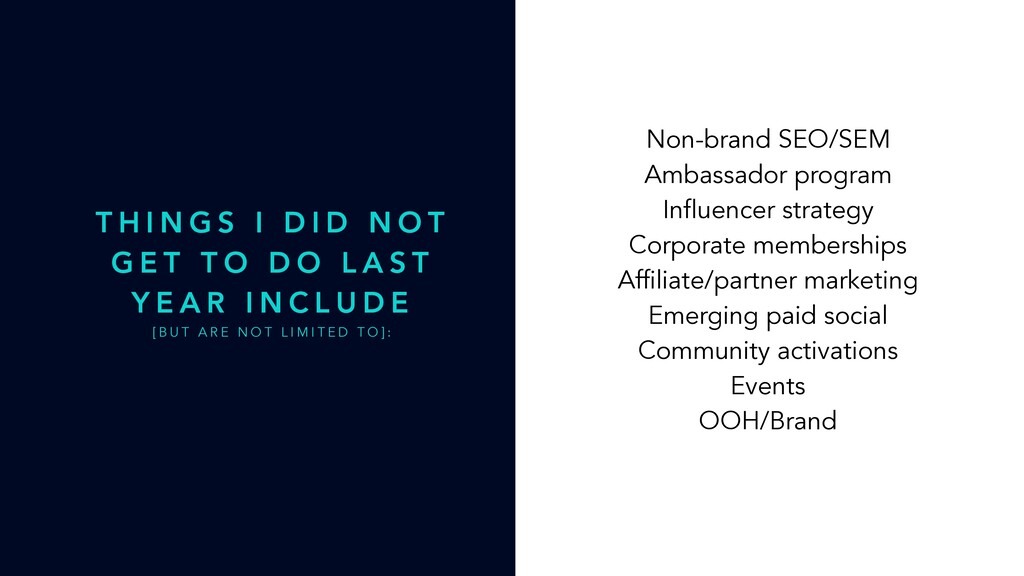
That never happens, but in my mind, it's beautiful. The problem is we build too broad too often. The fastest growing companies in the world go deep before they go broad, and they play to their advantage ruthlessly. So here's an example. Here are all the things I did not get to last year at ClassPass, which was my first year at ClassPass.
I did not do non brand SEO SEM, which is crazy because we have a proprietary asset set of reviews. Ambassador program, we have incredibly high NPS and referrals, and I didn't stand that up. In fact, I sunsetted the one they had because it was bad.
Influencer strategy, corporate memberships, doesn't make sense. Companies reach out to us every day. Affiliate partner marketing, emerging paid social community activations, which is insane because we're a local based company. Events out of home and brand. I basically didn't do marketing for the entire year that I was hired to lead marketing.
If someone looked at this from the outside, they'd be like, What is she doing? I did this. I played deep to our special advantage, and our advantage is word-of-mouth. People tell people they work out because they're proud of it. A little humble brag moment.
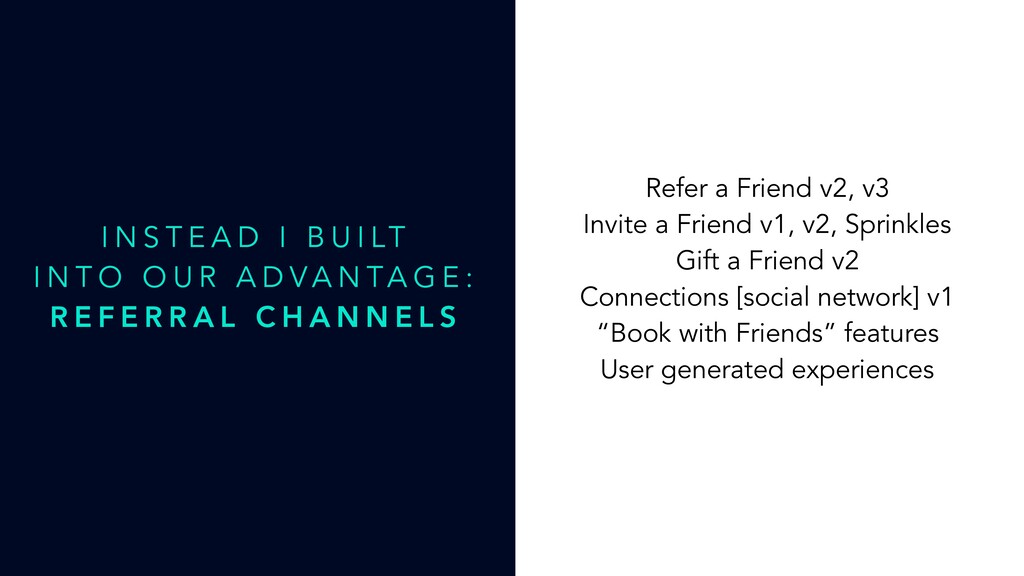
People on ClassPass tell their friends over brunch that they love ClassPass. Those people download ClassPass at brunch, and they sign up for ClassPass. This is my magic. I will play to this magic ruthlessly. That includes everything referral. So what did I do in the first year?
I didn't do all those other things, but I did refer a friend, v2, v3, invite a friend, which was a second referral program that happened later in the product, gift a friend. We added sprinkles, which is showing you all of your different friends at different classes that you were going to for fitness.
We were showing people when they first joined so you could encourage them. Connections, we actually launched a social network so you could follow people's schedules. Book with friends feature so you could see how many spots were left in a class so you could book with them.
We were launching user generated experiences where friends on the platform could create their own fitness experiences. We did all of this in a year because this is my advantage, and I'm going to lock this up. Not one of my competitors is going to be able to touch my k factor.
And I went hard with product on this at the detriment of all of those other channels. And why did I do that? Because this is a low CAC channel with a long LTV. I can squeeze that margin, go back and stand up all those other channels.
So you have to think, what is your proprietary advantage? Not just the channel that's successful, but what do you have that your competitor doesn't that gives you the advantage to own a channel deeply? Build into it, build yourself a competitive moat, and then come back and stand up those other channels.
All of these companies have done it. Dropbox Referral, Etsy Partners, Wayfair SEO, Snapchat Influencers, every single one of them went super deep before they started to stand up a diversified acquisition portfolio. You have to buy yourselves the runway, the margin and the runway.
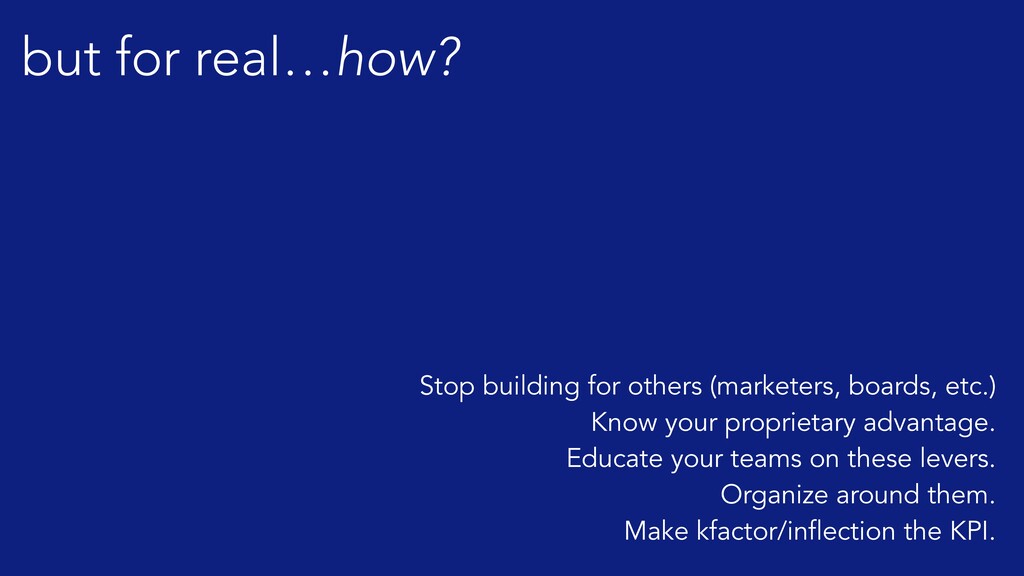
So stop building for other marketers. All of us have board members. All of us are hearing from our mentors and mentees. Oh, so and so, that company, they did this. You should try it. No, don't try it. You're not so and so. You're you. You know what you're doing.
Do what you know how to do. Know your proprietary advantage. Educate your teams on this. I actually found that a lot of people on my marketing team didn't understand the levers and mechanics of our referral channels, so they couldn't get to the place that they could do it super well.
They couldn't be thinking kind of, you know, in the moment of different ways that they could build into our referral opportunity. You need to organize around those and then build your KPIs around all of that deep investment into that one channel or that one lever.
You need to be able to see it from every angle, not just the regular readouts that we get. Alright. Last, and I'm almost out of time here. Evergreen testing to make your case. This is, again, a super tactical one. If there's one thing I can encourage you all to do, it's rethink how you make the case for the ask to product and engineering.
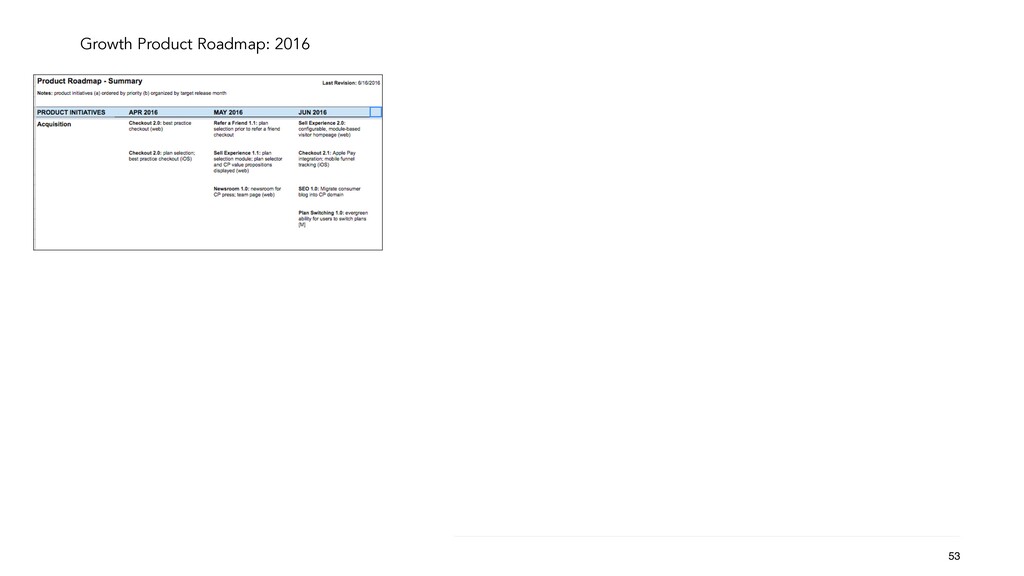
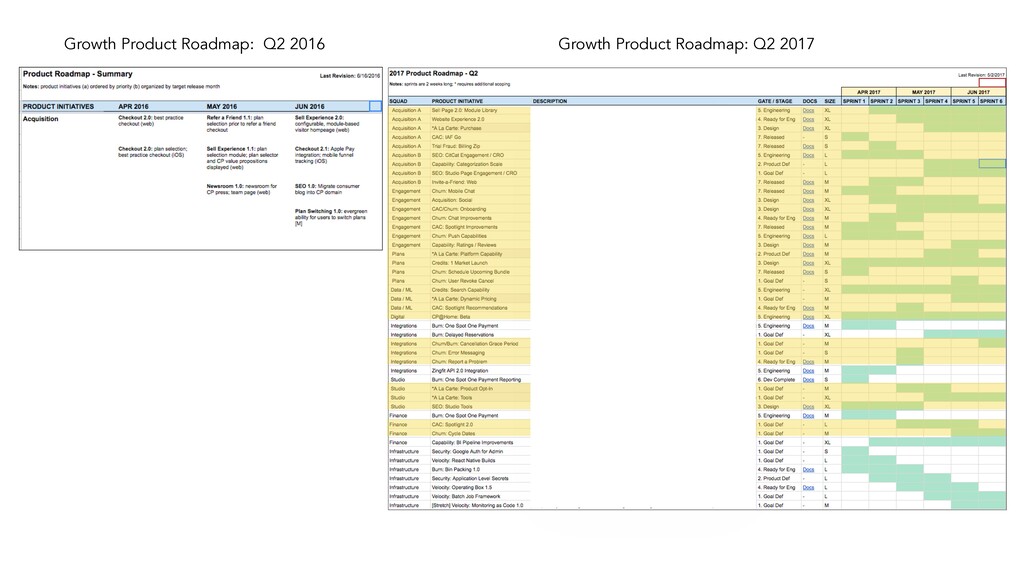
The best companies in the world that are growing super fast know how to work deeply in partnership with their product and engineering teams, and they know how to work around them and with them. And this is the case for evergreen testing. This was the growth roadmap when I first started in Q2 of twenty sixteen.
It was like, Hey, let's say, in three months, we're going to get, whatever, nine things. All of them, as you can see, are actually pretty referral based. What I started to do was, about a month out from every We did quarterly roadmaps. We are now moving to six months, but we did quarterly then.
About a month out, I took about twenty percent of my Bandwidth teams, so creative and copy and usually email, and I would start to test. I'd start to experiment to make business cases for the next product ask I wanted to make. So that when it came to the roadmap time, because here's the problem, product's doing their roadmap on quarterly, and you're doing yours on quarterly.
So, when it gets to the point on that ninety day mark where you're trying to think about the next quarter, they say, what do you want us to build? And we're like, we think we should build this. And they'll be like, what data do you have to show that we should build that?
And I'm like, I don't have the data because I just ended the same quarter you did. And they're like, alright. Well, let's just wait another quarter, and I just lost three months. So what I did is, I backed it up. So thirty days in, I start to experiment and test.
So when they ask for the data, I'm like, Here's what it could get us. Here's what it looks like in six months, twelve months. Here's how it ripples out around the revenue. The P and L increases. Here's the lift. And they're like, Awesome. Let's do this.
Let's get an extra engineer. Let's pull them over from engagement. Let's change that squad structure. Let's give it to growth. Growth knows what they're doing, and they made the business case. This is what the product roadmap looked like q two of this year.
Everything in yellow is growth. What I've been able to do is successfully stand up an experimentation engine that gets me resources, not just from acquisition. I ended up getting a growth squad, so now we have two growth squads. But I pulled from the engagement squad, the system squad, the plans and pricing squad, the internal data systems squad.
Everyone and anyone is working on something to do with growth because I'm making a good business case with numbers that shows how it's going to improve the business. You have to get here. You have to get here. This is the way it works. Right? Because they deserve it.
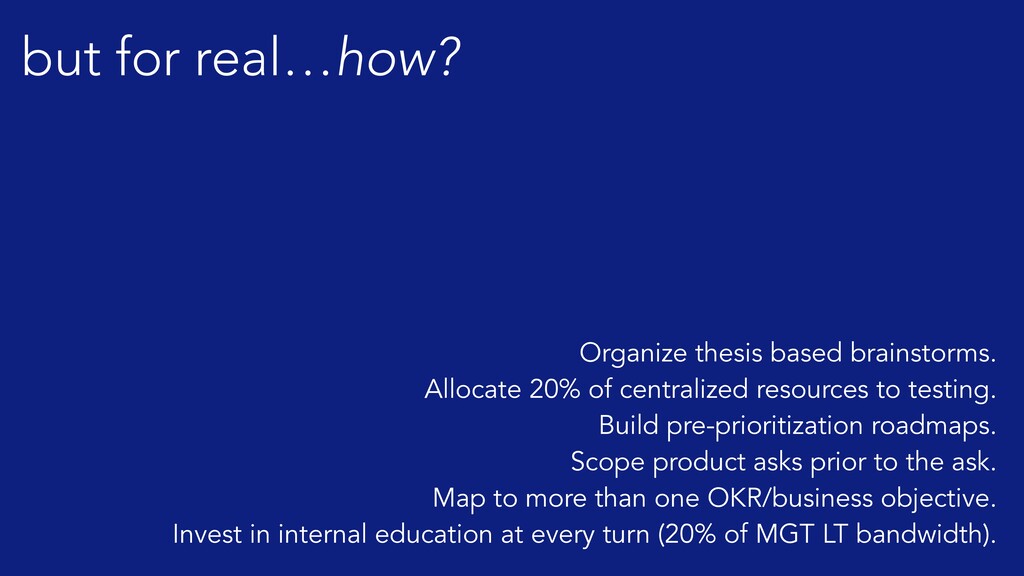
Our product and engineering leads, they deserve the right business case. So how do you do this? You organize thesis based brainstorms. You allocate twenty percent of your centralized resources. Copy creative, usually. Pre prioritization roadmaps, you have to scope those product asks out. This is what I mean by a T shaped marketer.
Do you know how to do wireframes? Do you know how to do briefs? Do you know how to get into a DOSI gate zero? These things are super important. You need to be able to map to more than one OKR to make the business case.
It can't be linear, and it certainly can't be in just the marketing camp. How are you going to serve the business back to those two or three levers that matter most? And then you need to invest in the internal education. About twenty percent of my marketing team's leadership is about expected to go out and talk to the peers and stakeholders and other teams and educate them on what we think will grow the business, so that they come up with the ideas with us.
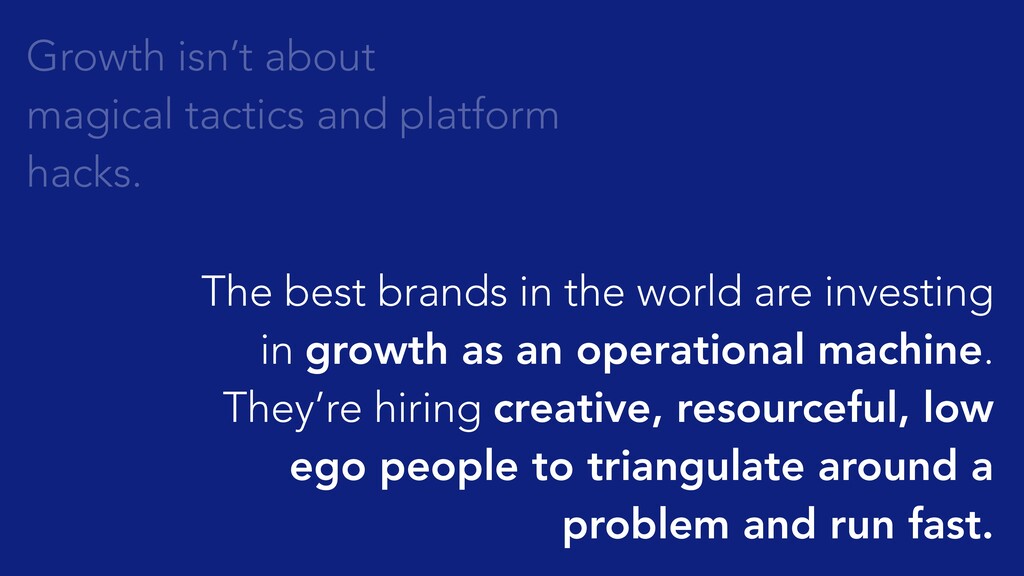
Alright. So to wrap this up, I'm a little over on time. I don't think, and I don't think any of us believe anymore that growth is just about tactics. It just isn't. It's more complicated than that. It's about an operational machine. It's about investing in growth as an operational machine, hiring creative, low ego, resourceful people, and then triangulating around that problem super fast.
You have to shift a lot of the fundamental things that got us where we are today to become a high growth company. But if you find the right leadership, if you find the right culture, and if you find the right product, this can all be done, and you will win your market because your competitors won't take the time.
That makes it fun because we get to do great marketing, and we get to win, which is a great thing. Hopefully, this was helpful. I did put up my Twitter handle. If you do have questions, please let me know.