
The marketing landscape has become more complex, yet often resources remaining the same. In such an environment, many companies have turned to automation or algorithms and call it "AI". Yet smart companies are taking this a step further, leveraging full power of machine learning, computer vision and natural language processing to better connect with users and drive marketing KPIs. In this session, we translate the buzz around AI marketing to real world knowledge and actionable insights.
← All talks 







Grow Marketing Turing Fest 2018
Marketing in an AI World
Auto-generated transcript - may contain errors. Tap a timestamp to jump the video.
I want to take you all back to high school, the place which shaped our approach to life. I remember when the girls discovered lipstick because they would leave these little lip prints on the mirror, which seems innocent enough unless you're the janitor because lipstick is actually rather difficult to clean off a mirror.
So he did the logical thing. He kindly asked the girls to stop with a note, but anybody knew who knows high school girls knows that that didn't work very well. Traditional tactics weren't going to solve this problem. He needed a whole new approach.
So he decided to show the girls how he cleaned the lipstick off the mirror with water from the toilet bowl. And from that day on, there was no more lip prints on the mirror. He stopped being reactive to his problems, and he started being proactive.
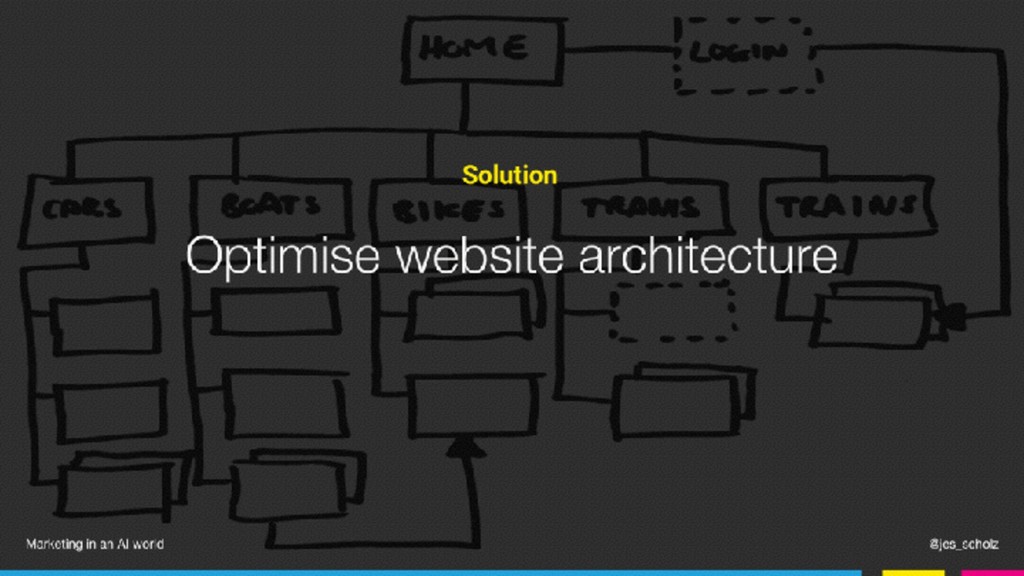
Well, I had a problem. My competitor was ranking higher than me in the Google organic search results. So I reacted by optimizing my website architecture, and they reacted by beginning to bid on the keywords in Google AdWords. And, of course, I could have reacted again and gotten into a bidding war, but that would not have solved my problem.
And I didn't have the resources. Taking this channel by channel approach didn't allow me to scale, didn't allow me to strategically think about all of my other channels. It only allowed me to be reactive. And this was a huge problem because I didn't have much time.
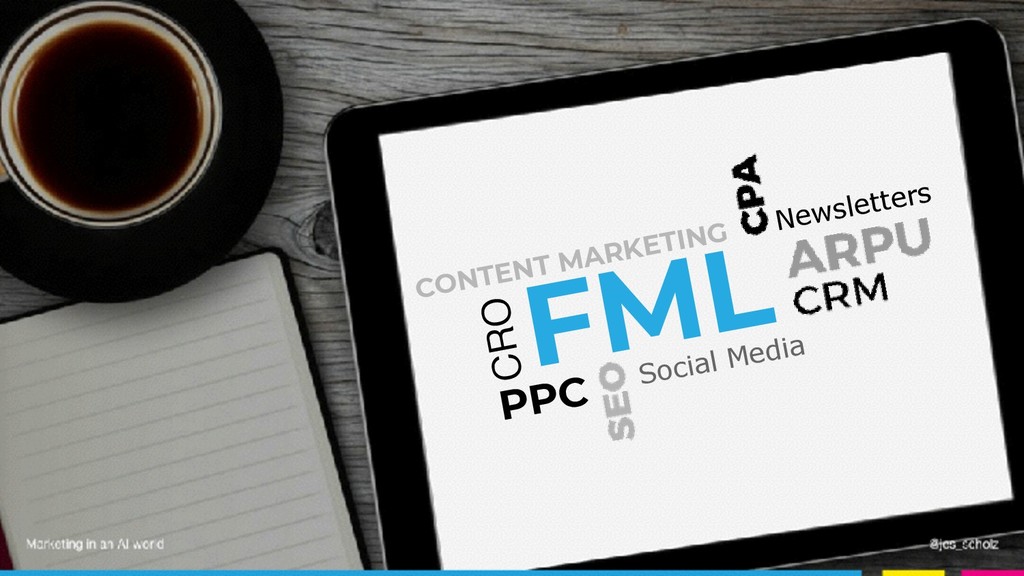
I was already dealing with social media, email marketing, and email newsletters. What about SEO and then PPC and CRM? On top of this, I was calculating and doing CRO, focusing on CPA, focusing on ARPU. So really, when my day ended, there was just three more letters I needed, f m l.
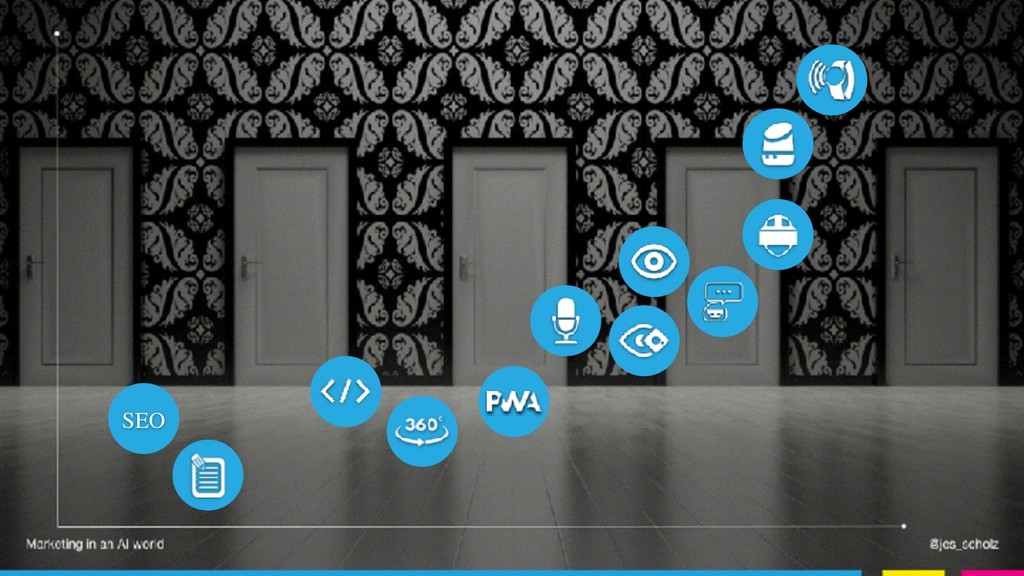
And this was only getting worse. I used to have to deal with SEO, but now I have to deal with structured markup to prepare for voice search, and we've got visual search. And now I've got smart speakers and digital or personal assistants. Content marketing is no longer just text.
We're dealing with three sixty videos and photos and VR and AR. And I have to think about progressive web apps, and what about chatbots, and what about integrating with wearables and the whole rest of the Internet of Things. And on top of this, all my organizational structures are changing.
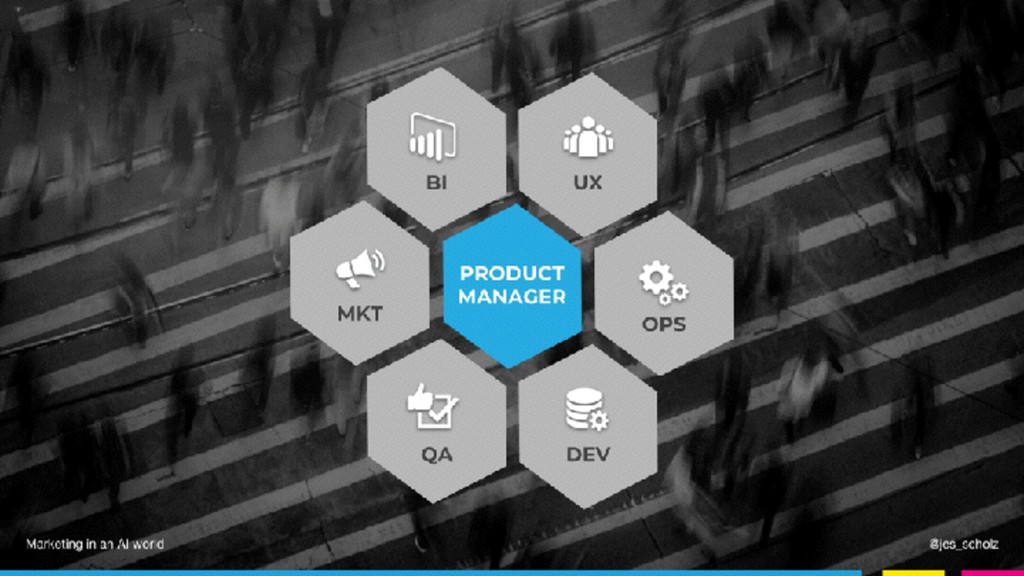
My resources are being moved into cross functional teams where I have less control, I have less budget. And then on top of this, well, my customer expectations are changing because they're wanting these micro moment personalized communications, but they don't want to accept my GDPR cookie tracking yet expect me to be able to identify them across their five different devices.
Well, ****. Some unicorn content hack is not going to get me out of this one. The sad and scary truth is that our current approach to marketing lacks scale. And rather than continue to be reactive to this problem, I say we be proactive.
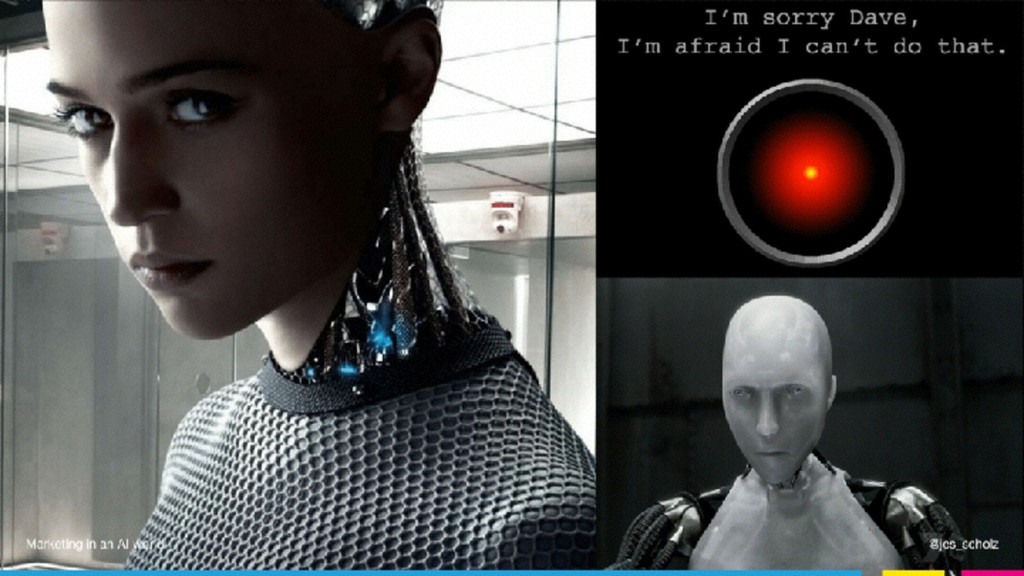
I say that we build a marketer who can work twenty four hours a day, who's fantastic at processing data, and who will relentlessly pursue the KPIs that I task them with. It is time to build ourselves artificially intelligent marketers. And now I know as soon as I said artificial intelligence, half of you started to think about killer robots from movies, and the other half started to think about disastrous examples of AI going wrong in the media.
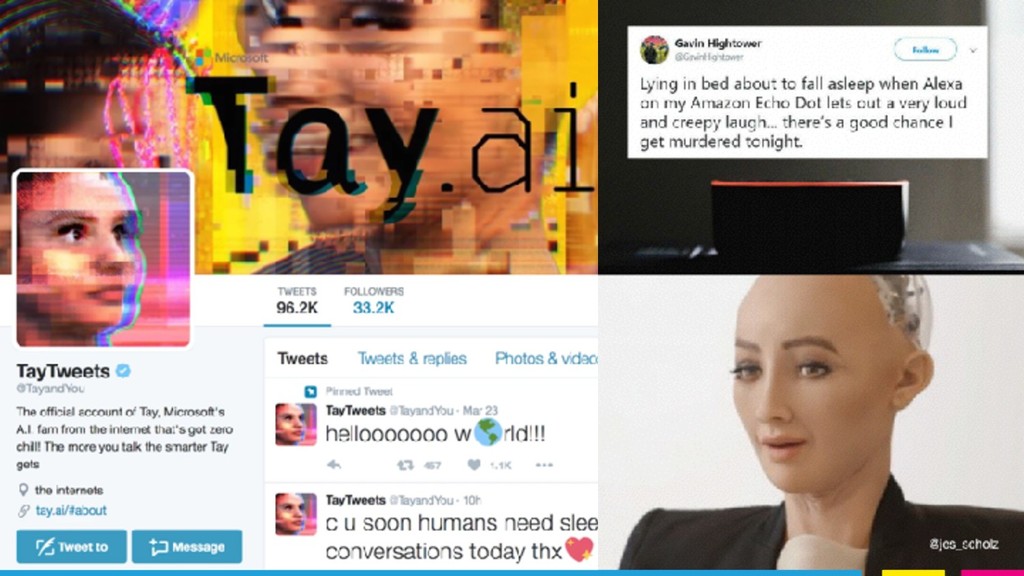
So Microsoft Tay turned into an anti feminist Nazi. We've got Sofia, who's sitting there adding the destruction of all humanity to her to do list. And Amazon Alexa is waking us up by creepily laughing, or it's sharing private conversations with random contacts. Or my personal favorite, it's listing porn title movies to toddlers.
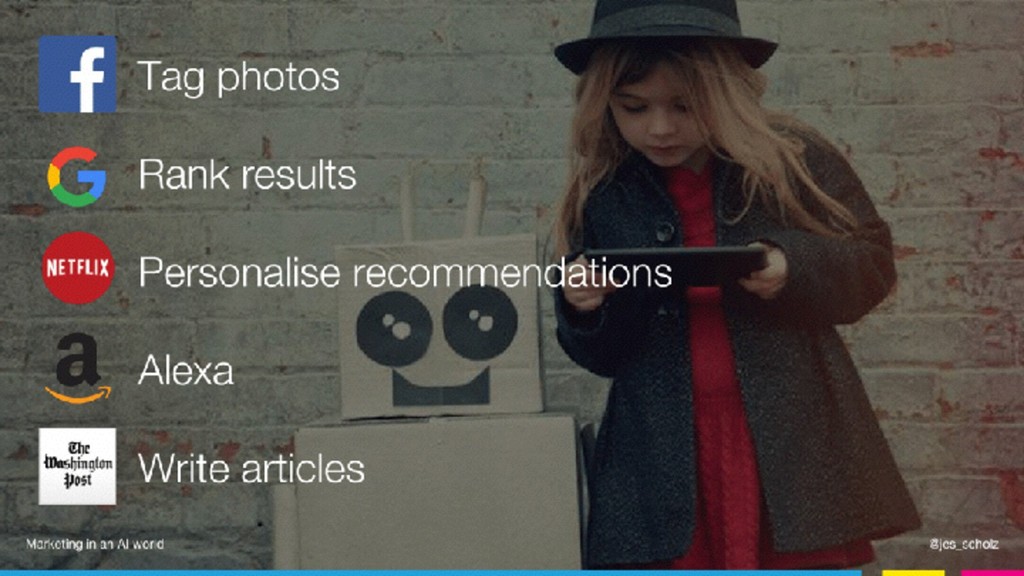
Movies and the media have contributed to the hype and misinformation that surrounds AI. They're making it an enigma surrounded by buzzwords, but the irony is they're actually obfuscating how important it is to our day to day lives. Because artificial intelligence is tagging photos on Facebook.
Deep learning is applied by Google to rank search results. Netflix is personalizing recommendations with machine learning. Amazon is using natural language processing in Alexa, and the Washington Post is using natural language generation to create data driven articles. So AI is already making your life machine assisted, and your marketing can be as well.
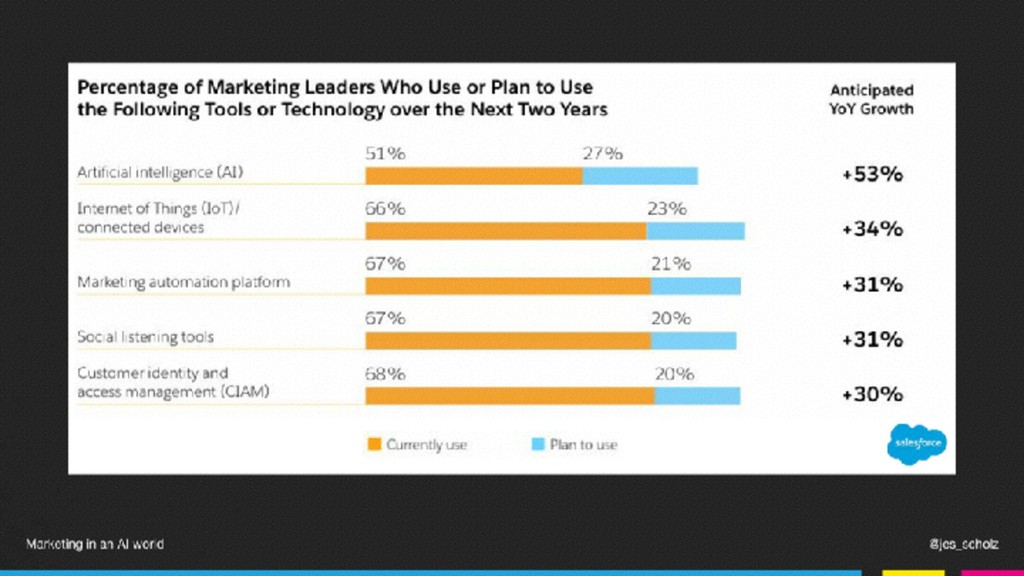
Fifty one percent of marketers are already using AI technology, an additional twenty seven percent plan to do so by two thousand and nineteen. This represents the fastest growing year on year growth of any marketing technology. But how are we going to leverage this?
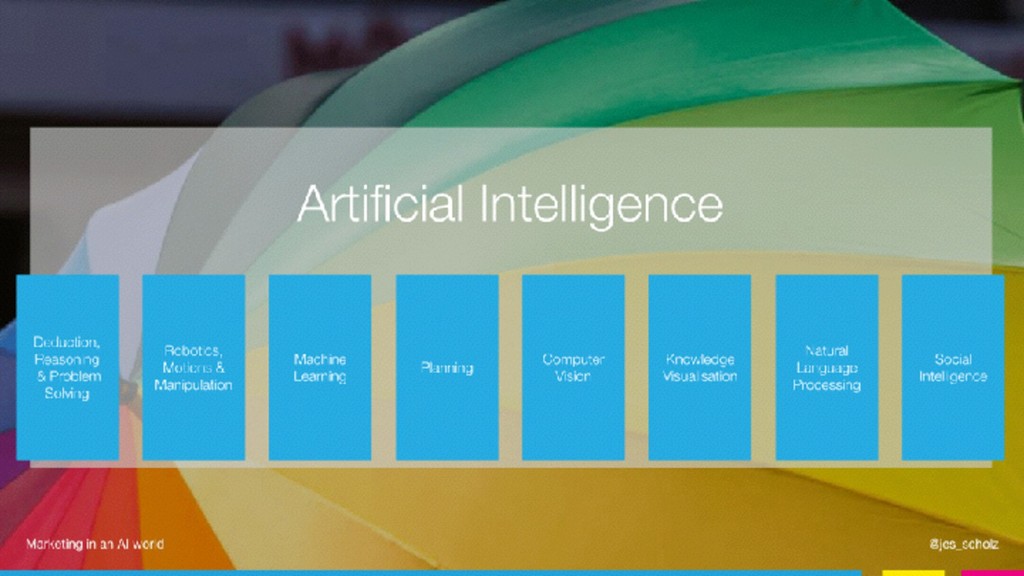
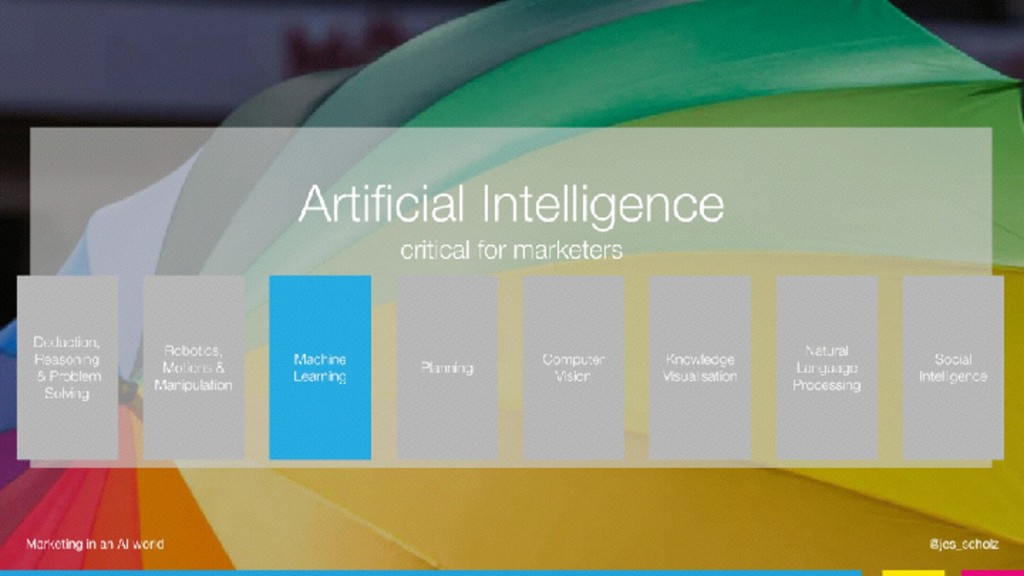
Because if I ask ten experts to define AI, I'm going to get ten different answers. And most of them are gonna be something like the science of making machines smart, which is actually rather uninsightful. What we need to understand is that artificial intelligence is an umbrella term used to describe a suite of related but unique technologies which simulate human capabilities.
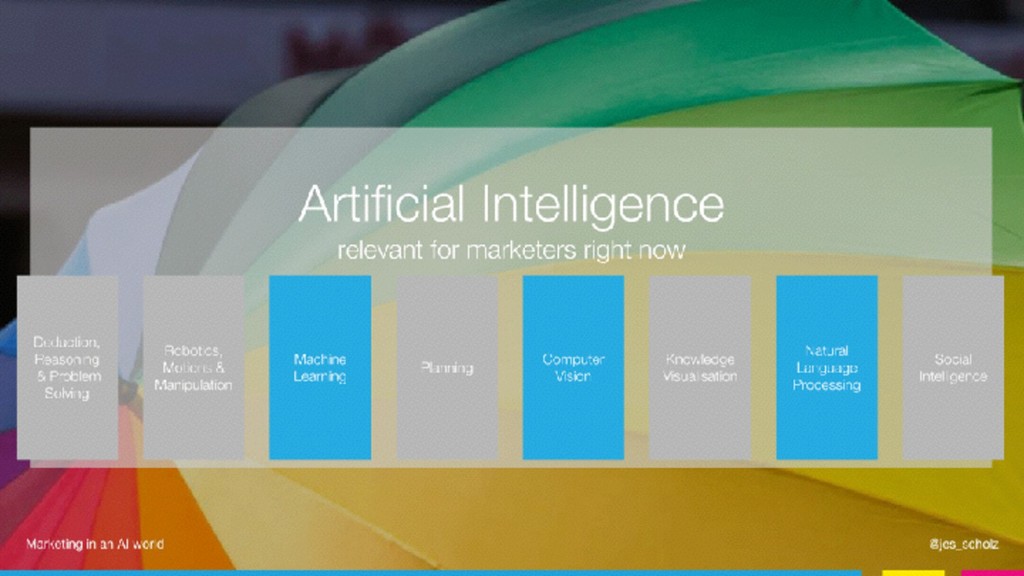
This is not some magical technology which is gonna solve all of our problems. It is a subset of unique and individual functionality, which are at very different stages of development. And there's three of these subsets of AI which are critical to marketers right now.
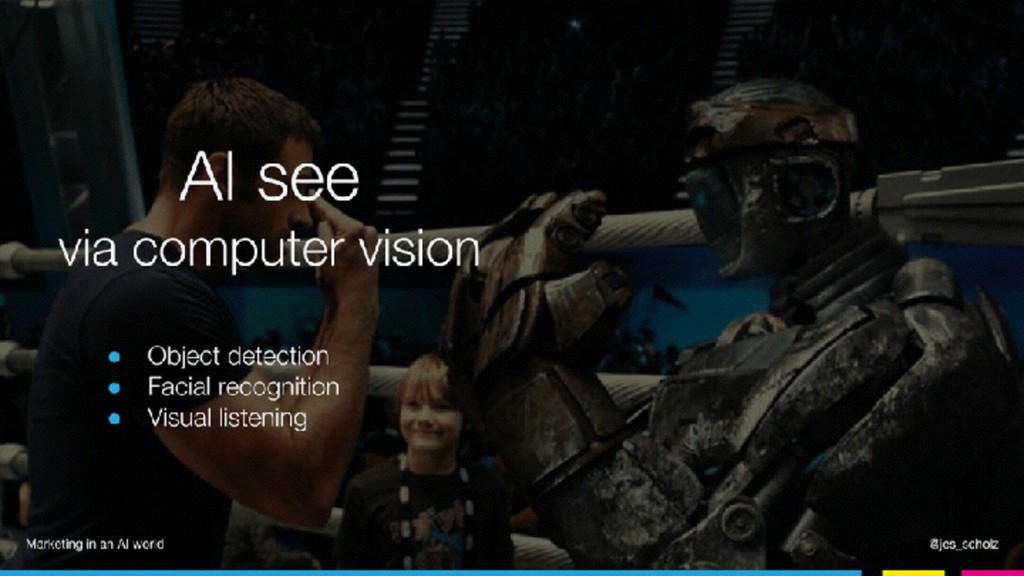
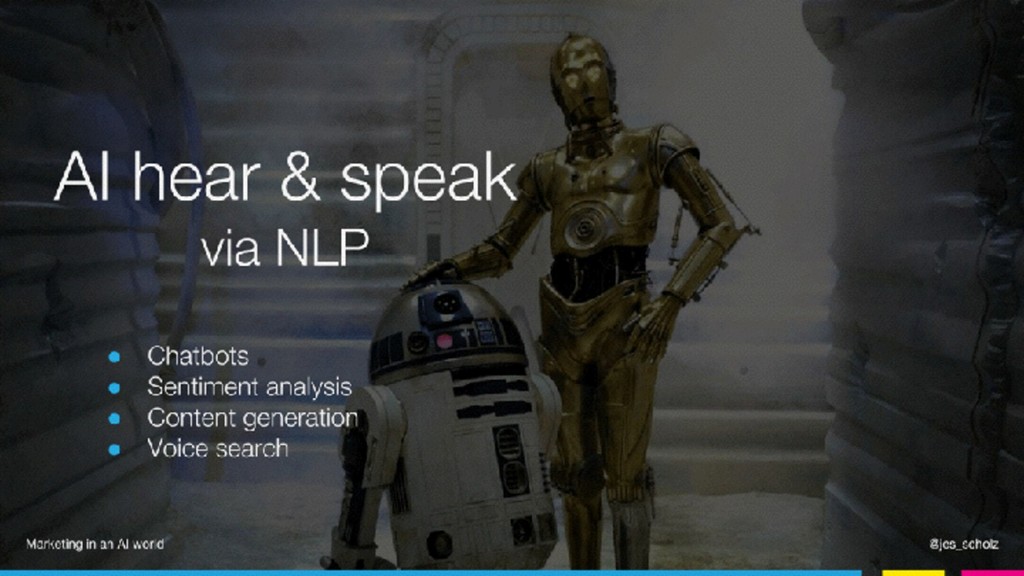
That's machine learning, computer vision, and natural language processing. AIC with computer vision. We use this for object detection or facial recognition or visual listening. AIs hear and speak with natural language processing, giving us things like chatbots, sentiment analysis, content generation, and voice search.
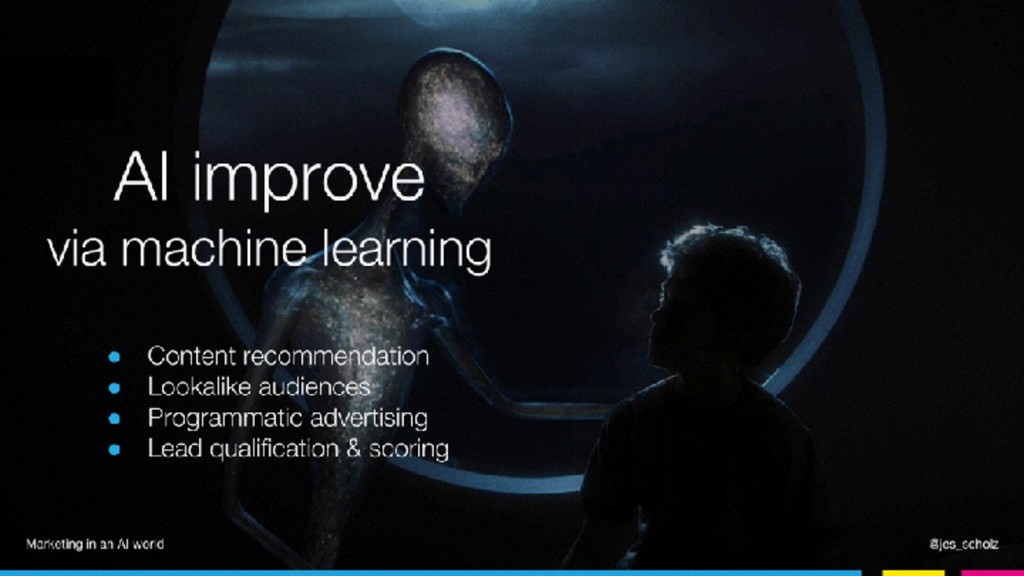
But most importantly, AIs learn with data how to continuously improve performance on a specific task over time without being explicitly programmed how to do so. This is called machine learning, and it gives us content recommendations, look alike audiences, programmatic advertising, and lead scoring.
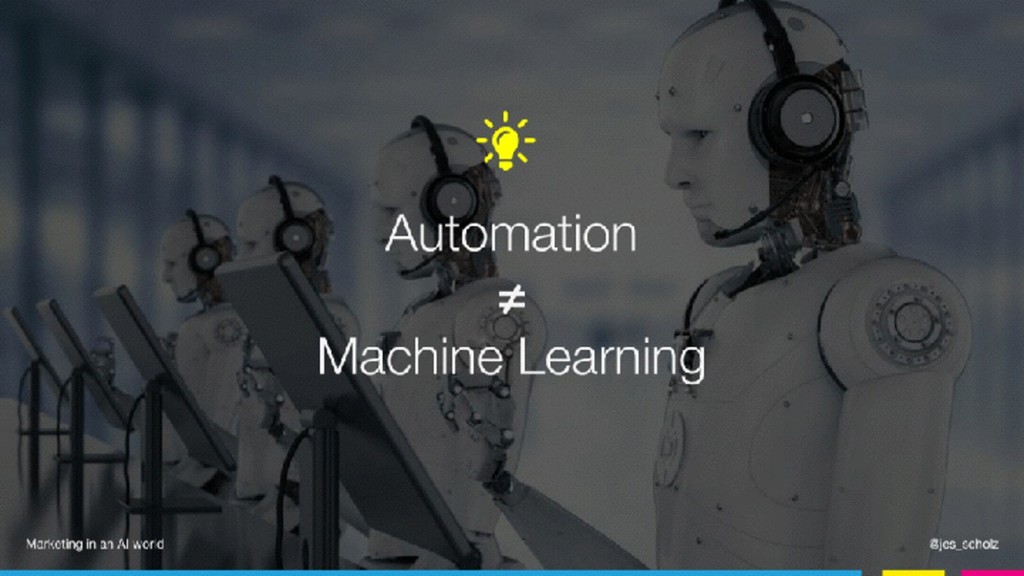
And it's this ability to self learn which makes it the most critical subset of AI for marketers. And maybe you're all sitting there thinking, well, I've got this covered because I have marketing automation software. And I'm sorry to be the one to break it to you, but automation is not machine learning.
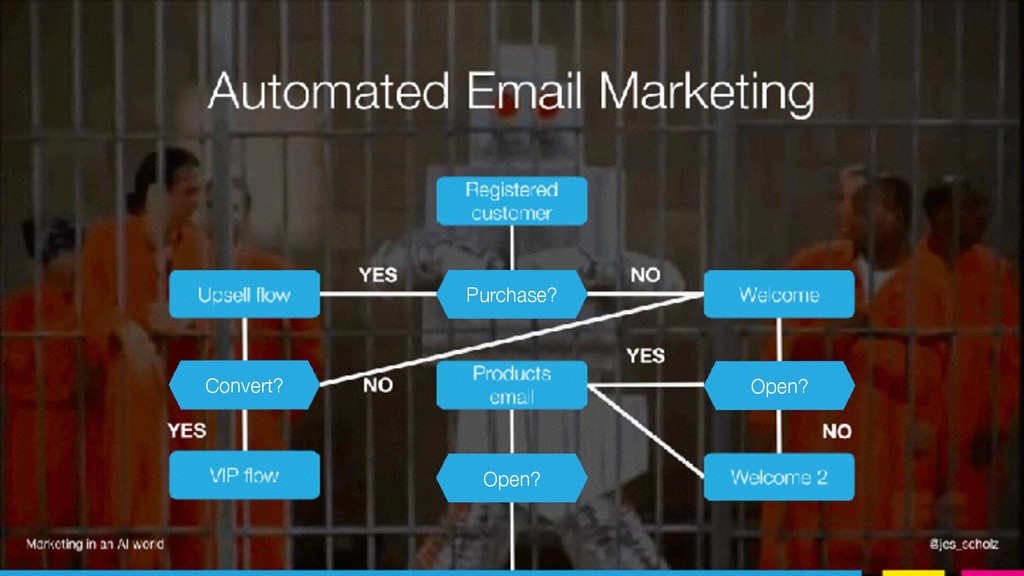
Automation is a set of instructions that tells a machine what to do in order to produce a certain outcome. Machine learning is different. With automation, we still have to design and input complicated flows like this. Now on the plus side for automation, a human could not effectively execute this flow.
On the downside for the human, we cannot effectively execute this flow. It is too complicated, yet we are tasked with optimizing it, but the guy who designed it has already left the company. I have no idea how this thing is working, and nobody in the organization wants to touch it because it was so darn difficult to put in place in the first place because it's complex and bloated and unnecessary because we can use machine learning.
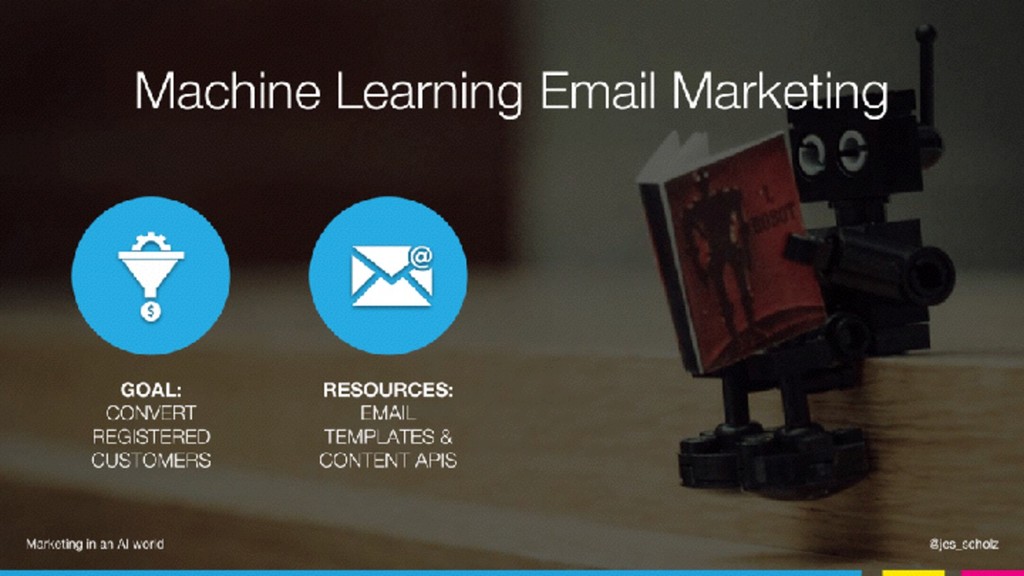
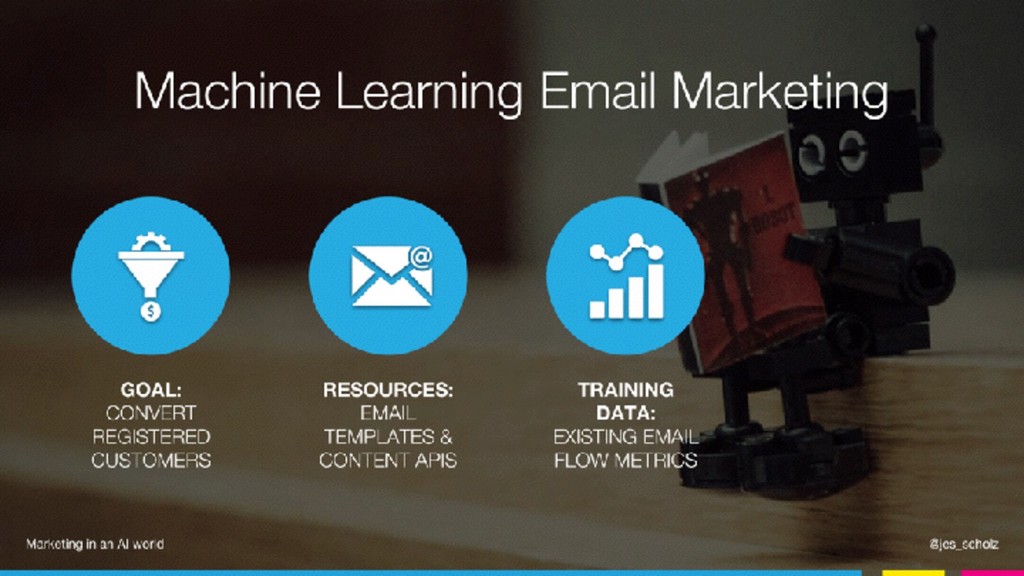
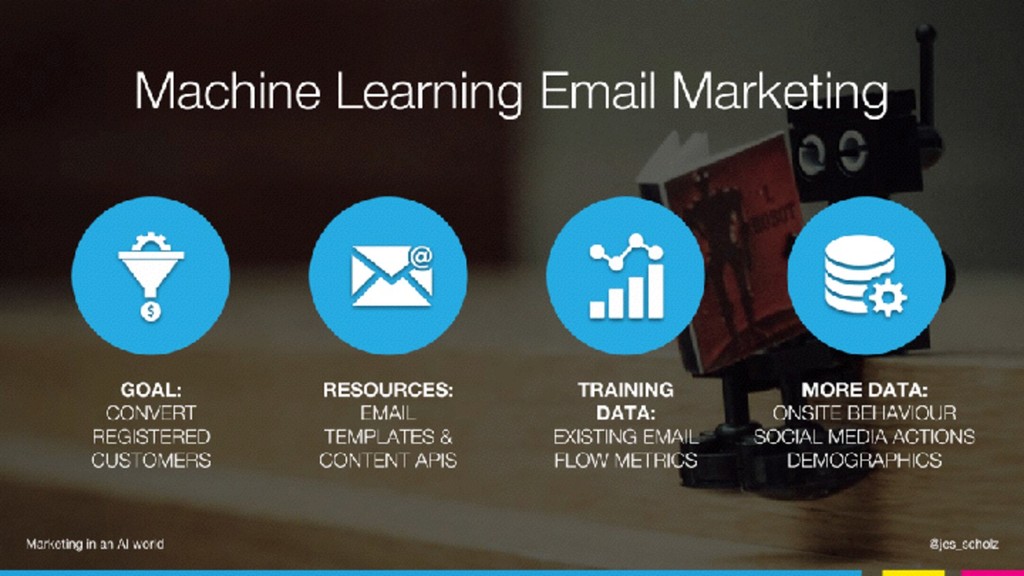
And with machine learning, it will improve from experience so it learns what to do to produce a certain outcome. I don't need that flow. I need to tell my machine, I want you to convert more subscribers via email. Here are the resources that you need, email templates and content APIs, in order to achieve this.
I'm also going to give you the data that you need from our existing flows, our existing emails, so you have a springboard to start from. And I'm gonna give you even more data. I'm going to tell you about the on-site behavior, the social media actions, the user profile, and the machine has this special ability to be able to find patterns in all of this data that a human cannot and optimize the flows and personalize the flows based on those patterns.
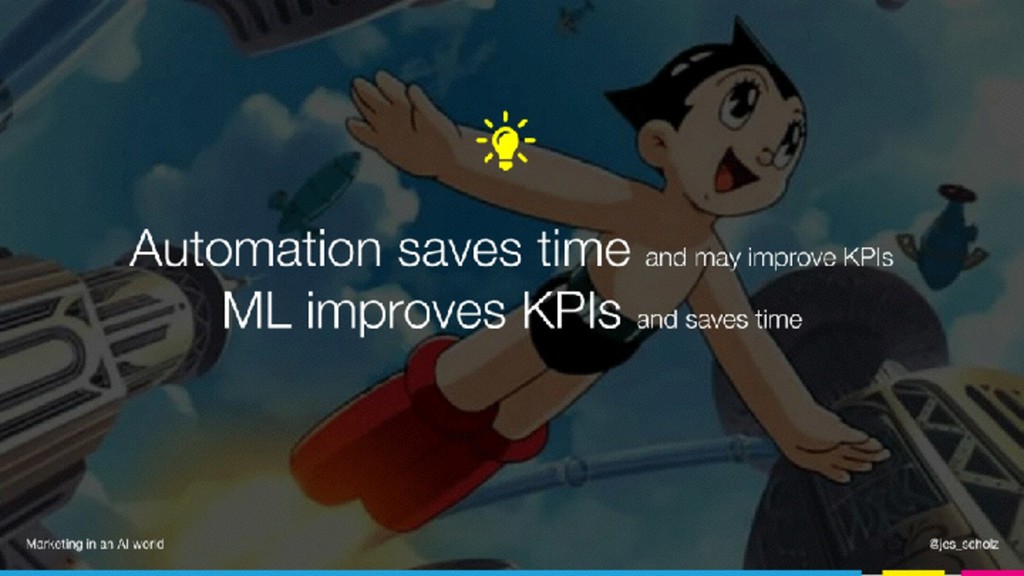
So here's the key. Automation may save you time, but it won't necessarily improve your KPIs. Machine learning, on the other hand, will not only save you time, but it will continuously and relentlessly pursue the optimization of those KPIs. So I ask all of you, why are we not using this in our marketing?
Well, there's five main challenges which we need to overcome, and I'm gonna give you five solutions in order to do that. And the first big challenge is we just don't know where to begin. Well, where to start is by understanding AI. Because right now, artificial intelligence, not that intelligent.
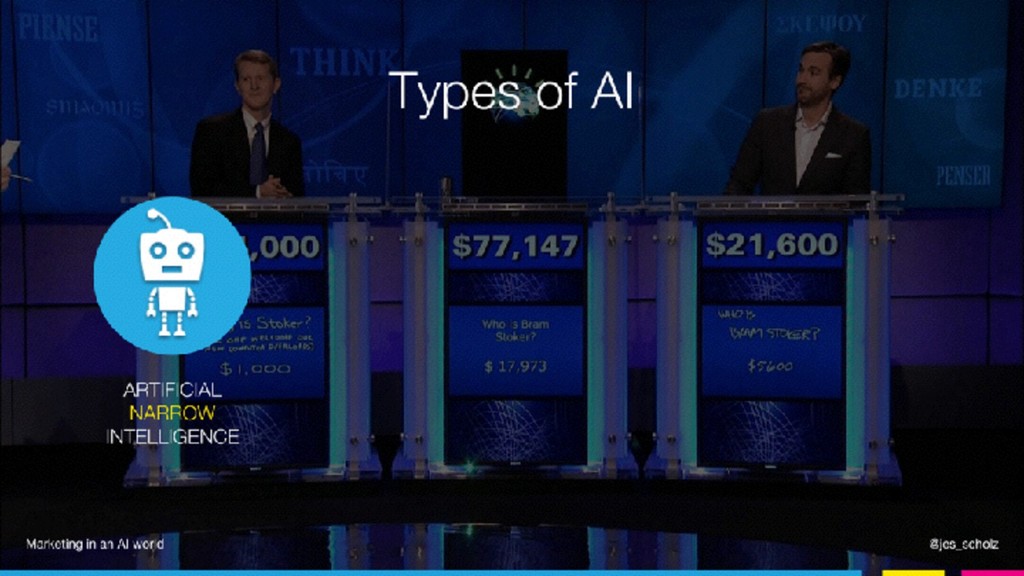
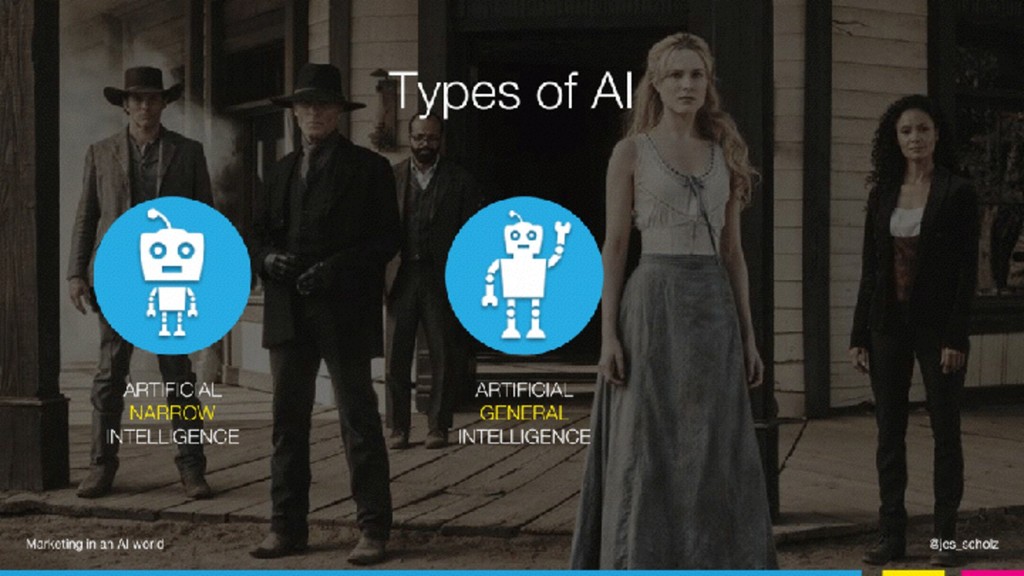
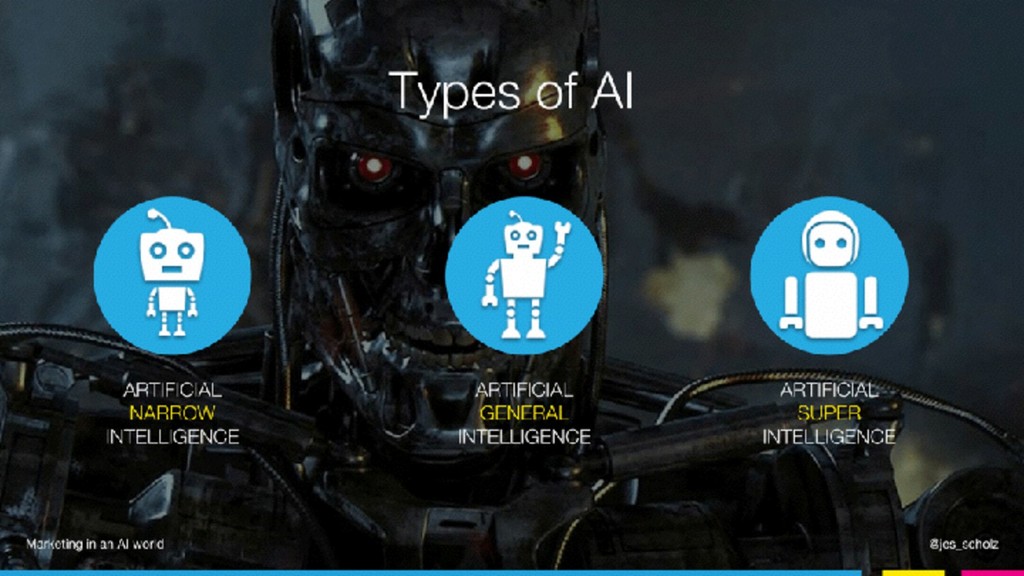
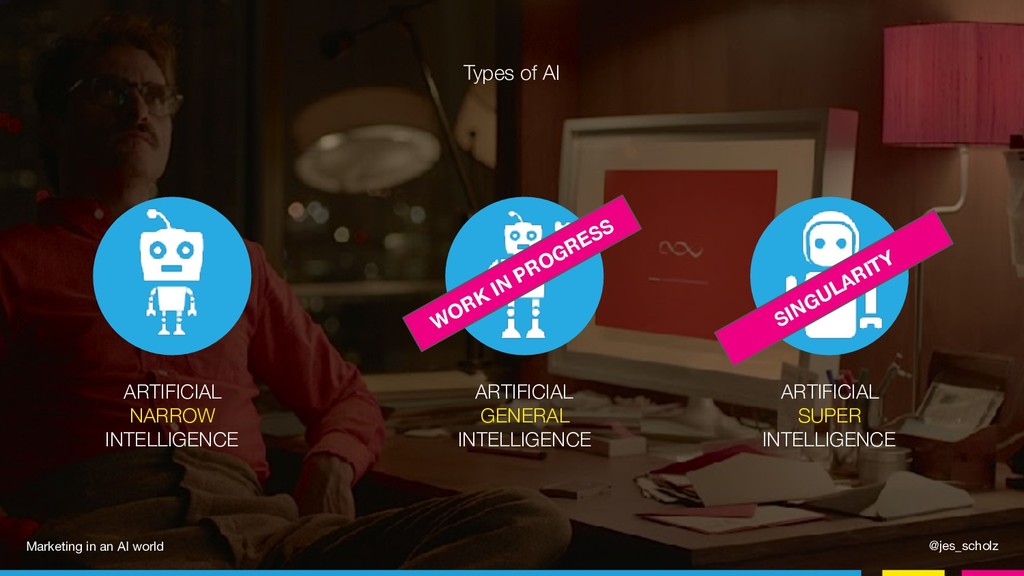
We're at the level of artificial narrow intelligence, which means it specializes in one single task. That's something like IBM's Watson learning how to play Jeopardy. The next level is artificial general intelligence, where it mimics human intellect, like the characters in Westworld. And the final level is artificial superintelligence, where the machine is smarter than human intellect in every conceivable way, like Skynet.
Now every single AI application that exists in this world today is artificial narrow intelligence. It requires human interaction to deliver on the value promised. And when we understand this, we can better understand what we mean when I talk about rolling out AI applications.
When you get up in the morning, you go to work, you open your task list, do you have a card which says do marketing? Of course not. Marketing is a general term. What we want to do is execute specific tactics. We want to optimize evergreen content or post on social media.
Well, in that same way, you will not have a task or a project which is do AI. AI is a general term. You need to identify the subset of AI that you want to use in a specific use case to apply that to.
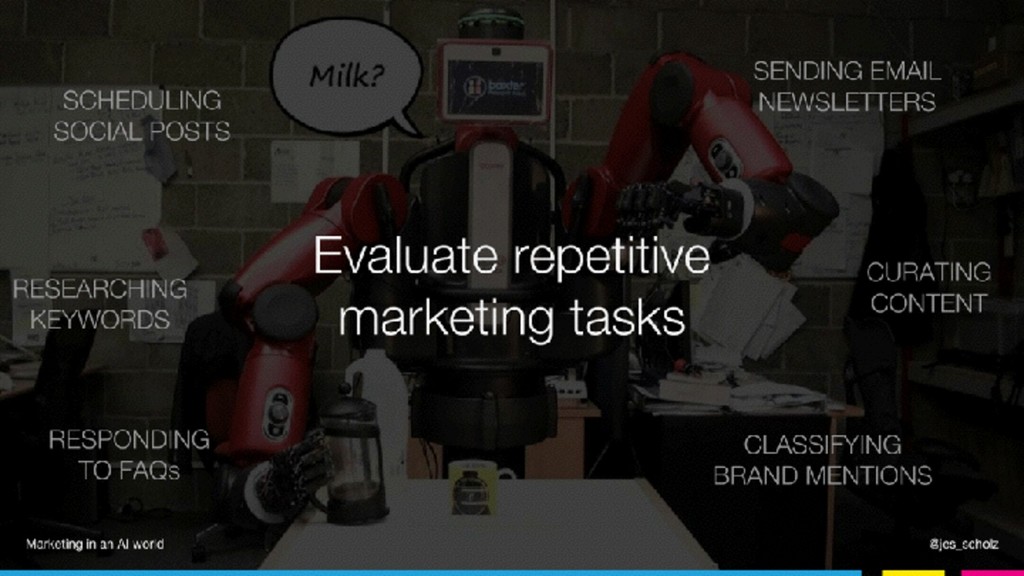
So are you gonna apply natural language processing to a chatbot? Are you going to apply image recognition and put it into your app to power visual search? Now how do you choose the right use case to start with? A lot of marketers I've seen said, well, I'm gonna evaluate the repetitive manual marketing tasks that I do now, and I'm going to get a machine to do that for me.
This is understandable. It's simple. It's safe. It's gonna result in marketing automation. Don't do it. You're going to spend time to save time, but not necessarily drive up your KPIs. But more importantly, you'll focus on a channel by channel approach, and this is going to limit your ability to scale your marketing tactics.
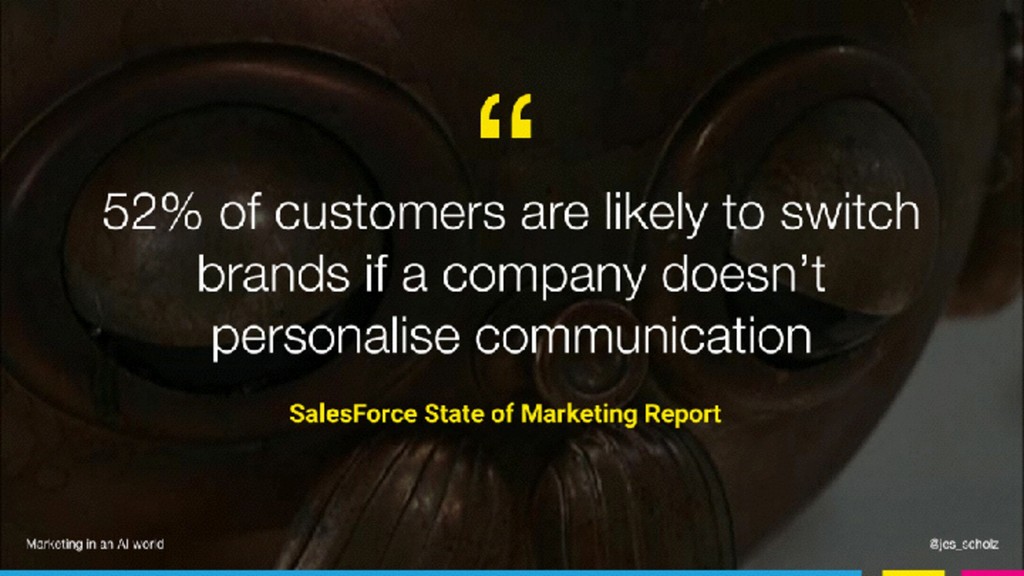
So rather than focusing on what are my challenges, start focusing on what are my customers' challenges. Deep dive into your KPIs, find their pain points, and address those challenges. And if you don't know where to start looking, my advice is to start by looking at personalization because fifty two percent of customers are likely to walk if the experience is not personalized.
So if you guys look to your right, and now look to your left, I don't care who's sitting next to you. Every single person in this room needs to have a personalized experience. And I wanna make sure we're very clear what I mean by personalization.
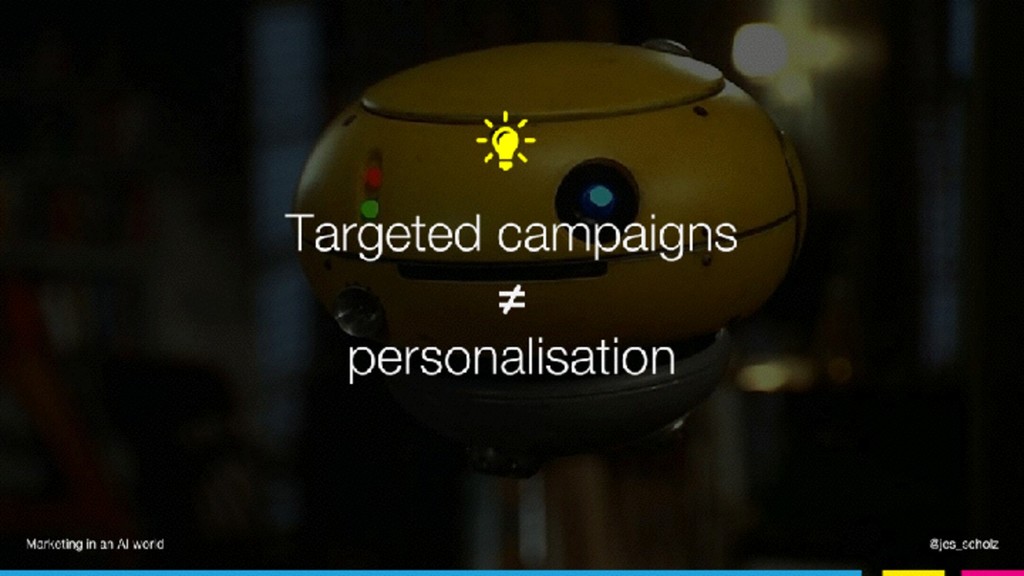
I am not talking about targeted campaigns. I am talking about one to one messages which take into account the contextual and historical relationship with that individual user. And this can be so powerful for deepening your customer relationships, but it is also rather complex.
And it's because of this complexity that we need to bring in machine learning to help us execute this strategy. And this is where we hit the next challenge. Because how are we going to program a machine learning algorithm? Well, the answer is we're not.
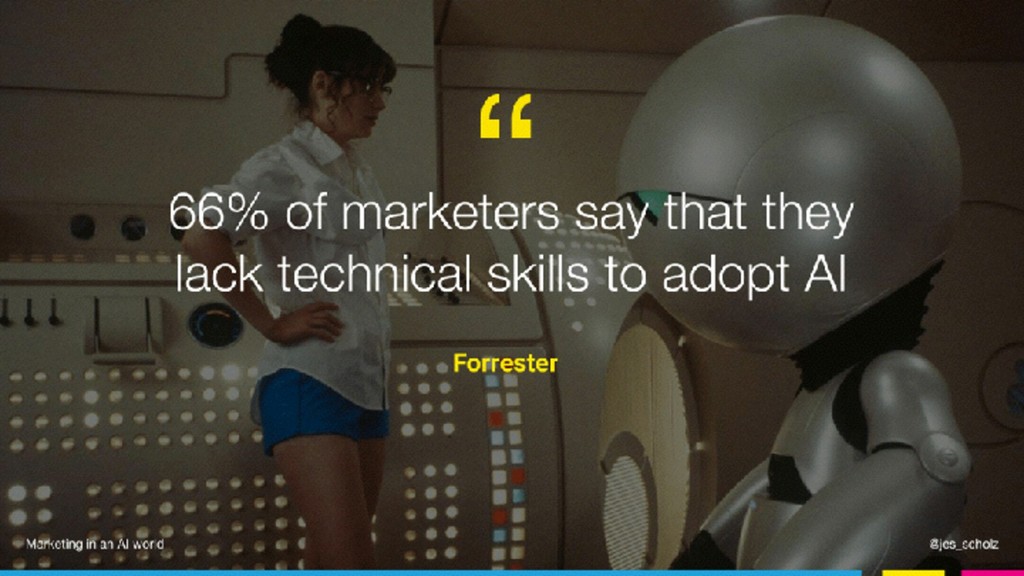
Because we are marketers. We are not data scientists. Sixty six percent of marketers say that they lack the technical skills in order to adopt AI, but you do not. You have all of the skill sets you need because there's a difference between machine learning research, which is building algorithms and is the prerogative of data scientists, and applied machine learning, which is utilizing those algorithms for specific business cases.
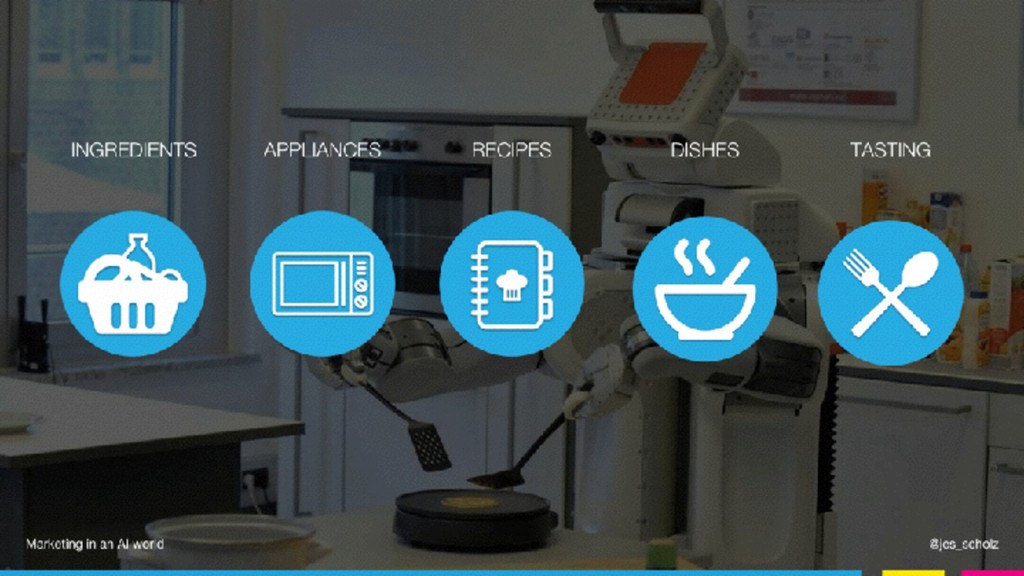
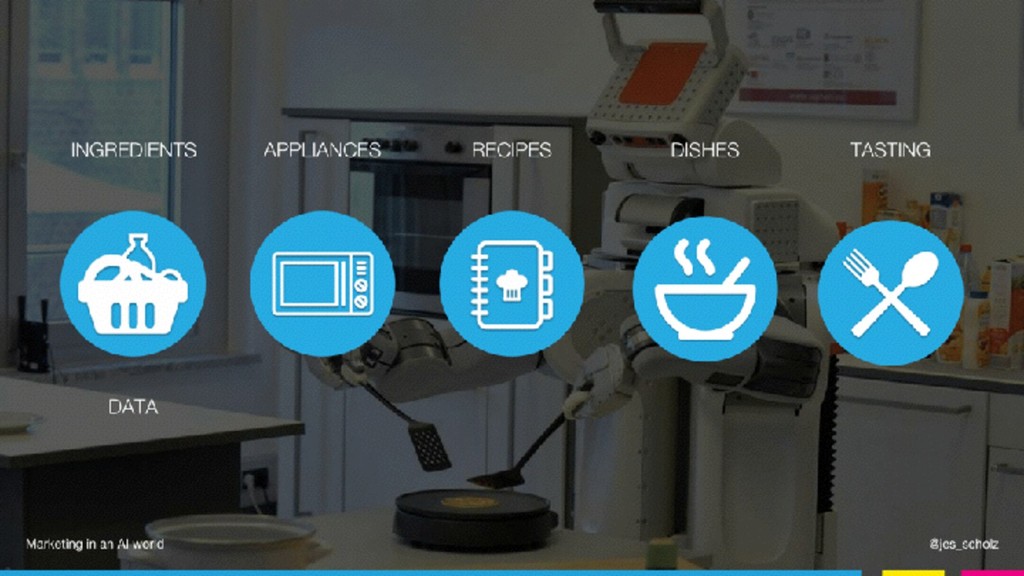
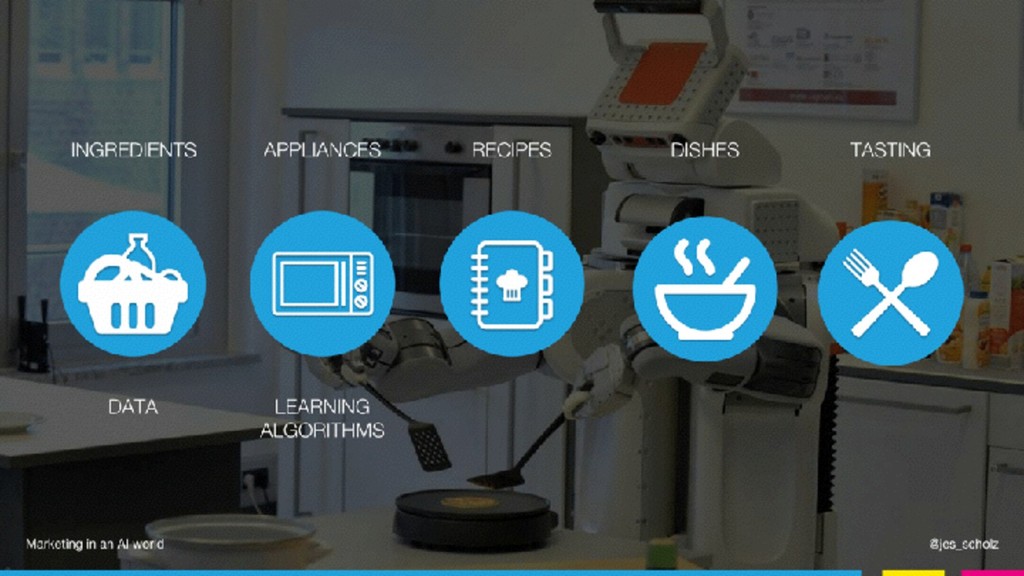
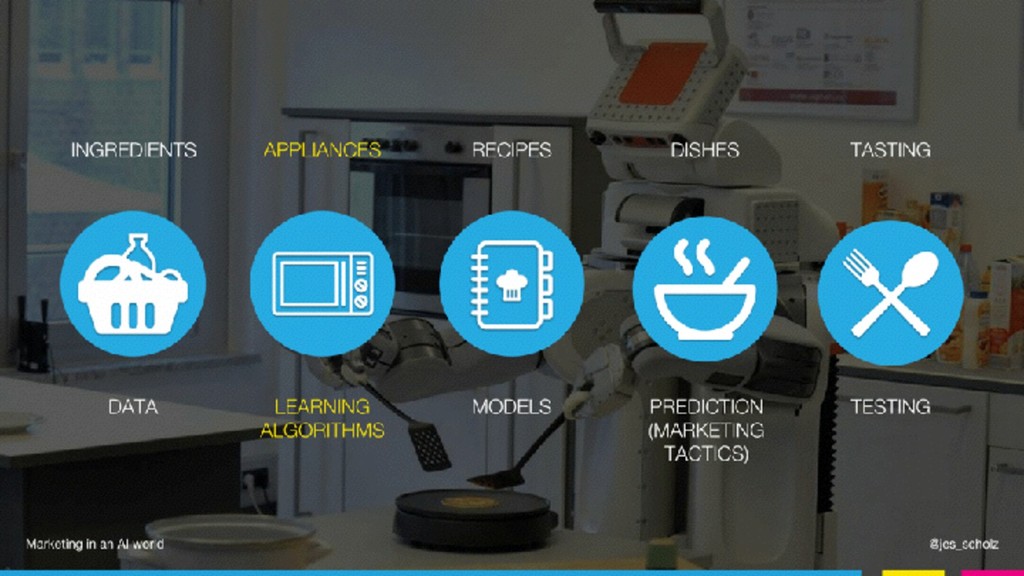
And this is what we want to do. Think about it this way. I have no idea about the science behind how a microwave works, but I can still use a microwave to help me to cook. I do not need data scientists in order to enact AI.
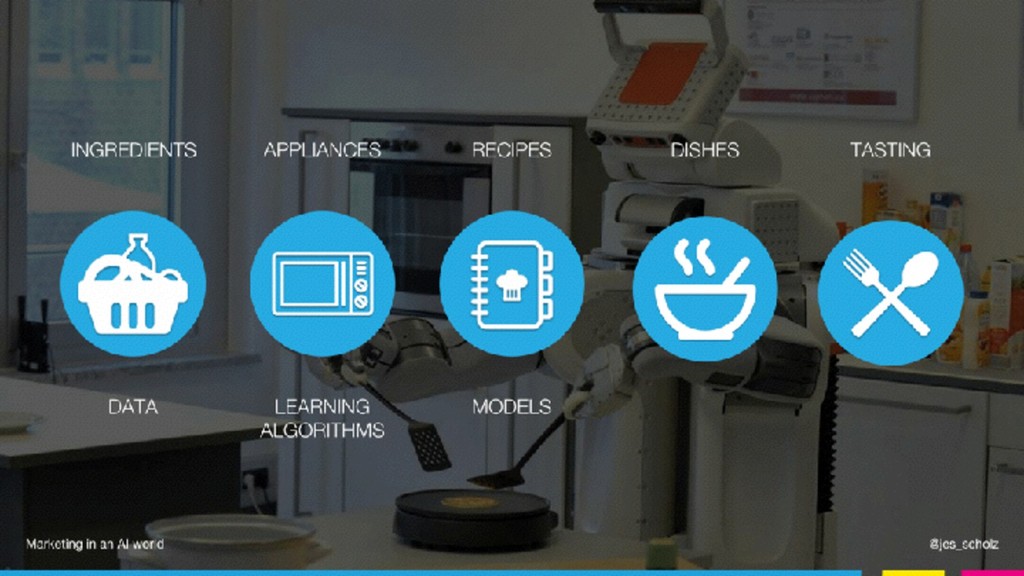
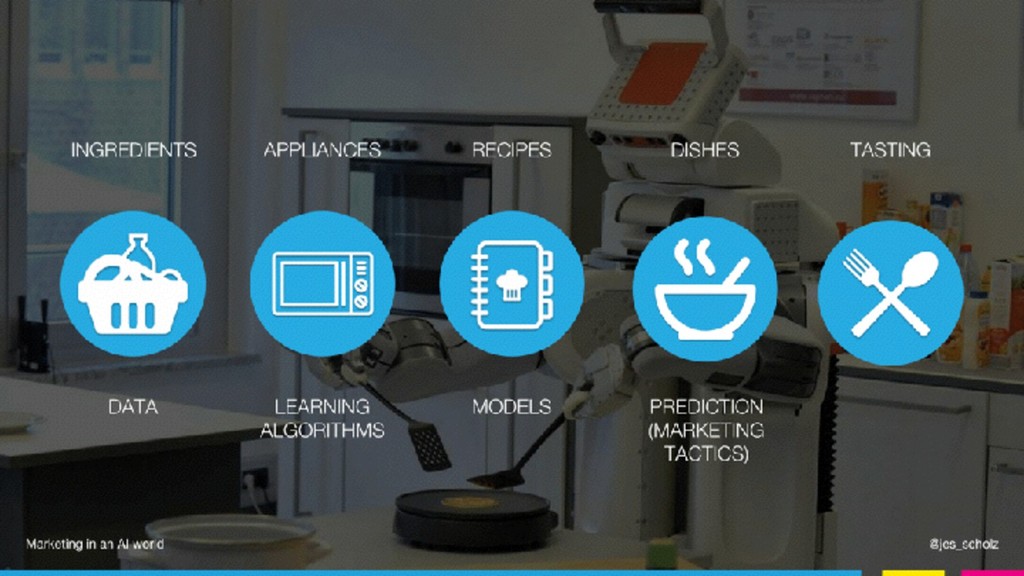
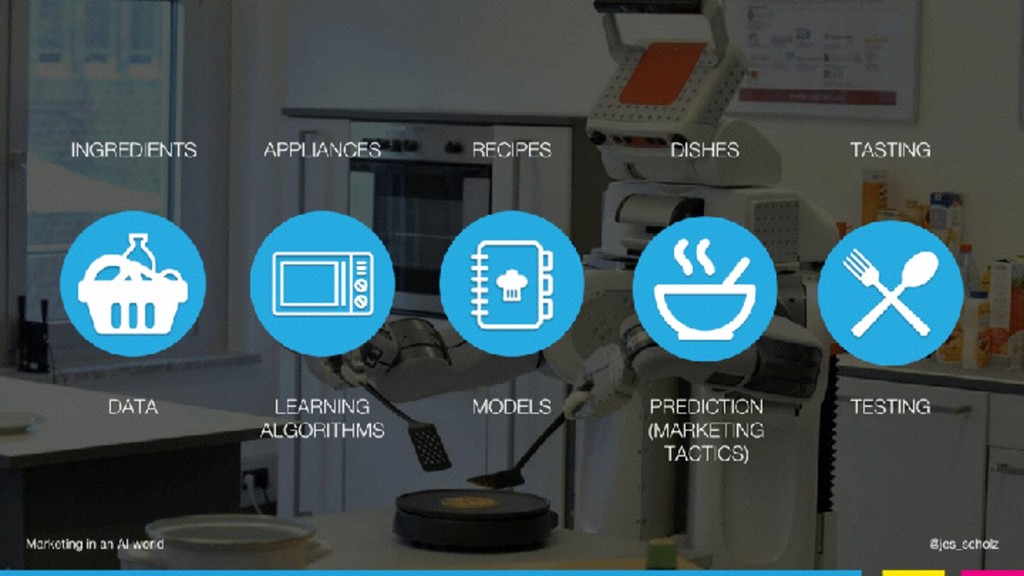
I can still choose the best data, the best ingredients. I feed this into my machine learning algorithm, which creates models and makes predictions, which enact marketing tactics, and I can assess the quality of all of this through testing. And if I'm not happy with how my dish tastes, well, then I modify the recipe, or I buy a new appliance, or I change the ingredients.
Learning more about the science behind how a microwave works will not help me to become a better chef. And learning more about the intricacies of data science will not help me become a better marketer. In order to learn how to cook, I just need to get started.
In order to apply AI, I just need to get started. Yet some marketers see themselves as master chefs. We can do everything by ourselves. But the reality is, as we saw before, channels are getting more numerous, and technology is getting more complex. Now I'm not saying you can't adopt AI alone.
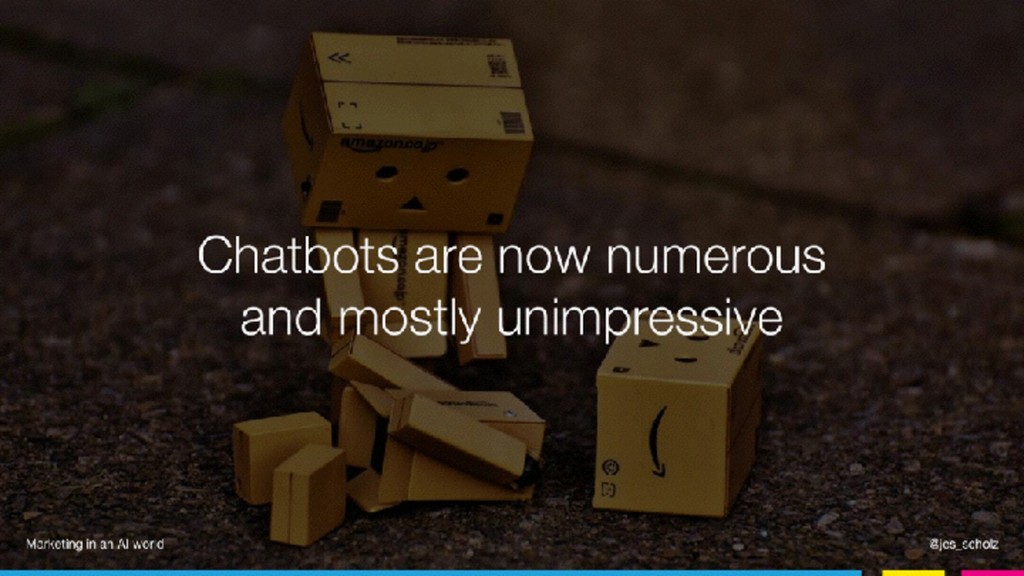
I'm saying that you'll have better results if you do this as part of a team. Let's take the example of chatbots. They are numerous in the world now, but for the most part, I think we can all agree they're rather unimpressive. Well, let's take a look at how the inner workings of a chatbot should function.
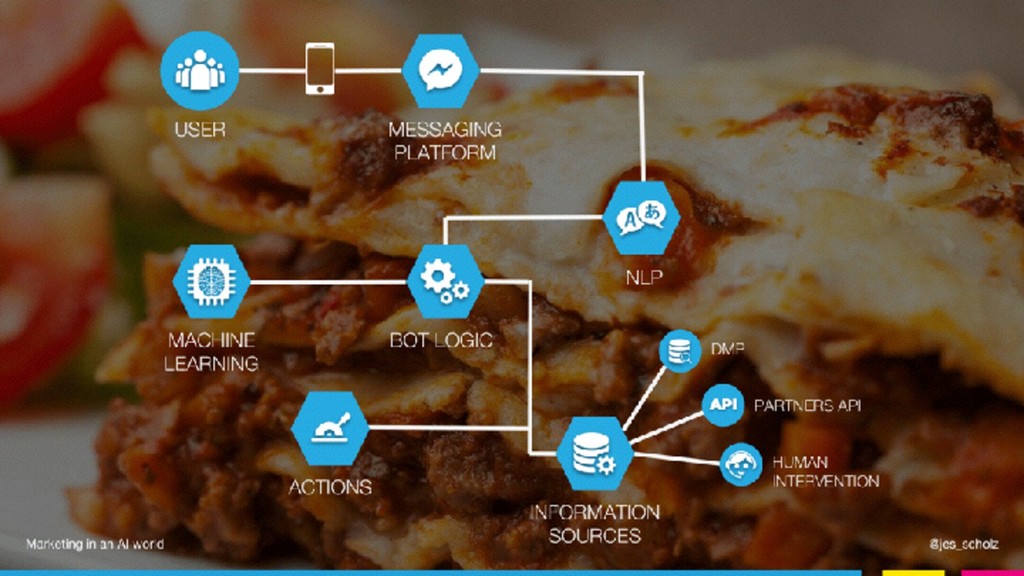
The user utilizes their device in order to message a platform, which is processed through natural language. The bot logic then decides, well, should I be triggering an action like quick reply buttons, Or should I be drawing on real time information sources like my DMP or a partner API?
Or should I be handing over this conversation to a human? This whole process is powered by machine learning. So the more messages come in, the better this bot can process similar requests over time. It's layered. It's complicated. It's like a lasagna. Now let's take a look at a bot created by marketing MasterChef.
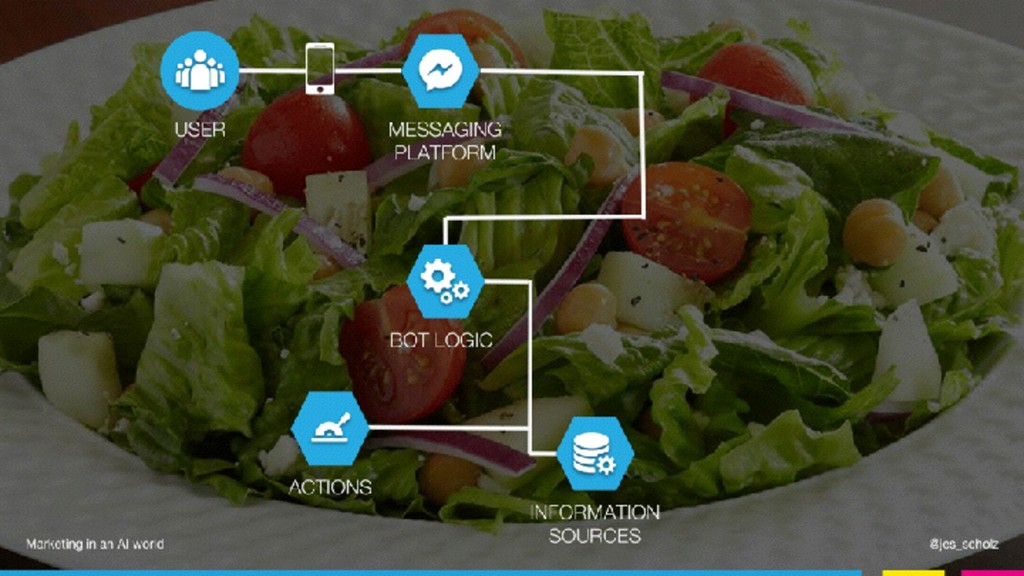
Here, the bot logic is primarily driven by a decision tree. It has minimum data sources. It is lacking in natural language processing, and it is lacking in machine learning. This is the gastronomic equivalent of a salad. Now don't get me wrong. These simple salad chatbots can still be valuable in very simple use cases, but essentially, you are cooking without any appliances.
And a salad can be a satisfactory meal every now and then, but I wouldn't want to have it for dinner every single evening. So if you're craving a lasagna, then I suggest you make friends with your development team and divide the work based on what each of you has as a strength.
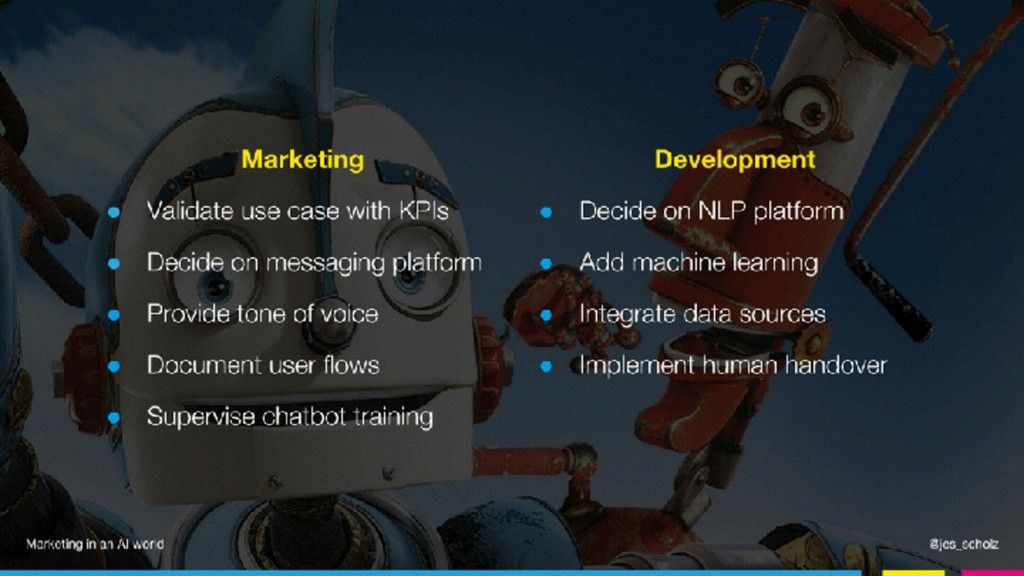
We marketers are fantastic at validating use cases with KPIs, at deciding on the right distribution platforms, at creating tone of voice and user flows, while our technical development teams are good at integrating technical development. So let them take care of that. But maybe you don't wanna get started on any of this because you're worried if I create this AI, it will take my job.
Because we fear that AI is going to cause the next industrial revolution, and this naturally causes a lot of resistance to AI. Well, I'm here to tell you that unless you plan to retire from marketing in the next five years, AI will significantly impact your job, but you will not be replaced by an evil marketing robot.
Your job will change from executing repetitive tasks yourself to training an AI how to do it for you, giving you the time to focus on creativity and strategy. But what does teaching and AI actually mean? Because I know this sounds very technical and a little bit scary.
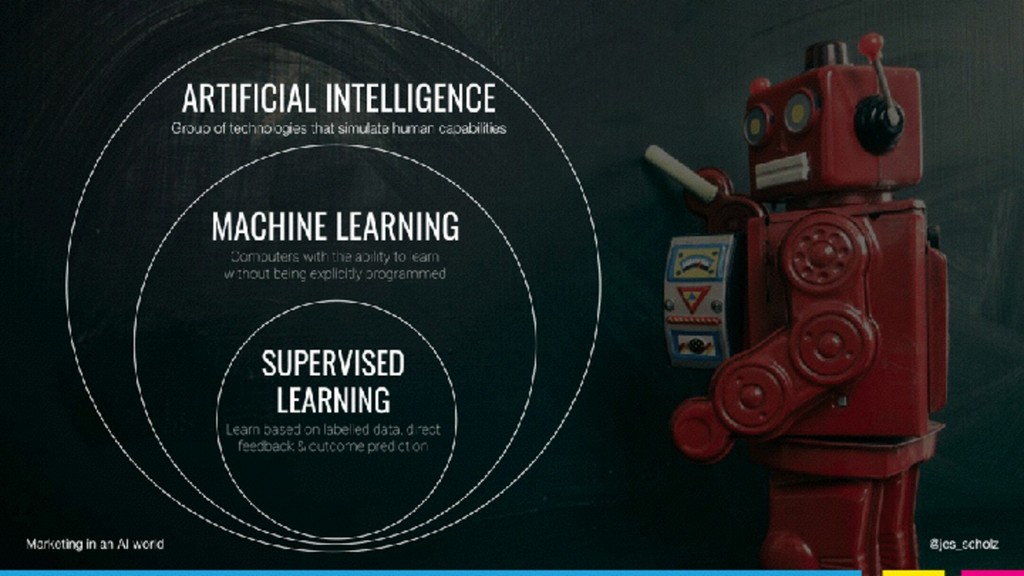
Well, let's get our bearings. We have artificial intelligence, and within that, the subset of machine learning, and there's many different ways of teaching that machine. But the most common for us marketers is supervised learning. Let's say I have one million customer reviews. No human could effectively classify all of those reviews by sentiment.
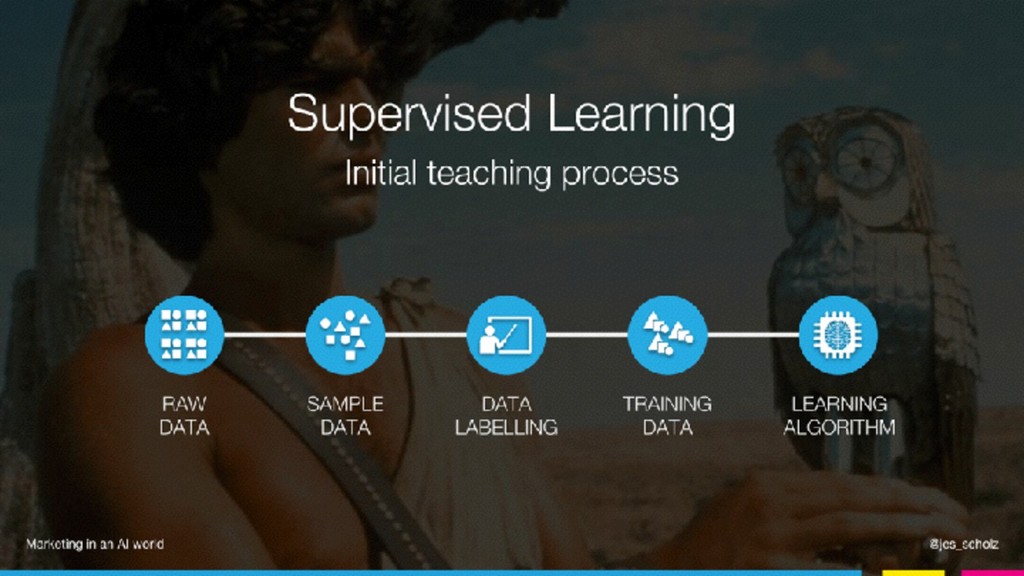
Say I want it divided into three categories, positive, neutral, and negative. So to achieve this, I'm gonna use machine learning. I'm gonna take a sample of those one million reviews, and I'm going to manually label them. I'm gonna classify those. And that labeled data is my training data.
I'm gonna feed that into my machine learning algorithm. So now it's being taught about sentiment, and it's got lots of examples of what is positive, neutral, and negative sentiment. With that initial training, now I can take my raw data and feed it into that algorithm.
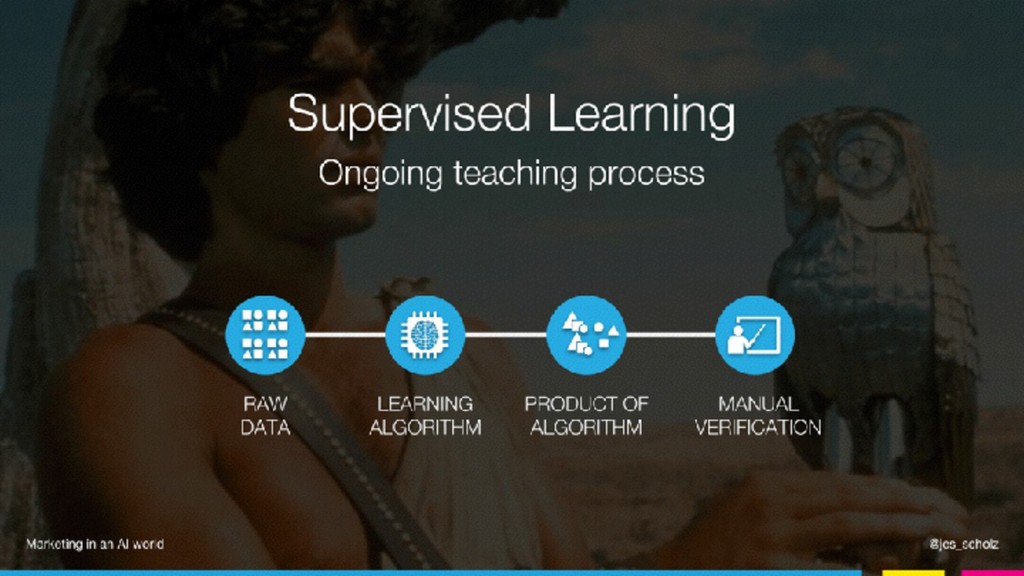
And it's going to produce certain outcomes based on its learning, and I'm going to manually verify some of those outcomes. And a lot of the time, you'll find that if you've done the initial teaching well, your machine learning algorithm will already be able to successfully classify a lot of those reviews.
And for the ones that cannot classify on an ongoing basis, you are going to correct those reviews. And the more errors you find and correct, the more the machine learns and the better its success rate of classifying those other future reviews. And you already do this.
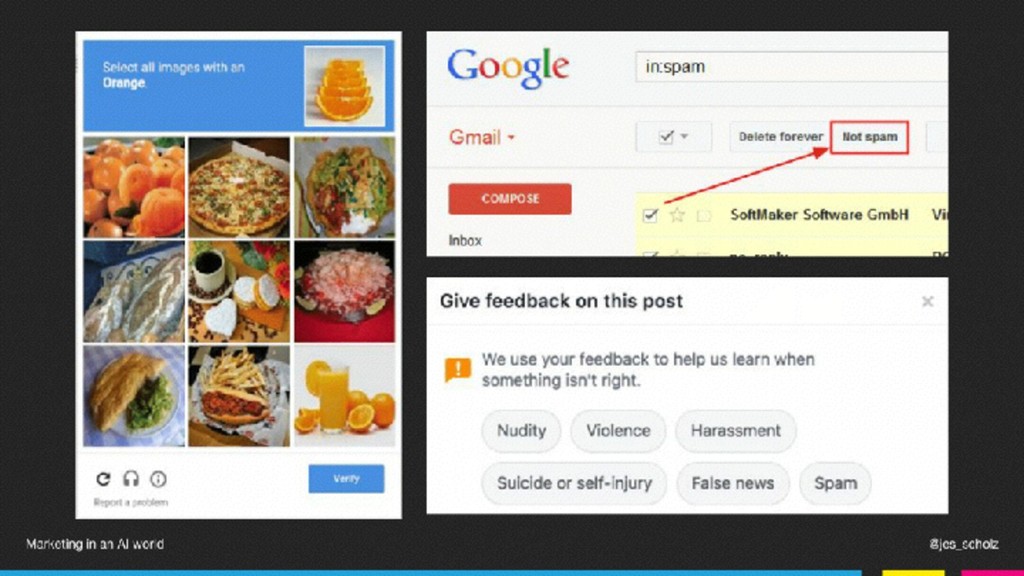
You just don't know you were doing it. Every single time you filled in a visual capture or marked something as spam or reported face news on Facebook, you have been teaching their machine learning algorithms. So let's just apply this to our own technology because any good AI marketing tool will provide you a simple interface for you to be able to train your machine.
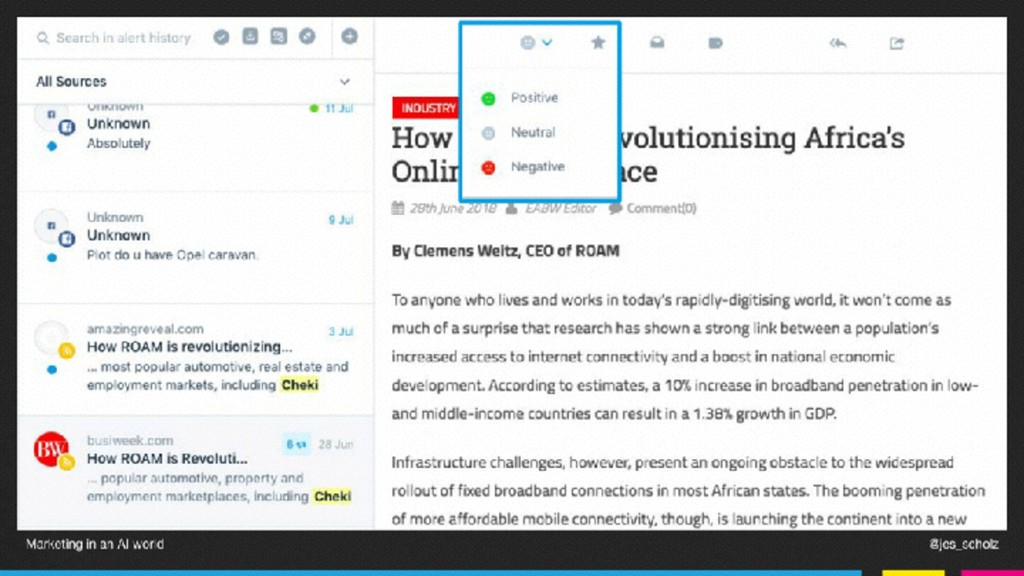
This can be something like a drop down where you can see how the machine has classified that review, and you are going to either agree agree with it and leave it alone, or you're going to manually reclassify that, thus training the machine. Sometimes it's not gonna be so simple.
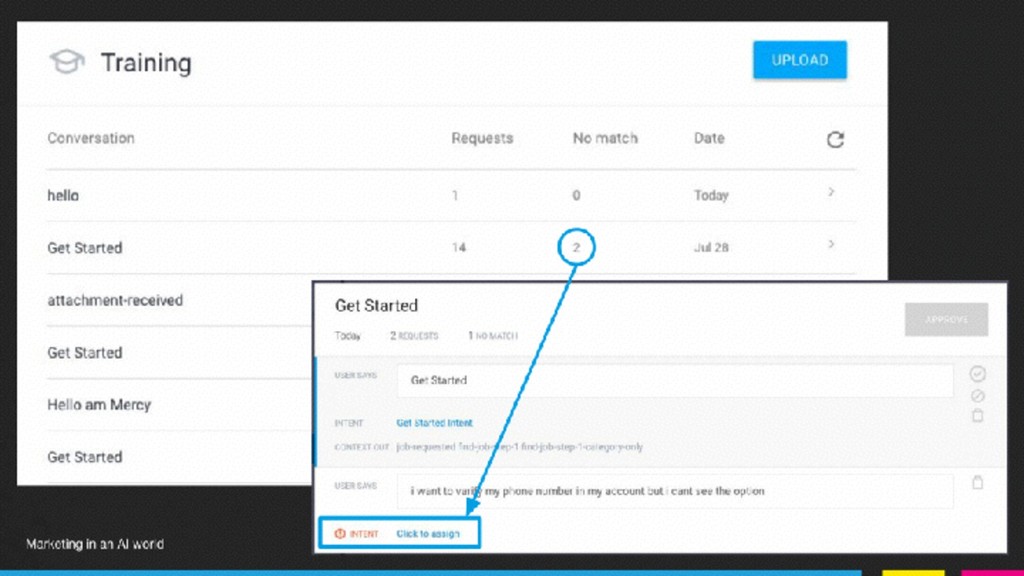
Sometimes, for example, with your chatbot, the bot would not have known how to respond to a certain inquiry. There would have been no match to intent. So you're gonna have to then map that to the intent by reading those sentences yourself. But the point here is it's just like training any junior marketer.
The day that you onboard your machine learning algorithm is the worst day it is ever going to perform. It is going to do the work, but it will make mistakes. So you need to supervise the results and correct those errors as needed. The longer it works, the better it is going to become and the more time you have to reinvest into other marketing channels.
But unlike a human, this machine is happy to do the same boring, narrow, repetitive work day in, day out, seven days a week, twenty four hours a day, no matter what it is, if it's classifying reviews, adjusting bids on AdWords, posting on social media, forecasting growth.
You are not handing over control of marketing to a machine. You're teaching them how to execute a specific component of your marketing strategy. The AI offers a whole new level of scale because how else can you possibly classify those one million reviews? And by being able to classify those reviews, you are going to be delivered all new insights.
What you choose to do with those insights is what is going to be the competitive advantage of your brand. So now we have no more resistance down the chain. What about up the chain? Because c suites are a little bit hesitant to give resources and budget to AI.
Well, don't start by asking them for more resources and budget. You don't need to. Look at your existing marketing tool suite because chances are you already have AI capabilities you're paying for that you're just not using yet. If you are utilizing an automation tool like HubSpot or a CRM like Salesforce or your advertising with Facebook or Google, they all have AI capabilities.
And the best thing about starting with the tools you already pay for is you can draw on their support teams and utilize their insights and experience to help train you and your team how to effectively roll out AI. But it's not just external tools.
Have you actually assessed the AI capabilities of your current tech stack? Because AI is not channel based. It is use case based. So if your development team has already built a content recommendation engine which is functioning on the website, with a little bit more training of that machine learning algorithm, you could use it to power personalization of your email marketing or of your chatbot or of your push notifications.
Using these existing technologies is a low cost invest in order to create use cases and case studies to show your c level, and then you can ask for more budget because then you can show the power of applying AI to marketing. And so now you're ready to go out and buy new tools.
But when you are doing this, beware of buzzwords because many AI solutions aren't actually that intelligent. Even if they have AI and machine learning right there in the product description. It's because a lot of tools out there utilize these terms to shamelessly describe commonplace automation or personalization and targeting capabilities.
Now that you have a deeper understanding of what AI really is, feel free to put those sales guys through their paces. If they cannot tell you in detail how that AI works, don't buy the tool. If it seems too good to be true, do not buy the tool.
Because I'm sorry to be the one to have to tell you this, but there is no AI platform that neatly bundles every single marketing functionality you need into one single monthly subscription. It's because AI is narrow in nature. It must be applied to a specific use case.
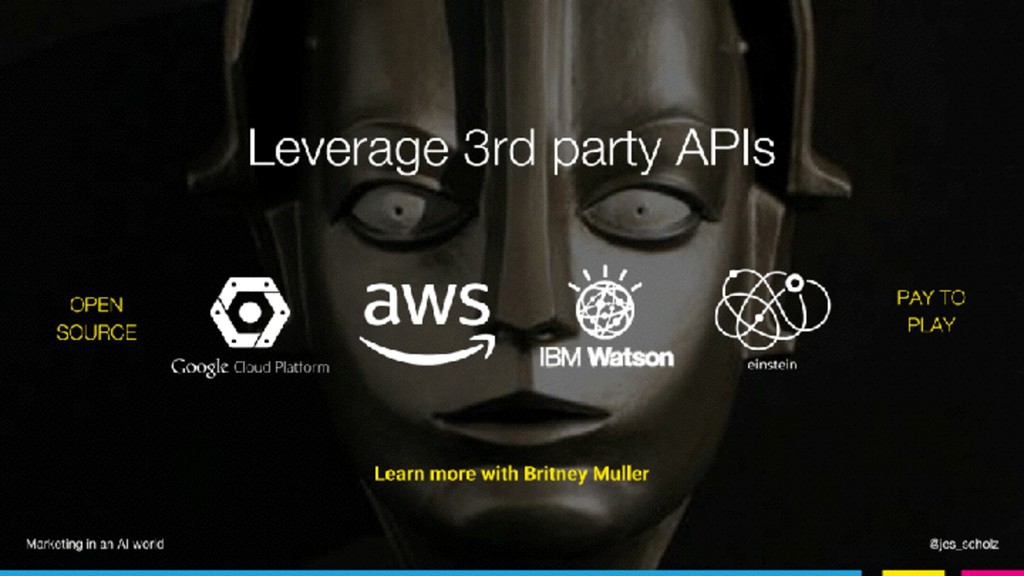
So for each use case, you will likely need a new tool. If you are passionate about centralizing your AI capabilities, well, that's when you need to start in housing, but you don't have to start from scratch. You can pull on AI APIs. You've got Google, Amazon, IBM, Salesforce.
All of them offer machine learning, natural language processing, a variety of different subset APIs that you can draw on. Some of these are gonna be open source. Some of these are gonna be pay to play, but all of them will give you a springboard to start customizing your own solution.
And the benefit of using this sort of integration is that often you'll be able to take on additional datasets that they provide and layer it on top of your own first party data. And this brings me to my next point because it doesn't matter what tools and talent you have if you are missing the most critical component of artificial intelligence that used to be the machine learning algorithms.
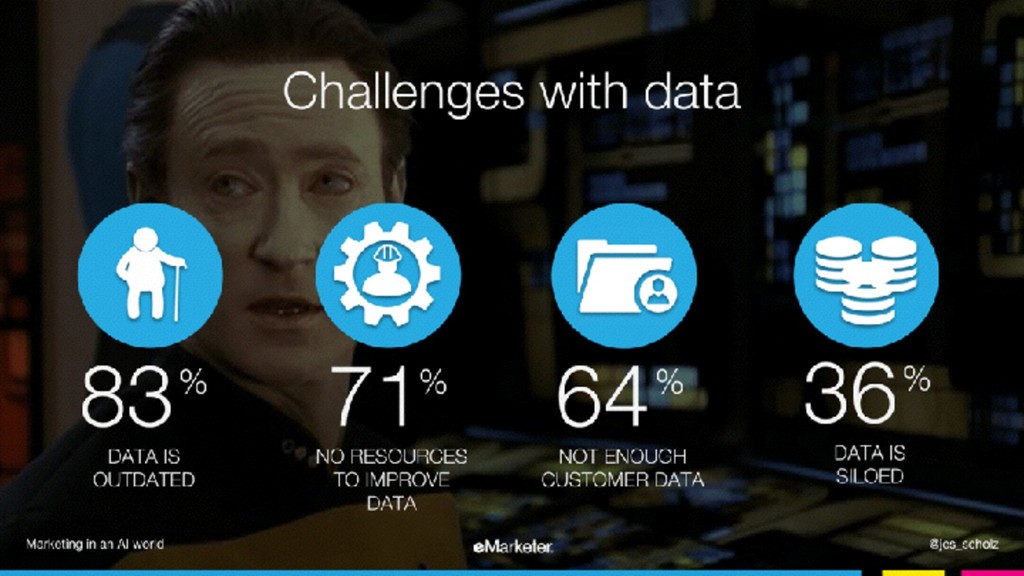
It used to be the data scientists. But now that I have open source algorithms that I can pull on from those big corporate players, this has changed. And the critical component of successful AI marketing now is data. And this is a problem because our marketing data is often out of date or in silos, or we just don't have enough of it in the first place, and we don't have plans to clean this up.
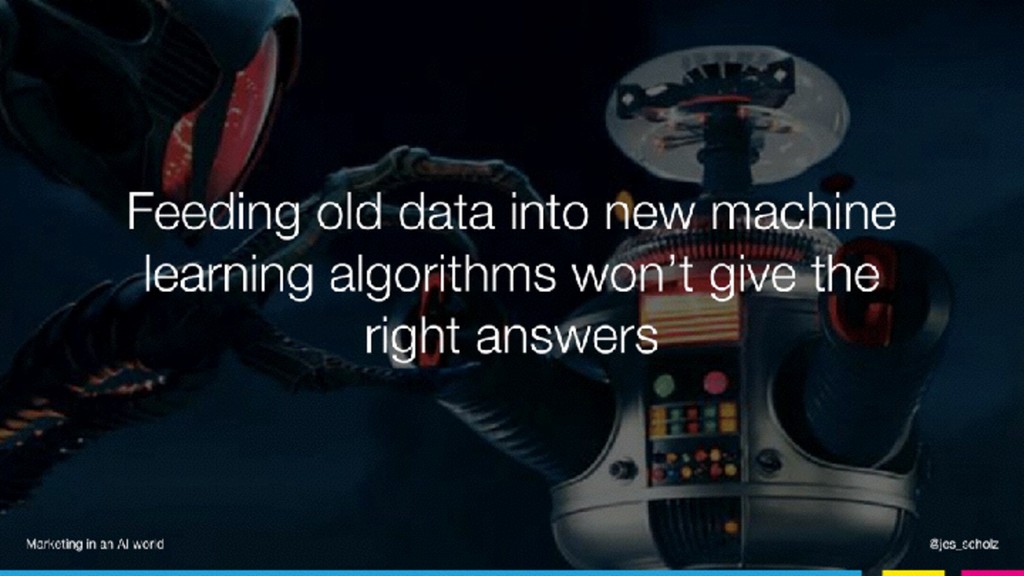
Seventy one percent of marketers tell us that. Well, if you take that old bad data and you put it into your shiny new machine learning algorithm, guess what? You are not going to get the results that you want because you haven't trained the machine correctly.
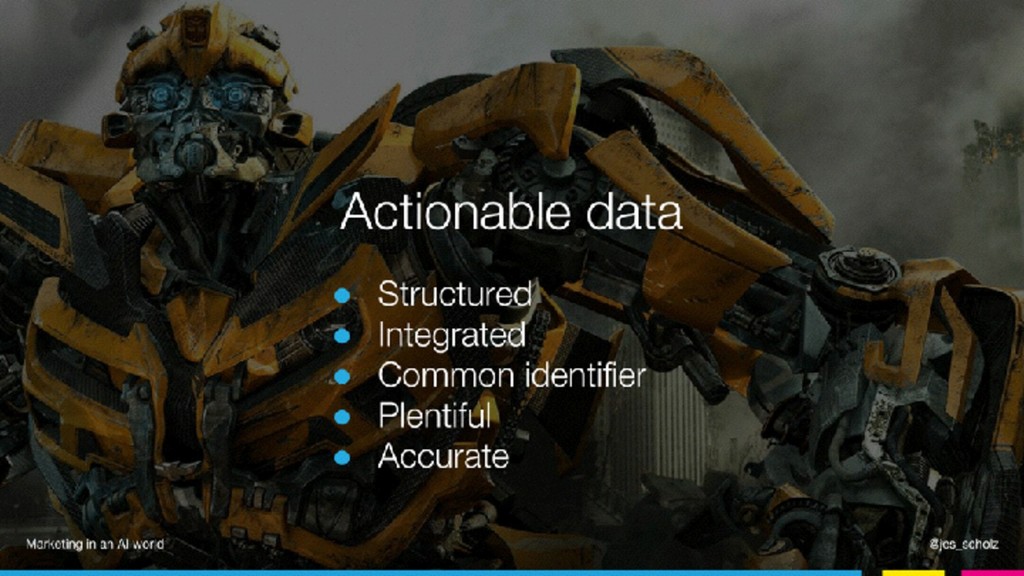
So data is of critical importance. And if everybody doesn't understand this, you could end up blaming poor success metrics on the machine. So let us all come together and start making actionable data. Have you got structured markup? Are you doing content tagging? Is all of your marketing tool suite integrated into your DMP?
Are you driving to find common identifiers to link people across channels like email addresses? Are you using remarketing tags and other sources to collect additional data on your customers? And most importantly, when is the last time you did a Google Analytics audit? Because this is our primary source of data for many of us marketers.
But can you tell me with a hundred percent confidence that that is as accurate as it can be? Because mine wasn't. And artificial intelligence and mastering this as an application of marketing is critical because we see consumer behavior is changing. Consumers are hit with too much information every day, and they don't want to have to evaluate all of the options.
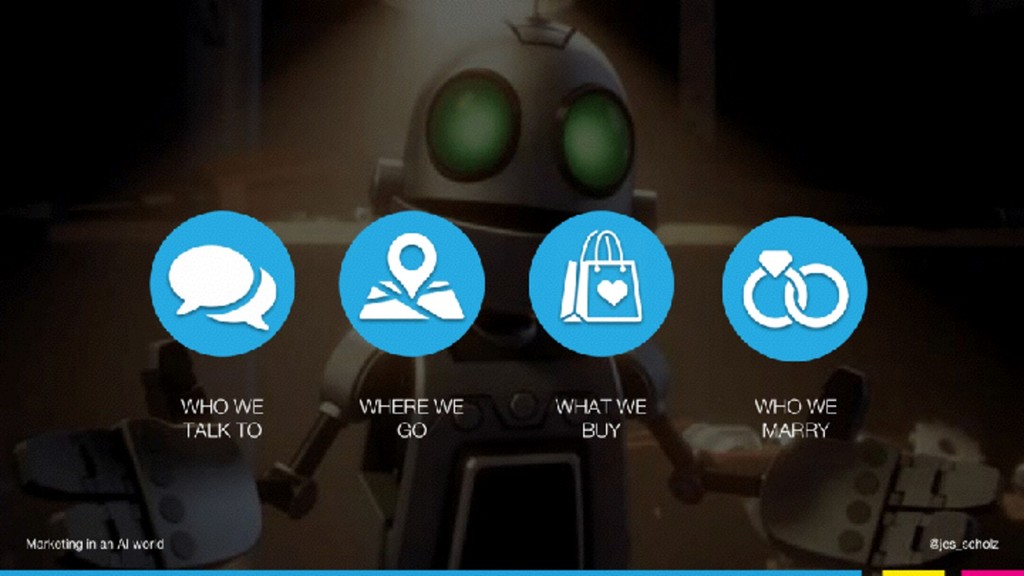
So we delegate this to algorithms. Social media algorithms control who you talk to. We've got mapping technologies that decide how we get to a place and recommend places to visit when we're there. We've got suggestion engines controlling what brands are actually recommended to us to buy.
And AI may even have dictated who you marry because in your dating app, by swiping left and right, you are training the algorithm so it could find your perfect match. We need to understand more about how these decisions are made and treat these algorithms as new audiences, understanding their needs.
Later today on this stage, Jono Alderson is going to tell you guys how to best achieve that. So I am going to leave you with one final thought. You need to start marketing with machines because it's the only way to effectively scale your business for the future.
Thank you.