
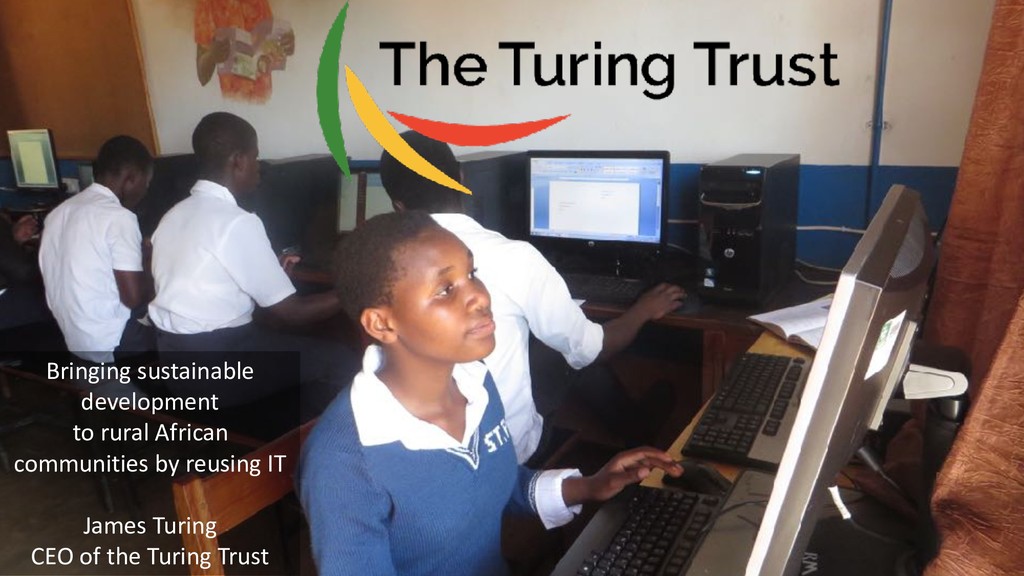
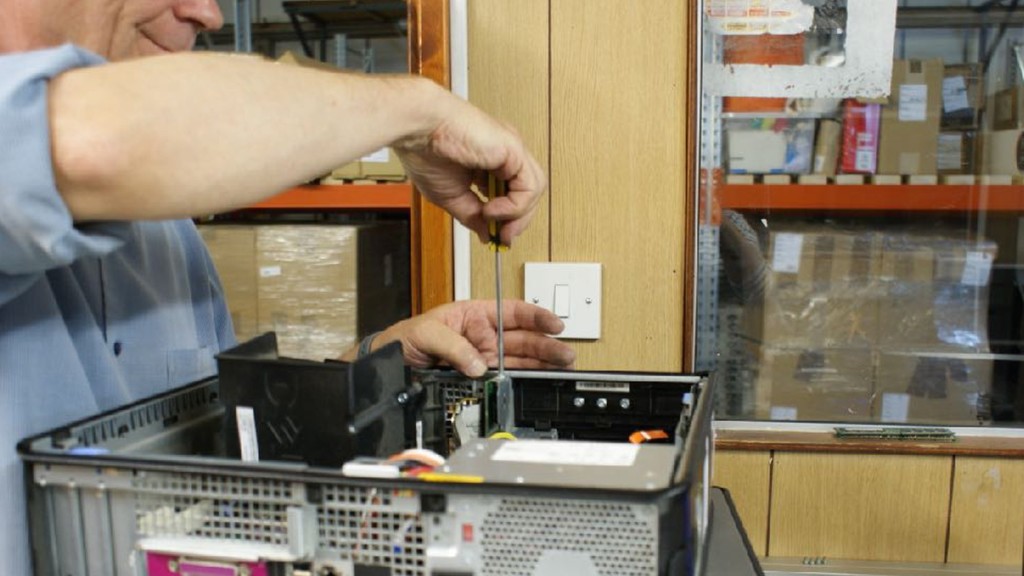
The Turing Trust has delivered over 4,000 PCs to African schools, supporting 25,000 students to learn vital digital skills. We’ve done this whilst saving 2,000 tonnes of CO2 emissions and training hundreds of local Scots in IT refurbishment. Our product should be relatively simple – providing computers to schools so they can teach students basic digital literacy. However, without the right strategy, delivering our product in an effective manner, both economically but also to ensure long-term growth, is extremely challenging. Developing our social enterprise has seen us make a lot of mistakes and we’ve seen some serious challenges. Yet the considerable opportunities in Africa’s fast growing economies have overwhelmingly helped push us towards success, building and environmentally friendly society and encouraging development both at home in Scotland and in Africa.
Building IT Social Enterprises in Rural Africa
Auto-generated transcript - may contain errors. Tap a timestamp to jump the video.
Thank you. Thank you all very much. I really hope you're enjoying Turing Fest as much as I am. I've already had a privilege of speaking to at least thirty, forty people who were invigorated by Brian's earlier mention. So I really thank you all for coming over to our stall and saying a quick hi and well your messages of support.
So obviously for me, speaking of this event as Alan Turing's great nephew is a real pleasure and something I don't get the opportunity to do as much as I might want, but I'm here to tell you a little bit about the challenges we've had in developing the Turing Trust over the last about eight years.
We've installed about four thousand computers in rural classrooms across Ghana, Liberia, Kenya, Malawi and this has supported about twenty five thousand students so far. But in doing that, we've also realized that a lot of the work we do comes from Scotland in the first place and we've actually saved two thousand tons of Scottish CO2 emissions in the process whilst helping hundreds of local Scots get skills in IT refurbishment.
So, we initially planned that our product was very simple. We put the computers in school, children learn how to use computers. Seems really simple, right? But of course, without the right strategy you find that there's millions of little problems and it's actually very hard to do this in an economical way that will actually enable long term growth.
So, in developing our social enterprise in Africa, we've certainly made hundreds of mistakes, but in general we found that the rate of pace of the African economies we're working with, because they're growing so quickly, there's actually so much opportunity that kind of pushes you towards success whilst of course you face these thousands of challenges.
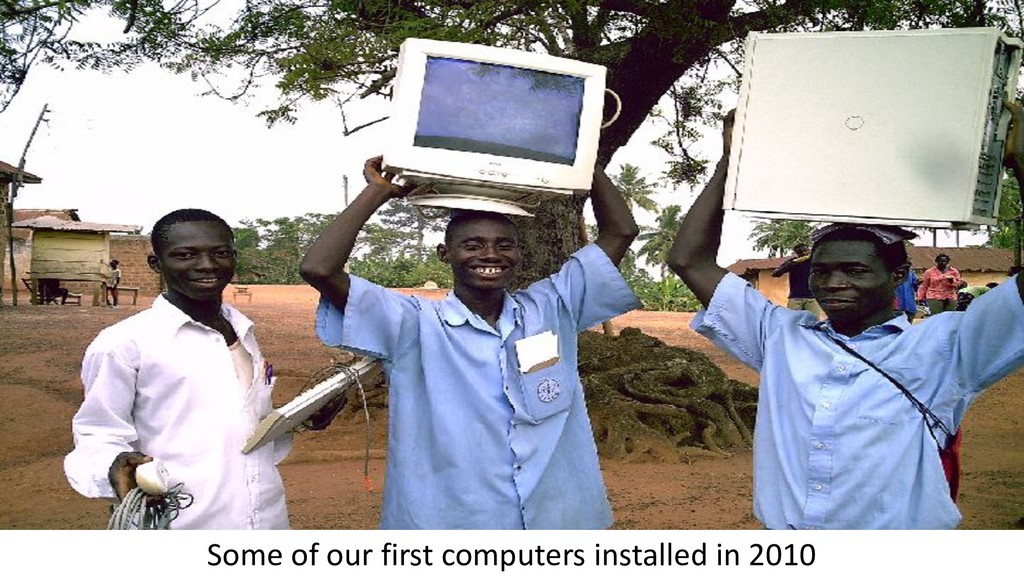
So, what I'm hopefully going to tell you today is a little bit of our story of how we'd be able to encourage development in Africa whilst building an environmentally friendly society back home in Scotland. So, since twenty ten when we first started you can see some of these delightful computers that were very kindly donated back in I think about two thousand and nine.
They were installed in Ghana in twenty ten and we've come a really long way in terms of learning how complicated a thing just putting computers in classrooms can be. I'm sure as many entrepreneurs here know, nothing is simple when you start from scratch and finding the right product development track is certainly half the battle when it comes to achieving your mission.
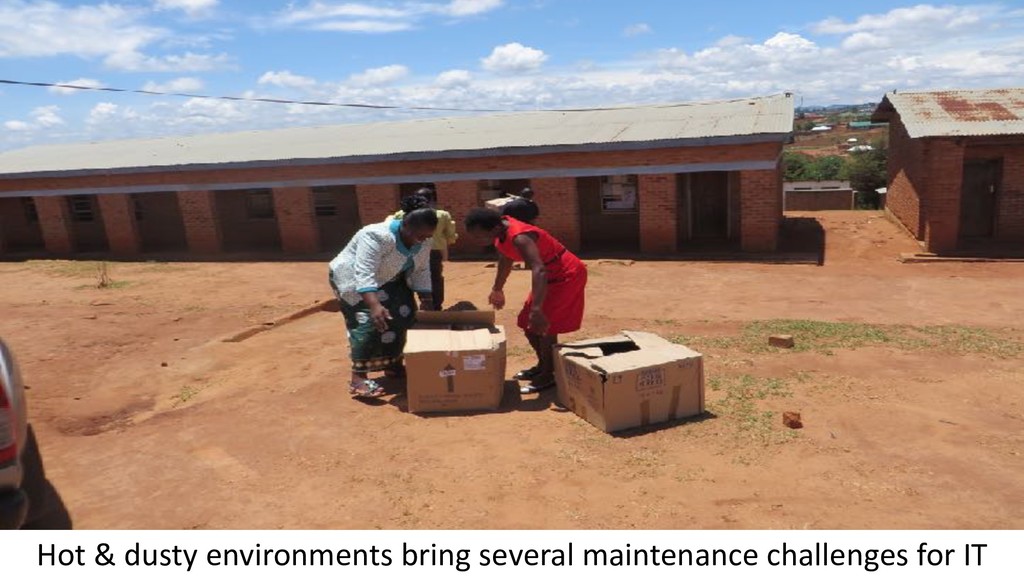
So just to give you kind of a brief introduction to some of the biggest and most obvious challenges we faced, the most obvious one in sort of the unfriendly African tech environment has to be the heat and the dust. As you can see in this picture, it's pretty hot and it's pretty dusty and both of those things don't go well with computers.
So, initially we thought, okay, well there's definitely design solutions around computers and heat and dust, it's not the first time anyone's faced this problem, but we realized that none of the simple solutions such as telling the teachers you need to clean the dust out every three months is as simple as it seems.
What we actually ended up having to do is obviously teach the teachers how to do this. We then had to enforce it through a maintenance contract because otherwise without the understanding people wouldn't have the incentive to do the cleaning regularly If you don't do that, then your computer will normally fail within three months or less.
The next bit which we never thought of was turning computers off. That's surely got to be one of the simplest things about learning how to use a computer, but actually because most of us here have been brought up with maybe our parents or our friends showing us how to turn off the computer by going start menu turn off, most guys of our teachers will just be like well there's a power button there, I'm going to hold it because if I hold it for ten seconds it
goes off, doesn't it? Win win. It only took me two seconds. And actually that causes loads of problems for us because if you do that eventually your computer will fail permanently and so we had to do a lot of training over just these really basic issues that we never foresaw.
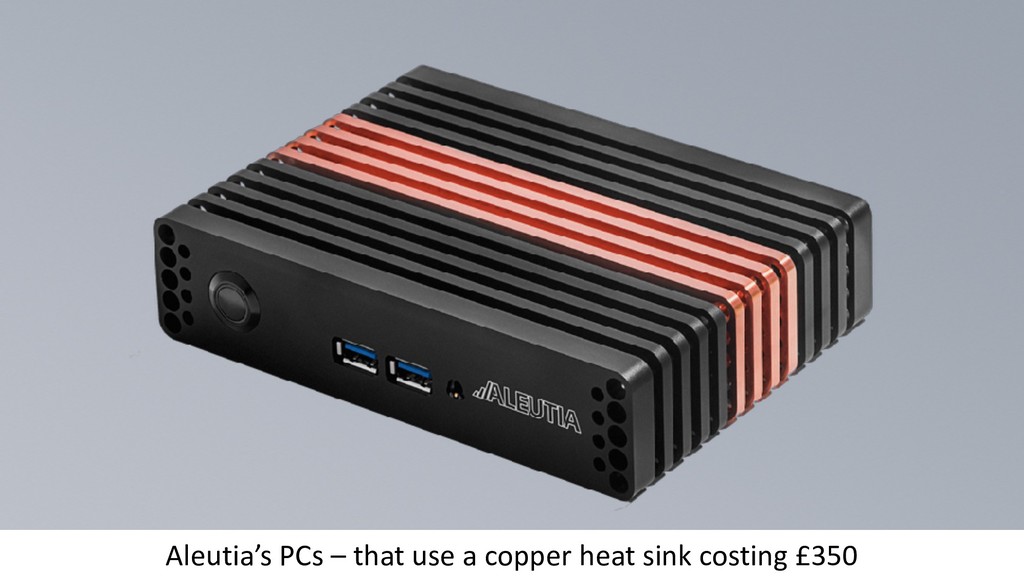
So, coming back to the heat and the dust though, there are some great technical solutions like this computer here which is made by a company called Elucia. You might not have heard of them because they're quite specialist in terms of making computers with this copper heat sink that you can see which is fantastic and mainly you can have a fanless computer that does stay cool even in classrooms as hot as thirty five, forty degrees, but they cost about three fifty pounds per unit which for us is
just unreasonable and it's not something those schools we work with are going to be able to afford in the near future for certain. So, we've decided that the way forward for us is actually completely rethinking the problem from scratch, Not trying to invent a new computer or anything fancy like that, but just teaching sort of basic construction techniques to the schools we're working with and change the classroom entirely.
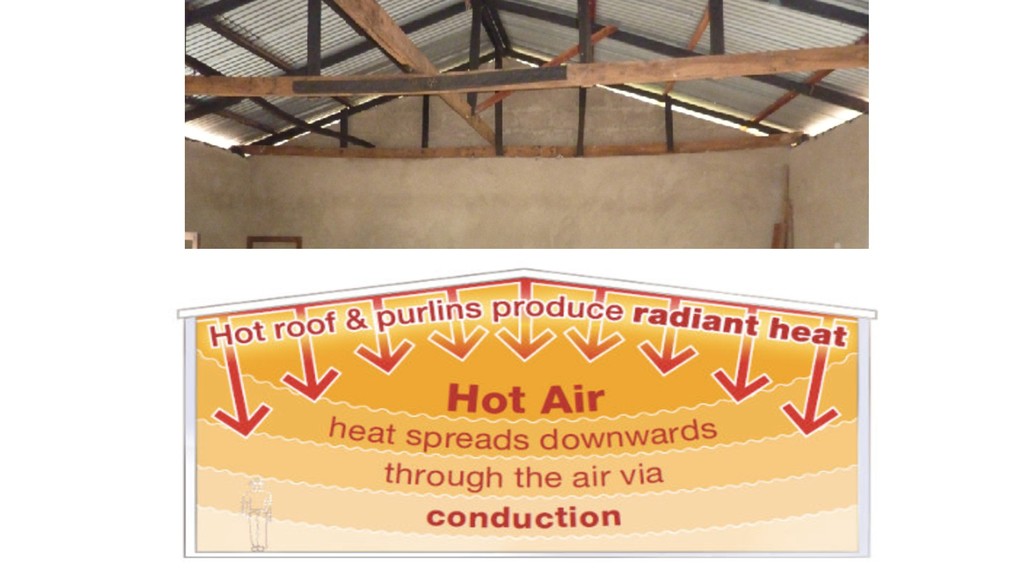
So here you can see at the top you've got the kind of typical classroom you'll find in rural Africa where you've got concrete walls, a tin sheet on the top with wooden scaffolding. This is pretty much an oven, this is a solar cooker at the end of the day because as you can see in the diagram you've just got all that heat coming down and heating up your classroom the whole day.
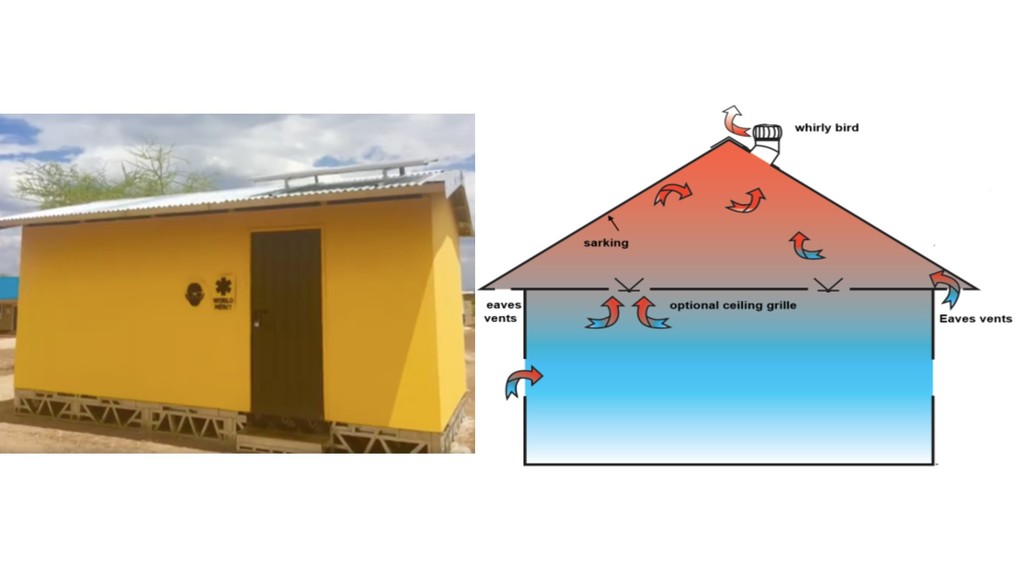
However, you can really simply change this and for about one hundred pounds you can retrofit one of those classrooms into something that looks a bit more fancy like this, which is one of our solar powered computer labs in Kenya. All you do is put some ply board in so you get two air spaces which you can see here the blue air space at the bottom is just a cube of cold air and at the top you've got a gable triangular structure with all the hot air.
All it costs is just putting that plyboard sheeting there and putting some holes in the right places and then you're letting natural convection cool your classroom down. This can change the temperature in the classroom by as much as ten degrees which for us is a far simpler solution although it's a bit more construction intensive.
So, other words, the other maintenance problems we faced all come from actually getting customer buy in. When we first started the Turing Trust, was purely charitable based. We've now moved to a social enterprise model as we found that giving computers away for free doesn't work.
If you have zero customer buy in, you just have donor dependency issues and you get really strange problems that you don't expect. So, example, we had some teachers come to us who had broken computers in their classroom which we expected with the heat and the dust and the computers were broken after about a year, but the teachers hadn't told us that the computers were broken.
It was only when we by chance happened to go to that classroom on our monitoring visits that we found this out. And it turns out that there was a weird kind of dynamic going on whereby the teachers thought if they'd broken the computers they'd done something wrong and we'd be very angry with them and wouldn't support their school ever again.
Which is not really the way around we wanted to do it, we would love to go and replace those computers and we now have maintenance contracts in place that for ten dollars a year we'll go and then replace any computers in these classrooms.
Now, that ten dollars doesn't cover any of our costs really, probably doesn't cover the transport to most of these classrooms, but what it does do is means that the school think we're accountable now and whatever the school does, it's all on us at the end of the day and that completely changes the dynamic and having that little bit more customer buy in really helps us to solve these problems.
We found a similar thing with surge protection as well, whereas we all might think that the use of a surge protection extension cable is obvious, if you've got bad electricity, you have to use one, but what we found in most of our teachers is because they aren't aware of the difference between plugging in directly to socket in the wall versus using a surge protection extension cable, they assume that all surge extension cabins are built equally and so actually unless we got the school to buy the
surge protection themselves, if we supplied it interestingly this didn't work, but if they bought it themselves they would not move it. Otherwise, if we supplied it for free you'd go find it in the head teacher's office charging his mobile phone instead because it was within arm's reach by the wall.
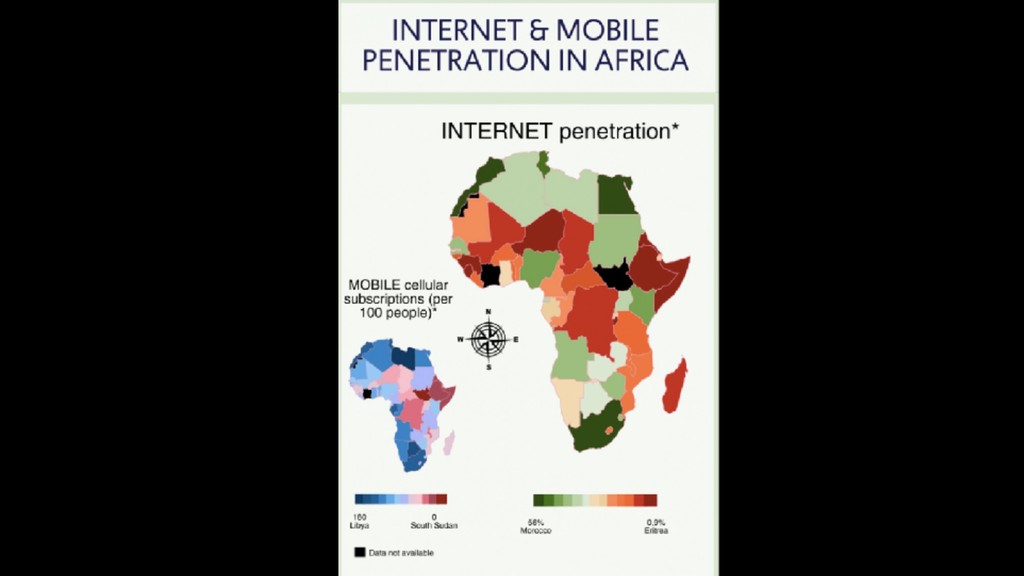
All these little weird things you find out that actually customer buy in is actually one of the best things you can get. So, now I'll bring on to internet access which is certainly probably the biggest challenge for using IT successfully in Africa. As you might have heard, mobile penetration rates in Africa are fantastic, they've really increased and they've truly leapfrogged the west in that term and unfortunately internet penetration hasn't caught up quite in the same phenomenal way and there's lots of reasons for this, but essentially it all comes down to cost again.
Just to give you a brief idea of the various options you have in terms of accessing the internet in Africa, you'll find that satellite is available almost everywhere, but it's ridiculously expensive. Most companies can't even afford to do it, alone schools. Broadband is available, particularly in major cities, however it's unrealistic to think it's actually going to get rolled out to the villages.
It's just not economic. No companies are willing to do it, and even if you can get a broadband contract, for example in Malawi, you can't get a broadband contract with unlimited data, so you're still paying per gigabyte and that doesn't really work for schools because if you let children loose on YouTube, unsurprisingly they're gonna spend a lot of gigabytes.
Four gs is fantastic actually, that technology has really taken hold in Africa and you can be in the middle of nowhere in a really random rural village and you'll have fantastic five bars of four gs and you're like, okay, well this is great, this is surely the solution.
Again, not quite, it's about three pounds per gigabyte which is roughly triple what we pay in the UK if you exclude all the unlimited data contracts we can get here, but this does mean that dongles are an option and for those schools that can find an affordable way to provide internet access, it is an option as long as someone's paying for it.
There are some interesting technologies coming out. I don't know if anyone's heard of the TV white space technologies being used particularly in Orkney, but this has some potential to reduce the cost of internet access by about a third. So, we're really hoping in the next five to ten years that will become more mainstream and that's probably the only way that these schools are really going to get online.
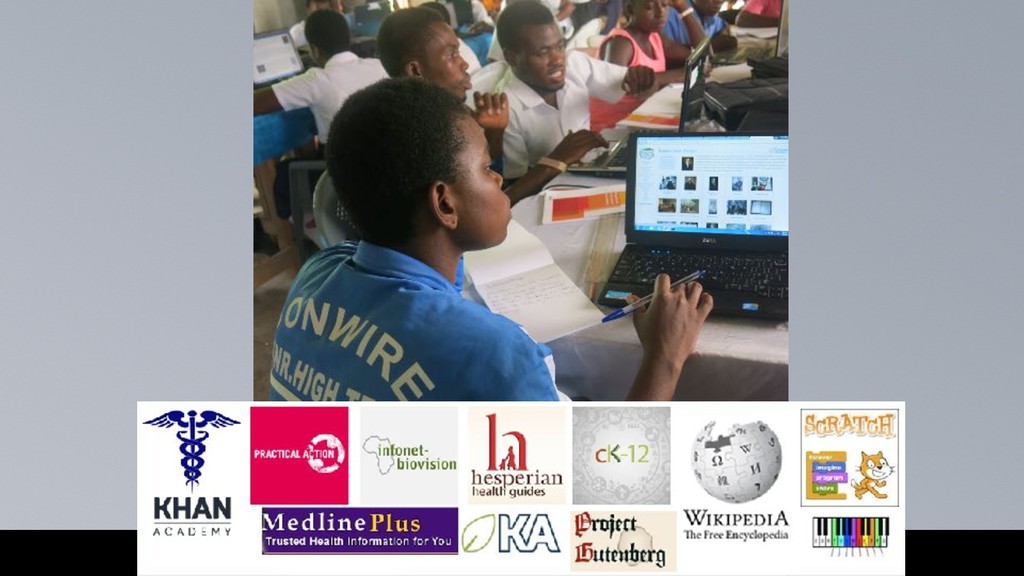
In the meantime though, we're very much looking at offline solutions as realistically that's where we have to be. So I don't know if any of you heard of the Rachel platform before, but it's absolutely fantastic. It's got the entirety of Wikipedia downloaded offline.
It's got other things like Khan Academy which has hundreds and hundreds of videos taking you through your maths and science curriculums. Then there's other things like the Hesperian Health Guides. All of these things actually enable you to get a really good, safe, educational online experience, but again, there's always challenges.
So, for the biggest one for us is just the lack of knowledge that head teachers particularly will have. So, when we try and give them computers for their schools and we say can we give you a server with that, it will require you to spend this much longer teaching your train, training your teacher, etcetera.
They go, we don't need it, what's it for, don't understand it. So, we end up spending a lot of time in investing in these future clients and upskilling them to learn about how the server works, what the benefits will come from this and things like that.
Of course, the lack of competition in these schools mean that when we are pretty much one of the only providers for computers for these schools, we are knocking on open doors. So, teachers are like, yeah, bring your computers tomorrow, we're ready. Dollars ten, that's nothing, just come.
However, that actually becomes a problem for us because not only do we have plenty of demand for our services, it means that when we need help with something else, we can't get it. There's no other competitors who can turn to who can provide the similar kind of services.
I think the best example of this is certainly printers. We provide printers to schools, they love them, they use them to print their exams for example, but getting the right printer ink. Initially it's a bit challenging anyway because there's only certain printer models and makes that are available in most of these countries but when we can source the printer ink it should all work fine but then we had an awkward experience in Malawi where the one guy who we were sourcing printer ink from actually went bust.
We found there was not a single other supplier in the whole country who could provide printer ink and we're like, oh, I guess we're going into the ink selling business now. Cool, we can do that. In the end we found that our growth there has been fantastic in its organic nature.
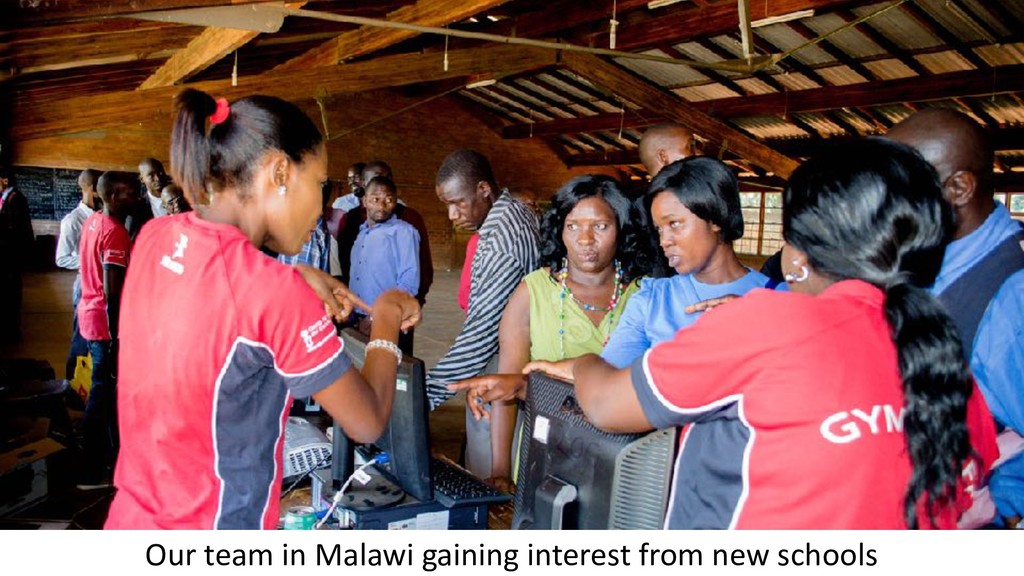
Our focus on training has really led to us being able to work more closely with teachers and that's enabled them to then give us loads of great referrals to their colleagues in other regions and areas of the country. For us, it definitely seems that referrals are by far the best way to grow in Africa.
There's plenty of annoying assumptions out there that Africa's all the same, one country is totally the same as the next country, it's all Africa, it doesn't matter. That is extremely wrong. Unfortunately, the nuances between one village from another mean that you can't copy and paste your business model.
Yes, ten might have worked there for that school whereas five dollars is only gonna work for there and you have all these differences. I think the best example that I can give you of this is in Western Kenya we had one school where we just installed computers and we actually had elder community members coming to the school asking they didn't open the computer lab in the evenings because they didn't want their children to learn how to use computers.
We were like, okay, this is interesting. What are we gonna do about that? Turns out the reason they didn't want them to learn computers is because they saw their children's futures as being farmers which is pretty common. That is actually going to be the reality for most of them and they saw that if the students learn how to use computers, it would just be a waste of their time.
Why not just get them to go and do farming? More work experience, better for everybody. So we had to do a bit of education there about the benefits of learning how to use a computer in terms of the amount of knowledge you could gain on crop varieties, different harvesting techniques, etcetera, which is all on that offline library I mentioned earlier.
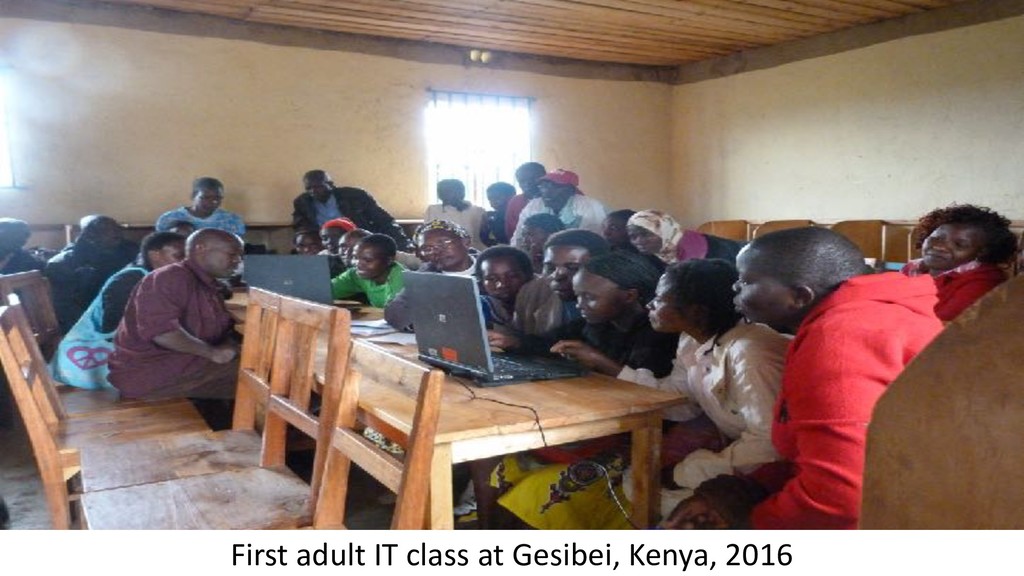
Whereas in another village we had the entirely opposite experience which was lovely and refreshing in that we had a great grandmother who was eighty six years old who came to our computer lab and kept knocking on the door until we eventually provided cumulative access in the evenings and enabled her to do IT basics course that lasted about three months.
And this great grandmother had just said the only reason she came was because her great granddaughter had kept coming back to the house and saying computers are great, computers do this, computers do that, and the grandmother was like what on earth is a computer?
And you just realize that sometimes the differences between generations, villages can be so big that you really can't predict anything that's going to happen. Overall, we learned that in terms of our product we had to change from just trying to simply provide the hardware to the school to actually providing a holistic package of everything including hardware, the teacher training, and the maintenance and the eLibrary software to enable some offline learning as well.
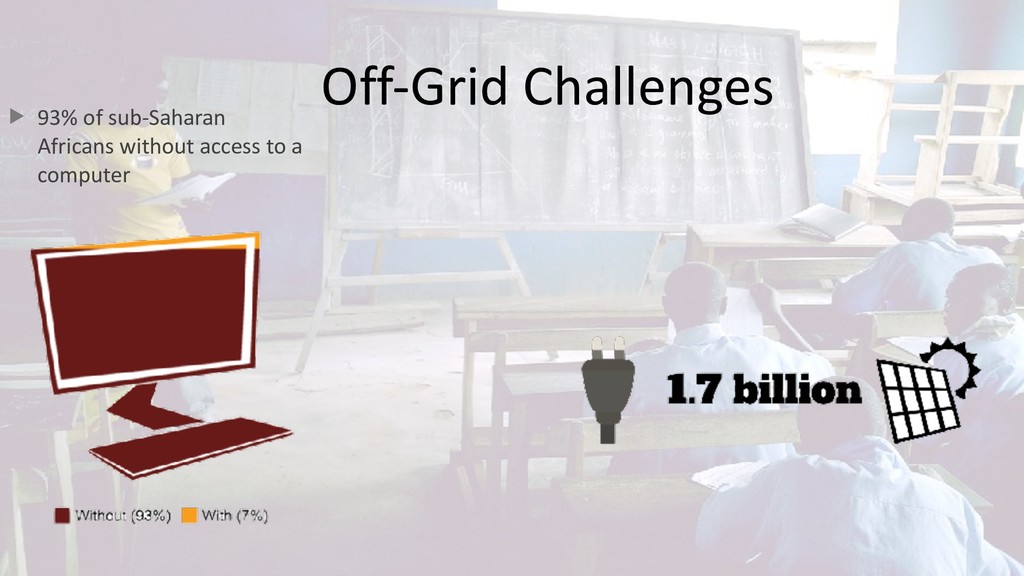
However, all of that work is on the grid where electricity is readily available. There are still one point seven billion people in this world without access to electricity and in sub Saharan Africa ninety three percent of people are without access to a computer.
This means we have a tremendous way to go in terms of enabling digital literacy for everyone and we believe that the only real way to do this is to find an off grid solution to IT access and this is where our product the Solarberry comes in.
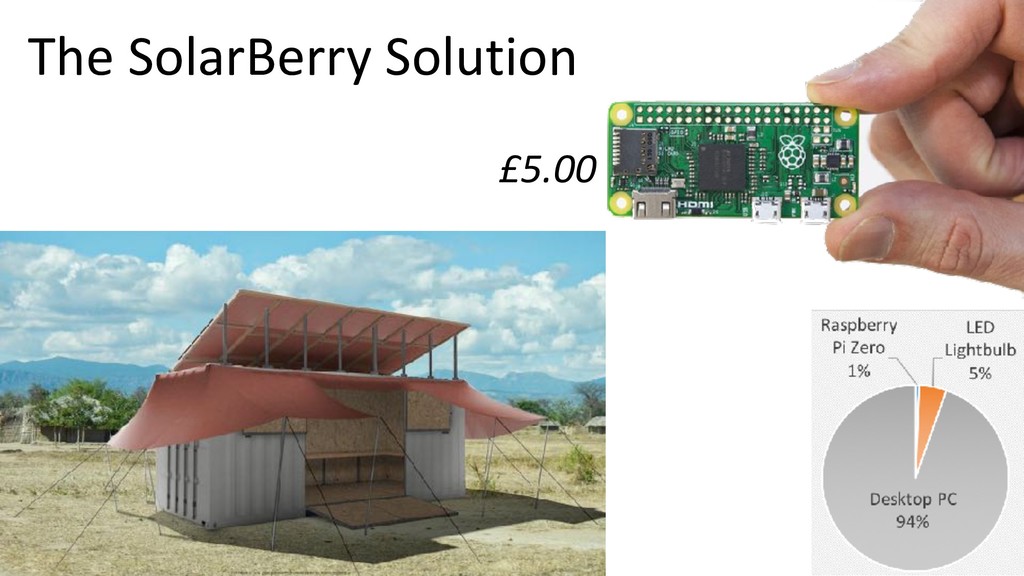
Using Raspberry Pi computers which you can see just up there and we've got one on our table as well, these are fantastic little devices, I'm not saying they're the best computers in the world but they do use a very tiny amount of energy and they're pretty cheap at about thirty five pounds or less.
So they use five times less energy than an LED light bulb and about one percent of a standard desktop. This means it's actually affordable to power them with solar energy, however, solar, even pairing them with solar energy, they're still much more expensive than the reused desktops that we're supplying which typically cost us about thirteen pounds to get into a classroom.
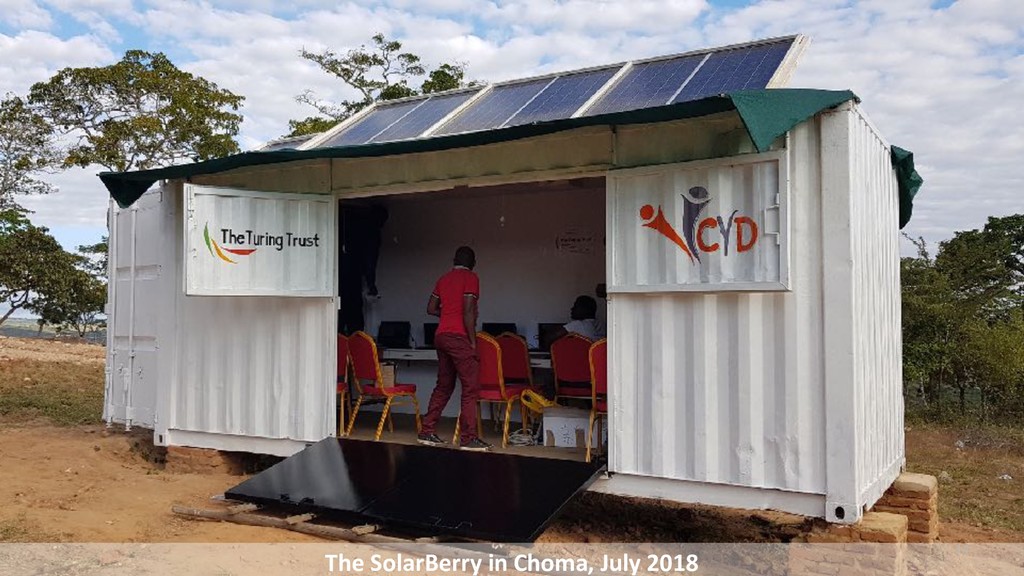
So, that's how the SolarBerry came to light and we have made revenue generation a key part of the computer lab itself. So, you can see here that the SolarBerry is made out of a repurposed shipping container, put the solar panels on the top, put your Raspberry Pi computers on the inside and then you have a sort of a portable classroom that you can put in the middle of nowhere very quickly, very easily and that enables you to be the first off grid movie theater in a village.
So, you can imagine if people have to walk between three to five hours to get to the nearest village which might not even have electricity either, you're the only movie theater for a long way around and hopefully that will bring loads of people in and so we're charging ten p to people to come and watch a movie.
There will be educational movies, local news, local football, all these kind of things. And that will be a way that the solar barrier will eventually be able to repay for itself. It's also possible using mobile phone charging as well. Typically in rural villages you'll find people are using diesel generators to charge their mobile phones which as you can imagine is relatively expensive and very inefficient.
This means that when we're charging people 5P which is the going rate to charge their mobile phone, the energy usage for us compared to the computers is nothing. So, it costs us about a hundredth of a pence per mobile phone charge in terms of the actual energy usage and so we make great profits off that which will enable the Solarberry to pay for itself.
It costs about fifteen thousand pounds to build one of these We hope that with the revenue generation it should pay for itself within three years meaning we can go put another one in another village. So this is the one that we built and was commissioned in July.
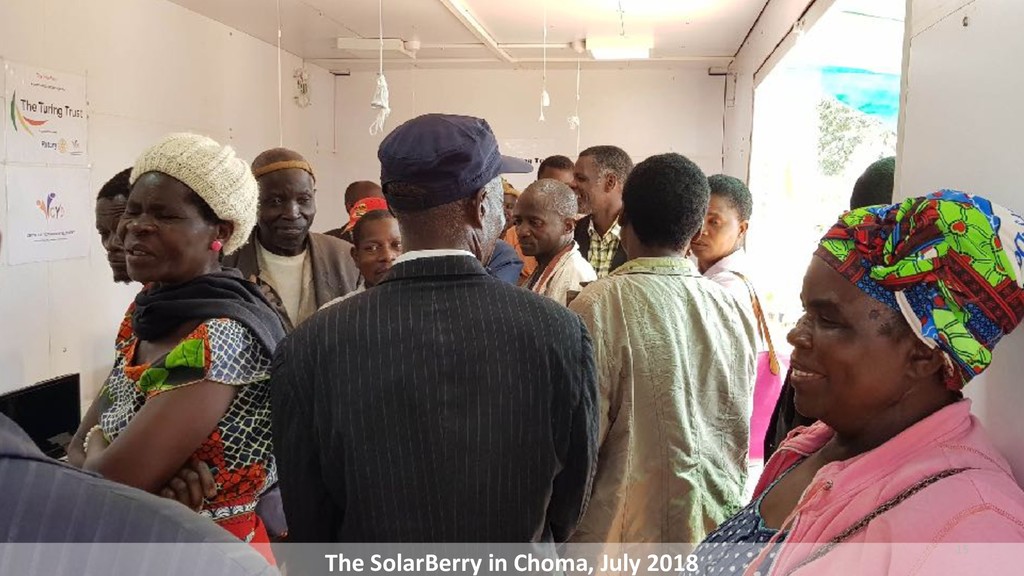
Here you can see some of the community members getting to go inside and see for themselves. As you can see, they look a little bit confused, but hopefully within a couple of months they'll get a bit more used to what all the Raspberry Pis can do.
In the end we found that our strategy really had to look in the long run and it was getting towards our educational outcomes that really focused everything we did. There's certainly no shortcuts in trying to work in the African markets. As I said, there's many of lots of hot and dusty challenges out there that need to be conquered but the opportunities there are so vast it does seem realistic that within our lifetimes we could see a world where everyone has an opportunity to learn how to
use a computer and be a part of this digital age. So, our aim is to certainly become obsolete, we want to live in that world and hopefully we might get there one day but there's still about nine hundred million Africans who don't have access to a computer, so we've certainly got a long way to go.
So, I'd just like to ask you today, please do come and have a chat with us, our stool is just in the main conference center kind of towards the right and in the back. Come and have a chat with us, see how you might want to get involved.
We have plenty of volunteers who come down to Edinburgh. You can also volunteer online and I'd say the biggest ask I have for you today is just think about what happens to your own old computers when you're finished with them. Please do just pop them in the post to us, that's how you can get them to us and then they'll be in a classroom a few months later and the biggest thing for us, the most challenging problem we have actually in the UK is finding businesses IT managers.
They're surprisingly hard to get a hold of but if we can get a hold of them we can ask them to donate their old computers when most people end up just sending them for recycling so you have a perfectly good computer that ends up getting scraps for normally one pound or two pound worth of value.
We think we can get much more value out of that old computer because it will still work for our purposes. So please do speak to your company and then get in touch. Thank you very much.