
The culture of work and the very nature of how we do business have evolved massively in the last few years. This session will dive into how remote working has changed our office culture, our team communication and the management approaches required. James hasn’t been office-based since 1999, so he’s plenty of experience to draw on – and will bring a selection of advice and examples from other firms too. A strategic conversation with tactical advice.
← All talks 





Lead Culture Turing Fest 2018
Making Remote Inclusive
Auto-generated transcript - may contain errors. Tap a timestamp to jump the video.
Thanks very much. Good afternoon. It's an absolute delight to be here. I've been an attendee of TuringFest for the last couple of years, so actually getting the invitation to come and play and share some stories with you has absolutely been a real honor.
As Kirsty mentioned, my background is actually running a product management business. We run conferences in three or four cities around the world, and actually meet up to about one hundred and fifty six cities around the world. And we do it off a team of just ten people.
So as you can imagine, we travel around quite a bit. Remote is something that we take very seriously indeed. That's why I picked it for this particular topic. The other reason being there's a product stage here, which you might feel is more my natural home, but my team has a significant number of product experts in there.
I let them focus on the product bit and actually talk more about growing businesses and building culture. Prior to getting into this, I spent about fifteen years building technology teams, so I've got a lot of experience in that particular space, dating back to my single claim to fame in that area, which was building the first Java development team in Europe for IBM back in nineteen ninety six, I think it was.
IBM's Research Labs. So, remote teams. I've been working remotely since nineteen ninety nine. I liked it so much I've not been back to an office full time since then. That's back in the days of ISDN, for anybody who can remember that kind of dial up.
It's a pretty horrible experience. That's me, just to make sure I'm on the right stage. Glasses, pair, jacket, it's all the same. You'll find me in a wide variety of places across the web. Come say hi, Twitter, LinkedIn. I've made sure the slides are up and available, so you can grab them afterwards if you'd like.
So why are we actually talking about remote? Why is it important? Why does it matter? There's a number of stats that I'd like to throw out just to make sure that people do believe that stuff is being taken seriously, give you something to work with.
There's a flex job survey recently in which eighty two percent of people said they would be more loyal to their employer if they could work remotely. Eighty two percent. Imagine the impact that has on staff retention or even recruitment. The impact of that is pretty significant.
Canada Life recently ran some surveys on their remote workforce and pitched it directly against the people that were office based. They found the people that were remote were rated at a seven point seven out of ten for productivity. Those in the office only six point five.
Ten percent uplift right there. In the UK, remote workers have risen by approximately a quarter of million people in the last ten years. So, this is not a flash in the pan. This is something that has been going on for a while and is continuing to trend.
There are some predictions that half the UK workforce will in some way be remote by the end of twenty twenty. So again, this is going to just continue. In terms of the benefits employers are talking about, we're seeing things like increased loyalty, lower cost of office space, environmental impact and much more besides.
So, first up, this. This is not remote working. If you search remote working on Google, then images like this will populate the page. It's not. That sunshine, he's got the brightness turned up on that screen so far that the battery's dead in ten seconds flat.
We know that. We also know that there's no Wi Fi on a paradise island because if your email can still find you, it's not paradise. So, what is remote working? Firstly, it's a scale. It's not an all or nothing thing. There are people who work one day a week from home.
There are people who work full time from home. There are people who drift in and out of offices according to what the project might need. So it is very much a scale. It has a number of different terms. I use remote working mostly because it seems to be the widest spread and therefore the most acceptable, but I actually prefer the idea of distributed teams.
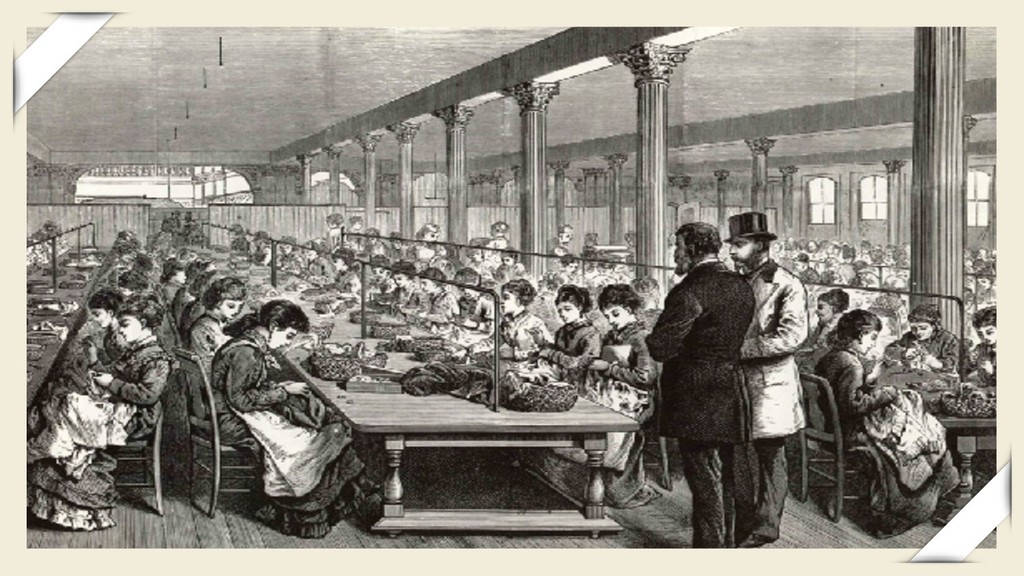
That somehow feels more reflective of the way most organizations actually work. I also think that it's something that we're starting to address more carefully, more specifically now, because that is still how most companies manage their teams. Most management practices haven't really changed since the Industrial Revolution, and I'm willing to bet none of you work in an office that looks like that.
As my colleague Martin said over on the product stage yesterday, the pace of change that we're experiencing right now is the slowest it'll ever be. It's only going to get faster from here. And as Dave McLaughlin once said, the pace of change means that relationships are more important than ever before.
When you've got people remote, that needs careful attention. Let's start with a little secret, and it's something that I think most people happily recognize that while we work in tech, while we build tech companies, it's actually the people that are one of the hardest parts of our job.
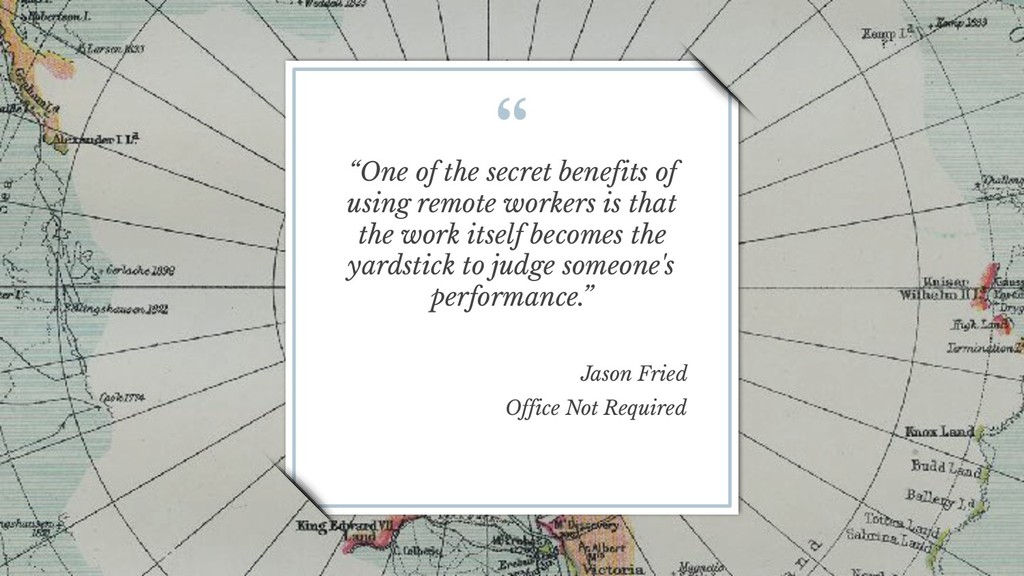
And appraisals are something that people always struggle with. One of the secret benefits of remote working is that you lose a lot of the human contact, which when you're reviewing and working with your staff, makes you focus on the work. Those outputs are the only things you can focus on, the only things you can judge.
You lose inherent bias. Your evaluations become better, more precise. So let's look at success. Let's take a look at some of the companies that have actually been doing remote working for a few years and see if we can pick out some stories there that are worthwhile.
I mean, let's be honest, everybody loves a bit of actual proof, right? So here's a few companies that have either fully or largely remote teams. And I actually remember sitting, I think somewhere around there last year, listening to Maria from FreeAgent talking about managing distributed engineering teams, which is one of the reasons why I wanted to come back and talk about this topic today.
So, these companies, obviously they are predominantly tech firms. Aside from my own, the reason I throw Mind the Product in there is because we're not a tech firm. We are an events business, a training business, a workshop business. We're services first. That's our focus.
And my point is that it's not just tech companies that use remote workers. It's not just tech companies that can benefit from remote work. It's actually an awful lot more. Now, as I said, I've been working either fully or partially remote for the best part of twenty years now, and I want more people to get those benefits.
It has huge benefits both in terms of your health, your lifestyle, your family, whatever. Let's have a quick word on diversity as well while we're doing this. This is a culture stage. Some of the people here have been talking about building teams. Diversity is hugely important.
As, again, Martin mentioned yesterday a McKinsey study that said companies that have diverse teams are thirty five percent more likely to outperform on profitability and value creation. Now, don't know about you, but thirty five percent more money sounds like a good thing. I'd like some of that.
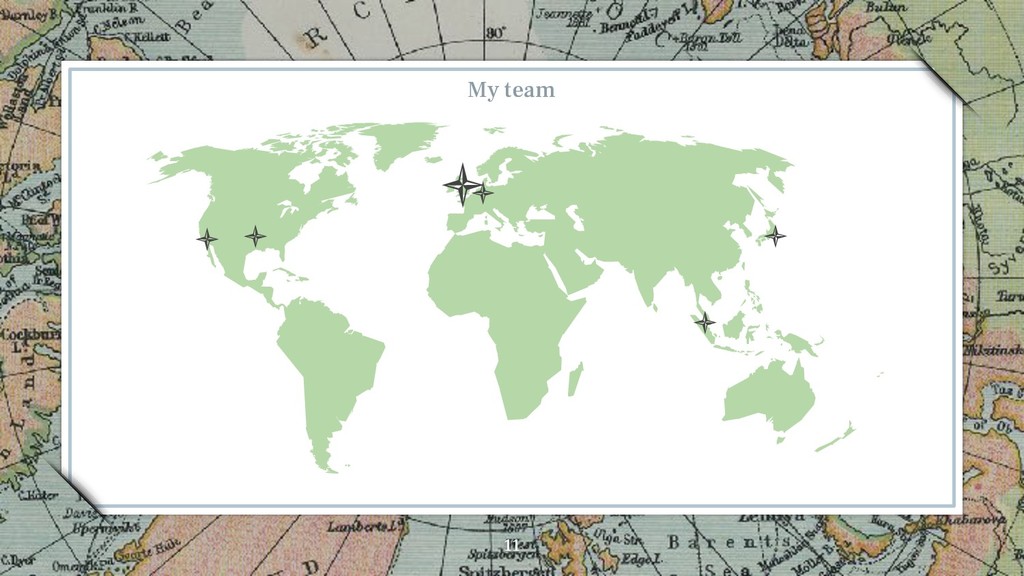
So, diversity, creative teams, remote working very much supports that. My team, just to make sure you're clear, we don't just talk about this, we live and breathe it. That's where my team are right now. Most of them are in the UK, one in California, one in Dallas, one in Hamburg, one in Singapore, and one right out there in Tokyo for one week only looking after a client out there.
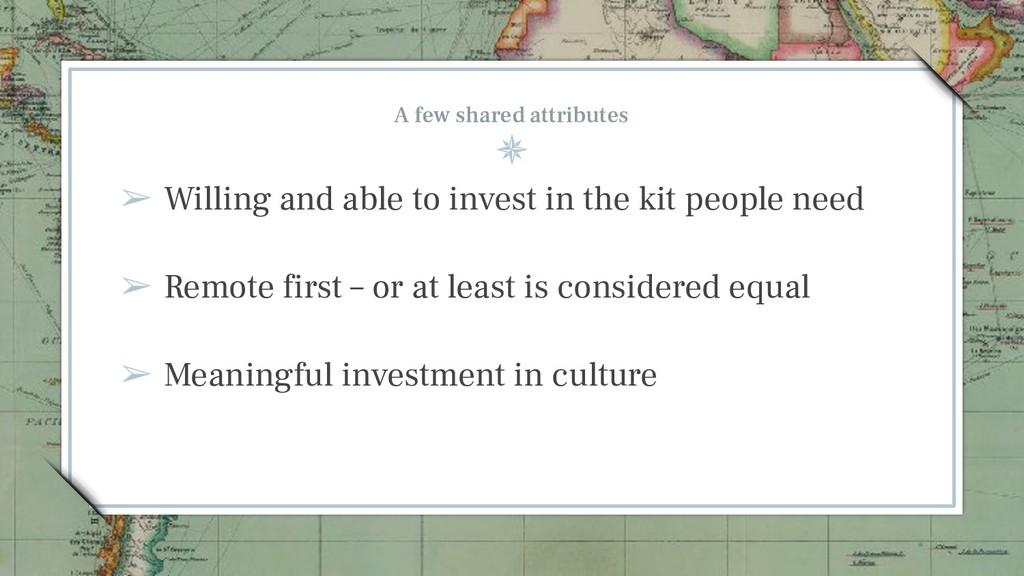
So, we do live and breathe this stuff. It's absolutely what we do. Shared attributes. What do these companies share? What is it that actually allows them to be successful in this style? I think there's a number of things that are common across all of them.
The first is actually looking after their staff properly, being willing and able to invest in the kit that they need. You wouldn't suffer crappy Wi Fi at the office, so make sure that your home workers have decent Wi Fi provision. Likewise, if your designers in the office get great screens where they can actually see every pixel and produce their best work, if you have designers working at home, make sure they have the same kit.
Allow them to do their best work. Consider things like workstation environment. In the office, you've got great office chairs. You've got proper desks. What about the people working at home from their dining room table? If they suffer health impacts from that, it's going to be detrimental to your business performance as well.
So, are some of things to consider. And, again, that dude in the palm tree? Nah, not happening. The key part for me here is the companies that actually consider remote first, or at least remote equal. It is so, so easy for remote workers to be considered almost second class citizens.
And I don't think it's ever intentional. I think it's an absolute byproduct of how we run management. So, the bulk of this session I'm going to be getting into some of the tactics and some of the things that we do at Mind the Product, but also some lessons from elsewhere in the world and some studies I've seen that I think will help.
So the first one I want to look at is the conference call. Now, pretty much everybody in this room has been on conference calls at some point. I'm guessing many of you use them as part of your daily or weekly routine. You've always got the people in the office that look like this.
They've got us a little speakerphone in the middle. You're sat around. You're having a conversation. Debate's going backwards and forwards. You're arguing about what to build next or why such and such a client is a pain in the ass, whatever it might be.
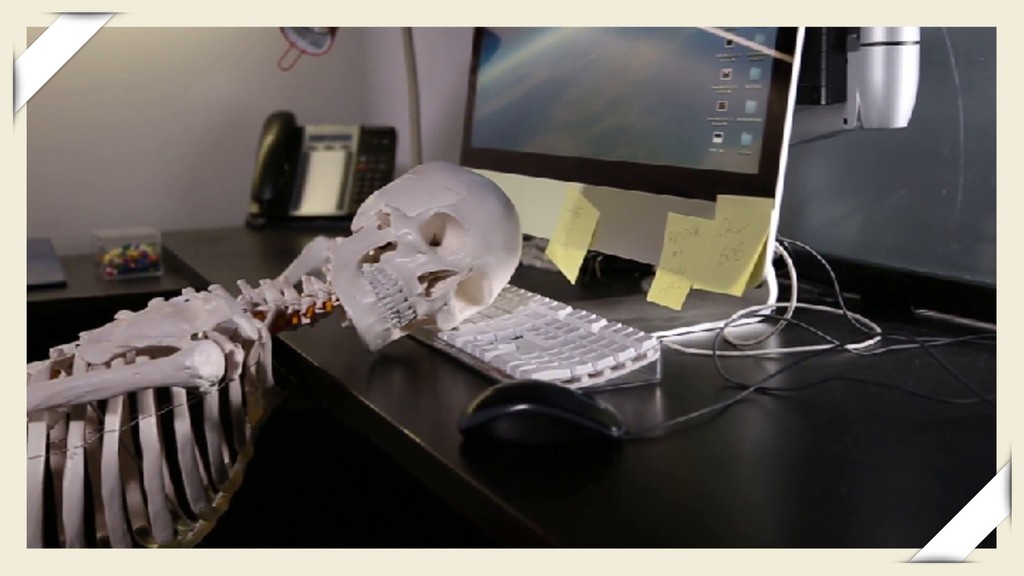
But that debate is going backwards and forwards. Meanwhile, you've got somebody at home listening in on that call. Somebody dialed in. They probably look more like this. Yeah, but they can't get a word in. The people in the room are going for it.
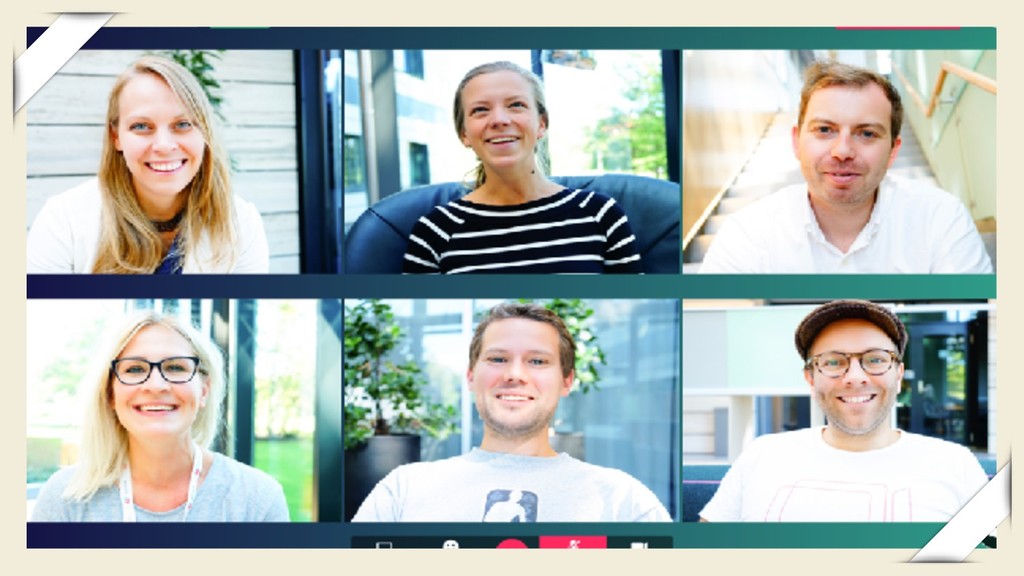
The debate's going backwards and forwards. It just doesn't work. Take a look at this one instead. It's not actually a white supremacist group. It's a bunch of Norwegians that build a conference call service called Appearin over in Oslo. We like their service very much. We use it quite a bit.
The point with this is that you can see it's equal distribution. Some of those people are in the office, some of them are at home, but no one person is being singled out. No one person is being excluded. They all have a fair share of voice.
Messaging etiquette. Now, we use Slack. I'm guessing a whole bunch of you do, too. Some companies use other services. That's fine. I'm not going to judge. I like Slack. Have some basic etiquette in place. Things like when decisions are made, how often do you just put an update in Slack with zero context?
The people in the office can get that, right? They get the water cooler conversations, pass in the coffee. They can get that context. They have an idea of what's going on, but the people at home just see that one update: such and such is happening now.
Why? What other options are considered? Why is that the most important one? What is it we're trying to de risk here? Why are we doing that next? Give them some idea of why these decisions are made. That's the kind of impact that makes people feel included versus excluded.
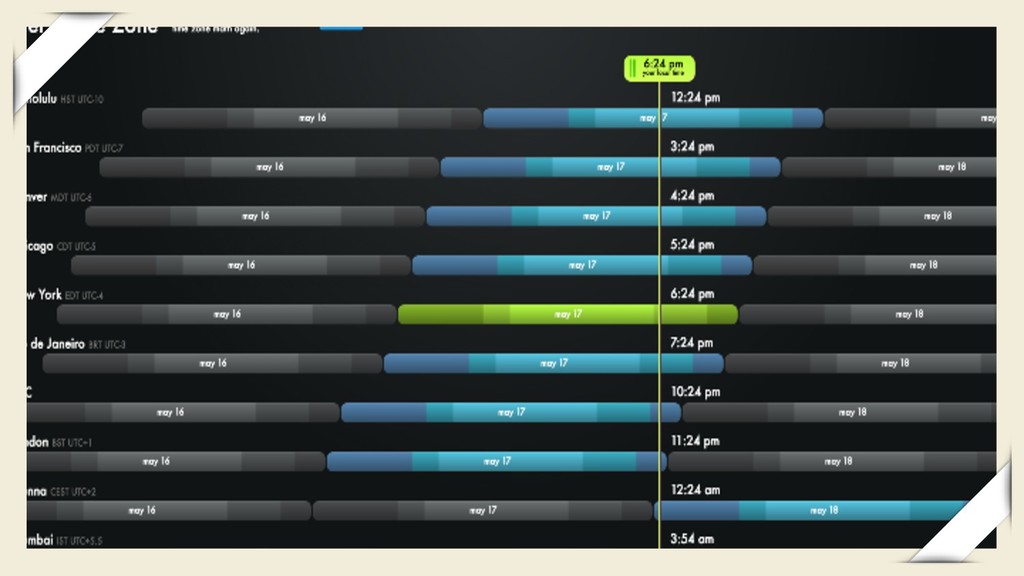
Timing is everything. We've all heard the phrase, I think it matters particularly to the comedians that will be performing in this town over the next month or so, but in our terms, it's about time zones and it's about when people are effective. So with Mylot, they're spread around the world.
We need to figure out when they're actually going to be awake and ready to take the call. But it's more than that. We are all very, very unique humans, very unique individuals. My team, there's one particular person who loves to start work at six thirty in the morning, and she's dead by mid afternoon.
She's absolutely burnt out and can't face a soul. On the other hand, one of my guys is pretty much unable to form sentences before ten a. M, but loves shipping stuff at two in the morning. We try and figure out when they work in their most effectiveness.
We try and plan meetings or calls or sessions around that. It doesn't always work. You can't be perfect about this stuff, but if you make the effort to try, it really does go a long way. Your people will seriously appreciate it. The off-site.
I'm guessing there's quite a number of you that have attempted off sites in the past. Some will have been good, some will have been bad. You hear stories from time to time of companies that go all out, spend huge amounts of money running amazing off sites and get no benefit at all, others that do tiny little things and get spectacular benefits.
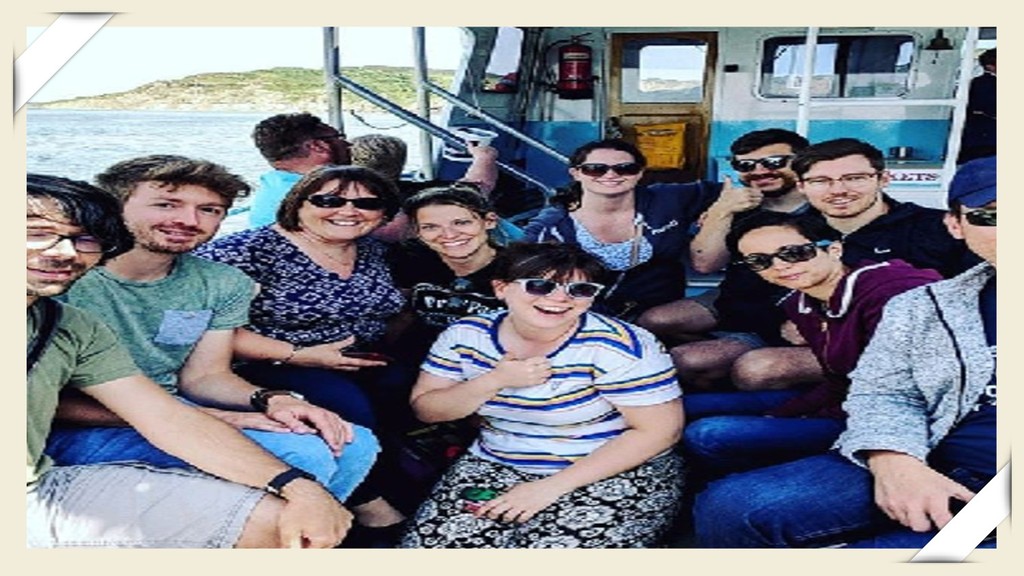
There's a number of things to consider when you're going into them. This particular photo is a team that I work with occasionally who ran an off-site recently, and they chose to do so in a rather discreet way. They went to that spectacular playboy paradise of the Isle of Wight just for a couple of days and actually managed to achieve an awful lot.
Their CEO, January, is in the front row down here, so if you wanted some tips on how to run an off-site on a budget, have a chat. That was a good one. One of the reasons it worked so well was the preparation that was done for it.
So figuring out what it is you actually want to have to the team while they're together. And let's be honest, it's not business as usual. That's what they do the rest of the time. So figure out what is going to be important. Figure out the nature of the people on your team.
A lot of companies try and do team building exercises, but they're not necessarily aware of the physical limitations of some of the people who might be on that trip. They're not necessarily aware of some of the fears that people might have on a trip.
Maybe somebody's scared of water, for example. That boat trip's not going to work out quite so well. The aim of an off-site is very much to build that inclusivity, to build that team empathy. If you accidentally pick some sort of exercise that excludes one or two people, the entire thing is counterproductive.
Absolutely not what you're trying to achieve. Build in social activity time, build in the work time, but also build in the downtime. A lot of the people that we work with need time alone to recharge. So if you're going to run an off-site, do not make it wall to wall activities and team time and exercises.
Give people time to decompress. Remember also that while they're on the off-site, while they're doing useful things for you, their day job probably hasn't stopped, particularly if they happen to be customer facing. Those customers are still looking for responses. They're still expecting their emails to get replies.
They're still expecting bugs to get fixed. So, figure out how to build in enough time that business as usual does get done and doesn't actually stress the team to the point where they are unproductive for the off-site exercises. This one's a little bit left field, and I don't mean a full office closure.
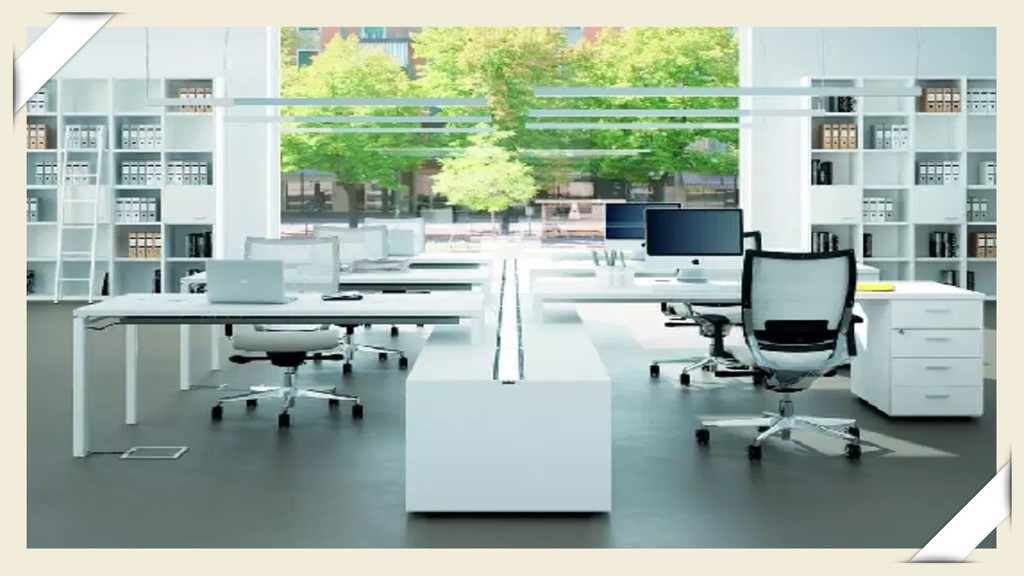
That's not where we're going with this. I think there'd be a few people unhappy with that idea. What I'm talking about specifically is a brief office closure in order to build empathy. I was talking recently with the CPO of a company called FutureLearn down in London, and they, for a long time, had been a fully co located office based team.
They'd been super productive, but they realized that it was actually limiting their access to talent in the market. There were certain skills they were trying to hire that were finally difficult, so they took the decision to hire their first remote worker. And the first thing they did was close the office for a week, sent everybody home.
And the reason they did so was so that that person would, A, know that their onboarding was being taken seriously and realize just how much from the outset the company actually cared about getting it right, but more importantly so that everybody else on the team understood how that person felt, what they were missing out on, how the communication needed to change in order for that person to be up to date, for that person to be included, for that person to have context.
Now, it's not just a case of have a remote worker close the office. It's also something that can have massive ancillary benefits. I know companies that are constantly taking on more space, adjusting their office, need to redecorate. Perfect time to say, let's build some empathy with those remote teams and close the office properly for three or four days.
Let's make people work from home. Let's try and do that. It also coincides nicely with disruption that you get sometimes. A matter of times you see people on Twitter complaining about the jackhammers outside the office when they've got roadworks. Take advantage of that. Close the office.
Get it repainted and give your remote workers some ability to connect. Build that empathy. In terms of Oh, before I forget. Before I move on, that experiment, the Future Learn RAN, we've actually got them writing up for us at the moment as a guest post on one of product.
So, you keep it on the website, there'll actually be a full teardown from them. What worked, what they learnt, what they didn't learn, what they'd do differently next time. So, if that's something you're interested in, it'd a good one to take a read off.
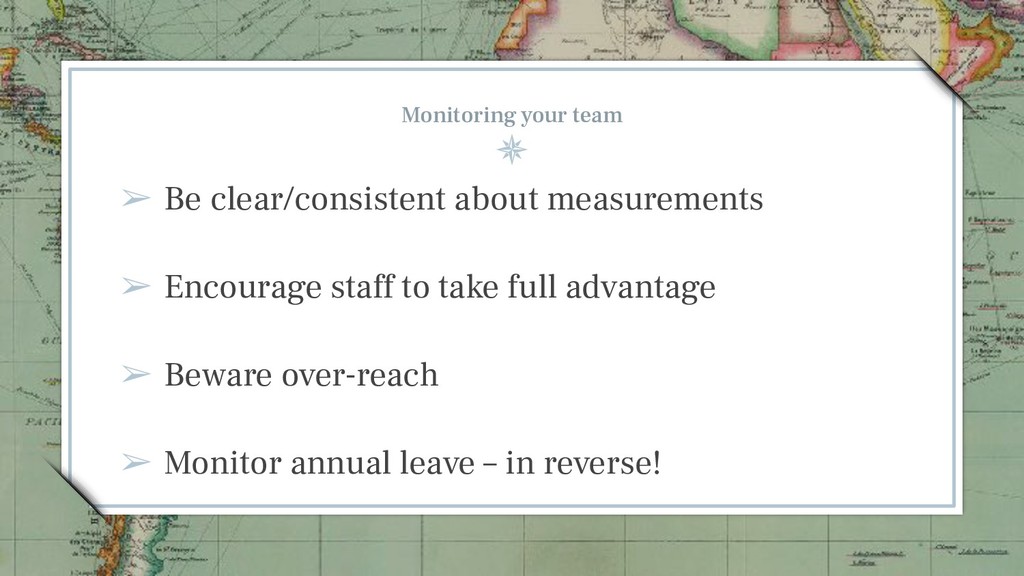
Monitoring. Now, as per the earlier quote from Jason Fried, you judge the work because you can't actually see that much else. That's an upside to it, clearly. The downside is that so many companies, when they're addressing remote working for the first time, look at monitoring and try and figure out how they can really make sure that people are working.
There's a trust issue right off the bat for a lot of companies. It's one of the reasons why it takes so many companies so long to actually embrace remote working. I think it's very, very important not to over monitor. What we want here is not big brother.
What we want is improved outcomes for everybody. If you make staff feel as though they are constantly under the microscope when they're at home, it's not going to end well. So, be clear and consistent about the kinds of things that will be measured.
Encourage staff to take full advantage of actually working from home. Give them that flexibility. I've got a couple of people on the team who love to hit the gym in mid morning. They'll do a few hours work. They'll clear their inbox. They'll get on top of everything, and then they'll take an hour off.
They'll go to the gym. They'll decompress, and they'll be back at their desk for the rest of the day. That works really, really well for them. It wouldn't work that well if I was expecting them to be at their desk from nine to five just as the people in the office are.
Now, are certain environments where you're going to have constraints, particularly, as I say, if you're customer facing. So that's not necessarily going to work perfectly for everybody, but it is something to consider. Aside from that, you'll also find that if you do have people at work from home and you can give them that flexibility during the day, they're also more willing to be flexible in return.
So if you have something that breaks late in the evening, you've got far more chance of an engineer jumping on to actually fix that problem, and they'll say, It's cool. I can work late this evening. I can get this done. I'm going sleep in tomorrow morning.
Don't expect me to be answering calls before eleven It's not going to happen. That flexibility goes both ways, and it can be hugely beneficial. Team day. We do team day with our bunch once a week. So the majority of my team are based in the UK in various locations: Cambridge, Sussex, London, and so on.
We try and get the team together once a week and pull them all into a boardroom that we rent in London. The intent is partially to actually have a team meeting where people do get up to date, figure out what's going on and work with one another.
The other part of it is the relationships. It's having them hang out for a day around that table telling jokes, throwing bits of paper, going and grabbing a coffee together or grabbing a bite from a street food truck at lunchtime. I'm not necessarily looking for massive amounts of output on team day because I know that they'll get their work done the rest of the week round and they'll be more effective from home.
That's fine. Can get their heads down, plow on without interruption. When they are in team day, I want them to take full advantage of those conversations with each other, build that empathy so that they do feel like a team. They do feel that they can step up and support one another when needed.
So that's what's been working for us. I know of another couple of companies that do similar sort of things. This is my lot. Aren't they lovely? I'm in there somewhere. I think probably just off to that side there. As you may have noticed, I'm terrible at editing photos.
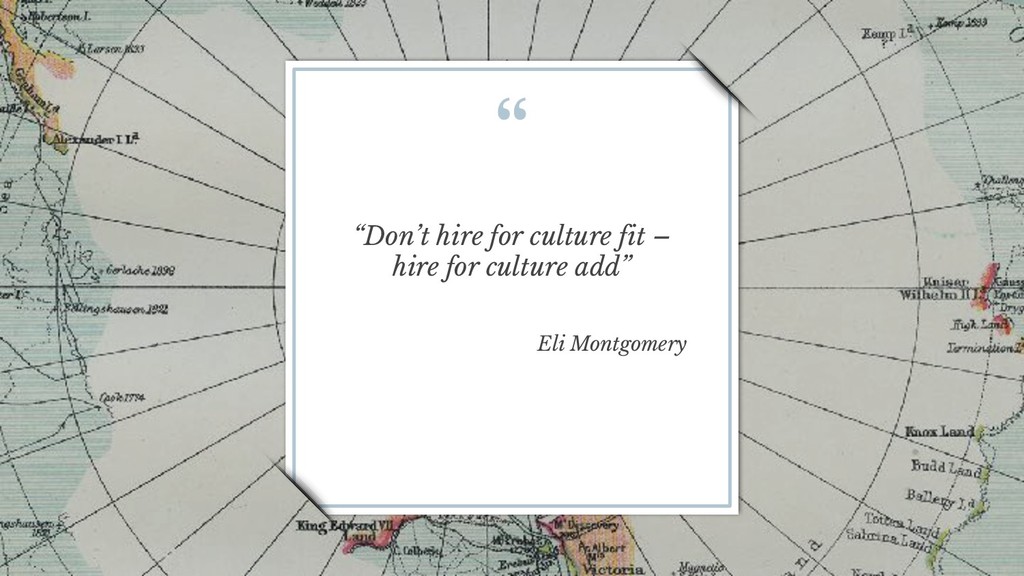
It's just a skill I can't develop. Bonus thought for this one. It's very much about diversity. It's very much about empowering your teams, but don't just hire for cultural fit. I was in a leadership event in New York a couple of weeks ago moderating a panel on product leadership, and one of the panelists threw this quote out.
An old colleague of hers had always focused very much on hiring for cultural add, not cultural fit. If we honestly believe that diverse teams help to solve problems, and we believe that use of remote working helps us hire more diverse teams, then why do we harp on so much about cultural fit?
Half the time, that's just code for we want bros like us. I don't want cultural fit. I want cultural add. I want know what you're bringing to my team that's new. I want to know where we have a hole that you think you can fix.
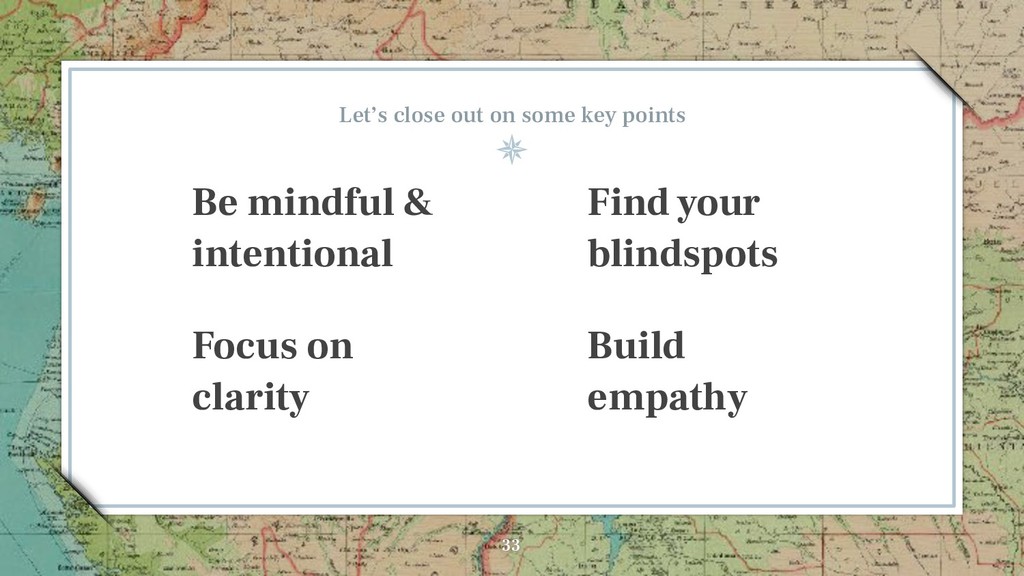
So, keeping this relatively short and sharp and opening up your afternoon sessions, hopefully moving it to a reasonable pace so that nobody's that sleepy from lunchtime, some key points to close out on: being mindful. This sort of stuff does not happen on its own.
If you try and treat remote workers just as you do the existing team that you've had for the last five, ten years, it's not going to end well. You need to be mindful of this. You need to be intentional. You need to go flying blind spots.
They will be there, and one of the exercises, some of the write up that we'll see from Future Learn, is specifically around the things they discovered when they closed the office for a week. Holes in their communication, holes in some of their documentation that didn't become evident until everybody was out of the office.
So, figure out where your blind spots are. Go find them. Go look for them. They are there. Can guarantee it. Just you haven't found them yet. Focus on clarity. When you're working outside of the office and you don't have that consistent communication with your teammates, you need to be more clear than ever before.
We have the tools to do that now. Some of the people in this room have helped build the tools that allow us to do that now. So use them. And I think, finally, build that empathy. It's so easy to be excluded, to work at home, to feel lonely, to feel disconnected, to feel as though the team don't have your back.
Like I say, I've worked at home for twenty odd years. I've been there. It's horrible. It's also brilliant when you get it right. Really brilliant. You get so much more out of your team, so much more out of your company, and everybody is so much happier.
So hopefully, what we've got here are some things that you can take away and use, some thoughts and ideas that you can experiment with or at least try and fine tune them, see how you work for your company. If you want to reach out to me afterwards, I am pretty easy to find.
But for now, I'll wrap up and leave you with it. If you've got any questions, I'd be Got time for one to I'm going to pop up and ask you some questions. Thank you so Thanks, Ed. Let's give you a quick round of applause.
Thank you. Honestly, I bloody love this ****, Me. I really do. I really do. And I think that was a really interesting talk in terms of if you're building that remote team. Do you have any advice for those of us who work remotely, myself included, who maybe do feel excluded, perhaps how they can educate people or raise the point that they're feeling that they're missing context?
Yeah, I I think the first thing is to accept that as a remote worker, the responsibility isn't entirely on your management. Part of the responsibility is on you to say, I want to work remote. I recognize I get benefits from this, but where are the areas that I feel unsupported?
Where are the areas that I feel excluded? Maybe it is the conference call dial in, that bit's not working for you, and you are the skeleton at home, But I think if you can flag those problems, you can go and say, I am able to be more reactive, I am able to be more efficient, I am able to do more for you, but here are the things that are limiting me.
If you can face up to those with your management, chances are you'll get some support in resolving them. Yeah, It's shared responsibility. Thank you. Do you have any advice or recommendations on any kind of processes and how people work, or like document share and things like that?
Document sharing has so many tools available, whether it's Dropbox or Google Slides or Slack links or whatever works for you. I think that one's simply a case of figuring out what works for the team. Every team has slightly different nuances of the ways they like to communicate, the ways they like to share.
So, I don't necessarily want to point people in a specific direction on that. What I would say is when you've figured out what the patent is for your company, document it and share it so that people have a consistent base to refer to and can say this is how we do it.
And yes, I know I'm at home and I can't ask the person sitting next to me because the person sitting next to me is my doc, But, when I need a file, this is where I need to go looking. Or, when I need to find the policy on something, this is where I need to go looking.
Publish that stuff, make it findable, make it consistent. Amazing. Thank you so much, James. Really good to have Thank you.