
When the pandemic hit, TravelPerk lost 99% of its revenue - in a day. In this session, Huw will share how the company navigated through the crisis, his personal lessons as a Wartime COO and why building resilience for your team and yourself is crucial for success.
← All talks 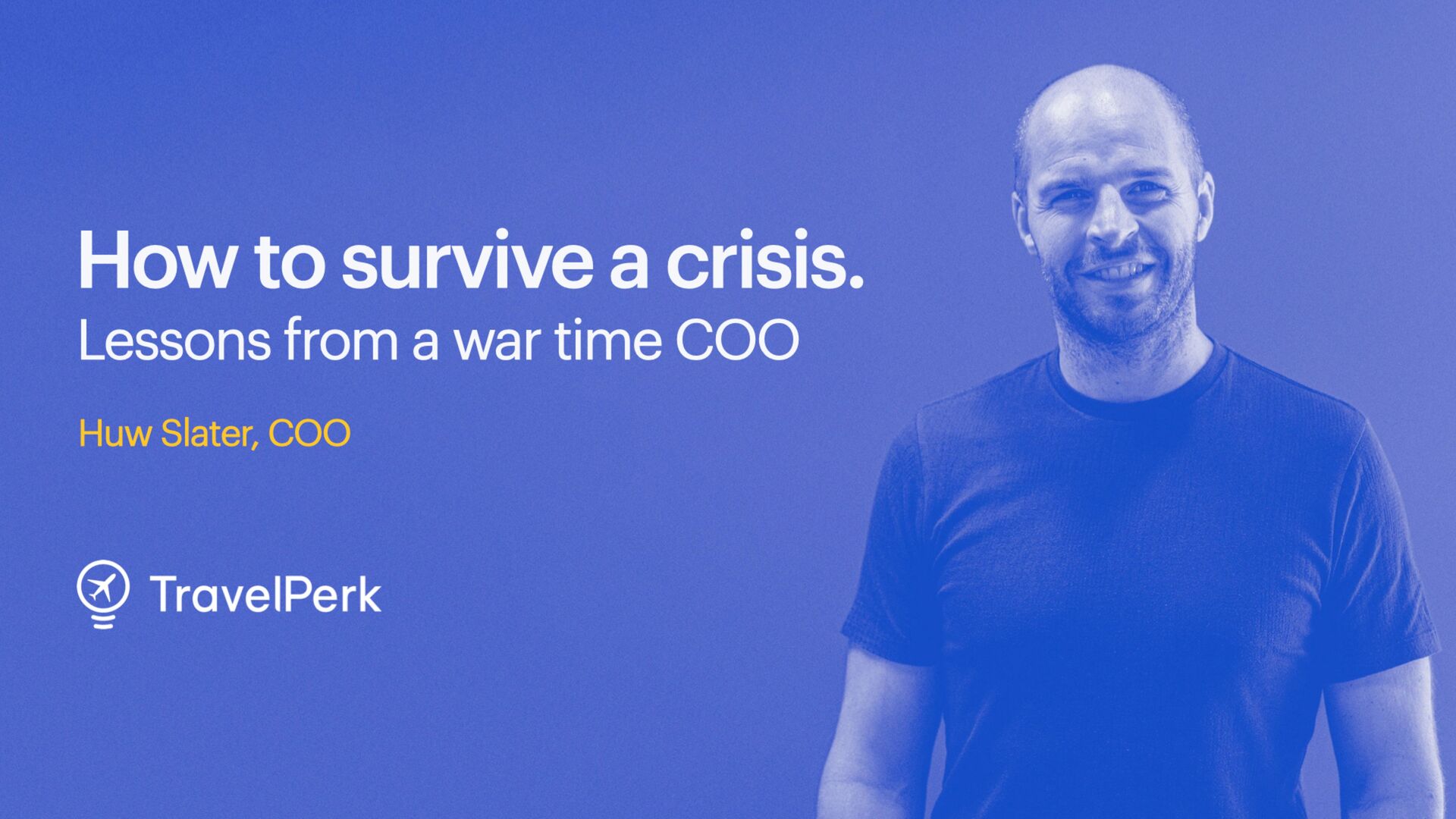





Lead Culture Turing Fest 2022
How to Survive a Crisis: Lessons From A War Time COO
Auto-generated transcript - may contain errors. Tap a timestamp to jump the video.
Good morning, everyone. How are we all doing? Yeah. Good? Yes. Give us a little twirl on the thing. So I am Hugh Slater. You can tell marketing had been at the slides because I'm now a wartime CEO. That was definitely not something my high school career counselor offered me at school.
But here I am, and it's wonderful to see you all here. Two years without an in real life conference. Isn't it great to be back? I would say so. Pretty good. So for those that don't you don't know Travelperk. We love in real life connections.
So this is an absolute dream for us. And we provide a business travel solution for every everybody who wants to connect in real life to get **** done. Now given we've had two years of a pandemic, and as a company, we provide the rails to get people together.
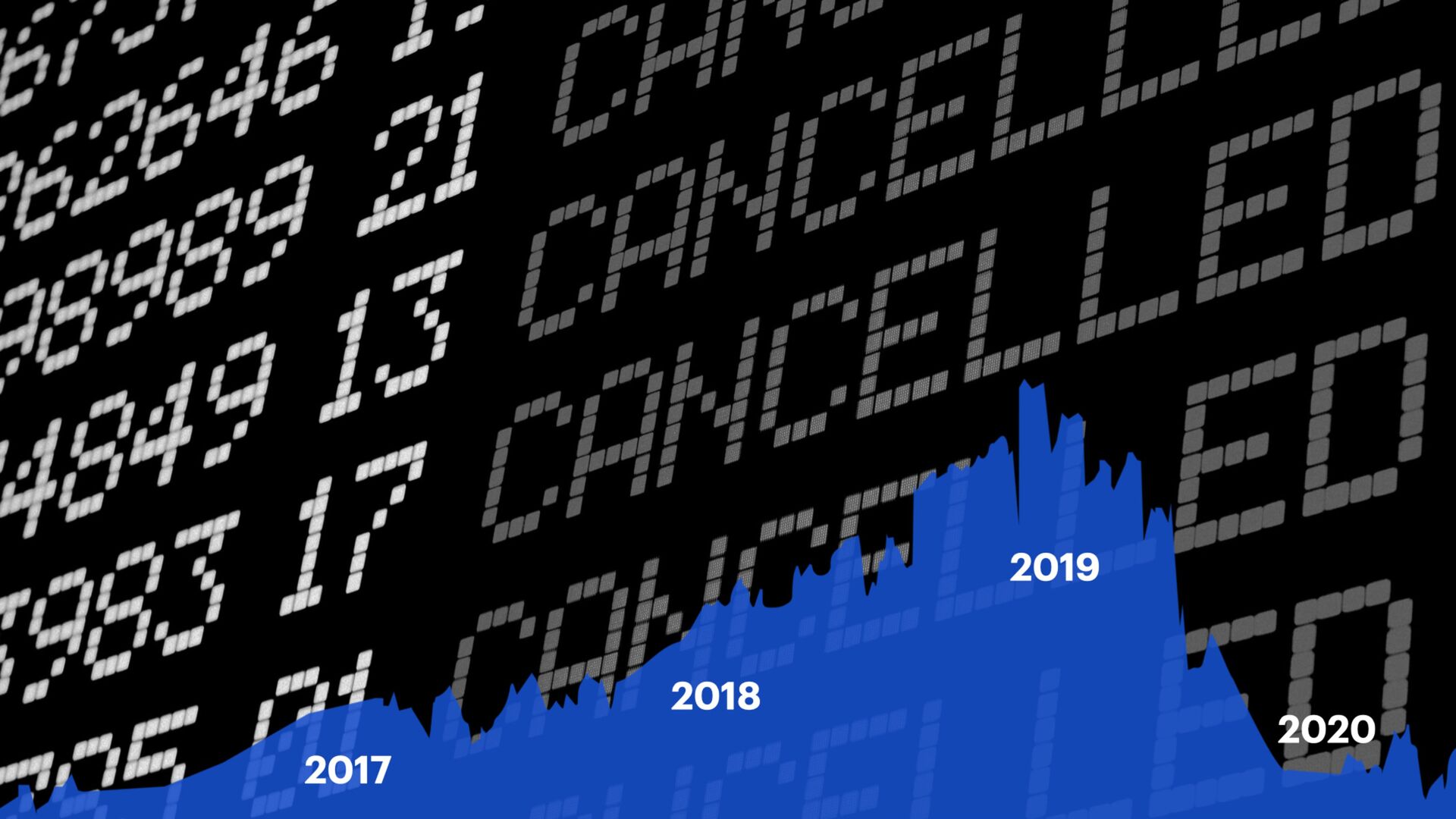
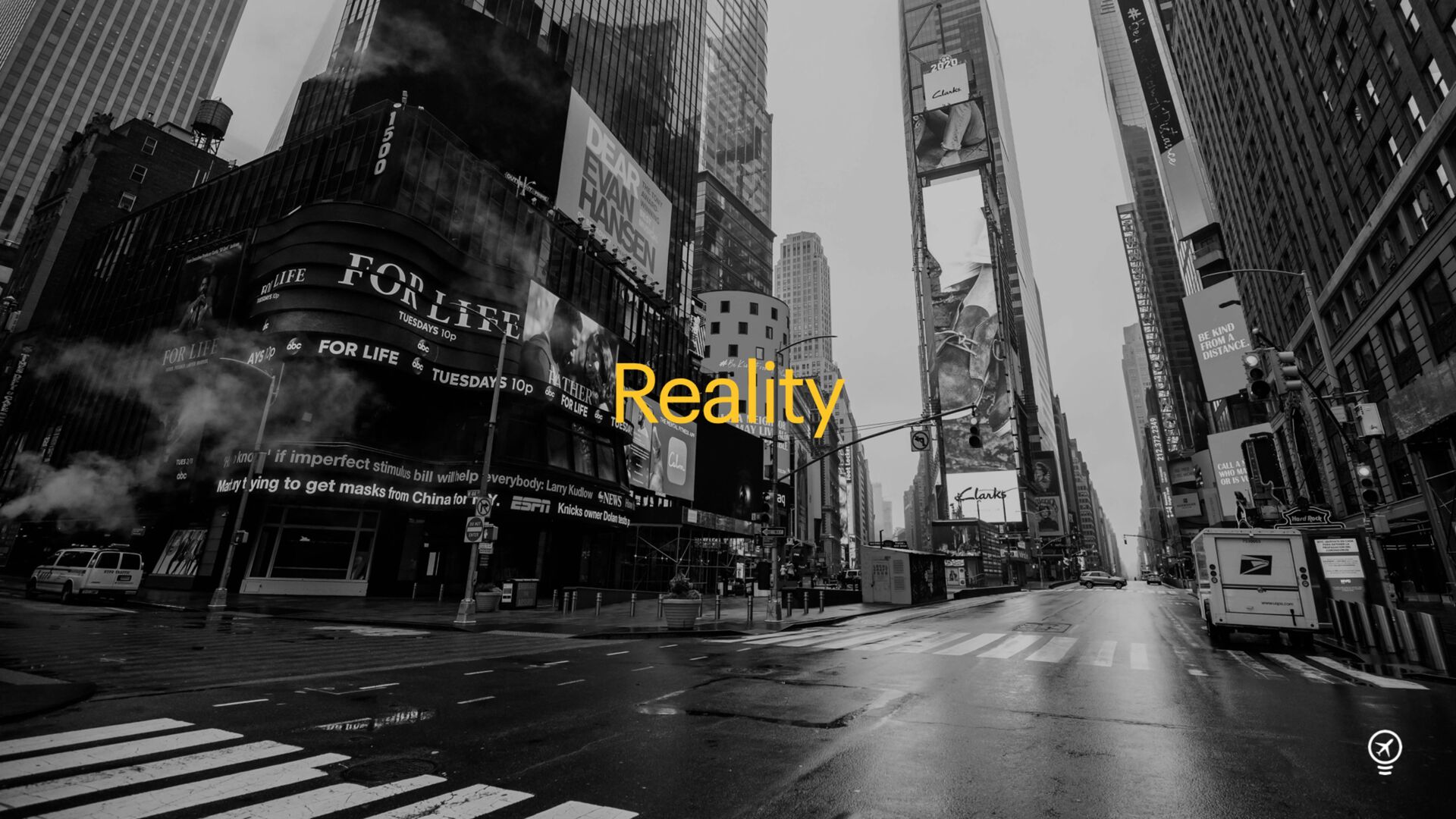
What do you think happened to our revenue during the pandemic? Yeah. I think that's pretty accurate. Ninety nine percent, we lost basically all of our revenue overnight. It was horrifying, to say the least. It was a real punch in the face. I'd never experienced anything like it before.
Kind of to make matters worse, we were a start up and we've been on an incredible journey. May I have your attention, please? The content is now due to start on all stages. Definitely got my attention. The relevant rooms. Thank you. Thank you.
Is everyone where they're meant to be? If everyone pug us off now, I'm in real trouble. Yeah. So Travel Quirk was created about twenty sixteen. We've been on an absolute tear, found product market fit, everything was looking incredibly rosy, and then COVID hit.
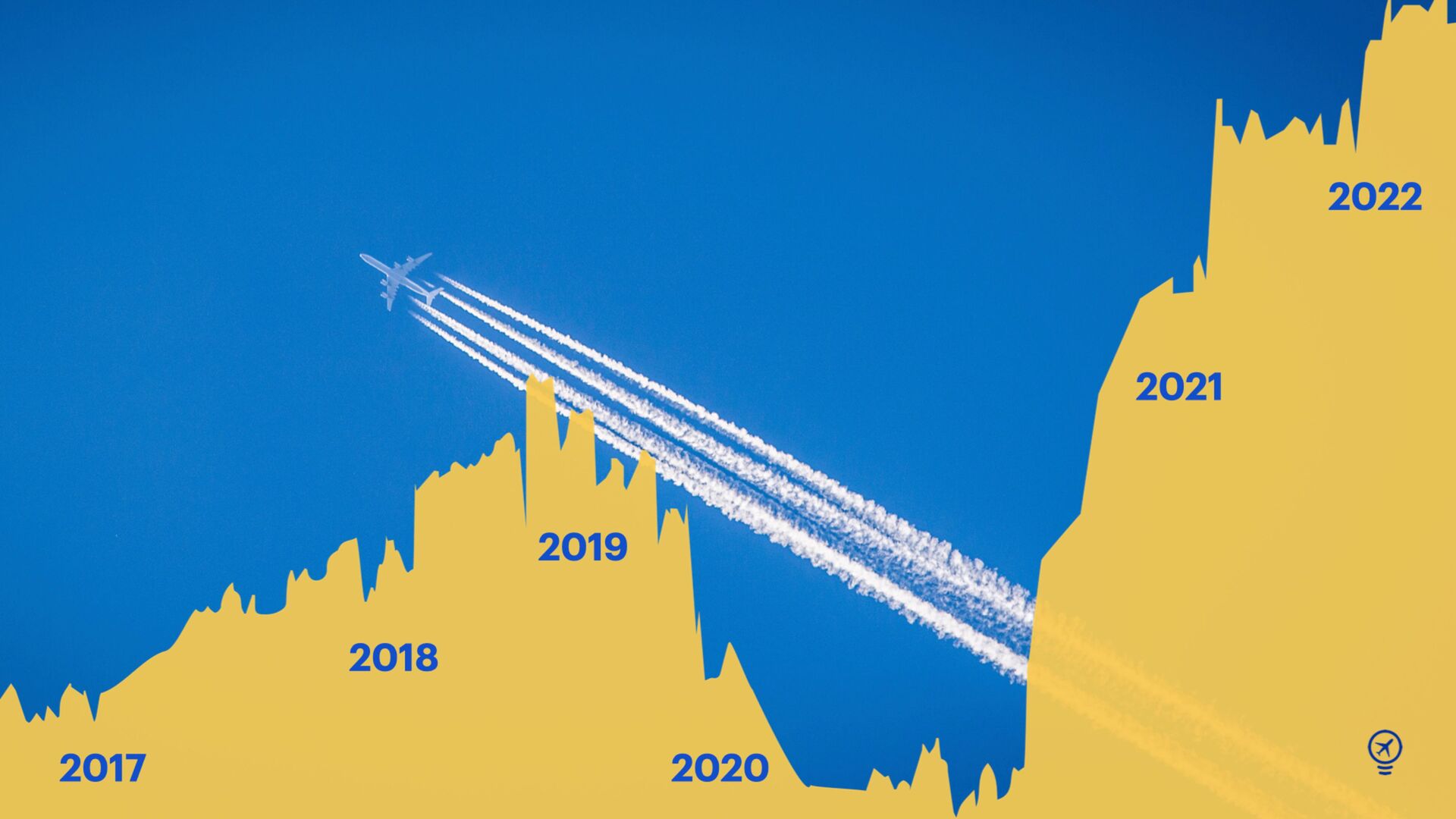
When your mission is to connect people in real life and nobody can leave their homes, you are in the ****. And that's where we found ourselves, a massive swing for the company. Now I'm very fortunate, and the reason I get to stand on stage is we're not in that dip anymore.
We have come out the other side. Not only did we survive the crisis, but we thrived coming out of the crisis. We've gone from zero in revenue back in twenty twenty to over a hundred million in ARR in a little over a year.
We've acquired four companies. We've gone from basically not being in America at all to twenty five percent of our business being there, and it's our most rapidly growing market. We've tripled the size of the team, four acquisitions, become a unicorn, and we don't intend to stop there.
In fact, we definitely have our sights set on bigger things. We very recently just hired a CFO. The wonderful Sally joined us in will join us in September as our chief people officer. And we're looking for a world class CMO to complete the leadership team.
That was our dip. COVID was our dip. It won't be our last, I'm sure. And I'd imagine a lot of you are in the room because you're looking at the environment out there at the moment, thinking what your dip, what your crisis might be.
Maybe you've been looking at the tech company valuations plummet over the last nine months, wondering how that impacts you, either working at those companies or impacts you if you're in a private company and the valuations might be falling for you. Maybe there's a funding issue coming.
Maybe you're looking forward six months, imagining what a recession might do. What's going to happen to your revenue, to your customers? Inflation, what will happen to your input costs? What's going to happen, in essence, to your runway? Those things are completely out of your control.
You have to control the controllables. You have to prepare, and you have to have a framework for dealing with those. And that's what we're going to talk about today. So I'm Hugh Slater, this wartime CEO, Gordon's Marketing. I've been in Travel Perth for just under four years, so from zero revenue to over a hundred million in ARR.
I've had a decade in tech companies from pre IPO to post IPO, small to large. Before technology, I'm pretty old. So before technology, I spent a decade at British Telecom, where every day felt like a crisis, frankly. I've had my fair share of wounds along the way.
Had to deal with some terrorism back in the day, had to deal with data breaches, and more recently, had to deal with the COVID situation. So I hope that I've got some experience that I can share with you. And I really hope that you'll leave the session with one or two nuggets that you can take and apply in your own day jobs.
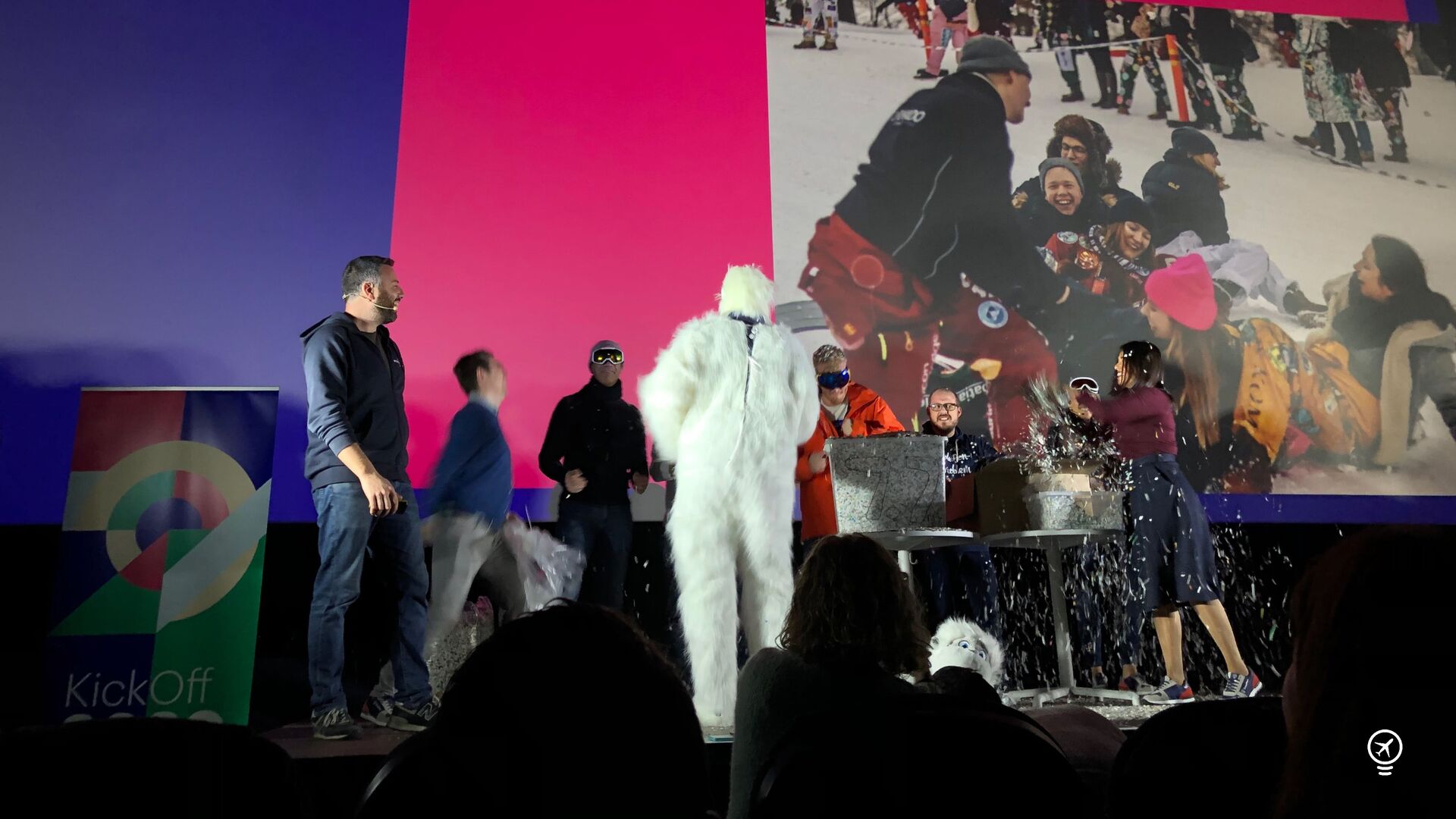
So how to survive a crisis? The first thing to say this is me dressed as a yeti, by the way. The first thing to say is nobody expects a crisis. This is us, January twenty twenty, the leadership team on stage in an auditorium much like this.
As you saw in the previous slides, we'd had a great twenty nineteen, and we thought twenty twenty would be the same. So there we are as a team pumped. We had a plan for the year. We were going to conquer the world, And we were telling the whole company about it.
We also went on to say, if we could beat the numbers that we set, the targets that we set, we'll take the whole company on a snow party to the Pyrenees. Trouble puts space in Barcelona, which is why it's the Pyrenees. Hence me dressed as a yeti, dancing around like that's actually how I dance, but dancing around like a moron.
We were not expecting the punch to the face. But four weeks after I was dressed as a yeti, that's what came. We could see it coming. JC, our chief revenue officer, started talking about things happening in China, some customers canceling trips. We watched this wave come towards us.
There was one Sunday, very early in March, Ross McMahon, our chief product officer, I went for breakfast, And we were talking about this weird thing happening in China. We had to face the facts. That afternoon so left breakfast with Ross. That afternoon, I sent a WhatsApp message to the whole leadership team.
We'd all been together a little while by that point. We had a great team. Sent a message to them and said, guys, get to the office, six o'clock, Sunday night. We need an emergency meeting. Now because we've been together, we had a bit of trust, we respect for each other.
When I sent that bat signal up, there was no hesitation. We got together and had what was our very first crisis meeting. What we did in that meeting set the tone for the next two years. We did not know it at the time, but the next two years were set then.
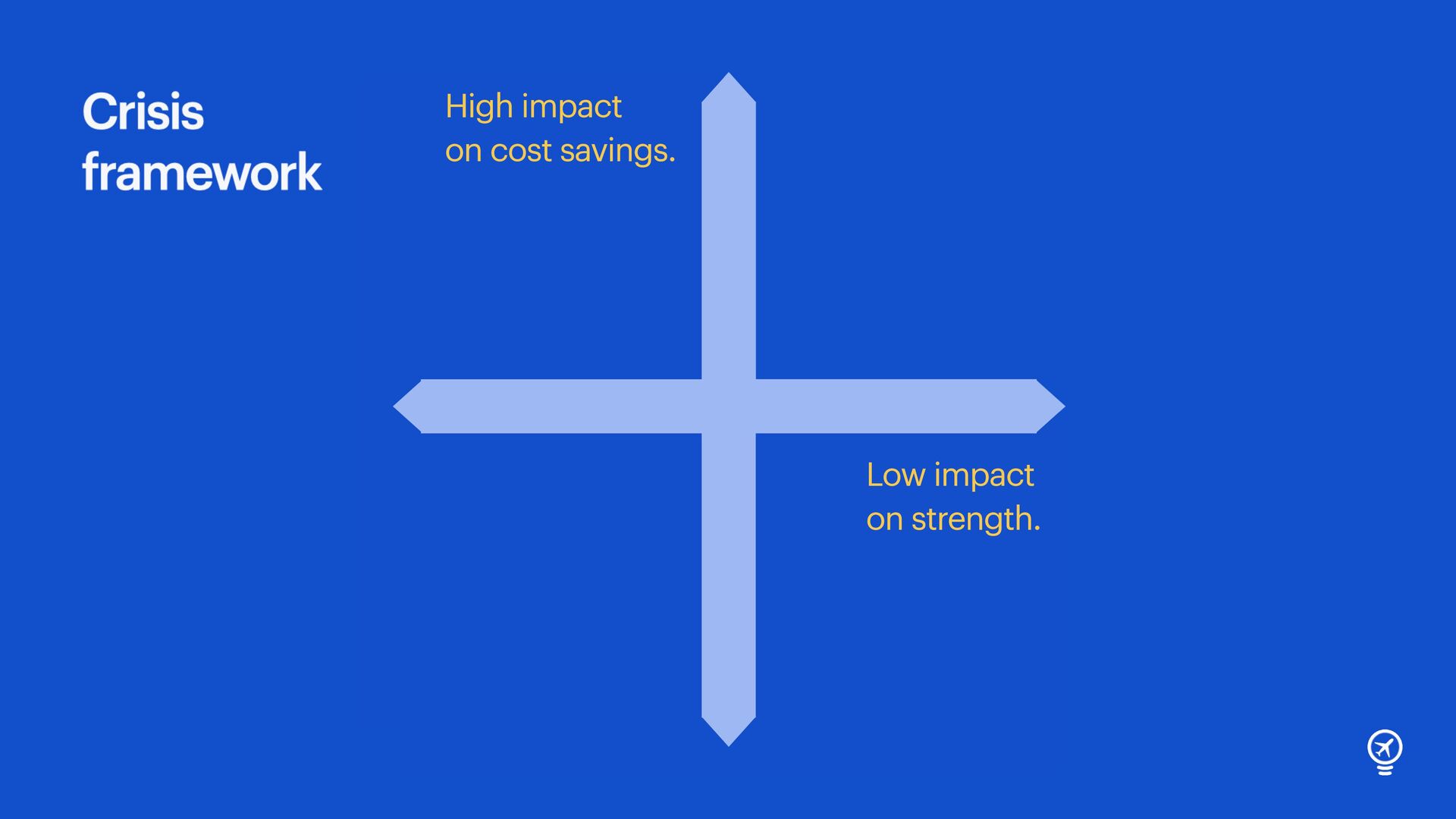
And this is the framework that we came up with. Now, when you expect revenue to go to zero and you start to see that happening, obviously, you're going to have to save costs. So no surprise that it's up there. What's a little less intuitive is what's on the horizontal axis.
We didn't want to save costs at any expense. We believed in the future. We believed humanity wasn't going to change as a result of the virus. We believed people would always want to connect in real life. And therefore, we didn't just want to survive.
We wanted to survive and thrive to be there when the virus passed. So we mapped everything against that two by two. What could save us money so we could survive? But we made sure that we held on to the things that would keep us strong in the long run.
This simple framework, this crisis framework, set the tone for everything that came afterwards. That happened one Sunday afternoon, one Sunday evening, back in March twenty twenty. So the very beginning of the crisis, hours into the crisis, in fact, from that Sunday morning with Ross to that Sunday evening with the leadership team, there was a few lessons that we took from that.
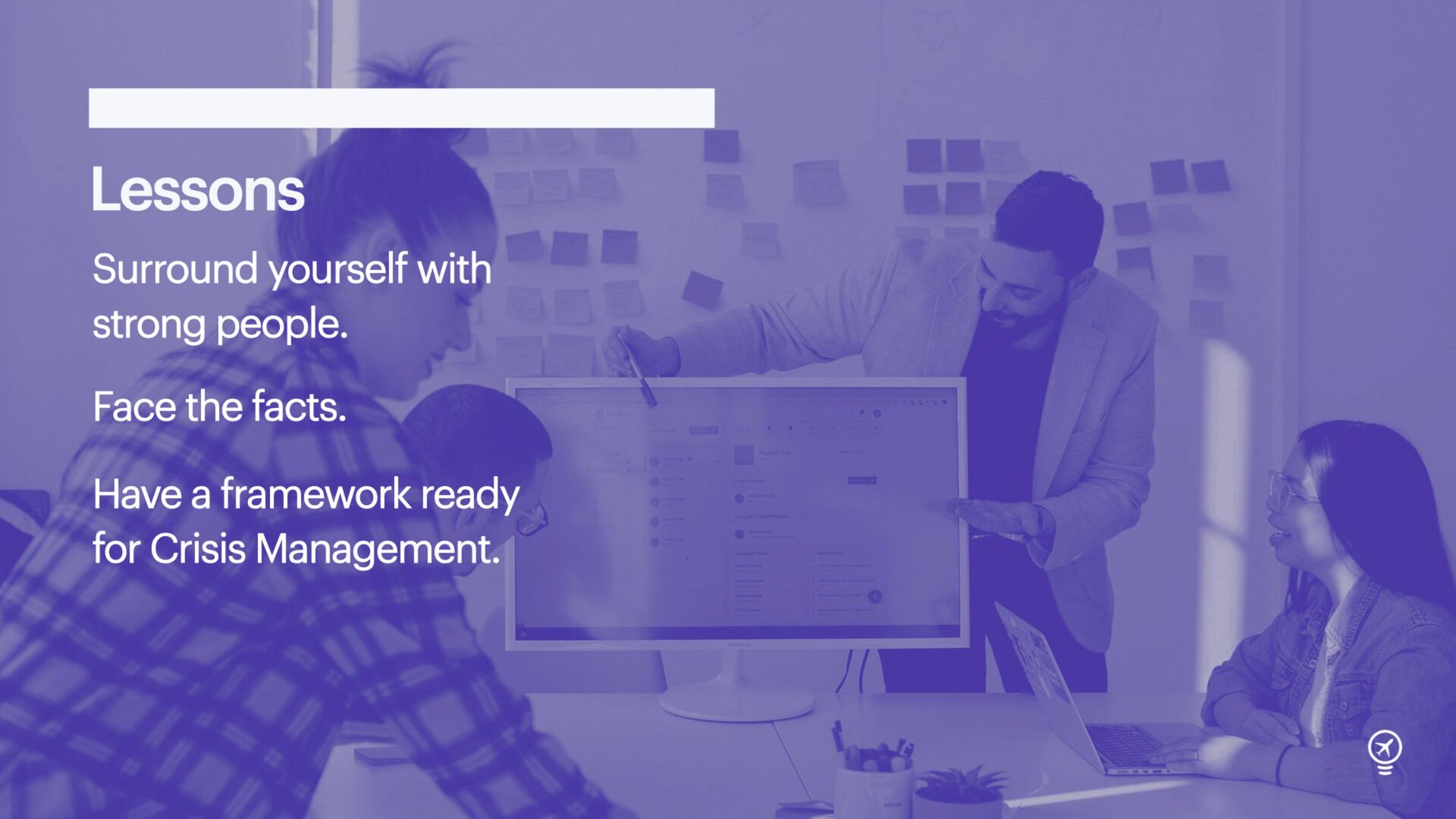
And there's a few of these lesson slides as we go through the presentation. The first is I was talking about the team. Surround yourself with strong people. You're probably sat there thinking, well, no ****, Sherlock. Obviously, we do that. We have a talent team.
We hire the best people. They're amazing. Sure. But there's nuance here. Are you hiring people that truly believe in your vision, in your view of the world? You're probably testing that they can do the job, that they're the best in the world at doing the job.
But do they believe? Because if they don't, when you get in the ****, they're going to bail. On top of that, once they're in the company, you need to build the trust. You need to build the bonds that will survive, that enable you to send up that bat signal when people come together to solve problems.
That doesn't happen in the crisis. That happens before the crisis. So you have to surround yourself with strong people. You have to face the facts. We all think we're special. Right? We all think we're special. We'll win the lottery. It won't happen to us. We'll be different.
Someone will come and save us. We're not. We're not special. Hope is not a strategy. You have to face the facts. You guys are the builders, the leaders. It's on you to face those facts. You have to adapt. And last but not least, early on, it was that framework.
That was our framework. Yours might be different. But what is your framework for making decisions? It's a very good idea to think about that now before you need it. When you're in the trenches, when stress is high, when things really matter, you don't want have to make your framework, then it'll be a bad one.
So get prepared. What is that framework? So as I say, that's a lesson slide. I think there's three of those through the presentation. But they're the first hours, the first day of the crisis. Now I love a good framework. I've got a degree in astrophysics.
My brain just works like that. Right? If it doesn't fit in the box, don't know what to do with it. But a does not motivate a two by two does not motivate four hundred people. That's not how people work. I'm fairly robotic, so it's how I work, but it's not how most people work.
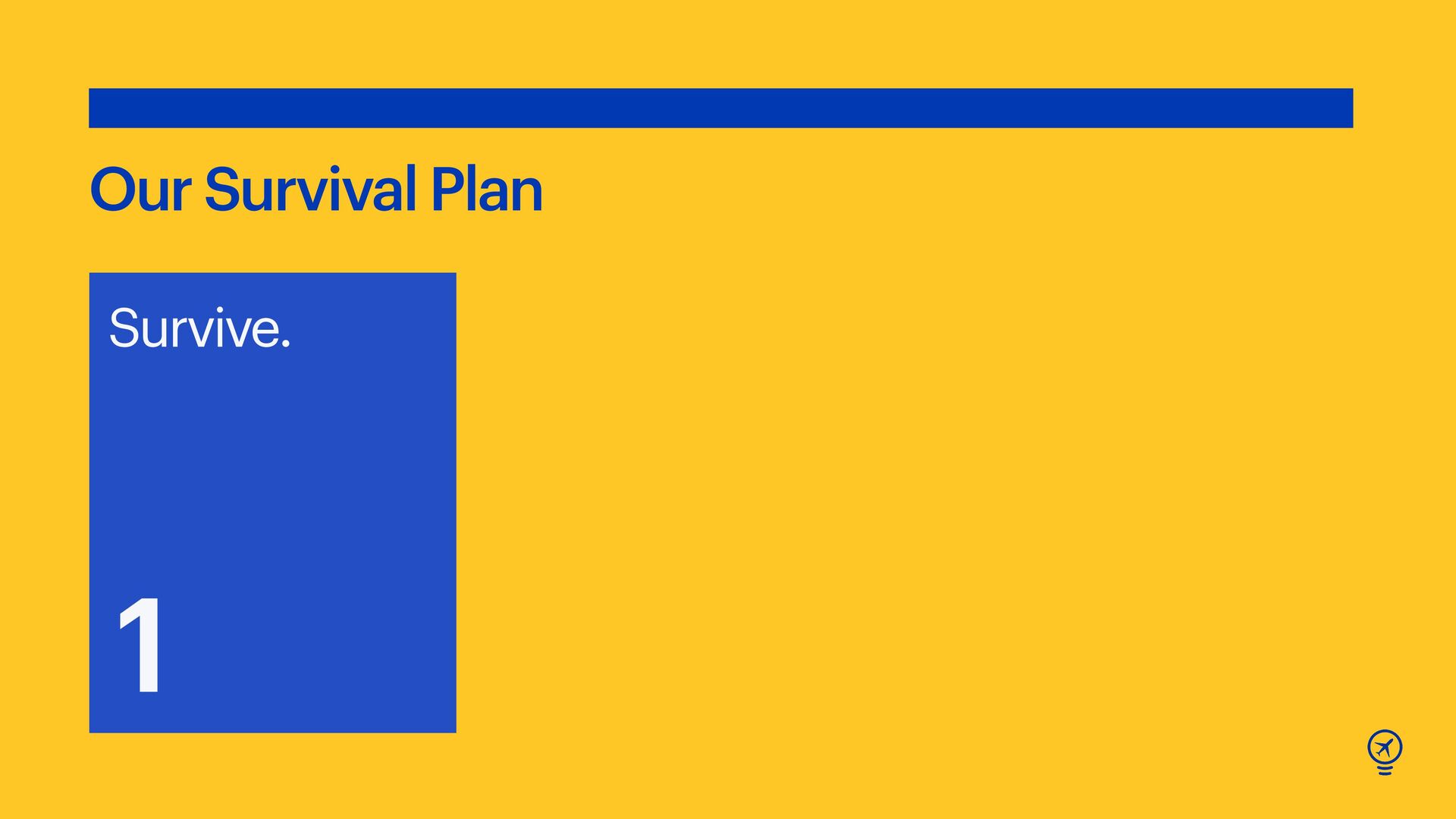
We needed a plan. We needed a strategy. We actually needed a story to tell the company, something they could believe in, something that gave them context so that when they saw decisions getting made, they understood why. This was our plan. Unsurprisingly, survival was the first thing.
When you believe in the long term, you have to survive. You have to be there to achieve it. And we were very clear with the company. No matter what, no matter how hard it got, we will make the tough decisions to survive. We also said we'll turn lemons into lemonade. We'll adapt.
We'll make the most of the situation. I'll talk more about this in a second. Actually, I talk about lemonade factory. It gets super weird, but bear with me. And finally, in our three step plan was emerge strong. Don't just hibernate and get through, but be different, be better at the end.
Now, there's way smarter people in the room than me, but this is actually a story in itself. There's a beginning, a middle and an end. It's actually a bit of a hero's journey. Right? There's a task given to you. You didn't ask for it, but you've got to accept it.
That's survived. There's obstacles along the way. Turn lemons into lemonade. And come back better with magical powers. That was our hero's journey. We didn't know it when we wrote it. Right? This is all great in retrospect. But that's what it is. Create a story because that's what matters.
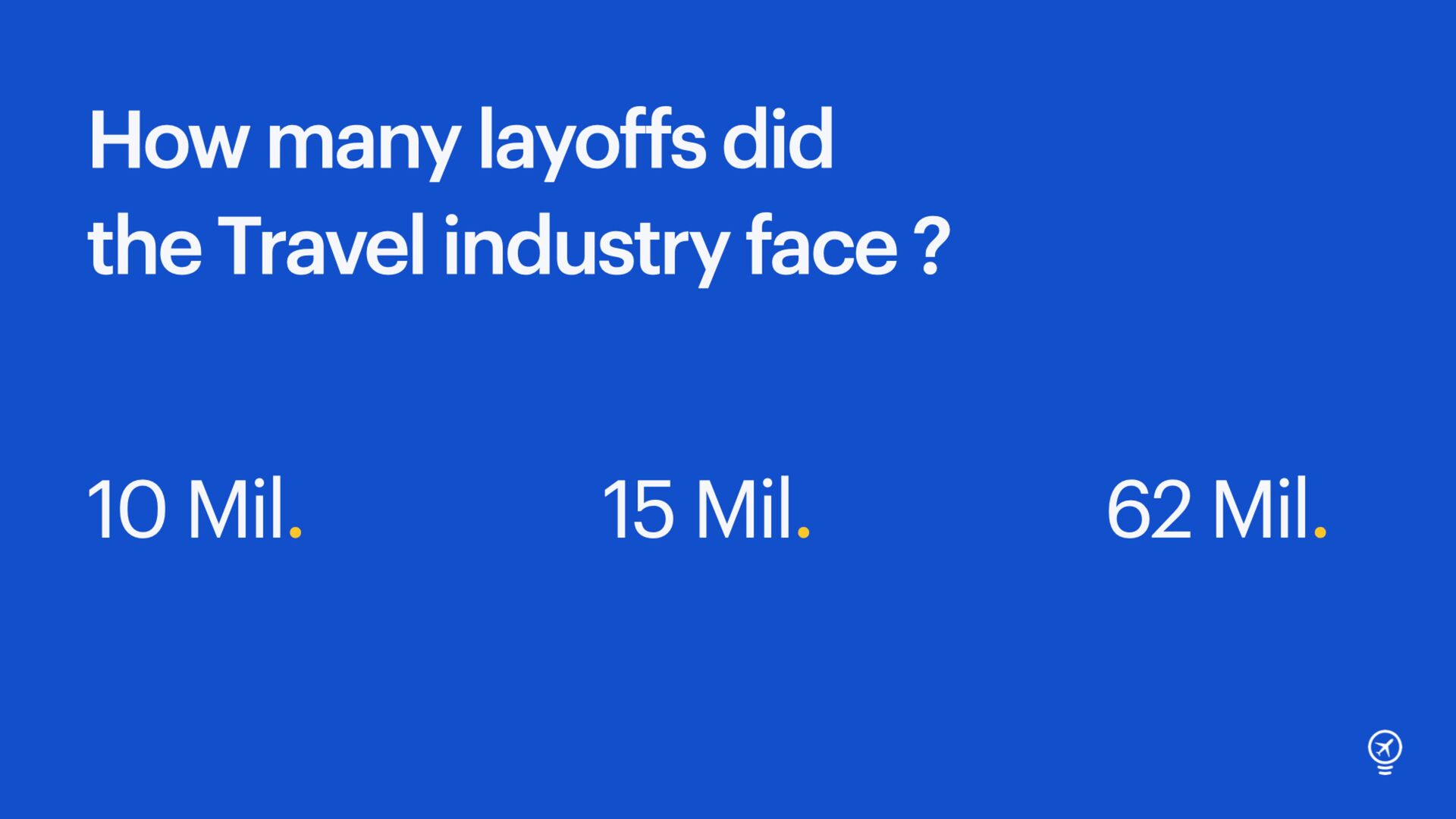
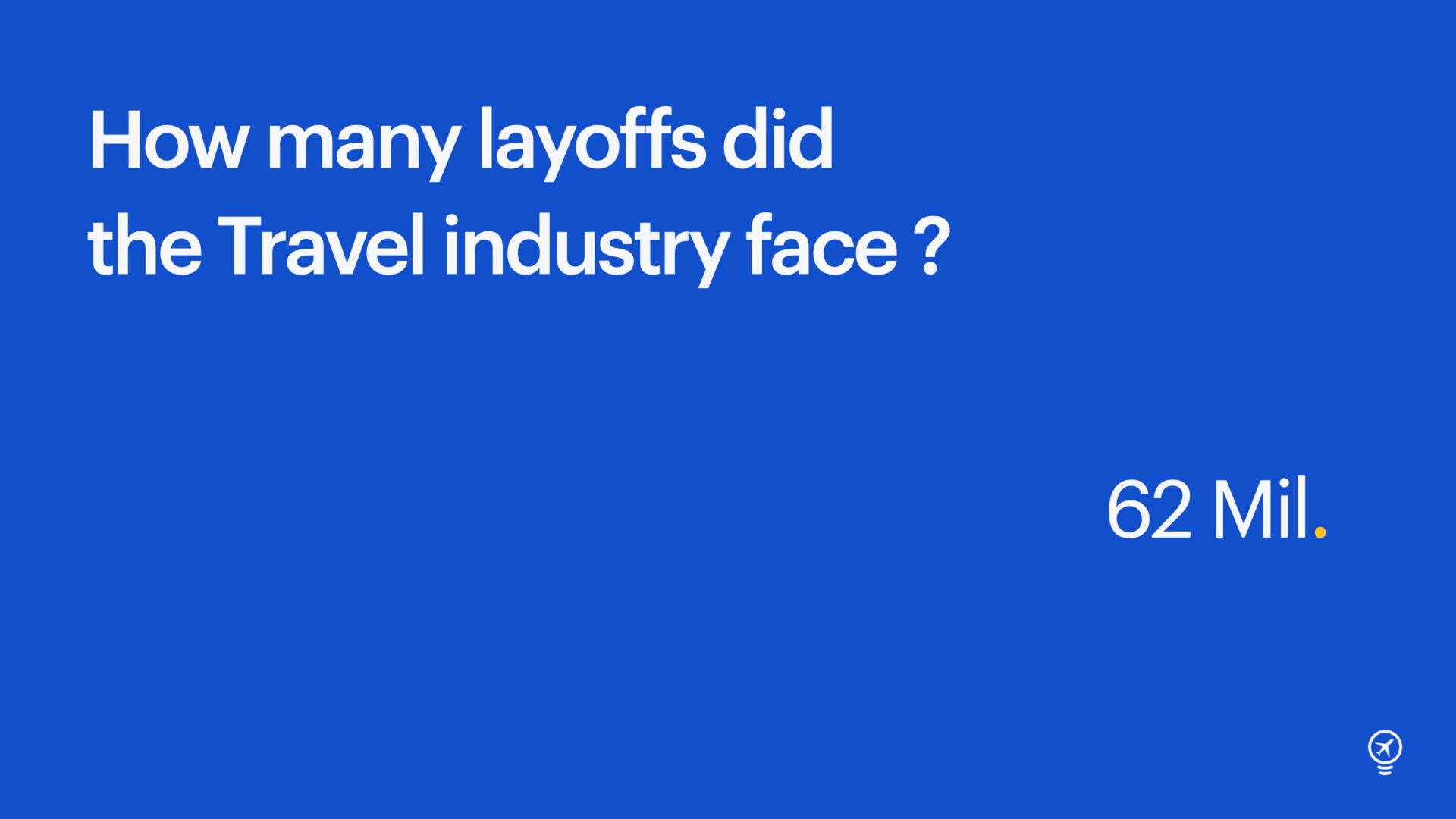
It wasn't the only story that was going on. So my second question for you guys is this. How many layoffs do you think there were in the industry? Thousands, hundreds of thousands, millions? Was definitely in the millions. Any guesses? How many? Take that as a no.
Sixty two million people were laid off globally in the travel and tourism industry. That was the other story going on for our employees. Great. You've got a story, Travel Perk, but everyone else outside is telling this story. Okay? People work to stories. I'm very proud to say that we didn't make any layoffs during that time.
Now it wasn't easy. There was a huge amount of pain involved for every employee here, but layoffs wasn't one of them. There was furloughs, salary sacrifices. Lots of things happened. We ramped up performance management. It was not easy. But I'm very proud to say that the story we had enabled us to avoid being a statistic in those sixty two million layoffs.
And let me explain a bit about why. Right? So we explained to the company why. We gave them the story. We told them our beliefs. We gave them that plan, that story, the three part story. But we stuck to our values throughout the journey.
Two values in particular we stuck to that helped us avoid layoffs. One is we are a team. We win together and we lose together. The second is seven star service. Seven star service to our customers and our employees. Now what are values if you don't use them when times are hard?
They're probably just posters on your wall, something you roll out in employee onboarding. Right? If you're not using them to make decisions in the worst of times, they're not really values. But that's not us. We live by our values. So when we assessed using the framework at the beginning and our values, we worked out that we could survive and emerge strong without doing any layoffs.
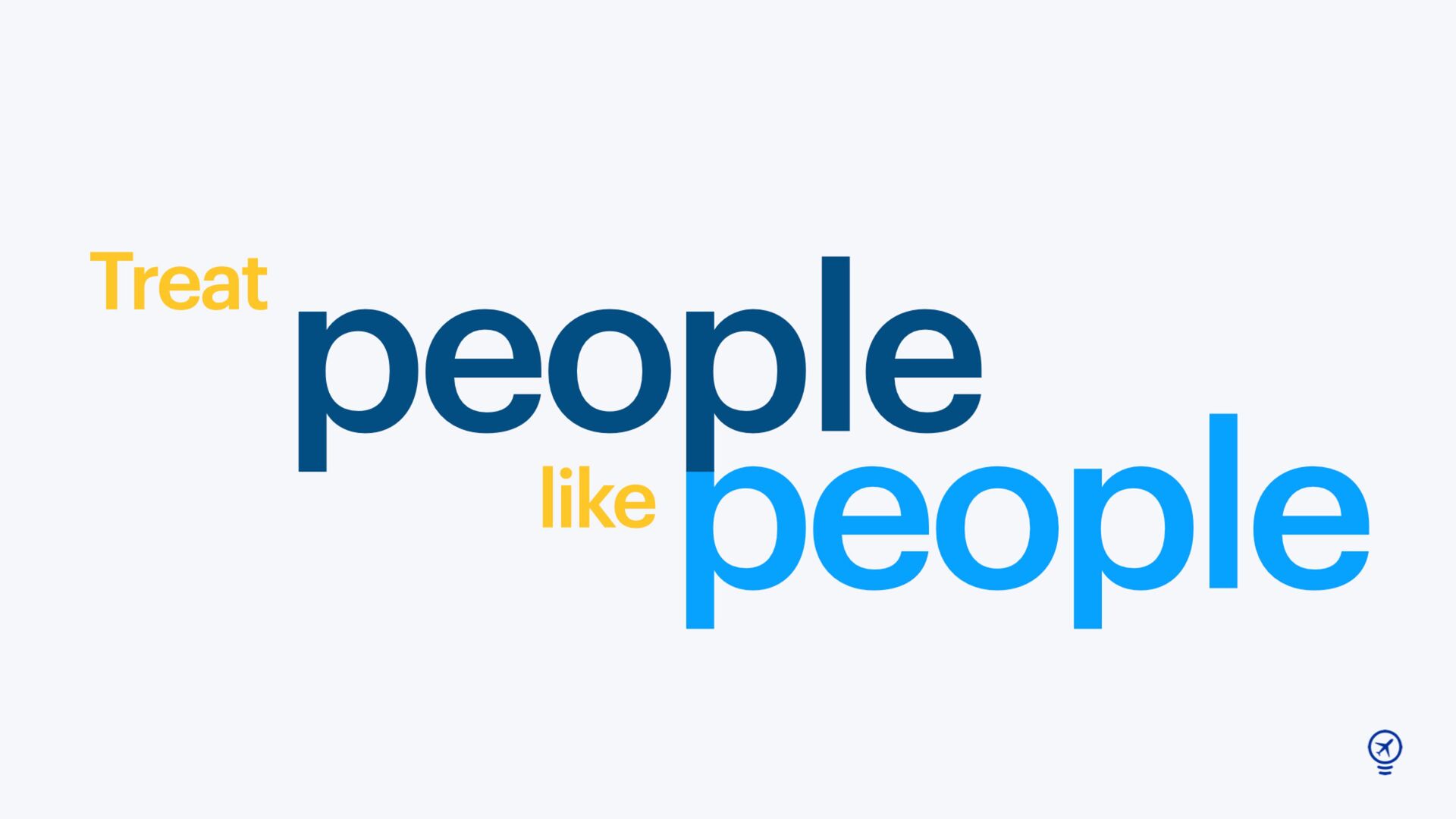
In the end, if I boil all that palaver down, we treat people like people, like real humans, not robots, not disposable goods, not human resources, but people. People who need stories, who need a sense of belonging, who need a purpose. So give them that. That's what we did.
And then live by your values. Don't just ditch people when times are hard. Stick by those values. Another question. What do lemons have to do with crisis management? I promised you I'd come back to lemons. Is it seizing opportunities? Is it a great marketing strategy?
Great's maybe an exaggeration. I told you we don't have a CMO, so let's just call it a marketing strategy. Or is it all about lemon cake? The short answer is it's all three. And I'll tell you a bit about why. A lemonade factory.
I told you it was weird. Right? So we have a lemonade factory. What does that mean? We're on our journey. We survived. Right? Or we are surviving. And we're on the journey, we're facing these obstacles along the way. That's what we're talking to the company about.
But another of our values in the company is about ownership. It's about everyone in the company owning the outcome. And the lemonade factory was our mechanism for doing that through the crisis. We enabled everyone in the company to look at the problems that were being presented and provide solutions.
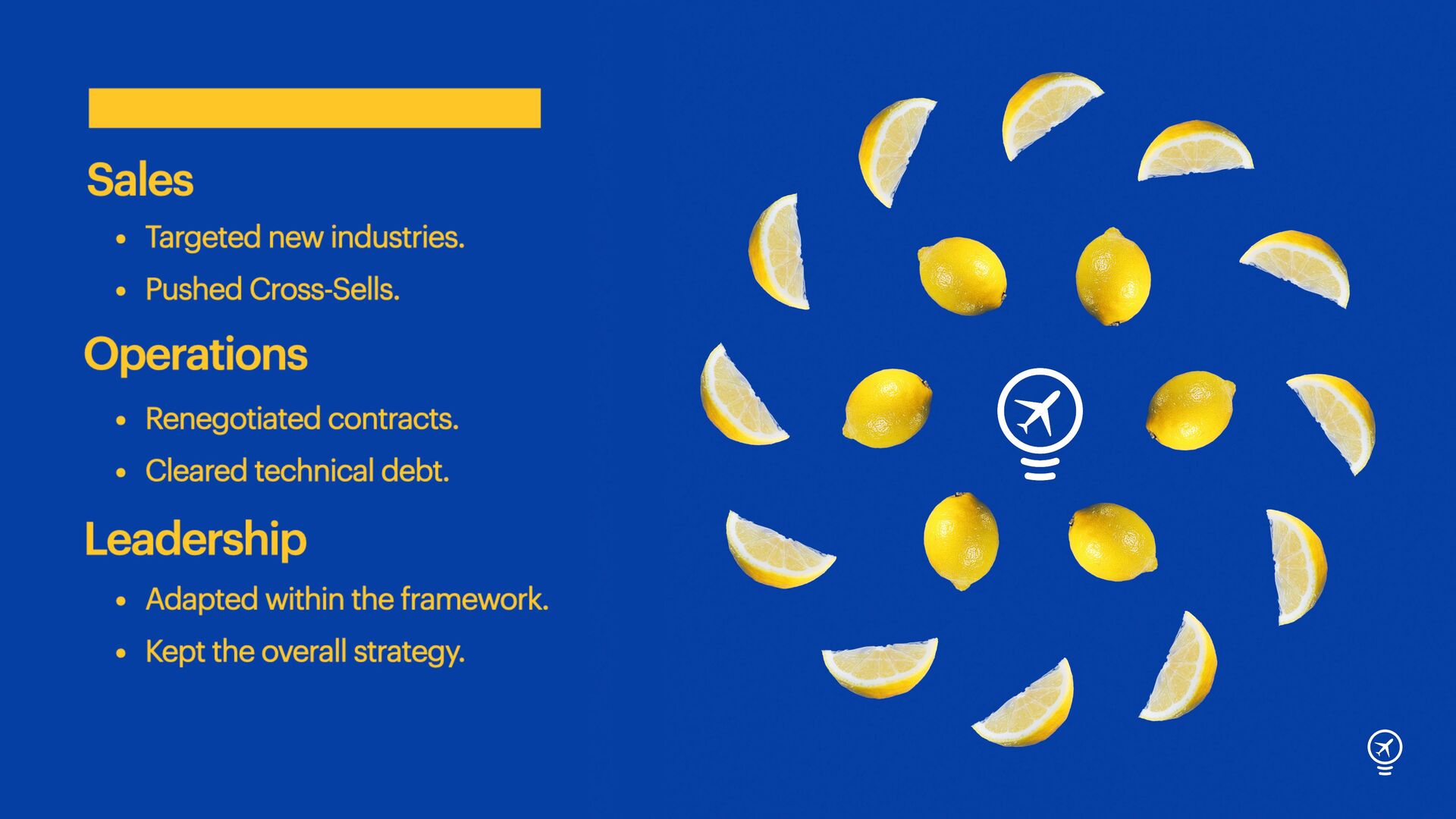
What should we be doing differently today to seize the opportunity? Everyone in the company, there's a few ideas that came up that we seized on here, but they came up from the employees, not top down, not some strategic planning off-site that happened. It was that ownership. People believed. People had the story.
They had the guidance on how to act and how to think. And they grabbed it and used it amazingly well. Ownership is critical. It's back to the belief. If you believe in the long run, if you believe in the mission and the vision, you understand the story, and you're given the autonomy and some ownership to achieve it.
The wonderful travel perkers came up with some fantastic ideas, and these are why the company is so great today. Again, it's not strategic planning. It was the individuals. Treating people like people and giving them the ownership really helped us. So the lemonade factory was a fantastic mechanism for us, but that wasn't the only part of lemons.
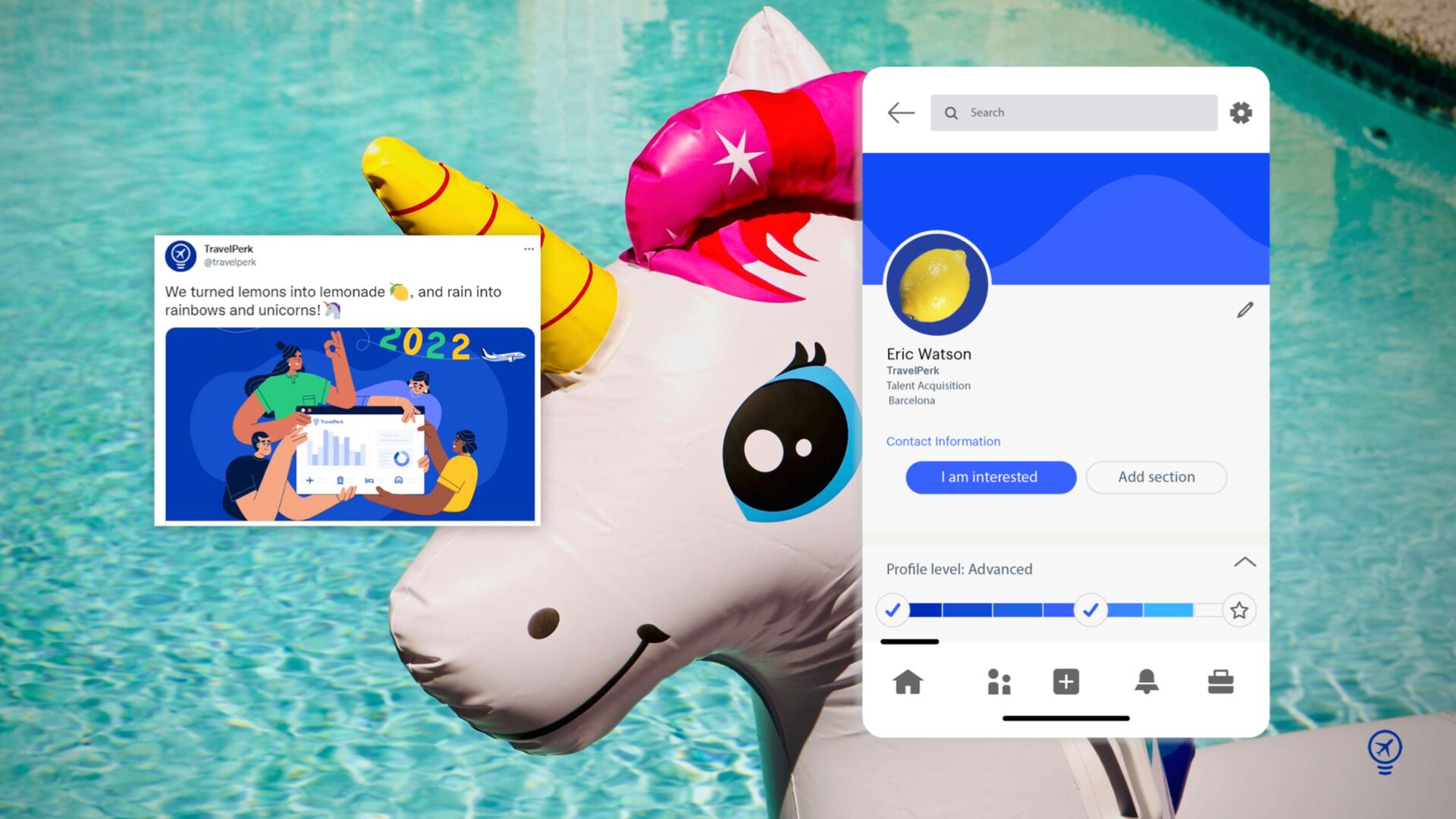
As I said, having a marketing strategy based on lemons was an end result. Certainly didn't expect that to begin with. But we became a unicorn through the crisis. And when we announced that, you can see, I think, on the left hand side that we use lemons in the announcement.
It became part of us, became part of our identity as a brand, as a company, but also employees changed their profile pictures to have lemons. It became part of them. They wanted that sense of belonging. It was that ownership. We're all in it together.
And of course, when we had the unicorn announcement, we also had lemon cake to celebrate a little bit. So lemons everywhere. Lemons really mattered. Who would have thought? But lemons really mattered. So another lesson slide. This is where I think you guys are going to excel in any situation that's thrown at you, because this is what builders do.
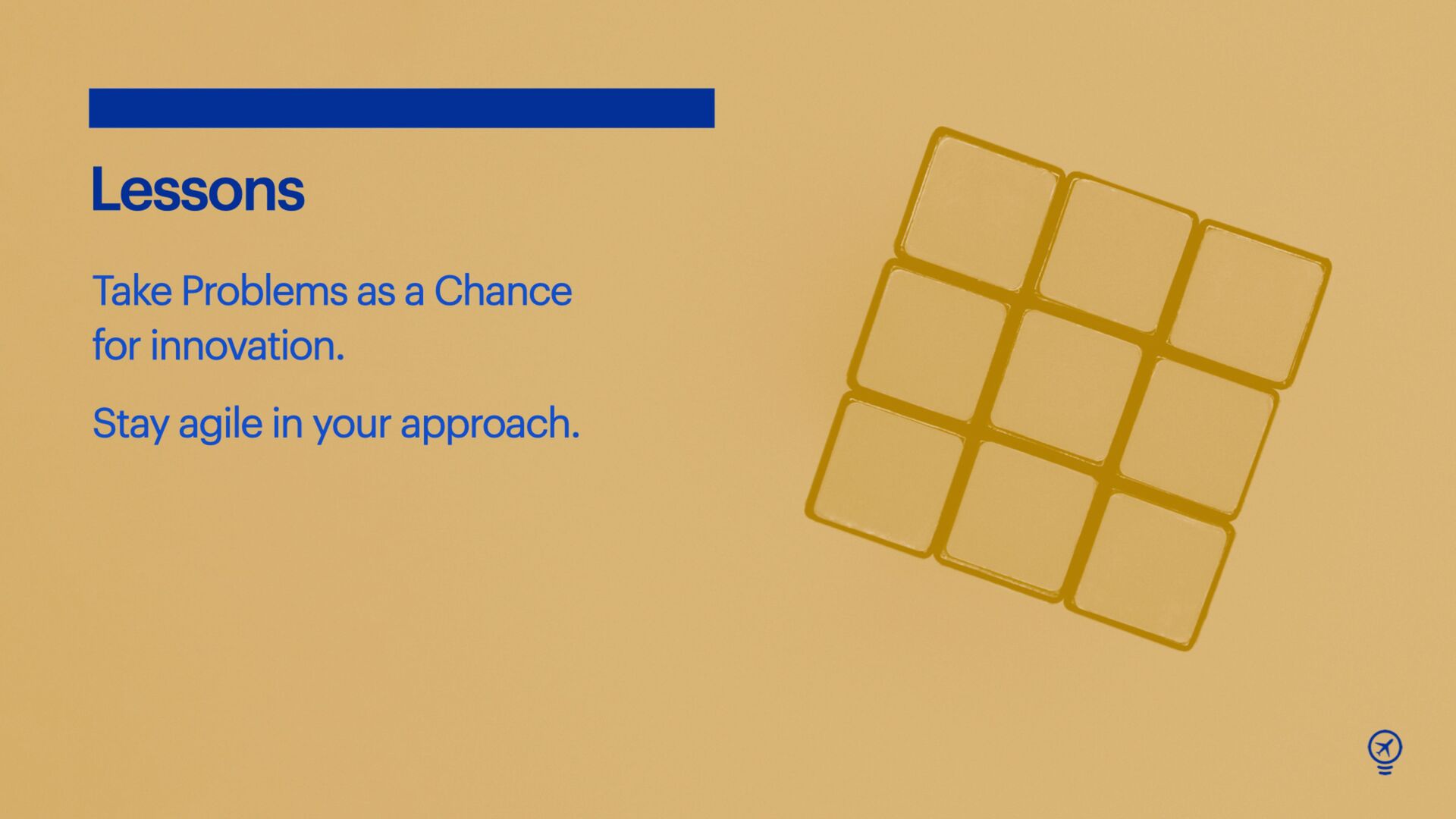
Builders look at problems and find solutions. That's what you do. And a dip, a recession, funding issues, just another problem for you to solve. So take it as an opportunity. Grab it. Don't waste it. And stay agile. We never thought when we were talking about lemons that we'd end up using it in a unicorn announcement.
We never thought profile pictures were but just stay agile. Whatever happens, stay on your toes. And honestly, this slide, I was writing it, thought, perfect audience, because this is you guys to a tee. You do this all day every day, and a crisis should be no different.
This is where you should shine. Now, before I move on to the third part of the plans, we had survive. We had lemons into lemonade. And in a second, I'll talk about emerge strong. But before I do that, again, I was writing the slides and I thought, you know, you sound a bit preachy here.
Bloody hell. Like, stand up here. Everything was great. We had a plan, had a framework, and it's all fine. Whatever. That is not what it was like at all. Right. We made I made many, many mistakes along the way. It was horrific. It was horrific for everyone in the company, that unknown.
Nobody knew what was going on. Fine, you can believe, and we did everything we could, but nobody knew. You're asking a lot of people to go into war for an unknown amount of time, hoping that you'll come out the other end. Now going into this, I was CFO, so CFO of a start up going into the worst financial crisis that a company, a business travel company, could possibly do.
Very early on, took on the people team just in time to furlough, like ninety percent of the company. What joy that was. It was horrendous. In fact, that Sunday I told you that we had the emergency meeting. The Wednesday afterwards, we had a board meeting, of course, because you've got to go and update them.
That Thursday, so twenty four hours after our board meeting, my family and I packed three suitcases, left our house in Barcelona where we'd built a life, and never went back. That was it. Done. We could see lockdowns coming. Back to the UK we came.
Kids didn't say goodbye to any friends. We didn't say goodbye to anyone. We just left. Our life was turned upside down. So the backdrop of this horrendous sort of work environment became really personal, as I'm sure it did for lots of you at the time.
And then back to the UK to the joys of homeschooling. Right? So that was a pleasure for everyone, I'm sure. It was awful. It was awful for everyone involved. And frankly, I dealt with it pretty badly. I did all the things you shouldn't do.
Stopped working out, Worked longer hours. More, more, more. You can solve this just another hour. Stopped speaking to friends. Frankly, the Zoom quizzes got a bit tiring anyway, but I stopped speaking to anybody. Started drinking more. Right? Usually just the odd glass of wine, a bit more than that.
At the weekend became every night. Everything you shouldn't do, I was doing. And it's only because I have a wonderful wife that I stopped. She was like, Hugh, you're being a twit is almost what she said. You need to change. And I did.
So please don't take what I'm saying up here as it was perfect. It was a straight path. It wasn't. But actually taught me something, which brings me on to emerge strong. Emerge strong isn't just about the company. It definitely is about the company, but it's about you.
It's about your own resilience. It's about how you cope in times of crisis. And frankly, we all work in tech, right? Hypergrowth, crazy, agile environments. It's about how you react day in and day out. What mechanisms have you built up to thrive in these?
How have you built your resilience? And I definitely had to learn the hard way through the crisis. But emerge strong. Emerge stronger. That was about the company. It wasn't just about hibernating, as I said. It was about coming out with better, being better, faster, bigger.
That was the ambition. It was the light at the end of the tunnel that got us through. We needed to believe that there was an end and that we'd be better at the end than we were at the start. I'm very glad to say, we saw earlier in the slides, that we achieved it.
We spent that two years seizing the opportunities, but changing the underlying business. We invested heavily in product. Our product was light years ahead of where it was by the end of the crisis. The core product plus the new products we developed along the way.
We have better unit economics. We've got our customer acquisition payback down from twenty seven months to fourteen months. We had a much more variable cost base at the end of it. We understood where the edges were of our business, what would tip us over.
We had a better team. The team was more resilient, a better sense of belonging. We used the opportunity to be better, to emerge stronger. I feel like I'm ignoring you guys. Sorry about that. So what are the lessons from that part, from that plan?
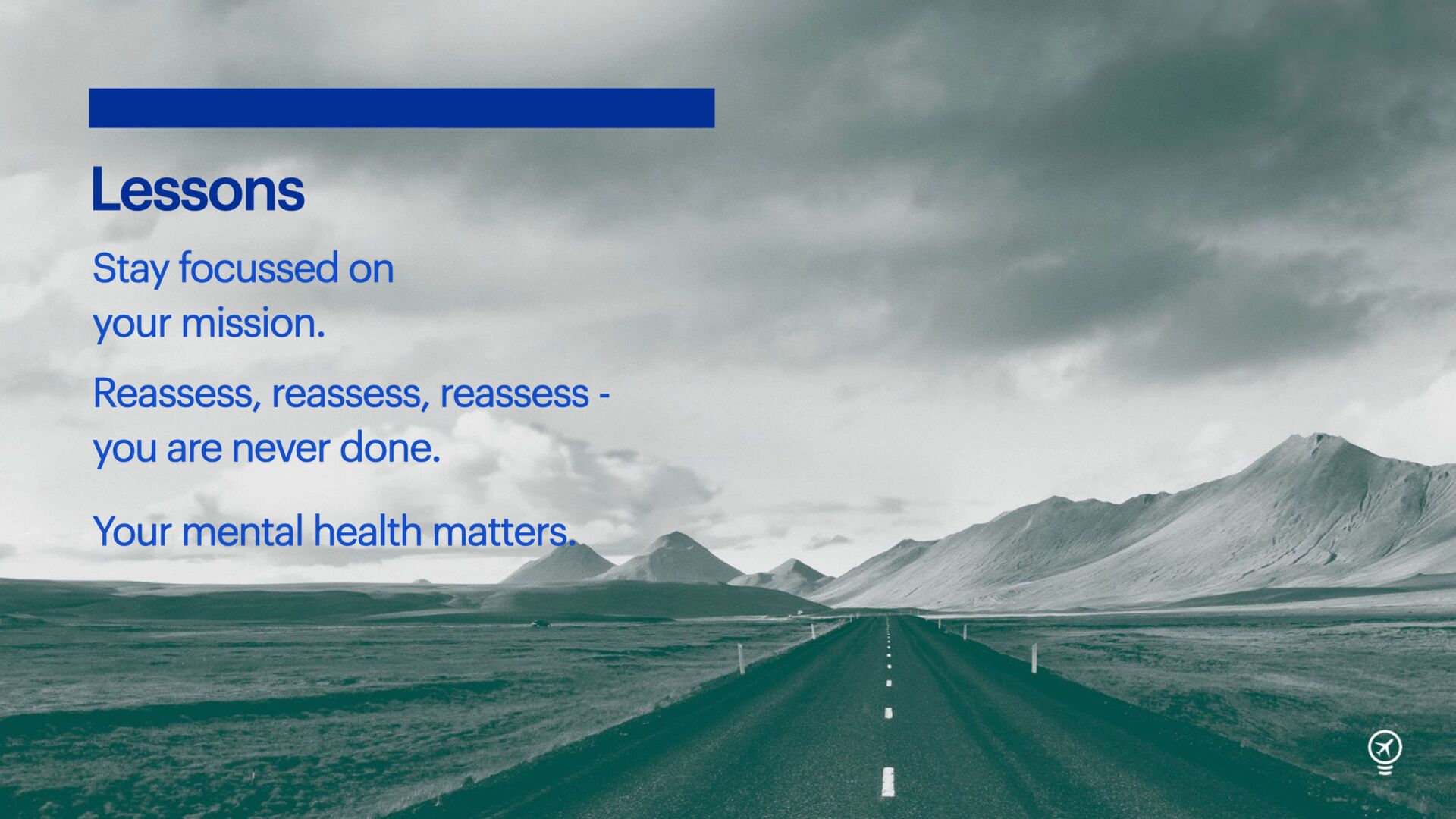
Stay focused on your mission. Okay? That's not a lesson. It's hard to stay focused on your mission when the world is burning around you. But that's what you have to do. You have to have that sense of mission. You have to have the light at the end of the tunnel.
You can't allow yourself to be distracted. It's hard, but that's what matters. Otherwise, fold up the business. Find another mission. You've got to do it. The focus is what will see you through. Keep reassessing. The world changes all the time. And again, this is something we learned the hard way through the crisis.
We still messed it up at the very end. You saw in that yellow chart right at the beginning, coming out of the crisis, business travel came back much, much faster than we thought, and it caught us off guard. So despite all my rhetoric about reassess, it'll be fine, we were still caught short.
So I can't emphasize this enough. The world changes quickly times like these, and you have to keep your eye on it. Keep reassessing. And obviously, as per my previous slides, mental health matters. Your mental health matters, and you've got to look after it.
Take the time and prioritize yourself. You're going to lead your people and be in the best shape you can to do that. So let me try and summarize two years of crisis and twenty minutes of presentation into three things. I might fail miserably, but I'll give it a go. Right.
Number one. Recognize this reality. More specifically, recognize your reality. It's different to the person sitting next to you. It's your reality that matters. Embrace it. Accept it. Own it. Reassess constantly. Momentum will not steer you to success. That's your job. That's why we have leaders.
Reassess and act on that data. Nobody's coming to save you. You've got to save yourself. And finally, look after yourself. We're all people. Businesses are just groups of people. Look after yourself so that you can look after your teams. In the end, you'll come together and achieve amazing things.
So that brings me to the end. Please do get in touch. We've got a wonderful lounge out there. I'm sure there'll be beers and wine and stuff later. We love a bit of in real life, so please do come and say hi to us.
We're hiring jobs across the board and certainly jobs in Edinburgh. So if anybody's interested, please look us up on travelperk dot com. Reach out to me on LinkedIn. Happy to get connected, except if you're a recruiter. Definitely don't reach out then. I love my job.
I love the team. Just don't do it. And then I'll be at the speaker round table a bit later on today if you want to come say hi. So thank you very much for your time and your attention. Enjoy the event.