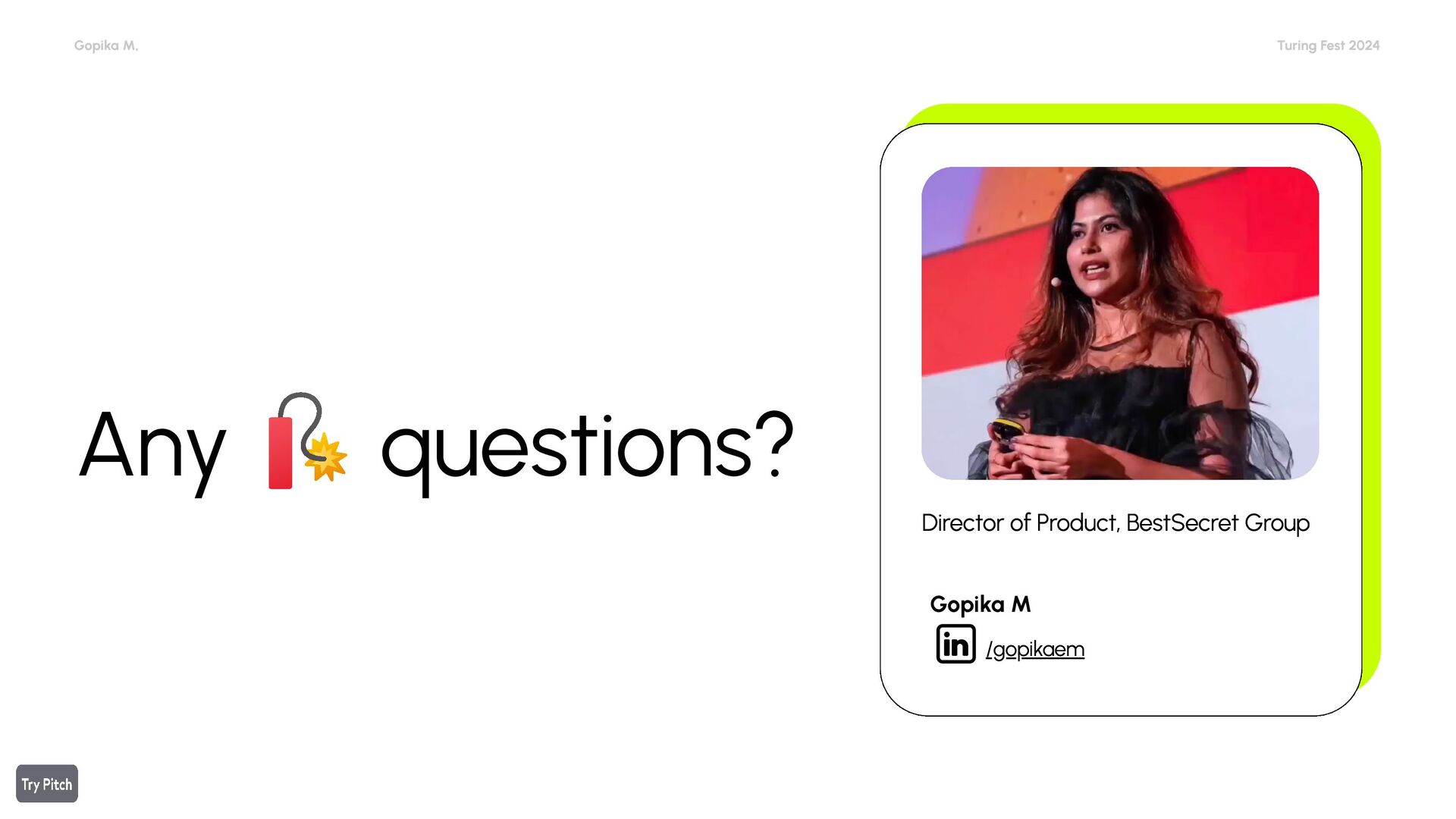
Surviving Black Swans: How To Build Resilient Structures & Navigate Unpredictable Events with Gopika M, Product Director, BestSecret
In this talk, Gopika shares her experiences leading strategic pivots in e-commerce, micro-mobility, and B2B sectors. She discusses how global events such as economic shifts, customer dynamics, and AI impact major organizational changes. Gopika offers practical strategies, spanning from identifying early indicators to team alignment and navigating obstacles. This talk is highly relevant for product leaders, managers, founders, and entrepreneurs aiming to thrive in dynamic environments.
**See less **
1 / 43 Use ← → to navigate
Auto-generated transcript - may contain errors.
Tap a timestamp to jump the video.
It's wonderful to be here, so thanks to everyone for joining here. It's my first time at TuringFest, so, yeah, so far, I really had a great time, and I'm really excited today to talk to you about surviving black swans and how to build resilient structures and navigate unpredictable events, because as we see, we are kind of facing this every six months.
And so this topic has been very, very close to me because across the different organizations that have worked in, micro mobility, large scale, e commerce companies, b to b, we face these events on quite a regular basis this past five to seven years.
And actually, you might be wondering, or if you haven't noticed, this is actually a picture of a white swan and not a black swan. And just to go back a little, so the term black swan was coined by Nasim Nicholas Taleb, and essentially what he said was, black swan events are events that come to you in a very unpredictable way, that has a way to disrupt your lives, your environment, your people, your organizations, and it's something that we cannot foresee or cannot predict.
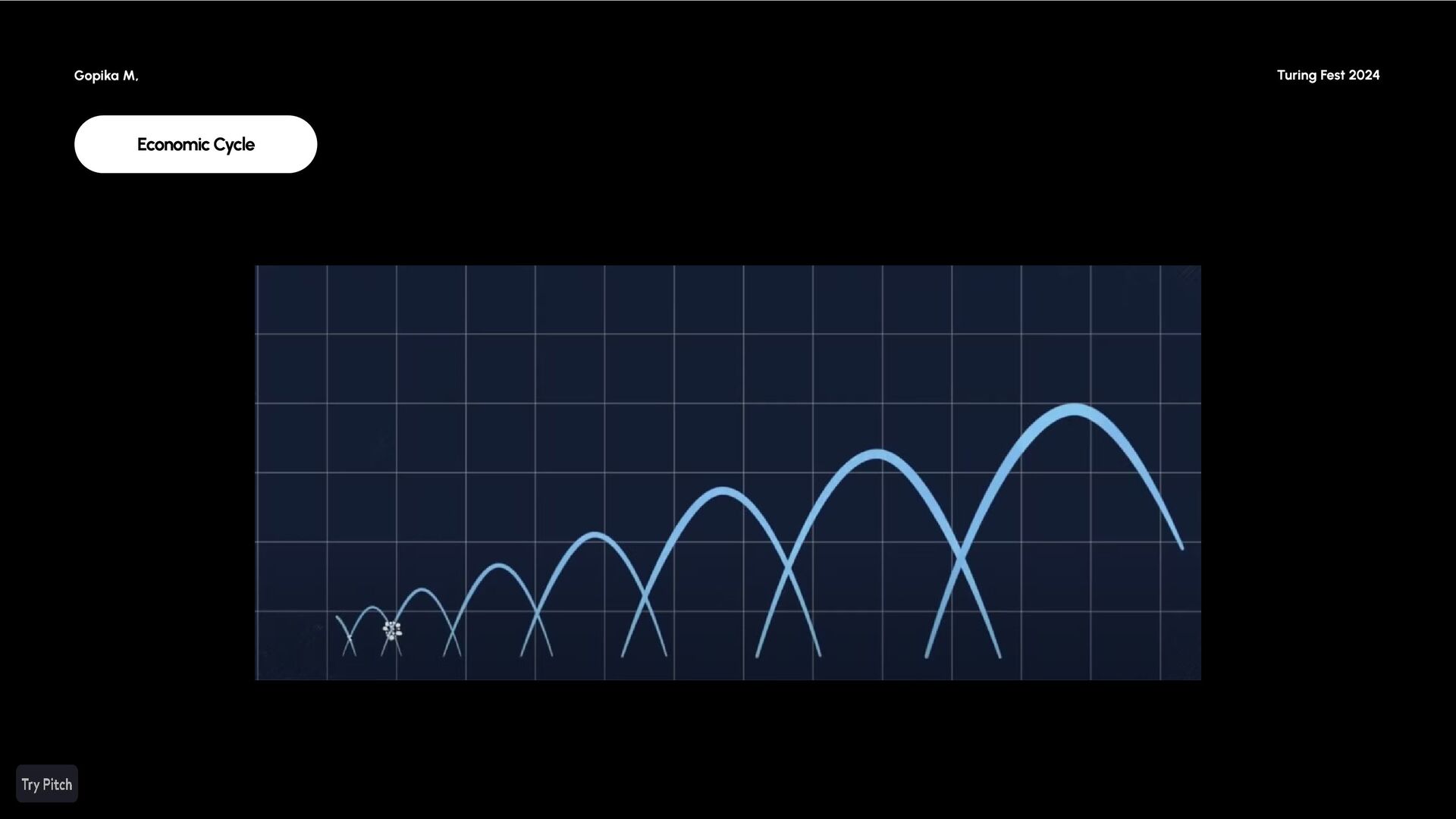
But if you look at the works of Ray Dalio and what he has talked about in his book, The Changing World Order, he actually aptly mentions that the economy works like a machine. And what that essentially means is that we have constant cycles of booms and busts and ups and downs, but eventually, the general trajectory of an economy is growth.
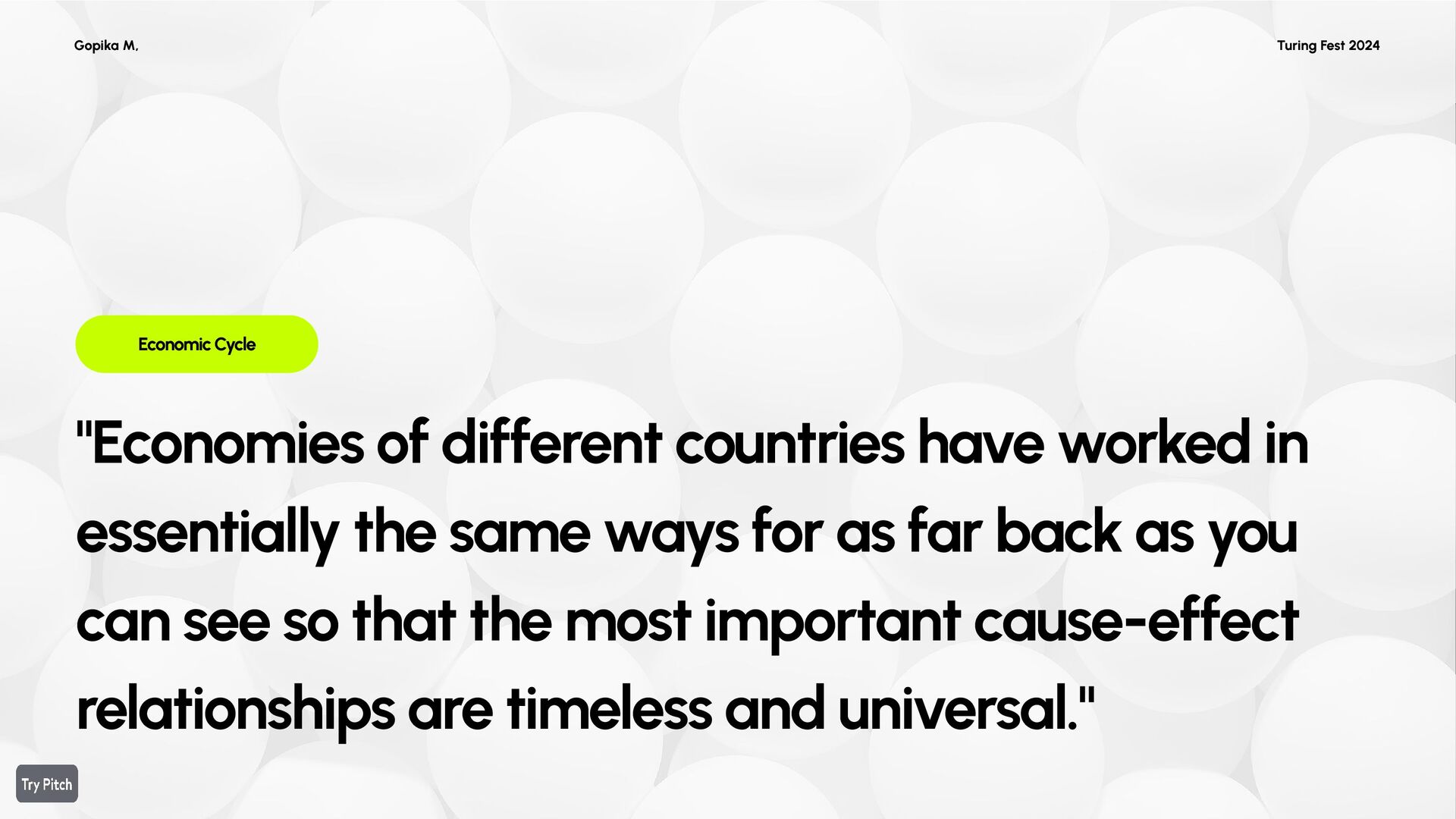
So, regardless of, you know, we are facing disruptions, crises, rise in energy prices, inflation, recession, conservative VCs, and all of that, eventually, when you zoom out, what you see is that the economy is actually growing despite these ups and downs. And what he also says is the economies of different countries have essentially worked in the same ways for as far back as what we can see.
And what this means is that despite these events feeling very new and something that we haven't really or something that we have, you know, it's very unheard of, the effects of this on our lives is largely timeless and universal. And this specific line or this specific quote actually works in our favor, and that's because since these events have happened to us over and over again for the past decades and decades, we have actually, as business leaders and just people and humans, built these tools to help us survive these
uncertain changes. And we have actually, you know, learned from these experience across time, and we've built these tools that's in our toolbox that we can pull out and use in events such as these. And that's the reason why I wouldn't really call these events black swan events, but rather white swan events, which is essentially events that does have, you know, a potential to disrupt your lives and disrupt your environments, but they are not completely unpredictable.
And over the course of the next few minutes, I'd love to take you through three companies or three industries that have actually navigated through these events and not only survived, but also have thrived in terms of this uncertainty. These are the three companies or industries vastly different from each other, but have essentially used very similar frameworks to navigate what we call unprecedented times.
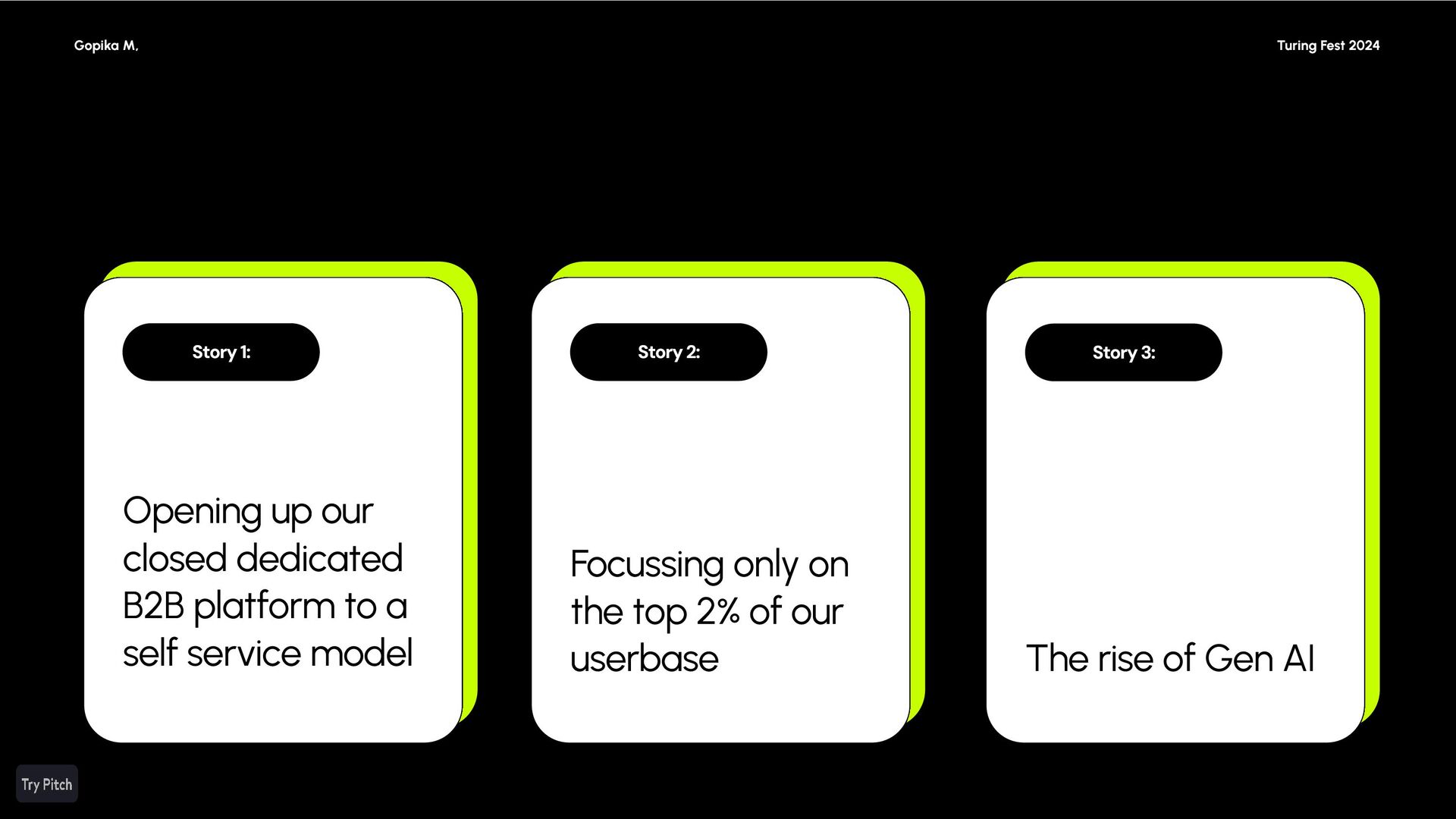
Let me start with the first story. So, this is essentially a story of a large scale e commerce company working in a large scale e commerce company focused on fashion and retail. And essentially, we had an internal ad tech product. And just to simplify, what we essentially did was we had large brands generating about quarter of a million euros a year and that was the focus, that was our focus customers.
And we, with the support of account managers and dedicated account manager support, helped them launch ad campaigns to run the ads internally. So they could just work with their account managers to use the platform, run the ads, create campaigns, and understand what's the you know, how these campaigns are performing.
It was a very closed platform, which was it it could only be accessed by yeah. With the with the human support. And when the economic crisis hit, and this was around the the COVID period where, you know, the marketing budgets of our partners and our brands were also suffering.
And if we hadn't done anything very soon, our revenues would have suffered by a lot too. But instead of, you know, panicking and pivoting, we already had a plan b, which we had been planning for over a year to happen. And what that plan b was, was that instead of having a closed platform where specific amount of brands could access, it was we turned the product and the business into a self serve platform that anyone of our three thousand plus brands could actually access and, you know, go in,
set up their ads, and run the campaigns. And what this meant for us is, while the revenues of our top brands suffered, we had opened up this platform to our three thousand plus brands who could use the platform in a self serve way and get that additional revenue in.
And this was not an overnight change. This had taken some amount of predictability to look into the future and say this is where we want to go as a business. So that's story one of just an example. We'll come later on how these brands or how these companies actually could predict or foresee that something was coming.
The second story was my experience in a shared micromobility industry, and I haven't seen many shared micromobility here, but essentially, for those of you who haven't experienced it, it's, you know, the bikes and the scooters that you see around on the streets that you can actually access with your with your phone.
You can just scan and take a ride. And this was a period where it was the the main event that hit our business was, you know, the Russia Ukraine conflict, and with the rise in energy prices, this had a direct impact on our business, which was micromobility and hardware.
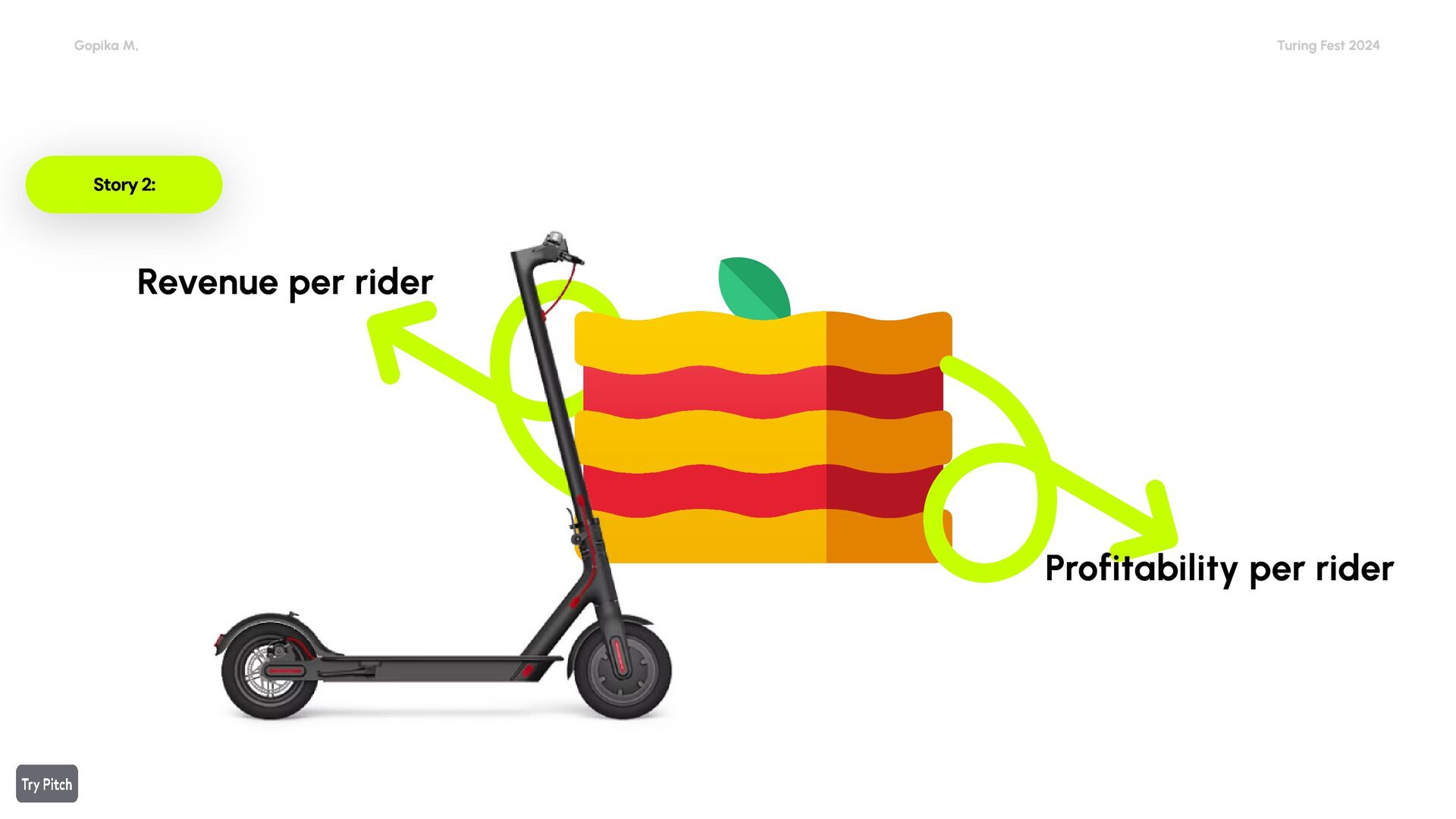
And at that time, we were trying to raise more funds and raise more venture capital funding, but one of the main roadblocks that we hit was our VCs being extremely conservative and asking for what's our path to profitability. And one of the main things that we changed about the way we thought about our business was our customer base.
This was one lever that we highly influenced. So, what we did was, you know, we had a wide range of users. We had all the way from tourists to students to commuters to I don't know, we'll take anyone that is interested in taking a ride, we'll build something that caters to everyone.
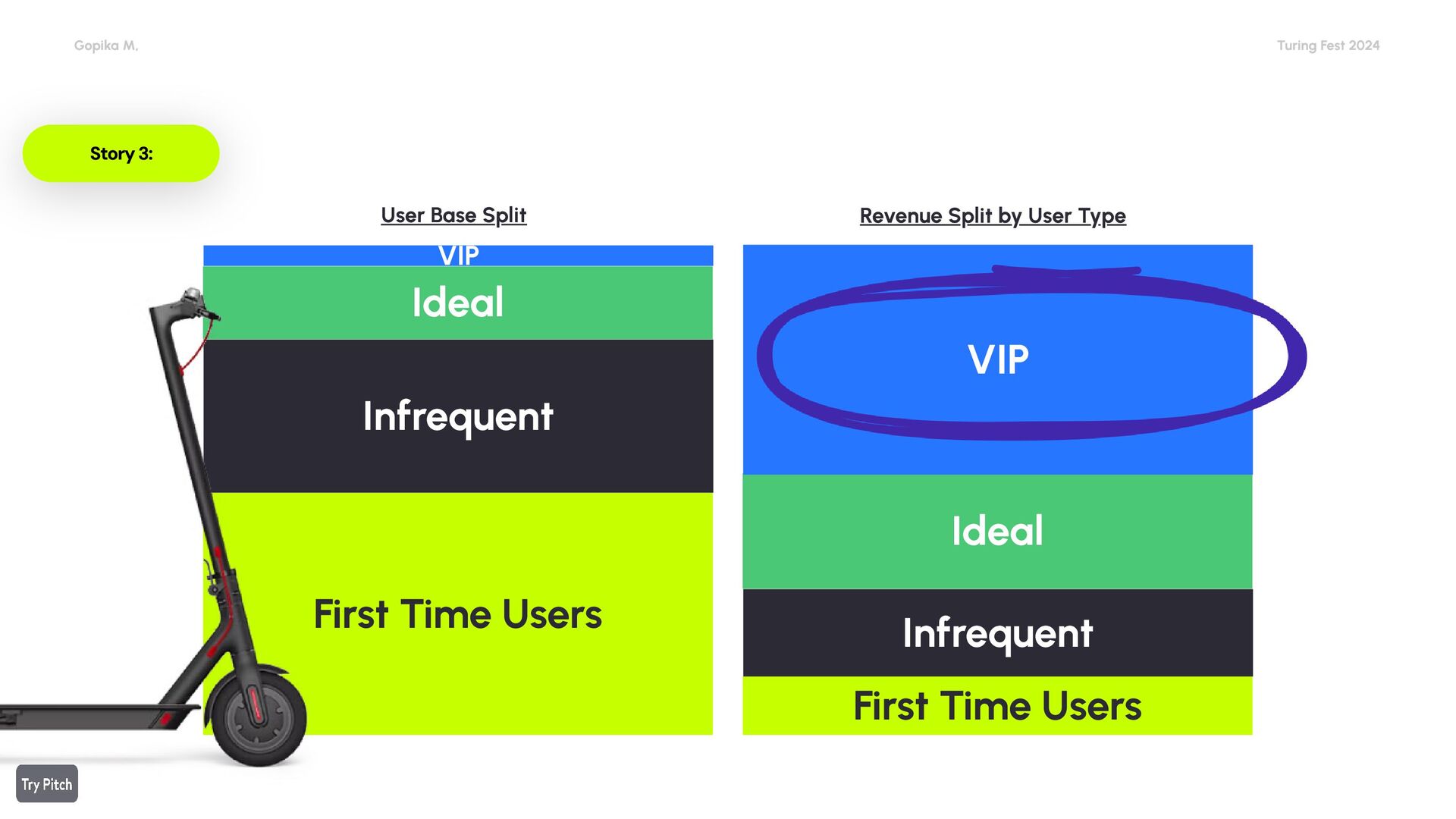
But what we did was we paid a close attention to our customer base and brought in that focus that was very much needed during times like these. What we understood from this, looking at our customer base more closely, was that our top two percent of our users generated about fifty percent of our revenue, and these were the most profitable users that we had.
And what we did as a business was try and figure out how do we emulate the behavior of these top two percent to our other types of users? And how do we build our product that's focused on this specific user base that can help us get to, you know, what we call the path to profitability?
So, this was one of the main changes that we came together and accepted that by changing our customer strategy to focus on a specific group and have that focus, we can actually help. That was one of the levers that helped us achieve that path to profitability and get to that next round of funding that we were so desperately looking for.
So that was story two. And the next story is about the rise in generative AI. I don't know how it was for you, but I woke up one day, and I just read Chag GPT and Gemini and all of these amazing tools that were surfacing and being commercialized in the market.
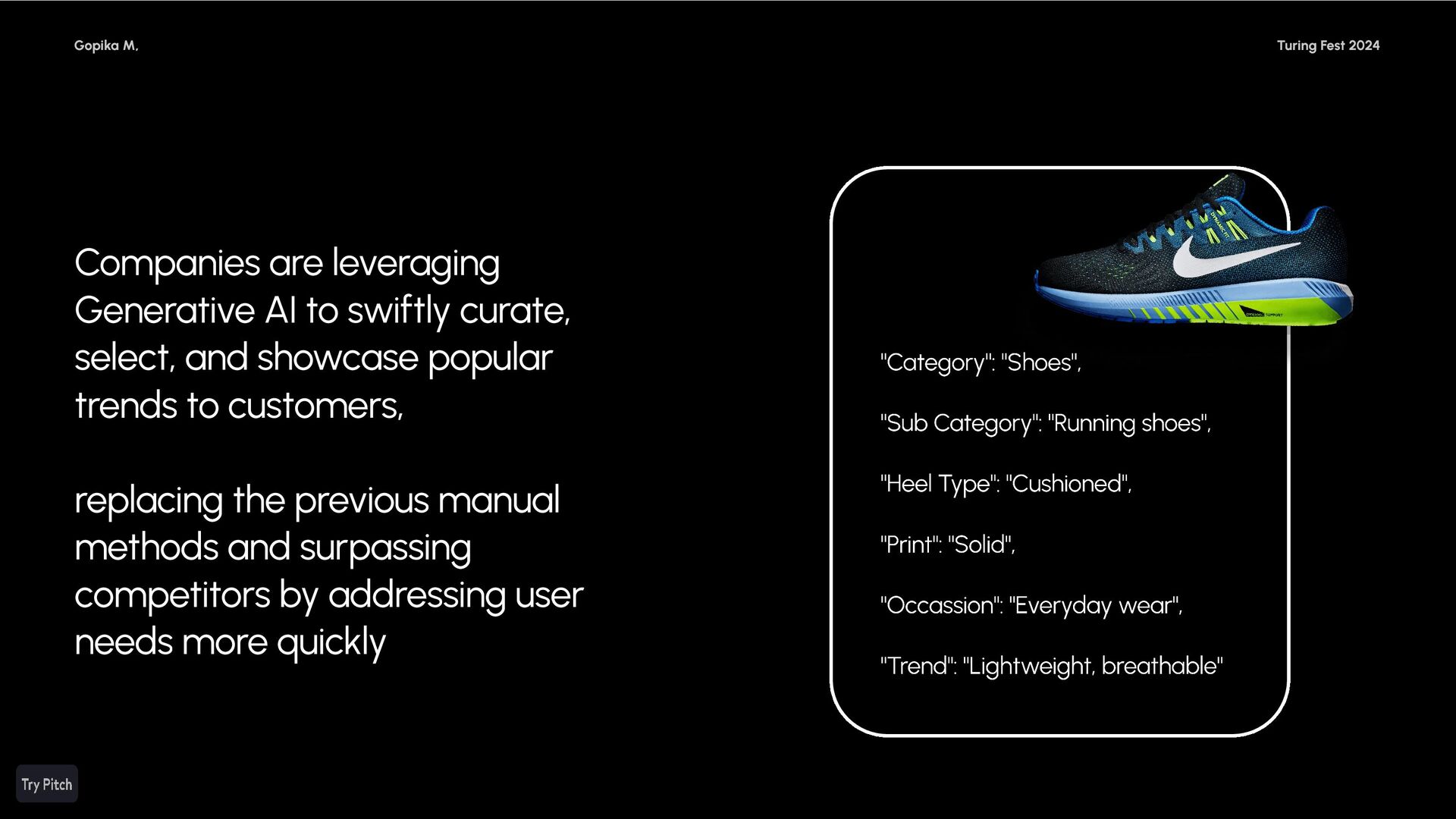
And one of the ways that e commerce companies are leveraging this trend to get ahead of the curve and beat their competition is to actually truly see the capabilities and the potential of this technology. And I'll give you a very specific example. So previously, if blue running lightweight shoes were a trend that we were observing in the customer base, what companies were actually doing in the background was manually labeling their products, creating these campaigns on their websites, so they could showcase those campaigns and stories to the end user.
And this actually takes quite a few days to a weeks to when we realize a user behavior to actually presenting it to the end user. But with generative AI and the capabilities, companies, especially e commerce companies, are getting on simple features and simple capabilities such as image to text extraction, automated campaign creation, and the time between realizing a customer trend and actually presenting that curated list of products that the customers are interested in to the customers, it's within a few days.
And so, actually, companies who are using this technology are really getting ahead of their competition only by leveraging simple technology or simple capabilities of this technology and getting the products to the users very quickly, because that's how the demand changes. So, demand changes very quickly in the e commerce and especially fast fashion world.
So, this is the third story of how, with the rise of generative AI, a few people compare it to the birth of the Internet, how companies are already leveraging some of its initial capabilities to stay ahead of the curve. But these three stories, while certain companies have made this transition and, you know, moved to the other side of survival and of, yeah, being able to survive and thrive, this transition did not come easy for them.
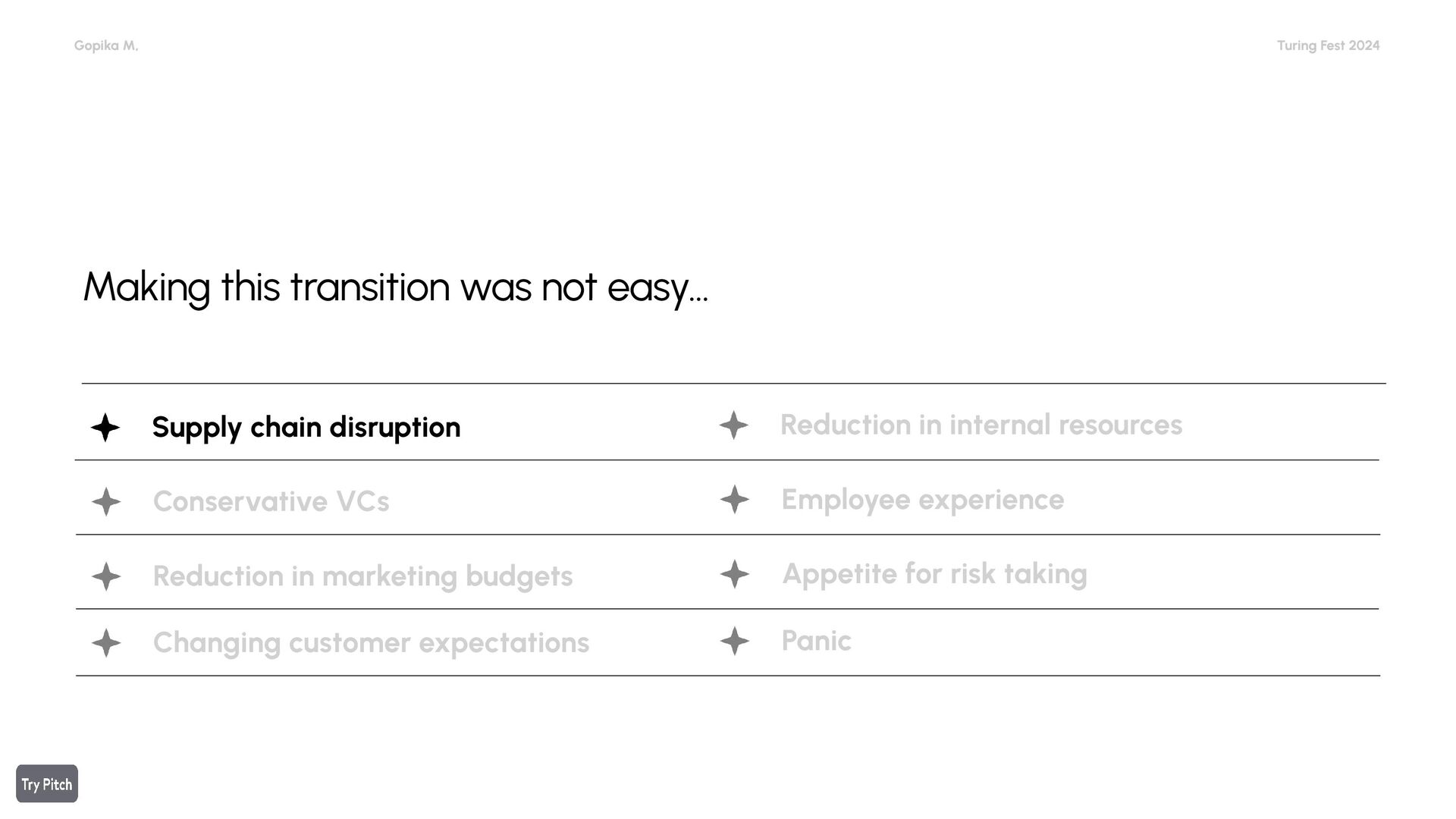
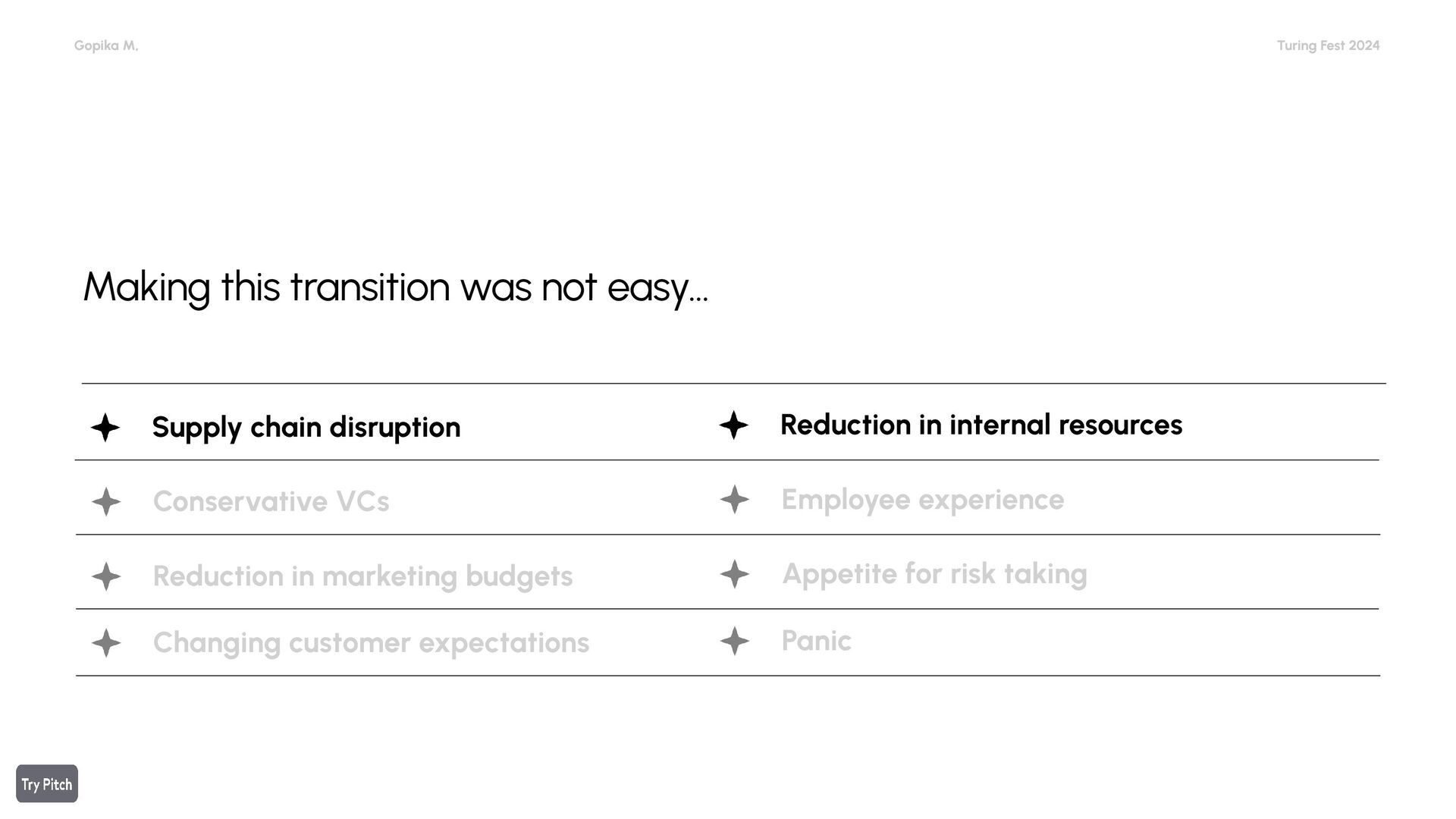
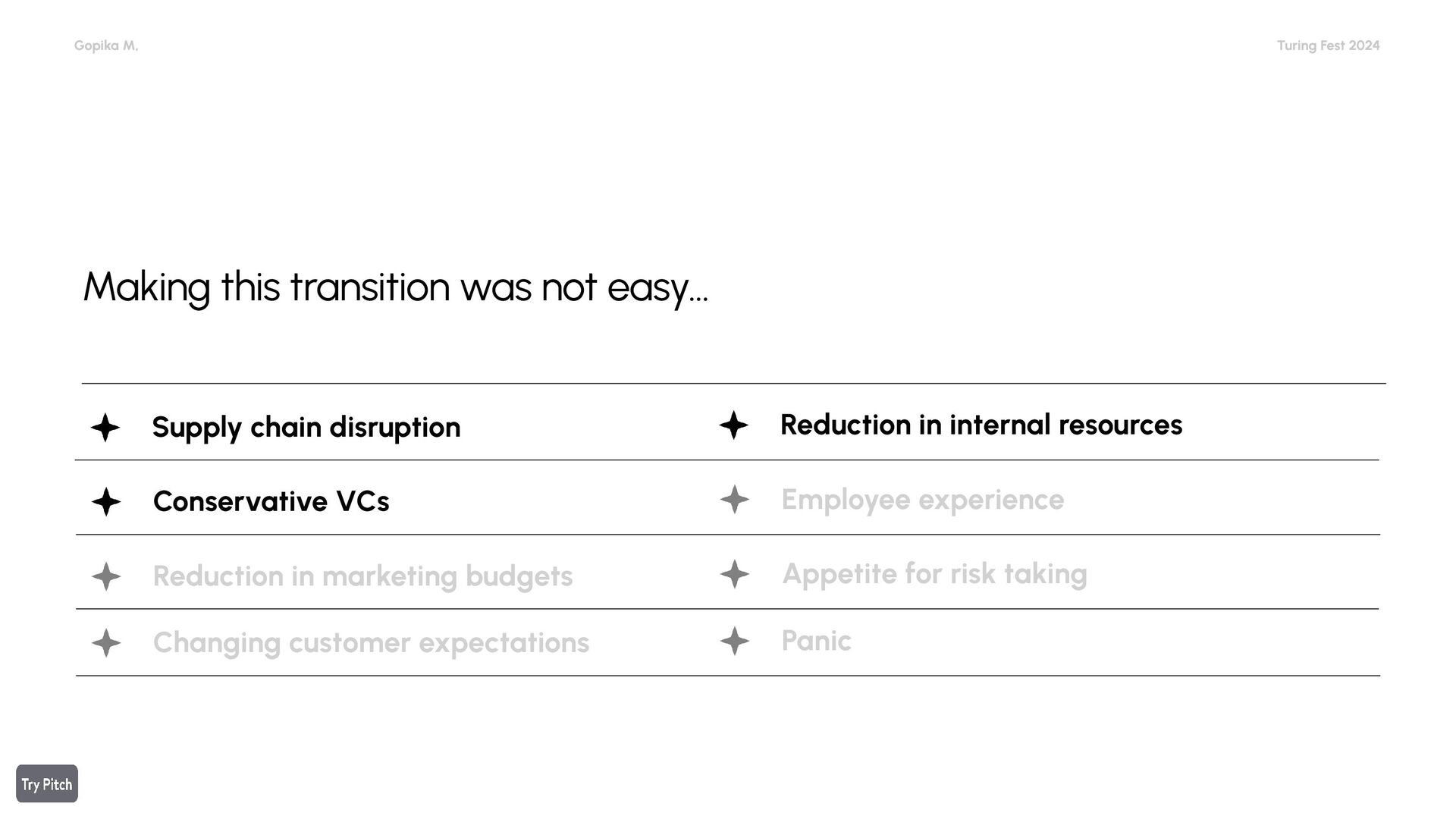
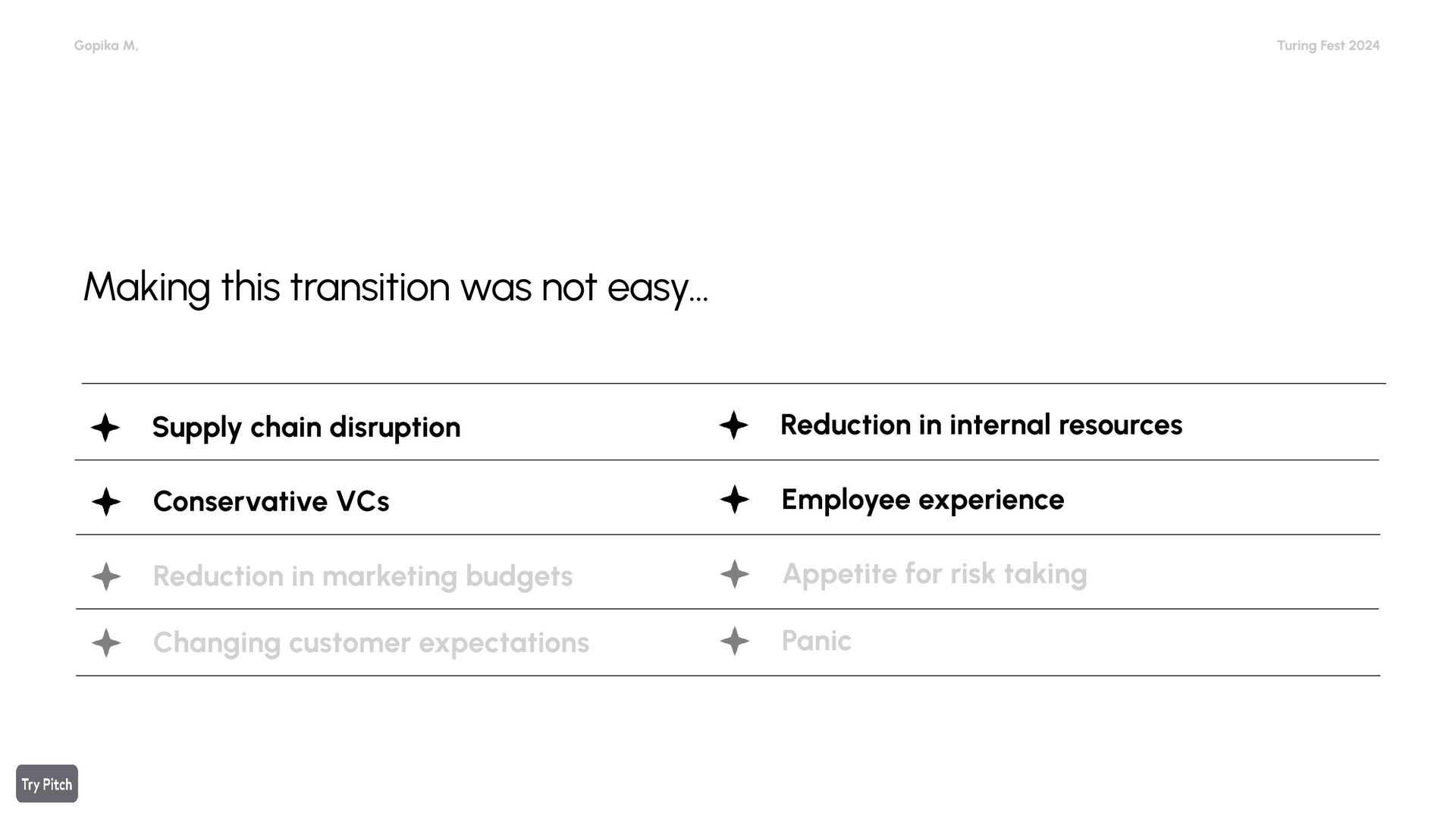
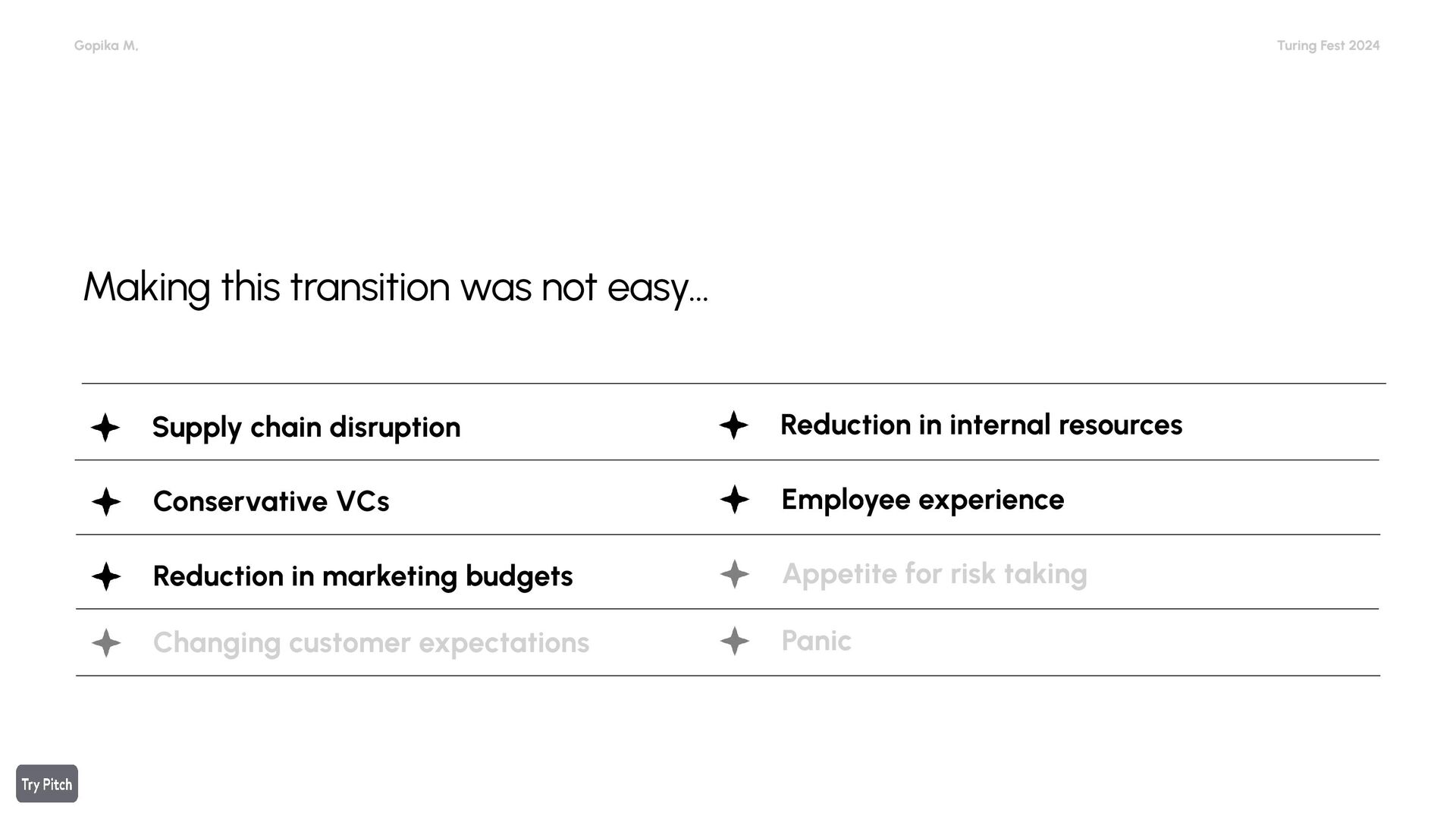
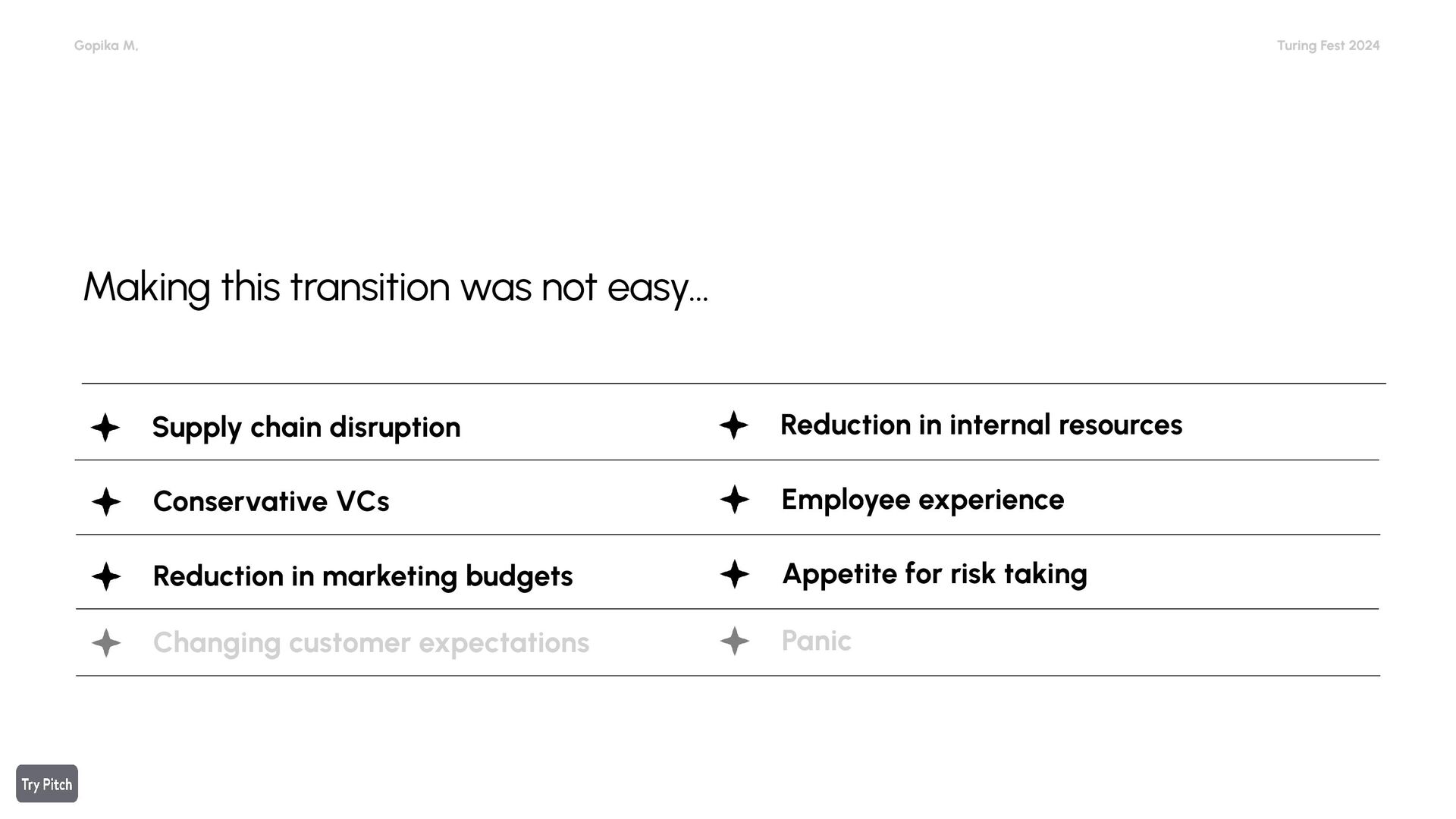
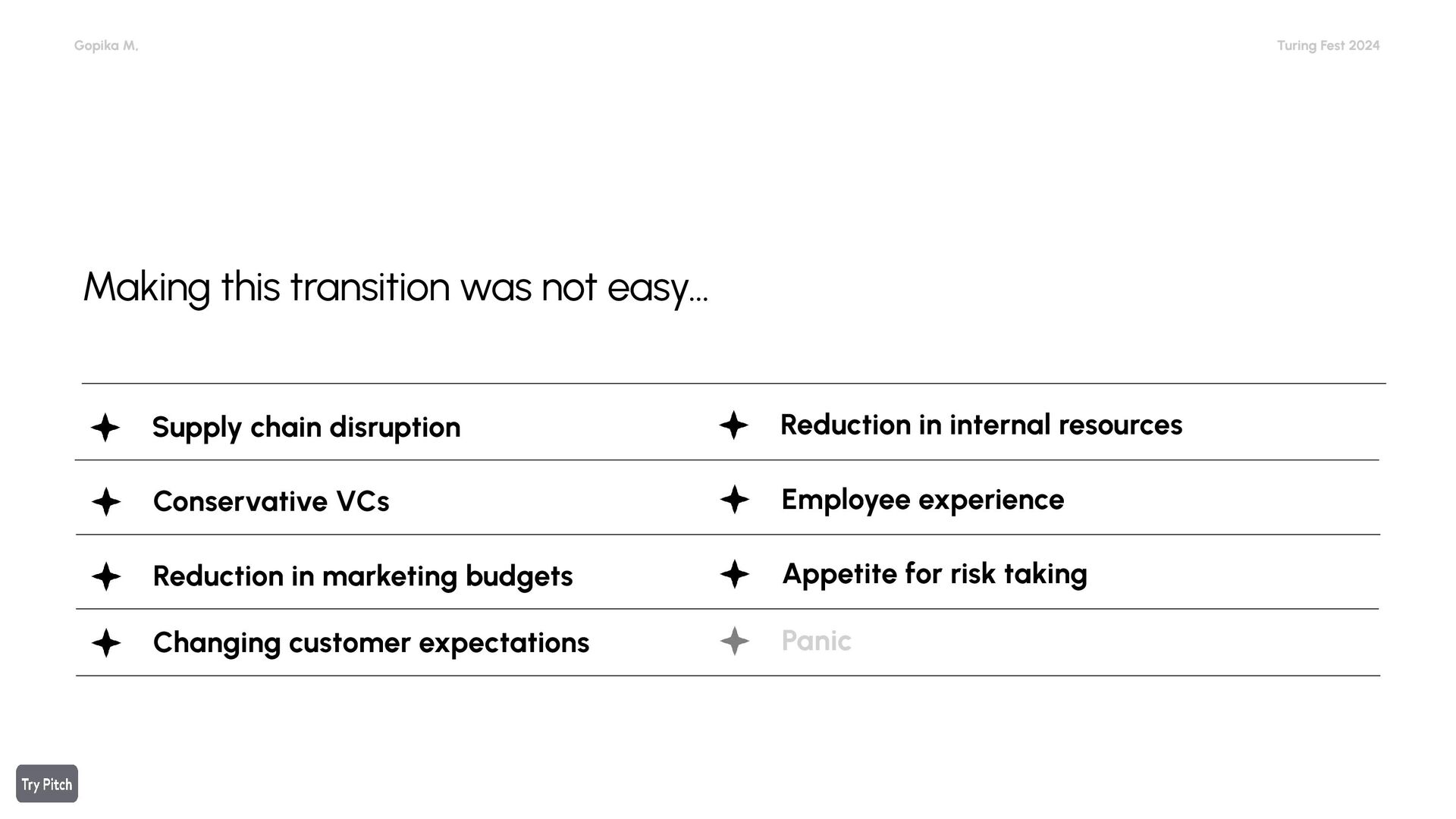
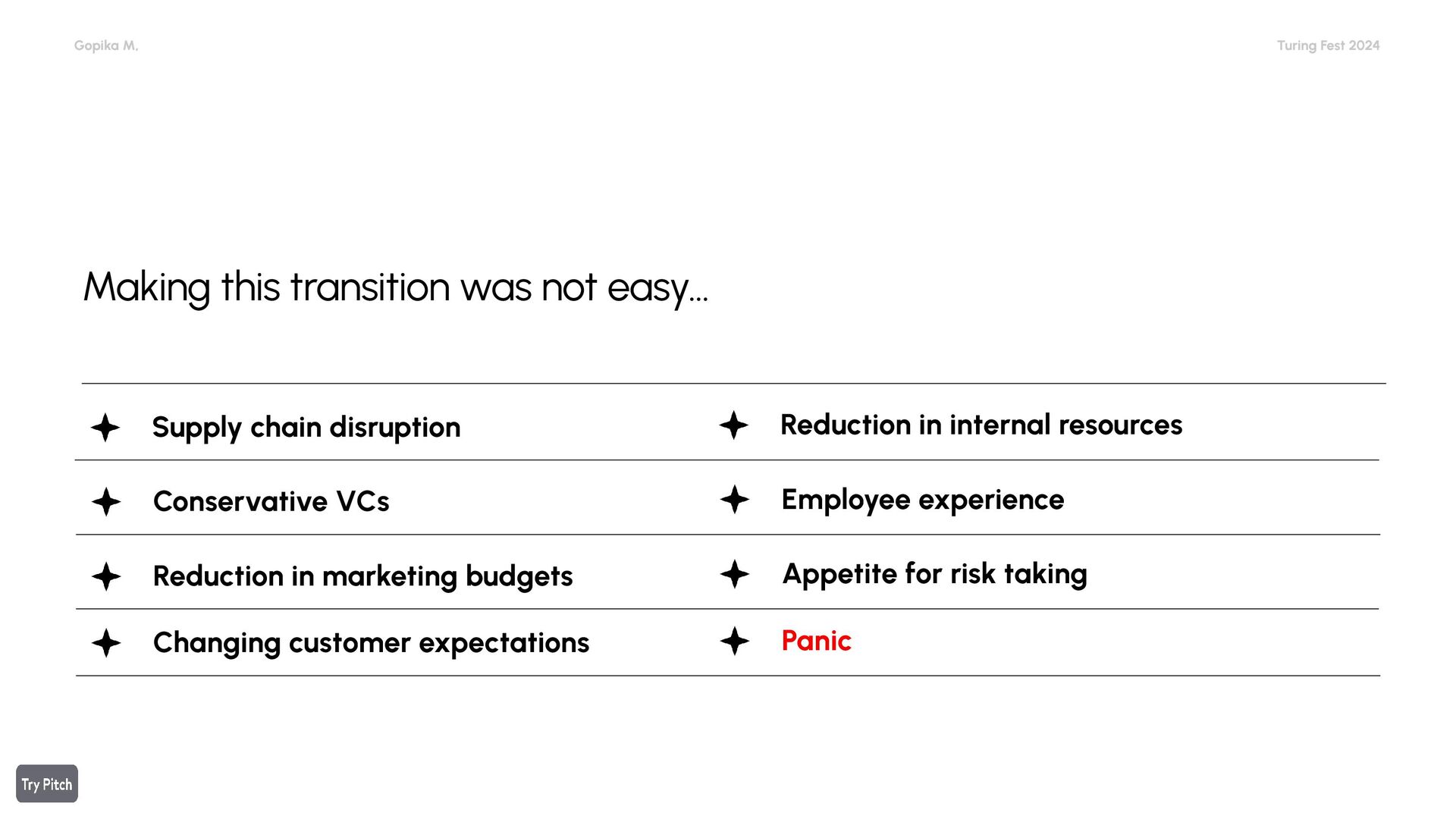
Right? Because during this time of uncertainty, we faced several challenges. There were supply chain disruptions, we couldn't source products from the countries that we were actually sourcing them from. There was reduction in internal resources. I mean, we must have all faced the layoffs and doing more with less.
There were conservative VCs that did not really give us that handful of money that they were previously. The employee experience suffered because there was a lot of change that was ongoing in people's lives. There were reduction in marketing budgets, which meant that the acquisition of new customers only became more and more difficult.
The appetite for risk taking was getting smaller and shrinking. The customer expectations, as a result, was changing very quickly. And lastly, there was panic. But despite all of these effects of what you call black swan or white swan events, these three companies and industries still survived, and it was one of the reasons they were able to do that and make those decisions to get to that other side, because they could somehow predict that there was something that was coming that's around the corner.
And what they did was essentially it's not rocket science, and you don't need crazy statistical analysis to predict what might be coming up. There's only one tool that you really need to use to understand what's the next big thing that is just popping up in few months or a few years, and that is to extrapolate.
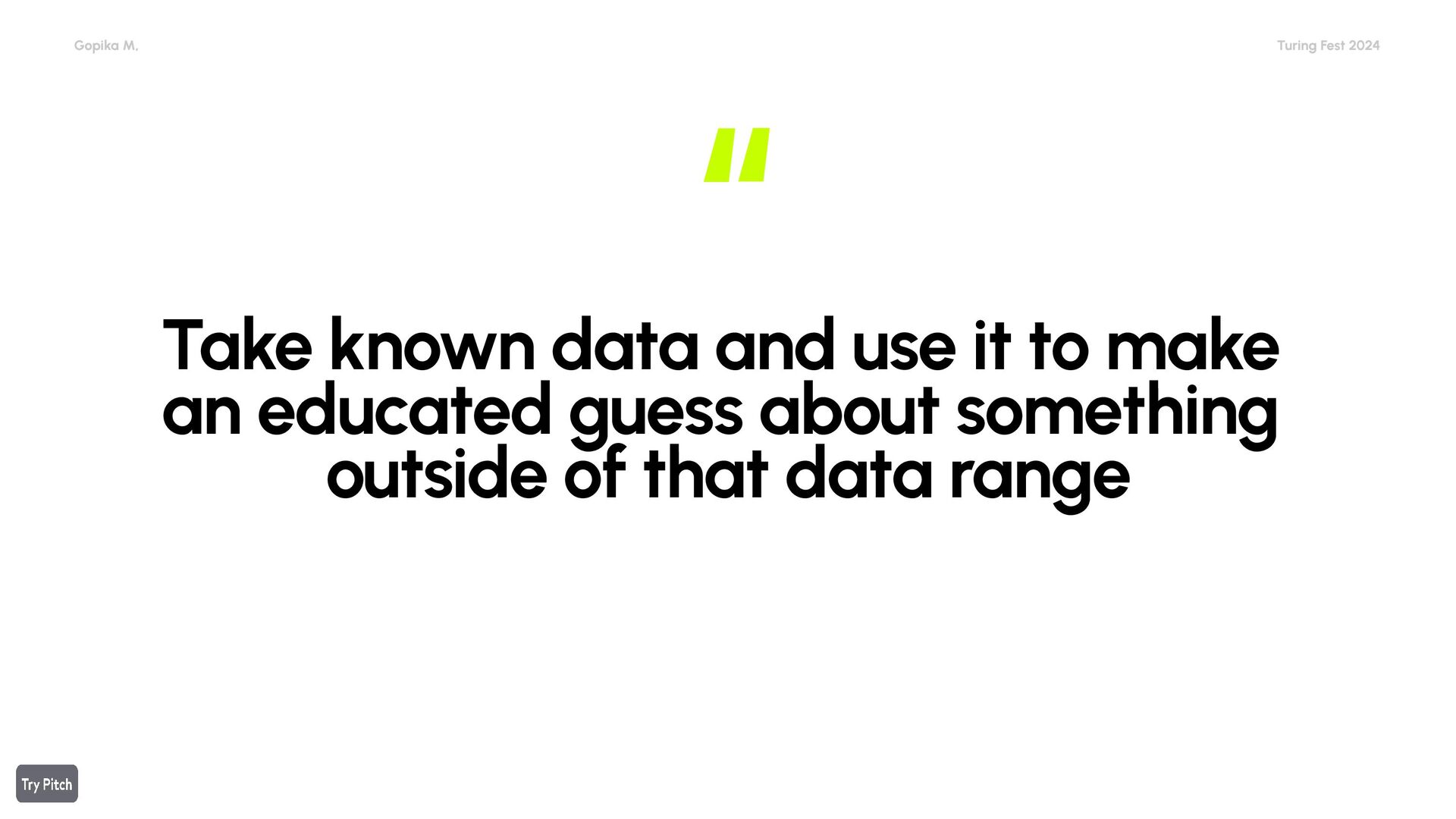
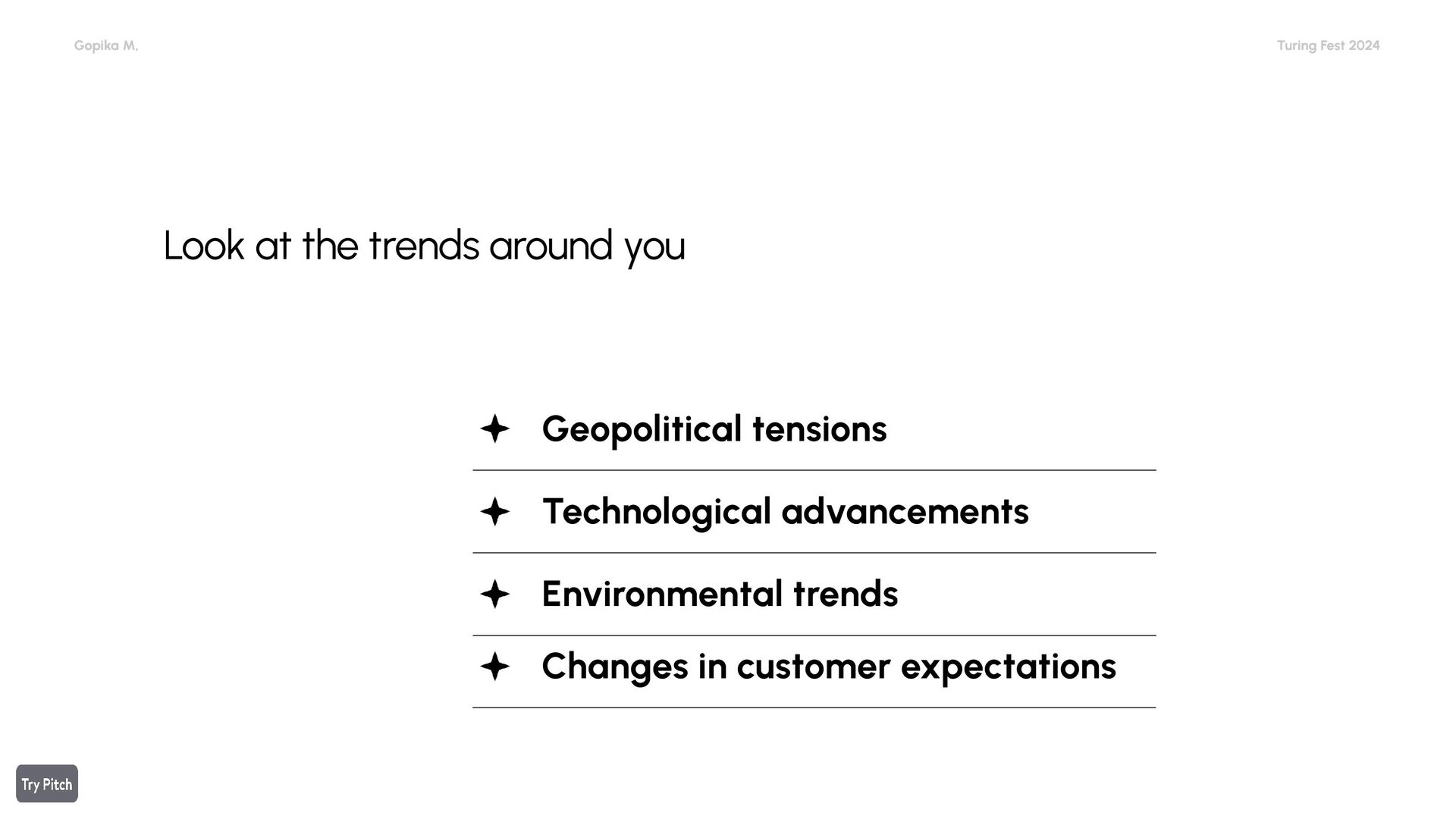
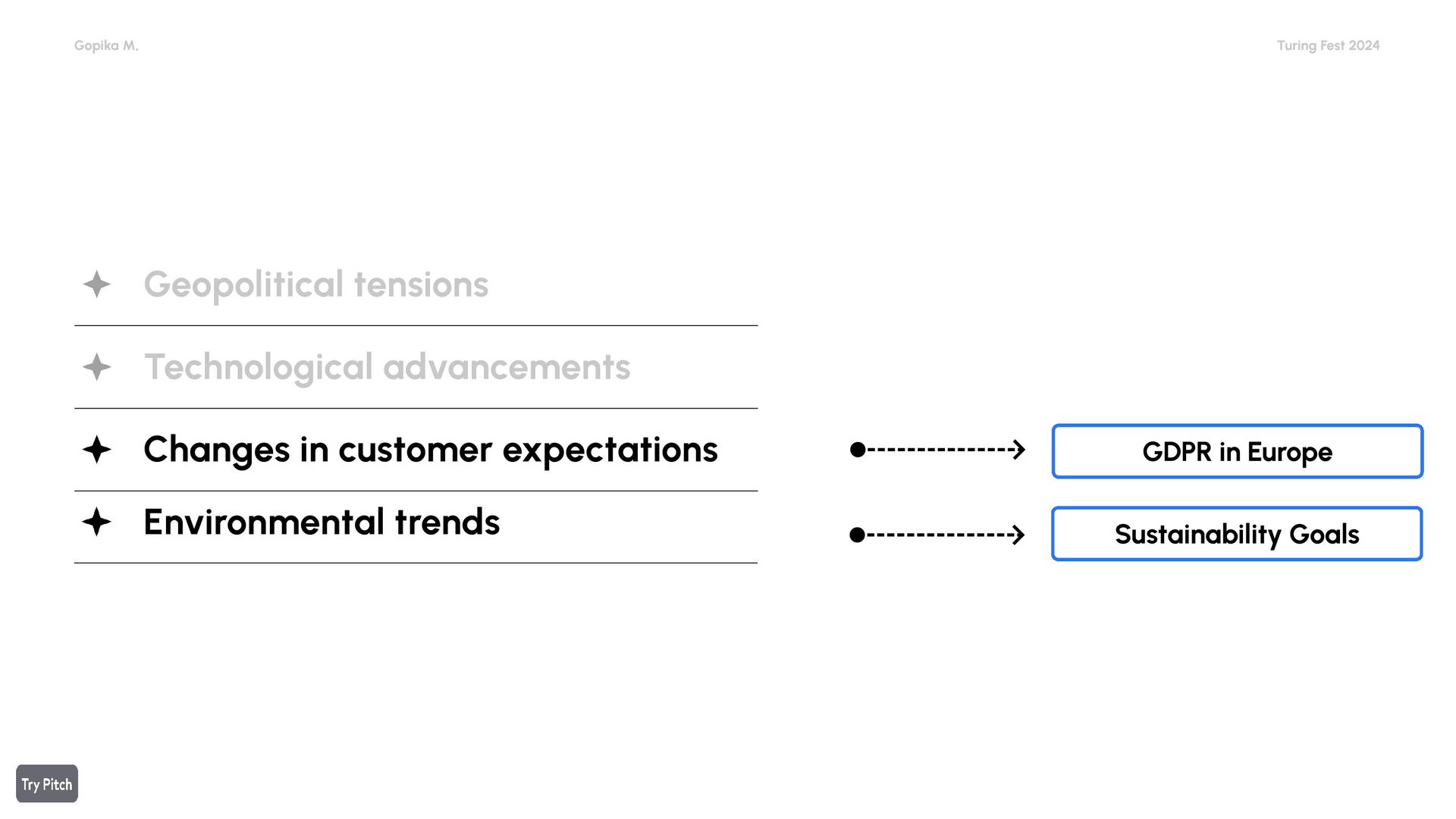
Extrapolation is essentially to use known data and make an educated guess about something that's outside the data range. And let's I mean, we can do an example, right, of how to extrapolate. So we can look at the trends around us, and the four most common trends are geopolitical tensions, technological advancements, environmental changes, and changes in customer expectation.
And if you look at very specific examples, let's take GDPR in Europe as an example. Right? If you look at the history of all the events that happened until GDPR was implemented in Europe, it was actually preceded by a growing outcry for the need for higher privacy and security.
And privacy and security will always be, at least in most countries, of a very strategic importance. So as companies, we can only expect that in the next few months or years, the need for better privacy and better security will only get more stringent.
So companies can use this information to actually prepare themselves better. It's also translated to something else like sustainability goals. We see the need for sustainability pop up across not only from a regulatory side, but also from a consumer perception side. Companies are made accountable to ensure that their supply chain like, the supply chains are more sustainable, the products they're producing and selling are meeting those sustainability guidelines.
And while in certain countries these regulations have not been actively implemented, companies should only foresee that this growing trend, if you look at the path that has come or the growth of this trend across the months and years, companies should only expect that this is a trend that is going to affect their businesses and the way that they build things.
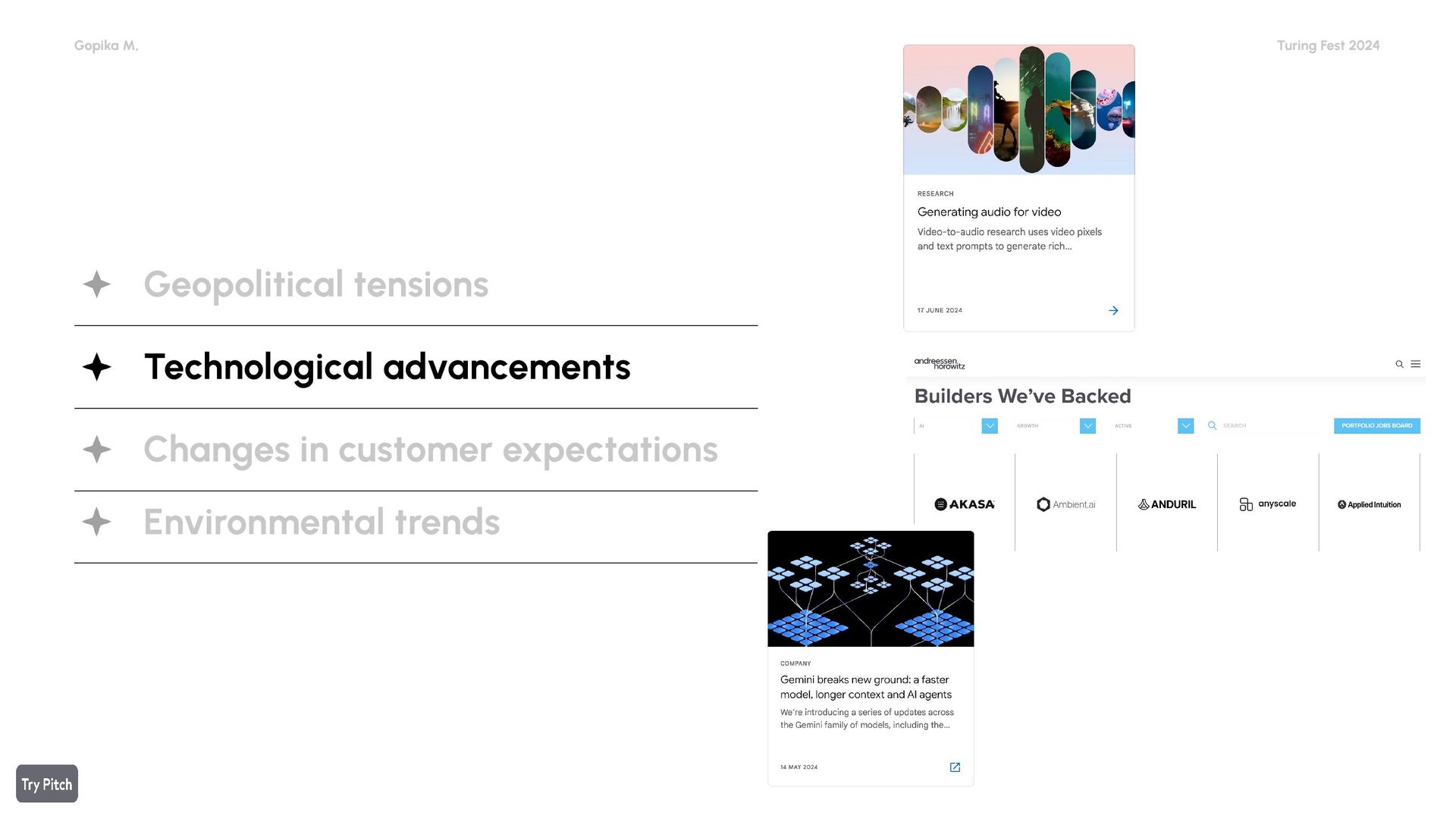
Yeah, this is just around the corner. You can also look at technological advancements and predict what's to come. So when GPT or Gemini, when they launched, it came as a surprise for most businesses and for most, actually, most people. But if you follow the works of, let's say, Google's DeepMind, who publish research every few months, talking about the new technologies that they're working with, that they're exploring, as well as if you follow closely the investments of really famous venture capitalists such as Anderson Horowitz, you see that a lot of the
technologies that are very much at inception and what's being worked on, you can see that this is something that will only blow up or might be commercialized in the months or years. And for companies, I think what's really useful is to figure out what are the top few aspects in the business that is something we need to actively look for, and clearly follow these industrial trends and understand what would happen if this technological advancement or a geopolitical tension or, you know, a change in customer expectations,
what would happen if the things that we're observing right now, that's at the inception stage, what if it extrapolated or advanced or became commercialized? How would this affect our business? Or what can we do to prepare ourselves to incorporate these changes or advancements in our business from when these are at the inception stage?
So, these are actually a few different ways that one can observe the core areas that affect their business, follow them closely, and make a decision and prepare themselves of how do you leverage these upcoming changes in these four scenarios into when you're building your business or continuing to advance your business.
But extrapolation is actually the more simpler thing. Right? You keep an eye out for certain advancements, you follow the path through, you understand, you know, make an assumption of how it can impact your business. But the hard part is actually to build resilient structures to deal with unpredictable events.
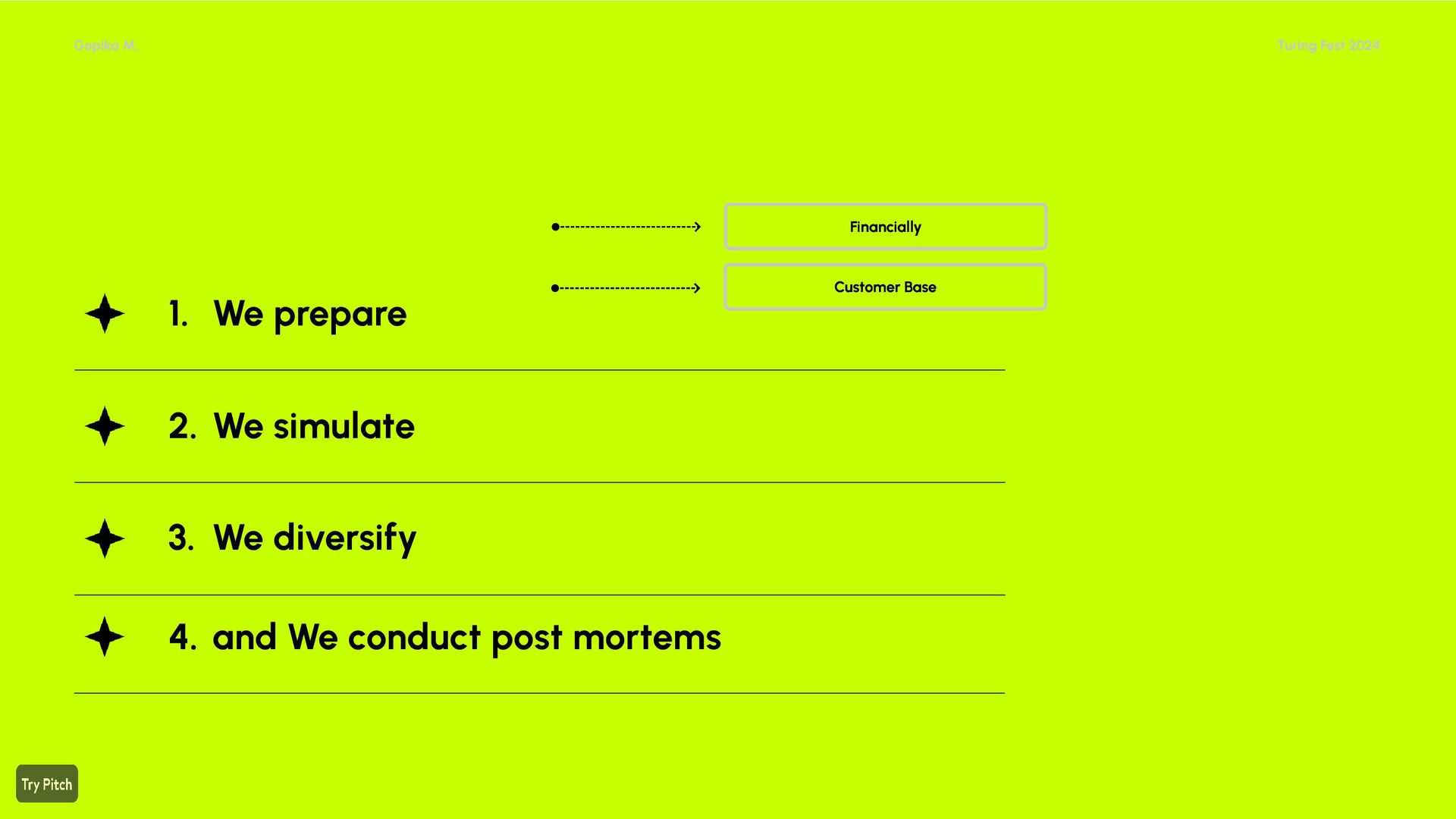
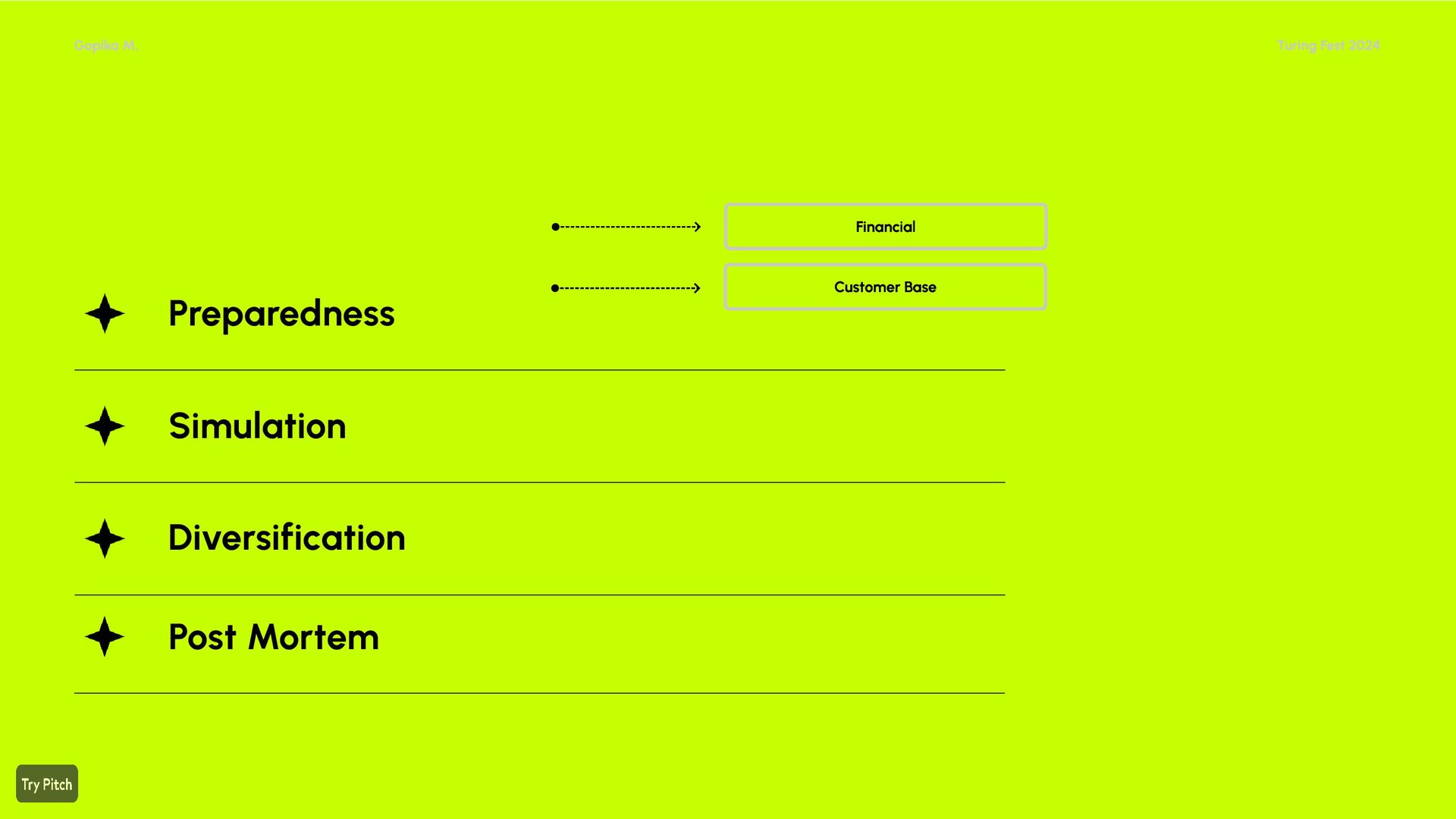
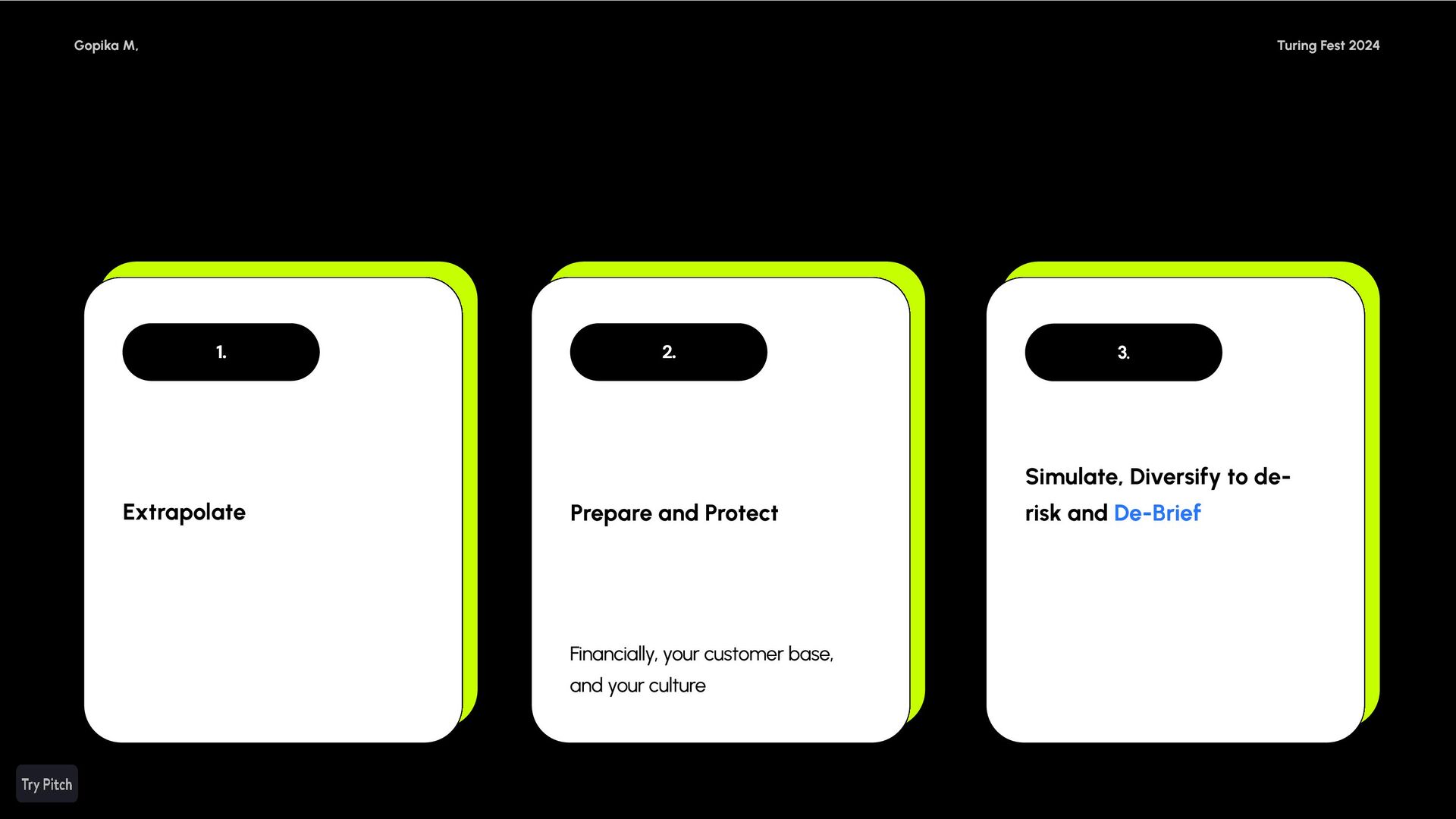
And across the companies that I've worked with, the outcome of that has essentially can be divided into, you know, four sections of how they actually build resilient structures to navigate unpredictable events. They've prepared well, they've simulated well, they've diversified and they've actively conducted post mortems.
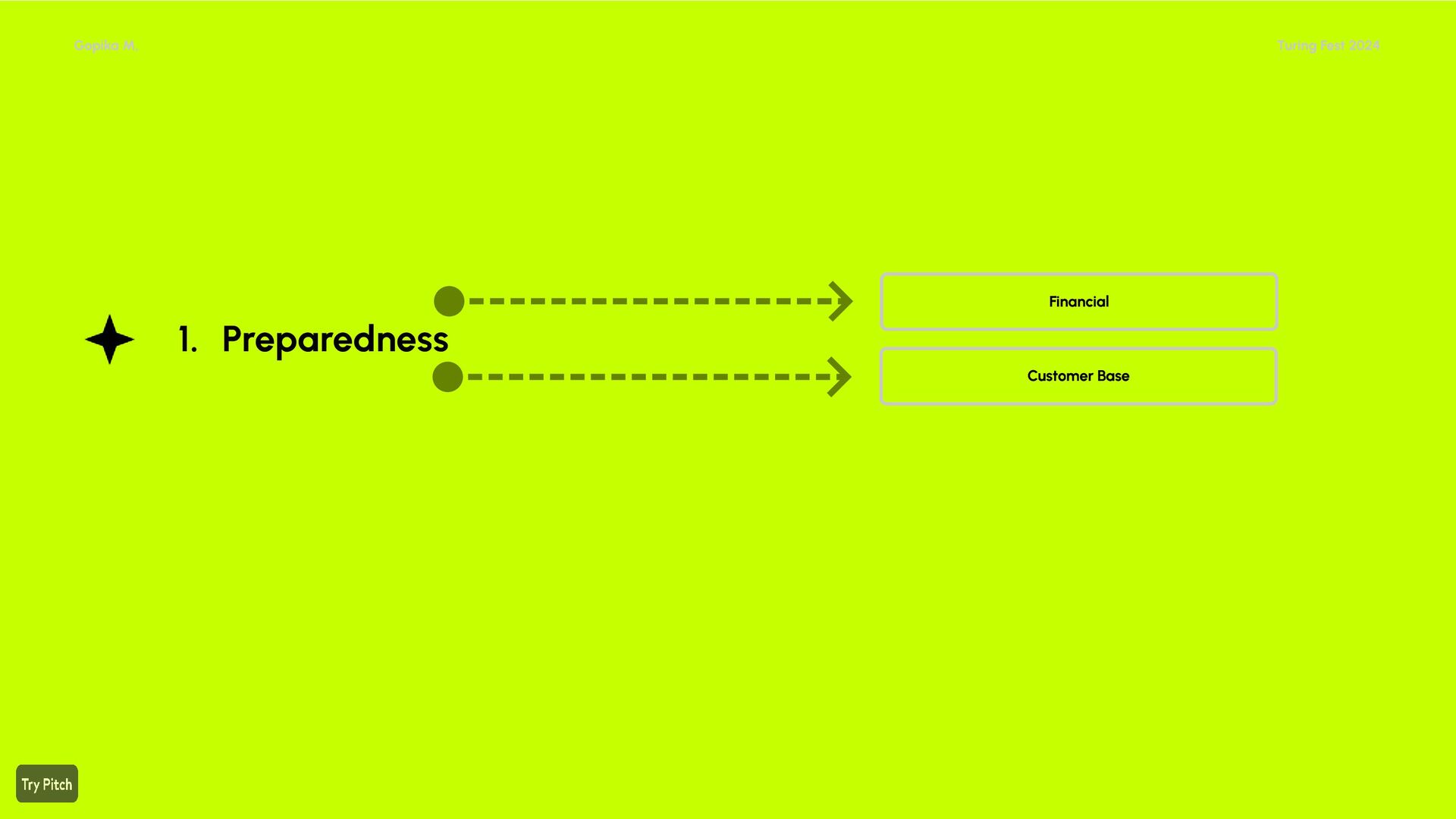
I can give you an example for each of these of how different companies have done that. So preparedness, in very layman's terms, is when someone says you need to prepare financially, it's essentially having a pile of cash that can last you six months or a year in case, you know, consider it as a rainy day fund.
But actually, there's a smarter way to prepare yourself financially by using your customer base. And one very specific example from a company that I've worked with, they did this very well. So what they noticed is that they had a very frequent user base, but who weren't willing to commit, so who weren't really subscribers.
And they noticed that, you know, there are a hundred customers who are paying them regularly, and they're extremely profitable. And what they did was change their monetization strategy to understand how they can actually lock in these customers and subscription models So, the entire monetization strategy went from one time frequent paying users to a subscription model where the customers would pay in advance upfront for one, six or twelve months.
And these customers who are in subscriptions or who are subscribers weren't actually as profitable as, you know, our frequent payers. But at the same time, there was an active business decision that was made to lock in more and more customers into the subscription model.
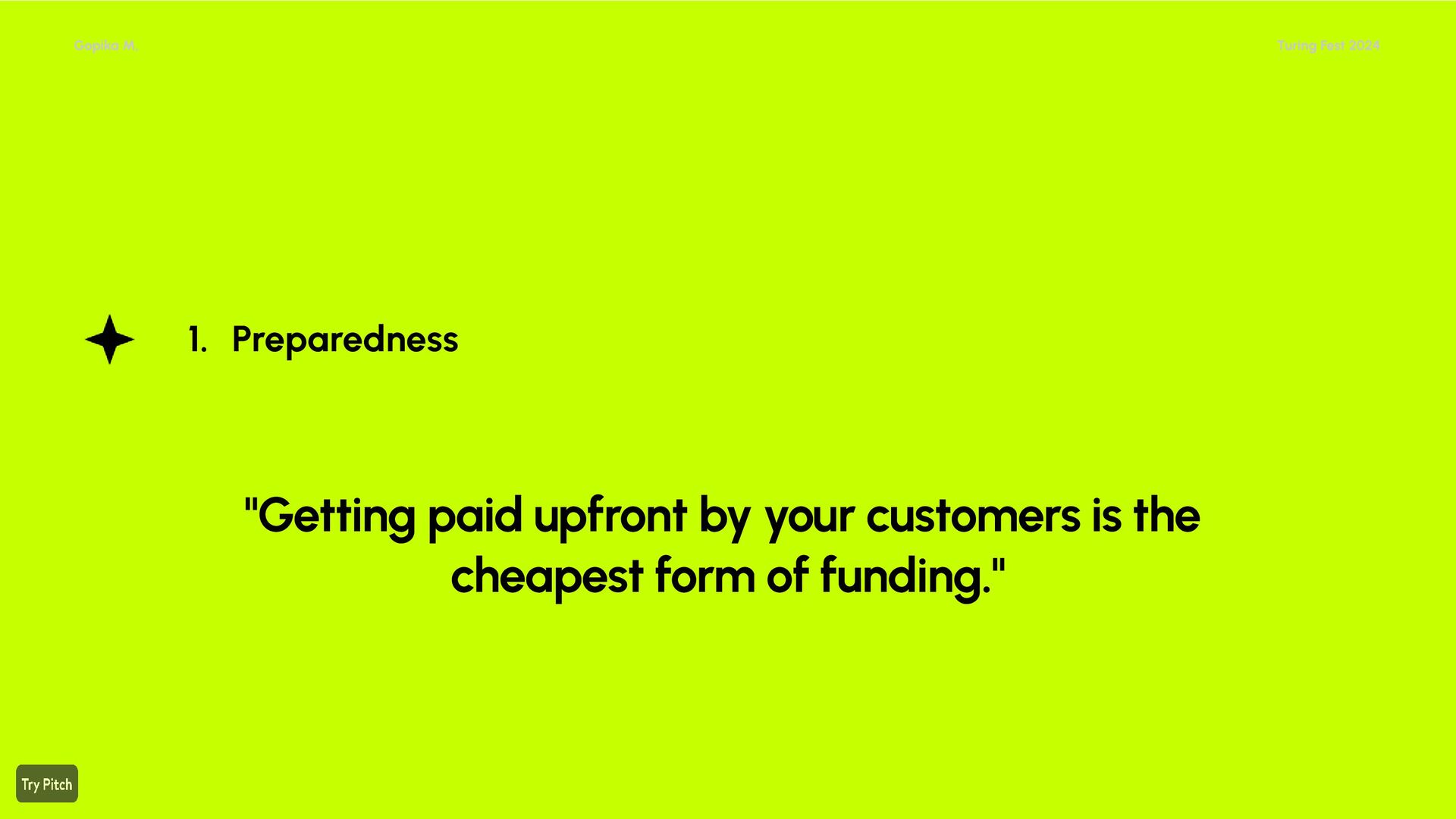
And the reason is because in times, when times are really hard, getting paid upfront by your most loyal customers are the cheapest form of funding. And to actually develop or understand strategies that can actually lock in your customers for longer periods of time is something that can help you be more financially resilient by using your customer base as a lever.
So that is one example of how one can prepare or foresee or make your finances more resilient. The second is simulation. So simulation in simple words, it's like playing a video game. So you're essentially placing yourselves in different environments and understanding the potential outcomes of these environments.
And in business, how we've done that so far is to actually understand what are the core factors in our business that's helping us survive. So in micro mobility, there was supply chain, there was where we procured products from. In e commerce, it's, of course, our platform, it's our suppliers, it's our security, it's our payments.
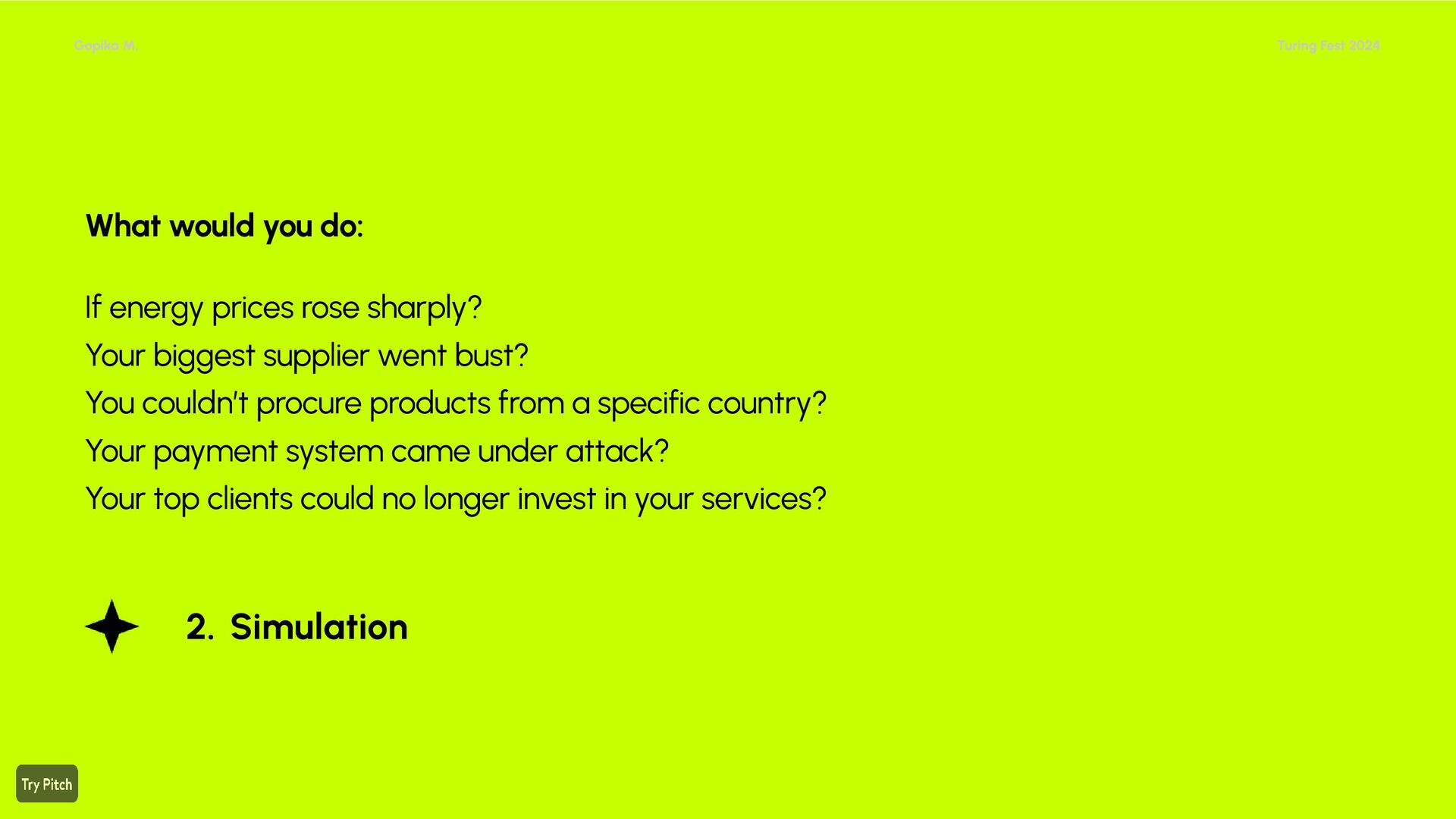
So, as businesses, what we have done is figure out what are the core levers that's helping us with our business continuity, and asking ourselves or simulating situations where we're asking ourselves what would happen to our business if the energy prices rose sharply, or our biggest supplier went bust, or our core clients whom we are focused on can no longer pay us, or if our payment system came under attack.
And by understanding the most important levers in your business and simulating the adverse effects of it can help business foresee on what they should do now in order to continue their business in the next few years if this aspect came into threat. And one of the outcomes of simulation in most companies is actually diversification.
And that essentially, in lot of cases, because companies realize that they're over reliant on a single factor. They're over reliant on a single supplier or a single market or a single payment system, and they realize that balancing risk portfolios is essential. There are also examples where a company realizes they're diversifying too much and they need to consolidate, but in most cases, in order to survive, you need to diversify.
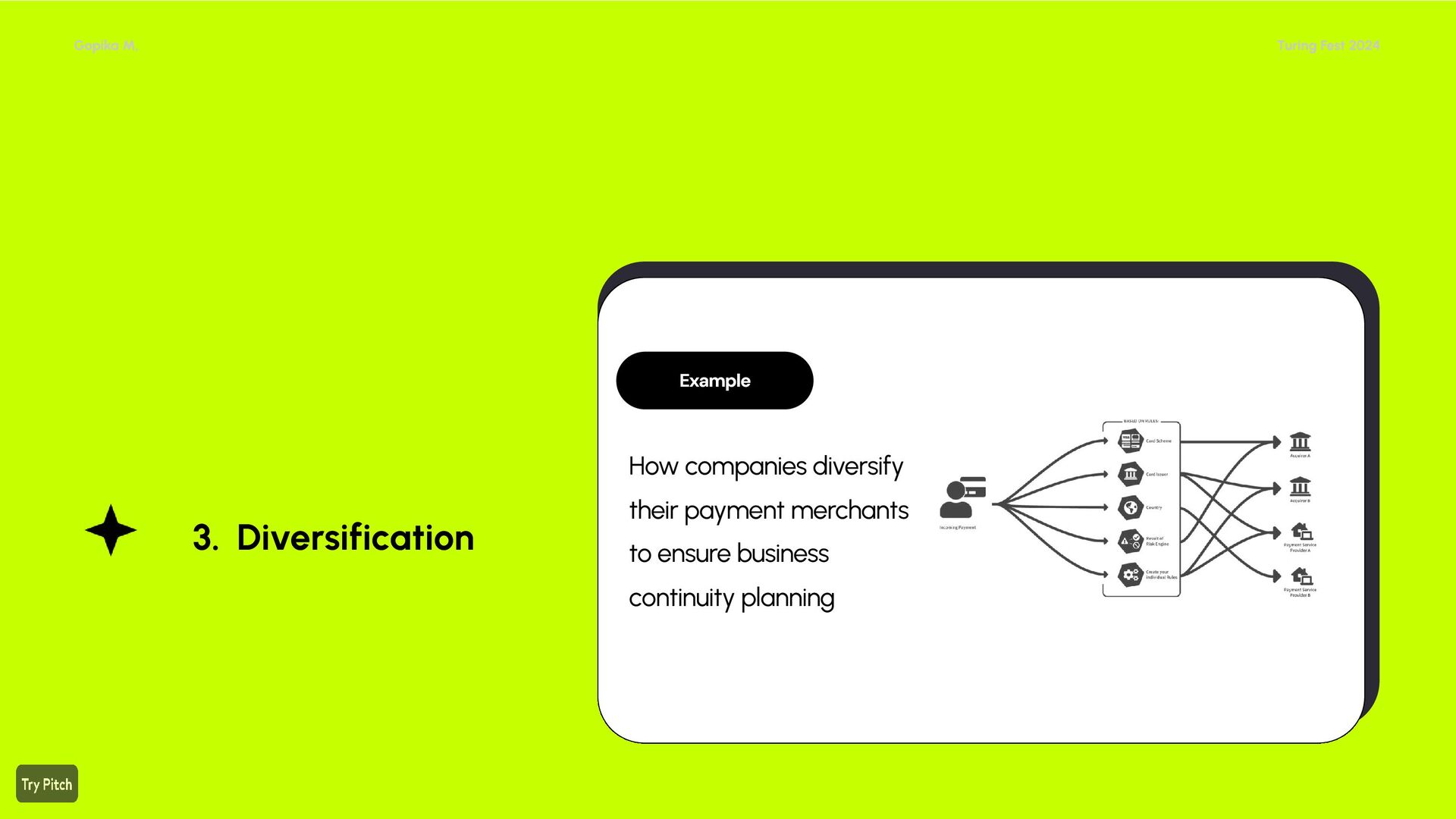
And most of you must have seen a very common example in companies, right? And we face the same in one of the companies. So our payment system was there was minor failures in our payment system because we were relying on only one single vendor.
And before it got too big and, you know, our entire payment system came under attack, what we made an active decision to do is to diversify our payment system and go and integrate different orchestrators and different vendors. And this was a massive project that lasted about a year, right?
But as a business, we realized that if our payment engine failed, working with one vendor, our entire business continuity comes into threat. And that was one of the decisions that we made to diversify our payments engine, so that even if one engine fails, we can still, you know, receive the payments and receive the revenue that we are meant to generate.
So that's one way where companies or how companies decide to diversify different aspects of their businesses that are most critical to their existence. But despite, actually, despite doing these things, you know, preparing financially, simulating, diversifying, You cannot be successful as a business if you don't conduct active post mortems.
Actually, post mortems comes from the medical field where, I mean, for those of you who don't know, it's when you examine a body after death, and you come together and talk about what was the cause of that event. And in business, this is extremely important when an event goes unplanned or also on the other hand when an event goes extremely, you know, is extremely a success.
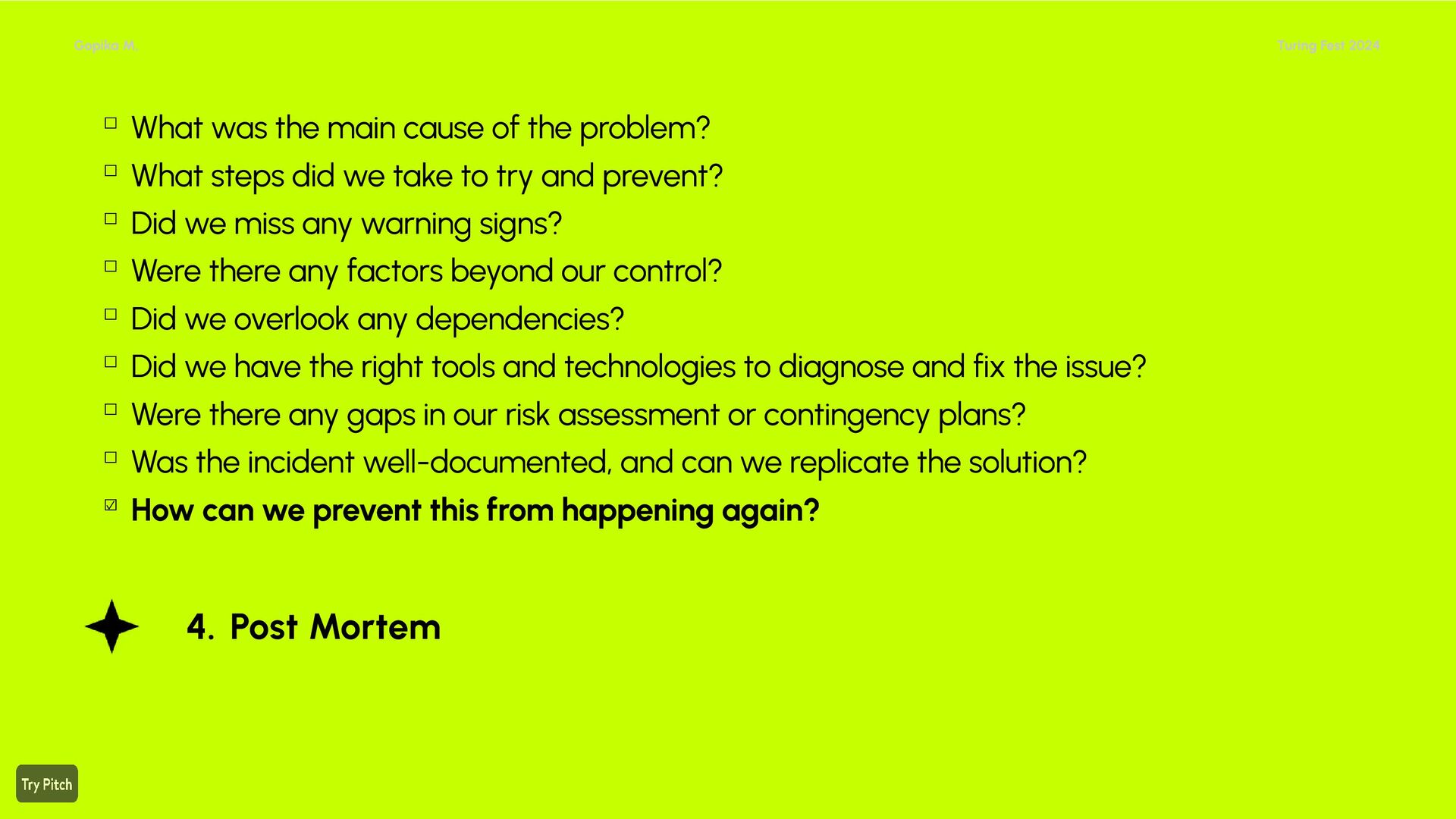
And the success of a post mortem is actually in its questions, and I'll tell you why in a second. So, when there's an unexpected event that the team or the company faces, we need to have a regular conversation on what was the causes of something going good or something going bad, and understanding what we can do to try and prevent these from happening again, or to understand what are the warning signs that we have missed, or have we looked at the right technologies and tools to help
us understand the main problem of what has happened. And the questions, of course, vary event by event or situation by situation, but to do post mortems or conduct post mortems when something goes exceptionally bad or something goes exceptionally well is because these are the tools that help us, you know I would call this as polishing the tools in order to prepare ourselves when the next big event hits us.
And these are also the tools that I mentioned earlier in this discussion where, you know, we have actually faced events that have caused that hasn't gone as planned or the effects of it have a massive impact on our people, our organization, our environment.
And by actually documenting and going back and reflecting on the event itself and answering these questions and then converting them to our playbook, these are actually the tools, these are literally the tools that will help you use the next time we face unexpected events that come or that are sprung out on us out of the blue.
And that's the reason why this exercise is so important. But I do want to end with this, right? We discussed how we can extrapolate to assume or estimate what's to come, and we have protected or prepared our business financially, culturally, through our customer base.
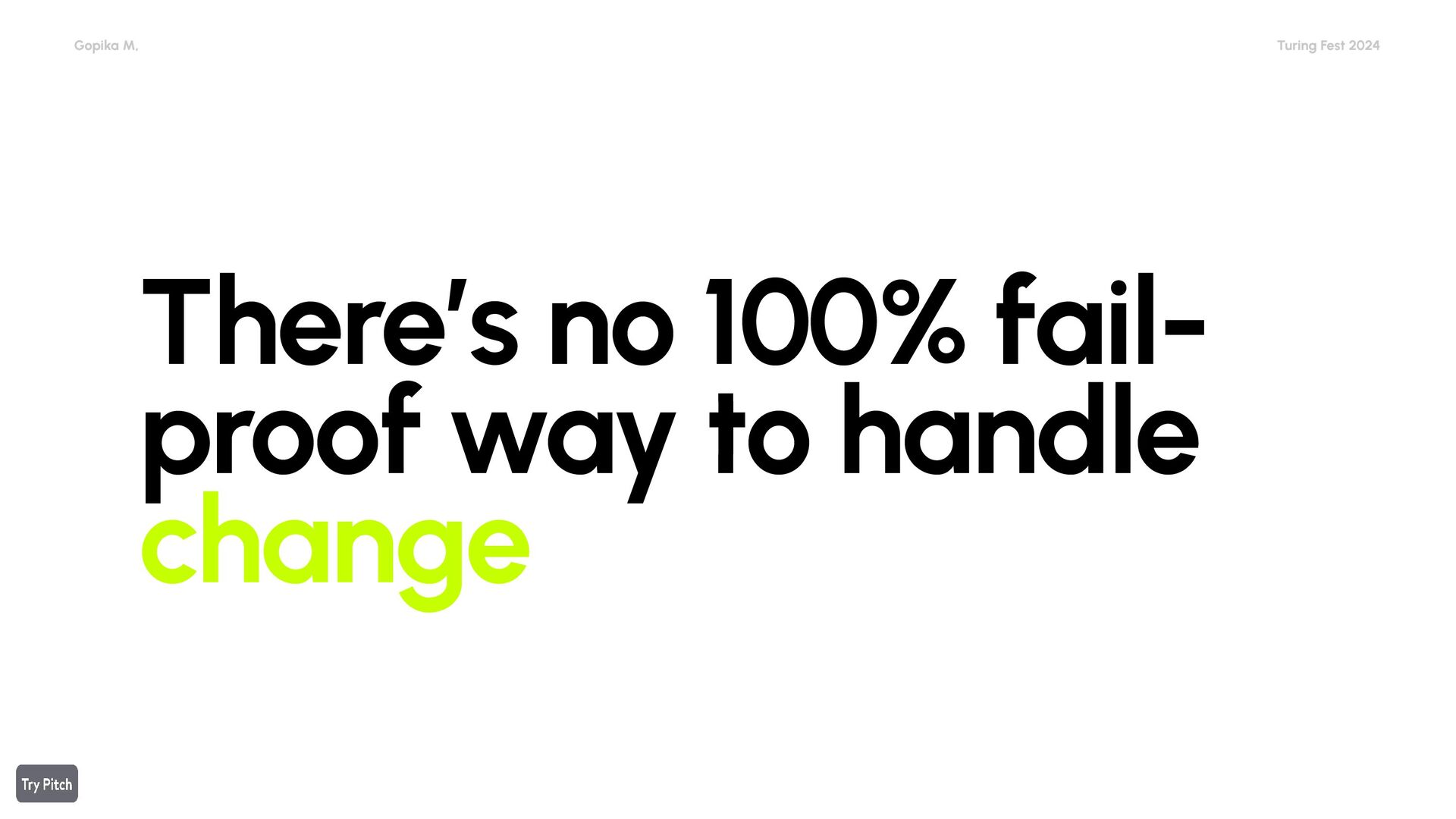
And lastly, we have simulated, diversified to de risk, and we are doing this constant exercise of debriefing. But despite doing all that, I think we just have to tell ourselves there's still no one hundred percent fail proof way to handle change. And that's just the truth.
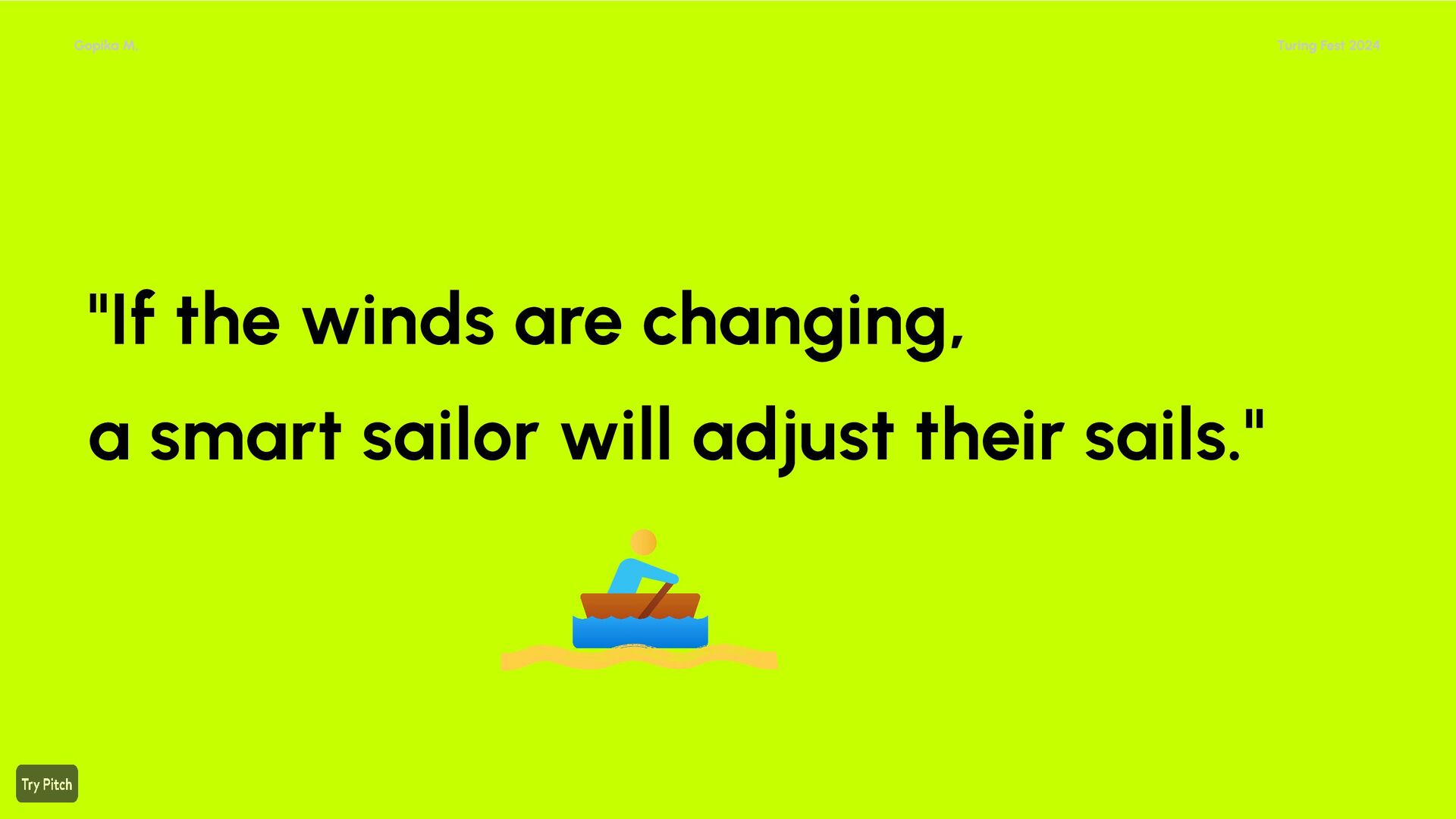
But I would leave this conversation or this discussion with one quote, and that is, if the winds are changing, a smart sailor will adjust their sails. So be that smart sailor. Thank you, and I hope that you enjoyed this discussion.