
Product as the change agent. More and more do we realise the need for effective change management in all businesses, not just corporations with "transformation projects" but every stage from startups that need to pivot to scaleups that need to keep team members engaged through down turns. The underpinning of Product is change so let me show you how to use what you know to drive effective and successful change consistently.
← All talks 
Build Turing Fest 2023
The Change Wave
Auto-generated transcript - may contain errors. Tap a timestamp to jump the video.
Hi, everyone. Thanks for having me. It's really, really great to be here in Scotland. Being a speaker on the second day is always interesting because you have to behave the night before because you're gonna be on stage. So I've I've been hearing about all the great places to go tonight.
So I'm looking forward to a wee jig in the late hours of the evening. But I'm here today because Brian contacted me about eleven months ago and asked if I would come and speak at TuringFest. And when he did, I thought, oh, god, what am I gonna talk about?
I could talk, you know, product road mapping or stakeholders or and I was talking to a colleague about this and they said to me, oh, I feel like I'm just drowning in a sea of change. And I thought about that, and the immediate imagery that came to my mind was like being in the ocean and just having wave after wave after wave crash on top of you.
And all of a sudden, I just thought, oh, I'm really tired. Does anyone else feel really tired? Yeah. It just feels like things are one after the other after the other. So before I get into how we can change that situation, I should probably just give yourself a introduce myself a little bit.
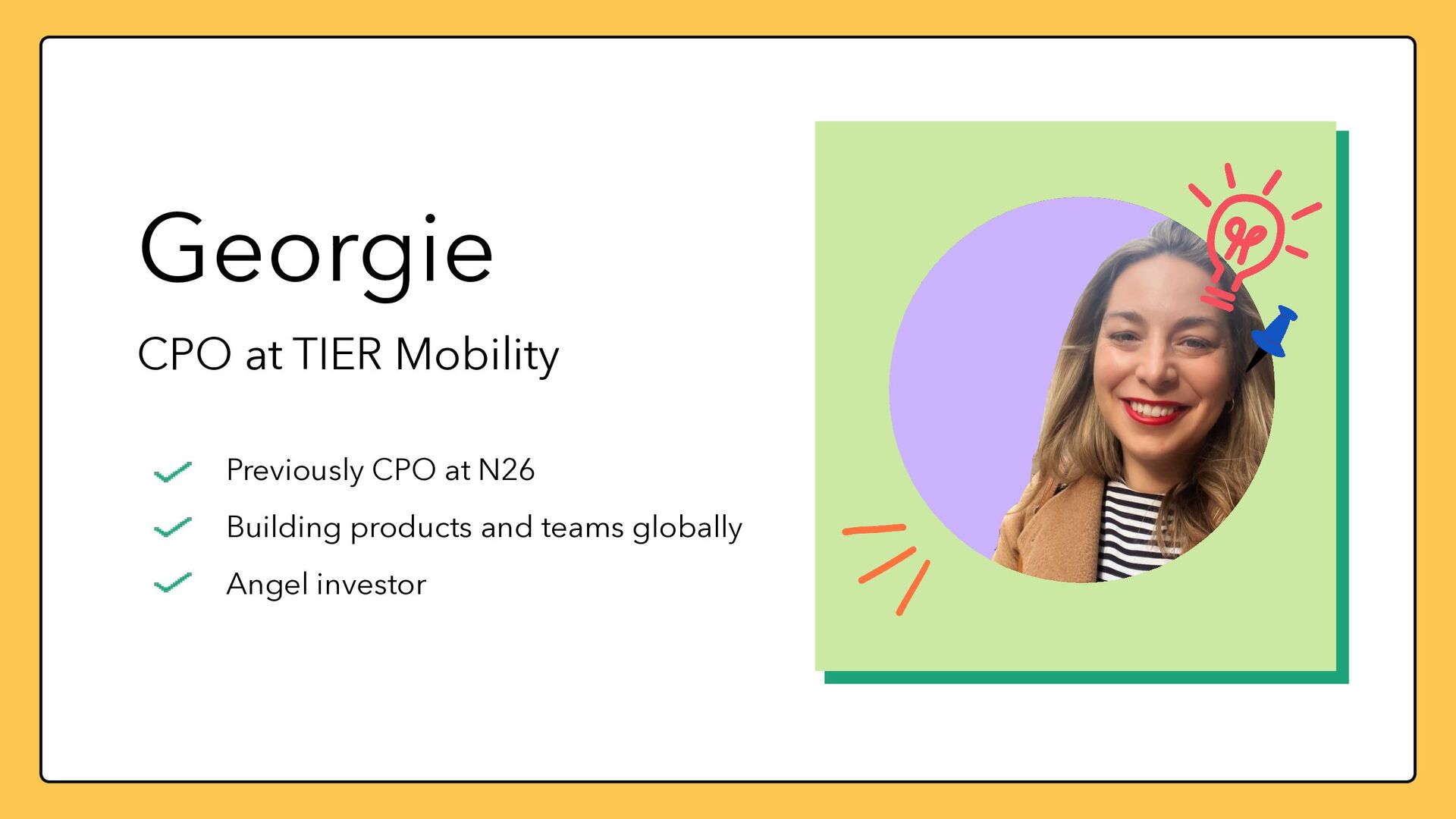
So, my name is Georgie. I am the CPO at TMobility, where I look after product, marketing and customer care. Interesting combo, I know. But if you have been a CPO, you'll know that no CPO role is equal. Before that, I was the chief product officer at N26, which is a digital neo bank based out of Berlin.
And there, I looked after product design and research. I'm an angel investor, and I have a very I'm very passionate about women's entrepreneurship and making sure that the future has diverse ideas. As a product person, it's kind of my jam. But I think going back to this change thing, when I thought about it, I thought, but isn't change?
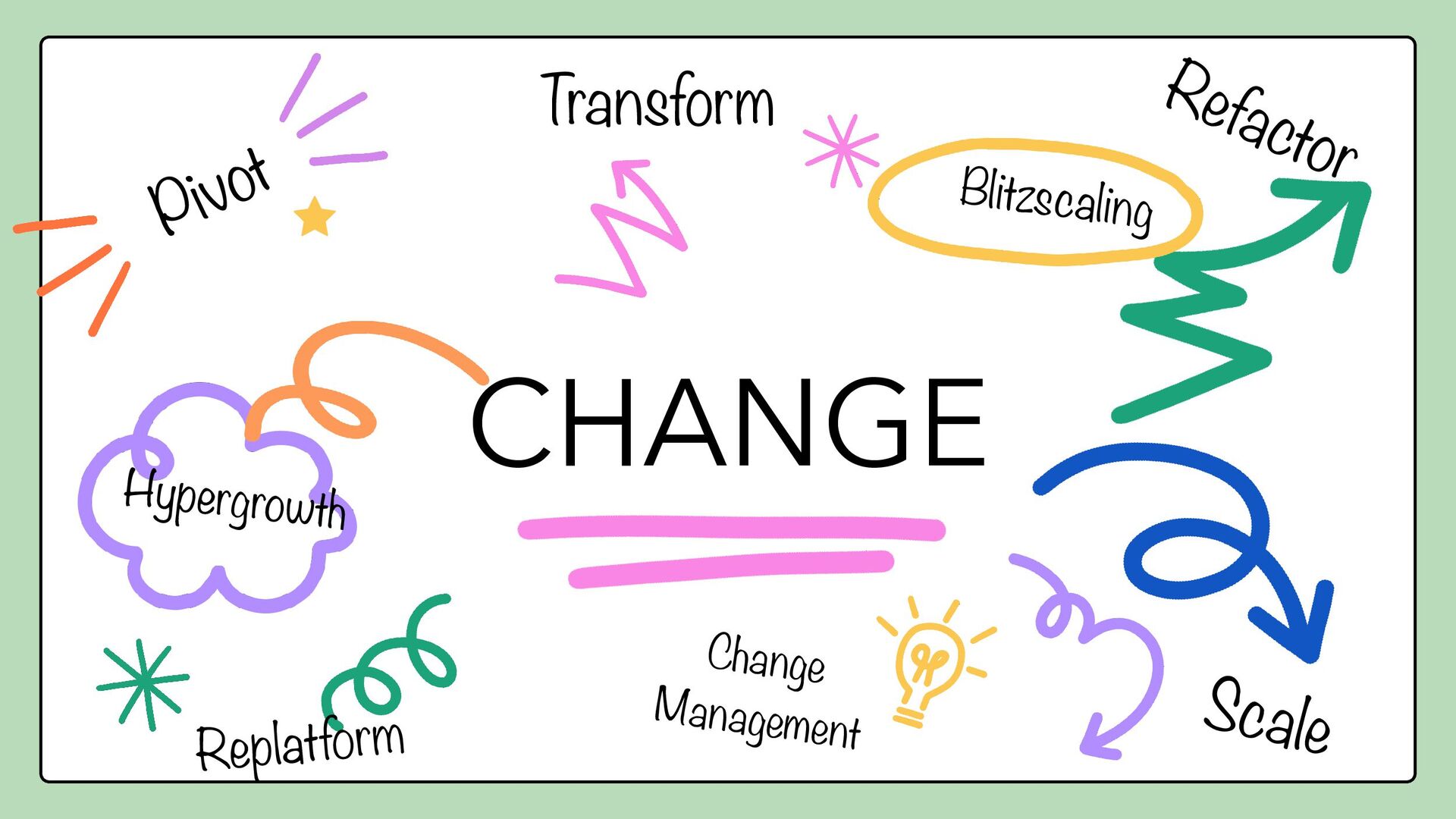
That's what we do? Right? We're in tech. If we're not causing change, we're not really doing our jobs. And if we think about change and how we talk about it in technology, we have given it so many names. It's about transformation, blitzscaling, pivoting, refactoring.
My personal favorite as a product person, reprioritization. I mean, if anyone doesn't feel tired thinking about that, yeah, that's a different story. But some of these changes are desired. Right? We generally are change agents. Right? We come in. We wanna build things. We wanna make things better.
We wanna scale technology to the world. But lots of the change that we've faced in the last couple of years is not within our control. Things like COVID nineteen, web three coming up, AI. We're really chasing behind things around how this is gonna impact places.
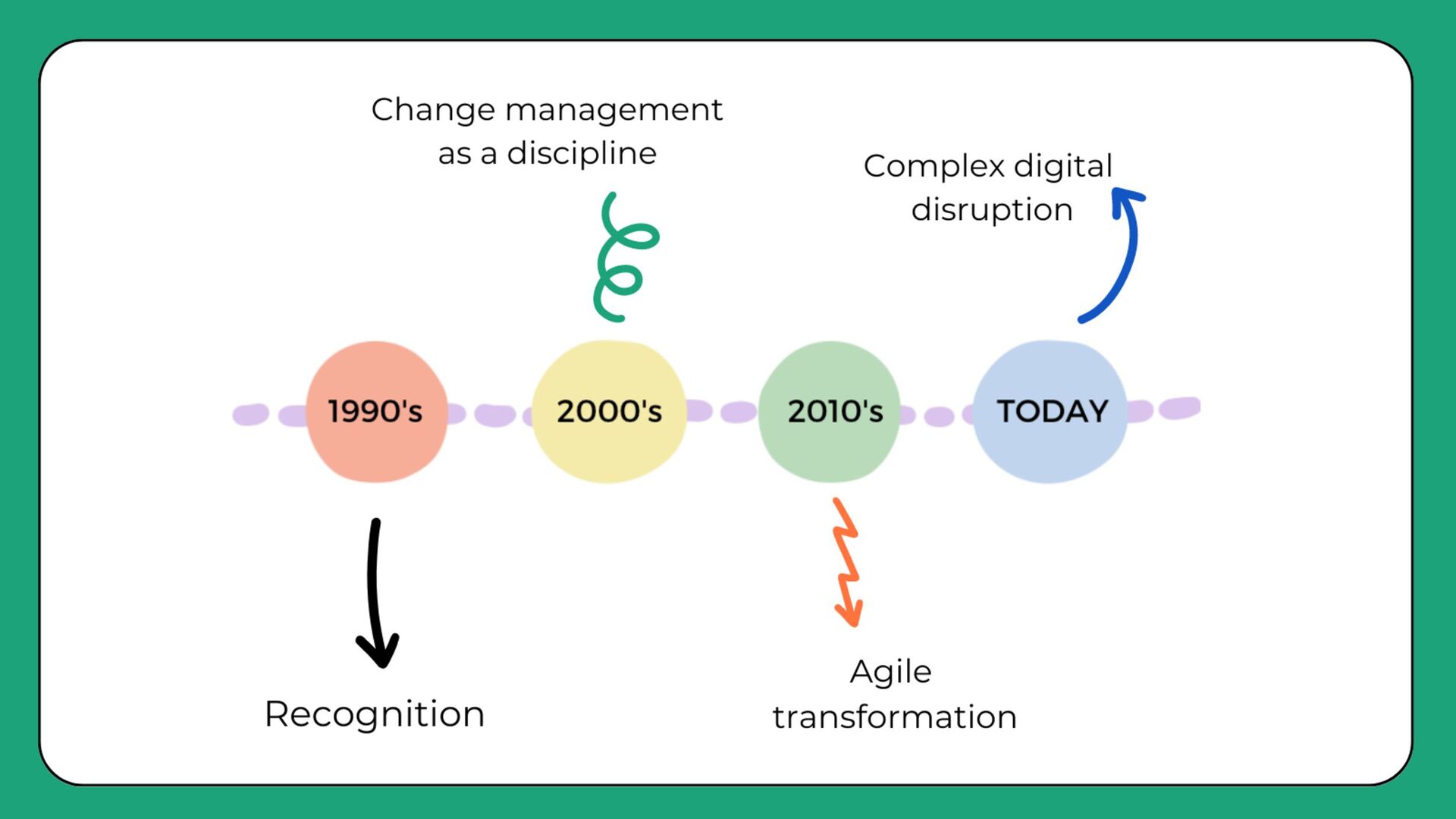
And the change that we've seen over the last couple of years is is really impacting us and our organizations on epic proportions. If we look back over the last thirty years, we really see a rapidly progressing story around change. So established in around the nineteen nineties don't quote me on the dates here.
But change was really something that gained recognition. And it gained recognition because of technological advancements but also because of globalization. And change was something that people really started talking about. We need to change. We need to do things differently. The next decade really saw change management as a distinct discipline.
And the easiest way to explain this is the consulting companies in the world realized that they could monetize change and, and talk to every company they could about multimillion dollar deals of transforming your organization. And, really, that was more interested in the human side of change, and that was where we really started thinking about how our teams are gonna change and how the people can change in those organizations.
Fast forward ten years, and even though the Agile Manifesto was written in two thousand and one, it really took until the two thousand and tens for it to scale across the world in tech organizations everywhere. And then you fast forward to today, and change is different.
It feels different. Through COVID, we all got told this is the black swan event. Right? This is the thing that no one thought was gonna happen that's happened, and it's a one off, and we're gonna have to deal with it. But since then, we've had supply chain issues as a flow on from COVID.
We've also had the war in Ukraine and a talent crisis. We've had generations changing the way that they wanna work. We've had a move to remote working, which has completely changed the way that we need to build our organizations. And, really, it feels like there's increasing complexity in change, and we need a more adaptive management process to deal with this change.
Did you know when I was researching this talk that there's change is a noun. It can also be a verb as well, but there is no collective noun for change. And I think that pretty much nails the problem because change is not singular anymore.
It's plural. And if I were to suggest a collective noun, I think a mess of change would be a really good way of describing the situation that we're in at the moment. And so what I wanna talk to you about today is the recognition of changes that ongoing process rather than a single thing that we need to focus on.
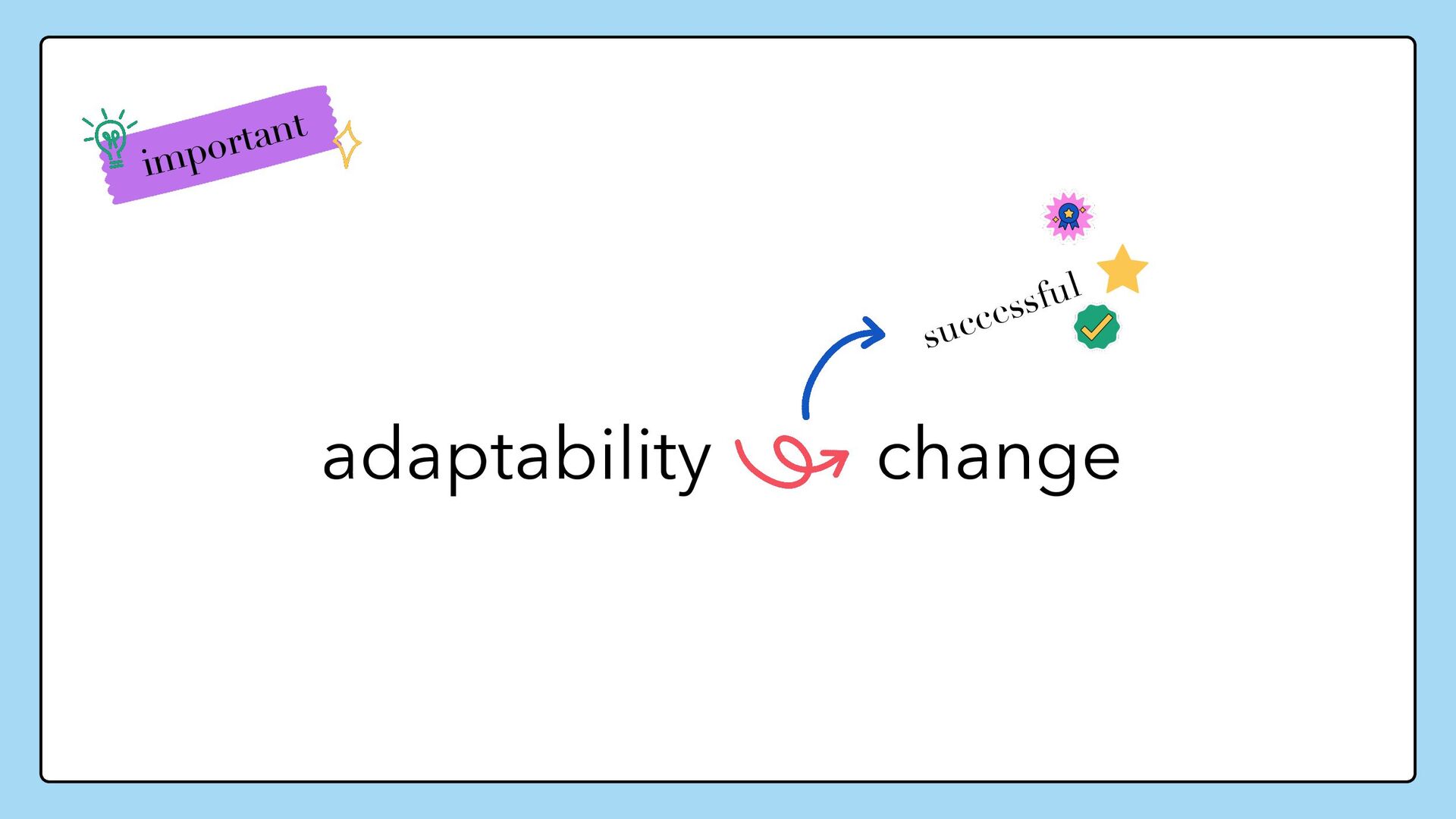
It's something that we need to enable rather than something that we need to execute. In an era of accelerating change, adaptability is the muscle that we need to build in organizations to make sure that we can handle anything that's gonna face us in the future.
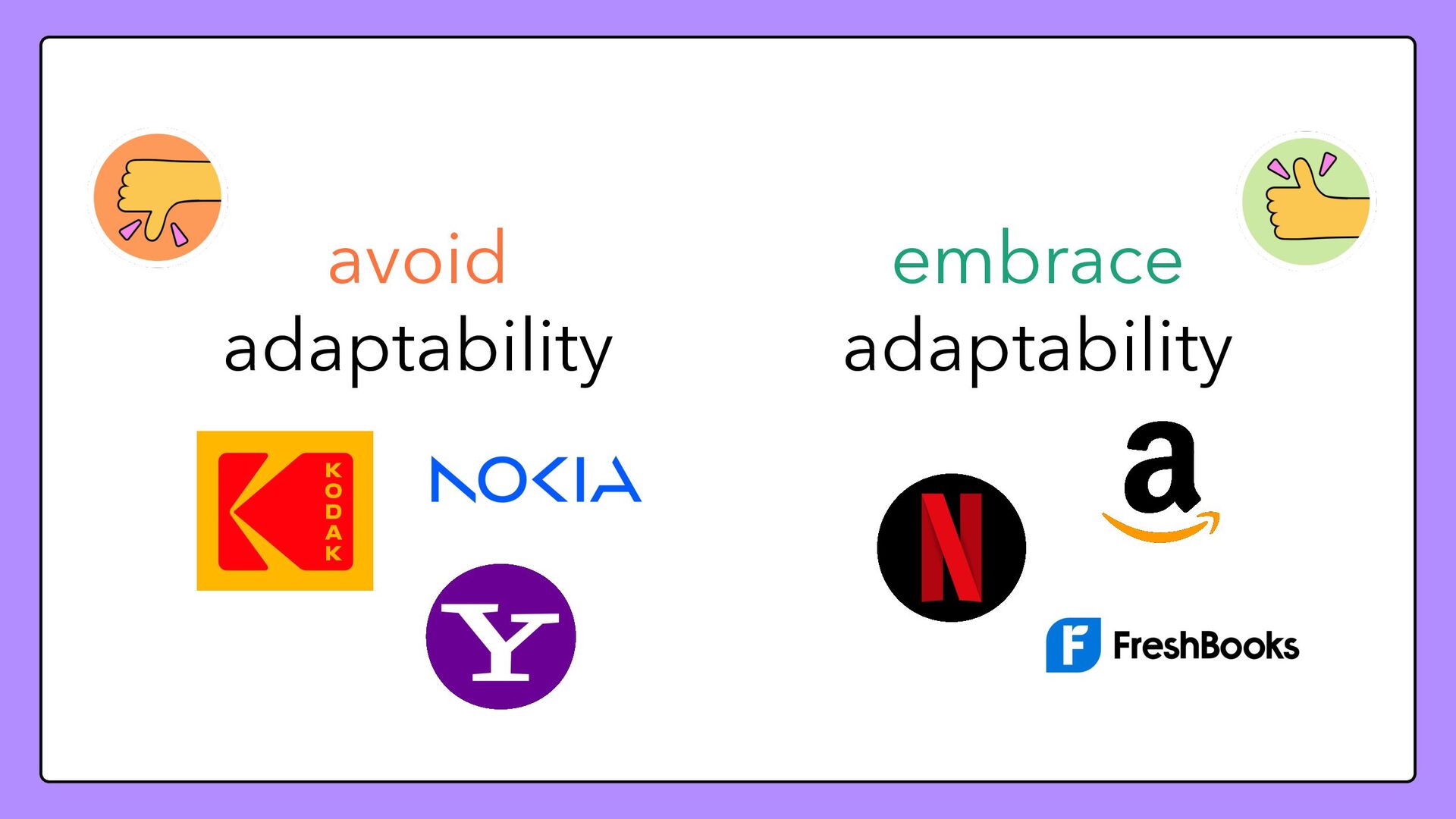
So when we think about companies in history who've had avoided adaptability or have embraced adaptability, we really there's a couple of things that really come to mind. So the very first one I can think of always as a, you know, enthusiastic photographer is Kodak.
So Kodak invented the first digital camera. Right? Makes sense. And you would think, okay. Yeah. They really embraced change because they were, mechanical cameras and they moved to digital cameras. But they completely missed the digital revolution as far as consumption and scale and software is concerned and filed for bankruptcy in twenty twelve.
Twelve. How can you design the first the world's first digital camera but file for insolvency a decade and couple of decades later? Nokia is another example. They thought they could come late to the smartphone world relying on their brand. Not such a good idea. And then, of course, you've got Yahoo.
And I had a really funny joke about Yahoo. But well, maybe I should have kept it. On the other side of things, you've got companies that have clearly embraced adaptability. Now we know Netflix and Amazon, there's books and podcasts and and things like that.
But I wanna tell a little story about a company called FreshBooks. Does anyone know FreshBooks? I know there's a couple of accounting software aficionados in in the audience. But FreshBooks is a small business accounting platform in Canada, a Canadian company. In two thousand and twelve, they had ten million customers.
They had twenty million dollars in revenue. They had a massive party to announce this to the market. And the cofounder, Mike, was having a great time. Huge party, like, fell over in the street on the way home, was carried through. Great stories for for the off sites.
But the secret that Mike was holding was he was petrified. He knew he had a monolithic code base that he couldn't pivot on. His UX wasn't great. He couldn't build new feature functionality. His engineering team kept telling him that he couldn't build any new features because the software couldn't handle it.
They would have to rebuild everything. And three years later, a company called Billspring popped up. And Billspring was everything that Mike had feared. It was agile. It had UX at the center of its design structure. It was built on APIs and all these other cool technology that Mike hadn't been able to get into FreshBooks.
Now, what was really interesting to the new Billspring customers a couple of months later, when an announcement came out that Billspring was actually owned by FreshBooks. And what Mike had done in the following weeks after that party, great party, was pick ten people that he trusted to really challenge him and challenge the way that they think about building companies.
He called it the loft project. And they moved upstairs and they decided to build a whole new platform with completely different ways of working. They talked to the customers, believe it or not. And really to challenge everything about how Mike had built FreshBooks.
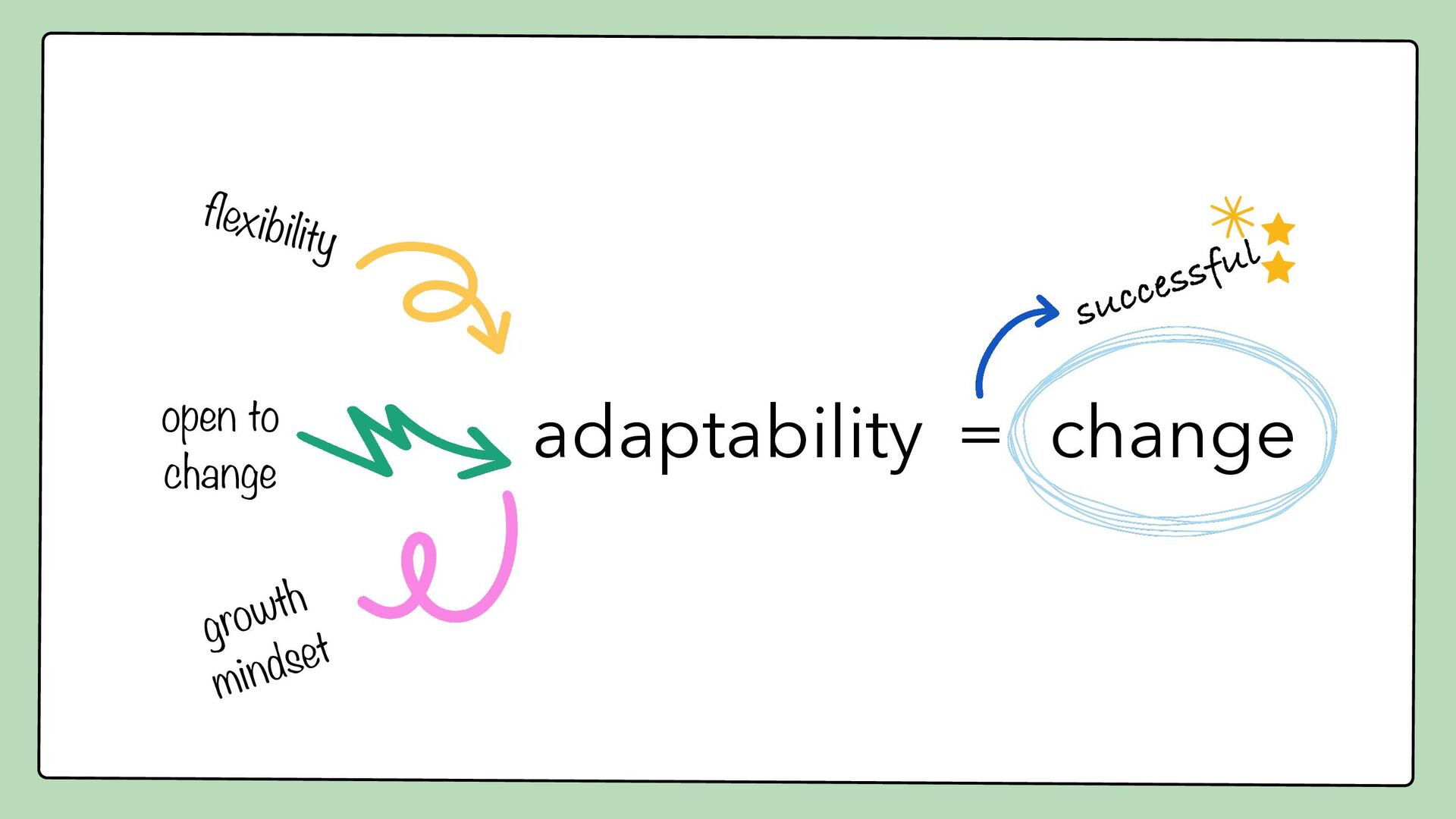
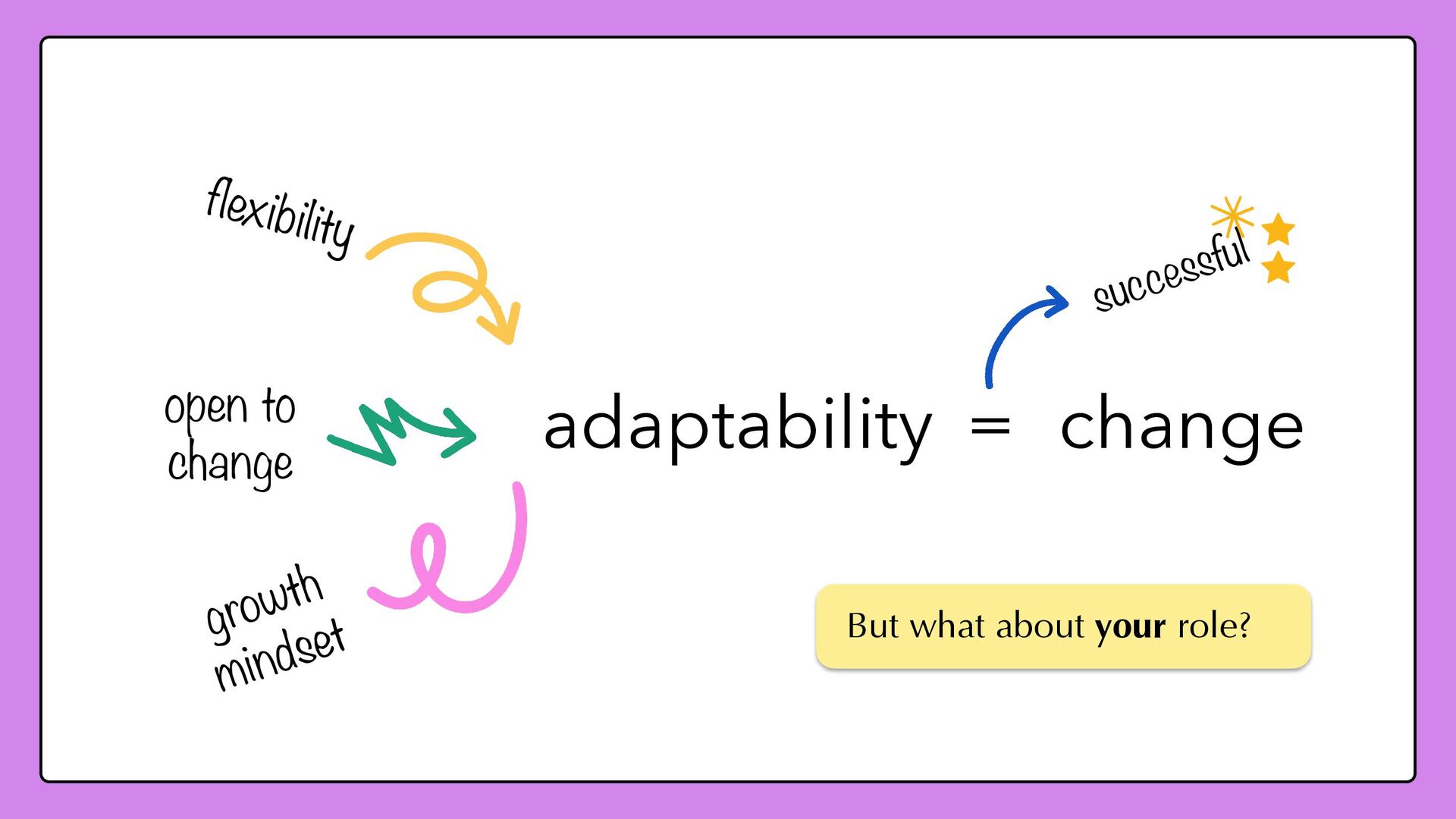
So I think a really, really good example of company that not everyone knows about, but really is open to challenging the way that it does things. So adaptability equaling successful change. If adaptability is that muscle, what are the exercises that we need to do to make sure that those muscles are strong in the organization?
Now we've got flexibility. We need a company that is open to change, and we need a growth mindset. I'm well aware that these sound really fluffy and ambiguous. Right? And one of the things that is really tough about adaptive change and adaptive leadership is that it's difficult to decide what to do.
It's always the things that you do before the problem comes. It's much easier to respond to a problem rather than prepare for a problem. So what I'm gonna do is take you through each of these exercises and give you some really tactical things to take away into your organization to make sure that you build that muscle for that future change.
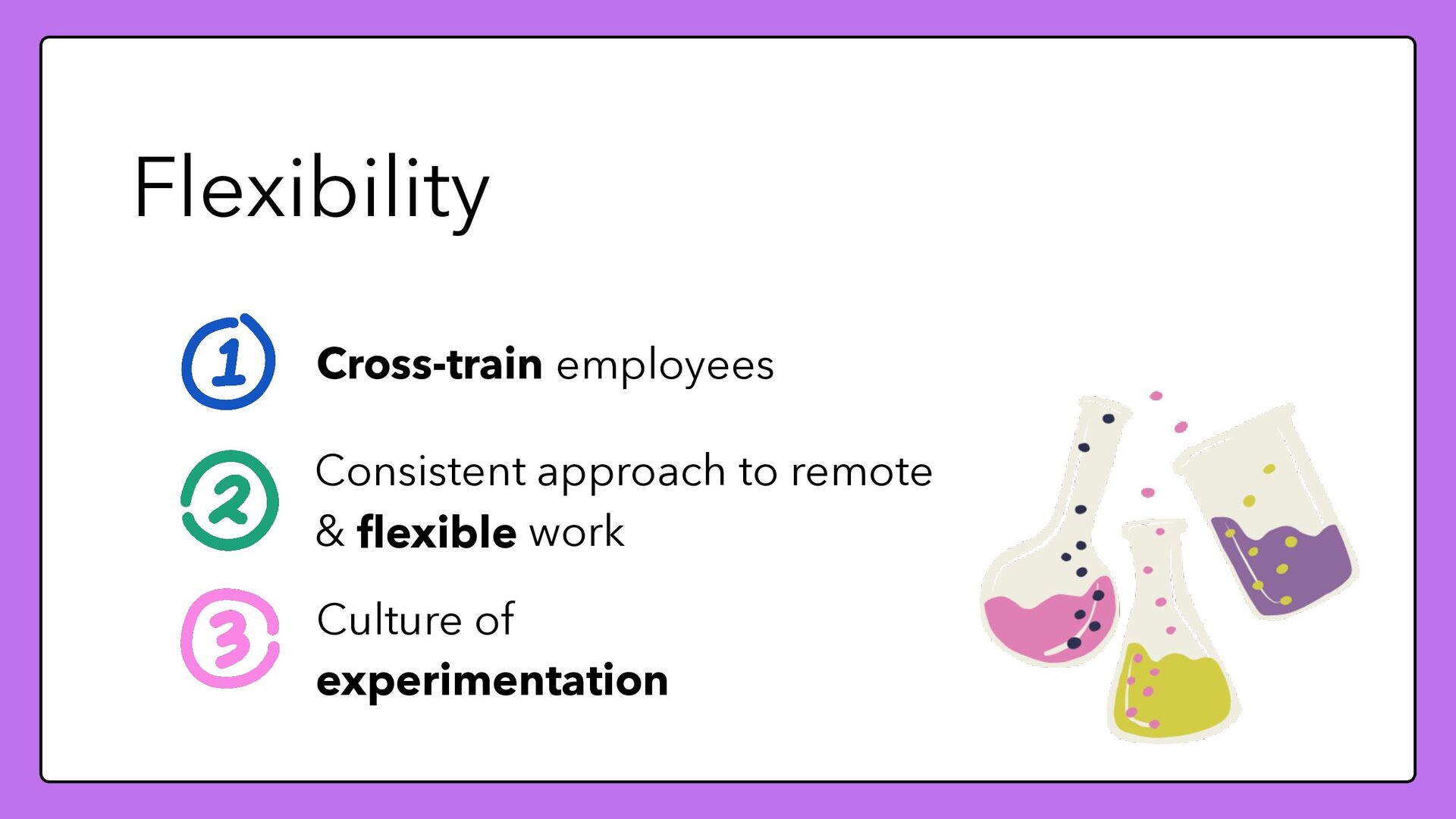
So if we look at flexibility, the first is please cross train your employees. Right? Now, if you went to Christina's talk earlier about product operations, you'll know how important this is because of the history of how we've built products and how we have different functions and different roles.
It's really, really important that you cross train your employees. Now, I learnt this the hard way. When I joined tier three years ago, I was hired to professionalize the organization. Right? They had had enormous success, and they're like, right now, we need to scale.
We need to get more professional. And the very first thing I said was you've got way too many generalists. You need some experts in to really lift this organization up. And we did a really great job in upskilling some generalists, having tough conversations with others, and really making sure that we had experts come in to to lift the expertise in the organization.
Fast forward eighteen months, and we need to lean down the structure, make sure that the scope is spread across more roles, and I had a problem because I had all these experts who didn't know how to do other people's jobs. So it was great for building up, but it was terrible for building down.
And so if you think about cross training your employees, one of the things that I've done is before you put give someone a promotion into a leadership position. So for instance, in my org, it's at head of product level. If you're being promoted into head of product level, you have to have taken at least one side step in your career.
Right? You can't it's not a single track to leadership because leadership is not about functional skills. It's about cross functional skills. The second one is embracing a consistent approach to flexible work. Now I wrote in here remote. Right? But I know remote work has is a very messy topic, and companies need to make their own decision on their approach to remote working.
It is only one form of flexible working. There are many others. Part time, job sharing, summer Fridays, all kinds of different things that you can do. The most important thing with your flexible working arrangements is to be consistent. If your organization knows what's on offer to them on flexible work, that will be something that they can hold on to and really build that flexibility into the organization.
If you're not consistent in your approach to flexible work, people are unsure. And it actually doesn't become something that's flex makes them more flexible. It actually makes them become something that is unsure. Right? And they're unsure about what they're going to do, which stalls productivity as well.
It doesn't embrace productivity like flexibility should. The third one is a culture of experimentation. Experimentation. Now we've all been told this, and there's many talks on the big ways that you can implement a culture of experimentation. But Google twenty percent time, massive hackathons, things like that.
But there are small things that you can do as well that don't cost anything. I have a Friday fails Slack channel, right, in things that I do. I start meetings with lessons learned. Make sure that retros are embedded across the business, especially in the leadership team, and do them frequently.
Don't do quarterly retros. Right? No one can remember the the mistake that they made in the first week of April, if you're talking about it in June. So imagine there's a group call. Right? You've all been on the Zoom call. There's seven or eight people on the call and a senior leader.
And the senior leader says to the group of people, so we've got this problem. What are we gonna do about it? I don't know about you, but most of the time this happens to me, it's just dead silence because no one wants to speak up.
And this is not because you haven't built a team of amazing, talented, awesome people. It's because you've taught them that success is safe. Be safe. Right? Because if you're never wrong, you're always right. Right? This is the fastest way to kill experimentation and innovation in an organization.
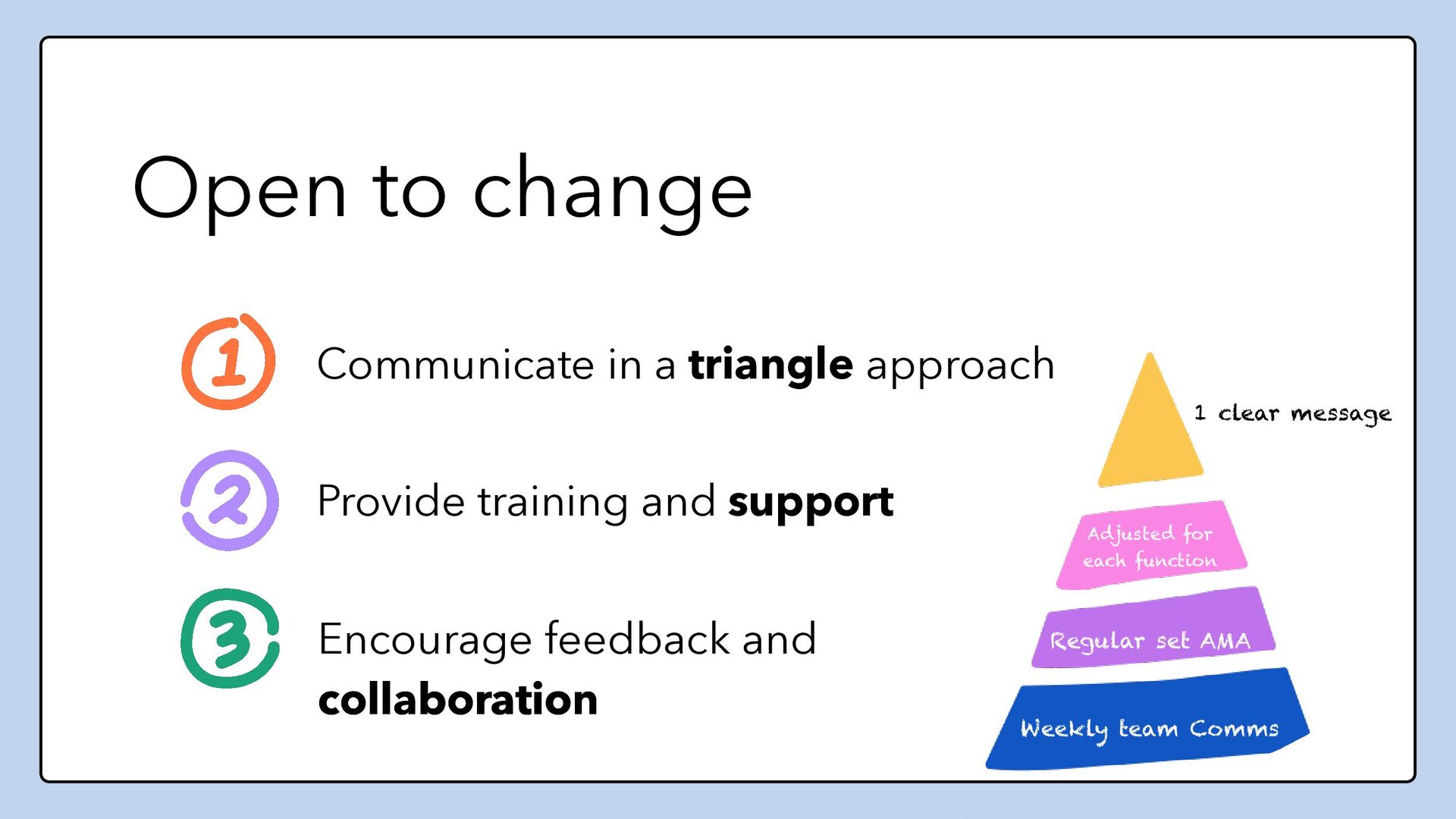
The next muscle that you need to build is being open to change. Right? And the first part about that is communicate in a triangle approach. In most presentations, what you'll see here is communicate your why. Right? We all know this. Right? We've we've heard it enough.
The biggest mistake that I see made in organizations is that, yes, you communicate your why, like, once or twice or in an all hands every six months, but we don't have a communication strategy that is about implementing that across the business. So I favor this structure where which I call a triangle approach.
So you have one clear message at the top. This can be applied for company strategies, but it can also be applied, in other smaller pieces of communication. Then you adjust that communication for the functions that need to hear it. It's very different message that you need to send to your finance and legal team than you need to send to your engineering team, and they need to hear it a different way as well.
The third part is that you need regular frequent AMAs. Make them small, but make them frequent so that everyone knows when they can have an opportunity to ask questions of people in the business. And the fourth part is make sure you have weekly team comms.
Right? Every Friday morning, the CTO and I at TIER alternate and we send out a weekly wrap video. Each of us have a different flavor to it, but it happens every Friday morning. And you hear the wins from the week and you hear some context as to what's going on around the business.
People didn't really pay attention to it for the first couple of months. And now it's something that they rely on to make sure that they hear information from across the business. So consistency is really important. Provide training and support. Right? I'm not talking necessarily about massive professional development budgets, but this could be as simple as inviting speakers.
Maybe you met someone here today which you really liked and you really enjoyed what they were saying. Invite them to come and talk to the people in your organization. Right? Maybe ask people what their goals are. Right? Really kind of build this up and provide that support around training and professional development.
The third one is encouraging feedback and collaboration. Now, here, this sounds pretty obvious, right? Like, we all know this. But let me tell you the power of this. I have a leader at tier. He is the VP of customer care. And when I hired him, he said, I wanna introduce a radical feedback culture.
And I was like, yeah, cool. Of course. Let's do that. Right? And he was like, it's gonna get bumpy. And I was like, yeah. Okay. Cool. I've read Radical Candor. It's all fine. And he did, and it was bumpy for about four or five months.
There was a awkward situation in an all hands where a junior customer care agent asked a very chunky question of the CEO. But because of the way that this leader had implemented this, he did it with respect and with good intent. Right? So that's a fantastic way to encourage feedback and collaboration.
The key here is that in the last nine months at TIER, we have had, like a lot of tech companies, riffs, restructures, compounds have been paused, promotions have been paused. The e n p s and this customer care team has not dropped below sixty at any point in time.
They ask questions when they have them, and their performance has been thirty five percent over target as far as KPIs are concerned, even though the team has reduced and no one's had any promotions or comp. I don't think these two are unrelated. The third one is growth mindset.
So this, if you haven't read anything by Carol Dweck, right, I was actually looking at LinkedIn earlier and someone was saying, where do you get your leadership advice from podcasts, All these new things. And I was like, no. Books. Books are good. Right?
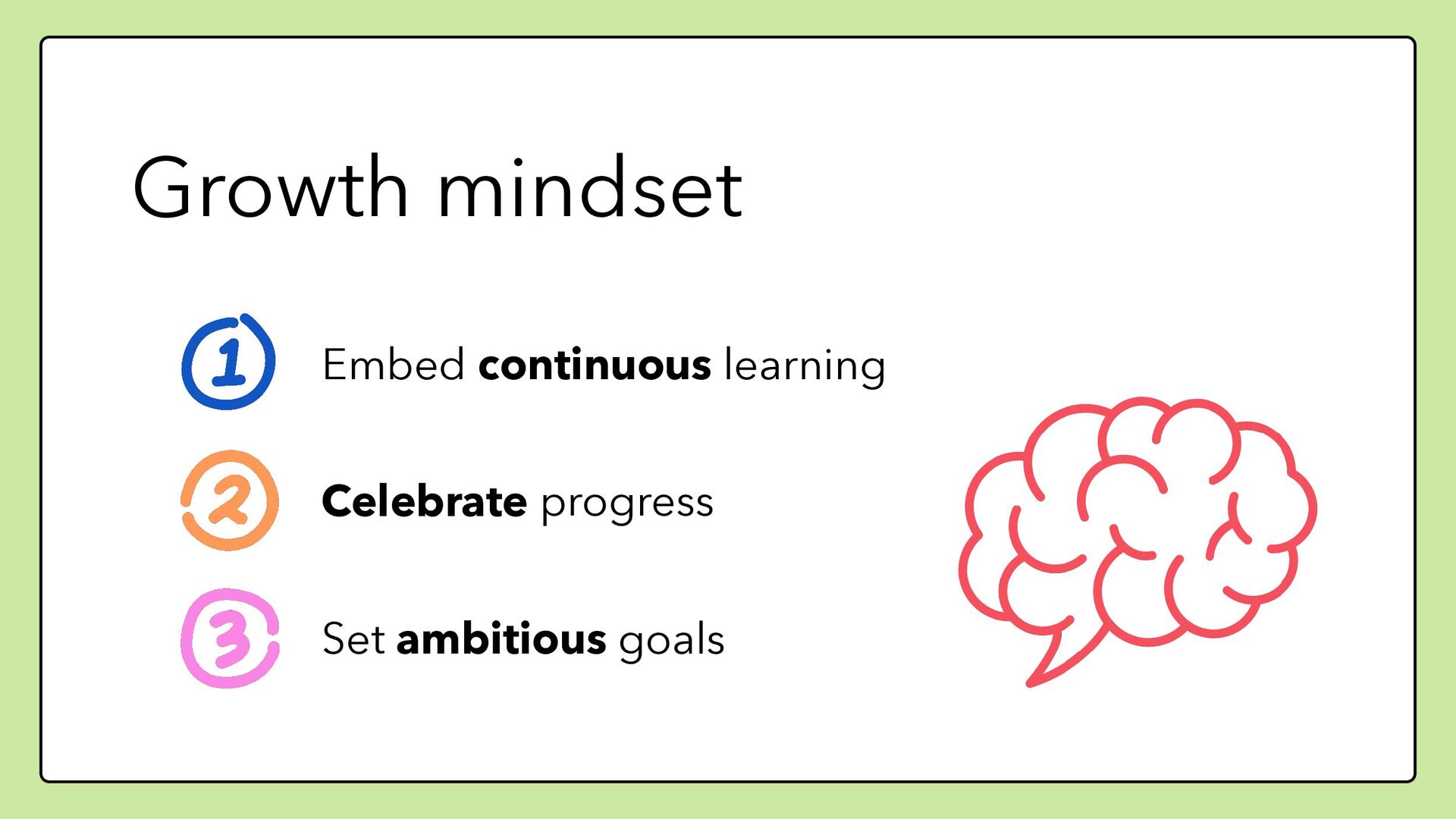
Like, there's no real new information around the principles of innovation and learning. Right? And reading books, even if you read books that you've read before, you've got new information. So read books. Carol Dweck is a great one to look at. And so embedding continuous learning.
Right? This is really important and a really easy easy thing to do to make this happen. Not big programs. Ask people about what they learned. Close the feedback loop. Right? Make sure that you get them to report back on programs that you've paid for them to go and see.
Or on a Friday at lunchtime for about six months over winter last year, I used to just pick a talk from the Mind the Product website and play it to my team. And anyone who wanted to dial in, I said, the rule in this meeting is that your camera's off.
Right? So you're eating your lunch, you're doing whatever, but people are absorbing the information as they go. Celebrate progress. Right? You need to recognize people's willingness to try here. There is not there is no world where there is too much recognition of people's work.
Right? So even if sometimes it feels like you're maybe overdoing it, keep going. Right? And the third one is set ambitious goals. Now we all know this. We know about OKRs. We know about setting ambitious goals across organizations. But the mistake that companies make when setting these, and I think this is why OKRs have such a bad wrap around scale ups, is that ambitious goals are not for performance.
Ambitious goals are there because the only thing you can track with these wildly ambitious goals is progress. So if you're thinking about ambitious goals as a way to overperform in the company, you're thinking about it the wrong way, of course, the structure won't work.
If you're thinking about it in a way to report on progress to these wildly ambitious goals, then that will create a growth mindset because people start thinking about how well they're doing at something and what they're doing and how they can do better.
And it's the mindset of this approach that is important. Okay. So we've got these exercises. We're building that adaptability muscle. We're gonna be good at successful change. But what about your role as leaders? Whether you are in an official management leadership position or you are a leader in your organization in another way, you have a really, really special role here.
Now when I was writing this talk, I had a moment where I thought I was a genius, and I had invented the term adaptive leadership. Sounds great. Right? Because adaptive leadership is the perfect articulation of what I think you need in this new world that we live in, where change is coming at you from every single way.
You can't have a process. There's no framework that's going to enable you to build an organization that can move to this. And I think one of the challenges that we're all facing at the moment is there's so much change management to do that we're exhausted.
You can't possibly change manage the situation as it's happening at the moment. However, about three minutes on Google, and I realized there is a huge field of research around adaptive leadership, mostly led by a really nice guy named Ron out of Harvard. If you wanna look up adaptive leadership, there's a book called adaptive leadership.
There's lots of stuff. And so I did not design adaptive leadership, but at least I know I'm on the right track. Because adaptive leadership is the practice of mobilizing people to tackle tough challenges and thrive. Right? Specifically, it's about how to build an environment where people thrive on change.
And that's really where we need to get to. People need to thrive on the change that is coming towards us because it is gonna come, and it's gonna come thick and fast. And if you can't thrive on change at the moment, we have organic, natural individuals who love that environment, and that's fantastic.
And we try to hire them because we know that they're gonna get stuff done. But we need everyone to thrive on change. So as leaders, we need to make sure that that is the environment that we set up. Now this is where I tell you that leadership is not the the shiny, fun, visionary, amazing thing that we thought we were gonna do when we first got a direct report.
Now by this stage, and because you're all here, you probably know this, but leadership is really about protecting against the dangers ahead. That is our job for the company or for the people. And actual fact, it is actually the word. So the word leadership comes from the Indo European word, and that is the word for the person that stood at the front of the army with a flag.
And when they died, because they did, it showed the rest of the army where the danger ahead was. Now we don't wanna die. Right? So we need to work out a way to protect our organization from the dangers ahead. And the way that we think about leadership and the core functions that are associated with leadership is there's two core processes associated here.
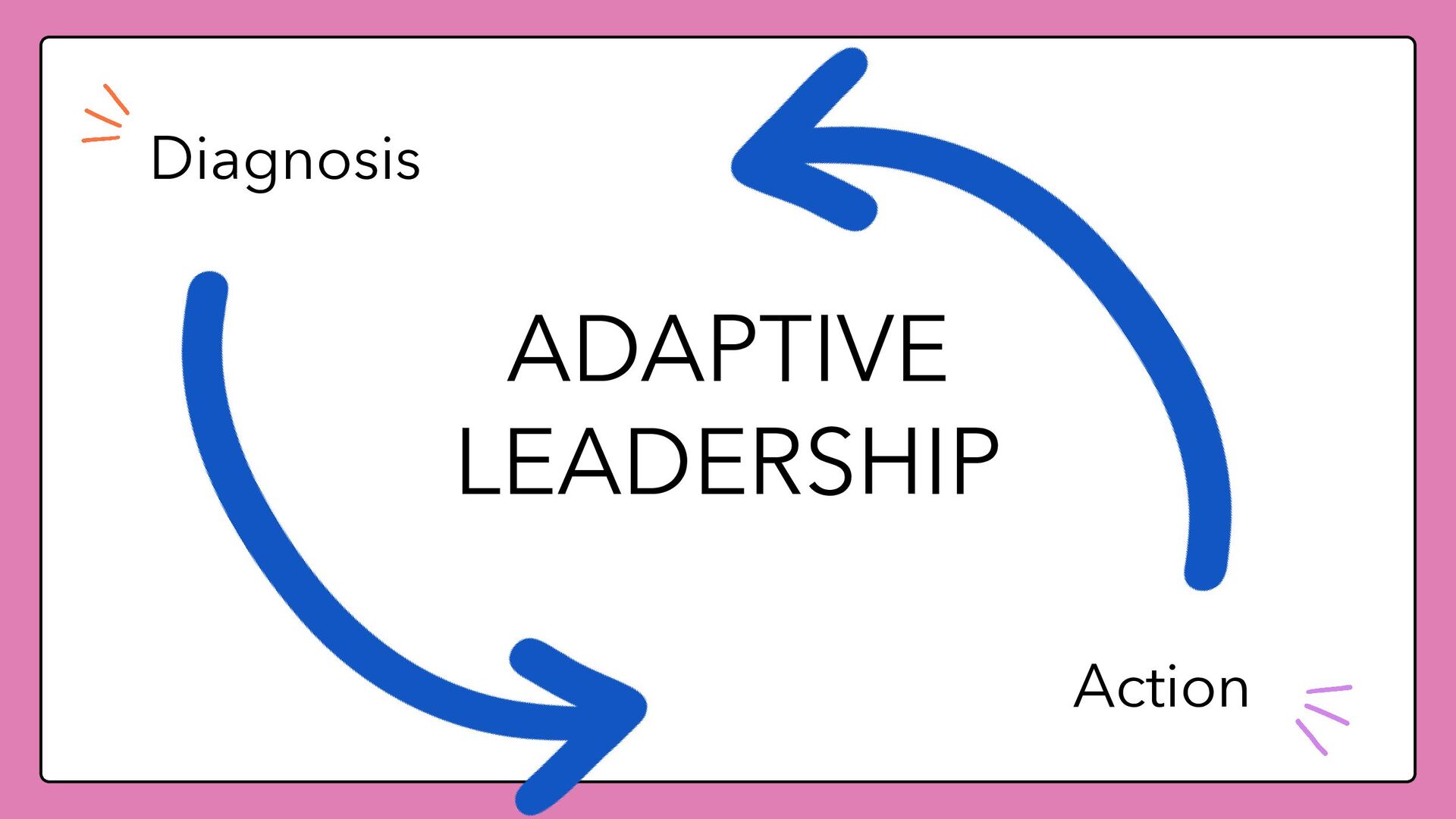
One is diagnosis, and one is action. Now, if you're like me and you've worked in startups and scale ups for more than a decade, well, more than a decade, but that's fine. You'll know that we love action. We hire people. I think there's even in job descriptions bias for action.
Right? We want to go. Action is success. Right? And you see that in the people that are promoted and the people that lead companies. And it's all about how fast they can act on the situation. But that's a problem. Because in this new world, in adaptive leadership, diagnosis is the absolute most important thing.
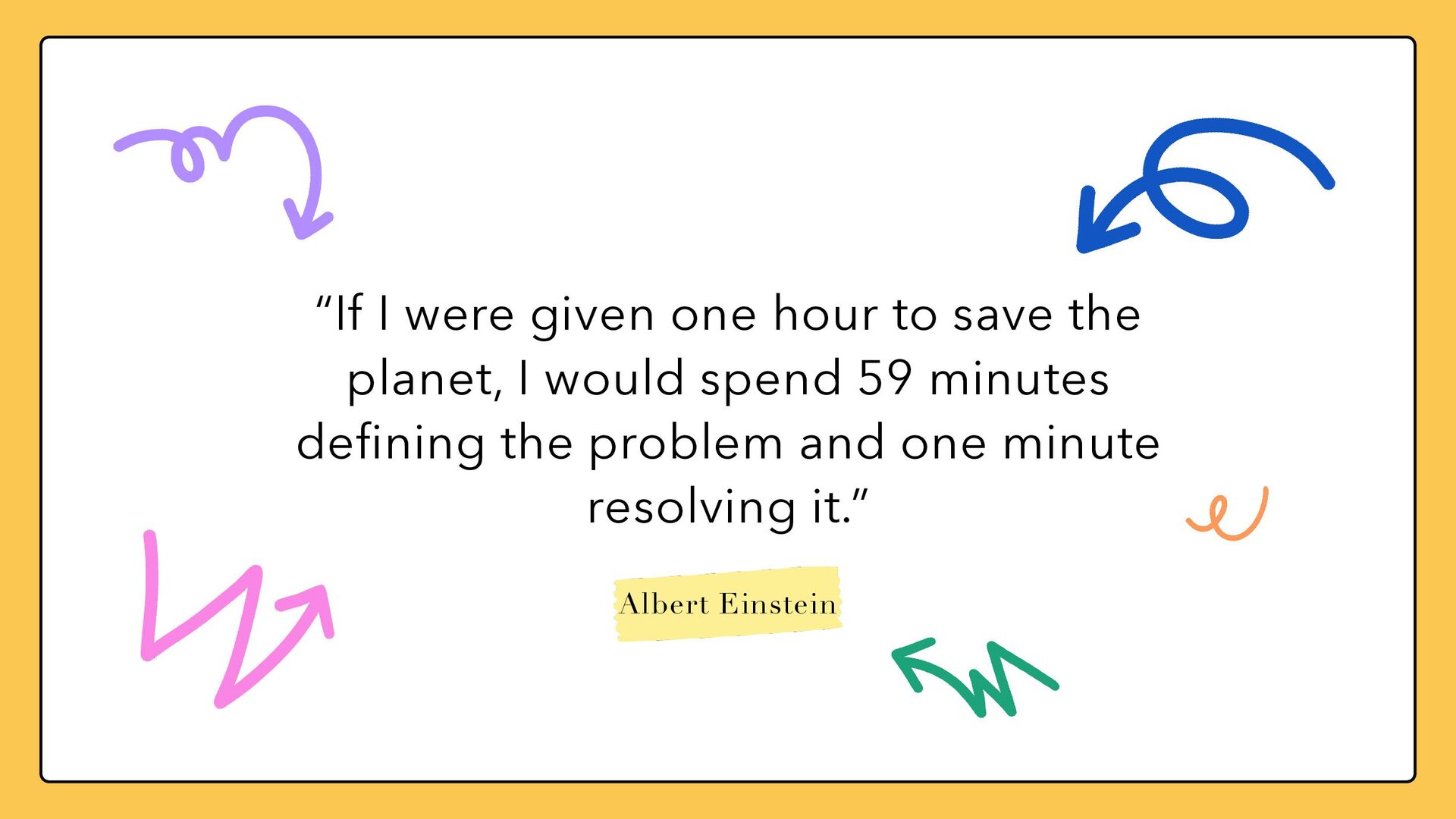
Because the changes that are coming at us these days are not the same as the changes that have come before. They cannot be solved with the existing know how that we have. And this is the reason that Albert Einstein said, if you were given an hour to save the planet, right, he would spend fifty nine minutes defining the problem or diagnosing the problem, and he would spend one minute resolving on it or acting on it.
How many situations in the last three years have you spent ninety eight percent of your time thinking about the solution and only two percent of the time acting on it? I don't know about you, but it still feels like it's the complete opposite.
Right? We're always executing. We're not finished executing one thing before we start the next thing. And so it's really, really important that we follow Albert's amazing logic here. Now Heifetz and Linsky, these are the two researchers from Harvard that have done all that research about adaptive leadership.
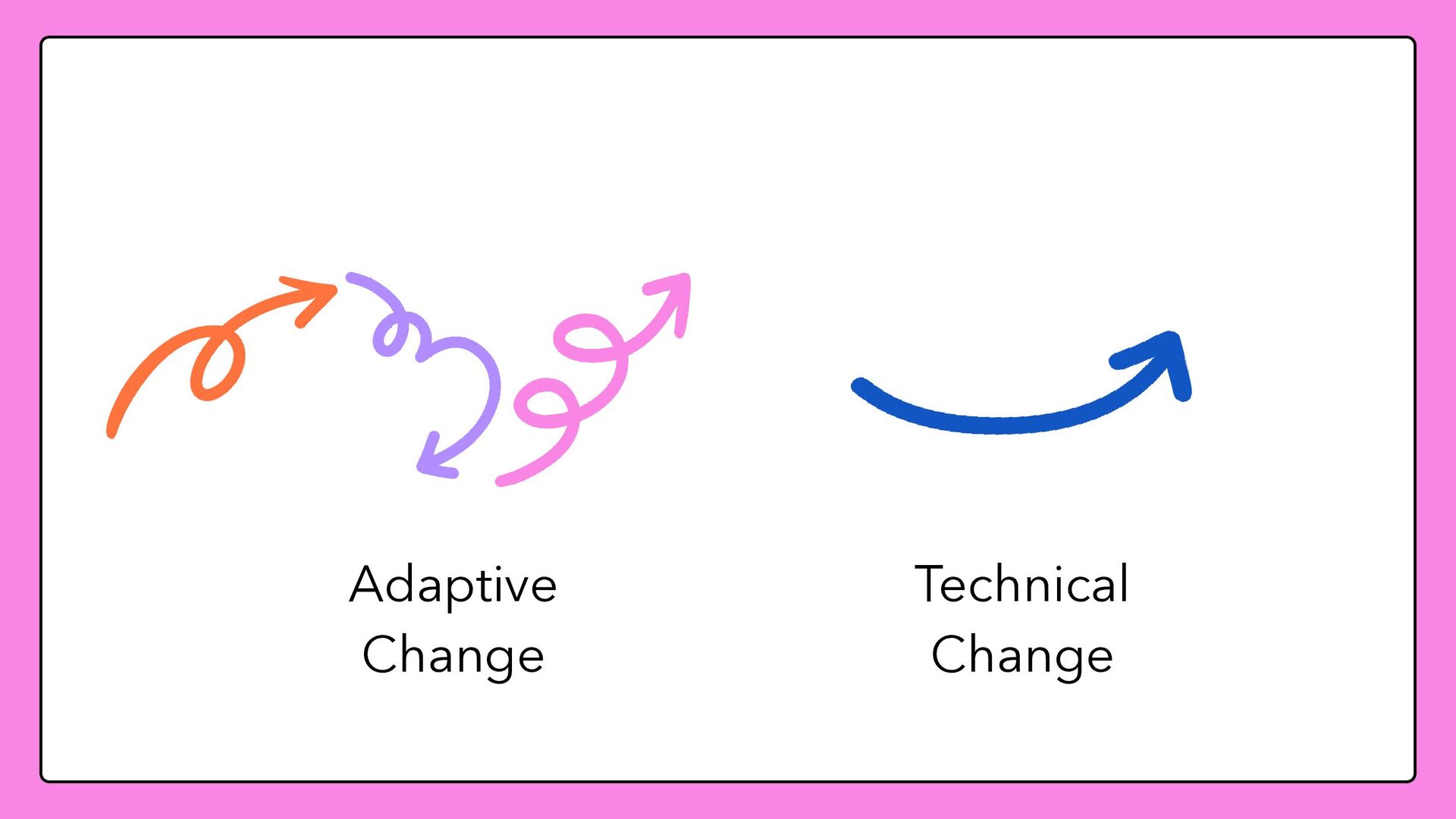
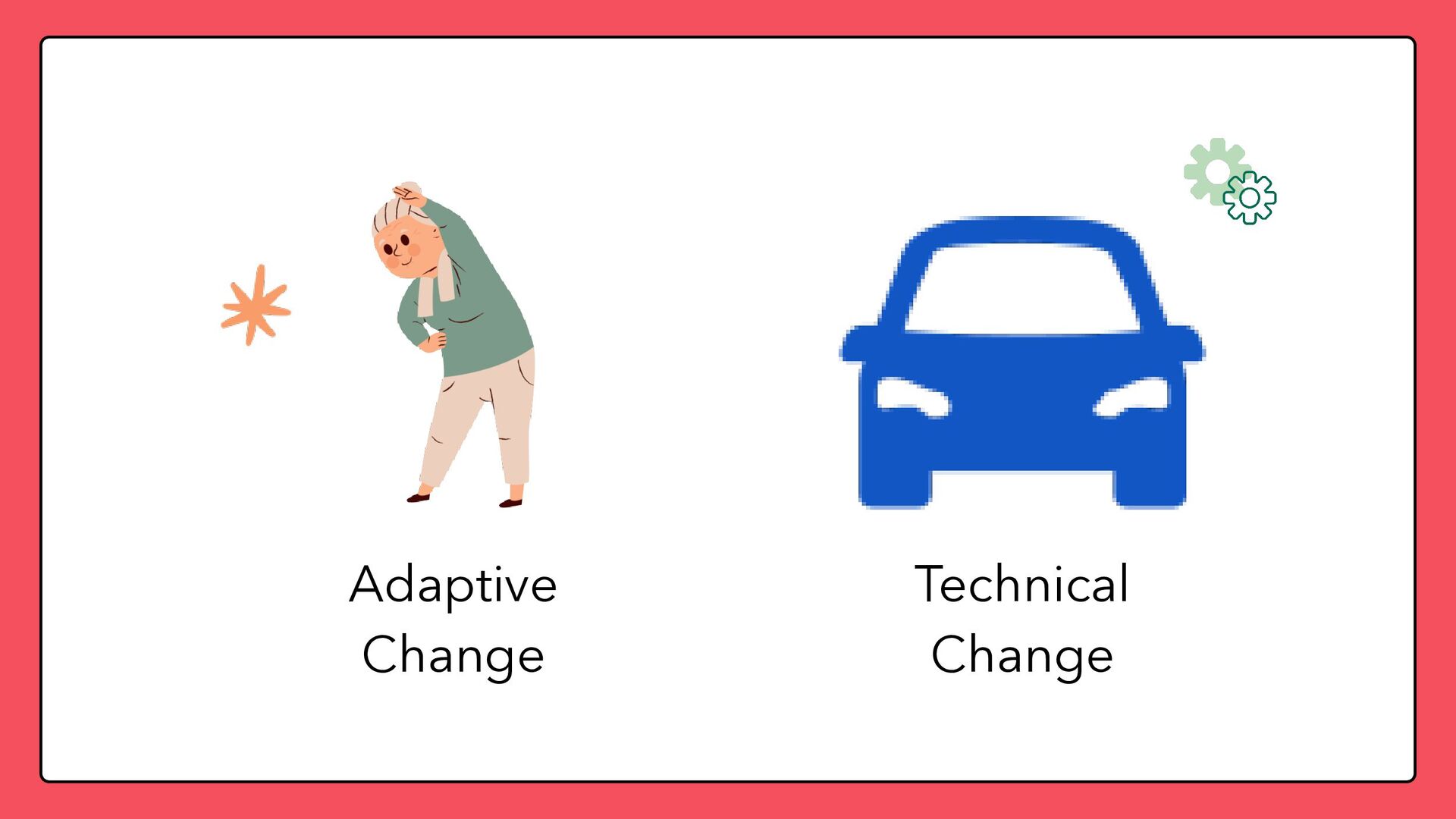
They call this gut wrenching organizational transformation, adaptive change. An adaptive change is different from technical change. Technical problems need existing know how and processes and structures like ADKAR and a million different other frameworks, they use those things to solve them. Adaptive problems are going to resist those solutions because, actually, the things that need to change are the mindset of the people in a team around the problem or the structures and processes that have been embedded in an organization naturally over time.
Those are the things that need to change. So the problem is often within the people or the system of the organization itself, and the solution lies in changing that. I know a bit weird. Example. My mother-in-law, she turns up at my house, and there's a massive scratch down the side of her car, and the mirror's slightly broken.
Right? Easy fix. Right? We take it to the mechanic. We buff it out. It gets fixed. Technical problem. Technical solution. That's great. But what if the reason for the scratch and the mirror breaking was because a vision is going? Treating the problem as a purely technical one is going to completely mask the problem that we have.
Now she might need to stop driving. I promise you she's going to resist this change. Driving is her one thing of independence. If she could get around, she can be autonomous. It's also gonna be a terrible situation for the rest of the family because we need to get her to stop driving.
No one wants to tell her this. I think the really important thing here is that it's more complex of a problem than a scratch down the side of the car that can be buffed out in a mechanic. And we need to think about it in that way in our organizations.
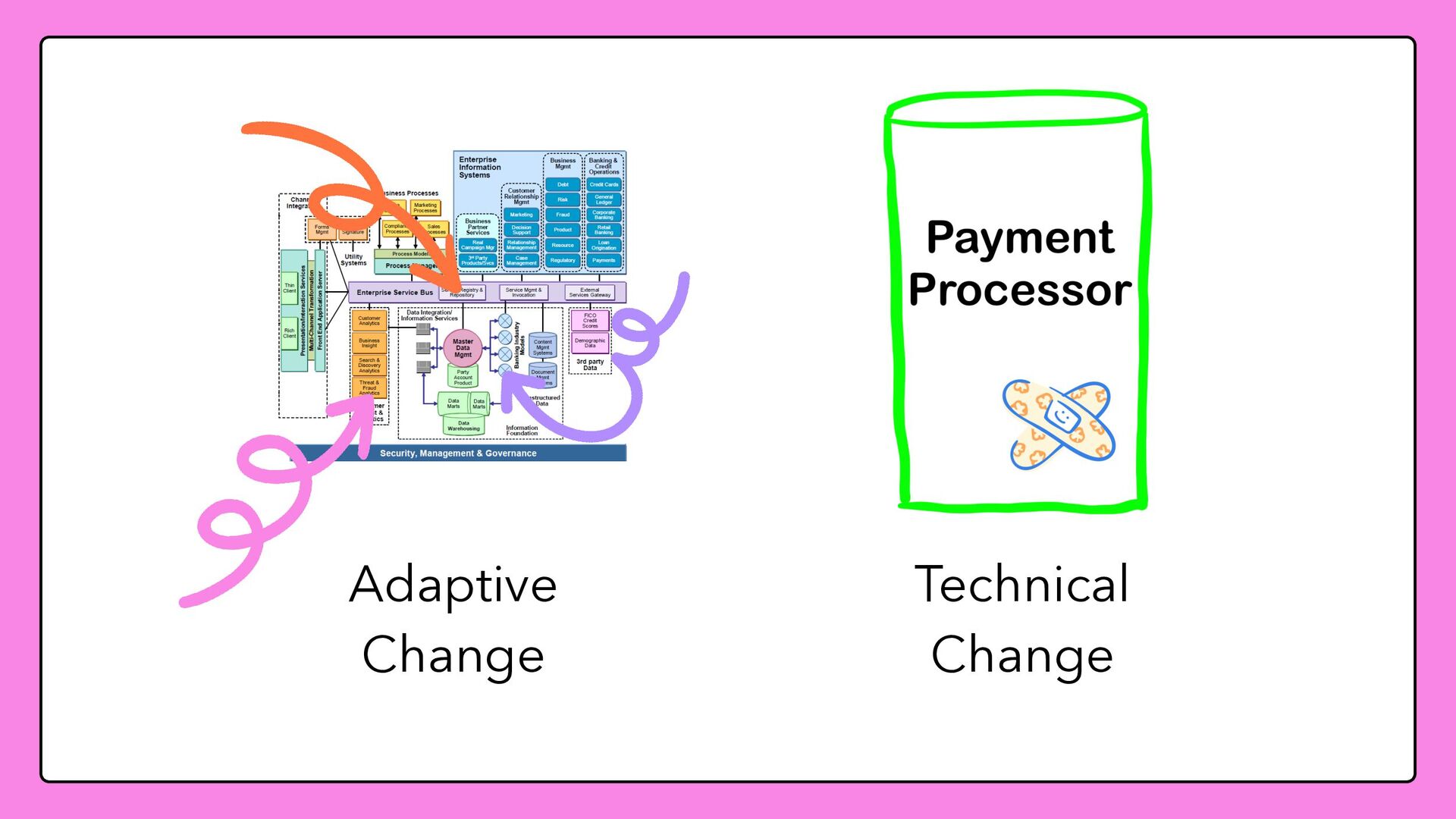
If you don't have a mother-in-law that drives, then maybe with this one's an easier one. Who has a payment processor that doesn't work properly? Okay. Cool. There's a couple. But if you've worked in payment SaaS, generally, payment processor is a pain in the backside.
The technical problem here. So let's just imagine. You have an increase in outages on your payment processor. Technical problem. Right? Technical solution is that payments team work out how to identify this really quickly when there's an outage. They build lots of systems. They put more event driven date more events into the system so we can track it much faster.
They fix it. Downtime is minimal. Right? Great technical solution. But what happens if it's an adaptive problem? What happens if the payments processor is actually, like, near breaking and we really need to replace it? That's gonna upend the road map for the next six months.
We're gonna have to hire different engineers with different skills to come and fill that and build a whole new microservice around the payments processor. We're gonna need an architect. So the leader needs to go because we need someone with different skills, which is gonna probably change the culture in your engineering team.
And I can completely see why you would want this to be a technical problem. Right? Going for the quick fix might seem like the best option. But the reality is if you wanna make real progress, sooner or later, you're gonna have to dig deep and confront the underlying issues of the problems that we're facing.
Now wouldn't you rather do that while you could still benefit from it? The other thing I see is that lots of companies, when they are faced with challenges, they apply technical solutions to the problem. And they do that over and over again until they realize the only thing they can do is turn the whole organization upside down.
And so they start to do that, but it's too late. They should have done it twelve months before. So really thinking about how if something is an adaptive problem or a technical problem is really important. So now that we've diagnosed the challenge, we need adaptive leadership in organisations.
It's action time. Diagnosis action. I want to give you some tangible tactics to take away because often when we talk about leadership and we talk about, you know, it's kind of sounds all fluffy and things like that. So we want to get away from that.
And we want to have tactics that you can take away from the conference to make sure that you can build those muscles in the organization to make it adaptive. Now, the first one, and I think I said this, but probably not because it's not that unique.
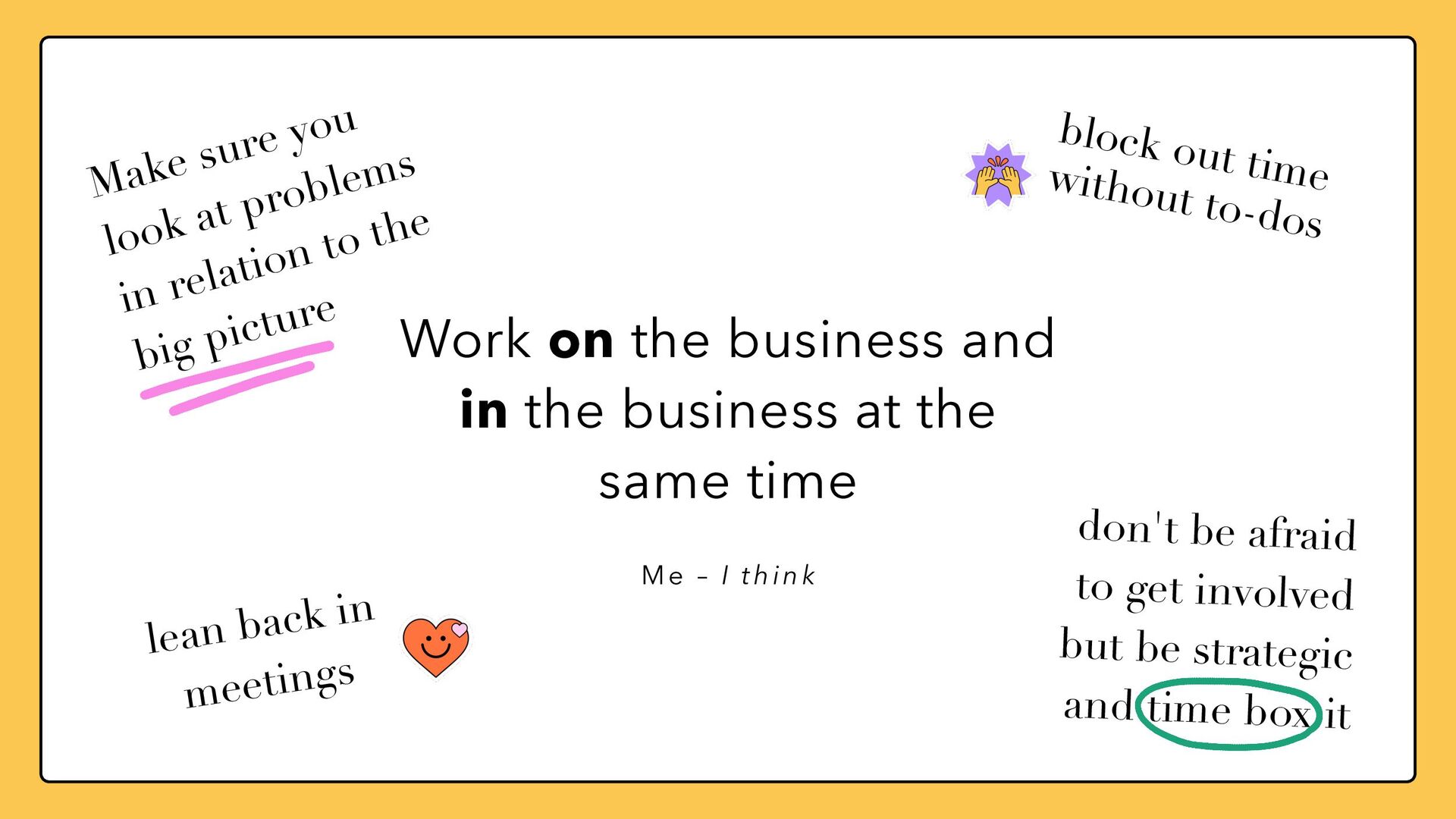
You need to work on the business and in the business at the same time. Now we all kind of know this, but in the current climate of intense adaptive change, the one problem that I see is that founders and executives go deep. Right?
They go really micro, and they go right into the business, and it's very difficult for them to peel themselves back out. Now when I was looking through the research of, from the Harvard guys, they have this really good analogy of the dance floor and the balcony.
And as a leader, you need to be on both. Right? In a major pressure time. So at the moment, we've got funding markets changing. We need to get to profitability. We need to reduce the cost base if we can't get our revenues up fast enough.
We have people working remotely that we're not sure if they're doing their jobs. We have people working for us who've got families in the Ukraine. We've got there is so much stuff going on that you could be on that dance floor fixing all these different problems all the time.
But imagine this. Imagine you're at a party and you're on the dance floor, and you're in the middle, and you are having the best time of your life like I intend to do later tonight. And you have your friends around you, and the music is pumping, and it's perfect, and you're just thinking this is the best night of my life.
Imagine if you went back up to that balcony and you looked down on that dance floor, and, yeah, you can see that there's these ten people in the middle of the dance floor having the time of their life. But the guys over there in the corner, they can't hear the music.
And the guys over there, they're having an argument about something, and the food stall's just been kicked over. Right? You need to be able to step up into the balcony. So the biggest issue that I've seen through my operational leadership roles, but also advising in the last three years, is the micromanagement.
People staying on the dance floor. Even worse, staying in specific parts of the dance floor. So they don't see the bigger picture, but they treat everything like technical change. Make sure you look at the problems in relation to the big picture. Block out time without to dos.
I don't know about you, but I need more than an hour and a half if I'm gonna get anything done. I need time to make a cup of tea, walk around the house a couple of times before I finally sit down and and do that.
The next part is lean back in meetings, and I don't mean figuratively. I mean literally. When you have something to say, lean forward and then lean back. Don't stay there. Watch how people interact in the meeting. Watch how that meeting goes ahead. That's about leaning in, being on the dance floor, and leaning back, going to the balcony.
And don't be afraid to get involved. I'm not saying stay up in the balcony. I'm saying don't be afraid to get involved, but keep it strategic and time box it. If you wanna jump into a project and lead it because you think that your expertise or your seniority needs it, do that.
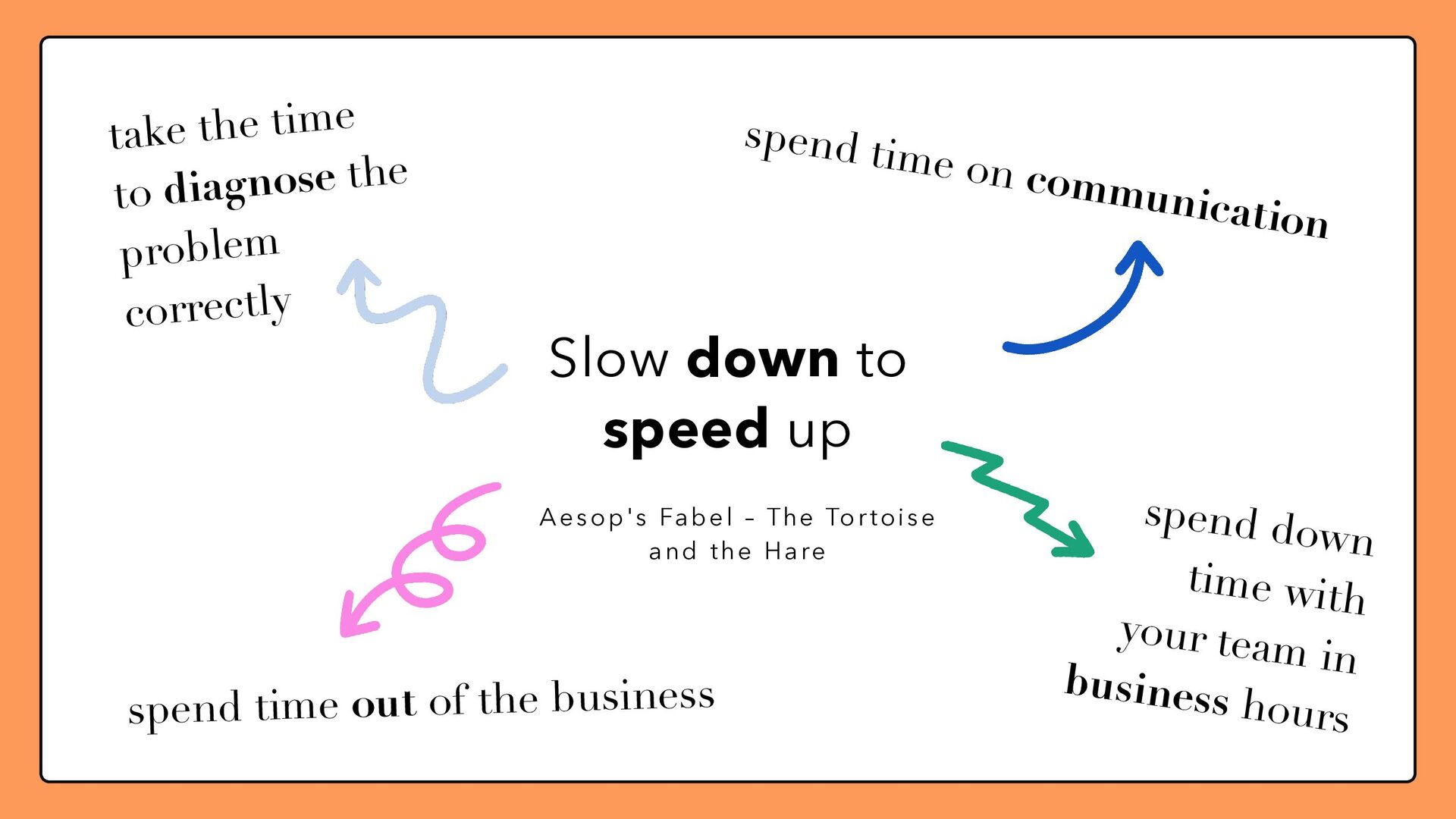
But then say in three weeks, I'm out. So what are you guys gonna do to make sure that it keeps going after that? The next part is you need to slow down to speed up, and I'm speeding up because I'm running over time.
But spend time on communication. So right, the the triangle of communication. It's really important to do that because then when you do need to communicate things and you're under pressure, you have a structure in place to make sure that everyone understands what you're saying.
The next part is take the time to diagnose that problem correctly. Right? If you need to block the time out, do that. The next part is spend time out of the business. I once was in a company that said categorically to the organization, we don't go to conferences unless we're speaking at them.
Essentially, what they're saying is no one can teach us anything. I mean, watch how fast that's not an adaptive organization. And the next part is spend time with your team in business hours. Now this is really something I had to get it into the into the presentation.
There's two parts here. One is in business hours. Please. Right? Relationships don't need to be built at eleven o'clock at the pub. They can it's fun. Great. But don't rely on it. The second part is it is awesome to have an amazing team that is autonomous and can get stuff done.
I'm very fortunate to have one myself. Do not for one second think that that means that they don't need your support and attention. So make sure you spend time with them even if they're performing and don't need you to jump in and get on the dance floor with them.
Make sure that you spend time supporting them and letting them know that they're doing an awesome job. So the most important change that we can make in our business is really to build them in a way that is going to let them adapt to whatever change is gonna face because I don't know what the changes are gonna be.
I don't know what's gonna happen with AI. I don't know what's gonna happen with the next global pandemic that we have with how people are working. Whatever it is, you need to build an organization that has the muscle of adaptability strong enough that it is going to be able to withstand that.
So to finish on that ocean waves and really have feeling those waves coming crashing in on top of you. In the old way, we would say, okay. Cool. We're gonna get the company fit, and we're gonna teach it to surf. Great. Awesome. That stops the waves crashing on everyone.
But in an adaptive world, you do need to teach your team how to be fit and teach them how to surf, but you also need to teach them about rips and currents. You need to teach them how to hold their breath under the waves, and you need to teach them how to swim in rough seas.
The most important thing that you can do in your organization is prepare it for change rather than respond to the change ahead. Thanks very much.