What’s a critical yet wildly overlooked aspect of acquiring customers & growing a product? Operationalizing growth. In this talk, Gia will explore how to match your product experience with real customer needs to not only fuel product growth and drive revenue but also better equip your team. How well do you know your best customers? Better yet, how sure are you about why they chose your solution over all the others? The reality is that most of us are guessing what really matters to our customers, a needless misstep, especially for those of us trying to build more scalable PLG / low-touch product experiences.
In this talk you’ll learn:
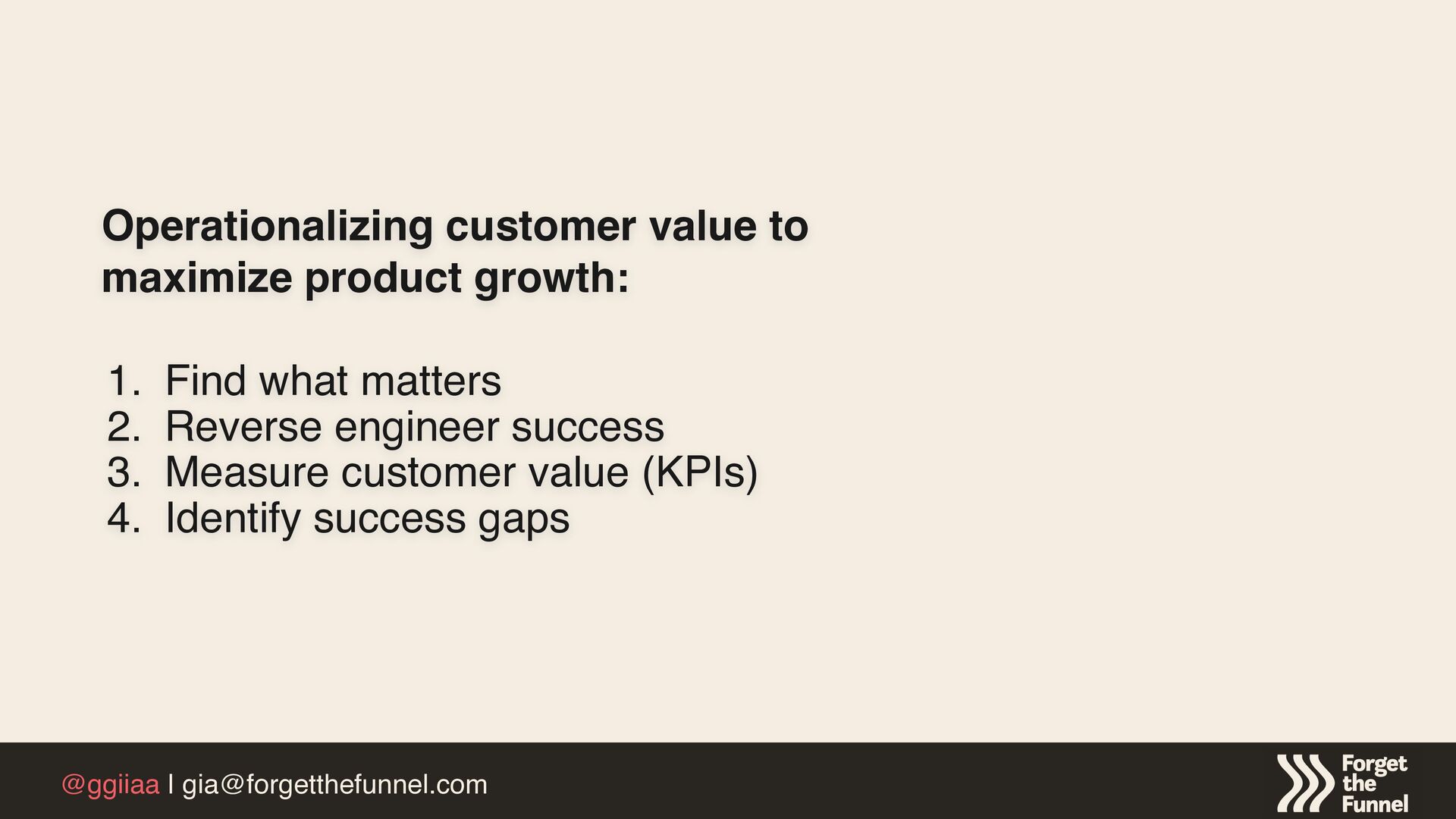
How identifying your best customers unlocks your product growth strategy.
How to use what customers value to reverse engineer your ideal product experience.
How to identify your leading indicators of success (which will more effectively influence your lagging KPIs like your free/trial to paid % & MRR growth).
How to spot the success gaps in your customer’s experience making it super actionable for your team. Don't miss the opportunity to unlock your product's potential with Customer-Led Growth.
1 / 43 Use ← → to navigate
Auto-generated transcript - may contain errors.
Tap a timestamp to jump the video.
Hey, everyone. Thanks for joining this session. I know there's a lot of other places you could have been, so thank you for joining me for this one. I'm gonna do the thing where I ask to see who's all in the room and get a sense of who's in the room.
Who, here is a founder or identifies as a founder? Okay. Very few. What about product folks? Okay. More marketers. Okay. And then I also heard there's a lot of consultants also here. Who are the consultants in this space? Okay. Not not so many.
So mostly product and marketing, which is awesome. So I'm here to talk about operationalizing product growth. I was kind of taken aback when, Brian was, like, come to a talk on operationalizing, a super sexy topic. But it is a topic that doesn't get enough attention, and so I am pretty excited to talk about it.
I love talking about this stuff. And contrary to the title of this talk, it's obviously not just about operationalizing for your customer's sake, but also for your team's sake as well as it would stand to reason. Right? We wanna empower them and help them be as effective as possible.
And, obviously, if they're doing their best work, your benefit your your business stands to benefit as well, from a revenue perspective. And revenue is kind of an important thing that I talk about quite a bit because I talk about leading indicators of success and lagging indicators of success.
Obviously, with operationalizing, we talk about KPIs. And if we're really if our team is focused on our leading indicators of success, then we know our lagging indicators will also benefit immensely, like revenue growth, for example. So we're gonna be talking about those KPIs and identifying those KPIs as well.
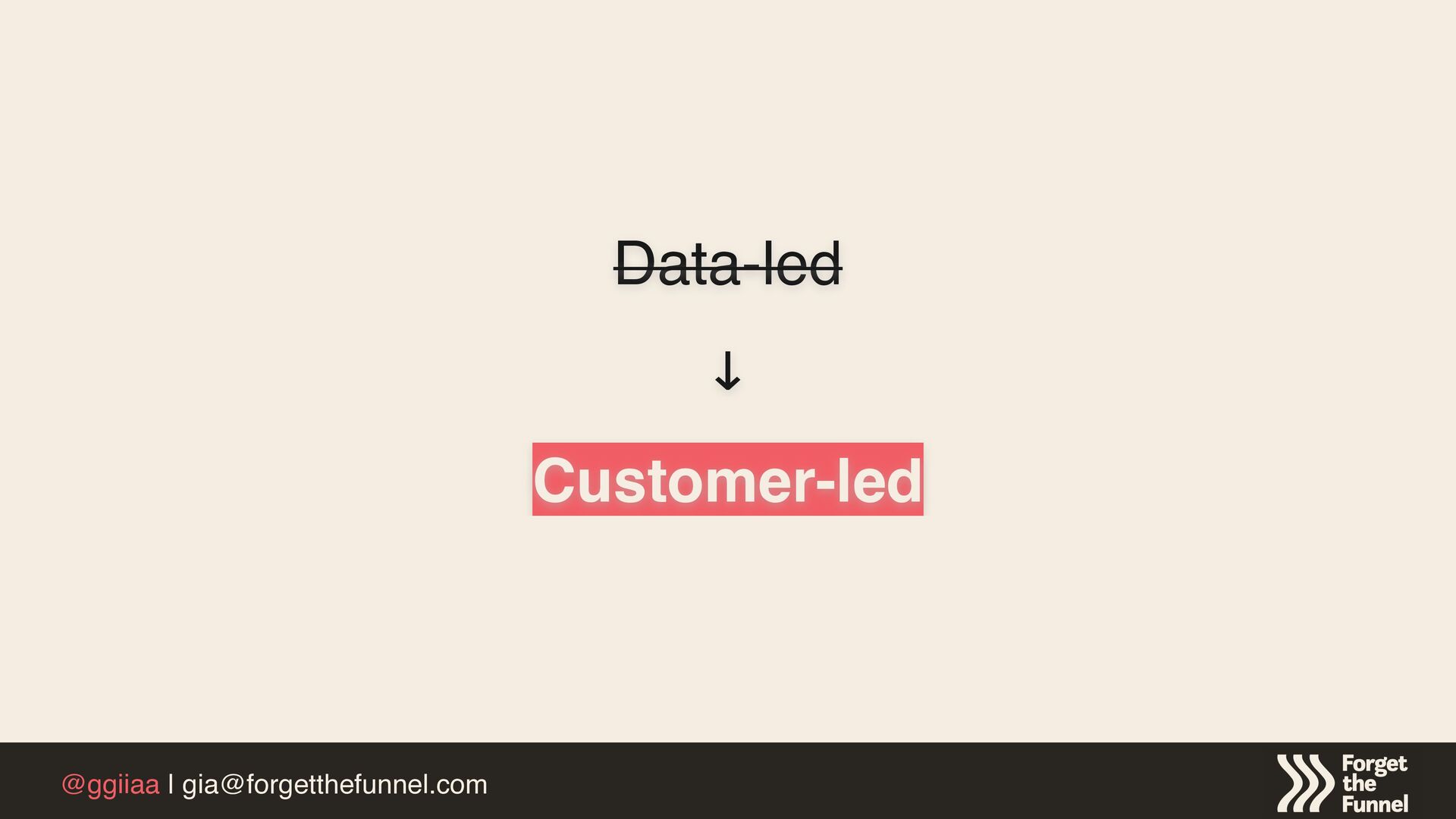
So I don't know. I'm gonna start with this, like, probably unpopular opinion to many of the folks in the room that I kinda want to ask you to forget about the data if you just for now, just to sort of suspend disbelief while you're here with me.
Because most people who talk about marketing and talking about growing products will talk about data, and they'll tell you to look to your data for your growth opportunities and look at analytics and product usage data. And I'm telling you and I'm asking you just for now to sort of ignore it because unless and until you have a sort of fundamental understanding of what you're doing, that data can actually be a massive distraction.
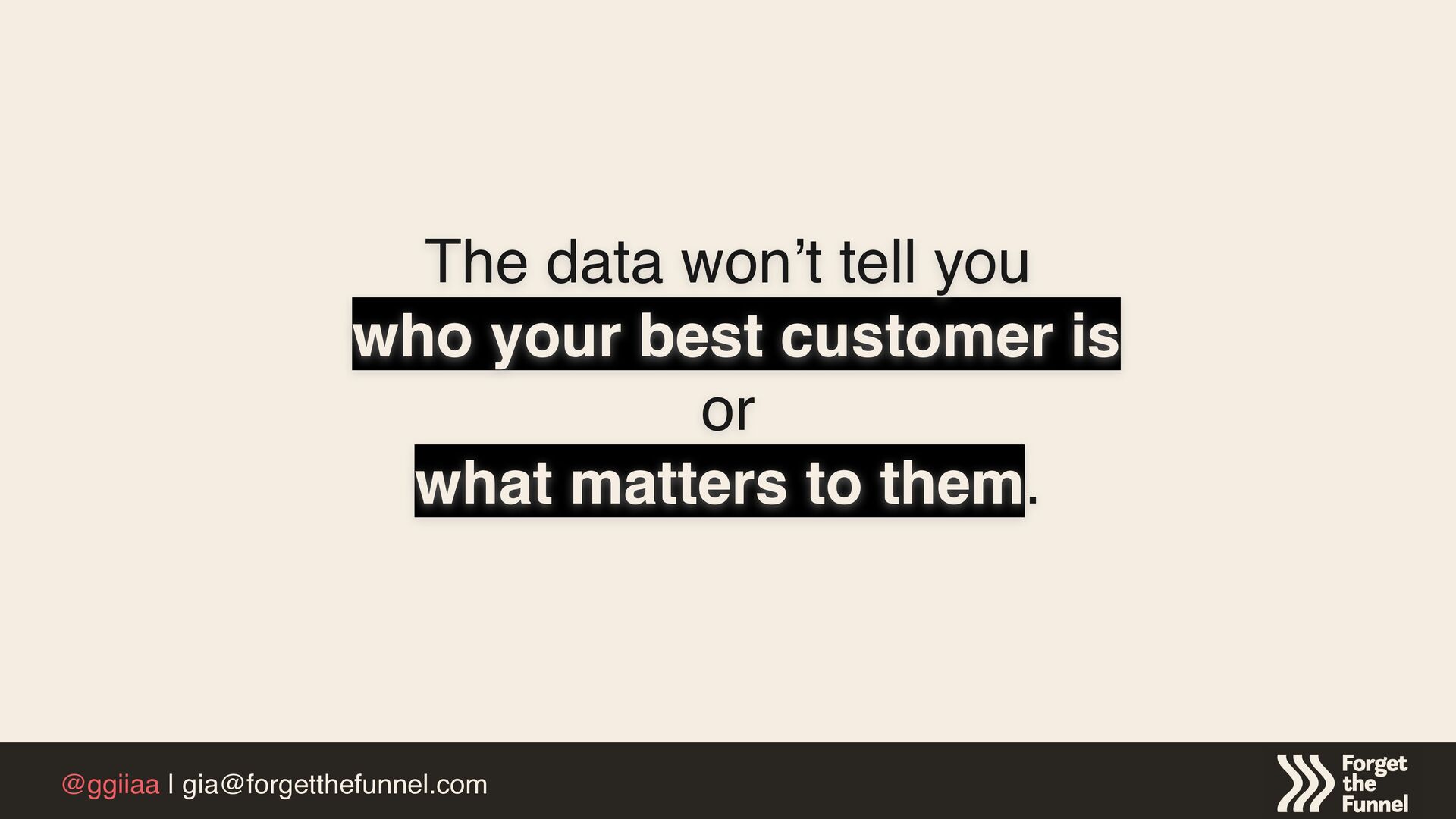
You ask the ask it the wrong questions, you get terrible answers, you get you know, you learn the wrong lessons essentially in your data. And what I'm trying to get to here is that the data is never going to tell you who your best customer is or why they chose you and why and what matters to them.
And the data you know, there's no formula in the data to find this information. You actually have to go out and find it yourself. And I'm gonna actually use three examples of companies that we worked with to help sort of tell this story and and walk through this process.
And they're from companies that are sort of ranging from early stage to later stage. And hopefully some of them feel a little bit relatable for you. So I'll just run through the three examples. So the first one is a marketing tool. They'd been around for, I don't know, maybe five or six years.
They had maybe seven or eight thousand customers at the time. And for about a year, they had experienced mostly flat growth. Like, they've had a couple of theories as to what was going on, but they threw everything at this thing. They doubled their ad spend.
They invested heavily. Like, they doubled down and tripled down on content marketing, and they were amazing at content marketing. So they really, really leaned into that thinking that it was going to be the thing that would solve their problem. And, I mean, spoiler, it did not.
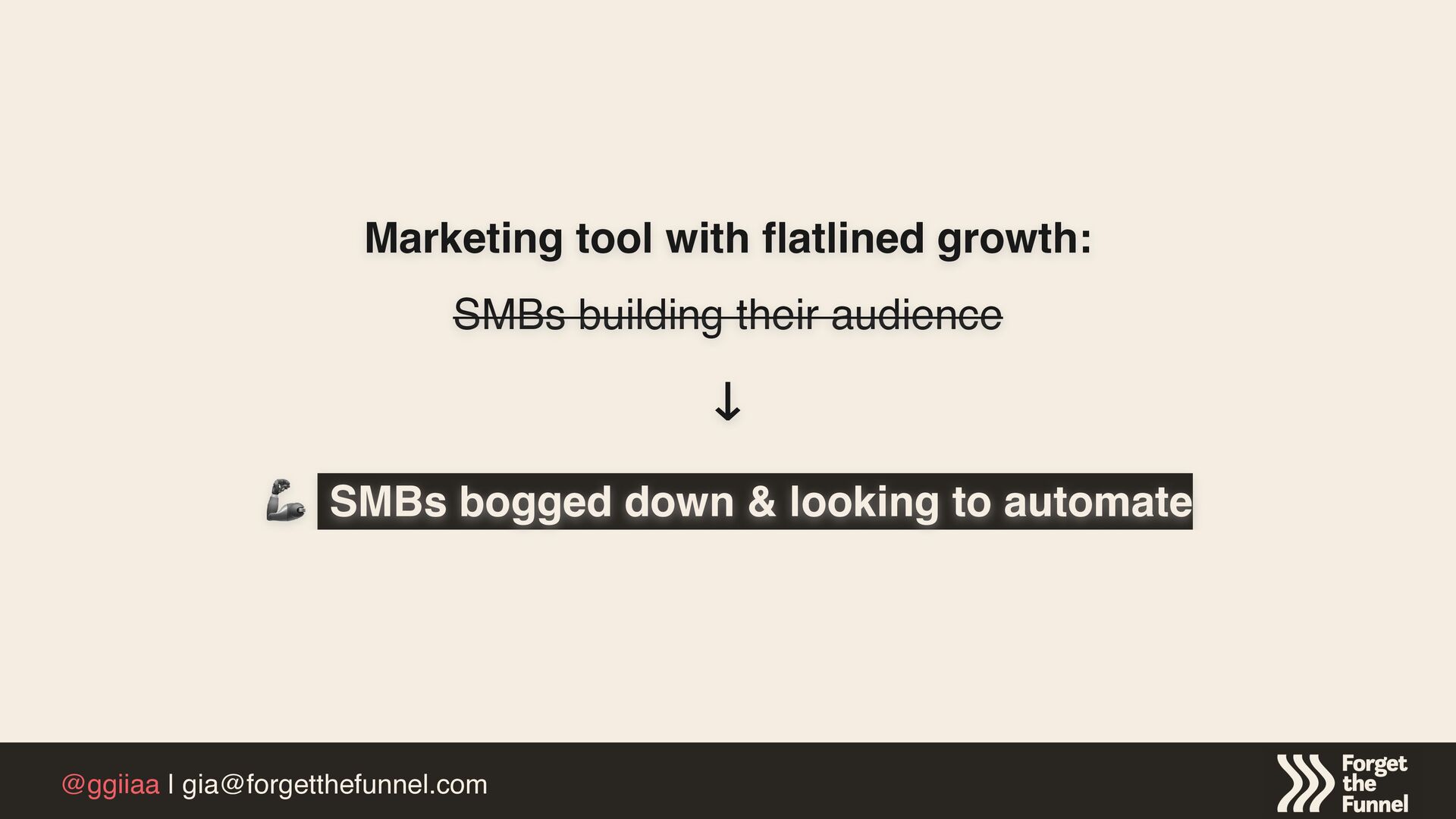
And what they realized when they started, they took the time to actually learn from their customers. What they realized was that their their funnel metrics had kind of been lying to them all along because they recognized that it wasn't SMBs building their audience that they should be targeting and and speaking to their vocal majority.
They're very happy customers. You know, they would flock to their website, gush about their content marketing, gush about, you know, their customer success team. And really what they figured out was their better customers, their better fit customers, were actually those SMBs that were had already started to build their audience and and was already making good traction there.
But actually, now they were looking to start optimizing their processes and, you know, sort of get out of being bogged down by these manual processes, and they were looking to start automating. So a very big difference in who you know, when they looked at their marketing and their content marketing and their social media and their ads, it was all targeted at this first group.
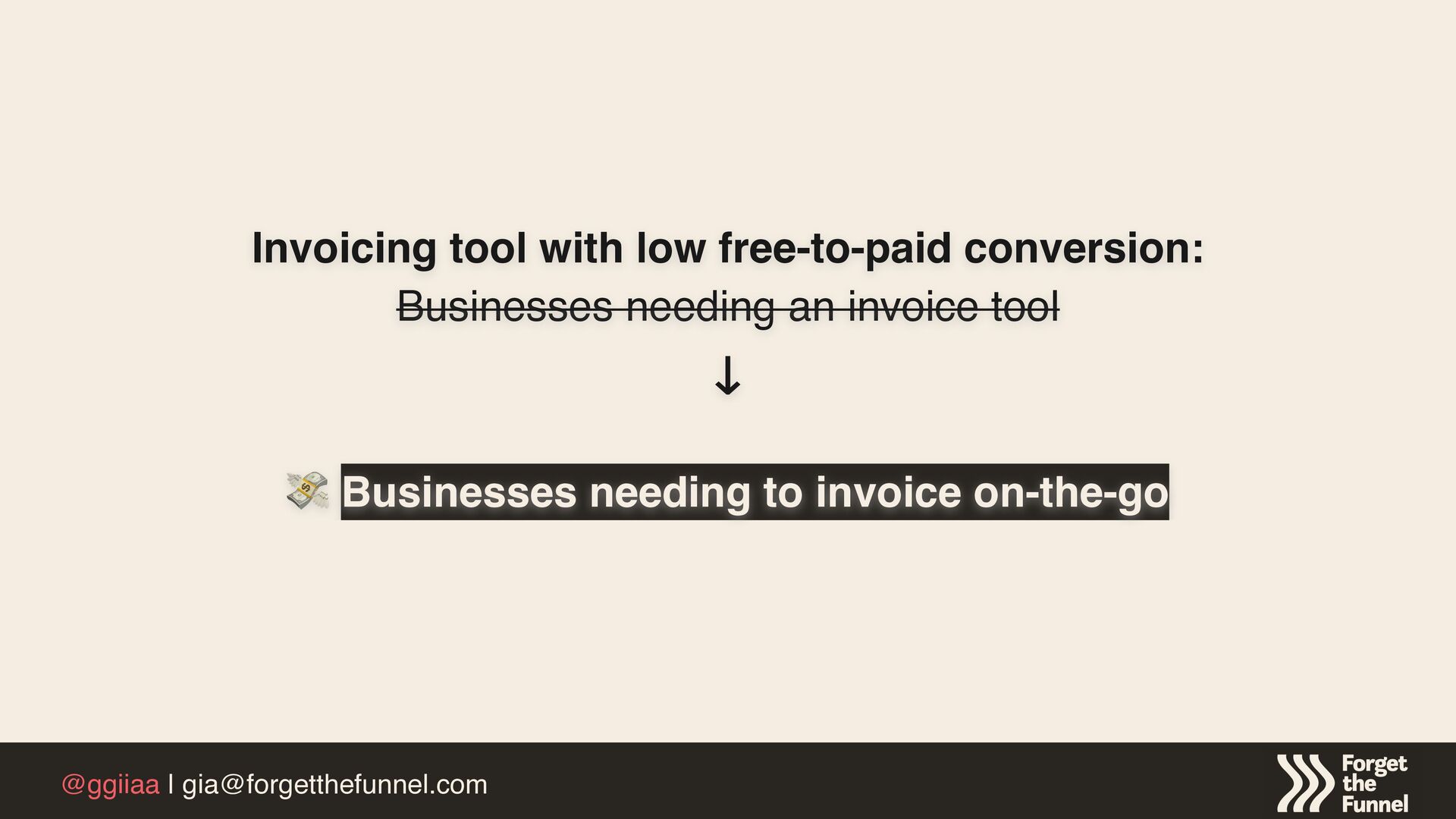
Next example is an invoicing tool. More mature company, ran for about a decade or so, couple hundred thousand customers kind of in the prosumer space, lots of sign ups, very healthy top of funnel, thousands of sign ups every month, too few of them turning into high value customers.
Very data driven company and data driven team as you can imagine with, you know, numbers like that to work with. But they just could not figure out they couldn't sort of crack this nut of what was going on and how they could actually make a meaningful difference in the in the the number of customers turning into high value customers.
And so they took the time to learn from their best customers, and what they learned was wasn't actually businesses needing an invoicing tool. Because those businesses, they're likely launching their business, but what was interesting about them is that they were very happy with this product.
They would activate very quickly. They, you know, they they were very effective very early on, and they would send them NPS surveys kind of early in their customer experience that would score super high. So it was very easy to believe that these were their best customers.
But what they realized, of course, is that their best customers were actually these businesses that were looking to sort of level up what they were doing, and moved to a mobile invoicing solution, which actually meant that they could, you know, generate an invoice from their truck or right there in front of their their client.
And these customers, a lot pickier, didn't actually activate as quickly within the product at all. They were looked for all kinds of things, and, they weren't as easy to please overall. But they did represent a better, like, higher retention, higher LTV customer for them.
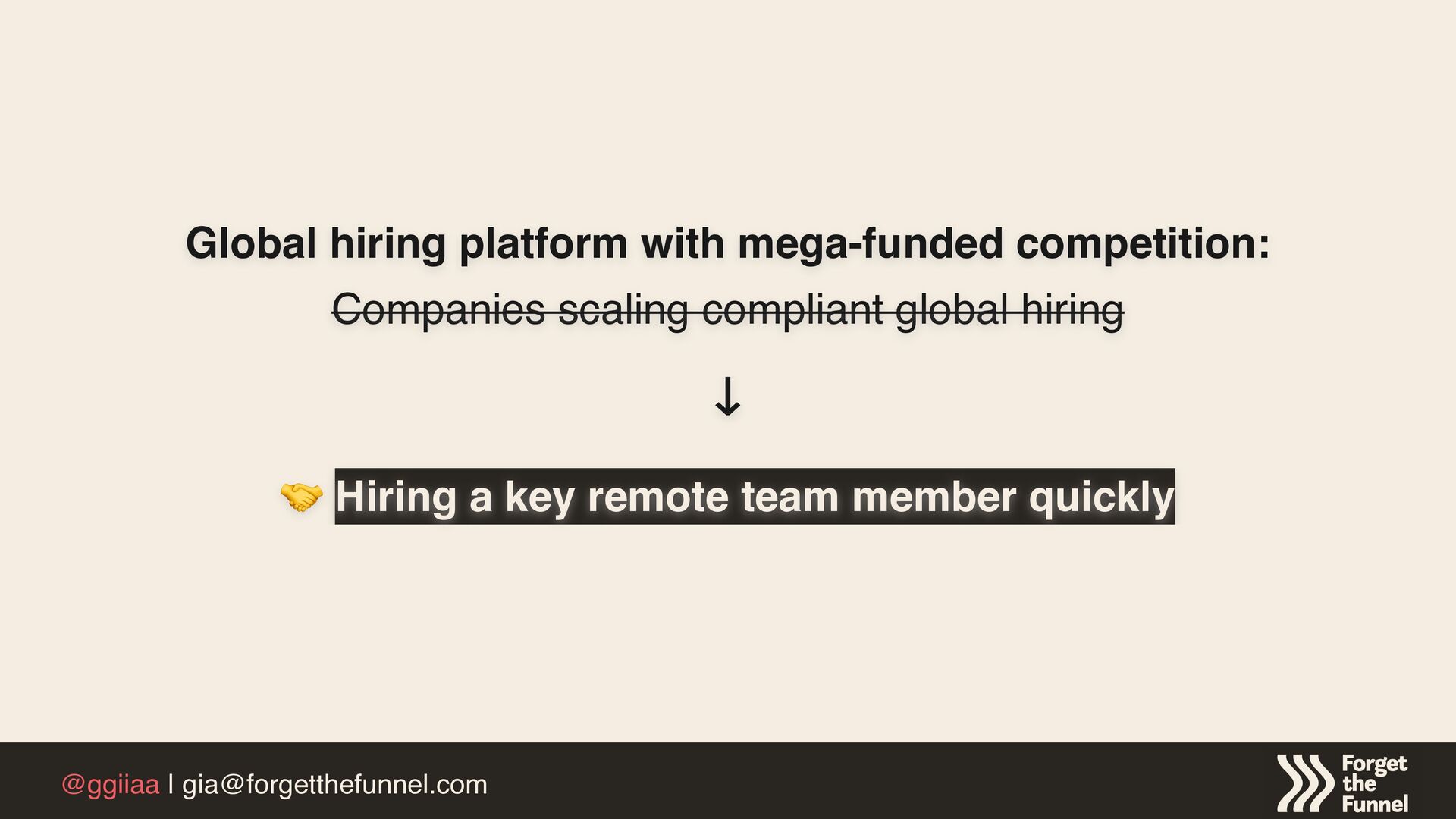
Third example is a hiring tool in a earlier stage, very busy space, you know, a competition with very very deep pockets And they believed, well ****, we're supposed to be targeting companies that are looking to scale up, you know, their their talent acquisition and make sure that we're being compliant with, you know, international tax laws and payroll and things like that.
That's what all their competitors were doing. That's who they were targeting. But when they took the time to speak with their best customers, what they realized was that their best customers came to them just trying to make one key hire, one team member.
That's what it was all about for them, and they needed to make that hire quickly. And so that was a a big discrepancy and a big difference between these two customers. This dramatically changes how you talk about your product and how you market your product.
So hopefully, what you're recognizing from these three stories is that is that none of this is these companies looking at which segment was paying them the most or, you know, activating within their product within the fewest number of days or even the highest converting.
Every one of these stories is completely unique, and there was no formula in the data that could give them these answers. And so you're probably realizing and maybe thinking about, well, ****, we probably do something like that too. We might be we might be making a couple of assumptions based on the information that we have available to us.
And if you're anything like the companies that we talk to, you might be setting you know, trying to hit revenue targets, setting goals around getting more customers onto your highest paid plans or, you know, encouraging more upgrades or things like that, and making major, major investments in time and resources into programs that you don't actually know if they're gonna make a difference or not.
Because, again, the answer to this question, the answer of, you know, who your best customers are and what actually matters to them, you're not gonna get that answer from the data. And so you really gotta stop assuming that you're gonna get your answers there, and you've gotta do the work to find out the answers to this.
So I know this is all kinda sounding like yet another talk about you gotta talk to your customers. And I know you all know and have heard those talks about talking to your customers, and you absolutely should. And I'm sure the majority of you are talking to your customers, which is great.
But there's not enough said about what you do after you speak with your customers. Right? After you have those conversations and have some insights, how do you actually turn those insights into something that you and your team can use? And so my goal for this time is really to get into what we do after we have these conversations with our customers.
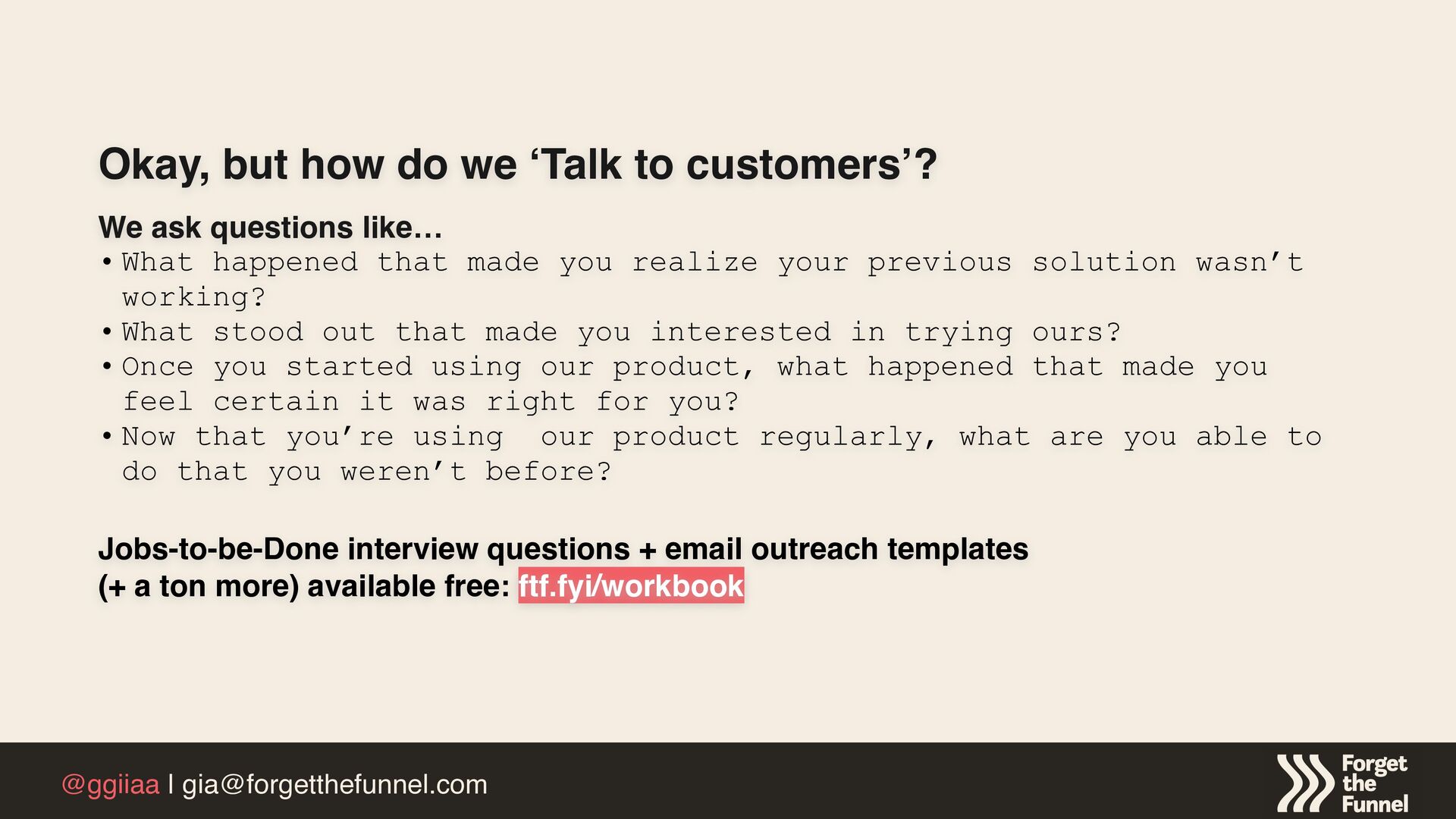
But because I know there's probably some of you who actually does wanna do this research and maybe hasn't started doing it yet, I wanted to make you aware of a resource that we have available. So, you know, these are the questions, questions like this that we recommend asking.
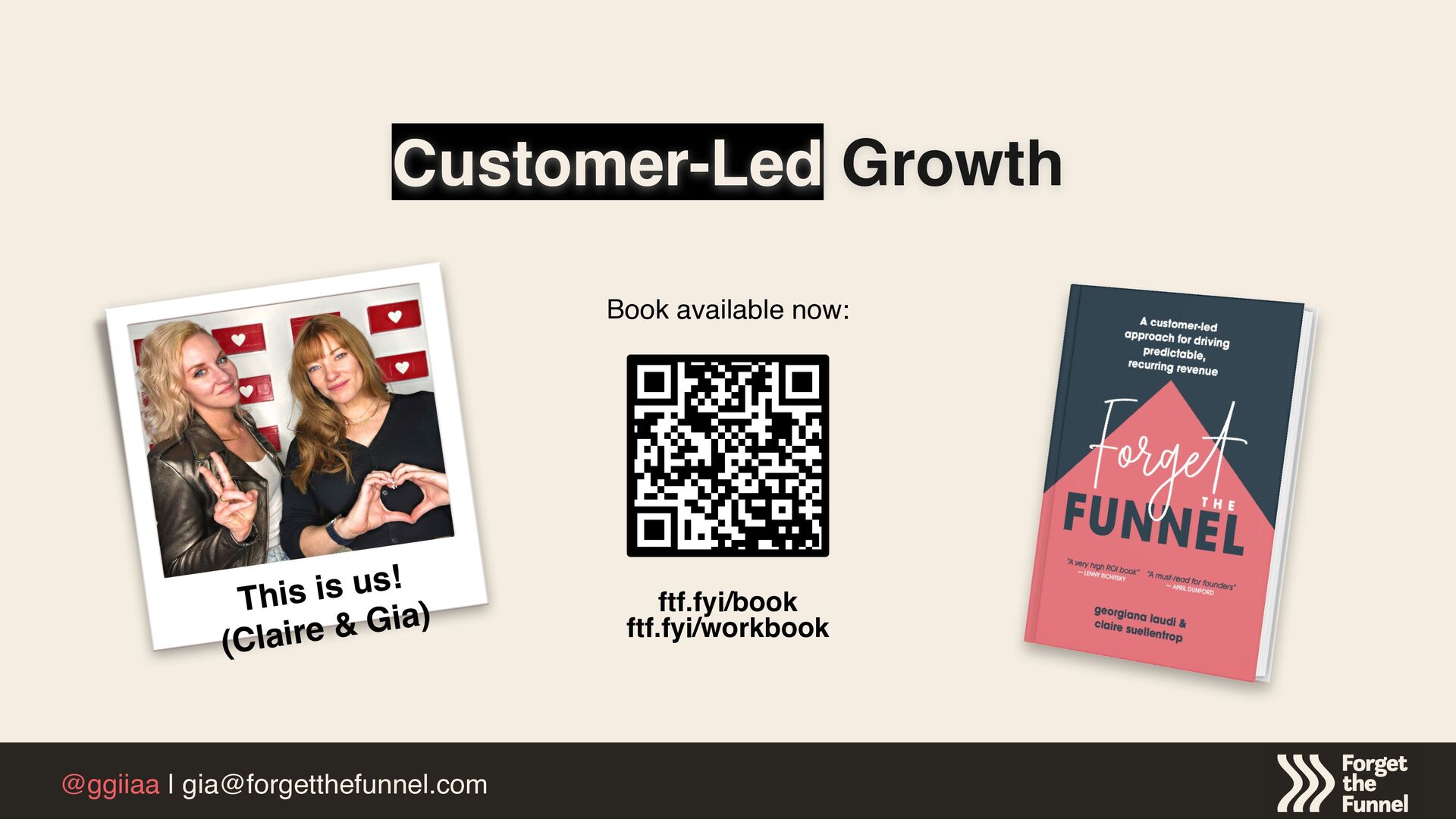
They may look familiar to some of you, which is great. But why I have this up is actually because my business partner and I, Claire Sellentrop and I, we wrote a book called Forget the Funnel about the customer led growth process. But the reason that I'm mentioning is that we actually also produced a workbook to go along with the book itself.
And I think April I sent the the workbook to April, and I think her exact words were, sweet baby Jane, this is another book. You better be charging for this thing. And we're not charging for it yet, so it's still very free. So you can go and grab that.
And there's tons of templates and interview scripts and questions to ask and how to decide what which research research methods to use and things like that. So take advantage because I'm not gonna talk about research at all. But if you get stuck, you can always, like, email me. Okay.
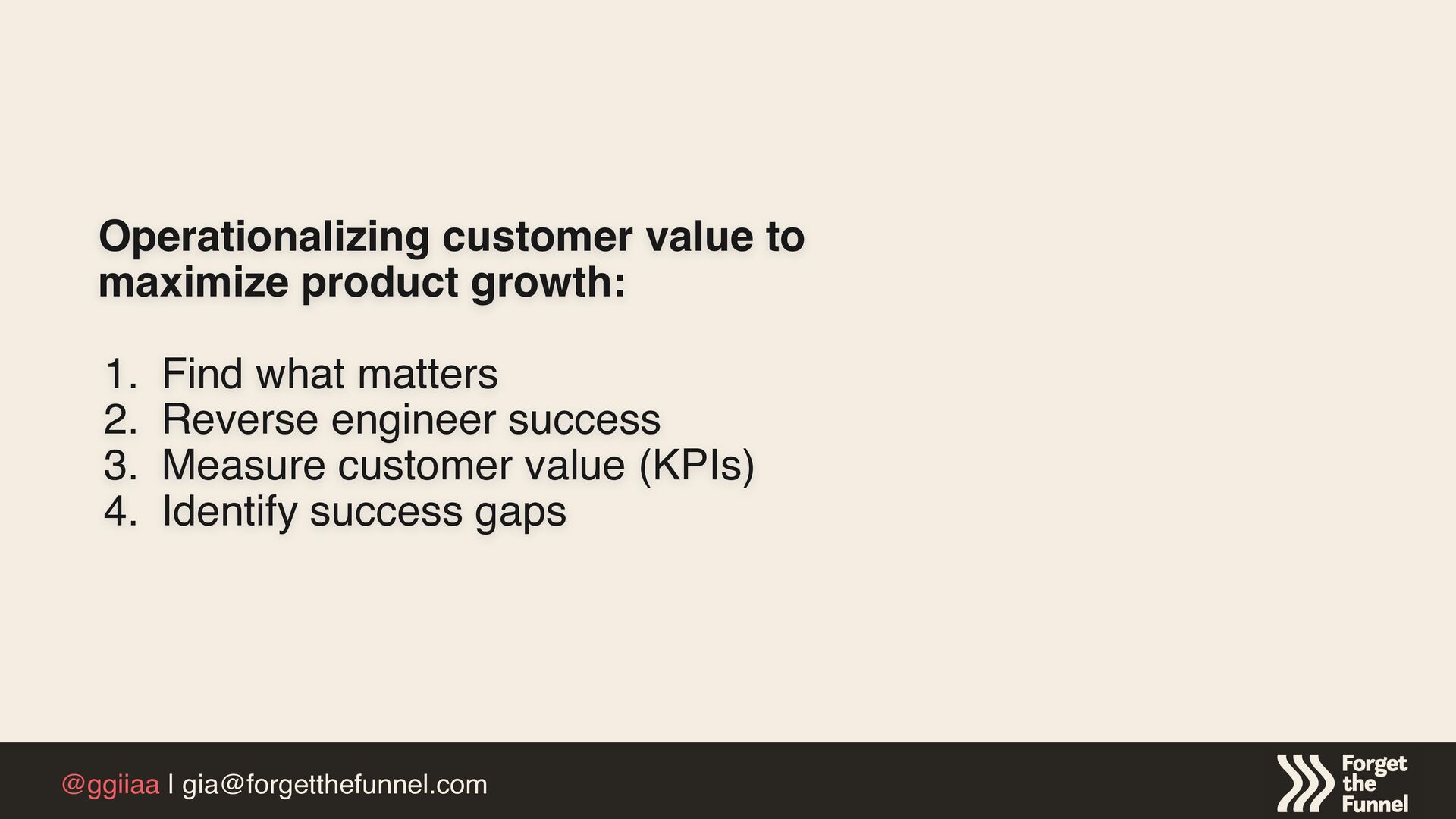
So the actual meat of this thing, what I'm actually wanting to talk about, is this process, what we do after we have these conversations with our customers. And like I said, we wrote a book about this process, but basically, what I wanna do right now is is give you sort of the highlight reel of these four things so that you can decide for yourself if this is actually something you think that could work for you and your team.
So the first thing that we have to do is find out what actually matters to these amazing customers. We have to decide which of these customers we're going to prioritize, and then our job is to have eyes kind of only for them and get kinda up close and personal.
This is why I didn't want want Bob Masta in the room because I'm gonna talk about jobs to be done and it feels ridiculous to speak about jobs to be done in front of Bob, but here I am. So for any of you that are familiar with jobs to be done, this is sort of like an encapsulation.
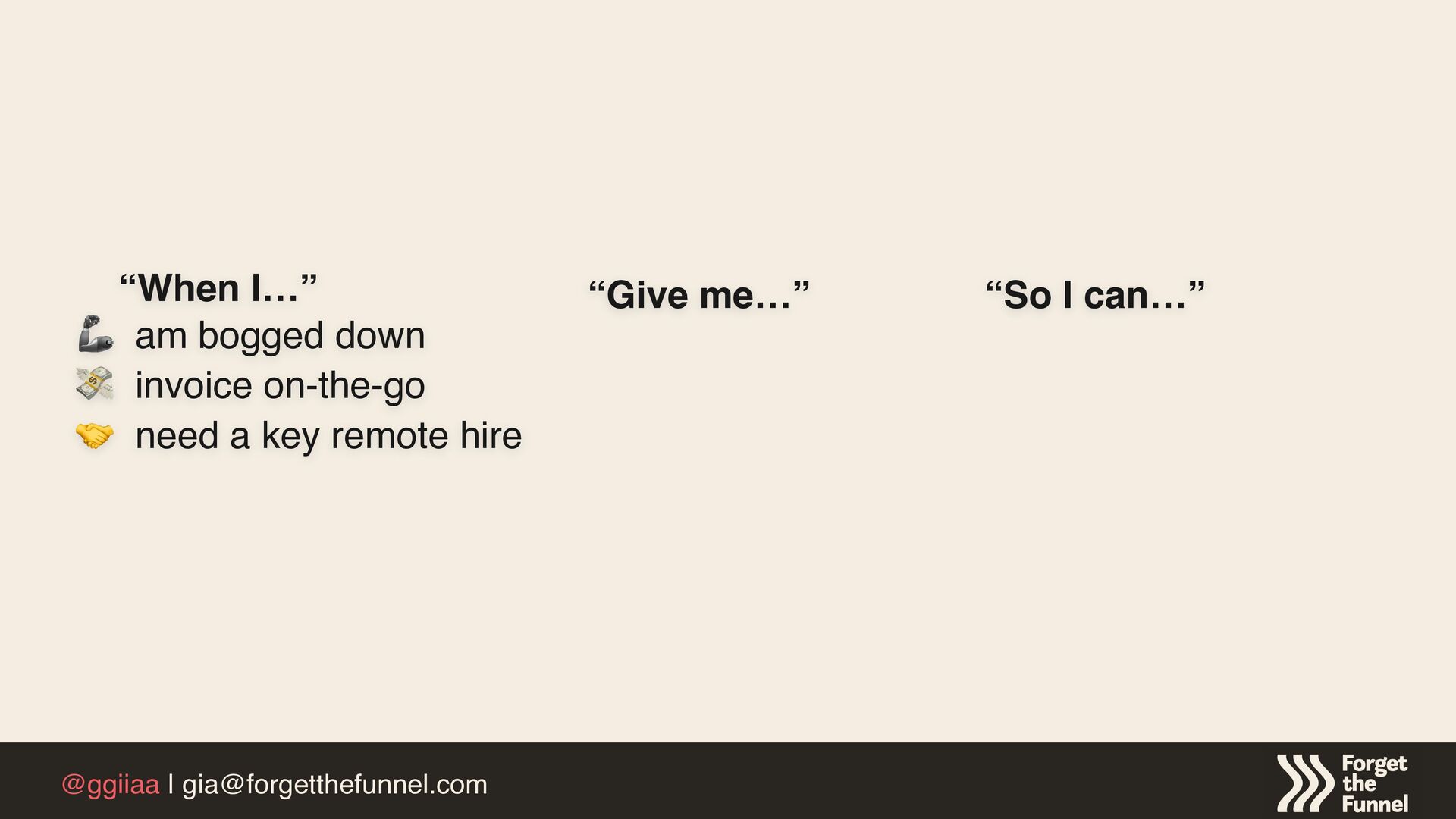
This is a customer job statement, and it's just a helpful way of thinking about our customers and thinking about and organizing what matters to them. So the essence here that we're trying to sort of unpack is like what led our customers to seek out a solution like ours, what motivated them to choose our solution over all of the other options that were available to them, and that desired outcome.
What can they do now that they weren't able to do before? So I'm gonna use our examples of our our three tools, the marketing tool, invoicing tool, and hiring tool. And I already told you a little bit about what that struggle looked like for them.
Right? For the marketing tool, it was they were bogged down in the old way, and they needed a system. They wanted to start automating. They needed to be run things more efficiently. For the invoicing tool, was about invoicing on the go. And for that hiring tool, it was about making that one key remote hire.
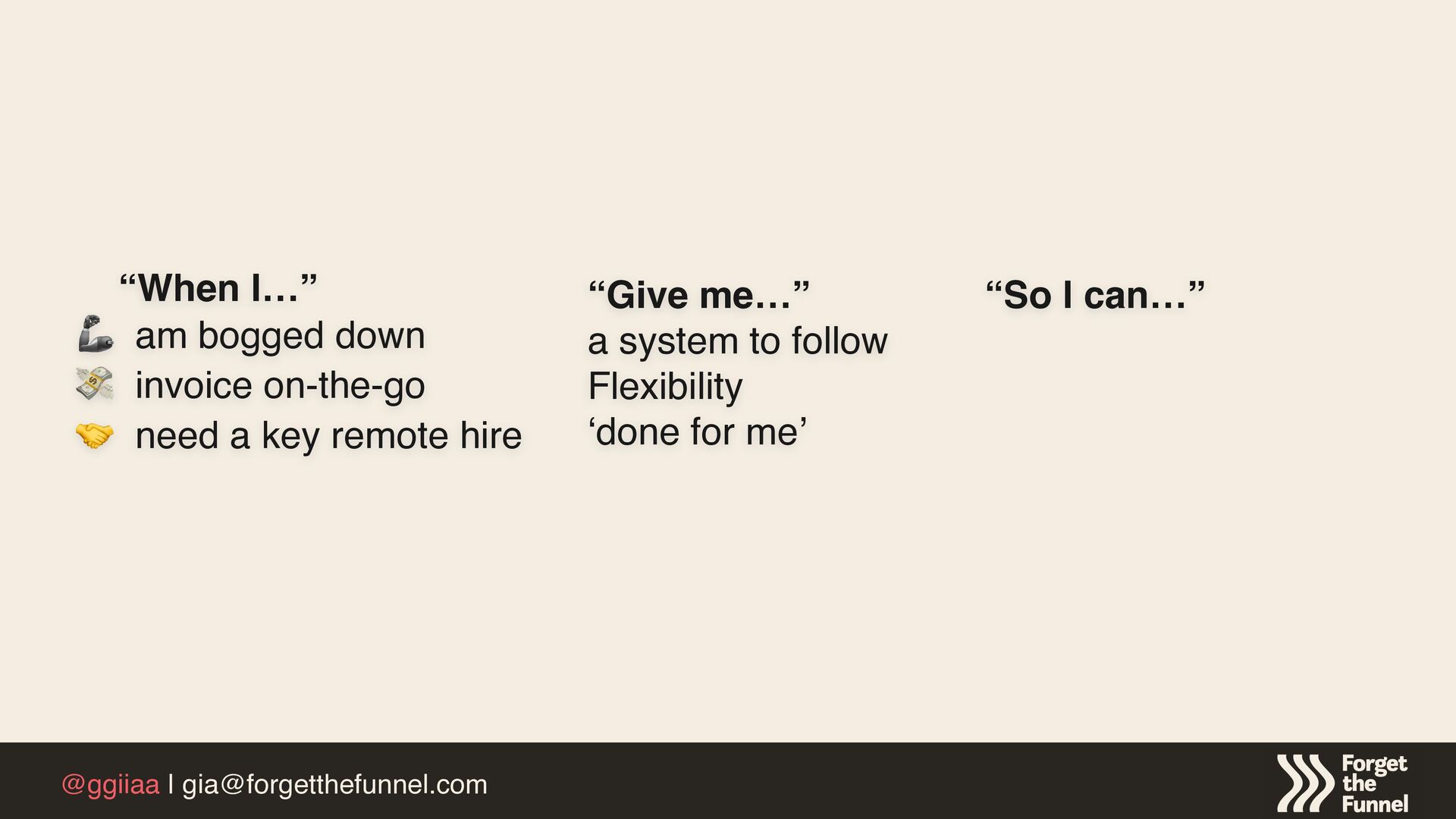
But if we ask our our customers, right, why they chose us over all of the other solutions that were available to them, they will tell us. And then we can use it to do stuff with it. It's like wildly, wildly valuable. So for our marketing tool, they told us they wanted a system to follow.
They wanted to take a more programmatic approach. They wanted to be more efficient in the way that they were doing their marketing. With the invoicing tool, they told us they wanted a ton of flexibility. They wanted they wanted to customize every nook and cranny of every single invoice in very unique to them ways.
So they wanted all the flexibility that we could possibly throw at them. And with the hiring tool, it was really about, I wanna know what's being done right, but don't bog me down. I don't want I don't care about the details. I want the feeling of it being done for me.
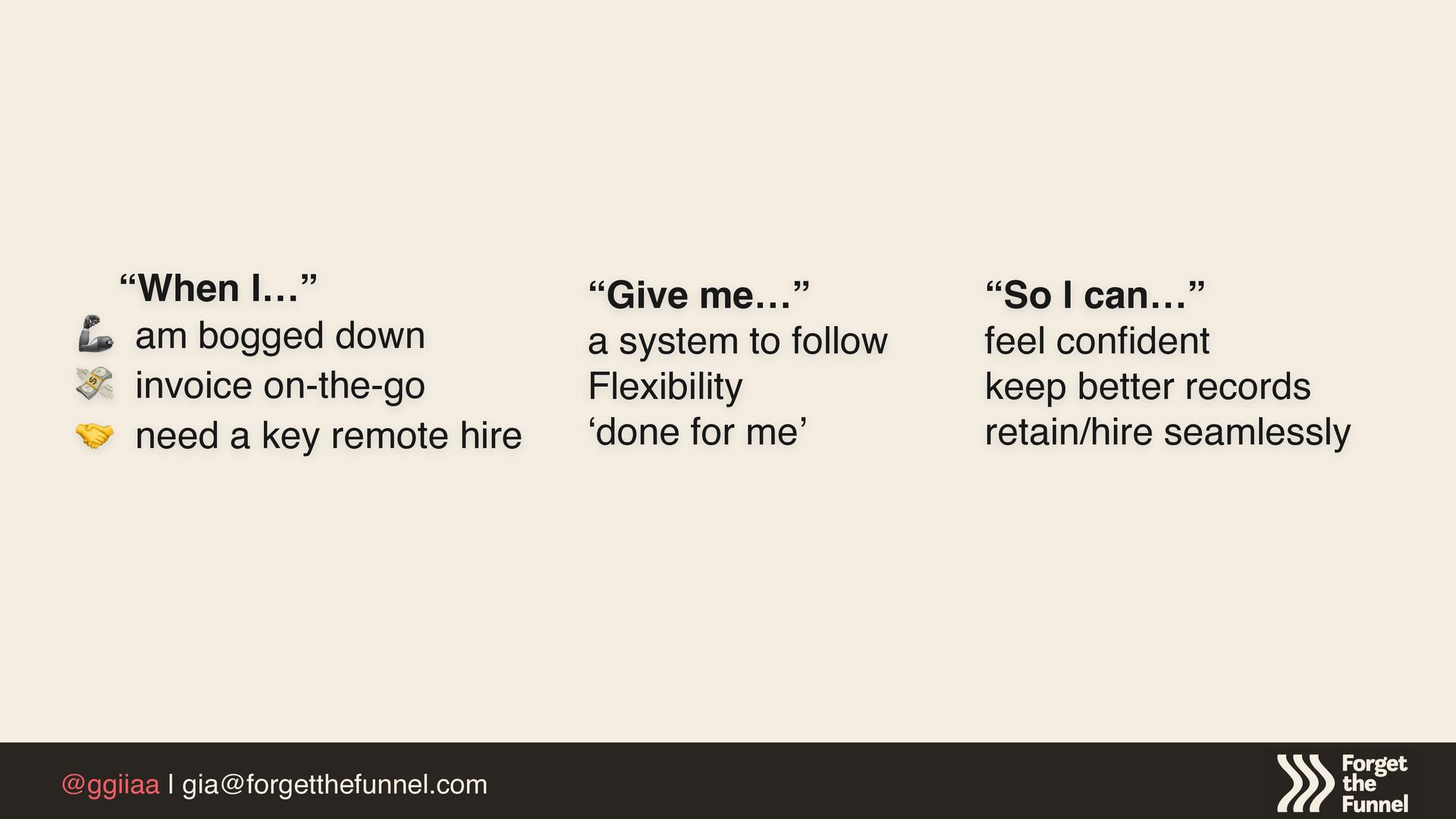
And so now we know why they chose these tools over all of the other options. And then similarly, on the other side, we also asked these customers and found out that for the marketing tool, was about a feeling of confidence and feeling great about the system and the and the marketing that they were running.
And for the invoicing tool, it was about keeping better records. And for the hiring tool, sort of stands to reason. Right? It was that, like, we wanna retain our hires, and we wanna bring on new hires really seamlessly. And having this understanding sort of unlocks for us what an ideal customer experience could look like.
Right? We're already sort of starting to see it a little bit here. So now our job is to figure out, you know, what how can we optimize this process? And with this information from our customers, what we learned about our customers will have everything we need.
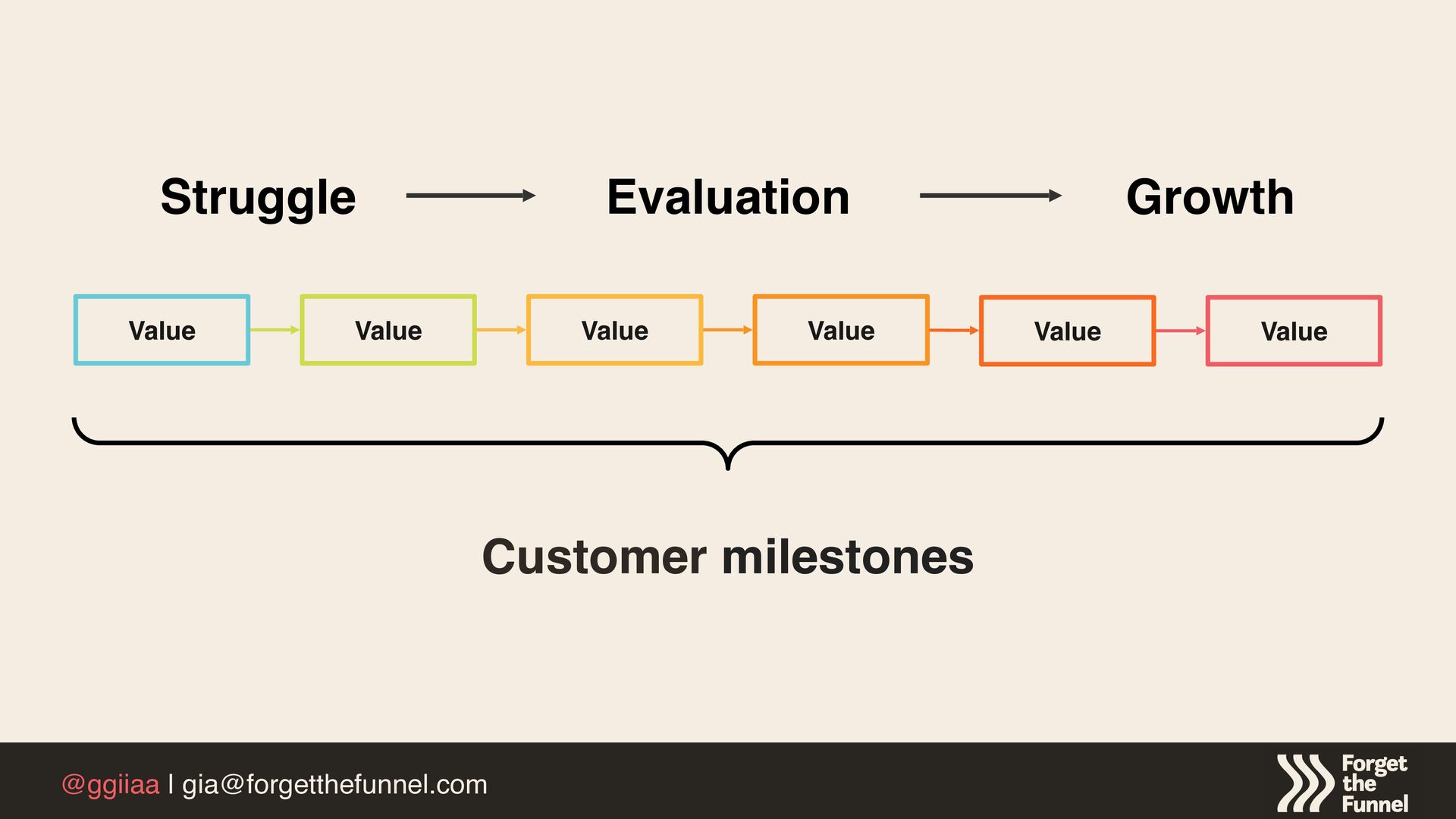
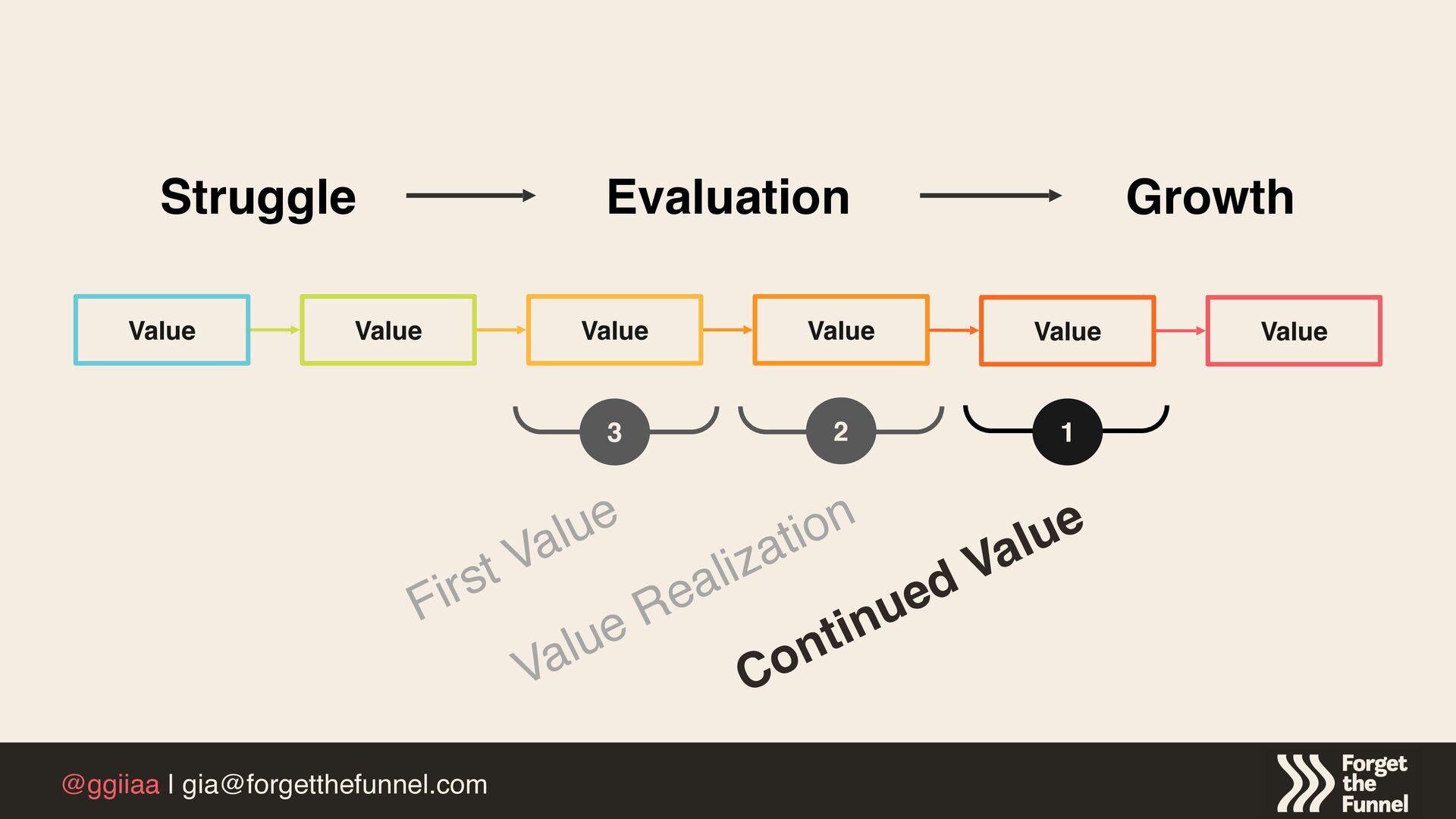
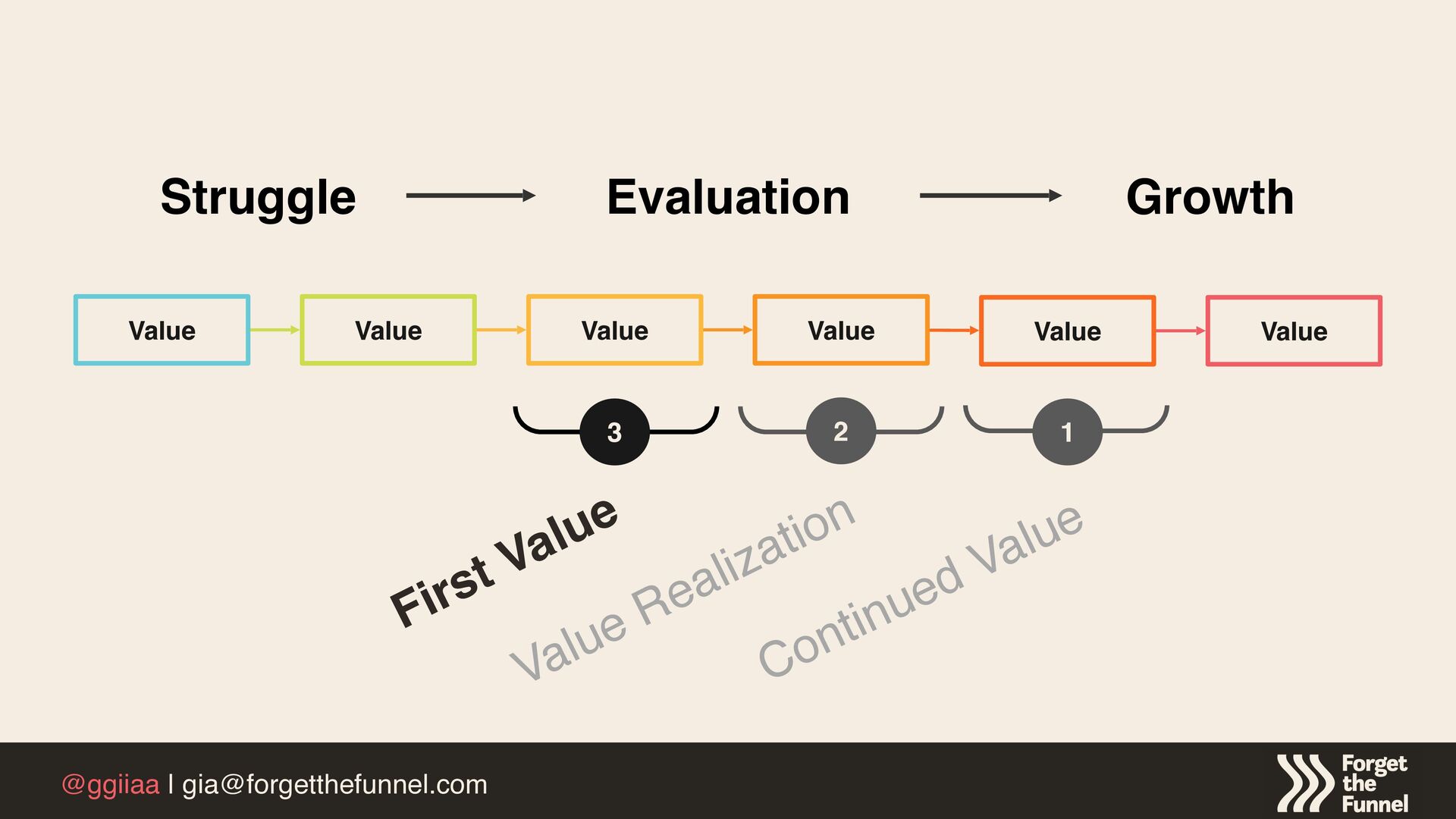
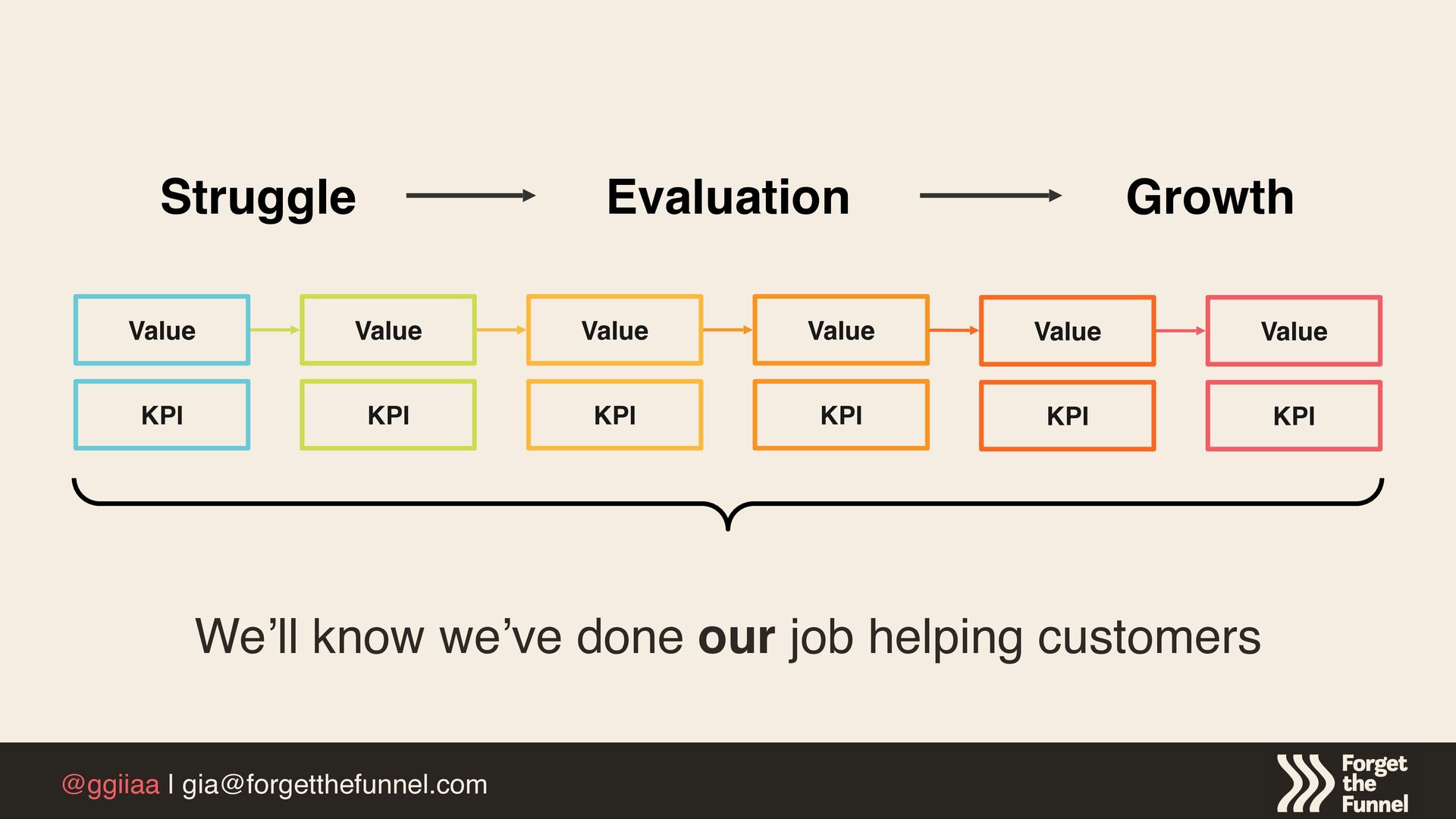
But in order to reverse engineer something, we kinda need to know what the components are and how the system sort of works. So this might look familiar to many of you. This looks something like a customer journey map that I'm sure you've seen a few times before.
But the essence here is that our customers every single one of our customers experiences a few key sort of milestones in their relationship with us. And it's our job to figure out what these milestones are so that we can start to operationalize it and optimize it.
As we need to identify what these things are. But the thing that I really want you to sort of remember about this, and won't let you forget because I'm gonna go on about it for a little bit, but is that each of these moments I mean, there's a reason why it says value in all of those.
This is not a customer journey map. Don't get me started on NQLs and SQLs or sign ups or credit card entered. This is about moments of value for your customer. So we really need to look at this through that lens of the customer.
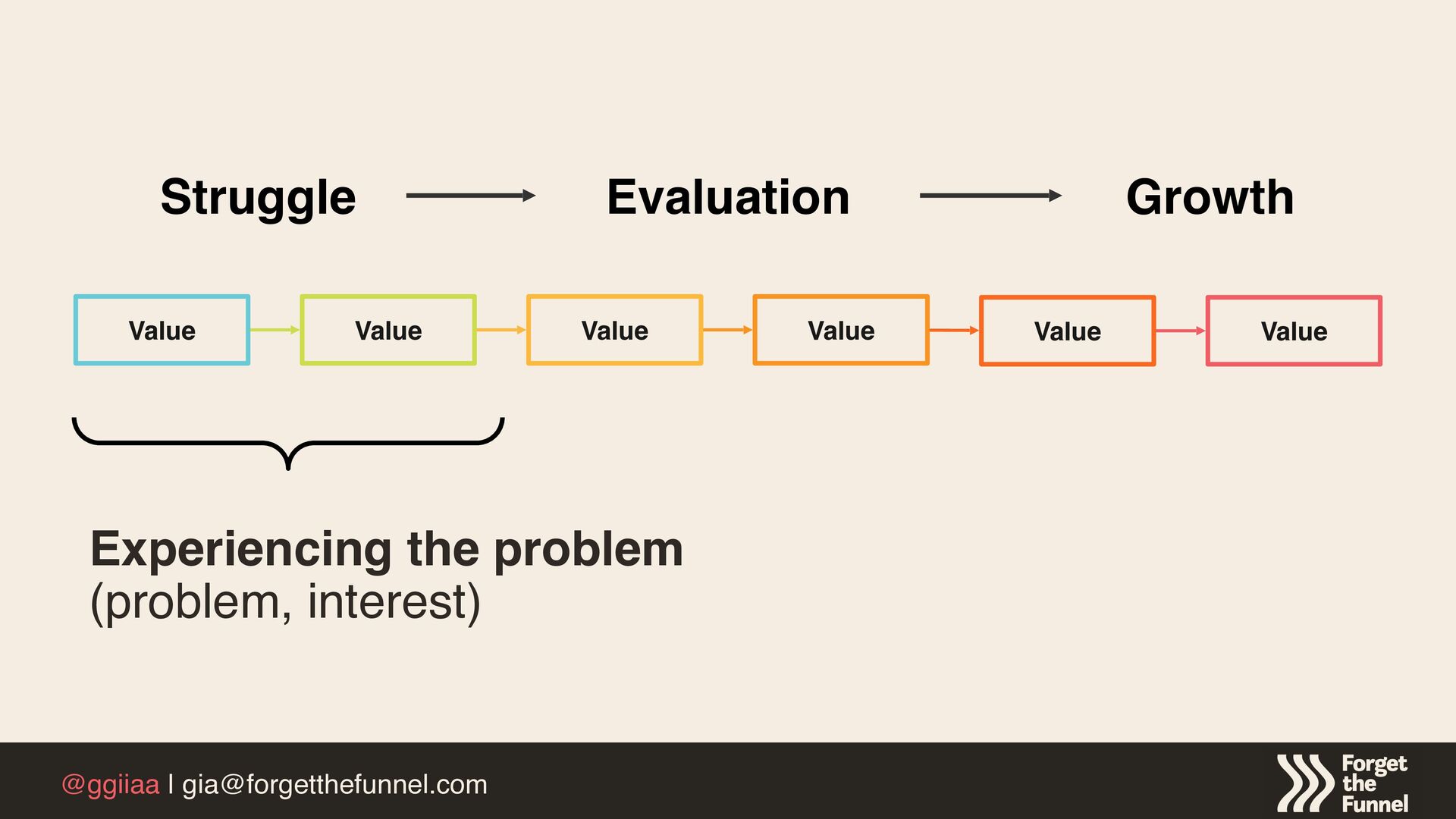
So this is what I mean by that. So the struggle phase is like your customer is out in the world struggling with the old way. It really sucks. And one day I mean, I'm making all this up obviously and being super simplistic about it, but one day they decide, nope.
Cannot live like this anymore. I have to need to find a better solution. And then they move into sort of solution seeking mode, and they do what they need to do to ideally find out that you exist. And if your website does a decent job, well, then they may express some sort of interest in your solution.
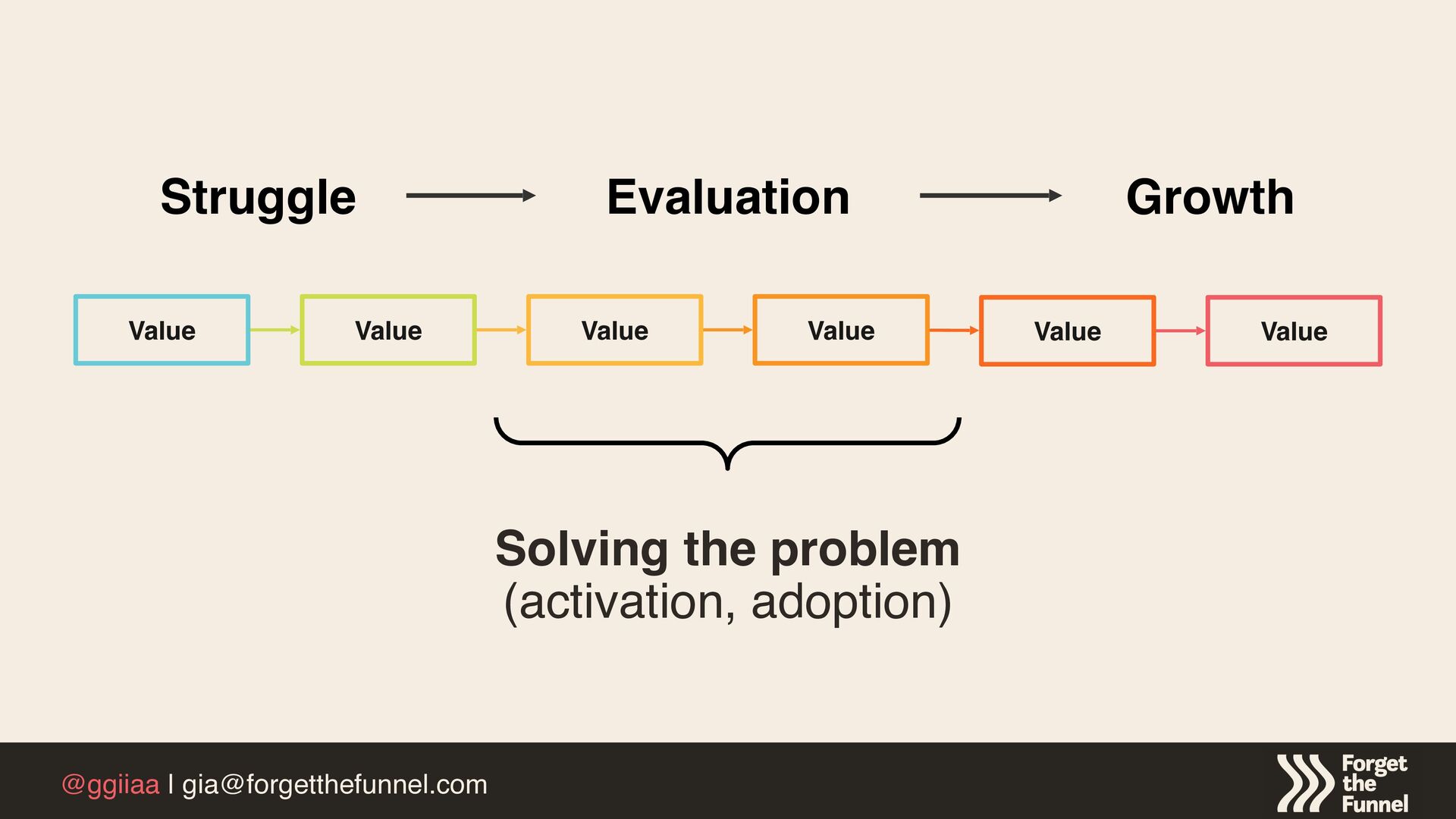
And again, if your website's done its job, then they'll move into evaluation mode where they sort of start to you know, they they need to see proof that this thing is actually gonna do, you know, like, fulfill the promises that your website made.
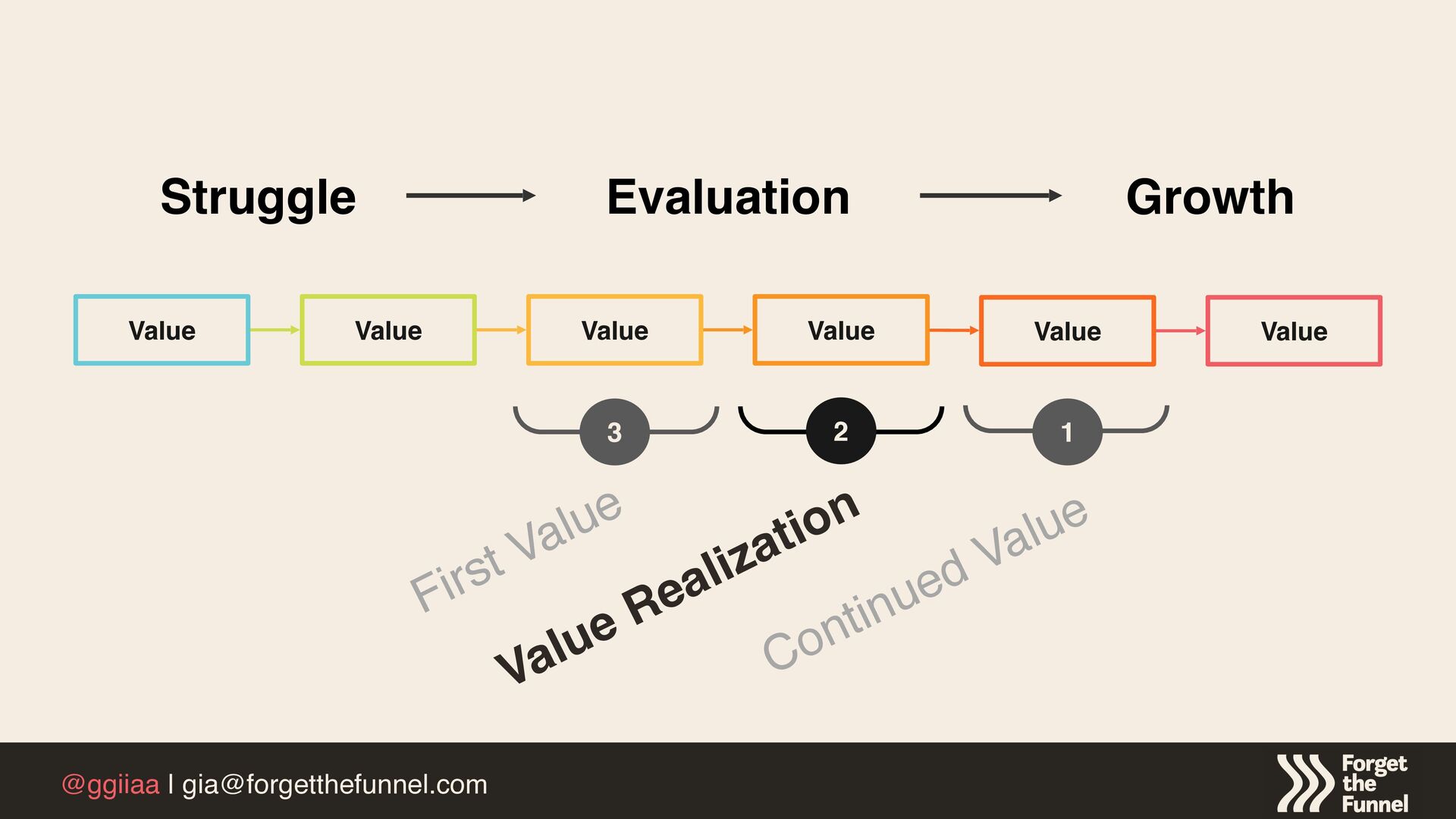
So we need to show them value very, very quickly. And then, hopefully, we get them over into adoption, which is really around value realization. So how will we know that we've solved our customer's job to be done? And that happens right there at adoption.
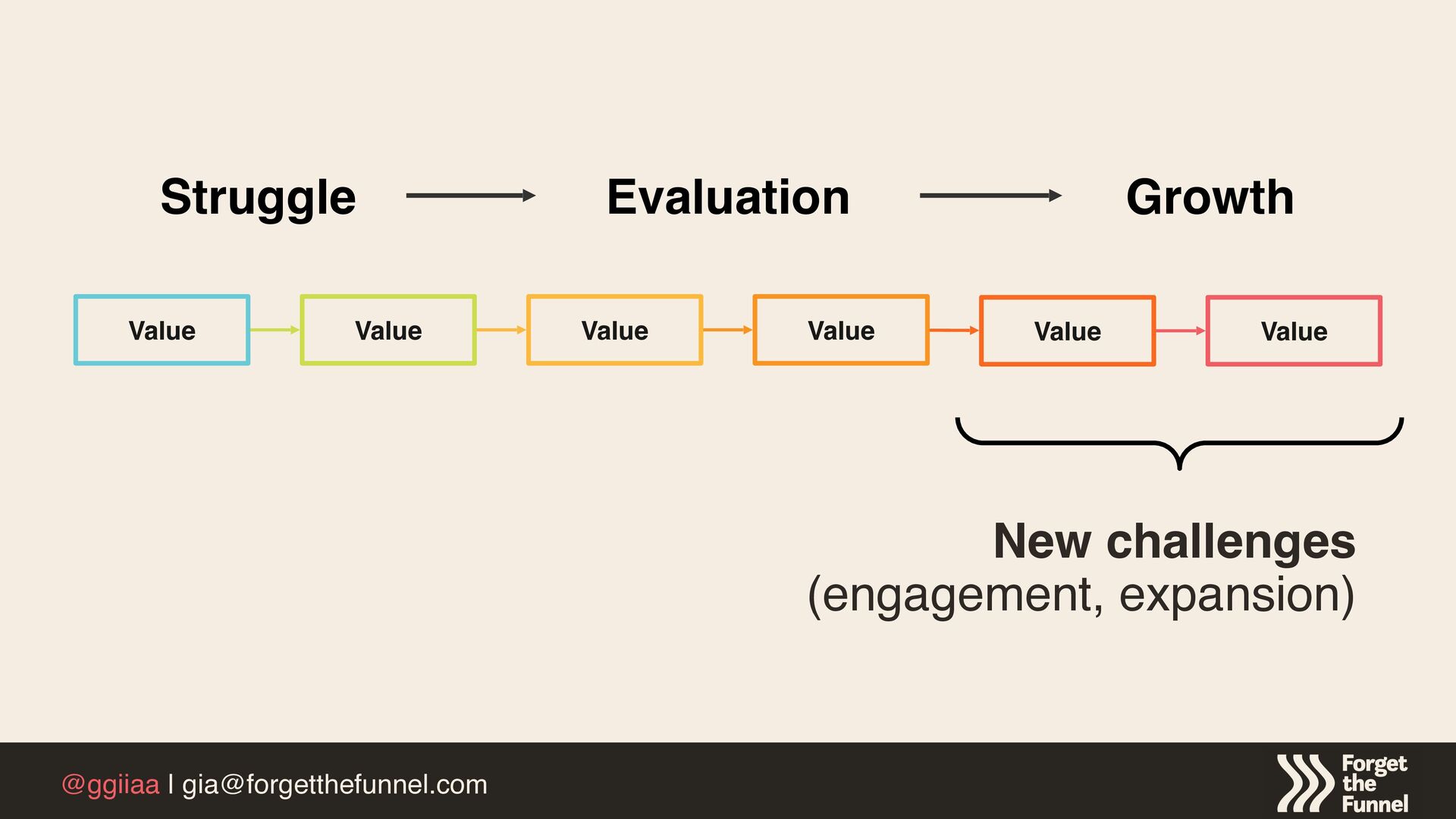
Now here's where recurring revenue businesses live and die. How many people in the room are recurring revenue businesses? Oh, actually, that's funny. So not everybody. Okay. So anyway, for recurring revenue businesses, really engagement, continued value, name of the game. You're not in business if your customer isn't sticking around.
This is true for nonrecurring revenue businesses as well, but really, really critical that we get that engagement. We live or die here. And then expansion is where things start to get really interesting again. Right? We might start talking about net revenue retention and doing all kinds of sophisticated things with, you know, more advanced product usage and all kinds of expansion opportunities open up, like, you know, upgrade and and different monetization strategies.
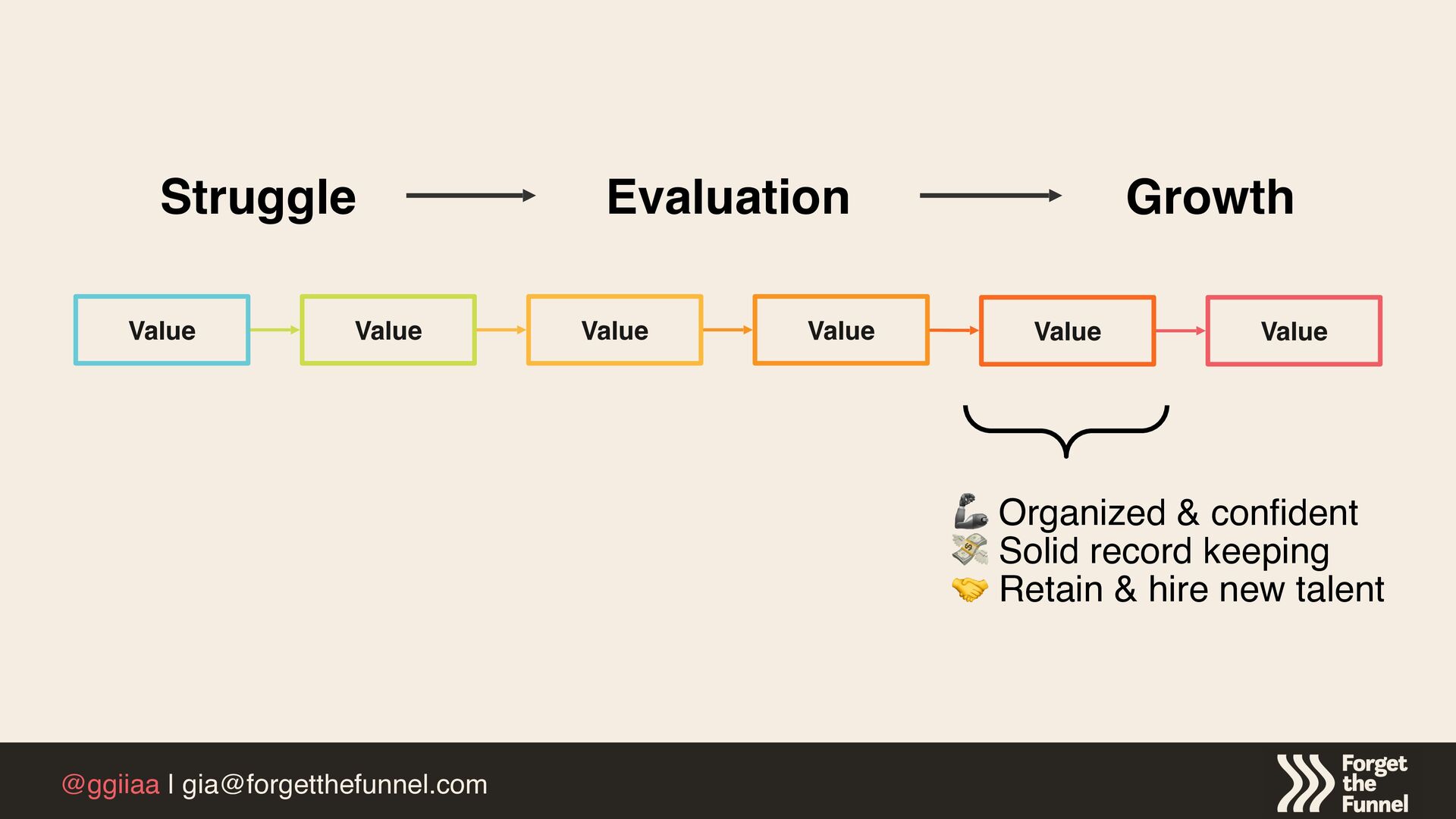
So now I'm gonna get back to the actual reverse engineering of this thing, which is before we can decide how we want to introduce our products to our new amazing customer, we actually have to go to what the end looks like. Right? We have to figure out what does a long term happy, healthy customer look like.
Going back to what our customers said, this is gonna start to look familiar. Right? These customers told us for the marketing tool that they felt organized and confident. The invoicing tool, they told us it was about solid record keeping. For our hiring tool, it was about retaining and hiring new talent sort of seamlessly.
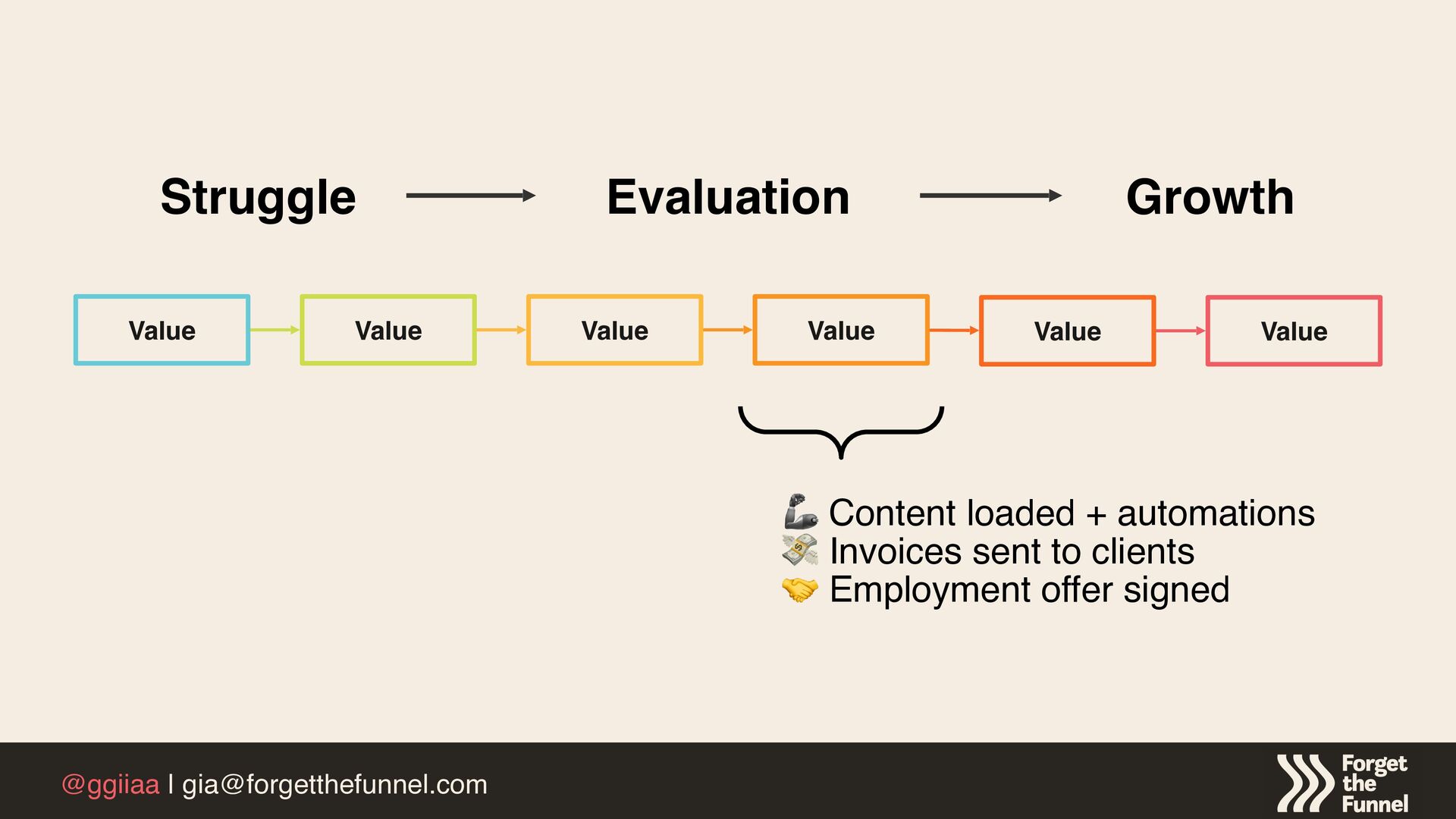
Right? And when we look to value realization where we know we've solved our customer job, I just mentioned that things sort of click into place here. Our customers said, you know, that they wanted that that system to follow. So it stands to reason that we need to be they need to be loading content into this tool, and they needed to start actually using the automations.
For the invoicing tool, the customizations paid off. All of our heavy work with all those customizations paid off, and these people actually felt ready to send invoices to real human living, breathing clients. And for the hiring tool, it was about that employment offer getting signed.
This is how we know we've solved our customer's problem is right here in value realization. So now we can start talking about how should we introduce this product to them? Because this is sort of the black hole of sign ups. Right? This is where sign ups go to die.
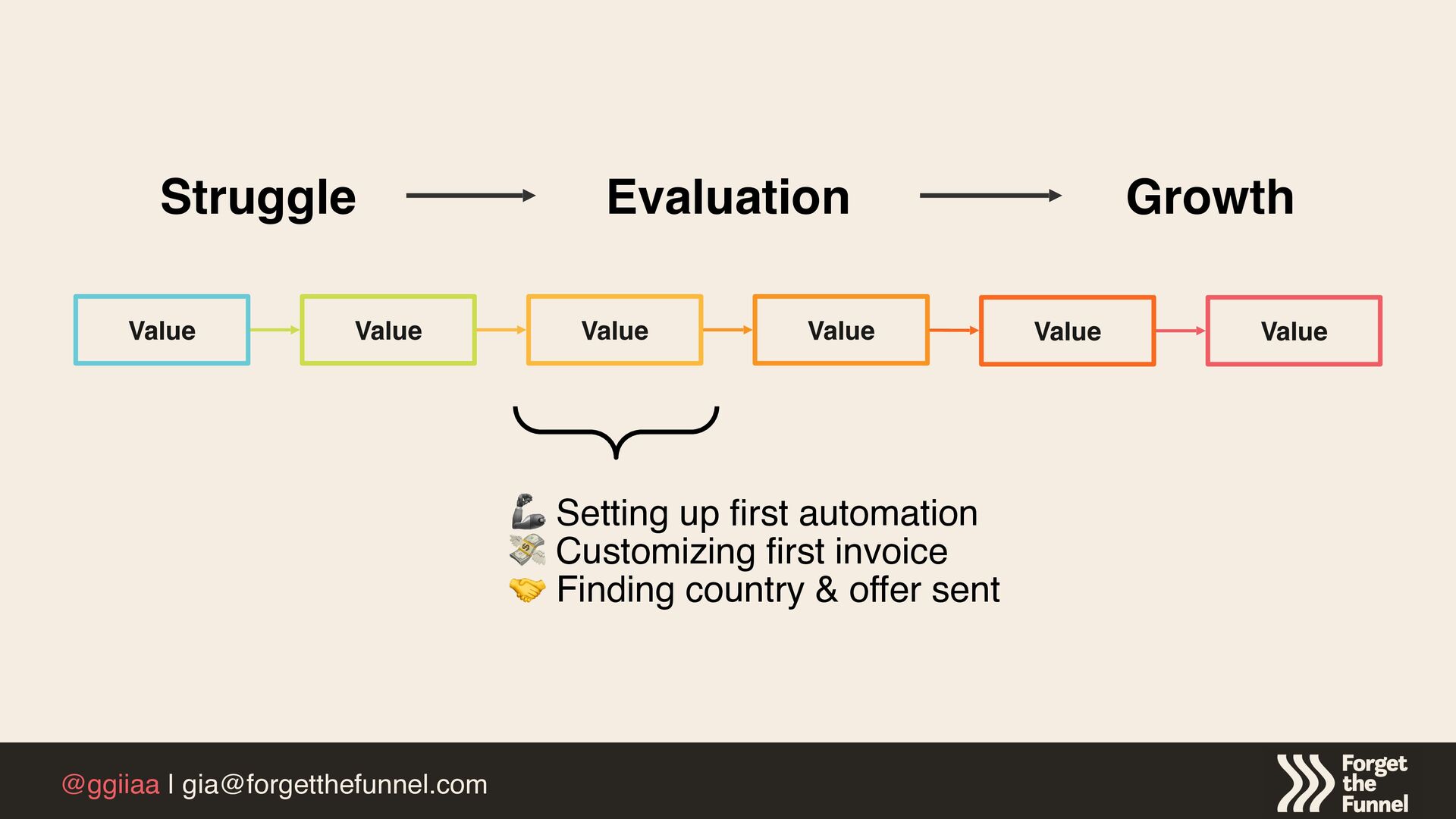
Right? Seventy percent of people who sign up for a product never log in again a second time, So we have to get this right. And and if we look again to what our customers told us, we can can relay that back to for the marketing tools, but setting up their first automation, being really focused on helping our customers do that.
That's what they wanna see. That's what they need. Customizing their first invoice. Right? Showing off that we've got what you need. You wanted flexibility. You wanted customizations. We have that. For the hiring tool, country, kind of important, especially with this type of tool, but also that the offer was sent out.
And so this makes this customer feel really, really good that, like, that was easy and seamless, and I'm gonna get this thing done. And so that is a great way to introduce these three products. And now we know where to focus in that early product experience, and we have a chance at saving some of those seventy percent.
So now we have what we need to start actually operationalizing this thing. And I know I didn't mention the other milestones. They're sort of like I don't know. Like, I often leave them out, but just because it's a little bit more straightforward for those.
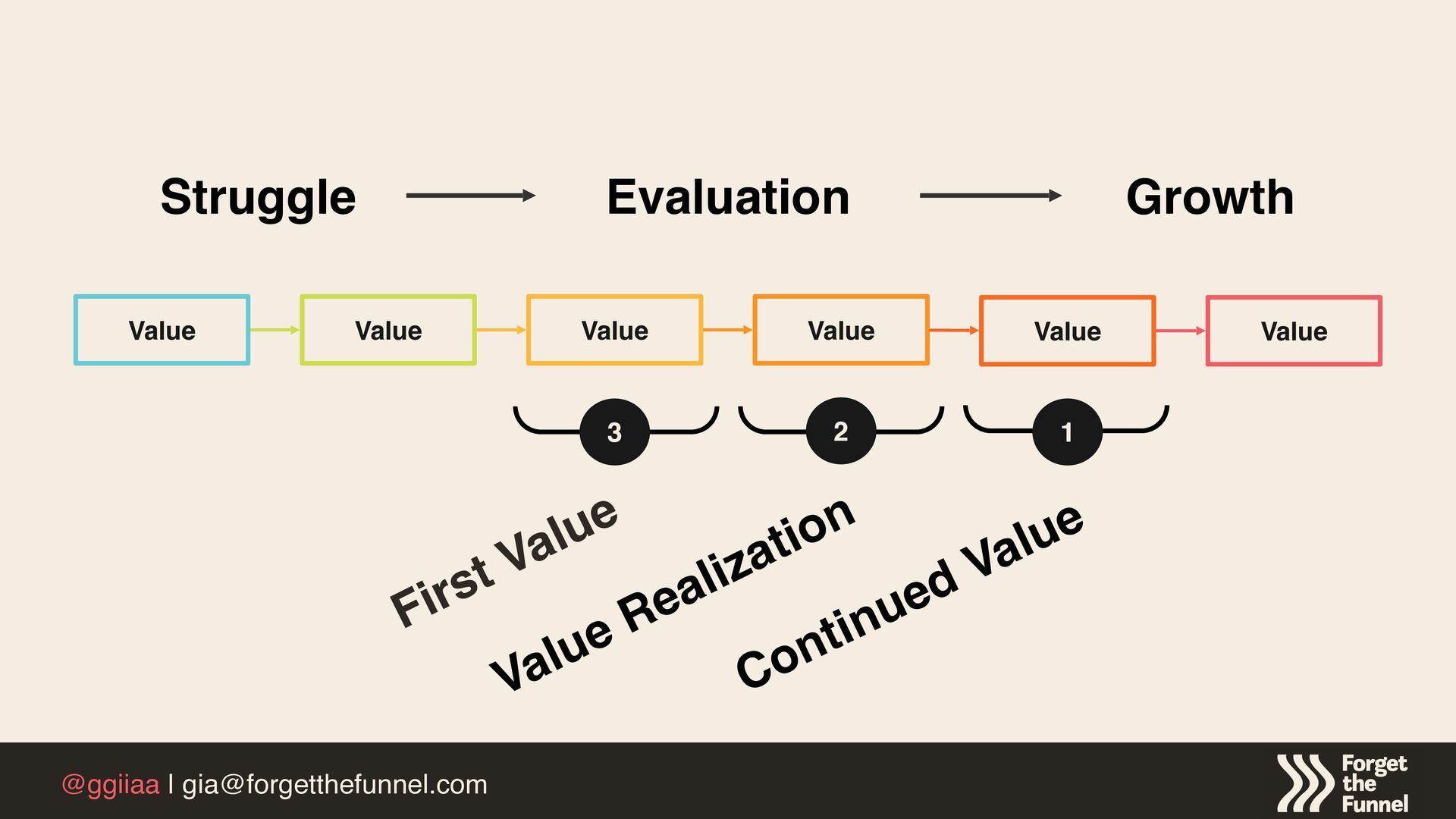
And if, you know, that I I didn't have that much time, so I can't go into all of it. But if you're curious about what they typically are, you can definitely shoot me an email. But, basically, these are the three that we need to get right, especially when it comes to maximizing product growth itself.
So now now that we know what customers actually value comes time to actually measure that value. And I'm sure you all saw this coming. For every milestone, there is an associated KPI that tells us that we did our job helping our customers move from one milestone to the next.
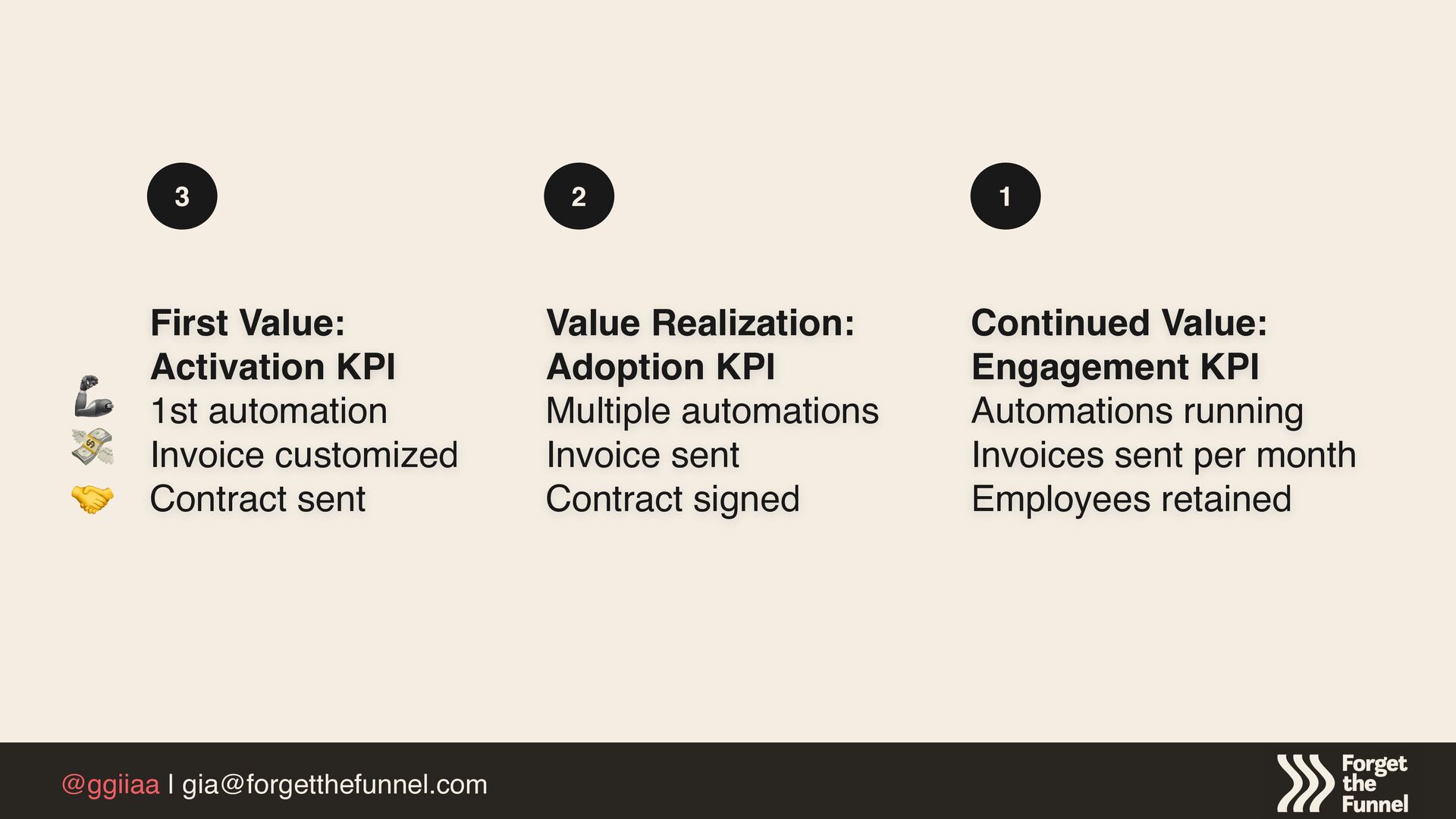
And we can feel really good about this. Right? Because we know we've rooted these this in actual value. So I won't read what's on this slide, but you're picking up what I'm putting down now by now. Right? What we're doing here is mapping what customers said was valuable to them to the specific parts of the product and product usage that shows us that they reached that outcome for each of these milestones.
Your internal language may differ. You may not you know, you might you might talk about, you know, moments or magic moments. You might not use exactly this language, but remembering first value, value realization, and continued value, you'll know that you've got KPIs that are rooted in customer outcomes.
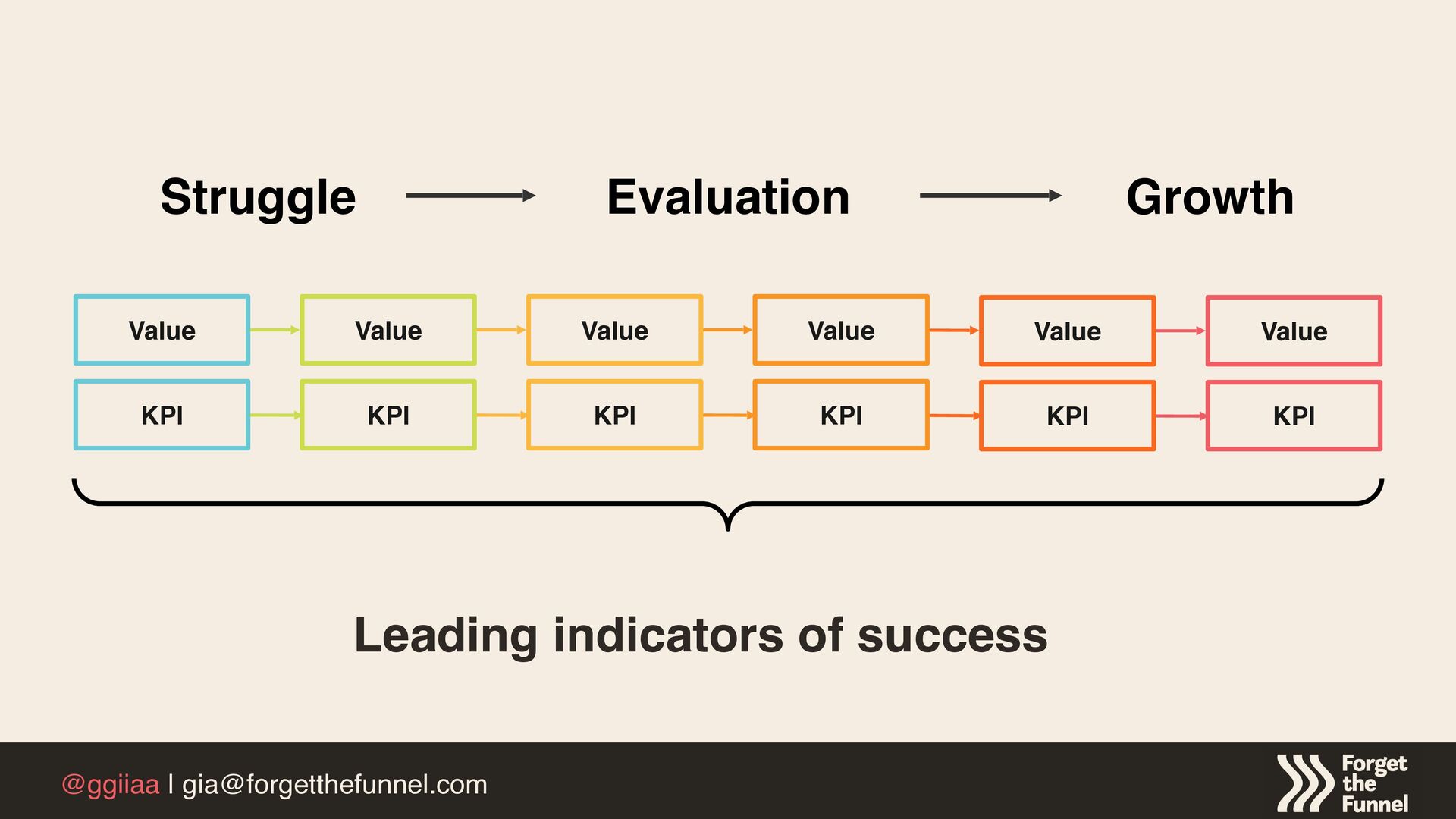
Now we actually have some data worth talking about, and that is actionable data as well. So I mentioned earlier this idea of, like, leading indicators and lagging indicators, and these are very, very much your leading indicators. Because lagging indicators like MRR growth, what's your team supposed to do with that?
Like, go grow MRR. They're gonna be guessing at what to do. That's not actionable, but these new KPIs are absolutely actionable. Your customer your team, I'm sorry, will know exactly what your customers need every single step of the way. They're gonna know how to measure their success, and they're gonna know exactly what it takes to actually move the needle.
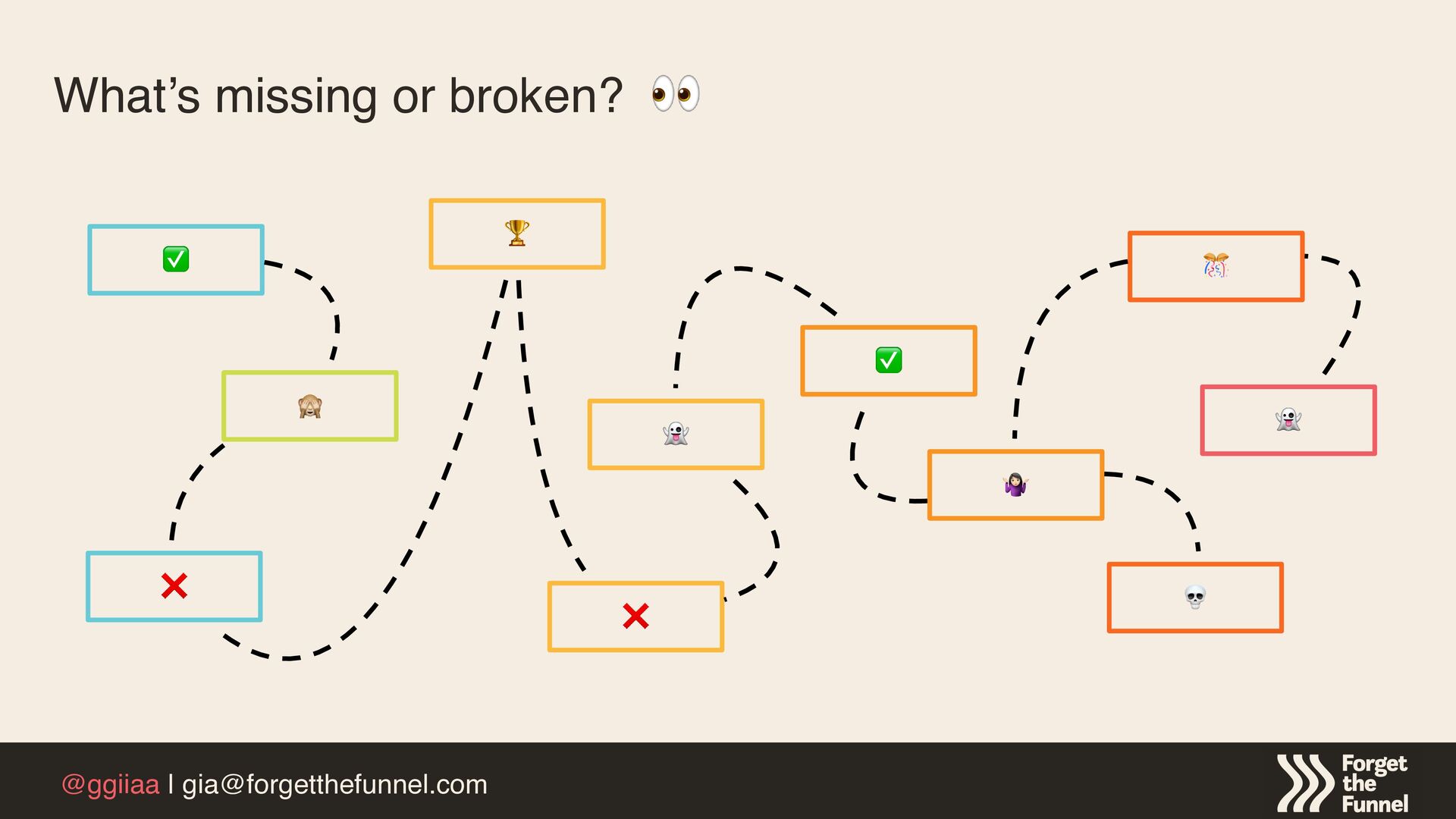
So now comes the sort of messy part or the exciting part or the hard part where we actually have to spot the gaps between what our customers said was valuable to them and the current customer experience that we're providing to them. So this can be, kind of a ridiculous process, and I apologize for the ridiculous visual.
I really need to come up with something better than this. But truthfully, this is kinda what it feels like. So your job here is to put on the shoes or the hat or the glasses or whatever of your best customer and sit down at your desk and hit record on your favorite screencast software and literally go through your customer's entire experience.
Go look at your marketing campaigns. Go look at your social posts. God forbid, go look at your blog posts. Go to your website. Go to your product pages. Right? Read your home page all with that hat on of your best customer. Sign up for your product. Try using it.
Go through your getting started guide. Like, actually go through all of the milestones in your customers that your best customers take in their relationship with you. And you're so much better equipped to do this now. Right? You've got such a deeper understanding of what they need, what they value, their anxieties, their deal breakers, the features they care about, what they maybe don't care so much about.
You're so much more equipped. And you're gonna have a long list of mismatches between what your customers value and what you're actually doing today. And this process can kinda suck. It can be really, really hard because, you know, you're you're looking at this and you're like, **** ****.
Jack just, like, updated our onboarding, you know, three months ago, and it took him six months. Or, you know, the home page, we just rewrote the home page. We just tested this thing. You're gonna see all the investments of time that you poured into this thing, and it kinda sucks because sometimes it means admitting that your baby is ugly.
But unlike your baby, you can do something about this. So this is actually fantastic news. This is really, really good news. So as much as it sort of sucks, you're also like, oh, ****. There's huge opportunity for growth here. This this can keep you busy for a year or two.
There's so much rich information available inside your customers' heads. This is revenue sitting on the table available for you. So this is actually really good news. As much as it sort of sucks and you have to sit with it and realize how much time you probably lost on some of this stuff.
It's actually a very, very positive thing. Now I know what you're probably thinking, which is like, yeah. Yeah. I can do this. I can grab some of my team. We can sit down in a room. We can come up with a customer job statement.
You know, we can reverse engineer their success and figure out what all those milestones are, and we can develop, you know, these KPIs tied to product usage, and then we can, you know, audit the whole customer experience and go through all the steps.
But if you do that entire thing and you do it with for the wrong customer, you will have completely wasted your time. This is a really, really important step in this, and it really sucks to sometimes admit this. I you know, Claire and I, I wish we had counted.
We've been doing we've been going through this process for about five or six years with companies. I don't know. I think it's probably around a hundred, I'm totally guessing. But ninety seven times out of that a hundred, again, this is a hypothetical number, but it's probably pretty accurate.
Ninety seven times out of that that hundred, these companies are completely guessing who their best customers are. You know, any idea. Or it was some legacy idea of who their best customers were when the product first launched, and things change. And for a lot of companies, they get sort of stuck, and they're like, oh, growth.
You know, what's the next growth lever that I need to pull? And they don't actually take the time to step back and actually learn from their customers. In a hundred percent of cases, every single time we've worked with a company on this, whether they knew that their targeting was off or not, we identified really powerful language and words to use, right, to articulate the problem that our customers solve.
Or we might identify, you know, a new opportunity or, you know, watering hole to hang out in and to be present in for marketing. Or we might identify deal breakers that we weren't aware of before or that we're burying. Oh my god. This happens all the time.
Burying a key feature in the early product experience or overburdening them with irrelevant tasks. We always learn about this type of stuff. Ongoing engagement, so opportunities for ongoing engagement as well, which then opens the door for, like, expansion, which is where recurring revenue gets really, really interesting.
Also, in a hundred percent of cases, we learn that the positioning and messaging is off in some way, and we get to identify a much better positioning and messaging to attract and acquire and actually build a high lifetime value customer. So, again, if you are guessing about who your best customer is, you can throw all the traffic in the world at this thing.
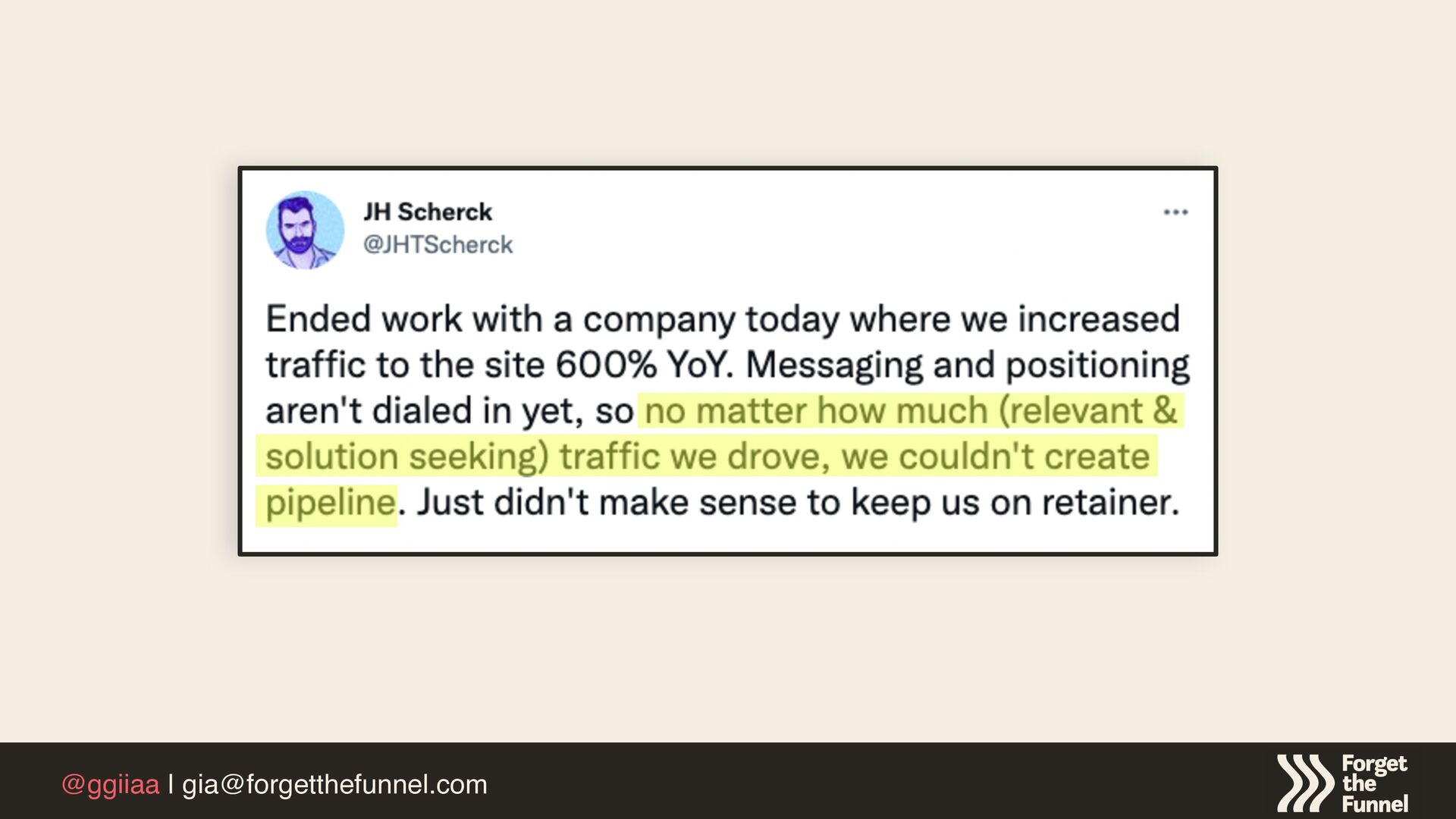
Our company is called forget the funnel, and I I swear still to this day, people reach out to us with, like, we need more leads. Like, that's the thing they think is gonna fix it. Right? Like, we just need more traffic. Traffic is not gonna fix your problem if those fundamentals are off.
Right? And it's an ugly truth, and it's hard to admit because sometimes we're investing like this. Right? We're making massive, massive investments of time and money, and we, you know, we put our blood, sweat, and tears into this stuff when we really, really care.
And it can mean that we've lost months or years, so it can kinda suck. And I I mean, I'm really beating a dead horse with this, but this is generally what, you know, the companies that reach out to us, this is what they're saying.
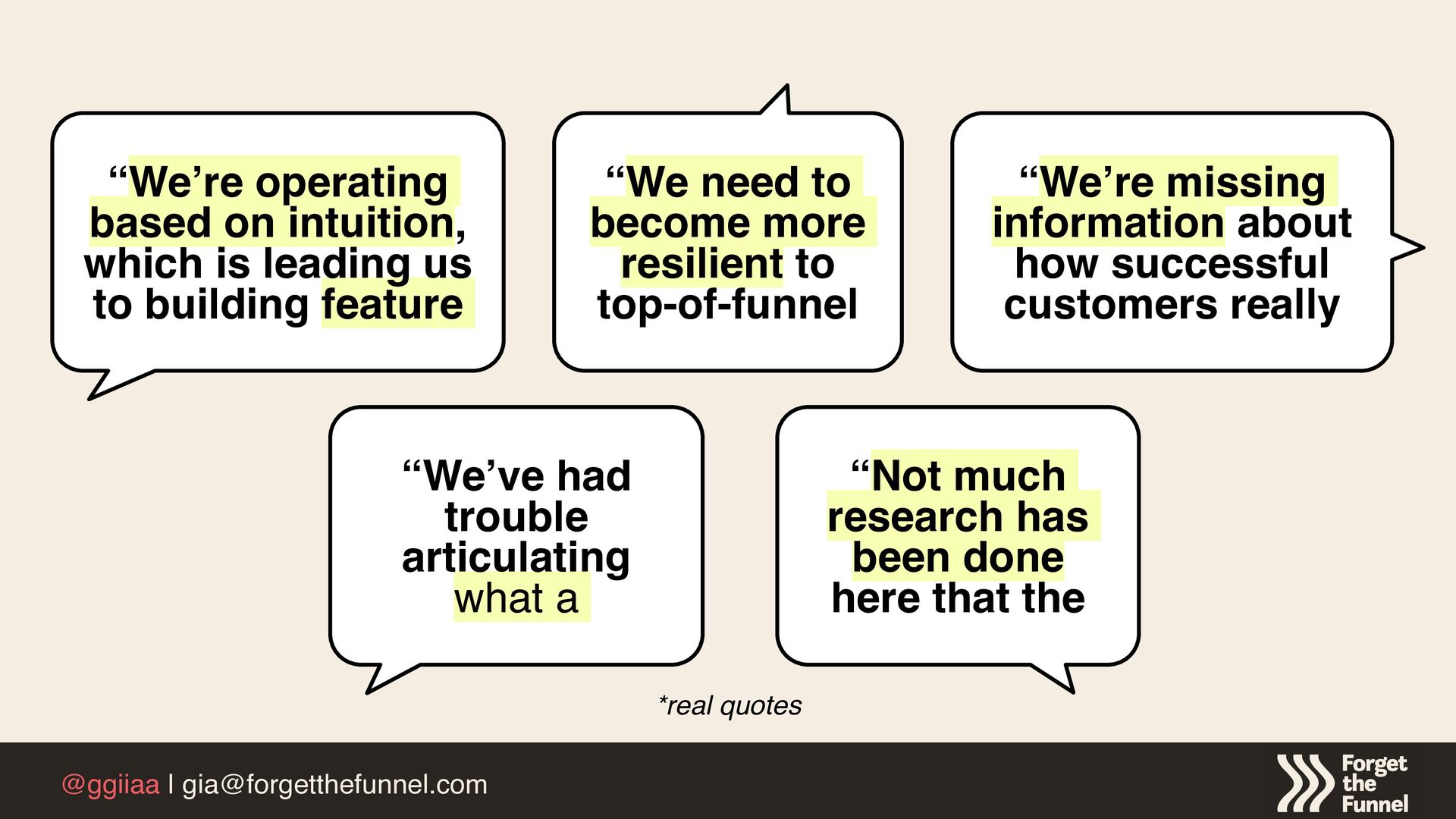
They're afraid because they're they've turned into somehow, they've turned into feature factories, or they're kind of guessing, or their team doesn't really feel confident in, you know, some of the decisions that they're making, or they're running tests and experiments that take them so long to actually get to, you know, something, an actual meaningful lesson here.
So, again, the vast majority of folks who are talking to you about how to market and grow your product are gonna talk to you about the data. And I'm not saying that quantitative data is not valuable at all. Of course it is. But if you do not have that fundamental understanding of who your company who your best customers are and what matters to them, please ignore it until you actually take the time to do that.
Because, again, the answers to all of these growth challenges, all the things that you may be guessing or looking to best practices or what are our competition doing, you do not have to guess any of that. The answers to this all live inside the heads of your best customers.
They know what it felt like to have the problem that your product helps them solve. They know how much it sucked to do that. They know what that day was when they decided I have to do something else. I have to find a better solution. Right?
They know how they found you. They know how you stood out versus all of the other options available. They know what value they experienced when they initially adopted your product, and they know what they're able to do now that they weren't able to do before.
And really cool thing too, they also know how they've changed and evolved since they've become your customer, which then opens up opportunity down the road as well for expansion. So all you gotta do, really, is unlock these answers that are all sitting inside the heads of your best customers and then operationalize it, your team is gonna have everything, honestly, a year or two worth of opportunities to leverage marketing strategies and product growth strategies and success strategies and even sales strategies.
That is me. So I really appreciate you spending time with me today. There's a round table at I think it's at twelve twenty, and I put as many books in my suitcase as I could possibly fit. So if anybody's interested in getting a copy of the book, I do have a couple to give away, only a couple.
But if you're interested, come and, you know, come to the round table. That's Claire and I, and that's the URL for the workbook again, if you're interested in that. And that's me. Thanks.