
So you've built a company that's great at customer discovery – making the right product for your customers, and honed from diligent product discovery. But have you applied these skills to your most important resource – your team? From coders to the executives, culture matters. It affects behaviours (positive and negative) and permeates into company performance. Managing culture is tricky. It's formed by perceptions, observations, and deductions of how value is created within a work environment. Without a proactive, engaged approach, culture can become toxic, reducing innovation and fostering intra-team competitiveness and exclusion, concealing issues and building silos in the company. Left unchecked, these behaviours compound, leading to a downward spiral in company performance. This talk will provide tools that leaders and teams can use to build cultural intelligence and foster positive cultures. It will demonstrate how techniques used to understand your customer can be applied internally, to increase company productivity more effectively than providing bean-bags, ping pong tables and free soda.
Growing Positive Culture: Applying Product and Customer Principles to Develop Collaborative Teams and Motivated Individuals
Auto-generated transcript - may contain errors. Tap a timestamp to jump the video.
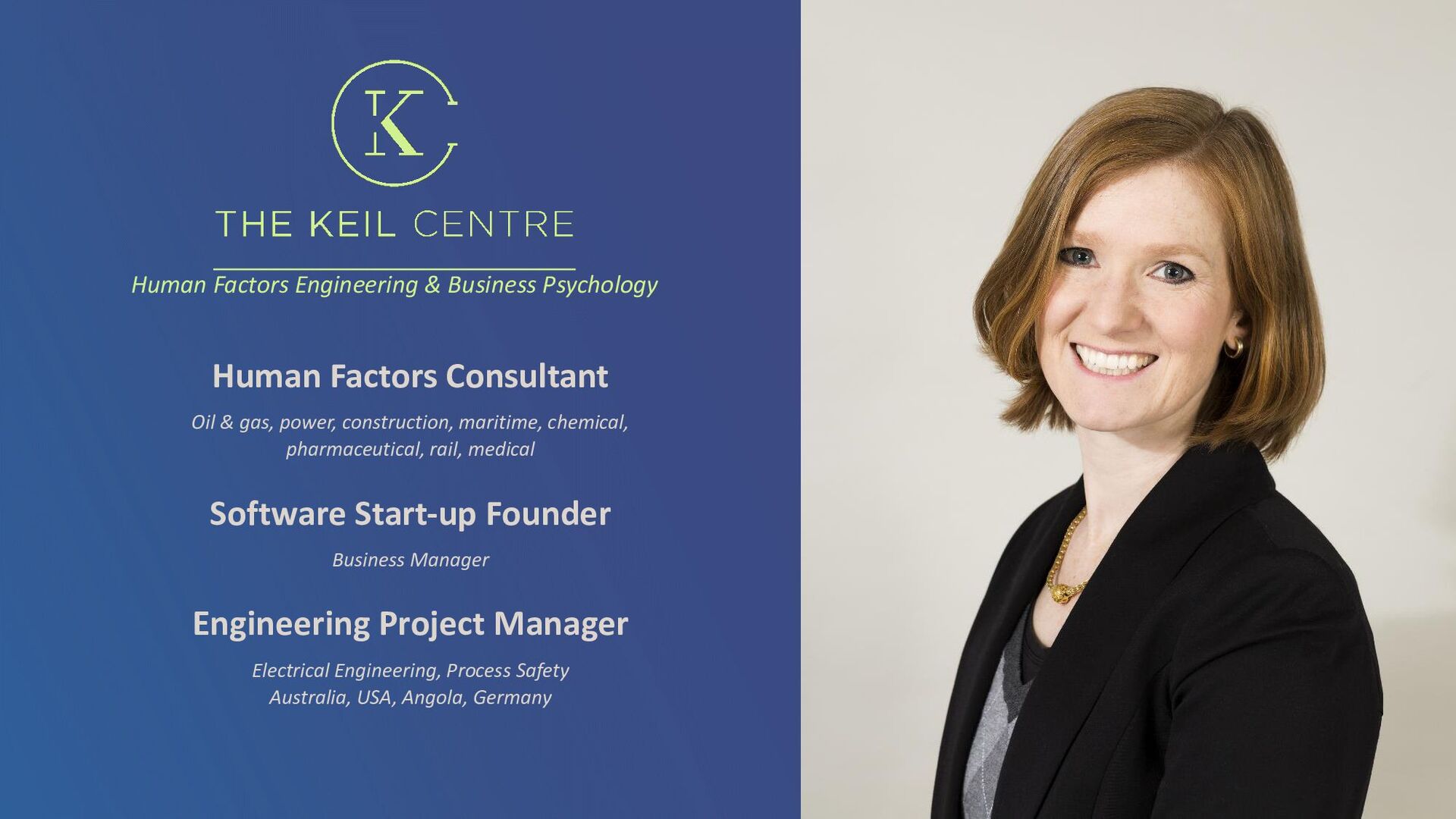
Everybody. It's great to be here and thanks for coming along. So, my name is Fiona Johnson and I work for a company called the Keele Centre based here in Edinburgh. And we're actually a group of human factors specialists and occupational psychologists. And we work with all industries across the whole world.
And we work with companies to understand their challenges. And we focus on performance. Right? We're trying to understand where the challenges are for companies in delivering the performance they want. And then we work with them to understand in a bespoke manner what those challenges really are deep down.
Understand the needs of the people within their business that the things they need to deliver the outcomes they want. And so what I'm gonna talk to you today about is culture because culture has a big impact on our performance in all organisations. And it can push us in a great direction or actually we can have a degraded culture and lead to a degraded performance.
I'm going to talk to you a little bit today about some of psychology and the physiology that occurs in the interactions that we have in our business. And I'm going to talk about it from a very first principles kind of way, a very simplified way to help us understand a little bit about how some of the interactions we have can impact the behaviours and influence our, the people in our company who may be great technically, but actually will influence our behaviours that may be detrimental to our overall performance.
So the idea is to then be able to understand that, understand how we need to get to that collaborative environment that we really want, and so we can proactively build a culture that you're looking for that's going to help you deliver that outcome because you've got this great plan.
And you know, if we do this we can actually get to that point. But what you've got is actually a lot of these skills already that you need to do this. It's just taking a different approach. So I'll take you through that. So a little bit about me.
And my background is that I was originally an electrical engineer and I worked in the power industry in Western Australia and in oil and gas there. Working in large, complex engineering teams, focusing on trying to deliver, you know, some detailed parts of technical requirement right through to huge complex projects and looking at the management of the whole system overall.
I worked in Australia and then in the US and Houston working on projects out of Angola. Multiple different sites and products and requirements and multiple different cultures that we were trying to bring together. I also worked in Germany in engineering as well. But then we moved to the UK and I was a startup company founder for a software business here in Edinburgh, working on geological software.
And that taught me a lot about about software and but a lot about companies and their needs and a lot about their challenges. I left that to to go back to my interest area which was engineering. And that's when I specialized in human factors.
And this is about understanding the needs of the user or the people, the employees and the workforce in order to facilitate their performance. And the reason why I moved into human factors was because throughout all my prior work, I had this extra perspective.
I could see that we were trying to do all of our technical excellence. And we were. We were great. We did some incredible technical reviews and processes that we we really had worked hard to develop. But then we would miss things. There would be unfinished checks or when we went to complete the work, there would be problems.
And I realized that actually, there were all these gaps that were happening throughout the engineering processes, right through to delivery, and that engagement going further than that. That actually, I needed to understand how the human needs interacted with the technical needs so that our great technical people could deliver what we were actually aiming for.
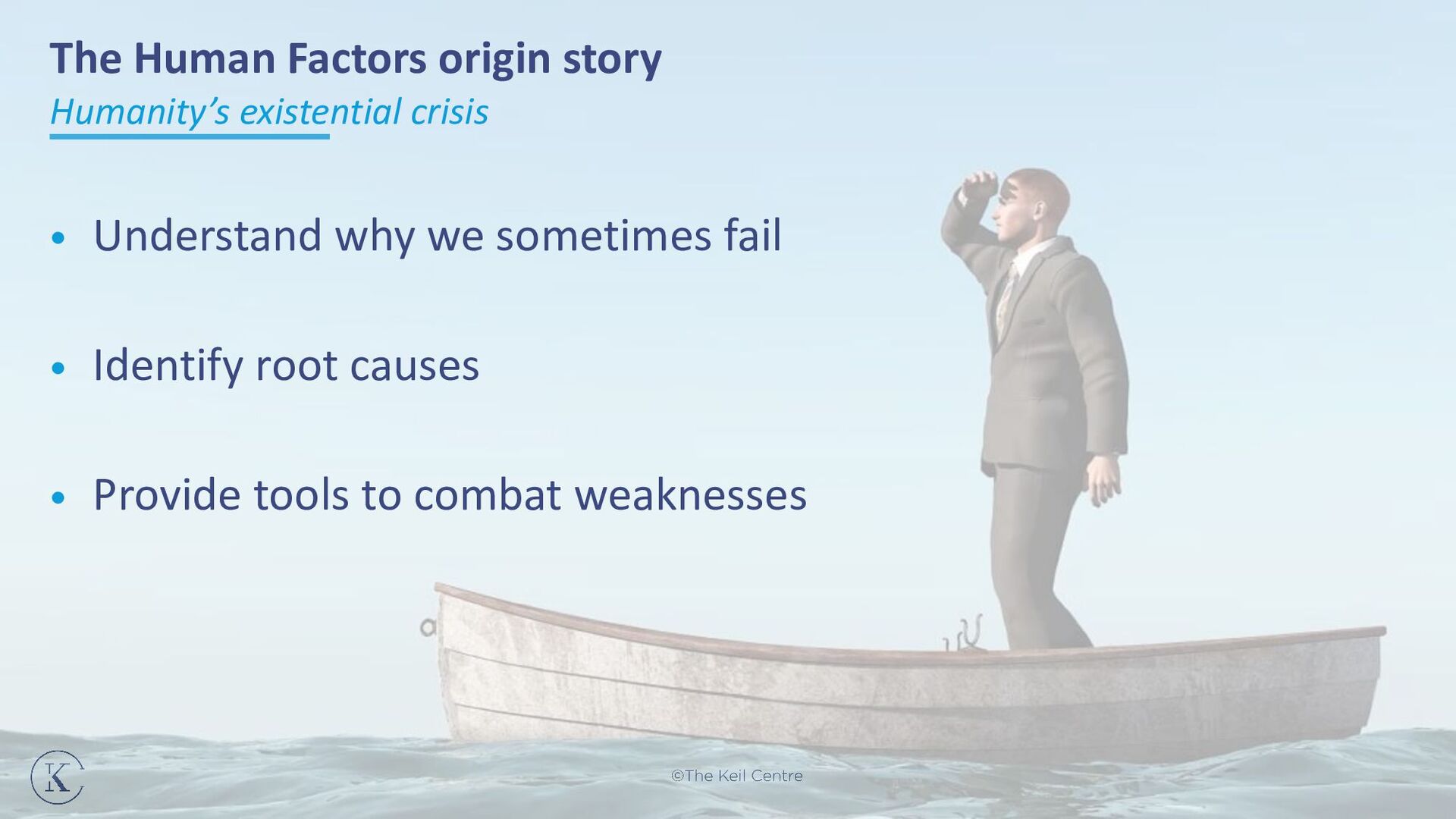
So they had to come together. So that's why I moved into human factors. And a bit of a background for human factors, it's born from humanity's existential crisis. Right? Things have gone wrong in business and in construction and operations. And it came from that.
It really started around, World War two when there were these great designs, these great feats of engineering in our new fighter planes and things like that. But what we realised was things were still going wrong. We did great planning, great designs, but yet there were still problems when they went into operation.
And the way the cockpit was designed was, we thought was great. But then the pilots would still make an error. Why? We have to believe that we can understand what really happened behind that. Because we want to do it again, and we want to do it better.
And we have to believe we can do it better. And the same goes for companies. Alright? We have to learn from our performance issues. Where things went wrong when we had adverse outcomes. And we have to dig deep to understand the problems that happened but not just technically.
We need to understand the people within that system. The behaviours that happened and the motivations for those behaviours so that we can understand how to create a new environment, new systems that facilitate a reduction in the likelihood of those mistakes and those errors.
Right? So that's what we're looking for. It's like, what are those problems and how can we facilitate people getting it right more frequently? So that's what it's about. Human factors are about understanding why we sometimes fail. And that's okay. Right? Humans will make mistakes.
And we'll make slips, lapses. But what we want to understand is, well, you know, when these things happen, why did they happen? We want to go beyond, as I said, beyond the technical to understand the people's needs that led to the outcome that we didn't want.
And we want to understand the why, why, why. The five whys. Maybe you've used that before to understand problems. But we use that with people. We understand why did they mess up. What did they miss? How did they miss that part to make the decision in the way they did?
And if we come from it, we come at that investigation from a perspective that actually, if everybody comes to work to try to do a good job, we're going to be treating them with a fair review of how they've performed. And that's all we can ask for.
That's what we want for ourselves. To know that that's how our company would understand if we've made a mistake, and that they would treat us that way if we happen to make a mistake. That builds that trust. So then what we do is we understand the behavioural challenges, the conditions that made it harder for people to perform optimally, and then we create actions and tools and systems that combat those weaknesses.
Because our culture can be incredibly powerful. It can set you up for innovation and creativity. It will help keep people committed to the vision and keep them on track. Keep them coming back is what I'm working on. Keeping me on track with that vision.
And it will support motivation because everyone will feel like they are valued within that mission and that pathway getting there. And of course, in supporting the employee retention aspect. But we want people and it will deliver the job performance. But it's about keeping people in an environment where we keep them in that optimized performance zone.
So culture's a really difficult thing to talk to people about. And I've done a lot of reviews all over the world in many companies with different cultural issues, national cultural restrictions and opportunities and strengths and weaknesses. And what we're trying to understand is what are the perceptions of the frequency of behaviours that you see.
Right? Because culture is made up of the perception of what is appropriate and valued in the work environment that you have. Alright? Each person will be existing in your work environment. In the team, there'll be a culture forming. Maybe in the office, there'll be a normalised culture of behaviours.
And maybe in the and certainly in the whole organisation, there will be a normalised expectation of what is appropriate and the way to behave. And what what it is is people within that, it will be formed from the way they observe, the way people behave with each other and interact with each other, and the way they've experienced those interactions.
And that will inform what's an appropriate way for me to behave in this environment. How will I be successful in this environment? And I'll do those things. And won't do the things that are likely to not help me be successful. Okay? And it's very strongly influenced by leadership because they're the ones who show what is those what is valued in that environment.
And the wrong behaviours can quickly erode culture. A small example. Say you've got a group of team of engineers who are diligently doing all the quality control checks that you've put in place for the company. And that team is working really hard repeatedly using those systems to make sure everything that you complete and put out has that level of quality and all the checks are done, which is great.
But then one day, a manager comes over to them and says, actually, we are running behind. We need you to skip those certain checks and we're going to get it out and finish the milestone. Now the intention of that may have just been a once off, and they wanted them to go back and finish them off and, you know, reissue the product again.
But what that behavior did in that one point, that leadership behavior of saying, skip the quality controls, it sets a seed of doubt. It's a behaviour that is observed, but people start interpreting meaning into that. And it's likely that that group might say, oh, maybe that's not as valuable anymore.
We thought it was valuable to do all the quality controls, but actually, maybe it isn't. And maybe the next time, we don't need to do them, or we don't need to be so thorough. And then gradually, it becomes normalised to not do quite so many quality controls.
Maybe they even tell the next people who come into the team, It's okay. We don't need to do all of these checks. We'll just do one or two and then we'll say it's done. Okay? And over time, it erodes the value of that.
But it comes from the behaviours and then those repeat behaviours. Right? So there are ways to to combat that, but it really is strongly influenced by the leadership. Now let's look a little bit at NASA. NASA is an incredibly high performing organization. They've some of humankind's greatest achievements, and really elite engineers and scientists, and greatest pilots, and a really aligned mission.
But you know, they've had a fair share of very public disasters. A couple I'm just going to focus in on are the two shuttle disasters, the Columbia and the Challenger. Now the Challenger, you may or may not recall, took off and seventy three seconds into its launch, broke up and disintegrated.
And they traced it back to the O rings, which were a certain type of material that had not been tested to low you know, below a certain temperature, of ambient temperature. And on the day of the launch, the temperature was going be lower than that.
And what they actually they realized this. And they brought engineers together. They brought the experts of the material for those o rings. And they had discussions and analysed all the information and tried to predict whether there would be any problems from this temperature.
And they actually said we can't make a call. We don't think It's not being tested. We don't recommend you carry on. But what actually happened was the managers overrode that decision and pushed on with the launch anyway. And then after this, was it was a you know, a lot of problems associated with culture were identified and they did try to rectify them.
But the Columbia space shuttle in two thousand and three broke up on reentry. And again, there were technical issues that were identified and questioned, and they tried to investigate them. And both these incidents, they knew what the engineering problem was. But what happened was the decision to carry on came from leadership.
They overrode the engineers and undermined the value of their contribution. So this is from the Columbia accident investigation report. It really showed that the leaders started to By starting to undermine the value of the engineer's decision, it starts to degrade their efforts and energy and commitment to put their hand up and say, no.
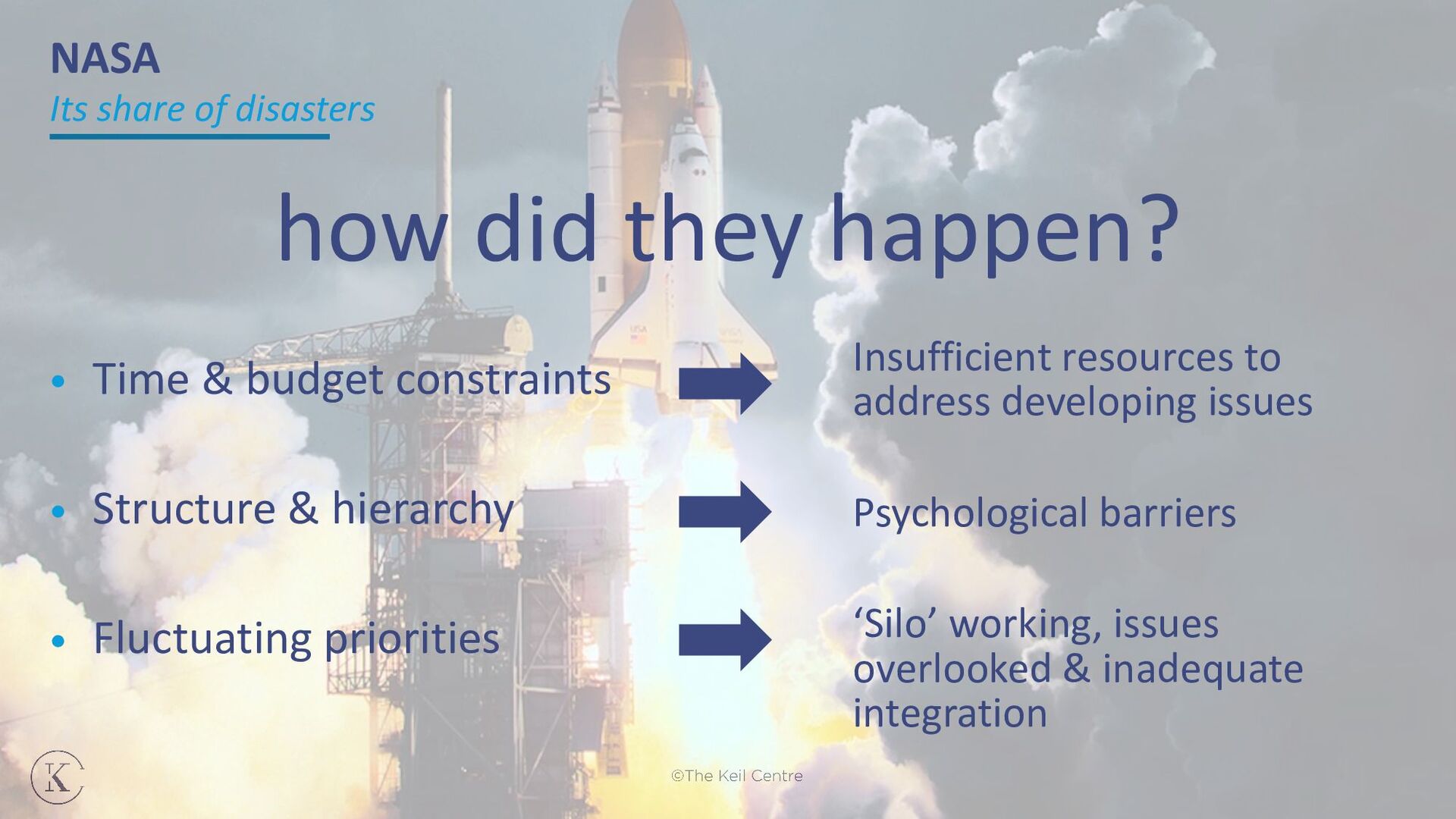
There is a problem and we need to stop and reassess. So there were time and budget constraints. Of course, everything, every project, every company has this. But instead of realising where the energy needed to go to, it was not channelled in the right direction.
It was channelled to other issues instead of when issues were raised, they weren't given the right resources to investigate it. They didn't give them the time and the visibility to investigate those problems. And the structure and hierarchy had become so authoritative that it had become incredibly difficult for people to raise issues and for those issues to be heard.
So people stopped raising them. And a lot of fluctuating priorities and shifting work issues causing that there wasn't enough integration of issues. So that the issues that were raised were not addressed properly. But you know what? They do an incredibly complex type of work, as do we.
We, in engineering, it is so complex. And actually, we get it right so often. Right? How come we don't have more failures out there? If we if you know, if humans are so fallible. But really, people are awesome. We humans actually are fantastic at taking in information in our environment.
We call it situational awareness. And when we have the right training, the right resources, and equipment, and systems, we can actually take in a fantastic amount of information to then analyse it, work out potential differences and problems and project what changes might happen if Sorry, what outcomes might happen if we make certain types of changes.
That situational awareness is a fantastic skill that we have, and we actually put in place little mitigation controls in our work every day to keep us on track. Right? But what we want to do is keep people in this awesome zone where they can think objectively and not sort of be crushed by stress and focus in too much.
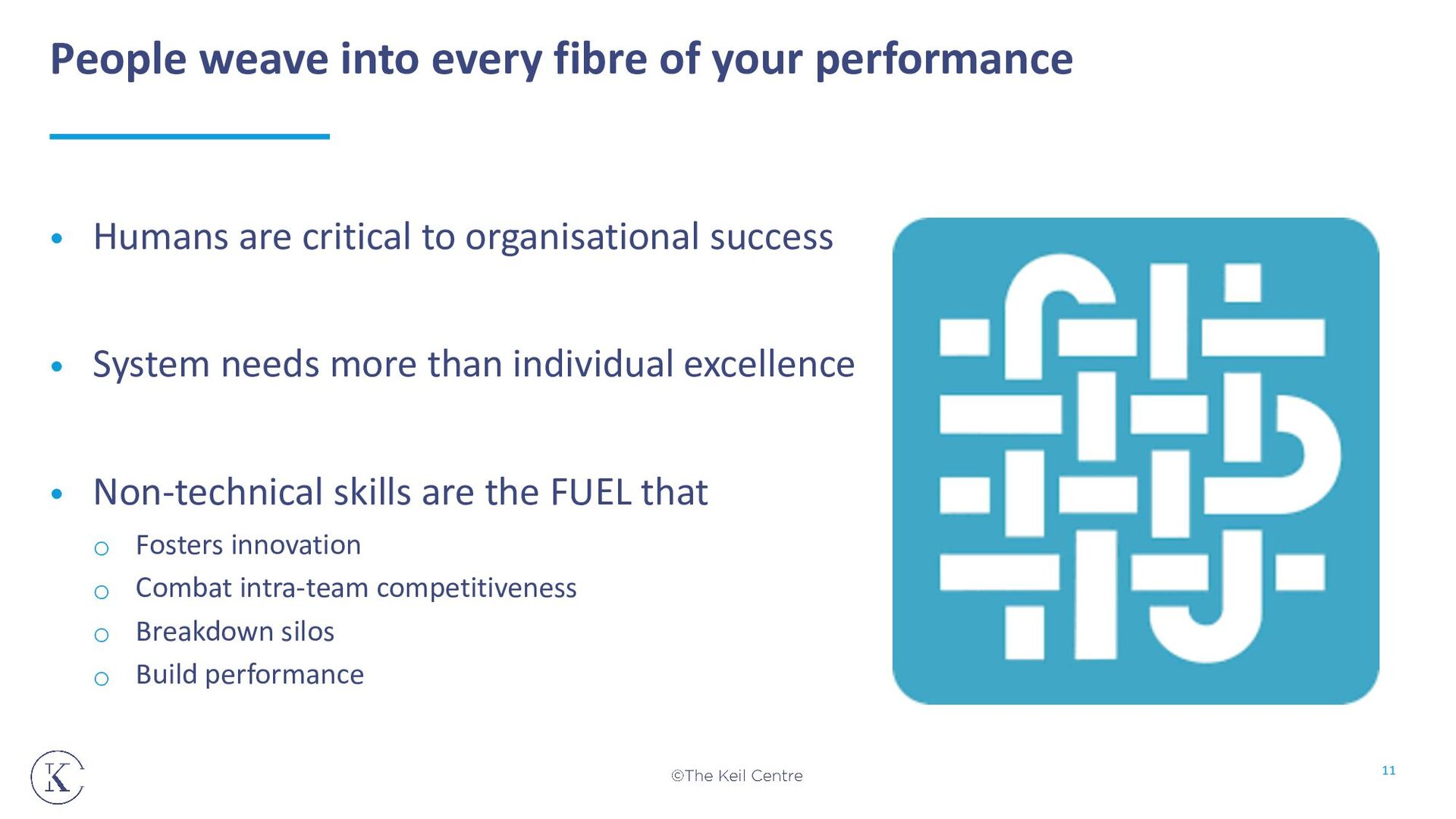
Because humans are critical to that organisational success, but we can't rely on individual excellence. We need to incorporate the non technical skills with the technical skills because it will be the fuel that drives those innovation behaviours. Right? That drives that motivation to be involved in the process.
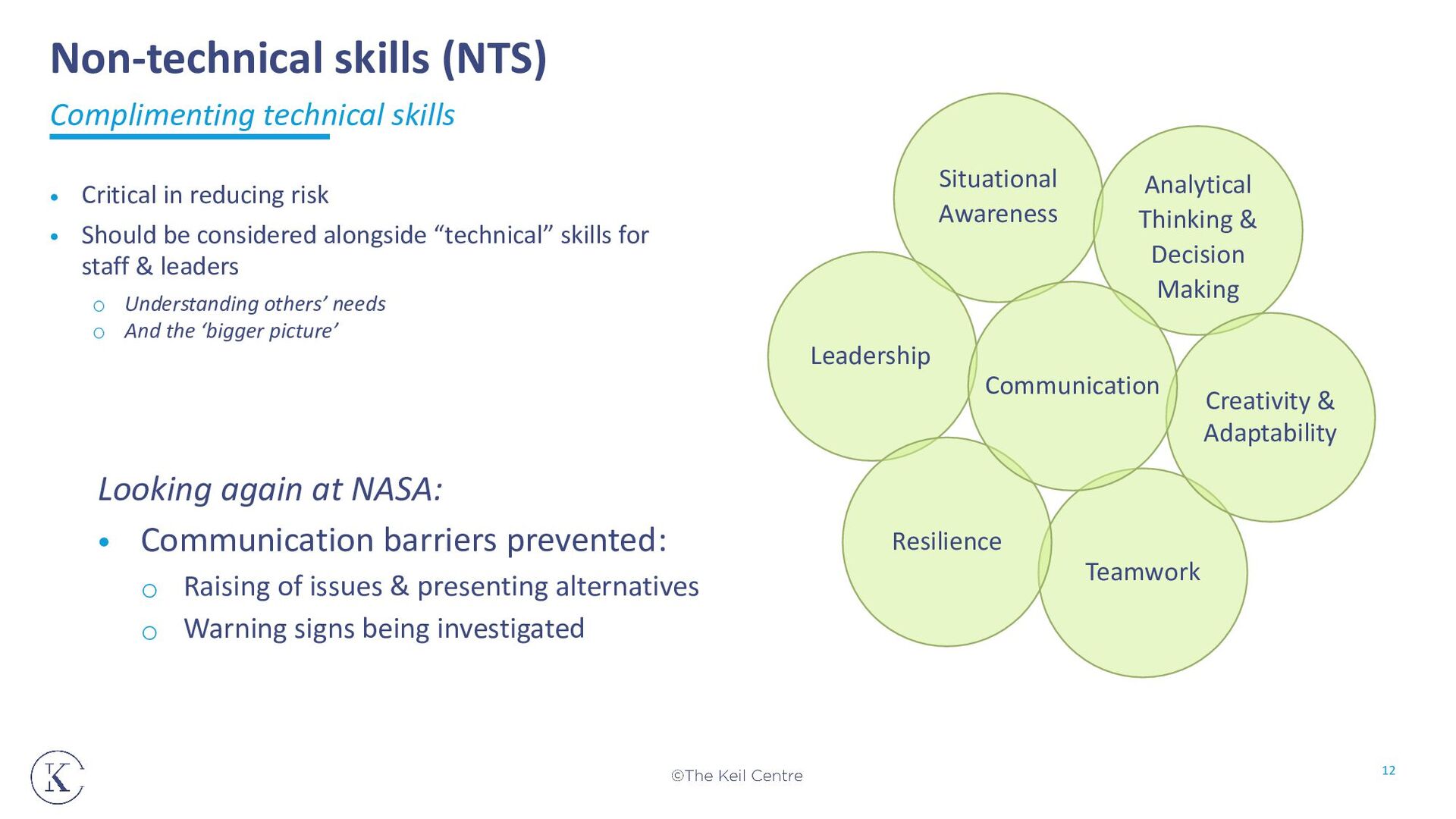
And here are some of the non technical skills that are absolutely key and acknowledge as being critical in reducing risk in all industries. So I've already talked about the situational awareness. And if we have good quality situational awareness, which is bringing in people, realising the resources we have available to us to bring in the information we need to make a good analytical assessment and make the right decisions.
And that's what we want to set people up for in our organisations. We need to be creative and have adaptability, and this links with resilience. Because this is about recognising problems but not getting bogged down in them. Understanding them and seeing opportunity within them.
And we need teamwork so that and communication so that all these ideas can come together. We can bring those right people together so that that team can continue along the vision. But and leadership. Now leadership is not about telling people how to get to where you want to go.
Leadership is about having a vision. Right? An idea of where you're going. Finding great people but then listening to them. Asking them what they need. You need to find out what they need to get you to that point. And iteratively adapt with them along the way because their resource needs and knowledge needs will shift in the and to keep them on track, you need to understand what resources they need to get you there.
And looking again at NASA, were the communication barriers and that those status differences in the authority that prevented the raising of issues. And people were not listened to so they didn't bring up good alternative ideas. So you can see the big impact that that leadership has on coming up with great solutions within the team.
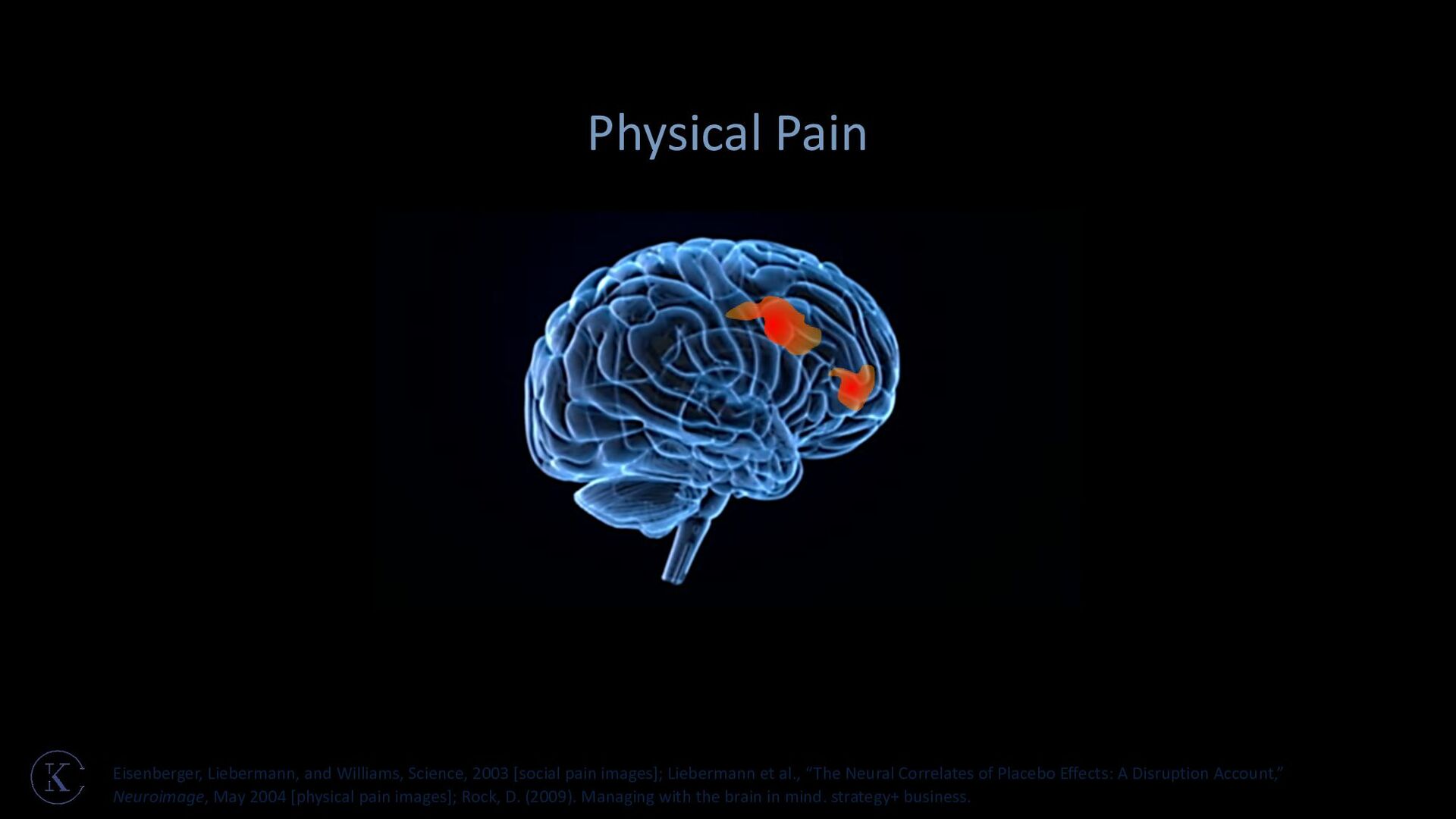
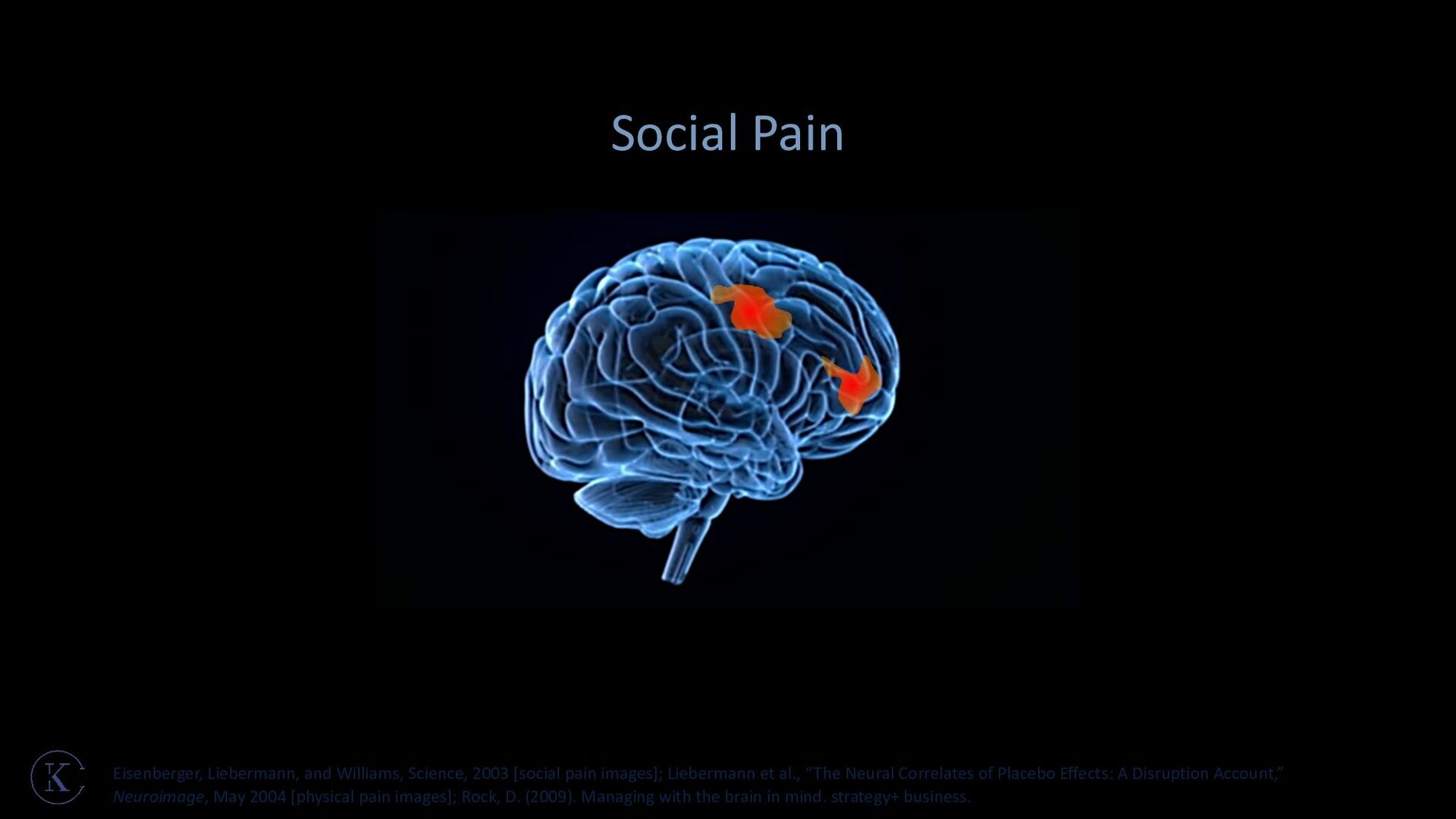
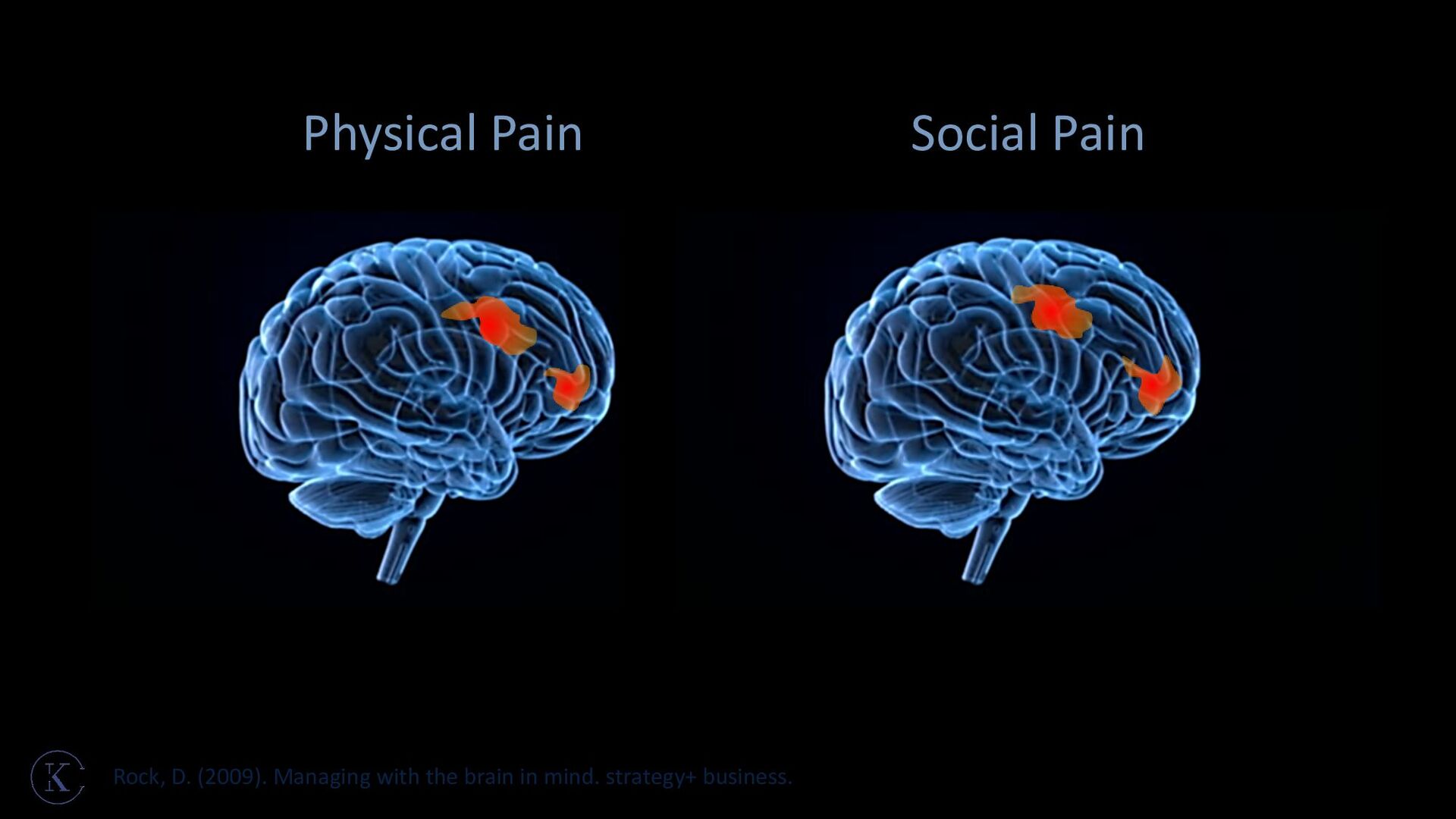
So there's a little bit of fun to consider how we humans need to belong in our work environment. So there are some parts of the brain that react when we experience physical pain. They actually are similar in our brain when we experience social pain.
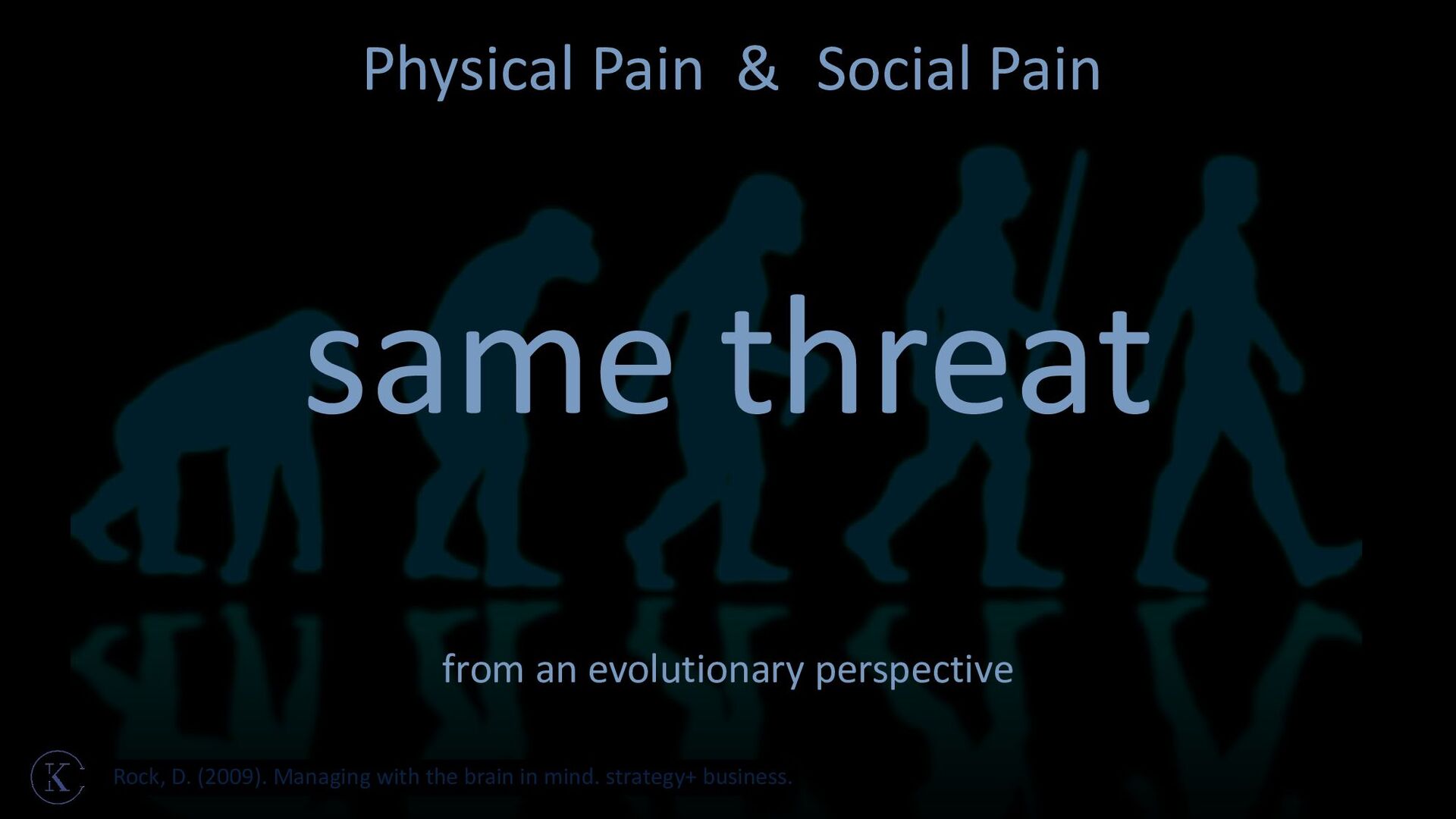
Now social pain is things like being ostracized, being told off by someone in charge, being left out of a group. And this is very similar. And the reason is because from an evolutionary standpoint, it's actually a similar threat to us as humans. Now, of course, we were more successful, more likely to survive and reproduce in our evolutionary past if we were able to sense a physical threat and get out of there.
Right? Put controls in place, protect our family. And so we were more successful if we were good at that. So our brains evolved to be good at sensing physical threat and setting in place the cues to know when a potential physical threat was coming.
For social threats, it was the same. Because socially, we humans have always needed to stay protected within a tribe. Because those that were put out or left out or ostracized could die in the cold. So actually, our brains experience bad social engagements, or we observe them in other people when someone gets told off or in trouble or loses their job.
And we put in place We say, what happened in the lead up to that? I'm going to put in place little cues in my memory to be vigilant for that, so I can protect myself from that risk. Because I need to be valuable in that social network.
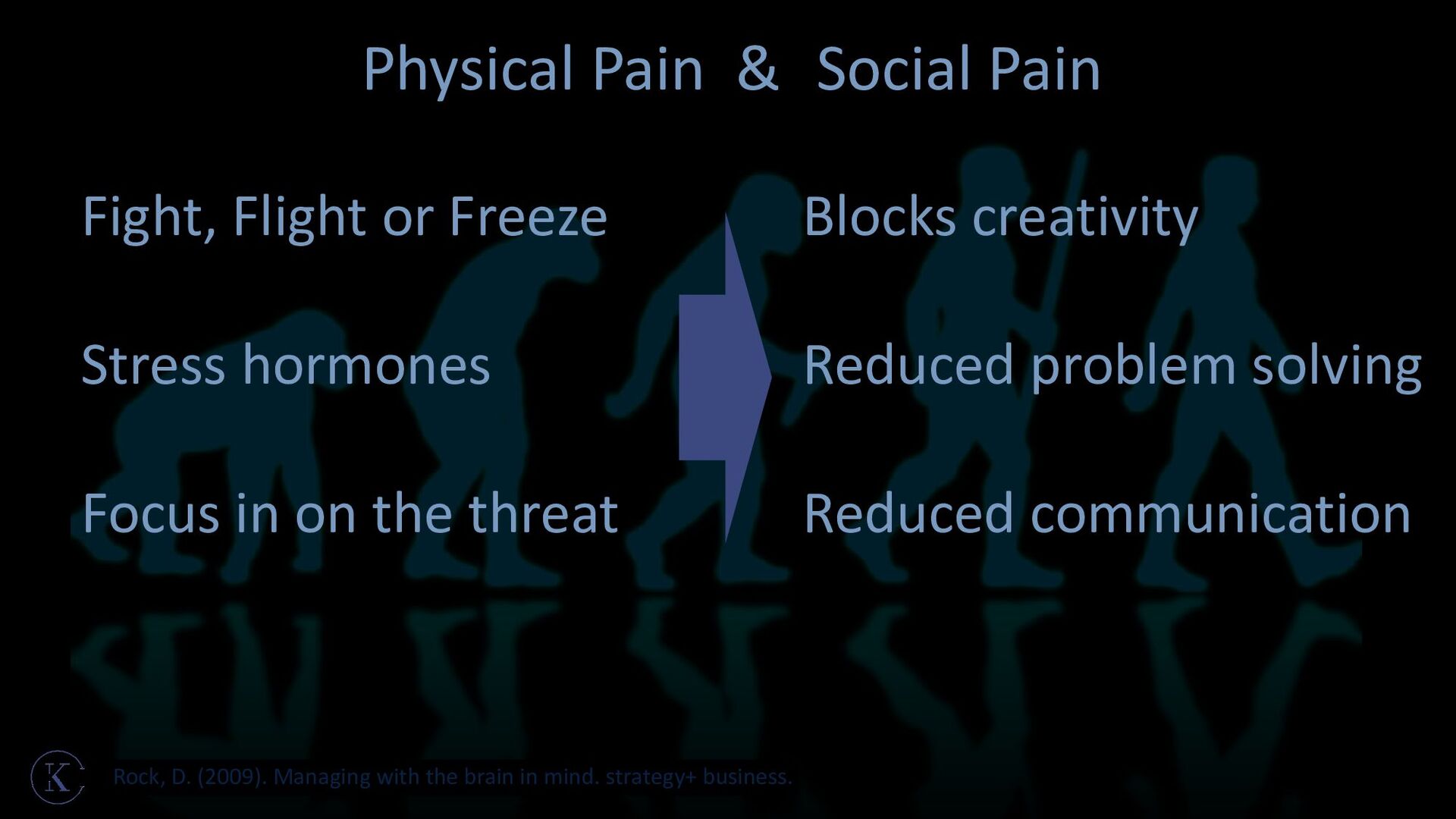
And when that's your workplace, it's incredibly important to your survival. So I find this very interesting because I would see people not following the right behaviors because they were overwhelmed by the threat of the social impact to them in their work conditions. What happens is our brain goes to this fight, flight or freeze.
We may sense that someone's starting to criticize our work, we may start to defend it and say we're right, but we stopped listening to anybody else. We may protect our work fiercely, which is not helpful for collaboration and integration. Or we may say nothing and try and hide any problems that we're having because we think that that might help us not get in trouble.
What happens in the brain is it releases stress hormones so that we can focus in on the threat, but it causes tunnel vision. And we stop considering the bigger picture. We're no longer thinking, how am I is my work aligning with the vision?
And actually, does the company need me to speak up about this problem so we can deal with it now? So it blocks creativity. We lose that innovation. We lose that motivation that we're looking for when people are experiencing this social threat. Which is why we keep hearing about inclusivity and diversity in the talks here.
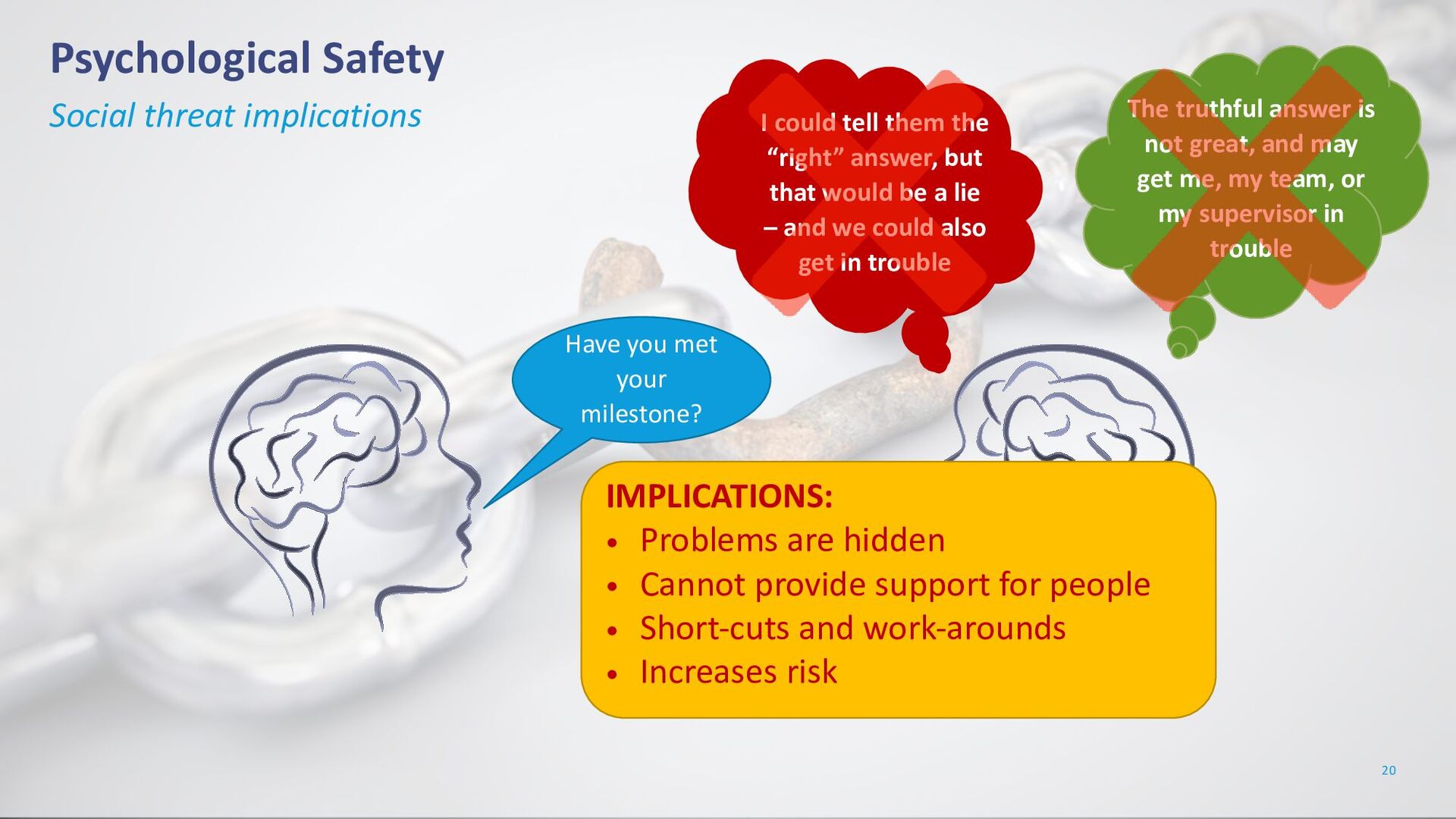
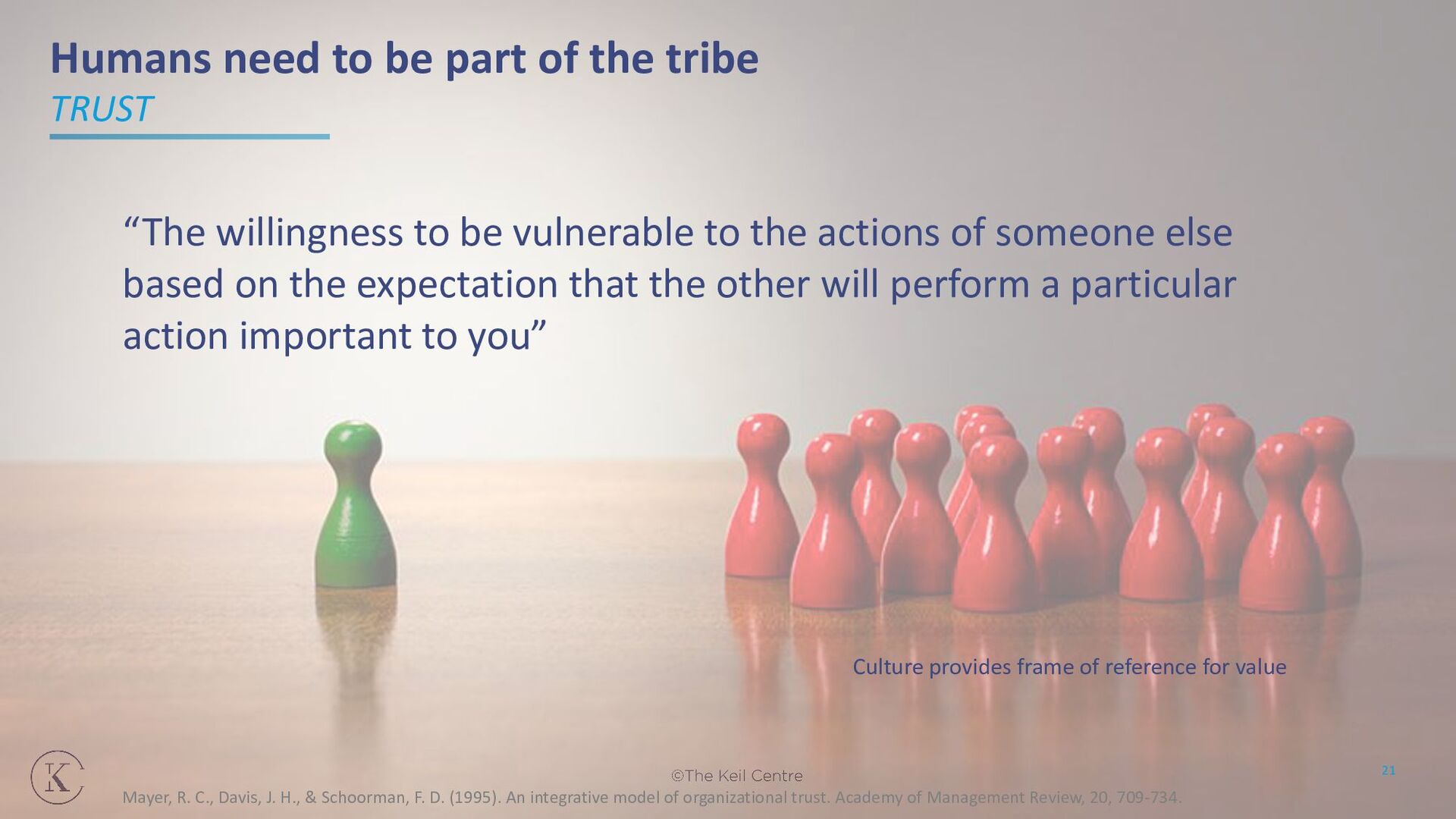
So here's a small example. Say we've got somebody asking another person about their milestone. Say this is you here on the right. Well, we're not on track. The truthful answer may get me in trouble because I've seen other people get in trouble when they're running behind.
So it could get me or my team or my supervisors. So you know what? I don't want to give that answer. I don't want to say that. I could tell them what they want to hear, That would be a lie and if they actually looked into it, would realise, yeah, I'm not ready.
We're not going to deliver on time. So I don't want to say that either. So we often get to silence. But when you think about it, from a company, from a team, from a leadership point of view, you need people to say the green one.
Right? We need to know if they're running behind. We need the truth. We need to know when people are struggling. Because what what if we don't know this stuff? Problems are hidden. We can't actually deal with a technical problem or a schedule problem or a reputation threat if people don't speak up about the things that are going on for them.
And we can't provide that support. You know, if they say, oh look, I'm running behind. I don't think I can make the milestone. If you found out about that too late, you can't You know, you may have been able to shift resources and give them that extra support they needed.
But they were too afraid to speak up. And you're definitely going to get shortcuts and workarounds if people are afraid to speak up and that increases the likelihood of risk because things are not being done the way they were planned. So what we need is for people to feel that it is okay to speak up, to say I've got a problem.
Right? We need the group of red here to be that culture where it is normal, and that's the behaviors that we're seeing around us. We need there to be that trust. So trust is the willingness to be vulnerable to the actions of someone else based on the expectation that the other will perform a particular action important to you.
Alright. So willingness to be vulnerable, putting your hand up, saying you've got a problem, saying you're going to be late. Many other things. I think I found a bug. Whatever it might be, that's being willing to be vulnerable. And we need people to do that to get the truth out.
But it relies on the response they expect to get. Right? It hasn't happened yet. But you've got to create a normal situation in the culture that makes it normal for when that hand goes up for people to not push it down with anything negative.
It's got to be supported even if it is a stupid question because sometimes, as you know, the stupid questions point out the unknowns that are out there or the gaps or the problems that we need to actually maybe look into. So we need to create this red environment that actually normalises that it's okay to speak up.
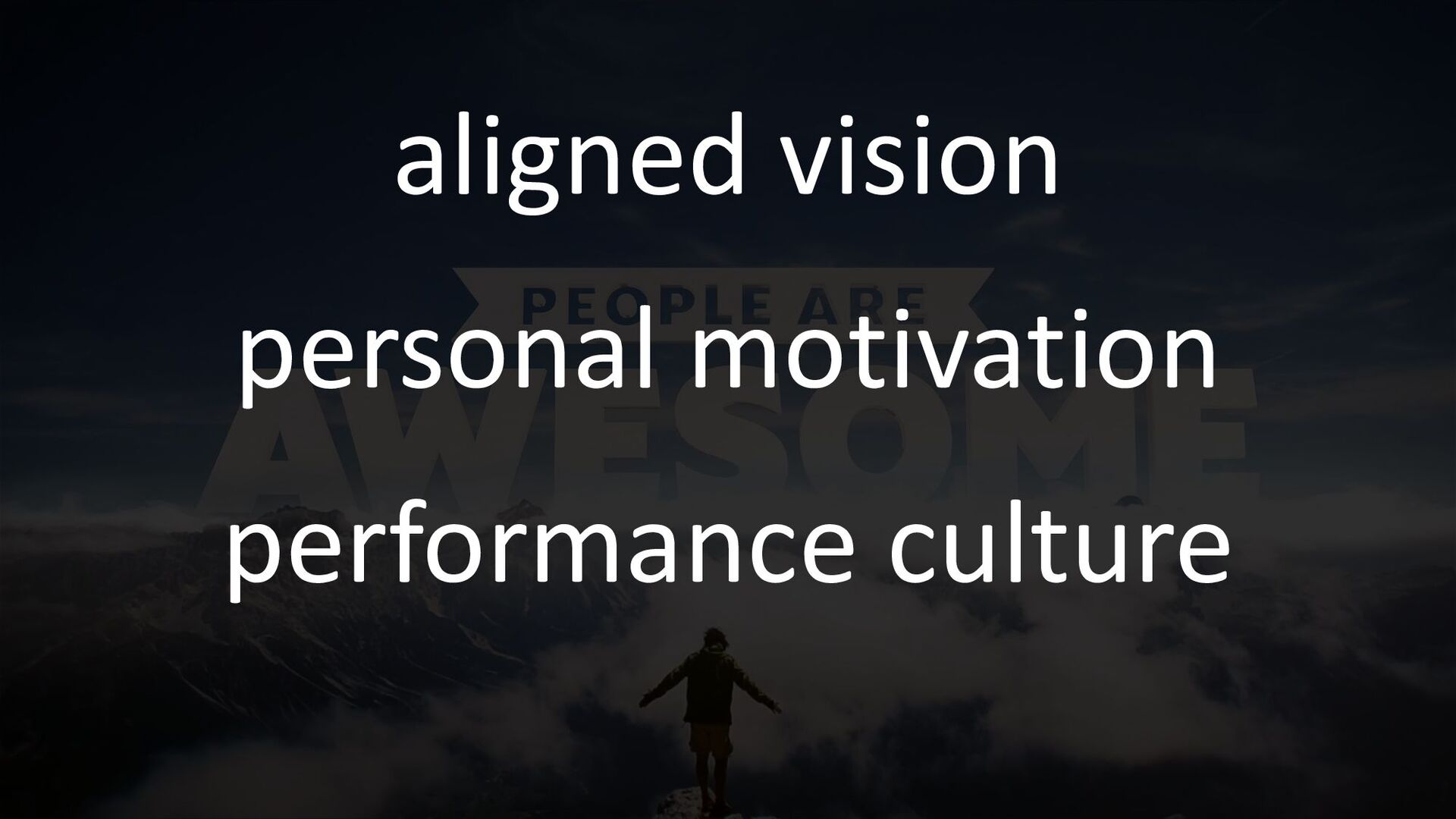
So that culture will provide you that frame of reference. So we want to keep our people in that awesome performance comfort zone. So we can get people's performance aligned with the vision, their personal motivation to deliver our performance culture. So, the answer. What we want to do is support a low social threat environment in our teams.
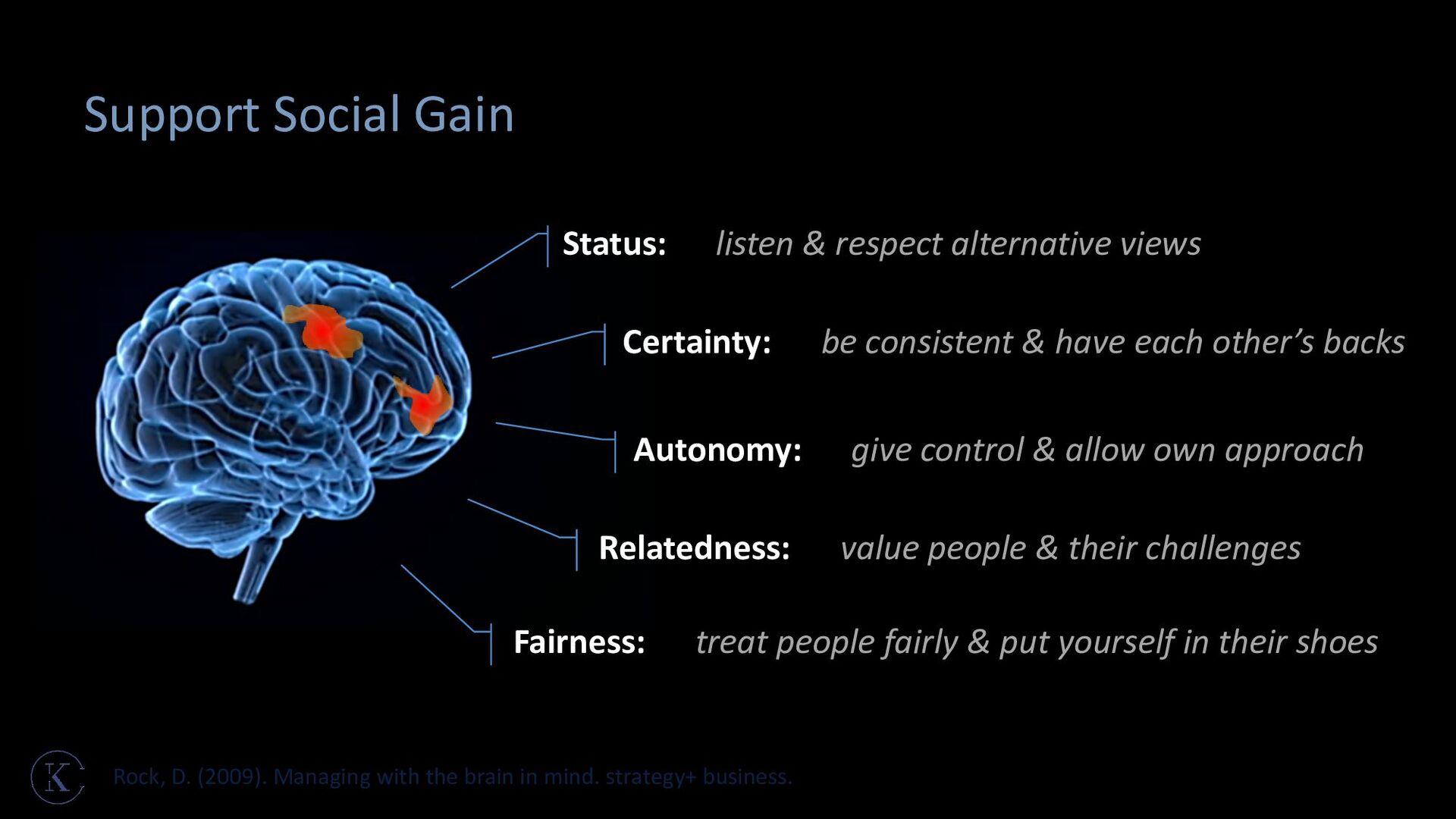
Now, this is looking at status. Okay, we've got what they call scarf in psychology. It's just five areas that really trigger the social threat in humans. In different ways, but most of these will have an effect. Status. Right? So whenever there is an authoritative difference between people, there is very likely going to be a threat that they're on edge just in case they do something wrong because there is a risk to their position in the company or in their success of delivering that outcome that they're looking for.
Right? It might be a promotion or even just keeping their job. We need to demonstrate leaders are absolutely key in this. But this is about finding ways to lower the social gap. I'm sorry, the status gap between people, and listen and respect people's views.
Certainty. We humans, when we know where we're going with our work, we feel very comfortable because we've kind of worked out how we're going to deliver that. But then things change, and we feel uncertain about things, and that throws us into a spin.
Because all of a sudden, you might have new priorities, a different number of resources, someone leaves the team, Or you might have a timeline shift. All of a sudden you think, how am I going to deliver? Right? So there's a stressor for every everyone trying to get to that point.
So we want to create, when there are changes, understand how are we going to support people through this situation. How are we going to help them with their resilience and problem solving to help bring them back on track? And that might just be about giving them time to brainstorm and digest and not just expecting them to rush on.
Autonomy, this has been mentioned a few times today. It's not about handing over control ***** nilly. It's about understanding the part that people have to play. So that is saying, well, we're going to get here but actually, I would like your input in how you're going to deliver that part.
It demonstrates their value within the system. Whenever we feel like we're backed into a corner, that's always very stressful. Relatedness is absolutely about helping people feel belonging within their work environment. And the fairness is about treating people fairly. We always get angry if we feel like things are being if we're not being treated fairly.
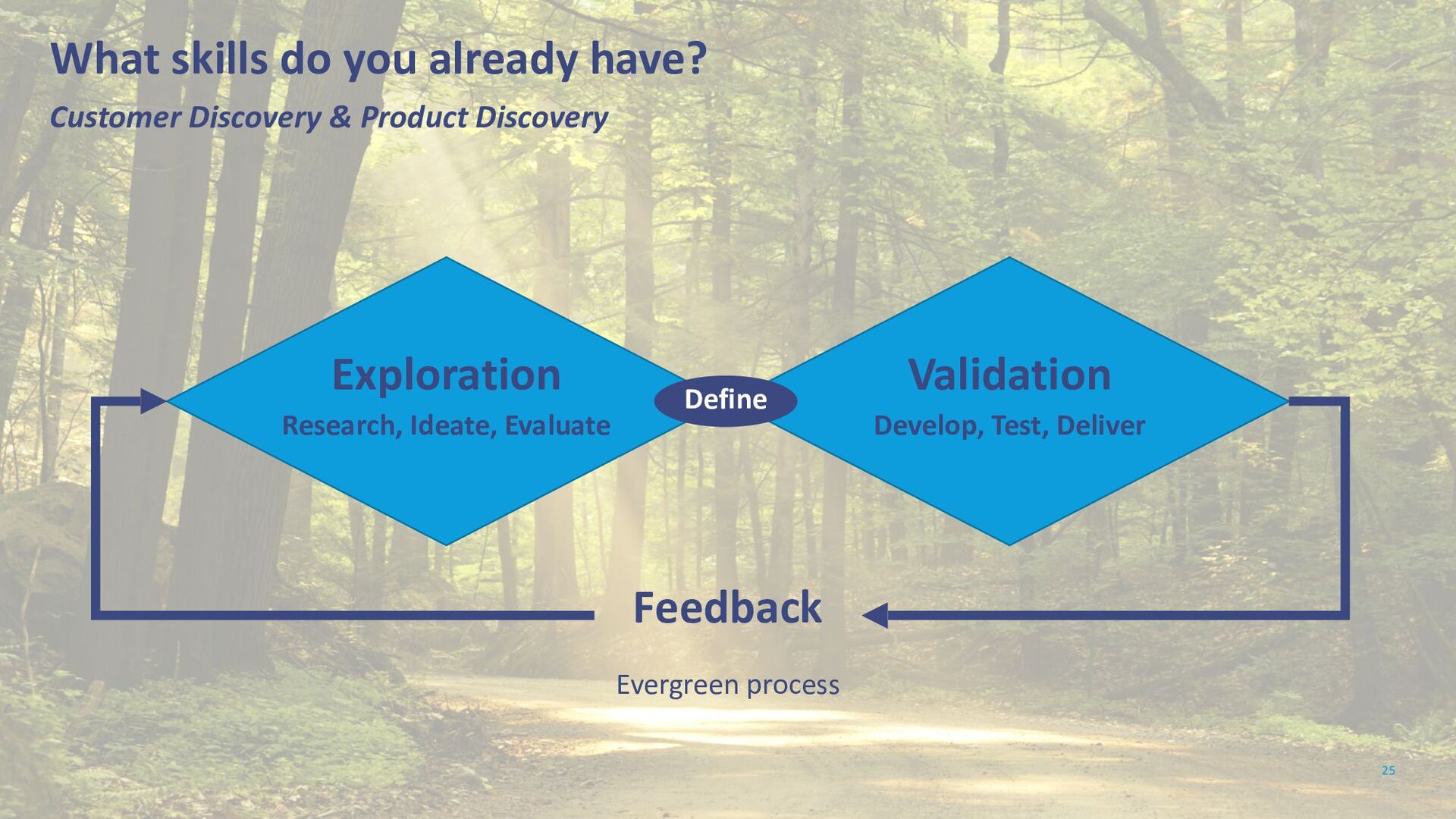
So the cool thing is in the software industry, you have a lot of skills that you can already use to do cultural understanding and start to build that positive growth within your culture. You do this for customers discovery and product discovery. Right? These double diamond exploration, ideation and evaluating ideas.
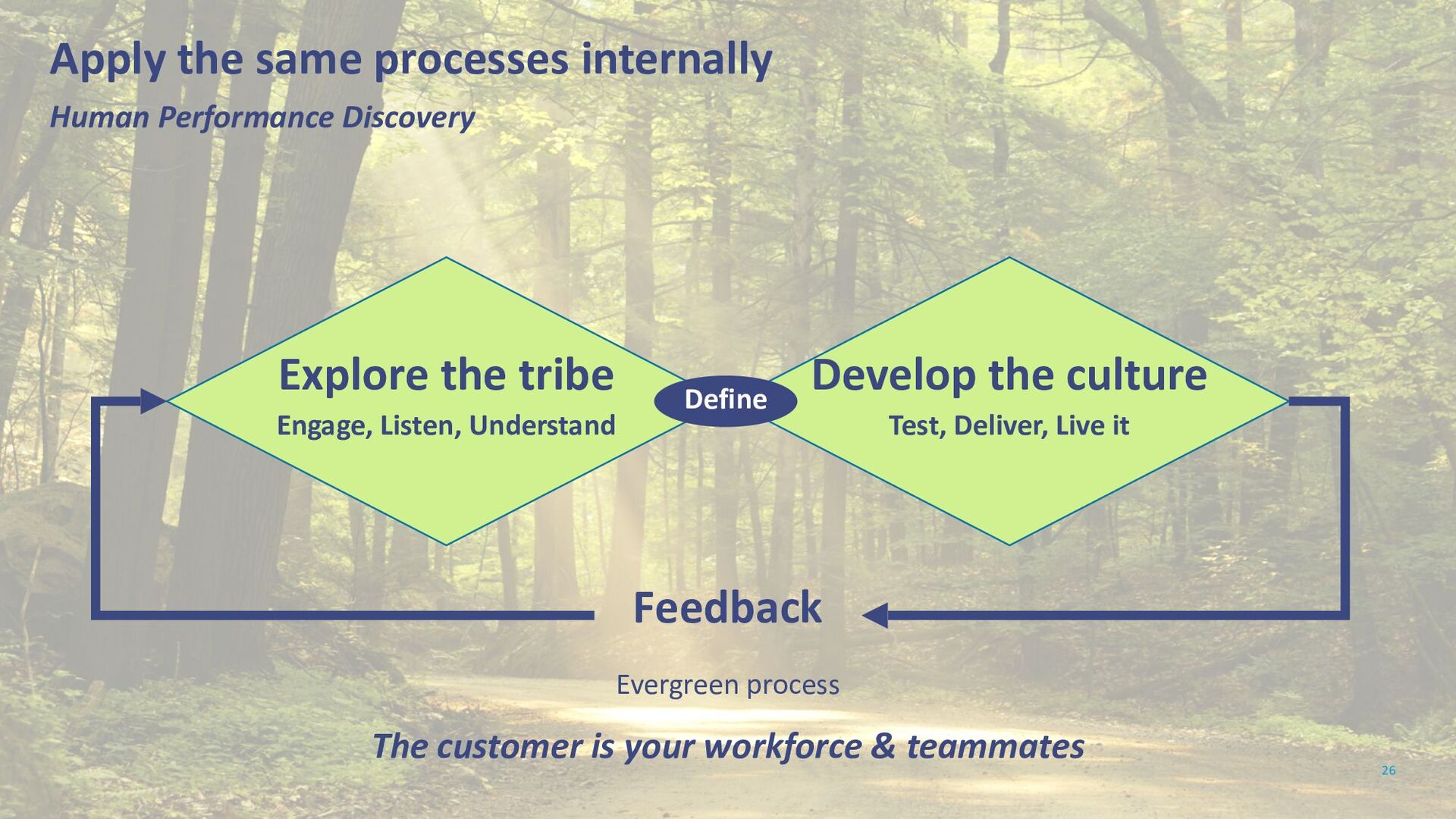
Right? Defining, validating. And then you feed back that process, right? It's never ever It's never finished. It's an evergreen process. Well, in human performance and human factors, we do the same thing. That's the thing. I was looking through all the literature and go, hey, we've got the same process for this.
This is so cool. What we do is we understand the needs of the tribe. We ask them what are the behaviours that you see frequently? And I do this with many companies. I say, how frequently do you see these behaviours in everybody, but also in the leadership teams and the managers?
How often do you see these? And where would be the opportunities for growth? And what are the barriers for them happening at the moment? And what would it take to address those barriers? Because that's where you build the actions to actually deliver the outcomes and the changes to the system that you need.
And you must develop these with the people and iterate and improve it. And the great news is the customer isn't out there difficult to talk to. They're your workforce and your teams. And everybody can work with this to start understanding the behaviours you see and find out what the behaviours people need to help them feel like it's safe to put up their hand and say I've got a problem.
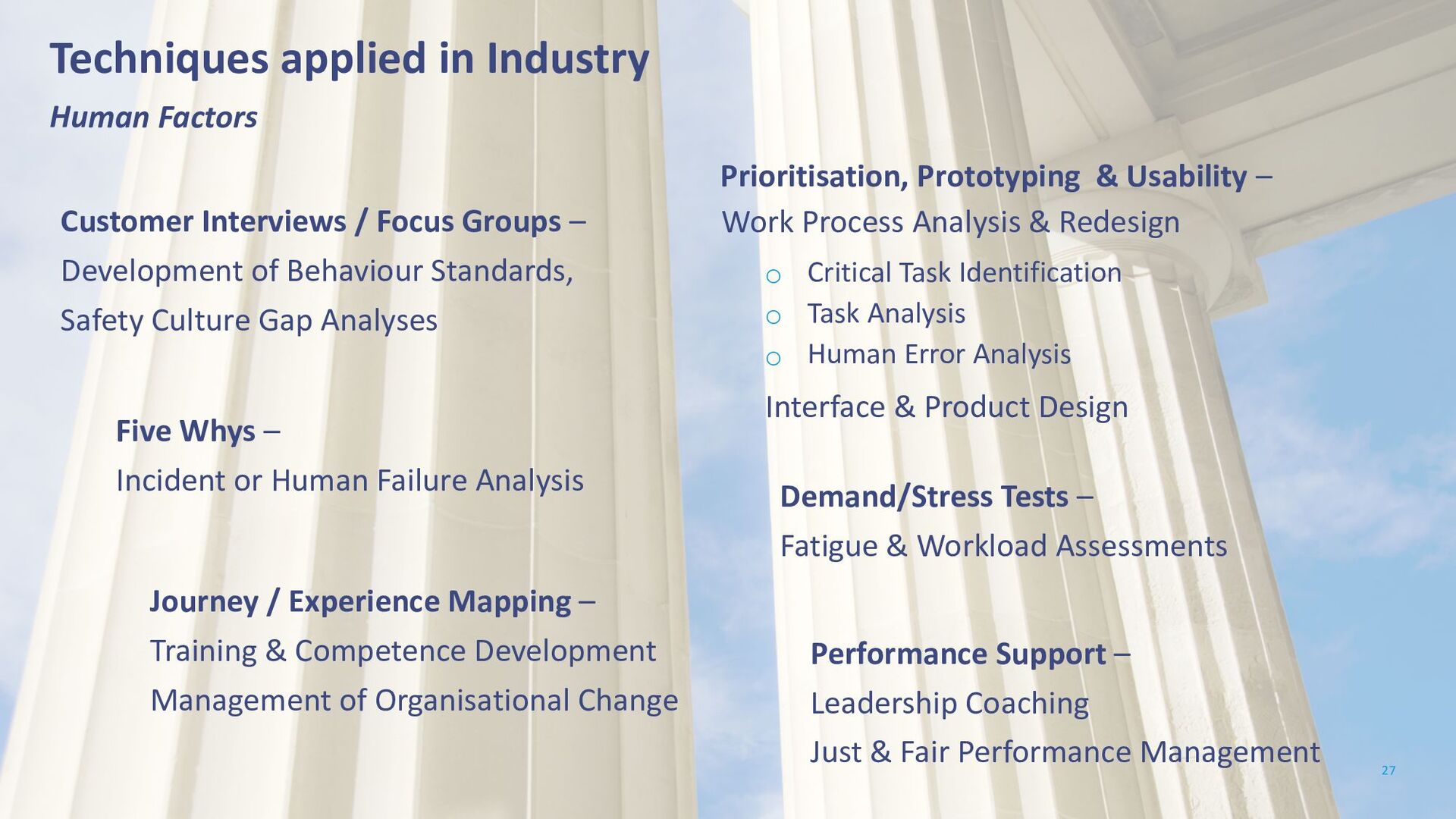
Or I've got a stupid question but maybe it's a gap that we have. So this is just sort of a comparison of the different techniques that are used in software, but we use in human factors. It's just that our user is the workforce, Is each person in your team.
We look at understanding the behaviours and the safety culture gaps. We look at ways to rebuild that. We look and over here we've got prioritisation, prototyping and usability. We understand that we help companies understand their safe well, critical, critical task. We identify that, take a risk based approach, understand where errors can occur along those path lines.
And then we look at, well, what does your team need to reduce the likelihood of those errors? And you can start this already. You can use a company like the Keele Centre to support you. But actually, someone who's worked in a start up, that's you know, it can be expensive and we don't always have a lot of funds.
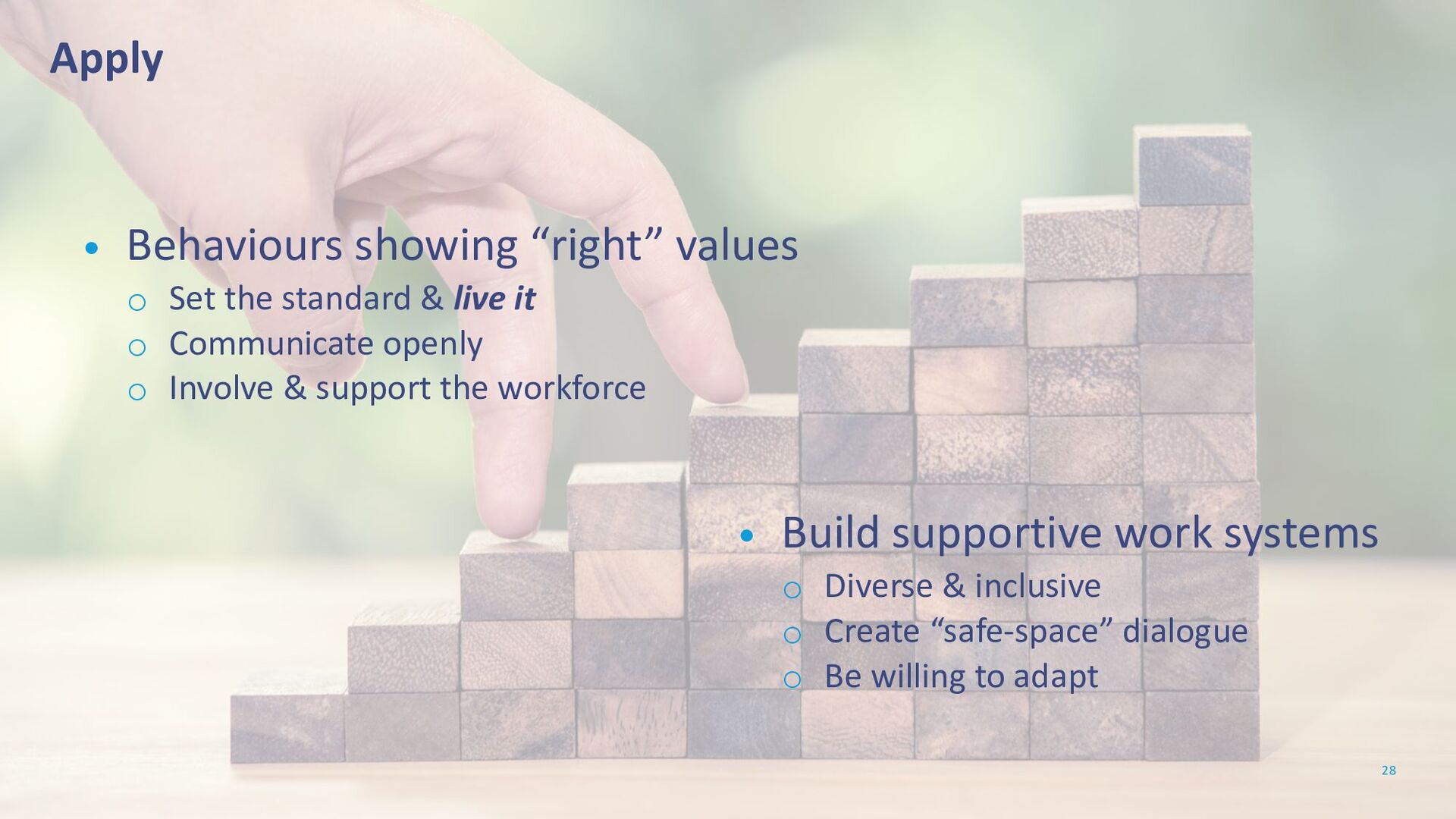
So I understand you can actually start using your own processes already. But it really is about engaging with the people on your team. So focusing in on behaviours. Understanding what the behaviours need from managers, executives and what procedures need to be visible to the whole company.
Set those standards and then live it. Communicate openly and transparently about this and involve the workforce at every level. And then with that, develop the work systems that are going to support it to maintain it. And integrate the behaviours you need, check the behaviours you need are happening and keeping that live.
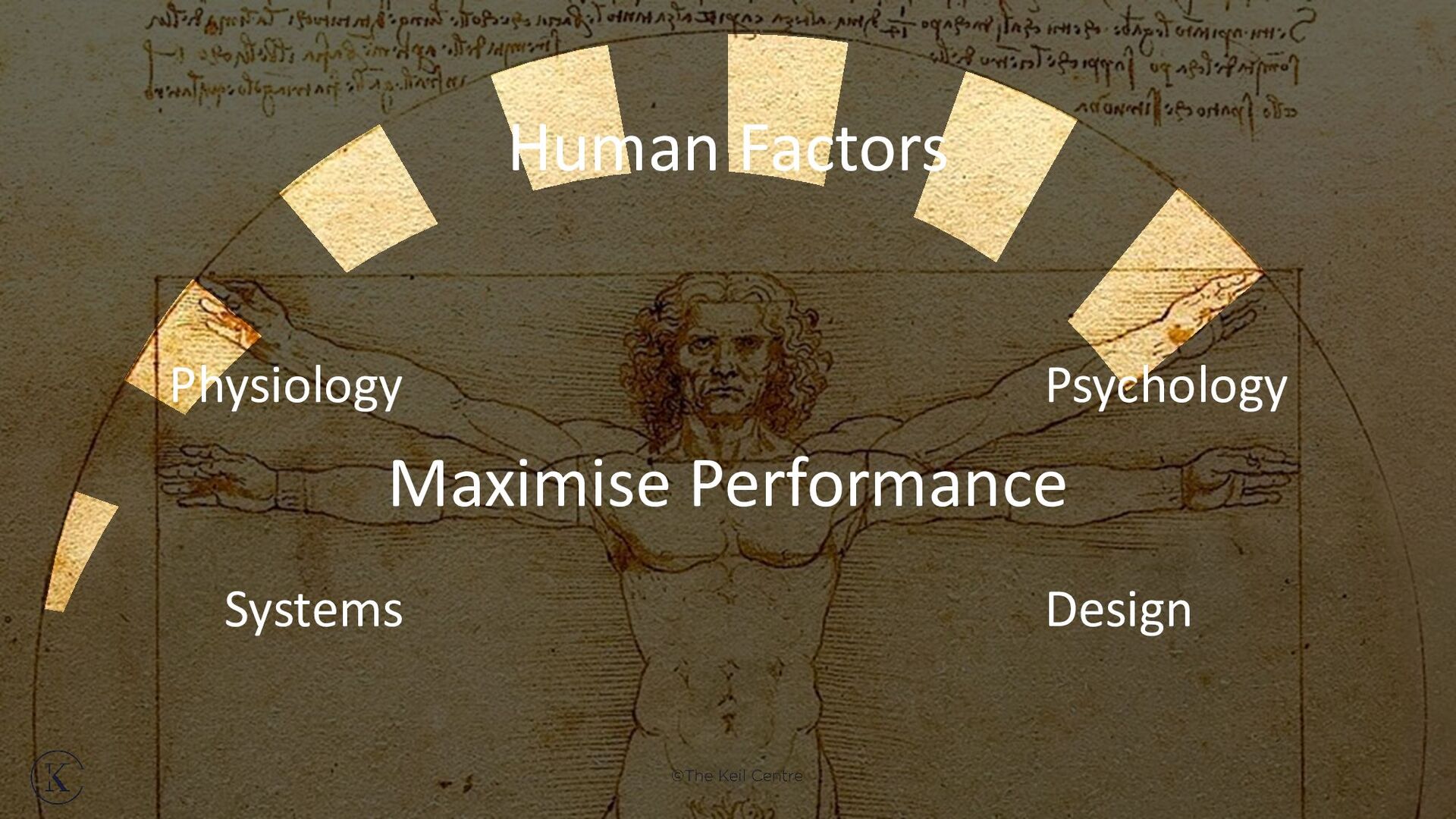
And that will take the culture along that pathway because they'll start to see that actually the behaviours are supporting the behaviours they want from me. So that's the approach we take in human factors. We use physiology, psychology to build the design and the systems to maximise the performance of the organisation.
Thank you.