
Finbarr Taylor charts his journey from Glasgow to California - co-founding Shogun, going through Y Combinator, and raising $115M from tier-one funds like Accel and Insight Partners. He shares hard-won lessons on building and scaling a global SaaS business, the realities of raising large rounds, and what he learned leading the company as CEO for eight years.
← All talks 











Lead Turing Fest 2024
From Scotland to Silicon Valley: Raising $100m and Building a Global SaaS Business
Auto-generated transcript - may contain errors. Tap a timestamp to jump the video.
All right. Hey, everyone. I'm Finbar Taylor, CTO and cofounder of Shogun, a b to b SaaS company optimizing ecommerce storefronts. We've raised over one hundred million dollars and supported tens of thousands of customers, helping drive billions in sales annually. Today, I'll share some of my background, my entrepreneurial journey, some of the ups and downs, and lessons learned along the way.
I'm originally from Glasgow and graduated from Strathclyde University, like a few people here, with a computer science degree. I've always been obsessed with entrepreneurship and used to talk the ear of my uni friends with new business ideas. After graduating, I got a job working for Groupon as a software engineer and moved to the San Francisco Bay Area in October twenty eleven.
I immediately started to network like an absolute beast. I went to hackathons at every opportunity and attended a lot of start up events. Within a year, I had met the founders of Y Combinator, Airbnb, Stripe, Twitch, and tons of other great companies. I also saw talks by Mark Zuckerberg, Ron Conway, and many other famous Silicon Valley figures.
Here is an actual picture of my face at the time. It was amazing. I also had a job at Groupon. It was a really cool place to work, and I'm still friends with people I work with to this day. I was there the day of the Groupon IPO.
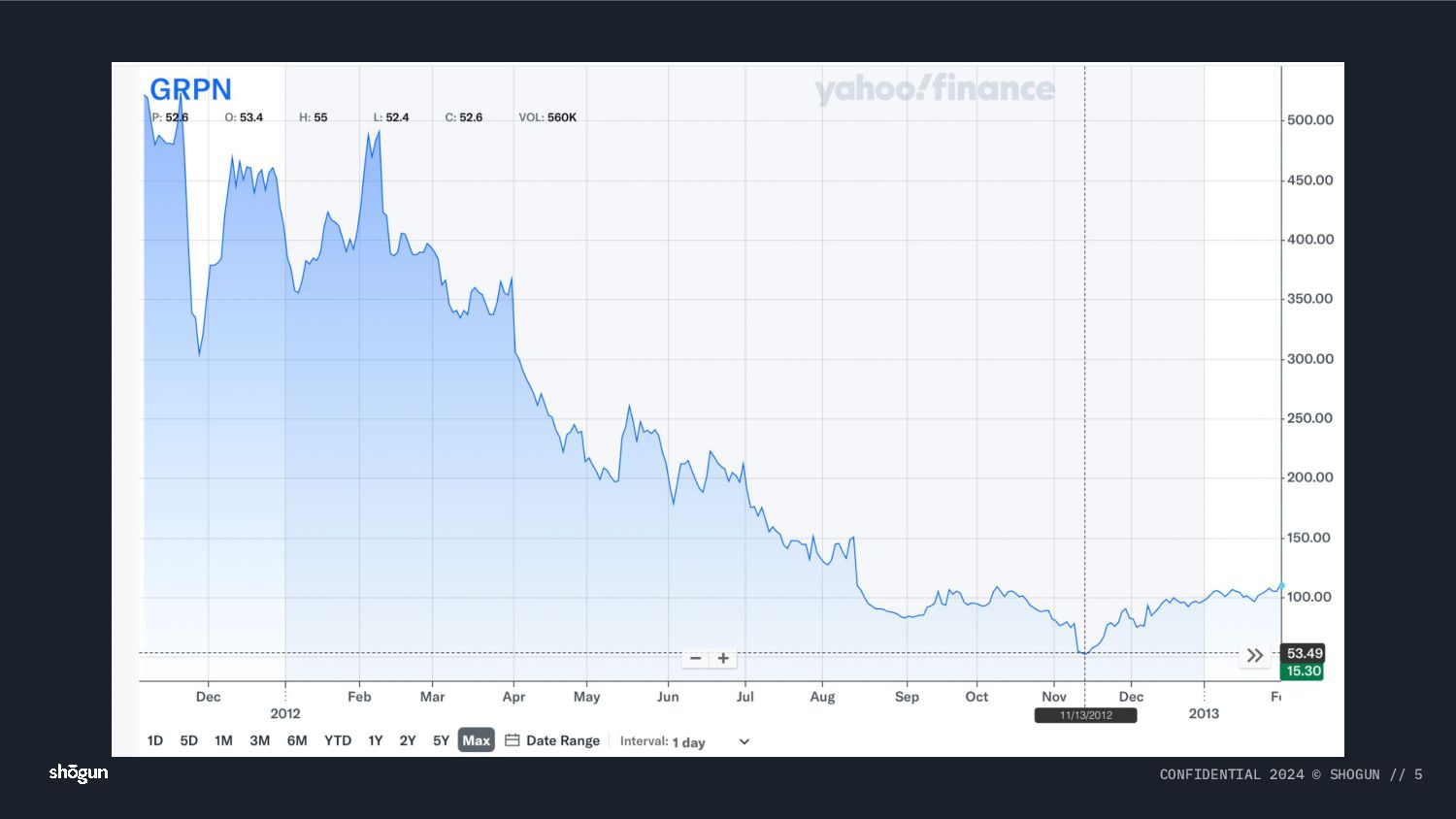
They had a huge cake. But within twelve months, Groupon stock plummeted ninety percent. Womp womp. I learned that startup hype cycles are a major thing, and a lot of investment money is thrown into things that crash and burn. The pace at Groupon also really frustrated me, and I realized lots of big companies move very slowly.
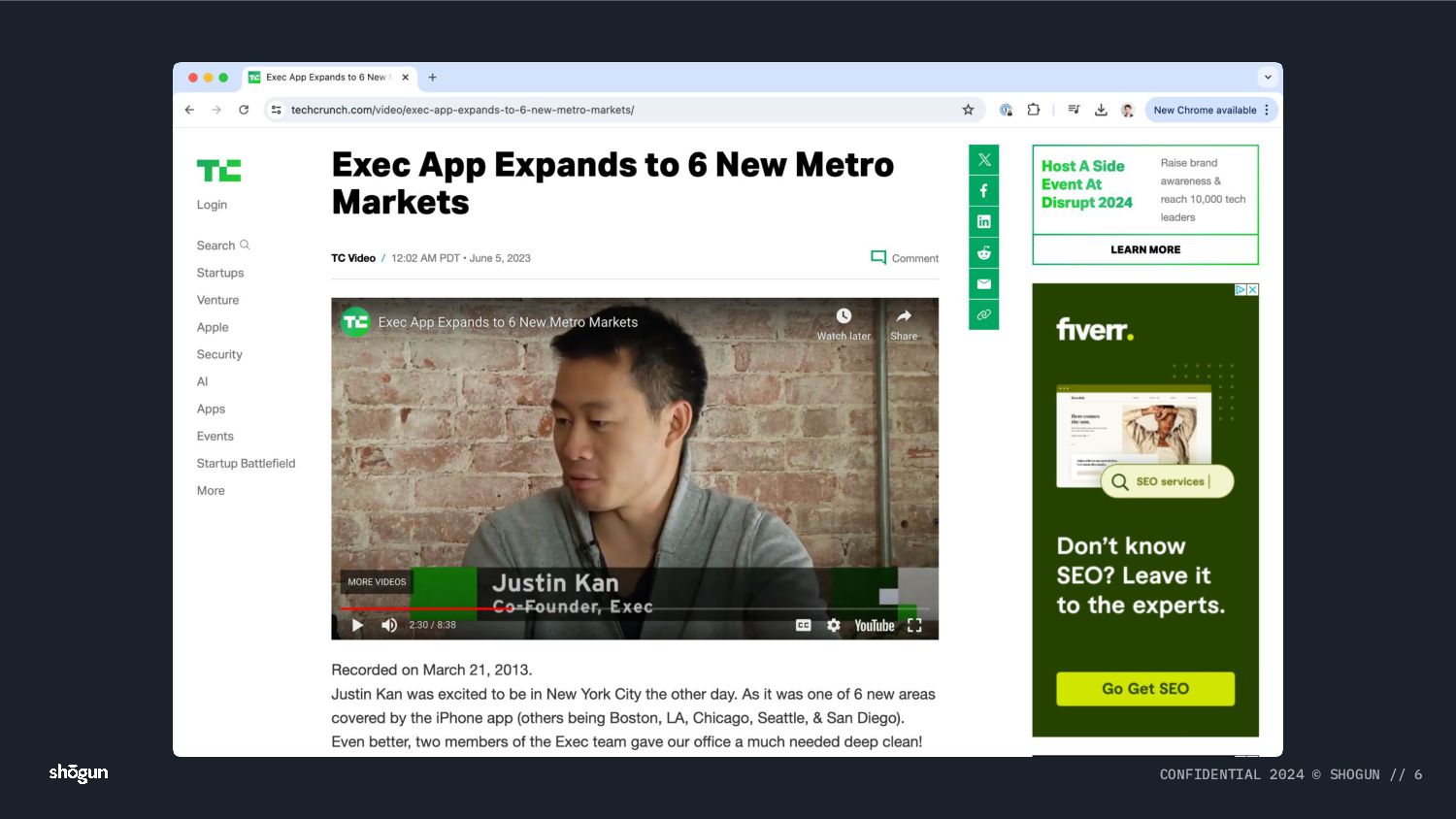
After Groupon, I joined a small YC startup called Exec. That was awesome. It was founded by Justin Can, one of the Twitch cofounders and a YC partner. Working for Exec with Justin was a major unlock for me. I met tons of people and learned so much from my experience there.
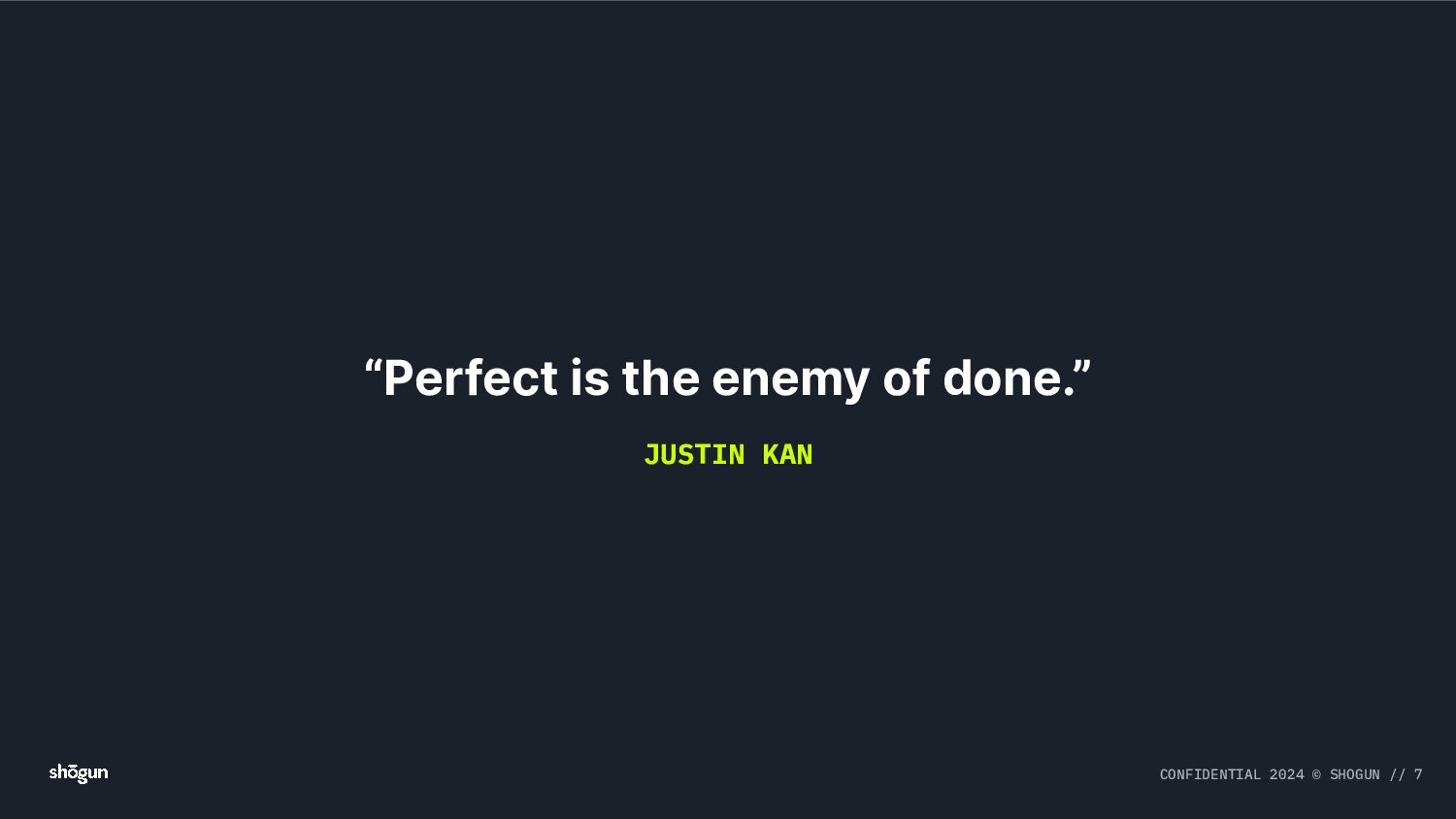
I learned that speed of iteration is the most important thing in any early stage company. Justin had this saying, perfect is the enemy of done, that has stuck with me ever since. You have to ship, ship, ship fast. You can get away with shipping janky stuff quickly for a lot longer than you think.
The big lesson here is that working for an early stage startup is a great on ramp to starting your own company. For anyone here thinking about starting your own startup, I'd recommend joining one first if you get the opportunity. In twenty thirteen, I left Exec to start a company with one of my coworkers, Karen Cheng.
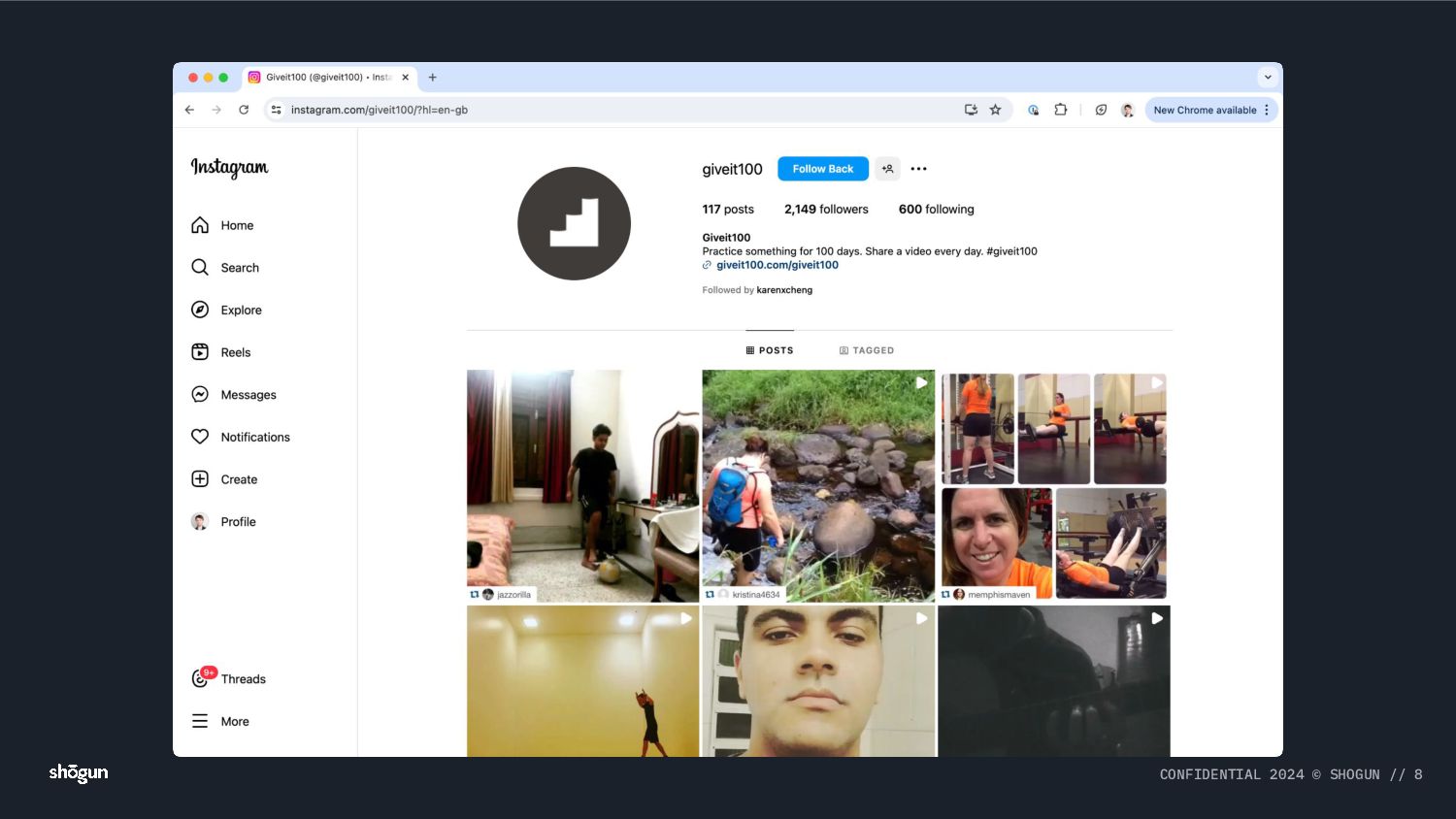
We built a platform called Give It one hundred, where you can post videos of yourself practicing skills every day. We got one hundred thousand people to sign up, and we had tens of millions of video views. We also got rejected from YC several times along the way.
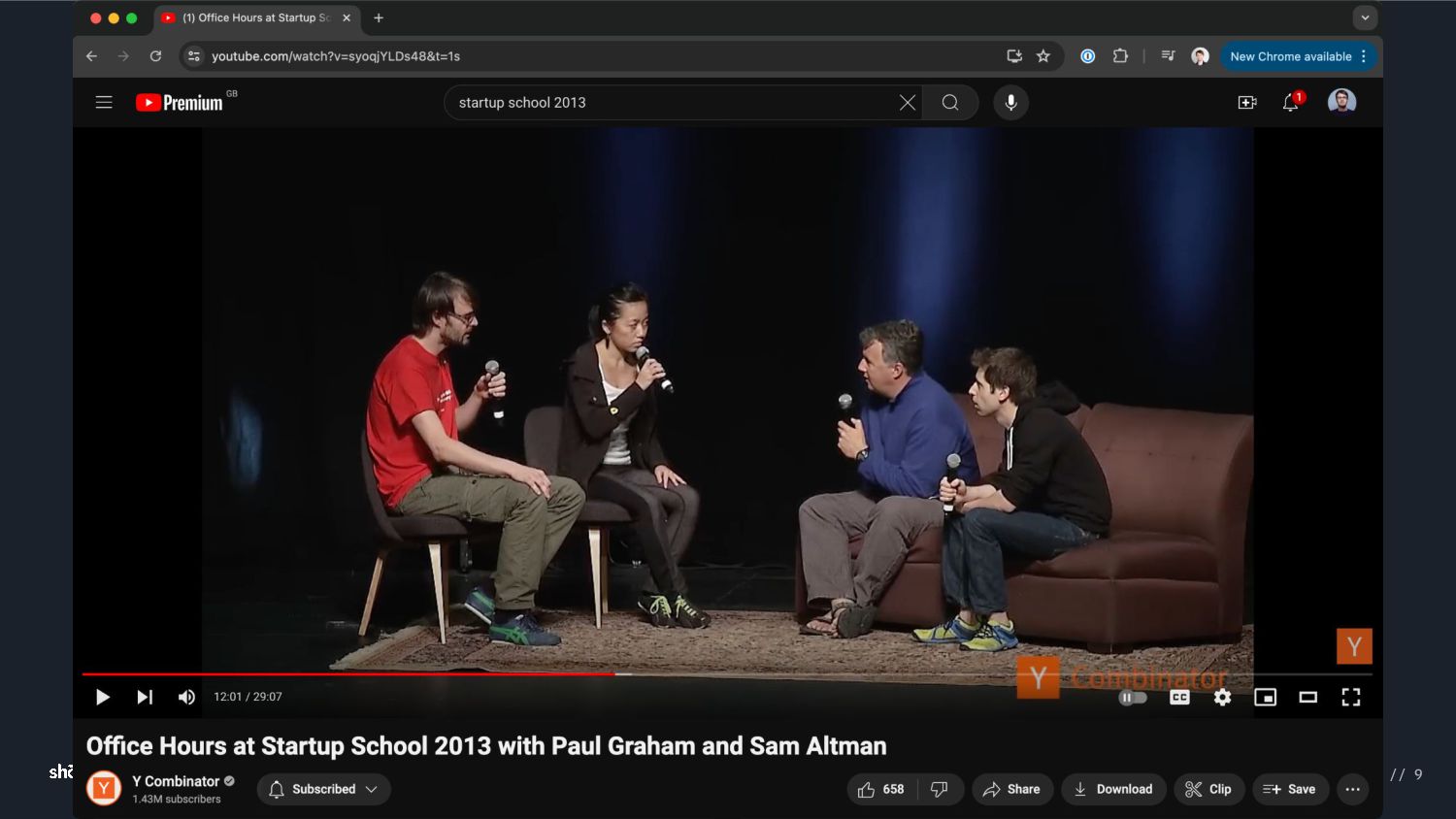
In fact, there's actually a video of Karen and I at YC's Startup School twenty thirteen pitching Give It one hundred to Paul Graham and Sam Altman on stage. That was nerve wracking. It was in a huge auditorium with thousands of people watching. We ended up getting into five hundred startups and raising about seventy five thousand dollars, but we found that most people quit their hobbies and we couldn't reliably make money with the business.
My biggest learning working on that company was that something that's growing quickly but doesn't feel like a real business probably isn't a real business. It's growing fast, so we'll figure out how to make money later. It's completely magical thinking, and it doesn't work that way.
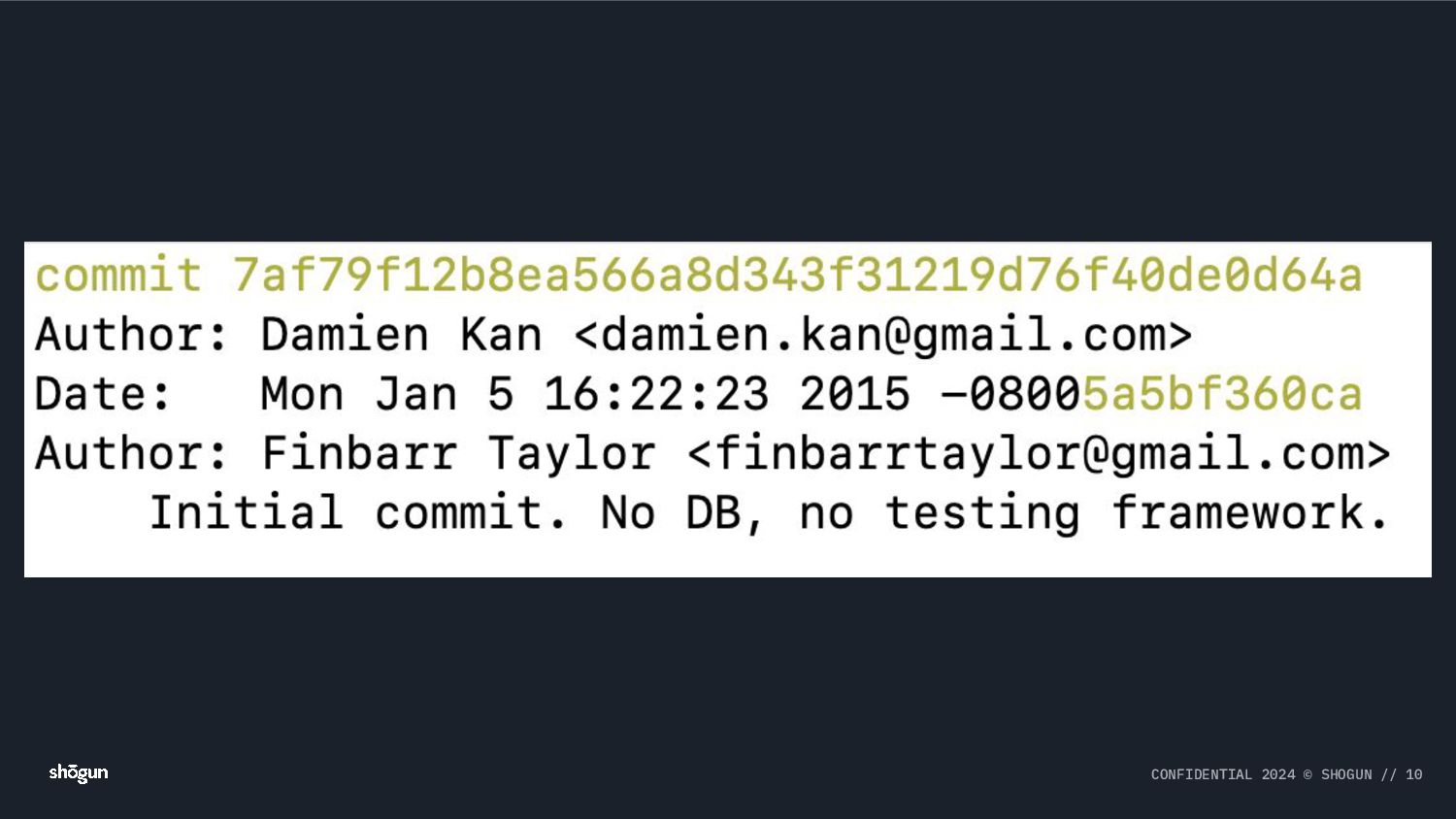
In late twenty fourteen, I started hacking on ideas with my good friend Damian Khan, Justin's youngest brother. We started working on what became Shogun in early twenty fifteen. Damian was the CEO. I was the CTO. Originally, it was a CMS for any website, and we plugged into Ruby on Rails.
We built that because we'd seen how marketing teams frequently can't make the updates to websites they need to, much to the frustration of engineering and everyone else. Several friends told us they'd pay for it if we built it. We built it. They didn't pay. That was a bummer.
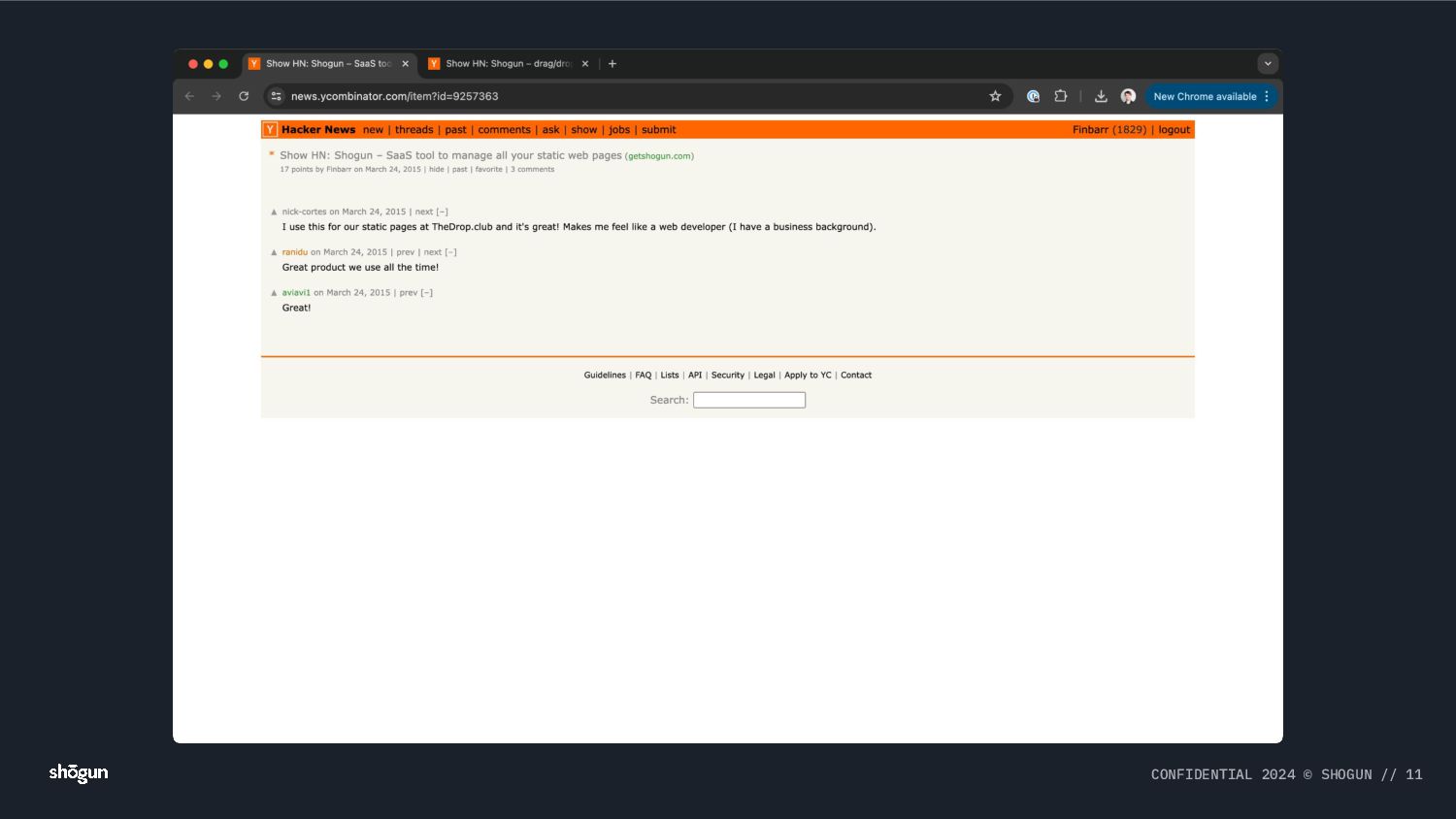
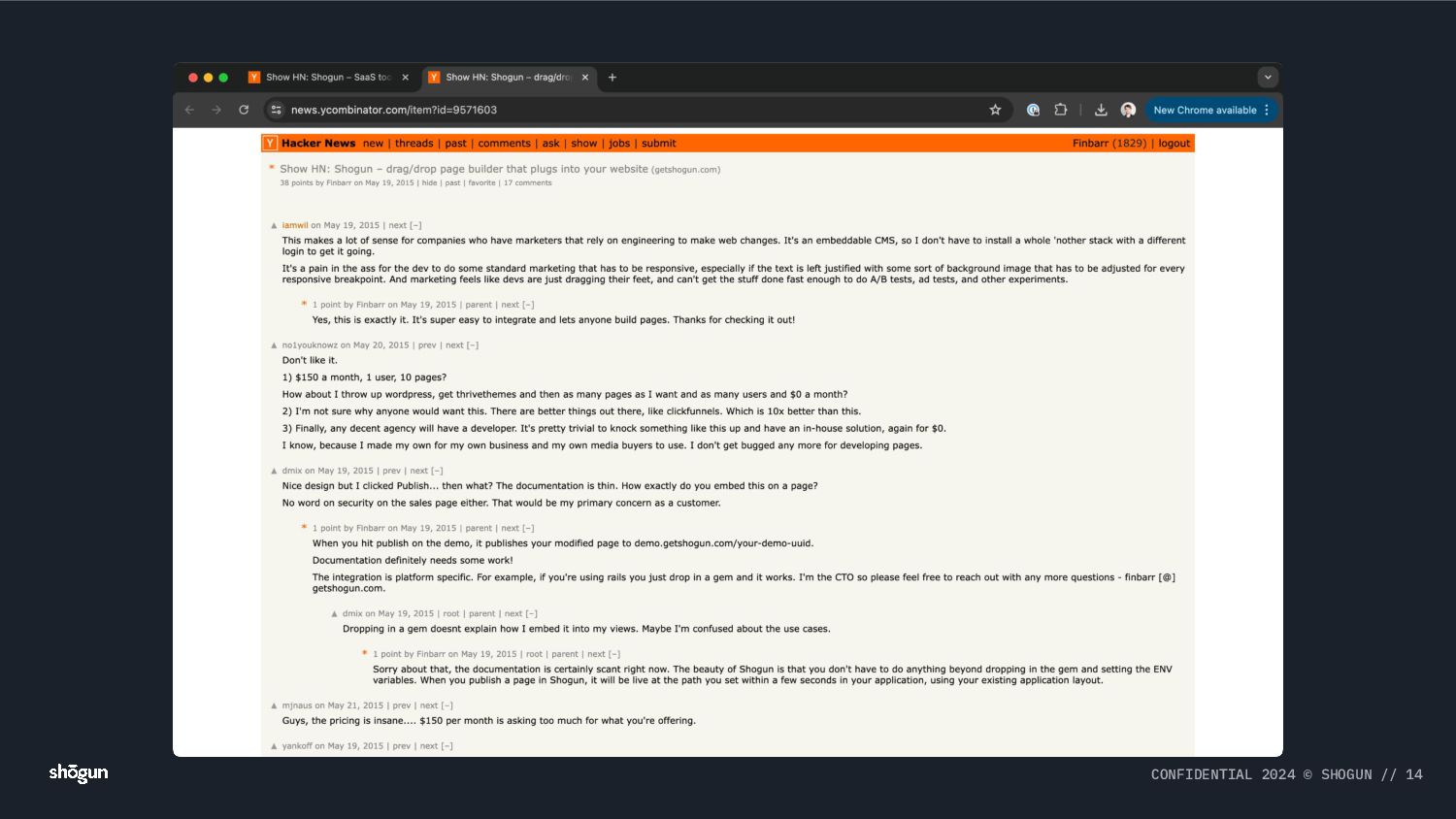
The lesson here is that friends don't always give you honest feedback. So we had to find new customers. We had multiple launches during this period on Hacker News and Product Hunt. Here's our first launch on Hacker News in March twenty fifteen. It's literally just our friends commenting in there.
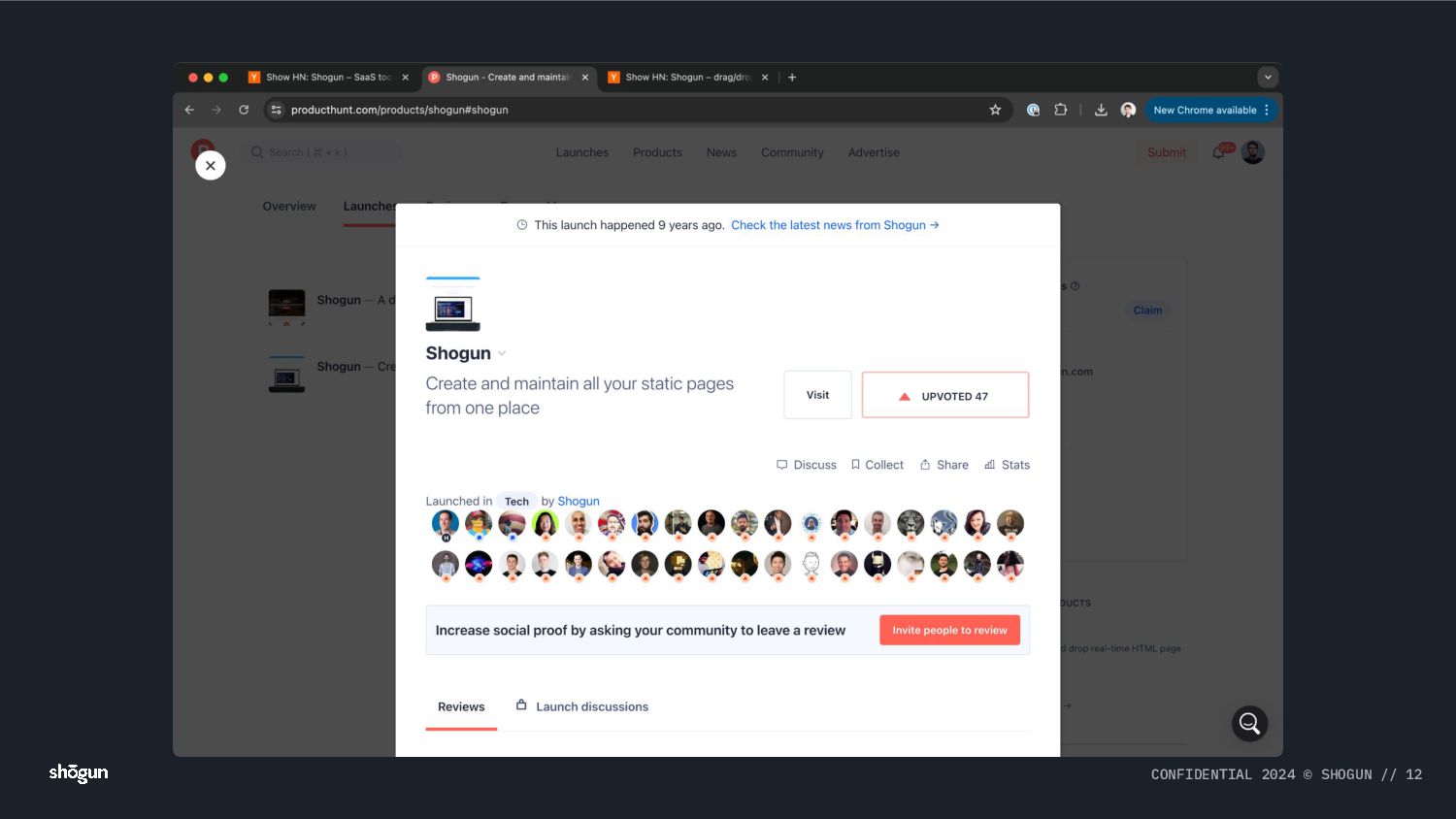
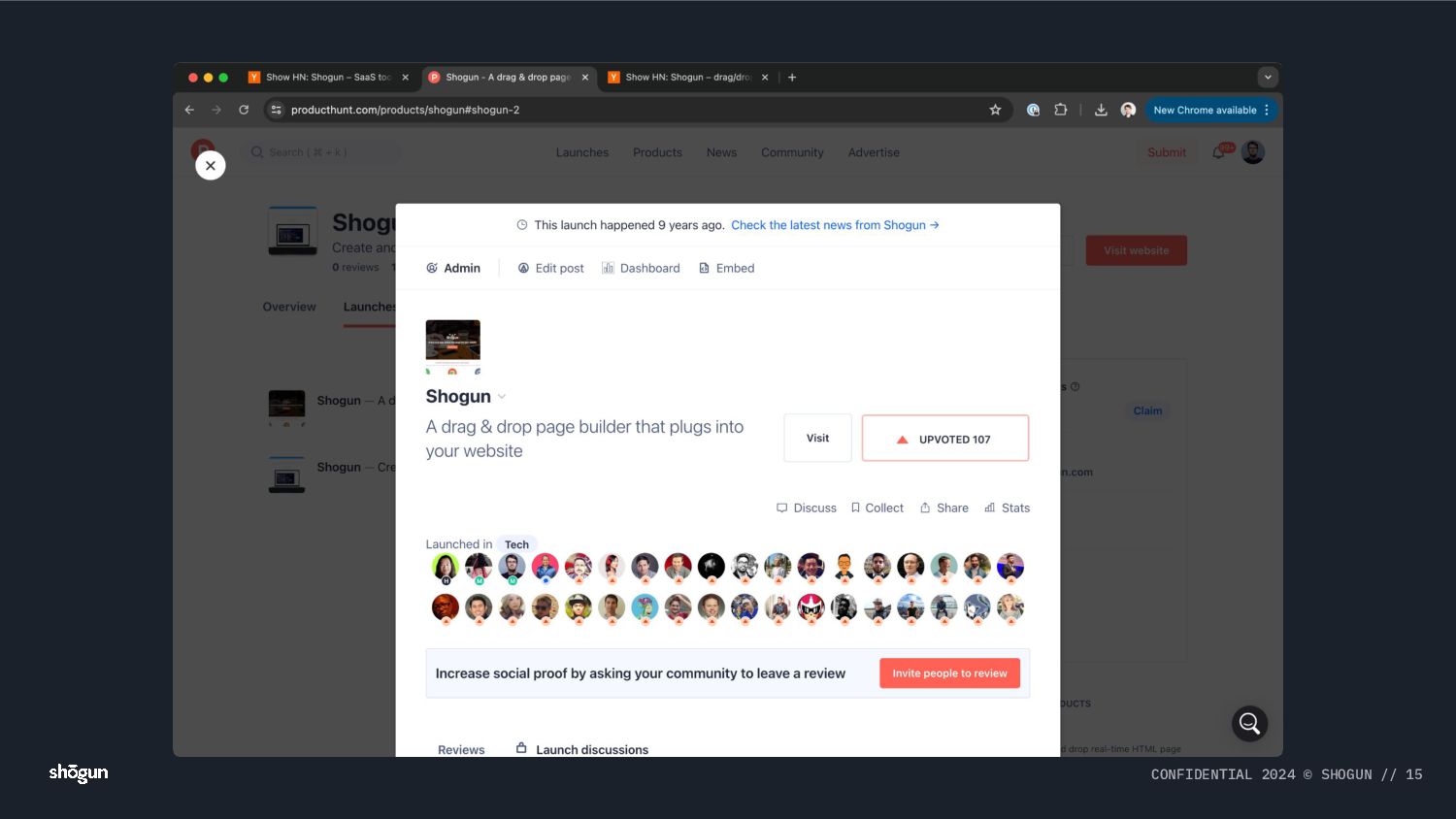
Here's our first Product Hunt launch, also March twenty fifteen. And here's a screenshot of our products at the time. The first version absolutely sucked. Here's our second Hacker News launch, May twenty fifteen. We got a lot more traction here, and some people actually signed up and played around with the product and gave us feedback, but no paying customers.
Here's our second Product Hunt launch, also May twenty fifteen. None of these launches drove meaningful financial results, but we did learn something from each of them. The lesson here is launch early and often. You can launch multiple times. Launch when you're not ready.
Really, launch when you really aren't ready. We certainly did with Shogun. Our product was so janky the first couple of launches. One of the worst things you can do on early stage startup is delay launching until you feel ready, only to find out that nobody wants what you're building.
If you're sitting here and you're working on a startup and you haven't launched yet, why haven't you launched yet? This is a good question to ask yourself. It's a question that YC asks companies all the time. It's important to try and understand the true reasons for not launching.
Don't make excuses. After the flurry of launches and no revenue, we added Nick Rauschenbusch as our third co founder and COO around May twenty fifteen. I was introduced to Nick by Karen, my co founder from Giveit one hundred. Damian and I both spent that summer furiously coding and building the product.
Based on user feedback, we built a second version that was more visual and drag and drop. Nick spent the summer cold emailing every person he could find who had recently changed websites. We got that data from BuiltWith. Our theory was that people who had recently changed websites must have had the reason to do so and still might be unhappy with their new solution.
Nick is a master at writing cold email. We talked to tons of people and showed them the product, but got no paying customers. YC has this advice that in the early days, you should only be doing two things, writing code and talking to users.
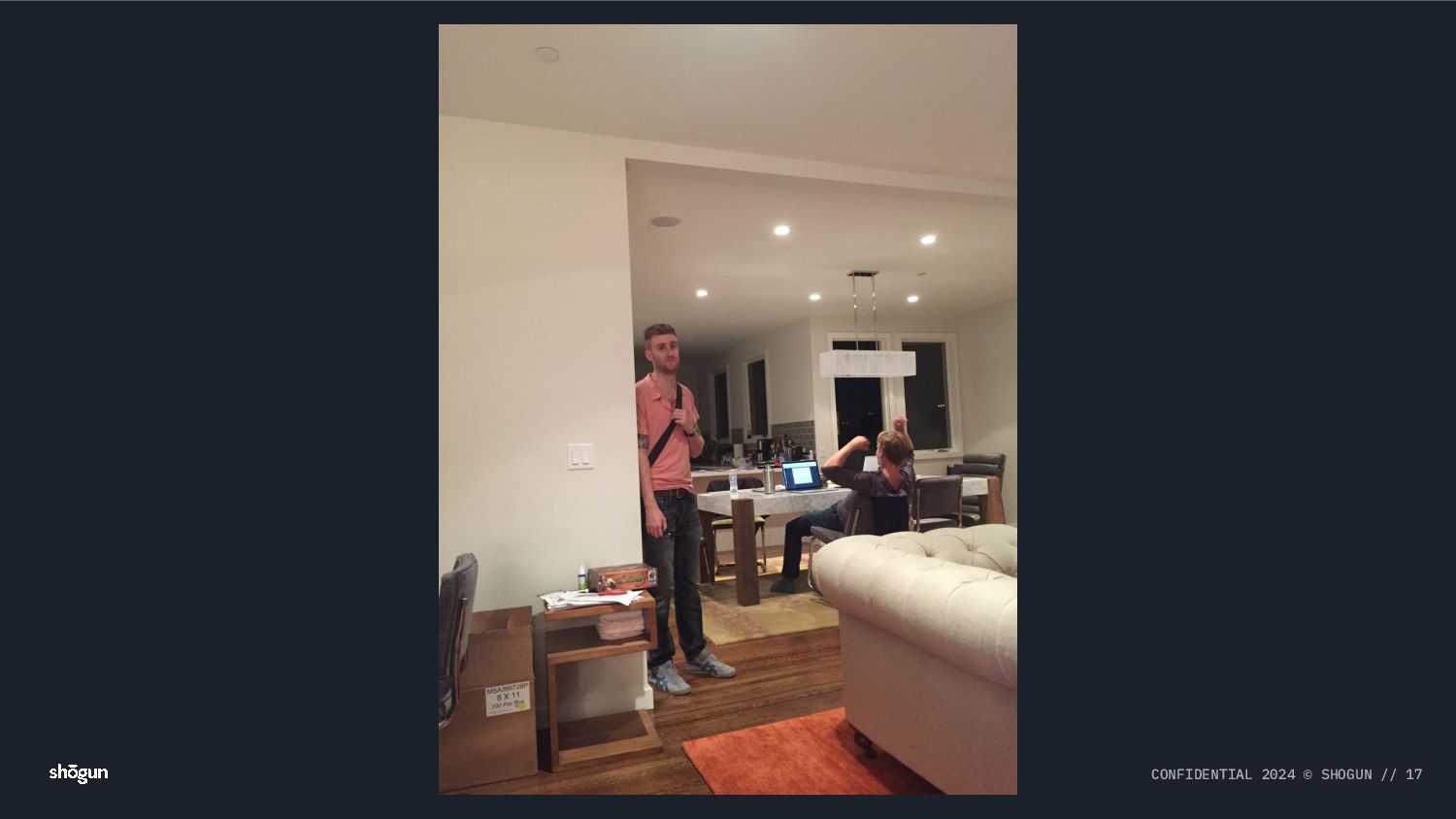
That's all we were doing during this time. We were working out of Justin's house in San Francisco, and quite a few other companies were started in the same space as us around the same time as us. There's a lot of value in surrounding yourself with other ambitious and driven people.
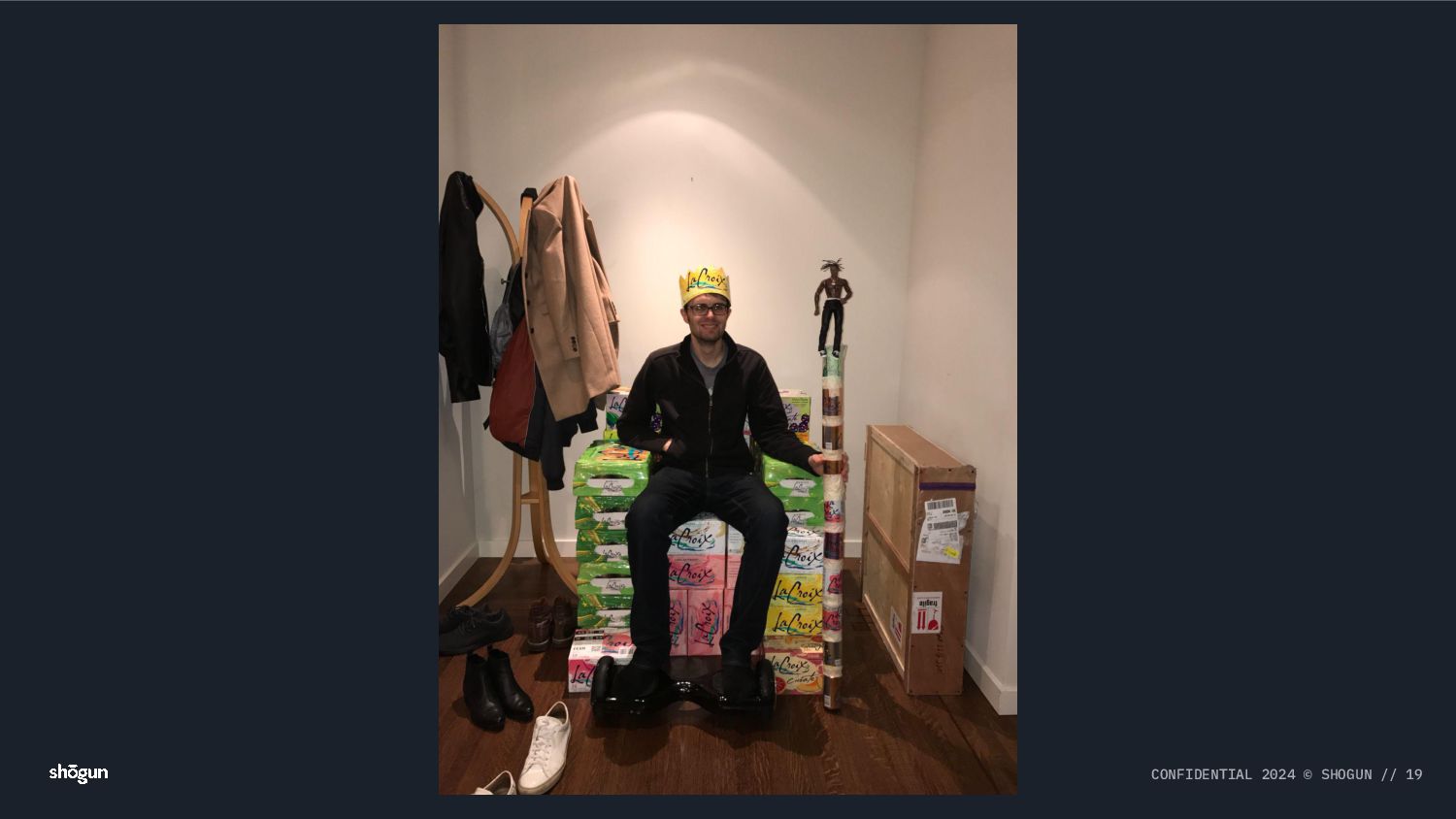
We pushed ourselves because they pushed themselves. This was a virtuous cycle. That summer was a grind, but in retrospect, some of the best times. We also had a lot of fun. Here's a picture of me sitting on the LaCroix throne. It was very Silicon Valley.
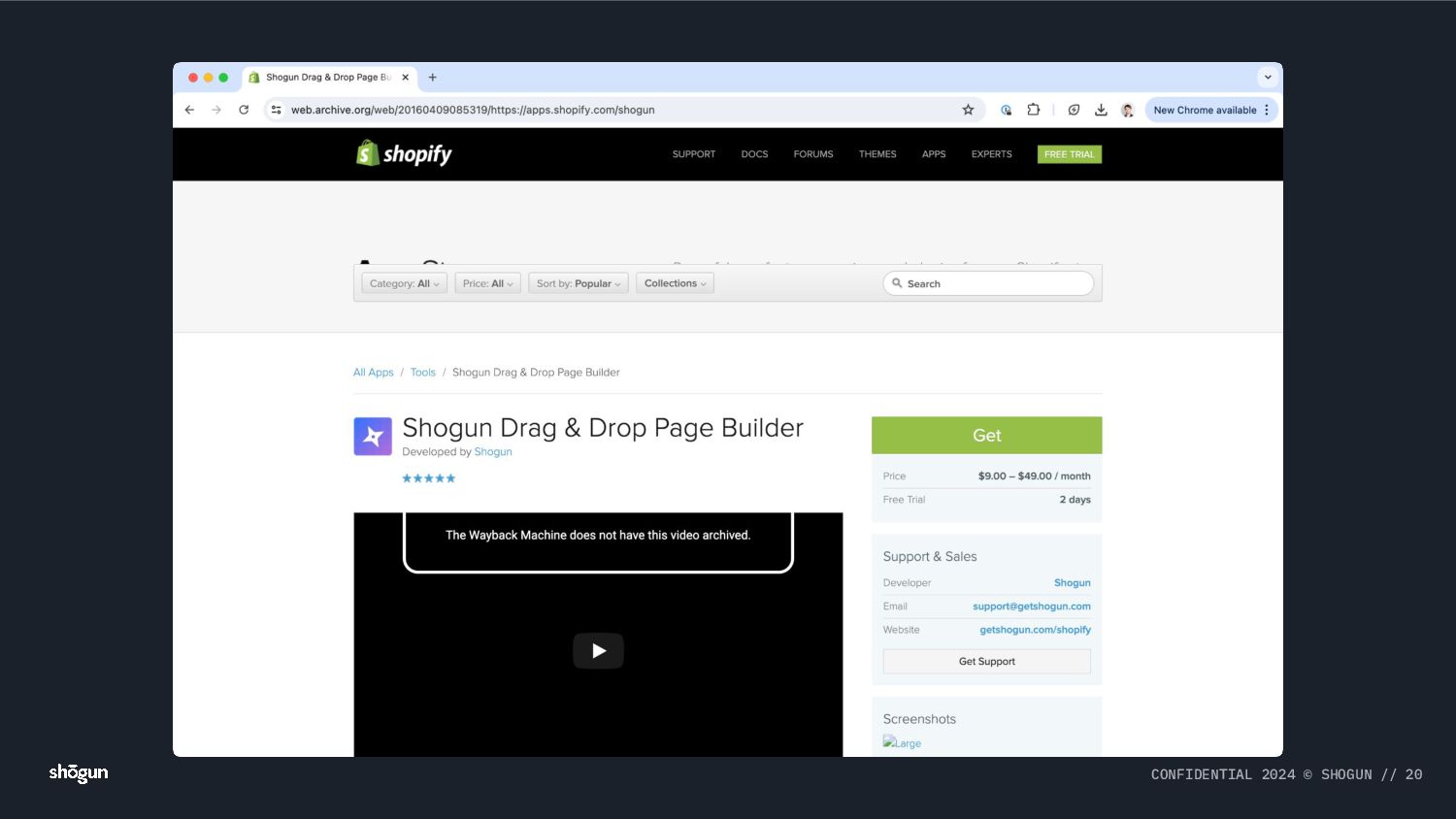
Towards the end of that summer, a friend of Nick's who had an e commerce agency told us they would pay if we made it work for Shopify. We did it despite never having heard of Shopify before. After a few weeks, we launched Shogun on the Shopify app store.
I remember Nick saying, let's just launch this thing so we can prove it doesn't work. Famous last words. Our app allowed merchants to visually build landing pages for their Shopify stores. After launching on Shopify, the agency did pay us ninety nine bucks a month, but we felt like they were just doing us a favor as a friend of Nick's.
We didn't get the immediate massive traction we were hoping for otherwise. We were all getting frustrated at that point, having worked on the company for a year with minimal revenue, no investment and no personal income. Silicon Valley is expensive. So we all moved on.
Nick moved to Thailand, Damian got a job at a start up, and I did some contracting for the smartwatch company, Pebble. Sjogren started attracting a few more customers, all paying between nine dollars and forty nine dollars a month. It grew to a couple hundred bucks a month in revenue.
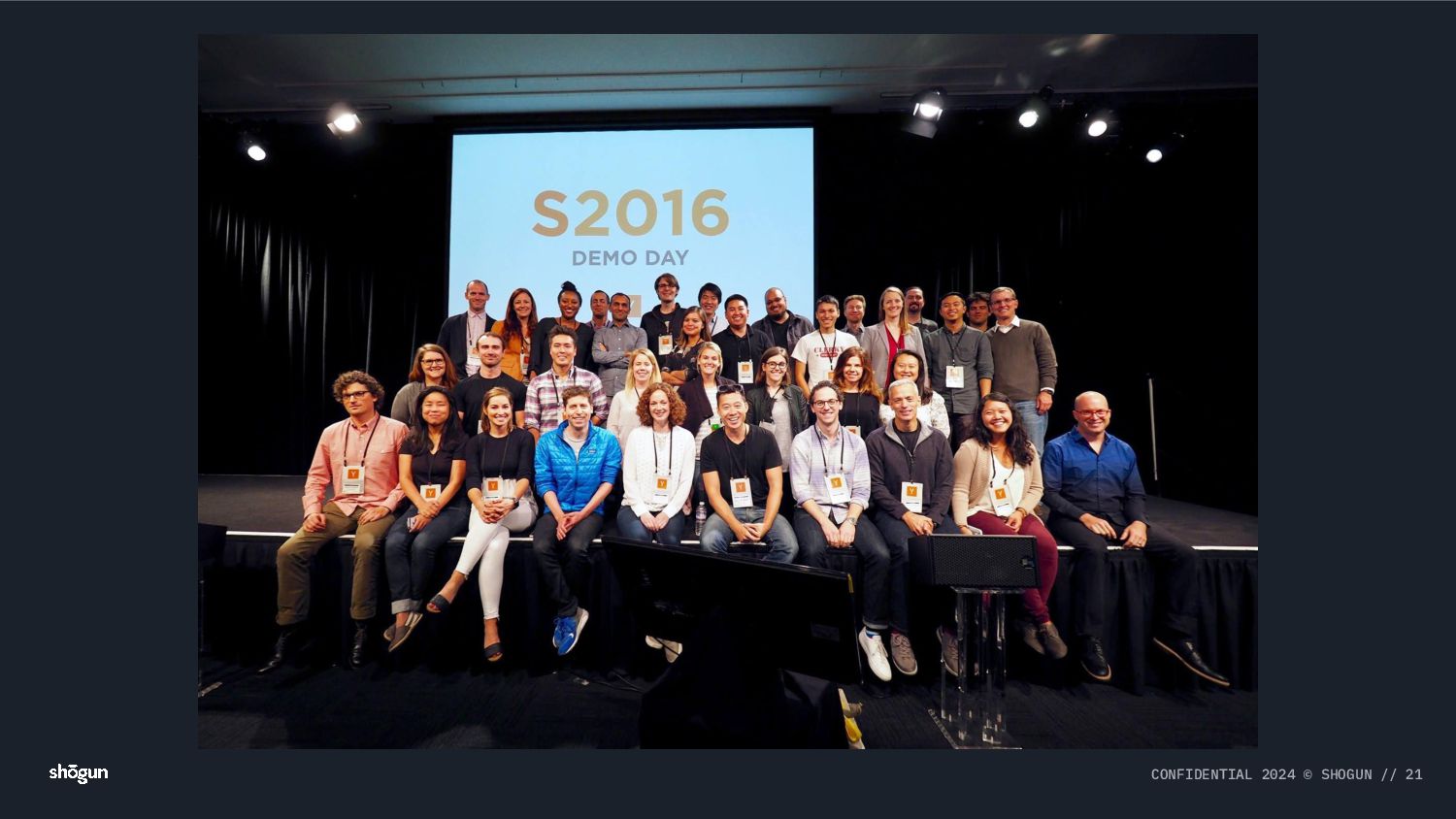
Then I got a job sorry, my notes are a little cut off here, so I forgot a little And then I got a job working for Y Combinator starting in February twenty sixteen. I want to take a moment to touch on the time I spent at YC, as I learned a lot and am extremely grateful for my time there.
YC is one of the greatest businesses of our time. They're the best early stage investor in the world. They have better deal flow and pricing power than everyone else. YC helps their portfolio companies for the duration of the company. It's not just the ten week program.
They also keep in touch with a massive number of companies and founders. They also have an internal CRM system where they log investor updates from all the companies. One of the first things I did at YC was build a Facebook style feed of all of these company updates.
I then read every single update back to the beginning of YC about every single company. It was truly fascinating. Let me tell you something about startups. They are a total **** show. It doesn't matter how well they appear to be going on the outside, they are universally ****** in some way on the inside.
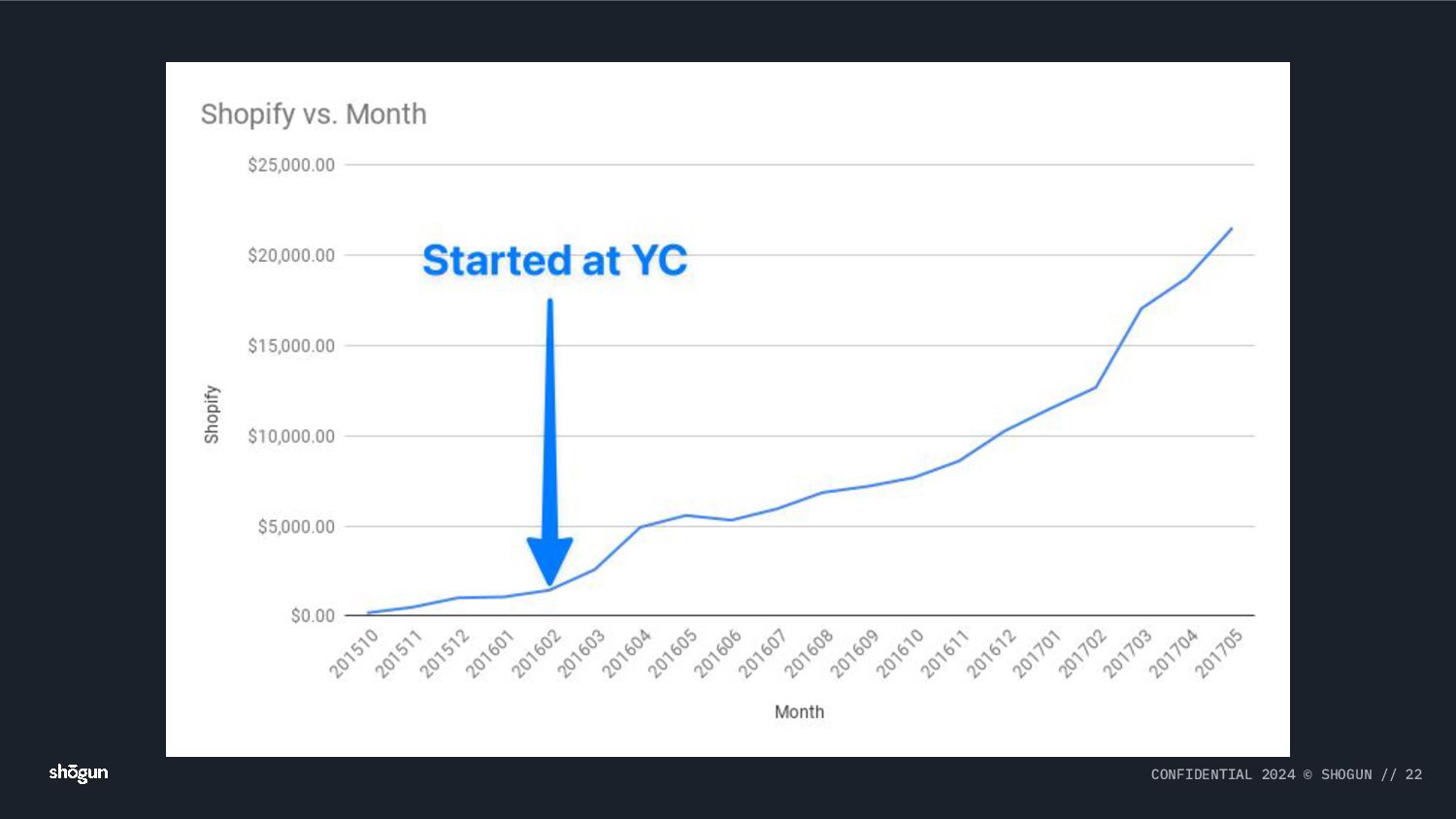
By the time I started at YC, Shogun was making about a thousand dollars a month, about enough to break even. I thought it would pay for dinner sometimes, and I was doing occasional email support. A few months later, Shogren was making five thousand dollars a month.
A friend going through YC told me they were making a lot less, and I should work on Shogren again. I thought it would appear for some nice holidays. I was doing email support and some bug fixes. Six months later, Sjogren was making ten thousand dollars a month.
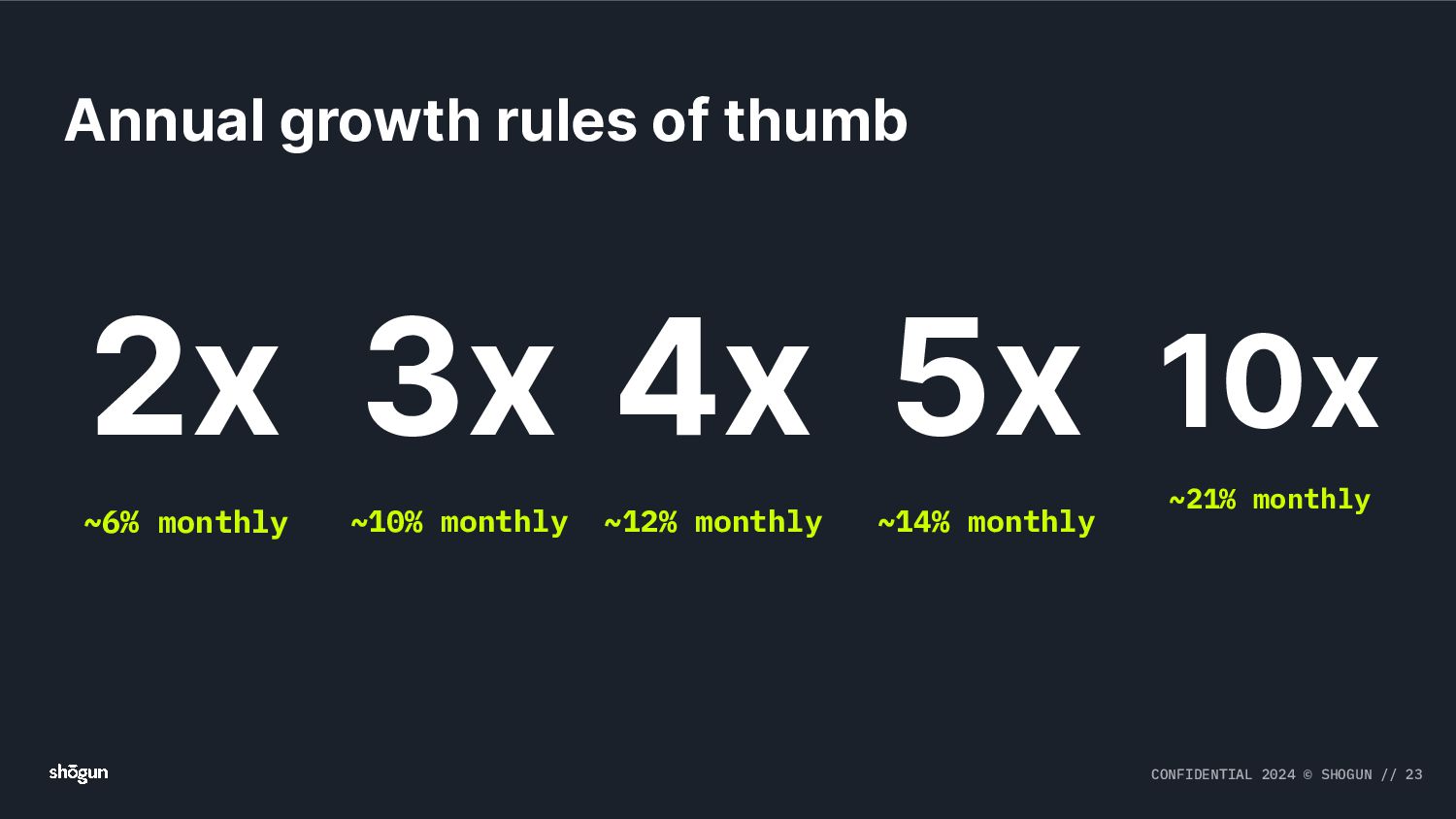
It started to eat up more and more of my free time. A few months after that, Sjogren was making fifteen thousand a month. It was growing fifteen percent to twenty percent per month at the time. At that point, I made a spreadsheet forecasting out fifteen percent monthly growth for twelve months.
Turns out, fifteen percent monthly growth is about four thirty five percent annual growth. That was a **** **** moment for me. Growth in the early stage can feel very slow and gradual until it doesn't. Compounding is absolutely incredible. If you have an early business growing at these sort of percentages month over month, you're probably onto something pretty good, even if the numbers seem small to begin with.
You can do these calculations very quickly, and it's good to remember and strive for some of these numbers. I should mention that I became the CEO of Shogun in early twenty sixteen while it was a part time project. That was an interesting decision in retrospect.
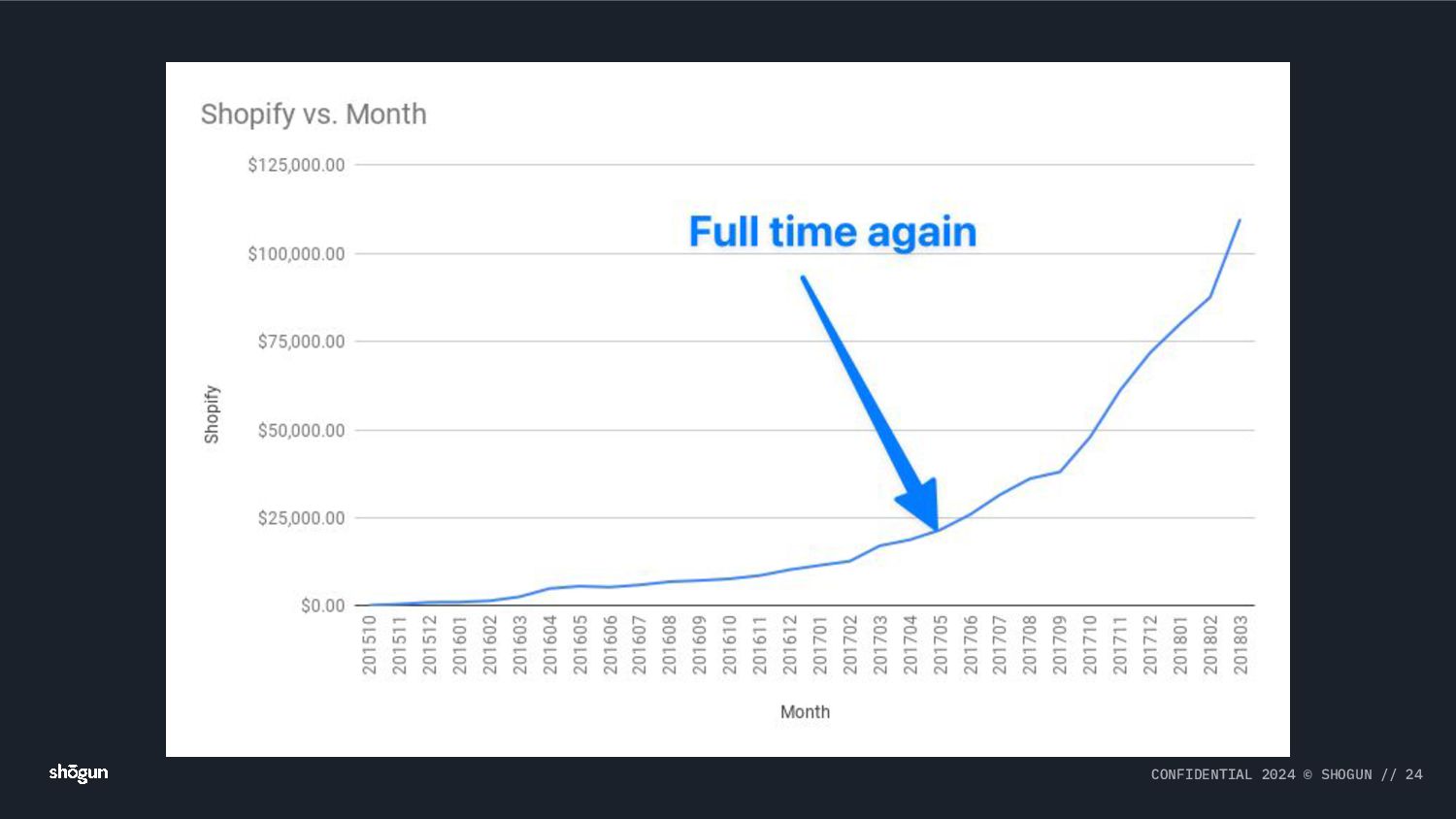
I kind of accidentally became the CEO of the company for the next eight years. I left my job at YC to go back to Shogun full time around May twenty seventeen. Nick also moved back from Thailand to go full time in Shogun as COO again.
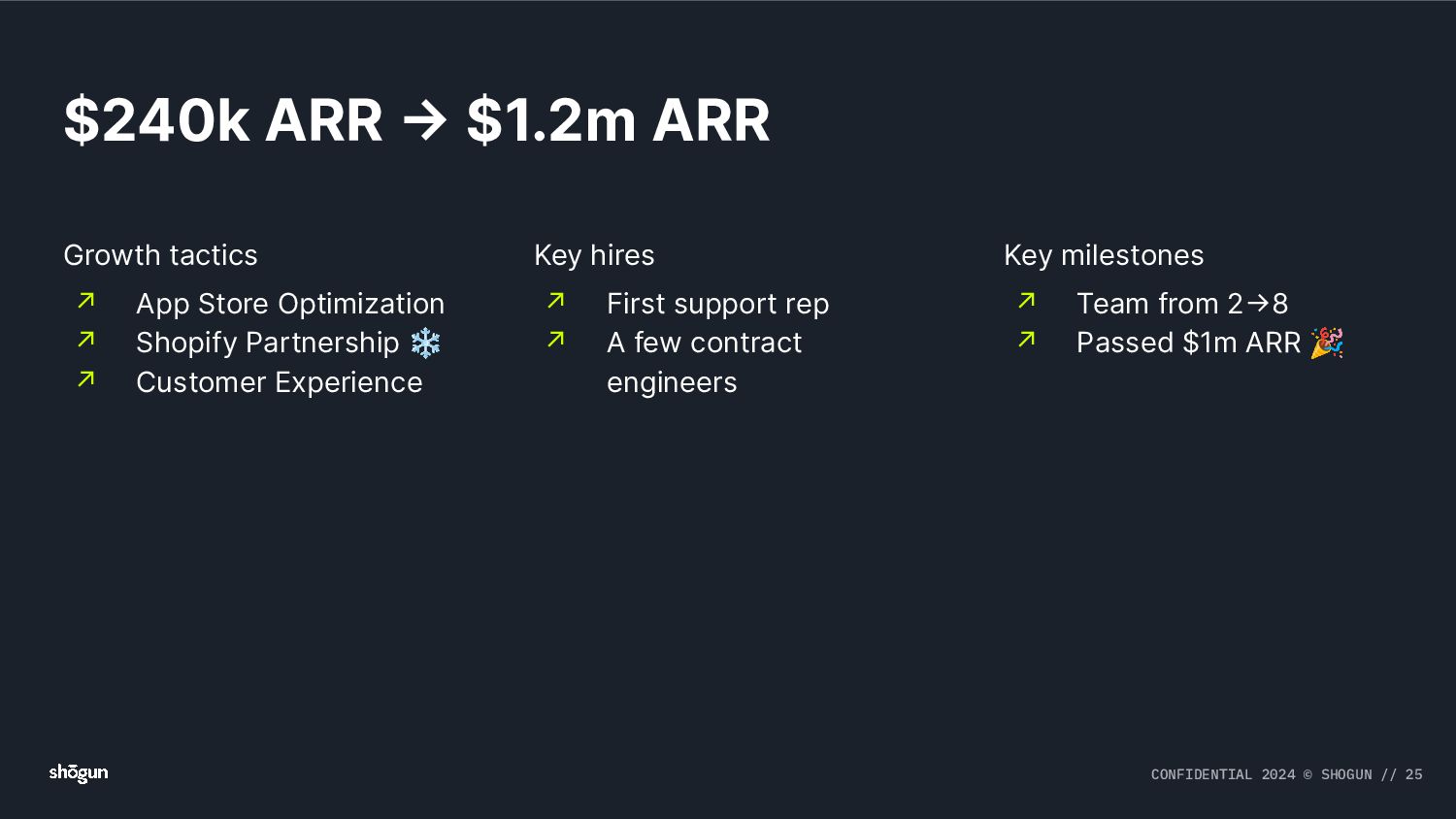
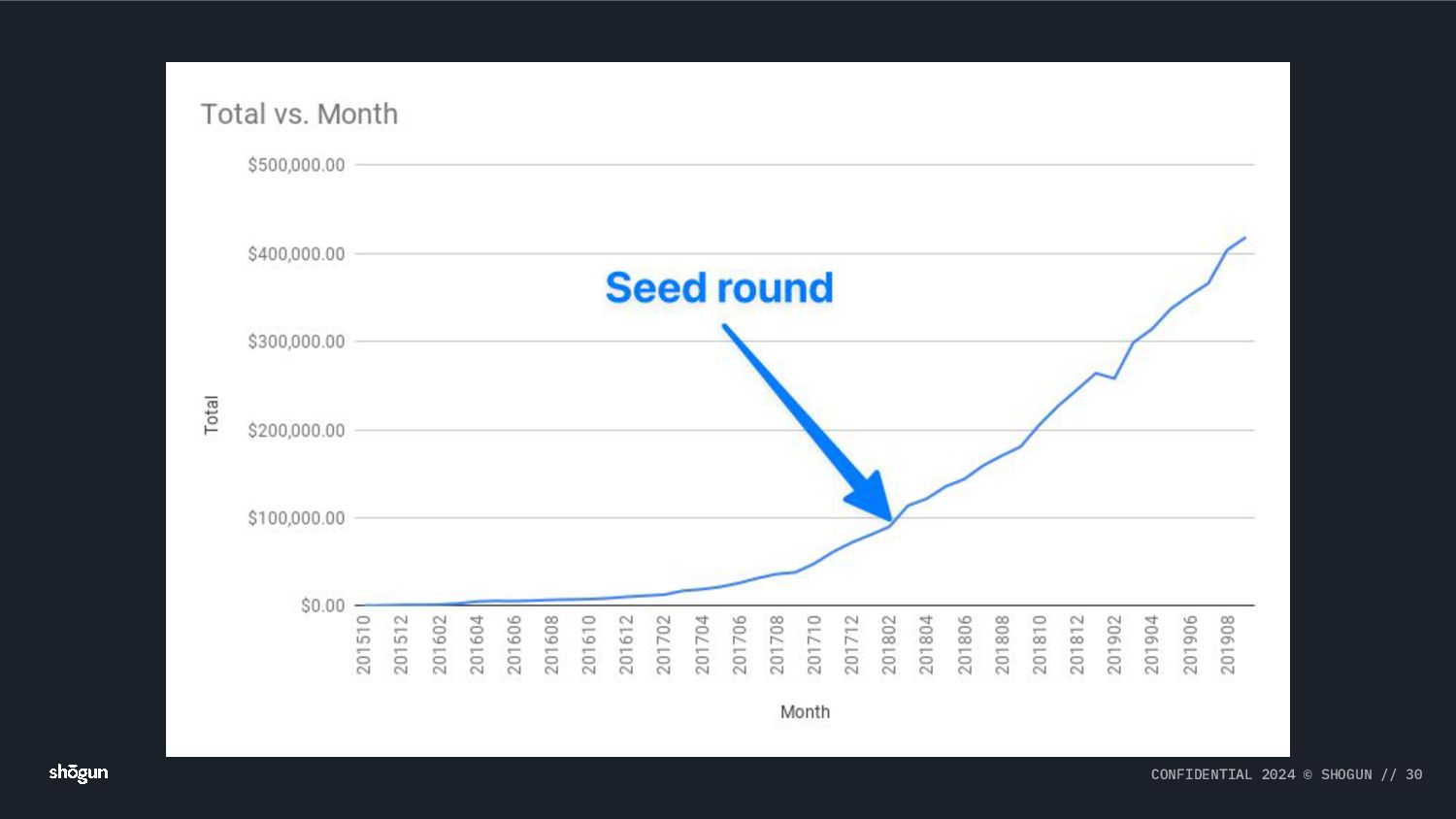
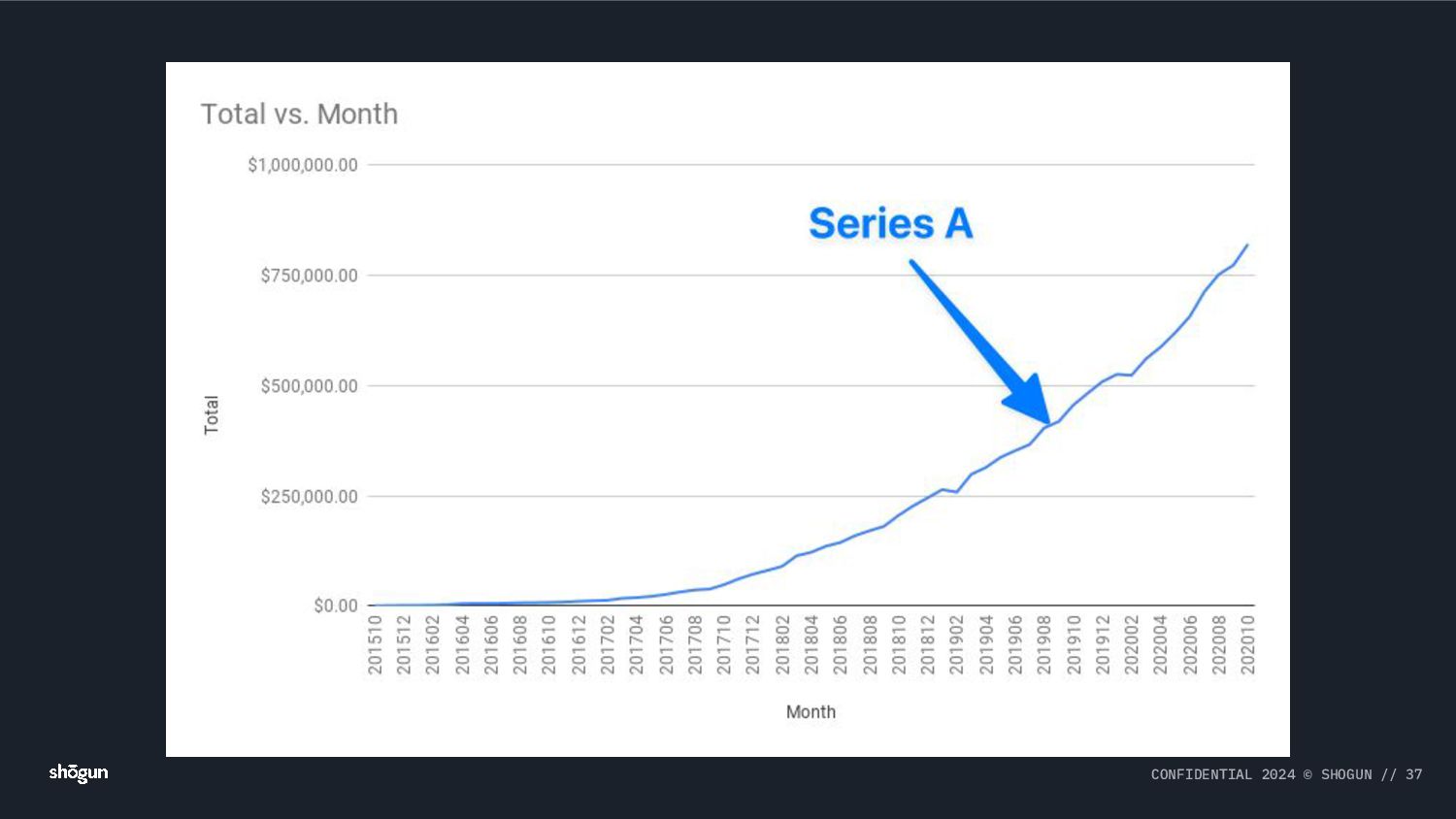
Damien didn't return, but we're all still good friends. Here's that same graph from earlier with an additional ten months appended to it, with full time being to the right of the arrow. We went from two hundred and forty thousand of annual recurring revenue to one point two million of ARR in less than a year.
How did we do that, and what happened along the way? At this stage, the growth was almost entirely driven by optimizing our Shopify App Store listing. We put a lot of time and effort into this. I built a tool to scrape the App Store and track the category and search rankings of every single app.
We were able to reverse engineer a lot of the ranking algorithms and optimize our listing accordingly, which massively increased our install rate. We also started to develop a relationship with Shopify, and Nick and I flew up to Ottawa in February of twenty eighteen to visit Shopify HQ.
It was absolutely freezing, but we got to spend time with key people at Shopify who went on to help us drive growth, including by featuring us in the App Store numerous times. We also bent over backwards for every single support request, and we're able to turn a lot of these interactions into positive reviews in the App Store, which helped to boost our ranking.
If we ever got a one star review, Nick would phone them up within minutes, and we're able to reverse almost all of these in the early days. We're truly doing things that didn't scale, and it was working. I'd be remiss if I didn't talk more about the growth Shopify was experiencing as well.
The saying rising tides lift all boats is absolutely true. One good strategy for growing well is to attach yourself to a much bigger thing that's growing really fast. We did that without even realizing how fast Shopify was growing. So you could say that was lucky, but putting yourself out there and talking to lots of people significantly increases your chances of being lucky.
Attaching ourselves to Shopify drove a ton of growth in in the early stages for Shogun, but as you'll hear later, attaching yourself to the Leviathan has major risks as well. Around October twenty eighteen, we applied to YC, got an interview, and were accepted to the winter 'eighteen batch.
Getting into YC fulfilled a long term dream for me, but I got rejected a number of times along the way. Lots of people who are in YC have been rejected multiple times before getting in. Here's my top advice for getting into Demonstrate that you're moving really quickly.
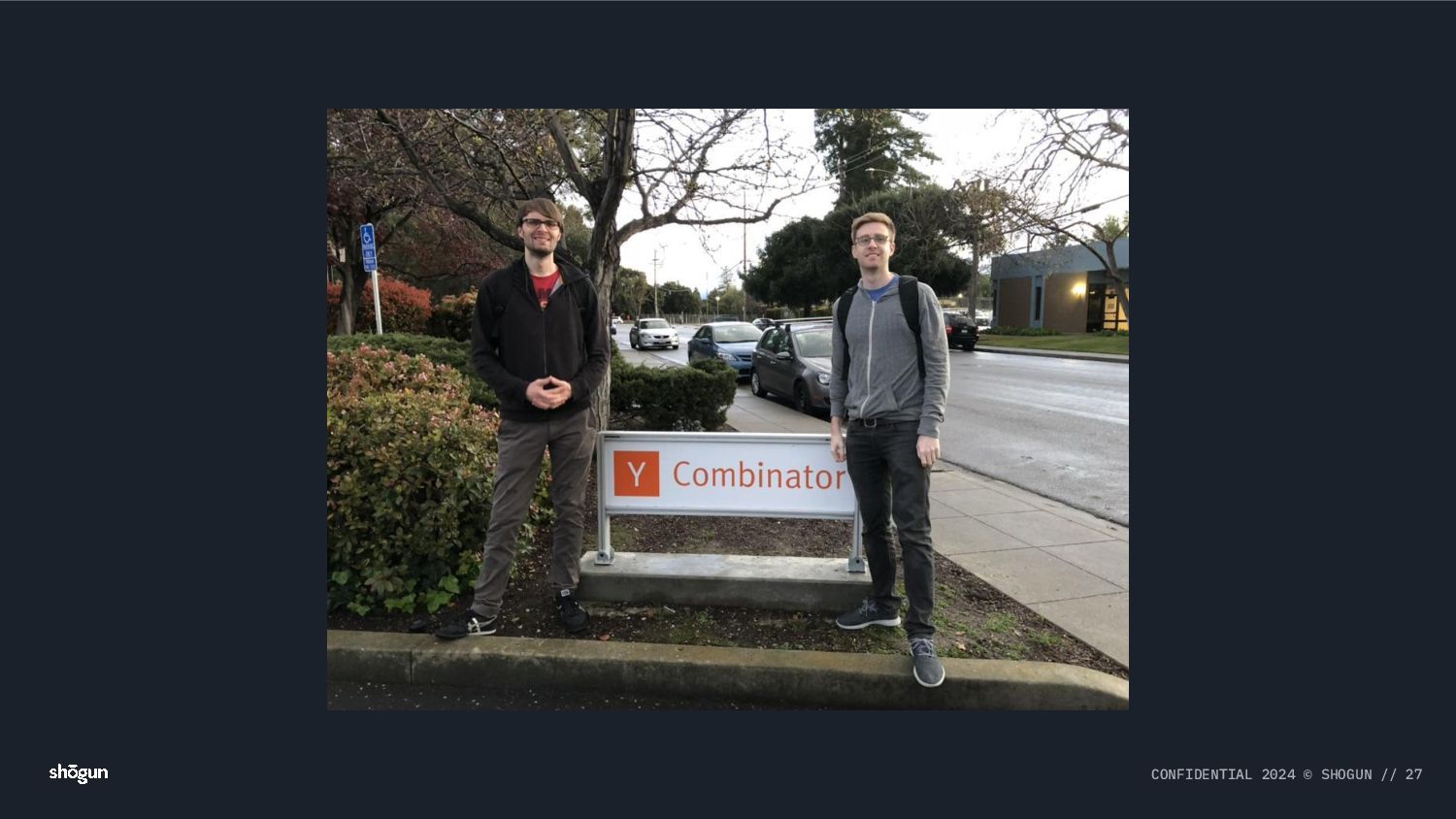
Be concise in how you answer the application and interview questions. And apply again if you get rejected, making sure to make tangible progress between applications. YC has been a huge help to Shogun and many other startups over the years, and I'd highly recommend it.
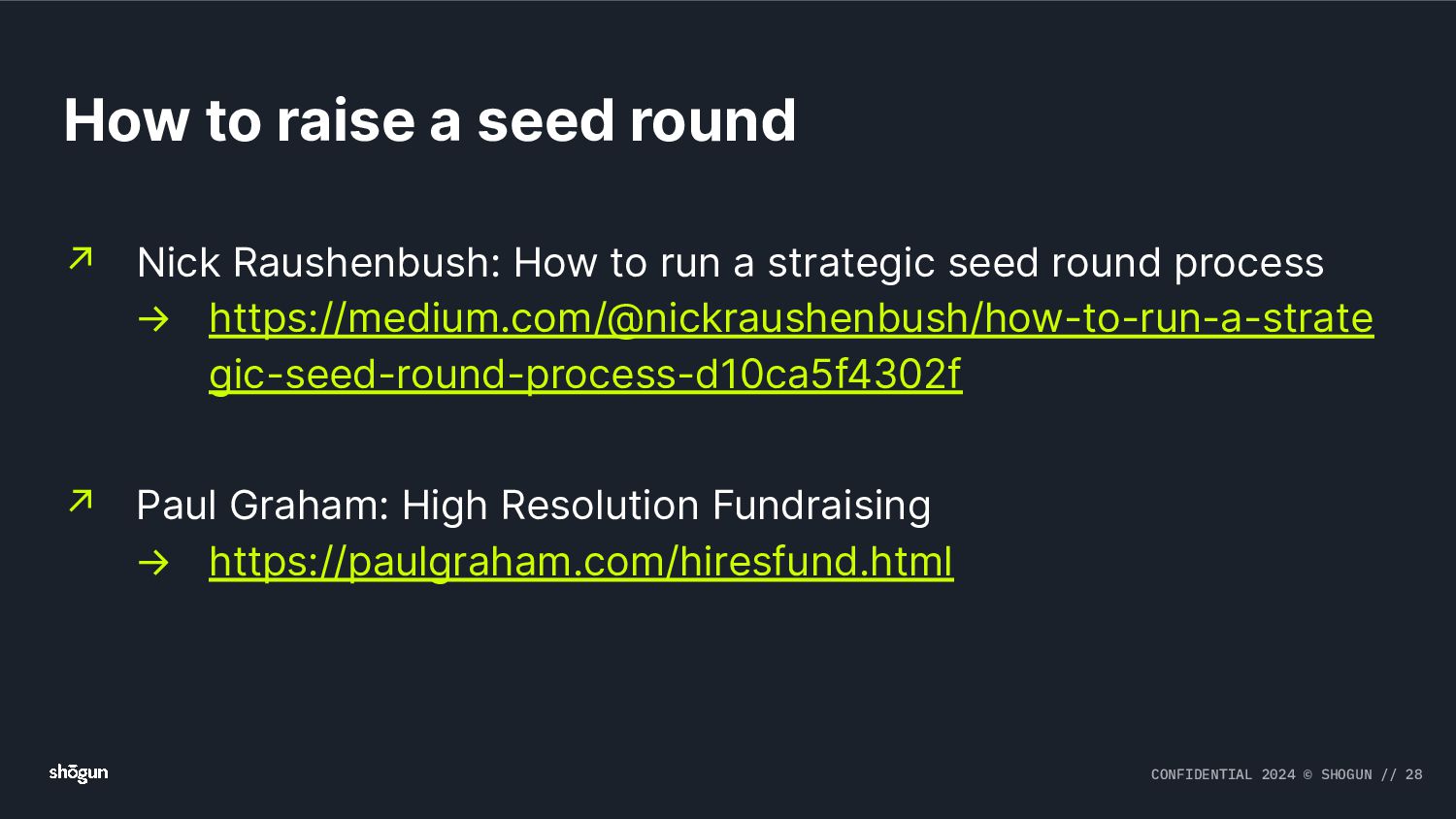
By YC Demo Day, our revenue was one hundred thousand dollars a month, and it was time to raise a seed round. There are some really good articles out there about how to raise a strategic seed round, so I'm only going to give a super quick overview here.
The best way to raise a seed round in the US is on SAFEs, Simple Agreements for Future Equity. These are simple documents that you sign individually with each investor. They typically specify a valuation cap and an investment amount. Each investor wires the money right after signing the SAFE, so you are closing the round as you go along.
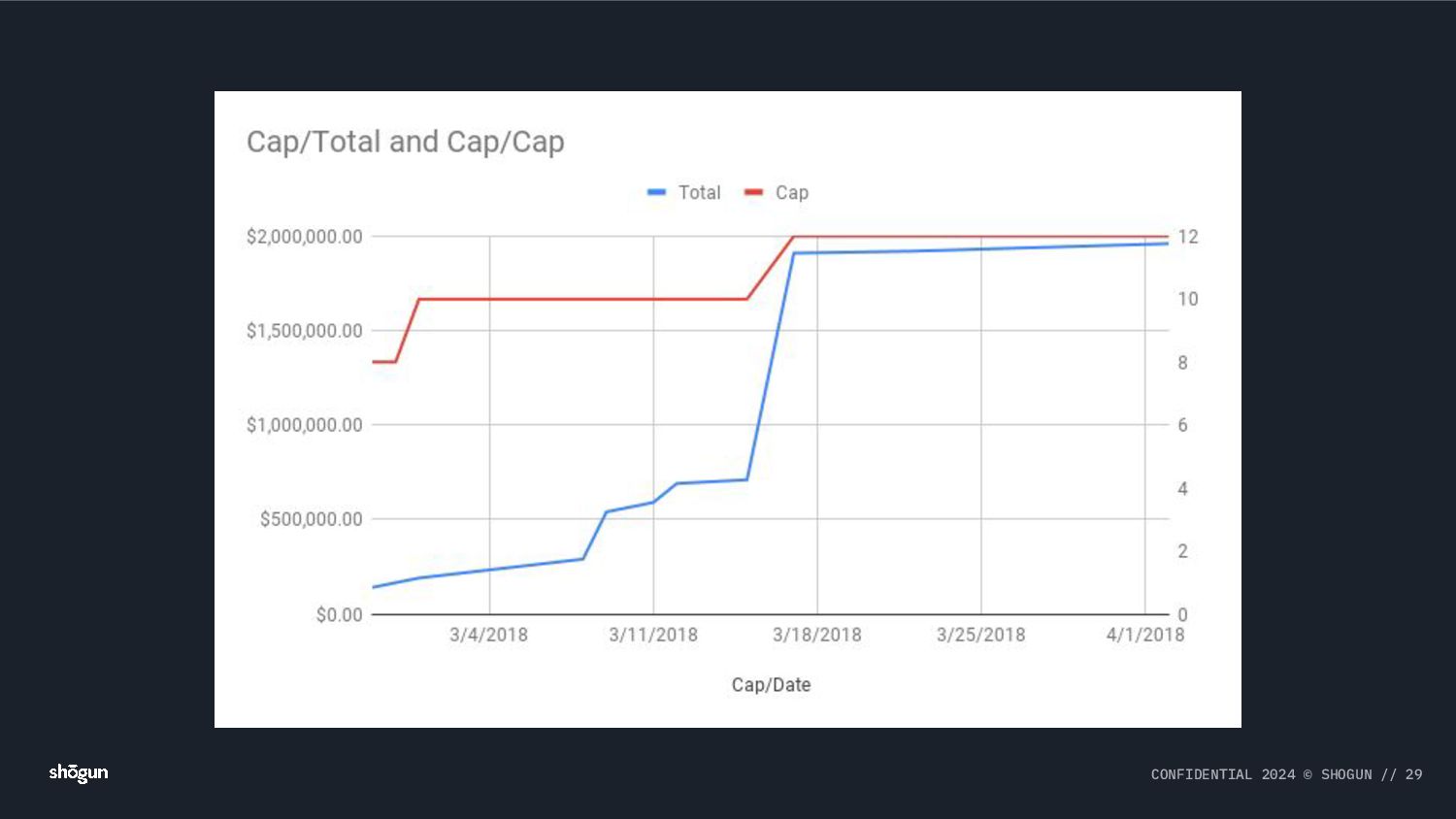
You can raise the cap as you go, and a good strategy is to start with a small tranche at a low cap and raise the cap as you close more money. This is known as high resolution fundraising and lets you discover the ideal price as well as apply pressure to each investor to commit before the cap is raised.
There are basically no legal costs involved, and you start getting money straight away. This is exactly what we did, and we closed a two point one million dollars seed round before demo day. It took a couple of weeks, and we raised money from friends at an eight million valuation, then about five hundred thousand from some small funds at a ten million valuation, then Gary Tan's seed fund Initialized Capital put in one point two million at a twelve million valuation.
YC Demo Day was no pressure for us as we'd already closed the round. Pro tip for YC or any other similar programme: raise your money before Demo Day. YC tells you not to do that, and it's the worst idea, in my opinion. It's a lot easier to raise before Demo Day when investors feel like they'll miss out after Demo Day comes around.
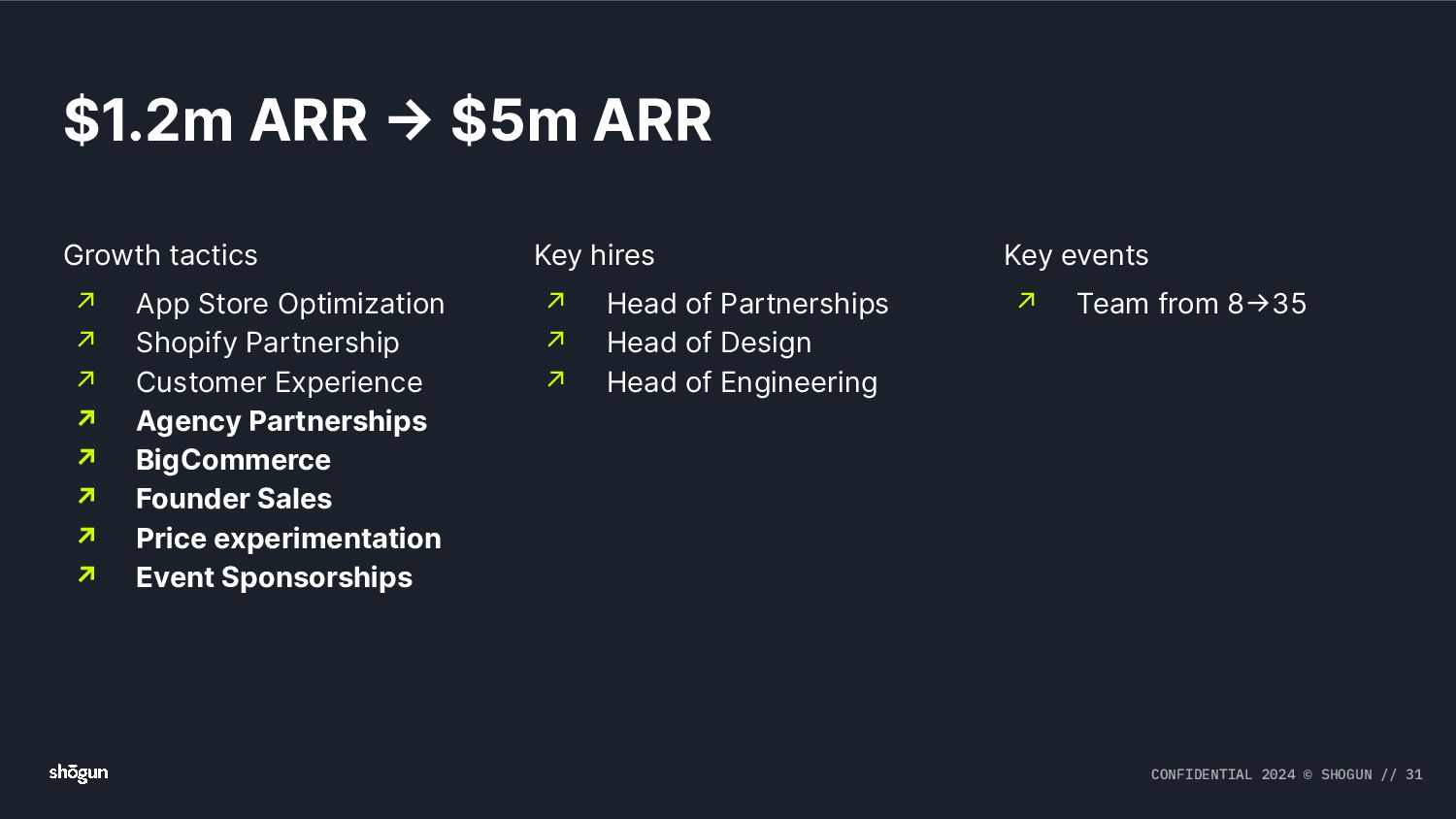
Also, the best investors are trying to get in before Demo Day. After raising the seed round, we went from one point two million ARR to five million ARR in about eighteen months. My daughter Penny was also born in June twenty eighteen. I only took a week off work, which was nowhere near enough time.
If any of you have kids who are running a start up, make sure to make more time than I did. After getting to one point two million ARR profitably, we were extremely careful not to let our burn get out of control. We tacked profitability, knowing that we could stop hiring at any time and revenue would catch up to burn within a few months of continued growth.
But we did start to burn carefully. We made some key hires and found some new ways to grow. We realized that in the Shopify space, design and development agencies are key technology decision makers. So we built an agency partnerships program and started sponsoring agency events and hanging out with our agency partners any chance we got.
We did road shows in various cities and took them out for dinners. We also launched our second platform, BigCommerce, and that grew to a five hundred thousand ARR business in its own right during this period. We also started experimenting with higher entry pricing.
This drove a huge amount of growth. We've never stopped experimenting with pricing ever since. Pricing is a huge area of opportunity for every company and something I could spend hours talking about. One of our biggest hires during this period was Blair Beckwith, who had been in charge of the Shopify App Store.
He knew everyone and helped us get plugged into tons of new partners. We also built a much stronger relationship with Shopify. We were able to do demos to their merchant success teams, send them swag, sponsor a bunch of their events, and generally get our name out there.
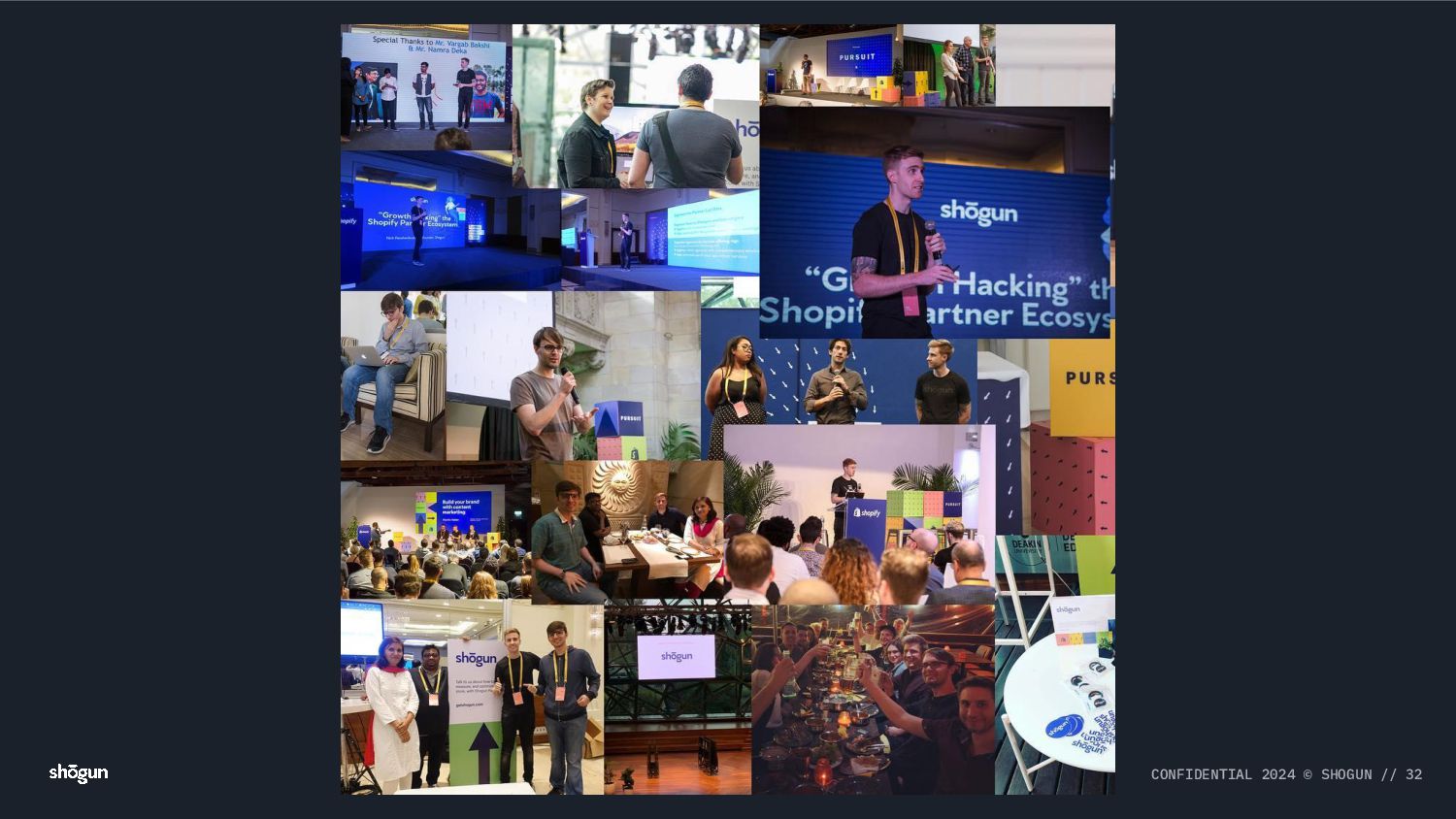
Nick flew all around the world speaking at Shopify's Pursuit event series, where we were the global sponsor, and I joined him at a few cities as well. It's important to point out that we continued with our earlier growth initiatives as well. Start ups need to continually layer on new growth channels.
Over time, channels will become more or less effective, and you need a good mix to keep growing. Depending too much on a single channel is a big problem. By June twenty nineteen, we had scaled revenue to about four million ARR. Everything was going great.
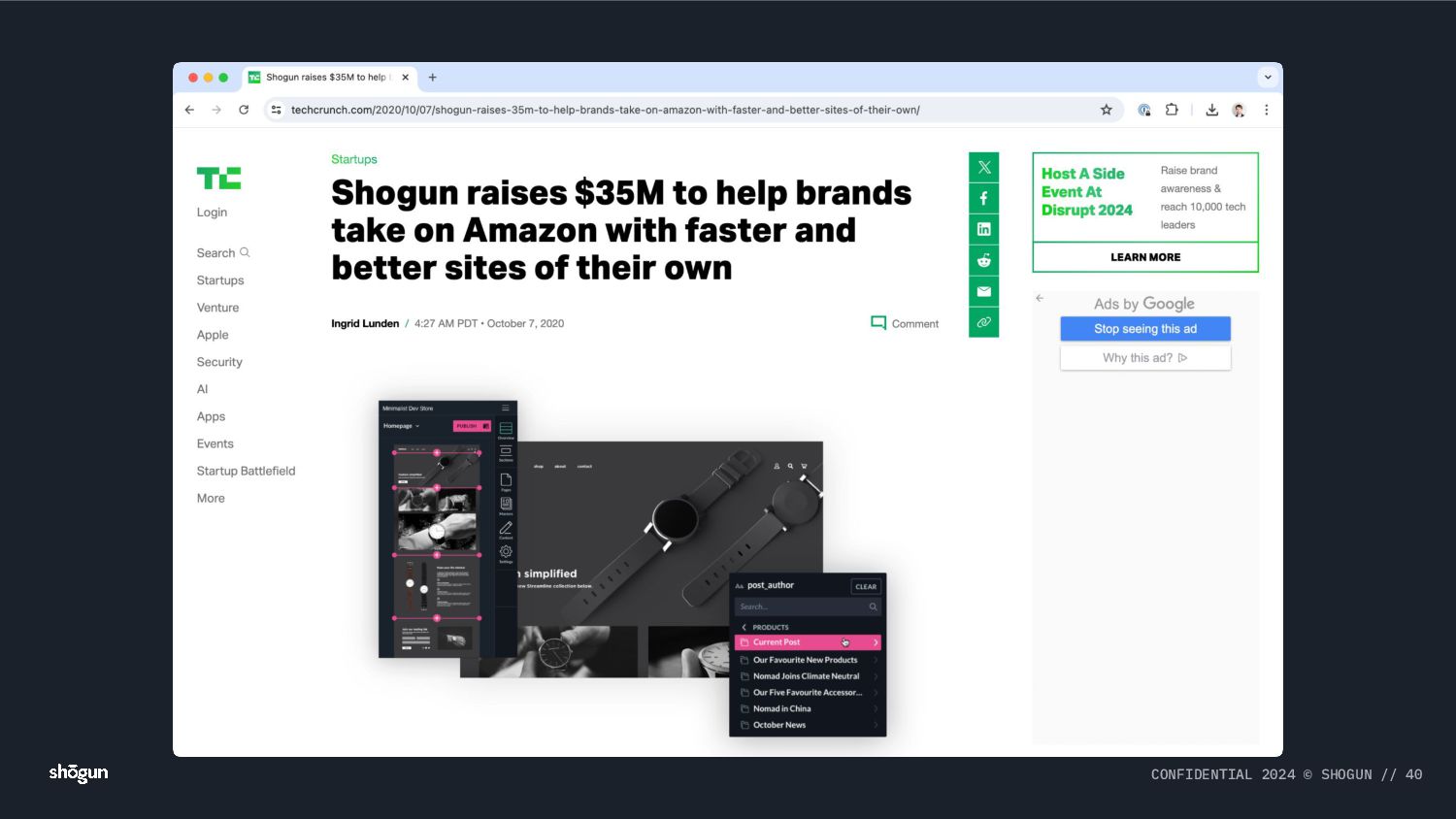
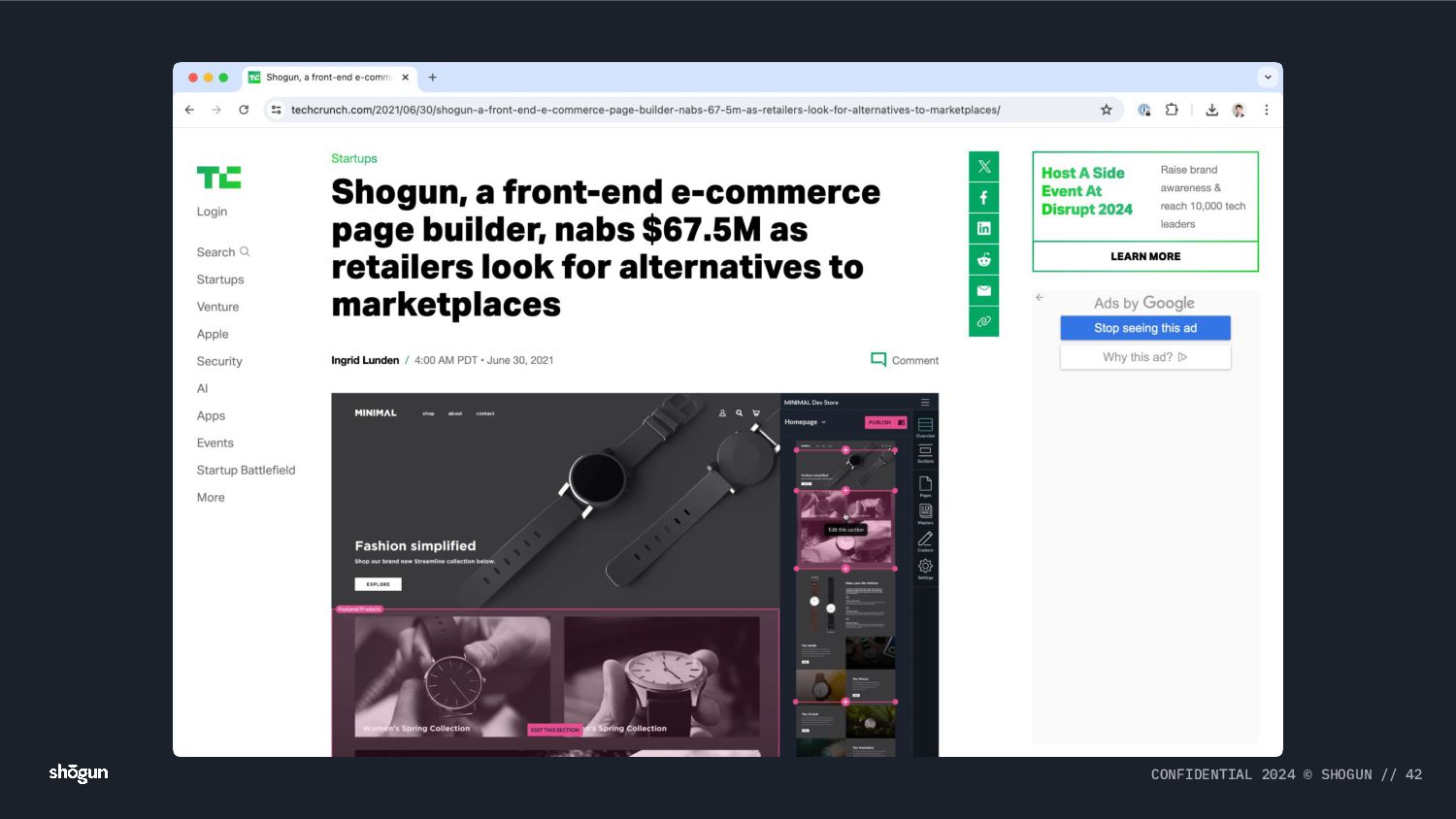
That's when Shopify dropped this bomb on us. They were going to release a competitor to Shogun. It was the first major oh **** moment for the company. We scrambled to figure out what to do. Ultimately, we chose a very aggressive pivot, much to my regret.
We'd heard about this idea of headless commerce, decoupling the entire storefront from the platform and replacing it with something faster, better and more flexible. Headless commerce usually comes with significant complexity and increased reliance on developers. This gave us the idea to build a low code headless storefront builder, making headless accessible to more merchants and owning the entire storefront ourselves.
We talked to a few of our clients, and we closed two five figure ARR contracts within a couple of weeks. Each client had agreed to pay us about fifty times what they were previously paying, and they signed contracts before we'd even started building a product.
This was unbelievable validation for us. We had tons more clients that looked just like the ones who signed up for our new product, Shogun Front End, and we thought we were onto something big. A lot of painful lessons were learned here, many only in hindsight, so I'm going to tell more of the story before sharing them.
So we had four million ARR on Page Builder and fifty thousand of ARR on our new products that we hadn't built yet, Shogun Front End. Time to raise a series A and start getting more aggressive. Our pitch was that we're going to leverage the customer base in Page Builder, which was largely self serve and low cost, and upsell thousands of customers to Front End, which was entirely sales driven and had enterprise pricing.
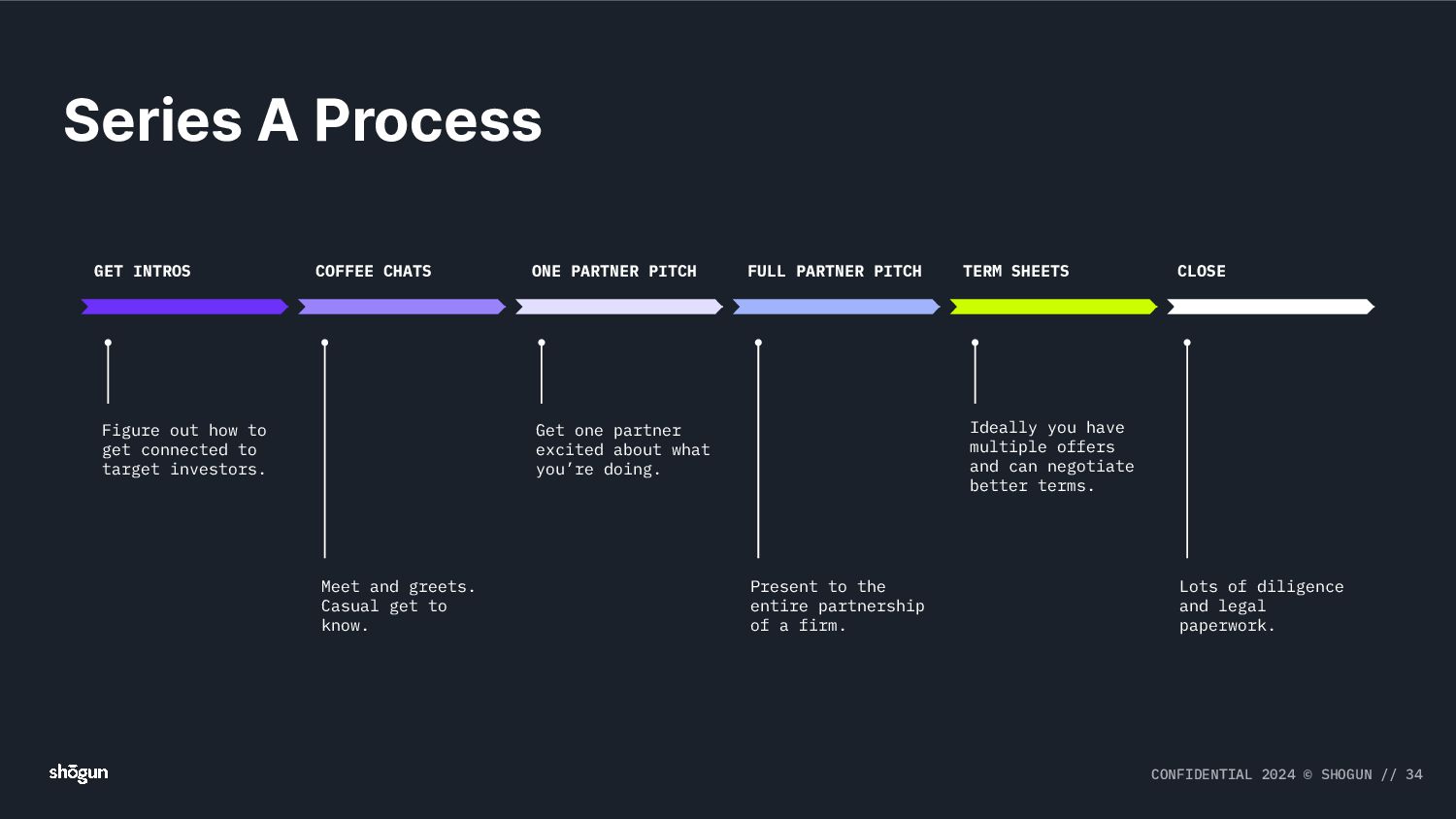
Series A rounds are very complex and there's a lot involved, so I'm only going to give a high level overview here. There are two parts to a Series A. The first is getting to one or more term sheets, and the second is signing a term sheet and closing the round.
Getting to term sheets involves a lot of meetings and networking with investors as you escalate towards a full partner pitch. Ideally, you're able to time things so that you're having a lot of these conversations in parallel to apply maximum pressure to each investor.
Success at this step looks like getting one or more term sheets, and these are one to two page documents that outline high level terms. Step two is negotiating and signing a term sheet, then going through a protracted legal and diligence process to actually close the round.
It costs a lot of money and is a huge distraction. There's no guarantee the round will even close. You may have heard of investors breaking term sheets. Term sheets aren't binding, so a lot can go wrong, and you only get the money right at the end of the process.
I think Series A is actually the hardest round to raise. I've seen it time and time again with companies I've invested in and my friends' companies. In July twenty nineteen, I started the Series A fundraising process for Shogun. What a kick in the balls that was.
It took three months, pretty much full time, and I talked with dozens of investors before we got any traction. The most common objection we got was that they all thought ShopBuy wasn't going to be big. A bunch of them also really liked the idea of front end, but didn't like the page builder business.
Eventually, Initialized Capital offered to lead half of a ten million Series A at a fifty million post money valuation. Within a couple of weeks, we circled the other five million from Y Combinator and VMG. It then cost us one hundred thousand dollars and a solid month of legal and diligence to actually close the round.
By the time we closed our Series A, our ARR was about five million, growing three x year over year. We'd only spent about five hundred thousand to get there, so had about eleven point five million in the bank after the close. I have a ton of learnings to share about closing price rounds, but I'm going to share a couple with you.
Price rounds have very different control characteristics to SAFEs. Investors start to get all kinds of controls over your company. Everything you give up in your first price round will ripple through time into every future round. Biggest learning is that safes are pretty safe.
Term sheets come with terms. The key is in the name. In my opinion, most companies should never raise a price round. You can achieve a ton with safes and keep all the control. Another important learning is that after Series a, you are dealing with a very different type of investor.
They are growth investors who are looking at your business through a purely financial lens and are a lot less interested in your product. Closing a growth round is a lot easier than closing your first price round, assuming you have the metrics to back up.
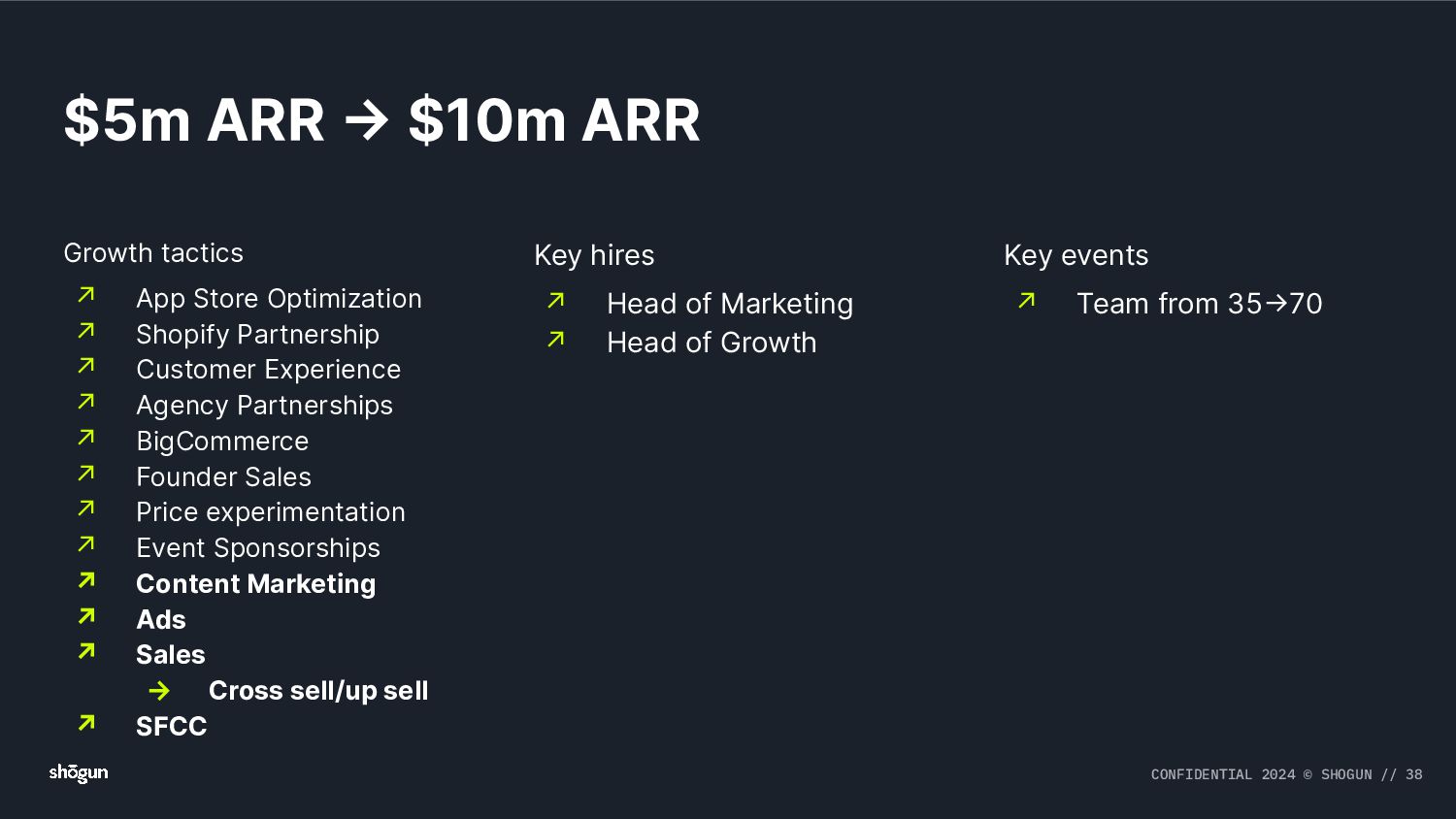
Without the metrics, you'll either fail to raise or be held to extremely unfavorable terms. You can get absolutely wrecked by bad terms if you aren't careful. Here's the graph extended out another twelve months after raising our Series A. We went from five million to ten million ARR.
After the Series A, we made some key hires, including our Head of Marketing and Head of Growth. We started to invest in content marketing and ads, and these gradually reduced our reliance on the Shopify App Store and layered on more installs. The Shopify App Store has been great to us over the years, but Shopify is prone to make changes that aren't always favorable to us.
Investing in other channels helped to insulate us from the impact of some of those changes. We also started hiring some salespeople and closing more enterprise deals for both Page Builder and our nascent product front end. We launched a third platform integration, Salesforce Commerce Cloud, and closed a few larger contracts here as well.
And of course, we went deeper into all of the other things that have been driving growth previously. Another huge growth driver during this period was COVID. We all know what that was like, but what may not be as widely known is the impact it had on ecommerce.
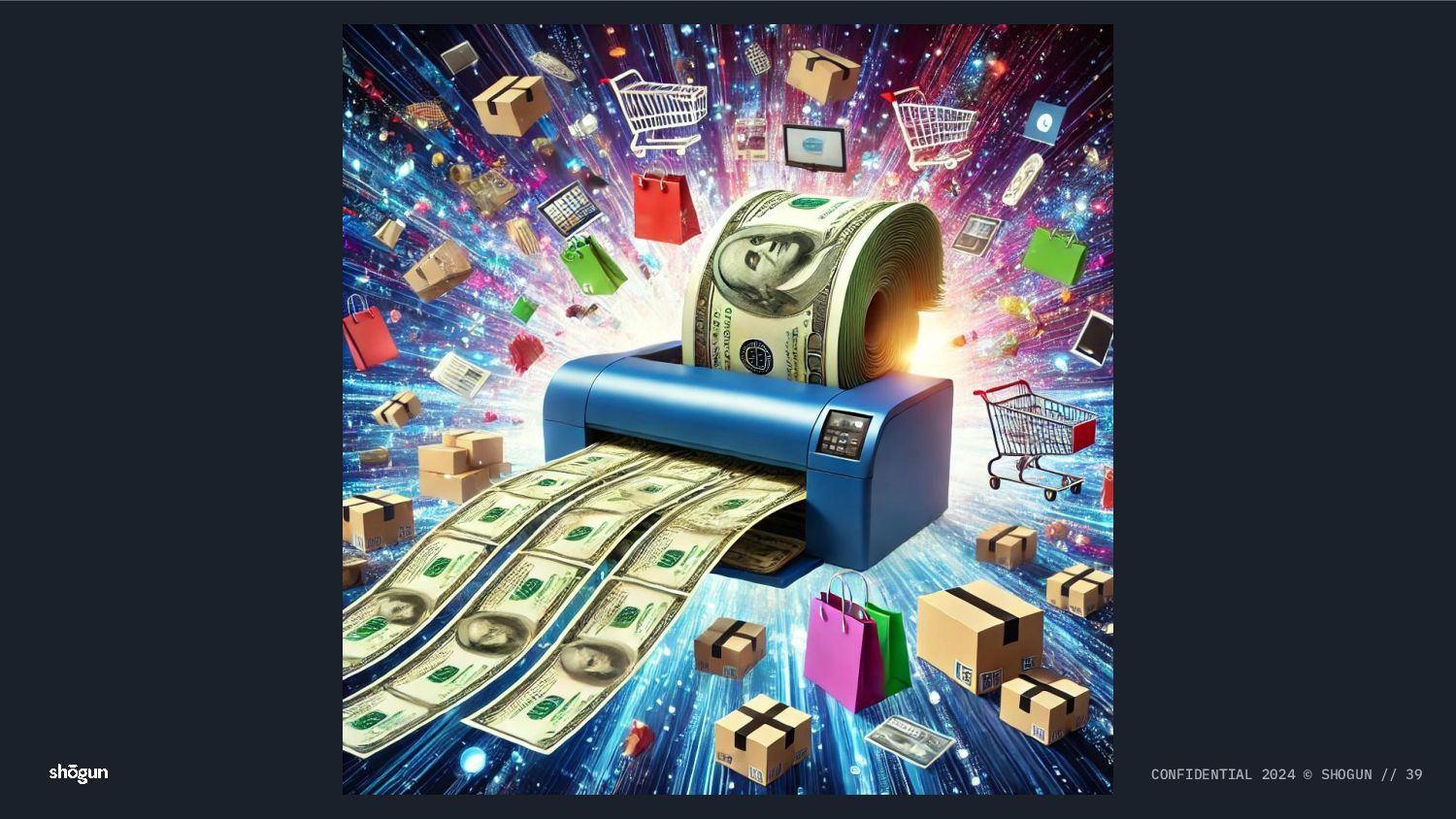
Tons of physical retail businesses had to scramble to figure out how to get online. Our installs increased by almost fifty percent overnight. The US government also started writing stimulus checks, handouts on an absolutely gargantuan scale. When the money printer goes brr, you wouldn't believe the amount of ***** people start buying online.
We saw huge spikes in our clients' revenues. It was an absolutely crazy time. Around August twenty twenty, we were approached by Accel, a major VC firm. Our revenue was about nine million ARR at a time, a few hundred thousand of which was on our nascent product, Schrolearn Front End.
Within a week, we had a term sheet for a solid Series B, thirty five million at one hundred and fifty million post money valuation. We closed the Series B in September twenty twenty. At the time, we were burning two hundred to three hundred thousand a month and adding five hundred to six hundred thousand a month of ARR. We had a massively efficient business.
We still had almost our entire Series A in the bank when we closed the B. But the Series B marked the start of a new era for us. This was a period of zero interest rates and growth at all costs. Money started absolutely pouring into startups from venture capital firms.
I felt like I couldn't talk to a founder friend without hearing they'd raise more money. It was absolutely nuts. There's not a ton of insight to share about the process for closing this round. Our metrics were really good. We're in a hot space.
Axle made it easy for us. We had to do a simple pitch to the partnership before the round closed. Our pitch was basically the same as the Series A. We were going to scale PageBuilder a bit further while upselling everyone we could to front end.
In retrospect, we made some mistakes here. We gave up a lot of leverage by not shopping the round to other folks. We didn't do price discovery. We also jumped in very quickly with some folks we didn't know well, which is extremely risky. With our new cash infusion, our investors pushed us to hire a new executive team and scale up hard and fast.
Within six months or so, we hired six new execs and layered our entire leadership team. We hired our VP sales, marketing people, product engineering and finance. We hired some really great people, but this was a terrible mistake for many reasons. No company should hire so many new leaders in such a short amount of time.
We lost a lot of visibility on what was happening, and things started getting off track. It also costs a ton of money. Execs are super expensive, and engaging an exec search firm costs over one hundred thousand per hire in the US. We spent over one million dollars on exec hiring alone in the space of two years.
That said, making all these great hires looked like great momentum, and our revenue kept on growing. So, encouraged by our investors, nine months after raising the Series B, we went out for a Series C. Our pitch was the same as the A and B, and the revenue on Shogun front end was about six hundred and fifty thousand at the time and growing super fast.
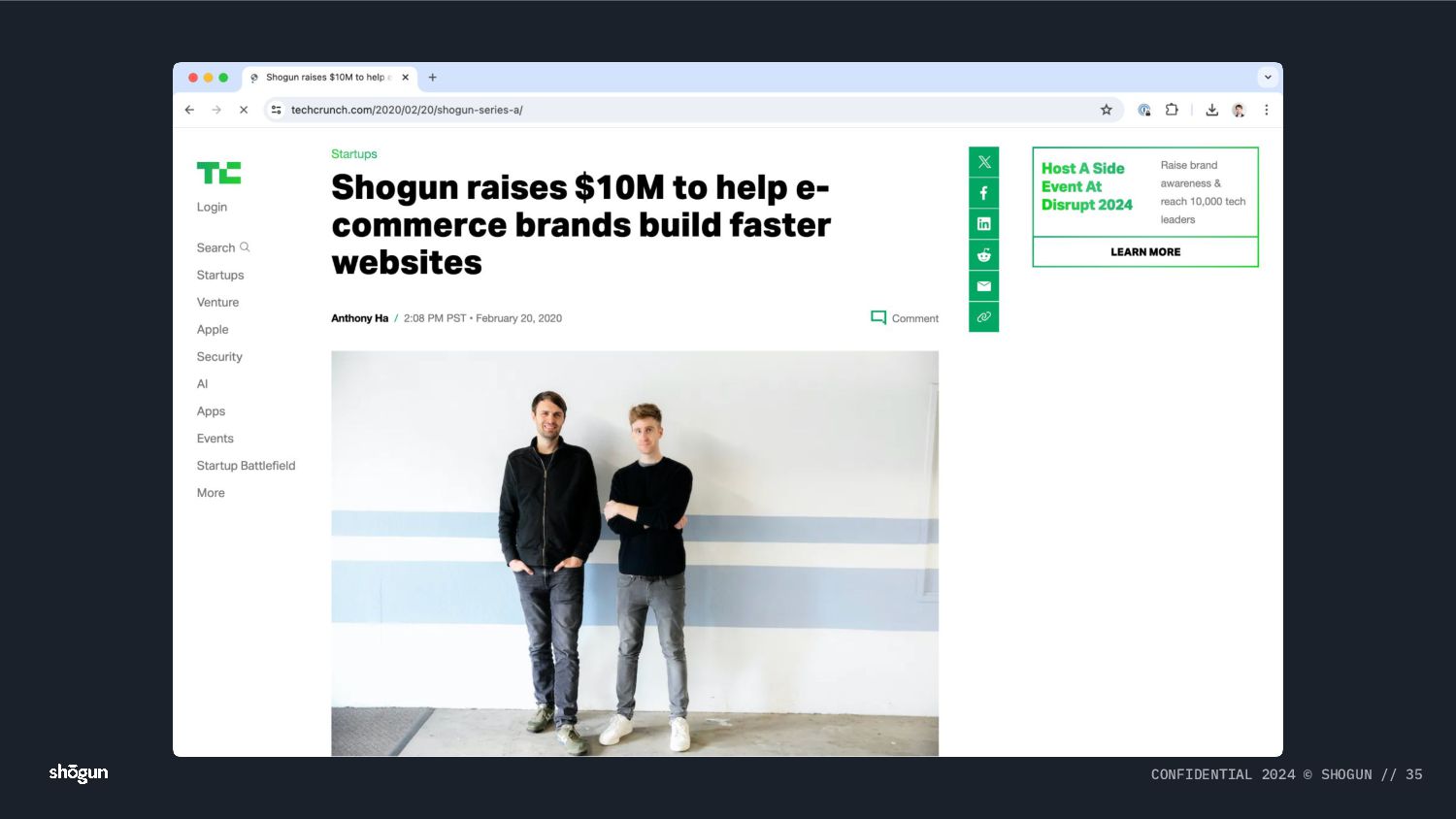
We got two term sheets within five days of kicking off the process and ultimately closed a sixty seven point five million Series C from Insight Partners at a five seventy five million dollars valuation. That was ******* crazy. Our strategy was to talk to investors in batches of five and put Tiger Global upfront.
Tiger was known for making crazy, exploding offers based on very little data at that time, and they made us an offer within forty eight hours. This meant we could apply pressure to all the other investors. I remember we talked to three of them on a Sunday after we got the Tiger offer on the Saturday.
Leverage really matters in a fundraise. The absolute worst thing you can do is only talk to one investor and do a deal without testing the market. We got way better terms in our Series C than we got in our Series B, partly because the market was so frothy and money was just raining down from the sky, and partly because we had multiple offers and we're able to play them off each other to get better and better terms.
One of the key terms is that we didn't add a board director seat in the Series C, allowing us to maintain board control. I strongly recommend that founders maintain board control. Boards can be great when things are going well, but they can be a real pain when things get bumpy.
Anyway, so we closed the Series C, and here's a photo of what happened next. We had a ton of money in the bank and a new squad of execs. They all wanted to hire more people. Our team grew from about seventy at the Series B to over two hundred within twelve months, and our burn rocketed from three hundred thousand a month to two point three million dollars a month.
Our investors encouraged and cheered us along all the way while we were doing this. Then, six months after raising our Series C, our growth hit a brick wall. Remember how I told you that all star ups are a **** show? That was late twenty twenty one.
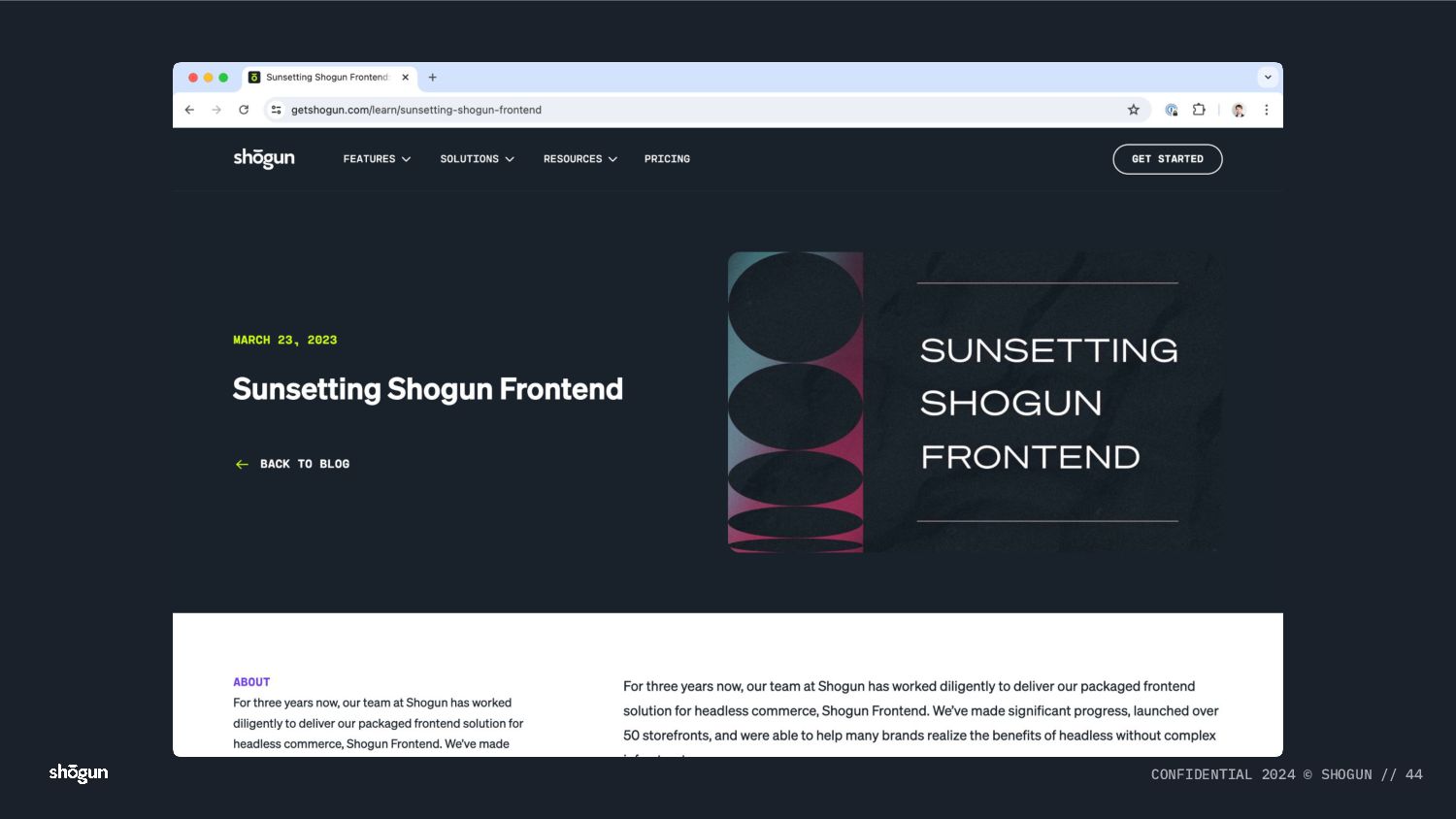
In early twenty twenty two, we started doing layoffs, and unfortunately, we've done multiple layoffs and completely restructured the business since then, along with tons of other companies. We also shut down our second product, Shogun Front End. We were able to scale it to one point five million ARR, growing 2x year over year with about thirty customers.
It was a very difficult decision to kill the product because we'd literally invested tens of millions in it, it was the only part of the business growing at that time. But a lot was going wrong. Customer satisfaction was really mixed. We were experiencing constant split focus from having two products that weren't totally complementary to each other.
And it was costing us an absolute fortune to scale, both in people and infrastructure. There were also a number of external factors like the shift in macroeconomic environment and the headless hype not living up to reality. We definitely made some big mistakes here, and lots of painful lessons were learned.
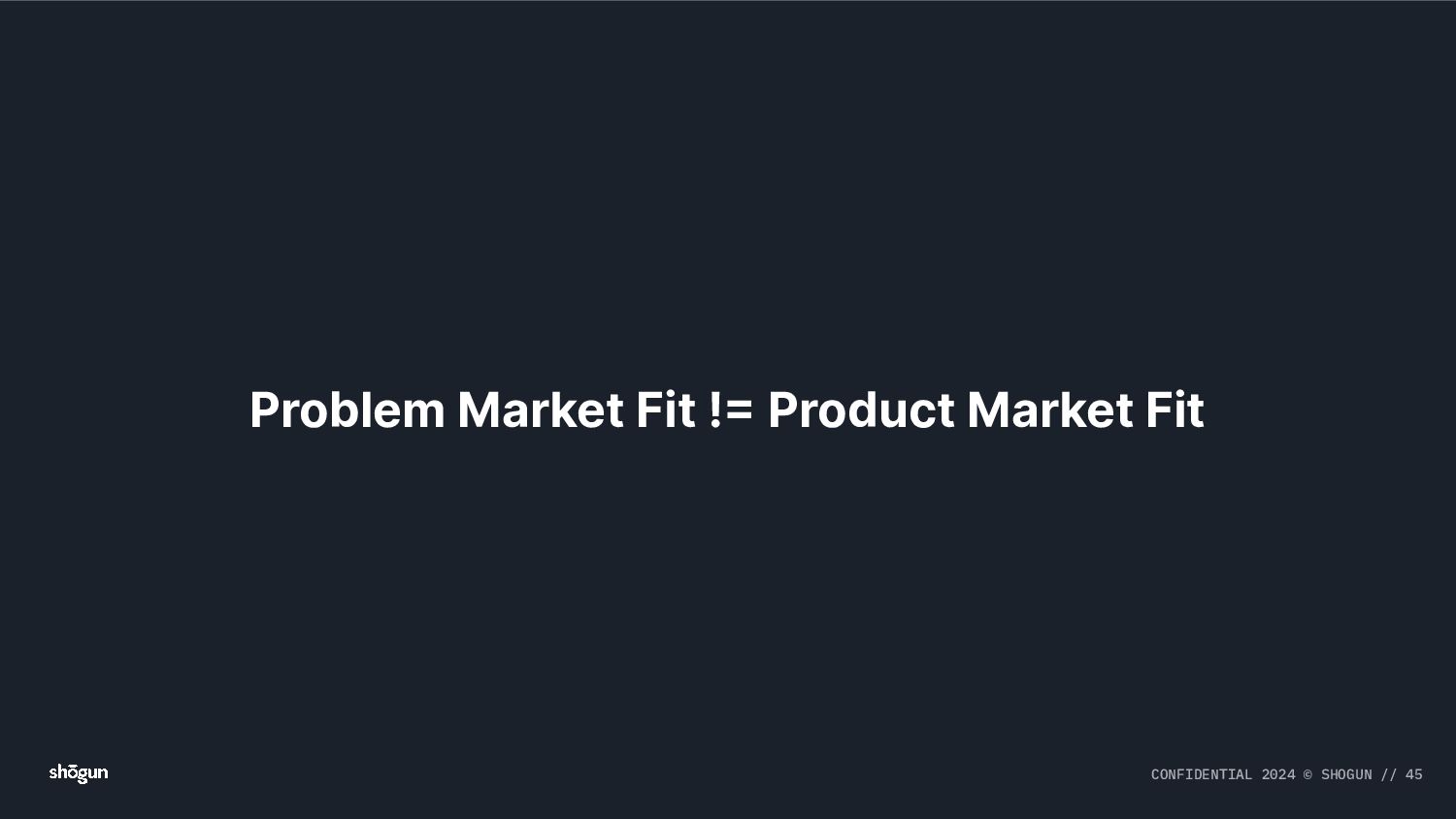
One lesson is that you can have really strong problem market fit while having little to no product market fit at all. That means that customers love the solution to the problems you're describing and will happily sign contracts for very large sums of money.
But your product doesn't quite meet their needs after the fact, and you experience massive churn and customer dissatisfaction. The biggest lesson is that scaling or pivoting is a terrible, terrible idea. Be super careful about trying to scale a business where you don't know what the churn profile looks like yet.
We scaled up against Shoreline Front End prematurely, and it was a bad move. Never ever try to scale while pivoting. I'm just going to repeat that. Never ever scale while pivoting. We learned that lesson the hard way, and it was massively painful. Today, we're a company of about forty five people, and we're profitable and growing.
Nick returned as CEO in late twenty twenty three, and we're in the middle of another pivot towards storefront optimization, which is going great so far. We're moving way faster, and Nick and I are on the front lines running product again. We still have over fifty million pounds in the bank, and thanks to high interest rates, we're literally yielding millions a year in interest.
Sounds good, right? But it's actually quite a challenging position for everyone involved because we raised a ton of money and spent a bunch of it, and there's a liquidation preference to clear. That said, I'm back to being CTO and doing what I love, which is building products.
I really recommend finding what you love and doing that. I figured out that I really don't love being the CEO and hope to never do that again. We're still writing this story every day, and we continue to make mistakes and learn new lessons.
Let's see how much time I have left. I guess it's overtime, but I think we started a little bit late, so not sure whether I should just kill it or go for another minute. One minute. Okay. So I'm going finish up here with a couple more lessons I've learned along the way, and I'll end a little early.
Pay close attention to the economic cycles. If interest rates are low and capital is abundant, it's actually a really good time to sell your company. You should have an exit strategy. We didn't, and it was a big mistake. Start ups aren't a democracy.
If you try and please everyone, you will please no one. You need to be a dictator at times, even if unpopular. And I'm going to skip all the other stuff in the interest of time. Start ups are an absolutely massive grind. Know that starting a company is likely to be a ten year roller coaster if you are successful.
Have a co founder you trust who you can be direct with. Nick and I have become best friends throughout this process. I was best man at his wedding a couple of weeks ago. And that's all I have to share today. Hopefully, you took something useful away from this.
If you have any questions, I'll have to answer them, and I wish you all the best in your own journeys.